Skip to content
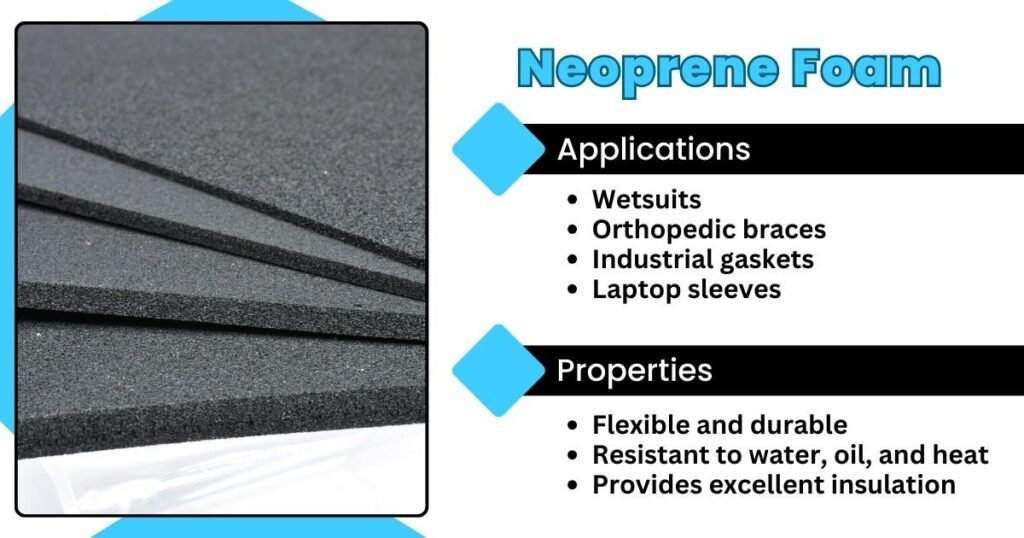
For decades, neoprene development followed a familiar rhythm: concept sketches, tooling, sampling, revisions, delays—and often compromise. Every design change meant new molds, new cuts, and more waiting. Today, that rhythm is breaking apart. 3D-printed neoprene fabric uses additive manufacturing to create elastic, rubber-like structures directly from digital models, dramatically shortening prototyping cycles by reducing tooling, enabling rapid iteration, and allowing functional testing earlier in development.
What makes this shift important isn’t just speed. It’s control. Designers and engineers can now test structure, flexibility, cushioning, and fit before committing to traditional foam production. Prototypes no longer need to “approximate” the final product—they can behave like it.
A few years ago, rapid neoprene prototyping meant cutting corners. Today, it means cutting weeks. And for teams racing against market windows, regulatory timelines, or seasonal launches, that difference can decide whether an idea ships—or stays stuck in CAD.
What Is 3D-Printed Neoprene Fabric and How Does It Differ from Traditional Neoprene?
3D-printed neoprene fabric is not neoprene foam in the conventional sense. It does not begin as a chemically foamed rubber sheet, nor does it rely on lamination to create thickness or cushioning. Instead, it refers to digitally printed elastomeric structures produced through additive manufacturing that are engineered to replicate, modify, or exceed the stretch, rebound, and cushioning behavior traditionally associated with neoprene.
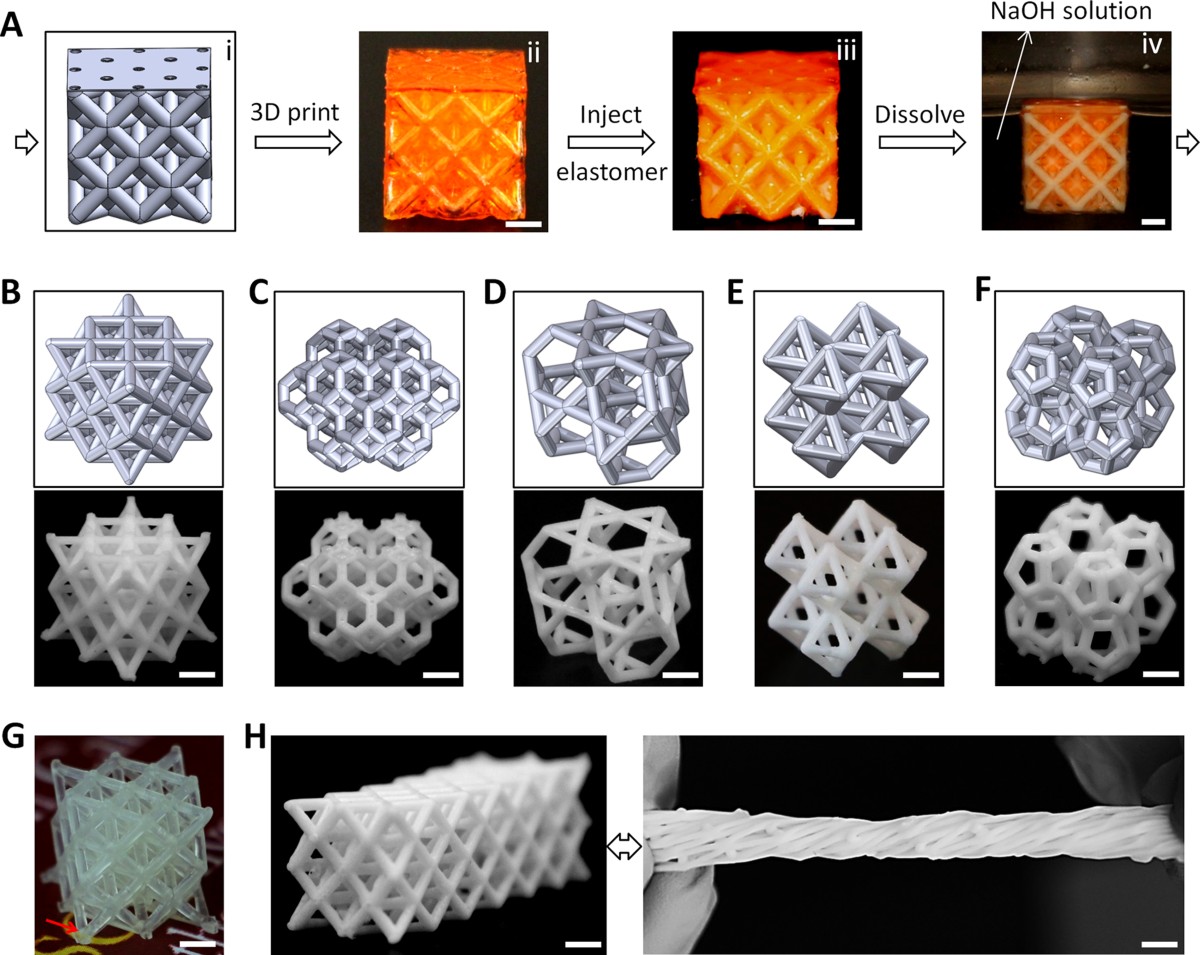
The key difference lies in how performance is created. Traditional neoprene achieves its properties primarily through material chemistry—foam density, cell structure, and rubber formulation. By contrast, 3D-printed neoprene-like materials achieve performance through geometry. The material itself may be a thermoplastic elastomer or rubber-like polymer, but its behavior is controlled by lattice design, infill pattern, layer orientation, and localized thickness variation.
Rather than cutting shapes out of uniform foam sheets, 3D printing builds performance layer by layer, allowing structure to replace bulk material.
Understanding the Structural Shift
To understand why this represents a fundamental change, it helps to compare how traditional neoprene and 3D-printed neoprene-like structures are produced and controlled.
Traditional Neoprene vs 3D-Printed Neoprene-Like Structures
| Aspect | Traditional Neoprene | 3D-Printed Neoprene Fabric |
|---|---|---|
| Production method | Foaming + lamination | Layer-by-layer additive printing |
| Tooling | Required (knives, dies, molds) | Not required |
| Geometry control | Limited to sheet thickness | Highly programmable |
| Iteration speed | Slow | Fast |
| Custom thickness zones | Difficult | Easy |
The most significant shift is geometry control. In traditional neoprene, thickness and density are uniform across a sheet. Any variation requires separate foam runs or post-processing. With 3D printing, thickness, porosity, and flexibility can change within a single continuous piece, without additional tooling or material changes.
This capability fundamentally alters how designers think about cushioning, support, and flexibility.
Why “Fabric” Is Used to Describe 3D-Printed Neoprene
Although these materials are printed rather than woven or knitted, the term “fabric” is increasingly used because many 3D-printed neoprene-like structures behave functionally like textile layers.
Most designs share several characteristics:
- High flexibility and elastic recovery
- Perforated or open lattice construction
- Low overall weight relative to volume
- Ability to bond or laminate to woven or knitted textiles
These properties allow printed elastomer layers to be integrated into products in much the same way as traditional neoprene fabric. They can be sewn around, encapsulated between textiles, or bonded as functional inserts rather than treated as rigid rubber parts.
In practice, designers often treat 3D-printed neoprene-like layers as engineered fabric components rather than standalone solids.
From Uniform Foam to Engineered Structures
Traditional neoprene performance is largely fixed once the foam formulation is set. Designers choose between densities, thicknesses, and surface fabrics, but internal behavior remains uniform across the sheet.
3D printing introduces structural engineering into the material equation. Instead of asking, “Which foam density do we need?”, designers can ask, “Where do we need support, where do we need stretch, and where do we need airflow?”
Performance can be tuned by adjusting:
- Cell size within the lattice
- Lattice density in different zones
- Orientation of printed layers
- Infill patterns and wall thickness
For example, a single printed panel can be stiff and supportive in one area, soft and compressible in another, and highly breathable elsewhere. Achieving this with traditional neoprene would require multiple foam sheets, complex cutting, and additional lamination steps.
Mechanical Behavior: How Performance Is Achieved
In traditional neoprene, cushioning comes from closed or semi-closed foam cells filled with gas. Compression resistance and rebound are governed by cell size, wall thickness, and rubber elasticity.
In 3D-printed neoprene-like structures, cushioning comes from controlled deformation of lattice geometry. When compressed, struts bend, twist, or buckle in predictable ways. This means energy absorption is defined by structure rather than trapped gas.
This difference has several practical implications:
- Compression response can be linear or progressive by design
- Rebound behavior can be tuned independently of softness
- Localized stiffness can be introduced without adding bulk
For applications like protective gear or ergonomic supports, this level of control is highly attractive, particularly during early-stage development.
Design Freedom and Iteration Speed
One of the most immediate advantages of 3D-printed neoprene-like materials is iteration speed. Traditional neoprene development requires coordination between foam suppliers, laminators, and cutting operations. Each change in thickness or density introduces delays.
With additive manufacturing, design changes are digital. Adjusting lattice density or thickness zones requires no new tooling, no foam reformulation, and no minimum order quantity. Files can be modified and reprinted within hours.
This dramatically changes how prototyping teams work.
A Practical Example from Prototyping Teams
In a traditional neoprene development cycle, a team might order:
- Three foam densities
- Two thickness options
- Multiple cut patterns for fit testing
Each iteration takes days or weeks, and unused material accumulates quickly.
Using 3D printing, the same team can produce:
- A single prototype panel
- With zoned cushioning
- Variable flexibility across stress points
- Integrated perforation for airflow
This compresses weeks of iteration into days and allows design decisions to be made earlier, with better data. Fit, pressure distribution, and range of motion can be evaluated before committing to bulk foam production.
Integration with Traditional Textiles
Despite the name, 3D-printed neoprene-like materials rarely replace textiles entirely. Instead, they are commonly hybridized with woven or knitted fabrics.
Printed elastomer layers can be:
- Bonded to mesh or knit fabrics for strength
- Encapsulated between textile layers for protection
- Used as internal cushioning zones within sewn products
This hybrid approach preserves the manufacturing familiarity of textile-based products while introducing structural performance where it is needed most.
In bags, sports supports, and footwear components, this often means using printed structures selectively rather than throughout the entire product.
Limitations Compared to Traditional Neoprene
Despite its advantages, 3D-printed neoprene fabric is not a direct replacement for mass-produced neoprene foam in high-volume applications.
Several constraints remain:
- Unit cost is significantly higher at scale
- Print speed limits throughput
- Material choices are narrower than rubber foam formulations
- Long-term durability under repeated washing is still being evaluated
Traditional neoprene remains far more efficient for large-volume production where uniform performance is acceptable and cost sensitivity is high.
Understanding this distinction is critical. 3D-printed neoprene-like materials excel where customization, testing, and functional validation are priorities, not where millions of identical units are required.
Where 3D-Printed Neoprene Makes the Most Sense
Current adoption trends show that 3D-printed neoprene-like structures are best suited for:
- Early-stage product development
- Ergonomic and fit-driven components
- Custom or low-volume applications
- Performance validation before tooling investment
In these contexts, the ability to engineer structure digitally outweighs the higher per-unit cost.
For mass production, traditional neoprene continues to offer unmatched efficiency, consistency, and cost control when sourced from reliable suppliers.
A Critical Distinction to Keep in Mind
It is important to separate functional intent from manufacturing reality. 3D-printed neoprene fabric is not an upgraded version of traditional neoprene; it is a different approach to achieving similar outcomes.
Traditional neoprene relies on chemistry and volume. 3D-printed neoprene-like materials rely on geometry and precision. Each has its place in modern product development.
Designers and engineers who understand this distinction avoid unrealistic expectations and use each technology where it delivers the most value.
Why This Matters for Future Material Development
The emergence of 3D-printed neoprene-like fabrics signals a broader shift in how soft materials are designed. Performance is moving from being material-defined to structure-defined. This does not eliminate traditional materials, but it changes how they are evaluated and supplemented.
As printing speeds improve and elastomer options expand, hybrid systems combining printed structures with traditional neoprene or textiles are likely to become more common. These systems allow designers to push performance boundaries without abandoning proven manufacturing methods.
In this sense, 3D-printed neoprene fabric represents not a replacement, but an additional tool—one that reshapes how cushioning, flexibility, and fit are explored before committing to scale.
Understanding what it is, how it differs, and where it fits prevents confusion and enables smarter decisions in both design and sourcing.
Which Additive Manufacturing Technologies Are Used for 3D Printing Neoprene and Related Elastomers?
Neoprene, in its traditional form, is a closed-cell synthetic rubber foam produced through chemical foaming, curing, and lamination. It is not directly 3D printable in the way rigid plastics are. However, product development teams increasingly rely on additive manufacturing to prototype neoprene-like behavior, geometry, and functional performance long before committing to tooling, molds, or bulk foam production.
What is actually being 3D printed are elastomeric substitutes—materials such as TPU, TPE, or elastomeric resins—that replicate selected properties of neoprene, including flexibility, compressibility, rebound, and shape retention. The choice of additive manufacturing technology determines which aspects of neoprene can be simulated accurately and which cannot.
In practice, there is no universal “neoprene 3D printing method.” Instead, teams select from a small set of additive technologies, each optimized for a different development question: fit, cushioning behavior, surface detail, or assembly feasibility. Understanding these tradeoffs is essential for avoiding misleading prototypes and incorrect design decisions.
Comparing the Main Technologies
Each additive manufacturing method approaches elastomer behavior differently. Some focus on material flexibility, others on geometric control or internal structure. The most commonly used technologies for neoprene-like prototyping are FDM with flexible filaments, Selective Laser Sintering (SLS), and elastomer-focused resin printing.
FDM with Flexible Filaments (TPU / TPE)
Fused Deposition Modeling (FDM) is the most accessible and widely used 3D printing method for elastomer prototyping. Instead of rigid PLA or ABS, developers use TPU or TPE filaments, which provide rubber-like flexibility.
| Feature | Performance |
|---|---|
| Flexibility | Medium–high |
| Cost | Low |
| Print speed | Moderate |
| Surface finish | Rougher |
From a development standpoint, FDM is best suited for early-stage form, fit, and ergonomic testing. It allows teams to quickly validate dimensions, curvature, strap routing, seam placement, and user interaction. For neoprene-based products such as sleeves, pouches, braces, or covers, FDM prototypes help answer questions like: Will the opening size feel correct? Is the curvature compatible with the body or device? Does the part interfere with surrounding components?
However, FDM has clear limitations. Layer-by-layer extrusion creates anisotropic strength, meaning tear resistance and stretch behavior vary by print direction. Surface finish is relatively rough, which does not replicate laminated neoprene textures. Compression behavior also differs significantly from closed-cell foam, as FDM parts are typically solid or sparsely infilled rather than micro-cellular.
As a result, FDM should be viewed as a geometry validation tool, not a material performance substitute for neoprene.
Selective Laser Sintering (SLS)
Selective Laser Sintering has become the most powerful additive method for simulating neoprene-like behavior at a structural level. Using elastomeric powders, SLS fuses material layer by layer without support structures, enabling complex internal geometries.
| Feature | Performance |
|---|---|
| Flexibility | High |
| Strength | High |
| Surface finish | Uniform |
| Tooling | None |
SLS excels at creating lattice and cellular structures that approximate the compression and rebound characteristics of neoprene foam. By tuning lattice density, wall thickness, and cell geometry, engineers can simulate different foam densities and cushioning responses. This makes SLS particularly valuable for products where energy absorption, pressure distribution, or impact resistance are critical.
Examples include protective sleeves, shock-absorbing panels, sports protection components, and medical supports. Unlike FDM, SLS produces more isotropic mechanical properties, meaning behavior is more consistent in all directions.
Another key advantage is the absence of tooling and support structures, which allows designers to print enclosed cavities and complex internal architectures that would be impossible to mold in early development stages.
The main tradeoffs are cost and accessibility. SLS machines and materials are significantly more expensive than FDM, and surface texture—while uniform—still differs from laminated neoprene fabrics. Additionally, while SLS can simulate foam behavior, it does not replicate true closed-cell gas-filled structures, so long-term compression set and thermal insulation behavior remain approximations.
Elastomer Resin Printing (DLP / SLA)
Elastomer-focused resin printing, using DLP or SLA technologies, prioritizes precision and surface detail over bulk mechanical performance.
| Feature | Performance |
|---|---|
| Detail | Very high |
| Elasticity | Medium |
| Durability | Medium |
| Speed | Fast for small parts |
This approach is commonly used when visual accuracy, fine features, or tight tolerances are the primary concern. Resin printing can produce smooth surfaces, sharp edges, embossed logos, and intricate geometries that closely resemble finished products in appearance.
For neoprene-related development, resin printing is often used for design validation, client presentation models, or tooling concept checks rather than functional stress testing. Elastic resins can stretch and flex, but their fatigue resistance and tear strength generally fall short of both neoprene foam and SLS elastomers.
Another limitation is post-processing. Resin parts require washing and curing, and prolonged UV exposure can alter elasticity over time. This makes them less suitable for repeated mechanical testing or long-term deformation studies.
How Teams Choose the Right Technology
The selection of additive manufacturing technology is driven by the question being asked, not by the desire to perfectly replicate neoprene.
| Prototyping Goal | Preferred Technology |
|---|---|
| Fit & ergonomics | FDM |
| Cushioning simulation | SLS |
| Visual accuracy | Resin printing |
| Rapid iteration | FDM or SLS |
Early in development, teams often prioritize speed and cost, making FDM the logical choice. As designs mature and performance questions become more specific—such as compression behavior or load distribution—SLS becomes more valuable. Resin printing typically enters later, when presentation quality or fine detailing is required.
Attempting to use a single technology for all stages often leads to incorrect conclusions. For example, rejecting a design because an FDM prototype feels too stiff ignores the fact that foam behavior is not being accurately represented. Conversely, assuming an SLS lattice perfectly replaces neoprene in all conditions can lead to surprises during real material validation.
The Hidden Constraint: Bonding and Post-Processing
One of the most common failure points in elastomer prototyping is not printing itself, but what happens after printing. Many neoprene-based products rely on bonding, lamination, stitching, or heat exposure during manufacturing.
Printed elastomers behave very differently from neoprene when subjected to:
- Adhesive bonding
- Heat lamination
- Sewing needle penetration
- RF or ultrasonic welding
For example, TPU printed via FDM may soften under heat levels that neoprene tolerates easily. SLS parts may resist stitching entirely or tear unpredictably at needle entry points. Resin elastomers may bond poorly with standard neoprene adhesives.
Experienced development teams account for these differences by choosing printing technologies that approximate downstream processes, not just mechanical properties. In some cases, prototypes are deliberately overbuilt or underbuilt to compensate for known material mismatches.
A Realistic Industry Trend
Rather than attempting to replace neoprene with additive manufacturing, most mature organizations adopt hybrid workflows.
- 3D printing is used for early-stage geometry, fit, and concept validation
- Traditional neoprene materials are introduced for functional testing
- Tooling and molds are committed only after performance targets are confirmed
This approach reduces development risk and cost. Printing accelerates decision-making without locking teams into premature material assumptions. Neoprene remains the reference material for final validation, while additive manufacturing serves as a decision-filtering tool, not a production substitute.
In practice, the most successful teams are not those who search for a perfect 3D-printed neoprene equivalent, but those who understand the strengths and limits of each technology. Additive manufacturing answers specific questions quickly. Neoprene answers the final one: how the product behaves in real use.
Technology choice, therefore, does not define success on its own. The ability to align printing methods with development intent is what ultimately determines whether a prototype accelerates progress or creates false confidence.
How Is 3D Printing Changing Prototyping Cycles for Neoprene Fabric Products?
In neoprene product development, slow timelines have rarely been caused by a lack of creativity. The real constraint has always been process dependency. Every design idea traditionally waits on foam formulation, lamination setup, cutting dies, and manual assembly before it can be evaluated. Even minor changes—such as adjusting thickness at a stress point or reshaping an edge radius—often restart the entire cycle.
3D printing fundamentally alters this sequence. By removing tooling and reducing reliance on early-stage foam production, additive manufacturing allows development teams to test ideas immediately, not weeks later. In many neoprene applications, prototyping cycles that once took three to five weeks are now compressed into a few days.
The most important change, however, is not speed alone. It is iteration density—the ability to explore more design variations, earlier, with less cost and less risk.
Comparing old vs new prototyping cycles
To understand the impact clearly, it helps to compare traditional neoprene prototyping with workflows that integrate 3D printing at the concept and pre-tooling stages.
Traditional neoprene prototyping workflow
| Step | Typical Time |
|---|---|
| Design freeze | 2–5 days |
| Tooling / foam setup | 7–14 days |
| Lamination | 3–5 days |
| Cutting & assembly | 2–3 days |
| Feedback & revision | 5–7 days |
| Total | 19–34 days |
In this model, prototyping is sequential. Each stage depends on the previous one being finalized. If testing reveals an issue—excessive compression, poor edge comfort, or insufficient tear resistance—the process loops back to the beginning. Even small revisions often require new foam runs or modified cutting tools, which discourages experimentation.
As a result, teams tend to limit the number of prototypes they build. Decisions are made based on incomplete data, increasing the likelihood of late-stage changes.
Additive manufacturing–enabled workflow
| Step | Typical Time |
|---|---|
| CAD update | Same day |
| 3D print | 6–24 hours |
| Post-processing | 2–6 hours |
| Assembly testing | Same day |
| Feedback & iteration | Immediate |
| Total | 1–3 days |
When 3D printing is introduced, the workflow becomes parallel and continuous rather than linear. Designers can modify CAD files, print revised components overnight, and test them the next morning. Multiple variants can be evaluated side by side instead of sequentially.
This does not replace neoprene foam production entirely. Instead, it delays it until the design has already been functionally validated.
What exactly is being 3D printed in neoprene development?
A common misconception is that 3D printing replaces neoprene foam itself. In reality, its value lies in printing functional proxies and hybrid components, including:
- Structural inserts that simulate stiffness zones
- Mold cores for compression testing
- Ergonomic shells for fit and pressure distribution studies
- Lattice structures that replicate foam behavior under load
These printed elements are often combined with actual neoprene sheets or laminated samples, allowing teams to test how the final product will behave without committing to full foam tooling.
Why faster cycles improve final neoprene performance
Speed alone does not guarantee better products. What improves outcomes is the ability to test more hypotheses within the same development window.
3D printing enables teams to:
- Experiment with multiple thickness gradients in a single week
- Adjust compression response without reformulating foam
- Compare edge geometries for comfort and durability
- Validate ergonomic fit across different body types early
Instead of debating which design “should” work, teams can produce data through physical testing. This shifts development culture from assumption-driven to evidence-driven decision-making.
Iteration density as a competitive advantage
In traditional neoprene development, teams might build two or three prototypes before locking a design. With additive manufacturing, it is common to evaluate ten or more iterations in the same timeframe.
Higher iteration density leads to:
- Better optimization of stress distribution
- Fewer compromises between comfort and durability
- More confidence in final specifications
The final neoprene product benefits not because it was produced faster, but because it was refined more thoroughly.
Early failure becomes an advantage
Traditional workflows treat failure as expensive. Each failed prototype represents lost time, wasted material, and delayed schedules. As a result, teams often avoid risky or unconventional ideas.
With 3D printing, failure becomes cheap and informative.
In additive-driven development:
- Failed prototypes are expected and planned for
- Weak concepts are discarded after days, not months
- Promising ideas receive more iteration cycles
This dramatically reduces the risk of late-stage redesigns, which are far more costly than early-stage experimentation.
Impact on tooling and foam commitment
One of the most significant benefits of 3D printing is that it delays irreversible decisions.
In neoprene production, tooling and foam formulation represent major commitments. Once molds are cut and formulations are locked, changes become expensive. By validating geometry, fit, and functional behavior through printed prototypes, teams enter tooling with far higher confidence.
Many manufacturers report:
- Fewer tool revisions
- Shorter ramp-up times for bulk production
- Improved first-pass yield during initial production runs
This directly affects both cost control and delivery reliability.
A real-world development pattern
Across multiple neoprene product categories—such as protective gear, sports supports, and technical accessories—teams adopting 3D printing report consistent improvements in development efficiency.
Common outcomes include:
- 30–60% reduction in late-stage design changes
- Higher success rates on first production tooling
- Improved alignment between design, engineering, and manufacturing teams
Designers gain freedom to explore, engineers gain better data earlier, and manufacturers receive clearer, more stable specifications.
Integration with traditional neoprene processes
It is important to note that 3D printing does not replace traditional neoprene processes. Foam production, lamination, and cutting remain essential for final materials.
What changes is when these processes are engaged.
Instead of committing early, teams use additive manufacturing to:
- Narrow design options
- Validate functional assumptions
- Reduce uncertainty before scale-up
This integration creates a more resilient development pipeline, where each stage builds on validated knowledge rather than assumptions.
Implications for development timelines and budgets
From a commercial perspective, shortened prototyping cycles affect more than just speed to market.
They enable:
- Faster response to customer feedback
- Lower development costs per project
- Better use of engineering and design resources
When fewer late-stage changes are required, budgets become more predictable and timelines more reliable. This is particularly valuable for custom neoprene products, where each project carries unique requirements.
Cultural shift in product development teams
Perhaps the most understated impact of 3D printing is cultural. Teams accustomed to slow, sequential workflows often become more collaborative and experimental when iteration barriers are removed.
Design reviews shift from theoretical discussions to hands-on evaluation. Decisions are made with physical evidence rather than preference or hierarchy. This leads to better alignment across departments and stronger final products.
Strategic takeaway
3D printing is not simply accelerating neoprene prototyping; it is reshaping how decisions are made. By removing tooling delays and enabling rapid iteration, additive manufacturing allows teams to explore more options, fail earlier, and commit later.
The result is not just faster development, but better-developed neoprene products—with fewer compromises, fewer surprises, and higher confidence at scale.
In neoprene fabric product development, the competitive edge no longer belongs to teams that move fastest once tooling begins. It belongs to those who iterate most effectively before tooling ever starts.
What Are the Material Properties That Make Neoprene Suitable for Additive Manufacturing?
Neoprene’s relevance to additive manufacturing is often misunderstood. It is not that neoprene itself is commonly 3D printed in its traditional foam form, but rather that its mechanical and functional behavior closely matches what modern elastomer-based additive manufacturing systems are designed to reproduce or even enhance. For engineers, designers, and product developers, neoprene serves as a behavioral benchmark—a reference material whose performance profile aligns well with the strengths of printed elastomer structures.
In prototyping, tooling validation, and functional testing, materials must behave predictably under stress, compression, and repeated deformation. Neoprene has been used for decades in applications where failure is not an option: protective gear, industrial seals, vibration isolation, medical supports, and technical padding. These same performance requirements now dominate additive manufacturing use cases, particularly where flexible or semi-flexible components are required.
What makes neoprene especially relevant is that its key properties are mechanical behaviors rather than purely chemical ones. Behaviors such as elastic recovery, damping, and compressive resilience can be approximated, tuned, or even exceeded through lattice design, infill strategy, and multi-density printing—core advantages of additive manufacturing.
Why Neoprene Serves as a Reference Material for Printed Elastomers
Traditional manufacturing relies on material chemistry to deliver performance. Additive manufacturing, by contrast, relies heavily on geometry-driven behavior. Neoprene sits at the intersection of these two worlds: it is chemically robust, yet its real value lies in how it behaves under load.
For designers working with TPU, TPE, or other printable elastomers, neoprene provides a well-understood performance envelope. If a printed structure can match neoprene’s recovery, compression response, and fatigue behavior, it is usually considered functionally viable.
Key Material Behaviors Translated Into Print Logic
The following sections break down neoprene’s most important physical behaviors and explain why they translate effectively into additive manufacturing design logic.
Elastic Recovery and Resilience
One of neoprene’s defining characteristics is its ability to return to its original shape after deformation. Whether compressed, bent, or stretched, neoprene exhibits reliable elastic recovery across thousands of cycles.
| Property | Why It Matters in Printing |
|---|---|
| Elastic modulus | Controls flexibility |
| Recovery rate | Maintains shape |
| Fatigue resistance | Allows repeated testing |
In additive manufacturing, elastic recovery is not controlled only by material hardness. It is heavily influenced by lattice geometry, wall thickness, and infill orientation. By adjusting these parameters, printed elastomers can replicate neoprene-like flexibility while maintaining dimensional stability.
This is particularly valuable during prototyping. Engineers can print multiple variants with different recovery characteristics without changing materials—something impossible with conventional foam production. Neoprene’s predictable elastic profile makes it an ideal reference point when validating whether a printed part behaves “correctly” under load.
Compression and Cushioning Response
Neoprene is widely used as a cushioning material because it absorbs energy gradually rather than collapsing suddenly. This progressive compression behavior is critical in applications involving human contact or mechanical protection.
| Application | Required Behavior |
|---|---|
| Protective gear | Progressive compression |
| Wearables | Soft initial feel |
| Industrial padding | Stable rebound |
In conventional foams, compression curves are largely fixed once density and formulation are set. Additive manufacturing introduces a major advantage: non-linear compression curves. By varying cell size, wall angle, and density zones within a single printed part, designers can control how resistance increases under load.
This allows printed elastomer structures to replicate neoprene’s cushioning behavior while also introducing localized tuning. For example, a wearable brace can be soft near joints and firmer at load-bearing points, something that would require complex multi-layer lamination in traditional neoprene manufacturing.
Thermal and Chemical Stability
Neoprene’s resistance to moderate heat, oils, and many chemicals is another reason it has become a standard material in technical environments. While it is not designed for extreme temperatures, it performs reliably within ranges commonly encountered during product use and testing.
Neoprene resists:
- Moderate heat exposure without rapid degradation
- Oils, greases, and many industrial solvents
- Environmental exposure such as humidity and ozone
For additive manufacturing, this stability matters during functional prototyping. Printed elastomer parts are often used for heat-forming trials, bonding tests, and simulated use environments. Neoprene’s performance profile helps engineers define acceptable limits for printed materials intended to replace or interface with foam components.
While many printable elastomers have lower chemical resistance than neoprene, designers can compensate through geometry, coatings, or hybrid assemblies during the development phase.
Damping and Vibration Control
One of neoprene’s most underrated properties is its ability to dampen vibration and dissipate energy. This is why it is widely used in automotive mounts, machinery pads, and protective housings.
In additive manufacturing, vibration control can be engineered at a structural level. Printed lattice structures allow designers to introduce:
- Directional cell alignment to control vibration paths
- Variable density zones to absorb energy selectively
- Energy-dissipating patterns that convert motion into heat
By combining these design strategies, printed elastomer components can match or even exceed neoprene’s damping performance in specific directions or frequency ranges. This capability is particularly valuable in automotive, industrial equipment, and electronics protection applications, where vibration profiles are complex and directional.
Predictable Stress–Strain Behavior
For prototyping and validation, predictability is often more important than peak performance. Neoprene behaves consistently under stress, with well-documented stress–strain curves and failure modes. This makes it easier to model, simulate, and compare against printed alternatives.
Printed elastomers benefit from this reference behavior. Designers can iteratively adjust print parameters until stress–strain responses align with neoprene benchmarks, reducing uncertainty before moving to tooling or mass production.
Where Printed Elastomers Still Fall Short
Despite rapid advances, additive manufacturing has not fully replaced neoprene in demanding applications. Understanding these limitations is essential for realistic expectations.
Printed elastomers still face challenges in several areas:
- Tear strength: Neoprene foam generally outperforms printed elastomers in resisting crack propagation, especially at thin sections.
- Extreme fatigue cycles: Under very high cycle counts, printed lattice structures may degrade faster than homogeneous foam.
- Bonding complexity: Printed parts often require secondary bonding or mechanical fastening, whereas neoprene laminates bond easily using established adhesive systems.
These limitations do not negate the value of additive manufacturing. Instead, they define where printed elastomers are best used: prototyping, functional validation, low-volume production, and geometry-driven innovation, rather than direct one-to-one replacement in all cases.
Hybrid Design Strategies
Many advanced development teams adopt hybrid approaches, combining printed elastomer structures with neoprene or neoprene-like materials. For example:
- Printed cores combined with neoprene outer skins
- Neoprene components redesigned with printed inserts for tuning stiffness
- Additive manufacturing used to validate geometry before foam tooling
This approach leverages the strengths of both technologies while minimizing their weaknesses.
A Critical Design Insight
The real value of neoprene in additive manufacturing is not about copying foam exactly. It is about recreating functional behavior using new structural tools. Neoprene teaches designers what good performance looks like under compression, vibration, and repeated deformation. Additive manufacturing provides the freedom to achieve that performance through geometry rather than chemistry alone.
When designers shift their mindset from material imitation to behavioral replication, neoprene becomes a powerful reference rather than a limitation. That perspective unlocks innovation—allowing additive manufacturing to move beyond substitution and into true functional advancement.
How Do Design Flexibility and Customization Improve with 3D-Printed Neoprene Fabric?
Traditional neoprene design has always been shaped by physical constraints. Sheets define thickness, dies define shape, and cutting patterns define where performance can or cannot change. Once a foam specification is chosen, most functional outcomes are locked in. Additive manufacturing removes these limitations by shifting performance control from material selection to geometric design.
3D-printed neoprene fabric improves design flexibility because it allows engineers and designers to vary thickness, stiffness, cushioning response, airflow, and fit within a single continuous part, without changing raw materials or tooling. Instead of redesigning the supply chain for every performance adjustment, teams modify digital parameters. Design becomes parametric, not fixed.
What “Design Freedom” Means in Real Product Development
Design freedom in this context does not mean unlimited creativity. It means precise, localized control over how a product behaves under real use conditions. In traditional neoprene, performance is averaged across the entire sheet. In 3D-printed neoprene-like structures, performance is distributed intentionally.
Designers can now decide where a product should absorb energy, where it should flex, and where it should resist deformation—all within one printed component. This fundamentally changes how cushioning, protection, and comfort are engineered.

Variable Thickness Without Layering
In traditional neoprene construction, thickness is determined by foam selection. Any change requires a different foam sheet or stacking multiple layers, which introduces seams, bonding risks, and added labor.
With 3D printing, thickness can change inside a single part, smoothly and continuously, without visible transitions or joints. This eliminates the need for layering and reduces failure points.
In practice, designers assign different structural behaviors to different zones:
| Zone | Printed Design Approach | Benefit |
|---|---|---|
| High-impact area | Dense lattice | Improved shock absorption |
| Flex zone | Open lattice | Increased comfort and mobility |
| Edge zone | Reinforced ribs | Higher tear resistance |
This approach allows one printed component to replace several foam pieces, simplifying assembly while improving functional accuracy.
Geometry Replaces Chemistry as the Primary Control Lever
Traditional neoprene development relies heavily on chemical formulation. To adjust stiffness or compression, suppliers change foam density, cell size, or rubber composition. Each change affects cost, lead time, and minimum order quantities.
3D-printed neoprene-like materials replace this chemical dependency with structural tuning. Engineers modify geometry instead of reformulating materials, dramatically reducing development risk.
Key geometric parameters include:
- Cell size within the lattice
- Infill percentage
- Wall thickness
- Lattice orientation
These parameters directly influence mechanical behavior:
| Geometry Change | Performance Effect |
|---|---|
| Smaller cells | Higher stiffness and load support |
| Larger cells | Softer compression and cushioning |
| Angled lattice | Directional flex and controlled movement |
Because these changes are digital, experimentation becomes faster and safer. Designers can test multiple performance profiles using the same base material, avoiding the variability that comes with changing foam chemistry.
Custom Fit and Body Mapping Capabilities
One of the most significant advantages of 3D-printed neoprene fabric is its ability to conform to non-flat, non-symmetric shapes. Traditional neoprene sheets are flat by nature. Creating curvature requires cutting, shaping, and sewing, which introduces seams and compromises consistency.
With 3D printing, curvature is built directly into the structure. This enables:
- Body-specific contours
- Pressure-mapped support zones
- Asymmetric designs that match real anatomy
For wearables, medical supports, and protective gear, this capability is transformative. Instead of forcing the body to adapt to a flat material, the material adapts to the body. Pressure points can be reduced, load distribution improved, and overall comfort increased.
From a design standpoint, this opens possibilities that are nearly impossible with sheet-based neoprene, especially for products that must fit complex anatomical regions.
Ventilation and Breathability by Design
Breathability has always been a challenge for neoprene. Traditional solutions rely on perforation after production, which weakens foam and creates stress concentrations.
3D-printed neoprene-like structures integrate airflow at the design stage. Ventilation is no longer an afterthought; it is part of the geometry.
Designers can incorporate:
- Micro-perforations that do not compromise strength
- Internal air channels that guide airflow
- Moisture escape paths aligned with movement zones
Because these features are printed into the structure, they are consistent, repeatable, and structurally supported. This is particularly valuable in applications involving prolonged skin contact, where heat and moisture buildup reduce comfort and performance.
Mass Customization Without Mechanical Complexity
Traditional neoprene customization increases complexity quickly. New sizes require new cutting patterns. Extra support zones require additional layers. Branding textures are typically surface prints applied after fabrication.
With 3D-printed neoprene fabric, customization becomes data-driven rather than mechanical.
| Customization Type | Traditional Neoprene | 3D-Printed Neoprene |
|---|---|---|
| Size variation | New patterns and dies | Parametric scaling |
| Support zones | Added foam layers | Geometry edits |
| Branding texture | Surface printing | Integrated structural features |
Because designs are digital, customization does not multiply tooling or inventory. One design file can generate multiple variants with minimal effort. This is especially valuable for products requiring personalization, fit grading, or limited production runs.
Faster Iteration and Design Validation
Design flexibility is not only about final products; it is also about how quickly teams can learn. In traditional neoprene development, each iteration involves supplier coordination, material lead time, and physical sampling.
3D printing compresses this cycle. Designers can adjust geometry, print a new version, and test it within days. This accelerates decision-making and allows performance issues to be identified early.
As a result, teams spend less time debating whether something can be made and more time evaluating how well it performs.
A Fundamental Shift in Design Thinking
The most important change introduced by 3D-printed neoprene fabric is conceptual. Product teams no longer begin with manufacturing limitations. Instead, they begin with performance goals.
Traditionally, teams asked: “Can we manufacture this shape with foam and lamination?”
With additive manufacturing, the question becomes: “What geometry delivers the best functional outcome?”
This shift changes product results. Designs become more intentional, more data-informed, and better aligned with real-world use conditions. Manufacturing considerations still matter, but they enter the process later, after performance has been defined.
Where This Design Flexibility Delivers the Most Value
While 3D-printed neoprene fabric is not yet optimized for mass-volume production, its design advantages are most impactful in:
- Early-stage product development
- Ergonomic and fit-critical components
- High-performance or protective applications
- Custom or semi-custom product lines
In these contexts, the ability to control geometry precisely outweighs higher unit costs.
Why Design Flexibility Matters Strategically
Design flexibility is not just a creative benefit; it is a strategic one. Products that fit better, perform more precisely, and manage heat and pressure more effectively deliver measurable user benefits. These benefits translate into stronger differentiation and reduced iteration costs over time.
By enabling variable thickness, zoned cushioning, integrated ventilation, and parametric customization, 3D-printed neoprene fabric expands what designers can realistically achieve. It turns neoprene from a static material into a configurable system.
Understanding this shift allows teams to use 3D-printed neoprene where it adds the most value and to combine it intelligently with traditional materials when scaling becomes the priority.
What Challenges Do Engineers Face When 3D-Printing Neoprene Fabric Prototypes?
The appeal of 3D printing neoprene-like materials is easy to understand. Additive manufacturing offers fast iteration, design freedom, and the ability to test complex geometries without tooling. For engineers developing products traditionally made from neoprene—such as protective gear, sleeves, supports, bags, or cushioning components—this can significantly shorten early development cycles.
However, once teams move beyond simple concept models, the limitations become clear. 3D-printed neoprene substitutes behave very differently from real neoprene foam, especially under cutting, stitching, bonding, and repeated stress. Engineers quickly learn that design freedom introduces a new set of technical responsibilities that must be managed deliberately.
The most common challenges include material behavior limits, tear resistance at edges, long print times, bonding incompatibility with fabrics, simulation inaccuracies, and the false assumption that a successful prototype implies easy scalability. Understanding these constraints early is essential to using additive manufacturing effectively rather than being misled by it.
The Real Engineering Constraints
In traditional neoprene manufacturing, decades of material knowledge are embedded in foam chemistry, lamination methods, and sewing techniques. When engineers shift to additive manufacturing, much of that inherited knowledge no longer applies. Printed elastomers follow different mechanical rules, and treating them as direct substitutes often leads to flawed conclusions.
The following constraints consistently emerge across industries using 3D-printed neoprene-like prototypes.
Tear Strength and Edge Durability
One of the first problems engineers encounter is tear resistance, particularly at edges and connection points. Printed elastomers—whether produced by FDM, SLS, or resin-based methods—generally lack the continuous closed-cell structure that gives neoprene its resistance to tear propagation.
In practice, printed materials show strong performance under uniform compression but struggle at localized stress points.
| Area | Risk Level |
|---|---|
| Flat compression | Low |
| Stitch zones | High |
| Sharp corners | Very high |
Flat compression tests, such as squeezing or load distribution, often look promising. Problems arise when the part is cut, stitched, or flexed repeatedly at thin sections. Layer interfaces in FDM prints, lattice nodes in SLS parts, and brittle zones in resin prints all act as initiation points for tearing.
This forces engineers to redesign edges specifically for printing realities. Sharp corners must be radiused. Thin flanges need reinforcement. Stitch holes, if simulated at all, must be oversized or relocated. Designs optimized for foam neoprene frequently fail when printed without modification.
Importantly, improving tear resistance in printed prototypes often makes them less representative of final neoprene behavior, creating a tradeoff between prototype survivability and material realism.
Print Time Versus Iteration Speed
Another major constraint is print time. While additive manufacturing is often marketed as “fast,” this is only true for small or simple parts. Neoprene-like components tend to be large, thick, or internally complex, which dramatically increases print duration.
For example, SLS printing of large lattice-based cushioning components can require 10–30 hours per build, sometimes longer for fine cell structures. Resin printing may be faster for small parts but becomes impractical for large volumes. FDM prints can also stretch into multi-day cycles when flexibility and surface quality are prioritized.
| Strategy | Benefit |
|---|---|
| Print partial sections | Faster testing |
| Reduce lattice density | Shorter cycles |
| Segment parts | Parallel printing |
Experienced teams improve iteration speed not by pushing machines harder, but by scoping prototypes intelligently. Instead of printing full assemblies, they isolate critical zones. Instead of full-density lattices, they test representative sections. Instead of single-piece builds, they segment designs to print in parallel.
Without this discipline, print time quickly becomes the bottleneck, negating the speed advantage that motivated additive manufacturing in the first place.
Bonding to Fabrics and Other Components
In real neoprene products, bonding is rarely optional. Neoprene foam is commonly laminated to nylon, polyester, or other textiles, and assemblies often rely on adhesives, heat lamination, stitching, or welding.
This is where many 3D-printed prototypes fail.
Traditional neoprene bonds relatively easily with standard adhesives and heat-based processes. Printed elastomers, by contrast, often exhibit poor surface energy compatibility, making reliable bonding difficult.
Engineers frequently encounter issues such as:
- Adhesives that peel cleanly from printed surfaces
- Heat levels that deform printed parts before bonding occurs
- Stitch holes that propagate tears rather than forming stable seams
To compensate, teams experiment with surface treatments, mechanical interlocks, roughening, primers, or specialized adhesives. While these methods can improve bonding, they also move the prototype further away from real manufacturing conditions.
As a result, bonding often becomes the weakest link in printed neoprene prototypes. Designs that appear viable in isolation may fail when integrated into assemblies that reflect actual product construction.
Simulation Versus Reality Gap
Another challenge lies in over-reliance on digital simulation. Modern CAD and finite element tools allow engineers to model elasticity, compression, and stress distribution with impressive visual output. However, these simulations are only as accurate as the material models behind them.
For printed elastomers, simulations often:
- Overestimate elastic recovery
- Underestimate fatigue and creep
- Ignore micro-fracture initiation at layer interfaces
Neoprene foam behaves as a viscoelastic material with complex energy absorption and recovery characteristics. Printed substitutes rarely replicate this behavior accurately over repeated cycles. A design that performs well in simulation may degrade rapidly in physical testing due to layer separation, lattice collapse, or localized cracking.
This gap reinforces an important reality: physical testing remains mandatory. Simulations are useful for narrowing options, but they cannot replace hands-on validation when dealing with elastomeric materials and real-world loads.
Scalability Illusion
One of the most dangerous traps in 3D-printed neoprene prototyping is the assumption that a successful prototype implies easy scalability. Engineers and stakeholders may see a printed part that fits well, feels acceptable, and passes initial tests—and assume the concept is production-ready.
In practice, this assumption rarely holds.
A printed prototype does not guarantee:
- Cost-effective mass production
- Direct translation to foam tooling
- Identical mechanical behavior at scale
Printed lattices do not map cleanly to molded foam structures. Layer-based strength does not translate to isotropic foam behavior. Surface textures that look acceptable in a prototype may be impossible or unnecessary in bulk manufacturing.
Engineers must therefore plan translation paths early. This means identifying which aspects of the prototype are geometry-driven and which are material-driven, and understanding how each will change when moving to real neoprene foam.
Without this planning, teams risk optimizing designs for a manufacturing method that will never be used in production.
Managing Expectations Across Teams
Another less technical but equally important challenge is expectation management. Non-engineering stakeholders often view 3D-printed prototypes as “almost final,” especially when surface quality and fit are convincing.
Engineers must clearly communicate that printed neoprene-like prototypes are decision tools, not production surrogates. They answer specific questions—fit, form, basic function—but intentionally avoid answering others, such as long-term durability or true manufacturing cost.
Failure to set these expectations can lead to premature decisions, unrealistic timelines, or costly redesigns when transitioning to actual neoprene materials.
A Critical Engineering Mindset
Ultimately, success with 3D-printed neoprene prototypes depends less on technology choice and more on mindset.
Printed prototypes are excellent at answering:
“Does this concept work?”
They do not automatically answer:
“Is this how we should mass-produce it?”
Engineers who keep this distinction clear use additive manufacturing to eliminate weak ideas early, refine strong ones intelligently, and reduce overall development risk. Those who blur the line between prototype and product often discover the limitations too late.
Understanding the challenges—tear resistance gaps, bonding incompatibilities, time constraints, simulation inaccuracies, and scalability illusions—allows teams to extract real value from 3D printing without being misled by its surface-level success. In neoprene-based product development, knowing where additive manufacturing stops being helpful is just as important as knowing where it excels.
How Do Leading Industries (Automotive, Medical, Wearables) Apply 3D-Printed Neoprene Solutions?
3D-printed neoprene solutions are no longer experimental tools reserved for R&D labs. Across automotive, medical, and wearable industries, they are now embedded into mainstream development workflows, especially during early-stage design validation and pre-tooling evaluation. What unites these industries is not the product type, but a shared need to understand comfort, compression, damping, and fit before committing to irreversible manufacturing steps.
Neoprene, by nature, is difficult to prototype quickly. Foam chemistry, lamination, and cutting introduce long lead times, making early experimentation expensive. By introducing 3D printing—often through neoprene-like elastomers, lattice structures, or hybrid assemblies—leading industries are reducing uncertainty at the point where design decisions matter most.
Each industry applies 3D-printed neoprene solutions differently, shaped by its regulatory requirements, performance priorities, and user interaction profiles.
Industry-specific applications and insights
Automotive: vibration control and ergonomic interfaces
In the automotive sector, neoprene is widely used for comfort interfaces, vibration isolation, sealing, and noise control. Traditional development methods rely heavily on physical tooling and iterative foam trials, which slow down design refinement. 3D printing changes this by allowing engineers to evaluate performance characteristics before final foam specifications are locked.
Automotive teams commonly apply 3D-printed neoprene-like structures to:
- Seat padding zones and lumbar supports
- Armrests and center-console contact areas
- Gasket and sealing prototypes
- Noise, vibration, and harshness (NVH) damping components
| Automotive Use Case | Benefit |
|---|---|
| Seat comfort mapping | Faster ergonomic tuning |
| Vibration isolators | Directional damping control |
| Sealing prototypes | Tool-free validation of fit and compression |
For seating systems, 3D printing allows engineers to simulate different compression responses and density gradients within a single prototype. Instead of waiting weeks for new foam formulations, teams can print multiple variants overnight and conduct pressure-mapping tests the next day. This enables precise tuning of comfort without repeated mold changes.
In vibration control applications, printed lattice structures can be oriented to dampen vibration in specific directions. This level of directional control is difficult to achieve with traditional uniform foam blocks. Once the optimal geometry is identified, the data is transferred to final neoprene foam design with significantly reduced trial-and-error.
Sealing applications benefit from early validation of compression set, contact pressure, and dimensional fit, allowing gasket designs to be optimized before tooling investment. This reduces late-stage leakage issues and improves first-tool success rates.
Medical: controlled compression and patient-specific fit
Medical applications impose stricter requirements than most consumer products. Neoprene is frequently used in orthopedic supports, braces, wraps, and protective padding due to its elasticity and cushioning properties. However, medical success depends on precise pressure control, anatomical fit, and repeatability, making traditional prototyping slow and conservative.
3D-printed neoprene solutions allow medical developers to explore patient-specific designs without committing to expensive molds or foam runs.
Medical development teams focus on:
- Orthopedic braces and supports
- Compression wraps and sleeves
- Protective padding for injury prevention
- Interfaces between medical devices and the human body
| Medical Requirement | 3D Printing Advantage |
|---|---|
| Custom fit | Body-specific geometry |
| Pressure control | Zoned compression design |
| Testing speed | Rapid iteration with clinicians |
By using 3D scans of patient anatomy, teams can print prototypes that mirror real body contours. These prototypes are often combined with thin neoprene layers to test comfort, pressure distribution, and movement restriction. Clinicians can evaluate fit and function during patient trials before final materials are selected.
Zoned compression is another critical advantage. Instead of applying uniform pressure, designers can test variable compression zones to support joints while allowing natural movement. This reduces the risk of circulation issues and improves long-term wearability.
In medical environments, early failure is particularly valuable. A prototype that reveals pressure hotspots or discomfort within hours prevents costly redesigns after regulatory testing. This shortens development cycles while improving patient outcomes.
Wearables: flexibility, breathability, and design integration
Wearable products sit at the intersection of performance, comfort, and aesthetics. Neoprene is widely used in sports braces, protective gear, and fitness accessories, but traditional foam construction limits design flexibility. Wearable designers increasingly use 3D printing to explore form and function simultaneously, rather than sequentially.
3D-printed neoprene solutions are applied to:
- Sports braces and supports
- Smart wearables and sensor-integrated products
- Protective gear for training and competition
- Fitness and recovery accessories
| Wearable Challenge | Printed Solution |
|---|---|
| Heat buildup | Integrated airflow structures |
| Movement range | Directional flexibility |
| Aesthetic design | Visible geometric patterns |
Heat management is a major concern in wearables. Printed lattice geometries allow airflow channels to be integrated directly into the structure, reducing heat buildup without sacrificing support. These designs can be tested physically long before final neoprene lamination is applied.
Directional flexibility is another key benefit. Wearables must move with the body, not against it. 3D printing allows designers to orient flexibility along natural movement paths while maintaining stiffness where support is needed. This balance is difficult to achieve through uniform foam alone.
Aesthetics also play a growing role. Visible geometric patterns created through 3D printing align with modern wearable design language, helping brands differentiate products visually while maintaining technical credibility.
Hybrid prototyping: combining 3D printing and neoprene
Across all three industries, the most effective approach is not replacing neoprene with printed materials, but hybrid prototyping. Printed components are used to simulate structure, stiffness, or geometry, while neoprene provides realistic surface feel and compression behavior.
This hybrid method allows teams to:
- Validate ergonomics and fit
- Test assembly methods
- Simulate real-use conditions
- Reduce uncertainty before tooling
Once hybrid prototypes meet performance targets, final neoprene foam specifications can be defined with far greater confidence.
Performance validation before tooling commitment
A critical advantage shared across industries is the ability to delay irreversible decisions. Tooling for neoprene foam, lamination, and cutting represents a major investment. By validating design assumptions through printed prototypes, teams avoid committing to specifications that may later prove suboptimal.
Automotive teams reduce seat comfort revisions. Medical developers minimize regulatory rework. Wearable brands shorten time-to-market while improving first-generation products.
This shift improves not only speed, but also decision quality.
A common thread across industries
Despite differing requirements, automotive, medical, and wearable industries use 3D-printed neoprene solutions for the same fundamental purpose: reducing uncertainty early.
Prototypes are no longer treated as visual samples. They become:
- Measurement tools
- Learning instruments
- Risk-reduction mechanisms
Instead of relying on assumptions or simulations alone, teams generate physical data earlier, when change is inexpensive.
Impact on development culture and collaboration
The introduction of 3D printing also changes how teams collaborate. Designers, engineers, and end users can evaluate physical prototypes together, accelerating alignment and reducing miscommunication.
Design discussions move from abstract concepts to tangible evidence. Engineering feedback becomes immediate. Manufacturing constraints are identified earlier, not after tooling.
This cultural shift often proves as valuable as the technology itself.
Strategic implications for future development
As 3D printing continues to mature, its role in neoprene product development will expand further upstream. What is already clear is that leading industries are no longer asking whether to use additive manufacturing, but where it creates the most learning value.
Automotive applications focus on comfort and vibration control. Medical applications prioritize fit, safety, and pressure management. Wearables emphasize movement, breathability, and design integration. In each case, 3D-printed neoprene solutions serve as a bridge between concept and production.
3D-printed neoprene solutions are not about replacing foam or eliminating traditional processes. They are about making better decisions earlier, with less risk and greater insight.
For automotive, medical, and wearable industries, this approach results in:
- Fewer late-stage changes
- Higher first-tool success rates
- Better user experience in final products
Across sectors, the most successful teams treat 3D printing not as a shortcut, but as a strategic learning tool. In doing so, they transform prototyping from a bottleneck into a competitive advantage.
What Best Practices Should Buyers Follow When Evaluating Suppliers for 3D-Printed Neoprene Prototyping?
As additive manufacturing becomes more accessible, many suppliers now advertise 3D-printing capabilities for flexible and elastomeric materials. For buyers developing neoprene-based products—such as protective gear, wearables, industrial padding, or vibration-damping components—this creates a new challenge: distinguishing between suppliers who can print parts and partners who can support meaningful neoprene prototyping.
3D-printed neoprene prototyping is not about producing visually accurate samples. Its real value lies in functional validation: understanding compression behavior, elastic recovery, damping response, and how these properties will translate into foam-based or hybrid production later. Buyers who select suppliers based solely on printer ownership or marketing claims often discover too late that prototypes cannot be scaled, tested properly, or interpreted correctly.
The most reliable results come from suppliers who combine material knowledge, workflow integration, testing discipline, and manufacturing foresight. Evaluating these dimensions upfront prevents wasted iterations and costly redesigns.
Why 3D-Printed Neoprene Prototyping Requires a Different Supplier Mindset
Neoprene prototyping using additive manufacturing sits between two worlds: digital design and physical foam production. Printed elastomers do not behave exactly like neoprene foam, even when they appear similar. A capable supplier understands this gap and helps buyers navigate it.
The goal of prototyping is not perfection. It is learning. Suppliers should be evaluated on how well they enable learning, reduce uncertainty, and prepare designs for real-world manufacturing constraints.
How to Choose the Right Prototyping Partner
Experienced buyers use a structured evaluation approach rather than informal sample requests. The following best practices reflect how advanced development teams assess suppliers for 3D-printed neoprene prototyping.
Material Understanding Beyond Printing Capability
The first and most important criterion is material understanding. A supplier who understands printers but not neoprene is unlikely to deliver useful prototypes.
Strong suppliers demonstrate knowledge of:
- Traditional neoprene foam behavior under compression and tension
- Differences between foam-based energy absorption and lattice-based elasticity
- Common failure modes in neoprene products, such as tear initiation, fatigue, and bonding issues
- Limitations of printable elastomers compared to real neoprene
Buyers should ask direct questions such as:
- How does this printed prototype differ mechanically from foam neoprene?
- Which behaviors can be simulated accurately, and which cannot?
- Where will performance change when moving from prototype to production?
Suppliers who answer clearly, including limitations, tend to be more reliable. Overly optimistic claims that printed parts are “equivalent” to neoprene foam usually indicate insufficient material depth.
Workflow Integration Matters More Than Machine Specifications
Many buyers focus too heavily on printer models, resolution, or material brands. In practice, workflow integration has a much greater impact on project success than machine specifications alone.
Reliable prototyping partners support the full development cycle, not just printing. This includes:
- CAD collaboration and design-for-print feedback
- Structured iteration cycles rather than ad-hoc revisions
- Documentation of design changes and performance observations
- Alignment between digital models and physical testing
| Capability | Why It Matters |
|---|---|
| Design feedback | Prevents dead ends |
| Iteration speed | Faster learning |
| Process documentation | Smooth handoff to production |
Suppliers who actively challenge designs, suggest geometry changes, or flag unprintable features add far more value than those who simply execute files as received.
Testing and Validation Discipline
A printed prototype without data is little more than a physical sketch. Buyers should prioritize suppliers who treat testing as an integral part of prototyping.
At a minimum, suppliers should be able to support or coordinate:
- Compression testing to evaluate load–deflection behavior
- Fatigue testing to observe performance under repeated cycles
- Bonding trials to assess adhesion to fabrics, shells, or rigid components
Testing does not need to match final certification standards, but it should be repeatable, documented, and comparable across iterations. Data-backed prototypes allow buyers to make informed decisions rather than relying on subjective feel.
Suppliers who cannot explain how prototypes are tested—or who avoid testing altogether—often lack the ability to support functional development.
Scalability Thinking From Day One
One of the most common prototyping failures is prototype lock-in: designs that work beautifully in printed form but cannot be manufactured economically or reliably using foam neoprene or conventional processes.
Strong suppliers proactively address scalability by helping buyers answer questions such as:
- Which geometric features can be replicated in foam tooling?
- Which features are only feasible in additive manufacturing?
- What dimensional tolerances will change at scale?
- Which performance characteristics must be revalidated in production materials?
This forward-looking mindset ensures that prototypes serve as stepping stones, not dead ends. Suppliers who ignore scalability often produce impressive samples that ultimately slow down development.
Translation Between Printed Prototypes and Foam Production
Neoprene products rarely remain printed in final form. Printed elastomers are typically used to validate concepts before transitioning to foam, molded rubber, or hybrid constructions.
Effective suppliers help bridge this transition by:
- Mapping printed lattice stiffness to foam density equivalents
- Identifying where foam thickness must increase or decrease
- Recommending design simplifications for tooling feasibility
- Highlighting areas where printed performance will not translate directly
This translation work is where many suppliers fall short. Buyers should look for partners who treat additive manufacturing as part of a larger manufacturing ecosystem, not as an isolated service.
Communication Style as a Selection Signal
Communication quality is often underestimated during supplier evaluation, yet it is one of the strongest predictors of long-term success.
Reliable prototyping partners communicate:
- Clearly and directly, even when delivering bad news
- With documented assumptions and limitations
- Proactively about risks, delays, or design conflicts
- In a way that aligns technical detail with decision-making needs
Poor communication typically shows up early as delayed responses, vague confirmations, or shifting explanations. In prototyping projects—where iteration speed and clarity matter—these behaviors quickly compound into missed timelines and flawed outcomes.
Silence, overpromising, or reluctance to document decisions are strong warning signs.
Evaluating Data Transparency
Buyers should also assess how suppliers handle data. Transparent partners share:
- Test methods and conditions
- Raw measurements, not just pass/fail statements
- Observations about anomalies or unexpected results
Suppliers who only provide conclusions without supporting data limit a buyer’s ability to learn from the prototype. Transparency enables better internal alignment and more confident next steps.
Avoiding the “Printer-Only” Trap
A recurring mistake in supplier selection is assuming that access to advanced printers equals capability. In reality, a printer is only a tool. Without material knowledge, testing discipline, and manufacturing context, it cannot deliver meaningful prototyping outcomes.
Buyers should be cautious of suppliers who:
- Emphasize machine brands over application understanding
- Avoid discussing foam or traditional manufacturing constraints
- Promise fast samples without discussing validation
- Treat prototypes as finished answers rather than learning tools
Operational Insight: What the Right Partner Enables
The right 3D-printed neoprene prototyping partner does more than produce parts. They enable buyers to:
- Understand performance trade-offs early
- Reduce uncertainty before committing to tooling
- Communicate design intent clearly across teams
- Shorten the path from concept to scalable production
This capability is especially valuable in neoprene-based products, where material behavior under compression, fatigue, and environmental exposure is critical.
Selecting for Capability, Not Convenience
Evaluating suppliers for 3D-printed neoprene prototyping is ultimately about selecting for capability, not convenience. Fast samples and attractive prints have limited value if they do not lead to better decisions.
Buyers who prioritize material understanding, integrated workflows, testing discipline, scalability awareness, and clear communication consistently achieve better development outcomes. They avoid wasted iterations, reduce late-stage redesigns, and enter production with greater confidence.
In neoprene prototyping, the best suppliers are not those with the most machines, but those who understand how prototypes inform manufacturing reality. That distinction is what transforms additive manufacturing from a novelty into a strategic development tool.
From Prototype Speed to Smarter Products
3D-printed neoprene fabric is changing how teams think about development. It shifts prototyping from a cost center into a learning engine—where ideas are tested early, failures are cheap, and confidence grows before investment.
The technology does not replace traditional neoprene manufacturing. It makes it smarter.
For teams developing neoprene-based products—whether for protection, comfort, or performance—combining additive manufacturing with experienced material development creates a powerful workflow.
If you are exploring 3D-printed neoprene prototyping, functional testing, or custom neoprene fabric development, SzoneierFabrics supports low-MOQ sampling, fast iteration, material engineering, and smooth transition from prototype to scalable production.
Contact SzoneierFabrics today to request samples or a tailored quotation—and turn rapid prototyping into real-world results.
3D printed neoprene fabric, 3D printing neoprene material, additive manufacturing neoprene, neoprene 3D printing prototyping, neoprene fabric rapid prototyping, 3D printed elastomer fabric, neoprene additive manufacturing process, neoprene prototyping cycles, 3D printed neoprene applications, neoprene fabric innovation, neoprene material for 3D printing, elastomer 3D printing materials, flexible rubber 3D printing, neoprene lattice structure, 3D printed cushioning material, neoprene prototyping for wearables, 3D printed neoprene automotive, medical neoprene prototyping, neoprene fabric for wearables, neoprene design customization, 3D printed neoprene development, neoprene material engineering, additive manufacturing for flexible materials, neoprene fabric R&D, rapid product prototyping neoprene, 3D printed neoprene supplier, custom neoprene prototyping, neoprene fabric manufacturing China