Skip to content
Home textiles are where cotton proves its real value. Unlike fashion items that rotate with seasons, bedding, towels, and upholstery are judged day after day—by how they feel at night, how they absorb water in the morning, and how they survive hundreds of wash cycles. In this market, trends matter, but performance always wins in the long run. Cotton fabrics dominating the home textile market today include percale and sateen for bedding, terry cotton for towels, twill and canvas for upholstery, and selected cotton blends that improve durability and ease of care.
A hotel sourcing manager once said, “Guests never compliment a sheet that fails quietly—but they complain instantly when it doesn’t.” That reality explains why certain cotton fabrics continue to dominate this market year after year.
What are the main categories of cotton fabrics used in home textiles?
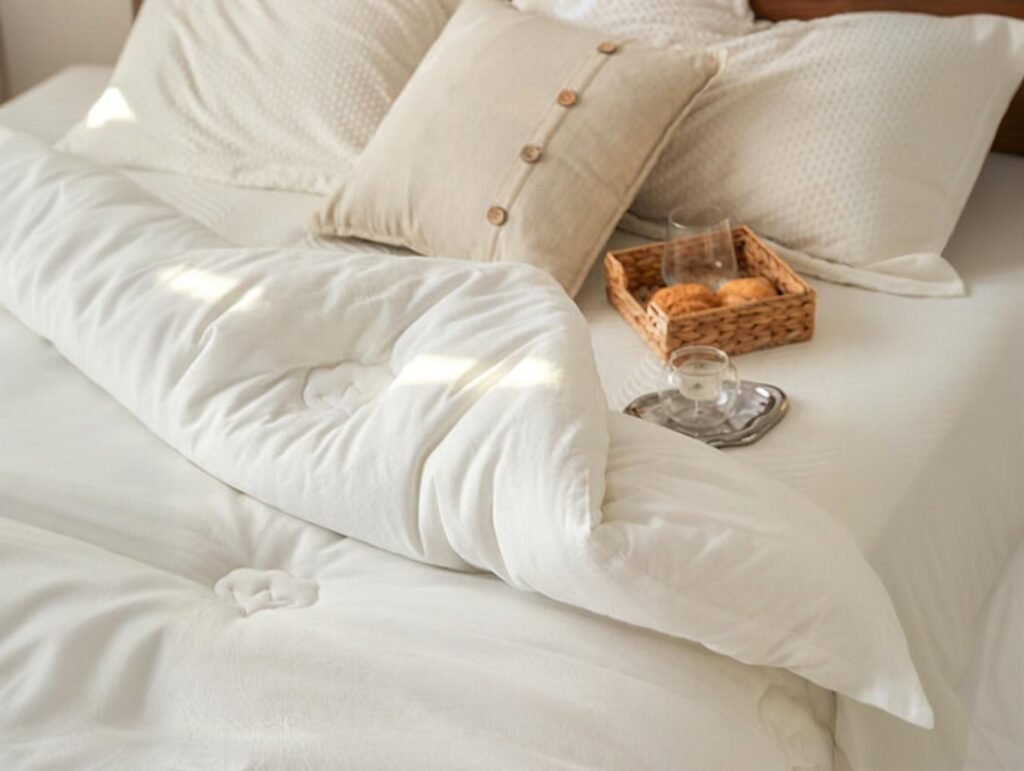
Home textiles place very different demands on cotton fabric than apparel or fashion products. Sheets, towels, curtains, cushion covers, and bedding are not judged by runway appearance or first-touch softness alone. They are judged by how they survive daily life: frequent washing, high-temperature drying, constant friction, and long-term exposure to moisture, light, and body oils.
For this reason, cotton fabrics used in home textiles are selected primarily for reliability, structural stability, and wash resistance. Experimentation is limited. Proven constructions dominate because failure in home textiles is immediately visible and costly. A sheet that pills after ten washes, a towel that loses absorbency, or a cushion cover that distorts shape quickly becomes unacceptable.
The main categories of cotton fabrics used in home textiles are defined not by fashion trends, but by fabric structure and functional role. Plain weaves deliver breathability, twills add strength, terry constructions provide absorbency, and heavier canvases offer structure. Each category exists because it solves a specific, recurring household need.
Home textiles demand reliability, not experimentation
In home use, cotton fabric must perform consistently over years, not seasons. This reality explains why the same core fabric categories have dominated home textiles for decades with only incremental refinement.
A) Core cotton fabric categories in home use
Most home textile products can be traced back to four foundational cotton fabric categories.
| Category | Typical Products | Key Reason for Use |
|---|---|---|
| Plain weave | Sheets, pillowcases | Breathability |
| Twill weave | Curtains, covers | Strength |
| Terry cotton | Towels, bathrobes | Absorbency |
| Canvas / duck | Cushion covers | Structure |
Each category exists because it fulfills a specific functional requirement that cannot be easily replaced by another structure.
Plain weaves allow air circulation and skin comfort. Twills handle stress and abrasion. Terry loops capture moisture efficiently. Canvas supports shape and load. These are not aesthetic choices—they are performance solutions.
B) Plain weave cotton fabrics: the foundation of bedding
Plain weave cotton is the most widely used structure in home textiles, particularly in bedding. Sheets and pillowcases require fabrics that feel comfortable against skin while remaining stable after repeated laundering.
Plain weave cotton fabrics are characterized by:
- balanced warp and weft interlacing
- even surface appearance
- good airflow
In bedding applications, these traits translate into:
- temperature regulation during sleep
- low risk of distortion
- predictable shrinkage behavior
Poplin, percale, and similar plain weaves dominate bedsheets because they strike a balance between softness and structural integrity. Unlike knits, they do not stretch out of shape. Unlike heavier weaves, they remain breathable and lightweight.
A critical advantage of plain weave cotton in home use is dimensional stability. After proper pre-shrinking, plain weave fabrics maintain size and fit even after dozens of wash cycles. This stability is essential for fitted sheets and pillowcases, where even small dimensional changes create daily frustration.
C) Twill cotton fabrics: strength for vertical and load-bearing uses
Twill cotton fabrics play a different role in home textiles. Their diagonal weave structure increases strength and abrasion resistance, making them suitable for applications where fabric experiences stress rather than direct skin contact.
Common uses include:
- curtains
- duvet covers
- slipcovers
- upholstery covers
The diagonal rib in twill distributes stress more evenly across yarns. This reduces tearing and extends lifespan under repeated movement, such as opening and closing curtains or removing and washing covers.
Twill cotton also:
- hides wrinkles better than plain weave
- drapes more smoothly
- tolerates heavier fabric weights
These properties make twill a practical choice for home textiles that must balance appearance with durability. Curtains made from plain weave cotton may crease excessively and lose visual appeal quickly. Twill constructions maintain a cleaner look over time.
From a maintenance perspective, twill cotton fabrics withstand frequent washing better than lighter plain weaves when used in covers and draperies.
D) Terry cotton fabrics: engineered for absorbency
Terry cotton fabrics are defined by their looped pile structure, which dramatically increases surface area. This structure is essential for products designed to absorb and release moisture efficiently.
Typical terry cotton products include:
- bath towels
- hand towels
- washcloths
- bathrobes
Absorbency is not just about fiber content. It is about structure. The looped pile traps water within the fabric body, allowing towels to absorb quickly while remaining breathable enough to dry between uses.
Key performance traits of terry cotton include:
- high water uptake
- resilience under wet conditions
- resistance to fiber breakdown
In home use, terry fabrics must survive:
- constant wetting and drying
- high-temperature laundering
- mechanical agitation
Poor-quality terry cotton sheds loops, loses absorbency, or becomes stiff over time. High-quality terry uses well-controlled loop height, strong base fabric, and stable yarn twist to ensure long-term performance.
This is why terry cotton is rarely substituted by other structures in towels. No other cotton construction delivers the same combination of absorbency and durability.
E) Canvas and duck cotton: structure and shape retention
Canvas and duck cotton fabrics represent the structural end of home textiles. These are tightly woven, heavy-weight cotton fabrics designed to hold shape under load.
Common applications include:
- cushion covers
- storage organizers
- upholstery bases
- decorative home accessories
Canvas cotton fabrics are characterized by:
- high yarn density
- tight weave
- minimal stretch
In home use, these traits allow fabrics to:
- support filling materials
- resist sagging
- maintain clean edges and seams
Unlike apparel, where flexibility is often desired, home textile canvas prioritizes rigidity and stability. A cushion cover that stretches or distorts quickly becomes unusable.
Canvas cotton is also valued for its resistance to abrasion. In high-contact areas such as sofas or chairs, lighter cotton fabrics would wear through rapidly.
F) Why woven cotton dominates home textiles
Knitted cotton fabrics are common in clothing, but they are relatively rare in core home textiles. The reason is structural.
Woven cotton:
- resists stretching
- maintains geometry
- behaves predictably in washing
Knitted cotton:
- stretches easily
- distorts under load
- twists during laundering
In home environments, where textiles are washed frequently and subjected to mechanical stress, predictability matters more than stretch comfort. A bedsheet that stretches loses fit. A towel that distorts loses usability. A cushion cover that twists loses appearance.
As a result, woven cotton fabrics dominate home textiles despite the comfort advantages of knits.
G) Performance expectations differ from apparel
Cotton fabrics that perform well in clothing often fail in home applications because the performance priorities are different.
| Requirement | Apparel | Home Textiles |
|---|---|---|
| Stretch | Often desired | Rarely needed |
| Durability | Medium | High |
| Wash frequency | Moderate | Very high |
Home textiles are washed more often, dried more aggressively, and used more continuously than garments. A cotton fabric that feels luxurious in a shirt may pill, shrink, or weaken rapidly when used as bedding or towels.
This difference explains why home textile cotton often feels firmer or less “fashion soft” at first touch. That firmness reflects structural resilience, not lower quality.
H) Long-term comfort vs first-touch softness
In home textiles, comfort is judged over time, not at first contact.
Consumers evaluate home textile cotton after:
- 50 or more wash cycles
- repeated tumble drying
- daily physical contact
Over-soft cotton fabrics often lose structure quickly. They may feel appealing in the store but become limp, rough, or misshapen after months of use.
High-quality home textile cotton often starts slightly firmer, then softens gradually through use without losing integrity. This controlled aging is a key indicator of quality in bedding and towels.
I) Category overlap and hybrid fabrics
While core categories dominate, some fabrics blur boundaries through hybrid engineering.
Examples include:
- cotton sateen, which combines smoothness with woven stability
- reinforced terry, which improves towel lifespan
- twill sateen hybrids used in premium bedding
These hybrids aim to enhance comfort or appearance while retaining core structural advantages. However, even these innovations are built on established woven principles rather than radical experimentation.
In home textiles, innovation is evolutionary, not disruptive. New fabrics succeed only if they meet the same durability benchmarks as traditional constructions.
J) Maintenance and lifecycle considerations
Another reason core cotton categories dominate home textiles is lifecycle efficiency. Manufacturers, hotels, and households all depend on predictable maintenance.
Well-chosen cotton fabrics:
- survive industrial laundering
- resist cumulative damage
- reduce replacement frequency
Poor fabric selection increases:
- product turnover
- consumer dissatisfaction
- environmental waste
From both economic and sustainability perspectives, longevity matters more than novelty in home textiles.
K) Cost efficiency and material honesty
Home textile buyers often operate under tight cost constraints. However, cost efficiency does not mean choosing the cheapest fabric.
Using the correct cotton category for the application:
- reduces failure rates
- minimizes returns
- lowers long-term replacement cost
For example, using plain weave cotton where canvas is required saves money initially but leads to rapid failure. Using terry cotton with inadequate loop strength results in towel breakdown.
Material honesty—matching fabric structure to function—is one of the most effective cost controls in home textiles.
L) Category insight
The cotton fabrics that dominate home textiles are not trendy, experimental, or marketing-driven. They are predictable, stable, and proven through decades of use.
Plain weaves deliver breathable comfort for bedding. Twills provide strength for covers and drapery. Terry constructions absorb and endure. Canvas supports structure and load.
These categories persist because home textiles demand reliability above all else. When cotton fabric does its job quietly, wash after wash, year after year, it earns its place in the home.
Which cotton weave types are most popular for bedding products, and why?
Cotton bedding is one of the most mature textile categories in the world, yet it remains one of the most misunderstood. Consumers are often guided by thread count, branding language, or perceived softness in-store, while manufacturers and experienced buyers know that weave structure plays a far more decisive role in sleep comfort, durability, and long-term satisfaction.
Among all cotton weave types, percale and sateen dominate the global bedding market. Their popularity is not accidental. These two weaves consistently deliver predictable performance across climates, body types, and laundering conditions. They represent two different philosophies of comfort—cool and crisp versus smooth and enveloping—yet both succeed because they align fabric behavior with how people actually sleep.
Bedding success is about sleep quality, not marketing.
Bedding success is about sleep quality, not marketing
Unlike apparel, bedding interacts with the body for 6–9 uninterrupted hours, often under heat, moisture, and repeated friction. A fabric that feels impressive for a few seconds in a showroom can fail quickly in real sleep conditions. Overheating, clamminess, pilling, or loss of structure become noticeable only after repeated nights and wash cycles.
This is why bedding manufacturers focus less on novelty and more on repeatable comfort physics: airflow, moisture dissipation, surface friction, and mechanical stability. Percale and sateen succeed because their weave structures manage these variables reliably, even when yarn counts, finishes, or production locations vary.
A) Percale cotton bedding
Percale uses a plain weave structure, where each weft yarn alternates over and under each warp yarn. This is the simplest and most stable weave in textile construction.
| Feature | Performance |
|---|---|
| Hand feel | Crisp, cool |
| Breathability | High |
| Durability | High |
| Wrinkle tendency | Moderate |
The defining characteristic of percale is air permeability. The plain weave creates evenly distributed micro-gaps that allow heat and moisture to escape efficiently. This makes percale particularly suitable for warm sleepers, hot climates, and environments without strong air conditioning.
Percale sheets tend to feel crisp rather than silky. This sensation is not stiffness; it is the result of balanced yarn tension and low surface float length. Many users describe percale as “hotel-style” bedding because it stays cool, resists overheating, and feels clean against the skin.
From a durability standpoint, percale performs exceptionally well. The plain weave distributes stress evenly across the fabric, reducing yarn slippage and abrasion concentration. Over time, high-quality percale softens gradually without losing structure, which is why it is favored by hotels, hospitals, and institutional laundries.
Percale dominates warm climates and hotel bedding not because it feels luxurious at first touch, but because it remains comfortable after thousands of nights and washes.
B) Sateen cotton bedding
Sateen uses a satin-style weave, typically a four-over-one or three-over-one structure, where warp yarns float over multiple weft yarns before interlacing.
| Feature | Performance |
|---|---|
| Surface | Smooth, lustrous |
| Warmth | Slightly higher |
| Wrinkle resistance | Better |
| Abrasion resistance | Medium |
The longer floats in sateen create a smoother, silkier surface with a subtle sheen. This is the source of sateen’s “luxury” reputation. The fabric drapes more fluidly over the body and reduces surface friction, which many sleepers find comforting.
Sateen sheets feel warmer than percale because the weave structure reduces airflow slightly and increases skin contact area. For cooler climates or people who prefer a cozier sleep environment, this can be an advantage.
Wrinkle resistance is another reason sateen remains popular. The floating yarns allow the fabric to relax more easily after washing, making it visually smoother with less ironing or finishing.
However, sateen’s structure comes with trade-offs. The longer floats are more exposed to abrasion, which means yarn quality becomes critical. Poor-quality yarns in sateen constructions can pill or wear through faster than percale.
Sateen appeals to consumers seeking a “luxury” sleep feel, but it requires better raw materials and tighter quality control to maintain performance over time.
C) Percale vs sateen comparison
| Property | Percale | Sateen |
|---|---|---|
| Coolness | Excellent | Good |
| Softness | Moderate | High |
| Durability | Very high | Medium–high |
| Visual appeal | Matte | Slight sheen |
Neither percale nor sateen is objectively better. They serve different sleep preferences and usage environments.
Percale prioritizes thermal comfort and structural stability. Sateen prioritizes tactile smoothness and visual appeal. Problems arise only when one is used to serve the other’s purpose—for example, using sateen in hot, humid climates where heat retention becomes uncomfortable, or using percale for consumers expecting immediate silk-like softness.
Successful bedding brands do not position one weave as superior. They position them as different answers to different sleep needs.
D) Why thread count is overrated
Thread count has become the most abused metric in bedding marketing. While thread count does influence fabric density, it is meaningless without understanding weave structure and yarn quality.
Thread count without weave context:
- misleads buyers
- exaggerates softness
- hides durability issues
A 400-thread-count percale and a 400-thread-count sateen will feel and perform completely differently. Likewise, a tightly woven 250-thread-count percale made from long-staple cotton can outperform a loosely constructed 600-thread-count fabric made from short fibers.
In many cases, inflated thread counts are achieved by using multi-ply yarns, which increase the number on paper without improving comfort or durability. This often results in heavier, less breathable fabrics that feel impressive initially but degrade faster.
In bedding, weave structure and yarn integrity matter more than numbers. Thread count should be treated as a supporting detail, not a quality guarantee.
E) Bedding durability under washing
Bedding fabrics are subjected to far more laundering than most apparel textiles. A good bedding weave must survive frequent washing, drying, and friction without losing comfort or appearance.
Percale generally:
- holds structure longer
- pills less
- improves with washing
Because of its balanced plain weave, percale distributes mechanical stress evenly. It tends to resist pilling and tearing, even in commercial laundering environments. Over time, percale becomes softer while retaining its cool, breathable character.
Sateen may feel better initially but needs better yarn quality to last. The floating yarns in sateen are more vulnerable to abrasion, especially if short-staple cotton or low-twist yarns are used. High-quality sateen made with long-staple or compact yarns can perform well, but lower-grade sateen often shows wear sooner.
This difference explains why institutional buyers overwhelmingly favor percale, while consumer retail sees stronger demand for sateen.
F) Climate and sleep style considerations
Climate plays a decisive role in bedding performance. In hot or humid regions, percale’s breathability directly affects sleep quality. Even small differences in airflow can influence sweating, restlessness, and perceived comfort.
In cooler climates, sateen’s slightly higher warmth and smoother surface can enhance comfort, particularly in winter months or air-conditioned environments.
Sleep style also matters. People who move frequently during sleep often prefer percale because it feels less clingy and releases heat faster. Those who prefer enveloping comfort and minimal friction often gravitate toward sateen.
Good bedding design starts with how people actually sleep, not how fabrics feel on a showroom shelf.
G) Why other cotton weaves are less dominant
Other cotton weaves—such as twill, jersey knit, or jacquard—exist in bedding but remain niche.
Twill is durable but traps more heat and feels heavier. Jersey knits are soft and stretchy but lack dimensional stability and tend to pill. Jacquard weaves add visual interest but increase cost and complexity without improving sleep comfort.
Percale and sateen dominate because they strike the best balance between:
- comfort
- durability
- cost efficiency
- manufacturing scalability
They perform well across different cotton qualities, finishing methods, and production regions, making them reliable choices for large-scale bedding programs.
H) Bedding insight
The most successful bedding fabrics are those that disappear into comfort. They do not draw attention to themselves through extreme softness, excessive sheen, or marketing claims. Instead, they regulate temperature, manage moisture, and maintain structure night after night.
Percale succeeds by staying cool, stable, and honest. Sateen succeeds by offering smoothness and visual refinement without sacrificing too much performance. Both endure because they respect the realities of sleep.
For buyers and brands, the key insight is simple: choose weave structures based on sleep behavior and climate, not trends or thread count slogans. In bedding, long-term satisfaction is built quietly, one good night’s sleep at a time.
How do cotton fabrics for towels differ from those used in bedding and upholstery?
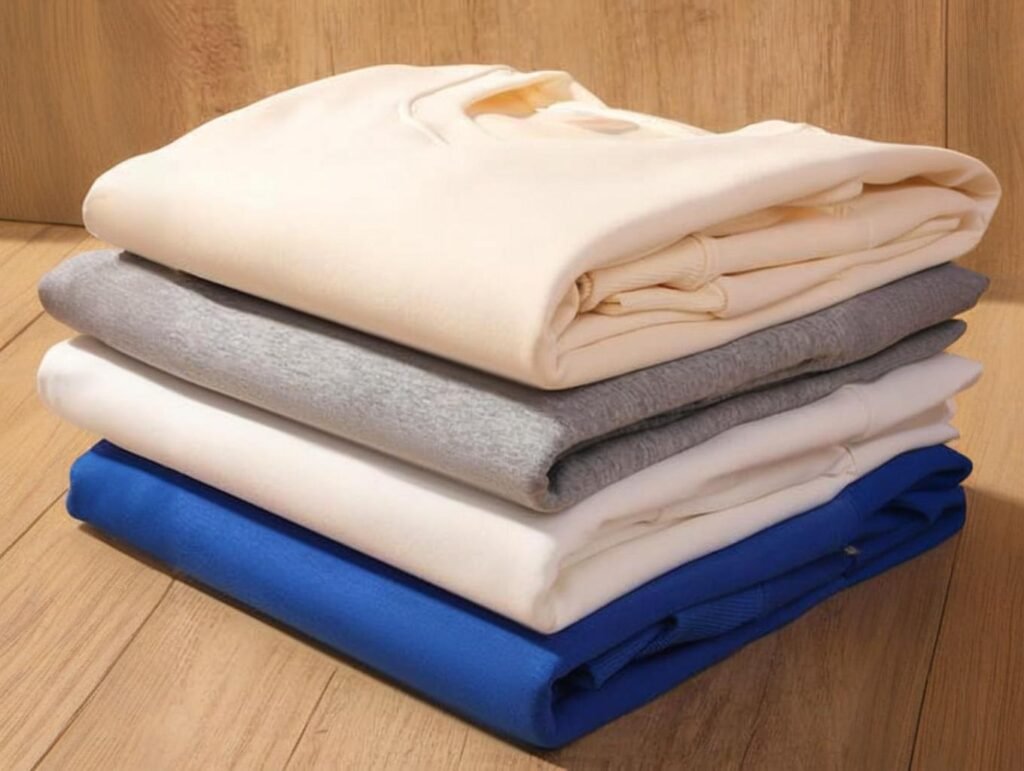
Cotton is often spoken about as if it were a single, interchangeable material. In reality, cotton fabrics for towels, bedding, and upholstery are engineered for entirely different performance goals. A towel that performs perfectly in a bathroom would fail quickly on a bed, and a premium bedsheet fabric would be deeply frustrating when used as a towel. The difference is not subtle. It is structural, mechanical, and functional.
Towels are designed for immediate performance. They are judged in seconds, not seasons. A user wraps a towel around wet skin and expects rapid water uptake, a soft yet substantial feel, and enough durability to survive constant washing while wet. Bedding and upholstery fabrics, by contrast, are designed for long-term comfort, surface smoothness, dimensional stability, and visual consistency over time. Understanding these differences is essential for sourcing, product development, and quality control.
Towels are judged in seconds, not seasons
The moment a towel touches wet skin, its success or failure is obvious. If absorbency is slow, the towel feels ineffective. If loops pull or flatten quickly, it feels cheap. If it becomes rough or thin after repeated washing, it loses value immediately.
Bedding and upholstery fabrics operate on a completely different timeline. Sheets are evaluated over hours of sleep, focusing on smoothness, breathability, and thermal comfort. Upholstery is judged over years, emphasizing abrasion resistance, shape retention, and color stability. These different usage patterns explain why towel cotton must be engineered in a fundamentally different way.
Terry cotton: the backbone of towel fabrics
Unlike bedding and upholstery, which rely on flat woven or knitted structures, towels are built on terry loop construction. This three-dimensional structure is what enables towels to absorb water quickly and hold it away from the skin.
| Terry Structure | Performance Role |
|---|---|
| Loop height | Determines absorbency |
| Loop density | Controls softness & durability |
| Ground fabric | Provides strength |
The loops are the working surface of the towel. Each loop increases surface area and creates capillary channels that draw water into the fabric. The ground fabric underneath anchors these loops and carries mechanical stress during use and washing.
In bedding fabrics, surface smoothness is the goal. Yarn floats are minimized, and tight construction is used to create a flat, uniform hand. In towels, the opposite is true. Raised loops are essential, and the fabric is intentionally bulky and textured.
Loop length vs absorbency trade-off
Loop length is one of the most critical engineering decisions in towel production. It directly affects absorbency, softness, and durability.
| Loop Length | Result |
|---|---|
| Long loops | High absorbency, lower durability |
| Medium loops | Balanced performance |
| Short loops | Durable, less plush |
Long loops create exceptional absorbency because they dramatically increase surface area. However, they are more prone to snagging, pulling, and matting over time. In domestic use, these towels feel luxurious initially but often lose appearance and performance quickly.
Medium loop terry represents the most balanced option. Absorbency remains high, but loop stability improves significantly. This is why high-end hotels and institutional buyers often specify medium loop lengths. Their priority is not first-touch luxury, but consistent performance after hundreds of wash cycles.
Short loop terry sacrifices some plushness and absorbency in exchange for durability. These towels dry faster, resist snagging, and maintain structure longer. They are common in commercial laundries, gyms, and healthcare settings where longevity outweighs tactile indulgence.
Cotton fiber choice in towel production
Not all cotton fibers behave the same way in looped structures. Fiber length, strength, and twist all influence how loops perform under repeated wet stress.
| Fiber Type | Towel Performance |
|---|---|
| Standard cotton | Balanced |
| Long-staple cotton | Softer, stronger |
| Zero-twist cotton | Plush feel, faster wear |
Standard cotton remains the most widely used fiber for towels because it offers a reliable balance of cost, absorbency, and durability. When spun with appropriate twist, it produces loops that stand upright and resist collapse.
Long-staple cotton improves softness and strength. Longer fibers create smoother loops with fewer weak points, reducing linting and improving resistance to breakage. Premium towels often use long-staple cotton to elevate hand feel without sacrificing durability.
Zero-twist cotton is often marketed as ultra-luxurious. By reducing or eliminating twist, fibers spread outward, creating a very soft and fluffy surface. However, this construction significantly reduces loop strength. Zero-twist towels absorb well initially but flatten, shed fibers, and wear out faster. Ultra-soft towels often sacrifice lifespan, a trade-off that is rarely communicated clearly to consumers.
GSM differences in towel fabrics
GSM plays a much larger role in towels than in bedding because it directly correlates with bulk, absorbency, and drying behavior.
| Towel Type | Typical GSM |
|---|---|
| Guest towel | 400–500 |
| Bath towel | 500–650 |
| Luxury towel | 650–800 |
Lower GSM towels dry faster and feel lighter, making them suitable for guest use or travel. However, they hold less water and may feel insufficient for full body drying.
Mid-range GSM towels strike a balance between absorbency and manageability. They are thick enough to feel substantial but not so heavy that they remain damp for long periods. This range dominates both retail and hospitality markets.
Very high GSM towels maximize absorbency and plushness, but they come with trade-offs. They are heavier when wet, dry slowly, and place more stress on washing machines and dryers. In humid environments, these towels can develop odor issues if not dried properly.
In bedding, GSM is far less prominent. Thread count, yarn fineness, and weave structure matter more than total fabric mass.
Yarn construction and twist in towels vs bedding
Towel yarns are engineered differently from bedding yarns. In towels, yarns must withstand repeated wet loading, mechanical agitation, and loop tension.
Towel yarns often use higher twist than bedding yarns. This improves loop strength and reduces linting. Bedding yarns, especially in high-thread-count sheets, use lower twist to maximize smoothness and drape.
In towels, low twist may feel softer initially but leads to fiber breakage and shedding. In bedding, higher twist would make sheets feel harsh and stiff. This illustrates why towel cotton cannot simply be repurposed for bedding or vice versa.
Ground fabric strength and towel longevity
The ground fabric in a towel is often overlooked by consumers, but it is critical to durability. While loops do the absorbing, the ground fabric bears the load during use and laundering.
High-quality towels use strong, tightly constructed ground fabrics that anchor loops securely. Low-quality towels reduce ground fabric density to save yarn, resulting in loops that pull out easily and fabrics that thin quickly.
In bedding, the entire fabric surface contributes evenly to strength. There is no separate structural layer. This difference further explains why towel construction is inherently more complex.
Why bedding cotton fails as towel cotton
Flat woven cotton fabrics, even when made from premium fibers, perform poorly as towels.
Flat woven cotton:
- absorbs slowly
- lacks surface area
- becomes heavy when wet
Without loops, flat fabrics rely solely on fiber absorption rather than capillary action. Water spreads slowly, often sitting on the surface rather than being drawn inward. Once saturated, flat fabrics cling to the skin and feel heavy and ineffective.
This is why bedsheets, even those made from high-quality cotton, make poor substitutes for towels. They are engineered for smoothness and airflow, not rapid fluid management.
Upholstery cotton: durability over absorbency
Upholstery cotton sits at the opposite end of the spectrum from towel cotton. Its priorities are abrasion resistance, colorfastness, and dimensional stability.
Upholstery fabrics use tight weaves, high yarn density, and often blends with synthetics to improve durability. Absorbency is actually undesirable, as it increases staining risk. Any absorbent quality in upholstery is considered a liability, not a benefit.
Attempting to use towel-style cotton in upholstery would result in rapid soiling, deformation, and unacceptable wear.
Washing frequency and performance expectations
Towels are washed more frequently than almost any other household textile. They are laundered while wet, exposed to detergents, heat, and mechanical stress repeatedly.
This reality shapes every aspect of towel fabric design. Loop durability, wet strength, and lint control all take precedence over aesthetic refinement. Bedding and upholstery fabrics, by comparison, are washed far less often and under gentler conditions.
A towel that feels exceptional but degrades after 20 washes is a failure, regardless of its initial appeal.
Drying behavior and hygiene considerations
Drying performance is a critical but often ignored aspect of towel cotton. Towels that retain moisture too long are more prone to odor and microbial growth.
Loop density, GSM, and yarn twist all influence drying time. Excessively dense or high-GSM towels may feel luxurious but remain damp longer, especially in humid climates. Bedding fabrics dry quickly because they are thin and flat, but they cannot perform towel functions.
Well-designed towels balance absorbency with airflow, allowing moisture to evaporate efficiently between uses.
Longevity versus first-touch softness
Many towel purchasing decisions are made based on first-touch softness. Manufacturers know this and sometimes prioritize finishes or constructions that impress immediately.
However, true towel quality is revealed over time. Towels that retain loop integrity, absorbency, and softness after hundreds of uses deliver real value. Those that rely on cosmetic softness often deteriorate rapidly.
High-quality towel cotton is engineered to feel good after years, not just after the first wash.
Towel insight
Cotton fabrics for towels differ fundamentally from those used in bedding and upholstery because their purpose is entirely different. Towels are three-dimensional tools designed for rapid absorbency, wet strength, and durability under constant washing. Bedding and upholstery fabrics are surface textiles optimized for comfort, appearance, and long-term stability.
The best towel cotton is not the smoothest or the softest at first touch. It is the cotton that continues to perform after hundreds of uses—absorbing quickly, drying reliably, and holding its structure long after novelty has faded.
What cotton knit structures are used in home textile products like blankets and throws?
In home textile categories such as blankets, throws, and lightweight coverings, comfort is not defined by stiffness or precision—it is defined by softness, flexibility, thermal balance, and how the fabric behaves during daily use. This is why cotton knit structures play a central role in these products. Compared with woven cotton fabrics, knits offer natural stretch, relaxed drape, and a more forgiving hand feel, all of which align closely with how consumers actually use blankets and throws in real living spaces.
Cotton knits also respond better to repeated laundering, folding, and casual handling. Home blankets are rarely laid flat and untouched; they are draped over sofas, wrapped around the body, washed frequently, and used across seasons. Knit construction allows cotton to adapt to these conditions without feeling rigid or restrictive. Understanding which knit structures are used—and why—helps buyers and product developers select materials that balance comfort, durability, and visual appeal over long-term use.
Soft furnishings need flexibility, not rigidity
Unlike bedding sheets or upholstery covers, blankets and throws are comfort-first products. They are meant to move with the body, conform to furniture, and provide warmth without weight. Knit structures excel here because their looped construction allows controlled stretch and recovery, creating fabrics that feel soft and accommodating rather than structured and tight.
Different cotton knit structures achieve this comfort in different ways. Jersey, waffle, and interlock are among the most widely used, each offering a distinct balance of warmth, breathability, stability, and aesthetics.
A) Jersey knit cotton blankets
Jersey is the most familiar and widely used knit structure in cotton home textiles. It is produced using a single set of needles, creating a smooth face and a looped back. This simplicity gives jersey its characteristic softness and flexibility.
| Feature | Benefit |
|---|---|
| Stretch | Comfortable drape |
| Breathability | Year-round use |
| Soft hand feel | Casual comfort |
Jersey knit cotton blankets are lightweight, easy to drape, and comfortable against the skin. Their stretch allows them to contour naturally around the body, which is why they are often compared to oversized T-shirts or loungewear in feel. This makes jersey knits especially popular for casual throws, travel blankets, and everyday household use.
From a performance perspective, jersey cotton offers excellent breathability due to its open loop structure. Heat dissipates easily, preventing overheating in warmer environments. However, this same openness means jersey blankets provide less insulation than denser knit structures. They are best suited for layering or for use in mild to warm climates.
Jersey knits can be prone to edge curling and dimensional distortion if yarn quality or stitch density is insufficient. For home textile use, higher stitch density and controlled finishing are essential to prevent excessive stretching or shape loss after washing.
Jersey knits dominate lightweight throws and casual blankets because they deliver immediate comfort with minimal break-in time.
B) Waffle knit cotton fabrics
Waffle knit cotton fabrics are defined by their three-dimensional, grid-like surface created through alternating knit and tuck stitches. This structure forms recessed pockets that trap air, enhancing thermal performance without adding excessive weight.
Waffle structures create air pockets.
| Advantage | Result |
|---|---|
| Thermal regulation | Warm yet breathable |
| Texture | Decorative appeal |
| Weight efficiency | Warm without heaviness |
The air pockets in waffle knit fabrics act as natural insulation, retaining warmth while still allowing airflow. This makes waffle cotton blankets suitable for a wide temperature range. They feel cozy in cooler conditions but remain breathable enough for transitional seasons.
Texture is another key advantage. Waffle knits offer visual depth and tactile interest, making them popular in design-forward home textiles. The raised pattern adds a sense of craftsmanship and luxury without relying on heavy yarns or dense construction.
From a durability standpoint, waffle knits tend to perform better than lightweight jersey because their structure distributes stress across multiple stitch types. However, yarn quality and stitch balance are critical. Poorly made waffle knits may snag or lose definition after repeated washing.
Waffle cotton is popular in spa and resort home textiles because it combines comfort, elegance, and practical thermal regulation in a relatively lightweight fabric.
C) Interlock knit cotton blankets
Interlock is a double-knit structure formed by two sets of needles working in opposition. This creates a fabric that looks identical on both sides, with a smooth, dense surface and minimal stretch compared to single knits.
| Property | Performance |
|---|---|
| Thickness | Medium-high |
| Shape stability | Excellent |
| Durability | Higher than jersey |
Interlock knit cotton blankets feel more substantial than jersey or waffle alternatives. The double-knit construction increases thickness and weight, improving insulation and durability. Because loops are interlocked rather than exposed, the fabric resists curling, laddering, and distortion.
Shape stability is one of interlock’s strongest advantages. Blankets maintain clean edges and consistent dimensions even after repeated laundering. This makes interlock suitable for products that require a more polished appearance, such as decorative throws used in living rooms or guest spaces.
While interlock offers less stretch than jersey, it still provides enough flexibility for comfort. The reduced elasticity can actually be beneficial in home textiles, as it prevents over-stretching and sagging over time.
Interlock knits resist edge curling and distortion, which reduces finishing complexity and improves long-term appearance.
D) Knit vs woven for home comfort
When comparing knit and woven cotton fabrics for home textile applications, the differences are structural rather than cosmetic. Each has its place, but blankets and throws tend to favor knit performance characteristics.
| Property | Knit Cotton | Woven Cotton |
|---|---|---|
| Stretch | Yes | No |
| Drapability | High | Moderate |
| Dimensional stability | Lower | Higher |
Knit cotton fabrics stretch and recover, allowing them to adapt to body movement and furniture contours. This results in a relaxed, cozy feel that consumers associate with comfort. Woven cotton fabrics, while more dimensionally stable, often feel stiffer and less accommodating when used as blankets.
Dimensional stability is the main advantage of woven cotton, but in blankets this is often less critical than comfort. Knit fabrics trade some stability for softness and flexibility, which aligns better with casual home use.
Blankets prioritize comfort over strict shape control. As long as shrinkage and distortion are managed within acceptable limits, knit cotton delivers a superior user experience.
E) Seasonal considerations
One of the strengths of cotton knit structures is their adaptability to different climates. By changing knit structure rather than fiber content, manufacturers can tailor performance across seasons.
| Climate | Preferred Structure |
|---|---|
| Warm | Jersey |
| Moderate | Waffle |
| Cool | Interlock |
In warm climates or summer use, jersey knit blankets provide light coverage without trapping heat. Their breathability supports temperature regulation during sleep or relaxation.
In moderate climates, waffle knits offer a balance of warmth and airflow. They perform well in spring and autumn or in air-conditioned interiors where some insulation is needed without heaviness.
In cooler climates, interlock knits deliver higher thermal retention and a more substantial feel. While not as insulating as fleece or wool, interlock cotton provides natural warmth with better moisture management and skin comfort.
Structure selection adapts cotton to climate needs without changing fiber type, simplifying sourcing and maintaining material consistency.
F) Yarn and finishing considerations in knit cotton blankets
While knit structure defines overall behavior, yarn quality and finishing determine whether that structure performs well over time. Long-staple, combed cotton yarns reduce pilling and improve softness retention. Poor yarn quality leads to fuzzing, thinning, and loss of surface definition, especially in jersey and waffle knits.
Finishing must be balanced. Over-softening through aggressive enzyme or silicone treatments can weaken knit loops and reduce lifespan. Controlled softening enhances comfort while preserving loop integrity. Pre-shrinking and wash testing are particularly important for knit blankets, as uncontrolled shrinkage can amplify distortion.
Edges and hems also require attention. Knit blankets benefit from reinforced bindings or controlled hemming techniques to prevent stretching and curling during use.
G) Durability and care behavior in home use
Blankets and throws are often washed more frequently than decorative textiles and subjected to variable care conditions. Knit cotton structures must tolerate mechanical agitation, temperature changes, and repeated drying cycles.
Interlock knits generally offer the best resistance to deformation, followed by waffle knits and then jersey. However, proper stitch density and yarn selection can significantly narrow this gap. Buyers should evaluate wash-tested samples rather than relying on loom-state or showroom appearance.
Knit cotton blankets that perform well tend to feel slightly firm when new, then soften gradually with use while maintaining structure. This controlled evolution is a positive quality signal.
H) Sourcing insight for buyers and brands
For buyers, selecting cotton knit structures for home textiles is about matching comfort expectations with realistic durability targets. Jersey, waffle, and interlock each serve different product positions, price points, and climates.
Reliable suppliers can explain why a specific knit structure is recommended, provide data on shrinkage and pilling, and support sampling across seasonal variations. This technical guidance is often more valuable than aesthetic samples alone.
F) Knit insight
In home textiles, knit cotton succeeds when comfort outweighs structure.
Blankets and throws are judged by how they feel in daily life—on the sofa, during rest, and after repeated washing. Cotton knit structures excel in these roles because they flex, breathe, and soften naturally over time. When structure, yarn quality, and finishing are aligned with use conditions, knit cotton blankets deliver long-lasting comfort without unnecessary complexity.
The most successful home textile products are not the most rigid or heavily engineered. They are the ones that quietly adapt to real living—and knit cotton does exactly that.
Are there specific cotton finishes that enhance performance in home textiles (e.g., absorbency, softness)?
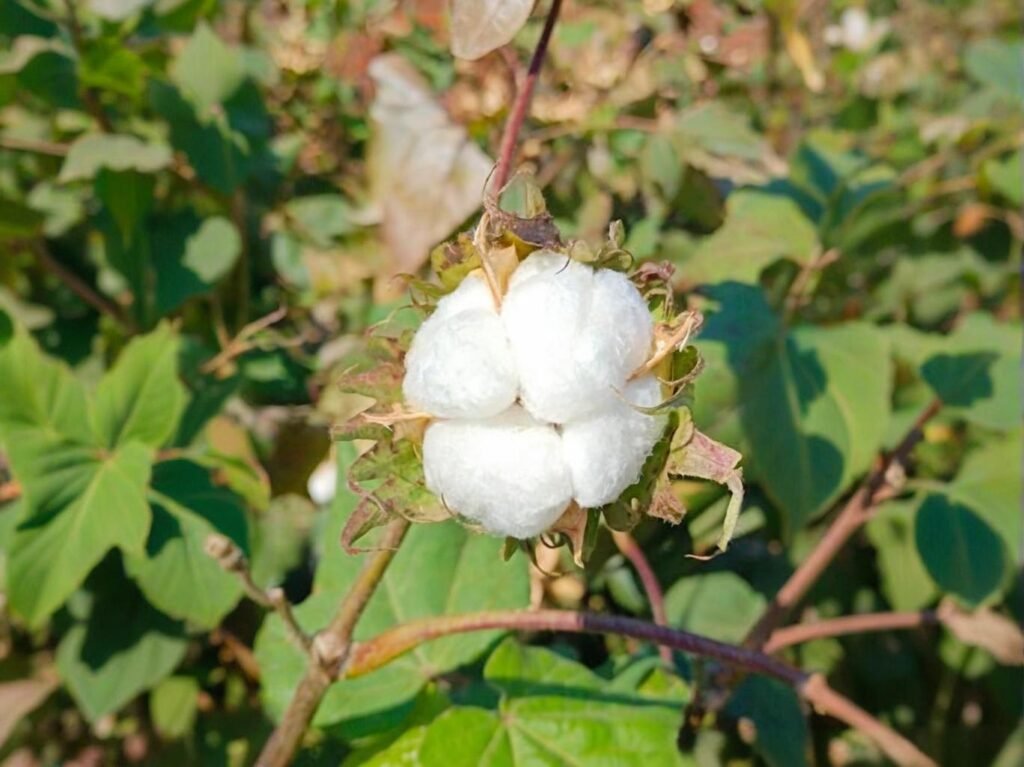
Yes. Finishing treatments play a decisive role in how cotton home textiles perform, age, and ultimately succeed in real households. Enzyme washing, bio-polishing, controlled softening, hydrophilic treatments, and pre-shrinking are widely used to improve absorbency, hand feel, dimensional stability, and long-term comfort. When applied with restraint and technical intent, these finishes enhance durability rather than undermine it.
In home textiles, finishing is not about making cotton feel impressive on the store shelf. It is about ensuring that sheets, towels, and covers remain comfortable, functional, and visually acceptable after years of washing, drying, and daily use. A finish that performs well on day one but degrades by wash ten is not a performance finish—it is a liability.
Finishing decides how cotton ages
Unlike apparel, where garments may be worn intermittently and replaced seasonally, home textiles are used continuously. Bedding is washed weekly, towels even more often. This means that finishing choices directly determine whether cotton ages gracefully or fails prematurely.
Good finishing makes cotton:
- soften gradually rather than collapse suddenly
- maintain absorbency rather than become slick
- hold size and shape rather than distort
Poor finishing does the opposite. It accelerates wear, increases linting, and shortens usable life.
A) Enzyme washing and bio-polishing
Enzyme washing and bio-polishing are among the most valuable finishes in home textiles because they improve surface quality without relying on heavy chemical coatings.
Enzymes selectively remove loose surface fibers—micro-fibrils that would otherwise break free during washing and become lint or pills.
| Effect | Home Textile Benefit |
|---|---|
| Reduced fuzz | Cleaner appearance |
| Improved softness | Better skin comfort |
| Less pilling | Longer visual lifespan |
In bedding products such as sheets and pillowcases, bio-polishing helps prevent the “greyed” or fuzzy appearance that often develops after repeated laundering. Instead of masking the surface, enzymes refine it.
A critical advantage of enzyme treatments is that they:
- act on fiber ends, not the fiber core
- do not add residues
- do not significantly reduce strength when controlled
For towels and terry fabrics, enzyme use is more cautious. Excessive treatment can shorten loops and reduce absorbency. In high-quality home textile production, enzyme parameters are carefully adjusted by fabric type rather than applied uniformly.
B) Softening finishes: controlled, not excessive
Softening is often misunderstood in home textiles. The goal is not maximum softness, but stable softness over time.
Different softener chemistries produce very different outcomes.
| Softener Type | Result | Risk |
|---|---|---|
| Silicone (light) | Smooth hand feel | Reduced absorbency if overused |
| Fatty acid | Natural touch | Shorter durability |
| Reactive softener | Wash-durable | Higher cost |
Light silicone softeners are widely used in bedding to reduce friction and improve drape. When applied sparingly, they enhance comfort without sealing the fabric surface. Overuse, however, creates a hydrophobic layer that reduces breathability and absorbency—particularly problematic in towels.
Fatty acid softeners provide a more “natural” cotton touch and are often preferred in eco-positioned products. Their limitation is durability. They wash out faster, leading to noticeable changes in hand feel over time.
Reactive softeners chemically bond to the fiber, offering superior wash durability. They are commonly used in higher-end home textiles where consistent feel after dozens of washes is required. The trade-off is higher processing cost and tighter process control.
Over-softened cotton often feels impressive initially but collapses structurally. Fibers slip more easily, yarn cohesion weakens, and surface fuzz increases. In home textiles, this leads to rapid degradation.
C) Hydrophilic finishes for absorbency
Absorbency is critical for towels, bathrobes, and kitchen textiles. While cotton is naturally hydrophilic, finishing can either enhance or inhibit this property.
Hydrophilic finishes:
- speed up water uptake
- improve initial towel performance
- enhance moisture management in bedding
These finishes work by improving water spread across the fiber surface, allowing liquid to penetrate quickly rather than bead.
However, hydrophilic finishes must be evaluated for wash durability. Some treatments perform well initially but degrade unevenly, leading to patchy absorbency. Others wash out cleanly, returning the fabric to its natural cotton behavior without negative side effects.
In high-quality towel production, hydrophilic finishing is often combined with:
- proper scouring to remove natural waxes
- controlled softening that does not block pores
Absorbency problems in home textiles are more often caused by over-softening than by lack of hydrophilic treatment.
D) Pre-shrinking and dimensional control
Dimensional stability is one of the most important yet least visible aspects of home textile performance. Sheets that no longer fit mattresses or towels that twist after drying quickly become consumer complaints.
| Treatment | Shrinkage After Washing |
|---|---|
| Untreated | 4–8% |
| Pre-shrunk | 1–3% |
Pre-shrinking allows cotton to release internal tension under controlled conditions before it reaches the consumer. This is especially important for:
- fitted sheets
- duvet covers
- terry products
In home use, even small dimensional changes accumulate over time. A sheet that shrinks 2% per wash will become unusable long before it wears out structurally.
Pre-shrinking also improves:
- seam alignment
- shape retention
- cutting and sewing accuracy
Unlike some finishes, pre-shrinking does not wash out. It permanently stabilizes the fabric’s behavior.
E) Finishes that reduce lifespan
Not all finishes enhance performance. Some actively shorten fabric life, especially in home textiles subjected to heavy use.
| Finish | Long-Term Issue |
|---|---|
| Heavy silicone | Fiber slippage |
| Over-brushing | Surface weakening |
| Resin-heavy wrinkle control | Brittleness |
Heavy silicone finishes reduce friction so aggressively that fibers slip past each other under stress. Over time, this leads to thinning, distortion, and reduced absorbency.
Over-brushing raises surface fibers to create a soft, plush feel. While appealing in the short term, it weakens yarn structure and accelerates pilling. In bedding, brushed cotton often ages poorly compared to smoother, enzyme-finished alternatives.
Resin-heavy wrinkle control finishes add stiffness and shape retention but at the cost of fiber flexibility. In home textiles, repeated washing causes resins to crack or wash unevenly, leading to brittle feel and surface breakdown.
Comfort that does not last is not real comfort. In home textiles, durability is part of comfort.
F) Interaction between fabric structure and finishing
Finishes do not work in isolation. Their effectiveness depends heavily on fabric construction.
For example:
- Plain weave sheets respond well to enzyme polishing and light softening
- Terry towels require minimal softening and strong scouring
- Canvas fabrics benefit more from pre-shrinking than from softeners
Applying the same finishing recipe across different fabric categories is a common mistake that leads to inconsistent results.
Experienced home textile manufacturers tailor finishing sequences based on:
- weave type
- yarn twist
- fabric weight
- intended wash frequency
This is why two cotton products with similar fiber content can perform very differently over time.
G) Wash and dry reality in households
Home textiles are exposed to harsher conditions than most apparel:
- frequent hot washing
- tumble drying
- household detergents with enzymes and optical brighteners
Finishes must survive—or degrade predictably under—these conditions.
High-quality finishes:
- fade gradually
- maintain performance consistency
- do not create sudden feel changes
Low-quality finishes:
- wash out abruptly
- leave uneven residues
- cause noticeable drops in comfort
Consumers may not identify the cause, but they quickly perceive the result as “poor quality.”
H) Cost efficiency of finishing choices
Better finishing does not always mean higher cost. In many cases, simpler finishing improves performance.
For example:
- replacing heavy softening with enzyme polishing reduces chemical use
- controlled pre-shrinking reduces returns and complaints
- avoiding unnecessary resin finishes improves longevity
The most cost-effective home textile products are often those with fewer but better-chosen finishes.
I) Sustainability and finishing restraint
From a sustainability perspective, restrained finishing aligns well with environmental goals:
- fewer chemicals
- lower water consumption
- longer product lifespan
Home textiles that last twice as long reduce replacement demand and waste, even if they use marginally more resources during finishing.
Durability is one of the most overlooked sustainability metrics in home textiles.
J) How buyers should evaluate finishing quality
Buyers assessing home textile cotton should look beyond first-touch impressions.
Key questions include:
- How does the fabric feel after five washes?
- Does absorbency improve, stay stable, or decline?
- Does softness remain consistent or disappear?
- Does the fabric retain shape and size?
Requesting post-wash samples often reveals more about finishing quality than any lab report.
K) Finishing insight
The best cotton finishes in home textiles do not advertise themselves. They do not create exaggerated softness or artificial sheen. Instead, they allow cotton to age slowly and predictably, becoming more comfortable with use rather than less.
In home textiles, finishing success is measured not by how cotton feels on day one, but by how it behaves on day one hundred. Finishes that respect the fabric’s structure—rather than overpower it—are the ones that quietly deliver comfort, absorbency, and reliability for years.
How do GSM and weight influence cotton fabric choice in different home textile segments?
In home textiles, fabric weight is not a background specification—it is a primary performance driver. GSM (grams per square meter) directly influences how cotton fabrics feel, function, and age in real household use. Unlike apparel, where garments may be worn intermittently, home textiles are exposed to daily contact, frequent laundering, moisture, friction, and environmental variation. Choosing the wrong GSM does not just affect comfort; it shortens product lifespan and increases customer dissatisfaction.
Different home textile segments place very different demands on cotton fabrics. Bed sheets must breathe and regulate temperature. Towels must absorb large volumes of water and withstand aggressive washing. Upholstery and cushion covers must resist abrasion and deformation. Blankets must balance warmth and weight. Because of these differences, there is no universal “good” GSM—only appropriate GSM for a specific function.
Weight is purpose-driven, not arbitrary.
Weight is purpose-driven, not arbitrary
One of the most common mistakes in home textile sourcing is treating higher GSM as a proxy for higher quality. While weight contributes to durability and perceived value, excessive GSM can introduce new problems: slow drying, stiffness, heat retention, and increased mechanical stress during laundering.
Experienced buyers evaluate GSM in relation to:
- end-use function
- contact with skin versus structural role
- washing frequency and method
- climate and household environment
When GSM aligns with these factors, cotton fabrics feel natural and intuitive in use. When it does not, even high-grade cotton can feel wrong.
A) GSM benchmarks across home textile categories
| Product Type | Typical GSM Range |
|---|---|
| Bed sheets | 110–160 |
| Pillowcases | 120–170 |
| Towels | 450–750 |
| Blankets | 180–300 |
| Cushion covers | 250–350 |
These ranges reflect long-standing industry practice rather than trend-driven decisions. They exist because cotton behaves differently under tension, moisture, and heat depending on weight and structure.
Bed sheets typically fall in the 110–160 GSM range. Within this band, fabrics remain breathable, flexible, and comfortable against the skin. Lower GSM risks transparency and premature wear, while higher GSM can trap heat and reduce airflow, negatively affecting sleep quality.
Pillowcases often use slightly higher GSM than sheets. The additional weight improves durability against repeated friction from hair, skin oils, and washing, while still maintaining softness.
Towels occupy a completely different category. With GSM ranging from 450 to 750, towel fabrics rely on mass and pile height to absorb and retain water. Below this range, towels feel thin and ineffective. Above it, they become heavy, slow-drying, and prone to odor retention if not laundered properly.
Blankets and cushion covers sit between apparel and upholstery in terms of demand. Their GSM must support warmth or structure without becoming oppressive or rigid.
Using the wrong GSM in any of these categories often leads to early failure—even if the cotton fiber itself is high quality.
B) GSM vs perceived quality
Consumers often associate heavier home textiles with better quality, especially in towels and blankets. While this perception has some basis, it becomes misleading when weight is not supported by appropriate structure and fiber quality.
| GSM | Perception |
|---|---|
| Too low | Thin, cheap |
| Balanced | Premium |
| Too high | Heavy, slow drying |
A towel at 650 GSM made with long-staple cotton and balanced loop construction feels plush, absorbs efficiently, and dries reasonably well. A towel at the same GSM made with short fibers and loose loops may feel thick initially but shed lint, lose loops, and develop odor due to poor drying.
Similarly, bedding fabrics with inflated GSM may feel substantial in hand but sleep hot and stiff, leading to negative user experience despite a “premium” first impression.
True perceived quality emerges when GSM supports comfort and usability, not when it overwhelms them.
C) Climate and usage frequency
Climate has a direct impact on how GSM performs in home textiles. Cotton fabrics interact constantly with ambient temperature and humidity, and weight amplifies these interactions.
| Environment | Preferred GSM |
|---|---|
| Hot, humid | Lower GSM |
| Temperate | Medium GSM |
| Cold | Higher GSM |
In hot and humid environments, lower GSM bedding and lighter towels dry faster and feel more comfortable. Heavy fabrics in these conditions often remain damp longer, increasing the risk of mildew and odor.
In temperate climates, medium GSM fabrics offer versatility. They provide enough body for durability while still adapting to seasonal changes.
In colder climates, higher GSM becomes advantageous. Heavier blankets provide insulation, and thicker towels feel warmer and more comfortable after bathing. However, even in cold regions, excessively high GSM can create laundering challenges if drying capacity is limited.
Usage frequency matters as much as climate. Guest room bedding may tolerate slightly higher GSM for visual appeal, while everyday household textiles benefit from weights optimized for frequent washing and drying.
D) GSM and laundering behavior
Laundering is where many home textiles succeed or fail. GSM directly affects how fabrics behave during washing and drying cycles.
Higher GSM fabrics:
- absorb more water
- increase load weight in washing machines
- dry more slowly
- experience higher mechanical stress
As fabric weight increases, so does the force exerted on yarns and seams during spinning, tumbling, and extraction. Without sufficient yarn strength and weave integrity, heavier fabrics can actually degrade faster than lighter ones.
For example, a 700 GSM towel with weak loop anchoring may experience loop pull-out and surface distortion sooner than a well-constructed 550 GSM towel. In bedding, overly heavy sheets may wrinkle permanently or lose smoothness after repeated washing due to internal stress.
Durability therefore depends not just on GSM, but on matching GSM with fiber length, yarn twist, and fabric structure.
E) GSM consistency and quality control
Choosing the right GSM is only part of the equation. Consistency is equally critical. Variations in GSM across a fabric roll or between batches can lead to uneven performance and visible defects in finished products.
| Issue | Impact |
|---|---|
| GSM fluctuation | Uneven wear |
| Edge-to-center variation | Visual inconsistency |
| Batch variation | Returns & complaints |
Edge-to-center GSM variation can cause bedding to feel uneven across the bed or towels to dry inconsistently. Batch variation creates mismatched sets, which is particularly problematic for coordinated home textile collections.
Professional home textile programs typically enforce ±5% GSM tolerance and monitor weight after finishing and washing, not just in greige form. This ensures that the fabric performs as intended in real household conditions.
Consistency matters more than hitting an aggressive target number. A stable 140 GSM sheet fabric often outperforms a nominal 160 GSM fabric with wide variation.
F) Segment-specific insights
Each home textile segment interprets GSM differently based on functional priorities.
In bedding, GSM influences thermal regulation and tactile comfort. Fabrics that are too heavy disrupt sleep by retaining heat, while fabrics that are too light may feel insubstantial and wear quickly.
In towels, GSM drives absorption capacity, but only when loop structure and fiber quality support it. Beyond a certain point, increasing GSM adds bulk without improving drying or hygiene.
In blankets, GSM contributes to warmth and drape. A blanket that is too light feels ineffective; one that is too heavy feels restrictive. Balanced GSM allows the blanket to conform to the body while retaining warmth.
In cushion covers and upholstery-adjacent products, GSM supports abrasion resistance and shape retention. Here, weight must work together with weave density to prevent deformation and seam stress.
G) Why “one GSM fits all” fails
Some manufacturers attempt to streamline sourcing by using similar GSM fabrics across multiple home textile categories. While this simplifies procurement, it often compromises performance.
A fabric suitable for cushion covers will feel stiff and uncomfortable as bedding. A sheet fabric adapted for towels will lack absorption and durability. Each category has evolved its GSM norms through decades of use and failure analysis.
Successful home textile brands respect these differences. They treat GSM as a design parameter, not a cost lever.
H) Weight insight
The right GSM makes cotton feel naturally appropriate for its role. It does not draw attention to itself through heaviness or thinness. Instead, it supports comfort, usability, and longevity quietly and consistently.
For buyers and developers, the key insight is simple: decide GSM after defining how the product will be used, washed, and experienced over time. When weight is chosen in context, cotton home textiles perform intuitively and age gracefully. When weight is chosen for appearance or marketing alone, problems surface quickly.
In home textiles, good GSM choices are rarely dramatic. They are measured, balanced, and purpose-driven—just like the best products in everyday life.
Which cotton blends are gaining traction in the home textile market, and what performance benefits do they offer?
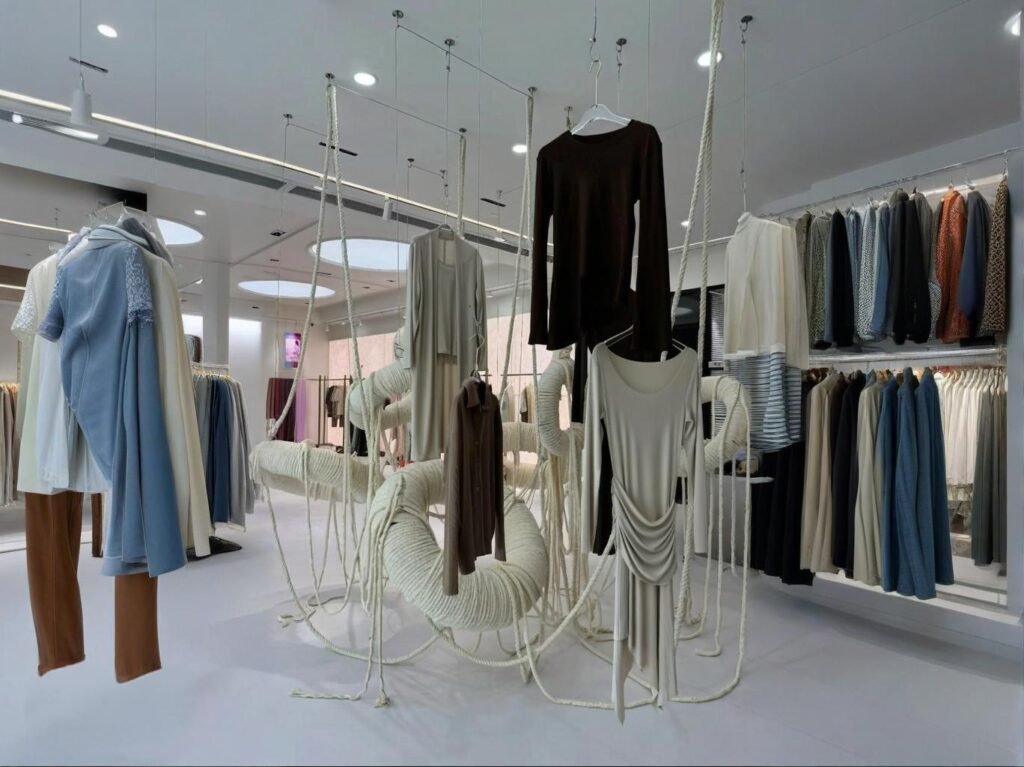
In the home textile market, cotton is no longer expected to work alone. While 100% cotton still holds strong emotional and marketing value, real-world household use has exposed its limitations: wrinkling, slow drying, dimensional instability, and wear from frequent laundering. As a result, cotton blends are gaining traction—not as a cost-cutting shortcut, but as a practical response to how home textiles are actually used.
Today’s consumers wash bedding weekly, dry towels quickly, expect curtains to hold shape, and want fabrics that feel comfortable without demanding special care. Cotton blends help manufacturers meet these expectations by balancing cotton’s natural comfort with fibers that improve durability, moisture management, and ease of maintenance. The most successful blends solve specific performance problems while preserving the familiar feel of cotton.
Blends are about performance balance, not cost cutting
The perception that blended fabrics are inherently “lower quality” is outdated. In home textiles, blends are often specified intentionally to address known weaknesses of pure cotton. Shrinkage control, wrinkle reduction, and faster drying are not marketing features—they are functional requirements driven by daily household routines.
Blends also introduce consistency. Natural cotton varies by crop, fiber length, and processing. Blending with engineered fibers helps stabilize fabric behavior across production batches and over repeated use. This consistency is especially important in hospitality, rental, and large retail programs where predictable performance matters more than fiber purity.
Cotton–polyester blends in home textiles
Cotton–polyester blends are the most widely used blends in the home textile sector. Their popularity is rooted in durability, dimensional stability, and ease of care rather than softness alone.
| Blend Ratio | Performance Benefit | Common Uses |
|---|---|---|
| 60/40 | Improved strength | Bedding, curtains |
| 50/50 | Faster drying | Sheets, pillowcases |
| 65/35 | Wrinkle resistance | Hospitality textiles |
Polyester contributes tensile strength, abrasion resistance, and shape retention. When blended correctly, it reduces cotton’s tendency to shrink, wrinkle, and lose structure during laundering. This is why cotton–polyester blends dominate hotel bedding and institutional textiles, where fabrics are washed frequently under high heat and mechanical stress.
In bedding, a 50/50 blend balances comfort with practicality. Sheets dry faster, wrinkle less, and maintain size more consistently than 100% cotton equivalents. In curtains and decorative textiles, higher cotton ratios such as 60/40 preserve a natural hand feel while improving drape stability and resistance to sagging.
The 65/35 ratio is common in hospitality programs because it delivers reliable wrinkle resistance without sacrificing too much cotton comfort. These blends reduce ironing needs and maintain a clean appearance across many wash cycles.
The key to success with cotton–polyester blends lies in yarn engineering and finishing. Poorly blended yarns can feel synthetic or trap heat. Well-executed blends retain breathability while delivering measurable durability gains.
Cotton–viscose blends for softness and absorbency
Cotton–viscose blends address a different set of priorities. Rather than durability alone, they focus on softness, absorbency, and drape—qualities valued in towels, lightweight bedding, and lifestyle textiles.
| Advantage | Result |
|---|---|
| Higher absorbency | Softer towels |
| Better drape | Smooth bedding |
| Cooler hand feel | Summer products |
Viscose fibers are smooth and highly absorbent, which enhances the tactile experience of cotton fabrics. When blended with cotton, viscose increases moisture uptake and creates a softer surface that feels gentle against the skin. This is particularly attractive in towels, spa textiles, and summer bedding collections.
In towel applications, cotton–viscose blends can feel more plush at lower GSM compared to pure cotton. The improved absorbency also allows for faster initial water uptake, which many consumers associate with premium performance.
In bedding, viscose improves drape and reduces the crispness that some users find uncomfortable in traditional cotton sheets. The resulting fabric feels cooler and smoother, making it popular in warm climates and seasonal collections.
However, viscose has lower wet strength than cotton. This makes blend ratios and construction choices critical. Excessive viscose content can reduce durability under frequent washing, especially in towels. Successful programs balance softness gains with sufficient cotton content to maintain structure.
Cotton–modal blends for premium comfort
Cotton–modal blends occupy the premium end of the home textile spectrum. Modal, a high-wet-modulus cellulosic fiber, offers superior smoothness and dimensional stability compared to conventional viscose.
Modal fibers enhance:
- surface smoothness
- moisture management
- shape retention
| Application | Why Used |
|---|---|
| Pillowcases | Reduced friction |
| Light blankets | Soft touch |
| Decorative throws | Luxurious feel |
Modal’s smooth fiber surface reduces friction against skin and hair, making cotton–modal blends popular for pillowcases and bedding marketed toward comfort and beauty-conscious consumers. Reduced friction can help minimize hair breakage and skin irritation, benefits that resonate in premium lifestyle segments.
In light blankets and throws, modal improves drape and softness without adding excessive weight. The fabric feels fluid and refined, aligning with minimalist and upscale interior aesthetics.
Modal also retains shape well after washing, helping blended fabrics maintain dimensions and appearance over time. This stability supports premium positioning, where consistency is expected.
The trade-off is cost. Modal fibers are more expensive than standard viscose or polyester, and they require careful processing to preserve their advantages. These blends are typically reserved for higher-margin products rather than mass-market essentials.
How blends affect drying time and energy use
One of the most practical benefits of cotton blends in home textiles is reduced drying time. Pure cotton retains moisture deep within its fiber structure, which can prolong drying and increase energy consumption.
Polyester and modal fibers release moisture more readily, allowing blended fabrics to dry faster. In towels, this reduces the time the fabric remains damp, lowering the risk of odor development. In bedding, faster drying improves household convenience and reduces wear from prolonged heat exposure.
From a sustainability perspective, faster drying translates into lower energy use over the product’s lifetime. This operational efficiency is increasingly valued by both consumers and institutional buyers.
Dimensional stability and shape retention
Shrinkage and distortion are persistent challenges in pure cotton home textiles. Blending introduces fibers that resist swelling and relaxation, improving dimensional stability.
Cotton–polyester blends show the strongest resistance to shrinkage, making them ideal for fitted sheets and large-format textiles where size accuracy is critical. Cotton–modal blends also perform well, though their benefits focus more on recovery and drape than absolute shrinkage control.
Improved shape retention reduces returns and complaints, particularly in online retail where customers rely on consistent sizing. For manufacturers, this stability simplifies patterning and reduces variability across production runs.
Wrinkle resistance and appearance retention
Wrinkling is a major pain point for home textiles, especially bedding. Polyester’s resilience helps blended fabrics spring back after washing and drying, reducing the need for ironing.
In hospitality and rental markets, wrinkle resistance is not a luxury—it is a necessity. Cotton–polyester blends maintain a clean, presentable look with minimal finishing effort, supporting operational efficiency.
Cotton–modal blends also show improved wrinkle recovery compared to pure cotton, though not to the same extent as polyester blends. Their advantage lies in maintaining a smooth surface without feeling stiff or synthetic.
Trade-offs to consider with blends
Blends are not universally superior. Each introduces trade-offs that must be evaluated against product purpose and market expectations.
| Blend Type | Key Trade-Off |
|---|---|
| Cotton/poly | Lower natural fiber content |
| Cotton/viscose | Reduced wet strength |
| Cotton/modal | Higher cost |
Cotton–polyester blends may face resistance from consumers seeking “natural” products. Clear communication about performance benefits is essential to overcome this perception.
Cotton–viscose blends require careful durability management, especially in towels and frequently washed items. Lower wet strength can shorten lifespan if construction is not optimized.
Cotton–modal blends deliver premium comfort but increase material cost. They are best suited to products where tactile experience justifies higher pricing.
Blends must be matched carefully to product function. A blend that performs well in bedding may fail in towels or upholstery.
Blends in different home textile categories
In bedding, blends focus on wrinkle resistance, smoothness, and dimensional stability. Cotton–polyester and cotton–modal dominate this space, depending on price point and target market.
In towels, absorbency and durability are key. Cotton–viscose blends appear in spa and lifestyle collections, while cotton–polyester blends are less common due to reduced absorbency.
In curtains and decorative textiles, blends prioritize drape and shape retention. Polyester content helps fabrics hang evenly and resist sagging over time.
In upholstery-adjacent products such as cushion covers, blends improve abrasion resistance and reduce wrinkling, supporting longer visual life.
Market-driven adoption trends
Retailers increasingly segment home textile offerings by performance rather than fiber purity. Easy-care bedding, quick-dry towels, and wrinkle-resistant curtains align with modern lifestyles.
Hospitality and short-term rental sectors continue to drive adoption of cotton–polyester blends due to laundering intensity and cost control needs. At the same time, premium lifestyle brands push cotton–modal and cotton–viscose blends to differentiate on comfort.
Regional preferences also influence blend adoption. Markets with high humidity favor faster-drying blends, while colder regions prioritize warmth and softness.
Quality depends on execution, not just blend choice
Blending fibers does not guarantee performance improvement. Yarn quality, fabric construction, and finishing determine whether blends deliver their intended benefits.
Poorly blended yarns can separate under stress, leading to uneven wear. Inconsistent finishing can negate wrinkle resistance or softness gains. Successful programs treat blends as engineered systems rather than simple material substitutions.
Market insight
Cotton blends succeed in the home textile market when they solve a real home-use problem. Faster drying, easier care, better shape retention, and consistent comfort are tangible benefits that consumers notice quickly.
Blends that exist only to reduce material cost tend to fail, as performance shortcomings become evident over time. The most successful products use blending strategically to improve daily experience, not to chase short-term savings.
Blend insight
In home textiles, cotton blends are chosen for consistency and ease of care, not novelty. They reflect a shift toward realistic performance expectations shaped by modern living.
Pure cotton still has a place, but blends increasingly define what “quality” means in everyday home use. When thoughtfully engineered, cotton blends extend product life, reduce maintenance burden, and deliver comfort that lasts beyond the first wash.
How should professional buyers evaluate and choose cotton fabrics to match market trends and performance criteria?
In the home textile market, cotton fabric selection sits at a difficult intersection. On one side are market trends—seasonal colors, softness narratives, “hotel-style” marketing language, and fast-moving consumer expectations. On the other side is real-world performance—frequent washing, heat drying, abrasion, moisture exposure, and years of daily use. Professional buyers succeed when they understand that trends drive initial purchase decisions, but performance determines repeat sales, reviews, and brand credibility.
The most costly sourcing mistakes occur when cotton fabrics are selected primarily to match trend language rather than use behavior. A fabric that feels exceptional in a showroom or catalog may degrade rapidly after repeated laundering. Conversely, fabrics engineered purely for durability but misaligned with market expectations may struggle to sell despite excellent performance. The role of a professional buyer is to balance these forces—choosing cotton fabrics that satisfy market signals without compromising long-term function.
A practical home textile fabric selection framework
A structured evaluation framework allows buyers to filter trend-driven options through performance logic. This does not slow down decision-making; it prevents costly reversals, rework, and customer dissatisfaction later.
A) Start with end-use behavior, not trend headlines
Trend reports often emphasize softness, drape, or luxury positioning, but these attributes mean little if they do not survive daily use. Before evaluating fabric swatches, buyers should anchor decisions in end-use behavior.
Key questions:
- How often will it be washed?
- Will it face heat drying?
- Is softness or durability the priority?
Wash frequency is a defining factor. Bedding and towels are often washed weekly or more, while cushion covers and throws may be laundered less frequently but still face friction and handling. Fabrics that cannot tolerate repeated washing will fail regardless of how well they align with trends.
Heat drying is another overlooked stress. Many consumers use tumble dryers at medium to high temperatures. Cotton fabrics that relax excessively, shrink unpredictably, or lose surface integrity under heat will generate complaints even if they perform well in air-dry testing.
Finally, buyers must decide which attribute drives value for the specific product. In some categories, such as guest towels or decorative throws, immediate softness may matter more. In others, such as everyday sheets or family-use cushions, durability and shape retention outweigh initial hand feel.
Market trends fade; performance complaints do not. Anchoring selection in use behavior protects buyers from chasing short-lived appeal at the expense of long-term satisfaction.
B) Match fabric type to product category
Cotton is not a single solution material. Different product categories impose different mechanical and environmental stresses, and fabric construction must align accordingly.
| Product | Recommended Cotton Type |
|---|---|
| Sheets | Percale or sateen |
| Towels | Medium-loop terry |
| Cushion covers | Twill or canvas |
| Blankets | Knit cotton |
Sheets benefit from balanced weaves that combine breathability with durability. Percale offers crispness and airflow, aligning well with “cool sleep” trends, while sateen provides smoothness and visual luxury. Both can succeed when yarn quality and density are appropriate.
Towels depend on loop structure rather than weave alone. Medium-loop terry cotton balances absorbency with durability. Oversized loops may feel plush initially but often collapse or shed after repeated washing, leading to disappointing long-term performance.
Cushion covers and upholstery-related products require abrasion resistance and dimensional stability. Cotton twill and canvas distribute stress more evenly and resist wear far better than plain weaves or lightweight constructions.
Blankets and throws prioritize comfort and flexibility. Knit cotton structures such as jersey, waffle, or interlock align better with how these products are used—draped, wrapped, and frequently moved.
Misalignment leads to premature failure. Using apparel-weight cotton for cushions or over-softened terry for daily towels almost always results in early degradation and negative feedback.
C) Validate through laundering simulation
No cotton fabric selection for home textiles is complete without laundering simulation. Home textiles live in the washing machine as much as the home, and this reality must be reflected in evaluation.
Essential checks include:
- shrinkage after 5–10 washes
- hand feel retention
- pilling and surface change
Single-wash testing is insufficient. Many cotton fabrics look acceptable after one cycle but degrade significantly after five or ten washes. Shrinkage patterns often stabilize only after multiple cycles, revealing whether pre-shrinking and construction are adequate.
Hand feel retention is equally important. Over-softened fabrics may feel luxurious initially but lose body and integrity quickly. Buyers should evaluate whether softness is maintained naturally or replaced by limpness and thinning.
Pilling and surface change expose yarn quality and finishing discipline. Long-staple, combed yarns resist pilling better, while short-staple or loosely spun yarns show fuzzing early. These changes are highly visible to consumers and strongly influence perceived quality.
Laundering simulation does not require complex testing facilities. Controlled home-style washing, repeated consistently, often reveals more than laboratory standards alone.
D) Evaluate supplier consistency and development ability
Fabric selection is only as reliable as the supplier behind it. Even a well-chosen cotton fabric can fail if the supplier cannot reproduce it consistently or support development adjustments.
A reliable supplier should:
- control GSM tightly
- explain weave and fiber choices
- support sampling and iteration
GSM control is critical in home textiles. Variations of even ±5–7% can affect hand feel, absorbency, and durability. Suppliers should demonstrate how they monitor and maintain weight consistency across batches.
Technical explanation matters. Suppliers who can articulate why a specific weave, yarn count, or fiber quality was selected are more likely to maintain performance over time. Vague assurances or reliance on marketing terms often indicate shallow process control.
Sampling and iteration support is essential when aligning trends with performance. Market feedback may require adjustments in softness, weight, or appearance. Suppliers who can modify finishing, density, or yarn selection without destabilizing quality provide long-term value beyond the first order.
Consistency matters more than a perfect first sample. Buyers should evaluate whether the supplier can deliver the same result repeatedly, not just once.
E) Blend strategy and trend alignment
Blends are often used to reconcile trend expectations with performance requirements. In home textiles, blends can enhance durability, reduce wrinkling, or improve dimensional stability—but they must be chosen deliberately.
Cotton-polyester blends can improve abrasion resistance and drying speed, which aligns with consumer convenience trends. However, excessive synthetic content may reduce breathability or absorbency, particularly in towels and bedding.
Cotton-modal or cotton-viscose blends enhance softness and drape, supporting premium positioning. These blends require careful construction to avoid weakening fabric structure under repeated washing.
Professional buyers evaluate blends not as cost-saving tools, but as performance modifiers. Each blend decision should be validated through laundering and use simulation, just like pure cotton options.
F) Avoid common buying mistakes
Certain mistakes appear repeatedly in home textile sourcing, regardless of market segment. Recognizing them early prevents predictable failures.
| Mistake | Outcome |
|---|---|
| Choosing by softness only | Fast degradation |
| Ignoring drying behavior | User frustration |
| Over-engineering | Unnecessary cost |
Softness-only selection often leads to over-finished fabrics that degrade quickly. Ignoring drying behavior—particularly heat exposure—results in shrinkage, distortion, or texture loss that frustrates users. Over-engineering, such as excessive GSM or unnecessary finishing, increases cost without proportional performance benefit.
Good cotton choices feel obvious in hindsight because they align naturally with use conditions. Bad choices feel surprising only to those who ignored predictable signals.
G) Balancing trends with longevity
Market trends influence color, pattern, and surface aesthetics more than structural requirements. Professional buyers separate what changes quickly from what must remain stable.
Color and design can follow trends without compromising performance. Fabric structure, yarn quality, and density should remain conservative and proven. This separation allows brands to refresh collections visually while maintaining reliable performance foundations.
Buyers who chase trend-driven fabric constructions often incur higher return rates and shorter product lifecycles. Those who anchor construction choices in durability while allowing aesthetic flexibility achieve both market relevance and operational stability.
H) Building a repeatable selection process
The most effective buyers treat cotton fabric selection as a repeatable process rather than a creative gamble. This process includes defined evaluation steps, documented performance benchmarks, and supplier feedback loops.
Over time, this approach builds an internal knowledge base that reduces reliance on trend hype and accelerates decision-making. Fabrics that perform well are reused and refined; underperformers are eliminated quickly.
Repeatable processes also improve negotiation power, as buyers can articulate exactly why a fabric meets or fails requirements.
F) Selection insight
The best home textile fabrics quietly meet expectations—day after day—without calling attention to themselves.
Professional buyers succeed when cotton fabric choices align with how products are actually used, not just how they are marketed. When structure, GSM, fiber quality, finishing durability, and supplier consistency are evaluated together—and validated through washing and use simulation—fabric selection becomes predictable rather than risky.
Trends attract the first purchase. Performance earns the second. The cotton fabrics that balance both are the ones that build lasting value in the home textile market.
Home textile cotton succeeds through quiet reliability
The cotton fabrics dominating the home textile market today are not defined by hype or novelty. They win because they perform reliably—across seasons, climates, and countless wash cycles. Percale, sateen, terry cotton, durable twills, and carefully selected blends continue to lead because they balance comfort, strength, and ease of care in real homes.
SzoneierFabrics supports home textile development through custom cotton fabric engineering, covering weave selection, GSM optimization, blend development, finishing control, and wash-tested performance validation. With low MOQs, fast sampling, free design support, strict quality assurance, and short lead times, we help turn market demand into dependable cotton home textile solutions.
If you’re planning a home textile collection, share your product category, target feel, washing expectations, and market positioning. SzoneierFabrics is ready to help you develop cotton fabrics that truly belong in everyday homes.