Skip to content
Most hotel guests never ask what their bed sheets are made of—but they immediately notice when something feels wrong. A sheet that traps heat, wrinkles excessively, pills after repeated washing, or loses its crisp hand feel can quietly undermine an otherwise perfect stay. Behind the scenes, linen selection has become one of the most strategic decisions in modern hospitality, balancing comfort, durability, laundering cost, and long-term appearance.
This is where ramie-cotton blended fabrics enter the conversation. Cotton has long been the default for hotel bedding because of its softness and familiarity. Ramie, a bast fiber known for exceptional strength, moisture control, and resistance to deformation, brings a different set of performance advantages. When blended correctly, the two fibers complement each other in ways that neither can achieve alone. Blending ramie with cotton enhances hotel bed linens by improving tensile strength, moisture management, wrinkle resistance, and wash durability while maintaining the comfort and softness guests expect. The optimal ramie-to-cotton ratio depends on hotel positioning, laundering frequency, and desired hand feel, with balanced blends offering the best long-term performance.
Yet the key phrase here is “blended correctly.” Too much ramie and the fabric can feel stiff. Too little, and its benefits disappear. The real challenge—and opportunity—lies in finding the ratio that works not just on paper, but night after night, wash after wash.
And that’s exactly what we’re about to unpack.
What Are the Performance Characteristics of Ramie That Make It Suitable for Hotel Bed Linens?
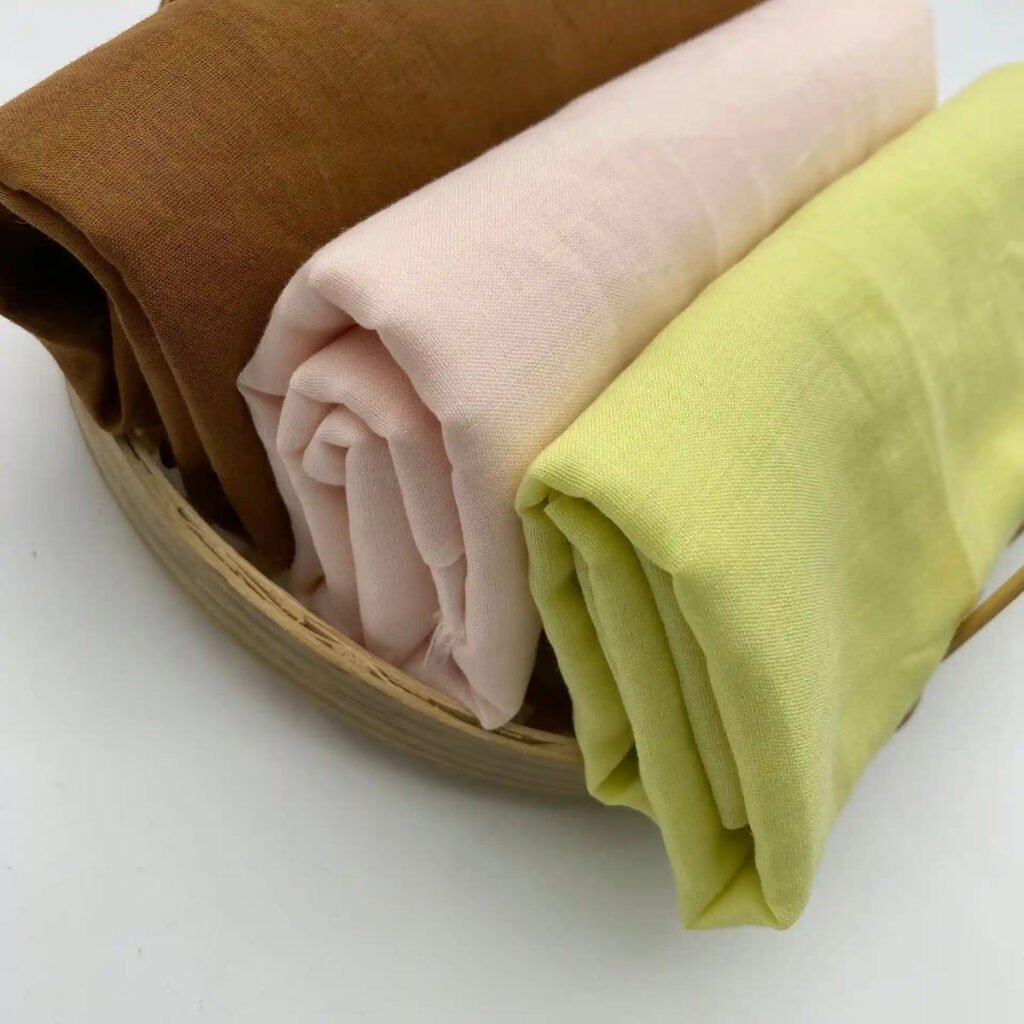
Ramie is particularly well suited for hotel bed linens because it combines exceptional fiber strength, moisture management, microbial resistance, and dimensional stability—all properties that align closely with the operational realities of hospitality laundering and guest use. While ramie is not as widely known as cotton or linen, its technical performance makes it a strategic material in high-frequency wash environments such as hotels, resorts, and serviced apartments.
Ramie has been used in textiles for centuries, but its role in modern bedding is often misunderstood. It is not designed to replace cotton outright. Instead, ramie functions best as a structural reinforcement fiber, improving durability, hygiene, and appearance retention when used alone in specific constructions or blended intelligently with cotton.
Why Ramie Behaves Differently on a Hotel Bed
Hotel bed linens are subjected to conditions far more demanding than home bedding. Sheets are washed at high temperatures, dried quickly, ironed repeatedly, and stored in bulk—often in humid back-of-house environments. Ramie’s fiber structure responds to these stresses very differently than cotton.
1. Fiber Strength and Structural Stability
Ramie is one of the strongest natural plant fibers used in textiles. Its tensile strength exceeds that of cotton and rivals or surpasses flax (linen).
| Fiber Type | Relative Tensile Strength |
|---|---|
| Cotton | Medium |
| Linen (flax) | Medium–High |
| Ramie | Very High |
This high intrinsic strength translates directly into operational benefits for hotels:
- Reduced tearing and seam failure during industrial washing
- Less fiber breakage and lint generation over time
- Longer usable lifespan per sheet set
In hotel environments, linens may be washed 100–200 times per year. Under these conditions, cotton fibers gradually weaken and thin, especially at stress points such as hems and folds. Ramie fibers, by contrast, maintain structural integrity far longer.
From a cost-per-use perspective, strength matters more than initial softness. A slightly firmer sheet that lasts twice as long is often more economical than a softer one that fails early.
2. Moisture Absorption and Quick Drying
Moisture management is a critical but often overlooked aspect of bedding performance. Ramie performs exceptionally well in this area.
| Property | Ramie | Cotton |
|---|---|---|
| Moisture absorption | High | High |
| Drying speed | Fast | Medium |
| Damp feeling | Low | Higher |
Ramie absorbs moisture efficiently—comparable to cotton—but releases it more quickly due to its fiber morphology and lower moisture retention within the fiber core.
For guests, this results in:
- Less clammy or sticky sensation, especially in warm or humid climates
- Better breathability during sleep
- A cooler, drier sleep surface
For hotel operations, faster moisture release means:
- Shorter tumble-dry cycles
- Lower energy consumption
- Reduced risk of mildew during storage
In tropical or coastal regions, where humidity is a constant challenge, this property alone makes ramie highly attractive.
3. Resistance to Microbial Growth
Ramie has a natural resistance to bacteria and mildew that is superior to cotton, particularly in damp or poorly ventilated conditions. This resistance is not a chemical finish—it is inherent to the fiber’s structure and composition.
In practical hotel use, this helps reduce:
- Odor retention after repeated laundering
- Microbial degradation during storage
- Visible discoloration or spotting over time
Cotton sheets stored while slightly damp can develop musty odors or mildew stains quickly. Ramie’s resistance slows this process significantly, giving housekeeping teams a larger margin for error.
This characteristic is especially valuable in:
- High-turnover hotels
- Resorts with seasonal storage
- Properties in humid climates
While ramie is not a replacement for proper hygiene protocols, it is more forgiving when conditions are less than ideal.
4. Shape Retention and Dimensional Stability
Dimensional stability is one of ramie’s most important advantages in bedding. Ramie fibers resist elongation and deformation far better than cotton.
| Behavior After Washing | Ramie | Cotton |
|---|---|---|
| Shrinkage tendency | Low | Medium |
| Wrinkle formation | Lower | Higher |
| Recovery after folding | Strong | Moderate |
In industrial laundering, cotton sheets gradually lose their original dimensions. Edges curl, corners distort, and fitted sheets lose elasticity alignment. Ramie’s low elongation and high modulus help sheets maintain their shape over time.
This results in:
- More consistent bed appearance
- Easier ironing and folding
- A cleaner, crisper look even after many wash cycles
Hotels often describe ramie-containing linens as looking “newer for longer,” not because they are softer, but because they hold their geometry.
5. Wrinkle Behavior and Visual Presentation
While ramie is sometimes assumed to wrinkle easily due to its stiffness, in bedding applications it often performs better than expected. Its stiffness actually helps it recover after folding and ironing, producing sharp edges and a flat surface.
For hotels, visual presentation matters:
- Guests associate crisp sheets with cleanliness
- Wrinkled bedding signals wear, even when hygienic
Ramie’s recovery behavior supports a consistently tidy appearance, particularly in percale-style weaves or hotel-standard white linens.
6. Thermal Comfort and Skin Feel
Ramie has a naturally cool hand feel due to its smooth fiber surface and high thermal conductivity. It does not trap heat as readily as cotton.
For guests, this means:
- Cooler initial touch
- Better comfort in warm environments
- Reduced heat buildup during sleep
This property is one reason ramie has historically been used in summer garments and warm-climate textiles. In bedding, it supports guest comfort without relying on chemical cooling finishes.
7. Durability Under Industrial Laundering
Industrial laundering is far harsher than domestic washing. High alkalinity detergents, elevated temperatures, and mechanical action place enormous stress on fibers.
Ramie’s resistance to:
- Chemical degradation
- High-temperature washing
- Mechanical agitation
makes it particularly well suited for this environment. Cotton fibers gradually fibrillate and weaken under these conditions. Ramie fibers resist this breakdown, retaining strength and surface integrity.
This durability directly affects:
- Replacement cycles
- Inventory management
- Long-term operating costs
Hotels evaluating linens over a 2–3 year horizon often find ramie-containing products more cost-effective despite higher initial prices.
8. The Limitation of Pure Ramie in Bedding
Despite its strengths, 100% ramie is rarely ideal for hotel sheets.
Common limitations include:
- Firm or crisp hand feel that may feel less cozy
- Lower immediate softness compared to cotton
- Higher raw material and processing cost
Guests accustomed to cotton’s softness may perceive pure ramie as too cool or stiff, especially in luxury segments where tactile comfort is prioritized.
9. Why Blending Becomes Essential
This is why ramie is most effective when used as a functional component rather than a standalone fiber.
Common blending strategies include:
- Ramie + cotton (durability + softness)
- Ramie + cotton + polyester (stability + ease of care)
In these blends, ramie contributes:
- Strength and shape retention
- Reduced shrinkage
- Improved laundering durability
Cotton contributes:
- Softness
- Familiar hand feel
- Broader guest acceptance
Blends allow hotels to tune performance without sacrificing comfort.
10. Ramie’s Role in Cost Control
Hotel linen decisions are rarely about fiber romance. They are about cost per use.
A ramie-enhanced sheet that:
- Lasts 30–50% longer
- Requires fewer replacements
- Maintains appearance
can reduce total linen spend even if the upfront cost is higher. This is particularly relevant for mid- to high-volume properties where linen replacement is a major operational expense.
11. Sustainability and Lifecycle Perspective
Ramie is a fast-growing plant fiber that requires relatively low pesticide input. When durability is factored into sustainability calculations, ramie performs well on a per-use basis.
Longer lifespan means:
- Fewer replacements
- Lower cumulative resource use
- Reduced textile waste
For hotels pursuing sustainability goals, ramie blends offer a practical path that aligns environmental and operational priorities.
12. Where Ramie Makes the Most Sense in Hospitality
Ramie performs especially well in:
- White hotel sheets and pillowcases
- Percale or plain-weave constructions
- High-turnover, mid- to upper-scale hotels
- Warm or humid climates
It is less suited to:
- Ultra-soft luxury sateen sheets
- Heavy brushed or flannel constructions
Understanding where ramie excels prevents misuse and disappointment.
Ramie is suitable for hotel bed linens not because it is trendy, but because it solves real operational problems. Its exceptional strength, moisture management, microbial resistance, and dimensional stability align closely with the demands of hospitality laundering and guest turnover.
Ramie is not a comfort-first fiber. It is a performance-first fiber. When used intelligently—often in blends—it reinforces cotton, extending lifespan, improving appearance retention, and reducing total cost of ownership.
In hotel bedding, the question is not whether ramie feels softer on day one. It is whether the sheets still perform, look clean, and hold their shape after hundreds of wash cycles.
That is where ramie quietly excels.
How does blending cotton with ramie influence comfort and durability in bedding fabrics?
Blending cotton with ramie fundamentally changes how bedding fabrics behave over time. Rather than optimizing for first-touch softness alone, cotton/ramie blends are engineered to balance initial comfort, long-term durability, moisture regulation, and dimensional stability—all of which matter in real sleeping and laundering conditions.
Cotton on its own feels familiar and inviting, but it gradually weakens under repeated washing. Ramie on its own is exceptionally strong and breathable, yet too crisp and unfamiliar for most consumers. When blended correctly, these two fibers complement each other in a way that neither can achieve alone.
Cotton alone feels great on night one. Ramie alone performs well but lacks softness. Together, they create a fabric that feels comfortable on night one and still performs on night three hundred.
This is why cotton/ramie blends are increasingly used in premium residential bedding, hospitality linens, and long-life home textile programs where performance over time matters more than showroom softness.
What really changes when cotton and ramie are blended
The impact of blending cotton and ramie is not limited to one property. It affects how the fabric feels, breathes, launders, ages, and looks across its entire service life.
1. Hand feel evolution over time
One of the most overlooked factors in bedding fabrics—especially in hospitality—is how the fabric ages, not just how it feels when new.
| Fabric Type | First Use Feel | After 50 Washes |
|---|---|---|
| 100% cotton | Soft | Softer but weaker |
| Cotton/ramie blend | Soft-crisp | Softer + stable |
100% cotton behavior Cotton fibers are soft and flexible, which makes sheets feel comfortable immediately. However, cotton fibers also shorten and weaken with repeated laundering. Over time, this leads to:
- Reduced tensile strength
- Increased linting
- Thinner hand feel
- Loss of crispness
While cotton sheets often feel softer after many washes, that softness is accompanied by structural degradation.
Cotton/ramie blend behavior Ramie fibers are long, stiff, and highly resistant to fatigue. When blended into cotton yarns, they act as a structural backbone. The result is a fabric that:
- Starts with a slightly crisp, hotel-style hand
- Softens gradually through use
- Retains body and integrity
Instead of collapsing over time, cotton/ramie fabrics age gracefully, which is a key requirement for bedding intended for long-term use.
2. Balanced breathability and temperature control
Sleep comfort is closely tied to thermal regulation. Cotton and ramie contribute differently—and synergistically—to this aspect.
Ramie fibers are naturally rigid and smooth, which creates micro-gaps in the fabric structure. These gaps improve airflow and reduce heat buildup.
This leads to:
- Better heat dissipation
- Reduced night sweating
- Faster moisture evaporation
- More stable skin temperature
Cotton contributes warmth and softness, while ramie prevents heat from becoming trapped.
In practical terms:
- Cotton-only bedding can feel warm but clammy in humid conditions
- Ramie-only bedding can feel cool but too firm
- Cotton/ramie bedding balances warmth and airflow
This balance makes blended bedding especially suitable for all-season use, rather than being limited to summer or winter.
3. Moisture management during sleep
Moisture behavior is another area where blends outperform single fibers.
Cotton absorbs moisture readily, but it also holds onto it, which can lead to dampness during prolonged contact with skin. Ramie absorbs moisture efficiently but releases it faster.
In a blend:
- Cotton provides comfort and absorption
- Ramie accelerates moisture release
- The fabric dries faster between sleep cycles
This is particularly important for:
- Warm sleepers
- Humid climates
- Hospitality environments with rapid turnover
Reduced moisture retention also contributes to better hygiene perception and odor control over time.
4. Improved durability under industrial laundering
Durability is where cotton/ramie blends clearly separate themselves from cotton-only fabrics, especially in commercial settings.
Industrial laundering subjects bedding to:
- High water temperatures
- Strong detergents
- Aggressive mechanical agitation
- Frequent drying cycles
These conditions accelerate fiber fatigue.
Ramie has one of the highest wet strengths among natural fibers, meaning it retains strength even when saturated. When blended into cotton yarns, ramie fibers help distribute stress during washing.
This reduces:
- Yarn breakage
- Edge fraying
- Seam distortion
- Premature thinning
| Performance Metric | Cotton Only | Cotton/Ramie |
|---|---|---|
| Average service life | Medium | High |
| Rewash rate | Higher | Lower |
In hospitality programs, even a modest increase in service life translates into significant cost savings over time.
5. Dimensional stability and shape retention
Cotton fabrics tend to shrink and relax progressively with repeated washing. Ramie fibers, by contrast, have excellent dimensional stability.
In blended fabrics:
- Shrinkage stabilizes earlier
- Width and length retention improve
- Fitted sheets maintain corner geometry
- Pillowcases keep cleaner lines
This stability simplifies inventory management for hotels and reduces consumer complaints in home use.
Dimensional stability also improves ironing and finishing efficiency, as fabrics hold their shape better after pressing.
6. Visual appearance retention
Bedding is not judged only by comfort—it is judged by how it looks on the bed.
Sheets with ramie content tend to:
- Drape more cleanly
- Hold crisp edges longer
- Show fewer wash-induced wrinkles
- Look “fresher” after laundering
This is especially important for properties that prioritize presentation, branding, and guest perception.
Cotton-only sheets often develop a limp appearance over time. Cotton/ramie blends retain a more tailored look, even after extensive use.
7. Reduced pilling and surface degradation
Pilling is a common complaint with cotton bedding, particularly when lower-twist yarns are used to increase softness.
Ramie’s long, stiff fibers resist fiber migration and entanglement, which reduces pilling formation.
In blends, this results in:
- Smoother surface over time
- Less fuzz accumulation
- More consistent texture
For consumers, this translates into bedding that looks newer for longer. For hotels, it reduces the visual cues that trigger early replacement.
8. Care and maintenance behavior
Cotton/ramie blends are generally compatible with standard cotton care routines, but with added resilience.
Typical benefits include:
- Better tolerance of high-temperature washing
- Less distortion during tumble drying
- Reduced need for aggressive pressing
Because the fabric structure remains intact longer, care requirements do not increase—even as performance improves.
This makes blends attractive for large-scale operations that cannot accommodate special handling.
9. Cost efficiency over time (not upfront)
At the purchase stage, cotton/ramie blends often cost more than basic cotton sheets. However, evaluating bedding purely on unit price is misleading.
The more relevant metric is cost per use.
Factors that reduce long-term cost include:
- Longer service life
- Fewer replacements
- Lower rewash and rework rates
- Better appearance retention
For hotels and institutional buyers, these savings often outweigh the initial premium within one to two years of use.
For residential consumers, the value shows up as bedding that remains comfortable and attractive well beyond typical replacement cycles.
10. Fiber ratio matters
Not all cotton/ramie blends behave the same. Performance depends heavily on blend ratio and yarn construction.
Typical ranges include:
- 70–80% cotton / 20–30% ramie: softer hand, moderate reinforcement
- 60–70% cotton / 30–40% ramie: balanced comfort and durability
- 40% ramie: stronger performance, crisper feel
For bedding, blends in the 20–35% ramie range are often optimal, delivering reinforcement without sacrificing comfort.
11. Sustainability and lifecycle considerations
Both cotton and ramie are natural fibers, but ramie has advantages in durability and fiber yield per hectare. When used to extend the lifespan of cotton bedding, ramie indirectly improves sustainability by:
- Reducing replacement frequency
- Lowering total resource consumption per use
- Improving long-term efficiency
In this sense, cotton/ramie blends support practical sustainability, not just material claims.
12. Where cotton/ramie blends make the most sense
These blends are particularly well suited for:
- Hotel and resort bedding
- Serviced apartments
- Premium home textiles
- Rental and hospitality programs
- Consumers prioritizing longevity over ultra-soft novelty
They are less suited for buyers seeking ultra-light, drapey, or purely fashion-driven bedding aesthetics.
Blending cotton with ramie transforms bedding fabrics from short-term comfort products into long-term performance systems. Cotton contributes softness, familiarity, and warmth, while ramie adds strength, breathability, moisture control, and dimensional stability.
Cotton-only bedding often feels best at the beginning of its life. Cotton/ramie bedding is designed to feel good across its entire lifespan.
The result is fabric that softens without weakening, breathes without chilling, and launders without collapsing. While the upfront cost may be slightly higher, the cost per use is lower, and the visual and functional performance remains consistent far longer.
For bedding programs where durability, appearance, and user comfort must coexist, cotton/ramie blends are not a compromise. They are an upgrade.
Which Ramie-to-Cotton Blend Ratios Optimize Breathability and Moisture Management for Hotel Guests?
Ramie-to-cotton blends in the range of 20–40% ramie consistently deliver the best balance of breathability, moisture absorption, and drying speed for hotel bed linens, while still preserving the soft, familiar hand feel guests expect from cotton. Within this range, hotels gain measurable improvements in thermal comfort and freshness without introducing stiffness or unfamiliar texture.
Breathability and moisture control are where ramie truly changes the sleep experience. Guests rarely describe these qualities in technical terms, but they feel them immediately: less heat buildup, less stickiness, and a cleaner, drier sensation through the night. In hospitality, that sensation often determines whether a bed feels “fresh” or “heavy,” especially in warm or humid environments.
Why Fiber Blending Matters More Than Thread Count
Many hotels still focus on thread count as the primary quality signal. In reality, fiber composition has a much greater influence on sleep comfort, particularly moisture and heat regulation.
Cotton is comfortable and familiar, but it absorbs moisture slowly and releases it even more slowly. Ramie, by contrast, has a crystalline fiber structure that allows rapid moisture uptake and fast evaporation. When blended correctly, ramie does not replace cotton’s comfort—it enhances cotton’s weakest performance area.
The goal of blending is not to make linens feel “technical,” but to subtly improve comfort without changing guest expectations.
How Blend Ratios Influence Airflow and Moisture Behavior
Ramie and cotton interact differently with humidity, body heat, and airflow. The proportion of ramie determines whether these benefits are noticeable, excessive, or barely present.
1. Moisture Regain vs. Perceived Comfort
Moisture regain measures how much water a fiber can absorb from the air. However, guest comfort depends just as much on how quickly that moisture is released.
Ramie absorbs moisture efficiently and releases it rapidly. Cotton absorbs moisture well but tends to hold it longer, which can lead to a damp or warm feeling over time.
| Blend Ratio (Ramie/Cotton) | Moisture Regain (%) | Drying Speed | Guest Perception |
|---|---|---|---|
| 10 / 90 | 7–8 | Medium | Similar to cotton |
| 20 / 80 | 8–9 | Medium–Fast | Noticeably fresher |
| 30 / 70 | 9–10 | Fast | Cool, breathable |
| 40 / 60 | 10–11 | Very fast | Crisp, cool |
| 50 / 50 | 11–12 | Very fast | Cool, slightly firm |
At 10% ramie, the improvement is subtle. Most guests perceive the fabric as standard cotton. This ratio is often chosen by hotels that want minimal change while improving durability slightly.
At 20–30% ramie, moisture behavior becomes noticeably different. Sheets dry faster between washes and feel less clammy overnight. This range is where many mid- to upper-tier hotels begin to see guest feedback improve, especially in humid climates.
At 30–40% ramie, the cooling and drying effect is clear. Guests often describe the bed as “fresh” or “cool” rather than “soft,” even though softness remains acceptable. This range is widely regarded as the optimal performance zone for hospitality bedding.
Above 50% ramie, moisture performance is excellent, but hand feel becomes firmer. This shifts the experience away from traditional luxury expectations for many guests.
2. Air Permeability and Heat Dissipation
Breathability is not only about fiber chemistry; it is also about fabric structure. Ramie fibers are stiffer and smoother than cotton fibers. When blended into yarns, they slightly increase inter-fiber spacing, even in tightly woven sheets.
This structural effect increases airflow through the fabric.
| Blend Ratio | Air Permeability (Relative) |
|---|---|
| 100% cotton | Baseline |
| 20% ramie | +10–15% |
| 30% ramie | +20–25% |
| 40% ramie | +30% |
In practical terms, higher air permeability allows body heat to dissipate more efficiently. This is especially important for hotel guests who sleep warm or in rooms where temperature control is inconsistent.
Hotels operating in coastal, tropical, or monsoon climates often report fewer complaints about “sleeping hot” after introducing 30–40% ramie blends, even without changing room temperature settings.
Why Guests Feel the Difference Even If They Can’t Name It
Guests rarely say, “This sheet has higher air permeability.” Instead, they report:
- Less sweating during sleep
- Fewer wake-ups due to heat
- A drier feel in the morning
These perceptions are direct outcomes of airflow and moisture release working together.
3. Seasonal Comfort Considerations
The ideal ramie-to-cotton ratio is not universal. It depends heavily on climate, season, and guest expectations.
| Climate / Season | Recommended Ratio |
|---|---|
| Hot & humid | 30–40% ramie |
| Temperate | 20–30% ramie |
| Cooler climates | 10–20% ramie |
In hot and humid regions, higher ramie content improves comfort without relying solely on air conditioning. This can also reduce energy costs for hotels.
In temperate climates, 20–30% ramie provides year-round balance, offering cooling benefits in summer without feeling too crisp in winter.
In cooler regions, lower ramie ratios preserve warmth and softness while still improving drying speed and hygiene performance.
Hotels with multiple locations often standardize on two blend specifications rather than one, aligning linen performance with regional climate.
4. Hand Feel and Guest Expectations
One of the biggest concerns hotels have when introducing ramie is whether guests will perceive the fabric as “too firm.”
This concern is valid—but manageable.
Up to 30% ramie, most guests still perceive the fabric as cotton-dominant. The hand feel remains soft, especially after several commercial wash cycles.
At 40% ramie, the fabric feels cooler and slightly crisper. Many guests associate this with cleanliness and freshness, particularly in luxury resorts or summer destinations.
Above 45% ramie, the hand feel shifts noticeably. Creasing becomes more visible, and some guests may interpret the firmness as less luxurious, depending on brand positioning.
For this reason, higher ramie ratios are often used selectively.
5. Strategic Use by Bedding Component
Hotels do not need to apply the same blend ratio to every bedding item.
Common strategies include:
- Top sheets and pillowcases: 30–40% ramie for maximum cooling and freshness
- Fitted sheets: 20–30% ramie for softness and flexibility
- Duvet covers: 20–30% ramie to balance drape and breathability
This approach allows hotels to maximize performance where guests feel it most, while maintaining comfort and durability in high-stress items.
6. Laundry Performance and Drying Efficiency
From an operational perspective, ramie-to-cotton blends also affect laundry efficiency.
Higher ramie content typically results in:
- Faster moisture release in spin cycles
- Shorter drying times
- Lower risk of residual dampness
This improves linen turnover speed and reduces mildew or odor issues, particularly in high-occupancy hotels.
At 30–40% ramie, many hotels report measurable reductions in drying time compared to 100% cotton sheets of similar weight. Over thousands of wash cycles, this translates into energy savings and improved linen longevity.
7. Durability vs Comfort Trade-Offs
Ramie fibers are naturally strong and abrasion-resistant. Blending ramie into cotton improves tensile strength and reduces fiber breakdown over repeated washing.
However, durability gains plateau beyond a certain point. Increasing ramie content above 40% adds limited additional durability but continues to alter hand feel.
For most hotels, 30–40% ramie offers the best durability-to-comfort ratio, especially in commercial laundering environments.
8. Guest Perception and Brand Positioning
Luxury hotels often worry that non-cotton fibers may conflict with brand expectations. In practice, guest perception depends more on how the fabric feels, not what it is called.
When ramie blends are finished correctly and selected within the optimal range, guests often describe them as:
- “Cool and clean”
- “Crisp but comfortable”
- “Fresh even in the morning”
Few guests identify ramie by name, but many notice the improved comfort—especially repeat guests.
9. The Risk of Going Too High in Ramie Content
While ramie delivers clear performance benefits, excessive content introduces trade-offs.
Above 40–45% ramie:
- Fabric may feel firm to sensitive sleepers
- Creases become more pronounced
- Drape can feel less fluid
- Some guests may associate the feel with table linens rather than bedding
For this reason, very high ramie ratios are often reserved for:
- Pillowcases in hot climates
- Decorative top sheets
- Specialty summer programs
They are rarely used across an entire bedding set.
10. Why Cotton Alone Still Dominates—And Where It Falls Short
Cotton remains dominant in hospitality because it is forgiving, familiar, and broadly acceptable. However, its weaknesses are most apparent in environments where:
- Humidity is high
- Guests sleep warm
- Laundry turnaround is critical
Ramie does not replace cotton’s role. It refines it.
By blending ramie into cotton thoughtfully, hotels can elevate comfort without risking guest rejection.
Practical Guidance for Hotel Procurement Teams
When specifying ramie-cotton blends, experienced procurement teams focus on:
- Climate and seasonal use
- Guest profile (business vs leisure)
- Laundry conditions
- Brand positioning
Rather than asking for the highest ramie content, they ask for the most appropriate ratio.
Ramie-to-cotton blend ratios between 20% and 40% ramie consistently deliver the best balance of breathability, moisture management, durability, and guest comfort for hotel bed linens.
At these levels, ramie enhances cotton’s performance without changing the familiar feel guests expect. Higher airflow, faster drying, and cooler sleep become noticeable benefits—not selling points that need explanation.
In hospitality, the best materials are the ones guests don’t think about—because they simply sleep better.
When chosen thoughtfully, ramie-cotton blends do exactly that.
What Impact Do Different Ramie/Cotton Ratios Have on Fabric Strength and Wrinkle Resistance?
Blending ramie with cotton has a clear, measurable impact on both fabric strength and wrinkle resistance, especially in demanding applications such as hotel bed linens, institutional bedding, and high-laundering environments. As ramie content increases, tensile strength and tear resistance rise sharply, while wrinkle formation decreases and recovery improves. In practical use, meaningful performance gains typically begin at around 20% ramie, with benefits stabilizing between 30–40%, beyond which trade-offs in drape and hand feel become more pronounced.
Durability is where ramie quietly justifies its place in hotel and commercial bedding programs. The objective is not only fewer replacements, but predictable performance over hundreds of wash cycles, where cotton alone often struggles to maintain structure and appearance.
Strength and Appearance Under Real Hotel Conditions
Hotels, hospitals, and serviced apartments subject bedding to conditions far harsher than home use: high-temperature washing, aggressive detergents, mechanical extraction, tumble drying, and constant handling. In this environment, fiber choice directly influences lifecycle cost and visual consistency.
Cotton offers softness and familiarity, but it loses strength and structure progressively with laundering. Ramie, by contrast, is one of the strongest natural cellulose fibers, with high crystallinity and low elongation. When blended correctly, it reinforces cotton without fundamentally changing the fabric’s identity.
1. Tensile Strength Improvement by Ratio
Tensile strength is a primary indicator of how well a fabric resists breakage under load. In bedding, this translates into resistance against tearing during tucking, stretching over mattresses, and repeated mechanical stress in washing machines.
| Blend Ratio | Warp Tensile Strength (N) | Change vs Cotton |
|---|---|---|
| 100% cotton | 500–600 | Baseline |
| 20% ramie | 600–700 | +15–20% |
| 30% ramie | 700–800 | +30–40% |
| 40% ramie | 800–900 | +50%+ |
These figures reflect typical values observed in medium-weight percale or sateen constructions used for hotel sheets. The improvement is not linear but accelerates as ramie content increases, particularly between 20% and 30%.
In practical terms, this means:
- Fewer warp breaks during weaving
- Lower risk of tearing at corners and folded edges
- Longer usable life before strength falls below acceptable thresholds
For hotel operators, this translates directly into fewer premature write-offs and more consistent stock rotation.
2. Tear Resistance and Seam Durability
Tensile strength alone does not tell the full story. Tear resistance and seam durability are often more relevant in real-world use, especially for fitted sheets and duvet covers.
Ramie fibers have low elongation at break, meaning they resist stretching under load. When integrated into a cotton matrix, they act as structural reinforcements.
This has several effects:
- Reduced seam slippage, as yarns are less likely to migrate under tension
- Improved resistance to edge fraying, particularly at hems and corners
- Greater dimensional integrity in fitted sheets subjected to repeated mattress stretching
Hotels often report that cotton-only fitted sheets fail not through overall thinning, but through localized tearing at elastic corners or seam lines. Ramie blends significantly slow this failure mode.
From a housekeeping perspective, sheets that maintain seam integrity are easier to handle, quicker to make up, and less likely to be removed from circulation unexpectedly.
3. Wrinkle Formation and Recovery
Wrinkling is both an aesthetic and operational issue. Excessively wrinkled sheets require more ironing, more pressing time, or acceptance of a visibly “tired” bed appearance.
Ramie improves wrinkle behavior through its high modulus and rapid elastic recovery. While cotton fibers tend to collapse and hold creases after deformation, ramie fibers recover more readily, pulling the fabric structure back into shape.
| Blend Ratio | Wrinkle Formation | Recovery After Folding |
|---|---|---|
| Cotton only | High | Medium |
| 20% ramie | Medium | Medium–High |
| 30% ramie | Low | High |
| 40% ramie | Very low | Very high |
At 20% ramie, wrinkle formation is noticeably reduced, but recovery is still partial. At 30%, the improvement becomes visually obvious: sheets spring back more quickly after folding and handling, and creases appear less sharp.
By 40% ramie, wrinkle resistance approaches that of lightly resin-finished fabrics—but without relying on chemical wrinkle-resistant finishes, which can degrade over time or affect hand feel.
This natural wrinkle recovery is particularly valued in premium hospitality settings, where a crisp bed appearance signals cleanliness and quality.
4. Visual Appearance After Repeated Laundering
Appearance retention is one of the most overlooked performance metrics in bedding procurement. Guests rarely notice fiber composition, but they immediately notice whether sheets look fresh, structured, and “hotel crisp.”
After 50 or more industrial wash cycles, typical observations include:
- Cotton-only sheets becoming limp, with softened edges and uneven surfaces
- Ramie-cotton blends retaining flatter surfaces, sharper hems, and better overall body
Ramie’s rigidity helps counteract the progressive softening and fiber fatigue that cotton experiences with repeated laundering. This does not mean the fabric feels harsh; rather, it maintains a balance between softness and structure.
For housekeeping teams, better appearance retention means:
- Less time spent re-ironing or re-pressing
- Faster room turnaround
- More consistent visual standards across rooms
From a brand perspective, this consistency reinforces guest perception of cleanliness and quality.
5. Wrinkle Resistance Without Chemical Dependency
Many hotels rely on chemical wrinkle-resistant finishes to achieve acceptable appearance standards. These finishes:
- Add cost
- Can wash out unevenly
- May reduce breathability
- Often weaken fiber strength over time
Ramie blends offer an alternative path. By improving wrinkle recovery at the fiber level, they reduce dependence on heavy finishing chemistry.
This is especially relevant as hospitality brands:
- Reduce chemical usage for sustainability reasons
- Face stricter regulations on formaldehyde-based resins
- Seek longer fabric life cycles
A 30–40% ramie blend often achieves sufficient wrinkle control for hotel use with minimal or no resin finishing.
6. Lifecycle Cost Implications
While ramie-cotton blends typically cost more per meter than cotton alone, the cost per use is often lower.
Key contributors include:
- Longer service life before replacement
- Fewer rejected sheets due to tearing or seam failure
- Reduced labor associated with ironing and handling
- More stable inventory appearance across time
For large hotel groups, these incremental savings compound quickly across thousands of rooms and hundreds of wash cycles per year.
Procurement teams evaluating only unit price often miss these downstream effects. Experienced operators evaluate total lifecycle performance, where ramie blends consistently perform well.
7. When Higher Strength Isn’t Always Better
Despite its benefits, more ramie is not always better. Excessive ramie content introduces its own challenges.
At higher ratios:
- Drape can be reduced, making sheets feel stiffer
- Hand feel may become too crisp for guests expecting softness
- Yarn engineering becomes more complex, increasing production cost
This is why most successful bedding programs settle in the 20–40% ramie range, with 30% often cited as a sweet spot balancing strength, wrinkle resistance, comfort, and manufacturability.
Above 40%, careful adjustments in yarn fineness, weave density, and finishing are required to maintain comfort.
8. Fabric Construction Must Match Blend Ratio
Fiber ratio alone does not determine performance. Construction choices must align with the blend.
Key considerations include:
- Finer yarn counts to offset ramie stiffness
- Balanced warp/weft ratios to avoid boardy hand feel
- Appropriate weave selection (percale vs sateen)
- Controlled finishing to soften without weakening
A poorly engineered 30% ramie fabric can feel worse than a well-engineered 20% blend. Conversely, thoughtful construction allows higher ramie content to perform comfortably.
This is why experienced manufacturers treat ramie as a structural reinforcement, not a simple additive.
9. Application-Specific Recommendations
Different bedding components benefit from different ramie ratios.
Typical practice includes:
- Flat sheets: 20–30% ramie for balance of softness and structure
- Fitted sheets: 30–40% ramie for seam and edge durability
- Duvet covers: 20–30% ramie to reduce wrinkling without stiffness
- Pillowcases: Lower ratios to prioritize softness
This targeted approach maximizes benefits where they matter most.
10. Why Ramie Is Quietly Gaining Ground in Hospitality
Ramie rarely features prominently in consumer marketing, but it is increasingly specified behind the scenes in professional procurement.
Its value lies not in novelty, but in reliability:
- High strength
- Natural wrinkle resistance
- Stability under repeated laundering
For hotels focused on operational efficiency and brand consistency, these attributes matter more than trend appeal.
Different ramie/cotton ratios have a profound impact on fabric strength and wrinkle resistance. Performance improvements become noticeable at around 20% ramie, strengthen significantly at 30%, and plateau between 30–40%, where durability and appearance retention are maximized without excessive stiffness.
Ramie’s contribution is subtle but powerful. It reinforces cotton where cotton is weakest—under stress, repetition, and time.
The most successful bedding programs do not ask whether ramie is “worth it” in isolation. They ask whether predictable performance across hundreds of wash cycles is worth prioritizing.
In hospitality textiles, where durability and appearance are inseparable from guest experience, ramie earns its place quietly—but convincingly.
How Do Ramie–Cotton Blends Perform in Laundering and Long-Term Hotel Use?

Ramie–cotton blends consistently outperform pure cotton sheets in long-term hotel use because they maintain dimensional stability, fiber integrity, and visual cleanliness under the extreme laundering conditions typical of hospitality operations. While cotton delivers initial softness and familiarity, ramie provides the structural backbone that allows linens to survive hundreds of wash cycles without premature thinning, distortion, or aesthetic fatigue.
Hotel linens do not live gentle lives. They are exposed to industrial washers, high alkalinity detergents, occasional chlorine treatments, aggressive mechanical agitation, high-speed extraction, tumble drying, and frequent ironing—often several times a week. This environment reveals the true difference between fabrics that merely feel good at first and fabrics that hold up in real service.
What Really Happens After 50, 100, or 200 Wash Cycles
The performance gap between cotton and ramie–cotton blends becomes increasingly visible over time. Early in a linen’s life, differences are subtle. After dozens of wash cycles, they become operationally significant.
1. Dimensional Stability and Shrinkage Control
One of the earliest failure modes of hotel sheets is dimensional distortion. Cotton fibers elongate under tension and relax unevenly during washing and drying. Over time, this leads to cumulative shrinkage, warped corners, and inconsistent sizing.
Ramie’s low elongation and high structural rigidity counteract this behavior. When blended into cotton yarns, ramie acts as a stabilizing framework that limits excessive movement.
| Fabric Type | Shrinkage After 10 Washes | Shrinkage After 50 Washes |
|---|---|---|
| 100% cotton | 3–5% | 5–7% |
| 20% ramie / 80% cotton | 2–3% | 3–4% |
| 30% ramie / 70% cotton | 1.5–2.5% | 2–3% |
| 40% ramie / 60% cotton | 1–2% | <2.5% |
Lower shrinkage translates into real operational benefits:
- Sheets continue to fit mattresses properly
- Corners remain square and aligned
- Housekeeping spends less time stretching and adjusting sheets
- Guests encounter fewer “short” or tight sheets
From a management perspective, stable dimensions reduce complaints and extend usable inventory life.
2. Resistance to Fiber Breakdown and Fabric Thinning
Cotton fibers gradually break down under repeated mechanical stress. High-speed extraction and tumble drying accelerate fiber fibrillation, especially in high-friction areas such as the center of the sheet and along fold lines.
Ramie fibers resist this degradation due to their higher tensile strength and smoother surface. In blends, ramie fibers help anchor cotton fibers, slowing the thinning process.
Observed results after extended hotel use include:
- Less fabric thinning in body-contact zones
- Fewer translucent or “see-through” areas
- Reduced seam stress and edge failure
- Longer intervals before sheets must be retired
In practical terms, this means replacement cycles shift from months to years, depending on blend ratio and laundering intensity.
3. Pilling and Surface Appearance Over Time
Pilling is one of the most visible indicators of fabric fatigue. Cotton’s relatively short fibers tend to migrate to the surface and entangle, especially under abrasion.
Ramie’s long, smooth, and strong fibers significantly reduce this effect when blended with cotton.
| Fabric | Pilling Tendency After 50 Washes |
|---|---|
| Cotton only | Medium–High |
| 20% ramie blend | Medium |
| 30% ramie blend | Low |
| 40% ramie blend | Very low |
Lower pilling directly affects guest perception. Sheets that pill may still be hygienic, but they look and feel worn, which undermines the perception of cleanliness and quality.
Ramie–cotton blends maintain a flatter, cleaner surface for longer, even as softness gradually increases with washing.
4. Chemical Resistance During Industrial Laundering
Commercial laundry systems rely on chemistry to achieve hygiene standards. Alkaline detergents and controlled chlorine exposure are common, but they are harsh on fibers.
Ramie tolerates these conditions better than cotton.
| Exposure | Cotton | Ramie |
|---|---|---|
| Alkaline wash | Moderate degradation | Low degradation |
| Chlorine (controlled) | Fiber weakening | More resistant |
In blends, this resistance slows chemical-induced fiber damage. Cotton fibers alone tend to weaken and roughen over time under alkaline conditions, while ramie fibers retain strength.
This makes ramie–cotton blends more forgiving in real-world laundry operations, where detergent concentration and temperature are not always perfectly controlled.
5. Moisture Management Through Repeated Use
Both cotton and ramie absorb moisture well, but their drying behavior differs. Ramie releases moisture more quickly, reducing the time fabric remains damp during washing and drying.
In blended sheets, this results in:
- Faster drying times
- Lower residual moisture after extraction
- Reduced risk of mildew during storage
- Less musty odor development
For hotels operating in humid climates, these advantages reduce both energy costs and storage-related quality issues.
6. Visual Aging: What Guests Actually Notice
Guests rarely analyze fiber composition. They judge linens visually and tactually. Over time, differences between cotton-only sheets and ramie blends become obvious.
After months of use:
- Cotton-only sheets often appear softer but tired
- Edges curl, surfaces dull, and wrinkles set more deeply
- Ramie blends look flatter, crisper, and more uniform
This visual freshness supports brand perception. Guests associate crisp sheets with cleanliness and care, even when both fabrics meet the same hygiene standards.
Hotels that prioritize appearance retention often find ramie blends deliver better results with fewer replacements.
7. Ironing, Folding, and Handling Efficiency
Ramie’s stiffness and recovery properties also influence post-laundry handling.
Ramie–cotton blends:
- Iron more quickly
- Hold creases better
- Resist re-wrinkling during folding and stacking
This improves housekeeping efficiency, especially in large operations where labor time per sheet matters.
Cotton-only sheets may feel softer but often require more effort to achieve a neat, flat presentation.
8. Blend Ratio: Finding the Practical Sweet Spot
While higher ramie content improves durability, it also affects hand feel and cost. Most hotels find optimal performance within a 20–40% ramie range.
- 20% ramie provides noticeable durability gains with minimal change in feel
- 30% ramie offers strong balance between comfort and longevity
- 40% ramie maximizes lifespan but may feel firmer
Above 40%, sheets may feel too crisp for guest expectations, particularly in luxury segments where softness is paramount.
9. Cost Per Use vs. Cost Per Sheet
Ramie–cotton blends often cost more upfront. However, hotels rarely evaluate linens based on purchase price alone.
When analyzed on a cost-per-use basis, ramie blends frequently outperform cotton.
Factors influencing this calculation include:
- Longer replacement cycles
- Reduced reject rates
- Lower energy costs due to faster drying
- Improved guest satisfaction
Sheets that last longer and maintain appearance reduce both direct and indirect costs.
10. Operational Consistency Across Properties
For hotel groups managing multiple properties, consistency matters. Cotton-only linens can vary widely in performance depending on laundry conditions and local water chemistry.
Ramie blends provide a more stable baseline. Their resistance to mechanical and chemical stress reduces performance variability across locations.
This consistency simplifies procurement, quality control, and brand standardization.
11. Sustainability From a Lifecycle Perspective
Sustainability in hospitality textiles is increasingly measured by lifecycle impact, not just fiber origin.
Ramie–cotton blends support sustainability goals by:
- Extending product lifespan
- Reducing replacement frequency
- Lowering total resource consumption over time
Although ramie processing is more complex, the reduction in waste and replacements often offsets the initial footprint.
12. Where Ramie–Cotton Blends Perform Best
These blends are particularly effective in:
- Mid- to upper-scale hotels
- High-turnover properties
- Warm or humid climates
- Standard white or light-colored bedding
They are less ideal for:
- Ultra-luxury, softness-first bedding
- Heavy sateen or brushed constructions
Matching fabric performance to operational reality is essential.
Ramie–cotton blends excel in long-term hotel use because they address the real challenges of hospitality laundering: shrinkage, fiber breakdown, pilling, chemical exposure, and visual fatigue. Cotton provides comfort and familiarity, while ramie supplies the structural resilience that cotton alone lacks.
After 50, 100, or 200 wash cycles, the difference is no longer subtle. Ramie blends maintain shape, strength, and appearance, supporting both operational efficiency and guest perception.
In hotel bedding, success is not defined by how sheets feel on day one. It is defined by how they look, fit, and perform after months or years of continuous use.
That is where ramie–cotton blends quietly prove their value.
What testing methods determine the best blend ratio for hotel bed linens?
The optimal ramie–cotton blend ratio for hotel bed linens is not determined by fiber content claims or supplier recommendations alone. It is established through systematic testing that simulates real hotel use, combining mechanical data, laundering durability, comfort perception, and visual performance over time.
Hotels do not judge sheets the way consumers do in a showroom. Linens are evaluated across hundreds of wash cycles, frequent bed-making, tight housekeeping schedules, and constant guest turnover. A blend ratio that looks perfect on paper can fail quickly in practice if it does not balance softness, strength, stability, and appearance retention.
No single test tells the full story. The right ratio emerges only when multiple data points align with real usage expectations.
A practical testing framework that works
Experienced hospitality textile programs rely on a layered testing framework. Each layer answers a different risk question, and together they guide the final blend decision.
1. Fiber composition and yarn testing
Before any fabric is woven, testing begins at the fiber and yarn stage. This step ensures that the proposed blend ratio is technically viable and consistent.
Key evaluations include:
- Fiber content verification to confirm actual ramie and cotton percentages
- Yarn tensile strength, measured both dry and wet
- Evenness (CV%), which indicates yarn uniformity and predicts surface appearance
Ramie fibers significantly increase yarn strength, but excessive ramie content can raise stiffness and spinning difficulty. Yarn-level testing reveals whether a proposed ratio can be processed reliably before it becomes an expensive fabric problem.
If yarn evenness is unstable at this stage, no amount of finishing will fix it later.
2. Fabric performance testing
Once woven, the fabric must demonstrate that the yarn-level benefits translate into usable performance. Mechanical testing at this stage focuses on durability, stability, and surface resilience.
| Test Type | What It Reveals |
|---|---|
| GSM stability | Fabric density control |
| Tensile strength | Resistance to pulling forces |
| Tear resistance | Edge and seam durability |
| Abrasion (Martindale) | Surface longevity |
GSM stability Hotels require consistent fabric weight across batches. Ramie helps stabilize GSM by reducing excessive relaxation and deformation during washing.
Tensile and tear strength Ramie contributes high wet strength, which is critical because bed linens are often laundered and handled while wet. Cotton-only fabrics tend to lose strength more rapidly under these conditions.
Abrasion resistance Abrasion testing is especially important for pillowcases, fitted sheet corners, and folded edges. Ramie–cotton blends consistently outperform cotton-only fabrics here, often extending usable life by a significant margin.
Mechanical results alone, however, are not enough. A fabric can be extremely strong and still fail in a hotel setting if it becomes uncomfortable or unattractive.
3. Laundering simulation tests
Laundering is the single most destructive factor in hotel linen life. Accelerated wash testing is therefore one of the most decisive steps in determining blend ratios.
| Wash Cycles Simulated | Real-World Equivalent |
|---|---|
| 20 cycles | ~3 months |
| 50 cycles | ~6–9 months |
| 100 cycles | ~1.5 years |
During these simulations, fabrics are evaluated at each stage, not just after the final cycle. This reveals how performance evolves over time.
Metrics typically assessed include:
- Dimensional change (length and width)
- Strength loss progression
- Surface fuzz and pilling
- Hand feel changes
- Wrinkle formation and recovery
Cotton-only fabrics often show strong early softness but faster degradation. Ramie–cotton blends tend to stabilize earlier, maintaining size and structure more consistently after the initial wash cycles.
Testing only the final outcome misses critical information about when performance begins to decline.
4. Hand feel and comfort scoring
Even the most durable fabric fails if guests dislike how it feels. This is why subjective comfort evaluation is built directly into the testing process.
Common evaluation criteria include:
- Initial softness (first-touch impression)
- Post-wash softness after multiple cycles
- Crispness versus drape balance
- Skin comfort during prolonged contact
Panels typically include designers, quality managers, and sometimes housekeeping supervisors. In some programs, blind testing is used to reduce bias toward known fiber compositions.
This step prevents the selection of technically “perfect” fabrics that feel too stiff, noisy, or unfamiliar for guests.
In practice, many hotels find that 20–35% ramie delivers reinforcement without crossing the comfort threshold, but the exact ratio depends on weave and yarn construction.
5. Visual inspection and appearance retention
Visual performance matters as much as comfort in hospitality. Sheets are part of the guest’s first impression.
After repeated laundering, evaluators examine:
- Wrinkle pattern and severity
- Edge sharpness and fold definition
- Surface dulling or fuzz buildup
- Overall “freshness” on the bed
Ramie contributes stiffness and recovery that help fabrics hold cleaner lines. Cotton-only sheets often appear limp or tired more quickly, even if they remain usable.
Appearance retention is especially important for:
- Upscale hotels
- Properties with open housekeeping operations
- Brands emphasizing visual consistency
A blend ratio that looks acceptable flat on a table may look very different once fitted tightly over a mattress.
6. Housekeeping feedback as a test input
One of the most overlooked testing inputs comes from housekeeping teams. These staff members handle linens daily and notice issues long before guests complain.
Housekeeping feedback often covers:
- Ease of folding
- Resistance to tangling when wet
- Wrinkle recovery after drying
- Stackability and storage behavior
Fabrics that twist, cling, or lose shape slow down operations and increase labor fatigue. Ramie content often improves handling by adding body and reducing collapse.
Including housekeeping feedback in blend evaluation frequently shifts preferences toward slightly higher ramie ratios than design teams initially expect.
7. Construction-dependent behavior
A critical insight from testing is that blend ratio cannot be evaluated in isolation. Fabric construction changes everything.
The same ramie–cotton ratio behaves differently in:
- Percale versus sateen
- Plain weave versus twill
- High thread count versus lower density
For example, a 30/70 ramie–cotton blend in a crisp percale may feel balanced and durable, while the same ratio in a sateen weave may feel overly firm.
This is why testing must always be conducted on final construction, not just fiber blends or yarn samples.
8. Dimensional stability and fit performance
Hotel bed linens must fit consistently across thousands of uses. Poor dimensional stability leads to:
- Fitted sheets popping off corners
- Pillowcases shrinking unevenly
- Misalignment with standardized mattress sizes
Testing focuses on both warp and weft shrinkage across multiple wash cycles. Ramie’s low elongation helps limit long-term drift, especially in width.
Blend ratios that look acceptable after one wash may continue changing gradually over time. The best ratios stabilize early and remain consistent.
9. Cost-performance analysis
While testing focuses on performance, cost efficiency is never ignored. However, experienced buyers evaluate cost per use, not cost per meter.
Factors considered include:
- Average service life before replacement
- Reduction in rewash or rework
- Lower rejection rates
- Consistent appearance reducing early disposal
A blend with slightly higher upfront cost often proves more economical if it extends usable life by even 20–30%.
Testing data provides the justification needed to support these decisions internally.
10. Why no universal “best” ratio exists
There is no single blend ratio that works for all hotels. The “best” ratio depends on:
- Hotel positioning (luxury vs business)
- Climate and humidity
- Laundering intensity
- Desired hand feel and appearance
Testing reveals which ratio best aligns with a specific operating reality, not an abstract ideal.
11. How final decisions are typically made
In practice, many programs test:
- Two to three blend ratios
- In the same weave and construction
- Across identical wash simulations
Results are compared side by side. The chosen ratio is the one that shows:
- Acceptable comfort scores
- Superior durability metrics
- Stable dimensions
- Positive housekeeping feedback
The decision is rarely driven by a single standout metric. It is driven by overall balance.
Determining the best ramie–cotton blend ratio for hotel bed linens requires a comprehensive testing approach that mirrors real hotel conditions. Fiber composition analysis, yarn testing, mechanical fabric performance, accelerated laundering simulations, comfort scoring, visual inspection, and housekeeping feedback all play essential roles.
No single test defines success. The right blend ratio emerges when durability, comfort, appearance, and operational efficiency align over time.
Just as importantly, blend ratios must be tested within their final fabric construction. A ratio that performs well in one weave may fail in another.
In hotel bedding, longevity and guest satisfaction are inseparable. The best blend ratio is not assumed—it is proven through testing.
Which Industry Standards and Certifications Apply to Ramie/Cotton Blended Bedding Fabrics?
Ramie/cotton blended bedding fabrics are evaluated under the same core textile safety, performance, and durability standards as cotton bed linens, with additional scrutiny on fiber composition accuracy, laundering resistance, and chemical safety due to the mixed-fiber structure. For hotels, these standards are not abstract compliance tools—they are practical benchmarks that determine whether bed linens will remain comfortable, consistent, and serviceable after hundreds of commercial wash cycles.
Standards do not make a fabric better on their own—but they make performance measurable, repeatable, and comparable. In hospitality environments where thousands of sheets circulate daily across rooms, laundries, and storage, consistency matters as much as softness. Standards ensure that what is approved during sourcing behaves the same way months later in real use.
Why Standards Matter More for Blended Bedding Than Pure Cotton
Blended fabrics introduce complexity. Ramie and cotton differ in fiber stiffness, moisture behavior, and shrinkage response. Without standards, small variations in blending, weaving, or finishing can lead to noticeable differences between batches.
Industry standards provide:
- A common technical language between buyers and mills
- Objective performance thresholds instead of subjective impressions
- Protection against gradual quality drift over repeat orders
For hotels, this reduces guest complaints, linen replacement rates, and operational uncertainty.
What Standards Actually Matter for Hotel Bed Linens
Not all textile standards are equally relevant for bedding. The most important ones focus on fiber accuracy, mechanical durability, wash behavior, and chemical safety.
1. Fiber Composition and Labeling Accuracy
Accurate fiber labeling is the foundation of trust and regulatory compliance. For ramie/cotton blends, this is especially critical because visual inspection alone cannot reliably confirm blend ratios.
| Test / Standard | What It Verifies |
|---|---|
| Fiber composition testing | Ramie/cotton ratio accuracy |
| Yarn specification records | Blend stability |
| Fabric datasheet | Construction consistency |
Fiber composition testing is typically performed using microscopic analysis or chemical separation methods. These tests confirm whether the declared ratio—such as 30% ramie / 70% cotton—is accurate within acceptable tolerance.
Mislabeling does not only create regulatory risk. In practice, it often signals:
- Poor blending control
- Inconsistent yarn feeding
- Weak quality management systems
Hotels sourcing under long-term contracts increasingly require batch-level fiber test reports, not just initial development samples.
Why Fiber Accuracy Matters Operationally
If a fabric contains less ramie than specified, expected benefits such as faster drying or improved breathability may not materialize. If it contains more, hand feel and crease behavior may change unexpectedly. Accurate labeling aligns expectations with real performance.
2. Fabric Performance Standards Commonly Applied
Mechanical durability and surface appearance are critical for bedding that undergoes frequent laundering and handling.
| Standard | Focus Area |
|---|---|
| ISO 12945 | Pilling resistance |
| ISO 13934 | Tensile strength |
| ISO 13937 | Tear strength |
| ISO 6330 | Domestic washing simulation |
| AATCC 135 | Dimensional stability |
These standards evaluate how fabric behaves under stress, abrasion, and washing.
Ramie/cotton blends typically outperform cotton-only fabrics in tensile and tear strength, particularly after repeated laundering. Ramie fibers add structural reinforcement, helping the fabric resist thinning and seam failure over time.
Pilling and Surface Appearance
Pilling resistance (ISO 12945) is especially important for hotel sheets. Pills not only look worn but also feel unpleasant to guests.
Ramie’s smooth, stiff fibers tend to reduce pill formation when blended correctly. Fabrics with 20–40% ramie often maintain a cleaner surface appearance after dozens of wash cycles compared to equivalent cotton fabrics.
3. Dimensional Stability and Shrinkage Control
Shrinkage is one of the most closely monitored parameters in hotel bedding.
Hotels often specify:
- Warp and weft shrinkage ≤ 3%
- No progressive shrinkage beyond initial washes
Standards such as ISO 6330 and AATCC 135 simulate domestic or commercial washing conditions to evaluate dimensional stability.
Ramie/cotton blends generally show:
- Lower lengthwise shrinkage than cotton
- Faster stabilization after initial washes
This makes them suitable for fitted sheets and duvet covers, where dimensional accuracy directly affects usability.
4. Laundering Durability Benchmarks in Hospitality
Beyond standardized tests, hotels often define internal durability benchmarks based on real operational needs.
Common expectations include:
- Colorfastness ≥ Grade 4 after repeated washing
- No significant tensile strength loss after 50+ commercial wash cycles
- Minimal surface fuzzing or fiber breakage
Ramie’s natural strength helps blended fabrics maintain integrity under high-temperature washing and tumble drying, provided finishing and yarn engineering are well controlled.
Why Wash Simulation Standards Are Not Enough Alone
Standards simulate washing under controlled conditions. Real hotel laundries introduce variables such as:
- Overloading machines
- Mixed fabric loads
- Variable drying temperatures
For this reason, many hotels complement standardized testing with pilot laundry trials before full rollout.
5. Chemical Safety and Skin Contact Standards
Bed linens are in prolonged, direct contact with skin, making chemical safety non-negotiable. Certifications in this category do not verify fiber type—but they confirm that the fabric is safe for use.
| Certification | Purpose |
|---|---|
| OEKO-TEX® Standard 100 | Skin safety |
| REACH compliance | Restricted substances |
| CPSIA (where applicable) | Consumer product safety |
OEKO-TEX® Standard 100 is widely required for hotel bedding. It confirms that the finished fabric does not contain harmful levels of substances such as formaldehyde, heavy metals, or allergenic dyes.
REACH compliance is particularly relevant for European markets, ensuring that restricted chemicals are not present above regulated limits.
Why Chemical Safety Matters More for Blends
Blended fabrics often undergo additional processing steps—such as enzymatic softening or wrinkle-control finishes—to balance hand feel. Each step introduces potential chemical exposure, making certification essential.
6. Colorfastness and Appearance Retention Standards
Hotels expect linens to look clean and uniform throughout their service life.
Relevant standards include:
- ISO 105 series (washing, rubbing, light)
- AATCC 61 and AATCC 8
Ramie/cotton blends typically show good colorfastness when reactive dyes are used correctly. Ramie’s smooth surface can even improve dye penetration uniformity in some constructions.
However, inconsistent dyeing between fibers can lead to tone variation if process control is weak. This is why colorfastness testing is often repeated after laundering simulations.
7. Sustainability and Environmental Management Standards
While not specific to ramie/cotton blends, environmental management standards increasingly influence hotel sourcing decisions.
Common examples include:
- ISO 14001 (environmental management systems)
- Higg FEM (facility environmental performance)
- ZDHC chemical management frameworks
These standards assess how fabrics are produced rather than what they are made from. They are particularly relevant for hotel groups with public sustainability commitments.
Understanding the Limits of Sustainability Certifications
Sustainability certifications do not guarantee superior comfort or durability. They demonstrate responsible operations. For hotels, the most effective approach combines:
- Environmental certifications
- Performance testing
- Real-use evaluation
8. Documentation Hotels Commonly Request
In professional hotel sourcing programs, certifications are rarely accepted in isolation. Buyers typically request a documentation package that includes:
- Fiber composition test reports
- Fabric performance test results
- Chemical safety certificates
- Washing and shrinkage data
- Fabric datasheets with construction details
This documentation allows procurement teams to compare suppliers objectively and reduce risk before large-scale deployment.
9. Why Certifications Do Not Replace Real Testing
Certificates confirm compliance at a specific point in time, often based on sample testing. Real performance is proven only through:
- Wash simulations under expected conditions
- Pilot production runs
- Long-term feedback from housekeeping and guests
Hotels that rely solely on certificates often discover issues months later, when replacement costs are highest.
The most resilient bedding programs use certifications as a baseline, then validate performance in their own environment.
10. Regional and Market-Specific Considerations
Standards applied may vary by market.
For example:
- North America often emphasizes AATCC standards
- Europe relies more heavily on ISO and REACH
- International hotel chains typically accept both, provided equivalence is demonstrated
Suppliers capable of testing to multiple standards offer greater flexibility for global hotel groups.
11. How Ramie/Cotton Blends Compare to Cotton Under Standards
Under most mechanical and laundering standards, ramie/cotton blends:
- Match or exceed cotton in strength tests
- Show comparable or improved dimensional stability
- Maintain surface appearance longer
The key variable is not the blend itself, but process consistency.
12. The Risk of Over-Certification Without Control
Some suppliers present long lists of certificates that are not tied to actual production batches. This creates a false sense of security.
Experienced buyers focus on:
- Relevance of the standard
- Validity period
- Traceability between certificate and delivered goods
A shorter list of relevant, verifiable certifications is more valuable than a long list of generic claims.
Practical Guidance for Hotel Procurement Teams
When evaluating ramie/cotton bedding, procurement teams should ask:
- Which standards are tested on bulk production, not just samples?
- Are fiber composition tests batch-specific?
- Do laundering simulations reflect our laundry conditions?
- Are certificates current and traceable?
Clear answers to these questions reduce long-term risk.
Ramie/cotton blended bedding fabrics are governed by the same core standards as cotton linens, with added emphasis on fiber accuracy, wash durability, and chemical safety.
Standards make performance comparable. Certifications make compliance visible. Testing makes results real.
For hotels, the strongest bedding programs rely not on a single certificate, but on alignment between standards, documentation, and real-world performance. When that alignment exists, ramie/cotton blends deliver consistent comfort, durability, and guest satisfaction across thousands of nights and wash cycles.
How Do Manufacturers and Buyers Select the Optimal Ramie–Cotton Blend Ratio for Specific Hotel Applications?
Selecting the right ramie–cotton blend ratio for hotel bedding is not about copying an industry “standard” or choosing the highest-performance fabric on paper. It is about aligning fabric behavior with how the hotel actually operates—its positioning, guest expectations, climate, laundering reality, and cost structure.
There is no universal best ratio. What works perfectly for a coastal resort with relaxed aesthetics may perform poorly in a high-turnover urban business hotel. The most successful programs treat blend selection as a context-driven engineering decision, not a branding choice.
Why Ratio Selection Matters More Than Fiber Choice Alone
Cotton defines comfort familiarity. Ramie defines structural stability.
The blend ratio determines where the fabric sits on the spectrum between softness and durability, drape and crispness, flexibility and shape retention. Small percentage changes—especially between 20% and 40% ramie—can significantly alter how sheets look, feel, and survive industrial laundering.
Experienced manufacturers and buyers therefore work backward from use conditions, not from fiber theory.
A Practical Decision Framework That Works
Successful hotel textile programs follow a structured evaluation path instead of relying on assumptions or supplier defaults.
1. Start With Hotel Positioning
Hotel positioning sets the baseline expectations for both guests and operations. A fabric that delights in one segment may underperform in another.
| Hotel Type | Priority | Recommended Ratio |
|---|---|---|
| Luxury / boutique | Comfort + appearance | 20–30% ramie |
| Business hotel | Durability + crisp look | 30–40% ramie |
| Resort / warm climate | Breathability | 30–40% ramie |
| Economy / high turnover | Cost control + life span | 20–30% ramie |
Luxury and boutique hotels prioritize tactile comfort and visual elegance. Here, excessive ramie content can feel too crisp, especially for guests expecting softness similar to high-thread-count cotton. A 20–30% ramie blend reinforces durability while preserving a premium hand feel.
Business hotels and large chains place higher value on consistency, wrinkle resistance, and reduced replacement rates. In these environments, 30–40% ramie provides measurable advantages in appearance retention and seam durability without sacrificing guest acceptance.
2. Factor in Climate and Guest Use Patterns
Climate influences both comfort perception and laundering stress.
In warm or humid regions:
- Breathability and moisture release matter more
- Fabrics are washed more frequently due to perspiration
- Sheets are often dried quickly at high volume
Ramie’s natural moisture management and rigidity help fabrics dry faster and retain shape in these conditions, making 30–40% ramie blends particularly effective for tropical and coastal resorts.
In cooler climates:
- Softness and thermal comfort are more noticeable
- Laundering stress may be slightly lower
Here, 20–30% ramie often provides sufficient durability without over-engineering the fabric.
3. Consider Laundering Frequency and Method
Laundering intensity is one of the strongest predictors of fabric lifespan. A blend that performs well at home may fail quickly under industrial conditions.
| Laundering Intensity | Suggested Ramie % |
|---|---|
| Light / outsourced | 20–25% |
| Medium | 25–35% |
| Heavy / in-house | 30–40% |
Hotels with in-house laundries typically use:
- Higher wash temperatures
- Stronger detergents
- Aggressive extraction and tumble drying
These conditions accelerate fiber fatigue in cotton. Increasing ramie content reinforces the fabric structure, slowing down thinning, tearing, and seam breakdown.
Outsourced or lower-frequency laundering allows for lower ramie content without compromising service life.
4. Match Ratio to Fabric Construction
Blend ratio cannot be selected in isolation. Fabric construction determines how the blend behaves.
| Weave Type | Ratio Guidance |
|---|---|
| Percale | Handles higher ramie well |
| Sateen | Prefer lower ramie for softness |
| Plain weave | Flexible across ratios |
Percale weaves are naturally crisp and breathable. They tolerate higher ramie content well, making 30–40% blends effective for hotels seeking a sharp, freshly pressed appearance.
Sateen weaves emphasize smoothness and drape. Too much ramie can make them feel stiff or slippery. In sateen constructions, manufacturers often cap ramie at 20–30% and rely on yarn fineness and finishing to maintain comfort.
Ignoring construction often leads to disappointing results. A well-designed 30% ramie percale can feel better than a poorly balanced 20% ramie sateen.
5. Evaluate Housekeeping and Operational Feedback
Procurement decisions that ignore housekeeping input are incomplete.
Housekeeping teams notice:
- How easily sheets fold and store
- Whether corners tear during bed making
- How much ironing or pressing is required
- How long sheets remain visually acceptable
Higher ramie ratios often:
- Reduce wrinkling after folding
- Maintain sharper hems and edges
- Make beds appear cleaner with less effort
However, overly stiff fabrics can slow handling or feel less pleasant during room preparation. This is why pilot testing with real housekeeping staff is critical.
6. Use Sampling, Not Assumptions
No specification replaces real-world sampling.
Effective programs run small pilot lots using the intended blend ratio, weave, and finishing route. These pilots are then:
- Laundered multiple times
- Handled by housekeeping
- Evaluated visually on actual beds
Sampling reveals:
- True hand feel after washing
- Wrinkle behavior in daily use
- Guest and staff perception
This step costs money—but far less than committing to thousands of sets that miss the mark.
7. Think in Cost-per-Use, Not Unit Price
Unit price comparisons often mislead procurement decisions.
| Fabric Type | Avg Service Life |
|---|---|
| Cotton only | Medium |
| Ramie/cotton blend | Long |
While ramie blends cost more per meter, they typically deliver:
- Longer service life
- Fewer early failures
- Lower replacement frequency
For large hotels, extending sheet life by even 20–30% can outweigh higher upfront cost within a single year. Over multiple years, the cost-per-use advantage becomes clear.
8. Avoid Over-Specifying Strength at the Expense of Comfort
More strength is not always better.
Excessive ramie content can:
- Reduce drape
- Increase perceived stiffness
- Require finer yarns and more complex finishing
This is why most programs cap ramie at 40%. Beyond that point, gains in durability often come with diminishing returns in guest comfort and rising production complexity.
The goal is balanced performance, not maximum reinforcement.
9. Align Blend Ratio With Brand Promise
Hotels rarely communicate fiber blends to guests—but guests feel the result.
A luxury brand promising softness and indulgence should not choose a ratio that prioritizes industrial durability at the expense of comfort. Conversely, a business hotel promising efficiency and consistency should not over-optimize softness if it leads to faster wear.
The blend ratio should support the brand promise silently, through consistent experience rather than explicit messaging.
10. Standardize Ratios Across Product Categories
Many hotels benefit from using different ratios for different items rather than a single specification across all bedding.
Common practice includes:
- Flat sheets: 20–30% ramie
- Fitted sheets: 30–40% ramie
- Duvet covers: 20–30% ramie
- Pillowcases: lower ramie for softness
This targeted approach places strength where stress is highest, while preserving comfort where skin contact is greatest.
11. Work With Manufacturers Who Engineer, Not Just Supply
The same blend ratio can perform very differently depending on yarn count, twist, weave density, and finishing.
Experienced manufacturers:
- Adjust yarn fineness to offset stiffness
- Balance warp/weft composition strategically
- Tune finishing to enhance softness without weakening fibers
Less experienced suppliers may simply blend fibers without optimizing construction, leading to fabrics that feel “wrong” despite correct ratios.
12. Validate Long-Term Consistency
Finally, blend selection is not a one-time decision. Long-term programs should include:
- Periodic re-testing
- Monitoring of replacement rates
- Visual audits after extended use
This ensures that the chosen ratio continues to meet expectations as laundering conditions, detergents, or operational practices evolve.
Selecting the optimal ramie–cotton blend ratio is not about finding a universal answer. It is about matching fabric behavior to hotel reality.
Manufacturers and buyers who succeed in this process:
- Start with positioning and use conditions
- Balance durability with comfort
- Respect construction as much as composition
- Rely on sampling, not theory
- Evaluate cost across the full service life
In practice, 20–30% ramie works best where comfort and appearance dominate, while 30–40% ramie excels where durability, wrinkle resistance, and operational efficiency matter most.
The smartest programs do not ask, “What is the best ratio?”
They ask, “What ratio performs best here, under these conditions, for this hotel?”
That question—answered honestly—is what turns fiber blends into long-term value.
The optimal blend is the one that survives real use
Blending ramie with cotton isn’t about following trends—it’s about engineering fabrics that perform where it counts: under pressure, over time, and in real hotel environments.
Cotton brings comfort. Ramie brings strength, stability, and breathability. The right ratio brings balance.
When blend ratios are chosen thoughtfully—based on climate, laundering conditions, and visual expectations—ramie/cotton bed linens deliver a quieter kind of luxury: sheets that feel good, look good, and keep doing both long after their first use.
At SzoneierFabrics, ramie and cotton blends are developed through controlled sourcing, ratio testing, pilot sampling, and performance validation. Whether the goal is a softer hand feel, longer service life, or improved breathability, blend ratios are tailored to real application needs—not guesswork.
If you are planning custom ramie-cotton bed linen fabrics, evaluating blend ratios, or preparing for sampling and bulk production, you can reach out to Szoneier to discuss specifications, testing options, sampling timelines, and pricing based on your actual usage requirements.