 Skip to content
Linen Fabric by the Yard vs Finished Linen Fabric: Which Is Better for OEM Production?
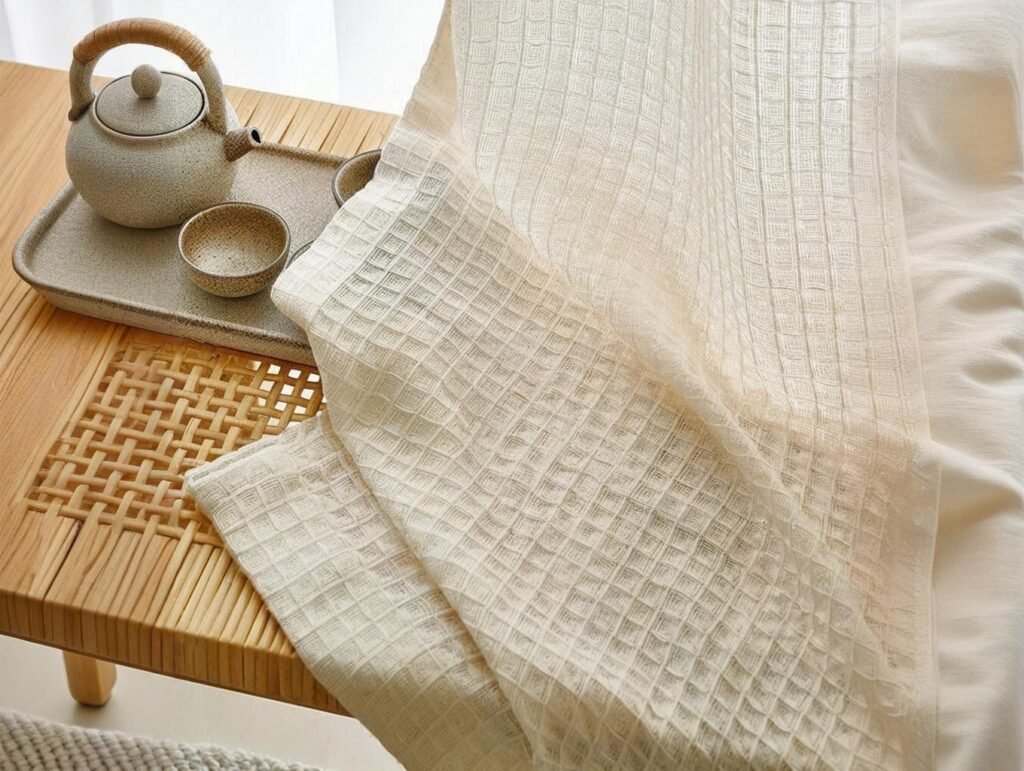
In linen garment development, one of the earliest decisions quietly shapes everything that follows—cost, quality consistency, lead time, and even how many revisions a project will need. That decision is not about color or GSM. It is whether to source linen fabric by the yard or to use finished linen fabric.
On the surface, the difference seems simple: one is raw, one is ready. But in real production, this choice determines how much control you actually have over the final garment. Many brands only realize this after experiencing unexpected shrinkage, inconsistent hand feel, or production delays that were never mentioned during sampling. Linen fabric by the yard offers greater control over finishing, washing, and garment performance, making it ideal for customized OEM production. Finished linen fabric provides faster turnaround and predictable appearance but limits flexibility. The better option depends on production scale, garment type, and how much control is needed over final fabric behavior.
A sourcing manager once described it this way: “Finished linen looks easier—until it locks you into someone else’s decisions.” That single sentence explains why this topic deserves a closer look.
What Is the Difference Between Linen Fabric by the Yard and Finished Linen Fabric?
The difference between linen fabric by the yard and finished linen fabric is not a matter of appearance or softness alone. It is a structural, procedural, and strategic difference that directly affects shrinkage control, garment consistency, production risk, and long-term scalability.
In simple terms, linen fabric by the yard is supplied in a state that still allows meaningful control over finishing decisions, while finished linen fabric has already been processed to a “market-ready” condition and is intended for immediate cutting and sewing. Once linen is finished, many critical performance variables are permanently locked in.
For brands sourcing linen at scale, understanding this distinction is essential. Choosing the wrong supply model often leads to fitting inconsistencies, unexpected shrinkage, and costly rework that cannot be corrected downstream.
Understanding the Two Supply Models
Although both options are sold as “linen fabric,” they serve very different roles in the production chain. Treating them as interchangeable is one of the most common sourcing mistakes.
What “Linen Fabric by the Yard” Really Means
Linen fabric by the yard is typically supplied in a pre-finish state, meaning the fabric has not yet undergone final washing, softening, or shrinkage stabilization. It is delivered in continuous lengths and intended to be customized later.
Common forms include:
- Greige linen (unbleached, unfinished)
- Pre-treated but unwashed linen
- Basic dyed linen without final finishing
| Characteristic | Linen by the Yard |
|---|---|
| Surface feel | Crisp, raw |
| Shrinkage | Not yet controlled |
| Color stability | Depends on later finishing |
| Customization | High |
This fabric is intentionally “incomplete.” Its role is to give buyers control over how the linen will ultimately behave in the finished garment or product.
From a production standpoint, linen by the yard is a flexible input, not a ready-to-use material.
Structural Implications of Yard Linen
Because linen by the yard has not yet been fully relaxed, the fibers retain residual tension from weaving. This means:
- Shrinkage has not been fully expressed
- Wrinkle behavior is not yet stabilized
- Hand feel can change significantly after washing
This is not a flaw. It is the reason brands choose this format when consistency and performance matter.
What Qualifies as Finished Linen Fabric
Finished linen fabric has already passed through one or more final finishing processes designed to deliver a predictable, consumer-ready feel.
These processes often include:
- Washing (enzyme wash, stone wash, or garment-style wash)
- Shrinkage control and relaxation
- Softening or calendaring
- Color fixation and surface smoothing
| Characteristic | Finished Linen |
|---|---|
| Surface feel | Soft, relaxed |
| Shrinkage | Pre-controlled |
| Appearance | Predictable |
| Customization | Limited |
Finished linen is designed for immediate use. What you see and feel at the fabric stage is largely what the consumer will experience, assuming proper care.
Why Finished Linen Feels “Safer” at First
For sampling and small runs, finished linen often feels like the safer choice. The fabric drapes well, washes cleanly, and produces garments that look correct immediately after sewing. For this reason, many buyers—especially first-time linen users—gravitate toward finished fabric.
However, this perceived safety can be misleading when the product moves beyond sampling into repeat production.
Why This Distinction Matters in Production
The critical issue is control. Once linen has been finished, you inherit every upstream decision made by the mill or finishing house.
This includes:
- Shrinkage tolerance
- Softness level
- Wrinkle behavior
- Fabric density after relaxation
- Hand feel profile
These parameters cannot be undone or significantly altered later without damaging the fabric.
In contrast, linen by the yard allows brands to define these outcomes rather than accept them.
Shrinkage Control: The Hidden Divider
Shrinkage is one of the most decisive factors separating the two supply models.
Finished linen typically has shrinkage reduced to an acceptable retail range, often 2–4%. This is adequate for general apparel but may be insufficient for garments with tight tolerances, structured silhouettes, or panel matching requirements.
Linen by the yard, on the other hand, allows brands to:
- Pre-wash under their own conditions
- Align shrinkage with pattern allowances
- Standardize results across styles
For tailored garments, uniform programs, or repeat collections, this level of control is often non-negotiable.
Color Consistency and Reorders
Finished linen is usually produced for a broad market, not a specific brand. Color recipes are optimized for general appeal rather than strict ΔE tolerances across seasons.
When a brand reorders finished linen months later, subtle shade shifts are common—even if the color name is the same.
With linen by the yard, brands can lock:
- Dye recipe
- Finishing chemistry
- Washing parameters
This dramatically improves reorder consistency, especially in core colors.
Hand Feel and Brand Identity
Hand feel is a brand signature. Some brands want crisp, architectural linen. Others want a soft, broken-in feel.
Finished linen fixes this decision upfront. Linen by the yard postpones it.
Once finished linen is softened or calendered, you cannot restore firmness or structure. Conversely, raw yard linen can be softened incrementally until the desired feel is achieved.
Garment Construction Implications
Fabric choice influences construction strategy.
Finished linen is easier to work with during cutting and sewing. It is stable, relaxed, and predictable on the table. Yard linen requires more planning, as post-wash changes must be anticipated.
However, the payoff comes later. Garments produced from yard linen that has been finished to spec often:
- Fit more consistently after consumer washing
- Maintain shape over time
- Show fewer size-related complaints
Finished linen garments may look correct initially but drift out of tolerance after repeated laundering.
Sampling Speed vs. Production Accuracy
This trade-off appears repeatedly in sourcing decisions.
Finished linen:
- Faster sampling
- Lower initial complexity
- Higher long-term variability
Linen by the yard:
- Slower development
- More testing required
- Higher long-term consistency
Experienced brands often sample in finished linen for speed, then switch to yard linen for bulk once specifications are confirmed.
Why Finished Linen Cannot Be “Re-Finished”
A common misconception is that finished linen can be reprocessed to change performance. In reality:
- Additional washing weakens fibers
- Re-dyeing alters color depth unevenly
- Re-softening reduces durability
Once finishing decisions are made, they are effectively permanent.
This is why mistakes at the finished-fabric stage are costly and difficult to correct.
Quality Control Differences
Quality control priorities differ between the two models.
For linen by the yard, QC focuses on:
- Greige consistency
- Yarn uniformity
- Weave density
- Shrinkage potential
For finished linen, QC shifts to:
- Surface defects
- Color appearance
- Softness uniformity
- Immediate dimensional stability
Understanding which QC lens applies prevents mismatched expectations.
Real Sourcing Insight
At SzoneierFabrics, many overseas clients initially request finished linen to accelerate early sampling. This works well for visual approval. However, after fitting tests or wash trials, a large percentage transition to linen by the yard for bulk production.
The reason is rarely aesthetic. It is almost always about tolerance control—especially for garments where small dimensional shifts create visible problems.
When Finished Linen Makes Sense
Finished linen is appropriate when:
- Speed is the top priority
- Styles are loose-fitting
- Reorders are unlikely or seasonal
- Minor variation is acceptable
For capsule collections, décor items, or limited runs, finished linen can be an efficient solution.
When Linen by the Yard Is the Better Choice
Linen by the yard is the stronger option when:
- Fit accuracy matters
- Products will be reordered
- Brand hand feel must be consistent
- Wash performance is critical
In these cases, the additional development effort pays for itself quickly.
Cost Perspective: Short-Term vs. Long-Term
Finished linen often appears cheaper upfront. Yard linen may require extra washing, testing, and coordination.
However, brands that run repeat programs often find that yard linen reduces total cost over time by minimizing returns, remakes, and shade disputes.
The cost difference is not in the fabric—it is in the mistakes avoided.
The difference between linen fabric by the yard and finished linen fabric is not about softness or convenience. It is about who controls the outcome.
Finished linen delivers speed and predictability for general use, but locks in decisions that may not align with specific garment requirements. Linen by the yard requires more planning, but gives brands the ability to engineer performance, consistency, and long-term reliability.
For bulk sourcing and scalable programs, the key question is not which fabric looks better today, but which fabric allows you to control tomorrow.
Which Advantages Does Linen Fabric by the Yard Offer for OEM Production?
For OEM garment production, linen fabric by the yard provides a level of control that pre-finished or ready-stock fabrics simply cannot match. It allows brands to engineer performance, appearance, and consistency around the garment, not around the fabric supplier’s default finishing decisions. This flexibility is why experienced OEM buyers—especially those producing repeat styles or premium linen garments—often insist on sourcing linen by the yard rather than relying on finished stock fabric.
Yard fabric is not “unfinished” in a negative sense—it is unfinished on purpose. It exists to give brands control over shrinkage, handfeel, wash behavior, color tone, and long-term consistency at the garment level.
Why Yard Fabric Gives You More Control
In linen production, most quality problems do not originate from weaving defects. They appear after washing, wearing, and repeated use, when fabric behavior meets real-world conditions. Yard fabric allows OEM buyers to decide how and when those behaviors are controlled.
Control over finishing sequence
When linen is purchased by the yard, finishing becomes part of the production strategy rather than a fixed input. Brands can define a finishing sequence that aligns precisely with garment design, construction, and customer expectations.
| Finishing Stage | Why It Matters |
|---|---|
| Pre-shrink | Controls post-wash fit |
| Softening | Adjusts hand feel |
| Garment wash | Creates lived-in look |
| Enzyme treatment | Reduces fiber harshness |
Pre-shrinking at the fabric stage allows OEMs to lock shrinkage targets before cutting. This is especially important for trousers, shirts, and fitted garments where dimensional accuracy affects size grading.
Softening can be calibrated rather than over-applied. Linen that feels stiff at the fabric stage may soften naturally after garment washing, while pre-softened fabric can become overly limp once processed again.
Garment washing is a defining step for many linen products. Yard fabric is designed to withstand garment washing predictably, whereas finished fabric may react unpredictably when washed a second time.
Enzyme treatments can be applied selectively to reduce surface harshness without compromising strength. When these treatments are baked into finished fabric, OEMs lose the ability to fine-tune results.
Once fabric is fully finished before delivery, this sequencing flexibility is largely gone.
Better compatibility with garment washing
Garment washing is common in linen apparel because it delivers a relaxed appearance, reduces shrinkage risk for the consumer, and improves comfort. However, not all linen responds well to this process.
| Fabric Type | Garment Wash Result |
|---|---|
| Yard linen | Predictable |
| Finished linen | Risk of over-softening |
Yard linen is structurally prepared to undergo washing after sewing. Its fibers still retain internal strength and tension that can be released in a controlled way during garment wash.
Finished linen, by contrast, has often already undergone washing, softening, or enzyme treatment. Subjecting it to garment washing again can lead to:
- Excessive limpness
- Loss of shape retention
- Seam distortion
- Reduced abrasion resistance
These issues often appear only after bulk production, not during sample review. OEMs using yard fabric significantly reduce this risk because finishing steps are applied once, at the correct stage.
Custom shrinkage control
Shrinkage is one of the most underestimated risks in linen OEM production. Even small differences in shrinkage can translate into size inconsistency, fit complaints, and returns.
| Fabric Source | Typical Shrinkage |
|---|---|
| Finished linen | 2–4% (fixed) |
| Yard linen | Adjustable to spec |
Finished linen usually comes with a predefined shrinkage range set by the mill. While this may seem convenient, it removes flexibility. If the shrinkage profile does not align with garment design or wash method, OEMs must redesign patterns or accept higher tolerance.
With yard fabric, shrinkage targets can be defined before bulk production. Brands can specify, for example:
- Maximum warp shrinkage of 3%
- Maximum weft shrinkage of 2%
- Shrinkage measured after garment wash, not fabric wash
This level of control allows pattern makers to work with confidence and reduces the need for corrective adjustments later.
Color and tone consistency
Color consistency is a recurring challenge in linen due to natural fiber variability and dye uptake differences. This challenge is amplified when sourcing finished linen from stock.
| Risk | Yard Fabric Advantage |
|---|---|
| Shade variation | Dyed to order |
| Lot mismatch | Single batch |
| Reorders | Reproducible |
Stock finished linen is often drawn from multiple dye lots. Even when color codes match, subtle differences in tone, depth, or undertone can appear—especially in neutral shades such as beige, stone, or grey.
Yard fabric for OEM production is typically dyed to order, allowing:
- Single-lot dyeing for bulk runs
- Controlled dye curves aligned with finishing plans
- Reproducible color standards for reorders
This is critical for brands planning seasonal repeats or core linen styles. Consistency builds trust with customers and simplifies inventory management.
Alignment with garment construction methods
Different garments place stress on fabric in different ways. Yard fabric allows linen to be optimized for those stresses.
Examples include:
- Trousers requiring knee recovery and waist stability
- Shirts needing seam integrity at armholes and plackets
- Dresses requiring controlled drape without collapse
By contrast, finished fabric is designed to be generic. It may perform well for one garment type but poorly for another. OEM buyers using yard fabric can coordinate finishing with construction techniques, thread choice, and seam design.
Cost efficiency over production lifecycle
At first glance, finished linen may appear cheaper because it eliminates finishing steps at the OEM level. However, this calculation often ignores downstream costs.
Yard fabric can reduce:
- Pattern rework due to shrinkage mismatch
- Excess fabric consumption caused by unpredictability
- Returns linked to post-wash distortion
- Rejected reorders due to shade inconsistency
For repeat programs, these savings frequently outweigh the additional cost of controlled finishing.
Better scalability for repeat orders
OEM production is rarely a one-time event. Brands that succeed tend to reorder successful styles. Yard fabric supports this scalability because specifications can be locked and repeated.
Key parameters that can be standardized include:
- Fiber composition tolerance
- Weave density
- Shrinkage targets
- Finishing sequence
- Handfeel benchmarks
Finished stock fabric, by contrast, may change subtly between seasons due to mill adjustments or raw material availability. This introduces variability that brands cannot easily control.
Improved compliance and documentation control
For export-oriented OEM programs, documentation matters. Yard fabric allows fiber content, finishing methods, and test results to be aligned precisely with the finished garment.
This simplifies:
- Fiber labeling accuracy
- Shrinkage declaration
- Chemical compliance reporting
- Consistency between test reports and bulk goods
Finished fabric sourced from distributors may carry generic documentation that does not reflect garment-level processing, increasing compliance risk.
Design flexibility and differentiation
From a design perspective, yard fabric expands creative options. Brands can experiment with:
- Garment-dyed linen
- Piece-dyed vs yarn-dyed effects
- Enzyme intensity variation
- Localized wash effects
These options are difficult or impossible when using pre-finished fabric, which locks visual outcomes early in the process.
For brands aiming to differentiate in a crowded linen market, this flexibility becomes a competitive advantage.
Risk reduction in mass production
OEM production failures are expensive because they scale quickly. A small mismatch between sample and bulk can affect thousands of units.
Yard fabric reduces this risk by allowing:
- Pilot washing of sewn samples
- Adjustment before bulk cutting
- Controlled transition from sample to production
Finished fabric often hides risks until after garments are completed, at which point correction is costly or impossible.
Case example
A European brand producing linen trousers experienced recurring waist distortion after washing garments made from finished linen fabric. The fabric met specifications at delivery but relaxed excessively after garment wash, causing size inconsistency and customer complaints.
By switching to yard linen and implementing controlled pre-shrink and garment wash testing before bulk production, the brand reduced fit-related complaints by over 60% within one season. The fabric cost increased slightly, but returns and rework dropped significantly.
When finished linen still makes sense
Finished linen is not inherently unsuitable. It can be effective for:
- Small runs
- Decorative products with no washing
- Projects with limited size sensitivity
- Fast-turn, non-repeat programs
However, for OEM garment production with fit, consistency, and repeatability requirements, its limitations become apparent quickly.
Linen fabric by the yard offers OEM buyers superior control over finishing, shrinkage, color consistency, and garment-level performance. It allows brands to engineer linen around real use conditions rather than adapting designs to pre-finished fabric constraints.
Yard fabric is intentionally unfinished to preserve flexibility. It supports garment washing, repeatability, compliance accuracy, and scalable production—all critical factors for professional OEM programs.
For brands producing linen garments at scale, the question is not whether yard fabric requires more planning. It does. The real question is whether predictable outcomes, fewer surprises, and long-term consistency are worth that effort.
In most OEM programs, the answer is yes.
Which Benefits Come with Using Finished Linen Fabric for OEM Garments?
Finished linen fabric offers clear advantages for OEM garment programs that prioritize speed, predictability, and operational simplicity. Because the fabric has already undergone washing, softening, and stabilization, it allows brands to move directly into cutting and sewing without additional processing steps. This makes finished linen particularly suitable for time-sensitive launches, repeatable standard styles, and collections where extreme customization is not required.
Finished linen is popular not because it is superior in every scenario, but because it reduces uncertainty. In OEM production, fewer unknowns often translate into faster decisions, lower development costs, and more reliable timelines.
Understanding What “Finished Linen” Really Means
Finished linen is not simply linen that has been dyed. It refers to fabric that has already completed its core finishing processes, which may include:
- Washing (to relax fibers and reduce shrinkage)
- Softening (mechanical or chemical)
- Pre-shrinking
- Surface stabilization
- Final color fixation
By the time finished linen reaches the garment factory, its hand feel, appearance, and dimensional behavior are largely set. This contrasts with yard or greige linen, which still requires additional finishing decisions that can affect final performance.
When Finished Linen Makes Sense
Finished linen is not a universal solution, but it excels under specific program conditions. Brands that understand these conditions use finished linen strategically rather than by default.
Speed to Sample and Market
One of the most significant benefits of finished linen is the reduction in development time. Because the fabric is production-ready, sampling can begin immediately.
| Stage | Finished Linen | Yard Linen |
|---|---|---|
| Fabric prep | Ready to use | Requires finishing |
| Sampling time | Short | Longer |
| Early approvals | Faster | Slower |
With finished linen, design teams can move straight from fabric selection to pattern cutting. There is no need to wait for lab dips, test washes, or finishing trials. This can shorten sampling timelines by weeks, which is critical for seasonal collections or trend-driven capsules.
For brands operating on tight calendars—such as resort wear, summer capsules, or fast retail refreshes—this speed advantage can be decisive. Missing a selling window often costs more than paying a slightly higher fabric price.
Predictable Hand Feel and Appearance
Finished linen has already revealed its final personality. What designers touch is what customers will receive.
| Attribute | Result |
|---|---|
| Surface texture | Known |
| Wrinkle style | Established |
| Color tone | Stable |
Because the fabric has been washed and softened, its surface texture is no longer theoretical. Designers can assess stiffness, drape, and wrinkle behavior immediately. This reduces subjective debates and speeds up internal approvals.
Color stability is another key benefit. Finished linen has already passed through dye fixation and post-wash cycles, meaning the visible shade is unlikely to shift during garment production. For brands that rely on consistent color presentation across SKUs, this predictability reduces risk.
In contrast, unfinished or yard linen can look significantly different after garment washing. That transformation can be desirable—but only if it is intentional and controlled.
Reduced Processing Risk
Every additional processing step introduces variability. Finished linen minimizes the number of variables between fabric sourcing and finished garment.
| Risk Area | Finished Linen |
|---|---|
| Wash damage | Minimal |
| Shrinkage surprises | Low |
| Color change | Unlikely |
Because shrinkage has largely already occurred, finished linen behaves more consistently during cutting and sewing. Pattern dimensions are more reliable, and size grading accuracy improves.
Wash damage risk is also reduced. Lightweight linens, in particular, can suffer from seam distortion or surface abrasion during aggressive garment washing. By using finished linen, brands avoid exposing the garment to additional high-stress wash cycles.
For small to medium production runs—where extensive testing is not economical—this reduction in risk can significantly improve first-pass yield.
Easier for Simple Garment Constructions
Finished linen performs best when garment design is structurally forgiving.
| Garment Type | Suitability |
|---|---|
| Loose shirts | High |
| Simple dresses | High |
| Scarves | Very high |
| Tailored trousers | Lower |
Relaxed silhouettes tolerate minor variation in drape and thickness. Loose shirts, beachwear, tunics, and scarves benefit from finished linen’s natural texture and softness without requiring precise shaping.
In contrast, tailored garments—such as structured trousers, jackets, or fitted dresses—often demand more control over stiffness, shrinkage, and seam behavior. In these cases, yard linen with customized finishing may offer better results.
Lower Development Cost for Standard Programs
Finished linen reduces the number of development iterations required.
Brands avoid:
- Multiple wash tests
- Shrinkage recalculations
- Repeated hand-feel approvals
- Re-dye adjustments
This lowers development cost, especially when working with overseas suppliers. Communication cycles shorten because fewer technical variables need explanation or negotiation.
For standard repeat styles—basic shirts, seasonal carryovers, or evergreen SKUs—finished linen simplifies sourcing and reduces internal workload.
More Accurate Fit During Sampling
Fit issues are one of the most expensive problems in OEM garment production. Finished linen improves fit reliability because dimensional changes have already stabilized.
With finished linen:
- Sample fit is closer to bulk fit
- Size adjustments are more accurate
- Fewer re-samples are required
This is particularly valuable when working with external pattern teams or when development happens across time zones. The fewer iterations required, the faster the program progresses.
Better Alignment Between Design and Merchandising Teams
Finished linen helps align creative intent with commercial reality.
Designers can see the final fabric behavior early, while merchandising teams gain confidence that the approved sample reflects what will be delivered at scale. This reduces internal friction and late-stage changes.
When teams work with unfinished linen, decisions are often deferred until after wash testing, which compresses timelines and increases pressure later in the process.
Limitations Brands Should Acknowledge
Finished linen’s strengths are also its constraints. Because the fabric has already been processed, customization options are limited.
Potential limitations include:
- Limited ability to adjust stiffness or drape
- Fixed wrinkle character
- Less flexibility in post-wash appearance
- Restricted color modification options
Brands seeking a highly specific washed look, unique surface effect, or engineered shrinkage behavior may find finished linen too restrictive.
Finished linen works best when the desired outcome aligns closely with existing fabric characteristics.
Inventory and Reorder Considerations
For repeat programs, finished linen offers consistency across production runs—as long as the same fabric lot or standardized specification is maintained.
However, because finished linen is often stocked as a ready-made fabric, brands should confirm:
- Batch-to-batch color tolerance
- GSM tolerance
- Finishing consistency
When managed correctly, finished linen supports stable reorders and predictable restocking cycles.
Sustainability and Processing Trade-Offs
From a sustainability perspective, finished linen can reduce redundant processing. Garment-level washing is avoided, which can lower water and energy usage at the factory stage.
However, brands should verify where and how finishing occurs. Transparency around finishing chemistry, water treatment, and compliance remains important.
Finished linen does not automatically equal lower environmental impact—it depends on how the finishing was executed upstream.
Practical Example from OEM Production
A lifestyle brand producing relaxed linen beach shirts faced a compressed delivery window ahead of a summer launch. Fit tolerance was generous, silhouettes were loose, and color consistency mattered more than unique wash effects.
By selecting finished linen, the brand:
- Reduced sampling time significantly
- Avoided post-wash fit adjustments
- Achieved consistent appearance across sizes
The garments performed well in market because the product design aligned with the fabric’s natural behavior. In this context, finished linen was not a compromise—it was an optimization.
When Brands Typically Choose Finished Linen
Finished linen is commonly selected for:
- Seasonal capsules with tight timelines
- Entry-level linen programs
- Resort and vacation wear
- Accessories and scarves
- Test launches before scaling custom fabric development
In many cases, brands use finished linen as a starting point, then transition to customized linen once volumes justify deeper development.
Finished linen fabric offers OEM garment programs speed, predictability, and reduced technical risk. It allows brands to focus on design, fit, and merchandising rather than processing complexity.
It is not the right choice for every garment, but when timelines are tight and designs are forgiving, finished linen simplifies execution without sacrificing perceived quality.
For OEM buyers, the real benefit of finished linen is not just faster production—it is clarity. Clear expectations, clear outcomes, and fewer surprises across the development cycle.
How Do Cost Structures Compare Between Purchasing Fabric by the Yard and Finished Fabric?
When comparing linen purchased by the yard versus finished linen fabric, the true cost difference rarely shows up in the first quotation. Finished linen often appears cheaper or more convenient at the sampling stage, while yard linen seems to require additional steps and coordination. However, once shrinkage control, production yield, rework rates, and repeat-order consistency are factored in, yard linen frequently delivers a lower total production cost, especially for OEM and repeat-style programs.
This is where many sourcing decisions go wrong—by looking only at price per meter, instead of total cost per sellable unit.
Understanding linen cost structures requires shifting the question from “Which fabric is cheaper?” to “Which fabric creates fewer losses over time?”
Understanding True Cost, Not Just Fabric Price
Fabric cost is only one component of apparel or home-textile economics. Linen, in particular, exposes hidden costs because of its sensitivity to finishing, washing, and relaxation. Decisions made at the fabric sourcing stage directly influence cutting yield, sewing efficiency, rejection rates, and even customer returns.
A lower fabric price does not guarantee a lower cost product. In many cases, it does the opposite.
Apparent Cost Comparison
At first glance, finished linen can look like the safer or more premium option.
| Fabric Type | Price per Meter | Initial Impression |
|---|---|---|
| Yard linen | Lower | Seems economical |
| Finished linen | Higher | Feels premium |
Finished linen is often marketed as “ready to use,” “pre-washed,” or “pre-shrunk,” which gives buyers a sense of security. Yard linen, by contrast, appears incomplete, requiring additional finishing steps that look like added cost.
However, this comparison only reflects invoice price, not operational reality.
Why Fabric Price Alone Is Misleading
Finished linen typically includes a generic finishing process chosen by the mill to satisfy the widest possible customer base. That process may not align with a brand’s actual product requirements.
When the finishing does not match the end use, hidden costs begin to surface:
- Patterns no longer fit as intended
- Cutting yield drops
- Sewing tolerances tighten
- Post-wash complaints increase
These issues rarely show up in sampling. They emerge during bulk production and after market release, when corrections are most expensive.
Hidden Costs With Finished Linen
Finished linen often transfers control from the buyer to the mill. While that can reduce short-term effort, it also limits the buyer’s ability to manage risk.
| Cost Factor | Why It Adds Up |
|---|---|
| Fit issues | Limited shrinkage control |
| Re-cutting | Size inconsistencies |
| Wash rejection | Over-softening risk |
| Lot variation | Shade mismatch |
Fit issues arise when the mill’s finishing assumptions do not match the buyer’s garment or product construction. Even “pre-shrunk” linen can retain residual shrinkage that only appears after garment washing or consumer use.
Re-cutting becomes necessary when finished fabric behaves differently from sample expectations. Small dimensional deviations can break marker efficiency, increasing fabric consumption per unit.
Wash rejection is common with over-softened finished linen. Aggressive enzyme or mechanical softening improves hand feel but can weaken fiber integrity, leading to distortion, seam slippage, or excessive wrinkling after washing.
Lot variation is another frequent issue. Finished linen sourced across multiple production lots may show shade or texture differences, especially if reorders are placed months apart. These variations complicate production planning and increase rejection risk.
Critically, these costs appear after sampling, during bulk production—when timelines are tight and correction options are limited.
Cost Advantages of Yard Linen in Bulk Programs
Yard linen shifts more responsibility to the buyer or their manufacturing partner, but it also restores control. That control is where long-term cost advantages emerge.
| Advantage | Impact |
|---|---|
| Controlled shrinkage | Fewer rejects |
| Single-batch dyeing | Color consistency |
| Tailored finishing | Better wear life |
Controlled shrinkage allows buyers to finish linen specifically for their product category. Shrinkage can be stabilized to defined limits, improving cutting accuracy and size consistency.
Single-batch dyeing reduces shade variation across bulk orders. When yard linen is dyed and finished as a controlled batch, color consistency improves significantly, especially for repeat styles.
Tailored finishing aligns fabric performance with end use. Apparel, upholstery, and home textiles all require different balances of softness, strength, and dimensional stability. Yard linen allows finishing recipes to be adjusted accordingly.
These advantages become more pronounced over multiple production runs, where predictability matters more than initial convenience.
Cost Comparison Example (Simplified)
A simplified cost comparison illustrates how hidden costs shift the balance.
| Cost Item | Finished Linen | Yard Linen |
|---|---|---|
| Fabric cost | Medium | Lower |
| Finishing | Included | Added |
| Rework loss | Higher | Lower |
| Repeat orders | Variable | Stable |
Finished linen includes finishing in the fabric price, but rework losses tend to be higher due to limited control. Yard linen requires additional finishing cost, but overall losses decrease because the fabric behaves more predictably in production.
In many OEM programs, yard linen delivers 10–20% lower total cost across multiple production cycles, even when finishing expenses are included.
Where Yard Linen Delivers the Greatest Value
Yard linen is particularly cost-effective in scenarios where:
- The same style is produced repeatedly
- Fit consistency is critical
- Fabric cost represents a large share of BOM
- Customer expectations are high and returns are costly
For seasonal or one-off styles, finished linen may still be appropriate. But for core programs, yard linen often proves more economical over time.
Production Efficiency and Labor Costs
Fabric behavior directly affects labor efficiency. Linen that shifts unexpectedly during cutting or sewing slows production and increases defect rates.
Yard linen finished to controlled specifications tends to:
- Cut more predictably
- Maintain pattern alignment
- Reduce operator adjustments during sewing
These gains are difficult to quantify upfront, but they reduce overtime, quality inspections, and line stoppages—real costs that rarely appear in fabric comparisons.
Inventory and Repeatability Considerations
Finished linen sourced from stock programs may change subtly between seasons as mills adjust yarn supply or finishing recipes. Yard linen programs, by contrast, can lock specifications and replicate them consistently.
Repeatability reduces:
- The need for re-approval samples
- Risk of shade mismatch in replenishment orders
- Customer complaints across seasons
Over time, this stability translates into lower administrative cost and fewer emergency interventions.
Risk Allocation: Who Absorbs the Variability?
A key difference between yard linen and finished linen is where risk is absorbed.
With finished linen:
- The mill controls finishing
- The buyer absorbs downstream consequences
With yard linen:
- The buyer controls finishing parameters
- Variability is addressed earlier, when corrections are cheaper
From a cost-structure perspective, moving risk upstream almost always reduces total cost.
Real Sourcing Insight
One apparel brand switched from finished linen to yard linen after three consecutive seasons of fit-related complaints. Customers reported inconsistent sizing after washing, despite unchanged patterns.
By sourcing yard linen and applying controlled finishing with defined shrinkage limits, the brand improved dimensional stability. Although finishing added cost per meter, return rates dropped enough to offset the entire increase within one season.
The long-term effect was more significant: repeat customers regained confidence in fit consistency, reducing customer service and markdown pressure.
When Finished Linen Still Makes Sense
Finished linen is not inherently a poor choice. It can be appropriate when:
- Volumes are small
- Products are non-fitted
- Speed matters more than optimization
- The fabric is not washed after cutting
The issue arises when finished linen is used in programs that demand precision and repeatability without adjusting expectations or cost models.
A Buyer’s Cost Perspective
Experienced buyers evaluate linen using total landed cost per sellable unit, not fabric price per meter. That calculation includes:
- Fabric cost
- Finishing
- Cutting yield
- Rework and rejection
- Returns and complaints
- Stability across repeat orders
When viewed through this lens, yard linen often outperforms finished linen in structured, repeatable programs.
Turning Cost Visibility Into Strategy
Cost structure is not just an accounting exercise. It is a sourcing strategy decision.
Brands that invest in controlled yard linen programs gain:
- Better cost predictability
- Fewer production surprises
- Stronger supplier alignment
- Higher long-term margins
Those benefits compound over time, especially as collections scale.
Finished linen often wins on simplicity and speed. Yard linen wins on control and consistency.
For buyers focused on long-term efficiency rather than short-term convenience, yard linen frequently delivers the lower true cost—despite appearing more complex at the start.
The most expensive linen is rarely the one with the highest price per meter. It is the one that introduces variability after production has already begun.
What Quality Control Challenges Should Be Considered When Choosing Between Yard Fabric and Finished Fabric?
When choosing between linen fabric by the yard and finished linen fabric, quality control challenges do not disappear—they shift location and timing. Yard linen concentrates risk early in the process, where issues are visible and correctable. Finished linen pushes risk downstream, where problems may remain hidden until cutting, washing, or even after retail launch.
This difference is critical. Many sourcing failures are not caused by poor material quality, but by misaligned QC strategy—using the wrong inspection logic for the chosen supply model.
Quality issues don’t show up the same way in these two models. They fail at different stages, and the cost of failure increases dramatically the later it appears.
Where Each Option Is Most Vulnerable
Understanding vulnerability points helps brands decide not only which fabric to buy, but how much control they are willing to assume.
Quality Control Risks With Linen Fabric by the Yard
Yard linen shifts responsibility downstream. The buyer takes ownership of finishing outcomes, which introduces risk—but also visibility.
| Risk Area | Why It Happens | How It’s Managed |
|---|---|---|
| Shrinkage variation | Finishing not yet done | Controlled pre-shrink |
| Hand feel mismatch | Finish not defined | Lab dips & wash trials |
| Color tone shift | Dyeing still pending | Batch dye control |
These risks are front-loaded. They appear during sampling, testing, and pilot runs—when corrections are still affordable and decisions are reversible.
Why Yard Linen Risks Are Easier to Control
With yard fabric, performance characteristics are not assumed; they are developed. This allows brands to:
- Test multiple wash recipes
- Adjust softener dosage incrementally
- Align shrinkage behavior with pattern allowances
- Lock dye recipes before bulk runs
Problems surface early because nothing is masked by finishing. A stiff hand feel, excessive shrinkage, or uneven dye uptake is immediately obvious in testing.
From a QC perspective, yard linen behaves like a transparent system. It demands discipline, but it rewards structured development.
Quality Control Risks With Finished Linen Fabric
Finished linen appears stable, but this stability can be deceptive. Many critical variables have already been fixed—often for a general market rather than a specific product.
| Risk Area | Why It’s Hard to Fix |
|---|---|
| Over-softening | Cannot be reversed |
| Hidden shrinkage | Only appears after washing |
| Lot-to-lot shade | Stock fabric variation |
These issues frequently remain invisible until after cutting, sewing, or consumer washing, when correction is no longer practical.
The Illusion of Safety in Finished Linen
Finished linen passes initial inspections easily. It feels soft, looks uniform, and behaves predictably on the cutting table. As a result, brands often reduce testing intensity.
This is where risk accumulates.
Because the fabric has already been processed, QC teams tend to rely on surface checks rather than performance validation. Shrinkage is assumed to be controlled. Hand feel is accepted as final. Wash testing is often minimized or skipped entirely.
When problems emerge later, they are expensive and disruptive.
Inspection Depth Comparison
The two supply models require fundamentally different QC depth and timing.
| QC Stage | Yard Linen | Finished Linen |
|---|---|---|
| Fabric inspection | Basic | Visual only |
| Wash testing | Mandatory | Often skipped |
| Garment trial | Strongly advised | Sometimes ignored |
Yard linen demands more upfront testing—but that testing prevents downstream failure. Finished linen reduces early workload but increases exposure later, when options are limited.
Shrinkage: The Most Common Hidden Failure
Shrinkage is the single most frequent cause of quality disputes in finished linen programs.
Finished linen is often labeled “pre-shrunk,” but without a defined tolerance. A fabric may technically meet a generic standard (for example, under 4% shrinkage) while still causing visible garment distortion if panels shrink unevenly.
With yard linen, shrinkage is actively measured, adjusted, and aligned with pattern development. With finished linen, shrinkage is inherited—and often only discovered after washing finished garments.
This difference explains why many brands experience fit drift across seasons when using finished stock fabrics.
Hand Feel: Subjective, But Structurally Locked
Hand feel is often described in vague terms—soft, washed, relaxed—but these words mask irreversible technical decisions.
In finished linen:
- Over-softening reduces fiber cohesion
- Aggressive washing weakens yarn integrity
- Excessive calendaring flattens surface texture
Once applied, these processes cannot be undone. If the hand feel is wrong, the fabric must be replaced.
With yard linen, hand feel is tuned gradually. Brands can stop processing when the target feel is reached, preserving durability while achieving the desired touch.
Color Consistency and Lot Risk
Finished linen is frequently supplied from mixed stock lots, especially when buyers reorder small to medium quantities. Even when color names match, shade variation between lots is common.
Because dyeing is complete, there is no opportunity to re-align color across batches. This becomes especially problematic for:
- Multi-style collections using the same fabric
- Seasonal reorders
- Panel-matched garments
Yard linen allows color control to be centralized. Dyeing can be done in one batch or repeated using the same recipe, improving consistency across production cycles.
Wash Testing Behavior: Required vs. Assumed
One of the most important QC differences lies in wash testing behavior.
Yard linen programs almost always include:
- Fabric wash tests
- Garment wash simulations
- Dimensional stability tracking
Finished linen programs often rely on supplier assurances rather than verification. Wash testing may be limited to spot checks or omitted entirely to save time.
This gap explains why finished linen issues often appear after retail launch, while yard linen issues appear during development.
Garment Trial Risk
Garment trials reveal how fabric behaves when sewn, washed, and worn. Yard linen programs typically include garment trials because post-finish behavior must be validated.
Finished linen programs sometimes skip this step, assuming fabric stability. This is a critical mistake. Fabric-level stability does not guarantee garment-level performance, especially in structured or fitted designs.
Seam distortion, panel twisting, and length variance are common garment-level failures that fabric inspection alone will not catch.
The Human Factor in Quality Failures
Many QC failures are not technical—they are communicative.
Common examples include:
- “Soft hand feel” without a measurable reference
- “Pre-shrunk” without a defined shrinkage range
- “Finished” without disclosure of wash method
When specifications rely on subjective language, expectations diverge silently between buyer and supplier.
At SzoneierFabrics, fabric specifications always include wash method, shrinkage range, and target hand feel descriptors, not just GSM, weave, and color. This reduces interpretation gaps that lead to quality disputes.
Cost of Failure: Timing Matters
The cost of fixing a problem increases exponentially as production progresses.
- During sampling: adjustment is inexpensive
- After fabric delivery: replacement is costly
- After cutting: loss multiplies
- After retail launch: damage is irreversible
Yard linen concentrates risk early, when cost is lowest. Finished linen delays risk until the most expensive stages.
This timing difference—not material quality—is why experienced brands often migrate toward yard linen for repeat programs.
Case Insight
A brand using finished linen for a core style discovered sleeve length variance only after retail launch. Customer complaints pointed to inconsistent fit after washing. Investigation revealed varying shrinkage across finished fabric lots sourced months apart.
The following season, the brand switched to yard linen with controlled dyeing and finishing. Shrinkage behavior was standardized before cutting. Sleeve variance disappeared, and return rates dropped noticeably.
The fiber did not change. The QC model did.
Choosing Based on Organizational Capability
Neither option is universally “better.” The correct choice depends on a brand’s ability to manage process complexity.
Finished linen suits organizations that:
- Prioritize speed
- Accept moderate variation
- Run short or seasonal programs
Yard linen suits organizations that:
- Demand repeatability
- Control finishing parameters
- Plan long-term product lines
Quality control must match the model. Applying finished-fabric QC logic to yard linen—or vice versa—creates blind spots.
Quality control challenges do not disappear when choosing between yard linen and finished linen. They relocate.
Yard linen exposes risk early, demands testing, and rewards discipline with control. Finished linen simplifies early stages but concentrates risk later, where correction is costly or impossible.
The real decision is not about convenience. It is about when and where you are willing to manage uncertainty. Brands that understand this distinction build QC systems that prevent failure instead of reacting to it.
In linen sourcing, quality is not just a property of the fabric—it is a consequence of the process you choose to own.
How Do Lead Times and Production Flexibility Differ Between Fabric by the Yard and Finished Fabric?
When sourcing linen, buyers often focus on how fast fabric can be delivered, but delivery speed alone is not what determines production success. The real distinction between finished linen and fabric by the yard lies in where time is saved and where control is gained across the full production cycle.
Finished linen offers speed at the beginning. Yard linen offers stability and flexibility over time.
Speed and flexibility are often mistaken for the same thing. They are not.
Understanding this difference is critical for brands planning not just a first drop, but repeat production, scaling, and seasonal continuity.
Understanding time in production, not just delivery dates
In linen sourcing, lead time must be evaluated across three phases, not one:
- Sampling and development
- Initial bulk production
- Reorders and scale-up
Finished fabric and yard fabric perform very differently at each stage.
Initial sampling lead time
At the sampling stage, finished linen has a clear advantage. It already exists in stock, with finishing completed.
| Stage | Finished Linen | Yard Linen |
|---|---|---|
| Fabric readiness | Immediate | Requires finishing |
| First sample | Fast | Slower |
| Design feedback | Quick | Delayed |
Finished linen allows brands to move quickly from concept to physical sample. Designers can assess drape, color, and texture almost immediately, making it ideal for:
- Early design validation
- Buyer presentations
- Trade show samples
- Fast market testing
Yard linen, by contrast, requires additional steps before sampling. The fabric must be dyed, finished, and sometimes washed or pre-shrunk before it behaves like the final garment fabric. This extends early timelines.
However, this early speed advantage can be misleading if viewed in isolation.
Why early speed can hide later risk
Finished linen samples often look excellent because they represent a finished state. The risk is that they hide how the fabric will behave once it enters garment production, washing, and consumer use.
Common issues that do not surface at sample stage include:
- Excess relaxation after garment wash
- Over-softening when washed again
- Size drift after bulk washing
- Shade shift between sample and bulk
With finished linen, these risks tend to appear late, when garments are already sewn.
Yard linen exposes these risks earlier, during sampling, when adjustments are still affordable.
Bulk production timelines
Once a style is approved and bulk production begins, the lead time advantage often shifts.
| Phase | Finished Linen | Yard Linen |
|---|---|---|
| Fabric availability | Depends on stock | Planned batch |
| Reorders | Uncertain | Repeatable |
| Scale-up | Risky | Stable |
Finished linen relies on existing inventory. If the exact fabric, color, and finish are in stock, bulk production can begin quickly. If not, timelines become unpredictable.
Typical challenges include:
- Partial stock availability across lots
- Color variations between rolls
- Fabric discontinued or adjusted by mill
- Limited volume for scale-up
Yard linen is produced to order. While it requires planning, it offers:
- Single-batch consistency
- Controlled dyeing and finishing
- Predictable volume scaling
- Stable specifications for repeats
For brands planning more than one production run, yard linen provides a more reliable bulk timeline, even if the first run starts later.
Reorders: where time differences matter most
Reorders are where sourcing strategy has the biggest impact on lead time and risk.
With finished linen, reorders depend on:
- Whether the same fabric is still in stock
- Whether finishing recipes have changed
- Whether dye lots match previous runs
If any variable changes, the reorder may require:
- Color compromise
- Fabric substitution
- New sampling
- Delayed launch
Yard linen supports reorders because specifications are defined, not assumed. Fiber content, weave density, dye recipe, and finishing sequence can be repeated intentionally.
For ongoing programs, yard linen often results in shorter effective lead times on reorders, even if the nominal production time is longer.
Flexibility during development
Development flexibility is one of the most important—and most overlooked—differences between finished and yard fabric.
| Change Request | Finished Linen | Yard Linen |
|---|---|---|
| Adjust softness | No | Yes |
| Modify shrinkage | No | Yes |
| Change wash style | No | Yes |
Finished linen locks most variables at the fabric stage. Once delivered, OEMs can only adapt pattern or construction to compensate.
Yard linen keeps options open:
- Softness can be adjusted via enzyme or wash intensity
- Shrinkage targets can be tuned before cutting
- Garment wash effects can be modified after sewing
This flexibility is especially valuable in linen, where final behavior is strongly influenced by finishing and washing.
Risk timing difference
The most fundamental difference between the two sourcing methods is when risk appears.
- Finished linen risks appear late (after sewing or washing)
- Yard linen risks appear early (during sampling and testing)
Late risks are expensive. Early risks are manageable.
Late-stage risks typically result in:
- Rejected bulk garments
- Fit complaints after delivery
- Rework or discounting
- Returns and brand damage
Early-stage risks can usually be solved with:
- Adjusted finishing
- Pattern corrections
- Revised wash protocols
- Minor timeline shifts
This is why experienced OEM buyers often accept slower sampling in exchange for earlier problem visibility.
Impact on production planning
From a production planning perspective, finished linen supports reactive workflows, while yard linen supports planned workflows.
Finished linen is suited for:
- One-off capsules
- Short seasonal runs
- Fast response programs
- Styles with no repeat expectation
Yard linen is better for:
- Core styles
- Seasonal repeats
- Multi-color programs
- Long-term brand continuity
The more predictable and repeatable the program, the more yard linen outperforms finished fabric in total timeline reliability.
Cost of time volatility
Time volatility is costly, even when nominal lead times are short.
Finished linen may offer:
- Fast initial delivery
- Uncertain reorders
- Higher risk of last-minute changes
Yard linen requires:
- Longer upfront planning
- More coordination
- Lower downstream volatility
For brands managing multiple SKUs, the second model often reduces overall operational stress, even if individual steps take longer.
Communication and decision-making speed
Finished linen accelerates decision speed early. Designers can touch and see fabric immediately.
Yard linen slows early decisions but improves decision quality. Data from shrinkage tests, wash trials, and wear simulations inform choices before commitment.
Brands that prioritize speed-to-market above all else may prefer finished linen. Brands that prioritize consistency, scalability, and fewer surprises often shift to yard linen over time.
Real production timeline example
A brand launching a summer linen capsule followed a hybrid strategy.
- Finished linen was used for early design samples and buyer presentations
- Once styles were confirmed, the brand switched to yard linen for bulk
This approach delivered:
- Fast sampling and feedback
- Controlled shrinkage and washing in bulk
- Consistent color across production
- Reliable reorders the following season
Sampling moved quickly, but bulk production remained stable. Most importantly, reorders matched the original run without redesign or re-approval.
When finished linen is the right choice
Finished linen still makes sense when:
- Speed to first sample is critical
- The program is one-time or experimental
- Volumes are small
- Washing after sewing is not planned
In these cases, the simplicity of finished fabric outweighs the long-term control benefits.
When yard linen becomes essential
Yard linen becomes the better choice when:
- Fit consistency matters
- Garment washing is involved
- Reorders are expected
- Brand reputation depends on repeat quality
For OEM production, these conditions are common rather than exceptional.
Finished linen and linen by the yard serve different roles in production timelines. Finished linen excels in early speed, enabling rapid sampling and fast initial decisions. Yard linen excels in long-term flexibility, allowing controlled finishing, predictable shrinkage, and stable reorders.
Finished linen compresses time at the front of the process but concentrates risk at the end. Yard linen spreads time more evenly and surfaces risk earlier, when it is cheaper to manage.
For brands planning beyond a single season, the question is not which option is faster at the start, but which option keeps production moving smoothly over time.
In linen sourcing, sustainable speed comes from control—and control is built into yard fabric.
Are There Specific Garment Types or Product Categories That Perform Better with Yard Fabric vs Finished Fabric?
Yes. Different garment types place very different demands on linen, and those demands determine whether linen fabric by the yard or finished linen fabric is the more appropriate choice. Garments that rely on precise fit, controlled shrinkage, or long-term repeatability tend to perform better when made from yard fabric that is finished after sewing. In contrast, relaxed, low-risk styles with generous tolerances often work efficiently and reliably with pre-finished linen.
The key point is simple but often overlooked: fabric supply model is a technical decision, not just a sourcing preference.
When the wrong model is chosen, problems usually do not appear at sampling. They surface later—during bulk production, after washing, or during reorders—when correction is expensive or impossible.
Matching Fabric Type to Garment Reality
Yard fabric and finished fabric are not interchangeable inputs. They behave differently across cutting, sewing, washing, fitting, and repeat production. Understanding how each interacts with garment construction is essential for stable outcomes.
Garments That Benefit Most from Linen Fabric by the Yard
Linen fabric by the yard is unfinished or semi-finished at the fabric stage and undergoes key washing or finishing processes after the garment is constructed. This gives brands control over how the final product behaves.
These garments rely heavily on post-sew performance, not just pre-sew appearance.
| Garment Type | Why Yard Fabric Works Better |
|---|---|
| Tailored trousers | Shrinkage control |
| Structured dresses | Shape stability |
| Linen blazers | Finish customization |
| Repeat core styles | Batch consistency |
| Garment-washed items | Predictable outcome |
Tailored trousers demand precise control over inseam length, rise, and waist stability. Linen naturally relaxes when washed. With yard fabric, shrinkage is engineered into the pattern and finishing process. Finished linen, by contrast, may still shift slightly after construction, leading to fit drift across sizes.
Structured dresses often rely on darts, seams, and panel shaping. Post-sew washing allows the entire garment to relax uniformly, maintaining proportional balance. Using finished fabric increases the risk that seams behave differently from body panels once the garment is worn and laundered.
Linen blazers and light tailoring benefit significantly from yard fabric because stiffness, wrinkle memory, and surface texture can be tuned during finishing. Brands can control whether the garment feels crisp, broken-in, or softly structured—something finished fabric cannot easily offer.
Repeat core styles—carryover SKUs sold season after season—require high consistency. Yard fabric allows the same finishing recipe to be applied repeatedly, aligning new production with historical fit and feel. Finished fabric is more vulnerable to supplier-side variation over time.
Garment-washed items such as enzyme-washed or stone-washed linen pieces almost always perform better with yard fabric. The final aesthetic and hand feel are achieved at the garment level, making results more predictable and repeatable.
In short, yard fabric supports engineering, while finished fabric supports convenience.
Garments Well-Suited to Finished Linen Fabric
Finished linen fabric is already washed, softened, and stabilized before cutting. Its behavior is largely fixed, which reduces variables but also limits control.
These styles tolerate variation and do not depend on tight dimensional precision.
| Garment Type | Why Finished Fabric Works |
|---|---|
| Loose shirts | Fit flexibility |
| Casual dresses | Forgiving silhouette |
| Beachwear | Low stress |
| Scarves & wraps | No fit dependency |
Loose shirts benefit from finished linen because ease allowances absorb minor dimensional differences. The hand feel is known at sampling, and post-production washing is often unnecessary.
Casual dresses with relaxed shapes—such as shift dresses or oversized silhouettes—perform well with finished fabric because structural precision is not critical. Drape and surface texture matter more than exact measurements.
Beachwear and resort wear prioritize comfort, breathability, and visual ease. Finished linen’s pre-softened feel aligns well with these expectations, and garments are typically worn loosely.
Scarves, wraps, and accessories have minimal fit dependency. Finished linen offers speed and predictability with little downside, making it an efficient choice.
Finished linen shines when design intent is relaxed and forgiving.
Risk Comparison by Garment Category
From a sourcing and production risk perspective, the difference between yard and finished fabric becomes clearer when mapped by garment category.
| Category | Yard Fabric Risk | Finished Fabric Risk |
|---|---|---|
| Fitted garments | Low | High |
| Oversized styles | Low | Low |
| Washed looks | Low | Medium |
| Reorders | Low | High |
For fitted garments, finished linen carries higher risk because any residual movement after construction affects fit. Yard fabric allows brands to absorb that movement intentionally.
For oversized styles, both models perform reasonably well. The difference becomes more about speed and cost efficiency.
For washed looks, finished linen can work, but variation is harder to control. Yard fabric gives brands tighter control over wash intensity, softness, and final appearance.
For reorders, yard fabric is almost always safer. Finished linen programs depend heavily on supplier consistency, which can drift subtly across seasons.
This risk profile explains why experienced brands rarely rely on a single fabric supply model across an entire collection.
Fit Sensitivity as the Deciding Factor
One of the clearest ways to choose between yard and finished fabric is to evaluate fit sensitivity.
Ask the following questions:
- Will small length changes affect wearability?
- Are seams used to create shape or structure?
- Is the garment size-graded tightly?
- Will customers compare multiple units side by side?
If the answer to any of these is yes, yard fabric is usually the safer option.
Finished fabric is best suited to garments where fit is guided more by silhouette than measurement.
Shrinkage and Dimensional Control
Linen’s behavior after washing is one of the most misunderstood aspects of sourcing.
With yard fabric, shrinkage is expected and planned. Patterns are drafted to account for it, and washing brings the garment into its final dimensions.
With finished fabric, shrinkage has already occurred at the fabric level—but not always completely. Light relaxation can still happen during wear or laundering, especially in seams and stress areas.
This difference matters most in:
- Waistbands
- Sleeve lengths
- Inseams
- Panel joins
For garments where these dimensions define quality perception, yard fabric offers superior control.
Long-Term Repeatability and Collection Scaling
Finished fabric is attractive for short runs and fast launches. However, it can become problematic when a style scales.
Over time, finished linen programs may face:
- Slight shade drift
- Minor GSM variation
- Changes in softening chemistry
- Altered wrinkle behavior
Individually, these changes may seem minor. Collectively, they affect brand consistency.
Yard fabric programs, while slower to develop, allow brands to lock finishing parameters and apply them repeatedly, even if the fabric supplier changes.
This is why many brands migrate from finished fabric to yard fabric once a style proves commercially successful.
Development Workflow: How Experienced Brands Use Both
Rather than choosing one model exclusively, many professional apparel teams use both strategically.
A common workflow looks like this:
- Concept and early sampling using finished linen
- Fast visuals
- Quick approvals
- Marketing alignment
- Fit validation and wash testing using yard linen
- Shrinkage mapping
- Pattern correction
- Final hand feel tuning
- Bulk production using yard linen for core SKUs
- Repeatability
- Consistency across seasons
This hybrid approach balances speed with control and reduces long-term risk.
Cost vs Control: A Misleading Trade-Off
Finished linen often appears cheaper when development costs are considered. Fewer tests, fewer samples, and faster timelines reduce upfront expense.
However, for fit-sensitive or repeat styles, downstream costs—returns, remakes, markdowns—can outweigh those savings.
Yard fabric shifts cost earlier in the process but often lowers total program risk.
Smart brands evaluate total lifecycle cost, not just fabric price or sampling expense.
Product Category Patterns Seen in Practice
Across multiple apparel categories, clear patterns emerge:
- Premium and tailored collections favor yard fabric
- Resort, lifestyle, and entry-level lines often favor finished fabric
- Carryover styles almost always transition to yard fabric
- Trend-driven capsules frequently start with finished fabric
These patterns are not rules, but they reflect accumulated production experience.
Development Insight From the Field
Several brands use finished linen for early concept sampling and showroom presentation, then switch to yard linen once fit, shrinkage, and wash behavior are locked.
This approach allows creative teams to move quickly without committing the supply chain prematurely. Once commercial validation occurs, production shifts to a more controlled model.
The result is faster launches without sacrificing long-term consistency.
Yard linen fabric and finished linen fabric serve different purposes. Neither is universally better—their value depends entirely on garment type, fit sensitivity, and program longevity.
Yard fabric excels where control, repeatability, and post-sew performance matter. Finished fabric excels where speed, simplicity, and relaxed design dominate.
The most successful brands do not debate which model is superior. They ask a more useful question: what does this garment need from the fabric to succeed over time?
When fabric choice is aligned with garment reality, linen becomes one of the most reliable and rewarding materials in apparel production.
How Should Brands Decide Which Option Is Best for Their OEM Production Needs?
Choosing between linen fabric by the yard and finished linen fabric is not a question of which option is “better” in absolute terms. The correct decision depends on how much control a brand needs, how much time pressure exists, and where risk should be absorbed in the production timeline. Fabric price alone is a poor decision signal, because it ignores when and where problems are likely to appear—and how expensive they will be to fix.
A good decision framework removes emotion, habit, and supplier bias. It focuses instead on risk timing, operational tolerance, and long-term production intent.
Why OEM Fabric Decisions Fail Without a Framework
Many OEM sourcing mistakes happen when brands default to what feels easier or faster without mapping consequences. Finished linen often feels safer at the beginning because it appears ready to use. Yard linen can feel complex because it requires additional coordination, testing, and finishing.
However, ease at the start does not always mean ease at scale. In OEM production, the most expensive problems are rarely technical—they are late-stage problems, discovered after commitments have already been made to inventory, labor, and delivery schedules.
This is why a structured decision framework matters.
A Practical Decision Matrix
The most effective way to decide is to ask the right questions early and interpret the pattern of answers rather than focusing on a single factor.
Key Decision Questions to Ask Early
| Question | Lean Toward |
|---|---|
| Tight fit tolerance? | Yard linen |
| Short launch window? | Finished linen |
| Multiple reorders planned? | Yard linen |
| Single-run capsule? | Finished linen |
| Garment washing required? | Yard linen |
Each question points toward where control is needed most.
If a garment requires precise sizing, consistent shrinkage behavior, or repeatable fit across seasons, yard linen is usually the safer option. If speed is critical and the product is non-fitted or limited in scope, finished linen may be sufficient.
If most answers fall in one column, the decision becomes clearer. When answers are mixed, a hybrid strategy is often the most practical solution.
Understanding Control vs Convenience
Finished linen offers convenience. The fabric arrives already dyed, softened, and often labeled as pre-washed or pre-shrunk. This reduces steps at the beginning of development.
Yard linen offers control. The fabric arrives in a more neutral state, allowing brands to define shrinkage limits, finishing intensity, and performance characteristics that match their specific product.
Neither approach is inherently superior. The difference lies in who controls the final outcome and when variability is addressed.
Risk Timing Matters More Than Risk Size
A critical but often overlooked factor in fabric sourcing is not how much risk exists, but when that risk appears.
| Fabric Type | When Problems Appear |
|---|---|
| Yard linen | Early (sampling stage) |
| Finished linen | Late (bulk or retail) |
With yard linen, most issues surface early. Shrinkage, width loss, hand feel, and sewability are tested and adjusted before bulk commitments are made. Early problems are inconvenient, but they are relatively cheap to fix.
With finished linen, problems often appear late. Fit inconsistencies, wash distortion, shade variation, or unexpected softness issues may only become visible during bulk cutting, garment washing, or after products reach customers. At that point, solutions are limited and expensive.
From a risk-management perspective, early problems are almost always preferable to late ones.
Timeline Pressure and Decision Trade-Offs
Timeline pressure is one of the strongest arguments for finished linen. When launch windows are short and development cycles are compressed, brands may not have time to run full finishing and validation programs.
However, timeline pressure should be weighed against the cost of potential rework or market failure. A rushed launch that leads to high return rates or inconsistent customer experience often costs more than a delayed launch.
Brands should ask:
- Is speed more critical than consistency for this product?
- What is the cost of a delay versus the cost of post-launch corrections?
- Can the product tolerate some variability without damaging the brand?
The answers determine whether speed justifies reduced control.
Single-Run vs Repeat Production
Production intent is one of the clearest decision signals.
Single-run or limited capsule collections often favor finished linen. These programs prioritize speed, visual appeal, and short-term impact. If the product will not be reordered, long-term consistency matters less.
Repeat programs favor yard linen. Core styles, carryover SKUs, and replenishment-driven products benefit from controlled specifications that can be replicated across seasons. Even small inconsistencies become visible and costly when a style is produced repeatedly.
Brands planning multiple reorders should treat fabric choice as a long-term system decision, not a one-time purchase.
The Impact of Garment Washing and Finishing
If garments will be washed, enzyme-treated, stone-washed, or garment-dyed after sewing, yard linen is usually the safer choice. Post-garment processes amplify any residual instability left in finished fabric.
Finished linen that has already undergone aggressive softening may overreact when washed again, leading to excessive shrinkage, distortion, or strength loss.
Yard linen allows brands to:
- Align fabric finishing with garment washing
- Control cumulative shrinkage
- Balance softness with durability
When garment washing is part of the design concept, upstream control becomes critical.
Cost Structure Alignment With Decision Making
Fabric cost should be evaluated in terms of total cost per sellable unit, not cost per meter.
Finished linen may reduce early development cost but increase downstream losses through:
- Re-cutting
- Higher rejection rates
- Returns due to fit or performance issues
- Inconsistent repeat orders
Yard linen may increase early cost through finishing and testing but reduce long-term losses by stabilizing production behavior.
Brands that fail to align cost evaluation with production reality often choose the cheaper-looking option and pay more later.
Hybrid Sourcing Strategy Often Works Best
Many experienced brands do not treat this as an either-or decision. Instead, they use a hybrid sourcing strategy that matches fabric choice to development stage.
| Stage | Fabric Choice |
|---|---|
| Concept sampling | Finished linen |
| Fit validation | Yard linen |
| Bulk production | Yard linen |
| Fast replenishment | Finished linen (if available) |
Finished linen accelerates early design exploration and visual approval. Yard linen takes over once fit, performance, and production parameters must be locked in.
For fast-moving replenishment orders, finished linen may be used selectively if it matches the established specification closely enough.
This approach balances speed with control and avoids committing too early to either extreme.
Communication Clarity Makes or Breaks Results
Regardless of which option is chosen, clear technical communication is non-negotiable. Many failures occur not because of fabric choice, but because expectations were never explicitly defined.
Key parameters that must be confirmed in writing include:
- Target GSM and acceptable tolerance
- Expected shrinkage after wash
- Usable width after finishing
- Hand feel reference or benchmark
- Intended garment wash or care method
Without these parameters, even the right fabric choice can produce the wrong result.
At SzoneierFabrics, these variables are confirmed before sampling begins, not after problems appear. This front-loaded clarity prevents late-stage surprises that disrupt timelines and budgets.
Decision Ownership and Accountability
Another overlooked factor is who owns the decision and its consequences.
Finished linen often shifts decision-making to the mill. Yard linen keeps decision-making with the brand and its OEM partners. Brands that prefer external simplicity may accept reduced control. Brands that prioritize accountability and predictability tend to retain control.
Neither approach is wrong, but confusion arises when brands expect control outcomes while choosing convenience inputs.
The Real Difference Is Control
The choice between linen fabric by the yard and finished linen fabric is not about which is higher quality or more professional. It is about who controls the final outcome and when variability is addressed.
Finished linen trades control for speed. Yard linen trades speed for precision.
Once brands understand that trade-off, sourcing decisions become clearer, more predictable, and less stressful.
A disciplined decision framework transforms fabric sourcing from a reactive task into a strategic tool. When fabric choice aligns with production goals, risk tolerance, and timeline reality, OEM programs run smoother—and cost surprises become the exception rather than the rule.
Start Your Custom Linen Fabric Project with SzoneierFabrics
If you’re developing linen garments and need support choosing between yard linen and finished linen, SzoneierFabrics can help you:
- Evaluate garment requirements
- Develop custom linen fabric by the yard
- Source stable finished linen when speed matters
- Control GSM, shrinkage, and hand feel
- Support low MOQ sampling and reliable bulk production
Share your garment type, target market, and production plan. Our team will help you choose the right linen supply model before problems appear, not after.
When you’re ready, contact SzoneierFabrics to request samples or a tailored quotation.
linen fabric by the yard, finished linen fabric, linen fabric for OEM production, linen fabric sourcing, linen fabric for garments, linen fabric manufacturing, linen fabric supplier china, custom linen fabric, linen fabric by the meter, linen fabric vs finished linen, linen fabric for apparel production, linen fabric cost comparison, linen fabric quality control, linen fabric lead time, linen fabric shrinkage control, linen fabric finishing process, linen fabric for clothing brands, linen fabric for bulk production, linen fabric customization services, linen fabric sampling, linen fabric for fashion manufacturing, linen fabric production guide, linen fabric garment washing, linen fabric sourcing guide, linen fabric for private label, linen fabric factory, linen fabric supply chain, linen fabric OEM supplier, linen fabric development, linen fabric consistency


Can't find the answers?
No worries, please contact us and we will answer all the questions you have during the whole process of bag customization.
Make A Sample First?
If you have your own artwork, logo design files, or just an idea,please provide details about your project requirements, including preferred fabric, color, and customization options,we’re excited to assist you in bringing your bespoke bag designs to life through our sample production process.