Skip to content
When buying neoprene fabric in bulk, most sourcing mistakes don’t come from choosing the “wrong material.” They come from choosing the wrong supplier for the way neoprene actually behaves in production, cutting, lamination, printing, and long-term use. Evaluating neoprene fabric suppliers for bulk buying requires comparing MOQ flexibility, tear strength consistency, colorfastness performance, testing transparency, and production reliability—not just price per meter.
Neoprene is a technical fabric. Two rolls that look identical on day one can perform very differently after cutting, stitching, heat exposure, or repeated use. That’s why experienced buyers don’t ask “Is this neoprene cheap?”—they ask “Will this neoprene behave the same at 5,000 meters as it did at 50?”
Many buyers learn this the hard way: samples look perfect, bulk arrives on time, but once production starts, tearing at seams, color bleeding, or bonding failures appear. The real cost shows up later, not on the invoice.
This guide breaks down how professional buyers evaluate neoprene fabric suppliers—using real specifications, real tests, and real-world decision logic.
What Is Neoprene Fabric and Why Does Supplier Evaluation Matter for Bulk Buying?
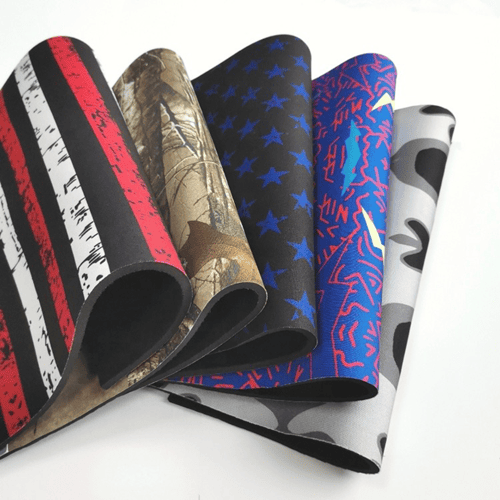
Neoprene fabric is a synthetic rubber–based composite material, most commonly produced from polychloroprene foam and laminated with textile facings such as nylon, polyester, or recycled fabrics. It is widely used in bags, protective equipment, sports accessories, medical supports, wetsuits, industrial insulation, and shock-absorbing products. While neoprene is often discussed as if it were a single standardized fabric, in reality it behaves more like a material system whose performance is determined by formulation, lamination, and process discipline.
For bulk buyers, supplier evaluation is not a procedural formality. It is a critical technical decision that directly influences yield rate, defect risk, durability, and brand reliability. Two neoprene fabrics with identical published specifications can perform very differently once they enter mass production. The difference lies almost entirely in supplier capability rather than nominal material specs.
Understanding why neoprene quality is supplier-dependent requires looking beyond surface appearance and into how the material is built and controlled.
Why Neoprene Quality Is Supplier-Dependent
Unlike woven or knitted textiles produced from yarn, neoprene fabric begins as a chemically foamed rubber sheet that is later bonded to fabric layers. This process introduces multiple variables that must remain stable over long production runs. Foam density, cell structure, curing time, adhesive chemistry, and lamination pressure all interact with each other.
Small deviations in any one of these parameters may not be visible in a sample yardage but can lead to serious problems when thousands of meters are cut, stitched, heat-pressed, or washed. This is why experienced buyers treat neoprene sourcing as a process audit exercise, not a simple material comparison.
Neoprene Is a Layered Structure, Not a Simple Fabric
A typical neoprene fabric used in bags or protective products consists of three functional layers, each with its own quality risks.
| Layer | Function | Risk if Poorly Controlled |
|---|---|---|
| Foam core | Cushioning, stretch, insulation | Weak tear resistance, compression collapse |
| Fabric facing | Tensile strength, appearance | Color bleeding, pilling, surface cracking |
| Lamination | Structural bonding | Delamination, edge separation |
The foam core determines elasticity, rebound, and tear strength. If foam cell size is uneven or density control is unstable, the material may stretch inconsistently or tear easily at stitch lines. This is a common cause of seam failure in bags and sports supports.
The fabric facing provides surface strength and visual consistency. Poor yarn quality, unstable dye systems, or insufficient pre-shrinking can lead to pilling, color migration, or distortion after washing or heat exposure.
The lamination layer is the most underestimated risk. Adhesive formulation and curing conditions must match both the foam and the fabric. Weak bonding may survive manual handling but fail during die cutting, sewing, or heat pressing, causing layers to peel apart.
Because neoprene performance depends on all three layers working together, supplier capability must be assessed holistically.
Why Small Sample Approval Is Not Enough
Many bulk buyers approve neoprene based on limited criteria such as hand feel, thickness, and visual appearance. While these checks are necessary, they are not sufficient for large-scale production.
Small samples are typically cut from the middle of a production roll, where foam density and lamination conditions are most stable. Bulk production, however, exposes edge zones, roll-to-roll transitions, and batch variation. This is where weaknesses appear.
Common issues that emerge only at scale include density drift across rolls, inconsistent lamination pressure, and uneven foam curing. These problems manifest during cutting and stitching, not during initial inspection.
Experienced buyers therefore evaluate process repeatability, including how suppliers control foam expansion ratios, monitor lamination bond strength, and manage batch consistency. Without this discipline, passing samples provide a false sense of security.
Common Bulk-Order Failures Tied to Poor Supplier Selection
The following problems are frequently reported in bulk neoprene orders sourced from inadequately vetted suppliers.
| Issue | When It Appears | Root Cause |
|---|---|---|
| Tearing at seams | During stitching | Low foam cohesion, oversized cell structure |
| Delamination | After heat pressing or aging | Weak adhesive bonding |
| Color fading | After washing or UV exposure | Poor dye fixation in fabric facing |
| Thickness variation | During cutting | Inconsistent foaming control |
These failures are rarely visible in pre-production samples. They become costly only when materials are already committed to production, labor, and delivery schedules.
For example, thickness variation as small as ±0.3 mm can cause die-cut misalignment, uneven stitching tension, or zipper installation failures. Once cutting has started, material loss accelerates quickly.
Why Experienced Buyers Vet Suppliers, Not Just Specifications
Two neoprene suppliers may offer the same nominal specifications: identical thickness, density, stretch ratio, and color code. Yet only one may be capable of repeating those parameters consistently over multiple batches.
This difference comes down to process control maturity. Reliable suppliers document foam formulation tolerances, monitor lamination peel strength, and maintain stable production environments. Less experienced suppliers often rely on manual adjustment and operator experience, which introduces variability.
Supplier evaluation protects more than material quality. It safeguards production yield, delivery timelines, and downstream brand risk. Inconsistent neoprene can force last-minute rework, cause shipment delays, or lead to customer complaints after products reach the market.
For brands selling bags, sports accessories, or medical supports, these failures damage credibility far more than any short-term cost savings can justify.
A Real Sourcing Lesson from Neoprene Buyers
A common scenario among bulk neoprene buyers involves switching suppliers to save 5–8% per meter. On paper, the decision appears rational. In practice, the outcome is often very different.
Buyers frequently report material losses of 10–15% during cutting due to tearing, delamination, or thickness instability. Additional labor is required to adjust machines, reinforce seams, or replace failed components. Production schedules slip as quality teams attempt to isolate defects.
When all costs are accounted for, the lower-priced supplier often results in a higher total landed cost. More importantly, missed delivery windows and inconsistent product quality erode long-term customer trust.
This is why seasoned buyers view supplier quality as a cost control strategy, not a premium expense. Paying slightly more per meter for stable, repeatable neoprene often reduces total production cost and operational risk.
What Bulk Buyers Should Evaluate Beyond Price
Effective supplier evaluation focuses on capability rather than promises. Buyers should examine whether suppliers can demonstrate consistent foam density control, documented lamination testing, and repeatable color performance across batches.
Process transparency matters. Suppliers who can explain how they control variation, not just what specifications they claim to meet, are better long-term partners. Testing data such as peel strength, tear resistance, compression set, and colorfastness under heat provides far more insight than thickness or weight alone.
Bulk buying magnifies every weakness in a material system. Neoprene, by its nature, rewards suppliers with disciplined processes and penalizes those without them.
Why Supplier Evaluation Is Critical for Long-Term Neoprene Programs
Neoprene is not a commodity fabric that can be swapped casually. Its performance depends on chemistry, machinery, and human expertise working together. For buyers planning ongoing production rather than one-off orders, supplier evaluation determines whether neoprene remains a competitive advantage or becomes a recurring problem.
When suppliers are chosen based on repeatability and process control, neoprene delivers consistent cushioning, durability, and appearance across large volumes. When chosen solely on price or samples, it introduces hidden costs that surface only after production begins.
In bulk buying, the question is not whether a supplier can produce acceptable neoprene once. It is whether they can produce it the same way every time. That distinction defines the difference between stable supply and ongoing quality risk.
Which Key Specifications (Tear Strength, Thickness, Stretch) Should You Compare in Neoprene Fabric?
When evaluating neoprene fabric suppliers, many buyers are drawn to surface-level descriptions such as “premium,” “high elasticity,” or “industrial grade.” In real manufacturing environments, however, these labels offer little value. What determines whether neoprene performs reliably in cutting, sewing, lamination, and long-term use is not how it is described, but how it behaves under measurable stress.
The most critical neoprene fabric specifications to compare are tear strength consistency, thickness tolerance, stretch and recovery behavior, and foam density stability. These parameters directly affect production efficiency, defect rates, and product lifespan. A roll of neoprene that looks identical to another can behave very differently once it enters mass production. This is why experienced manufacturers prioritize technical data long before negotiating price.
Price only becomes meaningful after these specifications are verified and stable. Cheaper neoprene with poor consistency often results in higher waste, slower production, and customer complaints—costs that rarely appear on an initial quotation.
The Specs That Separate Reliable Suppliers from Risky Ones
A reliable neoprene supplier is defined less by marketing claims and more by how well they control variability. Neoprene is a foamed rubber material, which means it is inherently sensitive to formulation, foaming conditions, curing time, and lamination processes. Small deviations can produce large performance differences across a production run.
The following specifications are the practical checkpoints used by factories, engineers, and experienced sourcing teams to distinguish dependable suppliers from those who rely on appearance rather than performance.
Tear Strength: The First Real Stress Test
Tear strength is often the first specification to reveal whether neoprene is suitable for production. It measures how resistant the material is to propagation of a tear once it has started. In real-world manufacturing, tears do not usually begin in the middle of a panel—they start at cut edges, needle holes, corners, and stress concentration zones.
Low tear strength neoprene may pass a visual inspection but fail once exposed to mechanical stress during sewing or assembly. This leads to thread pull-out, seam failure, and rejection during quality control.
| Tear Strength Level | Real-World Outcome |
|---|---|
| Low | Tearing during sewing |
| Medium | Acceptable for light use |
| High | Stable in bulk production |
From a production standpoint, high tear strength improves cutting yield, reduces damage during handling, and allows higher sewing speeds without frequent breakage. For products such as neoprene bags, sleeves, protective covers, and sports gear, consistent tear strength is essential for maintaining structural integrity over time.
A critical point many buyers overlook is consistency. Tear strength should not vary significantly between rolls, batches, or even across the width of a single roll. Reputable suppliers test tear strength according to standardized methods (such as ASTM or equivalent internal protocols) and can provide actual test data rather than approximate ranges.
If a supplier cannot explain how tear strength is tested, how often samples are taken, or what the acceptable deviation range is, the risk of production instability increases sharply.
Thickness Tolerance Matters More Than Thickness Itself
Neoprene is commonly specified by nominal thickness—2 mm, 3 mm, 5 mm, and so on. While thickness is important, thickness tolerance is far more critical in real manufacturing conditions.
Thickness tolerance refers to how much variation exists between the stated thickness and the actual measured thickness across the material. Even small deviations can create compounding problems in cutting, bonding, and final assembly.
| Thickness Tolerance | Impact |
|---|---|
| ±0.3 mm | Cutting & bonding issues |
| ±0.2 mm | Acceptable |
| ±0.1 mm | Preferred |
Wide thickness tolerance often leads to uneven seams, poor edge alignment, and inconsistent compression during lamination. In laminated neoprene fabrics, thickness variation can cause adhesive failure, surface wrinkling, or visible distortion after bonding. In sewn products, it affects stitch balance and seam appearance.
For high-volume production, consistent thickness improves automation compatibility. CNC cutting machines, die cutting, and automated laminators all rely on predictable material dimensions. Suppliers that control thickness within ±0.1 mm generally invest in tighter foam calibration, controlled curing conditions, and stricter inspection protocols.
Buyers should also be aware that thickness variation can exist within the same roll, not just between rolls. Reliable suppliers routinely measure thickness at multiple points across width and length, not just at the roll edge.
Stretch and Recovery Define Performance
Neoprene is valued for its elasticity, but stretch alone is not sufficient. What truly defines performance is stretch combined with recovery. Stretch without proper recovery leads to permanent deformation, sagging, and loss of fit over time.
Stretch behavior affects comfort, pattern accuracy, and dimensional stability, particularly in wearable or fitted products.
| Property | Why It Matters |
|---|---|
| Elongation | Comfort & flexibility |
| Recovery rate | Shape retention |
| Directional stretch | Pattern accuracy |
Elongation measures how much the material can stretch under load, while recovery rate measures how well it returns to its original dimensions after that load is removed. Poor recovery results in products that look worn or misshapen after limited use.
Directional stretch is another critical factor. Neoprene often behaves differently along warp and weft directions due to foam structure and fabric lamination. Reliable suppliers test stretch in both directions, providing data that helps manufacturers design patterns correctly and avoid distortion during assembly.
For products such as laptop sleeves, braces, bottle holders, or protective gear, predictable stretch behavior ensures consistent fit and performance across production batches. Uncontrolled stretch variability, on the other hand, leads to sizing complaints and higher return rates.
Foam Density: The Hidden Performance Driver
Foam density is one of the least visible yet most influential neoprene specifications. Density affects weight, cushioning performance, insulation, and tear resistance. It also has a direct impact on cost and perceived quality.
| Density Level | Typical Use |
|---|---|
| Low | Soft accessories |
| Medium | Bags & sleeves |
| High | Protective gear |
Low-density foam feels soft and lightweight but often sacrifices durability and tear resistance. Medium-density foam balances cushioning and strength, making it suitable for most bags and sleeves. High-density foam provides superior protection and shape retention but increases weight and material cost.
What matters most is density consistency. Density variation within a single roll or between batches is a major red flag. It results in uneven product weight, inconsistent cushioning, and unpredictable performance in end use.
Professional suppliers monitor foam density during production using controlled formulations and sampling across foam blocks before lamination. If density control is weak, no amount of surface finishing can compensate for the underlying instability.
How These Specifications Affect Real Production Outcomes
Each of these specifications—tear strength, thickness tolerance, stretch behavior, and foam density—interacts with the others. A material with excellent stretch but poor tear strength will fail at seams. A material with perfect thickness but unstable density may pass inspection but disappoint in long-term use.
From a factory perspective, unstable neoprene increases:
- Scrap rates during cutting
- Sewing time due to breakage or adjustments
- Quality inspection failures
- Customer complaints and warranty issues
These costs accumulate quietly and often exceed any initial savings gained from a lower material price.
A Buyer’s Rule of Thumb
When sourcing neoprene fabric, a simple rule applies:
If a supplier cannot clearly explain
- how tear strength is tested and controlled,
- how thickness tolerance is monitored across rolls, and
- how foam density consistency is ensured,
then they are selling appearance, not performance.
Reliable neoprene suppliers treat these specifications as core production metrics, not optional data points. They understand that long-term partnerships depend on predictable material behavior, not just attractive samples. For buyers focused on scalable, repeatable production, technical transparency is the strongest indicator of supplier reliability.
How Do MOQ Requirements Influence Your Choice of Neoprene Fabric Supplier?
MOQ is often treated as a simple commercial threshold, but in neoprene sourcing it functions as a technical and operational signal. It reveals how a supplier controls formulation, how stable their production process is, and how much risk a buyer absorbs during development and scale-up. In practice, MOQ directly affects sampling accuracy, cost exposure, color and thickness consistency, and your ability to move from pilot orders to mass production without surprises.
For neoprene fabrics, the “right” MOQ is rarely the lowest number on a quotation sheet. A low MOQ without process discipline increases technical risk. A high MOQ without flexibility restricts innovation and slows product launches. The most reliable suppliers design structured MOQ tiers that allow controlled testing at low volume while preserving consistency at higher output levels.
Understanding MOQ beyond “minimum order”
In mature neoprene supply chains, MOQ is better understood as a process boundary rather than a sales condition. It reflects how much material must be produced before a foaming line, lamination setup, or curing cycle becomes stable enough to meet specification.
Buyers who focus only on hitting the minimum often overlook critical questions:
- Is the foam formulation identical to bulk production?
- Is the lamination line fully stabilized or still adjusting?
- Are density, thickness, and color measured statistically or visually?
A supplier who explains MOQ in terms of process stability, yield loss, and setup cost is usually more reliable than one who treats MOQ as a negotiable number without context.
Why neoprene MOQs are usually higher than woven fabrics
Neoprene differs fundamentally from woven or knitted textiles. It is a synthetic foam material produced through continuous chemical and thermal processes, not yarn-based weaving. This makes setup and stabilization far more complex.
Neoprene production typically involves:
- Foam formulation and blowing agent control
- Continuous foaming and curing
- Surface lamination with fabric facings
- Post-curing, aging, and inspection
Each change in thickness, density, color, or facing fabric often requires a dedicated setup window.
| Process Step | Why MOQ Exists |
|---|---|
| Foaming | Batch-based density control and gas expansion stability |
| Lamination | Adhesive chemistry, pressure, and temperature setup |
| Dyeing / printing | Color consistency and penetration control |
Because of this, suppliers offering extremely low MOQs without explaining which parameters remain fixed are often compromising consistency. Common shortcuts include using leftover foam, mixing density grades, or skipping stabilization runs, which leads to problems later in bulk production.
Typical MOQ ranges by supplier type
MOQ levels vary significantly depending on how integrated and disciplined a supplier is.
| Supplier Type | Typical MOQ | Risk Level |
|---|---|---|
| Trading-based | 1–2 rolls | High inconsistency |
| Small workshop | 100–300 meters | Medium |
| Established factory | 300–1000 meters | Low |
| Integrated manufacturer | Flexible tiers | Lowest |
Trading-based suppliers can quote very low MOQs because they are reselling surplus material or splitting bulk lots. This can work for short-term testing, but it introduces risks such as:
- Unrepeatable density or elasticity
- Inconsistent lamination strength
- No traceability for future orders
Established factories and integrated manufacturers typically define MOQ in tiers, allowing development quantities while maintaining control over core parameters.
Why MOQ tiers matter more than absolute numbers
From a buyer’s perspective, a tiered MOQ structure is often more valuable than a single low figure. For example:
- 50–100 meters for lab testing using bulk formulation
- 300–500 meters for pilot production
- 1,000+ meters for full-scale production
This structure allows you to validate performance without locking into excessive inventory, while ensuring that every stage reflects the same underlying process.
Suppliers who cannot explain how a 100-meter trial relates technically to a 5,000-meter order are unlikely to deliver consistent results.
How leading buyers evaluate MOQ offers
Experienced neoprene buyers treat MOQ discussions as a technical audit, not a negotiation exercise. They ask questions that reveal whether the supplier understands scale-up risk.
Common evaluation questions include:
- Is the MOQ defined per color or shared across colors?
- Is the MOQ per thickness or per density grade?
- Can stock colors or stock facings reduce MOQ?
- Are sampling runs produced using bulk foam formulations?
| MOQ Question | Why It Matters |
|---|---|
| Per color? | Controls color deviation risk during scaling |
| Per thickness? | Ensures pattern fit and compression accuracy |
| Stock vs custom? | Affects cost, speed, and repeatability |
Clear, data-backed answers usually indicate a mature supplier with internal process control rather than outsourced or ad-hoc production.
Low MOQ is useful only with data
Low MOQ has real value, but only when it is paired with documentation and traceability. Without data, a low MOQ sample can create false confidence.
Meaningful low-MOQ programs typically include:
- Density tolerance ranges (for example ±5%)
- Thickness tolerance after lamination (for example ±0.2 mm)
- Tensile and tear strength test reports
- Compression set and rebound data
- Confirmation that bulk production will use the same formulation
If a supplier cannot provide these, low MOQ samples often behave differently from bulk material, leading to costly redesigns or rejected shipments.
Sampling versus production reality
One of the most common sourcing failures occurs when buyers approve neoprene samples based on small trial quantities and assume bulk production will behave the same.
In real projects, buyers often test neoprene at 50–100 meters, approve it, and then scale to several thousand meters. Problems appear when:
- Foam density drifts due to different line speeds
- Color tone shifts slightly after full stabilization
- Tear strength drops because curing time changes
These issues are not accidental. They are usually the result of different production conditions between sampling and bulk.
A real sourcing scenario
A typical scenario seen in neoprene sourcing involves a buyer approving a 100-meter sample for a sports support product. The sample performs well in lab tests and initial wear trials. When production scales to 5,000 meters, the finished goods show:
- Reduced edge tear resistance
- Slight thickness loss after lamination
- Visible color inconsistency across batches
The root cause is often that the sample was produced using a temporary formulation or mixed foam stock, while bulk production used a different setup.
Suppliers with strong process discipline avoid this by locking foam formulation, curing time, and lamination parameters from the very first sample. In such cases, MOQ becomes a planning tool rather than a risk factor.
How MOQ affects development cost and speed
MOQ has a direct impact on how efficiently a product moves from concept to market.
Lower, well-structured MOQs allow:
- Faster iteration during prototyping
- Parallel testing of multiple thicknesses or facings
- Reduced inventory exposure during early stages
However, artificially low MOQs often increase hidden costs later through:
- Re-testing
- Design adjustments
- Delayed launches
Higher MOQs can reduce unit cost but may force buyers to commit before validation, which is especially risky for new product lines.
Strategic use of stock neoprene to manage MOQ
One practical approach used by experienced buyers is leveraging stock neoprene programs. Stock materials typically include:
- Standard thicknesses (such as 2 mm, 3 mm, 5 mm)
- Common colors (black, navy, gray)
- Proven fabric facings
Using stock neoprene reduces MOQ because the supplier does not need to reset the entire line. Once performance is validated, custom formulations or colors can be introduced at higher volumes.
Suppliers who offer this pathway demonstrate an understanding of buyer development cycles rather than focusing solely on production efficiency.
What MOQ tells you about supplier maturity
Ultimately, MOQ is a diagnostic indicator. It reflects how a supplier balances flexibility with control.
A reliable neoprene supplier typically shows:
- Clear explanation of why MOQ exists
- Defined sampling and scale-up pathways
- Willingness to share process parameters
- Consistent relationship between sample and bulk
Conversely, suppliers who treat MOQ as purely commercial often lack internal controls, even if their pricing appears attractive.
Practical takeaway for buyers
When selecting a neoprene fabric supplier, MOQ should never be evaluated in isolation. It should be assessed together with:
- Process transparency
- Testing documentation
- Scale-up consistency
- Communication clarity
The best suppliers do not promise the lowest MOQ. They offer predictable outcomes across volumes. For buyers, that predictability is usually worth more than a marginal reduction in minimum order quantity.
In neoprene sourcing, MOQ is not just a barrier to entry. It is a window into how the supplier operates, how they manage risk, and whether they can support your product from first sample to full-scale production without compromising performance.
What Tests and Standards Determine Neoprene Fabric Colorfastness in Bulk Orders?
Colorfastness problems in neoprene rarely appear at the sampling stage. In most bulk orders, issues surface after prolonged heat exposure, repeated friction, compression, or washing, often once finished products are already in the market. At that point, discoloration, dye transfer, or fading quickly turn into customer complaints, returns, and brand damage.
Unlike woven or knitted textiles, neoprene is a rubber-based composite material. Its color performance is influenced not only by dyes or pigments, but also by lamination temperature, adhesive chemistry, fabric facings, and post-processing conditions. As a result, colorfastness in neoprene must be evaluated through a combination of tests that reflect real production and usage environments, not just laboratory color swatches.
For bulk orders—especially dark-colored, printed, or laminated neoprene—buyers should treat colorfastness testing as a risk-control system, not a box-ticking exercise.
Why Neoprene Colorfastness Requires a Different Evaluation Logic
Neoprene behaves fundamentally differently from traditional fabrics. Understanding this difference is essential before discussing test standards.
Neoprene Is Rubber-Based, Not Fiber-Based
In woven fabrics, color is primarily held within fibers through dye–fiber bonding. In neoprene, color stability depends on a multi-layer structure, typically including:
- Outer fabric facing (nylon, polyester, or recycled knit)
- Adhesive bonding layer
- Neoprene foam core
- Optional inner lining or laminated backing
Each layer introduces potential instability. Colorfastness failures often occur not because of poor dyeing alone, but due to interactions between heat, pressure, and adhesive migration during lamination or later use.
Common compound risk points include:
- Heat-induced dye migration from fabric into foam
- Adhesive yellowing or bleeding under dark colors
- Surface color transfer caused by incomplete curing
- Color change after compression or stretching
This layered structure explains why neoprene that looks stable in a lab dip can fail after mass production.
Color Performance Must Be Proven Under Real Conditions
A common mistake in bulk neoprene sourcing is relying on visual approval or one-time lab dips. These only confirm initial color appearance, not durability.
Proper colorfastness evaluation must reflect:
- Lamination temperatures (often 130–160°C)
- Repeated flexing and abrasion
- Moisture, sweat, and detergent exposure
- Prolonged heat storage and transportation
Without simulating these conditions, colorfastness results offer little predictive value for bulk orders.
Key Colorfastness Tests Buyers Should Request
For neoprene, colorfastness should be evaluated through a combination of mechanical, chemical, and thermal tests. Each test targets a specific failure mode.
| Test Type | What It Reveals |
|---|---|
| Wash fastness | Dye fixation stability |
| Dry rubbing | Surface dye release |
| Wet rubbing | Sweat & moisture impact |
| Light fastness | UV exposure resistance |
| Heat resistance | Lamination & pressing risk |
Each of these tests addresses a different real-world scenario. Omitting even one creates blind spots, particularly in export or premium markets.
Wash Fastness: Resistance to Repeated Cleaning
Wash fastness evaluates how well color withstands laundering, soaking, or exposure to mild detergents. For neoprene products such as bags, braces, wetsuits, or bottle holders, washing may be infrequent—but when it happens, failure is highly visible.
Key factors influencing wash fastness include:
- Dye type used on the fabric facing
- Degree of dye fixation before lamination
- Residual chemicals trapped during bonding
Poor wash fastness often results in color bleeding, dulling, or staining of adjacent materials. For bulk orders, this risk multiplies rapidly.
Rubbing Fastness: The Most Common Complaint Trigger
Rubbing fastness is one of the most critical and most underestimated tests in neoprene sourcing.
- Dry rubbing simulates friction against clothing, skin, or packaging.
- Wet rubbing simulates sweat, rain, or condensation combined with friction.
Dark neoprene colors—black, navy, burgundy—are particularly vulnerable. Inadequate rubbing fastness leads to visible color transfer, which customers often interpret as poor quality regardless of overall product performance.
Light Fastness: UV and Display Stability
Light fastness measures resistance to fading under UV exposure. While neoprene products are not always used outdoors, many are:
- Displayed near windows
- Used in sports and marine environments
- Stored or transported under strong light
Insufficient light fastness causes uneven fading, making products look old or inconsistent within the same batch.
Heat Resistance: The Most Critical and Most Ignored Test
Heat resistance testing is especially important for neoprene because heat is involved twice:
- During lamination and printing
- During real-world use (sun exposure, car interiors, pressing)
Heat testing reveals whether color migrates, darkens, yellows, or transfers under elevated temperatures. Skipping this test is one of the most common causes of large-scale bulk failures.
Acceptable Benchmarks for Bulk Neoprene Orders
While exact standards may vary by market, experienced buyers typically use the following benchmarks as minimum acceptable levels for bulk neoprene production.
| Test Item | Recommended Level |
|---|---|
| Wash fastness | Grade 4 |
| Dry rubbing | Grade 4 |
| Wet rubbing | Grade 3–4 |
| Light fastness | Grade 4 |
| Heat resistance | No color transfer |
Results below these levels frequently lead to customer complaints, particularly in export markets or premium product categories.
Printed and Laminated Neoprene: Higher Risk, Higher Control Requirements
Printing and lamination significantly increase colorfastness risk. Each additional process introduces heat, pressure, and surface modification.
Printing commonly introduces:
- Ink adhesion challenges
- Additional curing or pressing heat
- Increased surface abrasion during use
| Application | Risk Level |
|---|---|
| Solid dyed fabric | Low |
| Heat transfer print | Medium |
| Sublimation | Medium–high |
| Screen printing | High if poorly cured |
Screen printing, in particular, requires precise curing control. Under-cured ink leads to rubbing failure; over-curing can cause color darkening or fabric damage.
Why Process Control Matters More Than Test Reports
A frequent sourcing mistake is assuming that a single test report guarantees bulk consistency. In reality, colorfastness in neoprene is highly process-dependent.
Critical control points include:
- Lamination temperature stability
- Adhesive formulation compatibility
- Cooling and curing time after bonding
- Storage conditions before cutting and sewing
Suppliers with strong technical capability adjust these parameters based on color, application, and order volume, not through fixed settings.
A Buyer’s Warning Sign
Buyers should be cautious if a supplier relies solely on:
- Visual color samples
- One-time lab dips
- Pre-lamination test reports only
- No post-lamination or post-print testing
These signals suggest the supplier is not prepared to take responsibility for bulk risk, particularly for dark, printed, or export-grade neoprene.
Operational Insight: How Experienced Manufacturers Reduce Colorfastness Risk
Experienced neoprene manufacturers treat colorfastness as a system-level quality attribute, not a final inspection item. They test fabrics:
- Before lamination
- After lamination
- After printing or finishing
- Under simulated storage and transport heat
This layered testing approach significantly reduces late-stage surprises and protects both factory margins and brand reputation.
For brands placing bulk neoprene orders, understanding how production practices, testing standards, and process control interact is the difference between stable long-term supply and repeated quality disputes. Colorfastness is not about passing one test—it is about ensuring color stability survives the full production and usage lifecycle.
How Do Lead Time and Production Capacity Affect Supplier Reliability for Neoprene Fabric?
In neoprene sourcing, lead time is often misunderstood as a simple measure of speed. In reality, it is one of the most accurate indicators of supplier discipline, process control, and risk management. Production capacity plays a similar role. High capacity alone does not guarantee reliability; in many cases, it increases risk if it is not matched with formulation control, skilled labor, and structured scheduling.
For bulk neoprene buyers, especially those moving from sampling to mass production or managing repeat programs, lead time and capacity directly affect batch consistency, delivery accuracy, and defect rates. A supplier’s ability to quote fast is far less important than their ability to deliver the same material quality on time, order after order.
Fast quotes do not equal fast production, and fast production does not equal reliable production.
What Lead Time Really Reveals About a Neoprene Supplier
Neoprene is not produced in a single step. It is the result of multiple interdependent processes, each with its own technical constraints. Lead time reflects whether a supplier respects these constraints or attempts to compress them to win orders.
When a supplier provides a realistic lead time, it usually means they understand:
- How long foam formulation needs to stabilize
- Why curing time cannot be shortened without consequences
- How lamination schedules must align with thickness and color
- Where quality inspections must occur to prevent downstream failures
On the other hand, aggressive lead time promises often indicate that steps will be rushed, overlapped, or partially skipped. These shortcuts rarely show up in samples but become visible once production stress increases.
Typical Neoprene Production Lead Time Breakdown
A standard neoprene production cycle involves the following stages:
| Stage | Normal Time Range |
|---|---|
| Raw material prep | 3–5 days |
| Foaming & curing | 5–7 days |
| Lamination | 5–7 days |
| Finishing & inspection | 3–5 days |
| Packing & release | 2–3 days |
Under normal operating conditions, a realistic bulk lead time is 20–30 days. This window allows each stage to complete without compressing curing cycles or bypassing inspections. Suppliers promising significantly shorter timelines often rely on one of three tactics: using pre-existing foam not matched to the order, overlapping curing and lamination before stabilization, or reducing inspection depth.
Each tactic increases risk, particularly for bulk orders where material must withstand cutting, stitching, heat pressing, and repeated handling.
Why Shortened Lead Times Increase Quality Risk
Neoprene foam chemistry requires time to stabilize after foaming. If curing is rushed, internal cell structure may appear normal initially but degrade under stress. This leads to tearing at seams, compression collapse, or uneven stretch during use.
Similarly, lamination requires controlled pressure and dwell time to achieve consistent peel strength. When lamination is rushed to meet aggressive schedules, bonding may hold during inspection but fail later during production or end use.
Lead time, therefore, is not just a logistical metric. It is a technical signal. Suppliers who respect process timing tend to deliver more stable neoprene, even if they are not the fastest.
Production Capacity Without Control Is a Risk Multiplier
Many neoprene suppliers advertise large production capacity as a competitive advantage. While capacity is important for scaling, it becomes a liability when it is not supported by strong process control.
High-capacity operations often run multiple thicknesses, colors, and fabric facings simultaneously. Without strict separation and sequencing, this leads to cross-variation in foam density, color shade, and lamination strength.
Common capacity-related claims and their associated risks include:
| Capacity Claim | Real Risk |
|---|---|
| “Unlimited output” | Density drift between batches |
| “Any color, any time” | Shade inconsistency and color bleeding |
| “Rush orders always OK” | Insufficient curing and unstable foam |
True reliability comes from controlled throughput, not maximum output. Reliable suppliers deliberately limit how much variation they introduce into a single production window.
How Reliable Suppliers Structure Their Capacity
Experienced neoprene suppliers do not run all orders together. Instead, they design production schedules that reduce variation and protect consistency.
Reliable suppliers typically:
- Lock foam formulation parameters for each order
- Group production by thickness and density ranges
- Schedule colors in logical sequences to avoid contamination
- Separate custom orders from stock or leftover runs
This approach may reduce theoretical capacity utilization, but it dramatically improves repeatability.
How Reliable Suppliers Schedule Neoprene Orders
Scheduling discipline is one of the clearest differences between stable suppliers and unreliable ones. Well-managed factories treat scheduling as a quality control tool, not just a logistics function.
| Scheduling Practice | Result |
|---|---|
| Block production by spec | Consistent density and stretch |
| Batch isolation | Reduced defect spread |
| Clear cut-off dates | Predictable delivery timelines |
By contrast, chaotic scheduling introduces variation. Mixing different thicknesses in the same foaming window increases density fluctuation. Switching colors too frequently raises the risk of shade variation. Combining rush orders with standard production often forces operators to skip stabilization steps.
From a buyer’s perspective, predictable scheduling is far more valuable than nominal speed.
Lead Time Stability Matters More Than Lead Time Length
One of the most overlooked aspects of lead time is stability. A supplier who consistently delivers in 25 days is more reliable than one who alternates between 15 days and 40 days depending on workload.
Stable lead times allow buyers to:
- Plan cutting and sewing schedules
- Allocate labor efficiently
- Commit to customer delivery dates with confidence
Unstable lead times, even when occasionally fast, create downstream disruption. Production lines sit idle or become overloaded, and inventory buffers increase to compensate for uncertainty.
Suppliers with disciplined capacity planning rarely offer the shortest lead times, but they offer the most predictable ones.
Red Flags in Lead-Time Communication
Lead time reliability is often revealed not by the quoted number, but by how suppliers communicate around it. Buyers should be cautious if a supplier:
- Changes lead time after receiving a deposit
- Cannot clearly explain the production sequence
- Avoids written confirmation of delivery dates
- Uses vague language such as “should be OK” or “usually faster”
Transparent suppliers can explain where time is spent and why certain steps cannot be compressed. They are also willing to commit lead times in writing because they understand their own constraints.
In neoprene sourcing, unclear lead-time communication often precedes quality issues.
Capacity Stress During Repeat Orders
Repeat orders are where capacity and lead-time discipline are truly tested. Initial orders may receive extra attention, while follow-up orders are pushed into tighter schedules.
Suppliers without structured capacity planning often struggle to reproduce the same quality under repeat pressure. Foam formulation may drift, lamination operators may change, and inspection standards may loosen to meet deadlines.
Reliable suppliers treat repeat orders as process repetitions, not new experiments. They retain formulation records, replicate scheduling blocks, and maintain inspection protocols regardless of order urgency.
For buyers planning long-term neoprene programs, this capability is far more important than one-time speed.
A Real Buyer Experience from Neoprene Sourcing
Many neoprene buyers report a similar pattern. Suppliers who promise the fastest delivery are often the first to:
- Delay shipments when production issues arise
- Request last-minute specification adjustments
- Attribute problems to “material issues” beyond their control
In contrast, suppliers who propose realistic timelines tend to deliver with fewer surprises. They may push back on rush requests, but when they commit, they perform consistently.
This behavior reflects internal discipline rather than attitude. Suppliers who understand their capacity limits protect both their own process and the buyer’s production schedule.
Why Lead Time Is a Reliability Indicator, Not a Sales Feature
In neoprene sourcing, lead time is not a marketing advantage. It is a diagnostic signal. Short, aggressive lead times often indicate compressed processes, while realistic timelines suggest controlled production.
Capacity works the same way. High capacity without process structure amplifies variation, while moderate, well-managed capacity supports consistency and repeatability.
For bulk buyers, the most reliable suppliers are not those who move fastest, but those who move predictably. They understand that neoprene performance depends on chemistry, time, and discipline, not just machines running at full speed.
When evaluating neoprene suppliers, buyers should ask not “How fast can you deliver?” but “How consistently can you deliver the same material under pressure?” The answer to that question determines whether lead time becomes a competitive advantage or a recurring risk.
What Quality Assurance Processes Should Top Neoprene Fabric Suppliers Follow?

In neoprene manufacturing, quality assurance is often misunderstood as a final checkpoint—an inspection performed just before shipment to decide whether goods pass or fail. In reality, effective quality assurance in neoprene is a continuous process discipline, embedded into every stage of production, from polymer selection to final roll packing. Suppliers who rely on end-of-line inspection alone are not controlling quality; they are merely detecting problems after cost and risk have already accumulated.
Top neoprene fabric suppliers implement multi-stage quality assurance systems designed to ensure consistency across bulk production. These systems focus on controlling variability in raw materials, foam density, lamination bonding, thickness stability, and visual appearance. Because neoprene is a foamed material with laminated surfaces, even small deviations early in production can lead to significant downstream failures. This is why a single inspection point is never sufficient.
For buyers producing neoprene bags, sleeves, protective equipment, or technical accessories, robust QA processes directly determine cutting efficiency, sewing stability, and long-term product durability. Understanding what real quality assurance looks like helps distinguish suppliers who can support scale from those who only deliver acceptable samples.
What Real QA Looks Like in Neoprene Production
True quality assurance in neoprene is preventive rather than reactive. Instead of asking whether the finished fabric meets minimum specifications, top suppliers design QA systems to prevent defects from occurring in the first place. This requires stage-based controls, objective testing data, and traceability mechanisms that allow issues to be isolated quickly.
Neoprene production involves multiple transformation steps—each introducing potential variability. Polymer formulation affects foam behavior, foaming conditions affect density and cell structure, lamination affects bonding strength, and finishing affects thickness and surface quality. QA must therefore be aligned with this process complexity.
Stage-Based QA Is Essential
Reliable suppliers structure their QA around clearly defined production stages. Each stage has specific risk factors and corresponding control points.
| Production Stage | QA Focus |
|---|---|
| Raw materials | Polymer consistency |
| Foaming | Density & cell structure |
| Lamination | Bond strength |
| Finishing | Thickness & surface |
| Packing | Roll integrity |
At the raw material stage, QA focuses on polymer consistency and formulation control. Neoprene foam performance begins with the base polymer and additives used during compounding. Variations in polymer viscosity, filler ratio, or curing agents can alter foam expansion, elasticity, and tear resistance. Top suppliers verify incoming materials against internal benchmarks rather than relying solely on supplier certificates.
During foaming, density and cell structure become the primary concerns. Foam density affects weight, cushioning, insulation, and tear resistance. Cell structure uniformity influences compressibility and long-term recovery. Reliable suppliers monitor foam expansion parameters, curing temperature, and dwell time, performing density checks on foam blocks before lamination. Skipping this stage allows density variation to propagate through the entire production run.
Lamination introduces another critical risk point. Neoprene is commonly laminated with fabrics such as nylon, polyester, or recycled textiles. QA at this stage focuses on peel strength and bonding uniformity. Inadequate adhesive application, uneven pressure, or incorrect curing can cause partial delamination that may not be immediately visible but will fail during cutting or sewing.
At the finishing stage, thickness tolerance and surface quality are verified. Finishing processes—such as surface smoothing, trimming, or additional coatings—can alter thickness or introduce surface defects. Tight thickness control ensures compatibility with cutting dies and automated equipment, while surface inspection ensures consistent appearance.
Finally, packing QA ensures roll integrity. Improper winding tension, inaccurate roll length, or edge damage during packing can compromise usability in the customer’s factory, even if the material itself meets specifications.
Skipping QA at any of these stages increases downstream risk, often shifting problems to the customer rather than resolving them at the source.
Key QA Tests Used by Reliable Suppliers
Beyond stage-based controls, top neoprene suppliers rely on quantitative testing rather than subjective judgment. These tests provide measurable data that can be tracked over time to identify trends and prevent drift.
| Test | Purpose |
|---|---|
| Density check | Cushion & strength |
| Thickness tolerance | Cutting accuracy |
| Tear strength | Stitch durability |
| Peel strength | Lamination integrity |
| Colorfastness | Appearance stability |
Density checks verify that foam density remains within a defined range. This directly affects weight consistency and protective performance. Reliable suppliers perform density testing on foam blocks and laminated fabric, not just once per batch but at defined intervals.
Thickness tolerance testing ensures that actual thickness aligns with nominal specifications across the width and length of the roll. This is critical for cutting accuracy, seam alignment, and lamination reliability. Suppliers targeting stable production typically aim for tight tolerances and document deviations.
Tear strength testing evaluates how the neoprene resists tear propagation under stress. This is especially important for sewn products where needle holes and cut edges create stress points. Consistent tear strength reduces sewing defects and improves finished product durability.
Peel strength testing measures lamination bond integrity. Weak or inconsistent bonding can lead to fabric separation during cutting, stitching, or use. Reliable suppliers test peel strength systematically rather than assuming adhesive performance.
Colorfastness testing confirms that dyes or surface colors remain stable under exposure to water, friction, and light. While often considered cosmetic, color stability affects brand perception and return rates, particularly in consumer-facing products.
Crucially, top suppliers provide test records, not just pass/fail statements. These records allow buyers to assess consistency over time and correlate material behavior with production outcomes.
Batch Traceability Protects Both Sides
Traceability is a defining feature of mature QA systems. In neoprene production, traceability enables problems to be isolated to specific batches rather than entire shipments.
Good suppliers clearly label:
- Foam batch
- Lamination run
- Inspection date
This information links finished rolls back to specific production conditions. When an issue arises, traceability allows faster root-cause analysis and targeted corrective action.
From the buyer’s perspective, traceability reduces risk. Instead of rejecting an entire shipment due to a localized defect, buyers can identify affected rolls and request partial replacement. From the supplier’s perspective, traceability prevents blanket claims and supports fair resolution of disputes.
Without traceability, accountability becomes vague, and both sides incur unnecessary cost and tension.
Final Inspection Is Not Optional
While QA must begin upstream, final inspection remains essential. It serves as the last opportunity to verify that cumulative process controls have produced consistent output.
Final inspection typically includes:
- Visual defect detection
- Edge quality assessment
- Roll length accuracy verification
| Defect | Impact |
|---|---|
| Surface bubbles | Cosmetic & structural |
| Delamination spots | Product failure |
| Thickness drift | Assembly issues |
Surface bubbles may appear cosmetic but often indicate trapped air or bonding inconsistency that can weaken the material. Delamination spots pose a high risk of product failure, especially in sewn or bonded assemblies. Thickness drift can disrupt cutting patterns and cause assembly misalignment.
Top suppliers inspect every roll, not random samples. Random sampling may be acceptable for homogeneous materials, but neoprene’s process sensitivity makes full inspection a more reliable approach for maintaining consistency.
How QA Affects the Customer’s Factory
The true measure of a supplier’s QA system is not how neat the inspection reports look, but how the material behaves in the customer’s production environment. Stable QA reduces variability, which in turn improves cutting efficiency, sewing speed, and yield rates.
Poor QA shifts risk downstream. Problems that are inexpensive to correct during foaming or lamination become costly when discovered during cutting or assembly. At that stage, labor, time, and scheduling disruptions amplify the impact.
Experienced buyers understand that QA quality directly influences:
- Scrap rates
- Production speed
- Rework frequency
- Finished product consistency
Suppliers who internalize this perspective design QA systems with the customer’s factory in mind, not just their own.
QA Mindset Difference
The most important distinction between average and top neoprene suppliers lies in mindset.
Average suppliers ask:
“Does this meet the minimum?”
Top suppliers ask:
“Will this behave the same in the customer’s factory?”
This difference shapes every QA decision—from how frequently tests are run to how deviations are handled. Minimum compliance focuses on avoiding rejection. Performance-focused QA prioritizes repeatability, predictability, and long-term partnership.
For buyers sourcing neoprene fabric at scale, understanding this mindset difference is essential. Quality assurance is not just about preventing defects; it is about building confidence that every roll will perform consistently under real production conditions. That confidence is what enables stable supply chains and lasting supplier relationships.
How Do Pricing Structures and Volume Discounts Work in Neoprene Fabric Bulk Purchasing?
Neoprene pricing often appears simple at first glance: a price per meter, a thickness specification, and a quoted MOQ. In reality, bulk neoprene pricing is shaped by process discipline, technical risk allocation, and long-term production stability. Two suppliers may quote the same thickness and surface fabric, yet deliver very different total costs once waste, rework, and inconsistency are accounted for.
In neoprene fabric sourcing, pricing is not linear. The lowest price per meter rarely represents the lowest cost per usable product. Professional buyers therefore evaluate neoprene pricing through a wider lens, considering how formulation control, quality assurance, and volume stability interact with unit price.
Neoprene fabric pricing in bulk depends on thickness, foam density, fabric facing, color complexity, testing requirements, and order repeatability. Volume discounts exist, but they are meaningful only when production parameters are locked and risk is reduced for both sides.
What actually drives neoprene pricing
Unlike woven fabrics, neoprene is a chemically engineered foam material. Every adjustment in specification alters the production environment. Pricing reflects not just raw material input, but the cost of maintaining stability throughout foaming, lamination, curing, and inspection.
Buyers who focus only on thickness or surface appearance often underestimate how sensitive neoprene cost structures are to small technical changes.
Core cost components in neoprene fabric
| Cost Element | Why It Matters |
|---|---|
| Polymer formulation | Determines density, elasticity, aging performance |
| Thickness | Directly affects material consumption and yield |
| Fabric facing | Impacts dyeing cost, abrasion resistance, and bonding |
| Lamination process | Influences delamination risk and scrap rate |
| QA & testing | Reduces failure risk in downstream production |
Each of these elements contributes to cost differently. Some costs scale linearly with volume, while others are front-loaded during setup and stabilization.
For example, polymer formulation cost is driven by rubber content, fillers, and blowing agents. Higher-density or higher-strength neoprene requires more expensive formulations, but it often reduces compression set and extends product lifespan, lowering long-term cost.
Fabric facing cost varies widely depending on fiber type, dye method, and weave or knit structure. A nylon jersey with tight color tolerance and high abrasion resistance can cost significantly more than a basic polyester facing, even if thickness remains unchanged.
Why thicker neoprene is not always more expensive
A common assumption in neoprene sourcing is that thicker material always costs more. While material consumption does increase with thickness, precision and yield loss play an equally important role.
| Thickness | Cost Behavior |
|---|---|
| 2–3 mm | Higher precision cost |
| 4–5 mm | Balanced |
| 6+ mm | Higher material cost |
Thin neoprene requires tighter tolerance control. At 2–3 mm, even minor density or lamination variations can push material out of specification. This increases:
- Setup time
- Inspection frequency
- Scrap and rework rates
As a result, thin neoprene often carries a higher cost per usable meter than mid-range thicknesses. In contrast, 4–5 mm neoprene sits in a processing “sweet spot,” where foaming stability, lamination strength, and yield are easier to control.
Very thick neoprene (6 mm and above) increases cost primarily through raw material usage and longer curing times. However, scrap rates may be lower than thin neoprene because tolerance windows are wider.
How fabric facing choices affect price
Fabric facing is one of the most underestimated cost drivers in neoprene pricing. The same foam laminated with different facings can vary significantly in price.
Key factors include:
- Fiber type (nylon, polyester, recycled fibers)
- Dye method (solution-dyed vs piece-dyed)
- Surface weight and knit density
- Abrasion and colorfastness requirements
For example, a solution-dyed nylon facing may increase material cost, but it improves UV stability and reduces color variation across batches. This can lower rejection rates in finished goods, particularly for outdoor or sports applications.
From a bulk purchasing perspective, facing consistency is often more important than facing cost alone.
Understanding volume discounts realistically
Volume discounts in neoprene sourcing are real, but they are conditional, not automatic. Suppliers offer discounts when higher volume reduces their operational risk and improves line efficiency.
| Order Volume | Typical Discount Range |
|---|---|
| 300–500 m | Base price |
| 1,000–3,000 m | 3–6% |
| 5,000–10,000 m | 6–10% |
| Repeat contracts | Negotiated |
These discounts are typically unlocked when:
- Specifications remain unchanged
- Colors are repeated rather than custom-developed
- Delivery schedules are predictable
- QA requirements are clearly defined
If every order introduces new thicknesses, colors, or facings, suppliers cannot amortize setup costs, and discounts remain limited even at higher volumes.
Why repeatability matters more than one-time volume
Suppliers value repeatability more than one-off large orders. A buyer committing to regular orders of 2,000 meters per quarter often receives better long-term pricing than a single 10,000-meter order with uncertain follow-up.
Repeatable orders allow suppliers to:
- Lock foam formulations
- Standardize lamination parameters
- Reduce setup waste
- Plan raw material purchasing more efficiently
This stability lowers total production cost, which is where meaningful discounts come from.
Hidden costs buyers often miss
Focusing solely on unit price can obscure downstream costs that erode savings.
| Hidden Cost | Where It Appears |
|---|---|
| Cutting waste | Thickness and density variation |
| Rework | Poor lamination or bonding failure |
| Delays | QA failures and re-testing |
| Returns | Color inconsistency or spec deviation |
For example, thickness variation of ±0.3 mm may seem acceptable on paper, but it can cause pattern misalignment, seam stress, or compression failure in finished products. The cost of re-cutting or rejecting finished goods often exceeds the savings gained from a lower material price.
Similarly, weak lamination increases the risk of delamination during stitching or heat exposure, leading to rework or customer complaints.
Pricing versus risk allocation
Neoprene pricing is ultimately a reflection of who carries the risk.
A low-priced supplier may transfer risk to the buyer through:
- Looser tolerances
- Limited testing
- Inconsistent batches
A higher-priced supplier may absorb risk by:
- Running stabilization batches
- Performing full mechanical testing
- Holding tighter internal tolerances
From a total cost perspective, paying slightly more per meter often reduces overall risk and improves delivery reliability.
Testing and QA as part of pricing
Professional neoprene suppliers embed testing costs into pricing rather than treating them as optional extras. These tests may include:
- Density and thickness measurement
- Tensile and tear strength
- Compression set
- Peel strength of lamination
While testing adds cost, it also reduces variability and protects both buyer and supplier during scale-up.
Buyers who request lower prices by removing QA steps often experience higher failure rates later in production.
A pricing mindset shift for professional buyers
Experienced buyers evaluate neoprene pricing using a different question set. Instead of asking only about unit price, they focus on usability and stability.
Professional buyers evaluate:
“What is the cost per usable meter?”
Not:
“What is the cheapest roll?”
This mindset accounts for:
- Yield after cutting
- Rejection rates
- Consistency across shipments
- Performance in finished goods
When these factors are included, the supplier with the lowest quote often becomes the most expensive option.
Strategic takeaway
Neoprene bulk pricing is not a commodity equation. It is a balance between material cost, process control, and risk management. Volume discounts are meaningful only when suppliers can rely on stable specifications and predictable demand.
For buyers, the goal is not to chase the lowest price, but to secure consistent, repeatable material performance at scale. When pricing is evaluated alongside waste, rework, and delivery risk, a slightly higher unit price often delivers a lower total cost and a far more reliable supply chain.
In neoprene sourcing, smart pricing decisions are less about negotiation and more about understanding how volume, stability, and process discipline shape real cost outcomes.
What Are the Best Practices for Auditing and Shortlisting Neoprene Fabric Suppliers?
Auditing neoprene fabric suppliers is often misunderstood as a paperwork exercise—checking certificates, browsing factory photos, or reviewing a few test reports. In reality, effective supplier auditing is about process visibility, technical accountability, and long-term reliability. Most serious quality disputes in neoprene projects do not originate from bad intentions, but from insufficient upfront verification of how a supplier actually works.
Neoprene is a complex, rubber-based composite material. Its quality is influenced by foam formulation, density control, lamination temperature, adhesive systems, fabric facings, and post-processing conditions. Because of this complexity, selecting the wrong supplier can lead to problems that only appear after bulk production or even after products reach end users. A disciplined audit and shortlisting process significantly reduces these risks.
Experienced buyers do not rely on certifications alone. They combine technical audits, sample-to-bulk verification, process transparency, and communication assessment to determine whether a supplier can consistently support bulk orders over time.
Why Auditing Matters More for Neoprene Than for Conventional Fabrics
Neoprene supply chains differ from woven or knitted textile supply chains in one critical way: many quality risks are invisible at the surface level. Two suppliers may offer neoprene that looks identical in samples but behaves very differently in bulk production.
Common hidden risks include:
- Inconsistent foam density between batches
- Thickness variation caused by poor calender control
- Adhesive instability during lamination
- Weak tear strength due to improper curing
- Color or performance drift over long production runs
An audit is the only reliable way to uncover how a supplier manages these variables. Without it, buyers are effectively relying on trust rather than evidence.
How Experienced Buyers Audit Neoprene Suppliers
Professional buyers follow a structured, step-by-step approach. Each step filters out suppliers that may appear capable on paper but lack the operational discipline required for bulk production.
Step 1: Technical Capability Check
The first stage of any neoprene supplier audit focuses on technical understanding and control, not marketing language. Buyers should ask direct, practical questions that reveal whether the supplier truly understands neoprene production.
Key questions include:
- Can you control foam density consistently across different thicknesses?
- What methods do you use to test and record tear strength?
- How is thickness tolerance monitored during production?
- How do you handle variation between different lamination lines?
Strong suppliers answer with specific methods, numbers, and control points. For example, they may reference density ranges, internal testing frequency, or acceptable tolerance limits. Weak suppliers tend to give vague assurances such as “we follow standard procedures” or “our quality is stable,” without explaining how stability is achieved.
In neoprene sourcing, vague answers are not neutral—they are red flags.
Step 2: Process Transparency
Once technical capability is established, the next step is assessing process transparency. Transparency reflects whether a supplier is confident in its systems and willing to be accountable.
Reliable suppliers can clearly explain:
- The full production sequence, from foam mixing to lamination and inspection
- Where quality checks occur and what parameters are measured
- How defects are identified, recorded, and handled
- What happens when results fall outside specification
Suppliers that hesitate to explain their process often lack standardized procedures or fear exposing weaknesses.
| Transparency Level | Risk |
|---|---|
| Full explanation | Low |
| Partial | Medium |
| Avoidance | High |
Transparency is not about revealing trade secrets. It is about demonstrating process maturity. Suppliers that operate systematically have nothing to hide and are usually better partners in long-term projects.
Step 3: Sample-to-Bulk Consistency Test
One of the most overlooked steps in supplier auditing is verifying sample-to-bulk consistency. Many neoprene quality issues arise because samples are produced under ideal conditions that are not replicated during mass production.
Experienced buyers compare:
- Sample rolls versus early bulk rolls
- Early bulk production versus late bulk production
- Different production days within the same order
Key parameters to compare include thickness, density, elasticity, surface feel, and lamination strength. Minor variation is normal, but unexplained drift is not.
If a supplier cannot explain why bulk material behaves differently from samples, it indicates weak process control. Consistency is a stronger indicator of reliability than any certificate.
Step 4: Communication Reliability
Communication quality is one of the most accurate predictors of future performance. Suppliers that communicate poorly during the audit phase almost always perform poorly during production.
Reliable neoprene suppliers typically:
- Respond clearly and within agreed timelines
- Confirm specifications and changes in writing
- Ask clarifying questions instead of making assumptions
- Proactively flag risks related to color, thickness, or processing
Poor communication often shows up as delayed responses, vague confirmations, or missing documentation. In bulk neoprene projects, this behavior often leads to misaligned expectations, delayed deliveries, and quality disputes.
Auditing communication is not subjective. Buyers should track response times, clarity of answers, and willingness to document agreements.
Step 5: Long-Term Fit, Not Short-Term Gain
The final step in shortlisting neoprene suppliers is evaluating long-term partnership potential. Neoprene projects tend to evolve. Thickness requirements change, colors are adjusted, new applications introduce new stresses.
Suppliers suitable for long-term cooperation typically:
- Accept third-party or customer audits
- Provide corrective action plans when issues arise
- Invest in process improvements rather than temporary fixes
- Prioritize repeat business over one-off orders
Transactional suppliers may offer attractive pricing initially but often struggle to maintain consistency at scale. When problems occur, they are more likely to shift responsibility rather than solve root causes.
Why Certifications Alone Are Not Enough
Certifications such as ISO or material test reports are useful, but they do not replace an audit. Certifications confirm that systems exist, not that they are applied consistently to your specific product.
For neoprene in particular, two certified suppliers can deliver dramatically different results due to differences in:
- Foam formulation discipline
- Operator training
- Equipment maintenance
- Production scheduling pressure
An audit connects certification claims with real operational behavior.
Common Mistakes Buyers Make During Supplier Audits
Even experienced buyers sometimes weaken their audits unintentionally. Common mistakes include:
- Accepting samples as proof of bulk capability
- Skipping visits to lamination or cutting areas
- Focusing only on price discussions
- Avoiding difficult technical questions to maintain goodwill
An effective audit is respectful but firm. It prioritizes clarity over comfort.
Operational Insight: What a Strong Audit Prevents
A thorough audit does more than select a supplier—it prevents predictable disputes. Many neoprene-related conflicts trace back to issues that would have been visible during a proper audit, such as unclear tolerance control or weak process documentation.
Suppliers with strong audit performance are easier to work with because:
- Specifications are understood and respected
- Quality issues are addressed systematically
- Communication remains consistent under pressure
- Responsibility is shared rather than avoided
For buyers placing repeat or high-volume neoprene orders, the audit process is not an overhead cost. It is a risk-reduction investment that protects timelines, margins, and brand reputation.
Auditing as a Strategic Advantage
Shortlisting neoprene fabric suppliers should never be rushed. The complexity of neoprene materials amplifies small weaknesses into large downstream problems. Buyers who adopt a disciplined audit approach—focused on technical capability, transparency, consistency, and communication—gain a decisive advantage.
A good audit does not just identify who can supply neoprene today. It identifies who can grow with your business tomorrow, adapt to new requirements, and take responsibility when challenges arise. In neoprene sourcing, that distinction determines whether a supplier becomes a long-term asset or a recurring liability.
Choosing the Right Neoprene Fabric Supplier
Bulk neoprene buying is not about finding the cheapest fabric. It’s about finding a supplier who understands how neoprene behaves when it’s cut, stitched, heated, and used over time.
The most reliable buyers evaluate:
- MOQ logic
- Tear strength consistency
- Colorfastness under real conditions
- QA discipline
- Delivery reliability
When these align, pricing becomes predictable — and production becomes stable.
If you are sourcing neoprene fabric for bags, protective gear, sports products, or technical applications, SzoneierFabrics offers custom neoprene development, low-MOQ sampling, strict quality control, fast lead times, and scalable bulk production.
Contact SzoneierFabrics today to request samples or a tailored quotation — and turn neoprene sourcing from risk into reliability.