Skip to content

Silk sheets have quietly become one of the most emotionally driven products in home textiles. People don’t just buy them for sleep—they buy them for comfort, skin care, hair protection, and a sense of everyday luxury. As demand grows, more retailers want silk sheets that don’t just feel premium, but look and speak like their own brand. That’s where custom branding enters the picture—and where minimum order quantities suddenly matter a lot more than most first-time buyers expect.
custom branding silk sheets means producing silk bedding with your own brand identity—labels, packaging, sizing standards, finishes—manufactured specifically for your retail concept. Minimum order quantities (MOQs) define the smallest production volume required to make this possible in a cost-effective and technically stable way.
MOQs are not arbitrary numbers. They exist because silk is a sensitive, high-value fabric, and branding adds layers of complexity to sourcing, weaving, dyeing, cutting, and finishing. Understanding how MOQs work—and how they can sometimes be adjusted—can be the difference between a smooth launch and an expensive misstep. Let’s start with what “custom branding” actually means in the world of silk sheets.
What Does Custom Branding Mean for Silk Sheets in Private Label Retail?
Custom branding for silk sheets in private label retail refers to manufacturing bedding products that fully represent a retailer’s identity—rather than selling factory-generic goods with minimal differentiation. It involves defining silk grade, momme weight, weave structure, dye standard, stitching details, label system, packaging design, and even the tactile experience of unboxing. In the silk bedding category, branding is not decorative; it shapes product positioning, price architecture, and consumer trust.
Unlike commodity bedding, silk sheets occupy a premium segment where fiber authenticity, fabric weight accuracy, and finishing consistency directly affect brand credibility. As a result, custom branding for silk bedding requires tighter technical control and clearer specification alignment between retailer and manufacturer.
Custom branding goes far beyond placing a logo on packaging. It is a structured product development process.
What Is Typically Customized in Branded Silk Sheets
Silk sheets in private label programs are customized across multiple technical and visual dimensions. Each variable influences both perceived luxury and production complexity.
| Branding Element | What It Includes |
|---|---|
| Fabric specification | Silk grade (6A vs lower), momme weight (19, 22, 25), weave type (charmeuse, satin) |
| Color & finish | Custom Pantone shades, gloss level, softening method |
| Labels | Woven brand labels, origin labels, care instructions |
| Packaging | Magnetic boxes, rigid cartons, tissue wraps, inserts |
| Size standards | US, EU, AU dimensions, deep-pocket customization |
Fabric specification is foundational. For example, a 19-momme silk sheet will feel lighter and cost less than a 22- or 25-momme alternative. Momme weight affects durability, drape, and long-term wear resistance. Retailers targeting luxury positioning typically select 22-momme or higher to justify premium pricing.
Color development is another critical customization point. Silk’s natural sheen amplifies shade variation. Achieving consistent dye depth across batches requires controlled temperature management and strict quality testing. Brands investing in custom dyeing often specify acceptable ΔE tolerance ranges to ensure shade consistency.
Labels and packaging reinforce perceived value. Luxury silk bedding brands frequently use woven labels stitched into seams rather than printed tags, enhancing authenticity and durability.
Each customization layer influences minimum order quantity, sampling cycle length, and lead time.
Why Silk Sheets Are Different From Other Bedding
Silk differs from cotton and polyester not only in cost but also in production sensitivity. The fiber structure of silk makes it more reactive to heat, moisture, and chemical exposure. Minor processing inconsistencies can result in:
- Uneven dye absorption
- Surface dullness
- Reduced tensile strength
- Shrinkage or seam distortion
| Material | Tolerance for Variation |
|---|---|
| Cotton | High |
| Polyester | Very high |
| Silk | Low |
Cotton tolerates moderate dye variance and mechanical handling. Polyester is highly stable under heat and tension. Silk, however, requires controlled conditions during weaving, dyeing, and finishing. This lower tolerance means private label silk programs demand more precise factory discipline.
Additionally, silk fiber pricing is inherently higher. Raw silk can cost several times more per kilogram than cotton. That difference magnifies the financial impact of defects, making strict quality control essential.
Branding as a Trust Signal in Luxury Bedding
In silk bedding, branding serves as a trust anchor. Consumers purchasing silk sheets often question authenticity—whether the product is real mulberry silk, blended silk, or synthetic satin marketed as silk.
Strong branding communicates:
- Verified silk grade
- Transparent momme specification
- Documented care instructions
- Consistent size accuracy
Luxury consumers expect durability, smooth hand feel, and structural integrity after washing. Unbranded silk sheets frequently lack documented specifications, increasing perceived risk.
Branded packaging also reinforces positioning. A structured magnetic box with printed care guidance communicates premium value, even before the fabric is touched. In this segment, presentation shapes perceived quality as strongly as textile composition.
The Relationship Between Branding and Pricing Power
Custom branding enables differentiation. Two silk sheet sets may share similar base materials yet retail at dramatically different price points due to specification and presentation decisions.
Consider this comparison:
- Set A: 19-momme silk, standard white box, minimal labeling
- Set B: 22-momme silk, reinforced seams, branded rigid packaging, care insert, accurate deep-pocket sizing
Although both originate from similar production environments, Set B can retail at 30–60% higher price due to:
- Higher fabric weight
- Clear momme disclosure
- Elevated packaging experience
- Improved dimensional accuracy
Branding transforms silk sheets from commodity textiles into positioned luxury goods.
Production Complexity and MOQ Implications
Customization increases operational complexity. Factories must:
- Source specified silk grades
- Conduct lab-dip approvals for custom colors
- Produce custom woven labels
- Print or assemble branded packaging components
- Adjust cutting patterns for regional size variations
These steps require coordination across multiple production stages. As complexity rises, factories often require higher minimum order quantities to justify setup costs.
For example:
- Generic silk sheets may be available at low MOQs.
- Fully customized 22-momme silk with custom packaging may require higher production volumes due to dye-batch consistency and packaging tooling costs.
Retailers entering private label silk programs should evaluate MOQ expectations during product planning rather than after sample approval.
Quality Control in Branded Silk Programs
Because silk tolerates little variation, private label programs typically include:
- Momme verification testing
- Tensile and seam strength testing
- Shrinkage assessment
- Colorfastness testing
These quality checks protect brand reputation. A mislabeled momme weight or inconsistent dye shade can damage credibility in luxury bedding markets.
Retailers serious about silk branding often request batch records and inspection documentation to ensure consistency across repeat orders.
Consumer Expectations in Modern Silk Retail
Silk bedding buyers are often informed customers. They compare:
- Momme weight
- Fiber grade (such as 6A long-strand mulberry silk)
- Thread count claims
- Care requirements
Brands that clearly communicate these details through packaging and inserts reduce uncertainty and strengthen consumer confidence.
In online retail, branding also influences visual perception. Structured packaging and consistent labeling improve conversion rates by signaling legitimacy.
A Practical Scenario
Two silk sheet listings may appear visually similar in product photography. However:
One product offers 19-momme silk, basic packaging, and minimal specification disclosure. Another offers 22-momme silk, reinforced seams, branded packaging, and detailed care instructions.
The second product often commands higher retail margins because the customer perceives greater value and lower purchase risk—even if manufacturing origin is comparable.
Strategic Positioning in Private Label Silk
Custom branding allows retailers to define:
- Target price tier
- Market segment (mid-premium vs luxury)
- Packaging investment level
- Sustainability narrative
Silk sheets positioned as luxury wellness products require stronger specification clarity and premium presentation than entry-level offerings.
The decision is not merely aesthetic—it defines sourcing strategy, cost structure, and production scale.
Custom branding transforms silk sheets from generic textile goods into differentiated brand experiences. It involves precise control over silk grade, momme weight, dye consistency, labeling, packaging, and sizing standards.
Because silk is more expensive and less tolerant of production variance than cotton or polyester, private label branding demands tighter manufacturing control and often higher MOQs. However, when executed properly, custom branding increases pricing power, consumer trust, and long-term brand value in the competitive luxury bedding market.
Why do minimum order quantities (MOQs) matter for custom branded silk sheets?

Minimum order quantities are not arbitrary barriers set by factories—they are structural safeguards built into silk production economics. When producing custom branded silk sheets, the process involves multiple fixed costs and controlled production stages that cannot be scaled down indefinitely without affecting consistency, cost efficiency, or quality stability.
In silk bedding, MOQ is less about volume pressure and more about risk management. It protects both the manufacturer and the retailer from instability in dye consistency, fabric hand feel, dimensional accuracy, and inspection control. When MOQs are set correctly, they create production balance. When they are pushed unrealistically low, quality variance increases—and silk, unlike cotton or polyester, is unforgiving.
MOQs protect both sides of the supply chain.
The Real Costs Hidden Behind Silk Sheet Production
Before the first sheet is cut or sewn, several fixed production activities occur. These costs exist whether the order is small or large.
| Production Stage | Fixed Cost Exists? |
|---|---|
| Yarn sourcing | Yes |
| Weaving setup | Yes |
| Dyeing calibration | Yes |
| Pattern & size setup | Yes |
| Label & packaging setup | Yes |
Yarn sourcing often requires purchasing silk in standardized reel quantities. Weaving setup involves loom calibration for width, density, and weave tension. Dyeing calibration requires laboratory dips and test runs to confirm shade consistency, especially for custom colors. Pattern cutting must be aligned to region-specific dimensions, such as US deep-pocket sizes versus EU standard fits. Custom woven labels and packaging tooling require separate production lines.
None of these processes disappear at low volume. MOQs ensure that these setup investments are distributed across enough units to maintain cost rationality.
Why Silk Amplifies MOQ Importance
Silk production magnifies the significance of MOQs because of the fiber’s sensitivity and higher rejection thresholds.
Silk is:
- More reactive to dye temperature variation
- More sensitive to finishing tension
- Less tolerant of inconsistent moisture control
- More expensive per kilogram than cotton or polyester
These characteristics increase both material risk and inspection intensity.
| Low MOQ Risk | Result |
|---|---|
| Small dye lots | Color mismatch across batches |
| Short runs | Inconsistent sheen or hand feel |
| Limited QC buffer | Higher defect percentage impact |
For example, dye lot variation is a common issue in silk. Small production runs may require multiple micro dye lots, increasing the likelihood of slight shade differences. In cotton, small variations are often visually masked. In silk, surface sheen amplifies differences.
Additionally, silk finishing often results in minor yield loss. During washing, softening, and pressing, some fabric may fail inspection due to surface irregularities or tension distortion. Larger production volumes allow for quality sorting without compromising order completion.
MOQs create a margin of control by stabilizing these variables.
Dye Lot Control and Shade Consistency
In custom branded silk programs, especially those using custom Pantone shades, dye lot management becomes critical. Each dye batch requires:
- Lab dip approval
- Temperature stabilization
- pH monitoring
- Time calibration
Small runs often cannot justify large, single dye lots. Instead, they may require multiple smaller batches, increasing the chance of variation.
Higher MOQs allow manufacturers to run unified dye lots, which improves:
- Shade consistency
- Surface sheen uniformity
- Batch-to-batch reproducibility
For luxury bedding brands, shade consistency is essential. Even slight differences between pillowcases and fitted sheets can lead to returns or negative reviews.
MOQ as a Quality Safeguard
From a manufacturing perspective, MOQ is not simply about revenue—it is about operational stability.
Lower MOQs often mean:
- Frequent changeovers between colors or specifications
- Reduced time for process optimization
- Limited production buffer for rework
- Greater exposure to variability
Higher MOQs allow:
- Stable dye cycles
- Continuous weaving flow
- Structured inspection checkpoints
- Reduced production stress
In silk production, consistent loom tension and finishing pressure directly influence drape and sheen. Interruptions and frequent adjustments increase variance.
MOQ supports production rhythm. Production rhythm supports consistency.
Inspection and Rejection Dynamics
Silk sheets typically undergo stricter inspection standards than cotton bedding due to price positioning. Common inspection points include:
- Momme weight verification
- Seam alignment and reinforcement
- Surface smoothness
- Dye penetration consistency
- Dimensional accuracy after finishing
When orders are too small, rejection of even a small percentage of units significantly affects overall yield. In larger runs, quality sorting can occur without jeopardizing total shipment volume.
Higher MOQs provide a statistical buffer, reducing risk of shipment delays caused by minor defect percentages.
Human-Centered Perspective for Emerging Retailers
For new private label brands, MOQs can appear intimidating. A startup entering silk bedding may wish to minimize inventory exposure. However, many early-stage failures in silk retail do not result from lack of demand—they result from inconsistent quality that damages consumer trust in the first production cycle.
Silk customers are often detail-oriented. They compare:
- Momme weight claims
- Shine and drape
- Stitching precision
- Packaging refinement
A first production run with inconsistent quality can generate negative feedback that is difficult to reverse.
Appropriate MOQ planning reduces that risk by allowing proper process control from the outset.
The Economic Balance
MOQ decisions should align with:
- Target retail price
- Market positioning (entry luxury vs premium)
- Planned sales volume
- Brand quality promise
A lower-priced 19-momme silk sheet program may operate at a moderate MOQ with standard packaging. A 22- or 25-momme premium silk sheet with custom packaging and woven labels will typically require higher MOQs due to higher raw material cost and more complex setup.
The goal is not to push MOQ as high as possible. It is to determine the volume that allows:
- Stable dye production
- Efficient fabric yield
- Controlled quality inspection
- Economically viable packaging tooling
This balance protects brand reputation and cost efficiency simultaneously.
Strategic Takeaway
In custom branded silk sheets, MOQ is a stabilizing mechanism rather than a limitation. Because silk is expensive and sensitive to variation, production below sustainable volume increases risk for both manufacturer and retailer.
Proper MOQ planning ensures:
- Consistent shade across sets
- Stable hand feel and sheen
- Reliable inspection control
- Predictable cost allocation
Successful private label silk brands understand early that the objective is not achieving the lowest possible MOQ. It is identifying the right MOQ that supports quality, price positioning, and long-term brand trust.
What are the typical MOQ ranges for private label silk sheet production?


Typical minimum order quantities (MOQs) for private label silk sheets generally fall between 100 and 1,000 sets per design, but the actual requirement depends on how much customization is involved. Silk bedding is not a one-variable product. Fabric weight, weave type, color development, size standards, branding elements, and packaging format all influence production planning.
There is no universal MOQ for silk sheets. What exists instead are practical production ranges shaped by material cost, dye lot control, packaging setup, and quality assurance requirements.
For retailers entering the silk category, understanding these ranges early helps avoid costly surprises during sampling or final negotiation.
Common MOQ Ranges by Customization Level
Customization depth is the primary factor affecting MOQ.
| Customization Level | Typical MOQ Range |
|---|---|
| Stock fabric, custom labels only | 100–200 sets |
| Custom color, stock fabric | 200–300 sets |
| Custom fabric spec & color | 300–500 sets |
| Full branding (fabric + packaging) | 500–1,000+ sets |
If you are using an existing 19- or 22-momme silk fabric already in stock and only adding woven labels or printed care tags, factories can often work with lower volumes. The fabric is already woven and dyed, so setup costs are minimal.
However, once you introduce custom dye shades, unique momme weights, reinforced seam specifications, or premium packaging formats, the production environment changes. Each additional customization step requires separate calibration, material planning, and inspection flow.
The more production variables you introduce, the more volume is needed to stabilize cost and consistency.
What “Per Design” Really Means
MOQs are typically calculated per color, per size, and per design configuration. This is one of the most misunderstood aspects of silk sheet sourcing.
| Variation Added | MOQ Impact |
|---|---|
| New color | Separate MOQ |
| New size standard | Separate MOQ |
| New packaging format | Often separate MOQ |
For example, if a factory states a 300-set MOQ and you plan to launch:
- 2 colors
- 2 sizes (Queen and King)
You are not ordering 300 sets total. You are likely committing to 300 sets per color-size combination, unless the factory allows internal allocation.
That means 300 × 2 colors × 2 sizes = 1,200 sets total.
Understanding how MOQs apply to variations is critical for inventory planning and cash flow forecasting.
Size Sets vs Individual Pieces
Factories may quote MOQs differently, which can create confusion.
Some quote per complete set (flat sheet + fitted sheet + pillowcases). Others quote per individual piece (for example, 600 pillowcases, 300 flat sheets, etc.).
| Quoting Method | Risk |
|---|---|
| Per set | Clear retail planning |
| Per piece | Can mask true production minimum |
If a supplier quotes 600 pieces MOQ, that may actually mean only 200 complete sets, depending on the configuration.
Always confirm:
- Is MOQ counted per full retail set?
- Or per individual item component?
- Are pillowcases counted separately?
Silk sheet programs require clarity here because fabric cutting and yield planning depend on set configuration.
Why Silk Sheet MOQs Are Higher Than Many Expect
Compared to cotton or polyester bedding, silk production involves tighter tolerances and higher raw material costs.
Silk weaving typically runs in smaller batches. The fiber itself is more expensive, which increases financial risk if fabric remains unsold. Dye lots require more careful calibration because silk sheen amplifies shade variation.
Additionally, silk cutting yield loss is higher.
| Fabric | Typical Yield Loss |
|---|---|
| Cotton | 3–5% |
| Polyester | 2–4% |
| Silk | 6–10% |
Higher yield loss means more buffer material must be planned to guarantee finished set quantities. Larger production runs allow factories to absorb this loss without compromising shipment fulfillment.
Silk also requires slower finishing and stricter inspection. Surface flaws that may pass in cotton bedding are often rejected in silk due to luxury positioning.
These structural realities explain why silk sheet MOQs tend to sit higher than many new retailers initially expect.
The Role of Momme Weight in MOQ
Momme weight directly affects MOQ planning.
- 19-momme silk is lighter and less expensive, often allowing lower MOQs.
- 22-momme or 25-momme silk requires higher raw material investment and tighter quality control, which often increases minimum volumes.
Premium momme weights are frequently woven to order rather than kept in stock, especially if custom dyed.
Packaging Complexity and MOQ Impact
Custom rigid boxes, magnetic closures, foil stamping, or embossed branding all introduce separate tooling costs. Packaging suppliers also operate with their own MOQs, which may exceed textile minimums.
For example:
- Standard polybag packaging may allow 200-set MOQ.
- Custom magnetic gift boxes may require 1,000-unit MOQ from the packaging supplier alone.
When calculating true launch volume, packaging MOQ must be considered alongside fabric MOQ.
Practical Launch Strategy for First-Time Silk Brands
Many successful private label silk launches begin with a simplified structure:
- One color
- One size (often Queen)
- One momme weight (commonly 22-momme)
- Standard packaging with branded labels
This approach consolidates MOQ into a single SKU, making production more stable and financially manageable.
After validating demand, brands expand into:
- Additional colors
- King and California King sizes
- Premium packaging upgrades
- Gift bundles or accessory additions
Phased rollout reduces inventory pressure while maintaining quality control.
Regional Size Standards and MOQ Planning
Different markets require different mattress depth standards. US deep-pocket sheets differ from European sizing. Each size pattern requires separate cutting calibration and potentially separate MOQ allocation.
If you plan to sell globally, consider launching regionally first to avoid splitting MOQ across incompatible dimensions.
Typical MOQs for private label silk sheet production range from 100 to 1,000 sets per design, depending on customization level. Stock fabric with simple branding sits at the lower end. Fully customized silk weight, dye color, labels, and packaging move toward higher minimums.
Silk’s sensitivity to dye variation, higher yield loss, and stricter inspection standards make MOQs an operational necessity rather than an arbitrary barrier.
For first-time launches, simplifying color and size structure helps keep MOQ manageable while preserving quality stability. As demand grows, expanding variation becomes financially safer and operationally smoother.
Which Factors Most Strongly Influence MOQ Requirements for Silk Sheets?
Minimum order quantity for silk sheets is not determined by a single number set by a factory. It is shaped by production variables that affect setup cost, dye stability, weaving efficiency, inspection workload, and packaging logistics. The more complex the product configuration, the higher the MOQ typically becomes.
Silk bedding operates under tighter tolerances than cotton or polyester. Every added customization—whether fabric weight, color, size, or packaging format—creates additional setup work and reduces production efficiency. When efficiency drops, minimum volume must increase to keep the project economically viable.
MOQs rise when complexity rises.
Understanding the real drivers behind MOQ requirements allows retailers to design their product line strategically instead of reacting to factory constraints after sampling.
The Five Biggest MOQ Drivers
| Factor | Impact on MOQ |
|---|---|
| Silk grade & momme | High |
| Color count | High |
| Size variation | Medium–High |
| Branding details | Medium |
| Packaging complexity | Medium |
Each of these variables introduces operational adjustments that affect production rhythm, yield rate, and material planning.
Fabric Specification: The Primary Driver
Fabric specification has the strongest influence on MOQ because it determines upstream sourcing and weaving planning.
Changing from:
- 19 momme to 22 or 25 momme
- Standard charmeuse weave to a specialty satin construction
- Pure mulberry silk to a silk blend
can significantly alter raw material procurement and loom setup requirements.
| Fabric Change | MOQ Effect |
|---|---|
| Higher momme | Increases MOQ |
| Special weave | Increases MOQ |
| Blended silk | May reduce MOQ |
Higher momme weights require more silk yarn per square meter, increasing material cost and financial exposure for the factory. Because raw silk is expensive, factories prefer larger production runs to stabilize procurement cost.
Special weaves require loom recalibration. Smaller runs increase downtime between setups, reducing efficiency. To compensate, factories set higher MOQs.
In some cases, silk blends may allow lower MOQs if blended yarn is already stocked. However, blends may also reduce luxury positioning, so the trade-off must align with brand strategy.
Color Count and Dye Lot Sensitivity
Color decisions significantly affect MOQ because silk is highly sensitive to dye variation. The fiber’s natural sheen amplifies even minor shade inconsistencies.
| Color Choice | Production Impact |
|---|---|
| White / ivory | Lower MOQ |
| Black / dark | Medium MOQ |
| Custom Pantone | Higher MOQ |
White or natural shades often require minimal dye calibration, making them operationally simpler. Dark colors such as black require careful dye penetration control but are commonly produced, allowing moderate MOQ levels.
Custom Pantone shades introduce lab-dip approval, temperature control testing, and sometimes multiple calibration rounds. These setup efforts only become cost-efficient when spread across sufficient volume.
Additionally, each color typically requires a separate dye lot. If a retailer launches four colors simultaneously, the MOQ may apply per color rather than across total units.
Color strategy alone can double or triple required production volume if not carefully planned.
Size Variation: Hidden Volume Multiplier
Silk sheet sizing varies by market. US, EU, and AU dimensions differ. Even within a single region, Queen, King, and California King have different cutting patterns.
Each size variation requires:
- Separate cutting templates
- Pattern grading adjustments
- Fabric allocation planning
Because silk cutting yield loss is higher than cotton—often 6–10% compared to 3–5% for cotton—factories require stable volume to absorb size-based inefficiencies.
Adding multiple sizes divides total production into smaller sub-runs. This reduces dye lot uniformity and increases cutting waste percentage. As a result, MOQ often applies per size rather than per overall design.
For early launches, limiting to one size significantly stabilizes MOQ requirements.
Branding Details and Label Systems
Branding elements may seem minor compared to fabric specification, but they still influence MOQ.
Custom woven labels require separate weaving runs. Printed care labels must be color-matched and batch-produced. Embroidered logos increase production time and inspection steps.
While branding typically has medium-level impact compared to fabric and color, it can become a bottleneck if custom elements require tooling.
For example:
- Heat-transfer logos may allow smaller MOQs.
- Custom jacquard woven labels may require higher production minimums.
Branding decisions should align with anticipated launch volume.
Packaging Complexity: The Hidden Driver
Packaging is often underestimated in MOQ planning. In reality, packaging suppliers operate independently from textile factories and may have their own minimum print quantities.
| Packaging Type | MOQ Impact |
|---|---|
| Generic box + sticker | Low |
| Custom printed carton | Medium |
| Luxury rigid magnetic box | High |
Luxury rigid boxes require:
- Custom cutting dies
- Foil stamping plates
- Dedicated assembly lines
These components often have minimum production requirements exceeding textile MOQ.
In some cases, packaging MOQ becomes the true constraint rather than fabric MOQ.
Retailers frequently focus on fabric negotiation while overlooking packaging commitments. This mismatch can lead to:
- Excess packaging inventory
- Delayed product launch
- Cash flow strain
Fabric Yield and Quality Control Buffer
Silk production includes higher rejection rates compared to synthetic bedding due to:
- Surface irregularities
- Minor dye streaking
- Seam misalignment sensitivity
Factories typically plan buffer percentages to guarantee final shipment quantity. Larger runs allow this buffer without cost escalation.
Smaller runs increase risk exposure. A few rejected sets in a small batch represent a larger percentage of total output, potentially affecting delivery schedules.
This statistical reality influences MOQ decisions more than most retailers realize.
Mindset Shift
Many retailers initially focus solely on fabric MOQ. In reality, silk sheet MOQ is the combined result of:
- Fabric weight and weave
- Color count
- Size variation
- Labeling system
- Packaging format
Ignoring any one of these can distort total production volume planning.
The true minimum viable production volume is the intersection of all these variables—not just the silk fabric requirement.
Smart Planning Strategy
To manage MOQ efficiently:
- Align fabric specification with target price tier.
- Limit initial color count to one or two shades.
- Start with one core size before expanding.
- Choose packaging that matches realistic launch volume.
Coordination between fabric MOQ and packaging MOQ prevents operational imbalance.
For first launches, simplifying structure creates stability. After validating demand, expanding color and size assortment becomes safer.
MOQ requirements for silk sheets are primarily driven by fabric specification, dye complexity, size variation, branding detail, and packaging structure. Each added variable reduces production efficiency and increases setup cost, requiring higher minimum volume to stabilize operations.
MOQs are not arbitrary—they are reflections of silk’s material sensitivity and production economics. Retailers who understand these drivers early can design smarter product strategies, control cost exposure, and launch private label silk collections with greater confidence and consistency.
How do fabric type, silk grade, and weave affect MOQ levels?

Fabric type, silk grade, and weave structure are the most powerful variables influencing minimum order quantity (MOQ) in private label silk sheet production. These three decisions determine upstream yarn sourcing, loom allocation, dye lot management, yield stability, inspection thresholds, and financial exposure for the manufacturer.
In silk bedding, fabric decisions are not cosmetic—they are structural. They directly affect cost sensitivity, production complexity, and rejection risk. The more specialized the silk specification, the higher the MOQ required to maintain production consistency and absorb operational variability.
In practical terms, fabric choice is the biggest MOQ lever in silk sheets.
Silk Grade and Sourcing Impact
Most premium silk bedding is made from mulberry silk, but even within mulberry silk, grading varies significantly. Grade reflects fiber length, uniformity, cleanliness, and overall spinning quality.
Higher-grade silk contains longer, more uniform filaments, which improves:
- Surface smoothness
- Sheen consistency
- Tensile stability
- Resistance to pilling
However, higher grades also narrow sourcing options and increase material cost sensitivity.
| Silk Grade | Characteristics | MOQ Impact |
|---|---|---|
| Standard mulberry | Clean, consistent | Medium |
| High-grade mulberry | Longer fibers, smoother surface | Higher |
| Specialty silk blends | Modified performance (elasticity, cost balance) | Often lower |
High-grade mulberry silk requires tighter supplier qualification. Because acceptable raw silk sources are fewer, manufacturers prefer larger production runs to justify procurement risk.
Specialty silk blends (for example, silk-cotton or silk-poly blends) may reduce MOQ pressure if blended yarn is already stocked or produced at scale. However, blends may compromise pure luxury positioning.
Retailers must align silk grade selection with intended price tier. Ultra-premium grade silk demands higher initial volume commitment.
Momme Weight: Density, Yield, and Financial Exposure
Momme (mm) measures the weight of silk per 100 yards of fabric at a fixed width. It directly influences durability, drape, and price positioning.
Heavier momme weights increase both material cost and production risk.
| Momme Weight | Market Position | MOQ Effect |
|---|---|---|
| 16–19 mm | Entry to mid-range | Lower |
| 22–25 mm | Premium | Medium–High |
| 30 mm+ | Ultra-luxury | High |
Heavier momme silk:
- Uses significantly more yarn per sheet
- Increases raw material investment
- Raises cutting loss cost per unit
- Magnifies rejection cost if defects occur
For example, a 25-momme silk sheet may use 20–30% more silk yarn than a 19-momme version. Because silk yarn pricing is high, small production runs create greater financial risk per batch.
Additionally, heavier silk often requires more controlled finishing and pressing to maintain smooth drape. These steps reduce production speed, which encourages factories to require larger MOQs for efficiency.
Ultra-heavy 30-momme silk is rarely produced in small quantities because weaving and dyeing such fabric demands careful calibration and longer loom occupancy.
Weave Structure and Loom Efficiency
Weave type significantly affects production rhythm and defect tolerance.
| Weave Type | Production Stability | MOQ |
|---|---|---|
| Charmeuse | High | Lower |
| Satin | Medium | Medium |
| Jacquard | Lower | High |
Charmeuse is the most common weave for silk sheets. It provides smooth face finish, fluid drape, and efficient weaving speed. Loom setup is standardized, making production more stable and allowing relatively lower MOQs compared to specialty constructions.
Satin variants introduce moderate complexity but remain manageable in mid-volume runs.
Jacquard or patterned weaves significantly increase MOQ because they require:
- Dedicated loom programming
- Longer setup time
- Slower weaving speeds
- Higher defect sensitivity
Pattern alignment errors or yarn tension inconsistencies are more visible in jacquard constructions. Reject thresholds become stricter, which increases production risk.
Factories offset that risk by requiring larger runs to stabilize yield.
Dye Behavior and Surface Reflection
Weave and momme weight also influence dye behavior. Heavier or more complex weaves may absorb dye differently across fabric sections, especially in high-sheen silk.
Custom Pantone colors applied to jacquard or heavy satin may require multiple lab dip calibrations before final approval. This increases setup time and makes small runs economically inefficient.
Simpler weaves such as 22-momme charmeuse allow more predictable dye penetration and faster approval cycles.
Cutting Efficiency and Yield Loss
Silk cutting yield loss is already higher than cotton or polyester. Fabric structure further influences cutting efficiency.
Heavier or complex woven fabrics may:
- Require slower cutting speeds
- Increase edge fraying risk
- Generate slightly higher scrap rates
When scrap percentage increases, small runs suffer proportionally greater financial impact. Larger MOQs help absorb cutting inefficiencies without raising unit cost excessively.
Inspection Standards and Grade Sensitivity
Higher silk grades and specialty weaves often carry stricter inspection standards. In premium positioning, minor visual imperfections may result in rejection.
In small runs, even a small number of rejected sets can jeopardize order fulfillment. In larger runs, sorting buffers protect delivery stability.
Thus, the more premium the fabric specification, the higher the recommended MOQ.
Why Simpler Fabric Choices Lower Risk
A 22-momme charmeuse silk sheet often outperforms a complex jacquard design in:
- Production stability
- Dye uniformity
- Visual consistency
- Delivery predictability
For new private label brands, simplicity supports reliability. Complex weave innovation can follow once market demand is proven.
Many successful brands launch with:
- 19–22 momme mulberry silk
- Standard charmeuse weave
- Limited color assortment
This strategy reduces MOQ pressure while maintaining luxury positioning.
Strategic Perspective for Retailers
Fabric specification decisions must balance:
- Target retail price
- Desired luxury positioning
- Initial inventory budget
- Production reliability
Choosing ultra-heavy momme or specialty weaves too early can inflate MOQ beyond practical launch capacity.
Conversely, starting with moderate-weight charmeuse silk allows manageable MOQ while preserving high-end perception.
Final Takeaway
Fabric type, silk grade, and weave structure are the dominant factors shaping MOQ levels in silk sheet production. Higher-grade silk, heavier momme weights, and complex weaves increase sourcing complexity, loom setup time, dye sensitivity, and rejection risk—driving minimum volumes upward.
Simpler, standardized constructions such as 19–22 momme charmeuse provide better stability and lower MOQ pressure, making them ideal for initial private label launches.
In silk bedding, fabric choice is not just a design decision—it is a volume commitment decision.
How Can Private Label Retailers Reduce MOQ When Launching Custom Silk Sheets?
Launching a private label silk sheet collection requires balancing ambition with operational discipline. Silk is a premium material with higher material cost, stricter quality control, and more sensitive dye behavior than cotton or polyester. For new retailers, high minimum order quantities (MOQs) can feel like a financial barrier. However, MOQ is not fixed—it is influenced by product design decisions.
Retailers can reduce MOQ by simplifying initial configurations, consolidating color and size options, leveraging shared fabric programs, and phasing branding elements strategically rather than introducing full customization at once.
Lower MOQ does not mean lowering standards. It means sequencing complexity intelligently.
Proven MOQ-Reduction Strategies
| Strategy | Why It Works |
|---|---|
| One color launch | Enables single dye lot control |
| One size focus | Simplifies cutting and yield planning |
| Stock fabric programs | Eliminates weaving minimums |
| Standard packaging | Avoids custom print volume requirements |
| Phased branding | Reduces upfront tooling and packaging cost |
Each of these decisions removes a layer of production variation. When variation decreases, production becomes more stable, allowing factories to accept lower order volumes.
Simplify Color Strategy
Color is one of the largest MOQ multipliers in silk bedding. Because silk amplifies shade variation due to its sheen, each color typically requires a separate dye lot.
Launching with:
- One core color (often white, ivory, champagne, or black)
- One consistent dye batch
dramatically reduces production complexity.
A single-color launch means:
- One dye calibration process
- One inspection flow
- One bulk production run
Retailers who launch with three or four colors simultaneously often triple their effective MOQ requirement.
Expanding color assortments can be phased in after validating demand.
Focus on One Size at Launch
Size variation splits production volume across cutting templates. Queen, King, and California King sheets require separate cutting planning and yield allocation.
For first launches, many successful brands focus on:
- One size (typically Queen, due to high demand volume)
This approach consolidates fabric allocation and stabilizes cutting efficiency.
Once sales volume supports expansion, additional sizes can be introduced without straining production planning.
Use Shared or Stock Silk Fabric Programs
One of the most effective MOQ-reduction tools is leveraging factory stock fabric programs.
Many silk bedding manufacturers maintain:
- Pre-woven 19- or 22-momme charmeuse
- Neutral base colors
- Standardized finishing treatments
| Approach | MOQ Result |
|---|---|
| Custom weaving | High MOQ |
| Stock fabric + custom cut | Lower MOQ |
Custom weaving requires dedicated loom setup and raw yarn sourcing, increasing minimum volume requirements.
Using stock silk fabric eliminates weaving setup cost. The factory only needs to handle cutting, sewing, labeling, and packaging, which significantly lowers entry threshold.
For new retailers, this is often the fastest and safest route to market.
Phase Branding Elements Strategically
Branding complexity often drives MOQ through packaging tooling and label production.
Instead of launching with:
- Custom magnetic rigid boxes
- Foil stamping
- Embossed inserts
- Fully customized packaging
consider phased development.
| Phase | Branding Level | MOQ |
|---|---|---|
| Phase 1 | Basic woven label + standard box | Low |
| Phase 2 | Custom printed carton + inserts | Medium |
| Phase 3 | Luxury rigid packaging + premium inserts | Higher |
Phased branding allows early revenue to fund later packaging upgrades.
Retail customers care most about fabric quality and authenticity during initial brand exposure. Premium packaging can follow once brand traction is established.
Control Fabric Specification
Fabric choice is the largest structural MOQ driver.
For launch-stage brands:
- 19–22 momme silk
- Standard charmeuse weave
- Limited color range
provides luxury perception without ultra-high production complexity.
Avoid starting with:
- 25–30 momme silk
- Jacquard or patterned weaves
- Multiple weave constructions
Complex weaves and heavy silk weights increase weaving cost sensitivity and rejection risk, pushing MOQs higher.
Align Packaging MOQ with Fabric MOQ
Packaging suppliers often have separate minimums, particularly for rigid boxes or printed cartons.
Retailers should confirm:
- Packaging MOQ matches fabric production MOQ
- Box supplier lead time aligns with textile timeline
If packaging MOQ exceeds fabric MOQ, excess packaging inventory becomes tied-up capital.
Using standard packaging initially reduces this mismatch.
MOQ vs Inventory Risk
Lower MOQ reduces:
- Initial capital exposure
- Warehouse storage cost
- Risk of unsold inventory
- Pressure to discount early
However, pushing MOQ too low can introduce:
- Higher per-unit cost
- Reduced dye lot stability
- Limited inspection buffer
- Production inconsistency
The objective is controlled entry, not minimum-at-all-costs.
Smart retailers accept a balanced MOQ that protects fabric quality and brand reputation while minimizing unnecessary inventory burden.
Cash Flow and Scaling Strategy
Launching with simplified configuration creates cleaner data for scaling decisions.
For example:
- Launch 300 Queen sets in one color.
- Evaluate sell-through rate over 60–90 days.
- Reorder same SKU to strengthen dye lot consistency.
- Introduce second color only after validated demand.
This measured growth protects brand credibility while gradually expanding assortment.
Real-World Mindset Shift
Retailers who succeed in silk bedding treat MOQ as a planning framework rather than a negotiation obstacle. MOQ reflects the operational stability required to produce high-quality silk sheets consistently.
Reducing MOQ is about eliminating unnecessary complexity during early stages—not about compromising on momme weight or authenticity.
By:
- Consolidating SKUs
- Using stock fabric programs
- Phasing branding
- Limiting initial size range
private label retailers can launch premium silk sheet collections at manageable volume levels.
The right MOQ protects quality, stabilizes production, and gives your brand space to grow sustainably.
What branding methods (labels, packaging, embroidery) impact silk sheet MOQs?


Branding decisions have a direct and sometimes underestimated impact on minimum order quantities in private label silk sheet production. While fabric specification often drives base MOQ, branding complexity frequently determines the true operational minimum.
Woven labels, printed care tags, custom packaging formats, and embroidery all introduce additional suppliers, tooling requirements, setup costs, and coordination steps. Each added element reduces flexibility and increases the volume needed to maintain cost efficiency.
In silk sheets, branding complexity often sets the real minimum—not the fabric itself.
How Different Branding Elements Affect MOQ
| Branding Method | MOQ Impact | Why |
|---|---|---|
| Woven main label | Low | Small loom production, flexible runs |
| Printed care label | Low | Digital or semi-automatic printing |
| Custom hangtag | Medium | Offset print minimums |
| Embroidery on sheets | Medium–High | Setup + slower production cycle |
| Custom rigid box | High | Print volume + die-cut minimums |
A fully branded silk sheet collection may involve coordination across three to five suppliers:
- Textile factory
- Label supplier
- Packaging manufacturer
- Printing house
- Embroidery workshop
Each partner introduces its own MOQ structure.
Labels: The Easiest Place to Start
Labels are typically the lowest-risk branding component in silk bedding.
| Label Type | MOQ Characteristics |
|---|---|
| Woven logo label | 500–1,000 pcs |
| Satin printed care label | 1,000 pcs |
| Heat-transfer label | 300–500 pcs |
Woven labels are produced on narrow looms and can often be stocked for future production runs. Once produced, they can be used across multiple orders, reducing pressure on textile volume.
Printed care labels are also relatively flexible, especially when digital printing is used.
Because label production is separate from silk weaving, it does not significantly increase fabric MOQ. This makes labels an ideal starting point for branding during early-stage launches.
Packaging: The Most Underestimated MOQ Driver
Packaging often becomes the unexpected constraint in silk sheet programs. Many new retailers focus on fabric negotiation while overlooking packaging supplier minimums.
| Packaging Type | Typical MOQ |
|---|---|
| Generic box + sticker | 100–200 |
| Printed folding carton | 500–1,000 |
| Luxury rigid magnetic box | 1,000–3,000 |
Luxury rigid boxes require:
- Custom cutting dies
- Foil stamping plates
- Embossing molds
- Manual assembly lines
These elements typically require larger production runs to amortize tooling cost.
It is not uncommon for packaging MOQ to exceed textile MOQ. In such cases, brands may face a choice between:
- Overproducing packaging
- Delaying launch
- Downgrading packaging format
Aligning packaging MOQ with realistic launch volume is essential.
Embroidery: A Luxury Signal with Production Trade-Offs
Embroidery on silk sheets creates a premium aesthetic but introduces technical challenges.
Silk is delicate and requires stabilization during embroidery to prevent:
- Puckering
- Thread tension distortion
- Surface damage
Embroidery slows production speed and increases inspection scrutiny. Each embroidered placement requires setup calibration.
| Branding Choice | Risk Level |
|---|---|
| Woven label only | Low |
| Label + custom box | Medium |
| Embroidery + luxury box | High |
Because embroidery increases rejection risk and production time, factories often require higher MOQs to justify setup cost.
Additionally, embroidery threads must be color-matched and stocked, which introduces additional material planning complexity.
For first-time silk sheet launches, embroidery is rarely necessary. Most luxury positioning in silk bedding is driven by fabric quality and momme weight rather than decorative stitching.
Hangtags and Inserts
Custom hangtags and printed inserts fall between labels and packaging in MOQ impact.
Offset-printed hangtags often require 500–1,000 unit runs due to printing plate setup. Specialty finishes such as foil stamping or textured paper may increase minimums further.
Printed care booklets or brand story inserts also require separate print runs. However, these items can be produced in advance and stocked, reducing pressure on textile production volume.
Supplier Coordination and Timing
Every added branding element increases coordination complexity:
- Label production lead time
- Packaging print approval
- Embroidery sampling
- Textile production schedule
If one component lags, the entire launch timeline shifts.
This operational reality is why branding decisions influence MOQ—higher complexity requires greater volume to justify synchronization effort.
Strategic Launch Approach
Experienced private label retailers often structure silk sheet launches in phases.
Phase 1:
- Woven main label
- Printed care tag
- Elegant but simple folding box
Phase 2:
- Custom printed carton
- Branded inserts
Phase 3:
- Luxury rigid box
- Optional embroidery
This sequencing allows revenue to fund branding upgrades rather than requiring full investment upfront.
Luxury in silk bedding is communicated primarily through:
- Momme weight
- Fabric smoothness
- Seam precision
- Dimensional accuracy
Decorative complexity is secondary.
Branding vs Fabric Quality
Retailers sometimes over-invest in packaging while under-investing in silk grade. This can create imbalance where presentation exceeds product substance.
In premium silk bedding, fabric authenticity drives repeat purchase. Branding should reinforce quality—not compensate for its absence.
Branding methods such as labels, packaging, and embroidery directly impact MOQ because they introduce tooling costs, additional suppliers, and coordination complexity.
Labels generally have low MOQ impact and are the safest starting point. Packaging—especially rigid luxury formats—often sets higher minimums than fabric itself. Embroidery adds production risk and typically requires larger runs.
For early-stage launches, simplifying branding while prioritizing silk quality allows retailers to maintain manageable MOQs without compromising luxury perception.
In silk sheets, branding supports the experience—but fabric quality defines it.
How should retailers balance MOQ, cost, quality, and branding strategy for long-term growth?

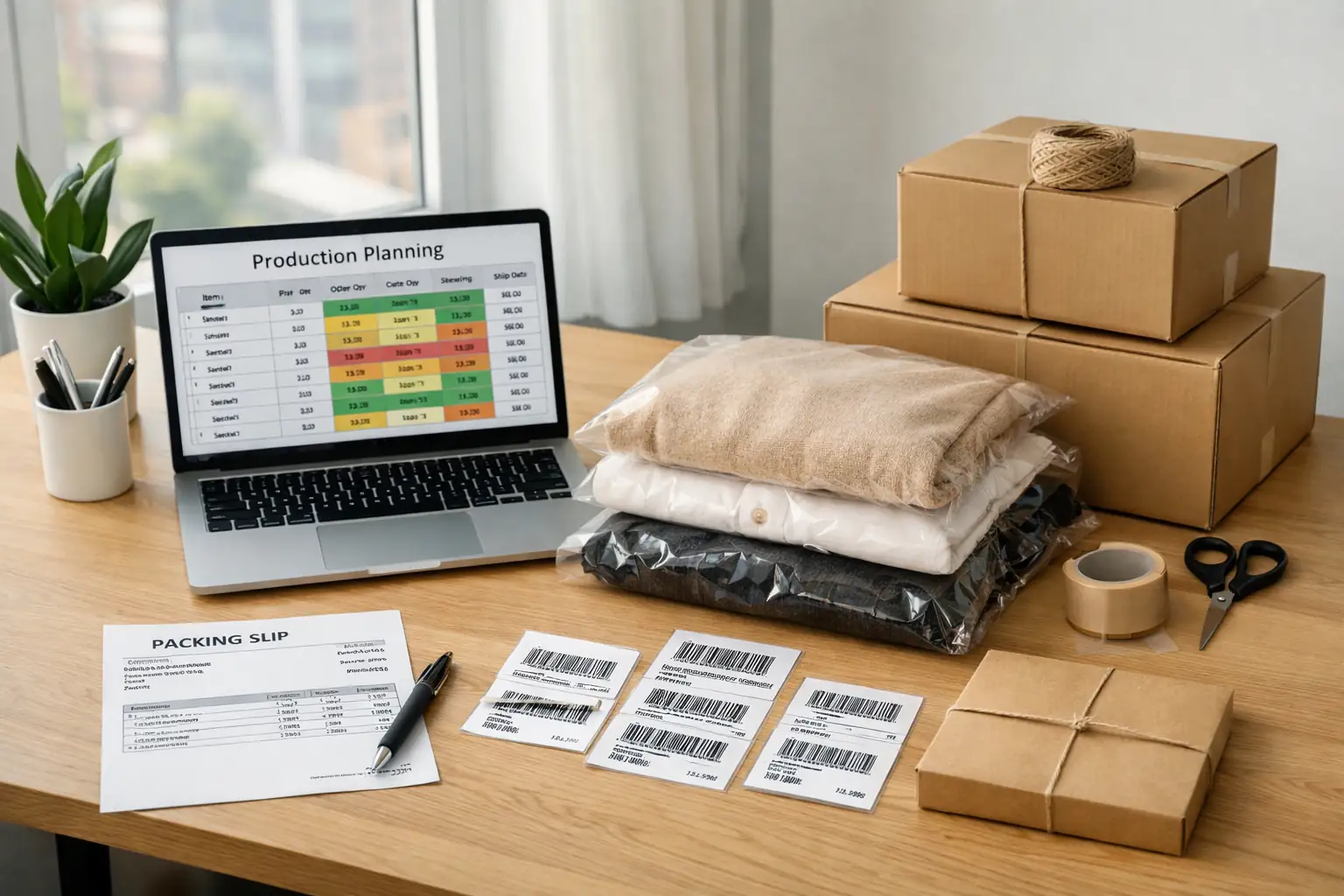
Launching a private label silk sheet collection is not a single production decision—it is a strategic balancing act. Minimum order quantity (MOQ), cost structure, product quality, and branding complexity are interconnected variables. When managed correctly, they reinforce each other. When misaligned, they create inventory pressure, quality instability, or weak brand positioning.
Retailers who build sustainable silk brands do not optimize for the lowest MOQ or the flashiest packaging at launch. They prioritize fabric quality and production consistency first, introduce controlled customization, and scale branding sophistication as sales validate demand.
Long-term growth in silk bedding comes from repeat trust, not maximum customization at day one.
The most successful silk brands operate in phases rather than one-time launches.
The Four Pillars That Must Stay Aligned
| Pillar | Why It Matters |
|---|---|
| MOQ | Controls production stability and cash flow exposure |
| Cost | Determines pricing flexibility and margin protection |
| Quality | Drives repeat purchase and review strength |
| Branding | Creates recognition and differentiation |
If one pillar dominates, the structure becomes unstable.
For example:
- Aggressively low MOQ may increase per-unit cost and reduce inspection buffer.
- Excessive branding complexity may inflate packaging MOQ beyond fabric volume.
- Over-optimizing cost may compromise momme weight or finishing consistency.
- Over-investing in packaging without proven demand can lock cash into slow-moving inventory.
Balance—not extremes—drives longevity.
A Phased Growth Model That Works
Sustainable silk brands typically follow a structured progression.
| Phase | Focus | Typical MOQ |
|---|---|---|
| Launch | Fabric quality + fit accuracy | Lower |
| Growth | Packaging refinement + brand story | Medium |
| Expansion | New variants, upgrades, embroidery | Higher |
During the launch phase, priority should be:
- Stable 19–22 momme silk
- Standard charmeuse weave
- One or two core colors
- One primary size
- Clean woven label + simple packaging
This configuration protects quality while keeping MOQ manageable.
In the growth phase, once reorders confirm demand:
- Introduce upgraded packaging
- Add additional colorways
- Refine brand inserts and storytelling
In the expansion phase, with established cash flow:
- Add heavier momme options
- Introduce specialty weaves
- Consider embroidery or premium packaging formats
Growth funds customization.
Cost vs Quality: Where Not to Compromise
Silk buyers are detail-sensitive. They notice:
- Hand feel consistency
- Surface smoothness
- Seam alignment
- Pocket depth accuracy
- Dye uniformity
Compromising silk grade or momme weight to reduce cost can damage brand perception permanently.
Cutting corners in fabric authenticity or finishing consistency undermines repeat purchase potential. In contrast, slightly simpler packaging rarely harms customer satisfaction if the fabric meets expectations.
In premium bedding, product integrity carries more weight than presentation embellishment.
MOQ as a Stability Tool, Not a Barrier
Well-calculated MOQ supports:
- Unified dye lots
- Consistent weaving tension
- Controlled cutting yield
- Structured inspection checkpoints
When MOQ is artificially compressed below sustainable levels, factories may:
- Shorten process calibration
- Split dye lots
- Reduce inspection buffer
These shortcuts increase risk of inconsistent product batches.
Retailers should evaluate MOQ as a mechanism that protects quality stability rather than an obstacle to overcome at all costs.
Why Repeat Orders Matter More Than First Orders
Silk bedding growth is heavily dependent on repeat purchase and positive reviews.
Brands scale when:
- Customers reorder after 6–12 months
- Reviews highlight comfort and durability
- Return rates remain low
- Color consistency remains stable across reorders
All of these outcomes depend on production consistency.
Consistency depends on:
- Stable fabric sourcing
- Controlled dye lot management
- Realistic MOQ planning
First orders generate visibility. Repeat orders generate brand equity.
Managing Cash Flow Without Sacrificing Integrity
Cash flow concerns often drive retailers to push MOQ lower than advisable. However, smarter sequencing reduces risk without undermining product stability.
Practical strategies include:
- Launching with limited SKU count
- Choosing stock fabric programs
- Aligning packaging MOQ with realistic forecast
- Planning reorders before expanding assortment
By consolidating early volume into fewer SKUs, retailers achieve production stability without inflating inventory complexity.
Branding Strategy and Market Perception
Branding should evolve with scale.
Early-stage consumers in the silk category often evaluate:
- Momme weight transparency
- Care instruction clarity
- Fabric authenticity claims
Clear communication and consistent quality build credibility faster than elaborate packaging.
Once brand trust is established, upgraded packaging enhances perceived value without needing to compensate for uncertainty.
Long-Term Strategic Mindset
Instead of asking:
“What is the lowest MOQ I can negotiate?”
Successful retailers ask:
“What MOQ allows me to deliver consistent quality and protect my brand reputation?”
This shift reframes MOQ from a negotiation target to a strategic decision.
Balancing MOQ, cost, quality, and branding requires accepting that:
- Short-term savings cannot undermine long-term positioning
- Complexity should match proven demand
- Quality stability drives review strength and reorders
Retailers who grow successfully in private label silk sheets balance four interdependent pillars: MOQ, cost, quality, and branding.
They:
- Prioritize fabric consistency first
- Control SKU complexity at launch
- Phase branding enhancements strategically
- Accept MOQs that protect production stability
Silk bedding is a trust-based category. Long-term growth is built through repeat purchase, stable quality, and disciplined expansion—not through maximum customization in the first production run.
The brands that last treat MOQ as a structural foundation for growth rather than a number to minimize.
MOQ Is a Strategy Tool, Not a Barrier
Custom branding silk sheets is not just about creating a beautiful product—it’s about building a repeatable, reliable system that supports your brand as it grows. Minimum order quantities exist to protect fabric consistency, dye stability, finishing quality, and brand reputation. When understood properly, MOQ becomes a planning advantage rather than an obstacle.
The strongest private label silk brands don’t launch everything at once. They start focused, prove demand, and expand thoughtfully—letting quality lead the story.
If you’re planning custom branded silk sheets and want guidance on MOQs, fabric selection, packaging strategy, or phased product launches, SzoneierFabrics can support you from concept to production:
- Mulberry silk sourcing in multiple momme weights
- Custom sizing and finishing standards
- Low-MOQ development and fast sampling
- Flexible branding and packaging solutions
- Consistent quality with short lead times
Contact SzoneierFabrics today to request samples or a custom quotation. A strong silk brand doesn’t start big—it starts smart.