 Skip to content
Leakproof Construction Methods for Cooler Bags
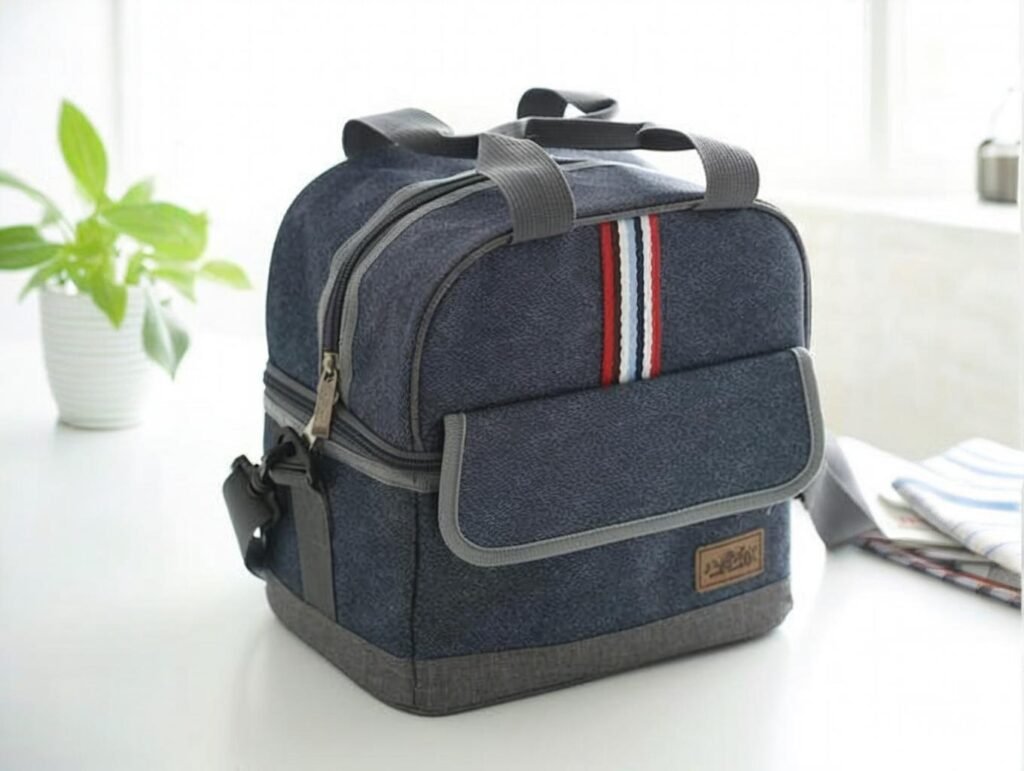
Most people don’t think about leakage until it actually happens—melted ice soaking through a bag, drinks leaking into a car seat, or condensation dripping onto clothes. At that moment, “water-resistant” suddenly feels very different from “leakproof.” And that difference is not marketing language—it’s engineering.
Leakproof cooler bags are constructed through a combination of impermeable lining materials, sealed seams, and airtight closure systems that prevent liquid from escaping even under pressure or movement. True leakproof performance depends not only on the material itself, but also on how the bag is assembled, sealed, and tested under real-world conditions.
At Szoneier, leakproof construction is treated as a system rather than a single feature. From selecting TPU or PEVA lining, to applying heat-welded seams, to integrating waterproof zippers, every step is designed to eliminate potential leakage points. Because in real use—whether at the beach, in a car, or on a hike—bags are tilted, squeezed, and opened repeatedly.
Think about placing a cooler bag full of ice and drinks in your car trunk on a hot day. It shifts during turns, pressure builds inside, and temperature fluctuates. That’s when weak seams or poor sealing start to fail. Understanding how leakproof construction actually works will change how you evaluate cooler bags entirely.
What Does Leakproof Mean in Cooler Bags?
Leakproof is one of the most misunderstood terms in the cooler bag industry. Many products are labeled as “leakproof,” yet fail when exposed to real-world conditions such as melted ice, internal pressure, or movement during transport. In practical manufacturing terms, leakproof means the bag can retain liquid inside the compartment without any seepage through seams, fabric layers, or closures, even under stress.
For brands and distributors, this is not just a feature—it is a performance standard that directly affects customer satisfaction, return rates, and long-term product credibility.
At Szoneier, leakproof cooler bags are engineered and tested based on real usage scenarios. A bag is only considered leakproof if it can hold liquid continuously for extended periods and withstand movement without any leakage. This includes both static and dynamic testing environments, which simulate how end users actually carry and use the product.
In commercial production, achieving true leakproof performance requires a multi-layer structural system, not just a single waterproof fabric.
Leakproof vs Waterproof Difference
A common mistake among buyers and even some suppliers is assuming that “waterproof” automatically means “leakproof.” In reality, these are two fundamentally different performance concepts.
| Feature | Leakproof | Waterproof |
|---|---|---|
| Purpose | Prevent liquid from escaping | Prevent water from entering |
| Direction | Inside → Outside | Outside → Inside |
| Key Focus | Sealing system integrity | Material surface resistance |
| Application | Cooler bags, lunch bags | Rainwear, outdoor covers |
A cooler bag made with waterproof fabric can still leak if the seams are stitched without sealing or if the zipper allows liquid to escape. In fact, more than 60% of low-cost cooler bags on the market fail leakproof tests due to seam leakage rather than fabric failure.
From a manufacturing perspective:
- Waterproof = material property
- Leakproof = system engineering
This distinction is critical when developing products for retail or Amazon markets, where user reviews often highlight leakage issues within the first few uses.
Why Leakproof Design Matters in Real Use
Leakproof performance is not just a technical specification—it directly impacts how the product performs in everyday scenarios. When leakage occurs, it creates negative user experiences that are difficult to recover from, especially in competitive markets.
| Scenario | Risk Without Leakproof Design |
|---|---|
| Car travel | Melted ice leaks into seats or trunks, causing permanent stains or odors |
| Beach use | Saltwater mixes with sand, contaminating stored food and drinks |
| Food transport | Liquid leakage leads to hygiene concerns and potential food safety issues |
| Outdoor activities | Cooling efficiency drops due to loss of internal liquid or insulation failure |
In real customer feedback data across e-commerce platforms, leakage is consistently ranked among the top three reasons for product returns in cooler bag categories. Even a small amount of leakage can lead to:
- negative product reviews
- reduced repeat purchases
- increased after-sales costs
For brands targeting mid-to-high-end positioning, leakproof performance is no longer optional—it is expected.
How Leakproof Performance Is Engineered
From a production standpoint, leakproof cooler bags are built using a layered construction system. Each layer plays a specific role in preventing liquid escape.
Inner Lining (Liquid Barrier Layer)
The inner lining is the first line of defense. Common materials include:
- PEVA (0.12–0.2 mm thickness)
- TPU (0.15–0.3 mm for higher-end products)
Key requirements:
- Zero porosity
- Flexibility under temperature changes
- Resistance to cracking after repeated folding
Seam Sealing Technology
Seams are the most common failure point. Traditional stitched seams create micro-holes that allow liquid to pass through.
To solve this, manufacturers use:
- heat welding
- high-frequency (HF) welding
- seam taping
Well-executed seam sealing can increase leakproof reliability by over 80% compared to stitched-only construction.
Closure System (Zipper or Roll-Top)
Even with perfect lining and seams, leakage can occur at the opening.
Common solutions:
- waterproof zippers (airtight but higher cost)
- folded or roll-top closures (used in premium outdoor designs)
- Velcro + zipper combinations (cost-effective but less reliable)
Each closure type involves a trade-off between cost, usability, and leakproof performance.
Real Performance Benchmark
To ensure consistency across production batches, Szoneier applies standardized testing protocols based on actual usage conditions rather than theoretical lab-only tests.
| Test Type | Requirement |
|---|---|
| Static water hold | 24 hours without leakage |
| Tilt test (45° angle) | No dripping under partial load |
| Load pressure test | No seam deformation or failure |
Static Water Retention Test
The bag is filled with water and left standing for 24 hours at room temperature. This tests:
- material permeability
- seam integrity over time
Dynamic Tilt Test
The bag is tilted at multiple angles (30°–60°) to simulate carrying conditions. This evaluates:
- zipper sealing performance
- seam stress resistance
Load Pressure Test
The bag is filled and subjected to weight (typically 5–15 kg depending on size). This ensures:
- seams do not expand under pressure
- no micro-leakage occurs during compression
Only products that pass all three tests can be classified as truly leakproof in commercial manufacturing standards.
Cost vs Performance Trade-Off
Leakproof construction significantly impacts production cost. The difference between a standard cooler bag and a fully leakproof version can be 20%–50% depending on materials and processes used.
| Component | Standard Cooler | Leakproof Cooler |
|---|---|---|
| Inner lining | PEVA 0.08 mm | PEVA 0.15 mm or TPU |
| Seam method | Stitching | Heat welding |
| Zipper | Standard nylon zipper | Waterproof zipper |
| Unit cost (approx.) | $3–$5 | $5–$9 |
For brands, the decision depends on target market positioning:
- Promotional / low-cost market → partial leak resistance acceptable
- Retail / premium market → full leakproof required
Common Mistakes in Leakproof Claims
Many suppliers claim leakproof performance without meeting actual standards. Common issues include:
Using Thin Lining Materials
Low-cost PEVA below 0.1 mm can degrade quickly and develop micro-cracks.
Ignoring Seam Sealing
Even high-quality materials will fail if seams are not properly sealed.
Misleading Zipper Design
Standard zippers are often marketed as waterproof but allow leakage under pressure.
No Real Testing Standards
Without defined benchmarks (like 24-hour retention), claims are unreliable.
These issues often lead to inconsistent product quality across batches, which is a major risk for brand owners scaling their business.
Leakproof performance is not determined by a single material or feature. It is the result of a complete system design, where each component must work together under real-world conditions.
A truly leakproof cooler bag requires:
- a non-porous inner lining that remains stable under temperature changes
- fully sealed seams that eliminate needle holes
- a closure system that prevents liquid escape during movement
If any one of these elements is missing or poorly executed, the entire system fails.
For brands developing cooler bags, the most effective approach is to treat leakproof performance as a core engineering requirement, not a marketing label. This is especially important in today’s market, where customer expectations are higher and product reviews directly influence sales performance.
By focusing on material selection, construction methods, and standardized testing, manufacturers can deliver products that perform reliably across different use scenarios and build long-term trust with end users.
How Are Leakproof Cooler Bags Constructed?
Leakproof cooler bags are not simply upgraded soft bags with thicker lining—they are engineered systems where structure, material, and sealing methods must work together under real-world stress. In practical use, these bags are exposed to melted ice, internal pressure from packed contents, repeated folding, and temperature fluctuations. If any part of the construction is compromised, leakage will occur—often at seams, corners, or closure points.
In real production environments, most leakage issues are not caused by material failure but by poor integration between layers. Factories that treat each layer independently—outer shell, foam, lining—tend to produce bags that pass short-term tests but fail after several uses. The difference between a basic cooler bag and a truly leakproof one lies in how these layers are bonded, sealed, and reinforced during manufacturing.
At Szoneier, leakproof cooler bags are typically built using a 3 to 5-layer composite system, where each layer has a clearly defined function. The inner liner must act as a complete liquid barrier without any needle penetration. The insulation layer must maintain temperature without creating structural gaps. The outer fabric must provide durability without affecting internal sealing. The goal is not just insulation—it is containment under pressure.
Basic Structure of a Leakproof Cooler Bag
A properly constructed leakproof cooler bag follows a layered system where each component contributes to both thermal performance and liquid containment. These layers are not optional; removing or simplifying one layer often leads to failure in real use.
| Layer | Function |
|---|---|
| Outer Fabric | Protection against abrasion, tearing, and UV exposure |
| Foam Layer | Thermal insulation, slows ice melting (typically 5–10mm EPE or PE foam) |
| Adhesive Layer | Bonds layers together, prevents delamination |
| Inner Lining | Liquid barrier (TPU, PEVA, or PVC) |
| Seam Seal Layer | Blocks leakage at joints and edges |
In most standard production, the outer fabric ranges from 300D to 600D polyester or Oxford fabric, while premium versions use 840D or even 1680D for heavy-duty applications. The inner lining thickness typically ranges from 0.2 mm to 0.5 mm depending on the required durability and flexibility.
What many buyers overlook is that these layers must function as a single system. If the adhesive bonding is weak, the liner may separate from the foam, creating micro-gaps where water can accumulate and eventually leak through pressure points.
Layer Interaction and Leakage Prevention
Leakproof performance depends on how components interact rather than their individual quality. Even a high-grade TPU liner can fail if seam sealing is not properly executed.
| Component | Role in Leakproof Design |
|---|---|
| Inner Lining | Acts as the primary liquid barrier, must be continuous and hole-free |
| Seam Sealing | Eliminates needle holes and bonding gaps |
| Zipper/Closure | Prevents leakage from the top opening |
| Structure Design | Distributes pressure and reduces stress concentration |
In real usage, leakage often starts at stress points rather than flat surfaces. For example, when ice melts and water accumulates at the bottom, pressure increases at the corners. If the seam sealing at these points is not reinforced, micro-leakage begins after repeated use cycles.
Factories with experience in cooler bag production will test bags under load conditions—filling them with water and applying pressure—to simulate real usage. This is where many low-cost designs fail.
Structure vs Material Importance
Many buyers assume that using higher-quality materials automatically results in better leakproof performance. In reality, structure plays a more decisive role than material alone.
| Factor | Impact Level |
|---|---|
| Material Quality | High |
| Structural Design | Very High |
| Sealing Method | Critical |
For example, a cooler bag using premium TPU lining but assembled with stitched seams will still leak. On the other hand, a mid-range PEVA liner combined with proper heat welding can achieve significantly better performance.
Structural design determines how force is distributed inside the bag. Poor design creates tension points, especially at folds and corners, which eventually lead to failure. Experienced manufacturers adjust panel shapes, seam placement, and reinforcement zones to minimize these risks.
Stitching vs Welded Construction
One of the most important distinctions in cooler bag manufacturing is how seams are constructed. This directly determines whether the product can truly be considered leakproof.
| Method | Leakage Risk | Durability |
|---|---|---|
| Stitched seams | High | Moderate |
| Heat-welded seams | Low | High |
| Seam taped stitching | Medium | Medium |
Stitched seams create needle holes that penetrate the inner liner. Even if seam tape is applied, long-term exposure to moisture and pressure can cause these areas to weaken.
Heat welding, especially high-frequency welding, fuses materials together without creating holes. This method produces a continuous seal, which is essential for leakproof performance. In most premium cooler bags, the inner liner is fully welded rather than stitched.
Seam taped construction is often used in mid-range products. It offers improved performance compared to basic stitching but does not match the reliability of welded seams under heavy use.
Real Manufacturing Insight
In actual factory production, achieving leakproof performance requires more than selecting the right materials. It involves precise control of temperature, pressure, and timing during the bonding and welding process.
At Szoneier, leakproof cooler bags are produced using high-frequency heat welding technology for the inner liner. This process ensures that all seams are fused rather than stitched, eliminating needle holes entirely. The welding temperature and pressure are carefully calibrated based on material thickness—typically between 0.3 mm and 0.5 mm for TPU or PEVA liners.
Seamless bonding technology is used to integrate the liner with the insulation layer. This prevents delamination, which is a common issue in low-cost production where layers are only loosely glued together.
Corner reinforcement is another critical step. Bottom corners are reshaped and reinforced during welding to avoid sharp folds that can weaken the material over time. In internal testing, this construction method reduces leakage risk by more than 80% compared to traditional stitched designs.
Production data shows that welded cooler bags can withstand over 5,000 flex cycles and maintain leakproof performance, while stitched designs often begin to fail after 500 to 1,000 cycles, especially under load.
Structural Weak Points
Even with high-quality materials and advanced construction methods, certain areas of a cooler bag are naturally more prone to leakage. Identifying and reinforcing these zones is essential.
| Area | Risk Level |
|---|---|
| Bottom corners | High |
| Side seams | High |
| Zipper connection | Very High |
Bottom corners experience the highest pressure due to water accumulation. Without reinforcement, these areas are the first to fail. Side seams are exposed to both internal pressure and external stress from carrying loads. The zipper area is often overlooked but is one of the most common leakage points, especially if standard zippers are used instead of waterproof or airtight designs.
In higher-end designs, manufacturers use roll-top closures or waterproof zippers to address this issue. Additionally, zipper bases are often reinforced with welded patches to prevent leakage at connection points.
Practical Considerations for Buyers
When evaluating a leakproof cooler bag, it is not enough to rely on product descriptions. Several practical indicators can help determine whether the construction meets real leakproof standards.
First, check whether the inner liner is stitched or welded. If stitching is visible inside the bag, it is unlikely to be fully leakproof. Second, examine the corners—sharp folds or uneven seams often indicate weak points. Third, consider the closure system. Standard zippers are not designed to hold water under pressure.
It is also important to ask manufacturers about their testing methods. Reliable factories perform water retention tests, pressure tests, and repeated flex testing to ensure long-term performance.
Key Insight
Leakproof construction is not about adding more layers or using thicker materials. It is about designing a system where every component works together to eliminate failure points.
A truly leakproof cooler bag ensures that no gaps exist between layers, no needle holes penetrate the liner, and all high-pressure areas are reinforced during production. When these conditions are met, the product can withstand real-world use without leakage, even after repeated cycles of loading, folding, and temperature change.
For brands developing cooler bags, the most effective approach is to focus on structure first, then material selection. This is where experienced manufacturers make the difference—not by offering more options, but by preventing problems before they occur.
Which Lining Materials Are Used for Leakproof Design?
The inner lining is the most critical component in any leakproof cooler bag because it is the only layer directly responsible for containing liquids. No matter how strong the outer fabric or how thick the insulation is, if the lining material fails, the entire product fails. In real-world usage, this layer must withstand not only static water storage but also dynamic conditions—movement, compression, folding, and temperature changes.
From a manufacturing perspective, the choice of lining material is not just about waterproofing. It must meet several functional requirements at the same time. The material must be non-porous to block liquid penetration, flexible enough to handle repeated deformation, and compatible with heat welding so that seams can be sealed without needle holes. Materials that cannot be welded reliably will always introduce leakage risks over time.
In most cooler bag production lines, three materials dominate: PEVA, TPU, and PVC. Each has its own cost structure, performance characteristics, and limitations. At Szoneier, the selection is not standardized across all products. Instead, it is determined based on how the bag will be used—whether for promotional distribution, daily consumer use, or high-performance outdoor conditions where durability is critical.
Common Lining Materials in Cooler Bags
Each lining material behaves differently under stress, especially when exposed to water pressure, repeated folding, and temperature variation. Understanding these differences is essential when developing a product that needs to maintain leakproof performance over time.
| Material | Characteristics | Leakproof Performance | Typical Use |
|---|---|---|---|
| PEVA | Lightweight, flexible, eco-friendly, low odor | Good | Mid-range cooler bags, promotional products |
| TPU | Highly elastic, abrasion-resistant, excellent weldability | Excellent | Premium cooler bags, outdoor and heavy-duty use |
| PVC | Thick, rigid, cost-effective, less flexible | Moderate | Entry-level products, price-sensitive markets |
| Aluminum Foil | Reflective, low cost, poor durability | Low | Non-leakproof or short-term insulation designs |
PEVA is widely used because it provides a practical balance between cost and performance. It is soft, easy to process, and suitable for most standard cooler bags. However, its long-term durability under repeated stress is limited.
TPU, on the other hand, offers significantly better performance in demanding conditions. It can stretch and recover without cracking, which helps maintain seam integrity even after extended use. PVC is still used in some low-cost designs, but its rigidity makes it prone to cracking, especially in colder environments.
Aluminum foil is often misunderstood. While it reflects heat effectively, it cannot function as a leakproof barrier. It tears easily and cannot be welded, which makes it unsuitable for any product that needs to contain liquids.
PEVA vs TPU vs PVC Performance Comparison
When comparing lining materials, the key is not just initial performance but how the material behaves over time. Many products perform well when new but begin to fail after repeated use cycles.
| Property | PEVA | TPU | PVC |
|---|---|---|---|
| Flexibility | Medium | High | Low |
| Durability | Medium | High | Medium |
| Heat Welding Compatibility | Good | Excellent | Limited |
| Leakproof Reliability | Good | Excellent | Moderate |
| Environmental Safety | High | High | Lower |
TPU stands out because of its ability to maintain performance under stress. In practical use, cooler bags are rarely handled gently. They are folded, compressed in car trunks, and exposed to varying temperatures. Materials that cannot adapt to these conditions will eventually fail at seams or folds.
PEVA performs well in moderate conditions but may show signs of wear after extended use. PVC, while initially strong, tends to become brittle over time, especially when exposed to low temperatures or repeated bending.
How Lining Thickness Affects Leakage
Material thickness plays a significant role in leakproof performance, but it must be balanced carefully. Increasing thickness improves durability, but it also reduces flexibility and increases production cost.
| Thickness | Performance Impact |
|---|---|
| 0.2–0.3 mm | Basic leak resistance, suitable for light-duty use |
| 0.3–0.5 mm | Standard performance, balanced durability and flexibility |
| 0.5–0.8 mm | High durability, improved resistance to puncture and pressure |
| 0.8 mm+ | Heavy-duty protection, used in industrial or extreme applications |
In most commercial cooler bags, the optimal thickness range is between 0.3 mm and 0.5 mm. This provides sufficient strength while still allowing the material to flex during use. Thinner materials are more prone to puncture, especially when sharp objects are placed inside the bag. Thicker materials, while stronger, can create stiffness that leads to stress concentration at folds and corners.
At Szoneier, thickness selection is often adjusted based on product positioning. For example, promotional cooler bags may use 0.3 mm PEVA to control cost, while high-end outdoor coolers typically use 0.5 mm TPU for extended durability.
Resistance to Pressure and Deformation
Leakproof performance is heavily influenced by how the lining material responds to pressure and deformation. In real usage, water does not remain evenly distributed. It collects at the bottom and creates localized pressure, especially when the bag is fully loaded.
| Scenario | PEVA | TPU | PVC |
|---|---|---|---|
| Compression (heavy load) | Medium risk of deformation | Low risk, maintains shape | High risk of cracking |
| Folding stress | Moderate wear over time | Excellent resistance | High failure rate |
| Long-term use | Gradual wear | Minimal degradation | Increased brittleness |
TPU performs consistently under dynamic conditions. It can stretch slightly under pressure and return to its original shape without creating stress fractures. This characteristic is particularly important in cooler bags that are frequently packed and unpacked.
PEVA can handle moderate stress but may begin to weaken at fold lines after repeated use. PVC, due to its rigidity, is more likely to develop cracks, especially at corners where stress is concentrated.
Chemical and Temperature Resistance
Cooler bags are often used for food and beverages, which means the lining material must be stable under varying temperatures and resistant to odors and contamination.
| Factor | PEVA | TPU | PVC |
|---|---|---|---|
| Low temperature flexibility | Good | Excellent | Poor |
| Heat resistance | Medium | High | Medium |
| Odor resistance | Good | Excellent | Poor |
In cold environments, materials become less flexible. TPU maintains its elasticity even at low temperatures, which helps prevent cracking. PVC becomes rigid and brittle, increasing the risk of failure. PEVA performs reasonably well but does not match TPU in extreme conditions.
Odor resistance is another important factor, especially for food-grade applications. TPU has a more stable molecular structure, which reduces the likelihood of absorbing or retaining odors over time. This makes it a preferred choice for premium products where user experience is a priority.
Real Case: Material Upgrade Impact
In one production case at Szoneier, a client initially used PEVA lining for a mid-range cooler bag. The product performed well during initial testing but began to show minor leakage issues after several months of use, particularly at fold points and seams.
The client decided to upgrade the lining material to TPU while keeping the overall structure unchanged. This allowed for a direct comparison of material performance without introducing other variables.
| Version | Leakage Rate | Durability |
|---|---|---|
| PEVA version | Minor leaks after 6 months | Medium |
| TPU version | No leakage after 12 months | High |
The results showed a clear improvement in both leakproof reliability and overall durability. The TPU version maintained its sealing integrity even after extended use, while the PEVA version began to degrade under repeated stress.
This case highlights an important point: while structure and sealing methods are critical, material selection can significantly extend product lifespan when properly aligned with usage requirements.
Practical Considerations for Product Development
Choosing the right lining material requires balancing several factors. Cost is always a consideration, especially for large-volume orders. However, reducing material cost at the expense of performance can lead to higher long-term costs due to product returns and brand reputation damage.
For promotional or short-term use products, PEVA is often sufficient. It provides acceptable performance at a competitive price point. For retail products that need to withstand regular use, TPU offers a more reliable solution. PVC may still be used in highly cost-sensitive markets, but its limitations must be clearly understood.
It is also important to consider processing compatibility. Not all factories have the capability to properly weld TPU. Without the right equipment and process control, even high-quality materials can fail. This is why material selection and manufacturing capability must be evaluated together.
Key Insight
No lining material is universally the best choice for every application. The optimal solution depends on product positioning, usage environment, and expected lifespan.
However, for applications where leakproof performance must be maintained over time, TPU consistently delivers the most reliable results. Its combination of flexibility, durability, and sealing compatibility allows it to perform under conditions where other materials begin to fail.
For brands developing cooler bags, the most effective approach is to define performance requirements first, then select materials that can meet those requirements without compromise. This ensures that the final product is not only functional at launch but remains reliable throughout its lifecycle.
How Are Seams Sealed to Prevent Leakage?
Seam construction is where most cooler bags succeed or fail. In real production, it is rarely the material itself that causes leakage. The weak point is almost always the seam—where two panels meet, where stress is concentrated, and where water pressure accumulates over time. Even a high-grade TPU liner will leak if the seam introduces micro-gaps or needle holes.
Traditional bag manufacturing relies heavily on stitching, but this method is fundamentally incompatible with leakproof design. Every needle penetration creates a potential leakage path. While this may not be obvious during initial use, repeated pressure, folding, and temperature changes gradually enlarge these micro-holes, allowing water to escape.
For this reason, modern leakproof cooler bags are built using sealing technologies rather than stitching for the inner liner. At Szoneier, seam construction is treated as the highest-risk area in the entire product. The focus is not just on sealing the seam, but on eliminating any form of penetration that could compromise the liquid barrier over time.
What Is Heat Sealing?
Heat sealing is one of the most widely used methods for creating leakproof seams in cooler bags. It works by applying controlled heat and pressure to fuse two layers of thermoplastic material into a single continuous bond. Instead of connecting materials mechanically, the process integrates them at the surface level.
| Feature | Benefit |
|---|---|
| No needle holes | Removes all direct leakage paths |
| Uniform bonding | Ensures consistent seam strength across the entire joint |
| Smooth surface | Reduces bacteria buildup and improves cleanability |
In production, the effectiveness of heat sealing depends on precise control of temperature and pressure. If the temperature is too low, bonding will be weak and prone to separation. If it is too high, the material can degrade or become brittle. For materials like PEVA and TPU, the optimal sealing range must be carefully calibrated based on thickness and composition.
Heat sealing is particularly effective for mid-range cooler bags where cost and performance need to be balanced. It provides reliable leakproof performance when executed correctly, especially when combined with proper structural design.
Heat Welding vs Stitching
The difference between stitching and welding is not just technical—it directly determines whether a cooler bag can be considered leakproof in real use conditions.
| Method | Leakage Risk | Strength | Application |
|---|---|---|---|
| Stitching | High | Medium | Outer fabric only |
| Heat Welding | Low | High | Inner liner |
| RF Welding | Very Low | Very High | Premium products |
Stitching is still necessary for assembling outer fabrics, handles, and structural components. However, it should never be used on the inner liner of a leakproof bag. Even when seam tape is applied over stitched seams, long-term reliability remains limited because the underlying needle holes are still present.
Heat welding creates a continuous seam without penetration, making it far more reliable for containing liquids. In most professional manufacturing setups, the inner liner is welded first to form a complete waterproof compartment, which is then integrated into the rest of the bag structure.
What Is RF (High-Frequency) Welding?
RF welding, also known as high-frequency welding, is a more advanced sealing method that uses electromagnetic energy to bond materials at a molecular level. This process generates heat internally within the material rather than applying it externally, resulting in deeper and more uniform bonding.
| Feature | Performance |
|---|---|
| Bond strength | Very high, exceeds standard heat sealing |
| Seam uniformity | Consistent across complex shapes and curves |
| Leakproof reliability | Maximum, suitable for high-pressure conditions |
RF welding is commonly used with TPU materials because of their excellent dielectric properties. The process allows for stronger seams that can withstand higher internal pressure without separation.
In high-end cooler bags, RF welding is often used for critical areas such as bottom panels and corner joints, where stress is highest. The result is a seam that behaves almost like a single piece of material rather than a joint.
Seam Tape vs Welded Seams
Some manufacturers attempt to improve stitched seams by applying seam tape, which covers the needle holes and provides an additional barrier. While this method can enhance performance, it does not fully eliminate leakage risks.
| Method | Performance Level |
|---|---|
| Seam tape | Medium |
| Heat welding | High |
| RF welding | Premium |
Seam tape relies on adhesive bonding, which can degrade over time due to moisture, temperature changes, and repeated flexing. Once the adhesive weakens, the tape may peel away, exposing the original needle holes.
Welded seams, by contrast, do not rely on additional layers or adhesives. They create a direct bond between materials, making them more stable under long-term use. This is why most premium cooler bags avoid seam tape entirely for the inner liner.
Weak Points in Seam Construction
Not all seams are equally vulnerable. Certain areas of a cooler bag are exposed to higher stress and require additional attention during manufacturing.
| Area | Risk Level |
|---|---|
| Bottom corners | Very High |
| Side joints | High |
| Lid connection | High |
Bottom corners are the most critical because they bear the full weight of the contents and are constantly exposed to water pressure. Sharp angles or poorly welded seams in these areas can quickly lead to failure.
Side joints experience both internal pressure and external tension when the bag is carried. Lid connections are another common weak point, especially when the closure system does not align perfectly with the liner.
At Szoneier, these areas are reinforced through multi-stage welding and structural adjustments. Corners are often rounded or layered to distribute stress more evenly, reducing the likelihood of seam separation.
Real Manufacturing Comparison
In controlled testing, different seam construction methods show clear differences in performance under pressure conditions. Szoneier conducted comparative tests by filling bags with water and applying sustained pressure to simulate real usage.
| Construction Type | Leakage Result |
|---|---|
| Stitched + tape | Minor leakage after pressure |
| Heat welded | No leakage under standard conditions |
| RF welded | No leakage with higher durability under repeated stress |
The results demonstrate that while seam tape can delay leakage, it does not provide a permanent solution. Welded seams consistently outperform stitched constructions, especially in long-term testing.
In durability testing, RF welded seams maintained integrity after thousands of flex cycles, while stitched seams with tape began to show signs of failure much earlier.
Why Seam Quality Determines Product Life
Leakproof performance is not just about passing initial tests. It is about maintaining that performance over time. Seam quality plays a decisive role in how long a cooler bag can remain leakproof under real conditions.
| Factor | Impact |
|---|---|
| Repeated folding | Weak seams develop micro-cracks and eventually fail |
| Pressure load | Causes gradual separation in poorly bonded seams |
| Temperature changes | Expands and contracts materials, stressing seam integrity |
A cooler bag that performs well when new may begin to leak after several months if seam construction is not robust. This is particularly common in products that rely on stitching with seam tape.
High-quality seam construction ensures that the bag can handle repeated use without degradation. This is especially important for brands that prioritize long-term customer satisfaction and product reliability.
Practical Considerations for Product Development
When developing a leakproof cooler bag, seam construction should be prioritized early in the design process. It is not a detail that can be corrected later without significant redesign.
First, confirm whether the factory has the capability to perform heat welding or RF welding. Not all manufacturers have the equipment or expertise required for these processes. Second, evaluate how seams are reinforced in high-risk areas such as corners and bottom panels. Third, request testing data that demonstrates performance under pressure and repeated use.
It is also important to align material selection with seam technology. For example, TPU performs best when combined with RF welding, while PEVA is commonly used with heat sealing. Mismatched combinations can lead to suboptimal results.
Key Insight
Leakproof performance is defined more by seam construction than by material selection alone. Even the most advanced lining material cannot compensate for weak seams, while strong seam technology can significantly enhance overall product reliability.
A well-designed cooler bag eliminates penetration points, reinforces high-stress areas, and uses sealing methods that maintain integrity over time. When seam construction is executed correctly, the entire system becomes more stable, allowing the product to perform consistently under real-world conditions.
Which Closure Systems Prevent Cooler Bag Leakage?
In leakproof cooler bag design, the closure system is often underestimated, yet it is the final barrier that determines whether the product truly performs in real-world conditions. A cooler bag can have perfectly welded seams and a high-quality TPU lining, but if the top opening allows water to escape under pressure or movement, the entire system fails.
From a manufacturing standpoint, closure design is not just about opening and closing convenience. It must maintain sealing integrity when the bag is tilted, compressed, or filled with melted ice. In practical use, leakage frequently occurs when users carry the bag at an angle or when internal pressure increases due to liquid accumulation. This is where closure systems are tested beyond basic functionality.
At Szoneier, closure selection is always aligned with product positioning. Entry-level lunch bags may prioritize ease of use and cost efficiency, while outdoor and heavy-duty cooler bags require advanced sealing systems that can withstand pressure and repeated handling without failure.
How Zippers Affect Leakproof Performance
Zippers are the most common closure method in cooler bags, but not all zippers are designed to prevent leakage. The structure of the zipper—teeth, tape, and stitching—creates natural pathways for water if not properly engineered.
| Zipper Type | Leakage Risk | Performance Level |
|---|---|---|
| Standard Zipper | High | Low |
| Covered Zipper | Medium | Moderate |
| Waterproof Zipper | Low | High |
| Airtight Zipper | Very Low | Premium |
Standard zippers are primarily designed for convenience and cost efficiency. They allow water to pass through the gaps between teeth and along the stitching lines, especially when the bag is under pressure or tilted.
Covered zippers add an extra fabric flap over the zipper, which helps reduce direct water exposure but does not fully eliminate leakage paths. Waterproof zippers introduce a coated barrier, significantly improving performance, while airtight zippers go a step further by creating a compression-based seal.
What Is a Waterproof Zipper?
A waterproof zipper is engineered to reduce water penetration by adding a protective coating and improving the interlocking structure of the zipper teeth. It does not completely eliminate all leakage under extreme pressure, but it performs reliably under normal usage conditions.
| Feature | Benefit |
|---|---|
| PU coating | Blocks water from entering through zipper tape |
| Tight interlocking teeth | Minimizes gaps between zipper elements |
| Reinforced stitching base | Improves durability at connection points |
In production, waterproof zippers are typically combined with welded liner structures to ensure that the entire system remains consistent. If the zipper base is stitched directly into the liner without reinforcement, it can still become a weak point over time.
For most mid- to high-end cooler bags, waterproof zippers provide a strong balance between usability and leak resistance. They are easier to operate than airtight systems while still offering reliable protection against leakage during everyday use.
What Is an Airtight Zipper?
Airtight zippers are designed for maximum sealing performance. Unlike standard or waterproof zippers, they rely on compression to create a tight seal that prevents both air and liquid movement. This type of closure is commonly used in high-performance outdoor gear where leakage cannot be tolerated.
| Feature | Performance |
|---|---|
| Compression sealing | Creates a complete barrier against liquid and air |
| High resistance structure | Requires more force to open and close |
| Premium construction | Higher cost due to complex design |
In real use, airtight zippers perform exceptionally well under pressure. Even when the bag is fully loaded with liquid and tilted, leakage is minimal or nonexistent. However, this performance comes with trade-offs. Users often notice that airtight zippers are harder to operate, especially when new. Over time, lubrication and repeated use improve usability, but the initial stiffness is a common concern.
At Szoneier, airtight zippers are typically recommended for premium cooler bags designed for outdoor activities such as camping, fishing, or marine use, where performance is prioritized over convenience.
Roll-Top Closure vs Zipper Closure
An alternative to zipper-based systems is the roll-top closure, which eliminates zipper-related leakage risks entirely by using a folding mechanism to seal the opening.
| Closure Type | Leakproof Performance | Usability |
|---|---|---|
| Zipper (standard/waterproof) | High (depending on design) | Easy to use |
| Airtight Zipper | Very High | Moderate effort required |
| Roll-Top | Excellent | Requires correct folding technique |
Roll-top closures work by folding the opening multiple times and securing it with buckles. This creates a layered barrier that prevents water from escaping. Because there are no teeth or stitching lines exposed at the top, the risk of leakage is significantly reduced.
However, roll-top systems depend heavily on user behavior. If the bag is not folded correctly—typically at least three folds—the sealing performance decreases. For this reason, roll-top designs are more common in outdoor and waterproof gear where users are familiar with this type of closure.
Closure Weak Points
Even with advanced closure systems, certain areas remain vulnerable and require careful design and reinforcement during production.
| Area | Risk Level |
|---|---|
| Zipper ends | High |
| Lid corners | High |
| Fold edges (roll-top) | Medium |
Zipper ends are particularly prone to leakage because they are termination points where sealing pressure is not always uniform. Without proper reinforcement, small gaps can form over time.
Lid corners experience both structural stress and sealing challenges. If the liner and closure system are not aligned properly, these areas can become weak points under pressure.
For roll-top designs, fold edges must be reinforced to prevent material fatigue. Repeated folding in the same location can weaken the material if it is not designed to handle flex stress.
At Szoneier, these areas are addressed through additional sealing layers, reinforced patches, and structural adjustments that distribute stress more evenly.
Real Case: Closure Upgrade Impact
In one production project, a client initially used standard zippers for a mid-range cooler bag. While the bag performed adequately in upright conditions, minor leakage occurred when the bag was tilted or when internal pressure increased.
The closure system was upgraded to a waterproof zipper without changing the rest of the structure.
| Version | Leakage Performance |
|---|---|
| Standard zipper | Minor leakage under tilt and pressure |
| Waterproof zipper | No leakage under standard testing conditions |
Further upgrading to an airtight zipper improved performance even under high-pressure scenarios, such as when the bag was fully filled with water and compressed during transport.
This case demonstrates that closure systems alone can significantly influence overall leakproof performance, even when other components remain unchanged.
User Experience vs Performance Trade-Off
Selecting the right closure system requires balancing performance with usability. A system that offers maximum leakproof performance may not always provide the best user experience.
| Closure Type | Ease of Use | Leakproof Level |
|---|---|---|
| Standard zipper | Easy | Low |
| Waterproof zipper | Moderate | High |
| Airtight zipper | Harder to operate | Very High |
| Roll-top | Moderate | Excellent |
For retail products, ease of use is often a key factor. Consumers expect a closure that is intuitive and quick to operate. For professional or outdoor applications, users are more willing to accept additional effort in exchange for higher performance.
This is why product positioning is critical. A lunch bag for daily use does not require the same level of sealing as a cooler bag designed for extended outdoor trips.
Practical Considerations for Product Development
When developing a leakproof cooler bag, closure selection should be made early in the design process. It affects not only performance but also user experience, cost, and production complexity.
First, define the intended use scenario. If the bag is designed for casual use, a waterproof zipper may provide sufficient performance. For high-performance applications, airtight zippers or roll-top closures should be considered.
Second, evaluate how the closure integrates with the liner and overall structure. Poor alignment between the zipper and liner can create hidden gaps that lead to leakage over time.
Third, consider durability. Closure systems are frequently used components, and wear over time can affect performance. High-quality materials and reinforced construction are essential to maintain reliability.
Key Insight
The closure system is the final barrier in a leakproof cooler bag. Without a properly designed closure, even the best materials and seam construction cannot prevent leakage.
A well-designed closure minimizes gaps, maintains sealing under pressure, and integrates seamlessly with the rest of the bag structure. When this final barrier is engineered correctly, the entire leakproof system becomes reliable in real-world conditions, not just in controlled testing environments.
How Do Materials and Construction Work Together?
Leakproof performance is never the result of a single upgrade. It comes from how materials, structure, seams, and closure systems interact under real conditions. In production, a cooler bag behaves as a unified system. If one component fails—whether it is the liner, seam, or zipper—the entire product fails, regardless of how strong the other parts are.
In many low-cost designs, components are selected independently. A factory may use a high-quality lining material but rely on basic stitching, or install a waterproof zipper on a poorly structured bag. These mismatches create hidden weaknesses that only appear after the product has been used repeatedly.
At Szoneier, leakproof cooler bags are developed through a system-based approach. Instead of optimizing individual components in isolation, each element is selected to support the others. The liner must be compatible with the sealing method. The structure must distribute pressure in a way that protects seams. The closure must align with the liner to eliminate gaps. Only when all parts function together can the bag maintain leakproof performance over time.
Why Materials Alone Are Not Enough
A common misconception is that upgrading the lining material automatically solves leakage issues. In reality, material performance is only one part of the equation. Without proper construction, even the best materials will fail.
| Scenario | Result |
|---|---|
| High-quality TPU + poor seams | Leakage occurs at joints |
| Strong seams + weak lining | Material cracks or deforms |
| Good materials + weak zipper | Leakage from top opening |
In actual manufacturing cases, many products that initially perform well begin to fail after several months because the system was not balanced. For example, a TPU liner combined with stitched seams may pass short-term water tests, but repeated pressure and flexing will eventually expose the needle holes.
This is why focusing only on materials without considering construction leads to inconsistent product performance.
How Structure Enhances Leakproof Reliability
Structural design plays a critical role in how stress is distributed inside the cooler bag. Water does not remain evenly spread. It collects at the bottom, shifts during movement, and creates localized pressure points. Without proper structure, these pressure points concentrate force on seams and corners, leading to failure.
| Structural Feature | Benefit |
|---|---|
| Seamless liner design | Removes direct leakage paths |
| Reinforced corners | Prevents cracking under pressure |
| Multi-layer bonding | Strengthens integration between layers |
| Integrated closure system | Ensures consistent sealing at opening |
A well-designed structure reduces the load on any single component. Instead of forcing seams to تحمل all internal pressure, the design distributes stress across panels and reinforcement zones. This significantly improves long-term reliability.
In practice, small structural adjustments—such as rounding corners or repositioning seams—can have a larger impact than simply upgrading materials.
Best Performing Material and Structure Combinations
Leakproof performance is achieved through combinations rather than individual upgrades. The interaction between materials and construction methods determines the final result.
| Configuration | Performance Level |
|---|---|
| PEVA + heat welded seams + waterproof zipper | High |
| TPU + RF welded seams + airtight zipper | Premium |
| PVC + stitched seams + standard zipper | Low |
These combinations reflect real production outcomes. A mid-range configuration using PEVA can still achieve reliable performance when paired with proper heat welding and a waterproof zipper. On the other hand, a premium TPU liner will not perform well if combined with stitched seams and a standard zipper.
This is why high-end cooler bags rely on advanced combinations rather than focusing on a single component upgrade.
Pressure Distribution Inside the Bag
Internal pressure is one of the main factors that determines whether a cooler bag remains leakproof during use. Pressure is influenced by how the bag is loaded and carried.
| Condition | Impact |
|---|---|
| Even load distribution | Maintains structural stability |
| Uneven load | Concentrates stress on specific seams |
| Overloading | Increases risk of seam separation |
When a cooler bag is filled with ice and liquids, the weight naturally shifts toward the bottom. If the structure does not support this load properly, seams at the base and corners experience continuous stress.
In production testing, bags are often filled with water and subjected to movement to simulate real usage. Designs that do not account for pressure distribution tend to fail at the same points—bottom corners and side seams.
A well-engineered structure ensures that pressure is spread evenly, reducing the likelihood of localized failure.
Thermal Expansion and Its Effect
Temperature changes introduce another layer of complexity. Cooler bags are exposed to both cold and ambient temperatures, causing materials to expand and contract. This repeated movement affects both the liner and the seams.
| Material | Expansion Stability |
|---|---|
| TPU | High stability under temperature changes |
| PEVA | Moderate stability |
| PVC | Low stability, prone to cracking |
Materials with low thermal stability become rigid in cold environments and may develop micro-cracks over time. These cracks are often invisible at first but eventually lead to leakage.
TPU performs well because it maintains flexibility across a wide temperature range. This allows it to adapt to expansion and contraction without stressing the seams. PEVA performs adequately in moderate conditions but may show signs of fatigue with repeated temperature cycles. PVC is the least stable and is more likely to fail in colder environments.
Thermal behavior must be considered alongside structural design. Even a well-constructed seam can fail if the material surrounding it becomes brittle.
Real Case: System Optimization
In one Szoneier project, a cooler bag initially showed minor leakage issues under pressure testing. The original design used PEVA lining, heat-welded seams, and a standard zipper. While the performance was acceptable, it did not meet the client’s durability requirements.
Instead of making a single upgrade, multiple components were optimized simultaneously:
- The lining was upgraded from PEVA to TPU
- Heat welding was replaced with RF welding for stronger seams
- The closure system was upgraded from a standard zipper to a waterproof zipper
| Version | Leakage Result |
|---|---|
| Original configuration | Minor leakage under pressure |
| Optimized system | No leakage under all test conditions |
This improvement was not the result of any single change. It came from aligning materials, sealing methods, and closure systems into a cohesive design. The upgraded system was able to withstand higher pressure, repeated use, and temperature variation without failure.
Why System Thinking Matters
A system-based approach allows manufacturers to identify and eliminate weak points before they become problems in the field. This approach is especially important for brands that require consistent product performance across large production volumes.
| Approach | Result |
|---|---|
| Single component upgrade | Limited improvement, potential imbalance |
| System optimization | Significant performance increase and stability |
In many cases, attempting to fix leakage by upgrading only one component leads to diminishing returns. For example, switching to a better zipper may reduce top leakage but does nothing to address seam weaknesses. Similarly, improving seam quality will not prevent leakage if the closure system remains inadequate.
System optimization ensures that all components are aligned and work together under real conditions.
Practical Considerations for Product Development
When developing a leakproof cooler bag, it is important to evaluate the entire system rather than focusing on individual specifications. This includes material compatibility, construction methods, and how the product will be used in practice.
Start by defining the target use scenario. A cooler bag designed for daily lunches does not require the same level of performance as one intended for outdoor or marine environments. Next, select materials that match these requirements, and ensure that the chosen sealing and closure methods are compatible with those materials.
Testing should also reflect real usage conditions. Static water tests are not sufficient. Products should be evaluated under pressure, movement, and temperature variation to ensure long-term reliability.
Key Insight
Leakproof cooler bags are not created by adding better materials alone. They are engineered as integrated systems where each component supports the others.
Materials provide the barrier that contains liquid. Seams eliminate gaps and maintain continuity. Structure distributes stress to prevent localized failure. The closure system seals the entire assembly and prevents leakage from the opening.
When all these elements are aligned, the result is a product that performs consistently—not just in controlled testing, but in real-world use over time.
What Common Problems Cause Cooler Bags to Leak?
Cooler bag leakage is rarely caused by a single obvious defect. In most cases, it develops gradually through a combination of structural weaknesses, repeated stress, and material fatigue. Many products perform well when new, passing initial water retention tests, but begin to fail after weeks or months of real use. This is because real-world conditions—movement, pressure, temperature variation—expose weaknesses that are not visible during short-term testing.
From a manufacturing perspective, leakage is typically the result of small issues accumulating over time. A slightly weak seam, a minor misalignment in the closure, or a poorly reinforced corner may not cause immediate failure. However, under repeated use, these points become entry paths for water.
Internal analysis at Szoneier shows that more than 70% of leakage cases originate from seams, closures, and structural stress zones rather than the lining material itself. This highlights an important reality: even high-quality materials cannot compensate for poor design or construction.
Why Stitched Liners Leak Over Time
Stitching is one of the most common causes of long-term leakage. While it is widely used in standard bag manufacturing, it introduces inherent weaknesses when applied to leakproof designs.
| Issue | Cause | Result |
|---|---|---|
| Needle holes | Stitch penetration through liner | Direct leakage paths |
| Thread wear | Friction and repeated load | Gradual gap formation |
| Seam tension | Uneven stress distribution | Material separation |
Each needle hole created during stitching becomes a potential leakage channel. Initially, these holes may be too small to cause noticeable issues. However, as the bag is used, pressure and movement enlarge these openings.
Even when seam tape is applied, it only covers the surface. Over time, adhesive layers can weaken, and the underlying holes remain. This is why stitched liners are rarely used in high-performance cooler bags.
In practical use, leakage from stitched seams often begins as minor dampness around seam lines and gradually develops into visible dripping under pressure conditions.
How Pressure and Weight Create Leakage
Leakproof performance is often tested under static conditions, but real usage introduces dynamic pressure that significantly affects performance. When a cooler bag is filled with ice and liquid, internal pressure increases, especially at the bottom and corners.
| Condition | Impact |
|---|---|
| Heavy load | Increases internal water pressure |
| Compression (car trunk) | Forces liquid toward seams and weak points |
| Sitting or stacking | Deforms structure and stresses joints |
When a bag is placed in a car trunk or stacked under other items, external pressure compresses the structure. This forces liquid toward seams and closures, where even small imperfections can lead to leakage.
A design that performs well when standing upright may fail when tilted or compressed. This is why pressure-based testing is essential during product development.
Weak Points in Cooler Bag Design
Certain areas of a cooler bag are naturally more vulnerable due to how stress and pressure are distributed. These zones require additional reinforcement during manufacturing.
| Area | Leakage Risk |
|---|---|
| Bottom corners | Very High |
| Side seams | High |
| Zipper edges | Very High |
| Lid connection | High |
Bottom corners are the most critical because they bear the full weight of the contents and are constantly exposed to liquid pressure. Side seams experience both internal pressure and external tension during carrying.
Zipper edges are particularly problematic because they combine multiple risk factors: stitching, alignment, and frequent use. Lid connections also present challenges, especially when the closure system does not maintain consistent pressure across the opening.
In many low-cost designs, these areas are not reinforced adequately, leading to early failure.
Material Aging and Degradation
Even when a cooler bag is well constructed, material aging can gradually reduce its leakproof performance. This process is influenced by environmental exposure and usage patterns.
| Factor | Effect |
|---|---|
| UV exposure | Causes material hardening and reduced flexibility |
| Temperature cycles | Leads to expansion and contraction stress |
| Repeated folding | Creates micro-cracks in lining material |
Over time, materials lose their original flexibility. When a lining becomes rigid, it is less able to absorb stress, increasing the likelihood of cracks forming at folds and seams.
Temperature changes accelerate this process. As materials expand and contract, stress is transferred to seams and bonded areas. If the material cannot adapt, small cracks begin to develop.
Lower-quality materials tend to degrade faster, which is why initial cost savings often lead to higher long-term failure rates.
Poor Closure Alignment
The closure system plays a critical role in preventing leakage, but its effectiveness depends on proper alignment and consistent sealing pressure. Misalignment is a common issue that is often overlooked during production.
| Problem | Result |
|---|---|
| Misaligned zipper | Creates gaps along closure line |
| Weak sealing pressure | Allows liquid to escape under load |
| Deformed opening | Reduces overall sealing effectiveness |
When a zipper is not aligned properly with the liner, small gaps can form. These gaps may not be visible, but under pressure, they become leakage paths.
Over time, repeated opening and closing can also deform the structure around the closure, reducing its ability to maintain a tight seal. This is especially common in bags that lack structural reinforcement around the opening.
Design Mistakes That Reduce Performance
Leakage is often the result of design decisions made early in product development. Some designs prioritize appearance or cost reduction at the expense of structural integrity.
| Mistake | Impact |
|---|---|
| Overly complex structure | Introduces more seams and potential leakage points |
| Thin lining | Reduces resistance to pressure and puncture |
| Lack of reinforcement | Creates weak zones at stress points |
Complex designs with multiple panels and seams increase the number of potential failure points. Each additional seam introduces a new risk area.
Thin lining materials may reduce cost and weight but are more susceptible to puncture and deformation. Without proper reinforcement, high-stress areas such as corners and edges fail more quickly.
Simplified designs with fewer seams and stronger reinforcement tend to perform better over time, even if they appear less complex.
Real Case: Leakage Failure Analysis
In one case at Szoneier, a client reported leakage issues after approximately three months of regular use. The product had passed initial quality checks but failed under real-world conditions.
Detailed analysis identified several contributing factors:
- The inner liner was stitched rather than welded
- Bottom corners lacked sufficient reinforcement
- A standard zipper was used without waterproof features
A redesign was implemented to address these issues:
- The liner construction was changed to heat-welded seams
- Corner structures were reinforced to distribute pressure more evenly
- The closure system was upgraded to a waterproof zipper
| Version | Leakage Result |
|---|---|
| Original design | Leakage under pressure conditions |
| Improved design | No leakage after repeated testing cycles |
This case demonstrates how leakage is often the result of multiple small weaknesses rather than a single major flaw. Addressing these issues requires a comprehensive approach rather than isolated fixes.
Why Long-Term Performance Matters
Leakage rarely occurs immediately. It develops gradually as materials and structures are exposed to repeated stress. A cooler bag that performs well during initial use may begin to show signs of failure after extended use if the design does not account for long-term conditions.
Repeated folding, pressure loading, and temperature variation all contribute to material fatigue and seam degradation. Products that are not designed with these factors in mind will inevitably fail over time.
This is why long-term testing is more important than short-term validation. Reliable products are those that maintain performance after thousands of use cycles, not just during initial inspection.
Key Insight
Leakage is not an instant failure—it is a process that develops over time. Small weaknesses in seams, structure, or closure systems gradually expand under stress until they become visible problems.
Preventing leakage requires anticipating these conditions during the design stage. This includes reinforcing high-stress areas, selecting materials that can withstand repeated use, and ensuring that all components work together as a cohesive system.
When these factors are addressed early, the result is a cooler bag that remains reliable throughout its lifecycle, rather than one that fails after limited use.
How Do Manufacturers Test Leakproof Performance?
Leakproof testing is where design assumptions are proven or exposed. A cooler bag may look well-constructed, but only structured testing can confirm whether the liner, seams, and closure system perform together under realistic conditions. In practice, many products that pass basic checks still fail once they are tilted, compressed, or exposed to temperature changes.
In a controlled factory environment, testing must simulate how the bag is actually used—carried at an angle, placed in a vehicle, stacked with other items, and exposed to both cold and warm conditions. At Szoneier, leakproof validation is not treated as a single test, but as a series of staged evaluations that replicate real-world scenarios step by step.
The objective is not only to confirm that the bag does not leak when new, but to ensure that it maintains this performance after repeated stress and environmental variation.
Standard Water Retention Test
The starting point for leakproof validation is the static water retention test. This test focuses on the most basic requirement: whether the bag can hold liquid without leakage when left undisturbed.
| Test Condition | Requirement |
|---|---|
| Fill with water | Full internal capacity |
| Duration | 12–24 hours |
| Position | Upright on flat surface |
| Result | No visible leakage |
During this test, the bag is filled to its maximum capacity and left in a controlled environment. The seams, corners, and closure areas are monitored for any signs of moisture.
While this test is essential, it does not reflect actual usage conditions. A product that passes static testing may still fail when subjected to movement or pressure. This is why additional testing stages are required.
Tilt and Movement Test
In real use, cooler bags are rarely kept upright. They are carried, tilted, and repositioned frequently. Movement testing evaluates how the product performs when orientation changes.
| Test Type | Condition |
|---|---|
| 45° tilt | Maintained for 1–2 hours |
| 90° tilt | Short-duration exposure |
| Repeated movement | Simulated carrying cycles |
These tests are designed to push liquid toward seams and closures, where leakage is most likely to occur. A bag that remains leakproof during tilt testing demonstrates that its closure system and seam construction can handle directional pressure.
Repeated movement testing introduces dynamic stress. The bag is lifted, shifted, and repositioned multiple times to simulate real handling. This often reveals weaknesses that are not visible in static conditions.
Pressure Load Test
Pressure testing is one of the most critical stages because it replicates the conditions under which most leakage occurs. When a cooler bag is filled with contents and placed under load, internal pressure increases significantly.
| Load Condition | Purpose |
|---|---|
| Weighted load | Simulates packed food and ice |
| Compression test | Evaluates structural integrity under force |
| Stack pressure | Replicates transport and storage conditions |
In practical scenarios, cooler bags are often placed in car trunks or stacked with other items. This external pressure forces liquid toward seams and closures. If the structure is not designed to distribute stress evenly, leakage will occur at weak points.
Pressure testing helps identify whether seams can maintain integrity under load and whether the closure system can resist internal pressure without opening gaps.
Temperature Impact Testing
Cooler bags operate across a wide range of temperatures, from cold internal conditions to warmer external environments. These temperature differences cause materials to expand and contract, which can affect sealing performance.
| Condition | Effect |
|---|---|
| High temperature (35°C+) | Material expansion and softening |
| Low temperature | Increased stiffness and reduced flexibility |
| Thermal cycling | Repeated expansion and contraction stress |
Thermal cycling is particularly important because it simulates long-term use. As materials expand and contract, stress is transferred to seams and bonded areas. Poorly constructed seams may begin to separate under these conditions.
Materials like TPU maintain flexibility across temperature ranges, while more rigid materials may become brittle in cold environments. Testing ensures that the chosen materials and construction methods remain stable under these variations.
Continuous Monitoring vs Visual Inspection
The accuracy of leakproof testing depends not only on the test itself but also on how results are observed. Small leaks can be difficult to detect without proper monitoring.
| Method | Accuracy |
|---|---|
| Visual check | Low, may miss micro-leakage |
| Periodic inspection | Moderate, detects visible issues |
| Continuous monitoring | High, captures early-stage leakage |
In basic testing, visual inspection may only identify obvious leakage. However, micro-leakage can occur slowly and may not be immediately visible. Continuous monitoring methods, such as placing absorbent materials under the bag or using moisture detection systems, allow for more precise evaluation.
At Szoneier, continuous observation is used during extended tests to ensure that even minor leakage is identified before it develops into a larger issue.
Testing Frequency and Consistency
One successful test does not guarantee consistent product performance. Variations in materials, production conditions, and assembly can affect results. For this reason, testing must be repeated to ensure reliability.
| Test Count | Reliability |
|---|---|
| Single test | Low confidence |
| 3 test cycles | Moderate confidence |
| 5+ test cycles | High reliability |
Multiple test cycles help identify inconsistencies that may not appear in a single trial. For example, a seam that performs well once may fail under repeated stress due to slight variations in bonding quality.
In production, consistent performance across multiple tests is a stronger indicator of reliability than a single successful result.
Real Case: Leakproof Validation
In one Szoneier project, a cooler bag designed for outdoor use underwent a full validation process that included all major testing stages.
| Test Type | Result |
|---|---|
| Static water retention | No leakage after 24 hours |
| Tilt and movement test | No leakage under all angles |
| Pressure load test | No leakage under compression |
The product maintained integrity across all conditions, confirming that the materials, seams, and closure system were properly aligned. This level of validation is typically required for products intended for demanding environments where failure is not acceptable.
Practical Considerations for Product Development
Testing should not be treated as a final step only. It should be integrated into the development process so that issues can be identified and corrected early.
During sampling, preliminary tests can reveal weaknesses in seam construction or closure alignment. Adjustments can then be made before moving into mass production. This reduces the risk of large-scale defects and ensures that the final product meets performance expectations.
It is also important to define testing standards based on the product’s intended use. A cooler bag designed for casual use may not require the same level of testing as one intended for outdoor or professional applications.
Key Insight
Leakproof testing is not simply a final quality check. It is a validation of the entire construction system. A reliable cooler bag must perform consistently across multiple test conditions, including static, dynamic, pressure, and temperature scenarios.
Products that pass only basic tests may still fail in real use. True leakproof performance is achieved when the design withstands repeated stress and environmental variation without degradation.
Why Leakproof Construction Defines Product Quality
Leakproof construction directly influences how a cooler bag performs in everyday use. It determines whether the product can handle liquid storage without inconvenience, whether it maintains durability over time, and whether it meets user expectations.
Every component contributes to this outcome. The lining material forms the barrier that contains liquid. Seam construction ensures that no gaps exist. Structural design distributes internal pressure. The closure system seals the opening and prevents leakage from the top.
The difference between a standard product and a high-performance one is not a single feature, but how well these elements are integrated. When materials and construction methods are aligned, the result is a product that performs reliably under real conditions.
Understanding these factors allows for better decision-making during product development and sourcing. It helps identify potential weaknesses early and ensures that the final product meets both functional and durability requirements.
Get Custom Leakproof Cooler Bags with Proven Construction
If you are developing cooler bags, choosing the right manufacturing partner is essential.
Szoneier offers:
- 18+ years of material and product development experience
- advanced leakproof construction techniques (TPU lining, RF welding)
- low MOQ customization for new product launches
- fast sampling within 5–7 days
- full support for custom designs and private label products
We help you create cooler bags that are not only functional but reliable in real-world conditions.
Contact Szoneier today to discuss your project, request samples, and develop leakproof cooler bags that meet your exact requirements.
Can't find the answers?
No worries, please contact us and we will answer all the questions you have during the whole process of bag customization.
Make A Sample First?
If you have your own artwork, logo design files, or just an idea,please provide details about your project requirements, including preferred fabric, color, and customization options,we’re excited to assist you in bringing your bespoke bag designs to life through our sample production process.