 Skip to content
Cotton Tote Bags for Retail and Shopping

A shopping bag used to be the final step of a purchase. Today, it is often the first thing people remember. Walk through a weekend market, a bookstore, a boutique street, a beauty pop-up, or a lifestyle store, and you will notice something simple but powerful: customers are no longer just carrying products. They are carrying signals. A good cotton tote bag says something about the store, the product, the buyer’s taste, and even the kind of lifestyle the brand wants to belong to. That is why cotton tote bags have moved far beyond basic packaging. They have become part of retail identity, customer experience, and everyday brand visibility.
Cotton tote bags for retail and shopping are reusable fabric bags designed to carry purchased goods while also promoting a brand through material, shape, color, logo, and practical daily use. The best cotton tote bags are not chosen only by price. They are chosen by fabric weight, handle strength, stitching quality, print method, size, gusset structure, and how likely customers are to reuse them after leaving the store. For retail brands, cotton tote bags can replace disposable packaging, improve product presentation, increase walking visibility, and create a more premium shopping experience.
The catch is that not every cotton tote bag works well. A thin bag may look affordable on a quotation sheet but feel weak in the customer’s hand. A beautiful logo may crack if the printing method does not match the fabric. A tote without a gusset may look flat and clean but fail to hold boxed products properly. A handle that is too short may be annoying for shoulder carry. A bag that screams “advertisement” may never be reused. The difference between a forgettable shopping bag and a brand asset usually comes from small technical decisions made before production starts.
Think of a boutique customer walking out with a folded linen dress inside a natural cotton tote, or a bookstore customer reusing a canvas tote for months, or a cosmetic brand turning a product launch gift into a daily carry bag. The product is simple. The impact is not. When cotton tote bags are designed around real shopping behavior, they do more than carry products. They carry brand memory.
What Are Cotton Tote Bags?
Cotton tote bags are reusable open-top or closure-added carrying bags made from cotton-based fabric, commonly used for shopping, retail packaging, events, gifting, and daily storage. In retail and shopping settings, they function as both a product carrier and a brand communication tool. Their value comes from a practical mix of softness, strength, printability, natural appearance, and customer reuse. A well-made cotton tote bag can hold apparel, books, groceries, cosmetics, gifts, accessories, packaged food, or lifestyle products while giving the brand a visible surface outside the store.
Unlike disposable shopping bags, cotton tote bags are designed to last beyond one transaction. They are usually made with plain cotton, cotton canvas, organic cotton, recycled cotton blends, or heavier woven cotton fabric. The structure can be very simple, but the final quality depends on fabric weight, stitching, handle construction, logo process, size, gusset design, and finishing. For retail brands, the tote bag is not only a bag. It is a moving package, a repeat-use item, and often a customer’s first physical impression of the brand after purchase.
What makes a tote bag different?
A tote bag is different because it has a simple, open, easy-access structure with two handles and a large carrying panel. It is usually wider and flatter than a pouch, easier to load than a drawstring bag, and more reusable than a paper shopping bag. Customers like tote bags because they are easy to fold, carry, store, and reuse for daily errands. Retailers like them because the front and back panels offer clean space for logos, artwork, slogans, product messages, or seasonal campaign graphics.
The classic tote structure feels familiar. There is no learning curve. A customer can put a product inside, carry it by hand or shoulder, and reuse it later for shopping, books, work items, gym clothes, groceries, or travel extras. This everyday usefulness is what makes tote bags valuable for retail. They fit naturally into customer behavior.
| Bag Type | Structure | Best Retail Use | Customer Reuse Potential | Main Limitation |
|---|---|---|---|---|
| Cotton tote bag | Open top, two handles, flat or gusseted body | Apparel, books, gifts, groceries, lifestyle products | High when fabric and size are practical | Less secure unless closure is added |
| Paper shopping bag | Structured paper body with handles | Checkout packaging, gifts, retail counters | Low to medium | Weak in rain and repeated use |
| Plastic shopping bag | Thin flexible carrier | Basic low-cost carrying | Low | Poor premium and sustainability perception |
| Cotton drawstring bag | Soft pouch with cord closure | Gift sets, samples, shoes, small products | Medium to high | Less convenient for quick retail loading |
| Canvas tote bag | Heavy cotton or cotton canvas body | Premium retail, bookstores, fashion, daily carry | Very high | Higher cost and shipping weight |
| Non-woven bag | Synthetic sheet material with handles | Events, supermarkets, budget campaigns | Medium | Less natural handfeel |
| Zipper tote bag | Tote shape with zipper closure | Travel, work, higher-value retail | High | Higher production cost |
A tote bag is often chosen when the customer needs quick access and easy carrying. A drawstring bag is better when closure matters. A zipper pouch is better when security matters. A paper bag is better for rigid retail presentation. A cotton tote sits in the middle: soft, reusable, practical, and brandable.
Is cotton good for shopping bags?
Cotton is good for shopping bags when the goal is reusable value, natural handfeel, brand presentation, and customer retention. It feels warmer and more personal than synthetic materials, and it supports many customization methods such as screen printing, heat transfer, digital printing, embroidery, woven labels, and patch branding. Cotton also works across many retail categories because it can look casual, premium, rustic, clean, artistic, or eco-oriented depending on fabric weight and design.
However, cotton is not automatically the best material for every shopping bag. It performs best when the bag is designed for repeated use. If a retailer only wants the lowest-cost bag for one-time carrying, paper or non-woven options may sometimes be cheaper. If the bag must be highly water-resistant, nylon, polyester, Oxford fabric, or laminated materials may perform better. If the brand wants a rustic natural gift feel, cotton, canvas, linen, or jute may be stronger choices.
| Shopping Need | Cotton Performance | Better Cotton Specification | When Another Material May Be Better |
|---|---|---|---|
| Boutique apparel | Very strong | Medium or heavy cotton, shoulder handles, clean logo | If waterproof protection is required |
| Bookstore shopping | Strong if fabric is heavy enough | Canvas or 220 gsm+ cotton, reinforced handles | If carrying very heavy books daily, extra reinforcement is needed |
| Grocery shopping | Good for dry goods | Medium/heavy cotton with gusset | For wet or frozen items, laminated or coated fabric may work better |
| Cosmetic retail | Strong for brand presentation | Smooth cotton, neat stitching, fine print | If spill resistance is needed |
| Gift packaging | Very strong | Natural cotton or canvas, custom logo, tag | For rigid luxury packaging, paper box may be used together |
| Market stalls | Good for handmade and natural products | Calico or cotton canvas | For very low-cost giveaways, non-woven may be cheaper |
| Daily shopping | Strong when durable | Canvas, reinforced seams, long handles | For rain-heavy use, polyester or nylon may be better |
| Premium merchandise | Very strong | Heavy canvas, embroidery, woven label | If a structured luxury handbag feel is required |
The important point is fit. Cotton works beautifully when the customer wants to reuse the bag and the brand wants to be remembered in a natural, everyday way. It works less well when the bag is too thin, too small, too logo-heavy, or chosen only because “cotton sounds eco-friendly.”
Are cotton and canvas the same?
Cotton and canvas are related, but they are not exactly the same. Cotton is the fiber. Canvas is a fabric structure, often made from cotton or cotton blends, with a heavier and stronger woven construction. A light cotton tote may feel soft and flexible, while a cotton canvas tote feels thicker, firmer, and more durable. In retail language, many people say “cotton bag” and “canvas tote” as if they are interchangeable, but for production they need to be separated clearly.
A 120 gsm cotton tote and a 12 oz cotton canvas tote are very different products. They may share cotton fiber, but they differ in thickness, price, print effect, weight capacity, folding volume, and customer perception. A thin cotton bag may work for lightweight apparel or event handouts. A canvas tote may work for bookstores, lifestyle stores, grocery use, premium brand merchandise, and long-term shopping.
| Material Term | What It Means | Common Feel | Best Use | Buyer Note |
|---|---|---|---|---|
| Cotton fabric | Fabric made from cotton fibers | Soft, flexible, natural | General retail, packaging, light shopping | Weight varies widely |
| Plain cotton | Simple woven cotton fabric | Smooth and lightweight to medium | Printed shopping bags, gift packaging | Good for cost control |
| Calico cotton | Natural unbleached cotton fabric | Rustic, raw, slightly textured | Eco-style retail, handmade goods | May have natural flecks |
| Muslin cotton | Lightweight cotton fabric | Soft, thin, breathable | Pouches, dust bags, lightweight bags | Not ideal for heavy shopping |
| Cotton canvas | Heavy woven cotton fabric | Thick, sturdy, structured | Premium totes, groceries, books, daily carry | Higher cost and stronger feel |
| Duck canvas | Dense canvas fabric | Firm and durable | Heavy-duty tote bags | May feel stiff for fashion packaging |
| Recycled cotton blend | Cotton blended with recycled fiber | Varies by blend | Eco-positioned retail bags | Fiber consistency should be checked |
| Organic cotton | Cotton grown under organic standards | Similar to cotton, depending on weave | Premium eco retail | Documentation should match claim |
For buyers, the safest way to avoid confusion is to discuss fabric weight, weave, handfeel, and use case. Saying “I need a cotton tote” is only the beginning. Saying “I need a medium-weight natural cotton tote for apparel packaging” or “I need a heavy canvas tote for bookstore shopping” is much more useful.
What sizes are most common?
Cotton tote bag sizes vary depending on the product category and shopping behavior. Small totes are common for cosmetics, accessories, small gifts, and boutique packaging. Medium totes are used for apparel, books, lifestyle goods, and daily shopping. Large totes are used for groceries, beach retail, home goods, events, and heavier product bundles. The most common mistake is choosing a size based only on appearance instead of product fit.
A retail tote must leave enough space for products to fit comfortably without looking empty or strained. If the bag is too small, products may bend, squeeze, or stick out. If the bag is too large, the package may look sloppy, and the retailer pays for unnecessary fabric and shipping volume. The best size is the one that fits the product, supports customer reuse, and keeps the brand image clean.
| Tote Size Range | Common Dimensions | Best For | Suggested Fabric Direction | Buyer Concern |
|---|---|---|---|---|
| Mini tote | 20 × 25 cm to 25 × 30 cm | Cosmetics, gifts, accessories, small retail items | 120–180 gsm cotton | Limited capacity but cute and giftable |
| Small tote | 28 × 32 cm to 32 × 36 cm | Beauty products, folded T-shirts, books, boutique items | 140–220 gsm cotton | Handle proportion matters |
| Medium tote | 35 × 40 cm to 38 × 42 cm | Apparel, books, general shopping | 180–280 gsm cotton or canvas | Most versatile retail size |
| Large tote | 40 × 45 cm to 45 × 50 cm | Groceries, home goods, beach retail, event kits | Heavy cotton or canvas | Needs stronger handles |
| Wide tote | 40 × 35 cm or wider | Boxed products, folded garments, gift sets | Medium/heavy cotton with gusset | Good for retail presentation |
| Tall tote | 35 × 45 cm or taller | Wine, long packages, rolled items, posters | Strong cotton/canvas | Product stability should be checked |
| Gusseted tote | Any size with side/bottom expansion | Groceries, boxes, bulky goods | Medium/heavy cotton | More sewing and fabric cost |
| Custom shape tote | Based on product dimensions | Special retail packaging | Depends on product weight | Requires sampling |
A practical retail buyer should measure the actual product, not just imagine the bag. For apparel, measure the folded garment. For cosmetics, measure the gift set box. For groceries, consider bottom width. For books, consider weight. For retail kits, test the full bundle. A tote bag should be designed around what it carries.
How should buyers understand fabric weight?
Fabric weight is one of the most important specifications in cotton tote production. It affects strength, cost, print quality, folding, shipping weight, and perceived value. Lightweight cotton can be economical and soft, but it may not carry heavy products well. Heavy canvas feels premium and lasts longer, but it costs more and increases shipping weight.
| Fabric Weight | Common Description | Better For | Not Ideal For |
|---|---|---|---|
| 100–120 gsm | Lightweight cotton | Light retail packaging, giveaways, small apparel | Heavy groceries, books, premium daily-use bags |
| 140–160 gsm | Light-medium cotton | Boutique shopping, cosmetic sets, small retail items | Heavy-duty shopping |
| 180–220 gsm | Medium cotton | Apparel, books, reusable retail bags | Ultra-premium canvas positioning |
| 240–280 gsm | Heavy cotton | Strong retail tote, daily shopping, better durability | Very low-budget campaigns |
| 10 oz canvas | Strong canvas | Bookstores, grocery totes, fashion merchandise | Lightweight gift packaging |
| 12 oz canvas | Heavy canvas | Premium shopping bags, lifestyle retail | Projects needing low shipping weight |
| 16 oz canvas | Extra heavy canvas | Durable merchandise, workwear-style retail | Simple promotional giveaways |
The right weight depends on what the customer will carry. A beauty store does not need the same tote as a grocery shop. A bookstore should not use the same tote as a jewelry boutique. Fabric weight should follow product weight, brand level, and reuse expectations.
What should a retail brand avoid when choosing cotton totes?
A retail brand should avoid treating cotton totes as a one-size-fits-all product. The wrong choice can create unnecessary cost, weak customer experience, or poor brand perception. A thin tote may save money but feel disposable. A heavy tote may look premium but be too expensive for a short campaign. A handle may look fine in photos but feel uncomfortable when loaded. A flat tote may look clean but fail with boxed products.
| Common Mistake | What Happens | Better Decision |
|---|---|---|
| Choosing only by lowest unit price | Bag feels cheap and is not reused | Match fabric weight to product value |
| Ignoring product dimensions | Product does not fit or looks awkward | Measure real product and sample it |
| Using handles too short | Customer cannot shoulder-carry comfortably | Choose handle length based on use |
| Choosing no gusset for bulky goods | Bag bulges and loses shape | Add side or bottom gusset |
| Printing tiny logo details | Artwork becomes unclear on fabric | Simplify logo or choose better print method |
| Over-branding the bag | Customers avoid reuse | Use tasteful branding |
| Skipping samples | Bulk order may not match expectations | Test sample with real items |
| Ignoring shipping weight | Total landed cost increases | Balance fabric weight and logistics |
The best cotton tote bags look simple because the decisions behind them are correct. They are not overdesigned. They are not underbuilt. They feel right in the hand, carry the product comfortably, and still look good after leaving the store.
Why Use Cotton Tote Bags in Retail?
Retail brands use cotton tote bags because they combine packaging, function, customer experience, and long-term brand visibility in one product. A cotton tote can carry the purchase out of the store, improve the perceived value of the product, replace disposable packaging, and become a reusable everyday item. When customers reuse the bag for shopping, commuting, books, groceries, or travel, the brand continues to appear in real life without needing another advertisement.
For retail and shopping, cotton tote bags are especially powerful because they sit at the emotional end of the purchase journey. After a customer pays, the bag becomes the final touchpoint. If it feels cheap, the experience drops. If it feels strong, clean, and reusable, the purchase feels more complete. A well-designed tote bag can make a small product feel more premium, a boutique feel more memorable, and a brand feel more responsible.
How do tote bags improve packaging?
Cotton tote bags improve packaging by adding usefulness, texture, and perceived value. Traditional packaging often ends when the customer opens the product. A cotton tote can continue being used. This creates a longer relationship between the customer and the brand. The bag may become a shopping bag, work bag, travel organizer, gym bag, book bag, or casual daily carry.
For retail, the tote also helps organize products. Apparel can be folded into a tote neatly. Gift sets can be placed inside with tissue paper. Books can be carried without tearing paper handles. Cosmetics can be grouped into a reusable shopping bag. Home goods can be placed inside a gusseted tote for easier carrying.
| Retail Packaging Problem | Cotton Tote Bag Solution | Customer Impact | Brand Impact |
|---|---|---|---|
| Products feel ordinary after checkout | Adds reusable packaging layer | Purchase feels more thoughtful | Higher perceived value |
| Paper bags tear with heavy goods | Strong cotton or canvas carries better | Less frustration | Fewer packaging failures |
| Loose items feel messy | Tote groups products together | Easier carrying | Cleaner presentation |
| Disposable packaging creates waste concern | Reusable tote offers second use | Feels more responsible | Better brand image |
| Gift wrapping is expensive | Tote can act as gift packaging | More practical gifting | Lower need for extra packaging |
| Online orders feel plain | Tote improves unboxing | More memorable opening | Stronger customer retention |
| Seasonal campaigns need identity | Custom printed tote carries theme | Customer gets limited-edition item | Better campaign recall |
A cotton tote bag can be both packaging and product. In many stores, customers are willing to keep the tote not because it carried the product once, but because it looks good enough to use again.
Do they increase brand visibility?
Cotton tote bags increase brand visibility when customers reuse them in public or semi-public spaces. Unlike a store receipt or paper bag that may be discarded quickly, a reusable tote can appear at markets, cafés, offices, campuses, gyms, libraries, airports, and shopping streets. The logo moves with the customer. This creates a kind of quiet brand exposure that feels more natural than paid advertising.
However, visibility depends on design. A tote with an oversized logo may be noticed, but it may not be reused. A tote with a clean, tasteful design may have less instant visual noise but more long-term presence. Retailers should think carefully about whether the bag is meant for short-term campaign exposure or long-term lifestyle reuse.
| Brand Visibility Style | Design Direction | Best For | Risk |
|---|---|---|---|
| Bold logo visibility | Large front print, strong contrast | Events, pop-ups, launches, campaigns | May reduce daily reuse |
| Lifestyle visibility | Smaller logo, clean artwork, natural color | Boutiques, fashion, beauty, cafés | Less visible from far away |
| Artistic visibility | Illustration, pattern, creative typography | Museums, bookstores, design brands | Higher artwork control needed |
| Premium subtle visibility | Embroidery, woven label, tonal print | Luxury casual retail, apparel | Higher cost |
| Seasonal visibility | Holiday color, limited design | Gift campaigns, retail promotions | Less reusable after season |
| Community visibility | Local slogan, school/store identity | Campuses, local brands, farmers markets | Needs authentic message |
| Product-line visibility | Matching tote with packaging system | Private label retail | Requires consistent design planning |
The best visibility is not only about being seen. It is about being seen in the right context. A bookstore tote carried at a café says something good about the brand. A beauty tote reused as a makeup shopping bag keeps the brand inside the customer’s lifestyle. That is more valuable than one loud moment at checkout.
Are they better than paper bags?
Cotton tote bags are better than paper bags when reuse, strength, customer experience, and long-term brand visibility matter. Paper bags are still useful for many retail stores because they are structured, affordable, recyclable in many systems, and easy to store. But paper bags usually have a shorter life. They can tear in rain, fail under heavy weight, and are less likely to become a daily-use item.
Cotton totes cost more than basic paper bags, so they should not be used blindly. They make the most sense when the product value, customer profile, or brand strategy supports reusable packaging. For premium retail, lifestyle brands, bookstores, fashion stores, gift shops, wellness brands, and eco-positioned retailers, cotton totes can create a stronger customer impression.
| Comparison Area | Cotton Tote Bag | Paper Bag | Practical Insight |
|---|---|---|---|
| Reuse potential | High if well made | Low to medium | Cotton wins for long-term visibility |
| Strength | Strong with proper fabric | Medium, depends on paper and handle | Cotton better for books, groceries, apparel bundles |
| Water resistance | Cotton absorbs water unless treated | Paper weak in rain | Neither is ideal for wet use without treatment |
| Print surface | Soft textile texture | Smooth paper surface | Paper can show fine graphics more sharply |
| Brand feel | Natural, reusable, lifestyle-oriented | Clean, retail-standard, structured | Choice depends on brand position |
| Unit cost | Higher | Lower | Paper wins for low-cost checkout |
| Storage | Foldable but fabric takes volume | Easy to stack | Depends on bag structure |
| Customer retention | Strong | Usually weaker | Cotton better when retention matters |
| Sustainability story | Reusable but must be used many times | Recyclable but often single-use | Honest messaging matters for both |
A smart retailer may use both. Paper bags can serve standard purchases. Cotton totes can serve premium orders, loyalty gifts, product launches, membership programs, seasonal promotions, or paid reusable shopping bags. The goal is not to replace every paper bag. The goal is to use cotton totes where they create real value.
How do they support repeat use?
Cotton tote bags support repeat use because they are easy to carry, easy to fold, washable depending on construction, and suitable for many daily tasks. Customers can reuse them for groceries, books, lunch, work items, children’s items, travel extras, gym clothes, craft supplies, market shopping, or casual daily carry. This flexibility makes tote bags one of the most reuse-friendly retail packaging products.
Repeat use depends on practical design. A tote should have a comfortable handle, enough capacity, suitable fabric strength, and a design customers are not embarrassed to carry. If the bag is too thin, too small, too promotional, or uncomfortable, reuse drops quickly.
| Reuse Factor | Good Design Choice | Poor Design Choice | Effect on Repeat Use |
|---|---|---|---|
| Fabric strength | Medium/heavy cotton for shopping | Thin fabric for heavy goods | Strong fabric increases lifespan |
| Handle comfort | Suitable width and length | Short or narrow handles | Comfortable handles increase carrying use |
| Size | Fits common daily items | Too small or oddly shaped | Practical size improves retention |
| Logo style | Clean and wearable | Oversized hard-sell advertising | Tasteful branding increases reuse |
| Color | Useful, attractive, brand-aligned | Easy-stain or awkward color | Good color improves daily use |
| Stitching | Reinforced stress points | Weak seams | Better construction prevents failure |
| Shape | Gusset for bulky items if needed | Flat bag for boxes or groceries | Right shape improves function |
| Care | Washable or easy to maintain | Shrinks or distorts easily | Easy care increases lifespan |
The best retail tote is the one customers keep near the door, in the car, in a backpack, or at the office because they expect to use it again. That is when the bag becomes more than packaging.
How do cotton totes influence customer perception?
Cotton totes influence customer perception by making a brand feel more useful, thoughtful, and established. The material has a familiar and comfortable touch. A well-made tote can make even a simple purchase feel more intentional. Customers often judge quality through small physical cues: the thickness of the fabric, the neatness of stitching, the smoothness of the handles, the clarity of the print, and how the bag holds shape after products are placed inside.
For retail brands, perception matters because the bag leaves the store with the customer. It becomes part of the product experience outside the retail environment. A weak bag can make the purchase feel cheaper. A strong tote can make the same product feel more premium.
| Customer Signal | Weak Tote Impression | Strong Tote Impression |
|---|---|---|
| Fabric touch | Cheap, thin, disposable | Natural, reliable, reusable |
| Handle feel | Uncomfortable or flimsy | Comfortable and practical |
| Logo print | Blurry, cracking, uneven | Clean and brand-consistent |
| Bag shape | Awkward, sagging, poorly sized | Balanced and product-friendly |
| Stitching | Loose threads, uneven seams | Neat and durable |
| Color | Random or low-grade | Brand-aligned and intentional |
| Packaging role | Just a carrier | Part of the shopping experience |
| Reuse appeal | Low | High |
A retailer does not need the most expensive tote to create a good impression. The bag simply needs to feel intentional. Customers can sense the difference.
Which retail categories benefit most?
Cotton tote bags benefit retail categories where the customer values presentation, usefulness, and lifestyle identity. Apparel, bookstores, cosmetics, gift shops, grocery stores, cafés, wellness brands, museums, home goods, children’s stores, pet shops, and local markets all use cotton totes effectively. The specification should change by category.
| Retail Category | Why Cotton Tote Works | Recommended Bag Direction |
|---|---|---|
| Apparel stores | Holds folded clothing and supports brand identity | Medium cotton or canvas, shoulder handle |
| Bookstores | Carries books and becomes lifestyle merchandise | Heavy canvas, reinforced stitching |
| Cosmetic stores | Enhances gift and sample presentation | Smooth cotton, clean print, smaller size |
| Grocery stores | Supports reusable shopping behavior | Gusseted heavy cotton or canvas |
| Gift shops | Makes products more presentable | Natural cotton, custom logo, hangtag |
| Museums and galleries | Turns artwork into merchandise | Printed canvas tote with artwork |
| Cafés and bakeries | Supports local lifestyle branding | Natural cotton or canvas, simple design |
| Wellness brands | Matches natural and calm brand positioning | Soft cotton, neutral colors |
| Children’s retail | Useful for toys, books, small products | Durable cotton, safe stitching |
| Pet stores | Holds treats, toys, accessories | Medium/heavy cotton, playful print |
| Home goods | Carries larger items | Large gusseted canvas tote |
| Markets and fairs | Reusable and easy to distribute | Medium cotton, clear logo |
The more the retail category connects with lifestyle, the stronger the tote opportunity becomes. A customer may forget a receipt, but they may keep a good tote bag for years.
How can cotton tote bags support retail storytelling?
Cotton tote bags support retail storytelling by turning brand identity into something physical. A bag can show a logo, a slogan, an illustration, a local message, a seasonal design, a product story, or even a QR code leading to the brand’s online shop. Unlike a poster, the tote travels. Unlike a digital ad, the tote can be touched. That makes it a strong storytelling surface.
| Story Type | Tote Design Idea | Best Retail Fit |
|---|---|---|
| Local identity | City name, local illustration, store neighborhood | Cafés, bookstores, markets |
| Sustainability message | Reusable bag care note, minimal design | Eco shops, wellness, grocery |
| Product craft | Small note about fabric, handmade goods, origin | Artisans, gift stores |
| Seasonal campaign | Holiday artwork, limited color | Retail promotions |
| Brand heritage | Founding year, classic logo | Established retail stores |
| Community message | Club, event, charity, school identity | Education, nonprofit, events |
| Artistic expression | Illustration, pattern, collaboration artwork | Museums, fashion, design brands |
| Minimal premium | Small logo, woven label, refined fabric | Boutique apparel, beauty |
Good storytelling should not make the tote feel like a brochure. It should be short, visual, and easy to carry. The bag should still look good when the customer is not thinking about the story.
Why does supplier capability matter for retail tote projects?
Supplier capability matters because a retail tote bag must balance design, cost, material, durability, and delivery. A supplier that only offers standard bags may not solve problems like fabric selection, handle reinforcement, logo testing, private label packaging, or multi-material product development. A stronger manufacturing partner can help the brand choose the correct fabric, make samples, compare print methods, control quality, and scale production.
For Szoneier, the advantage is the combination of fabric R&D and finished product manufacturing. Retail tote bag projects often begin with cotton, but the real requirement may involve canvas, jute, linen, Oxford fabric, polyester, nylon, neoprene, or other materials depending on use. A bookstore may need heavy canvas. A grocery store may need gusseted cotton. A cosmetics brand may need smooth natural cotton. A fashion retailer may want dyed canvas with woven labels. A travel brand may later need matching pouches or packing bags. Szoneier can support these product directions under one custom development system.
| Retail Need | Supplier Capability Required | Szoneier Support Direction |
|---|---|---|
| Better product fit | Custom sizing and sampling | Develop tote size around actual product |
| Stronger carrying | Fabric and handle reinforcement | Recommend cotton/canvas weight and seam structure |
| Brand consistency | Logo, label, color control | Support print, embroidery, label, and packaging options |
| Lower trial risk | Flexible MOQ and sampling | Help test market before larger order |
| Faster project start | Design and material advice | Support free design and quick sampling |
| Retail-ready quality | Inspection and packing control | Check stitching, printing, fabric, and final presentation |
| Product line expansion | Multi-material manufacturing | Develop matching pouches, bags, and fabric products |
| Export project support | Experience with overseas customers | Support custom, private label, OEM/ODM orders |
A cotton tote bag may seem like a small item, but in retail it becomes a visible part of the customer journey. Choosing the right supplier means choosing fewer mistakes, better samples, stronger quality, and a product customers actually want to carry again.
Which Cotton Tote Bag Is Best for Shopping?
The best cotton tote bag for shopping is the one that matches the product weight, retail environment, customer reuse behavior, and brand image. A lightweight cotton tote may work well for boutique apparel, cosmetic purchases, small gifts, or event promotions, while a heavier cotton canvas tote is better for books, groceries, home goods, daily shopping, and premium retail merchandise. The right bag is not always the thickest or most expensive one. It is the one that feels strong enough, looks good enough, carries comfortably, and fits the customer’s real shopping habits.
For retail and shopping, four details decide most of the user experience: fabric weight, handle length, gusset structure, and bag shape. If the fabric is too thin, the bag feels disposable. If the handle is too short, customers cannot carry it comfortably on the shoulder. If the bag has no gusset, boxed or bulky products may sit awkwardly. If the size is wrong, the product either squeezes inside or floats in too much empty space. A good shopping tote looks simple, but it is actually a very practical design decision.
Which fabric weight should you choose?
Fabric weight should be selected according to what the customer will carry and how long the brand expects the bag to be reused. A lightweight cotton tote is suitable for light retail products, while heavier cotton or canvas is more suitable for repeated shopping and heavier goods. Fabric that looks acceptable in photos can feel completely different in hand, so buyers should never choose cotton tote bags by appearance alone.
For small retail products, 120–160 gsm cotton may be enough. For fashion boutiques, bookstores, gift shops, and everyday retail bags, 180–280 gsm cotton often gives a better balance of cost and durability. For grocery shopping, books, daily carry, and premium merchandise, 10 oz to 16 oz cotton canvas offers stronger structure and longer reuse potential.
| Shopping Use | Suggested Fabric Weight | Why It Works | Possible Risk |
|---|---|---|---|
| Cosmetic purchase bag | 120–180 gsm cotton | Soft, light, easy to print | Not ideal for heavy bottles or multiple boxed items |
| Boutique apparel tote | 160–240 gsm cotton | Good balance of feel, cost, and reuse | Thin fabric may look weak for premium clothing |
| Bookstore tote | 240 gsm cotton to 12 oz canvas | Better load-bearing and long-term use | Higher shipping weight |
| Grocery shopping bag | 10 oz to 16 oz canvas | Stronger for repeated carrying | May be too costly for free giveaway use |
| Gift shop tote | 180–280 gsm cotton | Looks more valuable than disposable packaging | Needs good folding and packing |
| Museum merchandise tote | 10 oz to 12 oz canvas | Holds artwork print well and feels collectible | Artwork setup must be controlled |
| Event retail tote | 140–220 gsm cotton | Cost-effective and useful | May not last as long as canvas |
| Premium brand tote | 12 oz to 16 oz canvas | Strong, structured, merchandise-grade | Higher unit cost |
A practical way to judge weight is to imagine the worst ordinary use. If a bookstore customer puts three books inside, will the handle seams survive? If a grocery customer carries fruit, jars, and dry goods, will the bottom sag too much? If a fashion customer receives a premium sweater, will the bag feel worthy of the purchase? The answer should guide the fabric weight.
What handle length works best?
Handle length affects comfort more than many buyers realize. Short handles are suitable for hand carry and small bags. Long handles are better for shoulder carry, which is often preferred for shopping. For retail customers walking through a mall, market, street, airport, campus, or event venue, shoulder carry is usually more comfortable because it leaves the hands free.
A common retail tote handle length ranges from about 35 cm for hand carry to 60–70 cm for shoulder carry. Handle width also matters. Very narrow handles can cut into the hand or shoulder when the bag is loaded. For heavier shopping totes, wider handles or reinforced handle stitching improve comfort and durability.
| Handle Type | Common Length | Best For | Customer Experience | Buyer Note |
|---|---|---|---|---|
| Short hand handle | 30–40 cm | Small retail bags, gift bags, boutique packaging | Neat and compact | Not ideal for shoulder carry |
| Medium handle | 45–55 cm | General retail, apparel, small shopping | Can work for hand or arm carry | Good middle option |
| Long shoulder handle | 60–70 cm | Shopping, groceries, books, daily use | More comfortable for walking | Needs stronger seam attachment |
| Extra-wide handle | Varies | Heavy totes, premium canvas bags | More comfortable under weight | Uses more fabric and may cost more |
| Webbing handle | Varies | Stronger shopping totes | Durable and sporty | Different look from cotton self-fabric handle |
| Contrast handle | Varies | Fashion or campaign bags | Adds design detail | Color matching must be planned |
Handle drop should be tested with real products inside the bag. A tote may look balanced when empty but feel awkward when loaded. For a retail shopping tote, comfort is not a small detail. It directly affects whether customers reuse the bag.
Is a gusset needed?
A gusset is needed when the bag must carry bulky, boxed, folded, or grocery-style items. A flat tote works well for books, documents, light apparel, and slim products. But when the product has depth, such as shoeboxes, cosmetic boxes, food jars, folded sweaters, gift sets, or groceries, a gusset helps the bag expand and stand more naturally.
There are different gusset styles, including side gusset, bottom gusset, full side-and-bottom gusset, and boxed bottom structure. A gusset increases capacity and improves shape, but it also adds fabric consumption, cutting complexity, sewing time, and cost. Therefore, it should be used when the product truly needs volume.
| Tote Structure | Best For | Strength | Limitation |
|---|---|---|---|
| Flat tote | Books, documents, light apparel, simple retail | Simple, economical, easy to print | Poor fit for bulky products |
| Bottom gusset tote | Apparel, gift sets, boxed goods | Adds depth while keeping clean front panel | Slightly higher cost |
| Side gusset tote | Groceries, larger products, retail bundles | Expands capacity | Side seams need good control |
| Full gusset tote | Supermarket, home goods, larger shopping | Strong capacity and better shape | Higher fabric and sewing cost |
| Box-bottom tote | Premium shopping, structured retail use | More stable base | More complex production |
| Foldable gusset tote | Reusable shopping bags | Good storage and capacity balance | Needs careful seam design |
For retail brands, the decision should be based on product type. A fashion boutique selling flat-folded garments may use a flat tote. A grocery store should usually consider a gusset. A skincare brand selling boxed gift sets may need a bottom gusset. A bookstore may prefer a flat but strong canvas tote because books are slim but heavy.
Which shape fits retail products?
The best tote shape depends on how products sit inside the bag. A tall tote fits magazines, books, wine bottles, rolled textiles, and vertical packaging. A wide tote fits folded apparel, gift boxes, cosmetics, home goods, and multiple smaller items. A square tote can work well for general retail and lifestyle products. A deep gusset tote is useful for groceries and bulky goods.
A tote shape that looks attractive in a design mockup may not work well with real products. That is why product testing is essential. The buyer should place actual items inside the sample, then observe how the tote hangs, whether the product corners push against the fabric, whether the logo remains visible, and whether the bag looks balanced when carried.
| Tote Shape | Better For | Design Benefit | Risk if Misused |
|---|---|---|---|
| Tall vertical tote | Books, magazines, wine, documents | Slim and elegant | Not good for wide boxes |
| Wide horizontal tote | Apparel, gift boxes, retail bundles | Easy product loading | May sag if fabric is too light |
| Square tote | General retail, lifestyle goods | Balanced look | May not fit special product shapes |
| Deep gusset tote | Groceries, home goods, bulky products | High capacity | Can look bulky when empty |
| Mini tote | Cosmetics, accessories, gifts | Cute and giftable | Limited reuse for daily shopping |
| Oversized tote | Beach retail, grocery, home goods | Strong capacity and visibility | Higher cost and shipping volume |
The shape should not be chosen only for aesthetics. A retail tote must carry the actual product cleanly. For example, a premium candle gift set may need a wide tote with a bottom gusset so the box stays flat. A bookstore tote may need a tall canvas shape with reinforced handles. A fashion tote may need a wider opening for folded garments.
How much weight can it carry?
The carrying capacity of a cotton tote bag depends on fabric weight, seam construction, handle attachment, bag size, gusset design, and stitching quality. There is no universal load number for all cotton totes. A light 120 gsm tote may only be suitable for lightweight items, while a heavy canvas tote with reinforced handles may carry books or groceries much more safely.
Buyers should avoid asking only, “How many kilograms can it hold?” A better question is, “What will customers actually carry, how often will they carry it, and how long should the bag last?” Load-bearing performance must be tested in real conditions. A tote that can briefly hold weight during a test may still fail after repeated use if the handle stitching is weak.
| Bag Specification | Suitable Load Direction | Better Use | Key Reinforcement |
|---|---|---|---|
| 120 gsm cotton flat tote | Light load | Samples, light apparel, small gifts | Standard stitching may be enough |
| 160–180 gsm cotton tote | Light to medium load | Boutique shopping, cosmetics, soft goods | Strong side seams |
| 220–280 gsm cotton tote | Medium load | Apparel, books, retail goods | Reinforced handle stitching |
| 10 oz canvas tote | Medium to heavy load | Books, daily shopping, groceries | Cross-stitch or box-stitch handles |
| 12–16 oz canvas tote | Heavier repeated use | Grocery, premium merchandise, daily carry | Reinforced bottom and handles |
| Gusseted canvas tote | Bulky medium/heavy load | Groceries, home goods, boxed products | Bottom seam and side seam reinforcement |
For retail shopping, handle failure is often more serious than fabric tearing. Customers usually notice stress at the handle attachment points first. Strong stitching, sufficient seam allowance, and reinforced handle areas are critical for bags carrying heavy products.
How should different retail products guide tote selection?
Different retail products create different stress patterns. Books create concentrated weight. Apparel creates soft volume. Cosmetics often come in small but dense boxes. Groceries include mixed shapes and weights. Gift sets may need stable bottom support. Home goods may require large capacity. A smart tote selection considers these product behaviors.
| Product Type | Product Behavior Inside Bag | Recommended Tote Design | Production Focus |
|---|---|---|---|
| Books | Heavy, flat, sharp corners | Heavy canvas flat tote | Handle strength and bottom seam |
| Apparel | Soft, bulky, lightweight | Medium cotton wide tote | Size and visual presentation |
| Cosmetics | Small, boxed, sometimes heavy | Smooth cotton tote with gusset | Print quality and clean finish |
| Groceries | Mixed shapes and variable weight | Heavy gusseted canvas tote | Capacity and reinforcement |
| Jewelry | Small, lightweight, premium | Mini cotton tote or pouch | Fine sewing and refined branding |
| Candles | Dense, fragile, boxed | Medium/heavy bottom gusset tote | Stable base and fabric thickness |
| Shoes | Bulky, structured | Larger cotton/canvas tote | Width and seam strength |
| Home goods | Large or irregular | Oversized canvas tote | Fabric strength and handle comfort |
| Food gifts | Boxed or jarred | Natural cotton/canvas gusset tote | Clean fabric and rustic style |
| Children’s goods | Soft toys, books, accessories | Medium durable cotton tote | Washability and safe finishing |
This is why sending product dimensions to the factory is so useful. Szoneier can recommend tote size, fabric weight, handle length, gusset design, and logo placement after understanding what the bag must carry.
What specification balance works best for most shopping totes?
For many retail shopping projects, the safest middle option is a medium-weight cotton or canvas tote with long handles, reinforced stitching, and a practical size around 35 × 40 cm or slightly larger. This type of tote can work for apparel, books, small retail goods, lifestyle products, markets, and general shopping. But “middle option” does not mean universal. A grocery brand may still need gussets. A beauty brand may need a smaller, smoother, more refined tote. A bookstore may need thicker canvas.
| Retail Goal | Balanced Specification | Why It Works |
|---|---|---|
| Everyday retail packaging | 180–220 gsm cotton, medium size, long handles | Cost-effective and reusable |
| Premium boutique shopping | 240–280 gsm cotton or 10 oz canvas, subtle logo | Better handfeel and stronger brand image |
| Heavy shopping | 12 oz canvas, gusset, reinforced handles | Stronger capacity |
| Gift set packaging | Custom size, bottom gusset, clean print | Better product fit and presentation |
| Event retail tote | 140–180 gsm cotton, bold print | Controls budget and increases visibility |
| Bookstore tote | 10–12 oz canvas, long handles | Handles weight and encourages reuse |
| Cosmetic tote | Smooth 160–220 gsm cotton, fine logo | Clean look and soft touch |
| Grocery tote | Heavy canvas, full gusset, wide handles | Practical for repeated shopping |
The goal is to avoid overbuilding and underbuilding. Overbuilding wastes money. Underbuilding damages customer experience. A good tote specification sits exactly where product function, brand positioning, and budget meet.
How to Customize Cotton Tote Bags?
Cotton tote bags can be customized through fabric type, size, shape, handle length, gusset, color, printing, embroidery, labels, hangtags, closures, pockets, lining, washing treatment, packaging, and private label details. Customization is what turns a standard shopping carrier into a retail product that supports brand identity. The most successful custom tote bags are not overloaded with decoration. They are carefully matched to the store’s product category, customer lifestyle, and reuse goal.
For retail and shopping, customization should answer three questions: What should the customer feel when they touch the bag? What should the bag carry comfortably? What should the brand look like when the bag is reused outside the store? A tote bag with the wrong logo size, weak handle, poor fabric, or awkward color may still technically be “custom,” but it will not create the right customer experience. Good customization is not just adding a logo. It is designing the bag as part of the shopping journey.
What logo printing methods work best?
The best logo printing method depends on the artwork, fabric texture, order quantity, color count, budget, and desired brand effect. Screen printing is one of the most common options for cotton tote bags because it works well for simple logos, bold graphics, and larger orders. Heat transfer can handle more detail and colors, but the handfeel may be different from direct fabric printing. Digital printing is useful for artwork, illustrations, gradients, and smaller runs. Embroidery gives a premium textured effect. Woven labels and patches create a strong private label feeling.
| Logo Method | Best For | Visual Effect | Cost Direction | Key Limitation |
|---|---|---|---|---|
| Screen printing | Simple logos, solid colors, bulk orders | Clean, bold, retail-friendly | Cost-effective at volume | Less suitable for complex gradients |
| Heat transfer | Multicolor logos, detailed graphics | Sharp and colorful | Medium | Print area may feel less natural |
| Digital printing | Artwork, illustrations, small runs | Full-color and flexible | Medium to higher | Fabric texture affects detail |
| Embroidery | Premium logo or small mark | Textured and durable | Higher | Not ideal for tiny text or huge areas |
| Woven label | Private label branding | Clean and professional | Medium | Limited logo size |
| Printed label | Lower-cost brand detail | Simple and flexible | Lower | Less premium than woven label |
| Leather or PU patch | Fashion and lifestyle tote | Premium, structured | Higher | Requires material and stitching control |
| Foil print | Beauty, gift, luxury effect | Metallic and eye-catching | Medium to higher | Needs durability testing |
| Puff print | Youth, fashion, creative bags | Raised texture | Medium | Not suitable for every brand style |
For retail bags, the artwork should be tested on the actual fabric. A logo that looks sharp on paper may lose detail on coarse canvas. Fine lines, small letters, gradients, and low-contrast colors need special attention. The best method is not always the most advanced one. It is the method that gives the cleanest result on the chosen material within the budget.
Which colors suit retail brands?
Color should match the retail category, customer profile, product price level, and reuse environment. Natural cotton works well for organic, handmade, wellness, food, bookstore, and eco-style brands. White looks clean but stains more easily. Black feels modern and premium but requires careful print contrast. Earth tones feel calm and natural. Bright colors work for youth, school, events, and seasonal shopping. Brand-matched colors can be powerful but require better color control.
| Color Direction | Brand Feeling | Best Retail Fit | Production Note |
|---|---|---|---|
| Natural cotton | Honest, simple, organic | Food, wellness, handmade, eco shops | Natural flecks and shade variation may appear |
| White cotton | Clean, fresh, minimal | Beauty, medical, lifestyle retail | Dirt and stains show more easily |
| Black cotton | Premium, modern, fashion | Apparel, tech, boutique stores | Print contrast must be tested |
| Beige and earth tones | Calm, mature, sustainable | Coffee, home goods, wellness | Works well with subtle logos |
| Pastel colors | Soft, friendly, giftable | Beauty, baby, lifestyle, stationery | Color matching matters |
| Bright colors | Energetic, visible, youthful | Events, schools, pop-ups, festivals | May feel less premium if overused |
| Navy or dark green | Stable, classic, practical | Bookstores, outdoor, heritage brands | Good reuse appeal |
| Pantone-matched color | Strong brand consistency | Private label retail | May need dyed fabric MOQ |
Retail brands should think beyond store lighting. The bag may be carried in the street, photographed on social media, stored in a car, or used during daily errands. A color that looks impressive in a campaign image may be less practical for repeated use. The best colors support both brand identity and daily life.
How do labels and tags add value?
Labels and tags add value by making a tote bag feel more complete and brand-owned. A printed logo creates visibility, but a woven label, inner label, hangtag, care label, or brand patch can make the tote feel closer to retail merchandise. This is especially useful for fashion brands, bookstores, lifestyle stores, wellness brands, boutique retailers, and private label projects.
A hangtag can tell the story of the material, care method, reusable purpose, or campaign message. An inner label can include brand name, fabric composition, country information, or care instructions. A woven side label can make the tote look subtle and professional. These details may seem small, but customers often associate them with quality.
| Branding Detail | Value Added | Best For | Buyer Note |
|---|---|---|---|
| Woven side label | Subtle private label look | Apparel, lifestyle, premium retail | Good for long-term reuse |
| Inner care label | Professional product detail | Retail merchandise totes | Useful if bag is sold separately |
| Hangtag | Storytelling and QR code space | Gift packaging, campaigns, retail shelves | Can include reuse message |
| Printed neck label style | Clean internal branding | Simple private label bags | Lower cost than woven label |
| Patch label | Fashion and outdoor feel | Canvas totes, lifestyle brands | Adds premium texture |
| Product insert card | Brand story or coupon | Online orders, gift sets | Supports conversion tracking |
| Carton label | Logistics control | Larger retail orders | Useful for warehouse sorting |
| Custom paper sleeve | Retail presentation | Paid tote bags and gift sets | Adds packaging cost |
For Szoneier clients, these details can be developed as part of a broader private label solution. A brand may begin with printed cotton totes and later add woven labels, hangtags, matching pouches, custom packaging, and product line extensions.
Can tote bags be private label?
Yes, cotton tote bags can be fully private label. Private label customization can include the buyer’s logo, fabric color, custom size, handle style, inner label, woven label, hangtag, packaging, barcode sticker, care label, carton mark, and even a complete product line with matching pouches or bags. For retail brands, private label tote bags can be used as shopping bags, paid merchandise, loyalty gifts, membership bags, gift-with-purchase items, or seasonal campaign products.
Private label tote bags are different from basic promotional totes because the details must feel more controlled. Customers may judge them as part of the brand’s product offering. That means fabric, stitching, logo placement, color consistency, packaging, and quality inspection become more important.
| Private Label Element | Basic Version | Premium Version | Why It Matters |
|---|---|---|---|
| Logo | One-color print | Embroidery, woven label, patch, or refined print | Controls brand perception |
| Fabric | Standard natural cotton | Custom dyed cotton or heavy canvas | Matches brand positioning |
| Size | Standard tote size | Product-specific custom size | Improves retail fit |
| Handle | Standard cotton handle | Reinforced, wider, contrast, or webbing handle | Improves comfort and appearance |
| Label | None | Inner label, care label, woven side label | Makes bag feel retail-ready |
| Packaging | Bulk pack | Individual pack, paper band, hangtag | Supports sales or gifting |
| Quality standard | Basic check | Defined inspection criteria | Protects brand consistency |
| Product line | One tote | Matching tote, pouch, drawstring bag, cosmetic bag | Builds brand system |
A private label tote should not feel like a blank bag with a logo added at the last minute. It should feel intentionally designed for the brand.
What design choices increase reuse?
Design choices that increase reuse usually make the bag more practical and less aggressively promotional. Customers are more likely to reuse a tote if it has a useful size, comfortable handles, durable fabric, clean artwork, and a color that fits everyday life. A bag that looks too campaign-specific may be used once and forgotten. A bag that feels like a lifestyle item may stay in rotation.
| Reuse-Friendly Choice | Why It Works | Example |
|---|---|---|
| Medium practical size | Fits daily items without being bulky | 35 × 40 cm fashion tote |
| Long shoulder handles | Makes carrying easier | 60 cm handle for shopping |
| Neutral or wearable color | Matches more outfits and settings | Natural, black, navy, beige |
| Subtle logo | Customers feel comfortable carrying it | Small front logo or side label |
| Strong fabric | Survives repeated use | 10 oz canvas bookstore tote |
| Useful gusset | Holds bulky items better | Grocery tote with bottom gusset |
| Clean print | Looks better over time | Screen print with proper ink |
| Added pocket | Improves daily function | Inner pocket for phone or keys |
A simple test works well: would someone carry the tote even if they were not being paid or rewarded to do so? If yes, the design has reuse potential.
How can special features improve retail value?
Special features can improve retail value when they solve real customer problems. Closures, pockets, linings, gussets, reinforced bottoms, contrast handles, washable finishes, and foldable structures can make the bag more useful. But every added feature increases cost and complexity, so features should be selected carefully.
| Special Feature | Practical Benefit | Best For | Cost Impact |
|---|---|---|---|
| Inner pocket | Holds phone, keys, receipt | Daily carry, fashion retail | Medium |
| Snap button | Adds simple closure | Boutique shopping, commuting | Low to medium |
| Zipper closure | Improves security | Travel, work, higher-value retail | Higher |
| Bottom gusset | Adds volume | Groceries, gift sets, boxes | Medium |
| Reinforced bottom | Improves load support | Books, groceries, heavy goods | Medium |
| Lining | Adds structure and protection | Premium retail totes | Higher |
| Foldable strap | Makes bag easy to store | Grocery and daily shopping | Medium |
| Contrast handle | Adds visual identity | Fashion and campaign bags | Low to medium |
| Water-resistant treatment | Helps with light moisture | Travel and outdoor retail | Medium to higher |
| Extra-large print panel | Strong visual artwork | Museums, bookstores, art brands | Depends on print method |
Features should always connect to the product’s purpose. A zipper may be unnecessary for a simple checkout tote but valuable for a travel retail bag. A pocket may not matter for gift packaging but can increase daily reuse. A gusset is unnecessary for flat books but helpful for groceries.
What artwork mistakes should buyers avoid?
Artwork mistakes are common in custom tote production. Many designs are created on a screen without considering fabric texture, bag shape, sewing seams, handle placement, or real carrying behavior. Thin lines may disappear. Small text may blur. Large prints may crack or feel stiff. Logos may sit too close to the bottom or handles. Colors may look different on natural cotton than on a digital mockup.
| Artwork Mistake | What Happens | Better Choice |
|---|---|---|
| Tiny text | Hard to read on fabric | Enlarge or simplify text |
| Very thin lines | Print may break or blur | Use stronger line weight |
| Low contrast colors | Logo looks weak | Test contrast on fabric color |
| Logo too high | Handle area interrupts visual balance | Place in main flat panel |
| Logo too low | Product bulge may distort it | Keep above lower stress area |
| Huge ink coverage | Bag feels stiff or heavy | Use balanced artwork |
| Complex gradients | Difficult with some print methods | Choose digital print or simplify |
| No bleed planning | Artwork placement looks off | Confirm print area and margins |
| Ignoring gusset fold | Design may disappear on side/bottom | Keep main artwork on front panel |
Buyers should provide vector artwork whenever possible. AI, EPS, SVG, or high-quality PDF files usually give better results than low-resolution JPG or PNG files. If the logo is not ready, Szoneier can support design adjustment before sampling.
How does Szoneier support tote bag customization?
Szoneier can support cotton tote bag customization from fabric selection to finished product production. The company’s experience in cotton, canvas, polyester, nylon, neoprene, jute, linen, Oxford fabric, and other materials allows buyers to compare options instead of being locked into one material. For cotton tote bags, Szoneier can help with size development, fabric weight selection, handle design, gusset structure, logo printing, embroidery, labels, hangtags, packaging, sampling, and quality inspection.
| Custom Need | Szoneier Support | Benefit to Buyer |
|---|---|---|
| Need fabric advice | Recommend cotton, canvas, linen, jute, polyester, Oxford, nylon, neoprene, or blends | Better material decision |
| Need custom size | Develop tote around actual product dimensions | Better retail fit |
| Need logo printing | Support screen print, heat transfer, embroidery, labels, and patches | Stronger brand identity |
| Need private label | Add woven labels, care labels, hangtags, packing, carton marks | Retail-ready presentation |
| Need low MOQ | Support flexible customization | Easier trial orders |
| Need fast sample | Provide quick sampling support | Faster project approval |
| Need quality assurance | Inspect fabric, sewing, logo, handles, packing | Lower bulk risk |
| Need product line | Develop matching bags, pouches, packaging items | Consistent brand system |
For buyers planning retail cotton tote bags, the strongest approach is to share product type, target customer, brand style, expected quantity, logo file, and delivery timeline. With those details, Szoneier can recommend specifications that are practical, attractive, and cost-effective.
What Materials and Finishes Are Available?
Cotton tote bags can be made from several cotton-based fabrics and finished in different ways to improve strength, softness, appearance, print quality, and retail value. The most common choices include plain cotton, calico cotton, muslin cotton, cotton canvas, organic cotton, recycled cotton blends, and dyed cotton. Finishes may include washing, softening, pre-shrinking, dyeing, coating, lining, reinforcement, embroidery, labels, and custom packaging. For retail and shopping use, the material and finish should never be chosen only because they sound attractive. They should match the product weight, customer expectation, brand price level, and how often the bag should be reused.
A beauty brand may prefer smooth cotton with a soft finish and fine logo printing. A bookstore may need heavy canvas with reinforced handles. A grocery retailer may need gusseted canvas with strong seams. A handmade food brand may prefer natural calico cotton for a rustic look. A fashion boutique may want dyed canvas with a woven label. The right material does not only affect durability. It also shapes the emotional message of the bag.
What cotton fabrics are used?
The main cotton fabrics used for tote bags include plain cotton, calico cotton, muslin cotton, cotton canvas, duck canvas, recycled cotton blends, and organic cotton. Each one gives a different look, feel, structure, and price level. The difference is not only technical. Customers can feel it immediately when they touch the bag.
Plain cotton is flexible and widely used for general shopping totes. Calico cotton has a more natural, slightly raw look, often chosen for eco-style or handmade brands. Muslin is lighter and softer, better for packaging than heavy shopping. Cotton canvas is stronger, thicker, and more structured, making it suitable for retail bags that need higher durability. Duck canvas is denser and stronger, often used for heavy-duty totes. Organic and recycled cotton are chosen when the brand wants a stronger sustainability story, but claims should be supported with proper documentation.
| Fabric Type | Common Feel | Best Retail Use | Main Advantage | Possible Limitation |
|---|---|---|---|---|
| Plain cotton | Soft, flexible, smooth | General retail shopping, apparel, events | Balanced cost and printability | May need higher gsm for durability |
| Calico cotton | Natural, rustic, unbleached look | Handmade goods, eco shops, food gifts | Authentic natural appearance | Surface may have flecks or texture variation |
| Muslin cotton | Light, soft, breathable | Lightweight packaging, small gift totes | Soft and low-cost | Not suitable for heavy shopping |
| Cotton canvas | Thick, strong, structured | Bookstores, grocery, fashion, daily-use totes | High durability and perceived value | Higher cost and heavier shipping |
| Duck canvas | Dense, firm, rugged | Heavy shopping, workwear-style retail | Excellent strength | May feel stiff for delicate retail branding |
| Organic cotton | Depends on weave and weight | Premium eco retail, wellness, baby brands | Stronger responsible material story | Needs documentation and may cost more |
| Recycled cotton blend | Variable texture and color | Sustainability campaigns, retail merchandise | Supports recycled content positioning | Fiber consistency should be checked |
| Dyed cotton | Custom color, brand-specific | Fashion, lifestyle, seasonal retail | Strong visual identity | Color matching and dye lot control matter |
The fabric choice should start with the product category. A bookstore tote should not be made like a cosmetic gift tote. A grocery tote should not be built like a thin event handout. A premium fashion tote should not feel like low-cost packaging. Szoneier can help compare cotton options based on the customer’s product weight, design goal, target price, and brand positioning.
Is organic cotton worth it?
Organic cotton can be worth it when the brand’s customer base cares about material sourcing, sustainability, wellness, baby products, natural lifestyle, or premium retail values. It is often used by brands that want the bag to support a cleaner and more responsible image. However, organic cotton is not automatically the best choice for every project. It usually costs more, may require documentation, and should be used honestly.
The value of organic cotton depends on how the tote bag is used. If a brand gives away a thin organic cotton bag that customers never reuse, the practical sustainability value may be weak. If the brand creates a durable, attractive organic cotton tote that customers use regularly, the material story becomes more meaningful. The bag must still be useful.
| Brand Situation | Is Organic Cotton Worth It? | Why | Practical Advice |
|---|---|---|---|
| Wellness brand | Yes, often | Customers expect natural and responsible materials | Use soft fabric and calm design |
| Baby product retailer | Yes, often | Safety and material trust matter | Ask for suitable documentation |
| Low-cost one-day event | Not always | Higher material cost may not create enough value | Consider standard cotton with better reuse design |
| Premium fashion boutique | Yes, if aligned | Supports brand story and pricing | Combine with refined labels and packaging |
| Grocery store | Sometimes | Reuse matters more than material claim alone | Choose durable construction first |
| Handmade product brand | Maybe | Natural look may matter more than certification | Calico cotton may be enough |
| Corporate campaign | Depends | Some companies require responsible sourcing | Confirm documentation before quotation |
| Retail merchandise for sale | Yes, if customers pay for value | Material story can support retail price | Use strong fabric and professional finishing |
Organic cotton should not be used as a decoration word. If a brand says organic, the buyer should confirm what level of material documentation is needed and whether the claim applies to fiber, fabric, or finished product. A trustworthy sustainability story is specific, not vague.
Are recycled cotton bags popular?
Recycled cotton tote bags are popular among brands that want to reduce virgin material use and communicate a more circular material story. They can be especially attractive for lifestyle retail, sustainable fashion, corporate campaigns, supermarkets, and eco-conscious product lines. Recycled cotton may come from pre-consumer textile waste, post-consumer sources, or blended fibers, depending on the supply chain. The appearance and handfeel can vary, which is why sample checking is important.
Recycled cotton is not automatically better in every way. Fiber length, strength, color consistency, and blend ratio can affect final bag quality. Some recycled cotton fabrics may include polyester or other fibers to improve durability. Buyers should ask what the recycled content is, whether documentation is available, and how the fabric performs for the intended load.
| Recycled Cotton Factor | Why It Matters | Buyer Question |
|---|---|---|
| Recycled content percentage | Determines strength of sustainability claim | What percentage is recycled cotton? |
| Fiber source | Affects traceability and story | Is it pre-consumer or post-consumer recycled? |
| Blend composition | Affects durability and handfeel | Is it 100% cotton or blended? |
| Fabric strength | Critical for shopping use | Can it carry the intended weight? |
| Color consistency | Important for retail presentation | Will there be shade variation? |
| Print quality | Texture may affect logo clarity | Can we test print on actual fabric? |
| Documentation | Supports brand claims | What certificates or material records are available? |
| MOQ | Recycled fabric availability may vary | What quantity is needed for stable sourcing? |
Recycled cotton can be a good choice when the brand wants both reuse and material responsibility. But the bag should still be durable and attractive. A recycled bag that tears quickly does not support a strong sustainability message.
Which treatments improve durability?
Treatments and construction details can improve durability by making the fabric softer, more stable, stronger, more resistant to shrinkage, or more suitable for printing. Common improvements include pre-shrinking, washing, softening, fabric reinforcement, double stitching, handle reinforcement, lining, coating, and edge finishing. For shopping bags, durability usually depends more on fabric weight, handle attachment, and seam quality than on a single finish.
Pre-shrinking can help reduce size changes after washing. Washing and softening can improve handfeel. Coating may add light water resistance or structure, but it may change the natural cotton feel. Lining can improve strength and appearance but increases cost. Reinforced stitching at the handle area is one of the most important durability upgrades for retail shopping totes.
| Durability Upgrade | What It Does | Best For | Cost Impact |
|---|---|---|---|
| Pre-shrunk fabric | Reduces shrinkage after washing | Retail totes expected to be washed | Medium |
| Washed finish | Softer, relaxed appearance | Fashion and lifestyle bags | Medium |
| Softening treatment | Improves handfeel | Beauty, wellness, boutique retail | Low to medium |
| Double stitching | Strengthens seams | General shopping totes | Low to medium |
| Box-stitch handles | Strengthens handle attachment | Books, groceries, heavy goods | Low to medium |
| Reinforced bottom | Improves load support | Grocery and heavy shopping | Medium |
| Lining | Adds structure and protection | Premium retail totes | Higher |
| Light coating | Adds structure or moisture resistance | Travel and outdoor retail | Medium to higher |
| Binding tape | Strengthens internal edges | Premium or heavy-use bags | Medium |
| Bar tack reinforcement | Adds strength at stress points | Heavy-use shopping bags | Low to medium |
Buyers should focus on the stress points first. For shopping totes, the stress points are usually handle attachment, side seams, bottom seam, and gusset corners. A fancy finish cannot compensate for weak sewing.
How do linings change the bag?
A lining changes a cotton tote bag from a basic shopping carrier into a more finished retail product. Linings can improve structure, hide inner seams, protect products, add color contrast, and make the bag feel more premium. However, lining also increases cost, weight, sewing time, and sometimes lead time. It is useful for premium retail, fashion merchandise, cosmetic bags, travel totes, and products sold as reusable accessories.
A simple unlined cotton tote is often enough for general shopping. A lined tote is better when the brand wants a more polished product or when the bag will be sold, not only given away. For example, a boutique fashion store may use an outer canvas body with a printed cotton lining. A beauty brand may use a smooth lining to protect product boxes. A bookstore probably does not need lining unless the tote is sold as merchandise.
| Lining Option | Effect | Best Use | Limitation |
|---|---|---|---|
| No lining | Lightweight, economical, simple | Basic retail shopping and giveaways | Inner seams are visible |
| Cotton lining | Natural and soft | Premium cotton retail totes | Adds cost and weight |
| Polyester lining | Smooth, durable, easier to clean | Travel, beauty, daily-use bags | Less natural than cotton |
| Printed lining | Adds surprise and brand detail | Fashion and lifestyle totes | Higher development cost |
| Waterproof lining | Protects against light spills | Grocery, travel, outdoor use | Changes product positioning |
| Contrast color lining | Adds visual interest | Boutique and merchandise bags | Needs color coordination |
| Pocket lining structure | Adds function | Work, daily carry, retail merchandise | More sewing complexity |
Lining should be used when it adds real value. For a simple checkout bag, lining may be unnecessary. For a premium tote sold as a product, lining can make a big difference.
How do fabric finishes affect printing?
Fabric finish affects logo printing because surface texture, absorbency, color, and weave density all influence the final result. Smooth cotton usually gives cleaner print edges. Coarse canvas creates a more textured look. Washed cotton may feel softer but can affect print sharpness. Dark dyed fabric requires careful ink selection for contrast. Natural cotton may have flecks that show through light ink colors.
A buyer should not approve a logo only on a digital mockup. Fabric printing should be tested on the actual material. This is especially important for small text, detailed artwork, thin lines, gradients, metallic ink, or full-panel graphics.
| Fabric Surface | Print Result | Best Logo Style | Buyer Note |
|---|---|---|---|
| Smooth plain cotton | Clear and even | Simple logos, small text, clean graphics | Good for beauty and retail branding |
| Natural calico | Rustic and textured | Bold logo, organic artwork | Tiny details may look less sharp |
| Heavy canvas | Textured and strong | Large logos, artwork, bold typography | Texture becomes part of the design |
| Washed cotton | Soft and relaxed | Casual lifestyle graphics | Test print after finish |
| Black dyed cotton | Strong contrast needed | White, metallic, or light-colored logo | Ink coverage must be checked |
| Recycled cotton blend | Variable texture | Simple and bold artwork | Sample testing is important |
| Coated cotton | More stable surface | Clean branding | Handfeel changes |
Good printing starts with good artwork, but it succeeds only when the artwork matches the fabric. Szoneier can help buyers test print methods and fabric options before bulk production.
What material option fits each retail category?
Each retail category has its own material logic. The right cotton tote for a grocery store is different from the right tote for a jewelry brand. The right tote for a bookstore is different from one for a beauty pop-up. Instead of asking which material is best overall, buyers should ask which material is best for their retail situation.
| Retail Category | Recommended Material | Finish Direction | Reason |
|---|---|---|---|
| Fashion boutique | 10 oz canvas or 220–280 gsm cotton | Dyed or natural, woven label | Supports premium daily reuse |
| Bookstore | 10–12 oz canvas | Reinforced handles, strong print | Handles weight and becomes merchandise |
| Grocery store | Heavy canvas or strong cotton | Gusset, reinforced bottom | Supports repeated shopping |
| Beauty retail | Smooth cotton or fine canvas | Soft finish, clean print | Feels refined and giftable |
| Handmade goods | Calico cotton or natural canvas | Rustic finish, simple logo | Matches craft identity |
| Café and bakery | Natural cotton or canvas | Earth tones, simple print | Works with local lifestyle branding |
| Museum shop | Canvas | Artwork print, strong structure | Supports collectible merchandise |
| Baby product store | Organic cotton if needed | Soft, clean, safe appearance | Builds material trust |
| Gift shop | Medium cotton or canvas | Hangtag, custom print | Adds presentation value |
| Outdoor retail | Canvas, Oxford, or blended fabric | Reinforced seams, possible coating | Needs stronger function |
Szoneier’s material range is helpful because not every retail tote should stay within standard cotton. Some projects may be better with canvas, linen, jute, Oxford fabric, polyester, nylon, neoprene, or hybrid construction depending on product use and customer expectation.
How Much Do Custom Cotton Tote Bags Cost?
Custom cotton tote bag cost depends on fabric type, fabric weight, size, handle structure, gusset, printing method, number of colors, labels, packaging, MOQ, quality requirements, and shipping. A simple lightweight cotton tote with one-color printing costs much less than a heavy canvas tote with gusset, embroidery, woven label, inner pocket, individual packaging, and strict inspection. For retail buyers, the smartest approach is not to chase the lowest unit price. It is to choose the specification that gives the best balance between cost, customer experience, and reuse value.
The real cost of a tote bag should be judged by function and lifespan. A cheap bag that tears, looks weak, or is never reused may waste money even if the unit price is low. A better-made tote may cost more but deliver stronger retail presentation, better customer retention, and repeated brand visibility. For shopping bags, cost should always be measured against the product value, customer expectation, and campaign goal.
What affects the unit price?
The unit price is affected by every material and production decision. Fabric is usually one of the largest cost drivers. Heavier cotton costs more than lightweight cotton. Canvas costs more than thin cotton. Dyed fabric usually costs more than natural fabric. Larger bag sizes use more fabric. Gussets require more sewing. Long or wide handles increase material use. Printing cost changes with artwork size, color count, method, and order quantity. Labels and packaging add more cost.
| Cost Factor | Lower-Cost Choice | Higher-Cost Choice | Cost Reason |
|---|---|---|---|
| Fabric type | Plain cotton | Heavy canvas, organic cotton, recycled cotton | Material price and sourcing complexity |
| Fabric weight | 120–160 gsm | 10 oz, 12 oz, 16 oz canvas | More material consumption |
| Bag size | Small or medium flat tote | Large gusseted tote | More fabric and sewing |
| Handle | Short standard handle | Long, wide, reinforced, contrast handle | More fabric and labor |
| Gusset | No gusset | Full side and bottom gusset | More cutting and sewing |
| Printing | One-color screen print | Full-color, embroidery, foil, all-over print | Setup and labor increase |
| Label | No label | Woven label, patch, inner care label | Extra components and sewing |
| No pocket | Inner pocket or zipper pocket | More sewing complexity | |
| Packing | Bulk pack | Individual retail packaging | More labor and packing material |
| MOQ | Large order | Small trial order | Setup cost spread over fewer units |
| Inspection | Basic check | Detailed QC or third-party inspection | More quality control labor |
A detailed quotation should always list the specification clearly. If one supplier quotes a much lower price, buyers should check whether the fabric weight, size, logo method, handle construction, and packing are actually the same. Very often, the difference is hidden in the specification.
How does MOQ change cost?
MOQ affects cost because production setup takes time and labor regardless of order size. Cutting, printing screens, embroidery setup, material sourcing, color matching, label ordering, packing preparation, and machine adjustment all create setup costs. When the quantity is small, those costs are spread across fewer pieces, so the unit price is higher. When the quantity is larger, the unit price usually becomes more competitive.
Low MOQ is useful for new brands, trial launches, market testing, seasonal campaigns, and small retail stores. But low MOQ buyers should be realistic about pricing. A 200-piece custom tote order cannot usually reach the same unit price as a 10,000-piece order. The goal for small orders should be smart specification, not impossible pricing.
| Order Quantity Situation | Cost Behavior | Good Strategy |
|---|---|---|
| Very small trial order | Higher unit cost | Use standard fabric, simple print, standard size |
| Small retail batch | Moderate unit cost | Keep design simple and focus on quality |
| Medium order | Better price balance | Customize size, fabric, and logo more confidently |
| Large order | Lower unit cost potential | Consider better fabric or added features |
| Repeat order | More efficient over time | Keep approved sample and stable specification |
| Multi-style order | Complexity increases | Group same fabric or print methods when possible |
| Seasonal order | Time pressure may affect cost | Plan earlier to avoid rush cost |
| Private label program | Higher setup but stronger value | Use consistent labels and packaging |
For Szoneier customers, flexible MOQ can help test the market before scaling. A brand can begin with a practical custom tote design, collect customer feedback, then improve fabric weight, handle structure, color, or packaging in the next order.
Do printing colors affect pricing?
Yes, printing colors affect pricing, especially for screen printing. Each color may require separate setup, alignment, and production control. A one-color logo is usually the most cost-effective. Two or three colors increase setup cost. Full-color artwork may require digital printing, heat transfer, or more complex processes. Large print areas also increase cost because they use more ink, time, and quality control.
Printing cost is not only about color count. It also depends on artwork size, location, fabric color, fabric texture, and durability requirements. Printing white ink on black cotton may need stronger coverage. Printing fine lines on coarse canvas may require artwork adjustment. Printing a large solid block can make the fabric feel stiff if not handled properly.
| Print Design | Cost Level | Best Method | Buyer Advice |
|---|---|---|---|
| One-color simple logo | Low | Screen printing | Best for most retail totes |
| Two-color logo | Low to medium | Screen printing | Good if brand colors matter |
| Three or more solid colors | Medium | Screen printing or transfer | Check setup cost |
| Full-color artwork | Medium to high | Digital printing or heat transfer | Good for museums and creative brands |
| Large full-panel print | High | Digital, screen, or transfer depending on artwork | Test fabric handfeel |
| Embroidered logo | Medium to high | Embroidery | Best for premium small marks |
| Metallic logo | Medium to high | Foil or specialty print | Test durability |
| All-over pattern | High | Digital or rotary-style process depending on volume | Needs strong production control |
A smart way to control cost is to simplify artwork without weakening brand identity. Many premium tote bags use one-color printing very successfully because the fabric, proportion, and logo placement are well designed.
How can brands control budget?
Brands can control budget by choosing the right fabric weight, standardizing sizes, limiting print colors, using practical handle structures, avoiding unnecessary features, planning order quantities, and approving samples carefully. Budget control does not mean making the cheapest possible bag. It means spending money where customers will notice and saving money where they will not.
For retail shopping totes, customers usually notice fabric feel, handle comfort, print quality, and overall size first. They may not care about complicated hidden features unless those features improve daily use. A buyer should invest in the visible and functional areas that affect customer perception.
| Budget Goal | Smart Cost Control | What Not to Cut Too Much |
|---|---|---|
| Lower unit cost | Use standard natural cotton and one-color print | Do not choose fabric too thin for product weight |
| Better brand look | Use clean logo and good fabric color | Do not sacrifice print quality |
| Stronger shopping use | Invest in handle reinforcement | Do not save on stress-point stitching |
| Premium feel | Use heavier cotton or canvas | Do not over-add costly decoration |
| Lower shipping cost | Avoid unnecessary oversized bags | Do not make bag too small for product |
| Trial order | Use simple structure first | Do not skip sample approval |
| Retail merchandise | Add label or hangtag | Do not use weak fabric |
| Eco positioning | Focus on durable reuse | Do not rely only on vague material claims |
A good factory can help create two or three specification options. For example, Szoneier can quote a basic, standard, and premium version so buyers can compare fabric weight, printing method, label options, and packaging cost clearly. This helps brands choose based on actual value instead of guessing.
What cost differences come from bag structure?
Bag structure can change cost significantly. A flat tote is usually cheaper because it uses less fabric and simpler sewing. A gusseted tote costs more because it requires more fabric, cutting, and sewing. A lined tote costs more because it is almost like making two bags together. Pockets, zippers, snaps, reinforced bottoms, and contrast handles all add labor and materials.
| Structure Option | Cost Impact | Functional Benefit | Best For |
|---|---|---|---|
| Flat tote | Low | Simple and easy to print | Apparel, books, light shopping |
| Bottom gusset | Medium | Better product depth | Gift boxes, folded goods |
| Full gusset | Medium to high | More capacity | Groceries, bulky retail |
| Reinforced handles | Low to medium | Better durability | Books, daily shopping |
| Inner pocket | Medium | More daily-use value | Fashion and lifestyle totes |
| Snap closure | Low to medium | Basic security | Boutique retail |
| Zipper closure | High | Stronger security | Travel and premium totes |
| Lining | High | More refined structure | Retail merchandise |
| Reinforced bottom | Medium | Better load support | Heavy shopping |
| Contrast handle | Low to medium | Better design identity | Fashion campaigns |
The buyer should decide whether the tote is a checkout bag, a promotional gift, or a sellable retail item. A checkout bag can stay simple. A sellable tote may justify more structure.
How does shipping affect total cost?
Shipping can strongly affect total cost because cotton tote bags can become heavy in bulk, especially when using canvas. A lightweight cotton tote may reduce freight cost, while a heavy canvas tote increases carton weight. Individual packaging can also increase volume. Large gusseted bags may take more carton space. Buyers should consider landed cost, not only factory unit price.
| Shipping Factor | Cost Effect | Buyer Tip |
|---|---|---|
| Fabric weight | Heavier fabric increases shipment weight | Balance durability and freight cost |
| Bag size | Larger bags increase carton volume | Avoid unnecessary oversizing |
| Packing method | Individual packing increases volume and labor | Use only when needed |
| Carton quantity | Poor packing efficiency increases freight | Ask supplier for carton details |
| Shipping method | Air is fast but costly; sea is cheaper but slower | Plan earlier for sea shipment |
| Destination | Freight and duties vary by country | Confirm delivery terms clearly |
| Urgency | Rush shipping increases cost | Share event date early |
| Multiple styles | More sorting and packing complexity | Consolidate where possible |
A retail buyer planning a seasonal launch should start early enough to avoid expensive air shipping. Sometimes saving one week in decision-making costs more in freight than the bag itself.
How should buyers compare quotations fairly?
Buyers should compare quotations based on the same specification. If one quote is for 120 gsm cotton and another is for 280 gsm canvas, they are not comparable. If one includes screen printing and another includes digital print, they are not comparable. If one includes individual packaging and another includes bulk packing, the price difference may be logical.
| Quote Item | Must Compare | Why It Matters |
|---|---|---|
| Fabric type | Cotton, canvas, organic, recycled, blend | Determines quality and cost |
| Fabric weight | gsm or oz | Major cost and durability factor |
| Bag size | Width, height, gusset | Affects fabric consumption |
| Handle | Length, width, reinforcement | Affects comfort and strength |
| Printing | Method, color count, print size | Affects logo quality and setup |
| Labels | Included or not | Affects private label value |
| Packing | Bulk or individual | Affects labor and freight |
| Sample cost | Included or separate | Affects development budget |
| MOQ | Same quantity or different | Affects unit price |
| Lead time | Production and shipping | Affects launch planning |
| Quality control | Inspection standard | Affects risk |
A fair comparison should include a sample whenever possible. A cheap quote without a sample is not a safe decision for brand-sensitive retail projects.
How can Szoneier help optimize cost?
Szoneier can help optimize cost by recommending the right material, avoiding over-specification, simplifying design where possible, improving pattern efficiency, choosing suitable print methods, supporting flexible MOQ, and helping buyers plan samples before bulk production. Because Szoneier works with many fabric types, buyers can compare cotton, canvas, linen, jute, polyester, nylon, Oxford fabric, neoprene, and other materials when needed.
| Cost Challenge | Szoneier Support | Result |
|---|---|---|
| Buyer wants premium feel but limited budget | Recommend medium-heavy cotton instead of very heavy canvas | Better balance of cost and quality |
| Buyer wants complex logo | Suggest suitable print method or simplify artwork | Cleaner result and controlled cost |
| Buyer needs low MOQ | Offer flexible customization direction | Easier market testing |
| Buyer has heavy products | Recommend reinforcement only where needed | Avoid unnecessary full-bag overbuilding |
| Buyer needs brand look | Use label, color, or print placement strategically | Strong appearance without excessive cost |
| Buyer needs fast delivery | Suggest simpler structure and available materials | Shorter production timeline |
| Buyer is unsure of size | Develop sample based on product dimensions | Prevents wasted fabric and wrong fit |
| Buyer wants product line | Standardize materials across tote, pouch, and packaging products | Better consistency and efficiency |
Cost control is not about making the bag cheap. It is about making the bag right. A right bag fits the product, feels good to the customer, supports the brand, and does not waste budget on unnecessary features.
How to Order Retail Cotton Tote Bags?
Ordering retail cotton tote bags becomes much easier when the buyer prepares clear product details before asking for a quotation. A factory needs to know the bag size, fabric type, fabric weight, handle length, gusset requirement, logo artwork, printing method, order quantity, packaging style, delivery date, and destination country. Without this information, quotations are often too broad, samples may miss the target, and bulk production can require unnecessary revisions. A good ordering process is not complicated, but it must be specific.
For retail and shopping projects, the best starting point is not “How much is a cotton tote bag?” The better starting point is “What will the tote carry, who will use it, and how should it represent the brand?” A tote bag for a bookstore, grocery shop, fashion boutique, cosmetic store, food gift brand, or museum shop may all be made from cotton, but the specifications should be different. Once the product use is clear, Szoneier can help recommend a practical fabric weight, size, handle structure, logo method, sample plan, and bulk production schedule.
What details should buyers provide?
Buyers should provide the product use, bag size, fabric preference, quantity, logo file, color requirement, handle style, gusset need, packaging method, delivery deadline, and shipping destination. If the buyer does not know the exact technical specification, they can share product photos, product dimensions, target use, reference images, and expected budget range. A strong manufacturer can translate those details into production suggestions.
The most important information is what the bag needs to carry. A 35 × 40 cm tote may be perfect for a folded T-shirt but unsuitable for a shoebox. A 10 oz canvas tote may work well for books but be too expensive for a one-day event. A flat tote may look elegant but fail with bulky grocery items. Details prevent wrong assumptions.
| Information Needed | Example | Why It Matters |
|---|---|---|
| Product type | Books, apparel, cosmetics, groceries, gifts | Determines fabric weight and structure |
| Product size | Box size, folded garment size, bottle height | Helps define bag dimensions |
| Product weight | Light sample set or heavy books | Determines fabric and handle strength |
| Bag size | 35 × 40 cm, 38 × 42 cm, custom size | Controls fabric cost and product fit |
| Fabric type | Cotton, canvas, organic cotton, recycled cotton | Affects appearance, durability, and price |
| Fabric weight | 160 gsm, 220 gsm, 10 oz canvas | Affects strength and handfeel |
| Handle length | Short hand carry or long shoulder carry | Affects comfort and reuse |
| Gusset | No gusset, bottom gusset, full gusset | Affects capacity and shape |
| Logo file | AI, PDF, SVG, EPS | Needed for clean printing |
| Print colors | One color, two colors, full color | Affects print method and cost |
| Bag color | Natural, black, white, dyed color | Affects material sourcing and printing |
| Order quantity | 500, 1,000, 5,000, 20,000 pieces | Affects MOQ, pricing, and production plan |
| Packaging | Bulk pack, individual pack, retail pack | Affects labor, cleanliness, and shipping |
| Delivery date | Product launch, store opening, event date | Affects production and shipping schedule |
| Destination country | USA, UK, Germany, Japan, Australia | Affects logistics planning |
A buyer who provides clear project details will usually receive a more accurate quotation and better product recommendation. A buyer who only asks for the cheapest tote bag may receive a cheap option that does not fit the real retail use.
How does sampling work?
Sampling is the step that turns an idea into a physical product. For custom retail cotton tote bags, sampling allows buyers to check fabric feel, bag size, handle length, logo placement, print quality, stitching, gusset shape, and product fit before bulk production. This is especially important when the tote will represent a retail brand, be sold as merchandise, or carry heavier items.
There are several sample types. A stock sample shows general workmanship and fabric feel. A fabric swatch helps compare material options. A printed sample shows logo effect. A custom prototype shows the actual design. A pre-production sample becomes the final approved reference before bulk manufacturing. The more customized the tote, the more important the sample stage becomes.
| Sample Type | What It Shows | Best For | Limitation |
|---|---|---|---|
| Stock sample | General fabric, sewing, handle, structure | Early quality evaluation | Not the buyer’s exact logo or size |
| Fabric swatch | Color, texture, thickness, handfeel | Material selection | Does not show final bag function |
| Print test | Logo clarity and color on fabric | Artwork approval | May not show full tote structure |
| Custom prototype | Actual size, fabric, logo, handle, gusset | Serious custom projects | Requires more development time |
| Pre-production sample | Final approved production standard | Bulk order confirmation | Changes after approval may affect timeline |
| Revised sample | Updated design after feedback | Projects needing adjustment | Adds time and possible cost |
A sample should be tested like a customer would use it. Place the actual product inside. Carry the bag by hand and shoulder. Check whether the handles feel comfortable. Look at whether the logo is still visible when the bag is filled. Test whether the bottom sags. Check whether the seams feel strong. Fold and unfold the bag. If it is meant for retail sale, look at it as a customer would on a shelf or display table.
What lead time is realistic?
Lead time depends on fabric availability, customization level, sample approval speed, printing method, production quantity, packaging requirements, quality inspection, and shipping method. A simple natural cotton tote with one-color printing can usually move faster than a dyed canvas tote with embroidery, custom woven labels, inner pocket, lining, individual packaging, and strict inspection. The more customized the tote, the more time should be allowed.
Buyers often underestimate approval time. Production cannot move smoothly if artwork, sample feedback, color confirmation, or packaging details are delayed. For retail launches and seasonal campaigns, the delivery date should be shared at the beginning so the supplier can recommend a realistic production plan.
| Project Stage | What Happens | Buyer Role | Common Delay Risk |
|---|---|---|---|
| Requirement confirmation | Size, fabric, quantity, logo, packing discussed | Provide clear information | Vague requirements cause inaccurate quotation |
| Quotation | Supplier prices based on specification | Confirm budget direction | Changing specs repeatedly slows progress |
| Material selection | Fabric swatches or options reviewed | Choose fabric and color | Waiting too long to confirm material |
| Sample making | Prototype or print sample developed | Review physical sample | International sample shipping time |
| Sample revision | Details adjusted if needed | Give specific feedback | Feedback is too general |
| Pre-production approval | Final sample approved | Confirm all details in writing | Late changes affect schedule |
| Bulk production | Cutting, sewing, printing, finishing | Monitor timeline if deadline matters | Material or print delays |
| Inspection | Finished goods checked | Confirm inspection standard | Defects found late |
| Packing | Bags packed by agreed method | Confirm carton marks and packing | Packaging changes at last minute |
| Shipping | Goods shipped by air, sea, courier, or truck | Choose delivery method | Customs, weather, holidays, freight delays |
For urgent projects, the specification may need to be simplified. Standard natural cotton, standard size, one-color screen printing, and bulk packing can usually be faster. Custom dyed fabric, embroidery, lining, special labels, and retail packaging usually need more time. Speed and complexity must be balanced.
How should quality be checked?
Quality should be checked from material to finished packing. For retail tote bags, buyers should inspect fabric quality, size accuracy, stitching, handle strength, logo printing, color consistency, cleanliness, odor, packing, and carton quantity. A cotton tote may look simple, but bulk production can still have defects if the quality process is weak.
A good supplier should check quality during production, not only at the final stage. Fabric should be inspected before cutting. Print quality should be confirmed before mass printing. Sewing quality should be monitored during production. Finished bags should be checked against the approved sample before packing.
| Quality Check Area | What to Inspect | Common Problem | Why It Matters |
|---|---|---|---|
| Fabric | Weight, color, texture, stains, holes | Thin fabric, shade variation, dirty marks | Affects first impression and durability |
| Size | Width, height, gusset, handle length | Bag too small or inconsistent | Affects product fit |
| Stitching | Straight seams, stitch density, loose threads | Weak seams or uneven sewing | Affects strength and appearance |
| Handles | Attachment strength, length, comfort | Handles tear or feel too short | Affects shopping function |
| Printing | Logo clarity, color, position, ink coverage | Blurry or misaligned print | Affects brand image |
| Gusset | Shape, depth, seam alignment | Uneven capacity or twisting | Affects product loading |
| Labels | Position, spelling, sewing | Incorrect or crooked label | Affects private label quality |
| Odor | Fabric, dye, print, packing smell | Strong unpleasant smell | Affects customer acceptance |
| Cleanliness | Dust, oil marks, thread waste | Dirty finished goods | Affects retail readiness |
| Packing | Folding, quantity, carton marks | Wrong count or poor presentation | Affects distribution |
For retail brands, the approved sample should become the quality reference. Bulk goods should match the sample in fabric, size, color, logo, sewing, handle, and packing. If the order is large or brand-sensitive, buyers may also request random inspection based on agreed standards.
How should buyers approve the final sample?
Final sample approval should be clear, written, and specific. Buyers should confirm the fabric type, fabric weight, color, size, handle length, gusset, logo position, print color, label, packaging, and tolerance. A vague approval such as “looks good” may not be enough for custom retail products. The final approved sample should be saved as the production standard.
| Approval Item | What to Confirm | Practical Tip |
|---|---|---|
| Fabric | Material, weight, texture, color | Compare with swatch under natural light |
| Bag size | Width, height, gusset depth | Measure flat and filled |
| Handle | Length, width, stitching method | Test hand and shoulder carry |
| Logo | Size, position, color, clarity | Check after bag is filled |
| Printing | Method and finish | Rub gently and fold to check feel |
| Label | Type, position, content | Check spelling carefully |
| Stitching | Seam style and neatness | Inspect corners and handle points |
| Packing | Folding, individual packing, carton count | Confirm distribution needs |
| Tolerance | Acceptable size and color variation | Agree before bulk production |
| Use test | Actual product fit and carry | Fill sample with real goods |
Specific approval protects both buyer and factory. If changes are needed, they should be written clearly: move logo 3 cm lower, increase handle length to 60 cm, change fabric to 10 oz canvas, add bottom gusset, reduce print size, switch to black cotton, or use thicker handle tape. Clear feedback creates better production.
How should buyers plan packaging and delivery?
Packaging and delivery should be planned early because they affect cost, product condition, and distribution efficiency. Cotton tote bags can be packed in bulk, grouped by dozens, individually packed, paper-banded, packed with hangtags, or prepared for retail sale. The right choice depends on whether the tote is a free shopping bag, paid merchandise, gift packaging, event item, or store supply.
Bulk packing is cost-effective for simple store use. Individual packing protects each bag and looks cleaner for retail sale or gifting. Paper bands can give a more natural presentation. Custom carton marks help warehouses and multi-store retailers manage inventory.
| Packing Method | Best For | Advantage | Limitation |
|---|---|---|---|
| Bulk packing | Store checkout bags, events | Lower cost and less packing material | Less retail-ready |
| Dozen packing | Store distribution and inventory | Easier counting | Slightly more labor |
| Individual polybag | Retail sale, premium gifts, online orders | Protects each bag | Adds plastic and cost |
| Paper band | Eco-style retail presentation | Clean and attractive | Less protection than polybag |
| Hangtag packing | Merchandise tote bags | Adds product story and barcode | Higher cost |
| Custom carton marks | Multi-store delivery | Easier warehouse sorting | Requires accurate packing plan |
| Mixed-size packing | Product line orders | Supports multiple SKUs | Needs careful labeling |
Delivery method should match deadline and order volume. Samples often ship by courier. Urgent small orders may ship by air. Large orders usually ship by sea to control cost. For retail launch dates, buyers should build in time for customs, warehouse handling, store distribution, and unexpected delays.
What mistakes slow down ordering?
Many ordering delays come from unclear information, late artwork, changing specifications after sampling, unrealistic delivery expectations, or not testing the sample properly. These mistakes can add cost and time. They can also create tension between buyer and factory because production depends on confirmed details.
| Ordering Mistake | What Happens | Better Practice |
|---|---|---|
| Asking for price without specification | Quote is too broad or inaccurate | Provide size, quantity, fabric, logo, use case |
| Sending low-resolution logo | Print sample looks poor | Provide vector artwork |
| Changing size after sample approval | Production must be recalculated | Confirm product fit before approval |
| Choosing fabric only by photo | Handfeel may disappoint | Request swatches or samples |
| Ignoring handle length | Bag may be uncomfortable | Test with real product weight |
| Forgetting delivery deadline | Production plan may not fit launch date | Share date at start |
| Adding labels late | Lead time and cost change | Confirm private label needs early |
| Skipping sample test | Bulk product may not fit | Test sample with actual goods |
| Comparing unclear quotations | Wrong supplier decision | Compare same specification |
| Rushing complex customization | Quality risk increases | Simplify design for urgent timelines |
A smooth order depends on a smooth decision process. The faster buyers confirm clear details, the more control they have over quality, cost, and delivery.
How to Choose a Cotton Tote Bag Manufacturer?
The best cotton tote bag manufacturer should understand fabric selection, tote structure, logo customization, stitching strength, sampling, quality control, packaging, and export delivery. A strong manufacturer does not only produce bags after receiving artwork. It helps buyers choose the right material, avoid weak specifications, test samples, control bulk quality, and deliver products that customers actually want to reuse. For retail and shopping tote bags, this is especially important because the finished product becomes part of the customer’s shopping experience.
A low price alone is not enough. Cotton tote bags can look similar in pictures but feel very different in real life. One supplier may use thinner fabric, weaker handles, rough stitching, or cheaper printing. Another may provide stronger material, better workmanship, and more reliable delivery. The buyer needs to judge capability, not just quotation.
What questions should you ask?
Buyers should ask questions that reveal the factory’s real production capability. A good manufacturer should be able to explain cotton fabric options, canvas weights, printing methods, handle reinforcement, sample process, MOQ, lead time, quality inspection, packing, and export support. If a factory cannot answer these clearly, the project risk is higher.
| Question | Why It Matters | Strong Answer Should Include |
|---|---|---|
| What cotton and canvas weights can you produce? | Shows material capability | Several gsm and oz options |
| Can you recommend fabric for my product? | Shows practical experience | Advice based on product weight and use |
| What printing methods do you support? | Affects logo quality | Screen print, digital, transfer, embroidery, labels |
| Can you make a custom sample? | Reduces bulk risk | Stock sample, custom sample, pre-production sample |
| What is your MOQ? | Helps budget planning | Flexible options based on customization |
| How do you reinforce handles? | Critical for shopping use | Box stitch, cross stitch, bar tack, wider handles |
| Can you make gusseted totes? | Needed for bulky retail goods | Side, bottom, full gusset options |
| Can you support private label? | Needed for retail brands | Woven labels, hangtags, care labels, packing |
| How do you inspect quality? | Prevents defects | Fabric, size, stitching, print, handle, packing checks |
| What is your lead time? | Protects launch schedule | Realistic timeline by project stage |
| Can you ship internationally? | Important for overseas buyers | Packing, export, freight support |
A supplier who asks detailed questions is usually safer than one who says yes to everything. Good questions show that the factory is thinking about product performance, not just closing an order.
How do you judge factory capability?
Factory capability can be judged by material range, sample quality, customization options, communication clarity, production experience, quality control process, and ability to solve problems. Photos and catalog pages are not enough. Buyers should review samples, ask for specifications, compare material options, and observe how the factory responds to technical details.
| Capability Area | Weak Supplier | Strong Supplier |
|---|---|---|
| Material knowledge | Only says “cotton bag” | Explains plain cotton, canvas, recycled cotton, organic cotton, fabric weight |
| Customization | Offers fixed sizes only | Supports custom size, gusset, handle, print, label, packing |
| Sampling | Avoids sample work | Supports stock, custom, and pre-production samples |
| Printing advice | Promises any logo without review | Checks artwork, fabric, and print method |
| Quality control | No clear process | Inspects fabric, sewing, handles, print, packing |
| Communication | Vague replies | Gives specific recommendations and trade-offs |
| Lead time | Unrealistic promises | Explains timeline by stage |
| Export support | Unclear shipping process | Understands overseas delivery requirements |
| Problem solving | Blames buyer after issue | Helps prevent risks before production |
| Product expansion | Only makes one item | Can develop matching pouches, drawstring bags, shopping bags, and fabric products |
A capable manufacturer should help buyers think through the product. If the tote is for books, the factory should discuss fabric weight and handle reinforcement. If the tote is for cosmetics, the factory should discuss print clarity and clean finishing. If the tote is for grocery shopping, the factory should discuss gusset, bottom strength, and seam stress. That is real capability.
Are OEM and ODM services important?
OEM and ODM services are important for brands that need custom tote bags with their own logo, size, structure, material, and packaging. OEM is useful when the buyer already has a clear design or technical file. ODM is useful when the buyer has an idea or product need but wants the factory to help develop the bag specification. Many retail tote projects use both: the buyer provides the brand direction, and the factory helps turn it into a manufacturable product.
For retail and shopping cotton tote bags, OEM/ODM support may include custom fabric, custom size, custom handle length, gusset design, logo printing, embroidery, woven labels, hangtags, inner labels, packaging, carton marks, and matching product development.
| Service Area | OEM Support | ODM Support | Buyer Benefit |
|---|---|---|---|
| Bag size | Produce according to buyer’s size | Recommend size based on product | Better product fit |
| Fabric | Follow selected material | Suggest cotton, canvas, jute, linen, Oxford, polyester, nylon, neoprene | Better performance and cost balance |
| Logo | Apply buyer’s artwork | Recommend print method and placement | Cleaner branding |
| Handle | Follow requested length | Recommend handle style for use | Better comfort and strength |
| Gusset | Produce specified structure | Suggest structure for product volume | Better shopping function |
| Label | Add buyer’s label | Help develop private label system | More professional retail result |
| Packaging | Follow buyer’s packing requirement | Recommend packing for retail or shipping | Easier distribution |
| Product line | Produce one tote | Develop matching bags and pouches | Stronger brand consistency |
OEM/ODM services matter because retail tote bags are not always standard products. A buyer may need a tote that fits a specific shoebox, gift set, folded garment, book size, or product bundle. Standard stock bags may not solve that perfectly.
Why choose Szoneier for custom tote bags?
Szoneier is a strong choice for custom cotton tote bags because it combines more than 18 years of fabric R&D, finished product manufacturing, and export-oriented customization experience. The company can work with cotton, canvas, polyester, nylon, neoprene, jute, linen, Oxford fabric, and other material categories, giving buyers more flexibility when developing retail shopping bags, promotional bags, private label products, and OEM/ODM fabric goods.
For cotton tote bags specifically, Szoneier can support fabric recommendation, custom size development, handle structure, gusset design, logo printing, embroidery, labels, hangtags, packaging, sample making, low MOQ customization, fast sampling, free design assistance, quality assurance, and short lead-time production. This is valuable for overseas small and medium buyers, retail brands, lifestyle companies, fashion brands, gift businesses, and high-end customers who need their own logo products.
| Buyer Need | Szoneier Capability | Practical Value |
|---|---|---|
| Need the right fabric | Fabric R&D and wide material sourcing | Better match between product use and material |
| Need custom retail tote | Finished product manufacturing | Bag can be made to specific size and structure |
| Need logo branding | Printing, embroidery, labels, tags | Stronger retail identity |
| Need low MOQ | Flexible customization support | Easier testing and smaller campaigns |
| Need fast sample | Quick sample development | Faster product approval |
| Need private label | Custom labels, packaging, carton marks | Retail-ready presentation |
| Need quality control | 100% quality assurance mindset | Lower risk of defects |
| Need multiple materials | Cotton, canvas, jute, linen, Oxford, polyester, nylon, neoprene | More product development options |
| Need export support | Experience with overseas customers | Smoother communication and delivery |
| Need product expansion | Matching pouches, drawstring bags, shopping bags, custom fabric goods | Easier brand system building |
Szoneier’s advantage is not only that it can make a tote bag. It can help buyers make the right tote bag. That means choosing the correct material, matching the product size, controlling the logo effect, checking the sample, and producing a bag that customers will actually want to carry again.
How should buyers compare manufacturers?
Buyers should compare manufacturers using a full decision matrix, not only a price list. The cheapest quote may be missing important details such as fabric weight, handle reinforcement, print method, packaging, or inspection. A fair comparison should include material, size, workmanship, sample quality, communication, lead time, and after-sales support.
| Comparison Factor | What to Check | Why It Matters |
|---|---|---|
| Fabric specification | Material type and weight | Determines durability and cost |
| Sample quality | Sewing, handle, logo, fabric feel | Shows real capability |
| Logo process | Method, color accuracy, print clarity | Protects brand image |
| Custom ability | Size, gusset, handle, labels, packing | Supports retail needs |
| Communication | Specific answers and useful advice | Reduces misunderstanding |
| MOQ flexibility | Trial and bulk order options | Helps different buyer stages |
| Lead time | Realistic schedule | Protects store launch or event date |
| Quality control | Inspection steps | Reduces defect risk |
| Export experience | Shipping and documentation support | Important for overseas buyers |
| Product range | Related bags and fabric goods | Supports future development |
A good manufacturer should make the buying process feel clearer. If communication feels confusing during quotation, it may become worse during production.
What red flags should buyers avoid?
Buyers should be careful with suppliers who offer vague specifications, unusually low prices, no sample support, poor communication, unclear production timelines, weak quality control, or no understanding of fabric weight and bag structure. A tote bag may look simple, but poor execution can damage a retail campaign.
| Red Flag | Possible Meaning | Better Action |
|---|---|---|
| Price is much lower than others | Fabric may be thinner or details missing | Ask for fabric weight and full specification |
| Supplier cannot explain gsm or oz | Weak fabric knowledge | Request swatches or choose another supplier |
| No sample option | High bulk order risk | Do not approve bulk without sample |
| Vague print method | Logo result uncertain | Ask for print sample |
| Says yes to every request | Lack of technical review | Ask detailed questions |
| No QC process | Defects may pass inspection | Request inspection details |
| Unrealistic fast lead time | Production may be rushed | Ask for stage-by-stage timeline |
| Poor artwork review | Logo may print badly | Provide vector file and request advice |
| No packing details | Delivery may be messy | Confirm packing before order |
| Weak export knowledge | Shipping risks increase | Confirm logistics support |
A reliable manufacturer is not afraid to explain limitations. If a logo is too detailed for screen printing, the factory should say so. If a fabric is too light for heavy books, the factory should recommend a stronger option. These warnings protect the buyer.
What should a final supplier decision include?
A final supplier decision should include approved specification, approved sample, written quotation, production timeline, quality standard, packing requirement, payment terms, shipping method, and communication contact. Before production begins, both buyer and supplier should agree on the details clearly.
| Final Decision Item | What Should Be Confirmed |
|---|---|
| Product specification | Size, fabric, weight, handle, gusset, structure |
| Artwork | Logo file, print size, color, position |
| Sample | Approved physical sample or confirmed reference |
| Quantity | Order quantity and possible tolerance |
| Price | Unit price, sample cost, packing cost, shipping terms |
| Timeline | Sample time, production time, inspection time, shipping time |
| Quality standard | Size tolerance, print tolerance, sewing requirements |
| Packing | Bulk, individual, hangtag, carton marks |
| Shipping | Destination, delivery method, documents |
| Private label details | Labels, tags, care instructions, barcode if needed |
| Communication | Responsible contact and approval process |
This may sound detailed, but it saves time. Most production problems come from assumptions. Clear confirmation turns the project from a guess into a controlled process.
Build Retail Tote Bags Customers Want to Carry Again
Cotton tote bags are no longer just simple shopping carriers. For retail brands, they can become packaging, merchandise, advertising, customer experience, and sustainability communication in one product. A well-made tote bag helps customers carry purchases comfortably, improves product presentation, extends brand visibility, and gives the customer something useful after the sale.
The best cotton tote bags are built around real shopping behavior. They use the right fabric weight, comfortable handles, suitable size, practical gusset, clean logo printing, strong stitching, and brand-appropriate design. A beauty store may need a refined soft cotton tote. A bookstore may need a strong canvas tote. A grocery brand may need a gusseted heavy-duty shopping bag. A fashion boutique may need a dyed canvas tote with a woven label. There is no single best tote for every brand. There is only the best tote for the product, customer, and retail experience.
Szoneier can help you develop custom cotton tote bags for retail and shopping with fabric selection, free design support, low MOQ customization, fast sampling, logo printing, private label options, quality assurance, and short lead-time production. Whether you need cotton, canvas, jute, linen, Oxford fabric, polyester, nylon, neoprene, or a custom material solution, Szoneier can support your brand with OEM/ODM manufacturing and finished product development.
To start your custom retail cotton tote bag project, send Szoneier your product size, target quantity, logo file, preferred fabric style, expected use, delivery date, and packaging requirements. The team can help recommend the right material, bag structure, printing method, sample plan, and quotation for your retail or shopping bag project.
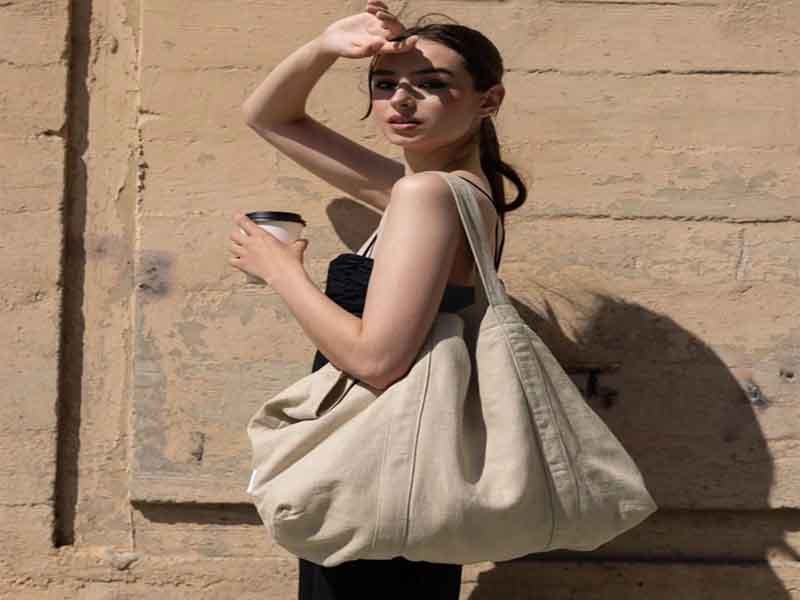
Can't find the answers?
No worries, please contact us and we will answer all the questions you have during the whole process of bag customization.
Make A Sample First?
If you have your own artwork, logo design files, or just an idea,please provide details about your project requirements, including preferred fabric, color, and customization options,we’re excited to assist you in bringing your bespoke bag designs to life through our sample production process.