Skip to content
A hunting bag may look simple when it is hanging on a retail display, but the field tells a very different story. Once the bag is dragged through thorny cover, pressed against wet ground, loaded with optics and ammunition, exposed to freezing rain, or carried for ten hours across uneven terrain, every material decision becomes visible. A fabric that looked strong in a showroom may become noisy in cold weather. A waterproof coating may begin peeling at fold lines. A lightweight buckle may crack under a heavy load. Even a poorly selected lining can turn a small leak into a soaked equipment compartment.
The materials used in hunting bag manufacturing normally include nylon, polyester, Oxford fabric, Cordura-type fabrics, canvas, ripstop textiles, waterproof laminates, polyester or nylon linings, reinforcement panels, foam, spacer mesh, webbing, plastic or metal hardware, and aluminum, steel, or composite frame components. The right combination depends on the intended load, terrain, climate, noise requirement, waterproofing level, product lifespan, and target retail price.
The important point is that no single material makes a hunting bag “good.” Performance comes from the material system. The shell, coating, backing, stitching thread, reinforcement, zipper, webbing, padding, and frame must work together. A premium shell attached to weak webbing is still a weak bag. A waterproof laminate sewn without seam protection is not truly waterproof. A quiet outer fabric with loud hook-and-loop closures may still alert nearby game.
Many failed hunting bags do not fail because the main fabric tears in half. They fail gradually at shoulder-strap joints, zipper corners, compression-strap anchors, frame channels, bottom panels, and repeated fold lines. That is why experienced product developers do not begin by asking, “Which fabric is cheapest?” They begin by asking, “Where will this bag carry stress, collect water, rub against equipment, and make noise?”
Imagine a hunter reaching a remote ridge before sunrise. The temperature is below freezing, the bag is carrying more weight than expected, and wet branches are brushing continuously against the side panels. At that moment, fabric denier, coating flexibility, buckle impact strength, and seam construction stop being technical language. They become the difference between a reliable pack and a long walk home carrying broken equipment by hand.
What Materials Are Used in Hunting Bags?
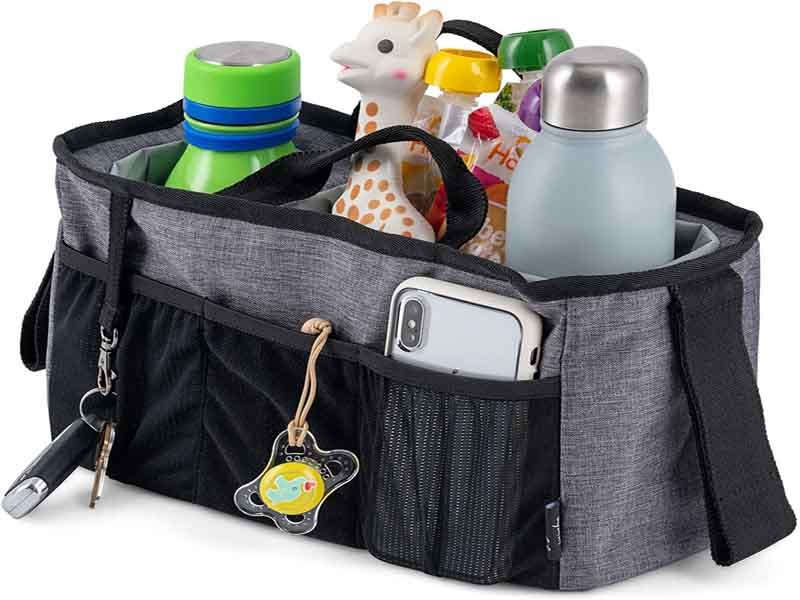
Hunting bags use a combination of structural, protective, load-bearing, and comfort materials. Common choices include nylon or polyester shells, PU or TPU waterproof layers, lightweight linings, high-denier reinforcement panels, polyester or nylon webbing, closed-cell foam, spacer mesh, engineering-plastic buckles, and aluminum or composite frames. Each material should be selected for a specific function rather than simply for appearance or price.
What Is Used for the Outer Shell?
The outer shell is the first defense against abrasion, branches, moisture, dirt, ultraviolet exposure, and repeated handling. It is also the most visible part of the product, so it affects both field performance and perceived quality.
The most common shell materials are polyester Oxford, nylon Oxford, Cordura-branded or Cordura-type nylon fabrics, ripstop nylon, brushed polyester, canvas, and laminated synthetic fabrics. The best option depends on whether the product is designed as a lightweight daypack, a quiet bow-hunting pack, a waterproof meat-hauling pack, a tactical-style hunting backpack, or a large framed expedition bag.
Polyester is widely used because it provides good dimensional stability, strong print performance, relatively good ultraviolet resistance, and competitive cost. It is often selected for camouflage hunting bags produced in medium or large volumes because sublimation, pigment printing, transfer printing, and coated printing can be controlled efficiently.
Nylon generally provides better abrasion and tear performance at a similar fabric weight. It is often used for premium packs, high-wear zones, load-hauling bags, and products expected to contact rock, bark, and rough ground. However, nylon normally costs more and can absorb more moisture than polyester unless it has been properly finished or laminated.
The word “Oxford” describes a basket-style weave rather than one specific fiber. Oxford fabric can be made from polyester or nylon and can range from lightweight 210D constructions to heavy 1680D materials. Two fabrics both called “600D Oxford” may perform very differently because yarn quality, weave density, coating weight, finishing, and backing adhesion are not always the same.
Typical outer-shell options are shown below. The ranges are practical development references rather than universal specifications.
| Outer material | Common construction range | Approximate fabric weight | Main advantages | Main limitations | Suitable applications |
|---|---|---|---|---|---|
| 210D nylon ripstop | 210D | 90–160 gsm | Lightweight, packable, tear-controlling weave | Limited puncture resistance for exposed panels | Internal bags, rain covers, ultralight pockets |
| 420D nylon | 420D | 180–260 gsm | Good strength-to-weight ratio | Higher cost than basic polyester | Daypacks, technical hunting packs |
| 500D nylon or Cordura fabric | 500D | 220–320 gsm | Strong abrasion resistance, professional feel | More expensive, may require color-lot control | Premium hunting backpacks |
| 600D polyester Oxford | 600D | 250–380 gsm | Cost-effective, printable, stable | Lower abrasion performance than quality nylon | General-purpose hunting bags |
| 900D polyester | 900D | 320–450 gsm | Heavy appearance, improved body and durability | Added weight and stiffness | Equipment bags, reinforced field packs |
| 1000D nylon | 1000D | 350–500 gsm | Excellent durability and puncture resistance | Heavy, stiff, expensive | Base panels, tactical packs, load-hauling zones |
| Brushed polyester | 300D–600D base | 220–420 gsm | Quieter surface, softer hand feel | Can collect mud, moisture, and seeds | Bow-hunting and stealth packs |
| Cotton or blended canvas | 10–24 oz constructions | 340–810 gsm | Natural appearance, quiet surface, strong heritage appeal | Heavy when wet, slower drying | Traditional hunting bags |
| TPU laminated nylon | 210D–840D base | 180–500 gsm | High water resistance, flexible, weldable options | Higher material and processing cost | Dry bags, wet-weather hunting packs |
For many projects, the shell does not need to use one fabric everywhere. A more efficient construction may use a 420D or 500D body, a 1000D bottom, brushed fabric on high-noise contact zones, and a lightweight coated fabric inside the lid. This zoned-material approach reduces unnecessary weight while placing strength where failure is most likely.
A representative 35-liter hunting daypack, for example, might use 500D nylon on the main body, 1000D nylon on the base, 420D ripstop on gussets, and a quieter brushed textile on the front panel. This mixed construction can perform better than making the entire bag from 1000D fabric, which may feel overly stiff and heavy for normal day use.
Which Fabrics Are Used for Linings?
The lining protects the inner face of the shell, covers coating surfaces, separates compartments, improves cleanability, and gives the bag a more finished appearance. It is often lighter than the outer shell, but it should not be treated as decoration. Poor lining selection can create tearing around pockets, coating abrasion, color transfer, odor retention, and difficult cleaning.
Common lining fabrics include 150D polyester, 210D polyester Oxford, 210D nylon, ripstop polyester, lightweight TPU-coated fabric, brushed tricot, and antimicrobial or wipe-clean laminated materials.
A 210D polyester lining is a practical option for general compartments because it balances weight, cost, printability, and durability. A lighter 75D or 100D lining may be suitable for small pockets but is often too delicate for compartments holding knives, optics, rangefinders, tools, or hard-edged accessories.
Nylon linings are useful when better tear strength is required, although they may raise cost. Light-colored linings can improve visibility inside deep compartments. Dark camouflage linings look consistent with the exterior, but they make small items more difficult to find in low light. Orange, tan, gray, or muted green linings are often more functional than black.
The lining should also match the expected contents. A general gear compartment may use 210D polyester. A hydration compartment benefits from a water-resistant lining. A game-related or meat-contact compartment requires a wipe-clean, low-absorption material, preferably with sealed or protected seams. A rifle-support pocket may need additional reinforcement rather than ordinary lining fabric.
| Compartment type | Recommended lining | Useful performance target | Design reason |
|---|---|---|---|
| Main storage compartment | 150D–210D polyester | Good tear resistance and coating adhesion | Balances weight and durability |
| Optics pocket | Soft tricot or brushed polyester | Low abrasion against lenses and finishes | Reduces scratching and movement noise |
| Hydration sleeve | PU-coated polyester or nylon | Water-resistant and easy to wipe | Limits moisture migration |
| Ammunition or tool pocket | 210D–420D reinforced textile | Higher puncture and tear resistance | Handles hard-edged contents |
| Meat or wet-gear compartment | TPU-coated or laminated fabric | Low absorption and washable surface | Supports cleaning and odor control |
| Electronics pocket | Soft lining with foam backing | Reduced impact and surface abrasion | Protects GPS units and cameras |
| Expandable side pocket | Stretch woven or mesh | Recovery and controlled elasticity | Holds bottles, tripods, or quick-access gear |
Lining colorfastness should be considered when the bag may be stored wet. Dark lining dye can transfer to light equipment or labels if colorfastness is poor. For products sold in humid or tropical markets, lining materials and foams should also be evaluated for mildew risk, odor retention, and hydrolysis resistance.
A bag does not automatically become more premium because it has a thick lining. In fact, an excessively heavy lining can add several hundred grams without improving real performance. The correct lining is the lightest material that can safely handle the compartment’s expected contents and cleaning conditions.
What Materials Reinforce High-Stress Areas?
High-stress areas are the places where pulling, compression, impact, and repeated movement concentrate. These include shoulder-strap joints, haul handles, hip-belt attachments, compression-strap anchors, zipper ends, base corners, frame channels, and load-lifter connections.
Reinforcement can be created with additional shell layers, high-denier patches, woven tapes, nonwoven backing, high-density polyethylene sheets, thermoplastic panels, bar-tack stitching, or combinations of these methods.
The key is to distribute force over a larger area. Simply sewing a shoulder strap onto a single layer of 600D polyester may create an attractive sample, but the seam can begin tearing when the bag is repeatedly loaded. A better construction extends the strap into the body, adds an internal reinforcement patch, and connects the load path to the frame sheet or back panel.
Common reinforcement materials include:
1000D nylon or heavy polyester for bottom and corner patches.
High-tenacity polyester or nylon webbing for load transfer.
HDPE sheets from approximately 0.8 to 2.0 millimeters for back-panel structure.
Polypropylene sheets for economical stiffening applications.
EVA foam combined with textile backing for shaped protective panels.
Nonwoven scrim for strengthening embroidery, labels, and localized seams.
Hypalon-type synthetic rubber panels for highly stressed attachment points.
TPU films for welded loops, waterproof patches, or abrasion-resistant details.
The strongest-looking material is not always the best choice. A rigid reinforcement bonded to a soft fabric can create a hard transition point where tearing begins. Reinforcement edges should be rounded, tapered, or stitched in a way that avoids concentrating stress along one straight line.
For a hunting pack carrying 25 kilograms or more, shoulder-strap and hip-belt structures should be assessed as part of the complete load path. The shell fabric, reinforcement patch, webbing, stitching pattern, thread, foam, and frame interface all need to function together.
A practical development test is repeated dynamic loading rather than a single static pull. A strap may survive one strong pull but fail after thousands of walking movements. During sampling, the bag can be filled to or above the intended rated load and subjected to repeated lifting, dropping, swinging, and walking simulation. Seams should then be inspected for elongation, thread cutting, fabric whitening, coating separation, and stitch-hole growth.
Which Materials Are Used for Webbing and Straps?
Webbing carries loads, controls compression, attaches equipment, forms handles, and connects shoulder straps or hip belts to the bag body. Polyester, nylon, and polypropylene are the three most common webbing fibers.
Nylon webbing is strong, flexible, and abrasion resistant. It has a smooth, premium feel and performs well in demanding load-bearing applications. However, it can absorb more water and may stretch slightly when wet.
Polyester webbing provides good strength, low stretch, strong ultraviolet resistance, and lower water absorption. It is an excellent choice for hunting bags exposed to rain, sun, and long-term outdoor use.
Polypropylene webbing is lighter and more economical, but it normally has lower abrasion resistance, lower heat resistance, and a less premium hand feel. It may be suitable for light-duty internal straps or price-sensitive accessories, but it is not the first choice for critical shoulder or load-bearing connections.
Webbing is commonly specified by width, thickness, weave, breaking strength, colorfastness, and surface texture. Widths of 20, 25, 38, and 50 millimeters are common in hunting bag construction. A 20-millimeter webbing may be used on small compression straps, while 38- or 50-millimeter webbing is more appropriate for hip belts, heavy handles, and primary harness connections.
| Webbing material | Water absorption | Stretch behavior | Abrasion resistance | UV performance | Common hunting bag use |
|---|---|---|---|---|---|
| Nylon | Moderate | Slightly higher, especially when wet | Excellent | Good with proper stabilization | Heavy straps, handles, premium harnesses |
| Polyester | Low | Low stretch | Very good | Very good | Compression straps, shoulder systems, exterior attachments |
| Polypropylene | Very low | Moderate | Fair | Fair to moderate | Light-duty straps and internal applications |
| High-tenacity polyester | Low | Very low | Excellent | Very good | Load-bearing hunting and tactical packs |
| Elastic webbing | Varies | Designed stretch | Moderate | Depends on fiber and rubber quality | Bottle pockets and retention systems |
Strap padding generally uses EVA foam, polyethylene foam, polyurethane foam, or layered foam systems. EVA foam resists water absorption and maintains shape well. Polyurethane foam can feel softer but may compress more over time and can be more sensitive to moisture and aging. For shoulder straps, density and thickness must be balanced. A very soft strap may feel comfortable in a showroom but collapse under load, creating pressure points after several hours.
Spacer mesh is often applied over the foam to improve airflow and reduce the wet, sticky feeling against clothing. However, large-hole mesh can collect seeds, dust, and plant debris. Fine, durable spacer mesh is usually easier to maintain in forest and grassland environments.
Szoneier can adjust webbing width, weave density, surface texture, logo pattern, reflective yarn, color, and breaking-strength level according to the hunting bag’s load class. For custom development, the webbing should be selected together with the buckle and adjustment hardware. A thick webbing may not slide through a buckle correctly, while a thin webbing may slip under tension.
What Materials Are Used for Frames?
Frame materials help transfer weight from the shoulders to the hips, maintain bag shape, protect carried equipment, and improve stability. Hunting packs may use frame sheets, internal stays, full internal frames, external frames, or hybrid systems.
HDPE is widely used for frame sheets because it is light, moisture resistant, durable, and economical. It is commonly paired with aluminum stays. The plastic sheet spreads pressure across the back panel, while the stays resist bending and help transfer load.
Aluminum is popular for stays and load-hauling frames because it provides a useful combination of stiffness, low weight, formability, and cost. Some aluminum stays can be shaped to follow the user’s back profile. Full aluminum frames are often used in hunting packs intended to transport meat or heavy equipment.
Steel provides high strength but adds significant weight. It may be appropriate for specialized hardware or economical external frames, but it is less common in premium lightweight packs.
Carbon fiber and composite materials offer excellent stiffness-to-weight performance, but they cost more and require controlled engineering. They are attractive for high-end load-hauling systems, although impact damage can be less visible than bending in aluminum.
Fiberglass rods, acetal components, and reinforced polymer structures are also used in lightweight or modular frame designs.
| Frame material | Relative weight | Stiffness | Field repairability | Cost level | Best use |
|---|---|---|---|---|---|
| HDPE sheet | Low | Moderate | Difficult to reshape but rarely needed | Low | Daypacks and internal frame support |
| Aluminum stay | Low | High | Can often be reshaped in the field | Medium | Technical hunting backpacks |
| Aluminum full frame | Medium | High | Repairable with basic tools in some cases | Medium to high | Meat-hauling and expedition packs |
| Steel | High | Very high | Repairable but heavy | Low to medium | Heavy-duty or economical frame systems |
| Carbon fiber | Very low | Very high | Difficult to repair in the field | High | Premium lightweight load-hauling packs |
| Fiberglass composite | Low | Moderate to high | Limited field repair | Medium | Flexible support structures |
| Reinforced polymer | Low | Moderate | Component replacement may be required | Medium | Molded modular frames |
Frame selection should begin with load range rather than appearance. A 20-liter daypack carrying clothing and food does not need the same frame as a 70-liter hunting pack expected to carry meat. Overengineering the frame increases weight, cost, and stiffness. Underengineering it creates instability, discomfort, and premature failure.
The connection between frame and fabric is equally important. A strong aluminum frame can tear through a poorly reinforced frame pocket. Frame ends should be capped, rounded, or enclosed so that they do not abrade the textile during repeated movement.
For custom hunting pack development, Szoneier can coordinate shell textiles, foam, webbing, reinforcement, molded hardware, and frame systems as one construction package. This allows the materials to be evaluated according to the intended load, climate, storage method, and field environment rather than being purchased as unrelated components.
Which Fabric Is Best for the Outer Shell?
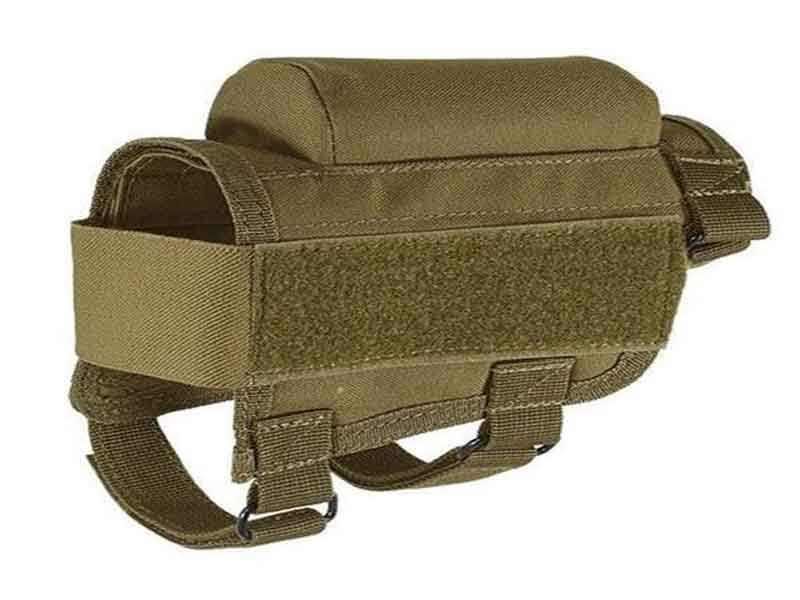
There is no single best shell fabric for every hunting bag. Nylon is usually preferred for high abrasion and demanding load conditions, while polyester offers better cost control, print stability, and ultraviolet resistance. Cordura fabrics suit premium durability requirements, Oxford constructions offer broad specification flexibility, canvas provides quiet traditional performance, and laminates are best when waterproofing is a primary objective.
Is Nylon Better Than Polyester?
Nylon is often stronger than polyester at a comparable yarn size and fabric weight, particularly in tear and abrasion performance. This makes it attractive for rough-terrain packs, bottom panels, frame pockets, and high-load hunting bags.
Polyester, however, has advantages that are easy to underestimate. It absorbs less moisture, maintains dimensions well, resists ultraviolet degradation effectively, and generally provides more predictable camouflage printing. It is also more economical in many markets.
The choice should not be reduced to “nylon is premium and polyester is cheap.” High-quality polyester can outperform low-quality nylon. Yarn tenacity, weave density, coating formulation, finishing quality, and production control can matter as much as fiber type.
A tightly woven 600D high-tenacity polyester with a well-bonded PU coating may be more reliable than a loosely woven nylon fabric with inconsistent yarn and weak backing adhesion. Material names alone do not provide enough information for professional sourcing.
| Decision factor | Nylon | Polyester |
|---|---|---|
| Abrasion resistance | Usually stronger at comparable weight | Good, especially in high-tenacity constructions |
| Tear resistance | Usually higher | Moderate to high depending on weave |
| Water absorption | Higher | Lower |
| Drying speed | Moderate | Generally faster |
| UV resistance | Good | Generally very good |
| Dimensional stability | Good | Very good |
| Camouflage print control | Good with suitable process | Often excellent |
| Material cost | Usually higher | Usually lower |
| Hand feel | Often softer and more technical | Can feel firmer or more structured |
| Best application | Premium, rough-use, load-bearing packs | General hunting bags, printed packs, cost-controlled products |
Nylon is a strong choice for a mountain hunting pack that may scrape against rock and carry heavy loads. Polyester may be more suitable for a waterfowl bag exposed to sun, mud, and regular wetting, especially when easy printing and dimensional stability are priorities.
Hybrid construction is often the smartest answer. A bag can use polyester on broad camouflage panels and nylon on the base, shoulder attachments, and high-abrasion zones. This keeps cost and weight under control while strengthening critical areas.
How Does Oxford Fabric Perform?
Oxford fabric performs well in hunting bag manufacturing because it is available in many fiber types, deniers, weave densities, coatings, weights, colors, and finishes. It can be engineered for lightweight compartments, general pack bodies, reinforced bases, waterproof bags, or structured equipment cases.
The basket-like Oxford weave gives the fabric a visible texture and stable structure. Common options include 210D, 300D, 420D, 600D, 900D, 1200D, and 1680D constructions. However, denier alone should never be used as the quality standard.
A denier number describes yarn linear density. It does not directly state tensile strength, tear strength, coating quality, fabric weight, or abrasion life. Two 600D polyester Oxford fabrics may have different yarn tenacity, thread count, coating thickness, and finished weight.
When comparing Oxford fabrics, request the following information:
Fiber composition.
Yarn denier.
Finished fabric weight.
Thread density.
Coating type and coating weight.
Water-resistance result.
Tensile and tear performance.
Abrasion performance.
Colorfastness.
Coating adhesion.
Cold-crack performance when needed.
Hydrolysis resistance for humid markets.
A practical 600D polyester Oxford for a general hunting bag may weigh approximately 280 to 380 gsm after coating. A lighter construction may reduce cost but feel thin and show lower puncture resistance. A heavier version may provide better body but can become stiff and difficult to sew around curves.
Oxford fabric also accepts many secondary processes, including PU coating, PVC backing, TPU lamination, DWR treatment, flame-retardant finishing, antimicrobial treatment, camouflage printing, embossing, brushing, and bonding with foam or tricot.
For products requiring quiet movement, a standard hard-finish Oxford may be too noisy. The surface can be brushed, laminated to a softer face textile, or replaced in selected areas with a quiet polyester fabric. For wet-weather products, Oxford can be coated or laminated, but seam construction still determines whether the finished bag is merely water resistant or genuinely waterproof.
Is Cordura Suitable for Hunting Bags?
Cordura fabrics are highly suitable for hunting bags that require dependable abrasion resistance, tear strength, and long service life. They are commonly associated with military, tactical, workwear, luggage, motorcycle, and outdoor applications.
Cordura is a trademarked family of fabrics rather than a generic name for all heavy nylon. Product developers should distinguish genuine Cordura-branded fabric from unbranded “Cordura-style” or high-tenacity nylon alternatives.
Common hunting bag choices include 500D and 1000D constructions. A 500D fabric often provides a strong balance between weight, flexibility, and abrasion resistance. A 1000D fabric is heavier and stiffer but works well for bases, frame interfaces, equipment sleeves, and severe-wear applications.
Using 1000D fabric throughout an entire daypack is not always an upgrade. It can make the bag heavier, louder, harder to compress, and less comfortable for daily use. It may also increase sewing difficulty around layered seams.
A better design may use:
500D fabric for the main shell.
1000D fabric for the base and frame-contact areas.
Lightweight ripstop for inner dividers.
Brushed fabric for quiet front zones.
TPU-coated fabric for wet compartments.
Cordura-based fabrics can also be printed or coated, but minimum quantities, color availability, lead times, and licensing or sourcing requirements should be confirmed early. For highly customized camouflage patterns, polyester may offer easier color control and more flexible production economics.
When a customer requests “Cordura quality,” the actual need may be abrasion resistance rather than the trademark itself. Szoneier can compare genuine branded materials with high-tenacity nylon and polyester alternatives, allowing the final decision to consider performance, budget, lead time, branding position, and order quantity.
When Is Canvas a Good Choice?
Canvas is a strong choice when quiet handling, natural appearance, heritage style, and a substantial hand feel are more important than minimum weight or rapid drying.
Traditional hunting bags, cartridge bags, game bags, field satchels, shooting bags, and waxed outdoor packs often use cotton canvas or cotton-polyester blended canvas. Common constructions range from approximately 10 to 24 ounces per square yard, although product requirements vary widely.
Canvas naturally produces less high-frequency rustling than many hard-coated synthetic fabrics. This can be useful for close-range hunting, woodland movement, and products positioned around traditional field culture.
Waxed canvas improves water repellency and creates an aged visual character. It also allows marks and creases to develop over time, which some customers view as part of the product’s appeal.
However, canvas has limitations:
It is heavier than most synthetic alternatives.
Cotton canvas absorbs water unless effectively treated.
Wet canvas dries slowly.
Untreated cotton may mildew during poor storage.
Color consistency can vary between dye lots.
Waxed surfaces require care and may transfer wax.
Heavy canvas creates bulky seams.
Canvas is therefore not automatically more durable than high-tenacity nylon. It performs differently. It offers quietness and character, but it may not be ideal for alpine packs, ultralight systems, or bags that must dry quickly after repeated rain exposure.
Blended canvas can improve dimensional stability and drying performance while retaining a natural look. A cotton-polyester canvas may be selected when the product needs traditional styling with more predictable manufacturing behavior.
Leather reinforcement is often added to canvas hunting bags, but synthetic leather, microfiber leather, or coated webbing may be more consistent in wet environments. Genuine leather requires careful selection because poor-quality leather can bleed color, stiffen after soaking, or develop mold during storage.
Are Laminated Fabrics Worth Using?
Laminated fabrics are worth using when water protection, low liquid absorption, cleanability, dimensional stability, or technical appearance is central to the product. They are especially useful for wet-weather hunting bags, dry-bag-style packs, meat compartments, waterfowl gear bags, and removable waterproof liners.
A laminated fabric combines a woven face textile with a film or membrane. TPU is commonly used because it can provide flexibility, strong waterproof performance, low-temperature resistance, and compatibility with radio-frequency or hot-air welding in suitable constructions.
PVC laminates are generally economical and can provide a heavy, waterproof structure. However, PVC is usually heavier, less flexible in cold conditions, and less aligned with products seeking a lightweight or premium environmental position.
PU-coated fabric is not always a laminate. A liquid polyurethane coating is applied to the textile backing and cured. It is lighter and often more economical than a full film laminate, but long-term performance depends heavily on coating quality, thickness, adhesion, and hydrolysis resistance.
| Waterproof construction | Weight impact | Flexibility | Waterproof potential | Seam method | Suitable hunting products |
|---|---|---|---|---|---|
| Light PU coating | Low | High | Light to moderate rain protection | Sewn seams | General hunting backpacks |
| Heavy PU coating | Moderate | Moderate to high | Strong water resistance | Sewn or taped seams | Wet-climate packs |
| TPU lamination | Moderate | High | High waterproof potential | Taped or welded seams | Dry bags and waterproof compartments |
| PVC backing | High | Moderate to low | High | Sewn or welded depending on construction | Economical waterproof gear bags |
| Three-layer laminate | Moderate to high | Depends on structure | High with proper construction | Taped seams | Premium technical hunting packs |
| Removable waterproof liner | Separate component | High | High when properly closed | Welded liner seams | Modular expedition bags |
The fabric may be waterproof while the bag is not. Needle holes, zipper teeth, binding seams, drainage openings, and attachment points can all allow water penetration. Claims such as “waterproof hunting bag” should therefore be based on finished-product construction and testing, not only on the shell fabric’s hydrostatic rating.
Laminates can also create noise. A stiff film laminated to a hard face fabric may crackle in cold weather. During development, the material should be flexed, folded, compressed, and tested at realistic temperatures. A material that feels quiet at room temperature may become noticeably louder near freezing.
Szoneier can develop hunting bags using polyester, nylon, canvas, Oxford fabric, Cordura materials, brushed textiles, PU-coated fabrics, TPU laminates, reinforced webbing, padded harness systems, and custom frame structures. Customers can provide a tech pack, reference sample, target load, preferred camouflage pattern, or performance requirements. Based on these details, the Szoneier team can recommend materials, prepare samples, test construction details, and coordinate custom logos, colors, labels, hardware, and packaging for complete hunting bag production.
How Does Denier Affect Bag Performance?
Denier affects the weight, thickness, stiffness, abrasion resistance, and handling characteristics of a hunting bag fabric, but it does not measure total fabric quality. A higher-denier material generally uses thicker yarns and can provide greater resistance to punctures and surface wear. However, weave density, fiber strength, coating quality, and construction often matter just as much as the denier number.
A 1000D fabric is not automatically twice as durable as a 500D fabric, and a tightly woven 420D high-tenacity nylon can outperform a loosely constructed 600D polyester in demanding conditions. The best denier depends on where the fabric is used, how much weight the bag carries, and how frequently it contacts branches, rocks, mud, and equipment.
What Does Fabric Denier Mean?
Denier is a unit that describes the linear mass of a yarn. One denier means that 9,000 meters of the yarn weighs one gram. A 500-denier yarn is therefore heavier and normally thicker than a 210-denier yarn made from the same type of fiber.
In practical hunting bag development, denier is used as a convenient way to classify fabrics. Common specifications include 210D, 300D, 420D, 500D, 600D, 900D, 1000D, and 1680D. These numbers help designers estimate the likely weight, appearance, flexibility, and durability of a material, but they do not replace physical testing.
Several variables can make two fabrics with the same denier perform very differently:
Fiber type affects tensile and abrasion strength.
High-tenacity yarns can outperform ordinary yarns of the same denier.
Weave density determines how closely the yarns are packed.
Ripstop reinforcement changes tear propagation.
Coating weight affects water resistance and stiffness.
Heat setting influences dimensional stability.
Surface finishing changes noise and abrasion behavior.
Fabric weight affects body, thickness, and perceived quality.
A lightweight 420D nylon made from high-tenacity yarn may provide excellent tear resistance while remaining flexible. A basic 600D polyester may be heavier but less resistant to repeated abrasion. This is why professional material approval should include more than a supplier’s fabric name.
For hunting applications, useful evaluation data may include tensile strength, tear strength, abrasion cycles, puncture resistance, coating adhesion, hydrostatic pressure, colorfastness, cold flexibility, and finished fabric weight.
| Material description | What the specification tells you | What it does not tell you |
|---|---|---|
| 210D nylon | Approximate yarn size and fiber type | Weave density, coating strength, tear result |
| 420D ripstop nylon | Yarn size, fiber, and reinforced weave style | Exact tensile strength or waterproof level |
| 500D Cordura nylon | Branded fabric family and yarn size | Finished bag durability without construction data |
| 600D polyester Oxford | Fiber, yarn size, and general weave style | Whether it uses high-tenacity yarn or a strong coating |
| 1000D nylon | Heavy nylon yarn construction | Whether it is suitable for every panel of the bag |
| 1680D ballistic-style polyester | Large yarn and dense visual structure | Long-term coating or seam performance |
Denier should therefore be treated as one part of a material specification. A complete fabric description might read:
500D high-tenacity nylon, solution dyed, PU-coated, approximately 300 gsm, water resistance above 1,500 millimeters, with durable water-repellent surface treatment.
That statement is far more useful than simply writing “500D fabric.”
The intended bag size also matters. A 15-liter waist pack can become unnecessarily rigid if made entirely from 1000D material. A 70-liter meat-hauling pack may feel underbuilt if its base and frame channels use only lightweight 210D fabric. Denier should follow the expected stress level of each panel.
Which Is Better, 420D or 500D?
Neither 420D nor 500D is universally better. A 420D fabric is usually lighter and more flexible, while a 500D fabric normally offers more body and abrasion resistance. The correct choice depends on whether the hunting bag prioritizes low weight, packability, durability, or load support.
A 420D nylon fabric works well for technical daypacks, side panels, expandable compartments, internal sleeves, and bags where every gram matters. It can provide a strong strength-to-weight ratio, especially when made from high-tenacity yarn.
A 500D nylon or Cordura fabric is commonly chosen for premium hunting backpacks because it balances durability, weight, and sewing performance. It is usually easier to fold and stitch than 1000D material but provides more confidence in abrasive environments than many lightweight fabrics.
The weight difference may appear small per square meter, but it becomes meaningful across an entire backpack. If a 420D fabric weighs 230 gsm and a 500D option weighs 310 gsm, a bag using two square meters of shell material could gain approximately 160 grams before additional reinforcements, coatings, and trims are considered.
The difference also affects construction. Heavier fabric creates bulk at bound seams, zipper corners, pocket openings, and multilayer reinforcement points. When a panel includes shell fabric, foam, lining, webbing, and binding, even a modest increase in fabric thickness can make sewing more difficult.
| Selection factor | 420D nylon | 500D nylon |
|---|---|---|
| Finished weight | Lower | Moderate |
| Flexibility | Higher | Moderate |
| Abrasion resistance | Good to very good | Very good |
| Packability | Better | Moderate |
| Shape retention | Moderate | Better |
| Sewing around curves | Easier | Still manageable |
| Suitable load range | Light to medium | Medium to heavy |
| Common use | Daypacks and secondary panels | Main shells and premium packs |
| Cost | Moderate | Moderate to high |
| Overall impression | Lightweight and technical | Durable and substantial |
A 420D high-tenacity nylon can be a better choice than 500D standard nylon when the goal is to reduce weight without sacrificing much tear strength. Conversely, 500D fabric may be more suitable when the bag will repeatedly contact tree bark, rough vehicle floors, stone, or metal hunting equipment.
The decision also depends on coating and finishing. A heavily coated 420D fabric may become stiffer and heavier than a lightly coated 500D fabric. A brushed 500D face fabric may feel softer and quieter than an untreated 420D Oxford.
For a versatile 30- to 45-liter hunting pack, one practical construction is to use 500D fabric on the main body and 420D material on gussets, lid panels, or pockets. This places greater durability on exposed surfaces while controlling total weight.
Material use can also be adjusted by hunting style. A mobile backcountry hunter may prefer a lighter 420D construction because the bag is carried for long distances. A hunter who regularly moves through dense thorn vegetation may accept the extra weight of 500D material for better abrasion protection.
How Does 600D Polyester Compare?
600D polyester is one of the most widely used fabrics in hunting bags because it combines manageable cost, good print performance, acceptable durability, and broad production availability. It is particularly suitable for camouflage packs, shooting bags, ammunition bags, equipment carriers, and general outdoor backpacks.
Its real performance varies considerably. The term 600D polyester may refer to an economical loosely woven fabric or a dense high-tenacity construction with a durable coating. Buyers should therefore compare finished fabric weight and test data rather than relying on the 600D label alone.
A standard 600D polyester Oxford may weigh around 250 to 380 gsm after coating. Heavier constructions can provide more body and abrasion resistance, while lighter versions reduce cost and may be appropriate for promotional or occasional-use products.
Compared with 420D or 500D nylon, 600D polyester generally offers:
Lower raw material cost.
Lower moisture absorption.
Good dimensional stability.
Strong camouflage printing performance.
Good ultraviolet resistance.
A slightly firmer hand feel.
Lower abrasion resistance at a comparable finished weight in many constructions.
Polyester is especially useful when a custom camouflage pattern must remain consistent across production. The fiber responds well to dye-sublimation and transfer-printing processes, although the correct print method depends on the fabric structure and coating sequence.
A common misconception is that 600D polyester must be stronger than 500D nylon because the denier number is higher. In reality, nylon usually has higher fiber toughness, and a 500D nylon can outperform ordinary 600D polyester in abrasion and tear testing.
However, polyester may perform better in prolonged sunlight and damp environments. It absorbs less water and tends to dry faster. For waterfowl bags, field equipment carriers, or products frequently stored in vehicles, this can be a meaningful advantage.
| Performance area | 600D polyester | 500D nylon |
|---|---|---|
| Material cost | Usually lower | Usually higher |
| Abrasion performance | Moderate to good | Very good |
| Tear performance | Moderate to good | Usually higher |
| Water absorption | Low | Higher |
| UV stability | Very good | Good |
| Print consistency | Excellent | Good |
| Surface feel | Structured | Softer and more technical |
| Product positioning | General to mid-range | Mid-range to premium |
| Best use | Printed shells and equipment bags | High-wear hunting backpacks |
For a cost-controlled hunting backpack, 600D polyester can be used on the body with 900D polyester or 1000D nylon on the base. This mixed-material arrangement is more effective than using a heavy fabric everywhere.
A practical quality-control issue with 600D polyester is coating separation. Low-quality PU or PVC backing may crack, become sticky, or peel after repeated folding and exposure to heat and humidity. The fabric should therefore be evaluated for coating adhesion, hydrolysis resistance, and accelerated aging when the product is intended for demanding climates.
The texture of 600D Oxford can also create noise. A hard coating and tightly structured weave may produce a scraping sound against branches or clothing. Brushing, laminating a softer face, or using quiet textile panels in selected zones can improve stealth performance.
Is 1000D Fabric Too Heavy?
1000D fabric can be too heavy when used across an entire hunting bag, but it is highly effective in areas exposed to severe abrasion, concentrated load, or repeated ground contact. Its best use is often selective rather than universal.
A 1000D nylon fabric may weigh approximately 350 to 500 gsm depending on the weave and coating. Compared with 500D material, it creates greater structure and puncture resistance but also increases weight, stiffness, seam thickness, and manufacturing cost.
For a small daypack carrying ten kilograms or less, full 1000D construction may be excessive. The extra durability may not justify the weight penalty. It can also make the bag feel bulky and less comfortable against the body.
For a meat-hauling pack, external-frame bag, tactical hunting pack, or equipment carrier, 1000D fabric may be appropriate on:
The bottom panel.
Frame sleeves.
Load-shelf connections.
Compression-strap anchors.
Haul-handle attachments.
Weapon-carry pockets.
Corners exposed to dragging.
Areas contacting metal components.
The entire shell may still use 500D or 600D fabric.
The weight penalty can be estimated during development. Suppose a 70-liter bag uses approximately 2.5 square meters of outer fabric. Replacing a 300 gsm shell with a 450 gsm shell adds around 375 grams before accounting for heavier seam binding, thread, and reinforcement.
For hunters already carrying optics, water, ammunition, clothing, and field equipment, an additional 375 grams may be significant. A heavier fabric also absorbs more coating and can increase shipping weight across a large production order.
| Bag type | Recommended use of 1000D fabric |
|---|---|
| Small waist pack | Usually unnecessary except tiny reinforcement patches |
| Lightweight daypack | Bottom and strap anchors only |
| 30–45 L hunting pack | Base, frame channel, and weapon pocket |
| 50–75 L expedition pack | Base, high-stress zones, and load shelf |
| Meat-hauling pack | Extensive use around frame and load structure |
| Heavy equipment bag | Main shell may be justified |
| Vehicle storage bag | Useful where weight is less critical |
Cold-weather behavior should also be considered. A heavy fabric with a thick coating can become stiff in freezing conditions. The material may be durable but difficult to open, compress, or roll. Cold-crack testing is especially important for bags intended for winter hunting.
There is also a comfort issue. Heavy shell materials reduce the ability of a bag to conform naturally to the wearer. This may improve structure for load hauling but feel unnecessarily rigid on a daypack.
Szoneier typically evaluates 1000D fabric as part of a zoning strategy. By using it only where abrasion and stress are highest, the finished bag can retain durability without carrying unnecessary weight.
How Does Ripstop Weave Improve Strength?
Ripstop fabric uses thicker reinforcement yarns woven into a regular grid. This grid helps limit the spread of small tears by interrupting the tear path. It does not make the fabric impossible to tear, but it can prevent minor damage from quickly becoming a large opening.
The grid can be subtle or visually pronounced. Common patterns include square, diamond, and mini-ripstop structures. Reinforcement yarns may be made from the same fiber as the base fabric or from higher-strength yarn.
Ripstop construction is valuable for hunting bags because punctures can occur from branches, knives, metal clips, antlers, and equipment edges. A small puncture in plain fabric may extend under load. In ripstop fabric, the reinforced grid can slow that progression.
Ripstop is commonly used in:
Lightweight outer shells.
Internal dividers.
Rain covers.
Expandable pockets.
Stuff sacks.
Removable liners.
Tent-style accessory panels.
Packable game bags.
The term “ripstop” should not be interpreted as a complete durability rating. A 70D ripstop fabric is still much lighter and less puncture resistant than a 500D plain-weave nylon. The ripstop grid improves damage control, but the base yarn and fabric weight still determine overall strength.
A useful comparison is between puncture resistance and tear propagation. Heavy plain fabric may resist the initial puncture better. Lightweight ripstop may puncture more easily but prevent the damage from spreading as quickly. Material choice should therefore reflect the likely failure mode.
For a lightweight hunting pack, a 420D ripstop nylon can provide a strong compromise between abrasion resistance and tear control. For a waterproof liner, a 210D TPU-laminated ripstop fabric may deliver low weight with better damage containment than a plain lightweight textile.
The weave grid can affect printing. Large ripstop lines may interrupt detailed camouflage graphics or create a technical appearance that does not fit every product. Mini-ripstop patterns offer a smoother visual surface.
Coating quality remains critical. A ripstop grid may stop a textile tear, but it cannot prevent a weak waterproof coating from peeling. Abrasion can also wear through the coating before the base fabric fails.
When selecting denier and weave, manufacturers should consider the complete material map rather than using one specification throughout the bag. A well-designed hunting bag may combine:
210D ripstop for internal organization.
420D nylon for lighter side panels.
500D nylon for the main shell.
600D printed polyester for camouflage zones.
1000D nylon for the base.
TPU-laminated ripstop for waterproof compartments.
This approach creates a better balance of weight, durability, cost, and field usability than choosing one heavy fabric for every panel.
How Are Hunting Bags Made Water-Resistant?
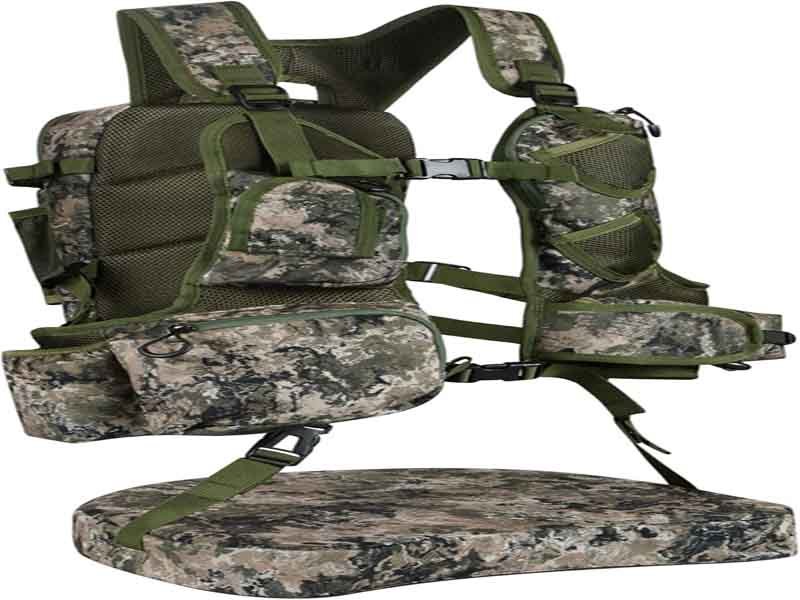
Hunting bags are made water-resistant by combining tightly woven shell fabrics with durable water-repellent finishes, PU or PVC coatings, TPU laminates, protected zippers, covered openings, and carefully designed seams. The fabric may resist water on its own, but the completed bag only performs well when stitching holes, closures, attachment points, and compartment layouts are also controlled.
Water resistance exists on a spectrum. A bag that sheds a brief shower is different from one designed for hours of heavy rain, and both are different from a fully waterproof dry bag that may withstand temporary immersion. Clear performance definitions should be established before material selection begins.
What Is a DWR Finish?
DWR stands for durable water repellent. It is a surface treatment that causes water to bead and roll off the face of the fabric rather than soaking into the yarns immediately.
A DWR finish helps the exterior stay lighter, cleaner, and faster drying during light rain or wet vegetation contact. It also reduces the amount of water reaching the underlying coating or laminate.
DWR is not the same as a waterproof membrane. It is applied to the outer face, while a waterproof coating or film is usually placed on the back of the textile. A hunting bag may use both.
A new DWR-treated fabric often shows strong water beading. Over time, dirt, oil, abrasion, detergent, and repeated flexing can reduce that effect. The treatment may still be present, but contamination can prevent proper beading.
DWR performance can be evaluated with spray testing. The fabric is exposed to controlled water application, and the surface wetting pattern is rated. A high initial result is useful, but testing after washing, abrasion, or aging gives a more realistic indication of durability.
| Water-protection element | Location | Primary function | Main limitation |
|---|---|---|---|
| DWR finish | Outer fabric face | Makes water bead and reduces wetting | Wears down with use and contamination |
| PU coating | Fabric back | Blocks water penetration | Can hydrolyze or peel if quality is poor |
| TPU film | Laminated to fabric | Provides a strong waterproof barrier | Increases material and processing cost |
| PVC backing | Fabric back | Creates economical waterproof protection | Heavy and may stiffen in cold weather |
| Seam tape | Inside sewn seams | Covers needle holes | Requires compatible fabric and controlled heat |
| Waterproof zipper | Opening area | Reduces leakage through zipper chain | Usually not fully submersible |
| Storm flap | Over zipper or opening | Diverts rain away from closure | Adds material and handling steps |
The DWR chemistry should match the target market’s regulatory and environmental requirements. Fluorine-free finishes are increasingly selected, although their oil repellency and long-term performance may differ from older fluorinated treatments.
For hunting bags, water repellency should also be balanced with quietness. Some surface treatments can make fabric feel crisp or produce more rubbing noise. A soft brushed face may be quieter but absorb more surface moisture unless it is effectively treated.
DWR performance can vary by camouflage print process. Printing, washing, brushing, and heat treatment may affect the final repellency. The correct production sequence is therefore important. In many cases, the water-repellent finish is applied after printing and other surface processes.
Which Coating Is Better, PU or PVC?
PU coating is generally lighter, more flexible, and better suited to technical hunting backpacks. PVC coating is usually heavier, more economical, and capable of creating a firm waterproof backing. Neither is automatically superior; the correct choice depends on product weight, climate, cost, flexibility, and environmental requirements.
PU-coated fabrics are widely used for outdoor bags. The coating can be adjusted from a light layer for basic water resistance to a heavier application for greater hydrostatic pressure. PU maintains flexibility well and usually creates less bulk than PVC.
However, PU quality varies significantly. Low-grade formulations may become sticky, powdery, or delaminated after exposure to heat and humidity. This deterioration is often associated with hydrolysis. Bags stored in hot, humid warehouses, vehicle compartments, or tropical climates can be particularly vulnerable.
Polyether-based PU systems generally provide better hydrolysis resistance than basic polyester-based PU, although cost is higher. Material requirements should therefore include aging performance rather than only an initial water-resistance result.
PVC provides a dense, waterproof backing and is common in heavy gear bags, economical dry bags, truck equipment bags, and products where low cost matters more than minimum weight.
PVC limitations include:
Higher finished weight.
Reduced flexibility in low temperatures.
A stronger plastic feel.
Potential odor concerns.
Environmental and regulatory considerations.
More difficult disposal and recycling.
For a standard hunting backpack, PU is usually the more practical choice. For a rugged waterproof equipment bag that is transported by vehicle, PVC may still be appropriate.
| Evaluation point | PU coating | PVC coating |
|---|---|---|
| Weight | Lower | Higher |
| Flexibility | Good to excellent | Moderate |
| Cold-weather behavior | Usually better | Can stiffen |
| Waterproof potential | Moderate to high | High |
| Hydrolysis risk | Must be controlled | Low hydrolysis risk |
| Surface feel | More textile-like | More plastic-like |
| Cost | Moderate | Often lower |
| Environmental profile | Generally more favorable | More restricted in some markets |
| Best application | Technical backpacks | Heavy waterproof gear bags |
Coating thickness should be chosen according to actual water exposure. Applying a heavy coating to every panel can increase weight and stiffness without improving the bag’s weak points. Water may still enter through seams and zippers.
The coating must also tolerate repeated folding. Hunting bags are compressed, rolled, stuffed, and stored. A coating that passes a static hydrostatic test may still crack along fold lines after repeated use.
Adhesion between coating and fabric should be inspected after heat aging, cold exposure, bending, and abrasion. White stress marks, bubbling, peeling, and powder formation are warning signs.
How Does TPU Lamination Work?
TPU lamination bonds a thermoplastic polyurethane film to a textile. The film forms a continuous waterproof barrier, while the woven fabric provides strength, abrasion resistance, and structure.
TPU laminates are widely used in premium waterproof bags because they offer good flexibility, low-temperature performance, and compatibility with heat welding or radio-frequency welding in properly engineered constructions.
The laminate may place the TPU film on the inside of the bag, between textile layers, or on the exposed surface. The arrangement affects appearance, abrasion resistance, weldability, and cleaning.
A common waterproof hunting bag construction may use:
420D or 600D nylon or polyester face fabric.
A TPU film layer.
Welded or seam-taped construction.
Roll-top or waterproof zipper closure.
Reinforced welded attachment patches.
TPU thickness can vary. A thicker film may improve puncture resistance and welding strength but adds weight and stiffness. A thinner film reduces weight but requires careful handling during cutting and welding.
Lamination quality depends on adhesion. Poor bonding can cause bubbles or delamination after heat, moisture, or repeated folding. The adhesive system and lamination temperature must be compatible with both the textile and TPU film.
TPU-laminated material can be more difficult to sew than ordinary coated Oxford. Needle holes remain permanent and may leak unless taped. Welding avoids needle holes, but not every bag shape or reinforcement can be produced entirely by welding.
Welded seams also require sufficient overlap width and controlled temperature, pressure, and dwell time. Excessive heat can distort the film, while insufficient heat creates weak seams.
| TPU construction factor | Effect on finished bag |
|---|---|
| Base fabric denier | Controls abrasion resistance and structural strength |
| Film thickness | Influences waterproofing, puncture resistance, and flexibility |
| Lamination adhesion | Determines resistance to bubbling and delamination |
| Welding compatibility | Affects whether needle-free seams are possible |
| Low-temperature flexibility | Important for winter hunting |
| Hydrolysis resistance | Important for humid storage |
| Surface finish | Influences cleanability, noise, and appearance |
TPU laminates are especially useful for removable meat liners, waterproof bottom compartments, waterfowl bags, dry-bag-style backpacks, and equipment cases exposed to mud and rain.
They may not be necessary for every hunting bag. A general daypack used in moderate conditions may achieve adequate protection with DWR-treated fabric, a quality PU coating, covered zippers, and a rain cover. Using TPU everywhere can increase cost without improving normal user experience.
Are Laminated Fabrics Fully Waterproof?
The laminated fabric itself may be waterproof, but the completed hunting bag is only fully waterproof when every seam, zipper, attachment point, and opening prevents water entry.
A waterproof laboratory result for fabric does not guarantee a waterproof product. Once the material is cut and sewn, each needle creates a hole. Webbing anchors and reinforcement patches add more stitch lines. Zippers, hydration ports, drainage holes, and frame openings create additional entry points.
Finished bags are commonly divided into three practical protection levels:
Water-repellent bags resist light rain and splashes.
Water-resistant bags withstand longer rain exposure but may leak through seams or openings.
Waterproof bags use sealed seams and controlled closures to prevent water entry under defined conditions.
A roll-top dry bag can often provide stronger water protection than a backpack with multiple zippered compartments. Every zipper and pocket increases convenience but also creates a possible leak path.
Waterproof zippers may use a coated chain and tight slider structure. They resist rain more effectively than ordinary coil zippers, but many are not designed for prolonged submersion. Their curves, endpoints, and slider garages require careful construction.
Waterproof claims should be tied to a test method. Useful finished-product evaluations include:
Shower testing.
Rain-room testing.
Hydrostatic pressure testing for fabric.
Seam leakage testing.
Temporary immersion testing.
Internal tissue or absorbent-paper inspection.
Repeated flexing before retesting.
The intended test should match the product. A hunting backpack does not necessarily need to survive underwater immersion, but it may need to protect equipment during two hours of heavy rain.
| Product claim | Expected construction | Realistic use |
|---|---|---|
| Water repellent | DWR fabric and basic coating | Dew, wet grass, brief drizzle |
| Water resistant | Coated fabric, protected openings, improved seams | Moderate rain and splashes |
| Highly water resistant | Laminated fabric, waterproof zipper, seam protection | Prolonged wet weather |
| Waterproof | Welded or fully taped seams and controlled closure | Heavy rain and defined immersion conditions |
| Submersible | Specialized closure and validated pressure test | Short-term underwater exposure |
Designers should avoid using waterproof materials in a way that traps moisture inside. Wet clothing, perspiration, or game-related contents can create condensation and odor. Some compartments may need drainage, removable liners, or ventilation rather than complete sealing.
How Do Sealed Seams and Zippers Help?
Sealed seams and protected zippers address the areas where water most commonly enters a hunting bag. Even when the shell fabric is waterproof, ordinary stitched seams can leak because thread and needle holes create channels through the barrier.
Seam sealing methods include liquid sealant, heat-applied seam tape, adhesive tape, bound seam structures, and welding.
Seam tape is applied over the inside of a stitched seam using heat and pressure. The tape must be compatible with the fabric coating or laminate. A tape that bonds well to PU may not bond properly to certain TPU, silicone, or PVC surfaces.
Tape width should cover the needle holes with enough margin on each side. Complex curves, thick seam intersections, and multilayer reinforcement areas are harder to seal consistently.
Liquid seam sealant is useful for repairs, prototypes, and certain difficult structures, but appearance and production consistency may be less controlled than machine-applied tape.
Welding joins compatible thermoplastic materials without sewing. It can create strong waterproof seams but requires specialized equipment and experienced technicians. Welded products still need careful reinforcement because webbing and hardware attachments may interrupt the waterproof barrier.
Zippers can be protected with:
Storm flaps.
Reverse-coil orientation.
PU-coated zipper tape.
Water-resistant zipper chains.
Zipper garages.
Raised opening positions.
Drainage channels.
Double-flap construction.
A storm flap is simple and effective when positioned correctly. It diverts rain away from the zipper, although it can slow access and create additional fabric noise.
A reverse-coil zipper places the coil toward the inside, giving the outside a smoother surface. It improves appearance and reduces direct exposure but is not automatically waterproof.
Coated zippers provide better rain resistance. Their weak points are often the slider, bottom stop, curved sections, and seam connecting the zipper tape to the shell.
Zipper design should also consider field use. A highly water-resistant zipper may require more pulling force, especially in cold weather. Hunters wearing gloves need large pullers and easy opening angles. Waterproofing should not make the bag frustrating to use.
The shape of the bag affects drainage. Horizontal zippers on top-facing panels collect more water than vertically oriented openings. Curved zipper endpoints can become small reservoirs. Designers can reduce leakage by placing openings beneath lids, angling zipper paths, and avoiding low points where water gathers.
For custom hunting bags, Szoneier can build different protection levels rather than applying one vague waterproof claim to every design. Material options include DWR-treated polyester and nylon, PU-coated Oxford, PVC-backed fabric, TPU laminates, welded waterproof textiles, seam-taped construction, protected zippers, and removable waterproof liners.
During development, customers can specify the intended environment, rainfall exposure, temperature range, compartment contents, and required test method. Szoneier can then recommend a practical material and construction combination, prepare samples, evaluate seams and closures, and customize camouflage patterns, logos, labels, hardware, straps, frame systems, and packaging for the complete hunting bag.
Which Materials Make Hunting Bags Quiet?
Quiet hunting bags usually combine soft-faced outer fabrics, flexible coatings, low-friction linings, controlled hardware, and closures that do not snap, scrape, or rustle during movement. Brushed polyester, fleece-laminated fabrics, softshell textiles, suede-like microfiber, and carefully finished canvas can all reduce noise, but quietness must be balanced against water resistance, abrasion strength, weight, and drying speed.
A bag does not become silent simply because its main fabric feels soft in a showroom. Field noise can come from the fabric rubbing against branches, the lining moving against hard equipment, zipper pullers striking metal parts, buckles clicking, hook-and-loop closures tearing open, or stiff coatings cracking in cold weather. Effective noise control therefore requires the entire bag to be developed as a low-noise system.
What Makes a Hunting Bag Noisy?
Hunting bag noise is usually created by friction, impact, vibration, or rapid material separation. The loudest sound may not come from the largest panel. A small metal zipper pull hitting a buckle can be more noticeable than an entire fabric body moving against clothing.
Hard woven fabrics often make a scraping or swishing sound when they contact vegetation. Thick coatings can create a crinkling sound when folded. Loose hardware can rattle while walking. Hook-and-loop fasteners produce a sharp tearing sound when opened. Plastic buckles may click loudly, particularly in cold temperatures when the material becomes harder.
The main sources of hunting bag noise include:
Surface friction between the shell and branches.
Fabric-on-fabric rubbing during body movement.
Coating crackle when panels are folded.
Zipper pullers striking sliders or hardware.
Loose straps flapping in wind.
Cord locks moving against plastic ends.
Rigid buckles snapping open or closed.
Hook-and-loop closures separating.
Internal equipment moving inside unpadded compartments.
Frame components shifting against frame sleeves.
Noise should be evaluated in the conditions where the product will actually be used. A bag tested indoors at 22°C may sound very different at -10°C. Cold temperatures can make coatings, plastic parts, and laminated textiles noticeably stiffer. Dry conditions may also increase the sharpness of rubbing sounds.
A useful evaluation method is to test the complete sample in a quiet room and outdoors. The bag can be loaded with realistic equipment, worn over different clothing, brushed against branches, opened with gloves, placed on the ground, compressed, and carried while walking. Testing should include both slow deliberate movement and normal walking speed.
| Noise source | Common cause | Material or design response |
|---|---|---|
| Fabric rustle | Hard woven face or stiff coating | Brushed face, softshell, flexible PU coating |
| Zipper rattle | Metal pullers striking slider | Cord pullers, rubber tabs, puller garages |
| Buckle click | Rigid snap buckle | Quiet magnetic closure, covered buckle, controlled opening |
| Strap flap | Excess webbing length | Elastic keepers or roll-up retainers |
| Internal movement | Loose hard equipment | Padded sleeves, elastic dividers, molded compartments |
| Frame squeak | Frame rubbing against textile | Lined channels, fixed stays, anti-friction sleeves |
| Hook-and-loop noise | Rapid separation | Replace with zipper, snap, magnet, or buckle |
| Coating crackle | Thick or brittle backing | Flexible PU or low-temperature TPU laminate |
A common development mistake is testing an empty bag. An empty sample may sound quiet, but once binoculars, ammunition, tools, and hydration equipment are added, internal impact noise becomes much more obvious. Product developers should test both the textile and the loaded structure.
Loose webbing ends are another underestimated problem. Long compression straps can strike the bag body with every step. Elastic strap keepers, folded retainers, or removable webbing management clips can solve the issue with very little cost.
Are Brushed Fabrics Quieter?
Brushed fabrics are generally quieter because raised surface fibers reduce direct friction between the woven base and surrounding objects. Instead of a hard textile face scraping against a branch, the soft surface absorbs part of the contact and produces a lower, less sharp sound.
Brushing can be applied to polyester, nylon, tricot, fleece, or laminated fabrics. The process lifts fine fibers from the surface, creating a peach-skin, suede-like, fleece-like, or soft-touch finish.
Common quiet fabric options include:
Brushed polyester Oxford.
Peach-skin polyester.
Microfiber suede.
Softshell fabric.
Fleece-laminated polyester.
Tricot-faced laminates.
Short-pile knit fabrics.
Brushed poly-cotton blends.
The depth of brushing affects both noise and maintenance. A lightly brushed surface may reduce rustle while remaining relatively easy to clean. A deep fleece-like surface is quieter but can collect seeds, mud, burrs, and moisture.
Brushed fabric is especially useful on the front and side panels of bow-hunting packs, where contact with branches is common. It may also be applied to shoulder straps, lid panels, weapon-support pockets, and external accessories.
However, using brushed material across the entire bag can create practical problems. Soft surfaces often have lower abrasion resistance than dense woven nylon. They may become polished, flattened, or worn in high-contact areas. They can also hold more water on the surface.
A balanced material map may use brushed polyester on exposed quiet zones and higher-denier woven nylon on the bottom, frame channel, and load-bearing anchors.
| Quiet fabric type | Noise level | Abrasion performance | Water behavior | Cleaning difficulty | Best use |
|---|---|---|---|---|---|
| Lightly brushed polyester | Low | Good | Moderate with DWR | Low to moderate | Main hunting pack panels |
| Deep brushed fleece | Very low | Moderate to low | Holds surface water | High | Small stealth panels |
| Microfiber suede | Low | Moderate | Moderate | Moderate | Premium trim and quiet pockets |
| Softshell laminate | Low | Good | Good with membrane or coating | Moderate | Technical hunting packs |
| Brushed canvas blend | Low | Good | Moderate after treatment | Moderate | Traditional field bags |
| Tricot-faced laminate | Low | Moderate | High depending on film | Moderate | Quiet waterproof panels |
Brushing can affect camouflage definition. Fine details may appear slightly softer because raised fibers scatter light and interrupt the printed surface. This is not always negative. Reduced sharpness can help avoid an artificial glossy appearance, but color approval should be completed on the final finished fabric rather than on an unbrushed print strike-off.
The treatment sequence matters. If camouflage is printed before brushing, the brushing process may alter color depth. If DWR is applied too early, later brushing can reduce water repellency. Printing, brushing, coating, laminating, and finishing should therefore be planned as one controlled process.
Is Fleece Suitable for Outer Panels?
Fleece can be suitable for selected outer panels when extreme quietness is required, but it is rarely the best material for the complete shell of a hunting bag. It is soft, low-noise, and comfortable against clothing, yet it can collect moisture, debris, and plant material more easily than tightly woven fabrics.
Fleece works well on:
Front access panels.
Shoulder-contact areas.
Bow-support pockets.
Optics sleeves.
Removable hand-warmer pockets.
Quiet accessory pouches.
Panel overlays bonded to stronger base fabrics.
A common solution is to laminate fleece or tricot to a woven backing. The woven layer provides strength and dimensional stability, while the fleece face reduces noise. A waterproof or water-resistant film can be placed between the layers if required.
The main challenge is durability. Exposed fleece can pill, snag, flatten, and hold burrs. It is also more difficult to clean after contact with mud or blood. For products expected to move through thorny vegetation, a dense short-pile surface is more practical than a loose long-pile fleece.
Fleece-backed laminates must be checked for delamination. Repeated folding, wet storage, and cold conditions can weaken bonding if the adhesive system is unsuitable.
Another issue is weight. Fleece adds volume and can absorb surface moisture. A hunting bag using thick fleece over a large area may become heavier when wet and take longer to dry.
For this reason, fleece is best treated as a functional noise-control layer rather than a universal shell material. It should be placed where quiet contact matters most and protected from severe abrasion zones.
How Do Coatings Affect Fabric Noise?
Coatings can significantly change the sound of a hunting bag. A flexible coating may have little effect on noise, while a thick or brittle coating can make a soft fabric sound like crumpled paper.
The most important variables are coating chemistry, thickness, hardness, adhesion, and low-temperature flexibility.
A light PU coating generally preserves more of the fabric’s original flexibility. A heavy PVC backing creates stronger structure but may produce a louder crackle, especially in cold conditions. TPU laminates can be quiet when thin and flexible, but thick films may create a noticeable folding sound.
Coating noise should be evaluated after aging. A newly coated fabric may feel soft, but heat, humidity, ultraviolet exposure, and repeated folding can change its behavior. As some coatings lose plasticizers or begin hydrolyzing, they may become harder and noisier.
| Backing type | Normal flexibility | Cold-weather noise risk | Weight effect | Typical use |
|---|---|---|---|---|
| Light PU coating | High | Low | Low | General quiet hunting packs |
| Heavy PU coating | Moderate | Moderate | Moderate | Wet-weather backpacks |
| TPU film laminate | High when properly specified | Low to moderate | Moderate | Waterproof technical panels |
| PVC backing | Moderate to low | High | High | Heavy equipment bags |
| Acrylic coating | Moderate | Moderate | Low to moderate | Structured textile applications |
| No coating | Highest textile flexibility | Low | Lowest | Dry-condition canvas or accessory bags |
A bag that needs both quietness and water resistance may use a soft face fabric laminated to a flexible membrane. This can perform better than applying a heavy coating directly to a hard woven shell.
The coating should also be compatible with sewing. Thick coatings can create needle drag, skipped stitches, and visible crease marks. If a coated fabric turns white along fold lines, it may indicate stress in the backing.
Cold testing is essential for winter hunting products. The sample should be conditioned at the intended low temperature and then folded, compressed, and opened. Listening only at room temperature gives an incomplete picture.
Which Closures Reduce Field Noise?
Quiet closures reduce sudden clicks, tearing sounds, and metallic impact. Zippers with cord pullers, covered side-release buckles, low-profile magnetic closures, quiet snaps, elastic retainers, and roll-top structures can all improve stealth when correctly designed.
Hook-and-loop fastener is one of the noisiest common closure systems. It is convenient, adjustable, and economical, but opening it creates a sharp sound. It should be avoided on quick-access hunting pockets when quiet operation is important.
Standard side-release buckles are strong and familiar, but they make a click when opened or closed. The sound can be reduced by placing the buckle under a textile cover or selecting a buckle with controlled engagement. However, any alternative must still be easy to operate with gloves.
Magnetic closures can be quiet and fast. They work well on lids, small pockets, binocular compartments, and accessory flaps. Their holding force must be matched to the load, and magnetic components should be positioned carefully around navigation devices, cards, or sensitive equipment.
Zippers can be very quiet when fitted with soft cord pullers instead of metal tabs. The zipper chain itself should move smoothly without excessive force. A waterproof zipper may create more friction than an ordinary coil zipper, so the balance between water protection and silent access should be evaluated.
Roll-top closures avoid long zipper chains and can provide strong water protection. They are quiet when made from flexible fabric, although they require two-handed operation and are less convenient for repeated access.
| Closure type | Operating noise | Water protection | Glove usability | Suitable position |
|---|---|---|---|---|
| Coil zipper with cord puller | Low | Moderate | Good | Main compartments |
| Coated zipper | Low to moderate | Good | Moderate to good | Wet-weather pockets |
| Hook-and-loop | High | Low to moderate | Excellent | Non-stealth applications |
| Side-release buckle | Moderate | Depends on flap design | Excellent | Compression and lids |
| Magnetic closure | Very low | Depends on panel design | Excellent | Quick-access pockets |
| Snap button | Moderate | Low | Good | Small flaps |
| Roll-top closure | Very low | High | Moderate | Waterproof compartments |
| Drawcord closure | Low | Moderate | Good | Internal collars and game bags |
Hardware placement matters as much as hardware type. Two quiet buckles can still rattle if they strike each other. Metal zipper pullers can be sleeved in heat-shrink tubing or replaced with molded rubber and cord.
Internal noise can be reduced by using elastic loops, padded separators, soft lining, and individually sized pockets. A quiet shell does little good when ammunition boxes, tools, and optics collide inside the bag.
Szoneier can develop quiet hunting bags using brushed polyester, softshell laminates, fleece-faced panels, microfiber textiles, treated canvas, flexible PU coatings, low-temperature TPU laminates, cord zipper pullers, quiet buckles, covered closures, and organized padded interiors. During sampling, material combinations can be tested for rubbing noise, cold flexibility, water resistance, and abrasion before the construction is finalized.
How Do Materials Improve Camouflage?

Hunting bag materials improve camouflage through pattern scale, color selection, matte surface texture, terrain-specific printing, low-glare hardware, and controlled near-infrared reflectance. Effective camouflage does more than place leaves or branches on fabric. It should break up the bag’s outline, avoid unnatural shine, remain stable after abrasion and rain, and match the visual conditions of the intended hunting environment.
A camouflage pattern that looks impressive on a computer screen may perform poorly once stretched over a three-dimensional bag. Pockets, seams, webbing, frames, and solid-color panels can interrupt the pattern. Good camouflage is therefore created through both textile design and product construction.
Which Camo Patterns Match Each Terrain?
Camouflage should match the dominant colors, contrast, vegetation scale, light conditions, and viewing distance of the environment. A pattern designed for dense green woodland may stand out in dry grassland, snow, rocky mountain terrain, or wet marshes.
Common hunting environments include:
Dense woodland.
Deciduous forest.
Pine forest.
Dry grassland.
Mountain rock.
Desert scrub.
Wetland and reeds.
Snow-covered terrain.
Mixed transitional zones.
Woodland patterns normally combine dark branches, medium-scale leaves, shadows, and earth tones. Grassland patterns use vertical straw, tan, brown, and muted green elements. Mountain patterns rely more on broken rock shapes, gray, brown, and high-contrast shadow areas. Waterfowl patterns often feature reeds, marsh grass, bark, and reflective low-light colors.
Pattern scale is important. Very small details may merge into a single dark mass at distance. Extremely large elements may not provide enough visual breakup on a small bag. Hunting packs often benefit from multiple scales: small texture for close range, medium elements for mid-distance disruption, and larger shapes to break the overall silhouette.
| Terrain | Useful color family | Effective pattern features | Common material considerations |
|---|---|---|---|
| Dense woodland | Dark green, brown, black, muted tan | Branches, leaves, deep shadow | Matte brushed polyester |
| Dry grassland | Tan, straw, beige, light brown | Vertical grass and broken stems | UV-stable printed polyester |
| Mountain rock | Gray, brown, charcoal, muted green | Angular rock and shadow blocks | Abrasion-resistant nylon |
| Marsh and reeds | Olive, khaki, brown, pale grass | Long vertical reeds and bark | Water-resistant polyester |
| Snow | White, gray, black, pale blue | Sparse branches and broken shadow | Removable cover or seasonal panel |
| Desert scrub | Sand, tan, rust, muted olive | Open spacing and small brush | UV-resistant, low-glare fabric |
| Mixed forest edge | Green, tan, bark brown, gray | Multi-scale transitional pattern | Versatile printed Oxford |
Seasonal change also matters. A green summer woodland pattern may become too dark after leaves fall. Some product lines therefore use removable camouflage covers, reversible panels, or neutral patterns designed for broader use.
Regional preferences should be considered during custom development. Hunters in North America, Northern Europe, Australia, and East Asia may expect different visual styles because vegetation, light, hunting practices, and retail trends vary.
How Are Camo Patterns Printed?
Camouflage patterns are commonly applied through dye sublimation, transfer printing, pigment printing, screen printing, digital printing, or solution-dyed yarn construction. The best method depends on fiber type, quantity, pattern complexity, colorfastness, fabric texture, and cost.
Dye sublimation is particularly effective on polyester. Heat converts the dye into gas, allowing it to penetrate the fiber. The result usually provides good color clarity, wash resistance, and repeatability.
Transfer printing is also widely used for polyester camouflage fabrics. A printed paper transfers the design to the textile under heat and pressure. It is efficient for detailed patterns and repeat production.
Pigment printing can be used on polyester, nylon, cotton, and blended materials, but the print mainly sits on the surface. Hand feel, abrasion resistance, and colorfastness depend on binder quality and curing.
Digital printing allows high detail and relatively flexible pattern development. It is useful for custom camouflage and complex color transitions, although cost and minimum quantities depend on the fabric and printing system.
Screen printing is suitable for controlled repeat patterns and larger production volumes. Each color requires a separate screen, so designs with many colors become more complex and expensive.
Solution-dyed fabrics use pigment added during fiber production. They provide strong colorfastness and consistent solid colors, but they are not normally used for detailed photographic camouflage unless multiple yarn colors are woven into a pattern.
| Printing method | Best fiber | Detail level | Color durability | Development flexibility | Common use |
|---|---|---|---|---|---|
| Dye sublimation | Polyester | High | Very good | High | Detailed hunting camouflage |
| Heat transfer | Polyester | High | Very good | High | Repeat camouflage production |
| Digital pigment print | Multiple fibers | Very high | Depends on binder | Very high | Custom patterns |
| Rotary screen print | Polyester, nylon, cotton | Medium to high | Good | Moderate | Larger production runs |
| Flat screen print | Multiple fibers | Medium | Good | Moderate | Simple limited-color patterns |
| Yarn-dyed weave | Cotton and blends | Low to medium | Very good | Low | Traditional field patterns |
Color approval should take place under realistic lighting. Indoor fluorescent lighting, daylight, low-angle evening light, and overcast conditions can make the same pattern appear very different.
The printed fabric should also be checked after coating and finishing. A PU backing may deepen colors slightly. Brushing can soften edges. DWR treatment can change surface reflectance. Heat lamination may alter shade.
Pattern alignment across seams is not always practical or necessary, but obvious interruptions should be controlled on large front panels. Pockets and lids can be cut from coordinated areas of the repeat when visual continuity is important.
Custom pattern ownership should also be clarified. A factory may print a customer-supplied design, develop a new pattern, or source licensed camouflage. Copyright and licensing requirements should be confirmed before production.
Do Matte Finishes Reduce Glare?
Matte finishes reduce reflected light and help the bag avoid bright highlights that can reveal its shape. Glossy coatings, smooth plastic buckles, metal zipper pullers, and shiny printed surfaces can create flashes that are visible even when the camouflage colors are correct.
Matte appearance can be created through:
Brushed surface finishing.
Low-luster yarns.
Matte PU coatings.
Textured printing.
Microfiber overlays.
Non-gloss hardware.
Black oxide or coated metal parts.
Molded plastic with textured surfaces.
Low-sheen webbing.
Surface reflectance should be evaluated at different angles. A fabric may look matte when viewed directly but become shiny under low-angle sunlight.
Polyester fabrics can develop a slight sheen when woven tightly or heat calendared. Brushing, embossing, or selecting dull-luster yarn can reduce this effect.
Hardware often receives less attention than the textile. A bright zipper slider or smooth buckle can defeat an otherwise effective camouflage system. Plastic components should use matte resin and controlled surface texture. Metal parts can be coated, oxidized, painted, or covered with textile.
| Component | Common glare problem | Practical solution |
|---|---|---|
| Outer fabric | Smooth surface reflects sunlight | Brushed or dull-luster finish |
| Waterproof coating | Glossy film visible on exposed areas | Matte TPU or protected inner film |
| Plastic buckle | Smooth molded face | Textured mold surface |
| Metal zipper pull | Direct light reflection | Coated puller or cord replacement |
| Webbing | High-luster filament yarn | Matte polyester or textured webbing |
| Logo | Metallic or glossy decoration | Embroidery, matte patch, tonal print |
| Frame | Exposed polished metal | Powder coating or textile cover |
Logos should also match the intended use. Large reflective branding may be suitable for retail visibility but undesirable in hunting situations. Tonal embroidery, woven labels, debossed patches, or removable logo panels can provide branding without creating obvious contrast.
Is NIR Treatment Needed?
Near-infrared treatment may be needed when a bag is intended for military-style, law-enforcement, tactical, or specialized night-vision environments. For ordinary recreational hunting, it is not always necessary.
Near-infrared reflectance describes how a material appears under night-vision systems rather than to the naked eye. Two fabrics that look identical in daylight can appear very different through night-vision equipment because their pigments reflect infrared energy differently.
A camouflage system designed for near-infrared performance attempts to match the reflectance of natural surroundings. Dark pigments that absorb too much infrared may appear as black blocks. Other colors may reflect excessively and look bright.
NIR performance depends on:
Fiber type.
Dye chemistry.
Pigment selection.
Printing binder.
Coating.
Surface finish.
Fabric layering.
Hardware and webbing colors.
Testing method.
It is not enough to apply an “NIR treatment” to a finished bag without controlling all components. Webbing, thread, labels, buckles, coatings, and printed panels may each respond differently.
For hunting products, NIR requirements should be clearly defined. Many customers use the term because it sounds advanced, but they may not have a real test standard or application need. Adding NIR-controlled materials can increase cost, limit color options, and raise minimum quantities.
A more practical priority for most commercial hunting bags is low visible glare, terrain-appropriate color, quietness, and strong print durability.
When NIR performance is required, test reports should specify wavelength range, reflectance targets, comparison method, and sample condition. Visual inspection through a night-vision device can be useful, but instrument-based measurement provides more reliable control.
How Does Fabric Affect Scent Retention?
Fabric affects scent retention through fiber absorption, surface area, moisture behavior, coating, and cleanability. Soft porous materials tend to hold more moisture and odor than smooth laminated surfaces.
Cotton canvas, fleece, and deeply brushed fabrics can absorb perspiration, smoke, food odors, vegetation, and animal-related smells. Nylon and polyester absorb less water than cotton, although textured surfaces can still trap odor-producing particles.
TPU-coated and wipe-clean materials generally retain less liquid contamination because the surface is less porous. They are useful for meat compartments, wet-gear pockets, and removable liners.
Odor control can be supported through:
Low-absorption synthetic fibers.
Antimicrobial finishes.
Activated-carbon layers.
Silver-ion treatments.
Removable washable liners.
Ventilated storage.
Drainage openings.
Easy-clean coatings.
Separate compartments for wet contents.
Odor-control treatments should be described carefully. An antimicrobial finish may reduce bacterial growth on the textile, but it does not make the bag odorless. Activated-carbon layers can absorb some odor molecules, but their effectiveness decreases as the material becomes saturated.
| Material | Moisture absorption tendency | Odor retention risk | Cleaning performance |
|---|---|---|---|
| Cotton canvas | High | High | Moderate |
| Brushed fleece | Moderate to high | High | Difficult |
| Polyester Oxford | Low | Moderate | Good |
| Nylon Oxford | Moderate | Moderate | Good |
| TPU-laminated fabric | Very low | Low | Excellent |
| PVC-coated fabric | Very low | Low | Excellent |
| Spacer mesh | Moderate due to structure | Moderate to high | Moderate |
Storage instructions are important. Even a low-absorption fabric can develop odor or mildew if the bag is packed wet in a closed vehicle or container. The product should be dried thoroughly before long-term storage.
A removable liner can provide more value than an expensive permanent treatment. The user can take it out, wash it, and dry it separately. This is particularly useful for game transport and waterfowl equipment.
Szoneier can customize hunting bag fabrics around terrain, season, pattern scale, visible-light reflectance, noise level, water resistance, and cleaning requirements. Custom options include polyester sublimation printing, digital camouflage printing, brushed quiet surfaces, matte webbing, low-glare buckles, coated hardware, NIR-controlled materials where required, washable TPU liners, antimicrobial finishes, and customer-owned camouflage artwork.
During sample development, the pattern can be reviewed on the finished three-dimensional bag rather than only on a flat fabric swatch. Szoneier can also coordinate pattern repeat, pocket placement, solid-color reinforcement areas, logo visibility, hardware color, surface gloss, and material zoning so that camouflage performance remains consistent across the complete product.
Which Materials Support Structure and Comfort?
Hunting bag structure and comfort depend on the interaction between frame materials, foam density, back-panel design, ventilation mesh, shoulder straps, hip belts, and load-control hardware. Aluminum stays and HDPE sheets are common for load transfer, EVA and polyethylene foams support pressure distribution, spacer mesh improves airflow, and reinforced buckles, zippers, and webbing keep the bag stable under movement. The best system matches the expected load, carrying time, body contact area, and terrain.
A hunting pack can use a highly durable outer fabric and still feel uncomfortable after one hour if the harness collapses, the frame fails to transfer weight, or the foam traps heat. Comfort is not created by adding the thickest padding available. It comes from controlling pressure, movement, airflow, and body fit.
Which Frame Material Handles Heavy Loads?
Aluminum is one of the most practical frame materials for heavy hunting loads because it combines high stiffness, manageable weight, controlled flexibility, and field-adjustable shaping. Carbon fiber provides a better stiffness-to-weight ratio, while steel offers high strength at a substantial weight penalty. HDPE frame sheets and reinforced polymers are useful for distributing pressure but usually require stays or a stronger frame when loads become demanding.
A heavy-load hunting pack must do more than prevent the bag from folding. Its frame must transfer weight toward the hip belt, limit side-to-side movement, maintain clearance between hard equipment and the user’s back, and protect the textile structure from concentrated stress.
The required frame depends on the rated load. A compact hunting daypack carrying 8 to 12 kilograms may only need an HDPE frame sheet. A 40-liter pack carrying 15 to 25 kilograms can benefit from one or two aluminum stays. A load-hauling pack expected to transport meat and equipment above 30 kilograms usually needs a more substantial internal or external frame.
| Intended carried load | Practical frame structure | Main purpose |
|---|---|---|
| Below 8 kg | Foam panel or light polymer sheet | Maintains shape and protects the back |
| 8–15 kg | HDPE sheet with molded channels | Distributes pressure across the back panel |
| 15–25 kg | HDPE sheet with one or two aluminum stays | Transfers load toward the hip belt |
| 25–40 kg | Full internal aluminum frame | Controls movement and supports heavier loads |
| Above 40 kg | External aluminum or composite load frame | Supports meat hauling and expedition loads |
Frame stiffness must be balanced against body movement. A frame that is too flexible allows the load to sag away from the body, increasing shoulder fatigue. A frame that is too rigid can restrict movement, create pressure against the spine, and feel awkward while climbing or crouching.
Aluminum stays are often made as flat bars or shaped profiles. Flat stays are easy to bend according to the user’s back curve. Tubular frames provide greater stiffness and are often used in external-frame or load-shelf packs.
Frame-channel construction is as important as the metal itself. The channel should prevent vertical or sideways movement without creating hard edges. Abrasion-resistant fabric, reinforced stitching, and capped frame ends reduce the risk of the stay cutting through the pack.
A representative load-hauling construction may use:
A 1.0- to 1.5-millimeter HDPE frame sheet.
Two shaped aluminum stays.
1000D nylon frame sleeves.
High-tenacity webbing connected to shoulder and hip-belt anchors.
EVA lumbar padding.
A reinforced load shelf between frame and bag.
The structure creates a continuous load path from the bag body through the frame and into the hip belt. Without that connection, even a strong frame provides limited benefit.
Is Aluminum Better Than Carbon Fiber?
Aluminum is generally more practical for hunting packs, while carbon fiber is better when minimum weight and maximum stiffness are worth the higher cost. Aluminum can be reshaped, inspected, and repaired more easily. Carbon fiber is lighter and highly rigid but may suffer internal damage that is difficult to detect in the field.
A carbon-fiber frame can reduce pack weight by several hundred grams, depending on size and construction. For long backcountry hunts, that reduction may be valuable. Every gram carried over steep terrain contributes to fatigue.
However, carbon fiber behaves differently from aluminum. Aluminum bends before complete failure and may still function after minor deformation. Carbon fiber can resist bending very well, but a sharp impact may cause cracking, delamination, or sudden failure.
| Evaluation factor | Aluminum | Carbon fiber |
|---|---|---|
| Weight | Low | Very low |
| Stiffness | High | Very high |
| Ability to reshape | Good | Very limited |
| Visible damage detection | Relatively easy | Internal damage may be hidden |
| Field repair potential | Moderate | Low |
| Corrosion resistance | Good with coating | Excellent |
| Impact behavior | Bends or dents | May crack or delaminate |
| Cost | Moderate | High |
| Best application | Broad hunting pack range | Premium lightweight systems |
Aluminum frames also allow more customization during fitting. A flat stay can be gently bent to follow the user’s lumbar and thoracic profile. Carbon-fiber structures are usually fixed in shape, so several sizes or molded geometries may be required for a broad user range.
Carbon fiber can be highly effective in a properly engineered pack. The problem arises when it is selected mainly as a premium marketing feature without testing attachment points, impact resistance, and torsional loads.
The frame rarely experiences only vertical compression. It twists when the wearer steps across uneven ground, bends when the bag is placed in a vehicle, and receives localized impacts when the pack is dropped. Material testing should reflect those real movements.
Hybrid frames can combine aluminum and composite parts. Carbon or reinforced-polymer crossbars may control lateral stiffness, while aluminum stays allow back-shape adjustment. Such systems offer a useful compromise but require careful connection design to prevent squeaking or stress concentration.
For most custom hunting bags, aluminum provides the strongest balance of performance, cost, manufacturability, and repairability. Carbon fiber is best reserved for designs where low mass is a clearly defined priority.
What Foam Is Used for Padding?
EVA foam, polyethylene foam, polyurethane foam, and layered combinations are widely used in hunting bag padding. EVA provides shape retention and low water absorption, polyethylene foam offers firm structural support, and polyurethane foam delivers softer initial comfort. Layered foam systems often perform better than a single thick sheet because they combine pressure distribution with surface cushioning.
Foam selection should consider density, thickness, compression recovery, temperature behavior, moisture absorption, and long-term fatigue.
A very soft foam feels comfortable during a brief product inspection but may compress completely under a heavy pack. Once compressed, it can no longer distribute pressure. A very hard foam maintains structure but may create sharp pressure points.
| Foam type | Feel | Water absorption | Compression recovery | Best use |
|---|---|---|---|---|
| EVA foam | Medium to firm | Low | Very good | Shoulder straps, hip belts, lumbar pads |
| Cross-linked PE foam | Firm | Very low | Excellent | Structural harness layers |
| PU foam | Soft | Moderate | Moderate | Comfort surface layers |
| Memory foam | Soft and body-conforming | Varies | Slow | Limited comfort applications |
| Reticulated foam | Open and breathable | High airflow | Moderate | Ventilated pads and drainage zones |
| Dual-density foam | Firm core with softer surface | Depends on materials | Very good | Heavy-load harness systems |
Shoulder straps may use 8 to 15 millimeters of total foam depending on load class. Hip belts can use thicker and firmer structures because they carry more weight and wrap around the pelvis.
Foam thickness alone does not determine comfort. A 15-millimeter low-density foam may collapse faster than an 8-millimeter high-density EVA. Density and compression behavior should be specified alongside thickness.
Layering is often more effective:
A firm PE or EVA core maintains shape.
A medium-density EVA layer distributes pressure.
A softer surface layer improves immediate comfort.
Spacer mesh covers the assembly and supports airflow.
Foam edges should be skived or tapered so that pressure does not concentrate along a hard edge. Shoulder straps should also be shaped to match the intended body profile. Straight rectangular straps may cut into the neck or slide off the shoulder.
Hip-belt foam needs lateral stability. If it is too soft, the belt rolls or folds under load. If it is too stiff, it cannot wrap around the hips and may create gaps.
Closed-cell foams such as EVA and PE are useful in wet environments because they absorb little water. Open-cell PU foam can hold moisture and dry more slowly. For waterfowl packs or products used in humid climates, low-absorption foam is generally safer.
Foam should also be evaluated after temperature exposure. Cold can make some materials firmer, while heat can accelerate compression and adhesive failure. A hunting bag designed for winter use should be conditioned at low temperature before comfort and bending tests.
Which Mesh Improves Ventilation?
Three-dimensional spacer mesh is the most common ventilation material for hunting bag back panels and harnesses. It creates a small air gap between the user and the foam while allowing moisture to spread and evaporate. The best mesh uses durable yarn, controlled hole size, good compression recovery, and a surface that does not damage clothing.
Spacer mesh consists of two textile faces separated by connecting filaments. Thickness may range from around 2 to more than 10 millimeters. Thicker mesh can improve airflow but adds bulk and may trap seeds or debris.
| Mesh construction | Airflow | Durability | Debris collection | Suitable area |
|---|---|---|---|---|
| Fine 2–3 mm spacer mesh | Moderate | High | Low | Shoulder straps |
| 4–6 mm spacer mesh | Good | Good | Moderate | Back panels and hip belts |
| 8–10 mm spacer mesh | High | Moderate | Higher | Ventilation channels |
| Large-hole athletic mesh | Very high | Moderate | High | Limited protected zones |
| Closed tricot surface | Moderate | Very high | Low | Abrasion-prone harness panels |
Mesh should not be evaluated only by how open it looks. Large holes may suggest better ventilation but can catch burrs, twigs, and dry grass. They can also abrade thin clothing during long use.
A good hunting-pack back panel often combines mesh with shaped foam channels. Raised pads contact the body while recessed channels allow warm air to escape. The channel direction should support upward airflow rather than forming closed pockets.
There are two main back-panel approaches:
Body-contact systems place padded mesh close to the back for load stability.
Suspended-mesh systems hold the bag away from the back for stronger ventilation.
Suspended mesh improves cooling but moves the load farther from the body. That shift can reduce balance during climbing or when carrying heavy equipment. For load-hauling hunting packs, controlled body contact is often more important than maximum airflow.
Moisture management must also include the foam and backing. Breathable mesh over impermeable thick foam provides limited airflow. Perforated foam, segmented padding, and open channels can improve the complete system.
Mesh color and dye quality matter. A poorly dyed dark mesh may transfer color to clothing under sweat and friction. Abrasion resistance should be checked against wool, synthetic hunting garments, and rain shells.
What Hardware Is Best for Hunting Bags?
The best hunting bag hardware combines high strength, low noise, cold resistance, corrosion resistance, smooth operation, and compatibility with the selected webbing and fabric. Acetal buckles, nylon hardware, coated aluminum hooks, corrosion-resistant zipper sliders, and reinforced adjustment components are common choices.
Hardware includes more than buckles. It covers zippers, sliders, cord locks, hooks, rings, ladder locks, adjusters, snaps, magnets, frame connectors, tension locks, and molded attachment points.
Acetal, also known as POM, is widely used for buckles because it is stiff, strong, dimensionally stable, and resistant to fatigue. Nylon hardware can provide better impact behavior in some applications, although moisture and temperature can affect performance.
Polypropylene hardware is lighter and less expensive but normally provides lower strength and temperature resistance. It may be acceptable for light accessories but should be used cautiously on load-bearing straps.
| Hardware material | Strength | Cold performance | Noise level | Common use |
|---|---|---|---|---|
| Acetal/POM | High | Good | Moderate | Buckles and adjusters |
| Nylon | High | Very good in suitable grades | Moderate | Hooks and heavy-duty buckles |
| Polypropylene | Moderate | Moderate | Moderate | Light-duty parts |
| Aluminum | High | Excellent | Can create impact noise | Frames, hooks, premium adjusters |
| Stainless steel | Very high | Excellent | Higher impact noise | Heavy-duty rings and hardware |
| Zinc alloy | Moderate to high | Good | Higher | Decorative or structured parts |
Cold resistance is especially important. Some plastics become brittle below freezing and can crack when stepped on or opened under tension. Hardware should be tested at the lowest intended service temperature.
Webbing compatibility is another critical factor. A 25-millimeter buckle is not automatically compatible with every 25-millimeter webbing. Thickness, surface smoothness, weave, and edge construction affect slippage and adjustment force.
A ladder lock should hold webbing under load without cutting the fibers. A buckle should engage fully without excessive force. A cord lock should grip the drawcord but remain operable with gloves.
Metal components need corrosion protection. Sweat, rain, salt, mud, and blood can accelerate oxidation. Powder coating, anodizing, black oxide treatment, plating, or stainless construction can improve resistance.
Hardware noise can be controlled through:
Rubberized or textile-covered pullers.
Matte molded surfaces.
Webbing retainers.
Covered buckles.
Separated metal components.
Elastic keepers.
Molded pull tabs.
Low-profile magnetic closures.
Hardware should be tested as part of the finished bag. A buckle may pass an isolated strength test but fail when attached at an angle. Zipper sliders may move smoothly on a straight chain but bind around a tight corner.
Szoneier can coordinate frame sheets, aluminum stays, carbon-fiber components, EVA padding, spacer mesh, high-tenacity webbing, buckles, zippers, hooks, and molded parts as one engineered carrying system. Sample packs can be loaded and adjusted to evaluate pressure distribution, frame movement, strap slippage, hardware noise, and long-duration comfort before production specifications are approved.
How Are Hunting Bag Materials Selected and Tested?
Hunting bag materials are selected by matching the bag’s intended load, terrain, weather exposure, noise requirement, cleaning needs, service life, and target cost with measurable fabric and component performance. Selection should be confirmed through tensile, tear, abrasion, water-resistance, colorfastness, coating-adhesion, seam-strength, hardware, cold-flex, and loaded-bag tests rather than relying only on material names or denier numbers.
A strong development process starts with the product’s use scenario. A waterfowl bag, bow-hunting daypack, rifle case, meat-hauling frame pack, and ammunition bag should not share the same material specification simply because they are all hunting products.
Which Materials Suit Different Hunting Bags?
Different hunting bags need different combinations of shell fabric, coating, lining, reinforcement, padding, and frame support.
A lightweight daypack benefits from 420D or 500D nylon, a light PU coating, a simple frame sheet, and breathable harness padding. A waterfowl bag needs low-absorption polyester or TPU-laminated material, corrosion-resistant hardware, and a washable interior. A meat-hauling pack requires heavy reinforcement, an engineered frame, and easy-clean load surfaces.
| Hunting bag type | Main material priority | Recommended material direction |
|---|---|---|
| Bow-hunting daypack | Low noise and moderate weight | Brushed polyester, softshell panels, 500D reinforcement |
| Backcountry hunting pack | Strength-to-weight ratio | 420D–500D high-tenacity nylon |
| Meat-hauling pack | Load transfer and cleanability | 500D/1000D nylon, aluminum frame, TPU liner |
| Waterfowl bag | Water resistance and low absorption | PU-coated polyester or TPU laminate |
| Ammunition bag | Puncture resistance and structure | 600D–900D polyester with reinforced base |
| Rifle carry pack | Abrasion resistance and padding | 500D nylon, EVA foam, reinforced weapon pocket |
| Traditional field bag | Quietness and appearance | Waxed canvas, leather or synthetic trim |
| Waterproof dry pack | Sealed construction | TPU-laminated nylon or polyester |
| Vehicle equipment bag | Durability over low weight | 900D polyester, 1000D nylon, or PVC-backed textile |
| Compact waist pack | Flexibility and low mass | 210D–420D nylon with targeted reinforcement |
Pocket contents also influence material selection. A compartment holding optics requires a soft lining and protective foam. A knife or tool pocket needs puncture resistance. A wet-gear pocket benefits from drainage or a removable waterproof liner.
The carrying method changes the stress pattern. A shoulder bag concentrates load at strap anchors. A backpack transfers force through the harness and frame. A hand-carried equipment bag requires reinforced handles and bottom panels.
Product lifespan should be defined in realistic terms. An occasional-use bag may not need the same abrasion specification as a professional guide’s pack used every week. Overengineering adds cost and weight, while underengineering increases returns and damage complaints.
How Do Climate and Terrain Affect Selection?
Climate and terrain affect moisture exposure, coating stability, fabric stiffness, ultraviolet aging, abrasion, mud accumulation, and hardware performance.
Cold climates require flexible coatings, impact-resistant buckles, glove-friendly closures, and fabrics that do not become excessively noisy or rigid. Tropical climates require hydrolysis-resistant coatings, mildew control, fast-drying textiles, and careful storage packaging.
| Environment | Main material risk | Selection response |
|---|---|---|
| Freezing mountain terrain | Brittle hardware and stiff coatings | Cold-rated buckles, flexible PU or TPU |
| Hot, humid forest | Hydrolysis, odor, mildew | Hydrolysis-resistant coating, low-absorption lining |
| Rocky terrain | Abrasion and puncture | High-tenacity nylon and reinforced base |
| Thorny scrub | Snagging and tearing | Dense weave, ripstop, protected mesh |
| Wet marsh | Water entry and corrosion | Laminated fabric and corrosion-resistant hardware |
| Open grassland | UV exposure and debris | UV-stable polyester and fine mesh |
| Snow | Moisture, glare, color mismatch | Waterproof finish and removable snow camouflage |
| Desert | UV, dust, heat | UV-stable fabric, covered zippers, light colors |
Humidity is especially important for PU coatings. Low-quality coatings may become sticky or peel after storage in warm, humid conditions. Accelerated hydrolysis testing can reveal weaknesses before production.
High ultraviolet exposure can fade camouflage and weaken fibers. Polyester usually provides strong UV stability, while nylon may require additional stabilization. Printing inks, thread, webbing, and molded components should be tested together because uneven fading creates a poor appearance.
Thorny terrain requires a tightly woven surface. Open mesh and deep fleece can collect vegetation. Rocky environments need strong abrasion protection at the base and side panels.
Mud and blood create cleaning challenges. Smooth coated surfaces are easier to wipe than brushed or porous textiles. Removable liners can keep contamination away from structural foam and stitching.
Which Tests Measure Fabric Durability?
Fabric durability is measured through a combination of laboratory tests and complete-product evaluations. No single test predicts every field failure.
Tensile strength measures the force required to pull fabric apart. Tear strength measures resistance to an existing cut or tear. Abrasion testing evaluates surface wear. Puncture testing measures resistance to sharp or concentrated force.
Water-related tests include hydrostatic pressure, spray rating, seam leakage, and rain testing. Coating quality can be checked through adhesion, flexing, hydrolysis aging, and cold-crack tests.
| Test | What it evaluates | Why it matters |
|---|---|---|
| Tensile strength | Resistance to pulling force | Main panels and load-bearing seams |
| Tear strength | Resistance to tear propagation | Branch and equipment damage |
| Martindale abrasion | Repeated multidirectional rubbing | Clothing and panel contact |
| Taber abrasion | Rotating abrasive wear | Heavy shell and coated surfaces |
| Puncture resistance | Sharp localized force | Tools, branches, and hard equipment |
| Hydrostatic pressure | Fabric water penetration | Rain and waterproof claims |
| Spray test | Surface water repellency | DWR effectiveness |
| Coating adhesion | Bond between textile and backing | Prevents peeling and bubbling |
| Hydrolysis aging | Humidity resistance of PU | Hot and humid storage |
| Cold-crack test | Flexibility at low temperature | Winter use |
| Colorfastness to rubbing | Dye transfer under friction | Clothing and equipment contact |
| Lightfastness | Resistance to fading | Long outdoor exposure |
| Seam strength | Failure force at stitched joints | Strap and panel reliability |
| Buckle strength | Load capacity of hardware | Compression and harness safety |
| Zipper cycling | Repeated opening and closing | Long-term access reliability |
Test methods should match the final application. A high abrasion result on flat fabric does not prove that a shoulder-strap joint will survive. Complete bag testing remains necessary.
Useful finished-product tests include:
Static loading above the rated capacity.
Repeated drop testing.
Handle and strap jerking.
Walking simulation.
Compression cycling.
Zipper operation under a packed load.
Rain exposure.
Low-temperature use.
Vehicle vibration.
Repeated frame removal and insertion.
A loaded bag can be suspended for a defined period and inspected for seam growth, fabric distortion, webbing slippage, or frame movement. Dynamic loading provides additional information because walking creates repeated shock rather than constant force.
Failure analysis should identify the exact mechanism. A broken strap may result from weak fabric, insufficient reinforcement, poor stitch density, unsuitable thread, sharp webbing edges, or a badly positioned bar tack. Replacing only the visible broken component may not solve the underlying problem.
Are Recycled Materials Suitable?
Recycled materials can be suitable for hunting bags when their mechanical performance, coating adhesion, color consistency, and traceability are verified. Recycled polyester is already widely used in outdoor textiles, while recycled nylon is available for higher-performance applications.
The word recycled does not automatically indicate lower quality, but performance can vary according to feedstock, polymer degradation, yarn production, and finishing.
Recycled polyester often comes from post-consumer plastic bottles or industrial waste. It can be woven into Oxford, ripstop, lining, webbing, and mesh materials. Recycled nylon may come from fishing nets, textile waste, or industrial sources.
| Recycled component | Practical use | Main verification point |
|---|---|---|
| Recycled polyester Oxford | Main shell | Tear strength and coating adhesion |
| Recycled nylon | Premium lightweight shell | Abrasion and yarn consistency |
| Recycled polyester lining | Interior compartments | Colorfastness and tear resistance |
| Recycled webbing | Compression and accessory straps | Breaking strength and slippage |
| Recycled foam | Selected padding applications | Density and compression recovery |
| Recycled plastic hardware | Light to medium-duty parts | Impact strength and cold performance |
Material claims should be supported with supply-chain documentation. Standards such as GRS or RCS may be requested to verify recycled content and chain of custody.
Recycled fabric may have slight color variation between lots. Custom camouflage printing can reduce visible differences, but base-fabric consistency should still be controlled.
Coating and lamination can complicate recyclability. A recycled polyester face bonded to PU, TPU, foam, and adhesive becomes difficult to recycle at the end of the product’s life. Material selection should therefore consider durability as well as recycled content.
A hunting bag that lasts for many years may create less overall waste than a lighter product made from recycled material that fails early. Environmental decisions should include lifespan, repairability, material efficiency, packaging, and transport weight.
Szoneier can support recycled polyester, recycled nylon, recycled linings, certified webbing, reduced-plastic packaging, and material traceability when required.
How Do Manufacturers Balance Cost and Performance?
Manufacturers balance cost and performance by placing premium materials only where their properties create measurable value. High-wear zones receive stronger fabric, wet compartments receive waterproof laminates, body-contact areas receive better foam and mesh, and low-stress panels use lighter economical materials.
The goal is not to choose the cheapest fabric. It is to avoid paying for performance that the product does not need while protecting every area that could create failure or dissatisfaction.
A cost-effective hunting pack may use:
600D printed polyester for broad outer panels.
1000D nylon for the bottom.
420D ripstop for internal dividers.
210D polyester for the lining.
TPU fabric only in the wet compartment.
EVA foam in the hip belt.
PU foam as a softer surface layer.
High-tenacity polyester webbing on load-bearing straps.
Standard webbing on internal organization.
The zoned approach can reduce weight and cost without weakening critical areas.
| Component decision | Lower-cost option | Higher-performance option | Recommended decision logic |
|---|---|---|---|
| Main shell | 600D polyester | 500D high-tenacity nylon | Choose according to abrasion and price position |
| Bottom panel | 900D polyester | 1000D nylon | Upgrade when ground contact is frequent |
| Waterproof layer | PU coating | TPU laminate | Upgrade for prolonged wet exposure |
| Frame | HDPE sheet | Aluminum or carbon frame | Match expected load |
| Padding | Single PU foam | Dual-density EVA/PE | Upgrade for long carrying periods |
| Hardware | General plastic buckle | Cold-rated acetal or nylon | Upgrade for heavy load and winter use |
| Zipper | Standard coil | Water-resistant coated zipper | Upgrade exposed openings |
| Lining | 150D polyester | 210D nylon or TPU lining | Match compartment contents |
Material optimization should happen before final sampling. Changing fabric after the pattern is completed can affect seam allowance, binding width, stitch settings, bag shape, and frame fit.
Minimum order quantity and lead time also influence cost. A custom color, custom camouflage pattern, specialized laminate, or branded hardware may require greater material volume. Standard stocked colors can reduce development time, while custom materials create stronger product differentiation.
Quality consistency has financial value. A cheaper fabric that varies between production lots can cause shade problems, coating defects, sewing delays, and customer complaints. Reliable material control often reduces total production cost even when the initial price per meter is higher.
Performance targets should be written clearly. Instead of requesting “very strong fabric,” a customer can specify:
Intended load range.
Required water exposure.
Minimum abrasion level.
Lowest operating temperature.
Preferred bag weight.
Target retail position.
Expected service environment.
Required compliance or certification.
Those details allow Szoneier to compare realistic material options and avoid unnecessary upgrades.
Szoneier integrates fabric development, post-processing, sample making, finished hunting bag manufacturing, quality inspection, logo customization, and packaging support. Available materials include cotton, canvas, polyester, nylon, neoprene, jute, linen, Oxford fabric, ripstop textiles, brushed quiet fabrics, PU-coated materials, PVC-backed fabrics, TPU laminates, recycled textiles, technical mesh, foam, webbing, and frame components.
Customers can send a design drawing, tech pack, reference sample, camouflage artwork, target load, size requirement, or preferred material specification. Szoneier can recommend a material map, develop the structure, prepare samples, adjust functional details, and arrange custom printing, embroidery, labels, patches, hardware, and packaging.
Contact Szoneier to request a hunting bag material recommendation, custom sample, or production quotation. Share the intended terrain, weather conditions, bag capacity, carrying load, camouflage requirement, and target quantity, and the Szoneier team will develop a practical hunting bag solution around the way the product will actually be used.