Skip to content
The wrong hunting bag rarely reveals itself in the driveway. It waits until the hunter has crossed a muddy field, climbed a ridge, crawled beneath a fallen tree, or sat motionless for two hours with one shoulder slowly going numb.
A shoulder bag can feel wonderfully light when it contains only a rangefinder, calls, gloves, and a bottle of water. Add spare ammunition, rainwear, food, binoculars, a field-dressing kit, and heavier insulation, and the same bag may begin swinging against the hip with every step. A backpack can spread that load across both shoulders and the pelvis, but it may also feel oversized, slow to access, and awkward inside a narrow tree stand.
The better choice depends on how far the hunter walks, how much equipment must be carried, how frequently that equipment is accessed, and whether the bag must support a bow, firearm, climbing gear, bulky clothing, or harvested game. Backpacks are generally better for heavier loads, longer approaches, changing weather, and hunts that require both hands to remain free. Shoulder bags are usually better for lighter equipment, shorter movements, immediate access, and hunting styles in which the user repeatedly reaches for calls, shells, rangefinders, or small tools.
That answer sounds simple until real field conditions are added. A turkey hunter moving quickly between calling positions may value a rotating sling bag more than a framed backpack. A saddle hunter carrying ropes, climbing sticks, a platform, and winter layers may reach the opposite conclusion. A small-game hunter walking hedgerows may need only a compact shoulder bag, while a mountain hunter who expects to carry meat cannot responsibly depend on one strap.
Current hunting products reflect this divide. Compact sling designs such as the ALPS OutdoorZ Ambush and Adapt emphasize mobile use, body-hugging carry, ambidextrous strap positioning, and the ability to rotate the bag for access. Larger hunting backpacks such as the Mystery Ranch Pop Up 30 and SITKA Mountain Hauler 2700 use structured suspension, hip belts, weapon attachment, hydration storage, and load-control systems for substantially heavier equipment.
The important lesson is that neither format is automatically superior. A bag becomes superior only when its load path, capacity, pocket access, fabric behavior, and carrying position match the hunt.
Picture two hunters leaving the same truck before sunrise. One carries a quiet shoulder bag containing four calls, gloves, water, and a compact seat. The other carries a structured backpack with insulated clothing, a hydration reservoir, optics, a first-aid kit, food, and external straps for a bow. Both bags are excellent. Swap them between the hunters, however, and both may become frustrating before the first hour is over.
What Is the Main Difference?
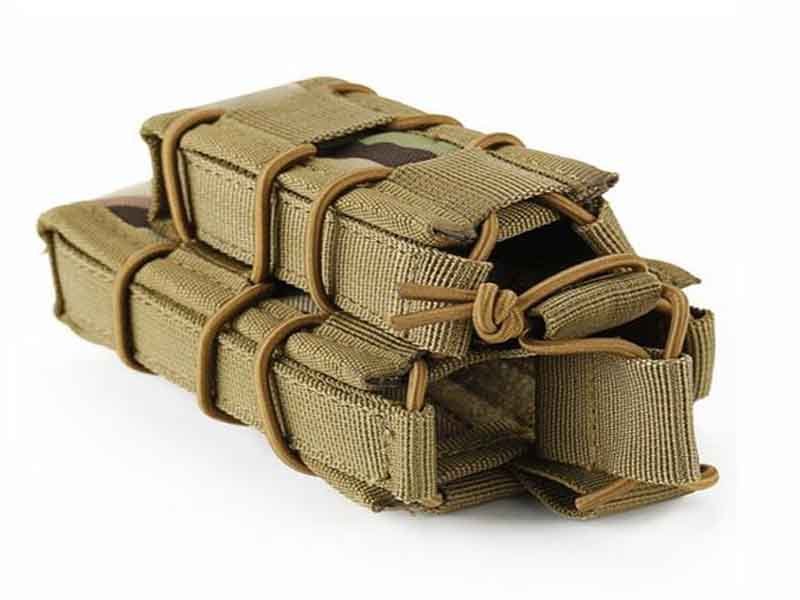
The main difference is how the two bags distribute weight and how the user accesses equipment. A hunting backpack normally uses two shoulder straps, often combined with a sternum strap, hip belt, frame sheet, or internal frame. This keeps the load centered behind the torso and makes it suitable for larger volumes and longer carrying periods. A hunting shoulder bag uses one main strap and positions the load beside the torso, across the back, or diagonally across the chest. It usually offers faster access and greater mobility with light gear but becomes less stable and more tiring as load weight increases.
The format also influences nearly every later design decision. A backpack can support a hydration reservoir, bow carrier, rifle scabbard, meat shelf, bulky clothing, and exterior compression. A shoulder bag is more naturally suited to calls, ammunition, small optics, gloves, medical supplies, and frequently used tools.
The comparison is not simply “large bag versus small bag.” Some sling bags have considerable capacity, and some minimalist backpacks are extremely compact. The real difference is the load path between the bag and the human body.
How Does Each Bag Carry Weight?
A backpack spreads load across both shoulders and, when fitted with a functional hip belt, transfers a meaningful portion of that weight to the pelvis. A shoulder bag concentrates most of the load on one strap and one side of the torso.
This difference becomes increasingly important as the load grows.
A light shoulder bag weighing 2 to 4 kilograms may feel natural because the hunter can reposition it easily. The strap can move from the shoulder to a cross-body position, and the bag can slide forward for access. Once the load reaches 6 to 8 kilograms, the same arrangement may create uneven shoulder pressure, neck tension, lateral body lean, and repeated bag movement.
These figures are useful product-development ranges rather than medical limits. Individual strength, strap shape, walking distance, clothing thickness, and terrain all affect comfort. Still, the principle is consistent: concentrated load becomes harder to tolerate than distributed load.
| Carry factor | Hunting backpack | Hunting shoulder bag |
|---|---|---|
| Primary load path | Both shoulders and possibly the pelvis | One shoulder or diagonal torso strap |
| Load position | Centered behind the body | Side, rear side, or diagonal |
| Suitable load | Light to heavy, depending on frame | Light to moderate |
| Stability on slopes | Generally high when compressed properly | Can swing or rotate |
| Long-distance comfort | Better with correct fit | Declines as load and time increase |
| Fast repositioning | Limited | Very good |
| One-hand access | Depends on pocket placement | Usually excellent |
| Torso ventilation | Can trap more heat | Leaves more of the back exposed |
| Load symmetry | High | Asymmetrical |
| Ability to carry bulky gear | Strong | Limited |
A backpack without a hip belt still distributes weight across two shoulders, but it does not provide the same load transfer as a structured hunting pack. Thin casual-style backpacks may look similar to technical hunting packs while behaving very differently under weight.
The frame, hip belt, and shoulder harness must work as a system. The Mystery Ranch Pop Up 30, for example, uses a telescoping frame, adjustable yoke, load shelf, compression, and an 80-pound stated load capacity. Its design keeps dense weight close to the back when expanded for hauling. SITKA’s Mountain Hauler 2700 is positioned for loads up to 45 pounds and uses triple-density foam in the hip belt and shoulder straps. These are fundamentally different carrying systems from a single-strap field bag.
That does not make a framed backpack the correct tool for every outing. A heavy suspension system adds empty weight, structure, and bulk. If a hunter carries only a small call set, ammunition, a knife, gloves, and water for a short morning hunt, a framed pack may solve a problem that does not exist.
Shoulder bags perform best when the designer controls the relationship between load size and strap comfort. A wide strap distributes pressure better than a narrow one. A curved shoulder pad follows the body more naturally. A stabilizer strap reduces swinging. A four-point sling harness, such as the system used on the ALPS OutdoorZ Adapt, can hold the bag closer to the body while still allowing it to slide for access.
The bag’s internal organization also changes perceived weight. A dense ammunition box placed at the outer edge creates more leverage than the same box placed close to the body. Water bottles, shells, tools, and optics should sit near the strap-side wall, while lightweight gloves or fabric accessories can occupy the outer pockets.
For a backpack, the heaviest equipment should remain near the frame and between the shoulder blades or slightly lower, depending on terrain and load. A heavy item at the outer front panel pulls the pack backward. A heavy item at the bottom can cause sagging and reduce balance.
For a shoulder bag, the load should remain compact and vertical. A long, shallow bag that extends far behind the hip may swing more than a shorter bag with similar volume. Internal dividers can stop dense equipment from collecting at one end.
A practical development test is to load both bag formats with the same equipment and ask users to complete a controlled route:
Walk 2 kilometers on level ground.
Climb and descend a moderate slope.
Crouch beneath an obstacle.
Step sideways across uneven ground.
Retrieve a rangefinder three times.
Kneel and stand repeatedly.
After the test, users can record shoulder pressure, bag movement, access time, heat buildup, and any need to readjust the strap. The result usually reveals that a lighter, simpler bag can be superior under one load and noticeably worse after only a few kilograms are added.
Which Bag Offers Faster Access?
A shoulder or sling bag usually offers faster access to small equipment because it can rotate from the back or side to the chest without being removed. A backpack can offer equally fast access to selected items when it includes well-positioned hip-belt, shoulder-strap, side, or front pockets, but the main compartment is generally slower to reach.
Speed should not be measured only by how quickly a zipper opens. The hunter must also locate the item, remove it without spilling other gear, use it, and return it quietly.
A well-designed shoulder bag may place calls in elastic loops, ammunition in divided sleeves, a rangefinder in a padded top pocket, and gloves in an open front compartment. The entire storage area can be brought into view with one movement.
A backpack keeps more equipment behind the body. That improves load stability but makes the main storage less visible. Hunters often remove one shoulder strap, rotate the pack partly forward, or take it off completely.
| Access task | Backpack | Shoulder bag |
|---|---|---|
| Retrieve rangefinder | Fast from belt pocket; slow from main body | Fast |
| Change calls | Moderate unless externally organized | Very fast |
| Reach rain jacket | Moderate | Fast only if capacity allows |
| Access ammunition | Fast with belt or side pocket | Very fast |
| Remove binoculars | Better from chest harness than either bag | Fast from dedicated pocket |
| Retrieve first-aid kit | Moderate | Fast when packed near opening |
| Remove bulky clothing | Easier due to larger opening | Limited by capacity |
| Reach hydration | Excellent with hose system | Usually bottle-based |
| Access while seated | Depends on pocket layout | Often easier |
| Access while climbing | Selected pockets only | Bag may swing forward unintentionally |
The fastest bag is not necessarily the quietest. A large open zipper gives immediate access but may create a long, noisy movement. Hook-and-loop flaps are simple yet can be unacceptable at close range. Magnetic closures feel fast but require testing around mud, debris, gloves, and repeated opening.
The Badlands Rise Pack shows how a backpack can be developed specifically for quiet tree-stand access rather than general load hauling. It uses a magnetic Swiftlatch system, suede lining, quiet cold-resistant outer fabric, and no zippers or hook-and-loop material on the main opening. The design illustrates that access quality depends more on closure engineering and pocket structure than on bag category alone.
A shoulder bag’s main advantage is body-side visibility. The user can rotate it forward and see the compartment. This is useful when choosing between similar calls, ammunition types, or small tools. The disadvantage is that the bag may rotate when the hunter does not want it to. Running, crawling, bending, or climbing can bring the load forward unless a stabilizer strap holds it in place.
A backpack’s greatest access improvement often comes from separating quick-use equipment from stored equipment. The main compartment can carry clothing, food, emergency supplies, and game-processing tools. Hip-belt pockets can hold wind indicator, snacks, release aid, or ammunition. A shoulder-strap pouch can hold a GPS or radio. Side pockets can carry water and a tripod.
This approach prevents the hunter from opening the main body repeatedly. It also keeps the backpack’s stability advantage while addressing its access weakness.
A realistic access test should be conducted while the user is wearing the complete hunting system, not a T-shirt in a sample room. Thick gloves reduce grip. Insulated jackets limit shoulder movement. A safety harness can block pocket openings. Binocular harnesses, radios, and weapon slings may compete for the same chest area.
The design team can record:
Time required to locate and remove each item
Number of hand movements
Whether the user must look down
Whether the bag shifts position
Maximum noise during opening
Whether surrounding items fall out
Whether the closure can be operated with gloves
A shoulder bag that opens in two seconds but spills ammunition is not well designed. A backpack pocket that takes five seconds but provides silent, controlled access may be the better hunting solution.
How Do Their Strap Systems Differ?
A hunting backpack usually uses two shaped shoulder straps supported by a sternum strap, optional load lifters, and a hip belt. A shoulder bag uses one main strap, sometimes with a padded section, rotating buckle, secondary stabilizer strap, or multi-point harness.
Backpack shoulder straps are designed to follow the chest and shoulder contour. They should avoid the neck, clear the armpits, and remain stable during arm movement. The sternum strap controls strap spacing and improves stability. Load lifters pull the upper pack toward the body when a frame extends above the shoulders.
The hip belt is not simply another strap. On a properly designed load-bearing pack, it connects to the frame and transfers load into the pelvis. A thin webbing waist strap may prevent bouncing but does not provide meaningful support.
Shoulder-bag straps must solve a different problem. They need to distribute pressure while allowing the bag to move intentionally. A fixed strap creates stability but limits rotation. A freely rotating strap improves access but may allow uncontrolled swinging.
| Strap component | Backpack function | Shoulder-bag function |
|---|---|---|
| Main shoulder support | Two shaped straps share load | One wide strap carries most load |
| Sternum strap | Controls shoulder-strap spread | Rarely used |
| Hip belt | Transfers weight and controls sway | Sometimes replaced by waist stabilizer |
| Load lifters | Pull framed load inward | Not normally used |
| Stabilizer strap | Secondary control | Prevents side-to-side swinging |
| Rotating buckle | Not essential | Allows bag to slide around torso |
| Shoulder pad | Integrated into strap | Often adjustable on webbing |
| Quick-release buckle | Emergency removal or modularity | Fast removal and repositioning |
| Strap keeper | Controls loose webbing | Essential to prevent snagging |
| Ambidextrous attachment | Less important | Valuable for left- or right-side carry |
The single strap should be wide enough to distribute pressure but not so wide that it contacts the neck or restricts weapon mounting. The padded section must stay on the shoulder when the bag rotates. If the pad remains fixed while the webbing slides through it, the user gains smoother repositioning. If the entire strap rotates, padding may move away from the pressure point.
A secondary stabilizer strap can connect the lower bag to the opposite side of the torso. This reduces movement during fast walking or crawling. It should release easily when the user wants to slide the bag forward.
Four-point sling arrangements offer more stability, although they begin to behave like simplified backpack harnesses. This can be useful for mobile hunting, but every additional strap increases adjustment time and snag risk.
Strap hardware should remain quiet and should not sit directly under a rifle sling, bowstring, or binocular harness. Layering several straps on one shoulder creates pressure and confusion. Product developers must understand the hunter’s complete carrying system.
For example, a right-handed rifle hunter may carry the firearm on the right shoulder. A shoulder bag should therefore offer left-side carry or a cross-body arrangement that leaves the rifle mounting area clear. A right-handed archer may prefer the bag positioned so it does not interfere with the draw arm.
Strap orientation should not be decided only from product photographs. Testing must include drawing a bow, mounting a firearm, kneeling, crawling, and wearing a safety harness.
Are Sling Bags and Shoulder Bags the Same?
Sling bags and shoulder bags are closely related but not identical.
A traditional shoulder bag hangs from one shoulder and usually rests beside the hip. It may use a short strap or a longer cross-body strap. The bag is often rectangular, easy to open, and suitable for ammunition, calls, tools, or small game equipment.
A sling bag normally crosses diagonally over the torso and rests on the back or rear side. It is designed to remain closer to the body and rotate forward for access. Sling bags often use shaped, asymmetrical bodies that follow the torso.
A messenger-style hunting bag uses a long cross-body strap and a wider horizontal body. A game bag or shell bag may hang lower and prioritize open access. A lumbar or waist pack carries weight around the hips and belongs to another category, although hunters often compare it with shoulder bags.
| Bag style | Normal position | Access style | Best use |
|---|---|---|---|
| Traditional shoulder bag | Beside hip | Direct top or flap access | Calls, shells, small tools |
| Cross-body shoulder bag | Side or front | Rotate or open in place | Mobile small-game hunting |
| Sling bag | Upper back or rear side | Slides around torso | Run-and-gun hunting |
| Messenger bag | Lower back and hip | Large flap opening | Documents, accessories, moderate gear |
| Shell bag | Front or side hip | Open or divided top | Shotgun ammunition |
| Game bag | Side or rear | Large washable compartment | Small game retrieval |
| Lumbar pack | Around waist | Front or side access | Light day loads |
| Chest pack | Front torso | Immediate visual access | Optics, GPS, calls |
The terminology used by shoppers and manufacturers is inconsistent. One company may call a product a shoulder pack, another a sling pack, and another an ambidextrous day bag. Customers therefore judge the real construction rather than the name.
A useful product description should explain:
Where the bag sits on the body
Whether it can rotate forward
Whether it is ambidextrous
Whether it has a stabilizer strap
Its intended maximum load
How the main compartment opens
Whether it interferes with weapon use
The ALPS OutdoorZ Ambush is marketed as a lightweight run-and-gun sling pack with an ambidextrous, multi-position shoulder strap and exterior modular attachment. That feature language is more informative than the product category alone because it tells the user how the bag is intended to move and function.
For custom development, the label should follow the structure. Calling a basic tote-like shoulder bag a technical sling pack creates inaccurate expectations. A true sling design needs body-contoured geometry, stable diagonal carry, controlled rotation, and access that works from the front of the torso.
Which Bag Fits Each Hunt?
A backpack fits hunts that involve longer approaches, heavier clothing, water, optics, climbing equipment, weapon attachment, or possible load hauling. A shoulder bag fits short, mobile hunts where the user carries a compact equipment set and needs frequent access to calls, ammunition, or small tools. The best choice should be based on movement pattern and equipment weight rather than animal species alone.
The same hunter may need both formats during one season. Early-season turkey hunting may favor a compact sling. Late-season deer hunting may require a quiet 30-liter backpack for insulated layers. Small-game walking may suit an open shoulder bag, while a remote mountain hunt demands a framed pack.
Which Is Better for Day Hunts?
Both formats can work for day hunts because “day hunt” describes duration, not equipment volume.
A warm-weather day hunt near a vehicle may require only water, food, rain protection, a knife, navigation, and a small first-aid kit. A shoulder bag can handle this load efficiently.
A cold-weather day hunt may require several insulating layers, gloves, a hat, hot drinks, food, tree-stand equipment, safety gear, and extra batteries. A backpack is usually the more comfortable and organized option.
| Day-hunt condition | Better starting choice | Reason |
|---|---|---|
| Short walk from vehicle | Shoulder bag | Minimal load and fast access |
| Warm, dry weather | Shoulder or sling bag | Limited bulky clothing |
| Cold tree-stand hunt | Backpack | Insulation needs volume |
| Mountain day hunt | Framed backpack | Water, optics, and difficult terrain |
| Repeated calling setups | Sling bag | Fast access and mobility |
| Carrying bow plus trekking poles | Backpack | Weapon attachment frees hands |
| Carrying climbing sticks | Backpack | Better exterior compression |
| Hunting close to camp | Shoulder bag | Reduced equipment requirement |
| Uncertain weather | Backpack | Space for protective layers |
| Possible meat carry | Framed backpack | Load-hauling structure |
Volume is only one part of the decision. A 25-liter backpack and 15-liter shoulder bag may both hold the required equipment, but the backpack is more stable under weight. The shoulder bag remains faster to access.
Modern daypacks often blur the boundary between light carry and serious hauling. Mystery Ranch’s Pop Up 30 stays compact during the hunt but expands into a framed load-hauling system. Badlands’ Vario Day is positioned as a mobile pack just under 2,000 cubic inches and can be used with or without a frame. These examples show that “daypack” can mean much more than a simple two-strap bag.
The best product specification should state the intended load and activity, not merely label the bag a day-hunting model.
What Works for Small-Game Hunting?
A shoulder bag often works especially well for small-game hunting because the hunter moves continuously, carries relatively compact equipment, and may need frequent access to shells, gloves, water, or game-handling supplies.
Upland and small-game hunters often value an open or divided ammunition compartment. The bag can sit at the side or front where shells are visible and easy to reach. A washable game compartment or removable liner can separate harvested animals from personal equipment.
A backpack becomes useful when the walk is long, weather changes, or the hunter carries extra water, clothing, dog equipment, first-aid supplies, or electronic tracking devices.
The bag should be designed around the specific small-game activity.
| Small-game activity | Useful bag format | Important features |
|---|---|---|
| Rabbit hunting | Shoulder or game bag | Washable liner and shell access |
| Squirrel hunting | Compact shoulder bag | Quiet fabric and small-item organization |
| Upland bird hunting | Shoulder bag, vest bag, or hybrid | Ammunition loops and ventilated game storage |
| Waterfowl scouting | Waterproof shoulder bag | Coated base and weather protection |
| Hunting with dogs | Backpack or hybrid | Water, leash, first aid, GPS storage |
| Long hedgerow walks | Stable sling bag | Anti-sway strap and breathable contact area |
| Mixed small-game day | Modular shoulder bag | Removable dividers and attachment loops |
Blood, feathers, mud, and plant debris create cleaning requirements. The game compartment should use a smooth coated lining, removable insert, or washable mesh. Foam and absorbent brushed fabrics should not be exposed inside this zone.
The shoulder bag’s opening should remain controlled. A fully open top provides fast access but may allow shells or tools to fall out when crossing fences. A semi-rigid rim with an internal drawcord or quiet magnetic flap can improve retention.
Which Suits Tree-Stand Hunting?
A quiet backpack is usually more versatile for tree-stand and saddle hunting because it can carry insulated clothing, safety equipment, ropes, climbing sticks, platforms, food, and a bow or firearm. A compact shoulder bag can work for short approaches and minimal equipment, but it may swing while climbing and provide insufficient exterior attachment.
Tree-stand hunting has unusual access requirements. Once elevated, the hunter may hang the bag from a hook. The main opening should remain usable in a vertical position, and equipment should not fall out.
A structured backpack that keeps its shape is useful because the hunter can find gear without using both hands. The Badlands Rise was developed around quiet tree-stand access, using magnetic closures instead of a main zipper or hook-and-loop material. Current user feedback also emphasizes its compact structure, quiet fabric, and ease of finding equipment while elevated.
SITKA Tool Bucket user reports similarly emphasize carrying bows, platforms, sticks, and saddle-hunting equipment, showing why external straps and internal volume matter in this hunting style.
| Tree-stand requirement | Backpack response | Shoulder-bag limitation |
|---|---|---|
| Carrying bulky layers | Large main compartment | Limited volume |
| Carrying climbing sticks | External compression | Difficult attachment |
| Carrying saddle platform | Front or side panel | Load becomes unstable |
| Hands-free climbing | Two-strap stability | Can swing forward |
| Quiet access while seated | Structured opening and silent closures | Good only with careful pocket design |
| Hanging from tree | Reinforced top loop | Strap may twist bag |
| Bow attachment | Dedicated compression system | Rarely practical |
| Equipment organization | Multiple internal zones | Limited but fast |
| Load stability | High | Moderate to low |
| Short minimal setup | Can feel oversized | Strong advantage |
A shoulder bag can still be excellent for hunters who leave much of their equipment at the stand or walk only a short distance. It may hold calls, snacks, gloves, rangefinder, and emergency supplies without filling the limited platform space.
The bag’s best format depends on whether it is primarily a transport system or an elevated-access organizer.
What Is Best for Backcountry Hunts?
A framed backpack is the clear choice for backcountry hunting. It must carry water, food, insulation, rainwear, optics, emergency gear, navigation, shelter components, field-processing tools, and potentially harvested meat over difficult terrain.
A shoulder bag cannot distribute that load safely or comfortably over long distance. It may still serve as a removable accessory pouch attached to the main backpack, but it should not replace the frame system.
Backcountry packs need:
Adjustable torso fit
Load-bearing hip belt
Structured frame
Compression straps
Hydration compatibility
Load shelf or meat-hauling capability
Weather-resistant materials
Weapon attachment
Repairable hardware
Stable external pockets
The equipment list should be planned around total carried weight rather than liters alone. Water, optics, and food are dense. A pack may have enough volume yet lack the structure needed to support the weight.
The Mystery Ranch Pop Up 30 is an example of a smaller hunting pack that converts into a load-hauling configuration, while the brand’s larger hunting range includes multi-day and expedition categories. Badlands similarly separates daypacks from frame and mountain-hauling systems. These categories exist because capacity and suspension must scale together.
A backcountry product should not add features that interfere with load control. Large exterior pockets, loose cords, and decorative webbing can increase snagging. Every attachment should carry equipment close to the frame.
A detachable shoulder pouch can still add value. It can hold a rangefinder, GPS, emergency kit, or camera and be removed for short movement away from camp. This hybrid system combines the backpack’s load support with the shoulder bag’s fast access.
Which Fits Mobile Hunters?
A sling or shoulder bag often fits highly mobile hunters who carry light equipment and change positions frequently. It allows the user to move quickly, rotate the bag forward, retrieve calls or ammunition, and continue without removing the entire system.
Mobile turkey hunters are a strong example. They may walk between listening points, set up rapidly, use several calls, and relocate after receiving a response. ALPS OutdoorZ describes the Ambush Sling Pack as a minimalist run-and-gun turkey option, reflecting this mobility-focused use.
However, “mobile” does not always mean “light.” A public-land deer hunter carrying a saddle, platform, climbing sticks, safety ropes, and winter clothing moves frequently but still needs a backpack. A western hunter covering several kilometers with optics and water also needs structured support.
The correct question is therefore: Is the hunter moving with a light working kit or moving with a complete transport load?
| Mobile hunting pattern | Better format | Explanation |
|---|---|---|
| Calling and relocating with minimal gear | Sling bag | Fast rotation and access |
| Walking fields with shells and small tools | Shoulder bag | Direct equipment access |
| Saddle hunting with climbing equipment | Backpack | External attachment and stability |
| Spot-and-stalk mountain hunting | Backpack | Water, optics, and load support |
| Scouting near a vehicle | Sling bag | Compact and quick |
| Tracking with dog equipment | Small backpack or stable sling | Load depends on water and electronics |
| Moving through dense brush | Narrow sling or compact backpack | Snag control matters more than format |
| Possible overnight delay | Backpack | Emergency and insulation capacity |
The ideal mobile bag stays close to the body, avoids loose straps, and does not need frequent adjustment. A shoulder bag should have a stabilizer option. A backpack should compress flat when partially loaded.
The hunter should be able to crawl, crouch, kneel, and step over obstacles without the bag swinging into the weapon or shifting the user’s balance.
This is where good design becomes quietly obvious. The bag does not need to announce its technical features. It simply stays where it belongs, opens when needed, and stops demanding attention from the person carrying it.
How Do Capacity and Storage Compare?
Hunting backpacks provide more usable capacity, stronger load separation, and better support for bulky clothing, hydration systems, optics, and external equipment. Hunting shoulder bags provide less total volume but usually make small items easier to see and reach. The right storage system depends on whether the hunter needs to transport a complete field load or repeatedly access a compact working kit.
Capacity should never be judged by liters alone. Two bags with the same stated volume can perform very differently because of their shape, opening style, internal dividers, padding, back-panel curvature, and external attachment system. A tall backpack may accommodate rainwear and a hydration reservoir efficiently, while a shallow shoulder bag may organize calls and ammunition more effectively despite having less volume.
The more useful question is not “Which bag holds more?” It is “Which bag keeps the required equipment stable, protected, and accessible during the hunt?”
What Capacity Do Hunters Need?
The required capacity depends on hunt duration, climate, distance from the vehicle, equipment type, water requirements, and whether the bag must carry bulky layers or harvested game.
A compact shoulder bag may offer approximately 5 to 15 liters of practical storage. Larger sling and messenger-style hunting bags can reach 15 to 25 liters, although comfort may decline if the user fills every available space with dense equipment.
Hunting backpacks commonly range from approximately 15 liters for minimalist day use to more than 70 liters for multi-day backcountry travel. Many general day-hunting packs fall within the 20- to 40-liter range.
These are planning ranges rather than fixed industry rules. A 25-liter winter pack may feel too small because insulated clothing consumes volume quickly. The same pack may feel spacious during a warm early-season hunt.
| Hunting situation | Practical capacity range | Suitable format | Main storage demand |
|---|---|---|---|
| Short scouting trip | 5–12 L | Shoulder or sling bag | Water, phone, compact optics, first aid |
| Turkey run-and-gun hunt | 8–18 L | Sling or shoulder bag | Calls, shells, gloves, seat, light rainwear |
| Small-game day hunt | 10–20 L | Shoulder bag or compact backpack | Ammunition, water, tools, washable game space |
| Warm-weather deer hunt | 15–25 L | Compact backpack or sling | Water, food, rain shell, field tools |
| Cold tree-stand hunt | 30–45 L | Backpack | Bulky insulation, safety gear, food |
| Mountain day hunt | 28–45 L | Framed backpack | Optics, water, rainwear, emergency gear |
| Saddle-hunting setup | 25–45 L | Backpack | Platform, ropes, layers, accessories |
| Overnight hunt | 40–60 L | Framed backpack | Shelter, sleep system, food, clothing |
| Multi-day backcountry hunt | 55–80+ L | Framed backpack | Complete camp and load-hauling equipment |
A hunting shoulder bag works best when the load is intentionally limited. The format becomes less effective when the customer chooses a large body and assumes the single strap will remain comfortable simply because the bag can physically hold more gear.
A 20-liter shoulder bag filled with clothing may remain manageable because clothing is light. Fill the same volume with ammunition, water, batteries, optics, and tools, and the concentrated weight can become uncomfortable quickly.
Product planning should therefore consider both volume and expected mass.
A practical specification may state:
Maximum recommended equipment volume
Normal working load
Maximum tested load
Recommended hunting duration
Intended clothing season
Whether the bag supports water, optics, or ammunition
Whether exterior attachment is included
This provides more useful guidance than a simple capacity figure.
For custom development, customers should prepare a complete equipment list and estimate the packed size of each item. Szoneier can use this information to create an internal block layout before pattern development begins.
Which Carries Bulky Clothing Better?
Backpacks carry bulky clothing more effectively because they provide larger main compartments, stronger compression, and more balanced load distribution. Shoulder bags can carry a light jacket or gloves, but insulated pants, heavy outer layers, and cold-weather accessories quickly overwhelm their shape.
Late-season hunting clothing creates a particular storage problem. Insulated jackets and bibs are not always heavy, but they occupy substantial volume. Hunters often wear lighter clothing during the approach to avoid sweating, then add insulation after reaching the stand or glassing position.
A suitable bag must carry those layers without forcing the hunter to strap them loosely outside.
Loose exterior clothing can:
Catch branches
Absorb rain or snow
Cover important pockets
Create movement and noise
Fall from weak compression straps
Block bow or firearm attachment
A backpack can use a large main compartment, front stretch pocket, expandable shove-it panel, or compression cradle. A shoulder bag normally has less surface area and fewer stable attachment points.
| Clothing item | Backpack storage | Shoulder-bag storage | Main design concern |
|---|---|---|---|
| Lightweight rain shell | Top or front pocket | Main compartment | Fast weather access |
| Insulated jacket | Main body or compression panel | May fill most of bag | Volume and compression |
| Insulated bibs | Main compartment | Usually impractical | Bulky shape |
| Gloves and hat | Top lid or quick pocket | Excellent side-pocket item | Immediate access |
| Extra base layer | Internal dry compartment | Possible in larger shoulder bag | Moisture separation |
| Wet outerwear | External stretch panel | Difficult | Dry equipment contamination |
| Packable puffy jacket | Compressed internal sack | Possible | Protect from sharp objects |
| Seat cushion | External straps | Bottom or rear attachment | Snagging and stability |
Compression design matters because bulky clothing continues to expand after packing. A weak zipper may experience constant outward pressure. Side compression straps should carry that force rather than leaving the zipper to resist it.
A front compression panel can hold a jacket temporarily without opening the main compartment. It should remain quiet and should not cover the bow carrier, rifle attachment, or main access zipper.
Shoulder bags can use expandable gussets or roll-top extensions, but expansion moves the load farther from the body. A soft bag may sag downward and swing against the hip. If the product is intended for cold-weather clothing, a backpack format is usually more honest and practical.
Another issue is moisture. Clothing removed after a climb may be damp with sweat. It should not be placed directly against optics, food, electronics, or dry insulation. A divided compartment, mesh ventilation panel, or exterior wet-storage zone can help.
For custom hunting backpacks, Szoneier can develop separate storage areas for:
Dry insulation
Wet rainwear
Gloves and hats
Tree-stand safety equipment
Emergency clothing
Heated apparel batteries
The bag should also accommodate clothing while the hunter is wearing thick outer layers. Shoulder straps and hip belts need enough adjustment range, and quick-access pockets must remain reachable over bulky garments.
How Should Small Gear Be Organized?
Small hunting gear should be organized by frequency of use, risk, noise, and the order in which it is needed. Frequently accessed items belong in external or upper pockets. Sharp and hazardous equipment requires isolated storage. Hard items should be separated to prevent rattling.
The strongest organization system is not the one with the most compartments. It is the one that helps the hunter find the correct item without searching.
A useful layout divides equipment into five categories.
| Equipment category | Examples | Preferred location | Design priority |
|---|---|---|---|
| Immediate-use gear | Rangefinder, calls, wind checker, release aid | Hip belt, shoulder strap, upper front pocket | One-hand access |
| Navigation and electronics | Phone, GPS, radio, spare batteries | Padded weather-resistant pocket | Protection and cable management |
| Tools | Knife, saw, multitool, headlamp | Divided internal organizer | Sharp-edge control |
| Ammunition | Shells, magazines, cartridges | Dedicated reinforced pocket | Safe orientation and easy counting |
| Emergency gear | First aid, fire starter, whistle | Clearly identified upper pocket | Reliable access |
| Food and personal items | Snacks, tissues, keys | Separate clean pocket | Odor and contamination control |
| Wet or dirty items | Gloves, game bags, rainwear | External or washable zone | Isolation and drainage |
Shoulder bags naturally support visual organization because the user can rotate the entire bag forward. Internal dividers, elastic loops, and shallow pockets allow the hunter to view several items at once.
Backpacks require stronger zoning because the main compartment is deeper. Large undivided spaces can become disorganized when small items settle to the bottom. Top lids, front organizer panels, removable pouches, and color-coded internal bags can solve this problem.
Pocket depth should match the object. A rangefinder pocket that is twice as deep as the device slows access. An ammunition pocket that is too shallow may allow cartridges to escape. A call organizer should hold each call separately rather than allowing hard components to strike one another.
Internal color also matters. A fully black interior makes small items difficult to locate before sunrise. A muted tan, gray, or light olive lining improves visibility without creating an overly bright appearance.
Noise-control details include:
Soft pocket lining
Elastic item retainers
Dividers between metal tools
Cord zipper pulls
Covered snaps
Magnetic closures with padded contact areas
Tether points for critical equipment
Tight mesh with limited movement
A shoulder bag may use removable internal panels so customers can choose between call organization, ammunition loops, camera dividers, or medical storage. A backpack may use removable pouches that transfer between different products.
The design should avoid over-organization. Fixed loops become wasted space when they do not match the user’s equipment. Adjustable dividers or modular panels can improve versatility.
A product-development test can ask users to pack the bag without instructions, complete a short walking route, and then retrieve ten named items. The design team should observe:
Which pockets users choose naturally
Which items become difficult to find
Which components move or rattle
Which pockets are ignored
Whether any sharp equipment damages adjacent items
Whether the organization still works while wearing gloves
This reveals more than a visual review of an empty organizer panel.
Do External Attachment Points Matter?
External attachment points matter when hunters carry equipment that is long, wet, bulky, dirty, or too large for the main compartment. They are especially important for bows, rifles, tripods, trekking poles, climbing sticks, saddle platforms, rainwear, sleeping pads, arrow tubes, and harvested game.
Backpacks provide more stable attachment surfaces because the load can be compressed against a broad front or side panel. Shoulder bags offer fewer secure points and must control the added equipment without creating swing or imbalance.
| External equipment | Backpack attachment | Shoulder-bag possibility | Main requirement |
|---|---|---|---|
| Bow | Front boot and upper straps | Rarely suitable | Multi-point retention |
| Rifle | Side or center compression | Limited | Muzzle and stock control |
| Tripod | Side pocket and upper strap | Possible on larger sling | Two-point stabilization |
| Trekking poles | Side or front loops | Possible | Tip protection |
| Climbing sticks | Front compression panel | Usually impractical | High structural strength |
| Saddle platform | Front or bottom panel | Usually impractical | Stable load position |
| Arrow tube | Side straps | Possible | Anti-rotation control |
| Wet jacket | Front stretch pocket | External flap or cord | Drainage and retention |
| Seat cushion | Bottom or front straps | Rear strap | Low noise |
| Game bags | Dedicated pouch or shelf | Small-game format only | Hygiene and cleaning |
Attachment points should not be added randomly. Each point needs a known load direction and connection to a reinforced area.
A small webbing loop sewn only into light shell fabric may fail when a tripod or climbing stick pulls repeatedly. Reinforcement patches, seam integration, and load-bearing webbing paths are necessary.
MOLLE panels, daisy chains, compression straps, G-hooks, and elastic cords all provide modularity, but each creates possible snagging and noise. The design should use the fewest attachment points required for the intended hunting style.
Backpack compression systems should allow equipment to be attached without blocking the main compartment completely. Side zippers or top access can preserve usability when a bow or platform occupies the front.
Shoulder bags need extra caution. Adding a tripod or long tool to one side increases rotation. The strap and stabilizer must control the combined load. Long attachments should not extend low enough to strike the hunter’s leg.
Quick-removal and secure transport are opposing needs. A tightly compressed bow or tripod remains stable but takes longer to remove. A loose elastic holder is fast but may bounce. Product development should identify which equipment needs immediate access and which equipment remains stored during movement.
Szoneier can develop modular attachment systems that allow the same bag platform to support different markets. One version may use a bow boot and compression straps. Another may use removable shell pouches. A third may add a tripod sleeve or medical module.
The base bag should remain functional even when optional modules are removed.
Which Bag Is More Comfortable?
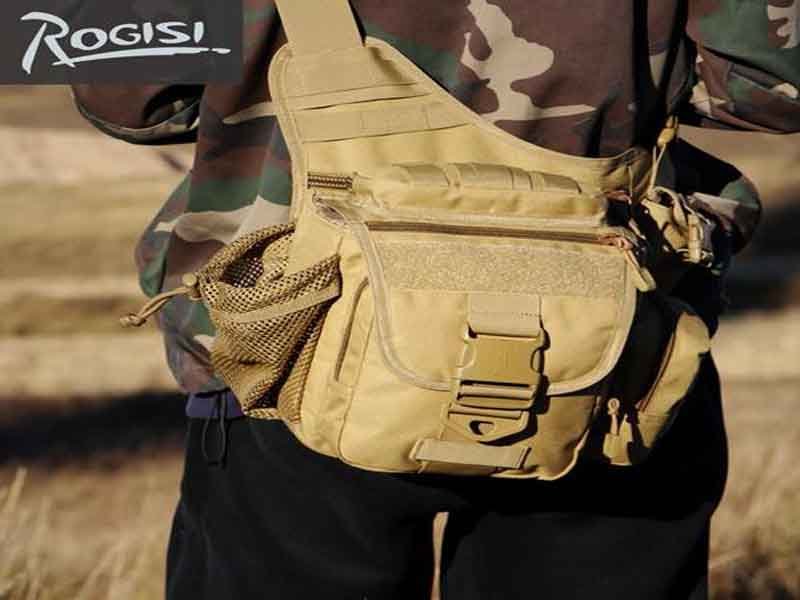
A hunting backpack is generally more comfortable for moderate and heavy loads because it distributes weight across two shoulders and can transfer part of the load to the pelvis. A shoulder bag can feel more comfortable for light, frequently accessed equipment because it leaves more of the back open and allows easy repositioning. Comfort depends on load weight, carrying duration, strap design, body fit, terrain, and how often the bag moves.
The most comfortable bag is not always the lightest empty product. A 1.8-kilogram framed backpack may feel better under a 12-kilogram load than a 700-gram shoulder bag carrying half that amount. Suspension efficiency matters more than empty weight once equipment is added.
Comfort should be evaluated dynamically. Walking, climbing, crouching, drawing a bow, mounting a firearm, and sitting against a tree all change how the bag contacts the body.
How Do Straps Affect Shoulder Fatigue?
Straps affect shoulder fatigue through width, curvature, padding density, surface friction, edge shape, load angle, and total contact area. A narrow strap concentrates pressure. A strap that is too wide can rub the neck or limit arm movement. Soft foam feels comfortable initially but may collapse under sustained load.
Backpack straps share the load and can be shaped independently for left and right shoulder anatomy. Shoulder-bag straps carry most of the bag’s force through one diagonal line.
| Strap factor | Better performance | Poor performance |
|---|---|---|
| Width | Distributes pressure without reaching neck | Too narrow or excessively wide |
| Curvature | Follows chest and shoulder shape | Straight strap creates edge pressure |
| Foam density | Supports load without collapsing | Very soft foam compresses quickly |
| Edge construction | Rounded or bound smoothly | Hard edge rubs skin or clothing |
| Adjustment | Easy to change with gloves | Buckle difficult to reach |
| Surface friction | Stable without excessive grip | Slides continuously or locks movement |
| Load angle | Pulls bag toward body | Pulls downward and outward |
| Hardware placement | Away from collarbone and weapon | Creates hard pressure point |
Shoulder fatigue often begins when the strap sits too close to the neck. The user may repeatedly move it outward, but the bag’s weight pulls it back. A shaped strap and wider shoulder pad can correct the path.
For cross-body bags, the strap should not press directly across the throat or interfere with a binocular harness. A curved padded section can spread pressure across the chest and shoulder.
The shoulder pad should remain in the load-bearing zone when the bag rotates. If the pad slides away, bare webbing may carry the weight.
Backpack shoulder straps should leave enough space for arm movement. Bow hunters need full draw motion. Shotgun hunters need a clear gun-mounting area. Thick padding on the shooting shoulder can change firearm placement.
The strap system should be tested with:
Light clothing
Insulated clothing
Rain shell
Body armor or protective vest when relevant
Binocular harness
Firearm sling
Safety harness
The bag does not exist alone on the body. Competing straps can create pressure and confusion.
Do Hip Belts Improve Load Transfer?
A properly designed hip belt improves load transfer by directing part of the pack weight into the pelvis. It also reduces side-to-side movement and stabilizes the bag on slopes.
A decorative waist strap does not provide the same benefit. Effective load transfer requires:
A supportive frame or structured back panel
A direct connection between frame and belt
Adequate belt width
Firm structural foam
A shape that wraps the upper pelvis
A buckle that remains secure
Stabilizer straps connecting belt and bag
| Hip-belt type | Load-transfer ability | Suitable use |
|---|---|---|
| Thin webbing strap | Minimal | Light daypacks |
| Light padded belt | Low to moderate | Compact hunting backpacks |
| Structured wrap belt | Moderate to high | Day and mountain hunting |
| Frame-connected dual-density belt | High | Heavy load hauling |
| Removable belt | Variable | Modular daypack systems |
| Shoulder-bag waist stabilizer | Stability only | Preventing swing |
The belt should sit over the upper hip bones rather than around the soft waist. When it is too high, it presses the abdomen. When too low, it slides and transfers little load.
Foam density should vary by function. A softer inner layer improves body contact. A firmer outer or structural layer resists folding. Excessively soft belts may feel comfortable in a showroom but collapse after an hour under load.
Hip-belt pockets add access but can reduce wrap and interfere with arm movement. Pocket size should be tested while crouching and drawing a bow.
Shoulder bags rarely use true load-bearing hip belts because the bag sits asymmetrically. A small stabilizer strap can connect the lower bag to the opposite side of the body, reducing swing without carrying significant weight.
For heavier shoulder bags, a convertible harness may distribute load across both shoulders. At that point, however, the product begins to function more like a backpack. Designers should not preserve the shoulder-bag label if the equipment load clearly requires backpack suspension.
Why Do Shoulder Bags Swing?
Shoulder bags swing because the load hangs from a single pivot point and remains free to move as the body accelerates, stops, bends, or rotates. The problem becomes worse when the bag is long, loosely packed, positioned low, or loaded unevenly.
Swinging can:
Strike the hip
Interfere with climbing
Shift the user’s balance
Create noise
Contact the firearm or bow
Catch vegetation
Move into the front during crouching
A cross-body strap reduces some movement by pulling the bag diagonally against the torso. A secondary stabilizer strap provides stronger control.
| Cause of movement | Design correction |
|---|---|
| Strap too long | Shorten carry position |
| Bag hangs below hip | Raise center of mass |
| Load collects at one end | Add internal dividers |
| Smooth backing fabric | Use controlled-friction contact panel |
| No secondary restraint | Add removable stabilizer strap |
| Large empty space | Add compression or smaller body |
| Heavy item stored externally | Move dense equipment toward body |
| Bag shape too wide | Reduce depth and outward projection |
The back panel of a shoulder bag can use brushed fabric, spacer mesh, or a lightly rubberized print to reduce sliding. Too much grip is also undesirable because the bag must rotate forward when the user wants access.
The ideal system provides controlled mobility. The bag stays stable while walking but moves forward deliberately after the user releases or loosens the stabilizer.
A four-point sling harness can reduce movement significantly. It works well for mobile hunting and cycling-style motion, although it adds adjustment complexity.
Swing testing should include more than normal walking. Users should:
Jog briefly
Climb stairs
Crawl
Step over logs
Bend to collect equipment
Rotate quickly
Kneel and stand
The bag should be loaded unevenly during one test because real users do not always pack perfectly.
Backpack sway can also occur, but compression straps, two shoulder straps, and a hip belt provide more control. A poorly fitted backpack can still shift on steep terrain, especially when dense items sit far from the frame.
How Does Torso Fit Affect Comfort?
Torso fit determines whether a backpack’s shoulder straps and hip belt share the load correctly. A pack that is too long may leave gaps behind the shoulders. A pack that is too short may pull downward on the shoulders and prevent the belt from sitting correctly.
Torso length is measured from the prominent vertebra at the base of the neck to the horizontal line across the top of the hip bones. User height alone is not accurate enough.
| Fit problem | Likely symptom | Possible correction |
|---|---|---|
| Harness too short | Shoulder pressure and belt riding high | Increase torso setting |
| Harness too long | Gap behind shoulders and backward pull | Decrease torso setting |
| Hip belt too large | Slippage | Offer smaller belt range |
| Hip belt too small | Inadequate wrap | Increase wing length |
| Shoulder straps too wide | Neck or arm interference | Adjust strap spacing |
| Back panel too tall | Head movement restricted | Lower top profile |
| Pack too narrow | Hard edges contact back | Increase panel width or padding |
| Load lifters too low | Little upper-load control | Increase frame height |
Adjustable torso systems serve a wider range of users but add weight, materials, and possible movement. Fixed torso sizes can provide a cleaner and lighter structure when offered in several options.
Shoulder bags do not require torso-length adjustment in the same way, but body size still matters. Strap length must accommodate chest circumference, winter clothing, and preferred carry position. A bag developed on a small model may sit too high on a larger user even at maximum adjustment.
The bag body should follow the side or rear torso without pressing into the ribs. Short users may experience leg contact when a shoulder bag hangs low. Tall users may find a short strap pulls the bag into the armpit.
Both formats should be tested on several body types. Useful recorded measurements include:
Torso length
Chest circumference
Waist circumference
Shoulder width
User height
Clothing thickness
Preferred shooting side
Comfort feedback should identify exact pressure points rather than relying only on a general rating.
Which Handles Heavy Loads Better?
A framed hunting backpack handles heavy loads better because it supports the bag vertically, transfers weight to the hip belt, controls load movement, and provides multiple compression points. A shoulder bag should remain a light- to moderate-load product even when it uses durable fabric and strong hardware.
Fabric strength does not equal carrying comfort. A shoulder bag made from 1000D fabric may survive a 15-kilogram load, but the user may not tolerate that weight on one shoulder.
A heavy-load backpack requires:
Strong frame
Load-bearing hip belt
Reinforced shoulder harness
Stable compression straps
Dense-load placement near the back
Strong lower structure
Secure hardware
Appropriate seam construction
| Load range | Shoulder bag performance | Backpack performance |
|---|---|---|
| Under 3 kg | Excellent | Comfortable but may be unnecessary |
| 3–5 kg | Good with wide strap | Excellent |
| 5–8 kg | Acceptable for shorter periods | Very good |
| 8–12 kg | Fatiguing for most users | Good with structured suspension |
| 12–20 kg | Generally unsuitable | Requires frame and supportive belt |
| Over 20 kg | Not recommended | Specialized load-hauling design |
These ranges are practical design guidance, not universal physical limits.
Heavy-load testing should inspect more than seam failure. The product team should evaluate:
Hip-belt slippage
Shoulder numbness
Frame deformation
Buckle creep
Webbing migration
Bag sag
Load movement on slopes
Back-panel pressure
Noise between structural parts
A backpack can survive a static hanging test and still perform poorly during movement. Dynamic testing reveals how the complete suspension behaves.
For customers developing a hunting bag family, the strongest strategy may be to create several formats around shared materials and visual language:
A compact shoulder bag for calls, ammunition, and light equipment
A sling pack for mobile day hunting
A 25- to 35-liter backpack for general day use
A framed model for mountain and heavy-load hunting
This avoids forcing one product to serve incompatible purposes. Each format can use the same camouflage pattern, logo system, zipper pulls, webbing color, and packaging while providing the correct load path for its intended use.
Comfort is not created by adding thicker foam after the structure is complete. It begins with honest decisions about load, volume, body position, and hunting movement. Once those factors are defined, materials and pattern construction can support them rather than trying to hide a weak carrying system.
Which Bag Provides Faster Access?
A hunting shoulder bag or sling bag usually provides faster access to frequently used gear because the entire bag can rotate from the back or hip to the front of the body. A backpack is slower to access through its main compartment, but it can compete effectively when rangefinders, ammunition, calls, gloves, and navigation tools are stored in hip-belt, shoulder-strap, lid, or side pockets.
Access speed should not be judged only by how quickly the hunter can open the bag. A useful access system allows the correct item to be identified, removed, used, and returned without excessive body movement, dropped equipment, loud hardware contact, or visual searching.
The fastest configuration depends on the hunt. A turkey hunter may reach for calls every few minutes. A tree-stand hunter may open the bag only after reaching the stand. A mountain hunter may need regular access to water, optics, wind protection, and navigation equipment while keeping the main load compressed.
The strongest design does not make every item equally accessible. It gives priority to the small number of items that matter during movement or immediately before a shot.
Can Gear Be Reached While Walking?
Gear can be reached while walking when it is placed in a pocket that falls naturally within the user’s hand path and can be opened without changing the bag’s primary carrying position. Shoulder and sling bags perform well because the user can rotate the entire storage area forward. Backpacks require deliberate placement of quick-use pockets.
The most suitable walking-access items include:
Rangefinder
Wind indicator
Navigation device
Mobile phone
Small call
Ammunition
Release aid
Water valve
Snack
Gloves
These items are relatively small, used repeatedly, and usually safe to handle without removing the complete bag.
A shoulder bag should rotate smoothly but remain stable when returned to the carrying position. A bag that moves forward too easily may swing during climbing, crawling, or fast walking. A secondary stabilizer strap can solve this problem, provided it releases quickly.
A backpack does not need to rotate when its side and hip-belt pockets are positioned correctly. The user should be able to reach the zipper or opening with the corresponding hand without twisting the shoulder excessively.
| Equipment | Backpack access | Shoulder-bag access | Preferred pocket direction |
|---|---|---|---|
| Rangefinder | Hip belt or shoulder pouch | Upper front compartment | One-hand vertical opening |
| Wind indicator | Small belt pocket | Strap-mounted elastic sleeve | Open or quiet flap |
| Calls | Belt, chest, or lid organizer | Main front-facing organizer | Divided horizontal access |
| Ammunition | Belt or side pocket | Dedicated front or top pocket | Wide controlled opening |
| Phone | Hip belt or upper side pocket | Inner body-side pocket | Weather-protected zipper |
| GPS | Shoulder strap or belt | Upper exterior pocket | Visible or tactile access |
| Water | Hydration hose or side bottle | Side bottle sleeve | Secure one-hand removal |
| Snacks | Hip belt | Outer quick pocket | Easy-clean lining |
| Gloves | Stretch side or front pocket | Open rear pocket | High retention without zipper |
Walking access should not encourage unsafe behavior. Sharp tools, broadheads, loose cartridges, and large equipment should remain secured until the hunter stops. The goal is convenience without turning the exterior of the bag into an uncontrolled equipment rack.
Pocket openings should face upward or diagonally upward when the bag is worn. A downward-facing zipper may appear clean in a product image but can allow contents to fall when partially opened.
The hunter should not need to pull a zipper behind the elbow or bend the wrist sharply. Pocket samples can be positioned temporarily with hook-and-loop material during early development, allowing several users to identify the most natural location before final sewing.
A practical access test can use a marked walking route. Each participant retrieves the same five items at predetermined points without stopping. The development team records:
Access time
Number of attempts
Whether the user looks at the pocket
Whether the bag changes position
Whether any item falls
Whether the closure remains open
Whether the motion interferes with a bow or firearm
The same test should be repeated with gloves, winter clothing, and a binocular harness.
A shoulder bag will usually win the test when the items sit inside its main organizer. A backpack may perform equally well when the same items are distributed among purpose-built exterior pockets.
Which Is Better for Calls and Shells?
Shoulder bags are often better for calls and shotgun shells because they can place several small items directly in front of the hunter. The user can see the organization panel, identify the required call or ammunition type, and return it without removing the bag.
This advantage is especially valuable in turkey, predator, upland, and small-game hunting. The hunter may carry several calls or shell types and switch between them repeatedly.
Calls should be separated because hard acrylic, wood, metal, and polymer components can knock against one another. Elastic loops, soft dividers, or individual sleeves keep each call in a predictable location.
Shell storage should allow the hunter to count, identify, and remove ammunition without allowing it to spill. The pocket must also preserve the correct orientation.
| Item | Suitable organization | Main design concern |
|---|---|---|
| Pot call | Padded flat sleeve | Prevent surface scratching |
| Striker | Elastic vertical loop | Prevent breakage and loss |
| Box call | Long divided compartment | Stop lid movement and rattling |
| Diaphragm call | Small ventilated case pocket | Hygiene and moisture |
| Duck call | Individual loop or lanyard channel | Prevent hard contact |
| Rifle cartridge | Elastic loop or secure box pocket | Correct caliber separation |
| Shotgun shell | Structured loop or divided pouch | Fast access and retention |
| Spare magazine | Reinforced fitted pocket | Weight and secure orientation |
Fixed elastic shell loops provide excellent visibility, but their size must match the intended gauge or cartridge. A loop that is too tight slows access, while a loose loop can release ammunition during movement.
Elastic also changes over time. Repeated stretching, heat, moisture, and storage can reduce recovery. The production specification should include width, thickness, elongation, and recovery requirements rather than simply stating “elastic loop.”
A divided ammunition pocket provides more flexibility than fixed loops. It can hold boxed cartridges, loose shells, or a removable organizer. However, loose ammunition can create noise and may become difficult to identify in low light.
A hybrid approach works well:
A small row of working shells remains immediately accessible.
Reserve ammunition stays protected inside a zipped compartment.
A backpack can provide the same system on a hip belt or removable front pouch. This is useful when the hunter needs backpack capacity but still wants shoulder-bag-style access.
Call storage also needs moisture control. Diaphragm calls, wet duck calls, and equipment used in rain should not be sealed inside an unventilated pocket. Mesh drainage, removable cases, or washable liners help prevent odor and contamination.
The interior should not use loose fibers that catch small components. A short-pile brushed fabric is quieter than plain lining, but the pile should remain controlled.
Pocket position must not interfere with firearm mounting. A bulky ammunition pouch on the shooting-side shoulder or upper chest may prevent the stock from seating correctly. For bow hunting, a large call pouch should not block the draw arm.
Shoulder bags can be developed in left- and right-side configurations or use an ambidextrous strap layout. Backpacks can offer removable accessory pouches that attach to either hip belt.
How Should Quick-Access Pockets Open?
Quick-access pockets should open with one controlled motion, remain quiet, retain their contents when partially open, and allow operation with gloves. The best closure depends on the item, weather exposure, pocket orientation, and expected opening frequency.
Common options include:
Coil zipper
Reverse-coil zipper
Water-resistant coated zipper
Magnetic flap
Side-release buckle
G-hook
Drawcord
Elastic opening
Quiet snap
Covered hook-and-loop closure
Each closure has advantages and weaknesses.
| Closure type | Access speed | Noise level | Weather resistance | Main limitation |
|---|---|---|---|---|
| Coil zipper | Fast | Low with cord pull | Moderate | Requires full pull path |
| Reverse-coil zipper | Fast | Low | Moderate to good | Slightly higher operating force |
| Coated zipper | Moderate | Low | Good | Can stiffen in cold conditions |
| Magnetic flap | Very fast | Very low when padded | Moderate | Requires debris and retention testing |
| Side-release buckle | Moderate | Audible click | Good | Two-step access |
| G-hook | Moderate | Low | Good | Can release if webbing becomes slack |
| Drawcord | Moderate | Low | Moderate | Requires two-hand adjustment in some designs |
| Elastic opening | Very fast | Very low | Low | Limited security |
| Snap | Fast | Moderate | Moderate | Concentrated opening force |
| Hook-and-loop | Fast | High | Good | Noise and debris collection |
Zippers remain the most versatile option. They provide full enclosure, work across many pocket shapes, and are widely understood by users. Quiet cord pulls are preferable to metal tabs, which can strike the slider body.
A zipper should not require the user to pull against the complete bag load. If the compartment is tightly packed, compression straps or internal structure should reduce stress on the zipper.
Magnetic closures are useful for tree-stand and call pockets because they allow quiet one-handed access. The magnet must be strong enough to retain the flap during movement but not so strong that the user pulls the entire bag forward.
The magnetic components should be enclosed within fabric or soft material to prevent clicking. They should also be tested after contamination with soil, leaves, fine debris, and moisture.
Elastic pockets provide immediate access to gloves, water bottles, rainwear, or a wind indicator. Their weakness is long-term tension loss and limited protection from weather.
A quick-access opening should have a clear tactile cue. The user may operate it before sunrise without looking. A shaped pull, different cord texture, raised tab, or contrasting internal edge can help identify the correct pocket.
Glove testing is essential. A narrow zipper pull that works with bare fingers may become almost unusable with insulated gloves. Oversized pulls improve access but can snag branches, so length and shape must be balanced.
The pocket should not open farther than necessary. A fully opening clamshell panel offers excellent visibility but may allow equipment to fall when the bag is worn vertically. Side gussets or internal retaining mesh can control the opening angle.
For shoulder bags, the compartment should remain horizontal enough after rotation that items do not slide out. For backpacks, hip-belt pockets should open toward the front so the user can see and control the contents.
Do Quick-Release Buckles Help?
Quick-release buckles help when the user needs to remove, rotate, or reconfigure the bag rapidly. They are especially useful on sling straps, stabilizer straps, weapon-retention systems, removable accessory modules, and emergency-release points.
A quick-release buckle should not be added to every strap. Each buckle creates weight, cost, noise, and another potential failure point.
The main benefits include:
Fast bag removal
Easy transition between carrying modes
Convenient attachment of modular pouches
Rapid release of bow or rifle straps
Simplified use over bulky clothing
Emergency removal after entanglement
The risks include:
Accidental opening
Hard contact noise
Buckle breakage
Webbing slippage
Difficult glove operation
Pressure against the body
Snagging on vegetation
| Buckle application | Benefit | Required control |
|---|---|---|
| Sling main strap | Fast removal | High-strength buckle and guarded release |
| Stabilizer strap | Quick rotation | Easy one-hand operation |
| Bow-retention strap | Fast weapon access | Secondary support or controlled opening |
| Hip belt | Normal pack removal | Large glove-friendly tabs |
| Removable pouch | Modular organization | Anti-rattle connection |
| Compression strap | Flexible loading | Low strap slippage |
| Shoulder-strap emergency release | Safety | Protected placement against accidental release |
The buckle release tabs should not face outward where a branch can press them. A recessed or guarded design reduces accidental opening.
For critical load-bearing positions, the buckle and webbing combination should be tested under static and repeated loads. A strong buckle can still slip when paired with smooth or thin webbing.
Cold weather changes performance. Some polymers become stiffer, and small tabs become difficult to operate with gloves. Hardware should be tested at the intended minimum use temperature.
A buckle beside a bow riser, rifle stock, or metal accessory can create repeated tapping. Fabric covers or repositioning can solve the issue more effectively than replacing the buckle with a softer but weaker component.
Shoulder-bag main straps require particular caution. A single buckle may carry nearly the entire bag weight. Its placement should be accessible but not directly on the shoulder, collarbone, or chest.
The buckle should also remain serviceable. Field-replaceable designs allow the user to change damaged hardware without sewing. They are useful for remote hunting products, although they may be bulkier than permanently attached buckles.
Quick release should describe a predictable action, not an uncontrolled drop. The user should remain able to support the bag or weapon as the buckle opens.
Which Materials Perform Best?
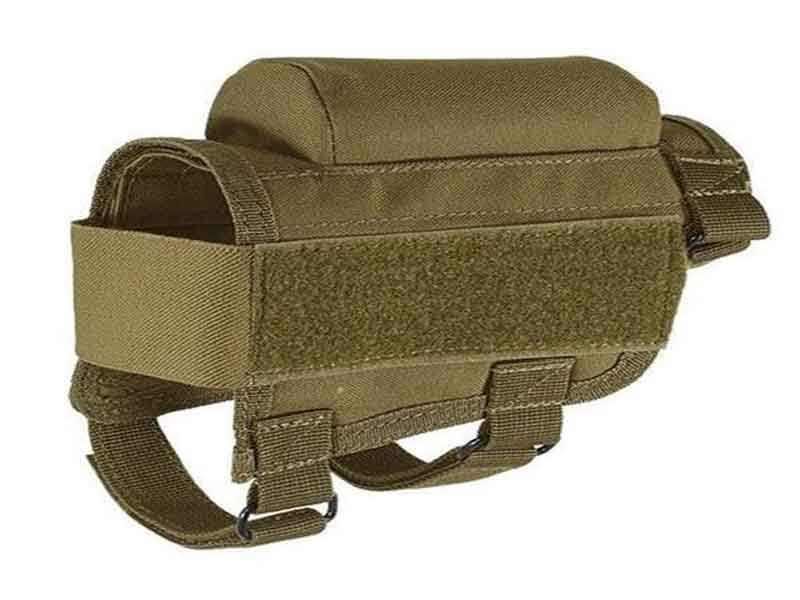
The best hunting bag materials balance silence, abrasion resistance, tear strength, water resistance, weight, color stability, sewability, and long-term durability. No single fabric provides the best result in every area, so hunting backpacks and shoulder bags usually perform better when different materials are assigned to different zones.
A backpack often needs stronger structural fabrics because it carries heavier loads and uses more compression points. A shoulder bag may prioritize soft hand feel, flexibility, and quiet body contact because it moves repeatedly across the user’s clothing.
A practical construction may use:
Brushed polyester on branch-contact areas
600D polyester Oxford on the main body
900D polyester or high-tenacity nylon on the base
TPU-laminated fabric on wet or dirty zones
Lightweight polyester lining
Spacer mesh on the back panel
Closed-cell foam around optics and weapons
Polypropylene or HDPE sheet for puncture barriers
The correct material program begins with the product’s field environment rather than with denier alone.
Which Fabrics Stay Quiet?
Brushed polyester, tricot, microfleece, soft-shell laminates, suede-like polyester, and tightly constructed knit-faced fabrics usually produce less friction noise than hard, smooth, heavily coated Oxford fabrics.
A quiet face fabric reduces the sound created when the bag rubs against branches, clothing, tree bark, or hunting equipment. It does not automatically make the whole bag quiet.
Noise also comes from:
Zipper sliders
Metal pulls
Loose webbing
Arrow shafts
Shells
Buckles
Frame interfaces
Hook-and-loop closures
Hard internal tools
Stiff coatings
A soft shell with noisy hardware is still a noisy hunting bag.
| Fabric type | Surface noise | Abrasion resistance | Water handling | Best use |
|---|---|---|---|---|
| Brushed polyester | Low | Moderate | Good with DWR | Main quiet exterior |
| Tricot | Low | Moderate | Depends on backing | Laminated quiet panels |
| Microfleece | Very low | Low to moderate | Absorbs more moisture | Low-contact quiet zones |
| Soft-shell laminate | Low | Moderate to good | Good | Weather-resistant exterior |
| Suede-like polyester | Low | Moderate | Moderate | Premium quiet shoulder bags |
| Smooth Oxford | Moderate to high | Good | Good with coating | Structural panels |
| High-tenacity nylon | Moderate | Very good | Good with coating | Reinforcement zones |
| TPU laminate | Moderate | Very good | Very good | Base and washable areas |
Pile height changes performance. Longer brushed surfaces feel softer and can reduce scraping noise, but they may collect burrs, seeds, dust, and mud. Shorter brushed finishes are easier to clean and more durable.
Microfleece can be extremely quiet but may hold water and vegetation. It is better as a selective overlay than as the only exterior material on a rugged pack.
Soft-shell materials combine a woven or knit face with a membrane or backing. They can provide a useful balance of silence, weather resistance, and flexibility. The laminate must remain quiet after cold conditioning because some membranes and adhesives stiffen at low temperatures.
Shoulder bags often rub against jackets and trousers as they rotate. The body-side surface should be quiet and should not damage delicate clothing. Spacer mesh improves airflow but can produce friction against some outerwear. A brushed backing or carefully selected mesh may perform better.
Backpacks need quiet shoulder straps and hip belts as well as quiet shells. The sound of webbing sliding through a buckle can be more noticeable than the fabric itself.
Internal dividers should prevent hard equipment from contacting. An ammunition pocket lined with soft fabric may still rattle if cartridges move freely.
Because there is no universal “silent fabric” rating for hunting bags, manufacturers can use an internal acoustic comparison test.
Candidate samples should be tested through:
Fabric-to-fabric rubbing
Fabric-to-bark rubbing
Dry folding
Wet folding
Cold folding
Zipper movement
Buckle opening
Strap adjustment
Complete loaded-bag walking
The test distance, movement speed, and recording conditions should remain consistent. Frequency character also matters. A short high-pitched snap may be more noticeable than a longer low-frequency rustle.
A quiet material should still survive the environment. A fabric that becomes silent by using a delicate surface may pill or wear through quickly. Structural woven layers beneath the quiet face can carry the load while the outer layer controls sound.
Is Nylon or Polyester Better?
Nylon is often better for high strength and abrasion resistance at a given weight, while polyester is often better for ultraviolet stability, low water absorption, dimensional stability, print consistency, and cost control. Neither fiber is universally superior.
Finished performance depends on:
Yarn quality
Yarn denier
Weave density
Fabric weight
Coating type
Coating weight
Heat setting
Finishing
Lamination
Dye or print process
A high-quality 500D high-tenacity nylon may outperform a basic 600D polyester in tear and abrasion tests. A tightly woven, well-coated 600D polyester may outperform a loosely constructed heavier nylon fabric in practical use.
| Performance factor | Nylon | Polyester |
|---|---|---|
| Abrasion resistance | Often excellent | Good to very good |
| Tear strength | Usually strong for weight | Good |
| Water absorption | Higher | Lower |
| Drying behavior | Can retain more moisture | Usually dries with less absorption |
| UV stability | Moderate | Generally better |
| Dimensional stability | Can change more when wet | Generally stable |
| Print compatibility | Good with suitable process | Excellent for many camouflage processes |
| Hand feel | Often softer | Can be firmer |
| Cost | Often higher | Usually more economical |
| High-tenacity options | Widely available | Also available |
| Cold performance | Depends on coating | Depends on coating |
| Recycling options | Available | Widely available in rPET form |
Polyester is a strong choice for camouflage hunting bags because sublimation and transfer processes can create stable, detailed patterns on suitable fabrics. It also absorbs less moisture than nylon.
Nylon is valuable for lightweight mountain packs, reinforcement areas, frame sleeves, and high-abrasion zones. It often provides excellent mechanical strength without requiring extreme fabric weight.
Shoulder bags may benefit from polyester because printed surfaces remain stable and the fabric can be finished with a softer hand. High-wear lower corners can use nylon or heavier polyester reinforcement.
A hybrid construction often provides the best answer:
Polyester quiet shell
High-tenacity nylon base
Polyester lining
Nylon reinforcement tape
Polyester webbing for low water absorption
Specialized elastic and mesh where needed
The product team should compare actual laboratory values rather than relying on fiber reputation.
Useful tests include:
Grab tensile strength
Tongue tear strength
Abrasion resistance
Seam strength
Coating adhesion
Hydrostatic pressure
Colorfastness
Low-temperature flexibility
Dimensional change
The test method and conditions must remain identical when comparing fabrics. Results from different laboratories or methods cannot always be compared directly.
Material approval should include production tolerances. Fabric weight, coating, color, and hand feel may vary between lots. The approved specification should define acceptable ranges.
How Much Water Resistance Is Needed?
The required water resistance depends on rainfall duration, hunting environment, equipment sensitivity, and whether the bag includes a rain cover or internal waterproof storage.
Most general hunting bags need strong water resistance rather than complete waterproof construction. A coated shell, protected zippers, drainage, and a rain cover can protect equipment during normal rain without the weight and production complexity of a fully sealed bag.
A true waterproof claim usually requires:
Waterproof fabric
Sealed seams
Waterproof or protected closures
Sealed attachment points
Controlled hose and frame openings
Verified complete-product testing
A fabric can be waterproof while the bag leaks through stitching and zippers.
| Protection level | Construction direction | Suitable use |
|---|---|---|
| Light water repellency | DWR-treated fabric | Dry climates and short exposure |
| Water-resistant | PU-coated fabric and protected openings | General day hunting |
| Highly water-resistant | Strong coating, covered zippers, rain cover | Prolonged rain |
| Waterproof compartment | Welded or taped construction | Electronics and critical gear |
| Fully waterproof bag | Waterproof laminate and sealed construction | Wetland, boat, and severe-weather use |
A backpack may need higher protection because it carries clothing, electronics, optics, food, and emergency equipment. A shoulder bag may be easier to place under a jacket or cover, but frequently opened compartments still expose contents.
Water-resistant zippers help but are not automatically waterproof. Their coatings can wear along curved openings, and slider gaps remain possible leakage points.
Flaps over zippers reduce direct rain exposure and can also improve noise control. They must not be so large that they catch branches.
Rain covers are practical for backpacks, but a shoulder bag can use a roll-top or flap construction that provides weather protection without a separate cover.
Internal dry bags remain the most reliable option for insulation, electronics, and emergency equipment. They protect contents even when the outer bag becomes wet.
Drainage is essential in open pockets, bow boots, bottle sleeves, and game compartments. A waterproof pocket without drainage can become a water container.
Coating choice affects the bag’s hand feel and noise.
| Treatment | Main benefit | Main limitation |
|---|---|---|
| DWR | Surface water beading | Performance reduces with wear |
| PU coating | Flexible water barrier | Can hydrolyze or peel if poorly made |
| TPU film | Durable waterproof laminate | Higher cost |
| PVC coating | Strong and economical barrier | Weight and stiffness |
| Silicone treatment | Light and flexible | Sewing and bonding challenges |
| Seam tape | Seals needle holes | Requires compatible fabric and equipment |
| Welded seams | High water protection | Limited to weldable materials |
A heavy coating may improve hydrostatic pressure while making the fabric stiff and noisy. Material selection should consider the complete hunting experience rather than maximizing one test value.
For shoulder bags, the body-side panel may encounter sweat as well as rain. Moisture-resistant lining and fast-drying padding help control odor and discomfort.
Which Areas Need Reinforcement?
Reinforcement should be placed where concentrated force, abrasion, puncture, or repeated flexing occurs. Covering the entire product in heavy fabric adds weight without solving the actual stress pattern.
Backpack reinforcement zones commonly include:
Bottom panel
Shoulder-strap anchors
Hip-belt connection
Frame sleeve
Compression-strap anchors
Bow or rifle attachment
Side pockets
Haul handle
Zipper ends
Meat shelf
Shoulder-bag reinforcement zones commonly include:
Main strap anchors
Lower corners
Body-side edge
Stabilizer connection
Flap hinge
Ammunition pocket
Handle
Accessory attachment points
| Stress zone | Failure risk | Reinforcement direction |
|---|---|---|
| Main strap anchor | Tearing from concentrated load | Large patch integrated into seam |
| Bag bottom | Rock and ground abrasion | Heavier woven or TPU laminate |
| Shoulder-strap top | Repeated load cycling | Webbing path and structural patch |
| Hip-belt connection | Load-transfer failure | Frame-linked reinforcement |
| Compression anchor | Fabric distortion | Multi-layer patch and bartack |
| Zipper end | Seam separation | End tab and stress relief |
| Ammunition pocket | Sagging and abrasion | Structured base and lining |
| Bow or rifle contact | Surface wear and impact | Durable outer layer and padding |
| Haul handle | Sudden lifting load | Webbing wrapped into structural seams |
| Lower shoulder-bag corner | Repeated hip contact | Rounded heavy-fabric patch |
Reinforcement patches should have rounded corners. Sharp corners concentrate stress and are more likely to lift or wear through adjacent fabric.
More stitching is not always stronger. Dense needle penetration can weaken fabric, especially coated textiles. Stitch pattern, seam allowance, thread type, and patch size must match the load.
A box-X stitch spreads force across a wider area. Bartacks work well where the load direction is understood. Long webbing paths can transfer force into structural seams rather than relying on one small patch.
Different fabric layers should transition gradually. A very stiff patch sewn to a soft shell can create a hard edge where flexing becomes concentrated.
Reinforcement should not create noise. A hard laminate on a branch-contact area may scrape even though it survives abrasion well. Quiet overlays can cover structural layers where necessary.
Shoulder-bag strap anchors need particular attention because the entire load may hang from two attachment points. The webbing should continue into the body structure or connect across a broad internal patch.
Sample testing should include cyclic loading, not only one static pull. Thousands of walking movements create repeated small forces that may loosen stitches or stretch the shell.
Are Camouflage Fabrics Colorfast?
Camouflage fabrics can maintain stable color when the fiber, dye, print method, coating, and finishing process are compatible. Colorfastness should be verified against light, rubbing, water, sweat, washing, and abrasion.
A new printed swatch may look excellent while still transferring color to clothing or fading quickly outdoors.
Important tests include:
Colorfastness to light
Dry rubbing
Wet rubbing
Water exposure
Perspiration
Washing
Abrasion
Coating and laminate adhesion
Shade consistency
Pattern repeat consistency
| Color problem | Possible cause | Prevention |
|---|---|---|
| Sun fading | Weak dye or fixation | Lightfast pigment or dye system |
| Color rubbing onto clothing | Poor crocking resistance | Improved fixation and testing |
| Different shades between panels | Mixed production lots | Shade sorting and roll control |
| Print cracking at folds | Rigid pigment binder | Flexible print chemistry |
| Darkening after coating | Coating interaction | Approve finished fabric |
| Pattern mismatch | Uncontrolled cutting | Marker planning |
| Bright seam lines | White yarn exposure | Solution-dyed or matched base |
| Surface wear | Printed layer lacks depth | Stronger print and protected zones |
| Repeat looks too small | Incorrect artwork scale | Full-bag pattern review |
| Color changes under daylight | Lighting metamerism | Multi-light-source approval |
Polyester supports many detailed camouflage printing methods. Sublimation integrates color into suitable fibers and can provide good durability. Pigment printing works on various fabric types but may create a firmer surface depending on binder weight.
Nylon requires compatible dye and printing systems. Heat and chemical conditions must be controlled carefully to preserve strength and coating performance.
The camouflage repeat should be evaluated on a complete bag panel, not only a small sample. A pattern that looks natural at 20 centimeters may form obvious repeated blocks across a backpack.
Shoulder bags use smaller panels, so pattern scale may need adjustment. A very large camouflage repeat can lose most of its visual variety when cut into a compact product.
Cutting placement influences appearance. Random cutting creates natural variation but may place an unusually bright area on the front of one unit. Controlled placement improves consistency but increases fabric consumption.
Colorfastness should also be checked after the fabric receives its final coating, brushing, or lamination. These processes can alter saturation and contrast.
Custom camouflage development should include:
Editable artwork
Defined repeat dimensions
Color references
Final base fabric
Print strike-off
Coated and finished approval sample
Full-size panel review
Bulk shade standard
Military or specialized applications may require near-infrared reflectance control in addition to visible color matching. That performance cannot be judged by human vision and requires dedicated materials and testing.
For commercial hunting bags, the most useful goal is consistent color, reliable outdoor durability, controlled rubbing performance, and a pattern scale that works on the finished product.
Material performance should always be considered as a system. A quiet fabric that leaks, a waterproof fabric that crackles, a strong nylon that fades, or a beautiful camouflage print that rubs onto clothing is not a successful hunting material.
Szoneier can combine cotton, canvas, polyester, nylon, Oxford fabric, neoprene, laminated textiles, coated fabrics, reinforcement layers, quiet face materials, and custom printing according to the intended hunting environment. The final choice should be confirmed through physical samples and complete bag testing rather than selected from a fabric name alone.
How Do They Affect Field Safety?
A hunting bag affects field safety through load balance, weapon clearance, ammunition control, snag prevention, visibility, and the hunter’s ability to move without losing stability. Backpacks usually provide better control of heavy or bulky equipment because the load remains centered behind the body. Shoulder bags provide faster access but can rotate, swing, or shift unexpectedly if they are overloaded or poorly stabilized.
Neither format is automatically safe. A backpack can become hazardous when a firearm points in an unsafe direction, a bowstring catches a loose strap, or heavy equipment shifts during a descent. A shoulder bag can interfere with weapon mounting, pull the hunter sideways, or spill ammunition when opened while moving.
Good safety engineering begins by controlling three things: where the load sits, how it moves, and what happens when the hunter needs to access equipment quickly.
Which Bag Carries Weapons Better?
A hunting backpack generally carries bows, rifles, shotguns, and crossbows more securely because it provides a larger attachment surface and allows the weapon to be restrained at two or more points. A shoulder bag is better suited to carrying accessories around the weapon rather than supporting the weapon itself.
A secure weapon-carry system should prevent:
Vertical sliding
Side-to-side movement
Rotation
Contact with hard buckles
Trigger exposure
Muzzle contamination
Bowstring abrasion
Sight or scope impact
Interference with the hunter’s legs
A rifle or shotgun should never be retained by one loose strap around the middle. The stock and barrel need independent control. The muzzle should remain protected from soil, snow, and debris, while the trigger area should not press against loose equipment.
A backpack can use a side scabbard, center-front compression system, lower rifle boot, or removable gun carrier. Each system changes the pack’s balance and access.
| Weapon-carry position | Stability | Access speed | Main advantage | Main safety concern |
|---|---|---|---|---|
| Center rear | High | Moderate | Balanced load | Muzzle height and pack access |
| Side vertical | Moderate | Fast | Easier removal | Asymmetrical load |
| Diagonal rear | Moderate | Moderate | Reduces overall height | Complex strap path |
| Integrated scabbard | High | Moderate | Protects more of the firearm | Added weight and bulk |
| Lower boot with upper strap | High | Fast to moderate | Simple and secure | Boot must fit stock or limb shape |
| Hand carry | Depends on terrain | Immediate | Fastest readiness | One hand remains occupied |
Bow-carry systems need different protection. The bag should restrain the riser or stable limb area rather than pulling aggressively against the string, cables, sight, or arrow rest. A mounted quiver increases the depth and asymmetry of the bow, so the attachment system must be tested with the complete setup.
A shoulder bag can interfere with both rifle and bow handling. A cross-body strap may pass through the same shoulder area used for mounting a firearm. For a right-handed shooter, the strap should usually leave the right shoulder pocket clear. Ambidextrous attachment points allow users to move the bag to the opposite side.
For bow hunters, the shoulder-bag body should not sit where it contacts the drawing arm or bowstring. A bag positioned high beneath the armpit may feel stable while walking but interfere with a full draw.
Weapon access should be intentional. A fast-release strap should not open accidentally after catching a branch. Buckles should be positioned where they can be found by touch but remain protected from impact.
A practical weapon-carry test should include:
Walking on level and uneven ground
Climbing and descending
Crouching beneath obstacles
Stepping over logs
Using trekking poles
Removing the weapon with gloves
Reattaching the weapon
Accessing the main compartment while the weapon remains mounted
Inspecting contact points after the test
The design team should check for scratches, strap migration, buckle marks, pressure on optics, and any change in weapon orientation.
A backpack can carry weapons better only when the attachment system is integrated into the load structure. Decorative straps sewn into a light pocket panel may fail when the weapon moves repeatedly. Strap anchors should connect to reinforced seams, frame sections, or load-bearing webbing paths.
Where Should Ammunition Be Stored?
Ammunition should be stored in a dedicated, secure compartment that protects it from moisture, contamination, impact, and uncontrolled movement. It should remain separate from sharp tools, food, loose batteries, and equipment that may damage cartridges or shotgun shells.
The storage location should reflect access needs. Working ammunition may remain in a hip-belt pocket, shoulder pouch, or organized front compartment. Reserve ammunition can stay deeper inside the bag.
A shoulder bag offers excellent visibility and direct access, especially for shotgun shells and small-game hunting. A backpack provides more protection and capacity but needs an external working-ammunition pocket if the user requires frequent access.
| Ammunition type | Suitable storage | Main requirement |
|---|---|---|
| Shotgun shells | Elastic loops or structured divided pouch | Retention and fast identification |
| Rifle cartridges | Individual loops or rigid box pocket | Protection from impact and debris |
| Magazines | Fitted reinforced pocket | Secure orientation and flap retention |
| Loose reserve ammunition | Closed internal pouch | Noise and moisture control |
| Different loads | Separate labeled sections | Prevent incorrect selection |
| Wet or exposed ammunition | Water-resistant removable pouch | Drying and inspection access |
Ammunition loops should match the intended cartridge or shell dimensions. Loose loops allow cartridges to fall. Overly tight loops slow access and may deform softer shell bodies.
Elastic performance must remain stable over time. Heat, repeated stretching, moisture, and storage under tension can reduce recovery. Production specifications should define elastic width, thickness, elongation, and recovery after cycling.
Ammunition pockets should not open downward when worn. A partially opened pocket must continue to retain its contents. Side gussets, internal mesh, or limited-opening zippers help control the opening angle.
Hard cartridges can rattle against one another. Individual loops, soft dividers, or fitted boxes reduce movement. The pocket lining should resist abrasion and should not contain loose fibers that catch case rims or shell components.
Moisture control is important. Wet ammunition should not remain sealed inside a non-breathable pocket for extended periods. A removable pouch allows the user to inspect and dry the contents after the hunt.
The compartment should be easy to identify by touch but should not be confused with food or general accessory storage. A different zipper pull, internal color, raised label, or pocket shape can help.
Backpack hip-belt ammunition pockets should not interfere with sitting, climbing, or drawing a bow. Large rigid boxes can press into the body when the user bends. Shoulder-bag ammunition compartments should remain close to the body so their weight does not pull the outer edge downward.
A useful packing system separates ammunition into two levels:
Immediate-use ammunition stays in an organized, fast-access pocket.
Reserve ammunition remains secured inside a protected compartment.
This prevents the hunter from overloading exterior loops while preserving quick access.
How Do Bags Prevent Snagging?
Hunting bags prevent snagging by controlling loose straps, reducing outward projections, keeping the overall profile narrow, and placing hardware where branches are less likely to catch it. Dense brush quickly exposes weaknesses that are invisible in studio photography.
Common snag points include:
Loose compression straps
Long zipper pulls
Exposed elastic cord
Open mesh
Projecting buckles
MOLLE loops
Hydration hoses
Weapon slings
Arrow shafts
Shoulder-bag stabilizer straps
Oversized pocket flaps
A clean exterior is especially important for shoulder bags because the product moves across the torso and passes close to vegetation. A loose strap can catch while the bag is rotated forward. A backpack is more stable, but its larger surface area creates additional contact points.
| Snag source | Possible consequence | Design response |
|---|---|---|
| Loose webbing tail | Branch catches and pulls load | Elastic keeper or roll-up system |
| Long zipper cord | Unplanned zipper opening | Short shaped pull and zipper garage |
| Open mesh pocket | Tearing and equipment loss | Protected edge and tighter knit |
| Hydration hose | Catches vegetation | Multiple low-profile hose clips |
| External shock cord | Collects branches | Partial fabric channels |
| MOLLE webbing | Snags twigs | Limited placement or laser-cut panel |
| Shoulder stabilizer | Hangs when not used | Removable or stowable design |
| Bow limb or rifle barrel | Strikes vegetation | Centered controlled carry |
| Arrow tube | Widens silhouette | Angled two-point attachment |
| Large flap | Lifts while walking | Shaped closure and controlled overlap |
Every adjustable strap should have a storage position for excess length. Elastic keepers are simple, but they must retain tension after repeated stretching. Hook-and-loop wraps provide stronger control but may create noise. Folded strap garages offer a cleaner solution on premium products.
Zipper pulls should remain large enough for gloves but short enough to avoid branches. Molded soft pulls or compact cord loops provide better control than long decorative cords.
External mesh should be evaluated carefully. Stretch mesh is useful for gloves, bottles, and wet clothing, but open structures can catch thorns. High-density stretch woven fabric often provides better durability for hunting applications.
MOLLE-style panels should be limited to areas where modular attachment is actually needed. A full grid across the front increases visual complexity and can catch vegetation. Laser-cut laminated panels reduce exposed loops but require testing for edge durability and low-temperature performance.
Shoulder bags need a stowable stabilizer strap. When the user does not need the strap, it should not hang below the bag. A small internal sleeve, elastic keeper, or removable buckle can solve this issue.
A snag test can be created with hanging cords, flexible rods, synthetic vegetation, and controlled obstacles. The bag should be tested while fully loaded because straps and pockets change shape under tension.
The test route should include:
Forward walking
Sideways movement
Crouching
Crawling
Rotating a shoulder bag forward
Removing a weapon
Climbing over a simulated log
Reversing through vegetation
Every contact point can be marked and reviewed. Repeated contact often identifies unnecessary loops, exposed corners, or poor strap routing.
Does Bag Position Affect Shooting?
Bag position can affect shooting by changing shoulder movement, torso rotation, firearm mounting, bow draw, anchor position, and balance. A bag that feels comfortable while walking may become restrictive when the hunter raises a weapon.
Backpacks sit behind the body, so they usually interfere less with immediate hand movement. However, thick shoulder straps, high top profiles, hip-belt pockets, and external weapon attachments can still affect shooting.
Shoulder bags occupy the side, chest, or rear shoulder area. Their strap may cross the shooting shoulder, while the bag body may move into the path of the drawing arm.
For firearm users, the stock must seat consistently against the shoulder. Thick strap padding in that area can change the contact position. A hard buckle is even more disruptive.
For bow hunters, the shoulder straps should not restrict scapular movement. The hunter needs enough freedom to extend the bow arm, rotate the torso, and draw without contacting the bag or strap.
| Shooting issue | Backpack risk | Shoulder-bag risk | Design response |
|---|---|---|---|
| Firearm stock placement | Thick shoulder strap | Cross-body strap on shooting side | Low-profile clear shoulder zone |
| Bow draw | Wide strap near armpit | Bag body contacts draw arm | Curved straps and opposite-side carry |
| Torso rotation | Large rigid hip belt | Bag shifts across abdomen | Flexible fit and stabilizer control |
| Head movement | Tall pack top | High sling body | Lower upper profile |
| Kneeling position | Bulky belt pockets | Bag falls forward | Compact pocket geometry |
| Prone position | Pack thickness | Side bag creates uneven body position | Quick-removal option |
| Fast shouldering | Weapon attachment straps obstruct | Main sling crosses weapon path | Separate equipment routes |
The product should be tested in realistic shooting positions:
Standing
Kneeling
Sitting
Supported standing
Crouched
Prone when relevant
Tree-stand seated
Bow full draw
The bag does not need to remain worn during every shot. Some hunters remove the pack after reaching a position. However, quick opportunities often occur during movement, so the product should not make a safe shot impossible.
A shoulder bag should offer left- and right-side attachment. The user can place it opposite the shooting shoulder. A symmetrical bag body or reversible strap improves compatibility.
Backpack shoulder straps can use lower-profile foam on the firearm-mounting side, but asymmetrical straps complicate mass-market fit. A better solution is careful strap curvature and hardware placement that keeps both shoulder pockets reasonably clear.
The sternum strap should be vertically adjustable. A high sternum strap may restrict shoulder movement, while a low one can interfere with chest equipment.
Which Design Improves Balance?
A backpack generally improves balance because it keeps the load near the body’s centerline and distributes weight symmetrically. A shoulder bag can remain balanced with light loads, but dense or poorly organized equipment creates a sideways pull.
Balance depends on four factors:
Load weight
Distance from the body
Vertical position
Left-to-right distribution
A light item mounted far from the body can create more instability than a heavier item held close to the frame.
Backpack loads should place dense equipment close to the back. Shoulder bags should place heavy items against the body-side wall and near the center of the bag.
| Packing decision | Effect on balance |
|---|---|
| Heavy equipment near frame | Reduces backward leverage |
| Water at outer front panel | Increases backward pull |
| Dense items at one end of shoulder bag | Creates rotation |
| Loose main compartment | Allows shifting |
| High load position | Can improve walking efficiency but increase top-heaviness |
| Low load position | Feels stable but may pull downward |
| External bow or rifle centered | Improves symmetry |
| Side-mounted weapon | Requires opposite-side load planning |
| Full bottle on one side | Creates imbalance as water volume changes |
| Stable compression | Reduces movement |
Terrain changes the preferred balance. On flat ground, a slightly higher load can feel efficient. On steep or uneven terrain, excessive height increases the risk of sway. Side-hilling makes asymmetrical loads more noticeable.
A shoulder bag should not force the user to lean away from the load. Repeated compensation can create fatigue in the neck, back, and opposite hip.
Internal dividers help prevent dense equipment from sliding to the lowest corner. Compression straps or adjustable gussets reduce empty space around the load.
Backpacks can use side-to-side compression and load-lifter straps. Shoulder bags can use a body-side stabilizer and an internal structured panel.
Balance should be tested with changing consumables. A full water bottle or ammunition pocket becomes lighter during the hunt. The bag should remain stable throughout that change.
Good balance is often felt as an absence of effort. The hunter should not need to tighten, lift, or reposition the bag every few minutes.
How Should You Choose or Customize One?
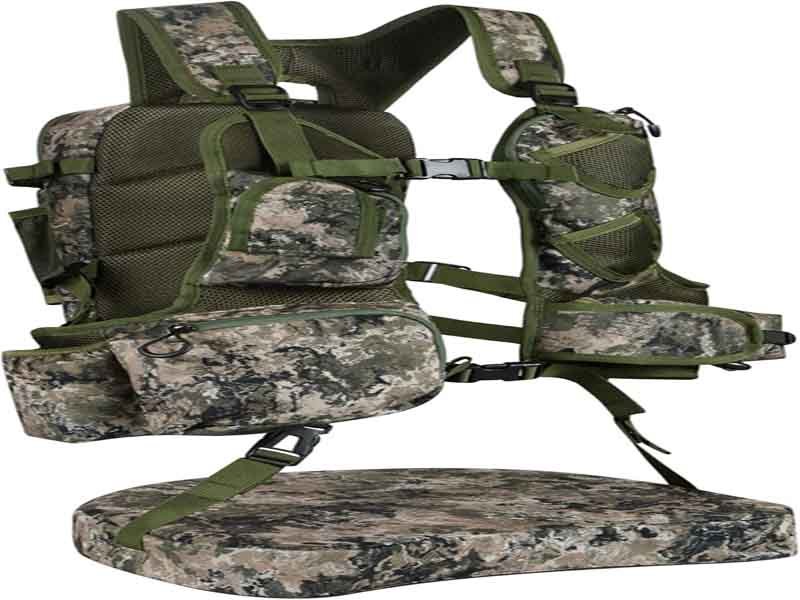
Choose a hunting backpack when the load is heavy, bulky, weather-sensitive, or carried over long distance. Choose a hunting shoulder bag when the equipment is light, frequently accessed, and used during short or highly mobile hunts. Customization should begin with the hunt, equipment list, expected load, body position, and access sequence before selecting fabric, camouflage, pockets, or logo methods.
A successful custom product is not created by combining every popular feature. It is created by deciding what the bag must do, what it should not attempt to do, and which compromises are acceptable.
Szoneier can develop hunting backpacks, sling bags, shoulder bags, ammunition bags, bow-carry packs, game bags, and modular accessory systems using cotton, canvas, polyester, nylon, neoprene, Oxford fabric, coated textiles, laminated fabrics, quiet outer layers, mesh, foam, structural inserts, webbing, and custom hardware.
What Questions Should You Ask First?
The first questions should define user behavior, load, environment, access, and risk. Material selection should come later.
A complete development brief should answer:
What type of hunting is the bag designed for?
How long is the normal hunt?
How far does the user walk?
What equipment must be carried?
What is the expected normal load?
What is the maximum tested load?
Which items need one-hand access?
Will the bag carry a bow or firearm?
Will it hold ammunition?
Will it carry wet, dirty, or biological material?
What climate and temperature range are expected?
Will users wear heavy winter clothing?
Does the product need left- and right-handed use?
Which market and retail position are intended?
A useful equipment list should include dimensions and weights rather than general descriptions.
| Development question | Why it matters |
|---|---|
| Is the product for day or multi-day use? | Determines capacity and frame needs |
| What is the heaviest realistic load? | Determines suspension and reinforcement |
| Which items are accessed most often? | Determines pocket placement |
| Is the hunter moving continuously? | Determines stability and strap system |
| Will the bag be worn while shooting? | Determines shoulder and torso clearance |
| Is weapon attachment required? | Changes structure and safety testing |
| Is silent movement critical? | Changes fabric, zipper, and hardware choices |
| Will the bag contact blood or mud? | Determines washable materials |
| Is full waterproofing required? | Changes fabric and seam process |
| Is custom camouflage required? | Changes printing and minimum preparation |
| Will it be sold internationally? | Affects sizing, labels, and testing |
| Is modularity important? | Determines webbing and removable systems |
Customer reference images are useful, but they should not replace a functional brief. A reference product may have features that do not fit the intended hunt.
Szoneier can convert the brief into:
Product dimensions
Capacity target
Material map
Pocket plan
Harness structure
Accessory list
Logo plan
Camouflage plan
Sample-testing checklist
Packaging direction
The design process becomes faster and more accurate when these elements are agreed before sampling.
Which Features Are Essential?
Essential features are the ones required for the bag’s core job. Optional features can be added only after the load system, access, and safety have been solved.
For a hunting backpack, essential features may include:
Correct capacity
Stable shoulder harness
Hip belt for moderate or heavy loads
Compression straps
Weather-resistant shell
Quiet opening system
Hydration storage
Weapon attachment
Reinforced base
Organized quick-access pockets
For a hunting shoulder bag, essential features may include:
Wide adjustable strap
Stable body-side panel
Optional stabilizer strap
Controlled rotation
Quiet one-hand opening
Divided call or ammunition storage
Secure internal pockets
Low-profile exterior
Weather-resistant base
Ambidextrous configuration
| Product goal | Essential feature | Optional feature |
|---|---|---|
| Lightweight scouting | Compact body and fast access | Full MOLLE panel |
| Turkey hunting | Call organization and quiet opening | Meat shelf |
| Tree-stand hunting | Bulky clothing capacity and silent access | Expedition frame |
| Small-game hunting | Washable compartment | Hydration bladder |
| Mountain day hunting | Frame, hip belt, compression | Large call organizer |
| Bow hunting | Secure bow attachment | Full waterproof welding |
| Shoulder-bag mobility | Stabilized rotating strap | Heavy rigid structure |
| Wetland hunting | Waterproof base and drainage | Brushed fleece exterior |
Product teams often add too many features because each one appears valuable in isolation. The combined result becomes heavy and confusing.
A useful decision process is to label every proposed feature as:
Required
Useful
Optional
Unnecessary
A feature is required when the product cannot complete its main job without it. A feature is useful when it improves performance without creating major trade-offs. An optional feature supports a narrower user group. An unnecessary feature adds cost or complexity without solving a defined problem.
For example, MOLLE webbing may be required on a modular tactical-hunting pack, useful on a side panel, optional on the hip belt, and unnecessary across a quiet front panel used for bow carry.
How Are Samples Field-Tested?
Samples should be tested under realistic load, movement, access, weather, and equipment conditions. A prototype that passes visual inspection may still fail through strap slippage, shoulder pressure, pocket interference, noise, or poor balance.
A complete field-test program should include:
Fit testing
Load testing
Access testing
Noise testing
Weapon-clearance testing
Weather testing
Abrasion testing
Snag testing
Cleaning testing
Repeated-use testing
Backpacks and shoulder bags need different emphasis.
| Test | Backpack focus | Shoulder-bag focus |
|---|---|---|
| Load carry | Frame, belt, shoulder pressure | Strap pressure and swing |
| Access | Hip-belt and side pockets | Rotation and organizer visibility |
| Stability | Sway under heavy load | Movement during walking and crawling |
| Shooting | Shoulder-strap clearance | Cross-body strap interference |
| Snagging | Compression straps and external gear | Loose stabilizer and rotating strap |
| Weather | Main compartment and hydration openings | Flap, zipper, and body-side panel |
| Noise | Frame, buckles, shell | Strap movement and closures |
| Durability | Load-bearing anchors | Main strap anchors and corners |
| Cleaning | Meat shelf and base | Game or ammunition compartment |
A prototype test route can include:
Two kilometers of walking
Stair climbing
Uneven slope movement
Crouching
Crawling
Kneeling
Sitting against a tree
Retrieving equipment while moving
Removing and reattaching the weapon
Simulated rain exposure
The user should wear realistic clothing and other equipment, including binocular harnesses, safety harnesses, weapon slings, and gloves.
Data should be recorded in a structured form.
| Evaluation item | Measurement direction |
|---|---|
| Access speed | Seconds per item |
| Strap adjustment | Number of readjustments |
| Load movement | Visible displacement or user rating |
| Shoulder pressure | Location and severity |
| Noise | Comparative recording |
| Pocket usability | Success and failure rate |
| Weapon clearance | Contact points |
| Water entry | Location and amount |
| Snagging | Number and location of contacts |
| Hardware performance | Slippage or unintended opening |
A realistic development case might begin with a 12-liter sling bag designed for turkey hunting. The first sample may offer excellent call access but swing forward when the user kneels. A removable stabilizer strap can solve the movement problem. The second sample may remain stable but place the stabilizer buckle beneath the rifle sling. Moving the buckle lower and adding a low-profile release can create a better third sample.
This is why one visually attractive sample should not move directly into production.
What Quality Checks Matter?
Quality checks should cover materials, cutting, sewing, hardware, function, appearance, packaging, and final load performance.
Incoming material inspection may review:
Fabric width
Fabric weight
Color
Camouflage repeat
Coating adhesion
Water resistance
Abrasion performance
Webbing dimensions
Elastic recovery
Zipper operation
Buckle compatibility
Foam thickness and density
During cutting, camouflage direction, panel orientation, shade grouping, and reinforcement placement should be controlled.
During sewing, inspectors should verify:
Seam allowance
Stitch density
Thread tension
Bartack position
Strap routing
Pocket symmetry
Zipper shape
Lining alignment
Foam placement
Reinforcement coverage
| Quality point | Failure prevented |
|---|---|
| Main strap anchor | Structural separation |
| Shoulder-strap symmetry | Uneven fit |
| Hip-belt connection | Load-transfer failure |
| Compression anchor | Fabric tearing |
| Ammunition loops | Cartridge loss |
| Weapon holder | Rotation and slippage |
| Zipper end reinforcement | Seam opening |
| Coating condition | Peeling and leakage |
| Camouflage shade | Inconsistent appearance |
| Pocket orientation | Equipment loss |
| Drainage position | Water accumulation |
| Packaging support | Deformation during shipping |
Finished products can be tested through:
Static load
Repeated load cycling
Buckle opening cycles
Zipper cycling
Strap-slippage testing
Controlled drop or set-down testing
Water spray
Abrasion
Color rubbing
Final equipment fit
The approved sample should remain available as a production reference. Inspectors can compare bulk units with the confirmed dimensions, colors, stitching, hardware, and functional arrangement.
A strong quality plan does not depend only on final inspection. Problems should be found during material preparation and sewing, when correction remains practical.
Szoneier can support material inspection, inline inspection, final inspection, functional testing, packaging review, and shipment preparation according to the confirmed project requirements.
How Can Logos and Colors Be Customized?
Hunting bags can be customized through embroidery, screen printing, heat transfer, woven labels, rubber patches, silicone patches, debossed labels, custom zipper pulls, printed linings, branded webbing, and exclusive camouflage patterns.
The logo method should match the fabric and performance requirement.
| Branding method | Best application | Main advantage | Main limitation |
|---|---|---|---|
| Embroidery | Stable front or lid panel | Durable premium appearance | Needle holes and added stiffness |
| Screen printing | Simple logo and larger area | Cost-efficient | Ink adhesion must be tested |
| Heat transfer | Detailed multicolor logo | Clean edge and flexibility | Heat can affect coatings |
| Woven label | Small detailed brand mark | Lightweight and consistent | Raised edge requires careful placement |
| Rubber patch | Rugged outdoor appearance | Durable and weather-resistant | Hard surface may create noise |
| Silicone patch | Flexible premium branding | Soft and modern | Higher unit cost |
| Debossed patch | Subtle outdoor styling | Quiet and refined | Limited color contrast |
| Custom zipper pull | Repeated brand detail | Functional visibility | Tooling may be required |
| Printed lining | Hidden brand storytelling | Strong internal presentation | Added print control |
| Jacquard webbing | Integrated repeated logo | Durable identity | Higher setup requirement |
Logo placement should not interfere with:
Weapon contact
Shoulder movement
Waterproof seams
Compression straps
Pocket openings
Flexible stretch panels
High-abrasion corners
A rubber patch near a bow riser may tap against the equipment. Heavy embroidery through a coated pocket may create water-entry points. Large heat transfers can stiffen quiet fabric.
Colors can include solid earth tones, blaze safety colors, standard camouflage, exclusive camouflage, mixed panels, or seasonal variations.
Custom camouflage development may require:
Editable pattern artwork
Defined repeat dimensions
Color references
Final base fabric
Strike-off sample
Finished coating sample
Full-panel approval
Bulk shade standard
The pattern scale should match the bag. A large repeat may work on a 40-liter backpack but lose balance on a 10-liter shoulder bag. A small repeat may look detailed up close but become a uniform block at distance.
Customers can also customize:
Webbing color
Thread color
Buckles
Zippers
Lining
Elastic
Mesh
Foam structure
Internal labels
Care labels
Hangtags
Barcode labels
Retail boxes
Poly bags
Master cartons
The complete branding system should feel consistent rather than relying on one large exterior logo.
A well-designed hunting bag begins with an honest decision about use. A backpack is not automatically better because it carries more. A shoulder bag is not automatically better because it opens faster. Each format succeeds when its capacity, carrying structure, pocket plan, fabric, and safety details match the hunter’s movement.
Szoneier has more than 18 years of experience in fabric development, processing, finished-product manufacturing, and custom production. The team can develop hunting backpacks, sling bags, shoulder bags, ammunition bags, game bags, bow-carry systems, and modular outdoor equipment using cotton, canvas, polyester, nylon, neoprene, jute, linen, Oxford fabric, coated textiles, laminated fabrics, quiet surfaces, custom camouflage, and reinforced structural materials.
Send Szoneier your intended hunting style, equipment list, preferred bag format, capacity, normal load, reference images, target fabric, camouflage artwork, logo file, estimated order quantity, and required market. The team can review the project, recommend a practical material and construction plan, prepare samples, refine the fit and storage system, and provide a quotation for your custom hunting backpack or hunting shoulder bag.