Skip to content
A sling bag looks simple until it is placed in a crowded railway station, a narrow market street, an airport security line, or a busy city bus. In those moments, the difference between an ordinary bag and a well-designed anti-theft sling bag becomes much more than a marketing label. It comes down to how quickly someone can locate the opening, reach the zipper, cut the strap, remove a phone, or distract the wearer long enough to access an exposed compartment.
The most effective anti-theft sling bags combine concealed access points, controlled zipper movement, body-facing pockets, reinforced straps, durable fabrics, and a carrying position that keeps valuables within the wearer’s natural field of awareness. No single feature makes a bag theft-proof. Security improves when several small obstacles work together, increasing the time, visibility, and effort required to reach the contents.
That distinction matters. A hidden zipper may discourage opportunistic access, but it cannot protect a phone stored in an open front pocket. A steel-reinforced strap may resist cutting, but it does not help if the main compartment remains easy to unzip. A lockable puller may look secure, but a poorly constructed zipper seam can still be forced apart.
Good anti-theft design is therefore a system, not a gadget. Imagine two travelers standing shoulder to shoulder on a crowded train. Both carry similar-looking sling bags. One bag has an exposed top zipper and a loose rear pocket. The other keeps its main opening against the body, uses a zipper garage, includes a protected passport sleeve, and allows the wearer to rotate the bag forward without removing it. To a casual observer, the bags look almost identical. To someone searching for the easiest target, they present completely different levels of difficulty.
What Is an Anti-Theft Sling Bag?
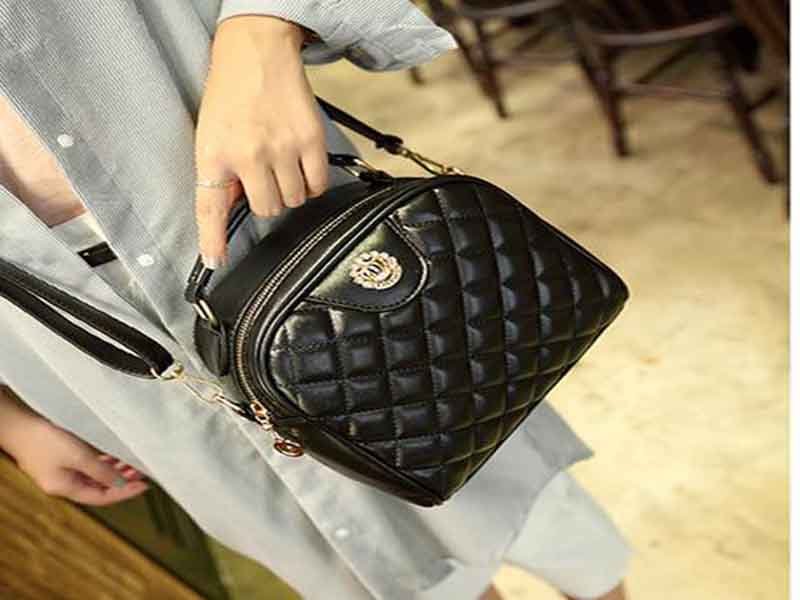
An anti-theft sling bag is a compact crossbody bag designed to reduce unauthorized access through concealed openings, secure zipper systems, protected compartments, reinforced materials, and controlled carrying positions. Its purpose is not to guarantee that theft can never occur, but to make common pickpocketing methods slower, more noticeable, and less attractive than attacking an unprotected bag.
How Does an Anti-Theft Sling Bag Work?
An anti-theft sling bag works by creating layers of resistance between an outside hand and the items stored inside. These layers may be visual, physical, structural, or behavioral.
Visual resistance begins with reducing obvious access points. A conventional sling bag often places a large zipper directly across the top or front panel. Anyone standing behind the wearer can immediately see where the compartment opens and in which direction the slider moves. A secure design may hide the zipper beneath a fabric lip, place the opening beside the body, or use a panel overlap that makes the zipper path difficult to identify.
Physical resistance is created by features that require additional movement. A zipper pull may need to be released from a clip, passed through a loop, tucked into a garage, or moved in two directions before the compartment can open. These actions are easy for the owner when the bag is held in front, but awkward for another person working from behind.
Structural resistance comes from fabric strength, seam placement, reinforcement layers, zipper quality, strap construction, and anchor design. A hidden zipper has limited value if the surrounding fabric tears easily. Likewise, a strong strap performs poorly if it is attached to the bag body with a narrow seam and no internal reinforcement.
Behavioral resistance comes from the way the sling bag is worn. Unlike a traditional backpack, a sling can usually be rotated from the back to the chest without removing the strap. This allows the wearer to move the bag forward when entering a crowded area. The bag becomes more visible, easier to hold, and harder to access unnoticed.
The strongest designs combine all four forms of resistance.
| Security Layer | Design Method | Main Purpose | Weakness if Used Alone |
|---|---|---|---|
| Visual resistance | Hidden zipper, covered opening, clean exterior panel | Makes entry points harder to identify | The opening may still be easy to operate once found |
| Physical resistance | Zipper clip, locking pull, snap tab, zipper garage | Adds steps before the compartment opens | May frustrate the owner if too complicated |
| Structural resistance | Reinforced fabric, secure seams, protected strap anchors | Resists cutting, tearing, and forced entry | Cannot prevent access through an exposed zipper |
| Positional resistance | Body-facing opening, front carrying mode | Keeps access points close to the wearer | Depends on how the wearer carries the bag |
| Organizational resistance | Internal passport sleeve, key clip, phone pocket | Keeps valuable items away from first-contact areas | Poor organization may cause users to leave pockets open |
The security effect is cumulative. One obstacle may only delay access for a second. Four obstacles may require enough movement to attract attention.
Consider a main compartment with two zipper sliders. On an ordinary bag, a hand can pull either slider toward the center. On a more secure design, both sliders meet under a covered fabric tab and connect through a small hook. The user can release the hook in a deliberate motion while looking at the bag. Someone reaching from behind must first find the sliders, lift the cover, identify the connection, release it, and then move the zipper. Each extra action increases the chance that the wearer will feel movement.
However, adding obstacles without considering usability can backfire. When a security feature is difficult to operate, users often stop using it. They may leave the clip disconnected, keep the zipper partly open, or move important items into an easier external pocket.
For product developers, this creates an important rule: the secure method should also be the natural method.
A zipper retention loop should be reachable with one hand. A hidden pocket should still be wide enough for the intended phone. A locking slider should not require a separate key during normal use. A front-worn bag should sit close to the chest without making the strap uncomfortable.
The following development targets can help balance access and security. They are product-design benchmarks rather than universal legal requirements.
| Design Item | Recommended Development Target | Reason |
|---|---|---|
| Main zipper access | Not immediately visible from a rear viewing angle | Reduces quick identification |
| Zipper retention | Releasable by the wearer in 1–3 deliberate movements | Balances security with usability |
| Phone pocket opening | Smaller than the full phone length, with closure or overlap | Reduces accidental or unauthorized removal |
| Passport compartment | Positioned inside the main cavity or against the body | Keeps high-value documents away from outer panels |
| Strap width | Commonly 25–50 mm depending on bag size and load | Distributes weight and improves control |
| Strap anchor reinforcement | Internal backing patch plus repeated stitching | Reduces seam failure under pulling force |
| Front-carry adjustment | Bag should rotate forward without strap removal | Encourages safer behavior in crowded areas |
| Pocket hierarchy | Low-value items outside, high-value items inside | Limits loss if an external pocket is accessed |
A good anti-theft sling bag does not need to look tactical or overly complicated. In fact, highly visible locks and exposed cables can sometimes draw attention to the assumption that valuables are inside. Clean, understated construction can be more useful. The security features should be integrated into the bag architecture rather than attached as decoration.
That is why anti-theft development should begin with a threat scenario, not a list of accessories.
A commuter may need protection from quick zipper access on a subway. A tourist may need a protected passport compartment and a stable front-carry position. A cyclist may prioritize strap retention and one-handed access. A photographer may need fast equipment access without exposing a wallet stored in the same compartment.
The question is not simply, “How many anti-theft features can be added?” The better question is, “Which access method is most likely in the intended environment, and how can the bag interrupt it without making daily use inconvenient?”
What Makes It Different from a Regular Sling Bag?
The difference between a regular sling bag and an anti-theft sling bag is not the bag shape. It is the relationship between the openings, the wearer’s body, and the surrounding environment.
A regular sling bag is usually designed around convenience. Its zipper may open widely, its front pocket may be immediately accessible, and its strap may use lightweight webbing with basic stitching. These choices are not necessarily poor. They may be perfectly suitable for carrying gym accessories, a water bottle, or low-value personal items.
An anti-theft sling bag must consider access from the perspective of both the owner and an unauthorized hand.
For the owner, the bag should open predictably, allow organized storage, and remain comfortable. For someone approaching from behind or from the side, the important pockets should be difficult to see, reach, and operate.
This change in perspective affects almost every component.
| Component | Regular Sling Bag | Anti-Theft Sling Bag |
|---|---|---|
| Main zipper | Exposed on top or front | Concealed, covered, lockable, or body-facing |
| Front pocket | Open, magnetic, or easy-pull zipper | Limited depth, protected closure, or low-value storage only |
| Rear pocket | Optional convenience pocket | Often used as a protected phone or passport compartment |
| Strap | Standard polyester or nylon webbing | Reinforced webbing, internal cable, layered construction, or cut-resistant insert |
| Zipper pullers | Long and easy to grab | Shorter, connectable, lockable, or stored under a cover |
| Internal layout | General-purpose storage | Valuables placed deeper and closer to the body |
| Bag position | Back, side, or front | Designed for quick rotation to the chest |
| Fabric selection | Chosen mainly for appearance and price | Evaluated for tearing, abrasion, cutting, coating, and seam performance |
| Branding | May include raised metal elements and exposed trims | Often avoids details that create weak points or unwanted attention |
The most important difference is pocket priority.
In a secure bag, not every pocket deserves the same level of protection. Frequently used items such as tissues, transit cards, or charging cables may remain in a quick-access section. A passport, wallet, phone, keys, and travel documents should be stored deeper or against the wearer’s body.
This sounds obvious, but many products fail at this point. A bag may advertise a hidden rear pocket while making it too small for current phone sizes. The user then places the phone in the larger front pocket, defeating the intended security system. Another bag may include a lockable main zipper but place an unprotected side compartment directly beside it.
Product dimensions must therefore reflect what people actually carry.
For example, a protected phone compartment should be developed around the phone plus its case, not the device dimensions alone. If a common phone with a protective case measures approximately 165 × 82 × 14 mm, a pocket built at exactly those dimensions will be difficult to use. The finished internal space must also account for seam allowance, lining thickness, foam, zipper tape, and the curve of the bag body.
A practical pocket may need an internal finished width of roughly 90–100 mm and a height of 175–190 mm, depending on the opening direction and fabric stretch. These values should be confirmed with physical samples rather than copied blindly across different bag shapes.
The same principle applies to passports and wallets.
A passport compartment that is too deep may slow retrieval at immigration. One that is too shallow may expose the edge of the document. A well-planned pocket may use a partial closure, elastic binding, a zipper, or a fabric overlap to keep the passport stable while allowing deliberate access.
Regular bags are often judged by capacity. Secure bags should be judged by controlled capacity.
A very large main cavity can encourage items to move freely. When the wearer opens the compartment, a wallet may sit directly beside the zipper. Internal sleeves, dividers, mesh pockets, and retention straps can keep high-value items away from the opening path.
The difference also appears in the pattern design.
Suppose the main zipper is placed along a curved side seam. The curve may make the bag comfortable and visually appealing, but it can also create tension on the zipper ends. If the zipper terminates near a strap anchor, repeated pulling may distort the opening. A secure construction should separate the zipper end from heavy load points or reinforce the area with a backing layer.
Zipper concealment must also be developed carefully. A fabric flap that is too narrow may expose the teeth when the bag is full. A flap that is too wide or stiff may trap the slider. A water-resistant coated fabric may create more friction than a soft woven nylon.
During sampling, developers should test the bag in several conditions:
| Sample Condition | What to Check |
|---|---|
| Empty bag | Does the structure collapse and expose the hidden opening? |
| Half-loaded bag | Can the owner find and operate the zipper naturally? |
| Fully loaded bag | Does pressure push the zipper out from under its cover? |
| Front carrying | Are secure pockets accessible without removing the bag? |
| Rear carrying | Can an outside hand easily locate the zipper path? |
| Winter clothing | Is the strap long enough over a thick jacket? |
| Light clothing | Can the strap shorten enough to keep the bag close to the body? |
| One-handed use | Can the wearer stabilize and open the bag without placing it down? |
A regular sling bag can still be well made, durable, and useful. Anti-theft construction simply introduces a different design objective: access must be convenient for the right person and inconvenient for everyone else.
That objective should guide the bag from pattern development to final inspection.
Which Users Need Extra Bag Security?
Anti-theft sling bags are most valuable for people who move through crowded or unfamiliar environments while carrying compact, high-value items. The need is not determined only by travel frequency. It depends on exposure, attention, carrying habits, and the consequences of losing a particular item.
International travelers are an obvious group because passports, cards, cash, phones, and transport documents are often carried together. Losing one item can create a chain of problems. A missing phone may block access to digital boarding passes, banking applications, hotel reservations, authentication codes, and emergency contacts.
Urban commuters face a different pattern of risk. They may use the same railway or bus route every day, which can create a false sense of familiarity. Crowding during boarding, standing near doors, or moving through turnstiles can reduce awareness of bag movement. A sling bag that rotates to the front can help the commuter maintain control without carrying a larger backpack against the chest.
Event visitors may also benefit. Music festivals, exhibitions, sporting events, and public celebrations combine crowd density with distraction. People may be watching a performance, taking photographs, buying food, or moving through queues. The security challenge is not always sophisticated theft. It may simply be an exposed zipper, a phone protruding from a pocket, or a bag left slightly open after payment.
Cyclists and motorbike riders need a stable bag that does not swing excessively. Their security concerns may include accidental zipper opening, strap release, and item loss during movement, as well as theft when stopping in crowded areas. For them, a secure buckle position and strap retention loop may be as important as a hidden pocket.
Students and office workers may carry tablets, wireless earphones, access cards, portable drives, and power banks. They may not need heavy cut-resistant construction, but they can benefit from organized internal storage and protected phone pockets.
The following risk matrix helps match user profiles with useful design priorities.
| User Profile | Common Environment | Likely Concern | Most Useful Features |
|---|---|---|---|
| International traveler | Airports, stations, tourist areas | Passport or wallet access | Body-facing pocket, zipper retention, organized document sleeve |
| Daily commuter | Trains, buses, crowded pavements | Unnoticed zipper opening | Concealed main zipper, front rotation, close strap adjustment |
| Festival visitor | Dense crowds, queues, distraction | Phone removal | Secure phone pocket, short zipper pulls, front-carry position |
| Cyclist | Streets, stops, physical movement | Bag movement and accidental opening | Stabilizer strap, secure buckle, zipper garage |
| Office worker | Cafés, public transport, shared spaces | Device and card storage | Internal dividers, protected electronics sleeve |
| Student | Campus, libraries, events | Phone, keys, earphones | Key clip, rear pocket, easy but controlled access |
| Photographer | Travel and street use | Equipment access mixed with personal valuables | Separated equipment and document compartments |
| Parent | Parks, attractions, transport | Divided attention | One-handed access for essentials plus protected valuables pocket |
| Older traveler | Tours, stations, public areas | Complex locks may be difficult | Simple zipper clip, clear organization, comfortable front carry |
Extra security is especially valuable when the user is likely to be distracted. A parent handling a child, a traveler reading directions, or a commuter carrying coffee has less attention available for monitoring a bag.
However, more protection is not always better.
A person with limited hand strength may struggle with small metal clips. Someone who frequently accesses a camera may avoid a bag with multiple locking steps. A traveler passing through several security checkpoints may become frustrated by complicated closures.
This is where user-centered product design becomes essential. Security should be matched to realistic behavior rather than an idealized assumption that every feature will always be used correctly.
A useful approach is to divide the bag into access zones.
Zone 1 contains low-value, frequently used items. It may include tissues, a charging cable, or a pen. Access should be quick.
Zone 2 contains moderately valuable items used several times a day, such as earphones, a transit card, or sunglasses. Access should be controlled but not slow.
Zone 3 contains critical items such as a passport, wallet, main phone, keys, or emergency cash. This zone should be closest to the body or deepest inside the bag.
| Access Zone | Typical Items | Access Frequency | Recommended Protection |
|---|---|---|---|
| Zone 1 | Tissues, pen, cable | Very frequent | Simple external or top pocket |
| Zone 2 | Earphones, sunglasses, transit card | Frequent | Zippered internal or side pocket |
| Zone 3 | Passport, wallet, main phone, keys | Limited | Body-facing, concealed, clipped, or internal zip pocket |
This system allows the product to remain practical. Users do not need to release a security clip every time they need a tissue, but the passport remains protected from quick access.
People who carry only a phone and keys may prefer a compact 1–3 liter sling. Travelers carrying a passport, wallet, power bank, bottle, and compact camera may need 4–8 liters. Larger capacity can be useful, but it also increases surface area, zipper length, and load on the strap anchors.
Capacity should be chosen according to the protected items, not simply maximized.
An anti-theft sling bag is therefore not only for nervous travelers or high-risk destinations. It is useful whenever compact valuables are carried in places where attention may be divided. The best design quietly supports safer habits without making the user feel as though they are operating a safe every time they need their phone.
Do Anti-Theft Sling Bags Really Work?

Anti-theft sling bags can reduce common opportunities for quick, unnoticed access, especially when they combine concealed zippers, body-facing storage, reinforced construction, and front carrying. They cannot stop every form of theft, and there is no responsible basis for calling any soft bag completely theft-proof. Their real value lies in deterrence, delay, visibility, and better control of important items.
How Do They Deter Pickpockets?
Pickpocket deterrence works by changing the effort-to-reward calculation.
Opportunistic theft generally depends on speed, concealment, and an easy exit. A visible zipper, loose pocket, open tote, or phone protruding from a compartment presents a low-effort opportunity. An anti-theft sling bag can remove or complicate those opportunities.
The first deterrent is uncertainty. When the main zipper is hidden beneath a folded edge or placed against the wearer, it is harder to identify where the compartment begins and ends. The second deterrent is additional movement. A connected zipper pull or retention tab cannot be operated with one smooth action. The third deterrent is proximity. A front-carried bag sits within the wearer’s visual and tactile awareness.
These factors do not make access impossible. They make it less discreet.
A useful way to evaluate a feature is to ask four questions:
- Can the entry point be identified immediately?
- Can it be reached without moving the bag?
- Can it be opened in one continuous action?
- Can the contents be removed without changing the bag’s weight or position noticeably?
The more “yes” answers a compartment receives, the weaker its practical security.
| Compartment Design | Identification | Opening Steps | Wearer Awareness | Relative Exposure |
|---|---|---|---|---|
| Exposed front zipper | Immediate | 1 | Low when carried behind | High |
| Covered zipper | Moderate | 1–2 | Low to moderate | Medium |
| Zipper with puller clip | Visible or moderate | 2–3 | Moderate | Medium-low |
| Body-facing zipper | Difficult from behind | 1–2 | High | Low |
| Internal zip pocket | Only accessible after main opening | 2–4 | High | Very low |
| Hidden rear pocket under strap path | Difficult | 1–2 | High | Low |
Relative exposure does not equal a guaranteed theft rate. It is a product-design assessment used to compare access conditions.
The best systems create what may be called sequential protection. An outside hand must first reach the bag, then find the opening, release the closure, open the compartment, locate the item, and remove it. Each stage creates an opportunity for detection.
Poorly designed products often focus on only one stage.
A bag may include a small combination lock but leave the phone in an exposed side pocket. Another may use cut-resistant fabric while placing an oversized zipper pull directly on the outer panel. These products contain anti-theft components, but they do not necessarily create a coherent anti-theft system.
The shape of the bag also matters. A structured sling that sits close to the body is easier to monitor than a soft bag that swings or folds. Excess movement can mask unauthorized contact. When a bag is already bouncing against the wearer’s back, a small tug may be less noticeable.
Strap adjustment has a similar effect. A long, loose strap may allow the bag to hang near the hip or lower back, beyond the wearer’s visual range. A closer fit improves control. However, the strap should not be so tight that the wearer cannot rotate the bag forward.
The ideal adjustment range should accommodate light clothing, winter layers, different body sizes, and multiple carrying positions. During development, manufacturers should test the minimum and maximum usable strap lengths on representative body forms rather than relying only on flat measurements.
A practical fitting trial may evaluate:
| Test Position | Evaluation Point |
|---|---|
| High chest carry | Bag remains stable without pressing into the neck |
| Front waist carry | Zippers remain visible and reachable |
| Side carry | Bag does not swing excessively during walking |
| Back carry | Main access points remain covered or body-facing |
| Over winter coat | Strap retains sufficient adjustment range |
| Over light shirt | Bag can tighten enough to remain close |
| Left and right shoulder | Hardware and zipper direction remain usable |
Deterrence also depends on appearance. Some users prefer obvious security elements because they communicate protection. Others prefer discreet styling because exposed locks, metal cables, and heavy hardware can make the bag look technical or suggest that expensive items are inside.
There is no universal answer. Travel security bags may justify visible locking elements. Lifestyle-oriented sling bags often benefit from hidden security features integrated into a clean exterior.
From a development perspective, the strongest solution is usually not the loudest one. It is the design that makes unsafe access difficult while keeping normal use intuitive.
Are Front-Carried Sling Bags Safer?
Front carrying usually improves control because the bag remains within the wearer’s visual field and close to both hands. It also places the main body of the bag against the chest or abdomen, making unauthorized contact easier to notice.
However, front carrying is not automatically secure.
A bag worn on the chest can still have an exposed zipper. It can still be left open after the user takes out a phone. A large external pocket can still be reached from the side. Security depends on how the openings are oriented and whether the wearer closes them correctly.
The benefit of front carrying comes from three factors.
First, visibility improves. The wearer can often see the zipper area without moving the bag.
Second, physical control improves. One hand can rest naturally on the bag in dense crowds.
Third, access direction changes. A zipper that is easy to reach when the bag sits on the back may become partially blocked by the wearer’s body when moved forward.
Designers should consider both front and rear carrying positions. A sling bag that works securely only on one side of the body may disappoint left-handed users or people who prefer the opposite shoulder.
Zipper orientation is particularly important. Suppose the zipper slider closes toward the wearer’s dominant hand when carried on the right shoulder. When the bag moves to the left shoulder, the closure may face outward. Dual sliders can improve flexibility, but they also create two potential access points unless the pulls can connect.
Reversible strap attachments or ambidextrous hardware can broaden usability, but they require careful reinforcement. Every additional attachment point adds seams, hardware, and possible stress concentrations.
A front-carry safety assessment should examine:
| Design Question | Stronger Result | Weaker Result |
|---|---|---|
| Can the wearer see the main opening? | Most of the zipper path is visible | Opening remains hidden from the owner but exposed at the side |
| Can the bag be stabilized with one hand? | Bag sits flat and close | Rounded shape causes rolling or swinging |
| Does the body cover the protected pocket? | Pocket panel rests against chest or abdomen | Pocket remains open toward the side |
| Can the bag rotate forward easily? | Smooth movement without removing strap | Buckle, clothing, or shape prevents rotation |
| Does the strap remain comfortable? | Load spreads across shoulder and chest | Narrow strap creates pressure |
| Can either shoulder be used? | Hardware supports both orientations | Security features work properly on only one side |
A stabilizer strap can help active users, but it should be removable or stowable for daily urban use. Fixed extra straps may increase security during cycling while making the bag cumbersome in an airport or office.
Front carrying may also affect thermal comfort. A large bag pressed against the chest can trap heat, especially in warm climates. Spacer mesh, airflow channels, perforated foam, and limited contact areas can improve comfort. Yet softer back padding can create another problem: thick foam may reduce the user’s ability to feel subtle movement.
The right balance depends on the intended environment.
A 2-liter city sling may need minimal padding and a close profile. A 7-liter travel sling may require more structure to prevent documents and electronics from pressing against the body. A cycling sling may use high-friction backing to reduce movement.
Product developers should also consider how people behave during transitions. The bag may be worn in front on a train, moved to the side while walking, and placed on a chair in a café. Security features should remain useful across these moments.
For example, a strap buckle placed close to the bag body may be harder for another person to release than a buckle positioned at the center of the wearer’s back. A locking or covered buckle may add protection, but it must still allow emergency removal.
This is an area where absolute security claims become dangerous. A buckle that cannot be released quickly may create a safety issue if the bag becomes caught on a moving object. Secure design should reduce unauthorized release without trapping the wearer.
A practical solution may use a buckle cover, secondary elastic keeper, or release position facing inward. These methods add friction and reduce visibility without eliminating emergency function.
Front carrying is therefore safer when the bag is designed for it. Simply moving an ordinary sling to the chest helps awareness, but a purpose-built design improves the effect through body-facing pockets, stable geometry, suitable zipper direction, and comfortable adjustment.
Which Theft Risks Can They Reduce?
Anti-theft sling bags are most effective against quick, low-force access methods. They can reduce exposure to unnoticed zipper opening, removal from loose pockets, opportunistic bag snatching, accidental opening, and some forms of strap cutting.
They are less effective against robbery involving force, theft of an unattended bag, prolonged attacks with tools, or situations in which the wearer is deliberately distracted and voluntarily opens the bag.
Understanding this difference prevents unrealistic expectations.
| Risk Type | Can Design Help? | Useful Features | Remaining Limitation |
|---|---|---|---|
| Unnoticed zipper opening | Yes, significantly | Hidden zipper, puller clip, body-facing access | User may forget to reconnect the closure |
| Phone removal from external pocket | Yes | Zippered or internal phone sleeve | Frequent access may encourage unsafe storage |
| Strap cutting | Partly | Reinforced strap, internal cable, layered webbing | Strong tools and time may still defeat soft materials |
| Bag snatching | Partly | Crossbody carry, secure buckle position, close fit | Force can still injure the wearer |
| Accidental zipper opening | Yes | Zipper garage, locking slider, retention tab | Poor-quality hardware may still fail |
| Wallet access inside main cavity | Yes | Internal zipped sleeve or divider | Main compartment must still be closed |
| RFID scanning | Potentially, when tested shielding is included | RFID-blocking pocket | Does not protect physical cards from removal |
| Theft of unattended bag | Limited | Anchor cable or loop in selected products | Portable bags can still be taken |
| Forced robbery | Very limited | No soft-bag feature offers reliable protection | Personal safety should take priority |
| Social distraction | Partly | Front carry, organized pockets, secure closures | User attention and behavior remain important |
One of the most realistic benefits is reducing mistakes.
Many travel losses are not the result of advanced tools. They happen because a zipper remains partly open, a phone is placed in an unsuitable pocket, or a small item falls out when the bag rotates. Secure zipper garages, organized sleeves, elastic retainers, and suitable pocket depth can prevent accidental loss as well as unauthorized access.
This dual function strengthens the value of the product.
A connected zipper pull discourages outside access and reduces the chance that vibration will move the slider. A protected key clip makes keys harder to remove and easier for the owner to locate. A passport sleeve keeps the document away from an open main cavity and prevents bending.
When designing for strap cutting, material descriptions should be precise.
“Cut-resistant” does not mean “cut-proof.” Resistance depends on the cutting tool, force, angle, material thickness, internal reinforcement, and number of attempts. A thin metal cable may resist a quick knife slash but add stiffness and weight. High-strength fibers may improve resistance while creating sewing and edge-finishing challenges.
The strap also functions as a system.
A strong internal reinforcement does little if the plastic swivel hook breaks under force. A metal hook does not help if the webbing slips through the adjuster. A reinforced strap can still detach if the box stitch tears from the bag panel.
A strap security test should therefore examine the complete assembly:
| Test Area | Development Check |
|---|---|
| Webbing | Abrasion, edge wear, elongation, fraying |
| Internal reinforcement | Position, continuity, flexibility |
| Adjuster | Slippage under sustained load |
| Buckle | Release force, impact behavior, accidental opening |
| Hook or ring | Deformation and rotation |
| Stitching | Thread breakage, stitch elongation, fabric tearing |
| Anchor panel | Internal reinforcement and load distribution |
| Finished assembly | Repeated pulling from multiple directions |
Brands and manufacturers should agree on test methods before production. A claim such as “slash-resistant strap” is difficult to evaluate without specifying the material configuration and test procedure. Testing only a loose strip of reinforcement may not represent the finished strap after sewing, folding, and hardware installation.
The same caution applies to water resistance. A coated fabric may resist surface moisture, but needle holes, zipper tape, and seam construction can still allow water entry. Security-oriented marketing should not allow one material property to imply protection that the entire bag cannot provide.
Anti-theft features work best when claims are specific and proportionate.
“Concealed body-facing passport pocket” is clearer than “100% theft-proof.”
“Reinforced strap designed to resist quick cutting attempts” is more responsible than “uncuttable strap.”
“Zipper pullers can be connected to discourage unauthorized opening” explains the actual function.
Precise language builds trust because it allows people to understand what the product can and cannot do.
What Are Their Security Limits?
The greatest limitation of any anti-theft sling bag is that it remains a portable textile product. It is not a hard safe, a security vault, or a substitute for situational awareness.
A determined person with enough time, force, or tools can damage fabric, cut seams, break hardware, or take the entire bag. Anti-theft design focuses mainly on reducing convenient, quiet, and rapid access.
Another limitation is user behavior.
A lockable zipper only works when locked or connected. A hidden pocket offers little protection when left open. A secure bag carried loosely behind the body in a crowded area loses part of its advantage. A reinforced strap does not protect a wallet placed in an unzipped jacket pocket.
This does not mean the product has failed. It means physical design and user behavior operate together.
The most useful products encourage correct behavior through intuitive construction. The zipper pull should naturally rest near its retention point. The protected phone pocket should fit the phone comfortably. The bag should rotate forward without catching on clothing. The strap should adjust quickly enough that users actually tighten it in crowds.
Security also competes with access speed.
Emergency medication, transport cards, tickets, and identification may need to be reached quickly. Hiding every item behind several closures can create stress and delay. The internal layout should separate emergency access from high-security storage.
A useful design may place a transit card in a controlled but accessible shoulder-strap pocket while keeping payment cards and a passport inside a protected compartment. This prevents the user from opening the main bag repeatedly in public.
Hardware reliability creates another limit. Extra security components add more parts that can wear, jam, or break. Small carabiner-style clips may lose spring tension. Coated zipper pullers may scratch. Combination locks may become difficult to operate when exposed to dust. Magnetic closures can be convenient but may not provide meaningful resistance.
Each added feature should justify its weight, cost, and failure risk.
| Security Feature | Benefit | Possible Drawback | Development Response |
|---|---|---|---|
| Zipper clip | Adds an opening step | Small parts may be difficult with gloves | Use an ergonomic size and test one-handed operation |
| Combination lock | Visible and controlled closure | Adds weight and can slow access | Reserve for travel-focused models |
| Hidden zipper | Reduces visibility | Fabric cover may catch the slider | Adjust flap width and stiffness during sampling |
| Steel cable in strap | Improves quick-cut resistance | Adds stiffness and may create pressure points | Use segmented or flexible reinforcement |
| Body-facing pocket | Protects important items | Heat and pressure may affect comfort | Add smooth lining and controlled padding |
| Multiple internal zippers | Separates valuables | Can increase complexity | Use a clear pocket hierarchy |
| Security buckle | Reduces accidental release | May hinder emergency removal | Use inward-facing or covered release |
| RFID layer | Adds electronic shielding | May increase cost and stiffness | Use only where relevant and verify performance |
There is also a measurement problem in the anti-theft category. Consumers often see broad terms without comparable test data. One brand may call a dense polyester panel slash-resistant. Another may use a metal mesh. A third may use high-strength fiber reinforcement. These constructions do not provide equal performance, yet they may be described with similar language.
A responsible product development process should define what the feature is intended to resist.
For example:
A reinforced panel may be designed to reduce quick knife penetration during a short contact attempt.
A strap insert may be intended to remain intact after one or more controlled cutting strokes under a defined load.
A zipper clip may be designed to prevent a slider from moving freely without first releasing the clip.
A hidden pocket may be positioned so that its opening is inaccessible when the bag is worn correctly.
These statements can be tested. “Impossible to steal from” cannot.
The limits also include comfort and weight. Adding metal mesh, heavy locks, thick foam, multiple layers, and reinforced hardware can turn a compact sling into a stiff and tiring product. Increased weight may cause users to loosen the strap or leave the bag at home, reducing its real-world value.
Good engineering seeks the lightest construction that meets the intended risk level.
A city commuter sling may not need the same reinforcement as a passport-focused international travel bag. A fashion-oriented phone sling may prioritize hidden openings and close body fit rather than heavy cut-resistant layers. A work sling carrying a tablet may require reinforced structure but simpler zipper controls.
The intended retail price also affects the available solution. More expensive components do not automatically create a better bag. A well-positioned body-facing zipper can provide more practical value than a low-quality decorative lock. Strong pattern design often costs less than adding numerous hardware pieces later.
Before customization, a useful product brief should define:
| Development Question | Why It Matters |
|---|---|
| Where will the bag be used? | Determines likely access risks and climate needs |
| What high-value items will it carry? | Defines protected pocket sizes and positions |
| How often will each item be accessed? | Prevents overcomplicated closures |
| Will the bag be worn front, side, or back? | Influences zipper and strap orientation |
| Is cutting resistance required? | Affects material layers, stiffness, cost, and testing |
| Is RFID protection relevant? | Prevents unnecessary material and marketing claims |
| What total weight is acceptable? | Controls hardware and reinforcement choices |
| Which markets will receive the product? | Influences labeling, chemical compliance, and performance expectations |
| What claims will appear on packaging? | Determines which tests and records are needed |
| What is the expected retail position? | Helps balance design, materials, and component cost |
Anti-theft sling bags work when expectations are realistic. They reduce convenient opportunities, make access more deliberate, organize valuable items, and help wearers maintain control in crowded environments. They do not eliminate every risk.
That honest boundary is not a weakness. It is what separates thoughtful product engineering from exaggerated marketing. A customer who understands the feature is more likely to use it properly, trust the product, and recognize the value of well-planned construction.
Which Security Features Matter Most?
The security features that matter most are the ones that interrupt the fastest and most common access methods without making the bag frustrating to use. Concealed openings, controlled zipper pullers, protected body-facing pockets, reinforced strap systems, and well-positioned internal compartments usually provide more practical value than decorative locks or oversized metal hardware. The strongest sling bag uses several modest protections together rather than depending on one impressive-looking feature.
A secure bag should be evaluated as a complete access system. The fabric, zipper, puller, pocket position, strap direction, and carrying method all influence one another. A hidden zipper becomes less effective if the bag collapses and exposes the opening. A cut-resistant strap provides limited value if its plastic buckle can be released instantly. A tracker pocket can help locate a missing bag, but it cannot stop someone from reaching an exposed wallet.
Product developers therefore need to rank security features according to the intended use. A city commuter may benefit most from body-facing access and fast front rotation. An international traveler may need stronger passport organization, connected zipper sliders, and a concealed tracker compartment. A festival sling may require secure phone storage and a strap that remains close to the body. A cycling bag may need controlled movement, a secondary stabilizer, and hardware that will not release accidentally.
The following priority model helps separate core features from optional additions.
| Security Priority | Feature | Main Function | Best Use |
|---|---|---|---|
| Essential | Concealed or body-facing main opening | Reduces quick identification and access | Travel, commuting, events |
| Essential | Secure internal valuables pocket | Keeps critical items away from the first opening | Passport, wallet, phone storage |
| High | Connectable zipper pullers | Adds an extra opening action | Crowded transport and tourist areas |
| High | Reinforced strap anchors | Reduces detachment under pulling force | Daily carry and travel |
| High | Stable front-carry geometry | Improves visibility and physical control | Trains, queues, city walking |
| Medium | Cut-resistant strap insert | Resists rapid cutting attempts | High-density public environments |
| Medium | Tracker pocket | Supports recovery after loss | Travel and expensive equipment carry |
| Medium | RFID-shielding compartment | Reduces selected electronic scanning exposure | Passport and contactless card storage |
| Optional | Combination lock | Creates visible controlled closure | Luggage-style travel products |
| Optional | Security tether | Allows temporary attachment to a fixed object | Cafés, airports, shared workspaces |
A feature should not be included simply because competing products use it. Every addition creates effects elsewhere. Metal clips add weight. Hidden zipper flaps create friction. Reinforcement layers increase stiffness. Extra internal pockets reduce usable capacity. RFID material may affect folding and sewing. The correct combination is the one that supports the user’s actual routine.
Are Hidden Zippers More Secure?
Hidden zippers are generally more secure than fully exposed zippers because they reduce visual access, make the opening path harder to identify, and often place the slider closer to the wearer’s body. Their effectiveness depends on how the concealment is engineered. A zipper covered by a narrow decorative strip is not automatically secure if the puller remains visible and easy to operate.
A useful hidden zipper performs three jobs.
First, it conceals the zipper teeth and slider from common viewing angles.
Second, it creates physical interference that prevents one smooth opening movement.
Third, it protects the zipper from direct contact, dirt, and accidental snagging.
Several construction methods can achieve these goals.
A fabric welt can be sewn over the zipper line so the slider travels beneath a narrow opening. This method produces a clean appearance and works well on urban or fashion-focused sling bags. The welt must be wide enough to cover the zipper when the bag is loaded, but not so wide that it blocks the slider.
A reverse-coil zipper places the coil on the inside, leaving a flatter exterior surface. This does not make the zipper inaccessible, but it reduces obvious teeth and can support a more discreet design.
A rolled edge can position the zipper beneath the curve of the bag body. The opening becomes less visible from behind, especially when the bag is worn close to the torso.
A body-facing zipper places the opening on the back panel. When the bag is worn correctly, the wearer’s body physically covers the access point. This is often one of the most effective low-complexity solutions because it relies on placement rather than extra hardware.
A recessed zipper sits between raised side panels or protective piping. It is still visible from above, but a hand approaching from the side has less direct access.
Each method presents different production challenges.
| Hidden Zipper Method | Security Value | Usability | Manufacturing Consideration |
|---|---|---|---|
| Fabric welt | Good concealment and clean appearance | Smooth when correctly sized | Welt width and stiffness must be controlled |
| Reverse-coil zipper | Reduces visible teeth | Easy to operate | Does not hide the puller by itself |
| Body-facing zipper | Strong positional protection | Very convenient in front carry | Back-panel comfort and pocket depth matter |
| Rolled-edge zipper | Hides opening within bag shape | Natural access for the wearer | Pattern accuracy is important |
| Recessed zipper | Reduces side access | Suitable for structured bags | Requires stable edge construction |
| Zipper garage | Hides slider at the closed end | Adds protection after full closure | Garage must not trap lining or pull cord |
One of the most common design mistakes is testing a hidden zipper only on an empty sample.
An empty bag may hold its intended shape, allowing the flap to cover the zipper perfectly. Once the bag contains a power bank, wallet, bottle, or camera, internal pressure can push the zipper outward. The cover lifts, the teeth become visible, and the slider becomes easier to grab.
A proper assessment should test at least three loading conditions: approximately one-third full, two-thirds full, and fully packed. The bag should also be tested with uneven loads because users rarely distribute items perfectly.
The zipper flap should be reviewed while the wearer is walking, sitting, bending, and rotating the bag from back to front. A hidden opening that works only when the bag lies flat on a table is not ready for production.
Another issue is opening direction.
If a single zipper closes toward the outer side of the bag, the slider may remain exposed. If it closes toward the body, the wearer may gain better protection but find the opening less intuitive. Dual sliders allow flexible access, yet they require a connection method if both are intended to remain secure.
The closing point should be selected according to carrying orientation. A right-shoulder sling may behave differently from a left-shoulder sling. When the bag is intended for ambidextrous use, the design should be tested in both positions.
The zipper puller also affects concealment. A long cord pull is convenient, especially when the user wears gloves, but it is easier to see and grab. A short metal puller is discreet but may be uncomfortable. A flexible loop can tuck into a garage or retention tab.
A balanced puller usually provides enough surface for the owner to operate deliberately without hanging loosely from the bag.
| Puller Type | Ease of Use | Visibility | Security Consideration |
|---|---|---|---|
| Long cord pull | Very easy | High | Easy for another person to locate |
| Short metal pull | Moderate | Low | Can be slippery or uncomfortable |
| Molded rubber pull | Good grip | Medium | Shape can be customized |
| Folded webbing loop | Good grip | Medium | Can connect to a clip or tab |
| Low-profile zipper tab | Moderate | Low | Suitable for discreet urban styles |
| Locking puller | Moderate | Medium | Adds control but requires reliable hardware |
A hidden zipper can also improve weather resistance by shielding the zipper tape from direct rain, although it should not be described as waterproof unless the full construction has been tested for water entry. Water can still penetrate through stitching, zipper ends, seams, or exposed corners.
From a customer experience perspective, hidden zippers work best when users understand where to open the bag after one or two attempts. If the opening is so well concealed that the owner struggles every time, the feature may be abandoned.
One effective solution is tactile guidance. The puller can use a slightly different texture, small molded shape, or discreet stitched tab. The owner learns to find it by touch, while the feature remains difficult to notice visually.
An illustrative development example shows why these details matter. Consider a compact travel sling designed to carry a phone, passport, wallet, charger, and sunglasses. The first sample uses a top zipper covered by a 12 mm fabric lip. When the bag is half full, the cover works well. At full capacity, the lining and contents push outward, exposing almost the entire coil.
In the revised sample, the cover is increased, the zipper is moved several millimeters inward, and a lightweight reinforcement is added to the edge. The closing slider is also moved toward the wearer’s body and stored beneath a small garage. The bag does not gain a dramatic new component, yet its access path becomes substantially less obvious.
That is the real strength of hidden zippers. They improve security through pattern engineering, not visual theater.
How Do Lockable Zippers Work?
Lockable zippers work by restricting the movement of one or both sliders until the wearer releases a clip, loop, tab, hook, snap, or lock. Their purpose is to prevent the compartment from opening in one quick motion. Most sling bags do not require a heavy luggage lock. A simple and intuitive retention system often provides better daily usability.
There are several common approaches.
Two zipper sliders can meet at the center and connect through overlapping holes. A miniature padlock or combination lock may pass through the openings. This provides visible control, but it adds weight and slows access.
One slider can connect to a fixed loop sewn into the bag. The wearer releases the puller from the loop before opening the compartment.
A carabiner-style hook can connect two pullers. The hook may be mounted on one puller or attached to the bag body.
A snap tab can fold over the zipper end. This conceals the slider and creates an extra opening action.
A rotating latch can hold the zipper puller in place. This type of hardware can be effective but must be tested for wear, accidental opening, and ease of use.
A zipper garage can provide light retention through friction. It is not a true lock, but it hides and stabilizes the slider.
| Closure System | Opening Steps | Security Level | Daily Convenience | Best Application |
|---|---|---|---|---|
| Zipper garage | 1–2 | Light | Very high | Commuter and lifestyle sling |
| Fixed fabric loop | 2 | Light to medium | High | Compact travel bag |
| Snap retention tab | 2 | Medium | High | Urban and fashion styles |
| Mini hook connection | 2–3 | Medium | Moderate to high | Tourist and event use |
| Dual-slider lock holes | 3 or more | Medium to high | Moderate | Passport and travel sling |
| Combination lock | Multiple | High against casual opening | Low to moderate | Specialized travel product |
The number of opening steps is not the only measure of security. The quality of each step matters.
A small hook that opens with almost no force may add little resistance. A snap that releases when the bag bends can create a false sense of protection. A metal lock connected to thin decorative pullers may break the puller before protecting the zipper.
The retention system should be tested as part of the finished bag.
Opening-force evaluation can help compare samples. The manufacturer may record how much pulling force causes a hook, snap, or tab to release. The goal is not necessarily the highest possible force. A closure that is too difficult may be inaccessible to older users, people wearing gloves, or people with reduced hand strength.
A useful development process includes several user groups. People unfamiliar with the product should be asked to close and open the security system without detailed instructions. Their behavior reveals whether the design is intuitive.
Developers can record:
| Evaluation Item | What to Observe |
|---|---|
| First-time understanding | Can the user identify how the closure works? |
| One-handed access | Can the bag be stabilized and opened with one hand? |
| Opening time | Does the closure add a manageable delay? |
| Closing confirmation | Can the user tell when the closure is fully engaged? |
| Glove operation | Can the feature be used in cold-weather conditions? |
| Nail and skin contact | Are there sharp edges or pinch points? |
| Noise | Does the hardware rattle while walking? |
| Repeated use | Does spring tension or snap force change over time? |
One overlooked issue is closing behavior. Many security systems are easy to open but difficult to reconnect. The wearer takes out a phone, closes the zipper, and skips the final locking step because it requires alignment with a small loop.
The retention point should sit naturally beside the zipper when the slider reaches the closed position. The user should not need to stretch the fabric, rotate the bag, or search for the hook.
Magnetic alignment can improve convenience, but magnets alone may not provide meaningful security. They can guide a mechanical closure into place, while a clip or latch provides the actual retention.
Another issue is component compatibility.
Zipper pullers, hooks, rings, and locks must be sized together. A large hook attached to a narrow zipper slider can create twisting force. A thick coated puller may not pass through the selected lock hole. A painted metal ring may chip after repeated contact.
Finishes should also be assessed for corrosion, color transfer, and skin contact. Coastal travel, humid climates, sweat, and rain can accelerate corrosion on low-quality metal parts.
Plastic security components reduce weight and eliminate some corrosion concerns, but they may become brittle in low temperatures or deform under heat. Material choice should match the destination environment.
Lockable zippers should never be the only layer of protection. A lock may secure the slider while the pocket remains accessible through a weak seam or thin fabric panel. The surrounding construction should receive equal attention.
Do Cut-Resistant Straps Prevent Theft?
Cut-resistant straps can reduce the chance of a fast strap-cutting attempt succeeding, but they cannot guarantee that a bag will never be cut or removed. Their performance depends on the reinforcement material, strap width, internal layout, stitching, hardware, cutting tool, force, and duration of contact.
The main purpose of a cut-resistant strap is delay.
A normal woven strap can sometimes be severed quickly with a sharp blade, particularly when tension is applied. Adding a flexible cable, high-strength fiber tape, layered webbing, or protective sleeve can make cutting slower and more difficult.
Several reinforcement options are available.
Stainless-steel cable can be integrated inside the webbing. It offers strong resistance to quick cutting attempts, but it may increase stiffness and create hard points.
High-strength synthetic fiber tape can provide resistance with less metal content. The exact performance depends on fiber type, weave, thickness, and construction.
Multiple layers of dense nylon webbing can increase cutting time but also add bulk.
A protective outer sleeve can reduce direct blade contact and improve abrasion resistance.
Segmented reinforcement may preserve flexibility better than one continuous rigid insert.
| Strap Construction | Cut Resistance Potential | Flexibility | Weight | Main Concern |
|---|---|---|---|---|
| Standard polyester webbing | Low | High | Low | Easy to cut under tension |
| Dense nylon webbing | Low to moderate | High | Moderate | Performance depends on thickness |
| Double-layer webbing | Moderate | Moderate | Moderate | Can become bulky at adjusters |
| High-strength fiber insert | Moderate to high | Moderate to high | Low to moderate | Sewing and sourcing consistency |
| Steel cable insert | High against quick cutting | Low to moderate | Moderate | Stiffness and pressure points |
| Layered hybrid strap | High | Moderate | Moderate | More complex assembly |
Testing should reproduce the finished strap, not only the reinforcement material. Sewing can puncture, compress, or misalign the insert. Folding the strap around hardware can create areas where reinforcement ends too early. The most vulnerable point may be beside the buckle rather than in the middle of the strap.
Continuous protection should be reviewed from one anchor to the other.
If the steel cable ends 50 mm before the buckle, that exposed section may become the easiest cutting point. If the reinforcement does not continue into the bag body, the anchor seam may remain vulnerable.
The strap should also be tested under tension because cutting behavior changes when the material is stretched. A loose strap may move away from a blade, while a tight strap presents a stable cutting surface.
However, product testing involving blades must be performed in a controlled environment by trained personnel. Marketing teams should not create informal demonstrations without consistent tools, force, angle, and safety procedures.
The strap anchor often matters more than the strap itself.
A reinforced strap attached with a simple single row of stitching can detach when pulled. The anchor should distribute force into the bag body through an internal reinforcement patch. Box stitching, cross stitching, repeated bar tacks, or layered seam construction may be used depending on the fabric and load.
| Strap Area | Common Failure | Improvement |
|---|---|---|
| Center webbing | Direct cutting | Add internal reinforcement or layered construction |
| Adjustment area | Webbing slippage | Match webbing thickness to adjuster geometry |
| Buckle connection | Accidental release or breakage | Use protected orientation and tested hardware |
| Swivel hook | Deformation | Select suitable metal or reinforced polymer |
| Anchor seam | Stitch tearing | Increase reinforcement area and stitch distribution |
| Bag panel | Fabric tearing around anchor | Add backing material inside the panel |
Cut resistance must also be balanced against personal safety.
A strap that cannot break under any realistic force may create injury risk if the bag becomes caught on a vehicle, escalator, door, or moving equipment. Product developers should avoid treating maximum strength as the only objective.
Some applications may benefit from controlled-release hardware. The buckle can be positioned where the wearer can access it but another person cannot release it easily. A secondary keeper may prevent accidental opening while preserving emergency removal.
For ordinary urban use, a well-reinforced conventional strap may be sufficient. Heavy cable reinforcement is more suitable when the product position and user expectations justify the extra weight and stiffness.
Security claims should accurately reflect the construction. “Reinforced strap” may be appropriate when dense webbing and strong anchors are used. “Cut-resistant strap” should be supported by a defined material configuration and test method. “Cut-proof” should be avoided.
Are Hidden Pockets Worth Adding?
Hidden pockets are worth adding when they protect items that are valuable, compact, and not needed every few minutes. A well-positioned concealed pocket can be one of the most useful features in an anti-theft sling bag because it keeps passports, cards, emergency cash, or a phone away from the first accessible compartment.
The value of a hidden pocket depends on placement and dimensions.
A rear pocket between the bag and the wearer is difficult to reach when the bag is worn correctly. It works well for a phone, passport, or flat wallet. The lining should be smooth so items can be inserted without catching, and the pocket should not create a hard edge against the body.
An internal zipper pocket provides another layer of protection after the main compartment opens. It works well for cash, cards, or small documents.
A pocket beneath an internal divider can conceal emergency cash or a tracking device. This should not be so hidden that the owner forgets it exists.
A strap pocket may store a transit card, but it is usually too exposed for a main payment card or passport.
A false-bottom pocket can provide concealment, although it may complicate cleaning and reduce practical capacity.
| Hidden Pocket Position | Suitable Items | Security Benefit | Design Risk |
|---|---|---|---|
| Body-facing rear panel | Phone, passport, wallet | Covered by wearer | Heat, pressure, difficult access when tightly worn |
| Internal zipped wall | Cards, cash, keys | Requires main compartment access first | Adds bulk and sewing steps |
| Beneath divider | Emergency cash, tracker | Low visibility | User may forget pocket |
| Under flap | Ticket, card, small document | Controlled access | Flap may lift when bag is full |
| Strap pocket | Transit card, earphones | Quick controlled access | Visible and size-limited |
| False bottom | Emergency items | Strong concealment | Reduces capacity and complicates construction |
Pocket size should be based on actual objects.
A passport sleeve needs room for the passport cover, protective case if used, seam allowance, and easy finger access. A phone pocket must fit common phones with cases. A wallet compartment should account for thickness after cards and cash are added.
The pocket opening should also prevent accidental escape. A horizontal zipper, vertical zipper, overlap flap, elastic edge, or hook-and-loop closure may be selected according to access frequency.
Vertical openings can be convenient when the bag is upright, but an item may fall if the zipper is left open. Horizontal openings may retain contents better, but they may require more space.
Hidden pockets can affect comfort. A phone pressed flat against the wearer may be acceptable, while a key bundle in the same pocket may create pressure. The pocket layout should separate flat valuables from hard or irregular objects.
A useful development test asks people to wear the loaded bag for at least 30–60 minutes while walking, sitting, and bending. Immediate fitting may not reveal pressure points that appear over time.
The number of hidden pockets should remain controlled. Too many compartments can make the bag difficult to remember and slow access. Users may unzip several pockets before finding a card, drawing more attention in public.
A clear internal hierarchy is better than excessive organization.
One protected phone or passport pocket, one small zipped valuables pocket, and one key clip may provide enough security for many sling bags.
Are Tracker Pockets Useful?
Tracker pockets are useful for locating a misplaced or stolen bag after it has left the owner’s control. They do not prevent theft, and they should not replace secure closures or responsible handling. Their value is recovery support.
A tracker pocket should conceal a compatible device while allowing the owner to remove it for battery replacement, charging, registration, or inspection. The pocket should not interfere with wireless signal performance.
Common placements include beneath an internal label, behind a removable divider, inside a small concealed sleeve, under a padded panel, or near the bottom of the bag.
The pocket should not look like a tracker pocket from the outside. An obvious round stitched outline or printed tracker icon defeats concealment.
| Tracker Pocket Position | Concealment | Access for Owner | Signal Consideration |
|---|---|---|---|
| Behind internal label | High | Moderate | Usually acceptable |
| Small internal sleeve | Medium | High | Usually good |
| Beneath removable divider | High | Moderate | Depends on surrounding materials |
| Inside padded back panel | High | Low to moderate | Thick or metallic layers may affect performance |
| Near bag bottom | Medium to high | Moderate | Device may receive impact |
| Integrated into key tether area | Low | High | Easy for another person to find |
Material selection around the tracker matters. Metalized RFID fabric, aluminum films, steel reinforcement, and dense multilayer constructions may reduce signal performance depending on placement. A tracker should not be enclosed inside the same shielded compartment intended to block radio communication.
Prototype testing should confirm signal behavior with the actual device and final bag construction. The bag should be tested when empty and fully loaded because electronics, bottles, foil packaging, and other contents can influence performance.
Tracker pockets also raise privacy and labeling considerations. The product should not encourage covert tracking of people. Its intended use is locating the owner’s own bag or property. Instructions should focus on lawful, consensual use and device setup.
A removable tracker sleeve can provide flexibility across device sizes. However, universal compatibility should not be claimed without checking dimensions and wireless performance.
A tracker pocket becomes particularly useful in travel sling bags, camera slings, work bags, and products carrying expensive equipment. For a simple low-cost phone sling, the added construction may not be necessary.
The decision should be based on likely loss consequences, not novelty.
Which Materials Resist Cutting and Wear?

Materials that resist cutting and wear usually combine high yarn strength, dense weave construction, suitable fabric weight, abrasion-resistant surfaces, and reinforcement in vulnerable areas. Nylon often provides strong abrasion and tear performance for its weight, while polyester Oxford offers dimensional stability, color consistency, cost control, and broad coating compatibility. The best anti-theft bag rarely depends on one fabric alone; it uses a carefully planned material system.
A material can perform well against abrasion but poorly against a sharp blade. Another may resist cutting yet crease badly, absorb water, or become uncomfortable against the body. Product developers need to distinguish between abrasion resistance, tear strength, tensile strength, puncture resistance, cut resistance, and coating adhesion.
These properties are related, but they are not identical.
Abrasion resistance measures how well the surface tolerates rubbing.
Tear strength measures how much force is required to continue an existing tear.
Tensile strength measures resistance to pulling until rupture.
Puncture resistance concerns penetration by a pointed object.
Cut resistance concerns separation by a sharp edge under controlled conditions.
Water resistance concerns the material’s ability to resist liquid penetration.
A strong anti-theft sling bag evaluates each property according to the likely use.
Is Nylon Suitable for Anti-Theft Bags?
Nylon is highly suitable for anti-theft sling bags because it offers a strong balance of abrasion resistance, tear strength, flexibility, and relatively low weight. It is often selected for travel, outdoor, tactical, and premium urban bags where repeated rubbing and long service life matter.
Common nylon options include 210D, 420D, 500D, 840D, and 1000D constructions. The denier value refers broadly to yarn mass, not finished fabric strength. A higher denier often produces a heavier and more robust fabric, but weave density, yarn type, finishing, and coating remain equally important.
Ballistic-style nylon uses a dense basket weave and is known for abrasion resistance. Cordura-branded or similar high-tenacity constructions may offer strong durability, but specific performance depends on the exact specification and supplier.
Ripstop nylon integrates thicker reinforcement yarns in a grid. The grid helps limit the spread of small tears, but it does not make the fabric cut-proof.
| Nylon Type | Common Use | Main Advantage | Potential Limitation |
|---|---|---|---|
| 210D nylon | Lining, lightweight sling | Low weight and flexibility | Limited structure |
| 420D nylon | Daily and travel bags | Good balance of weight and durability | May need reinforcement in high-stress areas |
| 500D nylon | Tactical and durable urban bags | Strong abrasion performance | Heavier and more textured |
| 840D nylon | Premium structured bags | High durability and substantial hand feel | Greater weight and cost |
| 1000D nylon | Heavy-duty equipment bags | Strong wear resistance | Can be stiff for small sling bags |
| Ripstop nylon | Lightweight travel and outdoor bags | Controls tear propagation | Grid appearance may not suit every style |
| Ballistic weave nylon | High-abrasion panels | Dense, robust construction | Thick seams require suitable machines and needles |
For compact sling bags, excessively heavy nylon can reduce comfort. A 1.5-liter phone sling made entirely from 1000D fabric may feel rigid and bulky. A better solution may use 420D or 500D nylon for the body, then add stronger material to the base, strap anchors, and exposed corners.
This is called zoned construction.
Zoned construction places material according to stress rather than using the heaviest fabric everywhere.
| Bag Zone | Main Stress | Suggested Material Strategy |
|---|---|---|
| Front panel | Abrasion and appearance | Midweight durable nylon |
| Bottom | Surface contact and impact | Heavier nylon or reinforced layer |
| Back panel | Sweat, friction, comfort | Smooth nylon plus breathable padding |
| Strap anchor | Pulling and seam stress | Reinforcement patch behind shell |
| Zipper edge | Repeated movement | Stable fabric or narrow reinforcement tape |
| Internal valuables pocket | Light wear and smooth access | Lightweight tightly woven nylon |
| Strap | Tension and cutting exposure | Dense webbing with optional insert |
Nylon absorbs more moisture than polyester, which may affect drying speed and dimensional behavior. Proper coating and finishing can reduce the practical impact. Colorfastness, UV exposure, and heat should still be evaluated for the intended market.
Dark nylon may show abrasion marks differently from lighter colors. Certain coated surfaces develop whitening at folds. Black materials from different suppliers may not match under daylight. These issues matter when a bag combines shell fabric, webbing, zipper tape, binding, and mesh.
Security-focused bags often use dark or neutral colors, making shade consistency especially visible.
Sewing nylon requires appropriate thread, needle size, stitch density, and seam construction. A strong fabric can be weakened by excessive needle perforation. Very dense stitching may create a tear line similar to perforated paper.
The fabric must also work with the chosen zipper and binding thickness. Heavy nylon folded into multiple layers can create bulky intersections that are difficult to sew consistently.
Nylon is an excellent base material, but its performance should be defined by a complete specification rather than the word “nylon” alone.
A useful material sheet should include fiber content, denier, weave, finished weight, width, coating type, color standard, tensile performance, tear performance, abrasion target, water-resistance target, and restricted-substance requirements.
How Does Polyester Oxford Perform?
Polyester Oxford performs well in anti-theft sling bags when the design requires dimensional stability, wide color availability, cost efficiency, reliable coating, and resistance to everyday wear. It is commonly available in 210D, 300D, 420D, 600D, 900D, and heavier constructions.
Oxford describes a basket-style weave rather than one exact performance level. Two fabrics labeled “600D polyester Oxford” can differ significantly in yarn quality, density, weight, backing, coating, and durability.
Polyester absorbs less moisture than nylon and generally dries quickly. It often maintains color well under light exposure and provides stable dimensions during cutting and sewing. These characteristics make it practical for travel and commuter bags.
| Polyester Oxford Type | Typical Application | Strength | Limitation |
|---|---|---|---|
| 210D | Lining and light shell | Lightweight and economical | Limited abrasion resistance |
| 300D | Lifestyle and promotional sling | Smooth appearance and moderate strength | May need backing for structure |
| 420D | Daily travel and commuter bags | Balanced weight and durability | Quality varies widely |
| 600D | General-purpose durable bags | Good structure and broad availability | Coarse versions may feel less premium |
| 900D | Heavy-duty shell and base panels | Higher abrasion and body | Greater weight |
| 1200D or heavier | Equipment and industrial bags | Strong structure | Too stiff for many compact slings |
Polyester Oxford is often selected when a product requires printed graphics, brand colors, or multiple coordinated components. Its surface can support screen printing, heat transfer, embroidery, woven patches, and other decoration methods, although coating and texture influence adhesion and detail.
For anti-theft bags, the fabric should not be evaluated only by appearance. A coarse 600D shell may seem strong but can still tear at a poorly reinforced anchor. A 300D high-density fabric with quality backing may outperform a low-quality heavier material in some applications.
Finished weight is a useful comparison point, but it does not tell the entire story. A heavy PVC-backed fabric may gain weight from the coating rather than stronger yarns. The fabric can feel substantial while remaining vulnerable to surface cracking or delamination.
Polyurethane coatings typically offer a softer hand and lower weight than heavy PVC backing. PVC can provide stiffness and water resistance but may create environmental, flexibility, and long-term aging concerns depending on formulation.
Thermoplastic polyurethane films can provide strong water resistance and flexibility in premium constructions, but they increase material and lamination costs.
Polyester Oxford can support hidden zipper structures well because it holds shape more consistently than very soft fabrics. A stable 420D or 600D panel can maintain a zipper welt and prevent the cover from collapsing.
However, very stiff backing may make the flap difficult to bend, causing the zipper slider to catch. Sampling remains essential.
One advantage of polyester is supply flexibility. It is available in many textures, recycled options, solution-dyed versions, and coating combinations. Recycled polyester can support material goals, but certification, traceability, color control, and performance should be confirmed.
A recycled claim does not automatically indicate better durability or lower total environmental impact. Product life, coating chemistry, repairability, packaging, and production waste also matter.
Which Layers Improve Cut Resistance?
Cut resistance improves when the outer shell, reinforcement layer, padding, lining, and seam structure work together. A dense outer fabric slows the first contact, a high-strength insert resists deeper cutting, and an internal lining helps retain contents even if the outer layer is damaged.
The most effective construction often places reinforcement only in vulnerable areas. These may include the front panel, bottom, side walls, strap, and external pocket zones.
A common multilayer system may include:
Outer abrasion-resistant shell.
Thin structural foam or nonwoven support.
High-strength reinforcement mesh or fabric.
Protective lining.
Internal pocket layer.
Each layer has a different role.
| Layer | Main Function | Possible Material |
|---|---|---|
| Outer shell | Abrasion, appearance, first contact | Nylon, polyester Oxford, coated woven fabric |
| Structural layer | Shape and impact absorption | EVA foam, PE foam, nonwoven sheet |
| Cut-resistant layer | Delays blade penetration | High-strength fiber, steel mesh, reinforced textile |
| Lining | Retains contents and protects interior | 210D nylon, polyester lining |
| Pocket layer | Organizes valuables | Tight woven fabric or mesh |
Metal mesh can offer strong resistance, but it adds weight, reduces flexibility, complicates sewing, and may interfere with trackers or electronic signals. Edges must be fully contained so wires do not become exposed.
High-strength textile reinforcement is lighter and more flexible. It can be laminated, stitched, or inserted as a floating layer. The attachment method matters. A floating layer may shift during sewing or use. A fully bonded layer may become stiff or delaminate.
Foam does not provide major cut resistance by itself, but it can create distance and movement that complicate a quick cutting attempt. It also protects devices from impact.
Lining should not be ignored. If the shell is cut, a strong lining may delay access and prevent small items from falling immediately. A loose lining, however, may catch on zipper teeth or shift under load.
Layer transitions require special attention. Reinforcement often ends near seams, piping, or zippers. Those boundaries can become weak points. Pattern pieces should overlap enough to avoid easy access between protected zones.
A cut-resistant front panel combined with an unreinforced side seam may simply redirect an attack to the side.
A prototype evaluation should inspect the complete three-dimensional bag rather than flat material swatches.
| Evaluation Stage | Question |
|---|---|
| Material swatch | How does each layer behave individually? |
| Laminated panel | Do layers shift, separate, or stiffen? |
| Sewn panel | Does needle penetration weaken reinforcement? |
| Finished empty bag | Are vulnerable gaps visible? |
| Loaded bag | Does pressure expose seams or zipper edges? |
| Repeated flexing | Does reinforcement crack, migrate, or delaminate? |
| Abrasion exposure | Does the outer shell wear through to reinforcement? |
Layering also affects production consistency. Thick panels may require walking-foot machines, stronger needles, slower sewing speed, and special edge binding. If operators struggle to control the material stack, seam accuracy can decline.
More layers are not always better. A heavy multilayer bag may become uncomfortable, expensive, and difficult to sew. The design should target the most relevant threat areas.
Do Coatings Improve Water Protection?
Coatings improve water protection by reducing the amount of moisture that passes through the fabric surface. Polyurethane, PVC, TPU, acrylic, and durable water-repellent finishes are commonly used, but the finished bag’s performance also depends on seams, zippers, needle holes, binding, and construction.
A water-repellent surface treatment causes droplets to bead and roll away. It helps in light rain but may lose effectiveness through abrasion, washing, dirt, or repeated use.
A PU coating on the fabric back can improve water resistance while maintaining flexibility.
PVC backing can provide stronger barrier properties and structure, but it is heavier and may become stiff or crack depending on quality and climate.
TPU lamination can provide flexible waterproof performance in advanced constructions, but it requires controlled bonding and seam methods.
| Water-Protection Method | Protection Level | Hand Feel | Weight | Main Limitation |
|---|---|---|---|---|
| Surface water-repellent finish | Light rain and splashes | Minimal change | Very low | Performance reduces with wear |
| PU coating | Moderate water resistance | Soft to moderate | Low | Needle holes remain |
| PVC backing | Moderate to high barrier | Stiffer | High | Weight and aging concerns |
| TPU film | High barrier potential | Flexible | Moderate | Higher cost and process control |
| Laminated composite | High when well made | Depends on layers | Moderate | Delamination risk |
| Seam sealing | Protects stitched seams | Limited visual effect | Adds process | Difficult on complex bag shapes |
Water-resistant fabric does not automatically create a water-resistant bag.
A zipper is often the most vulnerable point. Standard coil zippers allow water through the tape and coil. Reverse-coil or water-repellent zippers reduce exposure but are not always fully waterproof.
Zipper garages, storm flaps, drainage paths, and opening orientation can improve performance. A body-facing zipper receives less direct rain than a top-facing zipper.
Seams are another weakness. Every needle creates holes. Seam tape can reduce penetration, but curved sling bag shapes, binding, foam, and multiple layers make sealing difficult. Seam-sealed construction also adds time and cost.
Water protection should match the intended use.
A commuter sling may need to protect a phone during a short walk in light rain. A cycling sling may face longer exposure and wind-driven water. A medical or equipment bag may require much higher protection and controlled testing.
Claims should be specific.
“Water-repellent fabric” describes the material surface.
“Water-resistant bag” suggests the complete construction reduces water entry under defined conditions.
“Waterproof bag” implies a much higher level of barrier protection and should be supported by appropriate design and testing.
Coatings also affect anti-theft performance indirectly. A stable coated fabric can hold a concealed zipper shape and resist abrasion. A slippery surface may make the bag harder to grip. A stiff coating may expose edges when folded. A metallic film may interfere with tracker signals.
The material system should therefore be assessed across security, comfort, weather, appearance, and production—not one property at a time.
For custom anti-theft sling development, the most reliable approach is to create a material matrix before sampling.
| Requirement | Possible Choice | Confirmation Method |
|---|---|---|
| Lightweight shell | 210D–420D nylon or polyester | Weight and hand-feel review |
| High abrasion areas | 500D–900D reinforced woven fabric | Abrasion testing |
| Cut-resistant zone | High-strength textile or metal insert | Controlled finished-panel test |
| Light-rain protection | Water-repellent finish plus PU coating | Spray and water-entry evaluation |
| Structured hidden zipper | Stable Oxford or backed nylon | Loaded sample inspection |
| Comfortable body panel | Smooth woven fabric plus breathable padding | Wear trial |
| Tracker compatibility | Non-metallic pocket area | Device signal test |
| Strong strap | Dense webbing plus reinforced anchors | Pull and slippage testing |
The best material is not simply the thickest, heaviest, or most expensive option. It is the material that performs correctly in its assigned location while keeping the sling bag comfortable enough to use every day.
A secure bag left in a hotel room because it feels stiff and heavy provides no protection at all. A carefully balanced bag—light where it can be, reinforced where it must be, and intuitive where the user interacts with it—delivers far more practical security.
Is RFID Blocking Necessary?
RFID blocking is useful when a sling bag is intended to carry contactless payment cards, electronic identity documents, access credentials, or other radio-enabled items in environments where users want an additional layer of privacy. It is not the most important anti-theft feature for every bag, and it does not prevent physical pickpocketing. A well-designed RFID pocket should be treated as a specialized compartment within a broader security system, not as proof that the entire bag is secure.
RFID, or radio-frequency identification, allows information to be exchanged wirelessly between a chip and a compatible reader. Contactless cards and electronic passports use related technologies for fast identification or payment. The practical concern is that a nearby unauthorized reader might attempt to communicate with a card or credential without the owner intentionally presenting it.
An RFID-blocking pocket uses conductive material to reduce the electromagnetic connection between the reader and the item stored inside. Depending on the material and construction, the layer may contain metallic fibers, conductive coatings, aluminum film, copper-nickel fabric, or a multilayer shielding structure.
The basic principle is simple: when the conductive layer forms a sufficiently complete enclosure around the card or document, it can reduce or interrupt the radio signal.
The execution is not always simple.
A shielding fabric may perform well as a flat laboratory sample but provide weak protection when cut into a small pocket with an open top. Gaps around the zipper, uncovered seams, incorrect material orientation, or insufficient overlap can allow signal communication. An RFID label on the product therefore should not be based only on the supplier’s fabric description. The finished compartment needs to be evaluated.
What Does RFID-Blocking Fabric Do?
RFID-blocking fabric reduces radio-frequency energy passing through the pocket walls, making it harder for an external reader to communicate with a compatible chip stored inside. The fabric does not erase card data, disable the chip permanently, or protect the physical item from being stolen.
Several material constructions are used in bags and wallets.
A metalized woven fabric may combine polyester or nylon with nickel, copper, silver-colored conductive coatings, or other metallic treatments.
A conductive nonwoven layer may be laminated between lining materials.
A thin aluminum or metallic film may be inserted inside a pocket panel.
A conductive mesh may provide shielding while retaining some flexibility.
A multilayer composite may combine a protective textile face, conductive layer, and backing fabric.
| RFID Material Type | Flexibility | Weight | Sewing Behavior | Common Concern |
|---|---|---|---|---|
| Metalized woven fabric | High | Low | Generally manageable | Coating wear at folds |
| Conductive nonwoven | Moderate | Low | May tear around needle holes | Requires protective lamination |
| Metallic film | Low to moderate | Very low | Can crease or puncture | Noise, cracking, and edge damage |
| Conductive mesh | Moderate | Moderate | Edges may need containment | Openings and seam gaps |
| Multilayer composite | Varies | Moderate | Thicker seams | Delamination and stiffness |
The shielding material should normally be placed between two protective textile layers. Direct contact with cards, keys, coins, or rough objects can abrade a delicate metallic surface. A lining layer also improves appearance and hand feel.
The fabric orientation matters when the material is coated on only one side. Production instructions should clearly identify which face points inward and which points outward. If operators reverse panels during sewing, performance may become inconsistent.
Seam construction is another important factor.
When a pocket is made from multiple shielding pieces, the materials should overlap or connect in a way that minimizes unprotected gaps. A narrow seam allowance with separated conductive surfaces may create a weak boundary. The pocket opening is naturally the largest gap, so it should close fully or overlap sufficiently.
A simple open-top sleeve may provide partial shielding when a card sits deep inside, but it may not perform as consistently as a zippered or flap-covered compartment.
| Pocket Construction | Expected Shielding Consistency | User Convenience | Manufacturing Complexity |
|---|---|---|---|
| Open-top sleeve | Low to moderate | Very high | Low |
| Elastic overlap pocket | Moderate | High | Low to moderate |
| Flap-covered pocket | Moderate to high | High | Moderate |
| Zippered enclosure | High when properly built | Moderate | Moderate |
| Full lined compartment | High potential | Moderate | High |
| Removable RFID pouch | High when fully enclosed | High flexibility | Separate component required |
The word “blocking” should be used carefully. Shielding effectiveness varies by frequency, reader power, distance, card orientation, pocket construction, and wear condition. A pocket may block one type of card interaction but not every wireless frequency.
For product development, the feature should be tested with the actual cards or representative test devices intended for the target market. Testing only one card type can create misleading confidence.
The bag should also be tested after repeated bending because sling bags flex during wear. Metallic coatings and films may crack at fold lines. A pocket that works when new may weaken after thousands of opening, closing, and compression cycles.
A useful durability assessment can include:
| Evaluation | Purpose |
|---|---|
| Initial signal check | Confirms basic shielding before use |
| Repeated pocket opening | Evaluates wear near the access edge |
| Flexing and folding | Checks cracking of conductive layers |
| Abrasion exposure | Measures damage from cards and contents |
| Humidity conditioning | Reviews coating stability |
| Loaded-bag compression | Simulates pressure during daily use |
| Post-cleaning check | Reviews performance after permitted cleaning |
| Seam inspection | Identifies gaps, delamination, and broken material |
The RFID layer should not be placed everywhere in the bag without a reason. Conductive materials can increase cost, stiffness, and production complexity. They may also interfere with mobile device signals, access cards, or tracking devices when those items are stored inside the shielded compartment.
A user may become frustrated when a transit card does not work through the bag because it was placed in an RFID pocket. That is not a product failure; it is the expected result of shielding. The layout and labeling should make the function clear.
One effective arrangement is to provide one protected internal passport and payment-card pocket, while keeping a separate quick-access sleeve for a transit card that the user intentionally taps at gates.
The product can then support both privacy and convenience.
A development team should answer four questions before adding RFID material:
- Which items are expected to be stored in the protected pocket?
- Which communication frequencies or technologies are relevant?
- How will finished-pocket performance be checked?
- How will users distinguish the shielded pocket from ordinary storage?
Without these answers, RFID fabric can become little more than an expensive label claim.
Which Items Need RFID Protection?
Items that may benefit from RFID protection include contactless bank cards, electronic passports, selected identity cards, access credentials, hotel key cards, and other radio-enabled documents. Whether protection is necessary depends on the technology, the information stored, the operating range, and the user’s risk preference.
Not every card with a magnetic stripe or chip uses contactless communication. A conventional magnetic stripe cannot be remotely read by an RFID scanner. A visible chip does not necessarily indicate that the card supports contactless exchange. Contactless cards usually display a wave-like symbol or are described by the issuer as tap-enabled.
Electronic passports commonly include a contactless chip that supports automated identity verification. These passports already use security protocols, but some travelers still prefer to keep them in a shielding sleeve as an additional privacy measure.
Building-access cards vary widely. Some use short-range contactless systems, while others use different frequencies and security levels. A generic pocket should not claim universal protection without test evidence.
| Item | Possible Wireless Function | Is RFID Storage Useful? | Practical Note |
|---|---|---|---|
| Contactless credit card | Tap payment | Optional extra protection | Physical card security remains more important |
| Contactless debit card | Tap payment | Optional extra protection | Keep main cards in a protected internal pocket |
| Electronic passport | Identity verification | Useful for privacy-focused travel products | Pocket must fit passport covers |
| Employee access card | Building entry | Depends on card system | Shielding may prevent convenient tap access |
| Hotel key card | Room entry | Usually limited need | Frequent use favors quick-access storage |
| Transit card | Fare payment | Often inconvenient to shield | Store separately for fast tapping |
| Driver’s license | Depends on region and format | Only if radio-enabled | Confirm document technology |
| Smartphone | Multiple wireless functions | Usually not appropriate | Shielding can disrupt calls, data, and tracking |
| Tracker device | Location signal | Should not be shielded | Place away from RFID material |
| Magnetic-stripe card | Magnetic storage | No RFID benefit | Shielding layer does not protect magnetic damage |
The most important point is that RFID protection addresses electronic communication, not card fraud in general.
If a physical card is stolen, the shielding pocket no longer protects it. If card information is exposed through an online account breach, an RFID pocket offers no help. If a user leaves a card visible in an outer compartment, the main risk is physical removal.
This is why the protected pocket should also be physically secure.
An RFID compartment placed on the exposed front panel creates a contradiction. It may reduce radio communication while remaining easy to unzip and access. A better location is inside the main cavity, against the body, or behind another controlled closure.
The compartment should be sized around the intended documents.
A card-only sleeve can be compact, but travelers may prefer to keep several cards, a passport, boarding information, and emergency cash together. Increasing the size creates more convenience but also makes it easier for contents to move away from the protected surface or approach an open edge.
A passport pocket should allow the document to sit fully below the closure. If the passport extends through an open top, the conductive enclosure may be incomplete.
The following pocket dimensions are starting points for development rather than fixed standards:
| Intended Contents | Suggested Internal Allowance | Design Consideration |
|---|---|---|
| One payment card | Card size plus 3–5 mm around edges | Prevent excessive looseness |
| Three to six cards | Additional thickness allowance | Avoid strong pressure on card edges |
| Passport without cover | Clearance for insertion and finger access | Document should sit below opening |
| Passport with cover | Extra width, height, and thickness | Test common protective cases |
| Passport plus cards | Separate sub-sleeve preferred | Prevent cards from scratching document |
| Family travel documents | Larger organizer compartment | Requires stronger closure and structure |
A family-oriented travel sling may need space for multiple passports, while a commuter sling may only need two payment cards. Adding one generic RFID pocket to every product does not address these different needs.
The number of protected pockets should remain limited and clearly identified. A small icon, interior label, contrasting lining, or discreet printed instruction can help users understand where shielding is present.
However, the marking should not be so visible from the outside that it advertises the location of valuable items.
A concealed internal label is often enough.
How Is RFID Performance Tested?
RFID performance is tested by placing representative cards or electronic documents inside the finished pocket and attempting communication with compatible reading equipment under controlled conditions. Testing should compare the item outside the pocket, inside the pocket, near the opening, at different orientations, and after durability conditioning.
A simple functional test begins by confirming that the card can be read normally outside the compartment. The card is then placed fully inside the pocket and the reading attempt is repeated.
This basic check can identify major construction failures, but it is not enough for strong technical claims.
A more complete evaluation considers several variables.
Distance matters because reader energy decreases with separation.
Orientation matters because antennas couple differently at different angles.
Position inside the pocket matters because the opening and seams may provide weaker shielding.
Reader type matters because output power and antenna design vary.
Card type matters because different products use different technologies.
Bag condition matters because folding, pressure, and wear may damage the conductive layer.
| Test Variable | Suggested Conditions | Reason |
|---|---|---|
| Card position | Center, near seam, near opening | Identifies weak areas |
| Card orientation | Front, back, rotated | Checks antenna alignment effects |
| Reader distance | Contact, close range, increasing distance | Evaluates shielding margin |
| Pocket closure | Fully closed and partly open | Shows dependence on user behavior |
| Bag load | Empty and fully packed | Checks deformation |
| Material condition | New, flexed, abraded | Reviews durability |
| Card types | Payment, passport, access credential | Avoids single-device assumptions |
| Production samples | Multiple pieces from different batches | Confirms consistency |
Finished-product testing is more meaningful than material-only testing because pocket construction creates gaps and seams.
Suppose a shielding fabric supplier provides a strong attenuation report for a flat sheet. During bag production, the sheet is cut into two panels, sewn with a nonconductive binding, and left open along the top. The final enclosure may behave differently from the original sheet.
The production team should maintain clear specifications for:
Conductive material supplier and item code.
Material weight and composition.
Coating or metal type.
Approved color and backing.
Cutting direction when relevant.
Pocket pattern and seam overlap.
Closure method.
Testing procedure.
Acceptance criteria.
Material substitution must be controlled. A lining supplier may offer a visually similar silver fabric at a lower price, but appearance does not confirm equivalent shielding. Any substitution should be tested before use.
Sewing thread is usually not conductive, meaning the seam itself can interrupt continuity. This does not always cause failure because overlapping material may still provide sufficient shielding. The pattern should be developed with this behavior in mind.
Adhesive lamination can improve continuity but introduces other concerns, including odor, stiffness, delamination, and restricted-substance compliance.
Quality inspection during mass production should verify that the correct material is used in the correct orientation and location. Visual identification can be difficult when the conductive layer is hidden between linings.
Factories may use material labels, roll tracking, cutting bundles, operation instructions, or controlled sample references to prevent mix-ups.
A practical quality plan may include:
| Production Stage | Check |
|---|---|
| Incoming material | Supplier, item code, appearance, width, and batch |
| Cutting | Correct pattern, orientation, and quantity |
| Lamination | Bond strength, bubbles, and edge alignment |
| Sewing | Pocket position, overlap, and closure |
| In-line inspection | Correct conductive layer present |
| Final inspection | Pocket dimensions and workmanship |
| Functional sampling | Signal test on selected finished bags |
| Record retention | Material batch and test result documentation |
The test frequency should reflect the production quantity, material consistency, product claim, and risk level. A premium travel product making strong RFID claims may justify more frequent verification than a general lifestyle bag with an optional shielded card sleeve.
Testing should also evaluate usability.
A pocket can block communication perfectly and still be poorly designed. The zipper may scratch cards, the sleeve may be too narrow, or the passport may be difficult to remove. Technical performance and user experience should be approved together.
RFID protection is therefore necessary only when it serves a defined storage need. Used correctly, it adds a meaningful layer for travel documents and selected cards. Used carelessly, it adds cost and marketing language without improving the most important security risks.
How Do You Choose the Right Sling Bag?
The right anti-theft sling bag should fit the items carried, the environment in which it will be used, the wearer’s body, and the desired balance between access and protection. Capacity, pocket organization, zipper orientation, strap adjustment, fabric weight, weather resistance, and carrying position should be evaluated together. The smallest bag that comfortably organizes essential items is often safer and easier to control than an oversized model.
Choosing by appearance alone can lead to poor results. A sleek bag may be too narrow for a phone in a case. A heavily reinforced model may feel uncomfortable after thirty minutes. A large travel sling may hold everything but encourage the user to open the main compartment repeatedly in public.
The correct selection process begins with contents.
A user should place the intended phone, wallet, passport, earphones, charger, keys, bottle, glasses, and other essentials on a table. These items reveal the required capacity and organization more accurately than a liter specification by itself.
Two bags both described as 5 liters can behave very differently. One may have a wide rectangular cavity, while the other uses a curved shape with thick foam and several dividers that reduce usable volume.
External capacity is only part of the decision. Usable internal dimensions, opening width, pocket depth, and object shape matter just as much.
Which Size Is Best for Daily Carry?
A 1–3 liter sling is often suitable for a phone, wallet, keys, compact charger, and small personal items. A 3–6 liter model can accommodate travel documents, a power bank, sunglasses, earphones, and selected daily accessories. A 6–10 liter sling may support a tablet, compact camera, small bottle, or light layer, but it requires stronger load distribution and more deliberate organization.
The right size is the smallest capacity that holds the intended items without forcing the zipper, distorting the hidden opening, or stacking valuables directly against one another.
| Approximate Capacity | Suitable Contents | Main Advantage | Main Trade-Off |
|---|---|---|---|
| 1–2 liters | Phone, slim wallet, keys, earphones | Very close and easy to monitor | Limited flexibility |
| 2–3 liters | Phone, wallet, power bank, passport | Compact daily security | Little room for bottle or glasses case |
| 3–5 liters | Travel documents, charger, sunglasses, small essentials | Balanced travel and daily use | Requires internal organization |
| 5–7 liters | Compact camera, bottle, documents, accessories | Greater versatility | More weight and bag movement |
| 7–10 liters | Small tablet, camera equipment, light garment | Replaces a small daypack | Can feel bulky when front-carried |
Capacity descriptions should be treated as approximate because measuring soft bags is not always consistent. Internal padding, curved panels, pockets, and seam allowances reduce usable space.
The user’s most rigid item often determines the minimum bag size.
A phone can fit into a flexible pocket, but a hard glasses case, tablet, bottle, or camera cannot compress. These items should be used during sample fitting.
A good daily sling should also leave a small amount of free space. A bag packed to maximum capacity places pressure on zippers and seams. Hidden zipper covers may lift, and the user may struggle to return items quickly.
Approximately 10–20 percent unfilled space can improve usability, depending on the product shape. This is a design guideline rather than a universal rule.
The internal layout should separate flat objects from bulky ones.
A passport, cards, and phone can sit in body-facing sleeves. Keys should attach to a clip or occupy a small pocket so they do not scratch electronics. A power bank should remain stable and should not press directly against the wearer. Glasses need a protected zone.
The following packing model can help evaluate a 3–5 liter anti-theft sling:
| Storage Zone | Example Contents | Design Requirement |
|---|---|---|
| Rear protected sleeve | Passport and phone | Smooth lining and body-facing position |
| Internal zip pocket | Cards and emergency cash | Controlled opening |
| Main cavity | Power bank and glasses case | Enough depth without zipper pressure |
| Key tether area | Keys | Short, reachable retention cord |
| Quick-access section | Tissues or cable | Low-value items only |
| Tracker sleeve | Location device | Concealed and away from RFID layer |
Small bags often fail because designers try to include too many pockets. Every divider consumes space and adds seams. A compact sling with six tight compartments may hold less effectively than one with three well-proportioned zones.
Pocket dimensions should be tested after the bag is fully assembled. Foam, lining, binding, and curved seams can reduce the finished opening.
The zipper should open wide enough for the largest intended object without exposing every valuable item at once. A clamshell opening provides excellent visibility but may be less suitable in crowded public areas because contents are easily exposed. A partial-opening design can improve control.
Daily carry also changes over time. A user may begin the day with a full power bank and end with receipts, snacks, or purchased items. Some flexibility is useful, but it should not encourage overloading.
A slight gusset or expandable section can provide temporary extra capacity. However, expansion may move the bag farther from the body and expose zippers. Any expansion feature should retain the intended security orientation.
How Should the Strap Fit?
The strap should hold the bag close enough to reduce swinging and improve awareness while allowing the wearer to rotate it smoothly from the back or side to the chest. It should distribute weight across the shoulder without cutting into the neck, slipping excessively, or placing the buckle in an exposed position.
Strap width should match bag capacity and expected load.
A narrow 20 mm strap may be acceptable for a lightweight phone sling. A 25–38 mm strap works well for many daily and travel models. Larger slings may benefit from 38–50 mm webbing or a padded shoulder section.
| Bag Load | Common Strap Width Range | Comfort Consideration |
|---|---|---|
| Under 0.5 kg | 20–25 mm | Minimal padding may be enough |
| 0.5–1.5 kg | 25–38 mm | Softer webbing or light padding helps |
| 1.5–3 kg | 38–50 mm | Wider load distribution recommended |
| Above 3 kg | 50 mm or shaped pad | Sling format may become less comfortable |
These ranges are starting points. Webbing stiffness, edge texture, shoulder angle, and bag geometry also affect comfort.
A strap that is too smooth may slip and allow the bag to move. One that is too rough may damage clothing or irritate skin. Seatbelt-style webbing feels smooth and premium but can slide easily through some adjusters. Dense nylon webbing offers strong hand feel but may be heavy.
The adjustment hardware must match the webbing thickness. If the adjuster opening is too large, the strap may slip under load. If it is too tight, the user may struggle to change length.
Strap slippage should be evaluated with repeated movement and sustained load.
| Strap Test | What It Reveals |
|---|---|
| Static load hang | Long-term adjuster slippage |
| Walking trial | Movement and bounce |
| Running or stair use | Dynamic stability |
| Front-to-back rotation | Ease of repositioning |
| Winter coat fitting | Maximum usable length |
| Light clothing fitting | Minimum usable length |
| Left and right shoulder | Ambidextrous comfort |
| Repeated adjustment | Webbing wear and hardware damage |
Buckle placement has security and comfort implications.
A buckle positioned in the middle of the wearer’s back may be difficult for the owner to reach and potentially accessible to someone behind. Placing it closer to the bag body or front of the torso can improve control, but the buckle should not press against the ribs.
Some bags use a detachable strap with snap hooks at both ends. This allows orientation changes and replacement, but each hook adds movement and a potential release point. Fixed sewn anchors provide a cleaner security system but reduce flexibility.
A reversible attachment design should ensure that all anchor points receive equal reinforcement.
A security buckle may use a covered release, two-step action, inward-facing buttons, or a secondary elastic keeper. It should still support emergency removal.
The strap angle also affects bag position. Anchors set too high may cause the bag to tilt. Anchors too close together may allow rolling. An asymmetrical sling designed for one shoulder can sit more securely but may not work well when reversed.
Brands should decide whether the product prioritizes one-direction stability or ambidextrous use. Trying to achieve both without pattern testing can produce a bag that performs poorly in every position.
A removable stabilizer strap can help cyclists and active travelers. It connects the main sling to the waist or opposite side of the body, reducing bounce. The attachment should be easy to conceal when not used.
The strap should also account for hair, scarves, jacket collars, and body shapes. Hard hardware near the neck can catch or create pressure. Curved padding may fit one shoulder orientation but become uncomfortable on the other.
Wear trials with multiple users provide better insight than measurements alone.
Which Design Is Best for Travel?
The best travel sling combines a protected passport compartment, organized card storage, a body-facing or concealed main opening, connectable zipper pullers, comfortable front carrying, weather-resistant materials, and enough capacity for essentials without becoming bulky.
Travel bags should help the user maintain a consistent storage routine. The passport should return to the same protected pocket. The phone should have one secure but reachable location. Cards, currency, tickets, and charging accessories should not mix in one loose cavity.
A travel-oriented layout may include:
Body-facing passport and phone compartment.
RFID-shielded card sleeve where relevant.
Internal zipped pocket for emergency cash.
Main compartment for a charger and personal items.
Key tether or small retention loop.
Quick-access pocket for low-value items.
Concealed tracker sleeve.
The bag should remain compact enough to wear in front during immigration, security queues, public transport, and crowded attractions.
| Travel Need | Recommended Feature | Reason |
|---|---|---|
| Passport protection | Body-facing zipped sleeve | Reduces quick access |
| Card organization | RFID compartment plus ordinary transit sleeve | Balances privacy and convenience |
| Airport screening | Clear internal layout | Faster removal of required items |
| Rain exposure | Coated shell and protected zipper | Reduces moisture entry |
| Crowded transport | Front rotation and zipper retention | Improves control |
| Long walking days | Wide adjustable strap and breathable back | Supports comfort |
| Hotel or café use | Anchor loop or secure strap | Adds temporary attachment option |
| Bag recovery | Concealed tracker pocket | Supports location after loss |
| International charging | Organized cable and adapter pocket | Prevents loose hard items |
Travel design must also consider airport behavior.
A metal-heavy sling with multiple locks may attract additional attention or slow screening. Large steel mesh panels and complicated hardware add weight. Security should remain proportional to the risk.
A passport pocket should be accessible when the bag is in front but difficult to reach from behind. Placing it beneath the entire main load may be secure but frustrating at checkpoints. A separate rear compartment can provide a useful balance.
The bag should fit under a jacket or coat if discreet carry is desired. Thick, structured styles may not suit this use.
Travelers also encounter climate changes. A bag may move from an air-conditioned airport to high humidity, rain, heat, or cold. Coatings, adhesives, zipper lubricity, and metal finishes should tolerate the expected conditions.
A light-colored interior can help users find small items in low light. Black exterior bags often use gray, tan, orange, or other contrasting linings for visibility. The lining should not transfer color onto documents.
Security features should remain quiet. Metal hardware that rattles can be irritating during long walking days. Puller clips can be covered or selected with controlled tolerances.
A travel bag should also avoid drawing unnecessary attention. Large tactical webbing, aggressive shapes, and visible security locks may suit certain users, but a clean urban design often blends more naturally into different destinations.
The appearance should reflect the target traveler.
Business travelers may prefer structured neutral materials and device organization. Leisure travelers may prioritize lightweight fabric and bottle capacity. Adventure travelers may require stronger abrasion and weather performance.
No single travel sling is best for every trip.
Are Anti-Theft Slings Good for Commuting?
Anti-theft slings are well suited to commuting because they are compact, easy to rotate forward in crowded transport, and capable of separating a phone, wallet, access card, keys, and charging equipment. They work best when the load remains moderate and the protected compartments do not slow frequent daily access.
Commuters often repeat the same actions several times each day:
Tap a transit card.
Check a phone.
Use office access credentials.
Retrieve earphones.
Connect a charger.
Store keys.
A bag that requires opening the protected main compartment for every action can become annoying. The layout should separate frequent low-risk access from valuable storage.
A transit card may sit in a strap sleeve or controlled side pocket. The wallet remains inside. Earphones may use a small upper pocket. Keys attach to a tether. The phone can occupy a body-facing sleeve that is accessible when the bag rotates to the chest.
| Commuter Item | Access Frequency | Recommended Position |
|---|---|---|
| Transit card | Very high | Dedicated quick-access sleeve |
| Office card | High | Separate controlled card pocket |
| Phone | High | Body-facing but easy-access pocket |
| Earphones | High | Small top or internal pocket |
| Wallet | Medium | Protected internal compartment |
| Keys | Medium | Tethered internal position |
| Power bank | Low to medium | Stable main-compartment sleeve |
| Emergency cash | Low | Concealed zipped pocket |
Commuting bags should be evaluated while standing. A layout that works when the user sits at a table may be awkward on a moving train.
The wearer should be able to stabilize the bag with one hand and retrieve a necessary item with the other. The opening should not allow other contents to spill.
A front-carried sling also occupies less space than a backpack in crowded vehicles. The wearer can move through doors and queues while monitoring the bag.
However, capacity limits matter. Carrying a laptop, lunch box, water bottle, umbrella, gym clothing, and documents in one sling may create excessive shoulder load. A small backpack or tote may be more appropriate for heavy commuting.
Anti-theft slings work best as an essentials bag or as a companion to larger luggage.
For example, a commuter may place the sling inside a larger backpack during quiet travel, then wear it separately in a crowded station. A traveler may use a suitcase for clothing and a sling for documents and valuables.
Designers can support this behavior by keeping the sling lightweight and avoiding protruding hardware that catches inside another bag.
The back panel should manage sweat and friction. A fully padded mesh panel improves airflow but may absorb moisture and hold dirt. A smooth coated panel cleans easily but can feel hot. Zoned padding with airflow channels offers a balanced approach.
Reflective details may benefit night commuters and cyclists, but they should be integrated discreetly if the bag has a clean urban style.
Commuters also place bags on office desks, café chairs, and vehicle seats. A flat base or stable shape can prevent the bag from rolling open. A light interior makes it easier to confirm that nothing has been left behind.
The zipper should close naturally in one direction. If users regularly leave the bag partly open because the puller is difficult to reach, the anti-theft concept has failed.
What Should You Check Before Buying?
Before buying an anti-theft sling bag, check whether the protected pockets fit your actual items, whether the zipper controls are easy to use, whether the strap adjusts securely, and whether the bag remains comfortable when loaded. Examine construction quality rather than relying only on words such as secure, slash-resistant, RFID, or theft-proof.
Begin with the openings.
Identify every external pocket and ask what you would store there. High-value items should not rely on open, magnetic, or unprotected compartments.
Close the main zipper and check whether the slider remains exposed. Try to operate it using one hand while the bag is behind you. If access is easy for you without looking, it may also be easy for someone else.
Next, examine the strap.
Pull the webbing through the adjuster and see whether it slips. Inspect the anchor stitching. A large box stitch or repeated bar tack does not automatically guarantee strength, but loose thread, skipped stitches, narrow reinforcement, or visible distortion are warning signs.
Check the buckle position and release action. It should not open accidentally, but it should remain usable in an emergency.
Inspect the interior.
The lining should sit smoothly without being caught in the zipper. Protected pockets should be deep enough for the intended phone or passport. Internal dividers should not collapse under load.
The following checklist can guide evaluation:
| Area | What to Check | Warning Sign |
|---|---|---|
| Main opening | Concealed, covered, or body-facing | Large exposed zipper path |
| Zipper retention | Easy for owner, awkward from behind | Decorative clip that releases instantly |
| Rear pocket | Fits phone or passport fully | Item protrudes above closure |
| Strap | Stable adjustment and reinforced anchors | Webbing slips or twists |
| Buckle | Controlled release and safe position | Exposed rear-facing release |
| Fabric | Dense weave and suitable reinforcement | Thin shell used at stress points |
| Lining | Smooth, secure, and light enough to see contents | Loose lining caught in zipper |
| RFID pocket | Clearly identified and fully encloses items | Unverified open sleeve |
| Tracker pocket | Concealed and signal-compatible | Located inside metalized shielding |
| Comfort | Stable when loaded and rotated forward | Neck pressure or excessive swinging |
| Weather design | Protected zipper and coated shell where needed | Waterproof claim based only on fabric |
| Claims | Specific and supportable | Absolute theft-proof language |
Wear the bag with realistic contents before making a decision. A sample filled with foam in a store does not represent a phone, power bank, keys, and water bottle.
Walk, sit, bend, and rotate the bag. Check whether hard objects press into the body. Observe whether the strap moves toward the neck. Confirm that the zipper cover remains in place.
Look at the bag from behind, or ask another person to do so. Can the main opening be identified immediately? Are the zipper pullers hanging visibly? Does the rear pocket remain covered?
Consider hand use. A left-handed user may struggle with a bag developed only for right-shoulder carrying. Dual orientation or reversible strap attachments can help, but the security features should work equally well in both directions.
Consider clothing. The strap may fit over a T-shirt but become too short over a winter jacket. The buckle may feel comfortable through a coat but press into the body in summer.
Consider care requirements. Metallic films, laminated fabrics, coated textiles, and structured foam may not tolerate machine washing. A bag intended for daily commuting should be easy to wipe clean.
Check the product’s security claims. Responsible descriptions explain what a feature does. They may state that zipper pullers connect to discourage quick opening, the rear pocket sits against the body, or the strap includes reinforcement.
Absolute claims such as “impossible to steal,” “100 percent cut-proof,” or “complete RFID protection against all scanners” should be treated cautiously.
Security is always conditional.
The most effective anti-theft sling is not necessarily the one with the most features. It is the one whose features match your routine closely enough that you will use them every day.
A simple body-facing zipper that closes naturally may provide more value than a combination lock that remains unused. A correctly sized passport sleeve may be more important than five decorative pockets. A comfortable strap may improve security because the user keeps the bag close rather than loosening it.
For brands developing a custom collection, the same buying checklist can become a product brief.
Define the target load.
Define the protected items.
Define the carrying orientation.
Define the intended environment.
Define the acceptable bag weight.
Define the security claims.
Define the performance tests.
Define the expected retail appearance.
Once these points are clear, fabric, hardware, pockets, padding, and production methods can be selected around real use rather than a generic anti-theft label.
That approach produces a sling bag people understand, trust, and continue carrying long after the novelty of a lock or hidden pocket has disappeared.
How Do Zippers and Pockets Improve Safety?

Zippers and pockets improve sling bag safety by controlling where access happens, how many movements are required to reach valuables, and whether the wearer can detect those movements. The safest layout does not merely add more compartments. It places frequent-use items in convenient but controlled areas and keeps passports, wallets, phones, keys, and payment cards behind deeper or body-facing barriers.
A zipper is usually the first point of interaction between a user and a sling bag. It is also one of the first places an opportunistic thief may examine. Its position, opening direction, slider configuration, puller shape, and surrounding fabric determine whether a compartment can be opened quickly and unnoticed.
Pockets perform a different but equally important function. They create distance between the bag opening and the valuables inside. A wallet stored in an internal zipped sleeve requires more time and movement to reach than one lying directly beneath the main zipper. A phone in a body-facing compartment is harder to remove than one placed in a loose external pocket.
The strongest layout combines a controlled exterior opening with a clear internal storage hierarchy.
| Security Layer | Zipper or Pocket Function | User Benefit |
|---|---|---|
| Exterior access control | Concealed or retained zipper | Discourages quick opening |
| Positional protection | Body-facing pocket | Keeps valuables close to the wearer |
| Internal separation | Zipped valuables sleeve | Prevents immediate access after the main bag opens |
| Item retention | Elastic edge, flap, or tether | Reduces accidental loss |
| Storage hierarchy | Different zones for different items | Makes secure habits easier to maintain |
| Visual concealment | Clean panels and hidden openings | Makes valuable-item locations less obvious |
The security effect depends on the entire sequence. If the main zipper is protected but the phone pocket remains open, the design still contains an easy target. If the rear pocket is secure but too small for modern phones, users will move their phones elsewhere. Every pocket must fit the object and behavior it was designed to support.
Which Zipper Position Is Most Secure?
The most secure zipper position is generally one that remains covered by the wearer’s body or is difficult to see and reach from common approach angles. Body-facing openings, recessed side zippers, rolled-edge access points, and covered zipper paths usually provide better protection than exposed top or front zippers.
The best position depends on how the sling is worn.
A body-facing zipper works particularly well when the bag rests against the chest, abdomen, side, or back. The wearer’s body blocks the opening, making unauthorized access difficult without noticeable movement.
A side-positioned zipper can also be secure when it closes toward the body and sits beneath the wearer’s arm. However, if the zipper ends on the outer edge, the slider may remain visible and reachable.
A top zipper is convenient because the owner can see and operate it easily. Its weakness is exposure. A fabric cover, recessed construction, connected pullers, or closing point near the shoulder can improve security.
A front-panel zipper is usually the most visible. It may still be suitable for low-value items such as tissues or charging cables, but it should not be the primary storage location for passports or wallets.
| Zipper Position | Owner Access | Unauthorized Access Risk | Best Use |
|---|---|---|---|
| Body-facing rear panel | Moderate to high in front carry | Low | Passport, wallet, phone |
| Upper side near body | High | Low to moderate | Main compartment |
| Recessed top opening | High | Moderate | Daily essentials |
| Rolled outer edge | High | Moderate to low | Travel and urban sling |
| Exposed front panel | Very high | High | Low-value quick-access items |
| Bottom or hidden seam | Low | Low | Emergency cash or concealed storage |
Zipper placement should also consider gravity.
A vertical zipper can provide convenient access when the bag is worn upright, but contents may fall if the compartment is opened fully. A horizontal zipper often retains items better, although it can create a wide access path. A curved zipper can improve opening visibility for the owner but may increase production complexity.
The opening should never extend so far that the compartment falls open uncontrollably. Internal gussets can limit the opening angle. These small fabric panels connect the front and rear sections and prevent contents from spilling when the zipper is opened.
A gusset is especially valuable in front-carried travel slings. The wearer can open the compartment while standing without exposing every item.
Zipper position also affects water protection. A top-facing opening receives direct rain. A body-facing or covered side zipper receives less exposure. Water-resistant zipper tape may help, but placement often provides protection without adding heavy materials.
The relationship between the zipper and strap anchor matters as well. A zipper terminating beside a highly stressed anchor can distort when the bag is loaded. Distortion may create gaps, increase slider friction, or expose a concealed opening.
During pattern development, the zipper end should be separated from major load points or supported with internal reinforcement.
A secure zipper position should meet four conditions:
The owner can reach it naturally.
The opening is not immediately visible from behind.
The bag structure does not expose it when loaded.
The slider rests in a protected location when fully closed.
Designers should test zipper placement on a moving person rather than a static mannequin. Human shoulders, body curves, clothing, and walking movement alter the bag angle. An opening that appears hidden on a table may rotate outward during use.
How Do Zipper Clips Prevent Opening?
Zipper clips prevent casual opening by holding the puller in a fixed position or connecting two sliders so they cannot move independently. They add a deliberate release step before the zipper can travel along its track.
The clip does not need to resemble a heavy lock. For everyday sling bags, a small hook, snap tab, elastic keeper, rotating latch, or fabric loop can provide enough interruption to discourage fast access.
The most useful clip systems share three qualities:
They sit naturally beside the zipper when it is closed.
They can be released by the owner without excessive effort.
They do not open accidentally when the bag bends or rubs against clothing.
A fixed loop is one of the simplest solutions. The zipper pull passes through or hooks onto a short webbing loop. The system is lightweight and quiet, but the loop must be positioned accurately.
A miniature spring hook can connect two sliders. It creates stronger retention, although poor-quality springs may weaken over time.
A snap tab folds over the closed zipper. It can hide the slider while adding a second movement. The tab should not create excessive thickness or catch on clothing.
An elastic keeper allows the puller to be tucked into a small elastic loop. It provides light security and prevents rattling. Elastic quality is important because repeated stretching can reduce tension.
| Retention Method | Security Effect | Weight | Ease of Use | Durability Concern |
|---|---|---|---|---|
| Fabric loop | Light to moderate | Very low | High | Fraying or poor placement |
| Elastic keeper | Light | Very low | Very high | Loss of elasticity |
| Snap tab | Moderate | Low | High | Snap wear or accidental release |
| Spring hook | Moderate | Low to moderate | Moderate | Spring fatigue |
| Rotating latch | Moderate to high | Moderate | Moderate | Mechanical wear |
| Combination lock | High against casual opening | High | Low | Complexity and failure risk |
A clip should not create a false sense of security. The surrounding zipper and fabric must remain strong enough to justify the feature.
A large metal hook connected to a thin decorative cord is poorly balanced. The cord may break before the clip releases. Similarly, a strong lock attached to weak zipper sliders does not create a strong closure.
The system should be tested by pulling from different directions. A clip that holds under straight tension may release when twisted. Bags bend during use, so torsion testing matters.
Repeated cycling is also important. The clip may work correctly during the first fifty uses but lose tension after hundreds or thousands of opening cycles.
A useful sample test may include:
| Test | Evaluation |
|---|---|
| Repeated opening and closing | Wear, spring tension, and user fatigue |
| Pulling in zipper direction | Resistance to forced slider movement |
| Side pulling | Risk of twisting or detachment |
| Bag flexing | Accidental release during movement |
| Drop test with loaded bag | Hardware impact and deformation |
| Humidity exposure | Corrosion or coating change |
| Cold handling | Brittleness and reduced flexibility |
| Glove operation | Usability in winter conditions |
The clip location should also avoid pressure against the wearer. Hard components on the body-facing panel can become uncomfortable. A protected upper corner or side edge may provide better placement.
Noise is another practical issue. Metal pullers and clips can strike one another while walking. Rubber sleeves, molded pullers, coated hardware, or fabric retention tabs can reduce rattling.
Color and finish matter for appearance, but functional tolerances come first. Matte black hardware may suit a modern travel sling, yet poor plating can scratch and reveal a bright base material. Coating quality should be checked after repeated contact.
A zipper clip is successful when the wearer uses it automatically. If reconnecting it takes too much effort, it will remain unused. The development team should observe real users rather than assuming that a technically secure closure will fit daily habits.
Where Should Valuables Be Stored?
Valuables should be stored in compartments that are close to the wearer’s body, separated from the first accessible opening, and sized to hold the item completely. Passports, wallets, payment cards, main phones, keys, and emergency cash should not be placed in loose or exposed external pockets.
A useful security hierarchy divides the bag into outer, middle, and inner zones.
The outer zone is for low-value items that users need frequently. It may contain tissues, a cable, a pen, or a reusable shopping bag.
The middle zone is for moderately valuable items such as earphones, sunglasses, and a power bank. These items should be behind a zipper but do not always need the deepest protection.
The inner zone is for critical items. It should require access through the main controlled opening or a body-facing compartment.
| Storage Zone | Typical Items | Recommended Closure |
|---|---|---|
| Outer quick-access zone | Tissue, cable, pen | Simple zipper or overlap |
| Middle utility zone | Earphones, glasses, charger | Zippered pocket or internal sleeve |
| Inner protected zone | Passport, wallet, phone | Body-facing or internal zipped pocket |
| Concealed reserve zone | Emergency cash, backup card | Hidden sleeve or secondary zipped pocket |
| Retention zone | Keys or small tools | Tether, clip, or elastic loop |
Storage should also consider item replacement cost and disruption, not only monetary value.
A passport may not contain much financial value, but losing it can disrupt an entire journey. A phone may contain digital tickets, authentication applications, banking access, maps, and communication tools. Keys may reveal a home or vehicle access risk.
These items deserve the most controlled locations.
Emergency cash and a backup card should not necessarily be stored beside the main wallet. Separating them creates resilience. If one compartment is accessed or one wallet is lost, the user retains another payment option.
A hidden backup pocket should remain simple enough for the owner to remember. Extremely secret compartments can become impractical when the user needs them quickly.
Hard and soft items should be separated. Keys can scratch phones and cards. A power bank can bend a passport. Coins can wear through thin lining. Internal sleeves and dividers reduce these problems.
Pocket depth should be measured from the finished opening, not the pattern edge. Zipper tape, seam allowance, foam, and lining reduce usable dimensions.
A protected phone pocket should fit the phone with its case and allow finger access. A pocket that is too tight may cause the user to leave the zipper open.
A passport sleeve should keep the document below the opening line. A wallet pocket should account for thickness when filled.
The bag should be packed and tested with real objects during sampling.
A useful sample kit may include:
One large smartphone with protective case.
One standard passport with cover.
One filled bifold wallet.
One card holder.
One power bank.
One key bundle.
One hard glasses case.
One charging cable and adapter.
One compact tracker.
The development team can then confirm whether each item has a logical location and whether the bag closes without distortion.
Valuable storage should remain intuitive. Interior labels, contrasting lining, pocket shape, and tactile differences can help users return each item to the correct place.
A bag that encourages consistent storage reduces the chance that the wearer will temporarily place a passport in an exposed pocket.
Are Rear Access Compartments Safer?
Rear access compartments are generally safer because the opening rests against the wearer’s body and cannot be reached easily while the bag is worn correctly. They are especially useful for passports, phones, flat wallets, and travel documents.
Their effectiveness depends on the bag position. If the sling hangs loosely at the lower back, the rear panel may separate from the body. If it is rotated to the side, part of the opening may become exposed. The strap should allow a close, stable fit.
The rear compartment should remain comfortable. Flat objects work best. Bulky keys, chargers, and thick wallets can create pressure against the ribs or spine.
Padding should be controlled. Too little padding allows hard edges to press into the body. Too much padding increases heat and reduces the wearer’s ability to feel movement.
A thin foam layer, spacer mesh, or raised airflow channels can provide comfort without creating excessive bulk.
| Rear Pocket Factor | Recommended Approach | Reason |
|---|---|---|
| Opening direction | Close toward upper or inner edge | Keeps slider near the body |
| Pocket depth | Fully contains phone or passport | Prevents exposed edges |
| Lining | Smooth and colorfast | Supports easy removal and protects documents |
| Padding | Thin, even, and stable | Reduces pressure points |
| Zipper pull | Low-profile or retained | Avoids discomfort and visibility |
| Seam placement | Away from major pressure areas | Improves comfort |
| RFID layer | Optional in document pocket | Adds selected electronic shielding |
| Tracker location | Separate from RFID material | Preserves wireless signal |
One design challenge is rear-pocket access while the bag is worn tightly. The user may need to loosen or rotate the bag. A well-planned sling allows the bag to move forward while the strap remains on the body.
The zipper direction should support that movement. When the bag rotates to the chest, the owner should see and reach the opening. When it returns to the back, the opening should face inward.
Ambidextrous designs require careful consideration. A zipper that works well over the right shoulder may point outward when worn over the left. Dual sliders or symmetrical openings can improve flexibility, but they may need retention.
Rear compartments can also trap heat and moisture. The selected lining, foam, and mesh should tolerate sweat and repeated rubbing. Colorfastness testing is particularly important because dark materials can transfer dye onto light clothing under moisture and friction.
The pocket seam should be reinforced enough to retain valuable items without creating a thick ridge against the body.
A body-facing pocket is one of the most effective anti-theft features because it relies on physical position rather than complex hardware. It is simple, relatively lightweight, and easy for users to understand.
Its weakness is that it only works when the bag is worn correctly. Product instructions and images should demonstrate the intended carrying position.
How Are Custom Anti-Theft Sling Bags Made?
Custom anti-theft sling bags are made through a structured process that begins with the intended user, contents, carrying environment, security risks, and target appearance. Designers then develop the pocket hierarchy, zipper path, strap geometry, materials, reinforcement layers, hardware, branding, and testing plan. Samples are reviewed under realistic loads before patterns and specifications are approved for production.
A successful custom project should not begin with the request to “add anti-theft features.” That phrase is too broad. The development team needs to know which threats the product should reduce and which items require protection.
A commuter sling, camera sling, festival phone bag, travel document bag, and military equipment sling may all use anti-theft language, yet their structures differ significantly.
The product brief should define:
Target user.
Primary use environment.
Bag capacity.
Items to be carried.
Front, side, or rear carrying preference.
Required security features.
Expected weather exposure.
Target fabric appearance.
Desired logo method.
Packaging requirements.
Compliance market.
Expected production quantity.
Target price position.
Testing and claim requirements.
Once these details are clear, the manufacturer can recommend a structure that balances security, comfort, manufacturability, and cost.
How Is the Security Structure Designed?
Security structure design begins by mapping the path from the outside of the bag to each important item. Designers identify every possible access point and decide which areas should remain fast, controlled, or highly protected.
A simple access map may classify each compartment as:
Quick access.
Controlled access.
Protected access.
Concealed reserve access.
This prevents the common mistake of treating every zipper equally.
The designer then plans the bag orientation. The strap angle, anchor position, back-panel curve, and zipper direction should support the intended carrying method.
If the bag is designed to sit on the right side of the back and rotate forward, the zipper closing direction should remain secure in both positions. The protected pocket should stay against the body. The buckle should remain accessible to the wearer but less exposed from behind.
The main pattern is usually developed from sketches, technical drawings, dimensions, reference products, or a full technical package. Three-dimensional mockups may be used to confirm body fit before expensive materials are cut.
Security structure includes more than visible features.
Internal reinforcement patches support strap anchors.
Zipper-end tabs reduce stress.
Binding protects raw edges.
Foam maintains shape.
Gussets control opening width.
Dividers separate valuables.
Tethers retain keys.
Hidden layers resist cutting.
Hardware orientation reduces accidental release.
| Structural Area | Security Question | Development Response |
|---|---|---|
| Main opening | Can it be identified and opened quickly? | Conceal, recess, redirect, or retain zipper |
| Front pocket | Will users place a phone there? | Restrict to low-value use or add closure |
| Rear pocket | Does it fit passport and phone sizes? | Test actual objects and finished dimensions |
| Strap | Can it be cut or released easily? | Reinforce webbing and protect buckle orientation |
| Strap anchor | Can pulling tear the shell? | Add internal backing and distributed stitching |
| Side seam | Is it weaker than reinforced panels? | Overlap reinforcement and strengthen seam |
| Internal layout | Are valuables directly below the opening? | Add zipped sleeve or divider |
| Tracker pocket | Can the device be found immediately? | Conceal behind label or removable panel |
| RFID pocket | Is shielding complete? | Use overlapping conductive construction |
| Opening angle | Can items spill when standing? | Add side gussets or limited opening |
Security engineering should remain proportionate. Adding steel mesh to every panel may increase cut resistance but also create weight, stiffness, signal interference, and sewing difficulty.
A lightweight city sling may use a concealed zipper, body-facing pocket, reinforced strap, and internal valuables sleeve. A higher-security travel sling may add textile cut-resistant layers, connected pullers, RFID storage, and a tracker pocket.
The design should also consider repair and component replacement. A proprietary lock that cannot be replaced may reduce product life. Standard high-quality zippers, accessible pullers, and repairable strap components may provide better long-term value.
Once the initial structure is defined, the manufacturer creates a bill of materials and operation plan. These documents identify every fabric, zipper, slider, webbing, buckle, lining, foam, thread, reinforcement, label, and packaging component.
Consistency begins with documentation.
Which Fabrics and Components Are Selected?
Fabrics and components are selected according to abrasion resistance, tear strength, weight, flexibility, weather performance, appearance, sewing behavior, security requirement, and cost. A strong anti-theft bag uses different materials in different zones rather than relying on one heavy fabric throughout.
The shell may use nylon, polyester Oxford, canvas, or a laminated woven textile. The back panel may combine smooth fabric, foam, and breathable mesh. The lining may use lightweight polyester or nylon. Reinforced areas may contain high-strength textile, cable, mesh, or multiple fabric layers.
The zipper should match the expected load and access frequency. A compact internal pocket may use a smaller coil zipper. The main opening may require a larger reverse-coil, water-repellent, or locking-compatible zipper.
Webbing should match the adjuster and buckle. Thread should suit fabric thickness and seam stress. Foam should provide structure without making the bag rigid.
| Component | Selection Factors | Common Options |
|---|---|---|
| Outer shell | Abrasion, weight, appearance, coating | Nylon, polyester Oxford, canvas |
| Lining | Smoothness, visibility, weight | 210D nylon or polyester |
| Main zipper | Strength, concealment, weather exposure | Reverse-coil or water-repellent zipper |
| Internal zipper | Lightweight control | Standard coil zipper |
| Strap webbing | Strength, edge feel, adjustability | Nylon or polyester webbing |
| Buckle | Release control, weight, impact resistance | Acetal, nylon, aluminum, zinc alloy |
| Reinforcement | Cutting and pulling resistance | High-strength textile, cable, layered fabric |
| Foam | Shape and impact protection | EVA, PE, or other closed-cell foam |
| Mesh | Breathability and organization | Spacer mesh or knitted mesh |
| Thread | Seam strength and abrasion | Bonded nylon or polyester |
| RFID layer | Signal shielding | Conductive woven or composite |
| Logo component | Branding and durability | Woven label, embroidery, print, rubber patch |
Material approval should include physical samples. Digital images cannot show stiffness, noise, coating feel, friction, or recovery after folding.
Color matching should be performed under controlled light. Black shell fabric, black webbing, black zipper tape, and black binding may appear different because they use different fibers and finishes. The goal is either close coordination or intentional contrast.
Hardware colors should be reviewed after abrasion and humidity exposure. Matte coatings may scratch. Metallic finishes may corrode. Rubberized parts may become sticky under heat if the formulation is poor.
Restricted-substance requirements should be confirmed for the destination market. Materials, coatings, prints, adhesives, metal parts, and packaging may all require documentation.
When a recycled fabric is requested, the project should define whether certification, transaction documentation, or specific recycled content is required. A visual claim alone is not enough.
A supplier may offer several fabrics under the same general name. The specification should identify the exact item code, weight, width, weave, coating, color, and approved sample.
Component substitutions should require approval. Changing zipper sliders, foam density, webbing, or lining may affect security, comfort, and appearance even when the replacement looks similar.
How Are Samples Tested and Improved?
Samples are tested by comparing the finished bag against the technical requirements, packing it with realistic items, wearing it in multiple positions, operating every closure repeatedly, and examining how the structure changes under load.
The first sample often focuses on shape, dimensions, capacity, and basic construction. It may reveal whether the bag sits correctly on the body and whether the main items fit.
The next sample can refine zipper placement, pocket dimensions, strap length, reinforcement, materials, and branding.
A pre-production sample should represent the approved production materials, colors, hardware, construction, labels, and packaging as closely as possible.
| Sample Stage | Main Objective |
|---|---|
| Concept mockup | Confirm size, orientation, and general shape |
| First functional sample | Evaluate capacity, access, and body fit |
| Revised sample | Correct pockets, zippers, strap, and materials |
| Material-color sample | Confirm exact fabric and trim appearance |
| Pre-production sample | Approve complete production specification |
| Production reference sample | Guide line workers and inspectors |
The bag should be tested empty, partially loaded, and fully loaded.
An empty bag reveals whether the structure collapses.
A partial load reflects common daily use.
A full load reveals zipper distortion, strap pressure, seam stress, and pocket interference.
Wear tests should include walking, stairs, sitting, bending, and rotating the bag. Multiple body types and clothing thicknesses should be considered.
Security features should be evaluated from the perspective of both the owner and an unauthorized hand. Testers can observe how quickly an unfamiliar person identifies each opening. The goal is not to simulate criminal behavior dramatically. It is to identify obvious design weaknesses.
A structured sample review may cover:
| Test Category | Evaluation |
|---|---|
| Capacity | Do all intended items fit without distortion? |
| Pocket fit | Are phone, passport, and wallet fully contained? |
| Zipper usability | Can the owner open and close it naturally? |
| Concealment | Is the opening visible from behind or the side? |
| Retention | Do clips and tabs stay engaged during movement? |
| Strap fit | Does it adjust for different bodies and clothing? |
| Stability | Does the bag swing, roll, or tilt? |
| Comfort | Are there pressure points after extended wear? |
| Seam strength | Do anchors and stressed seams deform? |
| Material behavior | Does coating crease, whiten, or delaminate? |
| Weather exposure | Does water enter through critical areas? |
| Signal performance | Do tracker and RFID zones work as intended? |
| Branding | Is the logo durable and correctly positioned? |
| Appearance | Are panels, piping, and seams symmetrical? |
Quantitative tests may include seam strength, tensile strength, tear resistance, abrasion, colorfastness, zipper cycling, buckle operation, strap slippage, coating adhesion, water spray, and drop testing.
The exact testing program should match the claims and market position. A basic daily sling does not require the same evaluation as a medical equipment bag or military application.
Improvement should be documented in a sample comment sheet. Each issue should include a photograph, measurement, required change, and approval status.
Vague comments such as “make the pocket better” create confusion. A precise instruction may state that the finished phone-pocket width should increase by 8 mm, the zipper should close toward the body, and the puller should tuck beneath a 20 mm retention tab.
Documented revisions prevent old problems from returning during production.
Which Logo Methods Can Be Used?
Anti-theft sling bags can use embroidery, screen printing, heat transfer, woven labels, rubber patches, metal badges, debossed patches, reflective prints, and customized zipper pullers. The best logo method should fit the fabric, security position, intended appearance, order quantity, and expected wear.
Branding should not weaken the bag.
Large embroidery creates thousands of needle penetrations. On a highly coated or water-resistant panel, this may reduce water protection. A backing layer may be required, and the logo should not be placed across a cut-resistant insert without evaluation.
Metal badges provide a premium appearance but add weight and can create hard points. Their attachment prongs or screws must be covered inside so they do not scratch contents.
Rubber patches work well for outdoor and urban styles. They tolerate moisture and can include raised details, but color accuracy and edge adhesion should be checked.
Heat-transfer graphics can provide fine detail with low weight. Adhesion depends on fabric coating, temperature, pressure, and surface treatment.
| Logo Method | Best For | Main Advantage | Main Limitation |
|---|---|---|---|
| Embroidery | Premium textile appearance | Durable and dimensional | Needle holes and backing bulk |
| Screen printing | Bold flat graphics | Cost-effective at scale | Limited detail on textured fabric |
| Heat transfer | Detailed multicolor artwork | Clean and lightweight | Adhesion depends on coating |
| Woven label | Interior or exterior brand identity | Fine textile detail | Edges and sewing must be controlled |
| Rubber patch | Outdoor and technical style | Moisture-resistant and durable | Mold cost and added thickness |
| Metal badge | Premium fashion position | Strong visual value | Weight, corrosion, and attachment |
| Debossed leather patch | Lifestyle and heritage look | Subtle premium appearance | Material and care consistency |
| Reflective print | Commuting and cycling | Visibility in low light | Wear and reflectivity performance |
| Custom zipper pull | Integrated branding | Functional and distinctive | Tooling and minimum quantity |
Logo placement should support discretion. A large, highly recognizable luxury-style mark may draw attention to the bag and its possible contents. Some travel products benefit from subtle tonal branding.
Interior branding can provide identity without advertising valuables externally. A woven label inside the main compartment or a small molded mark on the puller may be enough.
Branding should also avoid interfering with concealed pockets. Stitching a label directly over a hidden compartment may reveal its position. A tracker pocket disguised behind a label should look natural and should not include obvious wording.
Artwork files should define size, color, position, and manufacturing method. Vector formats are preferred for clean logo development. Pantone or other controlled color references help maintain consistency across fabric, print, rubber, and packaging.
A logo sample should be approved on the actual production fabric because texture and coating change the result.
How Is Finished Bag Quality Inspected?
Finished anti-theft sling bags are inspected for dimensions, materials, color, workmanship, zipper function, pocket construction, strap strength, hardware operation, branding, cleanliness, packaging, and any security features stated in the specification.
Inspection should begin before the product is finished. In-line checks catch problems while they can still be corrected.
Incoming material inspection verifies fabrics, zippers, hardware, webbing, foam, lining, labels, and packaging.
Cutting inspection confirms pattern accuracy, fabric direction, reinforcement placement, and bundle identification.
Sewing inspection checks seam allowance, stitch quality, zipper alignment, reinforcement, pocket position, and panel symmetry.
Final inspection confirms overall function and appearance.
| Production Stage | Key Control Point |
|---|---|
| Incoming materials | Correct item, color, batch, and specification |
| Cutting | Pattern accuracy and material orientation |
| Preparation | Reinforcement, lamination, and logo placement |
| Sewing | Seam quality, zipper path, pocket dimensions |
| Assembly | Strap, buckle, hardware, and lining |
| In-line inspection | Early detection of repeated defects |
| Final inspection | Complete function and appearance |
| Packing | Labels, accessories, protection, and carton data |
Security-specific inspection should verify that:
Hidden zipper covers remain positioned correctly.
Zipper pullers connect to the intended clip or loop.
Body-facing pockets close fully.
RFID material is present where specified.
Tracker pockets are accessible to the owner but not obvious.
Cut-resistant reinforcement is installed in the correct zones.
Strap anchors include the required internal backing.
Buckle orientation matches the approved sample.
Internal valuables pockets meet finished dimensions.
The bag rotates from rear to front as intended.
Inspectors should use physical templates and measuring tools for critical dimensions. Pocket openings, strap range, bag width, height, depth, and logo position should be checked against tolerances.
Functional checks should include opening every zipper, operating every clip, adjusting the strap, closing buckles, and examining the bag under a reasonable load.
Zipper sliders should move smoothly without catching lining or reinforcement. Pullers should not detach. Hardware should not contain sharp edges. Stitching should remain secure at the beginning and end of each seam.
Common defects include:
Skipped stitches.
Loose thread ends.
Uneven binding.
Misaligned zipper ends.
Exposed reinforcement.
Twisted webbing.
Incorrect buckle direction.
Lining caught in the zipper.
Pocket dimensions below specification.
Logo position variation.
Coating scratches.
Color mismatch between components.
Weak snap engagement.
Metal hardware corrosion or plating defects.
The inspection plan should distinguish critical, major, and minor defects.
A sharp component, failed strap anchor, missing security layer, or nonfunctioning main zipper may be classified as critical or major depending on the specification.
A small thread end or slight cosmetic variation may be minor.
The acceptance standard should be agreed before production rather than negotiated after defects are found.
Packaging should protect the bag without permanently crushing its structure. Shoulder straps may need to be folded in a controlled direction. Metal parts should be wrapped to prevent scratching. Moisture-control materials may be considered where appropriate.
Carton packing should avoid excessive compression, especially for bags with structured foam or molded panels.
Traceability can improve quality management. Production records may connect material batches, line dates, inspection results, and shipment cartons. If a problem appears later, the manufacturer can identify affected production more efficiently.
Building a More Useful Anti-Theft Sling Bag
The strongest anti-theft sling bag does not rely on fear, exaggerated promises, or a collection of decorative locks. It begins with ordinary human behavior.
People open bags while standing on trains. They return phones to the easiest pocket. They forget to reconnect complicated clips. They carry more than they planned. They move between light clothing and winter jackets. They become distracted by children, maps, tickets, calls, and crowds.
A successful design accepts those realities.
The main opening should be difficult for another person to reach but natural for the owner. The secure phone pocket should actually fit the phone. The zipper clip should reconnect without a struggle. The strap should stay close without becoming uncomfortable. Reinforcement should appear where stress and access risks are highest rather than adding weight everywhere.
Security improves through layers:
A discreet exterior reduces visible targets.
A concealed zipper delays access.
A retention clip adds another movement.
A body-facing pocket protects critical items.
An internal sleeve separates valuables.
A reinforced strap and anchor reduce fast removal.
A tracker compartment supports recovery.
Clear organization encourages consistent habits.
No single layer is perfect. Together, they create a bag that is more difficult to access quickly and easier for the owner to control.
For brands, retailers, travel-product developers, outdoor companies, and private-label programs, the opportunity is not simply to produce another sling bag with an “anti-theft” label. The opportunity is to develop a product whose materials, pockets, hardware, comfort, and security claims are aligned with a specific user and use environment.
Szoneier combines more than 18 years of fabric development and finished-product manufacturing experience with material sourcing, pattern development, sampling, sewing, functional finishing, branding, packaging, and production quality control. Custom anti-theft sling bags can be developed using nylon, polyester Oxford, canvas, coated fabrics, lining systems, reinforcement layers, customized webbing, selected zipper structures, RFID materials, and brand-specific accessories.
Projects can begin with a sketch, reference sample, technical drawing, material idea, target capacity, or required security features. The development team can help turn those inputs into a workable bag structure, prepare samples for review, adjust pocket and strap details, and coordinate production after approval.
To discuss a custom sling bag, send Szoneier your target dimensions, intended use, expected contents, preferred fabrics, logo artwork, order quantity, packaging needs, and destination market. A clearer product brief allows the team to recommend more suitable materials, security features, sample structures, and manufacturing options for your collection.