Skip to content
A briefcase can look polished on the outside and still be frustrating to use. The real test begins when someone needs to retrieve a contract in a crowded airport, find a pen during a meeting, separate confidential papers from a charging cable, or carry a laptop without leaving pressure marks across an important presentation. At that moment, appearance matters far less than how intelligently the interior has been designed.
Briefcases with document organizer sections are work bags built with dedicated compartments for papers, folders, electronic devices, stationery, business cards, cables, identification documents, and frequently used personal items. The best models keep documents flat, separate hard objects from delicate paper, provide fast access to essential items, and distribute weight so the bag remains comfortable when fully loaded. A useful organizer briefcase is therefore not simply a bag with more pockets. It is a portable filing and work system designed around the user’s daily sequence of tasks.
This distinction is important because adding compartments without understanding how people actually work can make a briefcase heavier, thicker, and harder to navigate. A crowded interior may appear impressive in a product photograph while performing poorly in real use. The most effective designs start with document dimensions, carrying habits, access frequency, device protection, material behavior, and the order in which users reach for their belongings.
Imagine arriving at a client meeting with only two minutes to spare. One briefcase forces you to remove a laptop, charger, notebook, and several loose folders before you find the signed agreement. Another allows you to open a single section and remove the correct file immediately. Both bags may have the same external dimensions, but only one has been engineered around the way work actually happens.
What Are Document Organizer Briefcases?
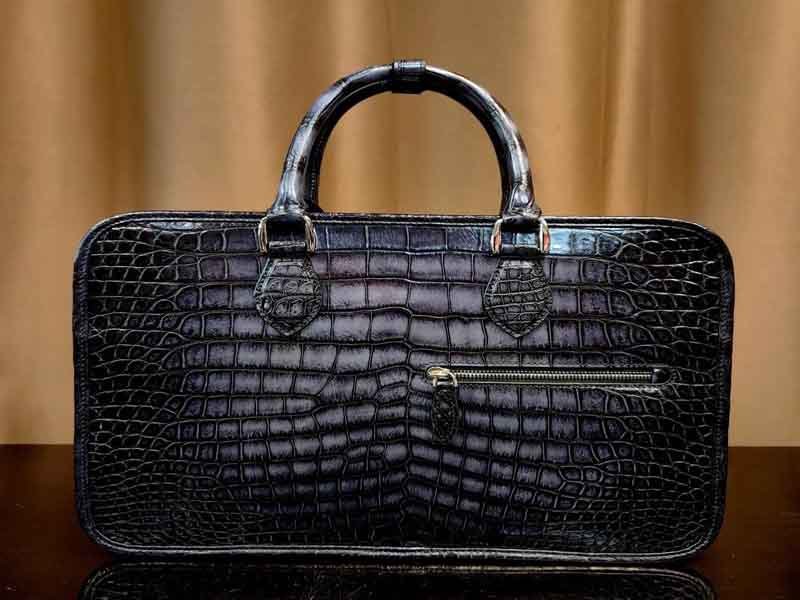
Document organizer briefcases are structured work bags containing dedicated sections that separate files, folders, devices, stationery, and personal accessories. Unlike a basic single-compartment bag, they use dividers, sleeves, pockets, padding, and closure systems to keep documents flat and easy to locate. Their value comes from reducing clutter, preventing contact damage, shortening retrieval time, and making the available interior space more useful rather than merely larger.
A good organizer layout creates a clear relationship between item size, access frequency, weight, and protection level. Flat papers need broad surfaces and minimal compression. Laptops need padding and controlled movement. Pens, keys, adapters, and power banks need smaller secured pockets so they do not fall to the bottom or scratch other contents. The briefcase works well only when these different storage needs are managed together.
What Makes Them Different?
The main difference between a document organizer briefcase and a conventional briefcase is not the total number of pockets. It is the deliberate division of the interior into functional zones.
A basic briefcase may provide one large chamber with a laptop sleeve and a small zipper pocket. That arrangement can be adequate for light daily use, but it often allows folders, cables, notebooks, and personal items to overlap. Papers may curl around a power adapter, laptop corners may press into documents, and smaller objects can disappear beneath larger ones.
A document organizer briefcase generally includes a wider range of purpose-built components, such as:
A full-width document sleeve for loose sheets or slim folders.
A divided file section for separating active, confidential, completed, or reference documents.
A padded laptop compartment positioned against one side of the bag.
Smaller pockets for pens, cards, cables, keys, identification, and mobile devices.
A quick-access exterior pocket for travel papers or frequently used documents.
An expansion structure that increases file capacity without changing the basic organization system.
However, more components do not automatically produce a better bag. Every divider adds material, sewing operations, thickness, and cost. Poorly positioned pockets can consume usable space or create pressure points. A deep pocket may hold many objects but make them difficult to see. A narrow file divider may look tidy when empty but become unusable once several folders are inserted.
The table below shows how organizer briefcases differ from simpler work bags.
| Design Area | Basic Briefcase | Document Organizer Briefcase | Practical Effect |
|---|---|---|---|
| Main storage | One open chamber | Multiple defined zones | Reduces item mixing |
| Document control | Loose interior space | Sleeves or divided file sections | Helps papers remain flat |
| Laptop storage | Optional sleeve | Dedicated padded compartment | Separates devices from files |
| Small-item storage | One or two pockets | Sized pockets for specific items | Improves retrieval speed |
| Access sequence | User moves items to find others | Frequently used items placed near openings | Reduces disruption |
| Expansion | Often fixed | Fixed or expandable file chamber | Supports changing workloads |
| Internal structure | Soft or lightly reinforced | Structured panels and dividers | Improves shape retention |
| Customization potential | Limited layout options | Compartments can be developed around use | Better fit for specific markets |
The strongest organizer designs balance structure and flexibility. Too little structure allows documents to bend. Too much structure increases weight and limits the ability to carry irregular items. A professional layout often uses semi-rigid wall panels, soft fabric dividers, localized foam reinforcement, and carefully selected pocket depths rather than making every section equally stiff.
How Do Organizer Sections Work?
Organizer sections work by controlling where each item sits, how much it can move, and which other items it can touch. The principle is similar to arranging a workshop: frequently used tools should be visible and reachable, delicate materials should be protected, and heavy equipment should remain stable.
A document sleeve typically uses a broad vertical or horizontal panel to hold papers close to a flat surface. This reduces curling and prevents the sheets from collapsing into the center of the bag. Multiple sleeves may be created by sewing dividers into the main chamber, adding an accordion file system, or installing removable partitions.
Small-item pockets use different dimensions and closure methods according to their contents. A pen loop only needs enough elasticity to hold a writing instrument securely. A charger pocket requires more volume and may need a zipper or elastic top. A business card pocket should remain shallow enough for cards to be visible and easy to remove. A key strap should prevent keys from moving freely against a phone, tablet, or laptop.
The placement of each section matters just as much as its construction. Heavy objects such as laptops and power banks should sit close to the side carried nearest the body. This helps control the center of gravity and reduces the sensation that the bag is pulling away from the user. Flat document sections are often positioned beside the laptop compartment or against a reinforced outer wall. Frequently accessed items should be placed near the opening rather than at the bottom of the main compartment.
Different organizer structures solve different problems.
| Organizer Structure | Suitable Contents | Main Advantage | Possible Limitation |
|---|---|---|---|
| Full-width sleeve | Loose papers, thin folders | Keeps documents flat | Limited separation |
| Dual file divider | Active and reference files | Simple categorization | May not support many projects |
| Accordion section | Multiple folders or document groups | High separation capacity | Adds thickness and sewing complexity |
| Zippered document pocket | Confidential or travel documents | Better security | Slower access |
| Removable divider | Changing work equipment | Flexible configuration | Divider may shift if poorly secured |
| Elastic organizer panel | Cables, pens, adapters | Keeps small items visible | Elastic can loosen over time |
| Mesh zipper pocket | Small accessories | Contents remain visible | Less formal appearance |
| Gusseted pocket | Charger, mouse, power bank | Holds bulky accessories | Can press against documents when overfilled |
The interior should also be evaluated while loaded, not only when empty. An organizer may appear neat in a sample photograph but become distorted after a laptop, three folders, a charger, a notebook, and personal items are added. During product development, a realistic load test helps reveal whether pockets overlap, zippers become difficult to operate, document dividers collapse, or the bag becomes unbalanced.
For custom production, Szoneier can develop the interior around an item list rather than starting with a generic pocket arrangement. A development brief can specify the number of folders, laptop dimensions, stationery, electronic accessories, travel documents, and maximum intended load. This gives the pattern team a practical basis for defining compartment width, pocket depth, foam thickness, zipper length, and reinforcement points.
Who Uses These Briefcases?
Document organizer briefcases are used by people who carry a combination of papers, devices, and small work tools and need to retrieve them in a predictable way. The product is especially useful when documents must remain presentable, confidential, categorized, or immediately accessible.
Legal professionals may carry case files, signed agreements, evidence notes, stationery, and a laptop. Financial and insurance professionals often need separate areas for forms, client documents, identification materials, calculators, and electronic devices. Medical representatives may carry product literature, tablets, order forms, samples, and compliance documents. Engineers and field personnel may need space for drawings, checklists, measuring tools, tablets, and site paperwork.
Sales teams frequently use organizer briefcases because their work involves movement between locations. A salesperson may enter several meetings in one day, each requiring different documents. A divided file section allows materials to be arranged by client, appointment, or stage of discussion. The advantage is not merely neatness. Better organization reduces the chance of showing the wrong document, leaving a confidential file exposed, or delaying a conversation while searching through the bag.
Organized briefcases also suit business travelers. Passports, boarding documents, receipts, presentation files, charging accessories, and personal items all have different access and security requirements. A front pocket may hold travel documents, while an internal zippered section protects confidential papers and a padded chamber secures the laptop.
The following user groups commonly require different interior priorities.
| User Group | Main Contents | Most Important Organizer Features |
|---|---|---|
| Lawyers and consultants | Contracts, files, laptop, notes | Flat document dividers, secure zipper sections |
| Sales representatives | Catalogs, forms, tablet, samples | Fast-access file sections, expandable storage |
| Executives | Laptop, reports, cards, travel papers | Slim profile, premium lining, discreet organization |
| Teachers and trainers | Worksheets, notebooks, tablet, pens | Multiple file zones, high-capacity stationery storage |
| Medical representatives | Literature, forms, tablet, small samples | Wipeable lining, separated product and document zones |
| Engineers and technicians | Drawings, checklists, tools, tablet | Reinforced base, durable fabric, removable dividers |
| Commuters | Laptop, documents, charger, personal items | Lightweight construction, weather resistance |
| Business travelers | Passport, tickets, files, electronics | Quick-access pockets, luggage strap, secure closures |
The ideal design therefore depends on the user’s workflow. A slim executive briefcase may prioritize a clean exterior and discreet internal pockets. A field-service briefcase may need abrasion-resistant Oxford fabric, a reinforced base, and larger accessory pockets. A legal document bag may require wider file clearance and stronger shape retention.
For brands developing a custom briefcase, defining the user group is more useful than asking for “many pockets.” A detailed user profile allows the manufacturer to decide which sections deserve space and which features would simply add unnecessary cost.
Are They Still Practical Today?
Document organizer briefcases remain practical because digital work has not eliminated physical materials. In many workplaces, laptops, tablets, printed contracts, presentation sheets, receipts, identification documents, handwritten notes, product samples, and charging accessories are carried together.
What has changed is the role of the briefcase. Traditional models were often designed mainly around paper. Modern versions must manage both flat documents and electronic equipment. This requires more precise internal engineering because devices are heavier, thicker, and more vulnerable to impact, while documents remain vulnerable to bending, moisture, and pressure.
The modern organizer briefcase is especially useful for hybrid work. A person may move between home, office, client sites, shared workspaces, airports, and hotels. The bag becomes a mobile workstation rather than a simple document carrier. It must help the user transition quickly between environments without repacking everything.
That does not mean every professional needs a large, heavily divided case. Someone who carries only a laptop and a notebook may find a complex organizer unnecessary. Additional sections can increase weight, make the bag thicker, and reduce flexibility. Practicality depends on whether the organization system matches the actual load.
A useful decision rule is to examine three questions:
Does the user carry more than one type of document?
Does the user need to retrieve items while standing, traveling, or speaking with others?
Could hard accessories damage paper or electronic equipment if everything shared one compartment?
When the answer to two or more of these questions is yes, a document organizer briefcase usually provides a clear advantage.
The design should also avoid becoming outdated as working habits change. Removable dividers, adaptable accessory pockets, expandable gussets, and neutral compartment dimensions can support different devices and work materials over time. A highly specific molded pocket may fit one accessory perfectly but become useless when that device changes. Flexible organization often creates longer product usefulness than an interior designed around a single moment.
Which Organizer Sections Are Essential?
The essential organizer sections are a flat document compartment, a protected device sleeve, a quick-access pocket, and secured storage for small accessories. Additional dividers should be selected according to the user’s work rather than added for appearance. The goal is to keep papers flat, prevent hard objects from causing damage, make frequently used items easy to reach, and avoid wasting interior volume on pockets that remain empty.
Most effective briefcases use a hierarchy of storage. The main document section receives the largest uninterrupted area. The laptop compartment receives padding and reinforcement. Medium pockets hold chargers, notebooks, or mobile devices. Small pockets control pens, cards, keys, and cables. When these levels are correctly proportioned, the bag feels organized without becoming crowded.
Which Documents Need Separate Sections?
Documents should be separated when they differ in confidentiality, size, frequency of use, destination, or stage of completion. Placing every sheet in one compartment may save construction cost, but it transfers the work of organization to the user.
A consultant carrying proposals for three clients benefits from multiple dividers because each file can remain independent. A legal professional may need to separate signed originals from reference copies. A salesperson may divide documents into materials to present, forms to complete, and completed paperwork to return to the office. A traveler may need fast access to boarding documents while keeping contracts secured deeper inside the bag.
The most common separation categories include:
Active documents that will be used during the current meeting or work session.
Reference documents that may be needed but should not interfere with immediate materials.
Confidential documents that require a zipper, flap, or covered compartment.
Completed forms or signed documents that should remain separate from blank copies.
Receipts and small papers that could easily become folded or lost.
Large presentation sheets that need a full-width flat surface.
When several sections are used, their openings should be easy to distinguish. Dividers of identical height and color can make it difficult to identify the correct compartment quickly. Small visual differences, such as stepped divider heights, subtle labels, contrasting edge binding, or differently shaped pull tabs, can improve navigation without making the interior look overly technical.
Document section width must also account for real folders rather than loose paper alone. A4 paper measures 210 × 297 mm, but an A4 folder, envelope, or document wallet is larger. If the compartment is designed too closely around the paper dimensions, the user may have difficulty inserting practical office materials. The same issue applies to US letter-size documents and legal-size files.
For custom development, the required clearance should be confirmed using actual sample folders or specified document carriers. Pattern dimensions should include seam allowance, lining thickness, foam compression, zipper tape, and the amount of space lost when the bag is filled.
How Many Dividers Are Enough?
Most everyday organizer briefcases work well with two to four document zones. One main sleeve may be sufficient for light use, while two or three dividers support users who manage several projects or document categories. More than four fixed dividers should be added carefully because each layer consumes space and can make the bag feel crowded before it is loaded.
The right number depends on document volume and classification needs. A user carrying a few papers does not need an accordion system with six sections. A professional handling multiple files may find a single sleeve inadequate even if the bag has plenty of total capacity.
The following reference ranges can guide early design decisions.
| Typical Workload | Recommended Document Zones | Approximate File Capacity | Suitable Structure |
|---|---|---|---|
| Light daily use | 1–2 | 20–40 sheets plus one folder | Full-width sleeve |
| Office commuting | 2–3 | 40–80 sheets plus two folders | Main sleeve with one divider |
| Client-facing work | 3–4 | 60–120 sheets across several folders | Stepped dividers or light accordion |
| Legal or project work | 4–6 | Multiple categorized files | Accordion section with gussets |
| Travel documentation | 2–3 | Passport papers, tickets, receipts, contracts | Quick-access pocket plus secure interior sleeve |
These figures are design references rather than universal limits. Paper thickness, folder construction, gusset depth, and the presence of a laptop all affect usable capacity.
Divider height is another important variable. A divider that is too low may allow papers to lean or mix with adjacent files. A divider that is too high can make documents difficult to grip. Stepped heights often provide better visibility, but the difference between levels should be large enough to be useful without exposing too much of the papers.
The divider material should support the intended load. A single layer of lining fabric is lightweight but may collapse. Foam-backed fabric adds body while remaining soft. Thin polyethylene or polypropylene sheets can improve shape retention, although they add stiffness and may create noise. Cardboard offers initial rigidity but performs poorly if exposed to moisture and may lose shape after repeated bending.
A balanced structure may combine a soft textile divider with reinforcement only in the upper edge or central panel. This provides enough control to keep files separated without turning the interior into a rigid box.
Do Zippered Pockets Improve Organization?
Zippered pockets improve organization when their contents are small, valuable, confidential, or likely to fall out. They are useful for keys, identification, receipts, memory devices, cash, passports, and sensitive papers. However, using zippers on every compartment can slow access, add weight, increase production cost, and reduce the clean flexibility of the interior.
The decision should be based on risk and access frequency. A passport pocket benefits from a zipper because losing the item would create serious inconvenience. A pen pocket does not normally require one. A confidential document section may use a zipper or flap, while a folder needed repeatedly during a meeting should remain open for faster access.
Zipper placement also affects document protection. A metal slider positioned directly against papers or a device can create scratches or pressure marks. Zipper garages, fabric guards, recessed openings, and thoughtful orientation can prevent contact. The zipper tape should remain flat rather than folding into the compartment, where it can catch paper edges.
Pocket depth must match the stored item. An overly deep zipper pocket becomes a dark cavity where small objects are difficult to locate. A shallow pocket provides visibility but may not hold bulky accessories. Internal subdivisions can solve this problem, but they must not make the opening too narrow for the user’s hand.
Common zipper pocket configurations include:
A flat wall pocket for passports, cards, receipts, or small documents.
A gusseted pocket for chargers, power banks, or a computer mouse.
A mesh zipper pocket that allows users to see cables and accessories.
A hidden pocket positioned against the body-facing wall for valuable items.
A full-width security pocket for confidential papers.
Zipper quality should match use frequency. A pocket opened several times a day requires smoother operation and stronger attachment than a compartment used occasionally. Reinforcement at both zipper ends is especially important because repeated pulling concentrates stress at these points.
During sampling, the pocket should be tested while the bag is filled. A zipper that operates smoothly in an empty sample may become difficult to close when neighboring compartments are loaded. This is one reason internal organization should be evaluated as a complete system rather than as separate individual features.
Are Pen and Card Slots Necessary?
Pen and card slots are necessary when the briefcase is designed for meetings, sales visits, office work, or client-facing travel. They keep small professional tools visible and prevent them from moving around the main compartment. Their usefulness, however, depends on correct sizing and placement.
Pen loops should accommodate the intended range of writing instruments. Narrow elastic may hold a slim pen but fail with a marker or stylus. Oversized loops may allow standard pens to fall out. Two or three loops are often enough for general office use. A large row of pen slots may look organized but consume space and create unnecessary sewing operations.
Business card pockets should protect card edges and allow easy removal. A pocket that is too tight can bend cards or force the user to pull several out at once. A pocket that is too loose may allow cards to slide into the bag. The opening should remain visible, and the pocket should not be positioned where a laptop or folder will compress it.
Modern organizers may also need slots for access cards, identification, memory cards, or wireless earbuds. These items differ in thickness and security requirements. A card slot intended for a business card may not safely hold a thicker access card. A small device pocket may require a flap or elastic closure.
The table below outlines practical dimensions that can be considered during development. Final measurements should always be confirmed using the intended items and materials.
| Organizer Item | Common Internal Width | Common Depth or Height | Recommended Control Method |
|---|---|---|---|
| Standard pen loop | 18–25 mm | 35–55 mm stitched length | Elastic or fabric loop |
| Wide marker loop | 25–35 mm | 40–60 mm stitched length | Wider elastic |
| Business card pocket | 95–105 mm | 55–70 mm | Open top or shallow flap |
| Access card slot | 60–70 mm | 45–60 mm | Close-fit fabric slot |
| Mobile phone pocket | 85–105 mm | 150–180 mm | Open top, elastic edge, or zipper |
| Cable pocket | 100–160 mm | 80–130 mm | Elastic top or zipper |
| Key attachment | 80–150 mm strap length | Not applicable | Swivel hook or webbing loop |
Placement should reflect how the user opens the bag. If the organizer panel faces away from the user, pens and cards may be hidden beneath the flap or main compartment contents. Positioning the panel on the naturally visible side improves speed and reduces the need to rotate the bag.
The material behind these pockets also needs reinforcement. Repeatedly inserting pens, cards, and devices creates localized stress. A thin lining panel may wrinkle or tear around stitch lines. Lightweight backing fabric or localized interlining can improve durability without making the entire wall stiff.
For a custom Szoneier briefcase, pen loops, card slots, document dividers, device sleeves, and accessory pockets can be adjusted around a defined user scenario. The development team can also combine cotton, canvas, polyester, nylon, neoprene, linen, jute, or Oxford fabric with suitable linings, foam, coatings, reinforcement sheets, zippers, webbing, and logo processes. Instead of copying a generic interior, the layout can be built around the exact items the finished briefcase needs to carry.
What Document Sizes Should Fit?

A well-designed document organizer briefcase should fit the user’s actual paper system, not just a bare sheet measured in isolation. At minimum, the interior should accommodate A4 or US letter documents inside folders, envelopes, and document wallets without bending their corners. Products intended for legal, architectural, medical, or international business use may also require legal-size files, thicker presentation folders, or mixed-format storage.
The most common sizing mistake is to build a compartment around nominal paper dimensions. A4 paper measures 210 × 297 mm, but a plastic sleeve, folder, binder cover, or envelope can add 10–35 mm in width and height. Stitching, padding, zipper tape, and curved bag corners reduce the usable space further. A briefcase that appears large enough on a specification sheet may still force users to angle documents during insertion, which gradually damages edges and makes daily use frustrating.
Document compatibility should therefore be evaluated using usable internal dimensions. These are the clear dimensions remaining after sewing, lining, foam, gussets, and closures are installed. Product developers should also consider how much space remains after the laptop compartment and accessory pockets are filled.
Do A4 Documents Fit Properly?
A4 documents fit properly when the internal document section provides enough clearance for folders and allows papers to enter and leave without folding, scraping, or catching on zipper components. A practical A4 compartment should generally provide at least 325–335 mm of clear horizontal width and 235–250 mm of clear vertical depth, depending on the bag’s orientation and closure structure.
A4 is used widely across Europe, Asia, Australia, Africa, and many international organizations. It is therefore one of the most important reference sizes for briefcases sold to global markets. However, simply stating “fits A4” does not describe whether the bag fits a single sheet, a document folder, or several filled file wallets.
A user rarely carries loose sheets alone. Common additions include:
Clear plastic sleeves that extend beyond the paper edges.
Card folders with reinforced spines.
Presentation folders with internal pockets.
Catalogs printed slightly larger than standard A4.
Envelopes containing contracts or certificates.
Clipboards or document boards.
These items require additional clearance. When a divider is too tight, users may fold the folder corners or push down on the top edge to close the briefcase. Repeated pressure creates worn paper edges and can distort the bag’s opening.
A practical development test should include at least three conditions:
One A4 folder inserted into an empty compartment.
Three to five folders inserted together.
The same folders inserted while the laptop and accessory pockets are loaded.
The third condition is particularly important. A bag may fit documents when empty but lose significant clearance when a charger pocket expands into the same space.
The following measurements provide useful starting points for A4-oriented designs.
| Carried Item | Item Size | Suggested Clear Compartment Size | Design Note |
|---|---|---|---|
| Loose A4 paper | 210 × 297 mm | At least 225 × 315 mm | Suitable only for light paper loads |
| A4 plastic sleeve | About 220 × 305 mm | At least 235 × 320 mm | Allow room around sealed edges |
| A4 card folder | About 230 × 315 mm | At least 245 × 330 mm | Better reference for office use |
| Thick presentation folder | About 235 × 320 mm | At least 250 × 335 mm | Confirm spine and pocket thickness |
| A4 clipboard | About 230 × 320 mm | At least 245 × 335 mm | Requires a wider opening |
These values are general development references rather than final production specifications. Material thickness, seam construction, internal binding, and the direction of insertion all affect the result.
The opening should also be considered. A compartment with enough internal area may still be difficult to use if the zipper opens only partway. For frequent document access, a wide U-shaped opening or a full-length top zipper usually performs better than a short central opening.
Which Briefcases Fit Letter-Size Files?
Briefcases developed for North American markets should fit US letter paper measuring 8.5 × 11 inches, or approximately 216 × 279 mm. Because letter paper is wider and shorter than A4, a bag designed tightly around A4 dimensions may not automatically handle letter-size folders comfortably.
The difference seems small, but document bags often operate with limited clearance. A few millimeters can affect whether a folder slides in smoothly or catches against the side seam. Standard letter folders, expanding file wallets, and mailing envelopes may also be considerably larger than the paper itself.
A letter-size briefcase should usually provide enough interior width for folders measuring approximately 240–255 mm and enough length for products reaching 305–325 mm. The exact orientation depends on whether the bag is horizontal or vertical.
For a horizontally carried briefcase, the folder typically enters through the top and rests with its longer edge parallel to the bag base. This layout gives the product the familiar professional briefcase shape. For a vertical work bag, documents may sit upright, which can reduce width but increase the required height.
Brands selling in several regions should avoid making separate interiors for A4 and letter paper unless the product has a highly fitted profile. A slightly more generous universal document section can support both formats and reduce SKU complexity.
A useful universal target is to accommodate a document folder measuring around 245 × 325 mm. This generally supports both common paper systems while leaving reasonable tolerance for seam variation and light folder thickness. For products intended to hold thick portfolios, the depth of the section must also be increased.
The table below compares common international formats.
| Format | Paper Dimensions | Common Use | Recommended Design Consideration |
|---|---|---|---|
| A4 | 210 × 297 mm | Europe, Asia, Australia, international offices | Allow extra height for A4 folders |
| US Letter | 216 × 279 mm | United States, Canada, parts of Latin America | Allow extra width compared with A4 |
| US Legal | 216 × 356 mm | Legal and government documents | Requires a longer compartment |
| B5 | 176 × 250 mm | Notebooks, education, office records | Fits easily in most A4 sections |
| A3 folded | 297 × 420 mm folded to A4 | Drawings, charts, presentations | Prevent pressure along fold line |
| Foolscap folder | Around 240 × 350 mm | Filing systems in several markets | Often needs legal-size clearance |
A global briefcase specification should state the largest folder size tested rather than only naming the paper format. “Fits A4 documents” can be interpreted differently by different suppliers, designers, and customers. “Fits folders up to 245 × 325 × 20 mm” is more precise and easier to verify during sampling.
Can Legal Documents Stay Flat?
Legal documents can stay flat when the briefcase provides sufficient internal length, structural wall support, and a compartment free from bulky accessories. US legal paper measures approximately 216 × 356 mm, making it significantly longer than A4 and letter paper. A standard compact briefcase may bend the document ends even when the bag can technically close.
Legal-size compatibility should be planned from the first pattern stage. Extending a completed A4 design is not always effective because handles, zipper curves, laptop sleeves, and base reinforcement may already be positioned around a shorter body.
A legal document section should generally provide clear internal dimensions of at least 235–250 mm by 370–385 mm, depending on whether folders or envelopes are carried. Thick legal files may require an expandable gusset of 50–100 mm or more.
Keeping documents flat involves more than dimensions. The compartment also needs:
A flat supporting wall.
Minimal pocket bulging from the opposite side.
A stable base that does not collapse inward.
A closure that does not press directly on the document edge.
Enough height so the top zipper does not rub the paper.
A divider that prevents files from leaning into accessories.
The base is often overlooked. If the bottom panel folds or sags, longer documents may curve even when the compartment dimensions are correct. A removable or enclosed base board made from polyethylene, polypropylene, or another lightweight reinforcement can improve stability.
Legal professionals may also carry expanding files, binders, and bound evidence packages rather than loose legal paper. These items introduce thickness and weight. A bag designed for this market needs stronger handle attachment, more robust bottom construction, and wider gussets than a lightweight commuter briefcase.
A practical load test can simulate professional use with:
Three legal-size folders.
One laptop weighing 1.5–2.0 kg.
One charger and cable set.
One notebook.
Small stationery and personal items.
The briefcase should be lifted repeatedly, placed upright, carried by the handle, and opened while loaded. After testing, the documents should be checked for curling, edge abrasion, and compression marks.
How Much Internal Clearance Is Needed?
Internal clearance is the extra usable space around the intended contents. For document compartments, 10–20 mm of clearance around each outer edge is often appropriate for basic use, while 20–35 mm may be necessary for thick folders, envelopes, or mixed document formats.
Too little clearance makes insertion difficult. Too much clearance allows papers to move, lean, and become disorganized. The goal is not to create the largest possible chamber, but to provide controlled tolerance.
Clearance should be calculated after considering:
Seam allowance taken up by sewing.
Foam thickness on both sides.
Lining and binding thickness.
Zipper tape and slider position.
Corner radius.
Pocket expansion from adjacent sections.
Expected manufacturing variation.
Material shrinkage or distortion.
The difference between external and internal dimensions can be substantial. A briefcase measuring 400 mm wide on the outside may offer less than 365–380 mm of clear internal width once side walls, piping, foam, and seams are included.
The following planning table shows typical allowance categories.
| Design Element | Typical Space Reduction | Why It Matters |
|---|---|---|
| Side seam construction | 5–12 mm per side | Reduces clear width |
| Foam and lining | 3–10 mm per wall | Reduces space and affects flexibility |
| Piping or binding | 3–8 mm near edges | Can catch folder corners |
| Zipper curve | 10–25 mm near upper corners | Restricts entry angle |
| Bulging accessory pocket | 15–50 mm when loaded | Pushes into document space |
| Laptop padding | 8–20 mm | Reduces shared chamber depth |
| Manufacturing tolerance | Several millimeters | Requires practical safety margin |
The design team should measure the narrowest point of the compartment, not only the widest central area. Curved corners, zipper ends, and tapered gussets often create hidden restrictions.
Prototype reviews should use physical templates matching the largest intended folder. A rigid card template is especially useful because it immediately reveals whether the opening or corners are too tight. Flexible paper can be forced into spaces that would not work comfortably in daily use.
Are Expandable Sections More Practical?
Expandable sections are practical for users whose document load changes from day to day. A briefcase can remain relatively slim during normal commuting and increase capacity for travel, project files, catalogs, or meeting materials. Expansion is especially valuable for sales representatives, consultants, teachers, legal professionals, and mobile service teams.
However, expansion should not be treated as free capacity. It changes the bag’s shape, weight distribution, zipper stress, and carrying comfort. A poorly designed expandable briefcase may sag forward, become unstable when placed on a table, or put excessive strain on the handle attachments.
Common expansion systems include:
A perimeter zipper that releases a folded gusset.
Side compression straps that open for additional capacity.
Accordion file compartments with built-in gussets.
Snap-controlled side panels.
Flexible textile side walls that expand naturally.
A perimeter expansion zipper is common because it provides a clean appearance when closed. Opening the zipper may add 30–60 mm of depth. Larger expansions are possible, but they can make the briefcase bulky and may require stronger base support.
Accordion sections provide more controlled file separation. Each divider receives its own gusset, allowing the structure to expand according to the number of folders. This works well for documents but adds sewing complexity and creates more points where paper edges can catch.
The practical question is whether the expansion preserves organization. A large open gusset increases capacity but may allow contents to shift. A better design may use partial dividers, compression panels, or elastic retainers to keep files upright.
Expandable structures should be tested in both closed and open positions. The briefcase should maintain acceptable handle balance, shoulder-strap stability, and zipper operation at full load. Reinforcement around the expansion zipper is also important because the zipper carries outward pressure when the bag is filled.
For custom development, Szoneier can adjust the briefcase body around A4, letter, legal, portfolio, or mixed document formats. Physical folder samples, rigid templates, and realistic loading lists can be used during sampling to verify clear internal dimensions before bulk production.
How Should the Interior Be Arranged?
The interior should be arranged according to item shape, weight, access frequency, and damage risk. Documents need flat, uninterrupted zones; laptops need padded, stable sections; chargers and keys need secured pockets; frequently used items should sit near the opening. The most effective layout follows the user’s working sequence, allowing them to retrieve essential items without unloading the entire briefcase.
A good interior does not divide space equally. A laptop weighing 1.8 kg affects the bag differently from a stack of documents weighing 300 g. A passport accessed five times during a journey should not sit behind a folder used once. A charger can tolerate compression, while a signed contract cannot. Interior architecture should reflect these differences.
The basic arrangement often follows four zones:
A body-side device zone for the laptop or tablet.
A central document zone for folders and notebooks.
An outer accessory zone for cables and small equipment.
A quick-access zone for travel papers, cards, or frequently used items.
This arrangement helps keep heavier objects near the body, protects documents from hard accessories, and reduces unnecessary searching.
How Are Files Kept Upright?
Files are kept upright through properly sized dividers, gussets, wall structure, and bottom support. The compartment should hold documents firmly enough to prevent collapsing but should not compress them so tightly that insertion becomes difficult.
When a file section is much wider than its contents, documents lean to one side and curl. When it is too narrow, folder edges rub against seams and zippers. A balanced design may combine an expandable gusset with a light retaining strap or elastic panel.
Useful methods for supporting files include:
Full-height fabric dividers.
Accordion gussets.
Semi-rigid wall panels.
Elastic compression bands.
Hook-and-loop adjustable dividers.
Removable organizer inserts.
Side wings that prevent outward collapse.
A full-height divider provides broad support but uses more fabric and may reduce flexibility. A partial-height divider is lighter and gives easier visibility, but papers can fold over the upper edge if the section is overloaded.
Accordion gussets are effective when files need to be categorized. Their folded side panels expand independently and keep each group within a defined area. The folds should be deep enough to carry realistic folder thickness, but not so deep that they consume excessive space when empty.
Semi-rigid reinforcement can be placed in the back wall, divider, or base. Polyethylene and polypropylene sheets are commonly considered because they are lightweight and moisture resistant. Foam can soften the structure, while woven or nonwoven interlining improves fabric stability.
Cardboard may reduce cost, but it is vulnerable to moisture, repeated bending, and long-term deformation. For washable, outdoor, medical, or high-humidity applications, water-resistant reinforcement materials are generally more suitable.
The bottom panel must remain level. If the base bows downward, document edges follow the curve. A structured base also helps the briefcase stand upright, which is useful when users need to retrieve files during meetings or travel.
| File-Control Method | Support Level | Flexibility | Best Application |
|---|---|---|---|
| Soft fabric divider | Low to medium | High | Lightweight daily briefcases |
| Foam-backed divider | Medium | Medium to high | Office and commuter bags |
| Plastic-sheet divider | High | Medium | Legal and structured business cases |
| Accordion gusset | Medium to high | High capacity variation | Multi-file professional use |
| Adjustable divider | Variable | Very high | Mixed equipment and documents |
| Elastic retaining band | Light control | High | Preventing partly filled sections from collapsing |
| Removable insert | Medium | Very high | Bags serving several work scenarios |
A realistic test should observe the files after walking, commuting, and placing the bag on different surfaces. A sample that looks organized while stationary may allow the contents to shift significantly during movement.
Should Documents and Devices Be Separated?
Documents and devices should usually be separated because they respond differently to impact, pressure, heat, and movement. Laptops and tablets are rigid and relatively heavy. Documents are light, flexible, and easily marked. Allowing them to share an open chamber can cause bent corners, pressure lines, and surface abrasion.
A dedicated laptop compartment should provide padding on the front, back, and bottom. The bottom protection is especially important because many bags include foam on the walls but leave the device close to the ground when the briefcase is placed down.
The device sleeve should also control movement. If a laptop shifts several centimeters inside the bag, its edges repeatedly strike the surrounding structure. A close-fitting compartment, elastic retention strap, or padded flap can improve stability.
Documents should sit beside the laptop rather than directly around it. A divider between the two protects the papers from device edges and prevents stationery from entering the laptop compartment.
Heat is another consideration. A laptop that has just been used may remain warm. Placing heat-sensitive papers, coated samples, or certain plastic folders directly against the device may not be ideal. A divider creates a small separation layer and reduces direct contact.
The correct device compartment depends on actual hardware dimensions. Laptop size labels such as 13-inch, 14-inch, or 15.6-inch describe screen diagonals, not the overall body dimensions. Two 15.6-inch laptops may differ significantly in width and thickness.
Custom development should therefore use maximum device dimensions, including:
Overall width.
Overall height.
Body thickness.
Protective shell thickness.
Charging cable connection requirements.
The target device should be tested with any sleeve or protective case users are likely to keep attached. A compartment that fits the bare laptop may be too tight in real use.
The table below offers general laptop compartment planning references.
| Device Category | Approximate Compartment Range | Suggested Padding Consideration |
|---|---|---|
| Compact tablet | 230–280 × 160–210 mm | Light foam and soft lining |
| 13-inch laptop | 310–330 × 220–240 mm | 5–10 mm foam depending on structure |
| 14-inch laptop | 325–350 × 230–250 mm | Reinforced base and side protection |
| 15.6-inch laptop | 365–395 × 250–275 mm | Stronger bottom padding and retention |
| 16-inch workstation | 360–410 × 250–290 mm | Wider opening and load-bearing support |
These ranges vary by model and should not replace testing with actual device specifications.
The laptop section should be positioned near the body-facing side because this improves carrying balance. Heavy items placed at the outermost side create a pulling effect and can make the bag feel heavier than it is.
Which Items Need Quick Access?
Quick-access items are those the user reaches for repeatedly, under time pressure, or while the briefcase remains partly closed. These commonly include travel documents, identification, a phone, business cards, pens, a notebook, access cards, and sometimes charging cables.
Quick access should not mean low security. An open exterior pocket is convenient for a notebook but inappropriate for a passport in a crowded environment. The correct pocket combines the required access speed with a suitable closure.
A useful access hierarchy can be organized as follows:
Immediate access: phone, transit card, identification, pen.
Frequent access: notebook, business cards, active meeting documents.
Occasional access: charger, backup cables, reference files.
Secure storage: passport, cash, confidential papers, storage devices.
Rare access: spare accessories, emergency items, archived documents.
The bag opening direction should support this hierarchy. A front organizer panel can expose smaller items without revealing the main document compartment. A dual-zip opening allows the user to access one side without fully opening the briefcase. A top quick-access slot can hold travel papers, provided it includes enough depth and closure control.
Pocket visibility also matters. Dark interiors with many similar pockets can make small items difficult to locate. Contrasting lining, light-colored pocket edges, mesh panels, or shaped tabs can help. The goal is not to make the inside decorative, but to reduce visual search time.
For sales, consulting, and travel use, the active document pocket should sit closest to the opening. Users should be able to retrieve a proposal or boarding document without moving the laptop. Less frequently used folders can sit deeper in the main section.
Quick-access pockets should also be tested while the briefcase is worn on the shoulder or held by the handles. A pocket that is convenient on a table may become awkward when the user is standing. Opening direction, zipper pull position, and whether the pocket faces the body all affect usability.
How Do Dividers Prevent Paper Damage?
Dividers prevent paper damage by separating documents from hard, uneven, or moving objects. They create flat contact surfaces, reduce rubbing, control bending, and distribute pressure more evenly across the document area.
Paper damage in a briefcase usually comes from four sources:
Bending caused by unsupported space.
Compression caused by overloading.
Abrasion caused by rough materials or hardware.
Moisture entering through the exterior or from wet items.
A divider addresses the first three problems when it has sufficient height, smooth surface material, and stable attachment. It should not contain exposed seam edges, rough hook-and-loop tape, zipper teeth, or hardware that can touch the documents.
The lining material is important. Smooth polyester, nylon, or microfiber-like fabrics allow folders to slide easily and reduce abrasion. Coarse canvas or jute may suit the exterior style but should be carefully evaluated before use directly against papers. A smoother internal lining can preserve the natural exterior look while improving document protection.
Divider edges should be bound or folded cleanly. Raw internal edges can fray and catch paper corners. Binding tape improves durability, but bulky binding can also reduce clearance if the compartment is tightly sized.
Pressure distribution is another function. Without a divider, a charger or mouse may create a concentrated bulge against a document stack. A semi-rigid panel spreads that force across a larger area, reducing local creasing.
However, a divider cannot protect documents if the bag is consistently overloaded. When the main zipper must be forced closed, pressure transfers through all internal layers. Expansion capacity, load guidance, and realistic compartment depth are therefore part of document protection.
| Damage Risk | Common Cause | Interior Solution |
|---|---|---|
| Bent corners | Tight opening or undersized pocket | Increase clearance and soften entry edges |
| Curled sheets | Wide unsupported chamber | Add dividers or compression control |
| Pressure marks | Chargers or laptop edges | Separate hard accessories with padded panels |
| Surface abrasion | Rough lining or exposed hardware | Use smooth lining and covered components |
| Water marks | Wet exterior or bottle leakage | Add coated fabric, sealed pocket separation, or water-resistant lining |
| Folded folder tops | Compartment too shallow | Increase usable height |
| Crushed documents | Overloaded expandable section | Define practical capacity and reinforce walls |
The best protection system combines exterior material, coating, internal structure, compartment layout, and closure design. No single feature can compensate for weaknesses elsewhere.
How Should Weight Be Distributed?
Weight should be concentrated close to the user’s body and spread across the base rather than hanging from the outer wall. Laptops, tablets, books, and power banks should sit in the body-side zone. Documents and lighter accessories can occupy the center and front sections.
This arrangement reduces rotational pull. When heavy contents sit far from the body, the shoulder strap twists the briefcase outward and increases pressure on the user’s shoulder. The bag may also tip forward when placed on a floor or table.
Handle placement must align with the loaded center of gravity. Handles that are perfectly centered on an empty pattern may feel unbalanced after the laptop compartment is filled. Sampling should therefore include carry tests with the intended load.
The shoulder-strap attachment points should be reinforced into the body structure, not only stitched to the outer fabric. Box stitching, bar tacking, webbing extensions, and internal reinforcement patches can distribute the force.
The base should carry the load continuously. A lightweight document briefcase may use foam and fabric reinforcement, while a heavy legal or technical case may require a more rigid base board and protected feet.
Weight distribution should also influence pocket placement. A large power-bank pocket on the outer front panel may make the bag lean. Moving that pocket closer to the body or lower in the bag can improve stability.
For custom Szoneier development, the interior arrangement can be built from a complete carrying list and a target total load. Document dimensions, laptop size, folder quantity, accessory volume, access frequency, and carrying method can all be translated into a measurable compartment plan before the sample is approved.
Which Materials Work Best?

The best material for a document organizer briefcase depends on how the bag will be used, how much weight it must carry, the expected weather exposure, and the appearance required by the target market. Nylon and polyester Oxford fabrics are strong choices for commuting and frequent travel, canvas provides a more natural and substantial hand feel, while coated textiles offer better protection against rain and surface contamination. A reliable briefcase usually combines a durable outer fabric with a smooth lining, structured reinforcement, foam, webbing, and hardware selected as one coordinated material system.
Material selection should never be based on fabric name alone. Two products described as “polyester briefcases” can perform very differently because of variations in yarn density, denier, weave structure, coating, backing, colorfastness, abrasion resistance, and finishing quality. The same applies to nylon, canvas, linen, and other textile categories.
A lightweight fabric may perform well for a slim office bag but deform when used for a heavy legal briefcase. A thick canvas may feel premium but absorb water and add unnecessary weight. A heavily coated Oxford fabric may resist rain but feel stiff or produce a less refined surface. The right material is therefore the one that matches the complete product specification rather than the one with the highest single performance number.
Important material decisions include:
The weight and volume of documents and devices.
The frequency of daily carrying.
Whether the briefcase will be used outdoors.
The required visual style.
The cleaning method.
The target retail price.
The expected service life.
The logo and decoration process.
The required environmental or material certifications.
The material should also be tested after it has been laminated, coated, printed, embroidered, or sewn. Fabric properties can change during finishing and construction. A base textile may have strong tear resistance, but a heavy coating can make it brittle around folded seams. A dense canvas may have high strength, but closely spaced embroidery can distort the surface if the backing is not correctly selected.
Is Nylon Suitable for Daily Commuting?
Nylon is highly suitable for daily commuting because it offers a strong balance of low weight, abrasion resistance, flexibility, and tear strength. It is particularly useful for people who carry laptops, documents, chargers, and personal items through public transport, airports, offices, and outdoor environments.
Compared with many natural fabrics, nylon can provide high mechanical strength at a relatively low fabric weight. This helps reduce the unloaded weight of the briefcase, which becomes important once a laptop and several folders are added. A bag that weighs 1.5 kg before loading can quickly become uncomfortable during a long commute.
Common nylon options for briefcases include 420D, 500D, 840D, and 1680D structures. Denier describes the linear density of the yarn rather than the finished fabric’s complete strength. A higher denier normally indicates a thicker yarn, but weave density, yarn quality, coating, and finishing also influence performance.
| Nylon Type | General Character | Suitable Briefcase Use | Main Consideration |
|---|---|---|---|
| 210D nylon | Light and flexible | Internal pockets, lightweight organizers | Limited structure for main body use |
| 420D nylon | Lightweight with good strength | Commuter briefcases and travel organizers | May need foam or backing for shape |
| 500D nylon | Balanced strength and flexibility | Daily professional and technical bags | Surface style may appear utilitarian |
| 840D nylon | Dense and durable | Heavy-use business or field briefcases | Higher material weight |
| 1680D ballistic-style nylon | Thick, textured, abrasion resistant | Heavy laptop bags and rugged cases | Can be bulky and more difficult to sew |
A daily commuter briefcase does not always need the heaviest nylon. Using 1680D fabric throughout the complete product may increase weight, seam thickness, and cost without providing a noticeable benefit for a standard office user. A more efficient design may use 420D or 500D nylon on the main panels and heavier material on the base, lower corners, and other high-wear areas.
This localized reinforcement approach provides durability where it matters while maintaining a lighter overall product. It also improves sewing efficiency because thick materials do not need to be folded through every internal seam.
Nylon is often treated with polyurethane or other backing materials to improve water resistance and fabric stability. A coating can reduce moisture penetration, control fraying, and provide a firmer structure. However, coating quality must be checked carefully. Poor backing may peel, become sticky, crack after folding, or develop an unpleasant odor.
Colorfastness is another important concern. Dark briefcases are frequently used against light-colored clothing. If the fabric has poor wet or dry rubbing resistance, dye may transfer to shirts, jackets, or interior documents. Fabric testing should therefore include dry rubbing, wet rubbing, water exposure, and repeated handling.
Nylon may also be selected for brands that want a clean, technical, or travel-oriented appearance. Matte nylon can feel understated and professional, while high-shine nylon may create a sportier or less formal look. Yarn texture, surface treatment, and fabric density all influence the visual result.
For higher-end designs, nylon can be combined with leather handles, microfiber trim, metal hardware, padded webbing, or structured piping. This allows the bag to retain the practical performance of a textile briefcase while presenting a more refined appearance.
Does Oxford Fabric Resist Wear?
Oxford fabric can resist wear effectively when the yarn size, weave density, coating, and construction are appropriate for the intended load. Polyester Oxford is widely used for document briefcases because it is durable, dimensionally stable, relatively economical, and compatible with many coatings, prints, laminations, and logo processes.
The term “Oxford” describes a weave style and commercial fabric category rather than one fixed performance level. A 300D polyester Oxford and a 1680D polyester Oxford are both called Oxford fabric, but they differ substantially in weight, texture, strength, stiffness, and suitable application.
For document organizer briefcases, common options include:
300D polyester Oxford for lightweight office bags.
420D Oxford for balanced everyday use.
600D Oxford for general commercial briefcases.
900D Oxford for heavier structured bags.
1680D Oxford for reinforced laptop and travel cases.
600D polyester Oxford is frequently selected because it provides a practical balance of cost, abrasion resistance, printability, structure, and production efficiency. It can support laminated foam, internal reinforcement, embroidery, screen printing, heat-transfer graphics, rubber patches, and woven labels.
| Oxford Fabric | Approximate Use Position | Performance Character | Product Direction |
|---|---|---|---|
| 300D polyester | Main body of slim cases or internal panels | Lightweight and smooth | Promotional and light office use |
| 420D polyester | Main body and organizer areas | Flexible with moderate durability | Commuter and daily-use briefcases |
| 600D polyester | Main body, gussets, pockets | Balanced strength and structure | General professional briefcases |
| 900D polyester | Base, side walls, heavy-use panels | Increased wear resistance | Field and technical document bags |
| 1680D polyester | High-wear exterior and laptop cases | Thick and highly textured | Rugged premium briefcases |
Wear resistance depends heavily on where the material is used. The base, lower corners, piping edges, handle attachment areas, and back panel experience more abrasion than the upper front panel. A briefcase dragged across a floor may damage its lower corners long before the central fabric wears through.
A better construction may use different Oxford fabrics within one product. For example, the main body can use 600D polyester, while the base uses 900D or 1680D material. Internal organizer walls can use lighter 210D or 300D polyester to reduce weight and bulk.
This combination supports both performance and cost control. Using the strongest fabric everywhere often produces diminishing returns. It may also create thick seam stacks that are difficult to turn, bind, and stitch consistently.
Oxford fabric can receive several types of treatment:
Polyurethane backing for water resistance and fabric stability.
PVC coating for stronger waterproof performance and stiffness.
Thermoplastic polyurethane lamination for flexibility and moisture resistance.
Durable water-repellent treatment on the outer surface.
Flame-retardant, antimicrobial, anti-static, or other functional finishes.
The choice should reflect the final environment. A medical document case may require a surface that can be wiped clean. A military or field briefcase may need high abrasion strength and functional treatments. A fashion-oriented office bag may prioritize texture, color, and hand feel.
Abrasion testing can help compare materials, but laboratory numbers should be interpreted alongside real construction. A fabric may survive a high number of abrasion cycles while the seam, coating, or piping fails earlier. Finished-bag testing should include repeated placement on rough surfaces, loading, handle lifting, zipper operation, and corner impact.
Oxford fabric is also suitable for consistent color production. Polyester generally supports stable dyeing and repeatable shade control, although batch variation must still be managed. For private-label programs involving repeat orders, approved color standards and retained fabric swatches are valuable for maintaining consistency.
Is Canvas Strong Enough for Files?
Canvas is strong enough for document briefcases when the fabric weight, weave density, reinforcement, and finishing are matched to the expected load. Cotton canvas offers a natural texture and substantial appearance that works well for casual professional bags, creative industries, heritage-inspired collections, and products combining textile panels with leather or metal details.
Canvas is commonly described by weight, such as ounces per square yard or grams per square meter. A light canvas may feel soft and foldable, while a heavier canvas can provide more body and abrasion resistance.
For document bags, fabric weights in the approximate range of 10–18 ounces per square yard may be considered, depending on the desired structure. Lighter canvas usually needs foam, interlining, or backing. Very heavy canvas can support shape well but increases the bag’s empty weight and produces thick seams.
Canvas should not be assumed to be waterproof. Untreated cotton absorbs moisture, which can increase weight, create water marks, and expose documents to dampness. Waxing, coating, lamination, or water-repellent treatment can improve performance, but each process changes the surface appearance and hand feel.
| Canvas Option | General Feel | Strength | Moisture Behavior | Suitable Direction |
|---|---|---|---|---|
| Light cotton canvas | Soft and flexible | Moderate | Absorbs water without treatment | Casual document totes |
| Medium cotton canvas | Firm with natural texture | Good | Requires water-repellent treatment | Daily organizer briefcases |
| Heavy cotton canvas | Dense and structured | High | Slower to dry if saturated | Heritage and rugged designs |
| Waxed canvas | Rich, weathered surface | Good to high | Improved rain resistance | Outdoor-inspired professional bags |
| Polyester-cotton canvas | Natural look with added stability | Good | Better dimensional control | Commercial custom briefcases |
| Recycled canvas blend | Variable by composition | Must be verified | Depends on fiber and finish | Sustainability-focused programs |
Canvas construction should include reinforcement at the handles and shoulder-strap points. Cotton fibers can withstand substantial use, but repeated concentrated loading may stretch the weave around stitch holes. Internal webbing extensions and reinforcement patches help distribute the force across a larger area.
The fabric should also be checked for shrinkage. Natural cotton can change dimensions after moisture exposure, steaming, or washing. This matters when canvas is combined with synthetic lining, foam, zipper tape, and binding that do not shrink at the same rate.
Pre-shrinking, finishing control, and material conditioning can reduce distortion. For products intended only for surface cleaning, full washing may not be required, but humidity and wet-rub tests remain useful.
Canvas has a practical advantage for decorative techniques. It works well with screen printing, embroidery, woven labels, leather patches, rubber patches, and appliqué. The relatively stable, textured surface can create a strong visual identity.
However, logo development should consider interior document protection. Dense embroidery on the outer wall can create rough thread backs or puckering inside the bag. A lining layer or backing panel should isolate the embroidery from documents and devices.
Canvas may also collect dust more easily than smooth nylon or coated Oxford. Dark colors can show lint, while light colors may reveal stains. Surface finish, color selection, and care instructions should match the intended user environment.
For a formal executive briefcase, canvas may need refined details such as clean edge piping, leather trim, structured panels, and carefully selected metal hardware. For casual or creative markets, the natural texture can remain more visible and relaxed.
Which Linings Protect Documents Best?
The best lining for document protection is smooth, tightly woven, colorfast, low-friction, and stable enough to resist wrinkling. Polyester and nylon linings are commonly used because they allow folders to slide easily, dry relatively quickly, and can be produced in many weights, colors, coatings, and weave structures.
A lining is not merely a decorative inner layer. It affects document insertion, abrasion, visibility, cleaning, pocket stability, and long-term product shape. Thin, loose lining may sag into the compartment, catch paper corners, or tear around pocket seams.
Common lining options include:
190T or 210T polyester for lightweight interiors.
210D polyester Oxford for stronger organizer panels.
Nylon lining for smoothness and tear resistance.
Brushed fabric for electronic-device sleeves.
Microfiber-like material for premium touch.
Coated polyester for wipe-clean applications.
The lining weight should vary by location. A lightweight textile can cover flat walls, while organizer panels containing multiple pockets may require a stronger woven structure. The base and zipper areas also benefit from increased strength.
| Lining Material | Surface Character | Document Protection | Typical Use |
|---|---|---|---|
| Lightweight polyester taffeta | Smooth and light | Good for low-friction contact | General wall lining |
| 210D polyester | Stronger and slightly textured | Good support for pockets and dividers | Organizer panels |
| Nylon lining | Smooth and durable | Good for frequent document insertion | Premium commuter briefcases |
| Brushed polyester | Soft surface | Better for screens and device finishes | Laptop and tablet sleeves |
| Microfiber-like textile | Soft and refined | Strong surface protection | Premium sections |
| Coated polyester | Smooth and wipeable | Better moisture and stain resistance | Medical and field bags |
| Mesh fabric | Visible storage | Limited protection for paper | Accessory pockets only |
Color should support visibility. A black lining may look professional, but small cables, pens, and cards can disappear visually. Gray, beige, blue, or another medium-tone lining can improve item recognition without showing dirt as quickly as very light fabric.
Lining dye must be tested for transfer. Documents, pale electronics, and clothing may contact the lining for long periods. Poor colorfastness can cause staining, particularly in humid conditions.
The lining should also be attached in a way that prevents excessive movement. A fully floating lining is easier to turn during production but may sag or bunch. Strategic anchoring at the base, side seams, zipper seam, and organizer panels can improve stability.
Pocket edges and divider tops receive repeated hand contact and document abrasion. Binding or folded construction should be smooth, consistent, and free from sharp seam ends. Any exposed reinforcement sheet should be completely enclosed.
For premium briefcases, the lining can be customized with woven logos, printed patterns, contrasting binding, or branded labels. These details should not interfere with function. A large rubber label inside a document sleeve, for example, could create pressure marks on papers.
Szoneier can combine cotton, canvas, polyester, nylon, neoprene, linen, jute, Oxford, coated textiles, foam, reinforcement sheets, and specialized lining materials according to the required product position. Fabric testing and sample loading can be used to compare appearance, hand feel, structure, abrasion performance, and document protection before the final material is approved.
How Are Documents Protected?
Documents are protected through a coordinated system of water-resistant exterior materials, smooth internal linings, structured dividers, padded walls, reinforced bases, secure closures, and correctly sized compartments. No single waterproof coating or thick foam layer can protect papers if the zipper leaks, the folder section is too small, or hard accessories are allowed to press directly against the documents.
Protection should address the most likely risks rather than adding features without purpose. A city commuter may need resistance against short periods of rain and crowded transport. A field engineer may need stronger abrasion resistance, reinforced corners, and wipe-clean materials. A legal professional may prioritize flat storage and controlled access to confidential files.
The main risks include:
Rain and accidental splashes.
Bending and corner damage.
Pressure from laptops and accessories.
Abrasion against rough materials or hardware.
Theft or unauthorized access.
Dust, dirt, and surface contamination.
Damage caused by overloading.
Protection must also remain practical. A completely sealed waterproof closure may be unnecessary for an office briefcase and could make the bag slower to open. A lock may improve perceived security but add little value if the fabric can be cut easily. Effective protection comes from matching the solution to the realistic threat.
Are These Briefcases Waterproof?
Most document organizer briefcases are water resistant rather than fully waterproof. Water-resistant bags can handle light rain, splashes, and short exposure, but they may eventually allow moisture through seams, zipper openings, or fabric under sustained pressure. A truly waterproof briefcase requires a more specialized construction involving waterproof materials, welded or sealed seams, and protected closures.
The distinction should be communicated clearly. Marketing a sewn Oxford or nylon briefcase as fully waterproof can create unrealistic expectations. Even when the fabric itself has a waterproof backing, needle holes allow water to pass through the seams.
Water protection can be described in practical levels.
| Protection Level | Typical Construction | Suitable Exposure | Main Limitation |
|---|---|---|---|
| Basic splash resistance | Dense fabric with light backing | Small spills and brief outdoor use | Limited rain protection |
| Water resistant | PU-coated fabric with standard sewn seams | Light to moderate rain | Water may enter through seams and zippers |
| Enhanced rain protection | Coated fabric, covered zippers, protected seams | Longer commuting exposure | Not designed for immersion |
| Highly waterproof | Laminated fabric, sealed seams, waterproof zipper | Heavy rain and demanding field use | Higher cost and stiffer construction |
| Submersible protection | Fully welded body and sealed closure | Temporary immersion | Rarely suitable for a conventional briefcase |
For most office and commuter briefcases, enhanced water resistance provides a useful balance. This can include a coated outer fabric, water-repellent surface treatment, zipper flaps, raised base structure, and an internal document sleeve positioned away from the outermost wall.
The base often receives water exposure first because it is placed on floors, wet pavement, public transport surfaces, or café tables. Using a stronger coated material on the bottom panel can improve protection without changing the appearance of the entire bag.
The opening is another weak point. A top zipper facing upward can collect rainwater. A reverse-coil zipper, coated zipper, rain flap, or recessed zipper channel can reduce entry. However, even water-resistant zippers may leak under prolonged exposure.
Documents can also be protected through a secondary internal barrier. A zippered coated-fabric sleeve can provide extra protection for important files even when the outer bag becomes wet. This approach is often more efficient than trying to make the entire briefcase fully waterproof.
Testing should reflect realistic use. A spray test can simulate rain, while a standing-water test can evaluate the base. After exposure, the interior should be checked at seams, zipper ends, corners, and handle attachment points.
How Do Coatings Resist Rain?
Coatings resist rain by filling or covering the gaps within the textile structure, reducing the rate at which water passes through the fabric. Common options include polyurethane, PVC, and thermoplastic polyurethane treatments. Durable water-repellent finishes may also be applied to the outer surface so droplets bead and roll away rather than soaking into the yarns.
Polyurethane coating is widely used because it can provide water resistance while maintaining reasonable flexibility and low weight. The coating thickness and adhesion affect durability. A light coating may be adequate for a commuter bag, while heavier applications increase resistance but can make the fabric stiffer.
PVC coating provides strong moisture resistance and structure, but it is generally heavier and can feel less flexible. It may suit rugged field cases, tool-oriented briefcases, or products requiring a wipe-clean surface.
Thermoplastic polyurethane lamination can provide good flexibility, abrasion resistance, and moisture performance. It is often considered for higher-specification products, although material and processing costs may be higher.
| Treatment | Main Advantage | Common Limitation | Suitable Use |
|---|---|---|---|
| PU coating | Lightweight and flexible | May peel if adhesion is poor | Daily commuter briefcases |
| PVC coating | Strong water barrier and structure | Heavier and stiffer | Rugged or wipe-clean cases |
| TPU lamination | Flexible and durable moisture barrier | Higher cost | Premium technical briefcases |
| DWR surface finish | Helps water bead on the surface | Performance decreases with wear | Supplementary rain resistance |
| Acrylic backing | Adds stability and some moisture resistance | Lower waterproof performance | Structured fashion briefcases |
Coating performance can decline through folding, abrasion, heat, humidity, and aging. The material should therefore be tested after repeated flexing rather than only when new.
Common coating problems include:
Peeling around folded edges.
Cracking at cold temperatures.
Softening or stickiness under heat.
Odor caused by poor formulation or storage.
Uneven coating thickness.
White stress marks after bending.
Reduced adhesion after long-term humidity exposure.
The coating must also be compatible with sewing and bonding. Very thick backing can create skipped stitches or needle heating. Certain laminated materials may require seam taping or welding rather than conventional sewing for higher waterproof performance.
Surface water-repellent treatments work differently from back coatings. They reduce surface wetting but do not necessarily stop water passing through the textile. When the finish wears down, the fabric may begin to absorb moisture even though the backing still provides some barrier performance.
A strong design may use both systems: a water-repellent outer finish for quick drying and a back coating for penetration resistance. Seam design and zipper protection must still be addressed.
Do Padded Walls Prevent Bending?
Padded walls help prevent bending by giving documents a flatter, more stable surface and reducing pressure from impacts or neighboring objects. Foam alone, however, is not always sufficient. Soft foam can compress and follow the shape of a charger, laptop corner, or overloaded pocket.
A more effective protective wall may combine:
Outer fabric.
Foam cushioning.
Semi-rigid reinforcement sheet.
Smooth lining.
Strategic quilting or anchoring.
The foam absorbs light impacts and improves hand feel, while the reinforcement sheet maintains shape. The lining creates a smooth contact surface for folders.
Common foam thicknesses in briefcase construction may range from approximately 2–10 mm. Thin foam supports a slim profile, while thicker foam improves cushioning but reduces internal capacity. The best thickness depends on whether the panel protects documents, laptops, or both.
| Protection Area | Common Structural Approach | Main Purpose |
|---|---|---|
| Document wall | Thin foam plus semi-rigid sheet | Flatness and pressure distribution |
| Laptop wall | Medium foam with soft lining | Impact and scratch protection |
| Base | Dense foam plus base board | Drop and standing support |
| Side gusset | Light foam or interlining | Shape retention |
| Organizer panel | Interlining with localized foam | Pocket stability |
| Outer front panel | Foam or reinforcement depending on style | Surface shape and document protection |
Closed-cell foam can resist moisture and retain shape better than some open-cell materials. Open-cell foam may offer a softer feel but can absorb more moisture and compress over time. EVA and polyethylene foams may be considered for specific structures, while thinner sponge materials are frequently used for general body padding.
Reinforcement sheets should not be excessively rigid. A very stiff briefcase may be uncomfortable against the body, difficult to pack, and more vulnerable to cracking at fold lines. Semi-rigid materials generally provide a better balance for everyday work bags.
The placement of padding is as important as its thickness. A thick front wall cannot prevent bending if the base collapses or the divider ends below the document height. Protective panels should support the complete document area.
The structure should also account for pressure from external handles and straps. Handle reinforcement stitched directly behind the document wall may create a hard area. An internal layer can distribute this pressure and prevent impressions on folders.
Load tests should examine documents after carrying the bag for several hours. Sheets should be checked for edge curling, pressure lines, corner folds, and surface marks. Testing only the unloaded briefcase cannot reveal these problems.
Which Closures Improve Security?
Zippers generally offer the best balance of access speed, containment, and everyday security for document briefcases. Flaps, magnetic closures, buckles, hook-and-loop fasteners, snaps, and combination locks can provide additional control, but each option changes the user experience.
A full zipper closure prevents folders and accessories from falling out when the bag tips over. Dual zipper pulls allow the opening position to be adjusted and can support a small padlock if the pullers contain compatible holes.
A flap closure can protect the main opening from rain and hide the zipper. It also creates a traditional briefcase appearance. However, a large flap may slow access and add material weight.
Magnetic closures provide quick operation but should not be relied upon as the only security method for confidential documents. They may open under heavy loading or if the flap is pulled.
Hook-and-loop closures are economical and easy to use, but they can create noise and collect lint. Exposed hook surfaces may also damage delicate fabrics or catch on papers.
| Closure Type | Access Speed | Containment | Security Level | Typical Application |
|---|---|---|---|---|
| Standard zipper | Fast | High | Moderate | Daily organizer briefcases |
| Lock-compatible dual zipper | Fast | High | Moderate to good | Travel and confidential documents |
| Flap with buckle | Medium | Good | Moderate | Traditional professional styles |
| Magnetic flap | Very fast | Moderate | Low | Light office briefcases |
| Hook-and-loop flap | Fast | Moderate | Low | Promotional and field-use bags |
| Snap closure | Fast | Moderate | Low | Small organizer pockets |
| Combination lock frame | Slower | High | Good against casual access | Executive hard-sided briefcases |
Security should also be considered at the pocket level. A confidential folder may sit in a full-width zippered internal section, while general papers remain in open dividers. This layered approach allows normal work materials to remain accessible without exposing sensitive contents.
Zipper quality affects security and durability. Weak sliders may separate under load, while poorly sewn zipper ends can tear away from the fabric. Stress points should be reinforced, especially on expandable briefcases.
The zipper pull design should support comfortable operation. Small decorative pullers may look refined but become difficult to use with gloves or during travel. Extended fabric, leather, or molded pulls improve grip.
Security also depends on how far the bag opens. A clamshell briefcase provides excellent visibility but can expose the full contents when opened. A controlled top opening reveals less and may be more suitable for meetings or public transport.
Are Lockable Sections Worth Adding?
Lockable sections are worth adding when the briefcase carries confidential documents, passports, sensitive storage devices, cash, regulated records, or other items that require protection from casual unauthorized access. They are less useful when added only as a decorative feature.
A small lock can discourage opportunistic opening, but it does not make a textile bag theft-proof. Fabric can be cut, zippers can be forced, and the complete briefcase can be taken. Lockable sections should therefore be described as access-control features rather than complete anti-theft systems.
Common locking approaches include:
Dual zipper pulls joined by a padlock.
Built-in three-digit combination locks.
Cable-compatible zipper pulls.
Lockable internal document pockets.
Frame closures with mechanical locks.
For travel, a lockable main zipper may help prevent accidental opening and discourage casual access. For office use, a lockable internal compartment may be more practical because it secures sensitive files without slowing access to the rest of the bag.
A combination lock adds hardware weight and construction complexity. It also requires stable mounting. If the lock is attached only to a soft fabric panel, the surrounding area may distort or tear under pulling force.
| Locking Method | Best Use | Advantage | Limitation |
|---|---|---|---|
| Small padlock through zipper pulls | Travel and general documents | Simple and replaceable | Can swing and scratch hardware |
| Built-in combination lock | Executive briefcases | Integrated professional appearance | Adds cost and repair complexity |
| Lockable internal pocket | Confidential files and passports | Secures selected contents | Limited capacity |
| Frame lock | Hard-sided document cases | Strong closure control | Heavier and less flexible |
| Security cable attachment | Temporary public-space use | Can secure the bag to an object | Does not protect against cutting |
Lock compatibility should be tested during sampling. Zipper pull holes must be large enough for the selected lock. The lock should not strike the laptop or documents when the briefcase moves.
For medical, legal, financial, or corporate applications, the security specification may also include tamper-evident seals, numbered tags, access logs, or document sleeves designed for controlled handover. These requirements should be defined early because they affect pocket layout and hardware selection.
Szoneier can customize water-resistant outer fabrics, reinforced document walls, coated internal sleeves, padded laptop compartments, protected zipper structures, and lockable sections according to the intended working environment. Material samples, folder templates, rain tests, loaded-carry tests, and closure evaluations can be completed before bulk production so the final briefcase protects documents in real use rather than only looking protective in product photographs.
How Do You Choose the Right Briefcase?

Choosing the right document organizer briefcase begins with the contents, not the appearance. The bag should fit the largest folder and laptop the user carries, separate documents from hard accessories, remain balanced under a realistic load, and provide fast access to frequently used items. A slim model suits light office work, while an expandable or structured design is better for multiple files, travel, legal work, technical visits, or changing daily workloads.
Many briefcases are selected according to external width, color, or the number of pockets shown in photographs. These details matter, but they do not reveal whether the bag will work once it is filled. A model can be wide enough for a laptop yet too shallow for an A4 folder. Another may provide plenty of capacity but become uncomfortable because the laptop sits far from the body and pulls the bag outward.
A practical selection process should evaluate six areas together:
The largest document or folder dimensions.
The laptop or tablet dimensions.
The normal and maximum carrying load.
The number of document categories.
The required access speed.
The commuting and weather environment.
The briefcase should also match the user’s working habits. Someone who travels by car may tolerate a heavier structured case. A commuter who changes trains twice a day may need lower empty weight, a padded shoulder strap, a luggage attachment, and water-resistant fabric. A lawyer may prioritize flat legal-size storage, while a sales representative may need expandable file capacity and an exterior presentation pocket.
What Capacity Do You Need?
The required capacity depends on the complete volume of documents, electronics, accessories, and personal items carried at the busiest point of the day. Measuring only the laptop or counting the number of folders can lead to an undersized design because chargers, notebooks, cables, power banks, and small personal items consume a surprising amount of space.
Briefcase capacity is sometimes described in liters, but liter figures do not fully explain usable organization. A 15-liter open compartment may hold more bulky items than a 17-liter highly divided briefcase. Internal dividers, padding, zipper pockets, and reinforcement reduce the free volume while improving control.
The most reliable method is to create a physical carrying list. Place all expected contents together and record their dimensions, thickness, and weight. The list should include both normal daily items and occasional peak-load items.
A typical daily office load may include:
One laptop.
Two A4 folders.
One notebook.
One charger.
One computer mouse.
One phone cable.
Two pens.
A wallet, keys, and access card.
A travel or project load may add:
Several presentation folders.
A tablet.
A power bank.
Product catalogs.
Legal documents.
Headphones.
Travel documents.
Personal care items.
The difference between the normal load and peak load determines whether a fixed or expandable briefcase is more appropriate.
| User Profile | Typical Contents | Practical Capacity Direction | Recommended Structure |
|---|---|---|---|
| Light office user | Laptop, notebook, one folder, charger | Slim, approximately 8–12 liters | One document sleeve and basic organizer |
| Daily commuter | Laptop, two folders, accessories, personal items | Approximately 12–16 liters | Separated device and document zones |
| Sales professional | Laptop, catalogs, forms, samples | Approximately 15–22 liters | Expandable compartment and quick-access file section |
| Legal professional | Laptop, multiple files, legal folders | Approximately 18–26 liters | Structured walls and multiple dividers |
| Business traveler | Laptop, documents, travel items, electronics | Approximately 18–25 liters | Expansion, luggage strap, secure pockets |
| Field technician | Tablet, documents, tools, chargers | Approximately 20–30 liters | Reinforced base and removable organization |
These figures are general planning ranges. Actual usable capacity depends on the bag shape and the amount of internal structure.
A slim briefcase should not be selected simply because it appears elegant. When a narrow bag is overloaded, the zipper curves upward, pockets press against documents, and the exterior loses its intended shape. The user may also begin carrying a second bag, which defeats the purpose of the organizer.
An oversized briefcase creates different problems. Documents can lean or slide, small items become harder to locate, and the user may fill the extra space with unnecessary items. Greater capacity also increases the potential carrying weight.
A sensible design allows the normal load to occupy approximately 70–85 percent of the practical interior volume. This leaves enough tolerance for occasional additions without allowing the contents to move excessively.
The maximum weight should also be defined. A bag developed for a 3 kg load requires different handle reinforcement from one regularly carrying 7 kg. During sampling, the briefcase should be tested above the intended normal load to identify weak seams, deformation, and balance problems.
Which Size Fits Your Laptop?
The correct briefcase should be selected according to the laptop’s external width, height, and thickness rather than the advertised screen size. Screen measurements describe the diagonal display dimension and do not account for bezels, body shape, protective shells, or unusually thick workstation designs.
A 15.6-inch laptop may be narrower than another model with the same screen label. A 14-inch business laptop with a protective case may require more space than a bare 15-inch ultrabook. For accurate fitting, the largest device measurements should be compared with the clear internal dimensions of the laptop sleeve.
The compartment should provide enough clearance for easy insertion without allowing excessive movement. A general allowance of approximately 5–15 mm around the width and height may work for many devices, but thicker protective cases require more tolerance.
The sleeve opening is also important. A device may fit inside the compartment but catch on a narrow zipper opening or padded retention flap. Rounded laptop corners, zipper sliders, and internal binding can reduce usable access.
| Laptop Label | Common Device Width Range | Common Device Depth Range | Suggested Clear Sleeve Range |
|---|---|---|---|
| 13 inch | 295–325 mm | 200–225 mm | About 315–335 × 220–240 mm |
| 14 inch | 310–350 mm | 215–245 mm | About 330–360 × 235–255 mm |
| 15 inch | 335–365 mm | 230–255 mm | About 350–375 × 245–265 mm |
| 15.6 inch | 355–390 mm | 240–270 mm | About 370–400 × 255–280 mm |
| 16 inch | 355–405 mm | 245–285 mm | About 375–415 × 260–295 mm |
| 17 inch | 395–430 mm | 270–310 mm | About 410–440 × 285–320 mm |
These dimensions are reference ranges only. The actual device specification should always be confirmed.
The laptop section should have a suspended or reinforced base where possible. A suspended sleeve stops above the bottom of the bag, creating a buffer if the briefcase is placed down heavily. If a suspended structure is not used, dense bottom padding and a reinforced base can provide protection.
A secure top strap, padded flap, or close-fitting elastic edge can prevent the laptop from sliding out when the bag opens widely. The closure should not place hard hardware directly against the device surface.
The lining should be smooth and nonabrasive. Brushed polyester, microfiber-like fabric, or another soft textile can protect the laptop finish. However, very thick plush lining reduces internal dimensions and may trap dust, so it must be included in the sizing calculation.
Laptop weight also affects the entire briefcase. A large workstation may weigh more than 2.5 kg before the charger is added. The handle, shoulder strap, base, and attachment points should be specified for the complete load rather than only the document section.
For custom product development, it is useful to provide the exact device model or a rigid dimensional template. This helps the sample team verify not only whether the laptop fits, but also whether it can be inserted easily while the document and accessory sections are loaded.
Is a Slim or Expandable Design Better?
A slim briefcase is better for users with a consistent light load who value a clean profile, low weight, and easy commuting. An expandable design is better when document volume changes, multiple folders must be carried occasionally, or the briefcase is used for business travel and project work.
Neither option is universally superior. The correct choice depends on how frequently the additional capacity is needed and whether expansion affects comfort and organization.
A slim design offers several advantages:
Lower empty weight.
A more formal and streamlined appearance.
Less temptation to overpack.
Better maneuverability on public transport.
Closer weight positioning against the body.
Simpler internal construction.
Its main limitation is reduced tolerance. Adding one thick folder or charger may make the zipper difficult to close. Bulky accessory pockets can quickly invade the document area.
An expandable design offers:
Flexible capacity.
Better support for travel or project peaks.
Space for multiple folders or catalogs.
Potential use as both a daily and short-trip work bag.
The limitations include additional zipper weight, more material, thicker side walls, and the possibility of poor balance when expanded.
| Decision Factor | Slim Briefcase | Expandable Briefcase |
|---|---|---|
| Normal document load | One or two slim folders | Several folders or changing loads |
| Visual appearance | Clean and formal | More technical or travel-oriented |
| Empty weight | Usually lower | Usually higher |
| Maximum capacity | Limited | Flexible |
| Carrying balance | Easier to control | Must be tested when expanded |
| Construction cost | Generally lower | Higher due to expansion components |
| Risk of overloading | Lower | Higher |
| Travel suitability | Moderate | Stronger |
Expansion should add usable space, not merely increase the outer depth. If the internal pockets remain fixed and the document dividers do not expand, the added volume may become an unstructured cavity.
A well-designed expandable section uses gussets, internal retainers, or file dividers that open with the body. Compression straps can help control the bag when it is partly loaded.
The expansion zipper should be positioned so that it does not rub against clothing or interfere with the shoulder strap. It should also remain accessible when the briefcase is standing upright.
For many professional users, an expansion range of approximately 30–50 mm provides practical flexibility without turning the bag into a bulky travel case. Larger expansion may be appropriate for sales materials or overnight use, but the handles and base must be reinforced accordingly.
How Should Carrying Comfort Be Evaluated?
Carrying comfort should be evaluated with the briefcase loaded to its intended working weight and carried for a realistic period. Empty-bag testing cannot reveal shoulder pressure, handle discomfort, outward pulling, body contact, or instability caused by the contents.
Comfort depends on several connected factors:
Empty bag weight.
Loaded center of gravity.
Handle width and padding.
Shoulder-strap width.
Strap pad construction.
Back-panel surface.
Bag depth.
Hardware weight.
Attachment-point position.
A briefcase that feels light when lifted briefly may become uncomfortable after a 20-minute commute. Thin handles can create concentrated pressure in the hand, while a narrow shoulder strap can dig into the shoulder.
For general work bags, shoulder straps in the approximate range of 38–50 mm often provide better load distribution than narrow fashion straps. Heavier technical briefcases may require straps around 50 mm or wider, depending on style and total load.
The shoulder pad should remain in place rather than sliding away from the pressure point. A curved shape, textured underside, or controlled attachment can improve stability.
| Comfort Element | Light Load Direction | Heavy Load Direction | Evaluation Method |
|---|---|---|---|
| Handle width | Approximately 20–30 mm | Approximately 30–40 mm or padded | Carry by hand for repeated intervals |
| Shoulder strap | Approximately 32–38 mm | Approximately 38–50 mm or wider | Walk with full intended load |
| Shoulder pad | Optional or light | Strongly recommended | Check slipping and pressure |
| Back panel | Flat textile | Padded or breathable panel | Observe heat and rubbing |
| Bag depth | Slim | Controlled expansion | Check outward pulling |
| Attachment hardware | Lightweight | Reinforced metal or engineered polymer | Test rotation and noise |
| Base support | Light foam | Dense foam plus board | Check sagging and standing stability |
The bag should be tested on both shoulders because strap orientation and zipper placement may create different experiences. Users should also try carrying it cross-body, if the design allows.
Handle drop is another important measurement. Handles that are too short may be difficult to grip while wearing gloves. Handles that are too long can allow the bag to swing and may make the silhouette look less professional.
The handle core affects comfort and shape. Foam, webbing, rope, molded components, or folded fabric can be used. Soft foam feels comfortable initially but may flatten. Dense webbing provides strength but may feel hard without padding.
Hardware should rotate smoothly so the strap does not twist. Heavy metal hooks may create a premium impression but add weight and strike the bag surface during movement. High-quality engineered plastic hardware can reduce weight, although its strength and appearance must be appropriate for the product position.
A loaded carry test should include walking, climbing stairs, sitting, standing, placing the bag down, and retrieving documents while the strap remains attached. These actions reveal whether the briefcase moves naturally through a real working day.
Do You Need Travel Features?
Travel features are useful when the briefcase is frequently carried through airports, train stations, hotels, conferences, or multi-location workdays. The most practical additions include a luggage pass-through sleeve, secure passport storage, quick-access travel pockets, lock-compatible zippers, and a shoulder strap that can be removed or adjusted easily.
A luggage sleeve allows the briefcase to slide over a suitcase handle. Its width and position must match common trolley-handle dimensions while keeping the bag stable. An overly loose sleeve allows the briefcase to rotate, while a narrow opening may not fit wider handles.
The sleeve can also be designed as a dual-function pocket. A lower zipper may close the opening when it is not used on luggage, converting it into an exterior document pocket. This improves space efficiency.
Travel briefcases may also need:
A separate passport pocket.
A quick-access boarding document section.
A concealed security pocket.
Cable organization.
An external charging-port structure.
A removable shoulder strap.
Lock-compatible zipper pullers.
A water-resistant base.
A key or tracking-device pocket.
Travel features should not make routine office use inconvenient. An external charging port, for example, adds components and an opening in the bag. It may become outdated as cable standards change. A simple internal power-bank pocket with a protected cable path may offer greater long-term flexibility.
Tracking-device pockets are increasingly practical because they can hold a small Bluetooth or location tracker. The pocket should be concealed but accessible for battery replacement.
Security pockets are most effective when positioned against the body-facing wall. Their opening should remain difficult for another person to reach while the briefcase is carried.
For air travel, the laptop should be removable without disturbing the document arrangement. A separate rear device compartment can support security inspection, but it also changes weight distribution and may increase the bag’s thickness.
Every travel feature adds material, labor, and potential failure points. The final specification should prioritize functions the intended user will genuinely use.
How Are Organizer Briefcases Customized?
Organizer briefcases are customized by translating a specific user workflow into materials, dimensions, compartment architecture, reinforcement, hardware, logo application, packaging, and testing requirements. The process begins with the items the bag must carry and continues through pattern development, sample evaluation, material approval, load testing, and production quality control. Effective customization changes how the briefcase works, not only its color or logo.
A successful custom project requires clear decisions before sampling. Asking for a “premium business briefcase with many pockets” leaves too much room for interpretation. A stronger brief specifies the laptop dimensions, folder formats, document volume, target load, preferred material, carrying method, access sequence, branding, target market, and expected price position.
The manufacturer can then determine:
Body dimensions.
Gusset depth.
Number and height of dividers.
Laptop padding.
Pocket dimensions.
Expansion structure.
Handle reinforcement.
Shoulder-strap specification.
Outer fabric and lining.
Water-resistant treatment.
Logo technique.
Testing plan.
Packaging method.
A well-developed organizer briefcase may use several different fabrics and reinforcement materials within one product. The exterior could use 600D polyester Oxford, the base could use 1680D material, the lining could use 210D polyester, and the laptop sleeve could use brushed fabric with foam. Each component performs a different role.
Can Compartment Layouts Be Customized?
Compartment layouts can be fully customized around document formats, laptop dimensions, tools, accessories, travel items, or specialized work equipment. The most reliable approach is to create an item map showing what must be carried, where it should sit, how often it is accessed, and what protection it requires.
A compartment map may classify contents into four groups:
Flat items, including folders, forms, and notebooks.
Rigid items, including laptops, tablets, and hard drives.
Bulky accessories, including chargers, adapters, and headphones.
Small items, including pens, cards, keys, cables, and memory devices.
Each group requires a different storage structure. Flat items need broad, smooth sections. Rigid items need padding and retention. Bulky items need gusseted volume. Small items need visible, secured pockets.
A customized layout can include:
One to six document dividers.
A legal-size file compartment.
A removable accordion organizer.
A padded laptop sleeve.
A separate tablet pocket.
Elastic cable loops.
A charger pocket.
A phone section.
Pen and card storage.
A hidden security pocket.
A water-resistant document sleeve.
A removable equipment divider.
A business-card presentation section.
The interior should be developed in full scale because small proportional errors become significant in actual use. A pocket that is 15 mm too shallow may fail to hold a charger securely. A divider that is 20 mm too high may hide the document labels. A laptop sleeve that fits the device exactly may become unusable once the lining and foam are sewn.
| User Requirement | Custom Layout Response | Key Development Check |
|---|---|---|
| Multiple client files | Stepped or accordion dividers | Can each folder be identified quickly? |
| Confidential paperwork | Zippered or covered file section | Does the closure avoid damaging paper? |
| Large laptop | Custom padded sleeve | Does the device fit with its protective case? |
| Frequent travel | Passport pocket and luggage sleeve | Are both accessible while moving? |
| Technical equipment | Removable padded dividers | Do components remain stable under motion? |
| Sales materials | Expandable file chamber | Does the bag remain balanced when full? |
| Medical documentation | Wipe-clean lining and separated zones | Can surfaces be cleaned effectively? |
| Executive use | Discreet flat pockets and slim structure | Does organization remain visually clean? |
The layout should be reviewed from the user’s perspective. During sampling, someone unfamiliar with the development should load and use the briefcase. If they cannot identify where items belong without explanation, the organizer may be too complicated.
Customization can also reduce unnecessary cost. A generic design may include twelve pockets, while the target user only needs six. Removing unused components saves fabric, zippers, labor, and weight. The resulting bag can feel more refined because each feature has a clear purpose.
Szoneier can develop compartment drawings and physical samples around a provided item list, reference bag, technical sketch, or existing product. The internal arrangement can be adjusted through sample revisions before production dimensions are finalized.
Which Fabrics Support Private Label Designs?
Polyester Oxford, nylon, canvas, cotton blends, neoprene, linen blends, and other engineered textiles can support private-label briefcase designs. The best choice depends on the desired appearance, abrasion performance, water resistance, structure, cleaning needs, logo method, and target cost.
Polyester Oxford is highly versatile. It supports solid colors, printed surfaces, embroidery, heat transfer, screen printing, woven labels, rubber patches, and different back coatings. It is a practical option for repeat production because color and surface specifications can be standardized.
Nylon supports lightweight, technical, and travel-oriented designs. It is suitable for premium commuter briefcases, although dyeing, surface sheen, and coating quality must be controlled carefully.
Canvas provides a natural or heritage appearance. It works well with leather trims, metal hardware, embroidery, printed logos, and woven labels. Water-repellent or waxed finishes can improve weather resistance.
Neoprene can be used for laptop sleeves, protective panels, flexible organizer pockets, or entire soft briefcases. It provides cushioning and a modern appearance but may not offer enough structure for heavy document loads without reinforcement.
Linen and linen-blend fabrics can create a refined natural texture. They generally require backing, lamination, or structural support for briefcase applications and should be evaluated for abrasion, wrinkling, and moisture performance.
| Material Direction | Visual Positioning | Functional Strength | Suitable Branding |
|---|---|---|---|
| Polyester Oxford | Clean, commercial, versatile | Durable and easy to finish | Printing, embroidery, patches |
| Nylon | Technical and premium travel | Lightweight and abrasion resistant | Subtle print, embroidery, molded logos |
| Cotton canvas | Natural and substantial | Strong with suitable reinforcement | Screen print, embroidery, leather labels |
| Waxed canvas | Heritage and outdoor-inspired | Improved weather resistance | Debossed patches, metal badges |
| Neoprene | Modern and soft | Cushioning and flexibility | Heat transfer, screen print |
| Linen blend | Refined and natural | Requires structural support | Woven labels, embroidery |
| Recycled polyester | Sustainability-oriented | Depends on yarn and construction | Printed or woven brand systems |
Private-label production should include a material approval standard. A small swatch is useful, but a complete sample reveals how the fabric behaves around corners, piping, embroidery, zipper seams, and handles.
Color approval should be completed under consistent lighting. Dark navy, charcoal, black, olive, and neutral gray are common professional colors, but even small shade differences can be visible when several materials are combined.
Texture matching is also important. A matte outer fabric paired with high-gloss plastic hardware may look inconsistent. A coarse canvas may require stronger zipper tape and wider binding to maintain visual balance.
Functional treatments can be incorporated according to the application. These may include water resistance, flame retardancy, antimicrobial treatment, anti-static performance, ultraviolet resistance, or easy-clean finishes. Such claims should be supported by suitable material documentation or testing rather than used only as marketing language.
How Are Logos Added?
Logos can be added through embroidery, screen printing, heat transfer, woven labels, rubber patches, leather patches, metal badges, debossing, embossing, or custom zipper pullers. The best method depends on the logo detail, color count, fabric surface, order quantity, durability requirement, and desired brand position.
Embroidery creates a dimensional, durable appearance. It works well on canvas, Oxford, and many nylon fabrics. Dense embroidery needs backing support and may create surface puckering if the fabric is lightweight.
Screen printing is effective for bold graphics and solid colors. It is often suitable for canvas and polyester fabrics, although ink adhesion should be tested on coated or water-repellent surfaces.
Heat-transfer printing supports fine detail, gradients, and multicolor graphics. Temperature and pressure must be compatible with the fabric and coating. Excessive heat can mark nylon, damage lamination, or create surface gloss.
Woven labels provide detailed branding without printing directly on the bag. They can be sewn into seams or applied to panels. Edge softness and placement should be controlled so the label does not scratch the user or catch on documents.
Rubber patches create a modern, durable look. They work well for technical and outdoor-oriented products. Patch thickness and weight should match the fabric structure.
Leather or microfiber patches support premium and heritage designs. Logos can be debossed, embossed, printed, or foil stamped. Material consistency and edge finishing affect the final quality.
Metal badges provide a strong premium signal but add weight and require secure backing. The rear fasteners should be covered so they do not contact documents or devices.
| Logo Method | Visual Effect | Best Fabric Match | Main Production Concern |
|---|---|---|---|
| Embroidery | Textured and durable | Canvas, Oxford, nylon | Puckering and thread backing |
| Screen printing | Bold and economical | Canvas, polyester | Ink adhesion and rubbing |
| Heat transfer | Detailed and multicolor | Smooth polyester | Heat compatibility |
| Woven label | Refined and repeatable | Most sewn fabrics | Edge softness and alignment |
| Rubber patch | Modern and technical | Oxford and nylon | Patch weight and stitch strength |
| Leather patch | Premium and natural | Canvas and structured textiles | Material consistency |
| Metal badge | Executive and polished | Reinforced panels | Covered rear fasteners |
| Custom zipper pull | Subtle repeated branding | Any zipper-based design | Mold cost and pull strength |
Logo placement should be evaluated while the briefcase is carried. A logo centered on a flat pattern may appear too low once the bag is filled. Handle positions, front pockets, piping, and expansion zippers can change the visible area.
Branding should not compromise function. An embroidered logo placed across a document pocket may reduce flexibility. A metal badge attached to the laptop wall may create a hard pressure point. A large rubber patch can add weight to a lightweight front panel.
A pre-production logo sample should confirm color, dimensions, placement, stitching, adhesion, and durability. Rub tests, flex tests, and washing or moisture tests may be required depending on the logo method.
How Are Samples and Quality Tested?
Samples and quality tests confirm whether the briefcase works under real loading conditions before bulk production. A professional evaluation should cover dimensions, material appearance, compartment fit, zipper operation, carrying balance, seam strength, document protection, water resistance, logo quality, and packaging.
The first sample normally verifies structure and function. At this stage, the team should test the largest intended folder, laptop, accessories, and maximum expected load. Comments should be measurable rather than subjective.
Instead of saying “make the pocket larger,” a useful revision note would state: “Increase the clear pocket width from 140 mm to 165 mm so it fits a charger measuring 150 × 90 × 35 mm.”
A sample review can include:
External dimensions.
Clear internal dimensions.
Laptop sleeve fit.
Document folder fit.
Divider height and spacing.
Pocket openings.
Zipper length and smoothness.
Handle comfort.
Shoulder-strap adjustment.
Loaded balance.
Standing stability.
Logo position.
Material color and hand feel.
The product should then be tested under repeated use.
| Test Area | Practical Test Method | Main Failure Signs |
|---|---|---|
| Handle strength | Repeated lifting with increased load | Stitch tearing, distortion, webbing movement |
| Shoulder strap | Walking test and repeated pull test | Hook failure, strap slipping, seam stress |
| Zipper durability | Repeated opening and closing | Slider sticking, teeth separation, tape distortion |
| Document fit | Load with maximum folders | Bent corners, difficult insertion, pressure marks |
| Laptop protection | Fit and controlled impact test | Excess movement, insufficient bottom padding |
| Abrasion | Rub high-wear panels and base | Surface wear, coating exposure, broken yarns |
| Water resistance | Controlled spray or rain simulation | Moisture at seams, zipper ends, or base |
| Expansion | Fill and carry in open position | Sagging, imbalance, zipper stress |
| Logo durability | Rub, flex, and adhesion checks | Peeling, cracking, thread damage |
| Colorfastness | Dry and wet rubbing | Dye transfer to cloth or documents |
Material testing may also include fabric weight, yarn specification, coating adhesion, tensile strength, tear resistance, abrasion resistance, colorfastness, water resistance, and restricted-substance requirements where applicable.
During production, inspection should begin before final assembly. Fabric shade, coating, zippers, webbing, foam, hardware, and logo components should be checked before they enter the sewing line.
In-process quality control can monitor:
Pattern and cutting accuracy.
Pocket positioning.
Divider spacing.
Stitch density.
Seam allowance.
Reinforcement placement.
Zipper alignment.
Handle attachment.
Logo positioning.
Finished inspection should verify appearance and function. The inspector should open every main zipper, check the organizer layout, confirm measurements, examine thread trimming, review the lining, and load-test selected units where required.
Packaging must also protect the finished structure. Over-compressing a structured briefcase can crease reinforcement panels and deform the document dividers. Shoulder straps, metal hardware, and zipper pullers should be positioned or wrapped so they do not scratch the fabric.
How Can Production Consistency Be Controlled?
Production consistency is controlled through approved materials, sealed samples, measurement charts, compartment templates, process instructions, in-line inspections, and final functional checks. Organizer briefcases contain many small components, so minor variation can accumulate and affect the complete interior.
A divider shifted by 10 mm may reduce one file section and enlarge another. A pocket sewn too high may interfere with the zipper. Foam cut too small can leave soft corners. Handle reinforcement placed incorrectly may create uneven stress.
A clear technical specification should include:
External and internal measurements.
Tolerance ranges.
Material codes.
Fabric direction.
Foam thickness.
Reinforcement dimensions.
Stitching requirements.
Zipper specifications.
Pocket locations.
Logo placement.
Hardware finish.
Packing method.
The approved sample should remain available as a production reference. Measurements alone cannot fully describe hand feel, structure, pocket tension, and visual balance.
Material batches should be controlled to reduce shade and texture variation. This is particularly important when multiple fabric rolls are used across a large order. Panels from noticeably different shades should not be mixed within one briefcase.
Critical operations may require templates or positioning marks. Pen loops, card pockets, zipper openings, and dividers are more consistent when operators use guides rather than relying only on visual judgment.
Finished units should be evaluated with both visual and functional criteria. A briefcase can look acceptable while containing a laptop sleeve that is too tight or a document divider that collapses. Functional checks should therefore remain part of final inspection.
What Information Should You Send a Manufacturer?
A useful manufacturing inquiry should include the product purpose, target user, preferred size, laptop dimensions, document formats, desired material, compartment list, logo method, color, estimated quantity, packaging expectations, and target delivery schedule. Reference photographs or sketches are helpful, but they should be supported by written functional requirements.
A complete brief may include:
Product type: structured document organizer briefcase.
Target users: legal professionals, sales teams, or commuters.
Document format: A4 folders up to 245 × 325 mm.
Laptop size: maximum device dimensions.
Normal load: number of folders and accessory list.
Maximum load: target total weight.
Outer material: 600D polyester Oxford with PU backing.
Base material: reinforced 1680D polyester.
Lining: 210D polyester.
Organization: three file dividers, laptop sleeve, charger pocket, pen loops, card slots, and security pocket.
Closure: dual main zipper with lock-compatible pullers.
Branding: embroidered logo or rubber patch.
Carrying system: padded handles and removable shoulder strap.
Testing: water-resistance, load, zipper, and abrasion checks.
Packaging: individual protective bag and export carton.
Providing this information helps the manufacturer develop a meaningful sample and quote. Without it, suppliers may base pricing on different assumptions, making quotations difficult to compare.
The quotation should clearly identify what is included, such as material type, coating, lining, hardware, logo, packaging, sample cost, production lead time, and testing requirements. Very low quotations may reflect lighter fabric, thinner foam, simpler reinforcement, or fewer quality-control steps rather than greater manufacturing efficiency.
What Should Be Confirmed Before Bulk Production?
Before bulk production, the final sample, material swatches, dimensions, compartment fit, logo, colors, hardware, packaging, testing requirements, quantity breakdown, and delivery schedule should be approved in writing. Any unresolved detail can create inconsistency once large-scale cutting and sewing begin.
The pre-production confirmation should cover:
Approved sample version.
All external dimensions.
Clear internal dimensions.
Folder and laptop fit.
Fabric specifications.
Color standards.
Coating or finishing requirements.
Lining material.
Foam and reinforcement.
Zipper brand, size, and color.
Webbing and hardware.
Logo artwork and position.
Packaging components.
Carton quantity.
Inspection criteria.
Delivery terms.
The approved sample should be loaded one final time with the intended contents. This is especially important if revisions changed pocket dimensions, foam thickness, or bag depth.
Production materials should be compared with the approved sample before cutting. Even when the fabric name is the same, a new batch may differ in shade, stiffness, coating, or surface texture.
Any required testing should be scheduled early. Waiting until the production is finished to discover that a coating, logo, or component does not meet the required standard can cause costly delays.
For repeat orders, the pattern, bill of materials, color standards, logo files, and quality records should be archived. This helps maintain consistency across seasons and reduces redevelopment time.
Build a Briefcase Around Real Work
The best document organizer briefcase is not the one with the most pockets, the thickest fabric, or the largest capacity. It is the one that supports the user’s actual working sequence. Documents remain flat, the laptop stays protected, accessories do not create pressure points, frequently used items are easy to reach, and the loaded bag remains comfortable from the first meeting to the final commute home.
That level of performance comes from connecting material selection with compartment dimensions, reinforcement, carrying balance, closures, and realistic testing. A briefcase may use durable Oxford fabric and still perform poorly if the opening is too narrow. It may contain thick foam and still damage documents if chargers press into the file section. Every component needs to work as part of one system.
Szoneier brings more than 18 years of experience in fabric research, textile development, finished-product manufacturing, and international supply. Custom briefcases can be developed using cotton, canvas, polyester, nylon, neoprene, linen, Oxford, coated fabrics, and other material combinations, with tailored document sections, laptop sleeves, organizer panels, private-label branding, functional treatments, and packaging.
Send Szoneier your reference design, document sizes, laptop dimensions, desired compartments, preferred material, logo artwork, and estimated order quantity. The team can help evaluate the structure, recommend suitable fabric and reinforcement combinations, prepare material options, develop a functional sample, and support OEM, ODM, or private-label production.
Contact Szoneier to request fabric samples, discuss a custom briefcase design, or receive a manufacturing quotation for your next document organizer collection.