Skip to content

If you have ever hauled a bulky, heavy diaper bag around town while chasing a curious toddler, juggling a spilled sippy cup and a last-minute diaper change, you already know how much the right bag can change your whole day. Many parents make the mistake of picking large, heavily padded diaper bags assuming more space equals better value, only to find themselves exhausted before lunchtime. A great lightweight diaper bag balances smart storage, reliable durability and easy carry weight, so you do not sacrifice comfort for all the baby essentials you need out and about.
A lightweight diaper bag for everyday parenting is a thoughtfully constructed changing bag built to carry diapers, wipes, feeding supplies and small personal items without unnecessary bulk, typically engineered with performance fabrics and streamlined layouts. It skips overstuffed padding, rigid frames and extra decorative layers that add pounds, while keeping functional features like water resistance, easy-clean surfaces and organized pockets intact. The best versions weigh far less when empty, reduce shoulder and back strain during repeated daily trips to parks, grocery stores, playdates and doctor visits, and hold up through frequent spills, washes and rough handling from busy families. Unlike heavy traditional diaper bags that work best only for long travel trips, everyday lightweight styles adapt seamlessly to quick errands and full-day outings alike.
One parent we worked with shared that she cycled through three heavy backpack diaper bags in six months; each one felt like carrying a small backpack full of textbooks once packed. After switching to a custom lightweight nylon diaper bag, she noticed her shoulder pain faded and she was far more willing to head out of the house with her little one. That simple shift is why so many caregivers are now prioritizing lightweight designs when shopping for new parenting gear. Keep reading to learn exactly what to look for, which fabrics perform best, how to customize these bags and how to source reliable options for yourself or your brand.
What Is a Lightweight Diaper Bag for Daily Parenting?
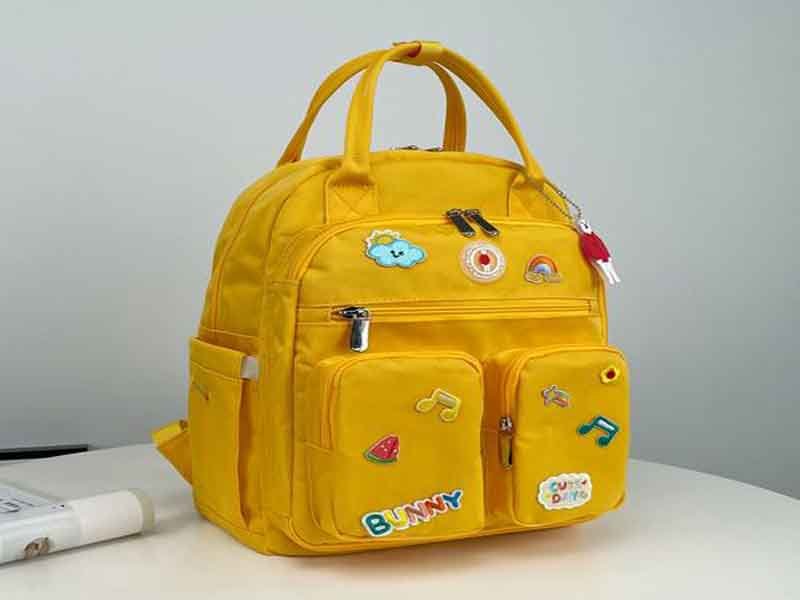
A lightweight diaper bag for daily parenting is a purpose-built baby changing bag designed to minimize empty weight while retaining all practical functions caregivers rely on day after day. It is not just a thin flimsy tote labelled “lightweight”; quality options use engineered fabric construction and simplified internal framing to cut excess weight without cutting performance. Most trusted everyday models avoid thick foam backing, heavy hardware and oversized outer panels that add weight with little real benefit. For regular use, this design philosophy directly lowers fatigue for parents who carry the bag multiple hours each week, whether slung over one shoulder, worn as a backpack or clipped to a stroller.
How light should an everyday diaper bag be?
There is no single perfect weight number that fits every family, but industry feedback from thousands of parents and custom bag orders shows clear preferred ranges. Weight expectations also shift based on bag style, as backpack formats often carry slightly more structure than simple tote styles. The table below breaks down realistic empty weight ranges, user feedback and suitable use cases for common lightweight diaper bag formats.
| Bag Style | Typical Empty Weight Range | Parent Feedback Notes | Ideal Daily Use Case |
|---|---|---|---|
| Lightweight diaper tote | 180g – 350g | Very easy to grab, simple to stow under stroller; limited back support | Quick grocery runs, short playdates |
| Lightweight diaper backpack | 300g – 550g | Best weight balance; distributes load evenly on two shoulders | Full day trips, daycare drop-offs |
| Convertible crossbody diaper bag | 220g – 420g | Easy access, less strain on one shoulder, hands free option | Doctor visits, mall trips |
| Stroller hanging pouch style | 120g – 250g | Ultra-light, small capacity, works as a secondary bag | Fast local walks |
Most parents agree that once a diaper bag hits over 600g empty, it starts to feel noticeably heavy once packed with diapers, bottles, snacks and wipes. Many budget lightweight bags on retail marketplaces hit low weight by using thin, fragile fabric that tears after a handful of spills and tugs. Premium lightweight designs hit that low weight target through careful fabric selection and optimized pattern cutting, not by cutting corners on material density. When you are comparing options, always separate empty bag weight from packed weight. A bag that weighs 400g empty might end up at 2kg or more once fully stocked, so trimming that starting weight creates meaningful relief over months of daily use.
Are lightweight diaper bags sturdy enough?
This is one of the most common worries shoppers bring up, and it is a fair concern. Many people automatically link lighter materials with lower strength, but modern textile engineering changes that equation completely. Sturdiness depends far more on fabric weave density, stitching pattern, seam reinforcement and webbing quality than total weight. We have seen ultra-light nylon bags withstand two years of daily use with active toddlers, while some thick, heavy canvas bags break quickly because corners were not bartack stitched and zippers were low grade.
A good lightweight diaper bag will include reinforced stress points: where handles attach, where shoulder straps connect, around zipper openings and stroller clip anchor points. Quality makers also select fabrics with high tear strength ratings instead of just picking the thinnest fabric they can source. For example, a 420D nylon can stay lightweight while delivering strong tear resistance, while a loosely woven thick cotton canvas can feel heavy yet rip easily when caught on stroller handles. Many of our custom brand customers test sample bags with a rough daily wear simulation before approving bulk orders, pouring water on surfaces, pulling straps repeatedly and rubbing fabric against rough playground surfaces to confirm durability matches the lightweight promise.
Who benefits most from lightweight diaper bags?
Lightweight diaper bags are not only for one type of parent; they fit a wide range of daily routines, though some groups notice the biggest difference. Caregivers who walk or take public transit every day gain a lot, since they carry the bag for longer stretches without a car seat to set it down frequently. Parents of multiple young children also benefit, as they already have their hands full chasing kids and managing extra supplies, and every gram saved adds up. Caregivers with mild shoulder, neck or back discomfort often specifically seek these styles because heavy bags can worsen strain over time.
They are also perfect for people who prefer minimal packing habits. If you tend to pack only the essentials for outings instead of carrying a full emergency kit for every possible scenario, a streamlined lightweight design will feel natural. That said, they still work for families who pack more items, as long as they pick a lightweight backpack style with organized pockets instead of a tiny thin tote. Even brand owners building a parenting product line can benefit from adding lightweight diaper bags to their lineup. These styles attract a huge segment of modern parents searching online for comfortable, low-fuss baby gear, and custom versions can be tailored exactly to match a brand’s aesthetic and quality standards.
Which Fabrics Are Best for Lightweight Diaper Bags?
Fabric choice defines nearly everything about a lightweight diaper bag: its final empty weight, water resistance, stain resistance, how easy it is to wipe clean, how long it lasts and how it feels against your skin. The best fabric for your needs is not automatically the “strongest” or cheapest option; it is the one that lines up with your daily mess level, cleaning routine and preferred texture. Many stock retail diaper bags only offer one or two fabric choices, but custom production unlocks a wide spectrum of woven and laminated textiles that can be tuned for lightweight performance. Each fabric carries trade-offs between weight, durability, cleanability, comfort and visual style, and understanding those trade-offs helps you avoid picking a material that looks nice on a shelf but frustrates you after one month of messy parenting days.
Is nylon good for diaper bags?
Nylon remains one of the most popular fabric picks for lightweight diaper bags, and there are solid reasons behind this trend. Nylon has an excellent strength-to-weight ratio, meaning it can hold up to pulling and abrasion without adding much empty bag weight. Most nylon variants can be treated with a durable water repellent finish that makes liquid bead up on the surface, so spills of milk, juice or water wipe away in seconds instead of soaking deep into the material. It dries very quickly after getting wet, which is a huge advantage when a bag gets splashed at the pool or caught in sudden rain.
Different denier ratings change nylon’s performance a lot, and that detail is often skipped in simple product listings. The table below compares common nylon options used in custom lightweight diaper bags.
| Nylon Type | Typical Weight Per Square Meter | Core Benefits | Drawbacks | Best Fit for Diaper Bags |
|---|---|---|---|---|
| 210D nylon | 45–55 gsm | Ultra-light, packs tiny, soft hand feel | Lower abrasion resistance, easier to snag | Inner pockets, lining, small stroller pouches |
| 420D nylon | 70–85 gsm | Balanced light weight + tear strength, flexible | Less rigid than higher denier | Main body of everyday lightweight backpacks and totes |
| 600D nylon | 90–110 gsm | Very tough, great abrasion resistance | Adds noticeable weight, stiffer hand | High-use accent panels, bottom reinforcement |
| Ripstop nylon | 60–90 gsm | Grid weave stops small tears from spreading | Slightly textured surface | Outdoor-focused, active parent styles |
Nylon is easy to print or emboss with custom logos, and it accepts many different finishing treatments. It can be matte, shiny or soft-touch depending on coating. The main downside is that some low-cost nylon has a slightly synthetic feel, and prolonged direct sunlight can slowly fade dyed colors over time. For most everyday parenting use, 420D ripstop nylon is the sweet spot. It stays light enough to hit those low empty weight targets while handling regular spills and contact with stroller frames, playground equipment and car seats. Many of our repeat private label customers pick this nylon grade as their default fabric for lightweight diaper bag lines.
Does polyester work for daily diaper bags?
Polyester is another widely used lightweight fabric, and it has a few key advantages over nylon for certain buyers. Polyester holds its color far better under UV exposure, so printed patterns and brand logos stay bright even with regular outdoor use. It is also generally more budget-friendly at larger order volumes, while still offering good water repellency when finished properly. Polyester resists stretching much better than nylon, so the bag shape will not sag over time as it gets loaded and unloaded hundreds of times.
Like nylon, polyester comes in many denier options, and 600D polyester is extremely common in mass-market diaper bags. It is sturdy, but it can be heavier than 420D nylon. For truly lightweight builds, makers will use thinner 300D polyester with a PU coating. This keeps weight low and adds wipeability. Polyester also resists mildew, which is helpful if you frequently carry wet swimsuits or damp cloth wipes inside the bag.
The biggest weakness of polyester is hand feel. Uncoated polyester can feel crinkly and noisy, which some parents dislike. It can also hold onto odors more easily than nylon if wet items sit sealed inside for hours. If odor control matters a lot, we can add an anti-odor finishing treatment during production. That extra treatment adds minimal cost and almost no extra weight, making polyester a strong contender for brands wanting bright custom prints and consistent color fastness at a friendly price point.
What about canvas, oxford and neoprene options?
Canvas, oxford fabric and neoprene each bring unique character to lightweight diaper bags, though they do not all fit the “ultra-light” category equally well. Standard cotton canvas looks warm and stylish, with a natural textured look that appeals to buyers who love neutral, earthy aesthetics. But canvas is naturally heavy, absorbs spills fast and takes a long time to dry. Lightweight canvas blends mix cotton with polyester yarns to cut weight and improve water resistance, but blended canvas will still weigh more than nylon or polyester of the same bag size. Canvas diaper bags work best for low-mess routines, like short outings with older toddlers, not for families constantly dealing with leaky bottles and food spills.
Oxford fabric is a woven polyester textile built in a basket weave structure. It is stable, cleanable and widely trusted for baby gear. It sits in the middle range for weight: lighter than pure canvas, heavier than thin ripstop nylon. Oxford holds printed logos crisply and stands up well to repeated wiping. It is a reliable pick if you want a balance of structure, affordability and a familiar soft look, without chasing the absolute lightest possible bag.
Neoprene is the soft, squishy fabric most people connect with wetsuits and laptop sleeves. Neoprene diaper bags feel luxuriously padded, and they are naturally water resistant. But neoprene is the heaviest option in this group, and it is bulkier even before you add supplies. It can be a great accent fabric for shoulder straps or insulated bottle pockets, but it is rarely used for the full bag body when the core goal is maximum lightness. It is popular for premium small-batch custom lines targeting buyers who prioritize soft touch over minimal weight.
Are natural fabrics like linen suitable?
Linen, jute and pure cotton are natural fiber options that draw shoppers looking for organic, low-synthetic baby gear. They have beautiful breathable texture and a calm natural aesthetic that works well for minimalist, neutral brand styles. However, natural fabrics come with big practical challenges for everyday diaper bags. Linen wrinkles constantly, absorbs liquids instantly, stains easily and has very low stain resistance. Once juice or baby food soaks into linen, removing marks becomes very difficult. Pure linen also dries slowly, so a damp bag can stay musty for hours.
These fabrics can be blended with polyester or given special stain-repellent coatings to improve performance, but those treatments reduce the “all-natural” selling point many buyers want. They also remain heavier than synthetic lightweight textiles. Natural fabrics are best used as decorative panels, outer trim or accent details on a diaper bag, paired with nylon or polyester for the main functional body that touches spills and messes. If your brand targets eco-focused customers, you can combine natural fabric aesthetics with high-performance synthetic linings; this gives you the visual appeal while keeping the bag practical for real parenting chaos. Many custom brands we work with use this hybrid fabric approach to satisfy aesthetic buyers without creating a product that fails under real daily use.
How Do You Pick the Right Lightweight Diaper Bag?

Picking the right lightweight diaper bag comes down to matching three things: how you pack, how you carry, and how much mess you honestly deal with on a normal day. When you pack for a typical outing, your gear usually adds up to roughly 1.5 to 3 kilograms before you even count the bag itself, and how that weight gets organized, carried and cleaned will decide whether the bag feels like a helper or an extra burden. That is why no single “best” bag exists. A sleek crossbody that suits a stroller-heavy parent in the suburbs can frustrate a city caregiver who wears the bag on public transport for two hours a day. The smartest approach is to shortlist options by storage layout, surface behavior, carry style and cleaning effort, then test your final candidates with your real routine before committing. When families ask us to help design their own bag, we always start with one simple exercise: list everything you carried today, weigh it roughly, and count how often you needed something while standing in line, on a bus, or holding a crying baby. That list tells you more than any product description ever will.
What storage layout should you look for?
A good storage layout is not about having more pockets; it is about putting the right things within reach at the right moment. If you have ever watched a parent dig through a giant open compartment for ten seconds with a screaming toddler on their hip, you know exactly what bad layout feels like. Most everyday diaper bags sold today offer somewhere between 8 and 14 pockets, but feedback from the parents we make bags for shows that most people actually rely on only 4 to 6 of them regularly. The rest become dead weight that adds confusion. The table below breaks down the common layout philosophies so you can see which one fits your packing habits.
| Layout Type | How It Works | Strengths | Weaknesses | Best For |
|---|---|---|---|---|
| Single big compartment | One open space, few or no dividers | Fast to stuff, easy to see everything | Items sink to the bottom, hard to find quickly | Parents who pack minimal gear and dump everything in |
| Zoned multi-pocket | Separate sections for diapers, bottles, personal items and a quick-grab top | Everything has a home, fast access, less digging | More zippers to manage, slightly heavier | Most everyday routines, full-day outings |
| Modular insert system | Main shell plus removable organizers you can move between bags | Flexible, easy to switch bags, simple to clean | More pieces to track, inserts can get lost | Parents who own two bags or switch for travel |
| Back-panel access backpack | Opens like a suitcase from the back panel | Gear stays neatly stacked, no digging from the top | Takes a few seconds to open, less convenient on the go | Daycare drop-offs, long trips |
The mental model we recommend to parents is a three-zone system. Zone one is the quick-grab area: a top pocket or front pocket for your phone, keys, pacifier and that emergency snack. Zone two is the core: diapers, wipes, cream and the changing pad, packed flat. Zone three is the wet or feeding zone: bottle pockets, a lined section for damp bibs or swimsuits. If a bag lets you pack naturally into those three zones, it will serve you well. If a bag buries everything in one dark hole or spreads 14 tiny pockets across the front, you will spend your parenting days hunting for things. One mom we worked with admitted she bought a 14-pocket bag and used five; the other nine pockets stayed empty, added weight, and made the front of the bag sag. When she switched to a three-zone layout, her getting-ready time in the morning dropped noticeably because she no longer had to think about where things went. Also check pocket depth and zipper quality before you buy. Shallow pockets look great in photos but can only hold keys and a lip balm, while a pocket that barely closes means your stuff will fall out the moment you lean over. A simple test helps: imagine grabbing a diaper and a wipe with one hand, blindfolded. If the bag lets you do that, the layout works.
Do you need water-resistant and wipeable surfaces?
You need water resistance far more than you think, because the messes of parenting are liquid messes: spilled milk, leaked sippy cups, wet wipes that escape their pack, rain, and the inevitable half-empty bottle rolling around loose. The difference between a bag that survives these moments and one that slowly dies is the surface treatment of the fabric. Water resistance and wipeability are not the same thing, and both matter. Water resistance means liquid beads up or stays on the surface instead of soaking in. Wipeability means you can clean the surface quickly with a cloth and it comes out clean. The table below shows how different surfaces behave in real daily use.
| Surface Type | How Liquids Behave | Wipeability | Drying Speed | Real-World Verdict |
|---|---|---|---|---|
| Untreated cotton canvas | Absorbs instantly, leaves stains | Poor, needs scrubbing | Slow, can go musty | Risky for everyday use unless heavily treated |
| Nylon with durable water repellent finish | Beads up and rolls off | Good, one quick wipe | Fast | Solid everyday choice for light-to-medium messes |
| Polyester with PU coating | Resists light splashes, easy to wipe | Very good | Fast | Reliable budget-friendly option |
| TPU or laminated waterproof layer | Fully waterproof, wipes clean like a mat | Excellent | Very fast | Best for inner linings, wet zones and the bag base |
| Neoprene | Repels water but absorbs into the foam edges | Medium, edges can trap moisture | Slow | Good for straps and bottle pockets, not the whole body |
Here is what most product listings will not tell you: the inside of the bag matters more than the outside. A juice spill on the outside can usually be wiped off, but a leaky bottle inside a non-lined compartment soaks into the fabric, and that is where the real damage starts. Mildew, sour smells and permanent stains all begin on the inside. That is why we always advise parents to look for a wipeable lining, a waterproof base, or at least a removable inner liner they can rinse. One family shared a story we hear often: their beautiful cotton canvas bag absorbed an apple juice spill at a picnic, and within two weeks the bottom corner smelled sour no matter how many times they washed it. The bag was gorgeous, but it failed the most basic test of daily parenting life. A coated nylon or TPU-lined bag in the same situation would have wiped clean in twenty seconds. If you live in a rainy climate, also check the zippers. A water-resistant body with ordinary non-sealed zippers can still let rain reach your gear through the top. Some makers add covered zipper flaps or water-repellent zippers, and for everyday peace of mind that small detail is worth looking for. One last tip: treat water resistance as a maintenance feature, not a one-time fact. Durable water repellent coatings gradually wear off after repeated washes and friction, so a bag that beaded water on day one may absorb it by month six. Some coatings can be refreshed at home with a spray-on treatment, which extends the life of the bag considerably.
Which carry style fits your routine?
Carry style decides how your body feels at the end of the day, and parents often underestimate that until their shoulders start complaining. The physics are simple: a bag weighing 2 to 3 kilograms packed, carried on one shoulder, creates an unbalanced load that your neck and back muscles constantly fight to correct. Health organizations routinely warn that children should not carry school backpacks weighing more than about 10 percent of their body weight, and the same logic applies to adults hauling baby gear. Lightening the bag helps, but how you carry it helps just as much. The table below compares the main styles honestly.
| Carry Style | Where the Load Sits | Hands-Free | Speed of Access | Who It Suits Best |
|---|---|---|---|---|
| Backpack | Evenly on both shoulders and hips | Yes, fully | Slower, you swing it around | Transit riders, walkers, anyone out for hours |
| Crossbody or sling | Across one shoulder and chest | Mostly, one hand free | Fast, bag slides to the front | Quick errands, mall trips, one-child outings |
| Tote | Dangles from one arm or elbow | No, occupies one hand | Very fast, open top | Car-centric routines, short store runs |
| Shoulder bag | On one shoulder | No | Fast | Parents who dislike backpacks and carry lightly |
| Stroller-hung pouch | On the stroller, not on your body | Yes, completely | Medium | Stroller-heavy days, walks around the neighborhood |
Think honestly about your daily path. If you take public transit, push a stroller, and hold a baby at the same time, you have exactly two free hands and you need both of them. A backpack or a stroller-hung pouch keeps your hands free and your balance even. If you mostly drive, load the car, and walk into a store for twenty minutes, a tote you can sling onto the passenger seat works beautifully. The parents who complain most about diaper bag discomfort are almost always wearing a single-shoulder style all day; switching to a backpack-style bag spreads the load and usually fixes the problem within a week. Many modern lightweight designs also convert between styles: a backpack whose straps tuck away becomes a tote, or a bag with both a shoulder strap and backpack straps lets you switch depending on the day. If you are torn between two styles, that convertible option is often the smartest middle ground. One detail worth checking is strap padding and width. A thin unpadded strap digging into your shoulder for two hours will undo all the benefits of a light bag, while a wide padded strap on a crossbody can feel comfortable even with a heavier load. And if you do choose a single-shoulder style, alternate sides during the day when you can; small habits like that protect your neck and back over months of daily use.
Is easy cleaning a must-have feature?
Easy cleaning is not a luxury feature; it is the feature that decides whether your bag still looks and smells acceptable three months in. Diaper bags get dirty constantly, from diaper blowouts to spilled snacks to wet wipes that leak onto the lining. If cleaning the bag becomes a project, you will avoid doing it, and the bag will quietly accumulate stains, crumbs and odors. Different fabrics demand very different cleaning routines, and this is where lightweight materials shine because many of them are genuinely wipe-clean. The table below lays out what cleaning actually looks like per fabric.
| Fabric | Realistic Cleaning Routine | Time Cost Per Week | Long-Term Notes |
|---|---|---|---|
| Coated nylon or polyester | Wipe inside and out with a damp cloth; rinse spills immediately | About 5 minutes | Holds up for years, no shrinking or fading if quality coated |
| Cotton canvas | Spot clean, occasional full wash; stains set quickly | 20–40 minutes plus drying | Prone to stains, can shrink or lose shape in the wash |
| Neoprene | Wipe outer surface; foam edges trap moisture | 10–15 minutes | Needs careful drying, avoid tossing in a hot dryer |
| Machine-washable nylon styles | Unzip liners, wash on gentle cycle, air dry | 15 minutes active time | Check the care tag; some washable bags lose water repellency |
| Mixed-fabric bags | Wipe the coated parts, spot clean fabric panels | Varies | The more panels you add, the more care routines you inherit |
The single biggest practical tip we give parents is to separate the parts that get dirty from the parts that cannot be cleaned easily. A bag with a removable padded insert or a washable inner liner is dramatically easier to keep fresh, because you can wash the liner and wipe the shell. A bag with a permanently sewn-in fuzzy lining traps crumbs and odors forever. Look for smooth, wipeable linings for the main compartment and the wet zone. If you plan to machine wash the bag, read the care tag carefully before buying. Some lightweight nylon bags wash beautifully and air dry in hours; others lose their water-repellent finish after one cycle and start absorbing every spill. If you live somewhere hot and humid, mildew is a real risk, so a bag that dries quickly and lets air circulate matters more than you would expect. One grandmother we made a bag for learned this the hard way with a heavy lined tote she could not wash; she ended up replacing it within a year. Her next bag, a wipe-clean coated nylon style, was still going strong two years later because cleaning it took thirty seconds, not an afternoon. When you compare two bags that look identical, ask yourself which one you would still reach for on day ninety of daily use. That answer usually points to the wipe-clean option.
What Key Features Add Parenting Convenience?
The features that genuinely add convenience are the ones you touch every single time you leave the house, not the ones that sound clever in a product photo. When we ask parents what actually saves them in daily life, three features come up again and again: an insulated bottle pocket, a reliable way to attach the bag to the stroller, and a foldable changing pad. Together they solve the three biggest daily pain points: keeping milk at a safe temperature, freeing your hands, and dealing with public changing tables you would rather not touch. None of them are flashy, but every one of them changes the rhythm of a normal day out. A bag that nails these three basics while staying light will outperform a heavier bag packed with gimmicks, because convenience is not about having more; it is about having the right things where you need them.
Are insulated bottle pockets worth it?
An insulated bottle pocket is worth it if you ever carry a bottle that you expect your baby to actually drink. Keeping milk at the right temperature is not a minor comfort issue; it is a food safety question. Health guidance on prepared infant formula is clear: formula that has been prepared should not be left at room temperature for more than about two hours, because bacteria can multiply quickly in warm milk. In hot weather that window shrinks even further. An insulated pocket slows the warming process, which gives you a much safer buffer between home and the moment your baby is hungry. The table below shows what different pocket types actually do.
| Pocket Type | How It Keeps Temperature | Realistic Effect | Best Use |
|---|---|---|---|
| No insulation, plain side pocket | Nothing; milk heats to room temperature quickly | 30–60 minutes of buffer | Short trips, drinking bottle consumed fast |
| Foam-lined insulated pocket | Foam slows heat transfer | Keeps cold milk cool for roughly 1.5–3 hours | Most everyday outings |
| Foil or reflective lined pocket | Reflective layer blocks radiant heat | Keeps cold for roughly 3–6 hours, better with an ice pack | Hot days, full-day trips, summer outings |
| Insulated pocket with ice pack slot | Ice pack actively cools the space | Can keep milk cold 6+ hours when packed properly | Long zoo days, road trips, beach days |
Beyond the bottle itself, an insulated pocket also solves a second problem: condensation. A cold bottle placed in a plain pocket sweats, and that water soaks into the bag’s lining. Over weeks, that constant moisture breeds mildew and smells. A lined, water-resistant insulated pocket contains the condensation, protecting both the bag and everything else in it. When comparing bags, check whether the insulated pocket is positioned where you can reach it quickly, whether it fits a standard 250 to 330 milliliter bottle comfortably, and whether it has a secure closure so the bottle cannot roll out when you bend over. A pocket that is too shallow or too tight will go unused, and an unused feature is just weight. One father we spoke with was skeptical of insulated pockets until a hot summer day at the zoo; his daughter’s bottle sat in an insulated pocket with a small ice pack for four hours and was still cold when she finally wanted it. He admitted that alone changed how he packed. If you are choosing between two otherwise similar bags, the one with a properly built insulated pocket is the better everyday purchase, especially if you live somewhere warm or spend long days out of the house.
Do stroller clips make daily outings easier?
Stroller clips or attachment loops quietly change the way a diaper bag fits into your life, because they take the weight off your body entirely. On any day you use the stroller, a bag that clips on means your shoulders carry nothing, your hands stay free, and you never worry about setting the bag down somewhere and forgetting it. For parents with newborns, this is close to essential, because you are already carrying a car seat, a baby, or both. The table below compares the common attachment approaches.
| Attachment Type | How It Works | Typical Load Capacity | Best For |
|---|---|---|---|
| Metal stroller clips | Snap onto the stroller frame or handlebar | Holds 2–4 kg comfortably per pair | Stroller-based routines, daily walks |
| Hook and loop straps | Wrap around the handlebar or frame | Versatile, fits most strollers | Rentals, borrowed strollers, odd frames |
| Carabiner-style hooks | Clip onto any loop, ring or bar | Quick, but can scratch frames | Minimalist setups, one quick hook |
| Dedicated stroller straps with buckle | Cinch around the frame securely | Very secure for heavier loads | Full-day stroller trips, travel |
A few safety notes matter here. Stroller manuals usually warn against hanging heavy loads on the handlebar, because extra weight behind the rear wheels can tip the stroller, especially when your child leans forward or when the bag swings. A reasonable rule many parents follow is to keep anything hung on the handlebar light, and to clip a heavier bag onto the lower frame or basket area instead, where it cannot affect balance. Two clip points are almost always better than one, because a single clip lets the bag swing and puts uneven stress on the frame. Also check the clip quality itself. Metal clips with a secure release mechanism last much longer than flimsy plastic ones, which can crack in cold weather or snap under load. One city mom we worked with took the bus every day with her toddler; her lightweight backpack-style bag with sturdy clips hung on the stroller frame for most of the journey, and her shoulders felt noticeably better by evening. The same bag also worked as a backpack for the stretches where the stroller had to be folded. That flexibility is what makes attachment features so valuable: they are not about doing one thing well, they are about giving you options for the unpredictable moments parenting throws at you. If you frequently combine stroller days with walking and transit days, look for a bag that offers both clips and shoulder straps, and test the clips once at home before you trust them on a busy street.
Should it include a foldable changing pad?
A foldable changing pad is one of those features you do not appreciate until the moment you desperately need it, and after that you never want to leave home without one. Public changing stations are convenient, but they are also surfaces you cannot fully trust, and not every bathroom even has one. A pad creates a clean, waterproof barrier between your baby and whatever is underneath, wherever you happen to be: a bathroom counter, a park bench, the back seat of a car, or a restaurant floor. The table below compares the main pad options.
| Pad Type | Folded Size | Waterproof Layer | Real-World Use |
|---|---|---|---|
| Built-in foldable pad, attached to the bag | Tucks into a dedicated pocket or the main compartment | Usually waterproof backing or wipeable surface | Always with you, zero chance of forgetting it |
| Separate roll-up pad | About the size of a water bottle when rolled | Yes, coated or laminated | Compact, easy to toss into any bag |
| Three-panel foldable pad | Folds like a small accordion, roughly A4 size | Yes | Larger changing surface, quick to lay flat |
| Wipe-clean mat, no cushioning | Flat sheet that folds twice | Yes, fully waterproof | Ultra-light, packs flat, minimal bulk |
The practical requirements are simple: the pad should be wide enough that your baby’s head cannot touch the surface directly, it should have a waterproof or wipeable layer on the outside, and it should fold or roll into something small enough that it never gets left behind. A pad that is too thin offers little protection on hard surfaces, and a pad with a fabric top that absorbs messes becomes a hygiene problem of its own. Wipe-clean surfaces are ideal because changing pads get messy almost every time they get used. Many parents also discover a second life for the pad: it works as a mini picnic blanket, a clean spot to sit on the grass, a knee pad for gardening, or a mat for tummy time in a hotel room. If the pad comes with the bag, check that it is not sewn in permanently; a removable pad is easier to wash and easier to replace. One mother told us she used her foldable pad more than any other single item in the bag, and it saved her in the parking lot of a shopping mall when no changing room was available. She simply laid the pad across the back seat and handled the change in under two minutes. When you are comparing lightweight bags, treat the changing pad like a required component rather than a bonus, because a truly convenient diaper bag never forces you to choose between hygiene and improvisation.
Can You Get Custom Lightweight Diaper Bags?

Yes, you absolutely can, and this is exactly where a maker like us comes in. Custom does not mean you need a giant factory, a design degree, or a million-dollar order. It simply means the bag is built around your choices: the fabric, the colors, the compartments, the carry style, the hardware, and the branding on it. Whether you are a parent who wants one perfect bag for your own family, a shop owner who wants a product with your name on it, or a growing brand looking for something no one else sells, the path is the same: tell someone what you want, agree on the details, and let the maker bring it to life. The key is understanding which kind of custom service fits your situation, because the options differ in cost, speed, and how much control you keep. Over the last eighteen years we have made diaper bags and other soft goods for families and small businesses across many countries, and the most common mistake we see is people jumping into the most complex option when a simpler one would have served them better. So let us walk through the real choices honestly.
Is private label diaper bag service available?
Private label is the fastest and most affordable way to put your own name on a diaper bag, and yes, it is very much available. The idea is simple: the maker already has proven bag designs, patterns, and machinery ready to go. You choose a design you like, pick the fabric and color, decide on small details like zipper color and strap style, add your logo, and the finished bags ship under your brand. You do not have to draw a single pattern yourself. It is the perfect starting point for a first-time brand, a shop testing a new product line, or a parent who wants a custom bag without paying for full engineering from scratch. The table below compares the three main ways to get a custom bag so you can see where private label fits.
| Custom Route | What You Choose | What the Maker Provides | Typical Effort From You | Best For |
|---|---|---|---|---|
| Private label | Existing design, fabric, colors, logo | Production, quality control, packaging | Very low; mainly decisions | New brands, shops, quick product launches |
| Made-to-order tweaks | Existing design plus your adjustments (extra pockets, different straps, new lining) | Pattern adjustment, sample, production | Low to medium; describing your tweaks | Brands that want slight differentiation |
| Fully custom design | Everything, from sketch to final spec | Pattern making, sample rounds, production | High; you own the design vision | Established brands, unique concepts |
Private label gets a bad reputation in some corners as “just relabeling someone else’s bag,” but that misses how smart brands use it. The smart approach is not to hide that the design is shared; it is to differentiate through everything around the product: your fabric choice, your color story, your logo treatment, your packaging, and your brand voice. Two shops can start from the same shell and end up with completely different products, because one picks a soft pastel cotton blend with a woven logo and kraft packaging, while the other picks a matte black coated nylon with embossed hardware. The bag is the same base, but the customer experience feels worlds apart. One small brand we worked with launched its very first diaper bag line with just three private label designs and sixty units each. They sold out faster than expected, learned exactly which style their customers loved, and reinvested the profit into their next, more custom iteration. That is the real value of private label: it lets you test, learn, and grow without betting everything on one giant gamble. It also shortens your time to market dramatically, because there is no pattern development phase at all. If you are in a hurry, if your budget is limited, or if you simply want to see your logo on a quality bag quickly, private label is very often the right answer.
How does OEM and ODM diaper bag work?
OEM and ODM sound technical, but the difference is easy to remember: ODM means “I picked your design and adjusted it,” while OEM means “I brought my own design and you make it exactly.” ODM, which stands for original design manufacturing, is when you build on a design the maker already owns. You might take a proven backpack shell and ask for a larger insulated pocket, a different handle length, or a special lining. The maker adjusts the pattern, makes a sample, and produces. OEM, which stands for original equipment manufacturing, is when the design comes from you. You bring your sketch, your measurements, your fabric direction, and the maker turns it into a real product. In practice most orders sit somewhere in between, and a good maker helps you find the right balance. The table below breaks down the two routes side by side.
| Comparison Point | ODM (build on maker’s design) | OEM (make your design) |
|---|---|---|
| Who owns the design | Maker’s base design, with your tweaks | Yours, usually exclusively for you |
| What you provide | Your preferences and adjustments | Full specs: sketch, sizes, materials, details |
| What the maker provides | Pattern adjustments, sampling, production | Pattern engineering, sampling, production |
| Time to first sample | Fast, often days | Slower, pattern development takes longer |
| Cost | Lower, less development work | Higher, more engineering and sample rounds |
| Exclusivity | Depends on agreement; base may be shared | Can be exclusive to your brand |
Most of our custom work with smaller brands is actually ODM-flavored even when people call it OEM. A customer sends us a photo or a sketch of a bag they love, we suggest how to build it with fabrics and hardware we already stock, they approve, and we handle the engineering. That hybrid path is worth knowing about because it gives you most of the benefit of a fully custom product at a fraction of the cost and time. For a true OEM job, the most important thing you can bring is clear specifications: overall size, number of pockets, pocket depths, strap length, zipper type, fabric weight, and so on. You do not need factory jargon; even a simple written list plus a reference photo is enough for an experienced team to quote and sample. The common failure we see in OEM projects is vagueness. A customer says “make it bigger and add more pockets,” and the sample comes back wrong because nobody defined what “bigger” meant. The fix is simple: agree on numbers before sampling, and expect one or two adjustment rounds after the first sample. That is normal, not a problem. One boutique owner brought us a hand-drawn sketch with careful measurements of every pocket, and her first sample was nearly perfect because she had done the homework. Another customer sent only a mood board and went through three rounds before the bag matched her vision. Neither approach is wrong; the second just costs more time and money. Whatever route you choose, a trustworthy maker will be honest about what is easy, what is expensive, and what simply will not work in a lightweight construction, because that honesty saves everyone time.
Can you add your own logo to diaper bags?
Yes, and there are more ways to put a logo on a bag than most people realize. The method you choose affects how the logo looks, how long it lasts, how it feels, and how much it costs, so it is worth understanding your options before you ask for a quote. Logos can go on the outside panel, the front pocket, the inside label, the zipper pull, the hang tag, and even the packaging. Where you place them is almost as important as how you print them. The table below compares the common branding methods in plain terms.
| Logo Method | Look and Feel | Durability | Cost Level | Best Placement |
|---|---|---|---|---|
| Woven label | Soft, premium, classic; stitched on | Very durable, survives washing | Low to medium | Inside neckline, front panel patch, hang loop |
| Printed logo (heat transfer) | Crisp, colorful, can be large | Good; can crack after many washes on coated fabric | Low | Front panel, outer pocket |
| Embroidery | Textured, premium, dimensional | Excellent, nearly permanent | Medium | Front panel, back panel, straps |
| Silicone or TPU patch | Modern, rubbery, waterproof, cleanable | Very durable, holds color | Medium | Front panel, zipper pulls |
| Debossed or embossed hardware | Subtle, engraved into metal or plastic | Permanent, ages well | Medium to high | Zipper pull, magnetic snaps, buckles |
| Custom hang tag and packaging | First impression, storytelling | Single-use but reusable if designed well | Low | Every order |
Think about branding like a parent thinks about packing: the details you touch most matter most. The zipper pull is a tiny surface, but a debossed logo there gets touched every single time the bag opens, which is dozens of times a day. One brand we produce for made its signature a small embossed metal zipper pull, and customers now recognize the bag from that one detail alone. A woven label on the front pocket gives a soft, premium feel that suits canvas and cotton blends, while a printed logo pops best on smooth coated nylon. Embroidery reads as quality but adds weight and stiffness, which is why we usually advise keeping it small on lightweight bags. Silicone patches are the modern favorite for coated fabrics because they are fully washable and will not crack like printed inks. Before you decide, ask the maker for a physical sample of the logo treatment, not just a digital mockup. A logo that looks great on screen can feel cheap in hand, and you cannot judge texture from a photo. Also think about washing. Parents wash diaper gear constantly, so choose a method that survives your customers’ real habits, and tell the maker where the bag will be cleaned so they can steer you to the right option. Finally, remember that branding is more than the logo itself: a thoughtful hang tag, a branded dust bag or a color-matched box multiplies the perceived value of your bag far beyond the cost of the logo. It is the full package that makes customers feel they bought something special.
Do Custom Diaper Bag Makers Support Low MOQ Orders?
Yes, they do, and this is one of the most welcome changes in custom bag making over the past few years. MOQ, which simply means the minimum number of pieces a maker will produce for one order, used to be intimidatingly high for small players. Today many flexible makers, including us, support genuinely low first orders so that a small brand, a shop owner, or even an individual can start without betting the house. The classic thinking used to be “custom equals thousands of pieces,” but that is outdated. Low-MOQ-friendly production works by building on proven designs and stocked fabrics, which cuts waste and setup cost, and by treating the first small order as a partnership step rather than a one-time transaction. The honest truth is that every maker has limits, and understanding how minimums work will save you from disappointment. Here is what that looks like in real numbers.
What is a typical low MOQ for custom diaper bags?
Typical numbers depend heavily on how custom your bag is, and being clear about this early saves everyone time. As a rule of thumb, the more you build on what the maker already has, the lower the minimum can go. The table below gives realistic reference ranges based on what we and similar makers commonly offer.
| Order Type | Typical Minimum | Price Per Piece Effect | Best For |
|---|---|---|---|
| Private label on stock design | 50–100 pieces | Lowest; shared tooling and fabrics | Testing a brand-new product |
| Stock design with your tweaks | 100–200 pieces | Slightly higher; pattern changes | Brands wanting small differentiation |
| Fully custom design | 200–500 pieces | Higher; pattern, samples, exclusive tooling | Established brands with a clear product |
| Trial run before scaling | 50–100 pieces | Moderate; priced as a learning step | Anyone uncertain about demand |
The price math behind MOQs is simpler than it looks. Every order has fixed costs: setting up the cutting, threading the machines, printing labels, checking quality, and packing. Those fixed costs get divided across the pieces in your order. A fifty-piece order carries the same setup cost as a five-hundred-piece order, so each of those fifty pieces naturally costs more. That is not a trick; it is just arithmetic. What low-MOQ-friendly makers do is reduce those fixed costs by using stocked fabrics, existing patterns, and standard packaging, so the per-piece premium stays small. The smartest way to use a low MOQ is not to view it as your final scale, but as a test. One shop owner we worked with ordered sixty units of a single design, priced them to cover costs, and used them to photograph content, test ads, and see what customers actually bought. Six weeks later she reordered three hundred pieces of the winning color and dropped the others. She spent a little more per piece on the first order, but she avoided the far bigger mistake of stocking hundreds of bags nobody wanted. Start small, gather real sales data, and scale what works. If a maker quotes you a minimum that feels too high, ask about a trial quantity, a shared production run with other designs, or a sample-grade batch. Flexible makers will usually find a way to say yes, within honest limits.
How fast can manufacturers make samples?
For most custom bag projects, a first sample arrives in about five to ten working days, and with stocked fabrics and a simple design, it can be faster. We regularly deliver first samples for lightweight diaper bags within three to seven days when the fabric is in stock and the adjustments are small, which surprises a lot of first-timers who expect weeks. Speed matters because samples are how you de-risk everything: you feel the fabric, test the pockets, check the strap length, and see the logo in the real world before committing to production. The table below shows what the sample journey typically looks like.
| Stage | Typical Time | What Happens |
|---|---|---|
| Quotation and spec confirmation | 1–3 days | You agree on design, fabric, size, logo, price |
| Pattern and material preparation | 1–3 days | Patterns adjusted, fabrics and hardware gathered |
| First sample sewing | 2–5 days | Maker produces a physical sample |
| Sample review and feedback | 1–2 days | You inspect, we photograph or video every angle |
| Adjustment rounds | 2–4 days each | Small changes: pocket size, strap, logo placement |
| Production start | After sample approval | Bulk sewing begins on the agreed timeline |
The fastest way to get a great sample quickly is to choose materials the maker already stocks and to finalize your decisions before the order starts. Every change of fabric means a new sourcing wait, and every “let me think about it” email adds days. It also helps to request clear photos and a video of the sample in use, not just a single image, because a bag looks very different hanging on a wall versus being worn or clipped to a stroller. One brand needed a sample in time for a trade show and a social media shoot; we shipped the first sample on day six, they approved a tiny strap tweak, and the revised sample arrived before their deadline. The lesson is that sampling speed is a team effort. If you answer questions quickly and avoid last-minute design swings, most good makers will move impressively fast. Do also remember that some things legitimately take time: custom embroidery, special fabrics, and metal hardware all have their own supply chains. A maker who promises every sample in two days regardless of complexity is probably oversimplifying. Ask about the timeline before you commit, and plan your launch date around sample time, not the other way around.
Are free design and free samples available?
Free design help and free samples are genuinely available from many makers, and we offer both, but it pays to understand exactly what “free” means so expectations stay realistic. Most reputable makers, including us, provide free design consultation: we help you turn a rough idea into a buildable specification, suggest fabrics and features that fit a lightweight goal, and warn you about mistakes before they cost you money. We also make free physical samples for standard designs and stock fabrics, so you can feel and test the bag before ordering. The nuance is that “free” usually covers the sample itself, not necessarily the shipping, and if you request many rounds of major redesigns or exotic custom materials, those may carry a fee because they involve real development work. The table below maps out what is typically free versus what usually costs money.
| Item | Usually Free | Usually Paid | Why |
|---|---|---|---|
| Design advice and spec help | Yes | Part of good service; builds trust | |
| Sample of a stock design | Yes, often 1 piece | Shipping | Sample cost covered to earn your order |
| Sample with your tweaks | Often the first one | Small adjustments are cheap to try | |
| Multiple major redesign rounds | Yes | Each round is real pattern work | |
| Special custom fabric development | Yes | Sourcing and testing new materials costs | |
| Logo development (their design help) | Sometimes | Complex artwork may need a designer |
The real value of a free sample is not the money saved; it is the chance to fail cheaply. When we give a first-time brand a free sample and they hold it, nine times out of ten they spot something they would have missed in photos: a pocket that is too shallow, a strap that is too thin, a zipper that feels cheap. Fixing that at sample stage costs days; fixing it after five hundred pieces are sewn costs real money. That is why we encourage customers to test the sample like they will actually use it: load it, hang it, carry it, spill water on it. Free design advice works the same way. One first-time brand came to us with a lovely concept that would have made the bag two hundred grams heavier than the lightweight promise they wanted to make. We suggested swapping one heavy accent fabric for a coated lightweight alternative, kept the look almost identical, and their final product stayed true to the lightweight positioning. They did not pay a cent for that advice, but it probably saved them a weak product. When comparing makers, do not choose purely on who gives away the most. Judge the sample quality, the honesty of the advice, and how the team communicates. And a practical safety note: some online listings promise “free samples” from unknown sellers and then charge surprise fees or send poor goods. A legitimate maker will be transparent about shipping costs, sample policy, and what the free sample actually includes before you commit. If the terms feel vague, ask directly, and use the answer to judge the maker’s trustworthiness as much as the sample itself.
What Are the Benefits of Working With a Fabric & Bag Maker?
The single biggest benefit is simplicity: when the same team that knows fabric also makes the finished bag, everything gets easier, more consistent, and harder to get wrong. Most bag makers buy their fabric from someone else and only handle the sewing; if you ask them a detailed material question, they have to call a supplier and wait for an answer. A maker like us, with fabric development and finishing experience in the same workshop, can answer instantly, test your design on the real fabric, and warn you before a material choice turns into a problem. That matters a lot for a lightweight diaper bag, where fabric weight, coating, and durability decide whether the product actually delivers on its promise. It also means fewer handoffs. Every time a design travels from one company to another, details get lost: a “water resistant” note becomes a vague memory, a color name changes, a fabric weight gets guessed. When material and bag are handled together, you deal with one team, one point of contact, and one standard of quality from the first sketch to the finished product.
Can one maker handle fabric and finished bags?
Yes, and this is exactly the kind of setup that makes custom diaper bag projects run smoothly. In plain terms, it means the same workshop is responsible for choosing or developing the fabric, cutting it, sewing the bag, adding the finishing touches, checking quality, and packing it for you. Nothing gets lost between companies, and problems get caught at the source instead of after everything is already sewn. The table below compares working with one integrated maker against splitting the job between a fabric supplier and a separate sewing workshop.
| Comparison Point | One Integrated Maker | Separate Fabric Supplier + Separate Bag Maker |
| —- | —- | —- | —- |
| Number of contacts | One team | At least two companies |
| Communication risk | Low; everyone shares the same spec | High; details can change between handoffs |
| Speed of problem solving | Fast; one person owns the answer | Slow; blame and delays bounce back and forth |
| Cost | Usually lower overall | Can add markup at each handoff |
| Quality control | One standard from fabric to finish | Two standards that may disagree |
| Fixing a fabric issue after sewing | Possible; the maker knows the material | Hard; the supplier may blame the sewer and vice versa |
The practical value shows up in small moments that actually matter. When you ask “can this fabric take embroidery without puckering?” an integrated maker tests it on the spot. When a coated fabric arrives slightly stiffer than expected, an integrated maker adjusts the pattern before cutting instead of discovering the problem on a finished sample. When you reorder the same design six months later, an integrated maker can match the original fabric and color exactly, because they keep records of both the material and the bag. One brand we work with learned this the hard way. Their first supplier sent fabric from one source and sewed at another, and when they reordered, the “same” color came back noticeably different because the two companies never talked to each other about the dye batch. Their next project with us was a different experience: one team, one spec, one phone call, and the reorder matched perfectly. The only caution is to verify that a maker truly controls the process rather than simply claiming they do. Ask to see fabric swatches, ask about their finishing capabilities, and ask for production photos or video when you order. Real integration shows up in the details, not in the marketing page.
Do they offer different fabric finishing treatments?
Yes, and this is where working with a fabric-savvy maker pays off most for a lightweight diaper bag. The base fabric is only half the story; the finishing treatment decides how the bag behaves in real parenting life. A finish can make a fabric shed water, resist stains, fight odor, feel softer, look matte or shiny, and hold color through years of washing. The table below covers the finishing options most relevant to diaper bags, what they do, and how they affect a lightweight design.
| Finish Treatment | What It Does | Best Use in Diaper Bags | Weight Impact |
|---|---|---|---|
| Durable water repellent | Makes water bead up and roll off | Outer shell of everyday bags | Negligible |
| PU coating | Adds a wipe-clean layer; resists soaking | Outer shell or linings of budget-friendly bags | Very slight |
| TPU lamination | Fully waterproof, fully wipeable, flexible | Linings, wet zones, bag bases | Slight but worth it |
| Anti-odor / antibacterial | Reduces smells and bacteria growth | Linings and bottle pockets | Negligible |
| Anti-mildew treatment | Protects in humid climates | Linings in hot, rainy regions | Negligible |
| Soft-hand finishing | Makes fabric feel smoother and softer | Bags that touch skin and clothing | None |
| Colorfast dyeing | Keeps colors bright through sun and washing | Printed or bright-colored designs | None |
Thinking about finishes critically changes how you choose. A water repellent on the outside is useful, but it is the lining that takes the real abuse in a diaper bag, because that is where spills, damp wipes, and wet bottles live. That is why many of our best-selling lightweight bags pair a coated or TPU-lined interior with a water-repellent shell: protection exactly where the mess happens. Finishes also affect feel. A PU-coated polyester can feel crinkly and plasticky, while a TPU lamination on a soft nylon keeps the flexible hand feel parents like. And durability differs: some water repellents fade after a few washes, while laminated layers last for the life of the bag. Before you commit to a finish, ask the maker for a treated swatch and run your own mini test: drip water on it, wipe it, wash it once, and see what survives. One parent-brand we helped had assumed a water repellent coating would make the whole bag waterproof; we explained the difference between beading and true waterproofing, and they chose a TPU-lined interior instead. Their customers now leave genuinely happy reviews about spills wiping clean. The lesson is simple: choose finishes by asking what the bag will face every day, not by the words on a spec sheet, and lean on the maker’s fabric knowledge to match the right finish to your design and budget.
Is quality guaranteed for custom diaper bag orders?
Quality can be guaranteed, but only when the maker has disciplined processes behind the promise, not just a slogan. Any maker can say “100% quality guarantee”; the question is what happens when a defect shows up at your door. A trustworthy maker guarantees quality through checking, not through hoping. That means verifying the fabric before cutting, testing zippers and snaps before sewing, reinforcing stress points with extra bartack stitches, inspecting every finished piece against the approved sample, and packing carefully so nothing arrives damaged. The table below shows the checkpoints that separate a serious maker from a careless one.
| Quality Checkpoint | What a Careful Maker Does | Why It Matters to You |
| —- | —- | —- | —- |
| Fabric incoming check | Verifies weight, coating, and color before cutting | Prevents a whole batch failing on material |
| Pattern and cutting check | Confirms sizes match the approved sample | Prevents inconsistent bag dimensions |
| Sewing checks | Inspects stitch density, seams, and reinforcements | Prevents early tearing at straps and corners |
| Hardware testing | Pull-tests zippers, clips, and buckles | Prevents failures at the worst moments |
| Finished piece inspection | Checks every bag against the sample and spec | Catches defects before shipping |
| Packing check | Confirms labels, tags, and packaging are correct | Your brand arrives looking professional |
The real-world number that matters is the defect rate you experience, and serious makers keep it low through checking. We inspect every single piece before it ships, and when a rare defect is found by a customer later, the replacement or fix happens fast, because standing behind the product is how a small maker earns long-term relationships. A brand owner we know switched to us after a painful experience with a distant low-cost source: their first order arrived with several bags missing pockets, and the seller argued for weeks before offering a partial refund. With our process, the same spec, the same design, every bag matched the sample they approved, and the few small issues that came up later were resolved quickly and without drama. That peace of mind is the real quality guarantee. Before you order, ask three simple questions. What happens if a bag arrives damaged or defective? Who pays for shipping on replacements? And can you provide production photos or a video of the batch? A confident maker answers these clearly and in writing. A maker who dodges the questions is telling you exactly how their “guarantee” works in practice. Quality is not an abstract promise; it is a series of small, checkable behaviors, and you have every right to verify them before you commit your money.
How to Source Lightweight Diaper Bags for Your Brand?

Sourcing a lightweight diaper bag for your brand is less about finding a magic supplier and more about asking the right questions in the right order. The process works best when you treat it like a conversation, not a transaction: share your idea, check the maker’s answers against your needs, request a physical sample, and only then talk about production numbers and timing. The good news is that sourcing is more beginner-friendly than it used to be. Flexible makers offer low starting quantities, free samples, and design help, so you can test an idea with very little risk. What separates a smooth sourcing experience from a painful one is preparation: knowing your fabric goals, knowing your quality bar, and knowing which details you are willing to compromise on. This final section walks you through the practical checklist, the realistic timelines, and how to find a partner you can actually trust, then leaves you with a simple next step.
What to check before confirming bulk production?
Before you confirm a production run, walk through a short checklist that protects you at every stage. The most expensive mistake in sourcing is not asking the questions until after the first batch is sewn. The table below is the checklist we wish every first-time buyer would bring to the table, and it works whether you are ordering fifty bags or five thousand.
| Check Item | What to Look For | Why It Matters |
|---|---|---|
| Approved sample | Matches your spec: size, pockets, strap, logo, fabric | The sample is your legal contract for quality |
| Written spec sheet | Every detail in one document: measurements, materials, hardware, logo method, packaging | Prevents “I thought you meant…” disagreements |
| Price breakdown | Fabric, labor, hardware, logo, packaging listed separately | Lets you compare offers and find hidden costs |
| Production timeline | Sample date, production start, completion, ship date | Keeps your launch date realistic |
| Quality standard | Stitch details, defect policy, replacement terms | Defines what “acceptable” means before shipping |
| Payment terms | Deposit, balance, what triggers each payment | Protects both sides from surprises |
| Shipping plan | Incoterms or delivery terms, freight cost, customs help | Avoids last-minute shipping sticker shock |
| After-sales policy | What happens if defects are found after arrival | Converts “quality guarantee” into real protection |
Work through the list in order and in writing. The sample is the anchor: once you approve it, that approved sample and the spec sheet together define everything. If the maker suggests a change after approval, ask for it in writing and a revised sample if the change is visible. Then think about the numbers behind the price. A suspiciously low quote usually means corners somewhere: thinner fabric, weaker zippers, skipped bartack stitching, looser inspection. A higher quote is only worth it if the quality and service justify it, so ask what the extra money actually buys. One brand owner we know chose a quote that was 20 percent lower than ours, and the first batch arrived with uneven stitching and a logo that peeled after two washes. She reordered from us at the higher price, and the difference in quality showed within days of using the bags. Finally, protect yourself on payment. A reasonable structure is a deposit to start and the balance upon completion or before shipment, and reputable makers will happily explain their terms. If anyone pressures you to pay the full amount upfront with no sample and no written spec, treat that as a serious warning sign. The checklist is not bureaucracy; it is how smart buyers sleep at night.
How short can lead times be for custom orders?
Realistic lead times for custom diaper bags are shorter than most people expect, especially when you build on stocked materials. As a rough guide, a stock-design order with a stocked fabric can often go from approved sample to finished production in two to four weeks, while a fully custom design with new materials usually needs four to six weeks, plus shipping time to reach you. The table below gives typical timing so you can plan your launch realistically.
| Order Type | Sample Time | Production Time (After Sample Approval) | Total Typical Time Before Shipping |
|---|---|---|---|
| Private label, stock fabric and design | 3–7 days | 15–25 days | 3–5 weeks |
| Stock design with your tweaks | 5–10 days | 20–30 days | 4–6 weeks |
| Fully custom design, custom fabric | 7–15 days | 30–45 days | 6–9 weeks |
| Rush order on stock materials | 3–5 days | 10–15 days | 2–3 weeks |
Three factors move these numbers: whether the fabric is in stock, how complex the construction is, and the time of year. Fabric stock is the biggest lever; the moment a material has to be woven or imported, weeks get added to every stage. Complexity also matters: extra pockets, embroidered logos, custom hardware, and multi-panel designs all take real sewing time. And season matters everywhere: the months before major shopping seasons fill every good workshop, so planning early protects your launch date. If you are working to a hard deadline, the smartest moves are choosing stocked fabric, finalizing every decision before the order starts, and asking the maker to photograph or video your sample for fast approval. One brand needed bags ready in time for a holiday campaign and a content shoot. We locked the design in one meeting, made the sample in five days, they approved within a day, and production finished in sixteen days. The bags were on their way with two weeks to spare because every decision had been made in advance. Shipping is the part people forget, so ask about it early: sea freight is cheap but takes weeks, air freight is fast but adds cost, and the maker’s location affects which option makes sense for you. When you compare timelines from different makers, make sure you are comparing the same stages; one maker’s “30 days” might include everything, while another’s might exclude shipping and sample time. Ask for the full picture in writing, then work backward from your launch date to confirm the timing truly works.
Where to find a reliable diaper bag maker?
Reliable makers are not hard to find once you know how to look and how to verify. The internet, trade platforms, and referrals all surface candidates, but the difference between a great partner and a disappointing one usually shows up in the same places: communication quality, willingness to sample, and honesty about limitations. The table below compares the common ways people find a maker, along with the honest pros and cons of each.
| Sourcing Channel | Strengths | Weaknesses | How to Vet |
|---|---|---|---|
| Direct search and maker websites | You see their story, products, and capabilities directly | Hard to judge real quality from photos | Read their materials, check their years of experience, ask for production photos |
| Online trade marketplaces | Large choice, easy to compare quotes | Mixed quality, many resellers posing as makers | Ask for real workshop photos and video calls |
| Trade shows and industry events | Meet makers face to face, touch products | Travel cost and time | Bring your design sketches and ask about samples on the spot |
| Referrals from other brands | Real experience from people you trust | Limited options, may not fit your product type | Ask what they ordered, how quality held up, what went wrong |
| Social media and communities | See real customer reactions and products | Fragmented, easy to mistake marketing for proof | Look for consistent posts over years, real workshop content |
Whichever channel you use, the verification step is the same and it matters more than the channel itself. Ask for a physical sample before any large commitment, and judge the sample with your own hands: fabric weight, stitching, zipper feel, logo quality, overall finish. Ask to see real production videos or a live video call from the workshop; a genuine maker can show you their machines and their team without hesitation. Check their track record in your product category, because a bag maker who has never sewn diaper bags may miss the small details parents care about, like bottle pocket depth or stroller clip strength. And watch for red flags: vague pricing, refusal to make a sample, pressure to pay in full upfront, or promises that sound too good to be true. A reliable maker will tell you honestly when a request is expensive or impractical, because protecting you from a bad decision protects the relationship too.
That honesty is exactly the standard we hold ourselves to at Szoneier. For over eighteen years we have developed fabrics, made finished products, and served families, shops, and brands across many countries from our workshop in China. If you are thinking about your own lightweight diaper bag, whether you have a complete sketch, a photo of a bag you love, or just a rough idea and a color in your head, we would genuinely love to hear about it. Tell us what you imagine: the fabric, the features, the size, the logo, the quantity you have in mind, even the problems you have had with bags before. We will help you figure out what works, what is worth paying for, and what to skip, and we are happy to provide design suggestions, free samples on standard materials, and honest answers about timing and pricing. You can reach us through szoneierfabrics.com and share your idea anytime. There is no commitment and no pressure, just a real conversation about making the bag you have been picturing. Because at the end of the day, the best diaper bag is not the one with the most pockets or the fanciest logo; it is the one that fits your life, your shoulders, and your baby, every single day.