Skip to content
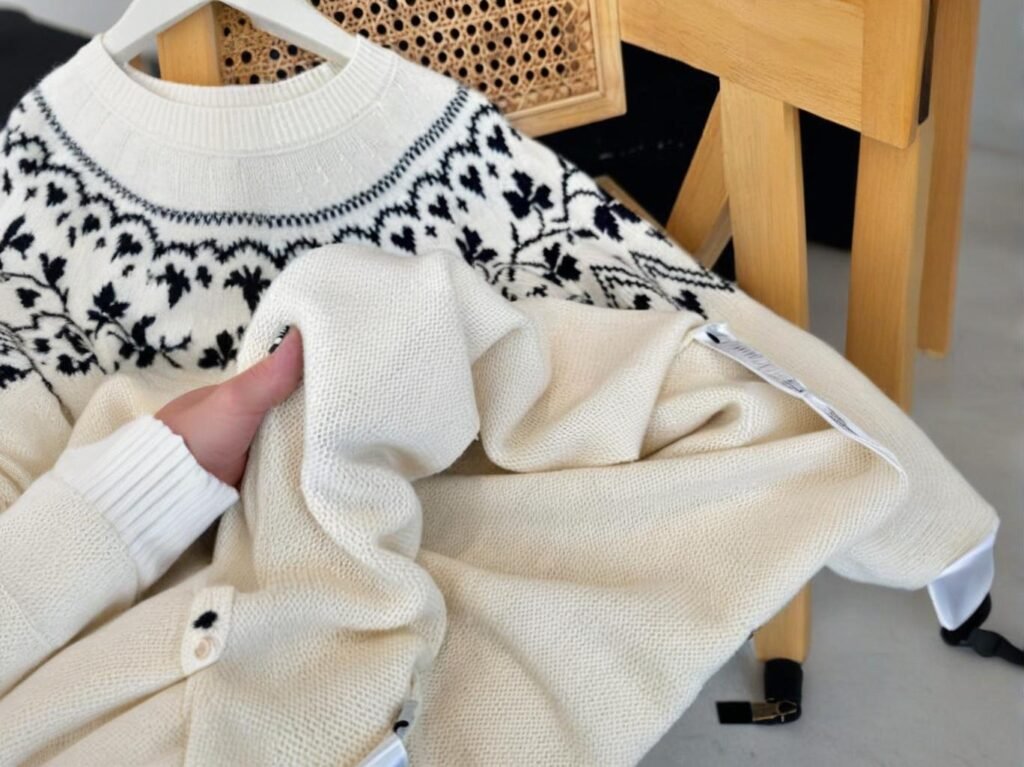
Industrial fabrics rarely get credit for the jobs they do. They sit outdoors under harsh sunlight, shield equipment from wind and moisture, line interiors that must stay warm, and hold their shape despite years of friction and exposure. When a material quietly performs across all these conditions without demanding constant replacement, it earns its place—not through hype, but through results. Acrylic textiles are one of those materials.
Often associated with soft furnishings or knitwear, acrylic fabric is frequently underestimated in industrial settings. Yet its unique balance of weather resistance, thermal insulation, color stability, and chemical resilience makes it a practical and economical solution for many demanding applications. From outdoor covers to filtration layers and insulation fabrics, acrylic textiles have been solving industrial problems for decades.
In simple terms, acrylic textile is a synthetic fiber engineered to mimic the warmth and softness of wool while delivering superior resistance to UV light, weathering, and chemical exposure—qualities that make it especially valuable in long-term industrial use. Its performance profile explains why it continues to be specified where durability and stability matter more than short-term cost.
To understand why acrylic is such a smart industrial choice, we need to start with the basics: what acrylic textile really is, how it differs from other synthetic fibers, and why its structure gives it such a distinct performance advantage.
What is acrylic textile material, and how is it different from other synthetic fibers used in industrial applications?
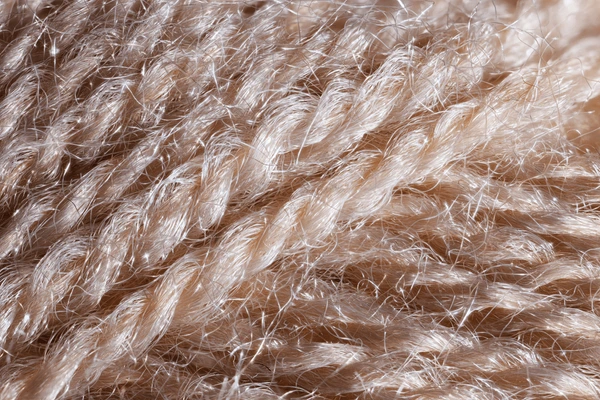
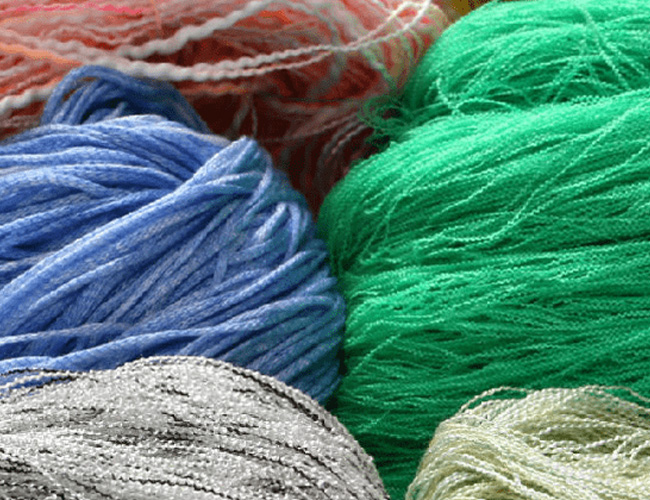
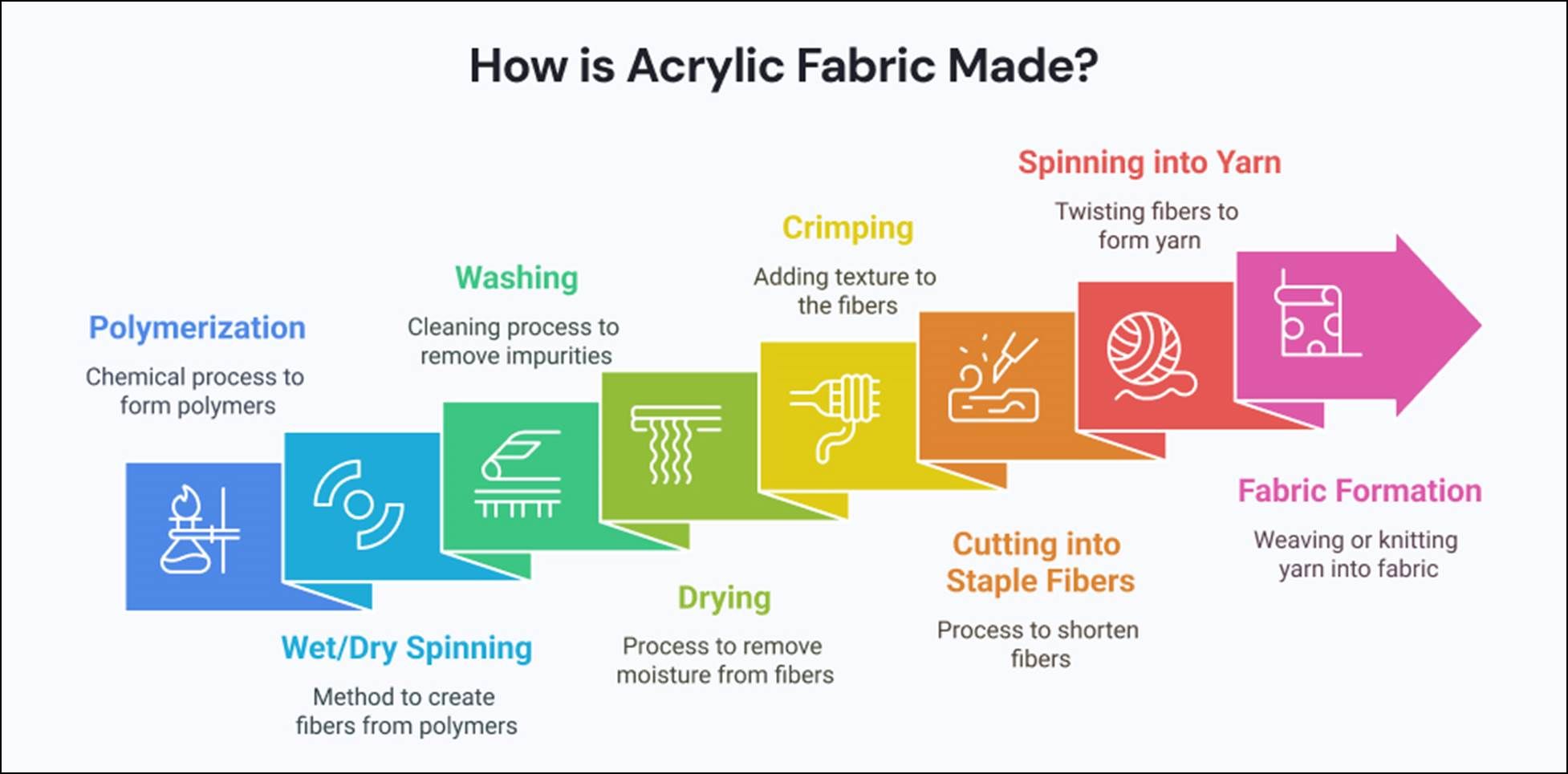
Acrylic textile is a synthetic fiber primarily composed of polyacrylonitrile (PAN), produced through chemical polymerization followed by wet or dry spinning processes that convert liquid polymer solutions into continuous filaments or staple fibers. Unlike polyester or nylon, which are often engineered for high tensile strength and structural durability, acrylic is designed to provide environmental stability, weather resistance, and long-term aesthetic performance.
This distinction explains why acrylic fabrics are widely used in outdoor, industrial, and infrastructure applications where materials must withstand prolonged exposure to sunlight, humidity, and temperature fluctuation without significant degradation.
In industrial contexts, acrylic’s defining advantage is not extreme strength—it is performance consistency over time.
While other synthetic fibers may initially perform well but gradually degrade under ultraviolet radiation or environmental stress, acrylic retains its appearance, color stability, and dimensional integrity across long exposure cycles.
Understanding Acrylic at the Fiber Level
Acrylic fiber production begins with the polymerization of acrylonitrile monomers into polyacrylonitrile chains. These polymers are dissolved in a solvent and extruded through spinnerets during the fiber spinning stage. The resulting filaments are then stretched, washed, dried, and cut into staple lengths or processed into continuous filaments depending on the final textile application.
From a structural standpoint, acrylic fibers possess a highly stable carbon–nitrogen backbone. This chemical configuration provides inherent resistance to UV radiation and oxidative degradation.
Because of this molecular stability, acrylic fibers maintain performance in environments where other synthetics slowly deteriorate.
Chemical Backbone and What It Means
| Fiber | Primary Polymer | Key Implication |
|---|---|---|
| Acrylic | Polyacrylonitrile | High UV & weather resistance |
| Polyester | PET | High strength, moderate UV resistance |
| Nylon | Polyamide | Very strong, UV sensitive |
| Polypropylene | PP | Lightweight, limited heat tolerance |
Polyester (PET) offers excellent mechanical strength and abrasion resistance, making it suitable for load-bearing textiles. However, prolonged UV exposure can gradually weaken polyester fibers, particularly when protective coatings are absent.
Nylon (polyamide) provides exceptional tensile strength and elasticity but is highly sensitive to ultraviolet radiation. Over time, UV exposure can cause nylon fibers to become brittle and lose mechanical integrity.
Polypropylene fibers are lightweight and hydrophobic but demonstrate relatively low melting temperatures and poor resistance to prolonged heat exposure.
Acrylic sits in a different performance category. Its strength is moderate, but its resistance to environmental degradation is significantly stronger than many competing fibers.
How Acrylic Differs in Real-World Behavior
Laboratory specifications only partially explain material performance. In industrial textile applications, environmental exposure conditions often determine fiber selection.
Unlike polyester or nylon, acrylic fibers demonstrate several behaviors that make them particularly suitable for long-term outdoor or semi-outdoor applications.
Acrylic fibers:
- Absorb very little moisture
- Resist UV-induced yellowing or fading
- Maintain softness and bulk over long periods
- Resist mildew, bacteria, and biological growth
- Retain dimensional stability despite temperature swings
Low moisture absorption is especially important in environments where fabrics may experience repeated humidity cycles. Fibers that absorb moisture tend to expand and contract, which can distort textile structures over time.
Acrylic’s hydrophobic nature minimizes these dimensional changes.
Similarly, resistance to biological degradation makes acrylic useful in humid climates where mold and mildew growth can damage natural fibers.
Thermal Behavior and Comfort Performance
Another defining property of acrylic fibers is their thermal insulation capability. Acrylic fibers contain microscopic air pockets within their structure, which trap heat and reduce thermal conductivity.
This feature explains why acrylic is often used in applications requiring insulation or thermal comfort, including protective covers, industrial liners, and outdoor upholstery.
In textile engineering terms, acrylic behaves similarly to wool in its ability to retain warmth while remaining lightweight.
Because of this property, acrylic fabrics are frequently selected for:
- Outdoor awnings
- Marine covers
- Protective industrial covers
- Outdoor furniture upholstery
- Architectural shade systems
In these environments, both UV stability and thermal comfort characteristics are valuable.
The Misconception That Acrylic Is Weak
One common misunderstanding in industrial textile sourcing is the assumption that acrylic fibers are inferior because they do not match nylon or polyester in tensile strength.
This interpretation overlooks the design purpose of the material.
Acrylic fibers were not engineered to deliver maximum structural strength. Instead, they were developed to maintain performance stability in environmental conditions that degrade other materials.
| Performance Focus | Acrylic | Nylon |
|---|---|---|
| Initial strength | Moderate | Very high |
| UV resistance | Excellent | Poor–moderate |
| Long-term appearance | Highly stable | Degrades under sunlight |
| Thermal comfort | High | Low |
In practical terms, nylon may outperform acrylic in short-term strength tests, but nylon fabrics exposed to sunlight over long periods can weaken significantly.
Acrylic fabrics maintain their structural and visual integrity far longer under the same exposure conditions.
Color Stability and Dye Behavior
Another distinguishing feature of acrylic fibers is their ability to retain color stability over extended periods.
Acrylic fibers accept pigments during solution dyeing or conventional dye processes. Because the fiber structure resists UV degradation, color fading occurs much more slowly compared with many other synthetic fibers.
This property makes acrylic a preferred choice for applications where color consistency is critical, such as outdoor awnings or architectural fabrics.
In large installations, even slight color changes between fabric sections can become visually obvious. Acrylic’s stability reduces the risk of uneven fading across production batches.
Industrial Applications Where Acrylic Excels
Because of its unique balance of environmental resistance and thermal properties, acrylic is widely used in applications where longevity matters more than raw tensile strength.
Typical industrial uses include:
- Outdoor awnings and canopy fabrics
- Marine covers and boat upholstery
- Sunshade structures
- Industrial insulation liners
- Protective equipment covers
- Filtration and separation fabrics
In these scenarios, materials must withstand continuous exposure to sun, moisture, and mechanical wear. Acrylic’s long-term stability allows it to maintain functionality and appearance over years of service.
Why Acrylic Remains Relevant in Industrial Textiles
Despite the development of many advanced synthetic fibers, acrylic remains widely used because it occupies a unique performance niche.
Polyester may provide higher mechanical strength, and nylon may offer superior elasticity, but neither fiber matches acrylic’s balance of:
- UV resistance
- color stability
- thermal insulation
- environmental durability
For manufacturers designing products intended to remain outdoors for extended periods, these characteristics often outweigh the advantages of higher tensile strength.
Acrylic textile material is a synthetic fiber engineered around environmental stability rather than extreme strength. Built on a polyacrylonitrile polymer structure, acrylic fibers resist UV degradation, moisture absorption, and biological damage while maintaining color consistency and thermal comfort.
These properties differentiate acrylic from other common synthetic fibers such as polyester, nylon, and polypropylene. Instead of competing in high-strength applications, acrylic excels in environments where long-term durability under sunlight, temperature fluctuation, and humidity is the most critical performance requirement.
For industrial applications exposed to harsh environmental conditions, the value of acrylic lies in its ability to deliver consistent performance year after year rather than peak performance on day one.
Which physical and chemical properties make acrylic fabric suitable for industrial use?

Acrylic fabric is widely used in industrial textiles not because of a single exceptional characteristic, but because of a balanced combination of physical and chemical properties that allow the material to perform reliably in demanding environments. These include low moisture absorption, strong resistance to ultraviolet radiation, good chemical stability, thermal insulation, and long-term color retention.
In many industrial environments—particularly those involving outdoor exposure, temperature variation, and humidity—materials must maintain their structure and performance over long operational cycles. Acrylic textiles meet this requirement because their polymer structure resists environmental degradation more effectively than many other synthetic fibers.
Rather than offering extreme strength or elasticity, acrylic is designed for long-term environmental stability.
Key Properties Explained With Data
The performance of acrylic fabrics can be understood by examining how the fiber behaves under common environmental stress factors.
| Property | Acrylic Performance | Industrial Relevance |
|---|---|---|
| Moisture absorption | Very low (≈1–2%) | Prevents rot, mildew, and dimensional distortion |
| UV resistance | Excellent | Supports long-term outdoor exposure |
| Chemical resistance | Good to many acids & salts | Maintains integrity in industrial environments |
| Thermal insulation | High | Improves energy efficiency in layered systems |
| Color fastness | Excellent | Preserves appearance over long service periods |
This cluster of properties explains why acrylic fabrics are frequently selected for applications such as outdoor coverings, industrial insulation systems, marine textiles, and architectural shading structures.
Moisture Behavior: Quiet but Critical
Moisture management is one of the most important but often overlooked factors in industrial textile selection. Fibers that absorb large amounts of water tend to experience dimensional instability, increased microbial growth, and gradual fiber degradation.
Acrylic fibers absorb very little moisture—typically around 1 to 2 percent of their weight under standard atmospheric conditions. This low absorption rate allows acrylic fabrics to dry quickly and resist biological contamination.
Low moisture uptake also helps maintain fabric structure. When fibers repeatedly absorb and release water, they expand and contract, gradually weakening the textile construction. Acrylic’s hydrophobic nature minimizes these structural fluctuations.
As a result, acrylic fabrics demonstrate strong performance in applications exposed to damp environments, including:
- Outdoor awnings
- Protective equipment covers
- Marine seating fabrics
- Architectural shade systems
- Industrial liners
In these scenarios, moisture exposure is unavoidable, and fiber stability becomes essential.
UV Resistance: Where Acrylic Excels
Ultraviolet radiation is one of the primary causes of synthetic fiber degradation. Prolonged UV exposure breaks down polymer chains, leading to color fading, fiber embrittlement, and reduced tensile strength.
Acrylic fibers exhibit exceptional resistance to UV radiation because of the inherent stability of the polyacrylonitrile polymer structure.
| Exposure Factor | Acrylic | Polyester |
|---|---|---|
| UV-induced fading | Minimal | Moderate |
| Fiber embrittlement | Low | Medium |
| Color shift | Rare | Gradual over time |
Because of this stability, acrylic fabrics can remain outdoors for years without significant performance loss. This is one reason acrylic textiles dominate the outdoor awning and marine fabric markets.
In contrast, materials such as nylon degrade relatively quickly when exposed to direct sunlight. Even polyester, which is more UV-resistant than nylon, may gradually lose color intensity under long-term exposure.
Thermal Insulation Performance
Acrylic fibers contain microscopic air pockets within their structure. These pockets trap air, reducing heat transfer through the fabric.
This property gives acrylic fabrics strong thermal insulation characteristics compared with many other synthetic fibers.
Thermal insulation performance is important in industrial textile applications where fabrics function as part of layered systems. For example, acrylic fabrics are used in:
- Insulated protective covers
- Industrial equipment liners
- Architectural shade fabrics
- Energy-efficient building textiles
By reducing heat transfer, acrylic fabrics can help stabilize temperatures within covered structures or equipment enclosures.
In outdoor environments, this insulation capability also improves comfort by reducing heat buildup under fabric coverings.
Chemical Stability in Industrial Environments
Industrial textiles are often exposed to chemical agents, including cleaning solutions, atmospheric pollutants, and salt exposure. Fiber resistance to chemical attack therefore plays an important role in material selection.
Acrylic fibers demonstrate good resistance to a wide range of chemicals commonly encountered in industrial environments.
These include:
- Weak acids
- Salts and saline environments
- Many household and industrial cleaning agents
This resistance allows acrylic fabrics to maintain structural integrity in marine environments and in installations that require periodic chemical cleaning.
However, acrylic fibers are not resistant to all chemicals. Strong alkaline solutions and certain organic solvents can damage the polymer structure. For most industrial textile applications, however, the chemical resistance of acrylic is more than sufficient.
Color Fastness and Appearance Stability
In many industrial and commercial installations, aesthetic appearance is an important factor. Outdoor architectural fabrics, awnings, and shade structures must maintain consistent color over extended service life.
Acrylic fibers exhibit excellent color fastness due to their resistance to UV degradation and their compatibility with solution-dyeing processes.
In solution dyeing, pigments are added to the polymer before fiber formation. This process integrates color directly into the fiber structure rather than applying it to the surface.
As a result, solution-dyed acrylic fabrics show:
- Strong resistance to fading
- Consistent color across large fabric areas
- Reduced streaking or uneven shade changes
These characteristics are particularly valuable in large-scale installations where even small color variations can become visually noticeable.
Dimensional Stability and Fabric Longevity
Another important physical characteristic of acrylic fabrics is their ability to maintain dimensional stability under varying environmental conditions.
Because acrylic fibers absorb little moisture and resist UV degradation, they experience less structural distortion over time compared with many natural fibers.
This stability helps preserve:
- Fabric tension in stretched installations
- Shape retention in upholstery and covers
- Consistent fit in engineered textile systems
Dimensional stability is essential in architectural and industrial textiles where material deformation could compromise structural performance.
Practical Engineering Insight
Engineers and product designers often select acrylic fabrics not because they offer the highest mechanical strength, but because their behavior under environmental stress is predictable.
Predictability simplifies maintenance planning, replacement cycles, and long-term cost calculations.
When designers know how a material will perform after five or ten years of exposure, they can design products and installations with greater confidence.
Acrylic fabric’s suitability for industrial use comes from the interaction of several complementary properties: low moisture absorption, strong UV resistance, chemical stability, thermal insulation capability, and excellent color fastness.
Individually, none of these characteristics would make acrylic unique. Together, they create a fiber system capable of maintaining stable performance in environments where sunlight, humidity, and temperature variation would degrade many other materials.
For industrial textiles expected to operate continuously outdoors or under harsh environmental conditions, acrylic provides a combination of durability and reliability that few synthetic fibers can match.
How does acrylic textile perform in terms of durability, weather resistance, and UV stability?



Acrylic textiles are widely recognized for their long-term stability in outdoor and semi-outdoor environments. Their performance advantage comes from the chemical structure of the fiber itself. Because acrylic is based on polyacrylonitrile polymer chains, it naturally resists ultraviolet radiation, oxidation, and moisture-driven degradation.
In many industrial textiles, materials are exposed continuously to sunlight, humidity, and temperature fluctuation. Under these conditions, performance is defined not only by initial mechanical strength but by how well a fiber maintains its structure, flexibility, and appearance over years of exposure.
Acrylic fibers may not achieve the highest tensile strength in laboratory tests, but they retain usable performance and visual stability far longer than many competing fibers when subjected to real environmental stress.
Why Acrylic Lasts When Exposure Is Constant
Durability in outdoor textile systems is influenced by several combined environmental factors:
- Continuous ultraviolet radiation
- Rain and humidity cycles
- Temperature fluctuation between day and night
- Freeze–thaw conditions in colder climates
- Airborne pollutants and oxidation
Materials that perform well in controlled indoor environments may deteriorate quickly under these conditions. Acrylic fibers, however, maintain structural stability because the polyacrylonitrile backbone resists chemical breakdown caused by UV radiation and oxidative stress.
This structural resilience allows acrylic fabrics to maintain flexibility, color, and dimensional stability even after prolonged exposure to outdoor conditions.
UV Stability: Performance Over Years, Not Weeks
Ultraviolet radiation is one of the most destructive environmental forces affecting textile fibers. When UV energy penetrates a polymer structure, it can break molecular chains—a process known as chain scission. This weakens fibers, causes brittleness, and leads to visible fading.
Acrylic fibers demonstrate exceptional resistance to this process.
| Material | Relative UV Resistance | Long-Term Outcome |
|---|---|---|
| Acrylic | Excellent | Minimal fading, stable hand feel |
| Polyester | Good | Gradual fading, moderate stiffening |
| Nylon | Fair | Rapid strength loss under UV |
| Polypropylene | Fair | Surface chalking and fading |
Because acrylic fibers resist UV-induced degradation, they maintain both mechanical integrity and aesthetic appearance for extended periods.
This explains why acrylic fabrics are widely used in applications such as:
- Outdoor awnings
- Marine covers
- Architectural shade structures
- Protective equipment covers
- Outdoor furniture upholstery
In these environments, fabrics may be exposed to sunlight for thousands of hours annually, making UV resistance one of the most critical performance metrics.
Weather Resistance Beyond Sunlight
Weather resistance involves more than just ultraviolet radiation. Outdoor textiles must withstand a combination of environmental stress factors that can gradually degrade many materials.
Acrylic fibers demonstrate strong resistance to these combined stresses.
| Stress Factor | Acrylic Response |
|---|---|
| Rain & humidity | Very low water absorption, rapid drying |
| Temperature swings | Maintains dimensional stability |
| Freeze–thaw cycles | Fibers remain flexible without cracking |
| Air pollutants | Low oxidative degradation |
Low moisture absorption—typically around 1–2% of fiber weight—plays an important role in this performance. Fibers that absorb significant water tend to expand and contract repeatedly during wet–dry cycles, gradually weakening the material structure.
Acrylic’s hydrophobic nature prevents excessive moisture uptake, helping fabrics maintain their shape and mechanical properties even in humid or rainy environments.
Temperature stability is another advantage. Acrylic fibers retain flexibility across a wide temperature range, allowing fabrics to perform well in climates where temperatures fluctuate dramatically between seasons.
Resistance to Environmental Aging
Long-term durability is closely related to a material’s ability to resist environmental aging processes such as oxidation and photo-degradation.
Acrylic fibers resist these processes more effectively than many other synthetic fibers. As a result, fabrics made from acrylic typically experience slower aging compared with materials like nylon or polypropylene when exposed to outdoor conditions.
Environmental aging in textiles often manifests as:
- Surface roughness
- Fiber brittleness
- Reduced flexibility
- Visible fading or discoloration
Acrylic fabrics generally show much slower progression of these symptoms.
Abrasion Resistance and Mechanical Durability
Although acrylic performs exceptionally well in weather resistance and UV stability, its abrasion resistance is moderate compared with certain high-strength fibers.
| Comparison | Acrylic vs Alternatives |
|---|---|
| Abrasion vs nylon | Lower |
| Abrasion vs polyester | Comparable |
| Abrasion vs polypropylene | Higher |
Nylon remains one of the most abrasion-resistant synthetic fibers, making it ideal for high-friction applications such as industrial conveyor belts or heavy-duty webbing.
However, nylon is significantly more vulnerable to UV degradation. This trade-off means nylon may perform well indoors but deteriorate rapidly in outdoor installations.
Polyester provides a balanced combination of strength and moderate UV resistance, but long-term exposure can still lead to stiffness and gradual color fading.
Acrylic occupies a niche where abrasion exposure is moderate but environmental exposure is severe. In these cases, environmental stability becomes more valuable than extreme abrasion resistance.
Flex Fatigue and Repeated Movement
Many outdoor textile systems are subject to repeated movement or flexing. Examples include awnings that extend and retract, marine covers exposed to wind movement, and architectural fabrics under tension.
Acrylic fibers demonstrate good resistance to flex fatigue because they remain flexible rather than becoming brittle over time. This flexibility helps prevent cracking or fiber fracture when fabrics are repeatedly bent or folded.
Maintaining flexibility is especially important for products designed to operate outdoors over multiple seasons.
Long-Term Color Stability
Acrylic fabrics are frequently produced using solution-dyeing processes, where pigments are incorporated into the polymer before fiber extrusion. This technique embeds color directly within the fiber structure rather than applying dye to the surface.
Solution-dyed acrylic fabrics exhibit superior color retention because the pigment is protected within the fiber matrix.
As a result, acrylic textiles can maintain color consistency even after prolonged UV exposure, making them particularly suitable for visible architectural applications where aesthetic stability matters.
Real-World Performance Perspective
Field performance often provides the clearest evidence of acrylic’s durability advantages.
In coastal environments—where fabrics face constant exposure to sunlight, salt spray, and humidity—acrylic outdoor covers frequently maintain flexibility and color stability for five to seven years or longer.
Polyester fabrics used in similar environments may begin to show noticeable fading or stiffening earlier, especially if they are not specially treated for UV protection.
These differences may appear small in the short term, but over several years the cumulative effects become significant.
Where Acrylic Performs Best
Because of its performance profile, acrylic fabrics are most effective in applications where environmental exposure is severe but mechanical abrasion is moderate.
Typical uses include:
- Outdoor shading systems
- Marine and boating covers
- Industrial insulation wraps
- Architectural fabric structures
- Protective equipment covers
In these applications, durability is defined not by maximum tensile strength but by consistent performance over extended exposure cycles.
Acrylic textiles demonstrate excellent durability in outdoor environments due to their resistance to ultraviolet radiation, oxidation, and moisture-related degradation. Although acrylic does not match the extreme tensile strength of fibers such as nylon, it maintains flexibility, color stability, and structural integrity far longer under environmental stress.
For industrial and architectural textiles exposed to continuous sunlight, humidity, and temperature fluctuation, acrylic provides a reliable balance of weather resistance, UV stability, and long-term durability.
What insulation, thermal, and comfort properties does acrylic fabric offer in industrial environments?


Acrylic textiles are widely valued in industrial environments because they combine strong thermal insulation with relatively low weight and stable performance in humid conditions. Unlike many synthetic fibers that conduct heat quickly or feel cold when exposed to moisture, acrylic fibers trap air efficiently and maintain warmth even in damp or fluctuating environmental conditions.
In industrial systems where fabrics are used for covers, liners, insulation wraps, or filtration housings, temperature stability is often as important as mechanical durability. Acrylic fabrics contribute to this stability by slowing heat transfer, minimizing condensation formation, and maintaining consistent insulation performance under changing environmental conditions.
This combination of insulation and moisture resistance explains why acrylic textiles are often used in equipment protection, outdoor covers, and thermal barrier layers.
Thermal Behavior Explained Practically
The insulation capacity of acrylic fabrics comes primarily from their fiber structure rather than chemical composition alone. Acrylic fibers typically have a naturally crimped and slightly irregular cross-section. During spinning and yarn formation, these fibers create a bulky structure that traps pockets of still air.
Air is a poor conductor of heat, so fabrics that trap air effectively provide strong insulation properties.
The resulting yarn structure produces a textile that is lightweight yet thermally efficient.
Why Acrylic Insulates Well
Acrylic fibers exhibit characteristics similar to natural wool in their ability to retain warmth while remaining relatively light.
| Property | Acrylic | Polyester |
|---|---|---|
| Fiber loft | High | Medium |
| Air trapping | Excellent | Good |
| Thermal retention | High | Medium |
| Wet insulation | Maintained | Reduced |
The crimped fiber structure increases yarn bulk, creating numerous microscopic air chambers within the textile. These air pockets act as thermal barriers, reducing heat transfer between the environment and the protected object or surface.
Polyester fibers can also trap air but generally exhibit less natural crimp unless mechanically engineered to do so. As a result, polyester fabrics may provide lower insulation efficiency when constructed with similar yarn densities.
Thermal Comfort in Practical Industrial Settings
In industrial environments, comfort is not usually defined by softness or luxury. Instead, comfort refers to temperature stability, safe surface handling, and reduced condensation formation.
Acrylic fabrics contribute to these factors in several ways.
| Application | Acrylic Advantage |
|---|---|
| Equipment covers | Helps reduce heat loss from machinery |
| Pipe insulation wraps | Limits condensation formation |
| Protective liners | Provides warmer touch compared to many synthetics |
| Filter housings | Helps stabilize internal airflow temperature |
For maintenance personnel working with insulated equipment or protective covers, surface temperature matters. Many synthetic materials feel cold when touched because they conduct heat away from the skin rapidly. Acrylic fibers conduct heat more slowly, creating a warmer tactile sensation.
This characteristic improves handling comfort during maintenance and inspection tasks.
Condensation Control and Temperature Regulation
Condensation can create serious problems in industrial systems. When temperature differences between surfaces and surrounding air are large, moisture in the air condenses into water droplets.
Condensation can lead to:
- Corrosion of metal equipment
- Electrical hazards
- Microbial growth
- Reduced insulation efficiency
Acrylic fabrics help mitigate condensation issues because their insulation properties moderate temperature gradients. By slowing heat transfer, acrylic fabrics reduce the likelihood of surfaces reaching dew-point temperatures.
For this reason, acrylic-based textile insulation is often used in:
- Pipe wraps
- Thermal jackets
- Equipment covers
These applications benefit from stable temperature buffering rather than extreme insulation thickness.
Performance in Damp or Humid Conditions
Acrylic fibers absorb very little water—typically around 1–2% of their weight under standard atmospheric conditions. This low moisture absorption provides several advantages.
When exposed to damp environments, acrylic fabrics:
- Maintain insulation efficiency
- Do not become significantly heavier
- Dry quickly after wetting
In contrast, fibers that absorb moisture may lose insulating capacity because water replaces the air trapped within the fabric structure. Water conducts heat more efficiently than air, reducing insulation performance.
Because acrylic resists moisture absorption, the air pockets within the fiber structure remain intact, allowing the fabric to maintain thermal performance even when exposed to humidity.
These properties make acrylic suitable for environments such as:
- Marine installations
- Coastal industrial facilities
- Outdoor mechanical systems
- High-humidity manufacturing environments
Breathability and Airflow Control
Another advantage of acrylic textiles is that their airflow characteristics can be engineered through yarn selection and fabric construction.
| Construction Type | Airflow |
|---|---|
| Knitted acrylic | High |
| Nonwoven acrylic | Medium |
| Tightly woven acrylic | Low–medium |
Knitted acrylic fabrics create larger inter-yarn spaces, allowing higher airflow and improved breathability. These constructions are useful where heat dissipation and ventilation are required.
Nonwoven acrylic fabrics provide moderate airflow while maintaining structural uniformity. These materials are commonly used in filtration or layered insulation systems.
Tightly woven acrylic fabrics reduce airflow and provide stronger thermal barriers. These constructions are often used in protective covers or insulation wraps where heat retention is desired.
By adjusting construction parameters, engineers can tune acrylic fabrics to balance insulation and ventilation according to the application.
Weight-to-Insulation Efficiency
Acrylic fabrics offer a strong insulation-to-weight ratio, meaning they provide effective thermal protection without requiring heavy or dense material layers.
This property is valuable in applications where weight influences installation ease or mechanical movement. Lightweight insulating fabrics reduce structural load and simplify maintenance operations.
For example, removable insulation jackets used on industrial equipment often rely on acrylic or acrylic-coated fabrics because they combine insulation efficiency with manageable weight.
Long-Term Thermal Stability
Another advantage of acrylic insulation textiles is their ability to maintain performance over time. Some synthetic fibers gradually lose loft due to fiber compression or moisture exposure.
Because acrylic fibers retain structural resilience and resist moisture absorption, they maintain loft and insulation performance across extended service periods.
This stability helps reduce maintenance cycles and replacement costs in industrial installations.
Human-Centered Perspective
In everyday industrial operation, small thermal inconsistencies can create persistent maintenance challenges. Surfaces that remain too cold may accumulate condensation. Insulation materials that absorb moisture can become heavy or ineffective.
Acrylic fabrics help minimize these issues by maintaining thermal balance, reducing condensation risk, and preserving insulation efficiency even in humid environments.
Although these improvements may seem subtle, they can significantly improve equipment reliability and worker experience over time.
Acrylic fabrics offer valuable insulation, thermal stability, and comfort characteristics in industrial environments. Their crimped fiber structure traps air efficiently, creating strong insulation while maintaining relatively low material weight.
Combined with low moisture absorption and stable performance under humid conditions, these properties allow acrylic textiles to maintain consistent thermal behavior across a wide range of industrial applications.
For systems where temperature control, condensation prevention, and long-term environmental exposure are key considerations, acrylic fabrics provide an effective balance between insulation performance, durability, and operational practicality.
How do acrylic textiles compare with polyester, nylon, and polypropylene for industrial performance and cost efficiency?


In industrial textile applications, fiber selection rarely depends on a single property. Engineers and product designers must evaluate materials based on a combination of mechanical strength, environmental resistance, thermal behavior, durability, and long-term cost efficiency. Acrylic, polyester, nylon, and polypropylene are among the most widely used synthetic fibers in industrial fabrics, yet each one serves a different performance niche.
Acrylic textiles are generally chosen for environmental stability and long-term appearance retention, while polyester and nylon emphasize mechanical strength and polypropylene prioritizes lightweight cost efficiency. Understanding the differences between these fibers helps manufacturers select the most suitable material for a specific industrial environment.
Core Performance Comparison
| Property | Acrylic | Polyester | Nylon | Polypropylene |
|---|---|---|---|---|
| UV resistance | Excellent | Good | Fair | Fair |
| Moisture absorption | Very low | Very low | Moderate | Very low |
| Thermal insulation | High | Medium | Low | Low |
| Tensile strength | Medium | High | Very high | Medium |
| Abrasion resistance | Medium | Good | Excellent | Medium |
| Color fastness outdoors | Excellent | Good | Fair | Fair |
| Long-term appearance | Stable | Gradual fading | Degrades | Surface chalking |
These differences arise from the underlying polymer structures and the intended design goals of each fiber type.
Interpreting the Performance Differences
Each fiber performs best in specific operating conditions.
Acrylic performs best where sunlight exposure, environmental stability, and insulation are critical. Its resistance to ultraviolet degradation allows it to retain flexibility and color stability for extended periods outdoors.
Polyester provides a balanced combination of strength, durability, and cost efficiency. It performs well in many industrial fabrics, particularly where moderate UV exposure and mechanical stress are both present.
Nylon is engineered primarily for mechanical performance. It delivers exceptional tensile strength and abrasion resistance, making it suitable for heavy-duty applications such as industrial webbing, ropes, and reinforcement fabrics. However, nylon degrades relatively quickly under prolonged sunlight exposure.
Polypropylene offers extremely low density and relatively low cost, making it attractive for disposable or lightweight applications. However, its lower heat tolerance and weaker UV stability limit its use in long-term outdoor installations.
In practical terms:
- Acrylic is preferred when environmental exposure dominates.
- Polyester works well when balanced strength and durability are needed.
- Nylon excels in abrasion-heavy mechanical environments.
- Polypropylene is used when light weight and low cost are priorities.
Environmental Durability and Outdoor Performance
One of the most important distinctions between these fibers appears in outdoor environments. Continuous exposure to sunlight, moisture, and pollutants gradually degrades many synthetic fibers.
Acrylic fibers resist this degradation more effectively than most alternatives. Their polyacrylonitrile structure provides strong resistance to UV radiation, allowing the material to maintain both structural integrity and color stability over time.
Polyester also performs reasonably well outdoors, but prolonged UV exposure may eventually lead to gradual fading and slight stiffening of the fabric.
Nylon is much more vulnerable to ultraviolet radiation. Even though it offers excellent strength initially, its mechanical performance can decline significantly after long periods in direct sunlight.
Polypropylene is also sensitive to UV exposure and may develop surface chalking or discoloration if not specially stabilized with additives.
For outdoor architectural fabrics, marine textiles, and protective covers, UV resistance becomes one of the most critical material selection factors. In these applications, acrylic often provides superior long-term performance.
Moisture and Environmental Stability
Moisture absorption also influences fiber durability in industrial environments.
Acrylic, polyester, and polypropylene all absorb very little water, typically less than a few percent of their weight. This low moisture absorption helps maintain dimensional stability and prevents microbial growth.
Nylon behaves differently. It can absorb significantly more moisture compared with other synthetic fibers, which can alter its mechanical properties and increase drying time.
In environments where fabrics are exposed to humidity, rain, or condensation cycles, low moisture absorption helps maintain consistent fabric performance.
Thermal Insulation Differences
Thermal insulation capability is another factor separating acrylic from many competing fibers.
Acrylic fibers possess a naturally crimped structure that traps air effectively. These air pockets act as thermal barriers, providing insulation comparable to natural wool.
Polyester provides moderate insulation but generally lacks the same level of natural fiber loft unless engineered through specialized yarn structures.
Nylon and polypropylene typically provide lower insulation because their fiber structures are smoother and less bulky.
For industrial covers, insulation wraps, and outdoor textile systems where temperature stability matters, acrylic’s thermal properties can offer significant advantages.
Mechanical Strength and Abrasion Resistance
Mechanical performance varies significantly among these fibers.
Nylon remains one of the strongest synthetic fibers available. It demonstrates excellent tensile strength and exceptional resistance to abrasion, which explains its widespread use in ropes, industrial belts, and heavy-duty webbing.
Polyester also provides high tensile strength and good abrasion resistance, making it suitable for many load-bearing fabrics.
Acrylic’s tensile strength is moderate compared with these materials. While it is sufficiently durable for many industrial applications, it is not intended for extreme mechanical loads.
Polypropylene offers moderate strength but typically lower abrasion resistance compared with nylon or polyester.
This means acrylic performs best in applications where environmental exposure outweighs heavy mechanical stress.
Color Stability and Visual Performance
For applications where appearance matters, such as architectural fabrics or outdoor furnishings, color stability becomes an important consideration.
Acrylic fabrics are often produced using solution-dyeing techniques, where pigments are added directly to the polymer before fiber extrusion. This process embeds color within the fiber itself, significantly improving fade resistance.
Polyester fabrics can also be solution dyed, but conventional dyeing methods may fade more noticeably over time when exposed to sunlight.
Nylon and polypropylene generally show weaker long-term color stability outdoors unless specially treated with stabilizers.
As a result, acrylic fabrics tend to maintain vibrant color and visual consistency over longer service periods.
Cost Efficiency: Initial Cost vs Lifecycle Value
When comparing textile materials, evaluating cost based solely on initial material price can be misleading. A more accurate approach considers lifecycle cost, including maintenance frequency and replacement intervals.
| Cost Lens | Acrylic Outcome |
|---|---|
| Initial material cost | Moderate |
| Maintenance frequency | Low |
| Replacement interval | Longer |
| Lifecycle cost | Competitive to low |
Acrylic fabrics may cost slightly more than polypropylene and sometimes similar to polyester depending on fabric construction. However, their longer service life in outdoor environments can reduce the total cost of ownership.
Fewer replacements and lower maintenance requirements often offset higher initial material costs.
Processability and Manufacturing Flexibility
From a manufacturing perspective, acrylic fibers process well across multiple textile constructions. They can be produced as:
- Woven fabrics
- Knitted fabrics
- Nonwoven materials
Acrylic textiles also accept a variety of finishing treatments, including:
- Water repellency coatings
- Flame retardant treatments
- Anti-static finishes
While nylon tends to achieve deeper dye penetration during traditional dyeing processes, acrylic excels in maintaining color stability over time.
This combination of processability and durability allows acrylic fabrics to be engineered for a wide range of industrial applications.
Decision Shortcut for Material Selection
Selecting the correct fiber often depends on identifying the primary environmental stress factors affecting the textile.
If the application involves prolonged sunlight exposure, moisture, temperature variation, or thermal insulation needs, acrylic fabrics often outperform competing materials in real service conditions.
Polyester provides a versatile middle ground where mechanical durability and moderate environmental resistance are both required.
Nylon should be chosen when abrasion resistance and tensile strength are the dominant performance requirements, particularly in environments with limited UV exposure.
Polypropylene is most appropriate for lightweight, low-cost applications where long-term durability is less critical.
Acrylic textiles occupy a unique position among synthetic fibers used in industrial fabrics. Although they do not offer the highest tensile strength, their resistance to ultraviolet radiation, environmental degradation, and moisture-related damage allows them to maintain performance over extended service periods.
When evaluated through the lens of long-term durability and lifecycle cost efficiency, acrylic fabrics often provide superior value in outdoor and environmentally demanding industrial applications.
Which industrial sectors and applications benefit most from acrylic textile properties?
Acrylic textiles provide the greatest value in industries where materials must remain stable under continuous environmental exposure, temperature variation, and long service cycles. Unlike fibers that prioritize peak mechanical strength, acrylic is engineered to deliver long-term reliability, UV stability, moisture resistance, and consistent appearance over extended periods.
Because of these characteristics, acrylic fabrics are widely used in sectors where textiles must endure sunlight, humidity, pollutants, and physical wear without rapidly degrading. In many cases, acrylic is chosen not because it is the strongest fiber available, but because it maintains predictable performance and visual stability even after years of service.
Industries that rely heavily on outdoor equipment, environmental filtration, insulation systems, and architectural textiles frequently specify acrylic materials for these reasons.
Where Acrylic Consistently Earns Its Place
Across multiple industries, acrylic textiles are selected when durability under exposure becomes more important than extreme mechanical strength.
| Sector | Why Acrylic Fits |
|---|---|
| Outdoor equipment & covers | Strong UV and weather stability |
| Marine & coastal environments | Low moisture absorption |
| Industrial filtration | Chemical tolerance and stable fiber loft |
| Thermal insulation systems | Strong heat retention |
| Infrastructure textiles | Color and dimensional stability |
| Protective equipment interiors | Warmer tactile feel and durability |
These sectors place heavy demands on textiles that operate outdoors or in environments where environmental degradation can shorten material lifespan.
Outdoor Equipment and Protective Covers
One of the largest application areas for acrylic textiles is outdoor protection systems. Equipment covers, protective tarps, and architectural shading fabrics must withstand direct sunlight for extended periods.
Acrylic fibers resist UV radiation more effectively than many synthetic alternatives. As a result, acrylic fabrics maintain flexibility and color stability even after long exposure cycles.
Typical outdoor applications include:
- Equipment protection covers
- Outdoor awnings and shade systems
- Architectural canopy fabrics
- Protective covers for industrial machinery
In these environments, UV degradation is often the primary cause of fabric failure. Acrylic’s resistance to ultraviolet radiation significantly extends product lifespan.
Marine and Coastal Applications
Marine environments present unique challenges for textile materials. Saltwater, humidity, sunlight, and wind-driven abrasion all contribute to accelerated material degradation.
Acrylic fabrics perform well in these environments because they combine UV resistance with extremely low moisture absorption.
Typical marine uses include:
- Boat covers
- Marine upholstery fabrics
- Protective cockpit covers
- Dockside shading systems
Because acrylic fibers absorb very little water, they dry quickly and resist mildew formation. This property is especially valuable in coastal climates where fabrics may remain damp for extended periods.
Industrial Filtration and Separation Systems
Acrylic fibers are also widely used in industrial filtration applications, particularly where moderate temperatures and chemical exposure are present.
Acrylic filter media often appear in:
- Dust collection filter bags
- Air filtration systems
- Industrial gas filtration
- Particulate separation systems
The fiber structure of acrylic provides stable loft and consistent pore structure. These characteristics help maintain airflow efficiency while capturing fine particles.
Additionally, acrylic demonstrates good resistance to many acids and salts commonly present in industrial exhaust streams.
In filtration systems, consistent fiber structure and chemical stability are often more important than maximum tensile strength, making acrylic a practical solution.
Thermal Insulation and Protective Liners
Acrylic textiles are frequently used in applications requiring thermal insulation and temperature stabilization. The crimped fiber structure traps air effectively, allowing the fabric to function as a lightweight thermal barrier.
Industrial insulation applications include:
- Pipe insulation jackets
- Equipment thermal wraps
- Protective liners in mechanical systems
- Thermal barrier layers in composite fabrics
Because acrylic absorbs very little moisture, its insulation performance remains stable even in humid conditions. This advantage helps maintain consistent thermal performance in outdoor or marine environments.
Infrastructure and Architectural Textiles
Infrastructure-related textile systems often demand materials that retain both structural integrity and visual appearance over time.
Acrylic fabrics are commonly used in:
- Stadium shading systems
- Architectural awnings
- Outdoor canopy structures
- Public infrastructure covers
These installations may remain exposed to sunlight for many years. Acrylic fabrics maintain color and flexibility far longer than many alternative materials, reducing maintenance and replacement costs.
In architectural applications, visual consistency is almost as important as structural durability. Acrylic’s color stability helps preserve the intended appearance of outdoor installations.
Protective Interiors and Equipment Linings
Some industrial equipment requires textile liners or protective interior surfaces that provide insulation and improve handling safety.
Acrylic fabrics are used in:
- Equipment protection liners
- Insulated machinery covers
- Protective padding for maintenance zones
- Interior lining materials for protective enclosures
Acrylic fibers conduct heat more slowly than many synthetic fibers, giving them a warmer touch when handled. This property improves maintenance comfort when technicians interact with insulated equipment or protective covers.
Filtration and Dust Collection Systems
Another important application area for acrylic textiles is industrial dust collection. Acrylic felt fabrics are commonly used as filter bags in air pollution control systems.
These systems are found in industries such as:
- Cement manufacturing
- Metal processing
- Chemical production
- Power generation
Acrylic filter media provide stable performance at moderate temperatures and resist degradation from acidic gases present in some industrial exhaust streams.
The fiber structure also supports effective particle capture while maintaining airflow efficiency.
Where Acrylic Is Not the Ideal Choice
Despite its advantages, acrylic is not the best solution for every industrial environment. Situations involving extreme mechanical wear or chemical exposure may require different materials.
Acrylic is generally less suitable for:
- High-friction conveyor systems
- Heavy mechanical load-bearing fabrics
- Environments with strong alkali exposure
In these cases, materials such as nylon, aramid fibers, or specially coated polyester fabrics may provide better long-term durability.
Blended Fiber Strategies
To balance performance and cost, many manufacturers combine acrylic with other fibers to create blended textile systems.
Common blends include:
- Acrylic–polyester blends for improved strength
- Acrylic–cotton blends for comfort applications
- Acrylic–glass fiber composites for high-temperature insulation
Blended fabrics allow engineers to combine acrylic’s environmental stability with the mechanical properties of other fibers.
For example, adding polyester to acrylic can increase tensile strength while maintaining UV resistance and color stability.
Long-Term Value Perspective
In many industrial sectors, the true value of acrylic textiles becomes clear only over time. Materials that initially appear less expensive may require more frequent replacement due to fading, embrittlement, or moisture damage.
Because acrylic fabrics maintain performance and appearance across extended exposure cycles, they often provide better lifecycle value despite moderate initial material costs.
Industries that operate equipment outdoors or in challenging environmental conditions benefit most from this long-term reliability.
Acrylic textiles play an important role across multiple industrial sectors where environmental exposure, thermal stability, and visual longevity are critical. Their resistance to ultraviolet radiation, moisture absorption, and environmental degradation allows them to perform consistently in applications that challenge many other synthetic fibers.
From outdoor infrastructure and marine protection systems to filtration media and thermal insulation layers, acrylic fabrics provide a reliable balance between durability, comfort, and long-term cost efficiency.
Are acrylic fabrics safe, compliant, and sustainable for long-term industrial use?


Acrylic textiles are widely considered safe and reliable for long-term industrial applications when they are produced using controlled manufacturing processes and compliant raw materials. Their polymer structure is chemically stable after fiber formation, which allows them to maintain consistent performance without releasing harmful substances during normal service conditions.
From a compliance perspective, acrylic fabrics can meet most international regulatory frameworks when manufacturers manage chemical inputs, finishing treatments, and dye systems properly. From a sustainability perspective, acrylic’s greatest advantage lies in its long service life and predictable aging, which reduces replacement cycles and material waste in industrial environments.
Although acrylic is not biodegradable, its durability and resistance to environmental degradation often make it a practical material for applications where performance longevity reduces overall environmental impact.
Safety, Compliance, and Environmental Reality
In real industrial settings, textile safety involves more than fiber chemistry alone. It also depends on how materials are processed, dyed, finished, and handled throughout the manufacturing chain. Acrylic fabrics, when produced according to controlled standards, can meet stringent safety and environmental expectations.
Industries such as filtration, insulation, architectural fabrics, and protective covers rely on acrylic materials precisely because they maintain structural integrity and chemical stability throughout extended service cycles.
Chemical Safety in Real Service
Once acrylic fibers are polymerized and spun into filaments, the resulting structure is highly stable. Under normal operating temperatures and environmental conditions, acrylic fabrics show minimal chemical reactivity.
In practical industrial use, acrylic textiles generally demonstrate the following characteristics:
- They do not release volatile organic compounds during normal operation
- They maintain stable dye bonding within the fiber structure
- They resist microbial growth due to low moisture absorption
- They maintain dimensional stability during prolonged exposure to humidity
These characteristics make acrylic suitable for indoor industrial environments where air quality and long-term chemical stability are important considerations.
For example, in industrial filtration systems or equipment insulation layers, fabrics must maintain performance without introducing contaminants into airflow systems. Acrylic fibers provide reliable stability under these conditions.
Compliance Considerations
Modern textile manufacturing must comply with a range of regulatory frameworks related to chemical safety, emissions, and environmental protection. Acrylic fabrics can meet these requirements when manufacturers follow controlled sourcing and finishing procedures.
| Compliance Area | Acrylic Capability |
|---|---|
| Restricted substances regulations | Achievable through controlled chemical inputs |
| Flame retardancy standards | Possible through specialized finishing treatments |
| Indoor air quality standards | Low emission levels during use |
| Chemical resistance requirements | Stable against many acids and salts |
Compliance is not determined by the fiber alone. It depends on the entire production process, including dyes, coatings, and finishing chemicals.
Responsible manufacturers carefully manage:
- Dye chemistry
- Finishing additives
- Processing temperatures
- Wastewater treatment
By controlling these factors, acrylic textile products can meet international safety frameworks used in industrial supply chains.
Flame Retardancy and Safety Enhancements
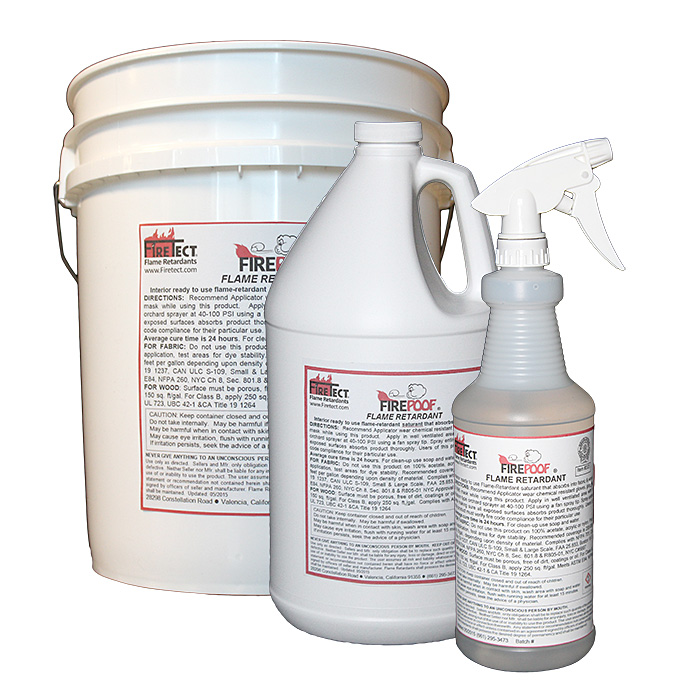
In some industrial applications, textiles must meet fire safety or flame retardancy requirements. Acrylic fabrics can be engineered to satisfy these requirements through specialized treatments.
Flame retardant acrylic fabrics are commonly used in:
- Industrial insulation jackets
- Protective equipment covers
- Infrastructure textiles
- Certain filtration systems
These treatments modify the behavior of the textile when exposed to heat or flame, helping prevent rapid ignition or flame spread.
The ability to apply such treatments expands the range of industrial environments where acrylic fabrics can safely operate.
Sustainability: Looking Beyond Biodegradability
Sustainability discussions around textiles often focus on biodegradability, but for many industrial materials the more relevant metric is service life.
Acrylic fibers do not biodegrade quickly in natural environments, but they provide environmental benefits through durability and long operational lifespan.
| Sustainability Factor | Acrylic Outcome |
|---|---|
| Service life | Long |
| Replacement frequency | Low |
| Maintenance requirements | Minimal |
| Appearance retention | Strong |
A fabric that lasts five to seven years outdoors may generate significantly less environmental impact than a cheaper alternative that must be replaced every two years.
In infrastructure or industrial installations, reducing replacement frequency can lower:
- Material waste
- Transportation emissions
- Maintenance labor
- Production resource consumption
Therefore, durability itself becomes a key sustainability factor.
Lifecycle Efficiency in Industrial Applications
Many industrial textile applications involve large fabric installations such as architectural shading systems, industrial covers, or filtration media. Replacing these systems frequently can require significant labor, logistics, and material resources.
Acrylic fabrics often provide lifecycle advantages because they maintain:
- Structural integrity
- Color stability
- Flexibility
- Environmental resistance
This stability reduces maintenance intervals and replacement cycles.
For example, architectural acrylic fabrics used in outdoor shading structures may maintain color and flexibility for many years, while some alternative fabrics show fading or embrittlement much sooner.
Over long service periods, this difference can significantly reduce environmental impact.
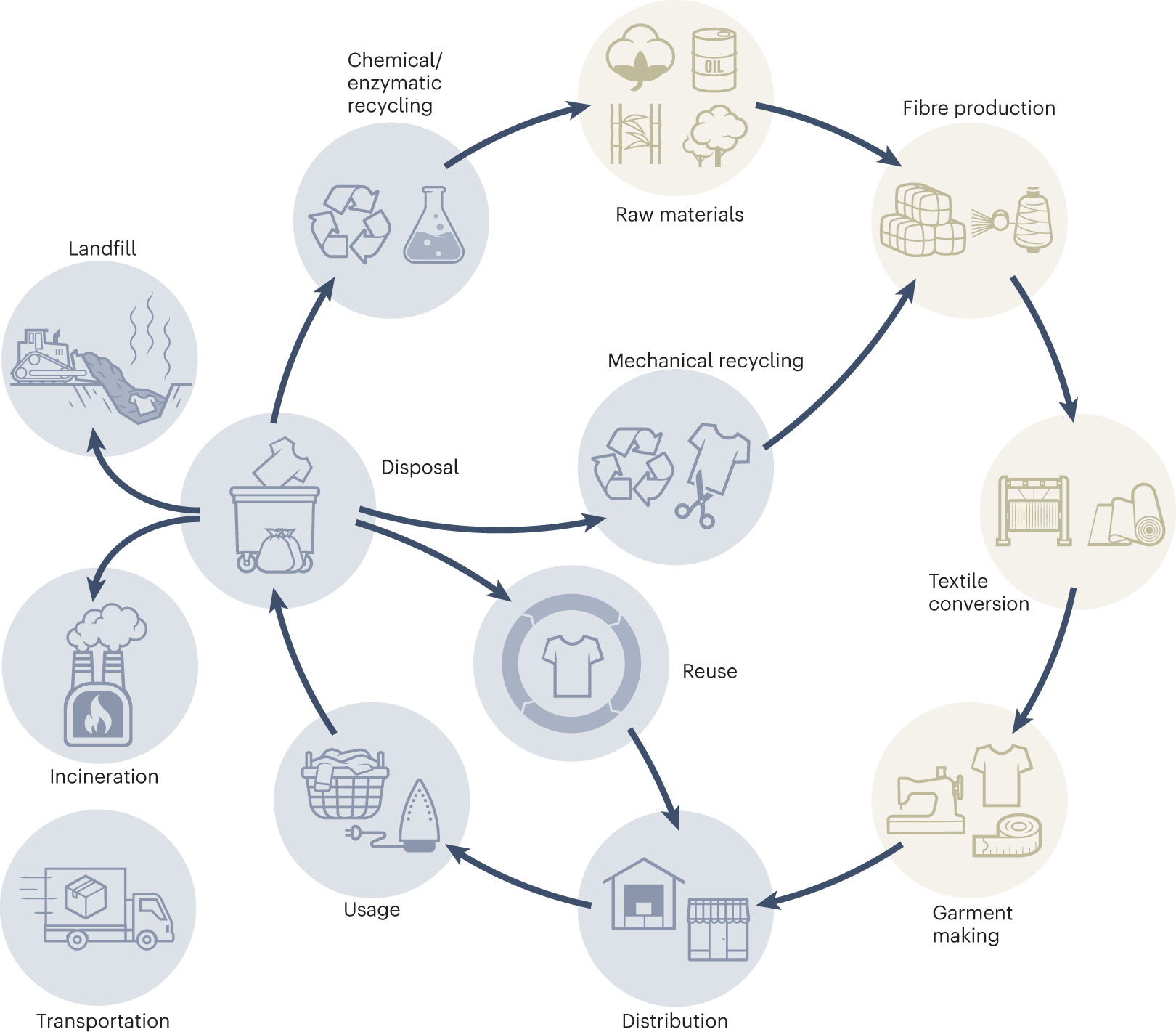
Recycling and Future Sustainability Developments
Recycling synthetic textiles remains a challenge across the entire textile industry, and acrylic is no exception. Mechanical recycling of acrylic fibers can be technically difficult because the polymer structure is sensitive to repeated processing.
However, several emerging technologies are improving recycling potential.
Areas of ongoing development include:
- Chemical recycling processes that break down acrylic polymers into reusable feedstock
- Blended textile recycling technologies
- Design-for-disassembly approaches in industrial products
These technologies aim to improve circularity within synthetic fiber supply chains.
Although these solutions are still evolving, they demonstrate increasing industry focus on improving sustainability for durable synthetic materials.
Responsible Material Selection
For engineers and designers selecting industrial fabrics, sustainability often involves balancing multiple factors:
- Performance stability
- Safety compliance
- Service lifespan
- Environmental footprint
Acrylic fabrics offer a strong combination of these factors when used in environments where environmental exposure is a major stress factor.
Choosing materials that maintain performance over long operational cycles can significantly reduce environmental and operational costs.
Practical Industry Perspective
In real industrial systems, durability often determines sustainability outcomes more than theoretical material properties.
A textile that resists UV degradation, moisture damage, and environmental wear can remain functional for years without replacement. This durability reduces the need for new material production and minimizes waste generation.
Acrylic fabrics excel in this area because they maintain performance stability even in demanding outdoor or semi-outdoor environments.
Acrylic textiles can be safe, compliant, and environmentally practical materials for long-term industrial use when they are manufactured under controlled conditions and specified appropriately for the intended environment.
Their chemical stability, resistance to environmental degradation, and long service life allow them to meet the performance and safety requirements of many industrial sectors. While acrylic fibers are not biodegradable, their durability and predictable aging patterns contribute to reduced replacement cycles and lower overall material waste.
In applications where textiles must withstand years of exposure to sunlight, moisture, and temperature fluctuations, acrylic fabrics provide a reliable balance between safety, compliance, and long-term sustainability.
How can manufacturers customize acrylic textiles to meet specific industrial requirements?

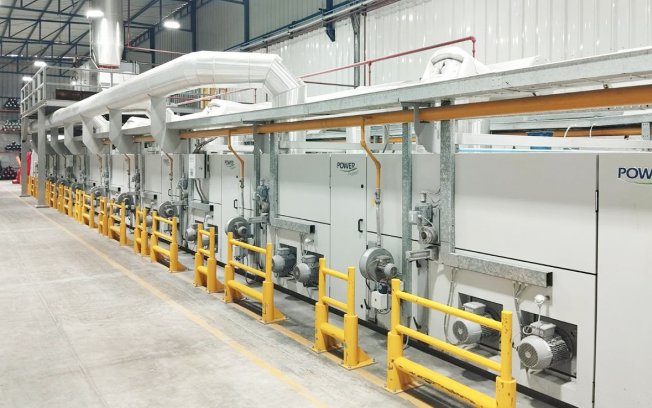
Acrylic textiles offer significant flexibility for industrial applications because their performance can be engineered across multiple stages of production. By adjusting fiber properties, yarn structure, fabric construction, and finishing treatments, manufacturers can tailor acrylic fabrics to match precise environmental and operational demands.
This ability to customize is one reason acrylic fibers remain widely used across sectors such as filtration, outdoor protection systems, insulation fabrics, and architectural textiles. Instead of relying on a single “standard” fabric, manufacturers can modify the material to achieve specific goals such as improved airflow, increased durability, higher insulation efficiency, or compliance with safety standards.
Successful industrial textile development typically begins with a clear understanding of the application environment. Factors such as sunlight exposure, humidity, abrasion levels, and temperature range influence how acrylic fibers are engineered and processed.
Customization Options That Change Performance
Modern textile engineering allows acrylic fabrics to be optimized through adjustments at multiple levels of production. These adjustments affect the final material’s mechanical behavior, thermal characteristics, and environmental resistance.
Customization usually occurs in four major stages:
- Fiber engineering
- Yarn development
- Fabric construction
- Functional finishing
Each stage provides opportunities to modify performance characteristics.
Fiber and Yarn Engineering
Performance begins at the fiber level. Acrylic fibers can be manufactured with different diameters, shapes, and crimp structures, which influence the way yarn behaves during spinning and fabric formation.
| Parameter | Adjustment | Result |
|---|---|---|
| Fiber denier | Fine → coarse | Softer texture vs increased durability |
| Crimp level | Low → high | Increased air trapping and insulation |
| Cross-section shape | Round → modified | Improved loft or strength balance |
| Fiber blending | Acrylic + PET or other fibers | Strength improvement and cost optimization |
Fiber denier refers to the thickness of individual filaments. Fine fibers produce softer, more flexible fabrics with improved insulation properties, while coarser fibers increase durability and resistance to mechanical stress.
Crimp structure plays an important role in thermal performance. Fibers with higher crimp create more internal air pockets within the yarn, improving insulation and thermal retention.
Cross-sectional design also affects fiber performance. Modified cross-sections can improve fiber bonding, increase surface area for coatings, or improve mechanical strength.
Blending acrylic with other fibers such as polyester allows manufacturers to combine the environmental stability of acrylic with the mechanical strength of polyester.
Yarn Structure and Spinning Techniques
After fiber production, yarn formation becomes the next stage where customization occurs. Yarn structure determines how fibers interact within the fabric and influences properties such as flexibility, insulation, and abrasion resistance.
Common yarn engineering options include:
- Staple spun yarns for insulation and softness
- Filament yarns for smooth surfaces and strength
- Bulked yarns for increased loft and thermal retention
Bulked acrylic yarns are frequently used in applications requiring insulation or softness because the bulked structure traps additional air.
Yarn twist also affects performance. Higher twist levels increase yarn strength but may reduce softness and insulation efficiency. Lower twist yarns create bulkier fabrics but may sacrifice some mechanical durability.
Fabric Construction Choices
Once yarns are prepared, manufacturers determine how they will be assembled into fabric. The fabric construction method significantly influences airflow, dimensional stability, and mechanical strength.
| Construction | Typical Benefit |
|---|---|
| Knitted acrylic fabrics | High insulation and breathability |
| Woven acrylic fabrics | Strong dimensional stability |
| Nonwoven acrylic fabrics | Effective filtration and thermal insulation |
Knitted acrylic fabrics create flexible structures with high air permeability. These fabrics are commonly used in applications requiring thermal comfort and breathability.
Woven acrylic fabrics offer stronger structural stability. The interlocking yarn pattern provides better dimensional control and resistance to stretching, making woven constructions suitable for awnings, covers, and architectural fabrics.
Nonwoven acrylic fabrics are often used in filtration or insulation systems. The randomly arranged fibers create a porous structure capable of capturing particles while allowing airflow.
Functional Finishing Options
Finishing processes allow manufacturers to extend or modify the natural properties of acrylic fabrics. These treatments are applied after the fabric is formed and can significantly enhance performance.
| Finish | Industrial Benefit |
|---|---|
| Water-repellent coatings | Protection from rain and moisture |
| Flame-retardant treatments | Improved fire safety compliance |
| Anti-static finishes | Dust control and static discharge reduction |
| Coatings or laminations | Barrier protection and durability |
Water-repellent treatments are particularly valuable in outdoor fabrics and protective covers. These finishes prevent water from penetrating the textile surface while maintaining breathability.
Flame-retardant treatments allow acrylic fabrics to meet safety standards required in many industrial installations. These finishes slow ignition and reduce flame spread when exposed to heat.
Anti-static finishes help prevent static electricity buildup in environments where dust accumulation or electrostatic discharge could create operational hazards.
Barrier coatings or laminations can improve resistance to chemicals, oils, or environmental contaminants.
Coating and Composite Fabric Systems
In some industrial applications, acrylic fabrics are used as base materials for composite textile systems. These fabrics can be coated or laminated with additional materials to improve specific properties.
Examples include:
- Acrylic-coated fiberglass fabrics for high-temperature insulation
- Acrylic laminated fabrics for waterproof covers
- Multi-layer filtration fabrics combining acrylic with other fibers
Composite textile systems allow manufacturers to combine the benefits of acrylic with the strengths of other materials.
Application-Driven Fabric Design
The most effective customization strategy begins by analyzing the specific industrial environment in which the textile will operate.
Key design questions often include:
- How much sunlight exposure will the fabric receive?
- What temperature range must the material tolerate?
- Will the textile experience abrasion or mechanical stress?
- Is airflow or filtration required?
By answering these questions first, engineers can determine the appropriate fiber characteristics, yarn structure, fabric construction, and finishing treatments.
For example, an outdoor awning fabric may prioritize UV stability, color retention, and water repellency. In contrast, a filtration textile may focus on airflow control, particle capture efficiency, and chemical stability.
Balancing Performance and Cost
Customization also allows manufacturers to balance performance requirements with production costs. Increasing fiber fineness, complex yarn structures, or specialized coatings can improve performance but may also increase production complexity.
By adjusting these parameters carefully, manufacturers can produce fabrics that meet performance requirements without unnecessary cost increases.
Blending acrylic with other fibers is a common strategy for achieving this balance.
Acrylic textiles offer significant customization potential for industrial applications because their properties can be engineered at multiple stages of production. Through adjustments in fiber structure, yarn formation, fabric construction, and finishing treatments, manufacturers can design materials tailored to specific environmental and mechanical conditions.
This flexibility allows acrylic fabrics to perform effectively in diverse applications ranging from outdoor protection systems and architectural textiles to filtration media and thermal insulation materials. By starting with the requirements of the end application and working backward through the design process, manufacturers can create acrylic textile solutions that deliver both performance reliability and long service life.
Acrylic’s Strength Is Reliability Over Time
Acrylic textiles don’t chase extremes. They don’t promise the highest tensile strength or the lowest price. What they offer instead is predictable, stable performance in environments that slowly defeat other materials. Sunlight, moisture, temperature swings, and time are unforgiving—acrylic handles them calmly.
That is why acrylic remains a smart choice for industrial use: it ages well.
At Szoneier, we work closely with clients to develop custom acrylic textiles—from fiber selection and yarn design to finishing and performance testing. With free design support, low MOQs, fast sampling, free samples, and short lead times, we help turn material requirements into dependable fabric solutions.
If you are evaluating acrylic textiles for industrial applications or want to customize performance for your specific use case, contact Szoneier to request samples or a tailored quotation.
acrylic textile properties, acrylic fabric industrial use, acrylic textile material, acrylic fabric advantages, industrial acrylic fabric, acrylic fiber properties, acrylic textile durability, acrylic fabric UV resistance, weather resistant acrylic fabric, acrylic insulation fabric, acrylic textile applications, acrylic vs polyester industrial fabric, acrylic vs nylon fabric comparison, acrylic fabric chemical resistance, acrylic fabric thermal properties, acrylic fabric for outdoor use, industrial insulation textiles, acrylic filter fabric, acrylic awning fabric, synthetic fiber industrial textiles, long lasting industrial fabrics, acrylic fabric sustainability, acrylic textile compliance, custom acrylic fabric, acrylic yarn properties, industrial fabric manufacturer, technical textile acrylic, performance acrylic textiles, acrylic fabric customization, fabric manufacturer China