Skip to content


Anyone who has worked with Lycra spandex fabrics knows the paradox: the same stretch and recovery that make these fabrics so valuable also make them notoriously difficult to knit well. Fabrics come off the machine looking smooth, only to twist, curl, or warp after relaxation. Panels cut straight suddenly spiral. Seams pull. Defects appear not because the yarn is bad, but because the knitting technique failed to respect how elastane behaves under tension.
warping and knitting defects in Lycra spandex fabrics are primarily caused by uneven yarn tension, unstable knit structures, improper machine settings, and insufficient post-knitting stabilization. The right knitting techniques—combined with disciplined process control—can dramatically reduce distortion, edge curling, and dimensional instability.
Warping is rarely a single mistake. It is usually the accumulated result of small compromises: a structure chosen for speed instead of stability, tension set for output instead of balance, or finishing treated as an afterthought. Understanding how knitting decisions translate into fabric behavior is the difference between stretch fabric that performs beautifully and stretch fabric that fights you at every step. Let’s start by looking at where things most often go wrong.
What Knitting Defects Most Commonly Occur in Lycra Spandex Fabrics, and Why Do Warping and Distortion Happen?
Knitting defects in Lycra spandex fabrics are rarely random. They are the predictable outcome of how elastane behaves under tension, how knit structures distribute stress, and how small imbalances accumulate during production. In 2026, as fabrics become lighter, stretchier, and more performance-driven, these defects appear more frequently—not because elastane quality is worse, but because margins for error are narrower.
The most common defects include warping, edge curling, spirality, uneven width, and surface distortion. What makes these defects difficult to control is that they often do not appear immediately on the knitting machine. Instead, they emerge after relaxation, washing, heat exposure, or cutting, when elastane finally releases the elastic energy stored during knitting.
Unlike rigid fibers such as polyester or nylon, elastane never truly “rests” during knitting. It is constantly being stretched, restrained, and guided through the machine, always attempting to retract to its original length. If the forces acting on it are not perfectly balanced, the fabric will eventually show that imbalance.
The most frequent defects seen in Lycra spandex knits
Each common defect has a characteristic appearance and a dominant technical cause, although multiple factors are usually involved.
| Defect Type | What It Looks Like | Primary Cause |
|---|---|---|
| Warping | Fabric twists or bows | Uneven elastic tension |
| Edge curling | Edges roll inward | Unbalanced knit structure |
| Spirality | Fabric panels twist | Yarn torque imbalance |
| Width variation | Inconsistent width | Feeding/tension variation |
| Surface rippling | Wavy appearance | Overstretched elastane |
Warping is often the most disruptive because it affects cutting accuracy and garment symmetry. Edge curling complicates sewing and handling. Spirality can ruin panel alignment in garments. Width variation leads to yield loss, and surface rippling undermines visual quality even when measurements are technically within tolerance.
A key point is that these defects frequently pass in-process inspection. The fabric may look flat and uniform on the machine, only to distort hours or days later once tension is released.
Why Lycra spandex behaves differently from standard yarns
To understand why these defects are so persistent, it is necessary to look at how elastane behaves compared to conventional yarns.
Elastane yarns are:
- Highly extensible, often stretched 2–4× during knitting
- Extremely sensitive to small tension differences
- Designed to recover forcefully when tension is removed
During knitting, elastane is deliberately held under stretch so it can be integrated into the fabric structure. This stretch stores elastic energy within the fiber. While the machine is running, that energy is restrained by yarn tension, needles, sinkers, and take-down systems. Once the fabric leaves the machine and begins to relax, the stored energy is released.
If tension and structure are perfectly balanced, recovery happens evenly and the fabric stabilizes. If not, recovery happens unevenly, pulling the fabric out of plane and creating distortion. Even small differences—often invisible during production—can become obvious after relaxation.
This is fundamentally different from rigid yarns, which primarily deform plastically or relax gradually. Elastane reacts actively and immediately.
Warping vs shrinking (often confused)
Warping and shrinkage are frequently confused, but they are driven by different mechanisms and require different corrective actions.
| Issue | Primary Mechanism |
|---|---|
| Shrinkage | Fiber relaxation in length/width |
| Warping | Uneven recovery across fabric |
| Spirality | Torque imbalance in loops |
Shrinkage is generally uniform. The fabric reduces in length or width but remains flat. Warping, by contrast, is non-uniform. One area recovers more aggressively than another, causing twisting, bowing, or diagonal distortion. A fabric can meet shrinkage specifications and still warp badly.
Spirality is a special case of distortion driven by yarn torque and loop geometry rather than simple length recovery. It often becomes apparent only after garment assembly, when panels twist relative to seams.
Understanding these distinctions is critical, because treating warping as a shrinkage problem often leads to ineffective or counterproductive process changes.
Warping: the dominant elastane-related defect
Warping occurs when elastane recovery is uneven across the fabric width or length. Common triggers include uneven elastane feed, inconsistent yarn tension between feeders, or asymmetric knit structures.
On circular knitting machines, even slight differences in elastane feed rate from one feeder to another can create zones of higher stored energy. When the fabric relaxes, these zones contract more strongly, pulling the fabric into a bowed or twisted shape.
Warping is especially common in lightweight, high-stretch fabrics where elastane operates near the upper end of its working range. In these constructions, there is less structural resistance from non-elastic yarns to counterbalance elastane recovery.
Edge curling and structural imbalance
Edge curling is often attributed to elastane, but the root cause is usually structural rather than material-related. Curling occurs when the knit structure is inherently unbalanced, causing one side of the fabric to contract more than the other.
In spandex fabrics, this effect is amplified because elastane recovery increases the force driving that imbalance. Structures with asymmetric loop formation or uneven stitch density are particularly prone to curling once elastane tension is released.
While finishing treatments can reduce curling temporarily, true prevention comes from balanced structures and controlled elastane placement.
Spirality and yarn torque
Spirality is most commonly associated with single jersey structures and is driven by yarn torque and loop orientation. When elastane is added, the effect can worsen if elastane tension amplifies the natural twist tendency of the yarn system.
If torque is not counterbalanced—through yarn selection, ply configuration, or structural design—the fabric will rotate as it relaxes. This often becomes obvious only after cutting, when panels twist and seams no longer align vertically.
Spirality is not a defect that can be fully corrected in finishing. It must be addressed at the yarn and knitting stages.
Width variation and feeding instability
Inconsistent fabric width is often a symptom of feeding or take-down instability rather than yarn quality issues. Elastane exaggerates these problems because small feed differences translate directly into recovery differences.
If elastane feed fluctuates due to tension variation, friction changes, or mechanical wear, the resulting fabric will show width variation after relaxation. This is particularly problematic for automated cutting, where width inconsistency leads to material waste and fit issues.
Surface rippling and overstretch
Surface rippling appears as waves or puckers across the fabric surface. It is commonly caused by elastane being overstretched relative to the surrounding yarns during knitting.
When elastane is stretched too aggressively, it stores excessive energy. Upon relaxation, it pulls the fabric unevenly, creating a rippled appearance. This defect is often misattributed to finishing problems, but the root cause is almost always excessive elastane extension during knitting.
Hidden contributors to distortion
Some of the most problematic contributors to distortion are not obvious during routine checks.
Hidden factors include:
- Yarn path friction differences between feeders
- Needle wear or gauge inconsistency
- Machine temperature variation affecting yarn behavior
- Yarn storage tension memory from winding and transport
Each of these factors may seem minor in isolation. Combined, they create micro-imbalances that elastane faithfully records as stored energy. When the fabric relaxes, those imbalances are released as visible distortion.
This is why two machines knitting the same specification can produce very different results, and why defects may appear sporadically rather than consistently.
The role of relaxation and finishing
Many elastane-related defects only become visible after relaxation or finishing. Heat, moisture, and mechanical action allow elastane to recover more fully, revealing imbalances that were masked during knitting.
Improper relaxation sequencing can worsen defects. If fabric is constrained during early relaxation, recovery may be forced into undesirable directions. Controlled, uniform relaxation is essential to allow elastane to stabilize without distortion.
However, finishing can only reveal or slightly moderate problems—it cannot fundamentally correct poor knitting balance.
Real production insight
In real production environments, fabrics that warp or distort excessively often show no obvious yarn defect. Fiber testing may confirm that elastane meets all specifications. When the same yarn is re-knitted on the same machine with adjusted tension balance, feed alignment, and structure, the resulting fabric may be completely stable.
This is a critical lesson: elastane-related defects are more often process-driven than material-driven. Elastane amplifies technique errors rather than causing them outright.
Factories that successfully control Lycra spandex fabrics focus less on chasing “better yarn” and more on controlling tension symmetry, machine condition, and structural balance. This process discipline is what separates stable stretch fabrics from those that distort unpredictably.
Warping, spirality, and distortion in Lycra spandex fabrics are not inevitable. They are the visible outcome of how stored elastic energy is managed—or mismanaged—during knitting. Understanding that elastane is always trying to recover helps explain why defects appear after relaxation and why small imbalances matter so much.
In spandex knitting, stability is not achieved by suppressing elasticity, but by balancing it. When elastane is allowed to work evenly within a well-controlled structure, the same fiber that causes distortion can deliver excellent shape retention, comfort, and performance.
How do different knitting techniques influence dimensional stability in Lycra spandex fabrics?
Knitting technique is one of the most decisive factors affecting dimensional stability in Lycra spandex fabrics. While elastane provides stretch and recovery, the knitting structure determines how that elastic force is constrained, distributed, and released within the textile. A well-chosen knitting technique converts elastane recovery into controlled, uniform elasticity. A poor choice allows elastic energy to escape unevenly, leading to curling edges, spirality, torque distortion, width instability, and long-term shape loss.
In practical manufacturing terms, dimensional instability does not just affect appearance. It impacts cutting accuracy, sewing tolerance, panel matching, pressure consistency, wash durability, and ultimately product rejection rates. For compression garments, sportswear, and medical textiles, knitting structure is often more important than elastane percentage when it comes to maintaining size and shape over time.
At its core, the knitting technique defines how elastane is mechanically locked into the fabric system.
High-level comparison of knitting techniques
Different knitting techniques create fundamentally different loop geometries. These geometries dictate how elastic stress is shared across the fabric plane.
| Knitting Technique | Dimensional Stability | Typical Risk |
|---|---|---|
| Single jersey | Low | Curling, spirality |
| Rib knit | Medium | Width instability |
| Interlock knit | High | Heavier hand feel |
| Warp knit | Very high | Higher setup cost |
The key pattern here is balance. The more symmetrical and constrained the loop structure, the better the fabric can absorb elastane recovery forces without translating them into distortion.
Why knitting technique matters more with Lycra spandex
Without elastane, many knit structures tolerate minor imbalance because the yarns themselves have limited recovery force. Lycra spandex changes this equation. Elastane can generate significant retractive force, especially at elongations above 30–50%. If that force is not evenly restrained by the knit structure, it expresses itself as deformation.
In unstable knits, elastane recovery does not disappear—it simply reappears as:
- Edge curling
- Panel twisting
- Length shrinkage after washing
- Uneven pressure zones in compression garments
Thus, the knitting technique acts as a mechanical governor on elastane behavior.
Why single jersey struggles with Lycra spandex
Single jersey is one of the most widely used knit constructions due to its speed, softness, and low cost. However, it is also the least stable structure when combined with elastane.
Single jersey knits:
- Use a one-sided loop formation
- Have unequal tension on face and back loops
- Naturally curl at edges due to torque imbalance
- Allow elastic yarns to retract asymmetrically
When Lycra spandex is introduced, these characteristics are amplified rather than corrected.
In production environments, common issues with single jersey + spandex include:
- Edge curling exceeding 10–20 mm after relaxation
- Spirality appearing after washing or tumble drying
- Panel skewing during cutting, especially on bias sections
- Inconsistent garment length between batches
From a mechanical perspective, elastane recovery in single jersey is directionally biased. Recovery force is stronger along courses than wales, which leads to torque buildup and fabric rotation. Over time and repeated laundering, this torque accumulates rather than dissipates.
For light stretch applications, single jersey may be acceptable. For compression or shape-critical garments, it is typically avoided.
Rib knit: improved balance with limitations
Rib knits introduce alternating face and back loops, which improves symmetry compared to single jersey. This alternating structure allows elastane recovery to be partially balanced across the fabric width.
Rib knits offer:
- Better edge stability
- Reduced curling tendency
- Higher transverse stretch
- Improved recovery consistency
However, rib knits still suffer from width instability. Under sustained tension, ribs can open or close, changing fabric width without permanent yarn damage. When elastane content is high, this effect becomes more pronounced.
In dimensional testing, rib knits with elastane often show:
- Acceptable length stability
- Variable width recovery depending on stitch density
- Pressure inconsistency across wide panels
Rib knits are commonly used for cuffs, waistbands, and localized compression zones, but they are less suitable for full-body compression garments where uniform pressure is critical.
Why interlock knits perform better
Interlock knits represent a significant step up in dimensional stability. Structurally, interlock fabrics are formed by two intermeshed rib structures that lock each other in place.
Interlock knits:
- Have fully balanced loop geometry
- Distribute tension symmetrically on both fabric faces
- Resist curling and spirality
- Constrain elastane recovery evenly
Because loops are mechanically interlocked, elastic energy is dissipated across a larger number of contact points. This reduces localized stress and stabilizes recovery behavior.
In wear and wash testing, interlock spandex fabrics typically demonstrate:
- Less than 3–5% dimensional change after repeated laundering
- Minimal edge distortion
- Consistent panel dimensions during cutting and sewing
The trade-off is fabric mass and hand feel. Interlock fabrics are denser and heavier than single jersey, which may not be desirable for ultra-lightweight garments. However, for compression efficiency and shape retention, interlock offers a reliable balance.
Warp knits: the benchmark for dimensional stability
Warp knitting represents the highest level of dimensional control in elastane-containing fabrics. Unlike weft knits, where loops are formed across the width, warp knits form loops along the length, anchoring yarns in fixed positions.
Warp knits:
- Use fixed yarn paths
- Severely limit lateral yarn movement
- Prevent loop rotation under elastic stress
- Maintain geometry under repeated stretch
Because elastane yarns are laid into a highly constrained framework, their recovery force is translated into uniform surface tension rather than distortion.
In compression applications, warp-knit spandex fabrics consistently show:
- The lowest pressure decay over time
- Excellent resistance to torque and curling
- Superior cutting accuracy
- Stable panel alignment during garment assembly
From a quality control standpoint, warp knits reduce downstream defects significantly. Factories often report lower rejection rates and less rework, especially in large-scale production.
The main disadvantage is higher setup cost and lower flexibility for small runs. However, when total production efficiency is considered, warp knits frequently outperform cheaper alternatives.
Loop geometry and elastic control
The relationship between loop geometry and elastic behavior can be summarized clearly.
| Structure | Loop Balance | Elastic Control |
|---|---|---|
| Jersey | One-sided | Weak |
| Rib | Alternating | Moderate |
| Interlock | Fully balanced | Strong |
| Warp knit | Fixed geometry | Very strong |
Balanced loop geometry prevents elastane recovery from expressing itself unevenly. Instead of pulling fabric out of shape, elastic energy is absorbed and redistributed across the structure.
In practice, loop balance is the single most effective defense against warping and distortion in elastane fabrics.
Impact on cutting, sewing, and production yield
Dimensional instability does not stop at fabric inspection—it compounds during garment production.
Unstable knits often cause:
- Inaccurate cutting due to edge curl
- Panel mismatch during sewing
- Uneven seam tension
- Increased fabric waste
- Higher defect rates after washing tests
More stable knitting techniques improve manufacturing efficiency in measurable ways:
- Cleaner cutting edges
- Consistent panel dimensions
- Lower operator adjustment during sewing
- Reduced rejection after final inspection
Factories working with interlock or warp-knit spandex fabrics often report double-digit reductions in rework and scrap rates compared to single jersey constructions.
Long-term stability and consumer perception
From the end-user perspective, dimensional stability translates directly into perceived quality. Garments that twist, shorten, or lose shape after washing are quickly judged as inferior, regardless of initial comfort.
Stable knit structures ensure:
- Consistent fit over time
- Reliable compression performance
- Improved garment lifespan
- Higher customer satisfaction
In compression products, instability also undermines functional claims. Uneven recovery leads to uneven pressure, which can reduce muscle support or compromise medical effectiveness.
Practical decision insight
Choosing a more stable knitting technique is not simply a technical preference—it is a strategic manufacturing decision.
Selecting interlock or warp knits often:
- Reduces downstream defects
- Improves cutting and sewing accuracy
- Lowers rejection and return rates
- Stabilizes compression performance over product life
Even when machine speed is slightly lower or setup cost is higher, total production efficiency improves because waste, rework, and quality failures drop sharply.
In Lycra spandex fabrics, dimensional stability is engineered first through structure, then fine-tuned through yarn selection and density. When knitting technique is chosen correctly, elastane becomes a controlled performance tool rather than a source of unpredictable distortion.
Which knit structures are best for minimizing warping in Lycra spandex fabrics?
Warping in Lycra spandex fabrics is rarely caused by the fiber itself. In most cases, distortion, curling, spirality, or edge twisting are the direct result of knit structure choices combined with how elastic recovery forces are restrained—or left uncontrolled—within that structure. Lycra spandex is inherently powerful: it stores significant elastic energy when stretched. If a fabric structure cannot restrain that energy symmetrically, the fabric will distort as soon as tension is released.
From an engineering perspective, warping is not an accident. It is a predictable outcome of loop geometry, force balance, and recovery pathways. Knit structures that distribute elastane forces evenly in both lengthwise and widthwise directions remain flat and stable. Structures that concentrate force on one side or one direction will move, curl, or spiral over time.
This is why knit structure selection is one of the most critical decisions when developing Lycra spandex fabrics for applications that require clean cutting, dimensional accuracy, and long-term shape retention.
Ranking Knit Structures by Warping Resistance
| Knit Structure | Warping Resistance | Typical Comments |
|---|---|---|
| Warp knit (tricot, raschel) | Very high | Best dimensional control |
| Interlock knit | High | Stable, heavier |
| Rib knit (1×1, 2×2) | Medium | Width control needed |
| Double jersey variants | Medium–High | Depends on balance |
| Single jersey | Low | High curling & spirality |
The ranking reflects how effectively each structure restrains elastic recovery forces generated by Lycra spandex. The more evenly these forces are locked into the fabric architecture, the flatter and more predictable the fabric remains after knitting, dyeing, washing, and cutting.
Why Warping Happens When Elastane Is Added
In non-elastic knits, residual stresses are relatively low. When elastane is introduced, especially at higher percentages, recovery forces increase dramatically. These forces seek the path of least resistance. If loops are asymmetrical or free to rotate, the fabric responds by curling, twisting, or shrinking unevenly.
Warping becomes especially visible after finishing or washing, when knitting tensions relax and elastane attempts to retract fully. Fabrics that appear flat on the machine can distort significantly after relaxation if the structure does not provide mechanical balance.
Why Interlock Knit Works So Well with Lycra
Interlock knit is one of the most reliable structures for minimizing warping in Lycra spandex fabrics because it is fundamentally symmetrical.
Interlock knit:
- Uses two opposing needle beds
- Forms mirrored loop systems on both sides
- Encapsulates elastane forces internally
- Balances lengthwise and widthwise recovery
Because each side of the fabric mirrors the other, elastic retraction forces cancel out rather than overpowering one direction. No single surface is allowed to dominate during recovery.
From a production standpoint, this symmetry translates into practical benefits: reduced edge curling during cutting, stable fabric width after relaxation, and predictable garment panels during sewing. Interlock fabrics also tolerate higher elastane percentages more gracefully than single-sided structures.
The main trade-off is weight and cost. Interlock knits are thicker and consume more yarn, which may not be suitable for ultra-lightweight garments. However, for applications where flatness, durability, and appearance consistency matter, interlock is often the safest structural choice.
Rib Knits: Stable but Not Foolproof
Rib knits sit between interlock and single jersey in terms of warping resistance. Their alternating knit and purl columns introduce inherent elasticity and widthwise stability, but they also introduce variability.
Rib knits can control warping better than single jersey because forces are distributed across vertical columns rather than a single loop plane. However, the structure is directionally biased, meaning recovery behavior differs between width and length.
| Rib Type | Stability Note |
|---|---|
| 1×1 rib | Good balance |
| 2×2 rib | Softer, more movement |
| Wide ribs | Higher distortion risk |
Narrow ribs, such as 1×1, offer better force balance and respond more predictably when elastane is introduced. Wider ribs increase softness and stretch but allow greater loop migration, which can lead to width fluctuation and localized distortion.
Rib knits require precise elastane plating and tight tension control. Uneven plating can cause ribs to lean or collapse asymmetrically after washing. For this reason, rib structures perform best when elastane percentage is moderate and machine settings are tightly controlled.
Double Jersey Variants: Stability Depends on Balance
Double jersey structures include a broad family of knits that use two needle beds but do not form true interlock geometry. Their warping resistance varies significantly depending on how balanced the loop systems are.
Well-balanced double jersey fabrics can achieve good flatness and reduced curling compared to single jersey. However, if one side carries more elastane tension or denser stitching, the fabric may still warp as tensions relax.
The key risk with double jersey variants is hidden imbalance. Fabrics may appear flat immediately after knitting but distort later during dyeing or garment washing. Proper prototyping and post-wash evaluation are essential when using these structures with Lycra spandex.
Warp Knits: The Gold Standard for Flatness

Warp knitting offers the highest resistance to warping because it physically restricts loop movement through its construction method. Instead of forming loops sequentially across the width, warp knitting interlaces yarns along the length of the fabric in fixed pathways.
| Advantage | Why It Matters |
|---|---|
| Fixed loop geometry | Minimal relaxation |
| Low torque | No spirality |
| Excellent width control | Easy cutting |
In warp-knit structures such as tricot and raschel, elastane is locked into stable configurations that prevent rotational movement. This eliminates spirality, edge curling, and width creep almost entirely.
Warp-knit Lycra spandex fabrics maintain dimensional stability through repeated washing and extended wear. This makes them the preferred choice for high-performance sportswear, shapewear, and medical compression products where tolerance margins are tight.
The main limitations are cost, machine availability, and reduced design flexibility. Warp knitting requires specialized equipment and longer setup times. Patterning options are also more constrained compared to weft knits. Nevertheless, when flatness and control are non-negotiable, warp knit remains unmatched.
Why Single Jersey Is Inherently Prone to Warping
Single jersey knits are structurally asymmetric by design. Loops are formed on one side, creating a natural imbalance between the face and back of the fabric. When elastane is added, recovery forces amplify this imbalance.
As elastane retracts, the fabric tends to curl toward the knit side, twist along the length, and exhibit spirality after washing. These behaviors are not defects—they are structural consequences.
Single jersey remains popular because it is soft, lightweight, breathable, and cost-effective. However, it is the most challenging structure to control when Lycra spandex is present.
When Single Jersey Is Still Used (and How to Survive It)
Despite its limitations, single jersey is widely used in casualwear and lightweight activewear. To minimize warping, manufacturers rely on multiple mitigation strategies:
- Lower elastane ratios to reduce recovery force
- Tighter stitch density to restrain loop movement
- Post-knit compaction to stabilize dimensions
- Aggressive heat setting to lock in shape
These methods can reduce distortion but cannot eliminate it entirely. Even well-managed single jersey spandex fabrics will move more than balanced or warp-knit alternatives, especially after repeated washing.
Designers choosing single jersey must account for this movement during pattern development and sizing. Expecting single jersey Lycra fabrics to behave like interlock or warp knits is unrealistic and leads to downstream production issues.
Structural Choice Determines Downstream Success
Warping control begins at the knitting stage, not during garment construction. Once a fabric’s structural balance is set, cutting, sewing, and finishing can only manage—not fix—distortion tendencies.
Balanced, mechanically locked knit structures give Lycra spandex a stable framework in which to perform. Unbalanced structures expose its elastic power in uncontrolled ways. For manufacturers aiming to reduce cutting waste, improve fit consistency, and deliver stable garments over time, knit structure selection is one of the most consequential decisions in the entire development process.
How does yarn tension control affect fabric flatness and defect rates when knitting Lycra spandex?
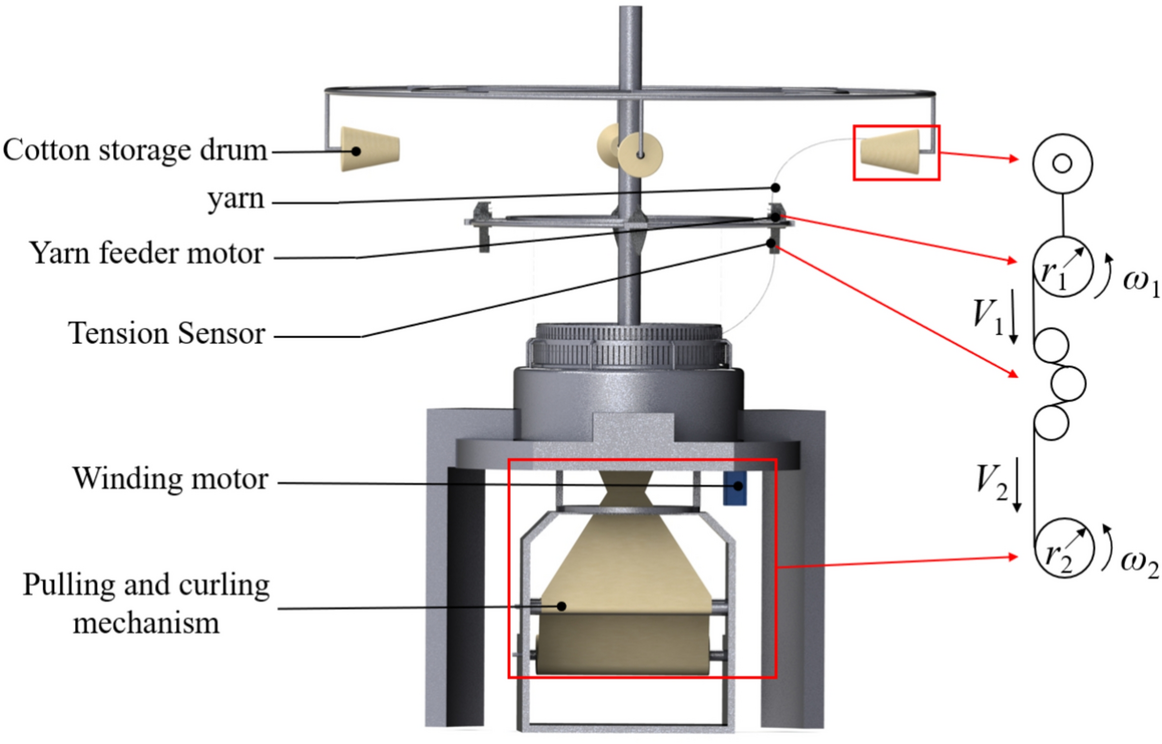


In knitting Lycra spandex fabrics, yarn tension control is not a secondary machine setting—it is the primary determinant of fabric flatness, dimensional stability, and defect rate. More defects attributed to “unstable elastane” or “inconsistent yarn quality” actually originate from tension mismanagement during knitting. Elastane does exactly what physics dictates: it stores elastic energy when stretched and releases it later. If that energy is unbalanced, the fabric will eventually show it.
Flat, stable fabric is not produced by pulling elastane tighter. It is produced by balancing elastic forces across every feed, every course, and every meter of fabric. Excessive or uneven tension introduces hidden stress that may not be visible on the machine but will emerge after relaxation, dyeing, heat-setting, or garment washing.
Many of the most frustrating defects—edge curling, width waviness, spirality, diagonal torque, and post-finish distortion—are delayed reactions to tension errors made during knitting. Once these stresses are knitted into the structure, no finishing process can fully remove them.
Many defects blamed on “bad elastane” are actually tension mistakes.
What Happens When Tension Is Too High or Uneven
Elastane amplifies tension errors more aggressively than any other fiber used in knitting. Because it is stretched several hundred percent during feeding, even small variations translate into large force differences once the fabric relaxes.
| Tension Condition | Fabric Outcome |
|---|---|
| Too high | Severe post-relaxation warping |
| Uneven between feeds | Spirality, width waves |
| Inconsistent over time | Batch instability |
| Too low | Poor recovery, slack loops |
When elastane tension is too high, the fabric appears flat and controlled on the machine. However, this is a false stability. Excess elastic energy is locked into the loops. Once the fabric is removed from tension—during take-down relaxation, wet processing, or heat exposure—the stored energy is released unevenly. The result is strong warping, rolling edges, or twisting panels that cannot be corrected later.
Uneven tension between feeders is one of the most common causes of spirality and width waviness. Even if average tension looks acceptable, differences of just a few grams between feeds create alternating zones of higher and lower elastic force. After relaxation, these zones shrink differently, producing diagonal torque or undulating width.
Inconsistent tension over time creates batch instability. Fabrics knitted at the start of a shift behave differently from those knitted after adjustments, maintenance, or yarn changes. These differences often go unnoticed until cutting or sewing, when panels from different rolls no longer match.
Tension that is too low introduces a different set of problems. Elastane that is under-tensioned does not contribute evenly to loop formation. Recovery becomes weak, loops appear slack, and compression performance suffers. In extreme cases, elastane floats irregularly within the structure, causing unpredictable stretch behavior.
Why Elastane Tension Is More Sensitive Than Base Yarn Tension
Elastane behaves fundamentally differently from cotton, polyester, or nylon ground yarns. Understanding this difference explains why tension control must be treated with exceptional care.
Elastane:
- Is stretched several hundred percent during knitting
- Has strong retraction force
- Responds instantly to variation
Base yarns are typically fed close to their relaxed length. Small tension changes alter loop size slightly, but the yarn itself does not aggressively try to return to a shorter state. Elastane, by contrast, is under constant extension. Any additional tension increases stored energy exponentially, not linearly.
A small tension difference at the feeder becomes a large force difference in the fabric.
This is why tension settings that appear “within tolerance” for base yarns can be disastrous for elastane. A 5–10% variation that is harmless for polyester can create visible distortion in a spandex-containing fabric.
Elastane also reacts immediately to changes in friction, temperature, and feed path geometry. Dirty guides, worn eyelets, or slight changes in yarn angle alter effective tension instantly. These micro-variations accumulate across the machine width, especially in fine-gauge or high-feed-count setups.
Because elastane recovers forcefully, it also interacts with ground yarn tension. If the ground yarn cannot absorb or counterbalance elastane’s retraction force evenly, the fabric will deform along the weakest path—often diagonally or at the edges.
Recommended Tension Philosophy (Not Exact Numbers)
One of the biggest mistakes in elastane knitting is chasing absolute tension values. Numbers alone are misleading, because machines, yarn counts, structures, and elastane deniers differ widely. What matters is relative balance, not maximum or minimum readings.
| Yarn Type | Tension Strategy |
|---|---|
| Elastane | Lowest stable tension |
| Ground yarn | Matched across feeds |
| Plated elastane | Consistent ratio to ground yarn |
For elastane, the guiding principle is the lowest tension that maintains stable feeding. This minimizes stored elastic energy while still ensuring consistent loop formation. Increasing tension beyond this point does not improve recovery—it only increases future distortion risk.
Ground yarn tension must be matched carefully across all feeds. When ground yarn tension varies, it alters how much resistance elastane encounters during loop formation. This indirectly changes elastane’s effective contribution, even if elastane tension itself is unchanged.
In plated structures, the relationship between elastane and ground yarn tension is critical. The ratio must remain constant. If elastane tension fluctuates relative to ground yarn, plating shifts, surface appearance changes, and elastic contribution becomes uneven.
The goal is equal elastic contribution, not maximum stretch.
Well-managed knitting floors treat tension balance as a system, not a single adjustment. Any change to yarn, gauge, speed, or machine condition triggers a reassessment of balance.
Plating Tension Mistakes That Cause Defects
Plating elastane incorrectly is one of the fastest ways to introduce flatness defects that are difficult to diagnose later. Because plating determines yarn positioning within the loop, tension errors become structural rather than cosmetic.
Plating elastane incorrectly often leads to:
- Elastane popping to the surface
- Uneven recovery across width
- Localized warping zones
| Plating Issue | Visual Result |
|---|---|
| Elastane too tight | Surface ridging |
| Elastane too loose | Inconsistent stretch |
| Variable plating | Patchy distortion |
When elastane is plated too tight, it migrates toward the fabric surface. This creates ridging, shine variation, and harsh handfeel. More importantly, surface elastane is exposed to abrasion and heat during finishing, accelerating fatigue and recovery loss.
When elastane is too loose, it fails to anchor consistently within the structure. Some areas stretch and recover properly, while others lag behind. This inconsistency often appears only after washing, when differential shrinkage exaggerates the imbalance.
Variable plating across feeds or over time creates patchy distortion zones. These zones may not align with visual defects in greige fabric but become obvious after dyeing or heat-setting. Because the issue is structural, finishing cannot correct it.
Proper plating requires stable feed paths, consistent tension devices, and regular verification—not just initial setup.
Fabric Flatness Is a Delayed Outcome
One reason tension-related defects are misunderstood is timing. Fabric often looks acceptable immediately after knitting. Problems appear later.
Elastane stores energy during knitting. That energy is released when:
- The fabric relaxes off the machine
- The fabric enters wet processing
- Heat-setting allows polymer relaxation
- The garment is washed by the end user
If elastic forces are balanced, release is uniform and fabric remains flat. If forces are unbalanced, release is uneven and defects appear.
This delayed behavior explains why operators may insist the fabric was “fine on the machine.” It often was—temporarily. Flatness is not proven at take-down. It is proven after full relaxation.
Factories that understand this evaluate fabric after rest periods, not immediately. Allowing rolls to relax before inspection reveals hidden tension issues early, when correction is still possible.
Real Machine-Floor Insight
Controlled production trials consistently show that tension discipline outperforms yarn substitution as a defect-reduction strategy.
In one series of controlled trials, reducing elastane tension by 10–15% while keeping ground yarn tension constant reduced warping complaints by over 40%, without sacrificing compression or recovery.
The key was not lowering all tensions blindly, but restoring balance. Elastane was allowed to operate closer to its natural recovery range, while ground yarns provided consistent structural support.
Notably, these improvements occurred without changing elastane supplier, denier, or fabric construction. The yarn was never the problem.
That kind of improvement comes from discipline, not new yarn.
Why Tension Control Lowers Defect Rates Systemically
Proper tension control does more than improve flatness. It reduces defects across the entire production chain.
Balanced elastane tension:
- Improves width consistency
- Reduces spirality and skew
- Enhances cutting accuracy
- Stabilizes garment fit after washing
- Lowers rework and rejection rates
Because elastane-related defects often cascade—distortion leading to cutting waste, sewing mismatch, and fit complaints—solving tension at the knitting stage has disproportionate downstream benefits.
This is why high-performing knitting operations invest more time in tension verification than in reactive quality control.
Yarn tension control is not a minor adjustment in Lycra spandex knitting. It is the foundation of fabric flatness and dimensional stability. Elastane magnifies every tension error, storing imbalance that will surface later as defects.
Flat fabric does not come from pulling harder. It comes from balanced elastic energy, achieved through disciplined setup, consistent maintenance, and system-level thinking.
When tension is managed correctly, elastane performs exactly as intended. When it is not, even the best yarn cannot save the fabric.
What role do machine settings and needle selection play in reducing Lycra spandex knitting defects?
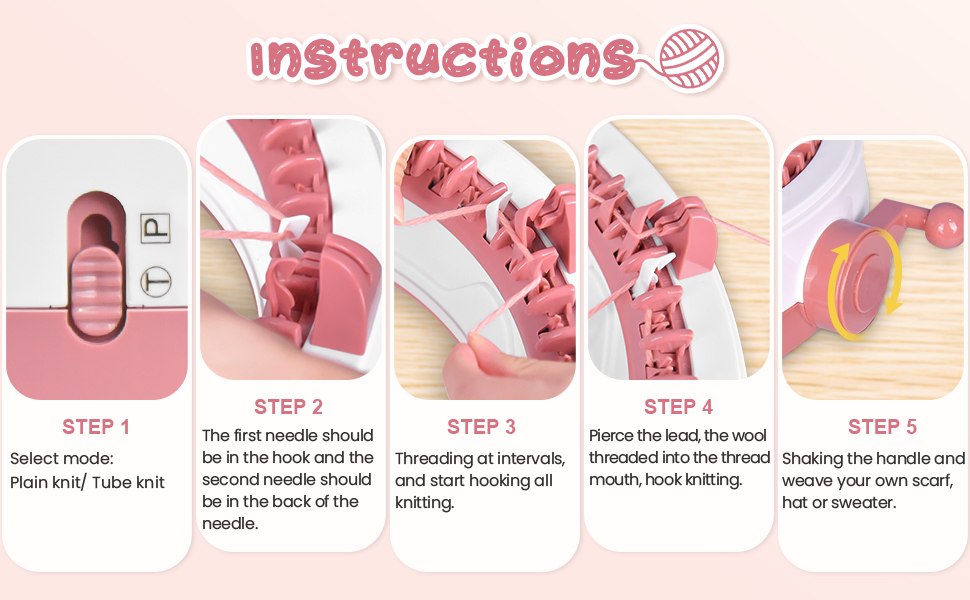
Machine settings and needle selection are among the most decisive factors in controlling knitting defects in Lycra spandex fabrics. While yarn quality and fabric design matter, the knitting machine is the point where elastane behavior is either stabilized or amplified into defects. Incorrect cam depth, worn needles, mismatched needle profiles, or overly aggressive speed settings do not merely reduce efficiency—they concentrate elastic stress in unpredictable ways, leading directly to warping, striping, dropped stitches, width variation, and surface distortion.
Elastane is unforgiving. Unlike rigid yarns that tolerate minor mechanical inconsistencies, Lycra spandex continuously pulls back against the machine. Every needle, cam, and setting becomes part of a dynamic tension system. If that system is not balanced, the fabric will reveal the imbalance later—often after relaxation, washing, or cutting, when corrections are no longer possible.
Think of the knitting machine as the translator between yarn behavior and fabric reality. When the translation is inaccurate, defects are inevitable.
Why machine control matters more with elastane than with rigid yarns
In conventional knitting with polyester, nylon, or cotton, small variations in loop formation are often absorbed by the fabric structure. The yarn deforms plastically or relaxes gradually, masking mechanical inconsistencies.
Lycra spandex behaves differently. It stretches under controlled tension during knitting and stores elastic energy in every loop. When the fabric relaxes, that stored energy is released. If loops were formed unevenly, recovery is uneven. The machine may produce fabric that looks acceptable on the take-down, but the imbalance is already embedded.
This is why elastane fabrics frequently fail after finishing rather than on the machine. The defect is not created during relaxation; it is revealed.
Why needles matter more with elastane
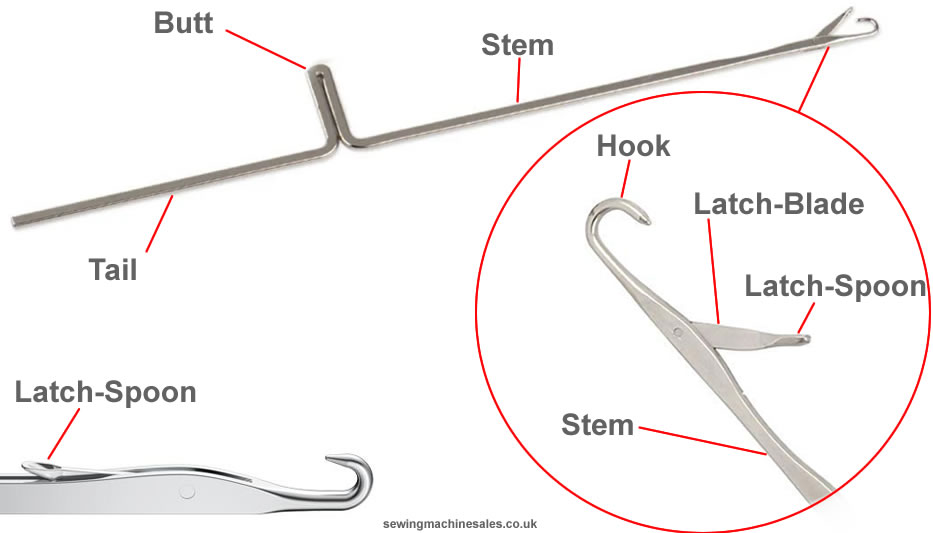
Needles are the most stressed components in spandex knitting. Elastane exerts a constant retractive force on the needle hook and latch. Over time, this force accelerates wear, even when machine hours appear reasonable.
If needles are:
- Worn
- Slightly bent
- Incorrect gauge
- Using an unsuitable hook or latch profile
they fail to form uniform loops, even when yarn quality is excellent and settings are nominally correct.
| Needle Condition | Fabric Impact |
|---|---|
| New, correct profile | Clean loops, stable fabric |
| Slightly worn | Loop size variation |
| Heavily worn | Distortion, striping |
| Bent latch | Dropped or uneven stitches |
A critical point is that “slightly worn” needles often pass visual inspection. The wear may be microscopic, but elastane responds to that micro-variation by changing loop tension. Over thousands of needles and millions of loops, this becomes visible fabric distortion.
In spandex knitting, needle replacement intervals must be shorter than in rigid-yarn programs. Waiting for visible damage is already too late.
Elastane accelerates needle wear
Elastane does not slide passively through the needle. It pulls, rebounds, and constantly changes force direction. This increases friction at the hook and latch, especially in plated constructions where elastane is fed alongside a cover yarn.
As a result:
- Hook tips lose their polish faster
- Latch movement becomes less smooth
- Small burrs create tension spikes
These changes directly affect loop size consistency. What might be acceptable for polyester knitting becomes a defect trigger for elastane fabrics.
Factories that succeed with Lycra spandex typically replace needles proactively, based on elastane usage hours rather than visible wear alone.
Needle type selection: not one-size-fits-all
Choosing the correct needle type is as important as replacing it on time. Elastane magnifies the effect of needle geometry.
| Needle Feature | Recommendation for Spandex |
|---|---|
| Hook shape | Smooth, rounded |
| Latch action | Free-moving, low friction |
| Surface finish | Polished |
| Gauge match | Precise, not approximate |
Rounded hooks reduce cutting and snagging of elastane filaments. Polished surfaces minimize friction peaks that stretch elastane unevenly. Free-moving latches ensure consistent loop closure without hesitation, which is critical when elastane tension fluctuates slightly.
Using a needle that is “close enough” in gauge often leads to systematic loop imbalance. Elastane does not forgive approximate fits. Precise gauge matching ensures that loop length and shape are consistent across the fabric width.
Sharper hook profiles, sometimes preferred for fine rigid yarns, are particularly harmful in spandex knitting. They increase local stress and can damage elastane plating, leading to striping or weak zones that only appear after relaxation.
Machine cam and stitch settings: subtle but decisive
Cam settings control how deeply needles descend and how much yarn is drawn into each loop. In elastane fabrics, these settings determine how much the elastane is stretched during loop formation.
| Setting | Effect on Fabric |
|---|---|
| Deep stitch cam | Excessive yarn stretch |
| Shallow stitch cam | Tight, rigid loops |
| Inconsistent cam wear | Width variation |
| Poor timing | Loop imbalance |
Deep stitch cams increase loop length but also stretch elastane more aggressively. This stores excess elastic energy, which later releases as warping or rippling. Shallow cams reduce stretch but can create overly tight loops, limiting recovery and increasing stress on specific courses.
The key is consistency rather than extremity. Elastane fabrics prefer short, consistent loop lengths. Aggressive depth settings may increase productivity or give a softer hand initially, but they dramatically increase the risk of distortion after finishing.
Cam wear is often overlooked. Uneven wear across cams causes subtle differences in loop formation from feeder to feeder. Elastane faithfully records these differences, which later appear as width variation or striping.
Timing and synchronization effects
Timing between needle movement, yarn feed, and take-down is critical. In elastane knitting, even small timing offsets can change how elastane tension is distributed across the loop.
Poor synchronization can lead to:
- One side of the loop carrying more elastic load
- Alternating tight and loose courses
- Progressive distortion along the fabric length
These issues are difficult to diagnose visually during knitting but become obvious after relaxation. Regular timing checks are essential when running spandex-heavy programs.
Speed vs stability trade-off
Machine speed is one of the most tempting levers for increasing output, but it is also one of the most dangerous in elastane knitting.
High speeds:
- Increase friction heat at needles and guides
- Amplify tension fluctuation in elastane feeds
- Reduce the operator’s ability to respond to anomalies
| Machine Speed | Risk Level |
|---|---|
| Conservative | Low |
| Moderate | Manageable |
| Maximum | High (for spandex) |
At high speed, elastane does not have time to stabilize between loop formations. Tension spikes become more frequent, and heat buildup changes yarn behavior in real time. This leads to variability that may not be obvious until finishing.
Many factories report that reducing speed by even 5–10% dramatically improves fabric stability and reduces downstream defects. The productivity loss is often offset by higher usable yield and fewer rejections.
Take-down tension and its hidden influence
Take-down tension is another setting that plays a disproportionate role in elastane fabric quality. Excessive take-down force stretches the fabric while it is still forming, increasing stored elastic energy.
If take-down tension fluctuates due to mechanical wear or control lag, elastane recovery becomes uneven along the fabric length. This contributes to bowing, lengthwise distortion, and inconsistent shrinkage behavior.
Stable, moderate take-down tension allows loops to form naturally without being forced into elongated states. For spandex fabrics, gentler control often produces more stable results than aggressive pulling.
Interaction between machine settings and fabric structure
Machine settings cannot be optimized in isolation. They must be aligned with fabric structure. Lightweight, high-stretch knits require tighter control than heavier fabrics with more structural support from non-elastic yarns.
For example:
- Single jersey with high elastane content is extremely sensitive to cam depth and needle condition
- Interlock or double-knit structures offer more resistance to distortion but still require balanced settings
- Plated constructions demand precise needle and feeder alignment to avoid elastic dominance
Ignoring these interactions leads to the false conclusion that “the yarn is unstable,” when in reality the setup is mismatched to the structure.
Practical machine checklist (copy-ready)
A disciplined approach to machine control reduces defects more effectively than chasing yarn changes.
| Item | Action |
|---|---|
| Needles | Replace earlier than standard |
| Cams | Inspect for uneven wear |
| Stitch length | Optimize, don’t maximize |
| Speed | Tune for stability |
This checklist may seem conservative, but it reflects real-world experience across spandex knitting operations. Stability comes from repetition and control, not from pushing limits.
Real production perspective
In many factories, the same Lycra spandex yarn has produced both highly stable fabrics and severely distorted ones—on different machines or even on the same machine at different times. When defects occur, investigation often reveals worn needles, minor cam wear, or speed increases implemented to boost output.
When those factors are corrected, the defects disappear without changing yarn supplier or fabric design. This reinforces a critical lesson: in elastane knitting, machines do not merely execute instructions—they actively shape fabric behavior.
Machine settings and needle selection are not secondary considerations in Lycra spandex knitting. They are the primary tools for managing elastic energy. Elastane amplifies every mechanical inconsistency, turning small setup errors into visible defects.
Stable Lycra spandex fabrics are not achieved by suppressing elasticity, but by guiding it precisely. Clean needles, correct profiles, balanced cams, and disciplined speeds allow elastane to work evenly within the fabric. When the machine is tuned to respect elastane behavior, defects drop sharply—and the same yarn that once caused distortion becomes a reliable performance material.
How do yarn feeding methods and plating techniques improve Lycra spandex fabric quality?


Yarn feeding methods and plating techniques play a decisive role in determining whether Lycra spandex behaves as a controlled elastic support system or becomes a source of distortion, instability, and defects. While fiber selection and knit structure define potential performance, feeding and plating determine how much of that potential is actually realized on the machine and preserved through finishing, cutting, and wear.
In elastane-containing fabrics, quality problems rarely come from spandex itself. They almost always come from how spandex is introduced into the loop system. Feeding discipline controls tension consistency. Plating discipline controls elastane position. Together, they define flatness, dimensional stability, recovery uniformity, and defect rates.
Poor feeding turns elastane into a problem. Good feeding turns it into an asset.
Why yarn feeding matters more for Lycra spandex than for rigid yarns
Rigid yarns such as polyester or nylon tolerate moderate tension variation without major structural consequences. Elastane does not. Even small changes in feeding tension can translate into large differences in loop size, recovery force, and fabric geometry.
Elastane behaves like a highly sensitive spring:
- Too much tension overstretches it before knitting
- Too little tension allows uncontrolled slack
- Inconsistent tension creates uneven recovery across the fabric
Once these inconsistencies are locked into the structure, finishing processes such as heat setting or washing will not correct them—they will often amplify them.
This is why feeding method selection is a first-order quality decision for Lycra spandex fabrics.
Why positive feeding is essential for spandex
Positive feeding systems actively control yarn delivery, supplying a fixed and measurable length of yarn per course or per machine rotation. This is fundamentally different from systems that rely on yarn being pulled into the needles by knitting tension.
Positive feeders:
- Deliver consistent yarn length regardless of machine speed
- Minimize short-term tension fluctuation
- Stabilize loop formation across feeders
- Reduce elastane over-extension during knitting
| Feeding Method | Suitability for Spandex |
|---|---|
| Negative feed | High risk |
| Semi-positive | Moderate |
| Positive feed | Strongly recommended |
Negative feeding depends on the yarn being pulled off the package by needle motion. Elastane resists this pull unpredictably due to its high elasticity and friction sensitivity. The result is fluctuating tension that varies by position, speed, and even package diameter.
Semi-positive systems improve control but still allow tension drift under dynamic conditions. They may be acceptable for low elastane percentages or non-critical applications but often struggle in compression or shape-sensitive fabrics.
Positive feeding, by contrast, decouples yarn delivery from knitting tension. Elastane is supplied at a controlled rate, allowing it to enter the loop system without pre-stretching or slack formation.
Practical consequences of poor feeding control
When elastane feeding is unstable, defects often do not appear immediately. Fabrics may look acceptable off the machine but fail during finishing or garment production.
Common downstream issues include:
- Width variation after heat setting
- Side-to-side warping during relaxation
- Uneven compression zones in garments
- Increased cutting waste due to edge instability
- Visible striping after dyeing or finishing
These problems are expensive because they are detected late, when material value is already high.
Plating fundamentals: where elastane should sit
Plating refers to the controlled positioning of multiple yarns within a single loop so that each yarn consistently occupies a defined location. In elastane fabrics, correct plating ensures that elastane contributes elastic recovery without dominating surface appearance or structural geometry.
In properly plated fabrics:
- Ground yarn forms the visible surface
- Elastane sits consistently inside or behind the loop
- Recovery force is distributed through the base structure
| Correct Plating | Incorrect Plating |
|---|---|
| Elastane hidden | Elastane popping |
| Uniform recovery | Patchy recovery |
| Smooth surface | Surface ridging |
Correct plating allows elastane to act as a support element, not a shaping driver. The visible yarn controls hand feel, appearance, and abrasion resistance, while elastane quietly provides recovery from within the structure.
Incorrect plating exposes elastane at the surface or allows it to migrate between loop positions. This creates visual defects and mechanical imbalance.
Why elastane position matters mechanically
Elastane generates recovery force along its length. If positioned consistently inside the loop, that force is shared by surrounding yarns. If elastane shifts toward the surface or edge of the loop, force becomes localized.
Localized recovery leads to:
- Surface ridging
- Local shrinkage
- Pressure hotspots in compression garments
- Increased torque during relaxation
In severe cases, elastane popping becomes visible after washing, even if it was hidden on the greige fabric.
Common plating mistakes and their consequences
Plating errors are often subtle on the machine but become obvious after finishing or wear.
| Mistake | Result |
|---|---|
| Elastane fed too tight | Surface distortion |
| Elastane fed too loose | Inconsistent compression |
| Variable plating angle | Width instability |
| Feeder mismatch | Striping |
Elastane fed too tight enters the loop already under tension. During relaxation, it pulls loops inward unevenly, causing distortion and stiffness.
Elastane fed too loose fails to engage uniformly with the ground yarn. Some areas recover strongly while others lag, leading to patchy compression and visible waviness.
Variable plating angle changes elastane position within the loop across the fabric width. This results in width instability and asymmetric recovery.
Feeder mismatch creates repeating patterns of tension variation that appear as striping or banding after dyeing.
A critical point is that many of these defects only appear after heat setting or washing, making root-cause analysis difficult if feeding parameters are not documented.
Synchronization across feeders
In modern knitting machines, multiple feeders work simultaneously across the fabric width. For elastane fabrics, these feeders must operate as a synchronized system rather than independent units.
Key synchronization challenges include:
- Mechanical drift between feeders
- Timing differences in yarn delivery
- Inconsistent lubrication levels
- Package-to-package variation
| Issue | Fabric Symptom |
|---|---|
| Feeder drift | Side-to-side warping |
| Timing mismatch | Longitudinal waves |
| Uneven lubrication | Tension spikes |
Even small feeder-to-feeder differences can create internal stress gradients across the fabric. These gradients are invisible initially but release during relaxation, causing warping or skewing.
Why lubrication consistency matters
Elastane is highly sensitive to friction. Variations in yarn lubrication change effective feeding tension even when feeder settings are identical.
Uneven lubrication leads to:
- Intermittent tension spikes
- Loop size variation
- Recovery inconsistency across width
Professional production lines treat lubrication control as part of feeding discipline, not a secondary concern.
Interaction between feeding, plating, and knit structure
Feeding and plating cannot compensate for fundamentally unstable knit structures, but they can dramatically improve performance within a given structure.
For example:
- In warp knits, precise feeding and plating maximize already high dimensional stability
- In circular knits, good feeding reduces torque and width drift
- In less stable weft knits, disciplined feeding can prevent defects from becoming unmanageable
In all cases, elastane must be introduced gently and consistently into the loop system.
Impact on recovery consistency and compression accuracy
Compression performance depends on uniform recovery force across the garment. Feeding and plating errors create zones where elastane contributes more or less force, leading to uneven pressure.
From a functional standpoint, this results in:
- Inconsistent muscle support
- Reduced comfort
- Shorter effective wear life
Uniform feeding and plating ensure that elastane recovery is predictable and repeatable, which is essential for performance and medical textiles.
Production insight from practice
Factories that upgrade elastane feeding discipline often see immediate and measurable improvements without changing yarns, knit structures, or finishing recipes.
Reported outcomes commonly include:
- 30–50% reduction in warping complaints
- Improved width consistency after relaxation
- Lower cutting waste due to straighter edges
- More stable garment measurements across batches
- Reduced rework and rejection rates
These gains come primarily from process control, not material cost increases.
Why feeding discipline improves total efficiency
Positive feeding and correct plating may slightly reduce machine speed or increase setup time. However, the overall efficiency gain is significant.
Benefits include:
- Fewer defects detected after finishing
- More predictable fabric behavior
- Reduced operator intervention during cutting and sewing
- Higher first-pass yield
When evaluated across the full production chain, feeding discipline almost always lowers total cost per usable meter.
In Lycra spandex fabrics, yarn feeding and plating are not secondary technical details. They are core quality levers.
High-quality elastane fabrics consistently show:
- Positive elastane feeding
- Stable, documented tension settings
- Correct and consistent plating geometry
- Synchronized feeders across machine width
By controlling how elastane enters and sits within the fabric, manufacturers convert elastic energy into stable recovery instead of distortion. The result is flatter fabrics, more reliable compression, and significantly lower defect rates—achieved through discipline rather than material substitution.
How can heat setting and post-knitting finishing stabilize Lycra spandex fabrics and prevent warping?

Heat setting and controlled post-knitting finishing are not optional steps for Lycra spandex fabrics—they are the processes that determine whether a fabric remains dimensionally stable or slowly deforms after cutting, sewing, and washing. Even a perfectly knitted spandex fabric carries significant internal stress when it comes off the machine. If that stress is not released and re-fixed under controlled conditions, the fabric will inevitably warp later, often when it is already in garment form.
Knitting stretches elastane far beyond its relaxed state. Finishing decides how, when, and where that stored energy is allowed to relax. If finishing is rushed, skipped, or poorly controlled, the fabric may look flat initially but will distort once it encounters washing, drying, or body movement. This delayed failure is one of the most common—and most expensive—issues in spandex fabric production.
Why Heat Setting Is Non-Negotiable for Spandex Fabrics
Elastane is a thermoplastic polymer. Its molecular chains can be rearranged under heat, then fixed into a more stable configuration when cooled. During knitting, elastane filaments are held under high tension. Without heat setting, those filaments retain a strong tendency to retract unpredictably.
Heat setting performs three critical functions at once. First, it allows elastane polymer chains to realign into a lower-energy, more stable state. Second, it fixes loop length and geometry so the knit structure cannot migrate freely later. Third, it ensures that elastic recovery happens consistently rather than in sudden, uneven bursts after washing.
| Finishing Stage | Purpose |
|---|---|
| Relaxation | Release knitting stress |
| Heat setting | Lock elastic structure |
| Cooling | Fix dimensional stability |
Skipping or compressing any of these stages creates hidden instability. Fabrics may pass visual inspection but fail after laundering, when residual stress finally releases.
How Warping Develops Without Proper Finishing
Warping is often delayed, which makes it difficult to trace back to finishing errors. A fabric may appear flat immediately after knitting and dyeing, only to curl, twist, or shrink unevenly once it is washed by the end user.
This happens because internal stress remains unevenly distributed. Areas with higher residual tension relax first, pulling the structure out of alignment. In Lycra spandex fabrics, this effect is amplified because elastane recovery forces are strong relative to the surrounding yarns.
Proper finishing forces this relaxation to occur on the finishing line, not later in the consumer’s laundry.
Heat-Setting Parameters That Matter Most
| Parameter | Impact on Stability |
|---|---|
| Temperature | Controls polymer relaxation |
| Time | Ensures full stabilization |
| Tension | Prevents rebound warping |
| Cooling control | Locks final dimensions |
Temperature must be high enough to allow elastane chains to rearrange, but not so high that they degrade. Insufficient heat leaves polymers partially mobile, leading to later relaxation. Excessive heat reduces elastic recovery permanently.
Time is equally critical. Heat setting is not instantaneous. Elastane needs sufficient dwell time at target temperature for full molecular realignment. Short dwell times create fabrics that appear set but revert under stress.
Tension control is one of the most misunderstood factors. Over-tensioned heat setting forces the fabric flat during processing, but once that external tension is removed, the fabric rebounds aggressively. This rebound often shows up as warping after washing.
Cooling control is the final lock. Elastane must cool while held in its final geometry. Uneven or rushed cooling allows partial relaxation during cooldown, undermining the entire process.
Key insight: A fabric that looks perfectly flat under tension during heat setting may be more unstable than a fabric set under controlled, moderate restraint.
Typical Heat-Setting Outcomes in Practice
| Finishing Quality | Result After Washing |
|---|---|
| No heat setting | Severe warping |
| Under-set | Partial distortion |
| Properly set | Stable fabric |
| Over-set | Loss of elasticity |
The goal is not maximum heat or maximum tension. The goal is stability without sacrificing stretch and recovery. Over-setting is a common mistake when factories prioritize flatness over long-term performance.
The Often-Skipped Step: Relaxation Before Heat Setting
One of the most effective yet frequently skipped processes is pre-relaxation. This step allows the fabric to release a portion of its knitting stress before heat setting, making the subsequent stabilization far more effective.
Relaxation can be achieved through controlled washing, steaming, or low-tension wet processing. The objective is not to fully set the fabric, but to let it reach a more natural equilibrium before locking in dimensions.
| With Pre-Relaxation | Without Pre-Relaxation |
|---|---|
| Even recovery | Patchy recovery |
| Better flatness | Local warping |
| Predictable shrinkage | Unstable shrinkage |
Without pre-relaxation, heat setting attempts to lock a fabric that is still fighting internal stress. This often leads to uneven stabilization, where some zones are fully set and others remain unstable.
Factories that integrate a relaxation stage consistently report fewer surprises after garment washing, fewer width fluctuations, and improved cutting accuracy.
Mechanical Finishing and Its Role in Stability
Heat alone is not enough. Mechanical finishing steps such as compacting, calendaring, and controlled overfeed play important roles in stabilizing Lycra spandex fabrics.
Compacting helps align loops and reduce residual lengthwise stress. Calendaring can improve surface uniformity and limit micro-movement within the structure. Controlled overfeed allows the fabric to relax slightly while being guided through finishing, preventing forced elongation.
These steps must be coordinated carefully. Over-compaction can crush elasticity, while insufficient control leaves residual movement that manifests later.
Interaction Between Knit Structure and Heat Setting

Different knit structures respond differently to heat setting. Balanced structures such as interlock or warp knits stabilize more easily because recovery forces are already evenly distributed. Asymmetrical structures, like single jersey, require more precise finishing to avoid curling and spirality.
In single jersey spandex fabrics, heat setting often reduces but does not eliminate warping tendencies. The finishing process must therefore be optimized not to eliminate movement entirely, but to reduce it to predictable, manageable levels.
Warp-knit spandex fabrics, by contrast, respond exceptionally well to heat setting. Their fixed loop geometry allows elastane to be locked into stable pathways, producing fabrics with minimal post-wash distortion.
Post-Knitting Finishing Beyond Heat Setting
Heat setting is the anchor, but other finishing steps contribute to long-term stability. Dyeing conditions must avoid excessive heat spikes. Chemical finishes should be compatible with elastane and not promote polymer relaxation. Drying must be controlled to avoid sudden temperature gradients.
Even fabric winding tension after finishing matters. Over-tight winding can reintroduce stress, undoing careful stabilization work.
Well-managed finishing lines treat spandex fabrics as stress-sensitive systems, not passive textiles.
Real Finishing-Floor Insight
In controlled production comparisons, fabrics that underwent relaxation followed by properly tensioned heat setting showed up to 60% lower post-wash warping compared to fabrics heat-set directly off the knitting machine.
The difference was not visible immediately after finishing. It only became apparent after simulated consumer washing, highlighting why lifecycle testing is essential for spandex fabrics.
Designing Stability Into the Process, Not Fixing It Later
Warping cannot be corrected reliably once garments are sewn. Cutting, stitching, and pressing only mask instability temporarily. True dimensional control must be achieved at the fabric finishing stage.
Successful Lycra spandex programs treat heat setting and post-knitting finishing as engineering processes, not routine steps. Parameters are defined, monitored, and validated against post-wash performance rather than immediate appearance.
When finishing is done correctly, spandex fabrics behave predictably throughout their lifecycle. When it is rushed or simplified, warping becomes inevitable—often appearing when it is most costly to fix.
How should manufacturers choose the right knitting technique for Lycra spandex fabric applications?
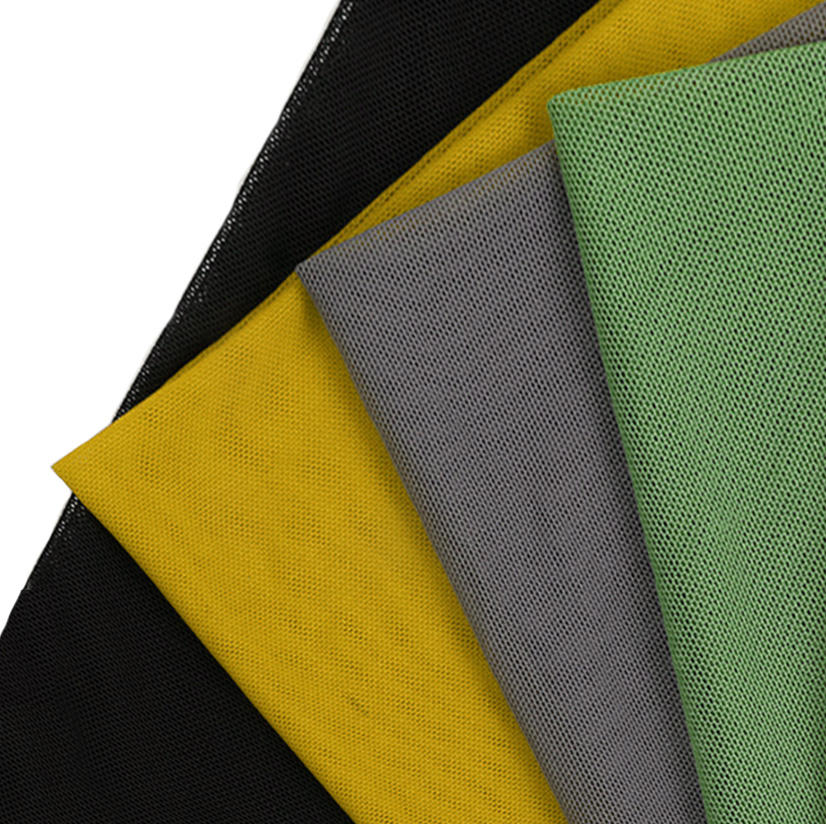
Choosing the correct knitting technique for Lycra spandex fabrics is one of the most consequential decisions in stretch fabric manufacturing. It determines not only how the fabric behaves in use, but also how much correction, stabilization, and troubleshooting will be required later in dyeing, finishing, cutting, and garment assembly. Many downstream problems blamed on “unstable elastane,” “bad recovery,” or “poor finishing” are in fact structural problems introduced at the knitting stage.
Lycra spandex does not behave like ordinary yarn. It stores elastic energy during knitting and releases it later during relaxation, wet processing, heat-setting, and wear. The knitting technique determines how evenly that energy is distributed and how predictably it can be controlled. A poor structural choice may look acceptable in greige form but will reveal defects once the fabric is stressed, heated, or washed.
The most effective knitting technique is therefore not the fastest or the most familiar one. It is the technique that delivers stable performance with minimal corrective intervention downstream.
Start with the application—not the machine you already have.
Why Knitting Technique Matters More for Spandex Fabrics
In non-stretch fabrics, structure influences appearance and handfeel, but dimensional stability is largely governed by yarn properties and finishing. In Lycra spandex fabrics, structure becomes the primary regulator of elastic behavior.
Knitting technique determines:
- How elastane is distributed across loops
- How recovery force is shared with ground yarns
- How tension imbalances propagate across fabric width
- How the fabric responds to heat and moisture
Because elastane amplifies tension and structural imbalance, a knitting technique that works acceptably for cotton or polyester may fail dramatically once spandex is introduced. This is why technique selection must be intentional rather than habitual.
Matching Knitting Technique to Application
Different applications place fundamentally different demands on fabric behavior. Attempting to serve all applications with a single knitting technique almost always leads to compromise.
| Application | Recommended Technique | Reason |
|---|---|---|
| Sportswear | Interlock / balanced rib | Stability + comfort |
| Compression wear | Warp knit | Precision & flatness |
| Casual stretch tops | Controlled jersey | Softness priority |
| Medical textiles | Warp knit | Pressure accuracy |
| Shapewear | Dense interlock | Recovery & control |
For sportswear, interlock and balanced rib structures provide a strong balance between stretch, recovery, and dimensional stability. These structures distribute elastane force across both fabric faces, reducing curling and minimizing localized distortion during movement. They also tolerate moderate variation in tension without catastrophic warping.
Compression wear and medical textiles demand much tighter control. Warp knitting is preferred because elastane is laid in a controlled, directional manner, allowing precise pressure gradients and excellent flatness. Warp-knit structures resist twisting and skew, which is critical when compression accuracy matters.
Casual stretch tops prioritize softness and drape over absolute stability. Controlled jersey structures can work well here, but only when elastane tension and loop geometry are tightly managed. Using jersey structures for high-precision applications is a common and costly mistake.
Shapewear often uses dense interlock constructions. These structures support high elastane content while preventing excessive deformation, allowing firm compression without sacrificing recovery consistency.
Using an unstable structure for a high-precision application guarantees trouble later. The fabric may knit quickly, but the cost reappears in finishing and quality claims.
Understanding Structural Stability vs Elastic Freedom
Every knitting technique represents a trade-off between elastic freedom and structural control.
- Open jersey structures allow high stretch but low control
- Dense interlock and rib structures moderate stretch with improved recovery balance
- Warp knits restrict stretch directionally for maximum stability
Manufacturers often underestimate how much structure is required to support elastane effectively. Elastane alone does not create controlled compression. Without sufficient structural resistance from the knit, elastane retracts unevenly, leading to spirality, edge rolling, and width instability.
A useful principle is this: The higher the required compression or precision, the more structure must resist elastane’s retraction force.
This is why warp knits dominate medical and performance compression markets despite higher equipment and setup costs.
Cost vs Control: A Practical Reality Check
One of the most persistent misconceptions in spandex fabric production is that faster knitting equals lower cost. In reality, speed without stability often increases total cost.
| Decision | Short-Term Cost | Long-Term Outcome |
|---|---|---|
| Faster knitting | Lower | Higher defects |
| Stable structure | Higher | Lower waste |
| Minimal finishing | Lower | Rework risk |
| Proper finishing | Higher | Predictable output |
Faster knitting techniques often rely on looser structures and higher machine speeds. While output increases, elastic energy is less controlled. The result is fabric that requires aggressive finishing to flatten, stabilize, or correct distortion. These corrective steps introduce variability and increase rejection rates.
Stable structures may cost more upfront due to slower knitting speeds, higher yarn consumption, or specialized equipment. However, they significantly reduce warping, skew, and spirality. This leads to better cutting accuracy, fewer sewing issues, and more consistent garment fit.
Warping problems almost always cost more after knitting than before. Once fabric is dyed, cut, or sewn, structural defects become expensive to correct or impossible to hide.
Avoiding “Machine-Driven” Decisions
A common trap in manufacturing is choosing knitting techniques based on available machines rather than fabric behavior. While capital constraints are real, machine-driven decisions often externalize costs to later stages of production.
Instead of asking “Which machine can produce this fastest?”, manufacturers should ask:
- Does this structure balance elastane recovery evenly?
- Can yarn tension be controlled consistently across width?
- Will finishing stabilize this structure without over-processing?
If the answer to any of these questions is “maybe,” expect warping issues, recovery inconsistency, or high finishing dependency.
Machine-driven decisions tend to create fabrics that are fragile in processing. Small variations in tension, heat, or chemistry produce large quality swings. Application-driven decisions create fabrics that are robust to normal production variation.
The Role of Finishing in Technique Selection
Knitting technique and finishing capability must be aligned. Some structures rely heavily on finishing to achieve acceptable flatness, while others are inherently stable.
Warp knits, for example, respond very predictably to heat-setting. Their loop geometry stabilizes cleanly, and elastane relaxation is uniform. Jersey structures, by contrast, often require aggressive heat and mechanical finishing to suppress curling and spirality.
If a factory lacks precise finishing control, choosing a highly finishing-dependent knitting technique increases risk. Conversely, factories with advanced heat-setting and tension control may successfully run more flexible structures.
Technique selection should therefore consider what finishing can reliably do, not what it might do under ideal conditions.
Practical Selection Framework (Copy-Ready)
A structured approach helps remove guesswork and habit from technique selection.
| Step | Question |
|---|---|
| 1 | How stable must the fabric be? |
| 2 | How much compression or stretch is required? |
| 3 | How sensitive is the application to distortion? |
| 4 | What finishing steps are available? |
If stability and precision are critical, prioritize warp knit or dense interlock structures. If comfort and softness dominate and distortion tolerance is higher, controlled jersey may be acceptable.
This framework shifts decision-making from “what we usually do” to “what this fabric must survive.”
Downstream Impact of the Right Technique Choice
Selecting the correct knitting technique simplifies every subsequent step:
- Dyeing becomes more uniform due to even tension release
- Heat-setting achieves predictable dimensional stability
- Cutting accuracy improves due to flat, consistent width
- Sewing defects decrease due to reduced skew and torque
- Garment fit remains consistent after washing
Conversely, selecting the wrong technique creates a chain reaction of compensatory measures: tighter finishing, pattern adjustments, sewing allowances, and increased inspection—all of which add cost and variability.
Manufacturers with low defect rates typically invest more time upfront in technique selection than in downstream correction.
Real-World Manufacturing Perspective
Factories that specialize in Lycra spandex fabrics often use fewer knitting techniques, not more. They identify structures that behave predictably under elastane stress and standardize around them. This reduces variability and builds institutional knowledge around tension control, finishing, and quality benchmarks.
In contrast, factories that treat elastane as an “add-on” to existing knit programs tend to struggle with inconsistent results. The machines may be capable, but the technique is misaligned with elastane’s behavior.
The right knitting technique does not just produce fabric—it reduces uncertainty across the entire production system.
Choosing the right knitting technique for Lycra spandex applications is an engineering decision, not a convenience decision. It determines how elastane’s elastic energy is managed from the first loop to the final garment.
The best technique is not the one that runs fastest or uses the least yarn. It is the one that delivers stable, predictable performance with the fewest corrective steps downstream.
When manufacturers start with the application, evaluate structural stability honestly, and align knitting technique with finishing capability, Lycra spandex performs exactly as intended. When they start with machines instead, elastane exposes every shortcut.
The right knitting technique simplifies everything that follows.
Warping Is a Process Problem—And It Can Be Engineered Out
Warping and defects in Lycra spandex fabrics are not inevitable. They are the visible symptoms of imbalanced elastic forces introduced during knitting and left unresolved by structure choice, tension control, machine discipline, or finishing shortcuts.
When knitting techniques respect how elastane behaves—when structures are balanced, tensions are disciplined, machines are tuned, and finishing is done correctly—Lycra spandex fabrics become flat, predictable, and easy to work with.
If you are developing custom Lycra spandex fabrics and want stability built in from day one, SzoneierFabrics supports the full process:
- Knitting technique selection by application
- Tension and plating optimization
- Machine and structure matching
- Controlled heat setting and finishing
- Low-MOQ development with fast sampling and free design support
Contact SzoneierFabrics to request samples or a custom quotation. Getting the knitting technique right early is the fastest way to eliminate warping—and unlock the full value of Lycra spandex fabrics.
lycra spandex knitting techniques, spandex fabric warping prevention, lycra spandex fabric defects, knitting lycra spandex fabric, spandex fabric curling problem, lycra fabric dimensional stability, best knit structure for spandex, interlock knit spandex fabric, rib knit spandex fabric, warp knit spandex fabric, spandex yarn tension control, lycra spandex knitting tension, spandex fabric flatness control, knitting machine settings for spandex, spandex needle selection knitting, spandex yarn feeding methods, lycra spandex plating technique, positive feeder spandex knitting, spandex fabric heat setting process, spandex fabric finishing techniques, lycra spandex fabric stabilization, spandex fabric warping causes, spandex knitting quality control, lycra spandex fabric manufacturing, custom lycra spandex fabric, spandex fabric defect reduction, knitting defects in spandex fabric, lycra spandex fabric production guide