Skip to content
Pure cotton has been trusted for generations because it feels natural, breathable, and familiar. Yet in modern fabric development, cotton alone often struggles to meet real-world demands—frequent washing, shape retention, stretch recovery, durability, and long-term appearance. This is why blended cotton materials now dominate many everyday and technical fabric categories. Blended cotton materials combine cotton with fibers such as polyester, spandex, or technical yarns to improve durability, stretch, moisture management, and dimensional stability. These blends retain cotton’s comfort while solving its key performance limitations, making them suitable for a wider range of applications than pure cotton.
At SzoneierFabrics, blended cotton projects are rarely about replacing cotton—they are about fixing cotton’s weak points without losing its feel. A fabric that wrinkles less, dries faster, stretches comfortably, or lasts longer can transform how a finished product performs in daily use. Understanding why blends exist—and how different fibers change the result—is the first step toward making the right material decision.
Let’s start with the basics.
What are blended cotton materials, and why are they used instead of pure cotton?

Blended cotton materials are fabrics made by combining cotton fibers with one or more other fibers—such as polyester, viscose, spandex, or other technical yarns—to improve performance, durability, stability, or functionality. They are used instead of pure cotton when products require better shape retention, lower shrinkage, easier care, improved strength, or controlled moisture behavior that cotton alone cannot reliably deliver.
Blends exist because cotton, while comfortable and familiar, is not perfect.
Cotton is one of the most trusted and widely used textile fibers in the world. Its softness, breathability, and skin-friendly nature have made it a default choice for clothing, bedding, and countless everyday products. However, modern applications—ranging from workwear and uniforms to travel apparel and lifestyle products—place demands on fabrics that go well beyond basic comfort.
This is where blended cotton materials come in. Rather than replacing cotton, blends are designed to extend what cotton can do, allowing manufacturers and brands to balance comfort with real-world performance.
Why Pure Cotton Often Falls Short
Pure cotton performs beautifully in controlled conditions, but its limitations become obvious once garments are worn, washed, and used repeatedly. Understanding these gaps explains why blending has become the industry norm rather than the exception.
The Natural Strengths of Cotton
Cotton remains popular for very good reasons. Its intrinsic properties are difficult to replicate, even with advanced synthetic fibers.
Cotton offers:
- Soft hand feel that is immediately noticeable on skin
- Good breathability, allowing air circulation and thermal comfort
- High moisture absorbency, which feels comfortable in light perspiration
- Low irritation risk, making it suitable for sensitive skin
These qualities make cotton especially attractive for:
- Everyday apparel
- Children’s clothing
- Sleepwear and bedding
- Casual lifestyle products
From a wearer’s perspective, cotton feels natural, familiar, and reassuring.
The Performance Gaps Cotton Cannot Solve Alone
While cotton excels at comfort, it struggles in areas that matter increasingly in modern use: durability, appearance retention, and ease of care.
| Cotton Limitation | Practical Impact |
|---|---|
| High shrinkage | Inconsistent fit after washing |
| Wrinkle formation | Poor appearance retention |
| Low elasticity | Restricted movement comfort |
| Slow drying | Moisture buildup, longer drying time |
| Reduced wet strength | Shorter product lifespan |
These limitations are not theoretical—they show up quickly in real use.
For example:
- A cotton shirt may shrink noticeably after just a few washes.
- Cotton trousers wrinkle heavily after sitting for a short time.
- Cotton garments can feel heavy and damp in humid conditions.
- Repeated laundering weakens cotton fibers, especially when wet.
In categories where products are expected to look presentable, fit consistently, and survive frequent washing, pure cotton often underperforms.
Why Blending Works: Dividing Responsibilities Between Fibers
Blending works because it allows each fiber to do what it does best. Instead of forcing cotton to meet every requirement, manufacturers assign specific functions to different fibers within the same fabric.
This approach is not about replacing cotton—it is about engineering balance.
| Added Fiber | What It Fixes |
|---|---|
| Polyester | Strength, durability, shape retention |
| Spandex (elastane) | Stretch and recovery |
| Viscose / modal | Drapability, softness, moisture distribution |
| Technical yarns | Specialized performance (quick-dry, stability, abrasion resistance) |
By combining fibers at controlled ratios, fabrics can be tuned to specific applications.
How Cotton–Polyester Blends Improve Everyday Performance
Cotton–polyester blends are the most common blended cotton materials globally, and for good reason.
Key improvements over pure cotton include:
- Lower shrinkage after washing
- Better wrinkle resistance, reducing ironing needs
- Higher tensile strength, especially when wet
- Improved abrasion resistance, extending garment life
- Faster drying, improving comfort and hygiene
A typical 60/40 or 65/35 cotton-polyester blend still feels largely like cotton, but behaves far better over time. This is why such blends dominate:
- Workwear
- School uniforms
- Corporate apparel
- Hospitality textiles
In these settings, appearance consistency and durability often matter as much as comfort.
Stretch Blends: Solving Cotton’s Elasticity Problem
Cotton has almost no natural stretch. This becomes a major drawback in garments that need to move with the body.
By adding a small amount of spandex (often 2–5%), cotton fabrics gain:
- Improved mobility
- Better fit retention
- Reduced fabric stress at seams
- Greater wearer comfort during long use
Stretch cotton blends are now standard in:
- Denim
- Casual trousers
- Shirts
- Active-lifestyle apparel
Without blending, cotton garments in these categories would feel restrictive and lose shape quickly.
Moisture Behavior: Absorption vs Management
Cotton absorbs moisture well, but it also holds onto it. In warm or humid environments, this leads to discomfort.
Blended cotton fabrics can be engineered to:
- Spread moisture across a wider surface
- Release moisture faster during drying
- Reduce the “heavy, damp” feeling
This is particularly important for:
- Travel apparel
- Summer uniforms
- Daily-wear garments in humid climates
Blends do not eliminate moisture absorption, but they shorten the time moisture stays in the fabric, which improves comfort and hygiene.
Appearance Retention and Care Requirements
Modern consumers expect clothing to look good with minimal effort. Pure cotton struggles here.
Common cotton issues:
- Wrinkling after sitting or packing
- Loss of crispness after washing
- Shape distortion over time
Blending helps by:
- Stabilizing fabric structure
- Reducing fiber swelling in water
- Improving recovery after creasing
As a result, blended cotton fabrics:
- Require less ironing
- Maintain a cleaner silhouette
- Look newer for longer
This directly affects customer satisfaction and perceived quality.
Cost and Value Considerations
From a manufacturing perspective, blends often offer better lifecycle value, even if raw material costs are slightly higher.
Why?
- Lower return rates due to shrinkage or deformation
- Longer usable product life
- Reduced consumer complaints
- Better performance across repeated washes
For brands, the question is rarely “Is pure cotton cheaper?” but rather “Which fabric performs best over time?”
In many cases, blended cotton fabrics deliver lower cost per wear, even if the initial fabric price is higher.
Common Misconception: Blsends Mean “Lower Quality”
One persistent misconception is that blended fabrics are inferior to pure cotton. In reality, the opposite is often true.
Poor-quality blends exist—but so does poor-quality cotton.
What matters is:
- Fiber selection
- Blend ratio
- Yarn quality
- Fabric construction
- Finishing process
A well-engineered cotton blend can outperform 100% cotton in almost every practical metric except ideological purity.
Where Pure Cotton Still Makes Sense
Blending is not always the right choice. Pure cotton remains ideal when:
- Maximum softness is the top priority
- Breathability outweighs durability
- The product is lightly used
- Shrinkage and wrinkling are acceptable
Examples include:
- Baby clothing
- Lightweight summer wear
- Bed sheets focused on softness
- Products marketed around natural simplicity
In these cases, the limitations of cotton are aligned with consumer expectations.
Blended Cotton in Modern Product Design
Today, most successful textile products are not defined by fiber purity, but by performance alignment.
Designers and manufacturers increasingly start by asking:
- How will this product be used?
- How often will it be washed?
- In what climate will it be worn?
- How important is appearance retention?
Blended cotton materials allow precise answers to these questions through fiber engineering rather than compromise.
Blended cotton materials exist not because cotton is inadequate, but because modern use cases are demanding. Pure cotton excels at comfort, but it struggles with durability, stability, and ease of care. Blending allows manufacturers to preserve cotton’s strengths while systematically correcting its weaknesses.
In today’s textile landscape, blends are not a downgrade—they are often the most practical, balanced, and user-friendly solution.
Understanding why blends are used instead of pure cotton is not about choosing sides. It is about choosing the right material for how products are actually worn, washed, and lived in.
Which performance benefits do polyester–cotton blends offer compared to other blends?


Polyester–cotton blends deliver a rare combination of durability, dimensional stability, wrinkle resistance, and faster drying, while still preserving much of cotton’s comfort. Compared with pure cotton and many other cotton-based blends, they offer better long-term performance, easier care, and more predictable behavior across repeated washing and daily wear.
This balance is why cotton–polyester blends remain one of the most widely used textile constructions worldwide, from workwear and uniforms to everyday apparel and home textiles.
Blended fabrics exist because no single fiber performs perfectly in all conditions. Cotton excels at comfort but struggles with stability and durability. Polyester excels at strength and resilience but lacks natural breathability and softness on its own. When combined thoughtfully, these two fibers compensate for each other’s weaknesses in a way that few other blends can match.
To understand why polyester–cotton blends outperform many alternatives, it’s important to look at how performance shows up in real use, not just in lab specifications.
Why Polyester Is Cotton’s Most Common Partner
Polyester is not cotton’s partner by accident. It has become the default companion fiber because its physical properties directly address cotton’s most persistent limitations—without overwhelming cotton’s natural comfort.
Strength and Lifespan: Where the Biggest Gains Occur
One of the most significant advantages of polyester–cotton blends is improved strength, especially under wet conditions.
Polyester fibers maintain their tensile strength when wet, while cotton fibers weaken noticeably once they absorb water. This difference has major implications for garment lifespan.
| Property | Cotton | Polyester |
|---|---|---|
| Tensile strength (wet) | Reduced | Maintained |
| Abrasion resistance | Medium | High |
| Fiber breakage | Higher | Lower |
Why this matters in real products
- Washing is one of the most damaging processes a fabric experiences
- Seams, collars, cuffs, and stress points fail faster when fibers weaken
- Cotton-rich fabrics tend to thin and tear over time
By blending polyester into cotton, fabrics:
- Resist fiber breakage during laundering
- Hold up better at seams and high-stress zones
- Maintain usable life over more wash cycles
This is why cotton–polyester blends dominate in:
- Workwear
- School and corporate uniforms
- Hospitality textiles
- Institutional bedding
In these categories, longevity is not optional.
Dimensional Stability and Shape Retention
Cotton fibers swell significantly when wet. This swelling leads to shrinkage, distortion, and loss of shape, especially when fabrics are repeatedly washed and dried.
Polyester, by contrast, absorbs very little water and resists dimensional change.
| Performance Aspect | Cotton | Cotton–Poly Blend |
|---|---|---|
| Shrinkage | High | Low |
| Wrinkle resistance | Low | Medium–high |
| Shape recovery | Poor | Improved |
Practical consequences
A pure cotton garment may:
- Shrink unevenly
- Twist after washing
- Lose length or width
- Look worn quickly
A cotton–polyester blend:
- Holds size more consistently
- Recovers better after creasing
- Maintains a cleaner silhouette
For products expected to look presentable with minimal effort, this stability is a decisive advantage.
Wrinkle Resistance and Appearance Retention
Wrinkling is one of cotton’s most visible weaknesses. Cotton fibers crease easily and lack elastic recovery, which is why cotton garments often require frequent ironing.
Polyester improves wrinkle resistance by:
- Adding elastic recovery at the fiber level
- Stabilizing fabric structure
- Reducing fiber swelling
As a result, cotton–polyester blends:
- Wrinkle less during wear
- Recover better after folding or sitting
- Require less ironing
This is especially valuable in:
- Travel apparel
- Office wear
- Uniform programs
- Rental or hospitality textiles
In many markets, ease of care is as important as comfort.
Moisture Behavior: Absorption vs Management
Cotton absorbs moisture readily, which feels comfortable initially. The problem is that cotton also holds onto moisture, leading to a heavy, damp feeling and slow drying.
Polyester behaves differently. It absorbs very little moisture but moves it efficiently along the fabric surface.
| Feature | Cotton | Polyester–Cotton |
|---|---|---|
| Sweat absorption | High | Moderate |
| Drying speed | Slow | Faster |
| Damp feel duration | Long | Shorter |
What blending achieves
In a cotton–polyester blend:
- Cotton absorbs sweat near the skin
- Polyester helps spread and release moisture
- The fabric dries faster overall
This creates a more balanced moisture profile—not as absorbent as pure cotton, but far more comfortable over long wear periods, especially in warm or humid conditions.
Comfort Over Time, Not Just at First Touch
A common misconception is that polyester–cotton blends are less comfortable than pure cotton. In reality, comfort should be evaluated over hours and days of wear, not just initial hand feel.
Pure cotton:
- Feels great at first
- Can feel heavy, damp, or wrinkled later
Cotton–polyester blends:
- May feel slightly firmer initially
- Stay drier, lighter, and more stable over time
For everyday garments worn for full workdays, this end-of-day comfort often matters more than first impression softness.
Comparison with Other Common Cotton Blends
Cotton can be blended with many fibers, each solving different problems. However, few blends offer the same overall balance as cotton–polyester.
| Blend Type | Key Strength | Key Limitation |
|---|---|---|
| Cotton–polyester | Balanced durability, stability | Slightly less “natural” feel |
| Cotton–spandex | Stretch comfort | Lower durability alone |
| Cotton–modal | Softness, drape | Lower strength |
| Cotton–nylon | Very high strength | Stiffer handfeel |
Why cotton–polyester stands out
- Cotton–spandex improves movement, but does little for longevity
- Cotton–modal feels luxurious, but wears out faster
- Cotton–nylon is strong, but often sacrifices comfort
Cotton–polyester sits in the middle, delivering acceptable comfort with superior durability, which is why it dominates everyday and commercial categories.
Laundering Performance and Care Efficiency
Repeated washing is where many fabrics fail. Polyester–cotton blends are specifically valued for their wash resilience.
Key advantages:
- Lower shrinkage across wash cycles
- Less fiber damage when wet
- Faster drying reduces energy use
- Reduced need for ironing
For large-scale users—such as hotels, hospitals, schools, and rental services—these factors translate directly into lower operating costs.
Cost-Per-Wear and Lifecycle Value
From a value perspective, polyester–cotton blends often outperform both pure cotton and more specialized blends.
Even if the initial fabric cost is similar or slightly higher, the blend typically delivers:
- Longer usable lifespan
- Fewer replacements
- More consistent appearance
When evaluated as cost per wear, cotton–polyester blends frequently emerge as the most economical option.
Consistency and Scalability
Another reason polyester–cotton blends are so widely used is production consistency.
Polyester fibers:
- Are highly uniform
- Reduce variability in yarn and fabric
- Improve batch-to-batch repeatability
This makes cotton–polyester blends easier to:
- Scale across large programs
- Reorder with predictable results
- Maintain color and performance consistency
For brands and sourcing teams managing multi-season or multi-region programs, this reliability is critical.
Environmental and Practical Trade-Offs
Polyester–cotton blends are not without compromises.
Considerations include:
- Reduced biodegradability compared to 100% cotton
- More complex recycling
- Slightly less “natural” perception
However, longer lifespan and reduced replacement frequency can offset some environmental impact in practical use. A fabric that lasts twice as long often has a lower overall footprint than one that fails early.
Industry Insight from Development Practice
At SzoneierFabrics, cotton–polyester blends are often used as the baseline fabric during development. Designers then evaluate whether additional performance gaps exist.
Typical approach:
- Start with a cotton–poly blend
- Assess comfort, durability, and care
- Add spandex, viscose, or technical yarns only if needed
This reflects a broader industry reality: cotton–polyester already solves most everyday performance needs.
Where Polyester–Cotton Blends Make the Most Sense
These blends are especially well-suited for:
- Workwear and uniforms
- Everyday shirts and trousers
- Bedding and hospitality textiles
- School and corporate apparel
- Travel-focused garments
In these categories, balance beats extremes.
Polyester–cotton blends outperform many other blends because they address the most common real-world failures of cotton—shrinkage, wrinkling, slow drying, and reduced wet strength—without sacrificing comfort entirely.
They are not the softest, stretchiest, or most luxurious option on paper. But across durability, stability, ease of care, and cost efficiency, they deliver the best overall performance balance for most applications.
That balance—rather than perfection in any single metric—is why polyester–cotton blends continue to define global textile production.
How does adding spandex to cotton blends enhance fabric performance and comfort?

Adding a small percentage of spandex (also known as elastane) to cotton blends significantly improves stretch, elastic recovery, fit stability, and long-term comfort without sacrificing cotton’s natural hand feel. Even 2–5% spandex can fundamentally change how a fabric behaves in movement, wear, and washing, making garments more flexible, better fitting, and longer lasting.
This is why cotton–spandex blends feel “alive” compared to rigid cotton fabrics.
Cotton has been loved for centuries because it feels good on the skin. But modern clothing is expected to do much more than feel soft on day one. Garments must stretch, recover, move with the body, keep their shape, and still look presentable after months—or years—of wear.
Pure cotton struggles with these demands. The addition of spandex is not a cosmetic upgrade; it is a structural performance enhancement that directly addresses cotton’s most persistent weaknesses.
Why Spandex Works So Efficiently in Cotton Blends
Spandex is unique among textile fibers. It does not behave like cotton, polyester, or nylon. Its role in a blend is not to dominate the fabric, but to act as a hidden engine that controls movement and recovery.
Spandex’s Unique Elasticity
Spandex is one of the most elastic fibers ever commercialized for textiles. Its stretch and recovery capabilities are orders of magnitude higher than other fibers.
| Fiber | Typical Stretch | Recovery |
|---|---|---|
| Cotton | <5% | Poor |
| Polyester | 10–15% | Moderate |
| Spandex | 500–700% | Excellent |
Why this matters
- Cotton fibers barely stretch and do not recover well
- Once cotton is deformed, it tends to stay deformed
- Spandex can stretch five to seven times its length and snap back repeatedly
Because spandex is so powerful, it does not need to make up a large portion of the fabric. Even a small percentage can control the behavior of the entire textile structure.
This is why spandex is often described as a functional minority fiber.
How a Small Amount Changes the Entire Fabric
In most cotton–spandex blends, spandex is present at 1–8%, yet its effect is disproportionate to its quantity.
What happens structurally:
- Cotton provides the surface feel and breathability
- Spandex sits within the yarn or fabric structure
- During movement, spandex absorbs strain
- When movement stops, spandex pulls the fabric back into shape
The result is a fabric that feels natural but behaves intelligently.
Comfort and Freedom of Movement
One of the most immediate benefits of adding spandex is improved movement comfort.
Cotton without spandex:
- Resists bending and stretching
- Pulls at elbows, knees, hips, and shoulders
- Creates pressure points during sitting or reaching
Cotton–spandex blends:
- Move with the body
- Reduce resistance during motion
- Feel less restrictive over long wear periods
This difference becomes especially noticeable in:
- Trousers and jeans
- Shirts and blouses
- Fitted garments
- Apparel worn for long hours
Even light stretch can significantly reduce wearer fatigue.
Reduced Fabric Strain at Stress Points
Garments fail first at stress zones, not flat areas.
Common stress points include:
- Knees
- Elbows
- Seat area
- Waistbands
- Armholes
In pure cotton fabrics, repeated stress causes:
- Fiber breakage
- Seam distortion
- Permanent bagging
Spandex absorbs and redistributes this stress, reducing damage to cotton fibers and seams. This leads to longer garment life and fewer structural failures.
Fit Retention Over Time: Where Spandex Truly Shines
Fit degradation is one of the most common complaints with cotton garments.
Pure cotton:
- Bags out at knees and elbows
- Loses shape after repeated washing
- Looks worn quickly even if fabric is intact
Adding spandex dramatically improves shape memory.
| Fabric Type | Shape After Repeated Wear |
|---|---|
| 100% cotton | Loses shape |
| Cotton–polyester | Improved |
| Cotton–spandex | Maintains shape |
Spandex actively pulls the fabric back into its original dimensions, helping garments:
- Retain silhouette
- Look newer for longer
- Fit consistently across wears
This has a direct impact on perceived quality and customer satisfaction.
Improved Drape and Body Conformity
Spandex also affects how fabric falls and conforms to the body.
Cotton alone:
- Can feel stiff or boxy
- Does not adapt well to body contours
Cotton–spandex blends:
- Drape more smoothly
- Follow natural body movement
- Reduce pulling and bunching
This is particularly important in:
- Slim-fit designs
- Tailored casualwear
- Women’s apparel
- Modern workwear
Designers often rely on spandex not just for stretch, but for visual refinement.
Common Spandex Blend Ratios and Their Effects
The amount of spandex used determines how noticeable the stretch feels.
| Spandex % | Typical Result |
|---|---|
| 1–2% | Light comfort stretch |
| 3–5% | Everyday stretch & recovery |
| 6–8% | High-movement applications |
| 10%+ | Performance-oriented stretch |
Practical interpretation
- 1–2%: Garments feel slightly more forgiving, with minimal visual change
- 3–5%: The sweet spot for most everyday apparel—comfortable, stable, and durable
- 6–8%: Suitable for active use, fitted silhouettes, or frequent movement
- 10%+: Used in performance wear, leggings, and technical garments
At SzoneierFabrics, most cotton–spandex developments stay within 2–6%, balancing comfort, stability, and cost without over-stretching the fabric.
Why Cotton–Spandex Often Outperforms Cotton–Poly for Fit
Cotton–polyester blends improve durability and wrinkle resistance, but they do not fully solve elastic recovery.
Key difference:
- Polyester adds stability
- Spandex adds elasticity and recovery
For garments where fit and movement are critical, cotton–spandex blends often outperform cotton–poly blends, even if durability is slightly lower.
This is why many products combine all three:
- Cotton for comfort
- Polyester for strength
- Spandex for stretch
Laundering Performance and Shape Stability
Spandex also improves how garments behave during washing and drying.
Benefits include:
- Reduced permanent deformation
- Better recovery after tumble drying
- Less fabric twisting or warping
However, this benefit depends heavily on proper engineering. Poorly constructed spandex fabrics can overstretch or lose recovery over time.
Trade-Offs to Manage When Using Spandex
Spandex is powerful—but not forgiving. Its inclusion introduces new considerations.
| Issue | Impact |
|---|---|
| Heat sensitivity | Requires careful washing and drying |
| Cost | Higher fabric price |
| Over-stretch risk | Shape distortion if poorly engineered |
Heat sensitivity
Spandex degrades at high temperatures. Excessive heat during:
- Dyeing
- Finishing
- Home laundering
can reduce elasticity and lifespan. Care instructions matter more for spandex blends than for pure cotton.
Cost considerations
Spandex is more expensive than cotton or polyester. Even small percentages increase fabric cost.
However, this is often offset by:
- Longer garment life
- Better fit retention
- Higher customer satisfaction
In cost-per-wear terms, cotton–spandex blends frequently deliver better value.
Engineering matters more than fiber content
Adding spandex alone does not guarantee success. Performance depends on:
- Yarn construction (core-spun, covered, etc.)
- Fabric structure (woven vs knit)
- Spandex placement and tension
- Finishing processes
Poorly engineered spandex fabrics can:
- Feel unstable
- Lose shape quickly
- Create uneven stretch
This is why experienced mills and suppliers are critical.
Where Cotton–Spandex Blends Make the Most Sense
Cotton–spandex blends are especially effective in:
- Denim and casual trousers
- Shirts and blouses
- Fitted workwear
- Everyday apparel requiring comfort and shape
They are less suitable for:
- High-heat industrial laundering
- Ultra-lightweight sheer fabrics
- Applications where stretch is unnecessary
Choosing spandex should always be intentional, not automatic.
Comfort Is Dynamic, Not Static
One of the most important insights about spandex is that it improves dynamic comfort, not just initial feel.
Pure cotton may feel great when standing still. Cotton–spandex feels better when:
- Sitting for long periods
- Walking, bending, reaching
- Wearing garments all day
This is why many consumers describe spandex blends as more “comfortable,” even if they cannot explain why.
Adding spandex to cotton blends is one of the most efficient ways to enhance comfort, movement, fit retention, and long-term appearance. Because spandex is extraordinarily elastic, even small percentages—often invisible to the eye—can transform how a fabric behaves in real life.
Cotton–spandex blends succeed not by changing cotton’s identity, but by unlocking cotton’s potential in modern use conditions. When engineered correctly, they offer a level of comfort and performance that pure cotton simply cannot sustain on its own.
That is why, across global apparel categories, cotton–spandex blends have become not a niche option—but a modern standard.
What technical yarns are commonly blended with cotton, and what do they contribute?
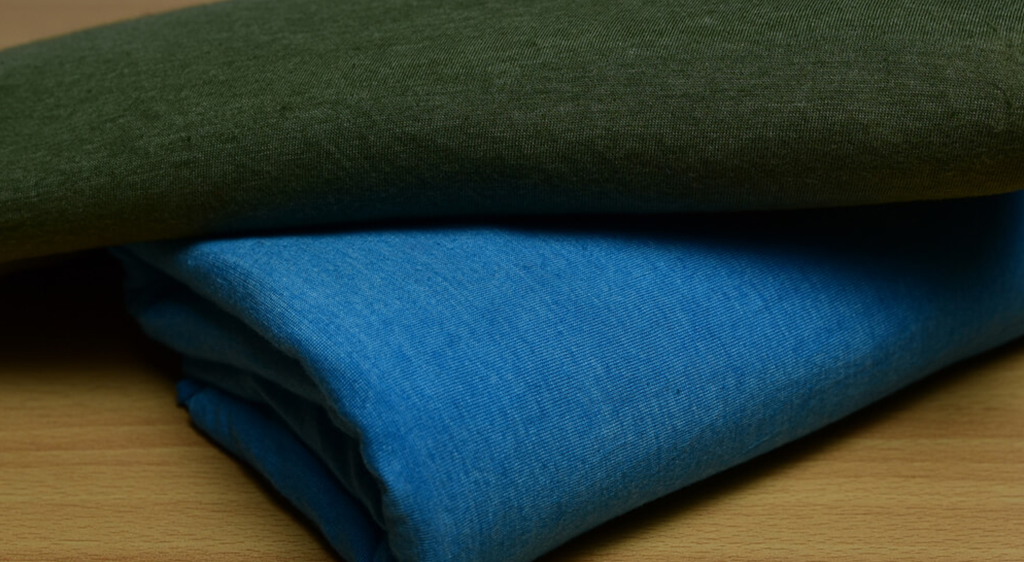
Beyond polyester and spandex, cotton is commonly blended with technical yarns such as nylon, modal, viscose, acrylic, and functional specialty fibers to achieve targeted performance improvements. These yarns are selected to enhance strength, softness, drape, thermal behavior, moisture management, or durability, depending on the end-use requirements.
Each technical yarn changes cotton’s behavior in a specific, measurable way.
Why cotton needs technical blend partners
Cotton is an excellent base fiber, but modern products demand more than comfort alone. Repeated laundering, extended wear, climate variation, and higher user expectations expose cotton’s weaknesses—particularly in durability, elasticity, and performance consistency.
Technical yarns are added not to replace cotton, but to correct specific gaps:
- Improve lifespan
- Modify handfeel
- Control thermal behavior
- Enhance movement or recovery
- Fine-tune moisture performance
The key is understanding what each yarn contributes—and what it compromises.
Cotton–nylon blends
Nylon is one of the strongest and most abrasion-resistant fibers used in apparel and textile applications.
What nylon contributes
- Significantly higher tensile strength
- Excellent abrasion resistance
- High strength at low weight
| Benefit | Effect |
|---|---|
| High tensile strength | Improved tear resistance |
| Abrasion resistance | Longer fabric lifespan |
| Lightweight strength | Thinner but stronger fabrics |
Typical uses
- Reinforcement zones (elbows, knees, pocket areas)
- Lightweight but durable apparel
- Cotton-rich accessories and technical casualwear
Trade-off Nylon can feel firmer than cotton. If used at high percentages, it may reduce softness and flexibility.
In practice, nylon is usually kept at 5–20%, enough to reinforce performance without overpowering cotton’s comfort.
Cotton–modal and cotton–viscose blends
Modal and viscose are regenerated cellulose fibers derived from wood pulp. Although chemically processed, they share cotton’s cellulose base and integrate well at the fiber level.
What they contribute
- Exceptionally soft, smooth handfeel
- Improved drape and fabric fluidity
- Enhanced breathability and moisture spreading
| Benefit | Effect |
|---|---|
| Silky handfeel | Premium comfort |
| Improved drape | Fluid, elegant appearance |
| Breathability | Enhanced airflow |
Typical uses
- T-shirts and tops
- Sleepwear and loungewear
- Lightweight dresses and blouses
- Next-to-skin fabrics
Trade-off These blends are less durable than cotton–poly or cotton–nylon blends. Abrasion resistance and long-term strength are lower, making them unsuitable for heavy-duty or high-friction applications.
They are best used where comfort outweighs lifespan.
Cotton–acrylic blends
Acrylic is a synthetic fiber designed to mimic wool-like properties. It traps air effectively, creating warmth without excessive weight.
What acrylic contributes
- Thermal insulation
- Lightweight bulk and loft
- Bright, stable coloration
| Benefit | Effect |
|---|---|
| Thermal insulation | Heat retention |
| Lightweight loft | Soft volume |
| Color vibrancy | Bright appearance |
Typical uses
- Cooler-climate apparel
- Casual knitwear
- Light sweaters and layered garments
Trade-off Acrylic reduces breathability. While warm, it can trap moisture and heat, making it unsuitable for warm or humid environments.
Cotton–acrylic blends are therefore climate-specific solutions.
Functional and specialty yarns
Modern cotton blends increasingly incorporate functional or specialty yarns to fine-tune performance rather than redefine the fabric.
Common examples include:
- Moisture-management yarns
- Anti-odor or antimicrobial fibers
- Temperature-regulating fibers
- Recycled technical fibers
- Low-friction or skin-protective yarns
These yarns are typically used in very small percentages (1–5%).
Why small percentages work
- Functional fibers are highly efficient
- Overuse can damage handfeel or stability
- Cost increases rapidly with higher content
Their role is to adjust behavior, not dominate the fabric.
Comparison of common technical cotton blends
| Blend Partner | Main Contribution | Main Limitation |
|---|---|---|
| Polyester | Durability & dimensional stability | Less natural feel |
| Spandex | Stretch & recovery | Heat sensitivity |
| Nylon | Strength & abrasion resistance | Stiffer touch |
| Modal / Viscose | Softness & drape | Lower strength |
| Acrylic | Warmth & loft | Lower breathability |
This comparison highlights a core rule of textile engineering: every benefit introduces a trade-off.
How blend choice depends on end use
The “right” technical yarn depends entirely on how the product will be used.
Examples:
- Workwear → polyester or nylon for durability
- Loungewear → modal or viscose for softness
- Travel apparel → polyester + spandex for stability and movement
- Cool-climate knits → acrylic for warmth
Cotton provides the comfort base, while technical yarns are added only where necessary.
Balance matters more than fiber count
One common development mistake is over-engineering fabrics by adding too many fibers.
Problems caused by imbalance:
- Too much nylon → harsh handfeel
- Too much modal → rapid wear
- Too much acrylic → overheating
- Too many functional yarns → unstable structure
The most successful cotton blends are simple on paper but precise in execution.
Engineering matters more than fiber names
Fiber choice alone does not determine performance. Results depend on:
- Yarn structure (ring-spun, core-spun, covered yarns)
- Fabric construction (woven vs knit)
- Blend ratios
- Finishing processes
The same cotton–nylon blend can feel soft or rigid depending on how it is engineered.
Industry practice insight
At SzoneierFabrics, technical yarns are introduced only after clearly identifying what cotton alone cannot solve in a given product.
Typical development logic:
- Start with cotton or a simple cotton blend
- Test comfort, durability, and care behavior
- Identify specific performance gaps
- Add the minimum effective amount of a technical yarn
This approach minimizes cost, complexity, and risk while maximizing real-world performance.
Technical yarns expand cotton’s capabilities in targeted ways. Nylon adds strength, modal and viscose add softness, acrylic adds warmth, and functional fibers fine-tune performance. Each contributes something valuable—and removes something else.
Cotton remains the sensory foundation of these blends. Technical yarns are tools, not upgrades. The best results come from intentional selection, controlled ratios, and proper engineering, not from adding fibers indiscriminately.
Successful cotton blends are defined not by how many fibers they contain, but by how thoughtfully those fibers are chosen and balanced.
How do blend ratios affect durability, stretch, moisture management, and drape?

Blend ratios control how strongly each fiber asserts itself in the finished fabric. Even small percentage changes can significantly alter durability, stretch recovery, moisture behavior, and drape—sometimes far more than switching to a different fiber altogether.
This is where many fabric decisions quietly succeed or fail.
Why ratios matter more than fiber labels
Fiber names tell you what is inside a fabric. Blend ratios tell you who is actually in control.
Two fabrics can both be labeled “cotton blend” yet behave completely differently if one is 80% cotton and the other is 55%. In real use, the dominant fiber dictates performance, while the secondary fiber modifies it.
That is why experienced developers focus less on marketing labels and more on ratio thresholds.
Cotton-dominant vs synthetic-dominant blends
Cotton percentage is often the first and most important decision point.
| Cotton % | Fabric Personality |
|---|---|
| 80–90% | Feels like cotton, minor performance boost |
| 60–70% | Balanced comfort and durability |
| 40–50% | Performance-oriented, less natural feel |
| <40% | Synthetic-driven behavior |
What this means in practice:
- 80–90% cotton The fabric behaves almost like pure cotton. Shrinkage, wrinkling, and slow drying still exist, but are slightly improved.
- 60–70% cotton This is the most common “sweet spot” for everyday fabrics. Cotton still defines handfeel and breathability, while synthetics meaningfully improve stability and lifespan.
- 40–50% cotton Performance becomes the priority. The fabric dries faster, resists wear, and holds shape well—but begins to lose cotton’s natural softness.
- Below 40% cotton The fabric behaves more like a synthetic with cotton added for comfort, not the other way around.
Most successful mass-market fabrics sit between 60–70% cotton because this range delivers noticeable performance gains without alienating users who expect a cotton feel.
Durability and lifespan: how ratios change wear behavior
Durability does not increase linearly—it often jumps at certain ratio thresholds.
| Blend Ratio | Expected Durability |
|---|---|
| 100% cotton | Medium |
| 80/20 cotton/poly | Medium–high |
| 65/35 cotton/poly | High |
| 50/50 cotton/poly | Very high |
Key observations from wear and abrasion testing:
- Adding 20% polyester noticeably improves abrasion resistance and seam strength.
- Increasing polyester from 20% to ~35% often produces a disproportionate durability gain, even if fabric weight (GSM) stays the same.
- Beyond 50% polyester, additional durability gains taper off, while comfort loss accelerates.
At SzoneierFabrics, lab testing frequently shows that moving from an 80/20 to a 65/35 cotton–poly ratio can double abrasion resistance, making this ratio popular for uniforms, bags, and frequently washed products.
Stretch and recovery: small percentages, big impact
Stretch behavior is where ratios matter most dramatically—especially with spandex.
| Spandex % | Stretch Feel | Recovery |
|---|---|---|
| 1–2% | Gentle give | Moderate |
| 3–5% | Noticeable stretch | Strong |
| 6–8% | High flexibility | Excellent |
Important ratio insights:
- 1–2% spandex Improves comfort slightly but does not fully prevent bagging over time.
- 3–5% spandex The most common range for everyday apparel. Fabrics stretch easily, recover well, and maintain shape across repeated wear.
- 6–8% spandex Suitable for high-movement or body-hugging designs, but requires careful construction to avoid instability.
Above roughly 6%, spandex begins to dominate fabric behavior. Without proper yarn structure or fabric design, the fabric may feel overly elastic, unstable, or prone to distortion.
Moisture management: absorption vs drying speed
Blend ratios strongly influence whether a fabric feels soft but damp or dry but less absorbent.
| Ratio Change | Moisture Effect |
|---|---|
| More cotton | Higher absorption, slower drying |
| More polyester | Faster drying, lower absorption |
| Added spandex | Neutral to slight reduction |
Practical interpretation:
- High-cotton ratios absorb sweat quickly but hold onto it, leading to heavier, slower-drying fabrics.
- Higher polyester ratios reduce moisture retention and shorten drying time, improving comfort in long wear or humid conditions.
- Spandex itself does not manage moisture, but tighter constructions associated with stretch fabrics can slightly reduce airflow if not designed carefully.
This balance determines whether a fabric feels:
- Cool and dry during extended wear
- Or soft initially, but clammy later
There is no universally “better” ratio—only one that matches the climate and use case.
Drape and visual appearance
Blend ratios also shape how fabric looks and moves, not just how it performs.
| Fiber Influence | Visual Effect |
|---|---|
| Cotton | Structured, matte |
| Polyester | Crisp, resilient |
| Modal / viscose | Fluid, soft |
| Spandex | Body-following |
Ratio effects in real garments:
- Higher cotton → more structure, a casual and natural look
- More polyester → crisper appearance, better crease recovery
- Added modal/viscose → softer drape and a more elegant flow
- Added spandex → fabric follows body contours rather than hanging straight
Even a 10–15% change in blend ratio can noticeably alter silhouette and movement, especially in lightweight fabrics.
Why ratios must be tested, not assumed
One of the most common sourcing mistakes is assuming behavior from fiber content alone.
In reality, blend ratios interact with:
- Yarn type (ring-spun, core-spun, filament)
- Fabric construction (woven vs knit)
- Weave or knit density
- Finishing processes
A 65/35 cotton–poly woven poplin will behave very differently from a 65/35 cotton–poly jersey knit.
This is why blend ratios should always be evaluated on the actual fabric construction, not on spec sheets alone.
The hidden cost of getting ratios wrong
Incorrect ratios can cause subtle but costly failures:
- Slightly too much cotton → shrinkage complaints
- Slightly too much polyester → comfort complaints
- Too much spandex → instability and distortion
- Too little spandex → bagging after wear
These issues rarely show up in the first fitting—they appear after weeks or months of real use, when changes are expensive to fix.
How experienced developers approach blend ratios
Rather than asking “Which fibers should we use?”, experienced teams ask:
- What must this fabric survive?
- How will it be washed and used?
- Where can we compromise—and where can we not?
From there, ratios are adjusted incrementally, often in 5% steps, until performance and comfort align.
At SzoneierFabrics, blend ratios are typically finalized only after:
- Abrasion testing
- Wash testing
- Stretch and recovery testing
- Wear simulation
This process avoids over-engineering and underperformance alike.
Blend ratios are not fine print—they are the control knobs of fabric behavior. A few percentage points can dramatically change durability, stretch, moisture handling, and drape, sometimes more than changing the fiber itself.
Successful fabrics are rarely defined by exotic fibers. They are defined by well-chosen ratios, tuned to real use conditions.
In cotton blends, the question is never just what fibers are used—but how much influence each one is allowed to have.
What fabric constructions best leverage blended cotton materials?
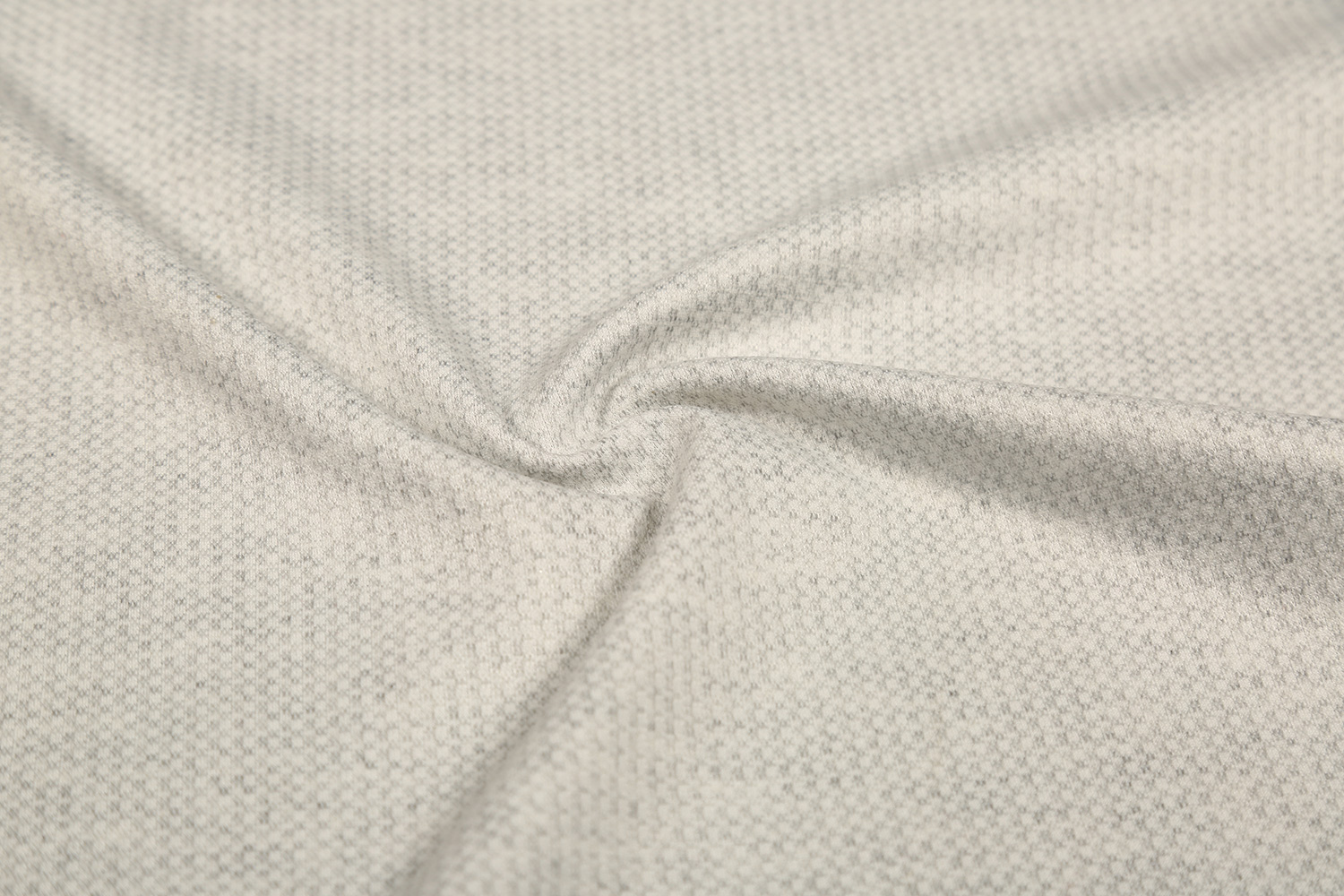

Fabric construction determines how effectively blended fibers actually perform. Woven constructions emphasize stability, durability, and shape retention, while knitted constructions amplify stretch, comfort, and airflow. The same fiber blend ratio can behave—and feel—completely differently depending on construction.
This is why fabrics labeled with the same material content often perform nothing alike in real use.
Why construction matters as much as fiber content
Blended cotton materials do not exist in isolation. Fibers only express their advantages through structure. Construction controls:
- How yarns interact under stress
- How moisture moves through the fabric
- How stretch is created or restricted
- How drape and surface appearance develop
In practice, construction can amplify or suppress the benefits of a blend more than small changes in fiber ratio.
Woven constructions
Woven fabrics interlace warp and weft yarns at right angles. This creates dimensional stability, controlled stretch, and strong shape retention.
| Woven Type | Best For | Blend Behavior |
|---|---|---|
| Plain weave | Breathability | Balanced blends perform evenly |
| Twill | Durability | Polyester contribution stands out |
| Sateen | Drape & surface | Modal/viscose blends excel |
| Canvas | Strength & abrasion | Cotton–poly preferred |
How woven structures leverage blends
- Plain weaves allow cotton to retain breathability while polyester improves strength without dominating feel.
- Twill weaves highlight durability gains from polyester or nylon due to diagonal structure and higher yarn density.
- Sateen weaves benefit from softer fibers (modal/viscose) that enhance surface smoothness and drape.
- Canvas constructions demand strength; cotton–poly blends outperform pure cotton in wear resistance and longevity.
For woven fabrics, blended fibers mainly enhance longevity, appearance retention, and dimensional control.
Knitted constructions
Knits form loops rather than rigid intersections, introducing natural elasticity, softness, and airflow.
| Knit Type | Best For | Blend Behavior |
|---|---|---|
| Jersey | Comfort & drape | Cotton–spandex ideal |
| Rib | Recovery & fit | Spandex becomes critical |
| Interlock | Stability | Higher polyester helps |
| Mesh | Airflow | Polyester blends dominate |
How knits leverage blends
- Jersey knits allow cotton–spandex blends to deliver maximum comfort and movement.
- Rib knits rely heavily on spandex for recovery; without it, fabrics lose shape quickly.
- Interlock knits benefit from polyester’s stability to prevent sagging and distortion.
- Mesh knits depend on polyester to maintain open structure and moisture transport.
Knitted constructions allow stretch fibers and moisture-management yarns to express their full functional value.
Interaction between blend ratio and construction
The same fiber blend can behave radically differently depending on whether it is woven or knitted.
| Same Blend | Woven Feel | Knit Feel |
|---|---|---|
| 65/35 cotton/poly | Structured, stable | Soft, resilient |
| 95/5 cotton/spandex | Limited stretch | Highly flexible |
| Cotton–modal | Crisp drape | Fluid drape |
Key takeaway: Blend ratios should never be finalized before construction is chosen.
A ratio optimized for a knit may feel rigid or underperform in a woven—and vice versa.
Stretch expression: construction first, fiber second
Spandex illustrates this clearly:
- In woven fabrics, spandex contributes controlled, directional stretch and shape recovery.
- In knits, the same spandex percentage creates multi-directional flexibility and a dramatically softer feel.
This is why a 3% spandex woven shirt feels subtly flexible, while a 3% spandex jersey knit feels noticeably elastic.
Moisture and airflow behavior
Construction strongly influences how blended fibers manage moisture.
- Wovens: moisture movement depends more on yarn spacing and weave density
- Knits: loop structure increases airflow and enhances polyester’s moisture transport
A cotton–poly blend may feel:
- Slightly damp in a tight woven
- Noticeably drier in an open knit
This difference is structural—not compositional.
Durability vs comfort trade-offs
Construction also determines which performance trait is prioritized:
- Wovens → durability, shape retention, abrasion resistance
- Knits → comfort, stretch, recovery, airflow
Blended cotton materials perform best when construction aligns with end-use priority, not just fiber preference.
Manufacturing insight
At SzoneierFabrics, blended cotton development typically starts with parallel sampling, not a single fabric guess:
- Same blend, different constructions
- Same construction, different blend ratios
This side-by-side approach quickly reveals:
- Where fibers are underperforming
- Whether structure or ratio is the limiting factor
- Which construction unlocks the blend’s real value
Many issues attributed to “wrong fiber choice” are actually construction mismatches.
Common sourcing mistake to avoid
A frequent mistake is assuming that:
“If the fiber blend is correct, the fabric will perform.”
In reality:
Construction decides how much of that blend’s potential is actually used.
This is why two fabrics with identical material labels can have completely different customer feedback.
Blended cotton materials reach their full potential only when fiber ratios and construction are designed together.
- Choose woven constructions when durability, structure, and longevity matter most
- Choose knitted constructions when comfort, stretch, and airflow are priorities
The most successful fabrics are not defined by blend alone, but by how construction amplifies the strengths—and controls the weaknesses—of that blend.
In blended cotton fabrics, construction is not a secondary decision. It is the multiplier.
Are there common testing and quality standards to evaluate blended cotton fabrics?


Yes. Blended cotton fabrics are evaluated using a structured set of physical, dimensional, durability, stretch, and comfort-related tests. These standards verify whether a blend actually delivers its promised performance—not just when new, but after repeated washing, wear, and real-world stress.
Testing is the point where marketing claims either survive—or collapse.
Why testing matters more for blends than for single-fiber fabrics
Pure cotton behaves predictably. Blended fabrics do not.
Once two or more fibers are combined, performance becomes non-linear. A small ratio change, yarn structure adjustment, or finishing variation can dramatically alter outcomes. That is why blended cotton fabrics must be tested as systems, not as theoretical compositions.
In professional sourcing, testing answers three critical questions:
- Does the fabric meet minimum durability and care requirements?
- Does it behave consistently over time and across batches?
- Does performance align with the intended end use?
Without testing, blends are assumptions. With testing, they become specifications.
Core physical performance tests
These tests establish whether the fabric can withstand everyday mechanical stress.
| Test | What It Reveals | Why It Matters |
|---|---|---|
| Tensile strength | Resistance to pulling force | Seam integrity and tear prevention |
| Tear strength | Resistance to propagation of damage | Long-term durability |
| Abrasion resistance (Martindale) | Surface wear | Appearance retention |
| Pilling resistance | Fiber shedding | Visual quality and lifespan |
Key insights from testing:
- Polyester-rich blends consistently outperform cotton-dominant blends in abrasion and tear resistance.
- Cotton–poly blends around 65/35 often show the best durability-to-comfort balance.
- Pilling is not purely fiber-related; yarn twist and fabric construction strongly influence results.
At SzoneierFabrics, abrasion testing is often the first screening step. Fabrics that fail early are rarely salvageable through finishing alone.
Dimensional stability and care behavior
Many blended fabrics feel excellent when new—but fail after laundering.
| Test | Risk Addressed |
|---|---|
| Wash shrinkage | Size and fit change |
| Skew & torque | Garment twisting after wash |
| Wrinkle recovery | Appearance retention |
| Drying time | Moisture comfort and care cost |
Why these tests are critical:
- Cotton fibers swell when wet; synthetics do not. Poorly balanced blends can shrink unevenly.
- Knit fabrics are particularly sensitive to torque and spirality.
- Faster drying is not just comfort-related—it reduces energy cost and care time.
In development, shrinkage testing often determines whether a blend proceeds or is reformulated. A fabric that fails shrinkage thresholds will generate customer complaints regardless of how good it feels initially.
Stretch and recovery testing (for spandex-containing blends)
Stretch without recovery is a defect, not a feature.
| Parameter | Why It’s Critical |
|---|---|
| Elongation % | Determines comfort and movement range |
| Recovery % | Indicates shape retention |
| Cyclic stretch | Predicts long-term wear behavior |
What experienced testers look for:
- Initial stretch values are less important than recovery after repeated cycles.
- Fabrics that recover below acceptable thresholds tend to bag at elbows, knees, or seams.
- Excessive spandex without structural support leads to distortion rather than comfort.
A blended fabric that stretches easily but fails recovery tests is unsuitable for most apparel and soft-goods applications—no matter how attractive it feels in the showroom.
Comfort-related testing: measurable, not subjective
Comfort may feel subjective, but many aspects are measurable.
| Test | Insight |
|---|---|
| Air permeability | Breathability and heat release |
| Moisture management (MMT) | Sweat distribution and drying |
| Thermal resistance | Heat retention |
| Handfeel evaluation | Tactile perception |
Interpreting comfort data correctly:
- High air permeability does not guarantee comfort if moisture retention is excessive.
- Polyester improves moisture movement, but overly dense constructions can block airflow.
- Balanced blends often outperform extreme ratios when comfort is evaluated holistically.
In practice, comfort testing should support—not replace—wear trials. Data explains why a fabric feels comfortable; wear confirms whether it actually is.
Standard test methods commonly referenced
While exact standards vary by market, commonly referenced frameworks include:
- ASTM methods for physical and dimensional testing
- ISO standards for international comparability
- AATCC methods for comfort and moisture performance
The key is not which standard is used—but that testing is repeatable, documented, and relevant to end use.
Wash durability and lifecycle simulation
Blended cotton fabrics are rarely evaluated only once. Lifecycle testing matters.
Typical protocols include:
- 5, 10, 25, or 50 wash cycles
- Intermediate testing at defined intervals
- Post-wash comparison against original benchmarks
This reveals:
- Whether finishes are durable
- How fiber dominance shifts over time
- When performance degradation begins
Many blends look excellent through 5 washes but fail by 20. Those failures are invisible without extended testing.
Color performance and appearance retention
Blended fabrics often behave differently in dyeing and fading.
Key evaluations include:
- Colorfastness to washing
- Colorfastness to rubbing (dry and wet)
- Shade consistency across batches
Cotton and polyester absorb dyes differently. Poor dye systems or imbalanced blends can lead to:
- Uneven fading
- Shade shift after washing
- Visible wear patterns
These issues are especially critical for uniforms, branded products, and repeat programs.
Why testing must reflect real use—not generic checklists
A common sourcing mistake is running standard test packages without considering how the fabric will actually be used.
For example:
- A fabric for daily uniforms needs aggressive wash and abrasion testing.
- A casual fashion fabric may tolerate lower durability but must excel in drape and handfeel.
- A stretch fabric must prioritize cyclic recovery over raw elongation.
Testing should be application-driven, not box-ticking.
Practical sourcing insight
Many fabric failures blamed on “bad material” are actually caused by:
- Testing the wrong performance metric
- Testing at the wrong stage
- Testing without simulating real use
At SzoneierFabrics, blended cotton fabrics are rarely approved based on composition alone. Approval follows a staged process:
- Physical durability screening
- Dimensional stability testing
- Stretch and recovery evaluation (if applicable)
- Comfort and moisture assessment
- Multi-cycle wash validation
This approach prevents downstream quality disputes and reduces costly redesigns.
Common misconceptions about testing blended fabrics
- “The fiber blend guarantees performance.” False. Construction and finishing often matter more.
- “Passing one test means the fabric is good.” False. Performance is multidimensional.
- “Comfort can’t be tested.” False. It can be measured and correlated with wear results.
Yes—there are clear, established testing and quality standards for evaluating blended cotton fabrics. But the real value lies not in running tests, but in choosing the right ones and interpreting them correctly.
Blended cotton fabrics succeed when testing mirrors real-world conditions and confirms that performance claims hold up over time. Without that evidence, blends are just well-intentioned guesses.
In blended fabrics, testing is not a formality. It is the difference between a fabric that sells—and one that survives.
Which applications benefit most from different blended cotton formulations, and how should buyers choose?

Different blended cotton formulations are designed to solve different real-world problems. The right choice depends on how the product is used, how often it is washed, how much movement or abrasion it faces, and what kind of look and feel is expected. Fiber popularity alone is a poor guide—application fit is what matters.
The best blend is not the most advanced one. It is the one that does its job quietly, day after day.
Why application should come before fiber choice
One of the most common sourcing mistakes is starting with a fiber preference (“we want cotton-spandex” or “we want cotton-poly”) instead of a use scenario.
Blended cotton fabrics behave very differently depending on:
- Frequency of wear
- Degree of movement and stress
- Exposure to moisture, heat, or friction
- Washing method and intensity
- Visual expectations over time
A blend that performs perfectly in casual wear may fail quickly in workwear. A blend that feels luxurious in a showroom may age poorly under frequent washing.
This is why experienced developers always map application → performance needs → blend formulation, not the other way around.
Everyday and casual use
Everyday products prioritize comfort, familiarity, and ease of care. Extreme durability is usually unnecessary, but fabrics must hold up to regular laundering and daily wear.
| Requirement | Recommended Blend |
|---|---|
| Soft, skin-friendly feel | Cotton–modal / cotton–viscose |
| Easy care, low wrinkles | Cotton–polyester |
| Shape retention | Cotton–polyester |
| Light comfort stretch | Cotton–spandex (2–3%) |
Why these blends work:
- Cotton–modal / cotton–viscose blends enhance softness and drape, making garments feel relaxed and premium against the skin.
- Cotton–polyester blends reduce shrinkage and wrinkling, improving appearance after washing.
- Low-spandex blends (2–3%) add subtle flexibility without destabilizing the fabric.
These blends are ideal for T-shirts, casual shirts, light bags, and lifestyle accessories where comfort and convenience matter more than extreme performance.
Active and movement-focused products
Products designed for movement place repeated stress on fabrics. Here, recovery and fatigue resistance matter more than initial softness.
| Requirement | Recommended Blend |
|---|---|
| Stretch & recovery | Cotton–spandex (3–6%) |
| Faster drying | Cotton–polyester–spandex |
| Abrasion resistance | Cotton–polyester |
Key performance logic:
- Spandex provides elasticity and shape recovery, preventing bagging at elbows, knees, or seams.
- Polyester improves durability and reduces moisture retention.
- Combined systems reduce fabric fatigue caused by repeated stretching and compression.
These blends are common in casual activewear, uniforms with movement requirements, and products that experience frequent bending or load shifts.
Durability-oriented applications
Some applications prioritize lifespan above all else. These fabrics must survive friction, repeated washing, and mechanical stress.
| Requirement | Recommended Blend |
|---|---|
| Long service life | Cotton–polyester (around 65/35) |
| Frequent washing | Polyester-rich blends |
| Structural stability | Woven cotton–poly |
Why these blends dominate:
- A 65/35 cotton–polyester ratio is widely used because it delivers a large durability gain without sacrificing comfort entirely.
- Polyester-rich blends resist abrasion, tearing, and deformation far better than cotton-dominant fabrics.
- Woven constructions further reinforce stability and shape retention.
These blends are common in workwear, utility bags, uniforms, and products expected to remain functional rather than pristine.
Comfort-first or premium-feel products
Some products are designed to be experienced rather than abused. In these cases, tactile quality and appearance matter more than maximum durability.
| Requirement | Recommended Blend |
|---|---|
| Luxury softness | Cotton–modal / cotton–viscose |
| Fluid drape | Regenerated fiber blends |
| Breathability | Cotton-dominant blends |
Important trade-off: These fabrics may require gentler care and may not last as long under harsh conditions—but that is acceptable when comfort and aesthetics are the priority.
They are commonly used in premium casualwear, fashion accessories, and products where touch and visual appeal define value.
How buyers should actually choose a blend
Instead of asking “Which blend is best?”, buyers should ask:
- How will the product be used? Daily wear, occasional use, or heavy duty?
- How often will it be washed? Home laundering, industrial washing, or infrequent cleaning?
- What kind of stress does it face? Stretching, abrasion, load, or mostly static use?
- What must remain consistent over time? Fit, appearance, softness, or structural integrity?
Only after these questions are answered does fiber selection make sense.
At SzoneierFabrics, blend selection always starts with use-scenario mapping, followed by testing and iterative adjustment. Material trends are considered last, not first.
Common mistakes to avoid
Many blend failures come from predictable errors:
- Choosing blends based only on fiber names
- Ignoring construction and fabric weight (GSM)
- Overusing spandex without testing recovery
- Copying ratios from unrelated products
- Assuming comfort and durability improve together
Blended cotton fabrics are systems. Changing one element without considering the rest often creates hidden problems.
How blended cotton decisions evolve over time
It is also important to recognize that blend needs can change:
- A startup product may prioritize comfort and aesthetics
- A scaled program may later prioritize durability and consistency
- Customer feedback may reveal wash-related issues months after launch
Successful buyers treat blend selection as an evolving decision, not a one-time choice.
why blended cotton materials dominate modern fabrics
Blended cotton materials dominate because no single fiber performs well in every category.
- Cotton delivers comfort and familiarity
- Polyester adds strength, stability, and care efficiency
- Spandex adds movement and recovery
- Regenerated fibers add softness and drape
- Technical yarns fine-tune specific performance gaps
When combined thoughtfully, these fibers create fabrics that:
- Feel better in real use
- Hold their shape longer
- Age more predictably
- Match modern expectations of comfort and convenience
The goal is not to choose the “best” fiber. The goal is to build the right combination for the job.
In blended cotton fabrics, success is rarely about innovation alone—it is about fit between material, construction, and real life.
Develop Custom Blended Cotton Fabrics with SzoneierFabrics
SzoneierFabrics is a China-based fabric R&D and manufacturing factory with years of experience developing custom blended cotton fabrics tailored to real-world performance needs.
We offer:
- Free fabric design and technical consultation
- Low-MOQ customization and fast sampling
- Cotton blends with polyester, spandex, and technical yarns
- Multiple constructions, ratios, and finishes
- 100% quality assurance and short lead times
If you’re planning a new blended cotton fabric project—or optimizing an existing one—contact SzoneierFabrics to request samples or start a custom development discussion today.