Skip to content
The traditional briefcase was designed for paper. The modern professional carries something far more complicated: a laptop, phone, charger, security pass, headphones, notebook, presentation materials, water bottle, travel documents, and sometimes an entire mobile office. That change has turned the briefcase from a simple rectangular container into a carefully engineered work tool. A good one should organize the working day without looking as if it is trying too hard.
The right briefcase matches three things at the same time: what you carry, how you travel, and how you want to present yourself. It should fit your actual laptop dimensions, protect fragile devices, distribute weight comfortably, organize frequently used items, and suit the level of formality in your workplace. Material, structure, opening style, hardware, weather resistance, and internal layout matter more than a famous logo alone.
That answer sounds straightforward until you picture a typical Monday morning. A consultant steps out of a taxi with a beautiful slim leather case that cannot close around her charger and documents. Across the street, a sales manager arrives with an oversized travel bag containing everything he owns but cannot find his presentation adapter. Both bags are expensive. Neither bag is right. The real challenge is not buying the most impressive briefcase; it is choosing one that makes professional life feel quieter, faster, and more organized.
What Is a Business Briefcase?
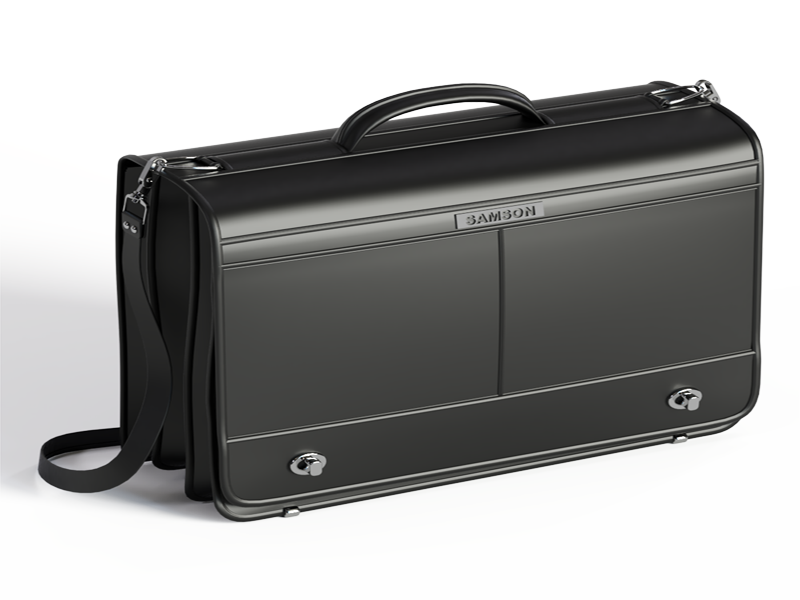
A business briefcase is a structured or semi-structured work bag designed to carry documents, electronic devices, and everyday professional essentials in an organized, presentable way. Unlike the paper-only cases of the past, a modern briefcase often includes a padded laptop compartment, internal pockets, secure closures, comfortable handles, and optional shoulder or luggage attachments. Its defining purpose is organized professional mobility rather than one specific material or shape.
What Defines a Modern Briefcase?
The word “briefcase” still creates an image of a lawyer carrying a rigid leather box, but the category is now much broader. Modern briefcases can be made from full-grain leather, canvas, ballistic nylon, polyester, Oxford fabric, coated textiles, or combinations of fabric, foam, lining, leather trim, and metal hardware. Some remain highly structured, while others use a softer body that can flex with the contents.
What separates a briefcase from an ordinary handbag is usually the way the space is planned. The body is typically wide enough for standard business documents and electronic devices but shallower than a backpack or overnight bag. The opening is designed to provide controlled access, while the internal structure separates the laptop from cables, stationery, files, and personal items. Contemporary commercial models frequently combine a laptop sleeve, tablet pocket, card pockets, pen loops, key attachments, expandable sections, removable shoulder straps, and luggage sleeves. TUMI’s current expandable briefcase, for example, includes dedicated padded compartments, extensive internal organization, a removable shoulder strap, an add-a-bag sleeve, and a two-inch expansion system.
This evolution matters because “professional” no longer means carrying only paper. The briefcase has become a small workflow system. When the designer gets the layout right, the user can reach a phone, access card, pen, or charging cable without placing the bag on the floor and emptying half of its contents. When the layout is wrong, even a premium exterior quickly becomes frustrating.
The modern briefcase can be understood through five design functions:
| Design Function | What It Should Achieve | Common Design Solution | Risk When Poorly Designed |
|---|---|---|---|
| Device protection | Reduce impact, scratching, and movement | Padded laptop sleeve, raised compartment base, soft lining | Laptop corners strike the floor or zipper |
| Document control | Keep papers flat and easy to retrieve | Full-width file section, divider, structured panels | Documents bend, fold, or mix with cables |
| Small-item organization | Make accessories visible and accessible | Mesh pockets, pen loops, cable pockets, key leash | Users repeatedly search through the main compartment |
| Carrying comfort | Manage the weight of daily equipment | Reinforced handles, padded strap, balanced anchor points | Shoulder fatigue, handle deformation, twisting |
| Professional appearance | Support an appropriate workplace image | Clean proportions, controlled branding, suitable material | Bag looks too casual, bulky, or visually disorganized |
A modern briefcase should therefore be judged as a complete system. Buyers sometimes focus on the outer fabric because it is the first thing they see, but the hidden construction often determines whether the product remains useful after six months. Reinforcement around the handle mounts, foam density around the laptop compartment, zipper alignment, edge binding, lining tension, seam allowance, and load distribution all affect daily performance.
Another defining feature is restraint. A business briefcase should normally avoid unnecessary external volume. If every pocket is filled and the silhouette becomes round or distorted, the bag begins to resemble general luggage. A carefully developed design allows enough capacity for realistic work essentials while preserving a controlled profile.
How Is It Different From a Laptop Bag?
A laptop bag is defined primarily by the device it protects. A business briefcase is defined by the wider professional situation it supports. The categories overlap, and many products can accurately be described as both, but the emphasis is different.
A basic laptop bag may contain little more than a padded device compartment, a zipper, and carrying handles. It can be suitable for students, technicians, occasional travelers, or anyone who mainly needs to transport a computer. A briefcase normally adds document organization, structured presentation, work-specific pockets, refined hardware, and a shape that complements professional clothing.
The distinction becomes easier to see when the bags are compared by purpose:
| Comparison Point | Business Briefcase | Basic Laptop Bag |
|---|---|---|
| Primary purpose | Carry a coordinated set of professional essentials | Protect and transport a laptop |
| Typical structure | Structured or semi-structured | Often soft and lightly structured |
| Document storage | Usually designed for files, folders, or notebooks | May be limited or absent |
| Internal organization | Multiple work-oriented pockets and dividers | Often simpler |
| Appearance | Designed to coordinate with professional dress | Can be technical, casual, or neutral |
| Carry options | Top handles, shoulder strap, sometimes luggage sleeve | Handles or shoulder strap |
| Ideal user | Professional carrying devices, papers, and accessories | Anyone transporting a computer |
| Product-development focus | Organization, presentation, durability, comfort | Device dimensions, padding, basic portability |
Neither category is automatically better. A field engineer moving between industrial sites may benefit more from a durable, washable laptop bag than from a formal leather briefcase. A financial adviser meeting clients may need a cleaner, more structured product that holds documents flat and creates a polished first impression. The correct choice depends on context rather than terminology.
There is also a practical warning hidden in the phrase “fits a 15-inch laptop.” Laptop size labels usually describe the diagonal screen measurement, not the full body dimensions. Two computers with the same advertised screen size can have different widths, depths, hinge shapes, and protective covers. A bag should therefore be developed or selected using the device’s actual length, width, and thickness. Current products illustrate this difference clearly: TUMI states that one compartment fits a 15-inch PC or a 16-inch MacBook screen, while Samsonite describes other business cases as suitable for most laptops up to 15.6 inches. These descriptions are useful starting points, but the internal compartment measurements remain more important than the screen label alone.
For custom product development, the safest approach is to establish a device envelope rather than naming only a screen size. A practical specification might define the maximum laptop body dimensions, required foam thickness, opening clearance, zipper position, and whether the user is expected to keep a protective shell on the device. This prevents one of the most common product complaints: a laptop technically fits inside the bag but catches against the zipper or stretches the compartment during removal.
Do Professionals Still Use Briefcases?
Yes, professionals still use briefcases, but they use them differently. The briefcase is no longer a compulsory symbol of office work. It is now a deliberate choice for people who value organization, presentation, device protection, or a more polished alternative to a backpack.
The category has not disappeared; it has adapted. Current collections from TUMI, Samsonite, Filson, Zero Halliburton, and other established bag companies continue to include briefcases ranging from slim convertible textile models to expandable travel designs and rigid aluminum attaché cases. The continued variety suggests that the briefcase now serves several smaller, more specific needs rather than one universal office uniform.
Recent fashion coverage also points to renewed interest in classic briefcase forms. In 2026, Business Insider reported a comeback in vintage Coach briefcases among younger professionals, driven by the appeal of durable materials, recognizable design, and a more polished style than the standard work backpack. GQ’s current briefcase coverage similarly presents the category as relevant to modern commuting rather than as a historical accessory.
That revival should not be misunderstood as a return to rigid office dress codes. The more important trend is choice. A software founder may carry a canvas briefcase with leather trim. A lawyer may choose a traditional black leather model. A creative director may prefer an elongated soft case. A consultant who travels weekly may prioritize a luggage sleeve, expansion, and nylon durability over traditional formality.
The briefcase remains particularly useful when a backpack creates the wrong visual or practical effect. Backpacks are excellent at distributing weight, but they can crease tailored clothing, feel awkward in crowded meeting rooms, and require the user to remove the bag before accessing most contents. A top-handle briefcase can be placed beside a chair, opened quickly, and carried without disturbing a jacket. On the other hand, a briefcase concentrates more load in one hand or on one shoulder, so it may be a poor choice for a long walking commute with a heavy computer and several books.
The decision can be framed around four questions:
| Question | A Briefcase Is More Suitable When… | Another Bag May Be Better When… |
|---|---|---|
| How formal is the setting? | Meetings, presentations, and client contact require a controlled appearance | Dress is highly casual and presentation is unimportant |
| How far do you carry it? | Travel is short, vehicle-based, or divided into manageable stages | The commute involves long walking or cycling |
| How much do you carry? | Daily contents are selective and organized | The load includes clothing, food, gym gear, or bulky equipment |
| How often do you need access? | Documents and devices must be reached quickly | Contents can remain packed for most of the journey |
A briefcase is therefore still relevant, but not because tradition says a professional must own one. It is relevant when its shape, access, and presentation solve the user’s actual problem.
Which Jobs Benefit Most From Briefcases?
Briefcases are especially valuable in roles where people move between workspaces, carry sensitive or expensive items, present documents, or meet clients face to face. The best design for each profession can be very different.
A lawyer may prioritize document separation, a stable base, discreet appearance, and secure closures. A sales representative may need quick access to samples, a tablet, business cards, and charging equipment. A consultant may prefer lightweight construction, an expandable section, and a luggage sleeve. A medical administrator may need a cleanable exterior and clearly separated compartments. A designer may require extra width for samples, color references, or a large-format notebook.
| Professional Role | Typical Contents | Most Useful Features | Common Design Mistake |
|---|---|---|---|
| Lawyer or legal adviser | Laptop, case files, contracts, notebook | Structured file section, secure zipper or lock, stable base | Making the bag too slim for document volume |
| Consultant | Laptop, charger, presentation tools, travel documents | Lightweight body, luggage sleeve, expandable compartment | Using heavy materials before contents are added |
| Financial professional | Laptop, reports, notebook, identification items | Clean silhouette, restrained colors, organized interior | Excessive external pockets that weaken formality |
| Sales representative | Tablet, brochures, samples, cards, cables | Wide opening, quick-access pockets, reinforced handles | Deep compartments that make small items difficult to find |
| Architect or designer | Laptop, sketchbook, material samples, measuring tools | Wider format, flexible dividers, abrasion-resistant base | Narrow opening that damages samples |
| Medical or technical representative | Devices, literature, demonstration items | Wipe-clean surface, labeled sections, strong hardware | Choosing decorative materials that are difficult to maintain |
| Executive traveler | Laptop, passport, phone, headphones, documents | Trolley sleeve, secure pockets, shoulder strap, expansion | Ignoring total bag weight |
| Educator or researcher | Laptop, books, papers, stationery | Strong bottom panel, broad shoulder pad, document dividers | Under-reinforcing the handle attachment |
The occupation alone does not determine the correct bag. Two lawyers may have completely different needs if one walks several kilometers a day and the other travels mainly by car. Two sales managers may carry different sample sizes. The product-selection process should therefore begin with a load list: every item the user carries on an ordinary day, its approximate dimensions, how often it is accessed, and whether it requires impact, moisture, or privacy protection.
This load-list method is also valuable when a company develops custom briefcases for employees, sales teams, distributors, or promotional programs. Instead of starting with a catalogue shape and adding a logo, the development team can build the structure around the actual working routine. That often leads to small but meaningful improvements, such as moving the phone pocket away from the main zipper, increasing the charger pocket depth, raising the laptop sleeve above the bottom seam, or placing the luggage strap at a height that keeps the bag stable on a suitcase.
The most professional briefcase is not necessarily the most formal one. It is the one that allows the user to enter a meeting prepared, retrieve what is needed without disruption, and leave without carrying a bag that feels unnecessarily heavy or awkward.
Which Briefcase Style Is Best?
The best briefcase style depends on the user’s load, commute, workplace, and preferred level of structure. An attaché case offers maximum shape and protection, a soft briefcase provides flexibility and everyday comfort, a messenger style improves shoulder carrying and access, and a slim briefcase supports a minimalist load. No style is universally superior; each solves a different combination of practical and visual needs.
What Is an Attaché Case?
An attaché case is a rigid, box-shaped form of briefcase that usually opens on a hinge rather than through a soft zipper opening. It is designed to retain its shape, protect organized contents, and create a formal, precise appearance. Traditional versions were commonly associated with documents and professional papers, while modern versions may be used for presentation equipment, watches, tools, samples, electronics, or other valuable items.
The key advantage is structural protection. A rigid shell resists crushing and keeps documents or presentation pieces flat. The interior can be designed with fitted foam, dividers, document panels, straps, or molded components. The case also remains upright and visually controlled even when partially empty.
Zero Halliburton continues to produce aluminum attaché cases using 6000-series aluminum alloy, demonstrating how the traditional format has evolved into a specialist product built around rigidity, durability, and distinctive appearance.
The same rigidity also creates disadvantages. An attaché case cannot easily expand around an unexpected folder, jacket, or water bottle. It may feel heavy before anything is packed. A hard edge can be uncomfortable against the body, and the hinged opening normally requires more space on a desk or table. Scratches and dents may also become visible, particularly on polished metal surfaces.
| Attaché Case Characteristic | Practical Benefit | Practical Limitation |
|---|---|---|
| Rigid shell | Protects contents from compression | Does not adapt to irregular or oversized items |
| Hinged opening | Displays the entire interior clearly | Requires a flat surface and more opening space |
| Fixed geometry | Maintains a formal, precise silhouette | Can feel bulky in crowded transport |
| Lockable closure | Supports privacy and controlled access | Adds hardware, weight, and production complexity |
| Fitted interior | Excellent for samples, instruments, or presentation sets | Less flexible when contents change |
| Metal or molded shell | Strong visual identity and impact resistance | Scratches, dents, and surface marks may be noticeable |
An attaché case is best when the contents are consistent and protection matters more than flexibility. It can be an excellent choice for luxury samples, presentation kits, confidential files, technical instruments, or executive gifting. It is less suitable for someone whose daily load changes constantly.
When developing a custom attaché case, the interior should be designed before the exterior dimensions are finalized. The dimensions of every item, the required clearance, foam compression, lid depth, hinge movement, and center of gravity must be considered. Otherwise, an attractive case may tip backward when opened or allow expensive contents to move during transport.
How Does a Soft Briefcase Compare?
A soft briefcase uses flexible materials and sewn construction rather than a rigid shell. It may still include foam, stiffener boards, piping, reinforced panels, or a structured base, but the body can flex and compress. This is the most versatile format for everyday office use because it balances professional appearance with practical capacity.
Soft briefcases can be made from leather, canvas, nylon, polyester, Oxford fabric, or mixed materials. Their weight varies considerably. A lightweight textile body can make commuting easier, while thick leather, heavy hardware, and multiple reinforced compartments can make a soft briefcase nearly as heavy as a hard case.
The main advantage is adaptability. A soft body can accommodate a slightly thicker notebook, an additional charger, or an unexpected file. Zippered expansion can provide temporary capacity without making the bag permanently oversized. TUMI’s current expandable briefcase is a useful market example: it combines a soft ballistic-nylon body with a two-inch expansion function, although its listed empty weight of 4.6 pounds also shows that numerous compartments, hardware pieces, handles, padding, and reinforcement can make even a textile briefcase relatively heavy.
That example highlights a frequently overlooked question: should a professional briefcase offer every possible feature? More pockets, thicker padding, extra leather trim, metal feet, an expansion zipper, a bottle compartment, and multiple handles can all sound valuable. Together, however, they add weight, cost, and visual complexity. Good design is not the act of adding the greatest number of features. It is the act of selecting the features that serve the intended user.
| Soft Briefcase Element | Lightweight Approach | Heavy-Duty Approach | Selection Consideration |
|---|---|---|---|
| Outer material | Polyester, nylon, lightweight Oxford | Dense canvas, ballistic nylon, thick leather | Balance abrasion resistance with empty weight |
| Internal structure | Thin foam and flexible dividers | PE board, EVA foam, layered reinforcement | More structure improves protection but reduces flexibility |
| Hardware | Molded or lightweight metal parts | Large metal buckles, hooks, and feet | Hardware can become a major source of weight |
| Opening | Single main zipper | Multiple compartments and expansion zippers | More openings improve separation but add seams and failure points |
| Handles | Webbing or lightly padded handles | Leather-wrapped reinforced handles | Handle construction must match expected load |
| Shoulder strap | Simple detachable strap | Wide padded strap with rotating hooks | Wider padding improves comfort for heavier loads |
A soft briefcase is usually the safest all-round choice for office work, commuting, short trips, and mixed daily contents. Its success depends on maintaining enough structure to protect the laptop and preserve the silhouette without turning the product into a heavy, overbuilt suitcase.
Is a Messenger Briefcase Practical?
A messenger briefcase combines features of a traditional briefcase with a shoulder-carried messenger bag. It commonly uses a flap, long adjustable strap, horizontal body, and one-handed access. Some designs also include top handles, allowing the user to switch between shoulder carry and hand carry.
This style is practical for people who need frequent access while moving. A commuter can reach a travel card, phone, notebook, or document without fully removing the bag. The crossbody strap also keeps both hands available, which is useful in stations, airports, and city streets.
The drawback is weight distribution. A messenger bag places the load on one shoulder and can pull diagonally across the body. If the bag is wide, heavily packed, or poorly balanced, it may swing during walking and place pressure on the neck or lower back. A wide padded strap helps, but it cannot completely solve the imbalance created by carrying several kilograms on one side.
The flap also requires careful design. A large flap creates a clean surface for branding and protects the opening from light rain, but it can slow access if the user must release two buckles every time. Magnetic closures are faster but must be positioned carefully around electronics, access cards, and the bag’s internal structure. Hook-and-loop closures are practical in some technical environments but can be noisy and may not suit a refined professional product.
A useful messenger briefcase should include:
| Design Area | Recommended Approach | Reason |
|---|---|---|
| Shoulder strap | Adjustable, wide, and padded with reinforced anchor points | Reduces concentrated pressure and supports repeated use |
| Top handle | Balanced over the bag’s center of gravity | Prevents the case from tilting when carried by hand |
| Flap closure | Fast primary closure with optional secondary security | Balances access and protection |
| Laptop position | Close to the user’s body with a raised padded base | Improves stability and protects the device |
| External pocket | Shallow quick-access section under or behind the flap | Keeps small items reachable without opening the main compartment |
| Back panel | Smooth, lightly padded, and free from exposed hardware | Improves comfort and protects clothing |
| Body depth | Controlled rather than oversized | Reduces swinging and prevents overpacking |
The messenger format works particularly well for urban professionals, sales staff, educators, journalists, and designers who move frequently and access their tools throughout the day. It is less suitable when the bag must preserve highly formal documents, carry a very heavy computer, or stand upright beside a conference table.
A good compromise is a convertible briefcase with removable shoulder straps and top handles. Samsonite’s current slim convertible business case, for example, supports both hand and crossbody carrying while adding a padded laptop compartment, tablet sleeve, internal organization, and a luggage-attachment strap.
Are Slim Briefcases Professional?
Slim briefcases can look highly professional because their controlled proportions communicate organization and restraint. They work best for people who carry a laptop, phone, charger, a small notebook, and a limited number of documents. The problem begins when a slim case is chosen for a non-slim lifestyle.
A thin bag that is regularly overfilled loses the very quality that made it attractive. The zipper becomes strained, the front panel bulges, document edges bend, and handles pull outward. A slightly deeper case that retains its intended shape will usually look more professional than an ultra-thin case forced beyond its capacity.
Slim briefcases are especially appropriate for hybrid workers who keep most files digitally, executives who travel between prepared offices, and professionals who rarely carry bulky samples or personal items. They also fit more easily under a meeting chair, on a narrow train seat, or inside a larger travel case.
Before selecting a slim design, the user should complete a realistic packing test rather than an idealized one. The test should include the laptop with its usual protective shell, the actual charger, phone cable, notebook, glasses case, access badge, keys, wallet, headphones, and any daily medication or personal items. These small objects often consume more volume than expected.
| Style | Structure | Carrying Comfort | Capacity Flexibility | Professional Formality | Best Use |
|---|---|---|---|---|---|
| Rigid attaché | Very high | Moderate to low | Very low | Very high | Fixed documents, samples, valuables |
| Structured leather briefcase | High | Moderate | Low to moderate | High | Client meetings, legal and financial work |
| Soft zip briefcase | Moderate | High | High | Moderate to high | General office work and commuting |
| Messenger briefcase | Low to moderate | High for light loads | Moderate | Moderate | Urban mobility and frequent access |
| Slim briefcase | Moderate | High when lightly packed | Low | High | Digital-first, minimal daily carry |
| Expandable travel briefcase | Moderate | Moderate | Very high | Moderate | Short trips and changing loads |
There is no need to choose one style for every situation. Some professionals use a slim briefcase for meetings and a larger travel model for flights. Companies developing a coordinated collection can use the same fabric, colors, hardware, and logo system across several structures. This creates a recognizable product family while allowing different users to choose the capacity and carrying method that fits their work.
Imagine two briefcases placed on a conference-room table. One is large, expensive, and visibly stretched around too many contents. The other is made from a simpler material but opens cleanly, presents documents in order, and allows the owner to retrieve a charger immediately. Most people will describe the second user as more organized. That is the quiet power of choosing the right style: the bag does not demand attention, but everything about the interaction feels considered.
Which Material Should You Choose?
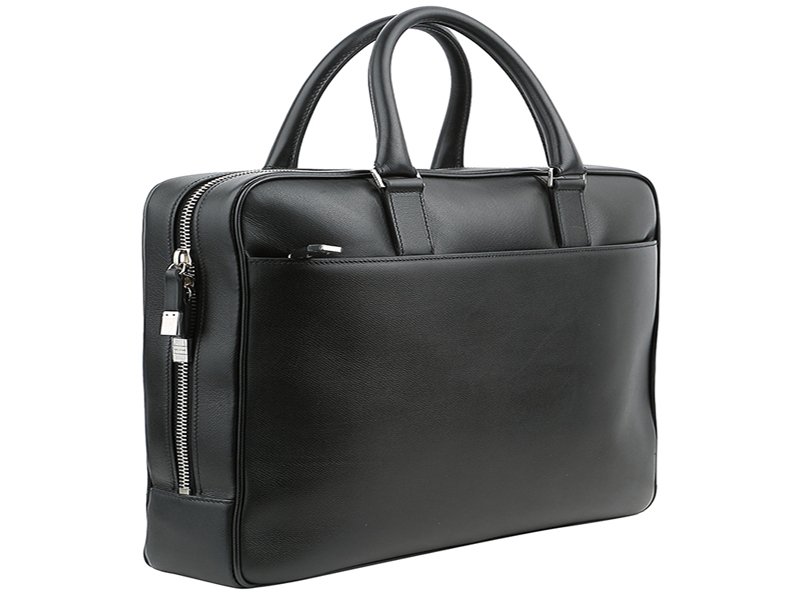
The best briefcase material is the one that balances professional appearance, daily load, weather exposure, maintenance, product weight, and expected service life. Leather creates a refined and formal impression, while canvas offers character and flexibility. Nylon, polyester, and Oxford fabric are usually lighter, easier to engineer, and more resistant to changing weather. Neoprene, linen, and jute can also work, but they are generally more effective as functional components, seasonal materials, or design accents than as universal briefcase shells.
Material selection should begin with the user’s working environment rather than with appearance alone. A briefcase used mainly between an office and a car faces different demands from one carried through airports, train stations, rain, crowded streets, factory floors, or medical facilities. The first user may value the aging character of natural leather. The second may need a lightweight fabric with a water-repellent coating, abrasion-resistant bottom panels, and easy-to-clean surfaces.
There is also a difference between choosing a material and engineering a material system. The exterior fabric is only one layer. A business briefcase may also contain backing fabric, foam, stiffener board, reinforcing webbing, lining, edge binding, coating, zipper tape, thread, and base protection. A strong exterior does not guarantee a durable bag if the handle reinforcement is weak, the lining tears around loaded pockets, or the foam collapses around the laptop compartment.
A practical material comparison should therefore consider more than style:
| Material | Typical Strengths | Common Limitations | Suitable Briefcase Use |
|---|---|---|---|
| Leather | Formal appearance, develops character, strong perceived value | Higher weight, cost, maintenance, sensitivity to moisture | Executive, legal, financial, luxury corporate use |
| Cotton canvas | Natural texture, flexible styling, strong body at higher weights | Absorbs water unless treated, may stain or fade | Creative work, casual offices, heritage collections |
| Nylon | High strength-to-weight ratio, abrasion resistance, fast drying | Can look technical or informal | Travel, commuting, technical and performance bags |
| Polyester | Cost control, color consistency, printability, water resistance | Lower abrasion performance in some constructions | Corporate programs, everyday laptop bags |
| Oxford fabric | Structured weave, broad performance options, easy coating | Quality varies widely by yarn and density | Professional commuting and customized work bags |
| Neoprene | Cushioning, stretch, device protection | Heat retention, bulk, odor risk, limited formal appearance | Laptop sleeves, protective panels, modern minimalist bags |
| Linen | Natural appearance, breathable texture, premium seasonal feel | Wrinkles, abrasion sensitivity, lower dimensional stability | Fashion-led or summer briefcase collections |
| Jute | Distinct natural texture, strong sustainability story | Coarse hand feel, fiber shedding, moisture sensitivity | Promotional, lifestyle, and eco-positioned products |
The most suitable choice is often a combination. A briefcase may use durable Oxford fabric for the body, a coated polyester lining, microfiber or leather trim around high-touch areas, EVA foam around the laptop compartment, and reinforced webbing inside the handles. Mixed-material construction allows the designer to place each material where it performs best instead of forcing one material to solve every problem.
Is Leather the Most Professional?
Leather is widely associated with formal business culture because it offers structure, visual depth, a distinctive hand feel, and an appearance that can improve with use. A well-made leather briefcase can look appropriate in law, finance, consulting, senior management, and other settings where presentation plays an important role. However, leather is not automatically the most professional material in every workplace.
Professionalism is contextual. In a traditional boardroom, a clean black or dark brown leather case may complement tailored clothing and formal documents. In a technology company, design studio, laboratory, or field-sales role, a lightweight technical textile briefcase may appear more practical and appropriate. A visibly worn, poorly maintained leather bag may look less professional than a clean, well-structured nylon model.
Leather quality also varies significantly. Full-grain leather retains the natural surface of the hide and is valued for durability and character. Top-grain leather is corrected or finished for a more uniform appearance. Split leather uses lower hide layers and may receive coatings to imitate a smoother surface. Bonded leather contains leather fibers combined with binding materials. These categories affect cost, aging, abrasion performance, and the way the product feels in the hand.
| Leather Type | Appearance | Durability Potential | Maintenance | Typical Positioning |
|---|---|---|---|---|
| Full-grain leather | Natural surface and visible character | High when properly selected and constructed | Regular conditioning recommended | Premium and heritage briefcases |
| Top-grain leather | More uniform and refined | High to moderate | Moderate care | Executive and corporate collections |
| Corrected leather | Consistent color and texture | Moderate | Easier surface care | Commercial mid-range products |
| Split leather | Coated or finished appearance | Moderate to low depending on finish | Surface coating requires care | Cost-conscious formal designs |
| Bonded leather | Highly uniform | Lower long-term aging performance | May crack or peel over time | Entry-level or promotional use |
| Synthetic leather | Consistent and highly customizable | Depends on backing and coating quality | Generally easy to clean | Vegan, fashion, and price-sensitive collections |
A leather briefcase also involves trade-offs that are easy to overlook during purchase. Thick leather adds weight. Natural hides can show color differences, scars, grain variation, and changes after exposure to sunlight or moisture. These are often accepted as desirable characteristics in premium leather goods, but they may be viewed as defects in corporate programs requiring hundreds or thousands of visually consistent units.
For private-label development, the leather specification should address thickness, temper, surface finish, color tolerance, backing, edge treatment, and acceptable natural markings. A sample approved only by color may not control how the leather bends, scratches, or behaves around corners. Handle zones and folding points require particular attention because overly stiff leather may crack, while overly soft leather may stretch or lose shape.
Leather trim can provide a useful middle ground. A textile briefcase can use leather or microfiber on the handles, zipper pulls, logo patch, corner sections, and front panel. This preserves a refined appearance while reducing weight, material cost, and sensitivity to rain.
A professional bag should also age predictably. Full leather may develop a patina, but poorly selected coatings can peel. Painted edges can crack when the leather is folded repeatedly. Metal hardware can discolor the surrounding material. These issues are not solved by choosing “leather” as a category; they are solved through controlled material selection, construction testing, and realistic use simulation.
How Does Canvas Perform?
Canvas is a tightly woven fabric traditionally made from cotton, although modern canvas can also include polyester, recycled fibers, or blended yarns. It is appreciated for its strength, natural texture, relaxed appearance, and ability to support printing, washing, waxing, coating, embroidery, and leather-trim combinations.
Canvas performs well in casual and semi-formal briefcases, particularly for creative professionals, architects, educators, designers, photographers, and users who prefer a less corporate appearance. Its surface develops character over time, and the material can create a sense of authenticity that highly polished synthetic fabrics sometimes lack.
The word “canvas,” however, does not describe one fixed level of performance. Fabric weight, yarn size, weave density, fiber composition, finishing, and coating all affect durability. A lightweight promotional canvas should not be expected to perform like a dense luggage-grade fabric. A heavy canvas may be very strong but can add considerable weight and become stiff after coating.
Common canvas options include:
| Canvas Construction | Main Characteristic | Suitable Application | Development Consideration |
|---|---|---|---|
| Lightweight cotton canvas | Soft and printable | Promotional or light-duty briefcases | Requires backing or reinforcement |
| Heavy cotton canvas | Dense and durable | Heritage-style work bags | Increases empty weight |
| Cotton-polyester canvas | Natural feel with improved stability | Everyday professional bags | Balance fiber ratio and hand feel |
| Waxed canvas | Water-repellent surface and aged character | Outdoor-inspired executive bags | May transfer wax or show crease marks |
| PU-coated canvas | Improved water resistance and structure | Commuting and travel briefcases | Coating flexibility must be tested |
| Recycled canvas blend | Sustainability positioning | Corporate and lifestyle collections | Verify fiber consistency and certification needs |
Untreated cotton canvas absorbs moisture. This does not always make it unsuitable, but it changes how the bag should be designed. Important electronics should be protected by an internal water-resistant layer. The bottom panel may need a coated material or protective feet. Light colors require stain testing because dirt around handles, corners, and base areas becomes visible quickly.
Waxed canvas provides better resistance to light rain and develops distinctive crease patterns. Some users value this evolving appearance, while others expect a uniform surface and may interpret marks as damage. Product descriptions and customer expectations therefore matter. A material that is attractive to one audience can become a complaint for another.
Canvas also responds well to branding. Screen printing, embroidery, woven labels, leather patches, metal badges, heat transfer, and direct-to-film applications can all be considered. The best logo method depends on the weave texture and intended image. Fine printed details may lose clarity on coarse canvas, while embroidery can distort lightweight fabric unless it is backed correctly.
From a manufacturing perspective, canvas edges can fray, thick folded seams can become bulky, and dense fabric may require stronger needles and carefully controlled stitch density. Too many stitches in one small area can cut through the yarns rather than strengthen the seam. Reinforcement should be concentrated around handles, strap anchors, zipper ends, and bottom corners.
A well-developed canvas briefcase can last for years, but it should not be marketed as maintenance-free. Users may need to brush off dry dirt, spot-clean stains, avoid prolonged soaking, and periodically restore waxed finishes. These practical instructions improve customer satisfaction because the material’s natural behavior is explained rather than hidden.
Are Nylon and Polyester Durable?
Nylon and polyester can both produce durable professional briefcases, but their performance depends on yarn strength, fabric density, weave, coating, backing, and construction quality. Nylon generally offers excellent abrasion resistance and a high strength-to-weight ratio. Polyester usually provides strong color stability, good resistance to ultraviolet exposure, broad printing options, and cost-effective manufacturing.
The common assumption that nylon is always premium and polyester is always basic is too simplistic. A dense, well-coated polyester Oxford fabric may outperform a lightweight nylon in a particular application. Likewise, a high-tenacity nylon developed for luggage can offer significantly better abrasion resistance than a low-density promotional polyester.
Denier is often used to describe textile yarn size. Numbers such as 300D, 420D, 600D, 900D, or 1680D appear frequently in bag specifications. A higher denier generally indicates thicker yarn, but it does not automatically guarantee better fabric. Weave density, yarn quality, filament construction, finishing, and coating also matter. Two fabrics labeled 600D can feel and perform very differently.
| Textile Factor | What It Influences | Why It Matters |
|---|---|---|
| Denier | Approximate yarn thickness | Affects weight, texture, and potential toughness |
| Weave density | Fabric compactness | Influences tear resistance and water penetration |
| Filament quality | Yarn strength and smoothness | Affects abrasion and surface appearance |
| Back coating | Water resistance and dimensional stability | Helps fabric hold shape and resist moisture |
| Surface treatment | Stain, water, oil, or UV behavior | Changes maintenance and outdoor performance |
| Colorfastness | Resistance to fading or transfer | Important for dark colors and clothing contact |
| Lamination | Structure and barrier properties | Adds stiffness, weight, and production complexity |
Nylon is often selected for frequent travel, heavy commuting, and demanding use. Ballistic-style nylon, originally inspired by protective applications, has a dense basket-like weave and a technical appearance. It resists abrasion well, but it can be heavy, stiff, and visually less formal than leather. Its textured surface may also collect dust around high-contact areas.
Polyester is widely used because it supports stable production, consistent color, coating, lamination, sublimation, digital printing, and many price levels. It absorbs less moisture than cotton and dries relatively quickly. For corporate briefcases, polyester can be particularly useful when brand colors must remain consistent across a large order.
Both materials can be treated with water-repellent finishes, but “water-resistant” should not be confused with “waterproof.” Water can enter through seams, zipper openings, needle holes, and unsealed edges even when the face fabric resists moisture. A truly waterproof briefcase requires a more specialized construction involving coated materials, welded seams, waterproof zippers, or protective roll-top systems. That level of engineering is rarely necessary for a standard office briefcase.
A realistic water-protection specification might define resistance to light rain for a limited period rather than promise complete waterproofing. The laptop compartment can also include an elevated bottom and a water-resistant lining to reduce risk if the bag is placed briefly on a wet surface.
Textile durability should be tested in ways that reflect real behavior. Abrasion testing shows how the surface responds to repeated rubbing. Tensile and tear tests evaluate strength. Seam-slippage testing helps determine whether yarns pull apart around stitched areas. Colorfastness testing checks whether dark fabric transfers color onto clothing. Coating adhesion testing helps predict peeling or cracking. Zipper-cycle and handle-load testing evaluate the complete bag rather than the fabric alone.
A manufacturer may have a strong fabric but still produce a weak briefcase if the handle is attached only to the outer shell. For heavy loads, reinforcement webbing should often continue beneath the exterior and distribute force into the body panels. This hidden structure is one reason two visually similar textile bags can have very different lifespans.
What Does Oxford Fabric Offer?
Oxford fabric is a woven textile recognized by its basket-like structure and practical combination of strength, flexibility, coating compatibility, and visual uniformity. It can be made from polyester, nylon, cotton, or blended yarns, although polyester and nylon Oxford fabrics are most common in modern briefcase manufacturing.
Oxford fabric offers broad customization possibilities. It can be produced in different deniers, textures, colors, finishes, and backing systems. A lighter Oxford fabric can create a clean urban briefcase, while a dense coated version can support heavier travel or equipment bags. It accepts PU, PVC, TPU, and other treatments depending on performance requirements.
Its structure provides several advantages:
| Oxford Fabric Feature | Product Benefit |
|---|---|
| Basket-style weave | Adds visual texture and helps distribute wear |
| Broad denier range | Supports lightweight or heavy-duty development |
| Coating compatibility | Improves water resistance and shape retention |
| Stable surface | Supports printing, embroidery, and logo application |
| Color consistency | Useful for corporate identity and repeat orders |
| Cost flexibility | Allows several quality levels within one product category |
| Easy combination | Works with leather, mesh, neoprene, webbing, and molded parts |
For professional briefcases, 300D to 600D polyester Oxford fabrics are often considered for everyday use, while heavier constructions may be selected for travel or equipment-focused designs. These ranges are not absolute rules. A dense 300D fabric with high-quality coating may be more appropriate than a loosely woven 600D fabric. Material approval should be based on physical samples and test results rather than specification labels alone.
Oxford fabric is also practical for color development. A company can match brand colors more consistently than with many natural materials. Different surfaces can be created through matte coatings, subtle texture, two-tone yarns, heather effects, or embossed patterns. This makes it possible to produce a professional appearance without copying the look of leather.
A common challenge is avoiding a generic promotional-bag appearance. Poor-quality Oxford fabric may feel shiny, plastic, thin, or noisy. The finished briefcase can look inexpensive if the foam is too soft, the panels wrinkle, or the zippers and webbing do not coordinate with the body fabric. Improving the hand feel, surface finish, panel structure, hardware, and color system often matters more than simply selecting a heavier denier.
For Szoneier-developed briefcases, Oxford fabric can be combined with custom post-treatments such as water-repellent finishing, PU backing, lamination, printing, embroidery, anti-scratch finishing, or reinforced panel construction. The material can also be engineered for specialized industries where appearance, cleaning requirements, and equipment protection must be balanced.
Can Neoprene, Linen, or Jute Work?
Neoprene, linen, and jute can all be used in business briefcases, but each material introduces specific performance and design considerations. They are best selected when their distinctive properties support the product concept rather than when they are used only to appear different.
Neoprene is a flexible, foam-like material commonly associated with protective sleeves, sports products, and water-related applications. It offers cushioning, stretch, and a smooth modern appearance. In briefcases, it can protect devices, form padded side panels, create flexible internal dividers, or support a minimalist sleeve-style structure.
A full neoprene briefcase can become bulky, warm, and less formal. Thick material around seams is difficult to control, and some compounds may have a noticeable odor when new. The surface can also attract dust or show compression marks. For these reasons, neoprene is often more effective inside the product than as the entire exterior.
Linen offers a refined natural texture and can support premium summer, hospitality, resort, or lifestyle collections. Its visual character is distinctive, especially when combined with leather trim, cotton lining, or subtle embroidery. However, linen wrinkles more easily than many synthetic fabrics and may have lower abrasion resistance at corners and handle areas.
A linen briefcase therefore benefits from backing, blending, or lamination. A linen-polyester blend can retain a natural appearance while improving dimensional stability. High-wear areas may use leather, microfiber, or coated textile reinforcement. Colorfastness and shrinkage should be tested before mass production.
Jute provides a strong natural identity and is frequently used in eco-positioned bags, promotional products, agriculture-related brands, and lifestyle packaging. It is relatively strong in tension and has an immediately recognizable texture. Its limitations include coarse hand feel, fiber shedding, moisture absorption, odor, and difficulty achieving a highly formal finish.
Jute can work well for document bags, conference bags, sample cases, and relaxed briefcase styles. A laminated backing can reduce fiber movement and add structure, while cotton lining protects devices and documents. Handles should generally be reinforced with webbing because jute alone may not provide the controlled performance required around concentrated load points.
| Alternative Material | Best Role in a Briefcase | Main Risk | Recommended Control |
|---|---|---|---|
| Neoprene | Laptop sleeve, padding, flexible divider | Bulk, odor, heat retention | Control thickness and compound quality |
| Linen | Premium outer panel or seasonal collection | Wrinkling and abrasion | Blend, back, or reinforce the fabric |
| Jute | Natural outer panel or promotional document case | Moisture, shedding, coarse texture | Lamination, lining, and webbing reinforcement |
| Mixed natural fabric | Lifestyle and hospitality briefcase | Dimensional change | Preshrink and test colorfastness |
| Coated specialty textile | Technical or medical briefcase | Cracking or delamination | Flex and aging tests |
The broader lesson is that unusual materials should be tested against the same practical questions as conventional ones. Does the bag protect a laptop? Can the handles support the intended weight? Does the surface stain easily? Will the material transfer color onto clothing? Can it be cleaned? Does it maintain shape after repeated use?
A distinctive material may attract attention in a product photograph, but professional users judge it over hundreds of ordinary interactions. The best development decision is the one that keeps the design interesting without turning maintenance or durability into a daily inconvenience.
What Size Briefcase Do You Need?
A briefcase should be large enough to hold the user’s actual laptop, documents, charger, and daily accessories without stretching, but small enough to remain balanced, organized, and professional. The correct size is determined by internal dimensions, not by the external appearance or the laptop’s screen label alone. Capacity should include reasonable clearance for loading, padding, and occasional additional items without encouraging unnecessary overpacking.
Size is one of the most common reasons a briefcase fails in daily use. A bag that is too small creates zipper strain, bent papers, compressed electronics, and frustration. A bag that is too large allows items to move, encourages excess weight, and can look awkward beside professional clothing. The ideal briefcase provides controlled extra space rather than maximum possible capacity.
The sizing process should begin with a physical inventory. Users should measure the laptop body, charger, notebook, document folders, tablet, headphones, glasses case, cables, and any samples or tools carried regularly. These items should be arranged in a realistic stack to estimate required width, height, and depth.
A useful sizing formula is:
Internal width = widest item + side clearance
Internal height = tallest item + opening clearance
Internal depth = combined item thickness + organization allowance
Clearance should not be excessive, but a laptop compartment that matches the device exactly can become difficult to use once foam, lining, seams, and zipper curves are considered. A small allowance makes loading smoother and accommodates minor device variations.
Which Laptop Size Must It Fit?
The briefcase must fit the complete external dimensions of the laptop, including its body, protective shell, hinge, feet, and any attached accessories. Screen size alone is not enough because two laptops described as 14-inch or 15.6-inch models may have different widths and depths.
The safest approach is to record the device dimensions in millimeters or centimeters and compare them with the usable dimensions of the laptop compartment. The compartment should not be measured from the outer edge of the bag. Foam, seam allowance, piping, curves, zipper ends, and internal dividers all reduce usable space.
| Laptop Category | Approximate Screen Range | Common Briefcase Approach | Important Check |
|---|---|---|---|
| Compact notebook | 11–13 inches | Slim sleeve or small briefcase | Charger may take almost as much space as the device |
| Standard portable laptop | 13–14 inches | Slim or medium briefcase | Confirm width with protective shell fitted |
| Mainstream business laptop | 14–15.6 inches | Medium briefcase | Check body depth and zipper clearance |
| Large professional laptop | 16–17 inches | Large reinforced briefcase | Weight and corner protection become critical |
| Tablet-based setup | 10–13 inches | Compact organizer briefcase | Keyboard and stand may increase total size |
These ranges are general rather than universal. Thin-bezel displays have allowed some modern laptops to fit larger screens into smaller bodies. Older devices may have thicker bezels and larger external dimensions. Rugged laptops can be substantially thicker than standard office models.
The laptop compartment should also be evaluated in three directions. Side padding protects the left and right edges. Front and back padding reduces pressure from other contents. Bottom protection is especially important because users frequently place bags down more firmly than expected.
A raised laptop compartment prevents the device from sitting directly on the bottom seam. The sleeve may end 15 to 30 millimeters above the base depending on the overall construction and protection goal. Additional foam, a reinforced base panel, or molded corner structures can be used for higher-risk applications.
The opening should be wide enough for comfortable removal. A laptop may fit once inside but scrape against zipper teeth every time it is inserted. This repeated contact can damage the device finish and wear the compartment edge. A protective zipper garage, fabric lip, or wider opening angle can reduce that risk.
For custom briefcases intended for employees or customers, the target device range should be defined in advance. A company with standardized 14-inch laptops can create a compact, controlled design. A promotional product intended for a mixed audience may need to accommodate a broader range, although this increases size and reduces the precision of the fit.
A removable laptop sleeve can solve part of this problem. Different sleeves can be produced for different devices while the outer briefcase remains the same. This approach also allows the sleeve to be used independently inside another bag.
How Much Capacity Is Enough?
Enough capacity means the user can pack a normal working day without deforming the bag or stacking fragile items against each other. It does not mean the briefcase should hold every object that might occasionally be needed.
Briefcase capacity is often described in liters, but external volume does not always represent usable internal space. Thick foam, multiple compartments, rounded corners, stiff dividers, and expansion mechanisms consume volume. A 15-liter briefcase with one open compartment may hold more bulky items than an 18-liter case divided into many narrow sections.
Daily load can be grouped into three practical profiles:
| Carry Profile | Typical Contents | Suggested Briefcase Character |
|---|---|---|
| Minimal | Laptop, phone, compact charger, thin notebook | Slim body with limited organization |
| Standard | Laptop, charger, tablet, notebook, cables, personal items | Medium-depth structured or soft briefcase |
| Extended | Laptop, files, samples, headphones, power bank, travel items | Expandable or multi-compartment briefcase |
| Specialist | Technical tools, medical devices, sales samples | Custom internal layout and reinforced structure |
A minimalist briefcase may have an internal depth of approximately 5 to 8 centimeters. A standard work briefcase may range around 8 to 13 centimeters. Expandable or specialist models can exceed this, but depth must be controlled because a thick case becomes more difficult to carry beside the body.
These measurements should not be treated as universal product standards. The width and height of the bag, panel stiffness, and compartment layout change the perceived and usable capacity. A narrow but deep case may feel boxy. A wider case with moderate depth may distribute the same volume more professionally.
The user should also consider weight. A large briefcase invites extra contents. A laptop may weigh 1.2 to 2.5 kilograms, while chargers, documents, water bottles, batteries, and accessories can quickly add several more kilograms. The briefcase itself may weigh less than one kilogram in lightweight textile construction or more than two kilograms in heavy leather or highly organized travel models.
| Item | Typical Weight Range | Effect on Bag Design |
|---|---|---|
| Laptop | 1.2–2.5 kg | Requires padded, reinforced compartment |
| Charger and cables | 0.3–0.8 kg | Needs organized pocket away from laptop surface |
| Tablet | 0.4–0.8 kg | Adds a second flat, rigid object |
| Paper documents | 0.5–2.0 kg | Creates concentrated weight and requires flat storage |
| Water bottle | 0.5–1.0 kg filled | Changes balance and introduces leak risk |
| Headphones and accessories | 0.3–0.8 kg | Require bulky but lightweight storage |
| Empty briefcase | 0.7–2.5 kg | Determines total carrying burden before packing |
A bag that weighs 2 kilograms empty and carries 5 kilograms of contents places a 7-kilogram load on the hand or shoulder. Even strong users may find this uncomfortable during a long commute. The capacity decision should therefore be connected to the carrying method. A larger briefcase needs wider handles, stronger anchor reinforcement, a padded shoulder strap, and possibly a trolley sleeve.
The best capacity is usually slightly larger than the normal daily load and smaller than the user’s occasional maximum load. Rare items can be carried in a separate travel bag rather than forcing the briefcase to remain oversized every day.
Is an Expandable Briefcase Useful?
An expandable briefcase is useful when the user’s load changes between ordinary workdays, meetings, and short business trips. A zipper or gusset allows the body depth to increase temporarily, providing additional space without requiring a permanently large silhouette.
Expansion is particularly helpful for consultants, sales teams, trainers, auditors, and frequent travelers. A user may carry only a laptop and notebook in the morning but return with printed documents, product samples, or conference materials. Expansion allows the bag to adapt.
The feature also creates structural challenges. When the expansion panel opens, the bag’s center of gravity changes. The body may sag, pull away from the user, or become unstable on top of a suitcase. The handles and shoulder strap must support the larger load, not only the original size.
| Expansion Benefit | Associated Risk | Design Response |
|---|---|---|
| Temporary extra capacity | Users may overpack | Define a controlled expansion depth |
| Flexible travel use | Bag becomes heavier | Reinforce handles and strap anchors |
| Slim appearance when closed | Expanded section may wrinkle | Use structured gusset materials |
| Space for documents or clothing | Contents may mix together | Add dividers or compression straps |
| Reduced need for a second bag | Greater zipper complexity | Use high-quality zipper and stress reinforcement |
A well-engineered expandable briefcase normally adds a few centimeters of depth rather than doubling in size. This keeps the expanded bag manageable and preserves its professional appearance. The expansion zipper should open smoothly around corners, and the fabric gusset should fold neatly when closed.
The designer should also decide where expansion occurs. Full-perimeter expansion increases overall depth. Partial expansion may add capacity only to the main compartment. A document section may expand independently. Each approach affects balance and appearance.
Expansion is less useful for users who consistently carry the same minimal load. The additional zipper, gusset, lining, and reinforcement add weight even when the feature is not used. A fixed-size briefcase can be cleaner, lighter, and less expensive.
A useful decision test is frequency. If the user needs extra space several times per month, expansion can be valuable. If additional capacity is required only once or twice per year, a separate travel bag may be a better solution.
For custom orders, brands should be cautious about adding expansion simply because it sounds premium. Every function should justify its effect on cost, weight, production complexity, inspection, and potential warranty claims. A simple briefcase with strong organization often delivers better daily value than a feature-heavy model whose functions are rarely used.
Do Airline Rules Affect Briefcase Size?
Airline rules can affect briefcase size because a work bag may be treated as a personal item, cabin bag, or second piece of hand luggage depending on the carrier, ticket type, route, and aircraft. Travelers should check the current rules of the specific airline before departure rather than assume one global standard.
A briefcase intended as a personal item should generally fit beneath the seat in front of the passenger. This often favors a moderate width, controlled height, and compressible depth. An oversized rigid attaché case may fit within published dimensions but still be difficult to position under certain seats because of fixed corners, hardware, or limited foot space.
Airline policies can change, and low-cost carriers may apply stricter limits than full-service airlines. Some tickets include one cabin bag plus a personal item, while others include only one small item. Weight restrictions may apply to all cabin items combined.
Travel-focused briefcase design should consider more than airline limits:
| Travel Consideration | Briefcase Design Response |
|---|---|
| Under-seat storage | Controlled overall dimensions and limited rigid protrusions |
| Security screening | Wide opening and easy laptop removal |
| Suitcase attachment | Stable trolley sleeve positioned near the center |
| Passport access | Secure external pocket close to the user |
| Crowded transport | Slim profile and protected zipper pulls |
| Long terminal walking | Lightweight body and padded shoulder strap |
| Device protection | Raised compartment and reinforced base |
| Unexpected documents | Limited expansion or flexible file section |
The trolley sleeve deserves special attention. It should fit common suitcase handle widths without becoming loose. If positioned too high, the briefcase may tip backward. If too low, it may interfere with the base or make the bag difficult to slide over the handle. A zipper can allow the sleeve to double as a pocket when it is not in use.
Security-screening design can also improve travel convenience. A separate laptop compartment that opens fully may reduce handling time, although screening requirements differ by location and equipment. Clear internal organization helps travelers confirm that chargers, batteries, documents, and personal items are present before leaving the checkpoint.
Travelers should avoid placing passports or wallets in highly exposed front pockets, especially when the bag is carried behind the body. Quick access and security must be balanced. A hidden rear pocket, lockable zipper pulls, or an internal passport compartment may provide better protection.
Rigid briefcases offer strong protection but may consume more of the permitted dimensions because they cannot compress. Soft briefcases can adapt slightly to under-seat spaces, but overpacking can push them beyond size limits. An expandable briefcase should usually remain closed during boarding unless the expanded dimensions have been checked.
For brands developing a travel briefcase, it is better to specify the intended travel role than to claim universal airline compliance. A statement such as “designed for typical under-seat business travel” is more realistic when supported by actual external dimensions. Customers should still confirm airline-specific requirements before each trip.
How Should You Measure a Briefcase?
A briefcase should be measured using external dimensions for storage and travel compatibility, and internal usable dimensions for laptop and content fit. Both sets of measurements are necessary because padding, seams, curves, panels, and hardware can create a meaningful difference between the exterior and interior.
External width is measured from the furthest left point to the furthest right point. External height is measured from the base to the top of the body, excluding or separately identifying handle height. External depth is measured across the thickest part of the loaded or structured body.
Internal measurements should focus on the actual usable area. A rounded top corner may reduce laptop clearance. A zipper opening may be narrower than the main compartment. A padded divider may reduce width. A base insert may raise the floor. These details should be included in product specifications.
| Measurement | Purpose | Common Mistake |
|---|---|---|
| External width | Airline, cabinet, desk, and luggage compatibility | Measuring only the flat center panel |
| External height | Under-seat and storage planning | Including handles without clarification |
| External depth | Capacity and carrying profile | Measuring an empty soft bag that expands when packed |
| Laptop sleeve width | Device compatibility | Ignoring seam and foam thickness |
| Laptop sleeve height | Device coverage | Measuring to the zipper rather than usable opening |
| Laptop sleeve depth | Thick-device fit | Forgetting protective shells |
| Handle drop | Hand and forearm comfort | Measuring from an inconsistent reference point |
| Strap length | Shoulder and crossbody use | Ignoring body size and winter clothing |
Soft briefcases should ideally be measured both empty and under a standard load. Fabric panels can expand, and external pockets can add depth when filled. Product photography may make a bag appear thinner than it becomes during normal use.
For custom development, a paper or foam mock-up is surprisingly useful. The target dimensions can be cut from inexpensive material and arranged around the intended contents. This reveals whether the bag feels too wide, too tall, or too deep before sampling begins.
A three-dimensional prototype is even more valuable when unusual equipment is involved. Medical devices, military tools, sales samples, instruments, and specialist electronics may require fitted compartments. Their weight distribution can affect handle placement and base structure.
The final size should reflect the user’s body as well as the contents. A very wide briefcase may look disproportionate on a smaller user, while a compact case may appear inadequate beside a large laptop and thick files. Adjustable straps and controlled handle length help the same product suit a broader audience.
How Can Custom Sizing Reduce Product Risk?
Custom sizing reduces product risk by ensuring that the briefcase is developed around defined devices, documents, tools, and user behavior rather than around a generic market label. This improves fit, protects contents, reduces unnecessary material, controls weight, and lowers the chance of complaints related to capacity or organization.
A common development mistake is choosing a catalogue briefcase that looks close to the desired product and changing only the color and logo. This approach is fast, but it may preserve structural limitations that were created for a different user. The laptop compartment may be too narrow, the front pocket may not fit regional power adapters, or the document section may not match the customer’s folder size.
A stronger process begins with a packing specification:
| Development Input | Example Information |
|---|---|
| Primary device | Exact laptop length, width, thickness, and weight |
| Secondary device | Tablet dimensions and protective case |
| Documents | Folder size, quantity, and maximum thickness |
| Accessories | Charger, power bank, cables, mouse, headphones |
| Special contents | Product samples, medical items, tools, uniforms |
| Carrying method | Hand, shoulder, crossbody, suitcase attachment |
| Travel environment | Office, airport, vehicle, outdoor site |
| Access priority | Items needed frequently or securely |
| Appearance target | Formal, technical, minimalist, natural, luxury |
The design team can then create compartment dimensions, material layers, opening structures, and reinforcement based on this information. Sampling should include a real packing test rather than only a visual review.
A useful sample evaluation asks:
Does the laptop enter and leave without touching the zipper?
Can the charger be stored without pressing against the laptop screen?
Does the bag stand upright when packed?
Do the handles remain centered over the load?
Can the main zipper close without force?
Are frequently used items accessible without removing everything else?
Does the shoulder strap keep the bag close to the body?
Does the bag fit on the intended suitcase handle?
Does the filled briefcase still maintain its professional shape?
Szoneier can support this process from material development through finished-product manufacturing. Cotton, canvas, polyester, nylon, neoprene, jute, linen, and Oxford fabrics can be evaluated according to the intended structure, performance, appearance, finishing process, and target cost. The briefcase can then be adjusted through custom dimensions, internal organization, foam thickness, reinforcement, hardware, lining, logo treatment, and carrying features.
Custom sizing is particularly valuable for medical, military, technical, sales, and corporate programs because the contents are often standardized. A fitted product can reduce movement, speed up access, and create a more consistent user experience across a team.
A properly sized briefcase rarely attracts attention for being the correct size. It simply closes smoothly, protects the equipment, rests comfortably, and keeps the day organized. That quiet reliability is one of the clearest signs that the product has been developed around real professional use rather than around a generic bag template.
Which Briefcase Features Matter Most?

The most important briefcase features are those that protect essential equipment, reduce time spent searching, improve carrying comfort, and support the user’s normal travel routine. A padded laptop sleeve, practical compartment layout, reliable closure, reinforced handles, comfortable shoulder strap, and stable trolley sleeve usually provide more value than decorative extras. The best feature set is not the longest one; it is the one that fits the user’s daily workflow without adding unnecessary weight or complexity.
A business briefcase is opened, closed, lifted, placed down, carried, and reorganized hundreds of times each year. Small design decisions therefore become surprisingly important. A zipper that catches against the lining may feel like a minor issue during a product demonstration, but it becomes frustrating after several weeks. A phone pocket that is only 10 millimeters too narrow forces the user to store the phone in the main compartment. A shoulder pad that looks generous but slides away from the shoulder provides little real benefit.
Features should be evaluated through repeated actions rather than isolated specifications. The useful question is not simply whether the bag has a laptop sleeve. It is whether the sleeve protects the computer when the bag is placed on a hard floor. It is not simply whether the briefcase has ten pockets. It is whether those pockets match the dimensions and access frequency of the items the user actually carries.
| Feature | Primary Purpose | Key Design Question | Common Failure |
|---|---|---|---|
| Laptop sleeve | Protect electronics | Is the device suspended, padded, and easy to remove? | Laptop touches base or zipper |
| Internal divider | Separate documents and devices | Does it prevent pressure between hard items? | Divider collapses under load |
| Organizer panel | Control small accessories | Are pockets sized for current devices and chargers? | Too many narrow, unusable pockets |
| Main closure | Secure contents | Can it be operated smoothly with one hand? | Zipper catches or flap slows access |
| Top handles | Support hand carrying | Are load forces distributed into the body? | Handle anchors pull away |
| Shoulder strap | Improve mobility | Is it wide, padded, adjustable, and stable? | Strap twists or pad slides |
| Trolley sleeve | Attach to luggage | Does the bag remain centered on the suitcase? | Briefcase rotates or tips |
| Base protection | Reduce floor damage | Is the bottom reinforced and easy to clean? | Corners wear before body panels |
| Quick-access pocket | Store frequently used items | Is it accessible but reasonably secure? | Items fall out or invite theft |
| Expansion panel | Add temporary capacity | Does the bag retain shape when expanded? | Body sags or becomes unstable |
A strong feature strategy begins with priority. The main compartment, laptop protection, carrying system, and closure should receive more engineering attention than optional card slots or decorative metal feet. Features positioned in high-load or high-frequency areas affect the product’s service life most directly.
Is a Padded Laptop Sleeve Essential?
A padded laptop sleeve is essential for most modern professional briefcases because the laptop is usually the most valuable, fragile, and frequently transported item inside the bag. The sleeve should limit movement, reduce pressure from other contents, protect the device from the bag’s base, and prevent direct contact with zippers, hardware, and rough materials.
Padding alone does not guarantee protection. A loosely fitted sleeve with thick foam may allow the laptop to move during walking. A thin sleeve with a carefully raised base and close fit may perform better. Effective protection depends on the entire compartment structure.
A well-designed laptop sleeve usually includes several elements:
| Protection Element | Recommended Function | Why It Matters |
|---|---|---|
| Front and back padding | Reduce pressure and light impact | Protects the screen and body surfaces |
| Side clearance control | Limit horizontal movement | Prevents repeated corner impact |
| Raised base | Keep device above bottom seam | Reduces shock when bag is placed down |
| Soft lining | Prevent scratching | Protects coated metal and plastic surfaces |
| Secure top closure | Keep device inside sleeve | Prevents movement when the bag tilts |
| Zipper protection lip | Separate device from zipper teeth | Reduces scratching during removal |
| Stiff divider | Prevent charger or files pressing inward | Maintains compartment shape |
| Ventilation allowance | Avoid excessively tight fit | Makes loading easier and reduces heat retention |
Typical foam thickness can range from approximately 3 to 10 millimeters depending on density, bag size, target weight, and protection level. A thicker foam is not automatically better. Low-density foam may compress quickly and provide little long-term support. High-density foam can offer better protection at a lower thickness but may make the sleeve feel rigid.
EVA foam is often used when shape retention and impact protection are important. PE foam can provide a lighter, firmer structure. Sponge foam may feel soft but can compress over time. Neoprene can add flexibility and cushioning. Felt or brushed polyester can create a soft contact surface. These materials may be layered to combine comfort, protection, and stability.
| Padding Material | Main Strength | Main Limitation | Suitable Use |
|---|---|---|---|
| EVA foam | Good shape retention and impact resistance | Can add stiffness | Structured laptop compartments |
| PE foam | Lightweight and firm | Less soft hand feel | Thin protective panels |
| Sponge foam | Soft and economical | Compresses over time | Light-duty briefcases |
| Neoprene | Flexible and cushioning | Adds bulk and heat | Sleeves and flexible dividers |
| Felt | Soft, protective surface | Limited impact protection alone | Device-contact lining |
| Molded foam | High protection and controlled shape | Higher tooling and production cost | Technical and premium briefcases |
The most vulnerable area is often the bottom. Users regularly place a briefcase on tile, concrete, metal luggage racks, or office floors. If the laptop sleeve reaches the bottom seam, the computer receives much of that force. Raising the sleeve creates a small suspension zone. Additional foam or a reinforced base panel can improve protection further.
A device should not share a thin wall directly with a charger, power bank, or metal object. These items can create localized pressure against the laptop screen or casing. A separate accessory pocket with its own volume is safer than a flat pocket placed directly over the computer.
Laptop sleeves also need to reflect changing device design. Modern laptops may be thinner, but users often add protective shells, privacy screens, cable adapters, or compact docking devices. A custom briefcase should be tested with the real working setup rather than an unprotected display model.
For companies ordering briefcases for staff, a standardized laptop fleet creates an opportunity to improve fit. The sleeve dimensions can be developed around the company-issued device, leaving controlled clearance instead of excessive open space. This can reduce overall bag size and produce a cleaner profile.
A removable sleeve may be useful when employees use several devices or when the briefcase must serve both laptop and document-only situations. The sleeve can attach with hook-and-loop panels, snaps, or internal webbing. However, every removable component adds complexity and should remain stable during carrying.
Laptop protection should be realistic rather than exaggerated. A professional briefcase is not necessarily designed to survive a major drop. Its purpose is to reduce everyday risk from bumps, pressure, scratches, and repeated handling. Claims should match the construction and test method rather than rely on vague words such as “shockproof.”
How Many Compartments Do You Need?
Most professionals need three functional zones rather than the greatest possible number of compartments: one protected section for electronics, one main section for documents or larger items, and one organized area for small accessories. Additional pockets are useful only when they match specific items or access needs.
Too few compartments create clutter. Too many create a different kind of clutter because users forget where items are stored and narrow pockets remain unused. A briefcase with twenty pockets may sound highly organized, but it can increase weight, lining consumption, stitching, zipper count, and production cost without improving the experience.
A practical layout can be built around access frequency:
| Access Frequency | Typical Items | Best Storage Position |
|---|---|---|
| Constant | Phone, access card, keys, travel ticket | Secure external or top-access pocket |
| Frequent | Pen, notebook, charger, cable, business cards | Front organizer compartment |
| Moderate | Laptop, tablet, documents | Main protected interior |
| Occasional | Spare cable, medicine, adapter, personal items | Zippered internal pocket |
| Sensitive | Passport, wallet, confidential drive | Hidden rear or inner zipper pocket |
The right number of compartments also depends on bag depth. A slim briefcase cannot support several thick layers without becoming difficult to close. In a narrow design, one main compartment with a well-planned organizer may work better than three separate zippered sections.
A medium or expandable briefcase can support greater separation. One section may hold the laptop and tablet, another may hold documents, and a third may store chargers and personal items. This is useful when the user must pass through security screening, keep documents flat, or avoid placing cables against sensitive electronics.
The dimensions of each pocket matter more than the pocket count. A business-card slot should not be so tight that cards bend. A pen loop should fit more than one pen diameter. A phone pocket should account for protective cases. A charger pocket should include cable volume, not only the charging block.
| Pocket Type | Useful Dimension Principle | Common Design Error |
|---|---|---|
| Phone pocket | Fit current large phones with protective cases | Based on outdated device size |
| Charger pocket | Allow irregular block and cable volume | Too flat or narrow |
| Pen loop | Use elastic or varied loop widths | Fits only thin pens |
| Card pocket | Provide finger access and controlled depth | Cards disappear below opening |
| Cable pocket | Use mesh or gusset for visibility | Flat pocket becomes overfilled |
| Bottle pocket | Separate from electronics and support filled weight | Added without leak protection |
| Document sleeve | Fit regional paper and folders | Designed only for loose sheets |
| Passport pocket | Secure and easy to reach during travel | Positioned externally without protection |
Regional document sizes should be considered. A4 paper measures 210 × 297 millimeters, while US Letter measures approximately 216 × 279 millimeters. A document compartment developed only around one loose paper size may fail when the user adds a folder, binder, envelope, or plastic sleeve.
The internal layout should also support visibility. Dark lining inside a deep black bag makes small items difficult to locate. A medium-gray, light-brown, blue, or contrasting lining can improve visibility without looking overly casual. Mesh pockets help users see cables and adapters, although mesh must be selected carefully to avoid snagging.
In one practical product-development scenario, a sales team requested additional organizer pockets because employees complained that accessories were difficult to find. A packing review showed that the real issue was not a lack of pockets. The existing pockets were too narrow for modern power adapters, so employees placed everything in the main compartment. Increasing the gusset depth of three pockets solved more problems than adding seven new ones.
This example illustrates a useful principle: organization should be designed around objects, not around visual symmetry. A row of identical pockets may look clean in product photography, but actual accessories rarely have identical dimensions.
Custom development can use item mapping. Each required object is listed, measured, and assigned a storage position. The designer then evaluates whether the object can be accessed while the bag is standing, lying flat, attached to luggage, or carried on the shoulder. This method creates a more human-centered layout.
Are Zippers Better Than Flaps?
Zippers are generally better for secure, compact, and weather-conscious briefcases, while flaps are better for visual simplicity, flexible access, and classic messenger styling. Neither closure is universally superior. The correct choice depends on access frequency, desired appearance, carrying orientation, weather exposure, security expectations, and manufacturing complexity.
A zipper encloses the opening and reduces the chance of small items falling out. It can also support lockable pulls and a more controlled silhouette. However, zipper quality becomes critical because a failed main zipper can make the entire briefcase difficult to use.
A flap covers the opening and can shield it from direct rain while creating a broad visual surface. It may use buckles, magnets, snaps, hook-and-loop tape, or concealed locks. A flap can also allow the body to expand around irregular contents, but it may not seal the sides completely.
| Closure Type | Main Advantage | Main Limitation | Suitable Style |
|---|---|---|---|
| Coil zipper | Flexible, smooth, lightweight | Less rigid appearance | Soft and slim briefcases |
| Metal zipper | Premium appearance and strength | Higher weight and scratch risk | Leather and fashion-led briefcases |
| Molded zipper | Durable and resistant to deformation | More technical look | Travel and outdoor-inspired bags |
| Full flap | Classic appearance and weather coverage | Slower access | Messenger and heritage styles |
| Magnetic flap | Fast, clean operation | Requires alignment and magnetic review | Minimalist briefcases |
| Buckle flap | Secure and visually distinctive | Two-handed operation may be needed | Traditional messenger styles |
| Snap closure | Simple and compact | Limited opening control | Small document cases |
| Combination closure | Balances access and security | Adds cost and complexity | Premium multifunctional designs |
Zipper size and construction should match the load. Small zipper chains may look refined but can become difficult around curved, tightly packed openings. Larger zippers support heavier use but create a more technical appearance. Reverse-coil zippers hide the teeth and create a clean surface, while standard coil zippers may move more freely around corners.
The zipper track should avoid sharp turns. A briefcase that opens around three sides provides excellent access, but the zipper must pass around two corners repeatedly. Corner radius, panel stiffness, and seam construction affect smoothness. Testing should include the bag both empty and fully packed because tension changes zipper behavior.
The zipper pulls should be easy to hold without becoming oversized. Leather tabs, rubber pulls, molded parts, metal sliders, and cord loops each create a different impression. Pulls should not strike the laptop or scratch nearby surfaces.
Flap design requires equal care. A short flap may expose the opening to rain. A long flap can look elegant but add material weight. Magnetic closures must align after the bag is filled. Buckles should be positioned so the user can operate them without placing the briefcase on a table.
Security should be considered realistically. A zipper with lockable pulls may discourage casual access, but most fabric briefcases are not high-security containers. A flap with hidden magnets is convenient but easier to open in a crowded environment. Sensitive items may need an internal zipper pocket even when the main closure is secure.
Weather protection depends on construction, not closure alone. A flap can cover the top opening but leave side gaps. A standard zipper can allow water through the teeth. A coated zipper or protective zipper flap can improve resistance. Seam placement and fabric coating also influence performance.
Hybrid solutions can be effective. A zippered main compartment may sit beneath a decorative flap. A messenger briefcase may use magnetic closures for daily access and a secondary zipper for travel. These combinations provide flexibility but must justify added weight and production time.
Do Trolley Sleeves Help Business Travelers?
Trolley sleeves significantly help business travelers by securing the briefcase to the telescopic handle of a rolling suitcase. They reduce shoulder fatigue, keep the bag accessible, and prevent it from sliding off the luggage during movement. A well-designed sleeve should hold the briefcase close to the suitcase, remain centered, and fit a practical range of handle widths.
The feature appears simple, but poor positioning can make it almost useless. A sleeve that is too wide allows the briefcase to rotate. A sleeve that is too tight is difficult to use. A shallow sleeve can slip off the handle, while an excessively high sleeve may cause the bag to tip backward.
| Trolley Sleeve Factor | Recommended Consideration | Risk When Ignored |
|---|---|---|
| Sleeve width | Fit common double-rail and single-rail handles | Bag rotates or cannot attach |
| Sleeve height | Provide enough contact area | Bag slips during movement |
| Vertical position | Align bag weight with suitcase center | Luggage becomes unstable |
| Fabric strength | Resist repeated pulling and abrasion | Sleeve seam tears |
| Lower opening | Allow smooth handle insertion | Hardware catches |
| Dual function | Optional zipper turns sleeve into pocket | Added opening weakens panel if poorly reinforced |
| Padding level | Keep moderate | Excess padding makes sleeve tight |
| Expansion compatibility | Test bag closed and expanded | Expanded bag becomes unbalanced |
The sleeve should be reinforced because travelers often pull the briefcase sideways while it is attached. Stitching must resist not only downward weight but also twisting. Bar tacks or reinforced seam boxes may be used around stress points, depending on material and design.
A horizontal luggage strap may be sufficient for a light slim briefcase. A broader sleeve is more stable for heavier bags. Some sleeves include a bottom zipper so the same panel can function as an external pocket when not attached to luggage. This is convenient, but the zipper should not sit where it rubs against the suitcase handle.
The briefcase should be tested on loaded rolling luggage. An empty suitcase behaves differently from a full one, and a briefcase attached at the wrong height can pull the entire system backward. The handle should still retract without catching the sleeve fabric.
Trolley sleeves are most valuable for users who fly or travel by train regularly. They add less value for users who mainly drive or walk. In a minimalist briefcase, removing the sleeve may produce a cleaner back panel and reduce seams. In a travel-focused design, however, the benefit usually justifies the additional material.
A useful travel briefcase can combine the trolley sleeve with a secure rear pocket. The pocket may hold a passport, boarding pass, or phone while the bag remains attached to luggage. Access should be possible without removing the briefcase, but the opening should remain close to the user’s body.
Which Handles and Straps Are Comfortable?
Comfortable briefcase handles and straps distribute weight across a broad area, remain stable during movement, avoid hard edges, and match the expected load. Top handles should be reinforced beneath the outer material, while shoulder straps should be adjustable, wide enough for the bag’s weight, and fitted with hardware that does not twist or dig into the body.
The carrying system is one of the most important structural parts of the briefcase because it transfers the entire load to the user. A beautiful body material cannot compensate for handles that stretch or a strap that becomes painful after ten minutes.
Handle comfort depends on several factors:
| Handle Factor | Practical Effect |
|---|---|
| Width | Wider contact reduces pressure on the hand |
| Thickness | Adds cushioning but may feel bulky |
| Edge construction | Rounded edges feel better than sharp folded edges |
| Handle drop | Determines hand, forearm, and glove clearance |
| Alignment | Keeps bag level during carrying |
| Reinforcement | Prevents anchors from pulling through body fabric |
| Pair connection | Helps handles stay together and reduces movement |
| Material | Influences grip, heat, moisture, and aging |
A briefcase with two top handles should remain balanced when only one handle is lifted. If the handle placement is too far forward or backward, the body tilts and the contents shift. The attachment points should align with the bag’s center of gravity under normal packing conditions.
Handle drop is the distance between the top of the bag and the underside of the handle grip. A short drop creates a compact appearance but may be uncomfortable for larger hands or winter gloves. A longer drop allows forearm carrying but can look less formal and may allow the bag to swing.
Leather-wrapped handles offer a refined feel but require careful edge finishing and internal reinforcement. Webbing handles can be strong and lightweight but may feel too technical unless covered or padded. Molded rubber grips provide comfort and control but may not suit a formal design.
Shoulder straps require a different set of decisions:
| Strap Feature | Typical Guideline | Design Purpose |
|---|---|---|
| Strap width | Approximately 25–50 mm depending on load | Distribute shoulder pressure |
| Adjustable range | Support shoulder and crossbody use | Fit different body sizes and clothing |
| Shoulder pad | Wider than strap and resistant to slipping | Improve comfort for heavier loads |
| Swivel hooks | Rotate with movement | Reduce twisting |
| Anchor placement | Balanced and reinforced | Keep bag close to body |
| Removability | Use secure metal or engineered polymer clips | Allow cleaner hand-carry mode |
| Strap material | Webbing with controlled stretch | Prevent bouncing and deformation |
| Edge softness | Smooth contact surface | Protect clothing and skin |
These are practical ranges rather than fixed standards. A lightweight slim case may use a 25-millimeter strap. A larger travel briefcase may benefit from 38 to 50 millimeters. Strap width should correspond to the total load, visual style, and hardware scale.
The shoulder pad should remain under the load rather than sliding along the strap. A curved or slightly textured underside can improve grip. Very soft pads may fold or bunch, while rigid pads can press against the collarbone.
Strap hooks and D-rings should be tested under repeated movement. Metal hardware can feel premium, but it adds weight and may make noise. Engineered polymer hardware can reduce weight and resist corrosion but may look less formal. The attachment loop should be reinforced inside the body rather than stitched only to the outer panel.
Crossbody carrying creates different forces from shoulder carrying. The bag should remain close to the torso and not rotate outward. Anchor points placed high on the side panels can improve stability. A smooth back panel reduces friction against clothing.
A practical comfort test should use the intended packed weight and include at least 20 to 30 minutes of walking. The user should climb stairs, sit down, access the bag, switch shoulders, and carry it by hand. Problems that are invisible during a tabletop inspection often become clear after a realistic carrying test.
How Should a Professional Briefcase Look?
A professional briefcase should look controlled, proportionate, clean, and appropriate for the user’s work environment. Neutral colors, balanced dimensions, restrained hardware, consistent stitching, and thoughtful branding usually create a more credible impression than excessive decoration. The bag does not need to look conservative, but its materials, structure, and details should appear intentional rather than random.
Professional appearance is not a single universal style. A black leather attaché may suit a formal legal environment. A navy recycled-polyester briefcase may fit a modern technology company. A waxed-canvas case with leather trim may look appropriate for an architect or creative consultant. The common factor is coherence: the material, shape, hardware, logo, lining, and carrying system should feel as if they belong to the same design language.
The visual quality of a briefcase often depends on details users may not consciously identify. Straight top lines, symmetrical pocket placement, smooth zipper curves, even edge paint, controlled panel tension, and matching hardware finishes create a sense of quality. Wrinkled panels, distorted corners, uneven handles, and shiny low-grade components weaken that impression even when the material specification sounds impressive.
| Visual Element | Professional Effect | Common Mistake |
|---|---|---|
| Proportion | Creates balanced, credible silhouette | Bag too deep for its height |
| Color | Establishes formality and brand character | Too many competing colors |
| Hardware | Adds refinement or technical identity | Mixed finishes without purpose |
| Stitching | Signals construction control | Uneven lines or contrasting thread used randomly |
| Logo | Communicates identity | Oversized placement dominates product |
| Edge treatment | Creates clean transitions | Rough binding or cracked edge paint |
| Panel structure | Maintains intended shape | Bulging, collapsing, or wrinkling |
| Lining | Completes internal experience | Cheap texture or poor visibility |
| Zipper pulls | Supports handling and visual consistency | Oversized or mismatched details |
| Handle form | Frames the top silhouette | Crooked or uneven handle placement |
A professional briefcase should also look appropriate when filled. Some bags photograph beautifully while empty but become distorted when used. Product development should evaluate the silhouette under a standard load because the customer experiences the bag packed, not supported by hidden studio materials.
Which Colors Look Most Professional?
Black, dark brown, navy, charcoal, taupe, and deep olive are among the most versatile professional briefcase colors because they coordinate easily with common business clothing and show less dirt than pale shades. However, the most professional color is the one that fits the industry, brand identity, material, maintenance expectations, and intended user.
Black remains the safest formal choice. It works with most suits, uniforms, and office clothing. It also supports metal hardware in silver, gunmetal, matte black, or restrained gold finishes. The risk is visual flatness. Texture, stitching, trim, and panel structure become especially important in an all-black briefcase.
Dark brown creates warmth and works particularly well with leather, canvas, linen blends, and heritage-inspired products. Brown shades can vary from red-based cognac to cool espresso. Color should be evaluated beside intended clothing and hardware because poorly coordinated brown tones can look inconsistent.
Navy offers a slightly softer alternative to black. It works well with gray, blue, tan, and many casual-professional wardrobes. In nylon, polyester, and Oxford fabric, navy can look refined without becoming overly formal.
Charcoal and gray provide a contemporary technical character. They can hide dust better than pure black in some woven fabrics and work well with black trim. Mid-gray lining is also useful because it improves internal visibility.
Deep olive can feel professional in outdoor, engineering, military-inspired, travel, or design contexts. It should be muted rather than highly saturated. Bright military green may look casual, while dark olive can feel controlled and distinctive.
| Color | Professional Character | Best Material Pairing | Maintenance Consideration |
|---|---|---|---|
| Black | Formal, universal, authoritative | Leather, nylon, polyester, Oxford | Shows dust and surface abrasion |
| Dark brown | Warm, traditional, premium | Leather, canvas, linen blends | Natural variation may be visible |
| Navy | Modern, versatile, softer than black | Nylon, polyester, Oxford | Dye-lot consistency should be controlled |
| Charcoal | Technical, urban, understated | Textured synthetics and wool-like fabrics | May show light-colored stains |
| Taupe | Refined, contemporary, gender-neutral | Leather, coated canvas, linen blends | Requires stronger stain resistance |
| Deep olive | Distinctive, practical, outdoor-professional | Canvas, nylon, Oxford | Must avoid overly bright tones |
| Burgundy | Expressive and premium | Leather and coated fabrics | Less universally coordinated |
| Light beige | Clean and lifestyle-oriented | Canvas, linen, jute | Shows dirt around handles and base |
Corporate programs may require exact brand colors. In this case, visual appeal must be balanced with practicality. A bright brand color can be used as lining, zipper pull, edge detail, interior pocket, or logo accent rather than covering the entire exterior.
Color consistency is particularly important in repeat orders. Polyester and nylon fabrics can usually be dyed to controlled standards, but different materials may reflect light differently even when the color values are similar. A polyester body, nylon zipper tape, leather trim, plastic buckle, and painted metal logo can all appear slightly different.
Color approval should therefore be completed on the actual material combination under several lighting conditions. Office lighting, daylight, photography lights, and retail lighting can reveal different undertones. Lab dips and physical swatches provide better control than reviewing colors only on a screen.
Dark colors may also transfer onto light clothing if colorfastness is poor. This is particularly important for shoulder straps and back panels that rub repeatedly against shirts or jackets. Dry and wet rubbing tests can help assess the risk.
How Should It Match Business Attire?
A briefcase should complement business attire through proportion, material formality, color harmony, and detail restraint. It does not need to match shoes or belts exactly, but it should belong to the same general level of formality. A highly polished attaché case may feel out of place with casual workwear, while a soft printed tote-style briefcase may weaken a formal suit.
Traditional advice often says that brown shoes require a brown briefcase and black shoes require a black briefcase. This can create a coordinated look, but modern professional clothing allows more flexibility. Navy, charcoal, taupe, dark olive, and mixed-material bags can work across several outfits.
The stronger rule is to match visual weight. A structured suit pairs naturally with a structured briefcase. Relaxed tailoring pairs well with soft leather, coated canvas, or refined textile construction. Technical outerwear works well with nylon or Oxford fabric. Linen clothing can coordinate with linen blends, light canvas, or minimal leather designs.
| Clothing Context | Suitable Briefcase Character | Materials to Consider |
|---|---|---|
| Formal suit | Structured, slim, restrained hardware | Leather, coated canvas, fine Oxford |
| Business casual | Semi-structured, flexible, moderate detail | Canvas, nylon, polyester, leather trim |
| Creative professional | Distinctive texture, softer structure | Waxed canvas, linen blend, mixed materials |
| Technical workplace | Durable, cleanable, organized | Nylon, polyester Oxford, coated fabrics |
| Executive travel | Lightweight, structured, luggage-compatible | Ballistic nylon, premium polyester, leather trim |
| Uniformed team | Consistent color, durable construction | Polyester, nylon, Oxford fabric |
| Hospitality or resort | Refined natural texture | Linen blend, canvas, jute accents |
| Outdoor client work | Weather-resistant and abrasion-controlled | Coated nylon, heavy Oxford, reinforced canvas |
The bag’s width should also match the user’s frame and clothing. An extremely wide briefcase can overwhelm a smaller person and collide with furniture. A very small case may look awkward with a larger body or broad overcoat. Adjustable straps and carefully planned dimensions help a design serve a wider group.
Hardware should support the clothing context. Polished gold may feel luxurious but too decorative for some technical workplaces. Matte black and gunmetal create a modern appearance. Brushed silver is versatile. Antique brass works well with waxed canvas and heritage leather but may look inconsistent on a minimalist nylon briefcase.
The back panel deserves attention because it touches clothing. Exposed rough canvas, unfinished rivets, sharp zipper pulls, or coarse mesh can damage delicate jackets. A smooth panel with recessed hardware is safer.
Shoulder straps may crease tailored garments. A briefcase carried mainly with a suit may benefit from comfortable top handles and a removable strap used only during longer travel. A commuter wearing casual clothing may prioritize crossbody comfort over the cleanest silhouette.
The user’s daily environment should guide the choice more than strict fashion rules. A medical sales representative may need a wipe-clean, organized case that matches business-casual clothing. A creative director may use a textured canvas briefcase as part of a more expressive professional identity. Both can look credible when the bag appears intentional and well made.
Is Minimal Branding Better?
Minimal branding is usually better for professional briefcases because it allows the material, shape, and workmanship to communicate quality without making the user feel like a moving advertisement. A small embossed logo, woven label, metal badge, or tonal embroidery often creates a more refined result than a large contrasting print.
The right branding level depends on the product purpose. A retail fashion briefcase may use a visible logo as part of its identity. An employee bag may need clear corporate recognition. A conference giveaway may prioritize visibility. A premium executive gift may require subtle personalization.
| Branding Goal | Suitable Logo Method | Visual Character |
|---|---|---|
| Premium retail | Debossing, embossing, small metal logo | Refined and permanent |
| Corporate use | Woven label, rubber patch, embroidery | Clear and consistent |
| Executive gift | Initials, subtle foil, small engraving | Personal and restrained |
| Technical product | Molded patch, heat transfer, reflective print | Functional and modern |
| Canvas collection | Embroidery, leather patch, screen print | Natural and tactile |
| Travel briefcase | Metal badge, rubber logo, woven label | Durable and recognizable |
| Promotional event | Larger print or embroidery | High visibility |
| Minimalist design | Tonal debossing or interior label | Quiet and understated |
Logo size should be evaluated relative to the front panel rather than selected independently. A 60-millimeter logo may appear small on a large travel case but oversized on a slim document briefcase.
Placement also affects perception. Center-front placement is highly visible and formal. Lower-corner placement feels more subtle. A logo on the handle wrap, zipper pull, side panel, lining, or internal label creates recognition without dominating the exterior.
Branding must be compatible with the material. Fine embroidery can work well on tightly woven polyester but lose clarity on coarse jute. Debossing requires leather or synthetic material that can hold the impression. Screen printing on coated fabrics needs appropriate ink adhesion. Metal badges require reinforcement so they do not pull or rotate.
Large metal logos can create hidden problems. They add weight, scratch nearby surfaces, become hot in direct sunlight, and may bend the front panel. Their attachment posts can also contact internal contents unless covered. A small, well-finished badge often communicates more quality than a large decorative plate.
Tonal branding is particularly effective for professional products. Black embroidery on black Oxford fabric, dark brown debossing on brown leather, or a matte logo on a matching rubber patch creates recognition without visual noise.
Minimal branding can also improve product longevity. A trend-driven logo treatment may make a bag look dated before the material wears out. A restrained mark allows the design to remain relevant across several seasons and makes repeat ordering easier.
Are Custom Logos Appropriate?
Custom logos are appropriate for business briefcases when the size, method, placement, and finish support the user’s professional context. They are especially useful for employee equipment, sales teams, corporate gifts, private-label collections, conference programs, and branded travel products. The logo should strengthen identity without reducing the bag’s perceived quality or making it uncomfortable to use.
A logo is not only a graphic element. It is a manufacturing component that must survive bending, abrasion, sunlight, moisture, cleaning, and repeated handling. The correct method depends on material, order quantity, color count, desired texture, and expected service life.
| Logo Method | Suitable Materials | Strengths | Limitations |
|---|---|---|---|
| Screen printing | Canvas, polyester, cotton blends | Cost-effective and clear | Surface may crack if poorly matched |
| Heat transfer | Polyester, coated fabrics | Supports detail and multiple colors | Adhesion must be tested |
| Embroidery | Canvas, Oxford, polyester | Durable and tactile | Adds stiffness and can distort fabric |
| Woven label | Most sewn products | Fine detail and color consistency | Less integrated appearance |
| Rubber patch | Nylon, polyester, technical fabrics | Durable and modern | May feel casual |
| Leather patch | Canvas, nylon, jute, linen | Premium mixed-material effect | Color and edge quality require control |
| Debossing | Leather and some synthetic materials | Subtle and refined | Limited contrast |
| Foil stamping | Leather and coated surfaces | Premium visual effect | Can wear under abrasion |
| Metal badge | Structured briefcases | Strong identity and luxury feel | Adds weight and hardware risk |
| Laser engraving | Metal, leather, selected synthetics | Precise and permanent | Material compatibility varies |
| Custom zipper pull | Most briefcase styles | Repeats branding through interaction | Tooling cost may apply |
| Printed lining | Polyester lining fabrics | Creates hidden brand experience | Requires pattern alignment and color control |
Logo development should include a physical strike-off or sample. Digital renderings cannot accurately show thread texture, embossing depth, metal reflection, patch thickness, or print adhesion. A logo that looks balanced on screen may appear too large once stitched.
For embroidery, stitch count, backing, needle size, thread type, and fabric tension should be controlled. Dense embroidery on lightweight fabric can cause puckering. A reinforcement layer may solve the distortion but adds stiffness.
For printed logos, colorfastness and abrasion should be tested. A front-panel print may rub against desks, clothing, or luggage. A heat-transfer logo placed over a heavily textured surface may fail to bond evenly.
For debossed leather, the logo depth should remain visible without weakening the material. Fine lines may disappear on heavily grained leather. Foil color should coordinate with hardware rather than compete with it.
Corporate customization may extend beyond the logo. Brand color can appear in the lining, zipper tape, webbing, stitching, pullers, edge paint, or internal labels. This creates a more complete identity system than placing one large mark on a generic bag.
Szoneier can support custom logo development across cotton, canvas, polyester, nylon, neoprene, jute, linen, Oxford fabric, leather-trimmed structures, and mixed-material briefcases. Logo options can be reviewed together with fabric texture, coating, panel construction, bag size, hardware finish, and intended use. Free design support and physical sampling can help confirm whether the branding looks balanced before production begins.
A custom logo is most effective when the briefcase still feels useful and professional even when the viewer does not recognize the brand. The design should first earn confidence through proportion, workmanship, organization, and material quality. Branding then gives that confidence a name.
How Do You Check Briefcase Quality?
Briefcase quality should be checked by examining how the bag manages load, movement, abrasion, moisture, and repeated access—not simply by looking at the outer material. Strong stitching, reinforced stress points, smooth hardware, stable panel structure, protective internal construction, and consistent finishing are the clearest signs of a reliable product. A quality briefcase should maintain its shape, protect its contents, and operate smoothly after repeated daily use.
Many briefcases look impressive when they are new and empty. The more revealing test is what happens after the laptop, charger, documents, and accessories have been packed inside. Does the base remain flat? Do the handles stay centered? Does the zipper move around the corners without resistance? Does the front panel wrinkle? Do the shoulder-strap anchors twist under weight?
Quality is the result of a complete construction system. Premium fabric cannot compensate for weak seams. A strong zipper cannot solve a poorly reinforced handle. Thick foam does not protect a laptop if the sleeve rests directly on the bottom seam. Every component must work together.
| Quality Area | What to Inspect | Positive Sign | Warning Sign |
|---|---|---|---|
| Overall shape | Body under normal load | Balanced and controlled silhouette | Bulging, twisting, or collapsing |
| Handle attachment | Inside and outside stress points | Reinforcement extends into body panel | Handle sewn only to exterior layer |
| Main zipper | Full opening under load | Smooth movement and even alignment | Catching, waviness, or excessive tension |
| Base construction | Corners, bottom panel, and feet | Flat, reinforced, and abrasion-resistant | Soft base or exposed seam wear |
| Laptop compartment | Padding, clearance, and suspension | Device remains stable above base | Laptop contacts zipper or bottom |
| Lining | Pocket seams and internal corners | Smooth, tight, and securely anchored | Loose lining, puckering, or raw edges |
| Hardware | Hooks, rings, buckles, and pulls | Consistent finish and smooth operation | Sharp edges, looseness, or color variation |
| Stitching | Long seams and curved areas | Even stitch length and straight alignment | Skipped stitches or thread loops |
| Edge finishing | Binding, folded edges, or paint | Clean and consistent | Cracking, fraying, or glue marks |
| Branding | Logo position and attachment | Balanced and securely applied | Crooked, distorted, or weakly bonded |
A high-quality briefcase does not need to be overbuilt. Excessive layers, oversized metal fittings, and very thick padding can increase weight without improving normal performance. The goal is controlled strength: reinforcement in the places that receive force, protection around fragile contents, and lighter construction where heavy material is unnecessary.
What Stitching Shows Good Workmanship?
Good briefcase stitching is straight, evenly spaced, securely finished, and appropriate for the material thickness and expected load. Stress points such as handles, shoulder-strap anchors, zipper ends, pocket corners, and bottom seams should receive additional reinforcement. Decorative stitching may improve appearance, but structural stitching determines whether the bag survives repeated use.
Stitch length should be consistent. Very short stitches can perforate fabric or leather and weaken the seam by creating too many needle holes. Very long stitches may not hold the layers securely. The correct density depends on the fabric, thread, needle, seam type, and product style.
A densely woven polyester fabric may support a different stitch setting from thick canvas or leather. Neoprene requires control because compression changes the effective material thickness. Jute can fray around needle holes. Coated fabrics may show permanent perforations, making accurate machine control especially important.
| Stitching Area | Recommended Construction Principle | Common Failure |
|---|---|---|
| Top handles | Hidden webbing or panel reinforcement plus box stitching | Outer fabric stretches or tears |
| Shoulder anchors | Reinforced patch, multiple stitch directions, or bar tack | D-ring pulls away from side panel |
| Zipper ends | Backstitching and stress patch | Zipper separates from body |
| Pocket corners | Bar tack or triangular reinforcement | Pocket tears when filled |
| Bottom corners | Layered seam with controlled allowance | Corner abrasion exposes raw edge |
| Lining attachment | Secured at key points without tension | Lining lifts out with contents |
| Binding | Even feed and full edge coverage | Raw fabric becomes exposed |
| Leather panels | Controlled stitch length and edge distance | Leather tears along perforation line |
| Expansion gusset | Flexible reinforced seam | Gusset separates when bag is full |
| Logo patch | Balanced stitching without panel distortion | Fabric puckers around branding |
Bar tacks are short, dense reinforcement stitches placed at high-stress points. They are commonly used where webbing ends, pockets, handles, or strap anchors receive concentrated force. Box-and-cross patterns distribute load over a wider area and are often used for handles and straps.
The quality of the thread also matters. Polyester thread is widely used because it provides strength, abrasion resistance, and stable performance. Nylon thread can offer excellent strength and elasticity but may react differently to sunlight and heat. Bonded thread may be selected for thicker materials, technical bags, or visible heavy-duty stitching.
Thread color should remain consistent with the intended design. Tonal thread creates a clean professional appearance. Contrast thread draws attention to workmanship, which means any inconsistency becomes more visible. A contrast color should therefore be used deliberately rather than as a distraction from inexpensive materials.
Seam allowance is largely hidden, but it strongly affects durability. If too narrow, the fabric may pull out under load. If too wide, the internal seam becomes bulky and may interfere with lining or padding. Fraying materials need edge control through binding, overlocking, folding, coating, or heat cutting.
A simple visual inspection should include both sides of every important seam. The exterior may look straight while the underside contains thread loops, uneven tension, or missed stitches. Internal stress areas should be examined by gently pulling the connected panels in opposite directions.
Stitching should also be checked after the bag is loaded. Some seams appear flat when empty but become distorted under tension. A handle attachment that changes shape dramatically when lifted may lack sufficient reinforcement even if the visible stitching appears neat.
Which Hardware Lasts Longer?
Long-lasting briefcase hardware is made from appropriate metals or engineered polymers, finished to resist corrosion and abrasion, and sized for the expected load. Zipper sliders, hooks, buckles, D-rings, rivets, magnets, locks, and handle fittings should operate smoothly without sharp edges, excessive looseness, or weak attachment points.
Metal hardware often creates a premium impression, but material and plating quality vary widely. Zinc alloy is common for customized hooks, buckles, and logo pieces because it can be molded into detailed shapes. Brass provides strong corrosion resistance and a traditional appearance but increases cost and weight. Stainless steel performs well in demanding environments but is more difficult to shape into some decorative components. Aluminum is lightweight but may scratch or deform depending on the alloy and thickness.
Engineered plastic hardware can be highly practical. Acetal and nylon components can provide good strength, low weight, corrosion resistance, and quiet operation. They are frequently used in travel, military, outdoor, and technical bags. Their performance depends on material grade, wall thickness, mold quality, and temperature requirements.
| Hardware Material | Main Advantages | Main Limitations | Suitable Use |
|---|---|---|---|
| Zinc alloy | Detailed shapes, broad plating options | Adds weight and may corrode if poorly plated | Custom hooks, buckles, logos |
| Brass | Durable, corrosion-resistant, premium aging | Heavy and relatively expensive | Heritage and luxury briefcases |
| Stainless steel | Strong and corrosion-resistant | Higher processing cost | Technical and high-durability products |
| Aluminum | Lightweight and modern | Surface may scratch or dent | Attaché cases and lightweight fittings |
| Acetal plastic | Strong, light, low friction | Less formal appearance | Technical straps and buckles |
| Nylon hardware | Tough and corrosion-resistant | Performance varies with grade | Travel and outdoor briefcases |
| Magnetic components | Fast, concealed closure | Alignment and device compatibility require review | Minimalist flaps |
| Coated steel | Economical and strong | Coating damage can expose metal | Internal frames and hidden support |
Hardware finish should remain consistent across the product. Mixing polished silver zipper pulls with antique brass buckles and matte-black rings usually makes a briefcase look unplanned. A coordinated finish—such as gunmetal, brushed nickel, matte black, antique brass, or light gold—creates a more controlled appearance.
Plating thickness and adhesion influence long-term performance. Poor plating can chip, discolor, or transfer onto surrounding material. Salt-spray testing may be useful for products exposed to humid, coastal, or high-perspiration environments. Sweat resistance is especially relevant for hooks and buckles that contact hands or clothing.
Hooks should rotate smoothly and remain closed under movement. A swivel hook prevents shoulder straps from twisting, but the rotating joint creates another potential wear point. The gate should open easily without releasing accidentally.
D-rings and rectangular rings must be sized to the strap or webbing. If the ring is too wide, the strap slides and twists. If too narrow, the webbing folds and wears at the edge. Ring thickness should correspond to the expected load.
Zipper hardware requires special attention because it is used repeatedly. The slider should move smoothly without opening the chain behind it. Pullers should remain attached during repeated operation. Zipper tape should be securely stitched and protected at the ends.
Rivets can reinforce leather or fabric assemblies, but they should not replace proper internal construction. A rivet concentrates force around a small hole. If the surrounding material is not reinforced, the rivet may pull through. Rivet backs should be covered so they do not scratch electronics or documents.
Magnets create clean, quick closures, but their holding force should be tested through the complete material stack. A magnet that works on an unlined sample may become weak after foam, fabric, and reinforcement are added. Placement must be accurate so both sides align when the bag is filled.
Quality hardware should be tested as part of the finished briefcase. A hook can pass an isolated strength test but still rotate awkwardly because of its attachment position. A zipper can be excellent but difficult to use because the bag panel collapses. Component quality and structural design must be reviewed together.
Is Water Resistance Important?
Water resistance is important for most business briefcases because laptops, documents, chargers, passports, and other work essentials can be damaged by rain, spills, or wet surfaces. The necessary protection level depends on how the bag is used. A commuter walking outdoors needs more resistance than a user moving mainly between a vehicle and an office.
Water resistance should be described accurately. A water-repellent surface causes droplets to bead and roll away. A water-resistant fabric slows moisture penetration. A waterproof material blocks water under specified conditions. A waterproof bag requires not only waterproof material but also sealed seams, protected openings, and specialized closures.
Most professional briefcases are water-resistant rather than fully waterproof. This is usually sufficient for short exposure to light rain, provided the fabric, coating, zipper, seams, and base are designed appropriately.
| Water Entry Point | Typical Risk | Possible Design Response |
|---|---|---|
| Outer fabric | Moisture passes through weave | Water-repellent finish or PU/TPU coating |
| Main zipper | Water enters through teeth and tape | Reverse zipper, coated zipper, or protective flap |
| Seams | Needle holes allow penetration | Seam position control or seam sealing |
| Bottom panel | Bag is placed on wet ground | Coated base fabric or molded protection |
| External pocket | Opening faces upward | Water-shedding flap or zipper cover |
| Handle seams | Stitching penetrates top panel | Internal barrier or protected seam construction |
| Expansion gusset | Folded fabric traps moisture | Coated material and drainage-aware design |
| Lining | Spills reach electronics | Water-resistant internal layer |
| Bottle storage | Internal leakage | Isolated pocket and leak-resistant lining |
| Logo attachment | Needle holes or metal posts | Sealed backing or protected interior patch |
A durable water-repellent finish can help droplets bead on the surface. The performance may reduce over time through abrasion, dirt, washing, and repeated folding. The product should not rely on surface treatment alone when important electronics are involved.
PU coating is commonly applied to the back of polyester or nylon fabric to improve water resistance and add structure. Coating thickness, flexibility, adhesion, odor, and hydrolysis resistance should be controlled. Very heavy coating can make the fabric stiff and noisy. Poor coating can crack, become sticky, or separate over time.
TPU lamination can provide flexible barrier performance and may be selected for higher-specification applications. PVC can offer strong water resistance and structure but increases weight and may not fit every environmental or regulatory requirement.
Canvas can be waxed or coated to reduce water absorption. Leather can receive surface finishes, but prolonged exposure to water may still cause staining, stiffness, color change, or deformation. Linen and jute generally require backing, blending, or coating if meaningful rain resistance is expected.
The base deserves particular attention. A user may keep the bag out of heavy rain but still place it on a wet train floor, café surface, or pavement. A coated bottom panel, reinforced corners, raised feet, or molded base can reduce contact with moisture.
Water resistance should also be connected to maintenance. Dirt and oil can reduce the effectiveness of surface treatments. Users should understand whether the bag can be wiped clean, spot cleaned, or re-treated. Clear care instructions prevent aggressive washing methods that damage coatings and reinforcement.
Testing can range from a simple spray assessment to controlled hydrostatic pressure, rain-chamber exposure, and seam-leak evaluation. The selected method should reflect the product claim. A bag described as suitable for light commuting rain does not need the same test program as a waterproof technical equipment case.
How Do Coatings Improve Fabric Performance?
Coatings improve briefcase fabric by adding water resistance, dimensional stability, abrasion control, stain resistance, structure, or a specific visual finish. They can transform a lightweight woven fabric into a more stable bag material, but the coating must remain flexible and securely bonded during folding, sewing, heat exposure, and repeated use.
The coating is commonly applied to the back of the fabric, where it is less visible. Surface treatments may also be applied to the face for water repellency, stain resistance, printing, color effects, or texture.
| Treatment or Coating | Main Function | Advantages | Development Risk |
|---|---|---|---|
| PU backing | Water resistance and structure | Flexible and widely customizable | Hydrolysis, peeling, or odor |
| TPU lamination | Strong flexible barrier | Good durability and cleaner technical finish | Higher material and processing cost |
| PVC coating | Water resistance and rigidity | Strong barrier and broad color options | Weight, stiffness, and environmental concerns |
| Acrylic coating | Surface stability and finish | Supports color and hand-feel control | May crack if overly rigid |
| Wax treatment | Water repellency and aged character | Natural heritage appearance | Transfer, crease marks, maintenance |
| DWR finish | Surface water repellency | Minimal effect on weight and hand feel | Performance reduces with wear |
| Anti-stain treatment | Easier cleaning | Useful for light colors and uniforms | Must be compatible with branding |
| Anti-UV finish | Reduces sun-related fading | Supports outdoor or travel use | Cannot eliminate all color change |
| Flame-retardant finish | Slows ignition or spread | Useful for specialized sectors | May alter hand feel and compliance needs |
| Antimicrobial treatment | Controls certain microbial growth | Relevant for medical or shared equipment | Claims require accurate testing |
| Anti-static finish | Reduces static charge | Useful around selected electronics | Performance may reduce over time |
| Soft-touch finish | Improves tactile quality | Creates premium hand feel | May attract dust or wear unevenly |
A coating should not be selected only by water-resistance value. It changes the way the fabric folds, sounds, smells, stretches, and passes through sewing equipment. A heavily coated Oxford fabric may provide excellent structure but become difficult around curved zipper panels. A soft coating may feel better but provide less shape retention.
Coating adhesion should be tested after folding and aging. Briefcases repeatedly bend around the zipper, side gussets, handles, and corners. If the coating separates from the textile, the fabric may bubble or develop a powdery internal surface.
Temperature and humidity can accelerate coating failure. Products shipped through hot containers or stored in humid climates need materials with suitable aging performance. Hydrolysis resistance is especially important for certain PU coatings because moisture and heat can break down the polymer over time.
Odor is another practical quality factor. Coated fabrics, adhesives, foam, synthetic leather, rubber patches, and printed components can all contribute to a strong smell when the bag is first opened. Material selection, curing time, ventilation, and packaging influence the result.
Coatings also affect logo application. Heat-transfer temperatures can damage or distort certain finishes. Embroidery creates needle holes. Screen-print ink must adhere to the surface. Adhesive logo patches may bond differently to water-repellent treatments. Decoration should therefore be tested on the exact finished fabric.
For medical, military, technical, and industrial projects, coating selection may involve additional requirements such as wipe-clean performance, chemical resistance, flame retardancy, anti-static behavior, or low-temperature flexibility. These functions should be developed around the actual operating environment rather than added as general marketing terms.
What Tests Confirm Briefcase Durability?
Briefcase durability can be confirmed through a combination of material tests, component tests, and finished-product simulations. Abrasion, tensile strength, tear strength, seam strength, colorfastness, zipper cycling, handle loading, strap loading, drop testing, coating adhesion, and water-resistance assessments provide more meaningful evidence than appearance alone.
No single test can predict every real-life failure. Laboratory tests create controlled comparisons, while packed-use trials reveal how the complete design behaves. The most effective quality program combines both.
| Test | What It Evaluates | Typical Product Risk Addressed |
|---|---|---|
| Fabric abrasion | Surface wear from rubbing | Thinning, fuzzing, or visible damage |
| Tensile strength | Resistance to pulling force | Panel rupture |
| Tear strength | Resistance to an existing cut spreading | Corner and seam damage |
| Seam strength | Holding power of sewn construction | Handle or panel separation |
| Seam slippage | Yarn movement around stitches | Gaps forming beside seams |
| Zipper cycle test | Repeated opening and closing | Slider, chain, or tape failure |
| Handle load test | Strength under suspended weight | Handle detachment |
| Shoulder-strap test | Anchor and hardware durability | Hook, D-ring, or seam failure |
| Drop test | Response to impact while packed | Base, corner, and device damage |
| Tumble test | Repeated mixed-direction impact | Hardware and structural weakness |
| Colorfastness | Resistance to rubbing, moisture, or light | Dye transfer and fading |
| Water-spray test | Surface water behavior | Rain penetration |
| Hydrostatic test | Pressure resistance of fabric barrier | Leakage through material |
| Coating adhesion | Bond between coating and fabric | Peeling or delamination |
| Flex test | Repeated folding behavior | Cracking around moving areas |
| Aging test | Heat and humidity response | Odor, stickiness, or coating breakdown |
| Corrosion test | Hardware finish resistance | Rust, plating damage, discoloration |
| Logo durability | Decoration adhesion and wear | Peeling, cracking, or fading |
Test values should be selected according to product use. A lightweight conference document bag does not need the same handle-load requirement as a technical briefcase carrying several kilograms of equipment. A medical case may require cleaning and chemical-resistance testing that is unnecessary for an executive leather bag.
Finished-product load testing is particularly valuable. The briefcase is packed to a defined weight and suspended from the handles or shoulder strap for a controlled period. It may also be lifted and lowered repeatedly to simulate use. Inspectors then check seam distortion, fabric tearing, hardware movement, and permanent deformation.
Drop testing should use representative contents or equivalent test blocks. An empty bag reacts differently from a loaded one. The base, corners, laptop sleeve, zipper ends, and hardware should be inspected after impact.
Zipper testing should include both isolated component cycles and use in the finished bag. A high-quality zipper can still fail if the body panels create excessive tension or if the lining catches in the slider.
Colorfastness matters because dark straps and back panels repeatedly rub against light clothing. Dry-rub and wet-rub tests help identify possible dye transfer. Lightfastness can be relevant for bags exposed to sunlight during commuting or travel.
A pre-production sample should be tested before bulk manufacturing. Production units should then be inspected using agreed quality standards. Measurements, color, workmanship, function, packing, and logo placement should be confirmed against the approved sample and specification.
Szoneier applies quality control from fabric development through cutting, sewing, assembly, finishing, and final inspection. Material performance, structural reinforcement, logo quality, hardware operation, and packed-bag appearance can be reviewed according to the intended application. For specialized projects, the testing plan can be adjusted around military, medical, travel, apparel, luggage, or technical use.
How Can a Briefcase Be Customized?

A briefcase can be customized through its material, dimensions, structure, compartments, padding, hardware, colors, coatings, logo, carrying system, packaging, and performance features. Effective customization begins with the intended user and contents, then translates those needs into a controlled product specification. The goal is not simply to change the logo on an existing bag, but to create a briefcase that works naturally within the customer’s daily routine and brand identity.
Customization can range from a simple color and logo update to complete original development. A company may select an existing shape and adjust the fabric, lining, zipper pulls, and branding. Another project may require new dimensions, fitted internal compartments, special coatings, reinforced construction, and custom-molded hardware.
| Customization Level | Typical Changes | Best For |
|---|---|---|
| Basic branding | Logo, color, label, and packaging | Events, employee programs, quick launches |
| Material customization | Fabric, lining, trim, coating, and finish | Brand differentiation and performance upgrades |
| Structural adjustment | Size, depth, handles, straps, and opening | Defined laptop or document requirements |
| Internal redesign | Pockets, dividers, padding, and fitted storage | Sales, medical, technical, and military use |
| Full original development | New pattern, materials, hardware, and packaging | Private-label collections and unique applications |
| Coordinated product family | Several sizes or styles using one design language | Brand collections and department-specific needs |
The development process should begin with a design brief. This document describes the intended user, application, target dimensions, load, preferred materials, appearance, functions, logo requirements, quantity, budget range, compliance needs, and delivery schedule.
A strong design brief reduces revisions because it creates a shared understanding before sampling begins. It also helps the manufacturer recommend practical alternatives when the first idea creates unnecessary cost, weight, or production risk.
Which Materials Can Be Customized?
Briefcase materials can be customized across natural, synthetic, coated, laminated, recycled, and mixed-material systems. Cotton, canvas, polyester, nylon, neoprene, jute, linen, Oxford fabric, leather, synthetic leather, mesh, felt, microfiber, and molded materials can be selected according to appearance, durability, weight, weather resistance, cleaning needs, and target price.
Material customization involves more than selecting a fabric name. Yarn size, weave, density, weight, color, backing, lamination, coating, surface treatment, print, and hand feel can all be adjusted.
| Material Category | Customization Options | Briefcase Application |
|---|---|---|
| Cotton fabric | Weight, weave, print, dye, wash, coating | Natural and promotional briefcases |
| Canvas fabric | Density, waxing, PU coating, color, print | Heritage, creative, and lifestyle styles |
| Polyester fabric | Denier, weave, color, print, water treatment | Corporate and everyday work bags |
| Nylon fabric | High-tenacity yarn, texture, coating, finish | Travel and performance briefcases |
| Oxford fabric | Denier, basket weave, backing, lamination | Structured professional bags |
| Neoprene | Thickness, surface fabric, color, print | Laptop sleeves and padded panels |
| Linen fabric | Blend ratio, backing, dye, texture | Premium seasonal products |
| Jute fabric | Lamination, lining, color, print | Natural and promotional document bags |
| Leather | Type, thickness, grain, finish, color | Executive and luxury briefcases |
| Synthetic leather | Backing, surface pattern, thickness, finish | Fashion and vegan collections |
| Lining fabric | Color, print, coating, texture | Internal branding and protection |
| Mesh | Hole size, elasticity, color | Visible accessory pockets |
| Felt | Thickness, density, color | Device protection and internal dividers |
| Webbing | Width, weave, color, reflective detail | Handles, straps, and reinforcement |
Material combinations often deliver better results than a single-material design. A nylon body can be paired with leather handles, microfiber trim, coated base panels, soft polyester lining, EVA padding, and high-strength webbing. A canvas briefcase may use leather corners and a waterproof inner layer. A linen outer panel may be backed with polyester for dimensional stability.
Color can be customized using solid dyeing, yarn-dyed effects, heather textures, camouflage patterns, geometric prints, digital graphics, or brand-specific shades. Physical color standards should be established because screens do not accurately reproduce material color and texture.
Post-treatment may include water repellency, anti-stain finishing, anti-UV treatment, flame retardancy, antimicrobial treatment, anti-static performance, soft-touch finishing, abrasion-resistant coating, or specialized lamination. Any functional claim should be connected to a defined test method.
Sustainability-focused projects may consider recycled polyester, recycled nylon, organic cotton, lower-impact dyeing, reduced packaging, replaceable components, or longer-life structures. A sustainable briefcase should be evaluated through the complete product life rather than one material label alone. A recycled outer fabric does not provide much benefit if the bag fails quickly because the handles or zippers are weak.
Szoneier combines fabric research, treatment development, product design, finished-product manufacturing, and sales support in one production system. This allows the material specification and bag structure to be developed together rather than purchased as unrelated components.
How Can the Structure Be Modified?
Briefcase structure can be modified through width, height, depth, opening style, panel stiffness, base construction, compartment placement, handle position, strap anchors, expansion, and internal support. Structural customization is most valuable when the bag must fit defined laptops, documents, samples, tools, or specialized equipment.
A catalogue briefcase may provide a useful starting point, but even small structural changes can improve the user experience. Increasing the opening by 20 millimeters may make laptop removal easier. Moving the handle anchor can improve balance. Raising the laptop sleeve can reduce impact risk. Adding depth to one pocket may remove the need for an entire extra compartment.
| Structural Element | Possible Customization | Intended Benefit |
|---|---|---|
| Overall width | Match laptop, folder, or tool dimensions | Controlled fit |
| Body height | Support documents or reduce bulk | Better proportion |
| Main depth | Increase capacity or create slim profile | Appropriate daily load |
| Opening | Top zipper, clamshell, flap, frame, or hinge | Access and security |
| Panel stiffness | Foam, board, piping, or molded support | Shape and protection |
| Base | Reinforced fabric, board, feet, or molded panel | Stability and abrasion resistance |
| Laptop sleeve | Fixed, suspended, removable, or molded | Device protection |
| Internal divider | Soft, rigid, adjustable, or removable | Flexible organization |
| Expansion | Full or partial zipper gusset | Temporary capacity |
| Handle placement | Top, side, recessed, or wrapped | Balance and comfort |
| Strap anchors | Side, upper rear, or concealed | Carrying stability |
| Trolley sleeve | Strap, sleeve, or zippered pocket | Travel convenience |
| External pocket | Flat, gusseted, hidden, or magnetic | Quick access |
| Closure | Zipper, flap, buckle, magnet, or lock | Security and style |
Panel stiffness should suit the product. A formal briefcase may require structure in the front, back, side, and base panels. A messenger briefcase may need softer sides so it rests comfortably against the body. A slim laptop case may use moderate foam without rigid boards.
Internal reinforcement can include PE board, PP board, EVA, foam, webbing, nonwoven backing, or molded inserts. These materials are usually hidden, but they control the silhouette and load distribution.
The base can be made removable or fixed. A removable board simplifies cleaning and allows the bag to fold for shipping. A fixed base provides stronger stability. Metal feet reduce direct surface contact but can scratch furniture and add weight. A coated bottom panel may provide better performance for textile bags.
The opening style changes the entire user interaction. A top zipper creates a controlled opening but may limit visibility. A clamshell design exposes the full interior but requires more space. A hinged frame creates a traditional shape. A flap supports one-handed access but may provide less complete closure.
Custom internal dividers can be attached with hook-and-loop systems for flexible equipment layouts. This is useful for medical, photography, military, technical, and sales applications. The divider stiffness and attachment strength should match the equipment weight.
A customized structure should be reviewed through a functional prototype. Flat drawings show dimensions, but they do not reveal how the bag feels when carried, whether the opening is large enough, or whether the packed body remains balanced.
What Logo Methods Work Best?
The best briefcase logo method depends on the outer material, desired visual effect, order quantity, durability requirement, color complexity, and target positioning. Debossing and metal logos suit premium products, embroidery and woven labels work well for corporate programs, while screen printing, heat transfer, rubber patches, and custom zipper pulls support technical or promotional designs.
A logo should be selected as part of the product design rather than added after the bag is complete. Material texture, panel size, seam position, pocket placement, and internal reinforcement affect which methods are possible.
| Logo Method | Best Visual Result | Suitable Material | Key Control |
|---|---|---|---|
| Debossing | Subtle, premium, tonal | Leather and selected synthetic leather | Depth, heat, and pressure |
| Embossing | Raised, tactile appearance | Leather, patches, molded materials | Edge clarity |
| Foil stamping | Luxury contrast | Leather and coated panels | Foil adhesion and wear |
| Embroidery | Durable, textured branding | Canvas, polyester, Oxford fabric | Puckering and stitch density |
| Screen printing | Clear, economical graphics | Cotton, canvas, polyester | Ink adhesion and curing |
| Heat transfer | Detailed multicolor branding | Polyester and smooth synthetics | Temperature compatibility |
| Digital printing | Complex patterns and gradients | Selected polyester fabrics | Colorfastness |
| Rubber patch | Modern technical identity | Nylon, polyester, neoprene | Flexibility and attachment |
| Woven label | Fine detail and consistency | Most sewn constructions | Edge finish and placement |
| Leather patch | Natural premium contrast | Canvas, jute, nylon, Oxford | Material color and edge quality |
| Metal badge | Executive or luxury look | Structured panels | Weight and internal backing |
| Laser engraving | Precise permanent detail | Metal, leather, wood-like trims | Material response |
| Custom zipper pull | Repeated interactive branding | Most zippered briefcases | Tooling and pull strength |
| Printed lining | Hidden brand experience | Polyester lining | Pattern repeat and alignment |
| Custom hardware | Integrated premium identity | Buckles, locks, rings | Tooling and finish consistency |
The front center is not always the best logo position. A lower corner can feel more refined. A handle wrap or zipper pull provides subtle recognition. Internal branding may be appropriate for executive gifts or professional products where the user does not want a large exterior logo.
The logo size should be confirmed on a full-scale prototype. A digital mock-up can make a logo appear smaller because the bag is viewed on a screen. Physical sampling reveals the real relationship between the logo and the product.
For multicolor logos, color should be matched to the approved brand standard as closely as the material and process allow. Embroidery thread, printed ink, rubber, metal plating, and woven yarn reflect light differently, so exact visual matching across methods may not be possible.
A logo durability test should reflect its location. A front logo may rub against clothing, desks, or luggage. A zipper pull is handled repeatedly. An internal print may contact chargers and documents. A metal badge may be exposed to impact.
The most successful branding feels integrated. The exterior logo, lining, labels, zipper pulls, packaging, and product colors can form one coherent system. This creates a more memorable product than one oversized mark placed on an otherwise generic briefcase.
How Do Samples Reduce Production Risk?
Samples reduce production risk by allowing the buyer and manufacturer to confirm material, dimensions, structure, color, logo, workmanship, capacity, comfort, and packaging before bulk production begins. A physical sample reveals issues that cannot be fully evaluated through drawings, specification sheets, or digital renderings.
Sampling is not only a visual approval stage. It is a practical testing stage. The sample should be packed with real contents, carried for an extended period, opened and closed repeatedly, placed on different surfaces, and checked under realistic lighting.
A structured sampling process may include several stages:
| Sample Stage | Primary Purpose | Key Decision |
|---|---|---|
| Material sample | Confirm fabric, coating, color, and hand feel | Is the material suitable? |
| Logo strike-off | Confirm size, color, texture, and adhesion | Does the branding look correct? |
| Structure prototype | Test dimensions and construction | Does the bag function correctly? |
| Revised sample | Correct fit, balance, pocket, or detail issues | Are changes effective? |
| Pre-production sample | Confirm final materials and workmanship | Is bulk production approved? |
| Production reference sample | Provide factory and inspection standard | What must every unit match? |
| Packaging sample | Confirm presentation and protection | Will the product arrive correctly? |
The first sample may expose several interconnected issues. A thicker outer fabric can reduce internal dimensions. A larger laptop sleeve can push the document section forward. A deeper front pocket can change the bag’s balance. A heavier metal logo may cause the front panel to sag.
These changes should be reviewed as a complete system. Correcting one dimension without checking the surrounding components can create a new problem.
A realistic sample checklist should include:
Does the laptop fit with normal clearance?
Can the charger be stored without pressing against the computer?
Do A4 or US Letter documents remain flat?
Does the bag close smoothly at full capacity?
Does the base remain stable?
Are the handles comfortable under the intended load?
Does the shoulder strap remain positioned correctly?
Can the briefcase fit over the target suitcase handle?
Is the logo straight and proportionate?
Do all hardware finishes match?
Is the lining visible, clean, and securely attached?
Does the bag retain its intended appearance after carrying?
Are care labels and packaging instructions correct?
Sample changes should be recorded clearly. Marked photographs, updated measurements, material codes, logo artwork, hardware references, and written comments reduce misunderstanding. Verbal approval alone is risky because details can be interpreted differently.
Szoneier offers design support, rapid prototyping, and sample development for custom briefcase projects. Depending on material availability, complexity, logo method, and structure, sampling can be organized to verify the major product decisions before production. Available stock materials may also be supplied as reference samples to help customers compare color, texture, coating, and hand feel.
Free samples may be available for selected existing materials or products, while fully customized development may require sampling arrangements based on the project. The most important point is that approval should be based on a physical product that represents the planned order as closely as possible.
What Should You Ask a Briefcase Manufacturer?
A reliable briefcase manufacturer should be able to explain material specifications, construction methods, sample procedures, quality control, testing, production capacity, logo options, minimum order requirements, lead time, packaging, and communication processes. Buyers should ask questions that reveal how the product will actually be made rather than accepting general claims about quality.
The first conversation should establish whether the supplier understands both fabric and finished-product construction. A briefcase is not only sewn fabric. It combines structural materials, foam, lining, hardware, reinforcement, branding, pattern development, and performance requirements.
| Question to Ask | Why It Matters | Strong Response Should Include |
|---|---|---|
| Which materials suit this application? | Confirms technical understanding | Alternatives with performance trade-offs |
| Can you customize the fabric? | Determines product differentiation | Weave, color, coating, and treatment options |
| How will the handles be reinforced? | Addresses a major failure point | Internal webbing or structural explanation |
| How is the laptop protected? | Confirms device-safety design | Padding, raised base, and fit details |
| Can the size be modified? | Ensures real content compatibility | Pattern and compartment adjustment process |
| Which logo method is suitable? | Prevents poor branding results | Material-specific recommendations |
| What is the sample process? | Reduces approval risk | Clear stages, timing, and revision method |
| What tests can be performed? | Supports quality claims | Relevant material and product tests |
| How is bulk quality inspected? | Confirms production control | Incoming, in-process, and final inspection |
| What is the minimum order? | Affects project feasibility | Quantity by material and customization level |
| What is the production lead time? | Supports launch planning | Material, sample, and production schedule |
| Can you support repeat orders? | Protects brand consistency | Material codes and retained specifications |
| What packaging options are available? | Affects delivery and presentation | Individual, retail, and export packaging |
| Can you sign an NDA? | Protects original design information | Clear confidentiality process |
| How are defects handled? | Reveals accountability | Inspection criteria and resolution procedure |
A strong manufacturer should ask questions in return. The supplier should want to know what the bag will carry, who will use it, how it will be transported, which markets it will enter, and which performance requirements matter most.
A supplier who immediately quotes a price without clarifying dimensions, materials, structure, lining, hardware, logo, quantity, and packaging may be estimating a generic product rather than the requested briefcase.
Buyers should also request material codes and construction specifications. Descriptions such as “high-quality polyester” or “premium zipper” are too broad. Useful specifications include fabric composition, denier, weave, weight, coating, zipper type, foam thickness, lining composition, hardware finish, and logo process.
Repeat-order control should be discussed early. Fabric color, hardware finish, lining, labels, and packaging should be recorded. Natural materials may show expected variation, while synthetic materials can still vary between dye lots. Agreed tolerance standards reduce later disputes.
Production timing should separate material preparation, sampling, approval, manufacturing, inspection, and shipping. A short sewing time does not mean the complete order can be delivered immediately. Custom-dyed fabric, molded logo parts, special hardware, printed lining, or compliance testing may affect the schedule.
The minimum order depends on the level of customization. Stock fabric and existing structures usually support lower quantities. Custom-dyed fabric, original molded components, and specialized coatings may require larger volumes. Szoneier supports low-minimum customization where the selected materials and processes allow it, helping customers test a design without committing to an unnecessarily large first order.
Quality assurance should be supported by process. Szoneier has more than 18 years of experience integrating fabric research, post-treatment development, product design, manufacturing, and sales. Custom briefcases can be developed using cotton, canvas, polyester, nylon, neoprene, jute, linen, Oxford fabric, and mixed-material systems for commercial, medical, military, luggage, apparel, technical, and corporate applications.
The development team can assist with material selection, free design support, structure planning, internal organization, logo application, sample review, packaging, and production scheduling. Quality control can be applied from fabric inspection and cutting through sewing, assembly, finishing, and final packed-product inspection.
A successful custom briefcase project begins with useful information. Customers can prepare the intended product dimensions, reference images, logo artwork, target quantity, preferred material, laptop size, compartment requirements, destination market, expected budget, and delivery date. Even rough sketches or photographs of an existing bag can help establish the starting point.
The final product should not feel like a generic bag with a new logo. It should feel as if its material, dimensions, pockets, protection, and carrying system were developed for a specific professional routine.
For business professionals, the right briefcase creates order before the meeting begins. For a brand, sales team, medical program, technical project, or corporate collection, a custom briefcase can do even more: it can protect essential equipment, standardize working tools, strengthen brand recognition, and improve the daily experience of every user.
Contact Szoneier to discuss your custom briefcase project. Share your preferred material, size, logo, quantity, application, and performance requirements, and the team can recommend a practical structure, prepare design options, provide suitable samples, and develop a quotation for your custom, private-label, OEM, or ODM briefcase order.