Skip to content
A laptop briefcase has one deceptively simple job: carry a computer safely from one working environment to another. In practice, that journey may involve a crowded train, an airport security tray, a wet pavement, a car boot, a client’s conference room, and a hurried walk through a building lobby. A bag that looks polished on a product page can quickly become frustrating if the laptop sleeve is too tight, the charger presses against the screen, or the handles become painful before the commute is over.
The right laptop briefcase fits the complete dimensions of your device, provides controlled padding around its sides and base, separates hard accessories from the computer, and offers enough room for your normal working essentials without becoming oversized. It should also match how you travel, how frequently you access the laptop, and how formal your workplace is. Screen size alone is not a reliable fit guide because laptops with similar diagonal displays can have different body dimensions, aspect ratios, bezels, hinges, and protective shells.
Think of two professionals arriving at the same meeting. One carries a beautiful leather case but struggles for thirty seconds to pull the laptop past a narrow zipper. The other opens a modest textile briefcase, removes the computer smoothly, places the charger and notebook beside it, and begins the presentation without interrupting the conversation. The difference is not fashion or price. It is whether the briefcase was designed around the way a laptop is actually carried.
What Is a Laptop Briefcase?

A laptop briefcase is a professional work bag with a dedicated compartment designed to hold and protect a portable computer while organizing documents, chargers, tablets, and daily accessories. It normally combines top handles with a shoulder strap, a structured or semi-structured horizontal body, protective padding, secure closures, and work-oriented internal storage. Unlike a basic sleeve, it functions as a complete mobile workspace rather than protection for one device alone.
The category includes formal leather cases, lightweight nylon commuter bags, canvas briefcases, expandable travel models, technical equipment cases, and compact hybrid designs. What connects them is not one material or silhouette. It is the presence of an intentionally designed laptop zone supported by carrying, organization, and protection features.
Current products illustrate how broad the category has become. Samsonite’s Pro Double Compartment Brief combines a padded compartment for laptops up to 15.6 inches with a separate tablet sleeve, cable storage, and business organization. TUMI categorizes some of its 15-inch briefcases as fitting either a 15-inch PC or a 16-inch MacBook screen, showing that bag labels and screen labels do not correspond in a perfectly uniform way.
A useful laptop briefcase should perform five connected tasks:
| Core Function | What the Briefcase Should Do | Design Features That Support It |
|---|---|---|
| Device fit | Hold the laptop without excessive pressure or movement | Dimension-controlled sleeve, secure top closure, flexible clearance |
| Impact protection | Reduce damage from ordinary bumps and placement | Foam panels, suspended base, reinforced corners |
| Load organization | Separate electronics, papers, and accessories | Dividers, tablet sleeve, charger pocket, document section |
| Carrying comfort | Distribute the packed weight safely | Reinforced handles, adjustable strap, balanced anchor points |
| Professional presentation | Maintain a controlled appearance during use | Stable panels, coordinated materials, restrained branding |
A strong product performs these functions together. A deeply padded compartment may appear protective, but if it is positioned behind a heavy document section, files can press into the laptop screen. A spacious main compartment may offer excellent capacity, but if it allows the charger to move freely, a hard power adapter can repeatedly strike the device. A wide shoulder strap may look comfortable, but poorly placed anchors can cause the bag to rotate away from the body.
This is why laptop briefcase development should start with contents and movement rather than with exterior styling alone.
What Defines a Laptop Briefcase?
A laptop briefcase is defined by a dedicated computer compartment combined with the access, organization, and visual structure expected from a professional work bag. The laptop compartment should be more than a flat internal pocket. It should control device movement, protect contact surfaces, provide clearance around the opening, and support the device above or away from vulnerable seams.
The briefcase body is normally horizontal because most closed laptops and document folders are wider than they are tall. This shape allows the device to sit in its natural orientation while giving the user a broad opening and easy access from the top or side. It also makes the bag easier to place beside a chair or on a meeting table without the depth associated with a backpack.
A modern laptop briefcase may include:
| Component | Practical Role | Quality Question |
|---|---|---|
| Padded laptop sleeve | Holds the primary computer | Does it fit the full device body rather than the screen label? |
| Tablet pocket | Separates a second device | Is there enough protection between both hard surfaces? |
| Document section | Keeps files flat | Can it fit folders rather than only loose paper? |
| Accessory organizer | Controls chargers, cables, cards, and pens | Are the pockets sized for current accessories? |
| Main zipper | Secures the body opening | Does it move smoothly when the bag is full? |
| Reinforced handles | Support hand carrying | Is the load transferred into the inner structure? |
| Shoulder strap | Allows longer carrying | Is it wide, adjustable, and positioned for balance? |
| Trolley sleeve | Attaches to rolling luggage | Does the briefcase remain centered when packed? |
| Quick-access pocket | Holds frequently used items | Is it accessible without exposing valuables? |
| Structured base | Improves stability and impact control | Does the bag remain upright under normal load? |
The most important difference between an ordinary interior pocket and a real laptop compartment is engineering intent. An ordinary pocket mainly separates objects. A laptop compartment should address fit, pressure, friction, and impact.
Fit means the computer does not slide excessively from side to side. Pressure control means chargers, documents, or external objects cannot easily press into the screen. Friction control means the laptop does not repeatedly scrape against zipper teeth, coarse fabric, exposed rivets, or rough seams. Impact control means the device is not resting directly on the lowest edge of the bag.
The compartment opening also matters. A computer may fit once it has been forced inside, but that does not make the bag correctly sized. If the laptop must be tilted sharply, pulled past a tight zipper corner, or compressed through the opening, repeated use will wear both the bag and the device.
Professional laptop briefcases are also distinguished by their ability to control visual bulk. A general travel bag may hold a laptop, clothing, food, shoes, and several personal items. A briefcase is usually designed around a more selective working load. Its capacity should support the day without allowing the silhouette to become rounded, sagging, or suitcase-like.
The ideal result is quiet efficiency. The user should be able to open the bag, identify each item, remove the laptop without disturbing the documents, and close the case without forcing the zipper.
How Is It Different From a Laptop Sleeve?
A laptop sleeve is primarily a close-fitting protective cover for one device. A laptop briefcase is a complete carrying system for the device and the surrounding workday. Sleeves are lighter and more compact, while briefcases provide handles, straps, document storage, accessory organization, weather protection, and a more structured professional appearance.
A sleeve may be made from neoprene, felt, foam-backed fabric, leather, or molded material. It can protect the laptop from scratches and minor bumps while the device is carried by hand or placed inside another bag. Most sleeves do not provide enough independent structure or carrying support for a charger, notebook, mouse, phone, documents, and other work essentials.
| Comparison Point | Laptop Sleeve | Laptop Briefcase |
|---|---|---|
| Main purpose | Cover and protect one device | Carry a complete professional setup |
| Carrying handles | Sometimes included | Normally included |
| Shoulder strap | Uncommon or minimal | Common and usually removable |
| Laptop fit | Close and device-focused | Protective fit with loading clearance |
| Charger storage | Limited | Dedicated or shared accessory storage |
| Document space | Rare | Usually included |
| Structural support | Low to moderate | Moderate to high |
| Weather protection | Depends heavily on material and closure | Can protect the complete load |
| Professional organization | Minimal | Central design function |
| Travel compatibility | Usually carried inside another bag | Can function as the primary personal item |
A sleeve works well when the user already carries a backpack, tote, rolling case, or large handbag. It creates an extra protective layer and allows the computer to be moved between different bags. It can also be suitable for a short movement between rooms when no charger or documents are needed.
A briefcase is more practical when the laptop must travel with accessories and work materials. It is also more appropriate when the bag itself contributes to professional presentation. A sales consultant entering a client meeting may prefer a structured case that opens cleanly and holds presentation tools in order. A designer working in a shared studio may be perfectly comfortable placing a neoprene sleeve inside a larger canvas tote.
The two products can also be combined. A removable padded sleeve can sit inside a custom briefcase, allowing the computer to be protected independently. This can be useful when several laptop sizes must share the same outer bag or when the user sometimes wants to carry the device without the full briefcase.
The combination introduces trade-offs. A removable sleeve adds material, thickness, cost, and another layer that reduces usable space. If the briefcase already has effective padding and a suspended base, the additional sleeve may be unnecessary. The decision should depend on the intended device risk and how often the computer is transferred between bags.
A useful rule is simple: choose a sleeve when you need device-only protection; choose a laptop briefcase when you need device protection plus organized professional mobility.
Is It Better Than a Backpack?
A laptop briefcase is better than a backpack for quick access, formal presentation, controlled organization, and short professional journeys. A backpack is generally better for distributing a heavy load across both shoulders, walking longer distances, cycling, and carrying bulky personal items. The better option depends on the route and load rather than on one bag type being universally superior.
A briefcase is usually easier to place beside a chair, open on a meeting table, or access while standing. The user can remove a notebook, card, or laptop without turning away from a client or searching through a deep vertical compartment. Its horizontal layout naturally supports documents, folders, and devices.
A backpack handles weight more efficiently because two shoulder straps distribute the load across both sides of the body. It also leaves both hands free. These benefits become important when the user walks for a long time, changes trains repeatedly, cycles to work, or carries several kilograms of equipment.
| User Situation | Briefcase Advantage | Backpack Advantage |
|---|---|---|
| Client meeting | More controlled and formal presentation | May feel too casual in traditional settings |
| Short car-to-office trip | Fast access and easy hand carrying | Additional straps may be unnecessary |
| Long walking commute | Can cause one-sided hand or shoulder load | Better load distribution |
| Crowded train | Slim case can stay close to the body | Backpack may need to be removed |
| Cycling | Less stable and keeps one hand occupied | Hands-free and body-secured |
| Airport travel | Easy document and laptop access | More comfortable through large terminals |
| Tailored clothing | Avoids compressing the back of a jacket | Straps may crease or pull clothing |
| Heavy documents | Quick horizontal file access | Better support for total weight |
| Frequent standing access | Can be opened from the side or top | Usually must be removed |
| Mixed work and gym load | Limited bulk capacity | Better for clothing and larger items |
The choice changes when hybrid designs are considered. Convertible laptop briefcases may include stowable backpack straps, a detachable shoulder strap, and top handles. These products allow the user to carry the bag formally during a meeting and switch to backpack mode during a long journey.
Convertible construction is useful, but it creates its own challenges. Hidden straps add weight and require storage space. Attachment hardware may touch clothing. The back panel must remain smooth when the straps are concealed. A bag that tries to become a briefcase, backpack, messenger bag, and travel case at the same time can become complicated and heavy.
For custom product development, the brand should identify the primary carrying method first. Secondary modes should support occasional situations rather than compromise the main experience.
A company supplying account managers who mainly drive to clients may prefer a structured briefcase. A technical team moving through airports and industrial sites may need convertible or backpack-style carrying. A medical representative who frequently opens the bag while standing may value top access and separated equipment compartments more than formal leather styling.
The right question is not “Which bag looks more professional?” It is “Which bag lets the user arrive prepared without creating unnecessary strain or delay?”
Do Professionals Still Use Briefcases?
Professionals still use briefcases, although the modern version is lighter, more flexible, and more technology-focused than the rigid document cases of the past. Current models commonly combine laptop protection, tablet storage, cable management, luggage attachment, expansion, and crossbody carrying. The briefcase remains relevant because it supports fast access and a polished appearance while carrying the tools of digital work.
The category has not disappeared; it has divided into more specific forms. Traditional leather briefcases remain common in formal professions. Nylon and polyester versions are popular among commuters and frequent travelers. Canvas and mixed-material cases appeal to creative and lifestyle markets. Rigid attaché cases serve users carrying sensitive documents, samples, instruments, or valuable items.
Current product ranges from established luggage companies continue to treat the briefcase as a core professional format. Samsonite’s business model combines a padded 15.6-inch laptop compartment, tablet sleeve, charging-related organization, and cable storage. TUMI lists separate laptop-bag size categories and markets briefcases that accommodate different PC and MacBook screen classes.
The continued relevance of the briefcase comes from four behaviors that have not disappeared:
First, people still carry fragile computers. Even cloud-based work depends on physical devices that need protection.
Second, people still attend situations where organization is visible. A person who can retrieve a laptop, contract, sample, or adapter immediately appears prepared.
Third, people still need a bag that works beside a desk or chair. A horizontal case can often be opened without occupying as much floor space as a backpack.
Fourth, professional identity still matters. The appropriate expression has become broader, but materials, colors, and bag structure continue to influence first impressions.
The modern professional does not necessarily use the same briefcase every day. A slim case may be used for meetings, while a larger travel briefcase is used for flights. A consultant may use a leather model for presentations and a technical textile model for site visits. A company may develop one coordinated range with several structures for different teams.
| Professional User | Typical Laptop Briefcase Priority |
|---|---|
| Lawyer | Document control, discreet structure, secure closure |
| Consultant | Low empty weight, trolley sleeve, expansion |
| Sales manager | Fast access, samples, cards, charger organization |
| Executive traveler | Laptop protection, passport pocket, luggage compatibility |
| Designer | Flexible storage, larger notebook and sample capacity |
| Medical representative | Wipe-clean materials and separated equipment |
| Engineer | Reinforcement, abrasion resistance, tool organization |
| Educator | Document capacity and comfortable shoulder carry |
| Remote worker | Laptop, headset, charger, and mobile-office organization |
| Corporate team | Standardized device fit and consistent branding |
A laptop briefcase is therefore not an outdated symbol. It is one of several possible tools for professional mobility. It remains the better choice when quick access, horizontal organization, and a controlled appearance matter more than carrying maximum weight over a long distance.
Which Laptop Size Should It Fit?
A laptop briefcase should fit the complete width, depth, and thickness of the closed computer, with additional space for padding, seams, opening clearance, and any protective shell. The advertised screen size is only a starting point because it measures the diagonal display area rather than the device body. Always compare the manufacturer’s external laptop dimensions with the usable internal dimensions of the briefcase compartment.
This distinction is critical. Lenovo and HP both explain laptop screen size as a diagonal measurement across the display area, excluding the surrounding bezel. That number does not tell you the full width or depth of the computer.
Current devices demonstrate the problem. Apple’s 13-inch MacBook Air has a 13.6-inch diagonal display but a body measuring approximately 30.41 centimeters wide and 21.5 centimeters deep. A current 14-inch Lenovo Yoga model is approximately 31.77 centimeters wide and 22.21 centimeters deep. The devices belong to different screen categories, yet their body dimensions are relatively close.
At the larger end, Apple’s current 16-inch MacBook Pro measures about 35.57 by 24.81 centimeters, while a current 15-inch Microsoft Surface Laptop for Business is listed at approximately 32.9 by 23.9 centimeters. The smaller screen label does not necessarily translate into a proportionally similar body.
The safest fit decision uses four measurements:
| Measurement | What to Record | Why It Matters |
|---|---|---|
| Device width | Longest horizontal body dimension | Determines sleeve width and zipper clearance |
| Device depth | Front-to-back closed dimension | Determines compartment height |
| Device thickness | Thickest closed point | Determines sleeve volume and closure pressure |
| Protected dimensions | Measurements with shell or cover installed | Reflects how the laptop is actually carried |
The bag’s usable laptop compartment should then be measured separately from the exterior body. Padding, seams, curved zipper ends, piping, dividers, and internal panels may reduce the usable width by several centimeters.
How Do You Measure Your Laptop?
Measure the laptop while it is closed, using the complete body rather than the visible screen. Record the width from the left outer edge to the right outer edge, the depth from the front edge to the rear hinge area, and the thickness at the thickest point. Include any protective shell that remains installed during transport.
Screen size can be checked diagonally across the visible display, but this measurement is mainly useful for identifying the general product category. Lenovo and HP describe screen size as the diagonal distance across the screen itself, not the bezel or laptop body.
A practical measuring process is:
| Step | Measurement Action | Common Error to Avoid |
|---|---|---|
| Identify the model | Check the label, system settings, or manufacturer page | Guessing from screen appearance |
| Close the laptop | Measure it in transport condition | Measuring the open display |
| Measure width | Record the widest side-to-side dimension | Ignoring protruding hinges or corners |
| Measure depth | Record front edge to rear edge | Measuring only the keyboard deck |
| Measure thickness | Check the thickest closed point | Ignoring rubber feet or a protective shell |
| Add accessories | Measure with permanent covers attached | Assuming the bare-device dimensions |
| Compare with sleeve | Use internal usable measurements | Comparing with the bag’s external size |
| Test the opening | Check insertion angle and zipper clearance | Confirming only that the device can sit inside |
A flexible measuring tape is not always ideal because it can bend around edges and produce inaccurate results. A ruler, straight tape, or caliper provides better control. Measurements should be recorded in millimeters for product development because small differences matter around padded openings and zipper ends.
The laptop should not fit so tightly that the user must apply force. Foam and lining consume space, and the compartment may become slightly tighter when the main bag is packed. A tight fit can also make removal difficult at airport security or during a meeting.
Excessive clearance is not desirable either. A computer moving several centimeters inside the sleeve can strike the sides of the bag during walking. The designer must balance easy loading with controlled movement.
A general starting allowance might include approximately 10 to 20 millimeters of total width and depth clearance beyond the device dimensions, but this is not a universal standard. Foam density, sleeve construction, opening style, and closure design affect the correct tolerance. Stretch neoprene may require less clearance than a rigid lined compartment. A thick laptop shell may require more.
Thickness is frequently overlooked. Slim notebooks may be close to 11 or 12 millimeters thick, while rugged, gaming, engineering, or older business laptops may exceed 20 millimeters. The power of the hinge, rubber feet, and curved body shape can also change the effective fit.
For a custom briefcase, Szoneier can work from the exact device measurements or a physical reference unit. A paper pattern, foam mock-up, or early sample can confirm whether the laptop loads smoothly before the final materials and logo details are approved.
Which Size Fits a 13-Inch Laptop?
A briefcase for a 13-inch laptop should generally be compact, but it must be selected by the device body dimensions rather than by the “13-inch” name. Many modern 13-inch and 13.8-inch computers are approximately 30 to 31 centimeters wide and 21 to 22.5 centimeters deep, although individual models and protective cases vary.
Apple’s current 13-inch MacBook Air has a 13.6-inch display and a body approximately 30.41 centimeters wide, 21.5 centimeters deep, and 1.13 centimeters thick. Microsoft lists a recent 13.8-inch Surface Laptop for Business at approximately 30.1 by 22.0 centimeters, with a thickness of 1.75 centimeters.
These examples demonstrate that the laptop category name may be rounded, branded, or based on a display measurement that does not correspond directly to body width.
| Example Device Category | Approximate Body Width | Approximate Body Depth | Practical Sleeve Direction |
|---|---|---|---|
| Current 13-inch MacBook Air | 30.41 cm | 21.50 cm | Compact sleeve with controlled side clearance |
| Recent 13.8-inch Surface Laptop | 30.10 cm | 22.00 cm | Slightly deeper sleeve may be required |
| Typical compact notebook range | 29–32 cm | 20–23 cm | Verify model before production |
| Device with protective shell | Add shell dimensions | Add shell dimensions | Measure after the shell is installed |
A laptop compartment around 32 to 33 centimeters wide may fit many compact devices, but usable dimensions must account for lining and padding. The external briefcase width will be larger because side seams, piping, foam, and body panels sit outside the sleeve.
A compact laptop briefcase can remain slim if the user carries only a charger, phone, notebook, and a few documents. It should not automatically be enlarged to match a 15.6-inch format because unnecessary width encourages movement and makes the bag less proportionate.
The charger is often the hidden sizing problem. A thin 13-inch laptop may fit inside a very slim sleeve, while its power adapter and cable require a gusseted pocket. Placing the adapter in a flat front pocket can create a hard lump and pressure against the laptop.
A better 13-inch layout may include a padded laptop section close to the body, a small tablet or document sleeve, and one three-dimensional accessory pocket positioned away from the screen surface.
Compact briefcases also need appropriately scaled handles and hardware. Oversized hooks, thick leather handles, and large zipper chains can add unnecessary weight and visually overwhelm the body. A professional design should preserve strength without making the fittings look borrowed from larger luggage.
Which Size Fits a 15.6-Inch Laptop?
A 15.6-inch laptop typically requires a medium or large briefcase, but the compartment should be selected using the laptop’s actual width and depth. Many 15.6-inch Windows laptops are wider than 15-inch slim notebooks because screen aspect ratio, bezel design, keyboard layout, and body construction vary.
An official HP specification for a 15.6-inch model lists body dimensions of approximately 35.98 centimeters wide, 23.60 centimeters deep, and 1.86 centimeters thick. Samsonite currently describes one of its business briefcases as fitting laptops up to 15.6 inches, but that screen-based claim should still be checked against the specific computer body.
A practical 15.6-inch sleeve may therefore need a usable width around 37 centimeters or more, depending on padding, device shape, and opening construction. This should be treated as a development starting point rather than a universal size.
| Fit Variable | Why 15.6-Inch Devices Differ |
|---|---|
| Display aspect ratio | A 16:9 body can be wider than a 3:2 design |
| Bezel width | Older or rugged models may have larger surrounding frames |
| Numeric keypad | Often increases keyboard and body width |
| Cooling system | Performance laptops may be thicker and deeper |
| Ports and hinges | Side or rear protrusions can affect clearance |
| Protective shell | Adds width, depth, and corner thickness |
| Rubber feet | Increase the maximum closed thickness |
| Charger size | Large power adapters require separate volume |
A briefcase advertised for 15.6-inch laptops may fit a slim office notebook but not a thicker gaming, engineering, medical, or ruggedized device. It may also fit the bare laptop but become too tight when a shell is installed.
The opening needs particular attention. A 36-centimeter-wide computer should not be inserted through a zipper opening that provides only 36 centimeters of straight clearance. The user may need to angle the device, causing its corners to contact the zipper and lining. A wider opening or clamshell-style compartment reduces this problem.
The laptop sleeve should also have enough depth to protect the top corners. A low sleeve may hold the lower half of the computer but allow the device to lean outward. A high sleeve provides better control but can make removal slower. A secure strap or magnetic tab can provide balance.
For a product intended to fit a range of 15-inch and 15.6-inch laptops, adjustable padding or a removable spacer can reduce movement around smaller devices. The spacer can be positioned along one side or at the bottom. This approach is useful for company programs where several laptop models are used.
A single universal pocket is still a compromise. When device fit is central to the product, it is better to define the maximum computer dimensions clearly in centimeters and inches.
Do 16-Inch Laptops Need Larger Bags?
Most 16-inch laptops need a larger briefcase than compact 13-inch or 14-inch devices, but some may fit products marketed as 15-inch laptop bags. The only reliable decision comes from comparing exact body and compartment dimensions.
TUMI currently groups certain 15-inch laptop bags as fitting a 15-inch PC or a 16-inch MacBook screen. This is possible because a 16-inch MacBook may have a narrower body than some 15.6-inch Windows laptops, depending on bezel and aspect-ratio design.
Apple’s current 16-inch MacBook Pro measures approximately 35.57 centimeters wide, 24.81 centimeters deep, and 1.68 centimeters thick. Its width is slightly narrower than the official dimensions listed for the referenced 15.6-inch HP model, even though the Apple screen label is larger.
| Device Example | Screen Label | Width | Depth | Key Fit Lesson |
|---|---|---|---|---|
| Current MacBook Air | 13-inch class | 30.41 cm | 21.50 cm | Compact but measure body |
| Lenovo Yoga example | 14-inch class | 31.77 cm | 22.21 cm | Similar body size to some 13-inch devices |
| Current MacBook Air | 15-inch class | 34.04 cm | 23.76 cm | Slim 15-inch body |
| HP laptop example | 15.6-inch class | 35.98 cm | 23.60 cm | Wider than some 16-inch devices |
| Current MacBook Pro | 16-inch class | 35.57 cm | 24.81 cm | Greater depth and weight matter |
| Surface Laptop for Business | 15-inch class | 32.90 cm | 23.90 cm | Screen class alone predicts little |
Apple’s official current specifications provide the MacBook Air and MacBook Pro dimensions, while Lenovo, HP, and Microsoft specifications show how differently sized bodies can exist around neighboring screen classes.
A 16-inch briefcase must also account for weight. Apple lists the current 16-inch MacBook Pro at approximately 2.14 to 2.15 kilograms, depending on configuration. Once a 140-watt power adapter, cables, documents, tablet, and the briefcase itself are added, the total load can become substantial.
This changes the design requirements. Larger devices need stronger handle reinforcement, a wider shoulder strap, a more stable base, and better load distribution. The compartment should sit close to the user’s body so the heavy computer does not pull the bag outward.
A large laptop should not be paired with an excessively large general compartment simply because the briefcase body is wide. Additional empty space encourages the user to add more contents, increasing weight further. A controlled internal layout is often more comfortable than one large open cavity.
The base should also be reviewed carefully. A heavy computer creates greater impact when the bag is placed down. A suspended sleeve, high-density foam, reinforced bottom panel, and corner protection become more important as device weight increases.
Can One Compartment Fit Different Devices?
One laptop compartment can fit different devices when the size range is controlled and the sleeve includes adaptable materials or adjustable components. Stretch panels, removable spacers, hook-and-loop dividers, elastic retaining straps, and modular padded sleeves can accommodate several models without allowing smaller laptops to move excessively.
A compartment designed for every laptop from 13 to 16 inches will usually fit none of them particularly well. The smallest device may move freely, while the largest may be difficult to insert. A better approach is to define a narrower family, such as 13–14 inches or 15–16 inches, and design adjustable control within that range.
| Adaptation Method | Advantage | Limitation |
|---|---|---|
| Stretch neoprene side panels | Adjust to moderate width differences | Less structure and potential heat retention |
| Elastic top strap | Holds devices of different heights | Does not control lower side movement |
| Removable side spacer | Reduces width for smaller laptops | Extra part can be lost |
| Removable bottom spacer | Adjusts height and adds impact protection | Changes opening clearance |
| Hook-and-loop divider | Creates flexible compartment width | May feel technical or catch fabric |
| Separate removable sleeves | Provides model-specific fit | Adds cost, bulk, and inventory |
| Compression wing panels | Hold the device centrally | Requires careful foam and tension design |
| Two sleeve sizes in one collection | Provides cleaner fit | Requires separate production planning |
Corporate laptop programs often provide the clearest use case. A company may issue a 14-inch computer to office staff and a 15.6-inch model to technical staff. The outer briefcase design can remain consistent while two internal sleeve specifications are produced. This preserves brand identity without forcing both devices into one compromised pocket.
Retail products need broader compatibility because the final device is unknown. In that case, the maximum internal dimensions should be clearly listed, and the sleeve may use slightly flexible side construction. The product description should avoid relying only on labels such as “fits most 15-inch laptops.”
Protective shells complicate universal fit. Two employees with the same computer may use cases of different thicknesses. A user may also replace the laptop during the briefcase’s lifespan. A small amount of adaptability therefore improves long-term usefulness.
The design should still protect the smallest intended device. During testing, the briefcase can be packed with both the minimum and maximum target laptops. The smaller device should not strike the side panels during walking, while the larger device should enter and leave without scraping against the zipper.
For Szoneier custom development, buyers can provide a list of target laptop models, exact dimensions, or physical dummy blocks. The compartment can then be tested against the intended device range. Where one sleeve cannot provide a satisfactory fit, separate inserts or internal versions can be created while retaining the same exterior fabric, color, hardware, logo, and packaging.
The goal is not to make the largest possible pocket. It is to create a controlled protection zone that remains useful as devices change without sacrificing the fit that protects them today.
How Does a Laptop Compartment Protect Devices?
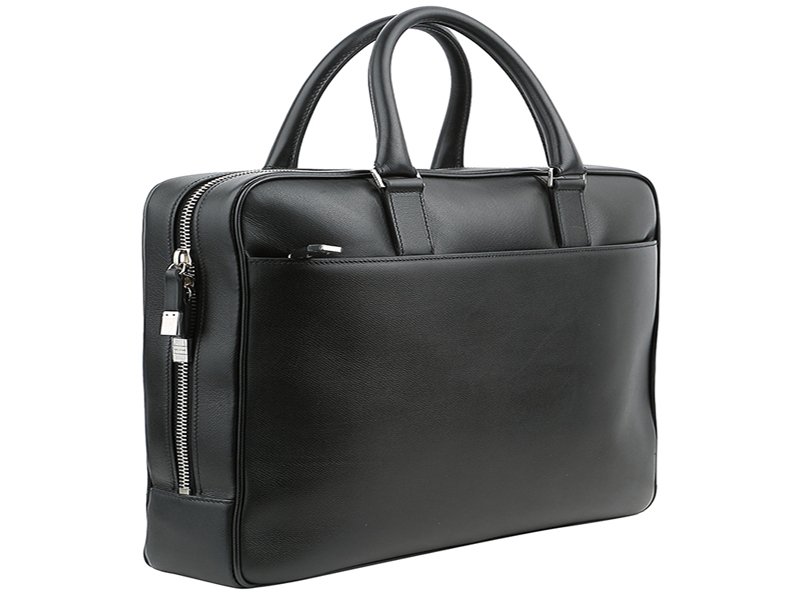
A laptop compartment protects a computer by controlling movement, separating it from hard objects, cushioning everyday impacts, and keeping its vulnerable edges away from the bag’s base, zipper, and hardware. Effective protection comes from the complete compartment system—not from padding alone. Fit, foam density, suspension, corner construction, lining, divider stiffness, closure position, and the way the packed briefcase carries weight all influence how safely the laptop travels.
Most laptop damage during commuting does not come from dramatic accidents. It comes from ordinary actions repeated hundreds of times: placing the bag on a hard floor, allowing a charger to press against the screen, pulling the computer past exposed zipper teeth, dropping the case from chair height, or carrying an oversized device in a sleeve that stretches the surrounding seams.
A good compartment reduces these risks without making the briefcase unnecessarily heavy or difficult to use. It should hold the laptop firmly enough to limit movement but loosely enough for smooth loading. The padding should absorb minor impacts while retaining its shape. The base should protect the computer when the briefcase is placed down. The divider should prevent files and accessories from pressing directly against the device.
| Protection Area | Main Risk | Effective Design Response | Common Weak Design |
|---|---|---|---|
| Bottom edge | Impact when the bag is placed down | Suspended sleeve, raised base, dense foam | Laptop rests directly on bottom seam |
| Side edges | Movement during walking | Controlled fit and side padding | Oversized sleeve with no restraint |
| Screen surface | Pressure from chargers or documents | Firm divider and separate accessory storage | Flat charger pocket against screen |
| Outer corners | Drops and contact with furniture | Corner foam, piping, structured panels | Thin lining around sharp corners |
| Device finish | Scratching from zipper or hardware | Soft lining and protective zipper lip | Exposed teeth or rivet backs |
| Top edge | Laptop moving out of sleeve | Strap, tab, zipper, or adequate sleeve height | Short open pocket |
| Hinge area | Pressure from tight loading | Sufficient depth and opening clearance | Device forced through narrow opening |
| Internal temperature | Heat retained after use | Reasonable fit and breathable construction | Device sealed tightly in thick foam |
The protection system should also match the laptop’s value and working environment. A lightweight office notebook carried between a car and a desk may need moderate padding. A heavy engineering laptop moved through airports and building sites may require dense foam, reinforced corners, a more stable base, and stronger handle attachments.
Protection should never be evaluated only while the briefcase is empty. Once files, a tablet, a water bottle, headphones, a power bank, and a charger are added, the internal pressure changes. A compartment that feels generous in an empty sample can become tight and distorted when the surrounding pockets are filled.
Is a Padded Compartment Enough?
A padded compartment is a necessary starting point, but padding alone is not enough. A laptop can still be damaged if the compartment is too loose, rests directly on the base, shares pressure with hard accessories, or forces the device against zipper teeth. Reliable protection requires controlled fit, bottom suspension, side support, a stable divider, and an opening that allows the laptop to move in and out without scraping.
The word “padded” is often used as a marketing shortcut. It does not explain the material, thickness, density, coverage, or construction. A compartment may contain a soft layer that feels protective when pressed by hand but collapses almost completely under the weight of a laptop.
Foam performance depends on more than thickness. A 10-millimeter layer of low-density sponge can compress until very little protection remains. A thinner high-density EVA or PE foam may retain more separation between the laptop and an impact surface.
| Padding Question | What a Strong Design Should Show | Why It Matters |
|---|---|---|
| Where is the foam placed? | Front, back, sides, and base are considered | Protection should cover more than one flat panel |
| How dense is the foam? | Foam resists full compression under normal pressure | Dense material maintains protective distance |
| Does the foam recover? | Panel returns to shape after compression | Poor recovery leads to permanent weak zones |
| Is the base raised? | Laptop ends above the lowest external edge | Reduces direct impact transfer |
| Is the device restrained? | Controlled dimensions or secure closure | Limits side-to-side movement |
| Are accessories separated? | Charger has its own volume | Prevents pressure points against the screen |
| Is the zipper protected? | Fabric lip or recessed track | Reduces scratches during insertion |
| Does the bag remain stable? | Base stays level under normal load | Prevents the laptop from falling sideways |
A padded compartment should be tested with the intended device inserted. Press gently against the outside of the briefcase and observe whether the laptop outline can be felt immediately. If the charger is stored nearby, check whether its corners create a hard pressure point. Lift and place the packed bag down several times to see whether the computer strikes the base.
The internal divider is particularly important. A divider made only from lining fabric may collapse when a folder or power adapter presses against it. A structured divider may use foam, PE board, felt, or a multilayer textile system. It should be firm enough to distribute pressure without becoming so rigid that it increases weight or damages the laptop during impact.
Padding should also protect the user experience. If the compartment is excessively thick, the bag becomes bulky and reduces usable capacity. If every internal panel is heavily padded, the briefcase can feel like technical equipment luggage rather than a professional work bag.
The best design places protection where risk is highest. The bottom, corners, device-facing divider, and zipper-contact areas usually deserve more attention than the center of a large flat panel.
A realistic comparison shows why structure matters:
| Compartment Design | Everyday Scratch Protection | Impact Protection | Movement Control | Overall Suitability |
|---|---|---|---|---|
| Thin fabric pocket | Low | Very low | Low | Document separation only |
| Soft foam sleeve | Moderate | Low to moderate | Moderate if fitted | Light commuting |
| Dense padded sleeve | High | Moderate | High | General professional use |
| Suspended padded sleeve | High | High for everyday impacts | High | Travel and frequent commuting |
| Molded protective compartment | Very high | High | Very high | Technical or high-value equipment |
| Removable neoprene insert | High | Moderate | Depends on fit | Flexible device programs |
A professional briefcase does not need to become a hard protective case. It should provide enough protection for the way it will actually be used. Claims such as “shockproof” should be avoided unless the complete bag has been tested against a defined impact method.
For many users, the most valuable improvement is not doubling the foam thickness. It is raising the laptop above the base and moving the charger into a separate gusseted pocket.
What Is a Suspended Laptop Sleeve?
A suspended laptop sleeve is an internal compartment whose bottom ends above the outer base of the briefcase. This creates a small protective gap between the laptop and the floor-facing panel. When the bag is placed down, the device is less likely to receive the full impact directly through the bottom seam.
The principle is simple, but the execution requires careful pattern and material control. The sleeve must be securely attached to the surrounding panels so it does not sag under the device’s weight. The suspension distance must be large enough to provide separation but small enough to avoid wasting internal capacity.
A typical suspended design may end approximately 15 to 30 millimeters above the external base. The correct distance depends on device weight, foam density, base structure, bag size, and target protection. A heavy 16-inch workstation may require a stronger support system than a compact 13-inch notebook.
| Suspension Component | Function | Development Consideration |
|---|---|---|
| Raised sleeve bottom | Separates laptop from exterior base | Must remain raised under full device weight |
| Side attachment | Transfers load into bag panels | Seams require reinforcement |
| Bottom foam | Cushions downward movement | Density matters more than softness alone |
| Base board | Distributes external impact | Must not create a hard edge against the laptop |
| Side foam | Limits horizontal movement | Should not make loading difficult |
| Top restraint | Keeps device inside sleeve | Strap should not press against the display |
| Divider structure | Prevents surrounding pressure | Requires balance between stiffness and weight |
| Lining | Protects device surface | Must be securely bonded or stitched |
The sleeve can be suspended through several construction methods. It may be stitched into the side seams above the base. It may hang from reinforced webbing. It may use a foam-supported pocket connected to the rear panel. A removable sleeve may sit in a raised internal cradle.
The most reliable method depends on the outer structure. A slim textile briefcase may use a lightweight raised pocket stitched into the lining and rear panel. A technical case may use webbing reinforcement connected to the handle structure. A rigid briefcase may use a fitted foam insert.
Suspension should be tested under load. An empty sleeve may appear raised, but a heavy laptop can pull the lining downward until it touches the base. The sample should be packed with the maximum intended device weight and left standing for a period before inspection.
The sleeve must also remain stable when the bag is carried by the shoulder strap. If it is attached only at the top, the device may swing inside the briefcase. Side anchoring and controlled dimensions help maintain position.
A suspended base is especially valuable for commuters who frequently place the bag on train platforms, office floors, airport surfaces, and vehicle interiors. The user may not drop the bag, but repeated firm placement creates cumulative stress.
A simple demonstration can reveal the difference. Place a laptop in a basic pocket that reaches the bottom of a soft briefcase. Gently tap the exterior base and the force can be felt immediately through the device. Repeat the test with a raised sleeve and reinforced base, and the gap helps absorb and distribute the contact.
Suspension is not a complete solution. If the outer base is extremely soft, the floor can still push inward until it reaches the sleeve. For stronger protection, the raised compartment should work with base foam, structural board, corner reinforcement, or a coated bottom panel.
The concept is valuable because it improves protection without dramatically changing the appearance of the briefcase. It is hidden engineering that the user may never notice—until the bag is placed down harder than expected.
Which Foam Protects Laptops Best?
The best foam for a laptop briefcase is usually a closed-cell or semi-closed-cell material with enough density to resist full compression, recover after repeated pressure, and maintain separation without adding excessive weight. EVA and PE foams are common for structured protection, while neoprene, sponge foam, felt, and multilayer combinations can support specific comfort, flexibility, or surface requirements.
Foam should be selected by density, hardness, thickness, compression recovery, temperature behavior, odor, and compatibility with sewing or lamination. “Thicker” is not the same as “safer.”
| Foam or Padding Material | Protection Character | Strengths | Limitations |
|---|---|---|---|
| EVA foam | Firm and resilient | Good shape recovery and impact control | Can feel stiff in slim bags |
| PE foam | Lightweight and structured | Strong separation at low thickness | Less soft hand feel |
| EPE foam | Light and cushioning | Cost-effective and easy to layer | Can compress or deform depending on grade |
| Sponge foam | Soft and comfortable | Flexible and economical | Lower long-term compression resistance |
| Neoprene | Stretchy and protective | Conforms to device shape | Adds bulk and retains heat |
| Memory-style foam | Soft pressure distribution | Premium feel | Slow recovery may be unsuitable for structure |
| Felt | Surface protection and moderate cushioning | Soft, quiet, and scratch-resistant | Limited impact control alone |
| Molded EVA | Defined shape and corner protection | Consistent high-level fit | Tooling and higher development cost |
| Foam-board laminate | Protection plus panel structure | Maintains briefcase silhouette | Adds weight and reduces flexibility |
EVA foam is widely used because it combines structure, resilience, and relatively low water absorption. It can be produced at different densities and hardness levels. A firm EVA panel can protect the laptop and help the briefcase retain its shape, but excessive hardness may make the bag uncomfortable against the body.
PE foam is lightweight and provides controlled separation. It is useful in side walls, dividers, and base panels where a thinner structure is preferred. It may be combined with softer fabric or sponge to improve hand feel.
Sponge foam creates an immediately soft impression. It is useful in shoulder pads, handle wraps, and light-duty compartments. However, low-quality sponge can flatten after repeated pressure, leaving the laptop closer to the outer panel.
Neoprene is useful for flexible sleeves because it stretches around device shapes and provides continuous cushioning. It is especially effective in removable inserts and slim cases. Its disadvantages include bulk at seams, heat retention, possible odor, and a more casual appearance.
Felt protects against scratches and provides a premium tactile surface. Dense felt can also add structure, but it is rarely sufficient as the only impact layer for a travel-focused briefcase. It works well as the device-contact surface over EVA or PE foam.
A multilayer system often performs better than one thick material:
| Layer Position | Possible Material | Purpose |
|---|---|---|
| Device-contact layer | Brushed polyester, microfiber, or felt | Prevent scratches |
| Comfort layer | Thin sponge or neoprene | Cushion and adapt to device shape |
| Structural layer | EVA or PE foam | Resist compression and impact |
| Support layer | PE or PP board | Distribute force and maintain shape |
| Exterior layer | Nylon, polyester, canvas, or leather | Resist abrasion and weather |
| Interior barrier | Coated textile or lamination | Reduce moisture transfer |
The ideal combination depends on the briefcase category. A luxury leather briefcase may use thin high-density foam and microfiber lining to keep the body slim. A travel model may use thicker EVA and a structured base. A military or medical case may use closed-cell foam and wipe-clean lining. A lightweight corporate bag may prioritize moderate protection and low empty weight.
Foam can also affect sewing quality. Thick layers create bulky seams, especially around corners. If the foam is stitched directly, needle holes may weaken or compress it. In many constructions, foam is laminated to fabric, inserted between panels, or cut away from seam allowances.
Odor and chemical stability should be checked. Some low-grade foam materials release noticeable smells after packaging. Heat during storage or shipping can make the issue worse. Proper material curing, ventilation, and aging tests reduce this risk.
For custom production, the laptop weight should influence the foam choice. A 1.2-kilogram notebook places less continuous pressure on the sleeve base than a 2.5-kilogram engineering laptop. The heavier device needs stronger suspension and better compression resistance.
The best foam is therefore not selected from a list in isolation. It is selected as part of a tested compartment assembly.
How Are Laptop Corners Protected?
Laptop corners are protected through close compartment fit, side foam, raised bases, reinforced briefcase corners, piping, structured panels, and designs that prevent the device from moving toward hard external edges. Corner protection matters because impact force is often concentrated in a small area, and laptop corners may contain ports, chassis joints, display hinges, or delicate internal components.
A large flat panel can flex and distribute pressure. A corner has less area to absorb force. When a briefcase is dropped or strikes a doorway, table, or suitcase, the device corner may receive the strongest contact.
| Corner Risk | How It Occurs | Protection Strategy |
|---|---|---|
| Bottom-corner impact | Bag is placed or dropped on one corner | Suspended sleeve and dense base foam |
| Side-corner collision | Briefcase hits furniture or a doorway | Side padding and structured outer corner |
| Zipper-corner contact | Laptop passes a curved opening | Fabric lip and wider zipper radius |
| Device movement | Oversized sleeve allows sliding | Controlled fit and retaining strap |
| Hard trim pressure | Rivet, buckle, or piping sits near device | Protective internal patch and positioning |
| Base collapse | Soft bottom folds around the device | Base board and reinforced bottom panel |
| Repeated abrasion | Corner rubs inside loose sleeve | Soft lining and stable compartment |
| Overpacking pressure | External contents push laptop outward | Firm divider and separate storage |
Corner protection begins with fit. If a laptop can slide 30 or 40 millimeters inside the sleeve, it builds momentum before striking the edge. Reducing movement often improves protection more effectively than adding a thin decorative foam layer.
The compartment corners can use shaped EVA pieces, folded foam, molded inserts, or reinforced piping. Molded corner blocks provide strong protection for technical equipment, but they add bulk and cost. A standard professional briefcase may use strategically layered foam instead.
The outer bag corners also need abrasion resistance. Even when the laptop is well padded internally, the briefcase corner may wear through after repeated contact with the floor. Coated nylon, heavy Oxford fabric, leather reinforcement, molded panels, or double-layer canvas can be used in these areas.
Piping can support the outer shape and provide a controlled edge. It may contain plastic cord, foam, or textile filling. The piping material should not become a hard ridge directly beside the laptop. Internal foam should separate the device from the cord.
A structured base board distributes pressure when one part of the bag contacts the floor. The board should have rounded edges and be covered by foam or fabric. A sharp board corner can create a new pressure point.
Zipper geometry is another corner issue. Three-sided openings are convenient, but the laptop must pass around curved zipper ends. If the corner radius is too small, the device may scrape the slider or teeth. A wider radius and protective fabric lip improve access.
In a practical sample review, a laptop may appear well protected while the bag is upright. Turn the packed briefcase sideways and gently shake it. If the device falls toward one corner, the fit or top restraint needs improvement.
The compartment should also be tested with the smallest intended laptop. A universal 16-inch sleeve may protect the maximum device well but allow a 14-inch computer to move excessively. Removable side pads or an adjustable divider can reduce this risk.
Corner protection is especially important for larger laptops because the device mass increases the force of movement. Strong internal construction should be paired with reinforced handles so the bag remains balanced and is less likely to tilt or slip during carrying.
Does Soft Lining Prevent Scratches?
Soft lining helps prevent scratches by creating a smooth contact surface between the laptop and the compartment. Microfiber, brushed polyester, felt, tricot, velour-like textiles, and fine woven linings can reduce abrasion against painted, anodized, plastic, or coated device surfaces. However, lining only works when it remains clean, securely attached, and free from exposed seams, zipper teeth, rivets, or trapped debris.
A soft surface cannot prevent impact damage. It addresses friction and appearance rather than structural protection. It should work with foam, fit control, and careful hardware placement.
| Lining Material | Surface Feel | Advantages | Potential Limitation |
|---|---|---|---|
| Brushed polyester | Soft and smooth | Lightweight, consistent, easy to color | Quality varies by brushing density |
| Microfiber | Fine and premium | Excellent scratch control | Higher material cost |
| Felt | Soft and dense | Adds cushioning and structure | May collect dust or fibers |
| Tricot | Smooth knitted surface | Low friction and lightweight | Limited cushioning |
| Velour-style fabric | Plush and protective | Premium tactile effect | Can add bulk and hold debris |
| Fine polyester weave | Clean and practical | Durable and easy to maintain | Less soft than brushed materials |
| Neoprene face fabric | Smooth and flexible | Continuous cushioning | Heat and odor considerations |
| Cotton lining | Natural hand feel | Breathable and familiar | Can absorb moisture and dirt |
The lining should be inspected for hidden hazards. A metal logo badge attached to the exterior may have posts inside the panel. A rivet back may sit behind thin lining. A zipper stop may contact the laptop corner. A seam allowance may create a rough ridge.
These areas should be covered with protective patches, foam, or folded fabric. The laptop should never rest directly against a metal attachment point.
Loose lining creates another problem. If it lifts when the laptop is removed, it can bunch around the zipper or trap dirt. Secure attachment points help the lining remain in position without creating excessive tension.
Color selection affects usability. A light or medium-tone lining makes small objects and dirt easier to see. A completely black interior may look clean when new but makes cables and accessories difficult to find. A contrasting laptop sleeve can also help users identify the device compartment quickly.
Colorfastness is important. Dark lining should not transfer dye onto a light laptop shell, charger cable, or document. Dry- and wet-rub tests can help evaluate transfer risk.
Debris can defeat even the softest lining. Sand, metal fragments, broken pencil tips, and dirt particles can become trapped at the bottom and scratch the device. The compartment should be easy to inspect and clean. A fully removable sleeve offers easier maintenance but adds complexity.
Moisture should also be considered. A soft cotton or plush lining can absorb water from a damp laptop surface or leaking bottle. A synthetic lining dries faster and may be more appropriate for travel. In medical or industrial applications, a wipe-clean lining may be more important than a luxurious hand feel.
A protective zipper lip is one of the most useful lining-related details. It extends between the laptop and the zipper chain, preventing the device edge from scraping across teeth during insertion. The lip should remain in position and not fold into the slider.
The ideal lining feels soft, remains stable, resists color transfer, and supports easy cleaning. It should protect the device quietly without becoming the most complicated part of the compartment.
Which Briefcase Material Is Best?
The best laptop briefcase material depends on how the bag will be carried, how formal it should look, how much weather and abrasion it will face, and how much empty weight the user can comfortably manage. Leather offers premium structure and formality, canvas provides character and flexibility, nylon delivers a strong strength-to-weight ratio, polyester supports color and cost control, Oxford fabric provides broad performance customization, and recycled textiles can work when their construction and quality are properly verified.
Material should be selected as a system rather than a single outer layer. A laptop briefcase may combine an abrasion-resistant exterior, water-resistant backing, structural foam, reinforced webbing, smooth lining, leather or microfiber trim, coated base fabric, and metal or polymer hardware.
The correct material choice begins with use:
| Use Environment | Main Material Need | Suitable Starting Options |
|---|---|---|
| Formal client meetings | Refined appearance and shape | Leather, coated canvas, premium Oxford |
| Daily urban commuting | Low weight and weather resistance | Nylon, polyester, Oxford fabric |
| Frequent air travel | Abrasion resistance and easy maintenance | Ballistic-style nylon, dense polyester |
| Creative workplace | Texture and flexible character | Canvas, linen blend, leather trim |
| Medical application | Wipe-clean surface and controlled lining | Coated polyester, nylon, TPU-laminated fabric |
| Technical or military use | Strength and reinforced construction | High-tenacity nylon, heavy Oxford |
| Corporate employee program | Color consistency and scalable cost | Polyester or polyester Oxford |
| Premium private label | Distinctive hand feel and customized detail | Leather, coated canvas, mixed materials |
| Sustainability-focused range | Verified recycled content and long service life | Recycled polyester or nylon |
| Light promotional use | Printability and controlled price | Polyester, cotton canvas |
No material is automatically premium or low quality. A poorly finished leather bag can fail faster than a well-engineered polyester briefcase. A high-denier fabric can still perform badly if the weave is loose, the coating peels, or the handle reinforcement is weak.
The outer material should therefore be judged together with construction, coating, hardware, seam design, and the intended packed weight.
Is Leather Good for Laptop Briefcases?
Leather is good for laptop briefcases when professional appearance, structure, tactile quality, and long-term character are priorities. It works particularly well for executive, legal, consulting, finance, and premium retail products. However, leather adds weight, requires maintenance, and needs careful internal engineering to protect electronics from moisture, hard edges, and structural pressure.
A leather exterior does not automatically create a protective laptop compartment. The device still needs foam, lining, a raised base, and separation from chargers and documents.
Leather can be used as the complete outer shell or as trim around handles, corners, pocket openings, zipper pulls, and logo panels. Full leather creates a formal and premium impression. Leather trim on a textile body reduces weight while preserving visual value.
| Leather Option | Visual Character | Strengths | Limitations |
|---|---|---|---|
| Full-grain leather | Natural and premium | Strong aging character and durability | Heavy, costly, and variable |
| Top-grain leather | Refined and uniform | Balanced premium appearance | Requires finish maintenance |
| Corrected leather | Consistent and controlled | Easier color matching | Less natural surface character |
| Split leather | Commercial formal appearance | Lower material cost | Lower long-term surface performance |
| Vegetable-tanned leather | Firm and heritage-focused | Develops strong patina | Water sensitivity and stiffness |
| Chrome-tanned leather | Soft and color-versatile | Flexible and commercially practical | Environmental controls matter |
| Synthetic leather | Uniform and customizable | Easy care and vegan positioning | Coating durability varies |
| Microfiber leather | Refined synthetic alternative | Strong consistency and abrasion performance | Higher cost than basic PU leather |
Thickness and temper strongly affect the finished briefcase. Thick firm leather can create a structured body but may become heavy and difficult around gussets. Thin soft leather feels luxurious but may collapse unless backed with foam, nonwoven material, or structural board.
Laptop briefcases need flex in specific areas. Zipper panels, side gussets, flap folds, and handle bases move repeatedly. Overly stiff leather can crease or crack. Overly soft leather can stretch and distort.
Leather also reacts to water. Surface finishing can improve resistance, but prolonged moisture exposure may cause staining, darkening, stiffness, or shape change. A leather briefcase used in rainy commuting conditions should include a protected zipper, water-resistant lining, and clear care instructions.
The interior structure should prevent hardware from contacting the laptop. Leather bags often use rivets, locks, metal feet, badges, and decorative fittings. Every attachment point should be covered internally.
Edge finishing is another quality indicator. Leather edges may be folded, burnished, painted, bound, or left raw depending on the design. Painted edges should remain flexible around handles and openings. Cracking often occurs when edge paint is applied too thickly or over a poorly prepared surface.
| Leather Construction Area | Quality Requirement | Common Failure |
|---|---|---|
| Handles | Internal core and reinforced attachment | Stretching or cracking at bends |
| Corners | Controlled folding and thickness reduction | Bulky seams or surface cracking |
| Zipper opening | Flexible leather and smooth alignment | Wavy zipper or difficult access |
| Laptop divider | Foam-backed and softly lined | Hard leather presses against device |
| Base | Structural support and moisture protection | Sagging or water staining |
| Edge paint | Flexible, even, and bonded | Peeling or cracking |
| Metal fittings | Covered internal backs | Device scratches |
| Shoulder anchors | Reinforced beneath leather | Tear around hardware |
Leather weight should be considered honestly. A large full-leather briefcase with metal hardware, reinforced base, multiple compartments, and padded laptop storage may weigh more than two kilograms before anything is packed. Add a 16-inch laptop and charger, and the total load can become uncomfortable.
A mixed-material design can solve this. Nylon or Oxford fabric can form the main body, while leather appears on the handles, logo patch, front trim, and zipper pulls. This creates a polished professional look with better weight and weather performance.
For private-label development, leather should be approved by thickness, grain, color tolerance, surface finish, temper, and acceptable natural markings. A photograph cannot communicate all of these qualities. Physical swatches and a complete sample are essential.
Leather is therefore an excellent laptop briefcase material when its visual advantages support the user’s environment and when the internal protection system is engineered with the same care as the exterior.
How Does Canvas Perform?
Canvas performs well in laptop briefcases that need a durable natural texture, flexible styling, and a less formal professional character. Dense cotton canvas can provide strong body and abrasion resistance, while waxed or coated versions improve water repellency. Canvas works especially well for creative professionals, educators, architects, designers, lifestyle brands, and heritage-inspired collections.
Canvas is not one fixed specification. It can be lightweight or heavy, loosely woven or dense, untreated or coated, cotton-based or blended with polyester. These variations affect weight, durability, water behavior, printing, and shape retention.
| Canvas Type | Appearance | Performance Character | Suitable Laptop Briefcase |
|---|---|---|---|
| Lightweight cotton canvas | Soft and natural | Flexible but needs backing | Promotional or light-duty case |
| Heavy cotton canvas | Dense and rugged | Strong but heavier | Heritage work briefcase |
| Cotton-poly canvas | Natural with added stability | Better shape and faster drying | Everyday commuting |
| Waxed canvas | Aged and distinctive | Water-repellent with crease marks | Outdoor-inspired professional bag |
| PU-coated canvas | Structured and practical | Improved moisture resistance | Travel and commuter briefcase |
| Printed canvas | Expressive and customizable | Strong branding potential | Lifestyle and creative collections |
| Recycled canvas blend | Textured sustainability story | Depends on fiber consistency | Eco-positioned product range |
Untreated cotton absorbs moisture and can become heavier when wet. It may also stain around the base, handles, and corners. A laptop briefcase using natural canvas should include a water-resistant internal barrier or coated laptop compartment.
Waxed canvas is popular because it develops visible folds and marks that create character. This appearance should be explained clearly. One customer may see a developing patina; another may see inconsistency or damage.
Coated canvas improves water resistance and structure. PU backing can help the material hold shape and reduce moisture penetration. The coating must remain flexible around seams and folds.
Canvas weight should be balanced against the laptop load. Heavy fabric can feel durable, but a large canvas briefcase with leather trim, metal hardware, thick lining, and several compartments may become almost as heavy as full leather.
Canvas also requires reinforcement around concentrated stress points. Handles should usually connect to internal webbing or broad patches. A dense outer fabric can still tear around a small stitched area if the load is not distributed.
The weave texture affects logo quality:
| Logo Method | Canvas Suitability | Development Note |
|---|---|---|
| Embroidery | Strong and tactile | Backing prevents puckering |
| Screen printing | Good for broad graphics | Fine detail may disappear on coarse weave |
| Leather patch | Premium and natural | Requires balanced size and edge finish |
| Woven label | Consistent and practical | Placement should avoid pocket seams |
| Heat transfer | Possible on suitable finishes | Adhesion must be tested |
| Direct printing | Good on smooth canvas | Color depends on fiber and pretreatment |
| Metal badge | Adds premium contrast | Panel needs internal reinforcement |
| Debossed patch | Subtle heritage effect | Leather or synthetic patch required |
Canvas corners and bottom panels are high-wear areas. Leather, microfiber, coated nylon, or a second layer of canvas can reinforce these zones. The base may also use a removable board to improve stability.
The lining should prevent fiber or coating contact with the laptop. A smooth polyester or microfiber lining is more suitable than leaving the canvas surface exposed.
Cleaning instructions matter. Some canvas bags can be spot cleaned but should not be machine washed because water and agitation may affect coatings, boards, foam, leather trim, or hardware. Waxed canvas may require rewaxing after extended use.
Canvas performs best when the product intentionally embraces its texture and natural character. Trying to make coarse canvas imitate a formal leather briefcase often produces an uncertain result. A well-designed canvas case should look confidently practical rather than almost formal.
Are Nylon and Polyester Durable?
Nylon and polyester are both durable enough for professional laptop briefcases when the correct yarn, weave, density, coating, and reinforcement are selected. Nylon generally provides excellent abrasion resistance and strength relative to its weight. Polyester offers strong color consistency, UV stability, printability, cost control, and broad availability. Construction quality remains more important than the fiber name alone.
A high-quality polyester Oxford fabric can outperform a lightweight nylon in a daily commuting application. A high-tenacity nylon can provide better abrasion resistance than many standard polyester fabrics. The final result depends on the exact specification.
Denier is often used to describe yarn size. Common bag fabrics include 300D, 420D, 600D, 900D, and 1680D constructions. Higher denier usually means thicker yarn, but it does not automatically guarantee better durability.
| Fabric Factor | Performance Influence | Why Buyers Should Check It |
|---|---|---|
| Denier | Yarn thickness and surface character | Does not show weave density alone |
| Fiber type | Abrasion, color, and moisture behavior | Nylon and polyester have different strengths |
| Filament quality | Yarn consistency and strength | Low-grade yarn can fuzz or break |
| Weave density | Tear resistance and structure | Loose weave may separate around seams |
| Back coating | Water resistance and stability | Poor coating can peel |
| Surface treatment | Stain and water behavior | Performance may reduce with use |
| Lamination | Barrier and shape | Adds weight and stiffness |
| Colorfastness | Resistance to transfer and fading | Important for straps against clothing |
| Seam strength | Complete-panel durability | Strong fabric can still fail at stitching |
Nylon usually feels slightly softer and has strong abrasion performance. Ballistic-style nylon uses a dense basket weave and is associated with travel and heavy-duty bags. It can withstand frequent rubbing against luggage, floors, and transport surfaces. Its technical texture may not suit every formal environment.
Polyester is widely used in corporate laptop briefcases because colors can be controlled consistently across production. It supports screen printing, sublimation, digital printing, embroidery, lamination, and coatings. It is also available across a broad cost range.
Water absorption differs between the fibers, but the practical water resistance of a briefcase depends heavily on the coating and construction. Seams, zippers, needle holes, and pocket openings may allow moisture in even when the fabric face sheds rain.
| Performance Area | Nylon | Polyester |
|---|---|---|
| Abrasion resistance | Generally excellent | Good to excellent depending on construction |
| Strength-to-weight | High | Good |
| Color stability | Good | Generally very good |
| UV resistance | Can degrade with long exposure | Generally stronger |
| Print options | Good | Excellent |
| Moisture behavior | Slightly more absorbent | Lower absorption |
| Technical appearance | Often stronger | Broad from casual to refined |
| Cost control | Can be higher | Broad and scalable |
| Recycled options | Available | Widely available |
| Corporate color matching | Good | Often easier |
The bottom panel may use a heavier fabric than the upper body. A 420D nylon body can be combined with a 1680D polyester or reinforced coated base. This places abrasion resistance where it is most needed without making the whole briefcase heavy.
Handle reinforcement should be hidden inside the body. Webbing can continue downward from the handle attachment and distribute the load across the panel. Without this structure, the outer fabric may tear even if it has excellent tensile strength.
Zipper tape and lining should also coordinate with the outer material. A strong nylon shell with a weak lining or low-quality zipper will not create a durable briefcase.
Abrasion testing can compare how fabrics respond to repeated rubbing. Tear and tensile tests measure different failure modes. Seam-slippage testing shows whether yarns separate around stitches. Coating adhesion and flex tests help evaluate long-term backing performance.
A realistic sample test should include loading the intended laptop and accessories, carrying the bag repeatedly, placing it on rough surfaces, and inspecting the corners, base, handles, and shoulder anchors.
Nylon is often the better starting point for demanding travel and technical use. Polyester is often the better starting point for corporate programs, printed designs, color consistency, and controlled cost. Both can create professional, long-lasting laptop briefcases when properly engineered.
Is Oxford Fabric Water-Resistant?
Oxford fabric can be water-resistant when it is made from polyester or nylon and finished with a suitable backing, coating, lamination, or water-repellent treatment. The Oxford weave itself does not make the fabric waterproof. Water performance depends on yarn density, face treatment, PU or TPU backing, seams, zipper construction, and how long the material is exposed.
Oxford fabric is recognized by its basket-like weave. It is widely used in laptop briefcases because it provides texture, structure, color consistency, and compatibility with coatings.
| Oxford Fabric Specification | Typical Character | Laptop Briefcase Application |
|---|---|---|
| 210D Oxford | Lightweight and flexible | Lining, internal pockets, light outer bags |
| 300D Oxford | Clean and moderate weight | Slim professional briefcases |
| 420D Oxford | Balanced strength and flexibility | Commuter and travel bags |
| 600D Oxford | Structured and commercially durable | Corporate and everyday laptop cases |
| 900D Oxford | Heavier and more abrasion-resistant | Technical and reinforced products |
| 1680D Oxford-style weave | Dense and luggage-focused | Heavy travel briefcases and bases |
| PU-coated Oxford | Improved water resistance | Daily commuting |
| TPU-laminated Oxford | Stronger barrier performance | Medical and technical applications |
These denier categories describe general market directions rather than guaranteed performance levels. A tightly woven 420D fabric with a strong coating may outperform a loose 600D fabric.
Water resistance should be considered in layers:
| Protection Level | Construction Example | Realistic Use |
|---|---|---|
| Light repellency | Face DWR treatment | Brief exposure to drizzle |
| Moderate resistance | Dense Oxford plus PU backing | Normal urban commuting |
| Higher resistance | TPU lamination and protected zipper | Frequent wet conditions |
| Near-waterproof fabric | Strong barrier material | Fabric resists water, seams may not |
| Waterproof bag system | Sealed seams and waterproof closure | Specialized technical use |
A professional laptop briefcase usually needs moderate water resistance rather than complete waterproofing. It should protect the device during a short walk in rain or when the bag is placed briefly on a damp surface.
Zippers are common entry points. Standard coil zippers allow moisture through the teeth. Reverse-coil zippers hide the chain and create a cleaner appearance. Coated zippers improve resistance but may feel stiffer. A fabric zipper flap can reduce direct exposure.
Seams contain needle holes. Even waterproof fabric can leak through stitched construction. Seam tape or welding can improve protection, but these processes increase cost and may not be compatible with every fabric or briefcase style.
The base should receive stronger treatment than the upper panels. A coated Oxford fabric, TPU-laminated material, or molded panel can resist wet floors and abrasion. The laptop sleeve should remain raised above the outer base.
A bottle pocket should be separated from the laptop compartment. Water resistance against rain does not protect the device from a leaking bottle inside the bag. A lined isolated pocket reduces this risk.
Coating quality affects long-term performance. PU backing can become sticky, powdery, or separated if the formula is weak or exposed to heat and humidity. Flex and aging tests help evaluate durability.
The surface hand feel also matters. Heavy coating can make Oxford fabric stiff, shiny, and noisy. A premium laptop briefcase may use a matte face with a flexible backing to maintain a refined appearance.
Oxford fabric offers extensive customization. Color, denier, weave, coating, printing, lamination, anti-stain treatment, and logo method can be adjusted. This makes it one of the most versatile options for Szoneier custom briefcase projects.
The correct product claim should be specific. “Water-resistant for everyday commuting” is more credible than “fully waterproof” unless the complete bag construction has been tested accordingly.
Can Recycled Fabrics Work?
Recycled fabrics can work very well in laptop briefcases when their fiber source, yarn quality, weave, coating, colorfastness, and finished-product durability are properly controlled. Recycled polyester and recycled nylon can provide performance similar to conventional materials in many applications while supporting sustainability goals. The environmental value is strongest when recycled content is combined with long service life, repairable construction, efficient packaging, and responsible production.
Recycled polyester is commonly produced from post-consumer plastic bottles or industrial textile waste. Recycled nylon may come from fishing nets, fabric waste, carpet, or industrial sources. These materials are processed into chips or polymers, spun into yarn, and woven into new fabric.
| Recycled Material | Typical Source | Main Strength | Main Development Question |
|---|---|---|---|
| Recycled polyester | Bottles or textile waste | Broad availability and color options | Is content verified and traceable? |
| Recycled nylon | Nets, carpet, or industrial waste | Strong performance potential | Does yarn meet abrasion requirements? |
| Recycled cotton blend | Cutting waste or used textiles | Natural texture | Is fiber length sufficient for strength? |
| Recycled canvas | Cotton or mixed-fiber waste | Sustainability and lifestyle appeal | Is composition consistent? |
| Recycled lining | Polyester waste | Easy internal sustainability upgrade | Does it meet colorfastness needs? |
| Recycled webbing | Polyester or nylon | Extends recycled content to components | Does it maintain load strength? |
| Recycled foam | Industrial foam waste | Reduces virgin material use | Is density and odor controlled? |
Recycled content should not be treated as a complete sustainability claim. A briefcase may use recycled outer fabric but still contain virgin foam, metal hardware, synthetic coating, adhesives, and mixed materials. Transparent product descriptions should explain which components contain recycled material.
Certification can help verify content. Buyers may request documentation from the fabric supplier or third-party systems that track recycled material through the supply chain. The required certification depends on the brand, market, and claim.
Performance must remain the first functional requirement. A laptop briefcase protects expensive equipment. Using a recycled fabric that tears, fades, or delaminates prematurely does not create a sustainable product.
Recycled polyester generally offers stable quality because the polymer can be reprocessed into consistent filament yarn. It supports coatings, printing, and color development. Recycled nylon can provide high strength, but material availability and price may vary.
Recycled cotton is more challenging because mechanical recycling shortens the fibers. It is often blended with virgin cotton or polyester to improve yarn strength. This can create attractive canvas and lining materials, but the exact composition should be clear.
| Sustainability Decision | Better Approach | Weak Approach |
|---|---|---|
| Outer fabric | Verified recycled content with durability testing | Unverified “eco fabric” claim |
| Product lifespan | Strong handles, replaceable strap, quality zipper | Low-cost construction that fails quickly |
| Packaging | Reduced plastic and right-sized cartons | Oversized decorative packaging |
| Material mix | Simplified compatible components where possible | Unnecessary layers and mixed materials |
| Color process | Controlled dyeing and wastewater management | Sustainability claim based only on fiber |
| Sampling | Accurate development to reduce rejected production | Multiple uncontrolled revisions |
| Repair | Replaceable shoulder strap and accessible hardware | Permanently bonded components |
| Repeat orders | Retained specifications and stable materials | Constantly changing fabric sources |
A long-lasting briefcase may have a lower practical environmental impact than a lighter “eco” product that must be replaced after one year. Durability, emotional value, repairability, and timeless design all contribute to sustainability.
Recycled material can also affect visual storytelling. A matte recycled polyester can look premium and technical. Recycled canvas can create a natural lifestyle appearance. Recycled lining can carry a printed message explaining the material source without placing a large claim on the exterior.
Brands should avoid making unsupported environmental promises. Terms such as sustainable, green, eco-friendly, and ocean-safe can imply more than the material evidence supports. Specific statements—such as the percentage and certification of recycled polyester—are more credible.
For custom laptop briefcases, recycled options can be integrated gradually. A company may begin with recycled outer fabric and lining while using proven conventional hardware and foam. Later versions can increase recycled content as reliable components become available.
Szoneier can evaluate recycled polyester, recycled nylon, recycled canvas blends, and coordinating linings according to the required color, coating, structure, logo method, and performance level. Material swatches and complete samples allow the buyer to compare hand feel, weight, appearance, and durability before production.
The central question is not whether recycled fabric can work. It can. The more important question is whether the complete briefcase is designed to remain useful, protective, and repairable for long enough to justify the materials used.
How Does a Laptop Compartment Protect Devices?

A laptop compartment protects a computer by controlling movement, separating it from hard objects, cushioning everyday impacts, and keeping its vulnerable edges away from the bag’s base, zipper, and hardware. Effective protection comes from the complete compartment system—not from padding alone. Fit, foam density, suspension, corner construction, lining, divider stiffness, closure position, and the way the packed briefcase carries weight all influence how safely the laptop travels.
Most laptop damage during commuting does not come from dramatic accidents. It comes from ordinary actions repeated hundreds of times: placing the bag on a hard floor, allowing a charger to press against the screen, pulling the computer past exposed zipper teeth, dropping the case from chair height, or carrying an oversized device in a sleeve that stretches the surrounding seams.
A good compartment reduces these risks without making the briefcase unnecessarily heavy or difficult to use. It should hold the laptop firmly enough to limit movement but loosely enough for smooth loading. The padding should absorb minor impacts while retaining its shape. The base should protect the computer when the briefcase is placed down. The divider should prevent files and accessories from pressing directly against the device.
| Protection Area | Main Risk | Effective Design Response | Common Weak Design |
|---|---|---|---|
| Bottom edge | Impact when the bag is placed down | Suspended sleeve, raised base, dense foam | Laptop rests directly on bottom seam |
| Side edges | Movement during walking | Controlled fit and side padding | Oversized sleeve with no restraint |
| Screen surface | Pressure from chargers or documents | Firm divider and separate accessory storage | Flat charger pocket against screen |
| Outer corners | Drops and contact with furniture | Corner foam, piping, structured panels | Thin lining around sharp corners |
| Device finish | Scratching from zipper or hardware | Soft lining and protective zipper lip | Exposed teeth or rivet backs |
| Top edge | Laptop moving out of sleeve | Strap, tab, zipper, or adequate sleeve height | Short open pocket |
| Hinge area | Pressure from tight loading | Sufficient depth and opening clearance | Device forced through narrow opening |
| Internal temperature | Heat retained after use | Reasonable fit and breathable construction | Device sealed tightly in thick foam |
The protection system should also match the laptop’s value and working environment. A lightweight office notebook carried between a car and a desk may need moderate padding. A heavy engineering laptop moved through airports and building sites may require dense foam, reinforced corners, a more stable base, and stronger handle attachments.
Protection should never be evaluated only while the briefcase is empty. Once files, a tablet, a water bottle, headphones, a power bank, and a charger are added, the internal pressure changes. A compartment that feels generous in an empty sample can become tight and distorted when the surrounding pockets are filled.
Is a Padded Compartment Enough?
A padded compartment is a necessary starting point, but padding alone is not enough. A laptop can still be damaged if the compartment is too loose, rests directly on the base, shares pressure with hard accessories, or forces the device against zipper teeth. Reliable protection requires controlled fit, bottom suspension, side support, a stable divider, and an opening that allows the laptop to move in and out without scraping.
The word “padded” is often used as a marketing shortcut. It does not explain the material, thickness, density, coverage, or construction. A compartment may contain a soft layer that feels protective when pressed by hand but collapses almost completely under the weight of a laptop.
Foam performance depends on more than thickness. A 10-millimeter layer of low-density sponge can compress until very little protection remains. A thinner high-density EVA or PE foam may retain more separation between the laptop and an impact surface.
| Padding Question | What a Strong Design Should Show | Why It Matters |
|---|---|---|
| Where is the foam placed? | Front, back, sides, and base are considered | Protection should cover more than one flat panel |
| How dense is the foam? | Foam resists full compression under normal pressure | Dense material maintains protective distance |
| Does the foam recover? | Panel returns to shape after compression | Poor recovery leads to permanent weak zones |
| Is the base raised? | Laptop ends above the lowest external edge | Reduces direct impact transfer |
| Is the device restrained? | Controlled dimensions or secure closure | Limits side-to-side movement |
| Are accessories separated? | Charger has its own volume | Prevents pressure points against the screen |
| Is the zipper protected? | Fabric lip or recessed track | Reduces scratches during insertion |
| Does the bag remain stable? | Base stays level under normal load | Prevents the laptop from falling sideways |
A padded compartment should be tested with the intended device inserted. Press gently against the outside of the briefcase and observe whether the laptop outline can be felt immediately. If the charger is stored nearby, check whether its corners create a hard pressure point. Lift and place the packed bag down several times to see whether the computer strikes the base.
The internal divider is particularly important. A divider made only from lining fabric may collapse when a folder or power adapter presses against it. A structured divider may use foam, PE board, felt, or a multilayer textile system. It should be firm enough to distribute pressure without becoming so rigid that it increases weight or damages the laptop during impact.
Padding should also protect the user experience. If the compartment is excessively thick, the bag becomes bulky and reduces usable capacity. If every internal panel is heavily padded, the briefcase can feel like technical equipment luggage rather than a professional work bag.
The best design places protection where risk is highest. The bottom, corners, device-facing divider, and zipper-contact areas usually deserve more attention than the center of a large flat panel.
A realistic comparison shows why structure matters:
| Compartment Design | Everyday Scratch Protection | Impact Protection | Movement Control | Overall Suitability |
|---|---|---|---|---|
| Thin fabric pocket | Low | Very low | Low | Document separation only |
| Soft foam sleeve | Moderate | Low to moderate | Moderate if fitted | Light commuting |
| Dense padded sleeve | High | Moderate | High | General professional use |
| Suspended padded sleeve | High | High for everyday impacts | High | Travel and frequent commuting |
| Molded protective compartment | Very high | High | Very high | Technical or high-value equipment |
| Removable neoprene insert | High | Moderate | Depends on fit | Flexible device programs |
A professional briefcase does not need to become a hard protective case. It should provide enough protection for the way it will actually be used. Claims such as “shockproof” should be avoided unless the complete bag has been tested against a defined impact method.
For many users, the most valuable improvement is not doubling the foam thickness. It is raising the laptop above the base and moving the charger into a separate gusseted pocket.
What Is a Suspended Laptop Sleeve?
A suspended laptop sleeve is an internal compartment whose bottom ends above the outer base of the briefcase. This creates a small protective gap between the laptop and the floor-facing panel. When the bag is placed down, the device is less likely to receive the full impact directly through the bottom seam.
The principle is simple, but the execution requires careful pattern and material control. The sleeve must be securely attached to the surrounding panels so it does not sag under the device’s weight. The suspension distance must be large enough to provide separation but small enough to avoid wasting internal capacity.
A typical suspended design may end approximately 15 to 30 millimeters above the external base. The correct distance depends on device weight, foam density, base structure, bag size, and target protection. A heavy 16-inch workstation may require a stronger support system than a compact 13-inch notebook.
| Suspension Component | Function | Development Consideration |
|---|---|---|
| Raised sleeve bottom | Separates laptop from exterior base | Must remain raised under full device weight |
| Side attachment | Transfers load into bag panels | Seams require reinforcement |
| Bottom foam | Cushions downward movement | Density matters more than softness alone |
| Base board | Distributes external impact | Must not create a hard edge against the laptop |
| Side foam | Limits horizontal movement | Should not make loading difficult |
| Top restraint | Keeps device inside sleeve | Strap should not press against the display |
| Divider structure | Prevents surrounding pressure | Requires balance between stiffness and weight |
| Lining | Protects device surface | Must be securely bonded or stitched |
The sleeve can be suspended through several construction methods. It may be stitched into the side seams above the base. It may hang from reinforced webbing. It may use a foam-supported pocket connected to the rear panel. A removable sleeve may sit in a raised internal cradle.
The most reliable method depends on the outer structure. A slim textile briefcase may use a lightweight raised pocket stitched into the lining and rear panel. A technical case may use webbing reinforcement connected to the handle structure. A rigid briefcase may use a fitted foam insert.
Suspension should be tested under load. An empty sleeve may appear raised, but a heavy laptop can pull the lining downward until it touches the base. The sample should be packed with the maximum intended device weight and left standing for a period before inspection.
The sleeve must also remain stable when the bag is carried by the shoulder strap. If it is attached only at the top, the device may swing inside the briefcase. Side anchoring and controlled dimensions help maintain position.
A suspended base is especially valuable for commuters who frequently place the bag on train platforms, office floors, airport surfaces, and vehicle interiors. The user may not drop the bag, but repeated firm placement creates cumulative stress.
A simple demonstration can reveal the difference. Place a laptop in a basic pocket that reaches the bottom of a soft briefcase. Gently tap the exterior base and the force can be felt immediately through the device. Repeat the test with a raised sleeve and reinforced base, and the gap helps absorb and distribute the contact.
Suspension is not a complete solution. If the outer base is extremely soft, the floor can still push inward until it reaches the sleeve. For stronger protection, the raised compartment should work with base foam, structural board, corner reinforcement, or a coated bottom panel.
The concept is valuable because it improves protection without dramatically changing the appearance of the briefcase. It is hidden engineering that the user may never notice—until the bag is placed down harder than expected.
Which Foam Protects Laptops Best?
The best foam for a laptop briefcase is usually a closed-cell or semi-closed-cell material with enough density to resist full compression, recover after repeated pressure, and maintain separation without adding excessive weight. EVA and PE foams are common for structured protection, while neoprene, sponge foam, felt, and multilayer combinations can support specific comfort, flexibility, or surface requirements.
Foam should be selected by density, hardness, thickness, compression recovery, temperature behavior, odor, and compatibility with sewing or lamination. “Thicker” is not the same as “safer.”
| Foam or Padding Material | Protection Character | Strengths | Limitations |
|---|---|---|---|
| EVA foam | Firm and resilient | Good shape recovery and impact control | Can feel stiff in slim bags |
| PE foam | Lightweight and structured | Strong separation at low thickness | Less soft hand feel |
| EPE foam | Light and cushioning | Cost-effective and easy to layer | Can compress or deform depending on grade |
| Sponge foam | Soft and comfortable | Flexible and economical | Lower long-term compression resistance |
| Neoprene | Stretchy and protective | Conforms to device shape | Adds bulk and retains heat |
| Memory-style foam | Soft pressure distribution | Premium feel | Slow recovery may be unsuitable for structure |
| Felt | Surface protection and moderate cushioning | Soft, quiet, and scratch-resistant | Limited impact control alone |
| Molded EVA | Defined shape and corner protection | Consistent high-level fit | Tooling and higher development cost |
| Foam-board laminate | Protection plus panel structure | Maintains briefcase silhouette | Adds weight and reduces flexibility |
EVA foam is widely used because it combines structure, resilience, and relatively low water absorption. It can be produced at different densities and hardness levels. A firm EVA panel can protect the laptop and help the briefcase retain its shape, but excessive hardness may make the bag uncomfortable against the body.
PE foam is lightweight and provides controlled separation. It is useful in side walls, dividers, and base panels where a thinner structure is preferred. It may be combined with softer fabric or sponge to improve hand feel.
Sponge foam creates an immediately soft impression. It is useful in shoulder pads, handle wraps, and light-duty compartments. However, low-quality sponge can flatten after repeated pressure, leaving the laptop closer to the outer panel.
Neoprene is useful for flexible sleeves because it stretches around device shapes and provides continuous cushioning. It is especially effective in removable inserts and slim cases. Its disadvantages include bulk at seams, heat retention, possible odor, and a more casual appearance.
Felt protects against scratches and provides a premium tactile surface. Dense felt can also add structure, but it is rarely sufficient as the only impact layer for a travel-focused briefcase. It works well as the device-contact surface over EVA or PE foam.
A multilayer system often performs better than one thick material:
| Layer Position | Possible Material | Purpose |
|---|---|---|
| Device-contact layer | Brushed polyester, microfiber, or felt | Prevent scratches |
| Comfort layer | Thin sponge or neoprene | Cushion and adapt to device shape |
| Structural layer | EVA or PE foam | Resist compression and impact |
| Support layer | PE or PP board | Distribute force and maintain shape |
| Exterior layer | Nylon, polyester, canvas, or leather | Resist abrasion and weather |
| Interior barrier | Coated textile or lamination | Reduce moisture transfer |
The ideal combination depends on the briefcase category. A luxury leather briefcase may use thin high-density foam and microfiber lining to keep the body slim. A travel model may use thicker EVA and a structured base. A military or medical case may use closed-cell foam and wipe-clean lining. A lightweight corporate bag may prioritize moderate protection and low empty weight.
Foam can also affect sewing quality. Thick layers create bulky seams, especially around corners. If the foam is stitched directly, needle holes may weaken or compress it. In many constructions, foam is laminated to fabric, inserted between panels, or cut away from seam allowances.
Odor and chemical stability should be checked. Some low-grade foam materials release noticeable smells after packaging. Heat during storage or shipping can make the issue worse. Proper material curing, ventilation, and aging tests reduce this risk.
For custom production, the laptop weight should influence the foam choice. A 1.2-kilogram notebook places less continuous pressure on the sleeve base than a 2.5-kilogram engineering laptop. The heavier device needs stronger suspension and better compression resistance.
The best foam is therefore not selected from a list in isolation. It is selected as part of a tested compartment assembly.
How Are Laptop Corners Protected?
Laptop corners are protected through close compartment fit, side foam, raised bases, reinforced briefcase corners, piping, structured panels, and designs that prevent the device from moving toward hard external edges. Corner protection matters because impact force is often concentrated in a small area, and laptop corners may contain ports, chassis joints, display hinges, or delicate internal components.
A large flat panel can flex and distribute pressure. A corner has less area to absorb force. When a briefcase is dropped or strikes a doorway, table, or suitcase, the device corner may receive the strongest contact.
| Corner Risk | How It Occurs | Protection Strategy |
|---|---|---|
| Bottom-corner impact | Bag is placed or dropped on one corner | Suspended sleeve and dense base foam |
| Side-corner collision | Briefcase hits furniture or a doorway | Side padding and structured outer corner |
| Zipper-corner contact | Laptop passes a curved opening | Fabric lip and wider zipper radius |
| Device movement | Oversized sleeve allows sliding | Controlled fit and retaining strap |
| Hard trim pressure | Rivet, buckle, or piping sits near device | Protective internal patch and positioning |
| Base collapse | Soft bottom folds around the device | Base board and reinforced bottom panel |
| Repeated abrasion | Corner rubs inside loose sleeve | Soft lining and stable compartment |
| Overpacking pressure | External contents push laptop outward | Firm divider and separate storage |
Corner protection begins with fit. If a laptop can slide 30 or 40 millimeters inside the sleeve, it builds momentum before striking the edge. Reducing movement often improves protection more effectively than adding a thin decorative foam layer.
The compartment corners can use shaped EVA pieces, folded foam, molded inserts, or reinforced piping. Molded corner blocks provide strong protection for technical equipment, but they add bulk and cost. A standard professional briefcase may use strategically layered foam instead.
The outer bag corners also need abrasion resistance. Even when the laptop is well padded internally, the briefcase corner may wear through after repeated contact with the floor. Coated nylon, heavy Oxford fabric, leather reinforcement, molded panels, or double-layer canvas can be used in these areas.
Piping can support the outer shape and provide a controlled edge. It may contain plastic cord, foam, or textile filling. The piping material should not become a hard ridge directly beside the laptop. Internal foam should separate the device from the cord.
A structured base board distributes pressure when one part of the bag contacts the floor. The board should have rounded edges and be covered by foam or fabric. A sharp board corner can create a new pressure point.
Zipper geometry is another corner issue. Three-sided openings are convenient, but the laptop must pass around curved zipper ends. If the corner radius is too small, the device may scrape the slider or teeth. A wider radius and protective fabric lip improve access.
In a practical sample review, a laptop may appear well protected while the bag is upright. Turn the packed briefcase sideways and gently shake it. If the device falls toward one corner, the fit or top restraint needs improvement.
The compartment should also be tested with the smallest intended laptop. A universal 16-inch sleeve may protect the maximum device well but allow a 14-inch computer to move excessively. Removable side pads or an adjustable divider can reduce this risk.
Corner protection is especially important for larger laptops because the device mass increases the force of movement. Strong internal construction should be paired with reinforced handles so the bag remains balanced and is less likely to tilt or slip during carrying.
Does Soft Lining Prevent Scratches?
Soft lining helps prevent scratches by creating a smooth contact surface between the laptop and the compartment. Microfiber, brushed polyester, felt, tricot, velour-like textiles, and fine woven linings can reduce abrasion against painted, anodized, plastic, or coated device surfaces. However, lining only works when it remains clean, securely attached, and free from exposed seams, zipper teeth, rivets, or trapped debris.
A soft surface cannot prevent impact damage. It addresses friction and appearance rather than structural protection. It should work with foam, fit control, and careful hardware placement.
| Lining Material | Surface Feel | Advantages | Potential Limitation |
|---|---|---|---|
| Brushed polyester | Soft and smooth | Lightweight, consistent, easy to color | Quality varies by brushing density |
| Microfiber | Fine and premium | Excellent scratch control | Higher material cost |
| Felt | Soft and dense | Adds cushioning and structure | May collect dust or fibers |
| Tricot | Smooth knitted surface | Low friction and lightweight | Limited cushioning |
| Velour-style fabric | Plush and protective | Premium tactile effect | Can add bulk and hold debris |
| Fine polyester weave | Clean and practical | Durable and easy to maintain | Less soft than brushed materials |
| Neoprene face fabric | Smooth and flexible | Continuous cushioning | Heat and odor considerations |
| Cotton lining | Natural hand feel | Breathable and familiar | Can absorb moisture and dirt |
The lining should be inspected for hidden hazards. A metal logo badge attached to the exterior may have posts inside the panel. A rivet back may sit behind thin lining. A zipper stop may contact the laptop corner. A seam allowance may create a rough ridge.
These areas should be covered with protective patches, foam, or folded fabric. The laptop should never rest directly against a metal attachment point.
Loose lining creates another problem. If it lifts when the laptop is removed, it can bunch around the zipper or trap dirt. Secure attachment points help the lining remain in position without creating excessive tension.
Color selection affects usability. A light or medium-tone lining makes small objects and dirt easier to see. A completely black interior may look clean when new but makes cables and accessories difficult to find. A contrasting laptop sleeve can also help users identify the device compartment quickly.
Colorfastness is important. Dark lining should not transfer dye onto a light laptop shell, charger cable, or document. Dry- and wet-rub tests can help evaluate transfer risk.
Debris can defeat even the softest lining. Sand, metal fragments, broken pencil tips, and dirt particles can become trapped at the bottom and scratch the device. The compartment should be easy to inspect and clean. A fully removable sleeve offers easier maintenance but adds complexity.
Moisture should also be considered. A soft cotton or plush lining can absorb water from a damp laptop surface or leaking bottle. A synthetic lining dries faster and may be more appropriate for travel. In medical or industrial applications, a wipe-clean lining may be more important than a luxurious hand feel.
A protective zipper lip is one of the most useful lining-related details. It extends between the laptop and the zipper chain, preventing the device edge from scraping across teeth during insertion. The lip should remain in position and not fold into the slider.
The ideal lining feels soft, remains stable, resists color transfer, and supports easy cleaning. It should protect the device quietly without becoming the most complicated part of the compartment.
Which Briefcase Material Is Best?
The best laptop briefcase material depends on how the bag will be carried, how formal it should look, how much weather and abrasion it will face, and how much empty weight the user can comfortably manage. Leather offers premium structure and formality, canvas provides character and flexibility, nylon delivers a strong strength-to-weight ratio, polyester supports color and cost control, Oxford fabric provides broad performance customization, and recycled textiles can work when their construction and quality are properly verified.
Material should be selected as a system rather than a single outer layer. A laptop briefcase may combine an abrasion-resistant exterior, water-resistant backing, structural foam, reinforced webbing, smooth lining, leather or microfiber trim, coated base fabric, and metal or polymer hardware.
The correct material choice begins with use:
| Use Environment | Main Material Need | Suitable Starting Options |
|---|---|---|
| Formal client meetings | Refined appearance and shape | Leather, coated canvas, premium Oxford |
| Daily urban commuting | Low weight and weather resistance | Nylon, polyester, Oxford fabric |
| Frequent air travel | Abrasion resistance and easy maintenance | Ballistic-style nylon, dense polyester |
| Creative workplace | Texture and flexible character | Canvas, linen blend, leather trim |
| Medical application | Wipe-clean surface and controlled lining | Coated polyester, nylon, TPU-laminated fabric |
| Technical or military use | Strength and reinforced construction | High-tenacity nylon, heavy Oxford |
| Corporate employee program | Color consistency and scalable cost | Polyester or polyester Oxford |
| Premium private label | Distinctive hand feel and customized detail | Leather, coated canvas, mixed materials |
| Sustainability-focused range | Verified recycled content and long service life | Recycled polyester or nylon |
| Light promotional use | Printability and controlled price | Polyester, cotton canvas |
No material is automatically premium or low quality. A poorly finished leather bag can fail faster than a well-engineered polyester briefcase. A high-denier fabric can still perform badly if the weave is loose, the coating peels, or the handle reinforcement is weak.
The outer material should therefore be judged together with construction, coating, hardware, seam design, and the intended packed weight.
Is Leather Good for Laptop Briefcases?
Leather is good for laptop briefcases when professional appearance, structure, tactile quality, and long-term character are priorities. It works particularly well for executive, legal, consulting, finance, and premium retail products. However, leather adds weight, requires maintenance, and needs careful internal engineering to protect electronics from moisture, hard edges, and structural pressure.
A leather exterior does not automatically create a protective laptop compartment. The device still needs foam, lining, a raised base, and separation from chargers and documents.
Leather can be used as the complete outer shell or as trim around handles, corners, pocket openings, zipper pulls, and logo panels. Full leather creates a formal and premium impression. Leather trim on a textile body reduces weight while preserving visual value.
| Leather Option | Visual Character | Strengths | Limitations |
|---|---|---|---|
| Full-grain leather | Natural and premium | Strong aging character and durability | Heavy, costly, and variable |
| Top-grain leather | Refined and uniform | Balanced premium appearance | Requires finish maintenance |
| Corrected leather | Consistent and controlled | Easier color matching | Less natural surface character |
| Split leather | Commercial formal appearance | Lower material cost | Lower long-term surface performance |
| Vegetable-tanned leather | Firm and heritage-focused | Develops strong patina | Water sensitivity and stiffness |
| Chrome-tanned leather | Soft and color-versatile | Flexible and commercially practical | Environmental controls matter |
| Synthetic leather | Uniform and customizable | Easy care and vegan positioning | Coating durability varies |
| Microfiber leather | Refined synthetic alternative | Strong consistency and abrasion performance | Higher cost than basic PU leather |
Thickness and temper strongly affect the finished briefcase. Thick firm leather can create a structured body but may become heavy and difficult around gussets. Thin soft leather feels luxurious but may collapse unless backed with foam, nonwoven material, or structural board.
Laptop briefcases need flex in specific areas. Zipper panels, side gussets, flap folds, and handle bases move repeatedly. Overly stiff leather can crease or crack. Overly soft leather can stretch and distort.
Leather also reacts to water. Surface finishing can improve resistance, but prolonged moisture exposure may cause staining, darkening, stiffness, or shape change. A leather briefcase used in rainy commuting conditions should include a protected zipper, water-resistant lining, and clear care instructions.
The interior structure should prevent hardware from contacting the laptop. Leather bags often use rivets, locks, metal feet, badges, and decorative fittings. Every attachment point should be covered internally.
Edge finishing is another quality indicator. Leather edges may be folded, burnished, painted, bound, or left raw depending on the design. Painted edges should remain flexible around handles and openings. Cracking often occurs when edge paint is applied too thickly or over a poorly prepared surface.
| Leather Construction Area | Quality Requirement | Common Failure |
|---|---|---|
| Handles | Internal core and reinforced attachment | Stretching or cracking at bends |
| Corners | Controlled folding and thickness reduction | Bulky seams or surface cracking |
| Zipper opening | Flexible leather and smooth alignment | Wavy zipper or difficult access |
| Laptop divider | Foam-backed and softly lined | Hard leather presses against device |
| Base | Structural support and moisture protection | Sagging or water staining |
| Edge paint | Flexible, even, and bonded | Peeling or cracking |
| Metal fittings | Covered internal backs | Device scratches |
| Shoulder anchors | Reinforced beneath leather | Tear around hardware |
Leather weight should be considered honestly. A large full-leather briefcase with metal hardware, reinforced base, multiple compartments, and padded laptop storage may weigh more than two kilograms before anything is packed. Add a 16-inch laptop and charger, and the total load can become uncomfortable.
A mixed-material design can solve this. Nylon or Oxford fabric can form the main body, while leather appears on the handles, logo patch, front trim, and zipper pulls. This creates a polished professional look with better weight and weather performance.
For private-label development, leather should be approved by thickness, grain, color tolerance, surface finish, temper, and acceptable natural markings. A photograph cannot communicate all of these qualities. Physical swatches and a complete sample are essential.
Leather is therefore an excellent laptop briefcase material when its visual advantages support the user’s environment and when the internal protection system is engineered with the same care as the exterior.
How Does Canvas Perform?
Canvas performs well in laptop briefcases that need a durable natural texture, flexible styling, and a less formal professional character. Dense cotton canvas can provide strong body and abrasion resistance, while waxed or coated versions improve water repellency. Canvas works especially well for creative professionals, educators, architects, designers, lifestyle brands, and heritage-inspired collections.
Canvas is not one fixed specification. It can be lightweight or heavy, loosely woven or dense, untreated or coated, cotton-based or blended with polyester. These variations affect weight, durability, water behavior, printing, and shape retention.
| Canvas Type | Appearance | Performance Character | Suitable Laptop Briefcase |
|---|---|---|---|
| Lightweight cotton canvas | Soft and natural | Flexible but needs backing | Promotional or light-duty case |
| Heavy cotton canvas | Dense and rugged | Strong but heavier | Heritage work briefcase |
| Cotton-poly canvas | Natural with added stability | Better shape and faster drying | Everyday commuting |
| Waxed canvas | Aged and distinctive | Water-repellent with crease marks | Outdoor-inspired professional bag |
| PU-coated canvas | Structured and practical | Improved moisture resistance | Travel and commuter briefcase |
| Printed canvas | Expressive and customizable | Strong branding potential | Lifestyle and creative collections |
| Recycled canvas blend | Textured sustainability story | Depends on fiber consistency | Eco-positioned product range |
Untreated cotton absorbs moisture and can become heavier when wet. It may also stain around the base, handles, and corners. A laptop briefcase using natural canvas should include a water-resistant internal barrier or coated laptop compartment.
Waxed canvas is popular because it develops visible folds and marks that create character. This appearance should be explained clearly. One customer may see a developing patina; another may see inconsistency or damage.
Coated canvas improves water resistance and structure. PU backing can help the material hold shape and reduce moisture penetration. The coating must remain flexible around seams and folds.
Canvas weight should be balanced against the laptop load. Heavy fabric can feel durable, but a large canvas briefcase with leather trim, metal hardware, thick lining, and several compartments may become almost as heavy as full leather.
Canvas also requires reinforcement around concentrated stress points. Handles should usually connect to internal webbing or broad patches. A dense outer fabric can still tear around a small stitched area if the load is not distributed.
The weave texture affects logo quality:
| Logo Method | Canvas Suitability | Development Note |
|---|---|---|
| Embroidery | Strong and tactile | Backing prevents puckering |
| Screen printing | Good for broad graphics | Fine detail may disappear on coarse weave |
| Leather patch | Premium and natural | Requires balanced size and edge finish |
| Woven label | Consistent and practical | Placement should avoid pocket seams |
| Heat transfer | Possible on suitable finishes | Adhesion must be tested |
| Direct printing | Good on smooth canvas | Color depends on fiber and pretreatment |
| Metal badge | Adds premium contrast | Panel needs internal reinforcement |
| Debossed patch | Subtle heritage effect | Leather or synthetic patch required |
Canvas corners and bottom panels are high-wear areas. Leather, microfiber, coated nylon, or a second layer of canvas can reinforce these zones. The base may also use a removable board to improve stability.
The lining should prevent fiber or coating contact with the laptop. A smooth polyester or microfiber lining is more suitable than leaving the canvas surface exposed.
Cleaning instructions matter. Some canvas bags can be spot cleaned but should not be machine washed because water and agitation may affect coatings, boards, foam, leather trim, or hardware. Waxed canvas may require rewaxing after extended use.
Canvas performs best when the product intentionally embraces its texture and natural character. Trying to make coarse canvas imitate a formal leather briefcase often produces an uncertain result. A well-designed canvas case should look confidently practical rather than almost formal.
Are Nylon and Polyester Durable?
Nylon and polyester are both durable enough for professional laptop briefcases when the correct yarn, weave, density, coating, and reinforcement are selected. Nylon generally provides excellent abrasion resistance and strength relative to its weight. Polyester offers strong color consistency, UV stability, printability, cost control, and broad availability. Construction quality remains more important than the fiber name alone.
A high-quality polyester Oxford fabric can outperform a lightweight nylon in a daily commuting application. A high-tenacity nylon can provide better abrasion resistance than many standard polyester fabrics. The final result depends on the exact specification.
Denier is often used to describe yarn size. Common bag fabrics include 300D, 420D, 600D, 900D, and 1680D constructions. Higher denier usually means thicker yarn, but it does not automatically guarantee better durability.
| Fabric Factor | Performance Influence | Why Buyers Should Check It |
|---|---|---|
| Denier | Yarn thickness and surface character | Does not show weave density alone |
| Fiber type | Abrasion, color, and moisture behavior | Nylon and polyester have different strengths |
| Filament quality | Yarn consistency and strength | Low-grade yarn can fuzz or break |
| Weave density | Tear resistance and structure | Loose weave may separate around seams |
| Back coating | Water resistance and stability | Poor coating can peel |
| Surface treatment | Stain and water behavior | Performance may reduce with use |
| Lamination | Barrier and shape | Adds weight and stiffness |
| Colorfastness | Resistance to transfer and fading | Important for straps against clothing |
| Seam strength | Complete-panel durability | Strong fabric can still fail at stitching |
Nylon usually feels slightly softer and has strong abrasion performance. Ballistic-style nylon uses a dense basket weave and is associated with travel and heavy-duty bags. It can withstand frequent rubbing against luggage, floors, and transport surfaces. Its technical texture may not suit every formal environment.
Polyester is widely used in corporate laptop briefcases because colors can be controlled consistently across production. It supports screen printing, sublimation, digital printing, embroidery, lamination, and coatings. It is also available across a broad cost range.
Water absorption differs between the fibers, but the practical water resistance of a briefcase depends heavily on the coating and construction. Seams, zippers, needle holes, and pocket openings may allow moisture in even when the fabric face sheds rain.
| Performance Area | Nylon | Polyester |
|---|---|---|
| Abrasion resistance | Generally excellent | Good to excellent depending on construction |
| Strength-to-weight | High | Good |
| Color stability | Good | Generally very good |
| UV resistance | Can degrade with long exposure | Generally stronger |
| Print options | Good | Excellent |
| Moisture behavior | Slightly more absorbent | Lower absorption |
| Technical appearance | Often stronger | Broad from casual to refined |
| Cost control | Can be higher | Broad and scalable |
| Recycled options | Available | Widely available |
| Corporate color matching | Good | Often easier |
The bottom panel may use a heavier fabric than the upper body. A 420D nylon body can be combined with a 1680D polyester or reinforced coated base. This places abrasion resistance where it is most needed without making the whole briefcase heavy.
Handle reinforcement should be hidden inside the body. Webbing can continue downward from the handle attachment and distribute the load across the panel. Without this structure, the outer fabric may tear even if it has excellent tensile strength.
Zipper tape and lining should also coordinate with the outer material. A strong nylon shell with a weak lining or low-quality zipper will not create a durable briefcase.
Abrasion testing can compare how fabrics respond to repeated rubbing. Tear and tensile tests measure different failure modes. Seam-slippage testing shows whether yarns separate around stitches. Coating adhesion and flex tests help evaluate long-term backing performance.
A realistic sample test should include loading the intended laptop and accessories, carrying the bag repeatedly, placing it on rough surfaces, and inspecting the corners, base, handles, and shoulder anchors.
Nylon is often the better starting point for demanding travel and technical use. Polyester is often the better starting point for corporate programs, printed designs, color consistency, and controlled cost. Both can create professional, long-lasting laptop briefcases when properly engineered.
Is Oxford Fabric Water-Resistant?
Oxford fabric can be water-resistant when it is made from polyester or nylon and finished with a suitable backing, coating, lamination, or water-repellent treatment. The Oxford weave itself does not make the fabric waterproof. Water performance depends on yarn density, face treatment, PU or TPU backing, seams, zipper construction, and how long the material is exposed.
Oxford fabric is recognized by its basket-like weave. It is widely used in laptop briefcases because it provides texture, structure, color consistency, and compatibility with coatings.
| Oxford Fabric Specification | Typical Character | Laptop Briefcase Application |
|---|---|---|
| 210D Oxford | Lightweight and flexible | Lining, internal pockets, light outer bags |
| 300D Oxford | Clean and moderate weight | Slim professional briefcases |
| 420D Oxford | Balanced strength and flexibility | Commuter and travel bags |
| 600D Oxford | Structured and commercially durable | Corporate and everyday laptop cases |
| 900D Oxford | Heavier and more abrasion-resistant | Technical and reinforced products |
| 1680D Oxford-style weave | Dense and luggage-focused | Heavy travel briefcases and bases |
| PU-coated Oxford | Improved water resistance | Daily commuting |
| TPU-laminated Oxford | Stronger barrier performance | Medical and technical applications |
These denier categories describe general market directions rather than guaranteed performance levels. A tightly woven 420D fabric with a strong coating may outperform a loose 600D fabric.
Water resistance should be considered in layers:
| Protection Level | Construction Example | Realistic Use |
|---|---|---|
| Light repellency | Face DWR treatment | Brief exposure to drizzle |
| Moderate resistance | Dense Oxford plus PU backing | Normal urban commuting |
| Higher resistance | TPU lamination and protected zipper | Frequent wet conditions |
| Near-waterproof fabric | Strong barrier material | Fabric resists water, seams may not |
| Waterproof bag system | Sealed seams and waterproof closure | Specialized technical use |
A professional laptop briefcase usually needs moderate water resistance rather than complete waterproofing. It should protect the device during a short walk in rain or when the bag is placed briefly on a damp surface.
Zippers are common entry points. Standard coil zippers allow moisture through the teeth. Reverse-coil zippers hide the chain and create a cleaner appearance. Coated zippers improve resistance but may feel stiffer. A fabric zipper flap can reduce direct exposure.
Seams contain needle holes. Even waterproof fabric can leak through stitched construction. Seam tape or welding can improve protection, but these processes increase cost and may not be compatible with every fabric or briefcase style.
The base should receive stronger treatment than the upper panels. A coated Oxford fabric, TPU-laminated material, or molded panel can resist wet floors and abrasion. The laptop sleeve should remain raised above the outer base.
A bottle pocket should be separated from the laptop compartment. Water resistance against rain does not protect the device from a leaking bottle inside the bag. A lined isolated pocket reduces this risk.
Coating quality affects long-term performance. PU backing can become sticky, powdery, or separated if the formula is weak or exposed to heat and humidity. Flex and aging tests help evaluate durability.
The surface hand feel also matters. Heavy coating can make Oxford fabric stiff, shiny, and noisy. A premium laptop briefcase may use a matte face with a flexible backing to maintain a refined appearance.
Oxford fabric offers extensive customization. Color, denier, weave, coating, printing, lamination, anti-stain treatment, and logo method can be adjusted. This makes it one of the most versatile options for Szoneier custom briefcase projects.
The correct product claim should be specific. “Water-resistant for everyday commuting” is more credible than “fully waterproof” unless the complete bag construction has been tested accordingly.
Can Recycled Fabrics Work?
Recycled fabrics can work very well in laptop briefcases when their fiber source, yarn quality, weave, coating, colorfastness, and finished-product durability are properly controlled. Recycled polyester and recycled nylon can provide performance similar to conventional materials in many applications while supporting sustainability goals. The environmental value is strongest when recycled content is combined with long service life, repairable construction, efficient packaging, and responsible production.
Recycled polyester is commonly produced from post-consumer plastic bottles or industrial textile waste. Recycled nylon may come from fishing nets, fabric waste, carpet, or industrial sources. These materials are processed into chips or polymers, spun into yarn, and woven into new fabric.
| Recycled Material | Typical Source | Main Strength | Main Development Question |
|---|---|---|---|
| Recycled polyester | Bottles or textile waste | Broad availability and color options | Is content verified and traceable? |
| Recycled nylon | Nets, carpet, or industrial waste | Strong performance potential | Does yarn meet abrasion requirements? |
| Recycled cotton blend | Cutting waste or used textiles | Natural texture | Is fiber length sufficient for strength? |
| Recycled canvas | Cotton or mixed-fiber waste | Sustainability and lifestyle appeal | Is composition consistent? |
| Recycled lining | Polyester waste | Easy internal sustainability upgrade | Does it meet colorfastness needs? |
| Recycled webbing | Polyester or nylon | Extends recycled content to components | Does it maintain load strength? |
| Recycled foam | Industrial foam waste | Reduces virgin material use | Is density and odor controlled? |
Recycled content should not be treated as a complete sustainability claim. A briefcase may use recycled outer fabric but still contain virgin foam, metal hardware, synthetic coating, adhesives, and mixed materials. Transparent product descriptions should explain which components contain recycled material.
Certification can help verify content. Buyers may request documentation from the fabric supplier or third-party systems that track recycled material through the supply chain. The required certification depends on the brand, market, and claim.
Performance must remain the first functional requirement. A laptop briefcase protects expensive equipment. Using a recycled fabric that tears, fades, or delaminates prematurely does not create a sustainable product.
Recycled polyester generally offers stable quality because the polymer can be reprocessed into consistent filament yarn. It supports coatings, printing, and color development. Recycled nylon can provide high strength, but material availability and price may vary.
Recycled cotton is more challenging because mechanical recycling shortens the fibers. It is often blended with virgin cotton or polyester to improve yarn strength. This can create attractive canvas and lining materials, but the exact composition should be clear.
| Sustainability Decision | Better Approach | Weak Approach |
|---|---|---|
| Outer fabric | Verified recycled content with durability testing | Unverified “eco fabric” claim |
| Product lifespan | Strong handles, replaceable strap, quality zipper | Low-cost construction that fails quickly |
| Packaging | Reduced plastic and right-sized cartons | Oversized decorative packaging |
| Material mix | Simplified compatible components where possible | Unnecessary layers and mixed materials |
| Color process | Controlled dyeing and wastewater management | Sustainability claim based only on fiber |
| Sampling | Accurate development to reduce rejected production | Multiple uncontrolled revisions |
| Repair | Replaceable shoulder strap and accessible hardware | Permanently bonded components |
| Repeat orders | Retained specifications and stable materials | Constantly changing fabric sources |
A long-lasting briefcase may have a lower practical environmental impact than a lighter “eco” product that must be replaced after one year. Durability, emotional value, repairability, and timeless design all contribute to sustainability.
Recycled material can also affect visual storytelling. A matte recycled polyester can look premium and technical. Recycled canvas can create a natural lifestyle appearance. Recycled lining can carry a printed message explaining the material source without placing a large claim on the exterior.
Brands should avoid making unsupported environmental promises. Terms such as sustainable, green, eco-friendly, and ocean-safe can imply more than the material evidence supports. Specific statements—such as the percentage and certification of recycled polyester—are more credible.
For custom laptop briefcases, recycled options can be integrated gradually. A company may begin with recycled outer fabric and lining while using proven conventional hardware and foam. Later versions can increase recycled content as reliable components become available.
Szoneier can evaluate recycled polyester, recycled nylon, recycled canvas blends, and coordinating linings according to the required color, coating, structure, logo method, and performance level. Material swatches and complete samples allow the buyer to compare hand feel, weight, appearance, and durability before production.
The central question is not whether recycled fabric can work. It can. The more important question is whether the complete briefcase is designed to remain useful, protective, and repairable for long enough to justify the materials used.
Is a Laptop Briefcase Good for Travel?
A laptop briefcase is well suited to business travel when it fits beneath or beside the traveler comfortably, keeps devices organized for security checks, attaches securely to rolling luggage, and protects electronics from impact, rain, theft, and repeated handling. The best travel model is usually lightweight, moderately structured, easy to open, and sized around the user’s actual laptop and normal travel load rather than the maximum amount the bag could possibly hold.
Travel changes the way a briefcase is used. During an ordinary commute, the bag may move from home to a car, train, or office. During a business trip, it may pass through taxis, check-in areas, security trays, lounges, aircraft cabins, hotel rooms, customer sites, and conference venues in a single day. The laptop is removed and replaced more often, documents need faster access, and the briefcase may remain attached to a suitcase for long periods.
A good travel briefcase should reduce these transitions rather than complicate them. The laptop should be removable without disturbing other contents. A passport and phone should be reachable without exposing the entire interior. The trolley sleeve should keep the bag centered. The shoulder strap should remain comfortable when rolling luggage is unavailable. The outer fabric should tolerate occasional rain, floor contact, and abrasion against suitcase handles.
| Travel Situation | Main User Need | Useful Briefcase Feature | Common Problem |
|---|---|---|---|
| Airport security | Fast laptop removal | Separate wide-opening device compartment | Laptop catches on zipper |
| Boarding | Controlled personal-item size | Moderate external dimensions | Overpacked bag becomes too deep |
| Terminal walking | Reduced shoulder fatigue | Trolley sleeve and padded strap | Heavy empty bag |
| Under-seat storage | Flexible but protected body | Semi-structured construction | Rigid case does not fit comfortably |
| Passport checks | Secure quick access | Hidden rear or upper pocket | Passport stored too deeply |
| Wet weather | Short-term rain protection | Coated fabric and protected zipper | Water enters through seams |
| Hotel work | Organized mobile office | Tablet, charger, and document zones | Accessories mixed together |
| Client arrival | Professional presentation | Clean silhouette and restrained branding | Expanded bag looks like luggage |
| Crowded transport | Security and body control | Crossbody strap and lockable pulls | Exposed front pockets |
| Frequent transfers | Structural durability | Reinforced handles and base | Strap anchors loosen |
A travel briefcase should also be judged by its empty weight. A bag may include premium leather trim, several zipper compartments, expansion, metal feet, a thick base, a trolley sleeve, a detachable pouch, and multiple carrying systems. Each feature may be useful individually, but together they can create a heavy product before the laptop is packed.
A lighter bag is not automatically weaker. Strategic reinforcement around handles, the base, laptop sleeve, and shoulder anchors can provide dependable performance without adding unnecessary layers throughout the entire body.
Does It Fit Under an Airline Seat?
A laptop briefcase may fit under an airline seat when its external dimensions and packed depth remain within the space allowed by the carrier and aircraft. Because personal-item rules and under-seat spaces vary, travelers should check the current requirements for their specific airline, ticket, and route. The bag should be assessed while packed, not only when it is empty.
A soft or semi-structured briefcase has an advantage because it can compress slightly around documents and clothing. A rigid attaché case maintains better protection but cannot adapt to narrow spaces, seat supports, or irregular cabin layouts.
| Size Factor | Why It Matters for Under-Seat Use |
|---|---|
| External width | Must fit between seat supports and surrounding structures |
| External height | Determines whether the bag slides fully beneath the seat |
| Packed depth | Often increases when front pockets are filled |
| Handle shape | Raised handles may catch on seat frames |
| Hardware | Feet, hooks, and locks add rigid protrusions |
| Expansion | May change a compliant bag into an oversized one |
| Base stiffness | Improves protection but reduces compressibility |
| Pocket placement | Filled exterior pockets change the real dimensions |
| Strap storage | Loose straps can catch during insertion |
| Laptop position | Device should not be bent by seat pressure |
Product specifications should state external dimensions clearly, including width, height, and depth. Handle height should be listed separately so users understand whether it is included. For soft briefcases, the packed depth may be more useful than the empty depth because a flexible bag expands when accessories are added.
An under-seat travel briefcase should maintain a reasonably slim profile. A depth around 10 to 15 centimeters may work well for many professional loads, although actual compatibility depends on the other dimensions and airline rules. Expandable models can add useful capacity, but the expansion should normally remain closed during boarding unless the resulting size has been checked.
The placement of the laptop matters under a seat. If the computer sits against the front panel and another passenger pushes luggage or feet against the bag, pressure may reach the screen. Positioning the laptop near the body-side panel with a firm divider provides better protection.
A raised laptop sleeve remains important. Aircraft floors, train floors, and terminal surfaces may be wet or dirty. A suspended compartment keeps the device away from the lowest external seam and reduces impact when the bag is slid beneath a seat.
Soft fabric should not be so flexible that the seat frame presses directly against the laptop. Moderate panel structure, foam, and a firm device divider create a useful compromise between compressibility and protection.
Travelers should avoid overfilling exterior pockets. A briefcase may meet a published size when empty but become several centimeters deeper when a charger, headphones, passport holder, and water bottle are added.
For custom product programs, a packed-size target can be defined. The sample is loaded with the intended laptop, tablet, charger, documents, and travel accessories, then measured and tested in under-seat simulations. This gives a more realistic result than measuring an empty sample on a table.
How Does It Work at Airport Security?
A travel laptop briefcase works best at airport security when the device compartment opens widely, allows smooth removal, and keeps chargers, batteries, liquids, and personal items in clearly separated zones. Screening procedures vary by airport and equipment, so the design should support easy removal without assuming that the laptop can always remain inside the bag.
A separate laptop compartment reduces disruption. The user should not need to move clothing, documents, or personal items before reaching the computer. A wide top zipper, three-sided opening, or clamshell panel can improve access.
| Security-Screening Need | Helpful Design Feature |
|---|---|
| Fast laptop removal | Independent wide-opening device section |
| Easy tablet access | Separate secondary sleeve |
| Battery organization | Visible accessory or mesh pocket |
| Cable control | Zippered organizer or removable tech pouch |
| Document access | Full-width sleeve away from devices |
| Liquid separation | Isolated small pouch or outer pocket |
| Repacking speed | Clear internal zones and light-colored lining |
| Item visibility | Mesh pockets and contrasting interior |
| Device protection in trays | Removable sleeve or soft contact lining |
| Security after screening | Lockable pulls and hidden valuables pocket |
The zipper opening should be wider than the laptop body. If the user must angle the device sharply to remove it, airport screening becomes slow and the laptop corners repeatedly contact zipper teeth.
A three-sided zipper can allow the compartment to open almost flat. This improves visibility but adds zipper length and corner stress. The zipper radius should be broad enough for smooth movement, and the lining should remain clear of the slider.
A removable laptop sleeve offers another option. The entire protected device can be lifted out and placed in a tray. This reduces direct contact with hard surfaces, although local screening staff may still require the computer to be removed from the sleeve.
The internal layout should support fast repacking. After security, travelers are often under pressure to collect multiple items while other passengers wait. A clear laptop compartment, dedicated passport pocket, and visible cable storage reduce the chance of leaving something behind.
Dark interiors make this harder. A medium-gray, blue, beige, or contrasting lining can help users confirm that a charging cable, data drive, or phone has been returned to the bag.
Battery-containing accessories should be easy to identify. Power banks, spare batteries, and chargers may need separate handling depending on travel rules. Mesh or labeled pockets can make these items visible without turning the briefcase into a technical tool case.
The bag should remain stable when open. A clamshell briefcase that falls backward on a narrow security bench can scatter accessories. A controlled hinge angle, flat base, and balanced panel structure improve handling.
Zippers should be operable with one hand where possible. Large decorative locks or complex buckle systems may look premium but slow access. A professional travel briefcase needs security that remains practical.
A hidden valuables pocket should not be so hidden that the traveler cannot access a passport quickly. The ideal position is usually close to the user’s body, protected from casual access, but reachable while the bag remains attached to luggage.
Is a Trolley Sleeve Necessary?
A trolley sleeve is not essential for every laptop briefcase, but it is highly valuable for frequent travelers because it secures the bag to a rolling suitcase and removes weight from the shoulder. It should fit common suitcase handles, distribute force through the rear panel, and keep the briefcase centered rather than allowing it to rotate or tip.
The sleeve can be a simple horizontal strap, a broad fabric tunnel, or a zippered panel that doubles as a pocket. Each design has different stability and production requirements.
| Trolley Attachment | Main Benefit | Main Limitation |
|---|---|---|
| Narrow horizontal strap | Lightweight and simple | Less stability for heavy bags |
| Wide fabric sleeve | Better control and load distribution | Uses more rear-panel space |
| Zippered sleeve-pocket | Dual travel and storage function | Adds zipper and seam complexity |
| Adjustable webbing loop | Fits several handle widths | Can look technical |
| Detachable attachment | Flexible product styling | Additional component may be lost |
| Structured molded channel | Very stable | Higher cost and less flexibility |
Sleeve width should be selected to fit a practical range of suitcase handles. A very loose sleeve allows the briefcase to swing. A very narrow one may not slide over double-rail or padded handles.
The vertical position is equally important. A sleeve located too high may cause the briefcase to sit above the suitcase’s center and pull backward. A sleeve located too low may interfere with the base or make attachment difficult.
The briefcase should be tested on rolling luggage with both products packed. Empty bags can create misleading results. A loaded briefcase may rotate, while a fully packed suitcase may respond differently from an empty shell.
Expansion systems must be included in the test. A briefcase that sits securely when closed may become front-heavy after expansion. The additional depth changes its center of gravity and can pull the rolling case backward.
Rear pockets can be integrated with the trolley sleeve. A bottom zipper may close the sleeve so it functions as document or passport storage when not attached to luggage. The zipper should remain protected from friction against the suitcase handle.
Reinforcement is necessary because the sleeve experiences twisting and sideways pulling. Travelers often drag the attached briefcase by turning the suitcase abruptly or lifting the entire combination over steps. The sleeve should connect to a reinforced back panel rather than to lining alone.
The rear panel should stay smooth. Thick seam ridges or exposed zipper pulls may rub against the suitcase handle and clothing.
A trolley sleeve is less useful for users who mainly drive, walk short distances, or never travel with rolling luggage. In those cases, a clean rear pocket may provide more value.
For a travel-focused collection, however, the sleeve is one of the most useful features because it reduces the physical burden of a laptop, charger, and documents during long terminal movement.
Are Anti-Theft Pockets Useful?
Anti-theft pockets are useful when they keep passports, wallets, phones, access cards, and storage devices close to the user’s body and away from obvious external openings. Their value comes from discreet placement, secure closures, and controlled access—not from marketing labels alone.
A pocket described as anti-theft should be difficult for another person to reach while remaining practical for the owner. Common locations include the rear body panel, beneath a flap, inside the main compartment, or behind the trolley sleeve.
| Pocket Position | Security Benefit | Access Consideration |
|---|---|---|
| Rear body-side pocket | Close to user and visually hidden | May be difficult while wearing crossbody |
| Internal zipper pocket | Protected behind main closure | Requires opening the briefcase |
| Under-flap pocket | Concealed but quickly accessible | Depends on flap closure |
| Trolley-sleeve pocket | Secure while attached to luggage | Must remain reachable |
| Upper side pocket | Easy passport access | Needs secure zipper direction |
| False-bottom pocket | Highly discreet | Impractical for frequent use |
| Lockable front pocket | Visible but controlled | Lock may slow access |
| Removable valuables pouch | Can move between bags and hotel safe | Additional piece can be misplaced |
Zipper direction matters. A rear pocket zipper that opens toward the outer edge may be easier for another person to reach. Pullers can be positioned so they rest near the body or under a small fabric cover.
Lockable zipper pulls provide limited deterrence. They can prevent casual opening but should not be treated as high-security protection. Most textile briefcases can be cut or forced with tools. The goal is to make unnoticed access more difficult.
RFID-blocking pockets are sometimes added for passports and cards. Their usefulness depends on the actual materials, construction, and user concern. The feature should be tested and described accurately rather than included as a vague premium label.
A hidden pocket should not interfere with comfort. Large objects placed against the back panel can press into the user during shoulder or crossbody carrying. The pocket is best suited to thin items such as a passport, wallet, or phone.
Anti-theft design also includes the main opening. Dual zipper pulls can be clipped together. A flap may cover the zipper track. A crossbody strap can keep the bag in front of the user in crowded environments.
Quick access and security are often in tension. A passport needed repeatedly should not be stored in the deepest internal pocket. A balanced travel design may include one secure quick-access pocket and one deeper valuables section.
The bag’s appearance should remain professional. Highly visible locks, cables, and tactical webbing may communicate security but can make the briefcase feel unsuitable for office use. Discreet design usually works better for business travel.
How Much Water Resistance Do You Need?
Most laptop briefcases need enough water resistance to protect electronics during short exposure to rain, splashes, and wet surfaces. Complete waterproofing is rarely necessary for ordinary business travel and can add stiffness, weight, cost, and manufacturing complexity. The protection level should match how long the user remains outdoors and how severe the expected environment is.
A commuter moving from a taxi to a building may need only a water-repellent surface. A traveler walking through stations in heavy rain may need coated fabric, protected zippers, a reinforced base, and a water-resistant internal barrier. A military, medical, marine, or field-use case may require sealed construction.
| Use Scenario | Appropriate Protection Direction |
|---|---|
| Car-to-office travel | Basic water-repellent finish |
| Short urban commute | Coated fabric and protected opening |
| Frequent airport or train travel | Water-resistant body, base, and lining |
| Outdoor sales or site work | Higher-performance coating and zipper protection |
| Medical equipment transport | Wipe-clean barrier and controlled seams |
| Marine or severe weather use | Specialized waterproof construction |
| Luxury leather briefcase | Surface treatment plus internal barrier |
| Canvas travel briefcase | Waxing or coating with protected laptop sleeve |
Water can enter through more areas than the outer fabric:
| Water Entry Area | Risk | Possible Protection |
|---|---|---|
| Face fabric | Rain penetrates weave | DWR finish, PU backing, or lamination |
| Main zipper | Water passes through chain | Coated zipper or protective flap |
| Seam lines | Needle holes allow moisture | Seam placement control or sealing |
| Bottom panel | Wet floor contact | Coated fabric or molded base |
| External pockets | Openings face upward | Covered or reverse zippers |
| Handle attachments | Top-panel perforation | Internal barrier patch |
| Expansion gusset | Fold collects water | Coated flexible material |
| Logo hardware | Post holes penetrate panel | Sealed or backed attachment |
| Bottle pocket | Internal leak | Isolated waterproof lining |
| Laptop sleeve | Moisture transfer | Raised compartment and coated barrier |
A water-repellent finish causes droplets to bead on the surface. It may wear away through abrasion and handling. A PU-backed or TPU-laminated fabric provides a more persistent barrier, although seams and openings may remain vulnerable.
Leather can resist light moisture when properly finished, but water may darken or mark the surface. Natural canvas absorbs more water unless waxed or coated. Nylon, polyester, and Oxford fabrics can be engineered across a broad range of resistance levels.
The bottom panel deserves special attention. A traveler may avoid walking in heavy rain but still place the briefcase on a wet floor. A coated base, raised feet, reinforced corners, or waterproof internal board cover can reduce moisture transfer.
Bottle storage should be separated from the laptop compartment. A bag can resist rain from outside and still fail when a bottle leaks internally. A lined, isolated bottle pocket with a raised edge offers better control.
Water-resistance claims should be tied to testing. Spray tests, hydrostatic pressure tests, seam-leak evaluations, and rain simulations measure different things. A bag described as “waterproof” should not rely only on a face-fabric test.
For most business users, the best compromise is a water-resistant fabric, protected zipper construction, coated base, raised laptop sleeve, and clear care instructions.
How Can Laptop Briefcases Be Customized?
Laptop briefcases can be customized through material, device fit, dimensions, padding, internal organization, carrying method, hardware, water resistance, color, logo, packaging, and specialist features. Effective customization begins with the laptop and user routine, then develops the structure around those facts. The most successful custom briefcase feels purpose-built rather than like a generic bag with a logo added at the end.
Customization may be simple or extensive. A company can select an existing briefcase structure and change the color, lining, and branding. A private-label brand may develop new proportions, fabrics, custom hardware, packaging, and a coordinated product range. Medical, military, sales, or technical applications may require fitted storage and performance treatments.
| Customization Level | Typical Changes | Suitable Project |
|---|---|---|
| Logo customization | Print, embroidery, patch, badge | Corporate gifts and employee bags |
| Color customization | Outer fabric, lining, webbing, zipper | Brand identity programs |
| Material customization | Fabric type, coating, trim | Retail and performance products |
| Size adjustment | Laptop fit, height, width, depth | Standardized device programs |
| Internal redesign | Pockets, dividers, padding | Sales, medical, and technical use |
| Carrying-system change | Handles, shoulder strap, backpack mode | Commuter and travel collections |
| Hardware customization | Pullers, hooks, buckles, logo fittings | Premium private-label development |
| Performance development | Water, abrasion, anti-static, wipe-clean | Specialist industries |
| Full original design | New pattern, materials, tooling, packaging | Distinct brand collections |
A clear development brief should identify the intended laptop model or maximum device dimensions, normal packed contents, target user, carrying environment, visual style, quantity, price direction, logo method, market, and expected delivery schedule.
Without these details, manufacturers may quote around a generic bag that does not reflect the real product.
Which Materials Can Be Customized?
Laptop briefcase materials can be customized across cotton, canvas, polyester, nylon, neoprene, jute, linen, Oxford fabric, leather, synthetic leather, recycled textiles, lining, webbing, mesh, foam, and coated components. The material system should be chosen according to professional appearance, protection, weight, weather resistance, cleaning requirements, branding, and cost.
Szoneier’s integrated fabric-development and finished-product capabilities make it possible to coordinate the exterior material with padding, lining, post-treatment, structural reinforcement, and sewing construction.
| Material | Possible Customization | Suitable Direction |
|---|---|---|
| Cotton fabric | Weight, weave, color, print, coating | Natural office and promotional bags |
| Canvas | Density, waxing, blending, backing | Creative and heritage briefcases |
| Polyester | Denier, texture, printing, coating | Corporate and scalable work bags |
| Nylon | High-tenacity yarn, weave, finish | Travel and technical briefcases |
| Oxford fabric | Denier, PU backing, TPU lamination | Commuter and professional cases |
| Neoprene | Thickness, surface fabric, color | Laptop sleeves and padded dividers |
| Jute | Lamination, lining, printing | Natural promotional document cases |
| Linen | Blending, backing, texture | Premium lifestyle collections |
| Leather | Type, grain, thickness, finish | Executive and luxury products |
| Synthetic leather | Surface pattern, backing, color | Vegan and fashion collections |
| Recycled fabric | Content, certification, coating | Sustainability-focused projects |
| Lining | Color, print, coating, hand feel | Internal branding and protection |
| Webbing | Width, weave, color, reflective detail | Handles and straps |
| Mesh | Hole size, elasticity, color | Visible organization pockets |
| Foam | Density, thickness, layering | Laptop and impact protection |
Material selection should account for total product weight. Thick leather, heavy canvas, dense Oxford fabric, metal hardware, and multiple foam layers can create a strong bag, but the empty weight may reduce comfort.
Post-treatment can add function:
| Treatment | Main Purpose | Application |
|---|---|---|
| Water-repellent finish | Light rain protection | Commuter briefcases |
| PU coating | Water resistance and structure | Polyester and nylon |
| TPU lamination | Flexible barrier performance | Medical and technical bags |
| Anti-stain finish | Easier cleaning | Light-colored corporate products |
| Anti-UV finish | Reduce fading | Outdoor and travel use |
| Flame-retardant finish | Specialized safety requirement | Military or industrial applications |
| Antimicrobial treatment | Hygiene support | Medical or shared equipment |
| Anti-static finish | Reduce static buildup | Electronics-related use |
| Soft-touch finish | Improve hand feel | Premium retail designs |
| Abrasion-resistant coating | Protect high-contact areas | Base and corner panels |
Any performance claim should be supported by an agreed test method. Terms such as waterproof, anti-static, antimicrobial, and flame-retardant should not be used loosely.
Material combinations often deliver the best result. A laptop briefcase may use 600D polyester Oxford for the main body, a heavier abrasion-resistant bottom, microfiber trim, EVA padding, recycled lining, strong polyester webbing, and custom metal pullers.
The exterior can also combine materials for visual structure. Leather handles and corner pieces can elevate a nylon body. Canvas can be paired with coated base panels. Linen can be backed and reinforced with polyester. Neoprene can protect the laptop while remaining hidden inside a formal outer shell.
Physical swatches should be reviewed before sampling. Color, texture, stiffness, sound, coating, and hand feel cannot be judged accurately from photographs alone.
How Can Compartments Be Modified?
Laptop briefcase compartments can be modified by changing their dimensions, position, depth, opening, padding, closure, and relationship to other items. The laptop sleeve can be fixed, suspended, removable, adjustable, or molded. Tablet, document, charger, bottle, sample, tool, and valuables sections can be developed around the user’s actual contents.
The most effective process begins with an item list.
| Item Information | Development Question |
|---|---|
| Laptop dimensions | What is the maximum protected size? |
| Laptop weight | How strong must the base and sleeve be? |
| Protective shell | Is additional thickness required? |
| Tablet | Does it need a separate padded pocket? |
| Charger | What is its full volume with cable? |
| Documents | A4, US Letter, folders, or binders? |
| Headphones | Flat or full-size design? |
| Power bank | How heavy and how frequently accessed? |
| Water bottle | Can it be isolated from electronics? |
| Samples or tools | Are fitted dividers necessary? |
| Passport or wallet | Which secure access position works best? |
| Clothing | Is expansion required for short trips? |
The laptop compartment may use adjustable components when several device sizes must fit. Removable side pads, elastic wings, hook-and-loop dividers, or separate sleeve versions can control movement.
A charger pocket should have three-dimensional volume. Flat pockets are often too narrow and cause the adapter to press against the screen. A gusseted organizer or removable tech pouch works better.
Documents need enough width for folders, not only loose paper. An A4 sheet may fit, while a presentation folder or plastic sleeve does not. The compartment should be developed around the real document format.
Tablet storage should remain separated from the laptop by foam or a structured divider. Hard devices rubbing together can scratch or transmit pressure.
Bottle compartments should be isolated. A lined side or internal pocket can reduce leak risk, but the filled bottle changes balance. Its weight should be included in handle and base testing.
Specialist projects may need modular dividers. Medical equipment, military tools, sales samples, and electronic instruments can be held by padded hook-and-loop panels, elastic retainers, molded foam, or labeled pockets.
| Compartment System | Best Use | Main Trade-Off |
|---|---|---|
| Fixed sewn pockets | Standard professional contents | Limited adaptability |
| Elastic organizers | Changing small accessories | Elastic may weaken |
| Mesh zipper pockets | Visible cable storage | More technical appearance |
| Removable tech pouch | Hybrid work and travel | Additional component |
| Hook-and-loop dividers | Tools and equipment | Less refined interior |
| Molded foam insert | High-value fixed contents | Tooling and reduced flexibility |
| Removable laptop sleeve | Several bag-use modes | Added weight and volume |
| Adjustable laptop spacers | Multiple device sizes | Loose parts require control |
| Expansion divider | Documents and travel items | More zipper complexity |
| Hidden security pocket | Passport and valuables | Slower access |
The opening style should support the compartment layout. A top zipper works well for simple vertical access. A three-sided opening provides broader visibility. A clamshell structure supports technical organization but occupies more surface space when open.
Szoneier can develop initial internal layouts from sketches, reference products, item dimensions, or a physical packing list. A sample can then be tested with real contents and revised before production.
Which Logo Methods Work Best?
The best logo method depends on the material, desired brand position, order quantity, color complexity, and expected wear. Embroidery, screen printing, heat transfer, woven labels, rubber patches, debossing, metal badges, custom zipper pulls, and printed lining all work well when matched to the correct fabric and product style.
| Logo Method | Best Material | Visual Effect | Main Control |
|---|---|---|---|
| Embroidery | Canvas, polyester, Oxford | Durable and tactile | Stitch density and backing |
| Screen printing | Cotton, canvas, polyester | Clear and economical | Ink adhesion and curing |
| Heat transfer | Smooth synthetic fabrics | Detailed multicolor result | Temperature compatibility |
| Woven label | Most textile structures | Fine detail and consistency | Edge and placement |
| Rubber patch | Nylon, polyester, neoprene | Technical and modern | Flexibility and attachment |
| Leather patch | Canvas, jute, nylon | Premium natural contrast | Edge finish and color |
| Debossing | Leather and selected synthetics | Subtle and professional | Pressure, heat, and depth |
| Foil stamping | Leather and coated surfaces | Luxury contrast | Abrasion durability |
| Metal badge | Structured briefcases | Executive and premium | Weight and reinforcement |
| Laser engraving | Metal, leather, selected trims | Precise and permanent | Material response |
| Custom zipper pull | Most zipper bags | Integrated interactive branding | Tooling and strength |
| Printed lining | Polyester lining | Hidden brand experience | Pattern alignment |
| Custom webbing | Handles and straps | Repeated subtle identity | Weave clarity |
| Reflective logo | Technical fabrics | Visibility and performance | Wash and abrasion resistance |
Minimal branding often works best for professional laptop briefcases. A small debossed patch, tonal embroidery, or compact metal badge allows the product’s material and structure to communicate quality.
Corporate programs may require clearer visibility. The logo can be placed on the front panel, lower corner, handle wrap, shoulder pad, or lining depending on how prominently it should appear.
The logo must be tested on the exact final fabric. A fine embroidered mark may look clear on smooth polyester but disappear on coarse canvas. Heat-transfer film may not bond evenly to a textured or water-repellent surface. Debossing may lose detail on strongly grained leather.
Large metal badges can pull the front panel downward. They require internal reinforcement and covered attachment posts so they do not contact the laptop.
Logo size should be approved on a full-scale sample. Digital mock-ups can make branding appear more balanced than it looks physically.
A complete brand system may coordinate the external mark with lining print, zipper pulls, webbing color, edge paint, labels, and packaging. This produces a more distinctive private-label product than adding one large logo to a generic briefcase.
How Do Samples Confirm Laptop Fit?
Samples confirm laptop fit by allowing the actual device, shell, charger, documents, and accessories to be packed into the briefcase before bulk production. A physical sample reveals whether the laptop enters smoothly, remains controlled during movement, avoids zipper contact, and stays protected when surrounding compartments are filled.
Digital drawings can confirm dimensions, but they cannot fully predict foam compression, fabric stretch, zipper geometry, seam thickness, or the way the packed body changes shape.
A structured sample process may include:
| Sample Stage | Main Purpose |
|---|---|
| Material swatch | Confirm texture, coating, color, and stiffness |
| Logo strike-off | Confirm branding method and appearance |
| Size mock-up | Verify laptop and document dimensions |
| First prototype | Test structure, fit, and organization |
| Revised prototype | Correct issues discovered in packing |
| Pre-production sample | Confirm final materials and construction |
| Production reference | Provide factory and inspection standard |
| Packaging sample | Confirm delivery protection and presentation |
The laptop fit test should include more than checking whether the device can be inserted.
| Fit Test | Passing Result |
|---|---|
| Width clearance | Device enters without force or excessive movement |
| Depth clearance | Top edge remains protected |
| Thickness fit | Sleeve closes without compressing the laptop |
| Zipper access | Device does not scrape teeth or slider |
| Base suspension | Laptop remains above external bottom |
| Side restraint | Limited movement during walking |
| Charger separation | Adapter does not press into screen |
| Full-bag test | Other contents do not tighten the sleeve |
| Removal test | Laptop can be removed quickly while standing |
| Small-device test | Minimum intended laptop does not move excessively |
The sample should be packed to normal and maximum capacity. A laptop sleeve can fit correctly while the bag is empty but become too tight after the document section and front organizer are filled.
The briefcase should be carried by hand, shoulder, and crossbody if applicable. The tester should walk, climb stairs, sit, open the bag, place it on the floor, and attach it to luggage.
The bag can also be placed down repeatedly to assess base protection. The tester should check whether the device strikes the bottom, the sleeve sags, or the outer base collapses.
A sample used for a device range should be tested with both the smallest and largest target laptop. Adjustable spacers or alternative sleeve versions may be needed.
Sample revisions should be recorded with exact measurements and photographs. Notes such as “make the pocket larger” are too vague. The requested increase, position, material change, and effect on surrounding compartments should be documented.
Szoneier supports rapid sample development and design revisions according to material availability, product complexity, and logo process. Existing fabric or product samples may also be provided so buyers can compare hand feel, color, coating, and workmanship before approving a customized structure.
Sampling costs and free-sample availability depend on whether the item uses existing materials or requires original development, custom printing, dyed fabric, molded hardware, or specialist testing. The sample arrangement should be confirmed at the quotation stage.
What Should You Ask a Manufacturer?
A reliable laptop briefcase manufacturer should be able to explain device fit, material specification, padding, reinforcement, logo options, sampling, testing, minimum order requirements, lead time, packaging, quality inspection, and repeat-order control. Buyers should ask questions that reveal how the bag will perform, not simply what it will look like.
| Question | Why It Matters | Strong Answer Should Include |
|---|---|---|
| What laptop dimensions will fit? | Prevents screen-size confusion | Exact usable sleeve measurements |
| Is the sleeve suspended? | Evaluates bottom-impact protection | Construction explanation |
| Which foam is used? | Clarifies real padding quality | Type, thickness, and density direction |
| How are handles reinforced? | Addresses a common failure point | Internal webbing or panel reinforcement |
| Where is the charger stored? | Prevents screen pressure | Gusseted or separated pocket |
| Is the fabric water-resistant? | Protects electronics | Coating and realistic claim |
| Can the material be customized? | Supports brand and performance goals | Fabric, color, coating, and treatment options |
| Can the structure be changed? | Confirms design capability | Pattern and sample process |
| Which logo process is best? | Prevents poor decoration results | Material-specific recommendation |
| How is sample fit tested? | Reduces production risk | Real-device or dimension-based testing |
| Which tests are available? | Supports quality claims | Relevant fabric and finished-bag testing |
| What is the minimum order? | Determines project feasibility | Quantity by customization level |
| What is the sample timeline? | Supports project planning | Material and revision schedule |
| What is the bulk lead time? | Supports launch timing | Production and inspection stages |
| How is quality inspected? | Confirms process control | Incoming, in-process, and final checks |
| Can repeat colors be controlled? | Protects future consistency | Material codes and tolerance |
| Can you sign an NDA? | Protects original designs | Confidentiality process |
| How are defects handled? | Reveals accountability | Inspection criteria and resolution |
A capable manufacturer should also ask the buyer detailed questions. The supplier should want to know the exact laptop dimensions, packed weight, destination market, target user, travel conditions, required compartments, logo artwork, quantity, budget, and delivery date.
A supplier that provides an immediate quote based only on a photograph may be pricing a generic structure rather than the requested product.
Specifications should be concrete. “High-quality fabric,” “thick padding,” and “premium zipper” are not detailed enough. A stronger specification may include fabric composition, denier, coating, foam type, usable sleeve dimensions, zipper type, lining composition, hardware finish, logo process, and packed-load requirement.
Repeat-order control is particularly important for branded products. Fabric color, webbing, lining, hardware plating, zipper tape, labels, foam, and packaging should be recorded against the approved sample.
Lead time should be divided into realistic stages:
| Project Stage | Main Activity |
|---|---|
| Requirement review | Confirm size, material, quantity, and application |
| Material development | Source, dye, coat, print, or laminate fabric |
| Design and pattern | Develop external and internal structure |
| Sampling | Produce and test prototype |
| Revision | Correct fit, logo, or construction |
| Pre-production approval | Confirm final specification |
| Bulk manufacturing | Cut, sew, assemble, and finish |
| Quality inspection | Check measurement, function, and appearance |
| Packing | Protect product for export |
| Shipping | Arrange agreed logistics method |
Custom-dyed fabric, printed lining, molded zipper pulls, special coatings, and compliance testing may require additional preparation. A short sewing period does not represent the complete project schedule.
With more than 18 years of experience, Szoneier combines fabric research and development, post-treatment, product design, finished-product manufacturing, quality control, and export support. Laptop briefcases can be customized using cotton, canvas, polyester, nylon, neoprene, jute, linen, Oxford fabric, recycled textiles, leather trim, and mixed-material systems.
Projects can be developed for office work, corporate employee programs, travel, medical equipment, military applications, technical tools, sales kits, apparel brands, and private-label collections. Free design support, low-minimum customization, rapid sampling, existing sample availability, and short production planning can be discussed according to the selected material and customization level.
To request a custom laptop briefcase quotation, send Szoneier your target laptop dimensions or model, reference images, preferred material, logo artwork, estimated quantity, compartment requirements, destination market, performance needs, target budget, and expected delivery date. The team can recommend a practical structure, compare fabric and coating options, prepare a sample plan, and provide pricing for custom, private-label, OEM, or ODM production.
A laptop briefcase succeeds when the user no longer thinks about the bag. The computer fits, the charger has a place, the strap remains comfortable, and the next meeting begins without delay. That kind of effortless experience is not accidental. It is created through precise sizing, suitable materials, thoughtful compartment design, controlled manufacturing, and a sample that proves the idea before production begins.