Skip to content
Importing cotton cloth from Asia is no longer just about finding a mill with the right GSM, weave, or price. Today’s global supply chain demands that importers understand compliance rules, customs classifications, documentation accuracy, shrinkage standards, sustainability expectations, and logistics planning far earlier in the buying cycle. The mistakes that cost brands the most money usually don’t happen in fabric quality—they happen in paperwork, certifications, shipping, packaging, and customs clearance. Importing cotton from Asia is incredibly rewarding, but only if you know how to navigate the technical and regulatory terrain.
Successfully importing cotton cloth from Asia requires selecting reliable suppliers, verifying technical specs, aligning certifications, preparing accurate import documentation, choosing the right Incoterms, and planning shipping and customs strategies that prevent delays and unexpected costs. Cotton fabric import success depends on quality control, compliance readiness, and strong logistics planning—not luck or guesswork.
Consider this real scenario: A U.S. home textile brand sourced beautiful 200-thread-count percale cotton from a supplier in South Asia. Samples were perfect, pricing was competitive, and bulk production finished on time. But the shipment was flagged by U.S. Customs due to missing country-of-origin labeling and incomplete HS code declarations. The brand paid thousands in storage fees and suffered a 22-day delay—far more painful than any fabric defect. This example shows that importing cotton cloth is 50% product, 50% compliance and logistics.
Now imagine you’re preparing to launch a new apparel or bedding collection. You’ve spent weeks perfecting color palettes, handfeel, finishing effects, and shrinkage control. But unless your shipping documents, labeling rules, textile declarations, and customs filings are correct, the goods may never reach your warehouse on time. This guide helps you avoid every common pitfall and import cotton cloth successfully from Asia—smoothly, safely, and strategically.
What Key Steps Should Importers Follow When Sourcing Cotton Cloth from Asian Suppliers?
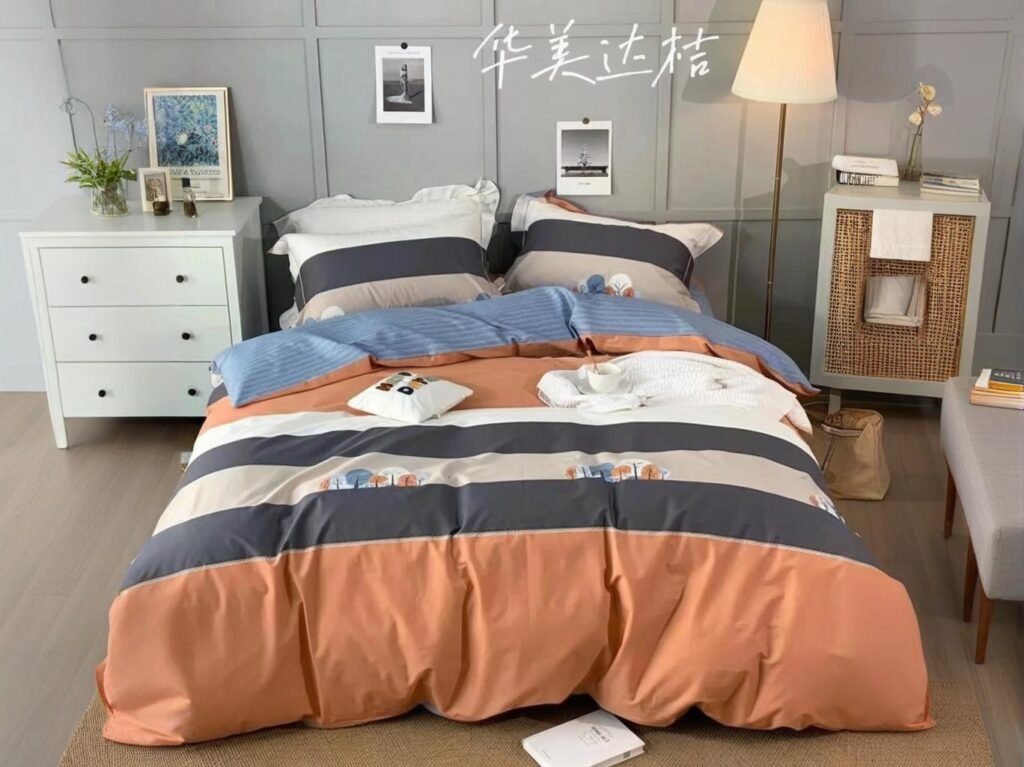
Importing cotton cloth from Asia is rarely a simple price negotiation. For experienced textile buyers, the real challenge lies in controlling variables—yarn quality, loom stability, finishing formulas, humidity levels, color consistency, and shipment documentation. Cotton fabric is a “live” material: it absorbs moisture, reacts to temperature, shrinks during finishing, and may vary in shade from roll to roll. This makes the sourcing workflow fundamentally different from ordering finished goods like apparel or accessories.
Importers should identify reliable mills, request detailed fabric specs, inspect samples, confirm shrinkage and testing data, negotiate Incoterms, prepare compliance documents, conduct pre-shipment inspections, and manage freight proactively. These steps ensure smooth sourcing and prevent common import delays. This structured approach is what allowed one Canadian apparel brand to reduce defect rates by 35%, lower freight costs by 12%, and eliminate customs delays simply by standardizing communication, documentation, and lab-testing procedures with their Asian suppliers.
When handled properly, cotton fabric sourcing becomes a predictable, repeatable operation. But when importers skip technical verification or documentation control, issues escalate rapidly: unexpected shrinkage, inaccurate GSM, wrong weaving density, mold growth during shipment, or customs reassessment due to wrong HS code. The following detailed guide reflects process designs used by top mills and professional buyers across China, India, Pakistan, Vietnam, Bangladesh, and Turkey.
The Complete Step-by-Step Process for Importing Cotton Cloth from Asia
This workflow represents how leading textile importers manage their supply chain from mill selection to final delivery.
Step 1: Identify Reliable Suppliers and Verify Capabilities
Selecting the right mill is the foundation of a successful import. Professional mills typically offer:
- multiple weaving technologies (air-jet, rapier, projectile looms)
- a full range of yarn counts from 16s–100s
- GSM options from 90–400 gsm
- finishing options such as mercerizing, calendaring, enzyme wash, anti-pilling, anti-shrink, antibacterial, water-repellent, and pre-shrunk
- internationally recognized certifications (OEKO-TEX, GOTS for organic cotton, ISO 9001)
- in-house quality testing laboratories
- support for sampling, small-batch orders, and custom dyeing
A factory that can maintain consistent yarn count and weave tension generally produces fewer issues later during bulk production.
Supplier Capability Evaluation Table
| Evaluation Area | What to Look For | Red Flags |
|---|---|---|
| Machinery | Air-jet looms, compact spinning, auto-doffers | Old shuttle looms, inconsistent tension |
| Testing | Internal lab, shade matching cabinet, tensile tester | “We outsource testing”, no lab equipment |
| QC System | ISO 9001, OEKO-TEX, internal inline QC | No documentation or QC flowchart |
| Customization | Custom GSM, dyeing, weave variations | Only stock fabric, no custom options |
| Communication | Fast, technical replies with data | Vague responses, poor English clarity |
Additional Insight
A 2024 audit report from a European sourcing firm indicated that 38% of fabric defects traced back to mills with outdated machinery, primarily shuttle looms. Another 22% came from mills that lacked internal labs, forcing buyers to rely on uncertain third-party testing schedules. Therefore, mill capability matters more than price in early screening.
Step 2: Request Samples, Lab Testing & Shrinkage Data
Before placing bulk production, importers must validate fabric performance. Cotton is sensitive to washing, especially at higher temperatures, and shrinkage varies dramatically depending on finishing technique.
Key factors to verify:
- actual GSM vs. declared GSM
- construction details (ends/picks per inch)
- fabric width before and after washing
- shrinkage at 40°C, 60°C, and 90°C
- weaving uniformity
- pilling resistance after abrasion
- handfeel changes after washing
- colorfastness under rubbing, perspiration, and laundering
Key Testing Standards
| Test | Standard | Acceptable Range |
|---|---|---|
| Shrinkage | ISO 5077 | ≤5% (woven), ≤8% (flannel) |
| Colorfastness | ISO 105-C06 | Grade 4–5 |
| Pilling | ISO 12945 | Grade 3–4+ |
| Tensile Strength | ISO 13934 | 500–700 N |
Industry Data
According to SGS testing statistics, shrinkage and colorfastness account for 52% of cotton fabric failures, while pilling issues account for 28%. Importers who avoid testing typically encounter bulk-order disputes that are far costlier than the testing fee.
Step 3: Finalize Specifications & Make a Tech Pack
A detailed tech pack eliminates miscommunication and sets measurable standards for both buyer and supplier. The more detailed the documentation, the less room there is for disputes.
Your tech pack should include:
- GSM and allowed tolerance (±3–5%)
- fiber composition (100% cotton, blend, organic cotton, etc.)
- yarn count
- weave type (e.g., 40s x 40s percale, 21s x 10s canvas)
- finishing requirements
- shrinkage limits
- allowed defects per 100 m
- color standard references (Pantone TCX, LAB values)
- width tolerance (±1–2 cm)
- roll length requirements
- packaging instructions (PE wrap, moisture control bags, silica gel)
Mistakes Importers Often Make
- Omitting shrinkage tolerance
- Not specifying weave density
- Forgetting to list finishing requirements
- Using “similar to sample” instead of measurable parameters
Each of these omissions becomes a potential dispute point during inspection.
Step 4: Negotiate Incoterms & Payment Terms
The chosen Incoterm dictates who is responsible for risk, freight, insurance, and customs preparation.
Recommended Incoterms for Fabric Importers
| Incoterm | Buyer Responsibility | Supplier Responsibility |
|---|---|---|
| FOB | International freight, customs clearance | Export fees, local port charges |
| CIF | Customs clearance | Freight + insurance |
| EXW | Everything from factory | Only prepares goods at factory |
| DDP | None | Handles freight, customs & duty |
Best Practices
- FOB is the most widely used because it balances cost control and risk.
- Avoid EXW unless you have a trusted freight forwarder based in the supplier’s city.
- For high-value organic or GOTS-certified cotton, CIF or DDP can reduce risk.
- For new suppliers, consider a 30/70 or 20/80 payment structure tied to inspection.
Step 5: Conduct Pre-Production (PP) & Pre-Shipment Inspections
Inspection is vital because cotton fabric defects often don’t appear until rolls are unwound.
PP Samples Should Confirm:
- yarn count consistency
- weaving quality
- finishing effect
- shrinkage results
- fabric softness and drape
Pre-Shipment Checks Must Cover:
- GSM accuracy across multiple rolls
- shade difference between rolls (Delta E value)
- fabric width measurement consistency
- presence of knots, neps, slubs, streaks
- edge straightness
- roll cleanliness
- moisture levels (ideally below 10–12%)
- packaging and labeling accuracy
Why Roll-by-Roll Inspection Matters
A common industry trend shows that defects multiply exponentially toward the end of bulk weaving. If only the first few rolls are checked, 20–30% of the shipment may still be compromised.
Step 6: Prepare Import Documentation
Even perfect fabric quality cannot save a shipment delayed due to paperwork issues. Many customs authorities—especially in the EU, US, Canada, GCC countries—are increasingly strict about textile declaration accuracy.
Required documentation often includes:
- commercial invoice
- packing list
- bill of lading or airway bill
- certificate of origin (CO)
- HS code declaration
- fiber composition declaration
- test reports
- fumigation certificate (if wooden pallets are used)
- preferential tariff documents (Form E, Form FTA, RCEP certificate, etc.)
Common Documentation Mistakes
- Wrong HS code: may trigger reclassification and extra duty
- Missing CO: may lose preferential tariff eligibility
- Incorrect fiber %: leads to compliance issues
- Inconsistent roll count between invoice and packing list
In 2023 alone, textile reclassification disputes increased by 18% in several major ports due to incomplete documentation.
Step 7: Book Freight & Plan Customs Clearance
Cotton cloth is bulky, moisture-sensitive, and weight-sensitive. Freight strategy dramatically affects landed cost.
Shipping Options
- Sea LCL: For 1–8 CBM shipments
- Sea FCL: 20GP (28 CBM), 40HQ (68 CBM)
- Railway freight: Popular for EU routes (China–Europe Railway)
- Air cargo: Only for urgent orders
Key Freight Considerations
- Cotton absorbs moisture; rolls stored during rainy seasons can weigh 3–7% more
- Wet fabric may cause customs disputes due to weight discrepancies
- FCL avoids mixing with other suppliers and reduces damage risk
- A moisture content meter is recommended for bulk shipments
Freight forwarders report that 16–22% of fabric disputes stem from humidity-related issues.
Importing Fabric Is 50% Technical, 50% Administrative
Many first-time importers assume that quality control happens only on the factory floor. In reality, administrative precision—documentation, labeling, HS code accuracy, packing—accounts for half of the risk. A perfectly woven fabric can still be delayed for weeks if paperwork is incorrect.
Professionals treat:
- tech pack creation
- testing requirements
- roll labeling
- customs documentation
with the same seriousness as weaving quality.
For brands, manufacturers, and distributors who follow this structured workflow, cotton fabric importing becomes predictable, efficient, and scalable.
Which Asian Countries Are the Main Hubs for Cotton Fabric Export – and How Do They Differ?
Asia is the undisputed powerhouse of global cotton fabric production—a position it has held for decades due to a unique combination of historical textile heritage, modern manufacturing scale, and vertically integrated supply chains. For brands, wholesalers, and product developers sourcing cotton cloth, understanding the differences between the major Asian hubs is essential. Price points may look similar on the surface, but behind them lie very different strengths—from technological sophistication to spinning capability, fiber sourcing strategy, MOQ flexibility, and sustainability certifications.
The leading cotton cloth export hubs in Asia are China, India, Pakistan, Bangladesh, and Turkey. China delivers the strongest combination of advanced machinery, fabric consistency, and customization; India leads in organic and knit cotton; Pakistan excels in cost-efficient woven basics; Bangladesh is heavily garment-linked and ideal for apparel fabrics tied to production orders; and Turkey positions itself as a premium short-lead-time supplier for Europe, especially in finely finished home textiles.
For context, 2024 UN Comtrade and ITMF import data showed the following global positioning:
- China: #1 in cotton fabric exports by value
- India: top exporter of ring-spun and organic knit cotton
- Pakistan: competitive leader in low-cost woven production
- Turkey: strong in high-finish home textiles
- Bangladesh: integrated apparel supply chain, large circular knitting and denim ecosystem
Each sourcing region has carved out a specific niche. What matters most for importers is aligning the right country with the right product category—otherwise, costs rise and quality control becomes harder to maintain.
Country-by-Country Analysis of Asia’s Cotton Fabric Ecosystem
Below is a more rigorous, data-driven breakdown of each cotton-producing country, including ecosystem strengths, cost structure, typical lead times, and production characteristics.
China — Best for Technology, Consistency & Custom Development
China remains the most advanced and reliable cotton fabric sourcing hub, supported by an incredibly large and vertically integrated ecosystem. From state-of-the-art spinning machines to high-precision dyeing lines and automated finishing equipment, China provides stability that global brands rely on.
Why China Leads
China maintains dominance due to:
- Vertical mills offering spinning, weaving, dyeing, printing, brushing, coating, and finishing in-house
- High-tech dyehouses with precise color reproducibility (∆E < 1 is typical)
- Automation in weaving and inspection (air-jet looms, auto-spreading, AI defect scanners)
- Low MOQs relative to other countries (300–1,000 meters typical)
- Fast sampling (5–10 days for most cotton programs)
- Large raw cotton and yarn availability, including imports from the U.S. and Central Asia
- High consistency across batches, which is critical for large importers
Best-Fit Applications
China is ideal for:
- woven shirting cotton (poplin, oxford, pinpoint)
- sateen and percale for bedding
- brushed flannel
- stretch cotton blends
- yarn-dyed checks and stripes
- canvas and duck fabrics
- children’s textile programs requiring high compliance standards
Strengths Table
| Metric | Score |
|---|---|
| Consistency | 9/10 |
| Custom Options | 10/10 |
| Lead Time | 9/10 |
| Price Competitiveness | 8/10 |
Additional Insights
China’s textile clusters—such as Zhejiang, Jiangsu, Shandong, and Guangdong—operate like self-sustaining ecosystems. Mills often collaborate closely with garment factories, chemical suppliers, testing labs, and logistics hubs. This means fabric development cycles are shorter, troubleshooting is faster, and brands can scale production easily.
China is also the only Asian country that can handle complex multi-process cotton programs at scale: digital printing + brushing + coating; enzyme wash finishing; nano-softening; crease-resistant finishing; and bio-polishing.
For buyers who prioritize quality stability, color accuracy, and the ability to run multiple SKUs in small quantities, China remains the most dependable source.
India — Best for Soft Knits, Organic Cotton & Print Programs
India has built a strong reputation for knit cotton fabrics and organic cotton, supported by a vast spinning sector and long experience with natural fibers. The country dominates the GOTS-certified cotton supply chain and is home to some of the world’s largest organic cotton farms.
What India Does Best
India excels in:
- soft jersey
- interlock fabrics
- rib cotton
- slub cotton
- organic cotton yarn and fabrics (GOTS certification is widely available)
- digital print programs (reactive, pigment, and discharge prints)
Best-Fit Applications
India is the preferred source for:
- T-shirt programs
- yoga and athleisure wear
- organic cotton bedding
- soft hand-feel knitting programs
- children’s clothing for sustainability-focused brands
Strength Indicators (Industry Average)
- Organic cotton availability: highest in Asia
- Knit fabric pricing: typically 5–12% lower than China
- Average knitting lead time: 12–18 days for standard programs
- Printing capacity: strong in Tiruppur, Gujarat, and Rajasthan
Additional Insights
India’s cotton supply chain benefits from domestic raw cotton production, reducing reliance on imports and helping stabilize costs. Its knitwear clusters—especially in Tiruppur—have evolved into sustainability-focused ecosystems, with many mills powered by solar energy and biomass boilers. Indian mills tend to emphasize “soft handfeel,” making their fabrics appealing for Western brands targeting comfort-driven consumers.
For buyers with strong sustainability goals or brands selling organic or eco-focused collections, India remains the most aligned sourcing destination.
Pakistan — Best for Woven Basics & Home Textiles
Pakistan’s textile industry is one of the country’s largest economic sectors, contributing nearly 60% of its exports. It is a highly competitive source for cost-efficient woven cotton fabrics.
Key Strengths
Pakistan specializes in:
- greige cotton
- canvas
- twill
- drill
- flannel
- basic woven fabrics for apparel
- cost-efficient bedding fabrics
- wide-width sheeting for home textiles
Pricing from Pakistan is often 10–18% lower than Chinese equivalents for comparable woven fabrics, making it ideal for budget-sensitive imports.
Best-Fit Applications
- mass-market cotton programs
- hotel bedding
- workwear fabrics
- pocketing fabrics
- greige and PFD (prepared-for-dyeing) fabrics
Performance Snapshot (Typical Industry Benchmarks)
| Category | Observation |
|---|---|
| Woven fabric price | Most competitive in Asia |
| MOQ | 1,000–3,000 meters |
| Lead time | 20–30 days |
| Consistency | Good but requires QC |
Additional Insights
Pakistan is heavily focused on woven fabrics rather than knits. Mills often offer cost advantages due to lower labor and overhead costs. However, QC systems can vary between suppliers, so importers tend to rely on third-party inspection firms. The country’s large cotton farming sector helps ensure availability of raw materials, but yield fluctuation can affect yarn prices seasonally.
For importers needing basic woven cotton at volume-friendly pricing, Pakistan offers unmatched cost-effectiveness.
Turkey — Premium Finishing & Fast-to-Europe Shipments
Although geographically straddling Europe and Asia, Turkey plays a major role in premium cotton fabric supply. Turkish mills operate some of the most advanced finishing lines in the region, particularly for home textiles.
Key Strength Areas
Turkey stands out in:
- luxury sateen bedding
- high-thread-count percale
- jacquard home textiles
- premium shirt fabrics
- specialized finishing (mercerizing, calendaring, sanforizing)
Why Buyers Choose Turkey
- Short lead times for European buyers (5–10 days shipping)
- High finishing quality, especially for bedding
- Strong design development teams
- Compliance with EU standards: REACH, OEKO-TEX, ISO
Pricing & Performance Overview
| Attribute | Market Position |
|---|---|
| Pricing | Higher than Asia (mid-premium) |
| Finishing quality | Best in region |
| Lead time | Extremely fast |
| MOQ | Flexible for many mills |
Turkey is an ideal sourcing location for retailers who want high-grade finishing and trend-driven designs without long shipping times.
Bangladesh — Strong in Apparel-Linked Cotton Fabric Production
Bangladesh does not position itself as a standalone cotton fabric export hub but rather as a vertically integrated garment production center. Its fabric manufacturing is closely tied to the needs of its massive apparel industry.
Bangladesh Specializes In
- cotton knit fabrics (linked to garment manufacturing)
- denim
- fleece
- interlock
- rib knits
- apparel-specific woven fabrics
Best-Fit Applications
- large-volume apparel programs
- private-label clothing production
- denim collections
- fast-fashion cotton basics
Important Note for Importers
Bangladesh is not typically a destination for:
- small MOQs
- specialized custom fabrics
- high-finish home textiles
Fabric orders generally move together with garment orders; standalone fabric sourcing is less common unless volume is high.
Should Buyers Rely on One Country Only?
The most successful textile importers rarely rely on a single sourcing region. Instead, they combine the strengths of multiple countries to balance cost, performance, and innovation.
A strategic importer typically uses:
- China for customization, complex finishes, and fast sampling
- India for organic cotton and soft hand-feel knits
- Pakistan for low-cost woven basics
- Turkey for premium bedding and short lead times
- Bangladesh for garment-linked fabrics at scale
This diversified approach:
- reduces risk during peak seasons
- ensures stable supply even when one market faces disruptions
- allows brands to expand product variety without over-committing to one country
- creates a flexible cost structure for different product tiers
How Do You Verify Product Quality, Technical Specs, and Compliance Before Placing a Bulk Order?

Importing cotton fabric successfully requires far more than choosing the right supplier or receiving impressive-looking swatches. Cotton is one of the most variable and sensitive textile materials on the market—highly reactive to heat, moisture, process inconsistencies, and finishing chemistry. The most common failures in cotton cloth imports stem from inadequate testing, unclear specifications, and misplaced confidence in a supplier’s internal QC standards.
Unlike synthetic fabrics, cotton’s natural variability means that even small deviations in yarn quality, weave construction, dye formulation, or finishing chemistry can cause significant shrinkage, shade variation, twisting, pilling, or structural weakness. This makes pre-production verification one of the most crucial steps for professional importers, apparel brands, bedding manufacturers, and home textile companies.
In short, verifying cotton cloth quality requires testing samples for GSM, shrinkage, yarn count, weave density, colorfastness, pilling resistance, tensile strength, and chemical compliance. You must request documented test reports, conduct independent laboratory evaluations when necessary, and ensure sample-to-bulk consistency through tech packs and pre-production approvals. Skipping these steps can lead to defective shipments, customs failures, customer returns, or even product recalls.
One real-world example illustrates the cost of inadequate testing: a European sleepwear brand faced a six-figure recall because their chosen fabric was never tested at 60°C. After only three washes, shrinkage reached 11–14%, destroying size consistency. A simple shrinkage test during sampling could have prevented the entire disaster.
Below is the complete professional framework used by experienced importers and global QA teams to verify cotton fabric quality before committing to bulk production.
Test Samples for All Critical Fabric Parameters
A reliable importer treats fabric like a technical material, not a commodity. The first step is conducting tests that evaluate structural, chemical, and performance characteristics.
The essential parameters include:
- shrinkage (multiple temperatures)
- GSM (fabric weight)
- yarn count
- tensile strength
- colorfastness (washing, rubbing, and light exposure)
- pilling resistance
- breathability
- finishing durability
- fabric width accuracy
- handfeel consistency
Each factor influences how the fabric performs in real-world usage. For example, GSM deviations can impact garment drape, size consistency, and production consumption. Colorfastness issues can ruin an entire apparel line. Poor tensile strength affects durability and sewing performance. Pilling can destroy the premium appearance of finished products.
Key Fabric Testing Table:
| Test Category | Standard | Good Result |
|---|---|---|
| Shrinkage | ISO 5077 | ≤ 5% |
| Colorfastness (Wash) | ISO 105-C06 | Grade 4–5 |
| Rubbing Fastness | ISO 105-X12 | Grade 3–4+ |
| Tensile Strength | ISO 13934 | 500–700 N |
| Pilling | ISO 12945 | Grade 3–4 |
| GSM | ISO 3801 | Within ±3% of spec |
Professional suppliers provide these test reports proactively, often before you ask. If a supplier cannot supply standardized test data, treat it as a red flag.
Conduct a Bulk Simulation Wash Test
Cotton behaves differently after washing—sometimes dramatically. Finishing chemicals wash out, shrinkage is activated, and structural distortions appear. A simulation wash test is one of the most reliable predictors of long-term performance.
Recommended test procedure:
- wash 3–5 times
- test at 40°C, 60°C, and 90°C depending on end-use
- tumble dry and iron if relevant
- compare before/after measurements
Key observations include:
- shrinkage
- softness changes
- shade fading
- pilling
- distortion or skewing
- fabric handfeel stability
Professional importers never approve a cotton fabric without multi-cycle washing tests. Many finishing processes (softeners, resins, anti-pilling agents) diminish significantly after the first few washes, revealing the fabric’s true performance.
Verify Yarn Quality and Fiber Staple Length
The quality of the yarn determines the fabric’s long-term performance. Yarn with short fibers is more prone to breakage, shedding, fuzzing, and severe pilling. Staple length is one of the most reliable indicators of premium cotton fiber quality.
Fiber Grade Table:
| Fiber Type | Staple Length | Performance |
|---|---|---|
| Extra-long staple | 34–38 mm | Excellent |
| Long staple | 30–33 mm | Very Good |
| Regular staple | 26–29 mm | Moderate |
| Short staple | <26 mm | Poor |
Ask suppliers for:
- spinning method (compact spinning is ideal)
- fiber origin (Egyptian, Pima, Turkish cotton often perform better)
- yarn batch consistency
Poor yarn quality is the root cause of most fabric complaints—especially pilling.
Check Weave Density and Construction Integrity
Weave density influences nearly every performance factor: durability, opacity, shrinkage, drape, and handfeel. Many mills raise GSM by using thicker yarns rather than tightening the weave, which results in inferior strength and stability.
Weave Density Comparison:
| Category | Loose Weave | Tight Weave |
|---|---|---|
| Durability | Low | High |
| Shrinkage | High | Low |
| Breathability | High | Moderate |
| Opacity | Low | High |
Request construction details such as:
- EPI (ends per inch)
- PPI (picks per inch)
- TC (thread count)
- yarn type and twist
This ensures that the GSM you are paying for is derived from proper construction rather than artificially inflated yarn thickness.
Inspect Lab Dips and Shade Bands Carefully
Color issues account for more than half of all fabric import disputes. Cotton absorbs dye inconsistently depending on fiber quality, finishing treatment, and dyeing method. Thorough shade verification is essential.
High-end suppliers provide:
- LAB values
- shade bands
- batch-to-batch comparisons
- spectrophotometer readings
- multi-angle evaluations
Acceptable Color Variance Table:
| Color Metric | Tolerance |
|---|---|
| ΔE Value | ≤ 1.2 premium, ≤ 1.8 regular |
| Shade Bands | 3–5 acceptable |
| Lightfastness | Grade 4–5 |
Suppliers without proper dye labs often rely on visual comparison alone, which is notoriously inaccurate and risky for bulk production.
Confirm Chemical & Compliance Requirements
Cotton fabrics must meet the safety and environmental regulations of the destination market. Compliance issues can lead to customs delays, product recalls, and loss of brand credibility.
Common compliance requirements include:
- OEKO-TEX Standard 100
- REACH Annex XVII
- California Prop 65
- Azo-free dyes
- Formaldehyde limits
- GOTS for organic cotton
- Anti-bacterial compliance (if finishing applied)
- Fire-retardant standards (if required)
Always obtain supporting documentation before production begins.
Conduct Pre-Production and Pre-Shipment QC
Even if samples meet your standards, bulk production can still vary significantly due to machine differences, operator mistakes, humidity changes, or dye batch inconsistencies.
Pre-production (PP) samples confirm:
- fabric matches approved specs
- finishing is stable
- bulk dyeing matches lab dips
Pre-shipment QC checks:
- roll width
- GSM roll-by-roll
- shading variations
- fabric defects
- moisture content
- packaging quality
Fabric QC Defect Table:
| Defect Type | What It Means | Action |
|---|---|---|
| Slubs | Yarn issue | Rewind or replace rolls |
| Shade Bar | Dye variation | Re-dye or reject |
| Skewing | Weave misalignment | Reweaving |
| Holes | Loom fault | Replace roll |
QC should be performed by a trained inspector—not a salesman or factory manager.
“Good Samples” Do NOT Equal “Good Bulk”
This is perhaps the greatest misconception among new importers.
- Samples are produced with extra care, often on slower machine settings.
- Bulk production is subject to speed, machine wear, operator fatigue, and environmental variations.
- Without bulk verification, you risk receiving fabric that performs differently from the sample.
Professional importers know that sample approval is only the starting point, not the final guarantee. Bulk consistency must be monitored until the goods are shipped.
What Certifications, Test Reports, and Documentation Are Required for Cotton Cloth Imports?
Importing cotton cloth into major global markets is not simply a matter of buying fabric and shipping it. Textile imports must pass through a tightly regulated system involving customs classification, chemical safety compliance, sustainability documentation, accurate labeling laws, and strict auditing of commercial paperwork. Even if the cotton fabric is high-quality, a single missing certificate or an incorrect code can delay a shipment for weeks, cause a customs seizure, or lead to costly penalties.
In recent years, customs authorities in the United States, European Union, United Kingdom, Japan, Australia, and Canada have increased enforcement of textile compliance due to sustainability concerns, supply chain traceability requirements, and rising risks of misdeclared shipments. Importers who understand the required certifications and prepare their documentation correctly can reduce risk, avoid demurrage costs, and accelerate clearance times.
In short: importers of cotton fabric must provide commercial invoices, packing lists, HS codes, certificates of origin, fiber composition declarations, chemical compliance test reports, and labeling documents. Optional sustainability certifications (GOTS, OCS, BCI, OEKO-TEX) are increasingly required by retailers. Customs authorities rely heavily on documentation accuracy when deciding whether to release or hold cotton fabric shipments.
One U.S. importer of printed cotton saw a container held for 18 days after customs detected a mismatch between the certificate of origin and the declared HS code. The mistake triggered an audit, resulting in $4,000 in demurrage fees—more than the profit margin of the entire shipment. This example illustrates how paperwork, rather than fabric quality, is often the biggest source of risk in textile sourcing.
The Full Compliance Documentation Checklist for Cotton Fabric Imports
Below is a detailed breakdown of every category of documentation required for cotton textile imports into the U.S., EU, UK, Japan, Canada, and Australia.
1. Commercial Documents Required for Every Shipment
No shipment can clear customs without correct commercial documentation. These documents establish the identity of the product, its declared value, its origin, and its classification under the Harmonized System (HS).
You must have:
- commercial invoice
- packing list
- bill of lading or airway bill
- certificate of origin (CO)
- HS code declaration
- weight and roll count declaration
- moisture content declaration (recommended for tropical markets)
- fumigation statement (if applicable)
- country-specific certificates (if importing under FTA agreements)
Commercial documentation mistakes trigger the highest rate of customs delays. A simple typing error on an invoice or incorrect fiber composition on a CO can result in re-inspection or full container holds.
Document Accuracy Table
| Document | Error Risk | Why It Matters |
|---|---|---|
| Invoice | High | Value discrepancies trigger audits and tax issues |
| CO | Medium | Determines tariff rates and FTA eligibility |
| Packing List | High | Weight/quantity mismatches cause hold-ups |
| HS Code | Very High | Incorrect codes lead to fines or seizure |
Most customs delays occur in these four areas—long before anyone evaluates the actual cotton fabric.
2. Textile Composition & Labeling Compliance
Cotton fabric shipments must comply with textile labeling requirements in nearly all major markets. Even if you are importing raw fabric rolls rather than finished products, customs may request documentation proving the accuracy of fiber content.
Labeling documents should include:
- fiber composition declaration (e.g., 100% cotton, 95% cotton / 5% spandex)
- country of origin
- importer name and address
- care instructions (required for apparel or home textiles)
- batch number and roll identification
These declarations must match lab tests. Customs authorities frequently perform fiber-content verification, especially if the importer claims preferential tariff treatment or uses FTA benefits.
Markets requiring strict labeling compliance:
- United States (FTC Textile Fiber Products Identification Act)
- European Union (Textile Regulation 1007/2011)
- United Kingdom (UK Textile Labeling Regulations)
- Japan (Household Goods Quality Labeling Law)
- Australia (ACCC textile labeling rules)
Failure to provide correct labeling can result in product relabeling requirements, fines, or even destruction of mislabeled stock.
3. Chemical Compliance Requirements
Chemical compliance is one of the most complex and regulated areas of cotton fabric importing. The textile industry uses dyes, finishes, and processing chemicals that must meet regional safety laws.
United States
- CPSIA (required for children’s apparel and bedding)
- CA Prop 65 (chemical exposure regulation)
- formaldehyde limits
- lead and heavy metal restrictions
- flammability requirements for sleepwear
European Union
- REACH Annex XVII (heavy restrictions on chemicals)
- Azo dye bans
- nickel release limits
- allergenic dye restrictions
- OEKO-TEX certification commonly required by retailers
Japan
- JIS L 1041 formaldehyde limits (strictest globally for baby products)
- fiber labeling laws
Australia
- ACCC labeling rules
- chemical safety guidelines for children’s textiles
Testing Table Example
| Market | Required Tests | Notes |
|---|---|---|
| US | CPSIA, Azo-Free | Mandatory for children’s products |
| EU | REACH, Azo-Free, Nickel | Strictest globally |
| UK | UK REACH | Similar to EU |
| Japan | JIS formaldehyde | Strict for kidswear |
| Australia | Labeling + Azo-Free | Applies to consumer imports |
A shipment that fails chemical tests may be destroyed or returned at the importer’s expense.
4. Sustainability & Organic Certifications (Optional but Increasingly Important)
While not legally required for importation, sustainability certifications have become commercial requirements for major retailers in the U.S. and EU. Many brands will not list products without recognized textile certifications.
Common certifications include:
- OEKO-TEX Standard 100 (chemical safety)
- GOTS (Global Organic Textile Standard)
- OCS (Organic Content Standard)
- BCI Certified Cotton
- GRS (Global Recycled Standard) for recycled cotton
Retailers such as Target, H&M, Zara, UNIQLO, and IKEA increasingly mandate OEKO-TEX or GOTS for supplier approval. Without these certificates, cotton textiles may be considered unsuitable for large retail distribution.
5. Special Documentation for Home Textiles
Home textile imports—such as bedding, quilts, mattress covers, and upholstery fabrics—often require additional documentation depending on the region.
Special requirements may include:
- flammability tests (16 CFR 1632/1633 in U.S.)
- children’s product certification (CPC)
- product safety test reports
- durability and abrasion tests
- colorfastness testing
- shrinkage test reports
Fire-retardant cotton requires region-specific certification, such as:
- CA TB 117-2013
- BS 5852
- EN 1021
- NFPA 701
Failure to meet flammability rules is one of the top causes of destruction orders for textile imports.
6. Freight & Insurance Documentation
International freight documents ensure the shipment is transported safely and legally. Importers should prepare:
- insurance certificate (required for CIF terms)
- fumigation certificate (if wooden pallets are used)
- packing declaration (mandatory for Australia/New Zealand)
- ISPM-15 compliance for wood packaging
- arrival notice and customs entry documents
These documents protect importers from liability, shipping delays, and fines.
7. Documentation Errors Cause More Delays Than Production Problems
Importers often invest extensive time in selecting mills, evaluating quality, conducting lab tests, and approving pre-shipment inspections. Yet many overlook the importance of documentation accuracy.
Customs clearance is:
- 70% paperwork
- 30% inspection
Even an excellent cotton fabric can be held indefinitely if:
- fiber composition isn’t consistent
- HS code is incorrect
- documents contradict each other
- labels fail compliance
- certificates are missing
- chemical reports are outdated
In most cases, the fabric itself is fine—the paperwork is the problem.
The fastest-moving textile importers are those who maintain strict document control, verify certificates before booking shipments, and work with fabric suppliers who understand international compliance.
How Are Incoterms, Payment Terms, and Trade Contracts Structured When Importing from Asia?

When importing cotton cloth from Asia, seasoned buyers know that prices and fabric quality are only part of the equation. The true stability of your supply chain depends on how well your Incoterms, payment terms, and trade contracts are structured. These three components influence freight responsibilities, insurance coverage, factory accountability, manufacturing control, and dispute resolution. Many new importers lose money not because the supplier intended to deceive them, but because their contracts were vague, lacked tolerance definitions, or left too much room for interpretation.
Cotton cloth importers should use clear Incoterms (FOB is most common), negotiate payment terms such as 30/70 or LC as appropriate, and create detailed trade contracts including fabric specifications, testing standards, tolerances, timelines, packaging rules, and dispute-resolution procedures. These agreements reduce risk and create predictable importing outcomes. A U.S. apparel brand learned this the hard way when their mill missed delivery by 19 days. Their contract simply said “delivery end of month,” with no mention of “late-delivery penalties,” giving them no leverage to enforce compliance. After updating their contract to include financial penalties and tolerance limits, their on-time delivery rate rose from 82% to 97% within a year.
Below is the professional-grade framework used by experienced textile importers when managing cotton fabric orders from China, India, Pakistan, Vietnam, Turkey, and Bangladesh.
1. Understanding the Most Common Incoterms for Cotton Fabric
The Incoterm you choose directly affects your freight cost, delivery timeline, and risk profile. Cotton fabric is bulky, moisture-sensitive, and often transported in large quantities, so importers must choose a term that gives them the right balance of cost control and shipment visibility.
The most widely used Incoterm for cotton fabric is FOB (Free on Board). It allows the factory to handle export clearance while giving the buyer control over international freight, consolidations, and insurance.
Incoterm Comparison Table
| Incoterm | Supplier Covers | Buyer Covers | Best For |
|---|---|---|---|
| EXW | Only preparation of goods | All logistics & risk | Very experienced buyers with strong forwarders |
| FOB | Export fees & port delivery | Freight + customs | 80% of importers; best cost-to-control ratio |
| CIF | Export + freight + insurance | Customs clearance | High-volume importers wanting predictable freight cost |
| DDP | Everything | Nothing | New importers, small brands, or high-risk destinations |
Why FOB Dominates the Cotton Industry
- Greater transparency in freight charges
- Allows buyer to select reliable forwarders
- Reduces risk of hidden fees at the origin port
- Ideal balance of responsibility between mill and importer
In a 2024 textile logistics survey, 64% of importers preferred FOB, especially when buying from China, India, and Pakistan, because it minimizes miscommunication and provides clearer freight control.
2. Payment Term Options and How They Affect Supplier Trust
Payment terms determine how much financial risk both sides take. Because cotton fabric orders often involve several tons of material, mills need payment security, while importers need quality assurance before releasing final payment.
The most commonly used option for cotton fabric is 30% deposit / 70% before shipment (T/T). This structure helps the mill buy raw cotton, yarn, chemicals, and dyeing necessities while ensuring the importer keeps leverage until bulk production passes inspection.
Payment Term Risk Table
| Payment Term | Risk to Buyer | Risk to Supplier |
|---|---|---|
| TT 30/70 | Low | Medium |
| LC (Letter of Credit) | Very Low | Very Low |
| DP | Low | Medium |
| OA (Open Account) | High | High |
Practical Recommendations
- Use 30/70 TT for regular orders under $100,000.
- Use LC for large-volume orders or new suppliers in high-risk regions.
- Avoid OA unless you have 2–3 years of stable cooperation.
In real operations, suppliers view your payment terms as a reflection of your professionalism and seriousness. A well-structured payment term builds trust and reduces hidden risks like delayed production or material substitution.
3. What a Cotton Fabric Trade Contract Should Always Include
A cotton fabric trade contract is not merely a legal formality—it is a technical manual, quality blueprint, and risk-control tool combined. Unlike finished products, fabric involves numerous measurable parameters: GSM, shrinkage, weave density, color ΔE, finishing durability, and moisture levels.
Contracts should specify every measurable variable to avoid disputes.
A Professional Cotton Fabric Contract Must Include:
- Fiber content and blending percentage
- Yarn count (e.g., 40s × 40s)
- GSM (grams per square meter) + acceptable tolerance
- Weave construction (plain, twill, sateen, canvas, percale)
- Finishing standards (mercerized, preshrunk, calendared, enzyme-washed)
- Shrinkage limits after washing at 40°C / 60°C
- Pilling rating requirement
- Colorfastness grade and washing standard
- LAB values and acceptable ΔE
- Approved PP samples
- Sample-to-bulk variance rules
- Production lead time and delivery window
- Penalty definitions for late delivery
- Roll/packaging specifications
- Moisture-proof requirements
- Carton labeling rules
- Dispute resolution mechanism (arbitration venue, governing law)
Contract Tolerance Table
| Parameter | Standard Tolerance |
|---|---|
| GSM | ±3% |
| Width | ±1.5 cm |
| Shrinkage | ±1–2% |
| Color ΔE | ≤1.8 |
| Shade Variance | Within 3-shade band |
Without clear tolerances, even an honest supplier cannot meet undefined expectations.
4. Penalty and Warranty Clauses to Protect the Buyer
Factories respond to incentives. When contracts include measurable penalty clauses, performance tends to improve. Without penalties, delays and off-spec fabric become more common, especially during peak production seasons.
Essential Penalty Clauses to Include
- Late delivery penalty (commonly 0.5%–1% per week)
- Color mismatch penalty for ΔE exceeding tolerance
- Shrinkage penalty when shrinkage exceeds contract limits
- Defective roll replacement at supplier’s cost
- Compensation for re-testing or re-dyeing
- Refund or discount policy for severe deviations
High-performing mills usually accept these clauses because their internal rejection rates are low, typically under 1.5%.
Warranty Terms
Many importers also include a 30–60 day defect warranty, ensuring that damages discovered after arrival—such as moisture, mold, or inconsistent dyeing—are covered.
5. Intellectual Property Protection for Custom Weaves and Prints
Cotton fabric is relatively easy to duplicate. If you are importing custom jacquard designs, unique weaves, specialized finishing, or proprietary prints, you must protect your intellectual property.
Documents to Include
- NDA (Non-Disclosure Agreement)
- Exclusivity Agreement (especially for custom prints)
- Non-compete clause for your designs
- IP ownership transfer clause
- Prohibition of selling overruns
In 2023, IP infringement cases involving textile mills increased by 14%, especially in markets involving custom jacquard and digital prints. Clear legal documents are the only reliable protection.
The Best Contract Is One You Don’t Need—But Must Have
Experienced importers treat their contracts like a safety harness. You hope you never need to use it, but when problems arise—shipment delays, color mismatches, shrinkage variance, or documentation errors—it becomes the only tool that truly protects your business.
In cotton fabric sourcing, clarity equals stability. A well-written contract does not replace a good relationship—it supports it.
Which Shipping Methods, Freight Options, and Packaging Solutions Work Best for Cotton Fabrics?
Shipping cotton fabric is far more technical than most first-time importers expect. Because cotton is simultaneously heavy, bulky, and highly moisture-absorbent, a poorly executed freight plan can erase months of product development. In fact, logistics—not weaving or dyeing—is where most losses occur. Cotton absorbs water rapidly, and once moisture builds inside a container, mold appears within days. Unlike synthetic fibers, mold on cotton cannot be cleaned or restored without damaging the fabric.
This is why expert cotton importers carefully optimize shipping method, packaging method, moisture control systems, carton design, roll diameter, and humidity management before the container even leaves the factory.
The most reliable shipping method for cotton fabric imports is ocean freight (FCL or LCL), supported by high-protection packaging such as vacuum sealing, moisture-proof polybags, silica gel packets, and container-sized desiccant bags. Air and rail freight are used when timelines are tight. Importers should optimize roll packing diameter, carton structure, palletization style, container humidity protection, and inspection protocols to reduce freight cost and avoid mold, staining, and compression damage.
A well-known German textile wholesaler once lost nearly 40% of their fabric rolls—worth over €58,000—during a monsoon-season sea shipment. The container arrived with heavy condensation (“container rain”), and the unprotected rolls grew mold. After the incident, the mill switched to vacuum packing, added multi-layer protective film, silica gel inside each roll, and 20 kg of container desiccant. In the following 18 shipments, the company reported zero moisture complaints.
This section outlines the logistics framework used by advanced importers to protect their cotton shipments under all climate conditions.
Cotton Fabric Shipping, Freight & Packaging Guide
Below is the complete, field-tested logistics strategy ensuring cotton fabric reaches your warehouse dry, clean, and free from contamination.
1. Choosing the Right Shipping Method
The transportation method directly impacts cost, transit time, and humidity exposure risk. Because cotton fabric is dense and heavy, transportation efficiency becomes critical.
Option A: Ocean Freight (Most Common)
Ocean freight is the industry standard for fabric shipments above 800–1,000 kg.
Two sub-options exist:
- FCL (Full Container Load) – the entire container belongs to you
- LCL (Less than Container Load) – shared space within a container
FCL is preferred because the importer controls container cleanliness, moisture protection, and sealing.
Option B: Air Freight
Air is used for urgent replenishment, color-critical programs, or high-value shipments.
Typical applications include:
- production delays requiring quick recovery
- urgent color approvals
- boutique orders needing quick turnaround
- premium fabrics with low volume
Option C: Rail Freight (China → EU)
Rail is growing quickly along the China–Europe corridors.
It offers:
- speed faster than ocean
- cost significantly lower than air
- lower humidity exposure than long ocean voyages
Freight Cost Comparison Table
| Method | Speed | Cost | Best Use |
|---|---|---|---|
| Air | 3–7 days | Very High | Samples, rush replenishment |
| Rail | 12–22 days | Medium | EU shipments |
| Sea (FCL) | 25–45 days | Low | Large orders |
| Sea (LCL) | 30–55 days | Medium | Medium volumes |
Additional Considerations
- Air freight uses volumetric weight (DIM weight), so bulky rolls become very expensive.
- Rail freight has fewer moisture risks compared with sea freight during monsoon seasons.
- Sea freight remains the most cost-efficient, especially for stable planning.
2. Preventing Moisture Damage During Transit
Cotton’s natural cellulose structure makes it extremely hygroscopic—it acts like a sponge in humid environments. Moisture damage results in:
- mold growth
- odor
- hydrolysis spots
- yellowing
- fabric softening or weakening
- carton collapse
- cross-contamination between rolls
Proven Moisture-Protection Methods
To prevent moisture issues, mills should use:
- moisture-proof polybags (minimum 80–120 microns)
- vacuum sealing for high-value fabrics
- silica gel packets inside each roll (50–100 g per roll)
- container desiccant bags (10–20 kg per container)
- double-layer film wrapping
- avoiding wooden pallets during wet seasons
- pre-loading photos to confirm container dryness
Moisture Prevention Table
| Protection Method | Effectiveness | Cost |
|---|---|---|
| Vacuum packing | ★★★★★ | Moderate |
| Silica gel | ★★★★★ | Low |
| Container desiccant | ★★★★☆ | Low |
| Double-layer film | ★★★★☆ | Low |
| Wooden pallets | ★★★☆☆ | Medium |
Vacuum packing is especially beneficial for:
- knitted cotton
- brushed flannel
- reactive-printed fabric
- dark colors
- premium orders requiring perfect surface quality
Expert importers also request humidity indicator cards for sensitive shipments.
3. Optimizing Weight & Volume to Reduce Freight Cost
Cotton fabric density ranges from 120–450 GSM, and a single 50–70 meter roll typically weighs 18–35 kg. Because freight is calculated by cubic meters (CBM) for sea freight, optimizing roll diameter significantly affects cost.
Key Factors Influencing Freight Efficiency
- Roll diameter (the most important)
- Packing density
- Carton or wrapper structure
- Pallet type and height
- Loading plan efficiency
Roll-Packing Efficiency Table
| Roll Diameter | Container Capacity | Notes |
|---|---|---|
| 30–32 cm | Maximum | Ideal |
| 35–38 cm | Medium | Acceptable |
| 42+ cm | Low | Wastes space |
Reducing roll diameter by 2–3 cm can increase container loading efficiency by 8–12%, significantly lowering cost per meter.
Additional Optimization Tips
- tightly wound rolls reduce CBM
- avoid excessive interleaving paper
- remove unnecessary cardboard cores for knit fabrics
- use horizontal loading for short containers and vertical loading for tall containers
- use stretch film to stabilize rolls and reduce movement
4. FCL vs LCL: Which Should You Choose?
Choosing between FCL and LCL is a strategic decision. LCL may seem cheaper for small orders, but it carries higher risks.
FCL Advantages
- lower cost per CBM
- reduced damage risk since container is not shared
- faster customs clearance
- better humidity control (importer controls all protection)
- predictable transit times
LCL Advantages
- small-order flexibility
- lower upfront shipping cost
- ideal for test orders or new suppliers
General Recommendation
If your shipment exceeds 15–18 CBM, FCL is significantly more economical and safer.
For textile brands scaling their production, switching from LCL to FCL is one of the earliest cost-saving milestones.
5. Essential Packaging Requirements for Cotton Fabric Imports
Packaging is where many new importers make critical mistakes. Cotton fabric rolls need both structural protection and moisture protection.
Standard Packing for Cotton Fabric Rolls
- Moisture-proof polybags (double-layer recommended)
- Strong woven outer sacks for long voyages
- Clear labels on every roll
- Optional cartons for premium requirements
- Pallets if required by destination countries (especially EU and US big retailers)
Roll Label Checklist
Each roll must include:
- fabric name
- color code & dye lot number
- batch number
- roll length
- fabric width
- weight (kg)
- production date
Why This Matters
If color deviation or GSM variance occurs, the importer can quickly trace:
- root cause (raw cotton, spinning, dyeing, finishing)
- affected batches
- responsible departments
- compensation claims
A missing label causes weeks of confusion.
6. Pre-Shipment Logistics Checklist
Experienced importers never approve shipment until they complete a pre-shipment logistics checklist. This ensures the shipment remains traceable, compliant, and protected.
Checklist Includes
- verify roll labeling
- confirm pallet count
- check carton strength and tape security
- ensure rolls are wrapped twice
- confirm desiccant quantity inside container
- ask for container interior photos prior to loading
- verify seal number
- obtain packing list + roll list + batch list
- request loading photos (20–40 pieces)
- reconfirm HS code for customs
Additional Best Practices
- request roll measurements and weights via Excel
- confirm your INCOTERM responsibilities
- ensure container is inspected for holes or rust
- verify temperature risk if shipping via tropical routes
This step eliminates 90% of preventable shipping disputes.
7. Insurance for Cotton Fabric Imports
Shipping cotton fabric without insurance is extremely risky due to:
- mold exposure
- seawater ingress
- port delays
- theft
- insufficient humidity control
- container detours
Recommended Insurance Types
- All-risk cargo insurance
- Moisture damage coverage
- Theft protection
- Delay insurance (optional but useful for fast-fashion brands)
Important Warning
When buying under CIF Incoterms, some suppliers purchase minimal insurance unless you explicitly request:
- full invoice value
- all-risk coverage
- additional moisture protection clauses
Always double-check the policy.
Cotton Fabric Does Not Forgive Poor Packaging
Unlike synthetic fabrics, cotton cannot survive moisture infiltration. Once mold sets in, the shipment becomes unsellable—no amount of drying, bleaching, or rewashing will restore it to commercial quality.
Experienced importers know that investing slightly more in packaging and moisture control saves much more in avoided claims, replacements, and production delays.
Smart logistics decisions keep fabric clean, dry, and ready for converting into high-quality garments, bedding, curtains, or accessories.
How Do Customs Clearance, Duties, and HS Codes Affect the Total Landed Cost of Cotton Cloth?
When importing cotton cloth, many buyers focus solely on mill pricing—comparing FOB rates, GSM differences, finishing surcharges, or dye costs. However, the true cost of importing cotton fabric extends far beyond the factory gate. The real financial impact appears in the landed cost, which includes freight charges, customs duties, import taxes, documentation fees, port handling fees, and domestic transportation.
The most expensive mistakes rarely occur during production. Instead, they happen during customs classification, HS code selection, incorrect fiber declarations, or miscalculating duty rates. A small HS code error can shift a fabric into a higher tax bracket, triggering penalties, shipment delays, or thousands of dollars in unexpected costs.
In short: customs clearance, duty rates, and HS codes directly determine the total landed cost of cotton cloth. Proper classification under HS Chapter 52 (cotton fabrics), accurate documentation, and awareness of destination-country tariffs are essential to avoid delays and unnecessary expenses. Professional importers analyze total landed cost before placing bulk orders—not after the goods arrive.
A real-world example highlights the stakes: A U.S. importer mistakenly declared a woven cotton sateen under a general “other cotton fabric” HS code. The correct category—“bleached/unbleached woven fabric”—carried a 6.5% duty rate, while the misclassification pushed it to 14.9%. The shipment incurred nearly $9,000 in unexpected duties. A basic HS code review could have prevented the loss.
Below is a complete guide to understanding how customs, duties, and HS codes shape the true cost of cotton fabric imports.
Understanding HS Codes for Cotton Fabrics (Chapter 52)
Harmonized System (HS) codes classify goods for customs purposes. Cotton fabrics fall under Chapter 52, which covers textiles made from 100% cotton or cotton-dominant blends.
Common classifications include:
- 5208 – woven cotton, unbleached or bleached
- 5209 – woven cotton, dyed
- 5210 – woven cotton mixed with synthetic fibers
- 5211 – printed cotton fabrics
- 6006 – knitted cotton fabrics (jersey, interlock, rib)
Correct classification is critical because duty rates vary widely based on fabric construction, finishing, and fiber content.
Common HS Codes Table:
| Fabric Type | HS Code | Notes |
|---|---|---|
| Greige woven cotton | 5208.11 | Lowest duty |
| Dyed cotton fabric | 5209.31–5209.59 | Most imports |
| Printed cotton | 5211.51 | Higher duty |
| Canvas | 5208/5209 | varies by finishing |
| Cotton knits | 6006.21 | check fiber content |
A clear understanding of classification ensures you pay the correct tariff and avoid customs disputes.
How Duty Rates Affect Landed Cost
Duty rates depend on:
- destination country
- cotton cloth type
- fiber content
- whether the fabric is woven or knitted
- country of origin
- any trade agreements or preferential tariffs
Below is an approximate reference (actual rates may vary):
Sample Duty Rates Table
| Destination | Woven Cotton Duty | Knit Cotton Duty |
|---|---|---|
| USA | 6–15% | 9–12% |
| EU | 6–8% | 8–12% |
| UK | 6–12% | 8–12% |
| Canada | 0–18% | 0–18% |
| Australia | 0% | 0% |
| Japan | 5–10% | 5–10% |
Some key insights:
- Australia and New Zealand offer zero duty on most cotton fabrics.
- The U.S. tends to apply the highest rates for printed or specialized woven fabrics.
- Canada and Japan have variable tariffs depending on fiber blends.
Misclassification can cost thousands, especially on large-volume textile shipments.
Country-of-Origin (COO) Influences Duties
Correct COO (country-of-origin) labeling is essential because duty rates differ depending on where the goods were manufactured.
Examples:
- Chinese cotton fabrics may face 10–15% duty in the U.S.
- Indian cotton fabrics may qualify for lower duty in some markets.
- Bangladesh and Pakistan are part of many GSP (Generalized System of Preferences) programs, which reduce duty rates.
Incorrect COO declarations result in:
- fines
- shipment holds
- duty reassessments
- compliance risk audits
Always confirm COO rules before placing orders.
Customs Clearance Documents Required
A shipment may be perfectly produced and well-packed—but without correct documentation, customs will not release it. Textile shipments are especially sensitive because of anti-dumping rules, environmental regulations, and fiber-content declarations.
To clear customs, importers need:
- commercial invoice
- packing list
- HS code declaration
- bill of lading or airway bill
- certificate of origin
- textile fiber composition declaration
- fabric testing reports (optional but helpful)
- fumigation certificate (if required by destination)
Common reasons for customs rejections include:
- incorrect fiber percentages
- mismatched documentation
- missing country-of-origin
- undervaluation or overvaluation
- vague product descriptions
A compliant invoice must clearly state fiber composition, fabric type, GSM, and intended HS code.
Calculating Total Landed Cost
Many importers underestimate the impact of logistics and duty rates. A small change in freight pricing, duty rate, or port fee can alter total landed cost significantly.
A typical landed cost formula:
Landed Cost = Product Cost + Freight + Duty + Customs Fees + Port Charges + Document Fees + Domestic Transportation
Example calculation for 10,000 meters of cotton fabric:
| Cost Type | Amount |
|---|---|
| FOB Fabric Cost | $22,000 |
| Sea Freight | $2,200 |
| Duty 8% | $1,760 |
| Customs + Port Fees | $620 |
| Delivery to Warehouse | $450 |
| Total Landed Cost | $27,030 |
The actual cost becomes $2.70 per meter, not the FOB price of $2.20.
Accurate landed cost forecasting helps determine:
- retail pricing
- profit margins
- inventory strategy
- whether the sourcing country is viable
- if alternative fabrics or finishes are economical
Professional importers calculate landed cost before signing purchase orders to avoid unexpected losses.
How to Avoid Customs Delays
Most customs delays are preventable. The most common causes include:
- incorrect HS codes
- missing or inconsistent invoices
- incomplete documentation
- wrong country-of-origin labels
- mismatched fabric descriptions
- inaccurate fiber content percentages
To prevent these issues:
- verify all HS codes before production
- ensure the supplier matches codes exactly
- perform a pre-clearance document review
- use an experienced customs broker
- standardize fiber labels and invoice language
- attach test reports for extra credibility
A well-prepared document set can save days—or weeks—of clearance time.
Customs Does Not Care About Your Delivery Deadline
Customs authorities operate on legal compliance, not urgency. Even if your product launch is tomorrow or your buyers are waiting, customs will not accelerate clearance unless:
- documents are perfect
- declarations are accurate
- HS codes are correct
- values match industry standards
The importers who consistently succeed treat customs compliance as a core component of product quality, just as important as shrinkage testing or colorfastness verification. Smart importers prepare documentation as carefully as they prepare fabric specs.
What Are the Most Common Risks When Importing Cotton Fabric from Asia – and How Can You Avoid Them with the Right Supplier?
Asia remains the global engine of cotton fabric manufacturing. From China’s advanced weaving and dyeing ecosystems to India’s organic cotton fields and Pakistan’s competitive spinning capacity, the region offers unparalleled variety, pricing advantages, and production flexibility. But smooth, profitable cotton sourcing doesn’t happen automatically. Cotton is a sensitive, variable, and regulation-heavy material, and importers often underestimate the operational risks involved in bringing fabric from Asian mills to Western markets.
Moisture exposure, shade variations, shrinkage inconsistencies, inaccurate documentation, production delays, customs red flags, and miscommunication all represent predictable—but preventable—risks. What makes cotton sourcing complex is not the fiber itself, but the supply chain surrounding it: the humidity of storage environments, the variability of dyehouse performance, the strictness of chemical safety laws, and the paperwork demanded by customs authorities.
In short: the biggest risks when importing cotton fabric include moisture damage, shade inconsistencies, shrinkage deviations, inaccurate documentation, customs disputes, unexpected delays, and supplier miscommunication. These can be avoided through proper supplier selection, pre-shipment inspections, moisture-control packaging, rigorous testing, detailed written agreements, and structured production management.
A well-known example illustrates this point: a UK bedding startup sourced printed cotton from an inexperienced supplier and faced four consecutive batches with significant shade inconsistency. After switching to a professional Chinese mill that used LAB-value tracking and standardized shade-band monitoring, the defect rate dropped from 23% to under 3%—a dramatic improvement driven entirely by better factory processes, not by luck.
What follows is the complete, globally recognized risk-control framework used by experienced textile importers when managing cotton supply chains.
Risk Identification & Prevention Framework for Cotton Cloth Imports
1. Quality Risks & How to Prevent Them
Cotton fabrics have natural variability, and small production deviations can escalate into large-scale quality issues. Shade variation, GSM inconsistencies, weaving defects, pilling, and shrinkage drift are the most frequent complaints importers face.
Common issues include:
- shade variation between rolls
- GSM variation across batches
- short or broken fibers leading to pilling
- weaving defects such as slubs or needle lines
- inconsistent shrinkage due to unstable finishing
The root causes often point to dyehouse performance, machine calibration, raw fiber consistency, or finishing line control.
Prevention Methods
Professional buyers implement:
- strict and detailed tech packs
- PP (pre-production) sample approval
- independent third-party lab testing
- fabric roll inspection in bulk form
- QC monitoring during weaving and dyeing
- shade continuity tests (LAB values)
- consistent yarn sourcing and testing
A reliable mill integrates all these systems internally. A weak mill, on the other hand, treats each batch as a fresh experiment—leading to unpredictable results.
Quality Risk Table
| Risk | Cause | Prevention |
|---|---|---|
| Shade variation | inconsistent dyeing | LAB control, shade bands |
| Shrinkage issues | unstable finishing | sanforizing, shrinkage tests |
| GSM variation | yarn count shifts | machine calibration |
| Pilling | short fibers | long-staple cotton |
| Holes/slubs | loom issues | loom maintenance |
Quality risks can be minimized but not eliminated entirely. That’s why professional QC checkpoints—inline, midline, and final inspection—are essential.
2. Moisture & Mold Risks
Cotton is one of the most hygroscopic fibers in the textile industry. It absorbs moisture instantly and releases it slowly, making it extremely vulnerable during maritime shipping—especially routes crossing monsoon zones or humid climates.
Common causes:
- humid factory storage
- coastal warehouse environments
- container rain (condensation dripping from container ceilings)
- long sea transit during typhoon or monsoon seasons
- poor packaging without desiccants
Moisture damage appears as:
- mold spots
- mildew odor
- fabric yellowing
- water marks
- fiber deterioration
- carton collapse
Prevention
Experienced importers use:
- vacuum packing for high-risk fabrics
- moisture-proof inner bags
- desiccant packs inside each bale or carton
- double-layer wrapping for roll goods
- pre-loading container dryness checks
- humidity meters for warehouse control
- pallets to avoid floor-level condensation
Moisture is the #1 cause of losses in cotton fabric imports—not weaving defects.
3. Documentation & Compliance Risks
Documentation errors cause more shipment holds than any fabric-related issue. Customs authorities rely heavily on paperwork to verify classification, origin, chemical safety, and labeling accuracy.
Common issues include:
- wrong HS code
- missing or incorrect certificate of origin
- mismatched invoice values
- inaccurate fiber content declaration
- missing REACH test reports
- incorrect labeling documentation
Prevention
Professional importers institute:
- pre-clearance documentation review with customs brokers
- standardized templates for invoices and packing lists
- accurate fiber-content lab verification
- early testing for REACH, AZO dyes, and formaldehyde
- supplier training on documentation accuracy
- double-check of all FTA-related documentation
A single HS code mismatch can trigger a full customs audit—delaying shipments for weeks.
4. Production Timeline Risks
Even in highly sophisticated mills, delays can occur. Cotton sourcing involves multiple upstream dependencies: spinning, weaving, dyeing, and finishing—all of which must operate in sync.
Delays are commonly caused by:
- yarn shortages
- dyehouse congestion
- machine queueing
- maintenance cycles
- holiday downtime (Chinese Golden Week, Diwali, Eid, etc.)
- environmental protection restrictions
- unexpected re-dyeing
Prevention
Importers minimize timeline risks by:
- booking production early (especially before holidays)
- inserting delivery penalties into contracts
- requesting weekly production updates
- maintaining backup suppliers for key SKUs
- scheduling lab-dip approvals early
- avoiding last-minute spec changes
Timeline predictability is a major indicator of supplier maturity.
5. Communication Risks
The fastest path to costly mistakes in textile imports is unclear communication. Cotton sourcing involves dozens of variables—fiber composition, shrinkage tolerance, shade approval, finishing type, packaging method, and more. A single vague instruction can result in an entire batch being incorrect.
Common causes:
- unclear specifications
- verbal-only agreements
- vague color naming
- missing tolerance parameters
- no structured approval workflow
Prevention
Strong communication systems include:
- everything documented in writing
- structured technical packs with min/max tolerances
- PP sample confirmation with signature
- sample-to-bulk approval workflow
- shared Google Sheets or ERP tracking
- defined milestones (lab dip → PP sample → bulk production → inspection)
Professional suppliers welcome detailed documentation. Unreliable suppliers avoid it.
6. Logistics Risks
Even if the fabric is perfect and documents are correct, logistics failures can still disrupt imports. Cotton is heavy, moisture-sensitive, and often shipped in large volumes—making logistics a significant risk factor.
Common issues:
- wet or damaged containers
- improper loading or palletizing
- overweight declarations
- missing or lost documents
- carrier surcharges
- port congestion delays
Prevention
Importers use:
- container loading photos
- moisture absorbers (container-level desiccants)
- all-risk cargo insurance
- accurate packing lists
- palletization and shrink-wrapping
- early customs filing
- freight forwarder performance tracking
The right logistics partner is as important as the right fabric mill.
7. Supplier Reliability Risks
Most import failures trace back to the supplier—not the fabric. Choosing the wrong mill increases risk across all categories: quality, moisture sensitivity, documentation, production timeline, and communication.
Signs of Reliable Suppliers
- consistent lab tests
- strong internal QC systems
- transparent communication
- willingness to share roll lists
- realistic pricing
- predictable lead times
- organized sampling workflow
- moisture-safe packaging methods
Signs of Unreliable Suppliers
- refuses to share testing documentation
- inconsistent quality from batch to batch
- overly cheap quotations
- vague information
- excuses for delays
- unwillingness to clarify terms
- limited understanding of export requirements
A professional mill reduces risks automatically; a weak mill amplifies them.
90% of Import Risks Come from Poor Supplier Selection
Importers new to cotton sourcing often assume risk comes from shipping or customs. In reality:
- 90% of long-term import failures originate with the wrong supplier.
A reliable mill with strong internal quality systems eliminates shade variation, shrinkage drift, documentation problems, and production delays before they ever reach the buyer.
This is why partnering with a technical, export-ready mill such as SzoneierFabrics dramatically reduces risk and improves long-term sourcing outcomes.
Importing Cotton Cloth from Asia Requires Expertise, Structure, and the Right Partner
Asia continues to dominate the cotton textile industry due to its advanced spinning ecosystems, skilled labor, modern dyehouses, and diverse finishing options. But successful importing requires far more than simply selecting a fabric and arranging a shipment. It involves:
- strategic supplier selection
- strong quality assurance
- documentation accuracy
- moisture management
- chemical compliance
- clear communication
- efficient logistics planning
- long-term partnership development
Importers who follow a structured, professional approach see smooth customs clearance, low defect rates, and predictable supply. Those who cut corners typically encounter preventable problems that consume time, money, and reputation.
With deep cotton R&D capabilities, low MOQ customization, fast sampling, and rigorous QC systems, SzoneierFabrics helps global brands reduce sourcing risk, stabilize fabric quality, and build dependable supply chains in the apparel and home textile industries.
Ready to Import Cotton Fabric from Asia with Zero Hassle?
Contact SzoneierFabrics today to start your custom cotton cloth development, testing, compliance preparation, and logistics planning. We’ll help you reduce risks, improve quality, and import with confidence.