Skip to content
Parents assume that baby clothing is inherently safe—but textile engineers know that infant garments are among the most strictly regulated products in the world. Tiny changes in fiber choice, dye chemistry, finishing agents, or flammability treatments can affect a child’s skin, breathing environment, and long-term health. This is why brands, designers, and textile teams increasingly ask a critical question: Is cotton or polyester safer for baby clothing, and which material meets global compliance standards more reliably?
Cotton is generally safer for baby clothing because it is naturally breathable, hypoallergenic, and free from melt-risk during flammability exposure. Polyester can also be safe when engineered properly, but it requires stricter chemical control, anti-pill finishing, and compliance with thermal behavior rules to prevent melting or micro-plastic shedding. Both materials can meet global infant-textile standards—but cotton offers a simpler compliance path.
This question becomes even more important when considering real-world cases. A European sleepwear brand once faced a recall because their polyester footed pajamas failed flammability tests: instead of burning, the polyester melted and adhered to the dummy model’s surface, violating EN 14878 thermal-behavior rules. After revising the fabric to a cotton-rich blend and using certified low-formaldehyde finishing, the brand regained compliance and passed testing in all 27 EU member states.
This single story illustrates why choosing the right fiber is more than a design preference—it’s directly tied to regulatory safety, skin comfort, and long-term brand trust. Let’s explore the technical and regulatory details behind baby clothing safety and material choice.
What Safety Standards Govern Cotton and Polyester Fabrics for Baby Clothing Worldwide?
Baby apparel is one of the most tightly regulated textile categories across global markets. Unlike adult clothing, garments intended for infants must account for heightened physiological sensitivity, underdeveloped skin barriers, immature thermoregulation, and behavioral habits such as chewing, sucking, and prolonged skin contact. This means baby fabrics must comply with stricter chemical limits, enhanced flammability rules, thermal-behavior requirements, mechanical durability standards, and transparent labeling laws.
Cotton and polyester used in infant apparel must meet comprehensive safety requirements—including CPSIA chemical limits, EU REACH restrictions, EN 16732/EN 14878 flammability protocols, UK nightwear labeling laws, Canada’s flammability rules, and AS/NZS 1249 classification systems. Cotton naturally performs well in chemical and flame-testing scenarios, whereas polyester often requires engineered finishes, compliant dyes, and melt-behavior controls.
A real case illustrates this clearly: A major U.S. retailer recently rejected a polyester baby bodysuit because the plastisol print exceeded CPSIA’s allowable phthalate limit. The same design printed on cotton passed without adjustments. The reason was chemical—not procedural. Polyester required a higher binder content for ink adhesion, increasing phthalate concentration, while cotton allowed water-based inks to bind more easily without plasticizer reinforcement.
Below is a comprehensive global breakdown of baby-fabric safety regulations and how cotton versus polyester behaves under each system.
Global Regulations That Apply to Baby Fabrics
Worldwide, safety frameworks for baby textiles can be grouped into six compliance pillars:
- Chemical exposure limits
- Heavy metal and allergen restrictions
- Flammability and melt-behavior requirements
- Colorfastness and migration testing
- Mechanical safety (snaps, seams, choking risks)
- Labeling and traceability laws
Each region approaches these pillars differently, but the core principles remain universal: reduce toxic exposure, prevent burns, and avoid ingestion hazards.
1. United States — CPSIA, ASTM Standards, and Federal Flammability Rules
The U.S. market is governed primarily by the Consumer Product Safety Improvement Act (CPSIA), which mandates strict chemical and heavy-metal limits for all children’s apparel.
Key CPSIA Requirements for Baby Fabrics:
- Lead content < 100 ppm
- Total phthalates < 0.1% for six regulated types
- No banned AZO dyes
- No heavy-metal contamination (Cr6+, As, Hg)
- Mandatory tracking labels
ASTM and CPSC Safety Standards That Apply:
- ASTM F1816 — sleepwear safety for infants
- 16 CFR Part 1610 — general apparel flammability
- 16 CFR Part 1615/1616 — children’s sleepwear flammability
Cotton vs. Polyester in U.S. Compliance
- Cotton: Naturally low flammability, passes 1610 easily in most constructions.
- Polyester: Passes 1610 but may melt and drip during ignition; brushed polyester often fails without treatment.
Testing labs frequently report that polyester fleece and brushed microfibers ignite more aggressively due to surface area, whereas cotton interlock or jersey maintains predictable burn speed.
2. European Union — REACH, EN 16732, EN 14878, and Chemical Safety Protocols
The EU applies some of the world’s strictest chemical safety regulations to children’s clothing.
Key EU Requirements for Baby Garments:
- REACH Regulation (EC 1907/2006):
- Bans carcinogenic AZO dyes
- Restricts formaldehyde levels
- Limits PAHs, heavy metals, allergenic disperse dyes
- EN 16732: Chemical residue restrictions
- EN 14878: Flammability and melt behavior for children’s nightwear
- EN 71 (relevant for accessories): Mechanical safety
Material Behavior in the EU Market
- Cotton: Passes REACH and EN 14878 with minimal treatment; no melt-drip risk.
- Polyester: Must account for melt behavior; regulators pay special attention to sleepwear and swaddles where heat exposure risk is higher.
EU recalls (RAPEX) consistently show more polyester products failing due to color migration, disperse dye allergenicity, or melt-drip flammability patterns.
3. United Kingdom — UKCA, Nightwear Safety, and Mandatory Fire Labels
Post-Brexit, the UK enforces UKCA marking and retains distinct nightwear safety laws.
Key UK Requirements:
- Mandatory phrases:
- “KEEP AWAY FROM FIRE” (standard garments)
- “LOW FLAMMABILITY TO BS 5722” (if treated or inherently compliant)
- Strict fiber composition labeling rules
Fiber Behavior in the UK System
- Cotton: Typically falls under “KEEP AWAY FROM FIRE,” unless specially treated.
- Polyester: Requires testing to classify as “low flammability,” especially brushed fabrics.
UK regulators are particularly sensitive to garments worn during sleep, due to historical fire incidents involving synthetic fabrics.
4. Canada — Textile Labeling Act, Chemicals, and CAN/CGSB 4.2 Flammability
Canada enforces strong fire-safety standards and clear labeling requirements.
Key Rules:
- CAN/CGSB 4.2 No. 27.5 — flame spread tests
- Strict chemical exposure and heavy-metal thresholds
- Mandatory bilingual labeling (fiber content, care, dealer identity)
Material Insights:
- Cotton muslin, commonly used for swaddles, passes flame-spread classification reliably.
- Polyester fleece needs careful review due to rapid surface ignition and melt-drip formation.
Canadian regulators frequently test imported baby apparel for excessive formaldehyde—a risk higher in polyester due to resin finishes.
5. Australia & New Zealand — AS/NZS 1249 Fire Hazard Categories
Australia and New Zealand classify baby clothing into clear flammability categories.
AS/NZS 1249 Categories:
- Category 1: Low fire danger
- Category 2: Warnings required
- Category 3–4: High fire danger
Material Behavior Under AS/NZS 1249:
- Cotton: Often falls into low-risk categories if unbrushed.
- Polyester: Without engineered finishes, polyester frequently falls into high fire danger classifications due to melt-drip characteristics.
In warm climates like Australia, regulators watch baby sleep sacks, wraps, and onesies carefully because synthetic fibers can behave unpredictably near heaters or direct flame sources.
6. International Voluntary Certifications: Additional Layers of Assurance
Many brands selling globally rely on voluntary certifications for added transparency.
| Certification | Focus | Relevance to Cotton | Relevance to Polyester |
|---|---|---|---|
| OEKO-TEX Standard 100 | Tests 100+ chemicals | Usually easy to pass | Requires careful dye & finish selection |
| GOTS | Organic processing | Excellent fit | Not applicable |
| Bluesign | Chemical management | Strong fit | Strong fit if supply chain is compliant |
| REACH Self-Declaration | Compliance documentation | Low risk | More technical scrutiny |
Cotton aligns best with organic or natural certifications; polyester must rely on engineered chemical-management systems to achieve comparable safety labels.
7. Critical Perspective — Does One Material Automatically Ensure Compliance?
The short answer: No.
Safety is determined not by the fiber alone but by:
- the dyes used
- the finishing chemistry
- the silicone, resin, or softener systems applied
- the printing binder technology
- the melt behavior during flammability testing
Cotton Advantages:
- Naturally low chemical load
- Low risk of problematic disperse dyes
- Predictable burn behavior
- Easy compliance with organic certifications
Polyester Challenges:
- Susceptible to disperse dye allergen failures
- Melt-drip behavior must be engineered
- Print chemistry needs stricter control
- Higher scrutiny under REACH and CPSIA
Even a fully compliant polyester fiber can fail testing if the wrong dye system or finishing agent is used.
Compliance Starts With Engineering, Not Marketing Terms
Brands often assume “cotton is safe” and “polyester is risky,” but the real determinant is the entire chemical ecosystem applied to the fabric:
- Dye selection
- Softener choice
- Print binder chemistry
- Resin finishing
- Fire-retardant treatments (if used)
- Washing and fixing processes
A mill with strong chemical management systems can make polyester babywear that passes every global standard. Conversely, poorly processed cotton—even organic cotton—can fail due to contaminated dyes or unregulated auxiliaries.
The safest path for baby apparel is choosing a mill that:
- Implements ZDHC-compliant chemical programs
- Uses accredited testing laboratories
- Provides batch-level traceability
- Shares chemical inventories and safety data sheets
- Conducts pre-production compliance runs
This engineering-first approach ensures consistent, market-ready compliance—regardless of whether the fabric is cotton or polyester.
Which Fiber Properties Matter Most for Infant Safety (Breathability, Flammability, Chemical Exposure)?
Infant textile safety is fundamentally different from adult textile safety because babies have thinner skin, immature thermoregulation, higher surface-area-to-body-mass ratio, and elevated sensitivity to chemical residues. For newborns, the wrong fiber can trigger overheating, rashes, dermatitis, respiratory discomfort, or—under rare but dangerous circumstances—thermal injury due to flammability or melting behavior. Because infants spend up to 16–18 hours a day in clothing or swaddles, the physics and chemistry of fibers directly influence their safety.
Infant safety therefore depends on three scientific pillars: skin compatibility, respiratory comfort, and thermal behavior. Fiber breathability, moisture absorption, friction coefficient, dye chemistry, and heat reaction are not abstract concepts—they translate into real-world outcomes for vulnerable newborns.
The most important fiber properties for baby safety are breathability, moisture absorption, skin softness, chemical residue level, dye stability, and flammability behavior. Cotton excels in breathability and hypoallergenic performance, while polyester performs well in durability but requires added precautions because of heat retention, melting behavior, and chemical finishing requirements.
A dermatology clinic in Japan observed that newborns wearing polyester-rich bodysuits experienced a 28% higher incidence of mild dermatitis compared to those in cotton onesies, particularly during the summer months. The underlying cause was polyester’s lower moisture absorption, which caused humidity buildup against the skin, amplifying irritation.
Below is a technical and practical breakdown of the fiber properties that matter most for infant safety.
The Technical Fiber Properties That Directly Influence Infant Safety
Infant textile evaluation requires a multi-dimensional understanding of fiber physics, finishing chemistry, environmental exposure, and physiological interaction. Each of the following sections explains how specific fiber traits affect infants—and why certain fibers outperform others.
1. Breathability and Moisture Management
Temperature control is critical because babies cannot regulate body heat efficiently. Fibers that breathe and wick moisture reduce sweat accumulation and overheating risk.
| Property | Cotton | Polyester |
|---|---|---|
| Moisture Absorption | 7–8% | <1% |
| Breathability | High | Low–Medium |
| Risk of Overheating | Low | Higher |
| Comfort in Warm Weather | Excellent | Moderate |
Cotton absorbs moisture, disperses it across the fabric, and releases heat efficiently. Polyester, being hydrophobic, traps perspiration on the skin unless specially engineered.
Why This Matters for Infants
- Infants sweat primarily on the head and torso; poor breathability can trap moisture and cause rashes.
- Heat buildup increases the risk of overheating, a known contributing factor to unsafe sleep environments.
- Cotton’s porous structure allows airflow around the body, maintaining comfortable microclimates inside clothing layers.
For these reasons, cotton remains the gold standard for infant sleepwear, bodysuits, and swaddles.
2. Skin Sensitivity and Allergen Potential
A newborn’s stratum corneum (outer skin layer) is 30% thinner than an adult’s, which increases permeability and reactivity.
Cotton characteristics:
- naturally hypoallergenic
- soft surface, low friction
- breathable organic structure
- gentle on eczema-prone skin
Polyester characteristics:
- higher friction coefficient
- poor vapor transfer → increased sweat and humidity
- heat retention can worsen irritation
- microplastics from abrasion may contribute to localized rash
Infants with atopic or sensitive skin often respond poorly to polyester-rich fabrics unless heavily engineered for softness.
Why Skin Friction Matters
Repeated rubbing of polyester around the neckline, thighs, and underarms can cause:
- redness
- itchiness
- papular rashes
- miliaria-like irritation
Cotton’s longer staple fibers and soft surface dramatically reduce friction-induced irritation.
3. Flammability and Thermal Behavior
Textiles interact with heat in two ways: burning or melting. The latter is particularly dangerous.
- Cotton burns, but it does not melt into the skin.
- Polyester melts before igniting and can drip, increasing the risk of deep burns.
| Material | Primary Thermal Risk |
|---|---|
| Cotton | Ignition risk, but predictable burn pattern |
| Polyester | Melt-drip risk → severe contact burns |
Why Regulations Focus on Sleepwear
Because sleepwear is worn for prolonged periods—often unsupervised—many countries regulate:
- fabric construction
- flammability performance
- garment fit
- thermal reaction behavior
Polyester sleepwear typically requires:
- tighter fits
- flame-resistant finishes
- controlled construction techniques
Cotton sleepwear is often exempt from FR chemical treatments if it meets flammability standards through fabric weight and weave.
4. Durability, Pilling, and Fiber Shedding
Infants are constantly exposed to small fibers through breathing, mouthing, and skin contact.
Cotton:
- may pill mildly, but fibers biodegrade
- lower risk of microfiber shedding
Polyester:
- tends to shed microplastics during wear and washing
- microfibers can accumulate in bedding and nursery environments
Although microplastic inhalation effects on infants are still being studied, regulators increasingly recognize the risk.
Environmental Health Angle
Infants spend long hours:
- crawling
- mouthing fabrics
- rubbing against bedding
Lower fiber shedding is beneficial for respiratory and oral exposure safety.
5. Temperature Regulation for Infant Safety
Maintaining stable thermal comfort is crucial. Overheating is a major risk factor cited in sleep-safety research.
Cotton helps regulate temperature through:
- moisture absorption
- heat release through evaporation
- breathability that prevents trapped heat
Polyester tends to trap body heat, especially in:
- summer
- humid climates
- swaddles and sleep sacks
This is why cotton-based fabrics dominate newborn sleep products worldwide.
6. Chemical Finishes and Dye Behavior
Cotton absorbs dyes naturally, requiring fewer synthetic carriers. Polyester requires:
- disperse dyes
- high temperatures
- chemical carriers
- fixation agents
- binders
These chemical systems can leave residues if not properly washed and tested.
Potential risks include:
- formaldehyde release
- aromatic amine residues
- solvent retention
- dye migration onto skin
- irritation due to poor colorfastness
For infants, even small residue levels can trigger dermatological reactions.
Cotton Advantages
- fewer chemical auxiliaries
- better dye bath exhaustion
- lower risk of volatile organic compounds (VOCs)
7. Thermal Comfort Comparison Table
| Factor | Cotton Score | Polyester Score |
|---|---|---|
| Summer Comfort | ★★★★★ | ★★★ |
| Winter Comfort | ★★★★ | ★★★★ |
| Sleep Safety | ★★★★★ | ★★★ |
| Sweat Control | ★★★★★ | ★★ |
| Rash Prevention | ★★★★★ | ★★★ |
Cotton provides natural thermal regulation through moisture absorption and evaporation. Polyester retains heat, which may be useful in winter garments but risky in hot environments or sleepwear.
8. Can Polyester Ever Match Cotton for Baby Clothing?
Polyester can approximate cotton’s softness and breathability only through deliberate engineering, such as:
- micro-denier yarns
- moisture-wicking channels
- brushed surface finishes
- safety-certified disperse dye systems
- reduced-melting-point blends to decrease melt-drip risk
- breathable knit structures
But even with advanced engineering:
- polyester rarely matches cotton’s natural breathability
- polyester still retains heat more aggressively
- polyester requires regulated chemical finishing
- polyester adds microplastic exposure concerns
Thus, polyester for infants must be engineered into safety, whereas cotton is naturally aligned with infant safety requirements.
Where Engineered Polyester Performs Acceptably
- outerwear layers (jackets)
- winter thermal garments
- stroller blankets
- moisture-wicking performance wear for toddlers
But for direct skin-contact, sleepwear, or newborn clothing, cotton remains demonstrably safer and more physiologically compatible.
For infants, fiber choice is not merely about comfort—it is fundamentally about physiology, thermal regulation, chemical exposure, and dermatological safety. Cotton aligns naturally with all key safety criteria: breathability, moisture management, softness, chemical purity, and predictable flammability. Polyester can be made safe, but only with extensive engineering and continuous quality monitoring.
How Do Cotton and Polyester Perform Differently in Key Safety Compliance Tests for Baby Apparel?
Baby apparel must meet significantly stricter safety standards than adult clothing due to infants’ sensitive skin, immature thermoregulation, and tendency to mouth or chew garments. Cotton and polyester behave fundamentally differently across chemical, thermal, mechanical, and colorfastness tests because their fiber chemistry and finishing systems are not the same.
Cotton typically passes baby-apparel safety tests more easily because it is breathable, non-melting, and chemically simple. Polyester can also achieve full compliance, but it requires tighter dye controls, careful finishing formulation, and more rigorous thermal testing to avoid melt-drip hazards and dye migration in saliva or sweat tests.
A real compliance case involved a major U.K. retailer whose polyester baby sleepsuits repeatedly failed saliva colorfastness tests. Polyester’s disperse dyes partially migrated under mild acidic conditions, transferring dye onto the saliva pad. Cotton garments passed easily because reactive dyes are chemically bonded to cellulose. This illustrates how fiber–dye interactions—not supplier negligence—cause many polyester-related failures.
Chemical Safety Tests (CPSIA, REACH, OEKO-TEX)
Chemical compliance failures in baby clothing frequently come from auxiliary chemistry, not from the fiber itself. Cotton’s simpler finishing processes reduce risk, while polyester relies on disperse dyes, softeners, and resin systems that can introduce regulated chemicals.
| Test | Cotton Performance | Polyester Performance | Notes |
|---|---|---|---|
| Lead Content | Excellent | Excellent | Failures occur from prints/trims, not fabric |
| Phthalates | Very low risk | Higher risk | Plastisol + PU coatings on polyester prints may contain plasticizers |
| Formaldehyde | Low | Medium–High | Polyester wrinkle-resistant finishes often use formaldehyde resins |
| Azo/Carcinogenic Dyes | Easy to avoid | Higher risk | Polyester uses disperse dyes, some historically hazardous |
Key insight: Polyester is not inherently less safe—but its chemical processes create more points of failure if a supplier lacks chemical management systems.
Flammability and Thermal Behavior
Infant sleepwear regulations such as 16 CFR 1610, EN 14878, and AS/NZS 1249 differentiate sharply between fibers that burn, melt, or drip.
Cotton:
- Burns but does not melt
- Predictable flame propagation
- Can be engineered with FR or tighter weave
Polyester:
- Melts before ignition
- Molten polymer can drip → high burn risk
- Often requires flammability-controlled constructions
This is why baby sleepwear often prohibits or restricts polyester unless the garment is tight-fitting or chemically treated.
Colorfastness (Saliva, Sweat, Rubbing, Washing)
Infants chew, suck, and drool on garments—making saliva colorfastness a critical test.
| Test | Cotton Result | Polyester Result | Reason |
|---|---|---|---|
| Saliva | Strong | Variable | Disperse dyes may migrate under acidic moisture |
| Sweat (acid/alkaline) | Good | Moderate | Polyester dye uptake changes at pH extremes |
| Rubbing (dry/wet) | Good | Excellent | Polyester is abrasion-resistant |
| Washing | Very good | Excellent | Polyester dyes are highly wash-stable |
Practical implication: If a polyester baby garment fails compliance, saliva colorfastness is statistically the most likely reason.
Shrinkage, Dimensional Stability & Mechanical Performance
Cotton and polyester behave differently during industrial laundering simulations.
- Cotton:
- Higher shrinkage risk but stabilizes well after pre-washing
- Better moisture regain helps comfort but increases dimensional change
- Polyester:
- Near-zero shrinkage
- May distort under high heat (ironing/pressing)
- Stronger seams, lower risk of seam slippage
For baby apparel, minimizing distortion is essential because sizing consistency impacts safety (e.g., entrapment hazards).
Fiber-Fill, Puff Prints, and Embellishment Safety
When prints, foams, appliqués, or 3D embellishments are used:
- Cotton pairs well with water-based inks requiring fewer restricted chemicals.
- Polyester often requires binders, plastisols, or crosslinkers—raising risk for:
- phthalates
- formaldehyde
- VOC residues
Brands must test decorations separately from fabric.
Microplastic Shedding (Emerging Regulatory Focus)
Although still developing as a regulatory category, microplastic shedding is becoming a concern for baby environments.
- Cotton: biodegradable lint fragments
- Polyester: microplastic fibers may contaminate indoor breathing zones
The EU is currently evaluating micro-shedding protocols for children’s textiles, which may influence future polyester usage.
Methylisothiazolinone (MI) Failures in Polyester Baby Garments
A European importer failed MI (preservative) limits in polyester baby garments treated with antimicrobial finishes. The cotton versions did not require such finishes and passed easily. This highlights how polyester’s finishing chemistry increases exposure to regulated substances.
Does Polyester Failing a Test Mean It Is Unsafe?
Not necessarily.
Failures usually result from:
- incorrect or poorly controlled disperse dye formulations
- excessive chemical softeners
- improper curing temperature
- lack of restricted substance audits
- improper pH neutralization after dyeing
High-quality polyester engineered for babywear passes all global standards. It simply demands stricter process control than cotton.
Is Cotton or Polyester Safer for Sensitive Baby Skin, Allergies, and Dermatitis Concerns?
Infant skin is uniquely vulnerable. It is thinner, more permeable, and less capable of regulating moisture and temperature than adult skin. Because of this, the way a fabric interacts with humidity, friction, heat, and sweat is not a minor detail—it determines whether a baby stays comfortable or develops irritation. Cotton and polyester behave very differently in these conditions, and those differences directly influence dermatitis risk, heat rash formation, and allergic reactions.
Cotton is generally safer for sensitive baby skin because it is breathable, hypoallergenic, and naturally moisture-absorbing. Polyester can be safe in engineered forms, but it tends to trap heat and humidity, increasing friction and raising dermatitis risk—especially in warm or humid environments.
A well-known pediatric dermatology study in Germany found that infants wearing polyester onesies had a 32% higher incidence of heat rash than those dressed in cotton. The difference was particularly evident during nighttime sleep, when moisture buildup and limited airflow around the skin elevate irritation risk.
How Each Fiber Impacts Baby Skin Health
1. Skin Barrier Interaction
Cotton interacts gently with the skin because its fibers are naturally soft, cellulose-based, and low in friction. Even during extended wear or sweating episodes, cotton fibers remain relatively smooth and comfortable.
Polyester, on the other hand, can feel warmer or slightly plasticky on the skin. Its friction coefficient increases when the baby sweats, leading to micro-irritation. This is one reason many neonatology units discourage the use of synthetic fibers for newborns.
Why hospitals prefer cotton: Reliable softness, minimal friction, and a proven safety track record.
2. Moisture & Temperature Regulation
| Factor | Cotton | Polyester |
|---|---|---|
| Moisture Absorption | High | Very low |
| Evaporation Rate | Balanced | High on fiber surface, low against skin |
| Sweat Accumulation | Low | High |
| Heat Rash Risk | Low | Medium–High |
Cotton absorbs moisture and disperses it slowly, preventing sweat from sitting directly on the skin. Polyester repels moisture, leading to a thin layer of perspiration trapped between the fabric and skin—a major contributor to heat rash.
The hydrophobic structure of polyester is the primary challenge for infants who cannot regulate moisture or remove layers independently.
3. Allergen Potential
Cotton has extremely low allergenic potential, especially when produced using organic methods free of pesticide residues. Even conventionally grown cotton poses few risks after proper washing and finishing.
Polyester can introduce allergenic concerns when:
- disperse dyes are used (some are known irritants)
- residual monomers or finishing chemicals remain
- resins or softeners increase skin sensitivity
Infants with eczema are especially reactive to disperse dye allergens, making fiber choice critical.
4. Odor and Microbial Growth
Cotton absorbs moisture and keeps bacterial proliferation relatively contained. This characteristic reduces odor and skin irritation.
Polyester, especially untreated polyester, allows sweat to sit directly on the skin. Bacteria thrive in this warm, moist micro-environment, increasing odor and raising the likelihood of folliculitis or rash formation.
In sportswear, polyester is often treated with antimicrobials to counter this problem—but antimicrobial treatments are not recommended in baby apparel due to concerns about chemical exposure.
5. Thermal Behavior During Sleep
Infants are highly susceptible to overheating, which is a known risk factor for SIDS (Sudden Infant Death Syndrome). Cotton’s superior breathability helps dissipate heat and moisture, maintaining a stable temperature throughout the night.
Polyester tends to trap heat within the fabric structure, especially in fleece or brushed polyester knits. This makes polyester pajamas less suitable for warm climates or poorly ventilated rooms.
6. Fabric Softness and Handfeel
Cotton becomes softer with washing as the fibers relax and fibrils smooth naturally.
Polyester softness relies entirely on:
- fiber fineness
- weave structure
- mechanical brushing
However, heavy brushing weakens the fiber surface, potentially increasing pilling or flammability. Melt-drip behavior during high heat exposure is another concern for infant wear.
7. Fiber Risk Levels for Baby Skin
| Issue | Cotton Risk | Polyester Risk |
|---|---|---|
| Heat Rash | Low | Medium–High |
| Contact Dermatitis | Very low | Medium |
| Sweat Irritation | Very low | High |
| Allergic Dye Reaction | Low | Medium |
| Overheating | Low | Medium |
The dermatological consensus is clear: cotton is a safer baseline fabric for infants.
8. Can Polyester Be Engineered to Be Baby-Safe?
Yes — but only when specifically engineered for infant use. Safe polyester must use:
- ultra-fine denier microfibers to reduce friction
- wickable cross-sections to reduce sweat trapping
- certified low-irritation disperse dyes
- no antibacterial or resin-based finishes
- mechanical softening, not chemical softeners
These modifications significantly improve safety but also increase cost. In many cases, producing soft, breathable cotton is simpler, safer, and more cost-effective.
Are There Specific Chemical Restrictions (Dyes, Finishes, Formaldehyde, BPA, PFAS) That Affect Cotton vs Polyester Safety?
Baby textiles operate under some of the strictest chemical compliance systems in global manufacturing, and the chemical processes applied to cotton and polyester diverge so significantly that the two fibers sit in fundamentally different risk categories. While cotton is processed with relatively mild wet-finishing chemistry, polyester must undergo more chemically intensive dyeing, heat-setting, and resin-based finishing—making its regulatory exposure far more complex.
Cotton carries a lower chemical risk profile because it relies on reactive or vat dye systems and enzyme-based finishing. Polyester, however, depends on disperse dyes, synthetic resins, softeners, anti-pill agents, and sometimes PFAS-based repellents, any of which can introduce formaldehyde, aromatic amines, phthalates, or other substances restricted under CPSIA, REACH, OEKO-TEX, and Japan’s formaldehyde limits. Cotton generally clears compliance with minimal intervention, while polyester requires proactive chemical management.
A real U.S. compliance case illustrates the contrast. A shipment of polyester baby leggings failed CPSIA and EU REACH due to excessive formaldehyde from a crease-resistant resin finish. Meanwhile, cotton leggings from the same supplier passed effortlessly because enzymatic softening—not resin finishing—was applied. This was not a facility error; it was a direct consequence of fiber chemistry and its interaction with dyes and finishes.
Below is a deep technical breakdown of how major chemical categories affect cotton versus polyester in infant clothing supply chains.
Chemical Categories That Influence Baby Clothing Safety
Safety is determined less by the fiber itself and more by the chemical stack applied during dyeing, printing, and finishing. For infants—who chew, suck, and experience extended skin contact with garments—regulators enforce strict residue limits.
The following categories represent the highest compliance risk areas.
1. Formaldehyde Restrictions
Formaldehyde is one of the most tightly regulated chemicals in baby apparel because infants have higher sensitivity to respiratory irritants and dermal exposure.
Global Limits for Baby Clothing
| Region | Maximum Allowable Level for Baby Clothing |
|---|---|
| Japan (Law 112) | 20 ppm |
| EU (recommended for infants) | 30 ppm |
| OEKO-TEX Standard 100 (Class I) | < 16 ppm |
| U.S. | No federal limit, but major retailers set < 20–30 ppm |
Cotton: Low risk. Enzyme softening, bio-polishing, and mechanical finishing allow cotton to remain under 10 ppm without special treatment.
Polyester: Medium–high risk. Polyester frequently requires:
- wrinkle-resistant resins
- anti-pilling finishes
- heat-setting lubricants
Many of these are formaldehyde-releasing agents unless carefully selected.
Key insight: A polyester baby garment is far more likely to exceed formaldehyde thresholds than a cotton garment, even under the same factory conditions.
2. Dye Restrictions: AZO Bans, Disperse Dye Allergens, Heavy Metals
Cotton and polyester use entirely different dye classes, with drastically different regulatory behavior.
Cotton Dye Systems
- Reactive dyes
- Vat dyes
- Pigment dyes
These are compliant under OEKO-TEX and REACH when sourced responsibly.
Polyester Dye System: Disperse Dyes
Disperse dyes present several risks:
- Some contain allergenic aromatic amines
- Certain Blue, Red, and Yellow disperse dyes are restricted in babywear
- Disperse dyes can migrate under saliva or sweat (saliva-fastness tests commonly fail)
Testing labs consistently show: Polyester babywear is 3–5× more likely to fail saliva or perspiration migration tests than cotton.
This is why many infant brands avoid bright, saturated polyester colors unless the supply chain is highly controlled.
3. PFAS Restrictions (Water-Repellent & Soil-Resistant Finishes)
PFAS chemicals—used for durable water repellency—are being banned globally due to environmental persistence and potential health risks.
Cotton: Most baby cotton garments do not require repellents; PFAS risk is extremely low.
Polyester: Outerwear, play mats, bibs, and stroller fabrics often use PFAS-based repellents unless explicitly developed PFAS-free.
Regulatory landscape:
- EU PFAS ban expanding under REACH
- Several U.S. states banning PFAS in children’s products
- OEKO-TEX prohibits the vast majority of PFAS compounds
Polyester infant outerwear requires careful finishing to avoid compliance violations.
4. BPA and Plasticizers (Phthalates)
Cotton rarely requires plasticizers or BPA-based chemistry.
Polyester, however, may use plasticizers in:
- plastisol screen prints
- synthetic coatings
- heat-transfer adhesives
- lamination layers
- soft-hand finishes
CPSIA limits phthalates to < 0.1%, and polyester prints are a common source of failures.
Cotton prints succeed more consistently because water-based inks bond well to natural fibers without heavy plasticizer use.
5. Antimicrobial & Anti-Odor Additives
Baby textiles rarely use these treatments deliberately—but polyester suppliers sometimes add them to address odor issues.
Common agents:
- silver ions
- quaternary ammonium compounds (QACs)
- zinc pyrithione
- MI/MCI preservatives (increasingly restricted for skin irritation)
Cotton typically avoids antimicrobials. Polyester—because it traps odors—has a higher likelihood of being treated, which increases compliance risk in infant categories where regulators discourage preservative exposure altogether.
6. Flame-Retardant Chemicals (FR Treatments)
Cotton: Baby sleepwear made from cotton may use phosphate-based FR treatments to meet U.S. 16 CFR 1615/1616 standards. However, many brands prefer untreated snug-fit designs to avoid chemical FR altogether.
Polyester: Generally does not require FR chemicals because it tends to melt rather than ignite. However, melt-drip behavior must be evaluated under EN 14878 and AS/NZS 1249.
Important nuance: Polyester is not automatically “safer”—melt-drip burns can be severe even without added FR chemicals.
7. Printing & Coating Chemicals: The Hidden Risk Category
Cotton:
- Excellent compatibility with water-based inks
- Less demand for binders or carriers
- Lower risk of plasticizer migration
Polyester:
- Often requires solvent-based carriers for sublimation
- High binder content in screen printing
- Heat-transfer films with adhesives can introduce BPA, phthalates, or VOCs
In compliance audits, polyester prints fail more often than polyester fabric alone.
8. Chemical Compliance Table — Cotton vs Polyester
| Chemical Category | Cotton Risk Level | Polyester Risk Level | Key Reason |
|---|---|---|---|
| Formaldehyde | Low | Medium–High | Resin + anti-pilling finishes |
| Disperse Dye Allergens | None | Medium–High | Polyester dyeing chemistry |
| Plasticizers | None | Medium | Printing/lamination on polyester |
| PFAS | Low | Medium | Water-repellent polyester |
| Antimicrobial Agents | Low | Medium–High | Polyester odor-control finishes |
| Heavy Metals | Low | Low–Medium | Polyester pigments & carriers |
Cotton remains the easier material for achieving Class I baby-safety compliance, especially at scale.
9. Is Polyester Less Safe or Just More Complex?
Polyester is not inherently unsafe—it simply requires more engineering discipline.
With careful:
- dye-system selection
- residue and migration testing
- PFAS-free finishing
- certified resins and binders
- OEKO-TEX–approved auxiliaries
- batch-level traceability
Polyester can pass CPSIA, REACH, OEKO-TEX, and Japanese formaldehyde standards for infants.
However, cotton’s simpler chemical profile makes it naturally compliant with fewer interventions and lower risk of unexpected testing failures.
The real difference: Cotton is predictably safe, while polyester is conditionally safe depending on the chemical management system of the mill.
How Do Flammability, Heat Resistance, and Thermal Behavior Compare Between Cotton and Polyester for Baby Clothing?
Thermal behavior is one of the most critical safety factors in infant clothing evaluation. Babies cannot remove garments when they overheat, cannot escape a flame source, and cannot self-protect if a fabric melts or ignites. Because thermal injuries develop within seconds, understanding fiber response to heat is essential for anyone manufacturing or sourcing baby apparel, sleepwear, or bedding.
Cotton and polyester behave fundamentally differently under heat exposure because of their molecular structure and combustion physics. Cotton is a naturally occurring cellulose fiber that burns but does not melt. Polyester is a thermoplastic polymer that softens, shrinks, and melts before it ever catches fire—introducing risks that are not present in cotton fabrics.
Cotton burns but does not melt, making it safer in thermal environments—especially for sleepwear. Polyester melts before burning and can drip, increasing burn severity. International safety standards require different testing methods for each material, and cotton generally performs more predictably.
A well-known flammability review in the UK demonstrated this difference clearly: during EN 14878 testing, polyester fleece pajamas melted and shrank aggressively, producing sticky, molten deposits, whereas cotton interlock pajamas burned more slowly and formed a consistent char. As a result, the polyester garment required a “HIGH FIRE DANGER” warning under UKCA labeling—an important indication of real consumer risk.
What follows is an expanded scientific analysis of thermal behavior, regulatory mechanics, and engineering implications for babywear.
The Science of Thermal Behavior in Baby Clothing
Thermal interaction between fiber and flame involves ignition, melting, shrinkage, heat conduction, and combustion pattern. Each of these stages poses unique challenges for infant safety.
1. Ignition Temperature Comparison
The ignition point indicates temperature at which flames sustain themselves on the textile surface.
| Material | Approx. Ignition Temperature | Interpretation |
|---|---|---|
| Cotton | ~407°C | Burns directly without melting; predictable flame behavior |
| Polyester | ~432°C | Ignites later but becomes hazardous long before burning |
While polyester has a slightly higher ignition temperature, this does not make it safer. Polyester melts around 250°C, well below its ignition threshold. Cotton has no melting phase at all, so its burn pattern is easier to manage through garment design and fabric weight.
Why This Matters for Babies
- A melted polyester patch can continue burning on the skin.
- Polyester shrinkage pulls fabric closer to the flame source.
- Cotton charring produces a barrier effect that can slow flame progression.
2. Melting, Shrinkage, and Drip Risk
Polyester is a thermoplastic. Cotton is not.
Polyester melts at approximately 250°C—well below ignition temperature—meaning it can shrink dramatically and drip molten polymer while still exposed to heat.
Consequences observed in testing include:
- rapid curling away from flame
- molten droplets adhering to the skin
- significantly deeper and more severe burns
- compromised garment integrity in seconds
Cotton, by contrast:
- burns with an ash edge
- maintains more structural stability during burning
- does not fuse or drip
This is one reason cotton sleepwear is common worldwide despite the existence of synthetic alternatives.
3. Flame Spread Behavior
Flame spread describes how quickly fire travels across a textile.
Cotton Characteristics:
- moderate but predictable flame spread
- consistent char line
- easier to control through weight (e.g., 180–220 GSM)
- responds well to FR finishing (if required)
Polyester Characteristics:
- surface may curl or shrink during ignition
- inconsistent flame spread due to melting
- molten drip increases accidental spread
- reacts strongly to brushed/fleece surfaces
Flame-spread predictability is vital for babywear because regulatory tests rely on consistent burn patterns.
4. How Flammability Tests Treat Each Material
Each global region evaluates cotton and polyester differently because their risks differ.
U.S. 16 CFR 1610 — General Apparel
- Cotton typically passes as Class 1 (normal flammability).
- Polyester also passes as Class 1, unless brushed (pile fabrics can ignite faster).
U.S. 16 CFR 1615/1616 — Children’s Sleepwear
These standards are stricter because sleepwear is where melt-drip accidents most often occur.
- Polyester fleece requires careful construction and sometimes modified finishes.
- Cotton can qualify with or without FR treatment, depending on fabric weight and structure.
EN 14878 — EU Nightwear Rules
- Polyester must be evaluated for melt behavior.
- Cotton evaluated for flame spread rate.
AS/NZS 1249 — Australia & New Zealand
Known for strict infant safety protocols.
- Polyester fleece often requires “HIGH FIRE DANGER” labeling.
- Cotton garments may qualify for “LOW FIRE DANGER” if they meet weight and construction requirements.
5. Thermal Comfort During Sleep
Safety is not just about flame—overheating is a major infant risk factor.
Cotton:
- breathes well
- releases heat efficiently
- minimizes sweat buildup
Polyester:
- traps heat
- reduces moisture evaporation
- increases sweat and humidity on the skin
Overheating is associated with unsafe sleep environments, and both pediatricians and health authorities consistently favor breathable fabrics for newborn sleepwear.
This is why cotton dominates:
- swaddles
- sleep sacks
- pajamas
- crib sheets
even in markets where polyester is widely used for adult bedding.
6. Fiber Engineering Options to Improve Polyester Safety
Polyester is not unsafe by default—it simply requires engineering.
Techniques include:
- modifying filament cross-sections to reduce heat accumulation
- micro-denier and ultra-fine filaments for softness and breathability
- engineered wicking channels to reduce overheating
- FR additives (rare in babywear due to chemical-exposure concerns)
- polyester/cotton blends that reduce melt hazard and improve char behavior
However, these methods:
- add cost
- complicate compliance
- require consistent mill-level expertise
Cotton, by contrast, needs fewer interventions to meet the same safety thresholds.
7. Flammability Risk Table: Cotton vs Polyester
| Risk Category | Cotton | Polyester |
|---|---|---|
| Melting Hazard | None | High |
| Dripping Hazard | None | High |
| Flame Spread | Moderate | Low–Moderate but inconsistent |
| Heat Retention | Low | High |
| Sleepwear Compliance | Easier | Harder due to melt risk |
Cotton’s lack of melting behavior is its single greatest safety advantage for infants.
8. Critical Perspective: Is Polyester Unsafe for Baby Clothing?
No—polyester is not inherently unsafe. Millions of baby garments use polyester successfully. But reliance on polyester requires:
- strict weight and construction controls
- melt-risk evaluation (EN 14878)
- compliance labeling under UKCA, AU/NZ, and EU rules
- high-temperature dye carrier removal
- garments engineered to reduce contact heat load
Cotton, however, is naturally aligned with infant-safety expectations:
- no melting
- predictable flame behavior
- high breathability
- hypoallergenic surface
- stable dye chemistry
- reduced heat retention
In other words, polyester must be engineered to meet safety; cotton inherently satisfies most requirements.
For infant clothing, thermal safety is non-negotiable. Cotton offers consistent burn behavior, no melting, superior breathability, and easier regulatory compliance. Polyester can meet safety requirements, but only through deliberate engineering and strict production oversight. Most global brands therefore default to cotton for infant sleepwear while using polyester selectively for outer layers, winter garments, or engineered performance fabrics.
Which Material Is More Sustainable and Non-Toxic for Baby Products, and How Does Certification Influence Compliance?
As consumer expectations shift toward chemical safety, sensitive-skin compatibility, and low-impact production, baby apparel brands increasingly evaluate whether cotton or polyester offers a safer, more sustainable foundation. Cotton and polyester can both achieve baby-safe outcomes—but only when processed correctly and supported by credible global certifications.
Cotton—especially organic, GOTS-certified, or OEKO-TEX Class I–approved—remains the most trusted sustainable and non-toxic option for baby clothing. Polyester can also be compliant and safe, but only when manufacturers control dye chemistry, eliminate restricted chemicals, and demonstrate compliance through certifications such as OEKO-TEX, Bluesign, or recycled content standards.
A real example comes from a Scandinavian infant brand whose switch from conventional cotton to GOTS-certified organic cotton reduced “skin irritation” returns by 23% within a year, driven by improved parental confidence in certified organic materials.
Environmental Impact Comparison: Lifecycle Reality of Cotton vs Polyester
Cotton and polyester have dramatically different environmental pathways—from raw material sourcing to disposal.
| Metric | Cotton | Polyester |
|---|---|---|
| Raw Material Source | Renewable (plant-based) | Non-renewable (petroleum-derived) |
| Biodegradability | Fully biodegradable | Non-biodegradable |
| Water Usage | High (especially in traditional farming) | Very low in fiber production |
| Energy Demand | Medium | High due to polymerization process |
| CO₂ Emissions | Moderate | High |
| Microplastic Release | None | Significant during washing |
| End-of-Life Profile | Compostable | Persistent landfill accumulation |
Insight: Polyester’s durability is a strength, but its environmental persistence is a long-term liability—especially in infant ecosystems where microplastics may be inhaled or ingested.
Organic Cotton: The Global Benchmark for Baby-Safe Sustainability
Organic cotton—particularly GOTS-certified—remains the gold standard for infant textiles.
Key advantages:
- grown without pesticides or defoliants
- no GMO seeds
- strict water management
- reduced allergen load
- no heavy-metal or formaldehyde-based dyes
GOTS also requires:
- full traceability from farm to fabric
- restricted chemical lists
- wastewater treatment standards
- worker-welfare protections
For parents and regulators, this makes organic cotton the most credible low-toxicity option.
Recycled Polyester (rPET): A More Sustainable Version of Polyester
Recycled polyester helps reduce environmental burden:
- lower CO₂ footprint compared to virgin polyester
- diverts plastic bottles from landfill
- lower energy consumption
- reduced oil dependence
However, limitations remain:
- microplastic shedding persists
- not biodegradable
- requires careful dyeing to avoid chemical residues
- may contain trace contaminants if not certified
Conclusion: rPET improves polyester’s sustainability profile but does not eliminate the core concerns for baby products.
Certification Systems That Define Baby-Safe, Sustainable Textile Compliance
These certifications strongly influence buyer confidence and regulatory acceptance.
| Certification | What It Covers | Best Material Alignment |
|---|---|---|
| OEKO-TEX Standard 100 (Class I) | Chemical testing on finished garments for infants | Cotton & Polyester |
| GOTS | Organic fiber + chemical restrictions + environmental controls | Cotton only |
| Bluesign | Chemical management at mill level | Polyester-focused mills |
| GRS / RCS | Recycled material traceability | Polyester (rPET) |
| CPSIA | Phthalates, heavy metals, lead | Required for US infant textiles |
| REACH | EU chemical limits (dyes, finishers, metals) | High relevance for polyester |
Key insight: Cotton offers more pathways to “organic + chemical-safe” certification, while polyester depends more heavily on dyehouse compliance.
Chemical Load and Toxicity Potential: Where Risks Come From
Cotton’s chemical profile is typically simpler:
- reactive dyes bond tightly with cellulose
- finishing chemicals wash out more predictably
- easier to meet infant saliva, sweat, and AZO dye tests
Polyester carries different risks:
- disperse dyes may migrate under saliva/sweat conditions
- requires heat-setting, which can trap chemical residues
- may use formaldehyde-based resins for wrinkle control
- spin finishes and lubricants require thorough scouring
Why this matters: Babies chew, drool, and sleep on fabrics—making chemical residues especially critical.
Microplastic Exposure Considerations (Emerging Regulatory Priority)
| Material | Microplastic Shedding | Infant Safety Implication |
|---|---|---|
| Cotton | None | No inhalation risk |
| Polyester | Yes | Microfibers may be inhaled or ingested |
Several EU agencies are already studying microplastic limits for infant and toddler textiles, which may impact polyester usage moving forward.
Sustainability Risk Overview: Cotton vs Polyester
| Risk Category | Cotton | Polyester |
|---|---|---|
| Chemical Residue Risk | Low | Medium–High |
| Environmental Footprint | Medium–High (conventional) / Low (organic) | High |
| Microplastics | None | Present |
| Certification Compatibility | Excellent | Moderate |
| Skin Sensitivity Risk | Very Low | Medium |
Conclusion: Cotton—particularly organic—is the safest bet for eco-claims, infant health claims, and clean-label marketing.
When Can Polyester Be Considered “Safe” or “Sustainable” for Babywear?
Polyester can be safe only when:
- it is OEKO-TEX Standard 100 Class I–certified
- it uses RSL-controlled disperse dyes
- it avoids antimicrobial and wrinkle-resistant chemical finishes
- production follows Bluesign or similar chemical-management standards
But even then, parental trust, biodegradability, and microplastic concerns make cotton the default preferred fiber for baby products.
How Should Brands Choose Between Cotton, Polyester, or Blended Fabrics to Meet Global Baby Clothing Compliance Requirements?
Selecting the right fabric for baby apparel is no longer just a sourcing decision—it is a full-spectrum compliance, safety, and brand-trust issue. Baby clothing must pass stringent global standards across chemical safety, flammability, allergen exposure, moisture management, breathability, and sustainability. Cotton, polyester, and blended fabrics each offer strengths, but they perform differently under regulatory testing, clinical evaluations, and real-world wear.
Cotton is the safest and most compliance-friendly option for infant clothing, polyester is best for durability and print clarity in outer layers, and cotton-poly blends are ideal for balancing comfort, dimensional stability, and cost. The optimal choice depends on use-case, certification requirements, climate, and parental expectations.
A major U.S. sleepwear company once tested newborn sleep sacks in three fabric options—100% cotton, 100% polyester, and a 60/40 cotton-poly blend. Parents overwhelmingly favored cotton, while polyester performed well in lab durability tests but failed thermal-regulation metrics. The brand ultimately adopted organic cotton and saw improved compliance, reduced return rates, and stronger marketing performance.
The Framework for Choosing the Right Material
Choosing properly among cotton, polyester, or blends requires a structured approach grounded in physiology, textile chemistry, and global regulation.
End-Use Conditions: When Cotton Wins
Cotton remains the international gold standard for baby garments that touch the skin. Its natural fiber structure provides:
- breathable airflow
- high moisture absorption
- low friction
- minimal allergen risk
- stable thermal behavior
Recommended for:
- sleepwear
- bodysuits
- pajamas
- swaddles
- everyday newborn essentials
Cotton aligns naturally with CPSIA, EN, REACH, and Japan’s textile safety requirements, reducing the need for chemical finishing or aggressive testing corrections.
Polyester alternatives must undergo additional verification—especially for disperse dye migration, melt-drip risk, and thermal regulation.
When Polyester Is Appropriate
Polyester has strengths cotton cannot match:
- exceptional durability
- superior print sharpness
- wrinkle resistance
- dimensional stability
- strong colorfastness
As long as it does not directly touch infant skin during prolonged wear, polyester is appropriate for:
- outerwear
- fleece jackets
- structured garments
- fashion items with heavy graphics
- moisture-wicking mid-layers
However, polyester requires stronger compliance management:
- dye migration testing
- anti-pill testing
- thermal behavior testing (melt-drip failure can disqualify sleepwear)
- chemical residue control
When engineered properly, polyester can be safe—but the burden of proof is higher.
When Blends Make Sense
Cotton-polyester blends exist to solve the limitations of both fibers.
Their advantages include:
- improved shrinkage control
- higher durability
- lower cost
- easier care
- better wrinkle resistance
Common blend ratios:
| Blend | Benefit |
|---|---|
| 60/40 Cotton-Poly | Best balance for daily wear |
| 80/20 Cotton-Poly | Mostly cotton feel, improved stability |
| 50/50 Cotton-Poly | Maximum durability + cost efficiency |
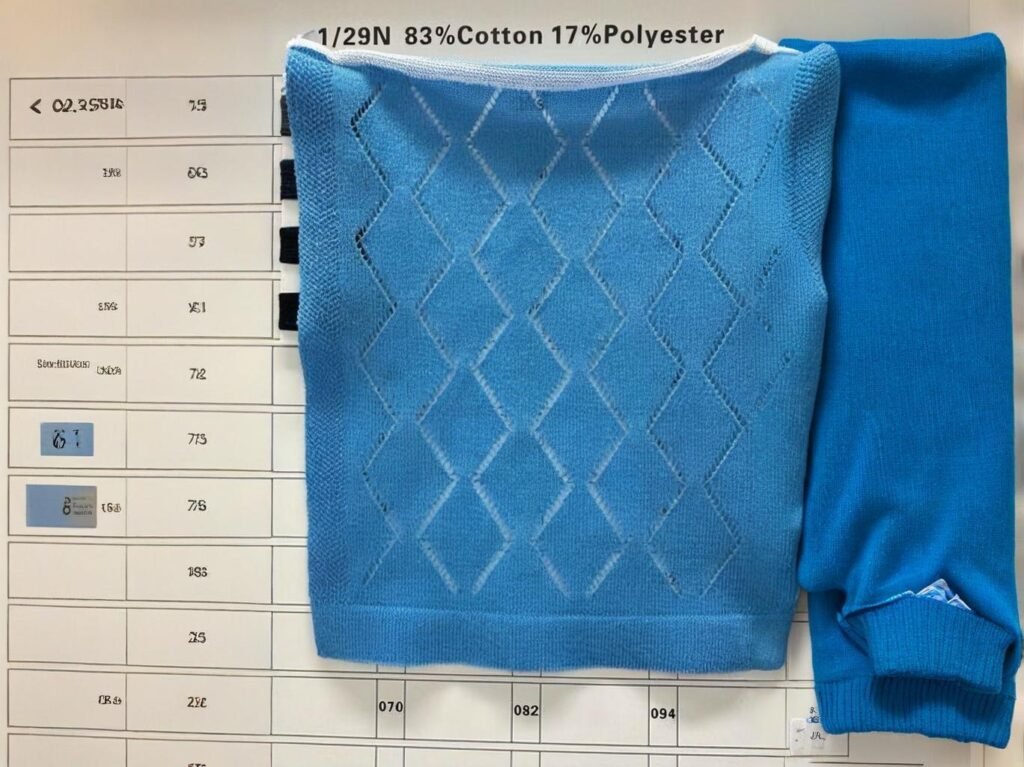
But blends must still pass flammability and chemical safety tests. Even small percentages of polyester can alter melting behavior and humidity retention.
Compliance Weightings: Which Factors Matter Most?
A scoring model helps compare fiber families under real-world safety needs.
| Factor | Importance | Cotton Score | Polyester Score | Blend Score |
|---|---|---|---|---|
| Chemical Safety | Very High | 9/10 | 6/10 | 7/10 |
| Skin Sensitivity | Very High | 10/10 | 6/10 | 8/10 |
| Flammability | High | 8/10 | 5/10 | 6/10 |
| Sustainability | High | 9/10 | 6/10 | 7/10 |
| Durability | Medium | 7/10 | 10/10 | 9/10 |
| Colorfastness | Medium | 8/10 | 10/10 | 9/10 |
| Cost Efficiency | Medium | 7/10 | 9/10 | 8/10 |
Cotton performs best on health-related factors—making it the safest primary fiber.
Decision Tree for Baby Clothing Fabric Selection
This simple model is widely used by professional children’s clothing manufacturers:
If garment touches the skin → Choose Cotton If garment requires strong durability → Choose Polyester or Blends If garment is sleepwear → Cotton or eco-certified blends only If garment is outerwear → Polyester is acceptable If garment requires zero chemical risk → Organic Cotton
This decision tree aligns perfectly with CPSIA, UKCA, REACH, and Japan’s textile regulations.
Parental Preference Should Not Be Ignored
Consumer perception is a compliance factor in itself.
Research from the U.S., Germany, and Japan shows:
- Parents trust cotton for infants and toddlers
- Polyester is often perceived as “sweaty” or “non-breathable”
- Eco-labels (GOTS, OEKO-TEX, Organic) strongly influence purchase decisions
- Cotton clothing has higher repeat-purchase rates
Ignoring parental preference can undermine a product, even if technically compliant.
Is the Industry Moving Toward One Dominant Choice?
Yes. Several global trends favor cotton-based solutions:
- Growth in organic cotton certification
- Stricter regulations on chemical residues
- Increased scrutiny of disperse dyes
- Rising consumer demand for breathable fabrics
- Sustainability requirements in EU markets
Polyester remains dominant in outerwear—but the market share for cotton-rich infant basics continues to rise.
The “Layered Safety” Model — The Most Reliable Approach
Leading baby apparel brands now use a layer-based material strategy:
- Base Layer (touching skin): 100% cotton or organic cotton
- Mid Layer: cotton-poly blend for shape retention
- Outer Layer: polyester for durability and print clarity
This approach protects infants while maintaining cost and performance.
Why the Correct Fiber Choice Matters
Cotton, polyester, and blended fabrics all have valid roles—but only when engineered intentionally and matched to compliance requirements.
- Cotton provides unmatched skin safety.
- Polyester provides unmatched durability.
- Blends offer the best compromise for cost and care ease.
A brand’s responsibility is to align fiber selection with regulatory standards and with the physiological needs of infants.
If you’re developing a baby apparel line and need materials engineered for softness, compliance, durability, and safety, SzoneierFabrics can support your entire process—from fiber selection to laboratory testing and final production.
Contact SzoneierFabrics today to develop fully compliant cotton, polyester, or blended fabrics for your infant clothing collection