Skip to content
The most useful crossbody bag is rarely the one with the greatest advertised capacity. It is the one that lets a person reach a passport in an airport queue, answer a phone on a crowded street, find a key at the front door, or remove a charger without disturbing everything else. That sounds simple, yet it requires surprisingly careful decisions about pocket depth, opening direction, item separation, weight distribution, lining, closures, and the relationship between the bag and the wearer’s body.
Crossbody bags with multiple storage compartments are hands-free carrying products that divide personal belongings into separate, purpose-built zones. A typical design combines a main compartment with quick-access pockets, secure interior storage, card or passport sections, device sleeves, key attachments, and optional bottle or umbrella pockets. The best layouts improve access and protection without adding unnecessary bulk, weight, hardware, or visual complexity.
Current products show how widely this category can vary. A compact model may hold only a phone, wallet, keys, and small tablet, while a larger travel version may separate documents, electronics, bottles, personal items, and valuables across several locking sections. Pacsafe currently offers crossbody designs with two lockable compartments and padded sleeves for tablets, while Travelon uses drop pockets, zipped storage, key clips, and external bottle sections in a 4.5-liter messenger format.
But adding pockets is easy. Making every pocket useful is where the real design work begins. Picture a traveler standing at a railway gate with one hand on a suitcase and a line forming behind them. Their ticket is technically “organized”—but it is buried inside the sixth pocket. A successful multi-compartment bag is designed to prevent exactly that moment.
What Is a Multi-Compartment Crossbody Bag?
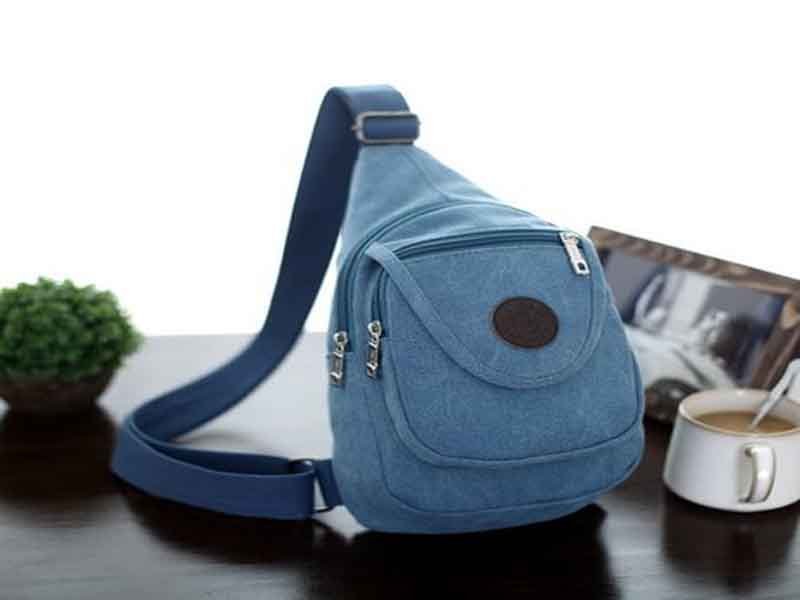
A multi-compartment crossbody bag is a shoulder bag divided into two or more functional storage zones and worn diagonally across the body. It is designed to separate frequently used items, valuables, electronics, documents, and personal accessories so they remain easier to find, safer to carry, and less likely to damage one another.
The defining feature is not simply the number of visible zippers. A genuine multi-compartment design creates meaningful separation between different types of contents. A phone should not be squeezed against keys. A passport should not sit beneath a leaking bottle. A tablet should not share an unpadded space with a metal power bank.
The bag must also remain comfortable after every compartment is filled. Poorly planned pockets can push all the weight toward the front, create hard pressure points against the body, or cause the bag to roll outward. The layout therefore has to be designed as a three-dimensional carrying system rather than a flat arrangement of rectangles.
What Defines a Multi-Compartment Bag?
A multi-compartment bag is defined by its independently accessible storage areas, internal organization, controlled openings, and ability to separate belongings according to use. Two large cavities may technically count as two compartments, but they do not necessarily create useful organization.
A practical design normally combines several levels of storage:
| Storage Level | Typical Components | Main Purpose |
|---|---|---|
| Primary compartment | Main zipped body | Holds larger everyday items |
| Secondary compartment | Front or rear zipped section | Separates frequently used belongings |
| Protective compartment | Padded sleeve or lined pocket | Protects a tablet, phone, glasses, or camera |
| Security compartment | Hidden or body-side pocket | Stores passport, wallet, or cash |
| Micro-organization | Card slots, pen loops, key clip | Controls small objects |
| External utility storage | Bottle, umbrella, ticket, or transit pocket | Provides fast access without opening the bag |
A useful compartment should answer three questions:
What will be stored inside it?
How quickly must the user reach it?
What must it be kept away from?
If the design team cannot answer those questions, the pocket may be decorative rather than functional.
Some bags use several separate zipper chambers. Others use one main chamber divided by sleeves, drop pockets, or internal walls. Both approaches can work. Separate chambers provide clearer organization and better security, but they add zipper weight, sewing operations, seam bulk, and cost. Internal dividers preserve a cleaner exterior but may allow contents to mix when the bag changes orientation.
Current commercial products demonstrate both methods. Pacsafe’s V Anti-Theft Companion uses two lockable main sections with organization pockets and a padded sleeve for an 8-inch tablet. Bellroy’s 5-liter Transit Sling uses a divided front pocket, a larger central compartment, a rear valuables pocket, and a separate RFID area.
Neither structure is automatically better. The correct choice depends on whether the user values faster opening, stronger separation, reduced weight, cleaner styling, or more secure access.
The following comparison shows how compartment count affects a product.
| Layout | Typical Organization | Advantages | Limitations |
|---|---|---|---|
| One main section | Internal sleeves and small pockets | Light, simple, efficient | Contents can mix |
| Two main sections | Daily items and valuables separated | Clear organization | Additional zipper and bulk |
| Three main sections | Quick access, main storage, security zone | Strong task separation | More complex opening sequence |
| Four or more sections | Highly specialized storage | Useful for travel or technical work | Can become heavy and confusing |
| Modular interior | Removable dividers or pouches | Flexible for different activities | Requires more components |
| Expandable layout | Hidden gusset adds temporary capacity | Adapts to changing loads | Can distort when overfilled |
The number of compartments should therefore be treated as an engineering decision rather than a marketing number. Ten poorly sized pockets can be less useful than three well-planned ones.
A strong design usually gives each major compartment a distinct role. For example, the rear body-side section may hold a passport and wallet, the center section may carry a tablet and personal items, and the front section may provide immediate access to a phone, card, or transport ticket.
This type of hierarchy helps users develop a predictable routine. After several days of use, they no longer need to search. Their hand naturally moves to the correct opening.
How Do Separate Compartments Work?
Separate compartments work by creating physical barriers between different belongings. These barriers may be formed by full fabric walls, padded sleeves, zipped dividers, mesh panels, folded gussets, elastic pockets, or molded inserts.
A full divider runs from one side of the bag to the other and provides strong separation. It is suitable for separating electronics from personal items or documents from accessories. However, full dividers consume material and can reduce flexible capacity.
A partial sleeve uses less space and is suitable for flat objects such as phones, passports, notebooks, or tablets. It controls location but may not stop small objects from moving underneath or around it.
A zipped divider creates another secure area but introduces additional hardware. This is useful for cash, medication, travel documents, or objects that should remain contained when the main compartment is opened.
| Divider Type | Separation Level | Suitable Contents | Main Design Concern |
|---|---|---|---|
| Full fabric wall | High | Documents and electronics | Consumes internal volume |
| Padded sleeve | High protection | Tablet, e-reader, phone | Must fit device dimensions |
| Open drop pocket | Medium | Phone, tissues, small notebook | Contents may fall out |
| Zipped wall pocket | High security | Cash, passport, medication | Adds thickness |
| Elastic pocket | Variable | Charger, bottle, cosmetics | Elastic may lose recovery |
| Mesh pocket | Medium | Cables and visible accessories | Can snag sharp items |
| Removable pouch | High flexibility | Cosmetics, technology, or medical items | Can be misplaced |
| Molded compartment | Very high protection | Camera or technical equipment | Higher tooling and weight |
The compartment wall also influences how the bag behaves when packed. A stiff divider can help the product hold its shape, while a soft divider allows the capacity to shift between sections. Neither approach is universally correct.
For a compact urban crossbody bag, flexible capacity can be useful. A wearer may carry sunglasses in the morning and replace them with a small purchase later. A highly rigid divider would prevent that adjustment.
For a tablet-oriented travel bag, stronger separation is usually preferable. The device should not be pressed by a bottle, power adapter, or hard cosmetic container. Padding and a controlled fit become more important than adaptable volume.
The opening direction also determines whether separate compartments work smoothly. A zipper that opens too far may allow small objects to escape when the bag is worn vertically. A short opening improves containment but may make it difficult to see or retrieve items from the bottom.
The design team must determine whether the user normally opens the bag while it remains on the body or removes it first. Travel and commuter bags are often accessed while worn, so the opening should face the user and remain controlled.
A two-slider zipper can allow access from either direction, but both sliders may gather at an inconvenient point if their resting position is not defined. Lockable sliders offer additional security, although they require more deliberate opening.
The most reliable way to test a compartment structure is to pack it with realistic items and use it while walking, sitting, passing through a gate, and entering a vehicle. Flat drawings cannot reveal how small items settle or how the opening behaves at an angle.
Which Items Can the Bag Carry?
A multi-compartment crossbody bag can carry a phone, wallet, cards, passport, keys, glasses, charger, power bank, earbuds, small camera, cosmetics, medication, notebook, tablet, water bottle, umbrella, and other daily or travel essentials. The realistic contents depend on the bag’s external dimensions, gusset depth, structural shape, and intended loaded weight.
Capacity should be described through actual item sets rather than vague terms such as roomy or spacious. A bag may have enough volume for a tablet but an opening too narrow to insert it. Another may hold a bottle only by displacing every other item.
Current market examples illustrate the range. A compact Beckmann crossbody measures 17 × 11 × 5 centimeters, weighs 125 grams, and is intended for basic belongings such as a wallet, phone, and small accessories. At the other end, Travelon’s 4.5-liter Classic Messenger measures approximately 22.9 × 31.8 × 8.9 centimeters and includes internal organization plus two bottle or umbrella pockets.
The table below provides practical development profiles. These are starting points for product planning rather than universal size standards.
| Product Profile | Approximate Volume | Typical Contents | Suggested Main Dimensions |
|---|---|---|---|
| Phone crossbody | 0.5–1.5 L | Phone, cards, keys, earbuds | 18–22 × 11–15 × 3–5 cm |
| Compact daily bag | 2–4 L | Phone, wallet, glasses, charger | 20–25 × 15–19 × 5–8 cm |
| Travel organizer | 4–6 L | Passport, phone, wallet, bottle, guidebook | 24–30 × 18–24 × 7–10 cm |
| Tablet crossbody | 5–8 L | 8–11 inch tablet, charger, documents | 28–34 × 21–27 × 7–11 cm |
| Large utility crossbody | 8–12 L | Tablet, bottle, camera, light layer | 32–38 × 24–30 × 9–14 cm |
Dimensions alone do not determine capacity. Rounded corners, zipper placement, foam, internal dividers, and curved body panels can reduce usable space. The product should be evaluated using internal clear dimensions, not only exterior measurements.
The shape of the contents matters too. A folded jacket uses flexible space, while a tablet needs a specific rectangular envelope. A bottle requires vertical clearance. Sunglasses need protection from crushing. A camera may need padding around several sides.
A useful item-planning matrix can prevent incompatible storage.
| Item | Protection Need | Access Frequency | Recommended Position |
|---|---|---|---|
| Phone | Scratch protection | Very high | Front or body-side pocket |
| Passport | Security and moisture protection | High during travel | Hidden zipped pocket |
| Wallet | Security | Medium to high | Body-side compartment |
| Keys | Separation from devices | High | Tethered clip or closed pocket |
| Tablet | Padding and movement control | Medium | Rear padded sleeve |
| Charger | Pressure isolation | Medium | Internal zipped pocket |
| Glasses | Crush protection | Medium | Structured pocket |
| Water bottle | Leak separation | Medium | External or lined side pocket |
| Medication | Security and quick identification | Variable | Dedicated zipped pocket |
| Camera | Impact protection | Medium | Padded central compartment |
| Cosmetics | Leak and stain control | Medium | Wipe-clean removable pouch |
| Travel ticket | Very fast access | High | Secure front slip or zipper pocket |
The loaded weight should also be limited. Crossbody bags transfer load through one strap across one shoulder. A large bag can physically hold many items while still becoming uncomfortable to wear.
For compact daily products, an intended loaded weight around 1.5–3 kilograms may be a sensible development target. Larger utility bags may carry more, but strap width, anchor construction, back-panel padding, and body contouring must be adjusted accordingly.
The bag should be tested at its expected load, not only at its maximum physical capacity. A product that closes successfully but twists, sags, or presses painfully against the wearer is not functioning correctly.
Are More Compartments Always Better?
More compartments are not always better. Additional pockets improve organization only when their size, location, visibility, and access correspond to real user needs. Too many compartments can increase weight, cost, sewing complexity, zipper noise, material consumption, and the time required to find an item.
Pocket quantity is easy to promote because it creates a measurable selling point. “Twelve pockets” sounds more impressive than “four carefully designed zones.” Yet users do not experience a bag as a number. They experience whether their phone fits, whether the zipper catches, whether the passport remains secure, and whether the bag becomes bulky after loading.
A useful method is to evaluate every proposed pocket against four criteria.
| Evaluation Question | Keep the Pocket When… | Remove or Redesign It When… |
|---|---|---|
| Does it serve a defined item? | The contents are clearly identified | It has no intended use |
| Is it easy to reach? | Access matches use frequency | It is hidden behind other contents |
| Does it protect or separate? | It prevents damage or loss | It duplicates another space |
| Does it preserve comfort? | It distributes weight effectively | It creates pressure or bulk |
The cost of a pocket includes more than the fabric. A zipped pocket requires zipper tape, sliders, pullers, reinforcement, sewing time, quality checks, and often additional lining. A curved pocket may require a specialized sewing process. A waterproof pocket may need laminated fabric and sealed or bound seams.
The following table shows how organization can gradually become overengineering.
| Layout Decision | Potential Benefit | Potential Cost or Risk |
|---|---|---|
| Add a second main zipper | Separates major item groups | Adds hardware and opening steps |
| Add six card slots | Reduces need for a wallet | Limits flexibility and increases sewing |
| Add an internal bottle holder | Controls bottle movement | Places liquid near other contents |
| Add a hidden rear pocket | Protects valuables | May press against the body |
| Add a tablet sleeve | Protects electronics | Reduces main-compartment capacity |
| Add a key tether | Prevents lost keys | Keys may scratch nearby items |
| Add an expandable gusset | Provides temporary capacity | Can distort the bag when opened |
| Add removable organizers | Supports several uses | Adds cost and loose components |
| Add numerous small pockets | Separates accessories | Users may forget where items are stored |
The best designs use storage hierarchy. There should be one obvious location for each essential item rather than several nearly identical options.
A simple rule is that the user should be able to identify the location of their phone, wallet, keys, and passport without looking. When the bag is opened, the most important contents should be visible or reachable immediately.
For custom development, Szoneier can create a paper pattern or simplified prototype before a complete sample is produced. This makes it possible to test pocket count, dimensions, opening direction, and item fit without committing to every final material and trim.
A customer may initially request eight pockets but discover during testing that five perform better. Removing three pockets can make the product lighter, easier to manufacture, cleaner in appearance, and more intuitive to use.
The goal is not minimum organization. It is maximum usefulness per component.
Which Compartments Are Most Useful?
The most useful crossbody-bag compartments are a secure main section, an easy-access phone pocket, a protected valuables pocket, small-item organizers, and a padded device sleeve when electronics are carried. Bottle, umbrella, camera, or expandable compartments are valuable only when they match the product’s intended activity and do not compromise comfort or balance.
A good storage plan follows the sequence of a person’s day. Items used constantly remain near the opening. Valuables sit close to the body. Hard accessories are kept away from screens. Liquids are isolated. Larger objects occupy the center, where their weight is less likely to pull the bag outward.
Current products repeatedly use this layered approach. Travelon places drop pockets, a zipped pocket, a key clip, and bottle storage around a locking main compartment, while Bellroy separates front essentials, central capacity, and rear valuables. Pacsafe adds lockable sections and padded tablet sleeves when device and security needs are higher.
The most useful layout is therefore not universal. It must be built around a defined carrying list.
What Belongs in the Main Compartment?
The main compartment should hold the largest and least frequently accessed items, such as a notebook, small camera, glasses case, cosmetics pouch, charger, compact umbrella, snack, or light garment. It should provide enough open volume to accommodate changing daily needs rather than being completely divided into fixed pockets.
A common mistake is filling the main compartment with too many organizers. Internal pockets look impressive in a product photograph, but they reduce flexible capacity. When every wall is covered with compartments, there may be nowhere to place an item that does not match the designer’s assumptions.
The central space should therefore remain partly open. The structure can be supported by selected pockets around the perimeter while preserving usable volume in the middle.
| Main-Compartment Element | Recommended Function | Design Consideration |
|---|---|---|
| Open central volume | Holds irregular or changing items | Avoid excessive subdivision |
| Rear padded sleeve | Stores tablet or e-reader | Maintain bottom protection |
| Zipped wall pocket | Secures cash or personal items | Keep zipper away from devices |
| Two drop pockets | Organizes charger and small accessories | Confirm realistic pocket depth |
| Key tether | Controls keys | Keep away from screens |
| Elastic holder | Secures bottle or umbrella | Use leak-resistant lining |
| Removable pouch | Contains cosmetics or cables | Ensure easy removal |
The opening should be large enough for users to see the contents. A deep compartment with a narrow top zipper becomes a dark tunnel where small objects disappear.
Light-colored lining can improve visibility, particularly in black or dark exterior bags. However, very pale lining shows stains more easily. A medium neutral color often provides a practical balance.
The zipper opening may extend across the top, around the side, or across three sides. A wider opening improves access but increases the risk of contents falling out when the bag is opened while worn.
For a vertical crossbody bag, partial side gussets can control the opening angle. The zipper can open widely while the gusset prevents the front panel from dropping completely.
The bottom should be considered carefully. Small items naturally settle there. A slightly raised internal pocket, contrasting lining, or removable base insert can make the area easier to manage.
The main compartment also influences the bag’s silhouette. When heavy items move freely, they may create uneven bulges. A flexible divider or light foam structure can control movement without making the bag rigid.
A balanced design provides enough organization to prevent chaos but enough open capacity to handle the unpredictable object a user acquires during the day.
Which Pockets Protect Valuables?
The pockets that best protect valuables are zipped body-side compartments, concealed interior pockets, lockable sections, RFID-shielded card or passport sleeves, and retention pockets positioned away from exterior impact.
The body-side location is useful because it is less visible and harder for another person to access while the bag is worn correctly. It also allows the wearer to feel whether the bag is being moved.
A rear pocket is not automatically secure. If it uses an open magnetic closure or a wide unprotected zipper, valuables may still be exposed. The closure, opening direction, and strap orientation must work together.
| Valuable | Recommended Storage | Reason |
|---|---|---|
| Passport | Body-side zipped pocket | Secure and accessible during travel |
| Wallet | Concealed internal or rear pocket | Reduces casual access |
| Cash | Small zipped divider | Prevents loose movement |
| Credit cards | Closed card slots or RFID section | Organizes and limits loss |
| Jewelry | Soft-lined mini pocket | Reduces scratching |
| Medication | Identifiable zipped section | Prevents accidental displacement |
| House keys | Tethered clip inside closed area | Avoids loss and screen damage |
| Tracking device | Hidden fitted pocket | Keeps device discreet |
| Travel documents | Flat rear compartment | Prevents folding |
Pacsafe currently integrates securable zippers, cut-resistant construction, and RFID-blocking pockets into several crossbody models. Travelon also uses locking main sections and protected card or passport organization. These market examples show that security is increasingly integrated into ordinary-looking bags rather than limited to technical travel equipment.
RFID storage should be described carefully. It is designed to reduce communication between certain contactless cards or documents and external readers when the item is fully placed inside the shielded pocket. It does not protect against every form of fraud, physical theft, or digital compromise.
The shielding material should surround the relevant area sufficiently. A small panel applied only to one side of a large open pocket may not provide the intended performance. Finished-pocket testing is more meaningful than relying only on the raw material description.
Lockable zippers should remain easy for the owner to operate. A closure that requires several awkward steps may be left unlocked in daily use. Security features should introduce friction for unauthorized access without creating excessive inconvenience.
The pocket position should also protect valuables from impact. A phone stored against the outside front panel may be easy to reach but vulnerable when the wearer leans against a counter. A protected rear sleeve may be safer, although it needs sufficient padding to prevent discomfort against the body.
For private-label development, customers should define what “secure” means for their audience. It may refer to pickpocket resistance, device protection, card organization, privacy, or simply preventing objects from falling out.
Each interpretation leads to a different compartment structure.
How Are Phones and Cards Organized?
Phones and cards are organized through fitted slip pockets, quick-access zipped sections, vertical sleeves, card slots, pull tabs, and soft linings. The design should allow fast access while preventing the phone from rubbing against keys, metal hardware, coins, or rough zipper components.
Phone dimensions vary significantly, especially when protective cases are included. A pocket based only on the screen measurement may be too small for the finished device.
A manufacturer should define the maximum phone envelope by width, height, thickness, and case allowance. The pocket can then include enough clearance for insertion without becoming loose.
| Phone Pocket Type | Access Speed | Security | Best Use |
|---|---|---|---|
| Open front slip | Very fast | Low | Controlled daily environments |
| Magnetic pocket | Fast | Medium | Lifestyle bags |
| Zipped front pocket | Medium | High | Commuting and travel |
| Body-side slip | Fast | Medium | Phone-first compact bags |
| Body-side zipper | Medium | High | Urban and travel use |
| Internal vertical sleeve | Medium | Medium | Organized main compartment |
| Padded dedicated pocket | Medium | High protection | Larger smartphones or small devices |
The phone pocket should not be so deep that the user must insert the entire hand. A shallow pocket improves access but needs a secure closure or controlled opening.
Pull tabs can help remove a tightly fitted phone, although they add another component that may wear or catch on surrounding items. A small finger cutout may provide a simpler solution.
Lining matters because camera lenses and screens can scratch. Microfiber, brushed polyester, soft tricot, or another low-abrasion textile can be used. The lining should remain clean and should not release loose fibers.
Card slots require different dimensions. They must hold cards securely while allowing the user to remove them without excessive force. Stacking too many cards in one pocket creates thickness and may stretch the material permanently.
| Card Feature | Practical Use | Development Concern |
|---|---|---|
| Individual slots | Frequently used cards | Higher sewing time |
| Stacked card pocket | Several cards together | Slower access |
| Zipped card section | Travel documents and cards | Added bulk |
| Pull-tab wallet | Compact access system | Moving component wear |
| Removable card pouch | Flexible organization | Can be misplaced |
| RFID-lined slots | Contactless-card organization | Finished construction should be verified |
Card slots should be positioned away from areas that bend sharply around the body. Repeated flexing can deform the cards or make them difficult to remove.
A detachable wallet may be attractive for travel because it can be removed independently. However, its tether, snap, or attachment must be secure enough to prevent accidental loss.
Baggallini’s compact RFID crossbody products illustrate how a small footprint can combine card-oriented organization and quick-access storage, while larger travel bags place these functions inside more protected primary compartments.
The design decision comes down to frequency. A transit card used every few minutes belongs near the exterior. A backup credit card or passport belongs deeper inside.
Is a Bottle Pocket Necessary?
A bottle pocket is necessary only when carrying water, an umbrella, or another cylindrical item is part of the product’s intended routine. It is valuable in travel, outdoor, medical, parenting, and long-commute designs, but it may add unnecessary bulk to a compact fashion-oriented crossbody bag.
The pocket should be sized around the intended container rather than described generically as fitting a bottle. Diameter, height, cap design, and fill weight all affect performance.
A 500-milliliter bottle may weigh more than the empty bag. Placing that weight at one side can cause twisting and uneven strap pressure. The pocket should sit near the bag’s center of gravity where possible.
| Bottle-Pocket Position | Advantage | Limitation |
|---|---|---|
| External side pocket | Keeps liquid away from contents | Alters silhouette |
| Internal side holder | Maintains clean exterior | Places liquid near valuables |
| Front central pocket | Improves weight balance | Increases front bulk |
| Rear central holder | Keeps weight close to body | May reduce comfort |
| Removable bottle pouch | Used only when needed | Adds separate component |
| Expandable hidden pocket | Clean appearance when empty | More complex construction |
External pockets can use elastic, mesh, folded gussets, adjustable cords, or zipped expansion. Mesh provides visibility and drying, but it may snag and appear too technical. Solid fabric creates a cleaner appearance but needs a drainage or wipe-clean strategy if moisture is expected.
An internal bottle holder should use a water-resistant or wipe-clean lining. It may also include a raised edge or removable pouch to contain small leaks. No textile pocket can guarantee protection from a poorly closed bottle, so product communication should remain realistic.
Travelon’s Classic Messenger uses two exterior pockets for bottles or umbrellas, demonstrating how a medium-sized 4.5-liter crossbody can isolate these objects from the main organization system.
For smaller crossbody bags, bottle storage may not be worth the structural compromise. A side pocket wide enough for a bottle can make a narrow bag appear unbalanced, even when the pocket is empty.
Customers should ask whether users genuinely carry a bottle with this category of bag or whether the feature is being added because competing products list it.
A necessary bottle pocket solves a daily problem. An unnecessary one becomes an empty fabric bulge.
Which Pocket Fits a Tablet?
A tablet pocket should be a padded sleeve positioned close to the wearer’s body, with internal dimensions based on the maximum device size, protective case, and insertion clearance. It should include bottom cushioning, a soft lining, movement control, and separation from hard accessories.
Tablet size is normally described by diagonal screen measurement, but pocket engineering requires the full body dimensions. Bezel width, thickness, keyboard cases, stylus holders, and protective covers can increase the required space.
Current crossbody products support several tablet categories. Pacsafe offers compact bags fitted for 7-inch or 8-inch tablets, while larger crossbody designs accommodate devices up to approximately 11 inches.
The following dimensions are practical development starting points and should be verified against actual target devices.
| Tablet Category | Suggested Internal Sleeve Range | Suggested Padding | Typical Bag Volume |
|---|---|---|---|
| 7-inch device | 20–22 × 13–15 × 1.5–2.5 cm | 3–6 mm | 2–4 L |
| 8-inch device | 22–24 × 15–17 × 1.5–2.5 cm | 4–7 mm | 3–5 L |
| 10-inch device | 26–28 × 18–20 × 1.5–3 cm | 5–8 mm | 5–7 L |
| 11-inch device | 28–30 × 20–22 × 2–3 cm | 6–10 mm | 6–9 L |
| Tablet with keyboard case | Device size plus 10–20 mm | 6–10 mm | 7–10 L |
The sleeve should not extend all the way to the bottom exterior seam without cushioning. A suspended construction can keep the device above the impact zone when the bag is placed down.
A retention tab may be added to prevent the tablet from sliding out when the compartment is opened. Hook-and-loop closures are economical, while snaps or magnets provide different visual and tactile effects.
The sleeve opening should avoid metal zipper teeth or pullers. A fabric guard can prevent the device edge from rubbing against hardware.
Padding must be balanced. Thick foam improves cushioning but reduces usable capacity and increases heat retention. A crossbody bag is not usually expected to provide hard-case protection, so the target should be controlled everyday protection rather than excessive bulk.
The tablet should remain close to the body because that position improves balance and reduces outward swing. A central or front position can make the bag pull away from the wearer.
When the product includes both a tablet sleeve and bottle pocket, their interaction must be tested. A full bottle can press against the device or distort the sleeve. A rigid divider, offset pocket position, or external bottle solution may be required.
The most convincing tablet claim is not “fits most devices.” It is a precise maximum internal dimension validated with a physical sample.
How Should the Final Compartment Mix Be Chosen?
The final compartment mix should be chosen by mapping the user’s most common items, ranking access frequency, identifying protection conflicts, and testing the packed bag on the body. The design should then remove any storage feature that does not improve access, security, protection, or comfort.
A practical compartment-selection process can use the following sequence:
| Step | Decision |
|---|---|
| List contents | Identify realistic everyday objects |
| Record dimensions | Measure phones, tablets, bottles, and accessories |
| Rank access | Separate constant-use and occasional-use items |
| Identify conflicts | Keep liquids, keys, and hard objects away from devices |
| Assign zones | Match each item group to a compartment |
| Review weight | Position heavier items close to the body |
| Build mock-up | Test volume and opening direction |
| Conduct wear trial | Walk, sit, bend, and retrieve items |
| Remove duplication | Delete pockets with overlapping functions |
| Confirm production | Finalize construction and tolerances |
For example, a city-travel bag may use three main zones:
A front zipped pocket for a phone, transit card, and earbuds.
A central compartment for a guidebook, sunglasses, charger, and small personal items.
A padded rear compartment for an 8-inch tablet, passport, wallet, and cash.
This structure is easy to understand and does not require an excessive pocket count.
A daily lifestyle bag may need only one main compartment, two internal pockets, and one body-side security pocket. A technical field bag may need six or more specialized sections because the user carries instruments, batteries, documents, and personal items.
Both can be correctly designed.
At Szoneier, custom compartment planning can begin with customer reference images, sketches, item lists, target dimensions, or an existing bag. The development team can recommend pocket size, material, closure, lining, reinforcement, and access direction before producing a working sample.
The result should not merely look organized when empty. It should remain organized after the user has walked several kilometers, opened it repeatedly, added an unexpected object, and put it down in a hurry.
That is the difference between a bag with many pockets and a genuinely useful multi-compartment crossbody bag.
Which Materials Work Best?

The best material for a multi-compartment crossbody bag depends on how the bag will be used, how much weight it must carry, how frequently it will be cleaned, and what visual position the finished product should occupy. Nylon and polyester are practical for lightweight travel and daily use, canvas provides a more natural and structured character, while neoprene is useful for padded device pockets and flexible protective panels.
Material selection should begin with the complete product rather than a fabric swatch. A textile that feels strong in the hand may become too heavy once the bag includes four zippers, lining, foam, webbing, hardware, and multiple pocket walls. A lightweight fabric may appear thin when used alone but perform well after coating, lamination, reinforcement, and correct seam engineering.
The exterior material also affects how easily the bag can be organized. Stiff fabrics help pockets remain open and maintain their shape. Softer textiles conform comfortably to the body but may collapse around small objects. Coated fabrics are easier to clean, although their folded seams can become bulky. Stretch materials accommodate irregular contents but provide less control over movement.
At Szoneier, crossbody-bag development can use nylon, polyester, Oxford fabric, cotton canvas, neoprene, linen blends, jute composites, synthetic leather, genuine leather, and mixed-material constructions. These fabrics can be dyed, printed, laminated, coated, quilted, embossed, brushed, washed, waxed, or treated for specific performance requirements.
Is Nylon Suitable for Daily Use?
Nylon is highly suitable for everyday and travel-oriented crossbody bags because it can provide low weight, flexibility, abrasion resistance, and a refined technical appearance. The actual performance, however, depends on yarn quality, fabric density, weave, coating, and reinforcement rather than the fiber name alone.
Lightweight nylon is useful when a product includes numerous compartments. Every pocket adds another fabric layer, so reducing the weight of the main textile can prevent the finished bag from feeling heavy before it is packed.
Nylon can also bend repeatedly without developing the stiff fold marks found in some heavily coated polyester fabrics. This makes it comfortable for bags designed to follow the wearer’s body.
Common nylon constructions for crossbody bags include smooth taffeta, ripstop, Oxford weave, high-density plain weave, and heavier luggage-style fabrics.
| Nylon Construction | Typical Character | Suitable Application | Main Consideration |
|---|---|---|---|
| 210D nylon | Light and flexible | Linings and compact bags | Limited body structure |
| 420D nylon | Balanced weight and strength | Daily travel crossbody bags | May require backing |
| 500D nylon | Rugged and technical | Outdoor and utility bags | More visible texture |
| 840D nylon | Firm and abrasion-resistant | Heavy-use compartments | Higher weight |
| 1000D nylon | Very rugged | Tactical and equipment bags | Can feel excessive for daily use |
| Ripstop nylon | Lightweight with reinforced grid | Packable and outdoor bags | Technical appearance |
| High-density nylon | Smooth and refined | Premium urban collections | Material cost |
Denier describes yarn mass rather than complete fabric performance. A tightly woven 420D nylon may outperform a loosely woven heavier fabric in certain abrasion or tear tests. Coating adhesion, seam strength, and yarn construction must also be considered.
Nylon can absorb more moisture than polyester. This does not necessarily mean water passes through the finished bag, but the textile may take longer to dry or change slightly in hand feel after exposure. A PU coating, TPU lamination, or water-repellent finish can improve moisture performance.
The treatment should match the required claim. A daily commuter bag may only need protection from light rain. A travel document bag may require a higher water-resistance target. A bag intended for repeated outdoor exposure may need coated fabric, protected zippers, and carefully engineered seams.
Nylon is also suitable for subtle surface treatments. Matte finishes produce a modern premium appearance, while crinkled or washed nylon creates a softer lifestyle character. High-gloss nylon can look sporty but may show scratches and wrinkles more clearly.
For a multi-compartment design, nylon should be reinforced at the shoulder-strap anchors, zipper ends, and heavily loaded pocket bases. The material may resist surface abrasion well while still failing where concentrated stress pulls against needle holes.
A practical nylon specification should include:
| Specification Item | Why It Matters |
|---|---|
| Fiber type | Affects hand feel and performance |
| Denier | Indicates yarn mass |
| Fabric weight | Influences finished-bag weight |
| Weave density | Affects durability and appearance |
| Coating type | Controls water resistance and stability |
| Tensile strength | Supports general load performance |
| Tear strength | Protects stressed edges |
| Abrasion resistance | Important for body-contact areas |
| Colorfastness | Reduces fading and transfer |
| Coating adhesion | Prevents peeling or bubbling |
Nylon is therefore a strong choice when the design goal is a light, flexible, technically refined bag. It should not be selected only because it is assumed to be stronger than every polyester option.
How Does Polyester Compare?
Polyester offers broad color availability, low moisture absorption, good dimensional stability, reliable printing performance, and competitive cost. It is one of the most versatile materials for private-label crossbody bags because it can be produced in lightweight, structured, recycled, coated, brushed, or luggage-style constructions.
Compared with nylon, polyester often dries more quickly and maintains color well under repeated light exposure. It is widely available in stock colors and many denier ranges, making it practical for programs that require several colorways.
Polyester can also be made from recycled feedstock. Recycled polyester is attractive for collections that need a traceable material story, but claims should be supported by appropriate documentation. A recycled exterior does not automatically mean that the lining, foam, thread, zipper tape, webbing, or packaging is also recycled.
| Performance Area | Nylon | Polyester | Product Implication |
|---|---|---|---|
| Abrasion resistance | Often excellent | Good to excellent | Depends on construction |
| Moisture absorption | Higher | Lower | Polyester generally dries faster |
| UV stability | Moderate | Usually stronger | Useful for outdoor exposure |
| Hand feel | Often softer | Can be firmer | Finishing changes both |
| Color consistency | Good | Very good | Polyester supports broad color programs |
| Printing | Good with preparation | Generally very good | Useful for graphic collections |
| Cost | Often higher | Usually more economical | Polyester suits larger programs |
| Recycled availability | Available | Widely available | Documentation remains important |
| Shape retention | Flexible | Often stable | Polyester works well for structured pockets |
| Wrinkle recovery | Good | Good to very good | Depends on coating and weave |
Polyester Oxford fabric is common in crossbody bags because it balances structure and production efficiency. A 300D construction may suit a compact lifestyle bag, while 600D polyester is widely used for travel, promotional, outdoor, and work-oriented products.
Heavier is not always better. A 900D or 1200D material may create a rugged appearance but also increase seam bulk, bag weight, and difficulty at curved pocket edges. The fabric should be chosen according to load and positioning rather than a desire to advertise the largest denier.
Polyester is also suitable for digital printing, heat transfer, sublimation on compatible constructions, screen printing, embroidery, and woven or rubber patches. Each logo process should be tested on the actual coating because water-repellent and laminated surfaces may reduce adhesion.
Coated polyester is easy to wipe clean and can provide useful water resistance. However, low-quality coatings may crack, become sticky, produce strong odors, or separate after heat and humidity exposure. Hydrolysis and aging performance should be considered for products sold in warm or humid regions.
A common everyday crossbody-bag construction may use:
| Component | Possible Polyester Specification |
|---|---|
| Exterior | 300D–600D polyester Oxford |
| Body-side panel | Brushed or padded polyester |
| Lining | 150D–210D polyester |
| Security pocket | Tightly woven polyester |
| Bottle pocket | Coated polyester or mesh |
| Internal dividers | Lining with thin foam backing |
| Strap | Polyester webbing |
| Binding | Polyester tape |
| Logo | Woven patch, print, or embroidery |
Polyester is particularly effective when the product must balance price, repeatability, color choice, printing, and reasonable durability. Premium performance still depends on yarn, weave, coating, stitching, and component quality.
Are Canvas Bags Durable?
Canvas crossbody bags can be highly durable when their fabric weight, weave density, yarn quality, treatment, seam allowance, and reinforcement are matched to the expected load. Canvas is especially suitable for casual, heritage, outdoor-inspired, artisan, and natural-looking collections.
Cotton canvas provides a warm hand feel and develops character through use. It accepts pigment dyeing, washing, screen printing, embroidery, waxing, and leather-trim combinations well. It can communicate authenticity more naturally than highly technical synthetic fabrics.
The word canvas covers a wide range of constructions. Lightweight canvas is flexible and suitable for fashion bags, while heavier canvas can support structured utility designs. The correct weight depends on how many internal layers are already present.
| Canvas Weight | General Character | Suitable Crossbody Use | Main Concern |
|---|---|---|---|
| 180–240 g/m² | Light and flexible | Compact fashion bags | Requires reinforcement |
| 250–340 g/m² | Balanced | Daily multi-pocket bags | Moderate moisture absorption |
| 350–450 g/m² | Firm | Structured travel and work bags | Increased product weight |
| 460–600 g/m² | Heavy and rugged | Utility or heritage bags | Thick seams and reduced comfort |
| Waxed canvas | Firm with surface character | Outdoor and heritage designs | Creasing and special care |
| Blended canvas | More stable and faster drying | Daily commuter bags | Less natural hand feel |
Untreated cotton absorbs moisture. A light water-repellent finish can reduce wetting while preserving much of the natural appearance. Waxed canvas offers stronger surface repellency and a distinctive aged effect, but customers should understand that folding marks and tonal variation are part of the material’s character.
Canvas can become heavy when saturated, so it may not be the best choice for products expected to face frequent rain. A polyester-cotton blend or coated canvas can improve dimensional stability and drying speed.
Abrasion usually appears first at corners, the base, zipper ends, and body-contact areas. Leather patches, synthetic trims, double-layer canvas, internal webbing, or protective binding can reinforce these zones.
Canvas pocket walls may remain open more effectively than very soft nylon, which helps users see and access contents. However, thick canvas can create bulky intersections where several pocket seams overlap.
A heavily organized canvas bag may include four or five layers at certain points. The pattern maker must account for this thickness in seam allowances, turning methods, zipper placement, and edge binding.
Canvas also creates specific printing opportunities. Screen printing can produce a strong graphic appearance, while embroidery supports durable logos. Dense embroidery should have sufficient backing to prevent puckering.
A durable canvas bag is therefore not simply one made from the heaviest possible cloth. The design should use enough weight for structure while controlling seam bulk and overall carrying weight.
Is Neoprene Good for Electronics?
Neoprene is useful for electronics because it offers cushioning, flexibility, compression, and a soft surface. It is often used for phone sleeves, tablet sections, camera pockets, device dividers, shoulder pads, or removable protective pouches rather than as the only material in a highly structured multi-compartment bag.
Neoprene is usually a laminated construction consisting of foam between one or two textile surfaces. Thickness, foam density, stretch, surface fabric, and lamination quality affect performance.
| Neoprene Thickness | Common Use | Protection Level | Design Concern |
|---|---|---|---|
| 1–2 mm | Soft pocket lining | Light | Limited impact protection |
| 2–3 mm | Phone or compact device sleeve | Moderate | May stretch with heavy contents |
| 3–5 mm | Tablet and camera compartments | Good | Adds internal bulk |
| 5–8 mm | Protective inserts | High | Can become too thick for daily bags |
Neoprene should not be described as fully waterproof simply because its foam structure resists water absorption. Seams, zipper openings, perforations, and laminated textile surfaces still influence the finished compartment.
Its stretch can be useful for fitting devices with slightly different dimensions. However, excessive stretch allows hard objects to move and press against one another. A tablet pocket may combine neoprene with a woven outer wall or reinforcement sheet to control shape.
Neoprene can trap heat, so it should not create a completely sealed pocket around warm electronics. Devices should not be stored while charging unless the product is specifically designed and tested for that use.
The material can also produce an odor if low-quality foam, adhesives, or lamination processes are used. Odor evaluation and airing time should be included in production control.
Neoprene edges may be bound, folded, glued, or left raw depending on the design. Raw edges provide a modern technical appearance but require clean cutting. Binding gives a more finished look but adds thickness.
A useful mixed-material tablet compartment may include:
| Layer | Function |
|---|---|
| Soft tricot lining | Protects the screen |
| 2–4 mm neoprene | Provides cushioning |
| Thin PE or PP sheet | Controls bending |
| Exterior woven fabric | Connects pocket to bag structure |
| Raised bottom foam | Protects against placement impact |
Neoprene works best when its cushioning supports the main material system. It should not be used as a substitute for proper structure or bottom protection.
Which Linings Protect Contents?
The best lining protects contents from scratches, helps users see small objects, resists tearing, supports pocket construction, and remains easy to clean. Common options include polyester taffeta, nylon lining, twill, brushed tricot, microfiber, ripstop fabric, coated polyester, and lightweight canvas.
Lining quality is often underestimated because it is hidden in product photographs. In daily use, however, the lining is touched constantly, carries small heavy objects, and surrounds sharp chargers, keys, cosmetics, and card edges.
A thin lining can tear at pocket corners or pull away from seams. A very heavy lining adds unnecessary weight. The correct option depends on the compartment.
| Lining Type | Main Advantage | Suitable Area | Limitation |
|---|---|---|---|
| Polyester taffeta | Light and economical | General interior | Can feel basic |
| Nylon lining | Smooth and durable | Travel and premium bags | Higher cost |
| Twill lining | Refined hand and structure | Lifestyle and leather bags | Increased weight |
| Brushed tricot | Soft surface | Phone and device pockets | Can collect lint |
| Microfiber | Scratch protection | Glasses and electronics | Higher material cost |
| Ripstop lining | Tear resistance | Utility bags | Technical appearance |
| Coated polyester | Wipe-clean performance | Bottle and cosmetic areas | Less breathable |
| Light canvas | Natural appearance | Heritage bags | Adds bulk |
Lining color affects usability. Dark lining hides stains but makes black objects difficult to find. Light lining improves visibility but may show dirt and color transfer. Mid-tone gray, beige, blue, or another brand-aligned color often balances the two needs.
A printed lining can add strong private-label identity. The print must be checked for colorfastness because dark or highly saturated graphics may rub onto documents, clothing, or device surfaces.
Bottle pockets and cosmetic sections benefit from wipe-clean linings. A separate lining construction can be used only in those areas instead of coating the entire interior.
Device pockets should avoid rough woven textures. Soft tricot or microfiber can protect screens, but seams and zipper edges must also be covered.
The lining should be attached securely so that it does not pull out when users remove objects. Loose bagged linings are flexible and easy to repair, while fixed linings can create a more structured interior. The chosen method should match the product style.
Small-item pockets need reinforcement at their upper edges. Repeated insertion can stretch the opening or tear the corners. Folded hems, elastic binding, webbing, or backing tape can increase durability.
Which Material Combination Is Most Practical?
The most practical multi-compartment crossbody bag usually combines several materials instead of relying on one textile throughout. A lightweight, abrasion-resistant exterior can be paired with a soft device lining, coated bottle pocket, reinforced strap anchors, breathable back panel, and structured internal dividers.
Mixed construction allows each material to perform a clear job.
| Product Area | Recommended Material Direction | Main Purpose |
|---|---|---|
| Exterior body | Nylon, polyester, or canvas | Appearance and abrasion resistance |
| Device pocket | Tricot, microfiber, or neoprene | Scratch and impact protection |
| Security pocket | Tightly woven lining | Controlled storage |
| Bottle pocket | Coated polyester | Moisture isolation |
| Body-side panel | Brushed fabric or padded mesh | Wearing comfort |
| Pocket walls | Light fabric with foam backing | Shape and organization |
| Strap | High-density webbing | Load support |
| Strap anchors | Webbing plus reinforcement | Stress distribution |
| Base | Double fabric with PE or EVA | Shape and impact resistance |
| Decorative trim | Leather or synthetic leather | Visual identity |
A lightweight travel bag might use 420D nylon externally, 210D polyester lining, microfiber in the phone pocket, coated polyester for a bottle holder, and EVA reinforcement at the base.
A heritage daily bag might use medium-weight cotton canvas, leather strap anchors, cotton twill lining, and coated polyester inside the bottle compartment.
A cost-controlled promotional bag could use 300D or 600D polyester, standard polyester lining, woven webbing, and a simple PE support sheet.
Material decisions should be reviewed against the finished target weight. For example, changing the exterior from 300 g/m² to 500 g/m² may add only a small amount per panel, but the total increase becomes meaningful when repeated across gussets, pockets, dividers, and straps.
The right combination should meet performance requirements without making the product unnecessarily complicated. Every material change creates another color, shrinkage, sewing, and supply-chain variable that must be controlled.
How Is the Storage Layout Designed?
A crossbody-bag storage layout is designed by measuring the intended contents, ranking access frequency, separating incompatible items, positioning weight close to the body, and testing the resulting compartments in a three-dimensional sample. Pocket dimensions, divider stiffness, zipper direction, gusset depth, and opening angle must work together.
The process should begin with an item map rather than a flat sketch. Designers need to know not only what each pocket looks like but what will happen after it is filled. A front phone pocket may press into the main compartment. A bottle may occupy more depth than expected. A charger may create a hard lump against the wearer.
A successful layout creates a clear hierarchy:
The fastest-access zone holds objects used repeatedly.
The main zone holds larger and changing items.
The protective zone carries electronics.
The security zone sits close to the body.
Utility zones isolate liquids, umbrellas, cables, or tools.
This hierarchy helps users understand the bag almost immediately.
How Are Pocket Sizes Determined?
Pocket sizes are determined by measuring the actual contents, adding insertion and movement allowances, accounting for material thickness, and testing the opening with a physical sample. External dimensions alone are not sufficient because seams, foam, dividers, and zipper tapes reduce usable space.
A phone pocket should be based on the largest intended phone with a case. A passport pocket should allow the document to enter without bending. A charger pocket should accommodate both the adapter and cable without pressing into the device sleeve.
| Item | Typical Size Allowance | Main Reason |
|---|---|---|
| Smartphone | Add 8–15 mm to width and height | Case and insertion clearance |
| Passport | Add 10–20 mm around document | Faster retrieval |
| Card | Add 2–5 mm per side | Secure but usable fit |
| Power bank | Add 10–15 mm | Cable and thickness variation |
| Tablet | Add 10–20 mm overall | Protective case allowance |
| Glasses case | Add 10–20 mm | Avoid compression |
| Bottle | Add 5–15 mm to diameter | Container variation |
| Folded umbrella | Add 15–30 mm in length | Handle and strap shape |
Allowance should not be added mechanically. An elastic pocket can use less clearance because it stretches. A rigid padded sleeve may need more. A deep pocket with a narrow opening requires enough width for the hand, not only the object.
Pocket depth affects access. If a phone pocket is much deeper than the device, the user must reach awkwardly into the bottom. If it is too shallow, the phone may fall out.
A useful target is to leave part of frequently accessed objects near the opening while maintaining sufficient retention. The exact exposure depends on whether the pocket is zipped, elasticized, magnetic, or open.
Zipper pockets need additional planning because the opening is shorter than the complete pocket width. A 180-millimeter-wide pocket may have only a 140-millimeter usable zipper opening after end stops and sewing allowances.
Curved zippers reduce the effective opening further. The product developer should check whether the user’s hand and intended object can pass through comfortably.
Pocket dimensions should be written as internal clear measurements where possible. “Pocket width 180 mm” is ambiguous unless it is clear whether that refers to the pattern, finished exterior, or usable interior.
A specification table may include:
| Clear Width | Clear Height | Depth | Closure | |
|---|---|---|---|---|
| Phone pocket | 95 mm | 175 mm | 15 mm | Zipper |
| Passport pocket | 120 mm | 165 mm | Flat | Zipper |
| Tablet sleeve | 220 mm | 285 mm | 20 mm | Retention tab |
| Charger pocket | 120 mm | 100 mm | 35 mm | Elastic |
| Bottle pocket | 80 mm diameter | 180 mm | Expandable | Elastic top |
| Security pocket | 150 mm | 110 mm | Flat | Concealed zipper |
These figures are examples rather than universal requirements. The final dimensions should follow the specific target items.
What Is a Layered Storage System?
A layered storage system organizes the bag from the exterior toward the wearer’s body according to access, security, and weight. Quick-access items remain in front, general belongings occupy the center, and valuables or electronics sit in the protected rear zone.
This approach is intuitive because it mirrors how users interact with the bag. The front is easiest to reach. The rear is most secure. The center has the largest usable volume.
| Storage Layer | Typical Contents | Design Priority |
|---|---|---|
| Exterior front | Transit card, tissues, ticket | Fast access |
| Front zipped layer | Phone, earbuds, keys | Organization |
| Main central layer | Glasses, cosmetics, charger | Flexible capacity |
| Internal device layer | Tablet or e-reader | Padding |
| Rear security layer | Passport, wallet, cash | Body-side protection |
| Side utility layer | Bottle or umbrella | Isolation |
Layering can reduce search time, but too many overlapping layers increase thickness. Every pocket wall adds fabric and seam allowance. At the lower edge, several layers may stack into a hard ridge.
The pattern should therefore stagger pocket bottoms rather than placing every seam on the same line. This distributes bulk and prevents a thick horizontal band across the bag.
A layered system also affects visual shape. A full front pocket can bulge when loaded, making the main body appear smaller. Gusset depth may need to be divided among compartments so that each section expands predictably.
For example, a bag with a total depth of 100 millimeters might allocate approximately:
| Zone | Planned Depth |
|---|---|
| Front organizer | 20 mm |
| Main compartment | 50 mm |
| Rear device section | 20 mm |
| Construction and material allowance | 10 mm |
The allocation changes when the product carries a bottle or camera. Large rigid objects need more dedicated space than flat documents.
A layered layout should be tested when the bag is worn. If the front compartment becomes heavy, the bag may rotate outward. Moving the heaviest item closer to the body improves stability.
The rear layer should remain smooth. Metal zipper sliders, rivet backs, and hard pocket contents can create uncomfortable pressure points.
How Do Dividers Control Movement?
Dividers control movement by restricting where objects can shift when the wearer walks, bends, or rotates the bag. They can be soft, padded, semi-rigid, elastic, removable, or fixed depending on the level of separation and flexibility required.
A soft divider separates flat items but allows the bag’s capacity to adapt. A padded divider protects devices and prevents hard accessories from pressing against them. A rigid divider maintains shape but reduces comfort and usable volume.
| Divider Type | Movement Control | Flexibility | Best Use |
|---|---|---|---|
| Single fabric layer | Low | High | Basic item separation |
| Double fabric wall | Medium | Medium to high | General compartments |
| Foam-backed divider | Medium to high | Medium | Electronics and documents |
| PE-sheet divider | High | Low | Structured bags |
| Elastic divider | Variable | High | Bottles and chargers |
| Removable divider | Adjustable | High | Camera or technical products |
| Zipped divider | High containment | Medium | Security and personal items |
A divider should not end in a weak location. If it is attached only to the lining, heavy contents may pull the lining away from the outer structure. Load-bearing dividers should connect to stronger seams or reinforcement.
The bottom edge is especially important. A divider that stops above the base may allow coins, keys, and small items to migrate underneath. That can be useful when flexible capacity is desired, but it undermines complete separation.
Full dividers should be anchored at the sides and base. Their seam allowances must be sufficient to resist repeated loading.
Expandable or elastic dividers should recover after use. Low-quality elastic can stretch permanently, leaving a loose pocket that no longer controls movement.
A bottle divider may use elastic at the top and coated fabric at the base. A device divider may use foam and a soft lining. A document divider may need only a lightly reinforced woven panel.
The correct divider does not eliminate all movement. It limits harmful movement while allowing the bag to remain comfortable and adaptable.
Which Closures Keep Items Secure?
Zippers provide the strongest everyday balance of containment, access, and manufacturability for multi-compartment crossbody bags. Magnets, snaps, hook-and-loop tape, elastic, drawcords, buckles, and flaps can support specific functions, but each closure changes security, noise, speed, and appearance.
| Closure Type | Access Speed | Security | Best Use |
|---|---|---|---|
| Coil zipper | Medium | High | Main and organizer compartments |
| Molded zipper | Medium | High | Technical and outdoor bags |
| Metal zipper | Medium | High | Premium lifestyle designs |
| Magnetic snap | Fast | Medium | Front lifestyle pockets |
| Press snap | Fast | Medium | Flaps and small sections |
| Hook-and-loop | Fast | Medium | Utility and removable organizers |
| Elastic opening | Very fast | Low | Bottle and drop pockets |
| Drawcord | Medium | Medium | Outdoor utility pockets |
| Buckle | Slow | High | Flaps and technical products |
| Lockable zipper | Slower | Very high | Travel valuables |
A zipper must be selected as a system. Chain size, slider type, puller, tape, opening direction, and end construction all affect performance.
Smaller coil zippers create a refined appearance and bend easily around curves. Larger zippers are easier to operate and may feel more robust but add weight and visual prominence.
Water-resistant zippers can reduce water entry through the opening, although they are usually stiffer and may not provide complete waterproofing. Seams and zipper ends remain potential leakage points.
Magnetic closures are convenient, but holding force should be tested through all fabric, foam, and reinforcement layers. A magnet that feels strong before installation may become weak after being covered.
Magnets can also open when the pocket is overfilled. They are better for controlled flat contents than for sections that expand significantly.
Hook-and-loop tape is practical for internal organizers but creates noise and can catch delicate fabrics. Its hook side should not touch scarves, knit clothing, or unprotected lining.
Lockable zippers are useful for travel, but the locking action should be intuitive. If the mechanism takes too long to operate, users may stop using it.
The opening direction should consider whether the bag is worn on the left or right side. A one-way zipper can be convenient for one orientation and awkward for the other. Two sliders or reversible strap attachments may improve flexibility.
Do Expandable Gussets Add Capacity?
Expandable gussets add useful temporary capacity by allowing one compartment to increase its depth. They are valuable when users occasionally carry a bottle, small purchase, light garment, or extra travel items but want the bag to remain compact most of the time.
Expansion can be created with a perimeter zipper, folded fabric panel, adjustable buckle, elastic section, or pleated pocket.
| Expansion Method | Capacity Increase | Appearance When Closed | Main Risk |
|---|---|---|---|
| Perimeter zipper | Medium to high | Clean | Added zipper weight |
| Folded gusset | Medium | Controlled | Uneven folding |
| Pleated front pocket | Low to medium | Visible structure | Bulging |
| Elastic side panel | Low | Compact | Elastic fatigue |
| Adjustable buckle | Variable | Technical | Loose strap ends |
| Hidden bottom panel | Low to medium | Minimal | Complex assembly |
Expansion does not create weight capacity automatically. A bag may gain three liters of volume but still use the same strap, anchors, and base. If users fill the extra space with heavy objects, the carrying system may become overloaded.
The expanded shape should remain balanced. A front expansion that moves weight away from the body can cause the bag to rotate or swing. Rear or central expansion usually preserves stability better but may press against the wearer.
The gusset fabric should fold predictably when closed. Thin fabric may become trapped in the zipper, while thick fabric may create a visible ridge.
A protective zipper guard can reduce snagging. Internal elastic or folding guides can help the panel collapse in the intended direction.
The bag should be tested both closed and expanded with realistic loads. The expanded compartment should not block access to other zippers or change the strap attachment angle.
Expansion is valuable when it solves occasional capacity needs. It is less useful when the bag is expected to remain expanded almost every day. In that case, the standard body should simply be designed larger.
How Is Weight Balanced Across Compartments?
Weight is balanced by placing dense and heavy objects close to the wearer’s body, near the vertical center of the bag, and between the strap anchors. Lighter or frequently accessed objects can sit in front or outer pockets.
A power bank, camera, full bottle, or tablet can influence balance more than several small accessories. Their pocket positions should be planned first.
| Item | Relative Weight | Preferred Position |
|---|---|---|
| Tablet | Medium to high | Rear padded sleeve |
| Full bottle | High | Central or body-near side |
| Power bank | Medium | Low central organizer |
| Camera | High | Center of main compartment |
| Phone | Low to medium | Front or rear quick-access pocket |
| Wallet | Medium | Rear security pocket |
| Keys | Low | Tethered internal pocket |
| Tissues and tickets | Very low | Exterior front pocket |
The strap anchors should sit above the loaded center of gravity. If both anchors are too far toward the rear, the bag may tip forward. If they are too close together, the bag can rotate.
A horizontal crossbody generally distributes wide contents well. A vertical bag keeps a narrow profile but may allow heavy objects to settle at the bottom.
Internal dividers can hold weight higher, but they must be strong enough to support it. An open bottom organizer may allow objects to fall to the base.
The body-side panel can use light foam to distribute pressure. Excessively thick padding may feel hot and push the bag away from the body.
Wear tests should include walking, climbing stairs, sitting, bending, and rotating the bag to the front. A balanced bag should move predictably without requiring constant adjustment.
How Is the Layout Tested Before Production?
The layout is tested through paper patterns, foam mock-ups, first prototypes, item-loading trials, wear tests, access tests, and revised samples. The goal is to identify size, balance, opening, and pocket-use problems before bulk materials are committed.
A basic mock-up can be made from inexpensive fabric to verify dimensions and volume. It does not need final logos or hardware. This stage is useful for changing pocket positions and gusset depth quickly.
The first functional prototype should use materials that behave similarly to the intended production construction. If the final bag uses stiff coated canvas, a soft sample fabric will not provide reliable information.
A structured test routine may include:
| Test Step | What to Evaluate |
|---|---|
| Pack target items | Fit and compartment allocation |
| Close all openings | Zipper tension and shape |
| Wear for 30–60 minutes | Strap comfort and pressure |
| Walk and climb stairs | Swing and weight balance |
| Sit with bag worn | Body fit and hardware pressure |
| Retrieve phone repeatedly | Quick-access usability |
| Remove tablet | Opening clearance |
| Insert bottle | Balance and leakage separation |
| Open bag one-handed | Control and item retention |
| Expand and collapse gusset | Folding and zipper behavior |
| Leave loaded overnight | Shape and foam recovery |
Test users should match the intended market where possible. Strap length and pocket access can feel different across body sizes, clothing layers, and carrying preferences.
Comments should be measurable. “The front pocket feels awkward” should become “increase the zipper opening by 25 millimeters” or “move the zipper puller toward the wearer.”
The sample should be weighed empty and loaded. Feature additions can gradually increase weight beyond the original target.
At Szoneier, free design support and rapid sampling can help customers compare pocket systems, fabrics, closures, and strap configurations before production. Available material samples can also be used to evaluate texture, coating, color, and stiffness.
A well-designed layout should remain easy to understand without instructions. The user should open the bag and naturally recognize where their phone, valuables, tablet, and everyday accessories belong.
That clarity is not accidental. It is the result of measuring real objects, questioning unnecessary features, and testing the bag as it will actually be worn.
How Do Security Features Work?
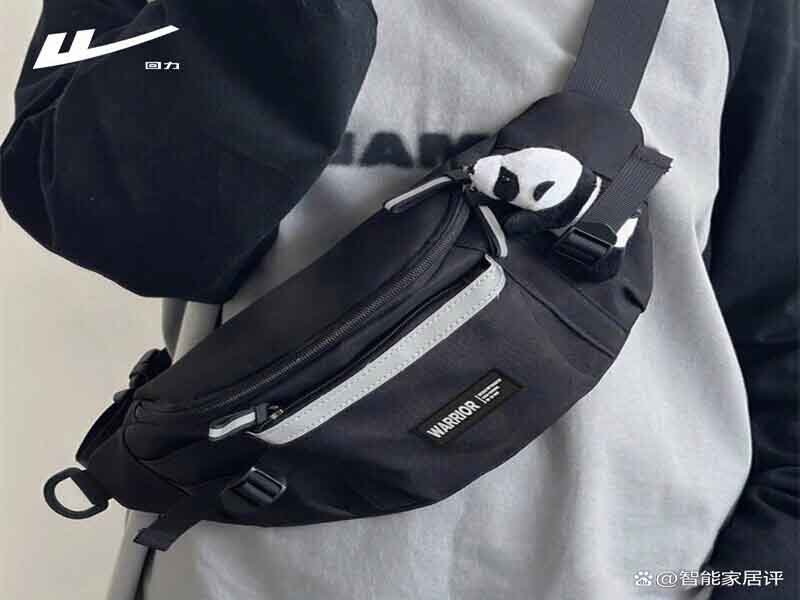
Security features in a crossbody bag work by increasing the time, effort, and visibility required to access its contents without permission. Lockable zippers, body-side pockets, RFID-shielded sections, cut-resistant layers, reinforced straps, and controlled closures can reduce common travel and commuting risks, but no textile bag should be described as completely theft-proof.
The most effective security system usually combines several simple measures rather than relying on one dramatic feature. A strong fabric does little if the main zipper remains open. An RFID pocket does not stop physical theft. A hidden compartment is less useful if its outline is obvious from the outside.
Security must also remain practical. A closure that is difficult for the owner to operate may be ignored. A heavily reinforced bag may become stiff and uncomfortable. A concealed pocket may protect valuables but slow access during airport or railway checks.
The product should therefore create a reasonable balance between protection and daily convenience.
| Security Risk | Useful Feature | Main Limitation |
|---|---|---|
| Casual zipper opening | Lockable zipper sliders | User must engage the lock |
| Pickpocket access | Body-side zipper pocket | Not effective if the bag is worn behind the body |
| Strap cutting | Reinforced or cable-supported strap | Adds weight and stiffness |
| Panel cutting | Cut-resistant internal layer | Cannot protect every seam or opening |
| Contactless-card scanning | RFID-shielded pocket | Does not prevent physical card theft |
| Accidental item loss | Zipped or retained pockets | Slower than open access |
| Bag grabbing | Secure crossbody strap and anchor points | User behavior still matters |
| Document exposure | Concealed internal compartment | May be less convenient |
| Unauthorized main-compartment access | Hook, clip, or lock system | Adds another opening step |
A secure bag should not look or feel like specialized security equipment unless that is part of the intended style. Many customers prefer protection features that remain visually discreet.
What Are Lockable Zippers?
Lockable zippers are zipper systems designed so that one or two sliders can be secured to each other, to a fixed ring, or to an integrated locking component. They reduce the chance of a compartment being opened quickly without the wearer noticing.
Several locking methods are possible.
| Locking Method | How It Works | Security Level | Daily Convenience |
|---|---|---|---|
| Interlocking pullers | Two pullers connect together | Moderate | High |
| Puller and fixed hook | Zipper attaches to a nearby hook | Moderate to high | Medium |
| Small padlock loops | Lock passes through both pullers | High | Low to medium |
| Integrated clip | Puller clips into a fixed component | Moderate | High |
| Combination lock | Slider connects to coded lock | High | Medium |
| Twist-lock mechanism | Puller enters and rotates into lock | Moderate to high | Medium |
The zipper itself must be strong enough to support the security system. A heavy lock added to a lightweight zipper tape may make the closure appear secure while the surrounding construction remains easy to damage.
Coil zippers are flexible and common in daily bags. Molded-tooth zippers may provide a more technical appearance and can feel more substantial. Metal zippers look premium but add weight and may become uncomfortable where they contact the body.
The puller opening should be large enough for the intended locking action. At the same time, oversized loops can rattle, catch on clothing, or look visually heavy.
The lock position should be reachable while the bag is worn. A mechanism placed underneath a flap or near the body may be secure but frustrating to operate. During sample review, users should open and close it repeatedly with one hand.
Lockable zippers work best when they delay casual access rather than making absolute claims. A determined person may still cut fabric or force the opening. The goal is to make unauthorized access more noticeable and less convenient.
The slider resting position also matters. When both sliders naturally meet near the user’s hand, the closure is more likely to be used. When they meet at the lower edge or behind the wearer, users may stop securing them.
A practical zipper-security test should include:
| Test | What to Check |
|---|---|
| One-handed opening | Can the owner access the bag naturally? |
| Walking test | Does the locking part remain closed? |
| Repeated cycles | Does the hook or clip loosen? |
| Loaded bag test | Does zipper tension affect the lock? |
| Clothing-contact test | Does the mechanism snag fabric? |
| Noise check | Does the hardware rattle? |
| Glove test | Can it be operated in cold weather? |
| Visual inspection | Is the system intuitive without instructions? |
The strongest locking feature is not always the best one. For a commuter bag, a simple slider clip may be more useful than a tiny padlock that the user never attaches.
Is RFID Protection Effective?
RFID protection can be effective when properly tested shielding material completely surrounds the cards or documents inside a closed pocket. It is designed to reduce communication between contactless chips and nearby radio-frequency readers, but it does not protect against every type of identity theft, payment fraud, or physical loss.
The material usually contains conductive fibers, metal-coated textiles, foil layers, or another shielding structure. Performance depends on frequency range, material continuity, pocket construction, openings, seams, and the position of the card.
A useful RFID pocket should be treated as an engineered enclosure rather than a decorative label.
| RFID Design Factor | Why It Matters |
|---|---|
| Material coverage | Gaps may allow radio communication |
| Pocket opening | A wide uncovered opening can reduce shielding |
| Stitching | Needle holes and seam structure may affect continuity |
| Card position | Cards must sit fully inside the shielded zone |
| Frequency range | Different cards and documents use different systems |
| Material folding | Cracks or separation can reduce performance |
| Finished-product testing | Confirms actual pocket behavior |
An RFID panel placed only on the exterior side of an open card pocket may provide incomplete shielding. A better construction uses shielding fabric on the front, back, and sides, with sufficient overlap near the opening.
The lining should protect the conductive material from abrasion. Some shielding fabrics have a metallic surface that can wear or oxidize if exposed directly to keys, cards, or repeated handling.
RFID pockets should be sized so the card or passport remains fully inside. A shallow sleeve that leaves the upper portion exposed may not perform as intended.
A zipper or flap can improve enclosure, although the product should not claim that the closure itself provides shielding unless it has been verified.
The feature is most relevant for:
| User Group | Typical RFID Contents |
|---|---|
| International travelers | Electronic passports and payment cards |
| Urban commuters | Contactless transit and bank cards |
| Event visitors | Access credentials |
| Corporate users | RFID-enabled identification cards |
| Frequent shoppers | Multiple contactless payment cards |
RFID protection is less relevant when the target product carries mostly phones, cosmetics, cameras, or ordinary personal items. Adding it automatically to every bag can increase cost and create a marketing feature that many users never need.
Customers should also avoid exaggerated language such as total identity protection. RFID shielding addresses one narrow communication risk. It does not protect card numbers stored online, prevent phishing, stop account takeover, or secure an unlocked wallet.
For custom development, the factory should confirm the shielding material, pocket dimensions, construction method, test method, and claim language before production.
How Do Hidden Pockets Improve Security?
Hidden pockets improve security by placing valuables in less visible and less accessible areas, usually close to the wearer’s body or behind another panel. They reduce casual access and make it harder for another person to identify where a passport, wallet, cash, or tracking device is stored.
The strongest hidden pocket is not necessarily completely invisible. It should be discreet to others but intuitive to the owner.
Common positions include:
| Hidden-Pocket Position | Best Contents | Main Advantage | Main Concern |
|---|---|---|---|
| Rear body-side panel | Passport, wallet, cash | Protected by wearer’s body | Hard contents may reduce comfort |
| Under front flap | Tickets or small documents | Concealed but accessible | Flap may expose pocket when open |
| Inside main divider | Cash and spare cards | Hidden from casual view | Slower access |
| Behind device sleeve | Backup documents | Very discreet | Can press against tablet |
| Strap pocket | Transit card or small cash | Fast access | Limited capacity |
| Base compartment | Emergency cash or tracker | Difficult to notice | Hard to retrieve |
| False lining pocket | Very small valuables | High concealment | More complex construction |
| Hidden tracker sleeve | Tracking device | Keeps device discreet | Must allow signal transmission |
The pocket should not create an obvious outline when filled. A wallet placed in a thin rear pocket may form a visible rectangular bulge. Light foam, gusset allowance, or a deeper panel structure can reduce this effect.
A body-side zipper should be positioned so that it does not rub against the wearer. The slider may need a fabric garage, low-profile puller, or protective flap.
The opening should also be long enough for practical access. An extremely narrow hidden pocket may look secure but become frustrating when the user needs a passport quickly.
Hidden pockets should not compete with comfort. Coins, keys, and bulky adapters can create painful pressure points against the ribs or hip. The product instructions or internal organization should encourage flat valuables rather than hard objects in body-contact zones.
A tracking-device pocket should hold the device securely without completely surrounding it in metalized RFID material. Shielding material may interfere with the signal used by some tracking devices.
The hidden compartment should also remain discoverable to the customer. A small interior symbol, contrasting zipper pull, or product guide may help the owner understand the feature without making it obvious externally.
For travel-focused products, a useful combination may be:
A front locking section for tickets and a phone.
A central compartment for general items.
A rear hidden zipper for a passport and wallet.
A small concealed tracker sleeve inside the rear panel.
This layered approach provides different levels of access without making every compartment difficult to open.
Which Materials Resist Cutting?
Cut-resistant crossbody bags may use high-tenacity yarns, UHMWPE fibers, aramid fibers, stainless-steel mesh, wire-reinforced straps, dense ballistic-style nylon, composite fabrics, or layered constructions. Their purpose is to slow cutting and tearing, not to make the bag impossible to penetrate.
The term cut-resistant should be used carefully. A material may resist slicing in one laboratory method but remain vulnerable at seams, zippers, unreinforced panels, or thin edges.
| Cut-Resistant Material | Main Benefit | Main Limitation |
|---|---|---|
| High-density nylon | Good general abrasion and tear performance | Not blade-proof |
| Ballistic-style nylon | Thick and rugged construction | Heavy and stiff |
| UHMWPE-based textile | High strength-to-weight ratio | Higher material cost |
| Aramid reinforcement | Strong cut and heat resistance | Can be difficult to sew |
| Stainless-steel mesh | Strong resistance to slicing | Adds weight and noise |
| Steel-cable strap core | Resists strap cutting | Reduces flexibility |
| Composite laminate | Can combine strength and structure | May crack at folds |
| Reinforced webbing layer | Improves strap and panel strength | Protects limited areas |
The reinforcement should be placed according to realistic risk. Full-body steel mesh may provide stronger protection but can make a small crossbody bag heavy, rigid, and expensive. Strategic reinforcement of the strap, lower front panel, and exposed side areas may create a better balance.
Straps are often considered vulnerable because they can be reached easily. A concealed steel cable or high-strength fiber layer may be inserted inside the webbing. The anchor points must then be upgraded because a strong strap attached to weak fabric does not create a secure system.
Cut-resistant layers should be protected from movement. A loose mesh can shift, bunch, or create pressure points. It should be secured within the panel without damaging nearby materials.
Needles and sewing machinery must be compatible with the reinforcement. Metal mesh can damage needles and slow production. High-strength fibers may be difficult to cut and can leave loose ends unless special tools are used.
The reinforced panel should also survive flexing. Crossbody bags bend around the body repeatedly. A stiff composite may perform well when flat but crack along fold lines.
A complete product review should consider:
| Test Area | Evaluation |
|---|---|
| Surface cutting | Resistance to controlled blade movement |
| Seam cutting | Exposure around stitch lines |
| Strap cutting | Performance of webbing and internal reinforcement |
| Anchor strength | Whether the strap pulls away from the body |
| Flexing | Whether protective layers crack or shift |
| Comfort | Whether reinforcement creates hard edges |
| Weight | Whether added protection changes wearability |
| Corrosion | Relevant to metal reinforcement |
| Noise | Whether mesh or cable rattles during movement |
Cut-resistant construction is most appropriate for travel, urban security, courier, equipment, and professional-use bags. For a lightweight lifestyle product, the added weight and stiffness may not justify the feature.
Are Magnetic Closures Secure?
Magnetic closures are secure enough for quick-access pockets containing low-risk items when the magnet strength, pocket depth, flap overlap, and material thickness are properly designed. They are not usually the best primary closure for passports, cash, or other valuables in crowded travel environments.
Magnets are popular because they are quiet, fast, and easy to operate with one hand. They also preserve a clean exterior by hiding the closure under fabric or leather.
Their holding force changes after installation. A magnet tested directly may feel strong, but exterior fabric, foam, reinforcement, lining, and decorative layers create distance between the two parts.
| Magnetic-Closure Factor | Effect on Performance |
|---|---|
| Magnet diameter | Larger magnets generally provide more holding force |
| Magnet thickness | Influences magnetic strength |
| Layer thickness | Reduces effective attraction |
| Alignment | Misalignment weakens closure |
| Pocket fill | Overfilling can force the magnet apart |
| Flap shape | Controls peeling and opening force |
| Reinforcement | Prevents the magnet pulling through fabric |
| Installation method | Affects durability and appearance |
A magnet is easier to separate by peeling one side away than by pulling both sides directly apart. Flap construction should account for that behavior.
Pocket depth provides secondary containment. A deep pocket with a magnetic flap may remain reasonably secure even if the magnet opens. A shallow exterior pocket can release contents quickly.
For a phone pocket, magnetic closure can provide excellent convenience. For a passport pocket, a zipper is generally more dependable.
Magnets should be reinforced with internal washers, patches, or support material. Without reinforcement, repeated opening can stretch the fabric and leave a visible circular impression.
The magnet location should not press against a device screen or create a hard point against the body. It should also remain clear of cards, medical devices, or electronic equipment where the customer has specific compatibility concerns.
The closure should be tested when the pocket is empty, normally filled, and slightly overfilled. Many magnetic pockets work well when empty but remain partially open when users add a phone case, charger, or thick wallet.
A secure product can combine closure types.
| Compartment | Recommended Closure |
|---|---|
| Main storage | Zipper |
| Passport pocket | Concealed zipper |
| Phone pocket | Magnet or zipper |
| Bottle holder | Elastic or drawcord |
| Card sleeve | Retention tab or zipper |
| Expandable section | Perimeter zipper |
| Decorative flap | Magnet or snap |
| High-security travel section | Lockable zipper |
Security should follow the value and risk of the contents. Not every pocket needs a lock, and not every fast-access pocket should be open.
How Do Size and Comfort Affect Use?
Size and comfort determine whether a multi-compartment crossbody bag remains useful after it is fully packed. A practical bag should hold the intended belongings without becoming wider, heavier, or more rigid than the wearer can comfortably manage. Strap length, strap width, anchor position, body contour, padding, and weight distribution all influence how the bag feels in motion.
A bag may fit every item on a specification list and still fail in real life. A large tablet, full bottle, power bank, wallet, camera, and umbrella can create several kilograms of weight. When that load hangs from one shoulder, even a well-made product may become uncomfortable over time.
The correct design therefore begins by defining realistic contents and carrying duration. A bag worn for twenty minutes between a car and an office can use a different structure from one worn through an airport for six hours.
Comfort is not created by padding alone. Excessive padding can trap heat, increase weight, and push the bag away from the body. A well-positioned strap with moderate padding may feel better than a thick strap attached at the wrong angle.
Which Bag Size Is Most Practical?
The most practical crossbody-bag size is the smallest size that carries the intended contents without forcing them together or creating difficult access. For most everyday use, compact bags between approximately 2 and 6 liters balance organization, mobility, and comfort. Tablet, camera, or travel designs may require 6 to 12 liters.
Volume should be evaluated alongside dimensions and shape. A tall narrow bag and a short wide bag can have similar capacity but feel completely different on the body.
| Capacity Range | Typical Use | Common Contents | Comfort Profile |
|---|---|---|---|
| 0.5–2 L | Phone and essentials | Phone, cards, keys, earbuds | Very light |
| 2–4 L | Daily compact use | Wallet, glasses, charger, small cosmetics | Comfortable for long wear |
| 4–6 L | Travel organizer | Passport, bottle, guidebook, phone | Balanced when carefully packed |
| 6–8 L | Tablet and commuter use | Tablet, charger, documents, bottle | Requires wider strap |
| 8–12 L | Utility, camera, or extended travel | Device, camera, bottle, light layer | Weight management becomes critical |
| Above 12 L | Large utility or messenger use | Work equipment and larger items | May function more like a shoulder bag |
A compact bag reduces movement and makes it easier to keep close to the body. It also limits overpacking. The disadvantage is that rigid objects may compete for space.
A larger bag offers flexibility but encourages users to carry more than expected. Empty capacity often becomes filled, so the strap and anchors should be designed for the likely behavior rather than the ideal packing list.
The bag’s width should match the body area where it is worn. A very wide horizontal bag may wrap comfortably across the back but feel awkward when moved to the chest. A tall vertical bag occupies less width but may swing against the hip.
The depth has a major influence on comfort. A deep bag moves weight away from the body, increasing leverage on the shoulder. A flatter bag usually feels more stable even when the total weight is similar.
| Dimension Change | User Benefit | Possible Disadvantage |
|---|---|---|
| Increase width | Fits documents and tablets | May restrict arm movement |
| Increase height | Adds capacity without more width | Items settle at the bottom |
| Increase depth | Holds bulky objects | Pulls away from the body |
| Reduce depth | Improves stability | Limits bottles and cameras |
| Round corners | Improves body fit | Reduces usable rectangular space |
| Add curved back panel | Follows body shape | More complex pattern construction |
The practical size should be confirmed through a packing trial. Product developers should place the intended objects inside, wear the bag over normal clothing, sit down, walk, and move it between the front, side, and back.
A bag that looks compact on a table may feel large when it covers the wearer’s torso. Product photographs should therefore include on-body scale references.
How Is Strap Length Calculated?
Strap length is calculated according to the intended wearing position, body-size range, bag dimensions, attachment points, clothing layers, and adjustment hardware. A crossbody strap should allow the bag to sit securely at the chest, waist, hip, or back without reaching the end of its adjustment range.
The required strap length is not simply the user’s chest measurement. The strap travels diagonally across the body and includes the distance created by the bag itself.
A practical planning method considers:
The minimum length for a smaller wearer using the bag high on the chest.
The maximum length for a larger wearer wearing thick clothing.
The webbing consumed inside adjusters and folded attachment points.
The position and width of the bag between the strap anchors.
| Product Type | Typical Adjustable Strap Range | Wearing Position |
|---|---|---|
| Phone crossbody | 90–125 cm | Chest or upper hip |
| Compact daily bag | 95–135 cm | Chest, waist, or hip |
| Travel crossbody | 100–145 cm | Front or side hip |
| Large utility bag | 105–155 cm | Hip or lower back |
| Convertible sling | 80–140 cm | Chest, back, or waist |
These ranges are starting points, not fixed standards. The target market and bag structure should determine the final specification.
The strap should not be used at its absolute maximum during normal wear. Some webbing should remain through the adjuster to prevent slipping or accidental release.
The minimum setting should also remain neat. Long loose strap ends can swing, catch on objects, or create an unfinished appearance. Elastic keepers, loops, clips, or folded tails can control the excess.
A removable strap provides flexibility but introduces hooks and rings. These components add weight and may rotate or squeak. A fixed strap creates a cleaner and lighter system but makes replacement more difficult.
Attachment points influence effective strap length. Anchors placed close together make the bag hang more vertically. Widely spaced anchors stabilize a horizontal bag but require more strap length around the body.
A reversible attachment system can allow the bag to be worn on either shoulder. This is valuable for sling-style crossbody bags where zipper direction and body contour are asymmetrical.
The sample should be tested across several body sizes and clothing conditions. A strap that fits comfortably over a T-shirt may be too short over a winter coat.
What Strap Width Feels Comfortable?
A strap width between approximately 25 and 50 millimeters is common for crossbody bags, but the most comfortable width depends on loaded weight, strap stiffness, edge construction, carrying duration, and the wearer’s body. Wider straps usually distribute pressure better, while narrower straps appear lighter and more refined.
| Expected Loaded Weight | Practical Strap Width | Suitable Construction |
|---|---|---|
| Below 1 kg | 15–25 mm | Light webbing, leather, or cord |
| 1–2 kg | 25–32 mm | Standard woven strap |
| 2–4 kg | 32–40 mm | Firm webbing or light padding |
| 4–6 kg | 38–50 mm | Padded or contoured strap |
| Above 6 kg | 50 mm or engineered shoulder pad | Heavy-duty support system |
A narrow strap can cut into the shoulder even when the total weight is moderate. This is especially noticeable when the strap edge is stiff or poorly finished.
A wide strap distributes force over a larger area but may rub against the neck. It can also look oversized on a compact fashion bag.
Webbing density affects comfort. A soft loose weave may curl or twist. A very dense webbing may feel hard against the body. Edge softness and flexibility should be tested.
Leather straps create a premium appearance, but thin leather may stretch. A hidden webbing or reinforcement layer can improve strength while maintaining the leather exterior.
Padded straps may use EVA, sponge, neoprene, spacer mesh, or layered fabric. The padding should recover after compression and should not become bulky near the adjuster.
| Strap Material | Comfort | Durability | Visual Character |
|---|---|---|---|
| Polyester webbing | Good | Very good | Practical |
| Nylon webbing | Good to very good | Excellent | Technical |
| Cotton webbing | Soft | Moderate | Natural |
| Leather | Moderate to good | Grade-dependent | Premium |
| Neoprene-padded webbing | Very good | Good | Sporty |
| Spacer-mesh pad | Breathable | Good | Outdoor |
| Woven jacquard strap | Good | Good | Decorative |
| Tubular fabric strap | Soft | Construction-dependent | Lifestyle |
The strap should remain flat. Twisting reduces the effective contact area and creates concentrated pressure. Swivel hooks can reduce twisting, but they add hardware.
The inner surface can use softer fabric or light texture to reduce slipping. Too much grip may pull clothing or make the bag difficult to rotate from back to front.
Do Wide Straps Reduce Shoulder Pressure?
Wide straps usually reduce shoulder pressure by spreading the load across a larger area. However, width alone does not guarantee comfort. Strap stiffness, angle, contour, padding, edge construction, and bag balance can have an equal or greater effect.
Pressure can be considered as load divided across the contact area. Increasing contact area generally reduces concentrated pressure, but only if the full width actually touches the body.
A wide flat strap may bridge over the shoulder and contact only at its edges. A contoured or slightly flexible strap can follow the shoulder more effectively.
| Strap Feature | Comfort Effect |
|---|---|
| Increased width | Distributes load |
| Soft edge | Reduces cutting sensation |
| Moderate padding | Cushions pressure |
| Curved shape | Follows shoulder contour |
| Non-slip underside | Controls movement |
| Breathable material | Reduces heat buildup |
| Correct anchor angle | Keeps strap flat |
| Stable adjuster | Prevents length slipping |
Extremely thick padding can create new problems. It may trap heat, raise the strap toward the neck, and make the bag feel bulky. Padding should support pressure reduction rather than creating a pillow-like component.
A movable shoulder pad allows the user to position cushioning, but the pad may slide away from the pressure point. Textured backing or controlled attachment can improve stability.
Fixed padding remains in the intended location but may not suit every body size or carrying orientation.
A wide strap also affects appearance. On a small minimalist bag, a 50-millimeter strap may dominate the product. A 25- or 30-millimeter strap with a removable shoulder pad may offer better visual balance.
Strap comfort should be tested over time. A design may feel comfortable for five minutes but become irritating after one hour. Wear trials should include the expected loaded weight and duration.
How Is Weight Balanced?
Weight is balanced by placing heavy items near the wearer’s body, positioning the strap anchors around the loaded center of gravity, controlling compartment depth, and preventing contents from collecting at one outer corner. A balanced crossbody bag should remain close to the body without rotating, swinging excessively, or pulling the strap toward the neck.
The heaviest objects should usually sit in the rear or central compartment.
| Item | Preferred Position | Reason |
|---|---|---|
| Tablet | Rear body-side sleeve | Keeps weight close |
| Camera | Central lower compartment | Stabilizes dense load |
| Full bottle | Central or supported side zone | Controls movement |
| Power bank | Lower internal pocket | Prevents outer-panel bulge |
| Wallet | Rear security pocket | Secure and relatively flat |
| Phone | Front or rear quick-access pocket | Light and frequently used |
| Keys | Tethered internal zone | Prevents uncontrolled movement |
| Clothing | Outer or central space | Light and compressible |
The bag depth should be controlled because weight positioned farther from the body creates greater rotational force. A narrow bag often feels lighter than a deep bag carrying the same total mass.
Strap anchors should be positioned so that the top edge remains level when the bag is loaded. If one compartment is expected to hold a bottle, camera, or other dense object, the anchor layout may need to compensate.
Vertical bags can become bottom-heavy. Internal shelves, elevated pockets, or shorter compartments can keep important weight higher.
Horizontal bags distribute weight across a wider area but may interfere with arm movement. Curved corners and body-contoured back panels can improve fit.
A simple wear evaluation can identify imbalance.
| Observation | Possible Cause |
|---|---|
| Bag rotates outward | Too much weight in front |
| Bag slides toward the back | Strap angle or slippery surface |
| Strap moves toward neck | Anchor spacing or bag tilt |
| One corner hangs lower | Uneven compartment load |
| Bag swings while walking | Loose fit or low hanging position |
| Hard object presses body | Incorrect pocket placement |
| Bottom collapses | Insufficient support |
| Strap twists | Hardware or anchor misalignment |
The bag should be tested with several realistic load combinations. Users do not pack the same objects every day, so the product should tolerate reasonable variation.
A removable base insert can control shape, but it should not make the bag rigid against the hip. Light EVA or PE board may provide enough support.
The body-side panel can use thin foam or breathable mesh to distribute pressure. The padding should not hide poorly placed hard components such as rivet backs or zipper ends.
How Is Comfort Tested Before Production?
Comfort is tested by loading the bag with realistic contents and evaluating fit, pressure, balance, movement, strap adjustment, access, heat buildup, and body contact across different users and clothing conditions.
A useful test should last longer than a few minutes. The wearer can walk, climb stairs, sit, bend, use public transport, and move the bag between front and back positions.
| Comfort Test | What It Reveals |
|---|---|
| Thirty-minute walking test | Shoulder pressure and swing |
| Stair test | Vertical movement and stability |
| Sitting test | Bag size and body interference |
| Bending test | Strap movement and item retention |
| Front-access test | Ease of rotating and opening |
| Winter-clothing test | Maximum strap length |
| T-shirt test | Edge friction and hardware contact |
| Full-load test | Real pressure and balance |
| Half-load test | Shape and item movement |
| One-handed access test | Practical daily usability |
| Heat test | Back-panel and strap breathability |
| Different-body-size test | Adjustment range and fit |
Comments should be converted into measurable corrections.
“The strap hurts” may lead to increasing width, softening the edge, changing the anchor angle, or moving the adjuster.
“The bag feels too large” may mean reducing depth rather than reducing width.
“The bottle makes it tilt” may require moving the pocket closer to the center.
“The zipper is hard to reach” may require reversing the opening direction.
At Szoneier, sample development can evaluate strap materials, padding, adjustment ranges, bag dimensions, compartment loads, and body-side structures before bulk production. A sample should not be approved only because it looks attractive in photographs.
The real test is whether the wearer forgets about the bag while moving through the day.
A comfortable crossbody bag should protect and organize belongings without constantly reminding the user that several kilograms are hanging from one shoulder.
Which Bag Fits Each Activity?
The right multi-compartment crossbody bag depends on the activity, carrying duration, contents, weather exposure, security risk, and expected appearance. Travel bags need controlled access and document security, commuter bags prioritize device organization and comfort, outdoor designs require weather resistance and stable movement, while work-oriented products need a cleaner structure that protects electronics and professional materials.
A bag should not be selected only by its external size or advertised pocket count. The same five-liter capacity can support very different uses depending on pocket shape, strap construction, opening direction, fabric stiffness, and internal protection. A camera-oriented bag, for example, may require thick dividers that reduce usable volume. A travel organizer may devote more space to flat passports, tickets, and devices. A lifestyle bag may preserve a larger open compartment for changing daily items.
The most reliable way to choose a design is to begin with a real packing list and a realistic wearing routine. Someone walking through an airport for three hours has different comfort and security requirements from someone carrying a bag between a car, office, and restaurant.
| Activity | Main Contents | Most Important Features | Common Design Mistake |
|---|---|---|---|
| Travel | Passport, phone, cards, tablet, bottle | Secure zippers and layered access | Too many difficult locks |
| Commuting | Phone, charger, wallet, tablet, umbrella | Comfort and electronics protection | Heavy bag before loading |
| Outdoor use | Bottle, map, tools, snacks, phone | Weather resistance and stability | Poor ventilation or loose movement |
| Professional work | Tablet, documents, cards, notebook | Clean appearance and flat organization | Bulky external pockets |
| Events and shopping | Phone, wallet, tickets, small purchases | Quick access and flexible capacity | Inadequate security |
| Photography | Camera, batteries, memory cards | Padded modular dividers | Excessive depth and shoulder strain |
| Medical or technical use | Instruments, samples, documents | Wipe-clean compartments and labels | Mixed clean and used items |
| Parenting and family outings | Wipes, snacks, phone, bottle | Fast access and washable interiors | Poor weight distribution |
The ideal bag is not necessarily the most specialized one. Specialization improves performance for a defined activity, but it can reduce versatility. Customers should decide which use case is primary and which secondary activities the bag should support without compromising its main purpose.
Which Crossbody Bag Is Best for Travel?
The best travel crossbody bag keeps documents, payment cards, electronics, and daily essentials organized close to the body while remaining comfortable for extended wear. It should include secure zipper compartments, a concealed valuables pocket, quick-access storage, an adjustable strap, and a material that can tolerate repeated handling and light weather exposure.
Travel creates several competing demands. Passports and boarding documents need rapid access during checkpoints, but they must remain secure in crowded areas. A phone may be used constantly for maps and tickets, while backup cards and cash should remain concealed. A water bottle is useful, but placing it beside documents and electronics creates a leakage risk.
A layered travel layout can resolve these conflicts.
| Travel Storage Zone | Recommended Contents | Preferred Closure |
|---|---|---|
| Front quick-access pocket | Transit card, ticket, tissues | Zipper or secure magnet |
| Main organizer | Phone, charger, glasses, guidebook | Standard zipper |
| Padded sleeve | Tablet or e-reader | Retention tab |
| Rear security pocket | Passport, wallet, cash | Concealed zipper |
| RFID section | Selected cards and electronic documents | Fully enclosed pocket |
| External utility pocket | Bottle or compact umbrella | Elastic or zipped expansion |
| Hidden tracker pocket | Tracking device | Concealed fitted sleeve |
The bag should be designed around checkpoint behavior. The user may need to remove a passport and phone while holding luggage. A security system that requires two hands and several steps can become frustrating, even if it performs well during a static demonstration.
The main zipper should face the wearer when the bag is positioned at the front or side. A two-way zipper can support access from different orientations, but the resting position of the sliders should remain predictable.
A travel bag should also sit comfortably while the wearer is seated. Deep bags can press against the stomach or hip on trains and aircraft. A flatter structure with controlled expansion may provide a better balance than a permanently deep body.
Travel fabrics should be selected according to the expected route.
| Travel Condition | Material Direction | Recommended Features |
|---|---|---|
| Urban sightseeing | Nylon or polyester | Light coating and secure zippers |
| Frequent air travel | High-density nylon or recycled polyester | Trolley attachment and document organization |
| Wet-weather destinations | Coated polyester or nylon | Protected openings and wipe-clean base |
| Warm climates | Lightweight woven fabric | Breathable body-side panel |
| Business travel | Matte nylon, leather hybrid, or refined polyester | Clean lines and tablet protection |
| Rugged transport | Heavy Oxford or reinforced nylon | Strong anchors and abrasion-resistant base |
A removable shoulder pad can improve comfort on longer travel days, but it should not slide or twist. Wider straps distribute pressure, while low-profile hardware reduces contact with the neck and clothing.
Security features should be proportional to actual risk. A hidden passport pocket and lockable main zipper may provide meaningful protection. Adding metal mesh across the entire bag may create excessive weight and stiffness for many travelers.
The final travel sample should be tested during a realistic route simulation. The wearer can pack a passport, phone, wallet, tablet, bottle, charger, and glasses, then walk, sit, open the bag at a mock checkpoint, and retrieve items with one hand.
A good travel bag helps the user move calmly. It should not turn every document check into a small excavation project.
What Works for Daily Commuting?
A practical commuting crossbody bag combines a lightweight body, protected device storage, an accessible phone pocket, charger organization, weather-resistant materials, and a comfortable strap. It should remain compact enough for public transport while carrying the items needed between home, work, cafés, and appointments.
Commuting bags are opened and closed repeatedly. Zippers, pocket edges, strap adjusters, and handles may receive more cycles than those on an occasional travel bag. Materials should therefore be selected for repeated flexing and daily abrasion rather than only for showroom appearance.
The ideal commuting layout depends on whether the user carries a tablet, small laptop, lunch item, bottle, umbrella, or only personal essentials.
| Commuter Profile | Typical Contents | Suitable Bag Direction |
|---|---|---|
| Minimal commuter | Phone, wallet, keys, earbuds | Two- to three-liter compact crossbody |
| Tablet commuter | Tablet, charger, notebook, phone | Five- to eight-liter padded design |
| Bicycle commuter | Phone, lock items, gloves, bottle | Stable body-contoured bag |
| Train commuter | Tablet, documents, umbrella | Slim vertical or horizontal organizer |
| Hybrid worker | Device, cables, personal items | Expandable multi-zone bag |
| Creative professional | Tablet, stylus, notebook, camera | Padded modular compartments |
Daily users benefit from predictable pocket locations. A transit card belongs in a small protected section that can be reached without opening the entire bag. A key tether prevents keys from settling below a tablet. A charger pocket reduces cable tangling and hard pressure against electronic devices.
Weather performance should match the commuting environment. A water-repellent exterior is usually more valuable than a claim of complete waterproofing that the seams and zippers cannot support. The base and body-side panel may receive additional coating because they contact wet surfaces and clothing.
A commuting bag should not swing excessively while walking quickly or cycling. Strap anchors, body contour, and bag depth influence stability.
| Stability Feature | Practical Benefit |
|---|---|
| Wide anchor spacing | Reduces rotation |
| Body-contoured rear panel | Keeps the bag close |
| Adjustable stabilizer strap | Controls movement during cycling |
| Limited external depth | Reduces outward pull |
| Central heavy-item placement | Improves balance |
| Non-slip shoulder surface | Reduces strap movement |
A stabilizer strap can be useful for active commuting, but it may be unnecessary for a formal office product. When included, it should be removable or hidden cleanly.
The interior lining should make small objects visible. Commuters often use the bag in low-light train stations, vehicles, or offices. A medium-light lining can make black cables and keys easier to find.
The bag should also fit comfortably under a coat or over heavier clothing. Strap length and hardware position should be tested in both conditions.
A commuter product succeeds when it becomes part of the user’s routine. The wearer should know where every essential item is before leaving home and should not need to reorganize the entire bag each evening.
Which Design Suits Outdoor Activities?
An outdoor crossbody bag should use durable, weather-resistant materials, secure closures, stable strap geometry, reinforced anchors, and compartments that isolate bottles, tools, electronics, and wet items. It should remain close to the body during movement and allow essential items to be reached without removing the bag.
Outdoor use can include hiking, cycling, fishing, camping, dog walking, fieldwork, festivals, or casual day trips. These activities have different technical requirements, so the word outdoor should be defined more precisely before development begins.
| Outdoor Activity | Priority Features | Material Direction |
|---|---|---|
| Day hiking | Bottle holder, map pocket, stable strap | Ripstop nylon or coated polyester |
| Cycling | Compact body, stabilizer strap, reflective detail | Lightweight nylon |
| Fishing | Water-resistant pockets and tool organization | Coated Oxford fabric |
| Field research | Document protection and labeled sections | Durable nylon or polyester |
| Festivals | Security pockets and lightweight construction | Nylon or recycled polyester |
| Dog walking | Treat pocket, bag dispenser, key clip | Wipe-clean polyester |
| Camping | Utility loops and weather-resistant storage | Heavy Oxford or canvas hybrid |
| Beach use | Sand-resistant lining and quick cleaning | Coated polyester or mesh combination |
Outdoor bags often need faster drainage and cleaning. Bottle pockets may use mesh or coated fabric. Tool sections may require reinforced edges. Mud, sand, moisture, and food residues should be considered when selecting lining materials.
Water resistance should be built as a system. Coated fabric may resist rain, but the finished bag also includes seams, zipper tapes, needle holes, labels, and openings.
| Weather-Control Element | Function |
|---|---|
| PU or TPU backing | Reduces fabric penetration |
| DWR surface treatment | Encourages water to bead |
| Water-resistant zipper | Reduces entry through the chain |
| Zipper garage | Covers vulnerable zipper ends |
| Bound or taped seams | Improves internal protection |
| Coated lining | Supports easier cleaning |
| Raised pocket base | Keeps contents above minor leaks |
| Drainage eyelet | Allows selected utility pockets to drain |
Seam taping may improve water resistance but adds cost and requires compatible materials and equipment. It is most effective on designs created specifically for taped construction. Adding tape to an ordinary complex pocket system may be difficult or incomplete.
Outdoor bags also require movement testing. The product should be worn while walking quickly, bending, reaching, and climbing. A bag that swings into the wearer’s arm or rotates toward the front can become distracting.
Reflective details can improve visibility in low light, but their position and area should be selected carefully. A tiny decorative strip may provide little practical value, while a large reflective panel may dominate the visual design.
Utility loops and external webbing should be included only when users have defined items to attach. Unused loops can snag branches, door handles, and equipment.
A practical outdoor bag is usually simpler than it first appears. Strong material, stable fit, protected essentials, and easy cleaning often matter more than an exterior covered in straps and buckles.
Are Crossbody Bags Suitable for Work?
Crossbody bags are suitable for work when they protect devices and documents, maintain a clean appearance, provide efficient organization, and remain comfortable during commuting or client visits. Professional designs usually benefit from restrained external styling, quiet hardware, flat pockets, structured panels, and materials that resist wrinkles and stains.
The appropriate design depends on the working environment. A creative studio may accept visible utility pockets and contrasting straps. A legal or financial setting may require a more refined, minimal exterior. A medical or technical role may prioritize cleanable materials and labeled compartments.
| Work Environment | Suitable Style | Important Features |
|---|---|---|
| Corporate office | Slim and structured | Tablet sleeve and document pocket |
| Creative studio | Flexible organizer | Stylus, notebook, and device storage |
| Sales visits | Wide opening and sample organization | Quick access and presentation quality |
| Medical fieldwork | Wipe-clean and modular | Separated sample compartments |
| Technical service | Rugged utility design | Tool pockets and reinforced base |
| Education | Lightweight tablet bag | Notebook and charger organization |
| Hospitality | Discreet compact design | Radio, notebook, keys, and phone |
| Retail management | Secure daily organizer | Cards, phone, documents, and keys |
Work bags should preserve flat space for documents. Bulky charger pockets or bottles can bend notebooks and printed materials if they share the same compartment.
A padded tablet sleeve can form the rear structural layer, while a central compartment holds personal items. The front organizer can store business cards, pens, a phone, and access credentials.
The exterior should remain smooth when loaded. Small front pockets may need gussets so they expand inward in a controlled way rather than forming visible lumps.
Hardware sound can influence the product experience. Large metal pullers, chains, and hooks may rattle in quiet offices or meetings. Coated, rubberized, leather-wrapped, or smaller components can create a more refined impression.
Work-oriented materials may include matte nylon, fine polyester, cotton canvas with leather trims, microfiber leather, genuine leather, or mixed constructions. The material should match dress expectations without creating unnecessary weight.
| Material Direction | Professional Character | Practical Benefit |
|---|---|---|
| Matte high-density nylon | Modern and technical | Lightweight and durable |
| Fine polyester | Clean and consistent | Broad color selection |
| Canvas with leather trim | Creative and relaxed | Natural texture |
| Microfiber leather | Refined and uniform | Easier maintenance |
| Genuine leather | Executive and premium | Long-term character |
| Textile-leather hybrid | Balanced | Lower weight than full leather |
A work bag should be tested with the objects users genuinely carry, including charging adapters and documents. A visually elegant prototype may lose its shape when a thick power adapter is placed inside.
The strongest professional design looks organized without appearing overengineered. It supports the working day quietly rather than announcing every feature through an external zipper.
How Do Convertible Bags Improve Versatility?
Convertible crossbody bags improve versatility by supporting two or more carrying modes, such as crossbody, shoulder, waist, backpack, handle, or pouch use. They allow one product to adapt to commuting, travel, outdoor movement, and casual daily routines.
Conversion should provide a meaningful benefit rather than serving only as a marketing feature. Every additional mode requires straps, anchors, storage panels, hooks, or hardware that increase weight and complexity.
| Convertible Format | Main Benefit | Key Engineering Issue |
|---|---|---|
| Crossbody to waist bag | Stable active carrying | Strap-routing system |
| Crossbody to backpack | Better heavy-load distribution | Hidden strap storage |
| Crossbody to clutch | Formal flexibility | Removable hardware |
| Crossbody to handle bag | Faster short-distance carrying | Balanced handle placement |
| Sling to left or right shoulder | Wider user compatibility | Reversible anchors |
| Crossbody to camera insert | Modular equipment use | Removable padded compartment |
| Crossbody to travel organizer | Use inside larger luggage | Flat or detachable strap |
A crossbody-to-waist design should fit both torso and waist dimensions. The strap may require a different adjustment range from a standard crossbody product. Hardware should remain comfortable when positioned near the abdomen.
Crossbody-to-backpack products need hidden or removable shoulder straps. The storage compartment for those straps adds layers to the body-side panel and may trap heat.
The backpack mode should be tested independently. Straps should sit at suitable angles, and the bag should not hang too low or pull away from the back.
Removable straps create a cleaner clutch or pouch mode. Attachment rings can be hidden under flaps or designed as decorative components. Hooks should be easy to remove without opening accidentally during wear.
Modular inserts allow customers to convert a general bag into a camera, cosmetic, medical, or electronics organizer. The insert should fit securely and should not create unused space around its edges.
| Conversion Question | Design Decision |
|---|---|
| Which mode is primary? | Optimize comfort and appearance for that mode |
| How often is conversion expected? | Select quick or more secure hardware |
| Where are unused straps stored? | Add hidden panel or removable pouch |
| Does each mode remain balanced? | Test separate anchor positions |
| Are hard components exposed? | Cover hooks and buckles |
| Does conversion add excessive weight? | Remove low-value secondary modes |
| Can users understand the system? | Keep routing intuitive |
A convertible product should normally have one primary identity. A crossbody bag that also works as a waist bag can perform both functions well. A product attempting to become a waist bag, backpack, tote, clutch, travel pillow, and camera case may become compromised in every mode.
The best versatility comes from a small number of well-executed transformations.
How Should Activity-Based Features Be Prioritized?
Activity-based features should be prioritized by identifying the user’s primary routine, most valuable contents, expected carrying duration, environmental exposure, and main source of inconvenience or risk. Features that directly solve those issues should receive priority over decorative or rarely used additions.
A decision matrix can prevent a project from becoming overloaded.
| Feature | Travel | Commuting | Outdoor | Work |
|---|---|---|---|---|
| Hidden passport pocket | Essential | Optional | Optional | Low priority |
| Tablet sleeve | High | High | Medium | High |
| Bottle holder | High | Medium | High | Low to medium |
| RFID section | High | Optional | Low | Optional |
| Stabilizer strap | Low | Medium | High | Low |
| Water-resistant exterior | High | High | Essential | Medium |
| Reflective detail | Low | Medium | High | Low |
| Document divider | Medium | Medium | Low | High |
| Lockable zipper | High | Medium | Medium | Optional |
| Expandable gusset | Medium | Medium | Medium | Low |
| Wipe-clean pocket | Medium | Medium | High | Use-specific |
| Convertible carrying | Medium | Medium | High | Low to medium |
The primary activity should account for most design decisions. Secondary activities can influence selected features as long as they do not weaken the main product.
For example, a professional travel bag can include a bottle pocket, but it may be concealed behind a clean side panel rather than using visible mesh. An outdoor commuter bag may include reflective details in the webbing or zipper pull instead of a large sports-style panel.
Product development becomes clearer when customers describe a day in the user’s life. Where do they go? What do they carry? How often do they open the bag? What usually becomes lost, damaged, wet, uncomfortable, or difficult to reach?
Those observations are often more useful than a long list of fashionable features.
How Are Custom Crossbody Bags Manufactured?

Custom multi-compartment crossbody bags are manufactured through requirement analysis, technical design, material selection, pattern development, prototype sampling, testing, bulk-material preparation, cutting, component assembly, sewing, hardware installation, quality inspection, branding, and packaging. Each compartment must be engineered as part of the complete bag because changes in one pocket can affect capacity, weight, shape, sewing order, and comfort elsewhere.
A multi-pocket product can require significantly more development work than a simple pouch. Each zipper has an opening length and resting position. Each pocket consumes volume. Each divider creates seam intersections. Each loaded zone transfers force into the body and strap anchors.
An experienced manufacturer does more than reproduce an exterior drawing. It helps determine whether the pocket system can be sewn efficiently, whether the chosen fabric can handle repeated folds, whether the bag remains balanced, and whether the final price supports the target market.
Szoneier integrates fabric development, post-processing, sampling, finished-product production, and sales support. With more than 18 years of experience, the company can work with cotton, canvas, polyester, nylon, neoprene, jute, linen, Oxford fabric, and other material constructions used across bags, apparel, medical, military, and technical applications.
How Is a Tech Pack Prepared?
A crossbody-bag tech pack is prepared by documenting the product dimensions, materials, compartment layout, construction, stitching, hardware, logo, labels, colors, testing requirements, tolerances, and packaging. It serves as the shared production standard for the customer, sample room, purchasing team, sewing line, and quality inspectors.
The tech pack should show the front, back, sides, base, top opening, interior walls, pocket sections, strap system, and detail views. Compartment depth and usable opening size should be identified, not only the exterior outline.
| Tech Pack Section | Required Information |
|---|---|
| Product overview | Style name, number, version, and intended use |
| Exterior drawings | Front, rear, side, top, and bottom views |
| Interior drawings | Pocket layout, dividers, and device sleeves |
| Measurements | Finished dimensions and clear internal sizes |
| Materials | Exterior, lining, foam, reinforcement, and mesh |
| Hardware | Zippers, hooks, rings, adjusters, snaps, and locks |
| Construction | Seam type, binding, folding, and assembly details |
| Strap system | Width, length range, padding, and anchor position |
| Logo | Method, artwork, dimensions, and placement |
| Color | Approved standards and component matching |
| Labels | Brand, care, origin, barcode, and compliance details |
| Testing | Load, zipper, abrasion, colorfastness, and other checks |
| Packaging | Individual pack, inserts, carton, and shipping marks |
| Tolerances | Acceptable dimensional and visual variation |
| Revision history | Every approved product change |
A pocket should be specified using internal clear dimensions when possible. Pattern dimensions include seam allowances and do not directly tell the customer what fits inside.
A phone pocket may be shown as 100 × 180 millimeters internally, with a 160-millimeter zipper opening. A tablet sleeve may identify width, height, foam thickness, bottom suspension, and maximum device envelope.
Strap specifications should include both total cut length and usable adjustment range. Hardware consumes part of the webbing, and folded ends reduce the final usable length.
The bill of materials should identify every component.
| Component Group | Typical Items |
|---|---|
| Main textiles | Exterior body, pocket fabric, lining, mesh |
| Protection | Foam, EVA, PE sheet, microfiber, tricot |
| Closures | Zipper chain, sliders, pullers, magnets, snaps |
| Carrying | Webbing, shoulder pad, hooks, adjusters, rings |
| Reinforcement | Anchor patches, base board, seam tape |
| Branding | Embroidery, woven label, rubber patch, metal plate |
| Packaging | Polybag, dust bag, tissue, box, carton |
The tech pack should also explain the intended use of each compartment. This prevents the factory from changing a pocket dimension without understanding its functional consequence.
A signed physical sample remains important. Drawings cannot fully communicate fabric stiffness, foam recovery, body fit, zipper smoothness, or the visual balance of a loaded bag.
Which Features Can Be Customized?
Custom crossbody-bag features can include overall size, shape, compartment count, pocket dimensions, materials, coatings, lining, padding, strap systems, security components, expandable gussets, logos, labels, colors, hardware, packaging, and application-specific inserts.
Customization can range from adding a logo to an existing construction to creating an entirely new product around a target user and carrying routine.
| Customization Level | Typical Changes | Development Requirement |
|---|---|---|
| Basic private label | Logo, label, and packaging | Logo sample |
| Color program | Exterior, lining, webbing, hardware | Color approval |
| Material change | New fabric, coating, or leather trim | Material and sewing test |
| Pocket adjustment | Resize or reposition compartments | Revised pattern |
| Functional upgrade | RFID pocket, bottle holder, tablet sleeve | Structural sample |
| Carrying redesign | Wider strap or convertible mode | Wear and load testing |
| Security system | Lockable zippers or cut-resistant layers | Component testing |
| Full ODM project | New shape, structure, and brand system | Complete development cycle |
The exterior can be developed in stock or custom colors. Stock fabric reduces lead time and material minimums. Custom dyeing provides stronger brand control but may require a larger material commitment.
Post-processing options can include:
| Process | Product Effect |
|---|---|
| PU coating | Water resistance and backing stability |
| TPU lamination | Flexible moisture barrier |
| DWR treatment | Surface water repellency |
| Wax finish | Heritage appearance |
| Screen printing | Bold graphic branding |
| Digital printing | Detailed multicolor patterns |
| Embroidery | Durable textile logo |
| Quilting | Soft structure and visual texture |
| Embossing | Surface pattern or subtle branding |
| Brushing | Softer hand feel |
| Antimicrobial treatment | Application-specific hygiene support |
| Flame-resistant treatment | Specialized performance requirement |
Any performance claim should be connected to the exact material, treatment, test, and finished construction. A water-resistant fabric does not automatically make every compartment water-resistant. An antimicrobial lining does not necessarily justify describing the entire bag as antimicrobial.
Strap customization may include woven jacquard patterns, printed logos, leather sections, removable pads, quick-release buckles, stabilizer straps, or left-right reversible attachments.
Hardware can be selected from standard options or developed with custom molds and finishes. Standard components usually support lower quantities and faster production. Custom pullers, buckles, or metal badges provide stronger identity but require tooling and approval.
A customer-centered manufacturer should also advise when customization is unnecessary. Custom hardware may add little value if the logo is already prominent. A complex printed lining may not be seen often enough to justify a large material run.
The goal is to customize the features that improve use or brand recognition, not simply to make every component different.
How Are Samples Developed?
Custom crossbody-bag samples are developed through concept review, material selection, pattern making, first prototyping, item-fit testing, wear evaluation, revision, and pre-production approval. Straightforward samples may be completed quickly once materials and specifications are confirmed, while new molds, dyed fabrics, technical treatments, or complex security systems require additional time.
A first sample should answer structural questions:
Does the bag hold the intended items?
Are compartments easy to understand?
Can the user reach key objects naturally?
Does the strap fit the target body range?
Does the bag remain balanced when loaded?
Are the materials and construction compatible?
The first prototype does not always need final colors and logos. Using available materials can allow the team to verify dimensions and function before waiting for custom production components.
| Sample Stage | Main Purpose |
|---|---|
| Paper or digital layout | Confirm dimensions and pocket logic |
| Simple mock-up | Check size and volume |
| First functional sample | Test structure, access, and wear |
| Revised sample | Correct fit and performance problems |
| Material confirmation sample | Approve color, coating, and hand feel |
| Logo and packaging sample | Confirm private-label details |
| Pre-production sample | Establish bulk standard |
| Production reference sample | Guide line and final inspection |
Sample comments should be specific. “Add more storage” should be translated into a defined item and pocket dimension. “Make it comfortable” should identify whether the problem is strap width, edge stiffness, anchor angle, bag depth, or loaded balance.
| General Comment | Actionable Revision |
|---|---|
| Phone pocket is difficult | Increase opening by 20 mm |
| Bag feels bulky | Reduce front gusset depth by 10 mm |
| Strap hurts shoulder | Increase width or add contoured pad |
| Bottle causes tilting | Move pocket closer to center |
| Tablet is loose | Reduce sleeve width and add retention tab |
| Security pocket is hard to reach | Extend zipper opening |
| Front panel collapses | Add thin foam or reinforcement |
| Zipper catches lining | Add zipper guard and control seam allowance |
The sample should be packed with target objects rather than soft filler. Hard items reveal pressure points and internal conflicts.
A wear test can include different body sizes and clothing layers. The bag should be evaluated at minimum and maximum strap settings.
Sample weight should be recorded. New pockets and hardware are often added gradually, and the finished product may exceed the original weight target.
Szoneier provides design assistance, material samples, and rapid sample development according to the selected construction. Customers can send sketches, reference images, existing bags, product lists, or preliminary dimensions to begin the process.
Free material samples can help compare texture, color, coating, thickness, and structure before the complete prototype is produced.
What Quality Tests Are Required?
Quality tests for multi-compartment crossbody bags may include material weight and thickness, tensile and tear strength, abrasion, coating adhesion, water resistance, colorfastness, seam strength, zipper cycling, hardware load, strap-anchor testing, compartment measurements, RFID verification, and finished-product wear or drop evaluations.
The test plan should match the product claim and intended activity. A lightweight phone bag does not need the same program as a camera crossbody, travel security bag, or medical field organizer.
| Test Area | What It Evaluates |
|---|---|
| Fabric weight and thickness | Material consistency |
| Tensile strength | Resistance to pulling force |
| Tear strength | Resistance after damage begins |
| Abrasion | Surface durability |
| Coating adhesion | Risk of peeling or bubbling |
| Water resistance | Barrier performance |
| Colorfastness | Fading and transfer |
| Seam strength | Construction durability |
| Zipper cycling | Repeated opening performance |
| Hardware load | Hook, ring, and adjuster strength |
| Strap-anchor load | Carrying-system reliability |
| Drop test | Protection under impact |
| Compartment-fit check | Actual usable dimensions |
| RFID test | Finished-pocket shielding performance |
| Odor assessment | Material and packaging acceptability |
| Packing test | Shape recovery after shipping |
Load testing should reflect intended contents. A two-liter phone bag and a ten-liter camera bag require different weights and safety margins.
A static load test can suspend the filled bag for a defined period. A dynamic test repeatedly lifts or drops the bag to stress handles, strap anchors, and hardware.
The strap adjuster should remain fixed under load. Slipping can gradually lengthen the strap and change the wearing position.
Zippers should be tested when the bag is packed. A zipper that operates smoothly on an empty sample may bind when the gusset is under pressure.
The bottle pocket can be tested with several common container diameters. Elastic recovery should be observed after the bottle remains inserted for an extended period.
Tablet and phone sections should be checked using actual devices or dimensionally accurate test blocks. The team should inspect whether metal hardware, zipper teeth, or hard objects contact the device.
Quality control should continue through production.
| Production Stage | Main Control |
|---|---|
| Incoming materials | Color, construction, coating, and defects |
| Cutting | Pattern dimensions and material direction |
| Component preparation | Pocket size, logo, zipper, and reinforcement |
| Sewing | Stitching, seam allowance, and symmetry |
| Assembly | Strap anchors, hardware, and compartment alignment |
| Inline inspection | Function and workmanship during production |
| Final inspection | Dimensions, appearance, operation, and packaging |
| Shipment review | Carton count, marks, and condition |
A 100% quality guarantee is meaningful only when it is supported by approved standards, documented inspections, corrective actions, and shipment controls. The customer and manufacturer should agree on what constitutes a critical, major, or minor defect before bulk production.
How Do OEM and ODM Services Work?
OEM service produces a crossbody bag according to the customer’s approved design, technical specification, material list, logo, and packaging requirements. ODM service provides deeper development support, helping transform a market idea or user need into a new structure, material system, sample, and production-ready product.
Private-label production may use an existing proven design with customized colors, logos, lining, labels, and packaging. It is often the fastest route when extensive structural changes are unnecessary.
| Cooperation Model | Customer Provides | Manufacturer Provides |
|---|---|---|
| Private label | Brand identity and selected options | Existing structure and customization |
| OEM | Complete or near-complete specification | Engineering review and production |
| Modified OEM | Reference product and requested changes | Pattern correction and sampling |
| ODM | User, market, and product direction | Design, engineering, sampling, and production |
| Joint development | Concept and selected technical input | Collaborative product development |
An OEM project should still receive a manufacturability review. Technical files can contain pocket openings that are too narrow, weak anchor points, incompatible coatings, or tolerances that are difficult to maintain in soft textiles.
An ODM project begins with questions about the intended user and activity. The factory may propose several material and structure directions, then create a prototype for testing.
A practical ODM workflow includes:
| Development Stage | Key Output |
|---|---|
| Requirement discussion | User and product brief |
| Reference analysis | Functional priorities |
| Concept development | Shape and compartment direction |
| Material proposal | Exterior, lining, foam, and reinforcement |
| Cost planning | Commercially realistic specification |
| Pattern engineering | Manufacturable structure |
| Prototype | Functional sample |
| Testing and revision | Improved design |
| Pre-production approval | Final production standard |
| Bulk manufacturing | Controlled repeated production |
Minimum order quantity depends on more than sewing capacity. Custom-dyed fabric, printed lining, special coatings, molded hardware, packaging, and labels may each have supplier minimums.
Using stock fabrics, standard hardware, localized logos, and existing packaging structures can support smaller custom runs. More original development usually requires greater material and tooling commitments.
Lead time should be confirmed after the complete specification is understood. A simple logo program using stock polyester can progress faster than a custom nylon construction with unique printed lining, molded pullers, RFID components, and specialized coating.
How Are Bulk Orders Managed?
Bulk orders are managed through final sample approval, material purchasing, production scheduling, incoming inspection, cutting control, first-piece approval, line inspection, final quality checks, packaging verification, and shipment coordination.
The final tech pack and approved sample should share the same revision code. Informal changes made through messages should be added to the controlled production document.
Before bulk production, the team may hold a pre-production meeting covering:
| Discussion Area | Required Decision |
|---|---|
| Materials | Approved supplier, color, and construction |
| Pockets | Dimensions, position, and intended contents |
| Zippers | Size, direction, slider, and locking method |
| Strap | Width, length, anchors, and adjustment |
| Logos | Method, size, color, and placement |
| Testing | Required standards and acceptance criteria |
| Packaging | Individual pack, carton, and marks |
| Quantity | Color and style breakdown |
| Inspection | Sampling plan and defect classification |
| Schedule | Material, production, inspection, and shipment dates |
First-piece inspection is particularly important for a multi-compartment bag. The first production units confirm whether the full sewing line can reproduce the sample-room construction.
Pocket openings, divider positions, strap anchors, and zipper alignment should be checked before production volume increases. Problems hidden behind the lining should be inspected while they remain visible.
Production should be balanced according to complex operations. Zipped organizers, padded sleeves, embroidered panels, and strap components may require more time than main-panel assembly.
Final inspection should verify function as well as appearance. Inspectors can open every sampled compartment, adjust the strap, connect hooks, check pocket dimensions, review logos, and confirm packaging.
What Information Is Needed for a Custom Quote?
A useful custom crossbody-bag inquiry should include the target activity, approximate dimensions, intended contents, quantity, materials, compartments, strap design, logo, colors, security features, packaging, destination market, and required delivery date.
Customers do not need a finished tech pack before contacting Szoneier. A clear description, reference image, sketch, item list, or existing sample is enough to begin discussing possible solutions.
| Information | Example |
|---|---|
| Main use | Travel organizer for international trips |
| Finished size | Approximately 28 × 21 × 8 cm |
| Capacity | Around five liters |
| Main contents | Passport, phone, wallet, tablet, bottle |
| Exterior material | Recycled polyester or nylon |
| Compartments | Three main sections and one hidden pocket |
| Device fit | Eight-inch tablet |
| Strap | 38 mm adjustable woven strap |
| Security | Lockable zipper and RFID pocket |
| Logo | Woven label and custom puller |
| Colors | Black, navy, and olive |
| Quantity | Required quantity by color |
| Packaging | Recycled-content bag and shipping carton |
| Destination | Country or warehouse location |
| Schedule | Target delivery date |
A target price can guide material and structural recommendations, but it should be considered together with quantity and performance requirements. The same appearance can often be achieved through several material systems with different weight, durability, and cost.
For example, an all-leather construction may be replaced with a high-density textile body and leather touch points. A custom metal logo can be replaced with an embroidered or woven patch for smaller runs. A fully printed lining can be simplified to a branded internal label.
These changes should preserve the intended user experience rather than simply reduce cost.
Why Work with Szoneier?
Szoneier combines more than 18 years of experience in fabric research, material processing, finished-product manufacturing, and international sales. Its material capabilities include cotton, canvas, polyester, nylon, neoprene, jute, linen, Oxford fabric, and other customized textile systems used across bags, apparel, medical, military, and technical applications.
That integrated background helps customers evaluate both the fabric and the complete bag. A textile may have strong laboratory results but remain unsuitable for a tight curved pocket. A soft material may feel premium but require hidden reinforcement around the strap. A highly coated fabric may resist moisture but complicate printing and sewing.
Szoneier can support:
| Service | Customer Benefit |
|---|---|
| Material recommendation | Match fabric to use and price |
| Custom fabric development | Create color, coating, print, or finish |
| Free design support | Turn early ideas into practical layouts |
| Rapid sampling | Identify problems before bulk production |
| Free material samples | Compare texture and performance |
| Low-MOQ customization | Support selected trial and private-label projects |
| OEM manufacturing | Reproduce approved customer specifications |
| ODM development | Build new products around user requirements |
| Private labeling | Customize logos, lining, labels, and packaging |
| Quality management | Control materials, sewing, testing, and shipment |
| Short lead-time coordination | Connect fabric and finished-product workflows |
| Multi-application experience | Apply knowledge from several textile industries |
The strongest manufacturing partner is not the one that adds every requested pocket without discussion. It is the one that explains when a pocket is too small, a strap is too narrow, a fabric is too heavy, a security claim needs testing, or a packaging design will distort the finished product.
A crossbody bag becomes valuable when its organization feels natural. The phone is exactly where the user expects it. The passport remains protected. The bottle does not press against the tablet. The strap stays comfortable. The bag remains stable instead of swinging or twisting.
Those outcomes are created through careful material and structural decisions long before bulk sewing begins.
Request a Custom Crossbody Bag Quote from Szoneier
Crossbody bags with multiple storage compartments are not defined by how many zippers appear on the exterior. Their value comes from how well every compartment supports access, protection, security, balance, and comfort in real daily use.
Whether your project requires a compact phone bag, travel organizer, anti-theft crossbody, tablet bag, outdoor utility design, professional work bag, camera carrier, or convertible sling, Szoneier can help develop a practical material and storage system around your target customer.
Send Szoneier your reference images, dimensions, intended contents, preferred fabric, compartment requirements, quantity, colors, logo artwork, security features, packaging direction, destination, and delivery schedule. The development team can recommend cotton, canvas, polyester, nylon, neoprene, Oxford fabric, lining, coating, padding, strap, pocket, and post-processing solutions suited to your product.
Contact Szoneier through szoneierfabrics.com to request free material samples, discuss rapid sampling, or receive a custom, private-label, OEM, or ODM quotation for your next multi-compartment crossbody-bag collection.