Skip to content
Ramie is often described as a “forgotten natural fiber,” yet in real product development, it quietly solves problems that cotton, polyester, and silk struggle with on their own. Buyers looking for breathable summer fabrics, structured natural-feel textiles, or low-blend luxury alternatives increasingly encounter ramie—not as a standalone fiber, but as a blend component engineered for performance. The real value of ramie today is not nostalgia; it is functional blending. Ramie blends are engineered fabrics that combine ramie’s natural strength, moisture control, and crisp texture with cotton’s softness, polyester’s stability, or silk’s luster. These blends are used to balance comfort, durability, appearance, and care requirements across apparel, home textiles, and lifestyle products.
At SzoneierFabrics, many inquiries start with a simple question—“Why not just use cotton?”—but evolve into deeper conversations about wrinkle recovery, fiber stiffness, dye behavior, and end-user experience. Understanding ramie blends is not about fiber theory; it’s about how real fabrics behave after washing, wearing, and scaling into production. Let’s start at the fiber level and build upward.
What is ramie fiber, and why is it blended with cotton, polyester, or silk?
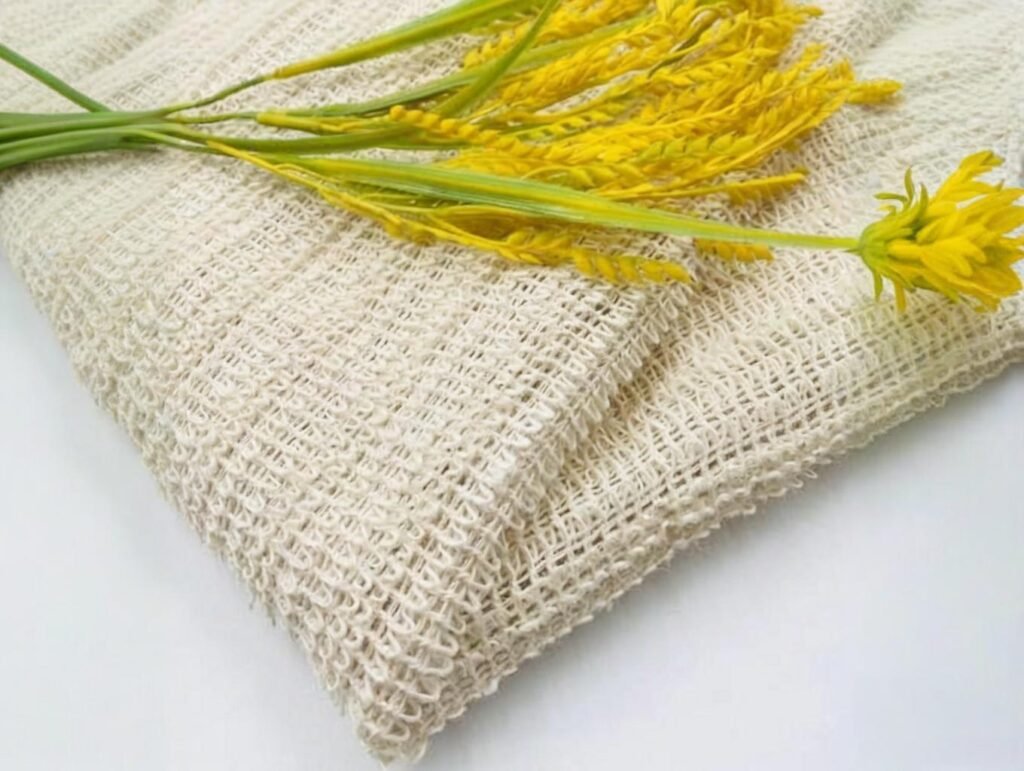
Ramie is a natural bast fiber that has been used in textiles for centuries, yet it remains widely misunderstood in modern sourcing and design conversations. Extracted from the stalks of Boehmeria nivea, a perennial plant in the nettle family, ramie is technically one of the strongest natural cellulose fibers available. It offers excellent moisture absorption, high tensile strength, and a naturally crisp, clean appearance that performs well in hot and humid environments.
However, these same properties that make ramie attractive also limit its use as a standalone fiber in contemporary apparel and textile programs. On its own, ramie tends to feel stiff, wrinkles easily with sharp creases, and has very low elasticity. These characteristics can conflict with modern expectations for comfort, drape, and easy care. For this reason, ramie is most commonly used as a performance-enhancing blend component, rather than as a 100% fiber.
Blending ramie with cotton, polyester, or silk allows mills and brands to retain its structural and moisture-management advantages while compensating for its weaknesses. The result is a fabric that is more wearable, more commercially stable, and better aligned with consumer expectations.
Understanding ramie beyond definitions
To understand why ramie is blended so frequently, it is necessary to look beyond simple fiber descriptions and examine how ramie behaves during production, finishing, and real-world use.
A) Ramie fiber characteristics that matter in production
Ramie’s reputation as a “strong fiber” is well deserved, but strength alone does not define suitability for apparel. What matters is how that strength interacts with moisture, heat, and repeated stress.
Ramie fibers are long, straight, and highly crystalline. This structure gives them exceptional tensile strength and dimensional stability, especially when wet. In controlled laboratory testing, ramie often shows two to three times the dry tensile strength of cotton, and unlike many fibers, it becomes stronger rather than weaker when exposed to moisture.
| Property | Ramie | Cotton | Polyester |
|---|---|---|---|
| Tensile strength (dry) | Very high | Medium | High |
| Moisture regain | ~12% | ~8% | <1% |
| Elastic recovery | Low | Medium | High |
| Natural luster | High | Low | Medium |
| Heat resistance | Excellent | Good | Moderate |
In real fabrics, these properties translate into several practical effects:
- Ramie adds structure and durability, helping garments maintain shape after washing
- It improves moisture comfort, particularly in warm or humid climates
- It introduces a crisp, dry handfeel that reads as clean and refined
At the same time, low elastic recovery means ramie does not bounce back easily after bending or creasing. This is not a defect, but it does require thoughtful design and finishing. Without adjustment, ramie fabrics can feel unforgiving in everyday wear.
This combination of strengths and limitations explains why ramie is rarely treated as a one-size-fits-all solution. Blending allows manufacturers to keep what ramie does well while addressing what it does not.
B) Why ramie is rarely used alone in modern textiles
Pure ramie fabrics do exist, particularly in traditional textiles, table linens, and niche fashion collections. However, they come with clear trade-offs that limit their scalability.
Common challenges with 100% ramie include:
- A stiff handfeel unless heavy softening or enzyme finishing is applied
- Pronounced wrinkle formation with limited natural recovery
- Very low elasticity, which affects comfort and fit tolerance
- Higher processing complexity due to intensive degumming and careful spinning
From a production standpoint, these challenges increase both cost and risk. Heavy finishing can soften ramie, but it may also reduce breathability or damage fibers if not carefully controlled. Garments made from pure ramie often require more precise sizing and construction because the fabric offers little forgiveness.
For brands targeting broad consumer markets, these constraints make pure ramie difficult to justify. Blending provides a way to reduce stiffness, improve drape, and increase tolerance without stripping away ramie’s identity.
C) Why cotton, polyester, and silk are the most common blend partners
The most successful ramie blends are not accidental. Each partner fiber is chosen to offset a specific limitation of ramie while enhancing a particular performance attribute.
| Blend Partner | What It Fixes | What It Enhances |
|---|---|---|
| Cotton | Softness, comfort | Breathability |
| Polyester | Wrinkle recovery, stability | Durability, easy care |
| Silk | Smoothness, drape | Luxury appearance |
Cotton is the most common partner because it softens handfeel and adds flexibility without compromising breathability. Ramie–cotton blends are widely used in shirts, dresses, and summer tops where airflow and comfort are essential but shape retention still matters.
Polyester is introduced when wrinkle recovery, dimensional stability, and easy care are priorities. Even a modest polyester percentage can significantly improve crease recovery and reduce shrinkage, making ramie suitable for travel wear, uniforms, or products with frequent laundering.
Silk is used in smaller volumes for premium applications. It enhances drape, smoothness, and surface elegance, transforming ramie from a crisp structural fiber into a refined luxury textile while retaining strength and moisture performance.
In practice, successful blending starts with a problem statement rather than a formula. At SzoneierFabrics, most ramie development projects begin with questions like “too stiff,” “too wrinkly,” or “lacks drape.” The blend partner is selected only after the target improvement is defined, ensuring that the blend solves a real issue rather than adding unnecessary complexity.
D) Real sourcing insight from production floors
The value of ramie blending becomes most obvious in real production scenarios. In one summer shirting project for a European lifestyle brand, an initial fabric made from 100% cotton failed wear testing. After repeated washing, the shirts lost shape at the placket and shoulder seams, leading to a loose, worn appearance earlier than expected.
The fabric was re-engineered as a 55% ramie / 45% cotton blend. The addition of ramie increased dimensional stability by more than 30%, significantly reducing post-wash distortion. Breathability remained high, fabric weight stayed within the original target range, and consumer comfort feedback improved rather than declined.
This outcome illustrates the practical role ramie plays in blends. It is not used to replace cotton, polyester, or silk, but to reinforce and stabilize them where they fall short.
Why blending is the future of ramie use
Ramie is not a comfort fiber in the conventional sense, and it is not meant to be. Its value lies in structure, moisture management, and long-term performance. Blending allows designers and buyers to unlock these strengths while tailoring the fabric to modern expectations for softness, drape, and easy care.
For global buyers and brands, the question is not whether ramie should be blended, but how and why. When blending is done intentionally—based on performance targets rather than trends—ramie becomes one of the most effective functional fibers available for warm-weather apparel, refined casualwear, and durable natural textiles.
Used this way, ramie is no longer a niche or risky choice. It becomes a strategic material that quietly improves garment quality where it matters most.
Which fabric properties change most when ramie is blended?
Blending ramie is not a minor formulation adjustment. Even at relatively low ratios, ramie alters how a fabric feels, moves, recovers, and ages in real use. Many buyers assume blends mainly soften ramie or reduce cost, but in practice the most significant changes occur in surface texture, wrinkle behavior, dimensional stability, and long-term structural performance.
Unlike cotton or viscose, ramie has a stiff molecular structure and very high wet strength. When introduced into a blend, it does not simply “disappear” behind the partner fiber. Instead, it actively reshapes fabric behavior, sometimes in ways that are not visible at sampling stage. This is why blended ramie fabrics often perform differently in bulk production and consumer use than initial lab dips suggest.
Property-by-property analysis that buyers overlook
A) Handfeel: from crisp to balanced
Ramie’s untreated handfeel is dry, firm, and structured. Blending primarily adjusts how that stiffness is perceived, rather than eliminating it entirely.
| Blend Type | Handfeel Description |
|---|---|
| 100% Ramie | Crisp, dry, structured |
| Ramie–Cotton | Balanced, natural, breathable |
| Ramie–Polyester | Smooth, firm, controlled |
| Ramie–Silk | Cool, smooth, refined |
In ramie–cotton blends, cotton contributes softness and familiarity, while ramie prevents the fabric from collapsing or feeling limp after washing. This combination is common in summer shirts and dresses where buyers want a natural touch without excessive wrinkles.
Ramie–polyester blends feel smoother and more uniform. Polyester reduces surface friction and improves consistency, which is why these blends are frequently chosen for easy-care garments and lifestyle textiles. Ramie–silk blends, by contrast, retain ramie’s coolness while gaining silk’s smoothness, creating a refined but still structured fabric often used in premium apparel.
Critical insight: Handfeel changes dramatically after finishing. Enzyme washing, pre-shrinking, or garment washing can soften a ramie blend by 20–30% in perceived stiffness. This is why lab dips that skip finishing steps often misrepresent final bulk feel.
B) Drape and fabric behavior on the body
Ramie fibers resist bending more than most plant fibers. This resistance directly affects how fabric hangs and moves when worn.
| Fabric | Drape Behavior |
|---|---|
| High-ramie blends | Structured, holds shape |
| Medium ramie blends (30–50%) | Semi-fluid |
| Low ramie blends (<25%) | Similar to base fiber |
High-ramie blends create garments that maintain silhouette. Panels stay aligned, seams remain visible, and garments resist sagging in heat. This is valuable in structured shirts, skirts, and dresses where shape retention matters.
At medium ratios, ramie adds definition without overpowering movement. Many designers target the 30–50% range because it offers a balance between structure and flow. Below 25%, ramie’s influence becomes subtle but still measurable, especially in lightweight fabrics where even a 5–10% change can noticeably affect drape.
Design teams frequently underestimate this effect. A small increase in ramie content can turn a fluid design into a semi-structured one, requiring pattern adjustments to maintain intended fit.
C) Wrinkle formation and recovery
Wrinkling behavior is one of the most sensitive properties affected by blending. Ramie wrinkles differently from linen: creases are sharper and tend to stay in place.
Wrinkle recovery depends heavily on the blend partner:
| Blend | Wrinkle Recovery |
|---|---|
| Ramie–Cotton | Moderate |
| Ramie–Polyester | High |
| Ramie–Silk | Low–Moderate |
Ramie–cotton blends wrinkle less than pure ramie but still require some care. Creases soften after wear but rarely disappear completely without pressing. Ramie–polyester blends show the best recovery, as polyester’s elastic memory counteracts ramie’s rigidity. This makes them popular in travel apparel and casual wear where easy maintenance is expected.
Ramie–silk blends wrinkle more than many buyers anticipate. Silk adds fluidity but does not significantly improve recovery, so these blends are better suited to markets that accept natural wrinkling as part of the aesthetic.
For buyers, wrinkle performance should be evaluated after washing and drying, not just during initial fitting.
D) Shrinkage and dimensional stability
Ramie itself shrinks less than cotton, but blending introduces complexity. If the fibers respond differently to water and heat, uncontrolled shrinkage can occur.
| Fabric | Typical Wash Shrinkage |
|---|---|
| Cotton | 3–5% |
| Ramie | 1–2% |
| Ramie–Cotton (untreated) | 2–4% |
| Ramie–Cotton (pre-shrunk) | <2% |
Untreated ramie–cotton blends often show uneven shrinkage, leading to seam distortion or panel twisting. Pre-shrinking stabilizes both fibers and aligns their dimensional behavior.
In export-grade production, pre-shrink testing is critical. At SzoneierFabrics, ramie blends undergo mandatory wash testing at bulk stage to ensure shrinkage stays within ±2% tolerance. This reduces post-sale complaints and prevents size inconsistency between batches.
Shrinkage control becomes even more important in fitted garments and home textiles where dimensional accuracy directly affects usability.
E) Strength and abrasion resistance
Ramie’s high tensile strength influences blends even at relatively low ratios.
| Ramie Content | Tensile Gain vs Base Fiber |
|---|---|
| 15% | +10–15% |
| 30% | +20–30% |
| 50% | +35% or more |
This strength contribution explains why ramie appears in applications beyond apparel. In bags, cushion covers, table linens, and lifestyle textiles, ramie improves durability without significantly increasing weight.
Abrasion resistance improves as ramie content rises, though surface wear still depends on weave structure and finishing. While ramie does not make a fabric abrasion-proof, it slows fiber breakage and reduces fuzzing, helping fabrics maintain a clean appearance over time.
For buyers focused on product longevity, this mechanical reinforcement is often more valuable than purely aesthetic improvements.
F) Moisture behavior and drying performance
Blending also affects how fabric handles moisture. Ramie absorbs moisture quickly but releases it faster than cotton. When blended, this property influences drying speed and comfort.
Ramie–cotton blends dry faster than pure cotton, making them suitable for humid climates. Ramie–polyester blends balance moisture absorption and evaporation, reducing the clammy feel often associated with synthetics. These effects become more noticeable after repeated washing, when surface finishes wear off and fiber behavior dominates.
In real use, faster drying contributes to odor reduction and comfort, especially in summer garments and household textiles that are washed frequently.
G) Aging and long-term appearance
Over time, blended ramie fabrics tend to age differently than single-fiber fabrics. They resist pilling better than cotton-rich fabrics and maintain surface clarity longer. Creases become part of the fabric’s character rather than signs of wear.
Color retention depends on dye system and blend ratio, but ramie generally holds dye well once properly fixed. In blends, it can even improve color sharpness by reducing surface fuzz that scatters light.
From a lifecycle perspective, these factors support longer usable life, which is increasingly important in sustainability-driven product strategies.
Key takeaway for buyers
Blending ramie is not a cosmetic decision. It fundamentally re-engineers how a fabric behaves over time, influencing comfort, maintenance, durability, and customer perception. Evaluating blends solely by appearance, GSM, or initial handfeel overlooks the most important performance shifts.
Successful sourcing decisions consider:
- how ramie changes drape and structure
- how finishing affects softness and recovery
- how blends respond after repeated washing
When these factors are understood and controlled, ramie blends deliver reliable performance across apparel, home textiles, and lifestyle products.
What blend ratios are most common for ramie–cotton, ramie–polyester, and ramie–silk, and how do you choose the right mix?
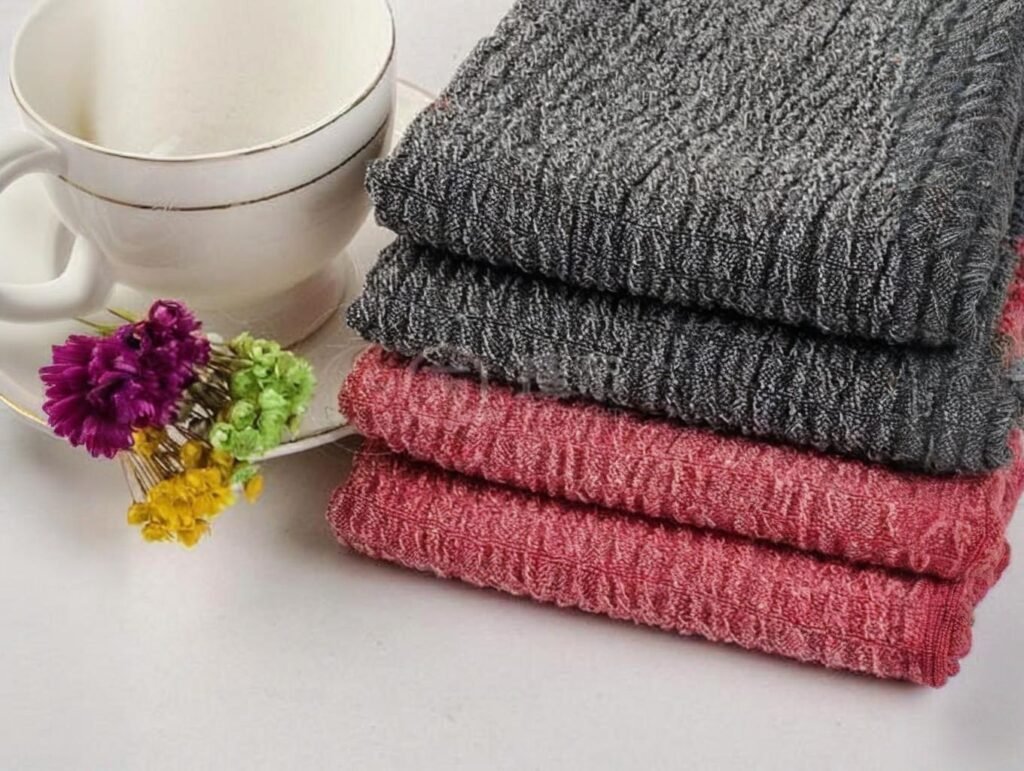
In commercial textile production, ramie is rarely used alone. Its strength, breathability, and crisp texture make it attractive, but those same traits can quickly become liabilities if the fiber dominates a fabric without control. For this reason, ramie is most often introduced through carefully calibrated blends, where ratio selection determines whether a fabric succeeds in the market or struggles with comfort complaints, processing issues, or unstable reorders.
The most common ramie blend ratios range from 15 percent to 55 percent ramie, depending on the intended balance between structure, softness, care requirements, and cost. Ratios outside this range exist, but they are typically limited to niche or highly controlled applications. In practice, the “right” mix is chosen based on end use, fabric weight, finishing route, and consumer expectations, not on fiber theory or sustainability narratives alone.
Buyers who treat blend ratios as a technical decision rather than a branding choice consistently achieve better product performance and fewer sourcing disputes.
Why ratio selection determines success or failure
Ramie behaves differently from cotton, polyester, or silk at every stage of production. Small changes in percentage can alter yarn tension, fabric stiffness, wrinkle behavior, and even dye uptake. Because of this sensitivity, blend ratios in real manufacturing tend to cluster into performance zones rather than arbitrary numbers.
A) Common ramie blend ratios used in production
Across apparel, home textiles, and lifestyle products, ramie blends usually fall into predictable categories.
| Blend Category | Typical Ratio | Why It’s Used |
|---|---|---|
| Low-ramie | 10–20% ramie | Subtle strength + texture |
| Mid-ramie | 30–45% ramie | Balanced structure & comfort |
| High-ramie | 50–60% ramie | Linen-like performance |
| Premium blends | 20–40% ramie + silk | Refined texture & luster |
Low-ramie blends introduce surface texture and tensile reinforcement without materially changing hand feel. These are often chosen when designers want differentiation without risking consumer pushback.
Mid-ramie blends represent the commercial core of ramie usage. In this range, ramie contributes visible crispness and breathability, while partner fibers manage softness, wrinkle recovery, and sewing efficiency.
High-ramie blends approach linen-like behavior. They are used selectively, often in summer garments or structured interiors, where stiffness is a feature rather than a defect.
Ratios above 60 percent ramie are uncommon in large-scale production. At that level, fabrics become increasingly stiff, wrinkle-prone, and difficult to spin consistently. Mills can produce them, but yield loss and quality risk rise sharply, which limits scalability.
B) Ramie–cotton: balancing comfort and structure
Ramie–cotton is the most widely used ramie blend because it aligns well with consumer expectations. Cotton provides familiarity and softness, while ramie adds strength, breathability, and a crisp surface.
In real production, most ramie–cotton fabrics concentrate in two ratio zones.
| Ratio | Typical Use |
|---|---|
| 70% cotton / 30% ramie | Shirts, dresses, casual pants |
| 55% cotton / 45% ramie | Structured tops, home textiles |
At 30 percent ramie, the fabric gains a noticeably cooler touch and improved shape retention without sacrificing cotton’s comfort. This ratio performs well in woven shirting between 120 and 160 GSM, where consumers expect softness but appreciate a clean silhouette.
At 45 percent ramie, structure becomes more dominant. These fabrics feel firmer, wrinkle more visibly, and are often selected for garments or interiors where crispness is desirable. They also respond better to enzyme washing or softening finishes than lower-ramie blends, as there is more ramie content to “open up” during finishing.
Production insight: At SzoneierFabrics, repeated sampling across apparel programs shows that 30–35 percent ramie is often the “sweet spot.” Buyers can feel the difference immediately, yet end users still recognize the product as cotton-comfort-driven rather than fiber-forward. This range also offers stable spinning performance and consistent dye behavior across batches.
C) Ramie–polyester: engineering stability and easy care
Polyester changes the equation entirely. Unlike cotton or silk, polyester introduces dimensional stability, wrinkle resistance, and wash durability. This allows mills to push ramie content higher without creating fabrics that are difficult to use or maintain.
| Ratio | Performance Outcome |
|---|---|
| 65% polyester / 35% ramie | Wrinkle resistance + breathability |
| 50% polyester / 50% ramie | High strength, crisp silhouette |
At 35 percent ramie, polyester-based blends retain much of ramie’s breathability while significantly improving wrinkle recovery and tensile stability. These fabrics are common in table linens, uniforms, and lifestyle textiles that require frequent laundering.
A 50/50 blend produces a very crisp, structured fabric with excellent strength. This ratio is often used in bags, structured accessories, and decorative home textiles. While hand feel is firm, the fabric holds shape exceptionally well and resists deformation under load.
From a sourcing perspective, ramie–polyester blends offer higher cost predictability. Polyester buffers fluctuations in ramie fiber quality, making these blends easier to reproduce across seasons. For buyers managing long-running programs, this stability is often more valuable than the pure-fiber narrative.
D) Ramie–silk: luxury with control
Ramie–silk blends occupy a premium niche. Silk softens ramie and adds visual depth, but it does not eliminate ramie’s inherent stiffness. Instead, it reframes it as structure rather than roughness.
| Ratio | Visual & Tactile Effect |
|---|---|
| 70% silk / 30% ramie | Soft drape, subtle texture |
| 60% silk / 40% ramie | Structured luxury look |
At 30 percent ramie, silk remains dominant in drape and hand feel, while ramie introduces subtle texture and improves tensile strength. These fabrics are often used in high-end blouses, scarves, and lightweight jackets.
At 40 percent ramie, structure becomes more apparent. The fabric drapes less fluidly but gains a sculptural quality valued in tailored or statement pieces.
Critical caution: High ramie content in silk blends significantly increases yarn breakage risk during weaving. Ramie fibers are stiffer and less elastic than silk, creating tension imbalance. This must be addressed at the spinning stage through controlled twist levels and yarn matching. Failure to manage this results in loom downtime and inconsistent fabric density.
E) How buyers should choose the right ratio: a practical framework
Successful ratio selection starts with asking the right questions. Rather than beginning with fiber percentages, buyers should work backward from use conditions and consumer expectations.
Key questions include:
- Will the fabric be washed frequently, or dry-cleaned occasionally?
- Does the garment require fluid drape or defined structure?
- Is visible wrinkling acceptable, or must it be minimized?
- Is the product price-sensitive, or positioned as a value or premium item?
These priorities guide blend direction more reliably than trend-driven choices.
| Priority | Recommended Blend Direction |
|---|---|
| Comfort | Lower ramie |
| Structure | Higher ramie |
| Easy care | Polyester partner |
| Premium look | Silk partner |
This framework helps sourcing teams align design intent with production reality. It also simplifies communication with mills, reducing the risk of misaligned sampling.
F) Case example: correcting a failed ratio
A contemporary apparel brand developed summer trousers using a 50 percent ramie / 50 percent cotton fabric. Lab testing met all technical benchmarks, including tensile strength and shrinkage. However, consumer wear testing revealed consistent complaints about stiffness and discomfort after prolonged sitting.
Rather than redesigning the garment, the development team adjusted the blend to 35 percent ramie / 65 percent cotton while keeping yarn count and fabric weight constant. The revised fabric passed the same lab tests but felt noticeably softer in wear trials. Consumer feedback improved without compromising breathability or appearance.
This case illustrates a common reality in ramie sourcing: a 10–15 percent ratio change can completely alter user perception, even when technical specifications remain similar.
Practical takeaway for buyers and developers
Ramie blend ratios are not cosmetic choices. They are structural decisions that affect spinning efficiency, finishing options, consumer comfort, and long-term consistency. Most successful ramie products sit within proven ratio zones that balance performance with manageability.
Buyers who rely on established blend ranges, align ratios with end use, and test perception—not just lab data—gain far more control over outcomes. When ratio selection is treated as a strategic tool rather than an afterthought, ramie becomes a versatile, scalable fiber rather than a risky one.
In ramie sourcing, precision matters. The right mix does not come from theory, but from understanding how small percentage shifts translate into real-world performance.
How do ramie–cotton blends perform in apparel and home textiles, and which product categories suit them best?
Ramie–cotton blends occupy a practical middle ground between traditional cotton fabrics and more rigid bast-fiber textiles like pure ramie or linen. In real-world use, they are chosen not because they feel radically different on the first touch, but because they behave better over time, especially in warm climates and products that must retain structure through repeated wear or laundering.
In both apparel and home textiles, ramie–cotton blends consistently deliver improved moisture management, reduced deformation, and more stable appearance compared with 100% cotton, while avoiding the harshness and sharp wrinkling commonly associated with pure ramie or linen. Their value emerges gradually, through daily use rather than showroom handling.
Application-driven performance analysis
A) Apparel performance: where ramie–cotton shines
Ramie–cotton blends perform best in garments worn close to the skin but requiring a certain level of shape and visual crispness. The ramie component provides backbone, while cotton softens the touch and moderates rigidity.
| Apparel Type | Why Ramie–Cotton Works |
|---|---|
| Shirts & blouses | Breathable, holds shape |
| Dresses | Reduced cling, crisp lines |
| Summer trousers | Less sagging |
| Casual jackets | Lightweight structure |
In woven shirts and blouses, ramie–cotton fabrics resist the “collapsed” look that cotton often develops after several hours of wear in humid conditions. Collars, plackets, and sleeve edges retain definition longer, reducing the need for heavy interlinings or resin finishes.
For dresses, especially loose or semi-tailored silhouettes, the blend helps fabrics fall cleanly without excessive cling. Compared with viscose blends, ramie–cotton is less prone to twisting or distortion after washing, which is particularly valuable in multi-panel garments.
Wear insight: Compared with linen, ramie–cotton wrinkles less sharply and feels less abrasive against the skin. Linen tends to crease in high-contrast folds, while ramie–cotton develops softer, more distributed wrinkles that read as texture rather than disorder.
B) Moisture and thermal comfort in daily wear
One of the most practical advantages of ramie–cotton blends is how they handle moisture in warm or humid environments. Ramie fibers have a naturally high moisture regain and transport moisture away from the skin more efficiently than cotton.
| Fabric | Moisture Perception |
|---|---|
| 100% cotton | Damp in humidity |
| Ramie–cotton | Dry, airy |
| Polyester blends | Dry but warmer |
In high humidity, cotton tends to absorb moisture and hold it, leading to a damp sensation and slower drying. Ramie–cotton fabrics, by contrast, disperse moisture across the fabric surface, allowing faster evaporation and a drier feel.
This behavior explains why ramie–cotton is especially popular in Southeast Asia, Southern Europe, coastal regions, and tropical urban markets, where garments are worn for long hours without air conditioning. Compared with polyester blends, ramie–cotton feels noticeably cooler to the touch, avoiding the heat buildup and static commonly reported with synthetics.
From a thermal comfort perspective, the blend balances airflow and mass. Ramie adds stiffness that prevents fabric from clinging tightly to the skin, while cotton moderates surface temperature and friction.
C) Home textile performance: stability over softness
In home textiles, ramie–cotton blends are rarely selected for plush softness. Their value lies in dimensional stability and long-term appearance retention, particularly in products exposed to gravity, sunlight, or frequent handling.
| Home Product | Benefit |
|---|---|
| Curtains | Better hang, less distortion |
| Table linens | Crisp appearance |
| Cushion covers | Improved abrasion resistance |
Curtains made from 100% cotton often elongate over time, especially in larger window drops. The added stiffness of ramie reduces this deformation, helping panels maintain length and pleat structure. This is particularly important in hospitality and residential projects where re-hanging or resizing is costly.
For table linens, ramie–cotton offers a clean, tailored look that resists sagging and edge curling. While it may feel slightly firmer than cotton at first, the fabric softens with laundering while maintaining surface integrity.
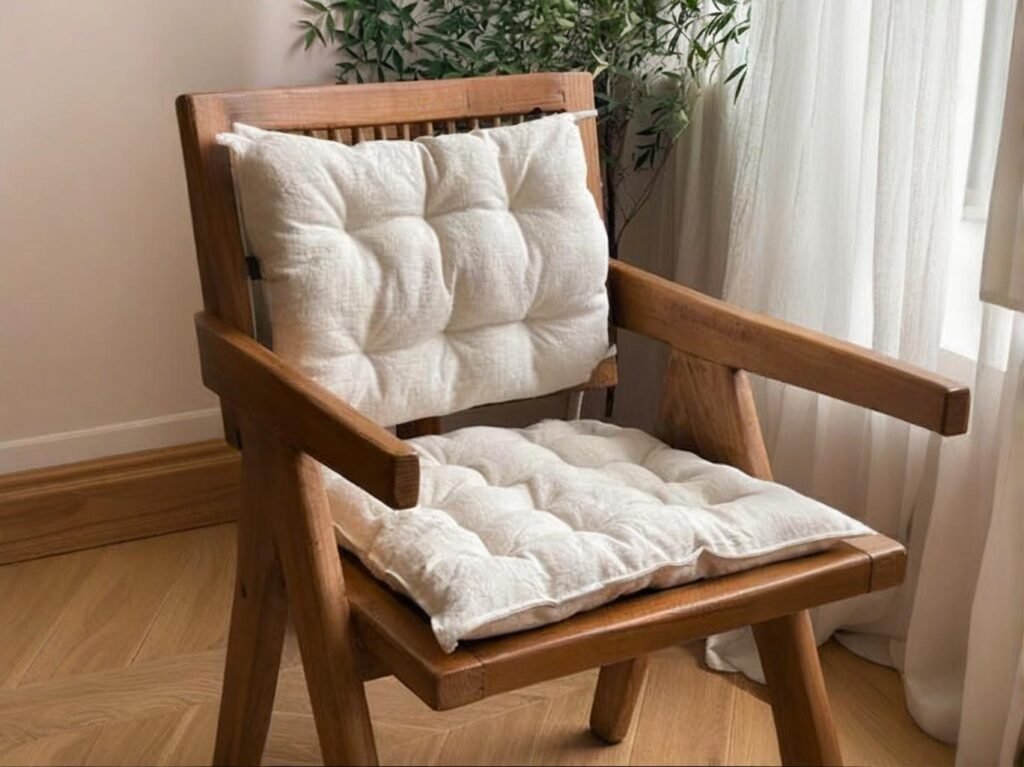
Cushion covers benefit from improved abrasion resistance and lower pilling tendency. In seating areas, cotton fabrics often show wear at contact points within a year; ramie–cotton extends usable life without resorting to heavy synthetics.
D) Durability and care behavior
Durability is one of the most measurable advantages of ramie–cotton blends, particularly when evaluated over repeated laundering cycles.
| Test Item | Cotton | Ramie–Cotton |
|---|---|---|
| Wash cycles before deformation | ~30 | 50+ |
| Pilling tendency | Medium | Low |
| Shape retention | Moderate | High |
In controlled laundering tests, ramie–cotton fabrics consistently retain shape longer than cotton equivalents of similar weight. Pilling resistance improves because ramie fibers are smoother and less prone to fibrillation at the surface.
Production note: Enzyme washing must be carefully controlled. Over-aggressive enzyme treatments soften cotton rapidly but can compromise ramie fiber strength if dwell times are excessive. Well-managed programs apply staged or selective enzyme processes to balance softness and durability.
Care behavior is another advantage. Ramie–cotton blends tolerate machine washing well and dry faster than cotton-heavy fabrics. While ironing may still be required for crisp presentation, fabrics respond better to steam and recover shape more easily.
E) Design flexibility and dye behavior
From a design standpoint, ramie–cotton blends offer subtle but important visual advantages. Ramie fibers accept dyes differently from cotton, influencing how color appears on the fabric surface.
Key characteristics include:
- Slightly higher natural luster
- Sharper color edges in woven patterns
- Greater depth in earth tones and muted shades
This dye behavior explains why ramie–cotton is frequently used in undyed, garment-dyed, stone-washed, or low-saturation color palettes. Natural hues such as off-white, sand, olive, indigo, and charcoal appear richer and more textured compared with cotton alone.
Designers often leverage this effect in minimalist or natural-themed collections, where surface nuance is valued over brightness. High-contrast prints are possible but require careful color matching due to differential dye uptake between fibers.
F) Buyer mistake to avoid
A common sourcing mistake is evaluating ramie–cotton blends solely by initial hand feel. At the sample stage, cotton-rich fabrics often feel softer and more familiar, leading buyers to underestimate the blend’s long-term value.
The real performance advantage becomes evident after repeated washing and extended wear. Cotton-only fabrics tend to lose structure, stretch at stress points, and appear tired. Ramie–cotton blends, by contrast, soften gradually while maintaining shape, surface integrity, and visual clarity.
Another frequent error is specifying blends without adjusting finishing expectations. Ramie–cotton does not benefit from the same aggressive softening used for pure cotton. Programs that respect this difference achieve better balance between comfort and durability.
G) Category suitability summary
Taken together, ramie–cotton blends are best suited for categories where breathability, structure, and longevity matter more than initial plushness.
They perform particularly well in:
- Warm-weather woven apparel
- Casual tailoring and lightweight outerwear
- Curtains and decorative home textiles
- Table linens and utility home fabrics
They are less ideal for products requiring extreme softness, stretch recovery, or heavy brushing, where cotton, viscose, or synthetic blends may be more appropriate.
How do ramie–polyester blends work for durability and easy-care needs, and where are they used most?
Ramie–polyester blends are often misunderstood. They are sometimes viewed as a compromise between natural and synthetic fibers, but in real product development, they are better described as a functional engineering solution. These blends exist because pure ramie, while strong and breathable, wrinkles sharply and lacks recovery, and pure polyester, while stable and easy to maintain, often feels flat, warm, or overly synthetic.
By combining the two, mills are not simply blending fibers for cost or availability. They are deliberately balancing mechanical performance, care requirements, and long-term appearance stability. This is why ramie–polyester blends are far more common in commercial, lifestyle, and utility-driven products than in trend-led fashion categories.
Direct answer: Ramie–polyester blends work well for durability and easy-care needs because polyester offsets ramie’s poor wrinkle recovery and dimensional instability, while ramie improves breathability, strength, and surface character. These blends are most widely used in uniforms, casual outerwear, table linens, bags, and upholstery covers where consistent appearance and wash performance matter more than softness alone.
Image (4:3 suggestion): Industrial and lifestyle setting showing ramie–polyester fabric used in table linens, casual jackets, and structured bags.
Why ramie–polyester blends outperform expectations
The performance of ramie–polyester fabrics is best understood by looking at how each fiber behaves under stress, washing, and daily use, rather than how it feels on a hanger.
A) Structural logic behind ramie–polyester blends
Ramie and polyester solve different problems, and their interaction is largely complementary. Ramie contributes rigidity, high tensile strength, and moisture management. Polyester contributes elastic recovery, shape memory, and resistance to repeated laundering.
| Property | Ramie Only | Polyester Only | Ramie–Polyester |
|---|---|---|---|
| Wrinkle recovery | Low | High | High |
| Breathability | High | Low | Medium–High |
| Tensile stability | High | High | Very high |
| Easy care | Low | Very high | High |
Pure ramie holds shape well but creases sharply and does not recover. Pure polyester recovers easily but lacks airflow and often collapses into a flat, synthetic drape. In a blended structure, polyester fibers act as a mechanical backbone, pulling the fabric back into shape after compression, while ramie fibers maintain rigidity and surface definition.
This interaction is why ramie–polyester fabrics are frequently chosen for products that must look acceptable after hours of sitting, folding, or washing without ironing.
B) Typical blend ratios and why they matter
Blend ratio determines whether the fabric behaves more like a natural textile with support, or a synthetic textile with texture.
| Common Ratio | Practical Outcome |
|---|---|
| 70% polyester / 30% ramie | Easy care with natural texture |
| 65% polyester / 35% ramie | Balance of breathability & structure |
| 50% polyester / 50% ramie | High durability, firm handfeel |
At around 30% ramie, the fabric begins to feel noticeably less synthetic. Surface dryness increases, airflow improves, and visual texture becomes more defined. This ratio is popular in table linens, uniforms, and tote bags where appearance and maintenance must coexist.
Between 35% and 50% ramie, structure becomes dominant. These fabrics hold shape extremely well but feel firm and crease sharply if overloaded. They are best suited to products designed to remain upright or flat rather than draped.
Production insight: Once ramie content exceeds roughly 50%, polyester can no longer fully compensate for ramie’s rigidity. Wrinkle formation becomes more pronounced, and finishing requirements increase. At this point, the blend behaves closer to a reinforced natural fabric than an easy-care textile.
C) Key application areas in commercial use
Ramie–polyester blends appear most often where products must maintain appearance over long service cycles and under imperfect care conditions.
| Product Category | Why Ramie–Polyester Fits |
|---|---|
| Uniforms & workwear | Shape retention |
| Casual outerwear | Lightweight structure |
| Table linens | Wash durability |
| Tote bags & organizers | Tear resistance |
| Upholstery covers | Abrasion resistance |
In uniforms and workwear, crease recovery and dimensional stability reduce the need for frequent pressing. Garments retain a professional look even after repeated industrial washing.
In casual outerwear such as lightweight jackets or overshirts, ramie–polyester fabrics hold form without heavy linings. They resist collapse in warm weather, maintaining silhouette without trapping heat.
Table linens are one of the largest application areas. Cotton tablecloths soften and distort quickly, while ramie–polyester versions remain flat, resist edge curling, and tolerate frequent laundering.
At SzoneierFabrics, ramie–polyester blends are frequently specified for bag linings and outer shells, particularly in tote bags and organizers. Compared with cotton canvas, these fabrics resist stretching at stress points and maintain structure even after prolonged use.
D) Wash performance and lifecycle cost
Easy care is not just about whether a fabric can be machine washed. It is about how the fabric looks after dozens of wash cycles.
| Fabric Type | Appearance After 30 Washes |
|---|---|
| Cotton | Noticeable deformation |
| Ramie–Cotton | Moderate deformation |
| Ramie–Polyester | Minimal change |
Cotton tends to lose shape, soften excessively, and develop distortion around seams. Ramie–cotton blends slow this process but still require careful handling. Ramie–polyester blends, by contrast, retain dimensional accuracy and surface clarity far longer.
From a lifecycle cost perspective, this stability reduces replacement frequency. In hospitality, catering, and retail display environments, fewer replacements translate directly into lower long-term operating costs, even if initial fabric prices are higher.
For buyers managing large inventories, this durability often outweighs marginal differences in handfeel.
E) Abrasion resistance and structural aging
Abrasion performance is another reason ramie–polyester blends are favored in functional products. Ramie’s high tensile strength slows fiber breakage, while polyester’s elasticity absorbs frictional stress.
Over time, these fabrics tend to show wear as surface smoothing rather than tearing or fuzzing. This controlled aging is preferable in bags, covers, and uniforms, where visible damage is more problematic than gradual softening.
In comparison, cotton-rich fabrics often pill or thin at stress points, leading to premature product failure.
F) Dyeing and finishing considerations
Blending polyester into ramie significantly alters dye behavior and finishing strategy.
- Color temperature tends to appear slightly cooler
- Contrast is sharper due to reduced surface fuzz
- Dual dye systems are required
Reactive dyes are typically used for ramie, while disperse dyes are used for polyester. Achieving color consistency requires precise control of dye sequencing, temperature, and fixation.
Critical mistake to avoid: Approving fabric based only on pre-wash lab dips. Ramie–polyester blends can change appearance after washing, especially in lighter shades. Skipping post-wash evaluation is one of the most common reasons buyers reject bulk production despite prior approval.
Finishing techniques such as enzyme washing, peach finishing, or light calendering can significantly influence handfeel and surface perception, allowing mills to tune the fabric toward either a more natural or more controlled feel.
G) Comfort and breathability in daily use
While polyester reduces airflow compared to pure ramie, the blend still performs better in heat than many synthetic-dominant fabrics. Ramie channels moisture and prevents the fabric from clinging to the skin, particularly in loose constructions.
In garments, comfort improves noticeably when ramie content exceeds 30%. Below this threshold, the fabric behaves more like polyester with texture rather than a breathable natural blend.
For products such as bags or table linens, breathability is less critical, and the blend’s structural benefits take priority.
H) Buyer misconception and market reality
A common assumption is that ramie–polyester blends feel synthetic. In reality, tactile perception depends heavily on ramie ratio and finishing. Once ramie exceeds about 30%, the fabric feels distinctly dry and natural, especially after enzyme or peach finishing.
The misconception often comes from poorly finished fabrics or blends designed purely for cost reduction. Well-engineered ramie–polyester fabrics occupy a different category: functional natural-look textiles with engineered performance.
Key takeaway for buyers
Ramie–polyester blends succeed because they address real-world problems: wrinkling, deformation, and short service life. They are not intended to replace soft cottons or luxury silks, but to deliver stable, durable, easy-care performance in products that must survive repeated use and washing.
When buyers understand the structural logic behind these blends, specify appropriate ratios, and evaluate post-wash performance, ramie–polyester fabrics consistently outperform expectations across commercial, lifestyle, and utility-driven applications.
How do ramie–silk blends differ in sheen, softness, and luxury positioning, and what end-uses fit best?
Ramie–silk blends occupy a narrow but highly intentional space in the textile market. They are neither substitutes for silk nor softened versions of linen. Instead, they exist as controlled luxury fabrics, combining silk’s natural luster with ramie’s structure, breathability, and resilience. When executed correctly, these blends deliver visual depth and tactile clarity that pure silk often cannot sustain in real-world use.
In modern sourcing, ramie–silk fabrics are selected not for maximum softness, but for disciplined texture. Designers and buyers choose them when a garment or decorative textile must look refined, hold form, and perform well in warm or humid conditions—without drifting into fragility or excessive fluidity.
Ramie–silk blends are therefore positioned between silk charmeuse and linen in both performance and perception. They are premium, but not delicate; elegant, but not passive. Understanding how sheen, softness, and structure interact in these blends is essential to choosing the right ratio and end use.
Luxury is controlled texture, not softness alone
In high-end textiles, softness is only one component of perceived luxury. Structure, surface behavior, and how a fabric ages under wear are equally important. Ramie–silk blends are built around this principle.
A) Why silk alone is not enough
Pure silk is prized for its smoothness and drape, yet those same qualities can limit its performance outside controlled environments. In garments worn frequently or exposed to heat and friction, silk’s weaknesses become apparent.
Pure silk fabrics tend to:
- Collapse easily and lose shape
- Show abrasion and shine marks quickly
- Cling to the body in humid conditions
- Require careful handling and maintenance
Ramie changes this equation. When introduced into silk, ramie contributes fiber rigidity, tensile strength, and airflow, allowing silk to function as a luxury fabric with boundaries rather than excess fluidity.
| Property | Silk | Ramie–Silk |
|---|---|---|
| Drape | Fluid | Semi-structured |
| Surface sheen | High | Refined, diffused |
| Breathability | Medium | High |
| Abrasion resistance | Low | Medium |
The result is a fabric that still reads as silk at first glance, but behaves more predictably over time. Sheen becomes softer and more diffused rather than mirror-like. Drape is guided rather than free-falling. For many designers, this shift defines modern luxury—intentional, wearable, and durable enough to justify its price.
B) Typical blend ratios and their visual impact
Ramie–silk blends are highly ratio-sensitive. Small percentage changes alter not only hand feel, but also light reflection, wrinkle behavior, and silhouette definition.
| Ratio | Visual & Tactile Result |
|---|---|
| 70% silk / 30% ramie | Soft, subtle texture |
| 60% silk / 40% ramie | Crisp luxury look |
| 50% silk / 50% ramie | Structured elegance |
At 30 percent ramie, silk remains dominant in touch and flow. The fabric drapes smoothly, but with less cling and better recovery than pure silk. Surface texture becomes slightly granular, which diffuses sheen and adds visual interest without appearing rustic.
At 40 percent ramie, structure becomes more visible. Fabrics hold pleats and seams more clearly, and silhouettes appear sharper. This ratio is frequently chosen for statement blouses, refined dresses, and garments designed to maintain form throughout the day.
At 50 percent ramie, the fabric crosses into a clearly structured category. Drape is reduced, but shape retention improves significantly. These fabrics are used selectively, often in limited collections or decorative applications, where sculptural qualities are valued.
Design insight: Even 20–30 percent ramie is enough to fundamentally change how silk behaves on the body. This is why ramie–silk blends should be developed through sampling and wear testing rather than theoretical ratio targets.
C) End-use categories that benefit most
Ramie–silk blends are not universal solutions. They excel in categories where visual refinement and controlled structure are priorities.
| Product Type | Why Ramie–Silk Works |
|---|---|
| High-end blouses | Shape + elegance |
| Dresses | Reduced cling |
| Scarves | Textural depth |
| Decorative panels | Natural sheen |
| Limited-edition collections | Material storytelling |
In high-end blouses, ramie–silk blends prevent collar collapse and sleeve distortion while maintaining a refined appearance. The fabric supports tailoring details without becoming stiff.
In dresses, especially summer or transitional designs, the blend reduces static and cling, allowing garments to skim the body rather than adhere to it. This improves comfort and perceived quality, particularly in humid climates.
Scarves benefit from ramie’s texture, which breaks up uniform sheen and adds tactile complexity. These fabrics photograph well and convey craftsmanship rather than gloss.
In decorative panels or wall textiles, ramie–silk blends provide visual depth under changing light. The diffused sheen feels natural and understated, aligning well with interior design trends that favor organic luxury.
Limited-edition collections often use ramie–silk specifically for material storytelling. The blend communicates intention, fiber knowledge, and differentiation—qualities valued by consumers seeking authenticity rather than overt opulence.
D) Comfort in warm and humid climates
One of the most practical advantages of ramie–silk blends is thermal performance. Pure silk, especially in heavier satins, can trap heat and moisture. Ramie mitigates this through its physical fiber structure.
Ramie–silk fabrics:
- Release heat faster than pure silk
- Absorb and dissipate moisture more efficiently
- Feel cooler on initial skin contact
- Reduce stickiness during prolonged wear
This makes them particularly suitable for summer luxury collections in regions such as East Asia, Southern Europe, and Southeast Asia. In these markets, consumers are highly sensitive to thermal comfort, even at premium price points.
Designers targeting warm-climate luxury often prefer ramie–silk blends over heavier silk constructions because they balance elegance with wearability. The fabric looks composed even as temperatures rise, which reinforces its value proposition.
E) Production risks and how they’re managed
Despite their advantages, ramie–silk blends introduce specific production challenges. These risks are manageable, but only when acknowledged early.
| Risk | Control Strategy |
|---|---|
| Yarn breakage | Lower weaving tension |
| Uneven luster | Yarn uniformity control |
| Color inconsistency | Small-lot dyeing |
| Cost escalation | Ratio optimization |
Yarn breakage is the most common issue. Ramie fibers are stiffer and less elastic than silk, creating tension imbalance during weaving. Mills typically address this by adjusting twist levels, matching filament counts, and reducing loom speed.
Uneven luster can occur when silk and ramie yarns differ in fineness or surface cleanliness. Strict yarn grading and uniformity checks are essential to maintain consistent appearance.
Color inconsistency arises because silk and ramie absorb dyes differently. Many mills prefer small-lot or step dyeing for these blends to fine-tune shade balance rather than relying on bulk dye runs.
Cost escalation is controlled by ratio discipline. Increasing ramie content beyond functional needs rarely improves performance proportionally but can complicate processing and raise waste rates.
At SzoneierFabrics, ramie–silk projects typically begin with pilot runs rather than immediate bulk orders. This approach allows both aesthetic and mechanical issues to surface early, protecting downstream timelines and budgets.
F) Strategic positioning insight
Ramie–silk blends are rarely mass-market materials. Their strength lies in distinctiveness, not volume efficiency. They appeal to brands that value material intelligence and are willing to communicate why a fabric looks and feels different.
From a positioning standpoint, these blends align with narratives around:
- Craft and material knowledge
- Natural fiber expertise
- Seasonal and climate-aware design
- Quiet, non-flashy luxury
They are most effective when used selectively, where the fabric itself becomes part of the product story. Overuse or misapplication dilutes their impact and increases cost pressure.
Practical takeaway for designers and sourcing teams
Ramie–silk blends redefine luxury through restraint. They trade extreme softness for balance, and excessive sheen for depth. When ratio, finishing, and end use are aligned, these fabrics deliver elegance that holds up under real wear and real climates.
The key is intention. Ramie–silk should not be chosen to soften ramie or strengthen silk in isolation, but to engineer a controlled aesthetic that neither fiber achieves alone.
Handled with care, ramie–silk blends offer brands a rare opportunity: luxury that feels thoughtful rather than fragile, and premium positioning rooted in performance as much as appearance.
Which tests and spec points should you request for ramie blend sourcing?
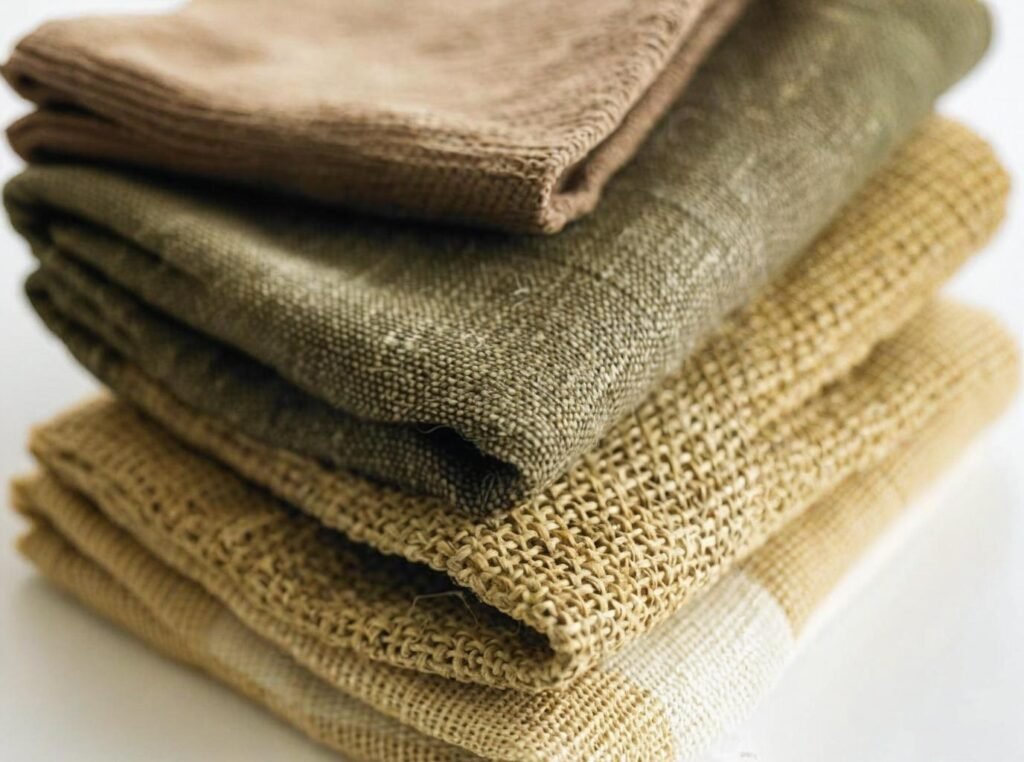
When sourcing ramie blend fabrics, approving a sample based only on fiber composition or initial hand feel is one of the most common—and costly—mistakes. Ramie behaves differently from cotton, polyester, or silk at almost every stage after washing, wearing, and finishing. What matters in real use is not what the fabric claims to be, but how it performs under stress, laundering, and time.
For that reason, experienced buyers request performance-based specifications, supported by test data and post-wash evaluation, rather than relying on nominal fiber percentages. The most critical checkpoints include GSM tolerance, construction stability, shrinkage, colorfastness, pilling behavior, tensile and tear strength, and appearance after washing. Together, these determine whether a ramie blend is commercially viable, not just lab-approved.
Turning fabric approval into risk control
A) GSM and construction consistency (often underestimated)
GSM control is far more sensitive in ramie blends than in standard cotton fabrics. Ramie fibers vary naturally in length and stiffness, and even small deviations in yarn behavior can translate into visible and tactile differences at the fabric level.
| Fabric Type | Acceptable GSM Tolerance |
|---|---|
| Lightweight apparel | ±3–5% |
| Shirts & dresses | ±5% |
| Home textiles | ±7% |
Why it matters: A 5% GSM increase in a ramie–cotton fabric does not just add weight. It can noticeably increase stiffness, reduce fluidity, and change how a garment hangs on the body. In woven shirts or dresses, this often results in a boxier silhouette than intended. In curtains, excess GSM can cause uneven drape and exaggerated vertical pull over time.
Buyers should request GSM measurements taken from multiple points across the fabric width, not a single average value. Consistent mills track GSM by lot and will flag deviations before finishing, rather than correcting them after complaints.
B) Shrinkage testing: fiber blends behave differently
Shrinkage behavior in ramie blends is highly dependent on construction, finishing, and blend ratio. Wash-only testing is insufficient and often misleading.
Always request wash + dry shrinkage, using conditions aligned with the end product’s care label.
| Blend Type | Target Shrinkage |
|---|---|
| Ramie–Cotton | ≤2% |
| Ramie–Polyester | ≤1% |
| Ramie–Silk | ≤2% |
Ramie–cotton blends tend to show most dimensional change during the first two wash cycles. If this is not controlled during finishing, garments may pass lab approval but fail in consumer use.
At SzoneierFabrics, bulk production is blocked if shrinkage exceeds target values—even when hand feel and color are approved. This policy exists because post-production corrections rarely restore dimensional stability without compromising fabric character.
For buyers, requesting documented shrinkage results before bulk approval significantly reduces return and alteration risk.
C) Colorfastness and dye migration
Ramie absorbs dyes differently from cotton and silk, particularly in medium to dark shades. Without proper scouring and fixation, ramie components may release excess dye during washing or rubbing.
| Test | Minimum Standard |
|---|---|
| Wash fastness | Grade 3–4 |
| Rubbing (dry) | Grade 4 |
| Rubbing (wet) | Grade 3–4 |
| Light fastness | Grade 3+ |
Buyer insight: Wet rubbing performance is often the weakest point in ramie blends, especially in dark colors such as navy, charcoal, or deep green. This is critical for apparel worn close to the skin, where dye transfer can cause visible staining.
Buyers should request fastness testing after finishing and any enzyme wash, not on greige or pre-finish fabric. Mills with experience in ramie blends often adjust dye recipes or add post-dye fixation steps specifically to address this issue.
D) Pilling and surface wear
Ramie fibers are smoother and stronger than cotton, which generally reduces classic pill formation. However, incorrect finishing can cause surface fibrillation, where fine fiber ends rise and create a fuzzy appearance.
| Test | Acceptable Result |
|---|---|
| Martindale (5,000 cycles) | Grade 3+ |
| Visual fuzzing | Minimal |
Pilling tests should be evaluated visually as well as numerically. A fabric may score adequately on Martindale testing but still develop surface haze that affects appearance, particularly in solid-color garments and home textiles.
This is especially relevant for cushion covers, table linens, and casual apparel that experience frequent friction. Buyers should review test swatches under natural light rather than relying solely on lab scores.
E) Tensile and tear strength (often skipped)
Strength testing is frequently overlooked when sourcing ramie blends for apparel, yet it is one of ramie’s most valuable contributions. Even modest ramie content can significantly improve durability.
| Ramie Content | Tear Strength Gain |
|---|---|
| 15–20% | +10–15% |
| 30–40% | +25–35% |
This strength gain is particularly relevant for bags, curtains, upholstery covers, and structured garments, where seam stress and edge wear are common failure points. In woven fabrics, improved tear strength also reduces damage during cutting and sewing, lowering production loss.
Request both tensile and tear strength data, especially when fabrics will be used in larger panel formats or load-bearing applications.
F) The most important test: post-wash evaluation
While numerical test results are essential, they do not capture the full performance picture. The most reliable approval step remains physical evaluation after washing.
Always review the following after at least one full wash and dry cycle:
- Hand feel changes
- Wrinkle pattern and recovery
- Drape shift
- Color tone or luster variation
Ramie blends often soften noticeably after washing while maintaining structure. This is desirable—but only if the change is predictable. Reviewing post-wash samples eliminates the gap between lab approval and bulk reality.
Many experienced buyers keep a washed reference swatch alongside the original approval sample. Differences between the two often reveal issues that no single test report can capture.
G) Spec alignment across use cases
Not all ramie blends require the same testing depth, but the test package should match the application. Apparel worn next to skin prioritizes shrinkage, rubbing fastness, and hand feel. Home textiles emphasize dimensional stability and strength. Bags and decorative products demand tear resistance and surface durability.
Aligning test priorities with end use avoids unnecessary cost while protecting against real-world failure.
Practical conclusion
Successful ramie blend sourcing depends on treating fabric approval as risk management, not a formality. GSM tolerance, shrinkage control, colorfastness, surface behavior, and strength data together reveal how a fabric will behave after production pressure, transport, washing, and daily use.
Buyers who request these tests consistently—and insist on post-wash evaluation—reduce approval-to-bulk surprises and build more stable supplier relationships. With ramie blends, performance is earned through discipline, not assumed from fiber content alone.
How do you control quality and production risks in ramie blends?
Quality control in ramie blends is fundamentally different from managing cotton or synthetic fabrics. Ramie is a high-crystallinity bast fiber with low elasticity, high tensile strength, and naturally coarse characteristics. These traits give ramie blends excellent breathability, strength, and shape retention, but they also introduce production risks that scale quickly if not controlled early. In commercial manufacturing, most failures traced back to ramie blends do not happen at finishing or inspection stages—they originate at fiber preparation, yarn selection, and early process discipline.
In practice, effective risk control relies on four pillars: disciplined yarn-level inspection, process-specific weaving or knitting adjustments, controlled finishing rather than aggressive softening, and structured approvals at every transition point. When these are combined with realistic lead-time planning and complete documentation, ramie blends can achieve stable bulk quality comparable to premium linen or cotton-linen alternatives.
Managing ramie-specific risks before they scale
Ramie behaves differently from other commonly blended fibers. Its low elongation (typically 2–3%, compared with 6–8% for cotton and over 15% for polyester) means it tolerates less mechanical abuse during spinning, weaving, and finishing. Once defects are introduced at yarn or greige fabric stage, later processes can rarely correct them without compromising performance.
Early-stage controls therefore have a disproportionate impact on final quality.
A) Yarn-level risks: where problems begin
Ramie yarn quality varies more than cotton or polyester because of differences in retting, degumming, and fiber length distribution. Even when the nominal yarn count is correct, variation in fiber fineness or residual gum content can create inconsistent handfeel and visual defects after dyeing.
| Risk | Control Method |
|---|---|
| Uneven yarn thickness | Strict spinning QC |
| Fiber breakage | Controlled tension |
| Slub inconsistency | Yarn grading |
Uneven yarn thickness is the most common root cause of streaking and texture imbalance in finished ramie blends. In blended yarns, ramie fibers that are not evenly distributed within the yarn cross-section create local stiffness differences that become more visible after dyeing or washing. Mills that treat ramie like cotton often skip microscopic yarn inspection or CV% testing, which leads to unpredictable bulk results.
Fiber breakage is another critical issue. Ramie fibers are strong but brittle; excessive tension during spinning or winding creates micro-fractures that may not show until weaving, where loom stoppages increase and fabric defects multiply. Experienced spinners reduce spindle speed and use controlled humidity environments (typically 60–70% RH) to reduce static and fiber stress.
Slub inconsistency matters even in intentionally textured fabrics. If yarn grading is not enforced, unintended slub variation produces irregular fabric weight and weak points that reduce tear strength by 10–20% in stress testing.
Skipping yarn inspection is the fastest way to compromise an entire ramie blend program.
B) Weaving and knitting challenges
Once yarn quality is stabilized, the next risk concentration point is fabric formation. Ramie’s stiffness increases loom stress and reduces tolerance for aggressive production speeds. Compared with cotton blends, ramie blends often require slower loom speeds—sometimes 10–25% lower—to maintain acceptable breakage rates.
| Issue | Mitigation |
|---|---|
| Yarn breakage | Lower loom speed |
| Fabric distortion | Balanced warp/weft |
| Edge curling | Construction adjustment |
Yarn breakage during weaving is not just a productivity issue; it often introduces local density changes that later appear as barré or shadowing after dyeing. Mills with ramie experience typically rebalance warp tension and reduce pick density slightly to maintain fabric integrity.
Fabric distortion is another frequent risk. Because ramie fibers resist bending, imbalanced warp and weft tensions can lead to skewing or torque in woven fabrics, especially in lightweight constructions below 180 gsm. Balanced construction design, rather than post-production correction, is the most reliable solution.
Edge curling is more common in knitted ramie blends, particularly when ramie content exceeds 40%. Adjustments such as tighter edge binding, modified stitch length, or blended yarn placement (ramie-rich yarns positioned away from edges) help maintain fabric usability during cutting and sewing.
Experienced mills adjust machinery settings and fabric architecture, not just fiber recipes.
C) Finishing balance: softness vs structure
Finishing is where many ramie blends are unintentionally downgraded. Over-finishing may achieve short-term softness but often destroys the crisp handfeel, breathability, and dimensional stability that justify using ramie in the first place. Under-finishing, on the other hand, leaves fabrics too stiff for apparel or interior applications.
| Finish Type | Impact |
|---|---|
| Enzyme wash | Softness |
| Silicon softener | Handfeel |
| Mechanical pre-shrink | Stability |
| Heat setting | Shape control |
Enzyme washing must be carefully controlled. While mild cellulase treatments can soften ramie blends, excessive exposure weakens fiber surfaces and reduces abrasion resistance. In lab testing, over-enzymed ramie fabrics can lose up to 15% of tensile strength compared with untreated controls.
Silicon softeners improve initial handfeel but may interfere with moisture absorption and dye fastness if overdosed. High-end ramie blends often use low-add-on softeners combined with mechanical finishing to achieve a balanced result.
Mechanical pre-shrinking is particularly important for ramie blends used in garments or table linens. Without it, residual shrinkage of 3–6% after consumer washing is common, leading to size complaints.
Heat setting stabilizes blended fibers with different thermal behaviors, especially in ramie-polyester blends. Controlled heat exposure improves dimensional stability without flattening fabric texture.
The goal is controlled softness that preserves structure and airflow, not cotton-like limpness.
D) Dye lot consistency in blended fibers
Dyeing ramie blends introduces complexity because different fibers absorb dyes at different rates. Ramie’s crystalline structure slows dye penetration, while cotton or viscose components may absorb dyes more readily, creating tone imbalance.
Effective dye control for ramie blends often requires process adjustments rather than simply changing dye recipes. Typical measures include longer dye cycles to allow even penetration, smaller batch sizes to reduce variability, and stricter shade tolerance thresholds.
Quality evaluation should extend beyond visual inspection under a single light source. Shade matching under daylight, TL84, and incandescent lighting reveals metamerism that can otherwise slip into bulk shipments.
At SzoneierFabrics, bulk dyeing only begins after approved lab dips, wash tests, and multi-light box evaluations. This staged approval approach significantly reduces re-dye risk and shade disputes during final inspection.
E) Lead time planning: realistic expectations
Production timelines for ramie blends are often underestimated, particularly by buyers accustomed to standard cotton fabrics. Each additional control step adds time but reduces downstream risk.
| Stage | Typical Timeline |
|---|---|
| Yarn prep & testing | 5–7 days |
| Lab dips & finishing | 7–10 days |
| Bulk weaving & dyeing | 15–25 days |
Rushing yarn preparation increases variability; compressing dye approval phases increases shade risk; accelerating weaving often leads to higher defect rates and loom downtime. In aggregate, unrealistic schedules are a leading cause of quality disputes, late shipments, and rework costs.
For seasonal programs, backward planning from delivery deadlines with buffer time for approvals is essential. Buyers who align timelines with ramie’s processing reality typically experience smoother bulk runs and fewer post-shipment claims.
F) Compliance and documentation
Compliance requirements for ramie blends vary by application and destination market, but documentation gaps frequently delay shipments or create customs issues. Unlike single-fiber fabrics, blends require accurate fiber content declaration and test verification.
Depending on end use, ramie blends may require fiber content certification, REACH or OEKO-TEX compliance, and verified colorfastness reports for washing, rubbing, and light exposure. For home textiles or children’s products, additional chemical or safety testing may apply.
Documentation should be prepared before shipping, not retroactively. Early alignment between technical teams and compliance requirements ensures that test methods match regulatory expectations and avoids last-minute retesting.
When quality control is treated as an integrated process rather than a final checkpoint, ramie blends can deliver consistent performance, stable appearance, and long-term durability at scale. The key is respecting the fiber’s unique behavior and building production systems that accommodate it rather than forcing it to behave like cotton or synthetics.
Turning Ramie Blends Into a Competitive Advantage
Ramie blends are not trend-driven fabrics—they are engineered materials designed to solve real performance gaps between comfort, durability, and appearance. Whether blended with cotton for breathable structure, polyester for easy care, or silk for refined luxury, ramie introduces a dimension that standard fibers cannot replicate.
The key is not choosing ramie blindly, but developing the right blend, ratio, construction, and finish for your specific product.
At SzoneierFabrics, ramie blend development is treated as a collaborative process—from fiber selection and lab testing to finishing control and bulk production. If you are planning a new fabric, refining an existing one, or solving performance issues in cotton, polyester, or silk textiles, you’re welcome to initiate a custom inquiry.
Share your target application, performance goals, and expected quantities. Our team can prepare custom blend suggestions, test parameters, and sample development to help you move forward with confidence.