Skip to content
At first glance, denim feels universal. Jeans look like jeans. Jackets look like jackets. Yet behind the scenes, denim choices quietly diverge the moment a collection is defined as men’s, women’s, or unisex. The differences are not just aesthetic—they are structural, tactile, and functional. A denim that performs beautifully in a men’s straight-leg jean may fail completely in a women’s high-rise silhouette or a unisex oversized jacket.
The reason is simple: bodies move differently, fits are engineered differently, and expectations around comfort and appearance are not the same. Denim fabric types exist to respond to these realities. When they’re chosen correctly, collections feel intentional and wearable. When they’re chosen casually, problems surface later—tightness in unexpected places, loss of shape, uneven wear, or inconsistent sizing. Denim fabric types used in men’s, women’s, and unisex collections differ primarily in weight, stretch level, construction, and finishing approach. Men’s denim typically prioritizes structure and durability, women’s denim emphasizes comfort, recovery, and fit adaptability, while unisex denim balances stability with flexibility to accommodate a wider range of bodies. Selecting the right denim fabric type means aligning fabric behavior with fit philosophy, not simply reusing the same denim across categories.
A product developer once summed it up well: “The pattern didn’t change much—but the denim had to.” That understanding separates cohesive collections from compromised ones.
What Denim Fabric Types Are Most Commonly Used in Men’s, Women’s, and Unisex Collections?
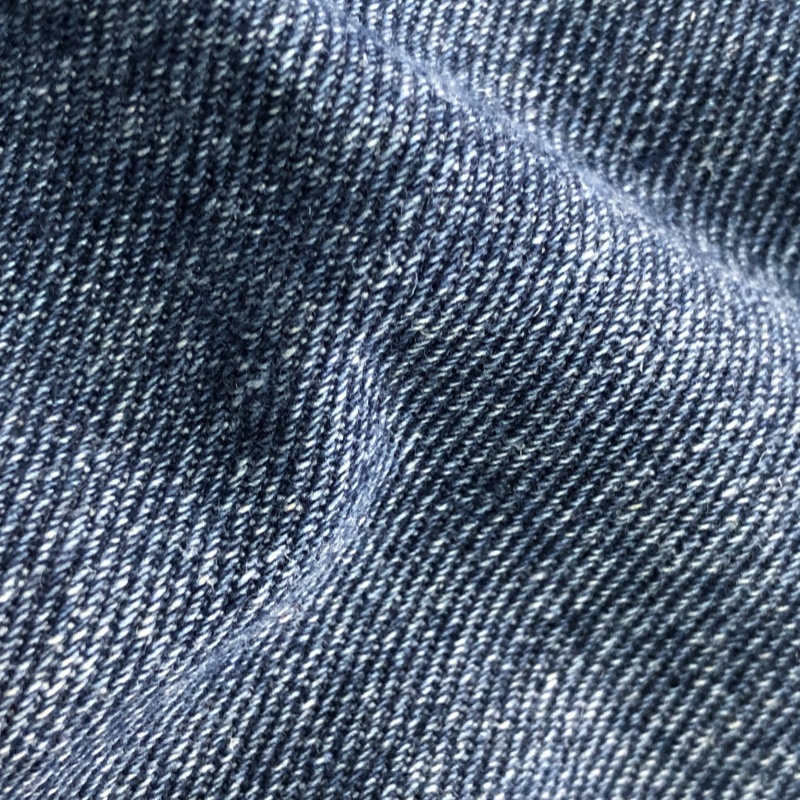

At first glance, men’s, women’s, and unisex denim collections may appear to use similar fabrics. Indigo looks like indigo, twill looks like twill, and weights often overlap. Yet in real manufacturing and wear, the denim types chosen for each category are rarely the same. Fabric selection follows fit logic, movement requirements, and wear behavior far more than gender labels.
Men’s collections tend to prioritize structure and longevity. Women’s collections emphasize adaptability, recovery, and immediate comfort. Unisex collections sit between these two poles, balancing stability with tolerance for body variation. The result is three overlapping but distinct denim strategies—each designed to solve a different set of problems.
Denim type follows fit logic, not gender labels.
How Denim Types Align With Collection Intent
When developers choose denim fabrics, they are not simply selecting materials—they are managing risk. Risk of fit complaints, risk of discomfort, risk of premature wear, and risk of excluding potential wearers. Each collection category manages these risks differently, which is why fabric choices diverge.
Common Denim Fabric Types by Collection Category
| Collection Type | Common Denim Types | Core Purpose |
|---|---|---|
| Men’s | Rigid denim, low-stretch twill | Structure, durability, shape stability |
| Women’s | Stretch denim, soft twill | Fit adaptability, recovery, comfort |
| Unisex | Midweight balanced denim | Broad wearability, flexibility without instability |
While overlap exists, these categories generally prioritize different performance outcomes.
Men’s Denim: Structure Comes First
Men’s denim collections have historically favored structural integrity over elasticity. Many men’s silhouettes—straight leg, relaxed fit, classic taper—are designed to stand away from the body rather than conform to it. As a result, the fabric itself is expected to hold shape.
Men’s denim often emphasizes:
- Vertical stability to prevent leg twisting
- Resistance to abrasion in high-wear areas
- Long wear life with gradual, visible aging
This leads to frequent use of 100% cotton denim or cotton blends with very low elastane content, typically no more than 0.5–1%. In some cases, elastane is omitted entirely.
Rigid denim performs well here because comfort is achieved through fit ease and silhouette, not stretch. A straight-cut jean in rigid denim allows movement without demanding elastic recovery from the fabric itself.
From a manufacturing perspective, rigid or low-stretch denim also offers advantages:
- Predictable weaving behavior
- Easier finishing without elastane sensitivity
- Strong warp yarn performance under tension
For heritage-inspired men’s lines, rigid denim reinforces authenticity and fade character. For workwear-influenced products, it supports durability and resistance to deformation.
Weight and Weave Preferences in Men’s Collections
Men’s collections often lean toward heavier weights, typically in the 12–14 oz range, though lighter options exist for seasonal lines. Twill structures such as right-hand twill remain common due to their traditional appearance and abrasion resistance.
Broken twill is also used in some men’s programs to reduce leg twisting while maintaining a rigid handfeel. Stretch versions of these fabrics exist, but they are usually restrained in elasticity.
Women’s Denim: Movement, Recovery, and Precision
Women’s denim must accommodate a much narrower margin for error. Silhouettes are often closer to the body, rises are more varied, and fit tolerances are tighter. Small changes in fabric behavior can produce visible fit issues.
Women’s denim typically must handle:
- Greater body contouring
- Frequent sitting, bending, and dynamic movement
- Higher sensitivity to comfort and pressure points
This is why stretch denim dominates women’s collections. Elastane content commonly ranges from 1.5% to 3%, sometimes combined with regenerated fibers for softness.
| Attribute | Men’s Priority | Women’s Priority |
|---|---|---|
| Stretch | Low | Medium–High |
| Recovery | Moderate | High |
| Comfort | Secondary | Primary |
Stretch allows the fabric to adapt to movement while maintaining shape. Recovery is critical to prevent waist gaping, knee bagging, and seat sagging—issues that are quickly noticed and often lead to returns.
Fabric Engineering in Women’s Denim
Women’s denim often uses:
- Weft-inserted elastane for horizontal stretch
- Softer yarns or enzyme-treated surfaces
- Lighter to midweight constructions for drape
Fabric weights may be similar to men’s denim on paper, but handfeel is usually softer due to fiber blends and finishing. Even when weights reach 12 oz or more, the perceived stiffness is lower.
From a production standpoint, women’s denim requires tighter control. Small variations in elastane content or recovery can significantly affect fit outcomes, making clear specifications and testing essential.
Unisex Denim: Balance and Compromise
Unisex denim presents a different challenge. These garments must work across a wider range of body shapes without relying on gender-specific patterning or heavy stretch engineering. The goal is not perfect fit for everyone, but acceptable fit for many.
As a result, unisex denim often favors:
- Midweight fabrics, typically 11–13 oz
- Low to moderate stretch, if any
- Stable weaves that resist distortion
Rather than high elastane content, unisex denim often achieves tolerance through cut and fabric balance. Looser silhouettes, straight legs, and relaxed rises reduce the need for aggressive stretch.
Broken twill and balanced twill structures are common because they provide stability without excessive rigidity. Some unisex programs introduce minimal elastane—often around 1%—to add forgiveness without turning the fabric into a performance stretch denim.
Why Unisex Denim Rarely Copies Women’s Stretch Formulas
It may seem logical to apply women’s stretch denim formulas to unisex garments, but this often backfires. High-stretch fabrics can feel unstable in looser silhouettes, causing garments to lose shape or appear limp.
Instead, unisex denim typically starts closer to men’s constructions and then introduces subtle flexibility through:
- Yarn density adjustments
- Slightly finer yarn counts
- Minimal stretch additions
This approach preserves structure while accommodating a broader range of bodies.
Comfort Expectations Across Categories
Comfort is perceived differently in each collection type.
- In men’s denim, comfort is often associated with freedom of movement through cut, not fabric stretch.
- In women’s denim, comfort is closely tied to fabric adaptability and recovery.
- In unisex denim, comfort is about non-restrictiveness rather than contouring.
Understanding these expectations helps explain why the same denim fabric rarely succeeds equally across all categories.
Durability and Aging Across Collections
Durability expectations also vary.
Men’s denim is often expected to show wear visibly but remain structurally sound over long periods. Fading, abrasion, and creasing are part of the appeal.
Women’s denim is often judged on how well it maintains appearance and fit. Excessive distortion or loss of recovery is seen as failure rather than character.
Unisex denim occupies a middle ground, where moderate aging is acceptable but extreme deformation is not.
Fabric selection reflects these expectations. Rigid denim ages expressively. Stretch denim ages quietly. Balanced denim aims for controlled evolution.
A Practical Manufacturing Insight
At SzoneierFabrics, unisex denim development often begins with men’s fabric constructions rather than women’s. The base structure provides stability and durability. From there, subtle adjustments are made—slightly softer yarns, refined densities, or minimal stretch—to increase tolerance without sacrificing shape.
This approach avoids the instability that can arise when highly elastic fabrics are used in silhouettes that do not rely on body-hugging fit.
Overlap Does Not Mean Interchangeability
It is important to note that overlap between categories does exist. Some men’s fashion-forward lines use stretch denim. Some women’s heritage lines use rigid denim. Some unisex collections experiment with both.
However, interchangeability is limited. A fabric optimized for one category rarely performs optimally in another without adjustment. What feels supportive in a slim women’s jean may feel unstable in a unisex straight leg. What feels authentic in a men’s rigid jean may feel restrictive in a fitted women’s style.
Denim fabric types are chosen to support how garments are worn, not how they are labeled. Men’s collections prioritize structure and longevity, women’s collections prioritize movement and recovery, and unisex collections prioritize balance and tolerance.
The most successful denim programs respect these differences. They do not force one fabric solution across categories, but instead let fit logic dictate fabric logic. When denim type aligns with collection intent, garments perform better, fit more consistently, and meet wearer expectations more reliably.
How Do Denim Weight and Stretch Requirements Differ Between Men’s and Women’s Apparel?

Denim weight and stretch are often discussed as independent variables, but in real apparel development they are tightly linked. A fabric’s weight influences how it drapes, resists abrasion, and holds structure, while stretch determines how it adapts to movement and recovers after wear. Men’s and women’s apparel negotiate this relationship differently because fit logic, movement patterns, and wearer expectations are fundamentally different.
Men’s denim traditionally relies on mass and structure to control shape. Women’s denim relies on elasticity and recovery to manage fit precision. These approaches lead to different weight ranges, stretch percentages, and engineering priorities—even when garments appear visually similar on a rack.
Weight and stretch are negotiated differently—not chosen independently.
Understanding Weight–Stretch Trade-Offs
Denim weight, usually measured in ounces per square yard, is often used as a shorthand for quality or durability. Stretch, usually expressed through elastane percentage, is seen as a comfort enhancer. In practice, increasing one variable changes how the other must be managed.
- Heavier denim increases resistance to abrasion and deformation but restricts movement.
- Lighter denim improves comfort and drape but depends more heavily on recovery control.
Men’s and women’s apparel resolve this trade-off in different ways, reflecting how garments are worn rather than how they are marketed.
Typical Denim Weight Ranges by Category
| Category | Common Weight Range |
|---|---|
| Men’s | 12–15 oz |
| Women’s | 9–12 oz |
| Unisex | 10–13 oz |
These ranges overlap, but the functional intent behind them differs.
Men’s denim tends toward the upper end of the spectrum. Heavier weights provide structure, durability, and a sense of substance. Women’s denim more often sits in the lighter to midweight range, where comfort and flexibility can be enhanced through stretch and finishing.
Unisex denim occupies the middle ground, balancing tolerance and stability.
Why Men’s Denim Favors Heavier Weights
Men’s denim has historically been associated with workwear, durability, and longevity. Even in fashion-forward collections, many men expect denim to feel substantial and supportive.
Heavier men’s denim offers several advantages:
- Improved abrasion resistance in high-wear areas
- Greater vertical stability, reducing leg twisting
- Slower, more expressive fading over time
In many men’s silhouettes—straight, relaxed, or classic tapered—comfort is achieved through cut rather than elasticity. The garment allows room for movement without demanding stretch from the fabric itself.
As a result, men’s denim frequently uses rigid or low-stretch constructions, often with 0–1% elastane or none at all. The weight of the fabric provides the resistance needed to hold shape.
Stretch in Men’s Denim: Support, Not Dependence
When stretch is used in men’s denim, it is usually restrained. Elastane levels of 0.5–1% provide subtle flexibility without changing the fabric’s character.
This low stretch:
- Assists movement without obvious elasticity
- Helps reduce stress at seams
- Preserves a structured appearance
Excessive stretch in heavier men’s denim can feel counterproductive, making garments appear unstable or overly elastic relative to their mass. For this reason, men’s denim prioritizes structure first, stretch second.
Why Women’s Denim Uses Lighter Weights
Women’s denim must accommodate a narrower margin for fit error. Silhouettes are often closer to the body, rises vary more dramatically, and small distortions are immediately visible.
Lighter to midweight denim supports:
- Better drape around the body
- Reduced pressure at contact points
- Easier integration of stretch fibers
A 9–12 oz fabric can feel significantly more comfortable in fitted styles, especially when combined with elastane and softening finishes. While heavier women’s denim exists, it often requires more aggressive stretch engineering to remain wearable.
Stretch Levels and Fit Behavior
Stretch is where women’s denim diverges most clearly from men’s.
| Stretch Level | Elastane % | Typical Use |
|---|---|---|
| Rigid | 0% | Men’s classic jeans |
| Low stretch | 0.5–1% | Men’s slim / unisex |
| Medium stretch | 1.5–2% | Women’s regular fit |
| High stretch | 2.5–3% | Women’s skinny fit |
Higher elastane content allows denim to conform closely to the body while maintaining comfort. However, stretch alone is not enough. Recovery—the ability of the fabric to return to its original shape—is equally critical.
Without proper recovery, high-stretch denim can suffer from:
- Knee bagging
- Seat growth
- Loss of silhouette after short wear periods
This is why women’s denim development places heavy emphasis on recovery testing, not just stretch percentage. A fabric that stretches easily but recovers poorly will fail quickly in fitted garments.
Recovery Over Weight in Women’s Denim
In women’s apparel, recovery often matters more than weight. A heavier fabric with poor recovery can perform worse than a lighter fabric with well-engineered elasticity.
Effective women’s denim typically combines:
- Moderate fabric weight
- Controlled elastane placement (usually in the weft)
- Finishing processes that stabilize stretch
This combination allows the fabric to move with the wearer while maintaining shape over time.
Why Weight Alone Doesn’t Solve Durability
It is tempting to assume that heavier denim automatically lasts longer. In reality, durability is influenced by yarn quality, weave density, and fiber composition as much as by weight.
A heavy women’s denim with poorly managed stretch can fatigue faster than a lighter fabric with balanced recovery. Elastane degradation under stress can undermine durability if not protected through construction and finishing.
Conversely, a lighter men’s denim can outperform a heavier one if:
- Yarn density is optimized
- Warp yarns are strong and well-dyed
- Fabric structure resists distortion
Weight is only one tool among many.
Unisex Denim: Managing the Middle
Unisex denim must accommodate a wide range of bodies without relying heavily on either mass or elasticity. As a result, it often uses midweight fabrics with low to moderate stretch.
Typical unisex strategies include:
- 10–13 oz fabric weights
- Minimal elastane (around 1%) or none
- Balanced or broken twill structures
The goal is forgiveness without instability. Too much weight can feel restrictive. Too much stretch can feel unsupportive. Unisex denim often solves fit challenges through silhouette design rather than aggressive fabric engineering.
Movement Patterns and Real-World Wear
Men’s and women’s denim also respond to different movement patterns.
- Men’s denim often experiences stress through walking, bending, and load-bearing.
- Women’s denim experiences frequent sitting, rising, and dynamic posture changes.
These differences influence how stretch and recovery are prioritized. Women’s denim must adapt repeatedly throughout the day without visible distortion, while men’s denim can rely more on structural ease.
A Real Development Example
A women’s straight-leg jean was initially developed using 12.5 oz rigid denim to achieve an “authentic” look. On the rack, the garment appeared ideal. In wear testing, however, fit complaints emerged quickly. The rigid fabric restricted movement and failed to recover after sitting, leading to discomfort and visible distortion.
The solution was not adding more weight or changing the silhouette. Instead, the fabric was switched to an 11 oz denim with 1.8% elastane. The appearance remained nearly identical, but comfort improved dramatically and return rates dropped. Recovery, not mass, solved the problem.
The Interdependence of Weight and Stretch
The key lesson for buyers and manufacturers is that weight and stretch cannot be specified independently. Increasing weight without considering stretch can create rigidity. Increasing stretch without considering weight can create instability.
Successful denim development treats these variables as a system:
- Weight provides resistance and structure
- Stretch provides adaptability
- Recovery ensures longevity
Men’s denim leans on weight to control movement. Women’s denim leans on elasticity to control fit. Both approaches can succeed when the relationship between weight and stretch is carefully managed.
Manufacturing and Sourcing Implications
From a sourcing perspective, these differences influence mill selection, testing protocols, and quality control.
- Men’s denim programs often focus on yarn strength, abrasion resistance, and fade behavior.
- Women’s denim programs emphasize stretch consistency, recovery testing, and dimensional stability.
Specs that fail to reflect these priorities often lead to mismatches between fabric and garment intent.
Men’s and women’s denim approach weight and stretch from opposite directions. Men’s denim controls movement through structure and mass. Women’s denim controls movement through elasticity and recovery.
Neither strategy is inherently superior. Each reflects how the garment is meant to fit, move, and be worn. When weight and stretch are specified together—rather than in isolation—denim performs as intended.
Which Denim Constructions Best Support Tailored Fits Versus Relaxed Silhouettes?

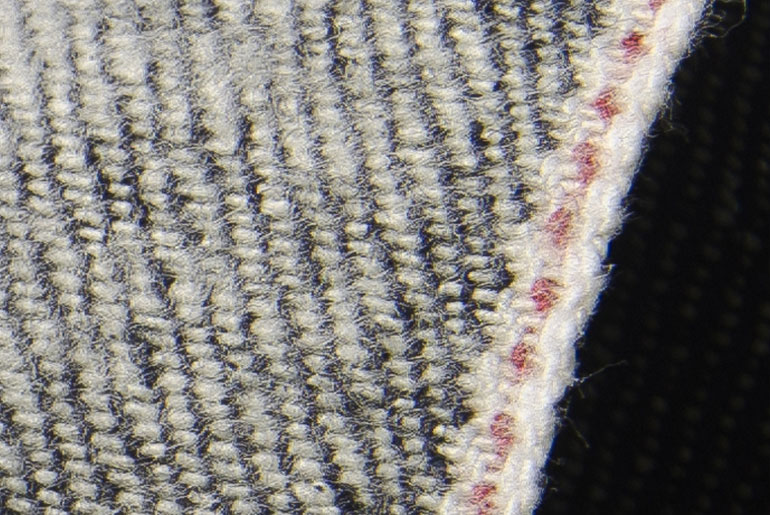
When a denim garment succeeds or fails visually, the reason is rarely the pattern alone. Long before cutting or sewing begins, the outcome is already influenced—often decided—by fabric construction. Two garments can share the same pattern block, yet one holds a crisp, tailored line while the other collapses or drapes softly. The difference lies in how the denim itself is built.
Tailored fits demand precision and resistance to distortion. Relaxed silhouettes demand flow, tolerance, and ease. These needs are not stylistic preferences; they are structural requirements. Construction—not just pattern—determines whether a silhouette stays sharp or relaxes naturally.
Silhouette success is built into the fabric before it’s sewn.
Construction Choices That Shape the Garment
Denim construction is a combination of yarn choice, yarn twist, fabric density, weave structure, and stretch integration. Each variable influences how fabric behaves under gravity, movement, and repeated wear.
When designers push a silhouette in one direction—tailored or relaxed—the construction must support that intent. Ignoring this relationship often leads to garments that look correct on the hanger but fail on the body.
Tailored Fits: Control, Precision, and Resistance
Tailored denim silhouettes include slim or straight-leg jeans, structured denim jackets, fitted skirts, and any garment where line clarity matters. These designs rely on the fabric to hold shape, resist sagging, and maintain visual tension.
To achieve this, tailored denim constructions typically share several characteristics.
Common construction traits include:
- Higher picks per inch (PPI) to increase fabric density
- Balanced or right-hand twill weaves for structural stability
- Low or moderate stretch to avoid silhouette drift
- Tighter yarn twist for firmness and strength
| Construction Feature | Benefit for Tailored Fits |
|---|---|
| High fabric density | Crisp lines and edge definition |
| Right-hand twill | Abrasion resistance and stability |
| Low stretch | Shape retention over time |
| Firm handfeel | Clean, controlled drape |
Higher density fabrics resist collapse. They support vertical lines, maintain seam definition, and prevent garments from looking “washed out” after wear. This is particularly important in slim silhouettes, where even small distortions are visible.
Right-hand twill is commonly favored in tailored applications because it produces a slightly firmer surface and better abrasion resistance. Over time, it softens gradually without losing structural integrity.
Yarn Twist and Its Role in Tailored Denim
Yarn twist is often overlooked in silhouette discussions, but it plays a critical role. Tighter yarn twist increases yarn strength and reduces surface fuzz, resulting in:
- Sharper fabric appearance
- Better resistance to deformation
- Slower, more controlled softening
In tailored denim, excessive softness at the yarn level can undermine the garment’s ability to hold shape. A firm yarn supports clean tailoring, especially in garments with darts, seams, or structured panels.
Stretch in Tailored Silhouettes: Minimal, Not Absent
Tailored denim does not necessarily mean zero stretch. In some cases, low stretch—typically around 0.5–1% elastane—can improve comfort without sacrificing precision. The key is restraint.
Low stretch allows:
- Minor movement tolerance
- Reduced stress at seams
- Preservation of silhouette geometry
Excess stretch, however, introduces instability. In tailored garments, high stretch can blur edges, soften seams, and lead to gradual silhouette loss. For this reason, stretch is treated as a support feature, not a defining one.
Relaxed Silhouettes: Flow, Forgiveness, and Ease
Relaxed denim silhouettes—wide-leg pants, oversized jackets, loose shirts, and many unisex styles—operate under a different logic. Here, comfort, movement, and visual softness matter more than line sharpness.
Relaxed fits benefit from constructions that allow the fabric to respond to gravity and motion rather than resist them.
Preferred construction traits include:
- Medium fabric density
- Broken twill or left-hand twill weaves
- Softer yarn twist
- Optional low stretch for tolerance
| Construction Feature | Benefit for Relaxed Fits |
|---|---|
| Lower to medium density | Improved drape and fluidity |
| Broken twill | Reduced leg twist and visual tension |
| Softer yarn twist | Comfort and surface softness |
| Light stretch | Movement tolerance without cling |
Lower density allows the fabric to fall naturally, creating volume without stiffness. This is particularly important in wide-leg or oversized designs, where excessive rigidity can make garments feel bulky or restrictive.
Weave Choice and Its Impact on Relaxed Denim
Broken twill is frequently used in relaxed silhouettes because it reduces leg twisting and distributes stress more evenly across the fabric. This contributes to a calmer visual appearance and a more forgiving drape.
Left-hand twill is also popular in relaxed denim. It tends to feel softer sooner and develops a smoother surface over time. While it may sacrifice some abrasion resistance, it enhances comfort and ease—qualities that align well with relaxed designs.
Yarn Softness and Perceived Comfort
Softer yarn twist increases surface pliability, allowing the fabric to bend and flow more easily. In relaxed silhouettes, this softness supports:
- Comfortable layering
- Natural folding and creasing
- Reduced pressure at contact points
However, too little twist can lead to weak yarns and premature wear. Successful relaxed denim balances softness with sufficient strength to survive repeated washing and use.
Stretch in Relaxed Fits: Optional, Not Essential
Unlike tailored silhouettes, relaxed fits do not rely heavily on stretch to achieve comfort. Volume and ease are often built into the pattern itself. When stretch is used, it is typically minimal—around 1% elastane—to add tolerance rather than elasticity.
Overstretching a relaxed silhouette can create unintended effects:
- Excessive sagging
- Loss of shape after wear
- A “limp” appearance
In relaxed designs, stretch should support movement without altering the garment’s visual intent.
The Danger of Mismatched Construction
One of the most common denim development mistakes is pairing the wrong construction with the desired silhouette.
Using relaxed denim constructions for tailored designs can lead to:
- Collapsing seams
- Blurred edges and weak lines
- Inconsistent fit after washing
The fabric simply lacks the resistance needed to hold a precise shape.
Conversely, using overly rigid, high-density denim for relaxed silhouettes can result in garments that feel heavy, stiff, and uninviting. Instead of flowing, the fabric fights the silhouette, making the design look forced rather than effortless.
Fit Masking and Tolerance in Relaxed Silhouettes
Relaxed silhouettes naturally mask minor fit variation. This makes them particularly suitable for unisex collections or size-flexible programs. Construction choices that enhance forgiveness—medium density, softer yarns, stable weaves—support this tolerance.
Tailored silhouettes, by contrast, expose even small inconsistencies. This is why construction precision matters more as silhouettes become sharper.
Washing and Aging Behavior by Construction Type
Construction also affects how denim evolves after washing and wear.
- High-density tailored denim tends to age slowly, maintaining structure longer
- Softer, relaxed denim softens quickly and develops a lived-in appearance sooner
Neither outcome is superior. They simply reflect different aesthetic goals. Problems arise when aging behavior contradicts silhouette intent—such as a tailored garment losing definition too quickly.
A Development Insight
A unisex denim overshirt was initially developed using a rigid men’s denim construction with high density and firm yarns. While durability was excellent, wear testing revealed an issue: on smaller frames, the garment looked stiff and boxy, resisting natural drape.
The solution was not changing the pattern, but adjusting the construction. Switching to a broken-twill denim with slightly lower density preserved durability while improving drape and comfort across a wider range of body types. The silhouette finally behaved as intended.
Fabric Before Pattern: A Practical Rule
Experienced denim developers often follow a simple rule: decide how the garment should move before choosing the pattern. Construction defines movement potential. Pattern refines it.
When construction and silhouette intent are aligned, garments require fewer corrective adjustments downstream. When they are mismatched, no amount of pattern tweaking fully solves the problem.
Manufacturing and Sourcing Implications
From a sourcing perspective, this alignment affects:
- Fabric selection and mill capability
- Testing priorities (drape, recovery, distortion)
- Risk of returns or fit complaints
Tailored programs demand tighter control over density, yarn consistency, and recovery. Relaxed programs allow more variation but still require balance to avoid instability.
Tailored and relaxed denim silhouettes succeed for opposite reasons. Tailored fits depend on control, density, and resistance to distortion. Relaxed silhouettes depend on flow, softness, and tolerance.
These outcomes are not achieved through pattern alone. They are engineered into the fabric through construction choices made at the mill. When denim construction matches silhouette intent, garments look right, feel right, and age as expected.
In denim development, the silhouette does not start at the sewing machine. It starts in the fabric.
What Role Does Fiber Composition Play Across Men’s, Women’s, and Unisex Denim Designs?
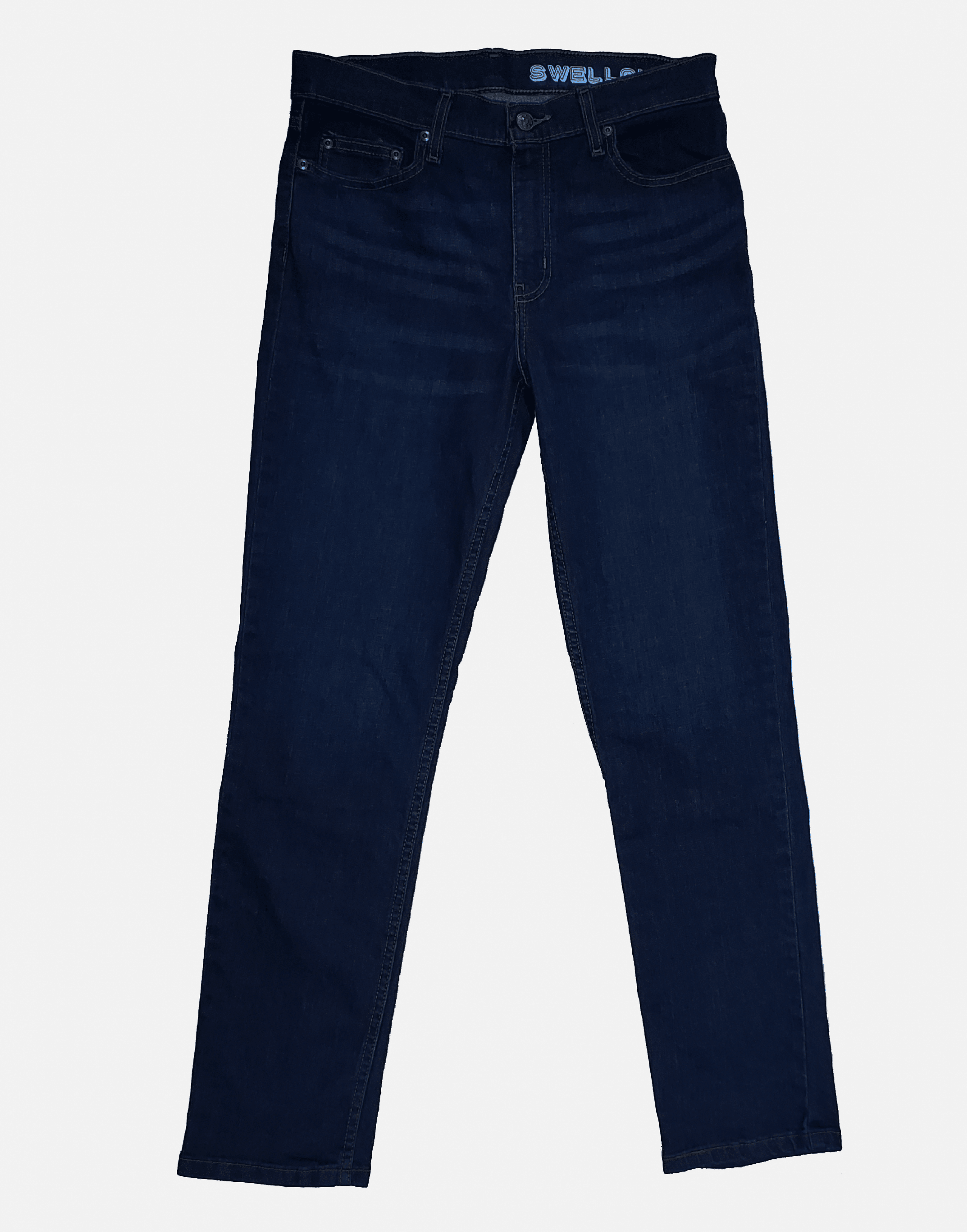
Fiber composition is one of the quietest yet most decisive factors in denim design. Two garments may share the same cut, wash, and weight, but if their fiber compositions differ, they will behave differently on the body. Stretch, recovery, breathability, aging, and long-term shape retention are all governed at the fiber level. This is why men’s, women’s, and unisex denim designs—though visually similar—often rely on distinct fiber strategies.
Men’s denim generally favors cotton-dominant constructions to preserve authenticity and wear life. Women’s denim incorporates elastane to meet higher demands for fit precision and comfort. Unisex denim sits between these approaches, balancing stability with inclusivity across body types.
Fiber blends quietly define who a garment works for—and who it doesn’t.
How Fibers Shape Denim Behavior
Before pattern grading, before wash development, and long before a garment reaches a fitting room, fiber composition sets the rules of engagement. It determines:
- How easily the fabric stretches during movement
- Whether it returns to shape after wear
- How breathable it feels in daily use
- How it fades, softens, and evolves over time
Because men’s, women’s, and unisex garments are worn differently and judged by different standards, the same fiber logic cannot be applied universally. Successful denim programs adapt fiber composition to how bodies move and how garments are expected to perform, not to labels alone.
Common Fiber Compositions by Collection Type
| Collection Type | Typical Fiber Composition |
|---|---|
| Men’s | 100% cotton or 99/1 cotton–elastane |
| Women’s | 97–98% cotton + elastane |
| Unisex | 98–99% cotton + low elastane |
These compositions are not arbitrary. Each reflects a specific balance between structure, comfort, and tolerance for variation.
Cotton: The Structural and Cultural Foundation
Cotton remains the foundation of all denim categories because it delivers qualities no synthetic fiber can fully replicate.
Cotton provides:
- High breathability for daily comfort
- Strong affinity with indigo dyes, enabling rich fades
- A natural aging process that reflects wear patterns
- A tactile authenticity closely associated with “real denim”
At the same time, cotton has limitations:
- It swells and relaxes when wet, contributing to shrinkage
- It stretches mechanically but recovers poorly
- It requires break-in before reaching peak comfort
These characteristics are not flaws; they are trade-offs. In men’s denim, especially in straight or relaxed silhouettes, these trade-offs are often acceptable—or even desirable. The garment relies on cut and structure rather than elasticity to provide comfort.
This is why 100% cotton denim performs best where rigidity and authenticity are valued, and where minor fit variation is tolerated.
Fiber Composition in Men’s Denim: Stability and Wear Life
Men’s denim designs often prioritize:
- Long-term durability
- Resistance to distortion
- A structured appearance over time
As a result, many men’s collections use either 100% cotton or blends with very low elastane content, typically no more than 1%.
A 99/1 cotton–elastane blend may be introduced to:
- Reduce stress at seams
- Provide slight movement tolerance
- Improve comfort without obvious stretch
However, elastane is treated cautiously. Excess elasticity in men’s denim can undermine the garment’s visual authority, making it appear less structured or overly casual.
In practice, fiber composition in men’s denim supports wear life and aging character more than immediate comfort.
Elastane: A Precision Tool, Not a Filler
Elastane is the most influential performance fiber in denim, but its role differs sharply across collections. It should be viewed as a precision tool, not a default additive.
Elastane improves:
- Comfort during movement
- Fit forgiveness across body variation
- Shape recovery after sitting or bending
| Elastane Content | Typical Effect in Denim |
|---|---|
| 0–0.5% | Minimal stretch, structural support |
| 1–1.5% | Subtle comfort and improved tolerance |
| 2–3% | High adaptability and body contouring |
In women’s denim, elastane becomes essential rather than optional. Fitted silhouettes, varied rises, and closer contact with the body all demand elastic recovery to maintain shape.
Fiber Composition in Women’s Denim: Precision and Recovery
Women’s denim is judged less forgivingly. Small distortions—waist gaping, knee bagging, seat sagging—are quickly noticed and often lead to dissatisfaction.
To manage these risks, women’s denim commonly uses:
- 97–98% cotton
- 2–3% elastane
This range allows the fabric to stretch comfortably while maintaining sufficient recovery to preserve silhouette. In some cases, regenerated fibers such as lyocell or TENCEL™ are added to soften handfeel or improve drape, but elastane remains the key driver of fit performance.
The critical factor is not stretch alone, but recovery over repeated wear. Poorly engineered elastane blends may feel excellent initially but degrade quickly, leading to loss of shape. This is why women’s denim development places heavy emphasis on recovery testing and wash simulation.
The Risk of Overusing Elastane
While elastane improves comfort and fit, excessive use introduces problems:
- Flattened surface texture
- Reduced abrasion resistance
- Faster fatigue under heat and mechanical stress
High elastane content can also dull fade contrast, reducing the visual depth many associate with denim. For this reason, even in women’s collections, elastane levels are carefully managed rather than maximized.
Polyester and Other Blended Fibers: Stability Over Character
Polyester and similar fibers are sometimes introduced to enhance specific performance attributes, particularly in unisex or utility-focused designs.
Polyester increases:
- Dimensional stability
- Tear and abrasion resistance
- Color retention through repeated washing
However, it also reduces:
- Breathability
- Natural indigo fading
- Tactile warmth
Because of these trade-offs, polyester blends are used selectively. In lifestyle-focused men’s and women’s denim, they are often limited or avoided. In unisex, workwear, or high-rotation garments, they can play a valuable role where performance outweighs aesthetic aging.
Fiber Composition in Unisex Denim: Balance and Inclusion
Unisex denim presents the most complex fiber challenge. These garments must work across a wide range of body shapes without relying heavily on gender-specific tailoring or aggressive stretch.
As a result, unisex denim typically favors:
- High cotton content (98–99%)
- Low elastane (around 1%) or none
- Stable fabric constructions
This approach provides enough tolerance for movement without introducing instability. Too much elastane can cause garments to lose structure on larger frames, while too little can make them feel restrictive on smaller ones.
A Real-World Example
A unisex denim pant was initially developed using a women’s stretch composition with 2.5% elastane. Early feedback praised comfort, but wear testing revealed a problem: on larger frames, the fabric lacked resistance, leading to seat sagging and silhouette collapse.
Rather than changing the pattern, the fiber composition was adjusted. Reducing elastane content to 1% restored structural balance while maintaining sufficient comfort. The garment became more inclusive—not by adding stretch, but by controlling it.
Fiber Composition as a Fit Strategy
Across all collections, fiber composition acts as a silent fit strategy. It determines whether fit issues are absorbed by the fabric or exposed at the seam and pattern level.
- Men’s denim relies on structure and cut to manage fit
- Women’s denim relies on elasticity and recovery
- Unisex denim relies on balance and tolerance
Misaligning fiber composition with these strategies often leads to downstream problems that pattern adjustments alone cannot fix.
Aging and Visual Expectations by Collection
Fiber composition also shapes how denim ages, which matters differently across categories.
- Men’s denim often celebrates visible wear and high-contrast fading
- Women’s denim prioritizes appearance retention and smoothness
- Unisex denim aims for controlled, neutral aging
Cotton-dominant fabrics age expressively. Elastane and polyester quiet that expression. Neither outcome is inherently better, but each must align with brand intent and customer expectation.
Manufacturing and Sourcing Implications
From a sourcing perspective, different fiber compositions require different controls.
- Men’s denim programs emphasize yarn strength and abrasion testing
- Women’s denim programs emphasize stretch and recovery testing
- Unisex programs emphasize consistency and tolerance across sizes
Clear fiber specifications and performance benchmarks are essential to keep these programs aligned over time.
Fiber composition is not simply about making denim softer or stretchier. It is about controlling how the garment interacts with different bodies over time.
Men’s denim leans on cotton for authenticity and wear life. Women’s denim relies on elastane for precision and comfort. Unisex denim balances both to remain inclusive without instability.
When fiber choices align with how garments are actually worn, denim performs quietly and effectively. When they do not, problems emerge that no amount of styling or pattern adjustment can fully solve.
Which Denim Constructions Best Support Tailored Fits Versus Relaxed Silhouettes?

In denim design, silhouette success is rarely decided at the pattern table. Long before a garment is cut, stitched, or washed, its fate is largely determined by fabric construction. Two jeans may share the same pattern, rise, and leg opening, yet behave completely differently once worn. One holds crisp lines and sharp seams; the other collapses softly and flows with movement. The difference is not accidental—it is engineered into the denim itself.
Tailored fits demand control, resistance, and predictability. Relaxed silhouettes require softness, forgiveness, and natural drape. These opposing needs cannot be solved by pattern alone. Construction—not just design intent—determines whether a silhouette stays sharp or relaxes naturally over time.
Silhouette success is built into the fabric before it’s sewn.
Construction Choices That Shape the Garment
Denim construction is the combined result of multiple technical decisions: yarn type, yarn twist, fabric density, weave structure, and stretch integration. Each variable influences how the fabric responds to gravity, body movement, washing, and long-term wear.
When these elements align with the intended silhouette, garments feel intuitive and stable. When they are mismatched, designers often attempt to compensate through pattern tweaks, reinforcements, or heavier washes—solutions that rarely address the root cause.
Understanding which constructions suit tailored versus relaxed silhouettes allows manufacturers and buyers to make preventive decisions rather than corrective ones.
Tailored Fits: Control and Precision
Tailored denim silhouettes include slim and straight-leg jeans, structured jackets, fitted skirts, and sharp overshirts. These garments rely on line clarity. Seams must stay crisp, panels must resist collapse, and the garment must hold its shape through repeated wear.
To achieve this, tailored denim constructions emphasize stability and resistance.
Common construction traits include:
- Higher picks per inch (PPI), increasing fabric density
- Balanced twill or right-hand twill structures
- Low or moderate stretch, if any
- Tighter yarn twist for strength and firmness
| Construction Feature | Tailored Fit Benefit |
|---|---|
| High density | Maintains crisp lines and seam definition |
| Right-hand twill | Strong abrasion resistance and stability |
| Low stretch | Preserves silhouette geometry |
| Firm handfeel | Clean, structured drape |
High-density fabrics provide internal resistance. They prevent panels from sagging, seams from spreading, and hems from losing shape. This resistance is especially important in slim or straight silhouettes, where even small distortions are visually obvious.
Why Right-Hand Twill Dominates Tailored Denim
Right-hand twill has long been associated with classic, structured denim. Its weave direction produces a slightly firmer surface and greater resistance to abrasion. Over time, it softens gradually while maintaining integrity.
For tailored garments, this behavior is ideal. The fabric evolves without collapsing. Creases develop slowly, edges remain defined, and the silhouette stays intentional rather than accidental.
Balanced twill constructions are also used in tailored fits when a more neutral drape is desired, but the principle remains the same: structure first, softness later.
Yarn Twist and Structural Discipline
Yarn twist plays a critical role in tailored denim, though it is often overlooked. Tighter yarn twist increases yarn cohesion and reduces surface fuzz, leading to:
- Sharper visual appearance
- Improved resistance to distortion
- More predictable aging
In tailored silhouettes, overly soft or loosely twisted yarns can undermine structure, causing garments to lose definition prematurely. A firmer yarn supports precision, especially in areas like plackets, collars, and seam intersections.
Stretch in Tailored Denim: Minimal, Not Absent
Tailored does not always mean rigid. In some applications, a small amount of stretch—typically 0.5–1% elastane—can improve comfort without compromising shape.
Low stretch can:
- Reduce seam stress during movement
- Improve wear comfort in fitted areas
- Maintain overall silhouette integrity
However, stretch must be carefully controlled. Excess elasticity introduces movement where resistance is required, leading to blurred lines and gradual silhouette drift. In tailored denim, stretch is a supporting element, not a defining one.
Relaxed Silhouettes: Flow, Forgiveness, and Ease
Relaxed denim silhouettes operate under a different logic. Wide-leg pants, oversized jackets, loose shirts, and many unisex designs prioritize ease of movement and visual softness over precision.
These garments are meant to drape, fold, and respond to gravity. Their success depends on the fabric’s ability to yield gracefully rather than resist.
Preferred construction traits include:
- Medium fabric density
- Broken twill or left-hand twill weaves
- Softer yarn twist
- Optional low stretch for tolerance
| Construction Feature | Relaxed Fit Benefit |
|---|---|
| Medium to lower density | Allows natural drape and flow |
| Broken twill | Minimizes leg twist and visual tension |
| Softer yarn twist | Enhances comfort and pliability |
| Light stretch | Adds movement tolerance without cling |
Lower density fabrics bend more easily under their own weight, creating volume without stiffness. This is especially important in oversized or wide silhouettes, where excessive rigidity can make garments feel heavy or awkward.
Broken Twill and Left-Hand Twill in Relaxed Designs
Broken twill is frequently chosen for relaxed denim because it disrupts the diagonal stress lines found in traditional twills. This reduces leg twisting and creates a calmer, more balanced drape.
Left-hand twill is also popular in relaxed silhouettes. It tends to feel softer sooner and develops a smoother surface with wear. While it may sacrifice some abrasion resistance, it enhances comfort and fluidity—qualities central to relaxed design intent.
Yarn Softness and Tactile Experience
Softer yarn twist allows fibers to flex more easily, increasing surface pliability. In relaxed silhouettes, this softness supports:
- Natural folding and creasing
- Comfortable layering
- Reduced resistance during movement
However, softness must be balanced with strength. Excessively soft yarns can weaken durability and lead to premature wear. Successful relaxed denim finds a middle ground where softness enhances drape without undermining longevity.
Stretch in Relaxed Fits: Optional, Not Essential
Relaxed silhouettes often achieve comfort through volume rather than elasticity. Pattern ease reduces the need for stretch, making elastane optional rather than essential.
When used, stretch is typically limited to around 1% elastane, providing tolerance without altering the garment’s visual language. Overuse of stretch in relaxed designs can create unintended effects, such as sagging or a limp appearance that conflicts with the intended silhouette.
The Danger of Mismatched Construction
One of the most common denim development mistakes is pairing the wrong construction with the intended silhouette.
Using relaxed denim constructions for tailored designs often leads to:
- Collapsing seams
- Blurred edges and weak lines
- Inconsistent fit after washing
The fabric lacks the internal resistance required to support precision.
Conversely, using overly rigid, high-density denim for relaxed silhouettes can make garments feel restrictive and uninviting. Instead of flowing, the fabric fights the design, resulting in stiffness and discomfort.
Fit Masking and Tolerance in Relaxed Silhouettes
Relaxed silhouettes naturally mask minor fit variation. This makes them well suited to unisex collections or size-flexible programs. Medium-density fabrics with softer yarns and stable weaves increase tolerance, allowing garments to work across a broader range of bodies.
Tailored silhouettes offer no such forgiveness. They expose even small inconsistencies, making construction discipline far more critical.
Washing and Aging Behavior by Construction Type
Construction choices also determine how denim evolves over time.
- High-density tailored denim ages slowly, maintaining structure and line definition
- Softer, relaxed denim softens quickly, developing a lived-in appearance
Problems arise when aging behavior contradicts silhouette intent—such as a tailored garment losing definition too early or a relaxed garment becoming shapeless.
A Development Insight
A unisex denim overshirt was initially produced using a rigid men’s denim construction with high density and firm yarns. While durability was excellent, wear testing revealed an issue: on smaller frames, the garment appeared stiff and boxy, resisting natural drape.
The solution was not altering the pattern. Instead, the construction was adjusted. Switching to a broken-twill denim with slightly lower density preserved durability while improving drape and comfort across a wider range of body types. The silhouette finally behaved as intended.
Fabric Before Pattern: A Practical Rule
Experienced denim developers often follow a simple principle: decide how the garment should move before finalizing the pattern. Fabric construction defines movement potential; pattern refines it.
When construction and silhouette intent are aligned, garments require fewer downstream corrections. When they are not, no amount of pattern adjustment fully compensates.
Manufacturing and Sourcing Implications
From a sourcing perspective, construction alignment affects:
- Fabric selection and mill capabilities
- Testing priorities such as drape, distortion, and recovery
- Risk of returns or fit complaints
Tailored programs demand tight control over density, yarn consistency, and recovery. Relaxed programs allow more variation but still require balance to avoid instability.
Tailored and relaxed denim silhouettes succeed for opposite reasons. Tailored fits rely on control, density, and resistance to distortion. Relaxed silhouettes rely on softness, flow, and tolerance.
These outcomes are not achieved at the sewing stage. They are engineered at the fabric level through construction choices made long before production begins. When denim construction matches silhouette intent, garments look right, feel right, and age as expected.
In denim development, the silhouette does not start with the pattern. It starts with the fabric.
What Role Does Fiber Composition Play Across Men’s, Women’s, and Unisex Denim Designs?

Fiber composition is one of the most understated yet influential decisions in denim development. Long before a garment reaches a fitting room, the fibers inside the fabric have already determined how it will stretch, recover, breathe, and age. While weight, wash, and construction are highly visible, fiber blends quietly decide who a garment works for—and who it doesn’t.
Across men’s, women’s, and unisex denim designs, fiber composition is rarely accidental. Each category faces different fit expectations, movement patterns, and tolerance for variation. As a result, the same denim formula cannot perform equally well across all collections. Men’s denim tends to rely on cotton-dominant compositions for authenticity and wear life. Women’s denim depends on elastane for fit precision and comfort. Unisex denim balances both approaches to remain inclusive across body types.
Fiber composition governs behavior. Everything else builds on top of it.
How Fibers Shape Denim Behavior
At the fiber level, denim performance is defined by four core behaviors:
- Stretch: how much the fabric gives during movement
- Recovery: how well it returns to its original shape
- Breathability: how it manages heat and moisture
- Aging: how it fades, softens, and evolves with wear
These behaviors interact differently depending on silhouette and wearer expectations. A fabric that performs beautifully in a fitted women’s jean may feel unstable in a unisex pant. A rigid cotton denim that excels in a men’s straight-leg style may feel restrictive in a body-contoured design.
Fiber composition is the mechanism used to tune these behaviors for different collections.
Common Fiber Compositions by Collection Type
| Collection Type | Typical Fiber Composition |
|---|---|
| Men’s | 100% cotton or 99/1 cotton–elastane |
| Women’s | 97–98% cotton + elastane |
| Unisex | 98–99% cotton + low elastane |
These percentages reflect distinct priorities in movement, recovery, and long-term shape retention. Even small changes—one or two percentage points—can significantly alter how a garment behaves in wear.
Cotton: The Structural and Cultural Foundation
Cotton remains the foundation of all denim categories because it delivers a unique combination of performance and perception. No other fiber replicates cotton’s balance of breathability, tactile warmth, and visual depth when dyed with indigo.
Cotton contributes:
- Natural breathability that supports daily comfort
- Strong affinity with indigo dye, enabling expressive fades
- A progressive aging process that reflects wear patterns
- A handfeel closely associated with authentic denim
However, cotton also imposes limits:
- It swells and relaxes when wet, contributing to shrinkage
- It stretches mechanically but recovers poorly
- It requires break-in before reaching peak comfort
These characteristics shape where cotton performs best. Rigid or near-rigid cotton denim excels in looser or straight silhouettes, where comfort is achieved through cut rather than elasticity. In these contexts, cotton’s limitations are manageable, and its strengths dominate the experience.
Fiber Composition in Men’s Denim: Stability and Wear Life
Men’s denim designs often prioritize longevity, structure, and visible aging. Many men’s silhouettes—straight, relaxed, or classic taper—do not rely on fabric stretch for comfort. Instead, they rely on ease built into the pattern.
For this reason, men’s denim commonly uses:
- 100% cotton for heritage or workwear-inspired styles
- 99/1 cotton–elastane blends for subtle comfort support
Low elastane levels serve a specific purpose. At around 1%, elastane can:
- Reduce stress at seams during movement
- Improve sitting comfort
- Slightly enhance fit tolerance without obvious stretch
What it does not do is fundamentally change the fabric’s character. The denim still behaves as cotton first, elastane second.
Excess elastane in men’s denim often undermines visual authority. Fabrics can appear overly elastic, lose vertical stability, or feel inconsistent with expectations of durability. As a result, elastane is treated cautiously in men’s collections.
Elastane: A Precision Tool, Not a Filler
Elastane is the most powerful performance modifier in denim, but also the easiest to misuse. Its impact is disproportionate to its percentage, which is why it must be applied intentionally.
Elastane improves:
- Comfort during dynamic movement
- Fit forgiveness across body variation
- Recovery after sitting, bending, or walking
| Elastane Content | Typical Effect in Denim |
|---|---|
| 0–0.5% | Minimal stretch, structural support |
| 1–1.5% | Subtle comfort and tolerance |
| 2–3% | High adaptability and body contouring |
In women’s denim, elastane is essential rather than optional. Fitted silhouettes, varied rises, and closer body contact demand elastic recovery to maintain shape and comfort.
Fiber Composition in Women’s Denim: Precision and Recovery
Women’s denim is judged with less tolerance for deviation. Small distortions—waist gaping, knee bagging, seat sagging—are quickly noticed and often lead to dissatisfaction.
To manage these risks, women’s denim commonly relies on:
- 97–98% cotton
- 2–3% elastane
This range allows denim to stretch easily while maintaining enough recovery to preserve silhouette. In some cases, regenerated fibers such as lyocell or TENCEL™ are added to improve softness and drape, but elastane remains the key driver of fit performance.
The critical factor is not stretch alone, but how consistently the fabric recovers over time. Poorly engineered elastane blends may feel exceptional on first wear but degrade quickly, leading to loss of shape. This is why women’s denim development places strong emphasis on recovery testing and wash simulation.
The Risk of Overusing Elastane
While elastane solves many fit problems, excessive use introduces new ones:
- Flattened surface texture
- Reduced abrasion resistance
- Faster fiber fatigue under heat and mechanical stress
High elastane content can also soften fade contrast, muting the visual depth traditionally associated with denim. For this reason, even in women’s collections, elastane levels are optimized rather than maximized.
Polyester and Other Blended Fibers: Stability Over Character
Polyester and similar synthetic fibers are sometimes introduced to address specific performance needs, particularly in unisex or utility-focused designs.
Polyester increases:
- Dimensional stability through washing
- Tear and abrasion resistance
- Color retention over time
At the same time, it reduces:
- Breathability
- Natural indigo fading
- Tactile warmth
Because of these trade-offs, polyester blends are used selectively. In lifestyle-oriented men’s and women’s denim, they are often minimized. In unisex, workwear, or high-rotation garments, they can be valuable where durability and consistency outweigh aesthetic aging.
Fiber Composition in Unisex Denim: Balance and Inclusion
Unisex denim presents the most complex fiber challenge. These garments must perform across a wide range of body shapes without relying on gender-specific tailoring or aggressive stretch formulas.
As a result, unisex denim typically favors:
- High cotton content (98–99%)
- Low elastane levels (around 1%) or none
- Stable constructions that resist distortion
This balance provides tolerance without instability. Too much elastane can cause garments to lose structure on larger frames. Too little can make them feel restrictive on smaller ones.
Unisex denim succeeds not by maximizing stretch, but by controlling it carefully.
A Real-World Example
A unisex denim pant was initially developed using a women’s stretch composition with 2.5% elastane. Early wear testing praised comfort, but a pattern emerged: on larger frames, the fabric lacked resistance, leading to seat sagging and silhouette collapse.
Rather than redesigning the pattern, the fiber composition was adjusted. Reducing elastane content to 1% restored structural balance while maintaining sufficient comfort. The garment became more inclusive—not by adding stretch, but by limiting it.
Fiber Composition as a Fit Strategy
Across all collections, fiber composition acts as a silent fit strategy.
- Men’s denim relies on structure and cut to manage fit
- Women’s denim relies on elasticity and recovery
- Unisex denim relies on balance and tolerance
When fiber composition aligns with these strategies, garments perform predictably. When it does not, problems surface that pattern adjustments alone cannot resolve.
Aging Expectations by Collection
Fiber composition also shapes how denim ages, which matters differently across categories.
- Men’s denim often celebrates visible wear and high-contrast fading
- Women’s denim prioritizes appearance retention and smoothness
- Unisex denim aims for controlled, neutral aging
Cotton-dominant fabrics age expressively. Elastane and polyester quiet that expression. Neither outcome is inherently superior, but each must align with brand intent and customer expectation.
Manufacturing and Sourcing Implications
From a sourcing perspective, different fiber compositions demand different controls.
- Men’s denim programs emphasize yarn strength and abrasion resistance
- Women’s denim programs emphasize stretch consistency and recovery
- Unisex programs emphasize stability across size ranges
Clear fiber specifications and performance benchmarks are essential to maintain consistency over time.
Fiber composition is not about softness alone. It is about controlling how denim behaves across different bodies, movements, and use patterns.
Men’s denim leans on cotton for authenticity and wear life. Women’s denim relies on elastane for precision and comfort. Unisex denim balances both to remain inclusive without instability.
When fiber choices reflect how garments are actually worn, denim performs quietly and reliably. When they do not, issues emerge that no amount of styling or pattern correction can fully fix.
What Common Fabric Selection Challenges Arise When Developing Multi-Gender Denim Collections?
Developing multi-gender denim collections exposes tensions that single-gender design can often ignore. When one fabric is expected to perform across a wide range of bodies, movements, and style expectations, every weakness in material choice becomes visible. Fit issues that might be solved quietly through gender-specific patterning or fabric variation suddenly surface as systemic problems.
Multi-gender denim is not simply men’s and women’s denim merged together. It is its own category, with its own risks. Fabric selection sits at the center of those risks, because fabric behavior amplifies—or mitigates—differences in body shape, movement, and wear patterns. What works beautifully for one body type may fail noticeably on another.
Multi-gender design reveals what single-gender design can hide.
Where Multi-Gender Denim Often Struggles
The core challenge in multi-gender denim is not aesthetics. It is variance. Variance in bodies, variance in movement, variance in tolerance for discomfort, and variance in expectations around fit. Fabric selection determines whether that variance is absorbed gracefully or exposed harshly.
Challenge 1: One Denim, Many Bodies
In a multi-gender collection, a single denim fabric must perform across a broad spectrum of physical characteristics. Hip-to-waist ratios, thigh volume, leg curvature, and posture all differ significantly across wearers. Movement patterns also vary: how people sit, stand, walk, and shift weight places different stresses on the fabric.
A denim fabric that is too extreme in any direction reacts poorly to this diversity.
| Fabric Trait | Risk if Unbalanced |
|---|---|
| Too rigid | Restrictive fit, pressure points |
| Too stretchy | Silhouette collapse, sagging |
| Too light | Insufficient structure, distortion |
| Too heavy | Comfort complaints, fatigue |
Highly rigid denim may feel supportive on some bodies but restrictive on others, particularly in seated positions. Highly elastic denim may feel forgiving initially but lose shape quickly on larger or heavier frames. Lightweight denim can drape nicely but struggle to maintain structure across sizes. Heavy denim can feel reassuring on some wearers and exhausting on others.
Balanced denim reduces these extreme reactions by moderating fabric response. Instead of amplifying differences between bodies, it dampens them.
Why Extremes Fail Faster in Multi-Gender Design
Single-gender collections can tolerate more extreme fabric choices because patterning and grading are optimized for a narrower range of bodies. Multi-gender collections remove that safety net. The fabric must absorb more variation because the pattern cannot do all the work.
This is why fabrics that perform well in men’s or women’s collections often fail when transferred directly into unisex or multi-gender programs without adjustment.
Challenge 2: Visual Consistency Versus Fit Adaptability
Multi-gender collections often aim for a unified visual identity. Color, texture, fading, and surface character are expected to look consistent across the line. Using different denims for different fits can undermine this goal.
| Development Approach | Typical Outcome |
|---|---|
| One denim, adjusted patterns | Unified visual language |
| Multiple denims | Visual drift across collection |
When men’s and women’s versions of a garment use different fabrics, subtle differences in color depth, fade behavior, and texture become noticeable—especially after washing and wear. Over time, the collection begins to look fragmented rather than cohesive.
As a result, many brands intentionally choose one core denim fabric and adapt patterns, grading, and ease around it. This approach places more pressure on fabric selection, because the chosen denim must be versatile enough to support multiple silhouettes.
The Risk of Over-Engineering Fabric for Fit
In an attempt to make one denim work for everyone, teams sometimes over-engineer the fabric—adding too much stretch, too many fibers, or too many finishing treatments. While this can improve initial comfort, it often creates long-term problems:
- Reduced visual character
- Faster fatigue under repeated wear
- Loss of structure in looser silhouettes
Multi-gender denim benefits more from moderation than from aggressive performance enhancement.
Challenge 3: Shrinkage and Sizing Alignment
Shrinkage is manageable in single-gender lines because grading and tolerances are tuned to specific bodies. In multi-gender lines, uneven shrinkage can disrupt size relationships across the entire range.
A fabric that shrinks inconsistently:
- Alters rise and inseam relationships
- Breaks size progression logic
- Creates unpredictable fit differences between sizes
This problem is amplified when the same size is worn by different body types. A small amount of unexpected shrinkage may be tolerated by one wearer and unacceptable to another.
Testing shrinkage at the fabric stage, before cutting, becomes critical. Waiting until garments are produced often reveals problems too late, when pattern changes or fabric replacement become costly.
Fabric Stability as a Sizing Tool
In multi-gender denim, fabric stability functions as an extension of sizing logic. Lower, more predictable shrinkage helps maintain alignment between sizes and reduces the need for compensatory grading adjustments.
This is one reason why midweight, low-to-moderate stretch denims are often favored. They offer better dimensional control than rigid cotton denim and more stability than high-stretch fabrics.
Challenge 4: Fabric Behavior Across Different Movements
Multi-gender garments are worn in different ways. Some wearers move frequently, others sit for long periods. Some apply more stress at the hips, others at the knees or seat. Fabric behavior under movement matters more than static fit.
High-stretch fabrics may accommodate movement easily but struggle to recover across repeated stress points. Rigid fabrics may resist deformation but restrict movement, leading to discomfort or avoidance.
Balanced denim aims to:
- Allow movement without relying heavily on elasticity
- Recover shape through structure rather than stretch alone
- Distribute stress across the fabric rather than concentrating it
This balance reduces visible distortion and improves wear satisfaction across body types.
Challenge 5: Development Fatigue and Late-Stage Changes
One of the most costly challenges in multi-gender denim development is iteration fatigue. When fabric issues are discovered late—during fit sessions or wear testing—teams often attempt quick fixes:
- Switching fabric weights
- Adding or removing stretch
- Adjusting finishes to compensate
Each change triggers a cascade of new tests, samples, and approvals. Timelines stretch, budgets inflate, and confidence erodes.
Early, honest fabric testing prevents this cycle.
Testing should include:
- Multi-body wear trials
- Stretch and recovery evaluation
- Shrinkage and distortion checks
- Visual consistency after washing
The goal is not to prove the fabric is perfect, but to understand where it fails—and whether those failures are acceptable.
Why Balanced Denim Is a Strategic Choice
Balanced denim is not neutral denim. It is intentionally designed to avoid extremes. Typical characteristics include:
- Midweight construction (often around 11–13 oz)
- High cotton content with low elastane (around 1%) or none
- Stable weave structures such as balanced or broken twill
- Moderate yarn density and twist
This type of denim does not excel dramatically in any one dimension. Instead, it performs reliably across many.
In multi-gender collections, reliability often matters more than peak performance.
Visual Aging and Brand Perception
Another challenge is how denim ages across different wearers. High-contrast fading may look expressive on some bodies and chaotic on others. Very uniform aging may feel flat or lifeless.
Balanced denim tends to age in a controlled, neutral way. It does not dominate the design narrative, allowing silhouette and styling to take precedence. This is often desirable in multi-gender collections, where visual consistency reinforces brand identity.
A Development Insight
One brand struggled with high return rates on its unisex denim line. The fabric was soft, lightweight, and high-stretch—comfortable on first wear but unstable over time. Larger wearers experienced seat sagging and shape loss, while smaller wearers found the fabric overly elastic.
The solution was counterintuitive. The brand switched to a midweight, low-stretch denim and slightly increased pattern ease. Comfort remained acceptable, but structure improved dramatically. Fit complaints dropped, and development decisions became simpler.
The fabric did less—but that was the point.
Communication Gaps Between Design and Fabric Teams
Multi-gender denim often fails when design intent and fabric behavior are misaligned. Designers may prioritize visual softness or inclusivity language, while fabric teams focus on performance metrics. Without clear alignment, fabrics are chosen that satisfy neither goal fully.
Clear communication around who the garment must work for, not just how it should look, helps guide fabric selection toward practical solutions.
Manufacturing and Sourcing Implications
From a sourcing perspective, multi-gender denim benefits from:
- Fewer fabric SKUs
- More stable, repeatable constructions
- Clear performance benchmarks
Suppliers are better able to deliver consistency when the fabric brief emphasizes balance and tolerance rather than extremes. This also simplifies quality control and reduces batch-to-batch variation.
Multi-Gender Does Not Mean One-Size-Fits-All
A common misconception is that multi-gender design aims for universality. In reality, it aims for acceptability across variation. Fabric selection plays a central role in achieving that goal.
The objective is not to create the most comfortable or most durable denim possible, but the most forgiving one—capable of absorbing differences without breaking the garment’s intent.
Multi-gender denim exposes fabric weaknesses that single-gender programs can often hide. Fit variability, movement differences, shrinkage sensitivity, and visual consistency all converge on fabric behavior.
The most common challenges—restrictiveness, instability, visual drift, and development fatigue—are rarely solved by pattern alone. They are solved by choosing balanced denim constructions early and testing them honestly.
In multi-gender denim, fabric is not a backdrop. It is the mediator between bodies, design intent, and reality. When fabric selection is balanced and intentional, complexity becomes manageable. When it is not, no amount of downstream adjustment fully compensates.
How Should Designers and Buyers Select Denim Fabric Types to Ensure Consistency Across Men’s, Women’s, and Unisex Lines?
Achieving consistency across men’s, women’s, and unisex denim lines is not a matter of copying fabrics from one category to another. It is a matter of intentional alignment. When collections feel cohesive—visually, tactically, and in wear performance—it is because fabric selection was guided by clear performance logic rather than category labels.
Many inconsistencies in denim programs do not come from poor materials, but from fragmented decision-making. One team optimizes for comfort, another for durability, another for heritage character. Without a shared framework, fabrics diverge quietly over time until collections no longer feel related.
Consistency is designed, not assumed.
A Framework for Cross-Collection Denim Selection
Successful multi-category denim programs treat fabric selection as a system. Instead of asking “What denim should men’s use?” or “What stretch do women’s jeans need?”, they ask a more fundamental question: How should denim behave across the brand as a whole?
The answer to that question becomes the foundation for consistent selection across categories.
Step 1: Define Shared Principles Before Selecting Fabric
Before any fabric swatches are reviewed, designers and buyers should align on a small set of shared principles. These principles act as guardrails, ensuring that decisions made for one category do not contradict the identity of another.
Key principles typically include:
- Target handfeel: crisp, firm, balanced, or soft
- Acceptable stretch range: rigid, low-stretch, or stretch-enabled
- Shrinkage tolerance: how much dimensional change is acceptable
- Aging expectation: expressive fading, controlled aging, or appearance retention
These parameters are not technical specifications yet. They are philosophical commitments that shape every technical choice that follows.
For example, a brand that values controlled aging should not allow one category to fade dramatically while another remains visually flat. Likewise, a brand that prioritizes structure should not introduce overly elastic fabrics that undermine silhouette integrity in one line.
Shared principles anchor consistency.
Step 2: Choose a Core Denim, Then Adapt Intelligently
Many of the most cohesive denim brands do not use dozens of unrelated fabrics. Instead, they develop one core denim construction and adapt it thoughtfully across categories.
This approach often includes:
- One base weave structure
- One primary cotton type or blend logic
- One core weight range
From this base, variation is introduced through:
- Minor weight adjustments
- Controlled stretch additions or reductions
- Finishing and wash differences
- Pattern-specific ease
Using a core denim preserves visual identity. Indigo depth, surface texture, and aging behavior remain consistent across the collection, even as garments serve different bodies and fits.
The goal is not uniformity, but family resemblance.
Why One Core Denim Often Works Better Than Many
When multiple denims are used across categories, subtle differences accumulate:
- Slightly different shades of indigo
- Different fading behavior after washing
- Inconsistent surface texture
Over time, these differences fracture the collection’s visual language. Customers may not articulate the problem, but they sense it.
A core denim strategy reduces this risk. It also simplifies sourcing, testing, and quality control—critical advantages for scaling production.
Step 3: Adapt Fabric Behavior, Not Identity
Adapting a core denim does not mean compromising its identity. It means tuning behavior carefully to suit different use cases.
Common adaptation methods include:
- Adding 0.5–1% elastane for women’s or unisex styles
- Slightly reducing fabric density for relaxed silhouettes
- Modifying finishing sequences to soften or stabilize handfeel
The key is restraint. Large deviations in fiber composition or construction often create fabrics that no longer feel related.
For example, moving from rigid cotton denim in men’s styles to high-stretch denim in women’s styles may solve fit issues, but it breaks continuity. A better solution is often low to moderate stretch, combined with pattern adjustments, to preserve a shared fabric language.
Step 4: Test Across Bodies, Not Categories
Traditional denim testing often happens within category silos. Men’s samples are tested on men’s fit models. Women’s samples on women’s models. Unisex samples on a narrow subset of wearers.
This approach misses the core challenge of cross-collection consistency.
To ensure alignment, testing should include:
- Different body shapes and proportions
- Different movement patterns (sitting, walking, bending)
- Repeated wear and wash scenarios
A fabric that performs acceptably across these variables is more likely to scale successfully across categories.
Testing should focus on behavior, not just fit:
- Does the fabric recover after movement?
- Does it distort differently on different bodies?
- Does it age consistently after washing?
Denim that passes these tests tends to reduce downstream surprises.
Step 5: Lock Specifications Early—and Protect Them
Consistency erodes when specifications drift. Even small changes—slightly different elastane content, a new cotton source, a modified finish—can alter fabric behavior enough to break alignment between categories.
To prevent this, designers and buyers should document and protect:
- Approved fabric specifications
- Fiber composition and tolerances
- Construction parameters (density, weave)
- Finishing sequences
- Performance test results
Once a fabric is approved as part of a core program, changes should be intentional and documented—not incidental.
This discipline is especially important across seasons, when staff changes, supplier substitutions, or cost pressures introduce quiet variation.
Step 6: Align Fit Philosophy With Fabric Behavior
Consistency across categories does not mean identical fit. It means coherent fit philosophy.
- Men’s styles may rely more on structure and ease
- Women’s styles may rely more on elasticity and recovery
- Unisex styles may rely on balance and tolerance
Fabric selection should support these philosophies rather than fight them. Problems arise when fabric behavior contradicts fit intent—such as rigid denim in body-hugging designs or high-stretch denim in loose silhouettes.
When fit philosophy and fabric behavior align, collections feel intentional rather than improvised.
Step 7: Prioritize Recovery and Stability Over Initial Comfort
One of the most common mistakes in cross-collection denim selection is overvaluing first-wear comfort. Fabrics that feel exceptional immediately may behave poorly over time, especially across different bodies.
For consistency, buyers should prioritize:
- Recovery after stretch
- Dimensional stability after washing
- Resistance to silhouette collapse
These qualities matter more in unisex and cross-category programs than peak softness or extreme stretch.
Comfort can often be adjusted through finishing and pattern ease. Stability cannot.
Step 8: Use Balanced Denim as a Strategic Default
When uncertainty exists, balanced denim is often the safest starting point. Balanced denim typically features:
- Midweight construction
- High cotton content with low elastane
- Stable weave structures
- Moderate handfeel
This type of denim may not be the most dramatic or specialized, but it adapts well across categories. It absorbs variation rather than amplifying it.
From a risk perspective, balanced denim reduces:
- Fit complaints
- Visual inconsistency
- Development rework
In cross-collection programs, reliability often matters more than optimization.
Why Supplier Partnership Matters
Consistency across men’s, women’s, and unisex lines is difficult to achieve without suppliers who understand denim engineering, not just fabric delivery.
Suppliers who contribute value typically:
- Advise on fiber and construction trade-offs
- Flag risks early in development
- Support testing and performance validation
- Help tune a base fabric rather than replace it
At SzoneierFabrics, denim programs often begin with a shared base construction. Adjustments are made through controlled changes in weight, stretch, and finishing to support each category without fragmenting the collection. This approach reduces trial-and-error cycles and preserves brand cohesion over time.
Avoiding the Trap of Category-Driven Fabric Choices
One of the biggest barriers to consistency is category-driven thinking: assuming men’s, women’s, and unisex lines require entirely different fabrics by default.
In reality, they require different behaviors, not necessarily different materials. Those behaviors can often be achieved through subtle tuning rather than wholesale replacement.
When designers and buyers focus on behavior first, category alignment becomes much easier.
Measuring Success in Cross-Collection Consistency
Consistency is not about sameness. It is about predictability.
A successful cross-collection denim program delivers:
- Familiar handfeel across categories
- Cohesive visual aging
- Predictable fit behavior
- Fewer surprises after washing and wear
Customers may never articulate these qualities, but they feel them. And they reward brands that feel coherent.
Selecting denim fabric types for men’s, women’s, and unisex lines is not a labeling exercise. It is a systems problem.
Consistency comes from defining shared principles, choosing a core fabric logic, testing across real bodies, and locking decisions early. It is reinforced through disciplined documentation and strong supplier collaboration.
When fabric behavior aligns with fit philosophy across categories, collections scale smoothly. When it does not, inconsistency multiplies quietly.
In denim development, consistency is not something you discover at the end of the process. It is something you design from the beginning.
Denim works best when it respects difference
Men’s, women’s, and unisex collections may share a brand language, but they speak to bodies differently. Denim fabric types exist to support those differences—not to erase them.
The most successful collections don’t force one denim to behave unnaturally. They choose fabrics that understand movement, recovery, and structure, then design patterns that let those fabrics do their job.
SzoneierFabrics supports denim development across men’s, women’s, and unisex collections with flexible sampling, technical guidance, and repeatable production control. From early fabric selection to finished performance validation, the goal is simple: denim that works as designed—across every body it’s meant to fit.
If you’re planning a multi-gender denim collection and need support selecting or developing the right denim fabric types, reach out to SzoneierFabrics to begin a custom quotation and sampling discussion.
denim fabric types for men, denim fabric types for women, unisex denim fabric, denim fabric for men’s collections, denim fabric for women’s collections, denim fabric for unisex collections, denim weight and stretch differences, men’s denim fabric selection, women’s denim stretch fabric, unisex denim fabric types, denim fabric construction guide, denim fabric fiber composition, denim fabric washing and finishing, denim fabric for tailored fits, denim fabric for relaxed silhouettes, denim fabric performance by gender, denim fabric shrinkage control, denim fabric sourcing guide, denim fabric development for apparel, denim fabric fit consistency, denim fabric selection criteria, custom denim fabric manufacturer, denim fabric supplier China, denim fabric for jeans design, denim fabric for jackets, denim fabric for unisex apparel, denim fabric performance testing, denim fabric engineering guide,