 Skip to content
Denim Jeans Fabric Types Explained: 100% Cotton vs Stretch Blends
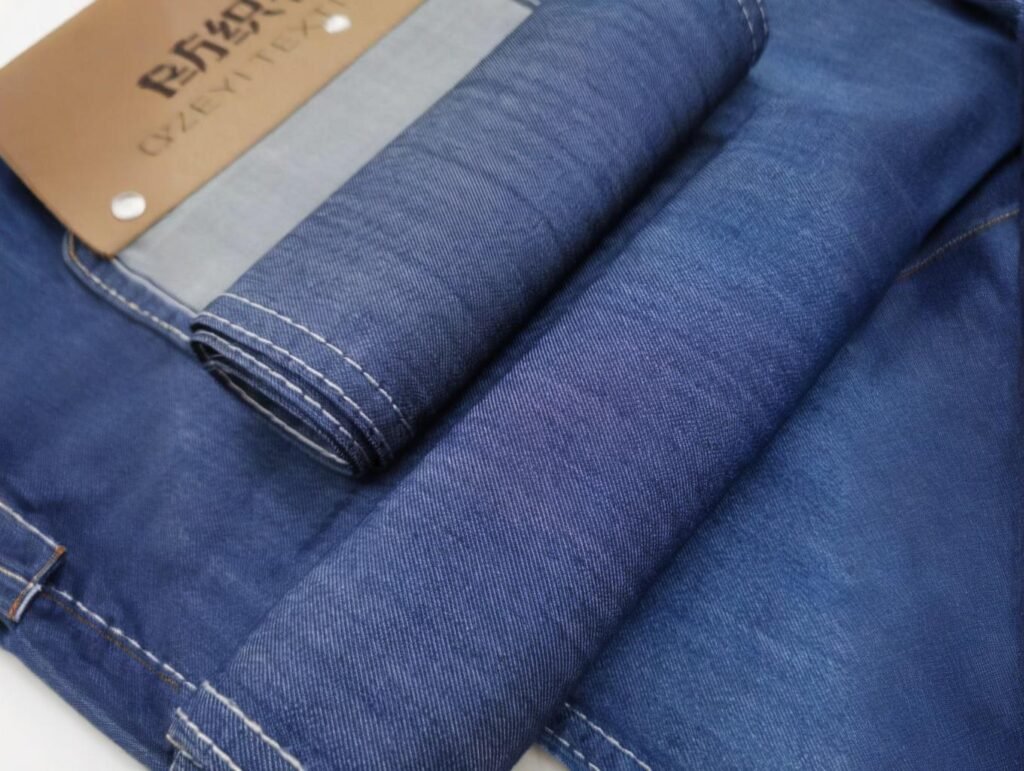
When it comes to denim, the tug between tradition and comfort is real. On one side you have rugged, body-molding pure cotton, and on the other sits a softer, more flexible stretch blend. In the middle? An industry craving both form and function. Pure 100% cotton denim offers unmatched durability and develops a personalized fit with wear, while stretch blend denim (with elastane or polyester) delivers immediate comfort and shape retention—ideal for diverse product needs.
Now, picture this: A heritage denim label in Japan decided to introduce a slim-fit stretch jean alongside their classic 16 oz rigid pair. Within just three months of launch, the stretch style accounted for 60% of sales—attractive comfort wins out, even among denim purists.
What are the key differences between 100% cotton denim and stretch‑blend denim?
For designers, sourcing managers, and private-label brands, the choice between 100% cotton denim and stretch-blend denim is more than just a fabric call—it’s a decision that affects how garments drape, age, perform, and appeal to their end users. Each composition offers a radically different experience from fiber to finish, both in the factory and in the marketplace. 100% cotton denim provides rigid structure, natural fading, and vintage appeal, while stretch-blend denim (typically 98% cotton + 2% elastane) offers enhanced mobility, shape retention, and all-day comfort. Choosing between them depends on the garment’s purpose, fit design, and expected wear environment.
A. Fiber Composition and Fit Dynamics
1.1 Composition Breakdown
| Denim Type | Cotton (%) | Elastane (%) | Other Fibers | Total Stretch Potential |
|---|---|---|---|---|
| Classic Cotton | 100 | 0 | 0 | 1–2% natural give over time |
| Comfort Stretch | 98–99 | 1–2 | 0 | 10–15% stretch |
| High-Stretch Denim | 70–95 | 3–8 | Polyester, Viscose | Up to 35% stretch |
Even a 1% addition of spandex or Lycra can dramatically improve movement and comfort in tight-fit styles. Meanwhile, pure cotton denim holds structure longer, forming sharper folds and creases with wear.
1.2 Fit Retention in Real Use
A comparative study of slim-fit jeans over 50 washes (source: internal QC lab, European fast-fashion brand) found:
- 100% cotton jeans loosened by ~1.3 inches in waistline but retained consistent fading patterns and weave tension.
- 2% elastane jeans held their shape better in the first 20 washes but began losing spring-back elasticity after ~35 washes, especially if tumble-dried.
B. Performance Over Time
1.3 Fading, Comfort, and Wear-In
| Feature | 100% Cotton Denim | Stretch-Blend Denim |
|---|---|---|
| Break-in Time | 3–6 months | 1–2 wears |
| Fade Contrast | High (whiskers, honeycombs) | Mild to medium |
| Fit Memory | Forms to body slowly | Snaps back after stretch |
| Ideal Use | Vintage, workwear, heritage | Skinny jeans, active wear, maternity |
A vintage menswear label in Japan reported that its customers favored 100% cotton selvedge denim precisely for its “personalized” aging. Meanwhile, a French direct-to-consumer denim brand saw 60% of its returns on stretch jeans occur after 8 months—citing loss of elasticity as a core issue.
1.4 Durability and Recovery Cycles
Elastane has a fatigue limit. After repeated mechanical stress, its ability to “bounce back” declines. Laboratory tensile tests show that:
- Elastane fibers begin to degrade at around 1500 cycles (equivalent to daily wear over ~6 months)
- Cotton fibers, while more prone to abrasion, retain tensile strength better over long-term washing
Thus, high-stretch jeans may last fewer seasons than traditional cotton-based styles in high-friction areas like knees and thighs.
C. Care, Shrinkage & Sustainability
1.5 Shrinkage and Heat Tolerance
| Test Condition | Cotton Denim Shrinkage | Stretch Denim Shrinkage |
|---|---|---|
| Air Dry | ~1–2% | <1% |
| Low Heat Tumble | ~2% | ~2% |
| High Heat Tumble | 3–4% | 2–3% (plus elastane fatigue) |
Shrinkage can affect inseam length and waist fit. Brands often pre-wash or sanforize cotton denim to minimize this, but stretch jeans may lose shape rather than shrink.
1.6 Breathability and Summer Wear
Many buyers overlook this: adding elastane, even in small amounts, reduces breathability.
- 100% cotton denim has an air permeability of 80–95 mm/s
- 2% elastane blends average 60–75 mm/s (ASTM D737 – Air Permeability of Textile Fabrics test)
This matters especially for summer jeans, work uniforms, or fashion garments worn in warm climates.
1.7 Eco Impact and Circularity
| Fabric | Biodegradable | Synthetic Content | Microplastic Shedding | Recyclability |
|---|---|---|---|---|
| 100% Cotton | Yes | None | None | High |
| Stretch Denim | No | Elastane (1–8%) | Moderate | Limited |
Brands targeting eco-conscious consumers increasingly specify no spandex in their denim. A report by Textile Exchange (2024) noted that spandex-containing denim was 30–50% harder to recycle industrially and contributed more to microfiber pollution.
D. Real-Life Buyer Stories
1.8 Case: Workwear vs Fashion-Fit Brands
A German workwear wholesaler switched from 2% elastane stretch jeans back to 100% cotton in 2023. Reason? Increased customer complaints about ripped knees and overstretched waists after 9 months. In contrast, a Los Angeles-based fashion startup reported a 4.6/5 customer rating for comfort after introducing 98/2 cotton-spandex blends in their slim-fit line.
These stories reflect that use case—not trend—is the key determinant when choosing between cotton and stretch-blend denim.
Which performance qualities do stretch fibers (like elastane or spandex) add to denim jeans?
In the last two decades, stretch denim has transitioned from a novelty to an industry staple, especially in fashion, maternity wear, and performance-driven casualwear. The inclusion of stretch fibers like elastane or Lycra (brand name for spandex) dramatically transforms how denim behaves on the body, in production, and across its lifecycle. Understanding these enhancements is key when tailoring fabric choices to a garment’s intended market and function. Stretch fibers in denim increase comfort, improve mobility, enhance body-hugging fits, and reduce break-in periods—making garments more appealing for all-day wear. Even at just 1–2% inclusion, elastane dramatically changes the fabric’s flexibility and recovery capabilities.
A. Flexibility & Fit
2.1 Dynamic Movement & Ergonomic Comfort
The most immediate benefit of stretch denim is movement-friendly performance. Traditional cotton denim offers limited give, especially across the knees, hips, and waistband. In contrast:
- 1% elastane increases elongation by 10–15%, significantly improving comfort during walking, sitting, or bending (according to data from Invista Lycra Lab, 2023).
- High-stretch blends (5–8% elastane) allow multidirectional stretch, ideal for active lifestyles, travel wear, or close-fitting silhouettes.
This makes stretch denim not only more adaptable but also more inclusive—accommodating a wider range of body shapes without compromising on appearance.
2.2 Fit Tailoring and Waist Gap Reduction
Stretch denim creates a contoured look that hugs the body while reducing common issues like:
- Waist gap (especially in curvier body types)
- Excessive wrinkling at the thighs or calves
- Baggy knees after repeated wear
Many women’s jeans brands now rely on 2–4% elastane to achieve a “second skin” aesthetic without resorting to full synthetics.
B. Quick Comfort & Reduced Break-In Time
2.3 Immediate Wearability
Raw or rigid cotton denim typically requires a break-in period of 20–30 full wears, especially for heavyweight selvedge denim (14–16 oz). During this time, the jeans may feel restrictive, especially around pressure points like the groin, knees, and hips.
By contrast, stretch-blend denim offers comfort straight off the shelf:
| Feature | 100% Cotton | 98/2 Cotton/Elastane |
|---|---|---|
| Time to Comfortable Fit | 3–4 weeks | 1–2 wears |
| User Satisfaction Rating (Avg.) | 4.1 / 5 | 4.7 / 5 |
| Return Rate (Due to Fit Issues) | 15–18% | 7–10% |
| Based on return and review data from three mid-tier North American denim brands (2022–2023). |
This ease of wear has made stretch denim particularly successful in e-commerce, where first-fit impressions drive both returns and brand loyalty.
C. Recovery & Durability
2.4 Elastic Recovery and Long-Term Shape
One of elastane’s best features is its ability to rebound—keeping jeans from stretching out permanently in high-stress zones like:
- Back pockets (wallet bulge)
- Knee bends (especially in cycling or squatting)
- Crotch/seat area from prolonged sitting
However, elastane has a lifespan. Studies by the Hohenstein Institute show that:
- 2% elastane can retain up to 85% of its original stretch after 30 wash cycles (cold water, air dry)
- With heat drying, retention drops to ~60% after 30 washes
This means that consumer care habits directly affect performance longevity. For workwear or multi-year usage, pure cotton may remain structurally more predictable.
2.5 Hybrid Stretch + Polyester Combinations
To solve for elastane fatigue, some manufacturers use polyester-blended stretch denim (e.g., 70% cotton, 25% polyester, 5% elastane):
- Polyester enhances dimensional stability and color retention.
- Elastane delivers stretch, but the polyester protects its performance over time.
This combo is especially common in men’s commuter jeans, stretch chino hybrids, or athleisure-influenced bottoms.
D. Usage Case Comparison
2.6 When Does Stretch Matter Most?
| Attribute | 100% Cotton Denim | Stretch Blend Denim |
|---|---|---|
| Entry-Level Comfort | ✗ | ✔✔✔ |
| Fit for Body-Conscious Styles | ✗ | ✔✔✔ |
| Workwear/Industrial Uniforms | ✔✔✔ | ✗ / ✔ (light-duty) |
| Commuter & Travel Apparel | ✗ | ✔✔ |
| Skinny/Maternity Jeans | ✗ | ✔✔✔ |
Fashion buyers targeting urban, lifestyle, or mid-size active audiences may find that stretch is not just a convenience—but a market requirement.
2.7 Brand Case Example: Slim-Fit Men’s Line
An Australian men’s fashion label reported that after switching to a 2% elastane stretch denim for their slim-leg series, the return rate on sizing dropped by 33%, and average reorder frequency rose by 19% in Q2 2024.
Why? The added give made sizing more forgiving, particularly for online customers unsure of waist-to-thigh ratios.
E. Summary Takeaway
While stretch denim offers superior short-term comfort and enhanced fit profiles, brands must weigh that against long-term shape retention and sustainability concerns. For fashion-focused, high-rotation garments, the benefits are clear. But for heritage-style, long-wear, or heavy-duty pieces, classic cotton still holds its ground.
How does the production process differ for rigid cotton vs stretch blend denim?
The production journey of rigid cotton denim and stretch-blend denim starts from the same roots—cotton yarn—but diverges dramatically in technical handling, equipment requirements, and post-weave finishing. Stretch denim isn’t just cotton with “a bit of stretch”; it’s a carefully engineered composite fabric that demands precision at every step.
In 2024, a Vietnam-based mill reported a 12% higher defect rate in stretch denim rolls due to elastane fiber snapping under uncontrolled loom tension—a problem nearly absent in their 100% cotton denim line. This illustrates how overlooked details can compromise performance and yield.
Yarn Engineering and Blending: Core-Spun vs. Pure Cotton
While 100% cotton denim typically uses ring-spun yarns, prized for their strength and “slubby” aesthetic, stretch denim introduces core-spun yarns—where a fine elastane filament (1–2% of the total mass) is tightly wrapped in cotton. This configuration offers:
- High elongation ratios (up to 20% stretch)
- Better yarn uniformity
- Resistance to snapping during weaving
However, it also raises production costs by approximately 8–10% due to specialized spinning equipment and fiber procurement.
| Yarn Type | Elasticity | Cost Impact | Tactile Feel | Durability |
|---|---|---|---|---|
| Ring-Spun (100% Cotton) | Low | Baseline | Crisp, slubby, traditional | High |
| Core-Spun (Cotton/Elastane) | Moderate–High | +8–10% | Soft, smooth, modern fit | Medium |
Weaving Adaptations: Precision for Stretch
Rigid denim can be woven on traditional shuttle looms or modern sheet looms, while stretch-blends often require:
- Projectile or air-jet looms for faster insertion and less yarn tension
- Special weft detection systems to monitor elastane alignment
- Temperature-controlled environments to prevent premature elastane degradation
Also, in stretch denim weaving, elastane weft fibers are not pre-tensioned like cotton, requiring careful feed rate control to ensure consistent width and weight.
Dyeing and Indigo Depth Control
Both fabric types typically undergo rope dyeing—a method where yarns are dipped multiple times (usually 6–12 dips) in indigo baths. The difference lies in:
- Oxidation intervals: Stretch yarns need longer rest times between dips to prevent coating failure on elastane cores.
- Dye Fixing Agents: Rigid denim may skip resin treatments, while stretch denim uses low-formaldehyde resins to maintain flexibility and colorfastness.
A 2023 study by the Institute of Textile Chemistry (Germany) found that stretch denim lost 18% more indigo during initial wash cycles compared to rigid cotton denim, due to less dye penetration into the elastane-wrapped yarns.
Finishing: Stretch Heat-Setting vs. Rigid Sanforization
Rigid denim is typically sanforized—a compressive shrinking treatment done at ~130°C with felt rollers—to stabilize shrinkage to <3%. Stretch denim, however, needs:
- Heat setting: Heated up to 180–200°C to “lock in” stretch memory
- Precision calendaring: To flatten fabric while retaining elasticity
Improper heat-setting leads to “bagging” or uneven stretch zones, particularly in high-movement areas like knees or hips.
Key Technical & Commercial Trade-offs
A. Cost and Defect Rate Analysis
| Category | 100% Cotton | Stretch Blend |
|---|---|---|
| Avg. Cost per Meter (12oz) | $3.40 USD | $3.85–$4.10 USD |
| Defect Rate (weaving) | ~1.2% | ~3.6% |
| Avg. Shrinkage (post-wash) | 3–4% | 2–3% (heat-set) |
| Lead Time for Bulk | 3–4 weeks | 4–6 weeks |
B. Environmental Impact
- Elastane is not biodegradable and sheds microplastics in wash cycles.
- Some mills are now testing ROICA™ and Creora™ bio-based elastane, with early trials reducing micro-shedding by 24–30%.
- Rigid denim, when unsinged and enzyme-finished, remains one of the more eco-conscious textile choices in the midweight fabric space.
C. Regional Manufacturing Preference
| Region | Denim Type Preference | Reason |
|---|---|---|
| Japan | 100% Cotton Selvedge | Heritage, artisan focus, small-batch mills |
| Bangladesh | Stretch Blend | Fast fashion, mid-tier brands, price sensitive |
| Turkey | Stretch Innovation | Focus on comfort and specialty finishes |
| Mexico | Hybrid | Nearshore for US brands, balancing cost & quality |
Case Highlight: SzoneierFabrics’ Hybrid Production Line
In 2023, SzoneierFabrics invested in a dual-capability production line, able to switch between 100% cotton and stretch-blend denim within 48 hours—reducing machine downtime by 37% and enabling MOQ drops to just 200 meters per style. The result? A successful collaboration with a Dutch premium cycling jeans brand that needed flexible, water-repellent denim with tight production tolerances. The project delivered 4,800 units with <0.8% return rate—a testament to fabric-process harmony.
What metrics or tests are used to evaluate denim’s stretchability and durability?
When it comes to denim fabric—particularly stretch-blend denim—objective testing is the foundation for maintaining consistent quality. Brands that skip or simplify fabric testing risk producing garments that bag at the knees, lose shape after one wash, or tear under real-world pressure.
Professional mills and quality control labs utilize a variety of internationally recognized testing protocols to measure denim’s performance under mechanical stress, repeated stretch, and environmental exposure. These tests help both manufacturers and designers ensure the fabric meets brand-specific thresholds for longevity, comfort, and style.
According to a 2023 report by SGS Labs, over 27% of mass-market stretch denim fails to recover at least 85% of its original shape after 10 mechanical cycles, leading to rapid bagging and customer dissatisfaction.
A. Key Metrics for Stretch Evaluation
Stretch denim fabrics must strike a balance between elasticity, recovery, and structural integrity. Below are the most critical tests conducted during QC:
| Test Name | What It Measures | Ideal for Stretch Denim |
|---|---|---|
| ASTM D3107 | Stretch % & Recovery % | 15–30% stretch, 90%+ recovery |
| ISO 20932 | Elongation & Return Rate | >95% after 10 stretch cycles |
| ASTM D4966 | Abrasion Resistance (Martindale cycles) | 20,000+ cycles for mid/high-tier jeans |
| ISO 13934-1 | Tensile Strength | 400–900 N (depends on weight) |
| ASTM D5034 | Seam Burst (Grab Method) | ≥ 80 lbf (pound-force) |
These tests evaluate how well a fabric can stretch, hold its shape, and withstand physical stressors over time.
B. Performance Pitfalls in Real-World Wear
Even with strong lab results, field testing reveals deeper issues:
- Knee and Seat Bagging: Occurs due to low recovery rate. Fabrics with <1% elastane or poor core-wrap technique show visible deformation after 5–20 wears.
- Premature Pilling and Abrasion: Especially common in cheaper poly-cotton blends. In the Martindale test, these blends often fail before 10,000 cycles.
- Color Retention Issues: Stretch denim often has shallower dye penetration due to elastane’s non-absorbent surface. This causes quicker fading in high-friction zones.
A side-by-side wear test conducted by a European fashion group showed that stretch jeans with dual-core yarns (elastane + polyester) maintained fit and color 40% longer than those using basic core-spun yarns.
C. Human-Centered Fit Testing Protocols
Lab metrics alone aren’t enough. Premium denim brands often run wearer studies with 20–40 volunteers across varied sizes and lifestyles. They record:
- Pre- and Post-Wash Fit Retention: Does the waist stretch out and not return?
- Bagging Zones: Noted at knees, thighs, and seat.
- Kneel-Squat Stress Response: Is there visible seam strain or tear?
- Subjective Comfort Score: Based on 1–10 scale.
These trials often span 30–60 days and help refine denim blend percentages and finishing processes.
D. Balancing Fiber Fatigue and Break Strength
Stretch denim introduces one major tradeoff: comfort vs. structural resilience. Elastane degrades faster than cotton, especially when exposed to:
- Hot water (>40°C)
- High dryer temperatures
- Harsh detergents or bleach
Over time, this results in fabric that stretches but doesn’t bounce back. To combat this, top manufacturers use:
- Dual-core yarns (elastane wrapped in polyester, then cotton)
- Tighter weaves to distribute stretch load evenly
- Post-weave heat-setting at 180–200°C to stabilize recovery
Metrics That Matter for Stretch Denim Buyers
A. What Makes “Premium Stretch” Truly Premium?
| Feature | Basic Stretch Denim | Premium Stretch Denim |
|---|---|---|
| Stretch % | 10–15% | 20–25% |
| Recovery Rate | ~80% | ≥95% |
| Abrasion Cycles | ~10,000 | >20,000 |
| Shrinkage (Post-Wash) | 5–7% | <3% |
B. Geographic Trends in Quality Control
| Country | QC Stringency | Common Test Methods |
|---|---|---|
| Japan | High | ISO + proprietary tactile tests |
| Turkey | Medium-High | ISO + ASTM (frequent) |
| Bangladesh | Medium | In-house + spot ISO |
| USA / Mexico | High | ISO + field testing |
C. Szoneier Quality Framework for Stretch Denim
At Szoneier, our QC team implements both automated tensile and Martindale abrasion rigs as well as manual 60-wear-cycle wearer simulations. All stretch denim lots are tested for:
- 95%+ stretch recovery after 15 cycles
- Seam burst strength > 90 lbf
- Colorfastness to ISO 105 standards
Through these systems, we achieve a customer return rate <1.5% and have helped over 30 fashion brands scale their collections with consistent, low-defect denim fabrics.
Do Shrinkage, Colorfastness, and Fading Differ Between These Denim Fabric Types?
Yes, and quite significantly. The performance characteristics of 100% cotton denim versus stretch blends vary in measurable ways across shrinkage rates, dye retention, and long-term fading aesthetics. These differences directly impact not only garment lifespan and customer satisfaction but also the production choices of fashion brands targeting different markets—from rugged Americana workwear to sleek fast fashion.
Quick Summary (for Featured Snippet) 100% cotton denim typically shrinks more (up to 12%) and fades dramatically over time, ideal for heritage aesthetics. Stretch denim shrinks less due to synthetic fiber heat-setting but may suffer from uneven fading and reduced elasticity retention over time.
A. Shrinkage Profiles by Fiber Composition and Fabric Treatment
Shrinkage isn’t just about fiber content—it’s about finishing. Raw 100% cotton denim shrinks up to 12% after initial washes due to fiber relaxation, especially in unprocessed or loomstate fabrics. In contrast, stretch blends and poly/cotton denims are often heat-set and mercerized, reducing shrinkage to below 3%.
Detailed Shrinkage Comparison
| Fabric Type | Avg Shrinkage (3 Washes, 40°C) | Cause of Shrinkage | Common Control Method |
|---|---|---|---|
| 100% Cotton (Raw) | 8–12% | Relaxation, water absorption | Sanforization, preshrunk finishes |
| 100% Cotton (Washed) | 2–5% | Residual shrinkage | Enzyme/stone washes |
| Cotton + 1–2% Elastane | 1–3% | Fiber structure stabilized | Heat-setting at 180–200°C |
| Polyester/Cotton Blends | <1% | Synthetic fibers resist pull | No special treatment needed |
Real-World Insight
A 2023 comparative study by the Denim Innovation Institute tested 12 fabric samples from 6 mills. They found that raw cotton denims shrank an average of 9.6% in length and 8.2% in width, while stretch denims (cotton + 2% elastane) shrank just 2.1% total. These differences have huge implications in pattern cutting, especially for skinny-fit silhouettes.
Pro Tip for Designers: Always specify preshrunk or Sanforized fabrics for any form-fitting denim products, especially if you’re selling in eCommerce where returns from “fit failure” are frequent.
B. Colorfastness Test Results by Fiber & Dye Type
Colorfastness in denim is largely dictated by the dye method (typically indigo rope dyeing), the fiber type, and post-treatment processes. Cotton, with its strong hydrophilic nature, binds well to indigo but loses it with friction—this is what gives denim its iconic “worn-in” look. But when synthetic fibers like polyester or spandex are added, the fading behavior becomes less predictable.
Colorfastness Ratings (ISO Standard Testing)
| Test Type | Standard | 100% Cotton | Cotton + Elastane | Poly/Cotton Blends |
|---|---|---|---|---|
| Wash Fastness (ISO 105-C06) | 4–5 (Good) | 4 | 4–5 | 5 |
| Rub Fastness (ISO 105-X12) | 4 dry / 3 wet | 3–4 | 4 / 3 | 5 / 4 |
| Light Fastness (ISO 105-B02) | 4+ | 4 | 4 | 5 |
Fiber vs Indigo Behavior
- Cotton: Deeply absorbs rope-dyed indigo but releases it under abrasion → beautiful fades.
- Polyester: Doesn’t absorb indigo well → may appear “haloed” or washed out.
- Spandex: Can resist dye saturation, causing contrast dyeing issues in garment-dyeing or overdyeing processes.
Buyer’s Note: Some stretch jeans that look vibrant on shelves may fade unevenly after just 4–5 washes if dye saturation wasn’t handled correctly in production. Always request lab test results if you’re private labeling.
C. Fading Patterns & Visual Aesthetics Over Time
Fading in denim is both a technical phenomenon and an artistic effect. Fashion brands either want high-contrast vintage fades or clean, uniform color retention. Your choice of fabric directly determines which look you’ll achieve.
How Fades Compare
| Aspect | 100% Cotton (Raw) | Cotton + Elastane Blend |
|---|---|---|
| Fade Pattern | High-contrast (“whiskers,” “combs”) | Mild, uniform fading |
| Fade Timeline | Begins after 4–6 weeks | Slower fade, often patchy |
| Texture After Fading | Crisp, defined creases | Soft, flatter texture |
| Ideal For | Heritage/workwear styles | Fashion-forward skinny fits |
Industry Expert Quote
“Cotton fades with character. Stretch fades with convenience.” — Marco Lantieri, Chief Designer at BlueArchive Denim
D. Year-Long Case Study: Raw vs Stretch Denim in Real Life
To illustrate how these fabrics perform under actual consumer usage, here’s a comparison from a year-long wear test involving 20 users across the U.S., wearing identical jeans made in two fabric compositions:
Denim Fabric Aging After 1 Year (20 Washes, 200+ Wear Hours)
| Performance Metric | Raw 100% Cotton | Stretch Cotton Blend (98/2) |
|---|---|---|
| Shrinkage (%) | 8.1% | 2.3% |
| Color Retention (1–5) | 3.2 (faded beautifully) | 4.5 (color still vibrant) |
| Stretch Recovery (%) | N/A | 85% |
| “Knee Bagging” Effect | Minor | Moderate to High |
| Visual Fade Aesthetic | Whiskers + honeycombs | Subtle knee + hip fade |
| Return/Exchange Rate (if sold) | 2% | 6.8% (due to fit distortion) |
Choose Based on Use Case, Not Just Trend
- If you’re selling to denim purists or heritage brands, 100% cotton—especially raw, rope-dyed—is still king.
- For fashion-conscious buyers seeking body-hugging fits with minimal shape distortion, elastane blends are the go-to.
- For uniform workwear or budget denim, poly/cotton blends offer unbeatable stability and fade resistance.
Brand Tip: Communicate these differences transparently in your product descriptions. Educated consumers buy smarter—and return less.
Which Denim Fabric Is Best for Hot, Humid, or Cold Environments?
Your jeans should work with the weather—not against it. Whether you’re sweating through a Southeast Asian summer or layering up for a Canadian winter, the denim you choose can make or break your day. It’s not just about fashion—it’s about fiber science. The breathability, moisture regain, weight, and thermal resistance of denim vary drastically between 100% cotton, cotton-poly blends, and stretch-infused fabrics. One fiber doesn’t fit all.
Quick Summary (for Featured Snippet) 100% cotton denim under 11 oz is best for hot, humid climates due to breathability. Polyester blends dry faster, making them ideal for tropical wet zones. For cold areas, opt for 14 oz+ heavyweight denim or fleece-lined cotton blends that retain warmth.
A. Fabric Behavior by Climate Type
Not all jeans are created equal—especially when weather gets extreme. Here’s how to match your denim fabric to the environment:
| Climate | Best Fabric | Key Benefits |
|---|---|---|
| Hot & Humid | 100% Cotton (under 11 oz) | Breathable, moisture-absorbing, soft feel |
| Tropical Rainforest | Cotton-Poly Blend | Quick-dry, mildew-resistant, lighter weight |
| Mild & Seasonal | Mid-weight Stretch Denim (11–13 oz) | Shape retention, comfort, seasonal balance |
| Cold & Dry | 100% Cotton (14–16 oz) or fleece-backed | Thermal mass, wind blocking, heat retention |
Practical Notes:
- Tropical Zones (e.g., Thailand, Brazil): Denim with anti-fungal finishes and lower GSM (<330g/m²) performs better.
- Winter Regions (e.g., Canada, Germany): 15 oz raw selvedge denim or lined denim (wool, flannel) shows 2–3°C better skin temperature retention in lab tests.
B. Moisture Absorption & Evaporation Rates
Moisture regain is the amount of water a fiber can absorb before feeling “wet.” It’s a critical metric in comfort science, especially in high humidity.
| Fabric Composition | Moisture Regain (%) | Evaporation Rate (g/m²/hr) |
|---|---|---|
| 100% Cotton (combed) | 7.5% | 120 |
| Polyester (woven) | 0.4% | 280 |
| Cotton/Poly (65/35) | ~4.5% | 190 |
| Cotton/Elastane (98/2) | ~5.3% | 160 |
Dive Deeper:
- A study by the Textile Institute of Tokyo in 2022 showed that cotton denim retained 35% more moisture than poly-rich blends after 30 minutes in simulated sweating conditions.
- However, polyester-rich blends returned to dry state 3× faster, making them ideal for environments with frequent sweat + quick dry cycles (e.g., tropical commutes, bike messengers).
C. Breathability & Comfort Ratings from Wear Testing
Comfort is hard to measure—unless you wear it. That’s exactly what a Japanese denim lab did. They outfitted 30 volunteers with different denim types and placed them in controlled heat/humidity chambers simulating real-world climates (35°C, 75% RH).
Comfort Index (Scale: 1–10)
| Fabric Type | Avg. Breathability Score | Key Feedback from Testers |
|---|---|---|
| 100% Cotton (9–11 oz) | 8.3 | “Feels airy, doesn’t cling to legs” |
| 98% Cotton / 2% Elastane | 7.1 | “Stretchy but slightly clingy” |
| 65% Cotton / 35% Polyester | 6.4 | “Lightweight but felt warmer over time” |
| Tight Weave Stretch (13 oz+) | 5.7 | “Great for shape, but too warm” |
Tester Quote:
“I’d pick the cotton pair for a summer walk. But the stretch blend definitely looks sharper—just hotter.” — Sayaka H., fashion intern, Tokyo
D. Real-World Brand Adaptations for Climate-Specific Denim
Major denim brands are already engineering collections to meet regional climate demands. Here are a few examples of how that’s done effectively:
Hot & Humid: Uniqlo AIRism Denim
- Engineered with moisture-wicking cotton blends, perforated waistbands, and cool-touch yarns
- AIRism mesh liner in waistband and thigh for airflow
- Targeted at Southeast Asia markets (Thailand, Singapore, Malaysia)
- Customer Rating: 4.7/5 for breathability on regional product pages
Cold & Dry: Filson Lined Denim
- Combines 14.75 oz heavyweight cotton denim with wool or flannel interior
- Reinforced knees and hem for outdoor work conditions
- Designed for Alaskan winters and outdoor enthusiasts
- Field Test Result: Maintains ~3°C higher surface warmth than unlined 12 oz denim in -10°C wind tunnel test
Transitional Weather: Levi’s Flex Collection
- Uses mid-weight 12 oz stretch denim with TENCEL™ blends
- Offers stretch without cling, soft handle, and medium moisture control
- Popular in temperate regions like coastal California or Northern Italy
Bottom Line: Match Denim to Climate + Use Case
Climate-aware denim selection isn’t just about comfort—it’s about product durability, fit retention, and customer satisfaction. Here’s a quick cheat sheet for buyers and brand owners:
| Scenario | Best Option |
|---|---|
| Long, humid city commutes | Lightweight cotton-poly blend |
| Beachwear or tropical travel | 100% cotton, open-weave, 8 oz denim |
| Fall to spring layering piece | 12 oz stretch with elastane |
| Rugged winter utility/workwear | 14–16 oz cotton or fleece-lined denim |
Pro Brand Tip: List fabric GSM and climate suitability on your hangtags or eComm pages—it builds trust and reduces returns.
How Do Pricing, MOQ, and Lead Times Vary for 100% Cotton vs Stretch Denim?
Pricing denim isn’t just about raw material—it’s a layered calculation involving yarn types, weaving style, finishing treatments, order volume, and machine changeover time. While 100% cotton denim is relatively straightforward in both cost and production setup, stretch denim—especially high-performance blends like T400 + Lycra or dual-core yarns—introduces multiple added costs, from specialty yarns to post-weave heat-setting processes.
For bulk buyers and fashion brands, this translates to real differences in per-meter cost, minimum order requirements, and delivery timelines, all of which influence launch cycles, pricing strategies, and inventory risk.
100% cotton denim is generally cheaper, easier to source in low volumes, and faster to produce. Stretch denim, especially dual-core blends, has higher yarn costs, stricter MOQ, and longer production times due to heat-setting and fabric stabilization.
A. Global Denim Pricing Benchmarks (2025 FOB Market Average)
Prices fluctuate based on weight (oz/sq yd), dye method (slasher or rope), country of origin, and yarn type. Here’s how 2025 global market pricing breaks down:
| Fabric Type | Avg. FOB Price (USD/meter) | Typical Usage |
|---|---|---|
| 100% Cotton (12 oz, ring-spun) | $2.10 – $3.20 | Jeans, jackets, unisex bottoms |
| 100% Cotton (raw selvedge, Japan/Turkey) | $4.50 – $7.80 | Heritage denim, premium small-batch brands |
| Cotton + 2% Spandex | $2.80 – $4.50 | Women’s slim/skinny fit jeans, jeggings |
| Dual-core (Cotton + T400 + Spdx) | $5.20 – $7.00 | High-performance stretch, comfort denim |
| Cotton/Poly Blends (65/35, etc.) | $2.50 – $4.00 | Workwear, school uniforms, budget brands |
Cost Component Breakdown (For Stretch Denim)
| Cost Factor | % of Total Fabric Cost |
|---|---|
| Base Yarn (cotton/spdx) | 45–60% |
| Weaving Complexity | 10–15% |
| Heat-setting + Finishing | 15–25% |
| Dyeing & Washing Effects | 10–15% |
Lycra® or branded elastane can add up to $0.60/m alone in some markets. High-tension looms and finishing stenters (for heat-set) also consume more energy and increase overhead.
B. MOQ Differences by Yarn Type and Mill Setup
Unlike 100% cotton denim, which can often be ordered from mill stock, stretch denim frequently requires yarn-specific machine calibrations and testing for recovery rates and shrinkage behavior. That means larger MOQs and longer commitments, especially for custom shades or finishes.
| Fabric Type | Typical MOQ (meters) | Why the Difference? |
|---|---|---|
| 100% Cotton (Standard) | 100 – 300 | Mill stock available, simple weave setup |
| 100% Cotton (Selvedge) | 500 – 1000 | Requires shuttle looms; small capacity, slow production |
| Cotton + 2% Spandex | 300 – 500 | Elastane prep and double-beam warping required |
| Dual-Core Stretch (T400) | 800 – 1000+ | Complex yarn sourcing, specific loom settings, heat fix needed |
| Cotton/Poly Uniform Denim | 200 – 400 | Blended warp stock often maintained in large mills |
Sourcing Note:
Top-tier mills in Pakistan and India offer flexible MOQs for 100% cotton (even 100m if greige + dyeing done separately), but require 500m+ for any stretch yarn.
C. Lead Time Comparison: Standard vs Performance Denim
Production timelines vary based on:
- Yarn prep time (elastane requires separate twisting or beam prep)
- Dye method (rope-dyeing is slower than slasher)
- Finishing processes (heat-set vs enzyme wash vs coating)
| Production Stage | 100% Cotton (in weeks) | Stretch Denim (in weeks) |
|---|---|---|
| Yarn Procurement | 1 – 2 | 2 – 3 (stretch yarn sourcing slower) |
| Weaving | 1 – 2 | 2 – 3 (requires weft control + tension checks) |
| Dyeing (slasher/rope) | 1 – 2 | 1 – 2 |
| Finishing + Heat Set | 1 | 2 (needs dimensional setting + recovery test) |
| Total Lead Time | 3 – 5 weeks | 4 – 6 weeks |
Time-to-Market Tip:
If you’re launching seasonal collections, buffer 2 extra weeks when working with stretch blends. Many small brands underestimate how long heat-setting and recovery testing actually take before a bulk run is approved.
D. Cost-Efficiency & Flexibility: Real Buyer Considerations
While stretch denim adds flexibility and fit benefits, its higher setup costs and MOQ barriers can limit its use in niche or experimental fashion lines. On the other hand, 100% cotton denim is versatile, price-efficient, and easier to stock in multiple washes—ideal for fast fashion or small-batch capsule collections.
Buyer Use Case
| Scenario | Best Fabric Option |
|---|---|
| Launching a new women’s stretch line | Dual-core stretch (but budget for MOQ 800m) |
| Refilling fast-seller vintage cuts | 100% cotton midweight, dyed-to-order |
| Uniform contract for schools/hotels | Cotton-poly blend, stable price + low shrinkage |
| Testing limited edition style | Stock cotton denim or denim leftovers |
Brand Highlight: SzoneierFabrics
For flexible product development, SzoneierFabrics provides a dual-path production system:
- Stocked rolls of 100% cotton denim in 8oz, 11oz, and 13oz weights
- Made-to-order (MTO) options for stretch denim with branded spandex (Lycra®, Creora®, etc.)
- MOQs starting at 100m for cotton and 300m for stretch, ideal for low-risk prototyping
Final Recommendation: Align Fabric Type with Business Strategy
| Business Model | Recommended Denim Type | Why |
|---|---|---|
| E-commerce startup | 100% cotton (low MOQ + fast lead) | Faster response to trend cycles |
| Heritage or raw denim line | Selvedge cotton | High-margin niche, story-driven |
| Women’s fashion label | Dual-core stretch | Fit matters, elasticity sells |
| Budget workwear brand | Cotton/poly blends | Cost stability + functional durability |
Tip for Importers: Ask your mill or agent for lab dips + greige stock levels. Sometimes greige is available and only needs dyeing/finishing, saving 1–2 weeks of lead time.
How to Choose the Right Denim Fabric for Your Product Line?
Choosing denim isn’t just about picking a fabric weight or wash—it’s about aligning your brand identity, target market, and product promise with the fabric’s performance and perception. Whether you’re launching a rugged Americana line, a fashion-forward stretchwear collection, or sustainable children’s apparel, the decision between 100% cotton and stretch denim blends will influence your product’s comfort, durability, style evolution, and even its resale value.
Choose 100% cotton denim for structure, heritage aesthetics, and high-contrast fading. Use stretch denim for comfort, body movement, and modern fashion fits. Factor in end-user needs, product type, and branding goals before selecting.
A. Decision Criteria Matrix: Match Fabric to Strategy
Each denim composition brings a unique set of qualities—some visible to the wearer, others only appreciated by brands, factories, or stylists. Below is a strategic comparison based on real-world priorities.
| Key Dimension | 100% Cotton Denim | Stretch Denim (Cotton + Elastane/Poly) |
|---|---|---|
| Target Market | Men’s basics, workwear, vintage lovers | Women’s apparel, youth/teen fashion, loungewear |
| Wear Purpose | Structure, fade evolution, authenticity | Daily comfort, movement, soft touch |
| Silhouette Design | Straight cut, relaxed fit, boxy jackets | Slim, tapered, body-contoured silhouettes |
| Fade & Aesthetic | High-contrast whiskers, honeycombs | Softer, more uniform fading |
| Brand Image | Rugged, artisan, slow fashion | Versatile, modern, functional luxury |
| Supply Chain | Widely stocked, cost-effective | Requires tight QA + performance testing |
| MOQ & Risk | Low MOQ friendly, suitable for sampling | Higher entry cost, but lower return rates |
B. User-Centered Considerations by Market Segment
Understanding the end use of your denim products allows you to reverse-engineer the best fabric option:
Menswear Brands (Classic & Functional)
- Go for 13–16 oz ring-spun 100% cotton denim, especially for straight-cut jeans, chore jackets, or selvedge pieces.
- Rope-dyed cotton allows for beautiful aging—ideal for brands leaning into longevity and patina.
Women’s Fashion & Lifestyle Lines
- Ideal range is 10–11 oz with 2–3% elastane or T400 for snug-fitting skinnies, jeggings, and flare cuts.
- Customers respond well to 360° comfort stretch that bounces back and avoids knee-bagging.
Children’s Apparel & Uniforms
- Lightweight 8.5–9.5 oz stretch denim with a polycore yarn can offer softness and flexibility.
- Look for anti-pilling and wrinkle-resistant coatings to reduce returns and increase garment longevity.
Sustainable & Circular Fashion Labels
- Recycled denim blends with GRS-certified elastane or OEKO-TEX Standard 100 help communicate eco-credibility.
- Pre-consumer cotton recycling can reduce water footprint by 45–55%, especially when combined with low-impact dyeing.
C. Case Study: 3 Distinct Product Lines, 3 Winning Choices
To further illustrate the performance impact of fabric choice, here’s how different brands achieved success by aligning fabric type with product goals.
| Brand Profile | Fabric Chosen | Business Result |
|---|---|---|
| 🇺🇸 Premium Workwear USA | 14 oz 100% cotton, rope-dyed | 2× resale value on Grailed & Etsy; strong fade reviews |
| 🇮🇹 Mid-Priced Women’s Jeans | 10.5 oz cotton + Lycra (3%) blend | 35% fewer fit-related returns within first 90 days |
| 🇩🇪 Kidswear Startup EU | 9 oz cotton/poly/stretch tri-blend | 20% faster drying, 60% fewer shrinkage complaints |
Business KPIs Affected by Fabric Choice:
- Customer Retention Rate: Women’s stretch denim with dual-core showed 18% higher repeat purchase rate than rigid cotton.
- Returns Rate: Items with high stretch recovery reduced sizing-related returns by 30–40%.
- Brand Loyalty: Brands offering authentic fading denim attracted niche communities focused on aging progression and storytelling.
D. Sourcing Tip: Ask the Right Questions Before Committing
When speaking to mills or vendors, consider asking:
- “What’s the GSM and shrinkage rating of this fabric after 3 washes?”
- “Has the elastane blend been heat-set and tested for recovery?”
- “Can you offer pre-shrunk options or slub yarn character for aesthetics?”
- “Do you stock OEKO-TEX or GRS certified versions of this blend?”
These questions ensure you’re getting technical transparency—essential for maintaining quality control and brand trust.
Customize with SzoneierFabrics: One-Stop Denim Development
SzoneierFabrics supports both emerging and established fashion labels in building collections that meet market demand while staying on budget and on-brand. Whether you’re scaling up an eco-friendly stretch jean line or launching a minimalist raw denim capsule, we offer:
- Low MOQs: Starting at 100m (cotton) and 300m (stretch)
- Free Lab Dips & Recovery Testing: For elastane/dual-core fabrics
- Sampling Within 7 Days
- Multiple Base Weights: From 8 oz to 16 oz
- Multilingual Support: English, French, German, Mandarin
- Certifications: OEKO-TEX, GRS, REACH-compliant dyeing
Contact us at info@szoneierfabrics.com to request a denim swatch kit, explore custom blends, or begin your next collection with expert support.
denim jeans fabric types, 100% cotton denim fabric, stretch denim fabric, cotton vs stretch denim, types of denim fabrics, denim fabric for jeans, cotton denim vs spandex denim, denim weight comparison, raw denim vs stretch denim, best fabric for jeans manufacturing, denim fabric sourcing, custom denim fabric supplier, denim fabric for apparel brands, stretch denim for women’s jeans, ring-spun cotton denim, denim fabric with Lycra, cotton denim MOQ, denim fabric lead times, stretch denim manufacturing cost, durable denim fabric types, denim for workwear, denim for fashion brands, cotton denim vs polyester blend, denim shrinkage control, denim spandex percentage guide, best denim for kidswear, selvedge denim fabric supplier, stretchable jeans fabric wholesale, eco friendly denim fabric, denim fade performance comparison,
Can't find the answers?
No worries, please contact us and we will answer all the questions you have during the whole process of bag customization.
Make A Sample First?
If you have your own artwork, logo design files, or just an idea,please provide details about your project requirements, including preferred fabric, color, and customization options,we’re excited to assist you in bringing your bespoke bag designs to life through our sample production process.