Skip to content

Denim often feels familiar—almost deceptively simple. Designers touch it every day, sketch with it in mind, and assume they already understand it. But once denim moves from inspiration to real development, its complexity quickly shows. Two denims that look nearly identical on a hanger can behave very differently once they are cut, washed, worn, and repeated at scale. This is why many denim problems don’t appear in design reviews—they appear months later, in fitting rooms, production lines, or customer feedback.
For designers and product developers, denim material by the yard is not just a buying format. It’s a development tool. Yardage defines how denim is tested, how patterns are validated, how washing effects are predicted, and whether a design concept survives the transition into a repeatable product. When denim is treated as a surface, surprises follow. When it’s treated as a system—fiber, weight, width, finish, and behavior—it becomes reliable. Denim material by the yard allows designers and product developers to test, validate, and refine denim fabrics before full-scale production. Successful development depends on confirming core specifications such as weight, width, fiber composition, shrinkage, handfeel, and finishing behavior. By evaluating denim through structured sampling and performance testing, designers can reduce development risk, align fabric behavior with design intent, and achieve consistent results when designs move beyond the prototype stage.
A designer once said, “The denim didn’t fail the design—the design failed to understand the denim.” That lesson sits at the heart of every successful denim program.
What Does “Denim Material by the Yard” Mean for Designers and Product Developers?


For designers and product developers, “denim material by the yard” is not simply a purchasing unit. It represents access to reality—the point where denim stops being an idea and starts behaving like a material that must survive cutting, washing, wearing, and repetition. Yardage allows teams to move beyond visual approval and into functional validation, where mistakes become visible early rather than costly later.
In early design stages, denim is often evaluated through swatches: neat, controlled, and reassuring. But swatches only answer surface-level questions. Yardage answers the uncomfortable ones—how the fabric collapses under its own weight, how it twists after washing, how it stretches when sewn into a garment, and how much it shrinks when no one is watching.
Yardage is freedom, but also responsibility.
Why Yardage Matters More in Development Than in Sourcing
In sourcing conversations, “by the yard” often sounds transactional: price per yard, minimum yardage, lead time. For development teams, yardage has a different meaning. It is the minimum scale at which denim’s true behavior becomes observable.
Denim is not a passive material. It stores tension from weaving, reacts unpredictably to water and heat, and changes character once cut and assembled. These behaviors do not scale linearly. What looks stable at 20 cm may distort dramatically at 120 cm.
Yardage allows designers and developers to move from assumption to evidence.
Yardage vs Swatches: The Scale Problem
Swatches are useful, but they are incomplete. They show color, texture, and surface finish. They do not show how denim behaves as a garment.
| Aspect | Swatch | Yardage |
|---|---|---|
| Visual texture | Yes | Yes |
| Drape & collapse | Limited | Real |
| Shrinkage behavior | No | Yes |
| Pattern testing | No | Yes |
| Wash outcome | Partial | Accurate |
Many critical denim issues—leg twist, knee bagging, seam distortion, width loss—require scale. They only emerge when fabric is allowed to move, stretch, and relax across real dimensions.
This is why experienced teams treat swatches as a filter, not a decision tool. Yardage is where decisions are earned.
Denim as a Directional Fabric
Denim is woven under controlled tension, with warp and weft yarns performing different roles. This makes it inherently directional.
Warp direction typically provides strength and visual dominance. Weft direction often provides flexibility and comfort. The interaction between these directions determines how the fabric responds to gravity, movement, and washing.
With yardage, designers can observe:
- Directional stretch differences
- Bias distortion after cutting
- Edge behavior during washing and drying
These behaviors directly affect fit and silhouette. A denim that appears stable as a swatch may skew noticeably once cut on the bias. A denim that feels firm across the width may relax excessively along the length after washing.
Without yardage, these traits remain theoretical.
Why Pattern Development Requires Yardage
Patterns translate fabric into form. Without yardage, patterns are built on assumptions rather than evidence.
Yardage allows teams to:
- Cut full-size pattern pieces
- Test seam stacking and construction stress
- Observe how denim supports or collapses specific silhouettes
This is especially important for:
- Fitted jeans
- Tailored jackets
- Unisex or multi-size programs
In these cases, small deviations in stretch, density, or recovery can cascade into widespread fit issues.
A swatch cannot tell you how a knee will bag. Yardage can.
Shrinkage Is a Yardage-Only Truth
Shrinkage is one of the most expensive surprises in denim development. It is also one of the most commonly underestimated variables.
Shrinkage behavior depends on:
- Fiber composition
- Weave density
- Finishing state
- Washing method
Swatches rarely provide accurate shrinkage data. They are too small to reflect how tension releases across width and length.
Yardage allows teams to wash, dry, and re-measure fabric realistically. It reveals whether shrinkage is:
- Uniform or uneven
- Concentrated in length or width
- Stable after one wash or progressive
These insights inform pattern compensation and size grading decisions. Without them, production becomes guesswork.
Wash Testing: Where Yardage Pays for Itself
Denim almost always changes after washing. The question is not whether it will change, but how much and in what way.
With yardage, developers can:
- Apply intended wash recipes
- Compare before-and-after handfeel
- Measure dimensional changes accurately
This is especially critical for washed and stretch denims, where finishing dramatically alters behavior.
Many production failures trace back to wash assumptions made without yardage testing. What seemed like a minor change in handfeel can become a major loss of structure after enzyme or softener treatments.
Denim Weight Is Not Enough Without Yardage
Designers often speak in weight terms—10 oz, 12 oz, 14 oz—as if weight alone defines behavior. Yardage quickly proves otherwise.
Two denims with identical weight can behave very differently when cut and washed. Density, yarn twist, and finishing interact in ways that weight alone cannot predict.
Yardage allows teams to test:
- Whether weight translates into usable structure
- Whether softness undermines silhouette
- Whether density supports durability
This is why experienced developers rarely approve denim solely by spec sheet.
Development-Stage Mistakes Designers Often Make
Many denim problems are not technical failures but process failures. They arise when yardage is skipped or undervalued.
Common mistakes include:
- Approving denim based only on color and weight
- Assuming all 12 oz denim behaves similarly
- Delaying wash tests until after pattern approval
- Treating yardage as a cost rather than an investment
These shortcuts save time early and cost much more later.
At SzoneierFabrics, denim development programs typically begin with small yardage sampling, specifically to surface these issues early—when they are still easy to correct.
Yardage as a Risk-Reduction Tool
From a cost perspective, buying yardage may feel like an added expense. In practice, it is one of the most effective forms of risk reduction.
Yardage testing can prevent:
- Size drift across production
- High return rates due to shrinkage or discomfort
- Late-stage fabric changes that delay launch
The cost of a few extra yards is negligible compared to the cost of re-cutting patterns, re-washing samples, or discounting unsellable inventory.
Creative Freedom Comes With Responsibility
Yardage gives designers freedom. It allows experimentation with wash, cut, and construction. But that freedom comes with responsibility.
Once yardage reveals behavior, it must be acted upon. Ignoring what yardage shows—because it conflicts with an aesthetic goal or timeline—leads to fragile products.
Designers who succeed long-term use yardage as feedback, not as confirmation.
Yardage and Supplier Transparency
Access to yardage also reveals a supplier’s development mindset. Suppliers who readily provide yardage and support testing tend to be more confident in their material and process.
Suppliers who resist yardage sampling often do so because:
- Behavior varies more than they prefer to disclose
- Finishing outcomes are not well controlled
- Repeatability has not been fully validated
For designers and product developers, yardage availability is often an early indicator of partnership quality.
Yardage in Multi-Style and Multi-Gender Programs
In collections that span multiple fits or genders, yardage becomes even more critical. A denim that works in one silhouette may fail in another.
Yardage allows teams to test:
- The same denim across different patterns
- How stretch and recovery scale across sizes
- Whether visual consistency holds across styles
Without yardage, these interactions remain hypothetical.
The Psychological Shift Yardage Creates
There is also a mindset shift that happens when teams work with yardage. Denim stops being abstract and becomes accountable.
Assumptions are replaced by measurements. Preferences are tested against outcomes. Conversations shift from “I think” to “We saw.”
This shift alone improves decision quality.
A Mindset That Helps
Designers who treat yardage as a testing environment, not just fabric supply, almost always experience smoother transitions into production.
They use yardage to:
- Challenge assumptions
- Validate intuition
- Align design intent with material reality
Rather than slowing development, this approach reduces rework and accelerates confidence.
Yardage Is Where Denim Becomes Honest
Denim has a reputation for reliability, but that reliability is earned through understanding, not assumption. Yardage is the scale at which denim stops performing for the swatch and starts performing for the wearer.
For designers and product developers, “denim material by the yard” means committing to that honesty early—when it is still manageable.
“Denim material by the yard” is not just a purchasing term. It is a development tool. It allows designers and product developers to see how denim truly behaves under real conditions: cut, washed, worn, and stressed.
Swatches show promise. Yardage reveals truth.
Teams that invest in yardage early reduce risk, improve fit, and build products that perform as intended—not just on the design table, but in the real world.
Which Denim Fabric Specifications Should Be Confirmed Before Sampling and Development?

Before sampling begins, denim decisions move from inspiration into engineering. At this stage, fabric choices stop being abstract preferences and become constraints that will shape fit accuracy, production yield, wash behavior, and long-term performance. Many development problems blamed on “unexpected denim behavior” are not unexpected at all—they are the result of incomplete or loosely defined specifications at the very beginning.
Sampling without locked denim specs is not creative flexibility. It is controlled guesswork. When specifications are vague, every sample becomes a negotiation between assumptions, and each revision compounds time, cost, and uncertainty.
Without clear specs, sampling becomes guesswork.
The Specifications That Actually Shape Denim Outcomes
Denim is often discussed in shorthand—weight, color, stretch—but its real behavior is governed by a small set of technical specifications that interact with one another. Confirming these early does not limit design freedom; it protects it.
Well-defined specifications allow designers, developers, and suppliers to work from the same expectations. They also make it possible to diagnose problems when something does not behave as intended.
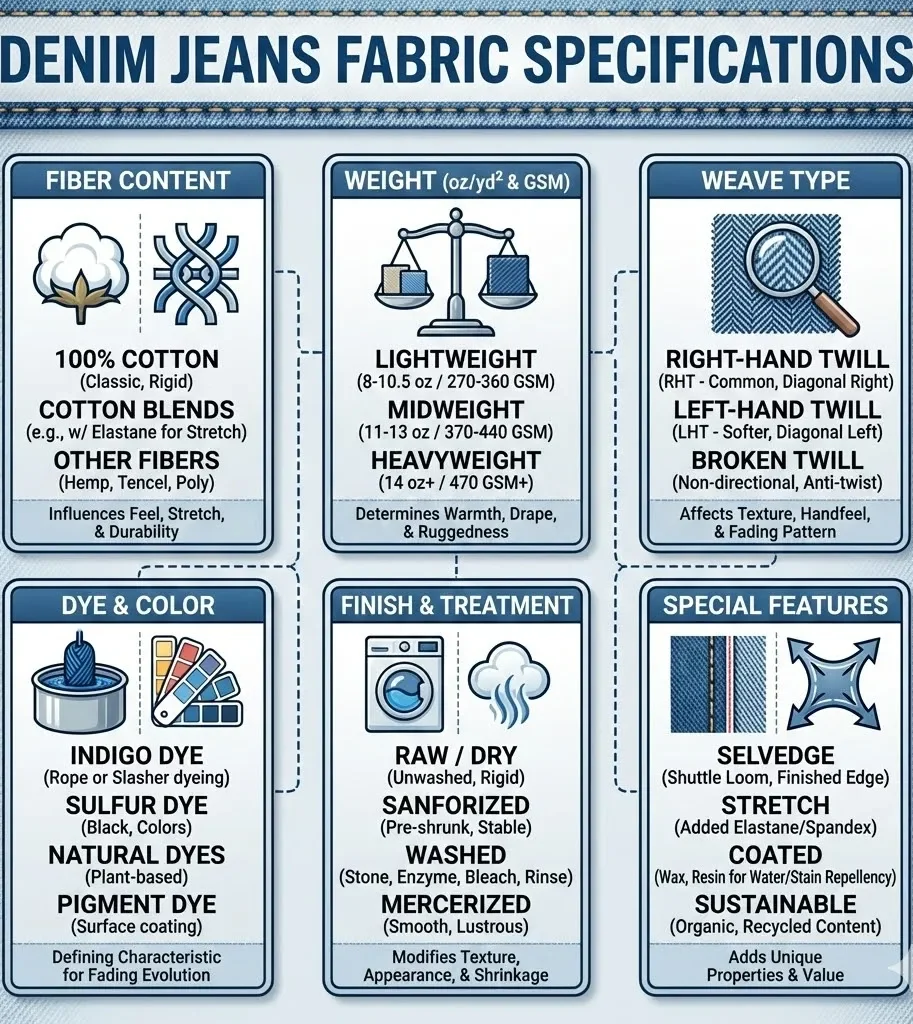
Core Denim Specs Designers Should Lock Early
| Specification | Why It Matters |
|---|---|
| Weight (oz/yd²) | Structure, comfort, durability |
| Fiber content | Stretch, recovery, aging |
| Fabric width | Pattern layout, cutting yield |
| Shrinkage range | Fit accuracy and grading |
| Weave and density | Strength, drape, distortion |
| Finish intent | Final appearance and stability |
Designers often focus on weight first because it is familiar and easy to compare. In practice, fabric width and shrinkage often have a greater impact on final garment results, especially in fitted or multi-size programs.
Weight: A Starting Point, Not a Conclusion
Weight defines how much material is present per unit area, but it does not define how that material behaves. Two denims with the same listed weight can differ dramatically once washed, sewn, or worn.
Weight influences:
- Overall structure and body
- Seasonal suitability
- Perceived substance
But weight alone cannot predict:
- Shrinkage behavior
- Recovery after stretch
- Sewing performance
For sampling, weight should be defined as a range, not a single number. Locking an acceptable window allows suppliers to manage natural variation without compromising intent.
Fiber Composition: Behavior Before Aesthetics
Fiber content determines how denim moves, recovers, breathes, and ages. Confirming fiber composition early is critical because it affects nearly every downstream decision.
| Fiber Type | Design Implication |
|---|---|
| 100% Cotton | Authentic feel, expressive aging, more movement |
| Cotton–Polyester | Improved stability, reduced shrinkage |
| Cotton–Elastane | Comfort, fit recovery, tolerance |
Choosing fiber composition without reference to garment function often forces redesign later. A fitted silhouette developed in 100% cotton may require pattern changes or finishing adjustments that could have been avoided by confirming fiber behavior earlier.
For sampling, fiber percentages should be specified clearly, along with acceptable tolerances. Even small changes in elastane content can alter recovery and long-term shape.
Fabric Width: The Hidden Cost Driver
Fabric width is one of the most underestimated denim specifications in early development. It directly affects cutting efficiency, marker layout, and fabric consumption per garment.
Narrower widths may:
- Increase fabric usage
- Limit pattern placement options
- Raise cost per unit even if price per yard is lower
Wider widths improve yield but may behave differently in terms of tension and shrinkage.
Confirming usable width—not just nominal width—before sampling prevents surprises when patterns are scaled up. This is especially important for garments with wide panels, angled cuts, or multiple size ranges.
Shrinkage: The Specification That Protects Fit
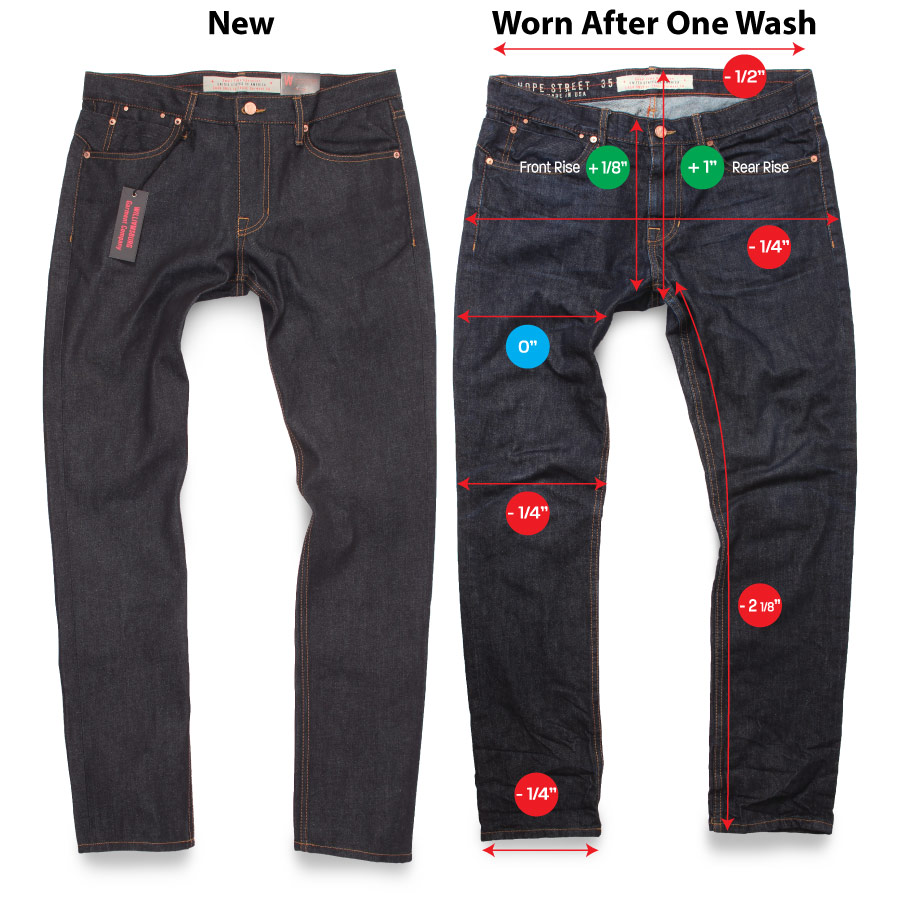
Shrinkage is not a secondary concern. It is a defining characteristic of denim behavior. Without a defined shrinkage expectation, fit accuracy becomes impossible to guarantee.
Shrinkage should be confirmed for:
- Length and width
- Fabric-stage and garment-stage washing
- One wash versus multiple washes
Even sanforized denim can exhibit residual shrinkage. Designers who ignore this reality often discover fit drift only after bulk production.
Confirming acceptable shrinkage ranges before sampling allows patterns to be compensated correctly from the start.
Weave Structure and Density: Stability Beneath the Surface
Weave structure and density determine how denim distributes stress, resists abrasion, and drapes on the body. These specs are often implicit rather than explicit, which is where problems begin.
Two denims with identical weight and fiber content can behave differently because of:
- Yarn twist
- Picks per inch
- Loom tension
Confirming weave type and target density early helps align expectations between design and fabric development. It also explains why a fabric may feel firmer, softer, or more stable than anticipated.
For sampling, designers should at least clarify whether they expect:
- A rigid, supportive structure
- A relaxed, flexible hand
- Controlled stretch with recovery
This guidance helps suppliers propose appropriate constructions.
Finish Intent: Designing the End State
Finishing is not an afterthought. It defines the final state of the denim. Confirming finish intent before sampling ensures that the base fabric is chosen to support—not fight—the intended outcome.
Finish intent includes:
- Rinse, enzyme, stone, or other washes
- Level of softness expected
- Dimensional stability requirements
A denim that looks ideal in greige form may collapse or weaken under aggressive finishing. Conversely, a firm denim may require washing to reach acceptable comfort.
When finish intent is not communicated early, sampling becomes iterative and inefficient.
Why “Standard Denim” Does Not Exist
Designers are often surprised when a denim that appears familiar behaves unexpectedly. This usually happens because “standard” specifications hide critical variables.
Two denims labeled “12 oz, 100% cotton” can differ in:
- Yarn quality and twist
- Weave density
- Loom setup
- Finishing sequence
These differences explain why relying on labels alone leads to inconsistent results. Specifications describe targets, not outcomes.
Confirming the full specification set early reduces the gap between expectation and reality.
How Missing Specs Create Sampling Loops
When key specifications are left undefined, each sample reveals new behavior that requires correction. This leads to repeated cycles of:
- Adjusting patterns
- Changing wash recipes
- Replacing fabric
Each cycle consumes time and budget. More importantly, it erodes confidence in the development process.
Clear specifications do not eliminate iteration, but they make iteration purposeful rather than reactive.
Aligning Specs With Intended Use
Specifications only matter in context. A denim intended for a relaxed overshirt does not need the same shrinkage control as a fitted jean. A heritage product tolerates more movement than a precision-fit garment.
Before sampling, experienced teams document intended use alongside numeric specs. This context allows fabric developers to interpret requirements correctly.
At SzoneierFabrics, development discussions typically begin with how the garment will be worn, washed, and repeated—not just with target weight or color. This approach reduces misalignment later.
Communication Between Design and Fabric Development
Specifications act as a shared language between designers and fabric developers. When that language is incomplete, assumptions fill the gaps.
Clear documentation should include:
- Numeric targets with tolerances
- Descriptions of acceptable behavior
- Reference samples where possible
This reduces interpretation and accelerates development.
Sampling as Validation, Not Exploration
Sampling should validate whether defined specs behave as expected. When specs are unclear, sampling turns into exploration—discovering what the fabric does rather than confirming what it should do.
Exploration has its place, but it is expensive when repeated unnecessarily. Locking core specs early keeps exploration focused and efficient.
Common Oversights to Avoid
Before sampling, designers should ensure they are not overlooking:
- Fabric width limitations
- Shrinkage after finishing
- Stretch recovery expectations
- Sewing implications of thickness
These oversights are common sources of late-stage changes.
Building Confidence Before Commitment
Sampling is the last opportunity to confirm denim behavior before costs escalate. Clear specifications ensure that sampling answers the right questions.
When specs are well defined:
- Samples are more predictive of bulk behavior
- Fewer revisions are required
- Decisions are made with evidence
This confidence carries into production planning and supplier alignment.
The Role of Supplier Feedback
Suppliers who understand denim deeply often flag issues early—if they are given clear specs. Vague requests limit their ability to advise effectively.
Encouraging supplier feedback during spec confirmation improves outcomes. It turns sourcing into collaboration rather than transaction.
Critical Takeaway
Before sampling and development, confirming denim fabric specifications is not administrative detail—it is design discipline. Weight, fiber composition, width, shrinkage, weave, and finish intent collectively define how denim will behave, not just how it will look.
Designers who lock these specifications early reduce guesswork, accelerate development, and protect fit integrity. Those who rely on labels or assumptions often discover problems only when they are expensive to fix.
In denim development, clarity at the beginning saves correction at the end.
How Do Denim Weight and Handfeel Influence Design Decisions and Product Positioning?


Denim design decisions are often discussed in terms of wash, color, or silhouette, but in practice, weight and handfeel quietly shape everything that follows. They influence not only how a garment looks and performs, but also how it is perceived, priced, worn, and remembered. Long before a customer notices fading or details, they register how the denim feels in the hand and on the body. That first tactile impression sets expectations the product must live up to.
Weight defines the physical backbone of a garment—how much structure it can support, how durable it feels, and how it responds to stress. Handfeel defines the emotional response—comfort, approachability, and perceived quality. Together, these two factors act as a design language that communicates intent before a single word of marketing copy is read.
Design decisions made here ripple through the entire product lifecycle.
Weight and Handfeel as Design Language
Denim weight and handfeel are not neutral technical specs. They communicate values. A lightweight, fluid denim suggests ease, modernity, and movement. A firm, dense denim suggests durability, heritage, and seriousness. Consumers may not articulate these cues, but they respond to them instinctively.
For designers, weight and handfeel function like tone of voice. They shape how a garment is interpreted, regardless of cut or branding. Two jackets with the same silhouette can occupy entirely different market positions based on nothing more than how the denim feels when picked up.
Common Denim Weight Ranges and Their Design Impact
| Weight (oz/yd²) | Handfeel Tendency | Design Expression |
|---|---|---|
| 6–8 oz | Soft, fluid | Lightweight, fashion-forward |
| 9–11 oz | Balanced | Everyday wear |
| 12–13 oz | Firm, structured | Classic denim identity |
| 14–16 oz | Rigid, dense | Workwear, statement pieces |
These ranges are not quality tiers. They are design tools. Each range supports different narratives, silhouettes, and user expectations.
At SzoneierFabrics, many designers gravitate toward 11–13 oz because it balances silhouette control with wearable comfort. This range allows denim to feel substantial without becoming punitive for daily use.
Lightweight Denim: Movement and Modernity
Denim in the 6–8 oz range behaves more like a woven shirt fabric than traditional jeans denim. It drapes easily, responds quickly to movement, and feels approachable from the first wear.
Design implications include:
- Softer silhouettes
- Greater emphasis on cut and layering
- Reduced break-in time
This weight range is common in:
- Denim shirts
- Dresses and skirts
- Fashion-driven seasonal pieces
The trade-off is reduced durability and structure. Lightweight denim relies heavily on pattern engineering and finishing to avoid looking limp or disposable. When used intentionally, it signals modernity and ease. When used indiscriminately, it can undermine perceived value.
Midweight Denim: The Everyday Workhorse
Denim in the 9–11 oz range occupies the middle ground. It provides enough structure to hold shape while remaining comfortable across a wide range of body types and climates.
This range supports:
- Casual jeans
- Skirts
- Transitional jackets
Handfeel in this category is often described as “balanced.” It neither resists nor collapses excessively. For designers targeting broad audiences, midweight denim reduces risk. It is forgiving in both fit and wear behavior.
From a product positioning standpoint, midweight denim aligns well with everyday reliability rather than statement-making. It may not feel dramatic, but it performs consistently.
Classic Denim Weights: Structure and Identity
The 12–13 oz range is where denim begins to assert a strong identity. Fabrics feel firm in hand, creases set clearly, and silhouettes remain defined over time.
Designers choose this range when they want to communicate:
- Authenticity
- Durability
- Traditional denim values
This weight supports classic jeans, structured jackets, and heritage-inspired products. The handfeel often requires a short break-in period, which some consumers associate with quality and longevity.
The risk appears when comfort expectations are ignored. If finishing and pattern ease are not adjusted appropriately, garments can feel stiff or unwelcoming—especially in fitted styles.
Heavyweight Denim: Statement and Specialization
Denim above 14 oz is no longer neutral. It makes a statement.
Heavyweight denim communicates:
- Seriousness
- Ruggedness
- Longevity
It is commonly used in workwear, outerwear, and limited-edition pieces. The handfeel is dense and resistant, which appeals to a specific audience but excludes others.
From a design perspective, heavyweight denim demands commitment. Patterns must accommodate reduced flexibility. Finishing must manage stiffness without destroying structure. Product positioning often shifts toward niche or enthusiast markets.
Handfeel Is Not Just Softness
One of the most common misconceptions in denim design is equating handfeel with softness alone. In reality, handfeel is a composite sensation influenced by several factors.
Handfeel includes:
- Surface texture (smooth vs hairy)
- Resistance to bending
- Recovery after compression
A denim can feel soft yet springy, or firm yet flexible. These distinctions matter. A fabric that feels pleasant in hand but fails to recover after sitting may lead to bagging complaints. Conversely, a fabric that feels firm initially but relaxes predictably may deliver better long-term satisfaction.
Designers who judge handfeel only at greige or sample stage often misjudge final behavior.
Handfeel Across the Product Lifecycle
Handfeel changes over time. Washing, wearing, and environmental exposure all reshape how denim feels.
Key questions designers should consider include:
- How does this fabric feel before washing?
- How does it feel after the first wash?
- Does it continue to soften, or does it lose structure?
Some denims reach an ideal balance after washing. Others overshoot, becoming too limp. Without testing across stages, designers risk approving a handfeel that does not survive real use.
Weight, Handfeel, and Emotional Perception
Consumers rarely articulate fabric specs, but they respond emotionally to handfeel. The first touch sets expectations about quality, comfort, and longevity.
- A heavy, firm denim suggests durability and value
- A soft, fluid denim suggests comfort and approachability
Problems arise when perception and reality diverge. A garment that feels premium in hand but becomes uncomfortable in wear creates disappointment. A garment that feels light but performs reliably can exceed expectations.
Designers must decide which emotional promise they are making—and ensure the fabric can keep it.
Weight vs Perceived Quality
Heavier denim is often perceived as higher quality, especially in traditional markets. However, this perception can backfire.
Potential drawbacks include:
- Excessive stiffness
- Long break-in periods
- Sewing challenges that affect finish quality
Some premium brands deliberately choose moderate weights with engineered finishes. By enhancing density and finishing rather than increasing weight, they achieve durability without alienating comfort-focused consumers.
This approach shifts the definition of quality from mass to performance consistency.
Interaction With Silhouette and Fit
Weight and handfeel do not operate independently from silhouette. A relaxed cut can tolerate heavier or stiffer denim. A tailored or fitted cut cannot.
Designers must consider:
- How the fabric supports or resists the intended shape
- Whether handfeel aligns with movement demands
- How weight interacts with seam placement and layering
Using heavyweight denim for a fitted women’s jacket often creates discomfort and fit issues. Using lightweight denim for a structured men’s jacket may cause collapse and loss of authority.
A Real Development Insight
A designer developing a women’s jacket initially selected a 14 oz denim for its “premium feel.” During sampling, the garment felt restrictive and heavy. After switching to a 12 oz denim with higher yarn density, the jacket retained its shape while improving comfort.
An additional benefit emerged: production yield improved slightly due to reduced shrinkage and easier handling. The product moved from niche to broadly wearable without sacrificing design intent.
Weight and Handfeel as Pricing Signals
Fabric choice influences perceived value and pricing tolerance. Heavier or firmer denim often justifies higher price points in the consumer’s mind. Softer, lighter denim must justify value through design, finishing, or versatility.
Designers should align fabric choice with pricing strategy:
- Statement pieces can support heavier, more demanding fabrics
- Core products benefit from approachable handfeel and balanced weight
Misalignment here leads to pricing resistance or margin pressure.
Longevity and Wear Narrative
Weight and handfeel also shape how denim ages. Firmer fabrics tend to develop defined creases and fades. Softer fabrics age more quietly, with less dramatic contrast.
Designers must decide whether aging is part of the product story. If so, weight and handfeel must support that narrative rather than fight it.
Manufacturing Implications Designers Must Consider
Beyond aesthetics, weight and handfeel affect manufacturability.
- Heavier fabrics slow sewing speed
- Thicker fabrics increase seam bulk
- Softer fabrics may stretch during assembly
Ignoring these implications can compromise construction quality, even if the design concept is sound.
Aligning Design, Comfort, and Brand Identity
The most successful denim products align weight and handfeel with brand identity. They do not chase heaviness or softness as abstract ideals. They choose deliberately.
Brands known for heritage lean into structure and firmness. Brands known for lifestyle comfort prioritize balanced handfeel. Both can succeed when choices are intentional.
The Long View: Lifecycle Thinking
Weight and handfeel influence not only first impressions but long-term satisfaction. Denim that feels “right” on day one but degrades quickly erodes trust. Denim that improves with wear builds loyalty.
Designers who think in lifecycle terms—how the garment feels over months, not minutes—make more resilient choices.
Weight sets the foundation. Handfeel fine-tunes the experience.
Together, they shape silhouette, comfort, durability, and perception. Successful denim design treats weight and handfeel as intentional design decisions, not defaults inherited from past collections or supplier suggestions.
When designers choose these parameters with clarity, denim stops being a variable to manage and becomes a tool to express identity. In denim, how it feels is often remembered longer than how it looks.
What Role Does Fabric Width Play in Pattern Design and Yield Planning?
Fabric width is one of the most underestimated variables in denim development. It rarely appears in early sketches, mood boards, or design reviews, yet it quietly determines how patterns are laid out, how much fabric is wasted, and whether a design can be produced efficiently at scale. Many denim programs that look strong on paper encounter friction not because of poor design or fabric quality, but because width behavior was assumed rather than verified.
For designers, fabric width influences silhouette possibilities, seam placement, and size range feasibility. For sourcing and production teams, it directly affects marker efficiency, cutting yield, and cost per garment. Width is not a background technical detail—it is a structural constraint that shapes both creative and commercial outcomes.
Width is invisible in sketches—but very visible in cutting rooms.
Why Width Shapes Design Decisions More Than Expected
Unlike weight or handfeel, fabric width does not announce itself when a swatch is handled. It becomes relevant only when patterns are nested, pieces are aligned to grain, and markers are built. At that moment, width turns from an abstract number into a hard boundary.
Denim garments often use large pattern pieces—front and back panels, long legs, wide hems. These pieces consume width quickly. When usable width is narrower than expected, designers are forced to compromise:
- Panels are split unnecessarily
- Seams are added where none were intended
- Grain alignment is adjusted to fit, sometimes incorrectly
These compromises rarely improve the product. They are responses to a constraint that arrived too late.
Nominal Width vs Usable Width
One of the most common misunderstandings in denim sourcing is confusing nominal width with usable width. Fabric is quoted by nominal width at loom stage, but what matters for pattern cutting is the width that remains usable after finishing and washing.
| Width Type | Typical Value |
|---|---|
| Nominal width | 58–62 in |
| Usable width | 54–60 in |
| Effective width (post-wash) | 52–58 in |
Edge loss occurs due to selvedges, uneven edges, and finishing processes. Heavier denims, in particular, often lose more width after washing because of higher loom tension and greater relaxation when wet.
Designers who assume nominal width during pattern development often discover too late that their effective cutting width is significantly smaller.
Why Usable Width Is the Only Width That Matters
Usable width defines the space available for pattern placement. It determines whether:
- Panels fit side by side
- Grain lines can remain straight
- Size grading can scale efficiently
Nominal width is a starting reference. Usable width is the operational reality. Effective width after washing is the final truth.
Without confirming usable width early, pattern layouts are built on optimistic assumptions.
How Width Affects Pattern Flexibility
Fabric width directly influences how flexible a design can be during pattern development.
Narrower widths may force:
- Additional seams to break large panels
- Reduced panel dimensions
- Increased fabric consumption per garment
Wider widths allow:
- Cleaner, uninterrupted panels
- Better grain alignment
- Higher marker efficiency
These differences affect not only aesthetics, but also labor, material usage, and consistency.
Width and Silhouette Feasibility
Certain silhouettes are width-intensive by nature. Wide-leg pants, oversized jackets, flared skirts, and unisex garments often require generous panel widths.
When width is insufficient:
- Wide silhouettes become constrained
- Designers are pushed toward slimmer alternatives
- Size ranges are reduced to maintain yield
These compromises alter the original design intent. The silhouette does not fail creatively—it fails dimensionally.
Grain Alignment and Fabric Behavior
Denim is a directional fabric. Warp and weft behave differently, and grain alignment is critical for fit and appearance. Adequate width allows pattern pieces to be placed correctly on grain without rotation or distortion.
When width is tight, pattern pieces may be angled slightly to fit. This introduces:
- Twisting after washing
- Uneven drape
- Inconsistent leg lines
These issues often surface only after production, when correction is expensive.
Yield Planning: Where Width Becomes Cost
From a production standpoint, width is one of the primary drivers of yield. Yield determines how much fabric is required per garment, which in turn affects cost.
Key yield factors influenced by width include:
- Marker efficiency
- Fabric waste percentage
- Cutting speed and accuracy
A fabric that is cheaper per yard but narrower can cost more per garment once waste is accounted for.
Marker Efficiency and Width Stability
Marker efficiency measures how well pattern pieces fit within the fabric width. Stable, predictable width allows markers to be optimized and reused.
Unstable width forces:
- Frequent marker adjustments
- Lower efficiency
- Increased waste
| Width Stability | Design Freedom |
|---|---|
| High | Flexible |
| Medium | Moderate |
| Low | Restrictive |
At SzoneierFabrics, width stability is often tested during sampling so designers can adjust patterns early, before markers are locked and production schedules are set.
Width Loss After Washing: A Hidden Variable
Denim often narrows after washing, especially if not fully sanforized. This width loss is frequently overlooked during development.
Post-wash narrowing affects:
- Final garment measurements
- Seam placement accuracy
- Fit symmetry
If patterns are developed on unwashed width, post-wash narrowing can lead to unexpected tightness or imbalance.
Confirming effective width after intended washing is therefore essential before finalizing patterns.
Width and Size Range Feasibility
As size ranges expand, width constraints become more severe. Larger sizes require wider panels, increasing the likelihood of layout conflicts.
When width is insufficient:
- Larger sizes become inefficient to cut
- Grading rules are compromised
- Margins shrink disproportionately on extended sizes
This is why some designs are feasible in small runs but break down at scale. Width was adequate for samples, but not for the full size range.
Selvedge Denim and Width Constraints
Selvedge denim introduces an additional width consideration. Narrow loom widths reduce usable cutting space significantly.
While selvedge denim offers construction appeal, it also:
- Reduces marker efficiency
- Increases fabric consumption
- Limits silhouette options
Selvedge works best for straight-leg, simple-panel designs. It often conflicts with wide-leg, fitted, or multi-gender patterns.
A Practical Example From Development
A wide-leg denim pant design initially met all aesthetic goals. During marker planning, efficiency targets were missed because the fabric narrowed more than expected after washing. The effective width dropped below what the pattern required.
Rather than altering the silhouette, the team switched to a sanforized denim with guaranteed usable width. The design was preserved, yield improved, and production risk was reduced.
The issue was not design ambition. It was width behavior.
Why Designers Often Learn About Width Too Late
Design and sourcing teams often work in parallel rather than sequence. Patterns are finalized before fabric behavior is fully understood. Width is confirmed only when cutting begins.
This timing mismatch creates friction. Design changes are requested when schedules are tight and budgets are committed.
Moving width validation earlier in the process prevents this bottleneck.
Testing Width During Sampling
Width should be evaluated during sampling, not after.
Effective width testing includes:
- Measuring width before washing
- Measuring width after intended washing
- Checking edge stability and distortion
These measurements provide a realistic basis for pattern layout and yield planning.
Width as a Design Constraint, Not a Limitation
When understood early, width becomes a design constraint that can be worked with creatively. Designers can:
- Adjust panel proportions intentionally
- Plan seam placement strategically
- Choose silhouettes that align with fabric behavior
When ignored, width becomes a limitation that forces reactive compromises.
Communication Between Design and Production
Width sits at the intersection of design and production. Clear communication ensures both sides work from the same assumptions.
Designers should ask:
- What is the guaranteed usable width?
- How stable is width after washing?
- How does width vary by lot?
Production teams should share:
- Marker efficiency data
- Waste percentages
- Issues encountered in previous runs
This exchange aligns expectations and prevents surprise adjustments.
Cost Implications Beyond Fabric Price
Width influences cost in indirect but significant ways.
- Narrower widths increase cutting labor
- Lower yield increases fabric consumption
- Frequent marker changes slow production
These costs are rarely visible at sourcing stage but accumulate quickly.
Evaluating width early allows buyers to assess true cost, not just price per yard.
A Design-First Mindset Shift
Instead of asking, “Is the fabric wide enough?”, experienced designers ask:
“Will the finished, washed width support my pattern consistently across all sizes?”
This shift reframes width from a checkbox into a performance metric.
Width and Long-Term Repeatability
Consistency across seasons depends on width repeatability. If width drifts between lots, patterns that once fit efficiently may no longer do so.
Suppliers who monitor and document width stability provide a significant advantage for repeat programs.
Fabric width quietly shapes pattern design, yield planning, and production efficiency. Nominal width is not enough. Usable and post-wash width define what is actually possible.
Designers who understand width early protect their silhouettes. Buyers who validate width behavior protect margins. Teams that treat width as a core specification rather than a footnote avoid last-minute compromises and production inefficiencies.
In denim development, width does not draw attention—but it draws the line between intention and execution.
How Should Designers Evaluate Denim Performance During Sampling and Prototyping?

For designers, sampling and prototyping are the last low-risk moments in a denim project. Once bulk production begins, fabric behavior is no longer a theory—it becomes inventory, margin, and reputation. Yet many denim programs still rely too heavily on visual approval and spec compliance, assuming that if a fabric looks right and meets basic numbers, it will perform as expected.
Denim does not work that way. It is a tension-loaded, wash-reactive, movement-responsive material. Its true behavior only appears when it is stressed—cut into shape, sewn under tension, washed repeatedly, worn for hours, and handled without care. Sampling is not a formality. It is an investigation.
If denim is not stressed during sampling, it will surprise you later.
Turning Samples Into Learning Tools
A sample should never exist just to confirm color or silhouette. Its real value lies in what it teaches designers about limits—how far the fabric can be pushed before it fails, distorts, or disappoints.
Effective sampling treats every prototype as a controlled experiment:
- What changes after washing?
- Where does the fabric relax first?
- Which seams show strain?
- How does handfeel evolve with wear?
When sampling is approached this way, denim problems surface early—when they are still easy to solve.
What Performance Really Means in Denim
In denim, performance is often misunderstood as durability alone. In reality, performance is multidimensional and tied directly to user experience over time.
Key performance dimensions include:
- Shape retention after hours of wear
- Recovery at stress points such as knees, elbows, and seat
- Seam behavior after washing and drying
- Surface evolution, including fading, creasing, and texture change
A denim that survives abrasion tests but bags at the knees after one afternoon has failed in real use. A denim that feels great on the rack but collapses after two washes has failed silently.
Designers must therefore evaluate performance in motion, not in isolation.
Core Tests Designers Should Run During Sampling
Sampling becomes meaningful when it includes structured stress testing. These tests do not require complex laboratories—many can be done in studio environments—but they must be intentional.
| Test | What It Reveals | Why It Matters |
|---|---|---|
| Wash and dry cycles | Shrinkage, handfeel shift | Fit accuracy |
| Wear simulation | Bagging, creasing | Longevity |
| Seam testing | Slippage, puckering | Construction limits |
| Edge behavior | Fraying, distortion | Finishing needs |
| Pattern layout test | Width stability | Yield confidence |
At SzoneierFabrics, denim sampling typically includes at least two wash cycles, because many denims continue to relax and change more in the second wash than in the first. Approving after one wash often creates false confidence.
Wash Testing: Where Assumptions Break
Washing is the fastest way to expose denim truth. Indigo redistributes, yarns relax, finishes activate, and hidden tensions are released.
Designers should always compare:
- Measurements before washing
- Measurements after first wash
- Measurements after second wash
Important observations include:
- Is shrinkage consistent in length and width?
- Does the fabric stabilize or continue moving?
- Does handfeel improve, or does structure collapse?
Many denim failures trace back to underestimating progressive change. A fabric that looks stable after one wash may continue shrinking or softening beyond acceptable limits.
Wear Simulation: Stress Without Waiting Months
Designers do not need months of wear to reveal performance issues. Controlled wear simulation can surface problems quickly.
Simple but effective methods include:
- Sitting repeatedly for extended periods
- Bending knees or elbows in cycles
- Wearing samples for a full workday
These actions concentrate stress at predictable points. Designers should look for:
- Knee bagging or elbow growth
- Permanent creases that do not recover
- Distortion around pockets and seams
Stretch denim, in particular, often looks perfect until worn. Recovery issues rarely appear on the hanger.
Seam Testing: Where Fabric Meets Reality
Seams are stress concentrators. They reveal whether denim and construction are compatible.
Key seam behaviors to evaluate include:
- Slippage under tension
- Puckering after washing
- Distortion at curved seams
Designers should examine seams not just visually, but physically—by pulling, bending, and compressing the garment.
A fabric that performs well as yardage may fail at seams if density, thickness, or stretch are mismatched to stitch type and thread.
Edge Behavior and Finishing Needs
Raw edges, hems, and seam allowances often reveal weaknesses early. Fraying, twisting, or distortion indicate whether additional finishing or reinforcement is required.
Edge behavior matters for:
- Longevity
- Visual cleanliness
- Production efficiency
Ignoring edge behavior during sampling often leads to reactive fixes in bulk production, where changes are costly.
Pattern Layout Testing: Width in Action
Performance is not only about wear—it is also about manufacturability. During sampling, designers should test whether patterns lay out efficiently within the fabric’s usable width.
This reveals:
- Width stability after washing
- Marker efficiency
- Whether silhouettes scale across sizes
A denim that behaves beautifully on the body but narrows unpredictably after washing can undermine yield and cost targets.
Evaluating Denim in Context, Not Isolation
One of the most common sampling mistakes is evaluating denim as fabric rather than as a garment system. Denim behaves differently once stitched, especially when combined with specific construction choices.
Key contextual variables include:
- Stitch density and tension
- Thread type and thickness
- Seam construction method
A fabric that performs well in flat tests may struggle when constrained by stitching. This is why designers must test denim as sewn garments, not just as yardage.
Stitch Density and Recovery Interaction
High stitch density can restrict fabric movement and exaggerate recovery problems. Low stitch density may allow excessive movement and distortion.
Sampling should explore whether stitch density complements or conflicts with fabric elasticity and density. Adjustments here often solve issues that fabric changes cannot.
Human-Centered Evaluation: Trusting Trained Senses
Not all valuable insights come from numbers. Designers’ tactile observations are critical, especially when informed by experience.
Important questions to ask during handling include:
- Does the denim feel heavier or lighter after washing?
- Does it crease attractively or awkwardly?
- Does it recover after being folded overnight?
- Does it feel “alive” or dead in the hand?
These subjective cues often predict customer response more accurately than lab data alone.
Watching How Denim Ages, Even Early
Even short sampling periods can reveal how denim will age. Early indicators include:
- How indigo abrades at stress points
- Whether creases sharpen or blur
- Whether surface texture becomes richer or flatter
Designers should decide whether this early aging aligns with the product story. If not, fabric or finishing adjustments are needed.
Comparing Samples Side by Side
One of the most effective evaluation techniques is comparative sampling. Testing two similar denims side by side under identical conditions quickly reveals differences.
Designers should compare:
- Different elastane percentages
- Different densities at the same weight
- Different finishing sequences
Small differences often produce outsized effects in wear behavior.
A Real Development Lesson
A brand approved a stretch denim based on fiber composition, weight, and lab stretch data. The fabric met all specifications. However, during garment sampling, knee bagging appeared within hours of wear.
Instead of changing silhouette or construction, the team adjusted elastane content by just 0.5% and re-tested. Recovery improved dramatically without affecting comfort or appearance.
Sampling caught what specifications alone could not.
Sampling as Risk Management, Not Delay
Some teams treat extensive sampling as a slowdown. In reality, it is a form of risk management.
Sampling identifies:
- Fabric-pattern mismatches
- Finishing vulnerabilities
- Comfort issues before market exposure
The cost of extra samples is small compared to the cost of returns, markdowns, or damaged brand trust.
Documenting What Sampling Reveals
Sampling insights should not remain informal. Designers should document:
- Observed changes after each wash
- Wear issues and their locations
- Adjustments made and outcomes
This documentation builds institutional knowledge and improves future projects.
Collaboration With Suppliers During Sampling
Sampling is also where supplier expertise matters most. Suppliers who understand denim systems can interpret test results and suggest targeted adjustments.
Clear feedback loops during sampling help align expectations and avoid guesswork.
Knowing When Denim Has “Passed”
A denim is ready for production not when it looks right, but when:
- Its behavior is predictable
- Its weaknesses are understood and accepted
- Its performance aligns with intended use
Passing does not mean perfection. It means no surprises.
The Emotional Side of Performance
Ultimately, denim performance is judged by wearers, not labs. Comfort, confidence, and trust emerge from consistent behavior over time.
Sampling is where designers protect that relationship.
The Takeaway
Sampling and prototyping are not checkpoints—they are stress tests. Designers should evaluate denim by washing it, wearing it, sewing it, and handling it as the final garment will live.
Performance in denim is revealed through use, not appearance. When sampling is used as a learning tool rather than a formality, denim becomes predictable instead of problematic.
In denim design, the fabric will always tell the truth. Sampling is when you choose whether to listen.
Which Denim Washing and Finishing Options Affect Final Appearance and Stability?

Washing and finishing are the decisive stages where denim either becomes a stable, wearable product or turns into a source of inconsistency and returns. Designers often invest significant time selecting the right fabric weight, fiber blend, and construction, only to see those decisions diluted—or completely undone—by poorly aligned finishing choices. In reality, washing and finishing are not cosmetic afterthoughts. They are mechanical and chemical processes that permanently reshape denim’s dimensions, surface, and long-term behavior.
Every wash, enzyme, stone, or stabilization step changes how fibers relax, how yarns shift, and how seams respond under tension. Once those changes occur, they cannot be reversed. That is why experienced teams treat finishing as a form of engineering rather than decoration.
Finishing is not decoration—it’s engineering.
How Finishes Reshape Denim Behavior
Denim leaves the loom under tension. Yarns are stretched, compressed, and locked into place during weaving and dyeing. Washing and finishing release that tension in controlled or uncontrolled ways, depending on how they are executed.
Finishing affects denim on several levels at once:
- Visual appearance, including color depth and fade contrast
- Dimensional stability, including shrinkage and width loss
- Handfeel, from crisp to broken-in
- Strength, especially at fiber and seam level
A finish that enhances one aspect often compromises another. Understanding these trade-offs is essential for making intentional decisions.
Common Denim Washing Methods and Their Effects
Different washing methods exist to achieve different visual and tactile goals. None is inherently superior. Each comes with specific stability implications that designers must anticipate.
| Finish Type | Visual Effect | Stability Impact |
|---|---|---|
| Raw (unwashed) | Crisp, dark | High shrinkage risk |
| Rinse wash | Clean, minimal fade | Moderate stability |
| Enzyme wash | Soft, worn-in | Reduced strength |
| Stone wash | Vintage fade | Higher stress |
| Garment wash | Final look control | Variable sizing |
The mistake many teams make is choosing a finish for its look without fully accounting for its structural consequences.
Raw Denim: Authentic but Unforgiving
Raw denim is woven, dyed, and finished only minimally. It retains most of the loom tension and has not been pre-shrunk or softened.
From an appearance standpoint, raw denim offers:
- Deep indigo color
- Sharp creases
- High fade potential
From a stability standpoint, it presents challenges:
- Significant shrinkage after first wash
- Width loss that varies by lot
- Stiff handfeel that changes unpredictably
Raw denim requires precise shrinkage planning. Pattern grading must account for post-wash movement, and fit tolerance must be generous enough to absorb variation. Without that planning, size consistency becomes difficult to control.
Rinse Wash: The Controlled First Step
A rinse wash is a light wash intended to remove surface dye and relax fabric slightly without dramatically altering appearance.
Key characteristics include:
- Minimal color loss
- Slight softening
- Partial shrinkage removal
Rinse washing is often used when designers want to preserve a clean, dark look while reducing extreme post-purchase shrinkage. It offers a balance between authenticity and predictability, making it popular for everyday denim programs.
Enzyme Wash: Comfort With a Cost
Enzyme washing uses cellulase enzymes to break down surface fibers, creating a softer handfeel and a gently worn look.
Benefits include:
- Immediate softness
- Improved comfort
- Reduced break-in time
However, enzymes do not distinguish between unwanted fuzz and structural fibers. Overuse can lead to:
- Reduced tensile strength
- Increased pilling over time
- Shortened garment lifespan
Designers should treat enzyme washing as a precision tool, not a default step. Controlled exposure times and concentrations are critical.
Stone Wash: Visual Impact, Structural Stress
Stone washing creates high-contrast, vintage fades through mechanical abrasion. Pumice stones physically strike the fabric during washing.
Visual advantages include:
- Distinct fading
- Strong vintage character
- Broken-in appearance
Structural risks include:
- Fiber damage
- Seam stress
- Inconsistent results across garments
Stone washing is visually powerful but mechanically aggressive. It must be paired with robust fabric construction and reinforced seams to avoid premature failure.
Garment Washing: Control With Variability
Garment washing occurs after the item is fully sewn. This allows designers to control the final appearance precisely, but it introduces variability in sizing and shape.
Garment washing can cause:
- Uneven shrinkage across panels
- Twisting along seams
- Size drift between batches
While garment washing is essential for certain looks, it requires tight process control and generous tolerances. Without them, consistency becomes difficult to maintain.
Sanforization: The Stability Anchor
Sanforization is a fabric-stage mechanical process that compresses denim under controlled moisture, heat, and pressure. Its purpose is to reduce residual shrinkage before cutting.
| Attribute | Result |
|---|---|
| Residual shrinkage | ≤2–3% |
| Width stability | High |
| Handfeel | Slightly firmer |
For designers prioritizing fit consistency and scalable production, sanforized denim is often the safest foundation. It does not eliminate all movement, but it makes that movement predictable.
Sanforization is especially valuable for:
- Tailored fits
- Multi-size programs
- Repeat production styles
Why Sanforization Does Not Replace Washing
Sanforization stabilizes fabric dimensions but does not replicate the aesthetic effects of washing. Designers still need to plan subsequent washes to achieve desired softness and appearance.
The key is sequencing: stabilization first, appearance second.
Finish Order Matters More Than Most Expect
The sequence in which finishing steps are applied can dramatically alter outcomes. Two programs using the same fabric and same washes can produce very different results if the order changes.
| Sequence | Typical Result |
|---|---|
| Wash → dry → cut | Stable |
| Cut → wash → dry | Size variation |
| Dye → wash → soften | Color movement |
When washing occurs before cutting, fabric behavior is largely locked in. When washing occurs after cutting, each garment reacts slightly differently based on seam placement and construction tension.
Designers who specify what happens when avoid many late-stage issues.
Fabric-Stage vs Garment-Stage Finishing
Where finishing happens is as important as what finishing happens.
Fabric-stage finishing offers:
- Greater dimensional stability
- More predictable cutting
- Higher yield consistency
Garment-stage finishing offers:
- Precise visual control
- Unique, piece-specific effects
Many successful programs combine both: fabric-stage stabilization followed by controlled garment-stage aesthetic washes.
Shrinkage Is Not the Only Stability Issue
Designers often focus on shrinkage percentages, but stability includes more subtle changes:
- Width narrowing
- Skewing or twisting
- Differential shrinkage between panels
A denim may meet length shrinkage targets but still twist after washing, affecting leg alignment and seam appearance.
Finishing and Seam Behavior
Finishing processes place additional stress on seams. Abrasion, moisture, and heat all test seam integrity.
Issues that often surface during finishing include:
- Seam puckering
- Stitch popping
- Thread breakage
These issues are not purely construction problems. They often reflect a mismatch between fabric behavior and finishing intensity.
Sustainability-Driven Finishes and Their Implications
Modern denim finishing increasingly incorporates low-impact methods such as:
- Ozone fading
- Laser treatments
- Low-water washing systems
These techniques reduce environmental impact and can improve consistency. However, they still require careful calibration. Reduced water does not automatically mean reduced fabric stress.
Designers should evaluate whether sustainability-driven finishes maintain the desired handfeel and longevity, not just environmental metrics.
A Practical Example From Development
A jacket program struggled with sleeve length variation across production batches. Initial assumptions blamed fabric inconsistency. In reality, the issue stemmed from garment-stage washing applied after cutting.
By moving the wash process to the fabric stage and cutting stabilized yardage, sleeve length variation dropped sharply. The fabric did not change. The sequence did.
Same denim, different result.
Why Finishing Decisions Often Undermine Good Design
Finishing is sometimes delegated late in development or treated as a production detail. When that happens, it can quietly undermine design intent.
Common pitfalls include:
- Choosing aggressive washes for delicate constructions
- Applying enzyme washes to already lightweight fabrics
- Ignoring cumulative effects of multiple finishing steps
Each finishing choice compounds the previous one. Without a holistic view, the final result drifts away from the original concept.
Integrating Finishing Into Design Planning
Designers should consider finishing at the same time as fabric selection and pattern development.
Key questions to ask early include:
- Will this denim be washed at fabric or garment stage?
- How much shrinkage can the design tolerate?
- Does the silhouette rely on crispness or softness?
Answering these questions early prevents reactive fixes later.
Testing Finishes During Sampling
Finishing should be tested during sampling, not approved in theory. Sample garments should undergo the exact finishing sequence planned for production.
This reveals:
- Real shrinkage and distortion
- Changes in handfeel
- Seam resilience
Skipping this step often leads to surprises during bulk production.
Communicating Finishing Specifications Clearly
Vague instructions such as “soft wash” or “light vintage look” invite interpretation. Clear specifications reduce risk.
Effective documentation includes:
- Wash type and duration
- Chemical concentrations
- Mechanical intensity
- Target shrinkage ranges
Clear communication aligns design intent with production reality.
Long-Term Stability and Customer Experience
Customers experience denim after finishing—not before. How a garment feels, fits, and ages is the result of finishing decisions.
Finishes that prioritize immediate visual impact at the expense of stability often lead to:
- Returns
- Fit complaints
- Reduced wear life
Designers who balance aesthetics with engineering build trust and repeat purchases.
Denim washing and finishing define final appearance and stability more than almost any other stage. These processes release tension, reshape fibers, and lock in behavior that cannot be undone.
Designers who treat finishing as engineering—not decoration—gain control over consistency, fit, and longevity. Those who leave finishing decisions until late in development risk undoing months of careful work.
In denim, the wash is not the end of the process. It is the moment where intention becomes reality.
What Common Development Risks Occur When Sourcing Denim by the Yard, and How Can They Be Avoided?

Sourcing denim by the yard gives designers freedom: freedom to test, to cut full patterns, to wash repeatedly, and to simulate real wear long before bulk production begins. But that freedom also introduces risk. Yardage exposes denim behavior in ways swatches never will, and many development problems arise not because the fabric is poor, but because its behavior was assumed rather than verified.
In practice, most denim failures traced back to yardage sourcing are not material failures. They are process failures—missed tests, rushed approvals, or misplaced confidence in specifications alone. Denim is a dynamic system. It stretches, relaxes, shrinks, twists, and evolves. When those changes are not explored early, they surface later as costly surprises.
Most denim failures are process failures, not material failures.
Where Denim Development Goes Wrong—and How to Fix It
Understanding risk in denim development is less about identifying “bad fabric” and more about recognizing where assumptions quietly replace testing. The following risks appear repeatedly across denim programs, regardless of brand size or market position.
Risk 1: Approving Denim on Appearance Alone
Denim almost always looks best before it is stressed. Fresh off the roll, it appears crisp, evenly dyed, and structurally sound. This visual appeal often creates a false sense of security.
When denim is approved purely on appearance, critical performance questions remain unanswered.
| Missed Test | Consequence |
|---|---|
| No wash test | Unexpected shrinkage |
| No wear simulation | Bagging at knees or seat |
| No seam test | Puckering or slippage |
Visual approval confirms only one thing: how denim looks in a static state. It says nothing about how it will behave after washing, wearing, or sewing.
Avoidance: Treat yardage as a test environment, not a confirmation step. Wash it, cut it, sew it, and stress it before approval. Denim that survives these steps rarely surprises later.
Why Appearance Is Especially Misleading in Denim
Indigo dye masks early warning signs. Yarn tension, latent shrinkage, and recovery issues are invisible until moisture, heat, and movement activate them. A denim that appears stable can change dramatically after the first wash.
Designers who rely on visual cues alone often discover issues only after garments are finished—when options are limited.
Risk 2: Ignoring Usable Width After Finishing
Fabric width is one of the most underestimated risks in denim development. Denim is quoted by nominal width, but patterns are cut from usable width after finishing and washing.
| Planning Basis | Outcome |
|---|---|
| Nominal width | Yield loss |
| Finished usable width | Stable planning |
Heavier denims, in particular, tend to narrow after washing due to loom tension release. If patterns are developed on nominal width assumptions, layouts may no longer fit efficiently once the fabric is finished.
This leads to:
- Increased fabric waste
- Forced seam additions
- Last-minute silhouette compromises
Avoidance: Measure usable width after the intended finishing process during sampling. Build markers and patterns based on that reality, not loom-stage numbers.
Why Width Risk Is Often Discovered Too Late
Width issues usually surface during marker planning or cutting—not during design reviews. By that stage, silhouettes are often locked, and changes ripple across cost, fit, and delivery schedules.
Early width validation prevents downstream conflict between design intent and production reality.
Risk 3: Treating “Similar Denim” as Interchangeable
One of the most common—and costly—assumptions in denim development is that two fabrics with similar specs will behave the same.
Two denims labeled “12 oz, 100% cotton” can still differ significantly.
| Hidden Variable | Impact |
|---|---|
| Yarn twist | Shrinkage and recovery |
| Weave density | Drape and strength |
| Finish sequence | Stability |
Small differences in yarn construction or finishing order can produce large differences in performance. Assuming interchangeability often leads to silent drift in fit and behavior.
Avoidance: Re-test whenever a variable changes. If the mill, yarn source, loom, or finishing sequence changes, denim should be treated as new—regardless of how similar the specs appear.
The False Security of Specifications
Specifications describe intent, not outcome. They do not capture how fibers interact under stress or how finishes activate movement. Denim performance lives between the lines of a spec sheet.
Experienced teams treat specs as a starting point, not proof of equivalence.
Risk 4: Underestimating Wash and Wear Interaction
Many denim programs test shrinkage but overlook wear-related deformation. Stretch, recovery, and long-term shape retention often matter more to consumers than shrinkage alone.
Without wear simulation, designers may miss:
- Knee bagging
- Seat growth
- Loss of silhouette after hours of use
These issues rarely appear in flat fabric tests.
Avoidance: Include basic wear simulation during sampling. Sitting, bending, and repeated movement over a short period can reveal problems quickly—long before customers do.
Why Wear Testing Is Often Skipped
Wear testing is sometimes dismissed as subjective or time-consuming. In reality, it is one of the fastest ways to surface real-world issues. Even a single day of controlled wear can reveal recovery problems that lab tests miss.
Risk 5: Rushing Development Timelines
Compressed timelines often force teams to skip steps they know are important. Wash tests are reduced. Wear testing is postponed. Pattern adjustments are deferred.
This creates a false sense of speed.
In practice, skipping early tests almost always leads to:
- Re-sampling
- Production delays
- Fit corrections during bulk
Avoidance: Front-load testing. It may extend early development slightly, but it shortens total project time by reducing rework.
Why Early Testing Saves Time Overall
Problems discovered early are design problems. Problems discovered late become production problems. The cost, complexity, and stress increase exponentially the later an issue appears.
Risk 6: Evaluating Denim as Fabric, Not as a Garment
Denim behaves differently once it is cut and sewn. Seams introduce tension. Stitching restricts movement. Panels interact.
A fabric that performs well as yardage may fail as a garment.
Common garment-stage issues include:
- Seam puckering after washing
- Distortion at curved seams
- Uneven recovery across panels
Avoidance: Always evaluate denim in garment form during sampling. Fabric tests alone are not enough.
The Seam as a Stress Test
Seams concentrate stress. They are where denim reveals incompatibility between fabric, thread, and construction. Ignoring seam behavior during sampling leaves a major risk unaddressed.
Risk 7: Poor Documentation of What Was Learned
Sampling often generates valuable insights—but those insights are lost if they are not documented. Teams move on, and the same issues reappear in future projects.
Without documentation:
- Knowledge remains personal, not institutional
- Decisions are repeated instead of refined
- Inconsistencies creep into repeat orders
Avoidance: Record key findings during sampling: shrinkage ranges, width loss, recovery behavior, and successful adjustments.
Why Documentation Protects Repeatability
Denim programs often repeat season after season. Without clear records, subtle changes in fabric behavior go unnoticed until performance degrades.
Documentation creates a baseline that protects consistency over time.
Risk 8: Misalignment Between Design Intent and Fabric Behavior
Sometimes denim fails not because it is flawed, but because it is misused. A fabric chosen for visual appeal may not support the intended silhouette or fit philosophy.
Examples include:
- Lightweight denim used for structured tailoring
- High-stretch denim used for oversized silhouettes
- Rigid denim used for body-hugging fits
Avoidance: Align fabric behavior with how the garment is meant to be worn. Ask early whether the denim supports movement, structure, and aging expectations.
A Practical Mindset Shift That Prevents Risk
Designers who consistently avoid denim development failures share one habit: they ask difficult questions early.
Instead of asking, “Does this denim look right?”, they ask:
- Where could this fail?
- What happens after washing twice?
- How does this behave under tension?
- What assumptions am I making?
Designers who ask “What could fail here?” early almost never face surprises later.
Yardage as a Risk-Reduction Tool
Ironically, sourcing denim by the yard is often seen as riskier than working from swatches. In reality, yardage is what reveals risk while it is still manageable.
Yardage allows teams to:
- Test real pattern layouts
- Observe post-wash width behavior
- Simulate wear realistically
Used properly, yardage reduces uncertainty rather than increasing it.
The Role of Supplier Partnership
Suppliers who understand denim as a system—not just a fabric—help identify risks early. Clear communication about loom behavior, finishing sequences, and historical performance can prevent false assumptions.
At experienced suppliers, yardage sampling is treated as collaborative problem-solving, not a transactional step.
Cost of Avoiding These Risks vs Cost of Ignoring Them
Avoiding these risks requires:
- Additional sampling
- More testing
- Slower initial approval
Ignoring them often results in:
- Returns
- Markdown
- Damaged brand trust
The cost difference is not even close.
Denim sourced by the yard is not inherently risky. What creates risk is how that yardage is evaluated. Assumptions, shortcuts, and rushed decisions turn flexible fabric into inflexible problems.
When designers test early, document clearly, and align fabric behavior with real use, denim becomes predictable. When they do not, denim becomes a source of constant correction.
In denim development, success is rarely about finding perfect fabric. It is about building a process that allows imperfection to be understood, managed, and designed around—before it reaches the customer.
How Can Designers and Product Developers Communicate Denim Requirements Clearly for Repeatable Production?
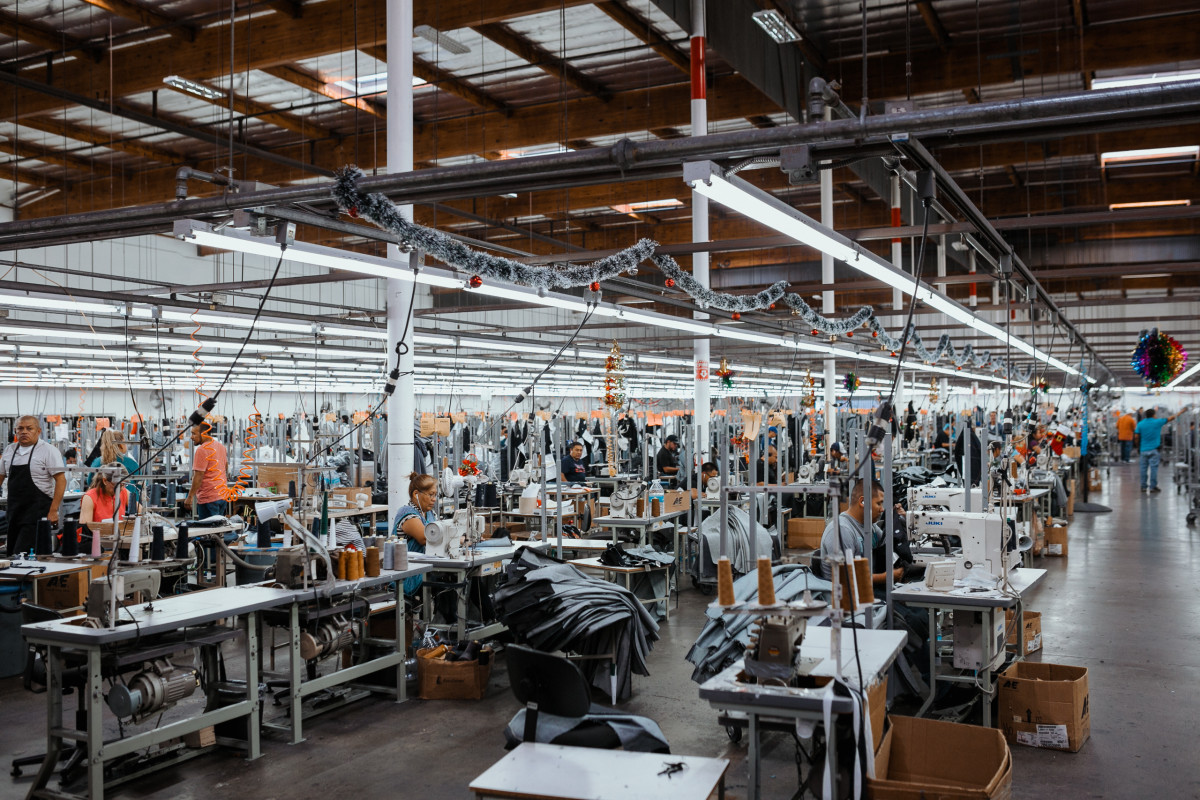
In denim development, most consistency problems do not come from poor fabric quality or factory capability. They come from unclear communication. When creative intent lives only in a designer’s head, or when requirements are expressed through vague adjectives rather than measurable behavior, production inevitably drifts. Each team interprets the denim slightly differently, and what reaches the market is a diluted version of the original idea.
Repeatable production does not require more control—it requires clear translation. Designers and product developers must communicate not only what denim should look like, but how it should behave before and after washing, during wear, and across multiple production runs. Denim is a system, and systems only repeat well when expectations are explicit.
Repeatability is built on clarity, not memory.
Turning Design Intent Into Production Consistency
Creative intent is often expressed emotionally: how a garment should feel, how it should age, how it should make the wearer move. Production reality, however, operates on numbers, tolerances, and processes. The role of communication is to bridge these two worlds without losing meaning.
When communication fails, teams rely on assumptions:
- Factories assume what “soft” means
- Pattern makers assume how much shrinkage is acceptable
- Production teams assume wash intensity
Each assumption introduces variation. Clear communication removes guesswork and replaces it with shared understanding.
Move From Adjectives to Parameters
Adjectives are useful for inspiration, but they are dangerous as instructions. Words like soft, firm, authentic, or premium mean different things to different people—and even different departments within the same company.
The solution is not to eliminate creative language, but to anchor it to technical references.
| Creative Term | Technical Reference |
|---|---|
| “Soft but structured” | 11–12 oz, enzyme wash |
| “Rigid feel” | 14 oz+, raw or rinse |
| “Stable fit” | Sanforized, ≤3% shrinkage |
This translation step is critical. It allows designers to keep expressive language while giving production teams something concrete to execute against.
Why Parameters Reduce Sampling Loops
When denim requirements are described only in words, sampling becomes iterative guesswork. Each round adjusts based on subjective feedback, often without clear direction.
By contrast, parameter-based communication allows teams to:
- Identify whether an issue is weight, density, or finish
- Adjust a specific variable instead of redoing everything
- Reach alignment faster
Clear parameters turn sampling from trial-and-error into controlled refinement.
Define How Denim Should Behave, Not Just What It Is
Many development briefs list fiber composition and weight, then stop. While these are important, they do not fully describe performance.
Designers should communicate behavioral expectations, such as:
- How much recovery is acceptable after sitting
- How the fabric should feel after two washes
- Whether aging should be high-contrast or uniform
These expectations guide technical decisions that specs alone cannot capture.
Use Reference Samples as a Shared Language
Physical references are one of the most powerful communication tools in denim development. They remove ambiguity and align perception instantly.
Effective references include:
- Approved fabrics from previous seasons
- Washed garment samples showing desired outcome
- Comparison swatches illustrating what is not acceptable
At SzoneierFabrics, reference-based discussions often reduce sampling rounds because everyone is responding to the same physical reality, not abstract descriptions.
Why References Matter More Than PDFs
Written specifications are essential, but they cannot fully capture tactile qualities such as handfeel, drape, or surface character. A reference sample communicates these instantly.
When teams rely solely on documents:
- Interpretations vary
- Memory fades between seasons
- New team members lack context
Reference samples preserve intent across time and personnel changes.
Document What Matters, Not Everything
Documentation is only useful if it captures the variables that actually influence outcomes. Overly complex documents often obscure what is important.
Effective denim development records focus on:
- Final approved fabric specs
- Measured shrinkage results
- Exact wash and finishing methods
- Pattern assumptions tied to fabric behavior
This documentation becomes the anchor for future production, not a formality.
Protecting Reorders From Drift
One of the most common denim issues appears not in first production, but in reorders. Slight changes accumulate—different mill lots, adjusted finishes, new technicians—and the product slowly drifts away from the original.
Clear documentation protects against this by defining:
- Acceptable tolerance ranges
- Non-negotiable characteristics
- Reference points for comparison
Without records, teams rely on memory. Memory is unreliable in production environments.
Specify Ranges, Not Absolutes
Natural materials vary. Denim will never be perfectly identical across lots. Communicating requirements as rigid absolutes often creates friction without improving outcomes.
Instead, designers should specify acceptable ranges.
Examples include:
- Shrinkage: ±1%
- Fabric weight: ±0.5 oz
- Width loss after wash: defined maximum
Ranges acknowledge reality while still controlling variation.
Align Fabric, Pattern, and Finish Assumptions
Many communication breakdowns occur because different teams operate on different assumptions.
For example:
- Designers assume fabric-stage washing
- Pattern makers assume garment-stage washing
- Production assumes flexibility
Clear communication should explicitly state:
- When washing occurs
- Which measurements are taken before and after washing
- Which stage defines final fit
This alignment prevents silent contradictions that only surface late.
Cross-Team Alignment Is Not Optional
Repeatability depends on shared understanding across functions. Denim requirements should not live in isolation within the design team.
The same denim data should be shared with:
- Designers
- Pattern makers
- Sampling teams
- Production planners
When each group works from the same information, decisions reinforce rather than undermine each other.
The Cost of Partial Communication
Communicating only part of the picture creates false confidence. For example, sharing fiber content without wash method, or weight without shrinkage data, leaves gaps that others fill with assumptions.
These gaps often result in:
- Fit inconsistencies
- Yield problems
- Unexpected handfeel changes
Complete communication reduces the need for corrective action later.
Using Visual Aids to Support Communication
Beyond fabric samples, visual documentation can strengthen clarity.
Helpful tools include:
- Photos of approved garments after washing
- Marked diagrams showing stress points
- Notes highlighting acceptable aging patterns
These aids reinforce expectations and reduce misinterpretation.
Establish a Single Source of Truth
In repeatable denim programs, confusion often arises from multiple versions of “the spec.” Designers update one document, production references another, and suppliers follow a third.
Successful teams establish a single source of truth—one approved set of requirements that everyone references.
This source should include:
- Final fabric specification
- Reference samples
- Approved wash sequence
- Test results
Any change should trigger an update, not a side conversation.
Communicating Change Explicitly
Change is inevitable in development. What matters is how it is communicated.
Whenever a variable changes—fabric mill, yarn type, finish intensity—it should be flagged explicitly, even if specs appear similar.
This practice prevents silent drift and ensures re-testing occurs when needed.
Why “Looks the Same” Is Not Enough
Denim can look identical while behaving differently. Slight changes in yarn twist or finishing sequence can alter recovery, shrinkage, or aging.
Clear communication focuses on performance equivalence, not visual similarity.
Building Long-Term Repeatability
Repeatable production is not achieved by locking everything permanently. It is achieved by building a system that adapts without losing intent.
Clear communication enables this by:
- Preserving design logic
- Defining acceptable variation
- Allowing informed adjustments
Over time, this builds trust between designers, developers, and suppliers.
The Role of Supplier Partnership
Suppliers play a critical role in translating requirements into reality. When communication is clear, suppliers can:
- Suggest better technical solutions
- Flag potential conflicts early
- Maintain consistency across runs
Ambiguous briefs limit suppliers to reactive execution rather than proactive problem-solving.
A Practical Mindset Shift
Instead of asking, “Did we explain what we want?”, effective teams ask:
“Could someone reproduce this denim exactly, two years from now, using only what we’ve documented?”
If the answer is no, clarity is missing.
From One Season to the Next
Many denim programs succeed in their first season and then struggle with consistency later. This is almost always a communication issue, not a capability issue.
Design intent must survive:
- Team changes
- Supplier changes
- Time gaps
Only clear, documented requirements can do that.
Designers and product developers achieve repeatable denim production by translating creative intent into measurable, shared expectations. Adjectives become parameters. Inspiration becomes documentation. Memory becomes reference.
When denim requirements are communicated clearly—through numbers, samples, and aligned documentation—production becomes predictable rather than reactive.
In denim development, consistency is not enforced through control alone. It is earned through clarity.
Denim succeeds when it’s understood, not assumed
Denim material by the yard gives designers and product developers room to explore—but only when that freedom is matched with structure. Weight defines presence, width shapes possibility, washing reveals truth, and testing builds confidence.
Designers who succeed with denim don’t rely on instinct alone. They test, observe, adjust, and document. They treat denim as a living material that responds to process—not a static surface.
SzoneierFabrics supports denim development from early yardage sampling through washing trials, performance testing, and repeatable specification building. With flexible quantities, fast sampling, and deep denim engineering experience, the focus is on helping designs move smoothly from concept to consistent production.
If you’re developing denim products and want fabric behavior tailored to your design goals, reach out to SzoneierFabrics to begin a custom sampling and quotation discussion.
denim material by the yard, denim fabric for designers, denim fabric for product development, denim fabric sampling, denim fabric specifications, denim fabric weight oz, denim fabric handfeel, denim fabric width, denim fabric usable width, denim fabric yield planning, denim fabric shrinkage, denim fabric washing and finishing, denim fabric performance testing, denim fabric prototyping, denim fabric development process, denim fabric sourcing guide, denim fabric quality control, denim fabric for apparel design, custom denim fabric development, denim fabric manufacturer China, custom denim fabric manufacturer, denim fabric supplier China, bulk denim fabric sampling, stretch denim fabric development, raw denim fabric by the yard, washed denim fabric by the yard, denim fabric design guide, denim fabric production readiness,