Skip to content
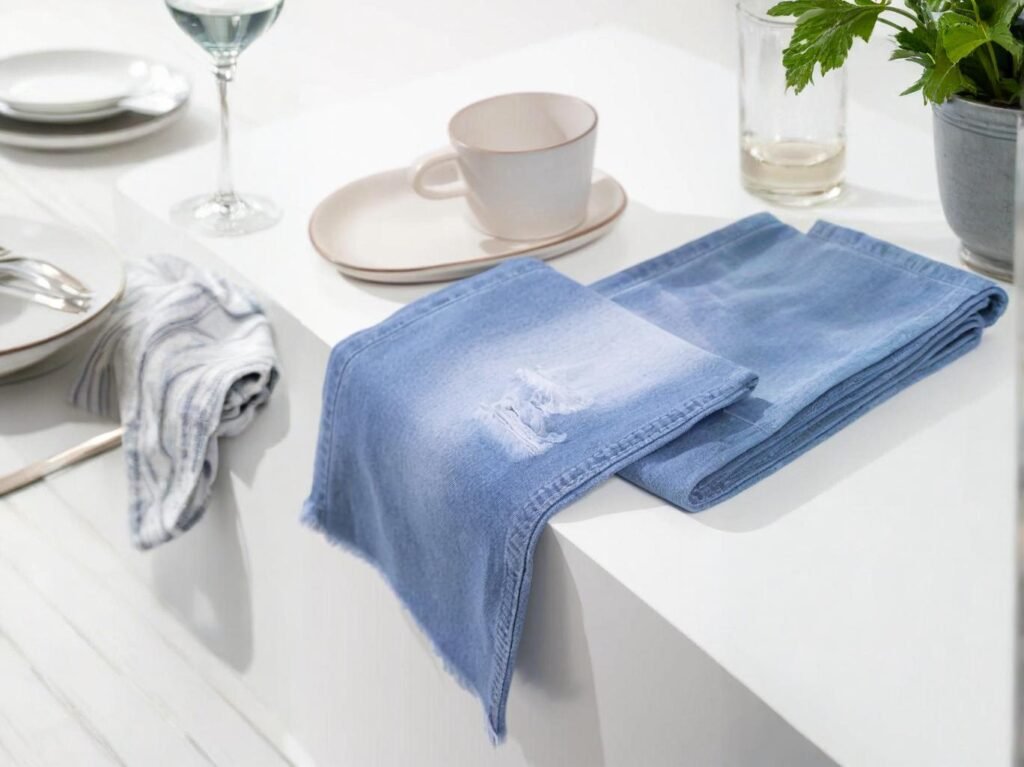
Denim is one of the few fabrics that can look better after being stressed, washed, and worn. That’s part of its appeal—and part of its complexity. In real garment development, denim decisions are rarely about color alone. They’re about when to stay flexible and when to lock things down.
One of the earliest—and most underestimated—choices is whether to source denim material by the yard for small-batch production or commit early to mass-scale programs. Many brands start small, chasing speed and creative freedom, then struggle when they scale because the denim that worked beautifully at 100 yards behaves very differently at 10,000. Denim material by the yard offers flexibility, fast sampling, and low risk for small-batch production, while mass production demands tighter specification control, consistency, and yield optimization. The best sourcing strategy depends on development stage, garment type, and how quickly a brand plans to scale.
A denim developer once said, “The fabric that helps you start is rarely the fabric that helps you scale.” That tension defines this entire conversation.
What Does “Denim Material by the Yard” Mean in Apparel Production?
Denim material by the yard refers to purchasing denim fabric in continuous, flexible yardage quantities rather than committing to large, fixed mill production runs. In apparel production, this sourcing model allows brands, designers, and manufacturers to test ideas, refine specifications, and validate performance before locking into scale.
At its core, denim by the yard is not about buying less fabric—it is about retaining control over decisions at early and mid stages of product development. Especially in modern denim programs, where wash behavior, shrinkage, stretch, and hand feel determine success, yard-based sourcing functions as a risk-management tool as much as a procurement method.
In practice, denim by the yard is widely used by brands that prioritize development accuracy over early cost optimization.
What “By the Yard” Really Implies
Buying denim by the yard does not simply mean “small quantity.” It implies a different sourcing philosophy, one that favors iteration, testing, and adaptability.
How Yard-Based Denim Sourcing Works
| Aspect | Denim by the Yard |
|---|---|
| Purchase volume | Low to moderate |
| Dye lots | Smaller |
| Customization | High |
| Risk exposure | Lower |
Yard-based sourcing allows denim to be ordered in manageable lengths—often tens to hundreds of yards instead of thousands. These fabrics may come from existing mill programs, semi-custom dye lots, or flexible production slots that do not require full-line commitment.
Because dye lots are smaller, slight variations can occur, but this variability is often acceptable during development. In exchange, brands gain the ability to adjust yarn specs, fabric weight, or finishing direction without being locked into a single irreversible decision.
This model supports iterative development, where learning happens through making, washing, wearing, and revising—rather than predicting everything upfront.
Typical Use Cases
Denim by the yard plays a critical role across multiple stages of apparel development.
| Stage | Why Yard Denim Is Used |
|---|---|
| Sampling | Fast feedback |
| Pilot runs | Market testing |
| Capsule collections | Design freedom |
| Seasonal experiments | Low commitment |
During sampling, yard denim enables quick turnaround for proto garments, allowing teams to evaluate drape, fit, and wash response early. For pilot runs, it supports limited market testing without excess inventory risk.
Capsule collections and seasonal experiments benefit from the freedom to explore niche ideas—unusual weights, nonstandard washes, or unconventional silhouettes—without the pressure of mill-scale efficiency.
This model is particularly valuable for brands operating on short development cycles, where speed and accuracy outweigh per-yard cost.
Difference vs Mill-Run Denim
Understanding how yard denim differs from mill-run denim clarifies why both models coexist.
| Factor | Yard Denim | Mill Run Denim |
|---|---|---|
| MOQ | Low | High |
| Consistency | Variable | High |
| Flexibility | High | Low |
| Price per yard | Higher | Lower |
Mill-run denim is optimized for consistency, efficiency, and cost. Once specifications are locked, the fabric produced is uniform and scalable. Yard denim, by contrast, trades some unit cost and consistency for agility.
This trade-off is intentional. Yard denim allows mistakes to be small and instructive, while mill-run denim assumes decisions are already correct.
Common Misconception
A widespread misconception is that denim by the yard is leftover, downgraded, or inferior fabric. In reality, most yard denim is woven on the same looms, using the same yarn systems, as bulk production denim.
The difference lies not in quality, but in commitment. Yard denim avoids large dye or finishing lock-ins, making it ideal for development and exploration. Many premium denim programs begin life as yard-based fabrics before being refined and scaled.
Real Sourcing Insight
At SzoneierFabrics, many overseas clients deliberately start with denim by the yard to test wash effects, shrinkage behavior, stretch recovery, and hand feel. Only after performance is validated do they freeze specifications for bulk production.
This staged approach reduces costly mid-production changes and aligns fabric behavior with final garment intent.
Which Advantages Does Buying Denim by the Yard Offer for Small-Batch Production?
Buying denim by the yard offers clear advantages for small-batch production by reducing upfront risk, accelerating development cycles, and enabling frequent design and wash adjustments. For small or emerging brands, this flexibility is often the difference between controlled growth and costly missteps.
This is where denim by the yard truly proves its value—not as a compromise, but as a strategic advantage.
Small-batch production prioritizes learning, differentiation, and speed. Yard denim supports all three.
Why Small Batches Love Yard Denim
Small-batch denim programs operate under different constraints than mass production. Cash flow, brand identity, and responsiveness matter more than unit economics at scale.
Lower Financial Exposure
One of the most immediate benefits is reduced financial risk.
| Risk Area | Small-Batch Impact |
|---|---|
| Fabric commitment | Low |
| Unsold inventory | Reduced |
| Design mistakes | Contained |
By limiting fabric commitment, brands avoid tying capital to unproven designs. If a wash fails, a fit underperforms, or a concept misses its audience, losses remain manageable.
In this context, mistakes become learning tools rather than financial disasters.
Faster Design Iteration
Denim is unusually sensitive to finishing. Small changes can dramatically alter appearance and feel.
| Adjustment | Why It Matters |
|---|---|
| Wash recipe | Changes appearance |
| Enzyme level | Alters softness |
| Abrasion | Creates character |
Yard-based sourcing allows teams to make these adjustments rapidly. Instead of reworking thousands of yards, developers can test new recipes on limited fabric lengths and evaluate results within days.
This accelerates feedback loops and leads to better-informed decisions before scaling.
Wash and Finish Experimentation
Finishing experimentation is one of the strongest arguments for yard denim.
| Wash Type | Small-Batch Advantage |
|---|---|
| Rinse | Easy to test |
| Stone wash | Adjustable |
| Enzyme wash | Controlled |
| Vintage effects | Low risk |
These processes are costly and risky at scale. Yard denim enables controlled trials where variables can be isolated and understood. This is especially important for premium or design-led denim, where visual outcome defines product value.
Support for Niche or Premium Positioning
Small-batch denim is often used for products that emphasize uniqueness over volume. Common targets include:
- Limited editions
- High-end collections
- Direct-to-consumer drops
For these products, differentiation matters more than per-yard savings. Yard denim allows brands to explore distinctive textures, finishes, and fabric stories that would be impractical in mass production.
Supply Chain Agility
Yard-based sourcing also improves supply chain responsiveness. Brands can react to trends, customer feedback, or seasonal shifts without long lead times or overstock risk.
This agility is particularly valuable in modern retail environments, where demand signals change quickly and excess inventory erodes margins.
Case Example
A startup brand tested three denim weights and four wash styles using yard-based sourcing. Only one combination resonated with customers—but discovering that early prevented months of rework and excess inventory.
The successful fabric was later scaled into a mill-run program with confidence, backed by real-world performance data rather than assumptions.
The Strategic Role of Yard Denim
Denim by the yard is not a shortcut. It is a development strategy. It allows brands to:
- Learn before scaling
- Align fabric behavior with design intent
- Reduce costly errors
- Build confidence into bulk decisions
For small-batch production, these advantages often outweigh higher per-yard costs.
Yard denim bridges creativity and discipline. It gives brands room to experiment while maintaining a clear path to scale. In a market where denim success depends on fit, wash, and long-term performance, this flexibility is not optional—it is strategic.
Denim material by the yard is ultimately about decision quality. It enables better choices earlier, which leads to stronger products later.
How Does Denim by the Yard Support Flexibility in Sampling and Design Iteration?
Denim by the yard supports faster sampling and design iteration by allowing controlled, low-risk testing of fabric weight, weave, dye depth, and wash effects without locking production parameters too early. Unlike many other fabrics, denim’s final result is not defined at the loom—it is defined after washing, finishing, and simulated wear. Yard-based sourcing keeps those variables open long enough to make informed decisions.
Denim is not a static material. Its final appearance is always the result of fabric + wash + wear simulation. Yard-based sourcing exists precisely because those elements cannot be fully predicted on paper.
For development teams, yard denim is less about saving money and more about preserving optionality while design intent is still evolving.
Why Iteration Speed Matters More in Denim Than Most Fabrics
Denim reacts more dramatically to finishing than most woven fabrics. Small adjustments in chemistry, time, or mechanical action can completely change visual character, hand feel, and perceived quality.
Denim’s Sensitivity to Finishing
Even when the base fabric remains identical, finishing variables create wide outcome ranges.
| Variable | Visual Impact |
|---|---|
| Indigo shade | High |
| Sulfur topping | Medium–High |
| Enzyme strength | High |
| Wash time | Very High |
A change of just 5–10 minutes in wash time can shift a denim from “clean commercial” to “over-processed.” Slight enzyme adjustments alter surface contrast and softness. Indigo depth variations affect not only color but how abrasion appears after wear.
Yard denim allows these parameters to be tuned repeatedly, using real garments instead of assumptions. This is especially critical for premium or design-led denim where visual nuance defines value.
Faster Feedback Loops
Speed of learning is a decisive advantage in denim development.
| Development Stage | Yard Denim | Mass Program |
|---|---|---|
| First sample | Fast | Slower |
| Revision cycle | Short | Long |
| Wash testing | Flexible | Costly |
| Approval | Incremental | One-shot |
With yard denim, teams can produce a first proto quickly, evaluate it, revise fabric or wash parameters, and repeat—often within the same development window. In mass programs, each change resets timelines and costs, discouraging experimentation.
This flexibility is essential when:
- Silhouettes are still evolving
- Target consumer feedback is being gathered
- Wash direction has not yet stabilized
Supporting Creative Risk
Many iconic denim looks would never survive a rigid, large-scale approval process.
Creative breakthroughs often come from:
- Unexpected fading patterns
- Irregular abrasion placement
- Non-standard fabric weights
- Unbalanced but visually compelling results
Yard-based sourcing provides a safe space for these risks. A concept that looks “wrong” at first may become a signature once refined. In mass production systems, such ideas are often rejected before they are fully understood.
For emerging brands and experimental lines, yard denim enables discovery, not just execution.
Fit and Shrinkage Learning
Denim’s mechanical behavior is as important as its appearance. Shrinkage, stretch, and recovery vary significantly depending on weave density, yarn type, and fiber blend.
| Test Area | Why Yard Denim Helps |
|---|---|
| Shrinkage after wash | Early visibility |
| Growth during wear | Measurable |
| Recovery after dry | Adjustable |
Yard-based sampling allows brands to observe how a fabric behaves on the body, not just in lab tests. This is where many assumptions break down.
A denim may pass shrinkage tests but still grow excessively at knees or seat after extended wear. Discovering this during yard trials avoids costly pattern or fabric corrections later.
Development Insight from Real Programs
In practice, many brands discover during yard-based trials that their preferred wash only works within a narrow GSM range. A 12 oz fabric may fade beautifully, while the same wash destroys a 10.5 oz version.
Learning this at the yard stage costs time—but learning it at 10,000 units costs margin.
Why Yard Denim Improves Decision Quality
Yard denim does not make development faster by cutting corners. It makes development smarter by:
- Allowing multiple iterations
- Reducing fear of change
- Encouraging evidence-based decisions
- Exposing real-world behavior early
For denim, where final quality emerges late in the process, this flexibility is not optional—it is structural.
What Are the Challenges of Using Denim by the Yard for Mass Production?
While ideal for development, denim by the yard introduces consistency, yield, and cost challenges when applied directly to mass production without re-engineering specifications. What helps you start can hurt you when you scale.
Yard denim is optimized for flexibility. Mass production is optimized for repeatability. Confusing the two is one of the most common causes of denim scaling failures.
Scaling denim successfully requires acknowledging where yard-based systems begin to break down.
Where Yard-Based Denim Breaks Down at Scale
The very features that make yard denim flexible—small lots, adjustable parameters, looser tolerances—become liabilities when volumes increase.
Consistency Across Dye Lots
Small dye lots tolerate variation. Large runs do not.
| Factor | Yard Denim Risk |
|---|---|
| Indigo depth | Lot variation |
| Cast tone | Inconsistency |
| Sulfur topping | Drift |
At 50 or 100 garments, minor shade differences feel organic. At 5,000 units, the same differences look like quality defects—especially when cartons are opened side by side.
Mass production demands tight dye tolerances, which often require reformulating dye recipes and locking process controls that yard denim intentionally keeps flexible.
Yield and Cutting Efficiency
Small runs can absorb inefficiency. Large runs cannot.
| Issue | Impact at Scale |
|---|---|
| Width variation | Marker inefficiency |
| Shade panels | Sorting labor |
| Defects per roll | Higher loss |
Yard denim may come with wider width tolerances and higher defect allowances. While acceptable in development, these issues reduce marker efficiency and increase labor when cutting thousands of pieces.
At scale, even a 1–2 cm width variation can significantly increase fabric consumption and waste.
Wash Reproducibility
Wash effects that look “authentic” in small batches often fail to scale cleanly.
| Wash Result | Small Batch | Mass Run |
|---|---|---|
| Color uniformity | Acceptable variation | Must be tight |
| Abrasion pattern | Organic | Controlled |
| Reject rate | Low impact | High cost |
In small batches, wash irregularities are manageable. In mass production, they translate directly into rejects, rework, or markdowns.
Many washes require process re-engineering—adjusted drum load, timing, chemistry concentration—before they are suitable for volume production.
Cost Structure Mismatch
Yard denim and mass denim are built on different cost assumptions.
| Cost Area | Yard Denim | Mass Denim |
|---|---|---|
| Fabric price | Higher | Lower |
| Wash cost per unit | Higher | Optimized |
| Rework tolerance | Acceptable | Minimal |
Using yard denim unchanged in mass production often inflates total cost—not because the fabric is “bad,” but because it was never designed for scale efficiency.
Successful scaling requires:
- Re-specifying fabric tolerances
- Consolidating dye lots
- Optimizing width and defect control
- Re-validating wash recipes
Real Scaling Failure Example
A brand moved directly from yard-based denim to a 12,000-piece production run without redefining acceptable dye tolerance. Individually, each batch looked fine. Collectively, cartons showed visible shade variation.
The result was forced markdowns—not because the denim was poor, but because development assumptions were carried too far into scale.
The Correct Way to Transition from Yard to Mass
Yard denim should be treated as a development platform, not a production solution. Before scaling, brands must:
- Lock fabric specifications
- Tighten dye and finishing tolerances
- Re-test wash reproducibility at volume
- Adjust costing assumptions
When this transition is managed intentionally, yard-based development becomes a strength rather than a liability.
The Strategic Takeaway
Denim by the yard is invaluable for learning, exploration, and validation. Mass production demands discipline, standardization, and control.
Problems arise not because yard denim is flawed—but because its purpose is misunderstood. Used correctly, yard denim helps brands arrive at the right mass-production fabric faster and with fewer costly surprises.
In denim, success is not about choosing one system over the other. It is about knowing when to switch—and how.
Which Denim Specifications Matter Most When Scaling from Small Batch to Mass Production?
When scaling denim production, consistency-driven specifications—including fabric weight tolerance, width stability, dye lot control, shrinkage, and colorfastness—become more critical than aesthetic flexibility. What works in a 50–200 piece run often fails silently at 5,000–20,000 units unless specifications are tightened and behavior is locked.
Small-batch denim rewards experimentation. Mass production rewards repeatability.
Scaling is not about changing the fabric. It is about changing tolerance philosophy.
The Specifications That Cannot Stay “Flexible”
Many parameters that can float during development must be locked once production volume increases. The risk is not obvious at first—but it compounds quickly.
Fabric Weight (GSM / oz) Tolerance
Fabric weight is one of the most underestimated scaling risks.
| Stage | Acceptable Tolerance |
|---|---|
| Small batch | ±7–10% |
| Mass production | ±3–5% |
In small batches, a 12 oz denim drifting to 11 oz or 13 oz may go unnoticed or be absorbed through washing adjustments. At scale, that same drift alters:
- Wash intensity and contrast
- Shrinkage rate
- Drape and perceived fit
- Garment weight consistency
In bulk programs, even a 0.5 oz deviation can shift wash outcomes enough to create visible inconsistencies across cartons.
Fabric Width Stability
Width variation is manageable in development but expensive at scale.
| Issue | Small Batch | Mass Production |
|---|---|---|
| Width variation | Manageable | Costly |
| Marker efficiency | Flexible | Fixed |
| Cutting yield | Secondary | Critical |
In small runs, cutters adjust markers manually and accept waste. In mass production, markers are optimized digitally, and fabric utilization is calculated down to fractions of a percent.
A width variation of just 1–2 cm can:
- Reduce marker efficiency
- Increase fabric consumption
- Create unbalanced cutting ratios
At scale, these losses multiply quickly and erode margins without showing up clearly on fabric invoices.
Dye Lot and Shade Control
Shade consistency is non-negotiable once volume increases.
| Parameter | Why It Matters |
|---|---|
| Indigo depth | Visual consistency |
| Cast tone | Brand identity |
| Lot traceability | Reorders |
Small batches tolerate organic variation. Mass production does not. When thousands of garments are shipped across regions or restocked later, even slight shade drift becomes a brand risk.
Successful mass denim programs rely on:
- Single-lot dyeing when possible
- Tightly controlled multi-lot ranges when unavoidable
- Full traceability from yarn to finished roll
Without this discipline, reorders rarely match original deliveries.
Shrinkage and Growth Behavior
Shrinkage and growth are not just technical metrics—they define fit reliability.
| Behavior | Impact |
|---|---|
| Wash shrinkage | Size accuracy |
| Wear growth | Fit recovery |
| Skew / torque | Leg twist |
In development, these behaviors are often observed informally. At scale, they must be measured, documented, and locked.
Growth at knees or seat that seems acceptable in a few samples can trigger return spikes months later when thousands of customers experience the same issue simultaneously.
Colorfastness and Abrasion Response
Color performance becomes more visible—and more expensive—at scale.
| Test | Reason |
|---|---|
| Rubbing fastness | Prevent crocking |
| Wash fastness | Shade stability |
| Abrasion response | Predictable fades |
At SzoneierFabrics, denim intended for scaling is evaluated not only on pass/fail standards, but on failure patterns. Understanding how color breaks down allows wash recipes to be adjusted before problems reach the market.
This proactive approach reduces costly surprises after launch.
The Core Scaling Lesson
Scaling denim is not about freezing creativity—it is about freezing behavior. Aesthetic freedom must give way to specification discipline. Brands that struggle at scale usually did not choose the wrong denim; they simply scaled it too early.
How Do Cost, MOQ, and Yield Compare Between Small-Batch and Mass Denim Programs?
Small-batch denim programs prioritize flexibility and speed with higher per-unit costs, while mass production reduces unit cost through optimized MOQ, yield, and process efficiency—but only when specifications are fully locked.
This is where many teams miscalculate: they compare fabric price, not system cost.

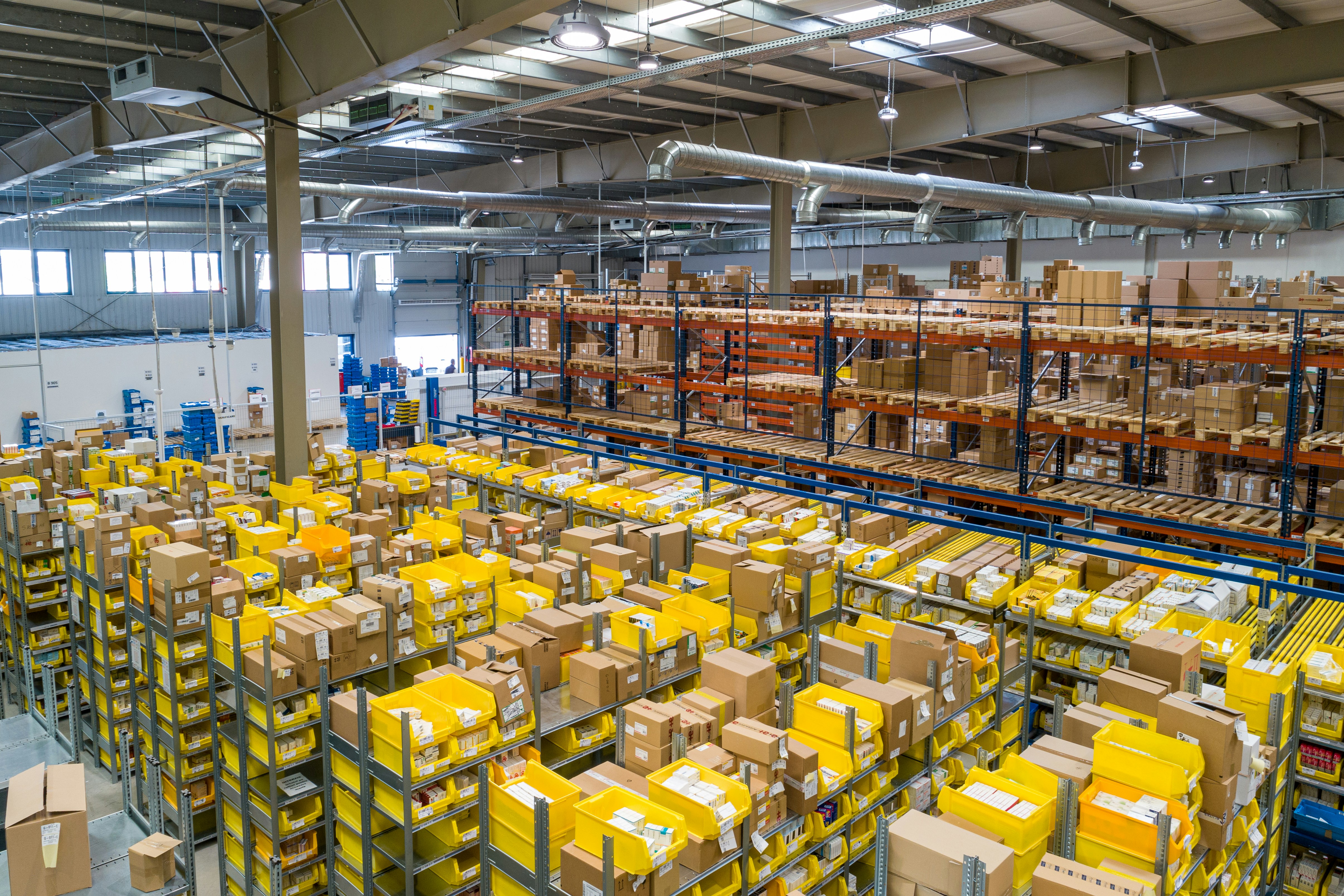
Understanding the true cost structure is essential when transitioning from development to volume.
Understanding Cost Beyond Price per Yard
Fabric price is the most visible number—and the most misleading one.
Fabric Cost Comparison
| Program Type | Fabric Cost per Yard |
|---|---|
| Small batch | Higher |
| Mass production | Lower |
Mass production benefits from volume discounts, but those savings only materialize if the rest of the system is optimized. Cheap fabric paired with poor yield or high rejection rates quickly becomes expensive.
Yield Efficiency
Yield efficiency is where mass production recovers cost.
| Factor | Small Batch | Mass Production |
|---|---|---|
| Marker optimization | Low priority | High priority |
| Fabric utilization | Variable | Maximized |
| Shade sorting | Manual | Engineered |
In small batches, cutting loss is tolerated because learning is the goal. In mass production, yield is engineered deliberately. Marker layouts, panel placement, and shade grouping are planned to minimize waste.
A 3–5% improvement in yield can outweigh significant differences in fabric price.
MOQ Implications
MOQ discipline is both an advantage and a constraint.
| Element | Small Batch | Mass Program |
|---|---|---|
| Fabric MOQ | Low | High |
| Dye MOQ | Flexible | Fixed |
| Wash MOQ | Small | Optimized |
Small batches allow selective experimentation. Mass programs require commitment. Once dye and wash MOQs are locked, flexibility decreases—but cost efficiency improves.
Problems arise when teams attempt to maintain small-batch flexibility inside mass-MOQ systems. This usually results in:
- Excess inventory
- Forced compromises
- Inflated per-unit cost
Total Cost per Garment (Simplified Example)
Looking at total cost reveals why fabric price alone is insufficient.
| Cost Component | Small Batch | Mass Production |
|---|---|---|
| Fabric | High | Lower |
| Cutting loss | Higher | Lower |
| Wash rejection | Tolerable | Critical |
| Rework | Acceptable | Expensive |
At scale, mistakes cost more than fabric. A rejected wash batch or shade issue can erase all fabric savings instantly.
Hidden Costs That Appear Only at Scale
Several costs are invisible in development but dominate mass production:
- Shade segregation labor
- Rework logistics
- Inventory markdowns
- Delayed deliveries due to reprocessing
These costs are rarely attributed to fabric choice, but they are almost always rooted in insufficient specification locking.
Real Planning Insight
Brands that scale successfully often experience 20–35% unit cost reduction, but only after one or two disciplined development cycles that lock denim behavior—not just appearance.
Those cycles feel slow and expensive early on. They pay off later through:
- Stable reorders
- Predictable margins
- Fewer post-launch corrections
The Strategic Difference Between Small and Mass Programs
Small-batch programs optimize for learning. Mass programs optimize for repeatability.
Trying to blend the two without changing rules is what creates cost overruns and quality failures. The transition point—where flexibility gives way to control—is where denim programs either stabilize or collapse.
The Final Takeaway
Cost, MOQ, and yield are not independent variables. They are linked through specification discipline. When denim behavior is clearly defined and controlled, mass production rewards brands with efficiency and margin.
When it is not, scale amplifies every weakness.
Scaling denim successfully is not about finding cheaper fabric. It is about building a system that behaves the same way, every time, at volume.
Are Certain Denim Garment Types Better Suited for Yard-Based Sourcing?
Yes. Denim garments that depend on visual character, wash individuality, or limited volume are far better suited to yard-based sourcing, while styles that rely on strict consistency, repeat orders, and cost efficiency perform best in mass production frameworks.
The mistake many teams make is assuming sourcing strategy should follow brand size. In reality, it should follow garment behavior and risk tolerance. Not every denim product needs—or deserves—to scale the same way.


Yard-based sourcing excels where variation adds value, not where it creates liability.
Matching Garment Type to Sourcing Strategy
Understanding which garments benefit from flexibility—and which suffer from it—is central to building a healthy denim line.
Garments That Thrive with Denim by the Yard
| Garment Type | Why Yard-Based Works |
|---|---|
| Statement jeans | Wash experimentation |
| Denim jackets | Visual character |
| Limited-edition drops | Controlled volume |
| Fashion-forward fits | Iterative design |
| Mixed-material pieces | Flexibility |
Statement jeans often rely on complex wash stories, irregular abrasion, or unconventional finishes. These attributes are difficult to lock early and benefit from multiple development cycles.
Denim jackets are visually driven products. Small variations in fading, texture, or shade are often perceived as authenticity rather than defects. Yard denim supports this organic variability.
Limited-edition drops and fashion-forward fits succeed precisely because they are not endlessly repeated. Yard-based sourcing allows designers to explore bolder ideas without the financial and operational burden of mass commitments.
Mixed-material denim—such as denim combined with canvas, leather, or knit panels—introduces complexity that is easier to manage in small runs. Yard sourcing keeps adjustments feasible as materials interact differently during washing and wear.
In all these cases, individuality increases perceived value.
Garments Better Suited to Mass Denim Programs
Other denim categories depend on predictability rather than expression.
| Garment Type | Why Mass Production Wins |
|---|---|
| Core 5-pocket jeans | Consistency |
| Uniform programs | Shade control |
| Workwear denim | Durability standards |
| Repeat seasonal basics | Cost efficiency |
Core 5-pocket jeans define brand reliability. Customers expect the same fit, color, and feel every time they reorder. Yard-level variation undermines trust in this context.
Uniform and workwear programs demand strict shade matching and performance consistency. Even minor deviations become unacceptable when garments are worn side by side.
Repeat seasonal basics—styles that return year after year—benefit from mass production’s cost structure and stable reordering capability.
These garments gain value from repeatability, not experimentation.
Risk Tolerance by Garment Category
Different garment types tolerate variation differently.
| Category | Yard Denim Risk | Mass Denim Risk |
|---|---|---|
| Limited styles | Low | Medium |
| Core basics | Medium | Low |
| Fashion experiments | Low | High |
Yard denim carries relatively low risk for limited styles because quantities are controlled and expectations allow variation. The same approach applied to core basics dramatically increases risk.
Conversely, forcing fashion experiments into mass programs too early amplifies failure costs. A concept that misses the market becomes an expensive mistake rather than a contained lesson.
Development Insight from Real Programs
Many brands intentionally use yard denim to develop new silhouettes or wash concepts, then transition only the successful ones into mass production once fit, wash behavior, and customer response are validated.
This staged approach protects margins while still encouraging innovation. It also prevents brands from scaling ideas that only work on paper.
The Strategic Takeaway for Garment Types
The right sourcing strategy follows the garment’s role:
- If variation enhances appeal, yard-based sourcing is an advantage.
- If variation erodes trust, mass production is essential.
Choosing incorrectly does not just affect cost—it affects brand perception.
How Should Brands Decide Between Small-Batch and Mass Production When Sourcing Denim by the Yard?
Brands should decide between small-batch and mass production based on production goals, tolerance for variation, speed-to-market needs, and expected product lifespan—not denim price alone. A structured decision framework simplifies what often feels like a subjective judgment.
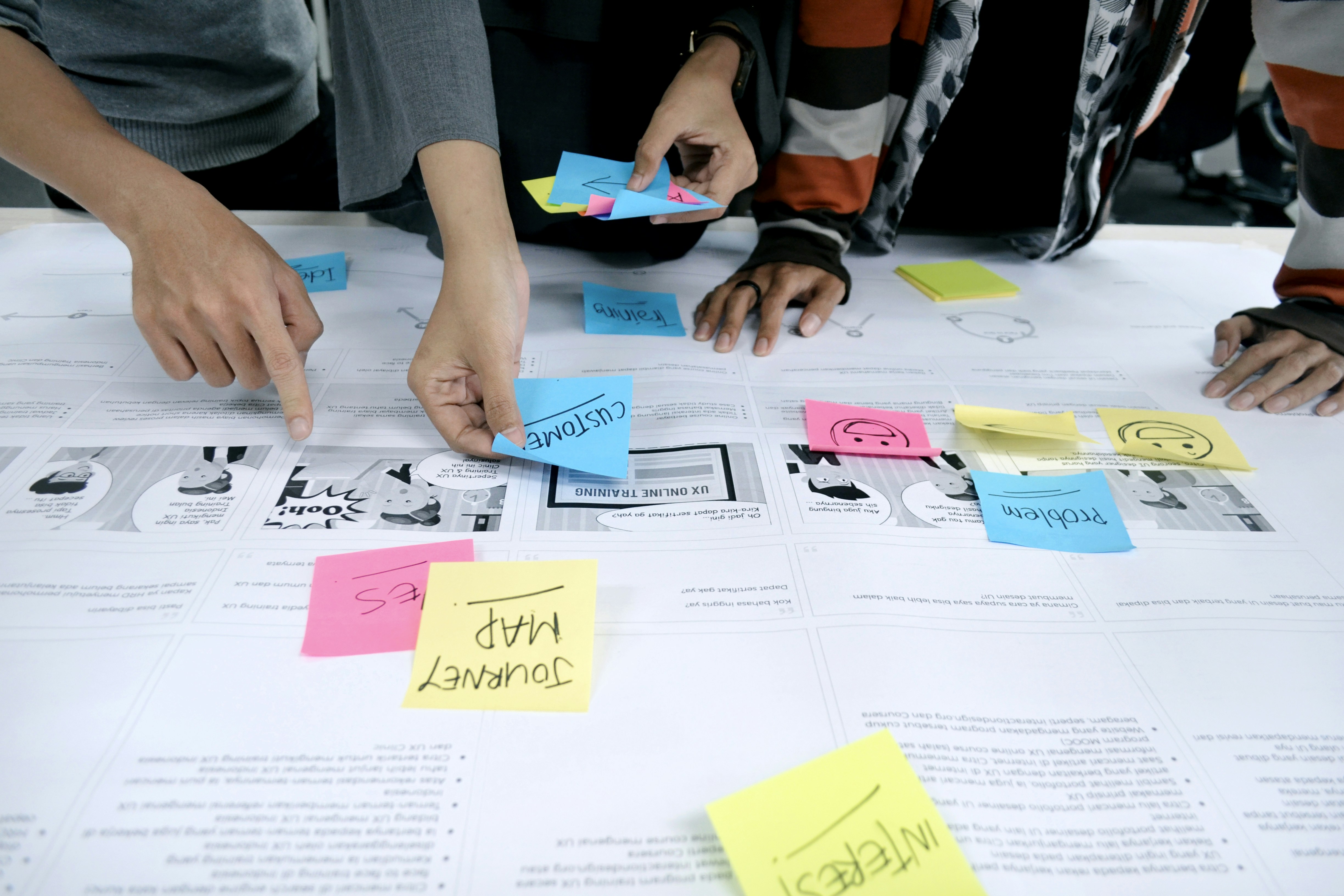
The goal is not to choose the “right” method universally, but to choose the right method at the right time.
A Practical Denim Sourcing Decision Matrix
Decision-making becomes clearer when questions are tied directly to product intent.
Key Decision Questions
| Question | Lean Toward |
|---|---|
| Is this a new style? | Small batch |
| Is wash still evolving? | Small batch |
| Is this a core repeat item? | Mass production |
| Is consistency critical? | Mass production |
| Is speed more important than cost? | Small batch |
If most answers fall on one side, the sourcing choice is usually obvious. Problems arise when teams ignore these signals and default to habit or short-term cost thinking.
Hybrid Sourcing Strategy (Most Common)
The most resilient denim programs use both models deliberately.
| Stage | Sourcing Choice |
|---|---|
| Concept & sampling | Yard denim |
| Pilot run | Yard denim |
| First scale-up | Controlled mass |
| Reorders | Mass production |
This hybrid approach allows:
- Early learning at low risk
- Market validation before heavy investment
- Gradual tightening of specifications
- Predictable reorders once behavior is locked
It balances creativity with discipline.
Mistakes to Avoid
Several recurring mistakes derail denim scaling decisions:
- Scaling successful samples without re-locking specifications
- Assuming yard-denim tolerances will hold at volume
- Ignoring yield loss and wash rejection in cost models
As volume increases, discipline must increase faster than optimism.
Supplier Collaboration Matters
Decision quality improves dramatically when suppliers support both phases instead of pushing one-size-fits-all solutions.
At SzoneierFabrics, denim programs are typically supported with:
- Yard-based sampling for exploration
- Clear specification-lock documentation before scale
- Wash behavior and growth testing
- Low MOQ development runs
- Stable bulk production planning once parameters are fixed
This continuity prevents the common disconnect between “development denim” and “production denim.”
Denim by the Yard Is a Tool, Not a Destination
Denim material by the yard is one of the most powerful tools in garment development—but only when used intentionally.
- For learning, experimentation, and early validation, it is ideal.
- For consistency, margin control, and repeatability, it must evolve into a disciplined mass-production system.
The brands that succeed are not the ones who avoid risk entirely. They are the ones who push risk into the cheapest, earliest stage of development, then remove it systematically before scale.
In denim sourcing, strategy is not about choosing sides. It is about knowing when to switch—and doing so deliberately.
Start Your Denim Development with SzoneierFabrics
If you’re sourcing denim material by the yard and planning to move from small-batch production to scalable programs, SzoneierFabrics can support you with:
- Custom denim development
- Low MOQ yard-based sampling
- Wash and shrinkage testing
- Spec-lock for scale-up
- Reliable bulk production support
Share your garment type, target volume, and timeline. Our team will help you build denim that works at 100 pieces—and at 10,000.
When you’re ready, contact SzoneierFabrics to request samples or a tailored quotation.
denim material by the yard, denim fabric by the yard, denim for small batch production, denim for mass production, denim fabric sourcing, custom denim fabric, denim fabric manufacturer china, denim fabric supplier, denim yardage for garments, small batch denim production, mass denim production, denim fabric MOQ, denim fabric cost comparison, denim fabric yield, denim fabric specifications, denim fabric wash testing, denim fabric sampling, denim fabric development, denim fabric scale up, denim fabric quality control, denim fabric dye lot control, denim fabric shrinkage testing, denim fabric GSM tolerance, denim fabric width stability, denim fabric cutting yield, denim fabric for jeans manufacturing, denim fabric for jackets, denim fabric production planning