Skip to content
Raw silk is one of the most demanding materials to dye well. It rewards careful handling with unmatched depth of color and natural luster—but punishes shortcuts with fading, uneven shades, excessive weight loss, and irreversible damage. Many silk dyeing problems don’t appear immediately; they surface weeks later, after washing, wearing, or shipment, when it’s already too late to fix them. Achieving high color fastness while minimizing weight loss in raw silk requires precise control of pre-treatment, dye chemistry, pH, temperature, and time. Most failures happen not during dyeing itself, but during degumming and uncontrolled processing that strips away too much silk protein before color is even locked in.
Raw silk is not forgiving. It remembers every mistake made along the way.
If you’ve ever wondered why two silk fabrics dyed “the same way” perform completely differently in real use, the answer lies in the details most people skip. Let’s start with the fundamentals—why raw silk is so challenging to dye in the first place.
What Are the Unique Challenges When Dyeing Raw Silk Fabric?
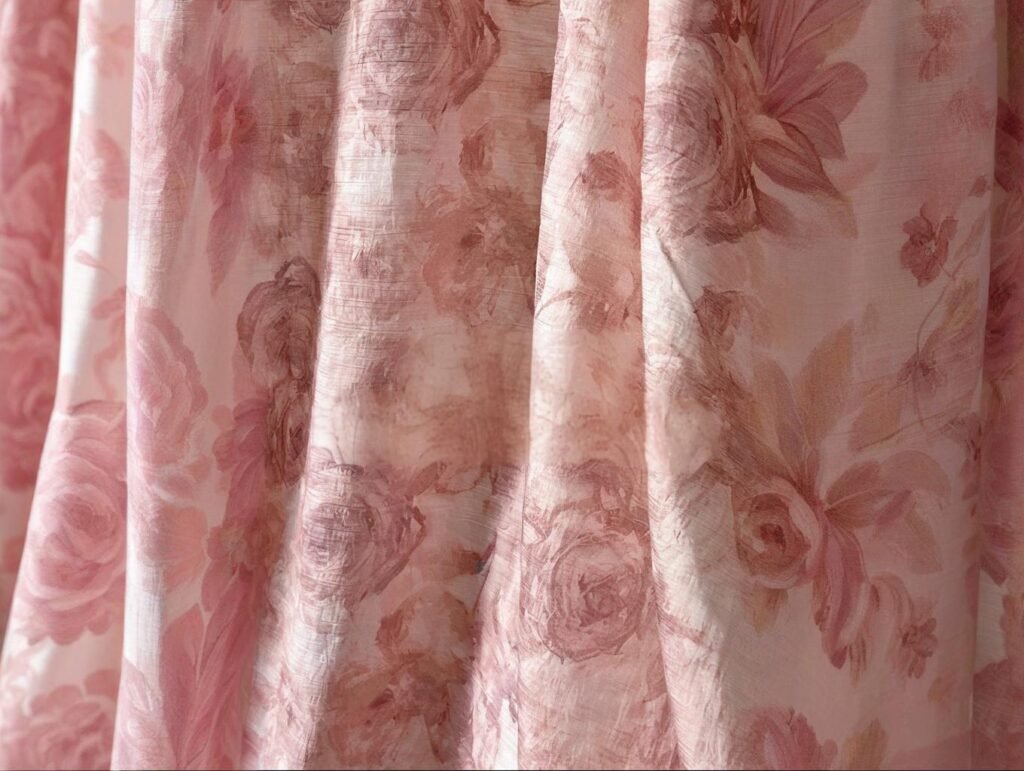
Raw silk is one of the most demanding textile materials to dye successfully at scale. Unlike degummed silk or synthetic fibers, raw silk still contains sericin (silk gum), has a strong affinity for moisture, reacts quickly to pH and temperature changes, and physically loses mass during wet processing. These traits make raw silk extremely receptive to dyes—but also extremely vulnerable to uneven color, strength loss, and irreparable quality defects if process control is not exact.
Raw silk is challenging to dye because it absorbs everything—water, chemicals, heat, and dyes—more readily than most fibers. Without precise control, this responsiveness turns from an advantage into a liability.
In simple terms: raw silk absorbs everything—good and bad.
Understanding these challenges is critical for mills, brands, and buyers who expect consistent color, predictable yield, and stable quality from silk dyeing operations.
Why raw silk behaves differently from other fabrics
Most dyeing problems with raw silk arise because it behaves fundamentally differently from cotton, polyester, or even fully degummed silk. Raw silk is not a “finished” fiber. It is a partially processed biological material whose properties are still evolving during dyeing.
Key differences include:
- The presence of sericin coating the fibroin filament
- High hygroscopicity and rapid moisture exchange
- Lower wet strength compared to dry strength
- Narrow tolerance for chemical and thermal deviation
These characteristics mean that raw silk does not tolerate standardized, aggressive dyeing recipes designed for other fibers.
Sericin: the hidden variable
Sericin is the most critical—and most underestimated—variable in raw silk dyeing. It is a protein-based gum that surrounds the silk fibroin filament, accounting for roughly 18–25% of the cocoon’s weight.
In raw silk, sericin:
- Acts as a partial barrier to dye penetration
- Absorbs dyes differently than fibroin
- Varies in thickness across filaments and batches
| Aspect | Impact on Dyeing |
|---|---|
| Uneven sericin thickness | Patchy dye uptake |
| Partial removal | Inconsistent shades |
| Over-removal | Excessive weight loss |
If sericin is not removed evenly, dyes may fix on exposed fibroin in some areas while remaining trapped or weakly bonded in sericin-rich zones. This results in cloudy, streaked, or mottled color.
If sericin is removed too aggressively, fiber mass is lost rapidly, yarn cohesion weakens, and finished fabric weight drops below specification.
The challenge is controlled degumming, not complete removal at all costs.
Degumming is not binary—it’s a gradient
A common misconception is that degumming is either “done” or “not done.” In reality, degumming exists on a spectrum. Slight differences in temperature, pH, dwell time, or agitation can change how much sericin is removed and where.
Partial degumming can be intentional for certain aesthetics, but it must be consistent. Inconsistent degumming is one of the leading causes of shade variation in raw silk dyeing.
Experienced silk dye houses often adjust degumming parameters batch by batch rather than relying on fixed recipes.
Protein structure and dye affinity
Silk is a protein fiber composed primarily of fibroin, which contains numerous amino acid sites capable of bonding with dyes. This gives silk excellent dye affinity, particularly with acid dyes, reactive dyes, and metal-complex dyes.
| Property | Raw Silk Behavior |
|---|---|
| Amino acid sites | High dye affinity |
| Wet strength | Reduced |
| Heat tolerance | Limited |
| Chemical tolerance | Narrow range |
While high dye affinity allows silk to achieve rich, deep colors, it also makes the fiber highly sensitive. Dyes fix quickly, leaving little margin for correction. Small errors in pH or temperature can lock in uneven shades before adjustments can be made.
Unlike polyester, which requires forceful conditions to accept dye, raw silk must be dyed gently and gradually.
Wet strength: a structural limitation
One of the most serious constraints in raw silk dyeing is reduced wet strength. Silk loses a significant portion of its tensile strength when wet, making it vulnerable during:
- High liquor agitation
- Rapid temperature ramps
- Long processing times
Mechanical stress that would be harmless to cotton or polyester can permanently damage silk filaments. This damage may not be visible immediately but shows up later as yarn breakage, fuzzing, or tearing during weaving and sewing.
pH sensitivity and chemical tolerance
Raw silk has a narrow safe pH window. Most dyeing is carried out in mildly acidic conditions, but deviations in either direction are risky.
- Too acidic → hydrolysis and fiber weakening
- Too alkaline → accelerated sericin removal and mass loss
Chemical auxiliaries must be carefully selected. Additives used routinely on other fibers—strong chelators, aggressive wetting agents, or harsh dispersants—can damage silk structure or alter dye fixation behavior.
This is why silk dyeing recipes tend to be shorter, simpler, and more conservative than those for synthetic fibers.
Weight loss sensitivity
Unlike synthetic fibers, raw silk physically loses mass during wet processing. This loss is unavoidable but must be controlled.
| Stage | Typical Weight Loss Risk |
|---|---|
| Degumming | 18–25% |
| Dyeing | 1–3% |
| Finishing | 1–2% |
In well-controlled operations, total weight loss stays within expected ranges. However, small errors compound quickly. Over-degumming followed by extended dyeing can push total loss beyond 30%, resulting in:
- Fabric weight below contract specification
- Reduced strength and tear resistance
- Altered drape and hand feel
Weight loss is not just a yield issue—it directly affects performance and customer acceptance.
Why weight loss is hard to “see” early
One of the difficulties in silk dyeing is that excessive weight loss may not be visually obvious immediately. Fabric may still look smooth and evenly dyed, but feel thinner, weaker, or less resilient.
Problems often surface later during:
- Garment construction (unexpected tearing)
- Washing (excessive distortion)
- End use (shortened product life)
By then, corrective options are limited.
Moisture affinity and uneven dyeing
Raw silk absorbs moisture rapidly and unevenly, especially if it has experienced variable storage humidity before dyeing. Fibers with different moisture histories absorb dyes at different rates, even under identical dye bath conditions.
This leads to:
- Uneven initial strike rate
- Differential shade depth
- Increased re-dyeing risk
Pre-conditioning raw silk to a uniform moisture level before dyeing is critical but often overlooked.
Temperature sensitivity and thermal shock
Silk tolerates only gradual temperature changes. Rapid heating or cooling causes uneven fiber swelling, leading to internal stress and altered dye behavior.
Thermal shock can result in:
- Patchy dye fixation
- Increased filament breakage
- Loss of luster
This is why silk dyeing cycles emphasize slow ramps and extended equilibration periods rather than speed.
Variability between raw silk sources
Perhaps the most challenging aspect of raw silk dyeing is natural variability. Raw silk is an agricultural product. Differences in silkworm diet, climate, cocoon handling, and reeling methods all influence fiber behavior.
Real manufacturing insight
In real factory conditions, two batches of raw silk from different farms—or even different reeling lots from the same region—can behave differently under identical dye recipes. One batch may absorb dye smoothly; another may show patchiness or excessive weight loss.
This variability is one of the biggest challenges in silk dyeing—and one of the reasons experienced silk processors rely heavily on:
- Pre-dye sampling
- Small recipe adjustments
- Close monitoring during dyeing
Rigid standardization rarely works with raw silk.
The limits of lab testing
Laboratory tests provide guidance but cannot fully predict how raw silk will behave in bulk dyeing. Small sample sizes do not capture the full variability present in production-scale lots.
This is why successful silk dyeing operations treat lab results as starting points, not guarantees. In-process observation and adjustment remain essential.
Color correction is risky on silk
Unlike some fibers, silk does not tolerate aggressive color correction. Stripping and re-dyeing can severely weaken fibers and increase weight loss.
This makes “first-time-right” dyeing especially important. Mistakes are costly and often irreversible.
Process discipline over force
One of the most important principles in raw silk dyeing is restraint. Problems are rarely solved by stronger chemicals, higher temperatures, or longer processing times. These approaches usually make damage worse.
Successful silk dyeing relies on:
- Gentle chemistry
- Gradual temperature control
- Minimal mechanical stress
- Careful sequencing of steps
This discipline differentiates experienced silk processors from general-purpose dye houses.
Economic implications for bulk production
From a commercial perspective, raw silk dyeing carries higher risk than many other fibers. Yield loss, rejections, and shade variation directly affect cost.
This is why raw silk programs often include:
- Higher sampling costs
- Longer lead times
- Tighter process control
Attempting to shortcut these steps typically results in higher downstream losses.
Raw silk is not “difficult”—it is sensitive. Its protein structure, sericin content, moisture affinity, and weight-loss behavior demand precision rather than force.
Successful dyeing respects this sensitivity instead of fighting it. When handled with discipline, raw silk rewards processors with exceptional color depth and luster. When rushed or over-processed, it fails quietly—often revealing problems only after it is too late to fix them.
In raw silk dyeing, control is not optional. It is the difference between premium fabric and expensive waste.
Which Dye Types and Chemicals Are Best for Silk Color Fastness?
Silk is one of the most visually rewarding fibers to dye—and one of the easiest to damage in the process. Its natural protein structure gives it exceptional affinity for certain dye classes, but that same structure is highly sensitive to pH, temperature, time, and chemical aggressiveness. Many silk color-fastness failures are not caused by poor dye quality, but by a mismatch between dye chemistry and silk behavior.
In professional silk dyeing, acid dyes and metal-complex acid dyes are the backbone of reliable color performance. Reactive dyes can be used selectively under strict control, while direct, basic, and disperse dyes are generally unsuitable for silk intended for long-term wear or repeated laundering.
Choosing the wrong dye class is the fastest way to ruin silk.
Matching dye chemistry to silk behavior
Silk is a protein fiber composed mainly of fibroin, with amino groups that interact chemically with dyes. Unlike cellulose fibers such as cotton, silk does not tolerate strong alkali, aggressive oxidation, or excessive thermal stress. Dye systems must therefore deliver color without extracting too much fiber mass or degrading filament integrity.
The goal of silk dyeing is not maximum fixation at any cost—it is balanced fixation that preserves tensile strength, luster, and hand feel while meeting fastness expectations.
Acid dyes: the industry standard
Acid dyes are the most widely used dyes for silk because they bond effectively with silk’s amino groups under mildly acidic conditions.
| Feature | Performance on Silk |
|---|---|
| Color brightness | High |
| Level dyeing | Good |
| Wash fastness | Medium–good |
| Light fastness | Medium |
Why acid dyes work well on silk
Acid dyes attach to silk through ionic attraction between negatively charged dye molecules and positively charged amino groups in the silk protein. This mechanism allows dyeing at relatively low temperatures and mild acidity, which helps protect fiber integrity.
From a production standpoint, acid dyes offer:
- Predictable exhaustion behavior
- Wide shade availability
- Relatively forgiving processing windows
They are especially well suited for:
- Light to medium shades
- Fashion silks where softness and luster matter
- Products with moderate wash requirements
However, standard acid dyes do have limitations. Wash fastness and light fastness are acceptable but not exceptional, especially in deep shades or products exposed to frequent laundering or sunlight.
This is why many quality issues arise when acid dyes are pushed beyond their comfort zone—dark colors, heavy washing, or high light exposure.
Metal-complex acid dyes: better fastness, more control
Metal-complex acid dyes are modified acid dyes that form stronger coordination bonds with silk fibers through metal ions (commonly chromium or cobalt complexes).
| Feature | Performance |
|---|---|
| Color depth | Slightly lower |
| Wash fastness | High |
| Light fastness | High |
| Process control | More demanding |
Where metal-complex dyes excel
These dyes offer significantly improved fastness properties compared to standard acid dyes. They are particularly effective for:
- Dark shades (navy, black, deep red)
- Products requiring frequent washing
- Silk items exposed to light or outdoor use
The stronger dye-fiber interaction results in:
- Lower dye bleeding
- Better resistance to fading
- More stable color over time
The trade-off is process sensitivity. Metal-complex dyes require:
- Precise pH control
- Careful temperature ramping
- Longer dyeing cycles
Improper handling can lead to:
- Uneven dye uptake
- Dull appearance
- Fiber stiffness if over-fixed
For experienced dye houses, these challenges are manageable. For inexperienced operations, metal-complex dyes often cause more problems than they solve.
Reactive dyes: powerful but risky
Reactive dyes are widely used on cotton, but their use on silk must be approached with caution. They form covalent bonds with fiber molecules, creating potentially excellent wash fastness—but silk is not as chemically robust as cellulose.
| Risk Factor | Consideration |
|---|---|
| Alkali sensitivity | High |
| Hydrolysis risk | Medium |
| Weight loss | Can increase |
The silk–reactive dye dilemma
Reactive dyes typically require:
- Alkaline conditions to fix
- Higher temperatures or longer dwell times
Silk, however:
- Loses strength rapidly in alkali
- Suffers weight loss through protein hydrolysis
- Can lose luster and softness if over-processed
In controlled environments, reactive dyes can be used successfully for:
- Specific pastel or bright shades
- Applications requiring higher wash fastness than standard acid dyes
- Short dye cycles with tightly controlled pH buffers
But the margin for error is small. Even slight deviations in pH or time can result in:
- Reduced tensile strength
- Surface roughening
- Increased fibrillation
For this reason, reactive dyes are usually reserved for specialized silk programs, not routine production.
Dyes to avoid on silk
Some dye classes are fundamentally incompatible with silk’s chemistry or performance requirements.
| Dye Type | Reason |
|---|---|
| Basic dyes | Poor fastness |
| Direct dyes | Weak bonding |
| Disperse dyes | Not suitable for protein fibers |
Why these dyes fail on silk
Basic dyes produce bright initial shades but bond weakly to silk, resulting in severe wash and rub bleeding. They also tend to migrate unevenly, causing streaking.
Direct dyes lack sufficient affinity for silk proteins. They may appear acceptable after dyeing but show rapid color loss during laundering or perspiration exposure.
Disperse dyes are designed for hydrophobic synthetic fibers such as polyester. They do not bond effectively with silk and often cause surface staining rather than true fixation.
Using these dyes on silk may reduce dye cost, but it almost guarantees short product life and customer dissatisfaction.
The role of auxiliaries and chemicals
Dye type alone does not determine color fastness. Auxiliary chemicals play a critical role in controlling how dyes interact with silk.
Key chemical categories include:
- Leveling agents
- pH buffers
- Retarders
- Fixing agents
Overuse of leveling agents can reduce fastness. Insufficient buffering can cause uneven dyeing or fiber damage. Fixing agents must be chosen carefully to avoid stiffening or discoloration.
Professional silk dyeing relies on balanced chemical systems, not aggressive additives.
Water quality and its impact on fastness
Water chemistry significantly influences silk dye performance. High hardness, metal contamination, or inconsistent pH can interfere with dye bonding.
Common risks include:
- Calcium ions reducing dye uptake
- Iron contamination causing shade shifts
- Fluctuating pH affecting exhaustion rates
For high-end silk dyeing, water is often:
- Softened
- Filtered
- Chemically conditioned
Ignoring water quality leads to inconsistent batches—even with the same dye recipe.
Shade depth and fastness trade-offs
Darker shades always challenge color fastness on silk. To achieve deep color, more dye must be fixed, increasing stress on the fiber.
Practical considerations include:
- Acceptable depth vs durability
- Target wash cycles
- Intended end use
A silk scarf worn occasionally can tolerate different fastness thresholds than a silk lining washed repeatedly. Dye selection must reflect use reality, not ideal lab conditions.
Testing standards matter
Fastness claims are only meaningful when tied to specific test methods. Silk fastness should be evaluated under standards relevant to its application, such as:
- Wash fastness under mild conditions
- Dry and wet rub fastness
- Light fastness under indoor exposure
Passing a single fastness test does not guarantee overall performance. A holistic testing approach is essential.
Application-driven dye selection
Different silk products demand different dye strategies.
Examples:
- Apparel silk prioritizes softness and drape, often favoring acid dyes with controlled finishing
- Scarves and accessories may require higher rub fastness due to friction
- Linings demand better wash and abrasion resistance
- Home textiles require enhanced light fastness
Dye choice must be aligned with how the silk will actually be used, not just how it looks after dyeing.
Weight loss and fiber preservation
One of the most overlooked aspects of silk dyeing is weight loss. Aggressive dyeing conditions extract protein from the fiber, reducing strength and shortening product life.
Excessive weight loss results in:
- Thinner yarns
- Reduced tear resistance
- Increased pilling and fuzzing
Experienced dye houses set maximum acceptable weight loss thresholds and adjust dye chemistry accordingly.
Process discipline over chemistry aggression
Many fastness problems stem from trying to compensate for poor process control with stronger chemicals. This approach almost always backfires with silk.
Successful silk dyeing emphasizes:
- Gradual temperature changes
- Stable pH
- Controlled dye addition
- Adequate rinsing
Silk rewards patience and precision.
A practical factory perspective
At SzoneierFabrics, dye selection is rarely standardized across all silk products. Instead, it is adjusted based on:
- Final application (apparel, scarf, lining, home textile)
- Required wash and rub fastness
- Light exposure expectations
- Acceptable weight loss thresholds
Dark shades with high durability requirements often use metal-complex acid dyes. Fashion-driven lighter shades may use carefully selected acid dyes. Reactive dyes are used only when their benefits clearly outweigh their risks.
There is no universal “best dye”—only the best match between dye chemistry, silk behavior, and end use.
Common mistakes that reduce silk color fastness
Recurring issues seen in silk production include:
- Using cotton dye logic on silk
- Over-alkalizing reactive dye systems
- Chasing shade depth at the expense of fiber strength
- Skipping proper after-washing and neutralization
- Ignoring water chemistry
These mistakes often pass initial inspection but fail in customer use.
Silk demands respect in dyeing. Its protein structure offers beautiful color possibilities but punishes aggressive chemistry. Acid dyes and metal-complex acid dyes remain the most reliable choices for achieving acceptable color fastness without compromising fiber integrity. Reactive dyes can work—but only under strict control and with clear justification.
Silk rewards conservative chemistry. Dyes that push too hard often extract too much fiber in the process.
In silk dyeing, long-term performance is not achieved by force. It is achieved by choosing the right dye class, respecting the fiber’s limits, and aligning chemistry with real-world use.
How Do Pre-Treatment Methods Affect Silk Weight Loss and Dye Uptake?
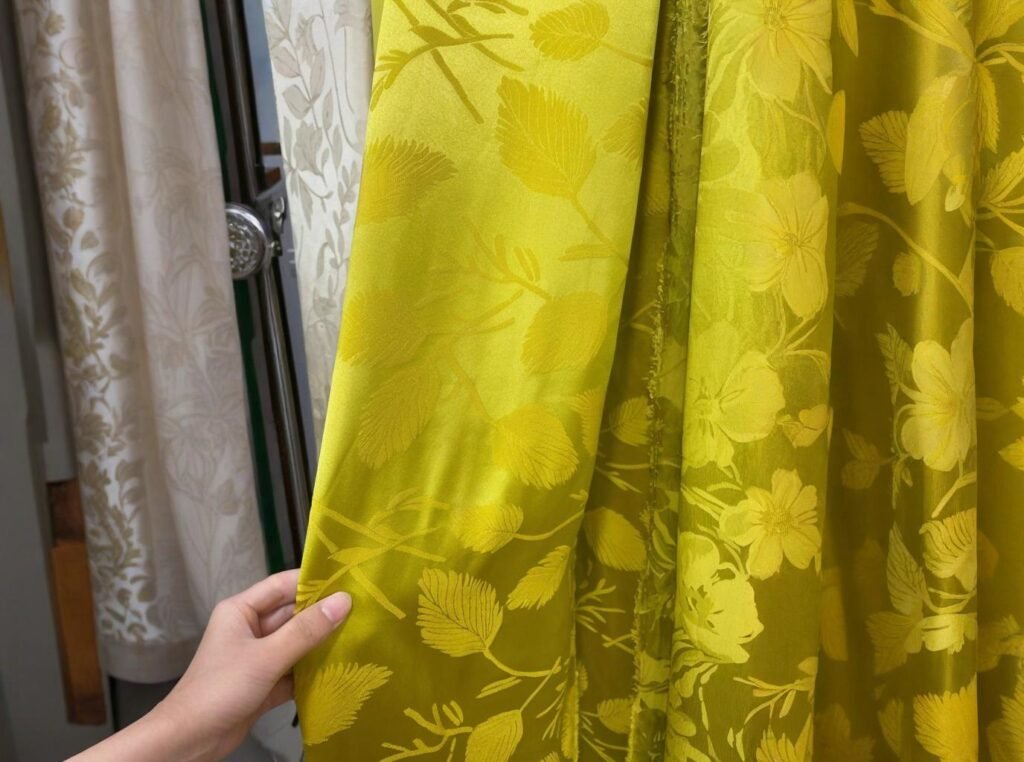
In silk processing, pre-treatment is not a neutral step that simply “gets fabric ready” for dyeing. It actively reshapes the fiber surface, alters internal structure, and determines how silk will interact with dyes, water, and mechanical stress for the rest of its life. Many downstream problems—uneven color, unexpected weight loss, weak tensile strength, poor aging—can be traced back not to the dye bath, but to decisions made during pre-treatment.
Pre-treatment determines both how evenly raw silk absorbs dye and how much weight it loses before dyeing begins. Controlled, partial degumming improves dye penetration while preserving fiber mass, whereas aggressive or poorly monitored pre-treatment strips excessive sericin, damages fibroin, and leads to higher weight loss and unstable color performance.
In silk dyeing, pre-treatment is not preparation. It is half the result.
Why pre-treatment matters more in silk than in most fibers
Silk is fundamentally different from cotton, wool, or synthetics. It is a two-component fiber system:
- Fibroin: the structural core that gives silk its strength and flexibility
- Sericin: the outer protein layer that binds filaments together and controls surface behavior
Raw silk typically contains 20–25% sericin by weight. Pre-treatment decisions determine:
- How much of this sericin is removed
- How uniformly it is removed
- Whether fibroin remains intact or is partially degraded
Every one of these outcomes directly affects:
- Weight loss percentage
- Dye diffusion speed
- Shade depth and uniformity
- Long-term fabric durability
Once sericin is removed, it cannot be put back. Mistakes at this stage are permanent.
Pre-treatment decisions that shape final quality
Degumming: control, not completeness
Degumming is the most critical pre-treatment step in silk processing. Its purpose is to remove sericin to improve softness, luster, and dye receptivity. However, maximum removal is not the same as optimal removal.
| Degumming Level | Result |
|---|---|
| Light (8–12%) | Softer handfeel, good dye control |
| Medium (12–18%) | Balanced performance |
| Heavy (18–25%) | Maximum luster, high risk |
Light degumming removes surface sericin while leaving part of the protective layer intact. This approach:
- Preserves fiber strength
- Limits excessive weight loss
- Slows dye uptake in a controllable way
Medium degumming is often used for apparel and bedding fabrics where a balance of softness, color depth, and durability is required.
Heavy degumming removes nearly all sericin. While this produces:
- High luster
- Fast dye penetration
- Immediate visual appeal
it also creates a fiber that:
- Loses mass rapidly
- Becomes more sensitive to abrasion
- Ages poorly under washing and wear
Over-degummed silk dyes easily—but it also degrades easily.
Weight loss is not linear—and that matters
One of the most misunderstood aspects of silk pre-treatment is that weight loss accelerates non-linearly as degumming intensity increases. Removing the first 10% of sericin is relatively gentle. Removing the last 5–8% often requires harsher conditions that begin attacking fibroin itself.
This means:
- A small increase in temperature or time can cause a disproportionate increase in weight loss
- Visual improvements may hide structural damage
Professional silk processors track not just total weight loss, but rate of loss over time to avoid crossing this threshold.
Degumming agents and their impact
The choice of degumming agent influences not only how much sericin is removed, but how it is removed.
| Degumming Method | Weight Loss Risk | Dye Uniformity |
|---|---|---|
| Soap + soda | Medium | Good |
| Enzymatic | Low | Very good |
| Strong alkali | High | Inconsistent |
Soap + soda ash systems are traditional and widely used. They remove sericin gradually but can:
- Be sensitive to water quality
- Become aggressive if concentration drifts
- Cause uneven removal if circulation is poor
Enzymatic degumming targets sericin specifically, leaving fibroin largely untouched. This method:
- Provides better weight control
- Produces more uniform dye uptake
- Reduces fiber damage
For high-end silk, enzymatic systems are increasingly favored despite higher material cost, because they reduce downstream risk.
Strong alkali systems remove sericin quickly but lack selectivity. They often:
- Strip sericin unevenly
- Damage fibroin chains
- Increase breakage and fuzz
Silk treated this way may look good initially but often fails durability testing later.
Water quality matters more than expected
Many silk dyeing problems blamed on dyes or recipes actually originate in water chemistry during pre-treatment.
| Water Factor | Effect on Silk |
|---|---|
| High hardness | Uneven sericin removal |
| Iron content | Yellowing risk |
| pH instability | Fiber damage |
Hard water interferes with soap efficiency, causing patchy degumming. Iron contamination catalyzes oxidation reactions that lead to:
- Yellowing
- Dull shades
- Poor color clarity
pH instability is especially dangerous. Sudden pH shifts accelerate protein hydrolysis, weakening silk at a molecular level.
Professional silk facilities often treat or condition water specifically for pre-treatment—not just for dyeing.
Temperature and time: the hidden drivers of weight loss
Degumming effectiveness is governed primarily by temperature × time, not just chemical concentration.
A few degrees can make a major difference. In controlled trials:
- Reducing degumming temperature by 5–8 °C
- While maintaining circulation and time
has been shown to:
- Reduce total weight loss by 2–4%
- Improve fiber tensile retention
- Increase dye shade consistency
High temperatures speed up sericin removal, but they also increase fibroin swelling and vulnerability. Lower temperatures slow the process but provide far better control.
Pre-wetting and swelling control
Before degumming or dyeing, silk must be wetted properly. This step is often rushed—and the consequences are severe.
| Practice | Benefit |
|---|---|
| Gradual wetting | Prevents streaks |
| Controlled swelling | Even dye uptake |
| Avoid shock immersion | Reduces fiber stress |
Silk absorbs water extremely fast. If dry silk is plunged directly into hot or alkaline baths:
- Outer layers swell instantly
- Inner filaments lag behind
- Differential stress develops
This causes:
- Micro-cracks
- Uneven sericin removal
- Irreversible shade variation
Gradual wetting at controlled temperature allows fibers to hydrate uniformly, setting the stage for consistent degumming and dyeing.
How pre-treatment affects dye uptake behavior
Degumming changes the diffusion pathway for dyes. Sericin acts as a semi-permeable barrier. Removing too much of it:
- Speeds dye uptake excessively
- Makes color control difficult
- Increases risk of streaking and shade jumps
Well-controlled partial degumming:
- Slows dye penetration slightly
- Allows better leveling
- Produces more uniform depth across fabric width
Fast dye uptake is not a virtue in silk. Controlled uptake is.
Interaction between pre-treatment and dye class
Different dye systems respond differently to pre-treatment conditions.
- Acid dyes are highly sensitive to surface condition
- Metal-complex dyes require uniform binding sites
- Reactive systems depend on fiber accessibility
Over-degummed silk may show:
- High initial uptake
- Poor fixation
- Greater wash-down loss
This leads to the paradox where fabric looks dark in the dye house but fades significantly after rinsing or washing.
Pre-treatment and long-term aging
The impact of pre-treatment extends far beyond dyeing.
Over-processed silk often exhibits:
- Faster tensile loss over time
- Increased fuzzing
- Reduced resistance to repeated washing
Under-processed silk may feel slightly firmer initially but:
- Retains strength longer
- Ages more gracefully
- Maintains color better
For bedding, scarves, and garments with long service life, aging behavior matters more than first impression.
Weight loss targets should be intentional
Professional silk programs define acceptable weight loss ranges before production begins.
Typical targets:
- Lightweight apparel silks: 10–14%
- Bedding and interior silks: 8–12%
- Structural or blended silks: <10%
Weight loss outside the target range is treated as a process deviation, not a cosmetic issue.
Without defined targets, degumming becomes subjective—and inconsistency follows.
Monitoring and documentation
Effective control requires measurement, not assumptions.
Best practices include:
- Recording fabric weight before and after degumming
- Tracking bath temperature and pH continuously
- Logging water quality parameters
- Linking degumming data to dyeing outcomes
Facilities that do this can predict dye behavior reliably. Those that don’t are forced to “correct” problems downstream.
Common sourcing mistakes related to pre-treatment
Across silk supply chains, several recurring errors appear:
- Approving samples without knowing degumming level
- Comparing dyed samples from different pre-treatment conditions
- Chasing higher luster without considering durability
- Ignoring water quality differences between mills
These mistakes often surface later as:
- Batch-to-batch color variation
- Unexpected GSM differences
- Disputes over fabric strength
Real-world insight
In controlled factory trials, reducing degumming temperature by just 5–8 °C, while keeping chemistry unchanged, cut total weight loss by over 3% and improved shade consistency across the width—without any negative impact on softness or luster.
This demonstrates a key truth: process control matters more than chemical choice.
Sourcing perspective
For buyers and brands, asking the right questions about pre-treatment is essential.
Useful questions include:
- What degumming level is used (percentage range)?
- Is enzymatic or alkaline degumming applied?
- How is weight loss measured and controlled?
- Are pre-treatment parameters locked after sample approval?
Suppliers who can answer clearly are far more likely to deliver consistent silk in bulk.
Pre-treatment should prepare silk to accept dye gently, not force dye in aggressively. The objective is controlled accessibility, not maximum exposure.
Silk that is treated with restraint:
- Loses less weight
- Dyes more evenly
- Performs better over time
In silk processing, pre-treatment is not a technical detail. It is the foundation on which weight, color, and longevity are built.
What Dyeing Techniques Minimize Weight Loss While Maximizing Color Depth?
In silk dyeing, color depth and fabric weight are inseparably linked. Every dyeing decision—temperature, time, liquor ratio, agitation, and dosing method—affects not only shade appearance but also the retention of silk’s protein mass. Weight loss during dyeing is not merely a yield issue; it is a structural warning sign. Excessive loss indicates that fibroin proteins are being extracted, weakened, or permanently altered, even when the final color initially looks rich and uniform.
Well-managed dyehouses understand that silk does not respond favorably to force. High temperatures, aggressive agitation, or rushed fixation may shorten process time, but they increase fiber stress, surface erosion, and irreversible strength reduction. Over time, these practices result in dulling, reduced tear strength, poor abrasion resistance, and customer complaints during garment use or washing.
The most reliable way to achieve deep, stable color on silk while preserving weight is through low-temperature, gradual dyeing with controlled chemistry and extended fixation. Depth is not created by heat spikes or shock dosing. It is built through patience, molecular alignment, and controlled diffusion into the fiber structure.
Technique Choices That Protect Silk
Temperature control: less is more
Silk dyeing does not require extreme heat to achieve saturation. Unlike cotton or polyester, silk fibers open and accept dye at relatively moderate temperatures. Exceeding this range does not improve fixation efficiency; it accelerates protein degradation.
| Dyeing Temperature | Outcome |
|---|---|
| 70–80 °C | Safe, even |
| 85–90 °C | Faster, higher risk |
| >90 °C | Fiber damage likely |
At 70–80 °C, silk fibers swell sufficiently to allow dye penetration without excessive molecular vibration. This range supports even uptake, controlled migration, and stable bonding between dye molecules and amino groups in the silk protein.
Raising temperatures to 85–90 °C may reduce dyeing time slightly, but it increases the rate of hydrolysis and weakens peptide bonds. Above 90 °C, the risk escalates sharply. Weight loss increases, surface luster declines, and the fiber becomes more brittle, particularly in lighter denier silks.
Many dyehouses overheat silk out of habit, often using the same temperature profiles as wool or viscose. In practice, controlled moderate heat produces better long-term results with lower rework rates and fewer fastness failures.
Liquor ratio and dye exhaustion
Liquor ratio determines how concentrated and controllable the dye bath is. Excessive water volume reduces precision, prolongs diffusion time, and increases the risk of protein extraction.
| Liquor Ratio | Effect |
|---|---|
| 1:20–30 | Good control |
| 1:40–50 | Uneven exhaustion |
| Excessive | Increased weight loss |
A liquor ratio of 1:20–30 provides sufficient mobility for the fabric while maintaining dye concentration. This balance improves exhaustion efficiency, meaning more dye transfers into the fiber rather than remaining in the bath or requiring repeated cycles.
Higher ratios dilute both dye and auxiliaries, making pH and temperature harder to stabilize. In these conditions, dye molecules migrate unevenly, leading to shade inconsistency and repeated corrective steps that further stress the fiber.
From a weight perspective, excessive liquor ratios increase exposure time to water and heat, which accelerates protein leaching. Controlled ratios reduce unnecessary contact and help preserve original fabric mass.
Gradual dye addition
How dye enters the bath matters as much as how much dye is used. Silk fibers are sensitive to concentration shocks, which disrupt surface equilibrium and cause localized over-absorption.
| Addition Method | Result |
|---|---|
| Stepwise dosing | Smooth, deep color |
| One-time dosing | Patchy shades |
| Shock dosing | Weight loss spike |
Stepwise dosing introduces dye incrementally, allowing fibers to adapt gradually. This method promotes uniform diffusion from the surface inward, reducing the risk of surface saturation that blocks deeper penetration.
One-time dosing often leads to uneven shade, particularly in dense or tightly woven silks. Shock dosing—adding large amounts of dye rapidly—can cause sudden fiber swelling and surface erosion. These effects are frequently accompanied by measurable weight loss and increased lint formation in the bath.
Factories that prioritize weight retention almost universally adopt slow, staged dye addition for silk, even when production schedules are tight.
Fixation time vs intensity
Fixation determines how securely dye molecules bind within the silk structure. The common mistake is assuming that higher temperature or stronger fixation agents compensate for shorter time. In reality, fixation quality depends more on duration at stable conditions than on intensity.
| Fixation Approach | Performance |
|---|---|
| Short, hot | Bright but unstable |
| Longer, moderate | Deep and stable |
Short, high-intensity fixation can produce visually bright shades, but these colors often lack wash and rub fastness. More importantly, aggressive fixation increases protein extraction, leading to higher weight loss and reduced tensile strength.
Longer fixation at moderate temperature allows dye molecules to anchor gradually through hydrogen bonding and ionic attraction without disrupting the fiber matrix. This approach yields deeper color that remains stable through subsequent finishing and end-use washing.
In controlled factory trials, extending fixation time by 20–30% while lowering peak temperature often reduces weight loss by 0.5–1.2% compared to rapid fixation methods, with no loss in perceived color depth.
Mechanical agitation
Silk fibers are inherently smooth and continuous, but they are vulnerable to friction when wet. Mechanical movement during dyeing must be carefully limited.
| Agitation Level | Risk |
|---|---|
| Gentle circulation | Low |
| Strong tumbling | High |
| Over-movement | Surface damage |
Gentle circulation ensures even dye distribution without excessive fiber-to-fiber contact. Strong tumbling, commonly used for cotton knits, increases abrasion and micro-fibrillation on silk surfaces.
Over-movement not only damages surface luster but also accelerates protein loss into the bath, contributing to both weight reduction and bath contamination. Many dyehouses dedicated to silk use customized programs with reduced drum speed, longer dwell times, and minimal reversal cycles.
Lower agitation also improves shade consistency by preventing creasing and localized dye concentration.
Across dyehouses with long-term silk specialization, one lesson remains consistent: time and control outperform heat and force. Darker shades achieved through gradual dyeing, controlled temperature, and extended fixation retain higher fabric weight, better handfeel, and superior durability.
While aggressive methods may deliver fast visual results, they quietly erode fiber integrity. In contrast, disciplined low-stress dyeing preserves both color and structure, ensuring that silk fabrics maintain their value not only at delivery, but throughout their service life.
How Do Temperature and pH Influence Silk Dyeing Results?
Temperature and pH are the two most powerful control variables in silk dyeing, and also the two most frequently underestimated. In raw silk, they directly determine how dyes fix to the fiber, how much structural damage occurs during processing, and how much usable weight remains after dyeing. Even when color looks acceptable at first glance, inappropriate temperature or unstable pH can quietly undermine strength, fastness, and long-term performance.
Silk dyes best under moderate temperatures and mildly acidic conditions. Pushing either variable too aggressively may speed up dye uptake, but it almost always increases protein degradation, excessive weight loss, and premature aging of the fabric.
In silk dyeing, chemistry is gentle persuasion, not force.
Understanding this balance is essential for any operation that works with raw silk at scale. Unlike synthetic fibers, silk does not forgive shortcuts. Small deviations that seem insignificant in other dyeing systems can have permanent consequences in silk.
Why silk reacts so strongly to small changes
Silk is a protein fiber composed primarily of fibroin, held together by hydrogen bonds and sensitive peptide linkages. These bonds are stable only within a narrow thermal and chemical window. Temperature and pH determine whether dye molecules attach cleanly to available sites—or whether the fiber itself begins to break down.
Two characteristics make silk especially reactive:
- High dye affinity: dyes fix quickly, leaving little time for correction
- Low tolerance margin: damage begins before visible failure
This combination means that silk often looks “successfully dyed” even when internal damage has already occurred.
Temperature: energy vs damage
Temperature provides the energy required for dye molecules to move, penetrate the fiber, and bond with amino acid sites. However, in silk, the difference between sufficient energy and destructive energy is small.
| Temperature Range | Effect on Silk |
|---|---|
| 60–70 °C | Safe, slow dye uptake |
| 70–80 °C | Optimal balance |
| 85–90 °C | Faster fixation, higher risk |
| >90 °C | Protein breakdown likely |
At 60–70 °C, dye uptake is gradual and controlled. This range is forgiving and allows time for leveling, but processing is slow and may be impractical for deep shades or bulk production.
The 70–80 °C range represents the optimal balance for most acid dye systems on raw silk. Dye fixation is efficient without significantly accelerating protein degradation. Weight loss remains within predictable limits, and fiber strength is largely preserved.
Above 85 °C, dye uptake accelerates sharply. While this may appear attractive for productivity, it increases several risks simultaneously:
- Rapid, uneven fixation
- Increased sericin dissolution
- Accelerated hydrolysis of fibroin
- Reduced wet strength during processing
Temperatures above 90 °C push silk into a danger zone. Protein breakdown becomes likely, especially in the presence of acid. Even short exposure can cause irreversible weakening, leading to later tearing, fuzzing, or seam failure.
Many dyehouses unintentionally trade durability for speed by raising temperature. The cost is rarely visible immediately, but it appears later as customer complaints or reduced product lifespan.
Temperature ramping matters as much as peak temperature
Silk is sensitive not only to how hot it gets, but how fast it gets there. Rapid temperature ramps cause uneven fiber swelling and differential dye uptake.
Best practice in silk dyeing emphasizes:
- Gradual heating rates
- Extended hold times at intermediate temperatures
- Slow cooling after fixation
These steps allow moisture and dyes to redistribute evenly within the fiber, reducing internal stress.
pH sensitivity of silk protein
If temperature controls energy, pH controls chemistry. Silk prefers a narrow, mildly acidic environment. Outside this window, the protein structure becomes unstable.
| pH Level | Impact |
|---|---|
| 4.0–5.0 | Ideal for acid dyes |
| 5.5–6.0 | Acceptable but slower |
| <3.5 | Hydrolysis risk |
| >6.5 | Fiber swelling & damage |
At pH 4.0–5.0, amino groups on silk fibroin are optimally protonated, allowing strong and stable bonding with acid dyes. Dye uptake is efficient and predictable.
At pH 5.5–6.0, dyeing can still proceed, but fixation is slower and less complete. This range may be used deliberately for lighter shades or when maximum fiber preservation is required, but it demands longer processing time.
Below pH 3.5, acid hydrolysis becomes a serious risk. Peptide bonds begin to break, leading to rapid strength loss and increased weight reduction. Damage at this level is often invisible during dyeing but appears later during use.
Above pH 6.5, silk fibers swell excessively. This swelling disrupts internal alignment, increases friction between filaments, and weakens structural cohesion. It also destabilizes dye fixation, leading to poor fastness.
Uncontrolled pH fluctuations are one of the leading causes of inconsistent silk dyeing.
pH drift: a hidden enemy
Even when a dye bath is set correctly at the start, pH can drift during dyeing due to:
- Dye uptake consuming acid
- Sericin dissolution altering bath chemistry
- Inadequate buffering capacity
Without monitoring and correction, a bath that starts at pH 4.5 may rise or fall into a damaging range mid-cycle. This is especially common in long dyeing runs or when processing variable raw silk lots.
Interaction between temperature and pH
Temperature and pH do not act independently. Heat amplifies chemical effects, narrowing silk’s already limited tolerance window.
| Condition | Result |
|---|---|
| High temp + low pH | Accelerated weight loss |
| Moderate temp + stable pH | Strong fixation |
| Variable pH | Shade inconsistency |
At elevated temperatures, acidic conditions become more aggressive. Hydrolysis reactions speed up, and sericin removal accelerates beyond control. This combination is one of the fastest ways to lose fabric weight and strength.
By contrast, moderate temperature combined with stable pH allows dyes to fix efficiently while preserving fiber integrity. This balance produces fabrics that not only look good but perform reliably.
Variable pH—especially when combined with temperature fluctuations—leads to uneven fixation. Some areas of the fabric lock in dye early, while others lag behind, resulting in cloudy or streaked shades.
Stability matters more than aggressiveness.
Buffer systems and gradual adjustment
Professional silk dyeing relies heavily on buffering systems to maintain chemical stability throughout the process.
| Method | Benefit |
|---|---|
| Buffered acids | Prevent pH shock |
| Stepwise acid addition | Even fixation |
| Continuous monitoring | Reduced defects |
Buffered acids release hydrogen ions gradually, preventing sudden pH drops that shock the fiber. This is especially important at higher temperatures, where pH sensitivity is amplified.
Stepwise acid addition allows dye fixation to proceed evenly. Instead of adding the full acid dose at once, the bath is adjusted incrementally as dye uptake progresses. This reduces localized over-acidification and improves shade uniformity.
Continuous pH monitoring—rather than spot checks—allows operators to detect drift early and correct it gently. This is one of the most effective ways to reduce re-dyeing and quality variation.
Factories that skip buffering often compensate later with color correction or re-dyeing, adding more damage instead of preventing it.
Weight retention and yield control
Temperature and pH directly influence how much silk mass is lost during dyeing. While some weight loss is unavoidable, excessive loss reduces yield and compromises fabric performance.
High temperature and low pH accelerate:
- Sericin dissolution
- Fibroin hydrolysis
- Loss of bound moisture control
When these factors combine, total weight loss can exceed expected ranges, pushing fabric below contractual specifications.
Weight loss is not just an economic issue. It affects:
- Fabric thickness and hand feel
- Tear strength
- Drape behavior
Once mass is lost, it cannot be recovered.
Color fastness vs initial shade
One of the most deceptive outcomes in silk dyeing is a fabric that looks richly colored but performs poorly in fastness tests. This often results from aggressive temperature or pH conditions.
Rapid fixation can trap dye molecules in unstable positions. These dyes may bleed or fade during washing, even though initial appearance is strong.
Moderate conditions allow dyes to migrate to more stable bonding sites, improving wash and rub fastness over time.
Real production insight
In controlled production trials, maintaining pH within ±0.2 units throughout the dyeing cycle—while holding temperature below 80 °C—produced measurable improvements. Wash fastness improved by one full grade, while average weight loss was reduced by nearly 2% compared to unbuffered processes.
These gains did not require new dyes or equipment. They came purely from tighter control of temperature and pH stability.
Why re-dyeing is especially harmful for silk
When initial dyeing fails, the instinct is often to correct shade through re-dyeing. In silk, this approach is risky.
Each additional dye cycle:
- Exposes fibers to more heat and acid
- Increases cumulative weight loss
- Reduces wet strength further
While re-dyeing may correct color, it often leaves the fabric structurally compromised. The final product may pass visual inspection but fail in wear.
This is why “first-time-right” dyeing is far more critical for silk than for most other fibers.
Operational discipline over chemical force
Successful silk dyeing is defined less by aggressive chemistry and more by disciplined control.
Key principles include:
- Keep temperatures as low as practical
- Maintain pH within a narrow, stable range
- Adjust conditions gradually, not abruptly
- Monitor continuously, not periodically
These practices slow the process slightly but dramatically reduce downstream risk.
Implications for bulk silk programs
For bulk production, temperature and pH control are not optional refinements. They are central to cost, yield, and consistency.
Poor control leads to:
- Higher rejection rates
- Inconsistent hand feel across lots
- Reduced fabric lifespan
- Increased customer claims
Well-controlled processes produce silk that behaves predictably not just in the dyehouse, but in cutting, sewing, washing, and end use.
Temperature and pH are the steering wheel of silk dyeing. They control not only how color develops, but how much of the fiber survives intact.
Silk rewards chemical stability. Moderate temperatures, mildly acidic conditions, and gradual adjustment preserve protein structure while allowing strong, even dye fixation. Sudden changes—whether thermal or acidic—leave permanent scars in the fiber.
In silk dyeing, success is rarely achieved by pushing harder. It is achieved by holding steady.
What Testing Standards Ensure Silk Color Fastness and Quality Control?
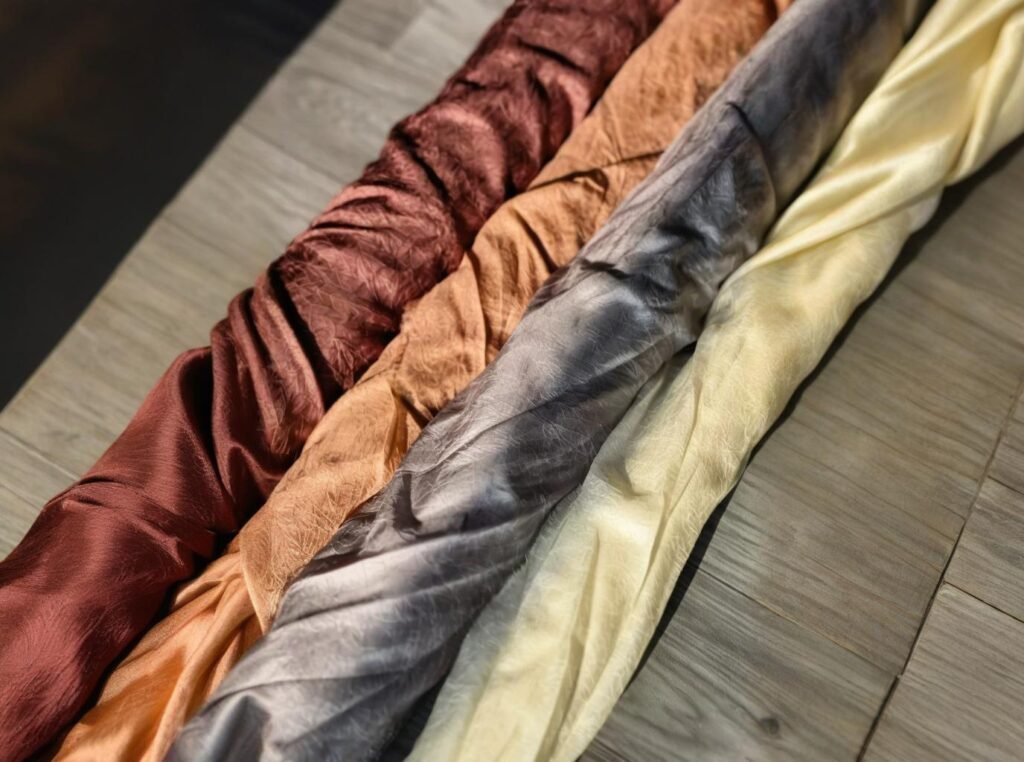
Silk is unforgiving. Its visual beauty can mask weaknesses that only appear after washing, rubbing, exposure to sweat, or light. For this reason, silk color fastness and overall quality cannot be assumed from appearance or experience alone. They must be demonstrated through standardized, repeatable testing that verifies dye fixation, fiber integrity, and long-term stability.
In professional silk production, testing is not a box to tick after dyeing. It is a control mechanism that confirms the dyeing process achieved the desired performance without damaging the fiber. Reliable dyeing operations consistently meet recognized international standards without relying on corrective finishing, re-dyeing, or heavy fixatives.
If it isn’t tested, it isn’t proven.
What meaningful testing looks like for silk
Meaningful testing for silk focuses on two parallel questions:
- Did the dye bond properly to the silk fiber?
- Was that bond achieved without degrading the silk itself?
A silk fabric that shows strong color but weak tensile strength, excessive weight loss, or poor rubbing fastness has failed—regardless of how good it looked at shipment.
Core color fastness tests for silk
The foundation of silk quality control lies in internationally recognized ISO test standards. These tests simulate the stresses silk encounters in real use and reveal weaknesses that visual inspection cannot detect.
| Test Type | Standard | What It Reveals |
|---|---|---|
| Wash fastness | ISO 105-C06 | Dye fixation stability |
| Rubbing fastness | ISO 105-X12 | Surface dye retention |
| Perspiration | ISO 105-E04 | Protein-dye bond strength |
| Light fastness | ISO 105-B02 | UV resistance |
Each test targets a different failure mode. Passing one does not compensate for failing another.
Silk often passes wash fastness tests but fails rubbing or perspiration tests if dyeing was rushed or improperly balanced. This is why single-test certification is misleading.
Wash fastness: stability under laundering
Wash fastness evaluates how well dye molecules remain attached to silk fibers during washing. ISO 105-C06 uses controlled temperature, detergent, and agitation conditions to simulate realistic laundering.
For silk, wash fastness reveals:
- Strength of dye-fiber attachment
- Effectiveness of after-washing and neutralization
- Risk of color bleeding or back-staining
Poor wash fastness often indicates:
- Incomplete dye fixation
- Excess surface dye
- Inadequate rinsing
Because silk garments are usually washed gently, acceptable wash fastness thresholds are achievable—but only with disciplined process control.
Rubbing fastness: surface integrity under friction
Rubbing fastness is one of the most critical—and most commonly failed—tests for silk.
ISO 105-X12 evaluates how much color transfers from silk to another surface under dry and wet rubbing conditions. This directly relates to:
- Color transfer onto skin
- Staining of adjacent garments
- Visible fading at contact points
Silk’s smooth filament structure makes it particularly sensitive to surface dye residue. A fabric can show excellent wash fastness and still fail rubbing fastness if:
- Dye remained on the fiber surface
- Fixation chemistry was too mild
- After-washing was insufficient
Wet rubbing is especially challenging, as moisture reduces friction resistance and mobilizes loosely bound dye.
Perspiration fastness: chemical stress testing
ISO 105-E04 simulates exposure to acidic and alkaline perspiration. This test is especially important for silk garments worn close to the skin.
Perspiration fastness reveals:
- Stability of dye-protein bonds under chemical stress
- Risk of color change or bleeding during wear
- Suitability for apparel use
Failures in perspiration tests often indicate:
- Poor pH control during dyeing
- Incompatible dye selection
- Inadequate fixation under acidic conditions
Because silk is a protein fiber, perspiration testing is a direct probe of dye compatibility, not just color durability.
Light fastness: resistance to fading
Light fastness testing under ISO 105-B02 evaluates how silk dyes respond to ultraviolet exposure.
Silk is typically used indoors or in low-light environments, but light fastness still matters for:
- Scarves
- Home textiles
- Window-adjacent applications
- Long-term storage stability
Light fastness depends on:
- Dye molecular structure
- Shade depth
- Presence of metal complexes
- Finishing chemistry
Silk dyed with standard acid dyes often shows moderate light fastness, while metal-complex acid dyes generally perform better in this area.
Target performance levels
To ensure commercial reliability, silk producers typically set minimum acceptance grades rather than aiming for theoretical maximums.
| Test | Acceptable Grade |
|---|---|
| Wash fastness | ≥ Grade 4 |
| Dry rubbing | ≥ Grade 4 |
| Wet rubbing | ≥ Grade 3–4 |
| Perspiration | ≥ Grade 4 |
Grades below these thresholds do not merely represent “cosmetic” issues. They usually indicate deeper process problems that will surface later as:
- Customer complaints
- Returns
- Reputation damage
Importantly, chasing higher grades by aggressive chemical treatment often backfires by damaging the silk itself.
Weight loss tracking as a quality metric
Color fastness alone does not guarantee silk quality. Weight loss measurement is a critical companion metric that reveals how much silk protein was removed during processing.
Experienced producers track fabric weight at multiple stages.
| Stage | Acceptable Loss |
|---|---|
| Degumming | 12–18% |
| Dyeing + finishing | ≤4% |
| Total process | ≤22% |
Excessive weight loss correlates strongly with:
- Reduced tensile strength
- Increased brittleness
- Shortened product lifespan
A silk fabric can pass color fastness tests yet fail in durability if too much fiber mass was sacrificed to achieve those results.
Why weight loss matters more than many fastness scores
Over-aggressive dyeing conditions—high temperature, prolonged time, strong chemicals—can strip silk protein while improving initial fastness results. This creates a false sense of quality.
Typical downstream consequences include:
- Seam breakage during sewing
- Increased tearing under tension
- Rapid surface wear
By tracking weight loss, producers can identify when fastness gains are being achieved at the expense of fiber integrity.
Visual tests vs lab tests
Visual inspection and hand-feel evaluation remain important—but they are insufficient on their own.
| Method | Limitation |
|---|---|
| Visual check | Cannot predict fading |
| Handfeel test | Subjective |
| Lab testing | Objective & repeatable |
Human inspection detects obvious issues such as streaks, uneven dyeing, or surface defects. However, it cannot:
- Predict long-term color stability
- Reveal latent rubbing failures
- Quantify fiber damage
Professional silk quality control relies on both human judgment and laboratory verification, each compensating for the other’s limitations.
Sampling strategy matters
Testing one swatch from one roll is not enough. Silk dyeing variability can occur across:
- Fabric width
- Batch lots
- Shade depth zones
Robust testing programs include:
- Multiple samples per batch
- Edge and center sampling
- Dark and light shade evaluation
This approach identifies systemic issues rather than isolated successes.
Pilot testing before bulk dyeing
One of the most effective quality control measures is pilot testing. Small-scale dye trials are tested fully before bulk production begins.
Benefits include:
- Early detection of fastness risks
- Adjustment of dye chemistry
- Optimization of after-washing
- Confirmation of acceptable weight retention
This step reduces the likelihood of large-scale failures that cannot be economically corrected.
A factory-level best practice
At SzoneierFabrics, bulk dyeing does not proceed until laboratory results confirm both color fastness performance and acceptable weight retention on pilot samples. This dual requirement prevents most downstream quality issues, even when working with challenging shades or demanding specifications.
This discipline also shortens overall lead time by avoiding rework and disputes later in the process.
Common testing mistakes in silk production
Recurring problems seen in failed silk programs include:
- Testing only wash fastness
- Ignoring wet rubbing performance
- Skipping perspiration testing for apparel
- Failing to track weight loss
- Relying on supplier claims without data
These shortcuts often pass initial inspection but fail in customer use, where correction is no longer possible.
Interpreting test results correctly
Passing a test does not always mean success. Results must be interpreted in context.
For example:
- A Grade 4 wash fastness may be acceptable for scarves but insufficient for linings
- Slight wet rubbing failure may be tolerable in decorative silk but not in apparel
- Moderate light fastness may be acceptable indoors but risky near windows
Quality control decisions should reflect actual use conditions, not abstract benchmarks.
Documentation and traceability
Test reports must be:
- Linked to specific batches
- Clearly dated
- Conducted under recognized standards
Generic or outdated reports are functionally useless. Traceability ensures that performance claims correspond to the material actually shipped.
Critical perspective
Fast delivery without testing often leads to slow problems—returns, complaints, and reputation loss.
Silk failures rarely appear immediately. They emerge after weeks or months of use, when accountability is harder to assign and costs are higher.
Silk color fastness and quality cannot be validated by appearance, experience, or good intentions. They must be proven through structured, standardized testing that evaluates both color performance and fiber preservation.
Reliable silk producers:
- Test washing, rubbing, perspiration, and light fastness
- Track weight loss alongside fastness results
- Pilot-test before bulk dyeing
- Interpret results based on real-world use
Testing is not a formality. It is the only reliable safeguard that ensures silk remains beautiful, durable, and trustworthy long after it leaves the factory.
How Do After-Dyeing Finishes Impact Silk Handfeel and Long-Term Performance?
After-dyeing finishes are where silk either recovers its natural elegance—or quietly loses it. Dyeing places unavoidable stress on silk fibers: heat, moisture, chemicals, and mechanical movement all disturb the delicate balance between fibroin structure and residual surface lubrication. Finishing is the stage that decides whether silk regains softness, resilience, and longevity, or whether it becomes stiff, fragile, and short-lived.
After-dyeing finishes directly affect handfeel recovery, color stability, wrinkle behavior, fiber fatigue rate, and long-term durability. Well-designed finishing can correct mild process stress and stabilize performance for years. Poor finishing, by contrast, can undo even excellent dyeing work—resulting in dull appearance, rapid wear, and customer dissatisfaction.
Dyeing gives silk its color. Finishing determines how long that beauty lasts.
Why finishing matters more than most people realize
Silk is not chemically inert after dyeing. At that point, the fiber:
- Has lost most or all of its sericin
- Has undergone repeated swelling and drying
- Has reduced surface lubrication
- Is more sensitive to abrasion, creasing, and washing
Without corrective finishing, dyed silk often feels:
- Slightly harsh or dry
- More prone to wrinkling
- Structurally weaker over time
Finishing is therefore not decorative. It is structural rehabilitation for the fiber.
Finishing is not cosmetic—it’s structural
Softening treatments: rebuilding lost comfort
Degumming and dyeing inevitably remove natural lubricants that allow silk filaments to glide smoothly against each other. Softening finishes aim to replace that lost lubrication—but how they do so matters greatly.
| Softening Method | Effect on Silk |
|---|---|
| Silicone softeners | Smooth, fluid handfeel |
| Fatty acid softeners | Natural touch, moderate durability |
| Over-softening | Oily feel, reduced breathability |
Silicone softeners form a thin, flexible film around silk fibers. When correctly dosed, they:
- Restore smoothness
- Improve drape
- Reduce friction during wear and washing
However, excessive silicone creates:
- A slick, artificial feel
- Reduced moisture exchange
- Higher tendency for surface soil retention
Fatty acid softeners (often derived from natural oils) provide a softer, more “organic” touch. They are commonly used for:
- Scarves
- Bedding
- Garments worn directly on skin
Their limitation is durability. They tend to wash out faster and may require careful reapplication in repeated processing cycles.
Over-softening is a frequent error. It temporarily masks fiber weakness rather than correcting it. Silk may feel luxurious at delivery but deteriorates rapidly after washing, revealing:
- Loss of body
- Increased pilling or fuzz
- Uneven handfeel
Balanced softening restores controlled flexibility, not artificial slipperiness.
Anti-crease and dimensional stabilization
One of the most common complaints about silk is wrinkling. After wet processing, silk fibers lose some of their natural shape memory, making finishing essential for dimensional stability.
| Finish Type | Benefit |
|---|---|
| Light resin finish | Improved crease recovery |
| Mechanical calendaring | Surface smoothness |
| Heat-set under tension | Shape stability |
Light resin finishes help silk recover from creasing by reinforcing intermolecular bonding. When used sparingly, they:
- Improve crease recovery
- Reduce bagging
- Maintain softness
Over-use, however, makes silk brittle and reduces tear resistance.
Mechanical calendaring smooths the surface through controlled pressure and heat. It enhances:
- Visual uniformity
- Initial smoothness
- Light reflection
Calendaring must be carefully controlled. Excessive pressure flattens fiber structure, leading to a paper-like handfeel and faster surface wear.
Heat-setting under tension stabilizes fabric dimensions after dyeing. Properly applied, it:
- Reduces post-wash shrinkage
- Improves seam behavior
- Maintains drape consistency
Incorrect tension or excessive heat can permanently damage fibroin chains, causing long-term strength loss.
Color-locking finishes and dye stability
Dye fixation does not end when the dye bath is drained. After-dyeing finishes often determine whether color remains stable through repeated washing and exposure.
| Finish | Performance |
|---|---|
| Cationic fixatives | Improved wash fastness |
| Protein-compatible agents | Minimal handfeel impact |
| Aggressive fixatives | Risk of yellowing |
Cationic fixatives enhance dye-fiber bonding by creating electrostatic attraction. When properly selected, they:
- Improve wash fastness
- Reduce dye bleeding
- Maintain shade depth
The challenge is compatibility. Some fixatives:
- Interfere with silk’s natural luster
- Create stiffness
- Increase yellowing risk over time
Protein-compatible agents are specifically designed to interact gently with silk fibroin. They offer:
- Moderate fastness improvement
- Minimal impact on softness
- Better aging behavior
Aggressive fixatives may lock color effectively in the short term but often cause:
- Reduced breathability
- Fiber sealing
- Long-term discoloration
The best finishes reinforce dye bonds without sealing the fiber unnaturally.
Drying and setting: an underestimated step
Drying is often treated as a logistical step, but for silk it is a critical finishing operation. How water leaves the fiber affects internal stress distribution and surface structure.
| Drying Method | Impact |
|---|---|
| Low-tension air drying | Preserves drape |
| High heat drying | Weight loss, dullness |
| Uneven drying | Shade variation |
Low-tension air drying allows silk fibers to relax naturally. This preserves:
- Fluid drape
- Natural luster
- Uniform handfeel
High-heat drying accelerates production but causes:
- Additional weight loss
- Reduced tensile strength
- Dull, lifeless appearance
Uneven drying—often caused by poor airflow or fabric overlap—leads to:
- Localized shade differences
- Differential shrinkage
- Inconsistent handfeel
Many long-term silk performance problems originate not in dyeing, but in rushed drying stages.
Interaction between finishes and aging behavior
Finishes should not only improve initial feel—they must support graceful aging. Silk that feels perfect at shipment but deteriorates rapidly in use is a finishing failure.
Well-finished silk typically:
- Retains softness after multiple washes
- Shows gradual, even wear
- Maintains color clarity
Poorly finished silk often:
- Becomes harsh after washing
- Develops weak spots
- Loses luster unevenly
This difference is especially critical for:
- Bedding
- Scarves
- Garments with frequent laundering
Over-finishing vs under-finishing
Both extremes are problematic.
Under-finished silk may:
- Feel dry or squeaky
- Wrinkle excessively
- Abrade easily
Over-finished silk may:
- Feel greasy or coated
- Trap heat and moisture
- Age poorly once finishes wash out
The goal is restoration, not disguise.
Mechanical vs chemical finishing balance
The most stable silk finishing systems rely on a balance between mechanical and chemical methods.
- Mechanical finishing shapes behavior without adding residue
- Chemical finishing restores lubrication and stability
Over-reliance on chemistry increases dependency on finishes that may not last. Over-reliance on mechanical methods risks fiber damage.
Balanced systems produce silk that:
- Feels natural
- Performs consistently
- Requires less corrective chemistry
Finishing and fabric application alignment
Not all silk products require the same finishing profile.
- Scarves and apparel prioritize drape and softness
- Bedding prioritizes wash durability and smoothness
- Interior silks prioritize dimensional stability
Finishing must be matched to end use, not applied generically.
Process control and repeatability
Consistency in finishing is as important as the choice of finish itself.
Professional operations:
- Lock finishing recipes after approval
- Control temperature, time, and concentration
- Retain historical data for repeat orders
Inconsistent finishing between lots causes:
- Handfeel mismatch
- Color variation
- Customer complaints
Quality evaluation after finishing
Silk should be evaluated after finishing, not before.
Key checks include:
- Handfeel after drying
- Crease recovery behavior
- Color change after washing
- Tensile retention
Evaluating unfinished or partially finished silk gives a false sense of quality.
Common mistakes in after-dyeing finishing
Across silk supply chains, recurring errors include:
- Over-softening to impress during sampling
- Using aggressive fixatives to mask dyeing issues
- Rushing drying to meet schedules
- Treating finishing as a standardized step
These mistakes often surface months later as:
- Premature wear
- Loss of softness
- Customer dissatisfaction
Sourcing perspective
For buyers and brands, finishing transparency is critical. Useful questions include:
- What softening system is used?
- How is over-application prevented?
- Are finishing parameters locked for bulk?
- How does the fabric behave after washing?
Suppliers who can answer clearly tend to deliver more stable silk.
After-dyeing finishing should restore balance to silk—never force performance through heavy chemistry. The best finishing work is often invisible: silk feels natural, behaves predictably, and ages gracefully.
Silk does not need to be pushed. It needs to be respected.
When finishing respects silk’s biology and structure, the result is not just a beautiful fabric—but one that remains beautiful long after the first wear or wash.
What Are Common Mistakes in Silk Dyeing and How Can They Be Avoided?
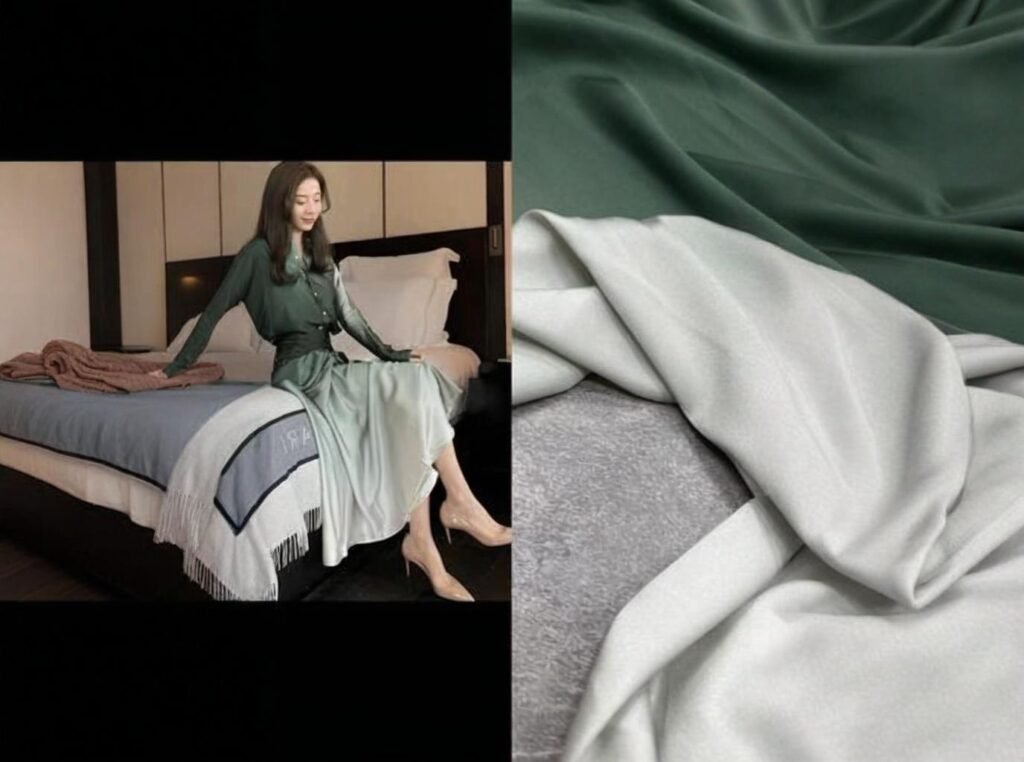
Silk dyeing failures are rarely caused by a single dramatic error. In most factories, problems develop quietly through habitual shortcuts, inherited process settings, or inappropriate transfer of cotton or synthetic dyeing logic into silk production. The fabric may pass initial visual inspection, meet shade approval, and even ship without complaint—only to show fading, strength loss, abnormal weight reduction, or surface damage weeks or months later.
Silk is fundamentally different from plant or synthetic fibers. It is a protein-based material whose performance depends on maintaining molecular integrity throughout processing. Once damaged, silk does not “recover” through finishing or post-treatment. Every mistake compounds, and the cost usually appears downstream: customer complaints, failed lab tests, rejected garments, or inconsistent bulk runs.
Factories that consistently deliver stable, high-quality dyed silk share one trait: they design processes specifically around silk’s limits, not around speed or convenience. Understanding the most common mistakes—and how to prevent them—is essential for long-term production reliability.
Mistakes Seen Repeatedly in Real Production
Mistake 1: Treating silk like cotton
One of the most frequent and costly errors is applying cotton dyeing logic to silk. While both are natural fibers, their chemical structures are entirely different. Cotton is cellulose-based and tolerant of high alkalinity and aggressive processing. Silk is not.
| Consequence | Result |
|---|---|
| High alkalinity | Fiber damage |
| Aggressive agitation | Surface fuzz |
| High temperature | Protein breakdown |
Silk fibers consist primarily of fibroin protein, stabilized by hydrogen bonds and sensitive to pH and heat. When exposed to alkaline conditions commonly used for cotton, these bonds weaken, leading to irreversible strength loss. Even brief exposure above safe pH levels can cause measurable degradation.
Aggressive agitation, acceptable for cotton knits or woven fabrics, creates friction that damages silk’s smooth filament surface. This results in surface fuzz, loss of luster, and reduced abrasion resistance. High temperatures accelerate protein denaturation, increasing weight loss and reducing fabric life.
Avoidance begins with separation. Silk should never share default recipes, machine programs, or chemical assumptions with cotton or viscose. Dedicated silk parameters—lower pH, gentler movement, and moderate temperatures—are non-negotiable.
Mistake 2: Over-degumming for “better dyeing”
Degumming is necessary to remove sericin and expose fibroin for dye uptake, but more is not better. Over-degumming is one of the most misunderstood causes of silk quality failure.
| Over-Degumming Effect | Outcome |
|---|---|
| Excess weight loss | Weak fabric |
| Fast dye uptake | Poor fastness |
| High luster initially | Rapid aging |
Excessive degumming strips not only sericin but also damages the fibroin surface. This often results in rapid dye uptake, which may look efficient but leads to shallow dye anchoring and poor wash fastness. The fabric may appear bright and lustrous immediately after dyeing, creating a false sense of success.
In reality, over-degummed silk ages poorly. Fibers lose cohesion, tensile strength declines, and abrasion resistance drops. Weight loss beyond controlled targets—often exceeding 20–25% cumulatively—signals structural compromise.
Controlled degumming focuses on consistency rather than maximum removal. Monitoring weight loss after degumming, adjusting time and temperature carefully, and avoiding excessive alkalinity preserve long-term fabric performance.
Mistake 3: Chasing color depth with heat
When deep shades are required, many dyehouses instinctively increase temperature. This approach often delivers fast visual results but creates long-term instability.
| Short-Term | Long-Term |
|---|---|
| Rich initial shade | Fading |
| Fast production | Returns |
| Passing visual check | Failing lab tests |
Heat accelerates dye diffusion, but it also accelerates protein degradation. At elevated temperatures, silk fibers swell excessively, allowing dye to enter quickly but without forming stable bonds. The result is color that looks deep initially but lacks durability.
Over time, these fabrics show noticeable fading, poor rub fastness, and increased brittleness. Lab testing often reveals reduced tensile strength and abnormal weight loss compared to samples dyed under controlled conditions.
Avoidance requires a mindset shift. Depth should be achieved through time, controlled temperature, gradual dosing, and proper fixation, not thermal force. Lower-temperature dyeing with extended fixation consistently produces deeper, more stable shades with less fiber damage.
Mistake 4: Skipping pilot testing
Silk is inherently variable. Differences in cocoon origin, filament fineness, degumming history, and fabric construction mean that no two batches behave identically. Skipping pilot testing assumes uniformity that does not exist.
| Skipped Step | Risk |
|---|---|
| Lab dip | Shade mismatch |
| Wash test | Customer complaints |
| Weight check | Structural failure |
Without lab dips, bulk dyeing risks shade deviation that cannot be corrected without reprocessing. Skipping wash and rub tests allows fastness issues to reach customers. Ignoring pre- and post-dye weight checks hides cumulative loss until fabric strength is already compromised.
Pilot testing is often viewed as a cost or delay. In practice, it is insurance. A small investment in sampling prevents large-scale rework, claims, and rejected lots.
High-performing factories treat pilot testing as mandatory, especially when changing color depth, supplier batches, or processing parameters.
Mistake 5: Ignoring cumulative weight loss
Weight loss in silk processing is expected—but only within controlled limits. The most dangerous scenario is not a single large loss, but multiple small losses that go untracked.
| Stage | Hidden Loss |
|---|---|
| Degumming | Expected |
| Dyeing | Often ignored |
| Finishing | Overlooked |
Degumming typically accounts for the largest planned loss. However, dyeing and finishing stages often contribute additional reductions that are rarely measured. Each stage may appear acceptable in isolation, but together they can push total loss beyond safe thresholds.
Excessive cumulative loss correlates strongly with reduced tensile strength, increased tearing risk, and shortened fabric lifespan. Once the fiber mass is gone, no finishing process can restore it.
Avoidance requires discipline. Weighing fabric before and after each major stage creates visibility. When losses exceed expectations, corrective action can be taken immediately rather than after delivery.
Final technical takeaway
High-quality silk dyeing is not driven by clever chemistry or aggressive optimization. It is built on discipline, patience, and respect for the fiber’s limits. Most failures originate from rushing, assumption, or borrowed logic from other materials.
Factories that succeed long-term do not eliminate risk entirely. They control it—by testing, monitoring, and adjusting before damage becomes irreversible. Silk rewards those who work within its boundaries, and it penalizes those who ignore them.
Ready to Customize and Dye Raw Silk with Confidence?
At SzoneierFabrics, we specialize in custom raw silk dyeing solutions designed to achieve:
- Strong, repeatable color fastness
- Controlled and transparent weight loss
- Stable handfeel and long-term durability
- Low MOQ development and fast sampling
- Process-based quality control, not guesswork
Whether you’re developing dyed silk for garments, scarves, linings, or specialty applications, our team works closely with you to define the right dye chemistry, process parameters, and finishing balance for your product.
Contact SzoneierFabrics today to request samples, technical consultation, or a customized quotation for dyed raw silk fabrics.