 Skip to content
Global Lycra Elastane Suppliers: 2026 Verified Manufacturer List
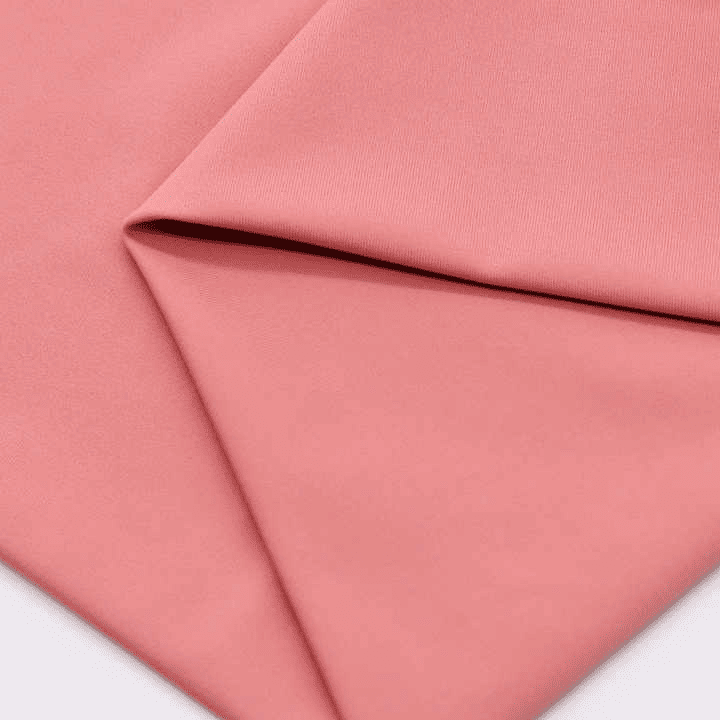
If you search for “Lycra elastane supplier” today, you’ll find hundreds of factories claiming to offer Lycra-quality stretch fibers. But in reality, only a small number of companies actually manufacture elastane fiber at scale—and even fewer are legally allowed to use the Lycra® name. The gap between marketing language and manufacturing reality has never been wider. In 2026, “Lycra® elastane” refers to a trademarked elastane fiber produced under strict quality and licensing control, while most global suppliers actually offer generic elastane (often called spandex). Verified elastane manufacturers are defined not by sales claims, but by fiber origin, polymer technology, capacity scale, certification, and traceability.
Understanding who really makes elastane—and who only processes, blends, or resells it—is the key to avoiding quality drift, supply instability, and compliance risks. This guide breaks down the global elastane supply landscape clearly, without brand hype, so you can evaluate suppliers with confidence.
What Does “Lycra® Elastane Supplier” Really Mean in 2026 (Brand vs Generic Spandex)?
In 2026, the phrase “Lycra® elastane supplier” has become one of the most misunderstood terms in the global textile supply chain. On the surface, it appears straightforward: a supplier that provides Lycra® elastane. In practice, however, the majority of products described this way are not made with Lycra® fiber at all. They are produced with generic elastane yarns that may be technically sound, commercially viable, and even high-performing—but they are not Lycra® by definition.
A true Lycra® elastane supplier is not simply a yarn spinner, fabric mill, or garment factory that adds stretch to fabrics. It is a company that sources elastane fiber produced under proprietary polymer formulations and process controls licensed by The Lycra Company. This distinction is not semantic. It has legal, technical, and performance implications that affect sourcing decisions, compliance claims, cost structures, and long-term product consistency.
The word “Lycra” is not a fiber type. It is a trademark tied to specific polymer chemistry, manufacturing controls, and licensing agreements.
Understanding what this term really means is essential for brands, product developers, and sourcing managers who want predictable performance and defensible specifications in a market where stretch fabrics are now baseline, not premium.
Why this distinction matters more than ever
The elastane market in 2026 is more crowded, more globalized, and more performance-driven than at any point in the past. Stretch is no longer limited to activewear or intimates. It is now embedded in denim, shirting, tailoring, workwear, and even technical industrial textiles. As a result, the gap between “acceptable stretch” and “reliable long-term recovery” has become a critical quality differentiator.
Mislabeling elastane as Lycra® creates three major risks. First, it inflates expectations. Buyers often associate Lycra® with superior recovery, durability, and consistency, even when those attributes are not guaranteed by the actual fiber used. Second, it complicates quality troubleshooting. When fabrics fail prematurely, brands may assume process errors rather than incorrect fiber selection. Third, it introduces legal and compliance exposure. Trademark misuse is not just a marketing issue; it can lead to contractual disputes or forced relabeling in regulated markets.
As supply chains become more transparent and documentation-driven, vague language around elastane sourcing is increasingly unacceptable. Buyers now expect clarity on fiber origin, licensing status, and performance boundaries.
Lycra® is a brand, not a category
One of the most persistent sources of confusion is the assumption that Lycra®, elastane, and spandex are interchangeable terms. They are not.
| Term | What It Really Means |
|---|---|
| Lycra® | Trademarked elastane fiber |
| Elastane | Generic fiber category |
| Spandex | Regional name for elastane |
Elastane is the generic chemical classification for segmented polyurethane elastic fibers. Spandex is simply the term used predominantly in North America. Lycra®, by contrast, is a branded elastane fiber produced under proprietary polymer formulations and manufacturing protocols.
From a technical standpoint, Lycra® fibers are designed to deliver tightly controlled elongation, recovery, and fatigue resistance profiles. From a legal standpoint, the name can only be used when the fiber itself originates from licensed production channels. A fabric containing 5% elastane does not become Lycra® fabric unless that 5% is certified Lycra® fiber.
This distinction matters because performance claims are often inferred from branding language. When the branding is inaccurate, expectations and outcomes diverge.
Who can use the Lycra® name?
The right to market fiber, yarn, or fabric as Lycra® is not open-ended. It is governed by licensing and traceability requirements.
Only companies that meet at least one of the following conditions can legitimately use the Lycra® name:
- They source elastane fiber directly from licensed Lycra® production facilities
- They manufacture products under formal technology or trademark licensing agreements
Most fabric mills and garment factories do not produce elastane fiber themselves. They purchase elastane yarns on the open market and integrate them into knitting, weaving, or covering processes. Unless those yarns are verifiably sourced from licensed Lycra® suppliers, the finished fabric cannot be marketed as Lycra®, regardless of how well it performs.
In practice, legitimate Lycra® supply chains involve documentation such as fiber certificates, transactional traceability, and, in some cases, brand authorization for on-product labeling. Suppliers unwilling or unable to provide this information should be treated as generic elastane suppliers, not Lycra® suppliers.
Why misuse is common
Despite clear legal definitions, misuse of the Lycra® name remains widespread across many regions and market tiers.
| Reason | Explanation |
|---|---|
| Brand recognition | “Lycra” is widely known |
| Buyer assumptions | Many assume Lycra = elastane |
| Marketing shortcuts | Easier than explaining specs |
Brand recognition is the most powerful driver. Lycra® has become almost synonymous with stretch in the public imagination. Many buyers, especially those without deep materials backgrounds, use the term casually to describe any stretch fiber.
Marketing pressure also plays a role. Explaining elastane denier, recovery rates, or fatigue performance requires education and technical transparency. Using the word “Lycra” is faster and often goes unchallenged—until performance issues arise.
Finally, there is regional inconsistency. In some markets, trademark enforcement is lax, and misuse has become normalized. This does not change the underlying legal reality, but it does contribute to ongoing confusion.
Does generic elastane mean low quality?
A critical point often overlooked is that generic elastane is not inherently inferior. Many non-branded elastane fibers perform extremely well in real-world applications when produced and processed correctly.
| Factor | Reality |
|---|---|
| High-end generic elastane | Can perform very well |
| Entry-level elastane | Inconsistent recovery |
| Key difference | Process control & stability |
The true performance drivers are polymer purity, molecular weight distribution, spinning precision, and post-spinning stabilization. Some high-end generic elastane suppliers invest heavily in these areas and achieve recovery and fatigue resistance comparable to branded fibers in specific use ranges.
Where differences tend to emerge is long-term stability and consistency across batches. Branded fibers like Lycra® emphasize tight process control and uniformity, reducing variability over time. Entry-level elastane, by contrast, often shows wider performance spread, particularly after repeated stretch cycles or heat exposure.
For many applications, especially fashion or short lifecycle products, premium generic elastane may be entirely sufficient. The key is knowing what you are buying and aligning it with realistic performance requirements.
Cost, value, and application fit
From a sourcing perspective, the decision between Lycra® and generic elastane is rarely binary. It is a cost–risk–performance calculation.
Lycra® fiber typically carries a price premium, reflecting licensing, R&D investment, and quality assurance systems. That premium can be justified in applications where recovery stability, brand positioning, or warranty risk are critical. In other cases, especially where stretch requirements are moderate and product lifecycles are short, high-quality generic elastane can offer better value.
Problems arise when the branding language does not match the cost structure or performance expectations. Paying generic elastane prices while expecting Lycra®-level consistency is unrealistic. Conversely, over-specifying Lycra® for non-critical applications can erode margins without delivering proportional value.
Practical sourcing insight
For buyers and developers, clarity is the most effective risk management tool. When a supplier claims to offer “Lycra elastane,” the conversation should immediately move beyond marketing language.
Key questions include:
- Is the fiber licensed Lycra® or generic elastane?
- Can the supplier provide documentation showing fiber origin and licensing status?
Clear, documented answers prevent downstream disputes, failed audits, and performance surprises. They also enable more precise specification writing, which is increasingly important in multi-tier global supply chains.
In many cases, suppliers who are transparent about using generic elastane are easier to work with than those who rely on ambiguous terminology.
In 2026, “Lycra” is a legal and technical designation, not a descriptive adjective for stretch. A true Lycra® elastane supplier operates within a licensed, traceable system tied to proprietary polymer technology. Generic elastane can be excellent or poor depending on quality level, but it should be identified honestly.
For professional sourcing, precision in language leads to precision in performance.
Which Global Companies Manufacture Elastane Fiber at Scale in 2026?
Despite elastane being present in almost every stretch garment category—from underwear and activewear to denim and medical textiles—the number of companies that actually manufacture elastane fiber at industrial scale is surprisingly small. By 2026, global elastane production remains concentrated among a handful of chemical and fiber technology leaders with proprietary polymer systems, large capital investments, and decades of process know-how.
This concentration is often misunderstood. Many companies in the supply chain sell elastane yarns or fabrics, but very few truly make elastane fiber. Most suppliers operate downstream as yarn spinners, covering mills, or fabric manufacturers that purchase elastane filament from upstream producers.
Understanding this hierarchy is essential for sourcing, risk control, and quality consistency.
Understanding this hierarchy prevents supplier misclassification.
Mapping the real elastane manufacturing landscape
At a structural level, the elastane industry can be divided into three clear tiers. Each tier plays a different role, carries different technical responsibility, and has a different impact on final fabric performance.
Tier 1: Licensed Lycra® fiber producers
At the top of the elastane hierarchy sits The Lycra Company, the owner of the Lycra® brand and underlying elastane polymer technology.
| Company | Notes |
|---|---|
| The Lycra Company | Owns Lycra® technology |
| Authorized production sites | US, Europe, Asia |
The Lycra Company does not simply market a brand name. It controls:
- Polymer formulation
- Molecular weight distribution
- Hard/soft segment ratios
- Quality benchmarks across licensed plants
Licensed Lycra® production operates under tight technical governance. Whether fiber is produced in North America, Europe, or Asia, it must meet the same recovery, fatigue resistance, and heat stability criteria. This consistency is the core reason Lycra® continues to command a premium in applications where long-term recovery and low creep are critical.
From an industry perspective, Lycra® is often treated as the reference standard. Many lab test benchmarks and internal brand specifications are built around Lycra® performance envelopes.
However, Lycra® is not the only elastane in the market—and it is not always the optimal choice for every application, especially where cost sensitivity or niche performance requirements dominate.
Tier 2: Global generic elastane manufacturers
The second tier consists of large chemical and fiber manufacturers that produce non-Lycra elastane using their own proprietary polymer systems. These companies operate at true industrial scale and supply a significant portion of global elastane volume.
| Region | Representative Players |
|---|---|
| China | Large-scale chemical fiber groups |
| South Korea | Advanced polymer specialists |
| Japan | Precision elastane producers |
| Taiwan | High-consistency spandex makers |
Unlike Tier 1, these companies do not license Lycra® technology. Instead, they develop:
- Independent segmented polyurethane formulations
- Application-specific elastane grades
- Cost-optimized or performance-tuned variants
Some Asian elastane producers—particularly in Japan, South Korea, and Taiwan—have achieved exceptional consistency in specific niches such as circular knitting, warp knitting, or high-temperature processing. In certain controlled applications, their fibers rival or even outperform Lycra® in metrics like:
- Low modulus stretch
- Heat-set stability
- Chlorine resistance
- Fine-denier uniformity
Chinese elastane manufacturers dominate global volume, supported by vertically integrated chemical supply chains and large-scale polymerization capacity. While quality varies widely between producers, top-tier Chinese elastane suppliers now deliver stable products suitable for mass-market apparel, denim, and basic activewear.
The key distinction in Tier 2 is variability. Performance depends heavily on:
- Specific producer
- Fiber grade
- Target application
- Batch control discipline
This makes fiber-level traceability critical when sourcing outside the Lycra® ecosystem.
Tier 3: Spinners, converters, and fabric mills
The third tier includes the vast majority of companies commonly described—incorrectly—as “elastane suppliers.”
These companies do not manufacture elastane fiber.
| Role | Function |
|---|---|
| Covering mills | Wrap elastane with other fibers |
| Yarn spinners | Combine elastane with base yarns |
| Fabric mills | Knit or weave stretch fabrics |
Covering mills wrap bare elastane filament with nylon, polyester, or cotton to produce covered yarns suitable for knitting and weaving. Yarn spinners integrate elastane into core-spun or plied yarns. Fabric mills convert those yarns into finished textiles.
These companies add tremendous value at the yarn and fabric level, but they do not control the elastane polymer itself. Their performance ceiling is determined upstream.
Misclassifying a Tier 3 supplier as a fiber manufacturer leads to common sourcing errors:
- Assuming fiber consistency they cannot guarantee
- Holding them accountable for polymer-level failures
- Overlooking fiber-origin variation
Why fiber origin matters
Elastane fiber quality is not interchangeable. Differences at the polymer level directly translate into differences in fabric behavior—even when everything downstream is identical.
| Aspect | Impact |
|---|---|
| Stretch consistency | Fit stability |
| Recovery | Long-term wear |
| Heat resistance | Processing reliability |
| Batch variation | Production risk |
Elastane defines:
- How much force is required to stretch fabric
- How quickly and completely it recovers
- How it survives heat-setting, dyeing, and finishing
- How it behaves after thousands of stretch cycles
Once elastane fiber is knitted into fabric, its intrinsic behavior cannot be fixed. Finishing can stabilize, but it cannot fundamentally improve poor recovery or high creep.
Real industry example
Two fabrics with identical composition—92% nylon / 8% elastane—are produced in the same knitting factory, using the same machine settings and finishing process.
On paper, they are the same.
In wear testing:
- Fabric A retains shape after 50 wash cycles
- Fabric B shows waist growth and knee bagging after 15 cycles
The difference traces back to elastane fiber origin, not knitting or finishing. Polymer formulation, hard-segment density, and hydrogen bonding efficiency differ between fiber suppliers, producing visibly different outcomes.
This is why performance issues blamed on “fabric quality” often originate at Tier 1 or Tier 2, not Tier 3.
Scale barriers in elastane manufacturing
Elastane fiber production is capital-intensive and chemically complex. Barriers to entry include:
- Specialized polymerization reactors
- Precise solvent handling systems
- Controlled spinning environments
- Waste recovery and emissions compliance
- Long qualification cycles with major brands
These barriers explain why the number of true elastane manufacturers remains limited even as global demand continues to grow.
A new entrant cannot simply “add elastane” to an existing synthetic fiber line. The chemistry, safety profile, and process control requirements are fundamentally different from polyester or nylon.
Why most brands never deal directly with fiber producers
Most apparel brands source fabrics, not fibers. As a result, elastane fiber decisions are often made implicitly, not explicitly.
Common situations include:
- Fabric mills switching elastane suppliers to manage cost
- Covered yarn suppliers changing fiber origin without notice
- Multiple elastane sources used across different production batches
Without fiber-level specification, brands may unknowingly approve fabrics with different elastic cores, leading to inconsistency across seasons or production runs.
This is why high-performance brands increasingly specify:
- Elastane brand or producer
- Fiber grade or series
- Approved substitution lists
Lycra® versus non-Lycra: a practical view
Lycra® remains the safest choice when:
- Long-term recovery is critical
- Fit stability defines product value
- Brand reputation risk is high
- Production spans multiple countries
Non-Lycra elastane may be appropriate when:
- Cost pressure dominates
- Application stretch is moderate
- Product lifespan expectations are shorter
- Fiber origin is tightly controlled and tested
The decision is not ideological. It is risk-based.
Application-driven fiber selection
Different elastane applications prioritize different properties:
- Denim focuses on recovery force and low growth
- Activewear prioritizes fatigue resistance and comfort
- Swimwear demands chlorine and heat resistance
- Medical textiles require extreme consistency and traceability
No single elastane producer dominates all categories equally. Advanced sourcing strategies align fiber origin with end-use physics, not just price or brand recognition.
Documentation and traceability implications
When elastane fiber origin is specified, it should be supported by:
- Fiber producer identification
- Grade or product code
- Change control procedures
- Lot traceability where feasible
Without this, downstream mills may substitute fibers to manage availability or cost—often without malicious intent, but with real performance consequences.
Strategic sourcing insight
In elastane sourcing, the most dangerous assumption is that all elastane is the same. It is not.
The supply chain hierarchy matters:
- Tier 1 defines polymer physics
- Tier 2 defines performance trade-offs
- Tier 3 defines fabric execution
Confusing these roles leads to misplaced expectations and unresolved quality disputes.
By 2026, global elastane fiber manufacturing remains concentrated among a small group of true fiber producers. While thousands of companies sell stretch fabrics, only a handful control the polymer systems that determine stretch, recovery, and durability.
In elastane sourcing, who makes the fiber matters more than who sells the fabric. Brands and buyers who understand this distinction gain leverage, reduce risk, and achieve far more consistent performance over time.
How Can You Verify a Supplier’s “Lycra®” Claims, Certifications, and Traceability?
Claims involving Lycra® carry commercial, legal, and performance implications. Lycra® is not a generic material descriptor; it is a registered brand fiber produced under strict licensing, quality control, and traceability systems. Because of this, verifying a supplier’s Lycra® claim requires more than reading a specification sheet or trusting marketing language. It requires confirming fiber origin, licensing legitimacy, documentation integrity, and batch-level consistency.
In real sourcing practice, most disputes related to “Lycra®” do not arise from outright fraud, but from loose terminology, incomplete documentation, or misunderstandings between elastane and branded Lycra® fiber. The difference matters. Brands that fail to verify Lycra® usage risk performance inconsistency, rejected audits, trademark disputes, and loss of credibility with downstream clients.
If verification feels vague, the claim usually is.
Why Lycra® verification matters beyond branding
Lycra® fibers are manufactured under controlled polymer chemistry, molecular orientation, and thermal stability standards that differ measurably from many generic elastane fibers. These differences influence:
- Recovery force stability over time
- Resistance to heat, chlorine, and detergents
- Consistency across batches
- Predictability during dyeing and finishing
For products where stretch performance, durability, and long-term fit are critical, fiber-level variation translates directly into product-level risk. That is why Lycra® is licensed, not merely sold.
Step 1: Separate “Lycra®” from “elastane”
The first and most important step is linguistic clarity. Lycra® is a brand of elastane, not a synonym for elastane. Many suppliers blur this distinction—sometimes intentionally, sometimes out of habit.
Start with one direct, unambiguous question:
“Is the elastane fiber used in this product licensed Lycra®, or generic elastane?”
| Answer Type | What It Usually Means |
|---|---|
| Clear, documented | Legitimate Lycra® sourcing |
| Vague (“same quality”) | Generic elastane |
| Defensive or evasive | High risk |
A reliable supplier will not hesitate. They will either confirm Lycra® usage with documentation or state clearly that the fiber is non-branded elastane. Ambiguity at this stage is a warning sign, not a neutral response.
Step 2: Request fiber-level documentation
Lycra® verification does not happen at the fabric level alone. It begins at the fiber and yarn level. Legitimate suppliers can trace the elastane component through the supply chain.
Key documents to request include:
| Document | Purpose |
|---|---|
| Fiber origin statement | Confirms Lycra® source |
| Brand authorization or license reference | Proves right to claim Lycra® |
| Batch traceability record | Links yarn to fabric lot |
| COA or performance test reports | Confirms mechanical consistency |
A common sourcing mistake is accepting fabric-level certificates that say nothing about elastane origin. Lycra® claims must be supported by documentation that explicitly references licensed Lycra® fiber, not just “spandex” or “elastane.”
If a supplier claims Lycra® but cannot provide fiber-origin documentation, the claim cannot be verified—regardless of how good the fabric feels.
Step 3: Understand what certifications do and do not prove
Certificates are often misunderstood or misused in Lycra® discussions. Many valid certifications exist, but most do not verify brand legitimacy.
| Certificate | What It Verifies |
|---|---|
| OEKO-TEX® | Chemical safety |
| ISO 9001 | Quality management system |
| ISO 14001 | Environmental management |
| Lycra® brand license | Fiber legitimacy |
OEKO-TEX®, for example, confirms that a fabric is free from harmful substances. It does not confirm that elastane is Lycra®. ISO certifications confirm management systems, not fiber origin.
Only brand licensing and traceable fiber documentation verify Lycra® usage. Certificates without scope clarity are frequently presented as indirect proof—but they are not.
Step 4: Verify yarn construction and supply chain logic
Licensed Lycra® fibers are typically used in controlled yarn constructions, such as:
- Core-spun yarns
- Covered elastane yarns
- Specific denier and draw ratios
A knowledgeable supplier can explain:
- Which yarn type is used
- Where elastane is placed within the yarn
- Why Lycra® was chosen for that construction
In contrast, suppliers using generic elastane often struggle to explain yarn structure beyond surface-level descriptions.
Step 5: Compare batch-to-batch performance data
One of the most reliable indicators of legitimate Lycra® sourcing is consistency across batches. Lycra® fibers are engineered for tight performance tolerances.
When reviewing multiple production lots, look for stability in:
| Indicator | Reliable Lycra® Supplier |
|---|---|
| Stretch percentage | Stable |
| Recovery percentage | Stable |
| Heat resistance | Predictable |
| Dye interaction | Minimal variation |
Large swings in recovery, growth, or thermal behavior often indicate:
- Mixed elastane sources
- Uncontrolled yarn substitution
- Inconsistent fiber quality
Generic elastane can perform well in a single batch, but licensed Lycra® distinguishes itself over time, not just in initial tests.
Step 6: Review how Lycra® is referenced in technical documents
Language discipline matters. Suppliers who genuinely use Lycra® tend to be precise, because brand misuse carries legal consequences.
| Phrase Used | Interpretation |
|---|---|
| “Lycra® fiber used” | Potentially legitimate (verify) |
| “Lycra-like” | Generic elastane |
| “Imported Lycra quality” | Unverified |
| “Equivalent to Lycra” | Not Lycra® |
Only the registered term “Lycra®”, used consistently and supported by documentation, indicates actual branded fiber usage. Any modifier attached to the name usually signals avoidance.
Step 7: Confirm traceability beyond a single document
True traceability means the supplier can connect:
- Fiber → yarn → fabric → finished product
This connection should hold at the batch level, not just at the product-category level.
Ask practical questions such as:
- Can you identify which fabric lots contain Lycra® fiber from which supplier?
- How do you prevent fiber substitution during peak production?
- What triggers re-testing or re-verification?
Suppliers who work with licensed Lycra® are accustomed to these questions. Suppliers who do not often struggle to answer coherently.
Step 8: Evaluate performance claims against use conditions
Lycra® claims are often justified on performance grounds. Verify whether those claims are relevant to your actual use case.
Examples:
- Heat resistance claims should match finishing temperatures
- Chlorine resistance claims should match swimwear use
- Recovery claims should be tested after cyclic fatigue
Performance testing that aligns with real conditions reinforces credibility. Generic lab data disconnected from end use does not.
Step 9: Watch for pricing inconsistencies
Licensed Lycra® fiber carries a cost premium. While pricing varies by region and contract, Lycra®-based fabrics rarely match the lowest elastane prices in the market.
Unusually low pricing combined with Lycra® claims should trigger closer scrutiny. Cost alone does not prove misrepresentation—but pricing far below market norms requires explanation.
Step 10: Treat verification as an ongoing process
Lycra® verification should not be a one-time event. Risks increase when:
- New yarn suppliers are introduced
- Production volume scales rapidly
- Peak seasons compress lead times
Experienced buyers periodically:
- Reconfirm documentation
- Recheck batch data
- Re-audit language usage
This prevents silent drift away from licensed fiber usage.
Common verification mistakes to avoid
Several recurring errors undermine Lycra® verification efforts:
- Assuming elastane = Lycra®
- Accepting certificates without scope review
- Relying on samples without batch follow-up
- Ignoring recovery and fatigue data
- Trusting marketing language over documentation
These mistakes often surface later as:
- Performance complaints
- Audit failures
- Trademark disputes
- Inconsistent product behavior
Strategic sourcing insight
Verification is not about distrust—it is about risk control. Lycra® is valuable precisely because it is controlled, traceable, and consistent. Those benefits only exist when the supply chain is verified.
If a supplier cannot trace elastane fiber origin, neither can you.
Verifying Lycra® claims requires:
- Clear differentiation between elastane and Lycra®
- Fiber-level documentation
- Relevant certification understanding
- Batch-to-batch performance consistency
- Disciplined language and traceability
Trust is built on transparency, not familiarity.
When Lycra® is real, verification is straightforward. When it is not, verification becomes evasive.
That difference tells you everything you need to know.
What Quality Specs Should You Ask for When Buying Elastane Yarn or Stretch Fabrics?
When sourcing elastane yarn or stretch fabrics, one of the most common and costly mistakes is relying on fiber percentage as a proxy for performance. Labels such as “8% elastane” or “12% spandex” sound precise, but in professional manufacturing terms they convey almost no meaningful information about how the material will behave during production, washing, or long-term wear.
Elastane performance is governed by a combination of mechanical behavior, thermal stability, fatigue resistance, and integration with other fibers. Two fabrics with identical elastane content can perform very differently depending on yarn quality, construction method, heat-setting parameters, and finishing chemistry. Many performance failures—bagging knees, loss of recovery, distortion after washing, or shrinkage during heat processing—only reveal themselves after bulk production, when correction is expensive or impossible.
Serious sourcing therefore begins with clear, testable specifications. These specs protect not only garment performance, but also cutting accuracy, sewing stability, size consistency, and customer satisfaction over the product’s lifespan. Asking the right questions upfront is not a bureaucratic exercise—it is a risk management strategy.
Specs That Separate Serious Suppliers From the Rest
Core mechanical specifications
Mechanical behavior defines how elastane responds to stretch and how reliably it returns to shape. These are the most fundamental specs and should always be requested in numeric form, not descriptive language.
| Spec | Typical Benchmark |
|---|---|
| Elongation at break | 400–600% |
| Recovery rate | ≥95% |
| Permanent set | ≤5% |
| Power at extension | Application-specific |
Elongation at break indicates the maximum stretch capacity of the elastane before failure. While most commercial elastane falls within the 400–600% range, values at the lower end may limit usable stretch once integrated into fabric, especially in woven constructions.
Recovery rate measures how much of that stretch is regained after tension is released. A recovery rate below 95% often leads to visible bagging after wear. This is particularly critical in fitted garments, waistbands, leggings, and compression products.
Permanent set quantifies residual deformation after stretching. A permanent set above 5% suggests that the elastane is operating too close to its elastic limit or that polymer integrity is weak. Over time, this translates into garments that never fully return to their original shape.
Power at extension describes how much force the fabric exerts at a given stretch percentage. This parameter must be defined based on end use. Compression garments require higher power; comfort stretch fabrics require lower power. Without this spec, fabrics may feel either restrictive or ineffective despite having “correct” elastane content.
Thermal resistance and processing stability
Elastane is inherently sensitive to heat. Many sourcing problems do not arise during wear, but during dyeing, heat-setting, or garment finishing, when elastane is exposed to temperatures that exceed its tolerance.
| Parameter | Why It Matters |
|---|---|
| Max processing temp | Dyeing & finishing safety |
| Heat-set tolerance | Shape stability |
| Shrinkage after heat | Fit consistency |
Maximum processing temperature defines the upper limit elastane can tolerate without polymer degradation. If this value is unknown or ignored, elastane may partially fail during dyeing or finishing, leading to reduced recovery before the garment is ever worn.
Heat-set tolerance determines whether elastane can be stabilized effectively within the fabric structure. Poor heat-set behavior results in dimensional instability, twisting seams, or unpredictable shrinkage after washing.
Shrinkage after heat exposure is a critical but often overlooked metric. Fabrics that appear stable in greige or after dyeing may shrink or distort when exposed to ironing, pressing, or tumble drying. Even a 2–3% unexpected shrinkage can cause size grading failures in finished garments.
Suppliers who cannot provide clear thermal specs often rely on generic processing assumptions, which increases the risk of production-stage failures.
Fatigue and durability indicators
Initial stretch performance is easy to achieve. Long-term performance is not. Fatigue testing reveals how elastane behaves after repeated deformation, washing, and abrasion.
| Test | What It Reveals |
|---|---|
| Cyclic stretch (1,000+ cycles) | Elastic fatigue |
| Wash durability | Recovery retention |
| Abrasion resistance | Surface integrity |
Cyclic stretch testing simulates repeated wear. Fabrics that perform well initially but lose recovery after 500–1,000 cycles will quickly disappoint end users. For activewear or daily-use garments, high cycle endurance is non-negotiable.
Wash durability testing shows how elastane responds to detergent, water temperature, and mechanical action. Loss of recovery after laundering is one of the most common customer complaints and often traces back to insufficient fatigue resistance.
Abrasion resistance matters because surface damage accelerates elastane failure. Once the surrounding fibers break down, elastane is exposed to higher localized stress, shortening its functional life.
A supplier focused only on initial stretch numbers is not evaluating real-world performance.
Yarn construction details (if buying yarn)
When sourcing elastane yarn rather than finished fabric, construction details become even more important, because fabric behavior originates at yarn level.
| Detail | Impact |
|---|---|
| Denier | Stretch force |
| Monofilament vs covered | Surface behavior |
| Cover yarn type | Feel & durability |
Denier affects both stretch force and recovery speed. Finer denier elastane produces softer stretch with lower power, while higher denier delivers stronger compression. Choosing the wrong denier can make a fabric feel either weak or overly restrictive.
Monofilament elastane has a smooth surface and is often used where direct skin contact is minimal. Covered elastane, wrapped with another yarn, improves abrasion resistance, dyeability, and handfeel. Many comfort issues originate from poor yarn covering choices rather than fabric design.
Cover yarn type—polyester, nylon, or cotton—affects moisture behavior, durability, and surface friction. For example, nylon-covered elastane typically offers superior durability and recovery compared to cotton-covered versions.
When yarn-level specs are vague, fabric consistency becomes unpredictable across batches.
Fabric-level confirmation
Even when yarn specs are excellent, fabric construction can amplify or weaken elastane performance. Finished fabric testing is therefore mandatory.
| Fabric Test | Reason |
|---|---|
| Stretch & recovery | Real behavior |
| Wash fastness | Use conditions |
| Dimensional stability | Fit retention |
Stretch and recovery testing at fabric level confirms how elastane interacts with the base fiber and structure. Knitting or weaving patterns can restrict or exaggerate elastane behavior in ways that yarn tests cannot predict.
Wash fastness testing under realistic conditions reveals whether color change, recovery loss, or surface degradation occurs simultaneously. Elastane failure often coincides with finishing or dye migration issues.
Dimensional stability testing ensures that stretch does not come at the expense of size control. Fabrics that stretch well but shrink or grow after washing create grading and fit problems across size ranges.
Skipping fabric-level confirmation is one of the most common causes of “unexpected” performance issues in bulk production.
Practical sourcing insight
At SzoneierFabrics, elastane-based projects do not begin with a price discussion. They begin with a specification worksheet that defines mechanical targets, thermal limits, fatigue expectations, and testing protocols. Only once these parameters are aligned does cost negotiation make sense.
This approach prevents misalignment between sampling and bulk production. It also allows faster troubleshooting when issues arise, because performance targets are clearly documented rather than implied.
Clear elastane specifications do not slow down sourcing. They prevent expensive corrections later, when fabric is already cut, sewn, or shipped. Fiber percentage alone is a marketing number. Performance is defined by measurable behavior under stress, heat, and time.
When elastane specs are precise, sourcing becomes predictable. When they are vague, problems are simply deferred—until they are much harder to fix.
Which Regions Are Best for Elastane Sourcing and What Are the Trade-Offs?
In 2026, elastane sourcing is no longer a simple decision based on price or geography. There is no single “best” region that fits every program. Instead, elastane performance, supply reliability, and long-term consistency are shaped by where the fiber is produced, how it is processed, and how tightly the supply chain is controlled. East Asia, South Asia, Europe, Japan, and the Americas each play distinct roles in the global elastane ecosystem, and each comes with clear advantages as well as structural trade-offs.
What many buyers underestimate is how strongly geography influences elastane behavior in finished fabrics. Regional differences in polymer formulation preferences, spinning technology maturity, quality control discipline, and compliance culture all translate into measurable differences in recovery stability, fatigue resistance, and batch-to-batch consistency. Choosing the right region is therefore less about reputation and more about aligning sourcing strategy with performance priorities, risk tolerance, and commercial realities.
Geography shapes elastane performance more than most people expect.
Regional elastane sourcing, without the myths
Global elastane production is often discussed in broad strokes, but real sourcing decisions require a more granular view. Each region has developed its elastane capabilities under different economic pressures and market demands, which directly affects what buyers receive in practice.
East Asia (China, South Korea, Taiwan)
East Asia remains the undisputed center of global elastane volume. The region supplies a significant share of the world’s elastane fiber, covered yarns, and elastane-blended fabrics, supported by dense clusters of polymer producers, spinners, knitters, and finishing mills.
| Strength | Reality |
|---|---|
| Production scale | Very high |
| Cost control | Strong |
| Technical range | Broad |
| Speed | Fast |
The primary strength of East Asia lies in scale and flexibility. Large production capacity allows suppliers to support both mass-market and mid-range performance programs with relatively short lead times. Development cycles are fast, and suppliers are generally open to iterative adjustments in denier, stretch ratio, or blend structure. This makes the region highly suitable for programs that require frequent updates or rapid market response.
However, quality dispersion is also widest in this region. Elastane performance can range from premium-grade fibers with stable recovery to entry-level products that degrade quickly under cyclic stress. Online listings and generic marketing language often obscure these differences. Without direct testing and supplier verification, buyers may unknowingly source elastane that performs well initially but loses recovery after limited wear.
Best for: scalable programs, blended fabrics, fast iteration, and cost-sensitive collections where supplier qualification is handled carefully.
Japan
Japan occupies a very different position in the elastane landscape. Rather than competing on volume, Japanese producers focus on precision, stability, and long-term performance consistency.
| Strength | Reality |
|---|---|
| Consistency | Exceptional |
| Polymer control | Advanced |
| Process stability | Very high |
| Defect rate | Extremely low |
Japanese elastane is characterized by tight molecular weight distribution, precise control of hard–soft segment ratios, and highly disciplined spinning conditions. The result is elastane with extremely predictable elongation and recovery behavior, even after thousands of stretch cycles. Batch-to-batch variation is minimal, which is critical for applications where dimensional stability must remain consistent across production runs.
The trade-offs are cost and capacity. Japanese elastane is significantly more expensive than most Asian alternatives, and production volumes are limited. Minimum order quantities are often higher, and flexibility for small experimental runs can be constrained. Lead times may also be longer due to capacity planning and conservative production scheduling.
Best for: demanding performance fabrics, high-compression garments, and applications where tolerance windows are tight and failure risk must be minimized.
Europe
European elastane sourcing is shaped strongly by regulatory frameworks and sustainability requirements. While total production volume is smaller than in East Asia, European suppliers often operate within highly structured compliance systems.
| Strength | Reality |
|---|---|
| Regulatory alignment | Strong |
| Sustainability systems | Mature |
| Documentation | Excellent |
| Brand trust | High |
European elastane suppliers tend to excel in traceability, documentation, and alignment with chemical regulations. For brands operating in tightly regulated markets, this clarity can reduce audit risk and simplify compliance management. Sustainability initiatives, including energy efficiency and chemical transparency, are generally more advanced and systematically documented.
The downside is cost and speed. European elastane typically carries a higher price due to labor, energy, and compliance costs. Lead times are often longer, and production scale is more limited. For large-volume programs or fast-fashion cycles, this can create bottlenecks or margin pressure.
Best for: certification-heavy programs, regulated markets, and brands prioritizing documentation integrity and compliance confidence.
United States and the Americas
Elastane sourcing in the United States and parts of the Americas is driven primarily by technology leadership and intellectual property protection rather than sheer volume.
| Strength | Reality |
|---|---|
| Technology leadership | Strong |
| IP protection | High |
| Traceability | Clear |
Suppliers in this region often emphasize proprietary polymer technologies, advanced process control, and transparent supply chains. Traceability is generally strong, and legal protections around intellectual property are robust. For brands concerned with origin transparency and legal defensibility, this can be a significant advantage.
Capacity, however, is limited compared to Asia, and cost structures are higher. Smaller buyers may face long waits for production slots, and flexibility for frequent specification changes can be restricted. For high-volume or highly seasonal programs, these constraints can be challenging.
Best for: brand-sensitive programs, flagship products, and applications where origin transparency and IP protection outweigh cost considerations.
South Asia and emerging regions
While not always highlighted, South Asia and other emerging regions play an increasing role in elastane processing, particularly in covering, twisting, and fabric integration. In many cases, elastane fiber is imported from East Asia or elsewhere and then processed locally.
The performance outcome in these regions depends heavily on processing discipline rather than fiber origin alone. When process control is strong, results can be competitive. When it is not, recovery inconsistency and quality drift become common issues. Buyers should evaluate these suppliers based on demonstrated performance data rather than regional assumptions.
A critical reality check
One of the most important sourcing realities in 2026 is that regional labeling can be misleading.
Many so-called “regional suppliers” are actually:
- Importing elastane fiber from another country
- Covering, twisting, or knitting it locally
- Branding the finished yarn or fabric as regional
Fiber origin is not the same as processing location. A yarn spun in Europe may contain elastane fiber produced in East Asia. A fabric finished in the Americas may rely on imported elastane with very different performance characteristics. Without explicit disclosure, buyers may assume regional performance attributes that are not actually present in the fiber itself.
For accurate evaluation, suppliers should be asked to clarify both fiber origin and processing steps. This distinction becomes especially important when troubleshooting recovery issues or conducting compliance audits.
Matching region to performance priority
Choosing an elastane sourcing region should start with a clear understanding of performance priorities. If rapid iteration and cost efficiency matter most, East Asia may be the logical choice—provided supplier qualification is rigorous. If consistency over long wear cycles is critical, Japan or select European suppliers may offer better risk control. If brand positioning and traceability are central, the Americas or Europe may align better despite higher costs.
No region offers universal superiority. Each represents a different balance of scale, control, cost, and risk.
There is no universally “best” region for elastane sourcing in 2026. The right choice depends on how much risk you are willing to manage and which performance attributes matter most for your product. Country labels alone are poor predictors of elastane behavior. Effective sourcing decisions are built on verified fiber origin, process transparency, and realistic alignment between performance expectations and regional strengths.
How Do MOQ, Lead Time, and Capacity Compare Across Verified Elastane Manufacturers?
MOQ, lead time, and capacity in elastane sourcing are not uniform because “elastane supplier” can mean three very different things: fiber manufacturers, yarn processors, or fabric mills. Each sits at a different point in the value chain, with different commercial realities.
In practice, flexibility increases as you move downstream, while stability and scale increase upstream. Confusing these layers is one of the most common reasons projects stall or scale poorly.
Understanding where flexibility actually exists saves months.
Comparing commercial realities across the elastane supply chain
Elastane fiber manufacturers (upstream)
True elastane fiber manufacturers operate at the polymer and filament level. Their systems are optimized for continuous, high-volume output, not small development runs.
| Factor | Typical Situation |
|---|---|
| MOQ | Very high (often container-scale) |
| Lead time | Long |
| Consistency | Excellent |
| Capacity | Massive |
Why MOQs are high
- Polymerization and spinning lines cannot be economically stopped and started
- Grade changes require cleaning, purging, and requalification
- Production planning is done months in advance
As a result, fiber manufacturers rarely support:
- Small experimental orders
- Frequent spec changes
- Rapid iteration cycles
They are designed for stability, not agility.
Who should work at this level
- Large brands with locked specs
- Programs with predictable annual volume
- Products where elastane behavior is critical and non-negotiable
Yarn covering and spinning suppliers (midstream)
This is where elastane becomes commercially flexible for the first time.
Yarn processors buy bare elastane fiber and:
- Cover it with nylon or polyester
- Core-spin it with cotton or synthetics
- Adjust tension, wrap count, and yarn balance
| Factor | Typical Situation |
|---|---|
| MOQ | Medium |
| Lead time | Moderate |
| Customization | Good |
| Risk | Medium |
Why this level matters
- Elastane fiber stays the same, but yarn behavior can be tuned
- MOQs drop significantly compared to fiber level
- Sampling is feasible without committing to massive volume
Typical use cases
- New stretch-denim programs
- Hosiery and underwear development
- Early-stage activewear projects
This is often where innovation starts, because yarn-level changes can meaningfully affect:
- Power
- Handfeel
- Recovery force
However, yarn suppliers are still constrained by upstream fiber availability. If fiber supply tightens, lead times can jump suddenly.
Fabric mills using elastane (downstream)
Fabric mills are the most accessible entry point for most buyers.
They work with:
- Pre-approved elastane yarns
- Multiple yarn suppliers
- Established knit or weave constructions
| Factor | Typical Situation |
|---|---|
| MOQ | Low–medium |
| Sampling speed | Fast |
| Custom blends | Easy |
| Performance tuning | Possible |
This is where buyers gain:
- Fast sampling
- Lower financial commitment
- Visible, testable results
Fabric mills can adjust:
- Stitch density
- Knit structure
- Elastane percentage
- Fabric weight and finishing
But they do not control elastane polymer quality. If upstream fiber changes, fabric behavior can change—even with identical construction.
Typical commercial benchmarks (fabric level)
For most elastane-containing fabrics in 2026, buyers can expect the following realistic working ranges:
| Item | Common Range |
|---|---|
| Sampling lead time | 7–15 days |
| Bulk lead time | 25–45 days |
| MOQ | 300–1,000 meters |
| Capacity | Depends on knit/weave type |
Key variables that shift these numbers:
- Warp knit vs circular knit
- Covered yarn vs bare yarn
- Lycra® vs generic elastane
- Seasonal demand peaks
Fabric mills absorb much of this variability—but only up to a point.
Capacity vs reliability: a common misconception
Bigger is not always safer.
| Scenario | Risk |
|---|---|
| Overbooked large mills | Delivery delays |
| Under-resourced small mills | Inconsistent quality |
| Balanced mid-size suppliers | Often optimal |
Large mills may have huge capacity on paper, but:
- Priority goes to long-term, high-volume customers
- Smaller orders get pushed when capacity tightens
Small mills may be flexible, but:
- Quality systems may be weaker
- Elastane handling experience may be limited
In 2026, the most reliable partners are often mid-size mills with:
- Stable upstream yarn relationships
- Proven elastane handling
- Capacity buffers built into planning
How elastane source affects lead time invisibly
Two fabric mills quoting the same fabric spec can have very different lead times, depending on:
- Which elastane fiber they use
- Whether it is stocked or made-to-order
- Whether substitutions are allowed
When elastane fiber is:
- Locked → lead times are predictable
- Flexible → lead times are shorter, but performance risk increases
This is why experienced buyers separate:
- Development elastane
- Production elastane
Practical sourcing strategy used by experienced buyers
Many successful brands follow a three-stage approach:
- Development stage
- Work with flexible fabric mills
- Accept controlled variability
- Optimize construction and handfeel
- Validation stage
- Lock elastane fiber source
- Re-test performance
- Confirm wash, recovery, and fatigue behavior
- Scale stage
- Commit volume upstream
- Align yarn and fabric suppliers
- Reduce substitution risk
This sequence minimizes:
- Technical surprises
- MOQ shock
- Commercial lock-in too early
Where flexibility really lives
A simple rule holds true across the elastane industry:
- Flexibility lives downstream
- Stability lives upstream
Problems arise when buyers expect upstream suppliers to behave like downstream partners—or assume downstream partners control upstream variables.
MOQ, lead time, and capacity in elastane sourcing are not just numbers—they are structural consequences of where you enter the supply chain.
- Fiber manufacturers offer unmatched consistency and scale, but little flexibility
- Yarn processors balance customization and control
- Fabric mills deliver speed and accessibility, but depend on upstream discipline
Smart sourcing connects these layers deliberately—using flexibility where it exists, and locking stability where it matters most.
What Are the Most Common Supplier Risks and Red Flags in Global Elastane Sourcing?
Global elastane sourcing failures rarely come from a single dramatic mistake. They come from small, ignored warning signs that compound over time—often surfacing only after bulk production, finishing, or customer use. The most common risks involve unclear fiber origin, unstable formulations, undocumented substitutions, and suppliers who rely on language rather than process control.
Experienced buyers know that elastane problems are not random. They are patterned.
Where elastane sourcing risks actually originate
Most risks fall into four structural categories:
- Fiber legitimacy risk (what elastane is actually used)
- Process control risk (how elastane is handled)
- Consistency risk (what happens after sampling)
- Communication risk (how issues are surfaced—or hidden)
Red flags usually appear in early conversations, not late-stage failures.
Red flag 1: “Lycra quality” without verifiable proof
This is the most widespread and most expensive misunderstanding in elastane sourcing.
| Supplier Claim | What It Usually Means |
|---|---|
| “Same quality as Lycra” | Generic elastane |
| “Imported Lycra-grade” | Unverified source |
| “Lycra standard elastane” | Marketing language |
| “Equivalent to Lycra®” | Not Lycra® |
If elastane fiber is licensed Lycra®, the supplier can provide:
- Fiber-origin confirmation
- Brand authorization or license reference
- Batch-level traceability
If documentation does not exist, the claim does not exist.
Why this matters: Misusing the Lycra® name exposes brands to performance risk, audit rejection, and trademark liability, not just technical issues.
Red flag 2: Specs change between sample and bulk
This is one of the clearest indicators of unstable elastane sourcing.
| Symptom Observed | Likely Root Cause |
|---|---|
| Lower recovery in bulk | Different elastane supplier |
| Increased growth | Fiber substitution |
| Softer or “weaker” feel | Lower-grade elastane |
| Heat damage during finishing | Incompatible elastane |
This often happens when:
- Samples use higher-grade elastane
- Bulk production switches to a cheaper source
- No fiber lock was enforced
Strong suppliers lock the elastane source at sample approval and refuse substitution without disclosure.
Red flag 3: No discussion of heat, finishing, or washing limits
Elastane is mechanically intelligent—but chemically sensitive.
Suppliers who do not proactively discuss processing limits often lack real control.
| Missing Discussion | Downstream Risk |
|---|---|
| Maximum finishing temperature | Permanent elastane damage |
| Heat-setting tolerance | Loss of recovery |
| Dyeing and drying limits | Premature fatigue |
| Washing constraints | Early garment failure |
A competent elastane supplier will ask:
- What finishing temperatures are used
- Whether heat-setting is applied
- How garments will be washed and dried
Silence here is not neutrality—it is ignorance or avoidance.
Red flag 4: Over-promising speed, volume, or flexibility
Elastane supply chains are not infinitely elastic.
| Claim Made | Typical Reality |
|---|---|
| “Any quantity, anytime” | Likely reselling |
| “No MOQ at all” | Mixed fiber sourcing |
| “Always available stock” | Spec mismatch risk |
| “Fastest in the market” | Process shortcuts |
True elastane consistency requires:
- Controlled fiber procurement
- Stable yarn production
- Planned capacity
Suppliers promising unlimited flexibility often achieve it by sacrificing traceability.
Red flag 5: Weak or defensive communication
Tone is a technical signal.
| Supplier Behavior | What It Signals |
|---|---|
| Avoids fiber-origin questions | Low transparency |
| Pushes price before specs | Commodity mindset |
| Dismisses testing needs | High downstream risk |
| Reacts defensively to audits | Poor compliance culture |
Reliable elastane suppliers:
- Answer fiber questions calmly
- Share limitations honestly
- Propose solutions before problems escalate
In elastane sourcing, silence costs more than bad news.
Red flag 6: Inconsistent testing logic
Some suppliers present test data that looks impressive—but lacks relevance.
Common issues include:
- Testing done only at yarn stage, not fabric
- Single-point tests with no fatigue cycles
- No post-finishing or post-wash data
- Old reports reused across different lots
| Testing Gap | Risk |
|---|---|
| No cyclic stretch testing | Sagging in wear |
| No heat exposure testing | Failure in finishing |
| No batch comparison | Hidden variability |
Good suppliers test how elastane behaves after stress, not just how it behaves once.
Red flag 7: Certificates without scope clarity
Certificates are often used as shields.
| Certificate Shown | What It Does Not Prove |
|---|---|
| OEKO-TEX® | Lycra® legitimacy |
| ISO 9001 | Fiber origin |
| ISO 14001 | Elastane quality |
| Generic COA | Brand compliance |
Certificates matter—but only when their scope matches the claim.
A supplier relying on certificates to avoid fiber questions is signaling risk.
Red flag 8: No batch-level traceability
Elastane performance problems are often batch-specific.
If a supplier cannot answer:
- Which elastane lot was used
- Which yarn batch it entered
- Which fabric lots contain it
Then problems cannot be isolated—or corrected.
This leads to:
- Repeated defects
- Unclear liability
- Escalating disputes
Traceability is not bureaucracy. It is damage containment.
Red flag 9: Unusual price compression
Licensed, high-quality elastane has a cost floor.
| Pricing Pattern | Interpretation |
|---|---|
| Significantly below market | Fiber downgrade likely |
| Price drops mid-project | Source substitution |
| “Special elastane deal” | Short-term inventory use |
Elastane savings gained upstream often reappear downstream as:
- Returns
- Warranty claims
- Brand damage
Low price is not a red flag by itself. Unexplained low price is.
Red flag 10: “We’ve never had problems before”
This statement is not reassuring.
It usually means:
- Problems were not tracked
- Complaints were absorbed elsewhere
- Performance was never tested long-term
Experienced suppliers can explain:
- Past failures
- Corrective actions
- Preventive changes
Experience includes mistakes. Denial does not.
A sourcing reality check
Most elastane failures do not come from bad intentions. They come from weak systems masked by confident language.
Red flags appear early:
- In how questions are answered
- In how documents are shared
- In how limits are discussed
Buyers who act early avoid expensive surprises later.
Elastane sourcing failures are rarely surprises. They are almost always missed warnings.
If you learn to read:
- Language
- Documentation gaps
- Behavioral signals
You can identify risk before it enters your product.
In elastane sourcing, vigilance is cheaper than correction.
How Do You Build a Reliable Elastane Supplier Shortlist and Request Samples Fast?
Sourcing elastane successfully is less about finding “the best supplier” and more about building a repeatable system that filters out risk early. Most elastane-related failures—poor recovery, heat damage, batch inconsistency, or post-wash deformation—do not come from bad intent. They come from unclear requirements, mismatched supplier roles, and unstructured sample requests that hide problems until bulk production.
In practice, fast sampling and reliable supply are not opposites. They reinforce each other when preparation is done correctly. Brands and manufacturers that consistently move quickly do so because they eliminate uncertainty before it enters the conversation. They define performance clearly, contact the right type of supplier, and request samples in a way that produces meaningful, comparable results.
Speed comes from preparation, not pressure.
A Practical, Repeatable Sourcing Workflow
Step 1: Define performance before contacting suppliers
The most common sourcing mistake is contacting suppliers with vague language such as “good stretch,” “high recovery,” or “sportswear quality.” These terms mean different things to different factories and lead to samples that look acceptable but fail later.
Before contacting any supplier, define what the fabric must do, not what it is made of.
| Requirement | Example |
|---|---|
| Stretch direction | 2-way or 4-way |
| Target recovery | ≥95% |
| Heat tolerance | ≥180 °C |
| End use | Activewear, casual, compression |
Stretch direction determines construction choices. A 2-way stretch fabric behaves very differently from a 4-way stretch fabric in patterning and wear. If this is not stated upfront, suppliers may propose incompatible structures.
Target recovery sets a minimum performance floor. Without a numeric value, suppliers often default to “acceptable” internal standards that may not meet end-use expectations.
Heat tolerance is critical for dyeing, heat-setting, garment finishing, and consumer care. Elastane that cannot tolerate required processing temperatures will fail before garments leave the factory.
End use anchors all other decisions. A fabric suitable for casual wear will not perform adequately in compression or high-movement applications, even if elastane content appears sufficient.
Clear requirements eliminate mismatches early and dramatically reduce wasted sampling cycles.
Step 2: Shortlist suppliers by role
Not all elastane-related suppliers serve the same function. Confusion at this stage often leads to slow development or inconsistent results.
| Supplier Type | Use Case |
|---|---|
| Fiber producers | Long-term programs |
| Yarn covering mills | Performance tuning |
| Fabric mills | Fast development |
Fiber producers manufacture raw elastane. They are essential for large-scale, long-term programs where fiber consistency across years matters. However, they are rarely the fastest option for fabric sampling, as they do not control downstream construction.
Yarn covering mills specialize in wrapping elastane with other fibers to modify surface behavior, durability, and handfeel. They are valuable when fine-tuning performance but typically require more development time.
Fabric mills integrate elastane into finished textiles and are usually the fastest route to actionable samples. Mills with stable upstream sourcing—consistent elastane suppliers and established yarn partners—offer the best balance of speed and reliability.
For rapid development, fabric mills that can clearly identify their elastane source and construction parameters are usually the most efficient choice.
Step 3: Request samples with structure
Fast sampling does not come from sending more messages. It comes from sending the right information once. A structured sample request sets expectations and produces samples that can be evaluated objectively.
A good sample request includes:
| Item | Why It Matters |
|---|---|
| Fabric construction | Controls behavior |
| Elastane source | Performance stability |
| Test method | Comparable results |
| Use conditions | Relevant evaluation |
Fabric construction—knit type, gauge, or weave pattern—determines how elastane behaves under load. Without this information, two samples with identical fiber content may perform very differently.
Elastane source matters because recovery, fatigue resistance, and heat tolerance vary significantly between suppliers. Knowing the source allows consistency checks later.
Test methods ensure that results are comparable. A recovery rate measured after one stretch cycle is not equivalent to one measured after 1,000 cycles. Aligning methods avoids false confidence.
Use conditions contextualize evaluation. A fabric tested only at room temperature may fail under ironing heat or tumble drying. Suppliers need to know how the fabric will actually be used.
Vague requests often produce samples that look good in handfeel but conceal structural weaknesses.
Step 4: Evaluate samples beyond first impression
Many elastane fabrics feel impressive at first touch. Initial stretch, smoothness, and appearance can be misleading. Reliable evaluation requires stress, repetition, and measurement.
| Evaluation | What to Check |
|---|---|
| Stretch & recovery | Repeat cycles |
| Heat exposure | Shape retention |
| Wash simulation | Elastic fatigue |
| Measurement | Permanent set |
Stretch and recovery should be tested repeatedly, not once. Fabrics that recover well initially may lose elasticity after 100–300 cycles if elastane is poorly supported.
Heat exposure reveals hidden weaknesses. Brief exposure to heat-setting or ironing temperatures can permanently reduce recovery if elastane quality or finishing is inadequate.
Wash simulation—manual or laboratory—exposes elastic fatigue caused by water, detergent, and mechanical action. Many elastane issues only appear after laundering.
Measuring permanent set quantifies deformation that does not recover. Even small increases indicate that elastane is operating too close to its limit.
Evaluating samples this way often reveals clear performance differences that are not visible in casual handling.
Step 5: Lock specs before scaling
One of the most common sourcing failures is the “sample-good, bulk-bad” scenario. This occurs when performance is approved informally, without locking specifications.
Before bulk production, the following must be confirmed:
| Action | Benefit |
|---|---|
| Confirm fiber source | Consistency |
| Approve tolerance range | Fewer disputes |
| Align testing method | Clear acceptance |
Confirming fiber source ensures that bulk production uses the same elastane grade as sampling. Substitutions—even within the same brand—can change performance.
Approving tolerance ranges prevents disputes later. Stretch, recovery, and weight variations should have agreed limits rather than subjective judgment.
Aligning testing methods ensures that acceptance decisions are based on shared criteria. Without this, suppliers and buyers may evaluate the same fabric differently.
This step transforms sampling approval from a visual agreement into a technical contract.
Why speed depends on system, not supplier promises
Many buyers believe fast sampling depends on finding a “responsive” supplier. In reality, supplier responsiveness improves dramatically when requests are clear and structured. Suppliers can only move quickly when they understand what success looks like.
Unclear requests lead to back-and-forth clarification, incorrect sampling, and repeated revisions. Structured workflows reduce decision friction and allow suppliers to act decisively.
Fast sourcing is therefore not about chasing the lowest price or pushing timelines aggressively. It is about removing ambiguity so that every step moves forward with confidence.
Reliable elastane sourcing is not a shortcut-driven process. It is a system built on definition, role clarity, structured communication, and disciplined evaluation. When these elements are in place, sampling becomes faster, not slower, and bulk production becomes predictable rather than risky.
Preparation replaces pressure. And in elastane sourcing, that difference determines whether stretch performance is achieved—or compromised before garments ever reach the market.
Looking for a Reliable Elastane Fabric Partner in 2026?
At SzoneierFabrics, we help brands and product teams navigate the elastane supply chain with clarity—combining verified fiber sourcing, flexible development, and strict performance control.
We support:
- Custom elastane blend and fabric development
- Low MOQ sampling with fast turnaround
- Clear elastane fiber sourcing and documentation
- Stretch, recovery, and durability testing
- Stable bulk production with locked specifications
If you’re planning elastane-based products in 2026 and want performance you can trust—not just claims, our team is ready to support your next step.
Contact SzoneierFabrics today to request samples or a customized quotation.
Can't find the answers?
No worries, please contact us and we will answer all the questions you have during the whole process of bag customization.
Make A Sample First?
If you have your own artwork, logo design files, or just an idea,please provide details about your project requirements, including preferred fabric, color, and customization options,we’re excited to assist you in bringing your bespoke bag designs to life through our sample production process.