Not long ago, hemp clothing sat on the fringe of fashion—associated with rough textures, niche aesthetics, and countercultural branding. Today, that perception is changing fast. Hemp is quietly moving from “alternative fabric” to serious wardrobe material, showing up in shirts, dresses, jackets, workwear, and even premium lifestyle collections.
This shift isn’t driven by trend alone. It’s happening because fashion is being forced to rethink its material choices. Water scarcity, chemical overuse, microplastic pollution, and supply-chain transparency are no longer abstract concerns. They shape design decisions, sourcing strategies, and consumer trust. Hemp, once overlooked, now fits many of the answers designers and brands are looking for. Hemp material clothing is gaining momentum in sustainable fashion because hemp fibers offer strong durability, breathability, low agricultural input requirements, and compatibility with modern textile processing. Compared with conventional fibers, hemp clothing can deliver long wear life, reduced environmental impact, and improved comfort when properly processed—making it increasingly viable for everyday and premium apparel.
But hemp’s rise is not automatic. The fabric only succeeds when performance, comfort, aesthetics, and supply-chain realities align. To understand why hemp clothing is moving into the mainstream, we need to start with a simple but critical question: what makes hemp material actually suitable for clothing, not just sustainability storytelling?
What Makes Hemp Material Suitable for Sustainable Fashion Apparel?
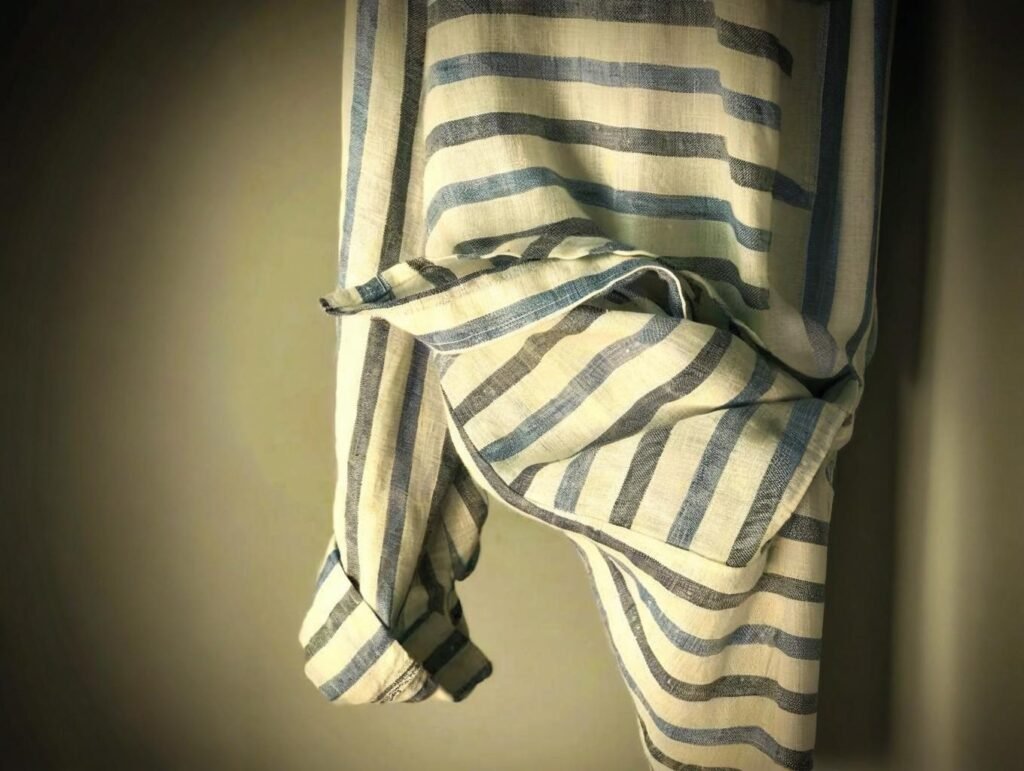
Hemp material is suitable for sustainable fashion apparel because it combines strong natural fibers, breathability, durability, and relatively low agricultural input requirements, while also adapting well to modern textile processing that improves comfort, consistency, and wearability. Its sustainability value is not rooted in a single advantage, but in how performance, lifecycle durability, and responsible sourcing reinforce each other.
In apparel, sustainability is not achieved at the factory gate. It is achieved over the entire lifespan of a garment—from farming and processing to daily wear, laundering, and eventual disposal. Hemp performs well across all of these stages, which is why it has moved from a niche eco-fiber into mainstream sustainable fashion collections.
Hemp’s real strength lies in balanced performance, not ideology.
Why Hemp Works as an Apparel Fiber (Beyond the Hype)
Many “sustainable” fibers struggle because they excel in one area while failing in others—soft but fragile, durable but uncomfortable, or eco-friendly in theory but high-impact in practice. Hemp stands out because it performs well across multiple apparel-critical dimensions.
A. Fiber Strength That Supports Long Garment Life
Hemp fibers are naturally long, thick-walled, and mechanically strong. From an apparel engineering perspective, this translates directly into longer garment lifespan.
In practical clothing terms, hemp offers:
- Higher resistance to tearing at stress points
- Better seam integrity under movement and washing
- Slower fabric thinning over time
| Fiber Type | Relative Tensile Strength |
|---|---|
| Cotton | Medium |
| Linen | Medium–High |
| Hemp | High |
Garments made from hemp or hemp blends typically tolerate:
- Repeated laundering
- Mechanical abrasion (sitting, bending, friction)
- Daily wear in high-stress zones (elbows, knees, seams)
This durability matters because the most sustainable garment is the one that does not need to be replaced quickly. Extending a garment’s usable life by even 20–30% significantly reduces its overall environmental footprint.
Why Durability Is a Sustainability Multiplier
Many sustainability discussions focus on how a fiber is grown. In apparel reality, replacement frequency often has a larger impact on total resource consumption than marginal differences in farming inputs.
A hemp garment that lasts twice as long as a fast-fashion cotton equivalent:
- Cuts material demand in half
- Reduces manufacturing energy per wear
- Lowers transport and packaging impact
Durability is sustainability in practice, not theory.
B. Breathability and Thermal Comfort
Sustainable apparel must still be comfortable. Hemp performs well here due to its fiber morphology and moisture behavior.
Hemp fibers feature:
- High moisture absorbency
- Efficient moisture release
- Good air permeability
This allows hemp fabrics to:
- Wick sweat away from the skin
- Dry faster than cotton
- Feel cooler in warm or humid conditions
For wearers, this translates into:
- Reduced clammy sensation
- Improved comfort during movement
- Better thermal regulation across seasons
Hemp apparel is therefore particularly suitable for:
- Summer shirts and dresses
- Casual lifestyle wear
- Travel and everyday garments
- Lightweight layering pieces
Comfort is not optional. Sustainable garments that feel uncomfortable are rarely worn—and unworn clothing is not sustainable.
C. Natural Resistance to Odor and Microbes
Hemp fibers have mild, inherent antimicrobial properties due to their chemical composition and moisture behavior. While not a substitute for treated performance textiles, this natural resistance provides practical everyday benefits.
In real use, hemp garments tend to:
- Retain less odor
- Feel fresher after wear
- Require less frequent washing
Fewer wash cycles mean:
- Lower water consumption
- Reduced energy use
- Slower fiber degradation
This daily-use sustainability is often overlooked. A fiber that enables garments to be worn longer between washes has a direct, measurable environmental benefit during the consumer use phase.
Why the Use Phase Matters Most
Lifecycle assessments consistently show that washing and drying dominate the environmental impact of clothing. Hemp’s ability to reduce wash frequency and dry faster helps lower this footprint where it matters most.
D. Adaptability to Modern Textile Processing
Historically, hemp clothing had a reputation for stiffness and rough hand feel. This limited its adoption in fashion markets where comfort and drape matter.
Modern textile processing has fundamentally changed this.
Key advances include:
- Enzymatic degumming and softening
- Improved spinning and yarn control
- Blending with cotton, TENCEL™, modal, or recycled fibers
- Refined weaving and knitting techniques
Today’s hemp fabrics can be engineered to achieve:
- Soft, cotton-like hand feel
- Linen-style crispness
- Structured or fluid drape depending on design goals
This adaptability allows designers to use hemp across a wide range of apparel categories—from casual basics to tailored pieces.
Hemp as a Design-Compatible Fiber
Sustainability fails when materials force design compromises. Hemp succeeds because it can be designed around, not designed against.
Designers can tune:
- Softness vs structure
- Weight and opacity
- Texture and surface character
This flexibility is critical for fashion adoption.
E. Agricultural Input Efficiency and Environmental Profile
Hemp’s sustainability credentials begin at the farm, where it typically requires:
- Less pesticide input than cotton
- Lower herbicide dependency
- Moderate water use relative to yield
Hemp’s dense growth suppresses weeds naturally, and its deep root system improves soil structure. In many regions, hemp can be grown in rotation systems that support soil health rather than deplete it.
While exact impact depends on region and farming practices, hemp generally compares favorably to conventional cotton in:
- Chemical input intensity
- Soil impact
- Yield per hectare
However, hemp’s sustainability advantage is strongest when certified and traceable, ensuring claims are backed by evidence rather than assumptions.
F. Compatibility With Blending for Balanced Performance
Pure hemp is not always ideal for apparel, especially in softness-driven segments. One of hemp’s strengths is how well it performs in blends.
Common apparel blends include:
- Hemp + cotton (durability + softness)
- Hemp + lyocell/TENCEL™ (strength + drape)
- Hemp + recycled polyester (durability + stability)
Blending allows brands to:
- Improve hand feel
- Control shrinkage and wrinkle behavior
- Reduce cost
- Tailor performance to specific garment types
From a sustainability perspective, blends are not inherently negative. When hemp is the structural contributor, even moderate blend ratios can deliver meaningful durability and lifecycle benefits.
G. Aging Behavior: Sustainability Over Time
Hemp garments often improve with wear.
Over repeated washing and use, authentic hemp fabrics tend to:
- Soften gradually
- Develop a natural patina
- Retain structural integrity
This contrasts with some fibers that:
- Pill excessively
- Lose shape
- Thin rapidly
Aging behavior affects whether consumers keep garments longer or discard them prematurely. Hemp’s graceful aging supports emotional durability, an increasingly recognized aspect of sustainable fashion.
H. Reduced Microfiber Pollution Compared to Synthetics
As a natural cellulose fiber, hemp does not contribute to microplastic pollution in the way synthetic fibers do.
During washing:
- Hemp fibers biodegrade naturally
- Shed fibers do not persist as microplastics
This makes hemp particularly attractive for brands concerned about:
- Ocean pollution
- Microfiber regulation
- Long-term ecological impact
While all textiles shed fibers, hemp’s biodegradability is a significant advantage in water systems.
I. End-of-Life Considerations
Sustainability does not end when a garment is worn out.
Hemp apparel offers advantages at end of life:
- Biodegradable under appropriate conditions
- Compatible with natural fiber recycling systems
- Lower persistence in landfill environments
Garments made primarily from hemp or hemp-rich blends are easier to integrate into circular or composting strategies than fully synthetic alternatives.
J. Consumer Acceptance and Market Reality
Sustainable fashion only succeeds if consumers accept it. Hemp has gained traction because it does not demand sacrifice.
Consumers increasingly value:
- Comfort
- Durability
- Natural materials
- Authentic sustainability claims
Hemp fits these expectations when positioned correctly—not as a novelty, but as a high-performance natural fiber.
Brands that succeed with hemp typically emphasize:
- Wear comfort
- Longevity
- Everyday usability
rather than abstract environmental messaging alone.
K. Why Suitability Matters More Than Ideology
Many sustainable materials fail because they ask consumers to “accept less”—less softness, less durability, less style—in exchange for ethical benefits.
Hemp succeeds when it asks for no compromise.
Its suitability for apparel lies in:
- Strong fibers that last
- Breathable comfort
- Reduced odor and wash frequency
- Compatibility with modern fashion design
- Lower environmental impact over the garment lifecycle
Sustainability becomes credible when it aligns with how people actually wear clothes.
L. Where Hemp Performs Best in Apparel
Hemp is particularly well suited for:
- Casual shirts and tops
- Dresses and skirts
- Workwear-inspired fashion
- Travel and lifestyle apparel
- Warm-climate collections
It is less ideal—without blending—for:
- Ultra-soft luxury basics
- Highly elastic garments
- Performance compression wear
Understanding these boundaries ensures hemp is used where it truly adds value.
Hemp material is suitable for sustainable fashion apparel because it performs well where sustainability is measured in reality: longevity, comfort, daily use, and end-of-life impact.
Its value does not come from one headline feature. It comes from the way fiber strength, breathability, durability, and modern processing work together over time.
Hemp supports garments that:
- Last longer
- Are worn more often
- Require fewer resources per wear
In sustainable fashion, success is not about telling consumers to care more. It is about giving them clothing that naturally performs better—and keeps performing.
That is where hemp quietly earns its place.
How does hemp clothing compare to other natural fibers like cotton and linen in sustainability metrics?
Hemp clothing is often described as “more sustainable” than cotton or linen, but that statement only becomes meaningful when sustainability is broken down into measurable, comparable metrics. Designers, brands, and sourcing teams rarely choose fibers in isolation. Hemp competes directly with cotton and linen in shirts, trousers, dresses, casualwear, and increasingly in premium basics.
When evaluated across water use, chemical inputs, land efficiency, durability, and lifecycle performance, hemp generally performs better than cotton and comparably to or better than linen—with an important caveat: outcomes depend heavily on processing methods and supply-chain design.
Sustainability is not inherent to a fiber alone. It emerges from how that fiber is grown, processed, used, and kept in service.
A realistic, side-by-side sustainability comparison
To make a practical comparison, it helps to look at sustainability in stages: cultivation, processing, use phase, and end-of-life. Hemp’s strengths show up clearly in some stages and more conditionally in others.
A. Water use during cultivation
Water consumption is one of the most widely cited and least disputed sustainability metrics.
Hemp typically requires significantly less irrigation than cotton and is comparable to or slightly better than flax (linen), depending on climate.
| Fiber | Relative Water Demand |
|---|---|
| Cotton | High |
| Linen (flax) | Medium |
| Hemp | Low |
Cotton Conventional cotton is one of the most water-intensive crops in the textile industry. In arid and semi-arid regions, cotton cultivation often relies on heavy irrigation, contributing to groundwater depletion and ecosystem stress.
Linen (flax) Flax generally requires less irrigation than cotton, especially when grown in temperate regions with regular rainfall. However, water demand can increase depending on retting methods and regional conditions.
Hemp Hemp has deep root systems and short growing cycles, allowing it to thrive with rainfall alone in many regions. This makes hemp particularly attractive in water-stressed areas.
From a water-use perspective alone, hemp consistently outperforms cotton and often matches or improves upon linen.
B. Chemical input requirements in farming
Pesticide and herbicide use affects not only environmental health but also farmworker safety and downstream contamination.
Hemp’s natural resistance to many pests and diseases gives it a structural advantage.
| Fiber | Typical Pesticide Use |
|---|---|
| Cotton | High |
| Linen | Medium |
| Hemp | Low |
Cotton Conventional cotton farming accounts for a disproportionately high share of global pesticide use. While organic cotton addresses this issue, it represents a relatively small portion of total cotton supply and often comes with yield trade-offs.
Linen (flax) Flax typically requires fewer pesticides than cotton but still relies on chemical inputs in many regions to manage weeds and fungal diseases.
Hemp Hemp’s dense growth suppresses weeds naturally, and its resistance to many insects reduces pesticide dependency. This lowers chemical runoff and improves biodiversity outcomes at farm level.
However, it is important to note that low agricultural chemical use does not automatically translate into low chemical use in textile processing, especially for hemp.
C. Yield efficiency per hectare
Land use efficiency is an increasingly important sustainability metric as pressure on arable land increases.
| Fiber | Yield Efficiency |
|---|---|
| Cotton | Medium |
| Linen | Medium |
| Hemp | High |
Hemp’s advantage lies in its rapid growth cycle and high biomass output. Hemp can be harvested within a few months and often produces more usable fiber per hectare than cotton or flax.
Higher yield efficiency means:
- Less land required per kilogram of fiber
- Lower pressure on agricultural expansion
- Better compatibility with crop rotation systems
Cotton and flax yields are more sensitive to climate variability and soil conditions, which can reduce consistency.
From a land-use perspective, hemp is one of the most efficient natural fibers available at scale.
D. Carbon and soil health considerations
While precise carbon footprint comparisons vary by study, hemp offers notable agronomic benefits.
Hemp:
- Grows rapidly, sequestering carbon quickly
- Improves soil structure through deep roots
- Can reduce erosion and increase organic matter
Cotton, particularly when intensively farmed, can degrade soil health over time without careful management. Flax generally sits between cotton and hemp in terms of soil impact.
These soil-level benefits are difficult to quantify in simple metrics, but they influence long-term agricultural sustainability.
E. Durability and wear life
Durability is often underrepresented in sustainability discussions, despite being one of the most impactful factors over a garment’s lifecycle.
| Fiber | Garment Longevity |
|---|---|
| Cotton | Medium |
| Linen | Medium |
| Hemp | High |
Why durability matters A garment that lasts twice as long effectively halves its resource footprint per wear, assuming similar care requirements. This makes fiber strength and fatigue resistance critical sustainability factors.
Cotton Cotton garments are comfortable but tend to weaken over time, especially under frequent washing. Fiber breakage, thinning, and pilling shorten usable life.
Linen Linen fibers are stronger than cotton but can be brittle if poorly processed. Linen garments often age well but may suffer from creasing fatigue and seam stress.
Hemp Hemp fibers have high tensile strength and excellent resistance to fiber fatigue. Hemp garments typically maintain structure longer, particularly in high-stress areas such as elbows, knees, and seams.
From a lifecycle perspective, hemp’s durability is one of its strongest sustainability arguments.
F. Use-phase efficiency: washing, drying, and care
Sustainability does not stop at production. The use phase—washing, drying, and ironing—often accounts for a large share of a garment’s total environmental impact.
Hemp fabrics tend to:
- Release moisture efficiently
- Dry faster than cotton
- Require less frequent replacement
Faster drying reduces energy consumption in tumble drying or heated environments. Cotton, by contrast, retains more moisture and often requires longer drying times.
Linen behaves similarly to hemp in moisture release but can require more ironing due to sharper creasing.
G. Processing trade-offs and hidden impacts
This is where sustainability comparisons become more complex.
Hemp fiber requires degumming and refinement to become suitable for apparel. These steps can involve:
- Chemical treatments
- Enzymatic processes
- Mechanical polishing
- Multiple washing stages
If poorly managed, these processes can increase:
- Energy use
- Water consumption
- Chemical discharge
This is why hemp’s sustainability advantage is conditional, not automatic.
Cotton processing is comparatively simpler, while flax processing sits between cotton and hemp in complexity.
In other words, hemp’s agricultural advantages can be partially offset if processing is inefficient or poorly controlled.
H. The role of processing standards and certifications
Because processing matters so much, certifications and standards play an outsized role in determining whether hemp garments deliver on sustainability promises.
Examples include:
- GOTS for organic fiber and controlled processing
- OCS for organic content verification
- Bluesign or ZDHC frameworks for chemical management
Hemp processed under controlled chemical and environmental standards consistently outperforms conventional cotton from a system perspective. Hemp processed without such controls may not.
I. Blending and design choices
In practice, many hemp garments are blends rather than 100% hemp.
Blending hemp with:
- Cotton can improve softness and accessibility
- Linen can balance drape and structure
- Lyocell or viscose can enhance hand feel
From a sustainability standpoint, blends can be positive if they:
- Extend garment life
- Reduce care intensity
- Improve consumer acceptance, leading to longer use
However, blends also complicate recycling and end-of-life scenarios. Designers must balance performance gains against circularity goals.
J. End-of-life and biodegradability
Hemp, cotton, and linen are all cellulosic fibers and biodegradable under appropriate conditions.
Key differences emerge in practice:
- Hemp and linen degrade more slowly due to higher fiber strength
- Cotton breaks down faster but may shed more microfibers during use
End-of-life impact is heavily influenced by:
- Dye chemistry
- Finishes and coatings
- Blended fiber content
Pure hemp garments with minimal finishing offer strong biodegradability potential. Complex blends and heavy finishes reduce that advantage.
K. Economic sustainability and scalability
Sustainability also includes economic viability.
Hemp currently faces challenges in:
- Fiber supply consistency
- Processing infrastructure availability
- Cost predictability
Cotton benefits from massive global infrastructure and economies of scale. Linen has a smaller but established ecosystem.
As hemp processing technology improves and scales, many of its current cost and variability challenges are likely to diminish—strengthening its sustainability case further.
L. Where hemp clearly outperforms cotton
Across most objective metrics, hemp outperforms cotton in:
- Water use
- Agricultural chemical reliance
- Yield per hectare
- Fiber durability
- Garment longevity
These advantages are structural rather than marginal.
M. Where hemp and linen are closely matched
Hemp and linen are closer competitors.
They are similar in:
- Water demand
- Biodegradability
- Breathability
- Use in warm-weather apparel
Hemp tends to offer greater durability and yield efficiency, while linen often offers smoother processing pathways and broader market familiarity.
N. The honest conclusion designers need
Hemp is not a magic fiber that automatically solves sustainability challenges. Its advantages are real, but they are unlocked only when:
- Processing is responsibly managed
- Chemical systems are controlled
- Garments are designed for long use
- Supply chains are transparent
Hemp clothing generally performs better than cotton and comparably to or better than linen across key sustainability metrics, including water use, agricultural chemical inputs, land efficiency, and garment durability. Hemp’s high yield per hectare and long wear life make it particularly strong from a lifecycle perspective.
However, hemp’s sustainability advantage is not guaranteed. Intensive or poorly managed processing can erode gains made at the farm level. This is why processing choices, certifications, and design intent matter as much as fiber selection.
Hemp often outperforms cotton and rivals linen—but only when sustainability is treated as a system, not a single metric.
Which Production and Processing Innovations Are Enhancing the Performance and Comfort of Hemp Apparel?
Modern production and processing innovations—such as enzymatic treatments, refined spinning systems, advanced finishing, and strategic fiber blending—have fundamentally changed how hemp behaves as an apparel material. What was once considered stiff, coarse, and niche has evolved into a comfortable, breathable, and increasingly premium textile suitable for everyday wear, fashion collections, and even next-to-skin garments.
If someone still believes hemp clothing feels rough or inflexible, they are remembering old hemp. Today’s hemp fabric is not the result of marketing repositioning, but of quiet, cumulative technical progress across the entire production chain—from fiber preparation to yarn engineering and finishing.
Comfort did not appear accidentally. It was engineered.
How Hemp Became Wearable
For decades, hemp’s reputation lagged behind its potential. The fiber itself is strong, breathable, and durable, but early processing methods were optimized for ropes, sacks, and canvas—not clothing. Apparel requires a different balance: softness, drape, skin comfort, and consistency.
The transformation of hemp into a viable apparel fiber happened not through one breakthrough, but through multiple aligned innovations, each removing a specific barrier to wearability.
A. Enzymatic Degumming and Softening
One of the most important innovations in hemp apparel production is enzymatic degumming.
Raw hemp fibers contain high levels of lignin, pectin, and hemicellulose. These non-cellulosic components give hemp its stiffness and rigidity. Traditional degumming relied on strong alkaline or chemical treatments to remove them, but this approach came with serious drawbacks.
Older chemical degumming methods often:
- Stripped fibers too aggressively
- Reduced fiber length and strength
- Left fabrics feeling dry or brittle
- Required heavy chemical loads
Modern enzymatic processes take a different approach.
Instead of attacking the fiber broadly, enzymes are selected to target specific non-cellulosic components while leaving the cellulose backbone largely intact. This precision has reshaped hemp’s hand feel.
| Method | Fabric Hand Feel | Fiber Damage |
|---|---|---|
| Chemical degumming | Medium | Higher |
| Enzymatic degumming | Soft | Lower |
Enzymatic degumming results in:
- Smoother fiber surfaces
- Better flexibility
- Less fiber breakage during spinning
- Improved dye uptake consistency
From an apparel perspective, this single innovation did more than any design change to make hemp wearable. It allowed hemp to move away from a “utilitarian” feel toward a textile hand comparable to linen or firm cotton.
Just as importantly, enzymatic processes reduce harsh chemical use, which improves both environmental performance and skin comfort, especially for sensitive wearers.
B. Improved Spinning Techniques
Once fibers are softened, the next major determinant of comfort is how they are spun.
Early hemp yarns were coarse, uneven, and highly variable. Modern spinning technology has addressed these issues through better fiber preparation, controlled drafting, and refined twist management.
Today’s spinning innovations enable:
- Finer yarn counts
- More even yarn cross-sections
- Reduced surface hairiness
- Lower yarn breakage rates
This progress has expanded hemp’s usable range far beyond outerwear.
| Yarn Type | Typical Apparel Use |
|---|---|
| Coarse hemp yarn | Outerwear, workwear |
| Fine hemp yarn | Casual wear, shirts, dresses |
Fine-count hemp yarns are now commonly used in:
- Button-down shirts
- Blouses
- Summer dresses
- Lightweight knit blends
- Inner layers and linings
Refined spinning also improves fabric uniformity, which directly affects comfort. Uneven yarns create micro-pressure points on skin and inconsistent drape. Modern spinning reduces these issues, making hemp garments feel more predictable and pleasant during wear.
Another key improvement is twist optimization. Too much twist makes yarn stiff; too little reduces strength. Modern spinning lines dynamically balance twist based on fiber length distribution, preserving softness without sacrificing durability.
C. Strategic Fiber Blending
Even with improved degumming and spinning, pure hemp still has distinct characteristics. Strategic fiber blending has become one of the most effective tools for tuning comfort, performance, and aesthetics.
Blending is no longer about masking hemp’s weaknesses—it is about amplifying its strengths while balancing trade-offs.
| Blend | Benefit |
|---|---|
| Hemp + cotton | Softer hand feel, familiarity |
| Hemp + TENCEL™ | Improved drape, moisture control |
| Hemp + recycled polyester | Strength, wrinkle resistance |
Hemp + cotton blends remain the most widely adopted. Cotton softens the hand feel and increases elasticity, while hemp improves breathability, durability, and moisture release. This blend is especially popular for casual shirts, tees, and relaxed silhouettes.
Hemp + TENCEL™ (lyocell) blends elevate drape and smoothness. Lyocell’s fluidity offsets hemp’s natural stiffness, resulting in fabrics suitable for dresses, wide-leg trousers, and premium lifestyle garments. Moisture management also improves, making these blends comfortable in warm climates.
Hemp + recycled polyester blends focus on performance. Polyester adds wrinkle resistance, dimensional stability, and faster drying, while hemp contributes breathability and a natural aesthetic. These blends are often used in travel wear, workwear-inspired fashion, and utility garments.
Blending also improves process consistency, reducing variability in dyeing, finishing, and garment construction.
D. Mechanical Finishing and Fabric Construction
Fiber and yarn innovations alone do not define comfort. Finishing and fabric construction play an equally important role.
Modern hemp apparel fabrics often undergo multiple mechanical finishing steps designed to soften and relax the structure without relying on heavy chemical softeners.
Common finishing techniques include:
- Pre-washing to remove residual stiffness
- Mechanical tumbling to relax yarn intersections
- Calendering to smooth surface irregularities
- Controlled sanforization to stabilize dimensions
These processes:
- Reduce initial stiffness
- Improve drape and fold behavior
- Enhance next-to-skin comfort
- Reduce post-purchase shrinkage surprises
Fabric construction choices amplify these effects. Weave structure can change how hemp feels as much as fiber choice itself.
- Plain weaves emphasize breathability and crispness
- Twill weaves soften hand feel and improve drape
- Sateen weaves increase smoothness and luster
Designers increasingly use construction strategically, selecting weave patterns that align with garment intent rather than defaulting to plain structures.
E. Fabric Weight Optimization
Another subtle but important innovation is weight targeting.
Early hemp fabrics were often heavy, reinforcing perceptions of stiffness. Modern apparel-focused hemp fabrics are engineered in lighter GSM ranges, improving comfort and flexibility.
Lighter weights:
- Improve airflow
- Reduce garment fatigue
- Enhance layering comfort
Combined with refined yarns and finishes, lighter hemp fabrics can now perform well even in warm-weather clothing.
F. Dyeing and Color Management Improvements
Color plays a role in comfort perception. Uneven dye uptake can make fabrics feel rough visually and physically.
Improved dyeing systems now:
- Achieve more uniform coloration
- Reduce harsh dye residues
- Improve colorfastness after washing
This reduces the need for aggressive post-dye treatments that once degraded hand feel.
Cleaner dye processes also align better with skin-contact safety standards, supporting the use of hemp in inner garments.
G. Apparel Design Adaptation
Innovation is not limited to mills. Designers have also adapted garment design to work with hemp’s evolving behavior.
Modern hemp apparel often features:
- Relaxed silhouettes
- Strategic seam placement
- Paneling that works with natural drape
- Reduced tension at stress points
As hemp fabrics became softer and more predictable, designers gained more freedom—but they still respect hemp’s character rather than forcing it into unsuitable forms.
H. Why Comfort Was the Turning Point for Hemp Adoption
Sustainability alone did not make hemp successful in apparel. Comfort did.
Consumers may support sustainability values, but they will not accept discomfort as a trade-off—especially in everyday clothing. Hemp’s rise in fashion occurred only after technology removed the “sacrifice” factor.
Modern hemp apparel now offers:
- Breathability comparable to linen
- Softness approaching cotton blends
- Durability exceeding many cellulosic fabrics
- A natural aesthetic aligned with current trends
Once comfort barriers fell, hemp could compete on equal footing with established fibers.
I. Performance Benefits Beyond Comfort
The same innovations that improved comfort also enhanced performance.
Modern hemp apparel fabrics often show:
- Improved tensile strength
- Better abrasion resistance
- Faster moisture release
- Reduced odor retention
These attributes make hemp attractive not just for eco-driven brands, but for functional and lifestyle applications as well.
J. Remaining Limitations and Ongoing Innovation
Despite progress, hemp is not finished evolving.
Challenges that remain include:
- Ultra-fine yarn development at scale
- Further reduction of fiber variability
- Cost optimization for mass-market adoption
Research continues in areas such as:
- Enzyme refinement
- Bio-based finishing systems
- Advanced spinning adaptations
Innovation today is incremental, but cumulative gains continue to expand hemp’s role in apparel.
The performance and comfort of modern hemp apparel are the result of integrated production and processing innovations, not a single technological leap.
Enzymatic degumming removed stiffness at the fiber level. Refined spinning improved yarn smoothness and uniformity. Strategic blending balanced comfort, durability, and aesthetics. Mechanical finishing softened structure without chemical overload.
Together, these changes transformed hemp from a niche, rigid textile into a viable, comfortable, and increasingly premium apparel material.
Hemp did not become wearable because expectations changed. It became wearable because technology did the work.
And that is why today’s hemp apparel is no longer a compromise—it is a choice.
How Do Lifecycle Assessments (LCAs) Quantify the Environmental Impact of Hemp Clothing?
Lifecycle assessments (LCAs) quantify the environmental impact of hemp clothing by measuring emissions, resource use, and environmental effects across every stage of the product’s life—from cultivation and fiber processing to fabric manufacturing, transport, consumer use, and end-of-life. Unlike general sustainability claims, LCAs translate environmental performance into comparable, numeric indicators.
LCAs replace assumptions with numbers. They don’t ask “Is hemp good?” They ask “Compared to what, under which conditions, and over how long?”
For EU brands and manufacturers, this distinction is critical. Hemp’s reputation as a low-impact fiber is often justified—but only under certain farming, processing, and use scenarios. LCAs exist to expose those conditions clearly.
Understanding hemp LCAs without getting lost in jargon
A. What an LCA actually measures
A lifecycle assessment evaluates environmental impact across standardized categories, typically following ISO 14040 and ISO 14044 frameworks. The goal is not to declare a material “good” or “bad,” but to quantify trade-offs.
For hemp clothing, LCAs usually measure:
- Greenhouse gas emissions (CO₂e) Emissions from cultivation, energy use, transport, and processing.
- Water consumption Both direct irrigation and indirect water used in processing and energy generation.
- Energy use Electricity and thermal energy consumed during fiber processing, spinning, weaving, dyeing, and finishing.
- Chemical and pollution impacts Including eutrophication, acidification, and toxicity potential.
All results are normalized to a functional unit, such as:
- One T-shirt
- One pair of trousers
- One square meter of fabric
- One kilogram of finished garment
Without a defined functional unit, LCA comparisons are meaningless.
Why functional units matter
Comparing hemp fabric to cotton fiber by weight alone ignores durability, garment lifespan, and care requirements. A well-designed hemp garment that lasts twice as long can show lower impact per wear, even if its production footprint is similar or slightly higher.
LCAs account for this by allowing comparisons based on useful service delivered, not just raw material inputs.
B. Hemp vs cotton: a simplified LCA view
When LCAs compare hemp clothing to conventional cotton clothing under typical conditions, several consistent patterns emerge.
| Impact Category | Hemp Clothing | Cotton Clothing |
|---|---|---|
| Water use | Lower | Higher |
| Agricultural chemicals | Lower | Higher |
| Processing energy | Medium | Medium |
| Garment durability | Higher | Medium |
Hemp generally performs better in:
- Water use, due to lower irrigation demand in many regions
- Agrochemical input, because hemp typically requires fewer pesticides and herbicides
Durability is a key indirect factor. Hemp garments often maintain structural integrity longer, reducing replacement frequency.
However, LCAs also show that hemp does not automatically outperform cotton in every category. Processing energy and finishing chemistry can narrow or even reverse advantages if systems are inefficient.
C. Cultivation impacts: lower, but not zero
Hemp cultivation is often cited as its strongest environmental advantage, and LCAs confirm several benefits:
- Lower irrigation needs in suitable climates
- Reduced pesticide application compared to conventional cotton
- High biomass yield per hectare
These factors contribute to lower impacts in:
- Water scarcity indicators
- Ecotoxicity metrics
- Soil degradation potential
However, LCAs also highlight important caveats:
- Hemp grown in unsuitable regions may still require irrigation
- Fertilizer use varies widely by farming practice
- Mechanized harvesting adds fuel emissions
In most LCAs, cultivation accounts for a smaller share of total impact than many expect—often less than 20–30% of total CO₂e for a finished garment.
D. Processing stage sensitivity: where results diverge
One of the most consistent findings across hemp LCAs is that processing and finishing stages often dominate total environmental impact.
Key contributors include:
- Fiber decortication and refining
- Spinning energy intensity
- Dyeing and finishing processes
- Wastewater treatment efficiency
LCAs repeatedly show that:
- Farming is not the dominant impact stage
- Processing efficiency matters more than fiber identity alone
This explains why two hemp garments can have very different environmental profiles even when made from the same raw fiber.
Energy source matters more than fiber name
A hemp garment processed in a facility powered by renewable electricity can show dramatically lower emissions than one processed using coal-based energy—even if both start with identical hemp fiber.
This is why LCAs emphasize system boundaries and energy mix rather than fiber reputation.
E. Chemical inputs and finishing routes
Hemp fibers often require more intensive mechanical or enzymatic processing to achieve softness comparable to cotton. LCAs capture the environmental implications of these choices.
Key variables include:
- Enzymatic vs chemical softening
- Dye class and fixation efficiency
- Water reuse systems
- Sludge treatment and disposal
A lightly finished hemp garment may score well in toxicity and water impact categories, while a heavily softened or chemically treated one may not.
This reinforces a central LCA insight: Fiber choice sets the potential, but processing choices determine the outcome.
F. Transport and supply-chain structure
Transport is rarely the largest contributor in LCAs, but it can become significant in fragmented supply chains.
Hemp supply chains often involve:
- One country for cultivation
- Another for fiber extraction
- Another for spinning or weaving
- Another for garment manufacturing
LCAs account for:
- Distance traveled
- Mode of transport (ship, rail, road, air)
- Packaging and handling
In most apparel LCAs, sea freight has relatively low impact per unit, while air freight can dramatically increase emissions. Hemp garments that rely on air shipment to meet deadlines often lose a portion of their environmental advantage.
G. Use-phase impact: the overlooked factor
One of the most underappreciated insights from LCAs is the importance of the use phase.
Hemp clothing often:
- Requires fewer washes due to odor resistance
- Dries faster because of moisture management
- Retains structure longer, extending usable life
LCAs that include realistic consumer behavior show that:
- Washing frequency
- Water temperature
- Drying method
Can account for a substantial share of lifetime environmental impact.
A garment that lasts longer and is washed less frequently can outperform alternatives even if its production footprint is similar.
Durability as an environmental multiplier
Hemp’s strength and abrasion resistance often translate into:
- Fewer replacements
- Longer ownership periods
LCAs capture this through impact-per-wear or impact-per-year metrics. In many studies, this is where hemp’s environmental advantage becomes most pronounced.
H. End-of-life scenarios and biodegradability
LCAs also model what happens at the end of a garment’s life.
Typical scenarios include:
- Landfill
- Incineration
- Mechanical recycling
- Composting (in limited cases)
Hemp’s natural cellulose structure can offer advantages in biodegradability, but LCAs caution against oversimplification:
- Blends reduce compostability
- Dyes and finishes affect degradation
- Real-world waste systems often limit ideal outcomes
End-of-life impact is usually smaller than use-phase impact, but it still contributes to overall results—especially in circularity-focused assessments.
I. Why LCA results vary between studies
It is common for two LCAs of hemp clothing to show different conclusions. This does not mean one is “wrong.”
Results vary because of differences in:
- Farming region and yield assumptions
- Energy mix used in processing
- Type of garment assessed
- Finishing intensity
- Assumed garment lifespan
- Consumer care behavior
LCAs are scenario-based tools, not universal verdicts.
This is why credible LCA reports always disclose:
- System boundaries
- Data sources
- Key assumptions
- Sensitivity analyses
Without this context, numbers can be misused or misunderstood.
J. How EU brands use LCAs in practice
For EU brands, LCAs are rarely used as standalone marketing tools. Instead, they support:
- Internal material selection decisions
- Regulatory reporting under CSRD
- Supplier comparison and improvement programs
- Product design optimization
LCAs help brands answer questions like:
- Which stage should we prioritize for impact reduction?
- Is switching fiber more effective than changing finishing?
- Does durability offset higher processing energy?
This practical application is where LCAs deliver the most value.
K. LCAs versus simplified sustainability claims
A common misconception is that LCAs exist to prove that one fiber is universally better than another. In reality, they often show that design and system choices outweigh material labels.
For hemp clothing, LCAs typically reveal:
- Strong potential advantages in water and durability
- High sensitivity to processing energy and chemistry
- Significant influence of use-phase behavior
This complexity is precisely why LCAs are trusted by regulators and brands—they resist oversimplification.
Lifecycle assessments quantify the environmental impact of hemp clothing by measuring real, system-level performance, not reputation. They replace generalized sustainability narratives with data that reflects trade-offs, boundaries, and conditions.
Across most LCAs, hemp clothing shows:
- Lower water and agrochemical impact under suitable cultivation
- Comparable processing energy to other natural fibers
- Strong advantages when durability and use-phase behavior are included
At the same time, LCAs make one point clear: Hemp is not automatically low-impact by default. Its environmental performance depends on how it is grown, processed, used, and disposed of.
For brands and manufacturers, the value of LCAs lies not in proving that hemp is “good,” but in understanding when, where, and why it performs better—and where improvements matter most.
LCAs do not simplify sustainability decisions. They make them honest.
What Role Do Certifications Like GOTS and OCS Play in Validating Hemp Apparel Sustainability Claims?

Certifications such as GOTS (Global Organic Textile Standard) and OCS (Organic Content Standard) play a critical role in validating hemp apparel sustainability claims by providing independent, third-party verification of organic content, traceability, and—depending on the standard—processing methods, chemical controls, and social criteria. They transform sustainability from a marketing narrative into a documented, auditable system.
In sustainable fashion, claims without proof do not age well. As consumer awareness increases and regulatory scrutiny tightens, brands can no longer rely on vague language like “eco hemp” or “naturally sustainable.” Certifications are the mechanism that allows hemp apparel to move from sounds sustainable to legally defensible and commercially credible.
How Certification Changes the Credibility Equation
Sustainability claims exist in a high-risk environment. They are reviewed by:
- Retail compliance teams
- Brand legal departments
- Third-party watchdogs
- Increasingly, regulators
Certification changes the conversation. Instead of debating intent or interpretation, discussions shift to evidence, scope, and compliance.
A. Why Certification Matters More for Hemp Than Many Fibers
Hemp occupies a unique position in the textile world. It benefits from a strong sustainability reputation—but also from widespread misuse of that reputation.
The paradox is clear:
- Hemp is widely perceived as sustainable
- The term “organic hemp” is frequently used incorrectly
In many markets, hemp garments are labeled as “organic” based solely on:
- Fiber type, not farming method
- Partial hemp content
- Unverified supplier claims
This has created skepticism among retailers and consumers alike.
Certification resolves this tension by anchoring hemp claims to audited systems, not assumptions. It clarifies:
- Whether the hemp was actually grown organically
- Whether organic content was preserved through processing
- Whether claims match reality
For hemp apparel, certification is often the difference between being trusted by default and being challenged by default.
B. GOTS vs OCS in an Apparel Context
While both GOTS and OCS are widely used in hemp apparel, they serve distinct purposes and communicate different levels of sustainability assurance.
| Standard | What It Proves | Apparel Use Case |
|---|---|---|
| GOTS | Organic content + responsible processing | Premium, fully sustainable lines |
| OCS | Organic content + traceability | Entry and blended hemp collections |
Understanding this distinction is essential for brands positioning hemp apparel across different price points and markets.
What GOTS Really Communicates
GOTS is a process standard, not just a content claim. It verifies:
- Minimum organic fiber content (≥70%)
- Approved chemical inputs in dyeing and finishing
- Wastewater treatment requirements
- Social criteria at certified sites
- Labeling and marketing claims
For hemp apparel, GOTS reassures buyers not only about what the garment contains, but also about how it was made.
This is why GOTS is often required for:
- Premium collections
- Retailers with strict sustainability criteria
- Brands making strong environmental claims
What OCS Communicates—and What It Doesn’t
OCS focuses on:
- Verifying organic fiber content
- Maintaining chain of custody
- Preventing dilution or substitution
OCS does not regulate:
- Chemical processing
- Environmental impact of finishing
- Social compliance
In hemp apparel, OCS is often used for:
- Blended fabrics (e.g., hemp–cotton)
- Entry-level sustainable lines
- Products where organic content transparency matters more than full process control
OCS reassures consumers and buyers about what is inside the garment, without overstating how it was processed.
C. Labeling Clarity and Consumer Trust
Clear, accurate labeling is one of the most tangible benefits of certification.
Without certification, labels often rely on ambiguous language:
- “Eco hemp blend”
- “Made with sustainable hemp”
- “Naturally organic fiber”
These phrases create confusion and expose brands to greenwashing risk.
Certification enables precise, regulated language:
- “GOTS Certified Organic” → signals end-to-end control
- “OCS Blended – Contains X% Organic Hemp” → signals transparency without exaggeration
This clarity benefits everyone:
- Consumers understand what they are buying
- Retailers can confidently onboard products
- Brands reduce reputational and legal risk
Over time, consistent and honest labeling builds long-term brand trust, which is far more valuable than short-term marketing gains.
D. Certification as a Design Constraint—and an Advantage
Certification is sometimes viewed as restrictive. In practice, it often improves product integrity.
Certified hemp apparel typically:
- Avoids excessive chemical finishes
- Favors breathable, natural constructions
- Encourages durable stitching and fabric choices
These constraints push designers toward functionally honest products. Instead of relying on heavy finishing to mask weaknesses, certified products must perform through:
- Fiber quality
- Fabric construction
- Thoughtful design
Many brands discover that these limitations actually:
- Improve garment longevity
- Enhance natural aesthetics
- Align better with sustainability narratives
In this way, certification becomes a design framework, not just a compliance hurdle.
E. Certification’s Role in Supply Chain Discipline
Beyond consumer messaging, certifications fundamentally change how hemp apparel supply chains operate.
Certified programs require:
- Documented sourcing
- Clear supplier responsibilities
- Regular audits
- Traceable material flows
This discipline reduces:
- Surprise substitutions
- Unapproved processing steps
- Inconsistent quality across batches
For hemp—where fiber variability already introduces complexity—this structure is especially valuable.
Brands working with certified suppliers often report:
- Fewer disputes
- Faster approvals
- More predictable production outcomes
Certification does not eliminate problems, but it makes them visible and manageable.
F. Regulatory and Retailer Pressure Is Increasing
Sustainability claims are no longer evaluated only by consumers. Regulators and large retailers are increasingly involved.
In the EU and UK, new regulations focus on:
- Claim substantiation
- Traceability
- Greenwashing prevention
Retailers respond by tightening requirements for:
- Third-party certifications
- Valid scope and transaction certificates
- Approved labeling language
In this environment, uncertified hemp apparel faces:
- Longer onboarding times
- Higher risk of rejection
- Increased scrutiny of marketing claims
Certifications like GOTS and OCS act as pre-approved credibility frameworks, smoothing market access.
G. What Certification Does Not Guarantee
It is equally important to understand the limits of certification.
Certification does not automatically mean:
- Lowest possible carbon footprint
- Perfect comfort or softness
- Superior design or fit
- Zero environmental impact
Certification guarantees process credibility, not creative success.
A poorly designed garment can still be GOTS certified. A comfortable, beautiful garment can still fail sustainability expectations if claims are unverified.
Certification answers the question: Can this sustainability claim be proven?
It does not answer: Is this the best possible garment?
H. Certification and Consumer Perception Over Time
One of certification’s most overlooked benefits is how it performs over time.
Marketing language ages quickly. Claims that feel acceptable today may be challenged tomorrow. Certifications, by contrast:
- Evolve through updated standards
- Maintain relevance through third-party oversight
- Provide continuity across seasons and collections
For hemp apparel, this longevity matters. Hemp is often positioned as a long-term material choice, not a trend. Certification supports that positioning by offering durable credibility.
I. Strategic Use of GOTS and OCS in Apparel Collections
Most successful brands do not choose between GOTS and OCS exclusively. They use them strategically.
Common approaches include:
- GOTS for flagship, premium lines
- OCS Blended for accessible, mixed-fiber collections
- Clear differentiation in labeling and messaging
This layered approach allows brands to:
- Balance cost and compliance
- Serve different customer segments
- Avoid overclaiming while remaining transparent
Certification becomes part of product architecture, not an afterthought.
J. Certification as an Internal Alignment Tool
Certification also plays an important internal role.
Within brands, it helps align:
- Design teams
- Sourcing teams
- Legal and compliance teams
- Marketing departments
When everyone works within a certified framework, fewer conflicts arise around:
- Claim wording
- Supplier selection
- Material substitutions
This alignment speeds decision-making and reduces internal friction—an often invisible but significant benefit.
K. Why Hemp Apparel Without Certification Is Increasingly Risky
As sustainability scrutiny intensifies, uncertified hemp apparel faces growing challenges:
- Higher burden of proof
- Increased risk of claim disputes
- Reduced retailer confidence
Even when hemp is genuinely sourced responsibly, lack of certification makes that responsibility harder to prove.
For many brands, certification is no longer a differentiator. It is becoming table stakes.
L. Certification and Long-Term Brand Equity
Sustainability is no longer a campaign—it is part of brand identity.
Certifications support long-term brand equity by:
- Protecting trust
- Enabling consistent messaging
- Reducing reputational risk
Brands that invest in certified hemp apparel signal seriousness, not trend-chasing.
Certifications like GOTS and OCS play a central role in validating hemp apparel sustainability claims because they replace assumption with evidence.
They verify:
- Organic content
- Traceability
- Process integrity (in the case of GOTS)
They do not guarantee perfect products—but they guarantee credible claims.
In sustainable fashion, credibility is everything. Consumers forget slogans. Regulators forget promises. Retailers forget intentions.
What remains is documentation, traceability, and third-party verification.
That is why certifications do not just support hemp apparel sustainability claims—they make them possible at scale.
How do consumer perceptions and market demand influence the growth of hemp fashion clothing?
Consumer perceptions play a decisive role in shaping the pace and direction of hemp fashion adoption. While sustainability metrics, lifecycle data, and material science underpin hemp’s value proposition, market demand ultimately grows when consumers feel comfortable, confident, and aesthetically satisfied wearing hemp garments.
Hemp’s rise is not driven by raw data alone. It is driven by how brands translate that data into experience, emotion, and everyday relevance. In fashion, materials do not succeed simply because they are “better.” They succeed when consumers believe they fit their lives.
Hemp’s current growth reflects a shift in perception—from niche eco material to legitimate fashion fiber—but that shift is neither automatic nor guaranteed.
The psychology behind hemp fashion adoption
Understanding hemp’s market trajectory requires looking at how consumers think, not just how fibers perform. Adoption is shaped by trust, habit, comfort, visual appeal, and perceived value over time.
A. Sustainability awareness has matured
Consumer sustainability awareness has evolved significantly over the past decade. Early “eco fashion” messaging focused on guilt reduction and moral responsibility. Today’s consumers are more informed—and more skeptical.
Modern shoppers increasingly ask:
- Where did this fabric come from?
- How was it processed?
- How long will the garment realistically last?
- Is the sustainability claim verifiable or just marketing language?
Hemp aligns well with these questions when brands explain it clearly and honestly. Its low agricultural water use, reduced pesticide reliance, and high durability provide concrete answers to concerns that cotton and synthetics struggle with.
However, awareness alone does not drive purchase. Consumers now expect sustainability claims to coexist with quality and comfort. Hemp performs best in markets where sustainability is seen as a baseline expectation, not a niche differentiator.
This shift favors materials like hemp that can deliver real performance alongside credible environmental narratives.
B. Comfort expectations are no longer negotiable
Perhaps the most important perception shift in hemp fashion has occurred around comfort.
Early generations of hemp apparel implicitly asked consumers to tolerate discomfort—rough hand feel, stiffness, limited drape—in exchange for environmental virtue. That model no longer works.
Modern hemp fashion succeeds only when it meets mainstream comfort standards.
Key perception changes include:
- Softer hand feel through improved degumming and blending
- Better drape and flexibility in woven and knit constructions
- Reduced stiffness without sacrificing durability
As processing technology improved, hemp garments transitioned in the consumer mind from:
- “Eco sacrifice” → “Everyday wearable”
This transition is critical. Once comfort reaches parity with cotton or linen, sustainability becomes a bonus, not a compromise. At that point, hemp competes on equal footing rather than asking for consumer patience.
Brands that fail to prioritize comfort tend to reinforce outdated stereotypes, slowing category growth.
C. Style normalization and aesthetic acceptance
A material’s market growth is constrained if it is visually pigeonholed. For years, hemp clothing was associated with:
- Earth-tone palettes
- Loose, shapeless silhouettes
- Overtly “natural” textures
This aesthetic coding limited hemp’s audience to a narrow demographic already predisposed toward eco-fashion.
That limitation is now fading.
Designers increasingly use hemp in:
- Tailored shirts and trousers
- Dresses with defined structure
- Casual basics such as tees and overshirts
- Outerwear and layering pieces
When hemp garments look indistinguishable from mainstream fashion at a distance, adoption accelerates. Consumers do not want to look like they are making a statement about their values every time they dress.
Normalization matters because most consumers adopt new materials incrementally, not ideologically. Hemp’s growth depends on its ability to disappear into familiar forms while quietly improving performance and sustainability.
D. Price perception and value framing
Price perception strongly influences market uptake. Hemp garments are often priced slightly higher than conventional cotton equivalents, especially in early adoption stages.
However, successful brands rarely justify this premium with sustainability alone. Instead, they reframe value around longevity and use efficiency.
Common value narratives include:
- Longer garment lifespan
- Better resistance to wear and washing
- Reduced need for frequent replacement
- Stable appearance over time
This reframing shifts the conversation from “higher price” to lower cost per wear.
Consumers are increasingly receptive to this logic, particularly in segments focused on:
- Capsule wardrobes
- Minimalist consumption
- Investment dressing
Hemp performs well in these contexts because its durability makes the value argument tangible rather than abstract.
E. Social proof and brand leadership
Material adoption in fashion is cumulative. When respected brands adopt a fiber, it reduces perceived risk for both consumers and retailers.
Hemp’s recent growth correlates strongly with:
- Adoption by recognizable fashion brands
- Inclusion in premium collections rather than only eco capsules
- Visibility in mainstream retail environments
When trusted brands use hemp without over-explaining it, consumer confidence increases. Retail buyers follow established signals, and supply chains gain the volume needed to stabilize quality and pricing.
This effect compounds over time. Hemp’s growth is incremental rather than explosive, driven by repeated exposure and normalization rather than viral moments.
F. Perception gaps that still limit adoption
Despite progress, several perception challenges remain.
Common barriers include:
- Assumptions that hemp is always rough
- Confusion between hemp fiber and cannabis culture
- Uncertainty about care and washing behavior
- Limited hands-on exposure in physical retail
These gaps are not solved by technical data alone. They require experience-based reassurance, such as touch, fit, and long-term use feedback.
Brands that invest in education—through product descriptions, in-store training, and honest communication—tend to overcome these barriers faster.
G. The role of blending in perception management
Blending plays a strategic role in hemp’s market acceptance. Pure hemp fabrics can still feel unfamiliar to some consumers, particularly in lightweight apparel.
Blends with:
- Cotton improve softness and familiarity
- Linen balance texture and breathability
- Lyocell or viscose enhance drape
help bridge perception gaps without erasing hemp’s sustainability benefits.
From a consumer perspective, blended hemp garments often feel like a safe transition, allowing first-time buyers to experience hemp without a steep adjustment curve.
This approach has proven especially effective in categories such as shirts, dresses, and casual tops.
H. Market demand differs by region
Consumer perception of hemp varies significantly by market.
General patterns include:
- EU markets: Higher sustainability literacy, faster acceptance, stronger interest in certification
- North America: Growing awareness, strong interest in durability and comfort, branding-driven adoption
- Asia-Pacific: Emerging interest, more sensitivity to hand feel and aesthetics
These regional differences influence how brands position hemp and which product categories gain traction first.
In markets with mature sustainability discourse, hemp is often framed as a logical evolution. In emerging markets, it is introduced more cautiously, emphasizing comfort and design rather than ideology.
I. Retail dynamics and buyer confidence
Retail buyers play a gatekeeping role in material adoption. Their confidence depends on:
- Consistent quality across batches
- Predictable sizing and fit
- Low return risk
- Clear consumer messaging
Hemp’s early inconsistency made buyers cautious. Improvements in processing and supply-chain stability have reduced this risk, enabling broader retail adoption.
Once hemp proves reliable in one season, buyers are more willing to scale programs in subsequent seasons. This creates a feedback loop that accelerates demand.
J. Consumer education without overloading
One subtle but important trend is that successful hemp brands educate without overwhelming.
Consumers generally do not want lectures on fiber science. They respond better to:
- Clear benefit statements
- Honest trade-offs
- Simple care instructions
- Real-world use scenarios
Over-technical explanations can actually slow adoption by making hemp feel complicated. The most effective messaging treats hemp as a normal choice with added benefits, not a special project.
K. Long-term trust versus novelty appeal
Hemp’s growth is not driven by novelty alone. Unlike trend fibers that spike briefly, hemp’s adoption is tied to trust built over time.
Consumers who have positive experiences with hemp garments often become repeat buyers. This repeat behavior is critical for sustained market growth.
Trust builds when:
- Garments age well
- Claims match experience
- Brands remain consistent in quality
This is why hemp adoption tends to be steady rather than dramatic. It accumulates through satisfaction, not hype.
L. Why perception ultimately determines scale
At scale, market demand responds less to sustainability metrics and more to lived experience.
Consumers may be attracted by hemp’s environmental story, but they stay because:
- The garment feels good
- It fits well
- It lasts longer than expected
- It integrates seamlessly into daily life
When these conditions are met, hemp stops being “an eco choice” and becomes just a good choice.
M. The feedback loop between perception and supply chains
As demand grows, supply chains respond with:
- Better fiber availability
- More refined processing
- Lower cost volatility
- Improved design support
This, in turn, improves product quality and further enhances perception. Hemp’s growth is therefore self-reinforcing once it passes a certain adoption threshold.
The honest market reality
Hemp does not grow because it is sustainable on paper. It grows when consumers feel confident wearing it.
Consumer perceptions and market demand are central to the growth of hemp fashion clothing. Rising sustainability awareness has created openness to hemp, but adoption accelerates only when comfort, style, and value meet everyday expectations.
Improvements in processing have eliminated the old “eco sacrifice” narrative, allowing hemp to compete directly with cotton and linen on wearability. Style normalization, thoughtful blending, and clear value framing have further reduced barriers to entry.
Social proof from respected brands, combined with consistent consumer experiences, continues to build trust. Hemp’s growth is cumulative, driven by normalization rather than novelty.
Ultimately, hemp fashion succeeds not because consumers want to make a statement—but because hemp garments increasingly fit naturally into how people dress, live, and consume.
What Challenges Do Brands and Manufacturers Face When Scaling Hemp Apparel Production?
Scaling hemp apparel production introduces a very different set of challenges than developing small, limited collections. While hemp performs well in capsules, seasonal launches, and niche programs, expanding it across multiple categories, regions, and seasons exposes structural constraints in agriculture, processing, cost control, certification, and design integration.
Hemp works well when volumes are small and expectations are flexible. Scaling is where systems, discipline, and trade-offs become unavoidable.
The friction brands encounter is not a sign that hemp is unsuitable for scale—it is a sign that hemp requires a different scaling logic than cotton or synthetics.
Why Scaling Hemp Is Fundamentally Different
Cotton benefits from centuries of global standardization. Polyester benefits from petrochemical uniformity. Hemp, by contrast, is still transitioning from an agricultural specialty fiber into an industrial-scale apparel input.
As volumes grow, hemp supply chains face pressure at every layer:
- Farms must deliver consistent fiber
- Mills must process it reliably
- Brands must manage cost and compliance
- Designers must adapt product thinking
Scaling hemp is less about “doing more” and more about tightening control.
The Real Friction Points Behind Hemp’s Growth
A. Fiber Quality Consistency
Hemp is an agricultural fiber, and agricultural fibers are inherently variable. This variability becomes manageable at small scale—but it becomes a major risk at large scale.
Key sources of inconsistency include:
- Differences in fiber length and fineness
- Variability between growing regions and seasons
- Differences in retting method and timing
- Weather-related effects during harvest
| Issue | Impact on Apparel |
|---|---|
| Shorter fibers | Reduced yarn strength |
| High variability | Inconsistent hand feel |
| Poor retting | Rough surface, uneven dye uptake |
Short fibers increase yarn breakage and reduce tensile strength. High variability results in fabrics that feel different from batch to batch, even when specifications are unchanged. Poor retting leaves residual lignin and pectin, which directly affects softness and color uniformity.
At small volumes, mills can compensate manually. At scale, compensation becomes inconsistent and expensive.
Scaling hemp requires tighter upstream control, including:
- More defined fiber specifications
- Fewer sourcing origins
- Closer coordination with fiber processors
Simply increasing volume without tightening these controls usually amplifies quality drift.
B. Processing Capacity and Specialization
Not all textile mills can handle apparel-grade hemp, and fewer still can handle it at scale.
Key bottlenecks include:
- Limited fine-spinning capacity for bast fibers
- Fewer operators experienced with soft hemp processing
- Longer setup and stabilization periods
- Higher defect risk during learning phases
Many mills can weave hemp. Far fewer can spin it into fine, even yarns suitable for shirts, dresses, and next-to-skin garments.
This creates structural constraints:
- Lead times lengthen during demand spikes
- Approved mills become overloaded
- Scaling becomes sequential rather than parallel
In early growth phases, brands often rely on one or two capable mills. As volumes increase, that dependency becomes a risk.
Scaling requires:
- Developing secondary suppliers
- Standardizing constructions across mills
- Accepting narrower fabric ranges
Without this, growth stalls not due to demand—but due to capacity ceilings.
C. Cost Pressure Versus Performance Expectations
Hemp fabric typically costs more than conventional cotton at comparable weights, especially at apparel-grade quality.
Major cost drivers include:
| Cost Driver | Why It Matters |
|---|---|
| Lower economies of scale | Smaller global industry |
| Processing intensity | Degumming and softening |
| Yield loss | Fiber breakage and waste |
| Certification overhead | Audits and documentation |
As brands scale, cost pressure increases. Hemp that is acceptable at premium pricing in small collections becomes harder to justify in volume-driven categories.
At the same time, performance expectations often rise:
- Softer hand feel
- Better drape
- Higher color consistency
- Stronger durability claims
This creates tension. Brands want hemp to behave like cotton—but with sustainability benefits—without paying significantly more.
Successful scaling strategies address this tension by:
- Using blends strategically instead of insisting on 100% hemp
- Placing hemp where its strengths matter most
- Accepting performance trade-offs where they are invisible to consumers
Scaling hemp is not about forcing parity with cotton. It is about redefining value.
D. Certification and Documentation Readiness
Certification complexity increases exponentially with volume.
As production scales:
- More batches are involved
- More documents are generated
- More partners touch the product
- More audits occur
Common challenges include:
- Transaction certificate delays
- Quantity mismatches between records
- Inconsistent product naming
- Scope gaps across subcontractors
At small scale, teams can manually track compliance. At scale, manual systems break down.
Traceability systems get stressed. Auditors become stricter. Small documentation errors turn into certification risks.
This is especially true for:
- OCS and GOTS programs
- Multi-country supply chains
- Blended fiber products
Scaling hemp without scaling compliance infrastructure often results in:
- Delayed shipments
- Forced relabeling
- Loss of certification status
Brands that scale successfully invest early in:
- Digital traceability
- Dedicated compliance ownership
- Clear documentation protocols
Certification is not a side task—it becomes a core operational function.
E. Design Learning Curve
One of the least discussed but most impactful challenges is the design learning curve.
Designers trained on cotton, viscose, or synthetics often assume hemp will behave similarly. It does not.
Common design mistakes include:
- Using constructions that rely on stretch recovery
- Over-finishing in pursuit of softness
- Expecting identical drape to cotton
- Applying unsuitable garment patterns
At small scale, these issues can be corrected through iteration. At scale, they result in:
- Fit inconsistencies
- Increased returns
- Higher alteration rates
- Product cancellations
Design education becomes critical.
Brands that scale hemp successfully invest in:
- Internal hemp material training
- Wear testing across sizes
- Adjusted pattern blocks
- Fabric-specific design guidelines
Hemp scaling fails most often not in sourcing—but in product translation.
F. Yield Loss and Waste Management
Hemp processing has higher yield loss than cotton, especially during spinning and finishing.
As volumes increase, yield loss becomes a significant cost and sustainability issue.
Key contributors include:
- Fiber breakage
- Excessive degumming
- Yarn defects
- Fabric rejection due to unevenness
At small scale, waste can be absorbed. At large scale, it directly impacts:
- Cost per usable meter
- Sustainability metrics
- Production planning accuracy
Reducing waste requires:
- Better fiber preparation
- Process optimization
- Acceptance of narrower tolerance windows
Scaling hemp sustainably requires engineering waste down, not just offsetting it with sustainability claims.
G. Supply Chain Concentration Risk
The global hemp apparel supply chain is still relatively concentrated.
This creates risk when:
- Demand grows faster than capacity
- One supplier faces disruption
- Regulatory changes affect key regions
Scaling brands often discover they are more dependent on a few players than expected.
Mitigation strategies include:
- Diversifying regions gradually
- Qualifying backup suppliers early
- Avoiding over-customization tied to one mill
However, diversification itself introduces variability—another balancing act.
H. Timeline Mismatch Between Agriculture and Fashion
Hemp is grown once per year. Fashion runs on continuous calendars.
This mismatch becomes visible at scale.
Challenges include:
- Forecasting fiber availability 12–18 months ahead
- Managing seasonal price fluctuations
- Aligning harvest cycles with fashion launches
Cotton supply chains have buffers built over decades. Hemp supply chains are still building them.
Brands scaling hemp must accept:
- Longer planning horizons
- More conservative volume commitments
- Less last-minute flexibility
Fast fashion models struggle here. Planned, seasonally disciplined brands perform better.
I. Consumer Expectation Management
As hemp scales, it reaches consumers who did not opt into “eco” compromise.
These consumers expect:
- Comfort
- Consistency
- Durability
- Familiar performance
Any deviation becomes more visible at scale.
This puts pressure on brands to:
- Avoid overpromising sustainability
- Communicate material behavior honestly
- Place hemp in appropriate product roles
Scaling hemp successfully often involves quiet integration, not headline positioning.
J. Internal Alignment Challenges
Scaling hemp touches multiple internal teams:
- Sourcing
- Design
- Compliance
- Marketing
- Merchandising
Misalignment between these teams creates friction.
Typical issues include:
- Marketing pushing claims compliance cannot support
- Design pushing constructions sourcing cannot deliver
- Sourcing pushing costs design cannot absorb
Successful scaling requires:
- Cross-functional decision-making
- Clear material guidelines
- Shared understanding of trade-offs
Hemp exposes organizational silos quickly.
K. Why Scaling Hemp Is Still Worth It
Despite these challenges, brands continue to scale hemp—for good reasons.
At scale, hemp offers:
- Strong sustainability narratives backed by real performance
- Durability advantages over many cellulosic fibers
- Breathability suited to climate-conscious apparel
- Differentiation in crowded categories
The key is realism.
Hemp does not scale like cotton. It scales like linen did—gradually, selectively, and with discipline.
Practical Lessons From Brands That Scaled Successfully
Brands that scale hemp effectively tend to:
- Start with blends, not purity
- Limit fabric and construction variety
- Lock suppliers and parameters early
- Invest in education and documentation
- Accept incremental improvement over perfection
They treat hemp as a strategic material, not a trend.
Scaling hemp apparel production reveals challenges that are invisible at small scale: fiber variability, limited processing capacity, cost pressure, certification complexity, and design adaptation.
These challenges are real—but they are manageable.
Scaling fails when brands assume hemp should behave like cotton. Scaling succeeds when brands accept hemp’s nature and build systems around it.
Hemp’s future in apparel will not be defined by how fast it scales—but by how well it is scaled.
Those who respect that distinction will be the ones who make hemp not just sustainable, but commercially viable across seasons, categories, and markets.
How Can Designers and Fashion Brands Integrate Hemp into Mainstream Sustainable Fashion Lines?

Designers and fashion brands can successfully integrate hemp into mainstream sustainable fashion by working with familiarity rather than against it—starting from proven silhouettes, using blends to manage hand feel, aligning certification choices with real claims, and designing garments that amplify hemp’s natural strengths instead of forcing it to behave like cotton or synthetics.
Mainstream adoption does not come from radical reinvention. It comes from smart integration, clear expectations, and disciplined design choices that reduce risk for both brands and consumers.
Hemp fails in fashion not because it lacks sustainability value, but because it is often introduced without enough respect for how mainstream fashion actually works.
Why mainstream fashion adoption is different from niche sustainability
Niche eco-fashion can tolerate rougher textures, experimental fits, and strong sustainability narratives. Mainstream fashion cannot. It must satisfy:
- Comfort expectations shaped by cotton
- Fit and drape norms set by viscose and synthetics
- Price sensitivity
- Consistency across seasons
- Clear, defensible sustainability messaging
Designers integrating hemp into mainstream lines must therefore treat it as a performance fiber with constraints, not as a symbolic material.
A practical integration roadmap
A. Start with familiar product categories
The fastest way to normalize hemp is to introduce it where consumers already understand the product type.
Hemp integrates most smoothly into:
- Shirts and overshirts
- Casual trousers and relaxed tailoring
- Dresses with structure rather than extreme drape
- Lightweight outerwear and transitional layers
These categories benefit from hemp’s:
- Breathability
- Strength and abrasion resistance
- Ability to hold shape
For example, a casual overshirt in a hemp blend feels intentional and premium, whereas a fluid evening dress in stiff hemp may feel like a design failure rather than a sustainability choice.
Brands that succeed with hemp usually do not start with hero pieces. They start with everyday garments and build trust.
B. Use blends strategically to manage comfort and risk
Pure hemp fabrics remain challenging for mainstream fashion in many cases. Blends are not a compromise—they are a design tool.
| Blend | Why It Works |
|---|---|
| Hemp + cotton | Familiar hand feel and wash behavior |
| Hemp + TENCEL™ | Improved drape and softness |
| Hemp + recycled fibers | Strength and performance balance |
Blends allow designers to:
- Reduce stiffness
- Improve drape and recovery
- Control shrinkage
- Match consumer expectations more closely
From a sustainability perspective, even 20–40% hemp content can materially reduce water use and improve durability compared to cotton-only fabrics.
Mainstream consumers respond better to garments that feel right first and communicate sustainability second. Blends make that possible.
C. Design with hemp’s strengths, not against them
Hemp performs best when designers stop trying to make it behave like silk or viscose.
Hemp excels in:
- Structured silhouettes
- Crisp or semi-crisp hand feel
- Garments that benefit from shape retention
- Designs where durability matters
Designing against hemp’s nature—forcing extreme drape, ultra-softness, or body-hugging behavior—usually leads to heavy chemical finishing, higher costs, and disappointed customers.
Successful brands:
- Choose weaves that support airflow and structure
- Use pattern engineering to manage stiffness
- Accept slight texture as part of the aesthetic
This approach turns hemp from a technical challenge into a design signature.
D. Design for longevity, not trends
One of hemp’s strongest sustainability advantages is durability over time. Designers who align product philosophy with this property see the greatest success.
Hemp is particularly well suited to:
- Timeless silhouettes
- Seasonless core items
- Products designed for repeat wear
- Collections with longer selling cycles
Fast-fashion trend pieces often conflict with hemp’s value proposition. In contrast, brands focused on slow fashion, premium casualwear, or functional elegance find that hemp reinforces their identity rather than complicates it.
Longevity is not just an environmental benefit—it is a commercial one when customers associate the brand with lasting quality.
E. Match certification to communication, not aspiration
One of the most common mistakes brands make is choosing certification based on aspiration rather than communication needs.
| Goal | Certification Approach |
|---|---|
| Transparency and traceability | OCS |
| Full organic positioning | GOTS |
If a brand only intends to state that a garment contains organic hemp, OCS is often sufficient and far easier to implement. If the claim is that the garment itself is an organic textile, GOTS is usually required.
Overreaching on certification can:
- Delay launches
- Increase costs
- Restrict finishing options
Under-claiming, by contrast, rarely damages trust. EU consumers respond better to clear, honest statements than to perfect-sounding claims that later face scrutiny.
Certification should support storytelling—not dictate design.
F. Align sustainability claims with real performance benefits
Mainstream consumers increasingly expect sustainability to deliver tangible benefits, not just moral value.
Hemp allows brands to credibly communicate:
- Lower water use at fiber level
- Improved durability and lifespan
- Reduced replacement frequency
- Breathability and comfort in warm conditions
Designers should translate these into consumer-relevant language, such as:
- “Designed to last longer”
- “Holds shape wash after wash”
- “Breathable for everyday wear”
When sustainability aligns with everyday benefits, hemp becomes an asset rather than a justification.
G. Work closely with experienced fabric partners early
Hemp apparel succeeds or fails at the fabric development stage.
Early collaboration with experienced fabric partners helps brands:
- Avoid unsuitable finishes that damage fiber integrity
- Select appropriate yarn counts and twist levels
- Balance weave density with comfort
- Control shrinkage and dimensional stability
Late-stage fixes—after sampling or fit approval—are expensive and often ineffective.
Experienced partners can also:
- Recommend blend ratios for specific garments
- Share proven constructions rather than experimental ones
- Flag unrealistic design expectations early
In hemp programs, early technical alignment saves more time and money than almost any other decision.
H. Educate internal teams, not just consumers
Mainstream integration also requires internal alignment.
Design, sourcing, marketing, and sales teams must share:
- Realistic expectations of hemp behavior
- Agreed terminology for claims
- Clear boundaries around certification language
When internal teams understand hemp’s properties, they make better decisions—and avoid over-promising to consumers.
Brands that struggle with hemp often face internal misalignment, not material failure.
I. Introduce hemp gradually across collections
The most resilient brands introduce hemp incrementally, not as an all-at-once shift.
Common strategies include:
- One or two hemp-blend styles per season
- Limited color ranges initially
- Core silhouettes before fashion-forward pieces
This allows:
- Consumer feedback
- Retail staff learning
- Supply-chain stabilization
Over time, hemp moves from “special material” to normal option, which is the real definition of mainstream adoption.
J. Measure success beyond first-season sales
Hemp’s advantages often appear over time rather than immediately.
Brands should evaluate:
- Return rates after washing
- Customer feedback on durability
- Repeat purchase behavior
- Long-term garment appearance
These metrics often favor hemp more strongly than first-week sales numbers.
Integrating hemp into mainstream sustainable fashion is not about forcing consumers to change their expectations. It is about meeting those expectations intelligently, while quietly improving environmental performance.
Designers who succeed with hemp:
- Start with familiar products
- Use blends as transition tools
- Design for structure and longevity
- Align certification with honest claims
- Invest early in fabric development
Mainstream fashion does not reward radical material shifts. It rewards confidence, consistency, and comfort.
When hemp is integrated thoughtfully, it stops being a “sustainable alternative” and becomes simply a good fabric choice—and that is when it truly enters the mainstream.
Hemp clothing succeeds when sustainability feels natural
Hemp material clothing is no longer a symbol of compromise. When designed and processed well, it delivers comfort, durability, and credibility—the three things modern fashion can’t afford to ignore.
Its rise in sustainable fashion isn’t about replacing every fiber. It’s about expanding the toolbox with a material that performs well over time, asks for fewer resources, and fits evolving expectations around responsibility and transparency.
At SzoneierFabrics, hemp fabric development is approached with this balance in mind. From yarn selection and fabric construction to blending, finishing, certification alignment, and rapid sampling, Szoneier supports brands that want hemp apparel to work in the real world—not just on concept boards.
If you are planning custom hemp fabrics or hemp-based clothing collections, exploring blends, certifications, or performance targets, you’re welcome to reach out to Szoneier to discuss development options, sampling timelines, and pricing based on your design and market needs.