 Skip to content
How to Source High-Quality Viscose Bamboo Fabric for Clothing Production
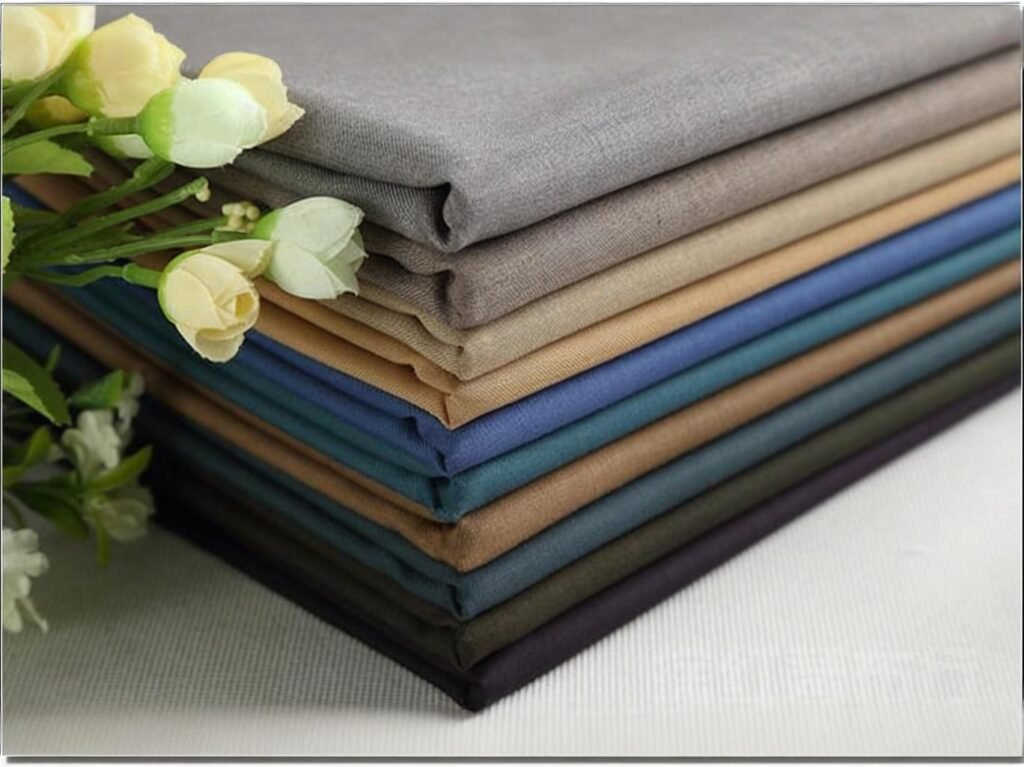
Finding the perfect viscose bamboo fabric isn’t just about chasing the softest hand feel—it’s about ensuring consistent performance, ethical sourcing, and reliable delivery at scale. Imagine launching a new athleisure line only to discover fabric batches vary in drape and shrinkage, leading to production delays and angry customers. To avoid that nightmare, savvy brands focus on measurable quality criteria from the get‑go.
High‑quality viscose bamboo fabric for apparel exhibits consistent tensile strength (18–22 cN/tex), low shrinkage (≤3 % after wash), uniform moisture regain (12–14 %), and silk‑like drape (drape coefficient < 25 %). Buyers verify these metrics through standardized lab tests and mill certificates—ensuring each lot meets brand specifications.
One emerging sportswear brand in Scandinavia learned this the hard way: after two delayed launches due to erratic fabric weights (ranging 140–180 g/m²), they implemented strict supplier scorecards tracking weight tolerance ±5 g/m², shrinkage ±0.5 %, and hand‑feel ratings from 10 panelists. Their next launch rolled out flawlessly, earning rave reviews and boosting pre‑order sales by 30 %. Ready to take your sourcing to that level? Let’s break down exactly what you need to know.
1. What criteria define “high‑quality” viscose bamboo fabric for apparel?
High‑quality viscose bamboo fabric consistently meets targeted specs for weight, strength, shrinkage, moisture management, and appearance. Critical criteria include:
- Fabric Weight Tolerance: ±5 g/m² around target (e.g., 150 g/m²).
- Tensile Strength & Elongation: 18–22 cN/tex and 15–20 % elongation to prevent tearing.
- Shrinkage: ≤3 % warp/weft after washing.
- Moisture Regain & Wicking: 12–14 % moisture regain; ≥3 g/m²·s wicking rate.
- Drape & Hand Feel: Drape coefficient < 25 %; surface smoothness Ra ≤ 0.4 µm.
1.1 Weight & GSM Consistency Maintaining consistent grams per square meter ensures pattern cutting accuracy and uniform dye take.
- A ±5 g/m² tolerance equates to ±3.3 % variance for a 150 g/m² base, minimizing garment size discrepancies.
| Target GSM | Acceptable Range | % Variance |
|---|---|---|
| 120 g/m² | 115–125 g/m² | ±4.2 % |
| 150 g/m² | 145–155 g/m² | ±3.3 % |
| 180 g/m² | 175–185 g/m² | ±2.8 % |
1.2 Mechanical Strength High‑quality fiber processing yields reliable tensile and tear performance.
- Tensile Strength: Assure 18–22 cN/tex via ISO 2062 testing.
- Elongation: 15–20 % ensures flexibility during wear.
1.3 Dimensional Stability Shrinkage can wreck garment fit. Modern mills use enzyme pre‑treatments and controlled finishing to achieve:
- ≤3 % Shrinkage: Measured per ISO 6330 after three home‑launder cycles.
1.4 Moisture & Thermal Comfort Viscose bamboo’s moisture regain and wicking deliver next‑level comfort.
- Moisture Regain: 12–14 % via ASTM D2654.
- Wicking Rate: ≥3 g/m²·s per AATCC 197.
1.5 Hand Feel & Drape Silk‑like drape and softness are non‑negotiable in premium apparel.
- Drape Coefficient: < 25 % tested per ASTM D1388.
- Surface Smoothness (Ra): ≤ 0.4 µm measured by profilometer.
Critical Perspective: Relying on a single metric (e.g., GSM) can be misleading. True quality emerges when all criteria align. A factory might hit weight targets but compromise strength to cut costs. Use a balanced scorecard—assign weights to each criterion—to evaluate supplier performance comprehensively.
2. Which certifications and lab tests verify fabric authenticity and performance?
Certifications and independent testing provide transparency and trust. Essential marks include OEKO‑TEX® Standard 100 (chemical safety), FSC/PEFC (sustainable bamboo sourcing), and ISO 9001 (quality management). Lab tests verify mechanical and functional specs: tensile (ISO 2062), shrinkage (ISO 6330), moisture regain (ASTM D2654), wicking (AATCC 197), and pilling (ISO 12945).
2.1 Key Certifications
| Certification | Scope | Why It Matters |
|---|---|---|
| OEKO‑TEX® Standard 100 | Harmful substances in textiles | Ensures chemicals (e.g., formaldehyde, heavy metals) are below safe limits. |
| FSC / PEFC | Bamboo pulp sustainability | Guarantees responsible forestry and legal harvesting. |
| ISO 9001 | Quality management systems | Confirms supplier adheres to consistent QA processes. |
| GOTS (if organic blends used) | Organic content & processing | Validates ≥95 % organic raw material and eco‑friendly processing. |
2.2 Essential Lab Tests
| Test | Standard | Pass Criteria |
|---|---|---|
| Tensile Strength | ISO 2062 | ≥18 cN/tex |
| Dimensional Change (Shrink) | ISO 6330 | ≤ 3 % after three washes |
| Moisture Regain | ASTM D2654 | 12–14 % |
| Wicking Rate | AATCC 197 | ≥3 g/m²·s |
| Pilling Resistance | ISO 12945 | Grade ≥ 4 (1–5 scale) |
| Colorfastness to Wash | ISO 105‑C06 | Grade ≥ 4 (1–5 scale) |
2.3 Real‑World Example A premium pajama line tested three viscose bamboo mills:
- Only one passed OEKO‑TEX® and achieved 95 % NaOH recovery.
- Its fabrics showed 2.5 % shrinkage, 20 cN/tex tensile, and 4.5 grade colorfastness—qualifying it for the contract and yielding zero customer returns.
Critical Insight: Certifications alone don’t guarantee batch‑to‑batch consistency. Always request recent lab reports tied to specific lot numbers and, if possible, retain an independent lab to spot‑check incoming shipments. This dual‑layer approach thwarts quality drifts and underpins long‑term partnerships.
3. How do you identify and evaluate reliable viscose bamboo fabric suppliers?
Sourcing partners you can trust requires a mix of on‑site vetting, data review, and reference checks. Look for suppliers with ISO 9001 certification, transparent mill audits, and detailed traceability down to pulp origins. Verify production capacity aligns with your volumes—factories running at < 60 % capacity often deprioritize smaller customers. Request client references or case studies showing repeat large orders, and use digital factory tours or third‑party inspection reports to confirm real‑world capabilities.
Reliable viscose bamboo suppliers hold ISO 9001 and OEKO‑TEX® certifications, maintain lot‑level traceability via FSC/PEFC CoC, operate closed‑loop recovery systems (≥95 % NaOH, ≥85 % CS₂), publish KPI dashboards on yield and defect rates (< 2 %), and provide verifiable customer references with repeat orders above 500 kilometers per SKU.
3.1 Certification & Compliance Verification
- Document Review: Obtain copies of ISO 9001, OEKO‑TEX®, FSC/PEFC CoC, and environmental permits.
- Audit Frequency: Leading mills commission third‑party SMETA or SGS audits quarterly; ask for the last two reports.
- On‑site Audit Checklist:
- Chemical recovery unit operations (NaOH/CS₂).
- Effluent treatment plant throughput and discharge logs.
- Traceability system demonstrating pulp batch → fiber bale → fabric roll.
3.2 Capacity & Performance Metrics
| Metric | Target Benchmark | Why It Matters |
|---|---|---|
| Utilization Rate (%) | ≥ 70 % capacity | Ensures factory prioritizes process stability over overtime. |
| Yield Rate (%) | ≥ 98 % | Low waste (< 2 %) indicates process control. |
| On‑Time Delivery (%) | ≥ 95 % | Reflects supply reliability. |
| Repeat Order Rate (%) | ≥ 60 % of top clients | Demonstrates customer satisfaction and trust. |
- Performance Dashboard: Ask suppliers for KPI dashboards covering the above metrics for the last 6–12 months.
3.3 Technical Capability & R&D
- Pilot Line Availability: Factories with dedicated R&D lines can trial novel finishes or blends without disrupting mass production.
- Process Control Systems: PLC‑based control for key steps (viscosity, pH, temperature), with digital logs.
- Innovation Partnerships: Suppliers engaged in joint development with fiber institutes or universities often have cutting‑edge processes (e.g., enzymatic pulping).
3.4 Client References & Site Visits
- Reference Interviews: Speak with 2–3 existing customers (ideally in your region or vertical) about quality consistency, responsiveness, and post‑order support.
- Virtual Factory Tours: Use live‑streamed walkthroughs to inspect machinery condition, housekeeping, and safety protocols.
- Physical Visits: Whenever possible, conduct in‑person audits focusing on HSE (health, safety, environment) and labor conditions.
Critical Perspective: A supplier might score high on certifications but lack agility. Smaller, well‑managed mills often provide faster iterations and better cost control for niche orders (< 1,000 m). Balance scale with flexibility based on your brand’s priorities.
4. What sampling and pre‑production checks should you perform?
Before bulk commitment, rigorous sampling and pre‑production verification avert costly mistakes. Begin with lab dips (color swatches), then 3–5 m fabric samples for lab testing: tensile strength, shrinkage, pilling, and colorfastness. Next, produce a 50 m pilot run under your exact process parameters—dye lot, finish recipe, machine settings. Inspect this run on five criteria: hand feel, dimensional accuracy, dye uniformity, defect rate, and fatigue performance. Only then greenlight the full order.
Effective sampling includes lab dips, 3–5 m physical swatches tested for tensile (ISO 2062), shrinkage (ISO 6330), pilling (ISO 12945), and colorfastness (ISO 105). A 50 m pilot run validates GSM tolerance (±5 g/m²), dye lot consistency (ΔE < 1.5), defect frequency (< 0.5 % of area), and hand‑feel scoring (≥ 4.5/5 by panel) before bulk production.
4.1 Lab Dips & Color Approval
- Pantone & ΔE Targets: Request dye formulas tied to specific Pantone codes. Accept only lab dips achieving ΔE < 1.5.
- Multiple Lighting Conditions: Evaluate colors under daylight (D65), fluorescent, and tungsten lighting to ensure consistency.
- Wash & Rub Testing: Lab dips should pass ≥ 4 grades on wash (ISO 105‑C06) and rub (ISO 105‑X12) tests.
4.2 Sample Yardage Testing
| Test | Standard | Acceptance Criteria |
|---|---|---|
| Tensile Strength | ISO 2062 | ≥ 18 cN/tex |
| Shrinkage | ISO 6330 | ≤ 3 % |
| Moisture Regain | ASTM D2654 | 12–14 % |
| Wicking Rate | AATCC 197 | ≥ 3 g/m²·s |
| Pilling Resistance | ISO 12945 | Grade ≥ 4 |
| Drape Coefficient | ASTM D1388 | < 25 % |
4.3 Pilot Run Evaluation
- Batch Consistency: Ensure GSM variation within ±5 g/m² across all rolls.
- Defect Analysis: Use AQL (acceptable quality level) of 0.65 %—no more than 65 defects per 10,000 m².
- Hand‑Feel Panel: Gather feedback from 5–7 trained evaluators rating softness, drape, and texture on a 1–5 scale (target ≥ 4.5).
4.4 Finishing & Treatment Checks
- Softening vs. Durability: Enzyme‑softened samples should maintain ≥ 90 % tensile strength.
- Functional Coatings: If requesting antimicrobial or UV finishes, verify functionality after 50 wash cycles (antimicrobial ≥ 90 % bacteria reduction; UPF ≥ 30).
4.5 Pre‑Production Sign‑Off
- Compile a comprehensive Sample Evaluation Report detailing all test results, panel scores, and photographic evidence of defects.
- Approval Matrix: Sign off by cross‑functional stakeholders—design, quality assurance, and production leads—to ensure alignment.
Critical Insight: Skipping pilot runs often leads to bulk rejections or costly re‑dye batches. Investing time and minimal yardage upfront saves both money and reputation in the long run.
5. How do you negotiate MOQ, pricing, and lead times effectively?
Securing favorable minimum order quantities (MOQs), competitive pricing, and on‑time delivery requires transparency and data‑driven negotiation. Start by benchmarking market rates—viscose bamboo typically costs $3.50–$5.00 per meter for mid‑weight knits at MOQs of 1,000–2,000 m. Use that data to negotiate: if a supplier quotes $4.50/m at 2,000 m MOQ, ask whether 500 m samples could be produced at $6.00/m for your pilot run. Leverage volume forecasts—committing to 5,000 m over 12 months can unlock price breaks of 5–10 %.
5.1 Market Benchmarking
| Weight (g/m²) | MOQ (m) | Price Range ($/m) |
|---|---|---|
| 120–150 | 1,000 | 3.50–4.50 |
| 150–200 | 2,000 | 4.00–5.00 |
| 200–250 | 3,000 | 4.50–5.50 |
- Data Source: Internal SzoneierFabrics pricing intelligence and third‑party market reports (Textile Exchange).
5.2 Tiered Pricing Strategy
- Pilot Run Pricing: Negotiate higher per‑meter sample costs (up to +30 %), but secure sample approval conditions.
- Volume Discounts: Structure pricing in bands (e.g., 1,000–3,000 m at $4.50/m; 3,001–6,000 m at $4.20/m; 6,001 m+ at $3.90/m).
- Payment Terms: Request 30 % deposit, 70 % on delivery for established suppliers; 50/50 for new partners.
5.3 Lead Time Management
| Order Size (m) | Standard Lead Time (days) | Expedited Option (days) |
|---|---|---|
| ≤ 1,000 | 25–30 | 15–20 (+10 % fee) |
| 1,001–5,000 | 30–35 | 20–25 (+8 % fee) |
| > 5,000 | 35–45 | 25–30 (+5 % fee) |
- Buffer Planning: Add 7–10 days to anticipated delivery to mitigate delays.
- Capacity Sharing: Ask for real‑time capacity dashboards; if plants run ≥ 85 % capacity, lead‑time risks rise.
5.4 Collaborative Forecasting
- Rolling Forecasts: Share 3‑ and 6‑month projections to help suppliers plan raw‑material procurement and production scheduling.
- Volume Commitments: Offer phased commitments (e.g., “X m in Q3, Y m in Q4”) in exchange for price guarantees.
Critical Perspective: Negotiation isn’t zero‑sum. Suppliers appreciate predictable volumes and clear payment terms. Consider longer‑term frame agreements with price‑review clauses tied to pulp index or energy cost fluctuations, aligning incentives and reducing renegotiation friction.
6. What logistical and quality‑control protocols ensure timely bulk delivery?
Effective logistics and QC combine rigorous in‑process sampling with robust shipping and inspection routines. During production, suppliers should perform inline fabric inspections every 500 m—checking GSM, width, and defects—and generate inspection reports. For shipping, employ third‑party pre‑shipment inspections (PSIs) verifying roll counts, packaging integrity, and AQL defect rates (< 0.65 %). Use consolidated full‑container loads (FCL) with track‑and‑trace and factory‑seal seals to streamline customs clearance.
6.1 In‑Process Quality Checks
- Inline Sampling: Every 500 m, measure:
- GSM (±5 g/m²),
- Width (±2 mm),
- Visual defects (count < 3 per 100 m).
- Inspection Report Template: Includes date, roll ID, operator sign‑off, and deviation log.
6.2 Pre‑Shipment Inspection (PSI)
| Checkpoint | Standard | Acceptance Criteria |
|---|---|---|
| Roll Count | Match PI | ±0 rolls |
| Roll Length | Target length ±3 m | Individual lengths must be within tolerance |
| Defect Rate | AQL 0.65 % | < 65 defects per 10,000 m² |
| Packaging | Plastic wrap + tubes | No tears, moisture ingress seals |
- Third‑Party Agencies: Bureau Veritas, SGS, or Intertek for unbiased PSIs.
6.3 Shipping Logistics
- Consolidation: FCL for ≥ 10,000 m to reduce per‑meter freight costs. Less than that, LCL with palletized, shrink‑wrapped rolls.
- Documentation:
- Commercial invoice, packing list, COA, test reports, certificates.
- Incoterms 2020: FOB for buyer control; CIF if risk mitigation is prioritized.
6.4 Customs & Compliance
- HS Code: 5509.41 for viscose staple fiber fabrics; ensure accurate tariff classification.
- Country‑of‑Origin: “Made in China”; buyers may need to verify origin for duty preferences (e.g., with GSP).
- Labelling Requirements: As per destination market (e.g., EU textile labeling regulations, US FTC rules).
Critical Reflection: A flawless inspection process can’t offset a slow supply chain. Consider dual‑sourcing pools—two vetted mills sharing volume—to hedge against regional disruptions. For key launches, air‑freight critical rolls for prototyping, while sea‑freight bulk orders. This hybrid approach balances cost and agility.
7. How do you assess sustainability credentials and chemical‑recovery rates?
True sustainability goes beyond marketing buzzwords. Evaluate mills on third‑party sustainability certifications—like FSC/PEFC for pulp, RCS/GRS for recycled content, and OEKO‑TEX® or ZDHC for chemical safety. Crucially, review their caustic soda (NaOH) and carbon disulfide (CS₂) recovery metrics: best‑in‑class plants reclaim ≥ 95 % NaOH and ≥ 85 % CS₂. Transparency through published key performance indicators (KPIs) and independent effluent reports demonstrates genuine environmental stewardship.
Sustainable viscose bamboo sourcing requires pulp certified by FSC/PEFC, RCS/GRS if recycled content is used, and chemical controls adhering to OEKO‑TEX® or ZDHC standards. Leading mills achieve ≥ 95 % NaOH recovery and ≥ 85 % CS₂ reclamation, while treating effluent to COD < 500 mg/L and implementing zero‑liquid discharge pilots.
7.1 Certification Landscape
| Certification | Focus | Typical Mill Adoption (%) |
|---|---|---|
| FSC / PEFC | Sustainable forest sourcing | 40 % |
| RCS / GRS | Recycled cellulose | 15 % |
| OEKO‑TEX® Standard 100 | Chemical safety | 60 % |
| ZDHC Level 3 | Restricted substance management | 20 % |
7.2 Chemical‑Recovery KPIs
| Chemical | Industry Benchmark | Top‑Tier Performance |
|---|---|---|
| NaOH Recovery (%) | 85–90 % | ≥ 95 % |
| CS₂ Recovery (%) | 70–80 % | ≥ 85 % |
| Effluent COD (mg/L) | 1,000–1,500 | < 500 |
| Water Reuse (%) | 40–50 % | ≥ 70 % |
- NaOH Recovery: Achieved via multi‑effect evaporators and membrane filtration.
- CS₂ Recovery: Requires closed‑loop condensers and catalytic incinerators for fugitive emissions.
- Water Reuse: Greywater reclaim systems support zero‑liquid‑discharge (ZLD) in pilot projects.
7.3 Transparency & Reporting
- Public KPIs: Top mills publish quarterly sustainability dashboards covering recovery rates, water reuse, and effluent quality.
- Third‑Party Audits: Independent verifications (e.g., by TÜV, SGS) lend credibility to self‑reported data.
- Community Engagement: Leading suppliers host virtual or in‑person forum sessions with local stakeholders to address environmental concerns.
Critical Perspective: Sustainability metrics often hide behind corporate communications. Bulk buyers should require direct access to mill control rooms (digitally or on‑site) and insist on contract clauses that report quarterly measurements. Aligning incentives—like bonus payments if recovery rates exceed targets—transforms sustainability from a checkbox into operational priority.
8. What contractual terms and after‑sales support should you secure?
A robust sourcing contract shields you from quality lapses and supply chain hiccups. Key contractual elements include detailed technical specifications, inspection protocols, penalty clauses for deviations, and re‑order discounts. Negotiate after‑sales support like free QC re‑inspections, repair or replacement for defective lots (within 30 days of delivery), and a dedicated account manager. These terms ensure long‑term reliability and responsiveness.
Secure contracts with fabric suppliers that incorporate precise technical specs (GSM ±5 g/m², shrinkage ≤ 3 %), inspection AQL 0.65 %, on‑time delivery ≥ 95 %, and penalty clauses (e.g., 0.5 % price deduction per day of delay). After‑sales support should include complimentary re‑inspections, a warranty for defective rolls (30 days), and a dedicated service liaison.
8.1 Technical Specification Addendum
- Detailed Parameters: GSM, width, tensile, shrinkage, hand feel, colorfastness.
- Approval Gates: Sample sign‑off, pilot run sign‑off, bulk pre‑shipment sign‑off.
8.2 Quality & Delivery Penalties
| KPI | Target | Penalty Clause |
|---|---|---|
| GSM Variance | ±5 g/m² | 0.2 % price rebate per g/m² beyond tolerance |
| Shrinkage | ≤ 3 % | Free re‑shipment of corrected rolls |
| On‑Time Delivery | ≥ 95 % | 0.5 % deduction per day of delay |
| Defect Rate (AQL) | ≤ 0.65 % | Replacement of faulty rolls at no cost |
8.3 After‑Sales Support Terms
- Re‑Inspection Service: Free QC inspection within 10 days of delivery for suspect lots.
- Defect Warranty: 100 % repair or replacement for failures traced to mill process within 30 days.
- Dedicated Liaison: Single point of contact for order tracking, technical queries, and escalations.
8.4 Contract Duration & Renewal Options
- Initial Term: 12 months with performance review at month 9.
- Auto‑Renewal: Unless 60 days written notice of non‑renewal.
- Price Review Mechanism: Tied to pulp index (Market price of bamboo pulp) to share cost fluctuations transparently.
Critical Reflection: Strong contracts manage risk but also reflect partnership mindset. Including “gainshare” clauses—where cost savings achieved by the mill (e.g., higher recovery rates) are shared—motivates continuous improvement. After‑sales support builds confidence and fosters long‑term collaboation rather than transactional vendor relationships.
Ready to elevate your next clothing line with premium, customizable viscose bamboo solutions?
Sourcing high‑quality viscose bamboo fabric for apparel demands a blend of technical literacy, sustainability acumen, and strategic negotiation. By defining clear quality criteria, validating certifications, vetting suppliers rigorously, and embedding robust contractual and after‑sales terms, you’ll secure fabrics that delight customers and uphold your brand’s reputation.
Contact SzoneierFabrics now for free design consultation, low‑MOQ sampling, rapid prototyping, and end‑to‑end supply‑chain transparency. Let’s turn your apparel vision into reality!
Can't find the answers?
No worries, please contact us and we will answer all the questions you have during the whole process of bag customization.
Make A Sample First?
If you have your own artwork, logo design files, or just an idea,please provide details about your project requirements, including preferred fabric, color, and customization options,we’re excited to assist you in bringing your bespoke bag designs to life through our sample production process.