 Skip to content
Is linen expensive to manufacture?
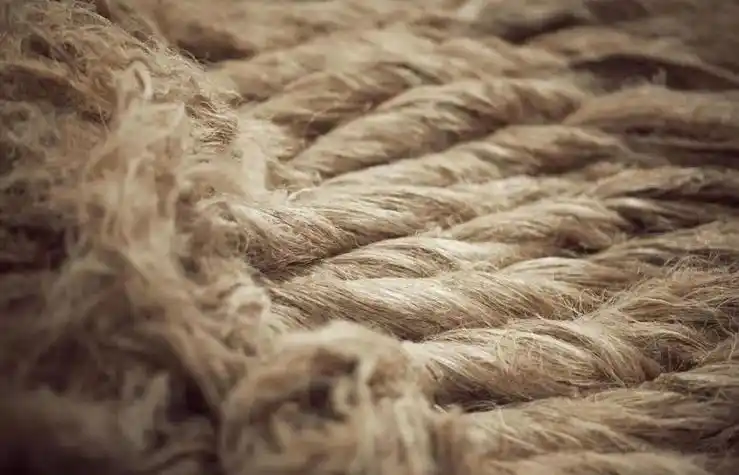
Linen is one of the oldest fabrics in the world—and one of the most luxurious. Its crisp texture, cooling properties, and natural look have made it a staple in everything from high-fashion runways to luxury bedding and eco-forward brands. But many buyers and designers are often shocked by one thing: the cost.
Yes, linen is more expensive to manufacture than cotton or polyester. This is primarily due to its labor-intensive flax cultivation, lengthy retting and scutching processes, lower fiber yield per hectare, and limited global production zones.
This cost reflects the natural complexity of converting flax into linen. Unlike cotton or synthetics, which can be harvested and spun in weeks, linen requires multiple seasonal steps, specialized machinery, and expert timing to preserve fiber quality.
Still, the price tag doesn’t stop leading brands from using it. Why? Because the value is not just in the fiber—it’s in the story. Let’s uncover what really makes linen expensive, and how B2B buyers can navigate the trade-off between cost and performance.
1. What Makes Linen More Expensive to Produce Than Cotton or Polyester?
Linen is more expensive to produce due to its low-yield flax farming, long processing timeline, and high labor requirements—especially when compared to cotton or synthetic fabrics like polyester.
1.1 Crop Yield Comparison:
| Fabric Type | Crop Source | Avg. Yield (kg fiber/ha) | Time to Harvest | Waste-to-Yield Ratio |
|---|---|---|---|---|
| Linen | Flax plant | 600–1,200 | 100–120 days | High (60–70% discarded) |
| Cotton | Cotton plant | 1,200–1,800 | 150–180 days | Moderate |
| Polyester | Petrochemical | Industrial synthesis | Instant (factory) | Minimal |
Linen is one of the lowest-yielding fabrics by weight. From each hectare of flax, only a small portion becomes spinnable fiber. The rest is lost during retting, scutching, and combing.
1.2 Manufacturing Complexity:
Unlike cotton, flax must undergo:
- Retting: A 2–3 week microbial decomposition phase
- Scutching: Mechanical separation of woody stalks
- Hackling: Combing and alignment of long fibers
Each of these stages requires manual oversight or slow automation, raising both labor time and machinery wear.
1.3 Energy and Time Intensity:
| Fabric Type | Processing Time (Raw to Yarn) | Labor Input | Energy Intensity |
|---|---|---|---|
| Linen | 3–4x longer than cotton | High | Medium |
| Cotton | Fast with modern gins | Moderate | Medium–High |
| Polyester | Fast (synthetic extrusion) | Low | Very High |
1.4 Supplier Insight:
According to data from the European Confederation of Flax and Hemp (CELC), producing 1 kg of linen yarn takes 3–4 times the processing hours compared to cotton, even though linen requires less water and fewer chemicals.
2. How Do Flax Cultivation and Harvesting Affect Linen Manufacturing Costs?
Flax cultivation directly impacts linen manufacturing cost due to narrow harvesting windows, specialized equipment needs, and the natural sensitivity of the flax plant, which reduces mechanization efficiency and increases risk of crop loss.
2.1 Flax Is Fragile
- Harvest timing is critical: Just a few days too early or late can weaken fiber quality.
- Flax cannot be cut like wheat or cotton. It must be pulled by the roots to preserve fiber length.
- Machine pulling and drying require delicate adjustments, often using equipment modified specifically for flax fields.
2.2 Geographic Limitation
Linen-grade flax grows best in:
- France
- Belgium
- Netherlands
- Northern China (Heilongjiang)
These regions have ideal humidity, temperature, and soil. But this limited land base increases market scarcity, and with it—raw material prices.
2.3 Field Retting Adds Time
Retting is the biological process of breaking down pectin between the stalk and the fibers. It typically takes:
- 10–14 days in France
- 7–10 days in warmer regions
But retting depends on weather conditions, not machinery. Rain, humidity, and temperature all influence the timing—and thus production scheduling downstream.
2.4 Data Comparison: Harvest Cost Breakdown
| Item | Cost (USD/ha, avg.) |
|---|---|
| Flax Seeds | \$200–300 |
| Specialized Machinery Rental | \$400–600 |
| Manual Labor (pulling, bundling) | \$300–500 |
| Total Cultivation Cost | \~\$1,000–\$1,400 |
When compared to cotton (avg. \$600–800/ha) or synthetics (machine-made in factories), the numbers tell a clear story: flax is costly to grow and handle.
2.5 Case Example:
A linen mill in France estimates 35% of their raw material cost comes directly from farming expenses—including crop insurance for missed retting windows. In contrast, cotton mills in India report farming costs are only 18–22% of raw material cost due to higher mechanization and yield per hectare.
3. Is the Linen Manufacturing Process Labor-Intensive or Automated?
Yes, the linen manufacturing process is still largely labor-intensive, especially during the early fiber separation stages like retting, scutching, and hackling. While some modern spinning and weaving are automated, the sensitive nature of flax fibers limits full mechanization.
3.1 Process Breakdown: Manual vs Automated
| Stage | Description | Manual or Automated |
|---|---|---|
| Harvesting | Pulling flax by the root to preserve fiber | Manual or semi-auto |
| Retting | Microbial decomposition in the field | Manual (weather-based) |
| Scutching | Removal of woody stalks using rollers | Semi-automated |
| Hackling | Combing long fibers for alignment | Manual or semi-auto |
| Spinning | Converting fibers into yarn | Mostly automated |
| Weaving | Fabric creation (plain, twill, jacquard) | Mostly automated |
| Finishing (washing, dyeing) | Enhances softness, color, or handfeel | Automated with controls |
Even in large factories, the early-stage processing (from raw flax to usable fiber) still involves significant human oversight and multi-step machinery setups that need frequent calibration to avoid fiber breakage.
3.2 Labor Input by Fabric Type:
| Fabric | Manual Labor Input (Relative) | Notes |
|---|---|---|
| Linen | High | Labor-intensive field and prep |
| Cotton | Moderate | Mechanized harvesting and ginning |
| Polyester | Low | Fully industrial process |
3.3 Why Automation Isn’t Fully Adopted in Linen
- Flax fibers vary batch-to-batch → machines must be adjusted frequently
- Long-staple fibers are delicate → improper tension causes breakage
- Retting can’t be industrialized effectively without altering fiber quality
3.4 Case Insight:
A Belgian mill noted that even with state-of-the-art weaving looms, it still takes 3x more prep time to ready flax fibers than cotton. For every 1,000 meters of linen, manual processes still account for 20–30% of labor hours.
4. Which Stages of Linen Production Contribute Most to Its Cost?
The stages contributing most to linen’s production cost are flax cultivation, retting, fiber extraction (scutching and hackling), and quality sorting. These processes are resource-heavy, time-sensitive, and require skilled labor or specialized equipment.
4.1 Cost Breakdown by Stage (Per 1000m of 200 GSM Linen Fabric):
| Production Stage | Cost Estimate (USD) | % of Total Cost | Notes |
|---|---|---|---|
| Flax Farming | \$200–300 | 20–25% | Seasonal risk and low yield |
| Retting & Dew Drying | \$80–120 | 10% | Weather-dependent and time-consuming |
| Scutching & Hackling | \$150–250 | 20–30% | High labor cost, mechanical loss |
| Spinning & Weaving | \$200–300 | 25–30% | Electricity + maintenance intensive |
| Dyeing & Finishing | \$80–180 | 10–15% | Eco-finishes often raise cost |
4.2 Sorting and Grading
Linen is typically hand-graded into:
- Short fibers (tow) – used in coarser fabrics
- Long fibers (line linen) – used in fine garments and home textiles
The long fiber grades are limited in yield and can raise base material costs by 40–60%, especially if GOTS or OEKO-TEX certifications are required.
4.3 Fiber Loss Along the Way
| Process Stage | % Fiber Retained | Reason |
|---|---|---|
| Retting | \~70% | Natural breakdown |
| Scutching | \~45–55% | Woody core removed |
| Hackling | \~35–40% | Only long fibers retained |
This means that to get 1kg of spinnable linen, nearly 2.5–3kg of raw flax stalks are needed—driving up raw input cost per meter of fabric.
4.4 Cost-Saving Consideration:
Some brands choose blended fabrics (e.g. 55% linen / 45% cotton or rayon) to retain linen texture while cutting raw material costs by 20–35%, especially for mass-market applications like summer shirts or curtains.
5. How Do Country of Origin and Processing Methods Impact Linen Pricing?
Linen pricing is heavily influenced by country of origin and the type of processing method used. European linen tends to be more expensive due to strict labor laws, premium flax varieties, and traditional weaving techniques, while Chinese linen is more cost-effective due to lower labor costs and high-volume production efficiencies.
5.1 Price Variation by Country:
| Country | Avg. Linen Fabric Price (USD/meter, FOB) | Notes |
|---|---|---|
| Belgium | \$15–\$35 | Heritage looms, Masters of Linen® certified |
| France | \$12–\$28 | Premium flax, high-end finishing |
| Italy | \$10–\$25 | Fashion-forward dyeing and design innovation |
| China | \$3–\$10 | High volume, imported flax, less traceability |
| India | \$4–\$9 | Budget options, coarse feel, less consistency |
5.2 Processing Style Comparison:
| Processing Type | Characteristics | Impact on Cost |
|---|---|---|
| Traditional (Europe) | Slow weaving, hand-graded fiber | High labor cost |
| Industrial (China) | Fast loom speeds, chemical scutching possible | Lower labor, higher efficiency |
| Eco-wash & Softening | Uses enzymes, mechanical tumbling | Adds \$1–\$2/meter |
5.3 Real Buyer Scenario:
A German homeware brand compared:
- French-woven linen at \$26/meter (full EU origin traceability)
- Chinese-woven linen using French flax at \$9.80/meter
Both offered similar thread count and softness after washing. They opted for Chinese-woven linen for their core line, and European linen for their luxury collection, adjusting price points accordingly.
5.4 Freight & Import Duties:
Don’t forget logistics. European linen, while higher in FOB price, often benefits from:
- Shorter lead times (for EU brands)
- Reduced environmental impact
- Duty-free access under regional trade agreements
Meanwhile, Chinese linen may require:
- 15–25% import duties (depending on destination country)
- Higher MOQs to justify shipping cost
6. Do Certifications and Sustainable Practices Raise Linen Fabric Prices?
Yes, certifications like GOTS, OEKO-TEX®, and Masters of Linen® can increase linen fabric prices by 10–25%, but they also add brand value, traceability, and consumer trust—especially for high-end or eco-conscious markets.
6.1 Most Common Certifications:
| Certification | What It Ensures | Typical Cost Uplift |
|---|---|---|
| GOTS (Global Organic Textile Standard) | Organic farming + social compliance | +10–15% |
| OEKO-TEX® Standard 100 | No harmful chemicals or dyes | +5–8% |
| Masters of Linen® | 100% EU flax, spun and woven in Europe | +15–25% |
| European Flax® | Flax grown under EU environmental guidelines | +8–10% |
6.2 Why Certifications Add Cost:
- Annual audits for social and environmental practices
- Traceability systems from seed to fabric roll
- Higher quality control standards
- Limited number of certified mills, especially for GOTS linen
6.3 Buyer Insight: When Certifications Matter
| Use Case | Certification Needed? | Why It Helps |
|---|---|---|
| Luxury bedding or table linen | ✔ | Consumer trust, brand storytelling |
| Organic baby clothing | ✔✔ | Regulatory compliance, safety standards |
| Mass-market linen-look apparel | ✘ | Cost sensitivity more important |
| Eco DTC brands (EU, USA, Japan) | ✔ | Helps drive premium pricing |
6.4 Strategic Consideration:
Some B2B buyers opt for non-certified linen woven from certified flax, which provides some traceability and environmental value without paying full certification mark-up.
6.5 Real Case:
A Swedish furniture brand sourcing from SzoneierFabrics paid:
- \$7.80/meter for standard Chinese-woven linen (non-certified)
- \$10.60/meter for linen with European Flax® certification
The certified version allowed them to use a “Low Carbon Linen” label in marketing, boosting sales by 38% during a sustainability-focused campaign.
7. What Is the Cost Difference Between Low-End and High-End Linen?
The price of linen fabric can vary drastically—from as low as \$3/meter to over \$30/meter—depending on fiber grade, weave quality, origin, certification, finishing, and branding potential.
7.1 Price Comparison: Low vs High-End Linen (Per Meter FOB)
| Feature | Low-End Linen (\$3–7/m) | High-End Linen (\$15–30+/m) |
|---|---|---|
| Fiber Source | Blended or coarse flax (China, India) | Long-staple European flax (France, Belgium) |
| Weaving Technique | Loose weave, occasional flaws | Tight, even weave, minimal imperfections |
| Thread Count (warp × weft) | \~32 × 28 | 56 × 48 or finer |
| Finishing | Basic wash or stiff handfeel | Enzyme-washed, soft, preshrunk |
| Certifications | None or OEKO-TEX® at best | GOTS, Masters of Linen®, EU Flax® |
| Suggested Retail End Use | Budget clothing, curtains | Luxury fashion, bedding, décor |
7.2 Visual and Functional Differences:
- Low-end linen may shrink more, wrinkle easily, and feel rougher.
- High-end linen drapes better, lasts longer, and enhances perceived value.
7.3 Case Study:
A U.K. womenswear label sourced:
- \$6.80/m linen for a summer capsule line (unbranded, dyed locally)
- \$24/m linen from Belgium (GOTS-certified, soft-finish)
Their analysis showed:
- Higher-priced line had 2.3× the profit margin due to higher perceived value
- Lower-priced line sold faster, but also had 18% return rate due to fabric issues (wrinkling, see-through)
7.4 Key Insight:
You’re not just paying for material—you’re investing in longevity, softness, and story. Linen’s wide price spectrum gives buyers flexibility to target different market segments strategically.
8. How Can B2B Buyers Reduce Linen Costs Without Compromising Quality?
B2B buyers can reduce linen sourcing costs through smart blend ratios, sourcing from efficient regions, using pre-finished stock, or opting for certified flax rather than fully certified fabric—all while maintaining acceptable quality.
8.1 Practical Cost-Reduction Strategies:
| Strategy | Cost Impact | When to Use It |
|---|---|---|
| Use linen blends (cotton, rayon, Tencel) | Save 20–40% | For shirts, soft apparel, drapery |
| Source from China using EU flax | Save 30–50% | When you want sustainability + savings |
| Order greige (undyed) for local finishing | Save 10–15% | If you have local dyeing capacity |
| Use off-season or overstock rolls | Save 15–25% | For brands with flexible color timelines |
| Skip full certification, request origin cert | Save 5–10% | For semi-premium product lines |
8.2 Recommended GSM Range for Cost-Efficient Linen:
| Application | GSM Range | Cost-Efficient Option |
|---|---|---|
| Totes / Promo Bags | 180–220 | Blended linen or recycled fiber |
| Fashion Shirts / Dresses | 120–160 | 55/45 Linen-Cotton blends |
| Upholstery | 280–350 | Szoneier heavy-duty linen blends |
| Bedding / Table Linen | 150–180 | Soft-washed Chinese woven linen |
8.3 Supplier Collaboration Tip:
Work with your supplier to:
- Set target landed cost goals
- Use bulk dye lots to reduce per-unit finishing cost
- Ask for 2–3 GSM or weave alternatives before confirming PO
8.4 SzoneierFabrics Insight:
At SzoneierFabrics, we help buyers balance performance with price. For instance, we offer:
- Low-MOQ linen blends that simulate 100% linen feel
- Certified European flax yarn woven in China
- Fast sampling and tech-pack support for cost-effective prototyping
Linen Is Worth the Investment—If You Source Smart
Yes, linen is more expensive to manufacture. But the reasons behind that cost—from low-yield flax farming to manual fiber separation and slow weaving—also explain why linen is so desirable. It’s breathable, biodegradable, beautiful—and built to last.
For B2B buyers, success lies in knowing when to pay a premium, and when to economize smartly.
Ready to Source Custom Linen for Your Brand?
At SzoneierFabrics, we offer:
- ✅ Fully customized linen and linen-blend solutions
- ✅ Support for low MOQs and free sampling
- ✅ Certified flax sourcing upon request (European origin)
- ✅ Short lead times, expert consultation, and 100% quality guarantee
Let us help you reduce linen costs—without compromising fabric quality.


Can't find the answers?
No worries, please contact us and we will answer all the questions you have during the whole process of bag customization.
Make A Sample First?
If you have your own artwork, logo design files, or just an idea,please provide details about your project requirements, including preferred fabric, color, and customization options,we’re excited to assist you in bringing your bespoke bag designs to life through our sample production process.