In clothing development, fabric choice is rarely just about how a garment looks on a hanger. It decides how it feels on skin in summer heat, how it behaves after ten washes, how it ages across a season, and whether customers come back—or quietly stop buying.
Linen, cotton, and viscose often appear side by side in fabric sourcing conversations because they all promise comfort. Yet they behave very differently once they move from sample swatches to real garments worn in real life. Treating them as interchangeable is one of the most common—and costly—mistakes in apparel development. Linen, cotton, and viscose differ fundamentally in fiber structure and performance. Linen offers superior breathability and moisture release, cotton provides balanced comfort and durability, while viscose delivers softness and drape but lower structural resilience. The best choice depends on climate, garment category, and long-term wear expectations.
A designer once summed it up perfectly: “Viscose sells the first touch. Cotton sells the second wash. Linen sells the third summer.” That single sentence captures why this comparison matters.
What Are the Key Differences Between Linen Fabric, Cotton, and Viscose in Terms of Fiber Structure and Performance?
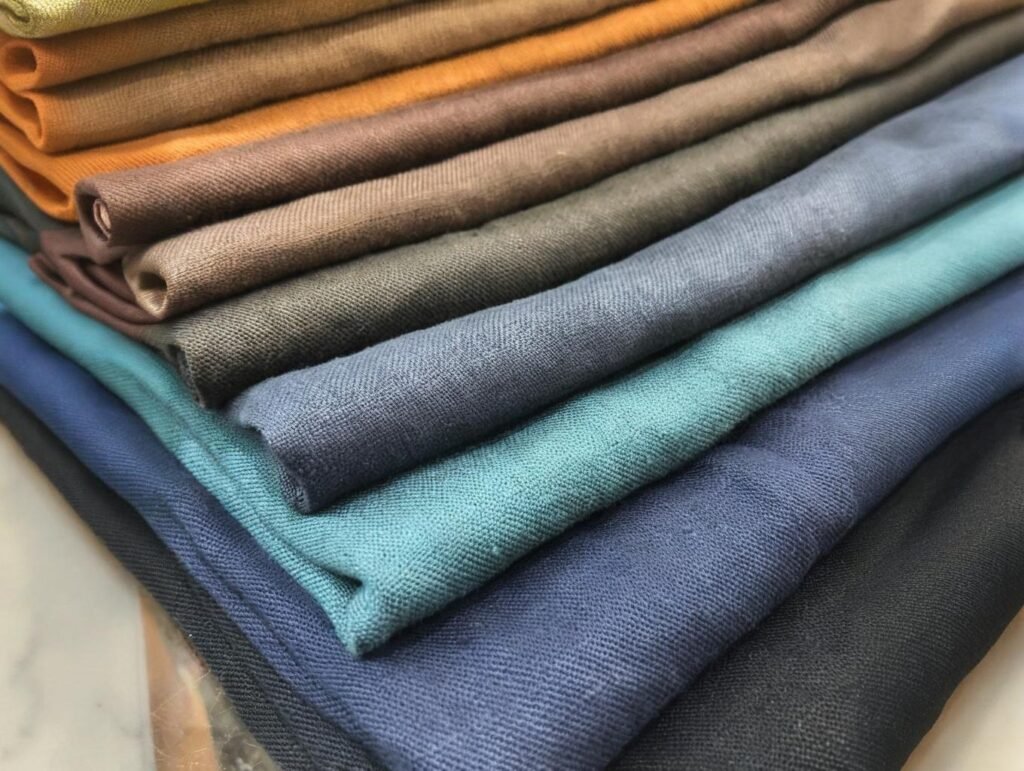
Linen, cotton, and viscose are all cellulose-based fibers, yet they behave very differently in finished fabrics because their fiber structures are fundamentally different. Linen is a bast fiber extracted from the flax plant stem with a rigid, highly crystalline structure. Cotton is a natural seed fiber with a softer, twisted morphology. Viscose is a regenerated cellulose fiber engineered from wood pulp and reformed into a smooth, continuous filament.
These structural differences are not academic details. They directly determine how a fabric feels on skin, how it breathes, how it wrinkles, how it performs when wet, and how long it lasts in real-world use. For apparel designers, fabric buyers, and product developers, understanding fiber anatomy is often the difference between a garment that ages gracefully and one that fails prematurely.
Fabric performance always starts with fiber anatomy. Everything else—yarn type, weave, finishing—builds on that foundation.
Fiber Structure Explains Almost Everything You Feel
Before discussing softness, drape, or durability, it is essential to understand where each fiber comes from and how it is formed at the microscopic level.
A) Fiber Origin and Formation
| Fabric | Fiber Origin | Fiber Type |
|---|---|---|
| Linen | Flax plant stem | Bast fiber |
| Cotton | Cotton boll | Seed fiber |
| Viscose | Wood pulp | Regenerated cellulose |
Linen and cotton are agricultural fibers. Their properties are largely fixed by nature, influenced by climate, soil, and harvesting methods. Viscose, by contrast, is manufactured. Although it is derived from natural cellulose, its structure is rebuilt during chemical processing, allowing greater control over uniformity and surface characteristics.
This distinction explains why linen and cotton show more variability between batches, while viscose tends to be more consistent in diameter and appearance.
B) Microscopic Fiber Shape and Behavior
At the microscopic level, the three fibers look and behave very differently.
| Property | Linen | Cotton | Viscose |
|---|---|---|---|
| Fiber length | Long | Medium | Continuous |
| Surface | Polygonal | Twisted ribbon | Smooth |
| Crystallinity | High | Medium | Low |
Linen fibers are long and straight, with a polygonal cross-section. This structure creates air gaps between fibers, enhancing breathability but reducing flexibility. Cotton fibers have a characteristic twisted ribbon shape, which increases softness and cohesion when spun into yarn. Viscose fibers are smooth and uniform, lacking natural twists, which gives them fluid drape but less mechanical resilience.
Crystallinity plays a critical role here. Linen’s high crystallinity means its cellulose molecules are tightly packed and well aligned. This provides strength and thermal stability, but also stiffness. Cotton sits in the middle, while viscose has lower crystallinity, making it softer and more drapable but structurally weaker.
C) Strength and Wet Performance
Cellulose fibers behave differently when exposed to moisture, and this has direct implications for laundering, wear, and longevity.
| Condition | Linen | Cotton | Viscose |
|---|---|---|---|
| Dry strength | High | Medium | Medium |
| Wet strength | Higher | Higher | Lower |
Both linen and cotton actually become stronger when wet because water facilitates hydrogen bonding within their cellulose structures. This is why cotton towels and linen garments tolerate washing relatively well. Viscose behaves differently. Its regenerated structure swells significantly in water, disrupting internal bonds and reducing tensile strength.
In practical terms, viscose garments are more prone to stretching, distortion, or tearing when washed aggressively, especially in industrial or repeated home laundering.
D) Breathability and Moisture Management
Breathability is often described subjectively, but it is rooted in fiber morphology and moisture absorption behavior.
Linen fibers have natural micro-gaps and low elasticity, allowing air to circulate freely. Linen also absorbs moisture quickly and releases it just as fast, which creates a cooling sensation in hot climates. Cotton absorbs moisture well but holds onto it longer, which can feel comfortable in moderate conditions but heavier in high humidity. Viscose absorbs moisture efficiently and feels cool to the touch, but slower release can contribute to a damp sensation if ventilation is poor.
Measured moisture regain values typically fall in these ranges:
- Linen: ~12%
- Cotton: ~8%
- Viscose: ~11–13%
Higher moisture regain improves comfort in heat but can negatively affect drying speed and dimensional stability.
E) Wrinkle Behavior and Elastic Recovery
Wrinkling is one of the most visible manifestations of fiber structure.
Linen wrinkles easily because its rigid fibers lack elastic recovery. Once bent or compressed, the fibers do not readily return to their original position. Cotton wrinkles less because its twisted fibers offer moderate flexibility and recovery. Viscose, despite its softness, wrinkles easily because its low crystallinity and wet weakness allow deformation under stress.
This is why linen garments often look intentionally textured, cotton garments can be engineered for wrinkle resistance, and viscose garments frequently require careful finishing or blending to control creasing.
F) Durability and Abrasion Resistance
Durability is not only about tensile strength but also about resistance to repeated bending and abrasion.
Linen’s long fibers provide excellent tear strength, but surface abrasion can lead to fibrillation over time, especially in lightweight fabrics. Cotton offers balanced abrasion resistance and is well suited for everyday garments. Viscose, with its smooth surface and weaker wet strength, is more susceptible to fiber breakage and surface wear, particularly in high-friction areas.
In controlled wear testing, cotton fabrics often outperform viscose in long-term durability, while linen excels in structural integrity but shows aesthetic aging more quickly.
G) How Fiber Structure Shows Up in Garments
The differences between linen, cotton, and viscose become most apparent in finished products.
- Linen resists heat, breathes exceptionally well, and maintains shape, but creases easily and feels firm.
- Cotton balances softness, resilience, and washability, making it suitable for a wide range of apparel.
- Viscose drapes beautifully and feels smooth, but requires careful handling and thoughtful garment construction.
These behaviors are not flaws; they are predictable outcomes of fiber anatomy. Problems arise when a fiber is used outside its structural comfort zone.
H) Implications for Apparel Design and Fabric Selection
For designers and buyers, fiber structure should guide fabric choice early in development. Linen is ideal for summer garments, relaxed tailoring, and products where natural texture is a design feature. Cotton suits everyday apparel, uniforms, and products requiring repeated laundering. Viscose excels in flowing silhouettes, linings, and fashion-forward pieces where drape and surface smoothness matter more than durability.
Blending fibers is a common strategy to balance strengths and weaknesses. Linen-cotton blends reduce stiffness and wrinkling. Cotton-viscose blends enhance softness and drape while retaining strength. Linen-viscose blends increase fluidity but require careful construction to manage durability.
I) Manufacturing and Quality Control Considerations
From a production standpoint, fiber structure influences spinning, weaving, and finishing decisions. Linen requires higher tension control due to fiber rigidity. Cotton is forgiving and adaptable. Viscose demands gentle processing, especially in wet stages, to avoid fiber damage.
Quality control metrics such as shrinkage, tensile strength, and abrasion resistance must be interpreted in the context of fiber anatomy. Comparing viscose directly to cotton without accounting for wet strength differences often leads to unrealistic performance expectations.
Linen, cotton, and viscose may all originate from cellulose, but they are not interchangeable. Their fiber structures define how they behave, age, and perform in garments. Understanding these differences allows designers, buyers, and manufacturers to make informed decisions, align material choice with product intent, and avoid costly mismatches between expectation and reality.
When fiber anatomy is respected, fabric performance becomes predictable. When it is ignored, problems appear downstream—often after the product has already reached the consumer.
Which properties—such as breathability, moisture management, and durability—set linen apart from cotton and viscose for clothing?
Linen distinguishes itself not through softness at first touch, but through performance over time and under real climatic stress. In hot, humid, or high-activity environments, linen consistently outperforms cotton and viscose in breathability, moisture regulation, and structural durability. These advantages become more apparent not in the fitting room, but after hours of wear, repeated washing, and exposure to sweat, heat, and friction.
While cotton and viscose dominate mass-market apparel due to cost efficiency and initial comfort, linen occupies a different functional category. It is engineered by nature for airflow, rapid moisture release, and mechanical strength—qualities that make it especially valuable for warm-weather garments, resort wear, workwear in hot regions, and premium casual clothing.
This is where linen quietly outperforms.
Performance where climate and wear matter most
The performance gap between linen, cotton, and viscose becomes most visible when garments are worn in challenging conditions: high temperatures, high humidity, direct skin contact, and frequent laundering. In these scenarios, fiber structure and moisture behavior matter more than softness alone.
A) Breathability and airflow
Breathability is determined by both fiber structure and yarn construction. Linen fibers, derived from flax, are naturally thicker, more rigid, and less uniform than cotton or viscose fibers. This creates microscopic air channels within the fabric that promote continuous airflow.
| Property | Linen | Cotton | Viscose |
|---|---|---|---|
| Air permeability | Very high | High | Medium |
| Heat dissipation | Excellent | Good | Moderate |
Linen’s high air permeability allows heat generated by the body to dissipate quickly. This reduces the sensation of trapped warmth, particularly in loose-fitting garments such as shirts, trousers, dresses, and summer suits.
Cotton also allows airflow, but its finer, more flexible fibers tend to pack more closely together, especially after repeated washing. Over time, this can slightly reduce breathability unless fabrics are specifically engineered with open weaves.
Viscose, while often marketed as breathable, typically has lower air permeability in real-world use. Its fibers are smooth and uniform, which can reduce airflow when fabrics drape closely against the body. This contributes to a warmer, more enclosed feel in humid conditions.
B) Moisture absorption vs moisture release
Moisture management is not just about how much sweat a fabric can absorb, but how quickly it releases that moisture back into the air.
| Behavior | Linen | Cotton | Viscose |
|---|---|---|---|
| Absorption | Moderate | High | Very high |
| Release speed | Fast | Medium | Slow |
Linen absorbs moisture efficiently but does not trap it. Its fibers have a hollow structure and a lower affinity for water compared to viscose. This allows moisture to spread across the fabric surface and evaporate quickly.
Cotton absorbs more moisture than linen, which can feel comfortable initially. However, once saturated, cotton tends to hold moisture longer, especially in thicker fabrics. This can result in a heavier, damp feeling during prolonged wear.
Viscose absorbs the most moisture of the three. While this can create a cool sensation at first contact, viscose fibers bind water more tightly. As a result, viscose garments often remain damp against the skin, increasing cling, discomfort, and the perception of humidity.
From a comfort standpoint, fast moisture release is often more important than high absorption. Linen’s ability to dry quickly is a key reason it feels cooler during extended wear.
C) Drying speed in real use
Drying speed directly affects thermal comfort, odor control, and overall wearability in warm climates.
| Fabric | Drying Experience |
|---|---|
| Linen | Feels dry quickly |
| Cotton | Dries steadily |
| Viscose | Can feel damp longer |
In practical use—walking outdoors, commuting, or working in warm environments—linen garments often regain a dry feel within minutes after sweating. This reduces skin irritation and minimizes bacterial growth associated with odor.
Cotton dries at a moderate pace. It performs adequately in dry heat but can feel heavy and clammy in humid conditions where evaporation slows.
Viscose, despite its soft hand feel, is the slowest to dry. In humid climates, viscose garments may remain damp for extended periods, which can lead to discomfort and odor retention.
This difference is especially noticeable in summer shirts, dresses, and trousers worn directly against the skin.
D) Thermal regulation and skin comfort
Beyond airflow and moisture, linen contributes to thermal regulation through its low elasticity and surface texture. Linen fibers do not cling tightly to the skin, creating a micro-layer of air between the fabric and the body. This air layer acts as a natural cooling buffer.
Cotton, particularly when knit or tightly woven, tends to drape closer to the body. This can reduce airflow in high-humidity conditions.
Viscose drapes the closest to the skin due to its smooth, flexible fibers. While this enhances softness and visual flow, it also increases skin contact and reduces ventilation, contributing to heat retention.
This is why linen is often perceived as “cooler,” even when fabric weight is similar.
E) Durability under repeated wear
Durability is where linen’s performance advantage becomes long-term and measurable.
| Factor | Linen | Cotton | Viscose |
|---|---|---|---|
| Fiber fatigue | Low | Medium | Higher |
| Shape retention | High | Medium | Lower |
Linen fibers have high tensile strength, particularly when wet. This makes linen garments more resistant to fiber breakage during washing and wearing. Over time, linen tends to soften without losing structural integrity.
Cotton fibers are strong but more prone to fatigue under repeated stress, especially in lightweight fabrics. Cotton garments may thin, pill, or lose shape over time, depending on yarn quality and construction.
Viscose fibers are the least durable. They weaken significantly when wet and are more susceptible to abrasion. Frequent washing and wearing can lead to loss of shape, surface fuzzing, and reduced lifespan.
For garments intended for frequent use—such as summer shirts, workwear, or travel clothing—linen often outlasts viscose equivalents by a substantial margin.
F) Shape retention and garment structure
Linen’s low elasticity contributes to excellent shape retention. While this also explains why linen wrinkles easily, it means that garments do not stretch out of shape over time.
Cotton has moderate elasticity, which can lead to gradual deformation at stress points such as elbows, knees, and waistbands.
Viscose stretches easily when wet and may not fully recover, leading to sagging or distortion after repeated laundering.
From a brand perspective, shape retention directly impacts customer satisfaction and perceived quality over time.
G) Odor resistance in humid conditions
Odor development is closely tied to moisture retention and drying speed. Linen’s rapid moisture release reduces the time sweat remains in the fabric, limiting bacterial growth.
Cotton performs moderately well but can retain odor if moisture is trapped in thicker fabrics.
Viscose is more prone to odor retention due to prolonged dampness, especially in warm climates.
This difference is frequently reported in customer feedback from coastal and tropical regions.
H) Environmental and sensory considerations
Linen also differs in how it ages. With wear and washing, linen fibers become softer and more pliable while maintaining strength. This aging process is often perceived positively, contributing to a “lived-in” comfort.
Cotton softens as well but may lose structural crispness.
Viscose can lose both structure and surface integrity, leading to a worn appearance more quickly.
From a sensory perspective, linen’s texture improves over time, aligning well with premium and natural positioning in apparel brands.
I) A real-world wear insight
In hot coastal regions, many apparel brands report fewer customer complaints related to odor, dampness, and discomfort with linen garments compared to viscose alternatives. This is observed even when viscose fabrics feel softer and smoother at point of sale.
The difference emerges after hours of wear, exposure to sweat, and repeated laundering. Linen’s performance advantages become experiential rather than theoretical.
J) When cotton or viscose may still be preferred
Despite linen’s performance strengths, cotton and viscose still have valid applications.
Cotton is versatile, cost-effective, and comfortable for a wide range of climates and garment types. It performs well in dry heat and is easy to care for.
Viscose excels in drape, softness, and visual elegance. It is often chosen for fashion-forward designs where flow and touch are prioritized over durability.
The key is alignment between fabric choice and end-use conditions.
Linen stands apart from cotton and viscose through a combination of exceptional breathability, rapid moisture release, and high fiber strength. It dries quickly, feels cooler against the skin, and maintains structural integrity over repeated wear and washing.
Cotton offers balanced comfort and versatility but retains moisture longer. Viscose provides softness and drape but sacrifices durability and moisture release.
For warm-weather clothing, humid environments, and garments intended for frequent wear, linen delivers performance advantages that become more apparent over time. Its strengths may be subtle at first touch, but they are unmistakable in real-world use—where climate and wear matter most.
How Do Comfort and Hand Feel Compare Across Linen, Cotton, and Viscose in Apparel Applications?
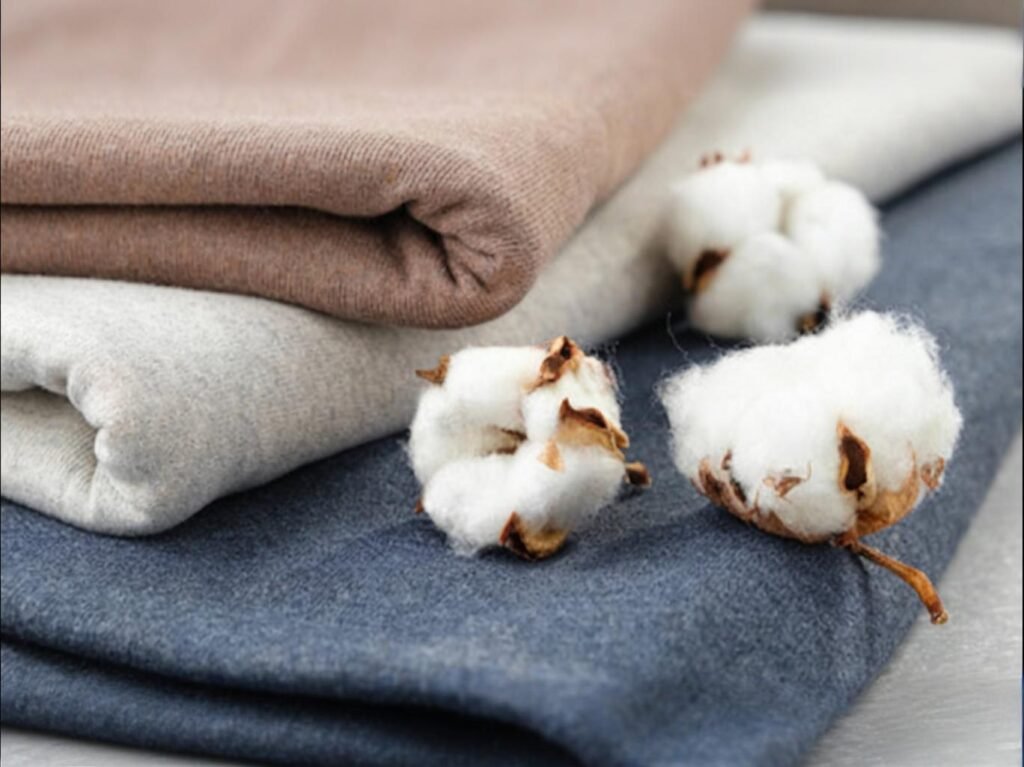
Linen, cotton, and viscose are often grouped together as “comfortable” apparel fabrics, but they deliver comfort in fundamentally different ways. Linen provides a cool, dry, and breathable wearing experience with a naturally textured hand. Cotton offers familiar softness, moderate breathability, and long-term stability. Viscose delivers a smooth, silky hand feel and elegant drape but behaves very differently once heat, moisture, and time enter the equation.
The most important distinction is this: comfort is not defined at first touch. It is defined after hours of wear, repeated washing, and exposure to real environments.
Initial softness may sell a garment, but long-term comfort determines whether it becomes a favorite or stays in the closet.
Comfort Is a Timeline, Not a Moment
Many fabric comparisons stop at tactile impressions taken in a showroom or at a cutting table. That perspective is incomplete. True comfort unfolds across three stages: first contact, extended wear, and long-term use. Linen, cotton, and viscose perform very differently at each stage.
A) First-Touch Sensation vs Wearing Comfort
The first-touch test strongly influences purchasing decisions, especially in retail. However, it is often misleading when evaluating actual comfort.
| Fabric | First Touch | After Hours of Wear |
|---|---|---|
| Linen | Crisp, textured | Cool, breathable |
| Cotton | Soft, neutral | Stable, familiar |
| Viscose | Very soft | Can feel heavy or clingy |
Viscose typically performs best at first touch. Its smooth surface and fluid drape create an immediate impression of luxury. This is why viscose garments often stand out on hangers or mannequins. However, once worn for several hours—especially in warm or humid conditions—viscose can begin to trap moisture and cling to the skin.
Cotton feels predictable from the beginning. It rarely surprises the wearer, either positively or negatively. Its comfort profile is stable, which is why cotton dominates everyday basics.
Linen often performs worst in first-touch comparisons. Its natural slub, stiffness, and surface texture can feel coarse or “unfinished” to some consumers. Yet during wear, linen excels. As body heat builds, linen releases heat and moisture more effectively than cotton or viscose, creating a cooling sensation that improves over time.
B) Skin Interaction and Friction
Hand feel is closely linked to how fabric interacts with skin during movement. Friction, airflow, and moisture transfer all influence comfort beyond softness.
| Property | Linen | Cotton | Viscose |
|---|---|---|---|
| Surface friction | Medium | Medium-low | Low |
| Skin airflow | High | Medium | Lower |
Viscose has the lowest surface friction, which explains its silky feel. However, low friction alone does not guarantee comfort. Because viscose fibers absorb moisture readily and release it slowly, airflow around the skin can be restricted, especially in close-fitting garments.
Cotton strikes a balance. Its moderate friction and absorbency allow moisture to spread and evaporate reasonably well, though not as efficiently as linen.
Linen’s slightly higher friction is offset by its exceptional airflow. Linen fibers are naturally hollow and irregular, creating micro-channels that allow air to circulate between fabric and skin. This airflow reduces the sticky sensation that often develops during prolonged wear.
Lower friction can feel luxurious initially, but restricted airflow often becomes the dominant comfort factor after extended use.
C) Breathability and Thermal Regulation
Thermal comfort is one of the clearest areas where these fabrics diverge.
Linen consistently outperforms cotton and viscose in heat regulation. It absorbs moisture quickly and releases it rapidly, preventing heat buildup. This is why linen garments feel cooler even when they are not particularly thin.
Cotton provides moderate thermal comfort. It absorbs moisture well but dries more slowly than linen. In warm conditions, cotton can begin to feel damp, though it rarely becomes uncomfortable enough to cause garment rejection.
Viscose absorbs even more moisture than cotton, but it retains that moisture longer. As a result, viscose garments can feel cool initially but become heavy and clammy as humidity increases.
In laboratory testing, linen fabrics often show moisture regain values around 12%, compared to cotton at approximately 8% and viscose at 11–13%. The difference lies not just in absorption, but in release rate, where linen performs best.
D) Drape and Silhouette Behavior
Comfort is not only about how fabric feels on skin, but also how it moves with the body. Drape influences pressure points, airflow, and psychological comfort.
| Garment Type | Linen | Cotton | Viscose |
|---|---|---|---|
| Structured styles | Crisp | Balanced | Too fluid |
| Relaxed fits | Natural | Neutral | Elegant |
| Flowing designs | Limited | Moderate | Excellent |
Viscose excels in drape-driven silhouettes. Its fluidity allows garments to follow body movement closely, which can feel luxurious in dresses, blouses, and wide-leg trousers. However, this same fluidity can cause viscose to cling in areas of perspiration.
Cotton supports a wide range of silhouettes. It can be engineered for structure or softness depending on weave and finishing, making it versatile for shirts, casualwear, and light tailoring.
Linen naturally supports relaxed and structured silhouettes. Its stiffness prevents clinging and maintains space between fabric and skin, which improves airflow. This is one reason linen garments often feel more comfortable in loose cuts rather than tight-fitting designs.
E) Comfort Over Multiple Washes
Comfort evolves over time, and washing plays a major role in that evolution.
| Fabric | Comfort Evolution |
|---|---|
| Linen | Softer with wear |
| Cotton | Stable |
| Viscose | Can lose body |
Linen is unique in that it generally becomes softer and more pliable with repeated washing and wear. The fibers relax, surface roughness reduces, and garments adapt to the wearer’s body. Many consumers report that linen pieces become more comfortable the longer they own them.
Cotton remains relatively stable. Quality cotton maintains its softness and structure over time, provided it is not over-dried or aggressively washed.
Viscose often degrades in perceived comfort. Repeated washing can reduce fiber strength, leading to loss of body, distortion, or increased cling. Poorly constructed viscose garments may feel luxurious at purchase but disappoint after several laundering cycles.
This long-term behavior has a significant impact on customer satisfaction and repeat purchasing.
F) Moisture Management and Humidity Sensitivity
Humidity exposes the biggest comfort differences among these fabrics.
In dry or climate-controlled environments, viscose performs well. Its smooth surface and drape feel pleasant, and moisture buildup is limited.
In humid conditions, viscose often struggles. High moisture absorption combined with slow drying leads to fabric sticking to the skin, reduced airflow, and a sensation of heaviness.
Cotton handles humidity moderately well but can feel damp during extended wear.
Linen performs best in humidity. Its rapid moisture release and structural rigidity prevent prolonged skin contact, reducing discomfort even in tropical climates.
This is why linen has historically been favored in hot regions long before modern climate control existed.
G) Psychological Comfort and Wearer Perception
Comfort is not purely physical. Psychological factors—how a garment looks, moves, and ages—also influence satisfaction.
Linen’s visible texture and natural wrinkling communicate breathability and ease. For many wearers, this reinforces a sense of comfort even when the fabric initially feels rough.
Cotton’s familiarity creates trust. Wearers know what to expect, which reduces friction in decision-making and daily use.
Viscose often creates a mismatch between expectation and experience. Its initial luxury feel sets high expectations that may not be met under real-world conditions, leading to disappointment.
H) A Consumer Insight Brands Often Overlook
Consumer feedback reveals a recurring pattern. Some customers describe linen as “rough” or “stiff” at first touch, yet “addictive” after repeated wear. They return to linen garments specifically for hot days or long periods of use.
This experience is rarely reported with viscose. While viscose may impress initially, it does not develop the same long-term emotional attachment. Cotton sits between these extremes—reliable, but rarely transformative.
For brands, this insight matters. First impressions drive conversion, but long-term comfort drives loyalty.
I) Practical Implications for Apparel Brands
Choosing between linen, cotton, and viscose should be guided by use case, not just hand feel.
- For hot-weather garments and extended wear: linen offers superior comfort over time
- For everyday basics and wide consumer acceptance: cotton remains the safest choice
- For drape-focused designs and visual elegance: viscose delivers, with caveats
Many successful collections blend these fibers strategically, combining linen’s breathability, cotton’s stability, and viscose’s drape to balance comfort across multiple dimensions.
Comfort cannot be judged at a single moment. Linen, cotton, and viscose tell different comfort stories over time.
Linen challenges the wearer initially but rewards them later. Cotton delivers consistency from start to finish. Viscose impresses immediately but requires careful design and context to maintain comfort.
For apparel brands, understanding this timeline is critical. Fabric choice shapes not only how a garment feels in the fitting room, but how it performs in real life—after hours of wear, multiple washes, and changing environments.
In the end, the most comfortable fabric is not always the softest one on day one. It is the one that continues to feel right long after the novelty has worn off.
What Are the Sustainability and Environmental Impact Differences Among Linen, Cotton, and Viscose Fabrics?
Linen, cotton, and viscose are often grouped together in sustainability discussions because they are widely used, plant-based or plant-derived textiles. However, their actual environmental impact differs significantly depending on how they are grown, processed, and sourced. Linen generally has the lowest baseline footprint due to low water demand and limited chemical inputs. Cotton’s impact ranges from highly resource-intensive to relatively responsible depending on farming systems. Viscose, while derived from renewable cellulose, can be either environmentally advanced or highly polluting depending on pulp sourcing and chemical recovery practices.
The key reality is this: environmental performance is process-dependent, not fiber-name dependent.
“Sustainable” is not a label—it’s a system. Without examining water use, chemical intensity, land efficiency, and traceability, fiber comparisons quickly become oversimplified marketing claims rather than meaningful assessments.
Looking Past Green Marketing
Consumers and buyers are often told that one fiber is “good” and another is “bad.” In practice, sustainability outcomes are shaped by agricultural methods, industrial chemistry, energy sources, and regulatory enforcement. Two fabrics with the same fiber name can have radically different environmental footprints.
A responsible comparison must look beyond branding terms like “natural,” “eco,” or “plant-based” and instead examine measurable inputs and outputs across the supply chain.
A) Water Consumption Comparison
Water usage is one of the most visible and quantifiable sustainability indicators in textile production. It affects local ecosystems, agriculture competition, and regional water security.
| Fabric | Water Use |
|---|---|
| Linen (flax) | Low |
| Cotton (conventional) | High |
| Viscose | Medium |
Flax, the raw material for linen, is typically grown in temperate climates where rainfall is sufficient for most of the growing cycle. In regions such as Western Europe, flax cultivation often relies almost entirely on natural precipitation, with little to no irrigation required. This significantly reduces pressure on freshwater resources.
Conventional cotton, by contrast, is one of the most water-intensive crops in global agriculture. In arid or semi-arid regions, irrigation can account for thousands of liters of water per kilogram of fiber. The impact is especially severe where water is diverted from rivers or groundwater systems already under stress.
Viscose occupies a middle position. The cellulose feedstock—wood pulp—comes from forests rather than irrigated fields, but water is heavily used during processing. Water consumption depends largely on mill design and wastewater recycling efficiency rather than agricultural conditions.
From a water perspective, linen has a structural advantage, cotton is highly variable, and viscose is industrially dependent.
B) Chemical Input and Processing Intensity
Chemical use plays a central role in determining environmental risk, especially regarding water pollution and worker safety.
| Stage | Linen | Cotton | Viscose |
|---|---|---|---|
| Farming chemicals | Low | Variable | None |
| Processing chemicals | Low | Low | High |
| Wastewater risk | Low | Medium | High |
Linen benefits from relatively low agricultural chemical requirements. Flax is naturally resistant to many pests and diseases, reducing reliance on pesticides and herbicides. In many regions, chemical input during cultivation is minimal compared to other fiber crops.
Cotton shows the widest variation. Conventional cotton farming may involve significant pesticide and fertilizer use, particularly in high-yield monoculture systems. Organic and better-managed cotton programs reduce or eliminate many of these inputs, but they represent only a portion of global production.
Viscose does not involve farming chemicals at the fiber stage because it is derived from wood pulp. However, its processing phase is chemically intensive. Traditional viscose production dissolves cellulose using chemicals such as sodium hydroxide and carbon disulfide, followed by regeneration into fiber form. Without effective recovery systems, these chemicals pose serious environmental and health risks.
Wastewater risk reflects how well a production system captures, neutralizes, and reuses chemicals. Linen processing typically involves mechanical and enzymatic steps with relatively low effluent toxicity. Cotton processing includes scouring, bleaching, and dyeing stages that generate moderate wastewater loads. Viscose processing carries the highest risk if chemical recovery rates are low or regulatory oversight is weak.
C) Land Efficiency and Yield
Land use efficiency measures how much usable fiber is produced per hectare of land and how effectively plant biomass is utilized.
| Fabric | Yield per Hectare |
|---|---|
| Linen | High |
| Cotton | Medium |
| Viscose | Depends on forest source |
Flax is notable for its efficient use of the plant. Long fibers are used for textiles, while shorter fibers and by-products are often used for paper, insulation, or composites. Seeds may be used for oil, further improving overall resource efficiency. This multi-use approach reduces agricultural waste.
Cotton plants produce a single primary fiber product, and while cottonseed has secondary uses, the proportion of total biomass converted into textile fiber is lower than flax. Yield per hectare is moderate and heavily influenced by irrigation, fertilizer input, and climate.
Viscose yield depends on forestry practices rather than agricultural yield. Fast-growing plantation forests can produce large volumes of cellulose per hectare, but this efficiency must be weighed against biodiversity impact, land-use change, and forest management quality. Natural forests converted to pulpwood plantations represent a significantly higher environmental cost than responsibly managed sources.
Land efficiency alone does not define sustainability, but it highlights how intensively ecosystems are used to meet textile demand.
D) Certification and Traceability Factors
Certifications help translate complex supply chain practices into verifiable standards. However, they are only meaningful when backed by credible auditing and transparency.
| Fabric | Common Certifications |
|---|---|
| Linen | OEKO-TEX, European Flax |
| Cotton | Organic, BCI |
| Viscose | FSC, PEFC, Lenzing |
For linen, regional traceability programs that document flax origin, farming practices, and processing stages provide strong assurance. Certifications focusing on chemical safety and origin control are particularly relevant.
Cotton certifications vary widely in scope. Organic standards focus on eliminating synthetic inputs at the farm level, while other programs emphasize water efficiency, reduced chemical use, or farmer welfare. The sustainability outcome depends on how rigorously standards are enforced.
Viscose certifications are critical because environmental impact is heavily concentrated in pulp sourcing and chemical management. Forest certifications address deforestation and biodiversity, while manufacturer-led systems focus on closed-loop chemical recovery and emissions control. Without these safeguards, viscose production can cause significant pollution despite its renewable origin.
Certifications matter more than fiber names alone because they indicate how a material was produced, not just what it is made from.
E) A Critical Sustainability Observation
Viscose illustrates the central challenge of textile sustainability: the same fiber can represent both best practice and worst practice outcomes. Modern closed-loop viscose systems can recover the majority of processing chemicals and significantly reduce emissions. Older or poorly regulated mills may release harmful substances into air and water, creating severe local environmental damage.
This makes supplier transparency essential. Buyers cannot assess viscose sustainability without understanding mill technology, recovery rates, and regulatory context.
The same logic applies, to a lesser extent, to cotton and linen. Organic or responsibly managed systems perform far better than conventional ones, but the difference is often invisible without documentation.
Comparative Perspective for Buyers and Brands
From a systems perspective, linen offers the most consistent low-impact profile due to structural advantages in water use, chemical demand, and plant utilization. Cotton ranges from high-impact to moderate-impact depending on farming and processing choices. Viscose is the most process-sensitive fiber, capable of strong sustainability performance or severe environmental harm based on supplier practices.
No fiber is inherently sustainable or unsustainable. Outcomes depend on:
- Resource inputs
- Processing chemistry
- Energy sources
- Waste and emission controls
- Transparency and traceability
For brands and buyers, the practical takeaway is clear. Sustainable sourcing decisions should prioritize verified production systems, not assumptions based on fiber type.
When sustainability is treated as a measurable system rather than a marketing claim, linen, cotton, and viscose can each play responsible roles in textile supply chains—provided the right controls are in place.
How Do Shrinkage, Wrinkle Behavior, and Care Requirements Differ Between Linen, Cotton, and Viscose Garments?
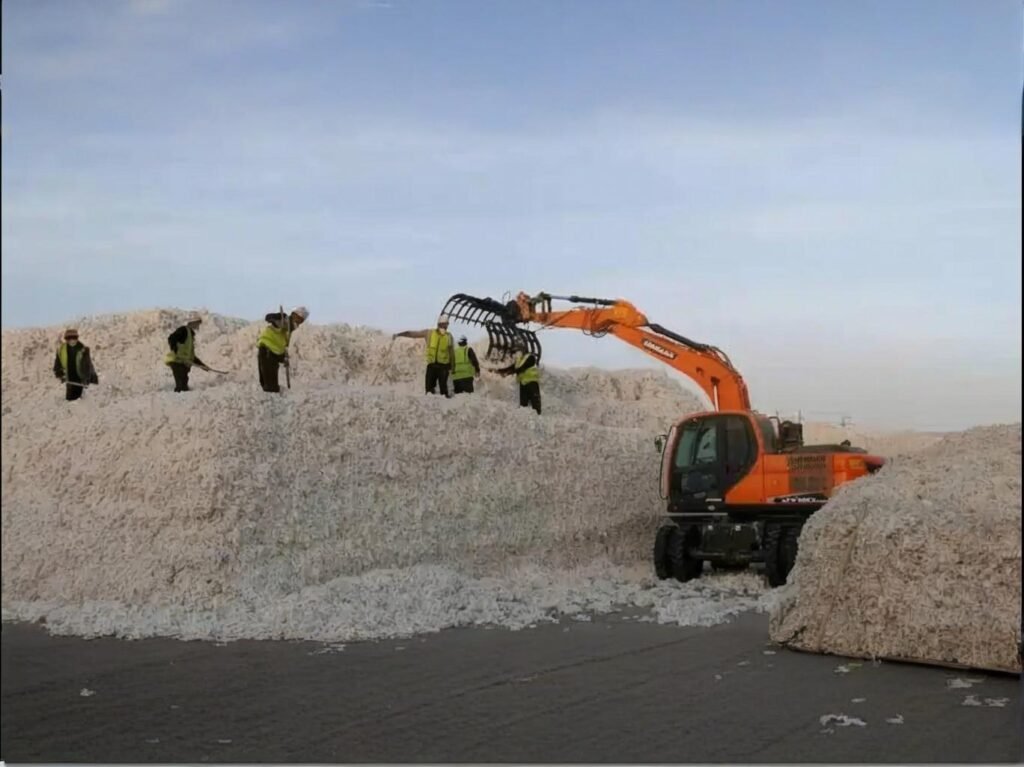
Shrinkage, wrinkling, and care performance are not secondary considerations in apparel—they are post-purchase realities that directly influence customer satisfaction, return rates, and brand reputation. Linen, cotton, and viscose may all be cellulose-based fibers, but they behave very differently once a garment leaves the factory and enters everyday life.
In simplified terms, linen wrinkles easily but is structurally stable, cotton shrinks predictably and recovers reasonably well, while viscose appears smooth at first but is far more vulnerable to washing stress and deformation. These differences are rooted in fiber structure, wet strength, and elastic recovery, not finishing alone.
Care performance is where many fabric decisions succeed—or quietly fail. Brands that ignore this phase often face complaints months after launch, when the product itself has not changed, but consumer expectations collide with material reality.
Post-Purchase Reality Brands Must Plan For
Most garments are evaluated by consumers not in showrooms, but after multiple washes, hurried drying cycles, and imperfect care compliance. Understanding how each fiber responds under these conditions allows brands to set realistic expectations, choose appropriate constructions, and reduce avoidable dissatisfaction.
A) Shrinkage Behavior After Washing
Shrinkage is one of the most common reasons garments are returned or criticized. It is influenced by fiber swelling, yarn tension release, fabric construction, and finishing quality.
| Fabric | Typical Shrinkage Risk |
|---|---|
| Linen | Low–medium |
| Cotton | Medium |
| Viscose | Medium–high |
Linen fibers are dimensionally stable due to their high crystallinity and long fiber length. When properly pre-washed or sanforized, linen garments tend to show limited additional shrinkage during consumer laundering. However, poorly finished linen can still shrink modestly, particularly in length.
Cotton exhibits more predictable shrinkage. Its twisted ribbon structure relaxes when exposed to heat and moisture, especially in the first few washes. Well-controlled cotton fabrics typically shrink within known ranges, which allows brands to compensate during pattern development.
Viscose is the most problematic. Its regenerated cellulose structure swells significantly in water and loses strength when wet. Without careful finishing and consumer compliance, viscose garments can shrink unevenly or distort, particularly in width.
From a brand perspective, viscose shrinkage is less predictable and more sensitive to wash method, making it harder to control in real-world conditions.
B) Wrinkle Formation and Recovery
Wrinkling is often perceived as an aesthetic issue, but it is fundamentally a mechanical response to bending and compression.
| Fabric | Wrinkle Tendency | Recovery |
|---|---|---|
| Linen | High | Poor without ironing |
| Cotton | Medium | Moderate |
| Viscose | Low–medium | Limited when wet |
Linen wrinkles easily because its fibers are stiff and lack elastic recovery. Once creased, the fibers do not naturally spring back. Importantly, this behavior is widely understood and often accepted by consumers as part of linen’s natural character. In many markets, wrinkling is seen as evidence of authenticity rather than a flaw.
Cotton sits in the middle. Its moderate flexibility allows some recovery, especially when blended or treated with wrinkle-resistant finishes. Cotton garments typically wrinkle less severely and are easier to restore through normal ironing or tumble drying.
Viscose often appears smoother initially, leading to the assumption that it is more wrinkle-resistant. In reality, viscose wrinkles easily when wet and shows poor recovery once distorted. Wrinkles formed during washing or sitting can be difficult to remove completely, particularly in lightweight fabrics.
This mismatch between expectation and performance is a frequent source of consumer dissatisfaction.
C) Care Instructions and Consumer Compliance
Care labels are only effective if consumers follow them. The more complex the instructions, the lower the compliance rate.
| Fabric | Recommended Care | Real-World Compliance |
|---|---|---|
| Linen | Gentle wash, line dry | Mixed |
| Cotton | Machine wash | High |
| Viscose | Hand wash | Low |
Cotton benefits from simple, familiar care instructions. Most consumers are comfortable machine washing cotton, which aligns well with its fiber resilience. As a result, compliance is high and performance complaints are relatively rare when shrinkage allowances are properly managed.
Linen often requires gentler handling, but many consumers still machine wash it. While this can increase wrinkling, structural damage is uncommon, which helps limit serious complaints.
Viscose presents the greatest challenge. Hand washing or dry cleaning is frequently recommended, but real-world compliance is low. Many consumers machine wash viscose garments despite instructions, leading to shrinkage, seam stress, and distortion.
Brands that choose viscose must assume imperfect care behavior and design accordingly—or accept higher after-sale risk.
D) Durability Under Repeated Laundering
Durability is not only about initial strength, but about how fibers respond to repeated wetting, agitation, and drying.
| Factor | Linen | Cotton | Viscose |
|---|---|---|---|
| Fiber fatigue | Low | Medium | High |
| Seam stress | Stable | Stable | Sensitive |
| Surface pilling | Low | Medium | Low |
Linen fibers resist fatigue well. They do not stretch easily, so repeated laundering does not significantly weaken the fiber structure. Over time, linen garments may soften and develop surface character, but they rarely fail structurally if properly constructed.
Cotton experiences gradual fiber fatigue. Repeated washing leads to strength loss and eventual thinning, but this process is slow and predictable. Cotton garments generally fail evenly rather than catastrophically.
Viscose is more vulnerable. Wet strength loss places extra stress on seams and stress points during washing. Many viscose garments fail not because the surface pills or tears, but because seams distort, hems twist, or panels lose shape.
This type of failure is especially frustrating for consumers, as the garment may look intact but fit incorrectly.
E) The Role of Garment Construction
Fiber behavior interacts strongly with construction choices. Linen garments benefit from looser silhouettes and simple seam structures that accommodate wrinkling. Cotton supports a wide range of constructions, from tailored to casual. Viscose requires thoughtful engineering—reinforced seams, stable interlinings, and careful grain alignment—to mitigate its weaknesses.
Ignoring fiber behavior during construction amplifies post-purchase problems. Many viscose complaints originate not from the fiber itself, but from garment designs that assume cotton-like stability.
F) Ironing, Steaming, and Consumer Effort
Care effort matters. Linen typically requires ironing or steaming to achieve a crisp look, but many consumers accept this as part of ownership. Cotton often responds well to tumble drying and light ironing, which aligns with modern lifestyles.
Viscose may require careful steaming and reshaping after washing, especially if distortion has occurred. This level of effort is rarely anticipated by consumers, increasing dissatisfaction even when care instructions are technically correct.
G) Environmental Sensitivity in Daily Use
Humidity and heat also influence care performance. Linen performs well in humid environments, releasing moisture quickly and maintaining shape. Cotton absorbs moisture and can feel heavier, but remains stable. Viscose absorbs moisture readily and releases it slowly, increasing the risk of sagging or stretching during wear.
In climates with high humidity, viscose garments often show accelerated performance issues, particularly in summer apparel.
H) A Return-Rate Insight from Apparel Programs
Across multiple apparel programs, brands consistently report higher return and complaint rates for viscose garments. The most common issues are shrinkage, distortion, and loss of shape—not color fading or hand feel.
Linen complaints tend to focus on wrinkling, which is often anticipated and tolerated. Cotton complaints are usually related to sizing after washing, which can be managed through clear labeling and pattern allowances.
This pattern highlights a critical point: returns are driven by unmet expectations more than absolute performance.
I) Managing Risk Through Fiber Selection and Communication
Successful brands align fiber choice with target consumer behavior. Linen works well for customers who value natural texture and accept wrinkles. Cotton suits mass-market products where easy care is essential. Viscose fits fashion-driven items where drape and softness are prioritized, but only when supported by design, finishing, and clear communication.
Blends are often used to balance behavior. Linen-cotton blends reduce wrinkling and improve ease of care. Cotton-viscose blends soften hand feel while improving wet strength. These blends, however, must still be tested under real laundering conditions.
Shrinkage, wrinkle behavior, and care requirements are not minor technical details. They shape how garments perform after purchase, how customers perceive quality, and how often products are returned.
Linen offers stability and breathability at the cost of wrinkles. Cotton provides balance and predictability. Viscose delivers softness and drape but demands respect for its limitations. When brands choose fibers with a clear understanding of these trade-offs—and design and communicate accordingly—care performance becomes a strength rather than a liability.
In apparel, the sale is only the beginning. The real test starts in the wash.
Which clothing categories are best suited for linen versus cotton or viscose?
Choosing between linen, cotton, and viscose is less about which fabric is “better” and more about which fabric is appropriate for a specific garment, climate, and customer expectation. Many apparel quality issues—returns, fit complaints, negative reviews—are not caused by poor manufacturing, but by fabric–garment mismatch.
Linen, cotton, and viscose each excel in different clothing categories because their fiber structures, drape behavior, moisture response, and durability characteristics interact differently with garment construction and real-world wear.
Fabric choice should follow garment function, not trend cycles.
Matching fabric to product intent
Every garment carries an implicit promise to the wearer: comfort, ease of care, elegance, durability, or breathability. When the fabric aligns with that promise, customer satisfaction rises. When it does not, even well-designed garments struggle in the market.
A) Best-fit garment categories
| Garment Type | Linen | Cotton | Viscose |
|---|---|---|---|
| Summer shirts | Excellent | Good | Moderate |
| Dresses | Good | Good | Excellent |
| Tailored pants | Moderate | Good | Limited |
| Casual tees | Limited | Excellent | Good |
| Resort wear | Excellent | Good | Excellent |
Each fabric shines in different silhouettes because of how it behaves once cut, sewn, worn, and washed.
Summer shirts Linen performs exceptionally well in summer shirts due to its breathability and rapid moisture release. Shirts worn close to the body in heat benefit from linen’s ability to reduce sweat accumulation and heat retention. Cotton summer shirts are also widely successful, particularly in poplin or lightweight twill constructions, but they tend to feel heavier in humid conditions. Viscose shirts drape nicely but may cling to the skin and retain moisture, reducing comfort during extended wear.
Dresses Dresses highlight the contrast between structure and drape. Linen dresses work best in relaxed or semi-structured silhouettes—shirt dresses, A-line cuts, wrap dresses—where airflow and texture are part of the aesthetic. Cotton dresses offer versatility and are well suited for casual daywear, especially when easy care is a priority. Viscose excels in dresses that require fluid movement, soft folds, and visual elegance, making it a favorite for fashion-forward or occasion-driven designs.
Tailored pants Tailored trousers demand shape retention and resistance to distortion at stress points such as knees, hips, and seat areas. Cotton performs reliably here, particularly in twill or blended constructions. Linen can be used for summer tailoring but requires careful pattern design and customer expectation management, as wrinkling and relaxation are inherent. Viscose is generally less suitable for tailored pants due to lower durability and poor recovery after stretching.
Casual tees T-shirts prioritize softness, elasticity, and easy care. Cotton dominates this category because it balances comfort, durability, and wash stability. Viscose blends can add softness and drape, but pure viscose tees often lose shape over time. Linen is rarely ideal for casual tees unless blended or intentionally positioned as a niche, texture-driven product.
Resort wear Resort wear is one of the few categories where linen and viscose both excel, but for different reasons. Linen delivers breathability and climate comfort, while viscose offers flow and visual softness. Cotton plays a supporting role, often used where durability or easy maintenance is required.
B) Climate-driven product planning
Climate is one of the most underestimated variables in fabric selection. A garment that performs well in a showroom or studio may fail in the customer’s actual environment.
| Climate | Recommended Fabric |
|---|---|
| Hot & humid | Linen |
| Mild & dry | Cotton |
| Controlled indoor | Viscose |
In hot and humid climates, linen consistently outperforms cotton and viscose. Its fast moisture release and airflow reduce discomfort, odor buildup, and cling. Brands selling into tropical, coastal, or monsoon regions often see lower return rates and higher satisfaction when linen is used appropriately.
In mild or dry climates, cotton becomes the most versatile choice. It provides comfort without the pronounced wrinkling associated with linen and avoids the moisture retention issues of viscose.
In controlled indoor environments—such as air-conditioned offices, events, or evening wear—viscose performs well. Its drape and softness are appreciated, and moisture-related drawbacks are minimized.
Climate-aware product planning is especially important for global brands selling the same styles across multiple regions.
C) Customer expectation alignment
Fabric choice must align with what customers believe they are buying. Many negative reviews stem from expectation mismatch rather than objective quality defects.
| Expectation | Best Fabric |
|---|---|
| Easy care | Cotton |
| Natural texture | Linen |
| Soft drape | Viscose |
Customers choosing cotton typically expect:
- Easy washing
- Shape stability
- Minimal surprises in wear and care
Customers choosing linen often accept:
- Wrinkling as part of the look
- Texture and breathability over polish
- A “relaxed” aesthetic
Customers choosing viscose expect:
- Softness
- Fluid drape
- Visual elegance
Problems arise when linen is marketed as crisp and polished, or when viscose is sold as durable everyday wear. Misalignment leads to dissatisfaction, not defects.
Clear product descriptions, styling choices, and imagery play a critical role in setting correct expectations.
D) Construction and pattern considerations
Different fabrics interact differently with construction techniques.
Linen benefits from:
- Looser silhouettes
- Fewer stress points
- Design elements that allow movement and airflow
Cotton supports:
- Structured seams
- Fitted designs
- High-wear garments
Viscose requires:
- Thoughtful seam reinforcement
- Careful weight selection
- Designs that avoid excessive friction
Ignoring these interactions can shorten garment lifespan regardless of fabric quality.
E) Durability and lifecycle by category
Durability expectations vary by garment type.
- Linen shirts and dresses often improve in comfort over time, softening with wear while retaining strength.
- Cotton essentials maintain consistency across many wash cycles.
- Viscose fashion pieces may have a shorter lifecycle but fulfill their purpose in trend-driven collections.
Brands that align durability expectations with price positioning tend to receive more favorable long-term feedback.
F) Seasonal collection strategy
Many successful apparel brands adopt a structured fabric strategy across seasons:
- Linen anchors summer capsules
- Cotton forms the backbone of core collections
- Viscose supports trend-led or occasion-driven pieces
This approach balances risk, inventory planning, and customer satisfaction. Linen pieces are introduced when climate demand supports them. Cotton ensures stability and continuity. Viscose allows visual experimentation without committing to long-term durability expectations.
This layered strategy also simplifies sourcing and merchandising decisions.
G) Fit, movement, and body interaction
How fabric behaves during movement is critical for customer comfort.
Linen maintains space between fabric and skin, enhancing airflow but reducing fluidity. Cotton moves with the body and recovers well. Viscose follows body contours closely, enhancing elegance but increasing friction and cling.
Garments requiring freedom of movement—such as relaxed trousers, summer shirts, and vacation wear—benefit from linen or cotton. Garments emphasizing visual flow—such as dresses or blouses—often favor viscose.
H) Care requirements and post-purchase satisfaction
Care instructions influence repeat purchases and brand trust.
Cotton generally tolerates machine washing and drying with minimal change. Linen requires more mindful care but rewards users with longevity. Viscose is often sensitive to washing and benefits from gentle handling.
Brands that fail to communicate care expectations clearly often see higher return rates, especially with viscose garments.
I) A practical merchandising lesson
Retail data and customer reviews consistently show that linen performs best when styled and marketed as relaxed, breathable, and natural, rather than crisp or formal. When wrinkles are framed as part of the aesthetic rather than a flaw, customer sentiment shifts positively.
Conversely, when linen is presented as a polished substitute for cotton or synthetic blends, disappointment increases.
J) When blends make sense
Blended fabrics can bridge performance gaps:
- Linen–cotton blends soften texture and reduce wrinkling
- Cotton–viscose blends enhance drape while retaining durability
- Linen–viscose blends combine airflow with fluidity, though durability must be managed carefully
Blends are often effective in categories where pure fibers fall short, but they require clear communication and consistent quality control.
Linen, cotton, and viscose each have clear strengths when matched to the right clothing categories. Linen excels in warm-weather, breathable garments where comfort and airflow matter most. Cotton remains the most versatile choice for everyday wear and core essentials. Viscose shines in draped, fashion-forward designs that prioritize softness and visual movement.
Successful apparel collections are built by aligning fabric properties with garment function, climate, and customer expectation. When fabric choice follows product intent rather than trends, brands reduce fit issues, improve satisfaction, and build longer-lasting trust with their customers.
How Do Cost, Supply Chain Stability, and Sourcing Considerations Influence Brand Decisions When Choosing Linen, Cotton, or Viscose?

When apparel brands choose between linen, cotton, and viscose, the decision is rarely driven by aesthetics or comfort alone. Behind every fabric choice sits a layered assessment of cost behavior, supply chain reliability, sourcing transparency, and operational risk. What appears to be a simple price-per-meter comparison often hides very different exposure profiles once a collection scales beyond sampling.
Fabric cost is not just a number on a quotation sheet. It is a risk profile that affects margin stability, delivery reliability, and long-term brand credibility.
Looking Beyond Price-per-Meter
At early development stages, brands often focus on unit cost. At scale, however, experienced sourcing teams evaluate fabrics based on how consistently that cost can be maintained over time and how resilient the supply chain remains under stress.
Linen, cotton, and viscose each behave very differently once external pressures—climate, energy prices, regulations, or geopolitical shifts—enter the picture.
A) Raw Material Cost Comparison
At a baseline level, these three fibers occupy different cost positions in the market.
| Fabric | Relative Cost Level |
|---|---|
| Linen | Medium–High |
| Cotton | Medium (volatile) |
| Viscose | Medium–Low |
Linen generally carries the highest raw material cost. Flax cultivation is geographically limited, yields are lower than cotton, and processing is more labor-intensive. However, linen pricing tends to be relatively stable year over year, especially for consistent qualities.
Cotton sits in the middle but is highly volatile. While cotton can be competitively priced in strong harvest years, its cost can spike sharply due to weather events, pest outbreaks, or policy changes in major producing countries.
Viscose often appears attractive from a cost perspective. As a regenerated fiber, its pricing benefits from industrial-scale pulp processing and global chemical supply chains. This makes viscose competitive for large-volume programs—until upstream pressures intervene.
Linen’s higher cost is often partially offset by longer garment lifespan, fewer quality complaints, and stronger positioning in premium categories.
B) Price Volatility and Market Sensitivity
Cost stability matters as much as cost level. Brands planning seasonal or multi-year programs must consider how sensitive each fiber is to external shocks.
| Factor | Linen | Cotton | Viscose |
|---|---|---|---|
| Climate impact | Low | High | Low |
| Energy cost impact | Low | Medium | High |
| Chemical input risk | Low | Low | High |
Cotton is the most climate-sensitive fiber among the three. Droughts, floods, and temperature extremes directly affect yield and fiber quality. As a result, cotton pricing can fluctuate dramatically within a single year, complicating cost forecasting for brands with fixed retail pricing.
Viscose is less affected by climate at the fiber level but is highly sensitive to energy prices and chemical inputs. Pulp processing, fiber regeneration, and wastewater treatment are energy-intensive. When energy costs rise or chemical regulations tighten, viscose prices often respond quickly.
Linen sits at the opposite end of the spectrum. Flax cultivation is relatively resilient, and linen processing relies less on heavy chemical inputs. While linen pricing is higher, it tends to move more gradually, making it easier for brands to plan long-term pricing strategies.
C) Supply Chain Concentration and Risk
Supply chain structure influences not only availability but also consistency, lead times, and quality control.
| Fabric | Supply Characteristics |
|---|---|
| Linen | Regional, specialized |
| Cotton | Global, diversified |
| Viscose | Mill-dependent |
Linen supply chains are regionally concentrated, with major production centered in parts of Europe and select regions of Asia. While this limits sourcing options, it also creates deep specialization. Linen suppliers often have decades of experience with specific flax qualities, resulting in consistent yarn and fabric behavior.
Cotton benefits from the most diversified supply chain. It is grown and processed across multiple continents, which provides redundancy and flexibility. If one region faces disruption, sourcing can often shift elsewhere. The trade-off is variability—fiber length, strength, and cleanliness can differ significantly between origins.
Viscose supply chains are highly mill-dependent. While pulp may be sourced globally, fiber regeneration capacity is concentrated in a limited number of large-scale producers. Disruptions at key mills—whether due to maintenance, regulation, or labor issues—can impact availability and consistency across the market.
For brands, viscose risk is less about total supply shortage and more about batch-to-batch consistency and compliance stability.
D) Lead Time and Development Flexibility
Development speed is a critical factor, especially for fast-fashion and trend-driven brands.
| Fabric | Development Speed |
|---|---|
| Linen | Medium |
| Cotton | Fast |
| Viscose | Medium–Fast |
Cotton offers the greatest flexibility. Its global availability, standardized yarn systems, and well-established finishing infrastructure make it ideal for rapid sampling and short development cycles. Brands can quickly adjust weights, weaves, and finishes with minimal disruption.
Viscose development is moderately fast but constrained by mill schedules and minimum order quantities. While color and hand feel can be adjusted efficiently, fiber-level changes require coordination with upstream producers.
Linen development typically takes longer. Flax harvesting cycles, yarn preparation, and weaving schedules are less flexible. However, once a linen quality is established, repeatability is high, which benefits brands planning consistent seasonal programs rather than rapid trend turnover.
E) Compliance, Transparency, and Brand Risk
Sourcing considerations increasingly extend beyond cost and lead time. Regulatory pressure and consumer scrutiny have made transparency a strategic concern.
Cotton sourcing raises issues around water usage, pesticide application, and labor practices. While certifications exist, supply chain complexity can make full traceability challenging, especially for blended cotton programs.
Viscose faces intense scrutiny due to chemical processing and environmental impact. Brands must evaluate whether suppliers meet wastewater treatment standards and comply with evolving regulations. A disruption in compliance can force sudden supplier changes.
Linen generally benefits from a simpler, more transparent narrative. Flax cultivation uses relatively low water and fewer chemical inputs. This makes linen attractive for brands emphasizing environmental responsibility, even at higher cost.
From a risk management perspective, linen’s transparency can reduce reputational exposure, particularly for premium or sustainability-focused labels.
F) Long-Term Cost vs Short-Term Savings
One of the most overlooked aspects of fabric selection is post-sale cost.
Lower-cost fabrics that generate higher return rates, quality complaints, or durability issues often end up costing more over time. Viscose, for example, can reduce initial garment cost but increase returns if garments lose shape, cling excessively, or degrade after washing.
Cotton generally performs well post-sale, but quality variability can lead to inconsistency across production runs, affecting customer perception.
Linen garments often show fewer structural failures and age more gracefully, which contributes to lower return rates and stronger customer loyalty. For brands selling at higher price points, this stability often justifies higher sourcing costs.
G) Inventory and Forecasting Implications
Fabric choice also influences inventory risk.
Cotton’s price volatility makes long-term costing difficult. Brands may need to hedge purchases or accept margin compression when prices rise unexpectedly.
Viscose’s dependence on mill capacity can create lead-time uncertainty. Delays upstream can ripple through production schedules, increasing the risk of missed seasons.
Linen’s predictable behavior supports more stable inventory planning. While minimums may be higher, reorder quality tends to match original production closely, reducing the risk of mismatched batches.
H) A Sourcing Insight From Apparel Teams
Experienced apparel teams often report a counterintuitive outcome: higher linen costs can reduce overall operational stress.
Brands accept higher upfront fabric prices in exchange for:
- Predictable quality across seasons
- Fewer production disputes
- Lower return rates
- Clearer sustainability messaging
This is particularly common in premium collections, where brand trust and long-term wear matter more than minimizing unit cost.
Viscose, by contrast, is often used strategically rather than universally—selected for specific silhouettes or price-sensitive lines where its drape advantages outweigh sourcing complexity.
Cotton remains the default choice for broad programs, but brands increasingly manage cotton sourcing with tighter specifications and diversified origins to mitigate volatility.
I) Strategic Fabric Selection by Brand Positioning
Ultimately, fabric choice reflects brand strategy.
- Brands prioritizing speed and flexibility often lean toward cotton
- Brands focused on drape and visual elegance may incorporate viscose selectively
- Brands emphasizing longevity, comfort over time, and sustainability often invest in linen
The most resilient brands rarely rely on a single fiber. Instead, they build portfolios that balance cost efficiency, supply chain resilience, and consumer expectations.
Choosing between linen, cotton, and viscose is not simply a matter of cost comparison. It is a decision about exposure—to volatility, disruption, compliance risk, and post-sale performance.
Linen costs more but offers stability and predictability. Cotton offers flexibility but brings agricultural risk. Viscose delivers competitive pricing and drape but depends on complex industrial systems.
For apparel brands, the smartest sourcing decisions are those that align fabric behavior with brand promises and operational realities. In that context, fabric cost becomes not just an expense—but a strategic investment in consistency, reliability, and long-term brand value.
What Testing Standards and Performance Benchmarks Should Brands Use to Evaluate Linen Against Cotton and Viscose for Apparel?
Brands evaluating linen, cotton, and viscose for apparel should rely on standardized laboratory tests that quantify strength, durability, dimensional stability, colorfastness, and comfort-related performance. Only by benchmarking these fabrics side by side under identical conditions can brands understand how each material will behave in real garments over time. Swatches and hand feel provide useful first impressions, but they rarely predict long-term wear, wash performance, or customer satisfaction.
Testing turns assumptions into decisions.
In apparel development, fabric choice influences not only comfort and aesthetics, but also production yield, return rates, and brand reputation. Linen, cotton, and viscose are often positioned as interchangeable “natural” or “plant-based” options, yet their performance profiles differ significantly once subjected to standardized testing.
Practical Testing Frameworks for Apparel Fabrics
A practical testing framework balances laboratory rigor with commercial relevance. The goal is not to test everything possible, but to test what actually correlates with garment performance in daily use, repeated laundering, and seasonal wear.
A) Core Physical Performance Tests
Physical strength and durability tests establish whether a fabric can withstand cutting, sewing, and long-term wear without premature failure.
| Test | Purpose |
|---|---|
| Tensile strength | Fabric durability |
| Tear strength | Stress resistance |
| Abrasion resistance | Wear lifespan |
Tensile strength measures how much force a fabric can withstand before breaking when pulled in one direction. Linen typically scores highest in tensile strength due to the long, strong flax fibers that make up its yarn structure. This strength advantage is particularly relevant for tailored garments, structured apparel, and styles with stress points such as seams, plackets, and waistlines.
Cotton generally offers moderate tensile strength, with results varying depending on staple length, yarn twist, and fabric construction. Long-staple cottons perform better than short-staple varieties, but rarely exceed linen in comparable constructions.
Viscose tends to show lower tensile strength, especially when wet. This characteristic can complicate sewing and finishing processes and may require reinforcement in high-stress garment areas.
Tear strength evaluates how well a fabric resists propagation of a small cut or tear. Linen’s stiffness can sometimes reduce tear resistance despite high tensile strength, meaning it resists stretching but may tear once damaged. Cotton often demonstrates balanced tear performance, while viscose typically underperforms unless reinforced through weave or blend design.
Abrasion resistance measures how a fabric surface holds up to repeated friction. Cotton and linen both perform well in woven constructions, while viscose is more prone to surface wear, pilling, or fuzzing, particularly in lightweight apparel.
B) Wash and Care Performance Testing
Wash performance testing is critical because many consumer complaints arise after laundering, not initial wear. These tests simulate repeated home care cycles to evaluate dimensional and visual stability.
| Test | Insight |
|---|---|
| Wash shrinkage | Size stability |
| Skew distortion | Shape retention |
| Appearance retention | Post-wash look |
Wash shrinkage testing reveals how much a fabric contracts after laundering. Linen often exhibits higher initial shrinkage if not properly pre-treated, but once stabilized, it maintains size relatively well over subsequent washes. Cotton shows moderate shrinkage, highly dependent on finishing and whether the fabric is sanforized or pre-shrunk.
Viscose frequently shows the highest shrinkage risk, particularly in lengthwise direction. Without proper finishing, shrinkage rates can exceed acceptable garment tolerances, leading to fit issues and customer dissatisfaction.
Skew distortion measures fabric twisting or torque after washing. This is especially relevant for garments with straight seams or printed patterns. Viscose often shows higher distortion due to fiber swelling and relaxation during laundering. Linen and cotton generally maintain better shape integrity, especially in plain or balanced weaves.
Appearance retention assesses wrinkling, surface smoothness, and overall visual appeal after washing. Linen is known for its natural creasing, which is acceptable or even desirable in certain apparel categories. Cotton typically offers better wrinkle recovery, while viscose may appear smooth initially but lose structure over repeated washes.
C) Colorfastness Benchmarks
Color performance is a key quality indicator for branded apparel, particularly for repeat purchases and seasonal collections.
| Condition | Expected Standard |
|---|---|
| Washing | Grade 3–4 |
| Rubbing | Grade 3–4 |
| Light | Grade 4 |
Colorfastness to washing evaluates how well dyes resist fading or bleeding during laundering. Linen and cotton both perform reliably when dyed with appropriate systems, while viscose can show greater variability due to its high absorbency and sensitivity to dye chemistry.
Rubbing colorfastness measures dye transfer during friction, both dry and wet. Viscose fabrics often require additional fixation steps to achieve acceptable rubbing results, especially in deep or saturated shades.
Lightfastness is critical for summer apparel and garments exposed to sunlight. Linen and cotton typically meet Grade 4 benchmarks under standard dye systems, while viscose performance depends heavily on dye selection and finishing.
Across all fibers, coating and dye method matter more than fiber alone. Reactive, vat, or pigment dyeing systems produce different outcomes even on the same base fabric.
D) Comfort-Related Evaluations
Comfort is subjective, but certain physical metrics correlate strongly with wearer perception. These tests help brands align material choice with intended garment use and climate.
| Metric | Why It Matters |
|---|---|
| Air permeability | Heat comfort |
| Moisture regain | Dampness perception |
| Fabric stiffness | Wear feel |
Air permeability measures how easily air passes through a fabric. Linen excels in airflow due to its natural fiber structure and lower yarn density, making it highly suitable for warm-weather apparel. Cotton provides balanced breathability, while viscose can feel warmer despite its soft hand due to lower air permeability in certain constructions.
Moisture regain indicates how much moisture a fiber can absorb from the air. Viscose has high moisture regain, which contributes to a cool initial touch but can also lead to a damp feeling in humid conditions. Linen and cotton offer more balanced moisture behavior, with linen drying faster once moisture is absorbed.
Fabric stiffness affects drape, movement, and tactile perception. Linen tends to be stiffer, contributing to structure and crispness. Viscose excels in drape and fluidity, making it popular for flowing silhouettes. Cotton sits between the two, offering versatility across casual and structured designs.
E) Dimensional Stability Under Use
Beyond washing, dimensional stability during wear is often overlooked. Sitting, stretching, and repeated movement can permanently deform certain fabrics.
Viscose is particularly sensitive to prolonged stress when damp, which can lead to bagging at knees or elbows. Linen resists deformation due to fiber rigidity, while cotton’s behavior depends on knit or weave structure.
Brands producing tailored or fitted apparel often prioritize dimensional stability over softness, making linen or cotton preferable to viscose for these applications.
F) Sewability and Production Impact
Testing should also consider how fabrics behave during cutting and sewing. High lab performance does not always translate to production efficiency.
Linen’s strength can lead to needle wear if not properly specified. Cotton generally sews easily across a wide range of constructions. Viscose may require careful tension control and needle selection to prevent seam puckering or fabric damage.
These factors influence production speed, defect rates, and overall cost—metrics that are rarely visible from swatch testing alone.
G) Benchmarking Across End-Use Categories
Performance benchmarks should be interpreted in context. A fabric that underperforms in one category may excel in another.
For example:
- Linen performs strongly in summer shirts, dresses, and relaxed tailoring.
- Cotton remains the most versatile option across casual, workwear, and basics.
- Viscose excels in fashion-forward, draped, and lightweight garments where softness and movement are priorities.
Testing data allows brands to match fabric strengths to garment intent rather than forcing one material into unsuitable roles.
H) Why Side-by-Side Testing Matters
One of the most common mistakes brands make is reviewing test results in isolation. Testing linen, cotton, and viscose at different labs, under different conditions, or at different times makes comparison unreliable.
Brands that test fabrics side by side under the same conditions report:
- More confident fabric selection
- Fewer mid-production changes
- Lower return rates due to performance mismatch
- Clearer communication between design, sourcing, and production teams
Side-by-side testing removes bias introduced by hand feel, supplier claims, or preconceived notions about fiber types.
Turning Test Data into Fabric Strategy
Test results should not be viewed as pass-or-fail outcomes, but as inputs into material strategy. A fabric with lower abrasion resistance may still be appropriate for low-contact garments. A material with higher shrinkage can be managed through pattern allowances or finishing processes.
The value of testing lies in knowing what trade-offs you are making.
By grounding decisions in standardized testing and clear benchmarks, brands can select linen, cotton, or viscose with confidence—aligning material performance with garment function, customer expectations, and long-term brand positioning.
Choosing the Right Fabric Is a Strategy, Not a Trend
Linen, cotton, and viscose are not competitors in a simple sense—they are tools designed for different jobs. Linen delivers breathability and longevity, cotton provides balance and reliability, and viscose offers softness and fluidity when used thoughtfully.
The strongest collections are built when fabric choice follows performance logic, garment intent, and sourcing reality, rather than surface appeal alone.
If you are developing or refining apparel collections and need custom linen, cotton, or viscose fabrics tailored to your design, performance, and sourcing goals, SzoneierFabrics is ready to support your project with material expertise, flexible customization, and reliable production.
Contact SzoneierFabrics to discuss fabric development, request samples, or receive a tailored quotation for your next clothing collection.