Skip to content
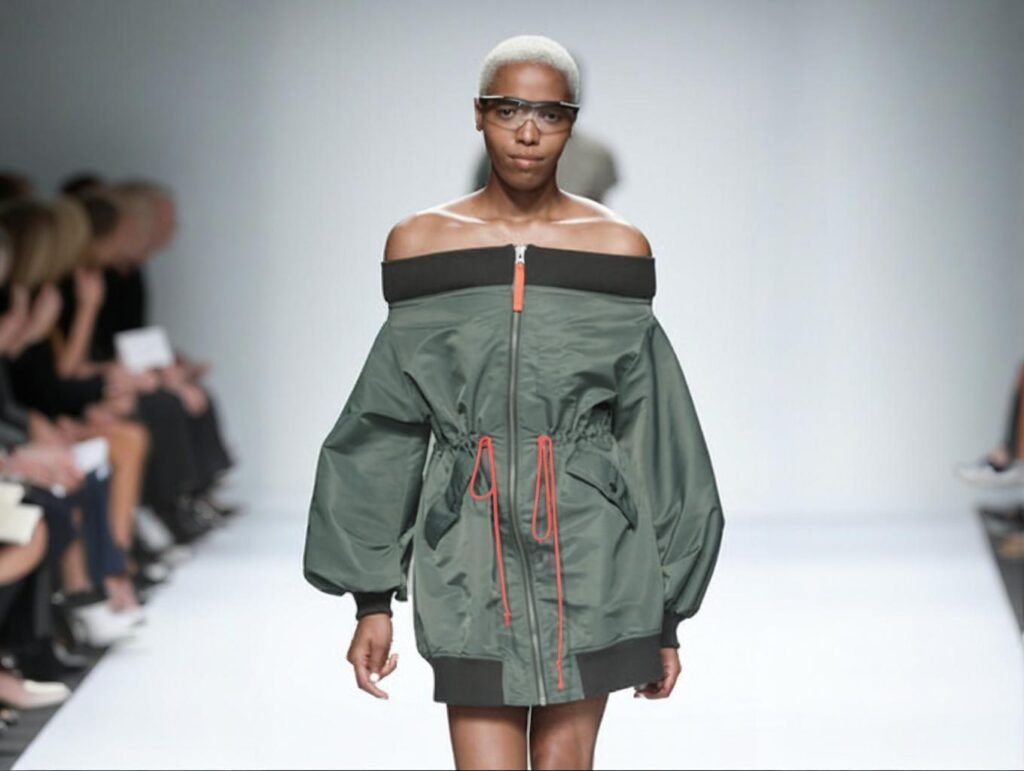
For decades, nylon was seen as purely functional—strong, lightweight, practical, and technical. Today, that perception has shifted dramatically. In high-end fashion, nylon is no longer a compromise material; it is a deliberate design choice. Luxury collections now rely on nylon for sculptural silhouettes, refined minimalism, and technical elegance that natural fibers alone cannot achieve. Luxury nylon clothing uses advanced nylon fabrics engineered for refined handfeel, controlled sheen, durability, and precise performance. High-end brands source nylon based on polymer quality, filament structure, fabric construction, finishing sophistication, and supplier consistency rather than price or fiber type alone.
At SzoneierFabrics, luxury nylon projects often begin with a paradox: How can a synthetic fiber feel exclusive? The answer lies not in nylon itself, but in how it is engineered, woven, finished, and controlled. Once those variables are understood, nylon becomes one of the most powerful materials in modern high-end fashion.
Let’s start by understanding why nylon belongs in the luxury category at all.
What makes nylon suitable for luxury and high-end fashion clothing?

Nylon earns its place in luxury and high-end fashion not because it imitates natural fibers, but because it delivers control, consistency, and engineered performance that natural materials struggle to guarantee at scale. At the premium level, fashion is less about softness alone and more about precision, structure, and long-term visual integrity. Nylon, when developed and finished to luxury standards, becomes a design material rather than a cost-saving substitute.
Luxury is not always about comfort at first touch. Luxury is about how a garment behaves over time.
Why Luxury Brands Intentionally Choose Nylon
The decision to use nylon in high-end collections is rarely accidental. It is often driven by pattern engineering needs, silhouette discipline, durability targets, and the ability to reproduce identical results across seasons and markets.
Precision Over Randomness
Unlike cotton, wool, or silk, nylon is engineered from the molecular level upward. Its polymer chains, filament thickness, tensile behavior, and surface characteristics can be specified with exact tolerances.
| Attribute | Luxury Advantage |
|---|---|
| Filament uniformity | Clean, modern surfaces |
| Molecular consistency | Predictable behavior |
| Engineered strength | Slim yet durable designs |
In luxury apparel production, this precision solves a persistent problem: variation. Natural fibers vary by harvest, climate, and origin. Even premium natural yarns show batch-to-batch inconsistencies that complicate tailoring, grading, and quality control.
High-grade nylon filaments, by contrast, are produced with tight denier control, often within ±1–2%. This allows designers and technical teams to:
- Lock in fabric weight targets
- Maintain identical drape across production runs
- Avoid silhouette drift between seasons
For luxury brands that rely on recognizable shapes and proportions, this predictability is critical.
Shape Retention and Structural Integrity
High-end fashion frequently depends on architectural silhouettes—garments that hold form rather than collapse naturally.
| Requirement | Nylon Benefit |
|---|---|
| Crisp tailoring | High tensile strength |
| Lightweight volume | Low fiber density |
| Long wear cycles | Fatigue resistance |
Nylon’s tensile strength is typically 2–3× higher than cotton and significantly higher than silk at equivalent weights. This allows garments to achieve:
- Sharp pleats without heavy interlinings
- Sculpted volumes without bulk
- Stable seams under repeated movement
In real-world wear, this matters more than runway appearance. Nylon fabrics resist permanent deformation under bending, sitting, and stretching. Where natural fibers may relax, wrinkle, or distort, nylon tends to recover its original geometry.
For luxury outerwear, tailored dresses, and statement pieces, this recovery behavior protects design intent long after purchase.
Controlled Weight-to-Performance Ratio
One of nylon’s quiet advantages in high-end clothing is its strength-to-weight efficiency.
A nylon fabric at 80–120 g/m² can deliver structural performance similar to a 150–200 g/m² cotton or wool fabric. This enables:
- Lighter garments with visual presence
- Layered designs without thermal overload
- Comfort without sacrificing silhouette
In premium collections, weight reduction is not about cost—it is about movement, drape control, and wearability. Nylon allows designers to add volume or stiffness where needed, without creating heaviness that compromises elegance.
Modern Luxury Aesthetics
Luxury fashion has shifted away from overt ornamentation toward discipline, restraint, and material clarity.
| Visual Trait | Nylon’s Role |
|---|---|
| Controlled sheen | Subtle sophistication |
| Smooth surfaces | Architectural clarity |
| Matte-technical looks | Modern elegance |
Nylon’s surface can be engineered to achieve:
- Low-gloss matte finishes
- Soft luster without shine
- Clean planes without fiber fuzz
These qualities align naturally with contemporary luxury aesthetics, especially in:
- Minimalist tailoring
- Urban luxury collections
- Technical-luxury hybrids
Unlike silk, which reflects light unpredictably, or wool, which diffuses texture unevenly, nylon offers optical consistency. Designers can predict how garments will photograph, move under lighting, and appear across retail environments.
Durability as a Luxury Attribute
At the high end, durability is not framed as “toughness” but as longevity of appearance.
Nylon excels here. Compared to many natural fibers, it demonstrates:
- High abrasion resistance
- Strong seam integrity
- Low fiber breakage under stress
In controlled testing, nylon fabrics often withstand 2–5× more abrasion cycles than cotton or viscose before visible wear. For luxury garments, this translates into:
- Fewer surface pills
- Reduced seam distortion
- Longer retail life and resale value
Luxury clients may not consciously test durability, but they recognize garments that maintain their original look after repeated wear. Nylon supports that expectation quietly and effectively.
Color Stability and Dye Precision
Color is one of the most sensitive indicators of quality in high-end clothing.
Nylon’s molecular structure allows dyes to bond with high saturation and uniform penetration, especially when compared to cellulose fibers.
Practical advantages include:
- Consistent shade reproduction across batches
- Strong resistance to color migration
- Better lightfastness in deep tones
This makes nylon particularly attractive for:
- Blacks and deep neutrals
- High-contrast minimalist palettes
- Seasonal color stories that must repeat precisely
For luxury brands managing global production, color reliability reduces rework, rejects, and margin erosion—without compromising aesthetic goals.
Fabric Engineering and Customization Potential
Luxury nylon fabrics are rarely generic. They are often:
- Custom-denier blends
- Multi-filament constructions
- Combined with elastomers or structured weaves
This engineering flexibility allows brands to define exclusive fabric identities. Adjustments can be made to:
- Drape speed
- Hand-feel
- Stretch recovery
- Surface friction
Natural fibers offer character, but nylon offers control over character. This distinction matters when brands want differentiation without unpredictability.
Emotional Shift in Consumer Perception
Nylon’s reputation has evolved significantly.
Where it was once associated with mass-market or utilitarian products, luxury consumers now associate nylon with:
- Innovation
- Technical confidence
- Urban functionality
This shift reflects broader changes in luxury itself. Modern luxury values performance intelligence as much as heritage. Consumers increasingly appreciate materials that signal purpose, engineering, and contemporary relevance.
In this context, nylon no longer feels synthetic—it feels intentional.
Sustainability and Responsible Engineering
High-end fashion is also redefining sustainability away from material origin alone toward measurable impact and lifecycle performance.
Advanced nylon programs now include:
- Recycled polymer inputs
- Closed-loop dyeing systems
- Reduced water consumption versus cotton
While nylon is not inherently “natural,” its durability and recyclability support longer garment lifespans—an increasingly important sustainability metric in luxury fashion.
For brands balancing environmental accountability with performance, engineered nylon offers a pragmatic path forward.
Nylon as a Design Tool, Not a Compromise
In luxury and high-end fashion, nylon is chosen not to imitate nature, but to transcend its limitations.
It enables:
- Precision silhouettes
- Visual discipline
- Long-term consistency
- Performance-backed elegance
When used thoughtfully, nylon does not dilute luxury—it redefines it. The material supports garments that look intentional, behave predictably, and age with dignity.
In modern fashion, that level of control is not a technical detail. It is a luxury statement.
Which types of nylon fabrics are commonly used by premium fashion brands?

Premium fashion brands most frequently rely on nylon taffeta, nylon twill, high-density plain weaves, fine-gauge nylon knits, and engineered nylon blends. These fabrics are not chosen for fiber novelty, but for surface precision, drape discipline, structural reliability, and compatibility with complex finishing systems used in luxury garment production.
Luxury nylon is defined by fabric architecture, not by the word “nylon” itself.
The Most Used Luxury Nylon Fabric Categories
At the high end of fashion, nylon fabrics are rarely generic. Brands specify yarn denier ranges, filament counts, weave density, and finishing parameters to achieve exact visual and mechanical outcomes. The categories below represent the most common nylon fabric families found in premium and luxury collections.
Nylon Taffeta (High-Density Constructions)
Nylon taffeta is one of the most widely used luxury nylon fabrics, especially in outerwear, statement pieces, and sculptural silhouettes.
| Feature | Why It’s Valued |
|---|---|
| Crisp hand | Structural definition |
| Lightweight | Voluminous silhouettes |
| Smooth surface | Clean design lines |
What distinguishes luxury nylon taffeta from mass-market versions is weave density and yarn quality. Premium taffetas often use:
- Finer filament yarns (typically 15D–30D)
- Very high pick counts
- Controlled calendering or surface setting
These choices produce a fabric that feels crisp without sounding papery and holds shape without excessive stiffness. In production, this allows designers to create garments with controlled volume—puffed sleeves, sculpted hems, or architectural panels—without heavy linings or reinforcements.
High-density nylon taffeta is also favored because it responds well to advanced finishing techniques, including water-repellent treatments, subtle sheen control, and wrinkle-resistance processing. For luxury brands, this combination of structure and refinement makes it a staple fabric rather than a trend-driven choice.
Nylon Twill
Nylon twill occupies a middle ground between structure and fluidity, making it a common choice for tailored garments, refined outerwear, and utility-inspired luxury pieces.
| Feature | Benefit |
|---|---|
| Diagonal structure | Visual depth |
| Balanced weight | Comfortable wear |
| Improved abrasion resistance | Longevity |
The diagonal rib of a twill weave introduces visual texture without relying on surface fuzz or heavy yarns. In luxury nylon twills, this texture is subtle rather than pronounced, achieved through:
- Fine-denier filaments
- Tight weave control
- Even yarn tension across warp and weft
Compared to plain weaves, nylon twill offers improved abrasion resistance and better crease recovery, which is why it is often selected for garments that experience regular movement or friction. Premium brands value this because it helps garments maintain a polished appearance across repeated wears.
In tailoring applications, nylon twill provides enough drape to follow the body while retaining sufficient structure to support clean lines. This balance makes it particularly suitable for modern luxury aesthetics that blend functionality with restraint.
Technical Plain Weaves
Plain weave nylons are sometimes misunderstood as basic fabrics. In luxury fashion, they are often among the most technically demanding to execute well.
| Attribute | Luxury Interpretation |
|---|---|
| Ultra-even surface | Minimalist design |
| High thread count | Subtle richness |
| Tight construction | Shape stability |
A luxury plain weave nylon depends on absolute uniformity. Any inconsistency in yarn thickness, tension, or finishing becomes immediately visible on a smooth surface. For this reason, premium brands specify:
- High filament counts for smoother yarns
- Extremely tight tolerances in weaving
- Precise finishing to eliminate surface distortion
These fabrics are frequently used in minimalist designs where the fabric itself becomes the visual statement. Jackets, trousers, or dresses made from technical plain weave nylon rely on clean planes, sharp edges, and controlled light reflection.
In this context, simplicity is not a shortcut—it is a risk. Luxury brands use plain weave nylon only when manufacturing control is sufficient to deliver near-perfect surfaces at scale.
Fine-Gauge Nylon Knits
Fine-gauge nylon knits have become increasingly important in elevated casualwear, luxury athleisure, and modern knit tailoring.
| Knit Type | Luxury Role |
|---|---|
| Warp knits | Clean elasticity |
| Circular fine gauge | Refined comfort |
Unlike coarse sports knits, luxury nylon knits prioritize surface cleanliness and recovery over overt stretch. Fine-gauge constructions allow garments to move with the body while maintaining a composed appearance.
Warp-knit nylon fabrics, in particular, are valued for their dimensional stability. They resist sagging and distortion, making them suitable for garments that must retain shape over time. Circular fine-gauge knits, when engineered correctly, offer a softer hand while still delivering consistent stretch recovery.
Premium brands often choose nylon knits when they want:
- Comfort without visual relaxation
- Stretch without shine
- Casual silhouettes with controlled form
These knits also integrate well with bonding, laser cutting, and seamless construction techniques, which are increasingly common in high-end fashion.
Blended Luxury Nylons
Pure nylon is only one option. In luxury fashion, nylon is frequently blended to fine-tune performance and hand-feel without sacrificing control.
| Blend | Purpose |
|---|---|
| Nylon + elastane | Controlled stretch |
| Nylon + cotton | Softness balance |
| Nylon + wool | Thermal structure |
Nylon–elastane blends are perhaps the most widespread, offering elasticity that supports movement while maintaining shape retention. In luxury applications, elastane percentages are often kept low (typically 3–8%) to avoid excessive rebound or surface distortion.
Nylon–cotton blends aim to combine nylon’s structural reliability with cotton’s familiar hand-feel. These blends are carefully engineered to prevent cotton-driven issues such as pilling or shrinkage from undermining garment quality.
Nylon–wool blends are used more selectively, often in cooler-season collections. Nylon reinforces wool’s durability and shape stability, reducing the risk of deformation while preserving thermal performance.
In all cases, blending is not about cost reduction. It is about performance tuning—adjusting feel, behavior, and longevity to meet specific design goals.
Surface Finishing as a Defining Factor
Across all nylon fabric categories, finishing plays a decisive role in determining whether a fabric qualifies as “luxury.” Premium brands invest heavily in:
- Controlled heat-setting
- Surface smoothing
- Sheen modulation
- Dimensional stabilization
Two fabrics woven from similar yarns can perform very differently depending on finishing protocols. Luxury nylon fabrics are finished to maintain consistency not only at first wear, but after repeated cleaning and long-term use.
This focus on finishing explains why luxury nylon fabrics often feel restrained rather than flashy. The goal is not novelty, but repeatable excellence.
Why Premium Brands Limit Nylon Categories
It is notable that luxury brands do not use every available nylon fabric type. Instead, they concentrate on a relatively narrow set of constructions that offer the highest level of control.
This selectivity reflects a broader philosophy: luxury favors reliability over experimentation at the material level. Innovation occurs within defined parameters, where outcomes can be predicted and repeated.
By refining a small number of nylon fabric families, premium brands achieve:
- Consistent silhouettes across collections
- Stable quality across suppliers
- Clear material identities tied to brand language
Nylon as a Strategic Fabric Choice
For premium fashion brands, nylon is not a generic solution. It is a strategic material chosen for its ability to deliver precision, stability, and modern aesthetics across multiple garment categories.
Whether in crisp taffetas, disciplined twills, flawless plain weaves, refined knits, or carefully engineered blends, nylon supports the core priorities of luxury fashion: control, consistency, and longevity.
The fabric types may appear simple on paper. In execution, they represent some of the most demanding textile standards in the industry.
How does luxury nylon differ from standard or commodity nylon fabrics?
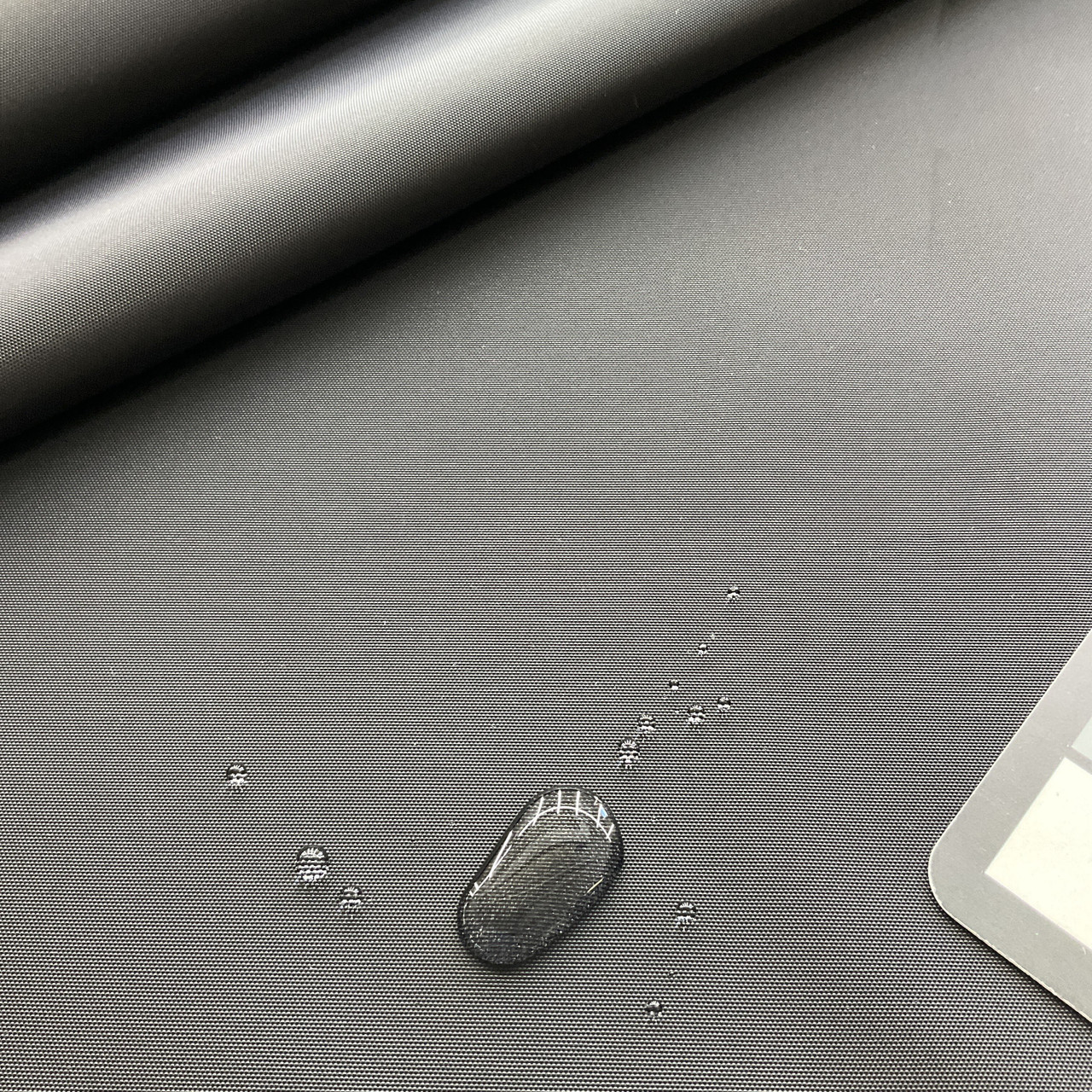
Luxury nylon differs from standard or commodity nylon through polymer selection, filament engineering, construction density, and finishing discipline. While commodity nylon is designed to meet acceptable performance at the lowest possible cost, luxury nylon is engineered to deliver surface refinement, dimensional stability, and aesthetic consistency over time.
At the moment of purchase, the difference may appear subtle. After repeated wear, cleaning, and movement, the difference becomes unmistakable.
Where the Real Differences Live
The gap between luxury nylon and commodity nylon is not defined by fiber name or country of origin. It is defined by a series of technical decisions made across the entire production chain—from polymer synthesis to final heat setting. Each decision compounds, ultimately shaping how a garment looks, feels, and ages.
Polymer Grade and Filament Control
Luxury nylon begins at the polymer level, long before weaving or knitting is considered.
| Aspect | Commodity Nylon | Luxury Nylon |
|---|---|---|
| Polymer purity | Standard | High |
| Filament uniformity | Variable | Extremely consistent |
| Cross-section control | Basic | Engineered |
| Breakage tolerance | Moderate | Very low |
Commodity nylon polymers are typically optimized for throughput and cost efficiency. Small variations in molecular weight distribution or impurity levels are acceptable because the target applications—mass apparel, linings, or industrial textiles—can tolerate visual and mechanical inconsistency.
Luxury nylon polymers, by contrast, are produced with tighter molecular tolerances. Higher purity reduces microscopic weak points along the filament. These weak points are often the origin of long-term issues such as:
- Localized fuzzing
- Uneven shine development
- Fiber fracture under repeated bending
By minimizing these risks at the polymer stage, luxury nylon establishes a stable foundation for refined fabrics that maintain appearance well beyond initial wear.
Filament Size, Count, and Engineering Strategy
One of the most significant differences lies in how the filament itself is built.
| Filament Strategy | Result |
|---|---|
| Finer denier | Softer visual surface |
| Higher filament count | Smoother handfeel |
| Balanced texturing | Controlled matte or sheen |
Commodity nylon often uses coarser filaments or lower filament counts to reduce spinning costs. While functional, these yarns create surfaces that can feel rigid, reflective, or plasticky—especially under strong lighting.
Luxury nylon typically adopts finer-denier filaments combined into multi-filament yarns. Instead of one thick filament, dozens of ultra-fine filaments share the load. This approach delivers several advantages:
- Light reflects more evenly, reducing harsh shine
- Surface friction is distributed, lowering abrasion damage
- Hand-feel becomes smoother without relying on heavy softeners
Texturing, if used, is carefully calibrated. In luxury fabrics, texturing is not applied to simulate bulk cheaply, but to fine-tune matte levels, drape response, and tactile perception.
Construction Density and Structural Balance
Weave or knit construction is where many commodity nylons fail to scale into luxury territory.
| Construction Metric | Commodity | Luxury |
|---|---|---|
| Thread count | Adequate | Optimized |
| Tension control | Loose | Precise |
| Balance | Acceptable | Exact |
Commodity nylon fabrics are often woven or knitted to meet minimum functional specifications. As long as the fabric passes basic strength and appearance checks, small imbalances are tolerated. Over time, these imbalances reveal themselves as:
- Twisting along seams
- Uneven drape
- Localized bagging or stretching
Luxury nylon fabrics are built with tight control over warp–weft balance or knit loop geometry. Thread count is not simply increased; it is optimized. Excessive density can create stiffness, while insufficient density compromises shape retention.
In practice, luxury constructions aim for equilibrium. The fabric should resist distortion while remaining responsive to pattern shaping. This balance is essential for garments with clean lines, sharp edges, or engineered silhouettes.
Dimensional Stability Over Time
Dimensional stability is one of the least visible—but most important—luxury attributes.
Commodity nylon often performs well initially but gradually loses dimensional discipline. After repeated wear or cleaning cycles, it may show:
- Length growth
- Width shrinkage
- Panel misalignment
Luxury nylon is engineered to minimize dimensional drift. This is achieved through:
- Controlled yarn relaxation
- Multi-stage heat setting
- Stress equalization during finishing
As a result, luxury garments maintain proportion. Seams remain aligned, hems stay level, and silhouettes do not “creep” over time. For high-end fashion, where pattern accuracy is part of brand identity, this stability is non-negotiable.
Finishing Philosophy: Correction vs Preservation
Finishing represents one of the clearest philosophical divides between commodity and luxury nylon.
| Finish Type | Commodity Use | Luxury Use |
|---|---|---|
| Heavy softeners | Mask stiffness | Minimal or none |
| Resin coatings | Shine boost | Controlled surface |
| Heat setting | Basic | Multi-stage |
Commodity finishing is often corrective. Softeners are applied to mask stiffness caused by coarse filaments or uneven construction. Resin finishes may be used to add artificial shine or body, even if they compromise breathability or aging behavior.
Luxury finishing is preservative rather than corrective. Because the underlying fabric is already well-engineered, finishing focuses on stabilizing what already exists rather than forcing new characteristics onto the surface.
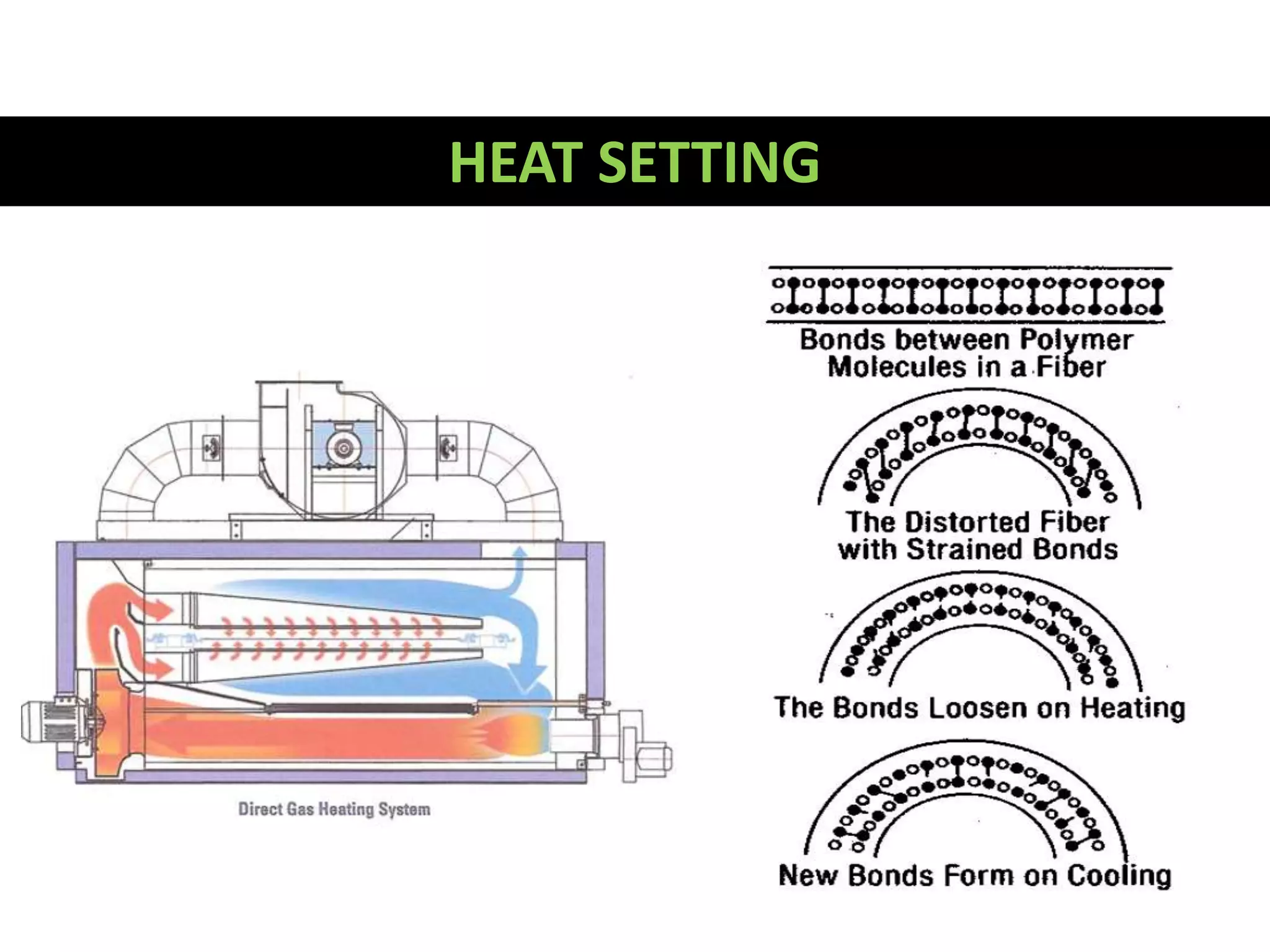
Multi-stage heat setting is a common luxury practice. Instead of a single aggressive pass, fabrics are gradually stabilized, allowing internal stresses to relax evenly. This approach reduces the risk of post-production deformation and improves long-term appearance retention.
Luxury nylon looks better precisely because less is imposed on it.
Surface Aging and Wear Behavior
A key difference between luxury and commodity nylon becomes evident only with time.
Commodity nylon often shows:
- Uneven shine development
- Fiber bloom at stress points
- Loss of surface clarity
Luxury nylon is designed to age quietly. Its finer filaments and balanced construction distribute wear more evenly across the surface. Instead of developing obvious wear zones, the fabric maintains a consistent visual language.
In high-end garments, aging is expected—but it should be graceful. Luxury nylon supports that expectation by avoiding abrupt visual breakdown.
Consistency Across Production Batches
For premium fashion brands, consistency matters as much as absolute quality.
Commodity nylon production prioritizes volume. Batch-to-batch variation is often tolerated within broad limits. In contrast, luxury nylon programs impose tight reproducibility standards, ensuring that a fabric produced today behaves the same way next season.
This consistency supports:
- Long-term fabric programs
- Reliable pattern reuse
- Global production across multiple factories
Without this stability, luxury brands would face escalating development costs and quality risks.
Cost Structure Reflects Control, Not Excess
Luxury nylon is more expensive, but not because it is extravagant. The cost reflects:
- Higher-grade polymer inputs
- Slower, more controlled spinning
- Tighter weaving or knitting tolerances
- Extended finishing processes
Each stage prioritizes risk reduction—reducing the likelihood of visual defects, dimensional failure, or early wear. In luxury fashion, avoiding these risks is often more valuable than minimizing material cost.
Why the Difference Becomes Obvious Over Time
At first glance, a well-made commodity nylon garment may appear comparable to a luxury one. The real test comes later:
- After months of wear
- After repeated cleaning
- After exposure to movement and friction
Luxury nylon maintains its original intent. Commodity nylon gradually reveals compromises made for speed and cost.
This is why experienced designers, pattern makers, and technical teams can often identify luxury nylon by handling and behavior alone. The distinction is embedded, not advertised.
Luxury Nylon as a System, Not a Material
Luxury nylon is not defined by a single feature. It is the result of system-level discipline—from polymer chemistry to finishing restraint. Each decision reinforces the next, producing fabrics that remain controlled, stable, and visually coherent throughout a garment’s life.
The difference may not shout at the rack. But in wear, it speaks clearly.
What performance, aesthetic, and tactile qualities do high-end brands expect from nylon?
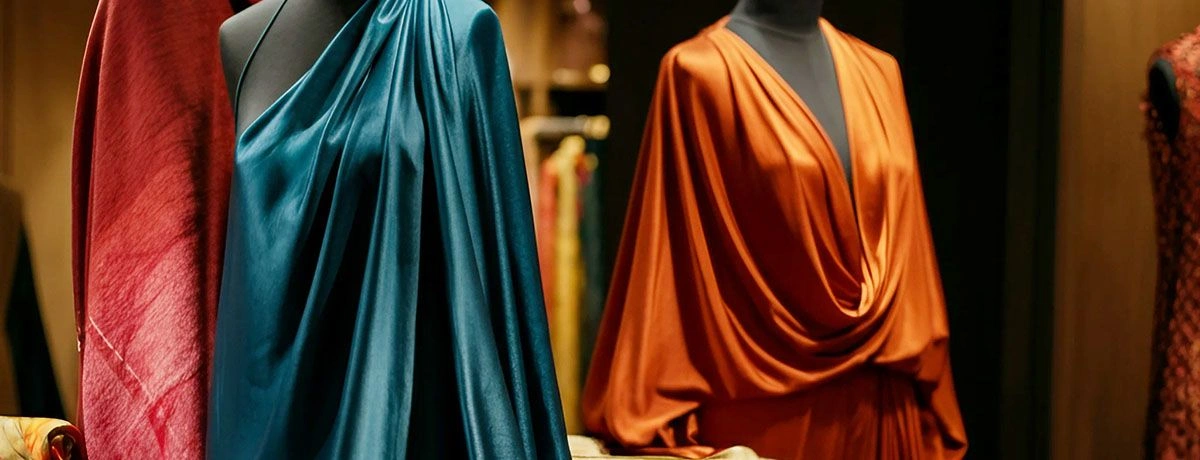
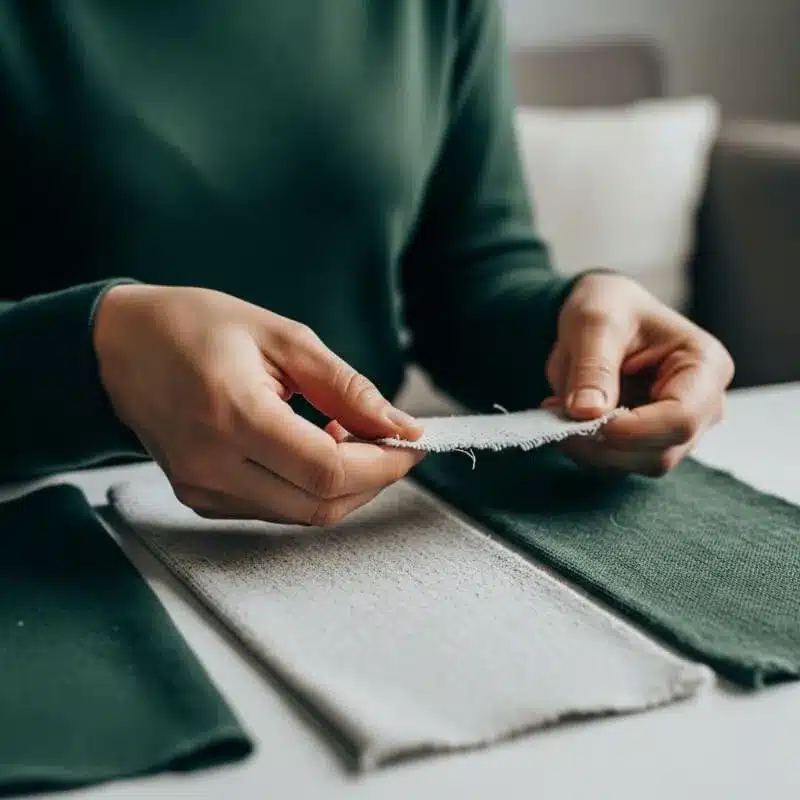
High-end brands expect luxury nylon to deliver controlled drape, structural stability, refined touch, and consistent appearance over time. Performance is not measured by extremes—maximum strength, maximum stretch, or exaggerated shine—but by balance, predictability, and restraint. In premium fashion, nylon must support design intent quietly, without asserting itself.
Luxury nylon should never call attention to itself— until you look closely.
Defining Expectations Across Three Dimensions
When luxury brands evaluate nylon fabrics, they do not treat performance, aesthetics, and tactility as separate checklists. These dimensions are interconnected. A failure in one often exposes weaknesses in the others. What follows is how high-end fashion houses typically define “acceptable” nylon—at a level far beyond basic specifications.
Performance Expectations (How It Behaves)
Luxury performance is not about pushing limits; it is about maintaining control under real conditions.
| Requirement | Why It Matters |
|---|---|
| Shape retention | Silhouette integrity |
| Low fatigue | Long wear cycles |
| Abrasion resistance | Visual longevity |
| Dimensional stability | Fit consistency |
Shape retention is foundational. Luxury garments are designed around precise proportions—shoulder angles, waist placement, hem geometry. Nylon fabrics used at this level must resist relaxation under gravity and movement. A fabric that slowly collapses undermines tailoring accuracy, even if seams remain intact.
Low fatigue behavior is equally important. Fatigue does not mean tearing; it means gradual loss of resilience. Commodity nylons often show fatigue through bagging at elbows, knees, or seat areas. Luxury nylons are engineered to distribute stress across many fine filaments, reducing localized deformation over time.
Abrasion resistance is judged visually, not mechanically. A luxury fabric may never fail a lab abrasion test, yet still be rejected if micro-abrasion dulls the surface prematurely. High-end brands expect nylon to maintain surface clarity after thousands of movement cycles, especially in high-contact areas.
Dimensional stability governs fit consistency. Luxury garments are frequently re-ordered across seasons or markets. Nylon fabrics must behave predictably through cutting, sewing, pressing, and cleaning. Any shrinkage, growth, or skew—however minor—creates cumulative fit errors that premium brands cannot accept.
Luxury garments must perform after repeated wear, not just under showroom lighting.
Performance in Daily Use, Not Laboratory Extremes
An important distinction in luxury sourcing is that performance is evaluated under wear simulations, not just standardized tests. Brands often conduct internal trials that include:
- Extended sitting and standing cycles
- Repeated folding and packing
- Exposure to body heat and humidity
In these scenarios, the most common reasons for rejection are not catastrophic failures, but subtle degradations: loss of snap, silhouette softening, or uneven stress recovery. Nylon that performs quietly under these conditions earns long-term approval.
Aesthetic Expectations (How It Looks)
Visual discipline is central to luxury. Nylon must support a brand’s visual language without introducing noise.
| Visual Trait | Luxury Standard |
|---|---|
| Sheen | Subtle, controlled |
| Surface | Clean, even |
| Color depth | Saturated, stable |
| Wrinkle behavior | Intentional, not random |
Sheen control is one of the most sensitive variables. Excessive shine immediately signals synthetic origins and undermines perceived value. Luxury nylon fabrics typically aim for a muted luster—enough to convey refinement, not enough to reflect harshly.
Surface cleanliness matters even more. High-end brands expect surfaces free from random texture, fiber bloom, or visual grain unless intentionally designed. Any unevenness becomes exaggerated under directional lighting, photography, or close inspection.
Color depth and stability are non-negotiable. Nylon’s ability to achieve deep blacks, dense neutrals, and saturated colors is an advantage, but only if dye uptake is controlled. Luxury brands monitor:
- Shade consistency across rolls
- Resistance to glazing or color shift
- Stability under light and friction
A nylon fabric that develops uneven gloss or shade variation over time is quickly removed from premium programs.
Wrinkle behavior is evaluated differently from mass apparel. Wrinkles are not inherently undesirable. Random, chaotic creasing is. Luxury nylon is expected to crease with logic—forming soft folds or recoverable bends that align with garment structure rather than fighting it.
Any uncontrolled shine, glare, or surface inconsistency immediately breaks the premium perception.
Visual Aging as a Quality Signal
Luxury brands also evaluate how nylon ages visually. A fabric that looks perfect when new but degrades abruptly is considered inferior to one that changes gradually and evenly.
Desired aging characteristics include:
- Even surface dulling rather than patchy shine
- Uniform softening rather than localized collapse
- Maintained color depth without streaking
This controlled aging reinforces the idea of quality through use, rather than consumption through wear.
Tactile Expectations (How It Feels)
Touch remains one of the strongest subconscious indicators of quality, even in technical garments.
| Handfeel Cue | Interpretation |
|---|---|
| Smooth but not slick | Refined |
| Firm yet flexible | Quality construction |
| Quiet movement | No “crinkle noise” |
Luxury nylon should feel intentional in the hand. Slickness is avoided because it suggests surface coatings or excessive softeners. Instead, premium nylons aim for a smooth, calm touch that feels engineered rather than treated.
Firmness with flexibility signals structural confidence. The fabric should resist collapse when handled, yet respond naturally when shaped. This balance reassures both designers and wearers that the garment will hold form without feeling rigid.
Acoustic behavior is often overlooked, but critical. Cheaper nylons frequently produce audible crinkling or rustling due to stiff filaments, uneven tension, or aggressive finishes. Luxury nylon is expected to move quietly. Sound, like shine, is a sensory shortcut to perceived value.
Luxury nylon often feels calmer than cheaper versions—not softer, but more composed.
The Role of Sensory Consistency
High-end brands are acutely sensitive to sensory mismatch. A fabric that looks luxurious but feels noisy, stiff, or unstable is quickly rejected. Likewise, a pleasant handfeel cannot compensate for poor visual discipline.
For this reason, luxury nylon development involves repeated physical handling—by designers, pattern makers, and technicians—rather than reliance on numerical softness or stiffness ratings alone.
Consistency Across Batches and Seasons
Repeatability is one of the hardest—and most expensive—requirements to meet.
| Expectation | Reality Check |
|---|---|
| Same feel every order | Tight process control |
| Same color response | Controlled dye uptake |
| Same drape | Stable construction |
Luxury programs often span multiple seasons or product lines. Nylon fabrics must behave identically whether produced this year or next. This demands:
- Stable polymer sourcing
- Reproducible filament spinning
- Controlled weaving or knitting parameters
- Locked finishing recipes
Many suppliers can produce an excellent first batch. Far fewer can reproduce it without drift. This is where high-end brands become highly selective, often narrowing sourcing to a small number of mills capable of long-term consistency.
For luxury, inconsistency is not a logistical problem—it is a brand risk.
Why Minor Failures Matter More Than Major Ones
In wear trials and post-launch evaluations, luxury nylon garments are rarely rejected for tearing, seam failure, or catastrophic shrinkage. Instead, they are rejected for small sensory failures:
- A faint rustling sound
- A slight increase in surface glare
- Gradual loss of silhouette tension
- Subtle stiffness after cleaning
These issues may seem insignificant in isolation. In aggregate, they erode the emotional confidence that defines luxury ownership.
High-end brands understand that consumers may not articulate these failures—but they feel them.
Nylon as a Supporting Actor, Not the Star
The ultimate expectation for luxury nylon is restraint. It should enhance design, not dominate it. When performance, aesthetics, and tactility are aligned, the fabric becomes almost invisible—allowing cut, proportion, and concept to lead.
This invisibility is not accidental. It is the result of deliberate engineering, disciplined finishing, and uncompromising evaluation.
In high-end fashion, nylon succeeds not by being noticed, but by never giving a reason to doubt it.
How are luxury nylon fabrics engineered through weaving, knitting, and finishing?
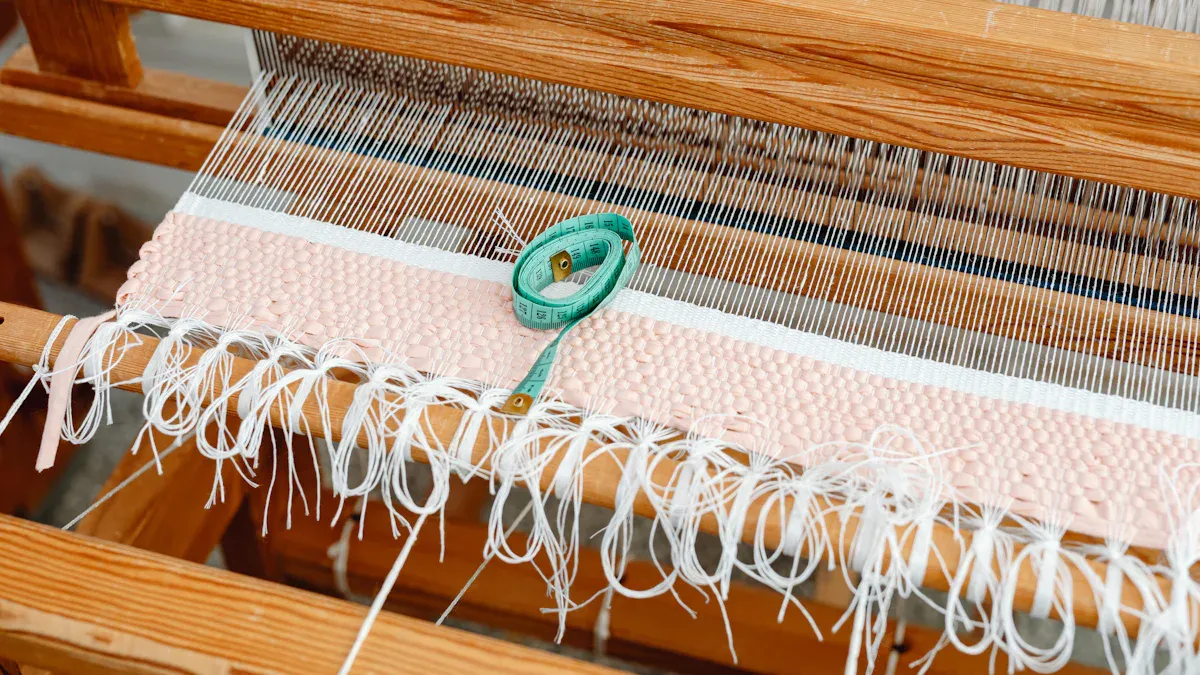
Luxury nylon fabrics are engineered through precise filament selection, high-density weaving or fine-gauge knitting, and multi-stage finishing systems designed to enhance stability without masking structure. Unlike commodity textiles, which often rely on aggressive surface treatments to correct underlying flaws, luxury nylon emphasizes balance, internal discipline, and repeatability across production cycles.
Luxury nylon is built, not decorated.
Engineering Luxury at Every Production Stage
The defining difference between luxury nylon and standard nylon does not lie in a single step. It emerges from a systematic engineering approach that treats yarn preparation, fabric formation, and finishing as interdependent stages. Each decision either preserves or compromises the fabric’s long-term behavior.
Filament Preparation and Yarn Strategy
Everything starts before the loom or knitting machine is even engaged.
| Engineering Choice | Luxury Outcome |
|---|---|
| Fine denier filaments | Smooth surface |
| Multi-filament bundles | Soft visual texture |
| Low-variation yarn lots | Batch consistency |
Luxury nylon development begins with tight control over filament denier and polymer consistency. Fine-denier filaments—often in the 10D–30D range—are favored because they distribute stress across more contact points, reducing glare, stiffness, and localized abrasion.
Multi-filament bundles are engineered not simply to increase softness, but to create optical smoothness. Light interacts with many fine filaments more evenly than with fewer coarse ones, producing a calmer surface that resists harsh reflection under strong lighting.
Equally important is lot discipline. Luxury nylon programs avoid mixing filament lots with different shrinkage or relaxation behaviors. Even slight differences at the yarn stage can lead to uneven sheen, subtle striping, or fuzz development after finishing or wear. For premium brands, these risks are unacceptable, so yarn sourcing is deliberately conservative.
Yarn Conditioning Before Fabric Formation
Before weaving or knitting, luxury nylon yarns often undergo controlled conditioning. This step equalizes internal tension and minimizes surprises later in production.
Proper conditioning helps ensure:
- Predictable elongation during weaving or knitting
- Reduced filament breakage
- Uniform surface behavior after finishing
Commodity systems may skip or compress this stage to increase throughput. Luxury systems do not, because early shortcuts multiply downstream defects.
Weaving for Structure and Silence
In woven luxury nylon, the loom is a precision instrument rather than a volume machine.
| Weaving Factor | Why It Matters |
|---|---|
| Tight pick density | Shape retention |
| Balanced warp/weft | No skew or torque |
| Controlled loom speed | Uniform surface |
Pick density is carefully optimized. Higher density improves shape retention and surface smoothness, but excessive density can create stiffness or noise. Luxury weaving targets a narrow range where structure is present without brittleness.
Warp–weft balance is critical. Imbalances introduce internal torque, which later manifests as seam twisting or garment skew. Luxury fabrics are engineered so warp and weft yarns share load evenly, allowing the fabric to lie flat and respond predictably to pattern cutting.
Controlled loom speed is another quiet differentiator. Running looms more slowly reduces yarn stress, filament abrasion, and tension spikes. This produces a more uniform surface and reduces micro-damage that can later appear as fuzz or shine patches.
A practical outcome of these choices is acoustic control. Cheap nylon often produces a rustling sound because stiff filaments and uneven tension vibrate against one another. Properly woven luxury nylon moves quietly, reinforcing a sense of refinement even when the garment is handled.
Structural Testing After Weaving
Luxury mills typically evaluate woven nylon fabrics for:
- Bias stability
- Seam torque resistance
- Recovery after folding and compression
Fabrics that technically meet strength specifications may still be rejected if they fail these structural tests. The goal is not maximum strength, but predictable behavior under real garment conditions.
Knitting for Refined Elasticity
When nylon is knitted rather than woven, luxury engineering shifts focus from rigidity to controlled elasticity.
| Knit Type | Luxury Advantage |
|---|---|
| Warp knit | Clean elasticity, recovery |
| Fine circular knit | Refined drape |
| High-gauge construction | Smooth handfeel |
Warp knitting is favored for applications requiring dimensional stability. The loop structure resists laddering and shape distortion, making it suitable for garments that must maintain clean lines while accommodating movement.
Fine-gauge circular knits offer greater softness and drape, but only when gauge is sufficiently high to prevent surface graininess. Luxury knits often operate at tighter gauges than mass-market equivalents, producing smoother surfaces and more disciplined stretch behavior.
Across all luxury knit constructions, stretch is engineered to return, not relax. Excessive elastic recovery can feel aggressive; insufficient recovery leads to sagging. Luxury nylon knits are calibrated to strike a balance that supports comfort without visual fatigue.
Managing Elastic Components
When elastane or other elastic fibers are introduced, luxury systems limit their percentage and control their integration carefully. Poor elastic management can lead to:
- Uneven recovery
- Surface distortion
- Premature fatigue
Luxury nylon knits integrate elastic fibers in a way that supports the nylon’s structural role rather than competing with it.
Finishing: Enhancement, Not Disguise
Finishing is where luxury nylon most clearly diverges from commodity practice.
| Finishing Step | Purpose |
|---|---|
| Multi-stage heat setting | Dimensional stability |
| Low-additive softening | Natural touch |
| Surface calibration | Controlled sheen |
Multi-stage heat setting is fundamental. Instead of forcing the fabric into final dimensions in a single aggressive pass, luxury finishing allows the material to relax gradually. Internal stresses are reduced step by step, improving long-term dimensional stability and minimizing post-production drift.
Low-additive softening is a defining philosophy. Luxury nylon avoids heavy silicone or resin softeners that temporarily improve hand-feel but degrade with washing or wear. Instead, softness is achieved primarily through filament engineering and construction quality.
Surface calibration fine-tunes sheen rather than imposing it. Controlled calendaring or surface treatments may be used to achieve a specific matte or low-luster finish, but always with restraint. The aim is consistency, not spectacle.
Over-finishing is avoided because it accelerates visual aging. A fabric that looks impressive on day one but degrades quickly fails luxury standards.
Washing and Aging Simulations
Luxury nylon fabrics are often subjected to internal wash and wear simulations before approval. These tests evaluate:
- Hand-feel change after cleaning
- Surface stability under friction
- Noise development over time
A fabric that relies too heavily on finishes will reveal its weaknesses quickly. Luxury nylon must retain its character even as finishes gradually diminish.
Quality Control Philosophy
Luxury nylon is inspected differently from mass-market textiles. Passing standard tests is not sufficient.
Luxury inspection focuses on:
- Surface noise during handling
- Visual uniformity under directional light
- Drape consistency across fabric width
- Post-wash and post-press behavior
Defects that would pass commercial apparel standards—minor streaking, slight torque, subtle stiffness—often fail luxury inspections. This is why high-end brands work with a limited number of mills capable of sustaining this level of scrutiny.
Repeatability as an Engineering Goal
One of the most demanding aspects of luxury nylon engineering is repeatability. A fabric approved today must behave identically months or years later. Achieving this requires:
- Stable raw material sourcing
- Locked processing parameters
- Continuous monitoring of yarn and fabric behavior
Luxury nylon is engineered not just to perform well once, but to perform the same way every time. This consistency supports long-term collections, reorders, and global production without quality drift.
Why Luxury Nylon Engineering Is Conservative by Design
From the outside, luxury nylon engineering may appear cautious or even restrained. In reality, this conservatism is deliberate. Every variable introduced into the system increases risk.
By limiting variability and emphasizing control, luxury nylon fabrics achieve:
- Predictable garment construction
- Reliable wear behavior
- Long-term aesthetic stability
Innovation still exists—but within boundaries that preserve brand integrity.
Engineering That Disappears Into the Garment
The ultimate success of luxury nylon engineering is invisibility. When weaving, knitting, and finishing are executed correctly, the fabric does not announce its complexity. It simply behaves as expected—quietly supporting silhouette, comfort, and appearance.
This absence of drama is not accidental. It is the result of disciplined engineering at every stage of production.
Which sustainability and recycled-nylon options matter in high-end nylon sourcing?


High-end brands focus on recycled nylon systems that preserve luxury aesthetics, structural consistency, and long-term performance, rather than pursuing recycled content for its own sake. In premium fashion, sustainability is evaluated as a material system, not a label claim.
In luxury, sustainability must be invisible.
What Actually Matters in Sustainable Nylon
Luxury brands do not reject recycled nylon. They reject uncontrolled recycled nylon. The difference lies in how recycled inputs are processed, documented, and reintegrated into fabric engineering without disrupting appearance, handfeel, or repeatability.
At the high end, sustainability is not allowed to introduce visual noise, tactile compromise, or batch instability.
Recycled Nylon Types Used in Luxury
Not all recycled nylon technologies are compatible with luxury standards.
| Recycled Nylon Type | Luxury Suitability |
|---|---|
| Regenerated nylon 6 | Very high |
| Mechanical recycled nylon | Limited |
| Ocean-sourced nylon | Conditional |
| Closed-loop nylon | Premium |
Regenerated nylon 6—produced through chemical depolymerization—is the most widely accepted option in luxury sourcing. By breaking nylon waste back down to monomers and re-polymerizing it, regenerated nylon can achieve near-virgin purity, enabling consistent filament extrusion and predictable behavior.
Mechanical recycled nylon, which relies on shredding and re-melting, is far more limited. While suitable for some mass or performance applications, it often introduces variability in molecular weight and impurity content. For luxury fabrics, this variability can manifest as uneven dye uptake, surface grain, or long-term fatigue.
Ocean-sourced nylon carries strong narrative appeal, but luxury brands approach it cautiously. Feedstock inconsistency, contamination risk, and variable polymer degradation mean that ocean-sourced material is often used only when it passes strict internal benchmarks—and usually in controlled blends rather than as a sole input.
Closed-loop nylon systems, where production waste and post-consumer material are reintegrated into a controlled regeneration stream, represent the highest tier. These systems offer both environmental benefit and process stability, making them particularly attractive for long-term luxury programs.
Luxury brands overwhelmingly favor chemically regenerated nylon because it restores control at the polymer level.
Why Polymer Purity Is Non-Negotiable
In luxury applications, sustainability does not excuse inconsistency. Recycled nylon must behave like engineered material, not reclaimed scrap.
Chemically regenerated nylon allows mills to:
- Reset molecular weight distribution
- Remove contaminants and dyes
- Standardize polymer chains
This reset is critical. Without it, recycled content may carry invisible defects that only appear after finishing or wear. Luxury brands are acutely aware that these defects do not show up in marketing photography—but they do appear in customer experience.
For this reason, many high-end programs specify minimum regeneration thresholds rather than recycled percentages alone.
Performance Expectations Do Not Change
Recycled nylon is not held to a separate standard. It must meet the same benchmarks as virgin luxury nylon.
| Requirement | Non-Negotiable |
|---|---|
| Consistent filament | Yes |
| Stable dye response | Yes |
| Controlled sheen | Yes |
| Long-term durability | Yes |
Filament consistency is the first gate. Luxury brands expect tight denier tolerances and uniform cross-sections. Any increase in filament breakage, fuzzing, or uneven reflection disqualifies a fabric early.
Dye response is equally critical. Recycled nylon must absorb and hold color uniformly across batches. Shade drift between lots is unacceptable, particularly for blacks, deep neutrals, and seasonal signature colors.
Sheen control remains a sensitive issue. Some recycled nylons exhibit higher surface reflectivity due to subtle polymer differences. Luxury finishing must correct this without resorting to heavy coatings that compromise aging behavior.
Durability expectations are unchanged. Recycled nylon must withstand abrasion, flexing, and repeated cleaning without accelerated breakdown. Sustainability cannot shorten garment lifespan; doing so would contradict luxury’s emphasis on longevity.
If sustainability compromises aesthetics or performance, the material is rejected—regardless of environmental credentials.
Traceability and Documentation
High-end nylon sourcing requires verifiable proof, not narratives.
| Documentation | Why It Matters |
|---|---|
| Chain-of-custody | Credibility |
| Batch traceability | Risk control |
| Process transparency | Brand protection |
Luxury brands face intense scrutiny from regulators, media, and consumers. As a result, recycled nylon programs must be supported by robust documentation that can withstand external audit.
Chain-of-custody documentation confirms that recycled inputs genuinely flow through the supply chain, rather than being blended or substituted opportunistically.
Batch traceability allows brands to isolate issues if a problem arises—whether related to shade variation, finishing response, or post-sale feedback. Without batch-level visibility, risk multiplies quickly.
Process transparency protects brand reputation. Luxury houses increasingly require insight into regeneration methods, energy usage, and chemical handling—not necessarily to publicize details, but to ensure internal accountability.
Storytelling without data does not survive scrutiny at this level.
Why Certifications Alone Are Not Enough
While certifications play a role, luxury brands rarely rely on them in isolation. A certification confirms compliance with a framework, not suitability for a specific aesthetic or performance requirement.
As a result, high-end sourcing teams often conduct parallel internal evaluations, including:
- Blind fabric handling tests
- Side-by-side dye trials
- Wear and wash simulations
Only materials that pass both certification checks and internal luxury benchmarks progress to adoption.
Blending Sustainability With Performance
Pure recycled nylon is not always the optimal solution. Many luxury programs adopt hybrid strategies to balance sustainability with stability.
| Strategy | Benefit |
|---|---|
| Partial recycled content | Stability |
| Recycled nylon + elastane | Performance balance |
| Recycled nylon blends | Improved handfeel |
Partial recycled content allows mills to incorporate regenerated polymer while maintaining tight control over filament behavior. Ratios are selected based on fabric type, end use, and finishing requirements.
Recycled nylon blended with elastane supports stretch recovery and comfort without sacrificing structure. Elastic components are carefully calibrated to prevent distortion or premature fatigue.
Blended constructions—such as recycled nylon combined with other fibers—can improve handfeel or thermal behavior while preserving surface discipline. These blends are engineered, not improvised.
Luxury brands tend to favor measured integration over absolute purity, prioritizing garment performance and lifespan.
Lifecycle Thinking Over Material Absolutism
High-end fashion increasingly evaluates sustainability through lifecycle impact, not single metrics. A nylon garment that lasts significantly longer, maintains appearance, and avoids early replacement may offer greater environmental benefit than a short-lived “pure” recycled alternative.
Luxury sourcing teams therefore consider:
- Garment durability
- Wear frequency
- End-of-life recyclability
- Reduced need for replacement
In this framework, recycled nylon succeeds only if it supports longevity—not if it undermines it.
Manufacturing Discipline Matters More With Recycled Inputs
Recycled nylon amplifies both strengths and weaknesses in manufacturing systems. Variability that might be tolerable with virgin polymer becomes problematic when recycled content is introduced.
Luxury mills respond by tightening:
- Yarn lot segregation
- Process monitoring
- Quality inspection thresholds
This discipline increases cost and complexity, which is why not all suppliers can support luxury-grade recycled nylon programs. Brands often reduce their supplier base when transitioning to sustainable materials, favoring those with proven control.
Real-World Insight From Luxury Sourcing
In practice, luxury buyers frequently evaluate recycled nylon blind, without disclosing material origin to internal review panels. Fabrics are handled, draped, and assessed purely on sensory and visual criteria.
Only materials that pass these blind evaluations—indistinguishable from virgin luxury nylon in feel and appearance—are approved. Sustainability claims are considered only after performance parity is confirmed.
This process reflects a core luxury principle: material virtue must not announce itself.
Sustainability as an Extension of Craft
For high-end brands, recycled nylon is not a shortcut to responsibility. It is an extension of craftsmanship, requiring deeper technical knowledge, stricter control, and greater investment.
When executed well, sustainable nylon disappears into the garment—supporting silhouette, touch, and longevity without altering the brand’s visual language. When executed poorly, it exposes itself immediately.
Luxury does not reward effort. It rewards results.
In high-end nylon sourcing, sustainability matters most when it preserves everything else that defines luxury—and quietly improves what comes next.
How do sourcing regions and manufacturers impact luxury nylon quality and consistency?
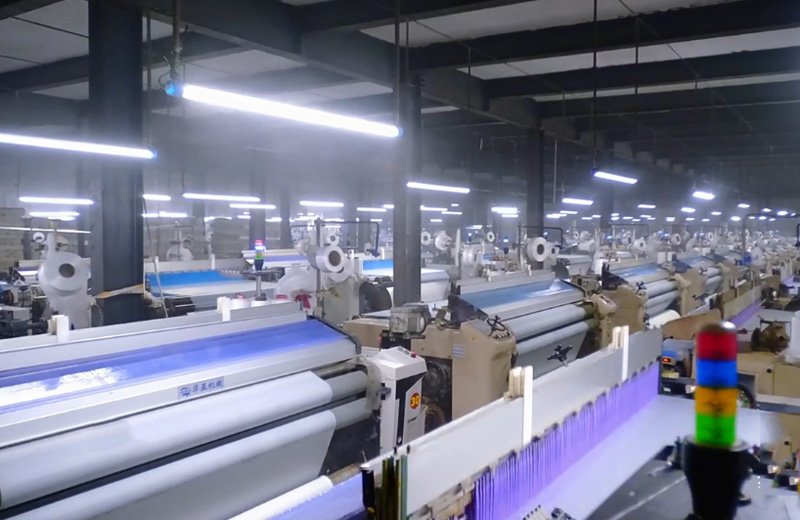

Sourcing region and manufacturer capability directly influence luxury nylon consistency, surface control, and long-term repeatability. At the high end of fashion, material failure rarely originates from the fiber itself. It almost always traces back to process discipline, equipment maturity, and quality culture within the manufacturing partner.
Luxury nylon fails not because of fiber—but because of inconsistency.
Why Supplier Capability Matters More Than Location
In luxury nylon sourcing, geography is often overemphasized. While regional ecosystems do matter, manufacturer-level execution ultimately determines whether a fabric can meet high-end expectations across seasons, colors, and reorders.
A capable mill in a “non-traditional” region will outperform a poorly disciplined mill in a prestigious one. Luxury brands learn this early—and adjust their sourcing strategies accordingly.
Regional Strengths in Luxury Nylon Production
Different regions contribute different structural advantages to luxury nylon programs. Understanding these strengths helps brands align expectations with reality.
| Region | Core Strength in Luxury Nylon |
|---|---|
| East Asia (China, Japan) | Process control, finishing precision |
| Europe | Small-batch refinement, legacy know-how |
| Southeast Asia | Competitive cost, growing capability |
East Asia, particularly China and Japan, dominates luxury nylon production not because of labor cost, but because of system integration. These regions combine polymer access, yarn spinning, weaving/knitting, and finishing into tightly coordinated supply chains. This integration supports consistency at scale—a non-negotiable requirement for luxury programs with global distribution.
Europe excels in niche applications. Italian, French, and Swiss mills often deliver exceptional hand-feel refinement and surface nuance, especially for limited runs or concept-driven collections. However, capacity constraints and higher costs can limit scalability and long-term repeatability.
Southeast Asia offers growing technical competence and cost efficiency. While historically focused on volume production, select mills have invested heavily in equipment and training. These suppliers increasingly support premium programs, though consistency across long-term reorders still varies widely by manufacturer.
Among these regions, China stands out for its ability to combine scale with technical repeatability, a critical advantage for luxury brands managing seasonal continuity and global retail networks.
Why Region Alone Is an Incomplete Signal
Luxury sourcing teams quickly learn that regional reputation is not a guarantee. Two mills located within the same industrial zone can deliver dramatically different results.
Regional ecosystems provide access to talent, machinery, and raw materials—but they do not enforce discipline. Discipline must be built and maintained at the factory level.
Manufacturer-Level Differentiation
At the luxury tier, differences between manufacturers become more important than differences between countries.
| Capability Area | Impact on Nylon Quality |
|---|---|
| Filament sourcing control | Surface uniformity |
| Loom & knitting tech | Density precision |
| Finishing calibration | Sheen and handfeel |
| QC standards | Batch consistency |
Filament sourcing control determines whether surface behavior remains stable. Manufacturers that tightly control yarn suppliers and lot segregation avoid subtle issues like uneven reflection, fuzzing, or color drift. Mills that treat yarn as a commodity expose brands to unnecessary risk.
Weaving and knitting technology directly affect density accuracy and balance. Modern looms and knitting machines with fine tension control produce fabrics with consistent structure. Outdated or poorly maintained equipment introduces variability that no finishing process can fully correct.
Finishing calibration separates competent suppliers from luxury-grade partners. Precision finishing requires not only advanced machinery, but also deep understanding of how nylon responds to heat, pressure, and chemistry over time.
Quality control standards determine whether inconsistencies are detected early or passed downstream. Luxury manufacturers inspect beyond basic defects, focusing on surface noise, hand-feel drift, and post-wash behavior.
Luxury sourcing is about choosing the right mill, not just the right country.
Equipment Investment as a Quality Signal
Luxury nylon production demands capital-intensive equipment:
- High-precision spinning systems
- Advanced looms or fine-gauge knitting machines
- Multi-stage heat-setting and finishing lines
- Controlled inspection environments
Manufacturers willing to make these investments signal long-term commitment to quality rather than short-term margin. Brands often prioritize such partners even if unit costs are higher, because risk reduction outweighs savings at the luxury level.
Consistency Across Collections and Seasons
High-end brands do not evaluate nylon fabrics as one-off purchases. They expect identical behavior across multiple variables.
Luxury nylon must remain consistent across:
- Colors
- Seasons
- Reorders
| Risk Factor | Consequence |
|---|---|
| Yarn lot variation | Visual mismatch |
| Finish drift | Handfeel inconsistency |
| Inadequate QC | Rejection risk |
Yarn lot variation is one of the most common failure points. Even small changes in filament behavior can alter drape, sheen, or dye uptake. Luxury manufacturers mitigate this risk by limiting approved yarn sources and maintaining detailed lot records.
Finish drift occurs when finishing parameters evolve gradually over time—often unintentionally. Mills without strict process locking may deliver fabrics that technically meet specifications but feel different from previous batches. Luxury brands monitor this closely and penalize suppliers who cannot maintain finishing discipline.
Inadequate QC increases rejection risk late in the supply chain, where costs escalate quickly. Luxury programs prefer manufacturers who detect issues internally rather than pushing problems downstream.
Manufacturers with internal testing labs, archived fabric standards, and long-term process documentation perform best in multi-season luxury programs.
Why Repeatability Is More Valuable Than Innovation
Luxury brands value innovation—but not at the expense of stability. In nylon sourcing, uncontrolled experimentation creates inconsistency.
The most successful luxury suppliers innovate within locked systems. They refine yarns, adjust densities, or recalibrate finishes incrementally, documenting each change. This approach preserves repeatability while allowing evolution.
Suppliers that chase novelty without discipline often fail to support long-term luxury partnerships.
Communication and Development Discipline
Luxury nylon development is inherently iterative. Fabrics are rarely approved without multiple rounds of adjustment.
| Supplier Trait | Why It Matters |
|---|---|
| Technical fluency | Faster refinement |
| Sample accuracy | Trust building |
| Process transparency | Risk reduction |
Technical fluency enables suppliers to interpret feedback correctly. When a designer requests “less glare” or “calmer drape,” the supplier must translate that into actionable adjustments—yarn selection, density changes, or finishing recalibration.
Sample accuracy builds trust. Luxury brands expect lab dips and strike-offs to closely match bulk production. Large deviations undermine confidence and slow development cycles.
Process transparency reduces risk. Suppliers who can explain why a change produces a specific effect allow brands to make informed decisions. Those who simply execute instructions without understanding introduce unpredictability.
Factories that understand why a change is requested—not just what—deliver better results.
Cultural Approach to Quality
Beyond equipment and process, luxury nylon sourcing is influenced by quality culture.
Luxury-oriented manufacturers typically share several traits:
- Conservative change management
- Willingness to reject borderline material internally
- Emphasis on long-term partnerships rather than quick wins
These traits are cultural, not technical. They develop over years of working with demanding brands and absorbing their standards.
Manufacturers focused primarily on throughput or price competition often struggle to adapt to luxury expectations, even with upgraded machinery.
Risk Management in Luxury Nylon Sourcing
Luxury brands increasingly evaluate suppliers through a risk lens rather than a cost lens.
Key risks include:
- Inconsistent reorders
- Color mismatch across markets
- Fabric behavior changes over time
- Reputational damage from quality failure
Manufacturers with strong internal controls reduce these risks, making them strategically valuable partners. This is why luxury brands often consolidate sourcing to a small number of trusted mills rather than diversifying widely.
Why Scale Matters—But Only With Discipline
Scale alone does not guarantee quality. However, disciplined scale is a powerful advantage in luxury nylon production.
Manufacturers capable of producing large volumes while maintaining tight tolerances offer brands:
- Reliable global supply
- Faster seasonal rollouts
- Lower development friction
China’s strength in luxury nylon lies here. Select mills combine high-volume capability with meticulous process control, allowing brands to support international collections without sacrificing consistency.
The Cost of Switching Suppliers
In luxury programs, changing nylon suppliers is expensive. Development cycles must restart, fabrics must be requalified, and consistency risks multiply.
As a result, brands prefer suppliers who demonstrate:
- Long-term process stability
- Transparent communication
- Willingness to co-develop solutions
These qualities often matter more than incremental cost differences.
Luxury Nylon as a Partnership Outcome
Ultimately, luxury nylon quality is not a commodity outcome. It is the result of partnership alignment between brand and manufacturer.
When sourcing regions provide infrastructure, manufacturers provide discipline, and brands provide clear standards, nylon fabrics achieve the level of consistency luxury demands.
When any element fails, the fabric may still function—but it will not qualify as luxury.
In high-end fashion, nylon does not succeed because of where it is made. It succeeds because of how consistently it is made, and by whom.
How should brands choose the right supplier for luxury nylon clothing development?

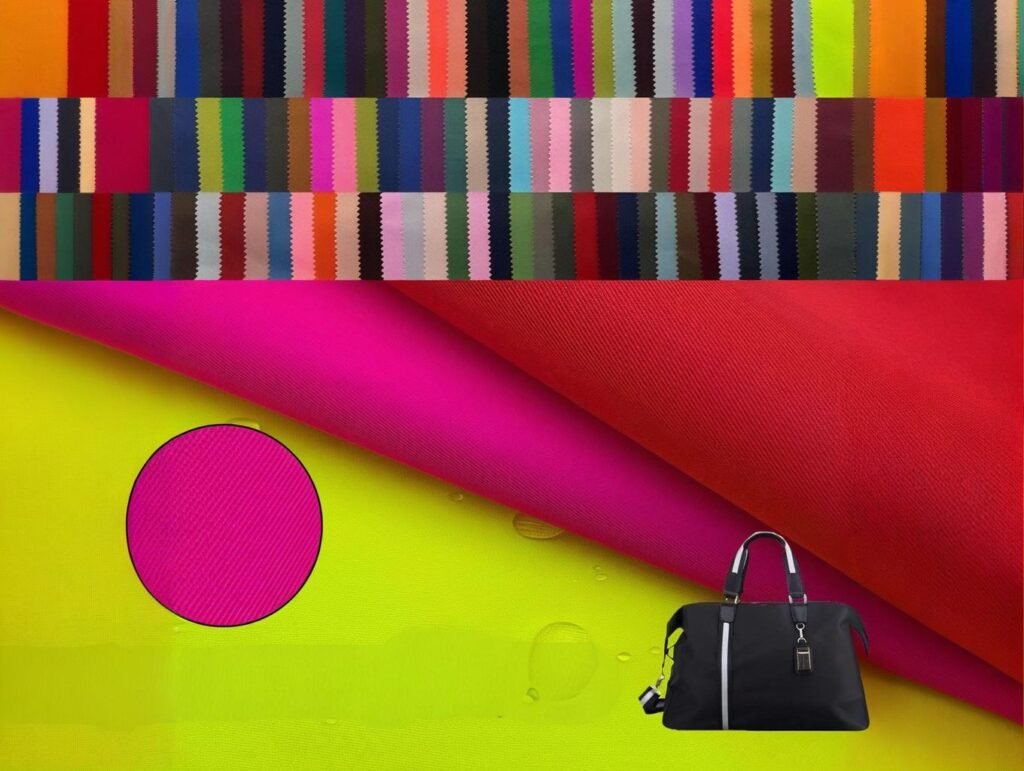
Brands should select luxury nylon suppliers based on engineering depth, process consistency, development discipline, and long-term partnership mindset—not lowest price, marketing language, or how impressive a single sample looks.
Luxury sourcing is a relationship, not a transaction.
At the premium level, supplier choice directly determines whether nylon behaves as a refined design material or degrades into a technical compromise. The difference is rarely visible in a swatch book. It becomes evident months later—during bulk production, color expansion, reorders, and wear feedback.
A Practical Supplier Selection Framework
Luxury nylon development is not about finding a fabric. It is about selecting a partner capable of repeating controlled outcomes under pressure, across time, colors, and collections.
Evaluate Engineering Depth, Not Just Samples
A beautiful sample proves only one thing: the supplier succeeded once.
What luxury brands must evaluate is whether that result can be repeated without drift.
| Question to Ask | What It Reveals |
|---|---|
| How is filament variation managed? | Process maturity |
| How is density controlled? | Structural discipline |
| How are finishes stabilized? | Long-term consistency |
A serious supplier can explain, in concrete terms:
- How yarn lots are segregated and approved
- How weaving or knitting density is monitored and locked
- How finishing parameters are recorded and reproduced
Vague answers such as “we adjust as needed” or “we have experience” are warning signs. Luxury nylon requires documented control, not intuition alone.
Strong technical explanations matter more than polished swatches, because surface perfection without process discipline rarely survives scale.
Ask How Problems Are Prevented, Not Fixed
One of the most telling indicators of a luxury-capable supplier is how they talk about defects.
Commodity-oriented suppliers focus on correction—adding softeners, coatings, or adjustments to hide issues. Luxury-oriented suppliers focus on prevention—eliminating root causes before fabric formation or finishing.
During evaluation, brands should ask:
- Where do defects usually originate?
- How early are issues detected?
- What triggers internal rejection?
Suppliers who reject fabric internally—before the brand ever sees it—are far more valuable than those who ship borderline material and wait for feedback.
Assess Development Responsiveness
Luxury programs are rarely finalized in one round. Development is iterative by nature.
| Development Need | Supplier Requirement |
|---|---|
| Small adjustments | Flexible production |
| Multiple rounds | Fast sampling |
| Tight timelines | Internal coordination |
High-end brands often request subtle changes:
- Slightly reduced sheen
- Firmer drape without added weight
- Quieter handfeel
- Improved recovery after pressing
Suppliers who treat these requests as engineering challenges rather than cost problems stand out quickly. They understand that refinement—not speed alone—is the value they provide.
Equally important is sampling accuracy. Luxury brands expect development samples to closely match eventual bulk behavior. Large discrepancies between sample and production undermine trust and slow down entire collections.
Evaluate Internal Coordination, Not Just Speed
Fast sampling means little if it is inconsistent. Luxury suppliers typically demonstrate:
- Strong coordination between spinning, weaving/knitting, and finishing
- Clear communication between development and production teams
- Stable handover from sample to bulk
When departments operate in isolation, refinement achieved during sampling is often lost in production. Brands should look for suppliers who treat development as a system, not a sequence of disconnected steps.
Demand Transparency and Traceability
Luxury standards require visibility—not because brands distrust suppliers, but because risk is amplified at scale.
| Transparency Area | Why It Matters |
|---|---|
| Material origin | Brand integrity |
| Process steps | Risk management |
| Test results | Confidence |
A luxury-capable supplier can provide:
- Clear material origin information
- Defined processing steps with rationale
- Internal test data tied to specific batches
Opacity is a red flag. Suppliers unwilling to explain how nylon is engineered, finished, or tested usually lack control—or fear exposing inconsistency.
Transparency does not mean revealing trade secrets. It means demonstrating command of one’s own process.
Separate Certifications From Capability
Certifications support credibility, but they do not replace engineering competence. Luxury brands increasingly treat certifications as entry requirements, not decision drivers.
Final selection is based on:
- Fabric behavior under blind evaluation
- Consistency across multiple submissions
- Supplier responsiveness to refinement
A supplier that relies heavily on certificates but cannot explain why a fabric behaves a certain way rarely survives luxury development cycles.
Think Long-Term, Not Seasonally
Luxury nylon programs benefit enormously from continuity.
| Long-Term Factor | Benefit |
|---|---|
| Locked specs | Stable collections |
| Archived samples | Faster repeats |
| Supplier familiarity | Fewer surprises |
Brands that change nylon suppliers frequently pay hidden costs:
- Repeated development cycles
- Increased inconsistency risk
- Loss of accumulated process knowledge
The best luxury suppliers maintain archived yarn specs, fabric standards, and finishing recipes, allowing reorders to match original approvals closely—even years later.
This continuity supports brand identity. A garment reissued in a later season should feel unmistakably related to its predecessor.
Evaluate the Supplier’s View of Partnership
Luxury suppliers think in terms of programs, not orders.
They are willing to:
- Invest time in early-stage development
- Hold tighter tolerances than required
- Say no when a request risks long-term quality
Suppliers focused purely on transactional profit often accept unrealistic requests and compensate later with shortcuts. Luxury partners protect both sides by maintaining discipline—even when it complicates short-term execution.
Test Suppliers Under Real Conditions
Before committing, many high-end brands conduct stress tests beyond initial sampling:
- Multiple color developments
- Small reorders after time gaps
- Fabric behavior after washing or pressing
Suppliers who pass these tests demonstrate something more important than skill: stability under variation.
This stability is what allows brands to scale collections globally without material drift.
Cost Evaluation: Understand What You’re Paying For
Luxury nylon is more expensive, but not because of branding. Cost reflects:
- Higher-grade polymers or regenerated inputs
- Slower, more controlled processing
- Tighter inspection thresholds
- Higher internal rejection rates
Brands should be cautious of suppliers offering luxury-level appearance at unusually low prices. In most cases, the cost is deferred—appearing later as inconsistency, delays, or reputational risk.
Red Flags in Luxury Nylon Supplier Selection
Experienced sourcing teams watch for consistent warning signs:
- Overreliance on surface finishes
- Inability to explain process decisions
- Large sample-to-bulk discrepancies
- Resistance to documentation or testing
Any one of these does not automatically disqualify a supplier. Patterns do.
Final Takeaway: Luxury Nylon Is Engineered Trust
Luxury nylon clothing succeeds when material engineering, aesthetic restraint, and supplier discipline align perfectly. Nylon is no longer a substitute material—it is a premium choice when developed intentionally.
High-end fashion brands do not choose nylon because it is synthetic. They choose it because it delivers precision, longevity, and modern elegance with fewer compromises than many natural fibers.
The difference between ordinary nylon and luxury nylon lies in:
- Filament engineering
- Construction density
- Finishing restraint
- Supplier capability
Get those right, and nylon becomes unmistakably luxurious—not by announcing itself, but by never failing expectations.
In luxury sourcing, the right supplier is not the one who promises the most. It is the one who delivers the same result, every time, without surprise.
Develop Luxury Nylon Fabrics with SzoneierFabrics
SzoneierFabrics is a China-based fabric R&D and manufacturing factory with years of experience developing luxury-grade nylon fabrics for premium and high-end fashion applications.
We support you with:
- Advanced nylon fabric engineering & customization
- Luxury-grade weaving, knitting, and finishing
- Recycled and sustainable nylon solutions
- Low-MOQ development and fast, accurate sampling
- Strict quality control and short, stable lead times
If you’re sourcing or developing luxury nylon clothing fabrics and need a partner who understands performance, aesthetics, and consistency at a premium level, contact SzoneierFabrics to start a confidential fabric development discussion or request samples today.
luxury nylon clothing, luxury nylon fabric sourcing, high end nylon fashion fabric, premium nylon fabric for clothing, luxury nylon garment material, nylon fabric for high end fashion brands, luxury nylon fabric types, engineered nylon fabric fashion, nylon vs polyester luxury clothing, high quality nylon fabric supplier, luxury nylon fabric manufacturing, nylon fabric finishing for luxury apparel, nylon fabric handfeel and sheen, high density nylon fabric fashion, luxury nylon outerwear fabric, nylon twill luxury clothing, nylon taffeta luxury fashion, fine gauge nylon knit fabric, sustainable luxury nylon fabric, recycled nylon luxury fashion, econyl nylon luxury clothing, luxury nylon fabric China sourcing, luxury nylon fabric factory China, nylon fabric consistency control, luxury fashion fabric supplier selection, nylon fabric performance for luxury garments, luxury nylon fabric development, low MOQ luxury nylon fabric, custom nylon fabric for fashion brands,