 Skip to content
Materials Used in Gym Bag Manufacturing
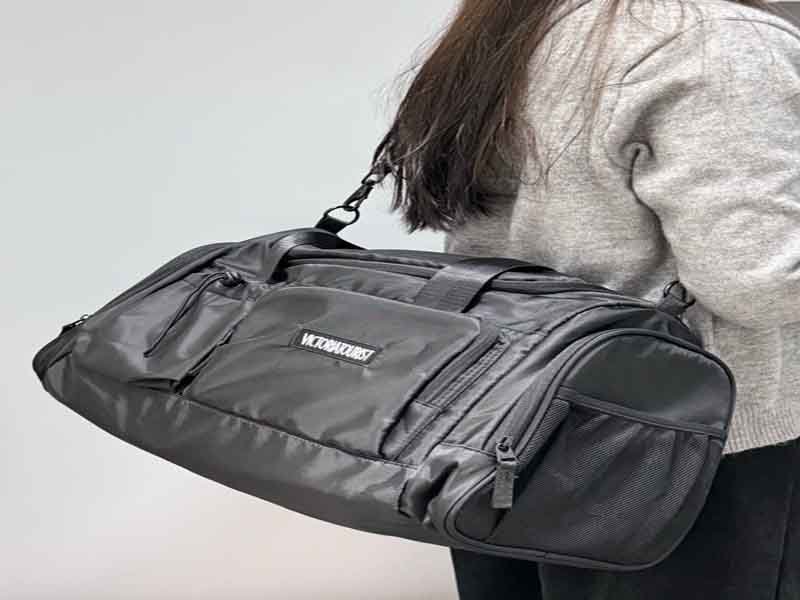
Walk into any modern gym, and you will notice something interesting. People spend hundreds or even thousands of dollars on shoes, fitness trackers, protein supplements, and workout clothing, yet many still underestimate the importance of the gym bag itself. A poorly made gym bag quickly becomes a daily frustration. Straps break under heavy loads. Cheap linings trap odor and moisture. Thin fabrics tear around zipper corners after only a few months of use. On the other hand, a well-designed gym bag feels almost invisible in daily life because it simply works. It carries sweaty clothes, shoes, water bottles, laptops, towels, and training gear without losing shape or comfort.
The truth is that gym bag performance depends heavily on the materials used during manufacturing. Polyester, nylon, canvas, oxford fabric, neoprene, TPU-coated textiles, and sustainable recycled materials each serve different purposes depending on durability needs, weight requirements, branding goals, waterproof performance, and target customer expectations. High-quality gym bags often combine multiple materials together to balance comfort, strength, aesthetics, moisture resistance, and production cost.
Today’s consumers are also becoming far more educated about fabrics than they were five years ago. Search trends on Google and AI search platforms show growing interest in questions like “What is the best material for gym bags?”, “Are nylon gym bags waterproof?”, “Which fabric lasts longer for sports bags?”, and “What materials do premium gym bags use?” This shift means brands and manufacturers can no longer rely on appearance alone. Material selection has become a key selling point that directly affects customer trust, product lifespan, and online reviews.
A fitness startup in California once switched from low-density polyester to high-denier ripstop nylon for its sports duffle collection after receiving repeated customer complaints about tearing near the shoe compartment. Within eight months, customer return rates reportedly dropped by over 37%, and positive product reviews mentioning “durability” nearly doubled. The design itself barely changed. The material did.
That is why understanding gym bag materials is no longer just a technical discussion for factories. It is now part of product marketing, customer experience, and long-term brand positioning. In this guide, we will explore the real differences between the fabrics used in gym bag manufacturing, how manufacturers choose materials for different performance needs, and which textile innovations are shaping the future of sports bag production.
What Are the Most Common Materials for Gym Bags?
The most common materials used in gym bag manufacturing are polyester, nylon, canvas, oxford fabric, and neoprene. Each material offers different advantages in durability, water resistance, weight, flexibility, and overall appearance. Polyester remains the most widely used because it balances affordability and performance, while nylon is often preferred for premium sports bags due to its superior abrasion resistance and lightweight strength. Canvas appeals to lifestyle and fashion-focused markets, while neoprene and coated technical fabrics are increasingly popular in high-end athletic collections.
Choosing the right gym bag material is not simply about fabric preference. It is about understanding how people actually use gym bags in real life. A bag carried between office meetings and fitness classes faces different stress compared to a heavy-duty training bag used in outdoor boot camps or sports travel. Manufacturers must evaluate friction points, sweat exposure, UV exposure, weather conditions, cleaning habits, and even branding methods before selecting materials.
A surprising number of low-quality gym bags fail not because of poor stitching, but because the wrong fabric was chosen for the intended use scenario.
Polyester Fabric
Polyester dominates the global gym bag market because it delivers one of the best cost-to-performance ratios in textile manufacturing. It is lightweight, relatively water-resistant, easy to dye, and highly compatible with digital printing and logo applications.
One major reason polyester became popular in sports bags is its stable fiber structure. Unlike cotton-based materials, polyester does not absorb much water. This matters because gym environments naturally involve sweat, humidity, and moisture.
Modern polyester gym bags are commonly made using these denier levels:
| Polyester Type | Typical Use | Durability Level | Weight |
|---|---|---|---|
| 210D Polyester | Lightweight casual bags | Medium | Very Light |
| 420D Polyester | Daily sports bags | Good | Light |
| 600D Polyester | Standard gym bags | High | Medium |
| 1680D Polyester | Heavy-duty sports bags | Very High | Heavy |
600D polyester is currently one of the most common choices for commercial gym bags because it balances flexibility, structure, and durability without significantly increasing production costs.
Another important factor is color retention. Polyester handles sublimation printing extremely well, making it ideal for brands requiring vibrant logos and custom graphics.
However, polyester is not perfect. Lower-quality polyester can feel stiff or overly plastic-like. Cheap polyester coatings may also crack after repeated folding. That is why fabric finishing quality matters just as much as the base fiber itself.
Nylon Fabric
Nylon is widely considered one of the strongest synthetic materials used in sports bag manufacturing. Compared to polyester, nylon generally offers better abrasion resistance, greater elasticity, and a softer hand feel.
Premium gym bags often use nylon because customers associate it with higher-end outdoor and athletic gear.
One reason nylon performs so well is molecular structure. Nylon fibers can absorb impact stress more effectively than many polyester variants, reducing tearing around stress points like shoulder straps and zipper corners.
Common nylon materials include:
| Nylon Type | Key Feature | Common Application |
|---|---|---|
| Ripstop Nylon | Tear resistance | Lightweight gym bags |
| Ballistic Nylon | Extreme durability | Tactical sports bags |
| Cordura Nylon | Abrasion resistance | Premium duffle bags |
| TPU Nylon | Waterproof protection | Outdoor fitness bags |
Ballistic nylon, originally developed for military applications, has become increasingly popular in premium urban fitness bags because of its rugged appearance and long lifespan.
Yet nylon also has weaknesses. It tends to cost more than polyester, and some nylon fabrics may fade slightly under prolonged UV exposure unless treated properly.
From a manufacturing perspective, nylon also requires careful coating selection because poorly applied waterproof treatments can reduce flexibility over time.
Canvas Fabric
Canvas gym bags create a completely different emotional experience compared to synthetic materials. They feel more natural, lifestyle-oriented, and fashion-focused.
Canvas is commonly used for:
- Vintage gym bags
- Yoga bags
- Lifestyle sports totes
- Travel gym duffles
- Eco-inspired collections
Heavy cotton canvas provides excellent structure and aesthetic appeal. Waxed canvas versions add moderate water resistance while maintaining a premium handcrafted appearance.
One reason many boutique fitness brands choose canvas is customer psychology. Consumers often associate canvas with authenticity, sustainability, and timeless design.
However, canvas also comes with trade-offs.
| Canvas Feature | Advantage | Limitation |
|---|---|---|
| Natural Texture | Premium appearance | Heavier weight |
| Thick Construction | Good structure | Less flexible |
| Cotton Base | Eco perception | Absorbs moisture |
| Wax Coating | Water resistance | Higher cost |
Canvas bags generally require stronger reinforcement stitching because the material itself is heavier than synthetic fabrics.
Interestingly, some premium gym brands intentionally mix canvas with leather trims or nylon panels to combine durability with lifestyle aesthetics.
Oxford Fabric
Oxford fabric is one of the most misunderstood materials in sports bag manufacturing. Many consumers think oxford is a specific fiber, but it actually refers to a weaving pattern.
Oxford fabrics can be made from polyester or nylon fibers and are known for:
- Excellent durability
- Structured appearance
- Water resistance
- Scratch resistance
- Dimensional stability
Because of its textured weave, oxford fabric creates a more professional and technical look compared to plain polyester.
1680D oxford fabric is especially popular in premium sports bags and travel duffles because it provides superior abrasion resistance.
Many modern gym bags marketed as “waterproof” actually rely heavily on oxford fabric combined with PU or TPU coatings.
Neoprene Material
Neoprene is best known for wetsuits, but it has become increasingly popular in fashionable fitness bags and luxury athletic accessories.
Neoprene offers:
- Soft-touch texture
- Excellent flexibility
- Shock absorption
- Water resistance
- Modern minimalist aesthetics
This material became especially popular among yoga and athleisure brands because it creates a sleek, modern appearance.
However, neoprene also raises production costs significantly compared to standard polyester.
Additionally, thick neoprene may trap heat and odor if ventilation design is poor. That is why high-quality neoprene gym bags often include mesh airflow systems.
Why Material Choice Changes Customer Experience
Many brands focus heavily on bag appearance while underestimating how strongly fabric affects daily usability.
Consider these real-world situations:
| User Situation | Best Material Choice | Why |
|---|---|---|
| Daily office-to-gym commute | Nylon Oxford | Professional appearance + durability |
| Outdoor fitness training | TPU-coated nylon | Waterproof protection |
| Budget-friendly sports bags | 600D Polyester | Affordable and reliable |
| Luxury fitness collections | Neoprene + leather | Premium aesthetics |
| Eco-conscious fitness users | Recycled polyester | Sustainability appeal |
One major trend in recent years is hybrid material construction. Instead of relying on one fabric, manufacturers increasingly combine materials strategically.
For example:
- Polyester exterior + nylon lining
- Canvas body + leather handles
- Nylon shell + TPU waterproof coating
- Neoprene panels + mesh ventilation
This hybrid approach allows manufacturers to improve performance without dramatically increasing costs.
Another growing trend is recycled performance fabrics. Recycled polyester made from PET bottles is now widely used in sports bag manufacturing. Some fitness consumers actively search for sustainability claims before purchasing bags.
According to textile industry estimates, recycled polyester production can reduce energy consumption by roughly 30% compared to virgin polyester manufacturing.
Still, recycled materials are not automatically superior. Some low-grade recycled fibers may weaken tensile strength if processing quality is poor. That is why experienced manufacturers carefully control yarn consistency and coating performance.
For brands developing gym bags today, the real challenge is balancing five major factors simultaneously:
| Factor | Importance |
|---|---|
| Durability | Long-term customer satisfaction |
| Weight | Comfort during transport |
| Water resistance | Sweat and weather protection |
| Appearance | Market positioning |
| Production cost | Retail profitability |
The best gym bag materials are not universally the most expensive ones. They are the materials that best match the actual customer lifestyle.
Why Is Polyester Fabric Popular for Gym Bags?
Polyester fabric is popular in gym bag manufacturing because it combines affordability, durability, lightweight performance, moisture resistance, and excellent customization flexibility. It works well for both budget-friendly sports bags and large-scale branded production. Polyester also supports various coatings, textures, printing methods, and fabric densities, making it one of the most versatile materials in the global sports bag industry.
There is a reason why polyester dominates shelves in sporting goods stores, online marketplaces, and fitness brand collections. It solves many manufacturing challenges simultaneously without dramatically increasing costs.
The material is stable, predictable, scalable, and adaptable.
For brands launching new gym bag collections, polyester reduces risk because it performs consistently across different production runs and design styles.
Water Resistance Performance
One of polyester’s biggest advantages is its natural resistance to moisture absorption.
Unlike cotton fibers, polyester does not easily soak up sweat or water. This matters because gym bags frequently carry:
- Damp towels
- Sweaty clothing
- Wet shoes
- Water bottles
- Protein shaker spills
Low moisture absorption helps prevent excessive weight gain and reduces drying time.
However, not all polyester fabrics offer equal water resistance.
| Polyester Finish | Water Resistance Level |
|---|---|
| Standard Polyester | Basic splash resistance |
| PU-Coated Polyester | Moderate waterproofing |
| PVC-Coated Polyester | Heavy waterproofing |
| TPU-Laminated Polyester | Premium waterproof protection |
Many high-performance gym bags today use dual-layer waterproof systems combining coated polyester exteriors with moisture-resistant linings.
Interestingly, excessive waterproofing can sometimes create unintended problems. Completely sealed bags may trap humidity and odor inside if airflow design is ignored.
This is why premium sports bags increasingly include ventilated shoe compartments and breathable mesh panels.
Lightweight Advantages
Weight matters more than most people realize.
Consumers already carry laptops, shoes, water bottles, electronics, supplements, and gym accessories daily. Heavy bags quickly become uncomfortable.
Polyester offers strong structural performance without excessive density.
| Material | Average Weight Performance |
|---|---|
| Polyester | Lightweight |
| Nylon | Very lightweight |
| Canvas | Heavy |
| Leather | Very heavy |
| Neoprene | Medium-heavy |
This lightweight characteristic makes polyester especially attractive for:
- Everyday commuters
- School sports bags
- Fitness membership giveaways
- Promotional gym collections
- Airline carry-on sports bags
Some ultralight polyester fabrics now weigh under 200 grams per square meter while still maintaining acceptable tear resistance.
Printing and Branding Flexibility
Polyester is highly compatible with modern branding technologies.
This is extremely important because sports bags increasingly function as brand identity products rather than simple utility items.
Polyester supports:
- Sublimation printing
- Screen printing
- Heat transfer logos
- Embroidery
- Reflective graphics
- Digital pattern printing
Sublimation printing is particularly important because it allows highly detailed graphics without cracking or fading easily.
Fitness influencers and boutique athletic brands often prefer polyester because vibrant colors reproduce more accurately compared to canvas or cotton materials.
Cost vs Durability
Polyester became dominant partly because it delivers balanced performance at scale.
Here is a general comparison:
| Material | Cost Level | Durability | Branding Flexibility | |—|—|—| | Polyester | Low-Medium | High | Excellent | | Nylon | Medium-High | Very High | Excellent | | Canvas | Medium | High | Moderate | | Leather | Very High | High | Limited |
For many brands, polyester allows competitive pricing while still delivering good product lifespan.
A properly manufactured 600D polyester gym bag can easily survive years of moderate daily use.
However, low-grade polyester remains common in the market. Extremely cheap polyester may use:
- Weak yarn construction
- Poor coatings
- Thin denier levels
- Inferior stitching compatibility
This explains why two polyester gym bags can look similar online but perform completely differently after six months.
Recycled Polyester Trends
Sustainability is changing the sports bag industry rapidly.
Many modern consumers now actively search for:
- Recycled materials
- Eco-friendly fabrics
- Reduced plastic waste
- Sustainable manufacturing
Recycled polyester made from PET bottles has become one of the fastest-growing materials in sports accessories.
Major fitness brands increasingly promote recycled fabric percentages in marketing campaigns.
But recycled polyester quality varies greatly.
| Recycled Fabric Quality | Performance Outcome |
|---|---|
| High-grade recycled yarn | Comparable to virgin polyester |
| Low-grade recycled yarn | Reduced durability |
| Mixed recycled blends | Inconsistent texture |
Experienced manufacturers carefully test recycled polyester for:
- Tensile strength
- Color consistency
- Coating adhesion
- Abrasion resistance
This is especially important for gym bags because sports environments create frequent stress and friction.
Is Polyester Always the Best Choice?
Despite its popularity, polyester is not automatically the ideal material for every gym bag.
Here is where critical thinking becomes important.
Polyester excels in mass-market practicality, but premium customers sometimes perceive it as less luxurious compared to nylon, canvas, or leather-accented designs.
Consumer psychology matters.
A fitness enthusiast spending $200 on premium athletic gear may expect more sophisticated textures and materials.
This creates segmentation within the sports bag market:
| Customer Type | Preferred Material |
|---|---|
| Budget fitness users | Polyester |
| Premium athletes | Nylon |
| Lifestyle fitness users | Canvas |
| Fashion-conscious consumers | Neoprene blends |
| Eco-focused buyers | Recycled polyester |
Another challenge is environmental perception.
Although recycled polyester improves sustainability messaging, polyester itself remains petroleum-based.
Some environmentally conscious consumers prefer natural or biodegradable materials instead.
However, natural fabrics also create trade-offs:
- Lower water resistance
- Heavier weight
- Faster moisture absorption
- Higher maintenance requirements
This is why many modern gym bags use mixed-material construction rather than relying entirely on one fabric type.
For example:
- Polyester exterior for durability
- Mesh inserts for ventilation
- TPU bottom panels for waterproofing
- Nylon reinforcements for stress points
This layered engineering approach improves real-world functionality significantly.
Manufacturing technology is also evolving rapidly.
Today’s advanced polyester fabrics may include:
- Antibacterial coatings
- Anti-odor treatments
- UV resistance
- Reflective safety printing
- Anti-scratch finishes
- Eco-dyeing technologies
As fitness lifestyles continue evolving, material innovation will likely become one of the biggest competitive advantages in gym bag manufacturing.
The brands that succeed long term will not simply choose fashionable fabrics. They will understand how materials shape customer experience during everyday use.
Which Nylon Fabrics Are Best for Sports Bags?
Nylon is considered one of the highest-performing materials in sports bag manufacturing because of its exceptional strength-to-weight ratio, abrasion resistance, flexibility, and premium feel. Compared to many standard polyester fabrics, nylon generally offers better tear resistance and longer-term durability under heavy use. That is why many premium gym bags, tactical sports bags, outdoor fitness bags, and high-performance duffles rely heavily on advanced nylon constructions such as ripstop nylon, ballistic nylon, Cordura nylon, and TPU-coated nylon.
The popularity of nylon in sports gear did not happen by accident. Nylon was originally developed for military and industrial applications where material failure was simply unacceptable. Over time, sports and outdoor brands realized that the same properties making nylon suitable for tactical equipment also made it ideal for fitness gear exposed to daily stress, moisture, abrasion, and heavy loads.
A gym bag experiences more punishment than many people realize. Shoes create pressure points inside compartments. Metal water bottles constantly hit side panels. Shoulder straps absorb repetitive tension. Zippers create friction against corners. Nylon handles these stresses exceptionally well when engineered correctly.
One major reason fitness consumers associate nylon bags with “premium quality” is tactile experience. High-quality nylon feels smoother, denser, and more refined compared to many lower-grade polyester fabrics. This directly influences perceived product value.
Ripstop Nylon
Ripstop nylon is designed specifically to prevent small tears from spreading across the fabric surface. It contains a reinforcement grid woven into the material structure using stronger yarns at regular intervals.
This design creates visible square or diamond patterns on the fabric.
Ripstop nylon became highly popular in:
- Lightweight sports bags
- Foldable gym bags
- Outdoor training packs
- Running gear
- Travel fitness duffles
The biggest advantage of ripstop nylon is damage control. If the fabric gets punctured or scratched, the reinforced grid limits tear expansion.
| Ripstop Nylon Feature | Performance Benefit |
|---|---|
| Reinforced weave grid | Prevents tearing spread |
| Lightweight structure | Easy portability |
| Flexible texture | Comfortable storage |
| Water-resistant coatings | Weather protection |
Many ultralight gym bags use 210D or 420D ripstop nylon to reduce overall carrying weight while maintaining acceptable durability.
However, not all ripstop fabrics are equal. Cheap ripstop nylon may still fail around stitching zones if seam reinforcement is poor. The fabric itself may survive, but weak stitching construction can become the real failure point.
This is why experienced manufacturers pay close attention to:
- Seam reinforcement
- Bartack stitching
- Edge binding quality
- Stress point reinforcement
Ballistic Nylon
Ballistic nylon is one of the toughest synthetic fabrics commonly used in gym bag manufacturing.
Originally developed during World War II for military ballistic jackets, modern ballistic nylon has evolved into a premium material used in:
- Tactical duffle bags
- Heavy-duty sports bags
- Travel gym bags
- Combat fitness gear
- Professional athletic equipment bags
Ballistic nylon typically uses high-denier yarns such as:
- 840D
- 1050D
- 1680D
The result is extremely high abrasion resistance.
| Ballistic Nylon Property | Performance Level |
|---|---|
| Abrasion resistance | Extremely high |
| Tear strength | Very high |
| Weight | Medium-heavy |
| Texture | Rugged |
| Longevity | Excellent |
One reason ballistic nylon performs so well is basket-weave construction. This dense weave structure creates exceptional surface durability.
However, ballistic nylon also creates trade-offs.
The fabric is:
- Heavier than lightweight nylon
- More expensive
- Less flexible
- Slightly stiffer
This means ballistic nylon is ideal for users prioritizing durability over portability.
For example, competitive athletes carrying:
- Weightlifting belts
- Training shoes
- Resistance equipment
- Recovery tools
- Heavy water bottles
often benefit more from ballistic nylon than lightweight polyester.
Many luxury sports brands intentionally use ballistic nylon because the rugged texture communicates toughness and performance visually.
Cordura Nylon
Cordura is not simply a generic nylon fabric. It is a branded performance textile known for exceptional abrasion resistance and long-term durability.
Cordura fabrics are widely respected in:
- Outdoor equipment
- Tactical gear
- Motorcycle luggage
- Military products
- Premium athletic bags
Cordura nylon stands out because of fiber engineering and finishing quality.
| Cordura Feature | Advantage |
|---|---|
| High tensile strength | Reduced tearing |
| Abrasion resistance | Longer lifespan |
| Durable coatings | Better weather resistance |
| Premium texture | High-end appearance |
Fitness brands targeting serious athletes often choose Cordura because it combines ruggedness with modern aesthetics.
Interestingly, Cordura bags often maintain appearance quality longer than cheaper alternatives. Lower-grade fabrics may quickly develop:
- Surface fuzzing
- Scratches
- Coating cracks
- Shape distortion
Cordura resists these issues better over time.
Some premium gym bags combine Cordura exteriors with waterproof TPU base panels for maximum durability.
TPU Coated Nylon
TPU-coated nylon represents one of the fastest-growing material categories in premium gym bag manufacturing.
TPU stands for thermoplastic polyurethane.
Unlike standard coatings, TPU creates flexible waterproof protection without making fabrics excessively stiff.
TPU-coated nylon is especially popular for:
- Outdoor fitness bags
- Waterproof sports duffles
- Swimming gym bags
- Cross-training equipment bags
- Adventure fitness collections
| TPU Nylon Characteristic | Result |
|---|---|
| Waterproof barrier | Moisture protection |
| Flexible coating | Better comfort |
| Abrasion resistance | Increased durability |
| Premium finish | Modern appearance |
One major advantage of TPU over PVC is environmental and tactile performance. TPU generally feels softer and more premium.
Consumers increasingly prefer TPU because:
- It bends more naturally
- It resists cracking better
- It creates cleaner aesthetics
- It feels less “plastic-like”
However, TPU-coated nylon also raises manufacturing complexity and production cost significantly.
High-Denier Nylon Options
Denier refers to yarn thickness. Higher denier fabrics generally offer greater durability but also increased weight.
Choosing denier levels is one of the most important decisions in gym bag development.
| Denier Level | Common Use |
|---|---|
| 210D Nylon | Lightweight bags |
| 420D Nylon | Daily gym bags |
| 840D Nylon | Heavy-duty fitness bags |
| 1680D Nylon | Premium tactical duffles |
Many manufacturers now strategically combine multiple denier levels within one product.
For example:
- 420D side panels for flexibility
- 1680D bottom panels for abrasion resistance
- Ripstop compartments for lightweight structure
This multi-material engineering approach improves performance without unnecessarily increasing weight.
Is Nylon Worth the Higher Cost?
Nylon often costs noticeably more than polyester. This creates an important question for brands and consumers alike.
Does nylon genuinely justify the price increase?
The answer depends heavily on usage patterns.
For casual users carrying lightweight workout clothing a few times per week, high-end nylon may provide limited practical benefit over quality polyester.
But for heavy users, the difference becomes much more obvious.
Consider this comparison:
| Usage Scenario | Polyester Lifespan | Nylon Lifespan | |—|—| | Casual gym use | 2–4 years | 4–6 years | | Heavy athletic use | 1–2 years | 3–5 years | | Outdoor sports travel | Moderate wear | Excellent durability |
Another important factor is customer perception.
Many premium consumers associate nylon with:
- Outdoor performance
- Professional gear
- Military durability
- Luxury sports equipment
This psychological association influences buying behavior strongly.
However, nylon also has disadvantages often ignored in marketing.
UV Exposure Concerns
Nylon can degrade under prolonged UV exposure faster than some polyester fabrics if not properly treated.
Outdoor training bags exposed to:
- Direct sunlight
- High temperatures
- Humid climates
may eventually experience:
- Color fading
- Fiber weakening
- Surface aging
This is why UV-resistant treatments are increasingly important in premium nylon sports bags.
Moisture Absorption Differences
Although nylon is water-resistant, it generally absorbs slightly more moisture than polyester.
This difference is usually small, but in high-humidity environments or wet sports applications, polyester sometimes dries faster.
| Material | Moisture Absorption |
|---|---|
| Polyester | Very low |
| Nylon | Low |
| Canvas | High |
This explains why some swimming and beach fitness bags still prefer coated polyester over nylon.
Sustainability Challenges
Traditional nylon manufacturing remains energy-intensive.
This has created demand for:
- Recycled nylon
- Regenerated nylon fibers
- Bio-based nylons
Materials like ECONYL, made from recycled fishing nets and industrial waste, are becoming increasingly popular among sustainability-focused sports brands.
However, recycled nylon currently remains more expensive than recycled polyester.
Why Hybrid Nylon Systems Are Growing
The future of sports bag manufacturing is increasingly hybrid.
Instead of relying entirely on one nylon construction, brands now combine:
- Ballistic nylon for stress zones
- Ripstop nylon for lightweight panels
- TPU nylon for waterproof areas
- Mesh inserts for airflow
This layered engineering approach reflects a major industry shift.
Consumers no longer judge bags only by appearance. They increasingly care about:
- Performance
- Longevity
- Sustainability
- Weight
- Functionality
- Travel convenience
The best nylon gym bags today are not simply “strong.” They are intelligently engineered around real human behavior.
How Does Canvas Compare to Synthetic Fabrics?
Canvas differs from synthetic fabrics like polyester and nylon by offering a more natural texture, heavier structure, and lifestyle-oriented appearance. While synthetic materials dominate high-performance athletic bags because of lighter weight and water resistance, canvas remains highly valued for its premium aesthetics, durability, eco-conscious perception, and timeless style. The choice between canvas and synthetic fabrics ultimately depends on customer priorities, usage environment, and brand positioning.
Canvas gym bags create a completely different emotional response compared to technical sports fabrics.
A nylon gym bag often communicates:
- Performance
- Technology
- Athletic functionality
A canvas gym bag communicates:
- Lifestyle
- Authenticity
- Vintage aesthetics
- Natural texture
- Fashion-conscious design
This emotional difference matters enormously in today’s fitness market because gym bags are no longer viewed purely as utility products. They are now part of personal identity.
A yoga enthusiast walking into a boutique wellness studio may prefer a waxed canvas duffle over a tactical nylon sports bag, even if nylon technically performs better in certain durability tests.
That is how consumer psychology shapes material trends.
Cotton Canvas Benefits
Cotton canvas remains one of the most recognizable materials in bag manufacturing.
Canvas is valued for:
- Thick texture
- Strong structure
- Natural appearance
- Comfortable touch
- Timeless design appeal
Heavy cotton canvas gym bags often feel more substantial and premium than lightweight synthetic bags.
| Cotton Canvas Feature | User Benefit |
|---|---|
| Thick weave | Better structure |
| Natural fibers | Softer tactile feel |
| Matte appearance | Lifestyle aesthetics |
| Strong body | Stable shape retention |
Canvas also supports:
- Embroidery
- Screen printing
- Vintage washing
- Wax finishing
- Leather pairing
This flexibility makes canvas extremely popular among:
- Boutique fitness brands
- Yoga studios
- Wellness brands
- Lifestyle sports collections
- Travel-inspired athletic brands
However, pure cotton canvas also introduces limitations.
Unlike polyester or nylon, untreated canvas absorbs moisture more easily. This can create:
- Slower drying
- Increased odor retention
- Heavier carrying weight
- Potential mildew risks in humid environments
That is why modern canvas gym bags often incorporate protective coatings or mixed-material constructions.
Waxed Canvas Features
Waxed canvas has experienced a major resurgence in premium bag markets.
By applying wax coatings to canvas surfaces, manufacturers improve:
- Water resistance
- Surface durability
- Vintage aesthetics
- Weather protection
Waxed canvas creates a rugged appearance that ages uniquely over time.
| Waxed Canvas Property | Performance |
|---|---|
| Water resistance | Moderate |
| Aging appearance | Unique patina |
| Texture | Rugged premium feel |
| Durability | High |
Many consumers actually enjoy how waxed canvas changes visually through daily use. Small creases and surface marks create character rather than looking damaged.
This emotional durability is something synthetic materials often struggle to replicate.
However, waxed canvas requires maintenance. Excessive heat exposure may soften wax coatings, while improper storage can create surface inconsistencies.
Heavy-Duty Canvas Uses
Heavy-duty canvas is frequently used in:
- Military-style gym bags
- Vintage duffles
- Outdoor training bags
- Travel sports luggage
Thicker canvas fabrics such as:
- 16 oz canvas
- 18 oz canvas
- 24 oz canvas
offer exceptional structure and ruggedness.
| Canvas Weight | Common Application |
|---|---|
| 8 oz | Lightweight totes |
| 12 oz | Standard gym bags |
| 16 oz | Heavy-duty duffles |
| 24 oz | Industrial-grade bags |
Heavy canvas can withstand substantial stress when reinforced properly.
However, weight becomes a major issue.
A fully loaded heavy canvas gym bag can become noticeably heavier than a comparable nylon alternative.
This matters for:
- Daily commuters
- Air travel
- Long walking distances
- Public transportation users
Canvas vs Polyester
Canvas and polyester represent two completely different philosophies in sports bag design.
| Factor | Canvas | Polyester |
|---|---|---|
| Appearance | Natural | Technical |
| Weight | Heavy | Light |
| Water Resistance | Low-Moderate | Moderate-High |
| Sustainability Perception | Strong | Moderate |
| Cost | Medium-High | Low-Medium |
| Maintenance | Higher | Lower |
Polyester generally wins in:
- Lightweight portability
- Waterproof performance
- Cost efficiency
- Large-scale production
Canvas often wins in:
- Lifestyle appeal
- Fashion aesthetics
- Premium tactile feel
- Eco-conscious branding perception
This is why many modern brands mix both materials strategically.
Canvas vs Nylon
Canvas and nylon appeal to different customer personalities.
| Feature | Canvas | Nylon |
|---|---|---|
| Texture | Organic | Smooth |
| Performance image | Vintage lifestyle | Technical performance |
| Abrasion resistance | High | Very high |
| Waterproof capability | Moderate | High |
| Weight | Heavy | Light |
Nylon is objectively superior in many performance metrics.
Yet canvas continues growing in popularity because consumers do not buy products based only on technical specifications.
They buy based on:
- Identity
- Emotion
- Style
- Lifestyle alignment
This explains why canvas gym bags remain highly successful despite heavier weight and lower water resistance.
Why Some Premium Brands Avoid Fully Synthetic Bags
An interesting shift is happening in the fitness industry.
As synthetic performance materials become more common, some luxury and boutique brands intentionally move toward natural-looking textiles to stand out.
Consumers are experiencing “technical fatigue.”
Too many sports products now look:
- Over-engineered
- Plastic-heavy
- Industrial
- Generic
Canvas introduces warmth and personality back into product design.
The Rise of Hybrid Canvas Construction
Rather than relying entirely on canvas, many premium manufacturers now engineer hybrid systems.
Common combinations include:
- Canvas body + nylon lining
- Waxed canvas + leather trim
- Canvas shell + waterproof TPU base
- Canvas exterior + mesh ventilation panels
This approach solves many traditional canvas weaknesses.
For example:
- Waterproof base panels prevent moisture damage
- Nylon linings improve durability
- Ventilated compartments reduce odor buildup
Is Canvas Actually More Sustainable?
Many consumers assume canvas is automatically more eco-friendly than synthetic materials.
The reality is more complicated.
| Sustainability Factor | Canvas | Polyester |
|---|---|---|
| Renewable raw material | Yes | No |
| Water usage in production | High | Lower |
| Biodegradability | Better | Poor |
| Durability lifespan | Moderate-High | High |
Cotton cultivation can require enormous water consumption depending on farming methods.
Meanwhile, recycled polyester reduces plastic waste but still relies on petroleum-based chemistry.
The most sustainable material often depends on:
- Product lifespan
- Manufacturing efficiency
- Recycling systems
- Consumer usage habits
A durable synthetic bag lasting 10 years may create less overall waste than a poorly maintained natural-fiber bag replaced every two years.
Why Canvas Remains Valuable in Modern Gym Bags
Canvas survives because it delivers something technical materials often cannot.
Character.
Canvas bags age visibly. They develop texture changes, wear patterns, and visual personality over time.
For many consumers, that emotional connection matters just as much as waterproof ratings or denier counts.
The future of gym bag manufacturing will likely continue blending:
- Technical performance
- Lifestyle aesthetics
- Sustainable materials
- Emotional design
And canvas will almost certainly remain part of that conversation because fitness products are no longer just tools. They have become lifestyle symbols closely tied to identity, travel, wellness, and everyday culture.
Are Waterproof Materials Necessary for Gym Bags?
Waterproof materials are becoming increasingly important in modern gym bag manufacturing because today’s fitness lifestyles involve far more than simply carrying workout clothes. Gym bags are now used for commuting, outdoor training, travel, swimming, hiking, yoga, and hybrid work-life routines. Waterproof or water-resistant materials help protect electronics, clothing, shoes, supplements, and personal belongings from sweat, rain, spills, and humidity. However, not every gym bag requires full waterproof construction. The ideal level of moisture protection depends heavily on how the bag will actually be used.
One of the biggest mistakes in sports bag development is assuming “waterproof” automatically means “better.”
In reality, excessive waterproofing can sometimes reduce comfort, increase weight, trap odor, and raise manufacturing costs unnecessarily. The smartest manufacturers carefully balance:
- Water protection
- Breathability
- Weight
- Durability
- Flexibility
- User comfort
A commuter carrying gym clothes between office meetings faces very different environmental conditions compared to an outdoor athlete training in rainy weather or a swimmer carrying wet gear daily.
This is why modern gym bag engineering has become far more specialized than many consumers realize.
PU Coating Explained
PU coating, or polyurethane coating, is one of the most common waterproof treatments used in gym bag fabrics.
PU coatings are typically applied to:
- Polyester fabrics
- Nylon fabrics
- Oxford textiles
The coating creates a protective barrier that improves:
- Water resistance
- Surface durability
- Wind protection
- Structural stability
| PU Coating Feature | Performance Result |
|---|---|
| Flexible surface | Comfortable handling |
| Moderate waterproofing | Rain protection |
| Lightweight finish | Better portability |
| Smooth texture | Premium appearance |
PU-coated fabrics are especially popular because they maintain flexibility better than many older waterproof systems.
A standard PU-coated 600D polyester gym bag can usually handle:
- Light rain exposure
- Sweat contact
- Minor liquid spills
- Humid conditions
without immediate water penetration.
However, PU coatings are not indestructible.
Over time, low-quality PU coatings may:
- Crack
- Peel
- Become sticky
- Lose waterproof performance
This is especially common in cheap gym bags exposed to:
- High temperatures
- Frequent folding
- UV sunlight
- Long-term storage in humid environments
High-quality manufacturing makes a huge difference here. Experienced factories carefully control:
- Coating thickness
- Adhesion quality
- Drying temperature
- Fabric tension stability
PVC Laminated Fabrics
PVC laminated fabrics create much stronger waterproof barriers compared to standard PU coatings.
PVC, or polyvinyl chloride, is commonly used in:
- Waterproof duffle bags
- Outdoor sports bags
- Swimming bags
- Tactical fitness gear
| PVC Fabric Property | Performance Level |
|---|---|
| Waterproofing | Very high |
| Abrasion resistance | High |
| Flexibility | Moderate |
| Weight | Heavy |
PVC-coated gym bags often feel stiffer and heavier because the coating layer itself is thicker.
One major advantage of PVC is extreme water resistance. Some PVC sports bags can withstand prolonged wet exposure without leakage.
However, PVC also creates several drawbacks:
- Reduced breathability
- Heavier carrying weight
- Less natural flexibility
- More “plastic-like” feel
This explains why many premium sports brands now prefer TPU technology over PVC in higher-end collections.
Environmental concerns also affect PVC usage. Some consumers perceive PVC less favorably due to sustainability discussions surrounding chlorine-based plastics.
TPU Waterproof Technology
TPU has become one of the most important waterproof innovations in premium gym bag manufacturing.
TPU stands for thermoplastic polyurethane.
Compared to PVC, TPU offers:
- Better flexibility
- Softer texture
- Improved cold resistance
- Cleaner aesthetics
- Higher perceived quality
| TPU vs PVC | TPU | PVC |
|---|---|---|
| Flexibility | Excellent | Moderate |
| Weight | Lighter | Heavier |
| Premium feel | Strong | Lower |
| Environmental perception | Better | Lower |
| Crack resistance | Higher | Moderate |
TPU-coated nylon and TPU-coated polyester are now commonly used in:
- Premium sports duffles
- Luxury fitness bags
- Outdoor training collections
- Waterproof shoe compartments
- High-end yoga bags
One reason TPU gained popularity is customer experience.
Consumers increasingly dislike bags that feel overly rigid or industrial. TPU maintains waterproof performance while preserving softer tactile comfort.
This matters because gym bags are now lifestyle products as much as athletic equipment.
Water-Repellent Treatments
Not every gym bag needs full waterproof construction.
Many daily-use fitness bags rely instead on DWR treatments, or durable water repellent finishes.
DWR treatments help liquids bead and roll off fabric surfaces rather than soaking in immediately.
| Water Protection Type | Protection Level |
|---|---|
| DWR Treatment | Light moisture protection |
| PU Coating | Moderate waterproofing |
| TPU Lamination | High waterproofing |
| PVC Lamination | Extreme waterproofing |
Water-repellent finishes are often sufficient for:
- Urban commuting
- Indoor gym use
- Casual sports activities
- School fitness bags
One important distinction many consumers misunderstand is this:
Water-resistant ≠ fully waterproof.
A water-resistant gym bag may handle light rain but still allow water penetration during heavy exposure or prolonged wet conditions.
Moisture Protection for Sports Gear
Moisture inside gym bags creates more problems than most people realize.
Sweaty clothing trapped inside poorly ventilated bags can lead to:
- Odor buildup
- Bacterial growth
- Fabric degradation
- Mold development
- Lining deterioration
This is why moisture management matters just as much as external waterproofing.
Modern premium gym bags increasingly include:
- Ventilated shoe compartments
- Antibacterial linings
- Breathable mesh inserts
- Moisture-resistant zippers
- Quick-dry interior fabrics
One common design mistake is creating completely sealed waterproof bags without ventilation systems.
While these bags block water effectively, they may trap internal humidity and odor.
The best sports bags balance:
- External water protection
- Internal airflow management
Are Fully Waterproof Gym Bags Overrated?
Many consumers assume fully waterproof gym bags are always superior.
But from a real-world perspective, that is not necessarily true.
A completely waterproof bag may create hidden disadvantages:
- Increased weight
- Higher manufacturing cost
- Reduced flexibility
- Poor breathability
- Heat buildup inside compartments
For everyday gym users, moderate water resistance is often more practical than extreme waterproofing.
Consider these usage scenarios:
| User Type | Recommended Protection |
|---|---|
| Office-to-gym commuters | Water-resistant |
| Outdoor athletes | Waterproof |
| Swimmers | Highly waterproof |
| Casual gym users | Basic moisture resistance |
| Travel fitness users | Hybrid waterproof design |
The Growing Importance of Waterproof Zippers
One overlooked area in sports bag waterproofing is zipper construction.
Even highly waterproof fabrics can fail if zippers leak.
Premium gym bags increasingly use:
- Reverse coil zippers
- TPU-coated zippers
- Rubber-sealed zipper systems
- Waterproof zipper garages
However, waterproof zippers create trade-offs too.
They are often:
- More expensive
- Slightly harder to open
- Heavier
- Less flexible
This is why many brands selectively waterproof only critical compartments rather than the entire bag.
Why Shoe Compartments Changed Material Engineering
The rise of dedicated shoe compartments significantly changed gym bag material selection.
Shoes create unique challenges:
- Moisture
- Dirt
- Odor
- Abrasion
- Compression stress
Manufacturers increasingly reinforce shoe compartments using:
- TPU-coated linings
- PVC base panels
- Antibacterial mesh
- Waterproof divider fabrics
Some premium bags now feature completely isolated wet/dry compartment systems.
The Future of Waterproof Sports Fabrics
Material innovation continues evolving rapidly.
Emerging technologies include:
- Bio-based waterproof coatings
- Fluorocarbon-free DWR finishes
- Self-healing coatings
- Nano-waterproof treatments
- Recycled waterproof membranes
Consumers are becoming more educated about fabric technology, especially through AI search platforms and product comparison content.
This means vague marketing phrases like “weatherproof” or “durable material” are no longer enough.
Modern buyers increasingly want specifics:
- What coating is used?
- Is the fabric laminated?
- How water-resistant is the zipper?
- Does the lining trap odor?
- Can the bag handle wet clothing safely?
Brands that answer these questions transparently build stronger long-term trust.
What Materials Are Used for Premium Gym Bags?
Premium gym bags typically use advanced materials such as ballistic nylon, Cordura fabric, TPU-coated textiles, neoprene, genuine leather accents, recycled performance fabrics, and high-density oxford materials. These fabrics are selected not only for durability and waterproof performance but also for aesthetics, tactile feel, long-term structure retention, and luxury customer expectations. Premium sports bags often combine multiple materials together to create a balance between performance, comfort, and visual sophistication.
The definition of a “premium gym bag” has changed dramatically over the last decade.
Previously, premium simply meant:
- Stronger fabric
- Bigger logo
- Higher price
Today, consumers expect much more.
Modern premium sports bags must deliver:
- Technical performance
- Fashion aesthetics
- Travel convenience
- Sustainability awareness
- Smart compartment design
- Comfortable carrying experience
In many ways, premium gym bags now compete directly with luxury travel bags, commuter backpacks, and fashion accessories.
Material selection plays the biggest role in shaping that perception.
Genuine Leather Accents
Full leather gym bags remain relatively niche because leather is:
- Heavy
- Expensive
- Maintenance-intensive
However, leather accents are extremely common in premium sports bags.
Manufacturers often use leather for:
- Handles
- Zipper pulls
- Bottom panels
- Logo patches
- Shoulder strap details
| Leather Element | Premium Effect |
|---|---|
| Full-grain leather | Luxury appearance |
| Leather handles | Comfort and durability |
| Leather trims | Elevated aesthetics |
| Leather logo patch | Premium branding |
Leather works especially well when combined with:
- Waxed canvas
- Ballistic nylon
- Cordura fabrics
- Neoprene panels
This mixed-material approach creates visual contrast and sophistication.
However, leather introduces challenges:
- Higher cost
- Weight increase
- Moisture sensitivity
- Longer production times
That is why many modern athletic brands use leather selectively rather than building entire bags from leather.
Neoprene Luxury Designs
Neoprene has become increasingly popular in luxury fitness collections.
Originally associated with wetsuits, neoprene now appears in:
- Boutique yoga bags
- Fashion-forward gym totes
- Minimalist fitness bags
- Women’s athleisure collections
| Neoprene Characteristic | Consumer Appeal |
|---|---|
| Soft texture | Comfortable feel |
| Stretch flexibility | Modern usability |
| Smooth surface | Clean aesthetics |
| Water resistance | Practical functionality |
Neoprene bags often appeal to younger urban consumers because they feel modern and minimalist.
However, neoprene also creates technical challenges.
Thicker neoprene may:
- Trap heat
- Increase odor retention
- Add weight
- Reduce breathability
This is why high-quality neoprene gym bags usually include:
- Ventilated mesh sections
- Moisture-resistant linings
- Structured reinforcement panels
Eco-Friendly Fabric Choices
Sustainability is no longer optional in premium bag markets.
Many high-end consumers now actively evaluate:
- Recycled materials
- Carbon impact
- Eco certifications
- Manufacturing transparency
Common sustainable premium materials include:
- Recycled polyester
- Recycled nylon
- Organic canvas
- Bio-based coatings
- Water-based inks
| Sustainable Material | Market Trend |
|---|---|
| Recycled polyester | Rapid growth |
| ECONYL regenerated nylon | Premium sustainability |
| Organic cotton canvas | Lifestyle appeal |
| Vegan leather | Fashion growth |
Interestingly, sustainability itself has become part of luxury positioning.
Consumers increasingly associate responsible manufacturing with modern premium quality.
Vegan Leather Applications
Vegan leather has expanded rapidly in sports accessories.
Modern vegan leather options include:
- PU leather
- Microfiber leather
- Bio-based leather alternatives
Compared to traditional leather, vegan leather offers:
- Lower weight
- Lower cost
- Easier maintenance
- Wider color flexibility
However, quality differences are enormous.
Cheap vegan leather may:
- Crack quickly
- Peel over time
- Lose softness
- Show edge wear
Premium microfiber leather performs significantly better and is increasingly used in luxury athletic collections.
Sustainable Material Innovations
The future of premium sports bags is moving toward material innovation rather than simple branding.
Emerging materials now include:
- Mushroom leather
- Bio-based nylon
- Plant-derived coatings
- Ocean-recycled plastics
- Carbon-neutral textiles
Several boutique fitness brands already market bags made partially from recycled ocean waste.
This trend appeals strongly to younger consumers who want products aligned with environmental values.
Why Premium Consumers Care About Feel More Than Specifications
An interesting psychological shift is happening in the fitness industry.
Mass-market buyers often focus heavily on:
- Price
- Size
- Basic durability
Premium buyers focus more on:
- Feel
- Experience
- Design harmony
- Emotional satisfaction
This changes how materials are selected.
For example:
- Ballistic nylon feels rugged and technical
- Neoprene feels modern and smooth
- Waxed canvas feels authentic and vintage
- Leather feels luxurious and timeless
Each material creates emotional signals before the customer even uses the bag.
The Rise of Hybrid Luxury Construction
Most premium gym bags today combine multiple materials intentionally.
Examples include:
- Ballistic nylon + leather handles
- Waxed canvas + TPU base
- Neoprene shell + mesh airflow panels
- Cordura body + waterproof compartments
This hybrid engineering approach allows brands to optimize:
- Appearance
- Comfort
- Durability
- Waterproofing
- Weight distribution
Why Cheap “Luxury” Bags Often Fail
Some brands imitate premium aesthetics without investing in premium material engineering.
These bags may look attractive initially but fail quickly because of:
- Weak linings
- Poor coatings
- Thin reinforcement
- Inferior zippers
- Low-density foam padding
Experienced consumers increasingly recognize these shortcuts.
AI-driven product research and online review culture make material transparency more important than ever.
Modern consumers now ask:
- What denier is the fabric?
- Is it real Cordura?
- Is the coating TPU or PVC?
- Are stress points reinforced?
- Is the lining antibacterial?
Brands unable to answer these questions lose credibility quickly.
Why Premium Gym Bags Are Becoming Everyday Carry Products
Another major trend is category overlap.
Modern consumers increasingly use gym bags for:
- Office commuting
- Weekend travel
- Business trips
- Outdoor activities
- Daily urban carry
This means premium gym bags must now perform across multiple environments.
The best materials today are not simply athletic materials.
They are lifestyle-performance materials capable of balancing:
- Professional aesthetics
- Athletic functionality
- Travel durability
- Comfort
- Sustainability
- Long-term reliability
That balance is what truly defines premium gym bag manufacturing today.
How Do Manufacturers Choose Gym Bag Materials?
Manufacturers choose gym bag materials by balancing durability, weight, water resistance, production cost, branding requirements, customer expectations, and real-world usage scenarios. The best material is not always the strongest or most expensive. Instead, experienced manufacturers analyze how the gym bag will actually be used, what market it targets, what price range it belongs to, and how long customers expect the product to last. Modern gym bag development is a combination of textile engineering, consumer psychology, functional design, and manufacturing efficiency.
One of the biggest misunderstandings in bag manufacturing is the belief that there is a universally “best” material.
There is not.
A fabric perfect for a luxury yoga tote may perform terribly in a tactical training duffle. Likewise, a military-grade ballistic nylon bag may feel too heavy and aggressive for casual fitness users looking for lightweight urban convenience.
This is why professional gym bag development starts with understanding the user before selecting the fabric.
Experienced manufacturers often ask questions such as:
- How often will the bag be used?
- Will it carry shoes or heavy equipment?
- Is it designed for travel?
- Does the customer prioritize fashion or performance?
- Will the bag be used indoors or outdoors?
- What is the target retail price?
The answers directly shape material decisions.
Durability Requirements
Durability is usually the first technical consideration in gym bag manufacturing.
Sports bags experience constant stress from:
- Weight loading
- Repetitive opening and closing
- Friction during transport
- Moisture exposure
- Abrasion against floors and lockers
Manufacturers therefore evaluate:
- Tear strength
- Abrasion resistance
- Seam compatibility
- Coating lifespan
- Flex fatigue performance
| Usage Type | Recommended Material |
|---|---|
| Casual daily gym use | 600D polyester |
| Heavy athletic training | Ballistic nylon |
| Outdoor sports | TPU-coated nylon |
| Travel fitness bags | Cordura nylon |
| Lifestyle gym totes | Waxed canvas |
Many factories conduct stress tests on:
- Shoulder straps
- Handle attachments
- Bottom panels
- Shoe compartments
- Zipper seams
This is important because fabric itself is not the only durability factor. A strong material paired with weak construction still fails.
For example, many low-cost sports bags use acceptable polyester fabric but weak stitching density around handles. The fabric survives while the stitching breaks.
Professional manufacturers therefore engineer the entire structure, not just the textile.
Weight and Portability
Modern consumers increasingly prioritize lightweight products.
This trend became especially important as gym bags evolved into multi-purpose lifestyle products used for:
- Commuting
- Travel
- Work
- Outdoor activities
- Fitness classes
Heavy bags quickly become frustrating in daily urban life.
| Material | Relative Weight |
|---|---|
| Nylon | Very light |
| Polyester | Light |
| Neoprene | Medium |
| Canvas | Heavy |
| Leather | Very heavy |
Manufacturers must therefore balance strength against carrying comfort.
For example:
- Ballistic nylon offers incredible durability but adds weight.
- Lightweight ripstop nylon improves portability but may sacrifice structure.
- Canvas creates premium aesthetics but increases carrying fatigue.
Many premium gym bags now strategically reduce weight by:
- Using lightweight linings
- Reducing unnecessary reinforcement
- Combining multiple fabrics
- Using aluminum hardware instead of steel
Consumers may not consciously notice these engineering decisions, but they strongly influence long-term satisfaction.
Brand Positioning
Material selection directly affects brand identity.
Different materials communicate different emotional messages.
| Material | Brand Perception |
|---|---|
| Ballistic nylon | Rugged performance |
| Canvas | Vintage lifestyle |
| Neoprene | Modern minimalism |
| Leather | Luxury |
| Recycled polyester | Sustainability |
This emotional signaling matters enormously in modern retail.
For example:
- A boutique yoga brand may intentionally avoid tactical nylon aesthetics.
- A high-performance training brand may prioritize rugged technical fabrics.
- A sustainability-focused brand may emphasize recycled materials.
Consumers increasingly buy products aligned with identity and lifestyle, not just functionality.
This means material choice has become part of marketing strategy.
MOQ and Production Costs
Material selection strongly influences production economics.
Different fabrics vary greatly in:
- Raw material cost
- Cutting efficiency
- Sewing difficulty
- Coating complexity
- Waste rates
- Shipping weight
| Material | Production Cost Level |
|---|---|
| Standard polyester | Low |
| High-density nylon | Medium-high |
| Cordura fabric | High |
| Genuine leather | Very high |
| TPU laminated textiles | High |
Factories must also consider minimum order quantities for specialty fabrics.
Some advanced materials require:
- Large bulk purchasing
- Long lead times
- Specialized lamination equipment
- Higher defect control standards
This affects flexibility for smaller product launches.
For example, a startup launching 300 custom gym bags may choose high-quality polyester rather than specialized Cordura because MOQ requirements are more manageable.
Target Market Considerations
Different customer groups expect different material experiences.
A student purchasing an affordable gym bag online has very different priorities compared to a premium fitness enthusiast purchasing a luxury training duffle.
| Customer Type | Material Priority |
|---|---|
| Budget consumers | Affordability |
| Frequent travelers | Lightweight durability |
| Outdoor athletes | Waterproof protection |
| Luxury consumers | Premium texture |
| Eco-conscious users | Sustainability |
Manufacturers therefore study:
- Market trends
- Consumer reviews
- Return data
- Competitor positioning
- AI search behavior
- Retail pricing psychology
This data-driven approach increasingly shapes material engineering decisions.
Why Material Selection Is Becoming More Complex
Ten years ago, many gym bags were relatively simple products.
Today, consumers expect one bag to perform multiple functions simultaneously:
- Gym carry
- Laptop storage
- Travel use
- Office commuting
- Outdoor activity support
This creates material engineering complexity.
The Rise of Multi-Zone Construction
Modern gym bags increasingly use different materials in different areas.
For example:
| Bag Area | Material Purpose |
|---|---|
| Bottom panel | Abrasion resistance |
| Main body | Lightweight flexibility |
| Shoe compartment | Waterproof protection |
| Back panel | Breathability |
| Handles | Comfort and strength |
A single gym bag may now contain:
- Ballistic nylon
- TPU coating
- Mesh ventilation
- Foam reinforcement
- Moisture-resistant lining
This multi-zone construction improves performance dramatically.
Why Cheap Materials Can Damage Brand Reputation
One poor material decision can create massive long-term problems.
Common customer complaints include:
- Peeling coatings
- Broken handles
- Cracked waterproof layers
- Fading colors
- Odor retention
- Torn lining fabric
These issues directly affect:
- Product reviews
- Return rates
- Brand trust
- Social media reputation
In today’s online environment, negative material performance spreads quickly.
Consumers increasingly post:
- Durability reviews
- Wear-test videos
- Product comparisons
- Fabric close-ups
AI search platforms also amplify product quality discussions.
This means material quality is no longer hidden behind marketing.
The Influence of AI Search on Material Transparency
AI-powered search platforms are changing how consumers evaluate products.
Users now ask highly detailed questions such as:
- Is 600D polyester durable enough?
- Which is better, Cordura or ballistic nylon?
- Are TPU-coated gym bags worth it?
- Does recycled polyester last as long?
Brands that provide transparent, educational answers build stronger authority.
Manufacturers must therefore think beyond production alone.
Today’s successful gym bag brands combine:
- Material expertise
- Customer education
- Technical transparency
- Lifestyle storytelling
Why Manufacturers Increasingly Focus on Long-Term Usage
A growing trend in product development is lifecycle thinking.
Instead of asking: “What material is cheapest?”
Leading manufacturers ask: “What material creates the best long-term ownership experience?”
This includes:
- Comfort after years of use
- Resistance to odor buildup
- Shape retention
- Cleaning convenience
- Weather durability
- Aging appearance
The gym bag market is becoming more sophisticated because consumers themselves are becoming more informed.
The future belongs to manufacturers capable of balancing:
- Performance
- Sustainability
- Design
- Cost efficiency
- Emotional appeal
- Real-world functionality
The brands that understand this balance will stand out in increasingly competitive global markets.
What Material Details Affect Gym Bag Quality?
The overall quality of a gym bag depends not only on the main fabric but also on critical material details such as fabric density, coating quality, lining construction, stitching reinforcement, zipper systems, foam padding, and surface treatments. Many gym bags may look similar externally, yet perform completely differently over time because of hidden structural and material differences. High-quality manufacturing focuses on how every component works together under real-world stress.
This is one of the most important truths in gym bag manufacturing: The main fabric alone does not determine quality.
A premium nylon exterior combined with weak zippers, poor stitching, or low-quality lining fabric can still produce a disappointing product.
Likewise, a well-engineered polyester gym bag with excellent reinforcement and thoughtful construction may outperform far more expensive alternatives.
Consumers often discover these differences only after months of daily use.
That is why experienced manufacturers focus heavily on the smaller technical details many people never notice during initial purchase.
Fabric GSM and Thickness
Fabric thickness significantly affects gym bag structure, durability, and feel.
GSM stands for grams per square meter and measures fabric weight.
| GSM Range | Typical Performance |
|---|---|
| 150–250 GSM | Lightweight bags |
| 250–400 GSM | Standard gym bags |
| 400–700 GSM | Heavy-duty sports bags |
| 700+ GSM | Industrial/tactical bags |
Higher GSM fabrics generally offer:
- Better abrasion resistance
- Improved structure
- Longer lifespan
However, excessive thickness also increases:
- Weight
- Stiffness
- Production cost
This is why manufacturers must carefully balance:
- Structure
- Comfort
- Portability
- Durability
Denier and GSM are related but different.
A high-denier fabric may still feel lightweight depending on weave structure and coating systems.
Abrasion Resistance Standards
Abrasion resistance measures how well a fabric survives repeated friction.
Gym bags experience constant abrasion from:
- Locker surfaces
- Concrete floors
- Travel handling
- Shoe friction
- Equipment contact
Premium sports bags often use abrasion-resistant materials such as:
- Ballistic nylon
- Cordura fabric
- High-density oxford
- TPU-coated textiles
| Material | Abrasion Resistance |
|---|---|
| Standard polyester | Moderate |
| Ripstop nylon | Good |
| Ballistic nylon | Excellent |
| Cordura nylon | Exceptional |
Manufacturers sometimes perform Martindale abrasion testing to evaluate long-term wear performance.
This testing simulates repeated friction cycles under controlled conditions.
Zipper and Lining Materials
Zippers are one of the most common failure points in gym bags.
A strong fabric paired with weak zippers quickly damages customer satisfaction.
Premium gym bags often use:
- YKK zippers
- Reverse coil zippers
- Waterproof zipper systems
- Reinforced zipper tape
| Zipper Type | Key Benefit |
|---|---|
| Coil zipper | Smooth flexibility |
| Waterproof zipper | Moisture protection |
| Metal zipper | Rugged durability |
| Reverse zipper | Cleaner appearance |
Lining quality also matters enormously.
Cheap lining fabrics may:
- Tear easily
- Trap odor
- Peel over time
- Wrinkle excessively
High-quality linings improve:
- Moisture management
- Cleaning convenience
- Structural integrity
- Luxury feel
Many premium gym bags now include antibacterial lining systems to reduce odor buildup from sweaty gear.
Stitching Reinforcement Methods
Even the strongest fabric fails if stitching construction is weak.
Critical reinforcement areas include:
- Shoulder straps
- Handle anchors
- Zipper corners
- Shoe compartments
- Base seams
Professional reinforcement techniques include:
- Bartack stitching
- Box-X stitching
- Double-needle seams
- Edge binding reinforcement
| Stitch Type | Performance Benefit |
|---|---|
| Bartack | Stress point reinforcement |
| Double stitching | Improved seam durability |
| Box-X stitching | Handle strength |
| Binding tape | Reduced seam fraying |
Poor stitching is one of the fastest ways to destroy customer trust.
Consumers may forgive minor cosmetic issues, but broken handles or split seams immediately create negative product perception.
Anti-Odor and Antibacterial Finishes
Odor management has become a major focus in modern gym bag development.
Sports bags naturally carry:
- Sweaty clothing
- Used shoes
- Damp towels
- Protein containers
Without proper material engineering, bacteria and odor accumulate rapidly.
Modern sports bags increasingly use:
- Antibacterial linings
- Moisture-wicking fabrics
- Quick-dry mesh systems
- Silver-ion treatments
- Ventilated compartments
| Odor-Control Feature | Purpose |
|---|---|
| Antibacterial lining | Reduce bacterial growth |
| Mesh airflow panels | Improve ventilation |
| Quick-dry fabrics | Reduce moisture retention |
| Shoe compartment vents | Isolate odor zones |
Consumers now actively search for gym bags designed to manage smell and moisture more effectively.
Why Small Material Details Separate Premium Bags from Cheap Bags
Many low-quality gym bags are designed primarily for appearance during online browsing.
They may look impressive in photos but fail during daily use because of hidden shortcuts.
Common Cost-Cutting Problems
Low-cost manufacturing often reduces quality through:
- Thin coatings
- Weak foam padding
- Cheap zippers
- Low stitch density
- Inferior edge finishing
- Unstable lining fabrics
These shortcuts may reduce production costs slightly but dramatically shorten product lifespan.
Why Foam Padding Matters More Than People Think
Padding affects:
- Comfort
- Shape retention
- Laptop protection
- Strap pressure distribution
Cheap foam often compresses permanently after repeated use.
Premium bags use higher-density foam systems that maintain structure longer.
The Importance of Edge Finishing
Edge finishing prevents:
- Fraying
- Curling
- Seam distortion
- Fabric separation
Professional edge binding creates cleaner aesthetics and longer durability.
Why Hardware Quality Changes User Experience
Buckles, hooks, adjusters, and D-rings influence daily usability heavily.
Premium hardware materials include:
- Zinc alloy
- Aluminum
- Reinforced acetal plastic
- Stainless steel
Cheap hardware may:
- Crack
- Rust
- Loosen
- Discolor
How Premium Manufacturing Creates Long-Term Satisfaction
The best gym bags are not simply designed for short-term visual appeal.
They are engineered for years of repeated real-world use.
This requires careful integration of:
- Fabric selection
- Coating systems
- Reinforcement structure
- Hardware quality
- Moisture management
- Ergonomic comfort
At Szoneier, material development is approached from both a manufacturing and user-experience perspective. With over 18 years of experience in fabric R&D, custom bag manufacturing, and OEM/ODM production, Szoneier helps global brands develop gym bags using high-performance polyester, nylon, canvas, neoprene, oxford fabric, waterproof coated textiles, and sustainable material solutions tailored to real market needs.
Whether you are developing lightweight fitness bags, premium sports duffles, waterproof training bags, or eco-conscious athletic collections, choosing the right material system is the foundation of long-term product success.
If you are planning to customize gym bags with your own logo, structure, fabric requirements, or private label packaging, Szoneier can help you create reliable, durable, and market-ready products with professional material solutions and fast sampling support.

Can't find the answers?
No worries, please contact us and we will answer all the questions you have during the whole process of bag customization.
Make A Sample First?
If you have your own artwork, logo design files, or just an idea,please provide details about your project requirements, including preferred fabric, color, and customization options,we’re excited to assist you in bringing your bespoke bag designs to life through our sample production process.