Skip to content
If you’ve ever worked with high-performance fabrics, industrial textiles, or engineered yarns, you’ve likely encountered Nylon 66—sometimes without realizing how different it is from “ordinary nylon.” At first glance, nylon looks like a single material family. In reality, small changes at the molecular level create dramatic differences in strength, heat resistance, and long-term durability. Nylon 66 is a high-performance polyamide known for its high melting point (around 255–265 °C) and superior tensile strength compared to many other nylon grades. These properties make it ideal for applications requiring heat resistance, mechanical strength, and dimensional stability.
At SzoneierFabrics, Nylon 66 is often selected not for marketing reasons, but because its physical limits—especially melting point and tensile strength—directly influence how a fabric performs under stress, heat, and repeated use. To understand why Nylon 66 behaves the way it does, we need to start with its chemistry.
What is Nylon 66 and how does its chemical structure influence its material properties?

Nylon 66 is a synthetic polyamide fiber produced through the condensation reaction of hexamethylene diamine and adipic acid. What distinguishes Nylon 66 from other nylons is not marketing or branding, but its highly regular molecular architecture, which enables dense chain packing and strong hydrogen bonding. These structural characteristics translate directly into higher melting point, superior tensile strength, better abrasion resistance, and improved thermal stability compared with many other nylon types, especially Nylon 6.
In Nylon 66, structure is not theoretical—it is performance.
Luxury textiles, industrial fabrics, and high-stress applications rely on Nylon 66 not because it is synthetic, but because its chemistry delivers predictable, repeatable behavior under heat, tension, and long-term use.
Why Nylon 66’s Chemistry Matters
To understand why Nylon 66 behaves differently from other nylons, it is necessary to look below the fiber surface—at the polymer chain level, where performance is engineered.
The “66” Explained: Monomer Symmetry and Polymer Regularity
The name Nylon 66 directly reflects the carbon structure of its two monomers.
| Component | Carbon Atoms |
|---|---|
| Hexamethylene diamine | 6 |
| Adipic acid | 6 |
This 6–6 symmetry is not a naming convenience—it is fundamental to how Nylon 66 performs.
Because both monomers contribute evenly spaced carbon chains, the resulting polymer backbone is highly regular. This regularity allows polymer chains to align closely and pack efficiently during solidification and fiber drawing.
In contrast, asymmetrical polymers tend to pack less efficiently, reducing crystallinity and weakening intermolecular forces.
Condensation Polymerization and Chain Formation
Nylon 66 is produced through a condensation polymerization reaction, where diamine and diacid monomers react to form long polyamide chains while releasing water as a byproduct.
This reaction creates repeating amide (-CONH-) groups along the polymer backbone. These amide groups are the source of Nylon 66’s most important intermolecular interaction: hydrogen bonding.
Each amide group can both donate and accept hydrogen bonds, allowing adjacent polymer chains to lock together in a highly ordered structure.
Hydrogen Bonding: The Backbone of Nylon 66 Performance
Hydrogen bonding is the single most important reason Nylon 66 exhibits superior mechanical and thermal properties.
| Structural Feature | Performance Impact |
|---|---|
| Strong hydrogen bonds | High tensile strength |
| Dense bond network | Resistance to creep |
| Bond stability at heat | Thermal performance |
In Nylon 66, the regular spacing of amide groups allows hydrogen bonds to form consistently along the entire chain length. This creates a dense, three-dimensional bonding network that resists chain slippage under stress.
In practical terms, this means:
- Fibers stretch less under load
- Fabrics hold shape under tension
- Mechanical strength is retained at elevated temperatures
These effects are cumulative and become more pronounced in demanding environments.
Crystallinity: Order That Creates Strength
Crystallinity refers to how much of a polymer exists in a highly ordered, tightly packed arrangement rather than a random, amorphous state.
Nylon 66 exhibits higher crystallinity than many other nylons because:
- Its symmetrical chains pack efficiently
- Hydrogen bonding stabilizes crystalline regions
- Cooling and drawing processes reinforce alignment
| Structural Feature | Performance Impact |
|---|---|
| High crystallinity | Higher melting point |
| Ordered domains | Improved abrasion resistance |
| Stable lattice | Dimensional stability |
Higher crystallinity directly increases:
- Melting temperature
- Stiffness and modulus
- Resistance to deformation
This is why Nylon 66 is often specified where thermal margins are tight.
Melting Point and Thermal Stability
One of the most cited differences between Nylon 66 and Nylon 6 is melting temperature.
| Property | Nylon 6 | Nylon 66 |
|---|---|---|
| Chain regularity | Lower | Higher |
| Melting point | ~220 °C | ~255–265 °C |
| Heat distortion resistance | Moderate | High |
That 35–45 °C difference may appear small, but in textile processing and end-use, it is often decisive.
Higher melting point allows Nylon 66 to:
- Withstand aggressive heat-setting
- Survive high-temperature coating and lamination
- Maintain yarn integrity during dye fixation
In manufacturing, this translates into wider processing windows and fewer defects.
Tensile Strength and Load-Bearing Behavior
Nylon 66 consistently exhibits higher tensile strength and modulus than Nylon 6 when produced under comparable conditions.
This is not due to thicker fibers or heavier fabrics, but to molecular cohesion.
Hydrogen bonding and crystallinity together:
- Increase resistance to fiber breakage
- Reduce plastic deformation under load
- Improve fatigue resistance over repeated cycles
For applications involving:
- Continuous tension
- Repeated flexing
- Load-bearing structures
Nylon 66 offers longer service life with less performance drift.
Creep Resistance and Dimensional Stability
Creep—slow, permanent deformation under constant stress—is a major concern in both textiles and technical fabrics.
Nylon 66 resists creep more effectively because:
- Strong hydrogen bonds restrict chain movement
- Crystalline regions act as physical anchors
- Regular chain spacing prevents gradual slippage
In fabric form, this means:
- Straps stretch less over time
- Garments retain fit
- Reinforced areas maintain geometry
For products expected to perform consistently over years rather than months, this stability is critical.
Moisture Interaction: Strength Retention in Real Conditions
All nylons absorb some moisture due to their polar amide groups. However, Nylon 66 tends to retain mechanical strength better under humid conditions than less crystalline nylons.
This is because:
- Hydrogen bonding competes with water molecules
- Crystalline regions limit moisture penetration
- Structural order reduces plasticization effects
While Nylon 66 is not moisture-proof, its performance degradation under humidity is more controlled, making it suitable for variable climates.
Abrasion Resistance and Surface Durability
Abrasion resistance is closely linked to:
- Molecular cohesion
- Crystallinity
- Fiber toughness
Nylon 66’s tightly packed chains resist surface fibrillation and micro-fracture better than many alternatives. In woven and knitted fabrics, this results in:
- Slower surface wear
- Reduced fuzzing
- Longer visual and functional lifespan
This is particularly valuable in high-contact areas such as knees, elbows, straps, and bag panels.
Comparison with Nylon 6: Why the Difference Matters in Practice
While Nylon 6 and Nylon 66 are both polyamides, they behave differently under stress and heat.
| Property | Nylon 6 | Nylon 66 |
|---|---|---|
| Polymer symmetry | Asymmetrical | Symmetrical |
| Crystallinity | Moderate | High |
| Hydrogen bonding | Less dense | More dense |
| Thermal tolerance | Lower | Higher |
| Long-term stability | Moderate | Strong |
Nylon 6 often offers:
- Easier dye uptake
- Slightly softer handfeel
- Lower material cost
Nylon 66 offers:
- Superior structural reliability
- Better performance in heat-intensive processing
- Greater durability under mechanical stress
Material choice is therefore context-driven, not hierarchical.
Implications for Textile Processing
The chemical structure of Nylon 66 influences not only end-use performance, but also how the fabric behaves during manufacturing.
Key advantages include:
- Reduced deformation during heat-setting
- Stable yarn dimensions during coating
- Lower risk of thermal shrinkage during finishing
These properties allow tighter tolerances in:
- Lamination
- Resin application
- High-speed finishing lines
Manufacturers often choose Nylon 66 specifically to reduce process variability, not just to improve final product strength.
Practical Insight from Fabric Development
In real production environments, Nylon 66 demonstrates its advantages most clearly during high-temperature finishing stages.
In coating, calendering, and heat-setting processes:
- Nylon 66 yarns maintain cross-sectional integrity
- Fabric width and length remain stable
- Mechanical properties show less drift batch-to-batch
By comparison, Nylon 6 fabrics may:
- Soften earlier
- Require tighter temperature control
- Exhibit greater dimensional change
For large-scale or precision-driven programs, this difference directly impacts yield and consistency.
Why Nylon 66 Remains a Premium Engineering Nylon
Nylon 66 is not superior because it is newer or more complex. It is superior because its chemistry aligns molecular order with mechanical demand.
Its defining strengths—thermal margin, tensile strength, abrasion resistance, and dimensional stability—are all consequences of:
- Symmetrical monomer design
- Dense hydrogen bonding
- High crystallinity
These traits make Nylon 66 especially valuable where failure is not acceptable, tolerances are tight, and long-term performance matters more than short-term softness.
Nylon 66 is a clear example of how chemical structure dictates material behavior.
Its performance advantages are not surface treatments or additives—they are built into the polymer itself. This is why Nylon 66 continues to be specified in demanding textile, industrial, and engineered fabric applications decades after its introduction.
When heat, load, and longevity intersect, Nylon 66 remains one of the most reliable polyamide choices available—not by reputation, but by molecular design.
Which key physical properties define Nylon 66’s performance in engineering and textile applications?

Nylon 66 performance is defined by a combination of mechanical strength, thermal stability, abrasion resistance, and fatigue endurance that remains reliable under repeated stress and elevated temperatures. These properties make Nylon 66 one of the most trusted polyamides for engineering textiles, industrial fabrics, and high-performance apparel, where failure, deformation, or rapid wear is unacceptable.
Nylon 66 is engineered to endure, not just perform.
What separates Nylon 66 from many other synthetic fibers is not a single outstanding metric, but the way its physical properties reinforce one another. High melting point supports thermal processing, strong intermolecular bonding improves tensile and fatigue behavior, and dense molecular packing enhances abrasion resistance. Together, these traits create a material that performs consistently across manufacturing, use, and long service life.
Core Properties That Matter in Real Use
Understanding Nylon 66 requires looking beyond generic fiber descriptions and focusing on how specific physical properties translate into real-world reliability.
Key Mechanical and Thermal Properties
The following ranges represent typical values for Nylon 66 fibers and fabrics, recognizing that exact performance depends on yarn engineering, draw ratio, and finishing conditions.
| Property | Typical Range |
|---|---|
| Melting point | 255–265 °C |
| Tensile strength (fiber) | High |
| Abrasion resistance | Excellent |
| Fatigue resistance | Very good |
| Moisture absorption | Moderate |
These values are not marketing targets—they are engineering baselines that inform material selection in demanding environments.
Tensile Strength: Resistance to Load and Failure
Tensile strength measures a fiber’s ability to resist breaking under tension. For Nylon 66, high tensile strength is a direct result of strong hydrogen bonding and high crystallinity, which restrict molecular slippage when force is applied.
In practical terms, this means Nylon 66 fibers:
- Carry higher loads at equivalent denier
- Maintain strength after repeated stress
- Fail less catastrophically under overload
| Application | Why It Matters |
|---|---|
| Industrial fabrics | Load-bearing reliability |
| Outdoor gear | Tear and snag resistance |
| Webbing & straps | Safety margins |
In webbing, harnesses, and reinforcement layers, tensile strength is not about maximum force alone—it is about predictable behavior under dynamic loads. Nylon 66 is often selected where a gradual, controlled response is preferred over brittle failure.
Strength Retention Over Time
Equally important is how well Nylon 66 retains tensile strength after exposure to heat, friction, and moisture.
Compared with lower-melting polyamides, Nylon 66:
- Loses strength more slowly with thermal aging
- Maintains fiber integrity under repeated flexing
- Shows less permanent elongation under constant load
This makes it suitable for products designed for multi-year service, not short-term use.
Thermal Performance: Why Melting Point Matters
Nylon 66’s melting point—typically between 255 and 265 °C—is one of its defining characteristics.
| Fiber Type | Approx. Melting Point |
|---|---|
| Polyester | ~250–260 °C |
| Nylon 6 | ~220 °C |
| Nylon 66 | ~255–265 °C |
While the numerical difference between Nylon 6 and Nylon 66 may appear modest, it has significant implications in both processing and end use.
Thermal Stability in Textile Processing
Higher thermal tolerance allows Nylon 66 to withstand aggressive manufacturing conditions with less deformation.
| Stage | Nylon 66 Advantage |
|---|---|
| Heat-setting | Shape retention |
| Coating & lamination | Dimensional stability |
| High-speed weaving | Reduced yarn breakage |
During heat-setting, Nylon 66 yarns:
- Lock in fabric geometry more effectively
- Resist shrinkage and distortion
- Maintain consistent width and length
This improves batch-to-batch consistency, which is critical in industrial and large-scale textile programs.
Heat Resistance in End Use
In real-world applications, Nylon 66 performs better where heat and friction occur simultaneously, such as:
- Outdoor garments exposed to sun and movement
- Industrial belts or covers near machinery
- Automotive or protective textiles
Lower-melting fibers may soften, creep, or lose strength under these conditions. Nylon 66’s higher thermal margin reduces these risks.
Abrasion Resistance: Performance Under Friction
Abrasion resistance describes how well a fiber withstands surface wear caused by rubbing, scraping, or repeated contact.
| Fiber | Abrasion Resistance |
|---|---|
| Polyester | Good |
| Nylon 6 | Very good |
| Nylon 66 | Excellent |
Nylon 66’s abrasion performance comes from:
- High molecular cohesion
- Dense crystalline regions
- Strong resistance to surface fibrillation
In fabric form, this translates into:
- Slower thinning of yarns
- Reduced fuzzing and pilling
- Longer retention of structural integrity
Why Abrasion Resistance Matters in Textiles
Abrasion is one of the most common failure modes in textiles, especially in:
- Knees and elbows
- Backpack panels
- Straps, webbings, and load-bearing zones
Once abrasion weakens yarns, tensile strength drops rapidly. Nylon 66 delays this process, extending functional life rather than just visual appearance.
Fatigue Resistance: Surviving Repeated Stress
Fatigue resistance refers to how well a material withstands repeated loading and unloading cycles without cracking or losing strength.
Nylon 66 performs well in fatigue because:
- Hydrogen bonds reform after stress release
- Crystalline regions anchor polymer chains
- Elastic recovery limits permanent deformation
| Property | Nylon 66 Behavior |
|---|---|
| Repeated flexing | Stable |
| Cyclic loading | Low strength loss |
| Shape recovery | Consistent |
This makes Nylon 66 suitable for:
- Moving components
- Flexible reinforcements
- Textiles exposed to constant motion
In garments and industrial fabrics alike, fatigue resistance directly affects service reliability.
Moisture Absorption and Its Effects
Like all polyamides, Nylon 66 absorbs moisture due to its polar amide groups. Typical moisture regain is moderate, not negligible.
| Effect of Moisture | Practical Outcome |
|---|---|
| Slight plasticization | Improved flexibility |
| Reduced stiffness | Better comfort in apparel |
| Limited strength reduction | Controlled performance loss |
While moisture absorption can reduce modulus slightly, Nylon 66 retains strength more effectively than less crystalline nylons. This controlled response is important in environments with changing humidity.
Dimensional Stability and Shape Retention
Dimensional stability is the ability of a fabric to maintain size and shape under:
- Heat
- Load
- Moisture
Nylon 66’s resistance to creep and permanent deformation is a direct consequence of:
- Strong intermolecular bonding
- High crystallinity
- Effective heat-setting response
In real products, this means:
- Less bagging or stretching over time
- Better fit retention in garments
- Stable geometry in technical fabrics
For precision-driven applications, dimensional drift is often considered a failure—even if the fabric has not torn.
Strength-to-Weight Efficiency
One of Nylon 66’s less obvious advantages is its strength-to-weight ratio. High tensile strength allows designers to:
- Use finer deniers
- Reduce fabric weight
- Maintain safety margins
This is especially valuable in:
- Outdoor and tactical clothing
- Lightweight industrial fabrics
- Performance-driven designs
Instead of overbuilding with heavier yarns, Nylon 66 enables efficient engineering.
Performance in High-Wear Zones
Because abrasion and fatigue often concentrate in specific areas, Nylon 66 is frequently used selectively rather than universally.
Common strategies include:
- Nylon 66 reinforcements in high-stress panels
- Blends with other fibers for comfort zones
- Targeted use in straps, bindings, and overlays
This targeted deployment maximizes performance benefits without unnecessary cost or stiffness.
Comparison Perspective: Why Nylon 66 Is Often Chosen Over Alternatives
When designers compare Nylon 66 with Nylon 6 or polyester, the decision is rarely based on a single property.
Nylon 66 is favored when:
- Heat exposure is expected
- Abrasion is continuous
- Long-term strength retention matters
- Dimensional stability is critical
Polyester may offer advantages in UV resistance and moisture absorption, while Nylon 6 may offer easier dyeing or lower cost. Nylon 66 occupies the space where mechanical reliability and thermal tolerance intersect.
Real-World Perspective from Wear and Aging Tests
In long-term wear simulations and field testing, fabrics constructed with Nylon 66 yarns often demonstrate:
- Slower loss of tensile strength
- Reduced thinning in abrasion zones
- More stable behavior after repeated washing and drying
These differences become more pronounced when heat and friction act together, a condition that accelerates degradation in many other fibers.
Why These Properties Matter in Sourcing Decisions
From a sourcing standpoint, Nylon 66’s physical properties reduce risk in several ways:
- Wider processing window during manufacturing
- More consistent finished fabric performance
- Longer usable product life
This reliability often outweighs higher raw material cost, especially in applications where failure leads to safety issues, returns, or reputational damage.
Performance Built Into the Polymer
Nylon 66’s defining physical properties—high tensile strength, elevated melting point, excellent abrasion resistance, and strong fatigue behavior—are not the result of surface treatments or additives. They are built into the polymer structure itself.
This intrinsic performance is why Nylon 66 remains a preferred material in:
- Engineering textiles
- Industrial fabrics
- Outdoor and protective applications
Where materials are expected to perform repeatedly, under stress, and across varying conditions, Nylon 66 offers predictability, durability, and control—qualities that matter far more than headline specifications.
In demanding environments, Nylon 66 is not chosen for convenience. It is chosen because it keeps working when conditions stop being ideal.
What is the melting point of Nylon 66, and why does it matter for thermal performance?

Nylon 66 has a melting point of approximately 255–265 °C, placing it among the highest-melting polymers commonly used in textile and engineering fabric applications. This elevated melting point is not an abstract laboratory number—it directly governs how Nylon 66 behaves during high-temperature processing, coating, lamination, and long-term use in heat-exposed environments.
Heat tolerance is not a bonus—it’s the reason Nylon 66 exists.
In many applications, materials do not fail because they visibly melt. They fail because they soften too early, creep under load, lose dimensional control, or suffer irreversible strength loss. Nylon 66’s high melting point provides a wider and safer thermal operating window where mechanical properties remain stable.
Understanding Melting Point in Real Applications
To understand why Nylon 66’s melting point matters, it’s important to view melting point not as a single failure threshold, but as a reference point that defines the entire thermal behavior range of the polymer.
Typical Melting Point Comparison
The following comparison shows how Nylon 66 sits relative to other common textile polymers.
| Material | Melting Point (°C) |
|---|---|
| Polyester (PET) | ~250 |
| Nylon 6 | ~220 |
| Nylon 66 | 255–265 |
| Polypropylene | ~165 |
The 30–40 °C gap between Nylon 6 and Nylon 66 is often decisive in material selection. In industrial textile processing, a difference of even 10 °C can separate stable production from chronic deformation issues.
Why Melting Point Matters Beyond “Not Melting”
A higher melting point influences multiple performance dimensions—not just survival at extreme temperatures.
| Factor | Impact of High Melting Point |
|---|---|
| Heat-setting | Better shape retention |
| Coating & lamination | Reduced deformation |
| High-speed manufacturing | Less yarn softening |
| End-use heat exposure | Higher safety margin |
Each of these factors affects cost, consistency, and long-term reliability.
Heat-Setting and Dimensional Control
Heat-setting is a critical step in many nylon fabric processes. During heat-setting, fabrics are exposed to elevated temperatures to lock in yarn orientation, fabric width, and structural geometry.
For Nylon 66:
- Higher melting point allows higher heat-setting temperatures
- Crystalline regions remain stable
- Yarn relaxation is controlled rather than excessive
For lower-melting polymers:
- Yarn softening begins earlier
- Fabric width may fluctuate
- Permanent distortion becomes harder to control
This is why Nylon 66 fabrics often show better dimensional repeatability across batches, especially in large-scale production.
Coating and Lamination Stability
Coating and lamination processes frequently expose base fabrics to sustained heat and pressure, often in the range of 160–200 °C.
In these conditions:
- Nylon 6 may begin to soften significantly
- Yarn cross-sections can deform
- Fabric porosity and thickness may change
Nylon 66, by contrast:
- Retains yarn geometry
- Resists flattening under pressure
- Maintains consistent coating adhesion
This stability is essential for products such as:
- PU- or TPU-coated fabrics
- Laminated outdoor shells
- Industrial protective textiles
The coating itself may survive high temperatures—but if the base fabric deforms, the entire composite fails.
High-Speed Manufacturing and Yarn Integrity
Modern textile manufacturing prioritizes speed. Looms, knitting machines, and finishing lines often operate under conditions that generate localized heat from friction and tension.
A higher melting point gives Nylon 66:
- Greater resistance to friction-induced softening
- Lower yarn breakage rates
- More stable tension control
This directly impacts:
- Production efficiency
- Defect rates
- Fabric uniformity
In high-speed environments, Nylon 66 provides a larger process safety margin, reducing the risk of unpredictable failures.
Glass Transition vs Melting Point: Why the Gap Matters
To fully understand thermal behavior, melting point must be considered alongside glass transition temperature (Tg).
| Thermal Term | Meaning |
|---|---|
| Glass transition (Tg) | Polymer softening begins |
| Melting point (Tm) | Crystalline structure collapses |
Below Tg, polymers behave rigidly. Between Tg and Tm, they soften progressively. Above Tm, structural order collapses.
Nylon 66 benefits from:
- A Tg and Tm combination that shifts usable temperature ranges upward
- Slower modulus loss as temperature increases
- Better retention of tensile strength below melting
This means Nylon 66 remains mechanically reliable at temperatures where other nylons may already be compromised—even though they have not technically melted.
Thermal Performance in Textile Processing Lines
In real textile finishing lines, fabrics often encounter temperatures well below melting—but still high enough to cause problems.
Common process temperatures include:
- Dye fixation: 170–190 °C
- Calendaring: 160–200 °C
- Coating curing: 150–210 °C
| Fabric Type | Risk Level |
|---|---|
| Low-melting synthetics | Distortion |
| Nylon 6 | Moderate risk |
| Nylon 66 | Low risk |
Nylon 66’s thermal margin allows these processes to run more consistently, with less need for conservative settings that reduce productivity.
End-Use Heat Exposure: Beyond the Factory
Thermal performance matters not only during manufacturing, but also throughout a product’s life.
Real-world heat exposure can come from:
- Direct sunlight on dark fabrics
- Friction-generated heat in moving parts
- Proximity to engines or machinery
- Repeated ironing or tumble drying
While end-use temperatures rarely approach melting, they can approach or exceed softening thresholds for lower-melting polymers.
Nylon 66 offers:
- Reduced creep under sustained load
- Better shape retention in hot environments
- Slower mechanical degradation over time
This is especially relevant in:
- Outdoor and tactical clothing
- Automotive and industrial textiles
- Load-bearing straps and webbings
Interaction Between Heat and Mechanical Stress
Heat alone is rarely the only stress factor. The most damaging conditions combine heat, tension, and friction.
Under combined stress:
- Polymer chains gain mobility
- Creep accelerates
- Strength loss compounds over time
Nylon 66’s higher melting point and stronger intermolecular bonding slow this process. Its crystalline regions act as thermal anchors, resisting chain movement even when temperatures rise.
This explains why Nylon 66 often outperforms Nylon 6 in:
- Abrasion zones under heat
- High-tension applications
- Long-duration use at elevated temperatures
Dimensional Stability and Shrinkage Control
One of the most visible consequences of inadequate thermal performance is shrinkage.
During heat exposure:
- Yarns may relax
- Fabric density changes
- Finished dimensions drift
Nylon 66 resists uncontrolled shrinkage because:
- Heat-setting can be done more aggressively
- Crystalline domains remain intact
- Yarn orientation is more effectively locked in
This stability is critical for:
- Pattern accuracy in garments
- Panel alignment in laminated fabrics
- Consistent fit across production runs
Practical Insight from Production Testing
In controlled production trials at SzoneierFabrics, Nylon 66 constructions consistently demonstrate:
- Lower width shrinkage after heat-setting
- Less tensile strength loss after repeated thermal exposure
- More consistent handfeel and stiffness across batches
When Nylon 6 and Nylon 66 fabrics are processed under identical conditions, Nylon 66 typically shows greater tolerance to process variation, reducing scrap rates and rework.
These differences become especially pronounced in coated, laminated, or densely woven constructions.
Cost vs Thermal Margin: A Strategic Trade-Off
Nylon 66 generally carries a higher raw material cost than Nylon 6. However, its thermal advantages often offset this through:
- Higher production yields
- Lower defect rates
- Reduced quality complaints
- Longer product service life
In applications where heat exposure is unavoidable, choosing a lower-cost polymer can become the more expensive decision over time.
Why Melting Point Is a Strategic Property, Not a Spec Sheet Detail
Melting point is often treated as a static number, but in practice it defines:
- Processing latitude
- Design freedom
- Long-term reliability
Nylon 66’s elevated melting point enables engineers and designers to:
- Push performance boundaries
- Combine heat-intensive processes
- Reduce conservative design compromises
This is why Nylon 66 continues to be specified in demanding environments—even as newer polymers emerge.
Thermal Performance as the Foundation of Reliability
Nylon 66’s melting point of 255–265 °C is not merely a thermal statistic. It is the foundation for:
- Stable manufacturing
- Reliable mechanical performance
- Long-term dimensional control
The real value of Nylon 66 lies not in surviving extreme heat once, but in remaining predictable across thousands of thermal cycles, under real-world stresses.
When heat, load, and durability intersect, melting point stops being an abstract concept—and becomes a decisive performance factor.
How does Nylon 66’s tensile strength compare to other common engineering polymers?

Nylon 66 exhibits higher tensile strength than most commodity polymers and many widely used textile fibers, while maintaining flexibility and toughness that brittle high-strength materials lack. This balance makes Nylon 66 especially valuable in load-bearing, safety-critical, and high-stress textile and engineering applications.
Strength isn’t just how much load a material holds—it’s how predictably and how long it holds it under real conditions.
Unlike materials that achieve high tensile numbers at the expense of brittleness, Nylon 66 combines strength with energy absorption, fatigue resistance, and controlled deformation. That combination is why it remains a preferred choice in both engineered plastics and high-performance textiles.
Tensile Strength in Context
Tensile strength is often misunderstood as a single headline number. In practice, it must be interpreted alongside toughness, elongation, creep behavior, and fatigue performance. Nylon 66’s advantage lies in how these factors work together.
Typical Tensile Strength Ranges
(Values vary by grade, orientation, fiber draw ratio, moisture content, and processing conditions)
| Material | Tensile Strength (MPa) |
|---|---|
| Polypropylene (PP) | 30–40 |
| Polyester (PET) | 50–75 |
| Nylon 6 | 65–85 |
| Nylon 66 | 75–95 |
Nylon 66 consistently sits at the upper end of widely used textile and engineering polymers, without entering the brittle regime seen in some high-modulus plastics.
These values alone do not tell the full story—but they establish Nylon 66 as a high-strength baseline material.
Why Nylon 66 Achieves Higher Tensile Strength
Nylon 66’s tensile performance is not accidental. It is a direct consequence of its polymer architecture and intermolecular forces.
| Structural Feature | Effect on Strength |
|---|---|
| High crystallinity | Efficient load transfer |
| Strong hydrogen bonds | Resistance to chain slippage |
| Regular chain structure | Uniform stress distribution |
| Balanced flexibility | Prevents brittle fracture |
High crystallinity Closely packed crystalline regions act as rigid load-bearing domains. When tensile force is applied, stress is transferred efficiently across aligned polymer chains rather than dissipating through random molecular motion.
Hydrogen bonding The dense network of hydrogen bonds between amide groups locks chains together. This prevents early yielding and delays permanent deformation.
Balanced flexibility Unlike very rigid polymers, Nylon 66 can elongate under stress without cracking. This allows it to absorb energy and redistribute loads rather than failing suddenly.
Strength without toughness leads to catastrophic failure. Nylon 66 avoids that trade-off.
Tensile Strength vs Elongation: A Practical Balance
A critical but often overlooked aspect of tensile performance is elongation at break.
- Very high strength + low elongation → brittle failure
- Moderate strength + high elongation → ductile but weak
- High strength + controlled elongation → durable and safe
Nylon 66 occupies the third category. It can stretch enough to:
- Absorb shock loads
- Redistribute localized stress
- Provide warning before failure
This behavior is especially important in safety-related textile applications, where sudden breakage is unacceptable.
Fiber vs Fabric Tensile Performance
Tensile strength must be evaluated at multiple structural levels.
| Level | What It Indicates |
|---|---|
| Fiber tensile strength | Yarn integrity and polymer quality |
| Yarn tensile strength | Twist, orientation, and cohesion |
| Fabric tensile strength | Weave/knit architecture + yarn interaction |
Fiber level At the fiber level, Nylon 66 demonstrates excellent intrinsic strength due to polymer orientation during spinning and drawing.
Fabric level In woven or knitted structures, Nylon 66’s strength translates effectively because:
- Yarns resist breakage under tension
- Abrasion does not rapidly weaken fibers
- Load is distributed across the fabric rather than concentrating at failure points
This is why Nylon 66 fabrics often show higher tear and tensile performance than fabrics made from equally strong but more brittle fibers.
Comparison with Polyester (PET)
Polyester is often considered Nylon 66’s closest competitor in textiles.
| Property | Polyester (PET) | Nylon 66 |
|---|---|---|
| Tensile strength | Good | Higher |
| Elongation | Lower | Higher |
| Abrasion resistance | Good | Excellent |
| Impact tolerance | Moderate | High |
| Creep resistance | Moderate | Better |
Polyester performs well in static, low-impact applications. However, under:
- Dynamic loading
- Repeated flexing
- Combined heat and tension
Nylon 66 retains tensile strength more effectively.
This explains why Nylon 66 is preferred for webbing, straps, reinforcements, and high-stress garment zones, while polyester is often used in decorative or dimensionally stable areas.
Comparison with Nylon 6
Nylon 6 and Nylon 66 share many characteristics, but their tensile behavior diverges under demanding conditions.
| Aspect | Nylon 6 | Nylon 66 |
|---|---|---|
| Initial tensile strength | High | Higher |
| Heat resistance | Lower | Higher |
| Strength retention | Moderate | Better |
| Creep under load | Higher | Lower |
Nylon 6 can perform well in moderate environments, but Nylon 66 offers greater safety margins when:
- Temperatures rise
- Loads persist over time
- Mechanical stress is repeated
That margin often determines material selection in engineered textiles.
Tensile Strength in Real Textile Applications
The value of Nylon 66’s tensile strength becomes clear when viewed through actual use cases.
| Application | Material Advantage |
|---|---|
| Webbing & straps | Nylon 66 > Polyester |
| Reinforced panels | Nylon 66 |
| Lightweight shells | Nylon 66 |
| Decorative fabrics | Polyester |
Webbing and straps These components experience continuous tension and shock loads. Nylon 66’s high tensile strength and elongation prevent sudden failure.
Reinforced panels Knees, elbows, seat areas, and pack bases require fibers that resist both pulling and abrasion. Nylon 66 excels here.
Lightweight shells High strength allows the use of finer deniers without sacrificing durability, improving weight efficiency.
Decorative fabrics Where tensile loads are low, polyester’s dimensional stability and lower cost may be preferred.
Fatigue Behavior: Strength Over Time
Tensile strength measured once does not reflect real service conditions. Materials are rarely loaded just once.
| Property | Nylon 66 Performance |
|---|---|
| Repeated stress | Excellent |
| Cyclic loading | Stable |
| Long-term creep | Low |
Nylon 66 resists fatigue degradation because:
- Hydrogen bonds reform after stress release
- Crystalline regions anchor polymer chains
- Elastic recovery limits permanent deformation
Over thousands of load cycles, Nylon 66 retains a greater percentage of its original tensile strength compared to many alternatives.
Creep Resistance Under Constant Load
Creep—slow elongation under sustained load—can be more dangerous than sudden failure.
Nylon 66 shows lower creep rates than:
- Nylon 6
- Polyester
- Polypropylene
This makes it suitable for:
- Load-bearing textiles
- Tensioned components
- Products expected to hold shape for years
In safety-critical applications, creep control is as important as initial strength.
Moisture and Tensile Performance
Polyamides absorb moisture, which can affect tensile properties.
For Nylon 66:
- Moisture absorption slightly reduces stiffness
- Tensile strength reduction is controlled and predictable
- Toughness often improves due to mild plasticization
This behavior contrasts with brittle polymers that lose strength rapidly when exposed to humidity.
In practical terms, Nylon 66 maintains reliable tensile performance across changing environmental conditions, from dry heat to humid outdoor use.
Strength-to-Weight Efficiency
One of Nylon 66’s strategic advantages is its strength-to-weight ratio.
High tensile strength allows designers to:
- Reduce yarn denier
- Lower fabric weight
- Maintain or increase safety margins
This is especially valuable in:
- Outdoor and tactical apparel
- Lightweight load-bearing equipment
- Performance-driven textile systems
Rather than overbuilding with heavier materials, Nylon 66 enables efficient structural design.
Why Tensile Strength Alone Is Not Enough—but Still Essential
It is important to recognize that:
- Tensile strength does not predict abrasion life
- Tensile strength does not guarantee comfort
- Tensile strength does not replace good fabric design
However, when tensile strength is absent or insufficient, no amount of finishing or construction can compensate.
Nylon 66 provides a strong mechanical foundation on which other performance attributes—comfort, flexibility, coating adhesion—can be reliably built.
Long-Term Reliability in Demanding Environments
In long-duration field tests and industrial simulations, Nylon 66 fabrics frequently demonstrate:
- Slower tensile strength decay
- Reduced failure rates at stress points
- More predictable end-of-life behavior
These advantages become more pronounced when heat, friction, and load act together, conditions that accelerate degradation in many polymers.
Cost vs Performance Perspective
Nylon 66 often costs more than polyester or Nylon 6. However, tensile reliability can offset that cost by:
- Reducing material failure
- Extending service life
- Lowering warranty and replacement rates
In applications where tensile failure leads to safety risks or product recalls, material reliability outweighs initial savings.
Final Perspective: Tensile Strength as a System Property
Nylon 66’s tensile strength advantage is not just a number—it is the result of:
- Polymer chemistry
- Molecular order
- Controlled flexibility
- Resistance to fatigue and creep
This combination allows Nylon 66 to perform consistently over time, not just under ideal test conditions.
When tensile strength must be reliable, repeatable, and durable—rather than merely impressive on a datasheet—Nylon 66 stands out as one of the most balanced engineering polymers available.
In real products, strength that lasts is the only strength that matters.
What factors affect the tensile strength and melting behavior of Nylon 66 in real applications?


Nylon 66’s tensile strength and effective thermal performance are shaped not only by its intrinsic polymer chemistry, but by how it is processed, conditioned, oriented, and aged in real environments. While the intrinsic melting point of Nylon 66 remains relatively constant, its usable strength, stiffness, and dimensional stability can vary significantly depending on moisture content, thermal history, molecular weight, fiber orientation, and long-term exposure to heat and UV.
Material data sheets show potential—applications reveal reality.
In real textile and engineering use, Nylon 66 does not exist in a vacuum. It exists in factories, on finishing lines, under washing cycles, in humid climates, and under repeated mechanical stress. Understanding how these factors interact is critical for anyone specifying Nylon 66 beyond the lab.
Why Lab Numbers Shift in the Field
Laboratory values are typically measured under tightly controlled conditions—often dry, freshly processed, and unaged. Real products rarely experience those conditions for long. The following factors explain why Nylon 66 can behave differently once it leaves the datasheet and enters actual service.
Moisture Absorption (Conditioning State)
Nylon 66 is hygroscopic, meaning it absorbs moisture from the surrounding environment due to its polar amide groups. This moisture absorption has a direct and measurable impact on tensile strength, stiffness, and flexibility.
| Condition | Effect on Properties |
|---|---|
| Dry-as-molded | Higher tensile strength, stiffer |
| Conditioned (ambient RH) | Lower tensile, higher toughness |
| Saturated | Noticeable softening |
Why moisture matters
Water molecules act as a plasticizer within the polymer structure. They insert themselves between polymer chains, weakening hydrogen bonding and increasing chain mobility.
Practical consequences include:
- Reduced tensile strength and modulus
- Increased elongation at break
- Improved impact resistance and toughness
This trade-off is not inherently negative. In many textile applications, slightly reduced tensile strength is acceptable—or even desirable—if it improves flexibility and comfort.
Key takeaway: Tensile strength values for Nylon 66 should always be interpreted alongside conditioning state. A fabric tested dry will behave differently once equilibrated to ambient humidity.
Processing Temperature and Residence Time
Thermal history plays a decisive role in determining whether Nylon 66 retains its designed properties or gradually loses them.
| Variable | Impact |
|---|---|
| Excess heat | Chain scission, strength loss |
| Long dwell time | Oxidative degradation |
| Controlled profiles | Property retention |
Excessive temperature exposure
Although Nylon 66 has a high melting point (255–265 °C), damage can occur well below melting if:
- Temperatures are held too long
- Oxygen is present
- Shear stress is high
Under these conditions, chain scission can occur—long polymer chains break into shorter segments, permanently reducing tensile strength.
Residence time matters as much as peak temperature
Even moderate temperatures can cause degradation if exposure is prolonged. This is especially relevant in:
- Heat-setting ovens
- Coating and lamination lines
- High-speed calendering
Best practice: Controlled thermal profiles—short exposure times, adequate ventilation, and precise temperature control—preserve molecular integrity far better than aggressive processing.
Molecular Weight and Grade Selection
Not all Nylon 66 is created equal. Molecular weight distribution varies by grade and has a direct effect on tensile and fatigue performance.
| Grade Trait | Performance Outcome |
|---|---|
| Higher molecular weight | Higher tensile & fatigue resistance |
| Lower molecular weight | Easier processing, lower strength |
High molecular weight grades
- Longer polymer chains
- More entanglement and load transfer
- Better resistance to crack initiation and growth
Lower molecular weight grades
- Flow more easily during processing
- Reduce energy consumption and cycle time
- Sacrifice peak strength and long-term durability
In textile fibers, molecular weight influences how much strength can be developed during drawing and orientation.
Key insight: Selecting the right Nylon 66 grade is as important as choosing Nylon 66 itself. A poorly chosen grade can underperform despite the “right” polymer name.
Orientation and Drawing (Fibers and Yarns)
For fibers and yarns, tensile strength is not just about chemistry—it is about orientation.
| Process | Result |
|---|---|
| Drawing/stretching | Increased tensile strength |
| Poor orientation | Underutilized strength |
Why orientation matters
During spinning and drawing:
- Polymer chains are stretched and aligned
- Crystalline regions become more ordered
- Load-bearing capacity increases dramatically
A well-drawn Nylon 66 filament can exhibit tensile strength multiple times higher than an unoriented one.
Consequences of poor orientation
- Lower tensile strength than expected
- Reduced abrasion resistance
- Greater variability between batches
In real textile production, inconsistencies in draw ratio, tension, or thermal control can lead to fabrics that technically use Nylon 66—but fail to deliver its expected performance.
Thermal Aging and UV Exposure
Time and environment continue to influence Nylon 66 long after manufacturing.
| Exposure | Long-Term Effect |
|---|---|
| Heat cycling | Gradual embrittlement |
| UV without stabilizers | Surface degradation |
Thermal aging
Repeated exposure to elevated temperatures—even below melting—can:
- Reduce molecular weight over time
- Increase brittleness
- Lower tensile strength gradually
This is particularly relevant for:
- Industrial textiles near heat sources
- Outdoor products exposed to sun-heated surfaces
- Components undergoing repeated drying or ironing
UV exposure
Ultraviolet radiation can break polymer chains at the surface, leading to:
- Loss of surface strength
- Increased fuzzing or fibrillation
- Accelerated crack initiation
Stabilizers, pigments, and coatings play a major role in slowing this process.
Interaction Between Factors (Why Reality Is Non-Linear)
In practice, these factors rarely act alone. They interact.
Examples:
- Moisture + heat → faster strength loss
- UV + mechanical stress → accelerated fatigue
- Poor orientation + thermal aging → early failure
This is why real-world performance often diverges from isolated lab tests. Nylon 66’s reputation for durability comes not from immunity to these effects, but from greater tolerance to them compared with many alternatives.
Melting Point vs Effective Thermal Performance
It is important to distinguish between:
- Intrinsic melting point (a material constant)
- Effective thermal performance (application-dependent)
Nylon 66’s melting point remains stable at ~255–265 °C. However, effective performance can decline well below that point if:
- Oxidation occurs
- Chains are shortened
- Orientation is lost
Thus, melting point should be seen as a ceiling, not a guarantee of strength retention at all lower temperatures.
Dimensional Stability and Tensile Retention
Many real-world failures are not sudden breaks, but gradual loss of:
- Shape
- Fit
- Load-bearing reliability
The same factors affecting tensile strength also affect creep and dimensional stability.
- Moisture increases creep rate
- Excess heat accelerates relaxation
- Poor grade choice amplifies deformation
Nylon 66 generally performs better than Nylon 6 or polyester under these combined stresses—but only if processed and stabilized correctly.
Practical Insight from Comparative Trials
In controlled side-by-side trials, Nylon 66 fabrics processed with optimized heat profiles and appropriate grade selection consistently demonstrate superior retention of mechanical properties.
In one comparative evaluation:
- Optimized Nylon 66 fabrics retained 10–15% higher tensile strength after accelerated aging
- Over-processed equivalents showed early embrittlement and greater strength loss
- Differences became more pronounced after combined heat and humidity exposure
These gaps are rarely visible at day one—but become critical over months or years of use.
Implications for Textile and Product Design
For designers, engineers, and buyers, the implications are clear:
- Nylon 66 performance is conditional, not automatic
- Processing discipline matters as much as material choice
- Environmental exposure must be considered at the design stage
Assuming that all Nylon 66 behaves the same is one of the most common sourcing mistakes.
How to Specify Nylon 66 More Responsibly
Instead of asking only “Is it Nylon 66?”, better questions include:
- What grade and molecular weight is used?
- What is the conditioning state during testing?
- How was the fiber oriented and heat-set?
- What stabilizers are present for heat and UV?
- How does strength change after aging or washing?
Suppliers who can answer these questions clearly are far more likely to deliver consistent performance.
Nylon 66 Is Robust—but Not Indestructible
Nylon 66 offers outstanding tensile strength and thermal potential, but real-world performance depends on how that potential is unlocked and preserved.
- Moisture can soften it
- Heat can degrade it
- Poor processing can waste its strength
- Good engineering can extend its life dramatically
Material data sheets describe what Nylon 66 can do. Real applications reveal what it actually does under stress, time, and environment.
Understanding—and managing—the factors above is what separates reliable Nylon 66 applications from disappointing ones.
How do additives, copolymers, and processing methods modify Nylon 66 properties?

Additives, copolymerization, and processing techniques allow Nylon 66 to be systematically tuned for different performance targets—strength, heat resistance, UV durability, flexibility, surface behavior, or manufacturability. These modifications rarely come without trade-offs, but when applied deliberately, they transform Nylon 66 from a single polymer into a versatile engineering platform.
Nylon 66 is not a fixed formula. It is a framework that engineers shape to purpose.
What matters in real applications is not whether Nylon 66 is “modified,” but how and why it is modified—and whether those changes align with the product’s actual stress profile, environment, and lifespan.
Engineering Nylon 66 for Purpose
Nylon 66’s base properties—high melting point, strong hydrogen bonding, and excellent abrasion resistance—provide a robust starting point. Additives, copolymers, and processing steps build on that foundation to meet specific functional demands.
Reinforcing Fillers: Mechanical Strength and Dimensional Control
Reinforcing fillers are most common in engineering plastics and far less common in apparel textiles, but understanding them helps clarify how Nylon 66 can be structurally altered.
| Additive | Effect | Trade-off |
|---|---|---|
| Glass fiber | Huge tensile & stiffness boost | Reduced flexibility |
| Mineral fillers (talc, calcium carbonate) | Improved dimensional stability | Added weight |
Glass fiber reinforcement
Glass fiber dramatically increases:
- Tensile strength
- Modulus (stiffness)
- Heat deflection temperature
In molded parts, glass-filled Nylon 66 can outperform many metals on a strength-to-weight basis. However, this comes at the cost of:
- Brittleness
- Reduced impact resistance
- Incompatibility with flexible textile applications
For this reason, glass fiber is common in:
- Automotive components
- Electrical housings
- Structural engineering parts
…and rare in fabrics.
Mineral fillers
Mineral fillers are often used to:
- Reduce shrinkage
- Improve dimensional precision
- Lower material cost
But they increase density and can reduce fatigue resistance, making them unsuitable for dynamic textile applications.
Key insight: Fillers fundamentally change Nylon 66’s mechanical behavior. They are powerful tools—but inappropriate for applications requiring flexibility, drape, or repeated bending.
Heat, UV, and Oxidation Stabilizers: Preserving Performance Over Time
Stabilizers do not dramatically change Nylon 66’s initial strength—but they strongly influence how long that strength lasts.
| Stabilizer | Benefit |
|---|---|
| Heat stabilizers | Slower thermal aging |
| UV absorbers | Outdoor durability |
| Antioxidants | Long-term strength retention |
Heat stabilizers
Heat stabilizers slow down:
- Thermal oxidation
- Chain scission at elevated temperatures
- Gradual embrittlement
They are critical for Nylon 66 used in:
- High-temperature processing
- Proximity to heat sources
- Repeated heat cycling
Without stabilizers, Nylon 66 can lose tensile strength over time—even well below its melting point.
UV stabilizers
Ultraviolet radiation attacks polymer chains at the surface, leading to:
- Surface embrittlement
- Loss of abrasion resistance
- Accelerated fiber breakage
UV absorbers and HALS (hindered amine light stabilizers) significantly extend outdoor service life. This is why unstabilized Nylon 66 may perform well indoors—but fail prematurely outdoors.
Antioxidants
Antioxidants protect Nylon 66 during:
- Melt processing
- Long-term storage
- Repeated heating
They are often invisible to end users but play a major role in maintaining consistent mechanical performance across production batches.
Copolymers and Polymer Blends: Fine-Tuning Behavior
Copolymers and blends adjust Nylon 66’s balance between strength, processability, and toughness.
| Modification | Result |
|---|---|
| Nylon 66 / Nylon 6 blends | Improved processability |
| Impact-modified grades | Higher toughness |
| Soft-segment copolymers | Better flexibility |
Nylon 66 / Nylon 6 blends
Blending Nylon 66 with Nylon 6 can:
- Lower melting and processing temperatures
- Improve flow during spinning or molding
- Reduce cost
However, this often reduces:
- Heat resistance
- Creep resistance
- Long-term dimensional stability
Such blends are useful where processing ease matters more than maximum thermal margin.
Impact-modified grades
Impact modifiers introduce elastomeric phases that:
- Improve resistance to sudden shocks
- Reduce brittle failure at low temperatures
This is valuable in applications exposed to:
- Cold climates
- Sudden mechanical impacts
The trade-off is usually reduced stiffness and sometimes lower tensile strength.
Soft-segment copolymers
Adding flexible segments improves:
- Elongation
- Flex fatigue resistance
- Comfort in textile applications
But excessive soft segments dilute Nylon 66’s crystalline structure, reducing heat resistance.
Key insight: Copolymers do not replace Nylon 66’s strengths—they redistribute them. The art lies in adjusting without undermining core performance.
Textile Processing Methods: Unlocking—or Wasting—Potential
Processing choices in textiles often have as much influence as chemical modification.
| Method | Property Impact |
|---|---|
| Heat-setting | Dimensional stability |
| Calendering | Surface smoothness |
| Coating / lamination | Barrier & durability |
Heat-setting
Heat-setting aligns and locks in polymer orientation, directly affecting:
- Shrinkage control
- Fabric width stability
- Long-term shape retention
Proper heat-setting allows Nylon 66 to express its inherent thermal advantage. Poor heat-setting leaves potential performance unused.
Calendering
Calendering smooths the fabric surface and:
- Improves abrasion resistance
- Enhances print or coating adhesion
- Alters handfeel
Excessive calendering, however, can flatten yarns and reduce tear resistance.
Coating and lamination
Coatings add:
- Water resistance
- Wind blocking
- Chemical barriers
But they also introduce:
- Additional thermal stress
- Reduced breathability
- Risk of delamination if base fabric deforms
Nylon 66’s higher melting point makes it especially suitable as a base for coated and laminated fabrics—if processing is well controlled.
Additives vs Processing: A Strategic Distinction
A common misconception is that additives always outperform processing adjustments. In practice:
- Additives change chemistry
- Processing changes structure
Often, structural optimization (orientation, heat-setting, density control) delivers greater performance gains than chemical modification—at lower cost and risk.
Cost vs Performance Balance
Every modification introduces complexity and cost. The question is whether it delivers real-world value.
| Approach | Typical Use |
|---|---|
| Pure Nylon 66 | High-performance fabrics |
| Modified grades | Specialized environments |
| Blends | Cost-performance balance |
Pure Nylon 66
Best when:
- Heat resistance is critical
- Long-term durability matters
- Processing discipline is strong
Modified grades
Best when:
- UV exposure is severe
- Impact resistance is critical
- Thermal aging must be minimized
Blends
Best when:
- Cost constraints exist
- Maximum performance is not required
- Processing ease is a priority
Over-modifying Nylon 66 often leads to diminishing returns.
Real-World Trade-Offs Engineers Must Accept
No modification is free.
- Adding stiffness often reduces flexibility
- Improving impact resistance may lower tensile strength
- Enhancing processability can reduce thermal margin
Responsible design requires deciding which property matters most, not attempting to maximize all of them simultaneously.
Practical Takeaway from Production Development
At SzoneierFabrics, Nylon 66 development programs typically begin with unmodified Nylon 66 yarns, optimized through:
- Yarn orientation
- Fabric density
- Controlled heat-setting
Only when performance gaps remain are stabilizers, coatings, or blend strategies introduced. This approach:
- Preserves Nylon 66’s intrinsic advantages
- Reduces unnecessary additives
- Improves batch-to-batch consistency
Selective modification almost always outperforms blanket modification.
Why “More Additives” Is Not Better Engineering
Adding stabilizers, fillers, or modifiers without a clear performance target often:
- Increases cost
- Complicates processing
- Introduces new failure modes
High-performing Nylon 66 products are rarely the most chemically complex—they are the most intentionally engineered.
Designing Nylon 66 as a System, Not a Material
The most successful Nylon 66 applications treat the material as a system composed of:
- Base polymer chemistry
- Additives and stabilizers
- Fiber orientation
- Fabric construction
- Finishing and coating
Optimizing one element while ignoring others leads to inconsistent results.
Modification Should Serve the Application
Nylon 66’s strength lies in its adaptability—but adaptability requires discipline.
Additives, copolymers, and processing methods can:
- Extend service life
- Expand usable environments
- Improve manufacturability
They can also:
- Reduce flexibility
- Add weight
- Increase cost
The goal is not to make Nylon 66 “better” in abstract terms, but to make it right for the job.
When modifications are driven by application needs rather than trends, Nylon 66 becomes more than a polymer—it becomes a precision-engineered solution.
Are there specific industry standards or testing methods for measuring Nylon 66 performance?
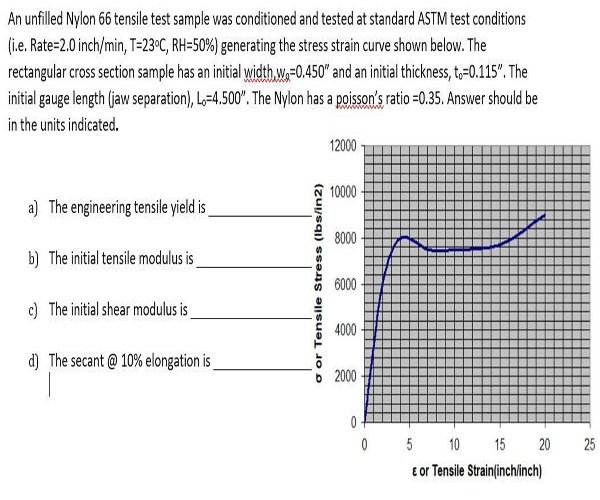
Yes. Nylon 66 performance is defined, verified, and compared through internationally recognized testing standards, primarily issued by ASTM, ISO, and DIN. These standards cover thermal behavior, tensile strength, abrasion resistance, fatigue, and environmental conditioning, ensuring that Nylon 66 data is repeatable, comparable, and relevant to real-world applications.
If it isn’t tested to a standard, it isn’t truly specified.
For Nylon 66—used in high-stress textiles, industrial fabrics, and engineering applications—testing is not a formality. It is the only way to distinguish true material capability from nominal or marketing-level claims.
How Nylon 66 Is Actually Measured
Unlike appearance-based textiles, Nylon 66 is typically specified by measured performance limits. Each critical property corresponds to a specific test method designed to isolate that behavior under controlled conditions.
Melting Point and Thermal Behavior
Thermal performance is one of Nylon 66’s defining advantages, and it is measured using thermal analysis, not visual observation.
| Test Method | What It Measures | Why It Matters |
|---|---|---|
| DSC (Differential Scanning Calorimetry) | Melting point, crystallinity | Confirms thermal limits |
| ISO 11357 | Thermal transitions | Processing safety margins |
Differential Scanning Calorimetry (DSC) DSC is the most reliable and widely accepted method for confirming Nylon 66’s melting behavior. It measures how much heat the polymer absorbs or releases as temperature increases.
For Nylon 66, DSC typically shows:
- A melting endotherm between 255–265 °C
- Higher crystallinity than Nylon 6
- Narrow melting range for well-controlled grades
This matters because DSC:
- Confirms material identity (66 vs 6)
- Detects polymer degradation or contamination
- Indicates processing stability and repeatability
Why DSC matters in practice Two materials may both be labeled “Nylon 66,” but DSC can reveal:
- Lower crystallinity from poor processing
- Degraded polymer with reduced thermal margin
- Copolymer blends with altered melting behavior
For coated, laminated, or heat-set textiles, DSC data is often more meaningful than supplier claims.
Tensile Strength Testing: Plastics vs Fibers vs Fabrics
Tensile strength is not measured with a single universal test. The correct standard depends on the form of Nylon 66.
| Standard | Application |
|---|---|
| ASTM D638 | Molded plastics |
| ISO 527 | Polymer tensile properties |
| ASTM D2256 | Yarn tensile strength |
ASTM D638 / ISO 527 – Plastics These standards apply to injection-molded or extruded Nylon 66 parts. They measure:
- Tensile strength
- Modulus
- Elongation at break
They are essential for:
- Engineering components
- Reinforced Nylon 66 grades
- Structural applications
ASTM D2256 – Yarn tensile testing For textiles, ASTM D2256 is far more relevant. It evaluates:
- Single-end yarn strength
- Elongation
- Consistency across samples
This test reflects how well Nylon 66’s molecular potential has been converted into usable fiber strength through spinning and drawing.
Key distinction: A Nylon 66 polymer can meet ASTM D638 requirements but still perform poorly as a textile if yarn orientation and processing are inadequate.
Fabric-Level Tensile and Tear Testing
Beyond yarn strength, fabrics introduce structural effects from weaving or knitting.
Common supporting standards include:
- ASTM D5034 / D5035 – Fabric tensile strength
- ASTM D2261 / D5587 – Tear resistance
These tests capture:
- Yarn interaction
- Load distribution
- Failure mode (progressive vs sudden)
For Nylon 66 fabrics used in:
- Outdoor shells
- Reinforced panels
- Load-bearing textiles
Fabric-level testing is often more predictive of real performance than fiber data alone.
Abrasion Resistance and Fatigue (Supporting but Critical Tests)
Tensile strength is only one part of durability. Nylon 66 is often chosen because it retains strength under wear, which must be validated separately.
| Test | Relevance |
|---|---|
| ASTM D4966 (Martindale) | Wear resistance |
| ASTM D3884 | Abrasion cycles |
| Cyclic loading / flex tests | Fatigue behavior |
Martindale abrasion (ASTM D4966) This test simulates repeated rubbing under controlled pressure. Nylon 66 typically shows:
- Slower mass loss
- Less yarn breakage
- Better surface integrity over cycles
Abrasion vs tensile relationship A material may test high in tensile strength but lose that strength quickly once abraded. Nylon 66’s advantage is that abrasion resistance preserves tensile capacity over time.
Cyclic loading tests These tests apply repeated tension below breaking load. They are critical for:
- Webbing
- Straps
- Reinforced garment zones
Nylon 66 generally exhibits:
- Lower fatigue crack initiation
- Slower strength decay
- More predictable end-of-life behavior
Conditioning Requirements: Why Test Environment Matters
Because Nylon 66 is hygroscopic, test standards explicitly define conditioning requirements.
| Condition | Reason |
|---|---|
| Dry | Baseline comparison |
| 50–65% RH | Real-world simulation |
| Wet | Worst-case performance |
Most ASTM and ISO standards require samples to be conditioned at:
- 20–23 °C
- 50–65% relative humidity
- For a defined minimum time
Why this matters Moisture reduces tensile strength but increases toughness. A dry test can overstate in-use strength by 10–20% or more, depending on the application.
Responsible specifications therefore require:
- Declared conditioning state
- Comparison under identical conditions
- Awareness of in-use environment
Unconditioned values are not wrong—but they are incomplete.
Thermal Aging and Environmental Resistance Testing
Many Nylon 66 applications involve long-term exposure to heat, UV, or cycling environments.
Common evaluation methods include:
- Accelerated thermal aging (oven exposure)
- UV weathering tests (e.g., ISO 4892)
- Strength retention after aging
These tests answer questions such as:
- How much tensile strength is retained after heat cycling?
- Does UV exposure embrittle the surface?
- Are stabilizers effective over time?
For outdoor and industrial textiles, retained performance after aging is often more important than initial test values.
Why Standards Matter More Than Absolute Numbers
Two suppliers may both claim:
- “High tensile strength”
- “High melting point Nylon 66”
Without standardized testing:
- Numbers cannot be compared
- Safety margins are unclear
- Processing risks increase
Standards ensure:
- Same test geometry
- Same conditioning
- Same loading rate
- Same interpretation
This allows designers and buyers to make engineering decisions, not assumptions.
Common Misinterpretations to Avoid
- Using molded-plastic data for textile fibers ASTM D638 values do not predict yarn or fabric behavior.
- Ignoring conditioning state Dry numbers are not real-use numbers.
- Comparing different standards directly ISO and ASTM results may differ slightly due to methodology.
- Assuming one test defines performance Tensile strength without abrasion or fatigue data is incomplete.
How High-Performance Buyers Actually Specify Nylon 66
Experienced buyers and engineers do not ask:
- “Is it Nylon 66?”
They ask:
- Which test standards were used?
- Under what conditioning state?
- What is strength retention after aging?
- How does abrasion affect tensile performance?
- Are results consistent across batches?
Suppliers who can answer these questions clearly are far more reliable than those offering only nominal data.
Practical Insight from Fabric Development
At SzoneierFabrics, Nylon 66 specifications always include:
- Explicit test standards (ASTM / ISO)
- Conditioning state at time of testing
- Fabric-level tensile and abrasion data
- Notes on thermal or UV aging behavior
This approach prevents:
- Over-engineering
- Unexpected field failures
- Costly redesigns after production
Unlabeled or unconditioned values are treated as screening data only, not design inputs.
Standards as Risk Management Tools
Testing standards are not bureaucratic hurdles. They are risk controls.
They protect against:
- Under-specified materials
- Inconsistent suppliers
- Processing surprises
- Field performance disputes
For Nylon 66—often chosen specifically because failure is unacceptable—standardized testing is part of responsible engineering.
If It’s Not Standardized, It’s Not Comparable
Nylon 66’s reputation for strength and thermal stability is built on measured, repeatable performance, not anecdote.
ASTM, ISO, and DIN standards provide the language through which:
- Engineers compare materials
- Buyers verify claims
- Manufacturers control quality
If a Nylon 66 material cannot be tied to:
- A recognized test method
- A defined conditioning state
- A reproducible result
…it may still work—but it is not truly specified.
In demanding applications, specification begins where marketing ends.
How should designers and engineers choose Nylon 66 materials based on melting point and tensile strength requirements?
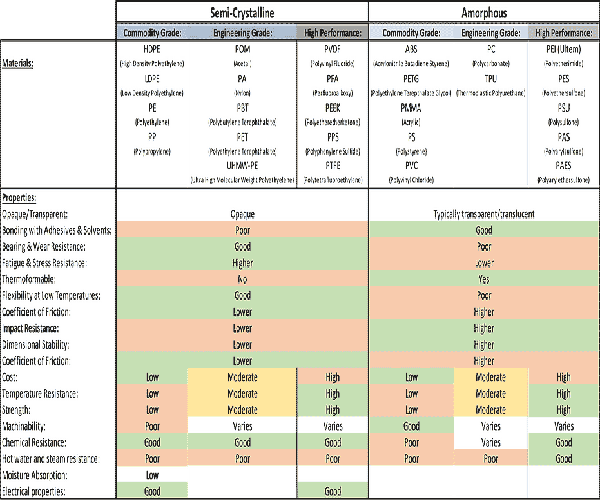
Nylon 66 should be selected when an application demands high heat resistance, strong and repeatable tensile performance, and long-term mechanical stability under stress. The decision must be grounded in operating temperature limits, load profiles, processing exposure, and expected service life, rather than generic labels such as “nylon fabric” or “engineering grade.”
Material choice starts with limits, not preferences.
In practice, Nylon 66 is rarely chosen because it is fashionable or convenient. It is chosen because other polymers approach their failure thresholds too quickly—whether during manufacturing, use, or aging. Designers and engineers who specify Nylon 66 correctly are not optimizing for peak performance on paper, but for reliability over time.
A Practical Nylon 66 Selection Framework
Selecting Nylon 66 responsibly means working through a structured evaluation. Each step narrows the field until the material choice becomes obvious—or clearly unnecessary.
Step 1: Define Thermal Exposure (Processing + End Use)
The first and most decisive question is temperature. Not maximum theoretical temperature, but real exposure across manufacturing and use.
| Requirement | Recommendation |
|---|---|
| <180 °C | Many polymers acceptable |
| 180–220 °C | Nylon 66 preferred |
| >220 °C | Nylon 66 or specialty polymers |
Why this matters
Many failures attributed to “poor strength” are actually thermal failures in disguise. Polymers that soften too early lose stiffness, creep under load, or deform during finishing—even though they never technically melt.
Nylon 66’s melting point of approximately 255–265 °C provides:
- A wider processing window during heat-setting, coating, and lamination
- Greater tolerance to friction-generated heat in service
- Reduced risk of thermal creep under sustained load
Processing vs end use
In many textile and industrial applications, processing temperature exceeds end-use temperature. Designers must account for:
- Dye fixation temperatures
- Calendering and coating curing
- Lamination dwell times
If a material barely survives processing, its long-term performance is already compromised. Nylon 66 is often selected precisely because it tolerates manufacturing heat without hidden degradation.
Step 2: Define the Mechanical Load Profile (Not Just “Strength”)
Tensile strength requirements should be defined by how loads are applied, not by a single peak value.
| Load Type | Nylon 66 Suitability |
|---|---|
| Static tensile | Excellent |
| Cyclic / fatigue | Very good |
| Shock loads | Good (with conditioning) |
Static loads
For components under constant tension—such as webbings, straps, reinforcements—Nylon 66’s high tensile strength and low creep make it reliable over long durations.
Cyclic and fatigue loads
Repeated loading is where many polymers quietly fail. Nylon 66 performs well because:
- Hydrogen bonds reform after stress release
- Crystalline regions anchor chain alignment
- Strength loss per cycle is relatively low
This makes Nylon 66 suitable for:
- Outdoor gear under repeated motion
- Industrial fabrics subject to vibration
- Garments stressed at knees, elbows, and seams
Shock loads
Under sudden loads, Nylon 66 benefits from controlled elongation, especially when conditioned at ambient humidity. It absorbs energy better than brittle high-modulus plastics, reducing catastrophic failure risk.
Step 3: Evaluate the Operating Environment
Mechanical and thermal performance never exist in isolation. Environment determines whether Nylon 66’s advantages are preserved—or wasted.
| Environment | Consideration |
|---|---|
| Humid | Expect reduced stiffness |
| Outdoor | Add UV stabilization |
| High friction | Nylon 66 favored |
Humidity
Nylon 66 absorbs moisture, which:
- Reduces stiffness and peak tensile strength
- Increases toughness and flexibility
For designers, this means:
- Do not size components using dry-only data
- Expect real-use tensile values to be lower—but more forgiving
In many textile applications, this trade-off improves comfort and durability rather than harming performance.
Outdoor exposure
UV radiation can degrade Nylon 66 at the surface if unstabilized. Designers should specify:
- UV stabilizers
- Pigments with UV-blocking properties
- Coatings where appropriate
Without these, tensile strength may remain adequate internally while surface abrasion resistance deteriorates.
High-friction environments
Where abrasion and friction dominate, Nylon 66’s superior wear resistance helps preserve tensile capacity over time. Polyester may resist UV better, but once abraded, it often loses strength more quickly.
Step 4: Compare Alternatives Honestly (Not by Label)
Material selection often fails when alternatives are compared superficially. The correct comparison looks at failure modes, not just cost or datasheet values.
| Material | Why Choose / Avoid |
|---|---|
| Nylon 6 | Lower cost, lower heat limit |
| Polyester (PET) | Better UV, lower tensile & creep resistance |
| Polypropylene | Lightweight, poor heat resistance |
| Nylon 66 | Best balance of heat + strength |
Nylon 6
Nylon 6 can be attractive due to:
- Lower cost
- Easier dyeing
- Slightly softer handfeel
However, its lower melting point (~220 °C) reduces:
- Processing tolerance
- Long-term thermal stability
- Creep resistance under load
Designers often specify Nylon 6 successfully—until heat exposure increases or service life expectations rise.
Polyester (PET)
Polyester excels in:
- UV resistance
- Low moisture absorption
- Dimensional stability
But compared with Nylon 66, it typically offers:
- Lower tensile strength
- Lower fatigue tolerance
- Reduced energy absorption under shock
Polyester is often chosen for aesthetic or dimensional reasons, while Nylon 66 is chosen for structural reliability.
Polypropylene
Polypropylene’s advantages are weight and cost. Its limitations—low melting point (~165 °C) and poor high-temperature strength—exclude it from many demanding applications.
Why Nylon 66 often wins
Nylon 66 is rarely the cheapest option, but it often delivers the lowest risk when:
- Heat and load coexist
- Failure carries safety or warranty consequences
- Long-term stability matters more than initial cost
Step 5: Translate Requirements into Specifications
Once Nylon 66 is identified as a candidate, the next step is to specify it properly.
Key specification elements include:
- Required melting point range (verified by DSC)
- Tensile strength under defined conditioning
- Strength retention after heat or aging
- Abrasion and fatigue performance
Avoid vague language such as:
- “High strength nylon”
- “Engineering grade polyamide”
Instead, require:
- Test standards (ASTM / ISO)
- Conditioning state (dry vs conditioned)
- Fabric- or yarn-level data relevant to the application
This ensures suppliers deliver functionally equivalent materials, not just nominal Nylon 66.
Step 6: Validate with Prototypes and Iteration
Material selection should always end with testing, not assumption.
At SzoneierFabrics, Nylon 66 fabrics are rarely approved based on a single construction. Instead:
- Multiple yarn orientations are evaluated
- Fabric densities are adjusted
- Heat-setting and finishing profiles are refined
Prototyping often reveals that:
- A lighter Nylon 66 fabric can outperform a heavier Nylon 6 fabric
- Proper orientation matters more than denier alone
- Over-processing can erase Nylon 66’s advantages
This iterative approach ensures that material potential translates into real performance.
Why Melting Point and Tensile Strength Must Be Considered Together
A common mistake is to evaluate melting point and tensile strength independently. In reality, they are interdependent in service.
- High tensile strength is meaningless if the polymer softens under heat
- High melting point is irrelevant if tensile strength degrades rapidly with use
Nylon 66 stands out because it maintains usable tensile strength closer to its thermal limits than many alternatives. This makes it especially reliable in:
- Heat-assisted manufacturing
- High-friction environments
- Load-bearing textile systems
Risk-Based Material Selection: When Nylon 66 Is the Safer Choice
Designers and engineers should ask not:
- “Can another polymer meet the spec today?”
…but rather:
- “What happens if conditions drift from ideal?”
Nylon 66 provides:
- Greater tolerance to processing variation
- More predictable aging behavior
- Slower strength loss under combined stress
When the cost of failure is high—returns, recalls, safety incidents—this tolerance becomes more valuable than incremental cost savings.
Nylon 66 Is Defined by Its Limits—and That’s Its Strength
Nylon 66 stands apart because of two core, defensible properties:
- A high melting point (≈255–265 °C)
- High, stable tensile strength under heat and repeated stress
These are not marketing features. They are engineering safeguards that define where Nylon 66 remains functional while other polymers begin to fail quietly.
When specified and processed correctly, Nylon 66 delivers:
- Reliable performance during high-temperature processing
- Long-term mechanical stability under load
- Strong resistance to abrasion, fatigue, and creep
For demanding textile and engineering applications, Nylon 66 is not the default choice—it is the deliberate choice made when designers prioritize reliability over convenience.
In material selection, knowing where a material stops working is often more important than knowing how well it performs at its peak. Nylon 66 earns its place by pushing those limits farther than most.
Develop Nylon 66 Fabrics with SzoneierFabrics
SzoneierFabrics is a China-based fabric R&D and manufacturing factory with extensive experience working with Nylon 66 yarns and fabrics for high-performance applications.
We support you with:
- Nylon 66 fabric development & optimization
- Melting point & tensile performance evaluation
- Heat-setting, coating, and finishing control
- Low-MOQ sampling and rapid prototyping
- Stable quality, short lead times, and free samples
If you’re selecting Nylon 66 materials based on melting point and tensile strength—and want expert guidance from development through sampling—contact SzoneierFabrics to start your custom fabric project.