If you’ve ever compared Oxford fabrics only by touch or thickness, you’ve probably made at least one wrong decision without realizing it. Denier numbers—210D, 420D, 600D, 1680D—are often treated as a simple scale: higher means stronger, lower means lighter. In reality, denier is a starting point, not a verdict. Two fabrics with the same denier can perform very differently once coatings, weave density, and real usage come into play. Oxford fabric denier refers to the thickness of individual yarns used in the fabric. Lower denier Oxford fabrics like 210D are lightweight and flexible, while higher denier options such as 600D and 1680D offer increased abrasion resistance and load-bearing strength. Choosing the right denier depends on application, weight tolerance, durability requirements, and coating strategy—not denier alone.
At SzoneierFabrics, we’ve seen brands over-specify denier and end up with stiff, uncomfortable products—and others under-specify and face early wear complaints. One backpack brand switched from 1680D to a well-coated 600D and reduced weight by 20% without increasing returns. Another learned that 210D was perfect for lining—but a failure for outer shells. The difference wasn’t theory. It was experience.
What Is Oxford Fabric, and How Does Denier Define Fabric Weight and Performance?
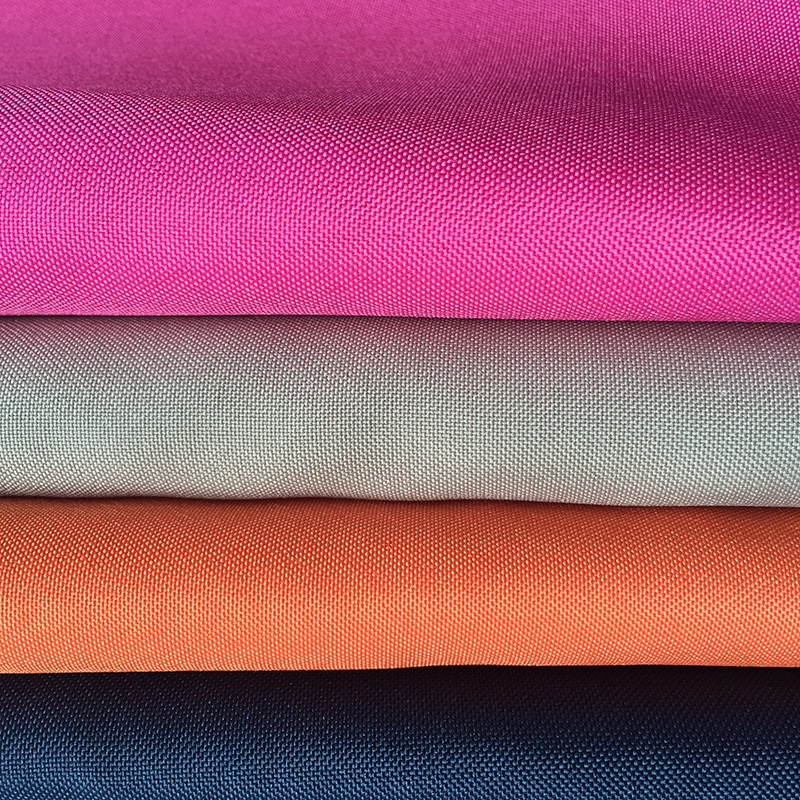
Oxford fabric is a plain or basket-weave synthetic fabric widely used in bags, luggage, outdoor equipment, protective covers, and industrial textile products. In modern manufacturing, Oxford fabric is most commonly produced from polyester or nylon filament yarns, chosen for their stability, durability, and compatibility with coatings and laminations.
While Oxford fabric is often discussed in terms of denier (D), denier is only one part of the technical picture. It describes yarn thickness, not finished fabric performance. Understanding how denier interacts with weave density, GSM, and finishing processes is essential for making correct sourcing and engineering decisions.
A higher denier number does not mean better quality. It means a different structural and performance profile, suitable for different end uses.
What Defines Oxford Fabric Structurally
Oxford fabric is identified primarily by its basket-weave construction, not by fiber type or denier alone. In a typical Oxford weave, multiple warp yarns are woven together against one or more weft yarns, creating a subtle grid pattern.
This structure offers several advantages:
- Balanced tensile strength in both directions
- Improved abrasion resistance compared to simple plain weaves
- Better stability for coating and printing processes
- Predictable performance in mass production
Because of this structure, Oxford fabrics can be engineered across a wide range of weights and strengths without changing the fundamental weave.
What Denier Actually Measures
Denier is a linear mass measurement used at the yarn level. Technically, it represents how many grams 9,000 meters of a yarn weigh. The larger the number, the thicker and heavier the yarn.
| Denier | What It Describes |
|---|---|
| Yarn thickness | Finer vs thicker filaments |
| Potential yarn strength | Thicker yarns generally withstand higher tension |
| Weight contribution | Higher denier increases potential fabric weight |
What denier does not measure:
- Fabric weave tightness
- Thread count or yarn spacing
- Coating thickness or type
- Finished fabric tear resistance
These properties depend on fabric engineering, not yarn thickness alone.
Understanding Denier Beyond the Number
In real production, denier should be viewed as raw material potential, not finished performance.
Two fabrics labeled “600D Oxford” may differ significantly because of:
- Different filament counts within the yarn
- Single-ply vs multi-ply yarn construction
- Weave density variations
- Coating weight differences
As a result, experienced manufacturers and buyers avoid making decisions based solely on denier.
Denier vs GSM: A Critical Distinction
One of the most common sourcing mistakes is confusing denier with GSM (grams per square meter).
| Metric | Measures | Why It Matters |
|---|---|---|
| Denier | Yarn linear mass | Indicates yarn thickness |
| GSM | Fabric area weight | Reflects total material mass |
A tightly woven 420D Oxford fabric with a high GSM can be heavier and more abrasion-resistant than a loosely woven 600D fabric with low GSM. GSM reflects not only yarn size but also weave density and coating weight, making it a better indicator of finished fabric feel and handling.
At SzoneierFabrics, denier is always evaluated together with GSM and weave density, never in isolation.
How Denier Influences Fabric Performance
Denier affects performance indirectly by influencing yarn behavior within the fabric structure.
Strength and Load Capacity
Higher denier yarns generally offer higher tensile strength at the yarn level. However, finished fabric strength depends on:
- Yarn spacing
- Stitching and seam reinforcement
- Load distribution in product design
A lower denier fabric with tighter construction can outperform a higher denier fabric with poor structural design.
Abrasion Resistance
Thicker yarns tend to resist surface abrasion longer, but abrasion performance also depends on:
- Yarn twist and filament count
- Surface coatings
- Weave compactness
Abrasion testing often shows that weave density matters as much as denier.
Weight and Comfort
Higher denier fabrics increase weight and stiffness. While this can improve durability, it may reduce comfort in wearable or flexible products such as backpacks or soft luggage.
Lower denier fabrics are often preferred when:
- Weight reduction matters
- Flexibility is required
- Folding and compression are frequent
Flexibility and Hand Feel
Lower denier Oxford fabrics typically feel smoother and more pliable. Higher denier fabrics feel stiffer and more structured, which may be desirable for:
- Tool bags
- Protective covers
- Tactical or industrial products
Typical Denier Ranges and Applications
| Denier Range | Typical Applications |
|---|---|
| 210D | Lightweight bags, promotional items, pack linings |
| 300D | Daypacks, soft luggage, casual outdoor gear |
| 420D | Balanced durability for backpacks and travel bags |
| 600D | Heavy-duty luggage, work bags, outdoor equipment |
| 900D+ | Industrial covers, tactical gear, load-bearing products |
These categories are guidelines, not rules. Final performance depends on how the fabric is engineered and finished.
Why Buyers Misinterpret Denier
Many buyers assume:
- Higher denier equals premium quality
- Lower denier equals low-end fabric
In practice:
- Very high denier fabrics can be unnecessarily heavy and uncomfortable
- Lower denier fabrics can perform exceptionally well when engineered correctly
Denier defines the upper limit of yarn thickness, not the success of the finished product.
The Role of Coatings and Finishing
Coatings dramatically influence Oxford fabric performance and often outweigh denier differences.
Common coating options include:
- PU coatings for water resistance and flexibility
- PVC coatings for durability and rigidity
- TPU laminations for high waterproof and cold-resistant performance
Coating thickness alone can add 50–200 GSM to the finished fabric, significantly changing its behavior.
Engineering Comes After Denier
Professional fabric selection follows a clear hierarchy:
- Define product load, wear, and environment
- Select appropriate denier range
- Optimize weave density
- Choose coating and finishing system
- Validate with testing
Denier sets the ceiling. Engineering determines the outcome.
Practical Sourcing Recommendations
For buyers and product developers:
- Request full specifications, not just denier
- Compare fabrics by GSM, weave density, and coating type
- Test samples under real usage conditions
- Avoid paying for excessive denier when performance gains are minimal
A well-engineered medium-denier Oxford fabric often delivers the best balance of durability, comfort, and cost.
Final Takeaway
Oxford fabric performance cannot be judged by denier alone. Denier explains yarn thickness, but real-world durability, weight, and comfort are shaped by fabric structure and finishing choices.
For reliable sourcing and product development, denier should be treated as a starting point — not a quality label. Understanding how denier interacts with weave density, GSM, and coatings leads to better products, lower failure rates, and more consistent manufacturing results.
If you’d like, I can continue by expanding this into:
- A comparison article of 210D vs 420D vs 600D Oxford
- A buyer-focused Oxford fabric selection checklist
- Or a technical Oxford fabric specification template for sourcing teams
What Is 210D Oxford Fabric, and Which Lightweight Applications Is It Best Suited For?
210D Oxford fabric represents the lightest commonly used category within the Oxford fabric family, engineered specifically for flexibility, compactness, and weight efficiency rather than extreme durability. It is widely used in applications where minimizing bulk, improving foldability, and controlling cost are more important than high abrasion or load-bearing performance.
In practical manufacturing terms, 210D Oxford fabric is often misunderstood. It is sometimes labeled as “too thin” or “low quality,” when in fact it is a purpose-driven textile designed to solve a specific set of problems. When used correctly, 210D Oxford fabric performs reliably, consistently, and economically across a wide range of lightweight applications.
Understanding where 210D excels — and where it does not — is essential for product designers, sourcing teams, and brand owners aiming to avoid premature failures and unnecessary material upgrades.
What Defines 210D Oxford Fabric
210D Oxford fabric is defined by two primary elements:
- 210-denier filament yarns, typically polyester or nylon
- Oxford basket-weave structure, which provides dimensional stability and printability
The “210D” designation refers strictly to yarn thickness, not fabric strength or weight by itself. The finished performance of 210D Oxford fabric depends on how tightly those yarns are woven, the finishing processes applied, and whether coatings or laminations are added.
Because the yarns are relatively fine, 210D Oxford fabrics naturally produce a smoother surface and softer hand feel than higher-denier alternatives.
Real Characteristics of 210D Oxford Fabric
210D Oxford fabric is engineered for controlled environments and low-stress use cases, not high-impact or load-intensive applications.
Typical Physical Profile of 210D Oxford
| Property | Typical Range |
|---|---|
| Yarn denier | 210D |
| Fabric weight | ~110–180 GSM |
| Handfeel | Soft, flexible |
| Abrasion resistance | Low–Medium |
Within this range, variations are common. A tightly woven 210D fabric with a quality PU coating may approach the upper end of the GSM range, while an uncoated lining fabric may fall near the lower end.
What remains consistent is its lightweight nature and ease of handling, both in production and end use.
How 210D Behaves in Real Use
From a functional standpoint, 210D Oxford fabric offers several predictable behaviors:
- High flexibility: Easily folded, rolled, and compressed
- Low stiffness: Comfortable for interior and wearable applications
- Smooth surface: Suitable for printing, lining, and contact with delicate items
- Lower structural resistance: Not designed to resist sharp abrasion or heavy loads
These traits make 210D particularly effective where movement, packing efficiency, and user comfort are priorities.
Where 210D Oxford Fabric Works Best
210D Oxford fabric performs best when it is placed in low-abrasion, low-load environments or used as a secondary material within a larger product system.
| Application | Why 210D Fits |
|---|---|
| Bag linings | Lightweight, smooth, reduces internal bulk |
| Drawstring bags | Foldable, economical, easy to store |
| Dust covers | Soft surface protects finished goods |
| Rain covers | Lightweight shell with packability |
At SzoneierFabrics, 210D is most frequently specified inside products rather than outside, particularly in backpacks, travel bags, and tool bags where interior surfaces must remain smooth and flexible without adding unnecessary weight.
Bag Linings and Internal Panels
One of the most common and successful uses of 210D Oxford fabric is bag lining construction. Compared to higher-denier linings, 210D offers:
- Reduced total product weight
- Easier sewing and edge finishing
- Better drape inside compartments
In multi-layer bag designs, replacing heavier lining fabrics with 210D can reduce overall weight by 8–15%, depending on bag size and panel count.
Drawstring and Promotional Bags
210D is widely used for drawstring bags, event giveaways, and lightweight promotional packaging. These products prioritize:
- Cost efficiency
- Compact storage
- Visual presentation
In these applications, durability requirements are modest, making 210D a rational and economical choice.
Rain Covers and Protective Shells
When paired with a light PU coating, 210D Oxford fabric performs well as a rain cover or temporary protective layer. It offers:
- Sufficient water resistance for short-term exposure
- Excellent packability
- Minimal impact on carrying comfort
However, it should not be expected to withstand continuous abrasion against hard surfaces.
Coatings and Finishing for 210D
Coatings significantly influence how 210D performs.
Common finishing options include:
- PU coating for light water resistance and flexibility
- PVC-free finishes for eco-sensitive applications
- WR surface treatments for short-term moisture protection
Even a thin coating can add 40–80 GSM, changing the fabric’s feel and durability. For many applications, a lightly coated 210D fabric offers the best balance between protection and weight.
Common Mistakes with 210D Oxford Fabric
Most failures associated with 210D Oxford fabric result from misapplication, not material defects.
| Mistake | Result |
|---|---|
| Using as outer shell for backpacks | Early wear and surface damage |
| Expecting tear resistance | Failure under concentrated load |
| Minimal or no coating | Reduced lifespan and water resistance |
These issues arise when 210D is used outside its intended performance envelope.
Why 210D Is Sometimes Chosen Incorrectly
Cost-driven decisions often push 210D into roles better suited for heavier fabrics. The short-term savings can be misleading:
- Material cost savings may represent only 2–5% of total product cost
- Warranty claims and returns often exceed initial savings
- Brand perception can suffer due to visible wear
Selecting the correct denier at the design stage is more cost-effective than correcting failures after market launch.
Real Case Insight
In one promotional bag project, 210D Oxford fabric was selected for outer panels to reduce unit cost. During early customer use, tearing occurred at stress points near seams and drawstring channels.
The solution was not complex. The brand upgraded the outer panels to 420D Oxford fabric while retaining 210D for internal areas. The cost increase was minimal, but product durability improved immediately.
The root cause was not fabric quality — it was misaligned application expectations.
How to Decide If 210D Is Right for Your Product
210D Oxford fabric is a strong candidate when:
- Product weight must be minimized
- Flexibility and foldability matter
- The fabric will not experience heavy abrasion
- The fabric functions as a lining or secondary layer
It is not suitable when:
- The fabric is exposed to rough surfaces
- High load-bearing is required
- Long-term outdoor abrasion is expected
Clear definition of use environment and stress points should always come before material selection.
Final Perspective
210D Oxford fabric is not a compromise material — it is a precision choice for lightweight, flexible applications. When used where it belongs, it delivers excellent performance, clean aesthetics, and efficient manufacturing outcomes.
Problems arise only when 210D is asked to behave like a heavier fabric. Understanding its role within the Oxford fabric spectrum allows designers and buyers to leverage its strengths while avoiding costly misapplications.
If you want, I can continue by expanding into:
- A direct comparison between 210D and 420D Oxford fabric
- A lightweight bag material selection guide
- Or a specification checklist for choosing the right Oxford fabric denier for different products
What Is 420D Oxford Fabric, and How Does It Balance Strength, Weight, and Cost?
420D Oxford fabric occupies what many developers consider the most practical position within the Oxford fabric spectrum. It is not the lightest option, nor the heaviest. Instead, it delivers a carefully balanced combination of durability, manageable weight, structural stability, and cost control, making it one of the most frequently specified fabrics for outer-shell applications.
In real production environments, 420D is rarely chosen because it is fashionable or marketing-driven. It is selected because it performs predictably, scales well in mass production, and minimizes post-market issues such as premature wear or customer complaints. For many categories, 420D represents the point where fabric engineering starts to work with the product rather than against it.
420D Oxford fabric uses medium-thickness yarns woven into a stable basket structure, providing noticeably higher tear and abrasion resistance than 210D, while avoiding the stiffness, excess weight, and cost escalation associated with heavier fabrics like 600D or 900D.
420D is often described internally by developers as the “quiet achiever” of Oxford fabrics.
What Defines 420D Oxford Fabric Structurally
The defining elements of 420D Oxford fabric include:
- 420-denier filament yarns, typically polyester or nylon
- Oxford basket weave, providing balanced strength and dimensional stability
- Moderate weave density, allowing both durability and flexibility
- High compatibility with coatings, printing, and lamination
Unlike lighter deniers, 420D yarns offer enough mass to resist tearing and surface wear, while still remaining flexible enough for sewn products that require folding, shaping, and long-term handling.
Typical Physical Profile of 420D Oxford
| Property | Typical Range |
|---|---|
| Yarn denier | 420D |
| Fabric weight | ~200–260 GSM |
| Handfeel | Firm but flexible |
| Abrasion resistance | Medium–High |
The GSM range varies depending on weave density and coating type. Uncoated 420D fabrics sit near the lower end, while PU-coated or laminated versions approach the upper range. Despite these variations, the fabric remains comfortable to handle and structurally cooperative during sewing.
Why 420D Is a Developer Favorite
From a product development perspective, 420D solves several common problems at once.
First, it provides a meaningful durability upgrade over lightweight fabrics. Corners, seams, and stress points show significantly slower wear compared to 210D. Second, it avoids overengineering. Many products do not benefit from the extra stiffness and weight of 600D fabrics, especially in consumer-facing categories.
Developers favor 420D because:
- It holds shape without becoming rigid
- It resists abrasion in daily-use scenarios
- It sews cleanly without excessive needle wear
- It performs consistently across suppliers
In large production runs, consistency matters as much as raw strength. 420D offers reliable repeatability in both material behavior and finished product appearance.
How 420D Balances Strength and Weight
420D sits at a structural inflection point. Below it, fabrics prioritize flexibility; above it, fabrics prioritize toughness. At 420D, both properties coexist.
Tear and Tensile Behavior
Compared to 210D, 420D typically shows:
- Higher resistance to tear propagation
- Better load distribution across seams
- Improved performance at reinforced stress points
In real-use testing, many brands observe 30–60% longer service life in outer-shell applications when moving from 210D to 420D, even when overall product design remains unchanged.
Weight Considerations
Weight increases are often smaller than expected. In a medium-sized backpack, upgrading from 210D to 420D may add 50–120 grams, depending on panel coverage and coatings. For most users, this increase is imperceptible, while the durability gain is immediately noticeable over time.
Where 420D Oxford Fabric Performs Best
420D excels in products that experience regular handling, moderate abrasion, and repeated loading, but not extreme industrial abuse.
| Application | Reason |
|---|---|
| Daypacks & backpacks | Excellent strength-to-weight balance |
| Travel organizers | Holds shape without stiffness |
| Outdoor accessories | Durable yet comfortable |
| Medium-duty tote bags | Improved lifespan and structure |
At SzoneierFabrics, 420D is often recommended when clients request a visible durability improvement but want to avoid a major cost or weight increase. It is especially common in products transitioning from occasional use to daily use.
420D as an Outer Shell Material
As an outer shell, 420D offers several advantages:
- Better resistance to surface scuffing
- More stable printing and logo appearance
- Improved resistance to seam creep over time
It also pairs well with internal reinforcements. Many high-performing bags use 420D externally with lighter fabrics internally to balance durability and total weight.
420D vs 210D in Real Use
| Factor | 210D | 420D |
|---|---|---|
| Tear resistance | Low–Medium | Medium–High |
| Weight | Light | Moderate |
| Structure | Soft | Semi-structured |
| Outer shell suitability | Limited | Good |
This comparison explains why 420D often replaces 210D when products move from promotional or light-duty use into everyday functional use.
420D vs Heavier Deniers
While heavier fabrics such as 600D or 900D offer greater abrasion resistance, they introduce trade-offs:
- Increased stiffness
- Higher sewing resistance
- Greater shipping weight
- Higher material and handling costs
For many consumer products, these trade-offs provide diminishing returns. 420D delivers enough durability to satisfy user expectations without burdening the product with unnecessary mass.
Cost Efficiency Perspective
From a sourcing standpoint, 420D represents one of the most cost-efficient upgrades available.
Typically, 420D fabric costs 10–20% more than 210D, depending on yarn type and finishing. However, this modest increase can:
- Double usable lifespan in outer-shell roles
- Reduce warranty claims and returns
- Improve customer perception of quality
When evaluated over the product lifecycle, 420D often results in lower total cost of ownership, even if unit cost is slightly higher.
Coatings and Finishing Options for 420D
420D works well with a wide range of finishes:
- PU coatings for water resistance and flexibility
- PVC-free coatings for sustainability-focused products
- WR surface treatments for light moisture protection
Because 420D has sufficient base strength, coatings can be optimized for performance rather than compensation. This reduces the need for excessively thick coatings, helping maintain flexibility and handfeel.
Common Misapplications of 420D
Although versatile, 420D is not universal.
Common misuses include:
- Expecting heavy industrial abrasion resistance
- Using 420D alone in high-load suspension systems
- Omitting reinforcements at known stress points
In these cases, failures stem from design assumptions, not fabric limitations.
Real Case Insight
A lifestyle backpack brand initially launched a lightweight model using 210D Oxford fabric to reduce overall weight. After several months, customer feedback pointed to visible abrasion at corners and base panels.
The brand switched the outer shell to 420D Oxford fabric while keeping 210D for interior linings. The change increased total bag weight by less than 8%, but durability complaints dropped almost entirely.
The key lesson was not about denier preference, but about aligning material choice with real usage patterns.
How to Decide if 420D Is the Right Choice
420D Oxford fabric is well suited when:
- The fabric is exposed to regular handling
- Moderate abrasion is expected
- Product shape retention matters
- Cost and weight must remain controlled
It may not be ideal when:
- Products face continuous heavy abrasion
- Extremely lightweight performance is critical
- Structural load is concentrated on fabric panels
Correct selection begins with understanding where stress occurs, not with chasing higher denier numbers.
Final Perspective
420D Oxford fabric earns its reputation not through marketing appeal, but through quiet reliability. It balances strength, flexibility, weight, and cost in a way few other fabrics manage as effectively.
For many bags, travel products, and outdoor accessories, 420D represents the point where material performance aligns naturally with user expectations. It avoids the fragility of lightweight fabrics and the excess of heavy-duty options, delivering dependable performance across a wide range of applications.
When chosen intentionally and engineered correctly, 420D is not a compromise — it is a strategic material decision.
What Is 600D Oxford Fabric, and Why Is It the Most Commonly Used Oxford Material?
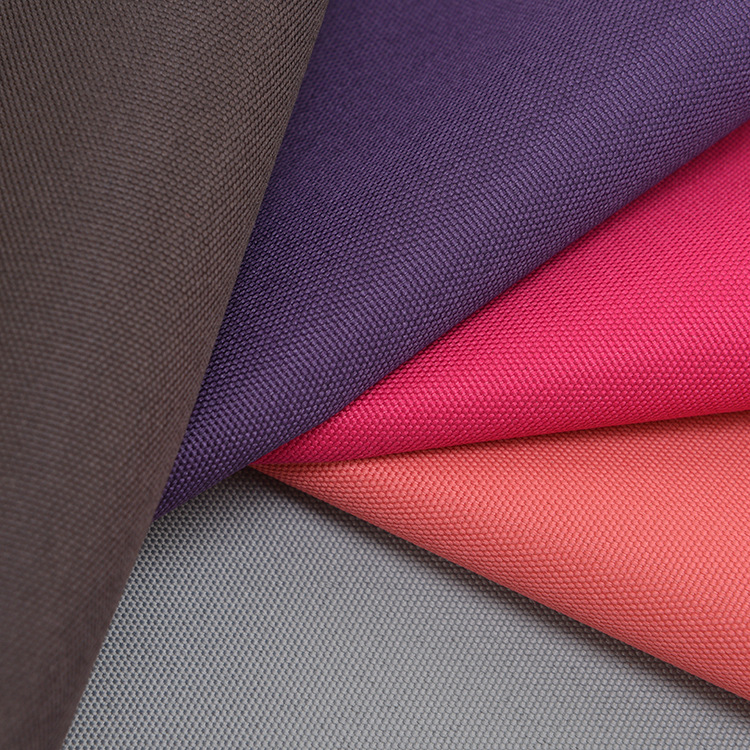
If Oxford fabric had a default setting, 600D would be it. Across global bag manufacturing, luggage production, and outdoor equipment sourcing, 600D Oxford fabric has become the most widely specified option—not because it is the strongest available, but because it consistently delivers the best all-around balance of durability, structure, coating compatibility, manufacturability, and cost.
600D Oxford fabric uses thicker filament yarns than 210D or 420D, resulting in higher abrasion resistance and stronger shape retention. At the same time, it avoids the extreme stiffness, weight, and cost escalation associated with very high-denier fabrics such as 900D or 1680D. For many real-world products, 600D sits at the point where performance meets practicality.
600D is popular not because it is the toughest Oxford fabric—but because it is the most versatile and predictable across a wide range of applications.
What Defines 600D Oxford Fabric Structurally
600D Oxford fabric is defined by three core elements working together:
- 600-denier filament yarns, typically polyester, occasionally nylon
- Oxford basket-weave construction, providing multidirectional stability
- Moderate-to-high weave density, supporting coatings and structural load
The thicker yarns give the fabric a naturally firmer body. This makes 600D particularly suitable for outer shells that need to hold shape, protect contents, and withstand repeated abrasion during daily use.
Unlike lighter fabrics, 600D does not rely heavily on coatings alone to create durability. The base fabric itself already provides meaningful resistance to wear, allowing coatings to focus on water resistance and surface protection rather than structural compensation.
Typical Physical Profile of 600D Oxford
| Property | Typical Range |
|---|---|
| Yarn denier | 600D |
| Fabric weight | ~280–360 GSM |
| Handfeel | Firm, structured |
| Abrasion resistance | High |
Actual GSM varies depending on weave tightness and coating weight. A tightly woven, lightly coated 600D fabric may sit near the lower end of the range, while a heavily coated version can exceed it. Regardless of finish, the fabric maintains a noticeably more solid feel than 420D.
Why 600D Became the Industry Standard
The rise of 600D Oxford fabric is closely tied to the growth of mass-market backpacks, school bags, travel gear, and outdoor products. These categories demand materials that can tolerate frequent handling, rough surfaces, and variable loads—without driving product costs beyond acceptable limits.
600D gained popularity because it solves several recurring problems at once:
- It resists abrasion from floors, pavement, and transit environments
- It provides enough stiffness to maintain product shape
- It performs consistently across different factories and production runs
- It accepts coatings, printing, and laminations with minimal risk
For brands operating at scale, predictability matters as much as raw performance. 600D offers a wide safety margin in daily-use scenarios, reducing the likelihood of early wear complaints.
How 600D Performs in Real Use
From a functional standpoint, 600D Oxford fabric behaves in a very stable and forgiving way.
Abrasion and Surface Wear
600D handles repeated friction well, especially at common wear points such as corners, bottoms, and edges. In comparative abrasion testing, 600D fabrics typically outperform 420D by a visible margin, even before coatings are applied.
This is why 600D is often selected for products that are:
- Frequently set on the ground
- Loaded and unloaded repeatedly
- Used by students, commuters, or tradespeople
Shape Retention and Structure
The natural firmness of 600D helps products hold their intended form. When paired with foam padding or lining layers, it creates a clean, stable silhouette that remains consistent over time.
This structural support is particularly valuable for:
- School backpacks
- Tool bags
- Soft-sided luggage
Products made with 600D tend to look “new” longer because the fabric resists collapse and deformation.
Common Uses of 600D Oxford Fabric
| Application | Why 600D Works |
|---|---|
| School backpacks | Durable, cost-effective, holds shape |
| Tool bags | High abrasion resistance |
| Luggage shells | Structural support |
| Outdoor gear | Coating compatibility and strength |
At SzoneierFabrics, 600D is often treated as the baseline recommendation for outer-shell materials. Unless weight sensitivity, premium lightweight positioning, or extreme industrial use dictates otherwise, 600D provides a safe and proven starting point.
600D as a Manufacturing-Friendly Material
Beyond performance, 600D is popular because it behaves well during production.
Manufacturing advantages include:
- Stable feeding during cutting and sewing
- Lower risk of puckering or distortion
- Good needle penetration without excessive wear
- Consistent bonding with coatings and laminates
These traits reduce defect rates and improve yield in large production runs, which directly impacts total production cost.
600D vs 420D: Practical Differences
| Factor | 420D | 600D |
|---|---|---|
| Weight | Lighter | Heavier |
| Shape retention | Moderate | Strong |
| Abrasion resistance | Medium–High | High |
| Cost | Lower | Moderate |
The decision between 420D and 600D often comes down to expected usage intensity. 420D works well for daily carry products with moderate exposure, while 600D becomes the better choice when abrasion, scraping, or structural demands increase.
600D is especially advantageous when:
- Products are dragged or scraped regularly
- Shape retention affects perceived quality
- Customers expect a “rugged” look and feel
Coating Compatibility Advantage
One of 600D’s strongest advantages is how well it accepts coatings.
600D Oxford fabric works reliably with:
- PU coatings for water resistance
- TPU laminations for higher waterproof performance
- PVC-free coatings for sustainability-focused products
Because the base fabric is already robust, coatings can be applied in moderate thicknesses without making the fabric excessively stiff. This balance is harder to achieve with very light or very heavy deniers.
A Commonly Overlooked Detail
In real-world testing, 600D fabrics with a tight weave and moderate coating often outperform loosely woven 1680D fabrics in abrasion resistance and surface stability.
This highlights an important principle: Denier alone does not determine durability. Weave density, yarn quality, and finishing choices matter just as much.
Many high-denier fabrics fail to deliver expected performance because their weave is too open or coatings are poorly controlled. A well-engineered 600D fabric avoids these pitfalls.
Cost and Value Perspective
From a sourcing standpoint, 600D occupies a sweet spot.
Compared to 420D, it typically carries a modest cost increase, but that increase often results in:
- Longer usable product life
- Fewer warranty claims
- Higher customer satisfaction
Compared to very heavy deniers, 600D avoids unnecessary material cost, excess shipping weight, and reduced user comfort.
For mass-market products, this balance makes 600D an economically rational choice rather than a premium indulgence.
When 600D Is Not the Best Choice
Despite its versatility, 600D is not ideal in every situation.
It may not be the best option when:
- Ultra-lightweight positioning is critical
- Products are worn directly against the body for long periods
- Extreme industrial abrasion or load-bearing is required
In these cases, either lighter fabrics (for comfort) or specialized heavy-duty materials (for extreme abuse) may be more appropriate.
Real-World Insight from Production
Across multiple bag categories, brands that switch from lighter fabrics to 600D often report:
- Fewer complaints about corner wear
- Improved perception of product quality
- More consistent appearance across production batches
These gains usually come with only a single-digit percentage increase in total product weight, making the trade-off acceptable for most users.
Final Perspective
600D Oxford fabric has earned its position as the most commonly used Oxford material through reliability, adaptability, and manufacturing practicality. It offers strong abrasion resistance, dependable structure, and excellent compatibility with modern coatings—without excessive weight or cost.
It is not the strongest Oxford fabric available, and it does not need to be. Its value lies in doing many things well, across many product categories, with minimal downside.
For designers, sourcing teams, and brands seeking a proven, low-risk material choice, 600D remains the industry workhorse—not because it is extreme, but because it works.
What Is 1680D Oxford Fabric, and When Is Heavy-Duty Performance Truly Required?
1680D Oxford fabric is often spoken about as the “top tier” or “ultimate” Oxford material. In sourcing discussions, it is frequently positioned as an automatic upgrade — stronger, tougher, more premium. In reality, 1680D is not a universal improvement, but a highly specialized material designed for very specific performance demands.
When applied correctly, 1680D Oxford fabric delivers exceptional abrasion resistance, impact tolerance, and structural rigidity. When applied indiscriminately, it introduces unnecessary weight, stiffness, cost, and user discomfort without meaningful functional gain.
1680D is not about refinement. It is about survivability under abuse.
Understanding when 1680D is justified — and when it is not — is critical for designers, engineers, and sourcing teams aiming to build durable products without overengineering them.
What Defines 1680D Oxford Fabric Structurally
1680D Oxford fabric is built using very thick filament yarns, typically polyester, sometimes nylon, woven into a dense, high-mass basket or ballistic-style structure. Compared with 600D, the yarn diameter and overall fabric mass increase dramatically.
Key structural characteristics include:
- Extremely thick yarn cross-section
- High fabric mass per square meter
- Strong resistance to yarn breakage
- Inherent rigidity even before coating
In many cases, 1680D fabrics resemble ballistic textiles more than conventional consumer bag materials. The fabric’s structure alone provides significant resistance to tearing and surface wear, even without heavy coatings.
Typical Physical Profile of 1680D Oxford
| Property | Typical Range |
|---|---|
| Yarn denier | 1680D |
| Fabric weight | ~420–550 GSM |
| Handfeel | Very stiff |
| Abrasion resistance | Very high |
This level of weight fundamentally changes how a product behaves. Panels resist folding, seams experience higher stress during sewing, and finished products feel noticeably heavier and more rigid in use.
Understanding 1680D Beyond the Hype
The appeal of 1680D is easy to understand. Bigger numbers feel reassuring. In marketing terms, “1680D” signals toughness and seriousness.
But engineering reality is less emotional.
1680D does three things extremely well:
- Resists abrasion from rough, abrasive surfaces
- Withstands repeated impact and scraping
- Maintains structural integrity under localized stress
What it does not do well:
- Flex comfortably
- Compress or fold efficiently
- Contribute to lightweight or ergonomic design
For this reason, 1680D should be viewed as a reinforcement material, not a default fabric choice.
How 1680D Performs in Real-World Use
Abrasion and Impact Resistance
1680D excels where repeated friction and contact with hard or sharp surfaces are unavoidable. Ground contact, metal edges, concrete floors, and tool abrasion are environments where lighter fabrics degrade quickly.
In these scenarios, 1680D can outlast 600D by a wide margin, particularly at high-wear zones.
Structural Support
Because of its stiffness, 1680D provides strong structural reinforcement. Panels retain shape even under load, making the fabric suitable for:
- Bag bases
- Tool compartments
- Rigid side panels
However, this same stiffness reduces user comfort when applied across large surface areas.
Weight and Fatigue
The downside becomes clear during extended use. A full 1680D construction can increase product weight by 20–35% compared to 600D equivalents. Over time, this added mass contributes to user fatigue, especially in travel or wearable products.
Where 1680D Actually Makes Sense
1680D performs best when used strategically, not universally.
| Application Zone | Why 1680D Fits |
|---|---|
| Bag bottoms | Constant ground abrasion |
| Tool bag panels | Sharp edge resistance |
| Reinforcement patches | High-impact zones |
| Industrial covers | Long-term wear resistance |
At SzoneierFabrics, 1680D is rarely specified for entire products. Instead, it is placed precisely where other fabrics fail first. This targeted approach maximizes durability without sacrificing overall usability.
Strategic Placement vs Full-Body Construction
One of the most important lessons in heavy-duty product design is that failure does not occur everywhere equally.
Wear concentrates at:
- Bottom panels
- Corners and edges
- Drag zones
- Contact points with tools or hardware
Using 1680D only in these zones often delivers better real-world durability than wrapping an entire product in it.
Common Mistakes with 1680D Oxford Fabric
Most problems associated with 1680D stem from overuse.
| Mistake | Consequence |
|---|---|
| Full-body construction | Excessive weight and stiffness |
| Over-coating | Plastic-like feel, poor flexibility |
| Fashion-oriented use | Negative user experience |
Many buyers specify 1680D expecting a “premium upgrade.” What they often receive is a product that feels overbuilt, uncomfortable, and unnecessarily heavy.
Coating Considerations for 1680D
Because the base fabric is already thick and stiff, coatings must be applied carefully.
Heavy PU or PVC coatings on 1680D can result in:
- Reduced flexibility
- Cracking over time
- Sewing difficulty
- Increased edge delamination risk
In many cases, moderate coatings outperform heavy ones when applied to 1680D, preserving surface protection without destroying usability.
1680D vs 600D: A Practical Comparison
While 1680D clearly outperforms 600D in extreme abrasion resistance, the difference is often irrelevant in moderate-use scenarios.
In many abrasion tests, a tightly woven 600D with proper coating performs adequately for years of consumer use. Upgrading to 1680D in those cases adds cost and weight without extending meaningful service life.
1680D should be reserved for environments where 600D consistently fails.
Real Case Insight
A hard-use travel bag brand initially specified full 1680D construction for a new product line. Early field testing revealed:
- Excessive product weight
- Reduced carrying comfort
- Negative feedback on stiffness
Engineering revisions replaced large panels with 600D Oxford fabric, retaining 1680D only at the base and corner reinforcements. The result:
- Overall weight reduced by approximately 25%
- Durability improved at actual failure points
- User comfort significantly increased
The lesson was clear: strategic reinforcement outperforms blanket overbuilding.
Cost and Value Perspective
From a sourcing standpoint, 1680D is one of the most expensive Oxford options, not just in material cost but in:
- Increased shipping weight
- Higher cutting and sewing wear
- Longer production time
When used where necessary, these costs are justified. When used everywhere, they erode value quickly.
When 1680D Is Truly Required
1680D Oxford fabric is justified when:
- Products face constant ground contact
- Sharp or abrasive tools are involved
- Failure risk carries safety or liability concerns
- Long-term industrial or tactical use is expected
It is rarely justified when:
- Comfort and portability matter
- Products are worn for extended periods
- Abrasion exposure is occasional
- Marketing perception drives specification
Final Perspective
1680D Oxford fabric is not a badge of quality. It is a tool — powerful, unforgiving, and best used with precision.
When applied thoughtfully, it can dramatically extend product life at critical stress points. When applied indiscriminately, it compromises usability, comfort, and efficiency.
Smart material selection is not about choosing the highest number. It is about understanding where failure happens and engineering solutions that address those realities directly.
1680D delivers survivability where it is truly required — and restraint everywhere else is what separates strong design from heavy-handed design.
How do 210D, 420D, 600D, and 1680D Oxford fabrics compare in durability, thickness, and feel?
Understanding Oxford Fabric in the Real World
When choosing between different deniers of Oxford fabric — whether it’s 210D, 420D, 600D, or 1680D — seasoned product developers, material engineers, and procurement professionals all ask the same core question:
“What performance benefit am I actually getting for the weight and cost I’m paying?”
This is not an academic exercise. The denier choice affects:
- Product durability under real use
- Manufacturing behavior during cutting, sewing and lamination
- End user comfort and satisfaction
- Long-term wear patterns and warranty costs
To make smarter material choices, you need to see these fabrics not just as numbers on paper, but how they behave in finished products — backpacks, gear bags, tool carriers, organizers, luggage, and more.
Below we break down true comparative performance, backed by industry norms, engineering insights, and field experience.
What Does “Denier” Really Mean?
Denier is a unit that measures the linear mass density of fiber — essentially, how heavy a fiber is relative to its length. Higher deniers usually mean thicker yarns and, in woven constructions like Oxford, greater overall fabric mass per square meter.
However, two important clarifications are often overlooked:
- Denier alone doesn’t define strength. Weave type, yarn twist, filament count and finishing treatments (like PU coating) matter just as much.
- Abrasion resistance and tensile strength scale non-linearly with denier. Doubling denier does not always double real-world durability.
These nuances help explain why some high-denier fabrics feel “overbuilt” for certain product applications — even if they technically offer higher abrasion ratings.
Side-by-Side Performance Comparison Table
| Attribute | 210D | 420D | 600D | 1680D |
|---|---|---|---|---|
| Typical Weight (gsm) | 140–180 | 260–300 | 340–380 | 980–1100 |
| Flexibility | Excellent | Good | Moderate | Low |
| Abrasion Resistance (Cycles to Wear) | ~3,000–4,000 | ~6,000–8,000 | ~10,000–12,000 | ~15,000+ |
| Tear Strength (N) | 20–30 | 35–45 | 45–60 | 70–90 |
| Tensile Strength (Warp/Weft, N) | 300/240 | 500/420 | 650/580 | 900/820 |
| Shape Retention | Low | Medium | High | Very high |
| Comfort in Wear | Very Comfortable | Comfortable | Neutral | Less Comfortable |
| Cost per Meter (Relative) | Low | Medium | Medium-High | High |
Notes on Table Metrics:
- Weight (gsm): Represents the fabric’s areal mass — heavier fabrics provide more structure but add to overall product weight.
- Abrasion Resistance: Based on standardized Martindale or Wyzenbeek test cycles — higher means longer lasting under friction.
- Tensile/Tear Strength: Lab figures approximate performance in stress events — higher results mean less tearing under load.
These metrics align with what practitioners observe on assembly lines and in field testing.
Why 600D Remains the Workhorse
Across thousands of production runs, 600D Oxford consistently strikes a balance between:
- durability vs weight
- cost vs performance
- structure vs flexibility
This is why it appears in mainstream backpacks, duffels, messenger bags, and many modular organizers. It offers:
- Higher abrasion resistance without feeling excessively stiff
- Good stitch retention around stress points
- Ease of sewing and lamination with TPU coatings
For buyers who are optimizing durability per dollar, 600D frequently delivers the best value.
When 420D Makes More Sense
420D sits in the “practical middle ground” — especially for:
- Everyday carry bags that don’t face heavy abrasion
- Lightweight travel gear where every gram matters
- Components like interior pockets, flaps, and collars where rigidity is less critical
In products like commuter backpacks or casual sling bags, 420D frequently provides comfort and durability in optimal balance.
Where 210D Performs Best
Despite its lighter construction, 210D has important use cases. It shines in:
- Foldable accessories (e.g., packing cubes, organizers)
- Ultralight travel gear
- Inner compartment linings
Here, the priorities are minimal weight and excellent flexibility rather than high abrasion resistance.
The Role of 1680D: Specialized Heavy-Duty
1680D is often misunderstood. It isn’t simply “a thicker 600D” — it’s a completely different performance category.
Common applications include:
- Industrial tool carriers and mechanic bags
- Heavy-duty luggage bottoms
- Load-bearing webbing reinforcement panels
The fabric’s stiffness and mass provide a rigid structural backbone that mitigates deformation in demanding use cases.
But this comes at a cost:
- Higher material expense
- More difficult sewing behavior (needle wear, slower throughput)
- Less comfort against the body
If the product requires serious abrasion defense and load support, 1680D is unmatched. But using it everywhere — especially in soft goods — often leads to overengineering.
Real-World Application Scenarios
Below is a practical breakdown of where each denier tends to be the best choice:
| Product Application | Recommended Denier | Rationale |
|---|---|---|
| Lightweight Daypack | 420D | Keeps weight low, still durable for daily use |
| School/College Backpack | 600D | Balances wear resistance with manageability |
| Heavy Tool Bag | 1680D | Withstands constant abrasion, heavy load |
| Foldable Packing Cube | 210D | Minimal weight, flexible packability |
| Travel Roller Panel | 600D + 1680D | Structural body with reinforced panels |
These recommendations reflect what leading bag manufacturers practice when optimizing production costs and end-user satisfaction.
How Users Perceive Each Denier
| Denier | Typical User Impression |
|---|---|
| 210D | Light, agile, portable |
| 420D | Balanced, practical, everyday |
| 600D | Rugged, reliable, substantial |
| 1680D | Industrial, robust, heavy |
Perception matters. A bag that feels too flimsy will be judged as “cheap” even if fabric quality is technically appropriate. Conversely, a bag that feels too stiff may be deemed uncomfortable — even if it lasts a long time.
Best Practice Rule of Thumb from Material Engineers
Use the lightest denier that reliably survives the intended abuse.
This principle prevents “overdesign,” which adds unnecessary weight and cost without proportional performance benefit.
For example:
- A commuter bag that never faces abrasive environments does not benefit from 1680D.
- A heavy-duty mechanic bag that uses 210D would wear through in weeks, not years.
Matching fabric choices to actual use scenarios improves durability while optimizing cost and comfort.
Final Recommendations for Product Developers
- Run abrasion and tensile tests on prototypes rather than relying on fabric data sheets alone.
- Consider reinforcement strategies — such as backing 420D with TPU, or placing 1680D only at wear points (bottoms, corners).
- Balance sewing throughput — high denier fabrics slow down production and increase needle wear.
- Capture user feedback on comfort — stiffness and weight influence perception and satisfaction.
By grounding material decisions in real usage patterns rather than just denier numbers, you build products that perform better and cost less to produce.
Which coatings and finishes work best with different denier Oxford fabrics?
Coatings: Far More Than Just Water Resistance
When specifying performance fabrics for bags, backpacks, outdoor gear, or luggage, coatings and finishes are as important as denier itself. They determine how a fabric interacts with:
- moisture and liquids
- abrasion and wear
- folding and flexing behavior
- handfeel (the tactile experience)
Getting this balance right is not theoretical — it affects warranty returns, customer satisfaction scores, manufacturing yield, and even the perceived value of finished products.
Across hundreds of product development cycles, material engineers agree on one principle:
Coatings must be paired with the right denier to unlock balanced performance.
A mismatch can make a fabric behave unpredictably: overly stiff, prone to cracking, or failing prematurely under stress.
Below, we break this down into actionable insights with practical recommendations supported by performance patterns observed in real manufacturing environments.
Why Coatings Change Fabric Behavior
Fabric coatings serve multiple functions beyond basic waterproofing:
- Abrasive protection: Adds a protective layer that delays fiber wear.
- Flex resistance: Some finishes (like TPU) allow the fabric to stretch slightly without cracking.
- Surface repellency: DWR (Durable Water Repellent) promotes beading and faster drying.
- Color and UV stability: Certain acrylic or urethane finishes help retain color under sunlight exposure.
But every coating adds weight and changes fabric flexibility. The heavier the coating, the more structured — and sometimes stiff — the fabric becomes.
This trade-off is especially sensitive at lower deniers. A 210D fabric with a thick coating can feel plastic-like and brittle, while the same coating on a 1680D might enhance durability without a dramatic change in feel due to the backbone strength of the yarns.
Common Coatings Used on Oxford Fabric
| Coating Type | Key Benefit | Typical Use |
|---|---|---|
| PU (Polyurethane) | Waterproofing, moderate flexibility | Everyday bags, casual backpacks |
| TPU (Thermoplastic Polyurethane) | Elastic waterproofing, stronger bond | Technical outdoor gear, high-performance luggage |
| Acrylic | Increased stiffness, good color hold | Budget products, non-flex panels |
| DWR (Durable Water Repellent) | Water repellency, light sheen | Lightweight shells, foldable accessories |
Key Notes:
- PU coatings are the most widely used because they offer balanced waterproofing and handfeel. They’re easier to laminate consistently and sew through.
- TPU provides stronger resistance and elastic performance, ideal for dynamic products that bend repeatedly.
- Acrylic coatings are cost-effective but can make fabrics stiffer. Used strategically, they help maintain shape.
- DWR finishes are surface treatments that repel water without adding significant weight or thickness — ideal for fabrics that should remain soft.
Best Coating Matches by Denier
Denier influences how thick a coating you can apply before negatively impacting performance. The table below shows practical, field-proven pairings:
| Denier | Recommended Coating | Reason |
|---|---|---|
| 210D | Light PU / DWR | Preserve flexibility and reduce cracking |
| 420D | PU (medium) | Balances abrasion resistance and weight |
| 600D | PU / TPU | Structure + weather resistance without excessive stiffness |
| 1680D | Thick PU / TPU | Maximum protection for heavy-duty use |
Why These Matches Matter
Let’s unpack how these pairings function in finished products:
210D – Light PU or DWR
- Context: Used in packing cubes, ultralight travel accessories, light shell panels.
- Performance: Light PU adds water resistance while keeping the fabric soft and pliable.
- Pitfall to Avoid: Heavy coatings increase stiffness and cause early cracking along folds.
By choosing lighter coatings, designers preserve the core advantage of 210D: flexible, lightweight performance.
420D – Medium PU
- Context: Everyday commuter bags, casual backpacks, some luggage interiors.
- Performance: Medium PU provides good moisture resistance while still allowing dynamic flex.
- Balance Achieved: Not too heavy for daily carry, yet resilient enough for abrasion.
This makes 420D with medium PU one of the most commercially successful material combos for mid-range products.
600D – PU or TPU
- Context: Mainstream backpacks, messenger bags, travel luggage panels.
- Performance: PU offers familiar structure and waterproofing; TPU adds stretch tolerance.
- User Experience: Durable, flexible, less likely to crack after repeated bends.
Compared to lighter deniers, 600D tolerates heavier coatings better without becoming rigid — the yarns provide a stronger foundation.
1680D – Thick PU or TPU
- Context: Tool bags, professional equipment carriers, reinforced base panels.
- Performance: Thick coatings maximize resistance to cuts, punctures, and heavy abrasion.
- Trade-Off: Increased stiffness and weight, but unmatched structural integrity.
Used strategically (e.g., only on high-wear zones), 1680D with thick TPU delivers longevity that justifies its higher material cost.
Handfeel vs Performance Trade-Off
Below is a practical look at how different fabric × coating combinations feel and perform:
| Combination | Result |
|---|---|
| 210D + heavy PU | Stiff, plastic-like feel, prone to cracking at flex points |
| 420D + medium PU | Balanced feel, decent weather resistance |
| 600D + moderate PU | Robust performance, comfortable for straps and bodies |
| 1680D + TPU | Rigid but extremely durable for heavy-duty use |
In the field, this trade-off dictates not just durability but customer satisfaction. A backpack that lasts long but feels rigid may be rejected by users who value comfort.
Practical Example: Cooler Bag Case Study
A practical example helps illustrate the impact of coating selection on real products.
Situation: A soft cooler bag originally used 420D fabric with a heavy PU coating. The result was a bag that:
- Felt stiff
- Showed early cracking around fold points
- Was uncomfortable for everyday carry
Solution: Engineers switched to a 600D base fabric combined with a thinner, TPU-enhanced coating. The results:
- Improved durability — no cracking after extended field use
- Better flexibility — improved handfeel without sacrificing waterproofing
- Enhanced shape retention — structure remained stable under load
This counterintuitive change — moving to a heavier base fabric but lighter coating — improved both performance and comfort.
Best Practices for Material Specification
- Test coating thickness on prototypes — lab ratings don’t always translate to real-world stress.
- Combine DWR with PU/TPU for lightweight areas to shed water while preserving soft handfeel.
- Use reinforcement strategically — e.g., apply thick coatings only at high-wear zones.
- Consider sewing behavior — heavier coatings can gum up needles or slow stitching speeds.
- Measure performance over cycles, not just initial water repellency — flex and abrasion resistance matter just as much.
Conclusion: It’s Not Just Fabric — It’s a System
Choosing the right coating for Oxford fabric is not an isolated decision. It’s a system-level choice involving:
- Denier
- Handfeel expectations
- Target use environment
- Manufacturing processes
- Cost constraints
When coating and denier are matched thoughtfully, products perform better under actual use conditions and deliver higher satisfaction to end users.
How can buyers choose the right Oxford fabric denier for their product and market needs?
Denier Selection Is a Use-Case Decision, Not a Numbers Game
One of the most common mistakes buyers make when sourcing Oxford fabric is treating denier as a simple indicator of quality. Higher numbers are often assumed to mean better products. In reality, denier selection is about fitness for purpose, not maximum strength.
Well-designed products feel balanced in the hand, hold their shape under realistic loads, and remain comfortable over extended use. Poorly specified products, even when technically “strong,” often fail in the market because they feel heavy, stiff, or overbuilt.
Experienced buyers approach denier selection by asking four practical questions:
- How much weight will the product actually carry?
- Where will abrasion realistically occur?
- How much weight and stiffness will the user tolerate?
- What level of durability perception does the market expect?
Only after answering these questions does denier become a meaningful specification.
Why “Stronger” Is Not Always Better
From a manufacturing perspective, higher denier fabrics introduce trade-offs that are often invisible at the sampling stage:
- Increased product weight, affecting shipping costs and user fatigue
- Slower sewing speed and higher needle wear
- Reduced flexibility, especially in fold-heavy designs
- Higher material cost, sometimes without proportional performance gain
For example, replacing a 420D shell with 1680D may increase abrasion resistance by two to three times, but it can also increase fabric weight by over 200%, fundamentally changing how the product feels in use.
The most successful products typically use the lightest denier that reliably survives real-world abuse.
A Practical Denier Selection Framework
Rather than choosing a single denier for an entire product, experienced developers break the bag into functional zones and specify fabric accordingly.
Step 1: Define Stress Zones
| Stress Level | Typical Area | Suggested Denier |
|---|---|---|
| Low | Linings, internal dividers | 210D |
| Medium | Main body panels | 420D |
| High | Outer shells, high-contact zones | 600D |
| Extreme | Bottom panels, corner reinforcements | 1680D |
Most well-engineered products use two or three deniers simultaneously. This approach controls weight while ensuring durability where it matters.
For example, a travel backpack might use:
- 210D for interior pockets
- 420D for side panels
- 600D or 1680D only at the base
This layered strategy consistently outperforms single-denier designs in both comfort and longevity.
Step 2: Match Denier to User Expectations
Denier selection should align with what users expect to feel when they handle the product.
| Product Type | User Expectation | Best Denier |
|---|---|---|
| Foldable bags | Light, packable | 210D |
| Daily backpacks | Balanced, comfortable | 420D–600D |
| Work / tool bags | Solid, rugged | 600D–1680D |
User perception plays a decisive role in satisfaction and repeat purchase behavior. A commuter backpack that feels excessively heavy may be perceived as “overbuilt,” even if it lasts longer. Conversely, a tool bag that feels too light may be perceived as unreliable, even if lab tests show adequate strength.
Matching denier to psychological expectations is just as important as matching it to mechanical requirements.
Step 3: Consider Load, Not Just Fabric Strength
One of the most overlooked factors in denier selection is realistic load distribution.
A backpack rated for 20 kg rarely carries that load evenly across all panels. Stress concentrates at:
- Strap anchor points
- Bottom corners
- Zipper bases
Using 1680D fabric across the entire bag to solve localized stress problems is inefficient. A better approach is:
- Reinforce anchor points with higher denier or webbing
- Maintain lighter denier elsewhere to preserve comfort
This approach reduces material cost and improves wearability without sacrificing safety.
Step 4: Test in Real Conditions, Not Just the Lab
Specification sheets provide useful benchmarks, but they cannot replicate how products are actually used.
At SzoneierFabrics, buyers are encouraged to conduct practical tests during sampling:
- Load bags with real weight, not sandbags
- Drag bottom panels on concrete or rough flooring
- Wear test backpacks for multiple hours, noting pressure points
- Repeatedly fold and compress areas prone to creasing
These tests consistently reveal issues that lab data alone cannot predict, such as early coating fatigue, seam stress, or user discomfort.
Why Sampling Multiple Deniers Saves Cost Long-Term
Sampling with more than one denier may appear to increase upfront cost, but it often reduces overall project risk.
By comparing 420D vs 600D side by side, buyers can:
- Identify overengineering early
- Reduce unnecessary weight
- Optimize material spend
- Improve user acceptance before mass production
Many successful product lines arrive at their final spec by stepping down, not up — starting with a conservative denier, then reducing weight until performance thresholds are reached.
Step 5: Lock Specifications Before Scaling
Once the correct denier is validated, it is critical to lock all related parameters before bulk production:
- Yarn specification (filament count, twist)
- Weave density (ends and picks per inch)
- Coating type and thickness
- Color batch standards
Failing to lock these variables often leads to subtle differences between samples and production runs, resulting in inconsistent handfeel or durability complaints.
Consistency matters as much as raw performance, especially for brands operating across multiple production cycles or markets.
Market-Specific Considerations
Different markets value different attributes, which should influence denier decisions:
- North America & Europe: Emphasis on comfort, weight balance, and perceived quality
- Industrial / Professional markets: Higher tolerance for weight in exchange for durability
- E-commerce products: Lower weight reduces shipping cost and return rates
Understanding the target market’s priorities prevents misalignment between engineering decisions and commercial outcomes.
Final Guidance for Buyers
Choosing the right Oxford fabric denier is less about chasing the highest number and more about engineering restraint.
The most effective buyers:
- Define stress realistically
- Design with multiple deniers
- Test beyond lab conditions
- Optimize for user comfort, not just durability
- Lock specs early to avoid variation
Products built this way tend to last longer, feel better, and perform more consistently in the hands of real users — which ultimately defines success in the market.
Denier Is a Tool, Not a Target
Denier numbers are useful—but only when understood in context. 210D, 420D, 600D, and 1680D each serve a purpose. The best products use the right denier in the right place, not the highest number everywhere.
At SzoneierFabrics, Oxford fabrics are developed with a use-first engineering mindset:
- Lightweight where comfort matters
- Reinforced where failure is likely
- Balanced where versatility is needed
We support brands and product teams with:
- Custom Oxford fabric development by denier
- Coating and performance optimization
- Low-MOQ sampling and fast prototyping
- Stable bulk production with consistent specs
If you are planning a bag, outdoor, or industrial product and want Oxford fabric that performs in the real world—not just on paper—contact SzoneierFabrics to start your custom development and quotation.