Skip to content
When choosing a drawstring bag, most people focus on style, color, or price—but the real difference lies in the material. Polyester and cotton may look similar at first glance, yet they behave completely differently in real-world use. One is engineered for performance, the other for comfort and natural appeal. Understanding this difference is what separates a good product from the right product.
Polyester and cotton drawstring bags differ primarily in their material composition, performance characteristics, and usage scenarios. Polyester bags are lightweight, durable, water-resistant, and ideal for sports, travel, and outdoor use, while cotton bags are soft, breathable, eco-friendly, and better suited for daily carry, retail, and sustainable applications. The choice depends on whether performance or natural comfort is the priority.
Imagine two users—one heading to the gym, the other to a local market. They might both carry drawstring bags, but their needs are completely different. That’s why material choice matters more than most people realize. Let’s break it down from a practical, real-world perspective.
What Are Polyester Drawstring Bags and How Are They Used?

Polyester drawstring bags are lightweight carry bags made from synthetic polyester fibers, usually designed with a simple top drawstring closure that works as both the opening system and shoulder-carrying structure. They are widely used in sports, travel, schools, events, retail packaging, promotional campaigns, fitness programs, and daily commuting because they offer a practical balance of durability, low weight, moisture resistance, and cost efficiency.
The reason polyester is so common in drawstring bag manufacturing is that it performs consistently in real use. Unlike natural fabrics such as cotton or jute, polyester does not absorb moisture easily, dries relatively quickly, and maintains better dimensional stability after repeated handling. Unlike heavier materials, it keeps the bag light and foldable. This makes it suitable for situations where users need a simple bag that can carry clothing, shoes, accessories, brochures, gifts, personal items, or sports equipment without adding unnecessary weight.
A polyester drawstring bag is often chosen when the product needs to be durable enough for repeated use but affordable enough for bulk orders. A gym chain may use it as a member welcome bag. A school may use it for PE clothes or student activities. A sports event may use it to distribute race kits. A brand may use it as a promotional product with a large printed logo. A travel company may use it as a lightweight accessory pouch for customers. In each case, polyester supports both function and branding.
However, not every polyester drawstring bag is the same. Performance depends on fabric denier, weave, coating, stitching, cord quality, logo method, and reinforcement. A thin promotional polyester bag is different from a reinforced sports polyester bag. A water-resistant coated polyester bag is different from an uncoated fabric version. A retail-quality polyester drawstring backpack with zipper pockets and strong corners is different from a basic event giveaway bag. At Szoneier, polyester drawstring bags are developed with these differences in mind, using fabric engineering, sample testing, and customization to match the product with its intended use.
Key Characteristics of Polyester Fabric
Polyester is a synthetic fiber made for stable, repeatable performance. In bag manufacturing, this matters because every bulk order must maintain consistent fabric strength, color, printing quality, and structure. Natural fabrics can have more variation in texture, shrinkage, and moisture behavior, while polyester is easier to control during weaving, dyeing, coating, cutting, and sewing.
One of the main advantages of polyester is durability. Polyester fibers have good tensile strength, which helps the fabric resist tearing under normal daily loads. This is important for drawstring bags because the body of the bag must support irregular items such as shoes, towels, books, bottles, clothing, samples, and promotional gifts. When matched with proper stitching and reinforced corners, polyester can provide reliable performance for both light and medium-duty use.
Polyester is also lightweight. A standard polyester drawstring bag can remain easy to carry, fold, and store. This is especially useful for events and promotions where thousands of bags may need to be packed, shipped, and distributed. Lower product weight can also reduce storage pressure and improve handling efficiency.
Moisture resistance is another important feature. Polyester naturally absorbs less water than cotton, which makes it better suited for sports, travel, outdoor use, school activities, and damp environments. When a PU coating or water-resistant finish is applied, the fabric can offer better protection against light rain, sweat, and surface moisture.
| Polyester Property | Description | Practical Impact |
|---|---|---|
| Synthetic fiber structure | Engineered for consistent production | Stable quality across bulk orders |
| Lightweight density | Low carrying burden | Easy for sports, travel, and daily use |
| Good tensile strength | Resists normal pulling and loading | Supports repeated carrying |
| Low moisture absorption | Handles sweat and damp conditions better than cotton | Faster drying and easier maintenance |
| Shape stability | Resists excessive stretching or shrinking | Maintains cleaner product appearance |
| Printable surface | Works with several logo methods | Useful for branding and promotional projects |
| Cost efficiency | Suitable for large-volume manufacturing | Strong value for bulk orders |
These characteristics explain why polyester is one of the most widely used materials for drawstring bags. It is not the softest fabric, and it does not have the natural texture of cotton, but it performs well when durability, moisture control, customization, and cost matter.
How Polyester Drawstring Bags Are Commonly Used
Polyester drawstring bags are used across many industries because the basic structure is simple and adaptable. The same general bag format can be adjusted through fabric weight, color, size, coating, printing, pocket design, and reinforcement. This allows one product category to serve many different purposes.
In sports and fitness, polyester drawstring bags are used to carry workout clothes, shoes, towels, gloves, resistance bands, water bottles, and small personal items. Their lightweight structure makes them convenient for gym members, students, athletes, and fitness class participants. Since polyester handles moisture better than cotton, it is suitable for bags that may come into contact with sweat or damp clothing.
In travel, polyester drawstring bags are often used as secondary bags. They can hold shoes, laundry, toiletries, beach items, electronics accessories, or daily essentials. Because they fold flat, users can store them inside a suitcase or backpack and take them out when needed. Travel brands and hotels may also use them as branded amenity bags or accessory pouches.
In promotional events, polyester drawstring bags are popular because they provide a large printable surface at a reasonable cost. Trade shows, charity events, sports competitions, school campaigns, corporate wellness programs, and product launches often use polyester bags to package giveaways while displaying a logo clearly.
| Use Scenario | Common Items Carried | Why Polyester Works Well |
|---|---|---|
| Gym and fitness | Clothes, shoes, towel, bottle | Lightweight, moisture-resistant, durable |
| School activities | PE clothes, books, supplies | Cost-effective and easy to customize |
| Travel | Shoes, laundry, toiletries, accessories | Foldable and compact |
| Sports events | Race kits, shirts, sponsor items | Easy bulk packing and logo printing |
| Corporate promotions | Brochures, gifts, samples | Affordable branding surface |
| Retail packaging | Apparel, accessories, product sets | Clean appearance and reusable value |
| Outdoor activities | Light gear, cap, snacks, bottle | Better moisture handling than natural fabrics |
| Daily commuting | Personal items and light essentials | Simple carrying and easy storage |
This wide usability is one of polyester’s strongest advantages. It can support both low-cost promotional use and better-quality custom bag development depending on the specification.
Why Polyester Is Practical for Sports and Fitness
Sports and fitness are among the most common uses for polyester drawstring bags. In these environments, users need a bag that can handle movement, sweat, repeated packing, and contact with rough surfaces. Polyester performs well because it is lightweight, durable, and easier to maintain than many natural fabrics.
A fitness user may carry a polyester drawstring bag several times per week. The bag may hold a T-shirt, shorts, towel, shoes, a bottle, headphones, keys, and personal accessories. After training, it may carry damp clothing or a sweaty towel. Polyester is suitable for this type of use because it dries faster than cotton and does not hold moisture as easily.
For gyms and fitness studios, polyester drawstring bags are also useful as branded merchandise or member gifts. A printed gym logo on the front panel can remain visible in public spaces, helping the brand gain repeated exposure. Since these bags are relatively lightweight and cost-efficient, they work well for bulk distribution.
| Sports Requirement | Polyester Bag Advantage |
|---|---|
| Lightweight carrying | Reduces burden before and after training |
| Sweat exposure | Lower moisture absorption than cotton |
| Repeated use | Durable synthetic fibers support daily handling |
| Easy packing | Flexible body fits clothing and shoes |
| Branding | Large printable front panel |
| Bulk distribution | Cost-efficient for gyms, teams, and events |
For more demanding sports applications, the design can be upgraded with reinforced corners, thicker drawcords, water-resistant coating, zipper pockets, mesh bottle holders, or a double-layer base. These details improve real performance without losing the core advantage of a lightweight drawstring bag.
Travel and Commuting Applications
Polyester drawstring bags are highly practical for travel because they are light, foldable, and easy to store. A traveler can use one as a shoe bag, laundry bag, beach bag, day-use pouch, or quick-access accessory bag. When not in use, the bag can be folded into a suitcase with very little space.
For commuting, polyester drawstring bags work well as secondary carry bags. A user may carry lunch, gym clothes, small purchases, or documents. Students may use them for activity gear. Office workers may use them to separate gym clothing from work items. The drawstring closure makes the bag fast to open and close, which is useful when moving between locations.
Travel-related businesses can also use polyester drawstring bags as branded packaging. Hotels, tour companies, airlines, outdoor brands, and travel accessory companies may provide them as part of product kits or customer gifts. Because polyester supports printing, the bag becomes both a functional item and a branding tool.
| Travel or Commuting Use | Practical Benefit |
|---|---|
| Shoe storage | Keeps footwear separate from clothing |
| Laundry bag | Separates used clothes during travel |
| Beach or pool bag | Handles damp items better than cotton |
| Day-use bag | Provides light carrying for short trips |
| Gift or amenity bag | Adds reusable value to branded kits |
| Accessory pouch | Organizes small travel items |
For travel use, fabric weight and coating should be chosen carefully. A lightweight polyester bag is good for packing efficiency, while a coated polyester bag improves moisture resistance. If the bag will carry shoes or heavier items, reinforced corners and stronger seams are recommended.
Promotional and Branding Uses
Polyester drawstring bags are widely used in promotional campaigns because they offer strong value for bulk branding. They are more durable than many disposable packaging options and more practical than paper or plastic giveaway bags. A person who receives a polyester drawstring bag may continue using it for gym, school, shopping, travel, or daily storage, giving the logo repeated visibility.
The front panel provides a large printing area. Simple logos, campaign slogans, school names, sponsor graphics, and event artwork can be applied through screen printing, heat transfer, digital printing, sublimation, woven labels, or patches depending on the design and fabric.
| Branding Method | Best Use |
|---|---|
| Screen printing | Simple logos and large-volume orders |
| Heat transfer | Multi-color artwork and clean edges |
| Sublimation | Full-color all-over designs on suitable polyester |
| Digital printing | Detailed graphics and smaller runs |
| Woven label | Retail-quality branding detail |
| Rubber patch | Premium or outdoor-style branding |
For promotional use, polyester is often preferred because it balances price and function. It is affordable enough for high-volume orders but durable enough to avoid feeling disposable. This helps brands create a better impression than low-quality single-use items.
However, logo durability should not be ignored. Poor printing can peel, fade, or crack after repeated folding and use. The printing method should match the polyester surface, coating, color, and expected use. At Szoneier, logo testing can be arranged during sampling to confirm the best branding method before mass production.
Polyester Fabric Types Used for Drawstring Bags
Different polyester fabrics can be used depending on the product’s purpose. Lightweight polyester is suitable for promotional and event bags. Oxford polyester provides a stronger and more textured surface. Ripstop polyester improves tear resistance. PU-coated polyester adds water resistance. Recycled polyester can be used for brands that want a more sustainability-focused material option.
| Polyester Fabric Type | Key Feature | Suitable Application |
|---|---|---|
| Standard polyester | Smooth, lightweight, cost-efficient | Promotions, school bags, basic sports use |
| Oxford polyester | Textured and stronger | Team bags, retail bags, daily use |
| Ripstop polyester | Reinforced tear-resistant grid | Outdoor and travel bags |
| PU-coated polyester | Improved water resistance | Sports, gym, travel, damp environments |
| Recycled polyester | Made from recycled sources | Eco-positioned brands and retail programs |
| Sublimation polyester | Supports full-color printing | Fashion, events, custom graphics |
The right fabric depends on the bag’s role. A basic promotional bag may not need Oxford or ripstop polyester. A retail sports bag may require stronger fabric and better finishing. An outdoor event bag may benefit from coated polyester. A fashion-oriented bag may need a smoother fabric with better color control.
This is where customization becomes important. A polyester drawstring bag can be made simple or upgraded depending on the market.
Polyester Performance Analysis
Polyester is often selected because it performs well in the main areas that matter for drawstring bags: durability, weight, moisture resistance, printability, and cost. It may not have the soft natural touch of cotton, but it is better suited for performance-driven use.
| Performance Factor | Polyester Score | Reason |
|---|---|---|
| Durability | 9/10 | Strong synthetic fibers support repeated use |
| Weight | 9/10 | Lightweight structure is easy to carry |
| Water resistance | 8/10 | Low moisture absorption and coating compatibility |
| Printability | 8/10 | Works with several branding methods |
| Shape stability | 8/10 | Resists shrinking and stretching better than many natural fabrics |
| Comfort | 6/10 | Less soft than cotton but lighter and more practical |
| Cost efficiency | 9/10 | Strong value for bulk manufacturing |
This performance profile explains why polyester is common in sports, travel, events, schools, and promotional products. It is not selected because it is luxurious. It is selected because it is practical, stable, and adaptable.
Polyester Drawstring Bags vs Other Materials
Polyester drawstring bags are often compared with cotton, nylon, non-woven fabric, and canvas bags. Each material has its own advantages. Cotton feels softer and more natural. Nylon may offer better strength-to-weight performance in some applications. Canvas is heavier and more structured. Non-woven fabric is low-cost but usually less durable. Polyester sits in the middle as a strong all-purpose option.
| Material | Main Advantage | Main Limitation |
|---|---|---|
| Polyester | Durable, light, moisture-resistant, cost-efficient | Less natural feel than cotton |
| Cotton | Soft and natural appearance | Absorbs moisture and dries slower |
| Nylon | Strong and lightweight | Often higher cost than polyester |
| Canvas | Heavy-duty and structured | Heavier and less compact |
| Non-woven fabric | Very low cost | Shorter lifespan and weaker feel |
For many B2B projects, polyester provides the best balance. It is more durable than low-cost non-woven options, lighter and more moisture-resistant than cotton, and often more cost-efficient than nylon. This balance makes it suitable for high-volume custom production.
Real-World Example of Polyester Drawstring Bag Use
A fitness enthusiast using a polyester drawstring bag can carry workout clothing, shoes, towel, headphones, keys, and a water bottle without needing a large sports backpack. The bag remains light enough for commuting and compact enough for locker storage. After training, the user can place damp clothing inside, wipe the bag surface if needed, and fold it away when not in use.
For a gym brand, this same bag can become part of a new member kit. The front panel can display the gym logo. A zipper pocket can hold membership cards or keys. A PU-coated polyester fabric can improve moisture resistance. Reinforced corners can help the bag survive repeated use. This turns a simple bag into a functional branded item.
For an event organizer, polyester drawstring bags can be produced in bulk, packed flat, and distributed quickly. Each bag can hold brochures, sponsor gifts, shirts, water bottles, and small accessories. After the event, participants may continue using the bag, extending brand exposure beyond the event day.
How Szoneier Develops Polyester Drawstring Bags
Szoneier develops polyester drawstring bags using fabric selection, structural design, customization, sampling, and quality control. Depending on the application, Szoneier can recommend standard polyester, Oxford polyester, ripstop polyester, PU-coated polyester, recycled polyester, or sublimation-ready polyester. This allows clients to choose the right balance of durability, weight, moisture resistance, appearance, and cost.
For sports and fitness bags, Szoneier can add reinforced corners, stronger drawcords, zipper pockets, mesh bottle pockets, double-layer bases, or water-resistant coatings. For promotional projects, Szoneier can optimize the bag for logo clarity, cost efficiency, and fast bulk production. For retail or private-label brands, Szoneier can support custom colors, labels, patches, packaging, and premium finishing details.
With over 18 years of experience in fabric R&D and manufacturing, Szoneier understands that a polyester drawstring bag is not only a simple carrying product. It can serve as sports gear, travel storage, promotional packaging, school equipment, retail merchandise, or a branded customer gift. The final performance depends on how carefully the material, structure, and customization are matched to real use.
Polyester drawstring bags are popular because they deliver practical value. They are light enough for daily carrying, durable enough for repeated use, moisture-resistant enough for active environments, and cost-efficient enough for bulk production. When properly designed, they become reliable, reusable, and highly customizable bags for sports, travel, promotions, and everyday activities.
What Are Cotton Drawstring Bags and Where Are They Used?
Cotton drawstring bags are reusable bags made from natural cotton fibers, usually designed with a simple drawstring closure at the top. They are valued for their soft hand feel, breathable structure, natural appearance, and strong environmental appeal. Unlike polyester or nylon drawstring bags, cotton bags are not primarily chosen for technical performance, water resistance, or ultra-lightweight durability. They are chosen because they feel more natural, look more premium in lifestyle and retail settings, and align well with reusable packaging, eco-conscious branding, gift presentation, and everyday casual use.
In real-world applications, cotton drawstring bags are commonly used in retail packaging, cosmetics, jewelry, apparel, gifts, food packaging, hotel amenities, lifestyle products, handmade goods, and environmentally focused brand programs. They are especially popular when the bag is expected to add value to the product inside. A small cotton pouch used for skincare packaging can make the product feel more thoughtful. A larger cotton drawstring bag used for clothing or accessories can create a softer, more premium unboxing experience. A printed cotton bag used for events or retail promotions can communicate a more responsible and natural brand image.
Cotton also has clear limitations. It absorbs moisture, takes longer to dry than synthetic fabrics, and may shrink if not properly processed. It is not the best choice for wet sports environments, heavy outdoor use, or applications where water resistance is a priority. However, when used in the right scenario, cotton drawstring bags offer a strong combination of comfort, reusability, printability, and brand warmth. For many brands, the value of cotton is not only in its carrying function but also in the feeling it creates.
At Szoneier, cotton and canvas drawstring bags can be developed in different fabric weights, sizes, colors, printing methods, and structural designs. By improving stitching, drawstring quality, fabric selection, and finishing details, cotton drawstring bags can be made more durable and practical while maintaining their natural appeal.
Key Characteristics of Cotton Fabric
Cotton is a natural fiber derived from the cotton plant. In bag manufacturing, it is valued for its soft texture, breathable structure, and natural surface. Compared with synthetic fabrics such as polyester and nylon, cotton has a warmer and more familiar hand feel. This is why it is often used in products that need to feel comfortable, approachable, and environmentally conscious.
The soft texture of cotton gives it a strong advantage in packaging and lifestyle markets. When users touch a cotton drawstring bag, it feels less industrial and more personal. This makes cotton suitable for products where customer perception matters, such as skincare, jewelry, boutique apparel, gifts, organic products, wellness items, and handmade goods.
Cotton is also breathable. Air can pass through the fabric more easily than through coated synthetic materials. This makes it useful for packaging items that should not be completely sealed in plastic-like materials. For example, cotton bags are often used for shoes, accessories, candles, dried goods, linen products, and small household items.
However, cotton is absorbent. It can take in moisture from rain, spills, sweat, or damp environments. Once wet, it can become heavier and take longer to dry. This is the main reason cotton is less suitable for wet sports use, outdoor rain exposure, swimming bags, or applications requiring strong water resistance.
| Cotton Property | Description | Practical Impact |
|---|---|---|
| Natural fiber | Made from plant-based cotton fibers | Creates eco-friendly and natural appeal |
| Soft texture | Comfortable and pleasant to touch | Improves user experience and perceived value |
| Breathability | Allows airflow through the fabric | Useful for lifestyle and product packaging |
| Absorbency | Holds moisture more easily than synthetics | Less suitable for rain or wet environments |
| Printability | Works well with screen printing and simple graphics | Strong for branding and retail packaging |
| Reusability | Can be used repeatedly when properly made | Supports sustainable packaging concepts |
| Biodegradability | Natural fiber can break down under suitable conditions | Appeals to environmentally conscious markets |
Cotton’s strengths and limitations must both be understood. It is not the best material when the goal is maximum water resistance or technical durability. It is a strong material when the goal is softness, natural presentation, reusable packaging, and brand storytelling.
Common Uses for Cotton Drawstring Bags
Cotton drawstring bags are used in markets where appearance, touch, and reusability matter. They are commonly selected for retail packaging because they make products feel more premium than plastic bags or disposable paper packaging. A cotton pouch can be reused by the customer, which extends brand exposure beyond the first purchase.
In apparel retail, cotton drawstring bags can be used for T-shirts, underwear, socks, scarves, baby clothes, swimwear, or boutique fashion items. In cosmetics and beauty, they are used for skincare sets, makeup kits, soap, candles, essential oils, and wellness products. In jewelry and accessories, small cotton drawstring pouches are used for bracelets, necklaces, watches, sunglasses, hair accessories, and handmade crafts.
Cotton bags are also common in hospitality and gift packaging. Hotels may use them for slippers, laundry, toiletries, welcome kits, or travel amenities. Gift brands may use them for holiday sets, corporate gifts, wedding favors, and subscription boxes. Food and organic product brands may use cotton bags for dry goods, tea, coffee beans, nuts, spices, or reusable produce packaging, depending on hygiene and regulatory requirements.
| Use Scenario | Common Products Packed | Why Cotton Works Well |
|---|---|---|
| Retail packaging | Apparel, accessories, gifts | Natural and premium presentation |
| Beauty and cosmetics | Skincare, soap, candles, makeup kits | Soft touch and boutique feel |
| Jewelry and accessories | Watches, bracelets, sunglasses | Protects surface and improves perceived value |
| Hospitality | Slippers, laundry, amenities | Comfortable and reusable |
| Eco product lines | Organic goods, wellness products | Supports natural brand positioning |
| Events and gifts | Wedding favors, corporate gifts | Customizable and reusable |
| Daily lifestyle use | Small items, books, groceries, storage | Casual, soft, and practical |
| Handmade products | Crafts, artisan goods | Matches handmade and natural aesthetics |
This range of uses explains why cotton drawstring bags remain popular even though synthetic materials often perform better in wet or high-abrasion environments. Cotton offers emotional and visual value that many technical materials do not provide.
Cotton Drawstring Bags in Retail Packaging
Retail packaging is one of the strongest markets for cotton drawstring bags. A product placed inside a cotton bag often feels more intentional and higher quality. This is especially important for brands that want to create a more memorable customer experience.
For small products, cotton drawstring pouches can replace disposable packaging. Jewelry, cosmetics, handmade soap, candles, small accessories, and gift items can all be packed in cotton bags. The bag protects the product from dust and light scratches while also adding a reusable element. Customers may later use the pouch for storage, travel, or organizing small items.
For apparel and lifestyle products, larger cotton drawstring bags can be used instead of plastic polybags or paper gift bags. A cotton bag with a clean logo print can support a premium brand image and give customers a practical item they may keep.
| Retail Application | Bag Design Suggestion |
|---|---|
| Jewelry packaging | Small cotton pouch with fine drawcord |
| Skincare sets | Medium cotton bag with clean logo print |
| Apparel packaging | Larger cotton drawstring bag with reinforced seams |
| Handmade soap | Breathable cotton pouch with simple branding |
| Gift sets | Cotton or canvas bag with custom label |
| Boutique accessories | Natural cotton bag with screen print or woven tag |
For retail use, fabric weight matters. Lightweight cotton may be enough for small pouches, while heavier cotton or canvas is better for apparel, shoes, or larger gift items. Stitching quality and drawstring appearance also affect perceived value. A cheap cord can reduce the premium feel of the bag, even if the fabric is good.
Cotton Drawstring Bags for Lifestyle and Daily Use
Cotton drawstring bags are also used for casual daily carrying and home organization. Their soft texture and natural appearance make them suitable for lifestyle products, personal storage, and reusable everyday bags. Users may use them to carry books, groceries, snacks, children’s items, craft supplies, shoes, laundry, or travel accessories.
Unlike technical sports bags, cotton drawstring bags are often chosen for comfort and appearance. They pair well with natural colors, minimalist logos, organic branding, and simple lifestyle aesthetics. This makes them popular for wellness brands, eco shops, bookstores, boutique retailers, craft brands, and organic lifestyle companies.
Cotton bags can also work well for storage. Because they are breathable, they can be used to store shoes, linens, toys, accessories, cables, small home goods, or seasonal items. Many customers keep cotton bags after purchase because they feel useful and pleasant to handle.
| Lifestyle Use | Practical Benefit |
|---|---|
| Grocery or produce carrying | Reusable and natural-looking |
| Shoe storage | Breathable and soft |
| Travel organization | Good for laundry or accessories |
| Home storage | Helps organize small items |
| Bookstore or gift shop bag | Adds brand value |
| Children’s items | Soft and easy to carry |
For daily carry, cotton bags should have stronger stitching and suitable fabric weight. A very thin cotton pouch may not be suitable for groceries or books. A heavier cotton or canvas version is more appropriate when the bag must carry weight repeatedly.
Eco-Friendly Appeal and Sustainability Positioning
Cotton drawstring bags are often selected because they support eco-conscious branding. Since cotton is a natural fiber and reusable, it fits well with brands that want to reduce disposable packaging and communicate environmental responsibility. This is especially relevant for organic products, wellness brands, sustainable fashion, handmade goods, natural cosmetics, and eco-focused retail programs.
However, sustainability should be communicated accurately. Cotton is natural and biodegradable under suitable conditions, but cotton farming, dyeing, printing, and production still require resources. A cotton bag becomes more environmentally meaningful when it is reused many times. Therefore, quality matters. A poorly made cotton bag that tears quickly does not support a strong sustainability message.
| Sustainability Factor | Why It Matters |
|---|---|
| Reusability | The bag should be durable enough for repeated use |
| Natural fiber | Supports plastic-reduction positioning |
| Biodegradability | Provides end-of-life environmental appeal |
| Minimal branding | Reduces chemical and ink use when appropriate |
| Strong construction | Extends product lifespan |
| Organic or recycled cotton options | Supports higher-level sustainability claims |
Brands can also choose organic cotton, recycled cotton, or undyed natural cotton when suitable. These options may increase cost, but they can strengthen positioning for eco-focused product lines. For clients using cotton drawstring bags as packaging, the bag should be designed to be useful after the first purchase. This improves the chance that customers will keep and reuse it.
Cotton Performance Analysis
Cotton performs differently from polyester or nylon. It is strong in comfort, breathability, softness, and natural appearance. It is weaker in water resistance, quick drying, and abrasion resistance when compared with many synthetic fabrics.
| Performance Factor | Cotton Score | Reason |
|---|---|---|
| Comfort | 9/10 | Soft natural fibers create pleasant hand feel |
| Sustainability appeal | 8/10 | Natural, reusable, and biodegradable under suitable conditions |
| Breathability | 8/10 | Allows airflow better than coated synthetic fabrics |
| Printability | 8/10 | Works well with simple logo printing |
| Durability | 6/10 | Good for daily use, but wears over time |
| Water resistance | 3/10 | Absorbs moisture and dries slower |
| Shape stability | 5/10 | May shrink or wrinkle depending on processing |
| Heavy-load performance | 5/10 | Needs heavier fabric and reinforced stitching |
This performance profile makes cotton suitable for lifestyle, retail, packaging, and eco-conscious markets. It is less suitable for wet sports, heavy outdoor use, or applications where the bag must resist rain and dirt regularly.
Cotton vs Polyester Drawstring Bags
Cotton and polyester drawstring bags serve different purposes. Polyester is usually selected when durability, water resistance, and cost efficiency are the priority. Cotton is selected when softness, natural feel, breathability, and environmental appeal matter more.
| Factor | Cotton Drawstring Bag | Polyester Drawstring Bag |
|---|---|---|
| Material feel | Soft and natural | Smooth and synthetic |
| Moisture resistance | Low | Higher |
| Breathability | High | Medium |
| Durability | Medium | High |
| Print appearance | Natural and matte | Clear and sharp on smooth surfaces |
| Eco appeal | Strong natural positioning | Depends on recycled or standard polyester |
| Best use | Retail, lifestyle, gifts, eco packaging | Sports, events, travel, promotions |
| Maintenance | May wrinkle or shrink | Easier to clean and dry |
A brand selling organic skincare may prefer cotton because it feels natural and matches the product story. A gym running a high-volume promotion may prefer polyester because it handles moisture and repeated use better. A boutique apparel brand may use cotton bags for packaging, while a sports event may use polyester bags for participant kits.
Neither material is always better. The right choice depends on what the bag needs to communicate and how it will be used.
Fabric Weight and Construction Options
Cotton drawstring bags can be made in different fabric weights. Lightweight cotton is suitable for small product packaging. Medium-weight cotton works for daily pouches and lifestyle bags. Heavy cotton or canvas is better for larger bags, retail packaging, and repeated carrying.
Fabric weight is often measured in grams per square meter, commonly written as GSM. A lower GSM fabric is thinner and lighter. A higher GSM fabric feels thicker and stronger.
| Cotton Fabric Weight | Character | Suitable Use |
|---|---|---|
| 100–140 GSM | Light and soft | Small pouches, gift packaging |
| 150–200 GSM | Medium weight | Retail packaging, lifestyle bags |
| 220–280 GSM | Stronger cotton | Apparel packaging, daily carry |
| 300 GSM+ canvas | Heavy and structured | Premium bags, shoes, heavier items |
Construction also matters. Strong seams, clean drawstring channels, reinforced stress points, and quality cords can greatly improve usability. Cotton is not water-resistant by nature, but heavier fabric and better stitching can improve durability for dry-use applications.
For premium packaging, brands may choose cotton cord, flat tape drawstrings, wooden beads, woven labels, embroidery, or custom hangtags. These details help the bag feel more refined and aligned with retail presentation.
Printing and Branding on Cotton Drawstring Bags
Cotton is highly suitable for branding because its natural surface works well with many printing methods. Screen printing is common for simple logos and text. Heat transfer can support more detailed artwork. Embroidery creates a premium effect, especially on heavier cotton or canvas. Woven labels and printed tags can also be used when the brand wants a subtle appearance.
| Branding Method | Best For |
|---|---|
| Screen printing | Simple logos, slogans, retail packaging |
| Heat transfer | More detailed graphics |
| Embroidery | Premium cotton or canvas bags |
| Woven label | Minimalist retail branding |
| Printed cotton label | Natural and eco-style packaging |
| Drawstring tag | Gift and boutique presentation |
The printing style should match the brand. A natural skincare brand may prefer a one-color logo on undyed cotton. A boutique apparel brand may use a woven label. A gift brand may prefer full-color artwork. For sustainability-focused brands, minimal ink coverage and natural fabric colors may create a more authentic look.
At Szoneier, cotton bag branding can be tested during sampling to confirm print clarity, color effect, logo size, and overall presentation before production.
Real-World Example of Cotton Drawstring Bag Use
A shopper using a cotton drawstring bag for groceries benefits from its soft texture, reusability, and natural appearance. The bag feels comfortable in the hand and can be reused for produce, small purchases, or household storage. If the bag is made from medium or heavy cotton with strong seams, it can support repeated use for dry goods and daily items.
However, if the shopper is caught in heavy rain, the cotton bag may absorb water, become heavier, and take longer to dry. If the bag contains paper packaging or moisture-sensitive products, this can become a problem. This example shows why cotton should be selected for the right environment.
For retail packaging, the same cotton bag can create a very positive customer impression. A skincare set packed in a natural cotton pouch feels warmer and more thoughtful than the same product placed in a thin plastic bag. A jewelry pouch made from soft cotton can protect the product and increase perceived value. A clothing brand using cotton drawstring bags can make its packaging more reusable and memorable.
How Szoneier Develops Cotton and Canvas Drawstring Bags
Szoneier offers a wide range of cotton and canvas drawstring bags for retail packaging, lifestyle products, eco-friendly programs, gifts, apparel, cosmetics, and daily-use applications. The development process can include fabric selection, size adjustment, drawstring choice, stitching improvement, logo method testing, packaging design, and bulk production planning.
For lightweight packaging, Szoneier can support soft cotton pouches in different sizes and natural colors. For stronger retail bags, heavier cotton or canvas materials can be used with reinforced seams and higher-quality drawstrings. For eco-positioned brands, undyed cotton, recycled cotton, organic cotton options, or minimalist printing can be considered depending on the project requirements.
Szoneier can also help improve durability through better construction. While cotton is not a performance material like polyester or nylon, strong stitching, suitable fabric weight, reinforced seams, and well-designed drawstring channels can make cotton bags more practical for repeated use.
Cotton drawstring bags are best understood as natural, reusable, comfortable packaging and lifestyle bags. They are not ideal for wet or high-performance environments, but they are excellent for brands that value softness, sustainability appeal, and premium presentation. When designed with the right fabric weight, construction, and branding method, a cotton drawstring bag can become more than packaging. It can become a reusable brand touchpoint that customers keep, touch, and use long after the first purchase.
Which Material Is More Durable: Polyester or Cotton?

When durability is the main decision factor, polyester usually performs better than cotton in most drawstring bag applications. Polyester is a synthetic fiber engineered for strength, shape stability, abrasion resistance, and moisture control. Cotton is a natural fiber valued for softness, breathability, and eco-friendly appeal, but it is more vulnerable to moisture absorption, surface wear, wrinkling, shrinkage, and fiber breakdown over time.
This does not mean cotton is weak or unsuitable. Cotton can perform very well in retail packaging, lifestyle bags, gift pouches, apparel packaging, and dry-use applications. Heavy cotton canvas can also provide good strength when the bag is properly sewn. However, when the bag is exposed to repeated friction, wet clothing, outdoor conditions, heavy loading, and frequent daily use, polyester has a clear advantage.
Drawstring bags are often used in demanding conditions. They are pulled open and closed many times, carried on the shoulder, packed with shoes or clothing, placed on floors, folded for storage, printed with logos, and sometimes exposed to rain, sweat, spills, or damp surfaces. In these real-world situations, durability is not only about how strong the fabric feels when new. It is about how well the material keeps its strength, shape, appearance, and usability after repeated use.
For brands, retailers, gyms, schools, events, and distributors, material durability affects customer satisfaction and product value. A bag that tears, stretches, shrinks, becomes stained, or loses shape too quickly can damage brand perception. A bag that remains functional over time creates better user experience and longer brand exposure. At Szoneier, both polyester and cotton drawstring bags can be developed with suitable materials and reinforced construction, but each material should be matched to the right application.
Fiber Structure and Strength Comparison
The durability difference between polyester and cotton starts with fiber structure. Polyester is a synthetic fiber created through controlled industrial processes. Its fibers are designed to be uniform, strong, and resistant to many forms of environmental stress. This gives polyester good tensile strength, meaning it can resist pulling and stretching under normal load conditions.
Cotton is a natural cellulose fiber. It has a softer and more breathable structure, which gives it a pleasant hand feel and natural appearance. However, natural fibers are less uniform than synthetic fibers. Cotton can weaken over time through repeated friction, moisture exposure, washing, and fiber fatigue. It can also shrink or wrinkle depending on fabric treatment and care conditions.
| Property | Polyester | Cotton |
|---|---|---|
| Fiber type | Synthetic fiber | Natural plant fiber |
| Tensile strength | High | Medium |
| Abrasion resistance | High | Low to medium |
| Shape retention | Strong | Moderate |
| Moisture absorption | Low | High |
| Drying speed | Faster | Slower |
| Surface feel | Smooth and synthetic | Soft and natural |
| Best durability environment | Sports, travel, events, outdoor use | Retail packaging, lifestyle, dry-use applications |
Polyester maintains its integrity better when exposed to repeated pulling and movement. Cotton can still be durable, especially when woven into heavier canvas, but it needs the right environment and construction. A thin cotton drawstring pouch should not be expected to perform like a polyester sports bag.
For drawstring bags, fiber structure matters because stress often concentrates around seams, corners, and drawstring channels. A stronger fiber helps the fabric resist tearing, but construction is still critical. Even polyester can fail if the stitching, cord holes, or reinforcement points are poorly made.
Resistance to Daily Wear and Tear
Daily wear and tear is one of the strongest areas where polyester outperforms cotton. Drawstring bags often rub against gym floors, lockers, desks, shelves, car seats, concrete, shopping carts, or other items. This repeated surface contact gradually damages weaker fabrics.
Polyester has better abrasion resistance, which means it can handle friction more effectively. It is less likely to become fuzzy, thin, or worn through quickly. Cotton, especially lightweight cotton, can show wear sooner because the natural fibers can break down with repeated rubbing.
Repeated loading also affects durability. A user may carry shoes, books, towels, bottles, groceries, or promotional items. The weight pulls against the seams and bottom corners. Polyester fabric usually maintains shape and strength better under these conditions. Cotton may stretch, sag, or deform more easily, depending on fabric weight and weave.
| Stress Factor | Polyester Performance | Cotton Performance |
|---|---|---|
| Friction against surfaces | Strong resistance | Wears faster, especially in lighter weights |
| Repeated loading | Maintains structure better | Can stretch or sag |
| Folding and packing | Resists creasing and deformation | Wrinkles more easily |
| Pulling at drawstring channel | Better shape stability | May distort over time |
| Contact with shoes or rough items | More resistant to abrasion | Surface fibers may break down faster |
| Long-term visual appearance | Cleaner for longer in active use | Can look worn sooner |
For sports, schools, travel, and events, polyester is usually the safer choice when durability is important. For retail packaging or lifestyle presentation, cotton may still be preferred because its natural texture adds value even if its technical durability is lower.
Moisture Impact on Durability
Moisture plays a major role in material durability. Polyester absorbs very little water compared with cotton. This helps polyester dry faster, resist moisture-related deformation, and perform better in damp conditions. Cotton absorbs water readily. Once wet, cotton becomes heavier, takes longer to dry, and may develop odor or mildew if stored improperly.
For drawstring bags, this difference is highly practical. Sports bags often carry sweaty clothes or damp towels. Travel bags may be exposed to rain or spills. School bags may be placed on wet floors. Promotional bags may be used outdoors. In these situations, polyester is more reliable because moisture has less impact on its structure.
| Moisture Condition | Polyester | Cotton |
|---|---|---|
| Light rain | Better resistance, especially with coating | Absorbs water quickly |
| Sweat exposure | Lower moisture retention | Holds moisture and odor more easily |
| Drying time | Faster | Slower |
| Wet weight | Stays relatively light | Becomes heavier |
| Risk of odor | Lower when dried properly | Higher if stored damp |
| Long-term fiber impact | Lower risk of moisture-related weakening | Higher risk of fiber fatigue and mildew |
Cotton’s absorbency is not always a disadvantage. For breathable packaging, natural product presentation, or dry lifestyle use, cotton’s natural feel can be valuable. But for performance durability, especially in wet or active environments, cotton’s moisture absorption can shorten the usable life of the bag.
A sports user carrying wet clothes in a polyester drawstring bag will usually see minimal impact on the fabric if the bag is dried and cleaned properly. The same wet clothes inside a cotton bag can leave the fabric damp for longer, increasing odor and wear risk. This is why polyester is more common for gym, sports, travel, and outdoor drawstring bags.
Shape Retention and Structural Stability
Durability is not only about avoiding tears. A durable bag should also maintain its shape and function over time. Polyester has better shape retention than cotton because synthetic fibers are more stable under stress, folding, and moisture exposure.
Cotton can stretch, shrink, wrinkle, or deform depending on fabric weight, weave, and finishing. A cotton bag may look beautiful when new, but repeated washing or moisture exposure can change its dimensions. This matters for branded packaging because logo placement, bag shape, and product fit must remain consistent.
Polyester is more dimensionally stable. It is less likely to shrink and usually keeps a cleaner structure after repeated use. This is useful for promotional bags, sports bags, travel pouches, and retail products where appearance consistency matters.
| Stability Factor | Polyester Advantage | Cotton Limitation |
|---|---|---|
| Shrinkage resistance | Strong | May shrink if untreated |
| Wrinkle resistance | Better | Wrinkles more easily |
| Shape consistency | Maintains structure after use | Can sag or deform |
| Logo presentation | More stable print surface | Fabric movement may affect appearance |
| Bulk production consistency | Easier to control | More natural variation |
For brands ordering thousands of custom bags, consistency is important. Polyester generally offers more predictable results across production batches. Cotton can also be controlled through pre-shrinking, fabric finishing, and quality production, but it naturally has more variation than polyester.
Tear Resistance and Load-Bearing Performance
Tear resistance depends on fabric type, yarn strength, weave, thickness, and construction. Polyester usually provides stronger tear resistance in light-to-medium bag fabrics. Cotton can perform well when made into heavy canvas, but lightweight cotton drawstring bags are more vulnerable to tearing under stress.
In drawstring bags, tearing often happens at the bottom corners, side seams, top channel, or cord attachment points. Polyester fabric can better resist tearing, but reinforcement still matters. For heavier loads, a good design should include stronger seams, reinforced corners, bar-tack stitching, and reliable drawcords.
| Bag Component | Durability Risk | Recommended Solution |
|---|---|---|
| Bottom corners | Cord pull-through or tearing | Reinforced patches or eyelets |
| Side seams | Splitting under load | Strong thread and double stitching |
| Top drawstring channel | Fabric distortion or tearing | Reinforced fold and proper stitching |
| Base panel | Abrasion from shoes or heavy items | Double-layer base or stronger fabric |
| Logo area | Cracking or wear | Suitable printing method for fabric |
Polyester usually allows lighter fabric to achieve better strength than cotton. For example, a medium-weight polyester drawstring bag may perform well in gym or school settings, while a cotton bag may need heavier fabric to reach similar load durability. This affects cost, weight, and usability.
Maintenance and Cleaning Durability
Maintenance also affects long-term durability. Polyester is generally easier to clean and maintain. It dries faster, resists wrinkles better, and is less likely to absorb stains deeply. Coated polyester can often be wiped clean with a damp cloth, making it suitable for sports and travel environments.
Cotton requires more careful maintenance. It can stain more easily, hold moisture longer, wrinkle after washing, and shrink if not properly treated. Natural cotton bags may also show dirt more visibly, especially in lighter colors.
| Maintenance Factor | Polyester | Cotton |
|---|---|---|
| Cleaning | Easier to wipe or wash depending on finish | May require more careful washing |
| Drying | Faster | Slower |
| Wrinkling | Lower | Higher |
| Stain absorption | Lower, especially with coating | Higher |
| Shrinkage risk | Low | Medium unless pre-shrunk |
| Odor retention | Lower | Higher if stored damp |
For active-use bags, maintenance convenience is part of durability. A bag that is easy to clean is more likely to stay in use. A bag that becomes stained, wrinkled, or damp too easily may be discarded sooner.
This is why polyester is better for gym users, students, travelers, and outdoor activity customers. Cotton is better for dry-use situations where touch, appearance, and natural branding matter more than easy cleaning.
Durability Lifecycle Comparison
The average lifespan of a drawstring bag depends on material quality, fabric thickness, use frequency, load weight, moisture exposure, stitching, and maintenance. In general, polyester drawstring bags tend to last longer than cotton drawstring bags under comparable active-use conditions.
| Metric | Polyester | Cotton |
|---|---|---|
| Average lifespan under regular use | 2–5 years | 1–3 years |
| Resistance to tearing | High | Medium |
| Moisture durability | High | Low to medium |
| Abrasion resistance | High | Low to medium |
| Maintenance needs | Low | Medium to high |
| Performance consistency | High | Moderate |
| Best long-term use | Sports, travel, events, school activities | Retail packaging, lifestyle, dry storage |
These numbers are practical ranges rather than fixed guarantees. A high-quality heavy canvas cotton bag can outlast a poorly made thin polyester bag. A reinforced polyester bag can last much longer than a basic promotional polyester bag. Material matters, but manufacturing quality matters just as much.
The key point is that polyester has stronger durability potential in environments involving stress, moisture, and frequent use.
When Cotton Can Still Be the Better Choice
Although polyester is more durable in most performance conditions, cotton can still be the better choice for certain markets. Durability is not always the only priority. Some brands choose cotton because it feels natural, supports eco-conscious positioning, and creates a more premium lifestyle impression.
Cotton is especially suitable for retail packaging, gift bags, cosmetics, jewelry pouches, organic products, handmade goods, and boutique apparel. In these cases, the bag may not face heavy loads or wet conditions. The main value is presentation and reusability.
| Cotton Is Better When | Reason |
|---|---|
| Natural texture matters | Cotton feels softer and more authentic |
| Eco-friendly appeal is important | Natural fiber supports sustainability messaging |
| The bag is used for packaging | Soft texture improves product presentation |
| The contents are dry and light | Cotton performs well in low-stress use |
| A premium handmade look is needed | Cotton matches boutique and lifestyle branding |
For example, a skincare brand may prefer cotton because it communicates softness and natural care. A jewelry brand may use cotton pouches because they feel more refined. An organic food brand may prefer cotton for reusable dry-goods packaging. In these markets, polyester’s technical durability may not be the main selling point.
When Polyester Is the Better Choice
Polyester is the better choice when the drawstring bag needs to perform under repeated stress, moisture exposure, or daily handling. It is the preferred material for sports, gym, school, travel, events, outdoor activities, and high-volume promotional use.
| Polyester Is Better When | Reason |
|---|---|
| The bag will carry sports gear | Better abrasion and moisture resistance |
| The order is for events or promotions | Cost-efficient and durable in bulk |
| Users may carry damp clothing | Polyester dries faster than cotton |
| Shape consistency matters | Stronger dimensional stability |
| The bag needs water resistance | Polyester works well with PU or TPU coatings |
| Long-term repeated use is expected | Better resistance to wear and deformation |
For a gym chain, polyester drawstring bags are usually more practical than cotton because users may carry sweaty clothes and shoes. For a school sports program, polyester handles rough daily use better. For a travel brand, polyester provides better moisture control and compact storage.
Construction Matters as Much as Material
A durable bag is not created by fabric alone. The strongest material can fail if the construction is poor. Stitching quality, seam design, cord strength, corner reinforcement, and fabric finishing all affect the final product’s lifespan.
For polyester bags, reinforced corners and high-quality stitching help maximize the material’s durability. For cotton bags, heavier fabric, pre-shrinking, strong seams, and proper drawstring channels are especially important. Both materials benefit from careful manufacturing.
| Construction Detail | Why It Matters |
|---|---|
| Reinforced corners | Prevents tearing at the most stressed points |
| Double stitching | Improves seam strength |
| Bar-tack reinforcement | Strengthens load-bearing areas |
| Strong drawcords | Supports repeated carrying |
| Proper fabric weight | Matches durability to application |
| Quality control inspection | Reduces defects before shipment |
At Szoneier, durability is enhanced through both material selection and construction planning. Polyester can be upgraded with coated finishes, reinforced bases, thicker cords, and strong stitching. Cotton can be improved with heavier canvas, better seams, quality cords, and suitable finishing.
Szoneier’s Material Recommendation Approach
Szoneier does not treat polyester and cotton as interchangeable materials. Each has its own role. Polyester is recommended when clients need stronger durability, water resistance, shape retention, and active-use performance. Cotton is recommended when clients need softness, natural texture, breathable packaging, and eco-friendly presentation.
For sports, travel, schools, outdoor events, and high-volume promotional bags, Szoneier often recommends polyester because it handles repeated use and moisture better. For retail packaging, cosmetics, gifts, jewelry, organic products, and lifestyle branding, cotton or canvas may be the better fit.
Szoneier can also help clients adjust specifications based on budget and product positioning. A polyester bag can be made simple and cost-effective, or upgraded with PU coating, zipper pockets, reinforced corners, and custom labels. A cotton bag can be made as a lightweight pouch, medium-weight retail package, or heavy canvas drawstring bag with premium branding.
The answer to which material is more durable is clear in most practical cases: polyester outperforms cotton in repeated-use, moisture-prone, and high-friction environments. Cotton performs best when comfort, natural appearance, and sustainability appeal are more important than technical durability. The right choice depends on where the bag will be used, what it will carry, how often it will be handled, and what message the brand wants the material to communicate.
How Do Polyester and Cotton Compare in Weight and Comfort?
Polyester and cotton differ clearly in both weight and comfort, and this difference has a direct impact on how a drawstring bag feels during daily use. Polyester is usually lighter, smoother, more compact, and easier to carry over longer periods. Cotton is usually softer, more breathable, and more natural against the skin, but it can feel heavier and less performance-oriented, especially when the bag size increases or the fabric weight is upgraded.
For drawstring bags, weight and comfort are not small details. They affect whether users actually keep carrying the bag. A lightweight polyester drawstring bag may be better for sports, school activities, events, travel, and commuting because users can carry it for longer without feeling burdened. A cotton drawstring bag may be better for retail packaging, lifestyle use, gift bags, boutique products, and eco-conscious applications because it feels warmer, softer, and more natural in the hand.
The decision depends on the product’s purpose. If the bag needs to carry gym clothes, shoes, promotional items, event kits, or travel accessories, polyester often performs better because it keeps the total carrying weight low. If the bag is meant to package cosmetics, jewelry, apparel, organic products, or lifestyle goods, cotton may create a better user impression because of its tactile comfort and natural appearance.
There is no single material that wins in every situation. Polyester is better for lightweight portability and active use. Cotton is better for softness, breathability, and natural brand presentation. At Szoneier, material selection is usually based on the expected user experience: how the bag will be carried, what it will hold, how often it will be used, and what kind of brand feeling the final product should create.
Weight Difference Between Polyester and Cotton
Polyester is generally lighter than cotton when used in comparable drawstring bag designs. This is one of the main reasons polyester is widely used in sports, events, promotions, travel, and school activity bags. A basic polyester drawstring bag may weigh around 100–300 grams, depending on fabric thickness, bag size, coating, cord type, and added features. A cotton drawstring bag of similar size may weigh around 200–500 grams, especially if medium-weight cotton or canvas is used.
This difference becomes more noticeable during extended use. A user carrying a bag for a short distance may not care much about 100 or 200 grams. But for sports events, commuting, school use, city walking, travel, or daily gym routines, lighter weight improves convenience. Users already carry items inside the bag. The bag itself should not add unnecessary load.
| Material | Common Bag Weight Range | Carrying Impact |
|---|---|---|
| Polyester | 100–300g | Light, compact, suitable for active use |
| Lightweight cotton | 150–300g | Soft but less structured |
| Medium cotton | 250–450g | More substantial hand feel |
| Heavy cotton canvas | 400–700g+ | Stronger but heavier |
| Coated polyester | 180–350g | Slightly heavier than basic polyester but more protective |
Polyester’s lower weight also benefits bulk orders. For events, promotions, schools, and distributors, lighter bags can reduce carton weight, storage space, and shipping pressure. This matters when ordering thousands of units. A 100-gram difference per bag becomes 100 kilograms across 1,000 pieces and 500 kilograms across 5,000 pieces. For large-volume B2B orders, fabric weight affects not only the user experience but also logistics and cost.
Cotton, on the other hand, often feels more substantial. For lifestyle brands, this can be an advantage. A heavier cotton bag may feel more premium in the hand. Customers may associate the extra weight with quality, especially in retail packaging or gift presentation. However, for sports or travel, that same extra weight may be viewed as less convenient.
How Weight Affects User Experience
The weight of a drawstring bag affects how users carry it, store it, and reuse it. Lightweight polyester bags are easier to fold, pack, and carry. They work well as secondary bags because they can be stored inside a backpack, suitcase, locker, or car without taking much space. This makes polyester practical for travel, gym use, sports programs, and event distribution.
A commuter carrying a lightweight polyester drawstring bag during a long walk may experience less fatigue than someone carrying a heavier cotton or canvas bag. The difference becomes even more noticeable when the bag contains shoes, a water bottle, clothing, books, or product samples. Since the bag’s own weight is lower, more of the carrying capacity is used for actual contents rather than the bag itself.
Cotton bags feel different. They may not be as light, but they can feel more comfortable in casual settings. A cotton drawstring bag used for groceries, books, cosmetics, or apparel packaging can feel stable and pleasant. The extra weight can also give the bag a more grounded, natural quality. For boutique retail, this feeling may be more important than lightweight performance.
| Use Situation | Better Weight Advantage | Reason |
|---|---|---|
| Gym and sports | Polyester | Lower weight supports movement |
| Commuting | Polyester | Easier to carry for longer distances |
| Travel packing | Polyester | Folds smaller and adds less luggage weight |
| Event giveaway | Polyester | Lower shipping and distribution burden |
| Retail packaging | Cotton | More substantial and premium feel |
| Gift presentation | Cotton | Softer and more natural impression |
| Lifestyle daily use | Depends on positioning | Polyester for function, cotton for feel |
The best material depends on whether the user values performance convenience or tactile experience more.
Comfort and Surface Feel
Comfort is where cotton has a strong advantage. Cotton fibers are naturally soft and breathable, giving the fabric a warmer and more comfortable hand feel. When users touch a cotton drawstring bag, it often feels more familiar, natural, and gentle. This is why cotton is popular for packaging skincare, jewelry, baby products, apparel, gifts, and eco-focused lifestyle products.
Polyester has a smoother and more synthetic texture. It can feel clean, light, and practical, but it usually does not have the same natural softness as cotton. For sports and travel, this is not usually a problem because users care more about weight, durability, and moisture resistance. For premium packaging or lifestyle branding, however, the tactile experience may be more important.
| Comfort Factor | Polyester | Cotton |
|---|---|---|
| Surface texture | Smooth, synthetic | Soft, natural |
| Hand feel | Practical and light | Warm and comfortable |
| Skin comfort | Medium | High |
| Breathability | Moderate | High |
| Natural appearance | Medium | High |
| Premium lifestyle feeling | Medium | High |
Cotton’s softness makes it suitable when the bag will be touched often or used as part of the customer’s product experience. For example, a jewelry pouch, cosmetic bag, handmade candle bag, or boutique apparel pouch benefits from cotton’s soft texture. The material itself helps create a sense of care and quality.
Polyester is more suitable when the bag must perform under active use. A gym member may not need the softest possible fabric; they need a bag that is light, durable, easy to clean, and resistant to moisture. In this case, polyester provides better practical comfort because it reduces carrying burden and maintenance effort.
Breathability and Skin Contact
Cotton is more breathable than polyester. Air can pass through cotton fabric more naturally, which makes the material comfortable in warm or dry environments. This breathability is useful for lifestyle bags, packaging, produce bags, shoe storage, laundry pouches, and dry product storage.
Polyester has moderate breathability, depending on weave and finishing. Coated polyester has even lower breathability because the coating blocks airflow. This can be useful for water resistance but less ideal when ventilation is needed. If breathability is important in a polyester bag, mesh panels may be added.
| Breathability Need | Recommended Material or Design |
|---|---|
| Natural airflow | Cotton |
| Product packaging for dry goods | Cotton |
| Shoe or laundry storage | Cotton or mesh polyester |
| Sports bag with ventilation | Polyester with mesh panels |
| Moisture protection | Coated polyester |
| Wet gear storage | Mesh polyester or coated polyester with wet pocket |
For skin contact, cotton generally feels better. If the bag is carried by hand or against bare skin, cotton feels softer and less slick. Polyester can still be comfortable, especially when the fabric is lightweight and the drawcords are soft, but it does not provide the same natural touch.
However, drawstring bag comfort is not only about fabric. The cord also matters. Many users feel discomfort not from the bag body but from thin drawstrings pressing into the shoulders. A polyester bag with wider cords may feel more comfortable than a cotton bag with thin, rough cords. This is why complete product design matters.
Flexibility and Shape Adaptability
Polyester is usually more flexible and shape-adaptable than cotton in lightweight drawstring bag designs. It bends easily, packs flat, and adjusts well to irregular items such as shoes, clothing, towels, bottles, samples, or small accessories. This makes polyester useful for sports, travel, and promotional use.
Cotton is also flexible, but medium and heavy cotton fabrics can feel thicker and less compact. Cotton canvas, in particular, has more body and structure. This can be good for premium packaging or heavier retail bags, but it may reduce portability.
| Factor | Polyester | Cotton |
|---|---|---|
| Flexibility | High | Medium |
| Foldability | Very good | Moderate to good |
| Shape adaptability | High | Moderate |
| Storage efficiency | High | Medium |
| Structure and body | Light and flexible | More substantial |
| Best use | Active, travel, event, sports | Lifestyle, retail, packaging |
Polyester adapts better to movement because it is light and less bulky. A user can fold it, compress it, or pack it inside another bag. This is especially useful for travelers or event participants.
Cotton provides a more stable and natural feel. It may not compress as tightly, but it can give the product a more premium presence. For a brand selling organic apparel or handmade goods, this can be a major benefit.
Carry Comfort in Real Use
Carry comfort depends on fabric weight, cord type, bag size, load weight, and structure. Polyester’s main comfort advantage is reduced fatigue. Because the material is lighter, users carry less total weight. This is especially helpful for long walks, sports events, commuting, school use, and travel.
Cotton’s main comfort advantage is touch. It feels better in the hand and against the skin. A cotton bag may feel more pleasant when carried casually, especially if the load is not heavy. However, if the bag becomes large or loaded with heavier items, cotton’s extra weight can reduce comfort.
| Carry Situation | Polyester Advantage | Cotton Advantage |
|---|---|---|
| Long walking distance | Lower fatigue | Less advantage due to weight |
| Short casual carry | Light and easy | Softer hand feel |
| Shoulder carrying | Good if cords are comfortable | Comfortable fabric body |
| Heavy contents | Better weight efficiency | May feel too heavy |
| Dry lifestyle use | Practical but less natural | Soft and pleasant |
| Sports use | Strong advantage | Limited due to weight and moisture absorption |
For drawstring bags, strap design should be considered carefully. A soft cotton body will not solve discomfort if the cord is too thin. A lightweight polyester bag can still feel uncomfortable if the drawstring cuts into the shoulder. Wider cords, flat drawstrings, or softer cord materials can improve both polyester and cotton bags.
Moisture and Comfort During Use
Moisture affects comfort as much as durability. Polyester handles moisture better than cotton because it absorbs less water and dries faster. If a polyester bag is exposed to sweat, light rain, or damp surfaces, it usually remains lighter and more manageable. If cotton gets wet, it absorbs water, becomes heavier, and takes longer to dry.
This makes polyester more comfortable for sports, gym, travel, outdoor events, and rainy conditions. A user carrying damp clothes or a towel in a polyester drawstring bag will usually have a better experience than using cotton. Cotton may feel soft when dry, but once wet, it can become heavy and uncomfortable.
| Moisture Condition | Polyester Comfort | Cotton Comfort |
|---|---|---|
| Dry use | Light and practical | Soft and natural |
| Sweat exposure | Better performance | May hold odor and moisture |
| Rain exposure | Better, especially with coating | Absorbs water and becomes heavier |
| Damp towel storage | More suitable | Less suitable |
| Long drying time | Lower risk | Higher risk |
For this reason, polyester is usually the better choice for active users. Cotton is better for dry-use comfort and product presentation.
Weight vs Comfort Trade-Off
The choice between polyester and cotton often comes down to a trade-off between lightweight convenience and tactile comfort. Polyester is the better choice when the bag needs to be carried frequently, packed flat, shipped in bulk, or used in active environments. Cotton is the better choice when the bag needs to feel natural, soft, reusable, and aligned with lifestyle or eco-conscious branding.
| Priority | Better Choice | Reason |
|---|---|---|
| Lightweight portability | Polyester | Lower fabric weight and better packability |
| Soft hand feel | Cotton | Natural fiber texture |
| Daily active use | Polyester | Better moisture control and lower fatigue |
| Casual lifestyle use | Cotton | More comfortable and natural |
| Retail packaging | Cotton | Premium and eco-friendly impression |
| Sports and gym use | Polyester | Lighter, more durable, easier to clean |
| Travel use | Polyester | Compact and weight-saving |
| Eco-style gifting | Cotton | Natural and reusable appearance |
This comparison shows that neither material is universally better. Polyester feels better from a performance and portability perspective. Cotton feels better from a tactile and lifestyle perspective.
How Szoneier Helps Balance Weight and Comfort
Szoneier helps clients choose between polyester and cotton based on the intended user experience. If the project requires lightweight sports bags, travel bags, promotional drawstring bags, or school activity bags, polyester is often recommended because it reduces carrying weight and improves practical usability. If the project focuses on retail packaging, eco gifts, cosmetics, jewelry, apparel, or lifestyle products, cotton may be recommended because it creates a softer and more natural customer experience.
Customization can also help balance the strengths of both materials. A polyester bag can be made more comfortable with softer drawcords, wider straps, smoother fabric, and better finishing. A cotton bag can be made more durable and practical with heavier fabric, reinforced stitching, improved drawstring channels, and premium cords. For some projects, Szoneier can also recommend blended materials or alternative fabric structures to balance softness, weight, and strength.
For example, a gym brand may choose lightweight polyester with a water-resistant coating and flat drawstrings for better comfort. A skincare brand may choose natural cotton with a soft cord and minimalist logo print for a premium packaging feel. A travel brand may choose coated polyester because weight and moisture resistance matter more. A boutique apparel brand may choose medium-weight cotton because touch and presentation matter more than technical performance.
Polyester and cotton compare differently in weight and comfort because they are designed by nature and function for different needs. Polyester is lighter, more portable, more flexible, and better for active use. Cotton is softer, more breathable, more natural, and better for lifestyle presentation. The right material is the one that matches how the bag will be carried, where it will be used, and what feeling the brand wants the user to remember.
Which Material Is Better for Water Resistance and Outdoor Use?

Polyester is clearly better than cotton for water resistance and outdoor use. The reason is simple: polyester absorbs very little moisture, dries faster, maintains its structure better in damp conditions, and can be enhanced with coatings such as PU or TPU for stronger water-resistant performance. Cotton, by comparison, absorbs water easily, becomes heavier when wet, dries more slowly, and can retain odor or develop mildew if stored in a damp condition for too long.
This difference matters because outdoor use is unpredictable. A drawstring bag may be exposed to light rain, wet grass, sweat, humidity, water bottle spills, dirt, mud, and changing temperatures. In these situations, the bag material must protect the contents, remain comfortable to carry, and be easy to clean after use. Polyester performs well because it is a synthetic material designed for stability and resistance. Cotton performs best in dry, controlled environments where softness, natural texture, and eco-friendly appeal are more important than weather resistance.
For sports, travel, hiking, camping, school activities, outdoor events, gym commuting, beach trips, and promotional campaigns, polyester is usually the more practical material. It does not mean polyester drawstring bags are always fully waterproof. A standard polyester drawstring bag can resist light moisture, but water may still enter through the top opening, seams, or stitching holes. However, when polyester fabric is coated or combined with better construction, it can provide much stronger protection than untreated cotton.
Cotton still has value, especially for retail packaging, gifts, lifestyle products, dry storage, and eco-conscious branding. But for outdoor use, moisture control becomes one of the most important performance factors. At Szoneier, polyester drawstring bags can be developed with different fabric weights, coatings, linings, reinforced structures, and finishing methods to match real outdoor environments rather than only indoor use.
Water Behavior of Polyester and Cotton
The biggest difference between polyester and cotton is how each material reacts to water. Polyester is hydrophobic by nature, meaning it does not absorb water easily. Water tends to stay closer to the surface, especially when the fabric has a dense weave or water-resistant coating. This allows polyester bags to dry faster and remain lighter after contact with moisture.
Cotton behaves very differently. Cotton fibers are naturally absorbent. When cotton comes into contact with water, the fibers soak up moisture and hold it. This makes the bag heavier, slower to dry, and more likely to retain odor if damp items are left inside. In outdoor or sports use, this can quickly become inconvenient.
| Property | Polyester | Cotton |
|---|---|---|
| Water absorption | Low | High |
| Drying speed | Fast | Slow |
| Moisture retention | Minimal | High |
| Wet weight increase | Low to moderate | High |
| Odor risk after damp use | Lower | Higher |
| Structure after moisture exposure | More stable | Can sag, wrinkle, or deform |
| Suitability for wet environments | Strong | Weak |
This water behavior directly affects the user experience. A polyester drawstring bag exposed to light rain may still remain usable and relatively comfortable. A cotton drawstring bag exposed to the same rain can become wet, heavy, and uncomfortable to carry.
For brands choosing between the two materials, this is one of the clearest decision points. If the bag may face moisture, polyester is usually the safer choice.
Performance in Outdoor Conditions
Outdoor environments create several challenges at the same time. Rain is only one of them. Bags may be placed on damp grass, dusty ground, concrete, sand, or muddy surfaces. They may be used in humid climates, carried during temperature changes, or exposed to repeated sunlight and friction. A good outdoor drawstring bag needs fabric that can handle this variety of conditions.
Polyester performs better because it has strong dimensional stability and lower moisture absorption. It is less likely to stretch, sag, or lose shape when damp. It also works well with coatings that improve surface protection. A PU-coated polyester bag, for example, can resist light rain and splashes better than untreated fabric. TPU-coated polyester can provide stronger moisture protection and flexibility for more demanding use.
Cotton performs less effectively outdoors because it absorbs water and dirt more easily. Once wet, it can feel heavy and may take a long time to dry. Dirt can penetrate the fibers, making cleaning more difficult. In humid environments, cotton may also develop odor more quickly if not dried properly.
| Outdoor Condition | Polyester Performance | Cotton Performance |
|---|---|---|
| Light rain | Resists moisture better, especially with coating | Absorbs water quickly |
| Humidity | Maintains structure more consistently | Can hold moisture and feel damp |
| Wet grass or ground contact | Easier to wipe clean if coated | May absorb moisture and dirt |
| Dirt and dust | Easier surface cleaning | Dirt can enter fibers |
| Sweat exposure | Dries faster | Holds moisture longer |
| Temperature changes | More stable | May wrinkle or deform |
| Repeated outdoor carrying | Better abrasion and moisture resistance | More care required |
For outdoor events, school sports, gym commuting, travel, and active use, polyester offers a more practical balance of durability and maintenance. Cotton is better kept for controlled, dry environments or lifestyle uses where natural feel matters more than weather performance.
Water Resistance Is Not the Same as Waterproofing
One important point is that water-resistant and waterproof are not the same. Many polyester drawstring bags are water-resistant, not fully waterproof. Water-resistant polyester can handle light rain, splashes, sweat, and damp surfaces. Fully waterproof bags require more advanced construction, such as waterproof fabric, sealed or welded seams, and closures that prevent water from entering.
A standard drawstring closure leaves an opening at the top. Even if the polyester fabric itself is coated, heavy rain can still enter from the top or through stitched seams. For most sports, school, travel, and promotional applications, water resistance is enough. For kayaking, boating, heavy rain hiking, or marine use, a roll-top dry bag structure may be more appropriate than a standard drawstring bag.
| Protection Level | Construction Style | Suitable Use |
|---|---|---|
| Basic moisture resistance | Uncoated polyester with dense weave | Indoor use, light daily exposure |
| Water-resistant | PU-coated polyester | Gym, school, travel, outdoor events |
| Higher water resistance | TPU-coated polyester | Outdoor sports, wet environments, premium bags |
| Waterproof | Welded seams and roll-top closure | Boating, kayaking, heavy rain exposure |
This distinction helps avoid wrong expectations. Polyester is much better than cotton for moisture protection, but the final water resistance depends on coating, seam construction, closure design, and intended use.
At Szoneier, clients can choose different levels of water-resistant design based on the project. A simple promotional drawstring bag may only need light coating. A stronger outdoor sports bag may need TPU coating, reinforced seams, and a more protective pocket layout.
Comfort When Wet
Water resistance affects comfort as much as protection. When a bag gets wet, users immediately notice changes in weight, feel, and carrying convenience. Polyester stays lighter and dries faster, so the user can continue carrying it with less discomfort. Cotton absorbs moisture and becomes heavier, which can make the bag uncomfortable during longer walks or outdoor activities.
A wet cotton bag may also stick to clothing or skin, especially in humid weather. It can feel cold, heavy, and unpleasant. Polyester is not completely immune to discomfort when wet, but it performs much better because it does not hold as much moisture inside the fibers.
| Comfort Factor When Wet | Polyester | Cotton |
|---|---|---|
| Weight increase | Lower | Higher |
| Drying time | Faster | Slower |
| Shoulder comfort | Better maintained | Reduced due to extra weight |
| Surface feel | More manageable | Damp and heavy |
| Odor risk | Lower if dried properly | Higher if stored damp |
| Continued usability | Good in light moisture | Poor in rain or wet conditions |
For outdoor athletes, students, commuters, travelers, and event participants, this difference can be significant. A polyester drawstring bag caught in light rain may still be comfortable enough to carry. A cotton bag in the same situation may feel like a burden.
Maintenance and Cleaning After Outdoor Use
Outdoor bags get dirty. They may be placed on grass, pavement, sand, gym floors, sports fields, or vehicle floors. Polyester is easier to maintain because dirt stays closer to the surface, especially when the fabric is coated. Many polyester drawstring bags can be wiped clean with a damp cloth.
Cotton usually requires more care. Dirt can enter the fibers more deeply. Stains may be harder to remove. If washed, cotton may wrinkle or shrink depending on fabric treatment. If not dried properly, it may retain odor.
| Maintenance Factor | Polyester | Cotton |
|---|---|---|
| Surface cleaning | Easier | More difficult |
| Stain resistance | Better, especially with coating | Lower |
| Drying after cleaning | Faster | Slower |
| Wrinkle resistance | Better | Lower |
| Odor control | Better in damp use | Requires careful drying |
| Long-term outdoor appearance | More stable | Can look worn sooner |
For schools, sports clubs, outdoor brands, and promotional events, easy maintenance matters because users are less likely to handle the bag carefully. A product that can be wiped clean and reused with minimal effort will usually have a longer practical lifespan.
Outdoor Durability and Abrasion Resistance
Water resistance is only one part of outdoor performance. Outdoor bags also need abrasion resistance. Polyester generally handles repeated surface friction better than cotton in active-use environments. This is important when the bag touches concrete, sports fields, benches, locker rooms, rocks, sand, or rough vehicle surfaces.
Cotton can wear down faster, especially in lighter weights. Heavy cotton canvas can be strong, but it becomes heavier and still absorbs water. Polyester offers a better combination of light weight, abrasion resistance, and moisture control.
| Outdoor Durability Metric | Polyester | Cotton |
|---|---|---|
| Abrasion resistance | High | Medium |
| Moisture durability | High | Low to medium |
| Shape retention | High | Medium |
| Weight efficiency | High | Medium to low |
| Suitability for coated finishes | Strong | Limited |
| Best outdoor role | Sports, travel, events, active use | Dry casual lifestyle use |
For outdoor drawstring bags, polyester can also be upgraded with stronger denier levels, Oxford weave, ripstop structure, reinforced corners, double-layer bases, and coating. These improvements help the bag survive real outdoor use without becoming unnecessarily heavy.
Best Outdoor Applications for Polyester Drawstring Bags
Polyester drawstring bags are suitable for many outdoor and semi-outdoor scenarios. They are especially useful when the bag needs to be light, easy to carry, and resistant to occasional moisture.
| Application | Why Polyester Works Well |
|---|---|
| Outdoor sports events | Lightweight, printable, and moisture-resistant |
| Gym commuting | Handles sweat, rain, and daily movement |
| School sports programs | Durable and easier to clean |
| Hiking and camping day use | Better moisture and abrasion resistance than cotton |
| Beach and pool activities | Dries faster and resists damp conditions |
| Travel accessories | Lightweight and compact |
| Corporate outdoor events | Practical for bulk branding and giveaways |
| Running clubs | Suitable for light rain and sweat exposure |
For applications where ventilation is needed, polyester can be combined with mesh panels. For applications where water protection is needed, PU or TPU coating can be used. For applications where durability is needed, higher-denier polyester or Oxford polyester can be selected.
Where Cotton Still Makes Sense
Cotton is not the best choice for water resistance or outdoor use, but it still has valuable applications. Cotton works well in dry environments where natural texture, softness, and eco-friendly presentation are more important than moisture protection.
Cotton drawstring bags are suitable for retail packaging, cosmetics, jewelry, gifts, organic products, handmade goods, apparel packaging, lifestyle storage, and boutique brand presentation. In these uses, the bag may not need to resist rain or wet ground. Instead, the material needs to feel soft and natural.
| Cotton Is Suitable For | Reason |
|---|---|
| Retail packaging | Natural and premium feel |
| Gift pouches | Soft and reusable |
| Jewelry packaging | Gentle surface protection |
| Organic products | Supports natural brand positioning |
| Dry storage | Breathable and comfortable |
| Boutique apparel | Better lifestyle presentation |
Cotton can also be used outdoors for dry, casual activities, but it should not be selected when rain, sweat, dirt, or humidity are likely. If a brand wants a natural look but needs better outdoor performance, heavier canvas, waxed cotton, or blended fabrics may be considered, but these options have different cost and care requirements.
Polyester vs Cotton Outdoor Performance Comparison
When comparing polyester and cotton for outdoor use, polyester is the better functional material. It offers higher water resistance, faster drying, lower maintenance, better shape retention, and stronger performance under moisture exposure.
| Metric | Polyester | Cotton |
|---|---|---|
| Water resistance score | 8/10 | 3/10 |
| Outdoor durability | High | Medium |
| Drying speed | Fast | Slow |
| Maintenance effort | Low | High |
| Comfort when wet | Good | Poor |
| Odor control | Better | Weaker if damp |
| Dirt resistance | Better | Lower |
| Versatility | High | Medium |
| Best environment | Outdoor, sports, travel, active use | Dry, retail, lifestyle use |
This comparison shows why polyester is commonly selected for sports and outdoor drawstring bags. Cotton is better for touch and presentation, but polyester is better for real outdoor function.
How Szoneier Enhances Polyester for Outdoor Use
Szoneier can enhance polyester drawstring bags through fabric selection, coating, reinforcement, and functional design. For basic outdoor events, a standard polyester fabric with water-resistant finishing may be enough. For stronger use, Oxford polyester, higher-denier polyester, PU coating, TPU coating, or ripstop polyester can be selected.
Construction details also improve outdoor performance. Reinforced corners prevent tearing at the drawstring stress points. Stronger stitching improves load reliability. A double-layer base helps when the bag is placed on rough or damp surfaces. Zipper pockets protect small items. Mesh bottle pockets improve usability during sports and travel. Reflective printing can be added for running, cycling, or night outdoor activities.
| Outdoor Upgrade | Practical Benefit |
|---|---|
| PU coating | Improves light rain and splash resistance |
| TPU coating | Provides stronger moisture protection |
| Oxford polyester | Adds durability and structure |
| Ripstop polyester | Improves tear resistance |
| Reinforced corners | Reduces stress-point failure |
| Double-layer base | Better ground contact protection |
| Mesh panels | Improves ventilation for wet gear |
| Reflective logo or strip | Adds visibility for outdoor users |
Szoneier can also support logo testing on coated polyester because printing performance can vary depending on surface treatment. Screen printing, heat transfer, reflective printing, woven labels, rubber patches, and sublimation may all be considered based on the material and branding requirements.
For clients developing outdoor, sports, travel, school, or promotional drawstring bags, polyester is usually the stronger material choice. It protects better against moisture, stays lighter when wet, dries faster, resists dirt more effectively, and requires less maintenance than cotton. Cotton remains valuable for natural and lifestyle-focused applications, but when water resistance and outdoor performance matter, polyester is the more reliable solution.
How Do Polyester and Cotton Perform in Customization and Printing?
Polyester and cotton perform very differently in customization and printing, and this difference has a direct impact on how a drawstring bag looks, feels, and represents a brand over time. For B2B custom bag projects, printing is not only a decorative step. It affects product positioning, customer perception, durability, production cost, and even the type of market where the bag will perform best.
Polyester is often preferred when the goal is sharp graphics, bright colors, strong visual impact, and longer print durability under active use. Its smooth synthetic surface works especially well for sublimation, heat transfer, digital printing, and certain types of screen printing. This makes polyester drawstring bags suitable for sports events, promotional campaigns, school programs, travel products, fitness brands, trade shows, and high-volume branded giveaways where logo clarity and color performance matter.
Cotton, on the other hand, is preferred when the brand wants a softer, more natural, more textured look. Cotton works very well with screen printing, embroidery, woven labels, natural ink styles, and minimalist branding. The printed effect is usually less glossy and less vibrant than polyester, but it feels warmer and more organic. This makes cotton drawstring bags especially suitable for retail packaging, cosmetics, jewelry, apparel, gift packaging, handmade products, eco-conscious brands, and lifestyle goods.
The right choice depends on the brand message and usage environment. A sports brand launching a colorful event kit may choose polyester because it supports bold, high-contrast graphics. A skincare brand packaging organic products may choose cotton because the natural fabric texture supports a softer and more trustworthy visual style. At Szoneier, customization is developed around both material behavior and brand intention, helping clients choose printing methods that match the bag’s function, appearance, and long-term use.
Printing Method Compatibility
Different materials support different printing methods. Polyester and cotton can both be customized effectively, but they do not respond to printing techniques in the same way. Choosing the wrong method can cause poor color effect, weak adhesion, cracking, fading, or inconsistent bulk production results.
Polyester performs especially well with sublimation printing, heat transfer, digital printing, and screen printing. Sublimation is one of polyester’s strongest advantages because the ink bonds with polyester fibers under heat, creating vivid and long-lasting color. This method is especially suitable for full-color artwork, gradient patterns, event graphics, sports designs, and all-over printed bags. However, sublimation is not suitable for cotton because cotton fibers do not bond with sublimation dye in the same way.
Cotton performs especially well with screen printing and embroidery. The natural fabric surface absorbs ink differently, creating a matte, textured, and more organic appearance. This is often preferred by brands that want a natural, handmade, boutique, or eco-friendly image. Embroidery also works very well on cotton and canvas because the fabric has enough grip and texture to hold stitches securely.
| Printing Method | Polyester Performance | Cotton Performance | Best Use |
|---|---|---|---|
| Sublimation printing | Excellent | Not suitable | Full-color polyester bags, sports graphics, event artwork |
| Screen printing | Good | Excellent | Logos, slogans, simple brand graphics |
| Heat transfer | Very good | Good | Multi-color logos, small batches, clean edges |
| Digital printing | Good to very good | Medium to good | Detailed artwork and flexible customization |
| Embroidery | Good on thicker polyester | Excellent on cotton and canvas | Premium branding, retail packaging, lifestyle bags |
| Woven label | Excellent | Excellent | Subtle brand identity and retail finish |
| Rubber patch | Good | Good on heavier cotton | Premium outdoor or sports-style branding |
| Foil printing | Medium | Good | Gift packaging and decorative branding |
For bulk orders, the printing method should be confirmed during sample development. A logo may look good on a digital mockup but behave differently on real fabric. Polyester coating, fabric texture, cotton weight, ink type, and heat conditions all affect the final result.
Color Performance and Visual Impact
Polyester usually delivers stronger color vibrancy than cotton, especially when sublimation or heat transfer printing is used. Its smooth synthetic surface allows colors to appear sharper, brighter, and more saturated. This is useful for brands that need high visual impact, such as sports campaigns, youth events, school activities, promotional giveaways, racing events, and retail sports accessories.
Cotton produces a softer and more muted color effect. This is not necessarily a weakness. Many lifestyle and eco-focused brands prefer this natural look because it feels less commercial and more authentic. A one-color logo printed on natural cotton can look cleaner and more refined than a highly saturated graphic. For skincare, jewelry, handmade gifts, organic products, and boutique apparel, this softer visual style can create stronger brand alignment.
| Visual Factor | Polyester | Cotton |
|---|---|---|
| Color vibrancy | High | Medium |
| Detail clarity | High | Medium |
| Surface finish | Smooth and clean | Natural and textured |
| Best artwork style | Full-color, bright, detailed graphics | Minimalist, vintage, organic, boutique designs |
| Logo sharpness | Very good on smooth fabric | Good, but affected by fabric texture |
| Premium natural feeling | Medium | High |
| Sport and event impact | High | Medium |
If a design includes gradients, photo-style graphics, bright colors, or complex illustrations, polyester is usually the better choice. If the design uses simple typography, line art, natural colors, soft logos, or handmade-style branding, cotton may create a better emotional effect.
A good example is a marathon event bag. Polyester can show bright sponsor logos, colorful race graphics, and bold visual contrast. For a natural soap brand, cotton may be better because the slightly textured print feels closer to the product’s identity.
Print Durability Under Repeated Use
Print durability is a major consideration for drawstring bags because these bags are often folded, carried, rubbed, packed, washed, and exposed to moisture. A design that looks good at delivery but cracks or fades quickly can damage the brand image.
Polyester generally offers stronger print durability when the right method is used. Sublimation on polyester is especially durable because the dye becomes part of the fiber rather than sitting only on the surface. Heat transfer and screen printing can also perform well when matched with the correct fabric and coating. Polyester’s lower moisture absorption also helps preserve print quality in sports, travel, and outdoor use.
Cotton print durability depends heavily on ink type, fabric weight, washing conditions, and printing method. Screen printing on cotton can be very durable, but the print may soften, fade, or crack over time with repeated washing or heavy friction. Embroidery on cotton can be extremely durable and premium-looking, especially on canvas or heavier cotton bags, but it adds cost and is not suitable for every logo style.
| Durability Factor | Polyester | Cotton |
|---|---|---|
| Resistance to fading | Strong with sublimation or proper transfer | Moderate to good depending on ink |
| Wash durability | High with correct method | Medium to good with proper care |
| Moisture impact | Lower | Higher |
| Friction resistance | Good with suitable printing | Varies by ink and fabric texture |
| Long-term color brightness | Strong | Softer over time |
| Best durable branding method | Sublimation, heat transfer, screen print | Screen print, embroidery, woven label |
For sports and outdoor bags, polyester has a practical advantage because the bag may be exposed to sweat, rain, dirt, and repeated handling. For retail packaging, cotton durability is often sufficient because the bag may not face the same level of friction or moisture.
Sublimation Printing on Polyester
Sublimation printing is one of the biggest customization advantages of polyester drawstring bags. It allows full-color graphics, edge-to-edge artwork, gradients, patterns, and photo-style designs. Since sublimation dye bonds with polyester fibers under heat, the printed result can be bright, smooth, and resistant to peeling.
This makes sublimation ideal for sports brands, event organizers, schools, promotional campaigns, children’s products, tourism brands, and retail designs that need strong visual personality. It is especially useful when the entire bag surface needs to carry artwork rather than only a small front logo.
| Sublimation Advantage | Practical Value |
|---|---|
| Full-color printing | Supports complex artwork and detailed graphics |
| No heavy ink feel | Keeps the fabric surface smooth |
| Strong color brightness | Creates high-impact promotional designs |
| Good durability | Reduces peeling risk compared with surface prints |
| Pattern flexibility | Suitable for all-over prints and custom themes |
However, sublimation usually works best on white or light-colored polyester. It is less suitable for dark base fabrics because the dye does not cover dark material like opaque ink. For dark polyester bags, heat transfer, screen printing, reflective printing, woven labels, or patches may be better options.
Screen Printing on Cotton and Polyester
Screen printing is one of the most common methods for both polyester and cotton drawstring bags. It is especially effective for simple logos, slogans, text, icons, and large solid-color graphics. It is cost-efficient for bulk orders and can deliver clean, strong branding when the artwork is not too complex.
Cotton is especially suitable for screen printing because the fabric surface accepts ink well and creates a natural matte finish. This is why many eco bags, retail pouches, apparel packaging bags, and gift bags use one-color or two-color screen printing on cotton.
Polyester can also be screen printed, but the ink and curing process must be selected carefully. Some coated polyester fabrics may require special ink to improve adhesion. If the wrong ink is used, the print may crack, peel, or fail during use.
| Screen Printing Factor | Polyester | Cotton |
|---|---|---|
| Bulk order efficiency | Good | Excellent |
| Simple logo performance | Good | Excellent |
| Natural matte look | Medium | Excellent |
| Ink adhesion sensitivity | Higher | Lower |
| Best use | Events, sports, promotions | Retail, eco packaging, lifestyle goods |
For clients who want classic branding, screen printing remains one of the most reliable and cost-effective options.
Embroidery and Premium Branding
Embroidery is often associated with higher perceived value. It creates texture, depth, and a more premium appearance. Cotton and canvas are especially suitable for embroidery because their fabric structure supports stitching well. Embroidered cotton drawstring bags are common for boutique packaging, gift sets, jewelry pouches, hotel amenities, and premium lifestyle products.
Polyester can also be embroidered, especially if the fabric is thick enough. However, very thin polyester may pucker around the embroidery area, especially with dense stitching. In such cases, woven labels, patches, or heat transfer logos may be better.
| Premium Branding Method | Best Material | Best Application |
|---|---|---|
| Embroidery | Cotton, canvas, thicker polyester | Premium lifestyle and retail bags |
| Woven label | Polyester and cotton | Subtle brand identity |
| Rubber patch | Polyester, canvas | Outdoor, sports, premium casual bags |
| Leather patch | Cotton canvas, lifestyle bags | Boutique and fashion packaging |
| Metal eyelet and custom cord | Both materials | Upgraded retail presentation |
For premium bags, branding should not be judged only by logo size. Sometimes a small woven label or embroidered mark creates a more professional result than a large print. This is especially true for lifestyle and retail products.
Customization Beyond Printing
Customization includes more than logo application. Material color, drawstring style, fabric weight, coating, pockets, labels, hardware, packaging, and finishing details all affect the final product. Polyester and cotton support different types of customization.
Polyester is strong for functional customization. It can be coated for water resistance, printed with bright graphics, made into lightweight sports bags, combined with mesh panels, or upgraded with reflective details. Cotton is strong for tactile and presentation customization. It can use natural colors, soft cords, embroidery, woven labels, drawstring beads, and eco-style packaging.
| Custom Element | Polyester Advantage | Cotton Advantage |
|---|---|---|
| Fabric color | Bright and consistent dyeing | Natural, earthy tones |
| Coating | Strong water-resistant options | Limited |
| Pockets | Good for sports and travel functions | Good for lifestyle storage |
| Labels and tags | Works well with retail branding | Works well with eco and boutique branding |
| Drawstrings | Sport-style cords, flat cords | Cotton cords, rope, natural tape |
| Packaging | Bulk or retail-ready | Gift and boutique presentation |
| Special effects | Reflective print, sublimation, heat transfer | Embroidery, natural print, vintage look |
The best custom bag often combines the right material with the right finishing details. A polyester sports bag may use reflective printing and reinforced corners. A cotton skincare pouch may use a natural drawcord and small woven label.
Customization Strategy Matrix
Material selection should follow the branding goal. The strongest design is not always the brightest or most expensive. It is the one that matches the brand’s market position and the user’s expectations.
| Branding Goal | Better Material | Recommended Customization |
|---|---|---|
| High-impact visuals | Polyester | Sublimation or heat transfer |
| Long-lasting sports branding | Polyester | Screen print, heat transfer, reflective print |
| Eco-friendly branding | Cotton | Natural fabric, screen print, cotton cord |
| Premium texture | Cotton | Embroidery, woven label, canvas fabric |
| Full-color graphics | Polyester | Sublimation printing |
| Minimalist lifestyle look | Cotton | One-color logo or woven label |
| Outdoor performance image | Polyester | Coated fabric, rubber patch, reflective detail |
| Retail gift packaging | Cotton | Soft fabric, drawstring tag, embroidery |
This matrix helps avoid mismatched decisions. A natural skincare brand may not need bright sublimation graphics. A sports event brand may not benefit from a soft but moisture-sensitive cotton bag. The material should support the message.
Real-World Customization Examples
A promotional sports brand using polyester drawstring bags may choose sublimation printing for bright event graphics. The bag can feature full-color artwork, sponsor logos, and a strong visual layout that stands out at competitions or fitness events. If the bag will be used outdoors, PU-coated polyester and reflective printing can improve functionality.
A lifestyle brand using cotton drawstring bags may prefer one-color screen printing or embroidery. The logo may be smaller, softer, and more refined. Natural cotton, beige tones, cotton drawcords, and simple packaging can create a more organic feeling. This is suitable for skincare, candles, handmade goods, jewelry, or boutique apparel.
A school or club may choose polyester for durability and logo clarity, especially if students will use the bags for sports. A jewelry brand may choose cotton because the bag is part of the product presentation and needs to feel soft in the customer’s hand.
How Szoneier Supports Polyester and Cotton Customization
Szoneier provides customization support for both polyester and cotton drawstring bags, helping clients select the right printing method, material, structure, and finishing process. For polyester bags, Szoneier can support sublimation printing, screen printing, heat transfer, reflective printing, coated fabric options, mesh combinations, zipper pockets, reinforced corners, and retail packaging.
For cotton and canvas bags, Szoneier can support screen printing, embroidery, woven labels, natural cotton colors, custom drawstrings, heavier fabric weights, gift packaging, and eco-positioned product development. Printing samples can be made before bulk production to check logo clarity, color accuracy, fabric compatibility, and finishing quality.
Customization is not only about making a bag look attractive. It is about making sure the design fits the material, the material fits the use case, and the final product communicates the right brand message. Polyester is better for bright, durable, high-impact visuals and active-use applications. Cotton is better for natural, soft, textured, and lifestyle-focused branding. With the right development process, both materials can become strong custom products, but they should be used for different reasons.
Which Types of Polyester and Cotton Drawstring Bags Are Most Popular?
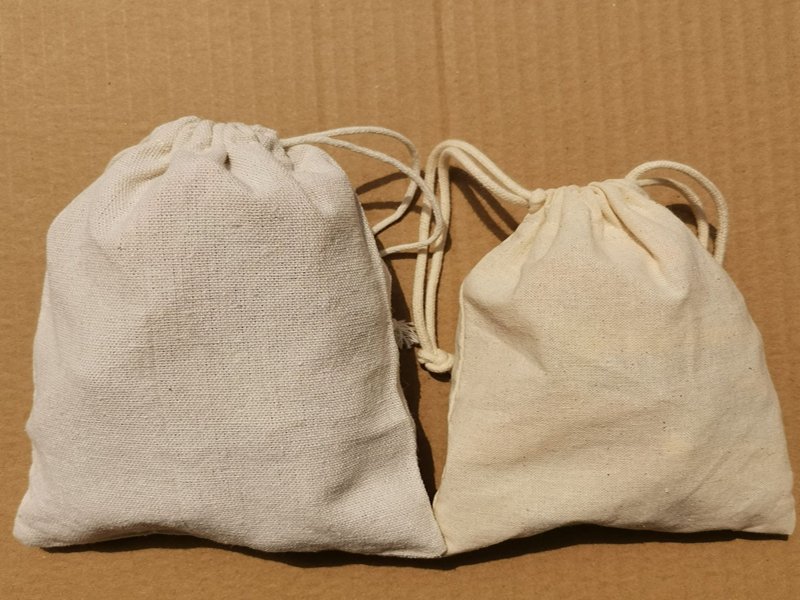
The most popular polyester and cotton drawstring bags are shaped by how people actually use them in sports, travel, retail packaging, lifestyle branding, events, and daily carry. Although both materials can be made into similar bag structures, they serve different market purposes. Polyester drawstring bags are usually selected when performance, durability, water resistance, low weight, and high-volume customization matter most. Cotton drawstring bags are usually selected when softness, natural texture, sustainability appeal, and premium presentation are more important.
This difference has created two strong product directions in the market. Polyester bags dominate performance-driven applications such as gym bags, sports events, school activity bags, outdoor promotions, swimming bags, and travel pouches. Cotton bags dominate lifestyle-oriented applications such as retail packaging, cosmetic pouches, jewelry bags, gift bags, organic product packaging, boutique apparel bags, and reusable shopping bags.
The most successful drawstring bag designs are not always the most complex. They are the ones that match the real use scenario. A coated polyester drawstring bag works well for outdoor commuting because it handles light moisture and dirt. A mesh polyester drawstring bag works well for swimming because it improves ventilation. A natural cotton pouch works well for skincare packaging because it feels soft and eco-friendly. A heavy canvas drawstring bag works well for lifestyle retail because it feels strong and reusable.
For brands, distributors, retailers, gyms, schools, event organizers, and private label clients, choosing the right bag type is a product positioning decision. The material, fabric weight, logo method, pocket structure, drawstring design, and packaging should all support the final user experience. At Szoneier, polyester and cotton drawstring bags can be developed across these categories, with customized materials, sizes, printing methods, reinforcement details, and finishing options based on real market demand.
Popular Polyester Drawstring Bag Types
Polyester drawstring bags are popular because they are lightweight, durable, cost-efficient, and easy to customize in bulk. They are especially suitable for active environments where the bag may be exposed to sweat, rain, dirt, repeated folding, frequent packing, and surface friction.
One of the most common types is the polyester gym cinch sack. This bag is widely used by gyms, fitness studios, sports teams, schools, and event organizers. It usually has a simple structure, one main compartment, and a drawstring closure that also works as shoulder straps. The main advantage is convenience. Users can quickly pack workout clothes, shoes, towels, bottles, and small accessories without carrying a bulky backpack.
| Polyester Bag Type | Key Feature | Common Use |
|---|---|---|
| Gym cinch sack | Lightweight and durable | Fitness, schools, sports teams |
| Mesh polyester bag | Breathable mesh panels | Swimming, wet gear, beach use |
| Coated polyester bag | Water-resistant surface | Outdoor, commuting, travel |
| Promotional polyester bag | Cost-effective logo printing | Events, campaigns, giveaways |
| Sublimation polyester bag | Full-color printed surface | Sports events, youth products, brand campaigns |
| Reflective polyester bag | Visibility details | Running, cycling, outdoor sports |
| Foldable polyester bag | Compact storage | Travel and secondary carry |
Promotional polyester drawstring bags are also in high demand. They offer a large printable area at a lower cost than complex backpacks or tote bags. Companies use them for trade shows, corporate events, product launches, school campaigns, charity events, sports competitions, and membership kits. Because polyester supports screen printing, heat transfer, sublimation, and digital printing, it can carry simple logos or colorful graphics depending on the project.
Coated polyester drawstring bags are becoming more popular for outdoor and commuting use. A PU-coated or TPU-coated polyester surface improves water resistance and makes the bag easier to wipe clean. This is useful for users who carry gym clothing, travel items, shoes, or outdoor accessories. While a standard coated polyester drawstring bag is usually water-resistant rather than fully waterproof, it performs much better than cotton in light rain or damp environments.
Polyester Gym and Sports Drawstring Bags
Polyester gym and sports drawstring bags are among the highest-volume products in this category. Their popularity comes from their balance of weight, durability, and cost. A typical polyester sports cinch sack can be light enough for daily movement while strong enough to carry gym clothes, shoes, towels, gloves, bottles, and small gear.
For gyms, these bags are often used as branded welcome gifts. For schools, they work as PE bags or activity bags. For teams, they can carry uniforms, training shirts, socks, and accessories. For sports events, they are ideal for race kits and participant packages.
The best sports polyester drawstring bags often include small but useful upgrades. Reinforced bottom corners reduce tearing at the cord stress points. A front zipper pocket stores keys, phones, or cards. A mesh bottle pocket improves hydration access. A water-resistant coating helps protect the contents from sweat or light rain.
| Feature | Why It Matters in Sports Use |
|---|---|
| Reinforced corners | Prevents tearing under carrying tension |
| PU-coated polyester | Improves moisture resistance |
| Front zipper pocket | Secures small valuables |
| Mesh bottle pocket | Adds convenience during training |
| Strong drawcords | Improves carrying reliability |
| Reflective print | Adds visibility for outdoor users |
These features help polyester gym bags move beyond basic promotional use and become practical sports products.
Mesh Polyester Drawstring Bags
Mesh polyester drawstring bags are popular for swimming, beach use, fitness training, team sports, and wet gear storage. Their main advantage is ventilation. Mesh panels allow airflow, helping damp towels, swimwear, gloves, or sweaty clothing dry faster and reducing trapped odor.
Some bags use full mesh construction, while others combine polyester fabric panels with mesh sections. Full mesh bags are useful for pool areas, beach trips, and swim teams because water can drain easily. Hybrid mesh-and-polyester designs are often better for branding because they provide solid fabric areas for logo printing while still improving ventilation.
| Mesh Bag Style | Best Use |
|---|---|
| Full mesh drawstring bag | Swimming, beach, wet gear |
| Polyester body with mesh side panels | Gym, fitness, sports training |
| Mesh front pocket bag | Quick-access wet or dirty items |
| Mesh bottle pocket design | Outdoor and team sports |
Mesh quality is important. Weak mesh may stretch or tear after repeated use. For sports applications, the mesh should be strong enough to handle friction, wet clothing, and irregular items. The stitching between polyester and mesh panels should also be reinforced because mixed-material seams often receive extra stress.
Popular Cotton Drawstring Bag Types
Cotton drawstring bags are popular in markets where natural touch, sustainability appeal, and product presentation matter. They are not usually selected for rain resistance or heavy sports use. Instead, they are chosen because they feel soft, breathable, reusable, and more emotionally connected to lifestyle branding.
The most common cotton drawstring bag types include organic cotton bags, canvas drawstring bags, retail packaging pouches, gift bags, reusable shopping bags, cosmetic pouches, jewelry bags, and lifestyle storage bags.
| Cotton Bag Type | Key Feature | Common Use |
|---|---|---|
| Organic cotton bag | Natural and eco-focused | Sustainable brands, organic products |
| Canvas drawstring bag | Thick and durable | Daily carry, retail, lifestyle use |
| Retail packaging bag | Soft and premium feel | Apparel, cosmetics, accessories |
| Gift drawstring pouch | Reusable and decorative | Events, weddings, corporate gifts |
| Jewelry cotton pouch | Soft product protection | Jewelry, watches, small accessories |
| Cosmetic cotton bag | Natural packaging style | Skincare, soap, candles |
| Multi-use cotton bag | Reusable design | Shopping, home storage, travel organization |
Organic cotton drawstring bags are especially popular among brands that want to communicate environmental responsibility. They are often used for organic skincare, natural food products, wellness items, sustainable fashion, handmade goods, and eco gift sets. The fabric may be undyed, natural beige, or printed with a minimalist logo to maintain a clean and responsible appearance.
Canvas drawstring bags are heavier and stronger than lightweight cotton pouches. They are popular for retail packaging, shoes, apparel, books, gift sets, and lifestyle carry bags. Their thicker structure gives a more substantial feeling, making them suitable for brands that want reusable packaging with higher perceived value.
Cotton Retail Packaging and Lifestyle Bags
Retail packaging is one of the strongest categories for cotton drawstring bags. A cotton pouch can make the product inside feel more premium and thoughtful. This is especially useful for small items such as jewelry, skincare, candles, soap, socks, scarves, accessories, and handmade products.
A cotton bag also creates a reusable packaging experience. After purchase, customers may use the bag for travel storage, jewelry protection, makeup organization, shoe storage, or home organization. This gives the brand longer exposure than disposable packaging.
| Retail Application | Recommended Cotton Bag Style |
|---|---|
| Jewelry packaging | Small soft cotton pouch |
| Skincare sets | Medium cotton bag with simple logo |
| Handmade soap | Breathable natural cotton pouch |
| Apparel packaging | Larger cotton or canvas drawstring bag |
| Gift sets | Cotton bag with premium cord and label |
| Organic products | Undyed or organic cotton bag |
Cotton is also popular in lifestyle use because it feels more comfortable and natural. It works well for boutique brands, bookstores, wellness companies, handmade product sellers, and eco-focused retailers. The printing style is usually softer and simpler than polyester. Screen printing, embroidery, woven labels, and cotton drawcords are common choices.
Hybrid and Mixed Material Drawstring Bags
Hybrid and mixed material drawstring bags are becoming more common because brands sometimes need both performance and comfort. These designs combine the strengths of different materials instead of relying on one fabric alone.
A polyester exterior with cotton lining can offer durability outside and a softer interior feel. A cotton-polyester blend can improve durability while keeping some natural texture. Coated cotton can improve water resistance while maintaining a natural appearance, although it still may not perform as well as coated polyester in wet conditions. Reinforced composite designs may use stronger polyester at stress points and cotton panels for appearance.
| Hybrid Type | Main Advantage | Suitable Use |
|---|---|---|
| Polyester exterior + cotton lining | Durable outside, soft inside | Retail sports, travel accessories |
| Cotton-polyester blend | Balanced strength and natural feel | Lifestyle bags, promotional retail |
| Coated cotton | Better moisture resistance than untreated cotton | Premium packaging, light outdoor lifestyle |
| Polyester base + cotton body | Stronger bottom, natural appearance | Retail and daily carry |
| Mesh + polyester | Ventilation and durability | Swimming, gym, sports |
Hybrid designs are useful when a standard material does not fully match the product goal. For example, a lifestyle fitness brand may want a bag that looks softer than a pure polyester sports bag but performs better than a basic cotton pouch. A mixed fabric solution can help create that balance.
However, hybrid bags require careful development. Different materials shrink, stretch, print, and sew differently. The seams between materials need strong construction. Logo placement should consider fabric texture and printing compatibility. Szoneier can help test these details during sampling before bulk production.
Market Trend Insights
Market demand for polyester and cotton drawstring bags continues to grow, but in different directions. Polyester remains dominant in sports, fitness, travel, schools, events, and promotional products. Cotton remains strong in lifestyle, retail packaging, eco-focused products, gifts, cosmetics, and boutique branding.
| Market Trend | Polyester Demand | Cotton Demand |
|---|---|---|
| Sports and fitness | Very strong | Limited |
| Outdoor and travel | Strong | Medium for dry lifestyle use |
| Promotional products | Very strong | Moderate |
| Eco-friendly products | Growing with recycled polyester | Strong |
| Premium lifestyle | Moderate | Strong |
| Retail packaging | Medium | Very strong |
| Full-color branding | Strong | Limited |
| Natural brand image | Medium | Strong |
One important trend is the rise of recycled polyester. Some brands want the performance benefits of polyester but also want a more sustainability-focused material story. Recycled polyester can support this positioning, especially for sports, travel, and promotional bags. Cotton remains strong for natural and biodegradable appeal, especially when organic or recycled cotton options are used.
Another trend is premiumization. Many brands no longer want a basic plain drawstring bag. They want better cords, better stitching, custom labels, improved packaging, stronger fabric, or more refined printing. This applies to both polyester and cotton bags.
How to Choose the Right Popular Bag Type
The best choice depends on use case, target market, brand message, and budget. Polyester is better for active, wet, outdoor, and high-frequency use. Cotton is better for dry, natural, retail, and lifestyle applications.
| Product Goal | Recommended Bag Type |
|---|---|
| Gym and sports use | Polyester gym cinch sack |
| Swimming or wet gear | Mesh polyester drawstring bag |
| Outdoor commuting | Coated polyester bag |
| Large event giveaway | Promotional polyester bag |
| Full-color branding | Sublimation polyester bag |
| Eco retail packaging | Organic cotton drawstring bag |
| Premium product pouch | Cotton or canvas drawstring bag |
| Daily lifestyle carry | Canvas drawstring bag |
| Balanced comfort and durability | Polyester-cotton blend or hybrid design |
The most popular bag type is not automatically the best for every project. A sports event should not choose cotton just because it feels natural if the bag may face sweat, rain, and heavy use. A jewelry brand may not need polyester if the goal is softness and elegant packaging. Material and bag type should always follow the real product purpose.
Szoneier’s Custom Development Across Popular Bag Categories
Szoneier develops customized solutions across polyester, cotton, canvas, mesh, coated, blended, and hybrid drawstring bag categories. For polyester bags, Szoneier can support gym cinch sacks, promotional bags, coated outdoor bags, mesh sports bags, sublimation printed bags, reflective bags, and reinforced hybrid designs. These can be customized with different denier levels, PU or TPU coatings, zipper pockets, bottle pockets, reinforced corners, and multiple printing methods.
For cotton bags, Szoneier can support lightweight pouches, organic cotton bags, canvas drawstring bags, retail packaging bags, gift bags, jewelry pouches, cosmetic bags, and reusable lifestyle bags. Custom options include fabric weight selection, natural or dyed colors, screen printing, embroidery, woven labels, cotton cords, premium packaging, and reinforced seams.
For clients who need a balance between performance and presentation, Szoneier can develop mixed-material designs, such as polyester with cotton lining, coated cotton, cotton-polyester blends, or reinforced composite structures. This allows the final product to match both practical use and brand positioning.
The most popular polyester and cotton drawstring bags are popular for different reasons. Polyester bags lead when users need durability, portability, water resistance, and strong printed visuals. Cotton bags lead when users need softness, natural texture, reusable packaging, and eco-conscious presentation. Hybrid designs exist because modern brands often want both function and feeling. By choosing the right material and bag type, a drawstring bag can become a practical product, a packaging upgrade, and a long-term brand touchpoint.
How Do You Choose Between Polyester and Cotton Drawstring Bags?
Choosing between polyester and cotton drawstring bags should always start with the intended use, not with the material name. Neither material is automatically better in every situation. Polyester is usually stronger for performance, moisture resistance, outdoor use, sports, travel, school programs, and large promotional orders. Cotton is usually better for softness, natural texture, retail packaging, eco-conscious presentation, gift bags, lifestyle products, cosmetics, jewelry, and boutique branding.
A good material decision reduces product complaints, improves user satisfaction, controls cost, and makes the final bag feel more aligned with the brand. A poor decision does the opposite. A cotton bag used for wet gym clothing may become heavy, damp, and difficult to maintain. A thin polyester bag used for premium skincare packaging may feel too basic or too synthetic. A low-cost polyester fabric used for heavy sports gear may tear at the corners. A lightweight cotton pouch used for daily carrying may lose shape faster than expected. These problems usually happen when the material is selected by appearance or price alone rather than real use conditions.
For B2B buyers, product developers, gyms, schools, event organizers, retailers, and private label brands, the best approach is to define the bag’s purpose first. What will users carry? Will the bag be exposed to rain, sweat, dirt, or repeated washing? Does the product need to feel natural and premium, or does it need to be lightweight and durable? Is the bag for one-time event distribution or long-term daily use? Does the logo need bright full-color printing or a subtle natural look? Once these questions are clear, the material choice becomes much easier.
At Szoneier, polyester and cotton drawstring bags are developed around real application scenarios. With over 18 years of experience in fabric R&D and manufacturing, Szoneier helps clients choose materials, fabric weights, coatings, printing methods, reinforcement details, and custom structures that match both function and market positioning.
Start with the Real Use Scenario
The first step is to understand where and how the bag will be used. Drawstring bags may look similar from a distance, but their use conditions can be completely different. A gym bag may need to handle sweat, shoes, towels, and bottles. A retail pouch may only need to hold a small product attractively. A school activity bag may need to survive repeated student handling. A cosmetic packaging bag may need to feel soft and natural. A travel bag may need to be lightweight, foldable, and easy to clean.
| Use Scenario | Better Material | Main Reason |
|---|---|---|
| Sports and gym | Polyester | Durable, lightweight, and moisture-resistant |
| Outdoor use | Polyester | Better rain, dirt, and humidity resistance |
| Travel | Polyester | Compact, light, and easy to maintain |
| School activities | Polyester | Stronger for repeated handling |
| Promotional events | Polyester | Cost-efficient and printable in bulk |
| Retail packaging | Cotton | Softer and more premium feel |
| Cosmetics and skincare | Cotton | Natural texture supports brand image |
| Jewelry and gifts | Cotton | Gentle surface and boutique presentation |
| Eco-friendly products | Cotton | Stronger natural and reusable appeal |
| Lifestyle daily use | Cotton or canvas | Comfortable and natural appearance |
Polyester is the safer option when the bag needs to perform in active, wet, or rough conditions. Cotton is the stronger option when the bag is part of the customer’s product experience and must communicate comfort, warmth, and natural value.
For example, a fitness club creating a member welcome kit should usually choose polyester because the bag may carry sweaty clothes and gym shoes. A skincare brand packaging natural soap or essential oils may prefer cotton because the material matches the product story. A school ordering PE bags may choose polyester for durability. A boutique apparel brand may choose cotton or canvas to improve unboxing and reuse value.
Compare Durability Requirements
Durability is one of the clearest differences between polyester and cotton. Polyester is a synthetic fiber designed for strength, shape stability, and resistance to repeated stress. Cotton is a natural fiber that feels softer but is more vulnerable to moisture, abrasion, shrinking, wrinkling, and fiber wear over time.
If the bag will be used frequently, carried outdoors, placed on floors, packed with shoes, or exposed to damp items, polyester is usually the better choice. If the bag will carry light dry products or serve mainly as packaging, cotton is often sufficient and may create a better brand impression.
| Durability Factor | Polyester | Cotton |
|---|---|---|
| Tensile strength | High | Medium |
| Abrasion resistance | High | Low to medium |
| Shape retention | Strong | Moderate |
| Resistance to tearing | High with proper construction | Medium, better in heavier canvas |
| Long-term active use | Strong | Limited |
| Best durability setting | Sports, travel, school, events | Retail, gifts, dry lifestyle use |
However, construction matters as much as material. A poorly made polyester bag can fail faster than a well-made cotton canvas bag. Reinforced corners, strong stitching, proper fabric weight, quality drawcords, and good sewing control all affect lifespan.
For heavier-use polyester bags, Szoneier can add reinforced bottom corners, double stitching, bar-tack reinforcement, thicker cords, and PU or TPU coating. For cotton bags, Szoneier can use heavier cotton, canvas, stronger seams, pre-shrunk fabric, and improved drawstring channels to enhance durability for dry-use applications.
Evaluate Water Resistance and Maintenance
Water resistance is one of polyester’s strongest advantages. Polyester absorbs very little moisture, dries faster, and maintains structure better in damp conditions. Cotton absorbs water, becomes heavier when wet, takes longer to dry, and may retain odor if stored damp.
This difference is important for sports, travel, outdoor events, schools, commuting, beach use, and gym bags. In these environments, moisture exposure is common. Sweat, rain, damp towels, wet shoes, water bottles, and humid storage conditions can all affect the bag.
| Moisture Factor | Polyester | Cotton |
|---|---|---|
| Water absorption | Low | High |
| Drying speed | Fast | Slow |
| Comfort when wet | Better | Becomes heavy and damp |
| Odor risk | Lower if dried properly | Higher if stored wet |
| Cleaning | Easier, especially with coating | Requires more care |
| Outdoor suitability | Strong | Weak to moderate |
A coated polyester bag can offer even better moisture protection. PU coating is commonly used for light water resistance and easier cleaning. TPU coating can provide stronger flexibility and moisture protection for higher-performance applications. Cotton can be treated or waxed, but standard cotton drawstring bags are not ideal for wet conditions.
If the bag will be used outdoors or around sweat, polyester should usually be selected. If the bag will be used indoors for dry products, cotton can be a strong option.
Consider Weight and Portability
Polyester is usually lighter than cotton, especially when comparing similar bag sizes. A standard polyester drawstring bag may weigh around 100–300 grams, while cotton bags often weigh 200–500 grams depending on fabric weight. Canvas cotton bags can be even heavier.
Weight affects carrying comfort, shipping cost, storage volume, and user convenience. For large events or promotional campaigns, lighter polyester bags are easier to ship and distribute. For sports and travel, users appreciate a bag that does not add unnecessary load.
| Portability Factor | Polyester | Cotton |
|---|---|---|
| Bag weight | Lighter | Heavier |
| Foldability | Very good | Moderate to good |
| Bulk shipping efficiency | Strong | Lower due to weight |
| Daily active carry | Better | Less suitable for long carrying |
| Premium substantial feel | Medium | Strong |
Cotton’s extra weight is not always negative. For retail packaging and lifestyle products, a more substantial cotton bag can feel higher quality. A jewelry pouch, cosmetic bag, or boutique apparel bag does not need to be ultra-light. It needs to feel good in the customer’s hands.
The right decision depends on whether portability or tactile value matters more.
Match Comfort and Brand Feeling
Cotton provides a softer and more natural hand feel. This is one of the main reasons brands choose it. Customers often associate cotton with comfort, sustainability, simplicity, and care. For skincare, handmade products, organic goods, gifts, jewelry, and lifestyle packaging, cotton can improve perceived value.
Polyester feels smoother, lighter, and more technical. It does not usually feel as soft or natural as cotton, but it performs better in active-use situations. For sports and travel, practical comfort often matters more than tactile softness. A lighter polyester bag may feel more comfortable during walking or commuting because it reduces total carrying weight.
| Brand or User Priority | Better Material | Reason |
|---|---|---|
| Soft natural touch | Cotton | Comfortable hand feel |
| Eco-conscious presentation | Cotton | Natural fiber appeal |
| Premium packaging | Cotton | Warmer and more tactile |
| Active convenience | Polyester | Lightweight and easy to carry |
| Performance image | Polyester | Technical and durable feel |
| Large logo visibility | Polyester | Smooth surface supports sharp printing |
| Boutique lifestyle look | Cotton | Natural texture supports brand story |
For many brands, the material becomes part of the message. Cotton says natural, soft, reusable, and lifestyle-oriented. Polyester says durable, practical, lightweight, and performance-ready.
Choose the Right Printing and Customization Method
Printing and customization can also influence material choice. Polyester and cotton both support branding, but they perform differently.
Polyester works well for bright, high-impact graphics. It supports sublimation printing, heat transfer, screen printing, digital printing, reflective printing, woven labels, and rubber patches. Sublimation is especially strong on polyester because it allows full-color graphics and all-over printing.
Cotton works well for classic and textured branding. Screen printing, embroidery, woven labels, cotton tags, and minimalist one-color logos look especially good on cotton and canvas. The result is usually softer, more natural, and less glossy.
| Branding Goal | Better Material | Suitable Method |
|---|---|---|
| Bright full-color graphics | Polyester | Sublimation or heat transfer |
| Sports event artwork | Polyester | Sublimation, screen printing, reflective print |
| Simple logo in bulk | Polyester or cotton | Screen printing |
| Natural packaging logo | Cotton | Screen printing or woven label |
| Premium texture | Cotton | Embroidery |
| Outdoor performance branding | Polyester | Rubber patch or reflective detail |
| Eco-style branding | Cotton | Minimalist print or cotton label |
A sports event needing colorful sponsor graphics may choose polyester. A natural cosmetics brand needing a calm, understated look may choose cotton. A premium apparel brand may use canvas with embroidery or woven labels. A gym brand may choose coated polyester with heat transfer or screen print.
At Szoneier, logo methods can be tested during sampling to confirm color accuracy, adhesion, print feel, and long-term durability.
Avoid Common Selection Mistakes
Many drawstring bag problems come from choosing the wrong material for the wrong use. One common mistake is choosing cotton for wet or outdoor environments because it looks natural. Once exposed to rain or sweat, cotton absorbs moisture, becomes heavy, and takes longer to dry. This can reduce user satisfaction.
Another mistake is choosing the cheapest polyester fabric for heavy-duty use. Polyester is durable, but low-quality or low-denier polyester may still tear if used for shoes, bottles, books, or sports gear without reinforcement.
Ignoring construction is also a major mistake. Even the right material can fail if seams are weak, corners are not reinforced, or drawstrings are too thin.
| Common Mistake | Result | Better Choice |
|---|---|---|
| Choosing cotton for gym or wet use | Heavy, damp, odor risk | Polyester or coated polyester |
| Choosing thin polyester for heavy gear | Tearing and weak structure | Higher-denier polyester with reinforcement |
| Ignoring stress points | Corner failure or seam splitting | Reinforced corners and strong stitching |
| Selecting printing without testing | Peeling, fading, poor color | Sample test before bulk order |
| Overbuilding simple packaging bags | Higher cost without real benefit | Match features to use case |
| Choosing only by price | Poor user experience | Balance cost, material, and function |
A good bag specification should always include fabric type, fabric weight, size, drawstring material, reinforcement details, logo method, packaging, and intended load.
Decision Optimization Matrix
The easiest way to choose between polyester and cotton is to define the main priority. If the priority is durability, water resistance, lightweight portability, or active use, polyester is usually the better material. If the priority is softness, natural feel, eco-friendly presentation, or premium packaging, cotton is usually the better material.
| Priority | Best Choice | Why |
|---|---|---|
| Maximum durability | Polyester | Strong synthetic fibers handle repeated use |
| Lightweight portability | Polyester | Lower material weight and better packability |
| Water resistance | Polyester | Low moisture absorption and coating compatibility |
| Sports and gym use | Polyester | Better for sweat, shoes, and frequent movement |
| Outdoor use | Polyester | Better rain, dirt, and humidity performance |
| Eco-friendly appeal | Cotton | Natural fiber and reusable image |
| Premium retail feel | Cotton | Soft, tactile, and natural |
| Gift packaging | Cotton | Warmer customer experience |
| Full-color printing | Polyester | Supports sublimation and bright graphics |
| Classic logo branding | Cotton | Works well with screen printing and embroidery |
| Balanced performance | Hybrid design | Combines strength and comfort |
Hybrid designs can be useful when the product needs both performance and natural feel. For example, a polyester exterior with cotton lining can provide stronger durability outside and a softer interior. A cotton-polyester blend can improve strength while keeping some natural texture. A polyester base with cotton body can improve bottom durability while maintaining a lifestyle look.
When to Choose Polyester
Polyester should be selected when function and performance matter most. It is the better choice for sports, gym, outdoor activities, school programs, travel, commuting, promotional events, and high-volume branding campaigns.
Choose polyester when the bag will carry active-use items such as shoes, towels, uniforms, bottles, brochures, sports gear, or travel accessories. Choose polyester when the bag may face rain, sweat, dirt, or repeated folding. Choose polyester when the project needs bright logo printing, full-color graphics, or cost-effective bulk production.
| Choose Polyester For | Recommended Upgrades |
|---|---|
| Gym and sports bags | Reinforced corners, PU coating, zipper pocket |
| Outdoor drawstring bags | TPU coating, ripstop polyester, reflective print |
| Event giveaways | Lightweight polyester and screen printing |
| School activity bags | Stronger denier and durable drawcords |
| Travel bags | Coated polyester and foldable structure |
| Promotional campaigns | Large logo print and bulk packing |
Polyester is the practical choice when the bag must work hard.
When to Choose Cotton
Cotton should be selected when touch, presentation, and natural appeal matter most. It is the better choice for retail packaging, cosmetics, jewelry, gifts, apparel, organic products, handmade goods, lifestyle brands, and eco-focused product lines.
Choose cotton when the bag is part of the product experience. A soft cotton pouch can make skincare, jewelry, candles, or boutique clothing feel more premium. Choose cotton when the brand wants a natural, reusable, low-plastic impression.
| Choose Cotton For | Recommended Upgrades |
|---|---|
| Skincare packaging | Natural cotton, soft cord, minimalist logo |
| Jewelry pouches | Fine cotton, small size, clean stitching |
| Apparel packaging | Medium or heavy cotton, custom label |
| Gift bags | Cotton drawcord, embroidery, hangtag |
| Organic products | Undyed or organic cotton |
| Lifestyle retail | Canvas fabric and woven label |
Cotton is the emotional choice when the bag needs to feel natural and memorable.
How Szoneier Helps You Make the Right Choice
Szoneier helps clients choose between polyester and cotton drawstring bags by analyzing the real use scenario, target market, product positioning, expected load, branding method, and budget. With over 18 years of experience in fabric R&D and manufacturing, Szoneier can provide tailored solutions across polyester, cotton, canvas, nylon, Oxford fabric, mesh, coated fabrics, and blended materials.
For polyester drawstring bags, Szoneier can support lightweight promotional bags, gym cinch sacks, coated outdoor bags, mesh sports bags, sublimation printed bags, and reinforced school or team bags. Custom options include PU or TPU coating, different denier levels, zipper pockets, bottle pockets, reflective printing, reinforced corners, and bulk packaging.
For cotton drawstring bags, Szoneier can support natural cotton pouches, organic cotton bags, canvas drawstring bags, retail packaging bags, gift bags, cosmetic pouches, jewelry bags, and lifestyle storage bags. Custom options include different GSM weights, undyed cotton, dyed cotton, canvas materials, screen printing, embroidery, woven labels, custom cords, hangtags, and premium packaging.
For clients who need balanced performance, Szoneier can help develop hybrid structures, such as polyester-cotton blends, polyester exterior with cotton lining, coated cotton, or reinforced composite designs. This is useful when a brand wants both durability and a softer customer experience.
Choosing between polyester and cotton drawstring bags is a context-driven decision. Polyester is best when the bag needs to be durable, lightweight, water-resistant, easy to clean, and suitable for active or outdoor use. Cotton is best when the bag needs to be soft, natural, reusable, premium-feeling, and aligned with eco-conscious branding. The right material should match the product’s real environment, the user’s expectations, and the brand message behind the bag.