 Skip to content
Ramie Cloth Supply Chain Challenges and Quality Control Tips
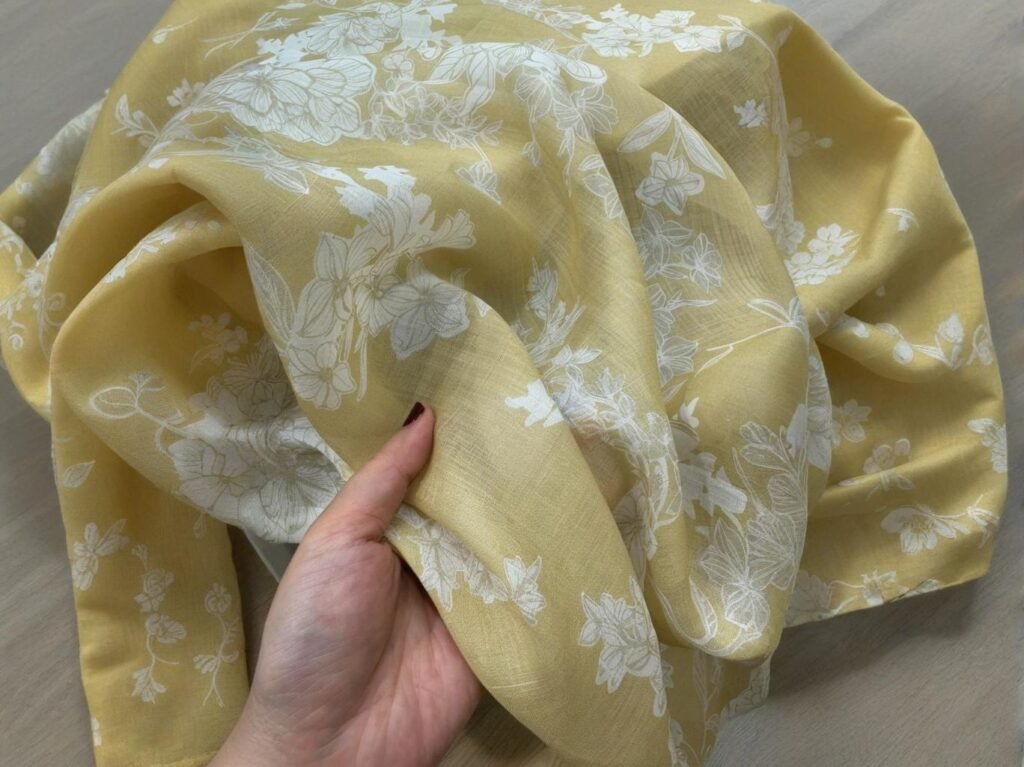
Ramie cloth is often described as a “premium natural fiber,” but anyone who has actually sourced it at scale knows the truth is more complicated. On paper, ramie offers exceptional strength, breathability, and durability. In reality, inconsistent fiber quality, unstable processing methods, and weak quality control can quickly turn ramie into one of the most unpredictable fabrics in a sourcing plan. Ramie cloth supply chains are challenging because fiber quality varies by origin, processing depends heavily on degumming accuracy, and quality issues often emerge late in production. Strong quality control requires supplier transparency, early testing, and process-level inspections—not just final fabric checks.
Many buyers only realize this after their first bulk order: samples look perfect, but the production fabric feels stiffer, dyes unevenly, or shrinks more than expected. One sourcing manager once described it as “buying linen with hidden variables.” Understanding where those variables come from—and how to control them—is what separates reliable ramie programs from costly mistakes.
What are the main steps in the ramie cloth supply chain, and how do they affect lead time?
The ramie cloth supply chain is far more complex than many buyers expect. On paper, it appears similar to other natural fibers—harvest, spinning, weaving, finishing—but in practice, ramie behaves very differently from cotton, polyester, or even linen. The critical distinction is that most lead time risk is embedded upstream, long before fabric enters a loom or dye house.
Ramie is a bast fiber with high strength, natural rigidity, and significant gum content. These characteristics make it valuable in finished textiles, but they also mean the fiber cannot be rushed or heavily standardized without compromising quality. As a result, lead times are highly sensitive to agricultural timing, processing discipline, and early-stage planning accuracy. When delays occur, they are rarely caused by weaving capacity alone; they almost always trace back to fiber preparation and degumming control.
Understanding each step of the ramie supply chain—and how it contributes to timing risk—is essential for realistic production planning and supplier evaluation.
Where lead time is really lost (and why)
In ramie sourcing, the visible production stages are rarely the bottleneck. The most time-consuming and risk-prone steps happen before yarn ever reaches the spinning frame.
A) Full ramie supply chain breakdown
| Stage | Key Activity | Typical Risk |
|---|---|---|
| Harvesting | Cutting ramie stalks | Seasonal variability |
| Decortication | Fiber separation | Yield loss |
| Degumming | Gum removal | Inconsistent softness |
| Spinning | Yarn formation | Breakage |
| Weaving | Fabric construction | Density deviation |
| Finishing | Softening, dyeing | Rework delays |
Each stage builds on the previous one. Errors made early cannot be fully corrected later, and attempts to compress timelines often result in rework rather than real speed gains.
Harvesting sets the baseline. Ramie stalks must be cut at the right maturity stage to balance fiber length and strength. Harvest timing varies by region and climate, and unlike cotton, harvest windows are narrower. Missed windows can push fiber availability back by weeks.
Decortication separates fiber from the woody core. Yield loss at this stage affects not only cost but also scheduling, as lower-than-expected usable fiber volume forces mills to source additional batches, often with slightly different characteristics.
Degumming, spinning, and finishing then amplify any upstream inconsistencies, turning small timing issues into larger production delays.
B) Harvesting and raw fiber availability
Ramie is typically harvested multiple times per year, but each harvest cycle still follows agricultural rhythms. Weather disruptions, labor availability, and regional planting density all influence fiber output.
From a lead time perspective, two risks matter most:
- fiber maturity mismatch, which affects degumming efficiency
- uneven batch availability, which complicates production scheduling
Unlike polyester, raw ramie fiber cannot be produced on demand. Mills working with fresh harvest fiber often need additional time for conditioning and sorting before decortication even begins. Buyers who place orders without confirming fiber availability frequently underestimate lead time by 10–20%.
C) Decortication: early yield risk
Decortication is a mechanical process that removes bark and woody material. While it appears straightforward, yield variability is common. Fiber breakage, contamination, or excessive waste can reduce usable output.
When yield loss exceeds expectations, mills must either:
- delay production while sourcing replacement fiber
- blend fiber from different batches, increasing inconsistency risk
Both options add time. Because decortication happens before degumming and spinning, delays here cascade forward, affecting every downstream step.
D) Degumming: the most time-sensitive step
Degumming is the single most critical stage in the ramie supply chain. Raw ramie fibers are bound with natural gums that make them stiff and brittle. These gums must be removed in a controlled manner to achieve spinnable softness without damaging fiber strength.
| Degumming Control | Impact on Lead Time |
|---|---|
| Under-degumming | Reprocessing required |
| Over-degumming | Fiber damage |
| Inconsistent batches | Rejected rolls |
Under-degummed fiber cannot be spun smoothly. It causes yarn breakage and uneven texture, forcing mills to stop production and repeat degumming. Over-degumming weakens fibers, leading to high waste rates during spinning and weaving.
Batch inconsistency is equally problematic. If degumming results vary across lots, finished fabric may fail handfeel or strength standards, triggering roll rejection or rework at finishing stage.
In real production environments, poor degumming control alone can add 7–14 days to the production cycle, often more if fiber damage forces partial reprocessing or blending adjustments.
E) Spinning: where fiber quality meets reality
Spinning ramie yarn is more demanding than spinning cotton. Fibers are longer, stiffer, and less forgiving. Yarn breakage is common when degumming or fiber alignment is imperfect.
From a lead time perspective, spinning delays arise from:
- frequent machine stoppages
- lower-than-expected yield
- additional quality inspections
Spinning schedules are often planned tightly. When ramie yarn fails to meet tensile or evenness standards, re-spinning or blending adjustments become necessary, pushing timelines out by several days.
This is why experienced suppliers prefer to build buffer time before spinning begins, rather than trying to accelerate weaving later.
F) Weaving: visible, but rarely the root cause
Weaving is the most visible part of fabric production, and buyers often assume it determines lead time. In ramie production, this is rarely true.
When upstream steps are well controlled, weaving proceeds predictably. When they are not, weaving exposes hidden problems:
- density deviation due to uneven yarn
- loom stoppages from yarn breakage
- inconsistent fabric handfeel
These issues force loom adjustments, fabric downgrading, or reweaving. While weaving itself may only take days, correcting upstream-induced issues can consume weeks.
G) Finishing: where delays become obvious
Finishing includes softening, dyeing, washing, and stabilization. This is often where lead time overruns become visible to buyers, even though the causes originated earlier.
Rework delays typically result from:
- uneven dye uptake due to fiber inconsistency
- shrinkage exceeding tolerance
- handfeel not matching approved sample
Because finishing happens last, any correction here affects delivery dates directly. Re-dyeing or re-finishing can add 5–10 days, sometimes more if shade matching is critical.
H) Why sampling timelines often lie
One of the most common buyer frustrations is the gap between sample lead time and bulk lead time. This gap is structural, not accidental.
Many samples are made from:
- older or well-conditioned fiber stock
- hand-selected yarn
- small-batch degumming under controlled conditions
Bulk production, by contrast, relies on fresh harvest fiber, larger degumming batches, and continuous spinning runs. Fiber behavior changes, and processes become less forgiving.
As a result, sample lead time is a poor predictor of bulk timelines. Treating them as equivalent leads to unrealistic delivery expectations and avoidable disputes.
I) Lead time reality by order type
| Order Type | Realistic Lead Time |
|---|---|
| Lab dip | 3–5 days |
| Fabric sample | 7–10 days |
| Small bulk | 25–35 days |
| Large repeat order | 35–45 days |
Lab dips and samples bypass much of the supply chain complexity. Bulk orders must absorb agricultural, processing, and quality-control variability.
Repeat orders tend to be faster only when fiber planning is done in advance and degumming parameters are locked. Without that preparation, even repeat styles experience delays.
J) Planning strategies that actually reduce lead time
In ramie sourcing, lead time control is not achieved by pushing looms harder or adding shifts at finishing. It comes from decisions made earlier:
- confirming fiber availability before order confirmation
- locking degumming parameters based on bulk, not sample, data
- building buffer time before spinning, not after weaving
- aligning quality tolerance with realistic fiber behavior
Suppliers with mature ramie experience focus their planning upstream, where small adjustments have large downstream effects.
E) Practical takeaway
Lead time management in ramie cloth production is fundamentally different from mass fibers like cotton or polyester. The critical path runs through harvesting, decortication, and degumming, not weaving speed.
Buyers who understand this structure plan more accurately, experience fewer delays, and maintain more stable supplier relationships. In ramie, realistic timelines are not a sign of inefficiency—they are a sign of disciplined supply chain control.
How do processing methods (degumming, spinning, weaving) impact final ramie fabric performance?
Ramie fabric rarely fails because of finishing alone. By the time softeners, resins, or washes are applied, most of the fabric’s performance potential—good or bad—has already been locked in. Degumming defines whether the fiber can bend and accept dye. Spinning determines yarn integrity and surface regularity. Weaving decides how defects present themselves, how air moves through the fabric, and how the cloth drapes in use.
In ramie textiles, small deviations early in processing compound into large differences later. Two fabrics with the same GSM and construction on paper can behave very differently in garments or home products because their processing histories diverged long before finishing began.
Processing is where quality is truly decided
A) Degumming: the foundation of usable ramie
Raw ramie fiber contains a high level of natural pectins, gums, and hemicellulose. These substances give the plant rigidity but make the fiber unsuitable for textile use unless they are removed in a controlled manner.
| Degumming Level | Resulting Fabric Behavior |
|---|---|
| Insufficient | Stiff hand feel, poor dye uptake |
| Balanced | Smooth, strong, breathable |
| Excessive | Fiber damage, fuzzing |
Insufficient degumming leaves residual gum on the fiber surface. Fabrics produced from under-degummed ramie often feel noisy when handled, resist bending, and show uneven dye penetration. These issues frequently appear only after washing, when residual gums interact with detergents and heat.
Balanced degumming removes enough gum to allow flexibility while preserving fiber strength. This is where ramie shows its best characteristics: crisp but not harsh, breathable, and structurally stable.
Excessive degumming is a more subtle problem. Aggressive chemical conditions can weaken the fiber wall, leading to surface fibrillation and fuzzing during later processing or wear. Laboratory testing and mill data consistently show that over-degumming can reduce fiber tensile strength by 10–15%, even though the fabric may feel softer at first touch. That initial softness often masks long-term durability loss.
B) Chemical vs enzymatic degumming
The method used to remove gums has a direct impact on fiber integrity, yield, and final hand feel.
| Method | Pros | Cons |
|---|---|---|
| Chemical | Faster, consistent | Higher fiber stress |
| Enzymatic | Better hand feel | Longer cycle time |
| Hybrid | Balanced | Higher cost |
Chemical degumming relies on alkaline solutions and elevated temperatures to dissolve gums quickly. It offers speed and consistency, which is why it remains common in large-scale production. However, it places significant stress on the fiber, and tight control of pH and temperature is essential to avoid strength loss.
Enzymatic degumming uses biological catalysts to selectively break down pectins. The process is gentler on the fiber and typically produces a softer, more refined hand feel. The trade-off is longer processing time and higher operational cost, which limits its use in price-sensitive programs.
Hybrid systems combine controlled chemical pre-treatment with enzymatic finishing. High-end mills increasingly adopt this approach because it stabilizes quality while protecting yield. Although more expensive upfront, hybrid degumming reduces rejection rates and variability in later stages, which often lowers total program cost over time.
C) Spinning challenges unique to ramie
Once degummed, ramie fibers must be converted into yarn—a step where many quality problems originate. Ramie fibers are long and strong but relatively brittle and inelastic compared with cotton.
| Spinning Issue | Fabric Impact |
|---|---|
| Yarn breakage | Uneven texture |
| Poor twist control | Hairiness |
| Mixed fiber lots | Strength variation |
High yarn breakage rates during spinning create uneven yarn thickness and weak points. These irregularities translate into visible streaks or slubs in woven fabric and increase defect visibility after dyeing.
Twist control is another critical factor. Too little twist leads to hairiness and surface fuzz; too much twist increases stiffness and reduces drape. Ramie requires narrower twist tolerances than cotton, and small deviations are magnified in the finished cloth.
One of the most overlooked risks is mixing fiber lots without recalibration. Unlike cotton, where blending lots is common practice, ramie fibers vary more widely in stiffness and length. When lots are mixed without adjusting spinning parameters, yarn strength can fluctuate significantly, leading to inconsistent fabric performance across batches.
Blending ramie with cotton or viscose during spinning often improves process stability, but it does not eliminate the need for careful control. The ramie component still governs strength and stiffness behavior.
D) Weaving density and defect visibility
Weaving is where ramie’s visual character becomes apparent. The fiber’s natural sheen and stiffness make defects more visible than in matte, elastic fibers.
| Weave Parameter | Risk |
|---|---|
| High density | Yarn stress |
| Low density | Skewing |
| Uneven tension | Barre marks |
High-density weaves increase yarn stress, raising the risk of breakage and distortion during weaving. Low-density constructions improve airflow but may skew or distort if tension is not uniform. Uneven loom tension can create barre marks or shadowing, which are particularly noticeable on solid-colored ramie fabrics.
Plain weaves, commonly used for shirts and home textiles, magnify defects because of their uniform surface. Twill structures hide minor irregularities more effectively and offer softer drape, but they reduce breathability and can alter moisture performance. Choosing weave structure is therefore a balance between visual forgiveness and functional requirements.
E) How process interactions amplify differences
Degumming, spinning, and weaving do not operate in isolation. Their interactions determine the final outcome. Slight over-degumming may be tolerable if spinning tension is reduced. Minor yarn irregularity may be masked in a twill weave but exposed in a plain weave.
Problems arise when multiple small deviations align in the same direction. For example, slightly over-degummed fiber combined with high twist and dense plain weaving often produces a fabric that feels harsh initially and fuzzes prematurely. Each step alone may appear acceptable, but together they degrade performance.
This compounding effect explains why ramie fabrics can vary widely in behavior even when nominal specs appear identical.
F) Why “same spec” fabrics feel different
Two ramie fabrics labeled 180 GSM, plain weave, ramie–cotton blend can feel radically different in hand and wear if their processing histories differ.
Common sources of variation include:
- Differences in degumming chemistry or dwell time
- Variations in yarn twist and spinning tension
- Inconsistent loom tension or warp preparation
Finishing treatments can soften or stabilize fabric to a degree, but they cannot fully compensate for structural differences created earlier. This is why performance control must happen before weaving, not after finishing.
Experienced mills evaluate yarn quality and fabric greige behavior before committing to full finishing. Buyers who understand this sequencing are better equipped to ask meaningful questions during sourcing discussions.
G) Performance implications in end use
From an end-use perspective, processing quality directly affects how ramie fabric behaves in real products. Apparel fabrics with well-controlled processing maintain shape, breathe effectively, and soften gradually with wear. Poorly processed fabrics may pass initial inspection but develop stiffness, fuzzing, or uneven appearance after a few wash cycles.
In home textiles, processing discipline determines dimensional stability under gravity and light exposure. Curtains or table linens made from well-processed ramie hold their form over time, while poorly processed equivalents elongate or distort.
For bags or structured products, spinning consistency and weaving tension govern tear resistance and seam reliability. These properties are rarely visible at the sample stage but become critical in use.
Practical conclusion
Ramie fabric performance is largely decided long before finishing begins. Degumming sets the foundation for softness and dye behavior. Spinning governs strength, uniformity, and surface quality. Weaving controls drape, breathability, and defect visibility. Each step magnifies or mitigates the risks introduced by the previous one.
Understanding these relationships explains why fabrics with identical specs on paper can behave very differently in practice. For buyers and product developers, the most reliable quality improvements come from engaging with suppliers on process control, not just final test results.
In ramie textiles, quality is cumulative. Once a shortcut is taken early, it rarely disappears later—it simply reappears where it is most expensive to fix.
What common quality issues occur in ramie cloth production, and how can they be prevented?
Ramie cloth is valued for its strength, breathability, and natural luster, but it is also one of the least forgiving natural fibers to process at scale. Many quality complaints associated with ramie fabrics are not the result of poor finishing or careless inspection. Instead, they are usually rooted much earlier—in fiber preparation, degumming control, yarn formation, and process consistency across batches. Once these upstream issues are locked into the fabric structure, downstream corrections become limited, expensive, or impossible.
In commercial production, the most common defects reported by apparel brands, home textile buyers, and sourcing teams include stiffness, uneven dyeing, excessive hairiness, shrinkage, and subtle visual defects that only appear after washing or under specific lighting. Understanding the technical reasons behind these problems is the only reliable way to prevent them. Ramie does not behave like cotton or linen, and treating it as a direct substitute is a frequent source of failure.
Defects, root causes, and prevention strategies
A defect-focused approach helps identify where control measures are most effective. In ramie production, prevention almost always outperforms correction.
A) Stiff or harsh hand feel
A stiff or boardy hand feel is the single most common complaint associated with ramie cloth, especially in first-time sourcing projects. While ramie is naturally crisper than cotton, excessive stiffness indicates processing imbalance rather than inherent fiber character.
| Root Cause | Prevention |
|---|---|
| Incomplete degumming | Enzyme balance |
| High yarn twist | Yarn optimization |
| Insufficient finishing | Mechanical softening |
Incomplete degumming leaves residual pectin and gum on the fiber surface, preventing fibers from flexing independently. This creates a rigid fabric that does not relax even after repeated washing. Degumming that is too aggressive, however, weakens fiber structure and introduces fuzz, so enzyme balance and time control are critical.
High yarn twist is another overlooked contributor. Spinners sometimes increase twist to compensate for ramie’s brittleness, but excessive twist reduces fabric drape and increases stiffness. Optimizing twist levels—rather than maximizing strength—is essential for wearable or drapable fabrics.
Finishing plays a supporting role, not a corrective one. Mechanical softening and controlled washing can improve hand feel, but they cannot reverse poor degumming decisions. Softness cannot be “added” at the end if degumming was wrong.
B) Uneven dyeing and shade variation
Uneven dyeing is particularly costly in ramie production because re-dyeing often exaggerates texture differences rather than fixing them. Shade variation may appear as patchiness, streaking, or tone imbalance between warp and weft.
| Cause | Explanation |
|---|---|
| Fiber oxidation | Poor storage |
| Residual gum | Blocks dye penetration |
| Batch mixing | Fiber inconsistency |
Fiber oxidation occurs when ramie fibers are stored too long or under poor humidity conditions. Oxidized fibers absorb dye differently, leading to dull or uneven shades. This issue is rarely visible before dyeing but becomes obvious in medium to dark colors.
Residual gum blocks dye penetration at the fiber level. Even small variations in degumming efficiency across a batch can result in visible shade differences, especially in blended fabrics where cotton or viscose components absorb dye more readily.
Batch mixing—combining fibers or yarns from different degumming or spinning lots—is another frequent source of inconsistency. While acceptable in cotton programs, this practice increases risk in ramie production.
Ramie requires pre-dye absorbency testing to evaluate how evenly fibers take up dye before committing to bulk dyeing. This step significantly reduces the risk of costly re-dyeing or rejection.
C) Hairiness and surface fuzz
Surface hairiness is often underestimated during initial inspections because it may be subtle on greige fabric but worsen after washing or abrasion. End users notice this defect quickly, especially in garments and table linens.
| Issue | Impact |
|---|---|
| Fiber breakage | Rough texture |
| Over-degumming | Weak fiber surface |
| Low twist yarn | Pilling |
Fiber breakage during spinning or weaving produces loose fiber ends that migrate to the surface. These fibers create a rough hand feel and reduce visual clarity, particularly in light-colored fabrics.
Over-degumming weakens the outer fiber layer, making fibers more prone to breakage during mechanical stress. While aggressive degumming may initially improve softness, it often leads to long-term durability issues.
Low twist yarn increases the risk of pilling and fuzz formation, especially in blended fabrics. Balancing twist for both strength and surface integrity is essential.
Hairiness often worsens after washing, which is why wash testing before bulk approval is critical. Fabrics that pass visual inspection but fail after laundering generate the highest rate of customer complaints.
D) Shrinkage and dimensional instability
Shrinkage remains one of the most expensive quality issues in ramie programs because it directly affects garment sizing, pattern grading, and customer satisfaction. Unlike synthetics, ramie exhibits significant relaxation shrinkage if not stabilized.
| Fabric Type | Typical Shrinkage |
|---|---|
| Untreated ramie | 4–6% |
| Pre-shrunk ramie | 2–3% |
| Ramie blends | 1.5–2.5% |
Untreated ramie fabrics commonly shrink between 4% and 6% after the first wash, which is unacceptable for most finished products. Pre-shrinking through mechanical or controlled washing processes reduces shrinkage but adds cost and time.
Ramie blends generally perform better, as blending fibers with higher elasticity helps stabilize dimensions. However, blend ratios and finishing conditions still matter.
Skipping pre-shrink testing is one of the most expensive mistakes buyers make. The cost of pre-shrinking and testing is minimal compared with the expense of reworking patterns, remaking garments, or handling returns.
E) Visual defects buyers often miss
Some of the most problematic ramie defects are not obvious during standard inspection but appear after dyeing, washing, or under specific lighting conditions.
| Defect | When It Appears |
|---|---|
| Barre | After dyeing |
| Skew | After washing |
| Shine marks | Under lighting |
Barre appears as horizontal or vertical striping caused by yarn or density variation. It often becomes visible only after dyeing, especially in solid colors.
Skew and torque develop when fabric relaxes unevenly after washing. This defect affects garment drape and seam alignment and is difficult to correct once cutting begins.
Shine marks occur when ramie fibers reflect light unevenly due to pressure or finishing imbalance. They are particularly noticeable in darker shades or under retail lighting.
Many of these defects pass basic greige inspection but fail in real use. Evaluating fabric under simulated use conditions—washing, pressing, and varied lighting—reduces downstream surprises.
F) Prevention mindset: process control over inspection
Final inspection plays an important role, but it is not a solution. Inspection can detect defects, not fix them. In ramie cloth production, the most reliable quality programs invest more resources upstream.
Effective prevention focuses on fiber lot control to ensure consistency from degumming through spinning. Process documentation ensures that each batch follows the same parameters, reducing variability. In-process testing—such as absorbency checks, shrinkage trials, and wash evaluations—catches issues before they scale into bulk losses.
Programs that rely solely on stricter final checks often experience higher rejection rates, longer lead times, and more disputes. In contrast, mills and buyers who treat quality as a controlled process rather than a final hurdle achieve more stable outcomes.
Ramie is not an easy fiber, but when its behavior is respected and managed systematically, it delivers durable, breathable, and distinctive fabrics. The difference between success and failure lies less in inspection standards and more in disciplined process control from the very first step.
Which testing standards and inspections should buyers require for ramie cloth?
Ramie is often judged visually during sourcing, yet appearance alone is a poor predictor of how this fiber behaves after cutting, sewing, washing, and wear. Reliable ramie programs are built on performance-based testing and disciplined inspection routines, not on hand feel at the sampling table. Because ramie is sensitive to moisture, heat, and processing depth, small variations that go undetected early can translate into major downstream problems.
Buyers who treat ramie like cotton—approving fabric based on shade and surface alone—frequently encounter shrinkage disputes, stiffness complaints, or inconsistent reorders. By contrast, buyers who define testing requirements upfront and insist on in-process verification dramatically reduce risk.
Reliable ramie sourcing depends on fiber composition verification, dimensional stability testing, color fastness, tensile strength assessment, and residual gum evaluation—supported by inspections at critical processing stages rather than relying on final reports alone.
Testing that actually protects fabric performance
Testing for ramie should answer one central question: Will this fabric behave the same way after processing and use as it does on the inspection table? The following standards focus on performance, not cosmetics.
A) Core laboratory tests that matter for ramie
Certain tests are non-negotiable for ramie fabrics, regardless of end use. Each one addresses a specific failure mode commonly seen in commercial programs.
| Test Item | Why It’s Critical |
|---|---|
| Fiber composition | Prevents blend mislabeling |
| GSM & density | Controls fabric consistency |
| Tensile strength | Verifies fiber integrity |
| Shrinkage | Protects garment sizing |
| Color fastness | Prevents wash complaints |
Fiber composition testing ensures the declared blend ratio is accurate. Ramie blends are often close in appearance to cotton or linen blends, and mislabeling—intentional or accidental—can go unnoticed without quantitative analysis. Composition errors affect not only compliance, but also performance expectations.
GSM and fabric density testing controls consistency between lots. Ramie’s stiffness means that even small GSM shifts can change drape and wrinkle behavior. Buyers should specify acceptable tolerance ranges rather than approving a single target number.
Tensile strength testing confirms that degumming and spinning have not damaged fiber integrity. Over-aggressive degumming can weaken fibers, leading to seam failure or tearing despite acceptable appearance.
Shrinkage testing is essential because ramie reacts strongly to moisture and heat. Without reliable shrinkage data, garment sizing becomes unpredictable.
Color fastness testing protects against consumer complaints. Ramie’s absorbency can vary depending on residual gum content, affecting dye fixation if not controlled.
Skipping even one of these tests significantly increases downstream risk, particularly in apparel and home textile applications.
B) Shrinkage testing: the most underestimated risk
Shrinkage is the most common and least understood issue in ramie sourcing. Many fabrics pass basic lab checks yet behave poorly in real use because testing was too limited.
| Test Method | Insight Gained |
|---|---|
| Warp/weft shrinkage | Dimensional stability |
| Multiple wash cycles | Long-term behavior |
| Steam test | Pressing response |
Ramie’s crystalline fiber structure responds aggressively to moisture and thermal input. Fabrics that look stable after one wash may continue shrinking or distorting over subsequent cycles.
Warp and weft shrinkage should always be measured separately. Ramie fabrics often shrink unevenly, which can twist garments or distort patterns even if overall shrinkage appears acceptable.
Multiple wash-cycle testing reveals cumulative effects. A single wash test may show 2 percent shrinkage, while three cycles may push total dimensional change beyond 5 percent. For garments, this difference is commercially significant.
Steam testing is particularly relevant for apparel. Ramie reacts to pressing heat, and some fabrics change dimension or surface character after steam exposure. Buyers who skip steam tests often encounter issues during garment finishing rather than during fabric inspection.
Fabrics that pass only single-wash tests frequently fail in real consumer use, leading to returns and sizing disputes.
C) Residual gum and absorbency testing
Residual gum content is one of the most critical yet least standardized aspects of ramie testing. Incomplete degumming leaves pectin and gums on the fiber surface, which stiffen fabric and interfere with dye uptake.
Residual gum blocks dye penetration, stiffens fabric, and increases variability between batches.
| Indicator | Acceptable Range |
|---|---|
| Water absorbency time | < 3 seconds |
| Hand stiffness | Subjective but benchmarked |
| Dye uptake uniformity | Visually even |
Water absorbency time is a simple but powerful indicator. When a drop of water is placed on the fabric, it should absorb within a few seconds. Slow absorption suggests residual gum or surface treatments that will complicate dyeing and finishing.
Hand stiffness is subjective, but it should be evaluated against a reference sample rather than personal preference. Experienced buyers maintain internal benchmarks for acceptable stiffness at each fabric weight.
Dye uptake uniformity is assessed visually under consistent lighting. Uneven absorption often traces back to inconsistent degumming rather than dyeing errors.
Experienced mills test absorbency before dyeing, not after defects appear. Buyers should confirm that such checks are part of the standard process, not a corrective action.
D) In-process vs final inspection
One of the most costly mistakes in ramie sourcing is relying solely on final inspection reports. By the time fabric reaches final inspection, most root causes are already locked in.
| Inspection Stage | Value |
|---|---|
| Fiber incoming | Very high |
| Post-degumming | Critical |
| Post-spinning | High |
| Final fabric | Confirmation only |
Incoming fiber inspection verifies fiber length, cleanliness, and lot consistency. Mixing fibers from different harvests or grades introduces variability that cannot be fully corrected later.
Post-degumming inspection is the most critical checkpoint. At this stage, residual gum levels, fiber damage, and softness potential are determined. Problems caught here are still correctable.
Post-spinning inspection confirms yarn strength, evenness, and breakage risk. Yarn-level issues often predict fabric-level defects.
Final fabric inspection should be treated as confirmation, not discovery. At this stage, fewer than 40 percent of ramie-related issues can be effectively corrected. Most others require reprocessing or rejection.
Buyers who request only final inspection reports are essentially blind to upstream risks.
E) Documentation buyers should ask for
Testing without traceability offers limited protection. Documentation must link results to specific batches and process steps.
Buyers should request:
- Test reports with batch numbers
- Fiber lot tracking records
- Shrinkage data by weave and weight
- Color fastness grading charts
Batch numbers connect lab results to physical fabric. Reports without batch identification cannot be reliably verified.
Fiber lot tracking records show whether raw material came from a single source or mixed lots. This is essential for reorder consistency.
Shrinkage data by weave acknowledges that the same fiber behaves differently in plain weave, twill, or dobby constructions.
Color fastness grading charts provide context for pass/fail results and help buyers compare suppliers objectively.
Reports that lack traceable batch IDs or process references offer little real protection and should be treated cautiously.
How testing standards differ by end use
Testing intensity should reflect application risk. Not all ramie fabrics require the same depth of evaluation.
For apparel, shrinkage, tensile strength, steam response, and color fastness are mandatory. Wear comfort and garment stability depend on them.
For home textiles, abrasion resistance, dimensional stability, and color fastness under repeated washing take priority.
For bags and lifestyle products, tensile strength, seam performance, and moisture resistance become more important than hand feel.
Aligning test scope with end use avoids unnecessary cost while still protecting performance.
Practical takeaway for buyers and sourcing teams
Ramie rewards discipline. Its performance advantages—breathability, strength, and crisp texture—are fully realized only when testing and inspection are taken seriously. Most failures attributed to “ramie quality” are actually failures of process control and verification.
Buyers who require clear testing standards, insist on in-process inspections, and demand traceable documentation gain predictability. Those who rely on final appearance alone absorb unnecessary risk.
In ramie sourcing, testing is not an administrative step. It is the mechanism that converts a visually appealing fabric into a reliable, repeatable material suitable for real-world use.
How do logistics, tariffs, and documentation influence ramie cloth sourcing efficiency?
In ramie cloth sourcing, production quality is only one part of the equation. Many delays, cost overruns, and quality disputes occur after the fabric leaves the mill, not on the loom. Logistics planning, tariff classification, and export documentation directly affect landed cost, delivery reliability, and even fabric performance upon arrival. For buyers sourcing ramie internationally, especially from Asia to the US or EU, post-production risks often outweigh weaving or finishing risks.
Unlike synthetic fibers, ramie is a natural, moisture-sensitive bast fiber with specific handling and documentation requirements. When these are underestimated, shipments that were technically “on time” and “within spec” can still fail at customs, arrive damaged, or incur unexpected duties. Efficient ramie sourcing therefore requires treating logistics and paperwork as part of the technical sourcing process—not as administrative afterthoughts.
The hidden supply chain risks after production
Ramie’s physical characteristics amplify downstream supply chain risks. Its high cellulose content gives it excellent strength and breathability, but also makes it more prone to moisture absorption, odor retention, and surface creasing compared with many cotton or polyester fabrics. These traits mean that packaging choices, shipping mode, transit time, and storage conditions directly influence final fabric usability.
At the same time, ramie occupies a gray area in customs classification. In many markets, it is less commonly traded than cotton, linen, or viscose, increasing the risk of misclassification by exporters, brokers, or customs officers unfamiliar with the fiber. Small documentation errors can therefore have outsized consequences, including inspections, reclassification, retroactive duties, or shipment holds.
A) Packaging decisions that affect fabric quality
| Packaging Type | Risk Level |
|---|---|
| Vacuum packed | Creasing |
| Plastic wrap only | Moisture buildup |
| Breathable + desiccant | Low risk |
Packaging is one of the most underestimated variables in ramie sourcing. While vacuum packing reduces volume and freight cost, it often creates deep, set-in creases in ramie fabrics, especially medium- to heavy-weight constructions above 180–200 GSM. These creases are not always removable during finishing and can downgrade fabric from garment-grade to secondary use.
Plastic wrap without breathability presents a different problem. Ramie can absorb ambient moisture during ocean transit, particularly on routes exceeding 20–30 days. When wrapped tightly in non-breathable plastic, condensation can form inside the package, leading to musty odor, mildew risk, and subtle shade changes, especially in undyed or lightly dyed fabrics.
Breathable outer wrapping combined with desiccant packs and moisture indicator cards is widely considered best practice for export-grade ramie. While this approach slightly increases packaging cost, it significantly reduces post-arrival claims and reprocessing losses. Experienced mills often specify target internal humidity levels below 60% RH for long-haul shipments, particularly for LCL cargo.
B) HS codes and tariff exposure
| Region | Common HS Code Issues |
|---|---|
| US | Misclassification as linen |
| EU | Incorrect blend declaration |
| Asia | Value declaration mismatch |
Correct HS code declaration is a critical efficiency factor in ramie sourcing. In the US, ramie fabrics are frequently misclassified as linen due to both being bast fibers. While this may appear harmless, linen and ramie often fall under different tariff schedules and trade programs, and incorrect classification can trigger customs audits or post-clearance duty reassessments.
In the EU, the most common issue arises with ramie blends. Fabrics containing ramie mixed with cotton, viscose, or silk must be declared based on precise fiber composition percentages. Even small discrepancies between test reports and invoice declarations can result in reclassification or inspection, delaying clearance.
In several Asian import markets, customs authorities focus heavily on declared value consistency. When commercial invoices, packing lists, and contracts show mismatched unit prices or total values, shipments may be flagged for undervaluation or compliance checks, regardless of fabric quality.
Mislabeling ramie as “linen” or using vague terms such as “natural fiber fabric” may temporarily pass through customs but exposes buyers to retroactive penalties, delayed refunds, and compliance risk during audits. For long-term sourcing programs, accurate classification is not optional—it is a cost-control strategy.
C) Shipping mode considerations
| Mode | Best Use |
|---|---|
| Sea freight | Large bulk orders |
| Air freight | Sample or urgent rolls |
| LCL | Higher moisture risk |
Shipping mode selection affects not only transit time but also fabric condition and risk exposure. Sea freight is the most economical option for bulk ramie orders, particularly full container loads (FCL), where humidity control and container sealing can be better managed. For consistent programs, FCL shipments reduce handling steps and moisture fluctuation.
Air freight is typically reserved for lab dips, sample rolls, or urgent replenishment. While costly, it minimizes exposure to prolonged humidity and temperature variation. For high-value ramie-silk blends or specialty finishes, air freight can be justified to protect fabric integrity.
LCL shipments pose the highest risk. Shared containers often include mixed cargo with varying moisture profiles, and ramie may be loaded alongside goods that release moisture during transit. In LCL scenarios, moisture control becomes more important than transit speed. Buyers sourcing small volumes should factor in additional protective packaging and longer buffer times.
D) Lead time delays caused by paperwork
Documentation errors remain one of the most common sources of avoidable delay in ramie sourcing. Even when production is completed on schedule, shipments can be held at origin or destination ports due to seemingly minor issues.
Common causes include missing or incomplete fiber composition statements, inconsistent product descriptions across documents, and incorrect roll counts or net weights. In some cases, discrepancies arise because internal product names used by mills do not match standardized customs descriptions.
These errors can result in shipments being held for 5–10 days or more, particularly in ports with strict textile compliance enforcement. During peak seasons, such delays can extend further, impacting downstream cutting schedules, launch dates, and inventory planning.
From an efficiency standpoint, paperwork accuracy directly influences total lead time more than production speed once baseline quality is achieved.
E) Risk management strategies used by experienced buyers
Experienced ramie buyers treat logistics and documentation as an extension of quality control. Rather than reacting to problems, they build preventive systems into their sourcing workflows.
Common strategies include pre-shipment document audits, where invoices, packing lists, HS codes, and fiber declarations are reviewed against lab test results before cargo leaves the factory. This step alone can eliminate most customs-related delays.
Buyers also define explicit moisture-control packing specifications, including approved wrapping materials, desiccant quantities per cubic meter, and container ventilation requirements. These specifications are treated as technical requirements, not optional preferences.
Finally, experienced sourcing teams build buffer lead time into their planning, particularly for new suppliers or new destinations. Instead of scheduling fabric arrival at the last possible date, they allow contingency windows to absorb inspections or port congestion without disrupting production launches.
In practice, the most efficient ramie sourcing programs are not those with the fastest mills, but those that integrate logistics discipline, tariff knowledge, and documentation rigor into the sourcing strategy itself. When managed correctly, logistics becomes a stabilizing force rather than a recurring risk.
What strategies do successful buyers use to secure stable ramie supply at competitive pricing?
Securing a stable ramie supply at a competitive price is rarely about finding the lowest initial quote. In practice, buyers who succeed with ramie tend to approach sourcing as a system rather than a transaction. They work backwards from end-use performance, lock technical variables early, and structure pricing around processing realities instead of headline fiber costs. This mindset reduces volatility, limits unexpected surcharges, and creates leverage that lasts beyond a single season.
Ramie is a technically demanding fiber. Its agronomic cycle, degumming losses, yarn behavior, and finishing sensitivity all introduce cost variables that are not immediately visible on a quotation sheet. Experienced buyers understand that price stability comes from controlling those variables before production starts, not from renegotiating after problems appear.
How experienced buyers reduce volatility
Successful ramie buyers apply a mix of technical discipline, realistic planning, and commercial structure. The goal is not to eliminate price movement entirely, which is unrealistic, but to narrow the range of fluctuation so sourcing decisions remain predictable across multiple orders.
Why ramie pricing fluctuates more than expected
Ramie pricing is often perceived as unstable compared with cotton or viscose, but the volatility usually comes from processing complexity rather than market speculation. Several hidden factors amplify small changes in raw material conditions.
- harvest yield variability caused by climate and field management
- degumming yield loss, which can range widely depending on fiber maturity and retting control
- reprocessing risk when yarn or fabric fails inspection and must be reworked
- finishing intensity, especially for softening, enzyme treatment, or blended constructions
Each of these elements affects the true cost base long before fabric reaches the loom.
| Cost Driver | Price Impact |
|---|---|
| Fiber grade inconsistency | High |
| Degumming efficiency | High |
| Finishing steps | Medium |
| Order size | Medium |
Buyers who negotiate purely on “price per meter” tend to overlook these drivers. As a result, they often face later adjustments in the form of quality downgrades, delayed deliveries, or unplanned cost increases. More experienced sourcing teams focus on reducing exposure to these variables instead of arguing over a few cents at the quotation stage.
Locking specs instead of chasing the lowest quote
One of the clearest patterns among experienced ramie buyers is their insistence on fixing technical specifications before discussing price. They understand that ramie behaves differently depending on fiber length distribution, yarn twist, and finishing targets, and that loose specs invite inconsistency.
Rather than asking multiple mills for the cheapest offer, they define a narrow technical window and ask suppliers to quote within it.
| Locked Parameter | Why It Matters |
|---|---|
| Fiber length range | Yarn stability |
| GSM tolerance | Fabric consistency |
| Weave construction | Performance repeatability |
| Shrinkage target | Garment reliability |
Locking these parameters has a direct financial impact. Stable fiber length improves spinning efficiency, which reduces yarn waste. Tight GSM tolerance minimizes off-spec fabric that would otherwise be downgraded or rejected. Consistent weave construction avoids loom adjustments and production interruptions. Defined shrinkage targets reduce post-finishing corrections and garment defects.
In real production terms, these controls often save more money than a small unit price reduction ever could. A 1–2% improvement in usable yield across a season can outweigh several rounds of aggressive price negotiation.
Volume planning and forecast realism
Another major differentiator between inexperienced and seasoned buyers is how they plan volume. Ramie supply chains respond poorly to optimistic forecasts that never materialize or to fragmented, last-minute orders. Mills allocate fiber, degumming capacity, and loom time based on perceived commitment.
| Buyer Behavior | Result |
|---|---|
| Over-optimistic forecasts | Supply gaps |
| Small fragmented orders | Higher unit cost |
| Phased ordering | Stable pricing |
Experienced buyers tend to provide conservative but credible forecasts. Even when actual shipments are phased, the total seasonal volume is communicated early. This allows mills to pre-book fiber lots, schedule degumming batches more efficiently, and balance loom utilization.
From a pricing perspective, this approach often unlocks better terms without formal discounts. Fiber pre-booking reduces exposure to spot market spikes, while smoother production planning lowers internal costs for the mill. In many cases, suppliers are willing to reflect these savings in more stable pricing over time, even if individual shipments remain small.
Pricing models used by experienced buyers
Rather than relying on one-off quotations, successful buyers structure pricing models that absorb variability. These models align commercial terms with technical realities, making cost changes more predictable and easier to justify on both sides.
Common approaches include:
- tiered pricing by annual or seasonal volume, rather than per-order volume
- repeat-order discounts tied to spec consistency and reduced development effort
- finishing option add-ons that separate base fabric cost from optional treatments
- tolerance-based pricing, where tighter tolerances carry transparent cost adjustments
This type of structure shifts the conversation away from arbitrary price cuts and toward shared efficiency. When raw material costs fluctuate, adjustments are framed within an agreed logic instead of being treated as surprises. For buyers, this reduces budgeting risk. For suppliers, it reduces margin pressure and the temptation to compromise on quality.
Building supplier relationships around process transparency
Another strategy that consistently appears among high-performing buyers is an emphasis on process transparency. Rather than treating mills as interchangeable vendors, they invest time in understanding how ramie is processed at each stage.
This includes discussions about:
- degumming methods and typical yield loss ranges
- spinning limits for different fiber length distributions
- loom efficiency at various yarn counts
- finishing sequences and their impact on hand feel and strength
When buyers understand these constraints, negotiations become more grounded. Requests are framed in ways that respect process limits, which in turn makes suppliers more willing to share cost structures openly. Over time, this transparency leads to more stable pricing because both sides are working from the same assumptions.
Risk management through standardization
Standardization is one of the most underused tools in ramie sourcing. Many brands treat each collection as a unique development, changing GSM, weave, or finishing with every season. While this may serve design goals, it significantly increases sourcing risk.
Experienced buyers look for opportunities to standardize core parameters across multiple programs. This does not mean sacrificing creativity, but rather identifying elements that can remain constant without affecting visual differentiation.
Examples include:
- using a fixed GSM base cloth with varied finishing
- standardizing yarn count while adjusting weave density
- limiting the number of finishing recipes applied to ramie fabrics
By reducing variation, buyers lower sampling costs, shorten lead times, and improve yield consistency. Suppliers, in turn, can run longer, more efficient production batches. The financial impact is cumulative and often shows up as gradual cost reductions over multiple seasons.
Case insight from real production
A mid-size apparel brand sourcing ramie fabrics for casual summer garments provides a clear example of these strategies in action. Over a twelve-month period, the brand did not change suppliers and did not renegotiate headline prices aggressively. Instead, it focused on internal alignment.
The sourcing team standardized GSM across three product lines, reduced finishing options from six to three, and committed to a consolidated seasonal forecast. Fabric orders were phased, but total volume was communicated upfront.
The result was a measurable reduction in production waste and fewer reworks at the mill level. Over the course of the year, the brand achieved an overall cost reduction of approximately 8–12%, driven not by price cuts but by improved process efficiency and yield stability.
Long-term thinking as a competitive advantage
The most successful ramie buyers view sourcing as a long-term capability rather than a seasonal task. They invest in technical understanding, accept that some cost elements are unavoidable, and focus their energy on variables they can control.
By locking specifications, planning volume realistically, and structuring pricing models that reflect real production costs, they create a sourcing environment that is resilient to market fluctuations. In a fiber category as demanding as ramie, this disciplined approach often becomes a decisive competitive advantage, allowing brands to deliver consistent quality while maintaining predictable margins season after season.
How can suppliers and buyers work together to improve ramie fabric quality and reduce defects?
Ramie fabric quality does not improve by accident, nor does it improve simply through stricter final inspections. In practice, the most consistent quality gains happen when suppliers and buyers treat ramie as a technically sensitive material that requires shared decision-making across development, testing, and production stages. Unlike commodity cotton or basic polyester, ramie reacts strongly to processing variables such as degumming intensity, moisture control, yarn twist balance, and finishing chemistry. When these factors are managed in isolation by the mill and only judged by the buyer after delivery, defects are almost inevitable.
Long-term quality improvement emerges when both parties work from the same technical assumptions, align on measurable standards, and establish feedback loops early—before bulk production begins. This collaborative approach reduces hidden risks such as excessive stiffness after washing, unexpected shrinkage, or fiber breakage during garment manufacturing. It also lowers total cost by minimizing reprocessing, claims, and rejected shipments, which are common pain points in ramie sourcing.
Building quality into the relationship
High-performing ramie supply chains treat quality as a shared system rather than a one-sided obligation. This means shifting attention away from post-delivery rejection toward upstream alignment, controlled sampling, and continuous data sharing throughout the partnership.
A) Early technical alignment matters more than inspection
In ramie sourcing, quality conversations should start before the first lab dip or strike-off is produced. Early alignment sets the technical boundaries within which the mill will design yarn preparation, degumming parameters, and finishing recipes. Without this alignment, even experienced mills may make assumptions that later conflict with buyer expectations.
| Alignment Topic | Impact |
|---|---|
| End use definition | Correct processing |
| Hand feel benchmark | Degumming control |
| Washing expectations | Shrinkage planning |
| Color tolerance | Dye selection |
Defining the end use clarifies whether the fabric is intended for apparel, home textiles, or blended constructions. Apparel ramie typically requires deeper degumming and softer finishing, while industrial or decorative uses may tolerate higher gum content. Hand feel benchmarks, ideally supported by physical reference swatches, guide how aggressively gum is removed. Over-degumming can weaken fibers, while under-degumming leads to stiffness and uneven dye uptake.
Washing expectations are another frequent source of disputes. A buyer planning garment washing or enzyme treatment needs a different shrinkage allowance than one producing piece-dyed or finished-fabric goods. Similarly, color tolerance—often loosely described as “natural variation acceptable”—must be translated into measurable delta E ranges to avoid subjective disagreements. Clear expectations at this stage significantly reduce rework, sampling delays, and quality claims later.
B) Sampling as a diagnostic tool, not just approval
Many buyers treat sampling as a pass-fail checkpoint, approving the best-looking option and moving quickly to bulk. For ramie, this approach overlooks the diagnostic value of structured sampling. Effective sampling should be designed to expose weaknesses, not hide them.
Effective sampling includes:
- multiple finish options
- pre-wash samples
- hand-feel references
Producing multiple finish options—such as varying softener levels or mechanical finishing passes—allows buyers to see how sensitive the fabric is to small parameter changes. Pre-wash samples reveal latent shrinkage and post-wash stiffness that may not be visible on loom-state or finished-but-unwashed fabric. Hand-feel references, especially when physical benchmarks are shared, help calibrate subjective perception across teams.
From a technical perspective, mills can also use sampling to evaluate yarn performance consistency and fiber damage rates. Buyers who engage in this diagnostic mindset often discover potential issues early, when adjustments are still low-cost and low-risk. This reduces the likelihood of bulk surprises that are expensive to correct once production is underway.
C) Shared quality metrics that work
Ramie quality disputes frequently arise because suppliers and buyers measure success differently. Mills may focus on loom efficiency and visual inspection, while buyers prioritize garment performance after repeated washing. Shared quality metrics bridge this gap by creating a common language for evaluation.
| Metric | Why It Helps |
|---|---|
| Shrinkage range | Avoids disputes |
| Hand feel grading | Reduces subjectivity |
| Defect tolerance | Faster decisions |
| Re-test triggers | Clear accountability |
Agreeing on a shrinkage range—rather than a single target—acknowledges the natural variability of ramie fibers. For example, a ±2% warp/weft allowance after specified wash conditions is more realistic than an absolute number with no tolerance. Hand feel grading systems, even simple three-to-five-level scales supported by reference swatches, reduce purely subjective judgments.
Defect tolerance definitions clarify which imperfections are acceptable and which require corrective action. This is particularly important for ramie, where minor slubs or fiber irregularities may be inherent to the material. Re-test triggers, such as fiber lot changes or finishing recipe adjustments, establish when additional testing is mandatory, preventing disputes about responsibility.
When both sides rely on the same metrics, quality discussions become data-driven rather than emotional. Decisions are faster, corrective actions are clearer, and trust builds naturally over time.
D) Continuous improvement mindset
Sustainable ramie quality improvement depends on treating each production run as a data point rather than a standalone transaction. Mills that systematically track performance indicators gain insights that are invisible in one-off orders.
Suppliers who track:
- defect causes
- reprocessing rates
- fiber lot performance
can identify recurring issues such as specific fiber origins associated with higher breakage or certain finishing conditions linked to stiffness complaints. Over time, this data supports process refinement, better raw material selection, and more consistent outcomes.
Buyers play a crucial role by sharing structured feedback rather than only raising complaints. Information about downstream issues—such as sewing needle breakage, excessive linting, or post-garment wash behavior—helps mills understand real-world performance beyond the fabric inspection table. Buyers who invest in this feedback loop often see measurable improvements within two to three production cycles, including lower defect rates and tighter performance consistency.
E) Why long-term partnerships outperform spot sourcing
Ramie is not a material that rewards frequent supplier switching. Its performance depends heavily on familiarity with buyer expectations, processing preferences, and tolerance thresholds. Mills that work repeatedly with the same buyer can fine-tune critical parameters with far greater precision.
Ramie rewards familiarity. Mills that understand a buyer’s expectations can fine-tune:
- degumming parameters
- yarn twist
- finishing recipes
Degumming parameters may be adjusted incrementally over time to balance softness and strength for a specific application. Yarn twist levels can be optimized to improve weaving stability without compromising drape. Finishing recipes, including softener type and application method, can be refined to achieve consistent hand feel across batches.
In contrast, spot sourcing often resets this learning curve with each order. New mills may meet basic specifications but lack the contextual understanding required for high consistency. While long-term partnerships require initial investment in communication and alignment, they consistently deliver lower total cost, fewer defects, and more predictable performance over time.
Ultimately, improving ramie fabric quality is less about tighter control at the end of the process and more about shared ownership throughout it. When suppliers and buyers collaborate on technical alignment, diagnostic sampling, common metrics, and continuous feedback, ramie transforms from a high-risk natural fiber into a reliable, high-value material suitable for demanding applications.
Turning ramie complexity into a competitive advantage
Ramie cloth is not a simple fabric—but that complexity is exactly where opportunity lies. Those who understand the supply chain, processing risks, and quality control points gain access to a material that offers strength, breathability, and longevity unmatched by many natural fibers.
SzoneierFabrics works closely with global clients to develop custom ramie and ramie-blend fabrics, from fiber selection and degumming control to finishing, testing, and delivery. With low MOQ options, fast sampling, free design support, and strict quality management, our team helps transform ramie from a sourcing challenge into a reliable, scalable solution.
If you’re planning a new ramie fabric program—or improving an existing one—share your application, target hand feel, GSM range, and quality expectations. SzoneierFabrics is ready to support your next custom fabric development with clarity, consistency, and confidence.



Can't find the answers?
No worries, please contact us and we will answer all the questions you have during the whole process of bag customization.
Make A Sample First?
If you have your own artwork, logo design files, or just an idea,please provide details about your project requirements, including preferred fabric, color, and customization options,we’re excited to assist you in bringing your bespoke bag designs to life through our sample production process.