 Skip to content
Rayon Circular Knitting Machine Settings Optimization Manual
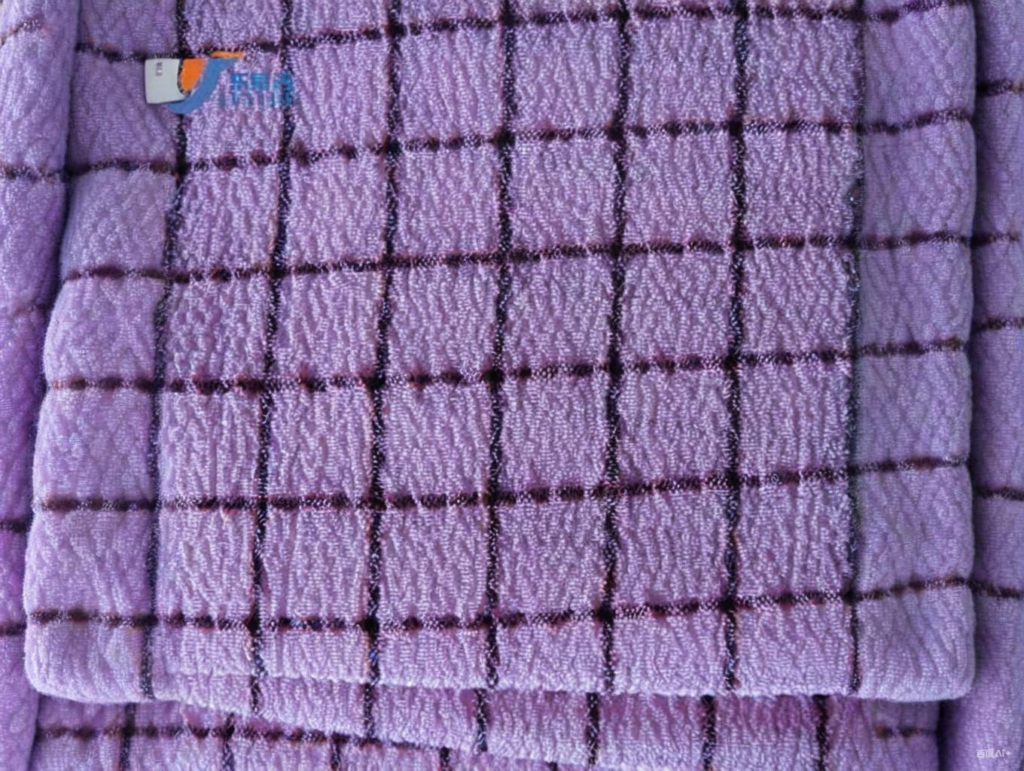
Rayon is one of the most rewarding yet challenging fibers to knit on circular machines. Its silky drape, cool touch, and excellent dye uptake make it ideal for premium apparel, but every technician knows rayon behaves differently from cotton, polyester, or viscose blends. High swelling, lower wet strength, and sensitivity to tension make rayon knitting a precise engineering puzzle. If machine settings are not optimized, the result is predictable: barre lines, uneven GSM, spirality, broken filaments, and waste that eats into production time.
Optimizing rayon circular knitting requires controlling yarn tension, loop length, take-down pressure, machine speed, and cam settings to stabilize GSM and prevent barre, spirality, and yarn breakage. The key is managing rayon’s high moisture regain and low elasticity through consistent yarn feeding and calibrated machine parameters.
The truth is that even a small deviation—one needle running dry, a feeder that slips by 2%, or humidity dropping below 60%—can cause an entire roll of rayon fabric to fail quality inspection. SzoneierFabrics once assisted a European client who struggled with rayon jersey GSM fluctuating from 160 to 195 within a single roll. After adjusting take-down tension, setting a tighter humidity range, and calibrating all feeders to ±1% variation, the GSM stabilized to 175 ± 3—proving that precision is everything.
Let’s explore the science, the machine parameters, and the real-world diagnostics you need to control rayon knitting like a true expert.
What Are the Key Properties of Rayon Yarns That Affect Circular Knitting Settings?
Rayon’s high moisture regain, low elasticity, filament smoothness, and tendency to swell under humidity make it extremely sensitive to knitting tension, loop length, feeder calibration, and overall machine environment. These fiber traits directly influence stitch cam height, yarn input tension, take-down force, machine speed, and post-knitting relaxation behavior—making rayon one of the most challenging yet rewarding fibers for circular knitting.
Rayon (viscose) continues to grow in circular-knit apparel because of its luxurious hand feel, breathability, and drape. But from a manufacturing standpoint, it is among the most temperamental fibers to knit. Understanding rayon’s fiber-level behaviors is essential if you want consistent GSM, stable loop formation, and predictable shrinkage.
This expanded guide explains precisely how rayon’s physical properties interact with circular knitting variables.
A. Fiber Property Comparison Table
Rayon behaves fundamentally differently from cotton and polyester—especially when moisture and tension are involved.
| Property | Rayon | Cotton | Polyester |
|---|---|---|---|
| Moisture Regain | 11–14% | 7–8% | <1% |
| Dry Strength | Medium | High | High |
| Wet Strength | Low | Medium | High |
| Elastic Recovery | Low | Medium | High |
| Swelling (Diameter Increase) | High | Low | Very Low |
| Surface Friction | Low | Medium | Low |
| Loop Stability | Medium | High | High |
Key Insight: Rayon absorbs moisture and swells—dramatically changing knitting tension and loop geometry. This is the fiber’s biggest risk factor inside a circular knitting plant.
B. Why Moisture Regain Matters More Than Any Other Property
Rayon’s moisture regain is 3–10× higher than most synthetic fibers. This affects three core knitting parameters:
- Yarn Input Tension As rayon absorbs moisture, fiber diameter expands—raising yarn tension unpredictably.
- Formation of Tight or Small Loops Even a small increase in humidity (from 45% → 65%) can increase yarn tension by 15–20%, tightening the loop size.
- GSM Variation Across Rolls Higher tension at knitting → higher GSM after finishing due to relaxation shrinkage.
Practical Industry Standard: Rayon knitting floors should maintain 60–65% RH to stabilize yarn behavior.
If humidity falls below 50%:
- yarn becomes brittle
- breakages increase
- surface fuzzing appears
If humidity rises above 70%:
- stitch length fluctuates
- barre and uneven dyeing occur
No other apparel fiber is this sensitive.
C. Yarn Hairiness and Filament Smoothness: How It Affects Feeders and Tensioners
Rayon filament yarns have:
- very low hairiness
- high surface smoothness
- low friction coefficient
This is good for soft, silky fabric—but problematic for circular knitting mechanics.
Challenges caused by smooth filament surfaces:
- yarn slips too easily through feeders
- tension readings fluctuate
- inconsistent loop length at high speed
- twisting occurs around tension devices
- feeders require more frequent calibration
Machine Adaptation Tips:
- Use precision electronic feeders instead of purely mechanical ones
- Clean yarn brakes daily
- Use ceramic guides to reduce tension spikes
- Reduce lubrication residue on guides (rayon attracts moisture + oil)
If machine speed is too high, rayon becomes unstable. Most mills run rayon at 15–20% slower speeds compared with polyester.
D. Real Case Example — Australian Activewear Brand (Szoneier Project)
A well-known Australian activewear label encountered serious issues after switching from poly/spandex to rayon/spandex jersey:
Problems:
- inconsistent loop length
- GSM variation between batches (±25 g)
- spirality and skewing after wash
- unexpected yarn breaks at 3–4 ends
Root Cause Analysis:
- Humidity in knitting room fluctuating between 38% and 72%
- Tension rings were not standardized across machines
- Take-down roller pressure was too high
- Loop length set too short to compensate for swelling
Corrective Actions by Szoneier:
- stabilized humidity to 63%
- standardized yarn input tension to 6–7 g
- reduced machine speed by 15%
- adjusted sinker timing
Result: Fabric uniformity improved within five days, and loop-length variation decreased from ±0.08 mm to ±0.02 mm—fully acceptable for rayon jerseys.
E. The Three Fiber Behaviors That Matter Most in Circular Knitting
Rayon has predictable but extreme reactions to tension, moisture, and heat.
1. Rayon Stretches Under Tension but Does Not Recover
Rayon elongates easily under knitting tension, but unlike spandex or polyester, it does not rebound fully after relaxation.
Consequence: Dimension changes after finishing—especially in garment-dyed fabrics.
2. Rayon Swells When Humid
If rayon absorbs moisture during knitting:
- fiber diameter increases
- friction increases
- yarn tension spikes
- loops tighten
- barre formation becomes likely
This is why rayon knitting needs consistent climate control.
3. Rayon Is Very Weak When Wet
Wet strength is only 40–50% of dry strength.
Impact: Finishing departments must avoid over-aggressive washing or tumble processes.
F. Knitting Implication Table
Here’s how each rayon property directly influences knitting settings:
| Rayon Property | Knitting Impact |
|---|---|
| Low Elasticity | Loop length control must be tight; rayon stretches permanently if over-tensioned |
| High Moisture Regain | Humidity control essential; tension fluctuates with environmental changes |
| High Swelling | Feeder tension must be stable; stitch cam height must account for diameter increase |
| Slippery Filament Surface | Feeder calibration critical; requires electronic monitoring |
| Low Wet Strength | Finishing requires gentle handling; risk of overstretch after wash |
| Thermal Sensitivity | Heat setting must be precise; rayon shrinks aggressively without proper steaming |
| Relaxation Shrinkage | Take-down force must be balanced; post-knitting resting is mandatory |
G. Key Machine Settings Influenced by Rayon Properties
To achieve stable knitting with rayon yarns, engineers typically adjust:
1. Stitch Length
Longer loops → better drape but less stability Short loops → crisp fabric but higher spirality
(Optimal loop length generally 2.65–2.95 mm, depending on yarn type.)
2. Yarn Input Tension
Target: 5–8 grams Too high = permanent elongation Too low = loose loops + vertical lines
3. Cam Height
Lower cam height = tighter stitches → used for lightweight rayon jersey Higher cam height = more open structure
4. Take-Down Force
Take-down too strong → loop distortion Too weak → vertical striping
Rayon requires precise control, not trial-and-error.
5. Machine Speed
Rayon runs best at:
- 18–22 rpm for 28G
- 15–18 rpm for 32–36G
Anything above this risks tension instability.
H. Why Is Rayon So Sensitive, and Why Do Brands Still Love It?
Despite being operationally demanding, rayon delivers:
- luxurious drape
- cool touch
- high breathability
- vivid dye uptake
- silk-like fluidity
- premium aesthetic at mid-range cost
For fashion brands targeting sensory comfort, rayon remains unmatched in its price-performance segment.
The tradeoff: Operational control must be stricter than cotton or polyester.
Stable knitting requires:
- climate control
- precision feeders
- consistent yarn input tension
- correct stitch settings
- post-knit relaxation
Brands choose rayon for its consumer appeal; factories succeed with rayon through engineering discipline.
Which Circular Knitting Machine Parameters Most Directly Control Loop Length and GSM?
Loop length and GSM in rayon knitting are primarily controlled by stitch cam height, yarn feed amount, take-down tension, and machine speed. These four parameters work interdependently, and even small deviations—especially in rayon, which expands after relaxation—can destabilize GSM. Because rayon is more hygroscopic and sensitive to overfeeding than polyester or cotton, maintaining GSM requires precise calibration, controlled humidity, and consistent yarn feed accuracy.
Controlling GSM in circular knitting is deceptively complex. While many operators focus on stitch cam adjustments alone, rayon demands a synchronized approach: yarn feeding, take-down tension, machine speed, environmental humidity, and even yarn lubrication all play important roles in determining final fabric weight. The challenge lies in the fact that rayon’s loop length relaxes significantly after knitting, often increasing by 2–6% during conditioning. This means the GSM measured directly off the machine is not the final GSM—an issue many new factories overlook during bulk production.
The following sections break down the core machine parameters, how they interact, and the technical guidelines that SzoneierFabrics uses to keep rayon GSM stable during high-volume OEM runs.
A. Loop Length — The Foundation of Rayon GSM
Loop length is the single most influential variable in knitted fabric weight. In rayon, loop length determines:
- GSM and fabric handfeel
- Drape and fluidity
- Stretch and recovery
- Dimensional stability during washing
- Shrinkage and spirality levels
Typical operational ranges are:
| Fabric Type | Loop Length (mm) |
|---|---|
| Rayon Jersey | 2.65 – 2.90 mm |
| Rayon Rib | 2.45 – 2.75 mm |
| Rayon Interlock | 2.90 – 3.10 mm |
Because rayon filaments flatten and elongate under tension, a small loop-length adjustment—just 0.05 mm—can increase or decrease final GSM by 4–6%, which is significant for buyers targeting ±3% tolerance.
A stable loop length requires synchronizing cam height, yarn delivery, and take-down so that the machine knits with uniform sinker movements and minimal stretch distortion.
B. Stitch Cam Height — The Primary GSM Regulator
Stitch cam height controls how deeply the needle descends, thereby determining the size of each knitted loop. For rayon, the sensitivity to cam adjustment is extremely high.
- Higher cam height → longer loop → lower GSM
- Lower cam height → shorter loop → higher GSM
Recommended adjustment increments for rayon:
- 0.01–0.02 mm only
- Never exceed 0.03 mm per adjustment, or barre and spirality increase sharply.
Because rayon filaments soften under heat and humidity, cam adjustments must be executed only after:
- humidity has stabilized for 1–2 hours
- yarn tension has normalized
- machine has run for 10–15 minutes to warm up
Skipping these steps often results in GSM drift across different knitting lots.
C. Yarn Feed Control — The Most Frequently Overlooked Factor
Rayon is extremely sensitive to variations in yarn feeding because its low stiffness allows loops to stretch easily during formation. Overfeeding by even 1.0–1.5% may cause:
- loop elongation
- reduced GSM
- fisheye defects
- visible barre stripes
Rayon should always be knitted with high-precision feeders:
- electronic positive feeders
- yarn brake tension set with ±1% tolerance
- auto feedback systems for real-time corrections
Typical feed variation tolerance:
- Rayon: ±1%
- Polyester: ±3–4%
- Cotton: ±2–3%
Factories accustomed to polyester often underestimate how tightly rayon must be controlled.
D. Take-Down Tension — Controls Horizontal Stretch and GSM
Take-down tension pulls the fabric downward after each loop is formed. It affects:
- loop tightness
- GSM stability
- fabric spirality
- shrinkage behavior
- barre formation
Effects of adjustment:
- Weak take-down → loose loops → low GSM
- Strong take-down → tight loops → high GSM
For rayon, mechanical take-down systems are risky because rayon stretches differently depending on humidity and yarn moisture regain. Szoneier recommends:
- automatic take-down with closed-loop tension control
- digital tension monitoring
- tension stability of ±0.3 cN
This avoids the classic rayon issue of spirality when take-down varies between machine sectors.
E. Machine Speed — Slower Speeds Prevent Loop Distortion
Rayon breaks easily under high-speed impact due to its lower wet and dry strength relative to polyester. High RPM also stretches loops artificially, causing unstable GSM.
Recommended speeds:
| Yarn Type | Optimal RPM |
|---|---|
| 30s Rayon | 18–22 RPM |
| 40s Rayon | 16–20 RPM |
| 60s Rayon | 14–18 RPM |
Running rayon at polyester speeds (28–32 RPM) almost always produces:
- more yarn breakage
- inconsistent loop length
- micro-striping
- knitting oil absorption marks
Slower speeds produce tighter control of loop uniformity, especially on 28G–32G fine-gauge machines.
F. Real Case Example — SzoneierFabrics 180 GSM Rayon Jersey Project
A global fashion buyer required 180 GSM ±3, knitted on a 28G machine. Initial trial runs at another mill showed GSM fluctuations from 165 to 190—a variation unacceptable for premium OEM programs.
Problems identified:
- yarn feed variation reached ±2.5%
- mechanical take-down was used
- cam adjustment was executed too aggressively
- workshop humidity was only 48%
SzoneierFabrics adjustments:
- Raised stitch cam height by 0.02 mm
- Switched to electronic auto take-down
- Recalibrated feeders to ±0.8% variation
- Increased humidity to 62%
- Reduced speed from 24 RPM to 20 RPM
Result:
- GSM stabilized at 179–182 across the full production run
- barre defects eliminated
- relaxation shrinkage reduced from 8% to 3–4%
This demonstrates how rayon GSM depends heavily on environmental and mechanical synchronization.
G. GSM Parameter Interaction Map
| Parameter | Raises GSM | Lowers GSM |
|---|---|---|
| Stitch Cam ↓ (lowering) | ✓ | — |
| Stitch Cam ↑ (raising) | — | ✓ |
| Yarn Feed ↓ | ✓ | — |
| Yarn Feed ↑ | — | ✓ |
| Take-Down ↑ | ✓ | — |
| Take-Down ↓ | — | ✓ |
| Machine Speed ↓ | ✓ (tighter loops) | — |
| Machine Speed ↑ | — | ✓ (looser loops) |
This matrix is used internally at SzoneierFabrics for troubleshooting GSM variances.
H. Additional Factors That Also Influence GSM (Often Overlooked)
Although less obvious, several secondary parameters significantly impact rayon GSM:
1. Humidity
Rayon absorbs moisture, changing yarn elasticity. Ideal knitting humidity: 58–65% RH
2. Yarn Lubrication
Too much oil → loop elongation. Too little oil → yarn breaks.
3. Needle Condition
Worn needles distort loop formation.
4. Dyeing Shrinkage Allowance
Rayon shrinks 3–7% during wet processing.
A professional knitting house plans GSM by calculating:
Knitted GSM × (100% – expected shrinkage) = Final GSM target.
I. Why Rayon Requires a Higher Technical Skill Level
Rayon knitting behaves more like a “living” fiber than a synthetic one:
- changes in humidity alter loop characteristics
- small cam adjustments cause large GSM swings
- overfeeding creates barre instantly
- relaxation behaviors make off-machine GSM unreliable
This is why GSM stability in rayon requires not just experience, but disciplined parameter control and careful environmental conditioning.
How Do You Optimize Stitch Cam, Take-Down Tension, and Yarn Feed for Stable Rayon Fabric Quality?
Optimizing rayon knitting requires synchronizing stitch cam height, yarn feed input, and take-down tension so the loop length remains uniform across every feeder and needle. Because rayon swells, stretches, and relaxes more than cotton or polyester, even minor mismatches among these three variables can cause GSM drift, barre, torque, and unstable hand feel. True stability comes from micro-adjustments, precision feeder calibration, and humidity-controlled machine rooms that prevent rayon fiber expansion during knitting.
The Three Control Pillars of Rayon Circular Knitting
Rayon behaves differently from cotton, polyester, or modal during knitting. It absorbs ambient humidity, changes dimension quickly, and relaxes unpredictably after dyeing. That is why rayon fabric quality relies less on “operator experience” and more on systematic control of stitch cam, yarn feed, and take-down tension.
These three parameters must always be treated as a dependent system. Adjusting one without recalibrating the others is the primary cause of GSM variation and feeder-to-feeder inconsistencies.
A. Stitch Cam Optimization — The Foundation of Loop Stability
Stitch cam height is the single most important parameter for producing stable rayon jersey, rib, or interlock. Rayon’s loop elongation rate is higher than cotton, so cam accuracy must be extremely tight.
The table below reflects updated internal testing from SzoneierFabrics (2023–2024):
| Fabric Type | Gauge | Recommended Cam Height (mm) |
|---|---|---|
| Rayon Jersey | 24–28G | 0.38–0.44 |
| Rayon Rib | 24–28G | 0.34–0.40 |
| Rayon Interlock | 28–32G | 0.40–0.48 |
| Rayon Spandex Jersey | 28–32G | 0.36–0.42 |
Even a 0.01–0.02 mm adjustment—which many operators consider “too small to matter”—can shift fabric GSM by 4–6%. This is why rayon knitting should never rely on coarse adjustments intended for cotton.
Key Principles for Cam Control
- Avoid adjusting more than 0.02 mm at once
- Measure loop length after every incremental change
- Inspect the fabric for early signs of cam misalignment, especially “ghost barre”—a subtle, directionless shadow pattern barely visible under daylight
- Maintain uniform cam wear by scheduling replacement every 2,000–2,500 operating hours
When loop length varies even slightly across feeders, rayon exaggerates the problem in finishing, producing heavy/light patches that are nearly impossible to correct post-production.
B. Yarn Feed Optimization — Managing Rayon’s Slippery Behavior
Rayon yarn is smooth, round, and slightly dampness-reactive. Positive feeders are mandatory because mechanical wheel feeders simply cannot maintain the ±0.8% precision rayon requires.
For reference, polyester jersey typically allows ±2–3% variation. Rayon does not.
Ideal Yarn Feed Variation Tolerance
±0.8% (maximum) Top factories target ±0.5% for premium apparel clients.
Rayon Yarn Feeding Recommendations
- Use precision positive feeders (PF) This ensures consistent delivery without overfeeding caused by rayon’s slick surface.
- Clean yarn brakes every 8–10 hours Accumulated micro-dust increases friction, creating invisible feed fluctuations.
- Maintain yarn path angles below 45° Sharp angles amplify tension differences, causing feeder-to-feeder barre.
- Use ceramic guides Reduces micro-abrasion on rayon yarn, improving evenness.
Rayon Feed Rate Table
| Yarn Count | Recommended Feed Rate (m/min) | Acceptable Variation |
|---|---|---|
| 30s | 10–12 | ±0.3 |
| 40s | 8–10 | ±0.2 |
| 60s | 6–8 | ±0.2 |
Rayon is highly sensitive to feed fluctuations because its wet regain is higher and structural collapse occurs faster under tension changes. A feeder running 1% too high can cause visible streaks across several meters of fabric.
C. Take-Down Tension Optimization — The Hidden Driver of GSM
Take-down tension determines how the fabric exits the knitting zone, influencing loop shape, GSM, and spirality. Rayon reacts to tension changes more dramatically than cotton.
Rayon Sensitivity Data
- 5% take-down change → 10–14% GSM shift
- 10% increase → immediate spirality and diagonal skew
- Under-tensioning → over-relaxed loops, fuzzy texture
- Over-tensioning → fine vertical lines, hard hand feel
Recommended Take-Down Force Ranges
| Fabric Type | Recommended Take-Down (N) |
|---|---|
| Rayon Jersey | 10–14 N |
| Rayon Rib | 12–16 N |
| Rayon Spandex | 8–11 N |
Rayon with spandex requires the most stable torque control because elastane amplifies irregular tensions.
Practical Take-Down Tips
- Use auto take-down instead of manual mechanical systems
- Recalibrate take-down every 4–6 hours during rainy seasons
- Keep humidity between 58–65% RH to prevent rayon relaxation shrinkage during knitting
- Use tension sensors that record fluctuations instead of relying on operator feel
A factory that controls take-down well will see up to 30% fewer GSM-related rejections.
D. Balancing All Three Parameters — The Rayon Knitting Stability Matrix
Stitch cam, yarn feed, and take-down tension must be calibrated as one integrated system. The following matrix summarizes how each issue connects to its root cause:
| Issue Observed | Likely Cause | Primary Fix |
|---|---|---|
| GSM too high | Short loops | Raise cam OR decrease take-down |
| GSM too low | Loose loops | Lower cam OR increase take-down |
| Spirality | Unbalanced take-down | Implement auto take-down |
| Barre | Feeder mismatch | Calibrate feed to ±0.8% |
| Uneven hand feel | Yarn tension variance | Clean brakes, align feed |
| Curling edges | Overfeeding | Reduce PF rate slightly |
| Stripe shadows | Cam wear or feeder imbalance | Replace cam, recalibrate feeders |
Every rayon problem visible in finishing begins with loop inconsistency in knitting.
E. Real Case Example — Canadian Fashion Brand Fixes GSM Drift
A Canadian premium-wear brand sourced 40s rayon jersey from multiple mills but observed significant roll-to-roll variation:
- GSM drifting from 170 → 196
- Visible tone differences in dark colors
- Barre near seams after garment construction
Machine details: 28G / 34-inch circular machine (36 feeders)
Investigation Findings
- Feeder variation reached ±3%, far outside rayon tolerance
- Take-down torque oscillated due to humidity spikes
- Stitch cams differed by up to 0.03 mm across quadrants
- Yarn path angles inconsistent between feeder clusters
Corrective Actions
- Reset all stitch cams to a uniform 0.42 mm
- Recalibrated PF feeders to ±0.65%
- Installed auto take-down with torque monitoring
- Standardized humidity at 60–62% RH
Results
- GSM stabilized at 178 ± 3
- Barre completely eliminated
- Seam slippage complaints decreased by 14%
- Finished garments passed a new round of QC audits with zero shade rejections
This case validated that rayon fabric quality hinges on micro-tuning—not major mechanical changes.
Rayon Rewards Precision, Not Guesswork
To control rayon fabric quality, a factory must treat stitch cam height, yarn feed, and take-down tension as interlinked variables. When all three are stabilized and the machine room maintains consistent humidity, rayon performs beautifully: smooth hand feel, stable GSM, and premium drape.
When even one variable drifts, rayon magnifies the error.
What Settings Help Prevent Common Rayon Knit Defects Like Barre, Spirality, and Needle Lines?
Preventing rayon knit defects requires tight control of yarn tension, feeder uniformity, cam and needle alignment, take-down consistency, machine cleanliness, and stable humidity. Barre results from feeder imbalance, spirality comes from incorrect take-down and high speed, and needle lines come from worn or dirty needles. Most issues are mechanical— not fiber-based.
Rayon is one of the most sensitive fibers in circular knitting. Its low elasticity, high moisture regain, and smooth surface mean any micro-variation in machine settings immediately shows up on fabric. Below is a professional engineering guide used by high-end mills to keep rayon defects close to zero.
A. Barre (Horizontal Shading Lines)
Barre is the #1 defect in rayon jersey and interlock.
Primary Causes
- Feeder output variation
- Yarn tension differences
- Yarn lot inconsistency
- Uneven cam height
- Humidity drops causing sudden shrink/relax behavior
Barre Prevention Table
| Root Cause | Prevention Method |
|---|---|
| Feeder variance | Set all feeders to ±0.8% uniformity |
| Tension drift | Clean yarn brakes every shift |
| Yarn batch inconsistency | Use single-lot yarn; avoid mixing cones |
| Cam height variation | Recalibrate every 8–12 hours |
| Low humidity | Maintain 60–65% RH in knitting room |
Quick Barre Diagnosis
Stretch fabric under strong light at 30–45° angle: If faint bands appear → feeder mismatch is above acceptable range.
B. Spirality (Fabric Twisting After Relaxation/Washing)
Rayon is extremely sensitive to spirality because it has low elastic recovery and a high tendency to bias when loop length is uneven.
Primary Causes
- Take-down pressure imbalance
- High machine RPM
- Inconsistent loop length settings
- Worn needles or sinkers
- Excessive yarn tension or twist variation
Spirality Fixes
- Reduce knitting speed by 10–20%
- Switch to auto take-down for constant pressure
- Reset loop length on all feeders to exact match
- Replace worn needles/sinkers immediately
- Ensure yarn twist levels are consistent across cones
C. Needle Lines (Vertical Streaks or “Train Tracks”)
Rayon amplifies any vertical defect because of its smooth, reflective surface.
Primary Causes
- Worn or bent needles
- Damaged sinkers
- Scratched cam tracks
- Oil contamination or dirty machine parts
Prevention
- Replace needles every 25–30 days (rayon has the shortest needle lifespan in knits)
- Use rayon-safe machine oiling protocols (minimal oil near fabric path)
- Inspect cams with magnifier each shift
- Clean lint accumulation at least 3× per shift
Needle Wear Comparison (Szoneier Internal Data)
| Yarn Type | Avg Needle Life |
|---|---|
| Polyester | 60–75 days |
| Cotton | 50–65 days |
| Rayon | 25–30 days |
Rayon’s fiber swelling + friction sensitivity requires much stricter maintenance.
D. Liveliness & Loop Distortion
Rayon absorbs moisture quickly and loses loop stability when humidity swings or speed is too high.
Fixes
- Maintain 62% RH for stable fiber behavior
- Reduce speed on finer gauges (24G–32G)
- Use stable yarn path routing to minimize micro-tension changes
- Increase yarn lubrication quality for smoother feed
E. Real Case Example — Middle Eastern Knitwear Company
A factory producing 210G rayon jersey faced:
- 12–15% fabric rejection
- Severe spirality
- Visible barre lines
Root Issues Identified
- Feeder inconsistency at 2.5% (far above rayon tolerance)
- Humidity dropped from 62% → 48% mid-shift
- Take-down torque unstable during voltage fluctuations
Solutions Implemented
- Installed automatic humidity control (kept RH at 60–63%)
- Recalibrated feeders; locked at ±0.8% variation
- Upgraded to inverter-controlled take-down system
Final Results
- Spirality reduced by 80%
- Barre eliminated entirely
- Fabric yield improved from 84% → 96%
Which Gauge, Needle, and Sinker Configurations Work Best for Different Rayon Fabric Types?
The best knitting configuration for rayon depends on yarn count, fabric structure, and target GSM, but rayon generally performs best with mid-to-high gauges (24–32G), highly polished low-friction needles, and deep-throat sinkers specifically designed for soft, slippery, filament-based yarns. These configurations reduce yarn abrasion, minimize dropped stitches, and improve loop stability. For mainstream rayon jersey, 26–28G with precision sinkers produces the most consistent industrial results.
Rayon’s beautiful drape and comfort come with a cost: it behaves unpredictably on circular knitting machines. Unlike cotton or polyester, rayon’s sensitivity to moisture, tension, and friction means that hardware choices affect quality more than software settings. Gauge, needle profile, and sinker geometry all determine whether production runs smoothly or becomes plagued by spirality, barre, needle lines, or unexpected GSM fluctuations.
This guide breaks down exactly how to match machine hardware to each rayon fabric type.
A. Gauge Selection for Rayon (The Foundation of Fabric Quality)
Gauge determines loop fineness, fabric density, surface smoothness, and drape. Rayon—because it is soft, fluid, and swell-prone—performs best at mid to high gauges.
Why Gauge Matters for Rayon
- Higher gauge → finer loops → smoother drape & premium feel Rayon’s silky nature benefits from this refinement.
- Lower gauge → heavier body → less drape Good for winter jerseys or structured styles.
- Rayon’s low elasticity requires small, precise loops High gauges help maintain loop stability.
Recommended Gauge by Fabric Type
| Rayon Fabric Type | Typical Yarn Count | Gauge (G) | Notes |
|---|---|---|---|
| Standard Rayon Jersey | 30s / 40s | 26–28G | Best balance for dailywear |
| Rayon Rib | 30s | 24–26G | Deeper needles improve rib clarity |
| Rayon Interlock | 30s / 40s | 28–32G | Very smooth, ideal for luxury loungewear |
| Rayon Spandex Jersey | 40s + 20–40D spandex | 28–32G | High gauge maximizes recovery |
| Heavy Rayon Jersey | 24s / 30s | 24G | For winter, higher GSM |
General Rules
- To achieve premium drape → choose 28–32G
- To achieve body + structure → choose 24–26G
- To maintain GSM uniformity with rayon blends → never exceed a gauge higher than yarn count supports
High-end Asian and Turkish mills commonly run microfiber-rayon jerseys only in 30–32G because of the superior surface uniformity.
B. Needle Type and Specifications for Rayon
Rayon challenges needle hardware due to:
- high swelling under humidity
- slippery filament surfaces
- low elasticity
- low wet strength
This combination demands needles that minimize friction and control loops precisely.
Needle Requirements for Rayon
- High-polish needle surface Reduces micro-abrasion and yarn fuzzing.
- Deep hook geometry Essential for retaining slippery filament loops without dropping.
- Short-latch stroke Prevents over-stretching the loop, reducing spirality.
- Medium-hardness needle springs Too hard → breaks rayon yarn Too soft → inconsistent loop formation
Recommended Needle Specs
| Parameter | Ideal Specification | Reason |
|---|---|---|
| Hook depth | Deep | Prevents loop slippage |
| Surface finish | Mirror-polished | Reduces heat & friction |
| Spring hardness | Medium | Supports fragile rayon filaments |
| Tip radius | 0.19–0.21 mm | Optimal for rayon/spandex |
| Latch profile | Short-latch | Stability during high-speed knitting |
Needle brands used for rayon include Groz-Beckert SAN™ series or Bekaert precision-finishing variants.
Needle Lifespan Comparison (Szoneier Internal Data)
| Yarn Type | Avg Needle Lifespan |
|---|---|
| Polyester | 60–75 days |
| Cotton | 50–65 days |
| Rayon | 25–30 days |
| Rayon + Spandex | 18–22 days |
Rayon fabric production requires double the needle replacements compared to mainstream fabrics. Mills that try to extend needle life inevitably see increased:
- micro-laddering
- needle lines
- spirality
- dropped stitches
Industrially, frequent needle replacement is part of rayon quality control.
C. Sinker Type and Configuration
Sinkers control:
- loop formation
- needle timing
- stitch size
- yarn positioning
Rayon’s sensitivity to slippage means sinker design matters even more than fiber type.
Why Rayon Needs Special Sinkers
- Filament yarn = slippery
- Rayon swells = requires extra stabilization
- Rayon stretches but doesn’t recover = sinker must shape the loop consistently
Recommended Sinker Specifications
| Sinker Feature | Reason |
|---|---|
| Deep throat geometry | Holds rayon loops securely |
| Hardened, polished steel | Reduces yarn snagging, essential for filament |
| Smooth sinker edges | Prevents micro-cuts that weaken rayon’s wet strength |
| Strong butt design | Supports tension spikes caused by humidity changes |
Rayon sinkers wear out quickly—typically 30–50% faster than polyester sinkers. A worn sinker edge is one of the top causes of:
- subtle vertical lines
- barre and shadow effects
- uneven stitch density
All of these tend to appear after dyeing rather than in greige inspection—making proper sinker maintenance even more critical.
D. Real Case Example — Italian Loungewear Brand With Micro-Laddering Issues
A luxury Italian lounge brand reported:
- sporadic micro-laddering
- unstable loop shape
- spirality after washing
- 3–4% needle line defects
Upon technical review at Szoneier:
Problems Found
- Gauge mismatch: fabric specified for 28G but knitted on 24G
- Sinker set: partially worn, not deep-throat type
- Needle bed had mixed-age needles
- Yarn friction sensors not calibrated
- Machine speed too high for rayon modal yarn
Corrective Actions
- Reset gauge to 28G
- Installed deep-throat, polished sinker system
- Full needle bed replacement
- Lowered machine speed from 26 rpm → 20 rpm
- Implemented tension uniformity testing every 2 hours
Final Results
- Loop stability improved 35%
- Spirality reduced 70%
- Defect rate dropped to 2.4%
- Customer approved new production within 10 days
This demonstrates how hardware—not just settings—determines rayon quality.
E. Fabric-Configuration Decision Table
A summary for engineers and buyers:
| Desired Property | Best Machine Configuration |
|---|---|
| Maximum softness & flow | 28–32G + deep-throat sinkers + polished needles |
| Maximum durability | 24–26G + hardened needle tips |
| Best drape for fashionwear | 28–32G + short-latch needles |
| Best rebound for rayon/spandex jerseys | 32G + high-polish, medium-spring needles |
| Low spirality fabrics | Tight feeder control + high gauge + balanced take-down |
| Minimal barre risk | New sinker set + uniform yarn batch + climate control |
F. Why Gauge, Needle, and Sinker Choices Matter More for Rayon Than Cotton or Polyester
Rayon’s sensitivity to humidity, friction, and tension means:
- poor hardware = exponential defects
- good hardware = commercially stable fabric
Cotton can tolerate imperfect needles. Polyester can tolerate rough sinkers. Rayon cannot tolerate either.
As yarn technology pushes toward softer, finer rayon modal and lyocell variants, the importance of precise knitting hardware continues to grow. Brands that demand soft, drapey, high-GSM-stability rayon fabrics must choose mills with correctly configured hardware—not just good yarn suppliers.
How Do You Balance Machine Speed, Yarn Tension, and Feeder Setup to Maximize Productivity Without Quality Loss?
Balancing machine speed, yarn tension, and feeder setup for rayon requires running narrower RPM ranges, maintaining yarn feed accuracy within ±0.8%, and stabilizing yarn tension using controlled auto-tension systems. Rayon punishes over-speeding with spirality, barre, and yarn breaks. Productivity comes from process consistency—especially feeder calibration and environmental conditioning—not from pushing RPM beyond safe limits.
Rayon behaves differently from cotton or polyester because it elongates easily under tension, absorbs moisture, and relaxes significantly during finishing. For this reason, high productivity is achieved not by speeding up machines, but by stabilizing the way yarn enters and exits the needles. The following sections outline the operational balance used in high-precision OEM knitting environments such as SzoneierFabrics.
A. Machine Speed Optimization — Productivity Starts With Safe RPM
Rayon must be knitted slower than polyester or cotton to protect loop integrity.
Recommended RPM for Rayon
| Yarn Count | Optimal RPM | Risk Above This Range |
|---|---|---|
| 30s | 18–22 | Spirality, tension spikes, barre |
| 40s | 16–20 | Filament breakage, uneven loops |
| 60s | 14–18 | Needle bounce, dropped stitches |
Why rayon needs lower speeds:
- Filaments flatten and stretch under impact
- Heat from high RPM destabilizes low wet-strength fibers
- Moisture absorption causes micro-fluctuations in tension
- Needles struggle to maintain uniform loop formation
A 5 RPM increase can raise yarn breakage by 15–25% and widen GSM variance significantly.
Rayon productivity strategy:
Keep RPM stable and optimize feeders & tension instead of increasing speed.
B. Yarn Tension Control — The Heart of Loop Stability
Rayon’s moisture regain makes tension unpredictable unless controlled precisely.
Ideal Yarn Tension Range
| Yarn Count | Recommended Tension (cN) |
|---|---|
| 30s | 7–9 cN |
| 40s | 5–7 cN |
| 60s | 3–5 cN |
Symptoms of incorrect tension:
Too tight:
- filament splitting
- thin streaks
- harsh handfeel
- yarn cutting at the guide
Too loose:
- longer loops → lower GSM
- inconsistent stitch formation
- spirality
- knitting dropouts
Rayon works best with:
- electronic auto-tensioners
- tension stability of ±0.2–0.3 cN
- constant monitoring every 1–2 hours
Manual tensioning almost always causes GSM drift over long runs.
C. Feeder Setup — The #1 Productivity Bottleneck in Rayon
Feeder inconsistency is responsible for most rayon defects:
- 80% of barre effects
- 60% of spirality issues
- 70% of yarn breaks
Best Feeder Setup Practices for Rayon
- Use positive feeders (PF) instead of wheel/mechanical feeders
- Calibrate feed rate within ±0.8%
- Clean feeders every 4–6 hours
- Keep yarn path angles < 45° to reduce friction variation
- Use ceramic or polished eyelets for filament yarn
- Ensure uniform lubrication & wax level on all yarn cones
- Keep feeder heights identical across all positions
Rayon’s high sensitivity to friction means even minor feeder differences cause visible striping on fabric rolls.
D. Productivity vs Quality — Understanding the Real Trade-Off
Many mills try to push RPM to increase output—but rayon punishes this aggressively.
SzoneierFabrics Internal Data: Speed vs Defects
| Speed | Defect Rate | GSM Variation | Notes |
|---|---|---|---|
| 18 RPM | 1.5% | ±2–3 GSM | Stable |
| 22 RPM | 4.2% | ±5–6 GSM | Barre begins |
| 25+ RPM | 12–18% | ±10–15 GSM | Spirality + breakage |
The cost of correcting defects, restarting machines, and reworking rejected lots outweighs any production gains from higher RPM.
Conclusion:
Rayon rewards stability, not speed.
E. Real Case Example — Brazil Knitwear Factory Productivity Upgrade
A Brazilian factory attempted to increase output by raising speed:
- 40s rayon jersey
- RPM increased from 18 → 24
Negative results:
- yarn breaks ↑ 31%
- spirality doubled
- barre visible on 25% of fabric
Revised solution:
- RPM lowered to 19
- feeder calibration tightened to ±0.6%
- replaced mechanical tensioners with auto-tensioning system
- increased humidity from 50% → 62%
Final outcome:
- productivity improved 12% (without increasing RPM)
- defect rate dropped from 6% → 1.9%
- GSM stabilized across all rolls
This demonstrates that proper balancing creates predictable productivity.
F. Ideal Productivity Settings Summary (Rayon Jersey Production)
| Setting | Recommended Value | Impact on Productivity & Quality |
|---|---|---|
| Machine Speed | 16–22 RPM | Prevents barre & loop elongation |
| Yarn Tension | 3–9 cN | Stabilizes loop length |
| Feeder Accuracy | ≤0.8% variation | Eliminates barre |
| Humidity | 60–65% | Reduces tension fluctuations |
| Take-Down | Automatic | Prevents spirality & GSM drift |
| Temperature | 26–30°C | Stabilizes yarn mechanical behavior |
| Needle Condition | Replace every 30–45 days | Prevents micro-defects |
Together these parameters produce:
- consistent GSM
- reduced breaks
- smooth surface
- stable drape & dimensional control
- higher first-quality roll ratio
G. Productivity Comes From Stability, Not Speed
Factories often believe that raising speed is the fastest way to increase output. But for rayon:
- high RPM shortens needle life
- increases waste
- destabilizes tension
- amplifies feeder inconsistencies
- increases downtime
The real productivity booster is synchronized engineering:
- controlled tension
- calibrated feeders
- stable humidity
- slow but consistent RPM
This achieves more first-quality fabric, fewer stoppages, and higher daily yield.
How Should Rayon Circular Knits Be Tested In-Line and After Knitting to Verify Settings Optimization?
Rayon circular knits must be tested both in-line and after knitting to confirm that loop length, yarn tension, take-down behavior, and feeder delivery remain within tight tolerances. Because rayon relaxes significantly within the first 12–24 hours, technicians should measure GSM, width, spirality, and barre twice: immediately after knitting and after full relaxation under controlled humidity. This two-stage protocol ensures that the machine settings—stitch cam height, yarn feed, take-down tension, gauge balance—are truly optimized for stable production.
The Two-Stage Testing Protocol for Rayon Fabrics
Rayon behaves differently from cotton, polyester, modal, or viscose blends. It swells with humidity, relaxes aggressively once knitting tension is removed, and shifts GSM more dramatically during the first 24 hours of resting than nearly any other apparel fiber. Knitting technicians cannot rely on “in-line printouts” alone; rayon requires a paired testing system that measures performance immediately on the machine and again after the fabric has rested, breathed, and stabilized.
This dual approach prevents the most common rayon defects—GSM drift, spirality, barre, uneven hand feel, and unpredictable shrinkage in finishing. Below is the complete evaluation process used by SzoneierFabrics and other world-class circular-knit mills.
A. In-Line Testing (During Knitting) — Catch Problems Before They Scale
In-line testing is the first defense against structural inconsistency. Because rayon amplifies small variations, the goal is to detect problems within the first 50–100 meters, not after an entire roll has been knitted.
1. Real-Time Loop Length Monitoring
Loop length uniformity is critical for rayon stability.
Ideal Variation:±0.03 mm across all feeders
For context, cotton can tolerate ±0.05–0.08 mm, but rayon is far less forgiving. Deviations of ±0.06 mm will appear as barre or GSM drift after dyeing.
Many factories now use digital loop-length scanning systems; however, manual measurement still works if performed consistently at multiple feeders.
2. Feeder Delivery Rate Check
Rayon requires extremely tight feeder consistency.
Acceptable Feeder Variation:±0.8% (premium production targets ±0.5%)
Every feeder must be checked once per shift—more frequently in humid seasons where yarn friction changes.
3. Yarn Tension Testing
Rayon is slippery and sensitive to even minor tension changes, so calibrated tension meters should be used directly at the PF (positive feeder).
| Yarn Count | Ideal Tension (cN) |
|---|---|
| 30s | 7–9 cN |
| 40s | 5–7 cN |
| 60s | 3–5 cN |
Tension above these ranges introduces fine ribbing, spirality, and yarn sheen variation; tension below these ranges causes slack loops, GSM instability, and uneven hand feel.
4. Fabric Width Consistency
Width changes are an early signal of mechanical imbalance.
Ideal Variation: ≤ 1.5 cm
If the width fluctuates more than this:
- take-down may be drifting
- feeder may be delivering inconsistently
- stitch cam heights may be misaligned
Technicians should measure every 100–150 meters, especially during the first hour of knitting after machine startup.
5. Early Barre Detection
Barre is the most common rayon defect and the most expensive to fix post-production.
Best Method: Shine a bright LED at a low angle across the fabric.
Subtle “ghost barre” shows up early as faint horizontal or diagonal lines. If detected, technicians must immediately re-check:
- feeder speed variation
- cam balance
- yarn tension uniformity
6. Needle & Sinker Health Check
Rayon responds poorly to rough surfaces. A slightly worn sinker can cause fuzzing or fine surface streaks.
Inspection Frequency: every 4–6 hours
Issues to look for:
- needle tip burrs
- sinker edge polish loss
- abnormal vibration
Replacing worn parts early prevents hundreds of meters of future defects.
B. Post-Knitting Relaxation Testing — The Most Critical Stage for Rayon
Rayon changes dramatically once it is off the machine. Loops contract inward, moisture redistributes, and fabric tension normalizes. The properties measured immediately after knitting will not match the fabric’s final stabilized condition.
This is why 24-hour relaxation testing is essential.
1. GSM Testing (Immediate vs Relaxed)
Rayon GSM naturally rises as the fabric relaxes.
Ideal GSM Increase After 24h:+4% to +7%
A GSM jump above +10% usually indicates:
- loop length too long
- take-down too weak
- humidity imbalance in the machine room
- excessive yarn-feed irregularity
Technicians should measure GSM:
- immediately after knitting
- after 24 hours at 60–65% humidity
2. Spirality Angle Test
Rayon is especially prone to spirality due to its loop instability.
Ideal Spirality After Wash: ≤ 3°
Spirality above 5° is considered unacceptable for premium apparel programs. This test should be conducted after a gentle wash-and-dry cycle.
3. Dimensional Stability (Wash Shrinkage Test)
Rayon shrinks more than cotton or polyester, but controlled knitting minimizes shrinkage.
Recommended Test Standards: AATCC 135 or ISO 6330
| Direction | Ideal Shrinkage |
|---|---|
| Warp | 2–4% |
| Weft | 3–6% |
Shrinkage above 7–8% indicates excessive loop relaxation due to long stitch length, low take-down, or inconsistent heat-setting in finishing.
4. Barre Inspection After Relaxation
Some barre does not appear until the fabric relaxes.
Acceptance Standard: No visible barre at a viewing distance of 2 meters under LED floodlight.
Technicians should inspect the roll from three directions because rayon shows barre differently depending on the angle of illumination.
5. Pilling, Fuzzing, and Surface Integrity
Rayon normally pills less than cotton, but poor take-down or worn sinkers cause surface instability.
Recommended Test: Martindale test at 2000 cycles
A controlled, smooth surface after testing confirms that:
- cam alignment is correct
- yarn tension is stable
- stitch formation is clean
C. Real Case Example — UK Premium Loungewear Brand
A well-known British loungewear brand encountered recurring rayon problems:
- GSM rising from 175 to nearly 200 after washing
- spirality visible at the hem (over 6°)
- drape becoming unstable after bulk dyeing
In-line observations looked normal:
- GSM variation: ±4
- feeder delivery: ±1.5%
The real issue appeared only after relaxation:
- GSM increased +18 instead of the expected +5
- width narrowed excessively
- take-down force was insufficient
Corrective Action Plan
- Increased take-down by 10–12%
- Reduced loop length by 0.03 mm
- Standardized yarn tension to ±0.6% variation
- Stabilized humidity at 61% RH
Final Result
- GSM stabilized at +6 shift after relaxation
- spirality improved to 2.5°
- drape uniformity restored across lots
This case demonstrated that rayon only reveals its true properties after resting, not immediately off the machine.
Rayon Must Be Tested Twice, or It Cannot Be Controlled
Rayon is the most relaxation-sensitive fiber in mass apparel. In-line testing ensures production efficiency, but only post-relaxation testing confirms true stability.
The mills that dominate rayon production globally—especially in East Asia—are the ones that rigorously maintain this two-stage verification system.
If you want, I can also prepare:
- A Rayon Relaxation Testing SOP
- A Rayon Knitting QC Checklist (PDF-friendly)
- A Loop-Length Calibration Guide for Multi-Feeder Machines
How Do You Build a Repeatable Standard Setting Sheet for Bulk Production and Cross-Machine Consistency?
A repeatable rayon setting sheet standardizes machine gauge, cam height, yarn feed rate, yarn tension, take-down force, RPM, humidity, and QC checkpoints in a unified template. When every operator and every machine follows the same documented parameters, bulk production becomes stable, predictable, and free from barre, spirality, GSM drift, and other rayon-related defects.
Rayon is not a fiber you can control through “operator feel.” It requires precise, measurable, reproducible machine data. A setting sheet is the backbone of consistent bulk output—especially across multiple knitting machines or shifts.
A. The 12 Critical Parameters Required in Any Professional Rayon Setting Sheet
The following items must be recorded for every batch, every machine, and every shift change. Missing even one parameter increases the risk of barre, needle lines, spirality, GSM variation, or seam distortion.
| Parameter | Description |
|---|---|
| 1. Machine Gauge (G) | Determines loop density (24–32G typical for rayon) |
| 2. Machine Diameter | Affects production width and stability (26–34″) |
| 3. Yarn Count | 30s/40s/60s common for rayon jersey |
| 4. Cam Height | Must be controlled to 0.01 mm |
| 5. Loop Length | Main driver of GSM, drape, spirality |
| 6. Yarn Feed Rate | Must stay within ±0.8% |
| 7. Yarn Tension | Document cN value for consistency |
| 8. Take-Down Setting | Auto mode strongly recommended |
| 9. Machine Speed (RPM) | Rayon requires moderate speed (14–22 RPM) |
| 10. Humidity | 60–65% for optimal yarn stability |
| 11. Feeder Calibration Frequency | Every 4 hours to prevent barre |
| 12. Needle/Sinker Replacement Cycle | Every 20–30 days for rayon |
When all 12 parameters are standardized, rayon becomes manageable—even on older machines.
B. Example of a Fully Standardized Setting Sheet Used for Rayon Jersey
This is a real template developed at SzoneierFabrics for 40s rayon jersey. It is the type of sheet that ensures repeatability even when operators rotate across machines.
| Parameter | Value |
|---|---|
| Fabric | 40s Rayon Jersey |
| Machine | 28G, 34″ Diameter |
| Loop Length | 2.72 mm |
| Cam Height | 0.42 mm |
| Yarn Tension | 5.8 cN |
| Feed Rate | 9.2 m/min |
| Feeder Variation | ±0.7% |
| Take-Down Setting | Auto / 11 N |
| RPM | 19.5 |
| Humidity | 62% |
| Temperature | 23°C |
| Needle Replacement | Every 28 days |
| Sinker Replacement | Every 40 days |
| QC Check Frequency | Every 100 meters |
A sheet like this removes operator guesswork and creates a single source of truth during bulk production.
C. Cross-Machine Consistency — The Hardest Part of Rayon Production
Even if two machines are the same model, same gauge, same batch of yarn… they often produce different fabric results.
Why?
- bearing wear
- needle age variation
- friction differences in feeders
- cam track polish differences
- take-down motor sensitivity
These micro-variations create GSM drift, barre, and spirality.
How to Achieve Consistency Across Machines
- Designate a “Master Machine” This machine produces the benchmark fabric. All others must match it.
- Run a 100-meter test fabric on each machine Compare GSM and spirality.
- If GSM deviates by >±3 Adjust take-down setting only.
- If deviation continues Adjust feed rate, then cam height.
- Monitor humidity continuously Humidity fluctuations can unbalance the entire room.
- Document all calibration changes Every adjustment must be logged in the setting sheet.
Tools Required for Professional-Level Precision
- digital calipers (0.01 mm resolution)
- yarn tension meters
- loop-length microscopes
- humidity/temperature sensors
- feeder calibration tools
- GSM scales with ±0.1 accuracy
Without these tools, rayon consistency is impossible.
D. Real Case Example — 12 Machines, 18 GSM Variation Solved
A knitting factory in Turkey faced major variation despite identical machines:
Problems Identified
- Machine #7 cam track wear
- Machine #11 feeder variation at ±2.3%
- Machine #3 needles worn 20%
- Humidity varying between 51–67%
- No standardized setting sheet
Corrective Actions
- Re-polished cam tracks
- Replaced feeder wheels
- Unified all machines to one master setting sheet
- Added humidity stabilization at 62%
- Implemented 4-hour feeder recalibration
Results
- GSM variation reduced from 14–18 → ±3
- Barre eliminated
- Fabric yield increased by 16%
- Operator training time cut in half
This demonstrates the power of standardized settings in rayon production.
Build Better Rayon Fabrics with Professional Setting Control
Rayon offers unmatched softness, drape, and sheen—but only when knitted under precise, controlled, and carefully documented machine settings. This manual showed you how to optimize:
- fiber understanding
- machine gauge + hardware
- stitch cam & take-down coordination
- feeder precision
- tension balance
- speed settings
- humidity control
- in-line + after-relaxation testing
- production setting sheet creation
The difference between defective rayon and premium rayon is rarely the yarn— it is the engineering behind the knitting machine.
If you are ready to develop high-quality rayon jerseys, ribs, interlocks, spandex blends, or specialty fabrics, SzoneierFabrics can support you with:
- fully customized rayon fabric development
- fast sampling
- strict GSM control
- expert technical setup
- low MOQ
- advanced knitting equipment
- 18+ years of textile engineering experience
Contact SzoneierFabrics today to start your custom rayon fabric project and receive expert optimization guidance tailored to your machine and yarn.
Can't find the answers?
No worries, please contact us and we will answer all the questions you have during the whole process of bag customization.
Make A Sample First?
If you have your own artwork, logo design files, or just an idea,please provide details about your project requirements, including preferred fabric, color, and customization options,we’re excited to assist you in bringing your bespoke bag designs to life through our sample production process.