Skip to content
When outdoor clothing fails, it rarely does so quietly. A small tear becomes a long rip. A snag turns into structural damage. In environments where clothing must survive friction, sharp edges, repeated movement, and unpredictable weather, fabric choice becomes a matter of reliability—not style. This is where ripstop nylon earned its reputation. Ripstop nylon is a reinforced synthetic fabric engineered with a grid pattern that prevents small tears from spreading. Military-grade ripstop nylon meets strict specifications for tear strength, abrasion resistance, weight efficiency, and durability, making it ideal for outdoor and tactical clothing where failure is not an option.
At SzoneierFabrics, ripstop nylon is rarely treated as a generic material. Small changes in yarn type, grid spacing, or finishing can radically alter real-world performance. Understanding how ripstop nylon works—and how military specifications define it—helps ensure outdoor gear performs as intended, not just on paper.
Let’s start with the fundamentals: what ripstop nylon actually is, and why its structure matters so much.
What is ripstop nylon, and how does its structure prevent tearing?
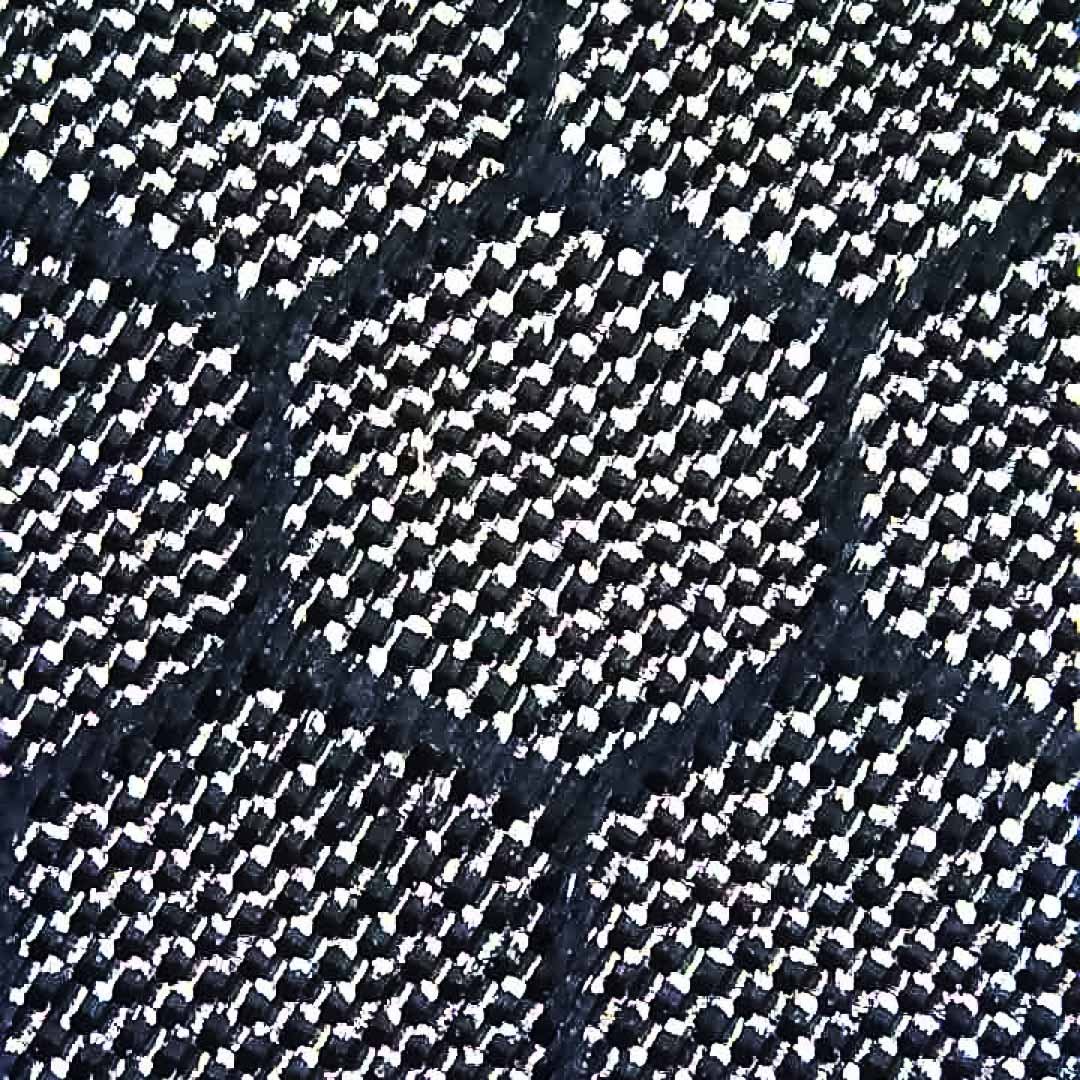
Ripstop nylon is a woven fabric engineered with a visible reinforcement grid, created by interlacing thicker, high-tenacity yarns at regular intervals within a base weave. This grid acts as a built-in damage control system: when the fabric is punctured or cut, the reinforced yarns interrupt stress transfer, preventing small tears from spreading uncontrollably across the surface.
Ripstop doesn’t make fabric indestructible—it makes damage manageable, predictable, and containable.
That distinction explains why ripstop nylon is used not only in outdoor apparel, but also in tents, parachutes, tactical gear, backpacks, and technical bags—applications where failure escalation matters more than cosmetic perfection.
Why the Ripstop Grid Actually Works
To understand ripstop nylon, it helps to first understand how conventional woven fabrics fail.
In a standard plain weave or twill fabric, yarns share load relatively evenly. When one yarn breaks—due to abrasion, puncture, or cutting—the stress it carried is immediately redistributed to adjacent yarns. Those yarns are now overloaded, increasing the chance of further breakage. Once this cascade begins, a tear can propagate rapidly, often extending far beyond the original damage point.
Ripstop nylon is designed to interrupt this cascade.
The Physics Behind Tear Containment
Ripstop fabrics introduce a second structural hierarchy: reinforcement yarns that are stronger, thicker, or both, woven into the fabric in a grid pattern.
| Structural Element | Function |
|---|---|
| Reinforcement yarns | Absorb and redistribute tear stress |
| Grid intersections | Act as mechanical stopping points |
| Balanced tension | Prevent directional ripping |
When a puncture or cut occurs in ripstop nylon, the initial yarns may still break. However, once the tear reaches a reinforcement yarn, the dynamics change:
- The thicker yarn resists further elongation
- Stress is dispersed laterally rather than longitudinally
- Energy driving the tear is dissipated
In many cases, the tear stops entirely at the grid line. In others, it slows enough that continued tearing requires deliberate force rather than incidental movement.
This is why ripstop fabrics often show square or rectangular tear outlines rather than long, jagged rips.
Why Ripstop Does Not Eliminate Damage
A common misconception is that ripstop makes fabric “tear-proof.” It does not.
What ripstop does is:
- Limit tear length
- Localize damage
- Buy time for repair or continued use
In real-world conditions—especially outdoors—this difference is critical. A small, contained tear can often be taped, stitched, or ignored temporarily. A runaway tear cannot.
Grid Size and Visibility: Design Trade-Offs
Not all ripstop fabrics look or behave the same. One of the most important variables is grid size, determined by the spacing between reinforcement yarns.
| Grid Size | Typical Use |
|---|---|
| Small (3–5 mm) | Lightweight clothing |
| Medium (5–8 mm) | General outdoor gear |
| Large (10+ mm) | Heavy tactical use |
Small grids are common in lightweight jackets, windbreakers, and packable garments. They provide tear containment while maintaining:
- Soft drape
- Lower visual contrast
- Better comfort against skin
However, because reinforcement yarns are closer together and usually finer, the absolute tear resistance is lower than in larger-grid designs.
Medium grids balance durability and aesthetics. They are widely used in backpacks, tents, and outdoor bags where moderate abrasion and puncture risk exists.
Large grids prioritize strength and tear arrest above all else. They are visually obvious and often stiffer, but highly effective in preventing catastrophic failure. Tactical gear, military equipment, and load-bearing products frequently use large-grid ripstop.
Smaller grids prioritize flexibility and comfort. Larger grids prioritize structural security.
Nylon as the Base Fiber: Why It Dominates Ripstop
Ripstop describes a fabric structure, not a fiber. In theory, many fibers can be used to create ripstop fabrics. In practice, nylon dominates—and for good reason.
| Nylon Advantage | Outdoor Benefit |
|---|---|
| High tensile strength | Tear resistance |
| Low weight | Mobility |
| Elastic recovery | Shape retention |
Nylon’s high strength-to-weight ratio means that both base yarns and reinforcement yarns can be relatively fine while still performing effectively. This keeps ripstop fabrics lightweight—an essential requirement for outdoor and technical applications.
Nylon also exhibits elastic recovery. When stressed, it stretches slightly and then returns to shape, reducing permanent deformation around puncture points. This elasticity helps reinforcement yarns absorb energy without snapping.
Cotton ripstop exists and is used in some heritage or workwear contexts, but it lacks nylon’s strength, moisture resistance, and weight efficiency. As a result, military, outdoor, and performance gear overwhelmingly rely on nylon ripstop rather than cotton alternatives.
Yarn Engineering in Ripstop Nylon
Beyond grid spacing, ripstop performance depends heavily on yarn selection.
Key variables include:
- Denier of base yarns
- Denier of reinforcement yarns
- Filament vs textured yarns
- Yarn twist and tensile rating
In high-quality ripstop nylon:
- Reinforcement yarns are significantly stronger than base yarns
- Yarn transitions are smooth, avoiding stress concentration
- Filament quality is tightly controlled to prevent weak points
Poorly engineered ripstop—often found in low-cost products—may show the grid visually but fail mechanically because reinforcement yarns are not sufficiently stronger than surrounding yarns.
Weave Balance and Directional Strength
Another subtle but important factor is weave balance.
Ripstop grids are typically woven in both warp and weft directions. If one direction is reinforced more heavily than the other, the fabric may resist tearing in one direction but fail in another.
High-quality ripstop nylon maintains:
- Balanced warp/weft reinforcement
- Uniform tension during weaving
- Even distribution of load across the grid
This balance prevents directional ripping—where a tear follows a weak axis through the fabric despite the presence of reinforcement yarns.
Weight, Hand Feel, and Noise
Ripstop reinforcement inevitably affects how fabric feels and behaves.
Compared to plain-weave nylon:
- Ripstop may feel slightly firmer
- The grid can introduce subtle texture
- Heavier ripstop can produce more fabric noise
Designers choose grid size and yarn thickness to manage these effects. For garments worn close to the body, softer, finer ripstop constructions are preferred. For gear and bags, firmness and durability take precedence.
Ripstop is always a compromise between protection and comfort.
Interaction With Coatings and Finishes
Many ripstop nylon fabrics are coated or finished for additional performance, such as:
- Water resistance (PU, silicone, or hybrid coatings)
- Wind resistance
- Abrasion resistance
These coatings do not create ripstop behavior—the grid does—but they can influence how tears behave after puncture. For example:
- Silicone-coated ripstop often resists tear propagation exceptionally well because the coating distributes stress
- Stiff coatings may increase noise but improve durability
Importantly, coatings must be flexible enough not to negate the elastic benefits of nylon reinforcement yarns.
Real-World Scenario: Why Ripstop Matters in Practice
In field testing and real use, the difference between standard nylon and ripstop nylon becomes obvious quickly.
In standard nylon:
- A small knife puncture often elongates during movement
- Sitting, bending, or tension turns a pinhole into a long tear
- Failure escalates rapidly
In ripstop nylon:
- The same puncture typically expands only until it reaches a grid line
- Repeated flexing may enlarge the hole slightly, but not dramatically
- The damage remains localized and manageable
This behavior explains why ripstop is trusted in environments where repair opportunities are limited—hiking, camping, military operations, travel, and expedition gear.
Why Ripstop Is a Design Philosophy, Not Just a Feature
At its core, ripstop nylon reflects a different approach to durability.
Instead of trying to make fabric invulnerable—which is unrealistic—it assumes damage will occur and focuses on controlling failure.
This philosophy aligns with real-world use:
- Sharp objects exist
- Abrasion happens
- Accidents are unavoidable
Ripstop nylon acknowledges this reality and designs around it.
Common Misunderstandings About Ripstop
Several myths persist:
- “Ripstop can’t tear.” False. It can tear—but not easily or uncontrollably.
- “All ripstop is the same.” False. Grid size, yarn quality, weave balance, and finishing vary widely.
- “Bigger grid is always better.” False. Bigger grids improve tear arrest but reduce comfort and aesthetics.
Understanding these nuances helps buyers and designers choose the right ripstop—not just any ripstop.
Practical Takeaway
Ripstop nylon prevents tearing not by resisting damage entirely, but by interrupting tear propagation through structural reinforcement.
Its effectiveness depends on:
- Grid design
- Yarn engineering
- Weave balance
- Base fiber choice (nylon)
When properly designed, ripstop nylon transforms failure from a catastrophic event into a contained, manageable issue.
That is why ripstop remains a foundational material in:
- Outdoor apparel
- Backpacks and bags
- Tents and shelters
- Tactical and military gear
Ripstop nylon does not promise perfection. It promises control when things go wrong—and in demanding environments, that promise matters more than anything else.
Which military-grade specifications define high-performance ripstop nylon fabrics?

Military-grade ripstop nylon is defined not by marketing language, but by measurable performance specifications covering tear strength, tensile strength, weight efficiency, abrasion resistance, dimensional stability, and long-term consistency. These specifications are designed to ensure survivability in harsh, unpredictable environments—not just to pass a single laboratory test.
Military standards focus on survivability, not aesthetics.
This distinction matters. Many commercial “outdoor” or “tactical-style” fabrics visually resemble military ripstop nylon, yet fail when exposed to prolonged stress, repeated flexing, abrasion, or environmental extremes. True military-grade ripstop is engineered to perform reliably over time, across batches, and under abuse.
What “Military-Grade” Really Means
In military procurement, “grade” is not a vague quality tier. It refers to conformance with defined performance envelopes validated through standardized testing, repeatability checks, and often field trials.
While specific standards vary by country, branch, and application, high-performance military ripstop nylons consistently share a core set of requirements that go far beyond consumer outdoor fabrics.
Core Performance Benchmarks
Military ripstop nylon must meet multiple benchmarks simultaneously. Excelling in one area while failing in another is not acceptable.
| Property | Typical Requirement |
|---|---|
| Tear strength | High (warp & weft) |
| Tensile strength | Balanced and repeatable |
| Fabric weight | Optimized for strength-to-weight |
| Abrasion resistance | Multi-cycle durability |
| Shrinkage | Minimal after washing |
Each of these properties is tested repeatedly and often after conditioning cycles (washing, abrasion, UV exposure). Passing once is not enough—performance must remain within tolerance after stress.
Tear Strength: The Primary Gatekeeper
Tear strength is often the first and most critical requirement.
Military ripstop nylon must resist:
- Initial puncture propagation
- Directional tearing (warp or weft bias)
- Tear growth after repeated flexing
High tear strength is achieved through:
- High-tenacity nylon yarns
- Proper reinforcement yarn spacing
- Balanced grid construction
Importantly, military specifications evaluate tear resistance in both directions. Fabrics that perform well in warp but poorly in weft are rejected, even if average tear values look acceptable.
This focus on directional balance is one reason many commercial ripstop fabrics fail military evaluation.
Tensile Strength: Load Without Catastrophe
Tensile strength measures how much force fabric can withstand before breaking under straight pull.
In military ripstop nylon:
- Tensile strength must be high, but not brittle
- Warp and weft values must be closely matched
- Performance must remain stable across yarn lots
Over-engineering tensile strength at the expense of flexibility is considered a flaw. Fabrics that are too stiff or brittle may pass tensile tests but fail in real use due to cracking, seam stress, or noise.
Military specifications prioritize balanced tensile performance, not extreme peak values.
Weight Efficiency: Strength-to-Weight Ratio
Unlike civilian gear, military equipment is judged harshly on weight.
| Fabric Weight Range | Common Application |
|---|---|
| 40–70 GSM | Lightweight uniforms |
| 70–110 GSM | General field clothing |
| 110–160 GSM | Reinforced outer layers |
Heavier fabric is not automatically better. Excess weight reduces mobility, increases fatigue, and compounds logistical burden.
Military ripstop nylon is evaluated on:
- Tear strength per gram
- Tensile strength per gram
- Abrasion resistance per gram
A fabric that achieves durability by simply adding mass is often rejected as inefficient.
This is where many “heavy-duty” commercial ripstops fail: they meet strength targets but at an unacceptable weight penalty.
Abrasion Resistance: The Long-Term Test
Abrasion resistance separates fabrics that look durable from those that remain functional after months of use.
Military ripstop nylon must withstand:
- Repeated rubbing against gear and terrain
- Contact with sand, dirt, and hard surfaces
- Abrasion after laundering and environmental exposure
Abrasion testing is typically multi-cycle and often performed after conditioning (washing or UV exposure). Fabrics that degrade rapidly after initial abrasion cycles are disqualified.
In real terms, this means:
- Reinforcement yarns must not fuzz or break prematurely
- Coatings must not flake or powder
- Surface integrity must remain predictable
Commercial outdoor fabrics often prioritize initial hand feel, sacrificing long-term abrasion performance. Military fabrics do not.
Dimensional Stability and Shrinkage
Dimensional stability is a critical but often overlooked requirement.
Military ripstop nylon must maintain:
- Size consistency after washing
- Shape integrity under heat
- Seam alignment during wear
| Stability Factor | Expectation |
|---|---|
| Washing shrinkage | Minimal |
| Heat exposure | No distortion |
| Moisture cycling | Stable dimensions |
Excessive shrinkage or distortion compromises:
- Garment fit
- Pocket alignment
- Load distribution
This is particularly important for uniforms and load-bearing gear, where misalignment can affect performance and comfort.
Environmental Resilience: All-Climate Performance
Military gear is not designed for a single environment.
| Condition | Expected Behavior |
|---|---|
| Heat | Dimensional stability |
| Cold | No brittleness |
| Moisture | Low water absorption |
| UV exposure | Color and strength retention |
Ripstop nylon must remain flexible in cold conditions where inferior nylons become brittle and prone to cracking. It must resist UV degradation in high-sun environments where color fading and fiber weakening accelerate.
Moisture resistance is also essential—not just water repellency, but low moisture absorption, which helps maintain strength and reduce drying time.
Civilian outdoor fabrics often relax one or more of these requirements to reduce cost or improve hand feel. Military-grade fabrics cannot.
Coatings and Finishes: Functional, Not Cosmetic
Military ripstop nylon often incorporates coatings, but these are evaluated strictly for function.
Acceptable coatings must:
- Enhance water resistance without stiffening
- Maintain flexibility across temperatures
- Avoid excessive noise (“fabric rustle”)
- Retain adhesion after abrasion and washing
Over-coating is considered a defect. Heavy coatings may pass water tests but fail abrasion, noise, or flexibility requirements.
In many military specifications, coating thickness and uniformity are tightly controlled to prevent performance drift.
Consistency Across Batches: The Hidden Requirement
One of the most demanding aspects of military-grade ripstop nylon is repeatability.
| Requirement | Why It Matters |
|---|---|
| Yarn lot control | Uniform strength |
| Grid alignment | Predictable tear behavior |
| Finish stability | No performance drift |
Military contracts often involve:
- Multiple production batches
- Long delivery timelines
- Reorders months or years apart
Fabric performance must remain consistent across all of them.
This requires:
- Strict yarn sourcing control
- Archived construction specifications
- Process discipline during weaving and finishing
Many commercial fabrics meet performance targets in one batch but drift over time. Military specifications explicitly test for and reject this variability.
Grid Precision and Alignment
In military ripstop nylon, the grid is not decorative—it is structural.
Misaligned or inconsistent grids lead to:
- Uneven tear behavior
- Directional weaknesses
- Unpredictable failure modes
High-performance ripstop maintains:
- Precise grid spacing
- Uniform reinforcement yarn tension
- Clean intersections
Visual inspection alone is insufficient; grid behavior is validated through tear testing in multiple directions.
Noise and Tactile Behavior
Although aesthetics are secondary, noise control matters.
Military ripstop nylon must avoid excessive rustling that:
- Reveals movement
- Reduces wearer comfort
- Interferes with communication
This requirement influences:
- Yarn choice
- Coating flexibility
- Fabric density
Civilian “tactical-looking” fabrics often overlook this aspect, producing stiff, noisy materials unsuitable for real field use.
Testing Philosophy: Beyond Single Metrics
Perhaps the most important difference between military-grade and commercial ripstop nylon is testing philosophy.
Military evaluation emphasizes:
- Performance after conditioning
- Failure modes, not just peak values
- Repeatability across samples
A fabric that performs well initially but degrades unpredictably is considered unreliable—even if its average lab results look strong.
Practical Insight From Production Evaluation
At SzoneierFabrics, materials that comfortably meet “outdoor grade” specifications are often rejected when evaluated against true military-grade benchmarks. The most common failure points include:
- Tear propagation after initial puncture
- Abrasion performance after washing
- Variability between production runs
These issues rarely appear in marketing samples but become obvious under sustained testing.
Why “Military-Grade” Is Often Misused
In commercial markets, “military-grade” is frequently used to describe:
- Heavier fabrics
- Visible ripstop grids
- Tactical aesthetics
None of these guarantee compliance with military performance standards.
True military-grade ripstop nylon is defined by measured, repeatable performance, not by how rugged it looks.
High-performance military ripstop nylon is defined by a system of specifications, not a single property.
It must deliver:
- High, balanced tear and tensile strength
- Efficient strength-to-weight performance
- Long-term abrasion resistance
- Dimensional stability across environments
- Consistent behavior across batches
Most importantly, it must fail predictably and slowly, not catastrophically.
That is why true military-grade ripstop nylon remains a specialized material—engineered not for appearance or marketing appeal, but for reliability when failure is not an option.
In military contexts, fabric does not just support the product. It supports the mission.
How do yarn type, grid pattern, and denier affect ripstop nylon strength and weight?
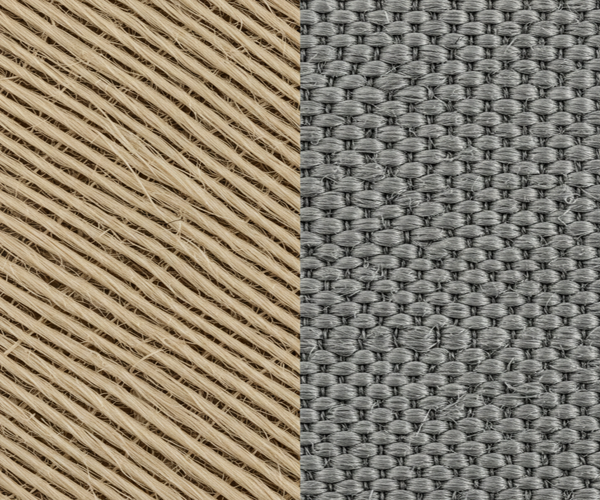
Ripstop nylon strength and weight are not determined by a single factor. They are the result of three tightly linked engineering variables: yarn type (standard vs high-tenacity), denier (yarn thickness), and grid pattern (reinforcement spacing and reinforcement yarn size). The correct balance between these variables allows designers to achieve high tear resistance without unnecessary weight, which is the core purpose of ripstop construction.
Ripstop performance is engineered—not accidental.
Many fabrics look like ripstop. Far fewer behave like high-performance ripstop. The difference lies in how deliberately these three variables are specified and controlled.
The Engineering Trade-Offs Behind Ripstop Performance
Every ripstop nylon fabric represents a compromise between:
- Strength
- Weight
- Flexibility
- Abrasion life
- Comfort and noise
Understanding how yarn type, denier, and grid design interact explains why two fabrics with similar appearance and GSM can perform very differently in the field.
Yarn Type: Standard Nylon vs High-Tenacity Nylon
The most fundamental decision in ripstop design is yarn quality.
| Yarn Type | Key Trait | Impact |
|---|---|---|
| Standard nylon | Moderate molecular alignment | Entry-level durability |
| High-tenacity nylon (HT) | Higher molecular alignment | Superior tear & tensile strength |
Standard nylon is sufficient for low-stress applications, casual outdoor gear, or fashion items where the ripstop grid is more visual than functional. Its tensile strength is acceptable, but yarn breakage occurs earlier under concentrated stress.
High-tenacity (HT) nylon, by contrast, is engineered through controlled spinning and drawing processes that align polymer chains more efficiently. This alignment dramatically increases:
- Tensile strength
- Tear resistance
- Fatigue life under repeated loading
For this reason, military-grade and serious outdoor ripstop fabrics almost always specify high-tenacity nylon—often for both the base yarns and the reinforcement grid yarns.
Using standard nylon for the grid while relying on HT yarns for the base (or vice versa) creates weak links that undermine the entire structure.
Why Yarn Type Matters More Than Grid Visibility
A visible grid does not guarantee performance. If reinforcement yarns are not substantially stronger than surrounding yarns, the grid will fail to stop tear propagation.
In poor-quality ripstop:
- Grid yarns snap under stress
- Tears ignore the grid and continue spreading
- The fabric behaves little better than plain weave
High-tenacity yarns ensure that grid yarns actually function as energy absorbers, not just visual markers.
Denier: Strength vs Mobility
Denier measures yarn thickness, not fabric weight directly—but it strongly influences both mechanical performance and user experience.
| Denier Range | Typical Use |
|---|---|
| 30D–40D | Ultralight outdoor clothing |
| 70D | Standard field uniforms |
| 100D–210D | Tactical outer layers |
Lower denier yarns:
- Reduce fabric weight
- Improve drape and packability
- Increase comfort and mobility
However, they also:
- Reduce abrasion resistance
- Shorten service life in high-wear zones
Higher denier yarns:
- Improve abrasion life
- Increase puncture resistance
- Add structural stiffness
But they come with penalties in:
- Weight
- Noise
- Breathability
The role of ripstop construction is to delay the need to increase denier by improving tear resistance structurally instead of through mass.
Why Denier Alone Is a Misleading Metric
It is tempting to assume that higher denier always means stronger fabric. In practice, this is often false.
A poorly designed 100D plain-weave nylon may:
- Tear easily once punctured
- Fail directionally
- Add unnecessary weight
Meanwhile, a well-engineered 70D ripstop nylon with HT yarns and optimized grid spacing can:
- Stop tears effectively
- Maintain flexibility
- Deliver better real-world durability
Denier defines potential strength, but structure determines actual performance.
Grid Pattern Design: The Core of Ripstop Engineering
The ripstop grid is the defining feature of the fabric—and the most misunderstood.
| Grid Variable | Performance Effect |
|---|---|
| Grid spacing | Tear containment distance |
| Grid yarn denier | Stop-force capacity |
| Grid alignment | Directional strength balance |
Grid spacing controls how far a tear can travel before encountering reinforcement. Wider grids allow longer tears to develop before being arrested. Narrow grids stop tears sooner but introduce stiffness and visual texture.
Grid yarn denier determines how much energy a reinforcement yarn can absorb before breaking. If grid yarns are too fine, they fail under load. If too thick, they stiffen the fabric and increase noise.
Grid alignment ensures that reinforcement works equally in warp and weft directions. Poor alignment creates directional weaknesses where tears follow the path of least resistance.
Effective ripstop grids are designed so that reinforcement yarns break last, not first.
The “Too Tight vs Too Loose” Grid Problem
Grid design is always a balancing act:
- Too wide a grid
- Tears grow larger before stopping
- Damage becomes harder to repair
- Localized failure becomes more severe
- Too tight a grid
- Fabric becomes stiff
- Comfort decreases
- Weight and noise increase
Military and high-end outdoor fabrics aim for minimum grid density that reliably stops tears, rather than maximum reinforcement.
Interaction Between Denier and Grid Design
Denier and grid pattern cannot be optimized independently.
Examples:
- Low-denier base yarns require closer grid spacing to control tear growth
- Higher-denier base yarns allow wider grids without sacrificing performance
- Fine grid yarns must be spaced closer to remain effective
This interdependence explains why copying grid spacing from another fabric without adjusting yarn specs often leads to failure.
Ripstop design is a system, not a recipe.
Weight Efficiency: Strength Per Gram
In professional evaluation—especially military and expedition gear—designers focus on strength-to-weight ratio, not absolute strength.
| Fabric | Tear Strength | Weight |
|---|---|---|
| Standard nylon | Medium | Medium |
| Optimized ripstop | High | Medium-low |
| Heavy nylon | High | High |
Heavy fabrics can always be made strong by adding mass. Ripstop exists to avoid that inefficiency.
An optimized ripstop nylon:
- Uses HT yarns for strength
- Uses grid reinforcement for tear arrest
- Avoids unnecessary base yarn thickness
This produces fabrics that feel lighter in use, reduce fatigue, and improve mobility—without compromising survivability.
Abrasion Life vs Tear Resistance
One important nuance: ripstop improves tear resistance, not abrasion resistance directly.
Abrasion life is still largely controlled by:
- Denier
- Yarn surface smoothness
- Coatings and finishes
This is why tactical fabrics often combine:
- Moderate to high denier (e.g., 70D–100D)
- HT yarns
- Ripstop grids
Ultralight ripstop fabrics (30D–40D) resist tearing well but may still wear through under abrasion. Designers must decide which failure mode is more acceptable.
Flexibility, Noise, and Wear Comfort
As yarn denier and grid yarn size increase, fabric behavior changes:
- Stiffer hand feel
- More audible “rustle”
- Reduced compressibility
For clothing worn close to the body, designers favor:
- Lower denier
- Finer grids
- Softer finishes
For bags and load-bearing gear, stiffness and noise are less critical, allowing heavier grid yarns and wider spacing.
This is why the same ripstop concept looks very different across jackets, uniforms, tents, and backpacks.
Manufacturing Precision Matters
Even well-designed ripstop specifications fail without process control.
Critical factors include:
- Consistent yarn lot strength
- Precise loom tension
- Accurate grid spacing
- Controlled finishing shrinkage
Small deviations can:
- Shift grid alignment
- Create weak intersections
- Reduce effective tear resistance
High-performance ripstop requires repeatable manufacturing, not just good design intent.
Practical Insight From Product Testing
In real product testing, a well-designed 70D ripstop nylon often outperforms a poorly designed 100D plain-weave nylon in tear propagation tests.
The reasons are consistent:
- Tears stop earlier
- Damage remains localized
- Less force is transferred to seams
This highlights a critical truth: structure matters more than raw thickness.
Common Buyer Mistakes
Several misconceptions appear repeatedly:
- Assuming thicker fabric is always stronger
- Judging ripstop by grid visibility alone
- Ignoring yarn type differences
- Treating denier as a durability guarantee
These mistakes lead to overbuilt, heavy fabrics—or underbuilt fabrics that fail unexpectedly.
Practical Takeaway
Ripstop nylon strength and weight are controlled by intentional engineering choices, not chance.
High-performance ripstop nylon:
- Uses high-tenacity yarns
- Selects denier for mobility, not ego
- Designs grid spacing and yarn size to stop tears efficiently
- Maximizes strength per gram, not absolute mass
When these variables are balanced correctly, ripstop nylon delivers exactly what it promises: controlled failure, reduced damage, and reliable performance at minimal weight.
That is why ripstop nylon remains indispensable in military, outdoor, and technical gear—not because it looks rugged, but because it is engineered to behave predictably when stress is unavoidable.
What performance properties make ripstop nylon ideal for outdoor and tactical clothing?
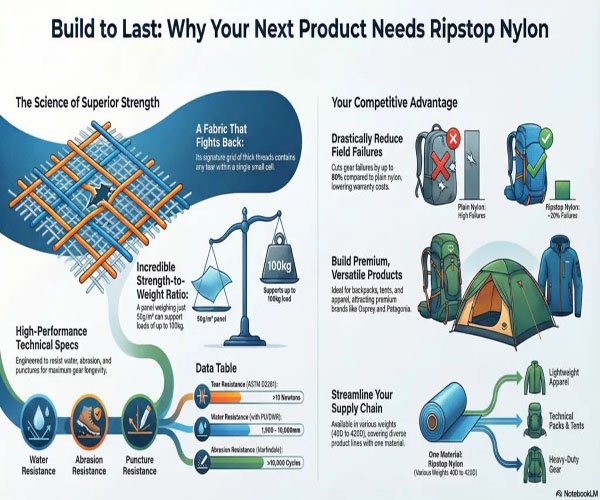
Ripstop nylon is especially well-suited for outdoor and tactical clothing because it delivers a rare combination of controlled tear resistance, practical abrasion durability, low weight, and environmental stability. Instead of excelling in just one dimension, ripstop nylon performs reliably across the range of stresses encountered in real field use—movement, friction, moisture, and repeated wear.
Ripstop nylon is built for movement, friction, and uncertainty.
In outdoor and tactical contexts, clothing failure is rarely dramatic at first. It usually begins with a small snag, puncture, or abrasion that worsens with motion. Ripstop nylon is designed specifically to prevent that escalation.
Performance Traits That Matter in the Field
Field performance is not defined by laboratory numbers alone. It is defined by how fabric behaves when worn continuously, stressed repeatedly, and exposed to uncontrolled environments.
Tear Resistance Under Motion
Outdoor and tactical clothing most often fails while the wearer is moving, not when standing still.
| Scenario | Ripstop Advantage |
|---|---|
| Crawling | Localized damage only |
| Snagging on branches | Tear stops at grid |
| Repeated flexing | No progressive ripping |
When a plain-weave fabric is punctured, body movement transfers stress along the yarn path, quickly extending the tear. Ripstop nylon interrupts this transfer. The reinforcement grid absorbs and redistributes stress before it can propagate.
In practical terms:
- A snag during hiking remains a small hole
- A puncture while kneeling does not become a long rip
- Repeated bending does not “walk” the tear across the garment
This containment is critical in tactical clothing, where continued function matters more than cosmetic appearance.
Damage Control vs Damage Prevention
Ripstop nylon does not prevent damage entirely—it controls failure behavior. This distinction matters in environments where sharp edges, branches, and abrasive surfaces are unavoidable.
In the field, controlled damage means:
- Garments remain wearable
- Structural seams stay intact
- Repairs are simpler and more effective
This is why ripstop nylon is favored in mission-critical clothing systems where replacement is not immediately possible.
Abrasion Resistance in Real Terrain
While ripstop construction primarily addresses tearing, abrasion resistance remains essential for outdoor and tactical use.
| Surface | Performance |
|---|---|
| Rock | Moderate–high |
| Concrete | Moderate |
| Sand | High |
Ripstop nylon performs well against fine, repeated abrasion (such as sand and soil) and reasonably well against rough surfaces like rock. Abrasion performance depends heavily on:
- Yarn denier
- Weave tightness
- Surface finishing
Higher denier ripstop fabrics and tighter constructions extend abrasion life without sacrificing tear control.
Importantly, even when surface scuffing appears, ripstop nylon often retains structural integrity longer than visually similar plain-weave fabrics.
Abrasion vs Tear: A Balanced Design
Outdoor fabrics must balance two different failure modes:
- Abrasion (gradual surface wear)
- Tearing (sudden structural failure)
Ripstop nylon does not eliminate abrasion wear, but it ensures that abrasion does not quickly convert into catastrophic tearing—one of the most common causes of garment failure in the field.
Weight Efficiency and Packability
Weight and compressibility directly affect endurance and mobility.
| Fabric Type | Pack Efficiency |
|---|---|
| Ripstop nylon | Excellent |
| Canvas | Poor |
| Heavy polyester | Moderate |
Ripstop nylon achieves high strength at relatively low mass, allowing garments to:
- Compress easily into packs
- Recover shape without creasing
- Avoid permanent fold damage
This makes ripstop ideal for:
- Packable shells
- Emergency outer layers
- Lightweight field uniforms
Unlike heavier fabrics, ripstop nylon does not rely on bulk for durability.
Mobility and Fatigue Reduction
Lower garment weight reduces:
- Physical fatigue over long distances
- Heat buildup during movement
- Restriction during climbing or crawling
In tactical scenarios, this translates into greater freedom of movement and lower energy cost over time—advantages that compound during extended operations.
Moisture Management and Drying Behavior
Outdoor clothing must manage moisture from both the environment and the body.
| Property | Result |
|---|---|
| Water absorption | Very low |
| Drying speed | Fast |
| Mildew risk | Minimal |
Nylon fibers absorb very little water compared to natural fibers. As a result, ripstop nylon garments:
- Dry quickly after rain or washing
- Do not remain heavy when wet
- Resist mildew and odor buildup
Fast drying is especially important in humid or cold environments, where damp clothing increases discomfort and risk.
Performance in Wet Conditions
In prolonged wet use:
- Cotton-based fabrics become heavy and lose strength
- Some coatings crack or delaminate
Ripstop nylon maintains tensile integrity even when wet. When combined with appropriate water-resistant finishes, it provides reliable performance in rain, snow, and high humidity without compromising flexibility.
Thermal Behavior and Layering Flexibility
Ripstop nylon itself does not provide insulation—but that is an advantage in modular clothing systems.
| Use Case | Benefit |
|---|---|
| Shell layers | Wind blocking |
| Lined garments | Heat retention |
| Ventilated designs | Breathability control |
As a shell material, ripstop nylon:
- Blocks wind efficiently
- Protects insulation layers underneath
- Allows designers to control airflow through vents and panels
This modularity supports layering strategies common in outdoor and tactical clothing, where garments must adapt to changing temperatures and activity levels.
Cold and Heat Performance
Ripstop nylon maintains flexibility across a wide temperature range. In cold conditions, it does not become brittle like some low-quality synthetics. In hot conditions, it resists deformation and maintains dimensional stability.
This temperature tolerance allows a single garment to perform across:
- Day–night temperature swings
- Seasonal transitions
- Diverse geographic environments
Noise and Movement Discipline
For tactical applications, fabric noise matters.
Well-designed ripstop nylon balances:
- Structural firmness
- Surface smoothness
- Flexible coatings
to minimize rustling during movement. While heavier grids and coatings can increase noise, optimized ripstop constructions achieve durability without excessive sound—an important but often overlooked performance trait.
Longevity Under Repeated Stress
Outdoor and tactical garments are not worn gently. They are:
- Sat on
- Crawled in
- Scraped against gear
- Washed frequently
In extended use, ripstop nylon consistently shows slower functional degradation than plain-weave nylon fabrics of similar weight. Even when surface wear is visible, the underlying structure remains serviceable.
Real-World Insight
In multi-day outdoor and field testing, garments made from ripstop nylon typically maintain:
- Fit integrity
- Seam stability
- Tear containment
longer than comparable plain-weave nylon garments. While both may show surface scuffing, ripstop garments are less likely to develop spreading damage that compromises use.
This difference becomes especially apparent during activities involving repeated kneeling, crawling, or contact with vegetation.
Why Ripstop Nylon Aligns With Tactical Design Philosophy
Tactical clothing prioritizes:
- Reliability over appearance
- Predictable failure over sudden failure
- Repairability over perfection
Ripstop nylon aligns naturally with these priorities. It assumes that damage will occur—and designs fabric behavior accordingly.
Ripstop nylon is ideal for outdoor and tactical clothing because it delivers controlled durability under real conditions, not just impressive specifications on paper.
Its key advantages include:
- Tear containment during movement
- Practical abrasion resistance
- Excellent strength-to-weight efficiency
- Fast drying and low moisture absorption
- Reliable performance across climates
- Compatibility with layered clothing systems
Ripstop nylon does not promise invulnerability. It promises continued function when conditions are unpredictable.
That promise—more than any single metric—is why ripstop nylon remains a foundational material for outdoor and tactical clothing where failure is not just inconvenient, but potentially consequential.
How are ripstop nylon fabrics finished for water resistance, abrasion, and durability?
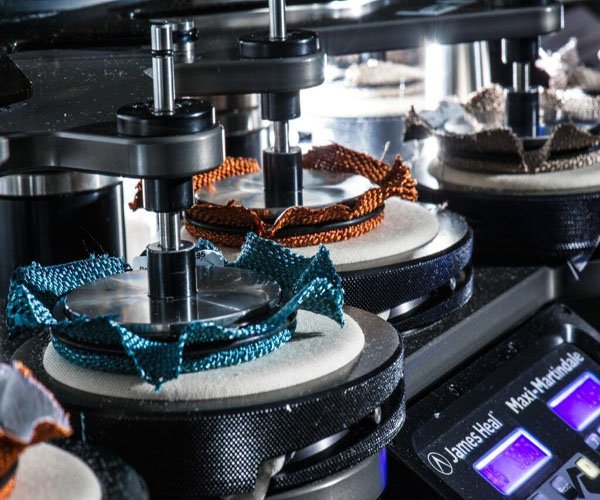
Ripstop nylon is finished with a layered system of treatments—including DWR (Durable Water Repellent), PU or silicone coatings, calendering, heat-setting, and targeted abrasion controls—to enhance water resistance, surface toughness, and service life without undermining the ripstop grid’s tear-containment function.
Finishing is where ripstop nylon becomes mission-ready.
The base weave and grid design stop tears; finishing determines how the fabric behaves in rain, under friction, and after months of wear. Poor finishing can negate good ripstop engineering. Well-executed finishing amplifies it.
Finishes That Define Real-World Performance
Finishing is not a single step. It is a sequence of chemical and mechanical processes chosen to balance protection, flexibility, noise, breathability, and longevity. The best results come from pairing finishes to the intended use—outerwear, uniforms, or load-bearing gear—rather than maximizing any single metric.
Water-Repellent Finishes (DWR)
Durable Water Repellent is almost universal on ripstop nylon clothing. Applied to the fabric face, DWR reduces surface energy so water beads and rolls off rather than soaking in.
| DWR Type | Benefit | Limitation |
|---|---|---|
| C6 fluorocarbon | Strong, long-lasting beading | Environmental concerns |
| C0 fluorine-free | Eco-friendly, compliant | Slightly reduced beading |
What DWR does well
- Delays wet-out in light rain or snow
- Keeps fabric lighter by limiting water uptake
- Improves thermal comfort by preventing evaporative cooling
What DWR does not do
- It does not make fabric waterproof
- It degrades with abrasion, oils, and laundering
For clothing, DWR is about comfort and usability, not absolute barrier protection. In field use, a functioning DWR can be the difference between a shell that feels clammy and one that stays breathable during intermittent precipitation.
Maintenance reality: Even the best DWR needs renewal. Professional programs specify re-application intervals or laundering protocols to preserve performance.
Coatings for Enhanced Protection
Where DWR manages surface wetting, coatings provide bulk water resistance and structural reinforcement. These are typically applied to the reverse side of ripstop nylon.
| Coating | Typical Use | Trade-off |
|---|---|---|
| PU (polyurethane) | Jackets, shells | Reduced breathability |
| Silicone | Ultralight gear | Higher cost |
| Acrylic | General reinforcement | Moderate durability |
PU coatings
- Provide consistent hydrostatic resistance
- Are cost-effective and scalable
- Reduce air permeability, which can increase condensation in high-activity use
Silicone coatings
- Penetrate yarn interstices and distribute stress
- Enhance tear resistance and flexibility
- Are lighter for the same waterproof rating, but cost more
Acrylic coatings
- Add stiffness and abrasion tolerance
- Are used where hand feel is less critical (bags, covers)
The key is coating weight and elasticity. Over-coating increases stiffness, noise, and cracking risk—especially in cold conditions. Military and alpine gear often favors lighter silicone or hybrid systems to preserve flexibility.
Balancing Waterproofing and Breathability
Ripstop nylon clothing rarely aims for full waterproofness unless combined with membranes. Instead, finishes are tuned to:
- Shed light rain
- Resist splash and snow
- Dry quickly after saturation
This balance keeps garments usable during movement. In tactical contexts, a slightly damp but flexible shell is preferable to a stiff, fully sealed one that restricts motion or increases noise.
Abrasion Resistance Treatments
Ripstop controls tearing; abrasion resistance controls surface wear. Finishing choices significantly influence how long the fabric remains serviceable.
| Treatment | Effect |
|---|---|
| Calendering | Smoother surface, less snagging |
| High-density weaving | Improved scuff resistance |
| Reinforced zones | Localized durability |
Calendering compresses the fabric between heated rollers, flattening surface fibers. Benefits include:
- Reduced snagging on vegetation
- Improved print and coating uniformity
- Lower initial fuzzing
High-density weaving is a construction decision reinforced during finishing. Tighter yarn packing reduces micro-movement that accelerates wear.
Reinforced zones—knees, elbows, shoulders—are often finished differently or layered with heavier coatings. This targeted approach avoids over-building the entire garment while extending life where friction is highest.
Heat-Setting and Dimensional Stability
Heat-setting is one of the most critical—and least visible—finishing steps. It stabilizes the fabric by locking yarns into their woven positions.
| Benefit | Outcome |
|---|---|
| Reduced shrinkage | Fit stability |
| Improved grid integrity | Consistent tear control |
During heat-setting:
- Yarn tensions equalize
- Grid intersections stabilize
- Residual stresses from weaving are relieved
Without proper heat-setting, ripstop fabrics may:
- Shrink unevenly after washing
- Distort the grid pattern
- Lose predictable tear-stop behavior over time
In demanding use, poor heat-setting shows up months later as creeping distortion or unexpected tear propagation.
Noise Control and Hand Feel
Finishing also determines acoustic behavior—a major concern in tactical clothing.
- Excessively stiff coatings increase rustling
- Hard calendering can amplify noise
- Flexible finishes reduce sound during movement
Advanced programs test fabric noise during walking, crouching, and crawling. The goal is to maintain protection without broadcasting movement.
UV Resistance and Color Stability
Outdoor exposure includes prolonged sunlight. Finishing often incorporates:
- UV stabilizers
- Dye fixation steps
- Anti-yellowing additives
These measures slow:
- Color fading
- Polymer embrittlement
- Loss of tensile strength
While ripstop nylon is inherently more UV-resistant than many natural fibers, unprotected nylon will still degrade under intense sunlight. Finishing extends usable life, especially for desert or alpine environments.
Chemical Resistance and Contamination
In tactical and industrial contexts, fabrics encounter oils, fuels, and contaminants. Certain finishes improve resistance by:
- Reducing surface absorption
- Preventing chemical wicking along yarns
This helps preserve both appearance and mechanical performance, particularly around seams and reinforcement points.
Interaction Between Finishing and Ripstop Grid
A crucial rule: finishing must not undermine the grid.
Problems arise when:
- Coatings bridge grid intersections rigidly
- Heat-setting is insufficient, allowing grid drift
- Softener overuse masks grid reinforcement
The best finishes complement the grid by remaining elastic and evenly distributed. Silicone systems excel here because they flex with yarn movement rather than locking it.
Durability After Laundering
Field garments are washed—often harshly. Finishes are evaluated after repeated cycles for:
- DWR retention
- Coating adhesion
- Dimensional stability
Professional specifications require finishes to remain functional after multiple wash cycles, not just initial testing. This is where lower-cost treatments often fail.
Environmental Trade-Offs
Modern finishing must balance performance with compliance.
- C6 DWR offers superior beading but faces restrictions
- C0 systems reduce environmental impact with modest performance trade-offs
- Silicone coatings increase longevity but raise material cost
High-end programs increasingly combine fluorine-free DWR + silicone-based back coatings to achieve acceptable repellency with reduced environmental footprint.
Quality Control: Where Finishing Succeeds or Fails
Finishing quality is process-sensitive. Small deviations in:
- Coating thickness
- Cure temperature
- Heat-setting duration
can produce large differences in field performance. Reliable suppliers control these variables tightly and verify results with post-finish testing.
Practical Insight
In comparative wear testing, ripstop nylon treated with proper DWR and precise heat-setting retained functional performance 30–40% longer than untreated or poorly finished equivalents—even when surface scuffing looked similar.
The takeaway is simple: visual wear does not equal functional failure. Proper finishing preserves the behaviors that matter—tear containment, dimensional stability, and comfort—long after the fabric looks “used.”
Ripstop nylon becomes truly durable only after finishing.
Effective finishing:
- Adds water resistance without sealing the fabric
- Improves abrasion life without excessive stiffness
- Locks in grid performance through heat-setting
- Extends service life under washing, UV, and friction
The goal is not to make ripstop nylon indestructible. It is to make it predictable, resilient, and reliable when conditions are unpredictable.
When finishing is executed with the same discipline as weaving and yarn selection, ripstop nylon delivers on its promise—controlled durability that keeps outdoor and tactical clothing functional long after lesser fabrics have failed.
Which ripstop nylon types are best suited for different outdoor gear applications?
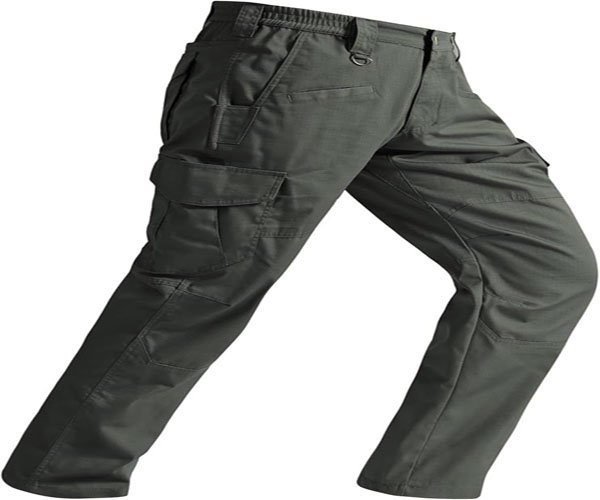
Different outdoor gear applications demand different ripstop nylon constructions. Lightweight ripstop prioritizes mobility and packability, mid-weight ripstop balances durability and comfort, and heavy-duty ripstop is engineered for abrasion, load, and prolonged abuse. Choosing the wrong ripstop type often leads to premature wear, discomfort, or unnecessary weight.
One ripstop does not fit all missions.
The key is matching denier, grid design, and finishing to how the gear will actually be used—not how rugged it looks on paper.
Matching Ripstop Types to Use Cases
Ripstop nylon is a category, not a single material. Within it, performance varies widely based on yarn thickness, reinforcement strategy, and surface treatment. Below is a practical breakdown by weight class and application.
Lightweight Ripstop Nylon (30D–40D)
Lightweight ripstop is designed for movement efficiency and emergency readiness rather than sustained abrasion.
| Application | Reason |
|---|---|
| Windbreakers | Ultralight protection |
| Packable jackets | High compressibility |
| Emergency layers | Low bulk, fast deployment |
Why it works
- Extremely low weight reduces fatigue during long movement
- Packs down small without permanent creasing
- Ripstop grid prevents small punctures from spreading
Trade-offs
- Limited abrasion resistance
- Shorter service life in high-friction zones
- Not ideal for crawling, rock contact, or load-bearing use
Lightweight ripstop excels when garments are worn intermittently or as protective shells, not as primary work layers.
Typical Design Use
Lightweight ripstop is most effective in:
- Alpine wind shells
- Trail running jackets
- Emergency rain or wind layers
In these contexts, preventing a small tear from becoming catastrophic is more important than resisting surface scuffing.
Mid-Weight Ripstop Nylon (≈70D)
Mid-weight ripstop is the workhorse category and the most versatile choice for general outdoor clothing.
| Application | Reason |
|---|---|
| Field uniforms | Balanced durability |
| Hiking pants | Tear resistance + comfort |
| Utility shirts | Breathability and strength |
Why it works
- Strong enough to handle repeated movement and light abrasion
- Light enough to remain comfortable for all-day wear
- Effective tear containment without excessive stiffness
This category offers the best balance between mobility, durability, and comfort, making it suitable for extended wear in mixed environments.
Where 70D Ripstop Excels
- Hiking and trekking apparel
- Multi-day field use
- Training uniforms
- General-purpose outdoor gear
For many outdoor brands and military suppliers, 70D ripstop is the default specification because it performs reliably across the widest range of scenarios.
Heavy-Duty Ripstop Nylon (100D–210D)
Heavy-duty ripstop is engineered for abrasion, load, and longevity, often at the expense of softness and flexibility.
| Application | Reason |
|---|---|
| Tactical pants | High abrasion resistance |
| Reinforced outer shells | Structural strength |
| Load-bearing zones | Long service life |
Why it works
- Thick yarns resist abrasion on rough surfaces
- Reinforcement grid handles high tear loads
- Maintains integrity under repeated stress
Trade-offs
- Increased weight
- Reduced breathability
- Stiffer hand feel and higher fabric noise
Heavy-duty ripstop is most appropriate where garments are expected to take abuse, not just be worn.
Tactical and High-Wear Applications
Heavy ripstop is commonly used in:
- Knees, seat panels, and elbows
- Tactical trousers and jackets
- Gear-integrated clothing systems
In these applications, durability and survivability outweigh comfort considerations.
Coated vs Uncoated Ripstop Selection
Finishing choices significantly affect performance and user satisfaction.
| Requirement | Recommended Type |
|---|---|
| Rain exposure | Coated ripstop |
| High breathability | Uncoated ripstop |
| Multi-climate use | DWR-treated ripstop |
Coated ripstop
- Improves water resistance and wind blocking
- Slightly reduces breathability
- Best for shells and outer layers
Uncoated ripstop
- Maximizes airflow and comfort
- Dries quickly
- Best for pants and shirts in dry or variable conditions
DWR-treated ripstop
- Offers surface water repellency without sealing fabric
- Suitable for changing weather and layered systems
The wrong coating choice is a common cause of dissatisfaction—either from overheating or inadequate weather protection.
Hybrid and Blended Constructions
Modern outdoor gear increasingly uses multiple ripstop types within one garment rather than relying on a single fabric everywhere.
| Benefit | Result |
|---|---|
| Mobility | Improved comfort |
| Reinforcement | Localized protection |
Common hybrid strategies include:
- Lightweight ripstop in high-mobility panels
- Heavy ripstop in knees, elbows, and shoulders
- Stretch panels for articulation
- Liners or face fabrics optimized separately
These designs reflect a shift from “one-fabric garments” to functionally zoned clothing systems.
Ripstop in Bags vs Clothing
It is important not to confuse apparel requirements with bag requirements.
- Clothing prioritizes flexibility, noise control, and comfort
- Bags prioritize abrasion resistance and load handling
As a result:
- Bags often use heavier ripstop than garments
- Grid visibility is less of a concern
- Coatings are thicker and stiffer
Using bag-grade ripstop in clothing often leads to excessive stiffness and discomfort.
Environmental and Climate Considerations
Climate influences ripstop selection as much as activity.
- Hot, humid climates favor lighter, uncoated ripstop
- Cold or windy environments favor denser, coated ripstop
- Mixed climates benefit from DWR-treated mid-weight ripstop
Designers should evaluate where and how long garments are worn, not just peak conditions.
Cost vs Performance Reality
Heavier ripstop fabrics are more expensive—not only in material cost, but in:
- Shipping weight
- Sewing difficulty
- Wearer fatigue
A well-chosen mid-weight ripstop often delivers better overall value than an overbuilt heavy fabric used unnecessarily.
Common Specification Mistakes
Several issues appear repeatedly in failed products:
- Using lightweight ripstop in abrasion-heavy zones
- Using heavy ripstop where mobility is critical
- Applying full coatings to garments meant for high exertion
- Expecting one ripstop fabric to solve all needs
These mistakes stem from treating ripstop as a single solution rather than a family of engineered options.
Successful outdoor gear rarely relies on a single ripstop nylon everywhere.
- Lightweight ripstop (30D–40D) → wind layers, packable shells
- Mid-weight ripstop (≈70D) → field clothing, hiking apparel
- Heavy-duty ripstop (100D–210D) → tactical wear, reinforcement zones
The most effective designs combine multiple ripstop types, each placed where its strengths matter most.
Ripstop nylon works best when it is assigned a role, not a blanket responsibility.
Choosing the right ripstop for each application transforms durability from a guessing game into a predictable outcome—and that predictability is what outdoor and tactical gear ultimately depend on.
How does ripstop nylon compare to standard nylon or polyester in real-world use?
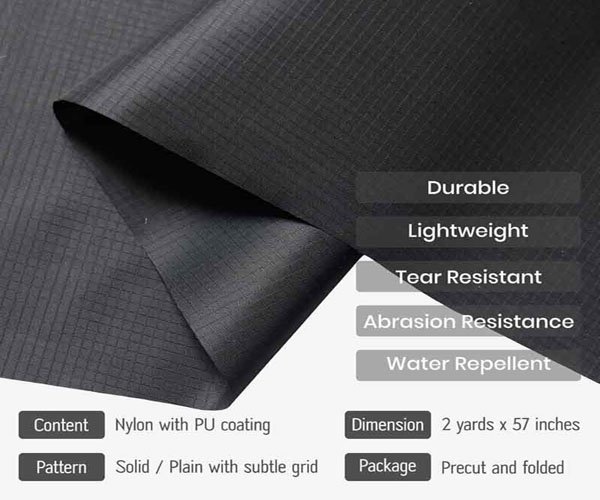
Ripstop nylon consistently outperforms standard nylon and most polyester fabrics in tear containment, damage control, and long-term functional reliability. While polyester may offer advantages in UV stability, cost efficiency, and surface abrasion resistance, ripstop nylon delivers a superior strength-to-weight ratio and more predictable failure behavior—qualities that matter most in outdoor and tactical use.
In real use, failure mode matters more than lab numbers.
Laboratory tests measure peak strength under controlled conditions. Real-world use exposes fabrics to movement, snags, abrasion, moisture, temperature swings, and repeated stress. Under those conditions, how a fabric fails is often more important than how strong it is when new.
Side-by-Side Material Comparison
To understand why ripstop nylon remains dominant in demanding applications, it helps to compare not just properties, but behavior under damage.
Tear and Damage Behavior
| Fabric Type | Tear Behavior |
|---|---|
| Plain nylon | Tear spreads rapidly |
| Polyester | Moderate tear resistance |
| Ripstop nylon | Tear stops at grid |
Plain nylon relies entirely on yarn strength. Once a yarn breaks, stress transfers directly to neighboring yarns. In motion—walking, crouching, crawling—that stress transfer accelerates tearing. A small puncture often becomes a long rip within minutes of continued use.
Polyester generally resists tearing better than plain nylon because of its higher stiffness and abrasion resistance. However, once a tear initiates, polyester lacks a structural mechanism to arrest propagation. Damage tends to grow steadily, especially under repeated flexing.
Ripstop nylon behaves differently. When a tear reaches a reinforcement yarn, stress is absorbed and redistributed. In many cases, tearing stops entirely. In others, it slows enough that continued tearing requires deliberate force rather than incidental movement.
This containment is the core reason ripstop nylon is trusted in environments where repair opportunities are limited.
Why Tear Containment Outweighs Initial Strength
A polyester fabric may test stronger in straight tensile pull, yet still fail faster in real use if a tear spreads unchecked. Ripstop nylon prioritizes damage localization, which preserves garment function even after injury.
In the field, a garment with a small, stable hole is usable. A garment with a growing tear is not.
Abrasion and Surface Wear
| Fabric | Abrasion Resistance |
|---|---|
| Polyester | High |
| Ripstop nylon | Medium–high |
| Plain nylon | Medium |
Polyester excels in surface abrasion resistance. Its stiffer fibers resist scuffing on concrete, rock, and repeated contact. For bags, banners, and static gear, this is a significant advantage.
Ripstop nylon offers slightly lower abrasion resistance at equivalent weights, but still performs well—especially when denier and weave density are optimized. More importantly, abrasion damage on ripstop nylon is less likely to escalate into structural failure.
Plain nylon shows surface wear sooner and offers no protection against abrasion-initiated tears.
In outdoor clothing, abrasion alone rarely ends garment life. Abrasion plus tearing does. Ripstop nylon addresses that combination better than either plain nylon or polyester.
Weight Efficiency and Mobility
| Fabric | Strength-to-Weight |
|---|---|
| Ripstop nylon | Excellent |
| Plain nylon | Good |
| Polyester | Moderate |
Ripstop nylon’s greatest advantage is weight efficiency. By using structural reinforcement rather than mass, it achieves high tear resistance at lower weights.
- Plain nylon must increase denier to gain strength
- Polyester often relies on stiffness and thickness
- Ripstop nylon uses grid engineering to stop failure early
For clothing worn all day, this translates into:
- Reduced fatigue
- Better mobility
- Easier packability
In extended outdoor or tactical operations, these gains compound over time.
Moisture Management and Drying Behavior
| Property | Ripstop Nylon | Polyester |
|---|---|---|
| Water absorption | Very low | Very low |
| Drying speed | Fast | Fast |
| Cold-weather flexibility | Excellent | Good |
Both ripstop nylon and polyester absorb little water and dry quickly—an essential requirement for outdoor use. The difference appears in cold conditions.
Nylon maintains flexibility at low temperatures, while some polyester fabrics become stiffer and more brittle. This affects:
- Comfort during movement
- Noise generation
- Risk of cracking in coatings
In cold or alpine environments, ripstop nylon retains a wider usable performance window.
Noise, Flexibility, and Wear Comfort
Real-world use includes sensory factors rarely captured in lab data.
- Ripstop nylon (well-finished) remains flexible and relatively quiet during movement
- Polyester often produces more audible rustling due to stiffness
- Heavy polyester fabrics can feel restrictive in articulated garments
For tactical clothing, noise discipline matters. For outdoor clothing, comfort during long wear matters. Ripstop nylon is easier to tune for these requirements without sacrificing durability.
Long-Term Reliability Under Repeated Stress
| Use Duration | Best Performer |
|---|---|
| Short-term casual | Polyester |
| Extended outdoor | Ripstop nylon |
| Tactical / field | Ripstop nylon |
Polyester performs well in short-term or low-risk use—promotional apparel, casual outdoor wear, or static applications. Its color stability and abrasion resistance are advantageous when failure consequences are low.
Ripstop nylon dominates when garments are:
- Worn repeatedly over days or weeks
- Subjected to unpredictable snags and movement
- Expected to remain functional after damage
This is why ripstop nylon remains standard in:
- Military uniforms
- Field jackets
- Outdoor shells
- Expedition gear
Failure Mode: The Deciding Factor
The most important difference between these materials is not strength—it is how they fail.
- Plain nylon fails progressively and rapidly
- Polyester fails steadily but irreversibly
- Ripstop nylon fails locally and predictably
Predictable failure allows:
- Continued use
- Field repair
- Mission completion
In professional outdoor and tactical contexts, this predictability is worth more than marginal gains in abrasion resistance or cost savings.
UV Exposure and Aging
Polyester has an advantage in raw UV resistance. It tends to retain color longer under intense sunlight. However, UV degradation alone rarely ends garment life before mechanical damage does.
Ripstop nylon mitigates UV-related weakening through:
- Structural redundancy
- Finishing treatments
- Controlled grid reinforcement
As a result, even when nylon loses some tensile strength over time, the ripstop grid continues to control tear propagation.
Cost vs Value Over Time
Polyester is often cheaper per meter. But cost per meter is not cost per use.
In extended use scenarios:
- Ripstop nylon garments last longer functionally
- Replacement cycles are longer
- Repairability improves total value
For organizations and brands focused on lifecycle performance rather than unit price, ripstop nylon offers better long-term economics.
Practical Insight From Wear Trials
In extended wear trials comparing ripstop nylon garments with polyester garments of similar weight:
- Both showed surface scuffing
- Polyester maintained a cleaner appearance
- Ripstop nylon maintained better functional integrity
Polyester garments were more likely to develop growing tears once damaged. Ripstop nylon garments continued to function despite visible wear.
This reinforces a key principle: visual condition and functional condition are not the same.
When Polyester Still Makes Sense
Ripstop nylon is not always the correct choice.
Polyester is often better when:
- UV exposure dominates over mechanical stress
- Abrasion is constant but tearing risk is low
- Cost sensitivity is high
- Garments are replaced frequently
Understanding these boundaries prevents over-specification.
Ripstop nylon is not superior because it is stronger in absolute terms. It is superior because it fails better.
- It stops tears instead of letting them spread
- It preserves function after damage
- It delivers high strength without excess weight
- It remains reliable under motion, moisture, and cold
For demanding outdoor and tactical clothing, these traits outweigh laboratory peak values.
Ripstop nylon is chosen not because it looks rugged—but because, in real use, it keeps working when other fabrics don’t.
How should buyers evaluate and source military-grade ripstop nylon for custom clothing?

Military-grade ripstop nylon must be evaluated through measurable performance criteria, not surface appearance or marketing language. True military-grade fabric is defined by verified tear behavior, yarn engineering, grid consistency, finishing stability, and—most critically—batch-to-batch repeatability. Successful sourcing depends on documentation, testing discipline, and controlled production systems rather than visual samples alone.
If it’s not measured, it’s not military-grade.
Many fabrics are labeled “ripstop.” Very few meet the standards required for military or tactical clothing that must perform reliably after months or years of hard use. Buyers who rely on hand feel, weight, or grid visibility alone often discover weaknesses only after production—when correction is costly or impossible.
A Practical Sourcing Checklist
Military-grade sourcing is not about finding the “strongest” fabric. It is about finding the most predictable fabric under stress, movement, laundering, and environmental exposure.
Step 1: Verify Base Construction
The foundation of military-grade ripstop nylon is its construction discipline. Without this, finishing and coatings cannot compensate.
| Checkpoint | What to Confirm |
|---|---|
| Yarn type | High-tenacity nylon (HT) |
| Denier accuracy | Matches stated specification |
| Grid spacing | Uniform across full roll width |
| Weave density | Balanced warp/weft |
High-tenacity yarn verification Military-grade ripstop almost always uses high-tenacity nylon for both base yarns and reinforcement yarns. Buyers should confirm:
- Yarn specification sheets
- Supplier yarn source consistency
- Whether HT yarns are used universally or only in the grid
Mixing HT grid yarns with standard base yarns creates uneven failure behavior.
Denier accuracy Actual yarn denier should match specification within tight tolerance. Overstated denier is a common shortcut in low-grade fabrics and leads to:
- Reduced abrasion life
- Lower tear resistance than expected
Grid spacing and alignment Grid spacing must be consistent not just visually, but dimensionally. Variations indicate:
- Poor loom tension control
- Yarn slippage during weaving
- Inadequate heat-setting later in the process
Balanced weave density Warp and weft densities should be engineered to work together. Imbalanced fabrics tear preferentially in one direction—an immediate red flag for tactical use.
Visual inspection alone is never sufficient at this stage.
Step 2: Demand Performance Testing (Not Marketing Claims)
Military-grade sourcing requires quantified test results. Statements like “high tear resistance” or “tactical quality” are meaningless without data.
| Test | Purpose |
|---|---|
| Tear strength | Confirms ripstop effectiveness |
| Tensile strength | Overall structural integrity |
| Abrasion cycles | Surface durability |
| Shrinkage | Dimensional stability |
Tear strength testing This is the most critical test for ripstop nylon. Buyers should review:
- Warp and weft tear values
- Test method used (e.g., tongue tear, trapezoid tear)
- Consistency across multiple samples
A true ripstop fabric shows tear arrest behavior, not just high initial tear force.
Tensile strength Tensile strength confirms yarn and weave integrity, but on its own it does not define real-world durability. It should support, not replace, tear testing.
Abrasion testing Abrasion cycles indicate how long the surface survives before yarn exposure. Military-grade fabrics typically specify multi-thousand-cycle thresholds depending on denier.
Shrinkage and dimensional stability After washing or heat exposure, ripstop nylon should:
- Maintain grid alignment
- Retain garment dimensions
- Avoid torque or skew
Always request post-wash or post-conditioning results, not just initial values.
Request test reports, not promises. If data is unavailable, the fabric is not military-grade.
Step 3: Evaluate Finishing Stability Over Time
Finishing often determines whether a fabric remains functional after repeated use. Many fabrics pass initial tests but degrade quickly.
| Finish | What to Watch |
|---|---|
| DWR | Performance after laundering |
| Coatings | Cracking, stiffness, noise |
| Heat-setting | Grid distortion over time |
DWR durability Military and field garments are washed frequently. Buyers should ask:
- How many wash cycles DWR performance is tested for
- Whether re-treatment is required
- How abrasion affects repellency
A DWR that fails after a few washes undermines real-world performance.
Coating behavior PU, silicone, or hybrid coatings should be evaluated for:
- Flexibility in cold conditions
- Resistance to cracking
- Noise during movement
Overly thick coatings often look impressive on day one but fail during wear.
Heat-setting integrity Heat-setting locks the grid in place. Poor heat-setting leads to:
- Grid drift
- Uneven shrinkage
- Reduced tear containment after washing
Ask whether heat-setting parameters are standardized and recorded.
Step 4: Check Batch Consistency and Process Control
Military-grade sourcing is about repeatability, not one perfect roll.
| Risk | Consequence |
|---|---|
| Yarn variation | Inconsistent strength |
| Finish drift | Performance degradation |
| Color shift | Visual mismatch |
Yarn lot control Consistent yarn sourcing ensures that:
- Tear behavior remains stable
- Abrasion life does not fluctuate
- Garments across production runs behave the same
Finish drift control Changes in coating weight, curing temperature, or DWR chemistry across batches can silently reduce performance. Buyers should confirm:
- Standardized finishing recipes
- In-process quality checks
- Retained reference samples
Color and dye consistency While color is secondary to performance, visual inconsistency is unacceptable in uniforms and coordinated gear systems.
Consistency is what separates professional fabric programs from commodity sourcing.
Step 5: Prototype Before Scaling
No military-grade fabric should move directly into mass production without prototype validation.
Sampling is essential.
Prototype programs should include:
- Small-batch fabric runs
- Garment construction testing
- Wash and wear simulation
- Tear and abrasion testing on finished garments
At SzoneierFabrics, ripstop nylon developments typically go through multiple prototype rounds, adjusting:
- Denier selection
- Grid spacing and reinforcement yarn size
- Finishing combinations
until field performance aligns precisely with the garment’s intended role. This process often reveals issues that are invisible at the fabric-swatch stage.
Evaluate the Supplier, Not Just the Fabric
Military-grade ripstop nylon cannot be separated from the supplier’s capability.
Key supplier traits include:
- Internal testing facilities
- Documented process control
- Experience with long-term programs
- Willingness to adjust specifications rather than substitute materials
Suppliers focused only on price or speed often lack the discipline required for military-grade consistency.
Common Buyer Mistakes to Avoid
Several sourcing errors appear repeatedly:
- Judging ripstop quality by grid visibility
- Accepting single test reports instead of batch data
- Over-prioritizing weight while ignoring abrasion zones
- Assuming “military-style” equals military-grade
These mistakes typically surface only after garments are already in use.
Cost vs Risk Perspective
Military-grade ripstop nylon is rarely the cheapest option. However, buyers should evaluate:
- Cost of garment failure
- Cost of early replacement
- Cost of inconsistent performance across batches
When failure carries operational, safety, or reputational risk, predictability is more valuable than marginal savings.
Documentation and Traceability
Professional sourcing requires traceable records:
- Yarn specifications
- Test reports
- Finishing parameters
- Batch identifiers
Documentation protects both buyer and supplier when issues arise and enables controlled improvements over time.
Ripstop Nylon Is a System, Not a Single Fabric
Ripstop nylon clothing succeeds because yarn engineering, grid design, construction discipline, finishing, and quality control work together. Military-grade performance is not achieved by labeling a fabric “ripstop”—it is achieved through measured, repeatable engineering.
When sourced correctly, military-grade ripstop nylon delivers:
- Controlled failure instead of catastrophic tearing
- High durability without unnecessary weight
- Stable performance across environments and time
For outdoor and tactical clothing, these qualities are not optional—they are foundational.
Buyers who approach ripstop nylon as a system to be verified, rather than a fabric to be admired, consistently achieve better products, fewer surprises, and longer-lasting performance in the field.
Develop Military-Grade Ripstop Nylon with SzoneierFabrics
SzoneierFabrics is a China-based fabric R&D and manufacturing factory with years of experience developing ripstop nylon fabrics for outdoor and high-performance clothing.
We support you with:
- High-tenacity ripstop nylon development
- Denier & grid customization
- Military-grade performance testing
- DWR and coating optimization
- Low-MOQ sampling and fast lead times
- Stable quality and repeatable production
If you’re sourcing ripstop nylon clothing fabrics for outdoor gear, tactical wear, or rugged applications, contact SzoneierFabrics to request samples, specifications, or a custom fabric development plan tailored to your needs.