Skip to content

If you’ve ever been to the beach, you already know the real problem isn’t carrying your items—it’s dealing with sand afterward. Sand gets everywhere. It sticks to fabrics, hides in seams, clings to damp surfaces, and somehow follows you all the way home. The difference between a relaxing beach day and a frustrating one often comes down to one overlooked factor: the material of your bag.
The most effective sand-resistant beach bag materials are those with smooth surfaces, low-friction weaves, or open structures that either prevent sand from sticking or allow it to fall through easily. Fabrics like mesh, nylon, and polyester outperform traditional cotton or canvas because they resist sand retention, dry quickly, and are easier to clean.
But sand resistance is not just about fabric type—it’s about how fibers are woven, how surfaces are treated, and how the material interacts with moisture. A bag that performs well in dry conditions may fail completely when wet, trapping sand inside and becoming difficult to clean.
Imagine finishing a beach day, shaking your bag once, and watching all the sand fall away instantly. Now imagine the opposite—digging sand out of seams and pockets hours later. That difference is not luck—it’s material science. Let’s break down what actually works and why.
What Makes a Beach Bag Material Sand-Resistant?
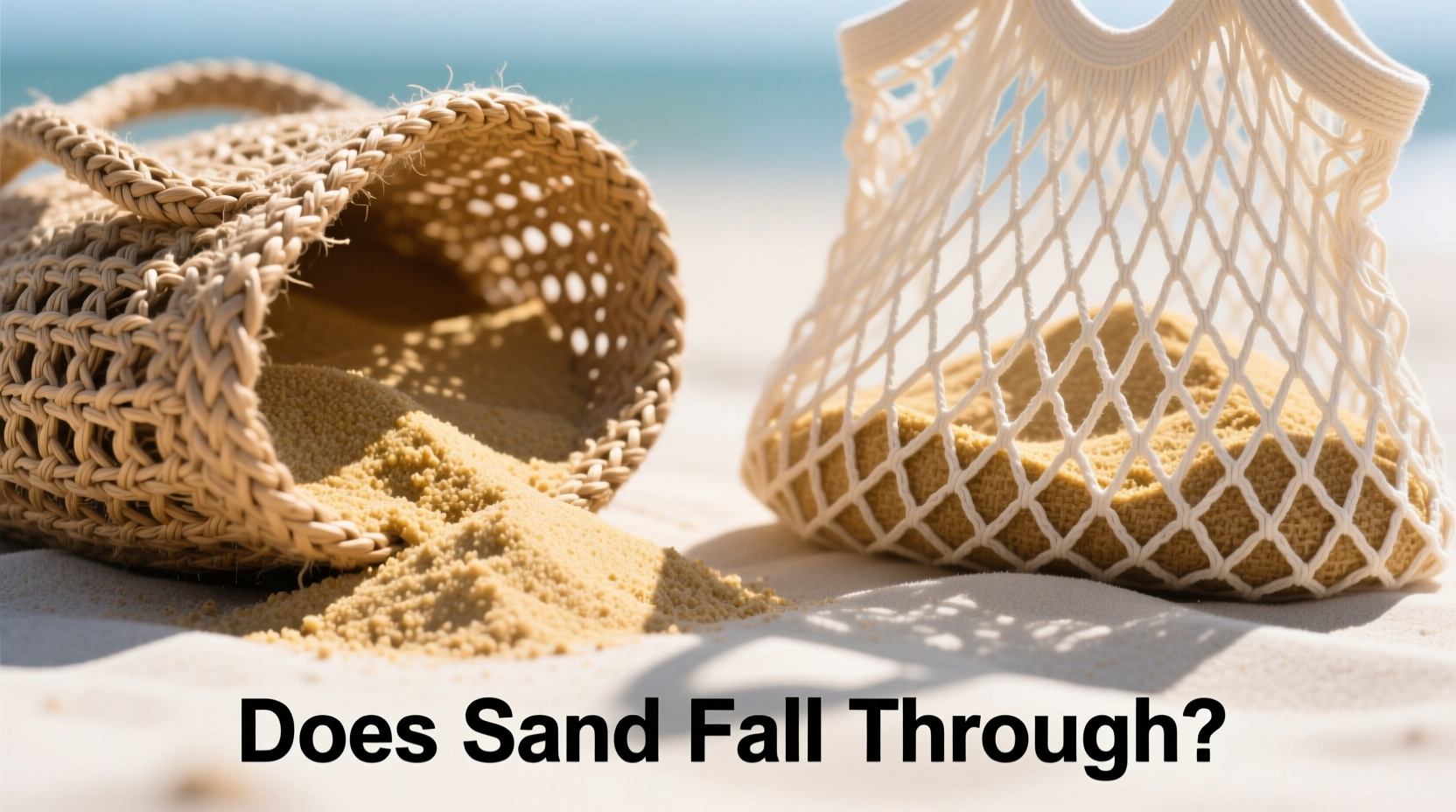
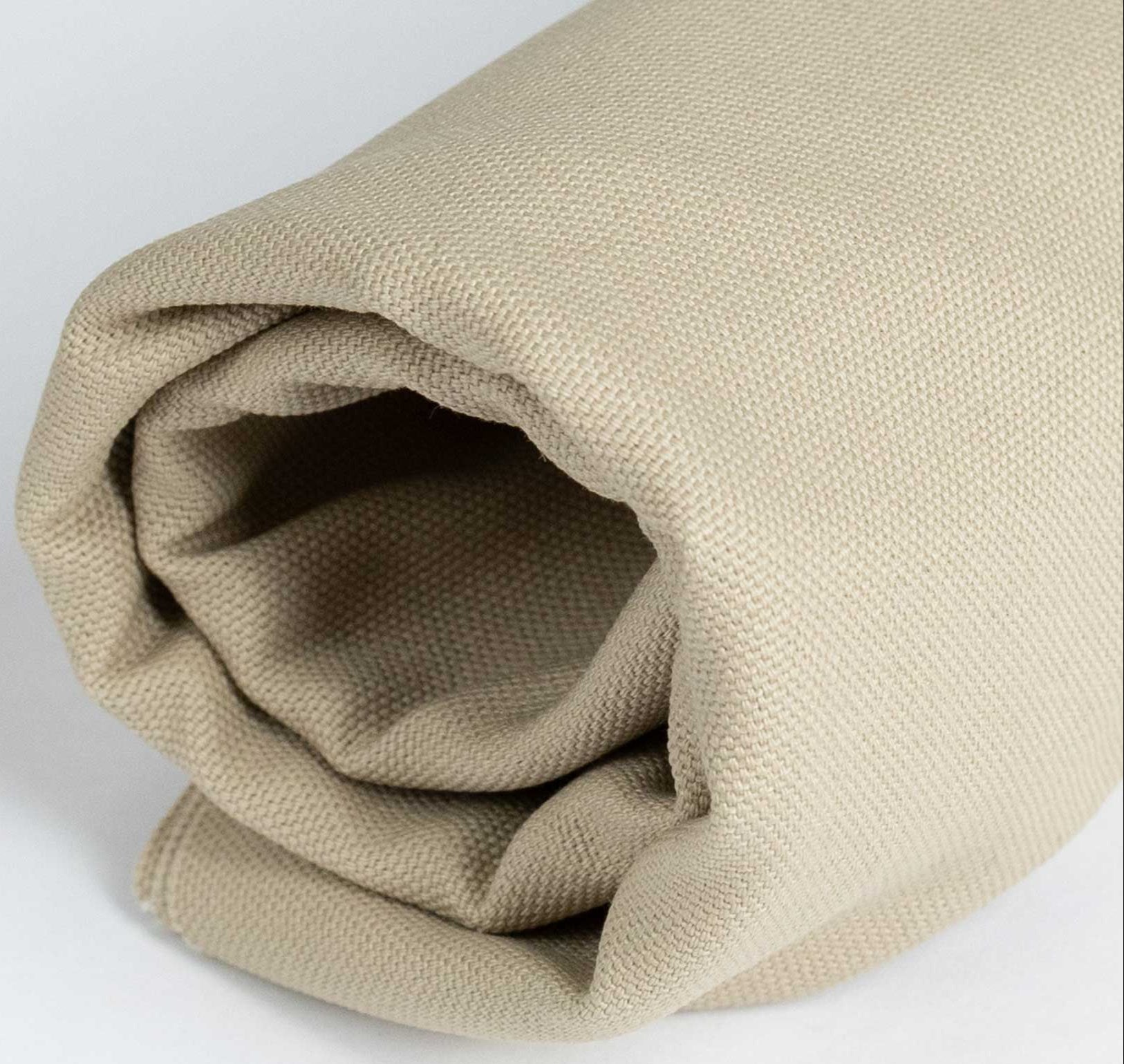
A beach bag’s ability to resist sand is not determined by a single property—it is the result of how the material interacts with sand particles under real conditions. At the beach, sand is constantly in motion, carried by wind, water, and contact with skin, towels, and surfaces. A material that performs well must either prevent sand from sticking or allow it to escape quickly.
In practical terms, sand resistance comes down to three key factors: surface smoothness, weave structure, and moisture interaction. These elements define whether sand slides off, falls through, or becomes trapped inside the material.
A clear takeaway: sand-resistant materials either minimize friction so sand cannot adhere, or use open structures that allow sand to pass through instead of accumulating.
What Does “Sand-Resistant” Mean in Real Performance?
Sand resistance is not about completely blocking sand—this is nearly impossible in beach environments. Instead, it is about reducing how much sand stays on or inside the material and how easily it can be removed.
| Performance Factor | High Sand Resistance | Low Sand Resistance |
|---|---|---|
| Surface friction | Low (smooth, slick) | High (rough, fibrous) |
| Sand retention | Minimal | High |
| Cleaning effort | Shake or wipe | Rinse and scrub |
| Moisture interaction | Repels water | Absorbs water |
In real use, a sand-resistant bag is one that can be cleaned quickly—often with a single shake or light rinse—without sand remaining embedded in the fabric.
How Fabric Texture and Weave Affect Sand Retention
The physical structure of a fabric determines how sand interacts with it. Texture and weave density are two of the most influential factors.
| Fabric Type | Texture | Sand Behavior |
|---|---|---|
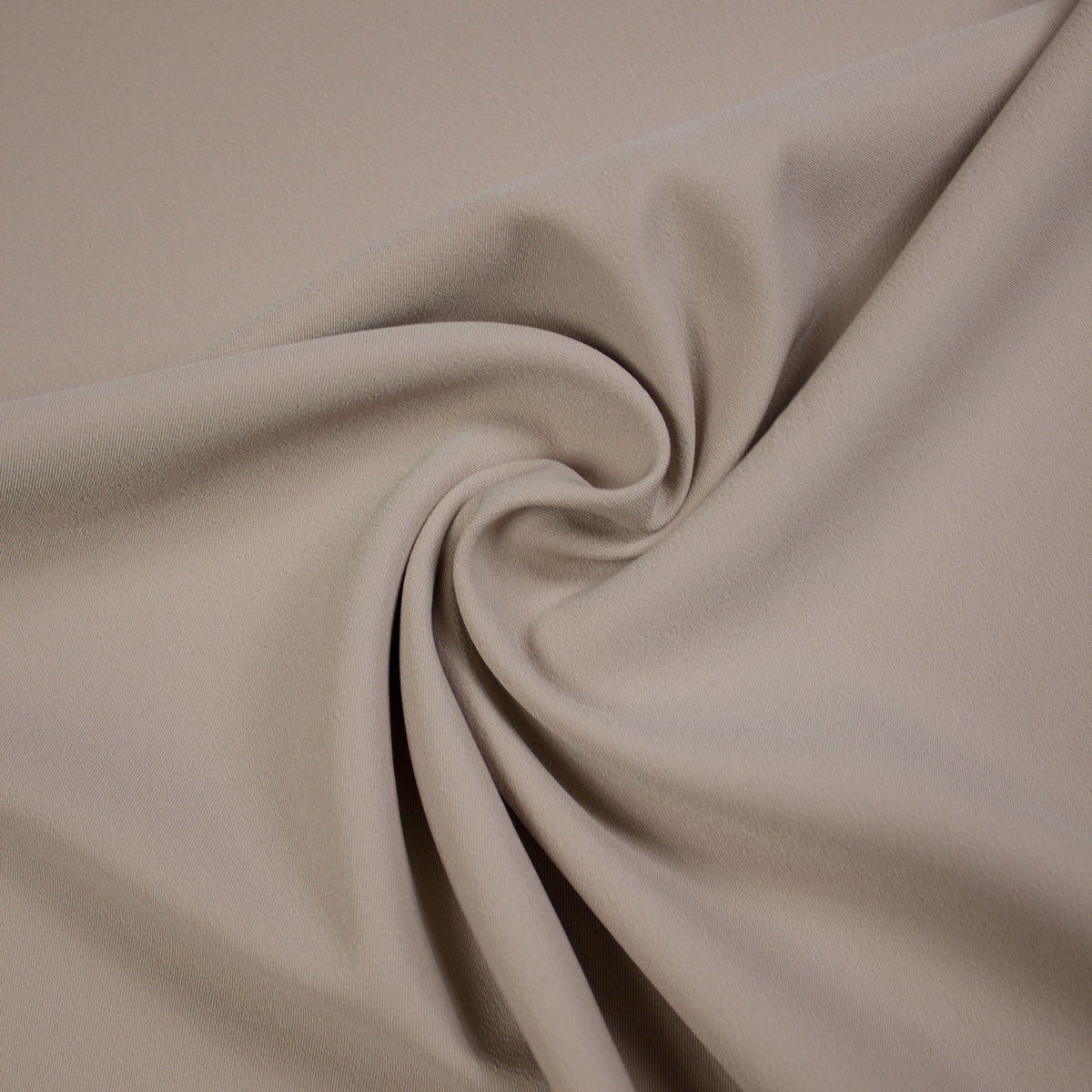
| Smooth synthetic (nylon/polyester) | Slick, low-friction | Sand slides off easily |
| Rough natural fiber (cotton/jute) | Fibrous, uneven | Sand sticks and embeds |
| Mesh (open weave) | Perforated | Sand falls through immediately |
| Coated fabric | Sealed surface | Sand cannot penetrate |
Smooth synthetic fabrics reduce friction between sand particles and the material surface. As a result, sand does not adhere easily and can be removed with minimal effort.
Rough or fibrous materials, such as cotton or canvas, create micro-gaps where sand particles become lodged. Over time, this leads to accumulation and makes cleaning more difficult.
Mesh takes a different approach. Instead of resisting sand, it eliminates the problem by allowing particles to pass through the structure entirely.
Are Smooth or Porous Materials Better?
Different material types handle sand differently, and their effectiveness depends on how they manage friction and particle movement.
| Material Type | Sand Resistance | Reason |
|---|---|---|
| Smooth synthetics (nylon, polyester) | High | Low surface friction prevents sticking |
| Porous natural fibers (cotton, canvas) | Low | Fibers trap sand particles |
| Open structures (mesh) | Very high | Sand escapes through openings |
Smooth and open materials perform best because they either prevent sand from adhering or allow it to escape. Porous materials, while comfortable and durable, tend to trap sand within their structure.
This is why many beach-specific products favor synthetic or mesh materials, even if natural fabrics are preferred in other contexts.
How Moisture Changes Sand Behavior
Moisture is one of the most important—and often overlooked—factors affecting sand resistance. The interaction between water and fabric significantly changes how sand behaves.
| Condition | Sand Interaction |
|---|---|
| Dry fabric | Sand falls off easily |
| Damp fabric | Sand begins to stick |
| Wet absorbent fabric | Sand embeds deeply into fibers |
When fabric becomes damp, surface tension increases, causing sand particles to adhere more strongly. In absorbent materials such as cotton, water penetrates the fibers, creating conditions where sand becomes embedded rather than resting on the surface.
This is why a canvas bag may seem manageable when dry but becomes difficult to clean after exposure to water.
Synthetic materials, particularly those with hydrophobic properties, reduce water absorption and therefore limit this effect. Mesh materials further reduce the issue by allowing both water and sand to pass through simultaneously.
Real-World Behavior in Beach Conditions
In actual beach environments, sand resistance is influenced by multiple factors at once:
- Fine sand particles can penetrate deeper into fibrous materials
- Wet conditions increase adhesion and retention
- Movement and friction push sand into seams and folds
For example, placing a bag on wet sand creates both moisture and pressure, increasing the likelihood of sand embedding into absorbent fabrics. Repeated use under these conditions accelerates buildup and wear.
Materials that maintain low friction and resist moisture absorption perform more consistently across these scenarios.
Sand Resistance Is About Friction and Escape
There are two primary strategies for achieving sand resistance:
- Reducing friction: Smooth surfaces prevent sand from sticking in the first place
- Allowing escape: Open structures prevent sand from accumulating
Materials that fail to achieve either of these will struggle in beach environments. Rough, absorbent fabrics both increase friction and trap particles, making them the least effective for sand resistance.
Practical Insight for Material Selection
When selecting materials for beach bags, sand resistance should be evaluated alongside other factors such as durability and water resistance.
- For minimal cleaning and convenience: mesh offers the highest performance
- For balanced performance and structure: smooth synthetic fabrics provide a practical solution
- For aesthetic or lifestyle use: natural fabrics may be acceptable but require more maintenance
Understanding how materials interact with sand under real conditions helps ensure that the final product performs as expected, rather than relying on assumptions based on appearance or texture.
Sand resistance is not about eliminating sand—it is about controlling how sand interacts with the material. By focusing on surface smoothness, structural design, and moisture behavior, it is possible to significantly reduce sand retention and improve usability.
Materials that minimize friction or allow sand to escape will always perform better in beach environments, delivering a cleaner, more practical user experience over time.
Which Materials Are Best for Sand-Resistant Beach Bags?


Selecting the right material is the single most important factor in determining whether a beach bag will remain clean, functional, and easy to maintain in sandy environments. Many fabrics may appear durable or premium at first glance, but their internal structure and surface behavior ultimately decide how they interact with sand.
In real beach conditions, sand is not just a surface issue—it penetrates, sticks, and accumulates depending on friction, moisture, and fabric construction. Materials that either minimize contact with sand or allow it to escape naturally perform significantly better over time.
A clear takeaway: the most effective sand-resistant materials—mesh, nylon, polyester, and coated fabrics—either reduce surface friction or eliminate sand retention entirely, while still maintaining durability and usability.
Is Mesh the Best Option for Sand-Free Use?
Mesh is often considered the most effective material for sand resistance because it removes the problem at its source rather than trying to manage it.
| Feature | Mesh Fabric |
|---|---|
| Sand resistance | Excellent |
| Airflow | High |
| Drying speed | Very fast |
| Durability | Medium |
The defining characteristic of mesh is its open structure. Instead of trapping sand, it allows particles to pass through immediately. This makes cleaning almost effortless—often requiring nothing more than a quick shake.
In practical use, mesh performs especially well in environments with fine, loose sand. However, its open design also means reduced structure and limited protection for smaller items, which must be considered in product design.
Why Nylon and Polyester Are Widely Used
Nylon and polyester dominate modern beach bag manufacturing because they offer a strong balance between sand resistance, durability, and versatility.
| Property | Nylon | Polyester |
|---|---|---|
| Surface smoothness | High | High |
| Sand resistance | High | High |
| Water resistance | High | Medium–high |
| Durability | Very high | High |
Both materials have relatively smooth surfaces, which reduces friction and prevents sand from sticking. Unlike natural fibers, they do not have irregular textures or absorbent հատկություններ that trap particles.
Nylon, in particular, offers superior abrasion resistance, making it suitable for high-use environments. Polyester, while slightly less durable, provides better cost efficiency and maintains stable performance under UV exposure.
These materials are widely used because they deliver consistent results across different conditions without requiring complex maintenance.
How Coated Fabrics Improve Sand Resistance
Coated fabrics enhance the natural advantages of synthetic materials by adding a protective surface layer that further reduces friction and prevents sand penetration.
| Coating Type | Benefit |
|---|---|
| PU (Polyurethane) | Smooths surface, reduces friction |
| TPU (Thermoplastic Polyurethane) | Adds waterproofing and flexibility |
| PVC (Polyvinyl Chloride) | Creates a fully sealed, non-porous surface |
Coatings effectively eliminate the micro-gaps between fibers, creating a continuous surface where sand cannot embed. This not only improves sand resistance but also enhances water resistance, making coated fabrics highly suitable for beach environments.
In real use, coated materials are easier to clean than uncoated fabrics because sand remains on the surface rather than becoming trapped within the structure.
How Ripstop Fabric Compares
Ripstop fabrics, typically made from nylon or polyester, are engineered with a reinforced grid pattern that improves strength without significantly increasing weight.
| Feature | Ripstop Nylon |
|---|---|
| Weight | Light |
| Strength | High |
| Sand resistance | High |
| Durability | Very high |
The ripstop structure does not negatively affect sand resistance because the surface remains relatively smooth. At the same time, it prevents tearing and improves longevity, especially in high-stress areas.
This makes ripstop fabrics a strong choice for users who need both durability and sand resistance, particularly in outdoor or travel applications.
Material Performance Under Real Beach Use
When materials are evaluated in actual beach conditions, their differences become more pronounced.
| Material | Sand Resistance | Durability | Cleaning Ease |
|---|---|---|---|
| Mesh | Very high | Medium | Very easy |
| Nylon | High | Very high | Easy |
| Polyester | High | High | Easy |
| Canvas | Medium | High | Moderate |
| Cotton | Low | Low | Difficult |
Mesh leads in sand resistance due to its open structure. Nylon and polyester provide strong overall performance with minimal maintenance. Canvas and cotton, while durable or comfortable, tend to trap sand and require more effort to clean.
Moisture further amplifies these differences. Absorbent materials like cotton and canvas become significantly less effective when wet, as sand adheres more strongly and embeds deeper into fibers.
Matching Materials to Use Cases
No single material is ideal for every situation. The best choice depends on how the bag will be used and what performance factors are most important.
- Mesh is ideal for users who prioritize quick cleaning and sand elimination
- Nylon is best for those who need durability combined with lightweight performance
- Polyester offers a balanced solution for cost, usability, and maintenance
- Coated fabrics are suitable for environments where both sand and water resistance are required
For example, a lightweight beach trip may benefit from mesh, while a more demanding outing involving heavy items or mixed environments may require nylon or coated polyester.
Practical Insight
In real-world product development, sand resistance is rarely considered in isolation. It must be balanced with other factors such as strength, structure, and water resistance.
Materials that perform well across multiple criteria—such as nylon and polyester—are often preferred for general-purpose designs. Specialized materials like mesh are used when a specific function, such as sand elimination, is the primary goal.
The best sand-resistant material is not defined by a single feature but by how effectively it manages the interaction between sand, moisture, and surface structure.
- Mesh eliminates sand retention through open design
- Nylon and polyester reduce adhesion through smooth surfaces
- Coated fabrics prevent penetration through sealed layers
Understanding these mechanisms allows for more informed decisions, ensuring that the selected material delivers consistent performance in real beach conditions rather than relying on assumptions based on appearance or texture.
How Does Fabric Structure Affect Sand Resistance?

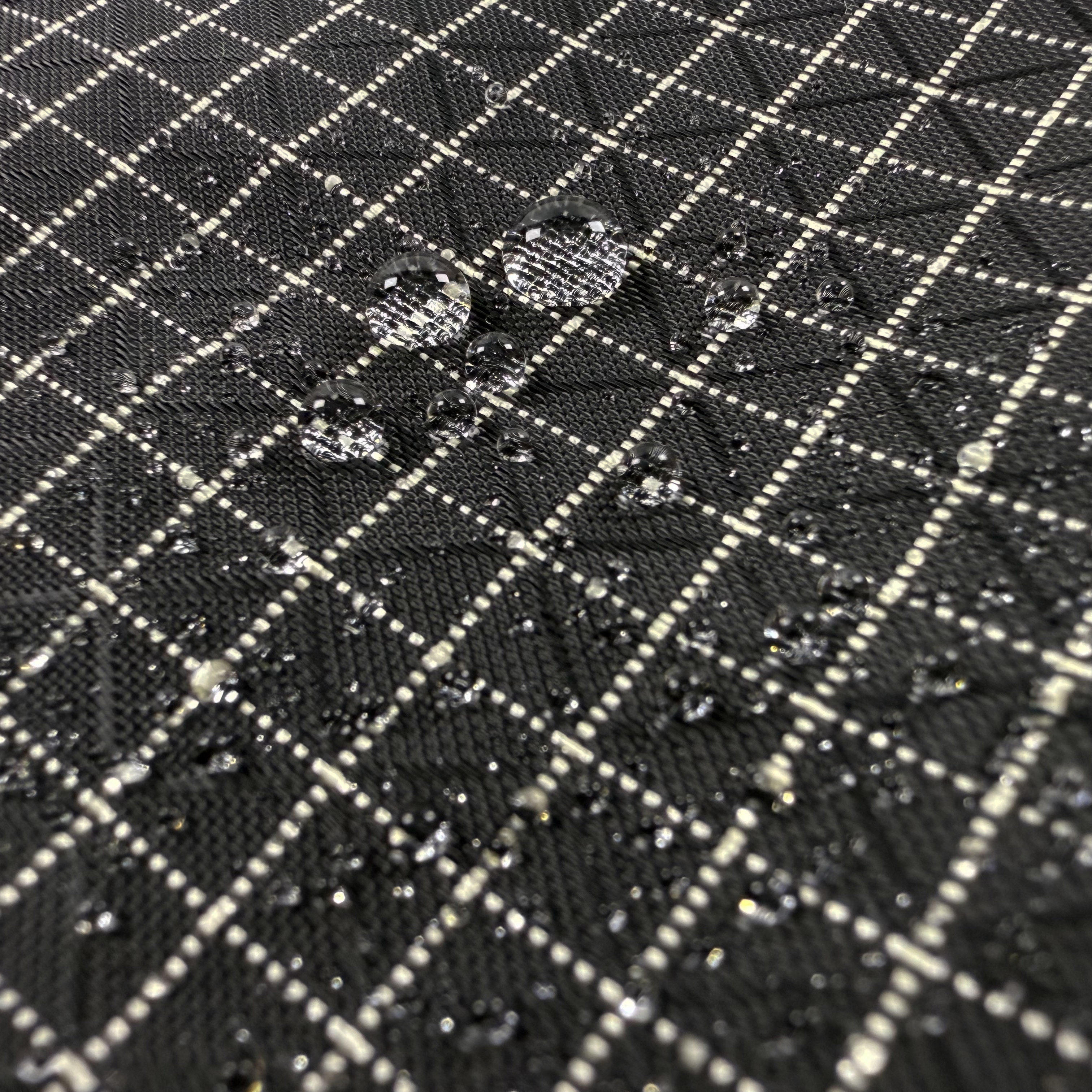


Fabric structure is one of the most decisive yet often overlooked factors in sand resistance. Two bags made from the same base material—such as polyester—can behave completely differently depending on how that material is woven, finished, or layered. In real beach conditions, it is not just the fiber type that matters, but how the fabric is engineered at a structural level.
Sand interaction is fundamentally mechanical. It depends on how particles move across, into, or through a surface. Fabric structure controls this movement—determining whether sand slides off, becomes trapped, or falls through entirely.
A practical takeaway: structure governs sand behavior. Smooth, sealed, or open structures reduce retention, while rough, porous, or poorly designed constructions increase accumulation.
Do Tight Weaves Trap More Sand or Less?
Weave density alone does not determine sand resistance. The key factor is how density interacts with surface texture.
| Weave Type | Sand Behavior | Explanation |
|---|---|---|
| Tight smooth weave | Low retention | Minimal gaps + low friction surface |
| Tight rough weave | Medium retention | Surface texture traps particles |
| Loose weave | Medium–high | Sand enters gaps but may not escape easily |
| Open mesh | Very low | Sand passes through structure |
A tightly woven fabric with a smooth finish performs well because it limits both penetration and adhesion. However, if the same tight weave has a rough or fibrous surface, sand can still cling to the texture.
This explains why some high-density cotton fabrics trap more sand than smoother synthetic materials, despite being tightly woven.
How Ripstop Fabric Reduces Debris Buildup
Ripstop fabrics introduce a reinforcement grid into the base material, typically using thicker threads at regular intervals. While primarily designed to prevent tearing, this structure also influences sand behavior.
| Feature | Impact on Sand Resistance |
|---|---|
| Smooth base fabric | Reduces friction and adhesion |
| Reinforcement grid | Limits large-scale accumulation |
| Lightweight structure | Easier to shake or clean |
Because ripstop is usually made from nylon or polyester, it retains the low-friction properties of synthetic fibers while adding structural strength. The grid pattern does not significantly increase sand retention, as long as the overall surface remains smooth.
In practical use, ripstop fabrics are easier to clean than traditional woven fabrics because sand does not embed deeply and can be removed with minimal effort.
Are Multi-Layer Materials More Effective?
Layered constructions can significantly improve sand resistance, but only when designed correctly.
| Structure Type | Sand Resistance | Advantage | Limitation |
|---|---|---|---|
| Single-layer | Moderate | Lightweight, simple | Limited barrier effect |
| Double-layer | High | Improved resistance to penetration | Increased weight |
| Coated layer | Very high | Sealed surface prevents embedding | Reduced breathability |
Coated or laminated layers create a continuous surface that prevents sand from entering the fabric structure. This makes them highly effective in sandy environments.
However, poorly designed multi-layer systems can create gaps between layers where sand accumulates. Once trapped, these particles are difficult to remove and can lead to long-term wear.
Effective multi-layer design ensures that layers are either bonded or structured in a way that prevents internal accumulation.
How Seams and Stitching Affect Sand Retention
Seams are one of the most common—and most underestimated—areas where sand accumulates.
| Feature | Impact |
|---|---|
| Exposed seams | Create pockets where sand collects |
| Flat seams | Reduce accumulation points |
| Sealed seams | Block entry into internal layers |
| Reinforced stitching | Improves durability but may increase texture |
In real-world use, sand tends to migrate toward seams due to movement and gravity. Bags placed on the ground or dragged slightly across sand will naturally collect particles along seam lines.
Flat or sealed seams minimize this effect by reducing surface irregularities. In contrast, bulky or exposed stitching creates نقاط where sand can settle and remain trapped.
How Fabric Stiffness Influences Sand Behavior
Material stiffness plays a subtle but important role in how sand interacts with a surface.
| Fabric Type | Stiffness | Sand Interaction |
|---|---|---|
| Soft fabric (cotton, lightweight blends) | Flexible | Conforms to sand, traps particles |
| Semi-rigid fabric (polyester, nylon) | Moderate | Balanced performance |
| Stiff coated fabric (PVC, TPU) | High | Sand slides off easily |
Soft fabrics tend to deform under pressure, creating micro-pockets where sand can accumulate. Stiffer materials maintain a consistent surface, reducing the فرص for sand to settle.
Coated fabrics, in particular, benefit from both stiffness and smoothness, making them highly effective at shedding sand.
Structure Controls Sand Flow
At a fundamental level, sand resistance is about controlling how particles move across and through a material.
There are three primary mechanisms:
- Smooth surfaces reduce friction, allowing sand to slide off
- Open structures allow sand to pass through without accumulation
- Sealed or coated layers prevent sand from entering the material
Conversely, poor structural design leads to:
- Increased friction → sand sticks
- Irregular surfaces → sand accumulates
- Gaps and seams → sand becomes trapped
Real-World Insight
In beach environments, sand rarely behaves in isolation. It interacts with moisture, pressure, and movement. Fabric structure determines how well a material adapts to these combined conditions.
For example:
- A smooth polyester bag performs well when dry but may lose effectiveness if the surface becomes textured or worn
- A mesh bag maintains performance regardless of moisture because sand cannot accumulate
- A coated fabric performs consistently but may sacrifice flexibility
These differences highlight why structure must be considered alongside material selection.
Fabric structure is the hidden layer of performance. It defines how sand interacts with a material beyond what is visible at first glance.
- Tight weaves must also be smooth to reduce adhesion
- Open structures eliminate accumulation entirely
- Coated and layered systems prevent penetration
Understanding these structural principles allows for better material selection and product design, ensuring that beach bags remain easy to clean, functional, and reliable in real-world conditions.
Do Sand-Resistant Materials Also Improve Durability?


Sand resistance and durability are closely related, but they are not the same thing. A material that sheds sand easily reduces friction and buildup, which helps extend lifespan. However, durability also depends on fiber strength, fabric density, and construction quality. Some materials resist sand well but lack structural strength, while others are strong but still accumulate abrasive particles that accelerate wear.
In real beach conditions, sand acts like a fine abrasive—similar to sandpaper. It gets into fibers, seams, and folds, and with repeated movement, it gradually wears down materials. This is why materials that minimize sand retention often maintain their performance longer.
A practical takeaway: materials that both resist sand and withstand abrasion—such as nylon and polyester—deliver the best long-term durability, while materials that trap sand tend to degrade faster over time.
Which Fabrics Resist Abrasion from Sand Best?
Abrasion resistance is one of the most important indicators of durability in sandy environments.
| Material | Abrasion Resistance | Lifespan (Typical Use) |
|---|---|---|
| Nylon | Very high | Long (2–5+ years) |
| Polyester | High | Long (2–4 years) |
| Canvas | High | Medium (1–3 years) |
| Mesh | Medium | Medium (6–18 months) |
| Cotton | Low | Short (<1–2 years) |
Nylon stands out because of its high tensile strength and resistance to surface wear. Polyester follows closely, offering strong performance with better UV stability. Canvas is structurally strong but can suffer from internal abrasion when sand becomes trapped in its fibers.
Mesh, while excellent for sand elimination, has lower resistance to stretching and tearing under heavy loads. Cotton performs the worst in sandy conditions because it absorbs moisture and traps particles, accelerating fiber breakdown.
How Sand Impacts Long-Term Wear
Sand does not damage materials instantly—it causes gradual degradation through repeated friction and pressure.
| Effect | Description |
|---|---|
| Fiber wear | Sand particles grind against fibers, causing thinning |
| Seam stress | Movement concentrates friction at stitching points |
| Surface damage | Coatings and finishes wear off over time |
| Structural weakening | Leads to deformation or tearing |
In practical use, these effects are amplified when the bag carries heavier loads. Increased weight creates more pressure between sand particles and fabric surfaces, accelerating wear.
For example, a bag filled with wet towels and placed on sand experiences both moisture and pressure—two factors that significantly increase abrasion.
Are Lightweight Fabrics Strong Enough for Long-Term Use?
Modern material engineering has made it possible for lightweight fabrics to achieve high strength, but performance varies by material type.
| Fabric Type | Weight | Strength | Suitability |
|---|---|---|---|
| Thin cotton | Light | Low | Not suitable for sand-heavy use |
| Standard polyester | Light | High | Good for regular use |
| Ripstop nylon | Very light | Very high | Excellent for durability |
| Mesh | Very light | Medium | Limited for heavy loads |
Ripstop nylon is a strong example of how structure improves durability. Its reinforced grid pattern prevents tears from spreading, allowing it to maintain integrity even under stress.
Lightweight polyester fabrics also perform well because they combine smooth surfaces (reducing sand adhesion) with sufficient strength for everyday use.
Mesh remains effective for sand resistance but is better suited for lighter loads and shorter usage cycles.
How Coatings Improve Durability
Coatings play a dual role: they enhance both sand resistance and durability by protecting the underlying fibers.
| Coating | Benefit |
|---|---|
| PU (Polyurethane) | Reduces surface wear and limits water absorption |
| TPU (Thermoplastic Polyurethane) | Adds flexibility and improves resistance to cracking |
| PVC (Polyvinyl Chloride) | Provides heavy-duty protection against abrasion |
By creating a smooth, sealed surface, coatings reduce friction between sand particles and the fabric. This prevents particles from embedding into fibers and minimizes long-term damage.
Coatings also act as a protective layer, absorbing abrasion before it reaches the structural fabric underneath. In high-use environments, this significantly extends product lifespan.
Durability Under Real Beach Conditions
Performance differences become clearer when materials are evaluated in actual use scenarios.
| Scenario | Best Material | Reason |
|---|---|---|
| Daily beach use | Polyester | Balanced durability and sand resistance |
| Heavy load carrying | Nylon | Superior strength and abrasion resistance |
| Occasional use | Mesh | Easy cleaning with moderate durability |
| Style-focused use | Canvas | Strong structure but requires maintenance |
For example, polyester is often chosen for everyday beach bags because it provides a balance between cost, durability, and ease of maintenance. Nylon is preferred in more demanding applications where strength and longevity are critical.
Canvas, while durable in structure, requires more care due to its tendency to trap sand and absorb moisture.
The Relationship Between Sand Resistance and Lifespan
Materials that reduce sand retention offer indirect durability benefits.
- Less sand accumulation → reduced abrasion
- Easier cleaning → lower maintenance stress
- Lower moisture retention → less fiber degradation
This means that even if two materials have similar strength, the one that manages sand better will often last longer in beach environments.
For instance, a smooth polyester bag may outlast a heavier canvas bag simply because it prevents sand from embedding and causing internal wear.
Practical Insight
Durability should always be evaluated in the context of real use rather than theoretical strength.
- High-strength materials that trap sand may degrade faster than expected
- Moderate-strength materials with good sand resistance may maintain performance longer
- Coatings and structural design can significantly influence long-term outcomes
The most effective designs combine strong base materials with surface properties that minimize sand interaction.
Sand resistance and durability are interconnected through the mechanism of abrasion. Materials that reduce friction and prevent particle buildup experience less wear and maintain their structure over time.
- Nylon and polyester offer the best balance of strength and sand resistance
- Coated fabrics enhance both protection and longevity
- Mesh reduces abrasion but is limited in load-bearing applications
Choosing a sand-resistant material is not only about convenience—it is a strategic decision that directly affects how long a beach bag will perform reliably under real-world conditions.
How Do Sand-Resistant Bags Perform in Water and Moisture?
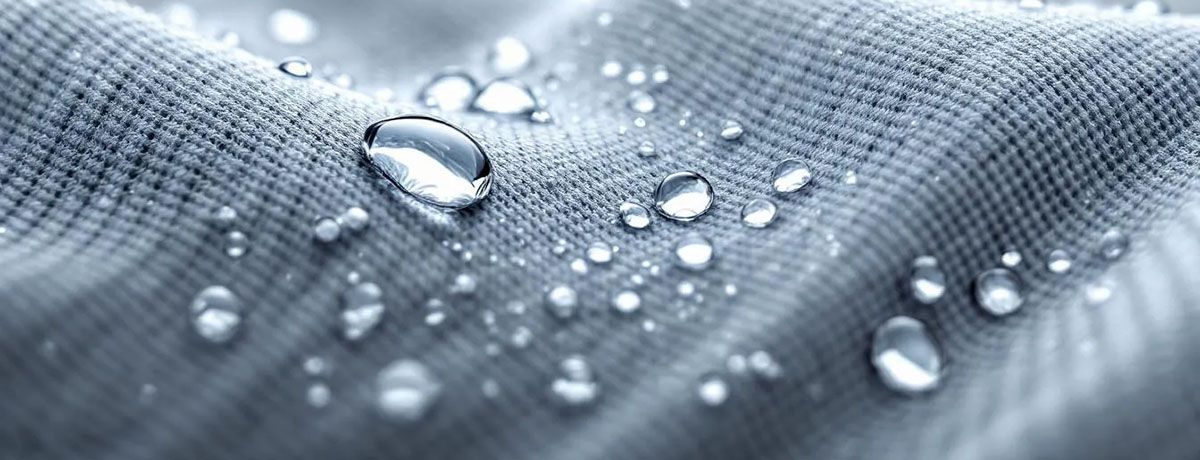
At the beach, sand and water are never separate variables. In fact, moisture is the factor that changes everything. A material that performs well in dry sand can behave very differently once it becomes damp or wet. Surface friction increases, fibers expand, and sand that once slid off easily begins to cling and accumulate.
This is why evaluating sand resistance without considering moisture leads to incomplete conclusions. The true performance of a beach bag material is revealed when it is exposed to both sand and water simultaneously.
A clear takeaway: the best sand-resistant materials are those that either repel water or dry quickly, maintaining low friction and preventing sand from sticking even in wet conditions.
Are Sand-Resistant Fabrics Also Water-Resistant?
Materials that manage water effectively tend to maintain their sand-resistant properties more consistently.
| Material | Sand Resistance | Water Resistance | Combined Performance |
|---|---|---|---|
| Nylon | High | High | Excellent |
| Polyester | High | Medium–high | Very good |
| Mesh | Very high | Low (drains water) | Good (fast recovery) |
| Canvas | Medium | Low | Poor when wet |
| Cotton | Low | Low | Very poor |
Nylon performs particularly well because it is both smooth and hydrophobic, meaning it resists water absorption. Polyester offers similar advantages, though with slightly lower water resistance. Mesh behaves differently—it does not resist water, but it allows water to pass through instantly, preventing prolonged moisture retention.
Natural fibers like cotton and canvas absorb water, which increases friction and creates conditions where sand embeds into the fabric rather than remaining on the surface.
Which Materials Dry the Fastest?
Drying speed is critical because it determines how long a material remains in a high-friction, sand-attracting state.
| Fabric | Drying Speed | Why It Matters |
|---|---|---|
| Mesh | Very fast | Immediate drainage and reuse |
| Nylon | Fast | Minimal water absorption |
| Polyester | Fast | Balanced drying and durability |
| Canvas | Moderate | Retains some moisture |
| Cotton | Slow | Holds water, prolongs sand adhesion |
Fast-drying materials reduce the time during which sand can stick to the surface. In real use, this means a bag can return to a low-friction state quickly, making it easier to clean and reuse.
Mesh stands out because it eliminates water retention entirely—both sand and water exit the structure at the same time. Nylon and polyester follow closely due to their low absorption rates.
Do Coatings Improve Both Sand and Water Performance?
Coatings enhance performance by modifying the surface properties of the fabric.
| Coating Type | Water Effect | Sand Effect |
|---|---|---|
| PU (Polyurethane) | Repels water | Reduces surface friction |
| TPU (Thermoplastic Polyurethane) | Creates waterproof layer | Prevents sand adhesion |
| PVC (Polyvinyl Chloride) | Fully waterproof | Smooth, sealed surface blocks sand |
By creating a smoother and more sealed surface, coatings reduce both water absorption and sand retention. This dual effect makes coated fabrics particularly effective in beach environments where both elements are present.
However, coatings must be balanced with usability. Heavier coatings can reduce flexibility and breathability, which may affect comfort and handling.
How Moisture Changes Sand Behavior
The interaction between sand and fabric changes significantly depending on moisture levels.
| Condition | Sand Interaction |
|---|---|
| Dry surface | Sand falls off easily |
| Damp surface | Sand begins to stick |
| Wet absorbent surface | Sand embeds deeply into fibers |
When fabric becomes damp, surface tension increases, causing sand particles to adhere more strongly. In absorbent materials, water penetrates the fibers, creating a sticky environment where sand becomes embedded.
This is why a cotton or canvas bag that is easy to clean when dry can become difficult to maintain once wet.
How Drainage and Airflow Affect Performance
Structural features that manage water flow play a key role in maintaining sand resistance over time.
| Feature | Benefit |
|---|---|
| Mesh panels | Allow sand and water to escape simultaneously |
| Ventilation holes | Improve airflow and drying speed |
| Breathable fabrics | Reduce moisture retention |
Drainage prevents water from accumulating inside the bag, while airflow accelerates drying. Together, these factors help restore the material to a low-friction state more quickly.
In practical terms, a bag that dries faster will remain cleaner and require less maintenance.
Real-World Performance Comparison
Different materials perform better depending on how they handle the combination of sand and water.
| Scenario | Best Material | Reason |
|---|---|---|
| Wet beach conditions | Coated nylon | Combines water resistance and low friction |
| Quick drying requirement | Mesh | Maximum drainage and airflow |
| Balanced everyday use | Polyester | Good mix of durability and performance |
| Heavy-duty wet environments | Coated fabrics (TPU/PVC) | Strong protection against water and sand |
For example, in environments where bags are frequently exposed to water, coated nylon or polyester provides consistent performance. In situations where quick cleaning and drying are priorities, mesh remains the most efficient solution.
Water Resistance Preserves Sand Resistance
A key insight is that sand resistance is not a fixed property—it depends on the material’s condition. A fabric that performs well when dry but loses effectiveness when wet cannot deliver consistent results.
Materials that maintain performance share three characteristics:
- Low water absorption, preventing changes in surface friction
- Fast drying, reducing the duration of sand adhesion
- Smooth or open structures, minimizing particle retention
These properties ensure that the material behaves consistently, regardless of environmental conditions.
Practical Insight
When selecting materials for beach bags, it is important to evaluate how they perform in combined conditions rather than in isolation.
- High sand resistance without moisture control leads to inconsistent performance
- Strong water resistance without smooth surfaces may still allow sand buildup
- Balanced materials that address both factors provide the most reliable results
This is why nylon, polyester, and coated fabrics are widely used—they offer a combination of properties that perform well under real-world conditions.
Water does not just accompany sand—it transforms how sand interacts with materials. The effectiveness of a sand-resistant beach bag depends on how well it maintains low friction and prevents particle adhesion even when wet.
- Mesh eliminates both sand and water through structure
- Nylon and polyester maintain performance through low absorption
- Coated fabrics provide consistent protection through sealed surfaces
Understanding this relationship allows for better material selection and product design, ensuring that performance remains reliable across changing beach conditions rather than only under ideal circumstances.
Are Sand-Resistant Materials Easy to Clean and Maintain?

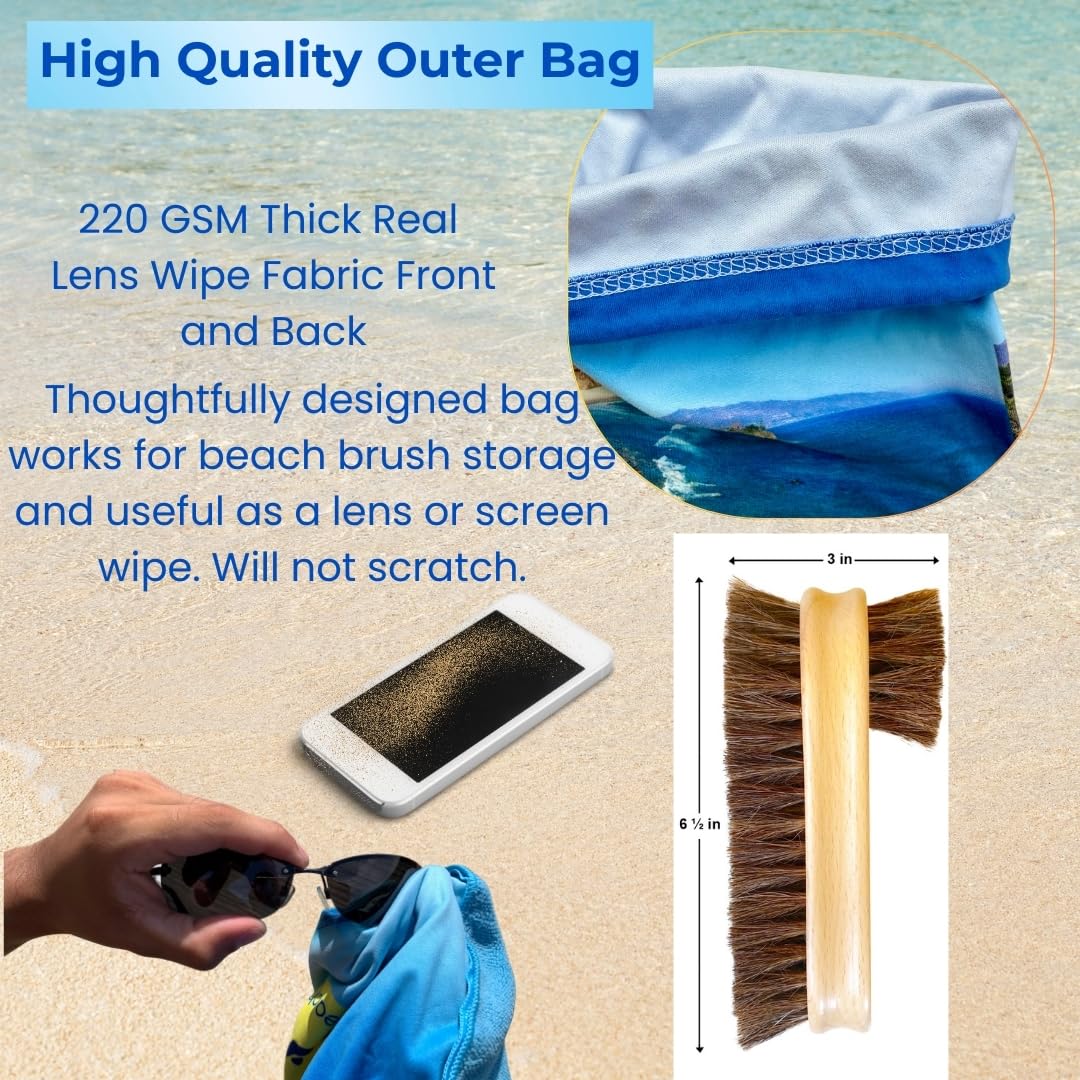
Ease of cleaning is one of the most practical—and often underestimated—factors in beach bag performance. A material may technically resist sand, but if it requires time-consuming cleaning or frequent maintenance, it quickly becomes inconvenient in real use.
At the beach, sand exposure is unavoidable. The difference lies in how quickly and easily it can be removed. Materials that release sand instantly—without embedding particles into fibers—create a significantly better user experience.
A clear takeaway: the best sand-resistant materials are those that allow fast, low-effort cleaning through simple actions like shaking, rinsing, or wiping, without requiring deep washing or intensive care.
How Do Different Fabrics Release Sand?
The way a material interacts with sand directly determines how easy it is to clean.
| Material | Sand Release Method | Cleaning Effort |
|---|---|---|
| Mesh | Sand falls through structure | Very low |
| Nylon | Shake or light wipe | Low |
| Polyester | Shake or rinse | Low |
| Canvas | Brushing or shaking required | Medium |
| Cotton | Washing required | High |
Mesh is the most efficient because it does not retain sand at all—particles pass through immediately. Nylon and polyester perform well due to their smooth surfaces, which prevent sand from sticking firmly.
Canvas and cotton behave differently. Their fibrous structure traps sand, requiring more effort to remove. In many cases, sand remains embedded until the bag is washed.
Which Materials Require the Least Maintenance?
Maintenance is not just about cleaning—it also includes how often cleaning is needed and how much effort it takes.
| Material | Maintenance Level | Reason |
|---|---|---|
| Mesh | Very low | No sand retention, quick drying |
| Nylon | Low | Smooth surface, minimal adhesion |
| Polyester | Low | Easy to clean and maintain |
| Canvas | Medium | Holds sand and moisture |
| Cotton | High | Absorbs sand and water deeply |
Low-maintenance materials are especially important for frequent beach users. A bag that can be cleaned in seconds is far more practical than one that requires regular washing.
Do Anti-Stick Finishes Make a Difference?
Surface treatments can significantly improve both sand resistance and ease of cleaning.
| Feature | Benefit |
|---|---|
| Smooth coating (PU/TPU) | Reduces friction, prevents sand adhesion |
| Water-repellent finish | Limits moisture, reducing sand sticking |
| Anti-static treatment | Reduces attraction of fine particles |
These finishes modify the surface properties of the fabric, making it harder for sand to adhere in the first place. As a result, cleaning becomes easier and less frequent.
In real-world use, coated or treated fabrics often outperform untreated ones, even when the base material is the same.
How Does Cleaning Frequency Affect Durability?
Cleaning methods and frequency have a direct impact on how long a bag lasts.
| Cleaning Method | Impact on Material |
|---|---|
| Frequent machine washing | Can weaken fibers and reduce lifespan |
| Gentle rinsing | Preserves structure and coatings |
| Dry brushing | Removes sand without damaging fabric |
| Proper drying | Prevents mold and odor buildup |
Materials that require frequent washing—such as cotton—tend to degrade faster over time. In contrast, materials that can be cleaned with minimal effort maintain their integrity longer.
This creates an important connection between sand resistance and durability: the easier a material is to clean, the less stress it experiences over its lifespan.
Real-World Maintenance Comparison
Different usage scenarios highlight how material choice affects maintenance requirements.
| Scenario | Best Material | Reason |
|---|---|---|
| Daily beach use | Polyester | Easy cleaning and durability |
| Minimal effort required | Mesh | No retention, instant cleaning |
| Long-term durability | Nylon | Strong and low-maintenance |
| Style-focused use | Canvas | Acceptable trade-off despite higher effort |
For example, a user visiting the beach daily will benefit from polyester or mesh because they minimize cleaning time. A user prioritizing aesthetics may choose canvas but must accept increased maintenance.
The Link Between Cleanability and User Experience
Ease of cleaning directly affects how often a bag is used and how satisfied users are over time.
- Quick cleaning encourages frequent use
- Minimal maintenance reduces frustration
- Consistent appearance improves perceived value
A bag that is difficult to clean may be used less often, regardless of its other features.
Easy Cleaning as a Performance Feature
In practical terms, cleanability should be considered a core performance attribute, not an afterthought.
An effective beach bag should:
- Release sand with minimal effort
- Require little to no deep cleaning
- Maintain its appearance after repeated use
Materials that achieve these goals provide a better overall experience, especially in environments where sand exposure is constant.
Final Perspective
Sand resistance and ease of maintenance are closely linked. Materials that prevent sand from sticking also reduce the need for intensive cleaning, which in turn helps preserve durability and usability over time.
- Mesh eliminates the need for cleaning by allowing sand to escape
- Nylon and polyester simplify cleaning through smooth surfaces
- Coated fabrics enhance both resistance and cleanability
Choosing materials with these properties ensures that the bag remains practical, efficient, and easy to maintain—delivering consistent performance without added effort.
Which Sand-Resistant Beach Bag Designs Work Best?
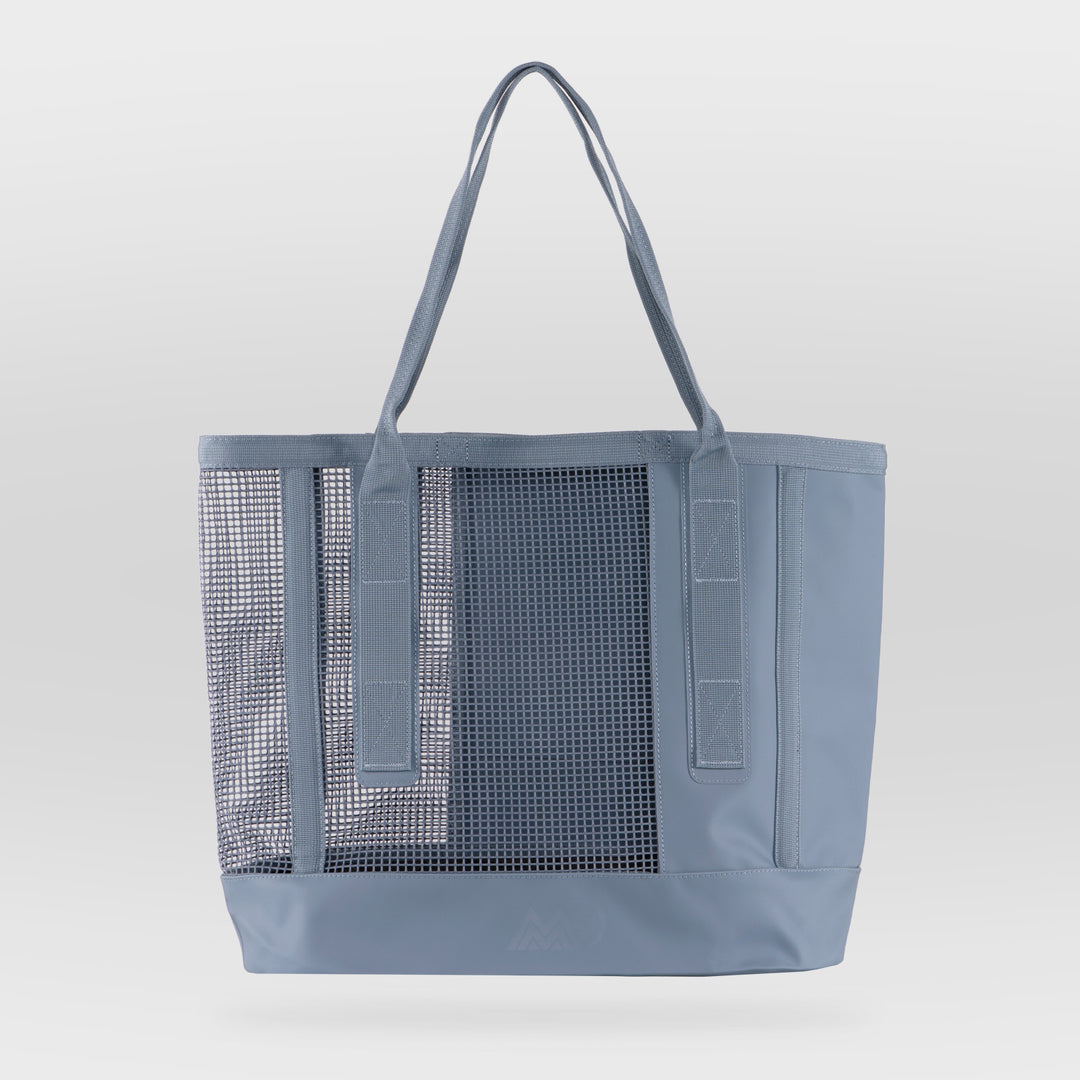


Material choice is only half of the equation. In real-world use, sand resistance is ultimately determined by how the entire bag is designed. Even high-performance fabrics like nylon or polyester can underperform if the structure traps sand in seams, folds, or compartments.
Users don’t interact with fabric alone—they interact with the full product: how it opens, how it sits on the ground, how it is carried, and how easily it can be cleaned. A well-designed bag works with natural movement—gravity, airflow, and motion—to release sand instead of holding onto it.
A clear takeaway: the best sand-resistant designs combine the right materials with open structures, minimal trap points, and layouts that allow sand to escape naturally.
Mesh vs Solid Fabric Designs
Different structural approaches create very different outcomes in sand performance.
| Design Type | Sand Resistance | Durability | Use Case |
|---|---|---|---|
| Full mesh | Very high | Medium | Short beach trips, quick cleaning |
| Solid fabric | Medium–high | High | Multi-purpose, daily use |
| Hybrid (mesh + fabric) | High | High | Balanced performance |
Full mesh designs eliminate sand retention almost entirely, but they sacrifice structure and protection. Solid fabric bags offer strength and versatility but may retain sand, especially in seams and corners.
Hybrid designs are increasingly preferred because they combine the advantages of both—allowing sand to escape while maintaining strength and usability.
Are Hybrid Designs More Effective?
Hybrid construction allows designers to assign different materials to different functional areas of the bag.
| Combination | Benefit |
|---|---|
| Mesh body + reinforced base | Sand release with structural support |
| Nylon body + mesh panels | Durability combined with airflow |
| Polyester exterior + coated lining | Easy cleaning with internal protection |
For example, a reinforced base prevents sagging and supports heavier loads, while mesh panels allow sand and water to escape. This targeted design approach improves real-world performance without compromising usability.
Hybrid designs reflect a shift toward function-driven engineering rather than relying on a single material solution.
Structural Features That Reduce Sand Buildup
Small design details often have a larger impact than expected. Many sand retention issues come from overlooked structural elements.
| Feature | Benefit |
|---|---|
| Minimal seams | Reduces areas where sand can accumulate |
| Rounded corners | Prevents sand from settling in sharp angles |
| Open-bottom or mesh sections | Allows sand to fall out naturally |
| Smooth internal linings | Makes cleaning faster and easier |
Seams and corners are the most common trap points. Sand naturally moves toward edges and low نقاط due to gravity and movement. Designs that minimize these نقاط significantly improve cleanability.
Smooth linings also play an important role. Even if sand enters the bag, a smooth interior allows it to be removed quickly without embedding into fibers.
How Closures and Openings Affect Sand Resistance
Closures influence how much sand enters the bag, but they do not completely prevent it.
| Closure Type | Sand Control | Practical Impact |
|---|---|---|
| Open top | Low | Easy access, but more exposure |
| Zipper closure | Medium | Reduces sand entry |
| Flap cover | Medium | Adds partial protection |
| Drawstring | Medium | Flexible but not sealed |
An open-top design is convenient but allows sand to enter easily, especially in windy conditions. Zippers and flaps reduce entry but cannot eliminate it entirely.
The key is not to rely solely on closures for sand resistance, but to combine them with structural features that allow sand to exit easily once inside.
Matching Designs to Different Users
Different users have different priorities, and design choices should reflect those needs.
| User Type | Best Design | Reason |
|---|---|---|
| Frequent beachgoers | Mesh or hybrid | Fast cleaning, minimal maintenance |
| Families | Large hybrid bag | High capacity with balanced performance |
| Travelers | Foldable mesh hybrid | Lightweight and space-saving |
| Style-focused users | Structured fabric bag | Better appearance and form |
For example, frequent beach users benefit from designs that minimize cleaning effort, while travelers prioritize portability. Families often need larger bags that combine durability with sand resistance.
Understanding user behavior helps guide design decisions toward practical solutions.
Design Determines Real-World Performance
In controlled conditions, many materials appear effective. However, real-world use exposes weaknesses in design.
A bag may fail if:
- Seams create pockets where sand accumulates
- Corners trap debris that cannot be easily removed
- Internal compartments prevent sand from escaping
- Structure limits airflow and drying
By contrast, effective designs work with natural forces:
- Gravity helps sand fall out
- Movement dislodges particles
- Open structures allow continuous release
This is why some bags feel “effortless” to use—they are designed to manage sand passively rather than requiring active cleaning.
Practical Insight
The most successful sand-resistant designs do not rely on a single feature. Instead, they integrate multiple elements:
- Materials that reduce adhesion
- Structures that allow escape
- Layouts that minimize accumulation points
This system approach ensures consistent performance across different conditions rather than relying on ideal scenarios.
Sand resistance is not just a material property—it is a design outcome. The way a bag is constructed determines whether sand becomes a problem or remains manageable.
- Mesh designs eliminate retention through openness
- Hybrid designs balance strength and cleanability
- Smart structural details prevent accumulation
A well-designed beach bag does not fight sand—it manages it. By allowing sand to move naturally and minimizing places where it can settle, the best designs deliver reliable, low-maintenance performance in real beach environments.
How Do You Choose the Right Sand-Resistant Material for Your Needs?


Choosing the right sand-resistant material is not about identifying a universally “best” option—it is about aligning material performance with how the bag will actually be used. Different users face different conditions: some need durability for frequent use, while others prioritize convenience and minimal cleaning for occasional trips.
In real-world scenarios, the effectiveness of a material depends on how well it balances sand resistance, durability, weight, and ease of maintenance. A mismatch between material and usage often leads to frustration—either from excessive wear or constant cleaning.
A clear takeaway: the right material is context-driven. It should reflect how often the bag is used, what it carries, and how important convenience versus durability is in daily use.
Which Materials Suit Heavy Use vs Casual Trips?
Usage frequency is one of the most important factors when selecting materials.
| Usage Level | Recommended Material | Reason |
|---|---|---|
| Heavy daily use | Nylon / Polyester | High durability and abrasion resistance |
| Moderate use | Polyester | Balanced performance and cost |
| Occasional use | Mesh | Easy cleaning and lightweight |
| Style-focused use | Canvas blend | Better appearance and structure |
For frequent users, durability becomes critical. Nylon and polyester provide strong resistance to wear, especially in sandy environments where abrasion is constant.
For occasional beachgoers, mesh offers unmatched convenience. It eliminates sand retention and requires almost no maintenance, making it ideal for short, infrequent trips.
How Do Cost and Performance Compare?
Material selection is also influenced by budget and value expectations.
| Material | Cost Level | Performance Level |
|---|---|---|
| Mesh | Low | High (sand resistance) |
| Polyester | Medium | High (balanced performance) |
| Nylon | Medium–high | Very high (durability) |
| Canvas | Medium | Medium |
| Cotton | Low | Low |
Polyester often represents the best overall value because it delivers reliable performance across multiple factors without significantly increasing cost. Nylon offers higher durability but at a higher price point, while mesh provides excellent sand resistance at a low cost but with limitations in structure.
Key Factors That Should Guide Your Decision
Rather than focusing on a single feature, it is more effective to evaluate multiple factors together.
| Factor | Importance | Practical Impact |
|---|---|---|
| Sand resistance | High | Determines ease of cleaning |
| Durability | High | Affects lifespan under repeated use |
| Ease of cleaning | High | Influences daily usability |
| Weight | Medium | Impacts portability |
| Cost | Medium | Defines overall value |
For example, a lightweight mesh bag may excel in sand resistance but may not meet durability requirements for heavy use. Conversely, a highly durable material may require more effort to clean if it traps sand.
Balancing these factors ensures that the material performs well in real conditions rather than just in theory.
How Material Combinations Improve Performance
In many cases, combining materials produces better results than relying on a single material.
| Combination | Result |
|---|---|
| Nylon + mesh | Durability with sand-free performance |
| Polyester + coating | Easy cleaning with added protection |
| Mesh + reinforced base | Lightweight design with improved strength |
Hybrid designs allow each material to perform a specific function. For example, mesh sections can handle sand and airflow, while reinforced fabric areas provide structure and load-bearing capacity.
This approach reflects modern product development, where performance is optimized through targeted design rather than a one-material solution.
A Practical Decision-Making Framework
Choosing the right material becomes much clearer when guided by practical questions:
- How often will the bag be used in sandy environments?
- Will it carry light items or heavy loads?
- Is quick cleaning more important than long-term durability?
- Will the bag be exposed to water frequently?
- Is portability or structure more important?
Answering these questions helps narrow down the most suitable material without overcomplicating the decision.
Matching Materials to Real-Life Scenarios
Different usage patterns naturally lead to different material choices:
- Frequent beach use → prioritize durability and abrasion resistance (nylon, polyester)
- Casual outings → prioritize convenience and easy cleaning (mesh)
- Travel scenarios → prioritize lightweight and foldability (mesh or lightweight polyester)
- Lifestyle or retail use → prioritize appearance and structure (canvas blends or hybrids)
This scenario-based approach ensures that the material supports actual behavior rather than theoretical preferences.
The Best Choice Is Always Context-Driven
There is no single material that performs best in every situation.
- Frequent use requires materials that withstand wear and maintain performance
- Occasional use benefits from materials that simplify cleaning and reduce effort
- Travel demands lightweight and flexible solutions
Understanding these distinctions helps avoid common mistakes, such as choosing a durable but high-maintenance material for casual use, or a convenient but weak material for heavy-duty needs.
Sand-Resistant Materials Turn Frustration Into Convenience
Material choice directly affects how enjoyable and practical a beach bag is to use. The difference between a bag that requires constant cleaning and one that feels effortless comes down to how it handles sand in real conditions.
Effective sand-resistant materials improve:
- Cleaning efficiency by reducing sand retention
- Durability by minimizing abrasion
- Usability by simplifying maintenance
- Overall experience by reducing effort
Whether it is mesh that allows sand to fall through, nylon that withstands repeated use, or polyester that balances performance and cost, the right material transforms the product from a simple accessory into a reliable tool for everyday use.
Selecting the right sand-resistant material is ultimately about understanding real needs and matching them with material properties.
- Choose durability when usage is frequent and demanding
- Choose convenience when ease of cleaning is the priority
- Choose balanced materials when versatility is required
When material selection aligns with actual use, the result is a beach bag that performs consistently, lasts longer, and enhances the overall experience without unnecessary compromise.
Ready to Create Sand-Resistant Beach Bags That Truly Perform?
At Szoneier, we bring over 18 years of expertise in fabric development and product manufacturing to help you create beach bags that combine advanced materials with smart design.
We can help you develop:
- Sand-resistant beach bags using nylon, polyester, mesh, neoprene, and coated fabrics
- Hybrid designs that balance durability and easy cleaning
- Custom sizes, structures, and functional layouts
- High-quality logo applications and personalized branding
- Low MOQ production with fast sampling and reliable delivery
If you’re looking to create beach bags that stand out in performance, usability, and durability, now is the perfect time to take the next step.
Send your inquiry to Szoneier today and start building sand-resistant beach bags that users will truly appreciate.