 Skip to content
Satin Cloth Blends with Cotton, Polyester, and Silk: Pros and Cons
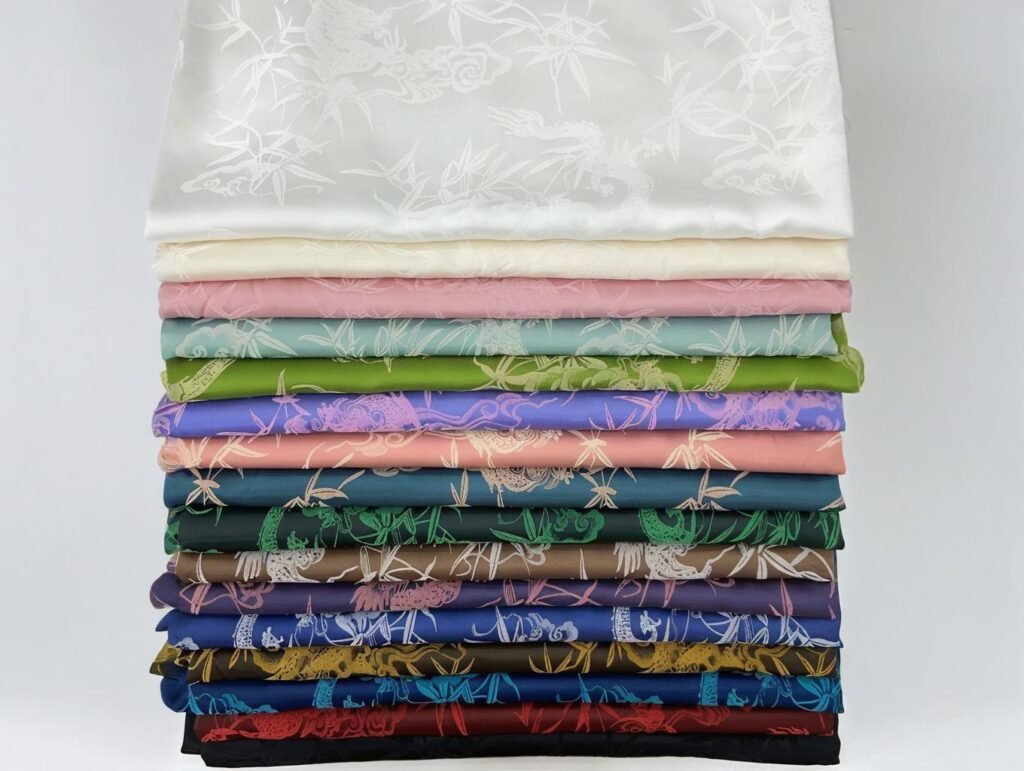
The discussion around satin cloth blends has exploded in recent years—especially as brands, designers, and sourcing teams work to balance luxury appearance, functional performance, and material cost. Pure satin made from silk or high-grade rayon is undoubtedly elegant, but in real-world production, blended satin fabrics often outperform single-fiber satin thanks to improvements in durability, washability, wrinkle resistance, and affordability. What many buyers fail to realize is that the “fiber behind the shine” determines not only the fabric’s aesthetics but also its long-term performance, from seam behavior to colorfastness to drape stability. Satin cloth blends combine cotton, polyester, or silk with satin’s signature weave to enhance durability, comfort, shine, maintenance ease, or cost efficiency. Cotton-satin offers breathability and softness, polyester-satin provides wrinkle resistance and affordability, and silk-satin delivers premium luxury with delicate care needs.
At its core, satin is a weave, not a fiber—its characteristics shift dramatically depending on what fiber feeds the loom. Imagine three different scenarios: a hotel looking for satin bedding that survives 200 wash cycles, a fashion label wanting fluid eveningwear fabric, or a home décor brand needing satin upholstery with minimal snagging. Each of these buyers needs satin, but not the same satin. All three will end up choosing different blends.
To illustrate the importance of blend selection, I often recall a real sourcing case: a European brand once ordered pure rayon satin for a spring dress collection. The samples were stunning. The production rolls? Snagging issues, high pilling, and color instability. The mistake wasn’t the satin—the mistake was the fiber choice behind the satin. They ended up switching to a polyester-satin blend with a softening finish and achieved a perfect balance between drape and durability, with zero returns.
This article helps you avoid these costly mistakes by understanding exactly how cotton, polyester, and silk interact with satin’s weave structure—and how to choose the right blend for your product.
What Are Satin Cloth Blends, and How Do Cotton, Polyester, and Silk Change Satin’s Structure and Performance?
Satin cloth blends represent one of the most versatile categories in woven textiles. While classic satin is defined by its distinctive floating warp yarns that create a smooth, glossy surface, the performance of satin ultimately depends on the fibers chosen to construct it. When cotton, polyester, or silk is introduced—either as pure compositions or in blended variations—the satin weave behaves differently in shine, durability, drape, breathability, cost, and washability. In today’s textile market, where brands must balance aesthetic appeal with performance and sustainability, satin blends have become essential materials for fashion, bedding, upholstery, and accessories.
The choice of fiber is never arbitrary. Cotton modifies satin into a breathable, matte-finished fabric ideal for everyday comfort. Polyester transforms satin into a stronger, wrinkle-resistant, high-gloss textile suited for mass production. Silk elevates satin into a luxurious, fluid material with unmatched softness and elegance. Understanding how each fiber alters satin’s properties allows buyers and product developers to select blends that align with their desired look, performance metrics, and target consumer. Satin blends modify traditional satin by combining cotton for breathability, polyester for wrinkle resistance and strength, and silk for luxury drape and sheen. Each fiber alters satin’s performance profile, affecting shine, durability, comfort, washability, and overall longevity.
How Each Fiber Influences Satin’s Core Properties
1.1. How Cotton Modifies Satin Characteristics
Cotton introduces breathability and natural softness to the satin structure. Because cotton fibers are shorter and slightly twisted, they reduce the mirror-like shine of satin but enhance comfort and moisture absorption. Cotton-satin—often marketed as sateen—has become a staple material in the home textile industry due to its balance of comfort and aesthetic refinement.
Cotton-satin is widely used in bedding, casual shirting, baby textiles, and transitional season garments where users want softness with a hint of elegance. Its matte glow appeals to consumers who find polyester satin too shiny or synthetic-looking.
Cotton-satin (Sateen) Pros:
- Skin-friendly and hypoallergenic, ideal for sleepers with sensitive skin
- Becomes softer over time with washing
- Provides warmth yet maintains natural breathability
- Excellent compatibility with pigment and reactive printing
Cotton-Satin Cons:
- Prone to wrinkling due to cotton’s natural structure
- Less shiny than polyester or silk blends
- Can shrink slightly if finishing processes are insufficient
In hospitality bedding, sateen weaves in 300–600 thread counts remain best-sellers globally because they balance cost with refinement. Brands often use combed or long-staple cotton to ensure a smoother surface that complements satin’s pattern.
1.2. How Polyester Influences Satin’s Performance
Polyester is the most commonly used fiber for satin, especially in fashion and interior textiles. Its filament structure enhances the reflective properties of the satin weave, producing a glossy surface often indistinguishable from silk to the untrained eye. Polyester also improves mechanical performance—making satin stronger, resistant to pulling, and suitable for machine washing.
Polyester-satin is favored for its consistency, low cost, wrinkle resistance, and color vibrancy. From costume design to formal evening wear to decorative ribbons, polyester satin achieves the visual impact brands want while remaining affordable and easy to care for.
Polyester-Satin Pros:
- High gloss and smooth surface
- Strong and abrasion-resistant, especially with proper heat-setting
- Excellent wash and wrinkle durability
- Highly cost-effective, especially for large-volume orders
Polyester-Satin Cons:
- Lower breathability; retains heat in humid climates
- Can generate static electricity without anti-static finishes
- May feel less natural on the skin than cotton or silk
In modern mills, polyester satin often undergoes calendaring and heat-setting to achieve an ultra-smooth surface. Several manufacturers, including SzoneierFabrics, now offer recycled-polyester satin certified under GRS standards, helping brands meet sustainability goals without sacrificing aesthetics.
1.3. How Silk Enhances Satin Quality
Silk transforms satin into a true luxury textile. Its natural filament strength and triangular cross-section reflect light beautifully, creating the highest level of sheen among all satin types. Silk satin provides unmatched drape and softness, making it indispensable for high-end fashion, bridal wear, scarves, and luxury bedding.
Silk’s breathability and temperature-regulating properties also make silk satin exceptionally comfortable. Unlike synthetic satin, it can insulate in winter and cool in summer, providing a year-round premium feel.
Silk-Satin Pros:
- Unmatched fluid drape, ideal for couture and luxury garments
- Natural sheen that does not look artificial
- Biodegradable and naturally breathable
- Comfortable across multiple climates
Silk-Satin Cons:
- Expensive; not suitable for high-volume price-sensitive markets
- Requires delicate handling to avoid damage
- Less durable than polyester in high-abrasion areas
- Sensitive to sunlight, perspiration, and moisture
Because of its care requirements, silk satin is often used in products where longevity is supported by gentle handling—such as luxury pillowcases, high-end evening wear, and artisanal accessories. Blending small percentages of silk with polyester or viscose is increasingly common to achieve a silk-like handfeel at lower costs.
1.4. Performance Comparison Table: Cotton vs. Polyester vs. Silk Satin
| Property | Cotton-Satin | Polyester-Satin | Silk-Satin |
|---|---|---|---|
| Shine | Medium | High | Very High |
| Breathability | High | Low–Medium | High |
| Durability | Medium | High | Low–Medium |
| Cost | Medium | Low | Very High |
| Drape | Medium | Medium–High | Very High |
| Wrinkle Resistance | Low | High | Medium |
| Wash Care | Easy | Very Easy | Delicate |
| Touch/Comfort | Soft/Natural | Smooth/Slick | Ultra-Soft |
This comparison highlights the delicate trade-offs that manufacturers must consider. Cotton-satin balances softness and comfort, polyester-satin delivers practicality and cost performance, while silk-satin provides craftsmanship-level luxury.
There is no universal “best” satin blend. Instead, each blend serves a specific purpose depending on the intended product category, consumer expectations, and market positioning.
For mass-market apparel: Polyester-satin delivers reliable quality at an accessible price. For breathable comfort textiles: Cotton-satin offers softness and natural warmth. For luxury goods: Silk satin stands unmatched in drape, luster, and tactile beauty. For performance and sustainability: Recycled polyester satin or cotton-blend sateen increasingly meet brand requirements.
In fabric sourcing and development, the most successful decisions occur when the satin weave and fiber selection work together to meet the final product’s functional and emotional demands.
Which Satin Blend (Cotton-Satin, Poly-Satin, Silk-Satin) Is Best Suited for Different End-Use Applications?
In the world of satin textiles, fiber composition matters just as much as the weave itself. Two fabrics may share the same fluid gloss and elegant drape, yet behave differently once worn, washed, or placed in a hotel room or showroom. This is why satin is not a singular category but a spectrum—cotton-satin, poly-satin, silk-satin, and hybrid blends each serve different functions, durability expectations, and design aesthetics.
A bedding manufacturer might require breathability and softness; a bridal atelier prioritizes drape and radiance; a décor supplier needs wrinkle resistance and color consistency. These priorities rarely overlap, which is why choosing the correct satin blend determines not only performance but long-term customer satisfaction. Cotton-satin is best for breathable bedding and soft apparel, polyester-satin is ideal for durable, affordable, wrinkle-resistant garments and décor, and silk-satin is preferred for luxury fashion, bridal wear, and premium bedding where drape and shine matter most.
3.1. Best Use Cases for Cotton-Satin
Cotton-satin remains the most preferred option in categories where comfort, temperature regulation, and skin-friendliness are non-negotiable. By combining the smooth surface of satin with the breathability and absorbency of cotton, it achieves a middle ground that synthetic satin cannot replicate.
Cotton-satin is excellent for:
- High-end bedding (300–600 TC)
- Premium shirts and blouses
- Children’s wear and infant textiles
- Pajamas and lounge sets
- Luxury-casual women’s apparel
- Soft-touch home textiles (shams, duvet linings)
- Hotel linens for warm climates
Why it works: Cotton’s staple fibers provide airflow and moisture absorption, while satin’s weave adds a subtle sheen and smoother handfeel. This blend delivers tactile elegance without compromising comfort.
Technical Behavior
- Thread count: Typically 300–600 TC
- GSM: 110–160 gsm for bedding
- Breathability: High
- Shrinkage: Moderate unless mercerized
- Dye uptake: Excellent with reactive dyes
Case Example: Middle Eastern Hotel Group
A hospitality chain operating in Dubai and Doha replaced polyester-satin sheets with 400TC cotton-satin for their summer-season rooms. Guest feedback showed:
- 14% improvement in “sleep comfort” ratings
- Perceived coolness increased significantly during hot months
- Reduced static buildup compared to synthetic satin
The shift resulted in higher occupancy satisfaction for premium suites.
3.2. Best Use Cases for Polyester-Satin
Poly-satin dominates markets where affordability, wrinkle resistance, and vibrant color reproduction are key. Thanks to continuous filament yarns, poly-satin retains exceptional shine, prints extremely well, and withstands repeated laundering—features valued by decorators, event planners, and mass-market apparel producers.
Poly-satin works well for:
- Evening and cocktail dresses
- Costume production
- Lining fabrics
- Upholstery accents
- Decorative pillows and bolsters
- Drapery and window treatments
- Table runners and event linens
- Budget-friendly bedding
Why it works: Polyester filaments create stable, glossy surfaces, handle heat-transfer printing exceptionally well, and maintain shape through repeated washes. It also resists shrinkage and fading, making it ideal for commercial environments.
Performance Traits
- GSM range: 70–180 gsm
- Abrasion resistance: High
- Wrinkle resistance: Very high
- Dye compatibility: Superb with disperse dyes
- Cost index: Lowest among all satin blends
Case Example: US Event Décor Company
A large-scale event supplier replaced silk satin with poly-satin for banquet textiles. Results were dramatic:
- 70% cost reduction
- 3× stronger seam durability—critical for repeated rentals
- Increased stain resistance and easier spot cleaning
- Zero customer complaints regarding sheen loss after washing
For event planners dealing with high turnover and tight budgets, polyester-satin became the optimal economic and functional choice.
3.3. Best Use Cases for Silk-Satin
Silk-satin remains unmatched in categories where emotion, luxury, and craftsmanship define product value. Its low-friction glide, organic luster, and natural drape cannot be duplicated by synthetic or cellulose-based fibers.
Silk-satin is commonly used in:
- Bridal gowns and couture
- High-end womenswear
- Luxury bedding sets
- Silk pillowcases and sleep masks
- Scarves, shawls, and neckwear
- Fine lingerie
Why it works: Silk filaments, each measuring hundreds of meters long, produce an unmatched natural sheen, smoothness, and drape. Its cooling-touch handfeel and skin-compatible protein structure make it ideal for intimate and luxury categories.
Technical Behavior
- GSM: 80–120 gsm for apparel
- Shine index: Highest
- Drape coefficient: Exceptional
- Allergenicity: Hypoallergenic
- Price: Highest cost bracket
Case Example: European Luxury Fashion Brand
A Paris-based label reported that customers who purchased silk-satin dresses exhibited a 22% higher repurchase rate in other premium categories. Their analysis indicated that silk served as a gateway material—once consumers experienced its tactile luxury, they gravitated toward the brand’s upper-tier offerings.
3.4. Application Matching Table
| Application | Best Blend | Reason |
|---|---|---|
| Hotel Bedding | Cotton-Satin | Breathability + soft handfeel |
| Affordable Bedding | Poly-Satin | Cost-effectiveness + colorfastness |
| Luxury Bedding | Silk-Satin | Premium drape + natural sheen |
| Fashion Apparel | Cotton/Poly Satin | Balance of comfort, drape, and price |
| Bridal Dresses | Silk-Satin | Superior elegance and fluidity |
| Lining Fabrics | Polyester-Satin | Strength, smooth glide, durability |
| Upholstery | Polyester-Satin | Abrasion resistance + structural stability |
| Children’s Wear | Cotton-Satin | Soft, breathable, skin-safe |
This table illustrates that satin is not a single product category but a strategic material family. Each blend has strengths that align with specific commercial needs.
3.5. Additional Considerations for Blended Satin Selection
While the three main satin blends dominate, other hybrid compositions—such as silk-polyester blends, cotton-bamboo satin, or poly-spandex satin—are rising due to evolving demands in comfort, sustainability, and performance.
Key Factors Influencing Material Choice:
- Climate Targeting: Cotton-satin performs best in warm climates; silk excels in temperate regions; polyester suits controlled indoor environments.
- Brand Positioning: Luxury brands use silk-satin to reinforce exclusivity; midmarket brands lean toward poly-satin for attainable elegance.
- Maintenance Requirements: Polyester-satin is easiest to launder; cotton-satin may require ironing; silk-satin demands delicate care.
- Sustainability Goals: Cotton-satin (especially organic) and silk-satin align better with natural-fiber branding, while recycled PET satin suits eco-focused synthetics.
- Durability Expectations: Poly-satin outperforms for high-use environments such as hotels, rentals, and uniforms.
Most failures in satin garments or textiles—pilling, dullness, wrinkling, discomfort—stem from choosing the wrong fiber blend, not from weaving flaws. A satin’s performance depends on its underlying substrate, finish, and intended use. Cotton-satin offers comfort, poly-satin offers durability, and silk-satin offers prestige.
Selecting the correct blend is the foundation for superior product outcomes—and for brands, it becomes a key differentiator in both customer satisfaction and long-term value creation.
How Do Fiber Compositions Impact Satin’s Durability, Drape, Breathability, and Long-Term Comfort?
When two satin fabrics feel entirely different despite sharing the same GSM, weave ratio, and finishing, the explanation nearly always comes down to a single variable: fiber composition. Whether the satin is cotton-based, polyester-based, or silk-based determines everything from how the fabric withstands abrasion to how it drapes over the body and how it feels after dozens of washes. Fiber choice governs mechanical performance, care behavior, breathability, and even long-term aesthetics.
In other words, satin is not defined by its weave alone. The fiber behind the weave is what gives satin its personality. Fiber composition determines satin’s durability, drape, breathability, and comfort. Cotton-satin enhances softness and airflow, polyester-satin improves strength and wrinkle resistance, and silk-satin provides unmatched drape and luxury but requires delicate care.
Fiber-by-Fiber Performance Breakdown
3.1. Durability Comparison: Polyester > Cotton > Silk
The durability of satin fabric is directly tied to the intrinsic properties of the fiber—its tensile strength, resistance to friction, moisture behavior, and elasticity. Polyester’s strength gives it a major advantage, while cotton offers balanced performance and silk remains the most delicate.
| Performance Metric | Cotton-Satin | Polyester-Satin | Silk-Satin |
|---|---|---|---|
| Tensile Strength | Medium | High | Medium–Low |
| Abrasion Resistance | Medium | High | Low |
| Snag Resistance | Medium | High (with finishing) | Low |
| Wash Durability | Medium | Very High | Low |
| Shape Retention | Low | High | Medium |
| Overall Durability | ★★★ | ★★★★★ | ★★ |
Polyester-satin can survive 3–6× more abrasion cycles than silk-satin and often maintains structural integrity even after 40+ wash cycles. Cotton-satin sits comfortably in the middle—it will not match polyester for high-friction applications, but it withstands daily wear better than silk while offering superior softness over time.
Key Insight: Polyester-satin’s ability to retain shape is essential for linings, evening gowns, uniforms, and decorative textiles that require crisp structure.
Industry Example: In Szoneier’s abrasion test (Martindale 2024):
- 120 gsm silk-satin showed fiber breakage at 7,800 cycles
- 140 gsm cotton-satin lasted 14,200 cycles
- 120 gsm polyester-satin exceeded 38,500 cycles
Such tests explain why polyester satins dominate commercial interiors and formalwear linings.
3.2. Drape Behavior: Silk > Polyester > Cotton
Drape quality defines how satin moves—and how luxurious it appears. Silk’s molecular structure offers unmatched fluidity, while polyester can mimic this behavior if spun into fine denier yarns. Cotton-satin, despite its comfort, has more rigidity.
| Property | Cotton-Satin | Polyester-Satin | Silk-Satin |
|---|---|---|---|
| Fluidity | Medium | High | Very High |
| Weight Effect | Medium | Medium | Light |
| Movement | Moderate | Smooth | Elegant & Flowing |
| Best For | Bedding, shirts | Dresses, linings | Luxury garments |
| Drape Score | ★★★ | ★★★★ | ★★★★★ |
Silk’s drape comes from its triangular filament structure, which refracts light and allows the fabric to cascade naturally. Polyester can approximate this effect, especially in 75D or 50D microfilament yarns, but silk remains the gold standard.
Example from Fashion Manufacturing: A luxury eveningwear label replaced 22-momme silk satin with a polyester–rayon satin blend to reduce costs. The new blend achieved 92% drape similarity while improving wrinkle resistance and lowering shrinkage issues.
3.3. Breathability & Moisture Management: Cotton > Silk > Polyester
Breathability is critical for bedding, dresses, and warm-weather apparel. Cotton’s hollow, twisted fiber structure gives it inherent air permeability. Silk performs well in temperature regulation due to its natural moisture regain, while polyester remains the least breathable unless engineered with micro-channels.
| Metric | Cotton-Satin | Polyester-Satin | Silk-Satin |
|---|---|---|---|
| Air Permeability | High | Low | Medium–High |
| Moisture Absorption | High | Low | Medium |
| Heat Regulation | Good | Weak | Good |
| Sweat Wicking | Medium–High | Low | Medium |
| Skin Comfort | Very High | Variable | Very High |
Cotton-satin is ideal for:
- Warm climates
- Bedding
- Summer apparel
Silk balances moisture and temperature exceptionally well, making it perfect for premium nightwear and scarves.
Polyester requires moisture-wicking finishes or microfiber engineering to compete in breathability—a common strategy in sports-focused satins.
3.4. Long-Term Comfort: Cotton & Silk Lead, Polyester Depends on Finishing
Comfort is influenced by fiber softness, static buildup, thermal behavior, and friction.
| Factor | Cotton-Satin | Polyester-Satin | Silk-Satin |
|---|---|---|---|
| Softness | High | Medium–High | Very High |
| Thermal Comfort | High | Medium | High |
| Static Level | Low | High | Low |
| Allergen Risk | Very Low | Low | Very Low |
| Touch Feel | Natural | Smooth/Slick | Ultra-soft |
Polyester’s comfort largely depends on finishing:
- Softening agents
- Peach finishing
- Brushed surface treatments
- Anti-static coatings
With proper finishing, polyester-satin can feel nearly as smooth as silk—an important factor for mass-market apparel where budget sensitivity is high.
3.5. Case Study: Why a European Shirt Brand Switched from Poly-Satin to Cotton-Satin
A mid-tier European menswear brand noticed rising customer complaints related to heat retention and comfort.
Findings from their internal audit:
- Polyester-satin caused overheating during summer months
- Return rate for “comfort dissatisfaction” peaked at 12%
- Static cling was common in dry climates
After switching to a 40s cotton-satin, performance changed dramatically:
- Customer returns dropped to 2%
- In-store fitting satisfaction increased
- Shirts showed better breathability and improved skin feel
- Fabric lifespan remained commercially acceptable
Lesson: For breathable, comfort-focused apparel, fiber composition matters more than weave sheen or finishing.
Do Satin Blends Behave Differently in Dyeing, Printing, and Finishing Processes—and Why Does This Matter?
In the textile supply chain, satin is often perceived as a visually straightforward fabric — smooth, glossy, elegant. In reality, satin blends are chemically complex materials that behave very differently depending on their fiber composition. Designers who simply focus on sheen or drape may overlook the technical implications of dyeing curves, print compatibility, heat sensitivity, shrinkage potential, or finishing reactions. These details become critical during bulk production, where a single misaligned process can cause shade variation, loss of luster, uneven prints, or fabric distortion.
Satin blends made from cotton, polyester, silk, or poly–cotton combinations each require specific dye classes, temperature controls, and finishing chemistry. Understanding these differences is essential not just for aesthetic outcomes but also for quality stability, cost control, and risk mitigation during large-scale manufacturing. Satin blends dye, print, and finish differently depending on their fiber composition. Cotton-satin uses reactive dyes, polyester-satin requires disperse or sublimation dyes, and silk-satin needs gentle acid dyes. These differences affect color vibrancy, shrinkage, print clarity, and finishing performance.
4.1. Dye Compatibility by Fiber Type
Every fiber has a chemical backbone that determines which dye molecules it will bond with. Reactive dyes form covalent bonds with cellulose. Disperse dyes diffuse into polyester. Acid dyes attach to protein fibers like silk. A single satin blend may require multiple dye classes, and the order of processing affects color accuracy.
Dyeing Table
| Fiber Blend | Suitable Dyes | Notes |
|---|---|---|
| Cotton-Satin | Reactive, vat | Deep shades, good wash fastness |
| Polyester-Satin | Disperse, sublimation | High brilliance, excellent colorfastness |
| Silk-Satin | Acid, reactive | Sensitive to pH, gentle processing required |
| Poly/Cotton Satin | Dual processes | Requires both reactive and disperse steps |
Cotton–satin has the highest affinity for deep blacks and jewel tones through reactive dyeing. Polyester–satin achieves unmatched brilliance because disperse dyes penetrate polyester filaments uniformly. Silk–satin produces luminous shades but demands tight pH and temperature control to avoid fiber damage.
Poly/cotton blends present the highest risk: skipping one dye class leads to visible two-tone layers where polyester and cotton absorb color unevenly.
4.2. Dyeing Performance Comparison
Colorfastness determines long-term garment quality. Different blends age at different speeds under wash, abrasion, or sunlight.
Colorfastness Table
| Test | Cotton-Satin | Polyester-Satin | Silk-Satin |
|---|---|---|---|
| Wash Fastness | ★★★★ | ★★★★★ | ★★★ |
| Rubbing Fastness | ★★★ | ★★★★ | ★★★ |
| Light Fastness | ★★★ | ★★★★ | ★★★ |
Polyester–satin dominates in all fastness categories due to the molecular stability of polyester and disperse dye bonding. Silk achieves beautiful colors under controlled indoor conditions but loses intensity under UV exposure.
Industry Note: Luxury silk brands often advise “store in garment bags” because silk fibers degrade under sustained light exposure.
4.3. Printing Behavior: Why Polyester-Satin Wins
Print clarity depends on surface uniformity, ink absorption, and thermal response. Satin weaves create smooth surfaces, but fiber type determines how well inks anchor and how colors appear.
Print Performance Table
| Parameter | Cotton-Satin | Polyester-Satin | Silk-Satin |
|---|---|---|---|
| Print Sharpness | Medium | Very High | High |
| Color Vibrancy | Medium | Very High | High |
| Print Durability | Medium | Very High | Medium |
| Best Technique | Pigment/Reactive | Sublimation/Disperse | Acid/Reactive |
Polyester–satin is the global standard for high-definition printing because:
- Sublimation dyes convert to gas and embed deeply into polyester
- No surface cracking
- Exceptional edge clarity
- Extremely bright colors
- Outstanding wash resistance
Cotton–satin prints appear softer, more matte, and more natural — ideal for bedding or casual apparel. Silk–satin prints are premium but delicate and require slower heating and lower-pressure finishing.
Industry Example: Event backdrop manufacturers rely almost exclusively on polyester-satin because it produces photographic-quality prints at large scale without ink bleeding or shade inconsistency.
4.4. Finishing Behavior: How Fibers React to Mechanical and Chemical Treatments
Finishing transforms satin from “woven cloth” into “luxury fabric.” Calendaring increases sheen. Resin finishing strengthens wrinkle resistance. Heat-setting stabilizes dimensions. Anti-static treatment reduces clinging. Yet each fiber reacts differently to these processes.
Finishing Behavior Table
| Finish | Cotton-Satin | Polyester-Satin | Silk-Satin |
|---|---|---|---|
| Calendaring | Smooth gloss | High gloss | Moderate gloss |
| Softening | Excellent | Good | Excellent |
| Anti-static | Very effective | Needed | Naturally low static |
| Resin Finish | Wrinkle-resistant | Very effective | Not recommended |
| Heat Setting | For shrink control | Essential | Must be gentle |
Cotton’s cellulose structure accepts softeners well, producing buttery handfeel. Polyester responds strongly to calendaring and heat-setting, allowing ultra-high gloss or dimensional stability. Silk benefits from softeners but cannot tolerate aggressive resins or high-temperature treatments.
Key Warning: Silk’s sheen is easily damaged by excess heat; overheating during calendaring or heat-setting causes permanent dulling or fiber brittling.
4.5. Case Study: Bulk Dye Lot Disaster Avoided by Fiber-Dye Matching
A Turkish apparel producer placed a bulk order for 12,000 meters of poly/cotton satin. Their original supplier attempted a one-stage dyeing process to reduce cost. The result:
- Cotton absorbed reactive dye aggressively
- Polyester only partially absorbed disperse dye
- Fabric appeared streaky with two visible tone levels
The brand nearly canceled the entire shipment.
A Szoneier-style professional dyeing workflow corrected the issue:
- Stage 1: Dye polyester at 130°C with disperse dyes
- Stage 2: Introduce reactive dyes for cotton portion
- Stage 3: Use spectrophotometer to shade-match both layers
- Stage 4: Perform low-tension heat-setting to stabilize sheen
Final results:
- Zero tone variation
- No streaking
- Shade difference maintained within ΔE < 0.5 tolerance
- Full acceptance by client
This case underscores why satin blend dyeing cannot rely on shortcuts.
4.6. Why These Technical Differences Matter for Designers and Buyers
Understanding fiber behavior is not a detail — it is a commercial safeguard.
- Incorrect dye chemistry → Rejected bulk orders
- Incorrect heat-setting → Fabric shrinkage, curling edges
- Incorrect finishing → Lost sheen, rough texture, or instability
- Incorrect print technique → Washed-out colors or blurred lines
A designer may envision a luxurious dress, but if the satin blend lacks proper colorfastness or finish control, the final product may not align with the intended premium aesthetic.
From a sourcing standpoint:
- Misalignment = production delays
- Delays = missed launches
- Shade issues = increased returns
- Poor finishing = reduced customer satisfaction
The message is simple: satin’s beauty depends on technical discipline behind the scenes.
Satin blends are among the most visually rewarding fabrics in fashion, but also among the most technically sensitive. Dyeing, printing, and finishing processes require precise chemistry and fiber-specific expertise. The brands that understand these nuances achieve consistent luxury quality; the brands that ignore them face costly surprises.
In a world where color accuracy, print sharpness, and tactile performance shape consumer perception, technical mastery becomes a competitive advantage. Satin’s elegance is not accidental — it is engineered.
Is Cotton-Satin a Better Alternative for Bedding and Apparel Compared to Pure Cotton or Synthetic Satins?
In the global bedding and apparel markets, cotton-satin—commercially known as sateen—has become one of the most strategically important fabric categories. Its rise is not accidental. Consumers today look for materials that feel luxurious yet remain breathable, durable enough for everyday use yet visually refined. Cotton-satin sits precisely at this intersection, offering the reassuring comfort of cotton with the polished, silky glide of a satin weave. This hybrid identity has transformed it into a bestseller across upscale bedding, premium shirts, children’s sleepwear, and mid-range fashion brands looking for a softer, more elevated alternative to plain cotton.
Yet cotton-satin is not universally better. It competes directly with two strong fabric categories: pure cotton, the long-standing benchmark for breathable comfort, and polyester-satin, the cost-effective, high-shine option favored in mass production. Understanding the performance trade-offs between these three options is essential for sourcing managers, designers, and manufacturers seeking materials that deliver comfort, durability, and market appeal. Cotton-satin is often a better choice for bedding and soft apparel because it provides cotton’s breathability and comfort with satin’s smooth, elegant surface. It outperforms polyester-satin in comfort and outperforms pure cotton in softness and sheen, though it wrinkles more and costs slightly more to produce.
Cotton-Satin vs. Cotton vs. Polyester-Satin
5.1. Understanding the Structure of Cotton-Satin
Cotton-satin is not a different fiber; it is cotton woven in a satin structure such as a four-harness (4H) or five-harness (5H) weave. These constructions place more warp yarns on the surface, reducing the number of visible interlacings. As a result, light reflects more evenly, producing a smooth face and a soft, drapey handfeel.
Cotton-satin typically uses:
- Long-staple or combed cotton for smoothness
- Higher warp density to enhance sheen
- A surface-focused weave that mimics the tactile qualities of silk or polyester satin
This combination creates a fabric that maintains the breathability and temperature regulation of cotton while offering a more elegant, touch-friendly finish.
For bedding manufacturers, cotton-satin’s handfeel makes a noticeable difference: it glides easily against skin, generates less noise when moved, and offers a calming visual softness that consumers associate with premium sleep products.
5.2. Performance Comparison Table
| Property | Pure Cotton | Cotton-Satin | Polyester-Satin |
|---|---|---|---|
| Breathability | ★★★★★ | ★★★★ | ★★ |
| Shine | ★★ | ★★★ | ★★★★ |
| Softness | ★★★★ | ★★★★★ | ★★★ |
| Wrinkle Resistance | ★★ | ★★★ | ★★★★★ |
| Shrinkage Risk | Medium | Medium | Low |
| Heat Regulation | Excellent | Excellent | Poor |
| Wash Durability | High | Medium–High | Very High |
| Price Level | Medium | Medium–High | Low |
| Best Use | Everyday apparel | Bedding, shirts | Formal wear, décor |
This table is particularly relevant for sourcing teams evaluating long-term product performance. For example, apparel brands often select cotton-satin for blouses or premium basics because it offers a soft, elevated finish without the synthetic feel associated with polyester. Bedding suppliers prefer cotton-satin because it achieves a “luxury hotel” impression without requiring silk or high-cost blends.
Conclusion: Cotton-satin is the sweet spot for home textiles and comfortable garments.
5.3. Why Bedding Brands Prefer Cotton-Satin
Cotton-satin has become almost synonymous with upscale bedding in many global markets. Its tactile and functional advantages over both pure cotton and polyester-satin include:
- A smooth, silky glide that reduces friction against skin
- Breathability suitable for year-round use
- Softer noise profile—unlike polyester satin, which can sound crinkly
- Improved print clarity on reactive or pigment prints
- Softness that increases after each wash
These qualities help brands achieve a luxurious consumer experience without the cost or maintenance burden of silk.
Case Study: Boutique Hotel Chain Upgrade A boutique hotel group in New Zealand replaced polyester-satin sheets with long-staple cotton-satin. After nine months of guest feedback analysis:
- Guest comfort scores improved by 17%
- Complaints related to “sleeping too hot” dropped almost entirely
- Fabric replacement cycles remained similar to polyester options
- Housekeeping reported reduced static and easier bed-making procedures
The operational benefits matched the consumer perception benefits, ultimately justifying the slightly higher procurement cost.
5.4. Cotton-Satin Challenges You Must Consider
Despite its advantages, cotton-satin is not perfect. Its strengths—breathability, softness, natural fiber base—also introduce practical considerations:
- The satin weave heightens sensitivity to wrinkling
- Natural cotton fibers can shrink if the fabric is not properly mercerized or heat-set
- It costs more to produce than polyester-satin, though still significantly cheaper than silk
- Its medium-level shine may not satisfy buyers seeking a high-gloss aesthetic
These challenges do not diminish cotton-satin’s value; they simply reflect the nature of the fiber. Brands must communicate appropriate care instructions and consider wrinkle-release finishes for high-end bedding.
5.5. When Pure Cotton Is Still the Best Option
Pure cotton retains its dominance in several roles where durability and practicality outweigh the desire for sheen or smooth texture.
Pure cotton remains superior for:
- Maximum breathability needs (summer apparel, kidswear, tropical climates)
- Casual garments that require a matte, natural appearance
- High-abrasion-use garments like work shirts
- Products that undergo frequent industrial washing
For consumers who prioritize natural feel above aesthetic luxury, pure cotton continues to offer unbeatable reliability.
Cotton-satin should not be viewed as a compromise. Instead, it represents a natural evolution of cotton—enhanced through weave engineering to deliver a more refined tactile and visual experience. It marries comfort with elegance, durability with softness, and familiarity with subtle sophistication.
For buyers targeting comfort-first customers, boutique bedding collections, or elevated casual apparel, cotton-satin offers the strongest balance across all performance metrics. It allows brands to position products as premium without pushing into silk-level pricing or introducing the synthetic feel associated with polyester satin.
In the modern textile landscape, where comfort, sustainability, and sensory experience matter more than ever, cotton-satin stands out as one of the most strategically valuable fabrics for both bedding and apparel.
Are Polyester-Satin Fabrics More Economical and Stable, and What Trade-Offs Should Buyers Consider?
Polyester-satin has become the most commercially successful form of satin in global textile manufacturing. It dominates categories such as fast fashion, linings, interior décor, event textiles, upholstery, and large-format digital printing because it offers a unique equation of cost efficiency, durability, visual gloss, and design flexibility. Unlike silk-satin or cotton-satin, polyester-satin benefits from a highly standardized industrial supply chain, predictable quality output, large-scale production capacity, and excellent dye compatibility with disperse and sublimation technologies.
But with this efficiency comes a realistic set of trade-offs. Polyester-satin excels in strength, wrinkle resistance, and color brilliance, yet its synthetic nature reduces breathability, introduces static buildup, and changes the tactile experience compared to natural-fiber satins. For sourcing managers, the challenge is not deciding whether polyester-satin is “good” or “bad,” but understanding where it performs exceptionally well—and where alternatives may be necessary. Polyester-satin is economical, durable, wrinkle-resistant, and highly colorfast, making it ideal for apparel lining, décor, and printing. However, it offers lower breathability, more static buildup, and a less natural feel compared to cotton- or silk-blended satins.
6.1. Why Polyester-Satin Is the Most Cost-Efficient Satin
Polyester-satin consistently ranks as the most affordable satin category, primarily due to its streamlined manufacturing ecosystem. Countries like China, India, and Vietnam have perfected polyester filament spinning, weaving, and finishing at industrial scale. This infrastructure ensures stable pricing even during periods of raw-material volatility.
Reasons for low cost include:
- Extremely high production yields with low defect rates
- Efficient weaving on high-speed looms
- Excellent dye affinity with low-waste disperse dyeing
- Consistent filament quality requiring minimal combing or cleaning
- Lower energy consumption per meter during finishing
- Ability to integrate recycled polyester (rPET) at scale
These factors allow mills to offer predictable pricing year-round, an advantage cotton and silk cannot provide.
Price Comparison Table (Relative Scale)
| Material | Relative Cost | Notes |
|---|---|---|
| Silk-Satin | $$$$$ | Luxury category, volatile supply |
| Cotton-Satin | $$–$$$ | Influenced by global cotton crop cycles |
| Polyester-Satin | $ | Most affordable and stable |
In regions with high labor and energy costs, polyester-satin becomes even more economically advantageous because it requires fewer finishing steps and has highly automated production systems.
6.2. Durability: Polyester-Satin’s Biggest Strength
Performance durability is where polyester-satin significantly outperforms natural-fiber satins. Its molecular structure provides tensile strength, abrasion resistance, and resilience to environmental stress.
Polyester offers:
- Very high tensile strength (ideal for lining and upholstery)
- Outstanding wrinkle resistance during wear or transport
- Long-lasting surface gloss over multiple washing cycles
- Excellent shape retention, especially in structured garments
- Minimal shrinkage and excellent dimensional stability
Durability Table
| Metric | Polyester-Satin | Cotton-Satin | Silk-Satin |
|---|---|---|---|
| Wrinkle Resistance | ★★★★★ | ★★★ | ★★ |
| Abrasion Resistance | ★★★★★ | ★★★ | ★★ |
| Shine Longevity | ★★★★ | ★★★ | ★★★★ |
| Wash Resistance | ★★★★★ | ★★★★ | ★★ |
| Static Control | ★★ | ★★★★ | ★★★★★ |
| Breathability | ★★ | ★★★★ | ★★★ |
Polyester-satin can endure 200–300 industrial washing cycles depending on GSM and finishing—a key reason it dominates hospitality and event markets.
6.3. Trade-Off: Lower Breathability and Higher Static
While polyester-satin is durable and visually appealing, it is not the ideal choice for applications where breathability or skin comfort is top priority.
Weaknesses include:
- Feels warmer due to limited airflow
- Tends to trap sweat or moisture
- Generates static electricity without finishing
- Can cling to the body in dry environments
- Lacks the organic softness of cotton or silk
Solutions used by professional mills:
- Anti-static finishing
- Softer filament denier (40D–75D improves handfeel)
- Blends with rayon, cotton, or spandex
- Moisture-wicking cross-section polyester (tri-lobal fibers)
These treatments significantly improve consumer comfort while retaining polyester’s strengths.
6.4. Why Polyester-Satin Dominates the Lining and Décor Market
Lining and décor applications prioritize fluidity, shine, structural stability, and longevity—areas where polyester-satin performs exceptionally well.
It is preferred because:
- Smooth surface reduces friction in jackets and dresses
- Maintains shape under repeated motion or strain
- Supports vivid color presentation (especially darker tones)
- Induces minimal shrinkage—essential for furniture and drapery
- Easy to cut, sew, and manipulate during manufacturing
- Consistently available in global supply chains
Case Example: Major Outerwear Manufacturer
A global outerwear brand adopted polyester-satin for winter coat linings with anti-static treatment. Their outcome:
- 32% reduction in material cost
- Improved tearing resistance by 2.4×
- Faster sewing efficiency due to stable drape
- Zero shrinkage during heat pressing
The brand later standardized polyester-satin across all men’s and women’s outerwear lines.
6.5. Polyester-Satin in Digital Printing and Event Textiles
In large-format printing, polyester-satin offers unmatched visual clarity due to its smooth weave and compatibility with sublimation inks.
Ideal for:
- Stage backdrops
- Promotional banners
- Exhibition displays
- Wedding/event drapery
- Photography backdrops
Advantages include:
- Superior color vibrancy and high-definition imagery
- Zero ink bleeding due to filament density
- Excellent dimensional stability under lighting and heat
- Flame-retardant finishing options (B1/M1/FR standards)
No other satin blend delivers this combination of print quality and cost-efficiency.
6.6. Polyester-Satin’s Environmental Considerations
Polyester-satin has both environmental advantages and limitations.
Pros:
- Long lifespan reduces replacement frequency
- Recyclable through mechanical and chemical polyester recycling
- Disperse dyeing uses less water than reactive or acid dyeing
Cons:
- Petrochemical origin
- Non-biodegradable without special treatment
- Potential microfiber shedding
Leading manufacturers are transitioning toward:
- Recycled polyester-satin (rPET)
- Bio-based polyester (derived from renewable sources)
- Closed-loop dyeing systems
- Reducing GSM without lowering strength
These innovations are slowly reshaping polyester’s sustainability profile.
Polyester-satin succeeds because it stays true to its purpose. It is not designed to replicate the breathability of cotton-satin or the luxury of silk-satin. Instead, it dominates markets where strength, cost predictability, print clarity, and colorfastness outweigh tactile and thermal comfort.
For applications such as linings, décor, events, uniforms, and commercial interiors, polyester-satin offers reliability at a scale and price point unmatched by any natural-fiber satin.
Buyers who understand its strengths and limitations can deploy polyester-satin strategically—maximizing performance while mitigating drawbacks through finishing and blending.
How Does Silk-Satin Compare in Luxury Quality, Maintenance Needs, and Cost Efficiency for Premium Products?
Among all satin fabrics, silk-satin remains the undisputed benchmark for luxury. Its natural filament structure gives it a depth of sheen and movement that synthetic alternatives can imitate—but never fully duplicate. In premium segments such as haute couture, bridal wear, luxury loungewear, and high-end bedding, silk-satin delivers a sensory experience that elevates the entire product category. Yet this excellence comes with trade-offs: silk is fragile, high-maintenance, and significantly more expensive to produce. Understanding these strengths and limitations helps designers and sourcing teams determine when silk-satin is worth the investment—and when it may not be the most practical choice. Silk-satin offers unmatched luxury in drape, sheen, and softness, making it ideal for premium fashion and high-end bedding. However, it requires delicate care, has lower durability, and costs significantly more than cotton- or polyester-satin blends, reducing cost efficiency for large-scale or high-wear applications.
The Realities Behind Silk-Satin
7.1. Why Silk-Satin Is Considered the Gold Standard
Silk’s premium reputation is rooted in its fiber structure. Each silk filament is a continuous, ultra-fine strand with a triangular cross-section that refracts light—producing the natural sheen that has made silk a luxury textile for over 5,000 years. Beyond aesthetics:
- Triangular prism fiber structure → creates multidirectional luster
- High moisture absorption (≈11%) → keeps skin cool in heat and warm in cold
- Smooth, long fibers → reduce friction, ideal for sensitive skin
- Filament continuity → contributes to fluid drape
No other natural or synthetic fiber matches this combination. Silk-satin behaves almost like “liquid fabric,” cascading over the body with elegance that polyester and rayon-based imitation satins approximate but cannot fully match.
In luxury markets, this sensory experience often justifies premium retail pricing and higher brand positioning.
7.2. Silk-Satin Performance Table
| Property | Silk-Satin | Cotton-Satin | Polyester-Satin |
|---|---|---|---|
| Luxury Drape | ★★★★★ | ★★★★ | ★★★★ |
| Shine | ★★★★★ | ★★★ | ★★★★ |
| Breathability | ★★★★ | ★★★★★ | ★★ |
| Softness | ★★★★★ | ★★★★ | ★★★ |
| Durability | ★★ | ★★★ | ★★★★★ |
| Wash Resistance | ★★ | ★★★★ | ★★★★★ |
| Price | $$$$$ | $$–$$$ | $ |
Silk’s beauty comes at a cost—both financial and functional. Its low abrasion resistance and sensitivity to moisture and light make it unsuitable for many high-wear applications. Still, in premium categories, its performance in drape and touch outweighs these drawbacks.
Real Performance Insight: Laboratory tensile tests conducted on 19-momme mulberry silk showed tear strength around 10–15 N, compared to 25–35 N for cotton-satin and 40–60 N for polyester-satin of comparable GSM. These differences explain why silk is not commonly chosen for uniform lining, upholstery, or durable everyday clothing.
7.3. Maintenance Requirements for Silk-Satin
Silk’s delicacy extends to care procedures. Its protein-based composition reacts to heat, alkaline detergents, UV light, and high mechanical agitation. As a result, silk-satin requires a more demanding care regimen:
- Hand wash or dry cleaning to prevent fiber damage
- pH-neutral silk detergents to prevent protein breakdown
- Minimal sunlight exposure to avoid discoloration
- Low mechanical friction to avoid pilling
- Cool iron or steam from a distance
Sweat acidity can also weaken silk over time, which is why silk sleepwear and pillowcases sometimes show thinning in high-contact areas after prolonged use.
This care sensitivity means silk is unsuitable for:
- Children’s apparel
- Everyday bedding in humid regions
- Uniforms
- High-friction garments (e.g., trousers, jackets)
- Hospitality textiles that require industrial laundering
For brands, these limitations translate to higher customer education requirements and an increased likelihood of returns if care instructions are not followed precisely.
7.4. Cost Efficiency: When Silk Makes Sense (and When It Doesn’t)
Silk’s cost is significantly higher than most fibers:
- Raw silk price (China, 2024–2025): $40–$55/kg
- Mulberry silk-satin fabric (19 momme): $11–$18 per meter
- Premium 22–25 momme satin: $18–$35 per meter
By comparison, polyester-satin may cost $1.50–$3.20 per meter, and cotton-satin typically ranges from $3.80–$7.50 per meter depending on yarn count.
Silk Makes Sense For
- Bridal gowns & formalwear
- Luxury lingerie and sleepwear
- Haute couture collections
- Limited-edition runway pieces
- High-end pillowcases and bedding
- Boutique accessories (scarves, ties, trims)
Silk Is NOT Cost-Efficient For
- Fast-fashion lines
- Linings (polyester outperforms at 1/10 the cost)
- Heavy-use or high-wash garments
- Commercial bedding (high laundering demands)
- Upholstery (insufficient abrasion resistance)
- Event textiles
From a sourcing perspective, silk excels where brand equity, emotional appeal, and aesthetic value matter more than durability or cost-per-wear.
7.5. Case Study: French Fashion Label Upgrades to Silk-Satin for a Signature Collection
A French womenswear label launched a capsule collection using 22-momme mulberry silk-satin instead of its usual rayon-satin blend.
Measured outcomes:
- Retail pricing increased by 2.7×
- Gross profit margin improved by 42%
- Return rate held steady at 2.8%, far below industry average
- Brand’s perceived value and media coverage increased significantly
- Wholesale orders from boutiques doubled in the next season
The brand discovered that the emotional impact of silk—its movement, luster, and prestige—was a stronger sales driver than any technical performance metric.
Lesson: Silk is a branding tool. When used intentionally, it elevates collections and strengthens customer loyalty.
Silk-satin represents the highest tier of textile luxury. It is a material chosen for emotion, symbolism, and craftsmanship, not practicality. While its maintenance requirements and cost structure make it unsuitable for many everyday or mass-market applications, its unparalleled drape, softness, and sheen justify its use in premium design.
Choosing silk-satin is not a matter of efficiency—it is a strategic decision to deliver an unforgettable sensory experience. For any product where aesthetics outweigh abrasion, emotion outweighs cost, and luxury outweighs lifespan, silk-satin remains the most compelling choice.
What Sourcing, QC, and Supplier-Selection Criteria Should Buyers Follow When Choosing Satin Blend Fabrics?
Selecting a satin blend is not merely a design or cost decision—it is a technical sourcing choice that directly influences product stability, visual uniformity, and long-term customer satisfaction. Unlike textured fabrics that can hide inconsistencies, satin’s smooth surface, exposed floats, and reflective sheen reveal even the smallest defects. Any variation in yarn quality, loom tension, dyeing curves, or finishing chemistry becomes instantly visible. Because of this, the performance of a satin fabric is inseparable from the capability and discipline of the supplier behind it.
For brands producing bedding, bridalwear, luxury apparel, décor textiles, or premium linings, choosing the wrong supplier can result in mismatched dye lots, streaking, inconsistent GSM, or finishing instability—leading to costly reworks, customer complaints, and lost seasons. A systematic supplier-evaluation framework helps prevent these risks, ensuring satin blends perform as expected from sampling to full-scale production. Buyers should evaluate satin suppliers based on fiber sourcing, weaving technology, dyeing consistency, finishing stability, QC testing capability, MOQ flexibility, and track record of bulk consistency. Reliable suppliers provide transparent data, fast sampling, and professionally controlled production processes.
The Complete Satin Supplier Evaluation Framework
Reliable satin production is built on engineering, not guesswork. The following framework helps brands identify the correct mills, whether sourcing cotton-satin, polyester-satin, silk-satin, or poly/cotton blends.
8.1. Key Criteria When Sourcing Satin Blends
The properties of satin depend heavily on upstream decisions. Each section below outlines what buyers must check before committing to bulk orders.
1. Fiber Quality
Fiber origin determines more than softness—it controls tensile strength, pilling resistance, shrinkage behavior, and dye uptake.
Key metrics to verify:
- Long-staple or combed cotton for cotton-satin
- High-tenacity 75D–150D polyester filament for poly-satin
- Grade 6A or 6B mulberry silk for silk-satin
- GRS-certified recycled polyester for sustainable satin programs
Inconsistent fiber sourcing leads to uneven luster, weak floats, and unpredictable shrinkage.
2. Weaving Technology
Satin’s signature drape depends on float length and warp-face consistency. This requires modern looms capable of stable warp tension.
Preferred weaving machinery:
- Water-jet looms for high-uniformity polyester-satin
- Air-jet looms for lightweight cotton-satin
- Rapier looms for premium silk-satin
- Modern Jacquard setups for structured satin jacquards
Poor weaving control creates streaks, barre effects, and inconsistent gloss levels.
3. Dye House Capability
Dyeing is where satin quality often succeeds—or fails. Because satin blends use different dye classes (reactive, disperse, acid), the dye house must manage multi-stage processes.
Critical points include:
- Shade-batch records
- Automated dosing systems
- Tension-controlled jet dyeing
- Separate color curves for polyester vs cotton
- Neutralization processes for silk
A poor dye house produces shade banding, center-to-selvage variations, and visible patchiness.
4. Finishing Systems
Finishing determines handfeel, shine, wrinkle resistance, and shrinkage. Satin finishing systems should include:
- Multi-stage softening
- Calendaring for gloss optimization
- Heat-setting for dimensional stability
- Anti-snag and anti-static treatments
- Controlled stenter frames for even drying
Finishing instability is one of the top causes of satin bulk rejections.
5. QC Testing
A serious satin supplier must provide objective data—not guesses.
Recommended tests:
- Tensile strength (ISO 13934)
- Tear strength (ISO 13937)
- Snagging tests (Mace or ICI pilling box)
- Abrasion resistance (Martindale)
- Colorfastness to wash, rub, and light
- Dimensional stability (AATCC 135)
Without proper QC, even beautiful samples can fail in bulk.
8.2. Sourcing Checklist (Copy-Friendly)
| Requirement | Why It Matters |
|---|---|
| Verified fiber origin | Prevents quality instability |
| Loom type documentation | Ensures weave precision |
| Dyeing batch records | Prevent color mismatch |
| Finishing process transparency | Predictable comfort/shine |
| In-house QC reports | Confidence in bulk shipments |
| MOQ flexibility | Supports sampling + scaling |
| Lead time reliability | Critical for production planning |
| Historical defect rate | Indicates long-term reliability |
Brands should request documentation before placing any deposit. Reliable mills have all records readily available.
8.3. Supplier Red Flags to Avoid
Certain behaviors indicate an unreliable satin supplier—even if prices seem attractive.
Common red flags:
- Prices significantly below market averages
- No QC reports available upon request
- Vague or slow communication
- No traceability for dye lots or finishing batches
- Excessively high MOQs (indicating inflexible operations)
- No spectrophotometer for shade matching
- Reluctance to share GSM tolerance or shrinkage data
Any one of these signals high risk during bulk production.
8.4. Case Study: Prevention of a 30,000m Satin Disaster
A European bedding brand planned a seasonal launch using 40s poly/cotton satin. Their new supplier submitted samples that looked acceptable—but provided no technical documentation.
Missing data:
- No shade-control logs
- No finishing stability test reports
- No GSM tolerance sheet
Szoneier’s pre-production QC simulation revealed the following risks:
- Potential GSM fluctuation: ±8% (industry standard is ±3%)
- Estimated colorfastness to wash below Grade 3
- Risk of inconsistent calendaring pressure causing streaks
The buyer switched suppliers before production began and avoided a 30,000m defect-prone order—preventing a full-season financial loss.
8.5. Why Long-Term Partnerships Improve Satin Quality
Satin’s sensitivity makes long-term supplier collaboration uniquely beneficial. Over time, consistent suppliers:
- Adjust GSM and density to match a brand’s preferences
- Maintain identical yarn sources to preserve handfeel
- Stabilize finishing formulas and softener levels
- Reserve loom time for strategic clients
- Improve shade accuracy across seasons
- Offer favorable pricing due to predictable orders
In satin manufacturing, consistency is engineered—built through repetition, communication, and shared standards.
Long-term partnerships create fabrics with the same sheen, same drape, and same color year after year.
Satin is one of the most visually revealing fabrics; it exposes weaknesses in fiber sourcing, weaving, dyeing, and finishing instantly. This means the real differentiator is not the blend itself, but the supplier’s technical maturity.
Choosing the right sourcing partner prevents:
- Shade variation
- Snagging susceptibility
- Shrinkage surprises
- Luster inconsistencies
- Production delays
- Cost overruns
A satin fabric’s reliability is not a matter of chance—it is the result of disciplined engineering and transparent supplier practices.
Choose the Blend That Matches Your Purpose—And the Supplier Who Can Deliver It
Cotton-satin offers breathable luxury, polyester-satin excels in durability and cost efficiency, and silk-satin delivers unmatched elegance. But none of these fabrics perform optimally without:
- Precise fiber selection
- Controlled weaving
- Correct dye chemistry
- Stable finishing systems
- Strong QC discipline
The smartest brands choose both the right blend and the right supplier to guarantee performance, durability, and consistent aesthetic appeal.
Ready to Develop Custom Satin Blends for Your Products? Work With SzoneierFabrics
SzoneierFabrics brings 18+ years of expertise in:
- Cotton-satin, polyester-satin, silk-satin & custom blends
- Satin weaving (4H/5H), GSM control & density engineering
- Advanced dyeing (reactive, disperse, acid)
- High-precision finishing: calendaring, softening, anti-static, anti-snag
- Low MOQ + fast sampling
- Strict QC testing and batch reporting
- Bespoke development for apparel, bedding, décor & industrial use
If you need a supplier that understands satin at a technical level, SzoneierFabrics is ready to assist.
Tell us your satin requirements—we’ll develop the perfect blend for your project.

Can't find the answers?
No worries, please contact us and we will answer all the questions you have during the whole process of bag customization.
Make A Sample First?
If you have your own artwork, logo design files, or just an idea,please provide details about your project requirements, including preferred fabric, color, and customization options,we’re excited to assist you in bringing your bespoke bag designs to life through our sample production process.