Skip to content

In fabric sourcing, speed and sustainability are often treated as trade-offs. Natural materials are assumed to be greener but slower; synthetic materials are seen as faster but harmful. The reality, however, is far more complex—especially when comparing satin and silk manufacturing. Satin manufacturing is faster, more controllable, and easier to optimize for lower environmental impact at scale, while silk manufacturing is slower, season-dependent, and biologically constrained, with sustainability outcomes that vary widely by farming, processing, and finishing methods. Neither fabric is inherently “good” or “bad”—their impact depends on how and where they are produced.
What most people never see is the timeline behind the fabric: months of biological growth versus days of industrial weaving, unpredictable harvest cycles versus on-demand production, manual processing versus automated efficiency. Once you understand these differences, many sourcing decisions suddenly make sense.
Let’s start from the foundation—how these two fabrics are actually made.
What Are the Fundamental Differences in Manufacturing Satin vs Silk Fabrics?
The fundamental difference between satin and silk lies not in appearance, softness, or perceived luxury, but in manufacturing logic. Satin is a fabric category defined by a weave structure that can be executed industrially with a wide range of fibers. Silk, by contrast, is a biological material system whose production begins in agriculture, not in a factory.
This distinction shapes everything that follows—production speed, scalability, cost predictability, quality consistency, waste control, and sustainability strategy. In sourcing and manufacturing terms, satin is process-driven, while silk is biology-driven. Understanding this difference is essential for designers, buyers, and brands who must align material choice with operational reality.
What often appears to consumers as a simple choice between “satin” and “silk” is, in fact, a decision between two completely different production worlds.
Two completely different production worlds
Satin and silk can look similar on the surface, especially when silk is woven into a satin structure. However, the similarity ends there. The upstream manufacturing logic behind each fabric is fundamentally different, and this divergence creates long-term implications for supply chains and sustainability.
Satin manufacturing: a controlled industrial system
Satin is not a fiber. It is a weave pattern characterized by long surface floats that create smoothness and sheen. Because the weave—not the raw material—defines satin, manufacturers can choose from multiple fiber inputs depending on cost, performance, and sustainability goals.
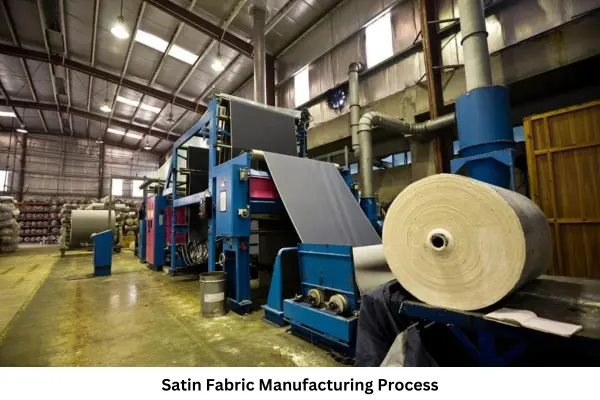
The satin manufacturing process typically follows a linear, industrial sequence:
- Fiber preparation (polyester, rayon, acetate, nylon, or silk)
- Yarn spinning or filament extrusion
- Loom setup with satin weave parameters
- Weaving under controlled tension
- Dyeing, finishing, and surface treatments
Once yarn is available, the entire process is factory-driven. Production can be scheduled, paused, accelerated, or scaled based on demand signals.
| Satin Manufacturing Feature | Reality |
|---|---|
| Production trigger | Demand-based |
| Cycle control | High |
| Automation level | High |
| Output consistency | Stable |
| Scaling speed | Fast |
From a manufacturing standpoint, satin behaves like a modern industrial product. If a buyer increases an order, capacity can often be added by allocating more loom hours or shifting production to parallel facilities. Lead times are measured in days or weeks, not seasons.
This predictability is one of satin’s strongest commercial advantages.
Why satin manufacturing is highly scalable
Satin weaving relies on standardized machinery—rapier looms, air-jet looms, or projectile looms—that operate continuously. Yarn quality can be tightly controlled through industrial spinning or extrusion. Process parameters such as tension, density, and float ratio are programmable and repeatable.
Because of this:
- Batch-to-batch variation is relatively low
- Defects can be detected and corrected quickly
- Waste is easier to quantify and reduce
In operational terms, satin manufacturing aligns well with modern supply chains that demand speed, consistency, and forecasting accuracy.
Silk manufacturing: a biological supply chain
Silk production begins far outside the factory. It starts with sericulture, the cultivation of silkworms that feed on mulberry leaves. This biological dependency introduces variability that no amount of industrial optimization can fully eliminate.
The silk manufacturing chain includes:
- Mulberry cultivation
- Silkworm breeding and feeding
- Cocoon formation and harvesting
- Degumming (removal of sericin)
- Filament reeling from cocoons
- Yarn twisting and preparation
- Weaving into fabric
Each step is sensitive to climate, seasonality, labor skill, and biological health.
| Silk Manufacturing Feature | Reality |
|---|---|
| Production trigger | Seasonal |
| Cycle control | Low |
| Automation level | Limited |
| Output variability | High |
| Scaling speed | Slow |
Unlike satin, silk cannot be “ramped up” on demand. Cocoon yields depend on weather, disease control, and farming conditions. Even with modern techniques, silk remains partially constrained by nature.
Biological constraints and variability
Silk filaments are natural protein fibers. Their thickness, length, and strength vary depending on silkworm genetics and environmental conditions. While skilled processors can blend and grade silk to improve consistency, complete uniformity is impossible.
This variability affects:
- Yarn evenness
- Dye uptake
- Fabric luster
- Mechanical performance
From a manufacturing perspective, silk introduces uncertainty at every upstream stage. Factories can refine processes, but they cannot override biological limits.
Degumming and chemical complexity
Before silk can be woven, raw filaments must undergo degumming to remove sericin, the natural gum that binds fibers in the cocoon. Degumming is a delicate balance:
- Under-degumming leaves stiffness and uneven dyeing
- Over-degumming weakens fibers and reduces durability
This step adds chemical processing and water use, increasing both cost and environmental impact. Unlike satin made from synthetic fibers, where polymer properties are fixed, silk quality is heavily influenced by this early chemical intervention.
Manufacturing timelines: speed versus patience
One of the clearest differences between satin and silk lies in time.
Satin production timelines are short and predictable. Once yarn inventory exists, fabric can be woven, dyed, and finished rapidly. This allows brands to respond to trends, replenish inventory, or adjust designs late in the development cycle.
Silk production timelines are long and inflexible. Mulberry cultivation and silkworm growth cannot be rushed. If demand spikes unexpectedly, supply cannot respond immediately. Lead times are often measured in months, not weeks.
This temporal difference has real commercial consequences, especially for fast-moving or seasonal fashion programs.
Cost structure and risk exposure
Satin manufacturing costs are largely variable and controllable. Raw material prices fluctuate, but production efficiency can be improved through scale and automation. Financial risk is concentrated downstream, where it can be managed with forecasting and inventory control.
Silk manufacturing costs are front-loaded and less flexible. Agricultural risk, labor intensity, and yield uncertainty increase exposure. If a silk batch fails quality standards, losses are harder to recover because upstream inputs cannot be easily reused.
From a risk-management perspective, satin behaves like an industrial input, while silk behaves more like an agricultural commodity.
Why this difference matters for sustainability
Sustainability discussions often frame silk as “natural” and satin—especially polyester satin—as “industrial.” This framing is emotionally compelling but operationally incomplete.
Industrial systems can be optimized. Energy use, water consumption, chemical recovery, and waste reduction can be engineered and improved year over year. Polyester satin, for example, can incorporate recycled feedstocks, closed-loop dyeing, and low-impact finishes at scale.
Biological systems can be improved, but not accelerated beyond natural limits. Silk farming can reduce pesticide use or improve animal welfare, but it cannot escape seasonality, land use, or labor intensity.
This creates a paradox: silk may feel inherently sustainable, yet its supply chain is harder to standardize and optimize. Satin may feel artificial, yet its manufacturing footprint can often be measured and reduced more precisely.
Consistency versus narrative value
From a branding perspective, silk carries strong narrative value. Its history, natural origin, and artisanal associations resonate with consumers. Satin, especially synthetic satin, is often evaluated more pragmatically—by performance, price, and reliability.
From a manufacturing perspective, however, consistency often outweighs narrative. Satin’s repeatability supports quality control, while silk’s variability demands tolerance and expertise.
The “better” choice depends not on ideology, but on use case and expectations.
Application-driven material logic
Because of these manufacturing differences, satin and silk tend to serve different roles—even when they appear similar.
- Satin is favored where volume, consistency, and speed are critical
- Silk is favored where sensory experience and storytelling are central
In many professional products, the two coexist. A garment may use silk satin on visible surfaces and polyester satin for linings or structural layers. This hybrid approach reflects an understanding of manufacturing realities rather than a compromise on quality.
A practical manufacturing insight
At SzoneierFabrics, when clients ask, “Which is more sustainable—satin or silk?”, the real answer rarely starts with fiber chemistry. It starts with operational questions:
How fast do you need it? How consistent does it need to be? How much variability can your production tolerate?
If a project requires tight color control, repeatable performance, and rapid replenishment, satin’s industrial logic usually prevails. If the project prioritizes heritage, tactile nuance, and exclusivity, silk’s biological origin may justify its complexity.
Long-term supply chain implications
Choosing satin or silk is not just a material decision; it is a supply chain commitment. Satin aligns with modern, data-driven manufacturing models. Silk aligns with slower, more artisanal systems that require patience and expertise.
Neither is inherently superior. They simply operate under different rules.
Understanding these rules allows designers, buyers, and manufacturers to make informed decisions—avoiding mismatched expectations and costly surprises later in production.
The fundamental difference between satin and silk is not luxury level, softness, or appearance. It is manufacturing logic.
Satin is a weave-defined fabric produced through controlled, scalable industrial processes. Silk is a fiber defined by biological production, dependent on agriculture, seasonality, and manual intervention. This distinction determines speed, consistency, scalability, cost control, and sustainability options.
When evaluated through a manufacturing lens rather than a marketing one, satin and silk are not substitutes. They are tools—each suited to different priorities, timelines, and risk profiles.
Choosing correctly begins not with the question “Which is better?”, but with a clearer one: Which production system fits your reality?
How Do Production Time and Lead Times Compare Between Satin and Silk?
Production time and lead time differences between satin and silk are not marginal—they are structural. Satin fabrics, especially polyester or nylon-based satins, operate within an industrial supply chain that is continuous, scalable, and largely predictable. Silk, by contrast, is constrained by biological cycles, agricultural risk, and limited upstream capacity. These constraints shape not only delivery schedules, but also cost control, inventory strategy, and sustainability outcomes.
For brands and manufacturers, lead time is not just a logistics metric. It directly affects sampling strategy, minimum order decisions, cash flow exposure, and the risk of obsolete inventory. When comparing satin and silk, the timeline differences explain why many brands make material decisions based on time control, even when cost or aesthetics are secondary.
Understanding where lead time actually comes from
At a high level, both satin and silk fabrics go through similar downstream stages—yarn preparation, weaving, dyeing, and finishing. The critical difference lies upstream, before weaving ever begins.
Satin is a weave structure that can be produced using readily available filament yarns (polyester, nylon, acetate). Silk, however, is both a fiber and a fabric category that depends on a biological raw material: silkworm cocoons.
This distinction creates a fundamental divergence in production timelines.
Breaking down real production timelines
A stage-by-stage comparison highlights how early constraints compound over time.
Typical lead time comparison
| Stage | Satin | Silk |
|---|---|---|
| Raw material availability | Immediate | Seasonal |
| Yarn preparation | Days | Weeks |
| Weaving | Days | Days |
| Dyeing & finishing | Days | Days |
| Total cycle | 2–4 weeks | 2–6 months |
While weaving and finishing times may appear similar on paper, silk’s lead time is front-loaded. Delays occur before the mill can even begin yarn preparation.
Raw material availability: continuous vs seasonal supply
Satin yarns are typically produced from petrochemical or regenerated sources with year-round availability. Polyester and nylon filament yarns are manufactured continuously, stocked globally, and offered in standardized specifications.
As a result:
- Yarn can be sourced immediately
- Production planning can begin without delay
- Large or small batches are equally feasible
Silk raw material availability is entirely different. Cocoons are harvested in defined seasons, often once or twice per year depending on region. Once that window closes, supply is fixed until the next cycle.
Key implications include:
- Limited availability outside harvest periods
- Competition among buyers for premium cocoon grades
- Price volatility based on harvest yield
If demand exceeds expectations or a harvest underperforms, lead times extend automatically, regardless of downstream capacity.
Yarn preparation: industrial spinning vs biological processing
Satin yarn preparation is a purely industrial process. Filament yarns are extruded, drawn, and textured using automated equipment. Lead times are measured in days, and output can be scaled quickly.
Silk yarn preparation involves multiple labor-intensive steps:
- Cocoon sorting and grading
- Degumming to remove sericin
- Reeling filaments into raw silk
- Throwing and twisting to required counts
Each step depends on skilled labor and careful handling to avoid filament breakage. This process alone can add several weeks before weaving begins.
Any disruption—labor shortages, quality rejections, or export delays—extends the timeline further.
Weaving: similar speed, different constraints
Once yarns are ready, weaving times for satin and silk are often comparable in theory. Both can be woven on modern looms at similar speeds.
In practice, silk weaving introduces additional constraints:
- Lower loom efficiency due to yarn sensitivity
- Higher defect rates requiring slower speeds
- Increased inspection and correction time
Satin weaving benefits from:
- Higher yarn strength
- Greater tolerance to tension variation
- Faster setup and changeover
As a result, even when loom time is similar, effective output per day is usually higher for satin.
Dyeing and finishing: similar duration, different risk
Dyeing and finishing stages typically take similar calendar time for both fabrics. However, silk carries higher process risk.
Silk dyeing requires:
- Tighter temperature and pH control
- Longer stabilization and drying times
- Higher rejection risk if shade or hand feel is off
Failures at this stage are costly because the entire upstream timeline must often be repeated. Satin dyeing, especially with disperse dyes, is more forgiving and easier to correct.
This difference affects lead time reliability more than average duration.
Predictability vs uncertainty
One of the most important distinctions between satin and silk is not average lead time, but variance.
Satin lead times are predictable because:
- Raw materials are stocked
- Production is modular and scalable
- Alternative suppliers are readily available
Silk lead times fluctuate due to:
- Climate variability affecting silkworm health
- Disease outbreaks reducing cocoon yield
- Regional labor availability
- Export and regulatory constraints
Even experienced silk suppliers often quote wide lead time ranges to account for uncertainty. For brands working on fixed retail calendars, this unpredictability introduces planning risk.
Seasonality and cascading delays
Silk’s dependence on agriculture creates cascading effects throughout the supply chain.
Silk cocoon supply depends on:
- Climate stability
- Disease control
- Labor availability
- Harvest timing
A disruption at any of these points delays not just one order, but all downstream commitments relying on that harvest.
Satin production, by contrast, is largely decoupled from seasons. Yarn plants, weaving mills, and dye houses operate year-round with stable throughput.
Impact on sampling and development timelines
Lead time differences affect not only bulk production, but also sampling and design iteration.
With satin:
- Sampling can begin immediately
- Multiple iterations are feasible within weeks
- Design approval cycles are short
With silk:
- Sampling may be delayed waiting for yarn
- Each iteration is costly and time-consuming
- Designers are pressured to limit revisions
This often results in fewer creative iterations for silk programs, not because designers want fewer options, but because time constraints force early decisions.
Lead time impact on sustainability
Time is increasingly recognized as a sustainability variable, not just an operational one.
Longer lead times often result in:
- Overproduction “just in case”
- Larger minimum orders to secure supply
- Excess inventory held for long periods
- Higher energy use for storage and climate control
- Increased waste if trends shift before sale
Shorter lead times allow:
- Better demand matching
- Smaller, more frequent production runs
- Faster response to sales data
- Reduced unsold stock
In this sense, speed can directly support sustainability by reducing systemic waste.
Inventory risk and financial exposure
Silk’s long and uncertain lead times encourage conservative planning behavior. Brands often over-order to avoid stockouts, tying up capital in inventory months before sales begin.
This creates:
- Higher working capital requirements
- Increased markdown risk
- Greater exposure to trend shifts
Satin’s shorter lead times allow brands to:
- Commit closer to selling season
- Adjust volumes based on early demand signals
- Reduce inventory carrying costs
These financial effects often outweigh differences in raw material cost when evaluating overall program profitability.
Real-world example: lead time driving material choice
A European home-textile brand initially relied on silk satin for premium bedding collections. While customer response was positive, the six-month silk lead time forced the brand to place large orders far in advance.
As a result:
- Demand forecasts were conservative
- Overstock became frequent
- Unsold inventory increased year over year
After switching to high-quality polyester satin, the brand reduced lead times to under one month. This allowed smaller batch ordering and mid-season replenishment. Within one year, fabric waste dropped by over 20%, despite maintaining similar visual and tactile standards.
The decision was driven by time control, not cost reduction.
Lead time as a strategic lever
In modern manufacturing, lead time determines more than delivery date. It shapes:
- Design flexibility
- Sustainability outcomes
- Inventory strategy
- Cash flow efficiency
Silk’s timeline is dictated by natural cycles and upstream constraints that cannot be compressed beyond a point. Satin’s timeline is dictated by planning, capacity allocation, and process discipline.
When silk’s long lead time still makes sense
Despite its disadvantages, silk’s extended lead time is sometimes acceptable or even desirable.
Silk programs may justify longer timelines when:
- Volumes are limited and predictable
- The product is seasonless or evergreen
- Brand storytelling prioritizes heritage and rarity
- Inventory risk is low
In these cases, silk’s biological origin becomes part of the value proposition rather than a constraint.
The difference between satin and silk lead times is not simply measured in weeks or months—it reflects two fundamentally different supply chain models.
Silk production is governed by nature, agriculture, and limited upstream flexibility. Satin production is governed by industrial planning and scalable capacity.
In today’s market, where speed, adaptability, and waste reduction matter as much as aesthetics, control over time often equals control over impact. For many brands, the ability to respond quickly and responsibly has become as valuable as the fabric itself.
Which Silk Production Processes Have the Greatest Sustainability Impact?
Silk is widely perceived as a “natural” and therefore sustainable fiber. In reality, silk’s environmental footprint is highly process-dependent. While the raw material originates from silkworms rather than petrochemicals, the resource intensity of silk production—from farming to finishing—means its sustainability profile varies dramatically across regions, scales, and production models.
The greatest environmental impacts in silk manufacturing do not come from weaving or garment construction. They originate earlier, in sericulture (silkworm farming), degumming, dyeing, and wastewater handling, and later in the fragmented global logistics that connect these stages. Understanding where the real footprint comes from allows brands, designers, and manufacturers to make more informed sourcing and material decisions.
“Natural” does not automatically mean “low impact.” In silk, how it is produced matters more than what it is made from.
Where Silk’s Footprint Actually Comes From
Silk’s lifecycle is long and multi-stage. Each stage contributes a different type of environmental pressure—land, water, energy, chemicals, or emissions. Unlike industrial fibers with centralized production, silk relies on distributed, labor-intensive systems, which makes sustainability harder to standardize.
Sericulture: Land, Feed, and Time
Silk production begins with mulberry cultivation and silkworm farming. This stage sets the baseline environmental cost for every kilogram of silk produced.
| Resource Input | Impact |
|---|---|
| Land use | Dedicated mulberry fields |
| Water | Irrigation for mulberry trees |
| Time | 25–30 days per silkworm cycle |
| Yield efficiency | Low (many cocoons per kg fiber) |
Mulberry trees require arable land that could otherwise support food crops or natural ecosystems. While mulberry is perennial and can improve soil stability, large-scale monoculture plantations reduce biodiversity and increase vulnerability to pests and disease.
Water use is another critical factor. In regions without sufficient rainfall, mulberry cultivation depends on irrigation, adding pressure to local water resources. Compared to fibers like hemp or flax, silk delivers lower fiber yield per hectare, meaning more land and water are required for the same textile output.
Time is also an environmental variable. A full silkworm cycle takes roughly 25–30 days, and production cannot be easily accelerated without compromising yield or cocoon quality. This biological constraint limits scalability and encourages geographically dispersed farming, which later increases transportation emissions.
Degumming: The Most Overlooked Step

Degumming is the single most chemically and energetically intensive stage in silk processing, yet it is often overlooked in sustainability discussions. Raw silk contains up to 20–30% sericin, a protein that must be removed to achieve softness, luster, and dye receptivity.
| Degumming Aspect | Sustainability Impact |
|---|---|
| Hot water use | High |
| Alkali / soap use | Medium–high |
| Energy demand | High (boiling cycles) |
| Wastewater load | High protein content |
Traditional degumming relies on boiling silk in alkaline solutions or soaps. This process consumes large volumes of hot water and energy, especially when repeated multiple times to achieve uniform results. The wastewater produced contains high biological oxygen demand (BOD) due to dissolved sericin and residual chemicals.
Treating degumming wastewater is technically challenging. Protein-rich effluent varies significantly between batches, making it difficult to stabilize treatment systems. In regions without advanced wastewater infrastructure, this step becomes a major source of water pollution.
More sustainable alternatives—such as enzyme-based or low-temperature degumming—exist, but they require tighter process control, higher upfront cost, and longer processing times. As a result, adoption remains inconsistent across the industry.
Dyeing Silk: Beautiful but Fragile
Silk’s ability to absorb dye and produce deep, luminous colors is one of its greatest aesthetic strengths. From a sustainability perspective, however, dyeing silk is inefficient and risk-prone.
| Factor | Consequence |
|---|---|
| Lower dye temperatures | Longer processing time |
| Fiber sensitivity | Higher rework risk |
| Color inconsistency | Increased rejects |
Silk is sensitive to heat, pH, and mechanical stress. Dyeing must be done at relatively low temperatures and under carefully controlled conditions, extending process time and energy use. Even small deviations can cause uneven shades, fiber damage, or loss of sheen.
The result is a higher rate of re-dyeing, correction, or outright rejection compared to more robust fibers such as polyester. Each rejected batch multiplies water use, chemical consumption, and energy demand, amplifying silk’s environmental footprint.
This fragility also limits the effectiveness of water-saving measures such as aggressive liquor ratio reduction, which are common in other textile dyeing processes.
Finishing and Reprocessing Losses
Beyond dyeing, silk often undergoes additional finishing steps—softening, calendaring, or luster enhancement. While these processes are less impactful individually, their cumulative effect is significant when combined with earlier inefficiencies.
Silk’s sensitivity means that finishing mistakes are costly. Damaged fabric cannot easily be downcycled into lower-grade textiles, increasing material loss. In contrast, many plant fibers and synthetics can tolerate reprocessing or mechanical recycling more readily.
Transportation Footprint: A Fragmented Supply Chain
Silk supply chains are among the most geographically fragmented in the textile industry. A typical silk product may pass through multiple locations:
- Rural farming regions for sericulture
- Regional centers for cocoon reeling
- Separate facilities for degumming
- Urban mills for weaving and finishing
- International logistics to garment factories and markets
Each transition adds transportation emissions. Because silk production is often tied to specific climatic and cultural regions, consolidation is difficult. Even when individual stages are managed responsibly, the cumulative logistics footprint remains high.
Air freight is sometimes used for high-value silk orders, further increasing emissions per kilogram compared to bulk commodity fibers.
Scale vs. Control: A Core Sustainability Tension
Silk can be produced responsibly—but doing so requires tight control at every stage:
- Integrated sericulture and processing
- Closed-loop water systems for degumming and dyeing
- Advanced wastewater treatment
- Acceptance of smaller batch sizes and higher costs
At small scale, artisanal or vertically integrated producers can maintain these controls. At industrial scale, consistency becomes much harder. Variability in cocoon quality, water chemistry, energy sources, and regulatory enforcement leads to uneven environmental outcomes.
This creates a paradox: as silk demand increases, maintaining best-in-class sustainability practices becomes more challenging rather than easier.
Comparative Perspective: Why Silk’s Impact Is Often Underestimated
Silk’s environmental footprint is frequently underestimated because it lacks obvious red flags such as fossil fuel origin. However, when evaluated per kilogram of finished fabric, silk often shows higher water and energy intensity than many modern alternatives.
The key difference is visibility. Silk’s impacts are dispersed across rural agriculture, small processing units, and wastewater systems that are less transparent than centralized industrial plants.
Strategic Implications for Brands and Designers
For brands positioning silk as a sustainable luxury material, transparency is essential. Sustainability claims should focus on specific practices, not the fiber name alone.
Responsible silk sourcing typically involves:
- Traceable sericulture with land and water management controls
- Low-impact or enzymatic degumming
- Proven wastewater treatment at processing mills
- Realistic production volumes that avoid excessive rework
Without these measures, silk’s “natural” label risks becoming misleading.
When Silk Makes Sense from a Sustainability View
Silk remains a valuable material in contexts where its longevity, reparability, and emotional durability offset its production impact. High-quality silk garments that are worn for many years, repaired, and cared for responsibly can justify their footprint better than short-lived fashion items.
In contrast, silk used for fast-turnover products or frequent seasonal replacement represents a poor sustainability trade-off.
Silk is neither inherently sustainable nor inherently unsustainable. Its environmental impact is process-driven, scale-sensitive, and region-dependent.
The largest sustainability impacts in silk manufacturing come from:
- Land and water demands in sericulture
- Energy- and chemical-intensive degumming
- High rejection rates in dyeing and finishing
- Fragmented, emission-heavy logistics
Silk can be produced responsibly—but only with disciplined control, investment in cleaner processing, and acceptance of higher costs and smaller volumes. At scale, these conditions are difficult to maintain consistently.
For decision-makers, the takeaway is clear: sustainability in silk is not a given. It is a choice expressed through production methods, not through the fiber’s natural origin alone.
How Does Satin Manufacturing Affect Environmental Footprint and Resource Use?
Satin manufacturing has a unique position in sustainability discussions because satin is a weave structure, not a fiber. Its environmental footprint is therefore not fixed. Instead, it is shaped by fiber selection, process control, scale efficiency, and waste management systems. This makes satin one of the more controllable textiles from an environmental standpoint.
While satin made from silk, polyester, rayon, or acetate raises very different sustainability questions, modern industrial satin production—especially for polyester-based systems—offers predictability and optimization potential that are difficult to achieve in biological fiber systems. In sustainability terms, control matters as much as material origin.
Understanding Satin’s Environmental Levers
Environmental impact in textile manufacturing is rarely driven by a single factor. In satin production, impact is governed by a set of interrelated levers:
- Fiber chemistry and origin
- Energy intensity per meter
- Water consumption and reuse
- Process stability and defect rate
- Speed of production and inventory turnover
Because satin weaving and finishing are highly standardized, these levers can be adjusted with precision. This contrasts with natural-fiber systems where variability in crops, climate, and biological processing often introduces uncontrollable inefficiencies.
Fiber Choice Defines the Majority of Impact
Satin itself is neutral. The fiber used to create the satin structure determines most of the environmental footprint.
| Satin Fiber | Environmental Profile |
|---|---|
| Polyester satin | High energy, low water |
| Recycled polyester satin | Lower carbon footprint |
| Rayon satin | High water, renewable source |
| Acetate satin | Medium chemical intensity |
Polyester satin relies on petrochemical feedstocks and has higher embodied energy, but its water consumption is relatively low and highly controllable. Modern polyester facilities often operate with closed-loop systems that sharply reduce wastewater discharge.
Recycled polyester satin significantly improves the carbon profile by reusing post-consumer or post-industrial plastics. While energy input remains necessary, lifecycle emissions per kilogram are substantially reduced compared to virgin polyester.
Rayon satin benefits from renewable cellulose sources, but its environmental cost is heavily influenced by water use, chemical recovery, and effluent management. Well-managed rayon systems can perform responsibly, while poorly controlled ones can be highly polluting.
Acetate satin occupies a middle ground. It uses cellulose derivatives but requires chemical processing. Its footprint depends on solvent recovery rates and waste handling practices.
This diversity allows brands to tune sustainability outcomes rather than treating satin as a fixed environmental liability.
Weaving Efficiency and Energy Stability
Satin weaving is among the most automated fabric construction processes in modern textiles. High-speed looms, digital tension control, and standardized yarn inputs create a manufacturing environment with low variability and predictable energy use.
| Factor | Impact |
|---|---|
| Energy per meter | Consistent |
| Defect rate | Low |
| Rework waste | Minimal |
Because satin is widely produced for linings, fashion, and decorative textiles, factories often operate at optimized load levels. This reduces energy spikes, idle machinery losses, and stop-start inefficiencies that raise emissions in smaller or more variable production systems.
Low defect rates also matter environmentally. Every rejected meter represents wasted fiber, wasted energy, and additional reprocessing. Satin’s stable weaving behavior helps keep this waste low.
Dyeing and Finishing: Where Sustainability Is Won or Lost
In satin production, dyeing and finishing typically account for the largest share of water and energy use. This is also where modern process improvements have delivered the greatest gains.
Contemporary satin facilities increasingly rely on:
- Low-liquor-ratio dyeing systems
- Heat recovery from exhaust and wastewater
- Closed-loop water treatment and reuse
- Automated dosing to reduce chemical overuse
| Metric | Satin Advantage |
|---|---|
| Water reuse | High |
| Color yield | High |
| Batch consistency | Stable |
Satin’s smooth surface and uniform yarn exposure lead to high dye uptake efficiency, meaning less dye is required to achieve target shade depth. This reduces both chemical input and downstream treatment load.
Batch consistency further reduces waste. When color variation is minimized, re-dyeing and corrective finishing—which significantly increase environmental burden—become rare rather than routine.
Process Control vs Biological Variability
One of the less discussed sustainability advantages of satin manufacturing is process predictability. Synthetic and regenerated fiber systems allow manufacturers to engineer outcomes with precision.
In contrast, biological fibers such as silk depend on:
- Agricultural conditions
- Seasonal variation
- Biological growth cycles
- Labor-intensive extraction processes
These variables often limit the effectiveness of recycling, automation, and energy recovery systems. While silk has cultural and aesthetic value, its environmental footprint is far harder to standardize or optimize at scale.
Control enables optimization. Satin manufacturing benefits from this principle.
Waste Reduction Through Speed and Responsiveness
Environmental impact is not limited to factory emissions. Overproduction and unsold inventory represent some of the largest hidden sustainability costs in fashion and home textiles.
Satin production typically features:
- Shorter lead times
- Faster color matching
- Easier reordering
- More predictable yield
This speed allows brands to place smaller, more frequent orders instead of large speculative runs. As a result, fewer meters sit unused in warehouses or are discarded due to trend shifts.
In practice, satin systems often generate less total waste across the value chain than slower natural-fiber programs, even if their per-meter energy footprint is higher.
Lifecycle Efficiency vs Raw Material Origin
Sustainability discussions often focus narrowly on raw material origin. However, lifecycle efficiency frequently matters more.
A satin fabric that:
- Maintains appearance after repeated laundering
- Requires less replacement
- Produces fewer defects
can outperform a poorly managed natural fiber fabric in overall environmental impact.
Durability, consistency, and predictability reduce the need for replacement production, which multiplies upstream resource use. Satin’s performance stability therefore plays an indirect but important role in footprint reduction.
Chemical Management and Regulatory Compliance
Modern satin production benefits from tighter chemical control frameworks, particularly in large-scale facilities serving international markets.
Key advantages include:
- Standardized chemical inventories
- Automated dosing systems
- Easier compliance with REACH and similar regulations
- Better wastewater treatment integration
These systems are more difficult to implement consistently in decentralized, small-scale biological fiber production.
A Balanced View on Satin Sustainability
Satin manufactured irresponsibly—without wastewater treatment, energy recovery, or chemical control—can have a significant environmental impact. This is especially true for low-cost, poorly regulated production.
However, satin produced with modern industrial controls can outperform poorly managed natural fibers on many sustainability metrics, including:
- Water use per meter
- Waste generation
- Batch rejection rates
- Product lifespan
The critical question is not what the fabric is, but how it is produced.
Strategic Takeaway for Brands and Manufacturers
Satin manufacturing offers something rare in textiles: environmental controllability. By selecting appropriate fibers, investing in efficient dyeing systems, and managing production scale intelligently, manufacturers can significantly reduce resource use without sacrificing performance or aesthetics.
For brands, this means sustainability targets can be addressed through engineering decisions, not just material substitution. Satin allows for measurable, auditable improvements that are difficult to achieve in less predictable systems.
Ultimately, satin’s environmental footprint is not predetermined. It is the outcome of choices—choices that, when made deliberately, allow satin to function as a high-performance, resource-efficient textile in modern production ecosystems.
What Are the Key Cost Drivers in Satin vs Silk Production?
The cost difference between satin and silk is not accidental, nor is it primarily driven by branding or perceived luxury. It is rooted in fundamentally different cost structures. Silk production costs are dominated by biological inputs, labor intensity, yield loss, and long, inflexible production cycles. Satin production costs, by contrast, are driven by energy consumption, raw fiber pricing, and how efficiently industrial processes are managed.
These two cost models behave very differently under market pressure. One is biologically constrained and difficult to optimize; the other is industrially engineered and continuously adjustable. Understanding where the money actually goes explains not only why silk remains expensive, but also why satin can often achieve better cost control and, paradoxically, more practical sustainability outcomes at scale.
Cost is not just a financial issue. It directly shapes production decisions, environmental investment, and long-term supply chain resilience.
Where the money actually goes
At a high level, satin and silk incur costs in very different phases of production. Satin’s costs concentrate inside the factory. Silk’s costs accumulate long before weaving begins.
Cost structure comparison
| Cost Component | Satin Manufacturing | Silk Manufacturing |
|---|---|---|
| Raw material | Industrial fiber pricing | Agricultural yield-based |
| Labor | Moderate, automated | High, manual |
| Energy | High but efficient | Medium but prolonged |
| Waste rate | Low | Medium–high |
| Inventory risk | Low | High |
This table illustrates a critical point: silk’s costs are front-loaded, while satin’s costs are distributed across controllable industrial stages.
Raw material economics: industrial input vs agricultural yield
Satin can be woven from polyester, nylon, acetate, rayon, or silk yarns. In most commercial contexts, polyester satin dominates because polyester filament pricing is relatively stable, globally traded, and scalable. Raw material cost is influenced by oil prices and polymer demand, but it remains predictable and hedgeable.
Silk raw material costs, however, depend on agricultural output. Cocoon prices fluctuate based on:
- Climate and weather conditions
- Disease outbreaks in silkworm populations
- Labor availability in rural areas
- Seasonal harvest windows
Unlike synthetic fibers, silk cannot be stockpiled easily at the raw stage without quality degradation. This means producers are exposed to price volatility and supply shocks that cannot be smoothed out through inventory planning.
From a cost perspective, this makes silk inherently less stable.
Labor intensity: automation versus manual skill
Labor is one of the largest cost differentiators between satin and silk.
Silk production relies heavily on manual labor for:
- Cocoon harvesting
- Filament reeling
- Yarn sorting and grading
- Handling during degumming
These steps require skill and experience, but they are difficult to automate fully. As labor costs rise globally, silk production becomes increasingly expensive, especially in regions where rural labor pools are shrinking.
Satin production, by contrast, is highly automated once fiber is spun or extruded. Modern looms, dyeing lines, and finishing equipment can run continuously with limited operator intervention. Labor costs are spread across high output volumes, reducing per-meter impact.
While labor itself is not environmentally negative, manual intensity limits scalability and consistency, which in turn raises rejection rates and waste.
Energy consumption: efficient intensity vs prolonged exposure
Satin manufacturing is energy-intensive, particularly during:
- Yarn extrusion or spinning
- Weaving
- High-temperature dyeing and finishing
However, these processes are time-efficient. Machines operate at high throughput, and energy use per meter can be measured, optimized, and reduced through better equipment and scheduling.
Silk production uses less energy per hour, but over much longer timeframes. Mulberry cultivation, cocoon growth, drying, degumming, and reeling stretch across weeks or months. While individual steps may not be energy-heavy, the cumulative energy footprint is significant and harder to optimize because it is distributed across agricultural and semi-industrial stages.
This difference matters because energy efficiency investments—such as heat recovery, closed-loop systems, or renewable power—are easier to implement and justify in centralized industrial settings like satin factories.
Waste rate: controllable loss vs structural loss
Waste is a hidden but powerful cost driver, especially in silk production.
Silk loses material at multiple stages before fabric even exists:
| Stage | Typical Loss |
|---|---|
| Cocoon reeling | 10–15% |
| Degumming | 20–25% |
| Dyeing defects | 5–10% |
Each percentage point of loss increases the resource footprint per usable meter of silk fabric. By the time finished silk reaches the loom, a substantial portion of the original biological input has already been discarded or downgraded.
Satin production typically exhibits much lower waste rates. Yarn quality is standardized, weaving defects can be detected early, and off-spec fabric can often be recycled or downgraded with minimal loss. Waste is measurable and manageable, which directly lowers cost pressure.
Inventory risk and capital lock-up
Silk carries a high inventory risk because production is seasonal and slow. Producers must often commit capital months in advance without certainty of final yield or quality. If demand shifts or quality issues arise, recovery options are limited.
Satin production is demand-driven. Manufacturers can align yarn procurement, loom scheduling, and finishing with confirmed orders. Inventory turnover is faster, and capital exposure is lower.
This difference affects not only cost, but also financial resilience. Fabrics with high inventory risk tend to discourage long-term sustainability investment because cash flow is already constrained.
Labor intensity and sustainability trade-offs
Silk’s reliance on manual labor introduces another layer of complexity. While artisanal labor is often viewed positively, it also reduces consistency. Inconsistent output leads to higher rejection rates, which increases both cost and environmental footprint.
Satin’s automation allows:
- Tighter quality control
- Predictable output
- Lower discard rates
Consistency is a sustainability advantage that is often overlooked. A fabric that can be produced right the first time generates less waste, regardless of whether it is “natural” or synthetic.
Yield loss: the hidden multiplier
Yield loss is one of the most underestimated cost drivers in silk production. Every stage of loss compounds the next. For example, a 20% loss at degumming does not just reduce output—it increases the effective cost of all upstream inputs.
By contrast, satin production losses tend to be linear and correctable. If a batch shows defects, parameters can be adjusted quickly, and the impact is localized rather than systemic.
From a cost-engineering perspective, predictable yield is as important as low raw material cost.
Cost pressure and environmental shortcuts
An uncomfortable reality in textile manufacturing is that high cost pressure often leads to environmental compromise.
When silk prices rise sharply, some producers respond by cutting corners:
- Reducing wastewater treatment rigor
- Extending equipment life beyond optimal efficiency
- Relaxing reject thresholds to ship marginal fabric
These decisions are rarely ideological; they are survival responses to squeezed margins. Ironically, the more expensive silk becomes, the greater the risk that its environmental footprint worsens at the margins.
Satin producers, operating with more stable margins, are better positioned to absorb the cost of:
- Advanced effluent treatment
- Energy-efficient machinery
- Process audits and certifications
Satin’s cost advantage enables reinvestment
One of the least discussed sustainability advantages of satin is economic headroom. Because costs are more controllable, manufacturers can reinvest in cleaner technology without threatening viability.
This reinvestment may include:
- Water recycling systems
- Low-liquor-ratio dyeing
- Recycled or bio-based fibers
- Continuous efficiency upgrades
In contrast, silk producers often operate under tighter financial constraints, limiting their ability to modernize infrastructure even when environmental intent exists.
Cost structures shape sustainability outcomes
Sustainability is often discussed in terms of material origin, but cost structure determines behavior. A fabric that is economically fragile is also environmentally fragile. When margins are thin and unpredictable, sustainability becomes aspirational rather than operational.
Satin’s industrial model supports continuous improvement. Silk’s biological model supports heritage and craftsmanship but struggles with scalability and optimization.
Neither model is inherently good or bad—but they respond differently to cost pressure.
Strategic material selection in real production
In practice, many professional products combine both materials strategically. Designers may use silk where sensory value is critical and satin where structure, consistency, or cost control matter more.
This hybrid logic reflects a mature understanding of cost drivers rather than a compromise on quality.
Long-term cost resilience
As energy, labor, and compliance costs continue to rise globally, fabrics with engineerable cost structures will become easier to sustain responsibly. Satin fits this profile. Silk will likely remain a premium, limited-volume material whose cost reflects its biological constraints.
Understanding these dynamics helps brands avoid unrealistic expectations and align product strategy with supply chain reality.
Silk is expensive because it is biologically constrained, labor-intensive, and yield-sensitive. Satin is affordable and optimizable because it is industrial, scalable, and process-driven.
Neither fabric’s cost profile is accidental. Each reflects the system that produces it.
A fabric that is economically fragile is also environmentally fragile. Sustainable production is not just about choosing the “right” material—it is about choosing a material whose cost structure allows responsibility to be maintained under pressure.
Are There Certifications or Standards That Reflect Sustainability in Satin and Silk?
Yes, there are sustainability-related certifications applicable to both satin and silk—but they do not automatically make a fabric sustainable. Certifications reflect how materials are sourced, processed, managed, and audited, not whether a fabric is inherently “good” or “bad” for the environment. In other words, sustainability is determined by systems and practices, not by fiber labels alone.
This distinction is especially important when comparing satin and silk. Satin is a weave structure that can be made from polyester, recycled polyester, rayon, acetate, or silk. Silk, on the other hand, is a natural protein fiber with deep cultural and historical associations with luxury and nature. Despite this perception, silk is not automatically more sustainable than satin, nor is satin inherently less sustainable. What matters is how responsibly each fabric is produced across its full lifecycle.
For brands, designers, and sourcing teams, understanding what certifications actually cover—and what they do not—is critical to making credible sustainability claims and avoiding greenwashing.
Why certifications focus on process, not fabric “virtue”
Most recognized sustainability certifications were designed to address specific risks in textile production:
- Harmful chemicals
- Excessive environmental impact
- Poor labor or management practices
- Lack of traceability
They do not rank fabrics by moral value. Instead, they verify whether defined standards are met at certain stages of production.
This is why a polyester satin fabric can be certified as environmentally responsible, while a silk fabric may fail to meet the same standard—or vice versa. Sustainability is conditional, not intrinsic.
Common certifications in satin and silk production
Different certifications address different sustainability dimensions. Understanding their scope prevents misuse or overstatement.
Common certifications in satin and silk production
| Certification | What It Covers |
|---|---|
| OEKO-TEX® Standard 100 | Chemical safety |
| GRS | Recycled content |
| FSC | Packaging, not fabric |
| ISO 14001 | Environmental management |
| GOTS | Organic fibers (limited for silk) |
Each of these certifications answers a different question, and none of them alone can validate full sustainability.
OEKO-TEX® Standard 100: chemical safety, not environmental impact
OEKO-TEX® Standard 100 is one of the most widely recognized textile certifications. It verifies that a finished fabric is free from harmful substances above regulated limits.
Key characteristics include:
- Focus on human health and chemical safety
- Testing of dyes, finishes, and auxiliaries
- Applicability to both satin and silk
OEKO-TEX certification does not evaluate:
- Carbon footprint
- Water consumption
- Farming practices
- Waste management systems
As a result, both satin and silk fabrics can achieve OEKO-TEX certification if processed responsibly. This makes OEKO-TEX a baseline safety standard, not a comprehensive sustainability guarantee.
Global Recycled Standard (GRS): relevant mainly for satin
GRS verifies the presence and traceability of recycled content, along with environmental and social criteria during processing.
GRS is especially relevant for:
- Recycled polyester satin
- Recycled nylon satin
GRS certification covers:
- Percentage of recycled input
- Chain-of-custody documentation
- Chemical restrictions
- Environmental and social compliance at certified facilities
Silk is not compatible with GRS because it is not a recycled synthetic fiber. This means satin—particularly recycled satin—has greater access to standardized sustainability certification in modern supply chains.
FSC: often misunderstood in textiles
FSC (Forest Stewardship Council) certification does not apply to fabrics themselves. It covers:
- Paper
- Cardboard
- Wood-based packaging
In textile programs, FSC certification is relevant only for:
- Hangtags
- Packaging boxes
- Paper inserts
While FSC contributes to overall product sustainability, it should never be presented as evidence that satin or silk fabric itself is sustainable. Misusing FSC in fabric claims is a common sourcing error.
ISO 14001: systems-level environmental management
ISO 14001 is a management system certification rather than a material certification. It verifies that a factory has a structured environmental management system in place.
ISO 14001 evaluates whether a company:
- Identifies environmental impacts
- Sets reduction targets
- Monitors compliance
- Continuously improves environmental performance
Both satin and silk mills can be ISO 14001 certified. However, ISO 14001 does not measure actual environmental performance outcomes—only that a system exists and is audited.
This makes ISO 14001 valuable for assessing supplier maturity, but insufficient on its own to justify product-level sustainability claims.
GOTS: strong but limited relevance for silk
GOTS (Global Organic Textile Standard) is one of the most rigorous certifications in textiles, covering organic fiber content, chemical use, and social criteria.
However, GOTS has limited applicability to silk because:
- Certified organic silk supply is extremely small
- Mulberry cultivation and silkworm rearing are difficult to standardize under organic frameworks
- Certified organic silk yarn availability is inconsistent
As a result, GOTS is far more accessible for organic cotton or linen satin blends than for pure silk fabrics. Claims such as “organic silk” should always be scrutinized carefully for certification scope and validity.
Certification accessibility by fabric type
The practical availability of certifications varies significantly between satin and silk.
Certification availability by fabric type
| Fabric | Certification Accessibility |
|---|---|
| Polyester satin | High |
| Recycled satin | Very high |
| Rayon satin | Medium |
| Silk | Limited, fragmented |
Satin made from synthetic or regenerated fibers benefits from modern, standardized certification systems. Silk, due to its agricultural and artisanal origins, often falls outside these frameworks or relies on fragmented regional standards.
This does not make silk unsustainable—but it does make verification more difficult.
The challenge of silk certification
Silk production involves:
- Mulberry cultivation
- Silkworm rearing
- Cocoon harvesting
- Degumming and reeling
- Weaving and finishing
Each step may occur in different regions, often among small-scale producers. This fragmentation creates challenges for:
- Traceability
- Consistent auditing
- Unified certification coverage
As a result, silk sustainability claims often rely on narrative assurances rather than standardized certifications. For responsible buyers, this means deeper due diligence is required.
The danger of “certificate shopping”
One of the biggest risks in sustainable sourcing is treating certificates as marketing tools rather than verification instruments.
Certificate shopping occurs when suppliers:
- Collect multiple certificates without changing operations
- Present certifications that cover only part of the process
- Use expired or narrow-scope audits
- Avoid transparency beyond logos
This practice undermines genuine sustainability efforts and exposes brands to reputational risk.
Responsible buyers look beyond logos.
What responsible buyers actually evaluate
Experienced sourcing teams assess certifications using three core questions:
- Audit frequency: How often is compliance verified?
- Scope: Which processes, facilities, and materials are covered?
- Traceability: Can specific batches be traced through production?
A certificate without traceability adds little value. A certificate without audit transparency is a red flag.
A practical sourcing approach for satin and silk
Rather than relying on fiber type or certification labels alone, experienced brands apply the same evaluation logic to both satin and silk.
A robust sourcing request typically includes:
- Certification documentation plus process explanation
- Audit reports or audit summaries
- Batch-level or lot-level traceability
- Clear definition of what the certification does and does not cover
This approach avoids false assumptions, whether the fabric is synthetic satin or natural silk.
Sustainability across the full lifecycle
True sustainability evaluation extends beyond certifications to include:
- Raw material sourcing
- Energy and water use
- Chemical management
- Waste and byproduct handling
- Lead time and overproduction risk
- End-of-life options
In some cases, responsibly produced recycled satin may have a lower overall environmental footprint than conventionally produced silk, especially when lead times, inventory waste, and energy use are considered.
Why fiber-based assumptions are risky
It is tempting to assume:
- Silk = sustainable because it is natural
- Satin = unsustainable because it is often synthetic
In reality, these assumptions are often wrong.
Natural fibers can involve:
- High water use
- Agricultural chemicals
- Energy-intensive processing
- Long, waste-prone supply chains
Synthetic fabrics can be produced with:
- Recycled inputs
- Closed-loop chemical systems
- Predictable, low-waste production
- Shorter lead times reducing overproduction
Sustainability is not about what a fabric is, but how it is made, managed, and delivered.
Using certifications correctly in communication
For brands, the correct use of certifications is as important as sourcing them.
Best practices include:
- Clearly stating what the certification covers
- Avoiding vague terms like “eco-friendly” without definition
- Matching claims to verified scope
- Educating consumers rather than oversimplifying
This applies equally to satin and silk products.
Certifications are tools, not conclusions. They provide structure and verification, but they do not replace critical thinking or lifecycle analysis.
A satin fabric with verified recycled content, controlled chemical use, and efficient production may be more sustainable than a silk fabric produced with poor traceability and high waste. Conversely, responsibly managed silk from transparent supply chains can outperform poorly controlled synthetic satin.
The determining factor is process discipline.
There are sustainability certifications relevant to both satin and silk, but none of them confer sustainability by default. Certifications reflect how a fabric is produced, not what it is made from.
Responsible sourcing focuses on:
- Verified processes
- Transparent audits
- Traceable supply chains
- Honest communication
In modern textile sourcing, sustainability is not proven by fiber mythology or certification logos alone, but by evidence of responsible lifecycle management.
How Do Waste, Water Use, and Chemical Inputs Differ in Satin vs Silk Manufacturing?
At first glance, satin and silk are often grouped together because of their smooth surface, lustrous appearance, and association with premium textiles. In manufacturing and sustainability terms, however, they behave very differently. The key distinction is not simply how much water, waste, or chemicals are used, but how predictable, controllable, and optimizable those inputs are across large-scale production.
Silk manufacturing is rooted in biological variability and multi-step wet processing, which leads to higher water use, more complex wastewater, and greater material loss. Satin manufacturing—particularly modern satin woven from polyester or controlled blends—operates within a far more standardized industrial system. This difference in variability fundamentally shapes sustainability outcomes.
Sustainability improves when variability goes down. From that perspective, satin and silk sit on very different ends of the control spectrum.
Understanding the Structural Difference Between Satin and Silk
Before comparing impacts, it is important to clarify that silk is a fiber, while satin is a weave structure. Satin can be made from silk, polyester, viscose, or blends. In practice, when comparing “satin vs silk” from a sustainability standpoint, the comparison usually refers to:
- Silk fabric produced from natural silk fiber
- Polyester or blended satin fabric produced through industrial yarn extrusion and weaving
This distinction matters because fiber origin determines upstream impacts, while weave structure influences downstream processing stability.
Silk manufacturing inherits variability from agriculture and biology. Satin manufacturing—when not based on silk—benefits from controlled polymer chemistry and mechanized processes.
Water Use Across the Manufacturing Lifecycle
Water is consumed at nearly every stage of textile production, but the distribution and intensity of water use differ sharply between satin and silk.
| Process Stage | Satin | Silk |
|---|---|---|
| Fiber preparation | Low–medium | Medium |
| Pre-treatment | Low | High (degumming) |
| Dyeing | Medium | Medium–high |
| Rinsing | Optimizable | Repeated cycles |
| Total water per meter | Lower, consistent | Higher, variable |
In satin manufacturing, especially with polyester satin, fiber preparation is largely dry. Filament spinning, drawing, and texturing use minimal water compared to agricultural fiber processing. Pre-treatment steps are limited, often involving light scouring or heat setting rather than intensive washing.
Silk manufacturing, by contrast, includes degumming, a water-intensive step required to remove sericin from raw silk. Degumming typically involves boiling silk in water with soaps or mild alkalis, often through multiple cycles to achieve uniform softness and luster. This single step can account for a substantial portion of silk’s total water footprint.
Dyeing further widens the gap. While both satin and silk require dyeing and rinsing, silk’s sensitivity to temperature, pH, and mechanical stress often necessitates longer dye cycles and repeated rinses, increasing total water use per meter.
Variability as a Water Risk Multiplier
Water use is not only about volume; it is about repeatability. Satin processes can be optimized and locked into standard recipes. Silk processes must adapt to:
- Cocoon quality variation
- Sericin content differences
- Fiber diameter inconsistency
- Seasonal and regional differences
Each adjustment increases the likelihood of additional rinses, corrections, or reprocessing, all of which consume more water. This is why silk’s water footprint is not just higher, but also less predictable.
Wastewater Complexity: What Goes Into the Water
Wastewater impact is determined by composition as much as by volume. This is where satin and silk diverge most clearly.
| Wastewater Profile | Satin | Silk |
|---|---|---|
| Organic load | Low | High (sericin proteins) |
| Chemical variability | Low | Medium |
| Treatment difficulty | Predictable | Complex |
| Batch consistency | High | Low |
Satin wastewater—particularly from polyester satin—contains relatively stable dye residues, dispersants, and finishing agents. These streams are well understood and compatible with standardized treatment systems. Chemical oxygen demand (COD) and biological oxygen demand (BOD) levels are easier to predict and manage.
Silk wastewater, especially from degumming, contains high concentrations of dissolved proteins (sericin), soaps, and alkalis. Protein-rich effluent significantly increases BOD, making biological treatment more difficult and energy-intensive. The variability of sericin content from batch to batch further complicates treatment system tuning.
As a result, silk wastewater often requires more complex, multi-stage treatment, and performance can fluctuate even in well-equipped facilities.
Chemical Inputs and Process Control
Both satin and silk require chemical inputs for scouring, dyeing, and finishing. The difference lies in range, tolerance, and cumulative exposure.
| Aspect | Satin | Silk |
|---|---|---|
| Chemical range | Narrow | Wide |
| Process tolerance | High | Low |
| Rework frequency | Low | Higher |
| Finish stability | High | Medium |
Satin manufacturing benefits from fibers with high thermal and chemical tolerance. Polyester satin can withstand higher temperatures, stronger auxiliaries, and faster processing. This allows manufacturers to use shorter, more concentrated processes with fewer corrective steps.
Silk fibers are fragile. They degrade under high heat, strong alkalis, and excessive mechanical action. To protect fiber integrity, manufacturers often use gentler chemicals over longer processing times, which increases total chemical exposure even if individual chemicals are milder.
Low tolerance also increases rework frequency. Slight shade variation or uneven handle may require re-dyeing or additional finishing, each adding another chemical cycle.
Rework as a Hidden Sustainability Cost
Rework is one of the most underestimated sustainability factors. Every additional process step multiplies water, chemical, and energy use.
In satin manufacturing, rework rates are typically low because:
- Yarn properties are consistent
- Weave density is controlled
- Dye uptake is predictable
In silk manufacturing, rework is more common due to:
- Uneven dye penetration
- Batch-to-batch fiber differences
- Sensitivity to minor process deviations
From a sustainability standpoint, the cleanest process is the one that only needs to run once. Satin has a structural advantage here.
Solid Waste and Reject Rates
Solid waste includes off-spec fabric, cutting waste, and material discarded due to defects.
| Waste Type | Satin | Silk |
|---|---|---|
| Off-spec batches | Rare | More common |
| Cutting waste | Low | Medium |
| Reprocessing need | Low | Medium–high |
Satin’s dimensional stability and uniform quality lead to higher usable yield. Fabric widths are consistent, defects are fewer, and cutting efficiency is higher. Off-spec batches are relatively rare and often salvageable.
Silk fabrics, especially those with minor dye or surface inconsistencies, frequently fall into a gray zone: not defective enough to reprocess easily, but not good enough for premium use. These “almost usable” outputs often become downgraded products or waste, representing lost resources embedded across the entire production chain.
Yield Efficiency as a Sustainability Metric
Sustainability discussions often focus on inputs, but yield efficiency is just as important. A process that uses slightly more water but produces near-zero waste may be more sustainable than one with lower inputs but higher rejection.
In this regard, satin manufacturing typically achieves higher first-pass yield. Silk manufacturing, due to variability and fragility, tends to produce a higher percentage of downgraded or rejected material.
Energy Use and Indirect Impacts
Although not always visible, energy use correlates strongly with water and chemical intensity. Heating large volumes of water for degumming and prolonged dyeing significantly increases silk’s energy footprint.
Satin manufacturing relies more on controlled thermal processes such as heat setting, which are energy-intensive but highly efficient and repeatable. Energy per meter can be optimized through continuous processes, whereas silk often requires batch operations with variable efficiency.
The Role of Scale and Automation
Satin manufacturing aligns well with large-scale automation. Processes can be standardized, monitored, and continuously improved. Automation reduces human error, further lowering waste and rework.
Silk manufacturing remains labor-intensive and fragmented. Even in modern facilities, many steps depend on skilled manual judgment. While this craftsmanship has cultural value, it introduces process variability that is difficult to eliminate at scale.
Key Sustainability Insight
The central sustainability difference between satin and silk is controllability.
Satin manufacturing offers:
- Stable inputs
- Predictable outputs
- Clear optimization levers
- Continuous improvement potential
Silk manufacturing involves:
- Biological variability
- Complex wet processing
- Difficult-to-treat wastewater
- Higher rejection and rework risk
This does not mean satin is inherently “good” and silk inherently “bad.” It means that satin manufacturing provides more practical tools for systematic waste reduction, while silk sustainability depends heavily on tight, often costly controls.
When Silk Can Compete Sustainably
Silk can approach satin in sustainability performance when:
- Degumming water is recycled in closed-loop systems
- Enzymatic or low-temperature processes are used
- Batch sizes are smaller and quality expectations are aligned
- Products are designed for long lifespan and low turnover
Without these measures, silk’s environmental burden accumulates quickly.
Strategic Implications for Brands and Manufacturers
For brands evaluating satin versus silk, sustainability decisions should consider process stability, not just fiber origin. A well-managed satin supply chain can often deliver lower water use, less waste, and more predictable environmental performance than an average silk supply chain.
For manufacturers, the lesson is equally clear: reducing variability is the fastest path to sustainability gains. Investments in process control, automation, and yield improvement often deliver greater environmental benefits than switching materials alone.
Silk manufacturing generally consumes more water and generates more complex wastewater due to degumming and fragile dyeing requirements. Satin manufacturing—especially with modern equipment—achieves lower per-meter water use, more stable chemical control, and significantly less waste.
The decisive difference is not total consumption in isolation, but how manageable that consumption is over time. Satin offers more levers for continuous improvement, while silk requires constant intervention to prevent sustainability performance from drifting.
In sustainability, consistency is power. Where processes are stable, impacts can be reduced. Where variability dominates, even good intentions struggle to scale.
What Strategies Can Brands Use to Reduce Environmental Impact in Satin and Silk Production?
Reducing environmental impact in satin and silk production is less about chasing a single “green” material and more about engineering the entire production system. Brands that achieve meaningful sustainability gains do not rely on fiber substitution alone. Instead, they focus on process discipline, specification accuracy, timing control, and manufacturer collaboration.
In both satin and silk programs, most environmental damage does not come from the fabric itself—it comes from rework, excess inventory, unnecessary sampling, and corrective processing. These inefficiencies are largely avoidable. Sustainability, in this sense, is not a marketing claim; it is an upstream design and planning decision.
Why Sustainability Must Be Designed Upstream
Once fabric enters weaving, dyeing, or finishing, environmental outcomes are already largely locked in. Water, energy, and chemical use escalate rapidly when specifications change late, batches are reworked, or inventory is overproduced.
Brands that reduce impact consistently tend to share three characteristics:
- They define requirements clearly before production begins
- They align material choice with real end-use needs
- They work with manufacturers capable of precision, not volume-only output
This applies equally to satin and silk, despite their very different fiber origins.
Choose Fibers With Intent, Not Assumptions
Fiber choice matters, but only when aligned with actual performance and lifecycle requirements. Assumptions such as “natural is always better” or “synthetic is always worse” often lead to unintended environmental consequences.
Strategic Fiber Choices for Satin
Satin is a weave structure, so its sustainability profile depends entirely on the fiber used and how it is processed.
For satin, effective strategies include:
- Recycled polyester satin to reduce carbon footprint without sacrificing durability
- Optimized GSM selection to avoid overengineering fabric weight
- Matte or controlled-gloss finishes that reduce the need for repeated calendaring or re-finishing
Over-specifying satin—using heavier weights or extreme gloss levels “just to be safe”—often increases energy use and rework without adding real customer value.
Strategic Fiber Choices for Silk
Silk carries inherent biological and labor intensity. Its impact rises sharply when production is fragmented or poorly planned.
For silk programs, brands reduce impact by:
- Sourcing from responsible sericulture systems with stable supply chains
- Planning smaller, more accurate batch sizes rather than speculative runs
- Limiting seasonal color changes, which dramatically increase dyeing waste
In silk, unnecessary variation is often the single largest driver of environmental load.
Reduce Impact Through Time and Lead-Time Control
Time is one of the most powerful—and overlooked—sustainability levers.
Shorter, predictable lead times enable brands to align production more closely with real demand. This reduces overproduction, storage losses, and end-of-season disposal.
Satin production systems often excel here. Because satin weaving and finishing are highly automated, manufacturers can respond quickly to confirmed orders, enabling:
- Demand-driven production
- Smaller inventory buffers
- Faster replenishment instead of large upfront commitments
In contrast, slower silk systems often force brands to commit earlier and in larger volumes, increasing the risk of unsold stock. From an environmental standpoint, unsold fabric is pure waste, regardless of how “natural” it is.
Specify Performance Clearly to Eliminate Waste
One of the most effective sustainability actions a brand can take costs nothing: clear specifications.
Ambiguous requirements lead to trial-and-error production, which multiplies waste before fabric ever reaches the customer.
| Specification | Impact Reduction |
|---|---|
| Target GSM | Less overproduction |
| Color tolerance | Fewer re-dyes |
| Shrinkage limits | Fewer rejects |
| Finish requirements | Reduced rework |
Clear targets allow manufacturers to hit specifications once, instead of correcting them multiple times.
For example, defining an acceptable color tolerance upfront prevents unnecessary re-dyeing. Specifying realistic shrinkage limits avoids rejecting fabric that performs adequately in real use. Each avoided correction saves water, energy, chemicals, and labor.
Avoid Over-Engineering in the Name of Quality
A common sustainability pitfall is over-engineering fabric “just in case.” This often appears as:
- Excessively tight tolerances
- Higher-than-needed fabric weight
- Multiple finishing passes for marginal visual gains
In both satin and silk, over-processing increases environmental load disproportionately to the benefit delivered. Brands that reduce impact successfully distinguish between functional requirements and habitual specifications inherited from past programs.
Quality should be engineered to purpose, not tradition.
Work With Manufacturers Who Can Customize Responsibly
Sustainability goals cannot be met without the right manufacturing partners. Factories optimized only for large volumes often generate more waste when handling small or variable orders.
Effective partners for low-impact satin and silk production typically offer:
- Low MOQ development capability
- Fast, accurate sampling
- Process transparency across weaving, dyeing, and finishing
- Quality control at each production stage, not just final inspection
These capabilities reduce the need for excessive testing, repeated sampling, and corrective reorders—each of which carries an environmental cost.
Sampling Strategy as a Sustainability Tool
Sampling is often treated as a design expense, but it is also a major sustainability driver.
Brands can reduce impact by:
- Limiting sample iterations through accurate digital development
- Approving finishes early to avoid repeat processing
- Using representative lab dips instead of full fabric trials where possible
In silk especially, uncontrolled sampling can consume significant yardage with no resale value. Structured sampling strategies protect both budget and environment.
Reduce Waste by Aligning Finish With End Use
Not all applications require the highest gloss, smoothness, or softness levels.
For satin:
- Linings and interior applications often tolerate lower gloss
- Decorative textiles may not require extreme abrasion resistance
For silk:
- Occasional-wear garments may not need industrial wash durability
- Accessories may prioritize appearance over mechanical strength
Matching finish level to end use avoids unnecessary processing steps that increase environmental load without improving customer experience.
Inventory Discipline as an Environmental Strategy
Excess inventory is one of the largest hidden sustainability failures in textiles.
Reducing impact requires brands to:
- Place smaller, more frequent orders
- Rely on replenishment instead of forecast-heavy bulk buys
- Align color and style ranges with proven demand
Satin’s production speed often supports this approach better than slower silk systems, creating real-world sustainability gains through waste avoidance, not material substitution.
Measure What Actually Matters
Sustainability efforts fail when brands track the wrong metrics. Instead of focusing only on fiber origin, effective programs monitor:
- Rework rate per batch
- Percentage of fabric rejected or reprocessed
- Inventory aging and disposal rates
- Replacement frequency over product lifecycle
These indicators often reveal more about environmental performance than material labels alone.
A Realistic Conclusion for Brands
There is no perfect fabric. Satin and silk both carry environmental costs, just in different places.
The most sustainable fabric is the one produced exactly as needed, in the right quantity, with minimal correction, reprocessing, and waste.
That outcome depends far more on:
- Specification clarity
- Production timing
- Manufacturer capability
- Collaborative planning
than on fiber choice alone.
Strategic Takeaway
Sustainability in satin and silk production is not a binary choice between “natural” and “synthetic.” It is a system-level outcome shaped by dozens of small, controllable decisions.
Brands that reduce environmental impact most effectively treat sustainability as an operational discipline, not a material slogan. By designing upstream, specifying intelligently, and working with capable manufacturing partners, they achieve lower resource use, less waste, and more predictable outcomes—while still delivering the aesthetics and performance their customers expect.
Ready to Develop Satin or Silk Fabrics with Lower Impact?
At SzoneierFabrics, we help brands turn sustainability goals into practical manufacturing solutions—whether that means faster satin production with optimized resource use or carefully managed silk development with reduced waste and controlled processes.
We support:
- Custom satin and silk fabric development
- Low MOQ trials and rapid sampling
- Performance-based specifications
- Optimized production timelines
- Consistent quality with reduced environmental impact
If you’re planning future collections and want fabrics that balance production speed, quality, and sustainability, our team is ready to help.
Contact SzoneierFabrics today to discuss your fabric requirements and request a customized quotation.