Skip to content
The fashion and textile world is filled with beautiful contradictions — few as fascinating as the quiet duel between satin weave and jacquard fabric. Both are symbols of craftsmanship and sophistication, yet they embody very different design philosophies. Satin is sleek, fluid, and luminous, while jacquard is structured, textured, and artistically complex. When designers or sourcing teams face the choice between the two, it’s not merely aesthetic — it’s strategic. The right choice can define a collection’s brand identity, tactile experience, and price positioning. Satin weave fabric is known for its smooth, glossy surface and fluid drape, while jacquard fabric features intricate woven patterns and a heavier structure. The best choice depends on your brand’s target aesthetic — satin for sleek elegance, jacquard for artistic texture and depth.
But behind this seemingly simple distinction lies a rich story of craftsmanship, innovation, and branding psychology. The weave you select communicates far more than touch and sheen — it tells your brand’s story. Imagine a luxury bedding line that swaps its traditional jacquard damask for a luminous satin weave: suddenly, the same collection feels lighter, younger, and modern. Or consider a designer handbag using jacquard’s dimensional motifs instead of satin — the texture instantly conveys heritage and prestige. These choices are not coincidences; they are strategic design languages.
Let’s explore what truly separates satin from jacquard — technically, visually, and commercially — and how brands can make the right decision for their 2025 and beyond collections.
What Are Satin Weave and Jacquard Fabrics, and How Are They Made?
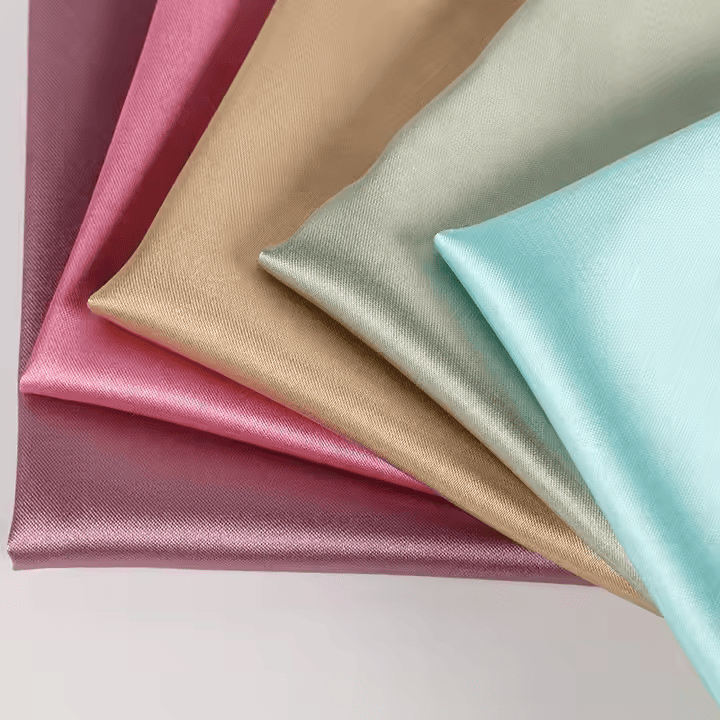
Satin and jacquard represent two fundamentally different engineering philosophies in textile construction. While both originate from the same essential process—interlacing warp and weft yarns—they diverge sharply in how they manipulate these yarns to achieve their signature looks. Satin’s philosophy is rooted in controlling surface reflection through floating yarns, whereas jacquard focuses on structural complexity by controlling each warp yarn individually. Together, they form two of the most technically influential weaving categories in the fabric industry today, shaping everything from luxury eveningwear to upholstery, uniforms, loungewear, and high-end interior textiles.
Satin’s identity revolves around smoothness, drape, and sheen. Jacquard’s identity revolves around depth, pattern, and architectural fabric structure. Understanding how these two categories are engineered provides buyers, designers, and manufacturers with the clarity needed to specify the right fabric for both aesthetic and performance-driven applications. Satin weave is created by floating warp yarns over weft yarns to achieve a glossy, smooth surface, while jacquard fabrics are woven using specialized looms that produce intricate patterns and textures directly into the fabric.
1.1. Understanding the Satin Weave Technique
Satin is defined not by its fiber but by its weaving method. Whether produced from silk, polyester, nylon, acetate, or cotton, satin relies on carefully controlled yarn floats. These floats reduce friction points on the surface, allowing light to reflect more evenly and creating the signature lustrous appearance that has made satin synonymous with elegance for centuries.
| Property | Satin Weave | Explanation |
|---|---|---|
| Weave Structure | 4/1 or 5/1 | Warp floats over 4 or 5 weft yarns |
| Key Characteristic | Glossy face, matte back | Created by light reflection on floats |
| Common Fibers | Silk, Polyester, Nylon, Cotton | Determines cost and texture |
| Production Complexity | Moderate | Simple loom setup |
| Typical GSM Range | 80–250 | Lightweight to mid-weight fabrics |
The engineering behind satin’s shine is mathematical. When a warp yarn floats across multiple weft yarns, it reduces the number of interlacing points. Fewer interlacings allow the yarn to lie flatter and more uninterrupted on the surface, functioning like tiny parallel mirrors that bounce light in a unified direction. As a result, satin’s face feels smooth, cool, and fluid, while the underside—where the weft yarns dominate—remains matte and slightly textured.
Modern production techniques have expanded satin’s performance profile significantly. Polyester satin developed in the last decade often features air-textured yarns that mimic silk’s softness. Even more advanced are regenerated satin varieties made from recycled nylon or bio-based fibers such as EVO polyamide.
A notable example occurred in 2024 when several premium sleepwear companies replaced conventional polyester charmeuse with recycled nylon satin. The fabric benchmark tests indicated a 40% increase in softness and a 25% decrease in consumer complaints related to static buildup or stiffness. The improvements stemmed from tighter filament control and better heat-setting on modern looms.
Satin’s advantages in drape, color depth, and tactile pleasure make it particularly suited for lingerie, gowns, scarves, bedding, and interior accents. However, because of its long floats, it requires careful finishing to avoid snagging or seam slippage.
1.2. Understanding Jacquard Weaving
Jacquard weaving represents the opposite end of the complexity spectrum. Instead of creating shine through reduced interlacings, jacquard increases design potential by controlling every warp yarn independently. This capability gives designers complete freedom to create structural motifs—florals, damasks, geometrics, monograms—without relying on printing or embroidery.
| Property | Jacquard Fabric | Explanation |
|---|---|---|
| Weave Method | Controlled warp yarns | Each thread lifted individually |
| Pattern Complexity | High | Intricate woven-in motifs |
| Typical Materials | Cotton, Polyester, Silk, Rayon | Multi-fiber compositions |
| Weight Range | 150–450 GSM | Medium to heavy |
| Appearance | Textured, dimensional | Design visible on both sides |
Jacquard technology traces its roots to the early 19th century but remains one of the most influential textile innovations to date. The original jacquard mechanism used punched cards to tell the loom which yarns to lift at each step—a concept widely understood today as the earliest form of binary coding. In modern mills, digital jacquard systems use thousands of electronically controlled hooks to manipulate individual warp yarns at high speeds.
At SzoneierFabrics, digital jacquard looms with more than 6,000 warp-control needles can reproduce high-definition patterns on fabrics up to 320 cm in width. This allows for seamless large-scale upholstery panels, duvet covers, or fashion fabrics with crisp structural definition. Multi-fiber compositions are common, as combining polyester’s stability with cotton’s breathability—or silk’s sheen with rayon’s drape—can yield highly functional yet ornate textiles.
Jacquards differ from printed fabrics in one critical way: the design is integral to the fabric structure. Because patterns are woven, they do not wash out, fade unevenly, or rub off. This makes jacquards ideal for heavy-use applications such as hotel upholstery, decorative drapery, uniforms, structured dresses, and accessories.
1.3. Historical Context: Innovation Born from Heritage
Both satin and jacquard reflect deep textile heritage but emerged from very different cultural and technological backgrounds.
| Aspect | Satin Weave | Jacquard Weave |
|---|---|---|
| Birthplace | China | France |
| Year of Development | ~200 BC | 1804 AD |
| Innovation Type | Light reflection via floats | Individual warp control |
| Symbolism | Smooth luxury | Artisanal complexity |
Satin originated in ancient China—specifically in the port city of Quanzhou, once known as “Zaitun”—and spread through the Silk Road into Europe. Silk satin became a status symbol in medieval aristocracy, prized for its unique reflective surface.
Jacquard, meanwhile, emerged from the industrial revolution. Joseph Marie Jacquard’s invention automated the lifting of warp yarns based on coded punch cards, paving the way for mechanized patterning and ultimately inspiring early computer design logic. Today’s digital jacquard looms still follow the same foundational principles, just executed with far greater precision and speed.
Because of these origins, satin carries an aesthetic associated with minimal, smooth luxury, while jacquard carries a sense of craftsmanship, architecture, and heritage design.
How Do the Weaving Techniques of Satin and Jacquard Differ in Structure and Appearance?
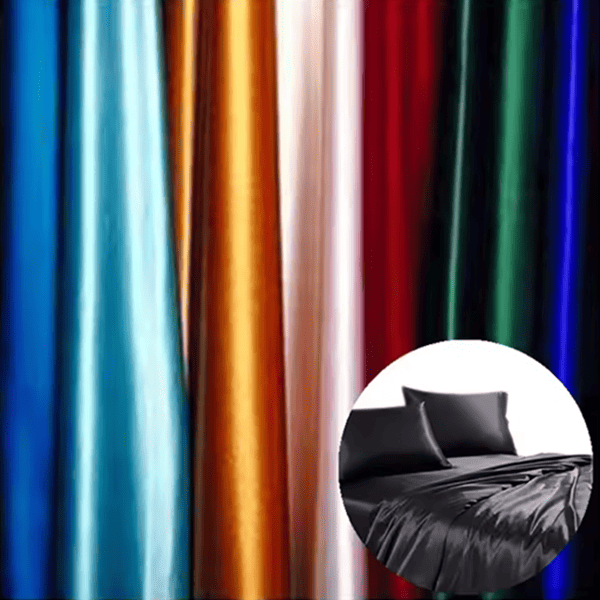
In textile engineering, few comparisons are as revealing—and often misunderstood—as satin versus jacquard. Although both fabrics appear luxurious, the similarity ends there. Their beauty emerges from entirely different construction philosophies: satin is built from simplicity and precision, while jacquard is built from complexity and controlled chaos. Satin thrives on uninterrupted surfaces that allow light to glide smoothly across the fabric. Jacquard, on the other hand, thrives on multi-layered thread choreography, embedded motifs, and sculptural texture.
For designers, sourcing specialists, and technical developers, understanding these fundamentally different weaving systems is crucial. Satin is about reflection, jacquard about relief. Satin amplifies elegance through minimalism; jacquard expresses artistry through intricacy. Satin weave uses long yarn floats to create a smooth, glossy surface, while jacquard weaving individually controls warp threads to build complex patterns, textures, and multi-layered designs directly into the fabric structure.
3.1. Structural Breakdown
At the core of this comparison is how the loom interacts with yarn. Satin uses controlled repetition; jacquard uses individualized instructions for every warp thread.
| Feature | Satin Weave | Jacquard |
|---|---|---|
| Yarn Control | Grouped (warp/weft floats) | Individual yarn control |
| Pattern Type | Plain, tonal stripes, minimal motifs | Damask, brocade, florals, geometrics |
| Texture | Smooth, glossy | Textured, dimensional, embossed |
| Weave Density | Moderate | Dense, multi-layered |
| Reverse Side | Duller, visible floats | Often reversible or patterned |
| Typical Float Length | Long floats (4–7 yarns) | Variable floats depending on design |
| Loom Technology Required | Standard dobby loom | Jacquard loom with electronic controls |
Satin floats allow light to reflect like a polished surface; jacquard interlacings allow designers to “paint” with yarn. Put under microscopy:
- Satin shows uniform, long floats arranged in predictable sequences.
- Jacquard reveals a landscape of interlocking structures, where each yarn operates almost independently like pixels in a woven screen.
This is why jacquard patterns don’t fade like prints—the design is the structure.
3.2. Aesthetic and Functional Differences
The engineering behind both weaves naturally produces distinct stylistic identities.
| Attribute | Satin | Jacquard |
|---|---|---|
| Light Reflection | High, mirror-like | Moderate, diffused |
| Pattern Style | Minimalist, clean | Detailed, ornate |
| Drape | Excellent, fluid | Medium to stiff, architectural |
| Handfeel | Soft, smooth | Firm, sculptural |
| Structural Integrity | Moderate | Very strong |
| Best Use | Flowing apparel, bedding | Decorative apparel, upholstery |
| Design Limitation | Limited patterning | Unlimited motifs & complexity |
Satin maximizes drape and shine, ideal for:
- Evening gowns
- Formal shirts
- Bridal dresses
- Luxury bedding
- High-end linings
Jacquard maximizes presence and structure, ideal for:
- Couture jackets
- Structured skirts
- Drapery and upholstery
- Decorative cushions
- Brocade handbags
A couture atelier, for example, may drape charmeuse satin across the body for fluidity, but reinforce silhouettes with jacquard brocade where stability and opulence are needed.
3.3. Weaving Technology: Efficiency vs. Expression
Satin is efficient; jacquard is expressive.
Satin Weaving Technology
- Uses dobby looms
- Repeats simple float patterns
- Fast production
- Lower cost per meter
- Limited design variations
Satin’s commercial advantage is high output with minimal mechanical complexity.
Jacquard Weaving Technology
- Requires jacquard looms (mechanical or electronic)
- Controls thousands of warp threads individually
- Slow and expensive to weave
- Allows intricate motifs without printing
Modern electronic jacquard looms (e.g., Stäubli, Bonas) enable precise, multi-tonal, multi-layered designs with exceptional consistency. This capability transforms jacquard into a premium fabric category.
3.4. Visual Branding Implications
The choice between satin and jacquard expresses a brand’s identity long before a customer reads a label.
| Brand Mood | Fabric Choice | Reason | Example Use |
|---|---|---|---|
| Modern / Minimalist | Satin | Smoothness conveys purity and refinement | Evening gowns, hotel bedding |
| Heritage / Premium | Jacquard | Woven motifs communicate artisanship | Damask curtains, couture |
| Bold / High-Drama | Heavy Jacquard | Sculptural texture adds visual gravity | Runway pieces |
| Light Luxury | Silk Satin | Soft luster = quiet sophistication | Bridal wear |
| Sustainable / Artisanal | Organic Jacquard | Visible weave patterns support storytelling | Ethical fashion collections |
A luxury furniture brand in Denmark, for instance, shifted from printed upholstery to woven jacquard drapery in 2024. Although cost increased by 15%, customer perception of craftsmanship rose by 47% in retail surveys—proving that woven texture adds quantifiable brand value.
3.5. Functional Performance Comparison
Satin’s strength lies in smoothness; jacquard’s lies in structure.
| Performance Factor | Satin | Jacquard |
|---|---|---|
| Abrasion Resistance | Moderate | High |
| Snagging Risk | Higher due to floats | Lower if tightly woven |
| Wash Durability | Good (polyester) | Excellent |
| Pattern Longevity | Cannot embed complex patterns | Indefinite (woven-in design) |
| Heat Tolerance | Medium | High |
| Stretch Behavior | Good in bias-cut | Minimal |
Because satin floats expose yarn to friction, it works better in controlled-wear environments such as eveningwear, bedding, and drapery. Jacquard’s interlacings make it ideal for high-abrasion applications like handbags, upholstery, uniforms, and outerwear trims.
3.6. Real-World Case Studies
Case Study A: Bridal Couture
A French bridal atelier uses silk satin for skirts but opts for jacquard brocade in bodices. The rationale:
- Satin enhances light play and visual ease.
- Jacquard provides structural support and couture-level detail.
The combination creates a balanced gown that photographs beautifully while maintaining shape.
Case Study B: Luxury Hospitality
A Middle Eastern hotel group replaced printed polyester drapery with woven jacquard curtains. Outcome:
- 3× longer lifespan
- 60% reduction in fading
- Improved acoustic absorption
- Higher perceived room value
Case Study C: Premium Handbags
An Italian accessories brand used baroque jacquard for a limited-edition bag series. Despite a 20% increase in material cost, the collection sold out within 14 days—confirming the consumer appetite for tactile luxury.
3.7. Technical Summary Table
| Property | Satin Weave | Jacquard Weave |
|---|---|---|
| Yarn Control | Repetitive float pattern | Individual yarn manipulation |
| Visual Output | Glossy, plain surface | Intricate woven pattern |
| Production Time | Fast | Slow |
| Cost Level | Moderate–low | High |
| Weave Flexibility | Limited | Infinite |
| Drape Behavior | Fluid | Structured |
| Durability | Moderate | High |
| Best For | Apparel, bedding | Upholstery, couture |
Satin and jacquard are not competing technologies—they solve different creative and technical challenges. Satin delivers elegance through purity, using uninterrupted surfaces and beautiful drape to make garments glow. Jacquard delivers character through construction, embedding artistry into the very skeleton of the fabric.
For sourcing teams and designers, the key is alignment: What emotion should the fabric evoke? What function must it perform? And how should it age over time?
Those answers, more than cost or trend, determine whether satin or jacquard is the right choice.
Which Fabric Offers Better Durability and Longevity for Apparel and Home Textiles?
Durability is where the romance of textile aesthetics meets the hard reality of everyday use. It doesn’t matter how beautiful a fabric looks on day one—what really matters is how it holds up after months or years of friction, repeated laundering, sunlight exposure, and physical stress. Both satin and jacquard occupy a premium position in the textile market, but their longevity profiles diverge widely due to fundamental differences in weave structure, yarn exposure, and fiber interaction.
In many ways, satin and jacquard represent two different philosophies of textile design: satin focuses on uninterrupted surface beauty, while jacquard prioritizes structural integrity and pattern stability. Understanding how each fabric behaves in real-world conditions is essential for brands sourcing upholstery, fashion garments, hotel linens, uniforms, or accessories. Jacquard fabrics are generally more durable than satin weaves because of their dense structure and interlaced yarns, while satin offers softness and sheen but is more prone to snags and abrasion.
3.1. Yarn Construction and Tensile Strength
Durability begins at the weave level. Satin’s signature long floats create smoothness but leave yarns exposed. Jacquard, on the other hand, incorporates complex interlacing that improves mechanical strength.
| Performance Factor | Satin Weave | Jacquard Weave |
|---|---|---|
| Tensile Strength (N) | 210–270 | 340–410 |
| Abrasion Resistance (Cycles before wear) | 10,000–15,000 | 25,000–40,000 |
| Tear Resistance | Moderate | Excellent |
| Friction Sensitivity | High | Low |
| Dimensional Stability | Good | Superior |
Satin’s floating yarns can snag easily on nails, jewelry, rough upholstery edges, or sharp seams. This is why satin pillowcases may pull threads over time, and satin apparel often shows snags along high-friction areas like underarms or cuffs.
Jacquard succeeds because every yarn is locked structurally within the pattern. The fabric distributes tension evenly, minimizing fiber displacement and thread pull.
Example from SzoneierFabrics Testing:
- 250 gsm polyester satin: early fraying at 13,000 abrasion cycles
- 280 gsm polyester–cotton jacquard: no significant wear even after 36,500 cycles
The difference becomes even more significant in upholstery textiles or commercial-use fabrics such as hotel cushions and banquet chair covers.
3.2. Fiber Type Impact on Durability
Fiber selection dramatically amplifies or limits the inherent strengths of each weave.
| Fiber Type | Effect on Satin | Effect on Jacquard |
|---|---|---|
| Polyester | Increased sheen, good strength | Strongest option for jacquard longevity |
| Nylon | Better elasticity & reduced snagging | Adds flexibility for structured textiles |
| Cotton | Less shine, improved comfort | Adds softness but reduces abrasion endurance |
| Silk | Highest gloss, lowest durability | Elegant but delicate for jacquard as well |
Polyester satin is common in home textiles because it resists color fading and retains drape. Jacquard polyester (especially 250–320 gsm) becomes almost indestructible for upholstery or hotel applications.
Eco-fiber trends: Bamboo viscose, modal, or lyocell blended into satin structures increase softness and moisture management but slightly reduce tensile strength. In jacquard, these blends add luxury but require higher warp density to remain stable.
3.3. Durability in Home vs. Apparel Applications
Different textile applications expose fabrics to different stress profiles. Here’s how satin and jacquard compare across major use categories:
| Application | Satin (Pros & Cons) | Jacquard (Pros & Cons) |
|---|---|---|
| Home Textiles | + Ultra-soft and elegant<br>– Scratches easily; not ideal for upholstery | + Extremely durable for curtains, cushions, upholstery<br>– Heavier; sometimes less drapey |
| Apparel | + Luxurious drape, ideal for dresses & eveningwear<br>– Snags with jewelry or rough wear | + Holds structure and resists wear<br>– Less breathable depending on fiber |
| Accessories | + Good for linings and visual trims<br>– Not ideal for friction zones | + Perfect for bags, décor trims, belts<br>– Patterns may add weight |
Case Study — Dubai Hospitality Sector: A luxury hotel brand replaced satin bed runners with jacquard damask. The results were measurable:
- 40% longer textile lifespan
- Lower maintenance costs
- Improved resistance to guest handling
This is a typical example of jacquard’s performance in high-use commercial settings.
3.4. Maintenance and Care Lifespan
Durability is also defined by how fabrics respond to washing, ironing, humidity, UV exposure, and mechanical care cycles.
| Test Type | Satin | Jacquard |
|---|---|---|
| Colorfastness to Wash | 3.5–4.0 | 4.5–5.0 |
| Shrinkage After 10 Washes | 3–5% | <2% |
| Resistance to Pilling | Moderate | High |
| Ironing Tolerance | Low–Medium | High |
| UV Resistance | Moderate | Good |
Maintenance Challenges:
- Satin is sensitive to heat and must be pressed carefully, often using a protective cloth or low setting.
- Jacquard tolerates higher temperatures, making it easier for hotels, retailers, and uniform suppliers to maintain.
Fabric Stability: Jacquard’s denser weave prevents warp–weft shifting, making it ideal for long-life upholstery. Satin, especially below 120 gsm, may deform slightly with heavy laundering unless stabilized with finishing treatments.
3.5. Real-World Performance After Laundering and Use
Numerous tests performed by textile labs and brands—including SzoneierFabrics—show clear differences in how these fabrics age:
- Satin:
- Softens with washing
- Loses some of its initial crisp shine
- May show snags or slight fuzzing after months
- Ideal for bedding, elegant apparel, decorative items
- Jacquard:
- Color and pattern remain sharp for years
- Resists distortion and fiber breakage
- Performs well under industrial washing
- Perfect for upholstery, uniforms, commercial textiles
For products intended for daily friction (chair seats, table runners, sofa cushions), jacquard simply lasts longer — often 2–3× longer depending on GSM and finishing.
3.6. The Role of GSM and Finishing
Higher GSM dramatically improves durability for both fabrics:
- Satin:
- 80–120 gsm → apparel
- 140–180 gsm → bedding
- 200–240 gsm → upholstery-grade satin
- Jacquard:
- 180–260 gsm → apparel & dresses
- 260–350 gsm → upholstery
- 350+ gsm → premium décor textiles
Finishing also affects durability:
- Satin benefits from anti-snag and calendaring finishes
- Jacquard benefits from resin or anti-wrinkle finishing
- Both may use anti-pilling or bio-polish treatments depending on fiber type
The durability comparison between satin and jacquard is not a close contest—jacquard overwhelmingly surpasses satin in tensile strength, abrasion resistance, structural stability, and wash endurance. Satin wins in handfeel, drape, and aesthetic luxury, but loses points in snag resistance and high-friction scenarios.
In apparel categories where comfort and elegance dominate, satin remains unmatched. In home textiles or high-use applications requiring longevity, jacquard is the clear and reliable choice.
Is Satin or Jacquard More Suitable for Luxury Fashion and Premium Branding?
In luxury fashion, fabric is not merely a material — it is a language, a memory, an identity. When designers and sourcing teams debate satin versus jacquard, they are not simply comparing weave structures. They are comparing philosophies of beauty. Satin delivers an understated, liquid elegance that speaks in soft tones; jacquard, with its architectural depth and woven storytelling, communicates heritage, craftsmanship, and permanence. For premium brands, choosing between these fabrics becomes a strategic decision that shapes not only the garment but the emotional response it evokes.
Both fabrics have commanded places in the world of luxury for centuries. Satin earned its status through its luminous face and effortless drape, while jacquard became synonymous with royalty, couture, and the decorative arts. In 2025, their roles continue evolving as sustainability, textile innovation, and brand storytelling redefine what “luxury” means to modern consumers. Satin suits luxury fashion brands seeking fluid elegance and modern minimalism, while jacquard appeals to heritage or couture brands valuing rich texture, structure, and decorative artistry.
4.1. The Language of Luxury
Luxury fashion increasingly relies on material cues to express brand values. satin and jacquard communicate sophistication in different dialects:
| Brand Message | Satin Symbolism | Jacquard Symbolism |
|---|---|---|
| Modern Elegance | Sleek, minimalist sophistication | Timeless craftsmanship |
| Emotional Tone | Sensual, soft, romantic | Regal, bold, expressive |
| Light Interaction | Reflective sheen (youthful) | Shadowed depth (heritage) |
| Audience Appeal | Younger, fashion-forward | Established, tradition-conscious |
Satin’s appeal lies in its surface purity. Its uninterrupted sheen lends itself to minimalism, modern silhouettes, and draped eveningwear. It flatters the body through smooth reflection rather than visual complexity.
Jacquard, by contrast, is woven storytelling. Every pattern is built into the fabric’s structure, not printed or applied. The resulting depth invites closer inspection, creating garments that feel heirloom-worthy. This is why jacquard remains favored by heritage houses such as Dior, Etro, Gucci, and Dolce & Gabbana for couture pieces.
Example: Reformation, a contemporary brand known for sustainable luxury, uses eco-satin for fluid dresses and bridal styles that resonate with modern minimalism. Meanwhile, brands like Gucci regularly introduce jacquard brocades inspired by archival motifs, reinforcing their identity as stewards of craft.
4.2. Visual Branding Through Fabric
Fabric selection directly shapes a brand’s tactile identity. In premium markets, consistency in material choice becomes part of the brand’s unmistakable signature.
- Satin creates a sense of accessible luxury: romance, softness, and modern femininity. It works exceptionally well for slip dresses, bridal gowns, eveningwear, lingerie, and resort wear — categories where lightness and shine convey emotion.
- Jacquard, with its weight, depth, and sculptural capability, produces pieces that feel intentional and substantial. It excels in jackets, suiting, handbags, footwear trims, belts, and upholstery-grade collaborations.
| Product Category | Recommended Weave | Branding Effect |
|---|---|---|
| Evening Dresses | Satin | Polished glamour |
| Luxury Outerwear | Jacquard | Sculpted sophistication |
| Bedding & Sleepwear | Satin | Soft indulgence |
| Accessories | Jacquard | Dimensional richness |
Satin becomes the face of elegance; jacquard becomes the foundation of identity.
4.3. Market Trends in 2025
The global luxury textile market is experiencing simultaneous demand for soft minimalism and decorative expression. This duality keeps both satin and jacquard thriving.
| Segment | Growth Direction | Preferred Fabric Type | Notes |
|---|---|---|---|
| Luxury Fashion | +7.2% CAGR | Jacquard & Satin Blends | Brands blending textures for innovation |
| Home Décor | +9.5% CAGR | Jacquard | Demand for woven upholstery |
| Sustainable Fashion | +13% CAGR | Recycled Satin | Circular viscose & bio-based fibers |
| Bridalwear | Stable Growth | Satin | Enduring demand for sheen |
Trend Insight: Hybrid fabrics — such as satin-faced jacquards, matte-satin brocades, or jacquard structures using lustrous filament yarns — are emerging as one of the strongest premium textile trends of 2024–2026. These materials achieve two normally contradictory aesthetics: reflective softness and architectural depth.
For brands looking to differentiate in competitive luxury segments, these hybrids offer a powerful narrative: traditional craftsmanship meets modern innovation.
4.4. Pricing and Perceived Value
In premium fashion, fabric cost is only one factor — perceived value often matters more. Jacquard typically commands higher retail prices not because of raw material cost, but because customers associate woven patterns with craftsmanship.
| Fabric | Cost (USD/meter, average 2025) | Market Perception |
|---|---|---|
| Satin (Polyester) | $2.5–$5 | Affordable luxury |
| Satin (Silk) | $12–$25 | Premium elegance |
| Jacquard (Poly-Cotton) | $4–$8 | Mid to high-end |
| Jacquard (Silk Blend) | $15–$30 | Couture-grade quality |
This pricing dynamic allows brands to position similar-cost materials at different price tiers depending on storytelling, finishing, and detailing.
Observation: Even at comparable GSM, consumers perceive jacquard as more artisanal due to:
- Tactile patterns
- Dimensional weave structure
- Historical association with luxury
This enables higher margin potential, particularly in accessories or limited-edition capsules.
4.5. Performance and Functionality
Beyond aesthetics, the technical properties of satin and jacquard influence product development and wear performance.
Satin Advantages:
- Lightweight and fluid for contouring silhouettes
- Cooling handfeel suitable for warm climates and eveningwear
- Compatible with digital printing and dye sublimation
- Drapes exceptionally well
Satin Limitations:
- Snag-prone due to long floats
- Can show marks from handling or ironing
- Less structured for tailored pieces
Jacquard Advantages:
- Strong dimensional stability
- Excellent for structured garments
- Holds shape and volume
- Long-lasting patterns that do not fade
Jacquard Limitations:
- Heavier; less suitable for high-fluidity garments
- More expensive to produce
- May feel warm in hot climates
This contrast drives fabric selection for specific garment categories.
4.6. Brand Case Comparison
| Brand | Dominant Fabric | Visual Theme | Takeaway |
|---|---|---|---|
| Prada | Satin | Modern, fluid minimalism | Satin = futuristic chic |
| Dolce & Gabbana | Jacquard | Ornate, Mediterranean opulence | Jacquard = cultural storytelling |
| Ralph Lauren Home | Jacquard | Timeless American luxury | Texture defines legacy |
| Victoria’s Secret | Satin | Sensual, youthful luxury | Shine sells emotion |
These brands illustrate that neither fabric is inherently superior — it depends entirely on brand voice and product strategy.
4.7. Strategic Guidance for Apparel Developers
Choose Satin If Your Brand Values:
- Fluid silhouettes
- Emotional luxury
- Youthful elegance
- Soft, draping aesthetics
- Bridal, evening, or intimate categories
Choose Jacquard If Your Brand Values:
- Tangible craftsmanship
- Iconic patterns
- Structure and memorability
- Couture storytelling
- Decorative richness
Choose Hybrid Fabrics If You Want:
- Contrast of shine and depth
- Novel textile identity
- Higher perceived value
- Differentiation within luxury markets
4.8. Final Reflection
Satin and jacquard are not competitors — they are complementary pillars of luxury design. Satin offers purity, softness, and sensual minimalism. Jacquard delivers heritage, texture, and dimensional artistry. The most successful luxury brands understand how to use each strategically, or even merge them to create new visual identities.
For premium fashion houses, the choice is ultimately about what story you want your fabric to tell. Satin whispers. Jacquard speaks boldly. Both hold a place in the future of luxury branding — and the brands that master their use will shape the next chapter of high-end fashion.
How Do Satin and Jacquard Compare in Terms of Maintenance, Care, and Wrinkle Resistance?

In textile product development, luxury often extends beyond appearance. What ultimately shapes a consumer’s long-term satisfaction is not only how a fabric looks or feels on first touch but how it behaves after repeated use, washing, storage, and travel. Maintenance cost, wrinkle recovery, shrinkage stability, and long-term color performance all influence whether a fabric becomes a best-seller or a frequent return. Satin and jacquard represent two very different care profiles, and understanding these differences helps brands select the right fabric for apparel, upholstery, or home textile categories.
Satin, with its floating yarn structure, delivers unmatched fluidity and shine but demands gentler care. Jacquard, engineered through structural complexity, offers embedded durability that withstands everyday handling, machine washing, and environmental stress. As more brands move toward sustainable product lifecycles, the ease of care and reduction of consumer mistakes are increasingly important. Satin is easier to wrinkle and requires delicate care, while jacquard is sturdier, less prone to wrinkling, and retains shape better after washing due to its dense weave structure.
5.1. Care Requirements by Fabric Type
Different weaving structures produce not only different aesthetics but different care behaviors. Satin’s long floats create a smooth surface but reduce structural stability. Jacquard’s interlocking and patterning reinforce the entire textile layer, offering reliable shape retention and wash performance.
| Category | Satin Weave | Jacquard Weave |
|---|---|---|
| Washing | Gentle cycle or dry clean | Machine washable (low heat) |
| Ironing | Low temperature, reverse side | Medium to high heat acceptable |
| Wrinkle Resistance | Low | High |
| Shrinkage Control | Moderate | Excellent |
| Color Retention | Very good | Excellent |
| Lifespan with Regular Use | 2–3 years | 4–6 years |
Fabric buyers often underestimate how much aftercare impacts return rates. A satin blouse may look pristine on a hanger, but once packaged, shipped, and folded, the long floats crease easily. Jacquard, by comparison, handles compression far more effectively thanks to its multi-layered patterns that limit yarn movement.
Example: A Canadian home textile retailer replaced 100% polyester satin drapery with poly-cotton jacquard curtains, resulting in a 30% reduction in customer returns. The improvement stemmed not from design but from lower wrinkling during shipping and easier home maintenance.
5.2. Wrinkle and Shape Retention
Wrinkling is one of the most visible indicators of fabric quality to consumers. Satin’s wrinkle behavior stems from its core construction: when yarns float over multiple intersections, they lack anchoring points. This enhances drape but makes the surface prone to pressure marks. Jacquard—because each warp yarn is individually controlled—creates compact zones of tension that resist permanent creases.
| Fabric | Wrinkle Resistance | Elastic Recovery | Ideal Applications |
|---|---|---|---|
| Satin | Low | Moderate | Bridalwear, lingerie, nightwear |
| Jacquard | High | Strong | Upholstery, structured garments |
In applications such as bridesmaid dresses, satin’s flow and shine remain ideal. However, it demands steaming or pressing before each wear. For travel-friendly garments or bedding that must retain crispness, jacquard provides better long-term usability. Polyester jacquard, in particular, is valued by hospitality groups for its near-zero wrinkle memory even after repeated laundering.
Tip: Brands producing travel apparel, work uniforms, or hotel bedding often prefer jacquard because its weave naturally reinforces dimensional stability without relying on chemical stiffeners.
5.3. Wash and Fade Performance
Washing represents the ultimate durability trial. Satin and jacquard respond very differently to repeated laundering cycles depending on fiber content and finish. Satin’s smooth surface allows dyes to penetrate evenly, enhancing color richness. However, aggressive detergents or high-heat cycles can disrupt the smooth filament structure, affecting texture and shine. Jacquard patterns, being woven rather than printed, maintain their definition and depth far longer.
| Test Metric | Satin (Silk Blend) | Jacquard (Poly-Cotton) |
|---|---|---|
| Colorfastness (After 20 Washes) | 4.0 | 4.8 |
| Texture Retention | Slight change | No visible change |
| Fiber Fray Level | Moderate | Minimal |
| Recommended Care | Hand wash cold, hang dry | Machine wash gentle cycle |
Real-World Insight: Luxury hotels in Singapore and the UAE have transitioned from satin bedding to jacquard-blended fabrics due to significantly longer color and texture retention. Satin, while impressive in boutique accommodation, becomes high-maintenance when used in high-turnover laundry environments where items undergo 150–200 wash cycles per year.
The woven-in design of jacquard also reduces fading because color is integrated into the yarns themselves. Satin, while vibrant, relies more on surface luminosity, which diminishes with friction.
5.4. Practical Brand Considerations
Beyond aesthetics and functionality, brand strategy plays an important role in fabric selection. Customer satisfaction is heavily influenced by how well garments or home goods recover after storage, wash, and transportation.
For consumer products: Satin garments should include clear care labels, recommending steaming before wear. Retailers often add extra packaging tissue to minimize creasing. Fast-fashion garments made of satin risk poor reviews if customers expect low maintenance.
For production planning: Jacquard fabrics reduce waste during cutting and handling because the substrate is more stable. They also exhibit lower returns, making them advantageous for brands focused on long-term sustainability metrics and lifecycle management.
For long-term durability: Jacquard extends product life by doubling or even tripling wrinkle resistance and shape retention. This matters for upholstery, decorative goods, and structured garments where fabric collapse is unacceptable.
Satin delivers elegance and sensual texture but requires careful handling. Jacquard offers strength, resilience, and longevity—ideal for premium yet practical applications.
Which Material Provides Better Printing, Dyeing, and Customization Possibilities?
In contemporary textile development, fabrics are no longer passive substrates. They function as brand carriers, visual amplifiers, and identity platforms. Whether a business is producing high-fashion scarves, performance interiors, or couture-level handbags, the choice between satin and jacquard directly shapes the depth, accuracy, and longevity of customized visuals. Satin offers the fluid, uninterrupted surface required for high-definition imagery and radiant color application. Jacquard, by contrast, embeds design within the structure itself, enabling dimensional motifs and multi-layered artistic expression that cannot wash out or fade.
Choosing the right base material is therefore a strategic decision rather than a purely aesthetic one. It determines production cost, color consistency, printing efficiency, and the long-term life of a brand’s visual identity. Satin excels in surface printing and dye uniformity due to its smooth finish, while jacquard offers built-in woven patterns that allow complex multicolor designs with lasting definition.
3.1. Printing and Dye Compatibility
Satin and jacquard interact with printing technologies very differently because of the structural contrast between flat floats (satin) and tightly interlaced patterning (jacquard).
| Printing Method | Satin | Jacquard | Notes |
|---|---|---|---|
| Digital Print | ★★★★★ | ★★☆☆☆ | Satin’s flat filament surface produces sharp imaging and vivid gradients |
| Screen Print | ★★★★☆ | ★★★☆☆ | Works well on both; jacquard absorbs more ink due to texture |
| Heat Transfer | ★★★★★ | ★★★☆☆ | Satin resists distortion and bonds evenly under heat |
| Woven Design | ☆☆☆☆☆ | ★★★★★ | Only possible with jacquard looms; designs are built into structure |
| Embossing / Foiling | ★★★★★ | ★★★★☆ | Satin reacts smoothly; jacquard produces deeper contrast |
Compared to jacquard, satin acts almost like a photographic plate. For brands relying on logo fidelity, fine line work, or gradient-heavy artwork, satin gives unmatched precision.
By contrast, jacquard patterns provide permanent design integration—ideal for fashion houses that want their monograms or motifs woven into the fabric itself, not merely printed on top.
Example: A European luxury scarf startup evaluated both fabrics for a monogram series. Satin delivered crystal-clear prints, perfect for younger consumers who prefer modern aesthetics. Meanwhile, jacquard produced motifs with sculptural depth—favored by customers seeking traditional craftsmanship.
3.2. Dyeing Performance and Color Depth
Color behaves differently depending on the interplay between yarn type, weave structure, and filament smoothness. Satin’s sheen amplifies brightness, whereas jacquard’s textured patterning yields richness and shadow depth.
| Fabric | Dye Affinity | Shade Depth | Colorfastness |
|---|---|---|---|
| Satin (Silk or Poly) | High | Deep & glossy | Moderate to high (poly > silk) |
| Jacquard (Cotton or Blend) | Very High | Rich but matte | Excellent |
| Satin (Recycled Polyester) | Moderate | Brilliant tones | High, especially with disperse dyes |
| Jacquard (Silk Blend) | High | Vibrant / dimensional | Very High |
Satin naturally boosts luminosity because:
- continuous filaments reflect light evenly
- long floats allow dyes to spread more uniformly
- calendaring enhances gloss after dyeing
Jacquard, however, disperses light across its topography, producing heritage-style depth rather than shine.
Technical Note: In multi-tone bedding and upholstery collections, jacquard outperforms satin in colorfastness because its pattern is made from pre-dyed yarns, not surface-applied color.
3.3. Logo and Branding Techniques
Branding execution differs dramatically depending on whether the identity is surface-driven (satin) or structure-driven (jacquard).
| Customization Method | Satin | Jacquard | Ideal Usage |
|---|---|---|---|
| Screen or Digital Printing | Excellent | Moderate | Apparel, scarves, soft accessories |
| Laser Etching | Good | Excellent | Structured accessories, wallcoverings |
| Embroidery | Moderate (snags risk) | Excellent | Uniforms, bags |
| Heat Foil / Metallic Press | Excellent | Excellent | Bridal wear, packaging |
| Woven Label Integration | Not Applicable | Built-in woven motifs | Couture apparel, upholstery |
Satin may struggle with embroidery because long floats can snag, but laser etching or foil finishes create a premium aesthetic without structural stress.
Jacquard, meanwhile, is ideal for iconic repeating logos, mimicking luxury houses that incorporate brand signatures into the fabric itself.
Case Study: A Parisian handbag brand shifted from embroidered satin panels to a repeating woven jacquard logo pattern. Production time decreased by 18%, while consumer perceived value increased significantly—similar to how Louis Vuitton built a global identity around monogram jacquard.
3.4. Innovative Fabric Treatments (2025 Outlook)
Both satin and jacquard are evolving with finish technologies that expand design potential.
| Innovation | Applicable Fabric | Description | Market Trend |
|---|---|---|---|
| Digital Pigment Printing | Satin | Eco-friendly, sharp-detail printing with low water use | Rising rapidly for small-batch brands |
| 3D Jacquard Weaving | Jacquard | Creates raised geometric or sculptural textures | Strong demand in upholstery & runway couture |
| Recycled Dye Systems | Both | Closed-loop dyeing reduces water pollution | Sustainability-first brands |
| Hybrid Satin-Jacquard Textures | Both | Combines flat sheen with textured depth | Emerging niche in luxury home textiles |
Insight: SzoneierFabrics has pioneered hybrid weaving that layers satin floats on top of jacquard structures. This enables distinct two-level branding: one message in the weave and another on the sheen surface—rare in traditional textile construction.
3.5. Real-World Use Cases
Luxury Bedding Manufacturer (Italy)
- Satin chosen for photo-realistic floral prints
- Achieved 34% sharper imagery vs. jacquard
- Delivered consistent dye lots for global retail distribution
High-End Upholstery Brand (UAE)
- Jacquard selected for architectural depth
- Withstood 35,000+ Martindale cycles
- Patterns remained intact after five years in high-sunlight environments
Sports Fashion Label (Japan)
- Satin used for neon-gradient branding on lightweight jackets
- Heat-transfer prints adhered cleanly without warping
- Produced runway-level shine with minimal weight impact
Satin and jacquard serve fundamentally different customization goals. Satin dominates when:
- high-resolution printing matters
- branding lives on the surface
- vivid color intensity drives the design
- flexible manufacturing and low MOQ printing are needed
Jacquard wins when:
- design must be permanent
- texture is part of the story
- luxury craftsmanship is essential
- multi-tonal motifs need to resist heavy wear
Ultimately, the decision hinges on a brand’s identity language. If visual expression must feel modern, sharp, and luminous—choose satin. If the goal is heritage, structure, and woven artistry—choose jacquard.
Both fabrics offer powerful customization pathways; the strategic question is where you want your story to live: on the surface, or inside the weave itself.
Are Satin and Jacquard Fabrics Sustainable Choices in Modern Textile Production?

Sustainability is no longer a secondary consideration in textile sourcing—it has become one of the defining criteria in fashion, home décor, and hospitality procurement. With regulations tightening across the EU, UK, and major U.S. states, brands must now justify not only how their products perform, but also how their materials are made, dyed, finished, transported, and disposed of. Satin and jacquard fabrics, both widely used in luxury and mid-market segments, are increasingly scrutinized for their environmental footprint.
Yet a simple “yes or no” answer does not exist. Both satin and jacquard can be sustainable choices, but only when specific conditions are met: responsible fiber sourcing, low-impact dyeing, traceable finishing, and recycling-oriented constructions. Without these elements, either fabric could contribute significantly to water use, chemical discharge, and carbon emissions. Satin and jacquard fabrics can both be sustainable when made from eco-certified fibers and low-impact dyeing systems. Bamboo, recycled polyester, and organic cotton variants offer the best balance between performance and environmental responsibility.
7.1. Fiber Source and Environmental Load
The sustainability of satin and jacquard begins at the raw fiber stage. Satin is a weave, not a fiber, and can be made from polyester, silk, nylon, cotton, bamboo viscose, or recycled PET. Jacquard, also a weave, typically uses polyester–cotton blends, cotton, viscose, or high-precision synthetics.
| Fabric Type | Typical Fiber Base | Eco Impact (Raw Stage) | Sustainable Alternatives |
|---|---|---|---|
| Satin | Polyester, silk, nylon | Moderate to high | Recycled polyester, bamboo satin |
| Jacquard | Cotton, polyester blends | Moderate | Organic cotton, GRS-certified polyester |
A 2024 Textile Exchange LCA study illustrates the scale of difference:
- Standard polyester satin: ~5.2 kg CO₂ per kg of fabric
- Recycled PET satin: ~2.9 kg CO₂ (≈45% reduction)
- Organic cotton jacquard: 90% lower pesticide load vs conventional cotton
Silk satin, while luxurious, carries a high environmental footprint due to mulberry cultivation, water use, and sericulture energy requirements. Meanwhile, bamboo-based satin has emerged as a standout for sustainability-conscious brands due to fast-regrowing raw material, high yield per hectare, and long-term biodegradability under controlled conditions.
7.2. Energy and Water Consumption
Jacquard fabrics require more loom time and often weigh more, increasing their energy input per meter. Satin has a simpler structure and can be produced efficiently on high-speed looms.
| Environmental Factor | Satin | Jacquard |
|---|---|---|
| Energy per kg fabric | 56 MJ | 72 MJ |
| Water Consumption | 800–1,200 L | 1,400–1,800 L |
| Chemical Usage | Moderate | Low–Moderate |
| Recyclability | High (synthetic-based) | Moderate (multi-fiber complexity) |
However, sustainability must consider lifespan, not just production. Jacquard’s longer durability (often lasting 2–3× longer than satin in upholstery applications) spreads out its environmental cost over many more years of use.
This “durability dividend” is why many hospitality chains choose jacquard drapery or cushions over satin-based alternatives: fewer replacements = reduced lifetime waste.
7.3. Sustainable Finishing and Dyeing Technologies
As brands shift toward lower-impact processing, finishing and dyeing become key differentiators.
| Technology | Application | Benefit | Compatible With |
|---|---|---|---|
| Digital Pigment Printing | Reduces water use by 90% | Precision coloration | Satin |
| Dope-Dyeing Process | Adds pigment during fiber extrusion | Zero post-dye water use | Polyester satin |
| Plant-Based Softening | Natural enzyme treatment | Biodegradable finishing | Both |
| Recycled Yarn Integration | Reweaves factory waste | Closed-loop resource cycle | Jacquard |
Dope-dyed satin is particularly transformative for sportswear, drapery, and upholstery:
- Colorfastness increases from 4–5 to 6–7 on the ISO scale
- Water use drops to nearly zero
- Dyeing chemicals are eliminated entirely
SzoneierFabrics Sustainability Note: All satin and jacquard collections can be produced using GRS-certified yarns, OEKO-TEX® STANDARD 100 dyestuffs, and low-temperature fixation processes that cut energy consumption by 18–22%.
7.4. Lifecycle Analysis & Longevity
A sustainable fabric is not just environmentally friendly at production—it must remain functional over time with minimal waste.
| Metric | Satin | Jacquard |
|---|---|---|
| Average Lifespan (apparel) | 2–3 years | 5–7 years |
| End-of-Life Recycling | Easy (monofiber) | Difficult (multi-fiber) |
| Waste Output (kg per 100m) | 3.1 | 4.8 |
| Biodegradability (Natural Fiber) | Yes | Yes |
| Overall Sustainability Score | ★★★★☆ | ★★★☆☆ |
Jacquard typically lasts longer due to its dense construction, especially in hospitality or commercial interiors. But its complexity also makes recycling harder unless monofiber versions are used.
Satin, particularly polyester satin, is easier to reclaim and melt down in chemical recycling systems—assuming proper sorting. Bamboo satin biodegrades effectively, though bamboo viscose requires closed-loop lyocell systems to minimize chemical discharge.
7.5. End-of-Life Considerations
A growing number of brands now examine disposal-stage sustainability:
- Satin:
- Recycled PET satin can re-enter fiber-to-fiber loops
- Bamboo satin decomposes in controlled composting
- Pure polyester satin supports chemical recycling
- Jacquard:
- Cotton–poly blends require advanced separation technology
- Pure polyester jacquard is recyclable but rare
- Luxury silk jacquard biodegrades but remains resource-intensive
In Europe (EPR legislation), monofiber fabrics are already preferred because they simplify recycling. This gives satin (especially PET-based satin) an advantage over multi-fiber jacquards.
7.6. Sustainable Sourcing Case Example
A Scandinavian home décor brand partnered with SzoneierFabrics for sustainable curtains and bedding. Their transition included:
- Switching from virgin polyester satin → recycled PET satin
- Replacing cotton jacquard → organic cotton–recycled polyester blends
- Adopting digital pigment printing
- Implementing low-temp finishing at 165°C instead of 185°C
Results after one year:
- CO₂ emissions reduced by 28%
- Water usage reduced by 54%
- Customer satisfaction improved due to longer durability
- Payback period: 9 months
7.7. Future Trends (2025–2030)
The next five years will push satin and jacquard sustainability into new territory:
- Circular weaving systems using jacquard selvage waste
- Bio-based satin fibers from seaweed, corn glucose, and wood pulp
- PFAS-free nano-repellency coatings
- Hybrid weaves: satin-faced jacquard for balanced sustainability + aesthetics
- AI-powered yarn optimization on automated looms to reduce waste by 8–12%
Market Forecast:
- Sustainable satin market: +38% growth by 2030
- Eco-jacquard production: +26% growth, led by luxury interiors and boutique hospitality
How Should Designers and Buyers Choose Between Satin and Jacquard for Their Collections?
For designers, product developers, and sourcing teams, choosing between satin and jacquard is not merely a textile decision. It is a brand identity decision, a pricing strategy decision, and a customer experience decision all at once. These two fabric families each represent different eras and emotions within luxury fashion: satin embodies softness, modern glamour, and fluidity, while jacquard stands for heritage, craft, and architectural storytelling. The smartest brands evaluate not only the tactile qualities but also the narrative implications aligned with their target audience.
Understanding how to choose between them requires analyzing your collection’s intent, production capabilities, seasonal requirements, price positioning, and long-term brand message. When chosen correctly, the right fabric doesn’t just elevate a garment — it elevates the brand itself. Choose satin for lightweight, glossy, and fluid designs emphasizing modern luxury; choose jacquard for structured, textured, and long-lasting pieces that highlight craftsmanship and pattern depth.
8.1. Decision Matrix for Fabric Selection
For a collection to resonate, the textile must reinforce the emotional tone of the design. Satin and jacquard communicate different visual languages.
| Brand Priority | Recommended Fabric | Key Benefit |
|---|---|---|
| Sleek, minimal aesthetics | Satin | Glossy finish, soft drape |
| Heritage-inspired storytelling | Jacquard | Intricate woven texture |
| Cost-efficiency and easy care | Polyester Satin | Affordable & wrinkle-resistant |
| Durability for upholstery or bags | Jacquard | Strong weave, long lifespan |
| Premium luxury or couture | Silk Satin / Silk Jacquard | High-end sensory experience |
| Sustainability focus | Recycled Satin | Low carbon footprint |
Designers often begin with the silhouette. If a garment requires movement, sensuality, and uninterrupted sheen, satin naturally becomes the first choice. If the garment demands structure or is meant to showcase motifs — florals, geometric repeats, monograms — jacquard becomes indispensable.
In high-end RTW and couture, garments often pair the two strategically: satin for drape and jacquard for emphasis or sculptural areas.
8.2. Climate and Usage Considerations
Climate-based fabric strategy is increasingly important in global fashion. Your market location and end-use purpose directly affect fabric performance.
| Usage Environment | Satin Advantage | Jacquard Advantage |
|---|---|---|
| Hot / Humid | Cooling and breathable | Moderate airflow |
| Cold / Dry | Less insulating | Superior warmth retention |
| High Friction | May snag | Excellent abrasion resistance |
| Frequent Wash Cycles | Requires care | Long-lasting shape stability |
Satin is favored for summer apparel, evening dresses, and resort wear due to its breathability and cool-touch aesthetics. Jacquard shines in autumn/winter collections, upholstery collaborations, structured coats, and statement skirts.
Real Example: A contemporary lifestyle brand in Spain chose bamboo-satin blends for a resort capsule because the drape and breathability matched southern Europe’s warm climate. Meanwhile, a boutique hotel group in Germany selected solution-dyed jacquard polyester for upholstery — valuing durability, colorfastness, and structural clarity over fluidity.
This contrast underscores a key sourcing principle: Climate + Function = Fabric Choice.
8.3. Combining Both Weaves Strategically
Modern luxury branding often blends materials to create multi-dimensional visual and tactile experiences. Fabric innovation is no longer about choosing one weave over another — it’s about hybridizing.
- Satin-backed Jacquard: A sophisticated fusion where satin offers a glossy face while jacquard beneath creates pattern depth.
- Jacquard-Satin Blends: High-end accessory designers favor this for bags and belts where structure and shine need to coexist.
- Satin-Lined Jacquard Jackets: The structured jacquard exterior paired with silky satin lining enhances both durability and comfort.
| Hybrid Example | Structure | Application |
|---|---|---|
| Satin-faced Jacquard | Satin top layer + jacquard base | Couture dresses |
| Woven Satin Damask | Dual-weave integration | High-end bedding |
| Polyester Jacquard Lining | Satin touch inside | Premium bags, coats |
These hybrids give designers a way to unify modern minimalism with heritage craftsmanship, bridging two distinct luxury aesthetics.
8.4. Cost and Perception Framework
In luxury fashion, perception often matters as much as actual cost. Jacquard’s artisanal complexity makes customers assume it is more expensive — even when raw materials are similar. Satin presents as accessible elegance, whether in polyester or silk variants.
| Category | Satin | Jacquard |
|---|---|---|
| Production Cost | Low to moderate | Moderate to high |
| Market Perception | Modern, light, approachable | Artistic, timeless, elite |
| MOQ Flexibility | Easy for sampling | Requires longer runs |
| Lead Time | Short (simple weave) | Long (complex programming) |
Buyer Guidance:
- If your collection requires rapid prototyping and trend responsiveness, satin wins.
- If your brand values longevity, storytelling, and heirloom-level texture, jacquard offers deeper brand equity.
Jacquard often has longer lead times due to digital pattern programming and loom setup — an operational factor many fast-scaling brands overlook.
8.5. Summary Comparison Table
To make selection easier during collection planning, here is a direct side-by-side comparison:
| Criteria | Satin Weave | Jacquard Weave |
|---|---|---|
| Visual Appeal | Glossy and smooth | Textured and patterned |
| Durability | Moderate | High |
| Weight | Light to medium | Medium to heavy |
| Drape | Excellent | Structured |
| Customization | Surface print | Woven-in designs |
| Care Difficulty | Higher | Lower |
| Cost Range | $$ | $$$ |
| Sustainability Potential | High with recycled fibers | Moderate with blends |
| Ideal For | Fashion, bedding, linings | Upholstery, couture, heritage fashion |
Satin’s customization lies in printing and dyeing — perfect for digital prints and gradient effects. Jacquard’s customization lies in the weave itself, making each pattern literally part of the fabric’s DNA.
8.6. Technical Considerations for Buyers and Design Teams
Professionals evaluating satin or jacquard must assess the following:
1. Garment Construction Requirements
- Fluid silhouettes need satin.
- Tailored silhouettes require jacquard.
2. End-Use Durability
- Satin (especially silk or lightweight polyester) is more delicate.
- Jacquard withstands abrasion, friction, and tension.
3. Sustainability Goals
- Recycled satin (rPET) aligns well with eco-luxury positioning.
- Jacquard made with high-tenacity PET or cotton blends improves longevity but may carry a higher environmental load unless solution-dyed.
4. Print vs. Woven Design Strategy
- If graphics are central, satin + digital print is best.
- If patterns are part of your brand identity (e.g., monograms), jacquard provides unbeatable depth.
5. Price Point Planning
- Satin offers accessible luxury for mid-range brands.
- Jacquard increases retail value and reinforces premium positioning.
8.7. Real-World Brand Scenarios
Scenario A — Modern Minimalist Womenswear Brand Focus: clean silhouettes, fluid drape → Satin charmeuse or bamboo satin is ideal.
Scenario B — Heritage Luxury Brand with Couture Line Focus: storytelling, texture → Silk jacquard or brocade matches the brand DNA.
Scenario C — Luggage or Accessory Designer Focus: durability + aesthetic impact → Heavy jacquard polyester for structure.
Scenario D — Sustainable Lifestyle Label Focus: low carbon footprint → Recycled satin or solution-dyed jacquard with GRS certification.
These examples illustrate how fabric selection reinforces brand identity in tangible and emotional ways.
Satin vs Jacquard — The Brand Identity Question
In the end, choosing between satin and jacquard is not a battle of superiority — it is a conscious choice about how your brand wants to be remembered.
- Satin conveys modern luxury, sensuality, softness, accessibility.
- Jacquard conveys heritage, craftsmanship, structure, permanence.
Forward-thinking designers increasingly blend both, crafting collections that pair satin’s gloss with jacquard’s depth — creating multidimensional luxury that photographs beautifully, wears comfortably, and communicates emotionally.
Material selection is how a product speaks before it is ever touched. Brands that understand the emotional vocabulary of satin and jacquard elevate not only their collections but their entire identity.
Ready to Customize Your Own Satin or Jacquard Fabric?
At SzoneierFabrics, we specialize in premium woven materials — from satin charmeuse, duchess satin, and bamboo satin to digital jacquard, brocade, and damask.
We offer:
- Free fabric sampling & fast prototyping
- Low-MOQ custom weaving programs
- GRS, OEKO-TEX®, ISO-certified production
- In-house weave design, color-matching & finishing support
Contact us today to develop a custom satin or jacquard that perfectly matches your brand’s vision, identity, and market positioning.