 Skip to content
Satin Weave Buyer’s Guide: Choosing the Right Supplier
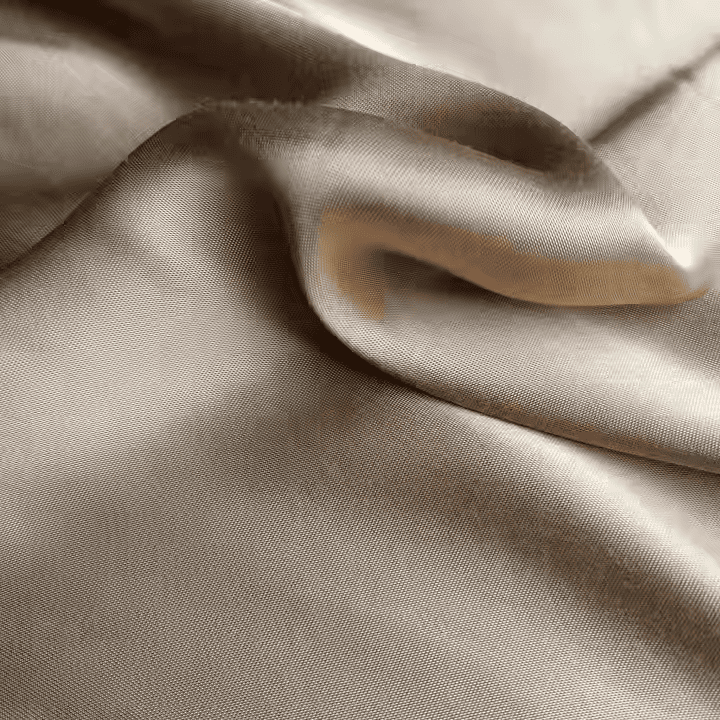
Satin is one of the most misjudged fabrics in the textile world. Many people associate satin weave with only softness and shine, but sourcing professionals know the reality is more complex. Behind its luxurious surface lies a technical structure that demands precision weaving, reliable finishing, stable dyeing, and consistent supplier capability. The real challenge is not finding satin fabric—it’s finding the right supplier who can deliver it correctly, consistently, and at scale.
Now more than ever, procurement teams want transparency: How strong is the satin? Will the shine remain after washing? Does the fabric snag easily? Can the mill maintain GSM consistency across batches? Can they support custom finishing or low MOQ development?
In short, choosing the right satin supplier determines product success. A reliable satin weave supplier should demonstrate strong fabric engineering capability, consistent GSM and density control, stable dyeing quality, proven finishing techniques, and dependable QC testing. Buyers must evaluate technical specifications, fiber types, production capacity, and long-term consistency before selecting a satin supplier.
To understand why supplier choice is so important, imagine two satin fabrics that look identical under showroom lighting. Both may feel smooth, both may have acceptable drape—but after 10 washes, one stays glossy and stable while the other pills, shrinks, or loses color. The difference is rarely the fabric itself—it is the supplier behind it.
This guide will help you avoid costly sourcing mistakes and choose a satin supplier who can deliver quality, consistency, and performance every time.
What Defines a High-Quality Satin Weave Fabric, and Which Technical Specs Matter Most for Buyers?
A high-quality satin weave fabric is the result of precise engineering—not visual appearance alone. While the iconic luster of satin is what consumers tend to notice first, professionals know that shine is only the surface indicator. True satin quality lies in the underlying structure: the accuracy of float formation, yarn characteristics, warp and weft density, GSM stability, textile finishing, and mechanical performance. Because satin depends heavily on floating yarns—sections where the yarn travels across multiple intersections—the weave exposes even the smallest inconsistency. A slight tension issue or irregular yarn twist can immediately create streaks, dull areas, or distortions.
From luxury apparel and lingerie to bedding, upholstery, and bridal fabrics, high-quality satin requires controlled weaving conditions and consistent finishing. Buyers who rely solely on appearance often misjudge quality, because satin can be made shiny even when structurally weak. Professional sourcing teams evaluate satin through measurable technical metrics that directly influence durability, drape, softness, and long-term performance. A high-quality satin weave fabric is defined by consistent float length, balanced density, accurate GSM, strong fiber selection, even dyeing, and stable finishing. Buyers should evaluate satin based on yarn count, warp density, GSM tolerance, tear strength, abrasion resistance, and sheen uniformity.
The Technical Anatomy of Premium Satin
1.1. Core Technical Specifications Every Buyer Should Check
The following metrics determine whether a satin will feel luxurious, behave well during cutting and sewing, and maintain its performance during washing and wear:
| Technical Metric | Why It Matters | Buyer’s Ideal Range |
|---|---|---|
| GSM (Weight) | Determines drape, durability | 80–150 GSM for apparel, 120–180 GSM for bedding |
| Yarn Count | Controls shine, smoothness | 50D–150D commonly used |
| Warp Density (EPI) | Affects strength & shine | Higher density = higher quality |
| Weft Density (PPI) | Adds structural balance | Keeps floats stable |
| Float Regularity | Prevents visual defects | Critical for luxury satin |
| Fiber Quality | Determines durability | Polyester HT, nylon 6, silk, cotton |
| Finishing | Final feel & performance | Calendaring, softening, anti-snag |
Top-tier satin mills control GSM within ±1–2 units, monitor warp tension digitally, and test fiber consistency before weaving. This ensures stability in mass production and prevents defects such as streaking or uneven sheen.
1.2. Why Float Regularity Determines Satin Quality
Satin’s beauty comes from its floats—the sections of yarn that glide across the surface. These floats must be:
- uniform in length
- evenly tensioned
- free of distortion
- consistently dyed
When floats vary, the fabric develops:
- cloudy streaks
- uneven reflection
- patchy shine
- surface instability
This becomes especially noticeable under direct lighting, where inconsistent floats reflect light differently.
Buyers examining satin should gently tilt the fabric under light; irregular floats will reveal themselves immediately.
Key Insight: Uneven floats = uneven shine = instant quality downgrade.
Even premium yarn cannot compensate for float inconsistency. High-end satin weavers use automatic tension compensation systems to maintain stability across long production runs.
1.3. Sheen Quality: The Most Visible But Most Misleading Indicator
Shine is the first attribute buyers notice, yet it is also the easiest to manipulate—and therefore the least reliable indicator of true satin quality. A satin can be made glossy through aggressive calendaring even when:
- GSM is unstable
- yarns are low quality
- warp density is insufficient
- durability is weak
- snag resistance is poor
- dyeing is uneven
Two satins with similar shine levels may perform differently after only a few washes. One may retain its smooth feel and structural stability, while the other loses luster, pills, or shrinks unpredictably.
This is why professional buyers evaluate satin through performance metrics, not appearance alone.
1.4. Strength Isn’t Obvious—It Must Be Tested
Satin’s structure can make durability difficult to assess without laboratory testing. Long floats make the surface seem delicate, but the actual strength depends on:
- yarn denier
- fiber type
- warp density
- finishing chemistry
Consider this comparison:
| Property | Low-Quality Satin | High-Quality Satin |
|---|---|---|
| Tensile Strength | 300–400N | 600–900N |
| Tear Strength | 8–12N | 15–22N |
| Abrasion Resistance | <1,500 cycles | 3,000–6,000 cycles |
| Colorfastness | Grade 2–3 | Grade 4–5 |
These differences matter in real-world applications:
- Apparel satin must resist seam slippage
- Bedding satin must survive 50–150 wash cycles
- Upholstery satin must endure prolonged abrasion
A satin that looks similar to the eye may fail dramatically during use if its mechanical performance is substandard.
1.5. Real Case: A Buyer Rejects a Supplier Because of GSM Variance
An EU apparel brand conducted a comparative test of satin from two suppliers. Visually, both fabrics appeared identical—same luster, same drape, similar touch. But QC testing revealed a major difference:
| Supplier | GSM on Spec | Actual GSM | Variance |
|---|---|---|---|
| A | 120 | 119–121 | ±1 GSM (Excellent) |
| B | 120 | 113–128 | ±7–8 GSM (Poor) |
Supplier B’s fabric caused multiple downstream problems:
- fabric weight shifted from batch to batch
- garment drape was inconsistent
- some pieces felt thinner
- seam performance varied
- end products in stores looked uneven
Even though Supplier B’s satin looked acceptable initially, it was disqualified due to unstable GSM.
Lesson: GSM consistency is not optional—it is a structural requirement.
1.6. Additional Technical Indicators Buyers Often Ignore
Professional buyers also evaluate:
- warp tension stability
- loom type (air-jet, rapier, water-jet)
- Dye levelness (ΔE differences after laundering)
- Heat-aging resistance
- Snag resistance rating
- Seam slippage strength
Ignoring these metrics often leads to long-term product issues such as puckering, uneven fading, or premature wear.
Luxury brands, especially those producing eveningwear and bridal collections, perform 360-degree tests before approving any satin.
1.7. Reflection
High-quality satin cannot be faked. It is engineered through precise control of yarn properties, loom calibration, warp density, GSM accuracy, and professional finishing. Any supplier can create a glossy satin, but only a technically competent mill can produce satin that maintains its appearance, strength, and stability throughout production, wear, and washing.
For buyers—especially those in apparel, bedding, and home textiles—understanding these technical indicators is essential. Quality satin begins long before the shine; it begins with disciplined engineering.
Which Fiber Types and Satin Constructions Perform Best for Different End-Use Applications?
Satin weave is one of the most versatile textile constructions, capable of dramatically shifting its performance depending on the fiber used and the specific satin harness chosen. A polyester satin can behave like a durable industrial fabric; a silk satin may feel fluid and luminous; a cotton satin offers breathable comfort, while rayon satin delivers signature drape and movement. Because satin can be engineered in multiple harness configurations—4-harness, 5-harness, warp-faced, or weft-faced—the final hand feel, tensile stability, sheen, and cost depend on a combination of both fiber science and weave engineering. Selecting the right satin for a project is therefore a technical decision grounded in end-use requirements rather than aesthetics alone. Brands, mills, and buyers who understand this relationship routinely achieve better durability, fewer returns, and stronger product positioning. Polyester satin offers the best durability and wash resistance, nylon satin excels in strength and abrasion performance, cotton satin is ideal for breathable bedding, and silk or rayon satin provides the highest drape and luxury feel. The appropriate fiber and satin structure—whether 4-harness, 5-harness, warp-faced, or weft-faced—depends entirely on the specific end-use requirements.
2.1. Comparing Fiber Performance in Satin Weave
Selecting satin fiber is a balancing act between performance expectations, tactile goals, and manufacturing cost. The matrix below compares common fibers used in satin construction and highlights their suitability across various product categories.
| Fiber Type | Shine | Strength | Breathability | Cost | Best Use |
|---|---|---|---|---|---|
| Polyester | Medium–High | High | Low–Medium | Low | Bedding, apparel, printing |
| Nylon | Medium | Very High | Medium | Medium | Linings, uniforms |
| Cotton | Low–Medium | Medium | High | Medium | Bedding, shirts |
| Silk | Very High | Medium | High | Very High | Luxury apparel |
| Rayon/Viscose | High | Low–Medium | High | Medium | Fashion, dresses |
| Acetate | Very High | Low | Medium | Medium | Linings |
Polyester and nylon dominate industrial or high-use applications due to their high strength and abrasion resistance. Cotton is the fabric of choice for breathable bedding and high-rotation apparel. Silk and rayon fill the premium aesthetic end of the market, where drape and fluidity matter more than mechanical durability. Acetate sits between these categories, offering high sheen for linings and formalwear at a moderate cost.
2.2. Satin Construction Types and Their Applications
Beyond fiber selection, the satin harness configuration directly affects stability, drape, and durability. Different industries choose satin constructions intentionally to match performance needs.
| Satin Structure | Features | Best Application |
|---|---|---|
| 4-Harness Satin (4H) | Softer, looser | Apparel, linings |
| 5-Harness Satin (5H) | Balanced, stable | Bedding, upholstery |
| Warp-Faced Satin | Stronger, smoother | High-end apparel |
| Weft-Faced Satin | Rare, decorative | Specialty design |
4H satin provides movement and flexibility, which is ideal for draping garments and fluid linings. 5H satin offers more dimensional stability, making it preferable for bedding and upholstery that must withstand repeated washing or friction. Warp-faced satin enhances shine and durability by positioning stronger warp yarns on the surface, whereas weft-faced satin appears mostly in decorative, small-batch textiles.
2.3. End-Use Recommendations
The most effective satin selection aligns fiber, GSM, finish, and weave construction with the performance expectations of each category. Below are practical guidelines followed by mills and major apparel/soft goods manufacturers.
Apparel
Use polyester or rayon satin for movement and affordability. A GSM range of 90–130 offers a balance of opacity and drape. Softening finishes improve hand feel, while a 4H satin structure provides excellent flow for dresses, skirts, blouses, and fashion tops.
Bedding
Use polyester for its wash durability or cotton satin for breathability and temperature comfort. Bedding fabrics typically run 120–160 GSM. Calendaring increases surface gloss and smoothness. A 5H construction enhances stability and prevents distortion during repeated laundering.
Linings
Nylon or polyester satin is recommended due to its glide, abrasion resistance, and lightweight nature. Typical weights fall between 60–90 GSM. Anti-static and anti-snag finishes ensure these fabrics perform well in jackets, uniforms, and technical outerwear. A 4H weave provides adequate fluidity.
Upholstery
For decorative upholstery or event drapery, engineers select heavy polyester or nylon satin between 180–260 GSM. High-twist yarns increase strength, while anti-pilling coatings protect the surface. These satins must hold shape under tension and friction, making 5H the favored structure.
2.4. Real Case Study: Choosing Satin for a Luxury Hotel Chain
A luxury hotel chain in Dubai conducted a comparative review of polyester, cotton, and rayon satin for a new bedding program. The evaluation focused on tensile strength, wash durability, color retention, and year-round comfort in a desert climate.
Polyester satin won decisively for several reasons:
- Survived more than 300 commercial wash cycles
- Showed lower shrinkage and better dimensional stability
- Maintained colorfastness against strong detergents
- Provided the best long-term cost efficiency
Cotton satin ranked second due to breathability but required more frequent replacement. Rayon satin offered exceptional comfort but scored lower on durability metrics. This case highlights how performance, not aesthetics, guides decision-making in high-traffic environments.
2.5. Critical Reflection
Choosing satin fibers and constructions is a technical process rooted in functional requirements rather than subjective preference. Luxury designers may prioritize drape, hospitality buyers focus on wash durability, and industrial manufacturers prioritize tensile strength and snag resistance. The wrong combination increases returns, reduces brand trust, and inflates production waste. The right fiber-plus-weave pairing delivers reliability, longevity, and the tactile experience consumers expect—proving that engineering, not guessing, defines successful satin products.
How Do GSM, Yarn Count, Finishing Methods, and Density Influence Satin’s Durability, Shine, and Comfort?
Satin weave performance is not determined by weave structure alone—GSM, yarn count, finishing techniques, and warp/weft density all combine to shape how satin actually behaves in the real world. This is why two satin fabrics that look similar can behave completely differently during sewing, washing, or daily use. GSM determines satin’s weight and durability, yarn count affects smoothness and shine, finishing impacts drape and surface quality, and density governs strength and consistency. Together, these factors decide whether satin feels luxurious, lasts long, and withstands repeated use.
Understanding the Core Performance Determinants
3.1. GSM (Weight): The Foundation of Satin Performance
GSM affects:
- Thickness
- Opacity
- Drape
- Abrasion resistance
- Sewing stability
GSM Guide by Application
| Application | Recommended GSM | Reason |
|---|---|---|
| Lining | 60–90 GSM | Light, smooth, low bulk |
| Fashion Apparel | 90–130 GSM | Balance of drape + durability |
| Luxury Bedding | 120–160 GSM | Softer, heavier, premium feel |
| Upholstery / Decor | 180–260 GSM | High durability |
| Industrial Satin | 150–220 GSM | Strength + stability |
Satin under 80 GSM looks shiny but tends to snag easily, while satin above 150 GSM loses drape but gains strength.
3.2. Yarn Count: The Higher the Count, the Higher the Luxury
Yarn count determines:
- Smoothness
- Surface gloss
- Drape
- Breathability
Yarn Count Comparison Table
| Yarn Count | Smoothness | Drape | Durability | Best Use |
|---|---|---|---|---|
| 50D | Very smooth | High | Low–Medium | Bridal, silky apparel |
| 75D | Smooth | High | Good | Bedding, fashion |
| 100D | Medium | Moderate | High | Uniforms |
| 150–300D | Low | Low | Very High | Upholstery |
Most bedding satin uses 75D yarn because it achieves a balance of soft feel and dependable durability.
3.3. Warp/Weft Density Determines Strength More Than Shine
Satin’s warp-faced floats mean warp density significantly affects:
- Sheen uniformity
- Snag resistance
- Tensile strength
Density Performance Table
| Density Type | Shine | Snag Resistance | Drape | Stability |
|---|---|---|---|---|
| High Warp Density | High | High | Medium | High |
| Balanced Density | Medium | Medium–High | High | Medium |
| Low Density | Medium | Low | Very High | Low |
A satin with 180 EPI (ends per inch) can outperform a 130 EPI satin in tear strength and abrasion cycles.
3.4. Finishing Methods: The Final Stage That Defines Satin Quality
Finishing influences:
- Shine
- Hand feel
- Snag resistance
- Pilling behavior
- Wrinkle resistance
Satin Finishing Comparison
| Finish Type | Effect | Best Use |
|---|---|---|
| Calendaring | High gloss, smooth surface | Bedding, luxury apparel |
| Softening | Better drape, comfort | Pajamas, dresses |
| Resin Finish | Wrinkle resistance | Uniforms |
| Heat Setting | Dimensional stability | Polyester satin |
| Anti-snag | Extra protection | Linings, workwear |
| Peach finish | Matte, smooth | Premium apparel |
Over-finishing can cause stiffness or reduced breathability, so balance matters.
3.5. How These Factors Work Together (Performance Matrix)
| Parameter | Shine | Strength | Durability | Comfort | Cost Impact |
|---|---|---|---|---|---|
| GSM ↑ | ↓ | ↑↑ | ↑↑ | ↓ | Medium |
| Yarn Count ↑ | ↑↑ | Slightly ↓ | Medium | ↑↑ | Medium–High |
| Density ↑ | ↑ | ↑↑ | ↑ | ↓ | High |
| Finishing ↑ | ↑ | Medium | ↑ (with resin) | ↑ (with softener) | Medium |
Choosing satin is a balancing act between shine, durability, comfort, and cost.
3.6. Case Study: Satin for High-End Ready-to-Wear Fashion
A French fashion label needed:
- Lightweight drape
- Moderate shine
- High colorfastness
- Clean sewing performance
Final choice:
- 75D × 90 GSM rayon-poly blend
- Softening + mild calendaring
- Balanced warp density
The result was strong runway presence and high consumer satisfaction.
3.7. Reflection
Many buyers over-focus on brightness or softness, but true satin performance depends on:
- GSM stability
- Yarn selection
- Warp/weft density
- Proper finishing
A supplier who controls all four parameters consistently delivers reliable satin quality.
Do Different Industries Require Different Satin Specifications, and How Should Buyers Match Fabric to Application?
While satin weave may appear visually similar across categories, its technical behavior changes dramatically depending on fiber composition, GSM, yarn count, float length, and finishing chemistry. A satin used for luxury bedding must survive hundreds of laundering cycles. A satin used for couture eveningwear must drape flawlessly under stage lighting. Upholstery satin must resist abrasion and snagging in a way apparel satin never needs to. Industrial satin, meanwhile, enters environments where mechanical strength far outweighs sheer appearance.
Because of these wide-ranging requirements, satin cannot be sourced as a one-size-fits-all commodity. Each industry demands its own performance standards, manufacturing tolerances, and finishing techniques. The procurement challenge is not simply “finding satin,” but selecting the correct satin engineered for the end use—matching technical specification to functional need. Brands that overlook this alignment often encounter seam failures, fading issues, poor drape, customer dissatisfaction, or premature product wear. Different industries require tailored satin specifications depending on durability, softness, drape, breathability, abrasion resistance, and finishing needs. Buyers must match GSM, fiber type, yarn count, and finishes to the intended application—whether for bedding, apparel, linings, uniforms, upholstery, decorative use, or industrial textiles.
Industry-Specific Satin Requirements
Understanding satin performance begins with recognizing that GSM, fiber type, weave structure, and finishing chemistry determine how the fabric behaves in real-world use. Below is a comprehensive breakdown of how industries select satin based on functional, aesthetic, and durability requirements.
4.1 Satin for Apparel (Fashion & Casualwear)
Fashion satin must prioritize fluidity, comfort, and aesthetic appeal. Apparel consumers focus on softness, shine, and movement, while manufacturing teams prioritize sewability and durability during production.
Recommended Specs:
- GSM: 90–130
- Yarn Count: 50D–75D
- Finishing: softener, optional calendaring for mild luster
- Fiber: rayon for drape, polyester for affordability, silk for luxury
- Weave: 4H satin for maximum fluidity
Why it matters: Apparel satin should feel lightweight and flexible. A GSM that is too high results in stiffness; too low reduces opacity and creates seam-pull issues. Rayon and silk offer the best body contouring, while polyester provides wrinkle resistance and cost efficiency.
Common apparel uses include:
- Dresses
- Blouses
- Skirts
- Lingerie
- Performance costumes
4.2 Satin for Luxury Bedding (Hotels & Retail)
Bedding satin must strike a balance between comfort and extreme wash durability. Hotel-grade satin needs to survive commercial laundering conditions while maintaining sheen and softness.
Recommended Specs:
- GSM: 120–160
- Yarn Count: 75D
- Finishing: calendaring for shine, softener for hand feel
- Fiber: polyester for industrial washing; cotton for breathability
- Weave: 5H satin for greater dimensional stability
Why: Luxury bedding must handle 200–300 wash cycles without losing luster or developing fuzz.
Case Example: A UAE hospitality supplier recorded 300-wash durability using a 140 GSM polyester satin, with minimal loss in sheen and hand feel—ideal for hotel environments.
4.3 Satin for Linings (Jackets, Suits, Bags)
Lining satin operates within high-friction environments, requiring anti-static behavior and resistance to abrasion.
Specs:
- GSM: 60–90
- Fiber: nylon preferred for strength; polyester as alternative
- Finishing: anti-static, anti-snag, softener
- Weave: 4H satin
Why: Lining fabrics must glide smoothly over clothing and skin while resisting wear from constant motion and friction. Nylon satin offers the best combination of tensile strength and fluid glide.
Common applications:
- Suit linings
- Jacket linings
- Bag interiors
- Handbag pockets
4.4 Satin for Uniforms and Workwear
Uniform satin is not designed for drape—it is designed for durability, structure, and wrinkle resistance.
Specs:
- GSM: 120–160
- Fiber: polyester or nylon
- Finishing: resin finish, anti-pilling, anti-snag
- Weave: 5H stable weave
Why: Uniforms require stronger dimensional stability and resistance to repeated washing, sweat exposure, and physical abrasion. Resin finishes improve wrinkle resistance and shape retention.
Applications include:
- Airline uniforms
- Hospitality uniforms
- Stage uniforms and formal costumes
4.5 Satin for Upholstery & Décor
Upholstery satin faces environmental challenges that apparel satin does not—frequent rubbing, sunlight exposure, and long-term pressure.
Specs:
- GSM: 180–260
- Fiber: high-tenacity polyester or nylon
- Finishing: stain-resistant, anti-pilling, optional UV stabilization
- Weave: heavy 5H or structured satin
Why: Furniture fabrics must withstand abrasion levels of 15,000–20,000 Martindale cycles in residential settings and significantly more in commercial spaces. High GSM ensures body and longevity.
Applications include:
- Headboards
- Luxury seating
- Decorative cushions
- Event décor
4.6 Satin for Industrial Applications
Industrial satin is used for structural or semi-structural components in automotive, travel, and aerospace environments.
Common uses:
- Automotive interior trim
- High-end luggage linings
- Aerospace interior finish components
Specs:
- GSM: 150–220
- Fiber: high-tenacity nylon 6
- Finishing: anti-snag, anti-abrasion
- Testing Requirements:
- Tear strength ≥ 20N
- Abrasion ≥ 3000 cycles
- Dimensional stability post-heat
Industrial satin prioritizes mechanical stability and surface integrity over softness.
4.7 Satin for Printing (Digital, Sublimation)
Printing-oriented satin requires excellent surface uniformity and dye penetration.
Specs:
- Fiber: 100% polyester
- Finishing: sublimation coating or pre-treatment (optional)
- GSM: 90–140
Polyester satin is valued for:
- High color vibrancy
- Crisp line detail
- Uniform light reflection
- Excellent sublimation uptake
It is commonly used for:
- Lightboxes
- Fashion prints
- Scarves
- Decorative textiles
4.8 Industry–Specification Matching Table
| Industry | Weight (GSM) | Fiber | Key Finishes | Must-Have Properties |
|---|---|---|---|---|
| Bedding | 120–160 | Polyester/Cotton | Calendaring | Wash durability |
| Fashion Apparel | 90–130 | Rayon/Poly/Silk | Softener | Drape & comfort |
| Lining | 60–90 | Nylon/Poly | Anti-static | Smoothness & snag resistance |
| Upholstery | 180–260 | Poly/Nylon | Anti-pilling | High abrasion resistance |
| Uniforms | 120–160 | Poly/Nylon | Resin | Strength & wrinkle resistance |
| Printing | 90–140 | Polyester | Sublimation-ready | Vibrant color output |
This table demonstrates why no single satin construction works for all industries.
4.9 Reflection
Satin must be sourced with precision. Each application—whether apparel, bedding, upholstery, or industrial—requires a different blend of GSM, weave stability, fiber type, and finishing chemistry. The more closely buyers match fabric specifications to the final use environment, the fewer quality issues they encounter. Proper specification reduces risk, enhances lifespan, and ensures satin performs as beautifully as it looks.
Is Supplier Capability More Important Than Fabric Samples, and How Do You Evaluate a Satin Mill’s True Production Strength?
In satin fabric sourcing, many buyers rely too heavily on sample books, believing that a single beautiful swatch reflects a supplier’s manufacturing competence. Unfortunately, satin is one of the most unforgiving weaves when it comes to production inconsistency. A visually impressive sample may come from a carefully controlled micro-batch, a special finishing run, or even outsourced production, while the actual bulk order could be woven on different machines, with different yarn batches, or under looser QC management.
This is why supplier capability—not the sample—is the true predictor of eventual quality. Satin’s signature floats make every weaving mistake more visible. A minor tension imbalance becomes a streak; slight yarn variation becomes a sheen difference; poor finishing becomes stiffness or pilling after the first wash. Evaluating a satin mill requires understanding its technical infrastructure, operator skill, sourcing system, and historical consistency. Fabric swatches alone cannot reveal any of these factors. Supplier capability outweighs sample quality because satin fabric requires precise weaving, finishing stability, and batch consistency. Evaluating a satin mill’s real strength involves checking machinery, yarn sourcing, dyeing capacity, quality-control systems, certifications, lead-time reliability, and historical bulk performance—not just swatches.
Supplier Capability Is the Hidden Quality Indicator
Evaluating a satin supplier is closer to auditing a production ecosystem than reviewing fabric aesthetics. Satin highlights every inconsistency, which means mills must maintain high discipline from yarn storage to finishing. The more sensitive the weave, the more a buyer should focus on capabilities, not samples.
5.1. Why Satin Weaving Requires Higher Supplier Skill
Satin is dominated by floating yarns. Unlike plain weave, which masks imperfections through dense interlacings, satin exposes the yarn surface directly. This means:
- even slight loom tension deviations can create visible streaks
- dyeing inconsistencies reflect immediately because satin’s sheen exaggerates differences
- finishing temperature variations can affect drape and softness across the roll
- low-quality yarn produces bumps, slubs, and micro-distortions that ruin the fabric surface
Satin does not naturally disguise flaws. Instead, it magnifies them. The weave structure has very little room for error, making satin one of the hardest fabrics to produce consistently in bulk.
Conclusion: choosing a satin supplier is not about liking the sample—it’s about trusting the machinery, technicians, and process control behind it.
5.2. The 8 Core Indicators of a Strong Satin Supplier
| Indicator | Why It Matters |
|---|---|
| Modern Looms (Air-jet/Water-jet/Jacquard) | Provides float accuracy & density consistency |
| Stable Yarn Sources | Fiber uniformity → smoother satin |
| Dye House Integration | Ensures colorfastness & shade consistency |
| Finishing Line Control | Decides final softness, shine, snag resistance |
| QC Lab Capability | Guarantees measurable performance |
| Production Scale | Determines reliability & lead time |
| Experienced Technicians | Essential for float control & tension adjustment |
| Consistency Track Record | More important than one perfect sample |
These capabilities create predictable quality. Weak suppliers may produce beautiful swatches but cannot repeat the performance across multiple shipments.
A capable satin mill usually offers proof through technical sheets, machine lists, QC logs, and historical customer data. Mills that avoid transparency are often inconsistent.
5.3. On-Site Evaluation: What Buyers Should Look For
When visiting or auditing a satin mill, buyers should observe more than showroom samples. The real assessment happens on the production floor.
1. Loom Type & Machine Condition
High-quality satin typically requires precision control, best achieved through:
- Tsudakoma water-jet looms
- Toyota or Picanol air-jet looms
- Dornier weaving systems
Older shuttle looms or poorly maintained machines often show:
- irregular floats
- slub formation
- inconsistent warp tension
- variation in sheen across the fabric width
For satin, machinery directly determines surface clarity.
2. Yarn Storage and Quality Control
Buyers should check whether yarn:
- is stored in humidity-controlled areas
- is separated and labeled by batch
- comes from reliable spinners
- includes high-tenacity polyester or nylon rather than cheaper low-twist yarn
Poor yarn equals poor satin, regardless of loom quality.
3. Dyeing Line Capability
A strong satin mill typically controls dyeing in-house. Key questions include:
- Are disperse dyes and chemicals sourced from branded suppliers?
- Is shade consistency monitored with spectrophotometers?
- Do they test colorfastness (washing, rubbing, perspiration, light)?
- Are dyeing logs documented and traceable?
Because satin reflects light differently, shade inconsistencies appear more obvious than in matte fabrics.
4. Finishing Line Expertise
Finishing is where satin becomes luxurious—or becomes defective.
A capable finishing line ensures:
- stable, repeatable shine
- controlled softness
- snag resistance
- pilling resistance
- dimensional stability
- consistent hand feel across batches
High-end mills use modern stenter frames, calendering machines, and automated finishing recipes monitored digitally.
5.4. Supplier Capability Checklist (Printable & Copy-Friendly)
Evaluate supplier on a score of 1–5 each:
| Category | Score (1–5) |
|---|---|
| Loom Technology | ☐ 1 ☐ 2 ☐ 3 ☐ 4 ☐ 5 |
| Yarn Quality Control | ☐ 1 ☐ 2 ☐ 3 ☐ 4 ☐ 5 |
| Dyeing Precision | ☐ 1 ☐ 2 ☐ 3 ☐ 4 ☐ 5 |
| Finishing Capability | ☐ 1 ☐ 2 ☐ 3 ☐ 4 ☐ 5 |
| QC Testing Equipment | ☐ 1 ☐ 2 ☐ 3 ☐ 4 ☐ 5 |
| MOQ Flexibility | ☐ 1 ☐ 2 ☐ 3 ☐ 4 ☐ 5 |
| Lead Time Reliability | ☐ 1 ☐ 2 ☐ 3 ☐ 4 ☐ 5 |
| Bulk Consistency History | ☐ 1 ☐ 2 ☐ 3 ☐ 4 ☐ 5 |
Total Score ≥ 32: Strong satin supplier Total Score 24–31: Acceptable with monitoring Total Score < 24: High risk and should be avoided
This evaluation matrix helps sourcing teams make objective decisions rather than relying on subjective fabric impressions.
5.5. Case Study: A US Buyer Chooses Supplier B Over Supplier A
A US womenswear brand compared two mills:
- Supplier A offered stunning samples with exceptional shine
- Supplier B offered slightly less shiny samples but had superior production capabilities
The brand conducted an audit and found:
- Supplier B had full in-house dyeing facilities
- Modern air-jet looms with tension control systems
- A new finishing line with silicone softening and anti-snag capability
- Transparent QC reports with batch histories
The results during bulk production:
- rejection rate only 0.3%
- shade deviation nearly zero
- delivery reliability improved
- long-term pricing became stable due to production efficiency
Supplier A later revealed inconsistent subcontracting practices—explaining the risky inconsistency in bulk.
Lesson: a perfect sample means nothing without back-end capability.
5.6. Reflection
The true measure of a satin supplier is not the fabric sample they hand you—it is the consistency they can produce at scale. Satin exposes every weakness in weaving, dyeing, finishing, and QC systems. A reliable mill invests in technology, experienced technicians, and disciplined production management. Buyers who evaluate capability rather than appearance dramatically reduce risk, lower rejection costs, and ensure stable quality over long-term cooperation.
A satin sample can be seductive, but supplier capability determines whether your brand thrives—or suffers—once the bulk arrives.
Are Quality-Control Systems and Testing Standards Reliable Indicators When Sourcing Satin Weave Fabrics?
Quality-control systems are not simply administrative steps—they are the core infrastructure that determines whether satin weave fabrics will perform as expected in apparel, home textiles, hospitality, automotive interiors, and other demanding categories. Satin is a weave that makes surface irregularities more visible than plain or twill constructions; the long floats that create its signature sheen also expose the fabric to snagging, pilling, and dye inconsistency. Because of this, buyers cannot rely on visual inspection alone. Rigorous QC protocols and standardized testing frameworks provide the only objective way to verify whether satin will maintain its beauty and mechanical stability over time. Sourcing teams, especially in fashion and décor, increasingly consider QC documentation a non-negotiable factor when evaluating mills. Quality-control systems and standardized tests—including GSM verification, tensile strength, tear resistance, abrasion resistance, pilling, snagging, and colorfastness—serve as reliable indicators of satin fabric quality. Trustworthy suppliers provide lab reports and comply with ASTM, ISO, and AATCC standards to ensure consistency and performance.
The QC & Testing Framework for Satin Weave Fabrics
6.1. Essential QC Tests for Satin Fabrics
QC testing offers measurable assurance that satin fabrics meet durability, appearance, and stability requirements. Below is a consolidated list of the most relevant tests used globally by mills and certification labs.
| Test | Purpose | Standard |
|---|---|---|
| GSM Test | Confirms weight consistency | ASTM D3776 |
| Tensile Strength | Measures breaking force | ASTM D5034 |
| Tear Strength | Evaluates ripping resistance | ASTM D1424 |
| Abrasion (Martindale) | Measures surface durability | ISO 12947 |
| Pilling Test | Checks fiber fuzzing | ASTM D4970 |
| Snagging Test | Evaluates float vulnerability | ASTM D3939 |
| Colorfastness to Washing | Assesses dye stability | AATCC 61 |
| Colorfastness to Rubbing | Checks abrasion dye loss | AATCC 8 |
| Dimensional Stability | Measures shrinkage | AATCC 135 |
These tests are crucial because satin’s smooth face will highlight even minimal inconsistency. A deviation of just 10 GSM or a pilling grade drop from 4 to 3 can visibly compromise the final product once garments are worn or bedding is washed.
Well-managed mills typically provide full QC test reports per batch or per lot, reinforcing traceability.
6.2. Why Snag and Pilling Tests Matter Most for Satin
Among all QC categories, snagging and pilling are the most important for satin because of the weave structure. Satin’s long floats sit on the fabric surface, creating a sleek shine but also increasing vulnerability.
Snagging risks arise from:
- raised jewelry
- rough surfaces
- Velcro
- friction during laundering
- abrasion from repeated movement
Pilling occurs more readily in fibers with shorter staple lengths or insufficient twist.
Buyers sourcing satin for apparel—especially dresses, blouses, linings, and scarves—should insist on:
- Mace snag tester performance evaluation
- A pilling grade of 3.5–4+ for fashion applications
- Anti-snag finishing when necessary (common in nylon satin)
Low-quality satin—especially rayon satin with insufficient twist—may exhibit visible fuzzing after only a few wears, leading to high return rates. This is one of the most frequent causes of dissatisfaction in low-cost women’s apparel.
6.3. The Importance of Colorfastness in Satin Procurement
Colorfastness is especially important in satin fabrics because satin’s smooth surface and sheen amplify any shift in dye tone. A minor change that might go unnoticed on matte cotton becomes immediately visible on satin.
Common colorfastness problems include:
- Shade variation between rolls
- Dye migration after washing
- Rubbing-induced fading on high-friction zones
- Uneven surface reflectivity due to inconsistent finishing
A reliable dyeing operation typically delivers:
- Washing colorfastness: Grade 4–5
- Rubbing colorfastness: ≥3–4 dry/wet
- Shade tolerance within ΔE 1.0–1.5 between lots
Inconsistent shade is one of the most expensive issues for apparel and home textile producers, often forcing entire batch replacements.
6.4. QC During Production (Inline Control)
Inline quality control—not just post-production inspection—is the best predictor of satin reliability. Satin is sensitive during weaving and finishing; the smallest deviation in tension or finishing temperature can alter the fabric’s surface.
Reliable mills perform the following controls:
- Loom tension monitoring to prevent uneven floats
- Density checks across warp and weft to ensure stability
- Pick glass inspections to detect float distortion or mis-picks
- Coating/polishing records to maintain surface uniformity
- Continuous roll mapping to track defects in real-time
These procedures reduce risks such as:
- Stripe defects caused by uneven tension
- Density imbalance leading to visible texture variance
- Float inconsistency producing irregular shine
- Finishing defects, such as glazing or dull patches
Inline QC is the difference between a mill that catches defects early and one that delivers inconsistent lots to buyers.
6.5. Case Study: QC Saves a Client from Major Production Loss
A European home-textile brand reported subtle shade variations and uneven shine across several satin rolls. The discrepancies were minor but significant enough to cause problems in luxury bedding sets where panel matching is essential.
The supplier’s QC team initiated a diagnostic investigation and discovered the issue: a dye pump pressure fluctuation during batch dyeing, resulting in inconsistent liquor flow.
Because the mill maintained batch-level QC checkpoints and performed random roll audits, the defect was detected early. Only 7 rolls were compromised, rather than the full 200-roll production run.
This incident demonstrated two important lessons:
- QC protects the buyer by preventing large-scale shipment issues
- QC protects the mill by catching defects early before they escalate into financial losses
This level of control differentiates professional mills from low-cost vendors.
6.6. Reflection
Quality control is more than a formality—it is a non-negotiable requirement when sourcing satin weave fabrics. Satin’s construction makes imperfections more visible than in most other woven fabrics, meaning poor QC leads to immediate, customer-facing issues.
The rule is simple:
If a supplier cannot produce consistent laboratory results, they cannot produce consistent satin.
Strong QC systems ensure durability, color accuracy, dimensional stability, and appearance integrity—elements that directly impact product longevity and brand reputation. In the global textile market, QC-backed satin is not merely better; it is the only responsible choice.
How Should Procurement Teams Compare Pricing, MOQs, Lead Times, and Service Levels Among Satin Fabric Suppliers?
Choosing a satin supplier is not only about quality—it’s also about operational reliability. Two suppliers may offer similar fabric specifications, yet differ drastically in pricing transparency, delivery punctuality, and communication responsiveness. These non-technical factors often influence total cost far more than buyers realize. Procurement teams should compare satin suppliers by evaluating true fabric cost, MOQ flexibility, lead-time accuracy, service responsiveness, capacity stability, and long-term pricing consistency. The best suppliers provide transparent quotations, realistic MOQs, predictable timelines, and strong post-sales support.
The Real Procurement Comparison Framework
7.1. Understanding Satin Pricing Structures
Satin fabric pricing depends on:
- Fiber type (polyester < nylon < cotton < rayon < silk)
- Yarn count (higher counts increase cost)
- GSM (higher GSM requires more material)
- Finishing processes (calendaring, softening, resin finishing)
- Dyeing method (reactive, disperse, vat, pigment)
- Order quantity (bulk orders reduce price)
Price Influence Table
| Factor | Impact on Price | Notes |
|---|---|---|
| Fiber Type | High | Silk > Rayon > Nylon > Cotton > Polyester |
| GSM | Medium | Higher GSM = higher cost |
| Color Type | Medium | Dark colors cost more |
| Finishing | Medium–High | Anti-snag/peach finish increases cost |
| Order Size | Very High | Larger orders = lower unit cost |
A satin supplier offering unusually low prices often compromises in yarn quality or finishing durability.
7.2. MOQ Comparison: The Silent Barrier for Many Buyers
MOQ varies according to:
- Dyeing batch size
- Yarn stock availability
- Factory production style
Typical Satin MOQ Ranges
| Supplier Type | MOQ (Meters) | Notes |
|---|---|---|
| Large Mills | 1,000–3,000m | Stable but inflexible |
| Mid-size Mills | 300–1,000m | Most common and balanced |
| Flexible Factories | 50–300m | Ideal for sampling or new SKUs |
Low MOQ allows faster product testing before committing to mass production.
7.3. Lead Time Reliability: The Most Overlooked KPI
Even the best satin fabric becomes useless if delivered late.
Standard Lead Times
| Stage | Time |
|---|---|
| Sample | 3–7 days |
| Bulk Production | 15–30 days |
| Dyeing (Reactive/Disperse) | +3–7 days |
| Custom Finishing | +5–10 days |
Delayed dyeing is the most common cause of satin delivery issues.
A reliable supplier offers:
- Realistic timelines
- Transparent order updates
- Buffer management for large orders
7.4. Service Level & Communication: The Hidden Cost Saver
A high-quality satin supplier should:
- Provide complete QC reports
- Offer alternative specifications when needed
- Reply within 12–24 hours
- Share test data proactively
- Communicate delays early
Poor communication can double project duration and increase hidden costs.
7.5. Supplier Comparison Checklist (Copy-Friendly)
| Category | Supplier A | Supplier B | Supplier C |
|---|---|---|---|
| Price Competitiveness | ☐ | ☐ | ☐ |
| MOQ Flexibility | ☐ | ☐ | ☐ |
| Lead Time Reliability | ☐ | ☐ | ☐ |
| QC Transparency | ☐ | ☐ | ☐ |
| Finishing Capability | ☐ | ☐ | ☐ |
| Dyeing Precision | ☐ | ☐ | ☐ |
| Communication Speed | ☐ | ☐ | ☐ |
| After-Sales Support | ☐ | ☐ | ☐ |
7.6. Case Study: A Buyer Chooses the “Higher-Priced” Supplier
A Canadian fashion brand compared two satin suppliers:
- Supplier A: Lower price
- Supplier B: Slightly higher price but more stable
Trial orders revealed:
Supplier A:
- GSM inconsistency
- Uneven surface shine
- 6% defect rate
Supplier B:
- Accurate GSM
- No shade variation
- On-time delivery for 8 orders
Result: Supplier B saved the brand tens of thousands in reduced returns and fewer QC problems.
7.7. Reflection
The cheapest satin supplier is rarely the best option. The ideal supplier is the one with the lowest total cost of ownership—including consistency, communication, reduced rework, and predictable production timelines. Long-term reliability almost always outweighs short-term savings.
What Sourcing Risks Should Buyers Avoid, and How Can Long-Term Supplier Partnerships Improve Satin Fabric Consistency?
At first glance, satin sourcing appears straightforward: select the fabric, confirm the color, and place the order. Yet satin is one of the least forgiving structures in textile manufacturing because its beauty relies on long floats, precise yarn tension, and perfectly aligned finishing. Any fluctuation—however small—shows up instantly. Shade streaks become visible under retail lighting, GSM variations affect drape and garment fit, and weak finishing leads to snagging or premature pilling. For brands working in apparel, bedding, or upholstery, these issues can translate to costly production delays, customer returns, and damaged reputation.
The truth is simple: satin requires disciplined manufacturing and equally disciplined sourcing. Buyers who treat satin as a commodity face unpredictable outcomes. Buyers who invest in structured risk management and long-term supplier partnerships consistently achieve better quality, lower defect rates, and more stable lead times. Key satin sourcing risks include inconsistent GSM, shade variation, weak snag resistance, poor finishing, and unstable lead times. Building long-term partnerships with reliable mills improves consistency by aligning standards, stabilizing production parameters, and enabling collaborative problem-solving across seasons.
Risk Management + Long-Term Supplier Strategy
To manage satin successfully, buyers must understand both what can go wrong and how continuous supplier relationships reduce these risks over time. Below is a detailed framework used by professional procurement teams.
8.1 The 6 Most Common Satin Sourcing Risks
Satin risks fall into three categories: structural, aesthetic, and operational. Each risk results from specific weaknesses in weaving, dyeing, or finishing.
| Risk | Cause | Impact |
|---|---|---|
| Shade Variation | Poor dye-bath control or inconsistent temperature/chemical dosing | Customer complaints; mismatched garments |
| GSM Fluctuation | Irregular warp tension, inconsistent weft insertion | Different drape, seam misalignment, QC failure |
| Snagging Issues | Weak finishing; loose satin floats | High return rates; poor brand perception |
| Pilling | Low-grade fibers, insufficient anti-pilling finishing | Shorter product life; fuzziness after wash |
| Late Delivery | Low capacity, overbooking, poor planning | Missed launch dates; downstream production delays |
| Fabric Shrinkage | Poor heat-setting or inadequate stabilization | Garment deformation; pattern issues |
Across global apparel factories, satin-related returns are 2–3× higher than plain-weave items—precisely because buyers underestimate these risks.
8.2 How to Prevent These Risks
The most effective satin procurement strategies rely on preventative checks rather than corrective actions after issues arise. Buyers should treat satin sourcing the same way performance industries treat critical components: verify inputs, control processes, and test outcomes.
Always request production swatches, not showroom swatches Showroom swatches are often made on smaller, better-controlled dye lots. Production swatches reflect real loom tension and dye-bath behavior.
Review the supplier’s shade-batch control logs Professional mills maintain a digital shade archive with ΔE readings for each dye lot. A supplier without such records is a red flag.
Confirm GSM tolerance expectations Best mills: ±3% Average mills: ±5% Risky mills: ±8–10%
GSM variation directly affects cutting, drape, and garment sizing.
Require QC reports before shipment A reliable satin mill automatically performs:
- Snag resistance
- Pilling
- Tensile strength
- Colorfastness
- GSM and shrinkage checks
Begin with pilot orders of 100–300 meters This reveals weaving consistency and finishing performance before scaling.
Audit the supplier’s finishing line In satin, finishing quality influences 50% of final feel and sheen. Poor softeners, uneven calendaring, or inconsistent heat-setting cause most satin complaints.
These six actions dramatically reduce the probability of satin defects appearing in the finished product.
8.3 Why Long-Term Supplier Partnerships Improve Satin Quality
Satin consistency rarely comes from transactional buying. It emerges through repetition. When a supplier learns a buyer’s specific preferences, they adapt production variables accordingly.
Long-term partnerships create the following advantages:
- Stable yarn sourcing because mills reserve fiber lots specifically for that buyer
- Predictable warp/weft density calibrated to the brand’s target GSM
- Accurate shade matching since mills maintain a shade library for each client
- Dedicated loom planning that prevents overbooking and unstable delivery
- Custom finishing profiles, such as softness level, calendaring intensity, or anti-snag chemistry
- Priority access to capacity during peak seasons
- Fewer compliance disputes because both sides understand expectations
Over time, supplier familiarity reduces mistakes and improves efficiency. Data from home textile and apparel retailers shows that long-term mill partnerships lower fabric-related defect rates by 40–65% over 2–5 years.
In short, satin quality improves when the relationship becomes collaborative rather than transactional.
8.4 Case Study: A European Retailer Builds a 5-Year Satin Partnership
A mid-sized European fashion and bedding retailer needed consistent satin for dresses and pillowcases. They began cautiously—testing multiple suppliers, running small batch orders, and evaluating months of performance data.
Year 1:
- Small 200–300 m test orders
- High initial defect rate of ~3%
- Shade issues across batches
Year 3:
- Supplier reserved dedicated looms for them
- Custom finishing formula developed for softness
- ΔE shade variation reduced below 0.8
Year 5:
- Monthly volume reached 15,000 m
- Defect rate dropped to 0.4%
- Lead times stabilized at 18–21 days
- Retail customer satisfaction increased significantly
By cultivating a partnership rather than switching suppliers frequently, the retailer saved money, reduced scrap fabric, and launched collections on time with fewer returns.
8.5 Supplier Partnership Levels (Professional Framework)
The maturity of the buyer–supplier relationship determines satin stability. Here’s how procurement teams classify partnership depth:
| Partnership Level | Characteristics | Buyer Benefit |
|---|---|---|
| Transactional | One-off orders; no standards | Highly variable; minimal reliability |
| Preferred Supplier | Recurring orders | Stable QC; moderate reliability |
| Strategic Partner | Agreed standards, forecast sharing | High consistency; low defect rates |
| Co-development Partner | Joint R&D on fibers, finishes, GSM | Maximum performance, best pricing |
Most satin success stories occur at the Strategic Partner or Co-development levels, where mills invest in the buyer’s long-term success.
8.6 Reflection
Satin sourcing rewards patience and long-term thinking. Chasing the lowest price often leads to unstable weaving, inconsistent finishing, unpredictable lead times, and costly returns. The best satin fabrics aren’t found—they’re built collaboratively over time. When buyers treat mills as strategic partners, not interchangeable vendors, consistency improves, risk declines, and every collection benefits. In satin procurement, partnerships—not transactions—create true competitive advantage.
Satin Sourcing Is a Technical Decision—Choose the Supplier, Not the Sample
Satin weave fabric is one of the most nuanced, performance-sensitive textiles in modern production. Its beauty hides complexity: GSM, yarn count, density, finishing, and dyeing all require technical control. That’s why supplier capability matters more than showroom samples.
In this guide, we explored:
- What defines high-quality satin
- How fiber and weave influence performance
- How GSM, yarn count, and finishing affect durability
- How to match satin to industry applications
- How to evaluate supplier capability
- Why QC systems and lab tests matter
- How to compare pricing, MOQ, and lead times
- How long-term partnerships ensure consistent quality
When you choose a satin supplier, you’re not just buying fabric—you’re securing consistency, reliability, and product performance for years to come.
And that is where SzoneierFabrics stands apart.
Ready to Source Premium Satin Weave Fabrics? Work With SzoneierFabrics
SzoneierFabrics has over 18 years of experience in:
- Satin weave R&D & manufacturing
- Polyester, nylon, cotton, rayon, and blended satins
- Custom GSM development & density control
- Professional finishing: calendaring, softening, anti-snag, resin coating
- Fast sampling & low MOQ development
- Strict QC and fabric testing standards
- Stable long-term production capacity
Whether you need satin for:
- Apparel
- Luxury bedding
- Linings
- Upholstery
- Industrial textiles
- Printing applications
We can engineer the exact satin specification to match your performance and cost needs.
Tell us your requirements—let Szoneier develop satin fabrics tailored perfectly to your project.
satin weave fabric supplier, satin fabric sourcing guide, how to buy satin fabric, satin weave buyer’s guide, satin fabric specifications, choosing satin fabric supplier, satin fabric MOQ comparison, satin fabric pricing factors, satin GSM guide, satin yarn count, satin finishing techniques, satin fabric QC standards, satin fabric testing methods, satin shade variation issues, satin snag resistance, satin durability rating, satin fabric for apparel, satin fabric for bedding, satin lining fabric supplier, satin upholstery fabric sourcing, polyester satin supplier, rayon satin fabric supplier, nylon satin fabric supplier, satin fabric manufacturing process, satin fabric quality control checklist, satin textile procurement guide, satin weave production capability, satin fabric lead times, satin fabric supplier evaluation, satin fabric sourcing risks
Can't find the answers?
No worries, please contact us and we will answer all the questions you have during the whole process of bag customization.
Make A Sample First?
If you have your own artwork, logo design files, or just an idea,please provide details about your project requirements, including preferred fabric, color, and customization options,we’re excited to assist you in bringing your bespoke bag designs to life through our sample production process.