Skip to content
In spinning mills, cost problems rarely start with electricity prices or labor rates. They start much earlier—inside the cotton itself.
Two mills can run the same machines, produce the same yarn count, and pay similar wages, yet one consistently hits cost targets while the other struggles with waste, downtime, and quality claims. The difference is often blamed on “management” or “maintenance,” but in practice, it’s usually cotton selection. Fiber length, micronaire, contamination, and preparation quality quietly decide whether machines run smoothly or fight back every shift. Spinning mill efficiency is directly shaped by cotton type. Fiber characteristics such as staple length, micronaire, maturity, and contamination determine yarn breakage, waste percentage, machine speed, and labor intervention. Choosing the right cotton for the spinning system—not just the cheapest cotton—reduces true production cost per kilogram far more reliably than optimizing machinery alone.
Anyone who has stood on a spinning floor during a bad run knows the feeling: alarms, broken ends, operators running instead of monitoring. One small fiber decision upstream can echo through every spindle downstream. Let’s unpack what “efficiency” really means in spinning—and why cotton type sits at the center of it.
What does “spinning mill efficiency” really mean, and which KPIs link directly to cost per kilogram of yarn?

In many sourcing discussions, spinning efficiency is treated as a single percentage on a production report. In reality, it is far more complex—and far more financial. For a spinning mill, efficiency is best understood as how effectively raw cotton is converted into sellable yarn with the least possible loss of fiber, time, energy, and human effort. The moment any one link in that chain weakens, the final cost per kilogram of yarn rises, even if the raw cotton invoice initially looked attractive.
This is why experienced mills rarely talk about efficiency in isolation. They talk about cost-normalized efficiency—how many kilograms of yarn meeting specification leave the factory gate per unit of cotton, energy, labor, and machine time consumed. From that perspective, efficiency is not a single number but a chain reaction driven heavily by cotton behavior across the entire spinning process.
Breaking down “efficiency” into real cost drivers
To understand how efficiency truly works, it helps to stop thinking in terms of machine speed alone and start looking at where money leaks out of the system. Those leaks are usually invisible on daily dashboards but become very obvious in monthly cost statements.
In practice, five areas dominate the cost structure of spinning mills:
- Fiber loss and waste
- Machine downtime and instability
- Energy consumption per unit output
- Labor intensity and intervention frequency
- Rework and quality-related yield loss
Each of these areas is directly influenced by cotton characteristics such as cleanliness, length distribution, strength, maturity, and uniformity. The KPIs below are not abstract technical metrics—they are financial multipliers.
A) The KPIs that actually move yarn cost
Not all spinning KPIs deserve equal attention. Some look impressive in reports but have little impact on unit economics. Others quietly determine whether a mill makes or loses money on a particular yarn count.
The table below highlights the indicators that translate most directly into cost per kilogram of finished yarn.
| KPI | What it measures | Why it affects cost |
|---|---|---|
| End breakage rate | Yarn breaks per spindle-hour | Higher breaks = more labor + downtime |
| Waste % | Fiber lost during processing | Lost cotton = paid but unsold |
| Machine utilization | % of running time | Idle machines dilute fixed costs |
| Energy per kg | kWh/kg of yarn | Sensitive to fiber smoothness |
| First-pass yield | Yarn meeting spec without rework | Rework hides cost but doesn’t erase it |
What matters most is that cotton type influences every row in this table. Even with the same machinery, the same operators, and the same settings, changing cotton input can shift these KPIs dramatically. This explains why mills that invest heavily in new equipment but continue using inconsistent or poorly matched cotton often see far smaller gains than expected.
B) Why “cheap cotton” often raises total cost
One of the most common sourcing mistakes is evaluating cotton purely on price per ton, rather than on cost per kilogram of yarn shipped. The two numbers are not only different—they often move in opposite directions.
Consider a practical example from a mid-count ring-spinning mill running 30s–40s yarn:
- Cotton A: lower purchase price, higher trash content, wider length distribution
- Cotton B: 3–5% higher price, cleaner, better length uniformity and maturity
Over a one-month production cycle, the mill observed the following:
- Cotton A caused higher blowroom waste, more carding loss, and frequent end breaks
- Operators spent more time piecing and less time supervising multiple frames
- Overtime labor increased during peak instability periods
Cotton B, by contrast, showed:
- Lower waste at opening and carding
- Smoother drafting behavior
- Higher spindle utilization and fewer stoppages
When all costs were normalized per kilogram of yarn that actually passed quality inspection and was shipped, Cotton B delivered a lower real cost, despite the higher raw material invoice.
This pattern repeats across regions and yarn types. Mills that track only raw cotton price often believe they are saving money, while their cost per kilogram quietly rises due to waste, labor inefficiency, and energy penalties.
C) Efficiency is a system, not a machine setting
When performance drops, the first instinct in many mills is to adjust machine parameters:
- Draft settings
- Twist multipliers
- Traveler weights
- Spindle speeds
These adjustments can temporarily stabilize production, but they rarely solve the underlying issue if the cotton itself is poorly suited to the yarn count or spinning system. In fact, excessive tuning often hides the true cost by pushing stress onto operators, machines, and maintenance schedules.
Poor fiber quality will always resurface somewhere in the system as:
- Unstable spinning behavior
- Higher variation in yarn strength and CV%
- Increased hidden waste that never shows up as scrap
This is why seasoned production managers often say:
“You don’t tune bad cotton—you survive it.”
Survival, however, is not efficiency. It usually means higher indirect costs, more maintenance, and reduced long-term consistency. True efficiency comes from cotton that works with the system, not against it.
D) The human side of efficiency
Efficiency is often discussed in mechanical terms, but its human impact is just as significant. High end breakage rates and unstable running conditions place constant pressure on operators.
In real mill environments, this leads to:
- Faster physical fatigue from repeated piecing
- Higher error rates under stress
- Reduced ability for one operator to manage multiple frames
Over time, these factors translate into measurable costs:
- Increased labor cost per kilogram
- Inconsistent yarn quality between shifts
- Higher staff turnover and training expense
Stable cotton that spins smoothly reduces not only waste and downtime, but also mental and physical strain on the workforce. Mills with smoother-running cotton often report better shift-to-shift consistency, even without changes in staffing or supervision.
E) Linking KPIs directly to cost per kilogram
To make efficiency actionable, many advanced mills convert KPIs into a cost-per-kilogram impact model. For example:
- A 0.5% increase in waste directly raises raw material cost per kg by the same margin
- A 10% rise in end breakage can increase labor cost per kg by 3–6%, depending on staffing ratios
- A 0.1 kWh/kg increase in energy consumption compounds quickly at scale
When these effects are combined, small inefficiencies multiply. What looks like a minor deviation in daily reports can result in a significant margin loss over a full production cycle.
This is why leading mills evaluate cotton not just by laboratory data, but by how it performs against these KPIs under real operating conditions.
F) Why cotton selection belongs in efficiency planning
Spinning efficiency cannot be optimized at the machine level alone. It must be addressed at the fiber selection and blending stage. Cotton characteristics such as:
- Length uniformity
- Micronaire stability
- Trash content
- Fiber strength consistency
set the baseline for how the entire system behaves. Once poor cotton enters the process, every downstream department spends time and money compensating for it.
At SzoneierFabrics, cotton development and sourcing decisions are made by working backward from spinning behavior. Instead of asking, “Is this cotton cheap?” the question becomes, “How will this cotton behave at speed, under tension, and across long production runs?”
Stable yarn starts with cotton that respects the limits of the spinning system. When cotton quality aligns with machine capability and labor structure, efficiency stops being a firefighting exercise and becomes a predictable, controllable outcome.
In that sense, spinning mill efficiency is not a KPI to chase—it is a result. A result of disciplined cotton selection, realistic performance targets, and a clear understanding that the lowest raw material price rarely delivers the lowest yarn cost.
Which types of cotton are most cost-efficient for high-volume spinning—and why?
For high-volume spinning, medium-staple upland cotton with balanced micronaire and low contamination is usually the most cost-efficient option. It delivers stable running across ring and open-end systems, keeps waste and breakage under control, and allows flexible bale mixing at scale. Long-staple and extra-long-staple cottons improve yarn quality but raise raw-material cost and reduce process flexibility, while recycled cotton can lower input cost but often increases waste, variability, and operational risk if not tightly managed.
In industrial spinning, efficiency is about fit, not fiber prestige.
Comparing cotton types through a production-cost lens
When mills evaluate cotton, the discussion often starts with fiber properties and ends with price per ton. The more useful conversation starts somewhere else: how that cotton behaves across thousands of spindles, over weeks of continuous production, under real labor and energy constraints.
High-volume spinning magnifies every weakness. Small differences in fiber behavior quickly translate into visible cost gaps once production scales beyond trial runs.
A) Upland cotton: the efficiency benchmark
Upland cotton accounts for the majority of global yarn production for a simple reason—it aligns well with the operating realities of modern spinning mills. Its characteristics sit in the middle of the performance spectrum, where stability, availability, and cost intersect.
| Attribute | Impact on efficiency |
|---|---|
| Staple length (26–29 mm) | Stable drafting |
| Micronaire (3.8–4.5) | Balanced strength & dye uptake |
| Availability | Easy bale mixing |
| Cost predictability | Lower volatility |
From a cost perspective, upland cotton offers several advantages that rarely show up in fiber brochures:
- Predictable behavior across batches, which reduces blending complexity
- Wide sourcing options, allowing mills to smooth price fluctuations
- Compatibility with both ring and OE systems without extensive re-tuning
For yarn counts roughly Ne 16–40, upland cotton often delivers the lowest cost per kilogram of saleable yarn, even if it is not the cheapest cotton on paper. Its consistency keeps end breakage, waste, and operator intervention within manageable limits—exactly what high-volume operations require.
B) Long-staple & ELS cotton: performance versus throughput
Long-staple and extra-long-staple (ELS) cottons are often associated with premium yarns, and for good reason. They improve several yarn properties:
- Higher tensile strength
- Lower hairiness
- Smoother surface appearance
However, these benefits come with trade-offs that matter greatly in high-volume spinning.
| Cotton Type | Typical Use | Cost Efficiency |
|---|---|---|
| Medium-staple upland | Mass yarns | High |
| Long-staple | Premium yarns | Medium |
| Extra-long staple | Luxury yarns | Low (volume-wise) |
ELS cottons demand:
- Tighter process windows for drafting and twist
- More careful humidity and waste control
- Less flexibility in blending, increasing sourcing risk
From a throughput perspective, many mills find that ELS cotton overdelivers quality while underdelivering efficiency. Machine speeds are often reduced to maintain stability, and any contamination or inconsistency has amplified consequences due to the higher raw-material cost.
For specialty yarns, this trade-off is justified. For high-volume commodity yarns, it rarely is.
C) Recycled cotton: cheap input, expensive variability
Recycled cotton is frequently promoted as a low-cost, sustainable alternative. In practice, its economic performance depends heavily on how—and where—it is used.
On paper, recycled cotton offers:
- Lower raw-material prices
- Reduced environmental footprint
Inside the spinning mill, the picture is more complex.
| Factor | Virgin Cotton | Recycled Cotton |
|---|---|---|
| Fiber uniformity | High | Low–medium |
| Breakage risk | Lower | Higher |
| Waste % | Predictable | Variable |
| Process stability | Strong | Sensitive |
Recycled fibers typically have:
- Shorter effective fiber length
- Higher variability between lots
- Greater sensitivity to drafting stress
As a result, mills often experience:
- Increased waste at carding and drawing
- Higher end-break rates
- Reduced allowable machine speeds
Recycled cotton can be cost-effective only when tightly controlled—usually by blending it with virgin cotton, running coarser counts, and pairing it with OE spinning systems that tolerate shorter fibers. Without these controls, the apparent savings in raw material quickly disappear into higher operational costs.
D) The false economy of “over-spec cotton”
Another common inefficiency comes from buying cotton that exceeds actual requirements. This often happens when mills equate higher fiber grade with better efficiency, regardless of yarn application.
Typical examples include:
- Using combed-grade cotton for coarse yarns
- Selecting long-staple cotton for heavy canvas or drill fabrics
- Paying premiums for fiber strength that the yarn specification does not require
In many of these cases, the result is:
- Higher material cost
- No measurable improvement in waste or speed
- No reduction in rework or claims
Efficiency improves only when better fiber quality removes a real bottleneck. If the process was already stable, over-spec cotton simply increases cost without improving output.
The most cost-efficient cotton is the one that meets requirements with the least resistance, not the one with the most impressive lab results.
E) Matching cotton type to spinning system
Cost efficiency also depends on how well the cotton matches the spinning system itself.
- Ring spinning benefits from cotton with good length uniformity and controlled micronaire
- Open-end (OE) spinning tolerates shorter fibers but penalizes contamination
- Compact spinning magnifies both the benefits and risks of higher-grade cotton
Upland cotton’s versatility makes it adaptable across these systems with minimal adjustment. Long-staple and ELS cottons, by contrast, often require system-specific optimization that reduces flexibility and raises operating risk.
F) Cost efficiency beyond raw material price
High-volume mills increasingly evaluate cotton types using cost-per-kilogram-of-yarn models rather than bale price alone. These models incorporate:
- Waste percentage across departments
- Energy consumption per kg
- Labor intensity per spindle
- First-pass yield rates
When these factors are included, upland cotton frequently outperforms alternatives, even when its purchase price is not the lowest.
This approach explains why mills that chase the cheapest cotton often struggle with unstable efficiency, while mills that focus on fit and predictability achieve lower long-term costs.
G) A practical sourcing rule for high-volume mills
Before approving any cotton type for large-scale spinning, experienced mills ask a short set of practical questions:
- What yarn count and spinning system will this cotton run on?
- What waste level is economically acceptable at scale?
- Where does additional fiber quality stop adding measurable value?
- How sensitive is the operation to variability between bales or lots?
Answering these questions often leads back to well-controlled upland cotton, not because it is perfect, but because it is forgiving, predictable, and scalable.
At SzoneierFabrics, cotton selection is always aligned with end-use fabric behavior and production economics, not fiber reputation alone. In many durable fabric applications—canvas, twill, drill, and workwear—carefully specified upland cotton delivers the best balance of spinning stability, cost control, and downstream fabric performance.
In high-volume spinning, efficiency is rarely about chasing the highest grade. It is about choosing cotton that allows the mill to run steadily, day after day, with minimal intervention—and that is where real cost efficiency is won.
How do staple length and length uniformity change yarn strength, breakage rates, and machine downtime?

Staple length and length uniformity determine how evenly fibers share tension during drafting. Cotton with sufficient average staple length and tight length distribution produces stronger, more stable yarn with fewer weak points, directly reducing end breakage, machine stoppages, and operator workload. In day-to-day spinning, poor length uniformity—not simply short staple—is the primary driver of unplanned downtime and hidden labor cost.
In sourcing meetings, staple length is often treated as a headline number. On the spinning floor, average length alone is misleading. What truly matters is how consistently fibers behave when stretched, accelerated, and twisted at production speed.
Why uniformity matters more than “longer fiber”
High-volume spinning magnifies small fiber differences. A cotton that performs well in trials can become unstable when thousands of spindles run continuously. Length uniformity is the factor that determines whether that transition is smooth—or painful.
A) Average staple length vs length distribution
Two cottons can share the same nominal staple length and still behave very differently under load.
| Parameter | Cotton A | Cotton B |
|---|---|---|
| Avg. staple length | 28 mm | 28 mm |
| Short fiber content | Low | High |
| Length uniformity | Tight | Wide |
| Spinning stability | Smooth | Unstable |
Cotton B typically generates:
- More floating and uncontrolled fibers
- Higher drafting wave amplitude
- Localized thin places along the yarn
The result is more end breaks, more piecing, and more speed reductions, even though the bale specification appears identical. Mills that rely only on average staple length often discover this difference only after production has already been disrupted.
B) Drafting zone physics: where problems actually start
Most yarn breaks attributed to “weak fiber” actually originate in the drafting zone, not at the spindle.
In a stable drafting system:
- Longer fibers bridge adjacent rollers
- Fibers overlap sufficiently to share tension
- Draft force is distributed smoothly
When length uniformity deteriorates:
- Short fibers slip instead of drafting
- Fibers fail to overlap consistently
- Load concentrates at a few contact points
This creates a chain reaction:
- Thin places form during drafting
- Twist cannot fully compensate
- Breaks occur downstream at the weakest point
Importantly, breakage does not rise gradually. Once a critical threshold is crossed, breakage frequency increases exponentially, which is why mills often report sudden instability after a seemingly minor cotton change.
C) Yarn strength vs yarn reliability
Staple length influences yarn strength, but not in the way many expect. Longer fibers generally improve average tensile strength, but length uniformity controls strength consistency.
In practice:
- Cotton with slightly lower strength but tight uniformity often produces fewer breaks
- Cotton with higher peak strength but wide length variation creates unpredictable weak spots
From an operational standpoint, mills value reliability over maximum strength. A yarn that is marginally weaker but consistent allows higher average spindle speeds and fewer stoppages, resulting in lower cost per kilogram.
D) Downtime math: how small differences become big losses
The financial impact of length uniformity becomes clear when viewed through downtime metrics.
Consider a ring-spinning frame with 1,000 spindles:
| Breaks / 1,000 spindle-hrs | Operational Impact |
|---|---|
| <10 | Stable, operators monitor |
| 10–20 | Acceptable, minor intervention |
| 20–30 | Labor stretched, speed reduced |
| >30 | Chronic downtime, cost spikes |
Cotton with poor length uniformity frequently pushes production into the >20 break zone, where:
- Operators can no longer manage multiple frames
- Speed reductions become permanent, not temporary
- Maintenance and cleaning frequency increases
At this point, even small additional breaks translate into disproportionate cost increases, because labor and energy are already stretched thin.
E) Machine downtime is a labor problem in disguise
Every end break triggers more than a mechanical stop. It triggers human intervention.
Each additional break means:
- Operator movement and refocusing
- Loss of rhythm and monitoring efficiency
- Higher probability of secondary errors
When length uniformity is poor, operators spend more time reacting and less time supervising. Over a full shift, this reduces effective labor productivity—even if headcount remains unchanged.
Many mills underestimate this effect because it does not appear directly on machine efficiency reports. It appears later as:
- Higher labor cost per kg
- Inconsistent shift performance
- Increased training and turnover
F) Why longer isn’t always better
It is tempting to assume that buying longer-staple cotton automatically improves efficiency. In reality, using longer fiber than necessary often introduces new risks.
Over-spec cotton can:
- Increase raw-material cost without reducing breakage
- Require tighter drafting and humidity control
- Amplify the impact of blending inconsistencies
For many medium-count yarns, stable medium-staple cotton with tight length distribution outperforms inconsistent long-staple cotton in both uptime and cost control.
Efficiency improves only when additional fiber length removes a real bottleneck—not when it simply raises theoretical performance.
G) Length uniformity and blending behavior
Length uniformity also determines how forgiving a cotton is during blending.
Cotton with tight length distribution:
- Tolerates small blending errors
- Maintains stable drafting across bale variations
- Produces predictable waste levels
Cotton with wide length variation:
- Amplifies minor blending inconsistencies
- Creates batch-to-batch instability
- Increases the need for constant adjustment
In high-volume spinning, where hundreds of bales are blended continuously, this forgiveness directly translates into lower operational risk.
H) Downstream effects beyond spinning
Length uniformity does not stop affecting cost once yarn leaves the spinning floor.
Poorly uniform yarn often leads to:
- Weaving stops due to weak yarn places
- Higher loom downtime
- Inconsistent fabric tensile behavior
For structured fabrics—canvas, twill, bag textiles—these downstream disruptions often cost more than the original spinning inefficiency. Mills that focus only on spinning KPIs frequently underestimate how length uniformity protects total manufacturing cost, not just yarn metrics.
I) Measuring what actually matters
Advanced mills increasingly track:
- Short fiber index (SFI)
- Upper half mean length (UHML)
- Length uniformity index
rather than relying solely on average staple length. These indicators correlate far more strongly with:
- End breakage rates
- First-pass yield
- Operator workload
Cotton that scores well across these parameters behaves predictably under tension, which is the foundation of stable high-speed spinning.
J) A rule technicians trust on the floor
Among experienced spinning technicians, one principle is repeated again and again:
“Give me consistent fiber over long fiber.”
This is not a rejection of quality—it is a recognition that consistency is the most valuable quality in volume production. A mill cannot optimize speed, labor, and energy around fiber that behaves differently every hour.
K) How SzoneierFabrics applies this principle in fabric programs
At SzoneierFabrics, staple length is evaluated together with length uniformity and end-use requirements. For cotton fabrics engineered for durability—such as bags, structured textiles, and heavy canvas—the priority is stable yarn behavior, not headline fiber length.
In practice, this approach delivers:
- Lower yarn breakage during spinning
- More stable weaving performance
- Predictable fabric strength and sewing behavior
By prioritizing length consistency over maximum staple length, cotton selection supports the entire production chain—from spinning to final product assembly.
In high-volume spinning, staple length matters. But length uniformity decides whether that length becomes an asset or a liability. Mills that understand this distinction gain not only stronger yarn, but also lower downtime, steadier labor efficiency, and more reliable cost control at scale.
How do micronaire and fiber maturity affect drafting performance, neps, dye uptake, and waste percentage?
Micronaire and fiber maturity govern how cotton responds to mechanical stress and chemical treatment. Cotton with extreme micronaire—either too low or too high—behaves unpredictably during drafting, generates more neps, absorbs dye unevenly, and drives up waste across carding, combing, and finishing. Balanced micronaire combined with mature fiber walls delivers stable spinning, cleaner yarn surfaces, consistent dye uptake, and lower hidden loss throughout the process.
Micronaire is often misunderstood as a simple “quality score.” In real production, it is better understood as a behavior indicator—a signal of how fiber will perform when pushed through machines at industrial speed.
Understanding micronaire beyond the lab report
Laboratory micronaire values look precise, but they only become meaningful when interpreted through process behavior. Two cottons with the same staple length and strength can perform very differently if micronaire and maturity are not aligned with the spinning system and end-use fabric.
A) Low micronaire cotton: soft, weak, expensive
Low micronaire cotton is frequently associated with softness and fine handle, which makes it attractive during sampling. However, low micronaire usually reflects immature fiber walls, not just fineness.
Low micronaire typically means:
- Thin secondary cell walls
- Lower fiber rigidity
- Reduced resistance to drafting stress
In spinning, these characteristics translate into:
- Poor fiber-to-fiber cohesion
- Difficulty maintaining drafting control
- Higher end breakage under speed
| Micronaire Range | Spinning Behavior |
|---|---|
| <3.5 | Frequent breaks, soft but weak |
| 3.8–4.5 | Optimal balance |
| >4.9 | Harsh, dye issues |
Low micronaire cotton often performs well in short trials but struggles in continuous runs. As speeds increase, immature fibers collapse and fail to transmit tension evenly, leading to thin places that twist cannot fully compensate for. The result is higher downtime and rising labor intervention, which quickly offsets any perceived material advantage.
B) High micronaire cotton: strong but problematic
At the other extreme, high micronaire cotton presents a different set of challenges. These fibers are typically coarser with thicker walls, which increases rigidity.
In spinning, this can provide:
- Higher resistance to breakage
- Stronger average yarn tensile values
However, these apparent advantages come with drawbacks:
- Reduced flexibility in drafting
- Higher friction between fibers
- Increased energy consumption
More critically, high micronaire cotton creates problems downstream, particularly in dyeing and finishing. Coarse fibers absorb dye more slowly and unevenly, which leads to visible color variation.
In dyed or printed fabrics, this often appears as:
- Shade variation across width
- Barre or streaking effects
- Inconsistent color depth between lots
These defects rarely trace back to spinning in customer discussions, but they drive re-dyeing, downgrading, or rejection, all of which increase real cost per meter of fabric.
C) Fiber maturity: the missing half of micronaire
Micronaire alone does not tell the full story. Fiber maturity determines how cotton behaves mechanically and chemically.
Mature fibers have:
- Well-developed secondary cell walls
- Stable cross-sectional shape
- Predictable swelling during dyeing
Immature fibers, even at similar micronaire readings, tend to:
- Collapse under drafting stress
- Form entanglements and neps
- Absorb dye irregularly
This is why two cottons with similar micronaire values can show very different performance. Without sufficient maturity, micronaire becomes an unreliable indicator of stability.
D) Nep formation: the silent yield killer
Neps—small knots of entangled fibers—are one of the most underestimated cost drivers in cotton processing. They form primarily when fibers resist straightening or collapse unevenly.
Common causes include:
- Immature fibers with weak walls
- Excessive drafting stress
- Inconsistent cotton mixing
| Cause | Result |
|---|---|
| Low maturity | High nep generation |
| Aggressive processing | Fiber damage |
| Poor cotton mixing | Localized defects |
Once neps form, they are difficult to remove completely. They increase:
- Carding waste
- Yarn imperfections
- Fabric surface roughness
Even when neps do not cause visible defects, they consume cotton that has already been purchased and processed. In high-volume operations, neps quietly inflate waste percentage and reduce first-pass yield.
E) Drafting performance: where micronaire shows its true impact
Drafting is where micronaire and maturity interact most directly with machine behavior.
- Low micronaire fibers slip and fail to share load evenly
- High micronaire fibers resist alignment and increase friction
- Immature fibers collapse, increasing drafting waves
Balanced micronaire allows fibers to:
- Align smoothly between rollers
- Share tension predictably
- Maintain stable drafting force
This stability reduces the need for constant adjustment and allows mills to maintain target speeds without pushing operators and machines beyond comfortable limits.
F) Dye uptake: where problems surface late
One of the most costly aspects of micronaire imbalance is that its effects often appear after spinning, during dyeing or printing.
During dyeing:
- Immature fibers absorb dye faster but unevenly
- Coarse fibers absorb dye slowly and incompletely
- Mixed fiber behavior creates shade inconsistency
This results in:
- Visible banding across fabric width
- Lot-to-lot shade variation
- Customer complaints that are difficult to trace
Because yarn strength and evenness tests may pass, mills are sometimes surprised by finishing-stage failures. By that point, however, the cost of correction is far higher than addressing micronaire balance earlier.
G) Waste percentage: the hidden multiplier
Waste is often tracked by department, which hides its cumulative impact. Micronaire imbalance increases waste at multiple stages:
- Higher carding loss due to neps and weak fibers
- Increased combing waste from immature fiber removal
- Additional reprocessing during finishing
Every additional 1% of waste means:
- 1% more cotton must be purchased
- Extra energy and labor per kilogram of yarn
- Lower effective output from the same equipment
Because these losses are spread across processes, their financial impact is often underestimated. Balanced micronaire reduces waste not by eliminating loss entirely, but by making it predictable and controllable.
H) The micronaire sweet spot for industrial efficiency
For most high-volume spinning operations, the practical micronaire sweet spot lies between 3.8 and 4.5, provided fiber maturity is adequate.
In this range, mills typically see:
- Stable drafting behavior
- Lower nep formation
- Consistent dye uptake
- Predictable waste levels
Cotton outside this range can still be used, but only with adjustments that reduce speed, increase blending complexity, or raise processing cost.
I) Why micronaire balance matters more at scale
Small-scale trials often fail to reveal micronaire-related problems. At scale, however, even minor imbalance is amplified:
- Thousands of spindles magnify drafting instability
- Continuous dyeing highlights subtle shade differences
- Long production runs expose cumulative waste
This is why mills sometimes report that a cotton “worked fine in sampling but failed in bulk.” The fiber did not change—the scale did.
J) Integrating micronaire into sourcing decisions
Advanced mills treat micronaire as a cost-control parameter, not a marketing metric. Instead of asking whether micronaire is “good,” they ask:
- Does this micronaire range support target spindle speed?
- Will maturity support uniform dyeing at scale?
- How sensitive is waste percentage to variation?
These questions lead to more stable sourcing decisions and fewer surprises downstream.
K) How SzoneierFabrics manages micronaire in fabric programs
At SzoneierFabrics, micronaire is evaluated in the context of the full production chain—from spinning through finishing. For cotton fabrics requiring clean surfaces and uniform appearance, such as printed or dyed bags and consumer-facing textiles, micronaire balance is treated as a risk management tool.
In practice, this approach delivers:
- Cleaner yarn surfaces with fewer defects
- More consistent dye lots
- Lower rework and claim rates
By focusing on fiber behavior rather than headline numbers, cotton selection supports both operational efficiency and finished fabric reliability.
Micronaire does not define quality on its own. But when understood correctly, it explains why some cottons run smoothly from opening to finishing—and why others quietly drain cost long after spinning is complete.
How does cotton contamination increase cleaning losses, fabric defects, and downstream claim risk?
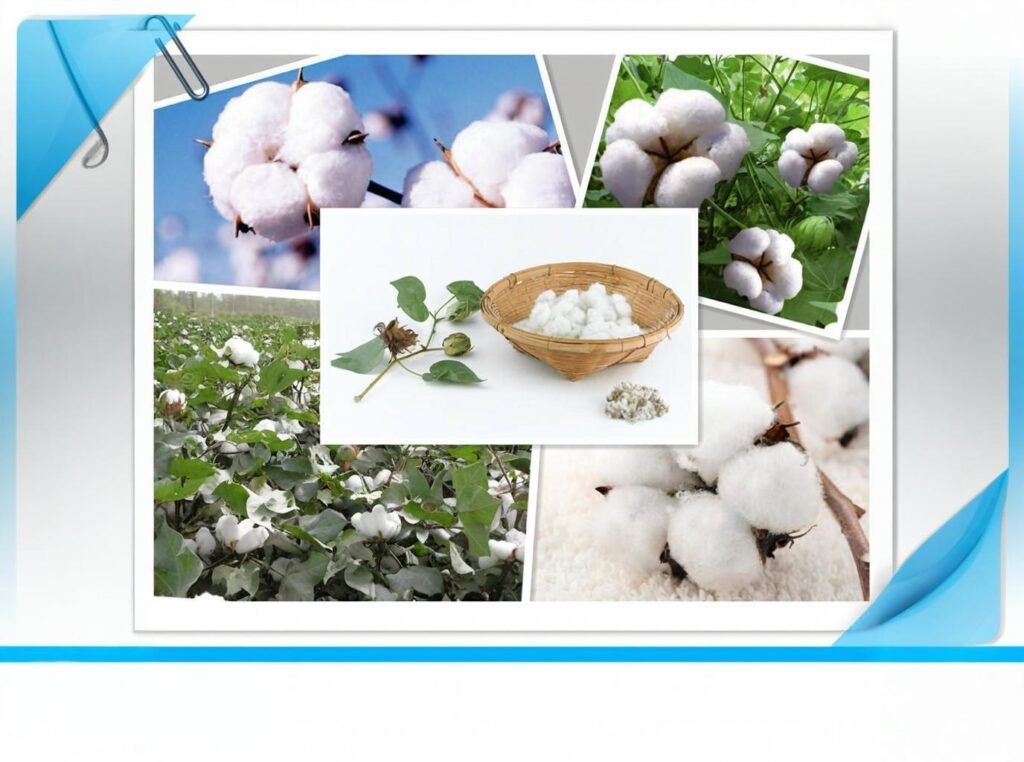
Cotton contamination—such as plastic film, polypropylene fibers, seed coat fragments, and foreign lint—raises total production cost by increasing cleaning losses, yarn defects, machine stoppages, and downstream claims. Unlike staple length or micronaire, contamination introduces non-linear risk: even small amounts can bypass early controls, surface late in fabric finishing, and trigger high-value failures that are costly to detect, isolate, and correct.
Contamination is the most underestimated cost factor in spinning. It rarely appears clearly in lab summaries, yet it causes some of the most painful and expensive problems once value has already been added.
Why contamination behaves differently from other fiber parameters
Fiber length, micronaire, and maturity affect performance in largely predictable ways. Contamination does not. It behaves intermittently, hides during early processing, and often reveals itself only after dyeing, printing, or heat treatment—when remediation is expensive or impossible.
A) Common contamination types and where they come from
Modern cotton supply chains expose fiber to multiple contamination points—from field to bale to warehouse handling.
| Contaminant | Typical Source | Why it’s dangerous |
|---|---|---|
| Plastic film | Field harvesting, bale wrapping | Melts under heat; becomes glossy spots in fabric |
| Polypropylene fibers | Fertilizer bags, packaging twine | Does not dye; appears as white specks |
| Seed coat fragments | Aggressive ginning | Oxidizes; shows as dark dots after dyeing |
| Colored lint | Handling, recycled blends | Permanently visible once mixed |
Two characteristics make these contaminants especially costly: they are often small enough to survive early cleaning, and they respond differently to heat and dye than cotton. By the time they become visible, the product has already absorbed substantial labor, energy, and processing cost.
B) Detectability: the core problem no report captures
The real danger of contamination is not just presence—it is detectability timing.
- Many plastic and PP fibers are invisible in greige yarn
- Seed coat fragments may only oxidize during dyeing
- Colored lint may blend visually until fabric is finished
This delayed visibility means mills can pass yarn inspection and still face fabric-stage failures. Traditional fiber testing focuses on averages and distributions; contamination risk is event-driven, not statistical.
C) Cleaning losses: contamination inflates waste quietly
To protect yarn quality, mills typically respond to contamination by increasing opening and cleaning intensity. While this reduces visible defects, it raises fiber loss.
| Scenario | Typical Waste Increase |
|---|---|
| Clean cotton | Baseline |
| Moderate contamination | +1–2% |
| Heavy contamination | +3–5% or more |
A 2% waste increase appears manageable on paper. At scale, it is not. For a mill processing 20,000 tons per year, 2% additional waste equals 400 tons of paid-for cotton that never becomes yarn—before accounting for extra energy, labor, and wear on machines.
More aggressive cleaning also increases fiber damage, which can elevate end breakage downstream, compounding cost beyond the initial loss.
D) Machine behavior: intermittent stops and hidden downtime
Contamination affects machines differently than intrinsic fiber properties.
- Plastic fragments can wrap around rollers or melt on heated parts
- PP fibers can trigger false clearer cuts
- Hard fragments increase abrasion on clothing
These events cause irregular stoppages, not smooth performance degradation. Operators are forced into reactive mode, which reduces their ability to supervise efficiently. The cost shows up as:
- Lower machine utilization
- Increased maintenance interventions
- Inconsistent shift performance
Because these stops are sporadic, they are often underreported or misattributed to “operator issues.”
E) Yarn-stage defects that pass—and later fail
Some contaminants pass through spinning without triggering alarms. Yarn may meet tensile and evenness specifications, yet still carry embedded foreign matter.
Common outcomes include:
- Yarn that looks acceptable but fails in dyeing
- Clearer settings that cut too aggressively, raising waste
- Subtle surface defects that worsen after finishing
This is why contamination-related claims are especially frustrating: the yarn was approved, yet the fabric fails.
F) Fabric-stage failures: where claims are born
Contamination most often surfaces after significant value has been added.
Typical manifestations include:
- White specks after reactive dyeing (PP fibers)
- Dark pinpoints after garment washing (seed coat fragments)
- Glossy dots or holes after heat setting (plastic film)
At this stage:
- Yarn has been woven or knitted
- Fabric has been dyed or printed
- Finishing costs are already incurred
Remediation options are limited to downgrading, re-dyeing (with risk), or rejection. Each option carries substantial financial and reputational cost.
G) Why contamination risk is non-linear
Unlike micronaire or length variation, contamination does not scale linearly with quantity. One contaminated bale can introduce hundreds of defects across multiple fabric rolls.
This non-linearity arises because:
- Contaminants disperse unevenly during mixing
- A single fragment can affect large fabric areas
- Detection probability increases with fabric surface area
As production volume rises, the chance of visible defects rises faster than output, which is why high-volume programs are especially sensitive to contamination.
H) Claims risk: why brands care more than mills expect
Brands judge defects differently than mills. A few visible specks may be tolerable in industrial textiles but unacceptable in consumer-facing products.
Claims typically arise when:
- Defects are visible at normal viewing distance
- Repetition suggests systemic failure, not randomness
- The issue appears after customer processing
At that point, arguments about fiber cost savings carry little weight. The brand experience has already been compromised.
I) Contamination versus sustainability initiatives
Recycled and blended cotton programs increase contamination exposure unless controls are exceptional.
Common challenges include:
- Mixed fiber streams with unknown history
- Colored lint introduced upstream
- Higher PP contamination from handling materials
Without advanced sorting and strict intake inspection, contamination risk can outweigh sustainability gains by driving waste, rework, and rejection. This is why contamination management must be embedded in sustainable sourcing strategies, not treated as an afterthought.
J) Control strategies that actually reduce risk
Experienced mills focus on prevention and isolation, not just cleaning.
Effective measures include:
- Bale-by-bale inspection protocols
- Supplier accountability for contamination thresholds
- Controlled mixing plans to limit spread
- Early fabric-stage testing for visible defects
Technology helps, but discipline matters more. Clearers and sensors cannot compensate for poor sourcing control.
K) The economics of early rejection
Rejecting contaminated cotton early feels expensive—but it is usually cheaper than processing it.
Early rejection avoids:
- Compounded waste across departments
- Energy and labor sunk into defective goods
- Customer claims and relationship damage
When contamination is discovered late, the mill pays multiple times for the same mistake.
L) Why contamination tolerance must match end use
Not all fabrics carry the same risk. Contamination tolerance depends on visibility and finishing route.
Higher-risk applications include:
- Light-colored dyed fabrics
- Printed surfaces
- Smooth, plain weaves
Lower-risk applications include:
- Dark shades
- Heavily textured constructions
- Non-visual industrial uses
Aligning cotton sourcing with end-use risk is a core cost-control decision.
M) A practical industry rule—and why it exists
Many experienced spinning and weaving managers repeat a simple rule:
“One contaminated bale can ruin an entire lot.”
This is not exaggeration. It reflects the dispersion effect of contamination in large-scale mixing and the difficulty of isolating defects once processing has begun.
N) How SzoneierFabrics manages contamination risk in real programs
At SzoneierFabrics, cotton selection for visible or printed textiles is guided by contamination tolerance, not just fiber averages. Practical controls include:
- Supplier qualification focused on field and handling practices
- Conservative blending strategies for consumer-facing fabrics
- Early-stage fabric testing, not just yarn approval
This approach reduces late-stage surprises and protects downstream partners from avoidable claims.
Contamination does not announce itself early. It waits. And when it appears, it does so where cost and reputational risk are highest. Mills that treat contamination as a marginal issue often pay for it at the worst possible moment. Those that manage it upfront convert an invisible risk into a controlled variable—and that control is where real cost stability is found.
Which cotton preparation choices improve yield and reduce hidden costs?
Cotton preparation choices—especially carded vs combed processing, ginning quality, cleaning intensity, and bale mixing strategy—have a decisive impact on yield, waste percentage, spinning stability, and downstream defect risk. Preparation does not change the inherent genetics of cotton, but it determines how much of that cotton becomes usable yarn and how predictably it runs at scale.
Well-matched preparation reduces short fiber content, neps, and variability. Poorly matched preparation turns acceptable cotton into an expensive problem. This is why experienced mills treat preparation as a cost-control stage, not a routine mechanical step.
Preparation is where good cotton becomes usable cotton.
Preparation decisions that change cost outcomes
Many preparation choices appear incremental on paper, but their financial impact compounds across departments. The most important decisions are rarely about “more” or “less” processing—they are about appropriate processing.
A) Carded vs combed: cost versus control
Carding and combing are often discussed as quality grades. In reality, they are economic tools that trade yield for control.
| Aspect | Carded Cotton | Combed Cotton |
|---|---|---|
| Yield | High | Lower |
| Waste | Lower | Higher (intentional) |
| Uniformity | Moderate | High |
| Typical cost impact | Lower | Higher |
| Best use | Coarse–medium yarns | Fine, premium yarns |
Combing deliberately removes short fibers and neps. This improves yarn evenness and strength consistency, but it does so by throwing fiber away. That waste is not accidental—it is the price of control.
Combing pays back only when at least one of the following is true:
- Yarn count is fine enough that short fibers limit speed
- Surface appearance is critical to the final product
- Downstream processes penalize even small yarn defects
For coarse and medium yarns, combing often destroys efficiency without delivering measurable benefit. The yarn may test slightly better, but production cost rises faster than value.
B) The hidden cost of unnecessary combing
Many mills overuse combing as insurance against variability. This feels safe, but it is expensive.
Unnecessary combing leads to:
- Higher raw-material cost per kg of yarn
- Increased energy and labor consumption
- Lower effective fiber utilization
In high-volume programs, these costs accumulate quietly. Over a year, a 2–3% additional combing waste can outweigh any savings achieved elsewhere in the process.
The key question is not “Is combed better?” but “Does combing remove a real constraint?”
C) Ginning quality: the forgotten upstream factor
Even well-grown cotton can be compromised by poor ginning. Ginning quality determines how much of the fiber’s potential survives into spinning.
Poor ginning typically results in:
- Increased short fiber content
- Broken or bruised fibers
- Embedded trash and seed coat fragments
These issues increase:
- Carding and combing waste
- Nep formation
- Drafting instability
Unlike fiber length or micronaire, ginning quality is rarely specified clearly in contracts. Yet its effects appear quickly in production data—often within the first few days of running a new lot.
Mills that monitor short fiber index (SFI) closely often find that ginning damage, not field quality, explains unexpected waste spikes.
D) Preparation cannot fix damaged fiber
A common misconception is that more aggressive preparation can compensate for poor ginning. In practice, the opposite is true.
Aggressive cleaning on damaged fiber:
- Breaks fibers further
- Generates more neps
- Raises waste without improving stability
Once fibers are shortened or bruised, preparation can only decide how much more damage occurs, not reverse it. This is why upstream quality discipline matters as much as downstream optimization.
E) Bale mixing strategy: consistency beats optimization
Many mills invest heavily in fiber selection but underinvest in mixing discipline. Mixing is where variability is either neutralized—or amplified.
Good mixing achieves:
- Averaging of micronaire and length differences
- Stable drafting behavior
- Predictable waste and breakage levels
Poor mixing causes:
- Batch-to-batch instability
- Sudden process shifts mid-order
- Inconsistent yarn quality within the same contract
| Mixing Strategy | Result |
|---|---|
| Wide, controlled mix | Stable running |
| Narrow, price-driven | Volatile performance |
Wide mixing does not mean careless mixing. It means controlled blending across enough bales to smooth natural variability. Narrow, price-driven mixing may look efficient on paper but often results in volatile performance and hidden rework cost.
F) Why “perfect” cotton performs poorly when mixed badly
Even premium cotton can behave poorly if mixing is inconsistent.
Common symptoms include:
- Sudden changes in end breakage rates
- Yarn strength drifting across shifts
- Unexplained quality complaints mid-production
These issues are not fiber problems—they are mixing problems. Mills that discipline mixing often see larger efficiency gains than those chasing marginal fiber upgrades.
G) Preparation intensity: more is not always better
Preparation settings are often standardized for convenience. Efficient mills resist this and tune preparation to the cotton, not to habit.
Over-aggressive cleaning:
- Increases fiber breakage
- Raises waste percentage
- Creates neps from damaged fibers
Under-cleaning:
- Leaves trash and contaminants
- Raises yarn defect risk
- Shifts cost downstream
The optimal point is where cleaning removes harmful material without damaging usable fiber. This point moves depending on cotton origin, maturity, and contamination profile.
H) Neps and preparation balance
Nep generation is often blamed on fiber maturity alone, but preparation plays a large role.
Excessive mechanical stress during opening and carding:
- Forces immature fibers to collapse
- Encourages entanglement
- Raises nep count even in decent cotton
Balanced preparation reduces neps by minimizing fiber stress, not by forcing fibers through harsher cleaning.
Lower nep levels improve:
- Yarn appearance
- Dye uniformity
- Fabric surface smoothness
Each of these reduces downstream rejection risk.
I) Yield thinking: why “higher waste” can still be cheaper
Some preparation choices intentionally increase waste to improve overall yield quality.
For example:
- Light combing may raise waste by 1–2%
- But reduce end breakage enough to raise output
- And cut downstream defects significantly
In these cases, net cost per kilogram of acceptable yarn drops, even though visible waste rises. This is why yield must be evaluated across the entire process, not at a single department.
J) Preparation and labor efficiency
Preparation stability directly affects labor efficiency, even though operators are not stationed in opening rooms.
Stable preparation leads to:
- Predictable drafting behavior
- Lower operator intervention rates
- Consistent shift performance
Unstable preparation shifts burden downstream, where labor is more expensive and harder to scale. This indirect labor cost is rarely attributed back to preparation—but it should be.
K) Preparation choices and downstream fabric behavior
Preparation decisions influence more than spinning metrics. They shape fabric behavior in ways that matter commercially.
Well-prepared cotton yarn typically shows:
- More uniform tensile response in fabric
- Fewer visible defects after dyeing
- Better sewing and handling performance
For products like bags, workwear, and structured textiles, fabric reproducibility often matters more than peak yarn strength. Preparation that supports consistency protects both manufacturing efficiency and customer satisfaction.
L) When mills should run parallel preparation trials
Experienced mills often validate preparation decisions with parallel trials, especially when launching new programs.
Typical comparisons include:
- Carded vs lightly combed
- Standard vs reduced cleaning intensity
- Narrow vs wide bale mixing
These trials reveal whether additional preparation actually improves usable output—or simply increases cost. In many cases, mills discover that less processing delivers better economics.
M) A practical preparation decision framework
Before locking preparation level, effective mills ask a short set of questions:
- What yarn count and application are we producing?
- Which defects actually create cost or claims?
- Where does additional preparation stop paying back?
- Is variability more dangerous than average quality?
Clear answers prevent over-processing and under-processing alike.
N) How SzoneierFabrics applies preparation strategy in fabric development
At SzoneierFabrics, cotton fabric development treats preparation as a variable, not a fixed rule. For many programs, especially consumer-facing and industrial textiles, development includes parallel preparation trials—often carded versus lightly combed.
These trials evaluate:
- Yarn stability during spinning
- Fabric appearance after dyeing or printing
- Sewing and handling behavior in finished products
In many cases, the most cost-efficient solution is not the most heavily processed one, but the one that delivers consistent performance with minimal fiber loss.
Preparation is not about making cotton “better.” It is about making cotton behave predictably. Mills that understand this turn preparation from a hidden cost center into one of their most effective tools for yield protection and long-term cost control.
How do different spinning systems respond to cotton type—and what does that do to energy and labor cost?
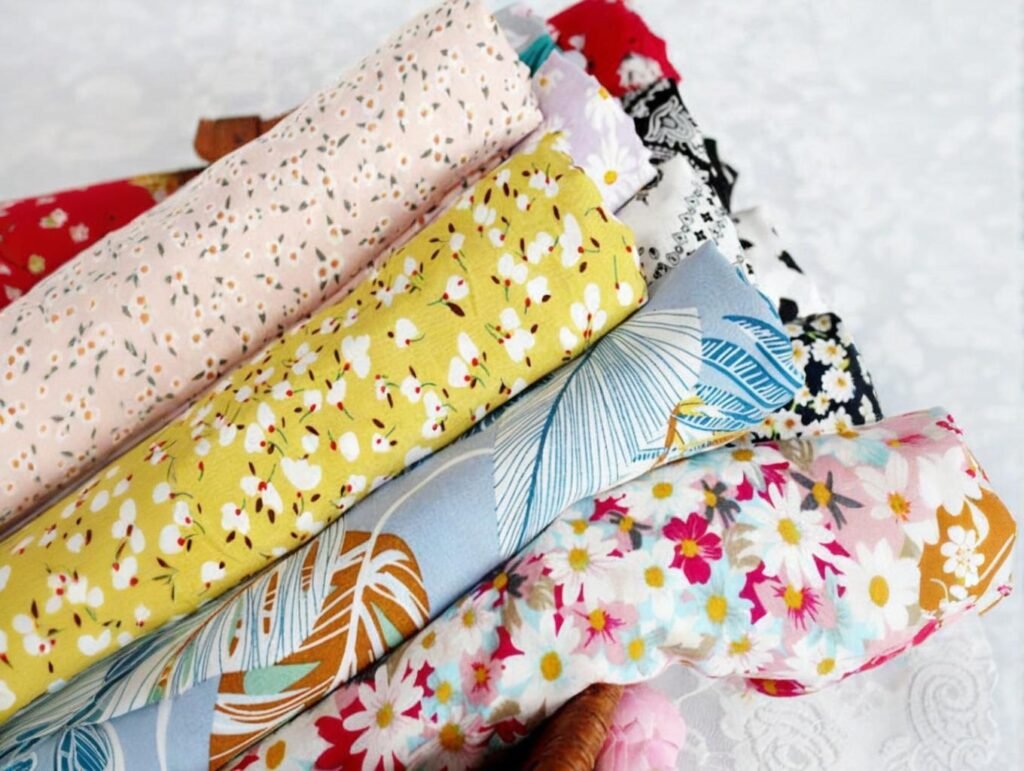
Different spinning systems react very differently to cotton type, and those reactions directly shape energy consumption, labor intensity, and real production cost. Ring and compact spinning rely on stable fiber length, uniformity, and balanced micronaire to maintain efficiency, while open-end spinning tolerates shorter fibers at the cost of higher waste and energy use. Air-jet systems demand exceptionally clean and uniform cotton, otherwise defect rates and downtime rise sharply. Matching cotton type to spinning system is one of the fastest and least visible ways to reduce hidden energy and labor costs.
A cotton that runs “acceptably” on one system can be quietly expensive on another. This is why fiber decisions should never be made without knowing the spinning method, target yarn count, and staffing model.
Cotton–system compatibility and its cost impact
Spinning systems are not interchangeable from a fiber-behavior perspective. Each system places stress on cotton in a different way, and those stresses determine how much labor and energy are required to keep production stable.
A) Ring spinning: efficiency lives or dies on fiber consistency
Ring spinning remains the most widely used system globally, largely because of its versatility. That versatility, however, comes with sensitivity.
Cotton requirements:
- Medium staple length with tight length distribution
- Balanced micronaire (typically 3.8–4.5)
- Low contamination and predictable maturity
Ring spinning relies on controlled drafting and continuous twisting. Any inconsistency in fiber behavior shows up immediately as end breaks.
Cost behavior:
- Poor cotton → higher breakage → constant operator intervention
- Good cotton → stable running → predictable labor allocation
| Cotton Quality | Ring Spinning Outcome |
|---|---|
| Stable upland | High efficiency |
| Variable length | Frequent stops |
| Contaminated | Claims later in fabric |
Labor cost is the silent variable here. Each additional break forces operators to react, reducing their ability to supervise multiple frames. Even small increases in breakage rates can push mills to add staff or permanently reduce speed—both of which raise cost per kilogram.
Ring spinning does not reward extreme fiber properties. It rewards consistency, which keeps labor and energy usage within planned limits.
B) Compact spinning: higher efficiency, narrower tolerance
Compact spinning improves fiber control by condensing the fiber strand before twist insertion. When cotton quality is right, the results are impressive.
Advantages:
- Higher yarn strength at the same twist
- Lower hairiness
- Potential for higher spindle speeds
However, these gains come with tighter tolerance windows.
Cotton sensitivity:
- More sensitive to short fiber content
- Less forgiving of length variation
- Highly reactive to preparation inconsistency
Using unstable cotton in compact spinning often leads to:
- Frequent machine adjustments
- Increased maintenance and cleaning
- Operator frustration due to unpredictable behavior
In practice, many mills discover that compact spinning amplifies fiber problems instead of hiding them. When cotton quality is marginal, compact systems can erase their own efficiency advantage.
From a cost perspective, compact spinning works best with well-prepared, uniform cotton, not simply longer or more expensive cotton. Without that alignment, energy and labor costs rise while output gains disappear.
C) Open-end (OE) spinning: volume-friendly, waste-heavy
Open-end spinning is designed for throughput. It is widely used for coarse yarns, denim, canvas, and heavy fabrics where surface perfection is less critical.
Cotton behavior in OE systems:
- Tolerates shorter fibers
- Accepts recycled cotton and blends
- Less sensitive to fiber length uniformity
Cost trade-offs:
- Lower labor per spindle
- Higher waste percentage
- Higher energy consumption per kilogram
| Factor | OE Spinning |
|---|---|
| Fiber tolerance | High |
| Waste | Higher |
| Yarn appearance | Rougher |
| Cost efficiency | Strong for volume |
OE spinning replaces labor intensity with mechanical energy. While staffing levels are lower, machines consume more power, especially during intensive opening and rotor operation.
The system is cost-efficient only when cotton choice aligns with end-use. Using overly clean or premium cotton in OE spinning rarely pays back. Conversely, using highly contaminated cotton increases waste and maintenance, eroding its volume advantage.
D) Air-jet spinning: efficiency at a price
Air-jet spinning systems offer exceptional speed and low hairiness, but they are the least forgiving when it comes to cotton quality.
Cotton requirements:
- Extremely clean fiber
- Tight length distribution
- Minimal short fiber content
- Very low contamination
Any deviation quickly results in:
- Yarn formation defects
- Increased rejection rates
- Forced speed reductions
Unlike ring or OE systems, air-jet spinning has limited ability to compensate for fiber variability through settings. The system either runs cleanly—or it does not.
From an energy standpoint, air-jet systems are efficient per spindle, but defect-related losses and rejections can inflate cost dramatically. The raw material cost is also higher, as only select cotton lots meet the necessary standards.
Air-jet spinning can be cost-effective, but only when cotton sourcing and preparation are exceptionally disciplined.
E) Energy consumption: how cotton choice shifts kilowatt-hours
Cotton type influences energy usage more than many mills expect.
Poor cotton increases energy demand through:
- Higher friction in drafting zones
- More aggressive cleaning and opening
- Frequent stops and restarts
Each restart consumes additional power, and each cleaning cycle adds motor load. These effects accumulate quietly across thousands of hours.
Good cotton enables:
- Stable, continuous operation
- Higher average speeds
- Lower cleaning intensity
In energy audits, mills often find that switching to more stable cotton reduces kWh per kilogram even when machine settings remain unchanged.
F) Labor cost: the hidden multiplier
Labor cost rarely scales linearly with output. It scales with intervention frequency.
Poor cotton drives up labor cost by:
- Increasing breakage and piecing
- Forcing operators to focus on fewer machines
- Creating fatigue and error risk
Good cotton allows:
- One operator to manage more spindles
- Predictable shift performance
- Lower training and supervision burden
This is why mills sometimes see labor cost rise even when headcount stays constant. The cotton is consuming attention, not just fiber.
G) System–cotton mismatch: where cost leaks fastest
The most expensive scenario is not bad cotton—it is misaligned cotton.
Examples include:
- Long-staple cotton used in OE spinning
- High-contamination cotton used in air-jet systems
- Variable cotton run on compact frames
In these cases, mills pay more for fiber and lose efficiency. The system cannot convert the fiber’s theoretical value into usable output.
Correct alignment often produces immediate gains without any capital investment.
H) Why mills underestimate system compatibility
Many sourcing decisions are made without full visibility into spinning systems, especially when fiber purchasing is centralized.
Common issues include:
- Cotton selected for “general use”
- Assumptions that better cotton works everywhere
- Lack of feedback loops between spinning and sourcing teams
This disconnect explains why some mills invest in premium cotton and see no improvement in cost or quality. The fiber is not wrong—the system match is.
I) Downstream effects on fabric and finishing
Spinning system compatibility also shapes fabric behavior.
- Ring-spun yarns offer balanced strength and appearance
- OE yarns deliver bulk and durability
- Compact yarns improve surface smoothness
- Air-jet yarns reduce hairiness but demand uniform fiber
When cotton choice destabilizes spinning, fabric defects increase, weaving stops rise, and finishing yields drop. These downstream costs are often blamed on weaving or dyeing, even though the root cause lies in fiber–system mismatch.
J) A practical system-first sourcing rule
Experienced mills often reverse the usual decision flow:
- Define spinning system and yarn count
- Identify system-specific fiber tolerances
- Select cotton that fits those tolerances
- Optimize preparation around that cotton
This approach consistently outperforms fiber-first sourcing, especially in high-volume programs.
K) How SzoneierFabrics integrates spinning systems into cotton fabric development
At SzoneierFabrics, cotton fabric development begins by understanding which spinning system the partner mill operates—ring, compact, OE, or air-jet.
Cotton specifications are then aligned to:
- System tolerance windows
- Target energy consumption
- Labor structure at scale
This ensures that yarn stability supports fabric performance without driving hidden costs into spinning, weaving, or finishing.
In practice, this alignment delivers:
- Lower energy per kilogram
- More stable labor planning
- Fewer late-stage quality surprises
Cotton quality does not exist in a vacuum. Its real value is determined by how efficiently a spinning system can convert it into yarn. Mills that match cotton to system behavior control cost at its source—quietly, consistently, and sustainably.
How can sourcing teams test cotton type before bulk orders to predict true production cost?
The most reliable way to predict true spinning cost is to test cotton through a combination of targeted lab analysis, controlled trial spinning, and clearly defined acceptance tolerances before committing to bulk purchase. Small-scale trials that track waste, breakage, speed limits, and operator intervention consistently reveal cost drivers that price sheets, certificates, and average lab values fail to capture.
Testing is cheaper than surprises—especially at scale.
A practical pre-bulk evaluation framework
Experienced sourcing teams treat cotton testing as a risk-screening process, not a quality ritual. The goal is not to prove that cotton is “good,” but to determine whether it will be economically stable under real production conditions.
A) Lab tests that actually matter
Laboratory data is the starting point, not the decision. The key is selecting tests that correlate with process behavior, not just fiber description.
| Test | What it predicts |
|---|---|
| Staple length & uniformity | Drafting stability |
| Micronaire & maturity | Strength, dye behavior |
| Trash & contamination | Cleaning loss |
| Short fiber index (SFI) | Breakage risk |
These tests establish risk boundaries. For example, a cotton with acceptable average staple length but high SFI should immediately trigger deeper evaluation, regardless of price.
However, lab results alone cannot quantify labor intensity, speed loss, or downtime. They define what might happen, not what will happen.
B) Interpreting lab data through a cost lens
Many sourcing teams stop at pass/fail lab criteria. Advanced teams go further by translating lab variation into cost sensitivity.
Questions that matter include:
- How sensitive is breakage rate to SFI variation?
- Does micronaire variation affect dye yield or shade risk?
- How much additional waste does higher trash content create at current cleaning settings?
By linking lab metrics to known process responses, teams can estimate cost volatility, not just average performance.
C) Trial spinning: small runs, big insights
Short trial runs—often dismissed as inconvenient—are the most powerful cost predictors available.
A properly designed trial run reveals:
- Real waste percentage across departments
- End breakage rate under target speed
- Speed limits before instability appears
- Operator workload and fatigue
Crucially, trials should track cost per kilogram of acceptable yarn, not just yarn quality metrics. A yarn that looks acceptable but requires slower speeds or higher labor is already expensive.
Even a few shifts of trial data can expose differences that would cost months of margin loss in bulk production.
D) Designing trials that reflect reality
Many trials fail because they are not representative.
Effective trials should mirror:
- Planned spinning system (ring, OE, compact, air-jet)
- Intended yarn count and twist
- Actual preparation settings
- Realistic humidity and staffing conditions
Running cotton under “ideal” or slowed-down conditions hides problems. The objective is to test cotton at production pressure, not in a protected environment.
E) Acceptance tolerances: the missing contract clause
A major source of cotton disputes is not poor quality—it is undefined tolerance.
Without tolerance ranges, suppliers can deliver cotton that is technically “within spec” but economically damaging.
Effective acceptance tolerances include:
- Micronaire range, not just average
- Maximum short fiber content or SFI
- Clear contamination thresholds
- Allowed waste variance during processing
These tolerances convert fiber specifications into economic safeguards. They also provide objective grounds for discussion when delivered cotton behaves differently from trial material.
F) Testing variability, not just averages
Many cotton problems emerge from variability, not mean values.
Smart testing programs include:
- Multiple bale samples, not one
- Worst-case bale scenarios
- Early and late delivery comparisons
This approach answers a critical question: How forgiving is this cotton if conditions drift? Cotton that performs well only under perfect conditions is risky at scale.
G) Blending strategy: test the mix, not the bale
Most mills do not spin single-origin cotton in isolation. They blend.
Testing should therefore reflect:
- Planned blend ratios
- Interaction between cotton types
- Effect of blending on micronaire and length distribution
Blending can stabilize performance—but it can also spread contamination or amplify short fiber effects if poorly planned. Testing blends early avoids discovering these interactions mid-contract.
H) Measuring labor impact during trials
Labor cost rarely appears in cotton test reports, yet it is one of the largest cost variables.
During trial runs, sourcing and production teams should observe:
- Number of breaks per operator
- Time spent piecing versus monitoring
- Operator fatigue across shifts
Cotton that increases intervention frequency will increase labor cost, even if headcount remains unchanged. Trials make this visible.
I) Early fabric-stage testing: where hidden risks surface
Some cotton-related failures only appear after spinning—especially contamination and dye behavior issues.
Early fabric trials (greige to dyed) can reveal:
- White or dark specks from contamination
- Shade inconsistency linked to micronaire variation
- Surface defects tied to neps or fiber damage
These trials cost little compared to post-delivery claims. Skipping them shifts risk downstream, where correction is far more expensive.
J) Using trial data to build a cost forecast
Advanced teams convert trial results into cost-per-kilogram models.
Inputs typically include:
- Waste percentage
- Average spindle speed
- Energy consumption per kg
- Labor intervention rate
Comparing these models across cotton options often produces counterintuitive results: cotton with higher invoice price delivers lower real cost, while “cheap” cotton becomes expensive once instability is priced in.
K) Documentation: turning tests into leverage
Testing is most valuable when it feeds into documentation.
Clear records of:
- Trial conditions
- Measured waste and breakage
- Observed labor impact
provide leverage in negotiations and protection in disputes. They also shorten decision cycles for future sourcing by building internal reference data.
L) How SzoneierFabrics structures pre-bulk cotton testing
At SzoneierFabrics, cotton fabric projects typically include pre-bulk testing that extends beyond yarn approval.
This often involves:
- Targeted lab screening
- Controlled spinning trials under production settings
- Early fabric-stage evaluation (greige and dyed)
The objective is to validate not just whether cotton can be spun, but whether it supports stable, repeatable fabric performance at scale. This approach reduces late-stage surprises and aligns sourcing decisions with real production economics.
Cotton choice is a cost strategy, not a material detail
Spinning efficiency is not controlled by machines alone. It is shaped—quietly but decisively—by cotton choice.
Across mills, systems, and product categories, the pattern is consistent:
- Stable cotton reduces labor stress and intervention
- Balanced fiber parameters lower waste and energy use
- Clean, well-prepared cotton prevents late-stage failures
- System-matched cotton cuts true cost per kilogram
The most efficient mills are not those buying the “best” cotton on paper. They are the ones buying the right cotton for their process, scale, and end product—and validating that choice before committing volume.
In cotton sourcing, testing is not an expense. It is one of the few tools that reliably converts uncertainty into control.
Work with SzoneierFabrics
SzoneierFabrics is a China-based fabric R&D and manufacturing partner with extensive experience developing custom cotton fabrics aligned with real spinning and weaving behavior. We help clients translate fiber choices into predictable cost, stable quality, and scalable production through:
- Cotton fabric engineering based on spinning system compatibility
- Low-MOQ development and fast sampling
- Clear performance and tolerance specifications
- Free design support and sample evaluation
- Consistent bulk quality and reliable lead times
If you are planning a cotton fabric project and want materials that run efficiently in production—not just look good on paper, contact SzoneierFabrics to discuss your requirements and request a tailored quotation.