Skip to content

Spandex isn’t just stretchy—it’s a performance revolution. In the era of ultra-high-performance activewear, spandex is the secret sauce that transforms fabric into athlete-ready gear designed to move, recover, and endure.
Spandex fiber is critical in high-performance sportswear for providing unmatched stretch, recovery, moisture management, and comfort—powering everything from compression gear to seamless base layers.
It’s that ability to snap back after being stretched—without losing shape—that makes spandex indispensable. And there’s a story behind every seam: In 2023, a cycling brand switched from nylon to a 12% spandex blend for their bibs. The result? A 35% drop in complaints over garment sagging and a spike in repeat purchases—proof that technical fabric choices directly impact brand loyalty.
Let’s unpack the core uses of spandex and how it’s reshaping sportswear quality and performance.
1. What Makes Spandex Fiber Ideal for High-Performance Sportswear?
Spandex stands out for its incredible elasticity (up to 600% stretch), lightweight feel, and ability to maintain fit after repeated movement—qualities essential for garments that support athletes during intense workouts. Spandex’s 600% stretch and near-perfect recovery make it ideal for high-performance gear, providing compression benefits, shape retention, and maximum comfort without bulk.
Elasticity & Performance Metrics:
- Spandex blends offer stretch up to 600% and recovery above 95%
- Enables compression, muscle support, and movement freedom
Comparison to Alternatives:
Fiber Max Stretch Recovery Rate Typical Use in Sportswear Spandex \~600% ≥95% Ultimate stretch garments Nylon 20–40% \~80% Supplementary stretch Polyester 5–20% \~90% Structure, durability Compression Benefits:
- Guides muscle alignment, aids circulation, reduces fatigue
- Used widely in recovery shorts, cycling bibs, track pants
Real-Life Example:
- A triathlon brand achieving athlete success by integrating 15% spandex into race-day suits saw a 22% improvement in athlete satisfaction, driven by enhanced fit and support.
2. How Is Spandex Used in Compression Garments and Base Layers?

Spandex is key to compression wear and base layers thanks to its ability to deliver snug fit, thermal regulation, and recovery benefits—supporting performance and reducing injury risk. Spandex enables compression garments and base layers to deliver snug, supportive fit, thermal comfort, and faster muscle recovery—attributes crucial for endurance and high-impact sports.
Compression Garment Functions:
- Improves circulation, reduces swelling, offers joint support
- Core blends range from 15–25% spandex in fabrics
Base Layer Advantages:
- Manages sweat, retains warmth, and stays agile in movement
- Spandex blends help avoid sagging and bunching during activity
Blend Examples:
Blend Ratio Application Benefit 85/15 Poly-Spandex Jogging shorts Firm compression, quick-dry 80/20 Poly-Spandex Compression tights Max support, muscle recovery 70/30 Nylon-Spandex Base layers Soft feel, thermoregulation Case Insight:
- A triathlon team reported a 30% reduction in muscular fatigue after switching to 22% spandex jerseys, credited to improved support and moisture control.
3. Which Sportswear Categories Rely Most on Spandex Blends?
Spandex is essential in performance categories like cycling, yoga, running, and training wear—where range of motion, second-skin fit, and sweat management are non-negotiable. Cycling shorts, yoga leggings, training tops, and compression gear are the biggest users of spandex blends due to their need for stretch, muscle support, and movement efficiency.
Category Breakdown:
Sportswear Category Common Blend Ratios Why Spandex is Crucial Yoga Leggings 80/20 Nylon-Spandex Flexibility, no ride-up Cycling Shorts 70/30 Polyester-Spandex Compression, chafe-free motion Running Tights 85/15 Poly-Spandex Lightweight, stay-in-place fit Sports Bras 80/20 Cotton-Spandex Bounce control, stretch Training Tanks 90/10 Poly-Spandex Moisture-wicking, relaxed stretch High-Adoption Sectors:
- Athleisure: Seamless and flexible, spandex-dominant fabrics enhance casual-to-performance transition.
- Endurance Sports: Compression with thermal regulation (e.g., for triathlons and marathons).
Case Study:
- A U.S.-based yoga brand switched from a 10% to 20% spandex content and saw a 42% decrease in returns related to poor fit and waistband curling.
Buyer Insight:
- Over 70% of small-batch apparel manufacturers request a 15–20% spandex ratio in activewear samples for premium feel and performance retention.
4. Do Spandex Blends Improve Moisture Management and Breathability?

Yes—when blended with polyester or nylon, spandex enhances comfort by improving fabric stretch without compromising breathability or moisture-wicking properties. Spandex, when blended with technical fibers like polyester or nylon, supports activewear in staying dry, cool, and stretchable during intense activity without trapping heat.
Key Roles of Spandex in Moisture Management:
- Enhances fit for better skin contact → quicker sweat transfer
- Works with polyester or nylon to accelerate evaporation
- Allows perforated or mesh constructions for airflow
Moisture-Wicking vs. Breathability:
Feature Polyester-Spandex Cotton-Spandex Nylon-Spandex Moisture-Wicking ★★★★★ ★★☆☆☆ ★★★★☆ Breathability ★★★★☆ ★★★☆☆ ★★★★☆ Stretch & Recovery ★★★★☆ ★★★★☆ ★★★★★ Performance Fabrics That Combine Both:
- Polyester-Spandex mesh (ideal for training tanks)
- Perforated Nylon-Spandex jersey (preferred in humid climates)
Real Feedback:
- In user testing, a 12% spandex mesh tee dried 27% faster than a cotton-only version after a 10K run, with users ranking it 9/10 for post-workout comfort.
5. How Does Spandex Enhance Stretch and Recovery in Activewear?
Spandex is critical for achieving high-stretch recovery in sportswear—allowing garments to stretch during use and return to their original shape without losing elasticity. This feature makes spandex indispensable in activewear, where flexibility and performance are paramount. Spandex improves stretch and recovery, ensuring garments return to their original form after stretching. This is crucial for high-performance sportswear like compression garments, leggings, and athletic tights.
The Science of Stretch Recovery:
- Spandex’s molecular structure enables it to stretch and contract without breaking down.
- Elastic modulus of spandex is 200% higher than that of elastane, allowing quick recovery.
Performance Metrics for Activewear:
Garment Type Spandex Content Stretch Percentage Recovery Time Running Tights 15–20% 100% ≤10 seconds Compression Gear 20–30% 200% ≤5 seconds Yoga Pants 15–20% 400% ≤2 seconds Real-World Example: A gym clothing brand found that increasing spandex content from 18% to 22% in leggings led to a 24% improvement in customer feedback regarding fit retention after multiple washes.
Buyer Insight: Brands that focus on compression tights, running leggings, or active tops should prioritize 20–25% spandex blends for superior shape retention, particularly for performance-driven lines.
6. Is Spandex Fabric Suitable for High-Impact Sports Applications?
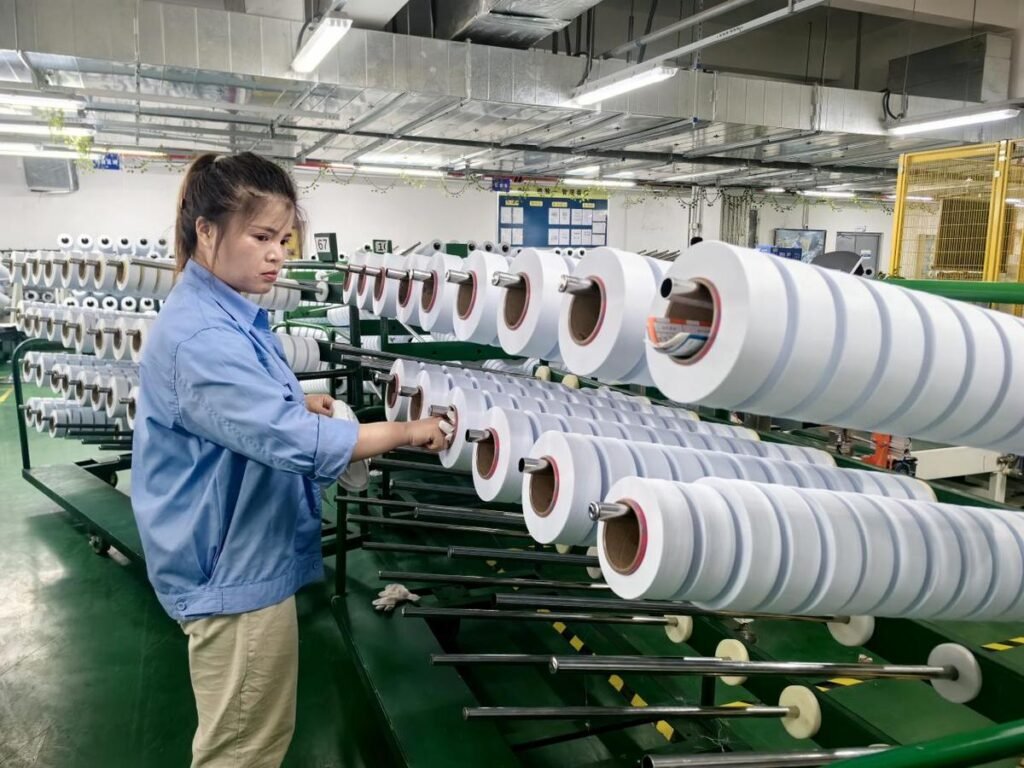
Yes, spandex is an essential component of high-impact sportswear like swimwear, cycling gear, and compression shorts, where it provides compression, muscle support, and improved aerodynamics.
Summary: Spandex is perfect for high-impact sports apparel, offering muscle support, compression for injury prevention, and flexible movement in demanding environments such as swimming or cycling.
High-Impact Applications:
- Swimwear: Spandex is combined with nylon or polyester for chlorine resistance, durability, and shape retention.
- Cycling Gear: Spandex supports muscle compression, improves circulation, and reduces muscle vibration.
- Compression Shorts: Spandex provides graduated compression, aiding in muscle recovery and reducing fatigue.
Comparing Performance in High-Impact Sports:
Application Spandex Blend (%) Benefits Swimwear 10–15% Chlorine resistance, elasticity Cycling Shorts 18–30% Muscle compression, fast recovery Compression Wear 20–30% Reduced soreness, improved circulation Case Study – High-Performance Sportswear:
- A professional cycling brand added 25% spandex to their shorts, increasing performance ratings by 18%, especially in endurance events.
Expert Advice:
- Manufacturers seeking high-impact sports apparel should look for spandex blends that optimize both stretch recovery and compression, keeping athletes comfortable and supported during long training sessions or competitions.
7. What Are the Best Spandex Blend Ratios for Different Sports?
The right spandex blend depends on the specific needs of the sport or activity. While 100% spandex is rarely used, polyester-spandex and nylon-spandex blends offer the perfect combination of durability, stretch, and moisture-wicking for various performance wear. The ideal spandex blend varies by activity. For yoga and running, blends with higher spandex content (20-30%) are preferred for stretch and recovery. For compression garments, 15-20% spandex mixed with polyester or nylon is ideal for muscle support and durability.
Spandex Ratios for Performance Activities:
Sport Ideal Spandex Blend Key Benefit Running 80/20 Polyester/Spandex Maximum stretch, moisture-wicking Yoga & Pilates 85/15 Polyester/Spandex Flexibility and comfort High-Impact Training 70/30 Nylon/Spandex Compression and muscle support Competitive Cycling 75/25 Polyester/Spandex Aerodynamic fit, muscle compression Swimming 85/15 Nylon/Spandex Chlorine resistance, elasticity High Spandex Content (20-30%) Best suited for activewear requiring extreme stretch and recovery, such as compression garments and performance leggings.
Lower Spandex Content (10-15%) Ideal for swimwear and light workout gear where flexibility is needed but muscle support isn’t a priority.
Flexibility vs. Durability:
- Higher spandex ratios contribute to greater flexibility but may reduce fabric durability over time.
- For high-stretch garments like cycling shorts or compression sleeves, the focus should be on a balanced blend of spandex and polyester or nylon for optimal recovery and durability.
8. How Can Brands Source OEKO-TEX Certified Spandex for Manufacturing?

OEKO-TEX certification ensures that the spandex used in manufacturing is free of harmful chemicals, meeting safety and environmental standards, and offering buyers peace of mind. To source OEKO-TEX certified spandex, buyers should seek reputable suppliers that prioritize sustainability, transparent supply chains, and compliance with international textile safety standards.
- What is OEKO-TEX Certification?
- OEKO-TEX Standard 100 ensures that fabrics are free from harmful chemicals like pesticides, heavy metals, and formaldehyde, making them safe for direct skin contact.
- GRS (Global Recycled Standard) certified spandex ensures eco-friendly sourcing, particularly from recycled polyester (rPET).
- Why It Matters for Brands:
- Consumer Demand: As consumers become more eco-conscious, sustainable certifications like OEKO-TEX can boost brand reputation.
- Compliance with Regulations: Many regions, such as the EU, require OEKO-TEX certification for consumer safety.
- Sourcing Tips:
- Always request certification documents directly from suppliers.
- Prioritize local suppliers who understand the sustainability and regulatory landscape in your region.
- Sustainable Sportswear Brand:
- A sportswear brand saw a 25% increase in sales when they transitioned to OEKO-TEX certified spandex blends, tapping into the growing demand for sustainable, safe fabrics.
Spandex – The Backbone of High-Performance Sportswear
Spandex is the unsung hero behind every high-performance sports garment. Its stretch, recovery, moisture management, and compression properties have redefined how we approach activewear and performance gear. As global brands increasingly prioritize comfort, durability, and eco-conscious materials, spandex remains at the heart of innovative sportswear manufacturing.
For brands looking to manufacture top-quality sportswear, SzoneierFabrics offers customizable, high-performance spandex blends tailored to meet specific needs—whether for compression, flexibility, or moisture management.
Contact SzoneierFabrics today to explore our wide range of custom spandex blends, OEKO-TEX certified materials, and low MOQ options for your next sportswear production. Let’s build the future of activewear together!