 Skip to content
Waterproof Briefcases for Business Travel
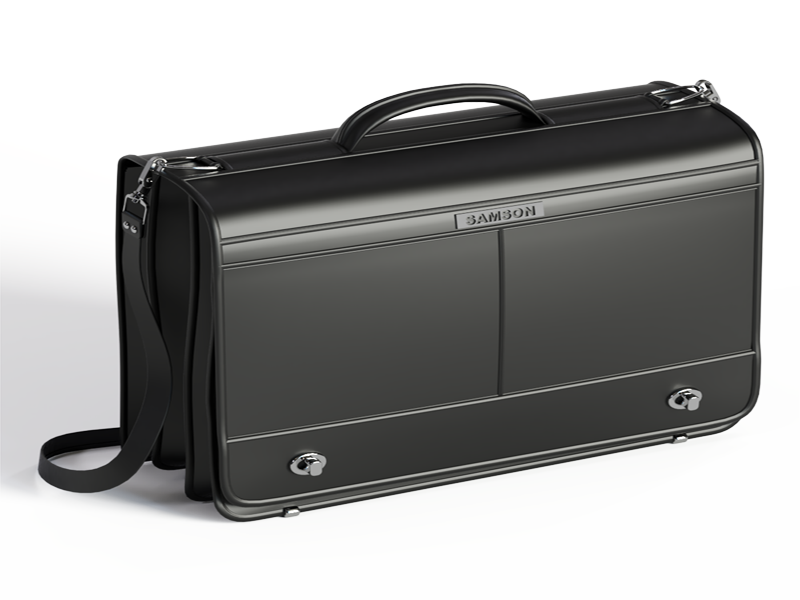
The most dangerous rainstorm for a business traveler is not always the dramatic one shown in advertising. It is often the ordinary ten-minute walk between a station and a hotel, the wet taxi floor, the coffee spilled beside a laptop compartment, or the briefcase left beneath an airport seat while water from an umbrella slowly collects around its base. A bag can look weatherproof and still allow moisture through its zipper, seams, handle attachments, or external pockets.
The right waterproof business briefcase matches its protection level to the traveler’s real exposure. For everyday commuting, a water-resistant coated fabric, protected zipper, reinforced base, and suspended laptop sleeve are usually more practical than a fully sealed case. For severe rain, marine travel, field operations, sensitive medical equipment, or military applications, welded seams, waterproof closures, and independently tested enclosure performance may be necessary.
That distinction saves buyers from two expensive mistakes: paying for extreme waterproofing they never use or trusting a marketing label that protects only the fabric sample rather than the finished briefcase. Imagine reaching a client’s office after a sudden downpour. The exterior still looks dry, yet the laptop sleeve is damp because water followed the zipper tape into the lining. Waterproof performance is rarely decided by the largest panel. It is decided at the smallest opening.
What Makes a Briefcase Waterproof?
A briefcase is waterproof only when its complete construction prevents water from reaching the contents under a defined test condition. That includes the outer material, seams, zipper or closure, handle attachments, logo fixing points, base, pockets, and pressure-related openings. A waterproof fabric alone does not create a waterproof briefcase. Most professional travel bags are more accurately described as water-resistant because they protect against rain and splashes but are not designed for prolonged immersion.
The International Electrotechnical Commission explains that IP ratings classify the degree of protection an enclosure provides against intrusion by solids and liquids. This is an enclosure-level concept, which means a fabric panel cannot earn the same meaningful protection claim as a completed, tested case.
For a conventional business briefcase, waterproofing should be viewed as a system:
| Construction Area | Water Risk | Waterproof Design Direction | Typical Business-Bag Solution |
|---|---|---|---|
| Outer fabric | Water penetrates yarn gaps | Film, coating, or impermeable layer | PU- or TPU-coated textile |
| Main seams | Needle holes pass through the barrier | Welding, seam tape, or sealing | Taped critical seams |
| Main opening | Water enters through zipper chain | Waterproof zipper or sealed closure | Coated reverse zipper with storm flap |
| Handle mounts | Stitching penetrates top panel | Welded attachment or internal sealing | Reinforced sealed backing patch |
| Logo attachment | Rivets or stitches create holes | Printed, welded, or adhesive branding | Heat-transfer or welded logo |
| Base | Water pools beneath the bag | Waterproof panel and raised device sleeve | TPU base with internal board |
| External pockets | Openings face rain | Covered or sealed openings | Reverse zipper beneath flap |
| Expansion gusset | Folds collect water | Welded coated fabric | Water-resistant expansion panel |
| Bottle storage | Leaks begin inside the bag | Isolated waterproof lining | Removable sealed bottle pocket |
| Pressure valve | Air movement may create an entry path | Waterproof membrane or engineered valve | Mainly used in rigid sealed cases |
A completely sealed soft briefcase is possible, but each waterproofing decision changes the product. Welded seams limit some traditional sewing details. Waterproof zippers can be stiffer. Impermeable fabrics may trap air, making the bag harder to close. Heavy coatings can add weight and produce a technical appearance. A travel product must therefore balance protection with access, flexibility, appearance, and daily comfort.
What Is Waterproof vs Water-Resistant?
Water-resistant means a briefcase can delay or reduce water entry during limited exposure, such as light rain, splashes, or short contact with a wet surface. Waterproof means the complete product prevents water entry under a clearly defined condition, such as a specified spray, pressure, or immersion test. Without a stated test method, the word “waterproof” has little technical value.
The distinction matters because several different claims are frequently grouped together:
| Claim | What It Usually Means | What It Does Not Automatically Mean |
|---|---|---|
| Water-repellent | Droplets bead on the surface | Water cannot enter through seams |
| Water-resistant | Construction delays water entry | Safe for immersion |
| Highly water-resistant | Greater resistance under a defined test | Fully sealed |
| Waterproof fabric | Material layer blocks water | Finished bag is waterproof |
| Waterproof zipper | Zipper resists water to a stated level | Entire opening is leakproof |
| Waterproof bag | Complete construction passes a test | Suitable for every depth or duration |
| Submersible | Product withstands defined immersion | Unlimited underwater protection |
| IP-rated | Tested enclosure meets a specific IP class | Every unit is automatically identical without production control |
A water-repellent finish is often applied to the face of nylon, polyester, or Oxford fabric. It changes the surface energy so water forms droplets rather than soaking into the weave immediately. This is useful during a short walk in drizzle, but surface repellency can decline as the material becomes dirty, abraded, folded, or repeatedly cleaned.
A water-resistant business briefcase may use a coated fabric, ordinary sewn seams, reverse-coil zippers, and fabric zipper covers. It can perform well during normal commuting, although water may eventually enter through needle holes, zipper ends, and heavily exposed corners.
A waterproof soft case requires more deliberate barrier continuity. The coated or laminated material must connect through sealed seams, while openings need waterproof closure systems. Any stitched logo, handle, D-ring, or pocket can interrupt that barrier.
The practical difference can be illustrated through exposure:
| Exposure Scenario | Water-Repellent Bag | Water-Resistant Briefcase | Waterproof Briefcase | Sealed IP-Rated Hard Case |
|---|---|---|---|---|
| Light drizzle for five minutes | Usually suitable | Suitable | Suitable | Suitable |
| Heavy rain during a short walk | May allow gradual entry | Usually suitable if well designed | Suitable | Suitable |
| Bag placed briefly on wet pavement | Base may absorb moisture | Suitable with coated base | Suitable | Suitable |
| Water poured over the top opening | High zipper-leak risk | Depends on closure | Should resist under stated test | Suitable within rating |
| Bag dropped into shallow water | Unsuitable | Unsuitable | Only if designed and tested for immersion | Suitable within rating |
| Prolonged submersion | Unsuitable | Unsuitable | Depends on explicit rating | Depends on explicit IP rating |
A common mistake is assuming that a fabric’s hydrostatic resistance becomes the finished bag’s waterproof rating. Laboratory fabric testing may show that the material blocks high water pressure, but a needle can create dozens of holes along a single seam. The weakest construction area determines the practical result.
For most office and airline travelers, water resistance is enough when it includes the right details. The briefcase should survive rain between transport points, a damp terminal floor, and small accidental splashes. Extreme immersion performance may add expense and reduce convenience without improving the normal workday.
A buyer should therefore replace the question “Is it waterproof?” with five better questions:
| Better Question | What It Reveals |
|---|---|
| Which test has the finished bag passed? | Whether the claim covers the complete product |
| How long and under what pressure was it tested? | The actual protection boundary |
| Are the seams welded, taped, or only sewn? | The likely leakage path |
| Is the zipper fully waterproof or water-resistant? | The opening’s real capability |
| Does every production unit receive leak inspection? | Whether sample performance is repeatable |
Specific claims build trust. “Designed to protect against ordinary commuting rain” may sound less dramatic than “100% waterproof,” but it is far more useful when it accurately reflects the construction.
How Do Seams Stop Water?
Seams stop water when the holes and gaps created during assembly are eliminated or covered by a continuous barrier. This can be achieved through radio-frequency welding, high-frequency welding, hot-air welding, ultrasonic welding, adhesive bonding, waterproof seam tape, or a compatible sealant. Traditional sewing alone normally creates a strong mechanical connection, but the needle holes interrupt the waterproof layer.
The seam method must match the material. TPU- and PVC-coated textiles can often be welded because heat and pressure soften the coating layers and fuse them together. Some PU fabrics can be taped or bonded, while others may require specialist seam-sealing chemistry. The base textile, coating type, coating thickness, melting behavior, and surface treatment all influence the result.
| Seam Method | Waterproof Potential | Appearance | Flexibility | Production Consideration |
|---|---|---|---|---|
| Standard sewing | Low without additional sealing | Traditional and refined | High | Fast and widely available |
| Sewing plus seam tape | Moderate to high | Mostly hidden inside | Moderate to high | Tape must match coating |
| Hot-air welding | High | Clean technical line | High when properly controlled | Temperature and speed require calibration |
| RF or high-frequency welding | High | Smooth and consistent | Good | Material must respond to RF energy |
| Ultrasonic welding | Moderate to high | Narrow clean seam | Good for selected synthetics | Equipment and material compatibility |
| Adhesive bonding | Moderate to high | Can appear seamless | Depends on adhesive | Surface preparation is critical |
| Liquid seam sealant | Moderate | May remain visible | Flexible | Application consistency is difficult |
| Double-folded storm seam | Moderate | Traditional sewn appearance | High | Resists rain but is not normally submersible |
Welding creates a continuous connection without conventional needle holes. Covestro describes TPU films as suitable for waterproof textile applications and notes that TPU film can support welding, hot-melt lamination, and seamless construction.
A welded seam is not automatically reliable. Temperature that is too low may produce weak bonding and invisible channels. Excessive heat may thin, burn, wrinkle, or distort the coating. Incorrect pressure can squeeze the barrier away from the seam. Speed must remain consistent so the entire line receives sufficient energy.
Seam geometry also affects performance:
| Seam Design Factor | Why It Matters |
|---|---|
| Overlap width | Provides sufficient bonding surface |
| Coating orientation | Barrier layers must contact correctly |
| Corner radius | Tight corners create folds and uneven pressure |
| Material thickness | Thick stacks require different heat and pressure |
| Reinforcement patch | Load zones need strength without leakage |
| Seam direction | Upward-facing seams receive more direct rain |
| Weld start and stop | End points can create channels |
| Contamination | Dust, oil, or release agents weaken bonding |
| Aging behavior | Repeated folding can fatigue the seam |
| Repair method | Field or factory repair must restore continuity |
The base corners are especially challenging. Several panels may meet in a small area, producing material stacks and folds. A beautiful flat side seam may pass testing while a three-dimensional corner slowly leaks. Rounded base patterns, molded panels, fewer seam intersections, and reinforced weld patches can improve reliability.
Handle attachments create another conflict. The handle must carry several kilograms, but stitching it through a waterproof top panel creates leakage points. Possible solutions include welded external reinforcement, handles attached to non-barrier outer panels, internal load-bearing structures that avoid the waterproof chamber, or sealed backing patches over the stitch area.
For a professional-looking briefcase, manufacturers may use a two-layer architecture:
| Layer | Function |
|---|---|
| Outer presentation shell | Provides texture, color, pockets, and business styling |
| Inner waterproof liner | Creates the continuous moisture barrier |
| Structural layer | Supports the laptop, handles, and base |
| Protective lining | Prevents device scratches |
| Drainage or separation zone | Keeps outer-shell moisture away from the inner chamber |
This approach allows the exterior to retain sewn seams, leather trim, and professional detailing while a welded inner liner protects the laptop and documents. It is often more practical than attempting to make every decorative exterior component submersible.
The buyer should ask whether seam testing occurs only on flat sample strips or on the complete bag. Flat-strip testing confirms welding parameters, but a finished-product leak test is needed to evaluate corners, zipper ends, handles, and complex junctions.
Which Closures Keep Water Out?
The most effective closures are engineered waterproof zippers, roll-top systems, gasketed rigid lids, and welded folding closures. Water-resistant coated zippers can protect against rain but may not be suitable for immersion. The right closure depends on how frequently the briefcase must open, how professional it should look, and how much protection is genuinely required.
Zippers are convenient because they provide fast, familiar access and preserve a conventional business-bag silhouette. They are also one of the most common leakage points because water can follow the chain, slider, tape, zipper ends, or sewing line.
YKK describes AquaGuard products as zippers treated with polyurethane film to provide water-protective performance, but several official AquaGuard product pages explicitly state that the zippers are not completely waterproof. That makes them highly useful for rain-resistant business bags, but the complete construction should not be represented as submersible on the zipper name alone.
| Closure Type | Rain Protection | Immersion Potential | Access Speed | Professional Appearance |
|---|---|---|---|---|
| Standard coil zipper | Low to moderate | Low | Excellent | Excellent |
| Reverse-coil zipper | Moderate | Low | Excellent | Clean and modern |
| PU-film water-resistant zipper | Moderate to high | Usually limited | Good | Professional and technical |
| True waterproof zipper | High | Possible under defined test | Slower and stiffer | Technical |
| Covered zipper with storm flap | Moderate to high | Low | Good | Professional |
| Roll-top closure | High | Possible with correct construction | Moderate | Casual or technical |
| Fold-and-buckle closure | High | Possible under defined test | Moderate to slow | Outdoor-inspired |
| Gasketed rigid lid | Very high | High when latched and tested | Moderate | Industrial |
| Clamped dry-bag closure | High | High under defined test | Slow | Highly technical |
| Magnetic flap | Low | Very low | Excellent | Minimalist |
A roll-top closure creates a long folded water path and removes the need for a zipper across the main opening. It performs well on dry bags, cycling bags, and outdoor luggage. For client-facing briefcases, however, the rolled top can look casual and may slow laptop access.
A gasketed rigid lid uses compression to press a flexible seal against a hard frame. This is the principle found in many waterproof protective cases. It can deliver strong performance, but the result is heavier and more industrial than a conventional soft briefcase.
Waterproof zippers require careful user behavior. A slider must travel fully into its end dock, and the chain should remain free from sand, thread, paper, and fabric folds. Stiff operation may tempt users to leave the zipper partly open, eliminating protection.
Zipper construction should be reviewed in five places:
| Zipper Area | Common Failure |
|---|---|
| Chain or coil | Water passes through imperfect closure |
| Slider | Gap remains around moving component |
| End stop | Water enters where chain terminates |
| Tape-to-panel seam | Needle holes bypass waterproof chain |
| Corner path | Folding creates tension or incomplete sealing |
A high-performance zipper sewn into an unsealed opening is only a partial solution. The tape seam must be welded, taped, or sealed, and the zipper ends need dedicated patches.
For ordinary business travel, a water-resistant coated zipper protected by a small storm flap usually offers a useful balance. It opens faster than a heavy dry-suit-style zipper, looks more professional than a roll-top, and protects against direct rain when properly installed.
Do IP Ratings Matter?
IP ratings matter when a buyer needs independently defined protection against dust and water, particularly for sensitive electronics, medical devices, military equipment, field instruments, or cases that may be immersed. They matter less for ordinary office briefcases when no enclosure test is required and the actual need is protection from rain. An IP label is useful only when it applies to the complete tested enclosure and the specific configuration being supplied.
The IEC IP code uses two characteristic numerals: the first relates to protection against solid objects and dust, while the second relates to water ingress.
| Example Rating | Solid Protection Direction | Water Protection Direction | Possible Travel Application |
|---|---|---|---|
| IPX4 | Not specified | Splashing water | Rain-focused soft bag testing |
| IPX5 | Not specified | Water jets | Stronger exposed-travel application |
| IPX6 | Not specified | Powerful water jets | Severe-weather equipment transport |
| IPX7 | Not specified | Temporary immersion | Waterproof enclosure or specialist case |
| IP54 | Limited dust entry | Splashing water | Technical office or field case |
| IP65 | Dust-tight | Water jets | Industrial travel equipment |
| IP67 | Dust-tight | Temporary immersion | Sealed hard protective case |
The exact test conditions are defined by the standard and should be verified through the applicable certification or test report. The table is a simplified selection guide rather than a substitute for IEC 60529.
Pelican, for example, describes several hard cases as IP67-rated and states that selected cases can be submerged under one meter of water for up to thirty minutes under IP67 test parameters. The products use rigid walls, an O-ring-style seal, latches, and in some models a pressure-equalization valve—features that differ significantly from a conventional zippered textile briefcase.
This comparison helps explain why an IP67 soft business briefcase is uncommon. Achieving temporary immersion protection is not just a matter of using a coated nylon shell. The opening, pressure behavior, seams, attachments, and all penetrations must maintain enclosure integrity.
A supplier making an IP claim should be able to provide:
| Evidence | What the Buyer Should Check |
|---|---|
| Test report | Laboratory, standard edition, date, and result |
| Product identification | Model and construction match the order |
| Test configuration | Zippers, valves, inserts, and accessories included |
| Sample preparation | Whether the tested unit was specially sealed |
| Production controls | How bulk units reproduce the tested construction |
| Change control | Whether new materials or hardware invalidate the result |
| Inspection plan | Leak or pressure checks during manufacturing |
| Claim wording | Correct rating and limitations |
| Maintenance instructions | Seal cleaning, closure use, and replacement |
| Warranty scope | What water exposure is actually covered |
IP testing should not become a decorative sales feature. A traveler carrying a standard laptop between airports and hotels may gain more value from lower weight, fast zipper access, and a reliably water-resistant base than from a rigid IP67 case.
An IP-rated case becomes worthwhile when the consequences of water entry are severe and the exposure is plausible. Examples include transporting diagnostic equipment in field medicine, electronic controls on marine projects, military communications equipment, scientific instruments, or data devices through flood-prone environments.
Where Do Briefcases Usually Leak?
Briefcases usually leak at openings and construction transitions rather than through the center of the main fabric panel. Zipper ends, sewn seams, base corners, handle attachments, logo hardware, expansion panels, pocket openings, and places where several materials meet are the most common weak points.
Water follows gravity, surface tension, capillary action, and pressure. It can travel beneath a zipper flap, along thread, through a seam allowance, or between laminated layers. The visible wet spot inside the bag may be some distance from the actual entry point.
| Leakage Point | Why It Fails | Practical Prevention |
|---|---|---|
| Zipper slider | Small opening around moving parts | Waterproof docking design |
| Zipper end | Chain terminates in complex seam | Welded end patch |
| Zipper stitching | Needle holes cross the barrier | Taped or welded installation |
| Top handle seam | Faces upward into rain | Sealed backing and storm panel |
| Shoulder D-ring | High-load stitched penetration | External welded anchor or sealed patch |
| Bottom corner | Several panels intersect | Rounded welded construction |
| External pocket | Opening catches direct rain | Covered downward-facing zipper |
| Logo rivets | Metal posts penetrate panel | Printed or welded logo |
| Expansion zipper | Long exposed opening | Protected track and sealed gusset |
| Base board opening | Lining access creates an internal path | Sealed board enclosure |
| Bottle pocket | Water starts inside | Isolated removable liner |
| Material junction | Different coatings bond poorly | Compatibility testing |
The top panel receives direct rainfall, making handle bases and the main opening particularly vulnerable. A small canopy or storm flap can redirect water away from the zipper, but its shape should not interfere with access.
Base leakage often begins after abrasion rather than an immediate manufacturing defect. Repeated contact with concrete, train floors, suitcase frames, and metal racks can wear through a coating. A replaceable or reinforced base panel extends service life.
Corners experience both abrasion and repeated flexing. A sharp rectangular corner may look formal but concentrates stress. A small radius distributes bending and makes welding more consistent.
Branding is another overlooked pathway. Embroidery may create hundreds of needle holes. A metal badge may require two or four posts. A leather patch may be stitched through a waterproof panel. Branding on a waterproof chamber should use heat transfer, compatible adhesive, direct printing, or welded patches whenever possible.
Internal condensation can be mistaken for leakage. If a warm laptop is sealed inside an impermeable briefcase with humid air or wet accessories, moisture may collect on cooler surfaces. A waterproof bag prevents outside water from entering, but it can also prevent internal moisture from escaping.
This is why wet umbrellas, damp clothing, and recently used laptops should not share the sealed device chamber. Separate drainage pockets, breathable outer zones, and clear packing instructions reduce internal moisture.
Leak diagnosis should follow a controlled sequence:
| Inspection Step | Purpose |
|---|---|
| Dry and inspect exterior | Identify abrasion, coating damage, and loose seams |
| Close bag as instructed | Confirm normal user configuration |
| Test one area at a time | Isolate entry point |
| Use absorbent paper inside | Reveal first moisture location |
| Check zipper ends first | Common opening failure |
| Examine corners and attachments | Complex construction zones |
| Repeat after flexing | Reveal fatigue-related leakage |
| Test under realistic pressure | Distinguish splash from immersion performance |
| Record time to entry | Compare samples consistently |
| Cut failed sample if necessary | Examine bond and coating layers |
A quality team should not stop after confirming that the bag leaked. The failure must be traced to material, pattern, equipment settings, assembly method, or user operation so it does not repeat in bulk production.
Which Waterproof Material Is Best?
The best waterproof briefcase material is a coated or laminated textile that delivers the required water barrier while remaining light, flexible, abrasion-resistant, attractive, and compatible with the chosen seam process. TPU-coated nylon is a strong choice for premium lightweight performance, PU-coated Oxford offers practical everyday protection and broad customization, and PVC-coated fabric provides a robust economical barrier for heavier technical products. Leather and neoprene can resist water, but they rarely create a fully waterproof business briefcase without additional layers.
Material selection should begin with the intended protection level and manufacturing method:
| Product Direction | Suitable Material Starting Point |
|---|---|
| Professional rain-resistant briefcase | Matte PU-coated polyester Oxford |
| Lightweight premium travel briefcase | TPU-laminated high-tenacity nylon |
| Heavy-duty equipment case | Thick TPU- or PVC-coated textile |
| Medical wipe-clean case | TPU-laminated polyester or nylon |
| Corporate commuter bag | PU-backed 300D–600D Oxford |
| Outdoor-business hybrid | Coated nylon with welded inner liner |
| Leather executive case | Finished leather plus waterproof internal chamber |
| Flexible laptop sleeve | Neoprene with sealed or coated outer pocket |
| Submersible soft case | Weldable TPU or PVC fabric with waterproof closure |
| IP-rated hard case | Molded polymer enclosure with gasket seal |
The center of a waterproof fabric is usually not the weak point. The more important questions are whether the coating remains bonded after folding, whether it can be welded or taped reliably, whether it resists abrasion, and whether it supports a professional surface finish.
Is TPU-Coated Nylon Durable?
TPU-coated nylon can be highly durable because it combines the tensile and abrasion performance of a woven nylon base with a flexible thermoplastic polyurethane barrier. It is well suited to premium waterproof briefcases, technical travel cases, medical bags, and welded inner chambers where low weight, flexibility, and strong water protection are priorities.
Covestro describes TPU films for textile applications as waterproof, tear-resistant, flexible, and suitable for lamination and welding. CORDURA describes its high-tenacity nylon fabrics as offering strong tear and abrasion performance, with constructions that may be finished, coated, or laminated for specific applications.
TPU can be applied as a film laminated to the fabric or as a coating. It may be placed on the inner face, outer face, or both sides depending on the appearance and cleaning requirement.
| TPU-Nylon Variable | Effect on Briefcase Performance |
|---|---|
| Nylon denier | Influences weight, texture, and strength |
| Weave type | Affects tear and abrasion behavior |
| TPU thickness | Influences barrier, stiffness, and cost |
| Film position | Controls appearance and cleanability |
| Polyether or polyester chemistry | Influences hydrolysis and chemical behavior |
| Surface finish | Can be matte, glossy, textured, or transparent |
| Bond strength | Determines delamination resistance |
| Weldability | Controls seam reliability |
| Low-temperature flexibility | Matters during winter travel |
| Colorfastness | Protects appearance and clothing |
TPU’s main advantage over many heavy coatings is flexibility. A thin high-quality film can provide a strong barrier without making the briefcase feel like rigid tarpaulin. It can also support clean welded seams and minimalist surfaces.
The material still requires careful selection. Some TPU formulations are more resistant to hydrolysis than others. Heat, humidity, cleaning chemicals, ultraviolet exposure, and repeated folding can affect different grades in different ways. A material used for a tropical medical program may need a different formulation from one used for ordinary urban travel.
TPU-coated nylon performs well in high-contact zones, but the face yarn can still abrade if the waterproof layer sits only on the reverse side. A double-sided construction provides easier cleaning but changes the hand feel and may appear more technical.
For professional styling, a matte woven face with the TPU barrier inside is often effective. The traveler sees a refined nylon texture, while the internal film provides water protection and allows seam sealing.
A common construction uses the TPU-coated fabric as an internal waterproof chamber beneath a decorative exterior shell. The outer material handles abrasion and branding; the inner layer protects the laptop and documents.
| TPU-Nylon Strength | Buyer Benefit |
|---|---|
| High strength-to-weight ratio | Lower empty bag weight |
| Flexible barrier | Easier packing and carrying |
| Weldable surface | Strong seam-sealing options |
| Good abrasion potential | Suitable for frequent travel |
| Broad color availability | Supports private-label design |
| Cleanable surface | Useful for medical and technical use |
| Thin construction | Preserves internal capacity |
| Low water absorption | Faster drying |
Potential disadvantages include higher material cost, the need for experienced welding control, and a more technical appearance when the film is exposed. Low-cost TPU laminates may also delaminate, discolor, or develop odor if raw materials and bonding are poorly controlled.
A buyer should request fold, peel, abrasion, aging, and hydrostatic tests on the exact laminated fabric—not only a generic TPU film data sheet.
How Does PU Oxford Perform?
PU-coated Oxford fabric performs well for everyday waterproof or water-resistant business briefcases because it offers a useful balance of cost, structure, color consistency, sewing compatibility, and rain protection. Polyester Oxford is particularly common for corporate and commuter products, while nylon Oxford may provide stronger abrasion performance at a higher cost.
Oxford refers to the woven structure, not the waterproof layer. Its basket-like texture can be made from polyester, nylon, cotton, or blends. PU is normally applied to the reverse side to reduce water penetration and stabilize the fabric.
| PU Oxford Specification Direction | Typical Briefcase Use |
|---|---|
| 210D PU Oxford | Lightweight lining or packable bag |
| 300D PU Oxford | Slim professional briefcase |
| 420D PU nylon Oxford | Premium commuter and travel bag |
| 600D PU polyester Oxford | Corporate and general business briefcase |
| 900D PU Oxford | Heavy-duty technical bag |
| 1680D PU basket weave | Base panels and luggage-focused sections |
| Double PU coating | Higher water barrier requirement |
| Matte PU face treatment | Wipe-clean technical exterior |
These categories indicate market directions rather than guaranteed performance. Denier describes yarn size but does not reveal coating quality, yarn strength, weave density, or seam behavior.
PU Oxford works particularly well for sewn water-resistant briefcases. It passes through conventional cutting and sewing equipment more easily than many thick PVC materials, allowing structured pockets, piping, handles, and professional panel detailing.
Its waterproof limitation is usually the sewn construction. The PU backing blocks water across the panel, but needle holes remain open unless they are taped or sealed.
| PU Oxford Advantage | Practical Value |
|---|---|
| Broad price range | Supports entry to premium programs |
| Stable coloration | Useful for corporate identity |
| Print compatibility | Supports logos and patterns |
| Moderate structure | Maintains briefcase shape |
| Low to medium weight | Suitable for commuting |
| Familiar sewing process | Allows complex organization |
| Coating options | Protection can be adjusted |
| Wide availability | Supports repeat production |
PU coating can fail through hydrolysis, poor adhesion, repeated folding, excessive heat, or low-quality formulation. Visible symptoms include peeling, powdering, stickiness, bubbling, and changes in odor.
The buyer should specify more than “600D waterproof Oxford.” A useful material specification may include:
| Specification Item | Example Control Direction |
|---|---|
| Fiber | Polyester or nylon |
| Denier | Defined yarn size |
| Fabric weight | Grams per square meter |
| Weave density | Warp and weft control |
| PU coating type | Standard or hydrolysis-resistant |
| Hydrostatic performance | Agreed test value |
| Color standard | Pantone or approved swatch |
| Colorfastness | Dry, wet, and light exposure |
| Abrasion level | Target test requirement |
| Coating adhesion | Peel or flex requirement |
| Odor limit | Approved sample standard |
| Surface finish | Matte, gloss, or textured |
For a polished business-travel appearance, 300D to 600D Oxford with a matte face and controlled PU backing often provides a good starting point. The base may use a heavier TPU or PU-coated fabric, while high-contact trim can use microfiber or leather.
PU Oxford is usually the most commercially flexible option when the desired product is rain-resistant, professionally styled, and moderately priced rather than fully submersible.
Is PVC Fabric Suitable?
PVC-coated fabric is suitable for waterproof briefcases that prioritize a strong barrier, easy cleaning, controlled cost, and heavy-duty performance. It is commonly used in tarpaulins, equipment bags, delivery bags, and industrial products. For refined business travel, it can be effective as a base, liner, or specialist panel, although a full PVC-coated briefcase may feel heavy, stiff, glossy, or industrial.
PVC is often coated or laminated onto polyester fabric. The textile provides dimensional strength, while the PVC creates the waterproof surface.
| PVC-Coated Fabric Characteristic | Benefit | Trade-Off |
|---|---|---|
| Strong water barrier | Suitable for severe exposure | Can feel heavy |
| Weldability | Supports sealed seams | Requires controlled heat or RF equipment |
| Wipe-clean surface | Useful for medical or industrial use | May look technical |
| Broad color range | Supports customization | Surface can appear plastic |
| Cost efficiency | Practical for larger programs | Premium hand feel may be limited |
| Chemical resistance | Useful in selected environments | Formulation must match chemicals |
| Structural body | Holds large-case shape | Reduced packability |
| Thick coating options | Strong abrasion barrier | Bulky seams and folds |
PVC-coated fabric may be welded through high-frequency or hot-air processes. The resulting seams can provide strong waterproof performance when the coating, overlap, temperature, pressure, and cycle time are correctly controlled.
The material is less suitable for small-radius folds and refined tailoring than a thin TPU laminate. Thick PVC panels can become bulky at corners, while cold conditions may make some formulations stiffer.
Plasticizer selection matters because it influences flexibility, migration, odor, and long-term aging. Buyers with restricted-substance requirements should communicate the destination market and applicable chemical standards before selecting the material.
A professional travel design may use PVC only where its strengths are valuable:
| Briefcase Area | Why PVC May Be Used |
|---|---|
| Bottom panel | Resists wet and dirty floors |
| Removable inner pouch | Isolates liquids or toiletries |
| Medical compartment | Supports wiping and disinfection |
| Document chamber | Provides simple waterproof barrier |
| Equipment insert | Handles tools and sharp accessories |
| External rain cover | Creates temporary severe-weather protection |
| Welded internal liner | Protects contents beneath a textile shell |
This selective approach preserves a refined woven exterior while adding a robust waterproof component.
PVC can also support large printed graphics, but the logo ink must be compatible with the surface and remain flexible during folding. Welding a logo patch can maintain barrier continuity better than stitching.
When a buyer needs a fully waterproof soft case at a controlled cost, PVC remains a practical option. When minimum weight, cold-weather flexibility, and a premium textile feel matter more, TPU-coated nylon may be preferable.
Can Leather Resist Rain?
Leather can resist brief rain when it has an appropriate surface finish and receives proper maintenance, but it is not naturally suited to fully waterproof briefcase construction. Water may darken, stain, stiffen, stretch, or change the surface of natural leather. A leather business briefcase should therefore rely on an internal waterproof barrier rather than treating the leather exterior as the only protection.
Different leather types behave differently:
| Leather Type | Rain-Resistance Direction | Appearance | Main Concern |
|---|---|---|---|
| Full-grain aniline leather | Low | Natural and premium | Water marks easily |
| Semi-aniline leather | Low to moderate | Natural with light protection | Still requires care |
| Pigmented leather | Moderate | Uniform and practical | Surface coating can crack |
| Oil- or wax-finished leather | Moderate | Heritage character | Requires maintenance |
| Patent or heavily coated leather | Moderate to high at surface | Glossy and formal | Seams remain vulnerable |
| Split leather with coating | Moderate initially | Consistent | Coating may peel |
| PU synthetic leather | Moderate | Uniform and customizable | Backing and coating quality vary |
| Microfiber leather | Moderate to high | Refined synthetic alternative | Construction still needs sealing |
Leather absorbs and releases moisture differently from coated synthetic textiles. Its natural character is one reason buyers value it, but that same structure makes absolute waterproofing more difficult.
Handle bases, seams, edge paint, zipper openings, and logo attachments remain weak points. Even heavily coated leather panels may allow water through the sewn assembly.
A strong leather travel briefcase can use the following architecture:
| Layer or Component | Role |
|---|---|
| Finished leather exterior | Provides executive appearance |
| Water-resistant textile backing | Slows moisture movement |
| Welded or taped inner chamber | Protects laptop and documents |
| Suspended laptop sleeve | Keeps device above wet base |
| Coated bottom panel | Protects against floor contact |
| Covered zipper | Reduces direct rain entry |
| Removable rain cover | Adds severe-weather protection |
| Breathable storage instructions | Prevents trapped moisture after travel |
This design accepts that the leather may become wet while preventing that moisture from immediately reaching the laptop.
Leather care instructions should advise the user to blot moisture, allow natural drying away from direct heat, and use compatible conditioner or protective treatment. Aggressive heating can shrink or harden the hide.
Synthetic leather can provide a more water-resistant face and consistent color, but the seams and cut edges still need protection. Low-quality PU leather may crack or peel after repeated flexing, especially around handles and gussets.
Leather remains an excellent choice when professional appearance is the main priority and rain exposure is occasional. It becomes less practical for users who walk long distances in severe weather, work near water, or need a verified waterproof enclosure.
A mixed-material case often offers the best compromise: leather handles and front trim communicate quality, while coated nylon or Oxford fabric protects the main chamber.
Does Neoprene Keep Water Out?
Neoprene can resist water and provide cushioning because its foam structure absorbs little water compared with ordinary woven fabrics. It works well for laptop sleeves, protective dividers, zipper backing, bottle compartments, and flexible internal chambers. However, a sewn neoprene briefcase is not automatically waterproof because water can pass through the face fabric, seams, zipper, and attachment points.
Many products called neoprene use a synthetic rubber foam laminated between polyester, nylon, or other textile faces. The foam thickness, cell structure, surface fabric, adhesive, and seam method determine performance.
| Neoprene Construction | Water-Protection Direction | Briefcase Use |
|---|---|---|
| Open-cell foam | Limited | Soft comfort layer |
| Closed-cell foam | Stronger water resistance | Laptop sleeve and protective panel |
| Fabric-faced neoprene | Surface depends on textile | Professional internal sleeve |
| Smooth-skin neoprene | Better surface shedding | Seal or contact panel |
| Sewn neoprene | Seams may leak | Rain-resistant accessory |
| Glued and blind-stitched neoprene | Improved resistance | Specialist soft chamber |
| Welded neoprene-compatible laminate | Higher potential | Technical waterproof insert |
Neoprene’s greatest value in a business briefcase is usually protection rather than being the main exterior material. It stretches around a laptop, cushions corners, and creates a smooth device-contact layer.
A full neoprene exterior introduces several issues:
| Issue | Product Effect |
|---|---|
| Soft structure | Briefcase may look like a sleeve |
| Thick seams | Corners become bulky |
| Stretch | Heavy contents can sag |
| Heat retention | Warm laptop cools slowly |
| Dust attraction | Surface may require frequent cleaning |
| Compression marks | Exterior can show packed objects |
| Odor | Low-quality foam or adhesive may smell |
| Branding limits | Fine logos can distort on stretch |
Neoprene can improve a waterproof briefcase when used as a compression gasket or padded closure zone. A smooth foam edge can press against another surface to reduce water entry, although repeatable sealing requires precise geometry.
It is also useful around water-bottle pockets. A neoprene holder contains condensation and stretches around different bottle diameters, but it should sit outside the sealed laptop chamber.
For laptop protection, neoprene should be combined with a suspended base. The flexible foam cushions the computer but may compress fully if the bag is placed down hard. EVA, PE foam, or a structural base panel can provide stronger impact separation.
A custom briefcase may use removable neoprene sleeves in different sizes so one outer bag accommodates several laptop models. This creates flexibility, although the extra insert consumes capacity.
Neoprene is therefore best understood as a water-resistant cushioning material, not a complete waterproofing solution. It becomes highly useful when placed in the correct zone and combined with a tested outer barrier.
How Much Protection Do Travelers Need?
Most business travelers need reliable rain and splash protection rather than a fully submersible briefcase. A coated outer fabric, protected zipper, sealed or carefully positioned seams, waterproof base, suspended laptop sleeve, and isolated wet-item pocket usually provide the best balance of protection, weight, professional appearance, and fast access. Full waterproofing or an IP-rated enclosure becomes appropriate when equipment may face flooding, marine conditions, prolonged outdoor work, powerful water jets, or accidental immersion.
The correct protection level should be selected through risk, not fear. A traveler who moves between a car, airport, hotel, and office faces a different water threat from a military technician crossing an exposed field or a medical team transporting electronics during severe weather. Giving both users the same construction may make one product dangerously underprotected and the other unnecessarily heavy, stiff, and inconvenient.
Water exposure can be divided into practical levels:
| Exposure Level | Typical Situation | Appropriate Construction Direction | Main Priority |
|---|---|---|---|
| Low | Car-to-office movement, covered stations | Water-repellent exterior and coated base | Light weight and fast access |
| Moderate | Daily walking in changing weather | PU-coated fabric, protected zipper, raised sleeve | Rain resistance |
| High | Frequent heavy rain and long outdoor transfers | TPU laminate, taped or welded critical seams | Barrier continuity |
| Severe | Field travel, open vehicles, marine exposure | Welded chamber and waterproof closure | Strong leak prevention |
| Immersion risk | Flooding, boats, emergency or technical work | Tested sealed enclosure or IP-rated hard case | Verified enclosure protection |
IEC water-ingress testing covers different exposure mechanisms, including falling water, impacting water, immersion, and high-pressure water impact. These conditions are not interchangeable: a product that resists rainfall may still fail during immersion, while an immersion-resistant enclosure may be unnecessarily cumbersome for a short urban commute.
Protection should also reflect what is inside the briefcase. A printed notebook can tolerate limited moisture better than a laptop, diagnostic device, encrypted drive, signed contract, or original artwork. The consequences of failure change the rational investment.
A useful risk assessment considers four variables:
| Risk Variable | Low-Risk Example | High-Risk Example |
|---|---|---|
| Probability of exposure | Short covered commute | Daily outdoor field travel |
| Duration of exposure | Two-minute walk | One-hour transfer in rain |
| Value of contents | Replaceable stationery | Expensive electronics or sensitive records |
| Consequence of failure | Minor inconvenience | Lost work, safety risk, or regulatory issue |
When all four variables are low, ordinary water resistance is sufficient. When exposure probability and consequences are high, the briefcase should use a more controlled waterproof chamber and documented testing.
Do Commuters Need Full Waterproofing?
Most commuters do not need a fully waterproof briefcase. They need a bag that resists ordinary rain long enough to move between transport points, keeps the base dry on wet surfaces, and prevents a leaking bottle or damp umbrella from reaching the laptop. Full waterproofing often adds cost, stiffness, weight, and slower access without solving a problem the user regularly faces.
An urban commuter commonly encounters short rather than continuous exposure. The person leaves home, walks to a station, waits under partial shelter, enters a train, and walks from another station to the office. The bag may be exposed several times, but each interval is limited.
For this use, the following construction is generally more practical than a submersible case:
| Commuter Feature | Recommended Direction | Reason |
|---|---|---|
| Outer fabric | PU-coated polyester or nylon Oxford | Balances rain resistance and professional appearance |
| Main zipper | Reverse or water-repellent zipper beneath a flap | Reduces direct rain entry |
| Top panel | Limited upward-facing seams | Controls common leakage paths |
| Base | TPU-, PU-, or PVC-reinforced panel | Handles wet floors |
| Laptop sleeve | Suspended and padded | Separates device from base moisture |
| Bottle pocket | Isolated liner | Controls internal leaks |
| Lining | Light-colored water-resistant polyester | Improves visibility and moisture control |
| Shoulder strap | Removable and padded | Supports changing commute conditions |
A fully waterproof closure may be frustrating when the commuter opens the bag repeatedly. Some waterproof zippers require more force, careful alignment, and complete docking at the end. A user in a station may prefer a faster water-repellent zipper that provides enough protection for rain but opens smoothly with one hand.
The difference between water-repellent and watertight zipper technology should be communicated honestly. YKK describes AquaGuard as water-repellent rather than waterproof or watertight. This makes it appropriate for reducing rain penetration, but it should not be treated as evidence that the finished briefcase can survive immersion.
Commuters should also consider how they carry the bag. A briefcase positioned beneath an umbrella and close to the body receives less direct rain than a backpack fully exposed behind the user. A crossbody briefcase may be sheltered by a coat, although the zipper orientation and shoulder-side panel still matter.
The rain direction is rarely vertical. Wind drives water into side zippers, gussets, and pocket openings. A small zipper garage, downward-facing opening, or storm flap can improve practical resistance more than increasing the fabric coating specification alone.
The commuter’s biggest risk may actually come from inside the bag. A reusable bottle can leak for twenty minutes without being noticed. Wet gloves or an umbrella may be packed beside a charger. Condensation can collect around a cold bottle. An isolated wet zone provides protection that an externally waterproof shell cannot.
| Internal Water Source | Likely Damage | Design Response |
|---|---|---|
| Leaking bottle | Laptop and document damage | Welded removable pocket |
| Wet umbrella | Moisture spreads through lining | External drainage sleeve |
| Damp clothing | Condensation and odor | Separate breathable section |
| Cold drink | Condensation around base | Insulated or waterproof holder |
| Recently cleaned container | Residual moisture | Removable washable pouch |
| Warm laptop in sealed bag | Internal condensation | Allow cooling before packing |
A commuter briefcase should therefore protect against realistic behavior, not only weather imagery. The best design may be water-resistant outside, highly waterproof around the base and bottle pocket, and breathable or easy to dry inside.
Is Heavy Rain the Real Test?
Heavy rain is an important test, but it is not the only or always the harshest condition. Wind-driven rain, water running along a shoulder strap, pooling around the base, repeated wet-dry cycles, and pressure against a saturated fabric can expose weaknesses that a short vertical spray does not reveal. The most useful test reproduces the direction, duration, movement, and packed condition of real travel.
A briefcase carried through heavy rain is rarely standing still. It swings, tilts, rubs against clothing, opens briefly, and may be placed into a wet vehicle. These actions move water toward seams and openings.
| Rain-Test Factor | Why It Changes the Result |
|---|---|
| Rain direction | Sideways rain reaches zippers and gussets |
| Exposure duration | Coatings and seams may resist briefly but leak later |
| Bag orientation | Tilted panels direct water into openings |
| Movement | Flexing can open microchannels in seams |
| Packed pressure | Contents push fabric and seams outward |
| Wind | Drives droplets beneath flaps |
| Temperature | Affects coating and condensation behavior |
| Repeated cycles | Reveals gradual fatigue and incomplete drying |
| Surface contact | Wet floors challenge the base separately |
| Opening during rain | Tests real access behavior |
A five-minute spray on an empty bag may produce a reassuring result but fail to represent a forty-minute transfer with the briefcase fully packed. The laptop, documents, and charger put outward pressure on the zipper and seams. Expansion can change the top-line shape and expose previously protected areas.
A realistic rain evaluation can use absorbent indicator paper inside the bag. White tissue or test paper is placed around zipper ends, corners, handle attachments, the base, and the laptop chamber. The briefcase is packed to its intended load, exposed, and inspected immediately.
The first visible moisture point matters more than the total amount of water. It identifies the pathway that should be corrected.
| First Wet Area | Likely Cause |
|---|---|
| Near zipper slider | Incomplete closure or slider gap |
| Zipper end | Weak termination patch |
| Top handle base | Unsealed stitching |
| Side seam | Tape gap or poor weld |
| Bottom corner | Abrasion, fold, or complex seam intersection |
| Behind logo | Rivet or embroidery penetration |
| Laptop sleeve base | Outer-base leakage or internal pooling |
| Front organizer | Upward-facing pocket opening |
Heavy rain also tests user habits. A storm flap protects the zipper only when it lies flat. A roll-top protects the opening only when it is folded the specified number of times and buckled correctly. A waterproof zipper protects only when the slider is fully seated.
The manufacturer should separate product failure from use error, but the design should reduce the chance of use error. Closures should make the correct operation obvious. Instructions should be clear, and the bag should not appear closed when it is only partly sealed.
There is also a difference between surviving rain and remaining presentable afterward. Water may not enter the laptop chamber, yet the exterior can develop coating marks, leather discoloration, fabric wrinkling, or metal corrosion. A business traveler needs both functional protection and an appearance suitable for the meeting after the rain.
Post-rain performance should therefore be assessed:
| Post-Exposure Check | Desired Result |
|---|---|
| Interior dryness | No water at device or document zones |
| Zipper operation | Remains smooth |
| Panel shape | No permanent distortion |
| Coating | No whitening, bubbling, or peeling |
| Hardware | No staining or corrosion |
| Logo | No lifting or color transfer |
| Drying time | Practical for overnight travel |
| Odor | No trapped damp smell |
| Lining | Can be wiped or dried easily |
| Documents | Remain flat and separated |
A material that blocks water but takes two days to dry externally may be inconvenient during a multi-city trip. A refined travel briefcase should shed water, dry reasonably quickly, and retain its shape.
Can Water Pool at the Base?
Water can pool at the base when the briefcase is placed on a wet floor, when rain runs downward from the upper panels, or when a leaking internal item collects at the lowest point. The base frequently experiences longer and more concentrated water exposure than the rest of the bag, so it should use stronger barrier materials, fewer vulnerable seams, abrasion protection, and a suspended laptop sleeve.
Travelers regularly place briefcases on taxi floors, train platforms, café surfaces, airport security areas, pavement, and wet luggage racks. Even when rain exposure lasts only a few minutes, base contact can continue much longer.
The base faces four connected risks:
| Base Risk | Mechanism | Likely Result |
|---|---|---|
| Hydrostatic contact | Water remains against the panel | Gradual penetration |
| Abrasion | Rough floors wear the coating | Barrier failure |
| Impact | Bag is placed down firmly | Laptop or board damage |
| Contamination | Dirt and chemicals remain on surface | Staining and coating degradation |
A water-repellent face treatment is not enough at the base because constant contact prevents droplets from rolling away. A coated or laminated barrier is more appropriate.
Useful base constructions include:
| Base Construction | Protection Level | Product Character |
|---|---|---|
| Double-layer PU Oxford | Moderate | Professional and lightweight |
| TPU-laminated nylon | High | Flexible premium travel |
| PVC-coated polyester | High | Heavy-duty and wipe-clean |
| Molded EVA or polymer panel | High | Structured technical appearance |
| Rubberized coating | Moderate to high | Strong grip and abrasion protection |
| Leather outer base with waterproof liner | Moderate | Executive styling |
| Removable waterproof tray | High internally | Medical or technical organization |
Seams should be moved away from the direct floor-contact line where possible. A bathtub-style base uses one panel that rises slightly around the sides, reducing corner seam exposure. A welded inner liner can use the same principle even when the exterior remains traditionally sewn.
The base board must be protected from moisture. Cardboard or untreated fiberboard can absorb water, swell, lose shape, and create odor. PE, PP, EVA, or sealed composite boards provide more stable alternatives.
Metal feet raise the fabric slightly, but they do not solve waterproofing. Water can still pool between the feet, and the hardware attachment creates holes. Feet may scratch furniture, add weight, and loosen under impact. A coated base is often a cleaner solution for textile travel bags.
The laptop sleeve should not reach the lowest point. A raised sleeve creates a safety zone if moisture enters the base or if the exterior panel flexes upward during impact.
A practical suspension height may fall around 15 to 30 millimeters, depending on device weight, bag structure, and foam density. The sleeve must remain raised under the maximum intended load; a soft lining pocket that sags until it reaches the floor provides little protection.
Large professional laptops create greater base stress. Apple’s current 16-inch MacBook Pro, for example, is listed at approximately 35.57 by 24.81 centimeters and about 2.14 to 2.15 kilograms depending on configuration. That device weight, combined with a charger and documents, makes base structure and suspension particularly important.
The base should be tested after abrasion, not only while new. A waterproof coating may pass an initial leak test but fail once it has been rubbed repeatedly against a standardized surface. Testing the worn sample provides a more realistic view of service life.
Which Trips Need an IP-Rated Case?
Trips need an IP-rated case when there is a credible risk of immersion, powerful water exposure, dust intrusion, or failure with serious consequences. Marine work, flood-response travel, remote medical operations, military assignments, industrial field service, scientific expeditions, and transport of sensitive instruments are stronger use cases than normal flights between cities.
An IP rating describes enclosure protection under specified test conditions. It should apply to the complete case, including its lid, gasket, latches, valves, and penetrations—not simply to the raw shell material.
An IP67 hard case represents a substantially different product from a conventional briefcase. Pelican states that selected IP67 cases can be submerged under one meter of water for up to thirty minutes in accordance with IP67 testing parameters. Their rigid enclosure and sealing architecture are designed around this result.
A decision matrix can help:
| Trip Type | Ordinary Water-Resistant Briefcase | Welded Waterproof Soft Case | IP-Rated Hard Case |
|---|---|---|---|
| Domestic office flight | Usually sufficient | Optional | Rarely necessary |
| International consulting trip | Usually sufficient | Useful in severe-weather regions | Rarely necessary |
| Outdoor sales event | May be sufficient | Often suitable | Depends on equipment |
| Construction-site inspection | Moderate protection may suffice | Strong option | Useful for sensitive instruments |
| Medical field deployment | May be insufficient | Useful for organized equipment | Strong option for critical devices |
| Boat or marine transfer | Risky | Suitable if tested | Strong option |
| Flood-prone emergency travel | Insufficient | Useful | Preferred for critical electronics |
| Military field operation | Depends on mission | Useful for flexible loads | Appropriate for high-risk devices |
| Scientific expedition | Depends on exposure | Useful for soft equipment kits | Strong for calibrated instruments |
| Data-media transport | Depends on consequence | Useful | Preferred when failure is unacceptable |
An IP-rated hard case introduces trade-offs. It is heavier, less flexible, more industrial in appearance, and harder to carry discreetly into a client meeting. The lid needs space to open, and fitted foam can reduce general storage flexibility.
A soft waterproof case can provide better carrying comfort and organization but may be more difficult to certify for immersion, particularly when it includes several zippers, handles, pockets, and branding elements.
Some travelers use a hybrid system: a conventional professional briefcase carries documents and general accessories, while a small IP-rated inner case protects drives, cameras, instruments, or emergency electronics. This avoids turning the entire work bag into heavy equipment luggage.
The rating should never be selected as a prestige feature. An IP67 badge adds little value if the user mainly needs fast access at airport security and protection from a fifteen-minute rain shower. Product design should invest in the risks the user actually faces.
Is Too Much Waterproofing Impractical?
Too much waterproofing can be impractical because impermeable materials, welded structures, heavy coatings, gasketed closures, and waterproof zippers can increase weight, stiffness, cost, opening effort, internal condensation, and technical appearance. The best briefcase delivers enough protection to control the real risk while preserving the access, comfort, organization, and presentation expected during business travel.
Waterproofing involves trade-offs rather than a simple quality ladder.
| Waterproof Upgrade | Protection Benefit | Possible User Cost |
|---|---|---|
| Thicker coating | Greater barrier and abrasion reserve | More weight and stiffness |
| Full TPU lamination | Strong water control | Higher material cost |
| Welded seams | Eliminates needle holes | Limits traditional tailoring |
| Waterproof zipper | Strong opening protection | Stiffer and slower operation |
| Roll-top closure | Reliable folding barrier | Less formal appearance |
| Gasketed lid | Strong immersion protection | Heavy and rigid |
| Double waterproof liner | Additional redundancy | Reduced internal capacity |
| Minimal penetrations | Fewer leak paths | Fewer pockets and attachments |
| Fully sealed chamber | Strong protection | Trapped air and condensation |
| Molded base | Strong floor protection | Increased shipping volume |
A fully sealed briefcase can trap air. When the user presses the panels together to close it, the bag may balloon unless a controlled valve or closure process releases pressure. A pressure-equalization feature adds complexity and must preserve the water barrier.
Condensation is another important issue. A warm laptop placed inside a sealed chamber carries heat and moisture. If wet clothing, a cold bottle, or humid air is also trapped, moisture can form internally even when no rain enters.
The user should allow hot electronics to cool before sealing them inside an impermeable case. Wet items should remain outside the device chamber.
Waterproof materials may also feel less luxurious. A glossy PVC surface or exposed TPU film communicates technical performance but may not suit a legal, financial, or executive environment. A two-layer design can conceal the waterproof chamber beneath a woven textile or leather exterior.
Access frequency matters. A photographer opening a dry bag a few times per day may accept a roll-top. A consultant removing a laptop repeatedly at security, lounges, trains, and meetings may find the same closure unnecessarily slow.
The optimum specification often uses targeted rather than universal waterproofing:
| Briefcase Area | Protection Priority |
|---|---|
| Laptop chamber | High |
| Base | High |
| Main top opening | High |
| Bottle pocket | Very high and isolated |
| Document section | High |
| External phone pocket | Moderate |
| Shoulder pad | Low |
| Decorative front panel | Moderate |
| Removable organizer | Moderate |
| Outer noncritical pocket | Low to moderate |
This targeted approach controls the consequences of a leak while preserving flexible, attractive materials in lower-risk areas.
A good engineering question is not “How can we maximize waterproofing?” It is “Where would water cause the most damage, and what is the least intrusive way to stop it?”
How Should the Laptop Compartment Work?
The laptop compartment should function as a protected dry zone inside the briefcase. It should fit the actual device dimensions, suspend the computer above the base, limit side movement, cushion everyday impacts, separate the screen from hard accessories, and remain isolated from wet bottles, umbrellas, toiletries, and exterior leakage paths. A waterproof exterior cannot compensate for a poorly designed device compartment.
The laptop chamber must manage several risks at once:
| Laptop Risk | Compartment Response |
|---|---|
| Rain entry | Waterproof or water-resistant inner barrier |
| Wet base | Suspended sleeve |
| Hard placement | Dense bottom foam |
| Side movement | Controlled device fit |
| Corner impact | Shaped foam and reinforced outer corners |
| Charger pressure | Separate three-dimensional pocket |
| Scratching | Soft lining and zipper guard |
| Condensation | Wet-item isolation and sensible ventilation |
| Multiple devices | Firm padded divider |
| Internal spill | Sealed or removable wet-zone pocket |
The ideal compartment is not simply the thickest one. It is the one that maintains protective distance under load and allows smooth access without unnecessary bulk.
Is a Suspended Sleeve Essential?
A suspended sleeve is highly valuable in a waterproof travel briefcase because it keeps the laptop above the outer base, where water, abrasion, and placement impacts are most likely to occur. It is not the only possible protective structure, but some form of bottom separation should be considered essential when the bag regularly carries expensive electronics.
A sleeve that reaches the bottom seam allows impact and moisture to transfer directly toward the device. Thick exterior fabric may delay water, but it does not create physical separation.
A suspended design can use:
| Suspension Method | Strength | Limitation |
|---|---|---|
| Raised sewn pocket | Light and simple | Must be sealed around stitching |
| Hanging webbing cradle | Strong load support | More technical construction |
| Foam-supported liner | Good cushioning | Can sag under heavy devices |
| Removable elevated sleeve | Flexible and replaceable | Adds components and volume |
| Molded inner tray | Strong structure | Higher tooling cost |
| Welded waterproof cradle | Excellent dry-zone integration | Requires specialist manufacturing |
The sleeve attachment should distribute weight into the body rather than depend on lightweight lining. A heavy laptop can pull a poorly supported pocket downward until it contacts the base.
The intended maximum laptop weight should therefore be specified. A compact notebook and a 16-inch engineering laptop create different demands.
The sleeve may be raised 15 to 30 millimeters as a practical starting range, but the effective protection depends on how much the foam and attachment structure compress. A loaded aging test is more meaningful than measuring the empty sample.
Suspension should work in every carrying orientation. During shoulder carry, the laptop may shift toward a side corner. When the briefcase is placed flat beneath an airline seat, the device may rest against a different panel. Padding and fit should surround the laptop rather than focus only on the nominal bottom.
Waterproofing complicates the attachment. Sewing the suspended sleeve through the waterproof liner creates holes. Better solutions include welding attachment tabs, securing the sleeve to a separate structural shell, or placing the waterproof chamber around the complete suspended assembly.
A two-layer compartment architecture is particularly effective:
| Layer | Function |
|---|---|
| Outer base | Resists abrasion and surface water |
| Structural board | Distributes load and impact |
| Waterproof inner chamber | Stops moisture transfer |
| Suspension gap | Separates device from lowest surface |
| Bottom foam | Cushions placement |
| Soft sleeve lining | Protects device finish |
If water enters the outer shell, the inner chamber should remain intact. If a small amount reaches the chamber floor, the suspension gap delays contact with the laptop.
The suspended sleeve should also be easy to inspect. Hidden pooling beneath a permanently sewn pocket may create odor or coating damage. Removable base boards or accessible liner zones support drying and quality inspection.
Which Foam Protects Laptops Best?
The best foam is a resilient material that resists full compression, recovers after repeated loading, remains stable across travel temperatures, and provides protection at a practical thickness. EVA and PE foams are commonly suitable for structural laptop protection, while neoprene, sponge, felt, and microfiber can add flexibility, comfort, or scratch protection.
Foam should be specified by more than its name. Density, hardness, thickness, compression set, recovery, water absorption, odor, and aging behavior influence performance.
| Padding Material | Main Function | Strength | Limitation |
|---|---|---|---|
| EVA foam | Impact control and structure | Resilient and shape-retaining | Can feel firm |
| PE foam | Thin structural separation | Light and compression-resistant | Less soft |
| EPE foam | General cushioning | Light and economical | Grade quality varies |
| Sponge foam | Soft contact cushioning | Flexible | May flatten over time |
| Neoprene | Conforming protection | Flexible and water-resistant | Heat retention and bulk |
| Felt | Scratch protection and light structure | Soft and quiet | Limited impact protection alone |
| Molded EVA | Corner and shape-specific protection | Precise and repeatable | Tooling cost |
| Microfiber layer | Surface protection | Smooth and premium | No meaningful impact control alone |
A multilayer system generally performs better than one very thick soft layer.
| Layer | Possible Material | Purpose |
|---|---|---|
| Device-contact surface | Microfiber or brushed polyester | Prevent scratches |
| Conforming layer | Thin sponge or neoprene | Accommodate device shape |
| Impact layer | EVA or PE | Resist compression |
| Structural layer | PE or PP board | Distribute force |
| Waterproof barrier | TPU or coated textile | Control moisture |
| Exterior shell | Nylon, polyester, Oxford, or leather | Handle abrasion and appearance |
Low-density foam can create the impression of luxury when pressed by hand, but it may collapse beneath the laptop’s weight. High-density foam can provide better protection at a lower thickness, preserving internal capacity.
The bottom foam should be firmer than the side cushioning because it supports continuous device weight and placement impact. Side foam mainly controls movement and contact.
Corner areas may need shaped or folded foam. Simply placing one flat sheet on the rear panel leaves the device edges exposed.
Foam must also be compatible with waterproof construction. Some welding temperatures can damage nearby foam. Adhesives may cause odor, hard spots, or chemical interaction. Laminated assemblies should be aged before approval.
Water absorption matters if moisture reaches the compartment. Closed-cell EVA and PE generally absorb less water than open-cell sponge. A soaked sponge layer dries slowly and can hold moisture against the device chamber.
Foam should be replaceable or removable in specialist cases where contamination, cleaning, or device changes are expected. A molded insert can be designed around one piece of equipment, while a flexible briefcase may use modular pads for several laptop sizes.
A useful test places the maximum intended device inside the sleeve for an extended period, then checks compression recovery. The foam should not remain permanently flattened at the base or corners.
Drop and placement tests should use a representative device dummy with realistic weight. Testing an empty padded pocket proves very little.
How Are Laptop Corners Protected?
Laptop corners are protected by limiting device movement, suspending the base, adding side and corner foam, reinforcing the outer bag corners, and keeping hard hardware away from the device envelope. Corners deserve special attention because impact force concentrates in a small area and because several structural elements often meet there.
A briefcase may strike a doorway, luggage frame, seat support, or floor corner during travel. The laptop continues moving inside the bag until the sleeve stops it. A loose compartment allows more movement and therefore more force at contact.
| Corner-Protection Element | Function |
|---|---|
| Close sleeve fit | Reduces acceleration distance |
| Raised base | Separates lower corners from floor impact |
| Side foam | Cushions horizontal contact |
| Molded corner pad | Distributes concentrated force |
| Structured outer gusset | Prevents exterior collapse |
| Rounded outer corner | Reduces stress concentration |
| Soft zipper guard | Prevents metal contact |
| Covered hardware backs | Stops rivet and badge scratches |
| Firm divider | Blocks accessories from pushing inward |
| Base board with rounded edge | Distributes floor pressure |
The compartment should fit the smallest and largest intended devices. A sleeve developed only for the maximum laptop may allow a smaller computer to move several centimeters.
Adjustment can be provided through removable side spacers, elastic wings, or modular inner sleeves. These components should not create hard edges or absorb water.
Outer corner reinforcement should balance abrasion and flexibility. A thick patch can survive floor contact but create a rigid pressure point. The internal foam should extend beyond the edge of the reinforcement.
Molded EVA corners provide strong control for technical products. They are less necessary in a slim executive briefcase, where strategically folded foam may preserve a cleaner appearance.
The zipper route should avoid the device corner. A laptop removed through a tight curved opening can scrape repeatedly against zipper teeth. A broad corner radius and fabric guard improve access.
Hardware placement is critical in waterproof designs. A D-ring, rivet, or metal logo may be sealed against water but still sit close enough to damage the laptop during impact. The device envelope should be marked on the pattern so hardware remains outside it.
Corner testing should include different orientations:
| Test Orientation | Risk Simulated |
|---|---|
| Flat base drop | General placement impact |
| Left bottom corner | One-sided floor contact |
| Right bottom corner | Opposite hardware and seam stress |
| Side panel impact | Doorway or luggage collision |
| Top corner impact | Bag falling from seat |
| Packed compression | Luggage pressure under a seat |
After testing, inspectors should examine not only the outer bag but also the laptop dummy, foam compression, liner barrier, zipper alignment, and corner seams.
Waterproofing and impact protection should not be tested separately. A corner may remain dry before impact but leak after the weld or coating is flexed. Combined tests provide a more realistic view.
Can Wet Items Be Isolated?
Wet items can and should be isolated from the laptop chamber through a separate welded pocket, external umbrella sleeve, removable waterproof pouch, or drainage-aware compartment. A waterproof exterior protects against water outside the briefcase; wet-zone isolation protects against water already inside it.
Internal leaks can be more dangerous because water remains trapped beside the contents. Rain on the exterior may roll away, while a leaking bottle can release its entire volume into the bag.
Wet items commonly include:
| Wet Item | Main Risk | Recommended Storage |
|---|---|---|
| Reusable bottle | Large internal leak | Welded upright pocket |
| Umbrella | Continuous dripping | External drainage sleeve |
| Raincoat | Widespread moisture | Separate breathable outer section |
| Toiletries | Chemical and liquid leak | Removable sealed pouch |
| Coffee cup | Heat and staining | Avoid internal laptop-bag storage |
| Cold drink | Condensation | Insulated waterproof holder |
| Medical container | Spill and contamination | Labeled sealed module |
| Cleaning wipes | Moisture and chemicals | Closed removable pouch |
A bottle pocket should remain upright and have enough depth to support the bottle during movement. Elastic alone may control diameter but not leakage. The liner can be welded and removable for cleaning.
The pocket should not share a seam directly with the laptop chamber. A secondary barrier or drainage gap provides additional protection.
An umbrella sleeve should preferably sit outside the main waterproof chamber. A bottom drainage eyelet can allow water to escape, but any hole must remain isolated from the laptop zone.
A breathable compartment may be better than a sealed one for damp clothing. Completely enclosing a wet raincoat creates odor and condensation. The section can use mesh on the outer side while maintaining a waterproof wall toward the device chamber.
Removable pouches provide flexibility. The traveler can remove toiletries at the hotel, clean the pouch after a spill, and keep the work interior uncluttered.
The wet-zone material should tolerate repeated wiping and mild cleaning products. TPU- or PVC-coated textiles can be suitable, depending on required flexibility, chemical resistance, and product positioning.
Color can support safe use. A contrasting lining or icon helps the user recognize that one section is intended for liquids rather than electronics.
Wet-item isolation should be tested with actual leakage. Fill a bottle or pouch with a measured amount of colored water, simulate movement, and inspect whether moisture crosses the pocket seam or opening.
The opening geometry matters. A waterproof pocket with a low top edge may allow water to spill outward when the bag tilts. A raised lip, roll closure, or sealed zipper can improve containment.
The user should still be told not to place open cups or poorly closed containers inside the briefcase. Design reduces risk; it cannot remove the need for sensible behavior.
Does Soft Lining Prevent Scratches?
Soft lining helps prevent scratches by separating the laptop from coarse fabric, foam edges, zipper teeth, hardware, and trapped particles. Microfiber, brushed polyester, tricot, felt, and smooth fine-weave fabrics are suitable contact surfaces when they remain colorfast, securely attached, easy to clean, and compatible with the waterproof chamber.
Soft lining does not replace padding. It protects the finish of the device rather than absorbing meaningful impact by itself.
| Lining Option | Scratch Protection | Moisture Behavior | Product Character |
|---|---|---|---|
| Microfiber | Excellent | Dries moderately | Premium |
| Brushed polyester | Very good | Quick drying | Versatile |
| Tricot | Good | Quick drying | Lightweight |
| Felt | Very good | Can retain moisture | Warm and structured |
| Fine polyester weave | Moderate | Easy to wipe | Practical |
| Velour-style fabric | Excellent | Can hold debris | Luxury |
| Neoprene face textile | Good | Foam slows drying | Flexible |
| Coated smooth lining | Moderate | Easy to clean | Medical or technical |
A waterproof laptop chamber needs lining that does not undermine the barrier. Sewing a soft lining through the waterproof wall creates holes. The lining may be bonded, welded through tabs, attached to a separate sleeve, or suspended within the chamber.
The lining should not be loose enough to bunch around the zipper. A loose layer can become caught in the slider, slow access, and create a pathway that draws water inward.
Dark lining hides stains but makes small items and dirt difficult to see. A medium gray, blue, tan, or other controlled contrast improves visibility while remaining professional.
Colorfastness matters because moisture increases dye-transfer risk. A damp dark lining should not stain a light-colored laptop shell, charging cable, or document.
The compartment should be easy to clean. Sand and small metal fragments can scratch a laptop even when the lining is very soft. Rounded internal corners and removable inserts make debris easier to remove.
The zipper guard is one of the most valuable lining details. A folded strip of soft fabric sits between the laptop and zipper chain. It should remain upright during loading and not fold into the slider.
Hardware backs require separate protection. Rivets, magnetic closures, logo posts, and strap fittings should be covered by foam and lining patches. The user should not be able to feel a hard metal point by pressing from inside the laptop sleeve.
Soft materials can also retain moisture. Felt and plush linings should not be used carelessly inside an enclosure that may become damp. Quick-drying polyester or removable microfiber may provide a better balance for frequent travel.
The complete compartment should be inspected after water testing. Even if the barrier passes, moisture may have entered between the lining and waterproof film, where it dries slowly and remains invisible. Construction should allow quality teams to detect and correct this condition.
The best lining disappears from the user’s attention. The laptop slides in smoothly, remains free from scratches, and comes out dry without dragging loose fabric toward the zipper.
Which Travel Features Matter Most?
The most important travel features are the ones that reduce handling time, protect the laptop during movement, and keep the briefcase stable when conditions change. A business-travel model should normally offer realistic under-seat dimensions, a secure trolley sleeve, fast laptop access, controlled passport storage, dependable closures, and a carrying system suited to the packed weight. Extra pockets, USB ports, locks, and expansion panels add value only when they support the traveler’s actual routine.
Travel features should be evaluated as one connected system. A trolley sleeve may stabilize the bag on rolling luggage, but a heavily filled front pocket can still make the complete combination tip backward. A waterproof zipper may improve rain protection, but its stiffness can delay access during airport screening. A hidden anti-theft pocket may increase security but become frustrating if the passport is needed repeatedly.
The best feature set reduces transitions between travel stages:
| Travel Stage | Main User Need | Useful Feature |
|---|---|---|
| Leaving home | Fast packing confirmation | Visible organized compartments |
| Taxi or car | Stable upright storage | Structured base |
| Train station | Comfortable hands-free carry | Padded shoulder or crossbody strap |
| Airport check-in | Passport and phone access | Secure quick-access pocket |
| Security screening | Fast laptop removal | Independent device compartment |
| Terminal movement | Reduced shoulder fatigue | Trolley sleeve |
| Boarding | Controlled personal-item size | Compact external dimensions |
| In-flight work | Easy device and cable access | Separated laptop and organizer zones |
| Hotel arrival | Simple unpacking | Removable accessory pouch |
| Client meeting | Professional appearance | Clean panels and removable travel straps |
A feature should solve a repeated problem. Decorative complexity makes the briefcase heavier, increases production cost, and creates more possible failure points. Every zipper adds tape, sliders, sewing, sealing work, and potential water entry. Every removable pouch requires separate materials, inspection, and packing control.
Does It Fit Under Airline Seats?
A waterproof briefcase is more likely to fit under an airline seat when its width, height, and packed depth remain controlled, its handles fold down, and its exterior pockets do not expand beyond the main body. Airline personal-item limits and actual under-seat spaces vary, so manufacturers and travelers should avoid universal fit claims. The packed bag—not the empty sample—must be measured.
A waterproof construction can affect under-seat compatibility. Thick laminated fabrics, rigid base panels, waterproof zipper ends, and welded corners reduce compressibility. The dimensions may look compact on paper, yet the bag cannot flex around seat supports in the way a lighter sewn briefcase can.
| Under-Seat Factor | Better Design Direction | Common Problem |
|---|---|---|
| External depth | Maintain a slim or moderate profile | Organizer pockets create unexpected bulk |
| Handle design | Fold-flat or low-profile handles | Rigid handles catch on seat frames |
| Shoulder strap | Removable or secured | Loose strap tangles during removal |
| Base | Structured but not excessively rigid | Hard base prevents minor compression |
| Expansion | Lock or keep closed during boarding | Expanded bag exceeds intended size |
| Side pockets | Keep within body width | Bottle pockets create irregular shape |
| Zipper pulls | Compact and protected | Oversized pulls catch on surrounding parts |
| Laptop placement | Near body-side panel | Screen receives external pressure |
| Corners | Slight radius | Sharp corners reduce adaptability |
| Trolley sleeve | Flat against rear panel | Thick layers increase height |
The packed depth is usually the least predictable dimension. A briefcase may be designed at 10 centimeters deep, but a charger, full-size headphones, power bank, and overfilled front organizer can push the body to 14 or 15 centimeters.
A well-designed travel briefcase controls this through pocket geometry. Bulky items should sit inside the main volume rather than projecting outside it. External pockets can be shallow and reserved for passports, phones, cards, and slim accessories.
Waterproof construction should not place the most sensitive device directly against the outer floor-facing panel. The laptop should sit in a suspended sleeve, preferably toward the user-side panel. A firm divider helps prevent pressure from feet, seat supports, or another bag.
The briefcase should also slide out easily. A high-friction rubberized surface may resist wet floors but catch against carpet or seat fabric. Strategic use of rubberized material on the base rather than the complete body can reduce this problem.
A useful product-development test uses a rigid box representing the target maximum personal-item dimensions. The fully packed briefcase is placed inside without being compressed beyond normal use. This verifies whether pockets, handles, and hardware remain within the intended envelope.
The sample should also be pushed beneath a mock seat at several angles. Travelers rarely insert a bag perfectly straight. The handles, zipper pulls, and corners should not catch during a quick boarding process.
A briefcase that fits under a seat only when almost empty should not be marketed as a reliable under-seat travel bag. Capacity claims and travel-fit claims need to describe the same packed condition.
Is a Trolley Sleeve Necessary?
A trolley sleeve is not necessary for every waterproof briefcase, but it is highly valuable for frequent air and rail travel because it transfers weight to rolling luggage and keeps the bag accessible. It becomes especially important when the briefcase carries a large laptop, charger, documents, and other equipment. The sleeve should remain stable, fit common telescopic handles, and avoid puncturing the waterproof chamber.
The main challenge is attaching the sleeve without creating leakage points. Stitching a fabric tunnel directly through a waterproof rear panel interrupts the barrier. A better construction may attach the sleeve to a separate outer shell while the inner waterproof chamber remains continuous.
| Trolley-Sleeve Construction | Waterproof Benefit | Practical Consideration |
|---|---|---|
| Outer-shell sewn sleeve | Does not penetrate inner liner | Requires two-layer construction |
| Welded sleeve | Can preserve barrier continuity | Must support loaded twisting force |
| Broad laminated panel | Strong and stable | Adds rear-panel stiffness |
| Narrow webbing strap | Light and simple | Less stable for deep briefcases |
| Zippered sleeve-pocket | Dual function | Zipper adds complexity |
| Removable attachment | Preserves cleaner body | Component may be misplaced |
Sleeve width influences stability. A narrow strap may work for a slim two-kilogram load but allow a larger waterproof briefcase to rotate. A broad tunnel spreads force across the rear panel and keeps the bag closer to the suitcase.
The sleeve should be positioned according to the packed center of gravity. A high sleeve raises the briefcase and may cause the suitcase to tilt backward. A low sleeve may interfere with the suitcase body or leave insufficient handle clearance.
Waterproof briefcases are often slightly heavier than comparable untreated textile bags because of lamination, seam tape, welded reinforcement, and protected zippers. The trolley sleeve therefore provides more than convenience; it reduces repeated shoulder load.
The combination should be tested under realistic conditions:
| Test Condition | What to Check |
|---|---|
| Slim suitcase handle | Sleeve fit and friction |
| Wide double-rail handle | Compatibility |
| Packed briefcase | Rotation and balance |
| Fully extended suitcase handle | Handle accessibility |
| Rapid turning | Side movement |
| Expansion open | Center-of-gravity shift |
| Wet sleeve and handle | Slipping behavior |
| Repeated attachment cycles | Coating abrasion |
| Lifting over steps | Seam and panel stress |
| Long rolling simulation | Gradual distortion |
The sleeve interior should resist abrasion because suitcase handles repeatedly rub the same area. If the waterproof barrier sits directly against the handle, abrasion may damage the film even when no water is present.
A sacrificial or reinforced inner layer can protect the barrier. Smooth polyester, TPU-faced fabric, or replaceable webbing may be used depending on the structure.
A zippered bottom can turn the sleeve into a secure rear pocket when it is not mounted on luggage. This adds value but requires drainage and barrier planning. Water entering the pocket should not move toward the laptop chamber.
The sleeve opening should be obvious. Travelers should not accidentally insert a suitcase handle into a document pocket or force it behind the waterproof liner.
For a corporate collection, the trolley sleeve may be offered on the travel version while a simpler commuter version uses a clean rear panel. The feature should match how often rolling luggage is actually used.
How Does It Work at Security?
A waterproof business briefcase works well at airport security when the laptop compartment opens independently, the closure moves smoothly, and the user can remove the device without exposing wet-item storage or reorganizing the main compartment. Waterproof protection should not make the opening so stiff or complicated that screening becomes slow.
Security procedures vary, so the bag should support laptop removal even where newer screening equipment may sometimes allow devices to remain packed. The user needs flexibility rather than a design dependent on one airport process.
| Security Need | Effective Feature |
|---|---|
| Fast laptop removal | Separate three-sided device compartment |
| Smooth access | Broad zipper radius |
| Protection from zipper teeth | Internal fabric guard |
| Tablet separation | Independent secondary sleeve |
| Cable visibility | Mesh organizer |
| Battery identification | Dedicated power-bank pocket |
| Passport control | Secure upper or rear pocket |
| Rapid repacking | Contrasting lining and defined zones |
| Stable open position | Flat base and controlled hinge |
| Closure confirmation | Visible zipper docking point |
Waterproof zippers can create additional friction. A high-resistance closure may need two hands, especially around corners. The briefcase should be tested while the traveler is standing, wearing a coat, and holding other items.
A three-sided waterproof zipper provides broad access but increases chain length, cost, and potential leakage points. A shorter top zipper opens faster but may force the laptop past the slider at an angle.
The best choice depends on device size and protection target.
| Opening Type | Security Convenience | Waterproof Challenge |
|---|---|---|
| Straight top zipper | Fast and familiar | Narrow device clearance |
| Three-sided zipper | Excellent laptop access | Longer sealed opening |
| Clamshell opening | Full visibility | Large panel requires space |
| Roll-top main opening | Strong water protection | Slow laptop access |
| Gasketed hard lid | Clear full opening | Heavy and industrial |
| Removable inner sleeve | Device stays protected in tray | Extra component to handle |
The laptop should not share a compartment with loose bottles, toiletries, or wet umbrellas. The traveler should be able to open the device section without opening any wet zone.
Light-colored lining improves screening efficiency. A black cable or data drive is easier to see against gray, tan, orange, or blue than inside a completely black chamber.
A waterproof lining can be glossy, causing small objects to slide toward corners. Mesh pockets, elastic retention, and shaped organizers prevent accessories from moving when the bag is placed flat in a tray.
The bag should remain stable when opened. Deep front panels may fall away and pull the body off the inspection table. Controlled hinge webbing or a limited opening angle can prevent this.
After screening, the zipper should provide clear feedback when fully closed. A slider docking point, end garage, or visual marker helps the traveler avoid leaving a gap that compromises rain protection.
The best security-friendly waterproof briefcase allows the user to remove and replace the laptop in seconds while maintaining barrier integrity once closed.
Are Anti-Theft Pockets Useful?
Anti-theft pockets are useful when they keep passports, wallets, phones, cards, and storage devices close to the user’s body and away from obvious exterior openings. They are most effective as discreet access-control features, not as promises that the briefcase cannot be stolen or forced open.
Waterproofing and security sometimes conflict. A hidden rear pocket adds another zipper and seam to the body. If it penetrates the main chamber, it creates a new water path. The pocket should therefore sit outside the waterproof liner or use a separate sealed construction.
| Anti-Theft Feature | Benefit | Waterproof Consideration |
|---|---|---|
| Rear body-side pocket | Difficult for others to reach | Keep outside inner chamber |
| Hidden internal zipper | Strong concealment | Requires main bag opening |
| Covered zipper pull | Reduces visible access | Flap must shed water |
| Lockable dual sliders | Discourages casual opening | Lock area must fully close |
| Tethered key clip | Controls small valuables | Attachment should not puncture liner |
| RFID-shielded pocket | Supports selected card use | Shield material adds layers |
| Cut-resistant panel | Reduces slash risk | Adds weight and stiffness |
| Security cable loop | Allows temporary attachment | Creates hardware and sealing challenge |
| Concealed document sleeve | Keeps passport flat | Must remain quickly accessible |
A rear pocket is practical during crowded transport because it sits between the briefcase and the user. It should remain reachable without fully removing the bag.
The pocket cannot be too deep. A passport or phone should be retrieved quickly. Excessive concealment creates frustration and may lead users to move valuables into easier but less secure locations.
Lockable zipper pulls provide limited deterrence. They are useful in airports, hotel lobbies, and trains but do not turn a textile bag into a safe. The fabric, zipper tape, or seams can still be cut with tools.
Cut-resistant materials may use high-strength yarn, wire mesh, or reinforced layers. They add weight and can interfere with welding, flexibility, or wireless communication. The risk should justify the complexity.
RFID-related features require careful claim language. A pocket may reduce certain radio-frequency interactions, but its performance depends on material continuity, opening design, frequency, and test method. It should not be included merely because it sounds premium.
Anti-theft design also involves carrying behavior. Crossbody straps, high rear anchors, and a bag that stays close to the body provide better control in crowds than a briefcase hanging loosely from one shoulder.
A removable strap should use hooks that cannot open accidentally. Locking gates or closed attachment loops may be appropriate for travel versions, though they should remain easy enough for the owner to operate.
For business use, security features should remain discreet. Large combination locks, exposed steel cables, and aggressive tactical webbing can make the bag less suitable for client meetings.
A strong design may combine one quick-access rear pocket, one deeper internal valuables pocket, and lockable main zipper pulls. This provides several security levels without covering the bag in closures.
Do Waterproof Zippers Slow Access?
Waterproof zippers often slow access because their coated chains, compression surfaces, and sealing geometry create more friction than standard coil zippers. The effect can be minimized through correct zipper size, broad corner radii, suitable slider design, careful installation, and a closure length that matches how often the compartment is opened.
Not every zipper described as waterproof provides the same performance. Some are water-repellent coated zippers intended for rain. Others use stronger sealing systems designed for immersion or protective clothing. Higher sealing performance usually requires greater operating force.
| Zipper Direction | Access Speed | Water Protection | Suitable Use |
|---|---|---|---|
| Standard reverse coil | Very fast | Light to moderate | Covered commuter briefcase |
| PU-film coated zipper | Fast to moderate | Moderate to high rain protection | Business travel |
| Waterproof toothless zipper | Moderate | High | Technical soft cases |
| Heavy airtight zipper | Slow | Very high | Immersion or specialist use |
| Gasketed hard-case latch | Moderate | Very high | Equipment transport |
| Roll closure | Slow to moderate | High | Outdoor waterproof bags |
A traveler may open the laptop compartment ten or more times during a full travel day. Small differences in zipper effort become noticeable through repeated use.
Corners create the highest resistance. A tight 90-degree path forces the slider to bend the chain sharply. A broad radius improves movement and reduces stress on the coating.
The zipper should be supported during operation. If the surrounding fabric collapses, the user pulls the whole panel rather than moving the slider cleanly. Structural tape, foam, or panel reinforcement can stabilize the track.
Dual sliders improve access because the opening can begin from either side. They also create a meeting point that must be sealed correctly. If the sliders do not dock tightly, water may enter between them.
Zipper pulls should be large enough for use with cold or wet hands but not so large that they look technical or catch beneath an airline seat. Rubber, molded TPU, metal, leather, and webbing pullers each create different grip and branding opportunities.
Lubrication and maintenance may be required for high-performance waterproof zippers. Dirt, salt, paper fibers, and thread can prevent complete closure. User instructions should explain cleaning without making the product feel difficult to own.
A useful design strategy is to reserve the strongest zipper for the protected laptop chamber while using easier water-repellent zippers on less critical outer pockets.
| Compartment | Closure Priority |
|---|---|
| Laptop and documents | Highest water protection |
| Bottle or wet pouch | Leak containment |
| Front phone pocket | Fast access |
| Cable organizer | Moderate protection |
| Passport pocket | Security and speed |
| Expansion section | Strength and flexibility |
| Decorative pocket | Appearance and convenience |
The opening should be tested after repeated cycles and environmental aging. A zipper may operate smoothly when new but become stiff after dust, heat, cold, or coating fatigue.
A waterproof zipper is worthwhile when it protects a genuinely vulnerable chamber. It becomes counterproductive when applied to every pocket, making the whole briefcase heavy, expensive, and slow.
How Do Waterproof Briefcase Styles Compare?
Waterproof briefcase styles differ mainly in the way they balance protection, flexibility, carrying comfort, and professional appearance. Hard cases offer the strongest impact and immersion potential, soft briefcases provide the best everyday usability, roll-top designs create reliable rain protection with slower access, and backpack-style systems distribute heavy loads more comfortably. The right style depends on what must be protected and where the traveler will carry it.
No one style is universally superior. A consultant arriving at a financial-services meeting has different needs from a medical engineer carrying diagnostic tools through a storm.
| Briefcase Style | Water Protection Potential | Impact Protection | Professional Appearance | Carrying Comfort |
|---|---|---|---|---|
| Slim soft briefcase | Moderate to high | Moderate | Excellent | Good for light loads |
| Large soft briefcase | Moderate to high | Moderate | Good | Depends on weight |
| Welded technical briefcase | High | Moderate | Moderate | Good |
| Roll-top briefcase | High | Moderate | Casual to technical | Good |
| Hard protective case | Very high | Very high | Industrial | Moderate |
| Convertible backpack briefcase | High | Moderate | Good when straps hide | Excellent for heavier loads |
| Leather-shell waterproof hybrid | Moderate to high internally | Moderate | Excellent | Depends on weight |
| Modular equipment case | High | High | Technical | Variable |
The style should be selected before the internal layout is finalized. A roll-top opening changes laptop access. A hard shell limits flexible expansion. Backpack straps affect the waterproof rear panel. Formal leather trim may require stitched details that complicate barrier continuity.
Is a Hard Case Better?
A hard case is better when the contents need strong impact protection, dust control, pressure resistance, or verified immersion performance. It is not automatically better for ordinary business travel because it is heavier, less flexible, more difficult to carry in crowded spaces, and often too industrial for client-facing environments.
Hard cases usually use molded polypropylene, copolymer, ABS, polycarbonate, or similar rigid materials. A gasket around the lid compresses when latches close, creating a sealed enclosure.
| Hard-Case Strength | Business-Travel Value |
|---|---|
| Strong impact resistance | Protects instruments and sensitive electronics |
| Gasketed closure | Supports high water protection |
| Rigid walls | Prevent crushing |
| Lockable latches | Improves controlled access |
| Fitted foam | Holds fixed equipment |
| Stackability | Useful for team transport |
| Easy external cleaning | Valuable in medical and industrial environments |
| Pressure valve option | Supports air-travel pressure changes |
The disadvantages are equally significant:
| Hard-Case Limitation | User Impact |
|---|---|
| High empty weight | Increases travel fatigue |
| Fixed dimensions | Cannot compress beneath seats |
| Industrial appearance | May not suit executive meetings |
| Limited body comfort | Hard edges contact the leg |
| Large opening footprint | Requires table or floor space |
| Fitted foam rigidity | Difficult to adapt to changing contents |
| Carrying options | Usually hand carry unless modified |
| Shipping volume | Increases logistics cost |
Hard cases are excellent for diagnostic instruments, cameras, field electronics, military communications, samples that must not be crushed, and critical data devices. They are often excessive for a standard laptop, charger, notebook, and a few documents.
A hybrid hard-shell briefcase can soften the appearance through fabric wraps, leather handles, internal organizers, and restrained colors. However, decorative layers should not interfere with latches, seals, or pressure valves.
The foam insert must be developed carefully. Pick-and-pluck foam offers flexibility but can look rough and weaken over time. CNC-cut EVA or PE foam provides a cleaner result for fixed equipment but requires accurate dimensions.
A hard case should be selected when failure from impact or water would be more costly than the inconvenience of weight and appearance.
Are Soft Briefcases More Practical?
Soft waterproof briefcases are more practical for most business travelers because they are lighter, easier to carry, more adaptable under seats, and better suited to documents, chargers, and changing daily loads. Coated or laminated fabrics can provide strong rain protection while preserving familiar zippers, pockets, handles, and shoulder straps.
Soft does not mean unstructured. A professional soft briefcase can use EVA foam, PE board, piping, reinforced corners, and a stable base to maintain shape.
| Soft-Briefcase Advantage | Practical Benefit |
|---|---|
| Lower empty weight | Easier commuting and airport movement |
| Flexible panels | Better under-seat compatibility |
| Multiple compartment options | Supports business organization |
| Textile appearance | Easier to match professional clothing |
| Shoulder and crossbody carry | Better hands-free use |
| Expansion potential | Adapts to travel load |
| Broad material choice | Supports several price and style levels |
| Easier logo customization | Useful for private-label programs |
Soft briefcases can also isolate water through internal construction. A welded laptop chamber can sit inside a traditionally sewn nylon, polyester, canvas, or leather shell. This allows the exterior to look refined while the device compartment remains highly protected.
Their main limitation is lower crush resistance. A soft case placed beneath heavy luggage may transfer pressure to the laptop. Structured dividers and strategic foam reduce the risk but cannot match a rigid enclosure.
Abrasion is another concern. Coated fabric can wear at the base and corners. Replaceable reinforcement panels or heavier materials in these zones improve service life.
A soft briefcase is easier to repair than a molded hard case in some situations. Zippers, straps, handles, and lining can potentially be replaced. Welded waterproof chambers are more difficult to repair without specialist equipment.
The best soft travel case controls flexibility. Too little structure allows the bag to sag and look casual. Too much structure removes the comfort and packing advantages.
A strong professional construction may use:
| Area | Material Direction |
|---|---|
| Main body | Matte TPU-laminated nylon |
| Front panel | Light structural foam |
| Base | Abrasion-resistant coated polyester |
| Laptop chamber | Welded waterproof liner |
| Divider | EVA plus PE board |
| Lining | Brushed quick-drying polyester |
| Handles | Reinforced webbing with leather or microfiber wrap |
| Shoulder strap | Wide webbing with removable pad |
| Hardware | Corrosion-resistant lightweight fittings |
For most office travel, the soft waterproof briefcase delivers the most balanced combination of appearance, access, capacity, and weather protection.
Do Roll-Top Briefcases Look Professional?
Roll-top briefcases can look professional when the fold is compact, the material is matte, the hardware is restrained, and the body maintains a clean rectangular form. They usually look more technical or creative than traditional zippered cases, making them suitable for design, technology, outdoor, and casual corporate environments rather than every formal client setting.
The roll-top principle is effective because folding the opening several times creates a long, indirect water path. It also avoids the need for a long waterproof zipper.
| Roll-Top Benefit | Practical Trade-Off |
|---|---|
| Strong rain protection | Slower opening |
| Adjustable height | Can look inconsistent |
| Fewer zipper leak points | Requires correct folding |
| Flexible extra capacity | Encourages overpacking |
| Modern identity | Less traditional formality |
| Welded construction compatibility | Limits sewn tailoring |
| Easy wide opening | Contents may become visible |
| Low hardware count | Buckles may look technical |
A briefcase-style roll-top should fold toward the rear or into a controlled top panel so the front remains clean. Large exposed buckles and long dangling straps make the product look more like outdoor luggage.
Magnetic buckles, slim side-release fittings, concealed hooks, or integrated straps can create a more refined closure. The hardware should still provide enough compression to hold the fold.
The user must fold the opening correctly. One loose fold may provide much less protection than three tight folds. Printed or molded alignment marks can make operation more intuitive.
Laptop access is the main weakness. The user must unclip, unroll, open, remove the laptop, and repeat the process to close the bag. This becomes frustrating during security screening or frequent meetings.
A separate side or rear laptop zipper can solve the access problem, but it introduces the very opening the roll-top was intended to avoid. The additional zipper must be sealed and protected.
Roll-top capacity changes visually. A partly filled bag may have a compact top, while a full bag becomes taller and less briefcase-like. The product should define a normal fold position and maximum safe load.
| Workplace | Roll-Top Suitability |
|---|---|
| Creative agency | High |
| Technology company | High |
| Architecture studio | High |
| Outdoor brand office | High |
| University or research setting | Moderate to high |
| Financial institution | Low to moderate |
| Legal office | Low |
| Luxury executive setting | Low |
| Medical field team | High when function dominates |
| Military or technical operations | High |
A roll-top waterproof briefcase is a strong choice when weather protection and modern identity matter more than traditional formality.
Is a Backpack Better for Heavy Loads?
A backpack is generally better for heavy loads because it distributes weight across both shoulders and keeps the laptop closer to the body. A convertible waterproof briefcase-backpack is particularly useful for long airport walks, public transport, cycling, field work, and travelers carrying large laptops or equipment. Its disadvantages are additional weight, more complex waterproof construction, and a less formal appearance when the straps remain visible.
The body experiences a large briefcase differently from a backpack:
| Carrying System | Weight Distribution | Best Use |
|---|---|---|
| Hand carry | One hand and forearm | Short meeting-room movement |
| Shoulder carry | One shoulder | Moderate commute |
| Crossbody | One shoulder plus torso stabilization | Crowded urban travel |
| Backpack | Both shoulders | Long walking and heavy load |
| Trolley sleeve | Rolling luggage carries load | Airports and stations |
| Convertible system | Changes by situation | Mixed business travel |
Backpack straps require attachment points across the waterproof rear panel. Sewing them directly through the barrier creates leakage paths. A two-layer construction can attach the straps to an external structural shell while the inner chamber remains sealed.
Stowable straps preserve a cleaner briefcase appearance. The storage panel should not collect water or create a thick ridge against the user’s back.
The shoulder straps should be wide enough for the packed load and include stable foam. Thin straps hidden for appearance may become painful with a seven-kilogram bag.
A sternum strap improves stability during long walks but looks technical. It can be removable or hidden for business-oriented products.
Back panels need comfort and drainage. Thick mesh improves airflow but may absorb water and take longer to dry. Molded foam channels with quick-drying textile surfaces can provide a better balance.
The laptop should sit closest to the back. Heavy chargers and documents should remain central and low. Bulky lightweight items can sit farther outward.
Convertible orientation matters. Some bags rotate 90 degrees between briefcase and backpack mode. Internal pockets must prevent contents from falling sideways.
| Convertible Design Issue | Practical Solution |
|---|---|
| Loose contents rotate | Use zippered or elastic pockets |
| Bottle changes orientation | Use fully enclosed pocket |
| Laptop shifts | Add top restraint |
| Wet-zone pouch moves | Secure with hooks or snaps |
| Handles hang down | Add handle keeper |
| Shoulder strap tangles | Provide dedicated storage |
| Backpack straps stay visible | Use zippered rear panel |
| Waterproof liner twists | Anchor liner independently |
A backpack is not automatically necessary for a large waterproof briefcase. Travelers using taxis and rolling luggage may prefer a trolley sleeve and removable shoulder strap. The extra backpack system would add weight they rarely use.
It is better when the user regularly walks long distances or carries equipment beyond a comfortable one-shoulder load.
Which Style Suits Client Meetings?
A slim or moderately sized soft briefcase usually suits client meetings best because it combines a clean professional appearance with fast access and enough weather protection for normal travel. Leather-shell hybrids work well in formal settings, while matte nylon or Oxford fabric suits modern corporate environments. Hard cases and roll-top styles are better when their technical function clearly supports the user’s role.
The meeting environment should influence the visual language:
| Client Environment | Suitable Style |
|---|---|
| Finance and banking | Slim leather or microfiber hybrid |
| Legal services | Structured document briefcase |
| Technology | Matte waterproof nylon case |
| Architecture and design | Refined roll-top or canvas hybrid |
| Medical sales | Wipe-clean structured soft case |
| Industrial engineering | Technical waterproof briefcase |
| Military procurement | Rugged modular case |
| Luxury retail | Leather-shell waterproof hybrid |
| Outdoor industry | Welded roll-top or technical soft case |
| General consulting | Slim expandable travel briefcase |
The bag should arrive looking controlled after travel. Water droplets should wipe away easily. The panels should not remain wrinkled, and the zipper should not be covered in visible residue.
A removable shoulder strap helps the user switch from travel mode to meeting mode. The strap can be detached before entering the room, leaving clean top handles.
Convertible backpack straps should disappear completely. Partly hidden webbing and exposed buckles make the bag look unfinished.
The main compartment should open without spreading personal items across the table. Documents, laptop, charger, and travel accessories should remain separated.
Branding should be restrained. A small debossed patch, tonal embroidery, custom zipper pull, or subtle metal badge works better than a large waterproof rubber logo in most formal settings.
Material finish matters as much as material type. A matte TPU-laminated nylon can look more sophisticated than shiny low-grade synthetic leather. A well-finished polyester Oxford can appear cleaner than heavily marked natural leather after rain.
Color should support repeated use. Black, navy, charcoal, dark olive, deep brown, and restrained gray are versatile. Contrasting waterproof zippers can create a sportier appearance, while tonal zippers preserve formality.
The best client-meeting briefcase does not advertise its waterproof engineering. The protection remains hidden until needed. The user sees smooth access, organized contents, and a product that still looks composed after a difficult journey.
How Do You Check Waterproof Quality?
Waterproof quality should be checked at three levels: the raw material, the assembled components, and the complete packed briefcase. Fabric tests reveal surface repellency and resistance to water pressure, but finished-product tests expose leaks around seams, zipper ends, handles, corners, logos, and pockets. A credible quality plan therefore combines laboratory methods with realistic rain, pooling, flexing, abrasion, closure-cycle, and loaded leak tests.
The most important principle is simple: test the claim that will appear on the product. A briefcase marketed as suitable for ordinary commuting rain does not require the same evaluation as a sealed case intended for temporary immersion. Conversely, a high hydrostatic-pressure result for one fabric panel cannot justify calling the entire sewn bag submersible.
A structured testing plan can be divided into five stages:
| Testing Stage | What Is Evaluated | Why It Matters |
|---|---|---|
| Material qualification | Fabric, coating, film, foam, and lining | Confirms the starting materials meet specification |
| Component testing | Zippers, welds, hardware, webbing, and logos | Identifies weak parts before assembly |
| Prototype testing | Complete initial sample | Reveals design and construction problems |
| Pre-production testing | Final materials and approved structure | Confirms the bulk-production standard |
| Production inspection | Random finished units | Checks repeatability across the order |
Each stage answers a different question. Material testing asks whether the coated textile can block or shed water. Component testing asks whether two materials can be joined reliably. Finished-product testing asks whether water can reach the laptop and documents during actual use. Production inspection asks whether the result can be repeated consistently rather than achieved only on one carefully prepared sample.
What Tests Confirm Waterproofing?
No single test confirms every form of waterproofing. Spray tests evaluate surface wetting, rain tests evaluate impact from falling water, hydrostatic-pressure tests measure resistance to water penetrating a fabric, and complete-bag tests assess the assembled enclosure. Immersion testing is appropriate only when the briefcase is designed and claimed to withstand immersion.
AATCC TM22 measures a textile’s resistance to surface wetting and is particularly useful for evaluating water-repellent finishes. It is a practical screening method, but it does not measure whether water will pass through a complete sewn briefcase.
ISO 811 uses steadily increasing hydrostatic pressure to determine a fabric’s resistance to water penetration. The reported hydrostatic head relates to the fabric specimen, so it is valuable for comparing coated or laminated materials but does not include zipper, seam, handle, or logo leakage.
ASTM D751 contains test methods for coated fabrics used in products such as tarpaulins and rainwear. It provides useful methods for evaluating coated-material quality, but the correct procedures and acceptance values still need to be selected for the specific briefcase application.
| Test Direction | What It Measures | Suitable Decision | What It Cannot Prove Alone |
|---|---|---|---|
| Surface spray test | Resistance to visible wetting | DWR or face-finish effectiveness | Finished-bag waterproofing |
| Rain test | Resistance to simulated rainfall | Commuting and exposed travel use | Immersion protection |
| Hydrostatic-pressure test | Water pressure resisted by fabric | Coating or laminate selection | Seam and zipper performance |
| Coating adhesion | Bond between textile and barrier | Delamination resistance | Complete leak protection |
| Seam leak test | Water passage through joined panels | Welding or taping quality | Overall bag performance |
| Complete-bag spray test | Water entry during external exposure | Travel rain claim | Submersion capability |
| Base pooling test | Resistance to standing water | Wet-floor performance | Top-opening resistance |
| Immersion test | Leakage under defined submersion | Sealed-case claim | Unlimited underwater use |
| Internal spill test | Containment of bottle or wet pocket | Wet-zone safety | Exterior rain resistance |
| Aging test | Performance after heat and humidity | Long-term material stability | Every field condition |
The testing sequence should match the expected use. A city commuter briefcase may require a face-spray test, hydrostatic fabric check, controlled rain exposure, wet-base test, and loaded finished-bag inspection. A medical or military waterproof case may require more severe water-pressure, immersion, dust, drop, chemical, and cleaning tests.
Acceptance criteria should be agreed before testing begins. “No leakage” can mean different things. Does one damp stitch count as failure? Is the laptop chamber required to remain completely dry while an external pocket may become wet? How long after exposure will the lining be inspected?
A practical finished-bag acceptance plan might state:
| Inspection Zone | Example Acceptance Direction |
|---|---|
| Laptop chamber | No visible water or dampness |
| Document section | No staining or moisture transfer |
| External organizer | Limited moisture permitted only if disclosed |
| Wet-item pocket | No leakage into surrounding compartment |
| Base board | No swelling or permanent deformation |
| Zipper area | No continuous water path |
| Hardware | No discoloration or corrosion |
| Outer material | No delamination, whitening, or peeling |
| Lining | No dye transfer or trapped water |
| Foam | No saturation or permanent collapse |
The briefcase should be tested while packed. A laptop dummy, charger, document pack, and accessories place pressure against seams and zippers. An empty bag may allow a flap to lie perfectly flat, while a fully packed bag may expose the zipper chain.
Water temperature and product temperature can also influence results. A cold wet exterior and a warm sealed interior may create condensation that resembles leakage. Colored water and absorbent indicator paper can help distinguish actual entry paths.
Test reports should identify the material lot, sample number, closure position, packed load, exposure duration, water direction, pressure, conditioning, and inspection time. Without these details, the result is difficult to reproduce or compare.
How Are Welded Seams Inspected?
Welded seams are inspected through visual examination, dimensional checks, peel or tensile testing, flexing, leak detection, and destructive section analysis when necessary. A strong weld should be continuous, evenly bonded, free from burns and wrinkles, and wide enough to maintain strength after repeated folding and load.
A waterproof weld can look clean from the outside while containing a narrow unbonded channel. Inspection should therefore assess both appearance and performance.
| Weld Characteristic | Acceptable Direction | Warning Sign |
|---|---|---|
| Weld width | Consistent across seam | Narrow or changing width |
| Surface appearance | Smooth and controlled | Burn marks or bubbles |
| Edge alignment | Panels remain correctly overlapped | Exposed or shifted edge |
| Bond continuity | No skipped sections | Pale lines or open channels |
| Material thickness | Barrier remains present | Film squeezed away |
| Flexibility | Bends without cracking | White stress marks or splitting |
| Peel behavior | Controlled material failure or strong bond | Layers separate easily |
| Corner finish | Smooth radius without folds | Wrinkled stacked material |
| Start-stop area | Fully sealed | Pinholes or abrupt thinning |
| Reinforcement patch | Bonded around full perimeter | Lifting corners |
The machine settings should be recorded for each material combination. Temperature, pressure, speed, dwell time, cooling, electrode shape, and overlap width influence the result. A setting developed for one TPU film may not work when the fabric weight, coating chemistry, or color changes.
Operators should make test strips before producing complete bags. These strips can be peeled or pulled to confirm that the bond is stronger than a superficial tack. However, flat strips do not represent corners, handles, zipper ends, or multilayer intersections, so completed assemblies still require inspection.
Leak detection can be performed in several ways:
| Leak-Detection Method | Suitable Use | Limitation |
|---|---|---|
| Water spray with absorbent paper | Complete soft briefcase | Entry path may be difficult to isolate |
| Colored-water chamber test | Internal pocket or liner | Dye must not stain approved materials |
| Air-pressure and soap solution | Sealed chamber | Requires controlled pressurization |
| Vacuum-decay test | Repeated production control | Equipment and chamber design required |
| Low-pressure immersion | Specialist sealed pouch | Not suitable for ordinary rain-only products |
| Electronic moisture sensor | Laboratory development | Requires calibration |
| Destructive cross-section | Root-cause analysis | Sample cannot be sold |
| Peel test | Material and process qualification | Does not identify all leakage channels |
Pressure must remain appropriate. Inflating a flexible briefcase excessively can stretch the weld, distort the zipper, or create a failure mode that would never occur during normal use. The test method should reproduce the product claim rather than simply apply the most dramatic possible condition.
Corner welds require particular attention because material layers bunch and the machine applies uneven pressure. Patterns should reduce the number of panels meeting at one point. Rounded bathtub-style liners are often easier to seal than square boxes assembled from many small parts.
Welded attachment points need separate strength testing. A waterproof handle patch may resist leakage but peel under the packed load. Waterproofing and mechanical strength must be achieved together.
After flex testing, the seam should be leak-tested again. A weld that passes when new may crack after repeated folding around an expansion gusset or roll-top closure. Testing only the untouched prototype creates false confidence.
Bulk inspection should compare production units with the approved reference sample. Machine settings, electrode condition, operator technique, and room temperature can change results. Statistical sampling or routine chamber checks help detect drift before an entire order is completed.
Do Zipper Cycle Tests Matter?
Zipper cycle tests matter because a travel briefcase may be opened and closed thousands of times during its service life. Repeated operation can wear the coating, loosen the slider, distort zipper tape, damage the waterproof docking area, and expose the surrounding seam. A zipper that passes a new-product rain test may leak after extensive use if durability is not evaluated.
The cycle requirement should reflect access frequency. A main laptop zipper may be operated several times per working day, while an expansion zipper may be used only a few times each month.
| Zipper Position | Expected Use Frequency | Testing Priority |
|---|---|---|
| Laptop compartment | Very high | Highest |
| Main document section | High | High |
| Passport pocket | High during travel | High |
| Front organizer | Moderate to high | High |
| Expansion zipper | Low to moderate | Moderate |
| Wet-item pouch | Moderate | High for leak containment |
| Hidden security pocket | Moderate | Moderate |
| Decorative pocket | Low | Lower |
A complete zipper evaluation should inspect more than whether the slider still moves.
| Zipper Test Item | What It Reveals |
|---|---|
| Opening and closing cycles | General operating durability |
| Slider pull force | User effort and changing friction |
| Crosswise chain strength | Resistance to bursting open |
| Puller strength | Durability of branded component |
| Slider locking behavior | Unintended opening risk |
| Tape seam strength | Connection to bag panel |
| Corner cycling | Stress around curved zipper paths |
| Wet cycling | Performance after rain exposure |
| Dust contamination | Sensitivity to particles |
| Temperature conditioning | Stiffness in heat or cold |
| Leak test after cycling | Whether water performance remains |
| End-dock inspection | Closure at most vulnerable point |
The zipper should be tested in the finished panel, not only as an isolated chain. Installation tension affects operation. If the opening is slightly too short, the bag body pulls the zipper teeth apart. If the track is installed in a tight corner, the slider rubs against the coating.
Waterproof and water-repellent zippers often require more operating force than standard coil zippers. The accepted force should remain comfortable for the intended user. A technically protective closure that users routinely leave partly open does not provide practical waterproofing.
The zipper pull should support wet or cold hands. A small metal pull may be difficult to grip, while an oversized rubber pull can look too technical for an executive briefcase. Custom TPU, leather, microfiber, webbing, or metal pullers can balance usability and styling.
Repeated cycling should be followed by a rain or chamber test. Visual wear does not always equal leakage, and an apparently clean coating may have developed microchannels around the slider.
Cleaning instructions should also be validated. Some waterproof zippers require periodic care or compatible lubricant. The brand should not recommend substances that discolor the briefcase fabric or weaken surrounding adhesive.
When a supplier states that a zipper has passed a particular cycle count, the buyer should ask whether the test involved the raw zipper or the completed briefcase opening. Both results are useful, but they answer different questions.
How Is Hardware Corrosion Tested?
Hardware corrosion is commonly evaluated through controlled humidity, salt-spray, artificial perspiration, chemical-contact, and real-use exposure tests. Hooks, D-rings, adjusters, rivets, zipper sliders, logo plates, magnets, and metal feet should be assessed because corrosion can stain fabric, weaken moving parts, roughen surfaces, and make an otherwise waterproof briefcase look poorly maintained.
ASTM B117 defines the apparatus, procedure, and conditions used to create a salt-spray environment. ASTM also cautions that the practice does not prescribe a universal exposure duration or interpretation and that standalone salt-spray results do not reliably predict every natural environment.
This means a buyer should not request “a salt-spray test” without defining the hardware, finish, duration, inspection criteria, and intended market.
| Hardware Material or Finish | Potential Strength | Common Concern |
|---|---|---|
| Stainless steel | Strong corrosion resistance | Cost and weight |
| Brass | Durable and premium | Tarnishing and cost |
| Zinc alloy plating | Broad shapes and finishes | Plating wear or bubbling |
| Aluminum alloy | Lightweight | Surface scratching or oxidation |
| Steel with plating | Strong and economical | Rust if coating is damaged |
| Acetal hardware | Lightweight and rust-free | Less formal appearance |
| Nylon hardware | Strong and corrosion-resistant | UV and temperature considerations |
| Painted metal | Broad color options | Chipping exposes substrate |
| PVD-type finish | Refined and durable potential | Process and substrate quality matter |
| Antique finish | Distinctive appearance | Color variation must be controlled |
Corrosion tests should be paired with mechanical tests. A hook may remain visually attractive but develop a weak spring after repeated wet exposure. A metal adjuster may not rust yet allow the shoulder strap to slip.
Inspection can include:
| Hardware Check | Desired Result |
|---|---|
| Surface color | No unacceptable change |
| Rust or oxidation | None beyond agreed limit |
| Plating adhesion | No peeling or blistering |
| Slider movement | Smooth after conditioning |
| Hook gate | Closes fully |
| Swivel joint | Rotates without binding |
| Magnet function | Maintains closing force |
| Fabric contact | No staining or dye transfer |
| Sharp edges | None created by corrosion |
| Load performance | Meets requirement after exposure |
Artificial perspiration is relevant because shoulder hooks, buckles, zipper pulls, and handles are touched frequently. Cosmetics, sanitizer, sunscreen, and skin oils may also affect finishes.
Hardware should be tested while attached to the actual fabric. Corrosion products can migrate into light-colored textiles, and incompatible metals can create galvanic effects when moisture is present.
The finish should match the product environment. A briefcase used in coastal cities, marine travel, medical facilities, or humid tropical markets may need stronger corrosion control than a bag used mainly indoors.
Polymer hardware is sometimes the better choice. High-quality acetal or nylon hooks reduce weight and eliminate rust. They may suit technical or outdoor-oriented products, while metal remains preferable for traditional executive styling.
What Causes Waterproof Bags to Fail?
Waterproof bags usually fail because the protection system is interrupted by a weak component, inconsistent manufacturing, material aging, abrasion, overpacking, or incorrect use. The most common failures occur at zipper ends, seam intersections, handle attachments, base corners, logo penetrations, and places where different materials are joined.
Failure is rarely caused by one dramatic defect. Several small weaknesses may combine.
| Failure Cause | Typical Symptom | Preventive Action |
|---|---|---|
| Incorrect weld temperature | Peeling or channels | Calibrate settings by material lot |
| Narrow seam overlap | Local leakage | Define minimum weld width |
| Coating delamination | Bubbles or peeling | Conduct aging and adhesion tests |
| Tight zipper corner | Stiff operation and tape stress | Increase corner radius |
| Unsealed zipper end | Water near slider stop | Add dedicated end patch |
| Handle stitching through liner | Wet top panel | Separate load shell from waterproof chamber |
| Embroidered logo | Local moisture entry | Use transfer, print, or welded patch |
| Base abrasion | Leakage after service | Reinforce floor-contact zone |
| Overpacking | Zipper distortion | Set realistic capacity and expansion limits |
| Trapped lining | Closure remains partly open | Improve pattern and zipper guard |
| Wet item inside bag | Moisture despite dry exterior | Add isolated wet zone |
| Incorrect roll closure | Water enters top | Clarify fold count and operation |
| Dirty waterproof zipper | Incomplete sealing | Provide cleaning instructions |
| Material substitution | Bulk differs from tested sample | Control approved specifications |
| Poor repair | New holes or weak patch | Define compatible repair method |
Overpacking is particularly damaging. The contents push the zipper track outward, flatten protective flaps, and place tension on welds. A bag can pass all tests at normal capacity and fail when users force an extra jacket or binder inside.
Material changes must be controlled. Replacing one TPU laminate with another because the color looks similar can change weld temperature, peel strength, hydrolysis resistance, and surface friction. The approved bill of materials should record the supplier, construction, weight, coating, and test performance.
Environmental aging can produce delayed failure. Heat and humidity may weaken certain coatings and adhesives. Repeated cold folding can crack unsuitable materials. Ultraviolet exposure can degrade fibers and alter color. Cleaning chemicals may attack films or printed logos.
A waterproof bag should therefore be retested after conditioning:
| Conditioning Direction | Risk Revealed |
|---|---|
| Heat aging | Adhesive and coating instability |
| Humidity aging | Hydrolysis and delamination |
| Cold flexing | Cracking and stiffness |
| Abrasion | Worn surface barrier |
| Repeated folding | Weld and coating fatigue |
| UV exposure | Fading and polymer degradation |
| Cleaning exposure | Chemical incompatibility |
| Packed storage | Foam compression and seam tension |
Root-cause analysis should follow the first point of entry rather than the largest wet area. Water can travel through lining and appear far from the original defect. Colored water, sectioning, pressure control, and sequential area testing help locate the actual pathway.
The quality system should record failures rather than simply repair the samples. If five zipper-end leaks are corrected individually without changing the pattern or process, the same problem will return in production.
A trustworthy manufacturer defines the claim, chooses compatible materials, validates the construction, controls the bulk process, and explains the product’s limits to the user.
How Can Waterproof Briefcases Be Customized?
Waterproof briefcases can be customized through dimensions, laptop fit, fabric and coating, seam method, opening style, pocket layout, carrying system, color, hardware, logo, wet-item isolation, packaging, and testing level. The most successful project begins by defining the exposure risk and daily contents, then builds the waterproof structure around those requirements instead of applying a waterproof fabric to an existing generic briefcase.
Customization ranges from adapting an established design to developing an original welded or multilayer product.
| Customization Level | Typical Changes | Suitable Project |
|---|---|---|
| Branding update | Logo, labels, pullers, and packaging | Corporate or promotional program |
| Color and material update | Fabric, lining, trim, and hardware | Private-label collection |
| Size adaptation | Laptop fit and external dimensions | Standardized company devices |
| Interior redesign | Device, document, and accessory zones | Professional work program |
| Waterproof upgrade | Coating, zipper, base, and seam sealing | Commuter or travel bag |
| Welded liner development | Continuous dry chamber | Medical or technical use |
| Full original design | Pattern, tooling, hardware, and tests | Distinct branded product |
| Specialist enclosure | Immersion, dust, or equipment protection | Military, marine, or field work |
The design brief should state what “waterproof” means for the project. Is the goal five minutes of urban rain, prolonged heavy rain, wet-floor resistance, internal spill containment, water-jet exposure, or temporary immersion? The answer determines materials, closures, seams, testing, and cost.
Which Dimensions Can Be Changed?
Almost every briefcase dimension can be changed, including external width, height, depth, expansion, laptop-sleeve size, document capacity, handle drop, shoulder-strap length, trolley-sleeve width, pocket depth, zipper opening, and suspension height. The dimensions should be developed from actual contents and travel constraints rather than copied from the laptop’s diagonal screen label.
A clear dimension schedule may include:
| Dimension | Why It Matters |
|---|---|
| External width | Laptop, documents, and airline fit |
| External height | Device depth and under-seat storage |
| Closed depth | Daily profile and carrying comfort |
| Expanded depth | Temporary travel capacity |
| Laptop-sleeve width | Side clearance and movement control |
| Laptop-sleeve height | Top-edge protection |
| Sleeve thickness | Device with shell or cover |
| Suspension gap | Base impact and moisture separation |
| Main opening width | Laptop-removal speed |
| Zipper radius | Slider movement |
| Document section | Folder and binder fit |
| Charger-pocket depth | Prevents screen pressure |
| Bottle-pocket diameter | Leak isolation and stability |
| Handle drop | Hand and glove clearance |
| Trolley-sleeve width | Suitcase compatibility |
| Shoulder-strap range | Different bodies and clothing |
Screen size should not be used alone. The laptop’s actual width, depth, thickness, weight, and protective cover must be confirmed. A device dummy can be produced when the physical laptop is unavailable.
The bag should also be designed around documents. A4 or US Letter paper may fit, while a presentation folder, legal file, or catalog requires additional clearance.
Waterproof construction consumes internal space. Weld overlaps, seam tape, foam, liner folds, zipper docks, and structural boards reduce usable dimensions. A finished compartment cannot be predicted by subtracting only the fabric thickness.
A prototype should be loaded with:
| Load Item | Reason for Inclusion |
|---|---|
| Largest intended laptop | Confirms maximum fit |
| Smallest intended laptop | Checks excessive movement |
| Charger and cable | Confirms three-dimensional storage |
| Tablet | Tests device separation |
| Documents and folders | Confirms flat capacity |
| Passport and phone | Tests access pockets |
| Power bank | Evaluates weight distribution |
| Bottle or wet pouch | Tests isolation |
| Headphones | Confirms bulky-item volume |
| Rolling suitcase | Tests trolley compatibility |
A custom size should remain proportionate. Increasing depth without adjusting handle position and base structure can create a bag that tips forward. Increasing width without strengthening the base can produce sagging.
For international travel products, external dimensions should be described in both metric and imperial units. Any under-seat or personal-item statement should be tied to the packed condition and should avoid implying universal airline acceptance.
How Can Materials Be Combined?
Materials can be combined to place each performance property where it is needed. A waterproof briefcase may use TPU-coated nylon for the main barrier, abrasion-resistant polyester at the base, leather or microfiber on the handles, neoprene around the laptop, brushed polyester lining, and high-strength webbing inside the load-bearing structure.
A single material rarely delivers the best balance of appearance, waterproofing, impact protection, comfort, abrasion resistance, and cost.
| Briefcase Area | Possible Material | Primary Function |
|---|---|---|
| Main outer shell | Nylon, polyester, or Oxford | Appearance and abrasion resistance |
| Waterproof chamber | TPU-laminated textile | Water barrier |
| Base | Heavy TPU-, PU-, or PVC-coated fabric | Wet-floor and abrasion protection |
| Laptop padding | EVA, PE, or neoprene | Impact control |
| Device lining | Microfiber or brushed polyester | Scratch prevention |
| Handles | Webbing with leather or microfiber wrap | Load and comfort |
| Shoulder strap | Polyester or nylon webbing | Carrying strength |
| Shoulder pad | EVA or neoprene | Pressure distribution |
| Wet-item pouch | TPU- or PVC-coated textile | Internal spill containment |
| Organizer | Polyester lining and mesh | Visibility and low weight |
| Structured divider | Foam plus PE or PP board | Pressure separation |
| Decorative trim | Leather, canvas, or microfiber | Brand positioning |
Szoneier can work with cotton fabric, canvas, polyester, nylon, neoprene, jute, linen, Oxford fabric, coated textiles, recycled materials, and mixed-material systems. Not every material should form the waterproof barrier, but natural and decorative fabrics can be placed over or outside a protected inner chamber.
Several construction strategies are possible:
| Material Strategy | Appearance | Waterproof Direction |
|---|---|---|
| Exposed TPU-coated nylon | Technical and clean | Strong direct barrier |
| PU Oxford shell | Professional and familiar | Rain-resistant |
| Canvas shell with welded liner | Natural and distinctive | Strong internal protection |
| Leather shell with TPU chamber | Executive | Protected interior |
| Polyester outer plus PVC base | Corporate and practical | Reinforced floor protection |
| Neoprene sleeve inside coated shell | Soft technical | Device protection plus rain resistance |
| Linen blend over waterproof liner | Premium lifestyle | Moderate external, strong internal |
| Recycled polyester laminate | Modern sustainability direction | Adjustable by coating and seams |
Material compatibility must be checked. A heat-transfer logo temperature may damage a TPU film. An adhesive may not bond to a water-repellent face treatment. PVC and TPU may require different welding equipment and settings. Leather oils can affect nearby adhesive.
Color consistency also matters. Black coated nylon, black zipper tape, black webbing, and black synthetic leather may have noticeably different tones. All components should be reviewed together under the intended lighting.
The outer fabric may be replaceable or repairable, while the inner waterproof chamber remains continuous. This modular approach supports a longer product life but requires careful pattern engineering.
A material swatch alone is not enough. The buyer should review a complete assembly that includes seams, coating, foam, lining, zipper, and branding because stiffness and appearance change once layers are combined.
Which Logos Preserve Water Resistance?
Logos preserve water resistance when they are printed, transferred, welded, bonded, or integrated without creating holes through the waterproof chamber. Heat-transfer graphics, direct printing, welded TPU or rubber patches, adhesive labels, custom zipper pulls, embossed external shells, and printed lining are usually safer than embroidery or riveted badges on the barrier panel.
The best method depends on the material and desired brand position.
| Logo Method | Barrier Impact | Suitable Material | Visual Character |
|---|---|---|---|
| Screen printing | No needle holes | PVC, TPU, polyester, canvas | Clear and scalable |
| Heat transfer | No mechanical penetration | Smooth synthetics | Detailed and modern |
| Direct digital print | No attachment holes | Compatible coated fabrics | Multicolor |
| Welded TPU patch | Maintains welded construction | TPU-coated textiles | Technical premium |
| Bonded rubber patch | No stitching when adhesive is reliable | Nylon and polyester shells | Modern |
| Debossing | No through-hole on solid trim | Leather or synthetic leather | Subtle |
| Embossed molded panel | Integrated into component | EVA, TPU, or polymer | Durable |
| Custom zipper pull | No panel penetration | Most zipper products | Interactive branding |
| Printed lining | No exterior barrier impact | Polyester lining | Hidden brand detail |
| Woven label on outer shell | Safe if outside inner chamber | Two-layer structures | Discreet |
| Embroidery | Creates many needle holes | Non-barrier outer shell only | Traditional |
| Riveted metal badge | Creates penetrations | Outer shell with sealed backing | Executive |
| Stitched leather patch | Creates needle holes | Decorative shell outside liner | Premium |
Embroidery can still be used when the briefcase has a separate outer presentation shell and inner waterproof chamber. The embroidery penetrates only the decorative layer, leaving the barrier intact.
A metal badge requires internal posts or rivets. These should remain outside the waterproof liner or receive a tested sealed backing patch. The posts must also be covered so they do not contact the laptop.
Heat-transfer temperature and pressure should be validated. Excessive heat can shrink fabric, soften coatings, create glossy marks, or weaken lamination. A logo strike-off should be applied to the exact production fabric.
Welded TPU patches can integrate well with technical waterproof products. The patch perimeter must remain fully bonded, and the extra layer should not create a stiff point that cracks during folding.
Logo position affects exposure. A front-panel mark receives rain and abrasion. A top-panel mark may collect water around its edges. A shoulder-pad logo experiences repeated compression. Each location requires a suitable process.
Minimal branding often looks more professional for business travel. A tonal welded patch, small debossed handle wrap, custom puller, or subtle printed lining can communicate ownership without turning the briefcase into a promotional giveaway.
The logo should be tested after water exposure, abrasion, flexing, heat aging, and cleaning. A waterproof bag is not successful when the chamber remains dry but the logo peels away after the first trip.
How Do Samples Verify Performance?
Samples verify performance by allowing the exact materials, dimensions, closure, seams, laptop fit, wet zones, carrying system, branding, and waterproof claim to be tested before bulk production. A sample should be packed and used like the final product, then exposed to the agreed water, abrasion, impact, and cycle conditions.
A structured sample process reduces the risk of approving appearance while missing function.
| Sample Stage | Main Purpose |
|---|---|
| Material swatches | Compare texture, color, coating, and flexibility |
| Weld test strips | Set seam parameters |
| Logo strike-off | Confirm adhesion and appearance |
| Size mock-up | Verify laptop and document dimensions |
| First functional prototype | Test structure and access |
| Waterproof-development sample | Identify leak paths |
| Revised sample | Correct seams, zipper, or pattern |
| Pre-production sample | Confirm final construction |
| Golden reference sample | Control bulk production |
| Packaging sample | Verify folding, protection, and shipping condition |
The first prototype may not need the final color or logo. Its purpose is to test dimensions, zipper access, suspension, capacity, and basic construction. Using expensive custom materials before the geometry is confirmed can waste time and cost.
The waterproof-development sample should use the final barrier materials and closure. It should be tested before approval and again after cycling or conditioning.
A practical verification plan can include:
| Sample Test | What It Confirms |
|---|---|
| Laptop insertion and removal | Opening clearance |
| Packed-capacity test | Real external dimensions |
| Rain exposure | Top and side water resistance |
| Wet-base test | Floor-contact protection |
| Internal spill test | Wet-zone isolation |
| Zipper cycles | Access durability |
| Weld peel or pull | Seam strength |
| Handle load | Structural reinforcement |
| Shoulder carry | Comfort and balance |
| Trolley test | Luggage stability |
| Corner placement test | Device and seam protection |
| Abrasion conditioning | Coating durability |
| Leak retest after aging | Long-term performance direction |
| Logo exposure test | Branding durability |
| Cleaning test | Surface and lining compatibility |
The sample should be tested with both the largest and smallest intended laptop. A loose fit can reduce protection even when the maximum device fits perfectly.
Buyer feedback should be measurable. “Make the zipper easier” should become a defined change to track radius, panel support, zipper size, or puller length. “Add more protection” should identify the corner, foam type, density direction, or suspension requirement.
Every approved revision should update the specification sheet, pattern, bill of materials, process parameters, and quality checklist. Otherwise, the physical sample and production documents may describe different products.
Szoneier can provide rapid sampling and design support based on reference images, sketches, existing products, device dimensions, or detailed technical specifications. The exact sample arrangement depends on whether the project uses available materials or requires custom coating, printing, color matching, molded hardware, welding development, or third-party testing.
Free existing samples may help buyers review workmanship and material directions before committing to a new design. Fully customized prototypes may involve development costs depending on the structure and processes required.
What Should You Ask a Manufacturer?
A waterproof briefcase manufacturer should be able to explain the protection claim, material construction, seam method, zipper capability, leak-testing procedure, laptop fit, hardware, sampling, production control, and limitations of the finished product. Buyers should ask for specific evidence rather than accept general phrases such as “waterproof fabric,” “sealed design,” or “premium quality.”
The following questions reveal whether the supplier understands the complete product:
| Question | Why It Matters | Strong Answer Should Include |
|---|---|---|
| What does waterproof mean for this model? | Defines the claim | Exposure type, duration, and test |
| Is the complete bag tested? | Separates fabric from product performance | Finished-product method |
| Which fabric and coating are used? | Confirms barrier construction | Fiber, denier, coating, and weight |
| Are seams sewn, taped, or welded? | Identifies leakage risk | Process and compatible materials |
| What zipper type is used? | Defines opening performance | Brand, structure, and limitation |
| How are zipper ends sealed? | Addresses a common weak point | Pattern and reinforcement detail |
| How are handles attached? | Combines load and barrier control | Structural layer and sealing method |
| Is the laptop sleeve suspended? | Protects against wet floors and impact | Gap and loaded construction |
| How is the base reinforced? | Addresses abrasion and pooling | Material and board structure |
| Are wet items isolated? | Controls internal leaks | Pocket material and seam method |
| Which tests are available? | Supports the product claim | Relevant standards and in-house checks |
| Is testing repeated after cycling? | Evaluates durability | Zipper, flex, abrasion, and aging plan |
| How is hardware corrosion controlled? | Protects appearance and function | Finish and test criteria |
| Can the logo avoid barrier holes? | Preserves waterproofing | Transfer, welding, or outer-shell method |
| What is the sample process? | Controls development risk | Stages, revisions, and timing |
| How is bulk production inspected? | Confirms repeatability | Incoming, in-process, and final checks |
| How are materials controlled for reorders? | Protects future consistency | Codes, suppliers, and retained records |
| Can you support custom testing? | Addresses specialist markets | Laboratory or agreed test protocol |
| What are the product limitations? | Demonstrates technical honesty | Clear non-submersion or care statement |
| How are defects handled? | Reveals accountability | Inspection standard and resolution |
A capable manufacturer should also ask the buyer detailed questions:
| Manufacturer’s Question | Why It Is Necessary |
|---|---|
| Which laptop model will be carried? | Determines usable sleeve dimensions |
| What is the normal packed weight? | Defines reinforcement and comfort |
| How severe is water exposure? | Selects protection level |
| Is immersion possible? | Determines closure and test needs |
| Which market receives the product? | Identifies compliance expectations |
| How formal should it look? | Guides material and hardware |
| Is a trolley sleeve required? | Affects rear-panel structure |
| Are bottles or toiletries carried? | Defines wet-zone isolation |
| Which logo method is preferred? | Protects the barrier |
| What is the estimated quantity? | Determines process feasibility |
| What is the target budget? | Balances materials and testing |
| When is delivery required? | Guides sampling and production planning |
A supplier that offers an immediate “100% waterproof” quotation from a photograph may be pricing a generic coated bag rather than engineering the requested enclosure.
Szoneier brings more than 18 years of experience in fabric development, post-treatment, finished-product manufacturing, and export support. Custom waterproof briefcases can be developed with cotton, canvas, polyester, nylon, neoprene, jute, linen, Oxford fabric, coated textiles, leather trim, recycled materials, and mixed-material systems for travel, medical, military, luggage, apparel, and technical applications.
Projects can include free design support, low-minimum customization, rapid sampling, available sample options, custom colors, private labeling, OEM or ODM development, specialist pockets, welded liners, laptop protection, corrosion-resistant hardware, and agreed quality testing. The practical MOQ, sample plan, cost, and delivery schedule depend on the material, closure, welding process, custom hardware, branding, and required test level.
To request a quotation, send Szoneier the laptop dimensions or model, intended contents, reference images, desired waterproof level, preferred material, logo artwork, estimated quantity, destination market, target price, testing requirements, and expected delivery date. The team can recommend whether the project needs a rain-resistant PU Oxford shell, a TPU-welded inner chamber, an isolated wet zone, a more technical sealed construction, or a combination that keeps the briefcase professional without adding unnecessary weight.
The right waterproof briefcase does not need to look like emergency equipment. It needs to keep the laptop dry when the weather changes, open smoothly when security staff are waiting, sit securely on luggage, and arrive at the meeting looking as composed as the person carrying it. That result comes from defining the risk honestly, protecting the weakest openings, and proving the complete design before production begins.


Can't find the answers?
No worries, please contact us and we will answer all the questions you have during the whole process of bag customization.
Make A Sample First?
If you have your own artwork, logo design files, or just an idea,please provide details about your project requirements, including preferred fabric, color, and customization options,we’re excited to assist you in bringing your bespoke bag designs to life through our sample production process.