Skip to content
A hunting bag rarely fails at a convenient moment. It fails after hours of rain, when wet branches have rubbed against the side panels, when the pack has been dropped into a muddy boat, or when a hunter sits down and unknowingly presses the bag against waterlogged ground. By the time moisture reaches the spare clothing, ammunition packaging, navigation equipment, batteries, food, or emergency supplies inside, the problem is no longer cosmetic. It can shorten an expedition, damage expensive equipment, and create a genuine safety concern.
A waterproof hunting bag protects outdoor gear by combining a water-resistant or impermeable fabric with controlled seam construction, protected openings, reinforced stress points, and a closure system suited to the expected exposure. True protection depends on the entire bag rather than the face fabric alone. A coated textile may resist substantial water pressure, but needle holes, zipper ends, pocket seams, and attachment points can still become leakage paths. The most reliable design therefore treats the bag as a complete water-management system.
That distinction matters because “waterproof” is used loosely in the outdoor market. Some bags are designed to shed short periods of rain. Others can remain on wet ground for hours. A smaller group uses welded construction and highly sealed closures to survive boat spray, marsh water, or brief accidental immersion. These products may look similar in photographs, yet their performance can be dramatically different.
The best design is not automatically the bag with the thickest coating or the highest laboratory number. Hunters also care about fabric noise, cold-weather flexibility, weight, abrasion resistance, pocket access, cleaning, load balance, and repairability. A fully welded dry-bag construction may provide excellent water protection but feel noisy or awkward during a woodland stalk. A soft, brushed hunting fabric may move quietly through vegetation but require an internal waterproof liner to protect critical gear.
This article explains how materials, coatings, fabric structure, seams, closures, capacity, carrying systems, and testing methods work together. It also shows where common product claims become misleading and how a well-planned custom hunting bag can balance waterproof performance with real field use.
Picture an early-morning crossing through flooded timber. The boat floor is already holding rainwater, gloves are soaked, and visibility is fading. One bag keeps its contents dry while another slowly takes in water through a zipper corner that looked perfectly protected in the product photos. The difference was not the camouflage pattern or the sales description. It was hidden in the engineering.
What Makes a Hunting Bag Waterproof?
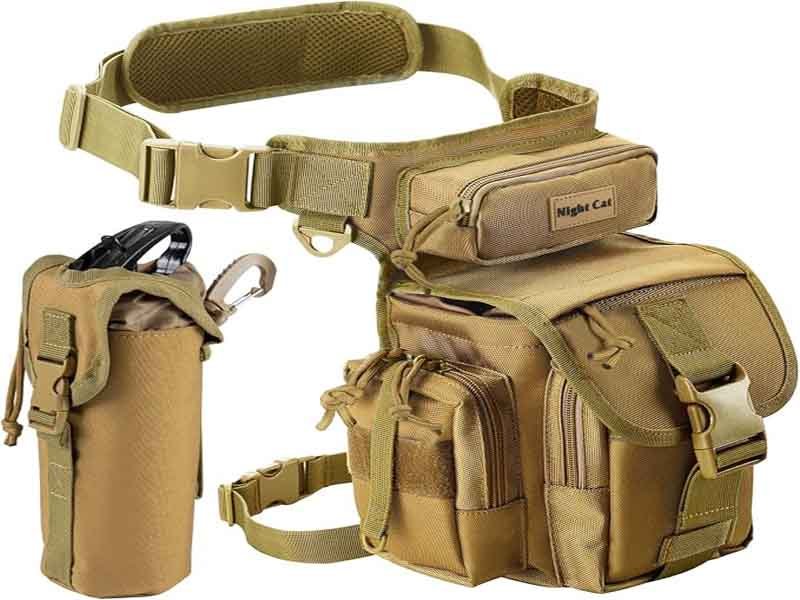
A hunting bag becomes waterproof only when its fabric, coating or membrane, seams, closures, attachment points, and construction method work as a unified barrier. A waterproof face material alone is not enough. Water usually enters through stitched seams, zipper chains, zipper garages, drain holes, webbing anchors, binding edges, or areas where a coating has been weakened by repeated folding and abrasion.
For most outdoor hunting applications, it is more accurate to think in levels of water protection rather than a simple waterproof-or-not-waterproof label. A day-hunting backpack may only need to withstand rain and wet vegetation. A waterfowl blind bag may need to sit on a damp boat floor or muddy bank. A roll-top equipment bag carried in a canoe may need welded seams and a closure designed for splash, pooling water, and possible short immersion.
ISO 811 and AATCC TM127 evaluate a fabric’s resistance to water penetration by applying increasing hydrostatic pressure. These methods are useful for comparing textiles, but they test fabric specimens rather than every possible leakage point in a completed bag. Finished-product testing is still necessary because sewing, folding, hardware installation, and closure design can change actual performance.
What Is a Waterproof Hunting Bag?
A waterproof hunting bag is an outdoor carrying product engineered to prevent water from reaching its protected compartments under defined conditions. The phrase “defined conditions” is important. No responsible manufacturer should treat waterproof performance as an unlimited promise.
A bag designed for continuous rain is not automatically suitable for submersion. A welded roll-top bag intended for boat use is not automatically a certified diving container. A water-repellent zipper is not automatically watertight. The product specification should explain the intended exposure, test procedure, duration, and acceptable leakage level.
The waterproof system normally includes four layers of protection:
| Protection Layer | Main Function | Common Failure Risk |
|---|---|---|
| Outer surface | Sheds rain, mud, snow, and vegetation moisture | Wetting out, abrasion, coating damage |
| Base fabric and coating | Resists water pressure and structural tearing | Pinholes, delamination, flex cracking |
| Seam system | Connects panels without creating uncontrolled leak paths | Needle holes, incomplete tape adhesion, weak welds |
| Closure system | Allows access while limiting water entry | Zipper gaps, poorly rolled tops, exposed pocket openings |
A high-performing bag must also manage water that lands on the exterior. Panel geometry should prevent water from pooling around zipper ends. Flaps should overlap in the direction of runoff. Pocket openings should not face upward unless they have a highly reliable closure. Bottom panels may need a heavier coating because they experience pressure from both the load and wet ground.
The product developer should begin by asking where the bag will be used. “Hunting” is too broad by itself.
A deer hunter moving through dry woodland has different needs from a waterfowl hunter standing in flooded marshland. A mountain hunter carrying meat, optics, and emergency equipment faces prolonged abrasion and changing weather. A guide transporting equipment by ATV may prioritize mud resistance and easy cleaning. A photographer-hunter may need an internal waterproof compartment with impact protection rather than a completely welded exterior pack.
The intended exposure can be classified in practical terms:
| Use Condition | Expected Water Exposure | Suitable Construction Direction |
|---|---|---|
| Dry woodland day hunt | Light rain, wet grass, brief ground contact | Coated fabric, protected zippers, rain flap |
| Temperate multi-day hunt | Sustained rain, wet brush, snow | Higher hydrostatic resistance, seam tape, waterproof liner |
| Waterfowl blind or boat | Splash, standing water, mud | Coated fabric, welded base, roll-top or protected opening |
| Canoe or river expedition | Heavy spray, possible accidental immersion | Welded body, roll-top closure, minimal stitched penetrations |
| Mountain expedition | Rain, snow, abrasion, temperature variation | Durable nylon, reinforced base, sealed critical compartments |
| Vehicle-supported hunt | Mud, rain, repeated loading | Wipe-clean coating, reinforced handles, structured base |
These categories should guide material selection, sampling, and testing. They also prevent overengineering. A fully welded pack can cost more, require specialized machinery, and reduce the number of pockets or structural details that can be sewn onto the body. In some hunting scenarios, a hybrid construction is more practical: a durable sewn outer pack with a removable welded dry liner for clothing, electronics, and emergency supplies.
Is Waterproof the Same as Water-Resistant?
Waterproof and water-resistant are not interchangeable terms.
Water-resistant materials slow water penetration during limited exposure. Waterproof materials and constructions are intended to prevent penetration under a more demanding, defined condition. Water-repellent usually describes a surface that causes droplets to bead and roll away rather than immediately soaking into the textile.
A durable water-repellent treatment, commonly called DWR, can reduce surface wetting. However, DWR is not the same as the underlying waterproof barrier. Gore explains that DWR is an exterior treatment used in addition to a waterproof membrane, and that dirt, wear, detergents, smoke, and other contaminants can reduce its effectiveness over time.
This distinction has direct implications for hunting bag design.
A tightly woven nylon with DWR may perform well during a short shower. Water beads on the face, and the bag feels dry. During extended rain, repeated contact, or pressure against wet ground, water may begin to move through the textile or enter at the seams.
A nylon fabric laminated or coated with TPU may resist water penetration even after the outer face has become wet. Yet if the panels are joined with ordinary stitching and left unsealed, water can still pass through the needle holes.
A welded TPU dry bag may provide much stronger protection because the fabric and panel connections form a more continuous barrier. Still, the top closure must be folded correctly, and any accessories attached through the wall can compromise the system.
The following comparison helps clarify the terminology:
| Performance Term | What It Usually Means | Suitable Hunting Use | Key Limitation |
|---|---|---|---|
| Water-repellent | Water beads on the surface | Light rain and wet vegetation | Treatment can wear or become contaminated |
| Water-resistant | Delays penetration during moderate exposure | Day hunts and intermittent rain | May leak under pressure or prolonged rain |
| Waterproof fabric | Fabric resists penetration to a specified level | Sustained rain and wet-ground exposure | Finished seams may still leak |
| Waterproof compartment | Specific section is sealed as a system | Electronics, clothing, maps, first aid | Other compartments may not be protected |
| Welded waterproof bag | Coated panels are thermally joined | Boats, marshes, heavy rain | Closure and attachments still require control |
| Watertight container | Intended to prevent entry under a defined immersion test | Specialized marine or emergency use | Requires strict construction and testing |
The critical question is therefore not, “Is the fabric waterproof?” It is, “Under what complete-product test does the finished bag prevent water entry?”
That question should appear early in any custom product development discussion. It changes how materials are approved, how zippers are selected, how pockets are positioned, and how the sample is evaluated.
Which Waterproof Ratings Matter?
Hydrostatic pressure is one of the most useful fabric-level indicators. During the test, water pressure is gradually applied to the material until penetration occurs. The result helps compare the resistance of different textiles to water passing through the surface. ISO 811 specifies this type of method for fabrics intended to be water-resistant, including those with water-repellent finishes.
However, a laboratory result should not be treated as a universal prediction of field performance. Test speed, specimen preparation, conditioning, coating age, test side, and standard used can affect results. A sample cut from a fresh roll may perform differently from a bag that has been folded, dragged, frozen, heated, and repeatedly packed.
For product planning, the following ranges can serve as engineering targets rather than universal legal definitions:
| Hydrostatic Head Target | Practical Interpretation | Possible Hunting Application |
|---|---|---|
| Below 1,000 mm | Basic resistance to brief moisture | Dust covers, internal organizers |
| 1,000–3,000 mm | Light to moderate rain protection | Day packs with rain flaps |
| 3,000–5,000 mm | More dependable sustained-rain performance | General hunting backpacks |
| 5,000–10,000 mm | Stronger protection for harsh weather | Mountain and multi-day hunting bags |
| Above 10,000 mm | High fabric-level water resistance | Dry compartments and marine-oriented bags |
These are practical sourcing bands, not substitutes for a written performance specification. A 10,000 mm material with poorly sealed seams can leak sooner than a lower-rated material used in a better-designed bag.
A complete test plan should include more than hydrostatic pressure:
| Test Area | What It Reveals | Why It Matters |
|---|---|---|
| Hydrostatic pressure | Resistance of fabric to water penetration | Compares coating or laminate performance |
| Spray or rain test | Surface wetting and runoff behavior | Reflects real rain exposure |
| Seam leakage test | Water entry through joined panels | Verifies sewing, tape, or welding quality |
| Bottom pooling test | Resistance while sitting in shallow water | Important for boats and wet ground |
| Abrasion before retest | Performance after surface wear | Simulates brush, rocks, and transport |
| Flex test before retest | Coating durability after folding | Identifies cracking or delamination risks |
| Low-temperature test | Flexibility and coating behavior in cold | Important for winter and mountain hunts |
| Finished-bag shower test | Whole-product leakage paths | Evaluates zippers, seams, flaps, and shape |
| Short immersion test | Performance under temporary submersion | Only needed for products making such claims |
ASTM D751 covers test methods for coated fabrics, while ASTM’s coated-fabric standards also include areas such as waterproofness, low-temperature bending, tearing, and coating fusion. That broader test approach is valuable because waterproof hunting bags must resist mechanical damage as well as water.
A development specification should also identify how many units are tested and what qualifies as a pass. For example:
Fabric target: no penetration below the agreed hydrostatic pressure.
Seam target: no visible droplets after a defined water-column or shower exposure.
Finished bag target: no water inside the protected compartment after a 30-minute simulated heavy-rain test.
Bottom target: no leakage after standing in 20–30 mm of water for a specified period.
Post-abrasion target: fabric and seam performance must remain above the agreed minimum after controlled abrasion.
The exact values should be chosen according to the bag’s use, price position, material weight, and product claim. The important point is that both sides agree on measurable conditions before production.
Are Rain Covers Fully Waterproof?
Rain covers are useful, but they do not make every hunting backpack fully waterproof.
A cover shields the largest exposed surfaces from direct rainfall. It can significantly reduce how much water reaches the bag body, especially during steady rain. It is also lightweight, removable, and economical. For many day packs, this is a reasonable solution.
The limitation is geometry. Most covers leave part of the harness area open so shoulder straps can remain attached. Wind-driven rain can move behind the cover. Water can run down the wearer’s back, enter around the top, or collect between the cover and the pack. The bottom may also remain exposed when the bag is placed on wet soil, a boat floor, or snow.
Rain covers also create practical concerns during hunting:
They can snag on branches.
Loose covers may flap or make noise.
Bright internal surfaces can become visible if the cover shifts.
Water can become trapped between the cover and the bag.
A cover must be stored when wet, creating condensation inside another compartment.
The elastic edge may lose tension after repeated use.
A rain cover should therefore be treated as one layer in a broader design, not a replacement for coated fabric, protected zippers, controlled seams, or waterproof internal storage.
For woodland and mountain packs, a strong combination may include a water-resistant outer pack, a fitted rain cover, and one or two welded internal dry compartments. The outer pack remains comfortable, quiet, and highly organized, while sensitive equipment receives stronger protection.
For marsh, boat, or river use, a cover is usually less dependable than an inherently waterproof body. A welded base, coated panels, and roll-top compartment are better suited to standing water and repeated splash.
A useful product specification separates the functions clearly:
The rain cover reduces direct rainfall.
The outer fabric limits absorption and resists abrasion.
Seam tape or seam sealing reduces needle-hole leakage.
The dry liner protects the most sensitive contents.
The bottom construction protects against wet-ground pressure.
This layered approach often produces a more practical hunting pack than trying to make every pocket and every surface completely watertight.
How Should Waterproof Claims Be Written?
Product claims should be specific enough to help the user understand what the bag can actually survive.
Weak claim:
Waterproof outdoor hunting backpack.
Better claim:
Water-resistant hunting backpack with coated nylon fabric, protected zipper openings, and an integrated rain cover for sustained outdoor use.
Stronger claim:
Welded roll-top hunting dry bag designed to protect equipment from heavy rain, boat spray, mud, and brief accidental immersion when the top is correctly rolled and secured.
The strongest wording is not always the best wording. A claim should match verified performance. Overstated claims create returns, complaints, and reputational risk. Understated claims can make a capable product appear ordinary. Testing allows the language to be both confident and accurate.
Szoneier can help define these performance levels during development. Rather than selecting a material from appearance alone, the design process can begin with the hunting environment, exposure duration, load, expected temperature, noise requirement, target weight, pocket structure, and intended retail positioning. The material and construction can then be matched to those conditions.
Which Materials Work Best?
The best material for a waterproof hunting bag depends on the required balance of water protection, abrasion resistance, noise, weight, cold flexibility, weldability, visual texture, cleaning, and cost. TPU-coated nylon is often suitable for lightweight or welded performance bags. PVC-coated polyester works well where ruggedness, structure, easy cleaning, and cost control are important. High-denier nylon provides strong tear and abrasion resistance, while Oxford fabrics offer a wide range of weights, coatings, textures, and price levels.
No single fabric is best for every hunting environment. Material choice should begin with the expedition rather than the fiber name.
A marsh bag may benefit from a smooth, heavily coated material that can be wiped clean after contact with mud and water. A stalking pack may require a quieter textile surface, even if waterproof protection must be added through a backing film or removable liner. A mountain pack may prioritize high-tenacity nylon, reinforced zones, and cold-resistant coatings. A blind bag may require a rigid or molded base that keeps the main fabric away from standing water.
Is TPU-Coated Fabric Better?
TPU-coated fabric is often one of the strongest options for premium waterproof hunting bags, especially when the design requires low weight, flexibility, weldable seams, and good resistance to repeated folding.
TPU means thermoplastic polyurethane. In bag materials, a TPU film or coating is commonly applied to a woven nylon or polyester base. Because TPU is thermoplastic, compatible layers can be joined through radio-frequency welding, hot-air welding, or other controlled thermal processes. This can create panel connections without rows of needle holes.
The word “better,” however, requires context.
TPU can offer several advantages:
Good flexibility across a broad range of temperatures.
Strong abrasion resistance when the formulation and base fabric are appropriate.
Potentially lighter construction than heavily coated PVC.
Good compatibility with welded construction.
A cleaner hand feel for premium outdoor equipment.
Good resistance to repeated rolling in roll-top designs.
Transparent, matte, glossy, and colored film possibilities.
It also has limitations:
Material cost is often higher than basic PVC-coated polyester.
Welding parameters must be controlled carefully.
Different TPU formulations can behave very differently.
Some surfaces can block or stick during storage if incorrectly formulated.
Oil, chemicals, ultraviolet exposure, humidity, and heat can affect long-term performance.
The base textile still determines much of the tear strength.
A thin coating can be damaged by aggressive abrasion.
A useful TPU specification should state more than “TPU waterproof fabric.” It may include:
Base fiber: nylon 6, nylon 6,6, or polyester.
Construction: plain weave, ripstop, Oxford, or high-density weave.
Yarn denier: such as 210D, 420D, 500D, or 840D.
Coating side: one-side or double-side.
Film thickness or total coating weight.
Total material weight in grams per square meter.
Hydrostatic-pressure requirement.
Adhesion requirement between coating and base fabric.
Low-temperature bend requirement.
Abrasion and tear targets.
Color and surface finish.
Welding method and seam-width requirement.
The base fiber matters. Nylon is generally chosen when high strength-to-weight performance and abrasion resistance are priorities. Polyester may provide good dimensional stability, ultraviolet resistance, and cost control. The actual result still depends on yarn quality, weave density, finishing, coating formulation, and manufacturing consistency.
CORDURA describes its advanced fabrics as being engineered for protection against tears, scuffs, and abrasion, and its ballistic fabric uses high-tenacity nylon 6,6 filament yarns for enhanced tear and abrasion resistance. These properties explain why high-tenacity nylon constructions are frequently considered for demanding outdoor packs.
For a lightweight roll-top hunting dry bag, one possible direction is a 210D or 420D nylon with TPU lamination. For a pack expected to rub against rock, timber, ATV racks, or boat hardware, a heavier 420D, 500D, or 840D base may be more suitable. Reinforcement can be limited to the bottom and high-wear zones to avoid making the entire bag unnecessarily heavy.
A common engineering mistake is to select the heaviest material everywhere. That can make the bag stiff, noisy, and tiring to carry. Zoned construction is usually more efficient:
Lightweight TPU-coated fabric on upper panels.
Higher-denier material on the bottom and side contact zones.
Double-layer reinforcement beneath webbing anchors.
A protective patch around buckles and rigid hardware.
A softer fabric at areas that contact the wearer.
A representative material-planning table may look like this:
| Bag Zone | Suggested Material Direction | Main Reason |
|---|---|---|
| Main body | 210D–420D TPU-coated nylon | Weight and water protection |
| Bottom | 500D–840D coated nylon or reinforced TPU fabric | Abrasion and ground pressure |
| Front pocket | Quiet laminated polyester or brushed nylon | Reduced movement noise |
| Internal dry compartment | Lightweight TPU-laminated fabric | Weldability and sealing |
| Harness contact area | Spacer mesh with coated backing panel | Comfort and moisture management |
| Webbing anchor zones | Double-layer base fabric with reinforcement patch | Load distribution |
These are development directions, not rigid formulas. The final material should be approved through test reports, physical samples, welding trials, and a completed prototype.
How Does PVC-Coated Fabric Perform?
PVC-coated fabric remains highly practical for hunting bags exposed to mud, standing water, repeated cleaning, and rough handling.
PVC means polyvinyl chloride. It is commonly applied to polyester fabric to create a durable, water-resistant or waterproof surface. The coating can provide body, abrasion resistance, color consistency, and easy-clean performance. It is frequently used in tarpaulins, industrial covers, waterproof duffels, gear bags, boat bags, and heavy-duty outdoor products.
PVC-coated polyester often performs well in situations where:
The bag is carried in a vehicle, boat, or blind.
The surface must be wiped clean quickly.
The design needs a structured appearance.
The budget cannot support a high-cost specialty laminate.
The material requires hot-air or radio-frequency welding.
The bag may contact mud, fish residue, wet equipment, or dirty floors.
The product is not intended to be an ultralight backpack.
Leister identifies thermoplastic-coated fabrics as suitable for welded technical products, including covers, tents, backpacks, bags, and outdoor equipment. Welding can replace stitching in areas where needle holes would create water-entry paths.
PVC is not always the ideal choice for a long-distance carrying pack. Depending on coating weight and formulation, it may feel heavier and stiffer than TPU. Cold temperatures can reduce flexibility if the formulation is not suitable. Some glossy surfaces create noticeable noise when they fold or rub. The material may also have a more industrial appearance than a premium matte TPU laminate.
PVC formulation matters. Plasticizers, stabilizers, coating thickness, base cloth, embossing, and surface treatment influence flexibility and durability. Two fabrics described as “500D PVC-coated polyester” may perform very differently.
A product developer should check:
Cold-crack or low-temperature bend performance.
Coating adhesion.
Flex durability.
Abrasion resistance.
Odor.
Surface blocking during storage.
Color migration.
Weld strength.
Hydrostatic resistance.
Resistance to mud, oils, cleaning agents, and sunscreen.
Compliance with the target market’s chemical requirements.
PVC can be used intelligently in a hybrid design. For example, a hunting duffel may use PVC-coated polyester on the base and lower side walls, while the upper body uses a quieter coated textile. This protects the bag when placed on a wet boat floor without making the entire product excessively stiff.
Which Nylon Fabric Is Most Durable?
Durability cannot be judged by denier alone.
Denier describes yarn linear density. A higher number often means thicker yarn, but it does not automatically guarantee greater tear strength, abrasion resistance, or service life. Fiber type, yarn tenacity, weave construction, coating, finishing, and fabric weight all contribute.
A tightly woven 420D high-tenacity nylon may outperform a loosely constructed 600D fabric in a particular tear test. A 500D nylon 6,6 fabric may provide an excellent balance for premium packs, while a 1000D construction may be appropriate only in high-wear areas because of its added weight and stiffness.
The following matrix helps compare common directions:
| Nylon Direction | Relative Weight | Abrasion Potential | Flexibility | Common Use |
|---|---|---|---|---|
| 210D nylon | Low | Moderate | High | Liners, lightweight roll tops |
| 420D nylon | Low to medium | Good | Good | Main pack bodies |
| 500D high-tenacity nylon | Medium | Very good | Moderate | Tactical and mountain packs |
| 840D nylon | Medium to high | Very good | Moderate | Reinforced outdoor bags |
| 1000D nylon | High | Excellent in suitable constructions | Lower | Bases and severe-wear zones |
| Ballistic nylon | Medium to high | Strong scuff and abrasion resistance | Construction-dependent | Panels needing rugged protection |
The word “ballistic” also requires caution. It originally refers to a dense nylon construction associated with military heritage, but modern commercial products vary. CORDURA’s ballistic fabric, for example, uses high-tenacity nylon 6,6 filament yarns in a dense woven construction for enhanced tear and abrasion resistance. That does not mean every fabric marketed as ballistic has identical performance.
For hunting bags, durability should be tested at the material, seam, and product levels.
Material-level questions:
Does the fabric resist abrasion from brush and rock?
Does a small cut grow into a large tear?
Does the coating remain bonded after flexing?
Does the material become brittle in cold weather?
Does the face retain acceptable appearance after mud cleaning?
Seam-level questions:
Does the seam hold when the bag is overloaded?
Does seam tape remain bonded after folding?
Does welding reduce base-fabric strength?
Do webbing anchors distribute load without tearing the panel?
Product-level questions:
Does the bottom maintain shape under heavy gear?
Do antler, tripod, bow, or rifle attachment points distort the body?
Do zipper corners remain stable?
Does hardware damage the fabric during repeated movement?
A durable bag is often designed through controlled reinforcement rather than extreme material weight. Reinforcement patches should extend beyond the immediate stress point. Webbing should be anchored into structural seams or internal load-distribution panels. Sharp hardware edges should be isolated from thin waterproof films.
Is Oxford Fabric Good for Hunting?
Oxford fabric is a broad and useful category for hunting bags. It is not a single material.
The term normally describes a basket-like woven construction and is frequently used with polyester or nylon yarns. Common bag specifications include 210D, 300D, 420D, 600D, 900D, and higher-denier Oxford fabrics. These textiles can receive PU, PVC, TPU, acrylic, or other coatings and finishes.
Oxford fabric is attractive for custom hunting bags because it offers:
A wide range of weights and textures.
Good print and color options.
Compatibility with camouflage patterns.
Flexible cost levels.
PU, PVC, or TPU coating possibilities.
Good sewing performance.
Availability in matte, textured, and structured surfaces.
Suitability for backpacks, duffels, organizers, cases, and accessories.
The disadvantages depend on the exact construction. A coarse polyester Oxford may be noisy. A light PU coating may not withstand long periods of water pressure. A heavy PVC coating may increase stiffness. A loosely woven base may show lower tear resistance even when the denier appears high.
The term “600D Oxford” therefore does not provide enough information for purchasing or manufacturing. A complete specification should include:
Fiber content.
Yarn denier.
Weave construction.
Fabric weight.
Coating type.
Coating amount or film thickness.
Water-pressure target.
Tear and tensile requirements.
Colorfastness.
Abrasion requirement.
Surface finish.
Camouflage print method.
Backing color.
Low-temperature performance.
Chemical-compliance requirements.
For a general hunting backpack, 420D nylon Oxford or 600D polyester Oxford with an appropriate coating may offer a workable balance. For a heavy blind bag, 600D or 900D polyester Oxford with PVC backing may provide more structure and easier cleaning. For a premium mountain pack, high-tenacity nylon with a lighter TPU or PU laminate may reduce weight while maintaining strength.
Are Waterproof Fabrics Quiet?
Waterproof fabrics are not automatically quiet.
Noise is created when panels fold, rub, scrape against vegetation, or move against hardware. Coating type, fabric stiffness, face texture, temperature, panel size, internal load, and construction all affect sound.
A smooth, heavily coated dry-bag fabric can produce a sharp crinkling noise. A brushed polyester or soft woven face may move more quietly but absorb water unless supported by a waterproof layer. Cold temperatures can make some coated fabrics stiffer and louder.
Quiet hunting-bag construction often requires a layered solution:
A soft or brushed outer face to reduce scraping noise.
A waterproof backing film or separate liner.
Foam or fabric separation between rigid contents.
Covered buckles and zipper pulls.
Elastic keepers to stop loose webbing from tapping.
Reduced use of hook-and-loop closures in critical access areas.
Smaller panel sections to reduce loud flexing.
Hardware positioned away from rifles, bows, and metal accessories.
A fabric should be tested at the expected field temperature. A material that feels soft in a warm sample room may become noticeably stiffer at freezing temperatures. The test should include slow folding, rapid compression, rubbing against branches, zipper operation, and movement while loaded.
A practical comparison may look like this:
| Material Surface | Water Protection Potential | Noise Level | Best Use |
|---|---|---|---|
| Smooth heavy PVC | High | Medium to high | Boat and blind bags |
| Matte TPU laminate | High | Medium | Roll-top and expedition bags |
| PU-coated nylon | Moderate to high | Low to medium | General hunting backpacks |
| Brushed laminated polyester | Moderate to high | Low | Stalking and woodland packs |
| Uncoated canvas | Low without liner | Low | Traditional quiet outer shells |
| Neoprene panel | High at panel level | Low | Protective sleeves and equipment zones |
Neoprene can be useful for specific parts rather than the whole pack. It cushions optics, ammunition accessories, bottles, and equipment while moving quietly. However, it adds weight and can retain water at cut edges or textile-covered surfaces. It is usually more effective as a pocket, sleeve, divider, or protective panel.
Canvas and cotton-blend materials offer a quiet, natural feel, but they are not the first choice for a lightweight fully waterproof bag. A waxed canvas exterior can shed rain and develop an attractive appearance, while an internal welded liner protects essential gear. This combination works well for heritage-style hunting collections where appearance and silence are more important than minimum weight.
How Should Materials Be Combined?
The strongest hunting bags rarely depend on one material across every surface.
A multi-material design allows each zone to perform a specific job. The outer body handles abrasion and appearance. The coating resists water. The base manages mud and ground pressure. The liner protects sensitive contents. Spacer mesh improves carrying comfort. Neoprene or foam protects optics. Webbing and reinforcement panels manage load.
One development concept might use:
420D TPU-coated nylon for the main body.
840D coated nylon for the bottom.
Brushed laminated polyester on front contact zones.
A welded TPU liner for dry clothing and electronics.
Neoprene sleeves for optics and bottles.
High-density polyethylene sheet in the base for shape.
Closed-cell foam in the back panel.
Acetal hardware selected for cold-weather impact performance.
Water-repellent zippers for quick-access pockets.
A roll-top closure for the primary dry compartment.
It is important not to misrepresent water-repellent zippers. YKK states that its AquaGuard coil zipper is water-repellent, not waterproof or watertight. The zipper can improve protection, but product geometry, flap design, zipper ends, and compartment construction remain important.
The primary dry compartment may therefore use a roll top, while secondary pockets use coated zippers beneath protective garages. This gives faster access without claiming that every opening is watertight.
A Representative Material Selection Scenario
Consider a 35-liter hunting backpack intended for three-day woodland and mountain trips. The expected conditions include steady rain, wet brush, temperatures from -10°C to 25°C, repeated contact with rock, and loads of 12–18 kilograms.
A poor approach would be to choose the thickest PVC-coated fabric available and describe it as waterproof. The bag would likely become heavy, stiff, and noisy.
A better approach would define the priorities:
The main compartment must protect clothing and electronics during prolonged rain.
The exterior must tolerate abrasion.
The bag must remain flexible in cold weather.
Quick-access pockets can be water-resistant rather than fully sealed.
The hunter needs quiet movement.
The total empty-bag weight must remain controlled.
A possible material solution would include a high-tenacity nylon outer body with a waterproof laminate, a reinforced base, a soft-faced front panel, seam sealing at critical areas, and a separate welded liner for the main compartment. The bag would then be tested after cold conditioning and abrasion, not only as a fresh fabric swatch.
That is the difference between selecting a fabric and engineering a product.
Szoneier works with cotton, canvas, polyester, nylon, neoprene, jute, linen, Oxford, and coated technical fabrics, allowing hunting bags to be developed around the actual expedition rather than a fixed material catalog. Waterproof coatings, lamination, printing, embroidery, welding, seam sealing, reinforcement, and customized compartment structures can be evaluated together during sampling.
The next stage is to turn the material plan into a reliable construction. Seam type, zipper selection, roll-top geometry, reinforcement, welding width, and finished-product testing will decide whether the approved fabric performs as intended in the field.
How Are Seams and Openings Sealed?
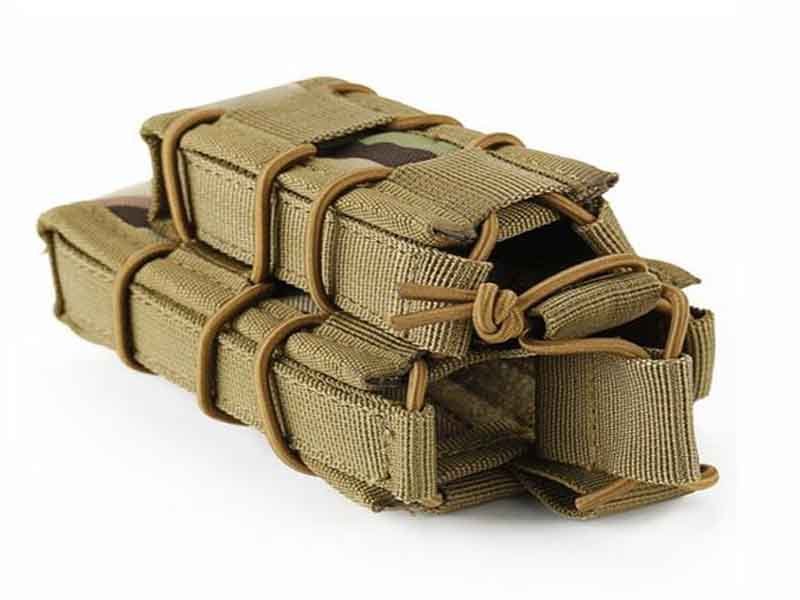
Seams and openings are the most common leakage points in a waterproof hunting bag. Even when the fabric itself can resist substantial water pressure, every needle hole, zipper end, webbing attachment, pocket opening, and hardware installation creates a possible path for moisture. Reliable protection comes from choosing the correct joining method, controlling seam geometry, reducing unnecessary penetrations, and testing the completed bag rather than relying only on fabric specifications.
A well-sealed hunting bag does not simply block rain from falling straight down. It must also handle wind-driven water, pressure from wet ground, water pooling around zipper corners, repeated folding, temperature changes, and movement under load. The construction method should match the intended environment. A woodland backpack may use sewn and taped seams, while a waterfowl dry bag may require welded seams and a roll-top opening. A hybrid expedition pack may combine both systems.
How Do Welded Seams Stop Leaks?
Welded seams join compatible coated materials by applying controlled heat, pressure, or high-frequency energy. Instead of pushing a needle through the fabric, the process softens the thermoplastic coating and bonds overlapping panels together. When correctly engineered, the result creates a continuous connection without rows of stitching holes.
Common welding methods include radio-frequency welding, hot-air welding, hot-wedge welding, and ultrasonic welding. The best process depends on the coating chemistry, material thickness, panel shape, production volume, and required seam strength.
Radio-frequency welding is commonly used for materials containing polar thermoplastics, including many PVC and TPU constructions. High-frequency energy heats the material internally while pressure forms the bond. It is suitable for controlled seam widths, shaped panels, reinforcement patches, and repeated production.
Hot-air welding directs heated air between overlapping coated surfaces before rollers apply pressure. It works well for long seams and technical textile products. Operator speed, temperature, airflow, pressure, and nozzle position must be carefully controlled.
Hot-wedge welding uses a heated metal wedge to transfer heat directly between layers. It can create consistent long seams on suitable coated textiles.
Ultrasonic welding uses high-frequency mechanical vibration to generate localized heat. It is more common on smaller areas, thin thermoplastic materials, and selected internal components.
A welded seam must have sufficient width. A seam that is too narrow may peel apart under load. An excessively wide seam can add stiffness and waste material. The correct width depends on coating adhesion, fabric strength, product load, seam direction, and welding method.
The quality of a welded seam can be affected by several variables:
| Welding Variable | Possible Defect | Field Consequence |
|---|---|---|
| Temperature too low | Incomplete bonding | Seam peeling or water leakage |
| Temperature too high | Coating damage or fabric distortion | Reduced strength and visible burn marks |
| Insufficient pressure | Air channels inside the weld | Slow leakage under pressure |
| Excessive pressure | Coating displacement | Thin weak areas along the seam |
| Incorrect speed | Uneven heating | Inconsistent seam strength |
| Contaminated surface | Poor adhesion | Localized separation |
| Narrow overlap | Low peel resistance | Failure when the bag is loaded |
| Misaligned panels | Wrinkles and channels | Water tracks along the seam |
A seam can appear smooth and still be weak. Visual inspection should be combined with peel testing, tensile testing, air-pressure testing, water-column testing, or finished-product leakage tests.
Load direction is also important. A welded seam may resist shear forces well but perform differently under peeling forces. Good pattern engineering positions seams so the product load pulls along the bond rather than directly peeling the layers apart.
For example, the bottom of a 50-liter hunting duffel carries concentrated weight. If the bottom seam is designed as a simple outward-facing overlap, repeated lifting may peel the bond. A folded or reinforced seam configuration can distribute stress more effectively. Handles should not rely only on a waterproof wall. Internal reinforcement panels can transfer force across a wider area.
Welded construction has limitations. Every attached pocket, strap, buckle, or MOLLE panel complicates the waterproof barrier. External components can be welded onto reinforcement patches, but heavy load-bearing details may still require stitching. When stitching is unavoidable, it should be placed outside the main dry chamber or isolated through a secondary layer.
A practical welded hunting bag may use a waterproof inner body surrounded by a sewn harness and accessory shell. The inner body keeps gear dry, while the outer structure supports comfortable carrying and organized attachment points. This architecture often performs better than trying to weld every feature directly onto one thin waterproof chamber.
Are Taped Seams Waterproof?
Taped seams can provide reliable water protection when the fabric, tape, adhesive, seam allowance, application temperature, and pressure are compatible.
In a taped construction, panels are first sewn together. A waterproof seam tape is then applied over the needle holes on the coated or laminated side of the fabric. Heat and pressure activate the adhesive, bonding the tape over the seam and blocking water paths.
This system is common in waterproof garments, tents, rain covers, technical bags, and soft outdoor equipment. It allows more complex shapes and conventional sewing methods than fully welded construction.
Seam tape is not universally compatible with every material. A tape designed for polyurethane coatings may not bond properly to PVC. A tape that adheres well to a smooth film may fail on a textured, contaminated, or heavily embossed surface. Some coatings release plasticizers that weaken adhesion over time.
A seam-taping program should confirm:
The fabric coating or membrane chemistry.
The tape construction and adhesive type.
Required application temperature.
Machine pressure.
Feed speed.
Tape width.
Seam profile.
Minimum peel strength.
Cold-weather performance.
Wash or flex durability where relevant.
Hydrolysis resistance.
Aging behavior under heat and humidity.
The seam beneath the tape must also be appropriate. Thick overlapping layers can create channels that the tape cannot fully cover. Uneven binding, bulky reinforcement, and folded webbing can prevent continuous adhesion. Curved seams may require narrower tape, slower application, or specially shaped processing.
Common seam-tape failures include:
Edge lifting.
Bubbles.
Wrinkles.
Skipped sections.
Adhesive squeeze-out.
Poor bonding over thread ridges.
Cracking after cold flexing.
Peeling near corners.
Delamination after humidity exposure.
Tape damage from internal equipment.
A completed seam should be inspected under good lighting. Operators should check whether the tape is centered, fully bonded, and free from visible channels. Random samples can be cut and peeled to evaluate adhesion.
The difference between taped and welded construction is not simply good versus bad. Each method has appropriate uses.
| Construction Method | Water Protection | Design Flexibility | Load Capacity | Common Application |
|---|---|---|---|---|
| Unsealed sewing | Low to moderate | Very high | High | Basic outdoor packs |
| Sewn and liquid sealed | Moderate | High | High | Small runs and complex corners |
| Sewn and taped | High when compatible | High | High | Waterproof backpacks |
| Welded | High to very high | Moderate | Depends on reinforcement | Dry bags and marine gear |
| Hybrid inner liner | Very high for selected chamber | Very high | High | Expedition hunting packs |
Sewn and taped construction is often suitable for mountain and woodland hunting packs because it allows ergonomic panels, shaped harnesses, multiple compartments, compression straps, and load-bearing reinforcement. A fully welded design may be more suitable for a simpler blind bag or roll-top dry sack.
How Does Liquid Seam Sealing Work?
Liquid seam sealers are applied over stitching to fill needle holes and create a flexible barrier. They may be polyurethane-based, silicone-based, or formulated for specific coatings.
Liquid sealing can be useful for complicated corners, small production runs, repairs, prototypes, and areas that cannot easily pass through a seam-taping machine. It can also reinforce tape edges or seal selected internal penetrations.
The process is labor-sensitive. Too little sealant leaves exposed holes. Too much creates an uneven appearance, long curing time, unpleasant odor, or stiff seam. Surface contamination can reduce adhesion.
A controlled process should specify:
Surface cleaning method.
Sealant type.
Application width.
Wet-film thickness.
Curing temperature.
Curing time.
Ventilation requirements.
Inspection lighting.
Leakage-test method.
Liquid sealers are often less visually consistent than seam tape. They can still be effective when applied inside a compartment where appearance is less important. For premium products, the sealant line should remain controlled and should not interfere with zipper operation or internal organizers.
Which Waterproof Zippers Work Best?
There are three broad zipper categories relevant to hunting bags: standard zippers with protective flaps, water-repellent coated zippers, and specialized watertight zippers.
Standard coil or molded zippers are easy to operate, available in many sizes, and suitable for organized hunting packs. They are not waterproof. A storm flap, gutter, garage, or reversed installation can reduce direct water entry.
Water-repellent zippers use a coated tape or laminated film to reduce penetration through the zipper tape. They improve rain performance but are generally not fully watertight. Water can still enter through the slider gap, chain, bottom stop, top stop, stitching holes, and zipper ends.
Watertight zippers use specialized tooth or sealing structures designed for much stronger water control. They are more expensive, stiffer, and sometimes harder to operate. They may require lubrication or specific opening force. Their ends must be integrated carefully into the bag body.
The zipper should be selected according to the compartment, not only the product’s overall marketing claim.
| Compartment | Recommended Closure Direction | Reason |
|---|---|---|
| Main dry chamber | Roll top or watertight zipper | Highest protection |
| Front accessory pocket | Coated water-repellent zipper with garage | Fast access |
| Map pocket | Coated zipper beneath flap | Rain protection and visibility |
| Ammunition pocket | Protected zipper with drainage planning | Quick access and organization |
| Electronics pocket | Internal zipper inside dry compartment | Double protection |
| Wet gear pocket | Water-resistant zipper with ventilation or drainage | Moisture separation |
| Bottom shoe compartment | Coated zipper with large flap | Mud and splash control |
Zipper size also matters. A lightweight coil zipper may be adequate for a small internal pocket but not for a heavily loaded main opening. Larger zipper chains generally tolerate more force and contamination. Mud, sand, ice, and plant debris can interfere with operation.
Slider selection deserves attention. Locking sliders reduce accidental opening. Large pullers improve use with gloves. Cord pullers can be quieter than metal tabs, but loose cords should be secured to avoid snagging. Double sliders improve access but create an additional meeting point where water may enter.
Zipper orientation affects water flow. Horizontal zippers can collect water along the chain. Curved zippers may create low points. A slight downward angle can guide runoff away from the opening. Zipper garages should cover slider ends without making the zipper difficult to use.
A coated zipper sewn directly onto a waterproof panel still produces needle holes. The backside should be taped or sealed if the compartment is expected to resist sustained rain. Zipper tape can be more difficult to seal than flat fabric because of thickness changes and slider stops.
Is a Roll-Top Closure Reliable?
A properly designed and correctly closed roll top is one of the most reliable ways to protect a hunting bag’s main compartment from rain, spray, mud, and brief accidental water exposure.
The opening uses flexible coated fabric that is folded or rolled several times before the side buckles or top buckle are secured. Each fold creates a longer and more difficult path for water to travel.
The closure depends on user behavior. If the top is rolled only once, overfilled, unevenly folded, or closed with fabric trapped between layers, performance drops. The product should provide enough collar height for at least three secure rolls after the bag is loaded.
A good roll-top design considers:
Collar height.
Fabric flexibility.
Minimum number of rolls.
Buckle position.
Opening width.
Stiffening strip.
Weld or seam orientation.
Compression load.
User access frequency.
Cold-weather handling.
A stiffening strip along the opening helps create flat, consistent rolls. The strip should remain flexible enough in cold conditions. Buckles should maintain tension without cracking under impact.
Roll tops are excellent for main storage but less convenient for frequent access. A hunter may not want to unroll the bag every time gloves, ammunition, or a rangefinder are needed. The solution is to combine a protected roll-top chamber with external quick-access pockets.
Side-roll and top-roll arrangements perform differently. A side-roll closure clips downward along the sides, creating a carry handle or compact shape. A top-clip closure joins the ends together above the opening. Both can work when properly designed.
Overpacking is a major failure risk. The product should include a visible maximum-fill line. Users need enough empty collar length to form full rolls without crushing contents.
How Should Webbing and Hardware Be Attached?
Webbing attachment points often compromise waterproof construction because they carry significant loads and are commonly sewn through the bag wall.
The most reliable solution is to separate the structural system from the waterproof chamber. Shoulder straps, handles, compression straps, and MOLLE panels can be sewn to an external harness or reinforcement layer. The internal dry liner remains free of stitching.
When webbing must be attached directly, the design can use:
Welded reinforcement patches.
Pre-welded anchor plates.
External stitching isolated from the inner liner.
Sealed stitch boxes.
Adhesive-backed reinforcement.
Mechanical fittings with gaskets.
Double-wall construction.
Webbing ends should not terminate directly at a high-pressure water zone. The bottom corners and lower side walls experience both water contact and structural stress. Moving attachment points upward or using an external cradle can improve reliability.
Buckles, D-rings, hooks, and metal hardware should be evaluated for cold impact, corrosion, noise, and compatibility with gloves. Acetal buckles are common, but not all grades perform equally in low temperatures. Metal parts may be stronger but can strike other equipment and create unwanted sound.
How Are Corners and Curves Sealed?
Corners are harder to seal than straight seams because material layers overlap, fold, and change direction. A three-dimensional bag may bring several panels together at one point, creating thickness that tape or welding tools cannot process evenly.
Good pattern design reduces unnecessary intersections. Instead of joining four panels at one corner, a manufacturer may use a continuous bottom panel that wraps upward. Rounded corners distribute stress and are easier to weld than sharp internal angles.
Corner reinforcement should not create a rigid edge that cuts into the coating. Soft transition layers can reduce flex concentration.
For taped seams, small radius curves may require narrow seam tape and slower machine speed. Operators need enough access to apply heat and pressure consistently.
For welded bags, shaped dies or careful hot-air processing can seal curves. The overlap must remain flat and free of folds. Test bags should be filled and flexed to check whether the corner develops white stress marks, coating separation, or pinholes.
How Should Finished Bags Be Leak Tested?
Finished-product testing should reflect the intended claim. A general rain-resistant hunting backpack does not need the same test as a marine roll-top bag.
A practical testing sequence may include:
Visual seam inspection.
Zipper operation check.
Interior light inspection for needle holes.
Controlled shower exposure.
Bottom pooling test.
Paper or absorbent-cloth leakage detection.
Weighted load test.
Cold conditioning.
Repeated opening and closing.
Abrasion followed by water retest.
Short immersion test where claimed.
A simulated-rain test can place the loaded bag under controlled water spray for 30 to 60 minutes. The bag should be positioned as it would be carried or stored. Water should strike the top, front, sides, and zipper areas.
A bottom test can place the loaded bag in shallow water. This reveals leakage caused by pressure and ground contact.
For welded bags, air-pressure testing can identify pinholes. The chamber is lightly inflated and checked with a soap solution. Excessive pressure must be avoided because it can damage seams.
The acceptance criteria should state whether any internal dampness is allowed. A product described as water-resistant may permit limited moisture after severe testing. A dry compartment should remain completely dry.
Which Hunting Bag Type Should You Choose?
The right hunting bag depends on trip duration, terrain, weather, transport method, equipment, carrying distance, and the level of water exposure. A backpack is best for mobile hunting and long carries. A blind bag offers fast access in marsh or waterfowl environments. A roll-top dry bag protects critical equipment in boats and heavy rain. A duffel is effective for vehicle-supported expeditions. A gun bag requires a different balance of water protection, padding, access, and legal transport considerations.
Choosing by appearance alone often leads to poor field performance. The correct question is not “Which bag looks most rugged?” It is “How will the bag be carried, opened, placed, loaded, and exposed to water during the hunt?”
What Is a Waterproof Hunting Backpack?
A waterproof hunting backpack is designed for hands-free carrying while protecting gear from rain, wet vegetation, snow, mud, and damp ground. It may use a waterproof outer body, a seam-sealed construction, an integrated dry compartment, or a removable waterproof liner.
Backpacks require more complex construction than simple dry bags because they include shoulder straps, hip belts, back panels, frames, compression straps, external pockets, and load-bearing attachments.
A highly sealed outer body can protect gear well, but comfort components may create leakage paths. This is why many effective hunting backpacks use a hybrid design.
A representative hybrid system includes:
A durable coated outer pack.
A waterproof roll-top main liner.
Water-resistant external pockets.
A reinforced base.
A separate wet-gear section.
A structured harness outside the waterproof chamber.
This approach gives the hunter fast access to frequently used equipment while keeping clothing, food, electronics, and emergency supplies inside a more secure dry zone.
Backpack capacity should match both trip length and load type.
| Capacity | Common Use | Approximate Gear Profile |
|---|---|---|
| 15–25 L | Short day hunt | Water, ammunition, jacket, snacks, basic tools |
| 25–40 L | Full-day or light overnight trip | Extra clothing, optics, food, first aid |
| 40–60 L | Two- to four-day expedition | Shelter, sleep system, food, larger equipment |
| 60–80 L | Extended backcountry hunt | Camping system, cold-weather gear, load-hauling equipment |
| Above 80 L | Specialized expedition or meat hauling | Bulky equipment and heavy loads |
Capacity figures do not tell the whole story. A 40-liter pack with a narrow opening may be harder to organize than a 35-liter clamshell pack. Waterproof roll tops use some internal volume for folding. Product specifications should distinguish total fabric volume from usable closed volume.
The carrying system must be matched to expected weight. A lightweight dry-bag backpack with simple straps may work for a few kilograms but become uncomfortable under a 20-kilogram load. Heavy expedition packs need load lifters, a supportive hip belt, frame structure, and controlled weight transfer.
Which Blind Bag Suits Waterfowl Hunting?
A waterfowl blind bag should tolerate mud, rain, boat spray, wet gloves, ammunition, bird calls, food, and frequent opening. It is usually placed on a boat floor, marsh platform, muddy bank, or inside a blind rather than carried for long distances.
The ideal blind bag often has a wide top opening, structured base, fast-access compartments, glove-friendly hardware, and an easy-clean exterior.
Unlike a mountain pack, a blind bag may prioritize stability and organization over ergonomic long-distance carrying. A shoulder strap and grab handles are often sufficient.
Important features include:
A waterproof or molded base.
Raised feet or a structured bottom.
Drainage for wet external pockets.
Protected ammunition storage.
Insulated food or drink section.
Removable dividers.
Call storage.
Key and phone pocket.
Quiet zipper pullers.
Bright internal lining for visibility.
External attachment points.
A roll-top blind bag offers strong water protection but may slow access. A zippered lid is faster but requires better flap and seam design. A combination can work well: a roll-top main compartment for spare clothing and electronics, plus external zippered pockets for calls, gloves, and shells.
Mud control is a major design issue. Deep fabric folds, exposed hook-and-loop, and complex webbing grids collect dirt. Smooth coated panels are easier to clean. Drainage holes may help external wet pockets but should never connect directly to the dry chamber.
A molded EVA or rigid coated base can keep the textile body away from standing water. The base connection must be sealed and strong enough for repeated lifting.
Are Dry Bags Good for Hunting?
Dry bags are excellent for protecting sensitive gear but are not always the best complete hunting system.
Their strengths include simple waterproof construction, easy cleaning, low weight, and good resistance to rain and splash. They work well for boats, marshes, river crossings, and storing clothing inside a larger pack.
Their weaknesses include limited organization, slower access, less comfortable carrying, trapped air, and possible noise from coated materials.
A basic cylindrical dry bag may protect contents but become frustrating when small items settle at the bottom. Internal removable organizers, clear pockets, color-coded sacks, or side-access structures can improve usability.
Dry bags are particularly useful for:
Spare clothing.
Sleeping systems.
Electronics.
Medical supplies.
Maps and documents.
Emergency equipment.
Food that must remain dry.
Ammunition packaging.
A dry bag used inside a hunting backpack provides redundancy. Even when rain penetrates the outer pack, essential gear remains protected.
For waterfowl use, a standalone dry bag can also act as a flotation aid in an emergency, but it should never be marketed as lifesaving equipment unless specifically designed and certified for that purpose.
When Is a Hunting Duffel Better?
A hunting duffel is often better than a backpack when equipment is transported by truck, ATV, boat, aircraft, lodge vehicle, or short manual carries.
Duffels have wide openings and are easy to pack. They can hold boots, clothing, optics, cooking gear, and bulky equipment. Rectangular duffels use vehicle space efficiently and allow rapid inventory checks.
A waterproof expedition duffel may use welded coated fabric, a large weather-protected zipper, compression straps, grab handles, and removable backpack straps.
Key design considerations include:
Opening type.
Zipper strength.
Handle reinforcement.
Shoulder or backpack carrying option.
Base abrasion.
Internal compression.
Wet and dry separation.
Identification window.
Locking points.
Stackability.
A clamshell zipper gives excellent access but is difficult to make fully watertight. A roll-top duffel protects better but may feel less structured. A large watertight zipper improves sealing but raises cost and operating force.
For most vehicle-supported hunting trips, a heavily water-resistant zipper beneath a broad storm flap may provide a practical balance. For boat expeditions, welded construction and a roll-top or specialized sealing zipper are more appropriate.
Large duffels should include internal load-control straps. Without compression, heavy equipment shifts during transport and pulls against the outer wall. Handles should wrap under the bag or connect to a structural cradle rather than relying on small stitch boxes.
Do Gun Bags Need Full Waterproofing?
Gun bags need controlled moisture protection, but a completely sealed construction can create another problem: trapped condensation.
A rifle or shotgun case should protect against rain, snow, mud, scratches, impact, and short exposure on wet ground. However, if a damp firearm is sealed inside an airtight bag for a long period, retained moisture can contribute to corrosion.
The design should distinguish temporary environmental protection from long-term storage. A waterproof transport case is useful during rain or boat travel, but the firearm should be removed, dried, inspected, and stored appropriately afterward.
A hunting gun bag may include:
Water-resistant or waterproof outer fabric.
Sealed base.
Closed-cell foam padding.
Soft non-scratch lining.
Muzzle and stock reinforcement.
Protected zipper.
Moisture-control insert pocket.
Drainage or ventilation option outside the main weather seal.
Carry handles and shoulder strap.
Lock-compatible zipper pulls.
Identification area.
The foam type matters. Open-cell foam can absorb moisture. Closed-cell foam resists water uptake and is often more appropriate for harsh outdoor use. The lining should not retain dirt or scratch finished surfaces.
Waterproof zipper systems can protect the case during heavy rain, but the user should still avoid prolonged storage of a wet firearm inside the closed case.
Gun-bag dimensions must account for optics, muzzle devices, bipods, slings, and stock shape. A case that is too tight places pressure on the zipper and seams. A loose case allows equipment to shift and strike internal surfaces.
Which Bag Works Best for Big-Game Hunting?
Big-game hunting often requires a modular load-hauling system rather than a single waterproof bag.
The hunter may need to carry equipment into the field and transport meat out. These two loads create different hygiene and structural requirements.
A modular frame pack can combine:
A removable waterproof equipment bag.
An external load shelf.
A washable meat-hauling panel.
Compression straps.
An adjustable harness.
A waterproof bottom.
Detachable day-pack components.
The waterproof chamber protects camp equipment during the inbound trip. After a successful hunt, the bag can move away from the frame to create space for a meat bag or load shelf.
The frame and compression system must control heavy, irregular loads. Waterproof fabric alone does not provide load stability.
Materials that contact meat or biological fluids should be easy to remove and clean. The equipment compartment should remain isolated. Seam geometry should avoid areas where fluids can collect.
Which Bag Works Best for Mountain Hunting?
Mountain hunting combines long carrying distances, abrasion, rain, snow, rapid temperature changes, and heavy loads. The bag must protect gear without adding unnecessary weight.
A mountain pack normally benefits from:
High-tenacity nylon.
Reinforced bottom and side zones.
Seam-sealed main compartment.
Waterproof internal liner.
Frame or stays.
Supportive hip belt.
Load lifters.
Compression straps.
Ice-tool or trekking-pole attachment.
Optics storage.
Hydration compatibility.
Cold-resistant buckles and coatings.
A completely welded exterior pack may not provide the shaping and load transfer required for heavy mountain use. A seam-sealed sewn shell with a removable dry liner is often more practical.
The fabric should be tested after cold conditioning because coatings and buckles may behave differently below freezing. Zipper pullers need to work with gloves. Ice should not accumulate around closure channels.
Which Bag Works Best for Waterfowl Hunting?
Waterfowl hunting places the highest priority on splash protection, standing-water resistance, mud cleaning, and rapid access.
A welded roll-top backpack or structured blind bag is often appropriate. The lower half should be particularly resistant because it may sit in water.
A practical waterfowl system may use:
PVC- or TPU-coated body fabric.
Welded lower chamber.
Roll-top main opening.
Large external accessory pocket.
Molded or reinforced base.
Removable shoulder strap.
Floating key pocket.
Bright internal lining.
Drainable decoy or wet-gear section.
Quiet hardware covers.
Camouflage should remain durable after abrasion and cleaning. Surface printing on smooth coatings may scratch unless properly bonded or protected.
Which Bag Works Best for Day Hunts?
A day-hunting bag should prioritize access, comfort, quiet movement, and controlled rain protection.
A 20- to 35-liter backpack is usually sufficient for water, food, extra clothing, optics, first aid, ammunition, navigation tools, and field accessories.
A fully welded dry-bag body may be unnecessary unless the hunt involves marshes or boats. A quiet coated textile, protected zippers, sealed critical seams, and internal dry pouch may provide a better balance.
The hunter should be able to reach key equipment without removing everything. Side pockets, hip-belt pockets, top pockets, and internal organizers improve efficiency.
How Can One Product Cover Multiple Hunting Scenarios?
A modular design can adapt to different expeditions.
A 40-liter base pack may include:
A removable welded liner.
Detachable side pockets.
A removable waterproof ammunition pouch.
Convertible roll-top collar.
Detachable bow or rifle carrier.
Wet-gear front pocket.
Removable hip belt.
Compression straps for smaller loads.
This allows one platform to serve woodland, mountain, and waterfowl users without forcing every feature onto every configuration.
Customization should still avoid feature overload. Too many pockets add weight, seams, cost, and leakage risk. Each feature should solve a clear field problem.
Szoneier can develop backpacks, blind bags, dry bags, duffels, weapon cases, and modular expedition systems using nylon, polyester, Oxford, canvas, neoprene, TPU-coated, and PVC-coated materials. During sampling, closure type, seam method, load structure, compartment arrangement, camouflage, logo process, waterproof target, and field conditions can be evaluated as one complete product rather than separate components.
What Size Hunting Bag Do You Need?
The right hunting bag size depends on trip duration, climate, terrain, equipment volume, food and water requirements, load-carrying distance, and whether the hunter expects to transport additional gear or game. A 25-liter pack may be sufficient for a mild-weather day hunt, while a cold-weather backcountry expedition can require 60 liters or more. Capacity should be selected around a realistic packing list rather than a simple “one day equals one size” formula.
An oversized bag encourages unnecessary packing, creates internal movement, and adds fabric and hardware weight. An undersized bag forces equipment onto exposed external straps, prevents waterproof closures from sealing correctly, and makes essential items difficult to access. The best capacity is the smallest volume that safely carries the required equipment while preserving enough space for proper closure, organization, and changing weather.
For waterproof hunting bags, usable volume is especially important. A bag advertised as 40 liters may not provide 40 liters after the roll-top collar is folded three times, internal dividers are installed, and the back panel curves into the compartment. Product developers should distinguish theoretical panel volume, laboratory-measured capacity, and practical closed capacity.
Which Size Fits a Day Hunt?
Most day-hunting bags fall between 15 and 35 liters. The correct position within that range depends more on weather and equipment than on the number of hours spent outside.
A lightweight early-season hunt may require only water, food, ammunition, navigation equipment, a compact rain layer, first aid, gloves, and a few accessories. A 15- to 22-liter pack can handle this load efficiently.
A full-day hunt in variable weather may require insulation, a waterproof shell, extra socks, optics, a tripod, emergency shelter, stove, and additional water. In that case, 25 to 35 liters is more practical.
A day bag should not be so tightly packed that the hunter must empty the entire compartment to reach one item. A small reserve of unused volume improves access and allows the hunter to store a removed jacket or wet outer layer.
| Day-Hunt Scenario | Recommended Capacity | Typical Load Weight | Main Contents |
|---|---|---|---|
| Warm-weather short hunt | 15–20 L | 3–6 kg | Water, food, ammunition, rain layer, first aid |
| Full-day woodland hunt | 20–28 L | 5–9 kg | Clothing layer, optics, food, tools, navigation |
| Cold-weather day hunt | 28–35 L | 7–12 kg | Insulation, gloves, thermos, emergency gear |
| Waterfowl day hunt | 25–40 L | 6–15 kg | Shells, calls, gloves, food, spare clothing |
| Photography-focused hunt | 25–40 L | 8–14 kg | Camera body, lenses, optics, batteries, rain protection |
The bag’s shape can make two products with the same nominal capacity feel very different. A tall, narrow pack carries close to the body and moves well through dense vegetation. A wide, box-shaped blind bag provides easier access but may catch on branches. A clamshell opening exposes more contents at once, while a roll top provides stronger water protection but requires vertical packing.
For a custom day-hunting backpack, the design team should test capacity using a representative gear set rather than filling the product with beads or water alone. A laboratory capacity measurement may confirm volume, but a field packing test reveals whether the space is genuinely usable.
A practical test kit might include:
One waterproof shell.
One insulated jacket.
Two one-liter bottles.
Binoculars.
Rangefinder.
Ammunition box.
Compact first-aid kit.
Headlamp.
Power bank.
Food container.
Gloves and hat.
Emergency blanket.
The prototype should close without overloading the zipper or reducing the required roll-top folds. Frequently used items should remain reachable without removing the insulation layer or emptying the main compartment.
How Much Capacity Fits Multi-Day Trips?
Multi-day hunting trips generally require 40 to 80 liters, depending on weather, shelter arrangements, access to water, food strategy, and whether equipment is shared among a group.
A two-night lodge-supported hunt may need only 40 liters because shelter and sleeping equipment remain at the base. A three-day backcountry hunt in cold rain may require 55 to 70 liters. A longer expedition with winter insulation, cooking equipment, and food can exceed 80 liters.
The following capacity bands provide a useful starting point:
| Trip Type | Recommended Capacity | Practical Notes |
|---|---|---|
| Overnight, mild weather | 35–45 L | Compact sleep system and limited food |
| Two to three days | 45–60 L | Shelter, food, clothing, water treatment |
| Three to five days | 55–75 L | Larger food load and weather protection |
| Extended expedition | 70–90 L | Cold-weather equipment and bulky provisions |
| Guided or lodge-supported trip | 35–60 L | Reduced shelter and cooking requirements |
Food volume can become more important than clothing on longer trips. Packaging should be planned carefully because rigid containers create unused spaces. Waterproof food sacks or rectangular organizers can improve packing efficiency.
Water requirements vary dramatically by terrain. Carrying four liters adds approximately four kilograms before the weight of the bottles or reservoir. A large-capacity pack should include low-positioned bottle pockets or hydration storage that keeps this dense weight close to the back.
Cold-weather clothing consumes significant volume even when it is relatively light. Compression sacks reduce bulk, but excessive compression can damage insulation over time. The pack should have enough space to hold a jacket quickly when the hunter becomes warm during movement.
A multi-day waterproof bag benefits from separate moisture zones:
A protected dry chamber for sleeping equipment and clothing.
A food compartment isolated from fuel and scented items.
A wet outer pocket for rainwear.
A top or side pocket for emergency equipment.
A secure location for batteries and electronics.
An accessible water-treatment section.
Separation improves reliability. When the hunter opens the bag during rain, the entire dry load should not be exposed. A long top zipper may provide convenient access, but it creates a large opening that can admit water. A roll-top chamber with side-access pockets can reduce exposure if the structure is carefully designed.
Do Big-Game Hunts Need Larger Packs?
Big-game hunts do not always require larger packs on the way into the field, but they often require stronger load-hauling capacity on the way out.
The pack must account for the possibility of carrying meat, antlers, hide, equipment, or additional safety gear. This requirement changes the frame, harness, compression system, and material reinforcement even if the normal gear volume is only 40 or 50 liters.
A large fabric bag without a supportive frame may hold bulky equipment but perform poorly under concentrated weight. For big-game use, load rating is more important than nominal volume.
A modular pack can solve this problem. The waterproof equipment bag detaches from the frame, creating a load shelf between the frame and the bag. Meat or bulky equipment can be secured close to the hunter’s back while the dry bag remains compressed behind it.
A representative load plan might look like this:
| Load Stage | Estimated Weight | Structural Requirement |
|---|---|---|
| Day-hunt equipment | 7–12 kg | Light frame or reinforced back panel |
| Multi-day camp load | 15–25 kg | Internal frame and supportive hip belt |
| Initial meat load | 25–40 kg | Rigid frame and full compression system |
| Heavy extraction load | 40 kg or more | Purpose-built frame and reinforced shelf |
These figures are planning ranges, not recommended personal carrying limits. Actual safe loads depend on the user’s fitness, terrain, distance, pack fit, and local conditions.
The bag fabric around compression straps must be reinforced because irregular loads create high tension. Strap anchors should connect to the frame or structural webbing rather than only to the waterproof panel. The dry chamber should not be used as the primary load-bearing element.
Hygiene also matters. Meat-carrying components should be removable and washable. The waterproof equipment bag should remain isolated from blood, moisture, and odor. A light-colored load shelf or removable liner can make cleaning easier because contamination is more visible.
How Should Gear Weight Be Distributed?
Heavy items should generally be positioned close to the back and near the body’s vertical center of mass. This reduces leverage and helps the hunter maintain balance.
For moderate terrain, dense items are often placed between the shoulder blades and the middle of the back. In steep or technical terrain, the load may be positioned slightly lower to improve stability. Soft items can fill the bottom and outer areas.
A practical loading sequence is:
Light, bulky sleeping equipment at the bottom.
Heavy food, water, or equipment close to the back.
Medium-weight clothing around the dense core.
Frequently used items near the top or in external pockets.
Rain gear in a separate accessible section.
Emergency items where they can be reached immediately.
Wet or dirty items outside the main dry chamber.
Poor load distribution creates several problems:
The bag pulls backward.
Shoulder straps carry too much weight.
The hip belt slides.
The pack sways during side movement.
Rigid equipment presses into the user’s back.
Waterproof coatings experience concentrated stress.
Zippers and openings become distorted.
Internal compression straps can reduce movement. They are especially useful in partially loaded waterproof duffels and roll-top packs where smooth coated fabrics allow contents to slide.
External compression should reduce pack depth rather than only flatten the top. Side straps positioned at multiple heights can stabilize the load. The straps should not cross directly over frequently used pockets unless quick-release access is provided.
The back panel should maintain a relatively flat contact area. A round, overfilled bag can roll from side to side. A structured frame sheet, aluminum stay, or composite frame can preserve shape.
How Much Extra Space Should Be Reserved?
A hunting bag should not be filled to 100 percent of its theoretical capacity.
For a zippered pack, reserving approximately 10 to 15 percent of volume helps prevent zipper stress and allows clothing to be added during the trip.
For a roll-top pack, 15 to 25 percent of the upper volume may be required for reliable folding, depending on collar length and design. The maximum-fill line should be clearly communicated.
Additional reserve space is useful for:
A removed jacket.
Wet rainwear.
Collected equipment.
Food packaging.
Gloves and accessories.
Unexpected temperature changes.
Group equipment.
Overfilling a waterproof bag creates more than a comfort issue. It can prevent the zipper from aligning, reduce the number of roll-top folds, stretch seam tape, and place constant peeling force on welded seams.
During prototype testing, the pack should be loaded to its stated usable capacity and operated repeatedly. The closure should remain easy to use with gloves, and the product should not require excessive force.
Is Bag Weight as Important as Capacity?
Bag weight becomes increasingly important on long-distance hunts, but reducing weight should not compromise the components that prevent failure.
A 30-liter day pack may weigh less than one kilogram, while a 70-liter framed hunting pack can weigh three kilograms or more. Waterproof coatings, frames, padded harnesses, reinforced panels, multiple pockets, and heavy hardware all add weight.
The most effective weight reduction comes from removing unnecessary features and placing heavy materials only where required.
| Component | Weight-Saving Approach | Risk if Reduced Too Far |
|---|---|---|
| Main body fabric | Use lighter high-tenacity textile | Lower abrasion life |
| Bottom panel | Reinforce only contact zones | Puncture or wear |
| Frame | Use shaped aluminum or composite stays | Poor load transfer |
| Hardware | Select engineered lightweight buckles | Cold-impact failure |
| Pockets | Use fewer multifunctional pockets | Reduced organization |
| Foam | Use zoned padding | Pressure points |
| Webbing | Optimize width by load | Strap discomfort or failure |
| Waterproof liner | Use lightweight welded film | Puncture risk |
Weight should be evaluated against field value. A 150-gram reduction that makes a zipper difficult to use or reduces bottom durability is not always worthwhile. Conversely, decorative panels, excessive webbing, and duplicated pockets can add hundreds of grams without improving performance.
Which Dimensions Matter Beyond Liters?
Capacity alone does not determine whether equipment fits.
Important dimensions include:
Main opening width.
Internal depth.
Back length.
Pack width.
Roll-top collar height.
Pocket dimensions.
Maximum item length.
Frame height.
Base footprint.
A 35-liter bag intended to carry a spotting scope requires different proportions from one designed for clothing. A gun-rest component, tripod, or folded seat may exceed the internal height even though total volume is sufficient.
Back length must match the carrying system. Adjustable torso systems can accommodate more users but add components and weight. Fixed-size packs can fit better when offered in several torso lengths.
The bag width should not interfere with arm movement or weapon handling. A pack that extends far beyond the body may catch on branches and make narrow trails difficult.
How Should Capacity Be Verified?
Manufacturers can verify capacity using standardized filling methods, dimensional calculations, or water-based measurement where material construction allows. However, the published value should reflect the closed, usable product.
For roll-top bags, capacity should be measured with the required number of folds completed. Measuring the full unrolled collar exaggerates practical storage.
For compartmented packs, each pocket can be measured separately, but overlapping volumes should not be counted twice. A full front pocket may reduce main-compartment space.
A strong development process uses three checks:
Calculated pattern volume.
Physical capacity measurement.
Real-gear packing test.
If the three results differ substantially, the specification should be reviewed.
Szoneier can build capacity prototypes using actual equipment lists supplied by the customer. Foam blocks, reference products, bottles, optics, clothing, and camping equipment can be used to validate internal dimensions before mass production. This reduces the risk of creating a bag that meets a nominal liter target but fails to hold the intended gear efficiently.
Which Features Improve Field Performance?

The most useful hunting-bag features solve specific field problems: keeping wet items away from dry gear, allowing fast access with gloves, stabilizing heavy equipment, reducing noise, protecting optics, and helping the hunter organize supplies without adding unnecessary complexity. Features should improve performance without creating excessive weight, leakage points, or visual clutter.
A good hunting bag does not need the highest possible number of pockets. It needs the right compartments in the right locations. Every zipper, seam, buckle, and attachment point should have a clear purpose. Features that look impressive in photographs can become frustrating when they snag on vegetation, collect mud, create noise, or weaken the waterproof structure.
How Should Wet and Dry Gear Be Separated?
Wet and dry separation is one of the most important functions in an expedition bag.
Rainwear, gloves, decoy equipment, muddy gaiters, and damp clothing should not share an unprotected compartment with insulation, food, electronics, maps, or sleeping equipment.
The simplest solution is a waterproof main compartment with an external stretch or coated wet pocket. More advanced bags may use a divided internal chamber with a welded barrier.
A wet compartment should be designed around one of two strategies:
Contain the moisture completely.
Allow the moisture to drain and ventilate.
A sealed wet pocket prevents water from spreading, but damp contents may develop odor if left inside. A ventilated pocket allows drying but may admit rain or mud. The correct choice depends on the equipment.
| Wet Item | Recommended Storage | Design Reason |
|---|---|---|
| Rain jacket | External expandable pocket | Fast access and ventilation |
| Wet gloves | Mesh or drainable side pocket | Reduces trapped moisture |
| Muddy gaiters | Separate coated base compartment | Isolates dirt |
| Waterfowl accessories | Drainable external pocket | Easy cleaning |
| Damp clothing | Removable waterproof sack | Prevents contamination |
| Wet boots | Ventilated lower compartment | Keeps main chamber clean |
| Electronic device | Internal sealed pouch | Maximum protection |
A removable waterproof sack offers flexibility. It can be taken out for cleaning and replaced if damaged. Different colors can identify clothing, food, first aid, or electronics.
The barrier between wet and dry zones must remain intact under pressure. A thin divider sewn directly into a shared wall may leak when wet equipment presses against it. Welded or taped partitions provide better separation.
Drain holes should lead away from the dry chamber. Metal eyelets can corrode or damage nearby coatings. Welded drain valves, reinforced holes, or molded components may be more appropriate.
Which Pockets Need Waterproof Zippers?
Not every pocket needs a waterproof zipper. Applying expensive coated zippers everywhere increases cost, stiffness, and opening resistance without guaranteeing complete waterproofing.
The pockets containing electronics, documents, ignition equipment, batteries, and emergency communication devices deserve the highest protection. These items may be better stored inside the main dry chamber rather than relying on an exposed external zipper.
Quick-access pockets for gloves, calls, straps, and tools can use standard or coated zippers beneath rain flaps.
A practical zipper hierarchy is:
| Pocket Function | Closure Level | Recommended Construction |
|---|---|---|
| Electronics | Highest | Internal sealed pouch or roll-top pocket |
| Map and documents | High | Coated zipper under flap |
| First aid | High | Internal water-resistant organizer |
| Ammunition | Moderate to high | Protected heavy-duty zipper |
| Food | Moderate | Coated zipper or internal organizer |
| Gloves and accessories | Moderate | Standard zipper with flap |
| Wet gear | Controlled drainage | Zipper with ventilation or open stretch pocket |
The zipper path should be simple. Tight curves increase opening force and make sealing more difficult. Straight or gently curved openings perform better.
Zipper ends need garages or protective covers because water often collects around the slider. The garage should not trap mud or make the slider difficult to retrieve.
Pocket placement also affects access. A waterproof zipper on the back panel may be protected from rain but inaccessible while the bag is worn. A hip-belt pocket is easy to reach but exposed to brush and repeated movement.
Do Hunters Need Hydration Storage?
Hydration storage is useful for mobile hunts, especially in warm weather, high elevations, or areas where water sources are limited. However, reservoirs introduce leakage and freezing risks.
A hydration compartment should be separated from clothing and electronics. A leaking reservoir can release two or three liters of water into the pack, creating more damage than external rain.
The reservoir sleeve should include:
A hanging hook.
A wide opening.
A reinforced base.
Drainage route.
Hose port.
Insulation option.
Easy cleaning access.
A light-colored lining.
The hose port should not create a direct leakage path into the dry chamber. A covered tunnel or flexible gasket can reduce rain entry.
In freezing conditions, insulated hose covers and bite-valve protection help, but users may prefer hard bottles because hoses can freeze. The pack should therefore offer both reservoir storage and accessible bottle pockets.
Bottle pockets must retain containers during crawling, climbing, and bending. Elastic openings alone may loosen over time. A compression strap or adjustable cord provides additional security.
Water is heavy, so bottle pockets should sit near the body. Large bottles positioned far from the back increase sway.
How Do Weapon Attachments Work?
Weapon attachments allow a bow, rifle, or other long equipment to be carried while keeping the hunter’s hands free. The system must stabilize the item without damaging the bag, interfering with movement, or creating unsafe handling.
A rifle-carrying system may use a lower stock cup and upper compression strap. The cup should support weight without allowing the stock to slide. The upper strap should prevent side movement.
A bow-carrying system may use a front compression panel, lower cam protector, and adjustable straps. The design must avoid pressure on sights, rests, strings, and cams.
Important considerations include:
Weapon length.
Optics position.
Muzzle orientation.
Stock or bow width.
Quick-release access.
Compatibility with pack load.
Protection from buckles.
Noise during movement.
Local transport regulations.
The attachment should connect to reinforced structural zones. A heavy rifle pulling against a thin waterproof panel can tear the fabric or distort the pack.
Protective materials such as neoprene, brushed polyester, or foam can reduce scratching and noise. Metal hooks should not contact the firearm directly.
Quick-release access is useful, but the system must not release accidentally when snagged. Buckles should be operable with gloves and placed where the user can reach them safely.
A removable attachment system allows the same pack to support different equipment. Modular webbing channels, hidden slots, or replaceable cradles can achieve this without covering the entire bag in external straps.
Are MOLLE Panels Useful?
MOLLE-style webbing can improve modularity, but it should be used selectively on waterproof hunting bags.
The system allows pouches, tools, and accessories to be attached to horizontal webbing rows. It is useful for users who need to configure the bag for different trips.
The disadvantages are weight, snagging, noise, mud collection, and additional stitching. Sewing multiple rows through a waterproof panel creates numerous needle holes.
A better approach may be to place modular webbing on an external floating panel that does not penetrate the dry chamber. Laser-cut laminated panels can reduce some weight and snagging, but they require suitable materials and reinforcement.
MOLLE is most useful for:
First-aid pouches.
Rangefinder cases.
Radio pouches.
Small tool holders.
Ammunition accessories.
Utility pouches.
It is less suitable for very heavy items unless the panel connects to the bag’s structural system.
Many hunters do not need a full tactical grid. A few carefully positioned attachment loops can provide enough flexibility with less weight and noise.
Which Internal Organization Works Best?
Internal organization should help the hunter locate equipment quickly without reducing usable space.
Fixed dividers create a consistent layout but limit flexibility. Removable dividers allow different configurations but add hook-and-loop materials, seams, and weight. Simple color-coded pouches often provide the best balance.
Useful internal elements include:
A light-colored lining.
One zippered security pocket.
A key clip.
Elastic tool loops.
A removable organizer.
A document sleeve.
A battery pocket.
A padded optics divider.
A compression panel.
Dark interiors make small equipment difficult to find before sunrise. Gray, tan, orange, or light green linings improve visibility without appearing excessively bright from the exterior.
Internal labels can identify first aid, electronics, food, or ammunition. Clear TPU windows provide visibility but may become stiff in cold temperatures and can show scratches.
The internal layout should be tested while wearing gloves. Small zippers and narrow pockets may be impossible to use in winter.
How Should Optics Be Protected?
Binoculars, spotting scopes, rangefinders, cameras, and lenses need protection from water, impact, dust, and rapid temperature changes.
A waterproof bag protects against rain but does not automatically protect against shock. Closed-cell foam, suspended compartments, reinforced walls, and soft linings are required.
Optics should not rest directly against the bottom panel. A raised foam base reduces impact when the bag is placed on rock or a vehicle floor.
A padded divider system should prevent equipment from hitting metal tools, ammunition boxes, or cooking equipment. Dividers should remain stable under movement.
For quick access, a dedicated binocular or rangefinder pocket can be positioned near the top or hip belt. This pocket may use a coated zipper and protective flap, but the most sensitive electronics should still be stored in a secondary waterproof pouch during heavy rain.
Condensation is a concern when cold optics are brought into a warm environment. A completely sealed compartment can trap moisture. Removable moisture-absorbing packs and drying instructions can be included with the product.
Which Features Reduce Noise?
Noise reduction depends on more than fabric choice.
Buckles can strike hard surfaces. Zipper pullers can tap against sliders. Loose webbing can flap. Hook-and-loop can produce a loud ripping sound. Rigid internal equipment can move against the frame.
A quiet design may include:
Cord zipper pullers.
Elastic webbing keepers.
Covered buckles.
Soft-faced pocket panels.
Magnetic closures used carefully.
Low-profile hardware.
Foam-separated internal compartments.
Reduced hook-and-loop use.
Compression straps that control load movement.
Fabric-backed hardware contact zones.
Magnetic closures provide silent access but may interfere with compasses, electronic devices, or medical equipment. Their placement requires careful evaluation.
Quietness should be tested in cold conditions because coatings and plastic parts can become harder and louder. A loaded pack should be worn, twisted, opened, and brushed against vegetation during evaluation.
How Can Emergency Access Be Improved?
Emergency equipment should be reachable without unpacking the entire bag.
A first-aid kit, headlamp, fire-starting equipment, emergency blanket, communication device, and navigation tools should have consistent locations.
A clearly marked external or upper internal pocket improves response time. The pocket should remain protected from rain and accidental opening.
One approach is to use a red or orange zipper pull for the emergency pocket while keeping the exterior camouflage subdued. Another is to position the first-aid kit behind a small weather flap with a quick-release buckle.
Emergency access should not depend on complex straps or a fully opened roll top. When the hunter is injured, cold, or wearing gloves, simplicity matters.
Are Detachable Components Worth Adding?
Detachable components increase versatility but also add buckles, zippers, weight, and possible failure points.
Useful removable components include:
Hip belts.
Side pouches.
A waterproof liner.
A meat shelf.
Weapon cradles.
An ammunition pouch.
A rain cover.
A hydration sleeve.
A small day pack.
Each detachable component should remain secure during movement. Loose zipper sliders or side-release buckles can create noise. Attachment areas should not weaken waterproof panels.
A detachable top lid that converts into a waist pack may appeal to expedition users, while a removable organizer can simplify cleaning for waterfowl hunters.
The development team should ask whether the removable function will be used frequently. Features that are rarely removed may be more reliable when permanently integrated.
Which Logo Methods Suit Waterproof Bags?
Logo customization should preserve the bag’s water protection and abrasion performance.
Common methods include screen printing, heat transfer, silicone patches, rubber patches, embroidery, woven labels, reflective transfer, and molded branding.
Embroidery creates needle holes and is not suitable directly through a critical waterproof chamber unless the area is isolated or sealed. It works better on an external pocket, removable panel, or non-waterproof reinforcement patch.
Heat-transfer logos can maintain a cleaner waterproof surface, but the adhesive must match the coating. Excessive heat can damage TPU or PVC layers.
Silicone and rubber patches provide a rugged appearance. They can be sewn onto an external layer or welded where compatible.
| Logo Method | Waterproof Impact | Durability | Best Placement |
|---|---|---|---|
| Screen print | Low impact | Good when ink is compatible | Main outer panel |
| Heat transfer | Low impact | Medium to high | Flat coated surface |
| Silicone patch | Depends on attachment | High | Front reinforcement panel |
| Rubber patch | Depends on attachment | High | External pocket |
| Embroidery | Creates holes | High | Non-critical outer layer |
| Woven label | Creates stitch points | Medium | Internal or external seam |
| Reflective transfer | Low impact | Medium | Safety or identification zone |
Logo testing should include adhesion, abrasion, low-temperature flexing, and exposure to moisture. Camouflage products may use subtle branding, while expedition and rescue-oriented bags may require high-visibility identification.
How Should Features Be Prioritized?
Feature priority should be based on user tasks rather than trends.
A useful decision sequence is:
Define the hunting environment.
Identify the equipment carried.
List the actions performed while wearing the bag.
Rank which contents require immediate access.
Identify the items that must stay completely dry.
Determine expected load.
Remove features that do not solve a clear problem.
Prototype and field-test the remaining structure.
A waterfowl bag may prioritize easy cleaning, ammunition access, a waterproof base, and glove-friendly closures. A mountain bag may prioritize weight transfer, compression, hydration, and cold-weather reliability. A woodland stalking pack may prioritize quiet fabric, slim dimensions, and controlled access.
Szoneier can customize pocket systems, waterproof liners, hydration compartments, weapon attachments, MOLLE panels, optics protection, logo applications, wet-and-dry separation, and modular accessories according to the intended hunting scenario. The goal is not to add every available feature. It is to build a bag whose materials, structure, access, and waterproof performance work naturally together in the field.
Are Waterproof Hunting Bags Quiet and Comfortable?
A waterproof hunting bag is only effective when the hunter can carry it for hours without excessive noise, pressure, heat buildup, or unstable movement. Waterproof performance protects the contents, but quiet fabrics, balanced load transfer, correctly shaped shoulder straps, supportive hip belts, and controlled back ventilation determine whether the bag works comfortably in real terrain.
The challenge is that waterproofing and comfort sometimes pull the design in opposite directions. Heavy coated fabrics resist water and mud but may feel stiff or noisy. Thick back padding improves cushioning but can trap heat and absorb rain. A rigid frame controls heavy loads but may restrict natural movement. The best hunting pack does not maximize one feature in isolation. It balances weather protection, sound, weight, fit, flexibility, and carrying stability according to the intended expedition.
Which Fabrics Reduce Movement Noise?
Quiet hunting-bag fabrics usually have a soft, textured, brushed, or woven outer surface that reduces sharp friction sounds when the bag folds or brushes against vegetation. Materials with smooth, glossy coatings tend to generate more noticeable crinkling, especially in cold weather.
Fabric noise comes from several sources:
The surface rubbing against branches or clothing.
Coated layers folding against themselves.
Large unsupported panels flexing while walking.
Contents shifting against the bag wall.
Webbing rubbing over stiff coated fabric.
Hardware striking zippers, tools, or weapon components.
A fabric that feels quiet when touched by hand may still become noisy when the complete bag is loaded. Large panels can act like drums. Air trapped inside a roll-top bag may cause the body to expand, collapse, and create sound with every step.
A quieter waterproof construction may combine a soft-faced outer fabric with a waterproof backing film. The outer layer controls friction and visual appearance, while the backing provides resistance to water penetration.
| Material Construction | Relative Noise | Waterproof Potential | Suitable Application |
|---|---|---|---|
| Brushed polyester with waterproof backing | Low | High when seams are sealed | Woodland stalking packs |
| Soft-touch nylon with PU coating | Low to medium | Moderate to high | General hunting backpacks |
| Matte TPU-laminated nylon | Medium | High | Expedition and roll-top bags |
| Smooth PVC-coated polyester | Medium to high | High | Blind bags and boat duffels |
| Waxed canvas with waterproof liner | Low | High at liner level | Heritage hunting bags |
| Neoprene-covered panel | Low | High at material level | Optics pockets and equipment sleeves |
Brushed polyester is often suitable for woodland hunting because the surface reduces scraping sounds against branches. The waterproof backing should be evaluated for hydrostatic resistance, coating adhesion, and low-temperature flexibility.
A soft-touch nylon can provide a good balance for mobile hunting packs. The fabric remains lighter than many heavy PVC constructions and can be combined with seam tape or a waterproof internal liner.
Matte TPU surfaces usually sound softer than glossy PVC, but they can still produce folding noise. Fabric weight, coating thickness, embossing, and internal air pressure affect the result.
Canvas is naturally quieter but absorbs more water than coated synthetic materials unless treated. A waxed or coated canvas shell can work with a separate waterproof liner. This design suits traditional-looking hunting products where silence, appearance, and durability matter more than minimum weight.
Neoprene is useful around binoculars, rangefinders, ammunition containers, and other hard items. It reduces impact noise and provides cushioning. Using neoprene across the entire bag would add weight and drying time, so it is normally applied selectively.
How Should Fabric Noise Be Tested?
Noise testing should simulate actual use rather than relying on a salesperson rubbing two small fabric swatches together.
A prototype should be loaded with representative equipment and evaluated while the user:
Walks at different speeds.
Crouches and stands.
Climbs over obstacles.
Rotates the upper body.
Draws a bow or shoulders a firearm.
Opens and closes pockets.
Brushes against leaves and branches.
Operates the bag with gloves.
Uses it at room temperature and below freezing.
Cold testing is particularly important. Coated materials and plastic components can become harder at low temperatures. A bag that feels soft at 20°C may sound much sharper at -10°C.
A practical comparison test can score sound from one to five:
| Score | Sound Description | Field Interpretation |
|---|---|---|
| 1 | Barely audible at close range | Suitable for close stalking |
| 2 | Soft movement sound | Suitable for most woodland hunting |
| 3 | Noticeable during bending | Acceptable for general outdoor use |
| 4 | Sharp crinkling or tapping | Better for blinds, boats, or transport |
| 5 | Frequent loud movement noise | Unsuitable for stealth-focused hunting |
The assessment should include zipper pullers, buckles, elastic cords, internal dividers, compression straps, and carried equipment. In many prototypes, the fabric is not the loudest component. Loose metal pullers and unrestrained webbing often create more obvious noise.
How Can Hardware Noise Be Reduced?
Hardware noise can be reduced through material selection, placement, covering, and restraint.
Cord pullers are usually quieter than metal zipper tabs. The cord should be thick enough for gloves but short enough to prevent swinging.
Buckles can be positioned beneath elastic keepers or fabric covers. However, covers should not make emergency release difficult.
Loose webbing ends should be secured with elastic loops, hook-and-loop keepers, or folded retention systems. Long straps can strike coated panels repeatedly while walking.
Metal D-rings and snap hooks should be separated from other hard objects. Where metal is required for strength, silicone sleeves, fabric tabs, or molded coatings can reduce contact noise.
Internal equipment also needs restraint. A stainless-steel bottle, ammunition box, tripod, or stove can knock against another object even when the bag itself is quiet. Foam dividers, elastic loops, compression panels, and lined pockets reduce this movement.
How Do Shoulder Straps Improve Comfort?
Shoulder straps stabilize the upper pack and distribute part of the load across the shoulders and chest. Their shape, width, foam density, edge construction, adjustment range, and attachment angle strongly affect comfort.
A good strap should follow the user’s upper body without pressing into the neck, restricting arm movement, or creating concentrated pressure points.
Wider straps spread pressure over a larger area, but excessively wide straps can interfere with weapon handling and ventilation. Narrow straps may work for lightweight day bags but become uncomfortable under heavier loads.
A representative strap specification may include:
| Pack Load | Strap Width Direction | Foam Direction | Additional Support |
|---|---|---|---|
| Below 6 kg | 45–55 mm | Light closed-cell foam | Basic sternum strap |
| 6–12 kg | 55–70 mm | Medium-density multilayer foam | Adjustable sternum strap |
| 12–20 kg | 65–80 mm | Structured multilayer foam | Load lifters and hip belt |
| Above 20 kg | 70–90 mm | Zoned high-density foam | Frame, hip belt, load lifters |
These are development ranges rather than fixed requirements. Strap width must be considered with user size, pack shape, and hunting movement.
Foam density matters more than thickness alone. Very soft foam feels comfortable during the first few minutes but can compress completely under load. Very hard foam may create edge pressure. Multilayer foam allows a softer contact surface over a denser structural layer.
Closed-cell foam absorbs less water than open-cell foam. This is valuable for waterproof hunting packs because straps are exposed to rain and body moisture. The outer spacer mesh can improve airflow, but it may still retain dirt and water.
Strap edges should remain smooth. Binding tape can become stiff or abrasive if the wrong material is used. Seam placement should avoid high-pressure contact zones.
The attachment angle determines how the strap sits against the shoulders. If the angle is too narrow, the straps press into the neck. If too wide, they may slide outward. Adjustable harness systems can accommodate different torso sizes but add weight and complexity.
What Do Load Lifters Actually Do?
Load lifter straps connect the upper shoulder straps to the frame or top of the pack. When adjusted correctly, they bring the upper load closer to the body and reduce backward pulling.
They only work when attached to a sufficiently tall and supportive frame. Adding decorative load-lifter straps to a soft frameless pack provides little benefit.
The angle between the shoulder strap and load lifter is commonly designed to create upward and backward tension. The ideal geometry depends on torso length and frame height.
When load lifters are too tight, they can lift the shoulder straps away from the body and create instability. When too loose, the top of the pack falls backward.
The user should be able to adjust them while wearing the pack. Gloves, cold fingers, and mud should be considered when choosing ladder locks and webbing.
Is a Hip Belt Needed for Heavy Loads?
A supportive hip belt is essential when a hunting pack regularly carries medium or heavy loads. Its purpose is to transfer a substantial portion of the pack weight from the shoulders to the pelvis.
A decorative waist strap may stop a lightweight bag from swinging, but it does not provide meaningful load transfer. A true load-bearing hip belt requires structure, suitable padding, secure attachment to the frame, and a shape that wraps around the hips.
A supportive belt normally includes:
Dense internal foam.
A shaped or curved profile.
A strong central buckle.
Forward-pull adjustment.
Connection to the pack frame.
Hip stabilizer straps.
Optional storage pockets.
A non-slip inner surface.
For loads below approximately 6 kilograms, a simple webbing strap may be enough. Between 8 and 15 kilograms, padded wings improve comfort. Above that range, a structured belt and frame become increasingly important.
Actual comfort depends on the user’s body, pack fit, terrain, and carrying duration. Load ratings should therefore be verified through wear tests rather than claimed only from material strength.
Hip-belt pockets are useful for rangefinders, snacks, small tools, or a phone. They should not be so large that they interfere with arm movement. Water-repellent zippers and drainage planning improve their weather performance.
A removable belt increases versatility. The same pack can be used as a light day bag without the belt or configured for heavier expeditions. The attachment system must remain rigid enough to transfer load without excessive movement.
How Does Back Ventilation Work?
Back ventilation reduces heat and moisture buildup between the pack and the user. It is created through airflow channels, spacer mesh, shaped foam, suspended mesh, or reduced contact areas.
Waterproof hunting packs present a difficult ventilation problem because coated fabrics do not breathe easily. Moisture generated by the user can become trapped against the back panel even when rain cannot enter the bag.
Common ventilation systems include:
Channelled foam panels.
Raised lumbar and shoulder pads.
Three-dimensional spacer mesh.
Suspended trampoline-style mesh.
Perforated foam.
Rigid frames that maintain an air gap.
Each system has advantages and trade-offs.
| Ventilation System | Airflow | Load Stability | Weight | Hunting Suitability |
|---|---|---|---|---|
| Flat padded panel | Low | High | Low to medium | Short trips and cool climates |
| Channelled foam | Moderate | High | Medium | General hunting backpacks |
| Spacer-mesh panel | Moderate | Good | Medium | Warm-weather mobile hunting |
| Suspended mesh | High | Moderate | Medium to high | Long hikes in warm climates |
| Minimal contact pads | Moderate | Good | Low | Lightweight day packs |
Suspended mesh creates strong airflow but moves the pack body away from the back. This can shift the center of gravity and make heavy loads feel less stable. It may suit lightweight hiking-oriented hunting packs but is less ideal for very heavy hauling.
Channelled foam offers a practical compromise. It keeps the load close to the body while allowing some vertical airflow.
Spacer mesh improves comfort but can collect seeds, mud, and plant material. The texture should be tested for durability against rough clothing and repeated use.
The back panel should not absorb large amounts of water. Closed-cell foam and hydrophobic materials reduce weight gain in rain. Drainage paths should prevent water from pooling behind the lumbar pad.
How Should the Pack Fit the Torso?
Torso fit determines whether the hip belt and shoulder straps can transfer weight correctly.
Torso length is generally measured from the base of the neck near the prominent C7 vertebra down to the level of the upper hip bones. The pack’s harness should match this distance closely enough for the shoulder straps and belt to sit in their intended positions.
A pack that is too short places excessive weight on the shoulders. A pack that is too long can prevent the belt from sitting correctly and may create gaps around the shoulder straps.
Custom product programs can use:
A fixed torso size.
Several size options.
An adjustable hook-and-loop harness.
A ladder-style adjustable system.
A sliding rail.
A removable harness panel.
Fixed systems are lighter and simpler. Adjustable systems fit a wider customer group but require additional components and testing.
An adjustable harness should not weaken the waterproof compartment. The adjustment structure can be mounted to an external frame panel rather than sewn directly through the dry chamber.
Do Waterproof Bags Perform in Cold Weather?
Waterproof bags can perform well in cold weather when coatings, films, buckles, webbing, foam, adhesives, and seam-sealing materials are selected for low-temperature use.
Cold temperatures can cause several problems:
Coatings become stiff.
PVC formulations may crack.
Seam tape loses flexibility.
Adhesives become brittle.
Buckles break under impact.
Zippers become difficult to operate.
Foam hardens.
Roll-top collars become difficult to fold.
Transparent windows crack.
Elastic loses recovery.
A cold-weather test program should condition materials and finished bags at the minimum expected temperature. The product should then be flexed, dropped, opened, rolled, buckled, and loaded while still cold.
A representative test plan may include:
| Test | Temperature Direction | Evaluation |
|---|---|---|
| Low-temperature bend | -10°C to -30°C | Cracks, whitening, coating separation |
| Buckle impact | Specified cold condition | Breakage or release failure |
| Zipper operation | Cold-conditioned | Opening force and slider function |
| Roll-top folding | Cold-conditioned | Number of secure folds |
| Seam flex | Repeated cold bending | Tape or weld failure |
| Loaded drop | Cold-conditioned | Hardware and panel damage |
| Waterproof retest | After cold flexing | Leakage caused by cracking |
The exact temperature should match the intended market. A bag designed for mild autumn woodland use does not need the same specification as one intended for Arctic expeditions.
TPU often provides good cold flexibility, but formulation and thickness still matter. PVC can also be formulated for cold use, but the correct plasticizer system and test requirements should be established before production.
How Does Rain Affect Carrying Comfort?
Rain changes the bag’s weight, surface friction, and thermal behavior.
A fabric face that absorbs water can add noticeable weight. Wet spacer mesh and webbing may take time to dry. Water running down the back can collect around the hip belt and lumbar pad.
DWR treatments reduce initial wetting but should not be the only protection. The main body should use an appropriate coating or laminate.
Drainage should be built into external pockets and harness areas. Foam should not remain saturated for long periods.
The pack’s inner surface should remain stable when the user’s clothing is wet. Some smooth back materials slide excessively, while very rough meshes can damage outerwear.
How Should Comfort Be Field-Tested?
Comfort cannot be approved through measurements alone.
A prototype should be tested by users with different torso lengths, chest sizes, shoulder widths, and body types. The bag should be loaded at several weights and carried on flat ground, slopes, uneven trails, and through vegetation.
A structured wear test can record:
Shoulder pressure.
Hip-belt stability.
Back heat.
Load movement.
Arm freedom.
Weapon handling.
Pocket access.
Noise.
Adjustment ease.
Pressure after one hour.
Pressure after four hours.
Skin or clothing abrasion.
A useful scoring sheet may use a one-to-five scale:
| Evaluation Area | 1 | 3 | 5 |
|---|---|---|---|
| Shoulder comfort | Painful pressure | Noticeable pressure | Even support |
| Hip transfer | Little transfer | Partial transfer | Stable load transfer |
| Back ventilation | Heavy heat buildup | Moderate heat | Good airflow |
| Load stability | Strong movement | Some movement | Minimal movement |
| Noise | Frequent loud sound | Noticeable sound | Very quiet |
| Access | Difficult | Acceptable | Easy with gloves |
| Adjustment | Confusing | Functional | Fast and intuitive |
Testers should provide written comments rather than only scores. “Shoulder strap uncomfortable” is less useful than “inside edge presses against the neck when the load exceeds 15 kilograms.”
Szoneier can adjust foam density, strap curvature, torso structure, hip-belt geometry, back-panel materials, frame components, and quiet fabric combinations during sampling. Comfort and noise should be reviewed together with waterproofing because changing one layer can affect the entire product.
How Are Custom Hunting Bags Manufactured?

Custom hunting bags are manufactured through a controlled process that begins with field requirements and ends with finished-product inspection. The main stages include specification development, material selection, pattern engineering, prototype construction, waterproof-process trials, wear testing, revisions, pre-production approval, cutting, sewing or welding, assembly, quality control, packing, and shipment.
Successful development does not begin with a logo or camouflage pattern. It begins with understanding where the bag will be used, what it must carry, how much weight it must support, which compartments must remain dry, how quickly equipment must be accessed, and which environmental conditions the product must survive.
How Are Product Requirements Defined?
The first step is to convert an idea into measurable product requirements.
A useful project brief should include:
Product type.
Target capacity.
Overall dimensions.
Expected load.
Trip duration.
Hunting environment.
Temperature range.
Water exposure.
Required waterproof claim.
Main fabric preference.
Camouflage or color requirements.
Compartment list.
Closure type.
Carrying system.
Logo method.
Target packaging.
Compliance market.
Expected order volume.
Target price direction.
Reference images are helpful, but they should not replace written specifications. Two bags can appear similar while using completely different coatings, foam densities, zipper grades, seam methods, and reinforcement structures.
A requirements matrix can separate essential features from optional features:
| Requirement | Priority | Verification Method |
|---|---|---|
| Main compartment remains dry in heavy rain | Essential | Finished-bag rain test |
| Supports 18 kg load | Essential | Static and dynamic load test |
| Quiet movement in woodland | Essential | Loaded field noise assessment |
| External bottle pockets | Essential | Retention test |
| Removable side pouch | Optional | Attachment and movement test |
| Full MOLLE front panel | Optional | User review |
| Custom camouflage | Essential | Color and print approval |
| Embroidered logo | Optional | Waterproof-impact review |
This process controls feature overload. Optional components can be evaluated after the core structure works correctly.
How Are Waterproof Materials Selected?
Material selection begins with performance targets rather than color cards.
The factory should confirm:
Base fiber.
Yarn denier.
Weave.
Total weight.
Coating or lamination type.
Hydrostatic resistance.
Abrasion performance.
Tear strength.
Coating adhesion.
Cold flexibility.
Surface noise.
Welding compatibility.
Seam-tape compatibility.
Colorfastness.
Print durability.
Chemical requirements.
Several materials may be sampled before one is approved. A 420D TPU-coated nylon, 500D PU-coated nylon, and 600D PVC-coated polyester could all provide water protection, but they produce different weight, hand feel, sound, appearance, and processing options.
A material approval card should include a physical cutting from the actual approved lot. Descriptions such as “black 600D Oxford” are not precise enough because supplier batches and coating formulations may differ.
Color approval should be performed under controlled lighting. Camouflage matching requires attention to repeat size, registration, color tolerance, and fabric distortion.
How Is a Hunting Bag Prototype Made?
Prototype development normally begins with a technical drawing, pattern, bill of materials, and construction sheet.
The pattern maker translates the desired shape into flat panels. The pattern must account for seam allowance, welding overlap, foam thickness, binding, zipper curvature, reinforcement, and usable capacity.
A first prototype is often used to confirm:
Overall proportion.
Capacity.
Opening size.
Pocket positions.
Carrying comfort.
Material hand feel.
Visual balance.
Assembly feasibility.
The first sample may not use every final color or component. However, waterproof-process evaluation should use materials that behave similarly to the intended production fabric.
A sample-review process should not focus only on appearance. The bag should be packed, worn, opened, dropped, sprayed, cleaned, and inspected.
A structured sample report can include:
| Review Area | Question |
|---|---|
| Capacity | Does the closed bag hold the intended equipment? |
| Access | Can key items be reached with gloves? |
| Fit | Do straps and belt fit the target users? |
| Stability | Does the load move during climbing or crouching? |
| Waterproofing | Where does water enter during testing? |
| Noise | Which panels or components create sound? |
| Strength | Do handles and anchors distort under load? |
| Cleaning | Can mud be removed without damaging the surface? |
| Appearance | Are panels, logos, and camouflage aligned? |
| Production | Can the construction be repeated consistently? |
Changes should be documented on a revision sheet. Verbal comments alone create misunderstandings. Each revision should identify the affected panel, measurement, material, component, or process.
How Are Patterns Engineered for Waterproofing?
Waterproof pattern engineering aims to reduce seams, control water flow, and prevent stress from concentrating at weak points.
A one-piece wrapped bottom creates fewer leakage paths than a base assembled from several small panels.
Zippers should be positioned away from upward-facing areas where water collects.
Pocket openings can be angled to guide runoff.
Seams can be moved away from direct ground-contact zones.
Roll-top collars need enough height for secure folds.
Weld overlaps must remain wide and flat.
Load-bearing anchors should be separated from the main dry chamber.
Pattern engineers must also consider material stretch. Some coated fabrics distort during welding or sewing. Large panels may shrink slightly under heat. Trial production helps establish allowances.
Which Sealing Process Prevents Leakage?
The sealing method depends on the fabric and product architecture.
A sewn hunting backpack may use:
PU-coated fabric.
Bound seams.
Seam tape on critical internal seams.
Water-repellent zippers.
A separate welded liner.
A welded blind bag may use:
TPU- or PVC-coated fabric.
Radio-frequency or hot-air welded body seams.
Welded reinforcement patches.
A roll-top opening.
A sewn external shoulder strap assembly.
A hybrid duffel may use:
Welded lower tub.
Sewn upper body.
Protected zipper.
Sealed seam between lower and upper structures.
No sealing method works without process control. Temperature, pressure, speed, overlap, surface cleanliness, and operator training affect every weld or taped seam.
Process samples should be approved before full production. Random seams can be cut and tested for peel strength and leakage.
How Are Logos and Features Customized?
Custom logos can be applied through screen printing, heat transfer, silicone patches, rubber patches, embroidery, woven labels, and molded components.
The logo method should match the waterproof structure.
Screen printing works well on many coated fabrics when the ink is compatible.
Heat transfer creates a clean appearance but requires controlled temperature and pressure.
Rubber and silicone patches create a durable outdoor look.
Embroidery should remain on an external layer or be sealed afterward.
Woven labels work well in external seams or internal branding areas.
Other customizable features include:
Camouflage prints.
Solid colors.
Reflective elements.
Custom zipper pullers.
Molded buckles.
Webbing colors.
Lining colors.
Pocket layouts.
Hydration systems.
Weapon attachments.
Removable organizers.
Insulated compartments.
Neoprene sleeves.
RFID or identification pockets.
Packaging and hangtags.
Every customized feature should be included in the approved bill of materials and pre-production sample.
How Is Bulk Production Prepared?
Before production begins, the factory creates or confirms:
Approved sample.
Measurement chart.
Pattern files.
Bill of materials.
Color standards.
Logo artwork.
Construction instructions.
Seam-sealing parameters.
Welding settings.
Inspection requirements.
Packaging method.
Carton specification.
The pre-production meeting brings together purchasing, cutting, sewing, welding, quality control, packaging, and production management.
Potential risks should be identified early. Examples include:
A coated fabric that scratches during sewing.
A zipper tape that does not accept seam tape.
Camouflage panels that require precise matching.
Foam that changes the final dimensions.
A logo that peels after cold flexing.
A buckle that becomes brittle at low temperatures.
An overly thick seam that cannot be welded consistently.
How Are Materials Inspected Before Cutting?
Incoming inspection prevents incorrect or unstable materials from entering production.
Fabric checks may include:
Roll length.
Usable width.
Color variation.
Coating defects.
Pinholes.
Contamination.
Creases.
Print alignment.
Abrasion marks.
Hydrostatic resistance.
Coating adhesion.
Physical test reports.
Zippers are checked for size, color, slider function, tape appearance, and opening force.
Buckles are checked for dimensions, color, assembly, and impact strength.
Webbing is checked for width, thickness, color, elongation, and fraying.
Foam is checked for thickness, density, odor, and recovery.
Logo components are checked against approved artwork and color standards.
Material lot control is important. Mixing different coating batches in one product can create visible shade differences or inconsistent welding performance.
How Are Panels Cut?
Coated fabric can be cut using manual knives, die cutting, computer-controlled cutting, laser cutting, or ultrasonic equipment, depending on material and production volume.
Cutting accuracy affects:
Finished dimensions.
Pocket alignment.
Weld overlap.
Camouflage matching.
Zipper installation.
Symmetry.
Material consumption.
Laser cutting can seal some synthetic edges but may discolor or damage certain coatings. Testing is required before approval.
Cut panels should be bundled by size, color, and production lot. Identification marks must not damage waterproof surfaces.
Camouflage products may require directional cutting and pattern alignment. This increases material consumption but improves appearance.
How Are Bags Sewn and Welded?
Sewn components may include harnesses, straps, mesh pockets, dividers, binding, and external accessory panels.
Welded components may include the main dry chamber, bottom tub, roll-top collar, internal liner, and reinforcement patches.
A hybrid assembly sequence might be:
Prepare external pockets.
Sew shoulder straps and hip belt.
Build the frame panel.
Weld the waterproof inner chamber.
Test the inner chamber.
Attach the harness to an external support layer.
Join the shell and dry chamber.
Install closures and hardware.
Perform in-process inspection.
The sequence matters. Sewing through an already tested dry chamber can destroy the waterproof barrier. Structural components should be planned so they do not require unnecessary penetration after sealing.
How Is Production Quality Controlled?
Quality control should occur throughout production rather than only after the bags are finished.
A practical inspection structure includes:
Incoming material inspection.
First-piece approval.
In-line sewing inspection.
Welding-process monitoring.
Measurement checks.
Closure operation checks.
Load-point inspection.
Leakage testing.
Final appearance inspection.
Packaging inspection.
First-piece approval is especially important. The first completed units are compared against the approved sample before the full line continues.
In-line inspectors check problems while they can still be corrected. Waiting until final inspection may result in hundreds of units with the same defect.
Typical defects include:
Uneven stitching.
Skipped stitches.
Loose threads.
Misaligned pockets.
Incomplete welding.
Wrinkled seam tape.
Zipper distortion.
Logo misplacement.
Incorrect dimensions.
Weak handle anchors.
Damaged coatings.
Camouflage mismatch.
Hardware scratches.
Water leakage.
How Are Waterproof Bags Tested?
Testing should combine material, seam, component, and finished-product evaluation.
A representative quality plan may include:
| Test | Development Stage | Production Stage |
|---|---|---|
| Hydrostatic resistance | Material approval | Random lot verification |
| Coating adhesion | Material approval | When lot changes |
| Abrasion resistance | Development | Periodic verification |
| Cold flex | Development | Risk-based verification |
| Weld peel strength | Process setup | In-line checks |
| Seam leakage | Sample testing | Random finished units |
| Shower test | Prototype approval | Final random inspection |
| Bottom pooling | Prototype approval | Final random inspection |
| Handle load | Prototype and pre-production | Random production units |
| Zipper cycling | Development | Component inspection |
| Drop test | Prototype | Random final units |
| Capacity verification | Prototype | Pre-production sample |
The test duration and pass criteria must be written clearly.
For example, “waterproof tested” is too vague.
A useful requirement would state that the loaded main compartment must show no visible internal water after 30 minutes of controlled rain exposure, followed by inspection with dry absorbent paper.
Products intended for shallow-water contact may also require a bottom pooling test.
Bags intended for brief immersion need a separate test with the closure correctly operated and the product loaded according to specification.
How Are Load Points Tested?
Handles, shoulder straps, compression straps, buckles, and weapon attachments should be tested under loads greater than normal use.
Static loading applies weight for a specified time.
Dynamic loading repeatedly lifts, drops, or cycles the bag.
A handle may survive one heavy lift but fail after hundreds of cycles. Dynamic testing better reflects repeated use.
Load tests should inspect:
Stitching.
Welded patches.
Fabric tearing.
Webbing elongation.
Buckle deformation.
Frame movement.
Seam distortion.
Waterproof-layer damage.
A bag may remain structurally intact but develop leakage around a stressed anchor. Waterproof retesting after load testing provides a more realistic assessment.
How Is the Final Inspection Conducted?
Final inspection checks appearance, dimensions, function, safety, waterproof performance, labeling, and packaging.
Inspectors may confirm:
Correct fabric and color.
Correct camouflage direction.
Logo size and position.
Pocket quantity.
Zipper operation.
Buckle function.
Strap adjustment.
Measurement tolerance.
Seam and weld appearance.
Interior cleanliness.
No sharp edges.
No contamination.
No odor beyond the agreed limit.
Correct labels.
Correct accessories.
Correct packaging.
Random units should be selected according to the agreed inspection plan. Critical defects, such as open seams, broken load points, incorrect safety labels, or severe leakage, should have stricter acceptance criteria than minor cosmetic issues.
How Is Packaging Designed?
Packaging must protect the bag without creating permanent folds, coating damage, mold risk, or hardware pressure marks.
Waterproof bags should be completely dry before packing. Packing damp products can lead to odor, mildew, or surface damage.
Large coated bags should not be folded too tightly. Sharp folds can create stress lines or damage heavy coatings during cold storage.
Buckles and zipper sliders can be wrapped or positioned to prevent scratching.
Common packaging options include:
Individual polybags.
Recycled PE bags.
Paper sleeves.
Printed boxes.
Reusable storage bags.
Hangtags.
Care cards.
Instruction sheets.
Carton dividers.
The instruction sheet should explain closure use, cleaning, drying, storage, and the limits of the waterproof claim. Roll-top products should show the required number of folds.
Why Does Field Feedback Matter After Launch?
Laboratory and factory testing cannot reproduce every hunting condition. Post-launch feedback reveals how the product performs after months of mud, cold, rain, heavy loads, and repeated cleaning.
Useful feedback includes:
Where coatings first wear.
Which pockets are difficult to access.
Whether the bag becomes noisy in cold conditions.
Which straps loosen.
Whether the capacity matches real equipment.
Where users experience pressure.
Which closures collect mud.
Whether the bag dries quickly.
Which components are rarely used.
This information can guide the next production version. A pocket may be moved, a base fabric upgraded, a buckle replaced, or a seam relocated.
Long-term product development is usually incremental. The first successful bag establishes a platform, while later revisions improve the details that users notice in the field.
Request a Custom Hunting Bag from Szoneier
A dependable waterproof hunting bag is not defined by one fabric, one coating, or one impressive laboratory number. It is the result of material engineering, controlled seams, protected closures, practical capacity, quiet construction, balanced load transfer, appropriate reinforcement, and testing that reflects real outdoor use.
Szoneier has more than 18 years of experience in fabric development and finished-product manufacturing. Available material directions include cotton, canvas, polyester, nylon, neoprene, jute, linen, Oxford fabric, TPU-coated textiles, PVC-coated textiles, and other performance materials suitable for hunting, military, medical, bag, apparel, and outdoor applications.
Custom options can include waterproof backpacks, blind bags, roll-top dry bags, hunting duffels, gun cases, optics bags, ammunition pouches, insulated compartments, modular attachment systems, camouflage printing, private-label logos, custom packaging, welded liners, seam sealing, and field-specific pocket structures.
Send Szoneier your product concept, reference images, capacity target, equipment list, waterproof requirement, intended climate, preferred materials, logo artwork, and estimated quantity. The development team can help compare material options, refine the structure, prepare a prototype, evaluate waterproof performance, and build a production plan around the actual expedition environment.
Contact Szoneier through szoneierfabrics.com to request material recommendations, samples, custom design support, or a quotation for your waterproof hunting bag project.