Skip to content
Most people think a makeup bag factory only makes small zipper pouches. In real business, that is only a small part of the work. A serious makeup bags manufacturer usually develops a full product line around beauty storage, travel organization, retail packaging, and private label branding. That can include simple cosmetic pouches, structured travel bags, brush holders, hanging toiletry organizers, promotional gift bags, and premium beauty cases for skincare brands, retailers, subscription box companies, and e-commerce sellers.
A real factory is not only sewing fabric. It is also solving product problems. Clients often come with questions like these: Which material is better for a waterproof cosmetic bag? How can a bag look more premium without pushing the price too high? What bag size fits a skincare gift set? Which logo method lasts longer on canvas? How can a travel bag hold bottles upright and still stay lightweight? These are product development questions, not just production questions.
A makeup bags manufacturer actually produces far more than bags. It produces usable beauty packaging, retail-ready accessories, and custom-branded storage products designed around function, material performance, pricing, and customer experience. Depending on the project, the factory may handle fabric sourcing, sample development, logo printing, lining selection, structure design, packaging, and bulk production.
For beauty brands, the makeup bag is often not an extra accessory. It can become part of the product value itself. A good bag improves presentation, increases perceived value, supports repeat orders, and helps a brand look more complete on shelves and online stores.
At Szoneier, this is where manufacturing becomes practical. With more than 18 years of experience in fabric development, finished product manufacturing, and custom production, the company supports a wide range of materials such as cotton, canvas, polyester, nylon, neoprene, jute, linen, and Oxford fabric. That means the conversation is not limited to “Can you make this bag?” but expands to “What is the best way to make this bag work for my market, my budget, and my brand positioning?”
That difference matters. A cheap pouch can hold products. A well-developed cosmetic bag can help sell them.
What Types of Makeup Bags Do Manufacturers Produce?

A professional makeup bags manufacturer usually produces more than one bag category. The real product range often covers daily cosmetic pouches, travel makeup bags, toiletry organizers, brush storage bags, promotional gift bags, skincare set bags, and more structured beauty cases. The final product type depends on where the bag will be sold, how it will be used, what products it needs to hold, and what price range the client is targeting.
When clients first ask for a “makeup bag,” that request is usually too broad. The factory needs to narrow it down by use scenario. A bag used for a low-cost promotional event is very different from a bag made for a premium skincare launch. A pouch for lipstick and compact powder is different from a travel organizer designed to hold bottles, brushes, and wet items. Understanding these product types early can reduce sampling mistakes, shorten development time, and prevent cost surprises later.
Small Makeup Pouches
Small makeup pouches are one of the most common products in this category because they are simple, useful, and easy for brands to launch. They are often used for everyday carrying, beauty gift sets, seasonal promotions, starter skincare kits, or low-MOQ test products.
These pouches are usually flat or slightly boxed in shape. Common sizes range from 18 × 10 × 6 cm to 22 × 14 × 7 cm, depending on the items they need to hold. Brands use them for lipsticks, small compacts, travel-size skincare, cotton pads, mini perfume bottles, and other daily beauty essentials.
From a production point of view, small cosmetic pouches are popular because they allow flexibility in both design and cost. A client can choose a very basic structure with a single zipper and printed logo, or upgrade the same pouch with lining, piping, padding, metal pullers, woven labels, and custom packaging.
Below is a simple comparison of common small pouch options:
| Item | Entry-Level Pouch | Mid-Range Pouch | Premium Pouch |
|---|---|---|---|
| Main fabric | 210D polyester | 12 oz canvas | PU or high-density nylon |
| Lining | None or basic polyester | 190T polyester | Waterproof or stain-resistant lining |
| Structure | Soft body | Light padding | Reinforced shape |
| Logo method | Silk screen print | Heat transfer / embroidery | Metal plate / deboss / embroidery |
| Main use | Giveaway | Retail sale | Premium gift set |
For many clients, small pouches are also a good starting point for market testing. A new beauty brand does not always need to open with a complex organizer. A well-made small pouch can be enough to launch, test packaging response, and collect customer feedback before moving into larger bag formats.
What clients care about most in this category is usually not complexity. It is cost control, print quality, zipper smoothness, shape consistency, and whether the bag feels cheap in hand. A pouch that looks good in product photos but feels weak after one week of use will damage the brand image quickly.
This is why experienced factories do more than quote by size. They also look at GSM, fabric finish, zipper grade, seam strength, and lining match. On a simple pouch, every small detail becomes more visible.
Large Capacity Cosmetic Bags
Large capacity cosmetic bags are designed for customers who carry more products and need better internal space planning. This category is widely used for skincare kits, multi-step beauty routines, family travel sets, salon sales, holiday gift bundles, and retail packs that include full-size bottles.
Compared with small pouches, large cosmetic bags require more thought in pattern development and material balance. If the fabric is too soft, the bag collapses. If the structure is too hard, the bag becomes bulky and expensive. If the base is not stable, bottles tilt and leak more easily. This is why the larger the bag gets, the more important structure becomes.
Common sizes often fall between 24 × 16 × 12 cm and 30 × 20 × 14 cm. Many brands ask for a bag that can hold the following:
- facial cleanser
- toner bottle
- serum
- cream jar
- sunscreen
- makeup brush set
- mirror
- small accessories
A practical large cosmetic bag often includes these structural details:
| Structural Part | Function |
|---|---|
| Wide bottom panel | Improves standing stability |
| Full zipper opening | Makes access easier |
| Side gussets | Increases storage volume |
| Inner slip pockets | Separates small items |
| Waterproof lining | Helps control spills |
| Light padding | Improves shape and protection |
Clients often focus first on dimensions, but in this category, usable space matters more than outside size. A bag may look large from the outside but perform poorly inside if the zipper opening is narrow or the side walls collapse inward. A better design allows the user to see and reach products quickly.
There is also a price consideration here. Larger bags consume more fabric, more lining, longer zippers, and more labor time. If a client wants a retail-ready appearance, added features such as piping, quilted panels, custom pullers, and internal pockets can increase cost by 15% to 40%, depending on the design.
For this reason, serious factories often help clients rank priorities. Do you want better structure? Better material feel? More storage? Lower cost? Faster production? These questions shape the product. A large bag can look premium, but only if the structure and materials are balanced correctly.
At Szoneier, clients developing larger beauty bags often benefit from fabric flexibility. A structured cotton canvas bag gives a different market feel from a lightweight nylon bag or a wipe-clean Oxford cosmetic bag. The right answer depends on whether the client is serving luxury skincare, online retail, travel products, or promotional business.
Travel Makeup Bags
Travel makeup bags are built around movement. They are not only meant to store products but also to protect, separate, and organize them while the user is packing, carrying, and unpacking across different locations. This category has become much more important because consumers today carry more skincare items, more travel-size products, and more daily routine essentials than before.
A travel makeup bag usually needs to solve several practical issues at once:
- how to prevent bottles from leaking onto other items
- how to separate wet and dry products
- how to store brushes without contamination
- how to keep the bag light enough for travel
- how to let users find products quickly in small spaces
That is why travel bag design is usually more function-driven than daily pouch design.
Popular formats include box-shaped cosmetic bags, foldable hanging organizers, double-layer toiletry bags, and transparent-compartment travel kits. Many of these products use nylon, polyester, or Oxford fabric because these materials are light, durable, and easier to clean than untreated natural fabrics.
A useful travel cosmetic bag may include:
| Feature | Why It Matters |
|---|---|
| Water-resistant outer fabric | Helps reduce outside moisture exposure |
| Wipe-clean lining | Makes spill cleanup easier |
| Elastic holders | Keeps bottles or brushes in place |
| Mesh pockets | Improves visibility of smaller items |
| Hanging hook | Useful in hotel bathrooms |
| Wide opening | Speeds up access during travel |
For brands targeting travel retail or direct-to-consumer channels, this category often performs well because the use case is easy to communicate. Customers immediately understand the benefit. That makes product photography, ad copy, and conversion messaging easier.
Still, many factories underestimate the engineering behind travel makeup bags. A poor travel bag may look nice when empty, but after filling it with bottles and tools, the shape can deform, seams can strain, and the zipper can pull unevenly. Good travel bag production requires better pattern testing, better weight distribution, and better material matching.
Clients who want this category done well should ask not only for appearance samples, but also for filled-use testing. A travel bag should be evaluated when loaded, zipped, carried, and placed upright. Empty samples can hide many real-world problems.
Professional Makeup Organizer Cases
Professional makeup organizer cases are designed for people who use beauty tools as working equipment, not just personal accessories. This includes makeup artists, salon teams, studio crews, event teams, and beauty professionals who carry a larger number of products and need organized storage under frequent use conditions.
This category is different from consumer makeup bags in three major ways.
First, the storage requirement is higher. One professional bag may need to hold dozens of items at once, including brushes, palettes, sprays, foundation bottles, cables, mirrors, wipes, cotton pads, and disposable tools.
Second, the wear level is higher. A professional organizer is opened and closed more often, moved more frequently, and loaded more heavily. Weak zippers, light handles, or poor seam reinforcement fail much faster in this environment.
Third, layout matters more than appearance. A beautiful bag is not enough if it wastes time during work. Professionals need product visibility, tool separation, quick access, and a bag that holds shape while open.
Common materials and build methods include:
| Part | Preferred Option |
|---|---|
| Outer shell | 600D polyester, high-density nylon, PU, EVA-laminated fabric |
| Inner divider system | Removable padded dividers |
| Tool storage | Elastic straps, brush slots, zip mesh pockets |
| Carry method | Top handle, shoulder strap, trolley sleeve |
| Reinforcement | Foam board, PE sheet, EVA inserts |
Production standards should also be higher. Many professional bags need:
- stronger webbing handles
- double stitching at stress points
- smoother heavy-duty zippers
- reinforced corners
- thicker inner support materials
These products are more expensive to develop, but they also offer higher added value and stronger differentiation. For brands serving makeup schools, studio professionals, or premium retail channels, this category can support much better margins than a basic pouch.
From a manufacturing view, organizer cases show clearly that makeup bag production is not simple sewing work. It is a mix of product function, load performance, structural stability, and repeated-use durability.
Which Materials Are Commonly Used for Makeup Bags?
The materials used for makeup bags usually include cotton, canvas, polyester, nylon, PU, neoprene, linen, jute, and Oxford fabric. Each one changes the product’s look, cost, weight, water resistance, print quality, and long-term durability. In most projects, choosing the right material is one of the most important decisions because it affects both manufacturing performance and how customers judge the finished product.
Many clients ask for a material after seeing a photo, but visual preference alone is not enough. The same bag design made in cotton canvas, polyester, or PU can feel like three completely different products. One may look natural and soft. One may feel practical and lightweight. Another may look more premium and polished. Material choice is not only about cost. It shapes product position.
Cotton and Canvas
Cotton and canvas are widely used in cosmetic bags because they offer a natural surface, a soft hand feel, and strong printing performance. They are especially popular for beauty brands that want a clean, simple, or eco-conscious presentation.
Canvas cosmetic bags are often made in 10 oz to 16 oz fabric weights. Lighter weights reduce cost and improve flexibility, while heavier weights improve body and durability. Cotton twill and plain woven cotton are also used when clients want a smoother or softer texture.
These materials are often chosen for:
- skincare gift bags
- minimalist beauty brands
- wellness products
- promotional cosmetic pouches
- organic or natural packaging concepts
Common advantages include:
| Strength | Why Clients Like It |
|---|---|
| Natural appearance | Looks less synthetic |
| Good printability | Works well with screen print and digital print |
| Comfortable touch | Feels soft and approachable |
| Easy customization | Many color and fabric options |
But cotton and canvas also have limits. They absorb moisture more easily than synthetic fabrics, and without the right lining or finishing, they can stain more quickly from foundation, lipstick, or leaked liquid products.
For that reason, many factories improve performance by adding:
- PU-coated lining
- laminated backing
- foam padding
- stain-resistant treatments
A practical canvas cosmetic bag may use a natural cotton outer shell and a wipe-clean polyester lining inside. That combination keeps the outside appearance natural while improving daily usability.
For clients selling into boutique retail or sustainable packaging concepts, cotton and canvas can work very well. But for heavy travel or wet bathroom environments, these fabrics usually need a strong internal support system.
Polyester and Nylon
Polyester and nylon are two of the most common materials in commercial cosmetic bag production because they are durable, efficient, and easy to adapt to many price levels. If a client wants good performance, broad color options, and better resistance to wear and moisture, these fabrics are usually strong candidates.
Polyester is commonly used in 210D, 300D, 420D, and 600D constructions. Nylon may appear in 210D, 420D, 840D, and heavier versions when more strength is needed. Oxford fabric is often made from polyester or nylon yarns, with a basket weave that improves toughness and surface stability.
These materials are well suited for:
- travel cosmetic bags
- hanging toiletry bags
- large organizers
- waterproof beauty pouches
- private label retail products
Here is a simple performance comparison:
| Material | Main Advantage | Main Limitation |
|---|---|---|
| Polyester | Cost-effective, stable color, broad use | Slightly less soft than nylon |
| Nylon | Better abrasion resistance, lighter feel | Usually higher cost |
| Oxford | Stronger body, durable, practical | More technical look |
From a manufacturing side, polyester and nylon are easier to standardize in bulk production. They hold color well, support coating or waterproof treatment, and usually perform better in repeated-use environments than untreated cotton.
For clients targeting e-commerce, travel, subscription boxes, or practical lifestyle products, these materials are often the safest choice. They offer a good balance of cost, function, and production consistency.
At Szoneier, these synthetic fabrics are also important because the company has long-term experience in fabric development and finished product manufacturing. That allows more control over denier, coating, structure, and end-use fit, which is valuable when clients need a bag that must perform well rather than simply look good in a sample room.
PU and Vegan Leather
PU and other vegan leather materials are often used when a brand wants a more polished, upscale look. These materials create a cleaner and more finished surface, and they are often easier to wipe than fabric-based exteriors.
This makes them useful for:
- premium skincare gift sets
- holiday collection bags
- luxury-inspired cosmetic pouches
- branded retail accessories
- formal beauty packaging
Many clients choose PU because the material gives a higher-value appearance without the cost and inconsistency of genuine leather. It can also support different surface looks, including matte, glossy, embossed, saffiano-style, or smooth finishes.
Key benefits include:
| Feature | Business Value |
|---|---|
| Easy wipe surface | Helps reduce visible makeup stains |
| Premium visual effect | Raises perceived value |
| Stable shape | Supports cleaner bag structure |
| Decorative flexibility | Works with embossing, metal logos, edge paint |
Still, PU is not the right answer for every project. It can crack over time if the material quality is too low. It can also raise material and labor costs, especially if the design includes piping, edge folding, or more detailed construction.
For that reason, brands need to be realistic. If the target selling price is low, poor-quality PU may create more return issues than a well-made polyester or canvas bag would. A factory should help the client match the material to the real market level, not just the visual reference.
Eco Fabrics
Eco-related materials are becoming more important because many brands want packaging and accessories that support a more responsible product story. In cosmetic bags, this usually means using recycled or natural materials while still keeping the bag functional and commercially practical.
Common eco-related options include:
- recycled polyester
- organic cotton
- jute
- linen
- recycled canvas blends
These materials are often requested for wellness brands, clean beauty lines, gift packaging, and retailers that want a lower-plastic image.
A simple comparison looks like this:
| Material | Main Value | Common Use |
|---|---|---|
| Recycled polyester | Uses recycled source material | Travel and retail bags |
| Organic cotton | More natural material story | Skincare pouches |
| Jute | Rustic, earthy appearance | Gift packaging |
| Linen | Light, premium natural look | Boutique cosmetic bags |
But eco material selection still needs practical judgment. Some natural materials look attractive but are not ideal for wet, stain-prone environments unless paired with an effective lining. Some recycled fabrics support sustainability messaging well, but if the structure is too thin or too soft, the product still fails in use.
So the better approach is not to ask, “Which material sounds greener?” The better question is, “Which material gives my product the right balance of appearance, function, price, and brand message?”
That is how experienced factories approach development. Material choice should serve the full product, not just the marketing line.
How Do Makeup Bag Manufacturers Design Functional Structures?

A makeup bag that looks attractive in photos is not automatically a good product. Structure determines how the bag performs in daily use. Professional manufacturers spend a significant amount of time designing compartments, reinforcement layers, openings, and weight balance so the bag remains practical after months of real use. Structure design directly affects durability, usability, and customer satisfaction.
A cosmetic bag structure is usually built from several coordinated elements: outer material, internal lining, reinforcement layer, pocket layout, zipper design, and base support. Each of these parts must work together so that the bag maintains shape, protects products, and remains comfortable to carry.
When brands approach a manufacturer like Szoneier with a new cosmetic bag idea, structure planning usually starts with three questions:
- What items will the bag store?
- How often will the bag be used?
- Where will the bag be used (home, travel, professional work)?
These answers determine the final structure.
Compartments and Dividers
Compartments are one of the most important functional elements in cosmetic bags. Without proper internal separation, makeup products collide, spill, or become difficult to find.
A well-designed cosmetic bag typically uses a combination of these internal storage solutions:
- slip pockets for flat items
- elastic holders for bottles or brushes
- mesh pockets for visibility
- removable dividers for flexible layout
Each option serves a different function.
| Storage Component | Function | Best For |
|---|---|---|
| Elastic loops | Holds cylindrical items upright | Brushes, lipsticks |
| Mesh pockets | Improves product visibility | Small tools |
| Zipper pockets | Prevents item loss | Jewelry, accessories |
| Removable dividers | Flexible layout control | Professional kits |
For professional makeup organizers, removable dividers are especially useful. They allow the user to adjust storage space depending on the products they carry.
However, adding too many compartments can increase production complexity and cost. Each additional pocket means extra stitching, more materials, and longer sewing time. A practical cosmetic bag design balances organization with production efficiency.
Experienced factories often recommend starting with 3–5 internal storage sections, which is enough to separate products without making the bag too complicated.
Waterproof or Leakproof Linings
Cosmetic products often include liquids such as foundation, toner, serum, or sunscreen. If a bottle leaks inside the bag, the damage can spread quickly.
For this reason, the inner lining of cosmetic bags is extremely important.
Manufacturers usually select materials that are easier to clean and more resistant to moisture. Common lining materials include:
- PU coated polyester
- TPU laminated fabric
- PVC coated lining
- water-resistant nylon
These linings help protect both the bag and the user’s belongings.
Below is a comparison of commonly used lining materials.
| Lining Material | Waterproof Level | Cleaning Difficulty | Cost Level |
|---|---|---|---|
| Polyester lining | Medium | Easy | Low |
| PU coated lining | High | Very easy | Medium |
| TPU laminated fabric | Very high | Very easy | Higher |
| PVC coated lining | High | Easy | Medium |
For travel makeup bags, waterproof lining is almost essential. A small bottle leak during travel can damage clothing or electronics if the lining does not protect properly.
Another important factor is seam construction. Even if the lining material is waterproof, poorly sealed seams may still allow liquid to pass through. Higher-end travel cosmetic bags sometimes include heat sealed seams or double stitching to reduce this risk.
Zippers, Closures, and Hardware
Zippers are often the most frequently used component on a cosmetic bag. A poor-quality zipper can quickly destroy the user experience.
Manufacturers usually select zippers based on durability, smoothness, and visual appearance.
Common zipper types include:
- nylon coil zippers
- plastic molded zippers
- metal zippers
Each one has different advantages.
| Zipper Type | Strength | Weight | Appearance |
|---|---|---|---|
| Nylon coil | Flexible and smooth | Light | Simple |
| Plastic molded | Strong teeth | Medium | Sport style |
| Metal zipper | Very strong | Heavy | Premium look |
For most cosmetic bags, nylon coil zippers are the most common choice because they are lightweight, flexible, and cost-effective.
Another small but important detail is the zipper puller. A custom puller can help reinforce brand identity while improving usability.
Many brands customize pullers using:
- engraved metal tabs
- rubber logo pullers
- woven pull cords
- molded logo hardware
These details may look small, but they help a product feel more refined and branded.
Portability and Travel-Friendly Features
A cosmetic bag is meant to be carried and moved frequently. If portability is poorly designed, even a beautiful bag becomes inconvenient.
Manufacturers often add features that improve travel convenience:
- side carry handles
- detachable shoulder straps
- hanging hooks
- trolley sleeves
These features change how the bag functions in real situations.
| Feature | Benefit |
|---|---|
| Carry handle | Easy daily transport |
| Shoulder strap | Hands-free carrying |
| Hanging hook | Useful in bathrooms |
| Trolley sleeve | Attaches to luggage |
Travel cosmetic bags often include wide opening structures as well. A wider opening allows users to see all contents at once rather than digging through the bag.
Designing travel-friendly structures requires testing how the bag behaves when filled with products. A bag that looks fine when empty may collapse or distort once weight is added.
Professional manufacturers often conduct filled-product testing to verify usability before approving mass production.
What Customization Services Do Makeup Bag Manufacturers Offer?
Customization is one of the main reasons brands work directly with a cosmetic bag manufacturer instead of buying stock products. Customization allows companies to control appearance, branding, materials, packaging, and functionality so the final product fits their brand image and target market.
A factory like Szoneier typically supports several levels of customization, ranging from simple logo printing to full product development.
The most common customization areas include branding, color selection, structural adjustments, packaging development, and private label manufacturing.
Private Label Branding
Private label manufacturing allows brands to sell products under their own logo while relying on the factory for production.
For cosmetic bags, private label branding usually involves adding the brand identity directly onto the product.
This can be done through several techniques.
| Branding Method | Appearance | Durability |
|---|---|---|
| Screen printing | Flat printed logo | Good |
| Heat transfer | Detailed graphics | Good |
| Embroidery | Textured logo | Very strong |
| Metal logo plate | Premium appearance | Very strong |
| Deboss / emboss | Subtle texture | Strong |
Screen printing is common for cotton or canvas cosmetic bags, while embroidery or metal logos are often used for higher-end products.
Branding placement also matters. A logo positioned near the zipper or center front panel usually achieves the best visibility.
Factories often help clients test several logo samples before confirming the final method.
Logo Printing and Decoration
Beyond the main logo, cosmetic bags often include additional decorative elements that strengthen brand identity.
These may include:
- woven labels
- silicone patches
- embroidery patterns
- decorative stitching
- printed fabric patterns
These elements can transform a basic cosmetic pouch into a recognizable branded product.
Below is a simple comparison of decoration methods.
| Decoration | Visual Impact | Cost Level |
|---|---|---|
| Printed fabric | High | Medium |
| Embroidery | Premium | Higher |
| Silicone patch | Modern | Medium |
| Woven label | Subtle | Low |
The right decoration method depends on the brand style and product price target.
For example, a natural skincare brand may prefer woven labels and cotton canvas, while a luxury cosmetics brand may choose PU leather with metal logos.
Color and Pattern Customization
Color customization allows brands to maintain visual consistency across their product lines.
Factories usually support two color approaches:
- selecting from existing fabric colors
- custom dyeing new colors
Custom dyeing is useful when a brand wants to match a specific Pantone color used in its packaging.
| Color Method | Minimum Quantity | Cost Impact |
|---|---|---|
| Stock fabric color | Low MOQ | Low |
| Custom dyeing | Higher MOQ | Medium |
Pattern customization is another option. Brands sometimes request printed patterns that reflect their marketing themes or seasonal campaigns.
These prints can include:
- floral designs
- geometric graphics
- brand illustrations
- promotional artwork
Digital printing and heat transfer printing are commonly used to produce these effects.
Packaging and Retail Display Options
Packaging is often overlooked, but it plays an important role in cosmetic bag sales.
Many beauty brands want packaging that matches their skincare or makeup products.
Manufacturers can provide several packaging options:
| Packaging Type | Typical Use |
|---|---|
| OPP bag | Basic protection |
| Printed polybag | Promotional products |
| Paper box | Retail packaging |
| Magnetic gift box | Premium gift sets |
Some brands also add hang tags, care labels, and barcode stickers to prepare products for retail shelves.
Custom packaging helps cosmetic bags integrate seamlessly into a brand’s product lineup.
Product Development and OEM Services
For brands launching new cosmetic accessories, manufacturers often support the entire product development process.
This may include:
- design consultation
- material selection
- sample development
- structural testing
- mass production preparation
Below is a typical development timeline.
| Stage | Time Required |
|---|---|
| Design discussion | 1–3 days |
| Material selection | 2–5 days |
| Sample production | 5–10 days |
| Sample revision | 3–7 days |
| Bulk production | 20–35 days |
Factories with strong development capabilities help clients reduce trial-and-error during product creation.
Szoneier supports this process with integrated fabric development and finished product manufacturing. Because both fabric sourcing and bag production happen within the same system, it becomes easier to adjust materials, improve structure, and shorten sampling cycles.
For many brands, this integration reduces risk and speeds up product launches.
Which Industries Commonly Source Makeup Bags from Manufacturers?

Makeup bags are used in far more industries than most people expect. While beauty brands are the most obvious clients, many other businesses also rely on cosmetic bags as packaging, promotional items, retail accessories, or functional storage products. Understanding who purchases these products helps manufacturers design better solutions and helps brands choose the right product structure for their market.
The most common industries sourcing cosmetic bags include beauty brands, retail chains, travel product companies, promotional product suppliers, and e-commerce sellers.
Cosmetics and Skincare Brands
Cosmetic and skincare brands represent the largest customer group for makeup bag manufacturers. These brands often use cosmetic bags as part of their product packaging strategy.
Instead of selling a single skincare product, many brands sell bundled sets that include several items. A cosmetic bag allows these products to be packaged together in a convenient and visually appealing way.
Typical uses include:
- holiday skincare sets
- makeup starter kits
- travel beauty sets
- limited edition product bundles
- promotional gift-with-purchase campaigns
For example, a skincare brand may launch a holiday package containing cleanser, serum, cream, and sunscreen. Including a cosmetic bag increases perceived product value while providing useful storage for customers.
Below is a simple example of how cosmetic bags enhance product bundles:
| Product Bundle | With Cosmetic Bag | Without Cosmetic Bag |
|---|---|---|
| Skincare set | Organized and gift-ready | Loose packaging |
| Perceived value | Higher | Lower |
| Reusability | High | Low |
| Brand exposure | Long-term | Short-term |
Cosmetic bags also remain with the customer long after the original products are finished. This creates ongoing brand visibility every time the bag is used.
Because of this marketing value, many beauty brands treat cosmetic bags as an extension of their branding strategy rather than simply packaging.
Retail and Lifestyle Brands
Retail brands often sell cosmetic bags as standalone products. These bags may appear in fashion stores, lifestyle shops, airport retail outlets, or department stores.
In this case, the cosmetic bag is the main product rather than an accessory.
Retail cosmetic bags usually emphasize three elements:
- visual design
- fabric texture
- functionality
Fashion retailers often release seasonal collections where cosmetic bags match handbag styles, color themes, or seasonal trends.
For example:
| Season | Popular Colors |
|---|---|
| Spring | pastel colors |
| Summer | bright prints |
| Autumn | warm earth tones |
| Winter | darker luxury tones |
Retail cosmetic bags also need strong visual appeal because they compete on store shelves. Materials like PU leather, quilted fabrics, and textured canvas are frequently used to improve product appearance.
Manufacturers working with retail brands must focus on consistent quality, attractive finishes, and stable production timelines because retail schedules are often strict.
Travel and Hospitality Companies
Travel companies are another important client group for cosmetic bag manufacturers.
Airlines, hotels, travel agencies, and tourism companies often distribute cosmetic bags as part of travel kits or welcome packages.
Examples include:
- airline amenity kits
- hotel welcome gifts
- travel organizer sets
- promotional tourism gifts
These bags must meet specific functional requirements because they are used in travel environments.
Important design considerations include:
| Feature | Reason |
|---|---|
| lightweight fabric | reduces luggage weight |
| water-resistant lining | protects from spills |
| compact folding | saves space |
| durable zipper | frequent opening |
Airline amenity kits are a good example of this product category. Many airlines provide passengers with cosmetic bags containing travel essentials such as toothbrushes, eye masks, lotion, and lip balm.
Because these bags are often produced in large quantities, manufacturers must balance durability with cost efficiency.
Promotional and Corporate Gift Programs
Many companies use cosmetic bags as promotional products during marketing campaigns.
These bags are distributed during events, product launches, conferences, or seasonal promotions.
Common corporate uses include:
- beauty brand giveaways
- company event gifts
- promotional merchandise
- trade show souvenirs
Promotional cosmetic bags often prioritize brand visibility.
| Design Feature | Purpose |
|---|---|
| large printed logo | strong brand recognition |
| bright colors | attracts attention |
| simple structure | reduces cost |
| lightweight material | easier distribution |
While these bags are usually simpler than retail cosmetic bags, they still require good manufacturing quality because they represent the company’s brand image.
Even low-cost promotional products can damage brand perception if the zipper fails or seams break after a few uses.
E-Commerce and Direct-to-Consumer Brands
Online brands represent one of the fastest-growing segments in cosmetic bag manufacturing.
Many independent beauty brands selling through platforms such as Amazon, Shopify, and social media stores include cosmetic bags in their product ecosystem.
These brands often require flexible manufacturing services because they launch products quickly and test new ideas frequently.
Key priorities for e-commerce clients include:
- low minimum order quantity
- fast sampling
- stable product quality
- strong visual presentation for online photos
Below is a comparison between traditional retail clients and e-commerce brands.
| Factor | Retail Brand | E-Commerce Brand |
|---|---|---|
| Order volume | large seasonal orders | smaller but frequent orders |
| development time | longer planning cycles | faster product launches |
| customization | moderate | often highly customized |
| packaging | retail packaging | shipping-friendly packaging |
Manufacturers who can support flexible production and fast development cycles often become long-term partners for online beauty brands.
How Do Manufacturers Develop New Makeup Bag Designs?
Developing a cosmetic bag is a structured process that combines design, material testing, prototyping, and production planning. A well-organized development process helps reduce errors, control costs, and ensure the final product performs correctly in real use.
Professional factories usually follow several key development stages before starting mass production.
Concept and Product Planning
Every cosmetic bag project begins with a concept. This concept may come from a brand’s design team, a retailer’s product manager, or sometimes directly from market research.
The concept stage focuses on defining the basic product direction.
Important decisions include:
- bag size and capacity
- intended usage scenario
- target retail price
- material preference
- visual style
A manufacturer may also suggest improvements based on previous production experience.
For example:
| Initial Request | Manufacturer Suggestion |
|---|---|
| thin canvas pouch | add lining for durability |
| narrow zipper opening | widen for easier access |
| heavy fabric | reduce weight for travel use |
These adjustments help prevent common design problems before sampling begins.
Material Selection and Fabric Testing
Material selection is one of the most critical steps in cosmetic bag development.
Manufacturers usually recommend several fabric options based on product function and cost expectations.
During this stage, clients may evaluate:
- fabric texture
- thickness (GSM or denier)
- color options
- coating or waterproof treatments
- durability performance
Testing may include:
| Test Type | Purpose |
|---|---|
| abrasion test | checks wear resistance |
| colorfastness test | ensures color stability |
| water resistance test | measures spill protection |
| tensile strength test | checks fabric durability |
Selecting the correct material early helps avoid costly redesigns later.
Prototype Sampling
After confirming materials and design specifications, the factory produces a prototype sample.
Sampling allows clients to evaluate the product in real life rather than only through drawings.
Key aspects evaluated during sampling include:
- bag shape and structure
- zipper smoothness
- internal layout usability
- stitching quality
- logo placement accuracy
Many cosmetic bags require 1–3 sample revisions before final approval.
A simple sampling timeline might look like this:
| Stage | Average Time |
|---|---|
| pattern development | 1–2 days |
| sample cutting | 1 day |
| sewing assembly | 2–3 days |
| logo printing | 1 day |
| final inspection | 1 day |
In many factories, the entire sample process can be completed within 5–7 working days.
Product Testing and Improvement
Once a prototype sample is ready, the product should be tested under realistic usage conditions.
Testing may involve:
- filling the bag with products
- opening and closing zippers repeatedly
- checking seam strength
- testing fabric stain resistance
Manufacturers may also conduct durability tests.
| Test | Example Standard |
|---|---|
| zipper cycle test | 3000–5000 openings |
| seam tension test | 20–30N |
| drop test | filled bag dropped from 1 meter |
Testing helps identify weaknesses before large-scale production begins.
Mass Production Preparation
Once the sample is approved, the factory prepares for bulk production.
Preparation steps include:
- ordering raw materials
- cutting fabric in bulk
- scheduling sewing lines
- preparing quality control checkpoints
A typical cosmetic bag production timeline may look like this:
| Production Stage | Time Required |
|---|---|
| material procurement | 5–10 days |
| bulk cutting | 2–3 days |
| sewing production | 10–20 days |
| final inspection | 2–3 days |
| packaging | 2 days |
Depending on order size, the total production time often ranges from 20 to 35 days.
Factories with integrated fabric supply and manufacturing capabilities can often shorten this timeline because they control more of the supply chain internally.
Do Makeup Bag Manufacturers Produce Other Related Products?
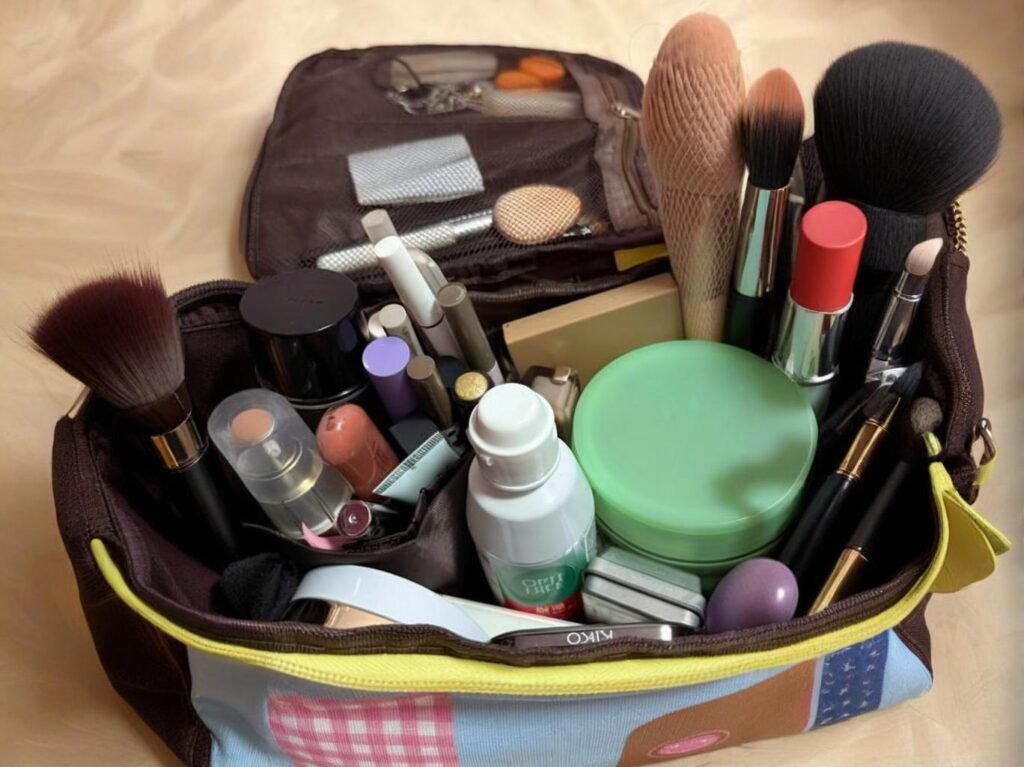
Most cosmetic bag factories do not limit their production to makeup pouches alone. Because the same materials, sewing techniques, and structural designs can be applied to many storage products, manufacturers usually develop a broader product portfolio around beauty, travel, and daily organization.
For brands working with a manufacturer, this expanded capability can be very valuable. Instead of sourcing different products from multiple suppliers, companies can develop several related accessories within the same production system. This simplifies quality control, reduces logistics complexity, and helps maintain consistent branding.
Toiletry Bags and Travel Kits
Toiletry bags are one of the closest product categories to cosmetic bags. While cosmetic bags usually focus on makeup and skincare items, toiletry bags are designed to store hygiene products such as toothbrushes, shaving tools, soap, shampoo, and travel-sized containers.
These bags often require slightly different design priorities.
| Feature | Cosmetic Bag | Toiletry Bag |
|---|---|---|
| Main use | makeup & skincare | hygiene products |
| waterproof lining | important | essential |
| bottle holders | optional | common |
| hanging hook | optional | frequently included |
Toiletry bags are commonly used in travel sets, airline kits, hotel gift packages, and men’s grooming products.
For many brands, launching a toiletry bag line alongside cosmetic bags allows them to serve both male and female customers while expanding product variety.
Makeup Brush Holders and Tool Storage Bags
Professional makeup artists often require specialized storage for brushes and tools. A standard cosmetic bag may not provide enough organization for delicate brush heads or long tool handles.
Brush storage solutions often include:
- roll-up brush bags
- zip brush organizers
- elastic brush holders
- rigid brush cases
These products protect brushes from dust, deformation, and cross-contamination.
Typical brush organizer features include:
| Feature | Purpose |
|---|---|
| brush slots | separates brush sizes |
| protective flap | prevents bristle damage |
| roll-up design | easy transport |
| wipe-clean lining | hygiene maintenance |
Brush holders are especially popular among professional makeup artists, beauty schools, and online beauty influencers.
Promotional Gift Pouches
Promotional pouches are a large-volume product category within cosmetic bag manufacturing. Many brands use small fabric pouches for marketing campaigns, seasonal promotions, and product giveaways.
These pouches are usually simpler in structure but still require clean manufacturing quality because they represent the brand’s image.
Common promotional pouch applications include:
- trade show giveaways
- cosmetic launch campaigns
- beauty subscription boxes
- retail store promotions
Because these products are often produced in large quantities, cost efficiency becomes a key factor.
A typical promotional pouch specification might look like this:
| Component | Specification |
|---|---|
| fabric | 210D polyester or cotton |
| closure | zipper or drawstring |
| printing | screen printed logo |
| lining | optional |
Even though these pouches are relatively simple, they can still deliver strong marketing value when designed well.
Lifestyle Storage Bags
Many cosmetic bag manufacturers also produce lifestyle storage products that extend beyond beauty use.
Examples include:
- jewelry travel organizers
- electronic accessory pouches
- stationery bags
- daily carry organizers
These products share similar manufacturing techniques with cosmetic bags but serve different customer needs.
For brands selling lifestyle products online, offering a range of storage accessories can increase product diversity and attract broader audiences.
A simple product extension strategy might look like this:
| Core Product | Related Product |
|---|---|
| cosmetic pouch | jewelry organizer |
| makeup bag | electronic cable pouch |
| toiletry bag | travel accessory kit |
| brush holder | stationery organizer |
Factories that support multiple product categories can help brands develop complete accessory collections rather than isolated single products.
How Do Professional Makeup Bag Manufacturers Ensure Quality?
Quality control is one of the most important responsibilities of a professional manufacturer. Cosmetic bags may appear simple, but poor quality can lead to customer complaints, product returns, and damage to brand reputation.
Reliable factories use structured quality systems that monitor every stage of production.
These systems typically include raw material inspection, production monitoring, durability testing, and final inspection.
Fabric and Material Inspection
Quality control begins before production even starts.
Incoming materials must be checked to ensure they meet required standards.
Key inspection factors include:
| Inspection Item | What It Verifies |
|---|---|
| fabric weight | confirms GSM accuracy |
| color consistency | ensures dye stability |
| coating quality | verifies waterproof performance |
| tear strength | checks durability |
If materials fail inspection, they are rejected before entering production.
This step prevents defective materials from causing problems later.
Sewing and Structural Inspection
During the sewing process, quality control teams regularly monitor production lines.
The most common issues checked include:
- seam alignment
- stitch density
- zipper installation
- pocket placement
- reinforcement stitching
A typical cosmetic bag requires 8–10 stitches per inch for strong seam durability.
Factories also inspect stress points such as:
- handle attachments
- zipper ends
- side panels
These areas experience the most tension during daily use.
Functional Performance Testing
Beyond visual inspection, cosmetic bags must also perform properly during real use.
Manufacturers often conduct functional testing to ensure durability.
Examples include:
| Test | Purpose |
|---|---|
| zipper cycle test | ensures zipper durability |
| load test | checks seam strength |
| abrasion test | evaluates fabric wear |
| drop test | tests structural stability |
For example, zipper tests may involve opening and closing the zipper 3,000 to 5,000 times to simulate long-term usage.
Such testing helps detect potential failures before products reach customers.
Final Inspection and Packaging Check
Before shipment, finished products undergo final inspection.
Quality inspectors review several aspects of the finished bags:
| Inspection Area | Checkpoints |
|---|---|
| appearance | color, logo, stitching |
| dimensions | correct bag size |
| functionality | smooth zipper operation |
| cleanliness | no stains or loose threads |
Products that pass inspection are then packed according to the client’s packaging specifications.
This final stage ensures that the product delivered to customers matches the approved sample.
Factories with well-organized quality control systems can significantly reduce defect rates and maintain consistent production standards.
Why Work With Szoneier for Custom Makeup Bag Manufacturing?
Choosing the right manufacturing partner can make a significant difference when developing cosmetic bags. A reliable factory should offer not only production capacity but also product development expertise, material knowledge, and stable quality control.
Szoneier combines several capabilities that are valuable for brands developing cosmetic bags.
With more than 18 years of experience in fabric research, product development, and finished goods manufacturing, the company supports a wide range of materials including cotton, canvas, polyester, nylon, neoprene, jute, linen, and Oxford fabrics.
These materials allow brands to create cosmetic bags suited for different markets such as:
- beauty retail products
- travel accessories
- promotional merchandise
- skincare gift packaging
Szoneier also provides services that help simplify product development for international clients.
Key advantages include:
| Service | Benefit |
|---|---|
| custom design support | helps refine product concepts |
| low MOQ production | suitable for growing brands |
| fast sample development | reduces launch time |
| private label manufacturing | supports brand identity |
| integrated fabric supply | improves material consistency |
Because fabric development and finished product manufacturing are both handled within the same system, clients can adjust materials and structures more efficiently during sampling.
For many brands, this integrated approach reduces development time and improves product reliability.
Start Your Custom Makeup Bag Project
Cosmetic bags may look simple, but producing a successful product requires careful attention to materials, structure, usability, and manufacturing quality.
A well-designed makeup bag can enhance product presentation, improve customer experience, and strengthen brand identity. Whether used for retail sales, beauty gift sets, travel kits, or promotional campaigns, cosmetic bags remain one of the most versatile accessories in the beauty industry.
If you are planning to develop a custom cosmetic bag, working with an experienced manufacturer can help turn ideas into reliable products.
Szoneier supports brands with flexible customization, professional product development, and efficient production services.
You can contact the team to discuss:
- custom cosmetic bag designs
- material recommendations
- logo branding options
- sampling and bulk production
With the right materials, thoughtful design, and reliable manufacturing, a simple makeup bag can become a valuable part of your product strategy.
If you are exploring new cosmetic bag ideas or planning your next beauty accessory collection, Szoneier is ready to help bring your product concepts into production.